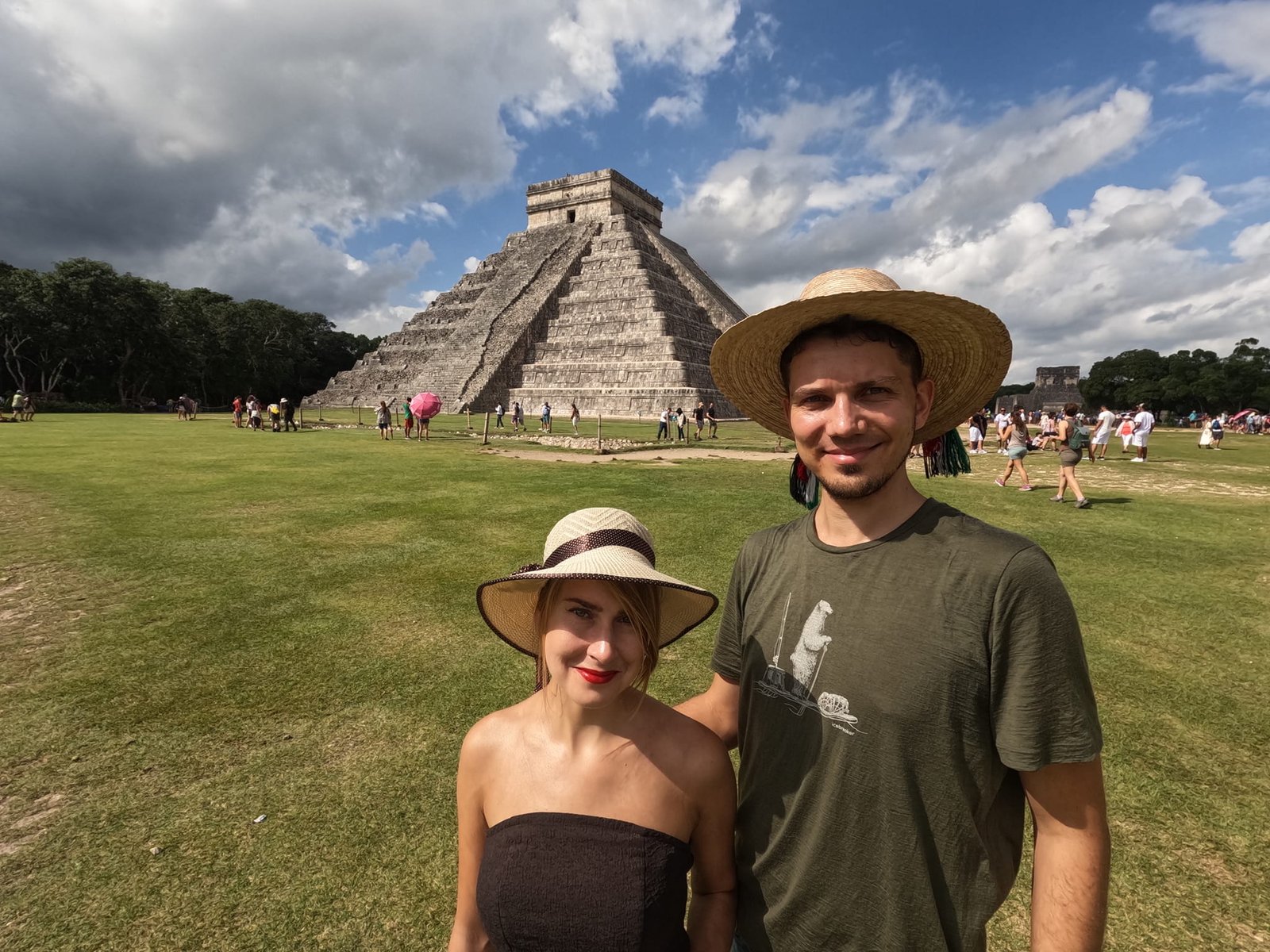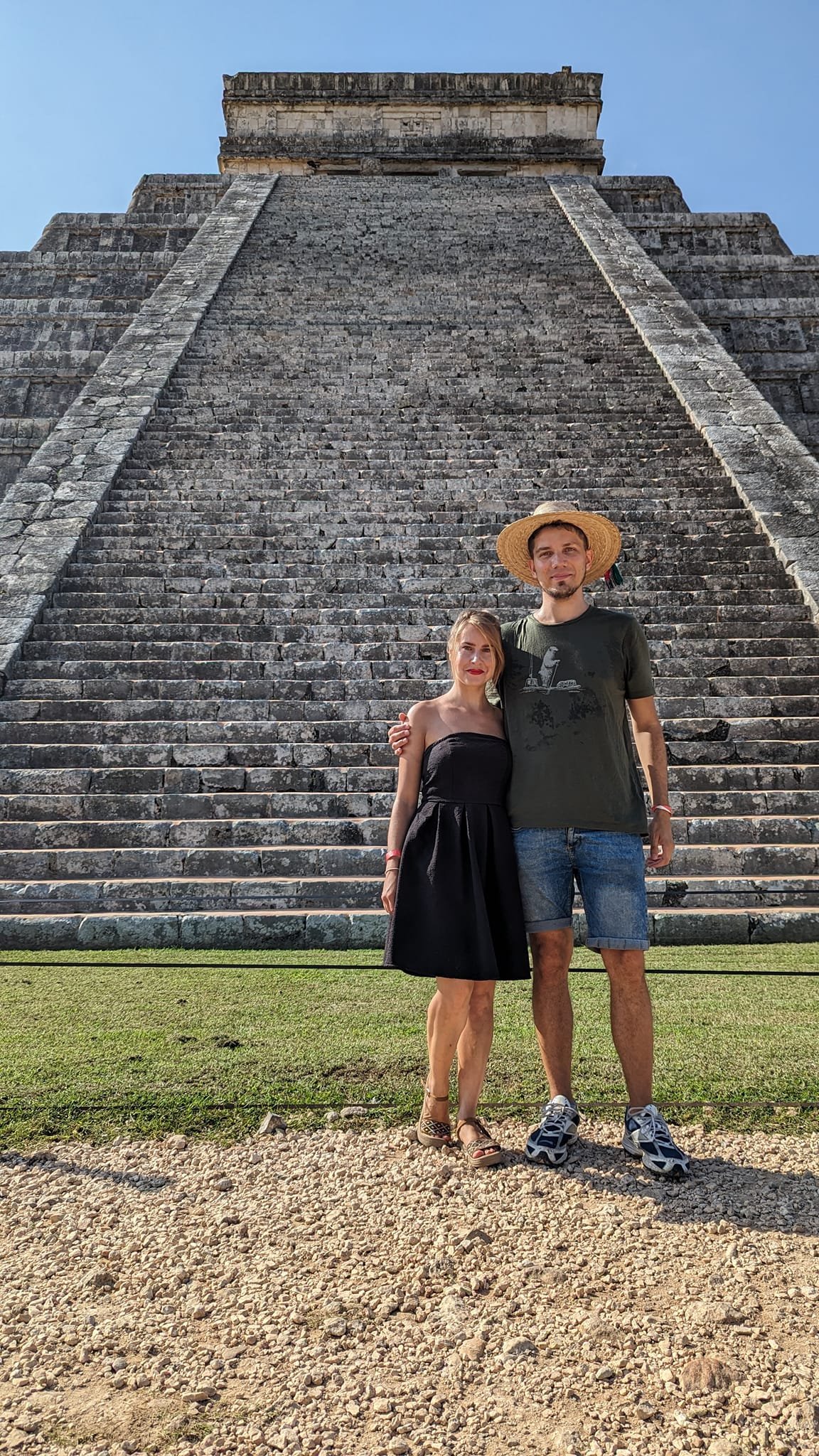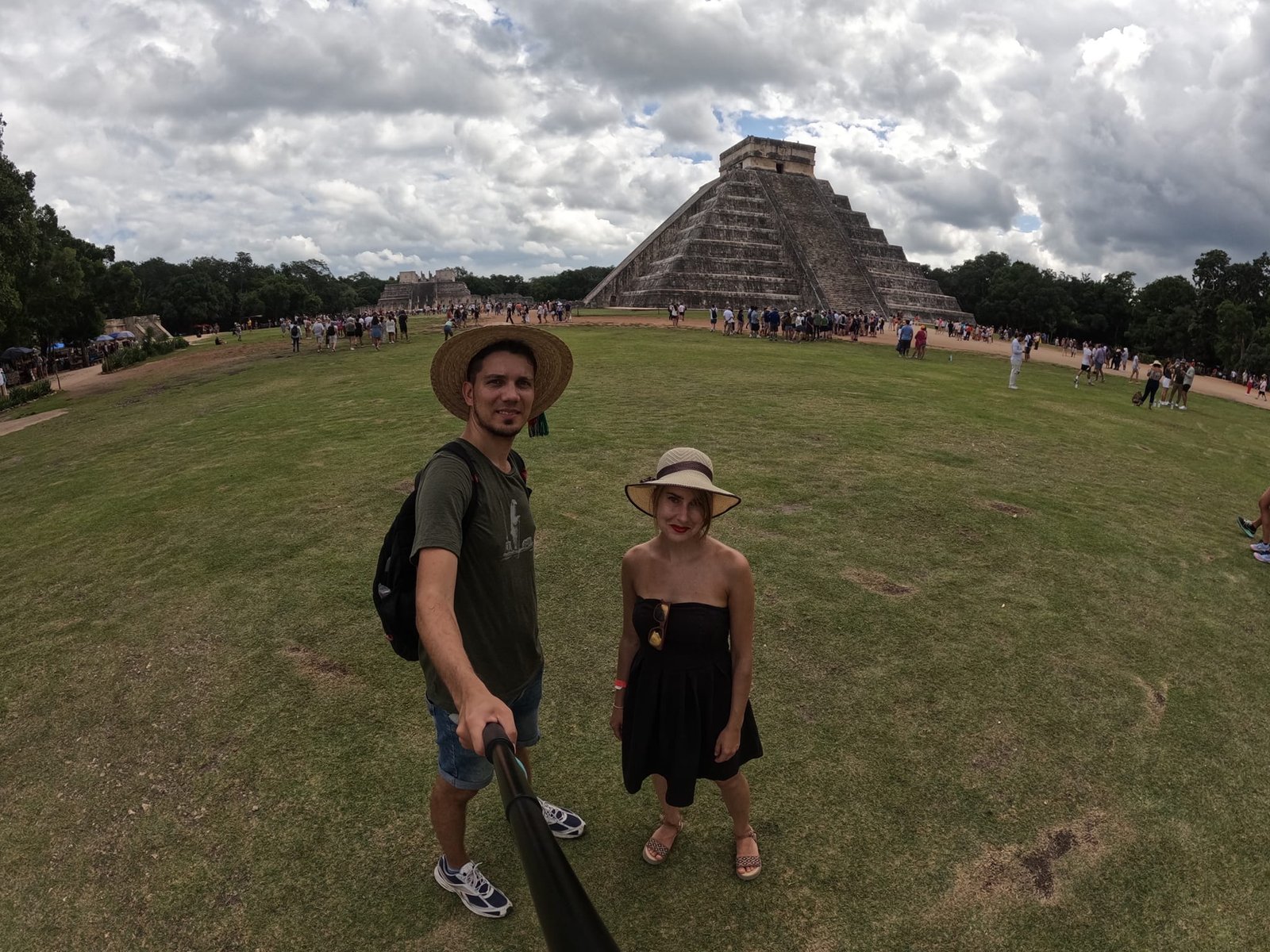
On 21 November 2023 we visited one of the New Seven Wonders of the World – Chichén Itzá on the Yucatán Peninsula. It’s an ancient city founded by the Maya between the 4th and 6th centuries and Mexico’s biggest attraction. We can recommend every one of the ruins we saw on this trip (Teotihuacán, Monte Albán, Palenque, Tulum, Cobá) – but we can’t imagine visiting Mexico without Chichén Itzá. We came from Valladolid, our base for visiting the cenotes.
 8:17
Table of contents
- The Pyramid of Kukulcán
- The Temple of the Warriors and the Group of a Thousand Columns
- The Great Ball Court
- El Caracol observatory
- Other buildings and the cenotes
- Practical information – tickets, getting there, timing
The Pyramid of Kukulcán
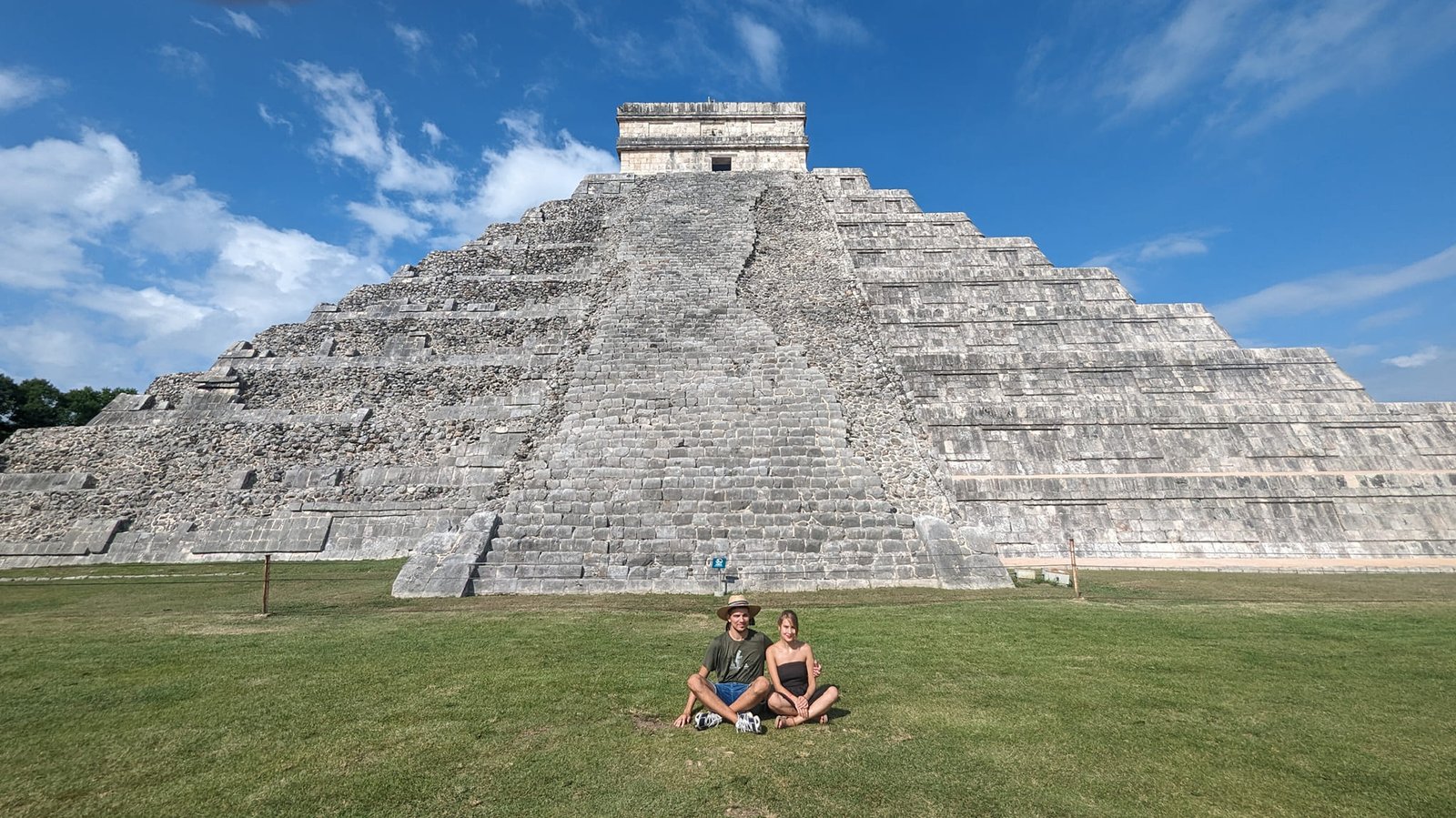
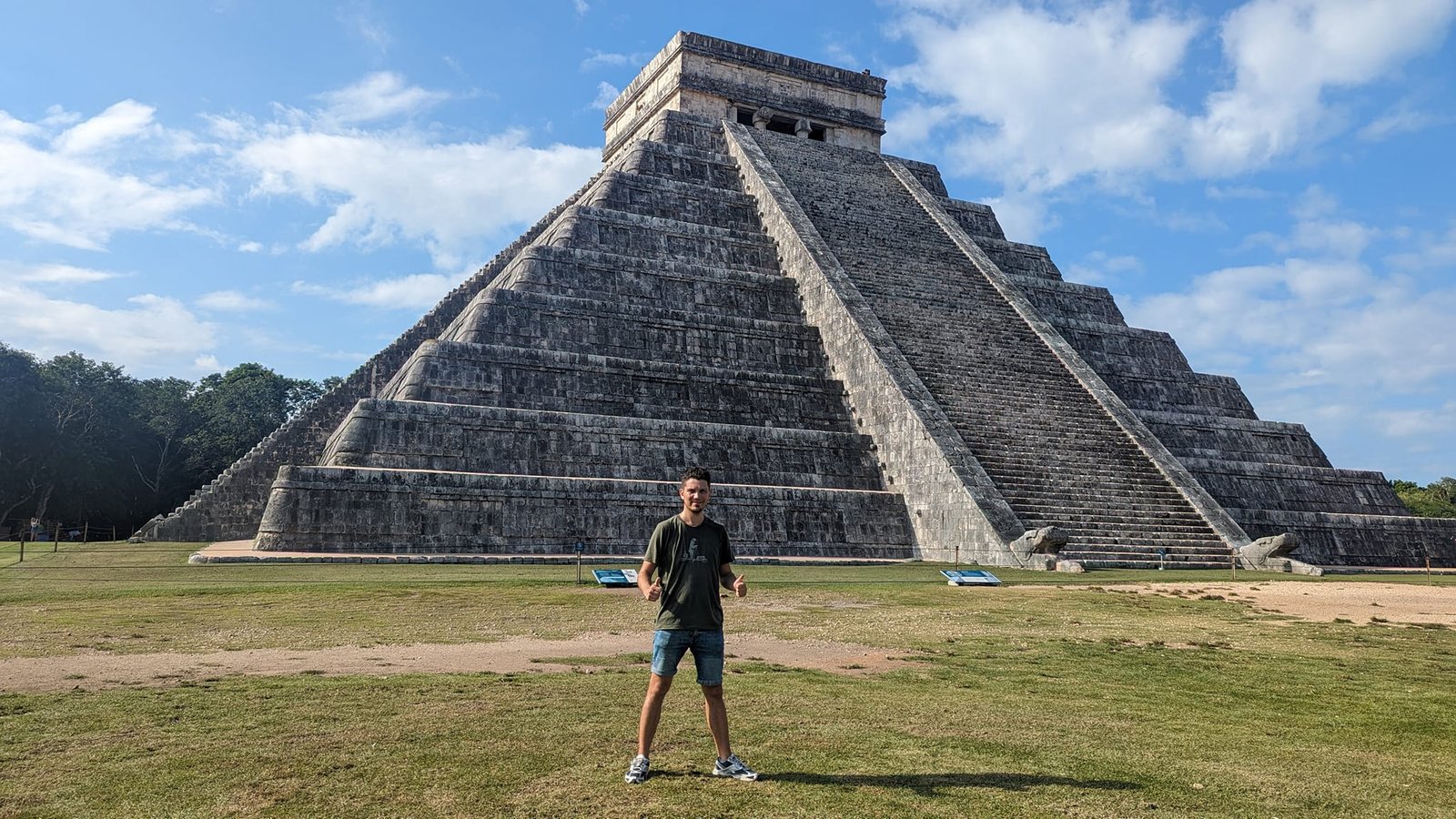
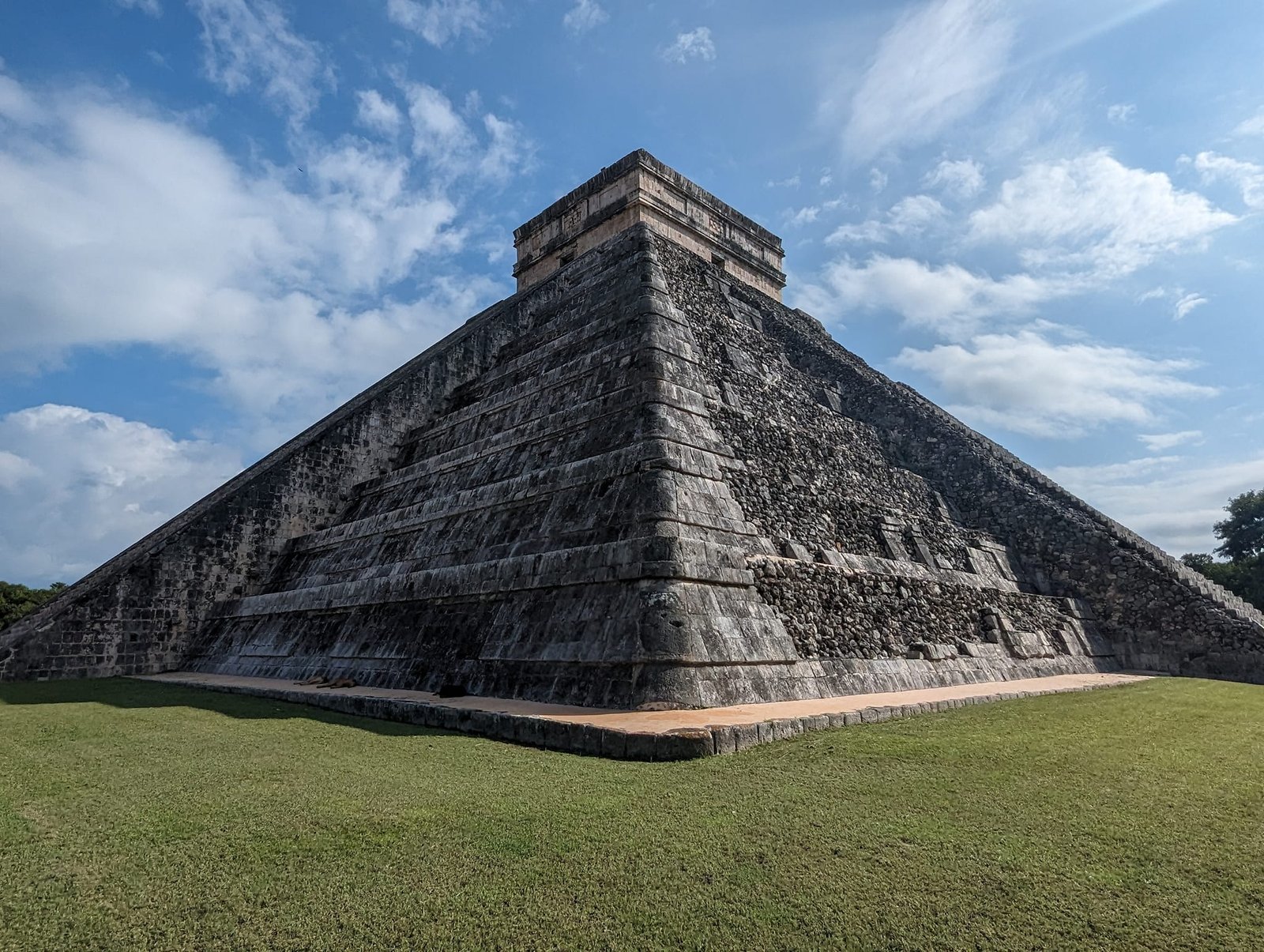
The most impressive structure is without doubt the Pyramid of Kukulcán (El Castillo), dedicated to a god depicted as a feathered serpent. It has amazing acoustics: if you clap your hands hard in front of the stairs, the echo is said to sound like the call of the quetzal – the sacred bird of the Maya.
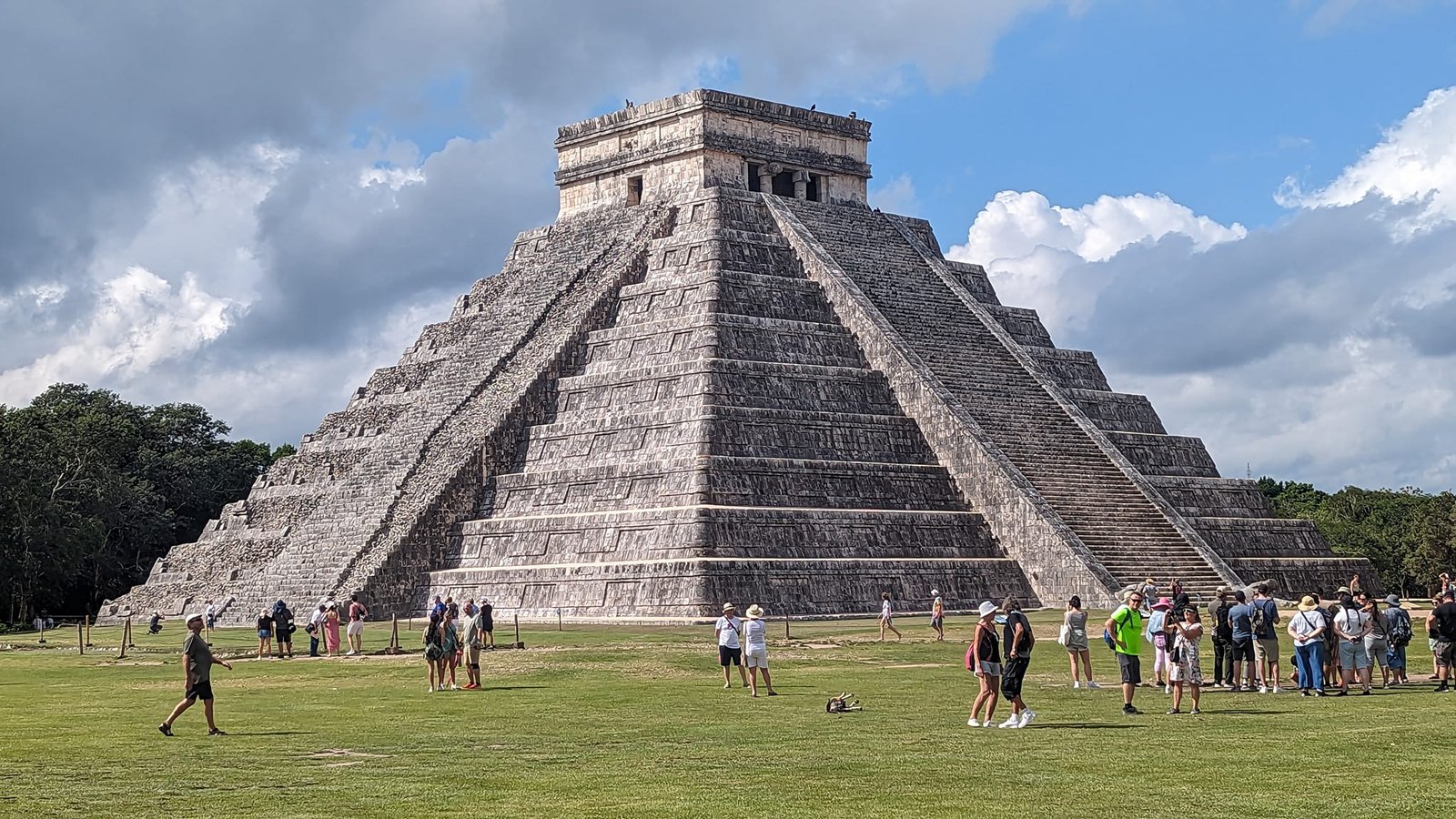
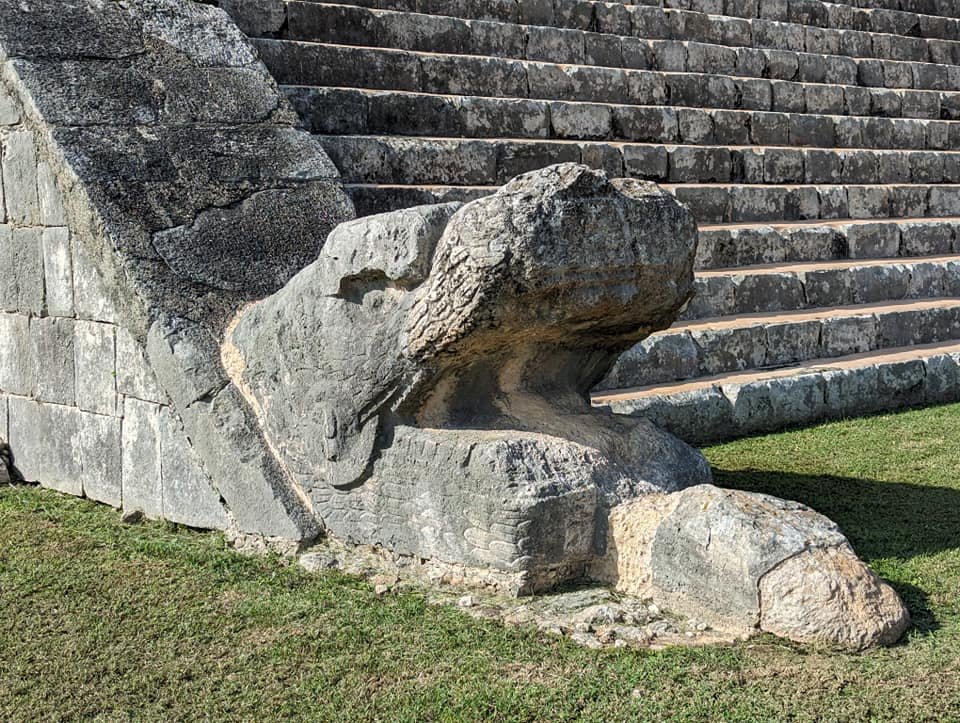
The pyramid was built so that at sunrise on the spring equinox the shadow on its stairs forms a snake crawling from top to bottom – and on the autumn equinox in the opposite direction. Stone serpent heads lie at the foot of the stairs.
Including the temple on top, the pyramid is about 30 m high and has nine terraces. On each of its four sides about 91 steps lead to the top – together with the upper platform that makes 365, the number of days in the Maya calendar year. In the 1930s archaeologists found an older pyramid inside it, and in its hidden temple a Chac Mool statue and a red jaguar-shaped throne with spots of inlaid jade. For years it could be reached through a tunnel, but in 2006 INAH closed it to visitors.
North of the pyramid stands the low Platform of Venus, dedicated to that planet – inside it archaeologists found large stone cones whose purpose is unknown. A few metres away begins Sacbé no. 1, a 270 m long white road leading to the Sacred Cenote.


The Temple of the Warriors and the Group of a Thousand Columns
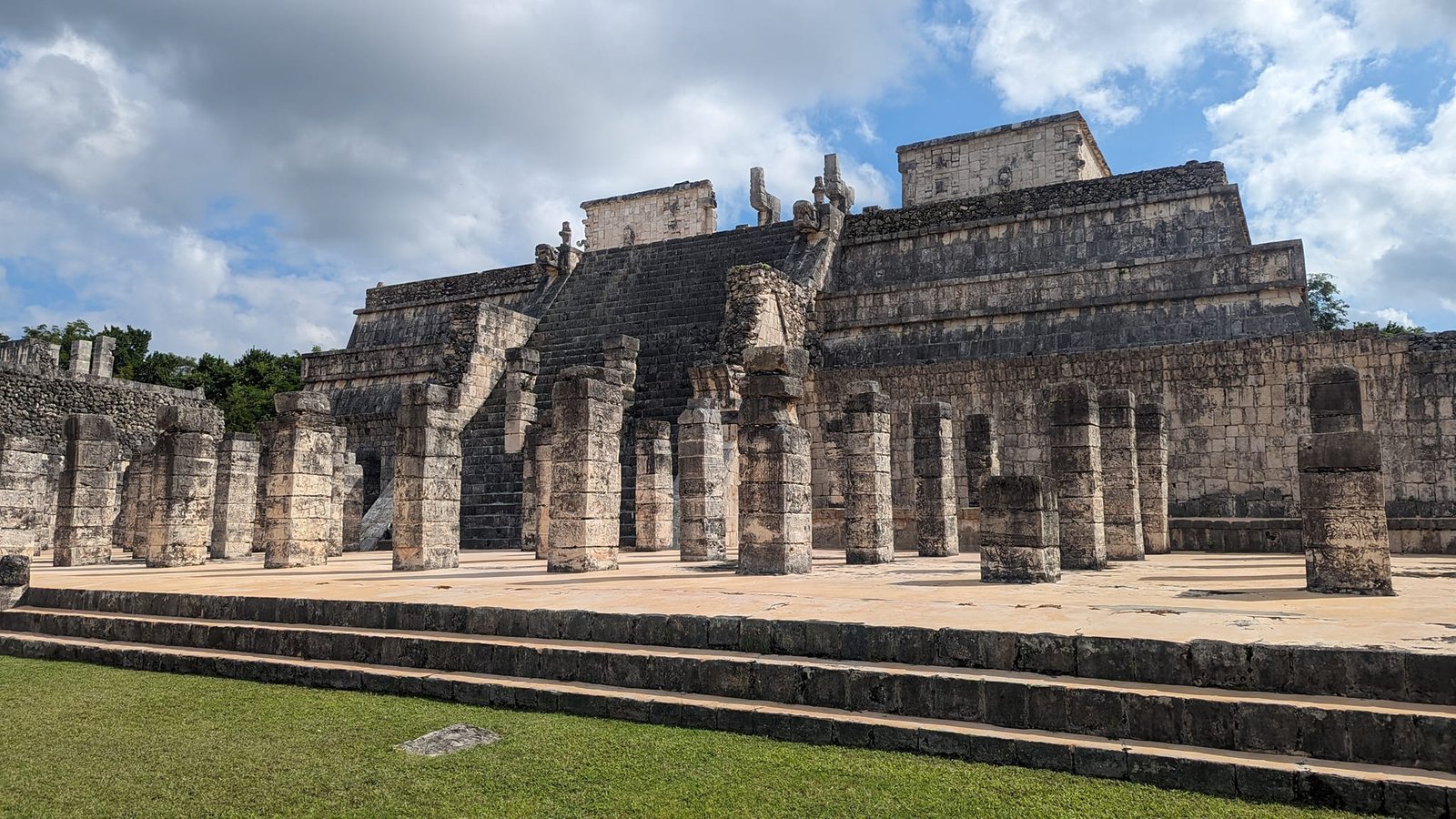
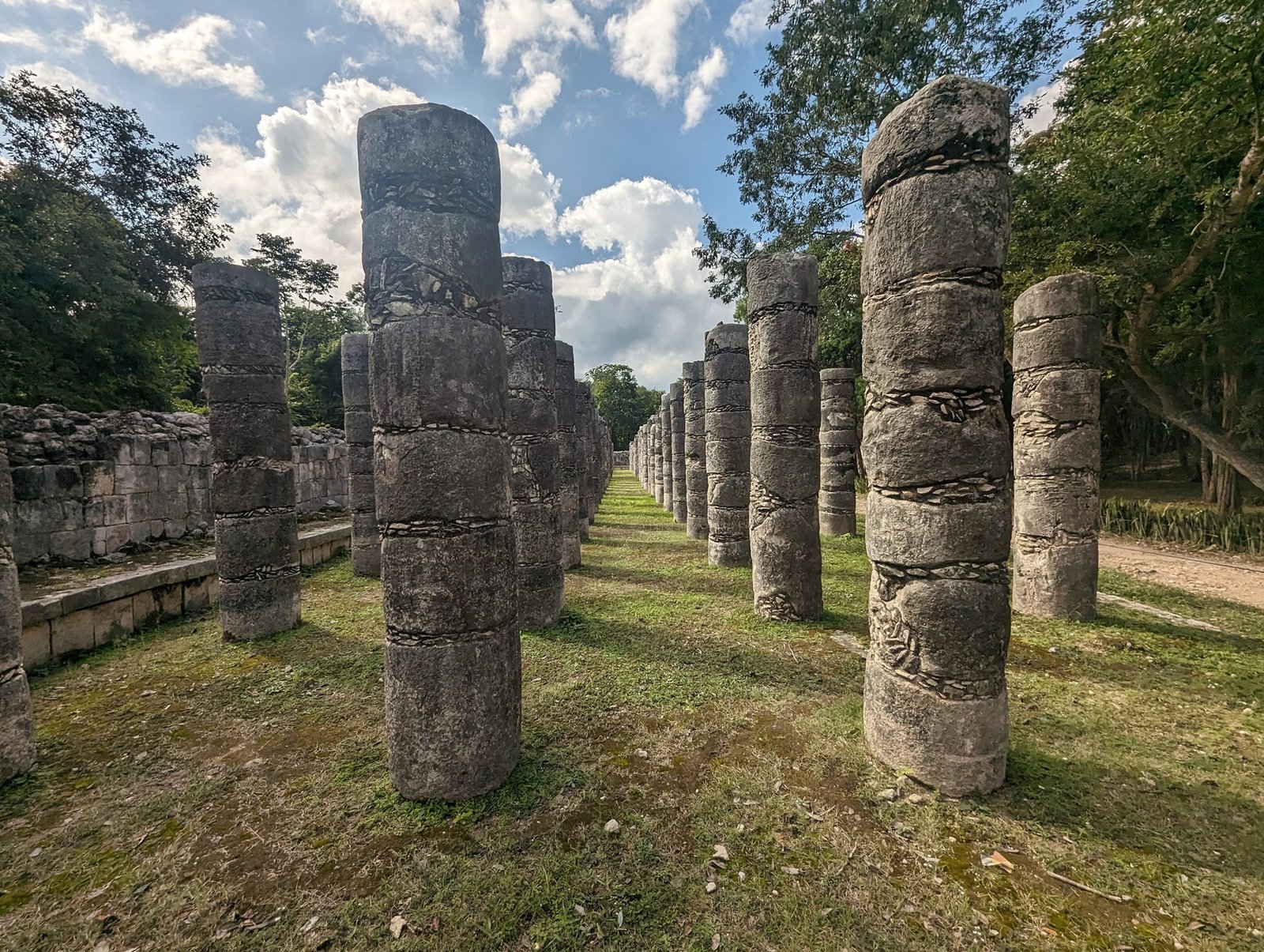
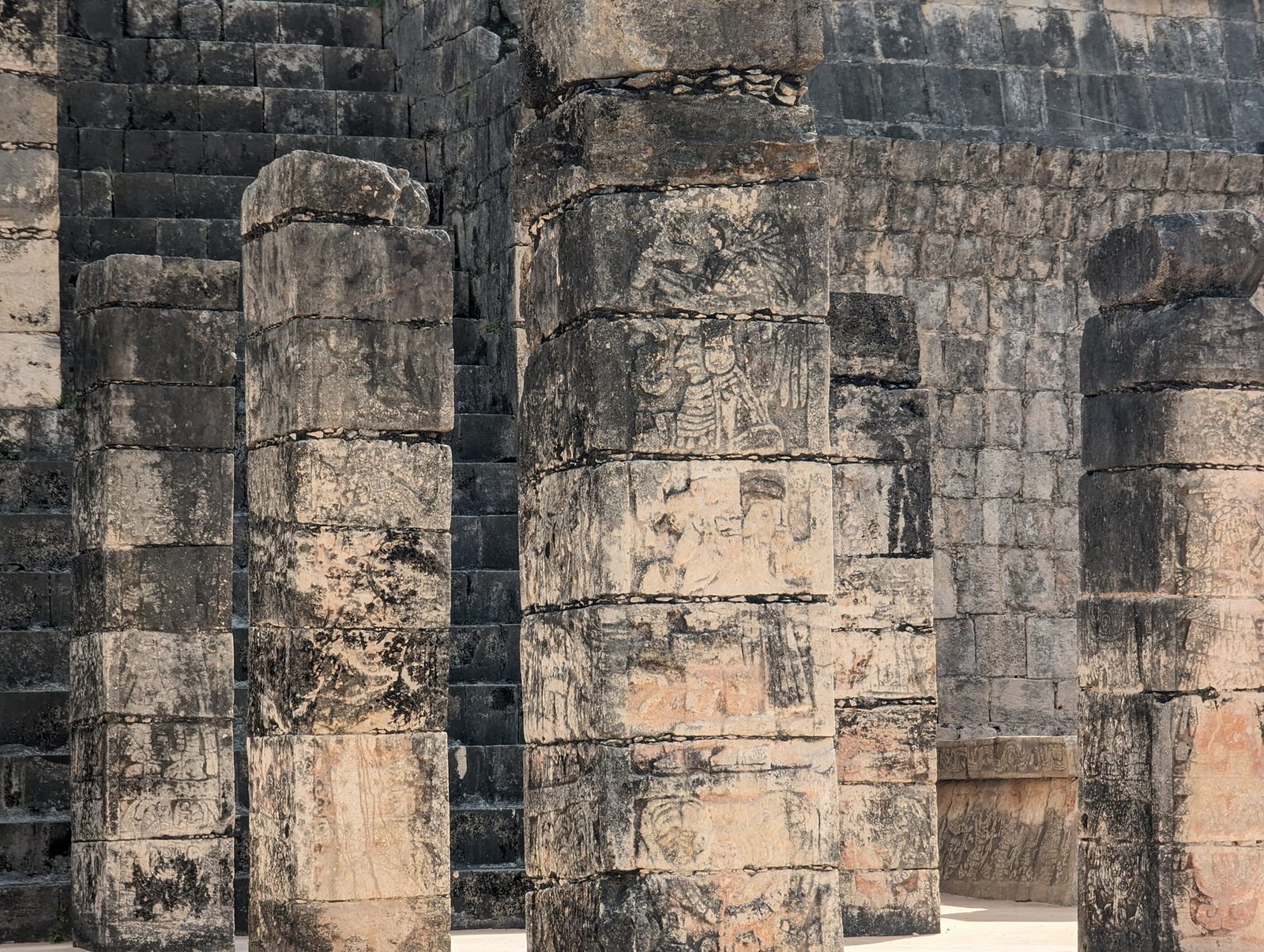
The complex is very large. Not far from the pyramid stands the Temple of the Warriors – a stepped building surrounded by rows of stone columns known as the Group of a Thousand Columns. Some of them are covered in carvings.
The Great Ball Court
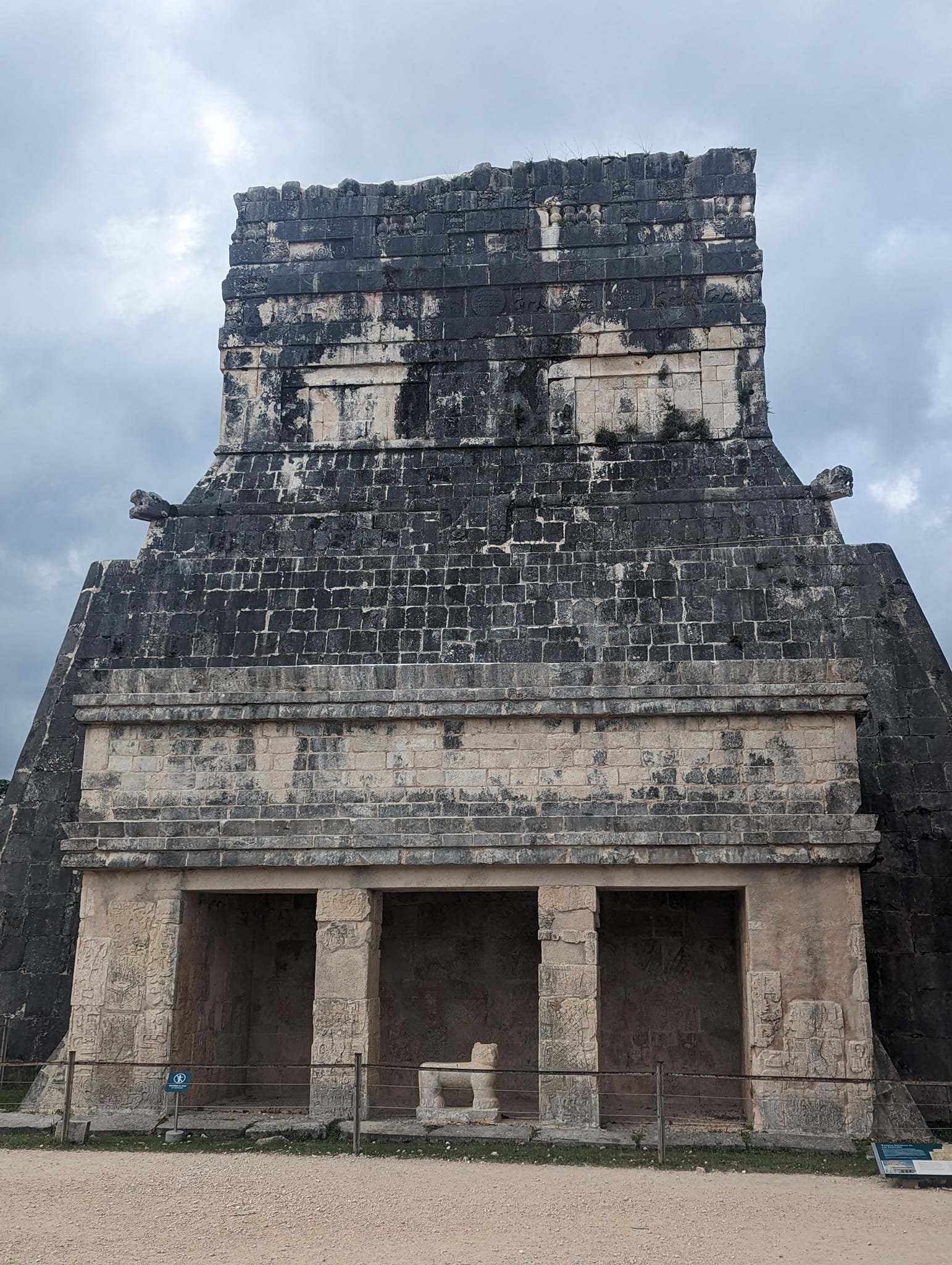
This is where the Maya played their ritual ball game (ullamaliztli). The tall stone walls of the court have survived, and on them – stone rings through which the players had to get the ball. They struck it with their hips or thighs, and the rings hang several metres above the ground – sometimes the players’ lives were at stake.
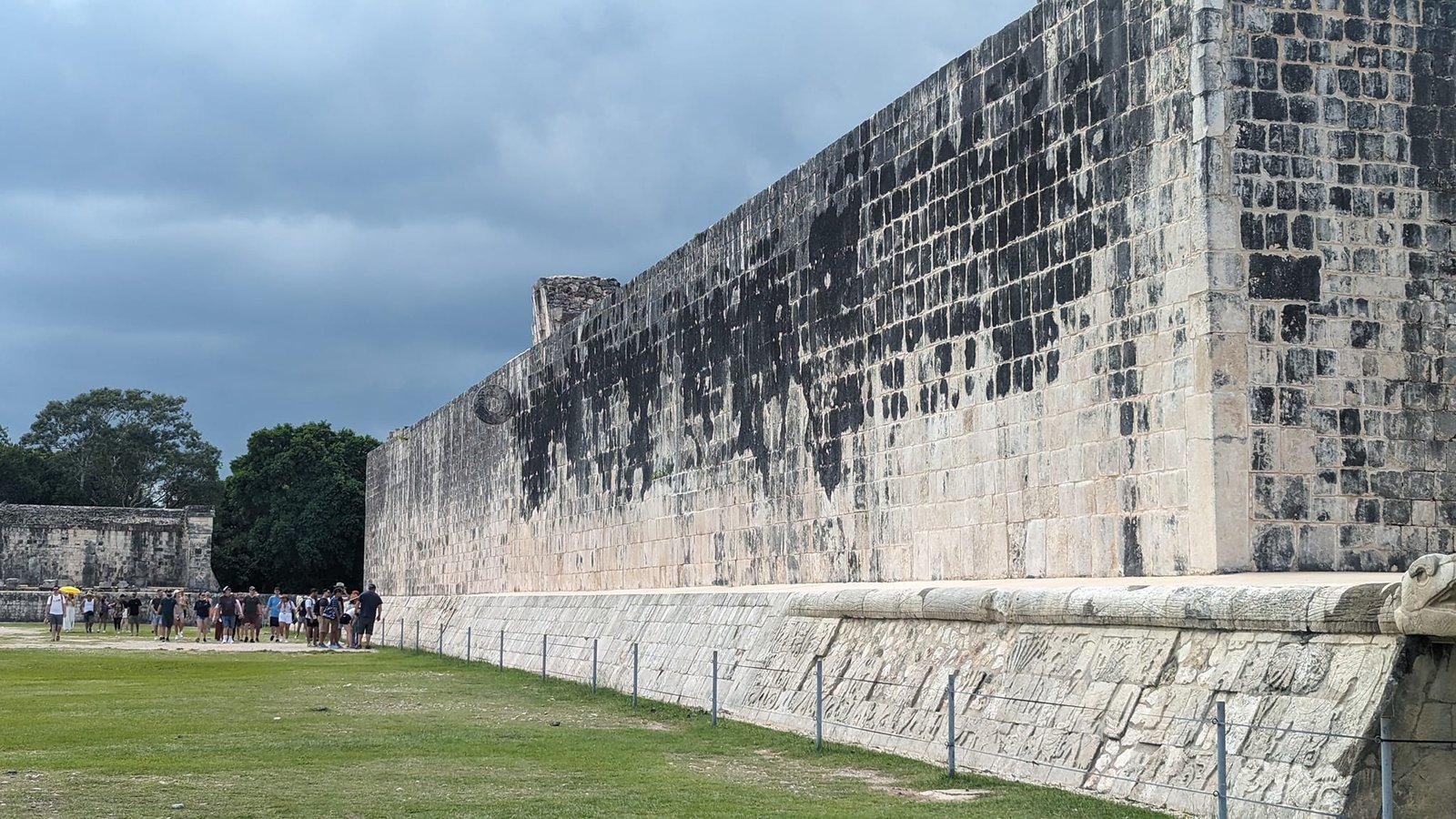
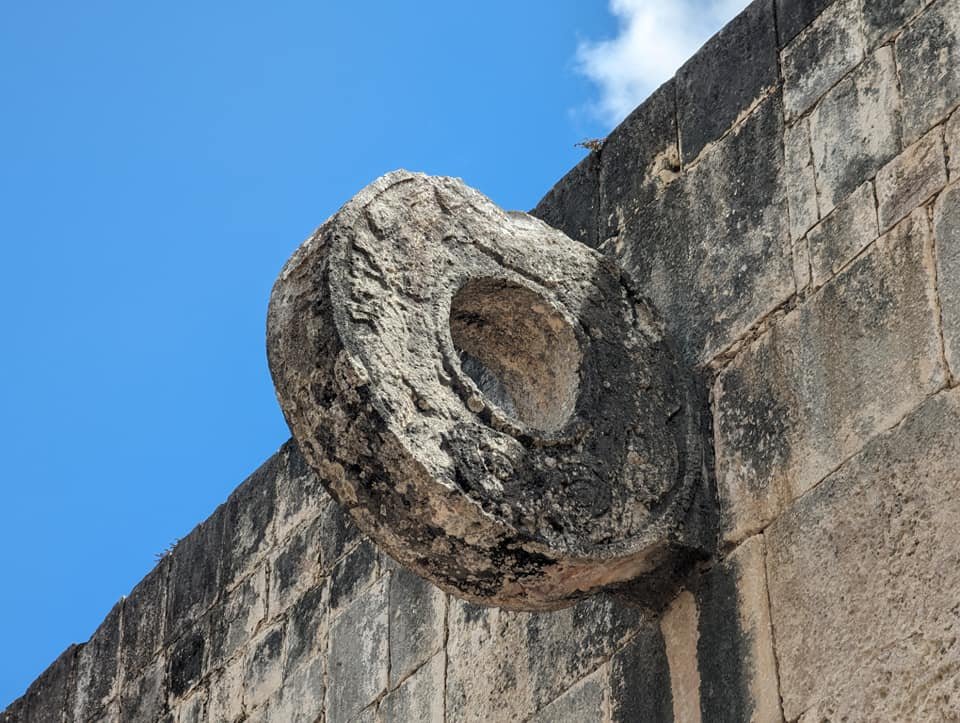
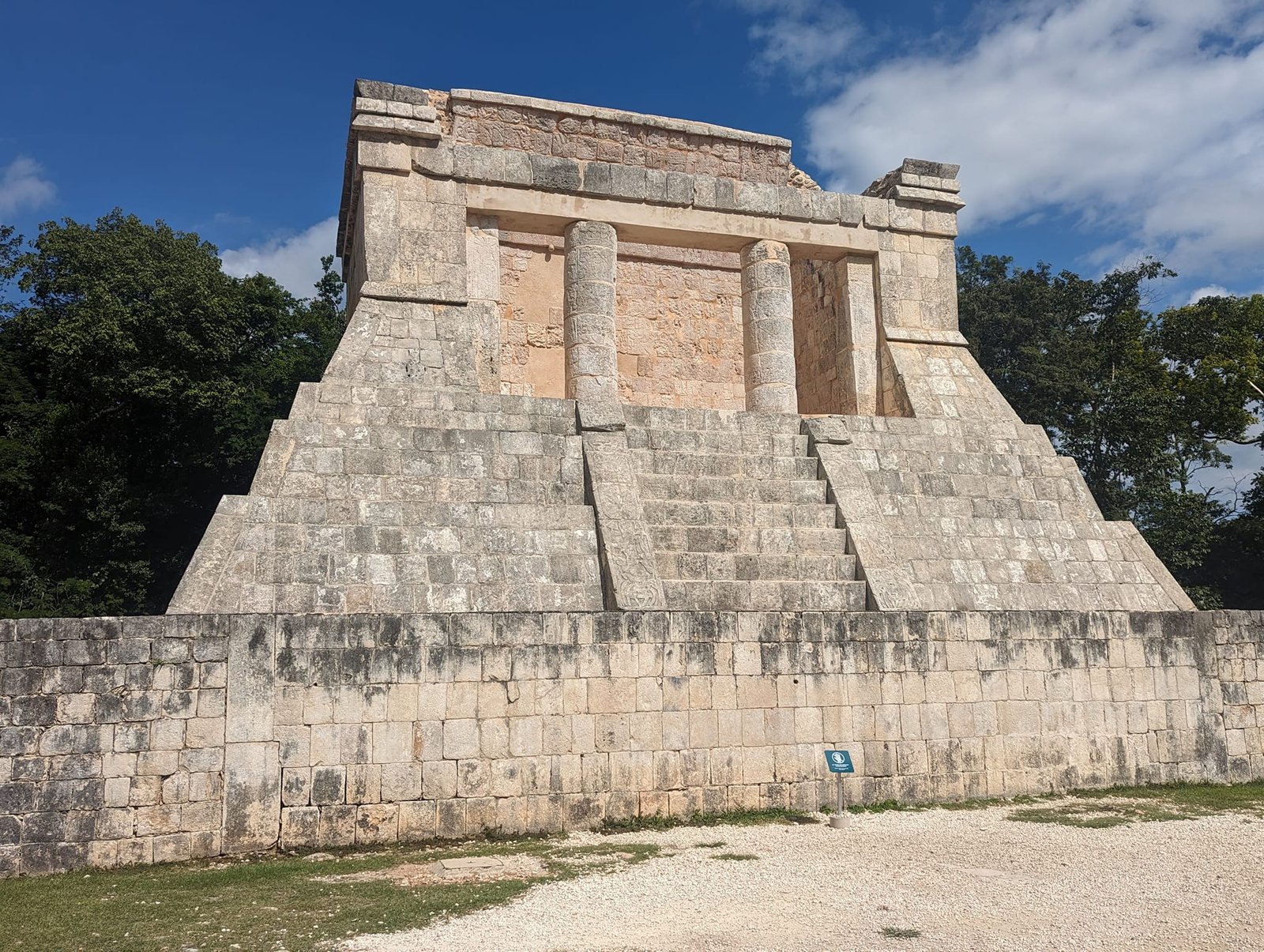
The Great Ball Court measures 168 × 70 m – it is the largest and best-preserved ball court of ancient Mesoamerica (archaeologists have counted 13 courts at Chichén Itzá alone). The walls along the playing field are 95 m long and 8 m high, and the stone rings are decorated with intertwined feathered serpents. Along the foot of the walls run benches with reliefs of teams of players – on one of them a player has been decapitated and the blood spurts from his neck in the form of snakes. At the north end of the court stands the small Temple of the Bearded Man, named after a figure in a relief inside whose chin carving resembles a beard.


El Caracol observatory
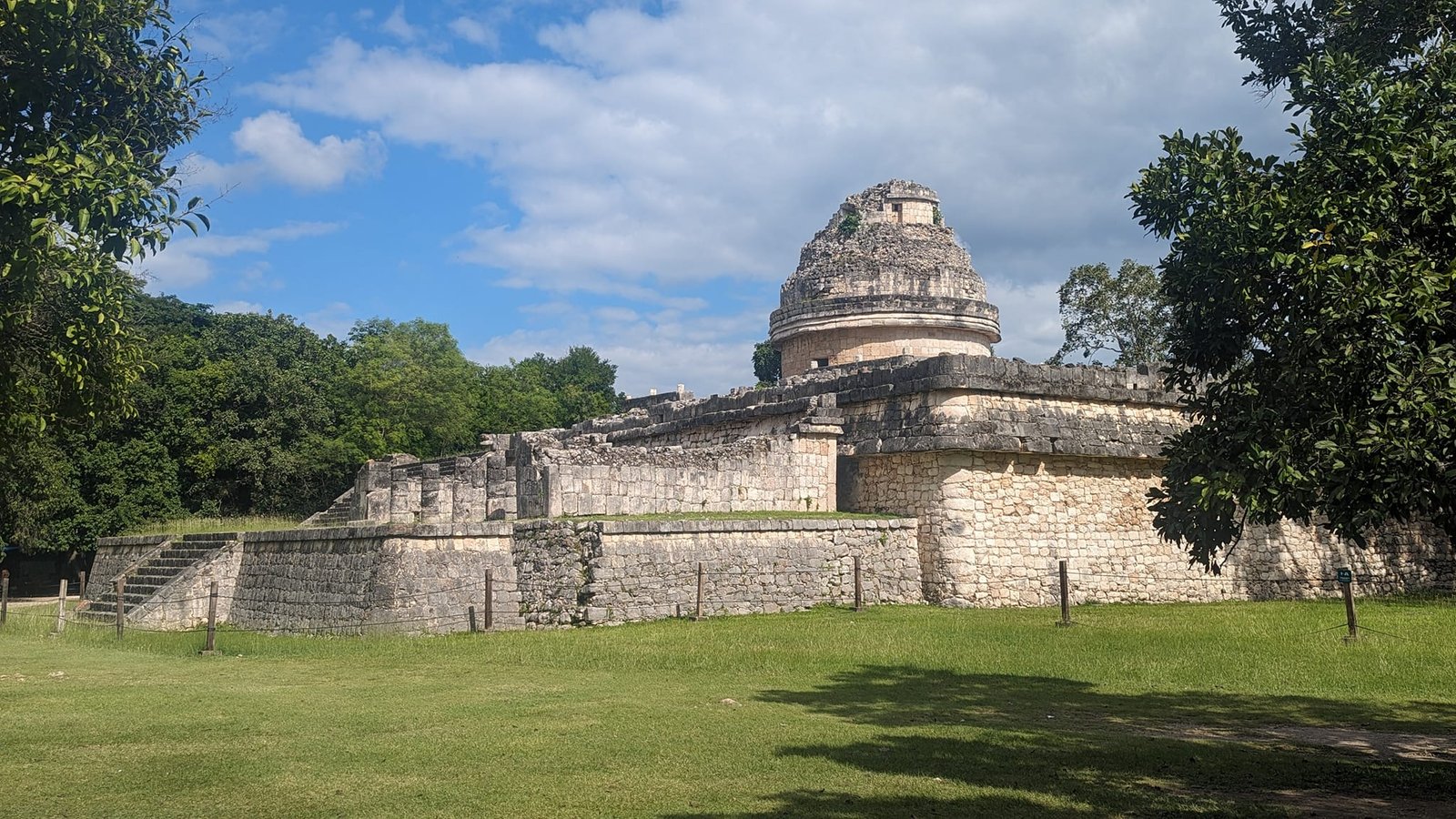
Another standout is El Caracol – a building with a round tower, believed to be a Maya astronomical observatory.
Other buildings and the cenotes
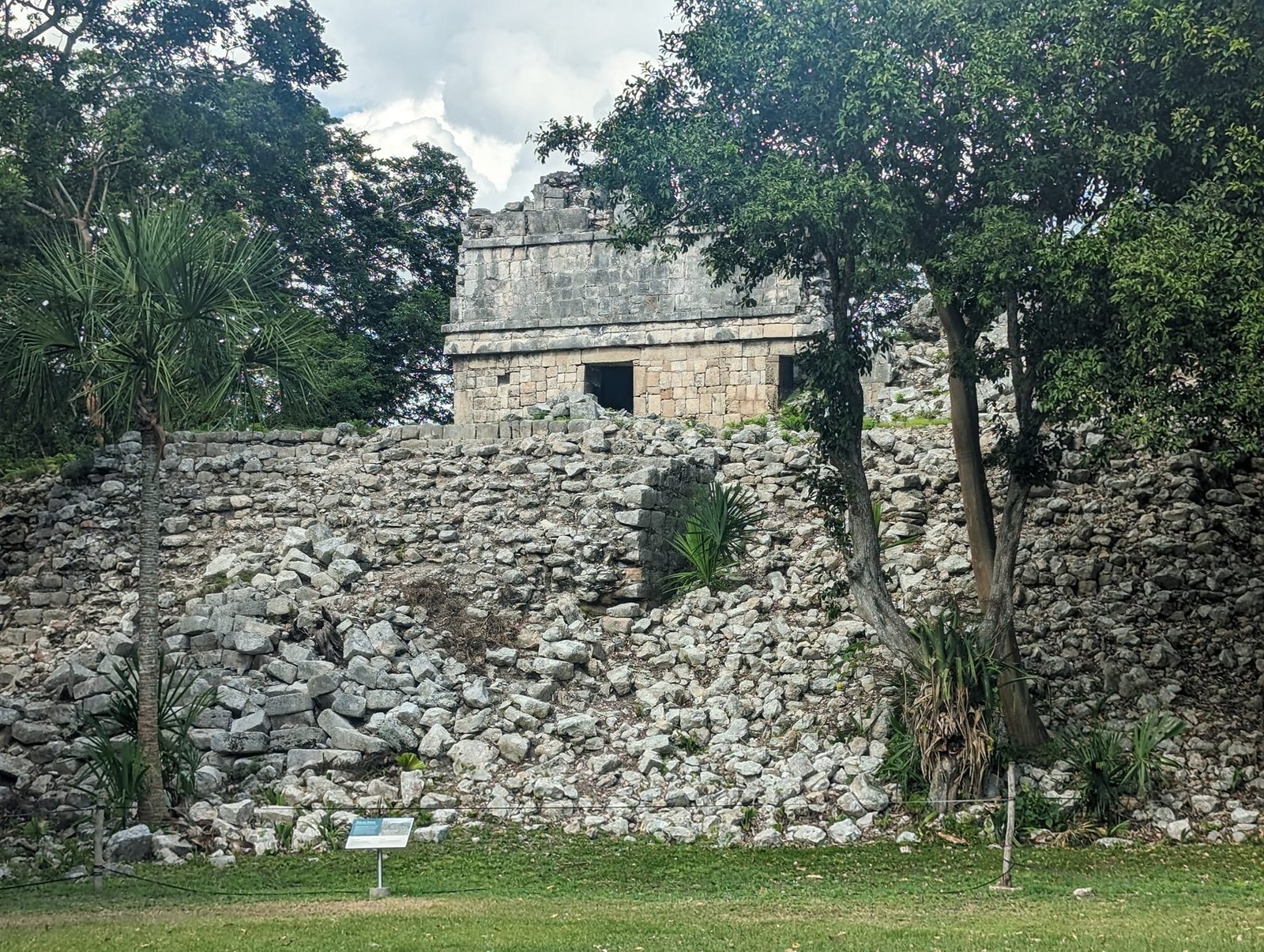
There are many other remains at Chichén Itzá: the High Priest’s Grave, a richly decorated building known as the Church (La Iglesia), temples on high platforms, jaguar sculptures and reliefs.
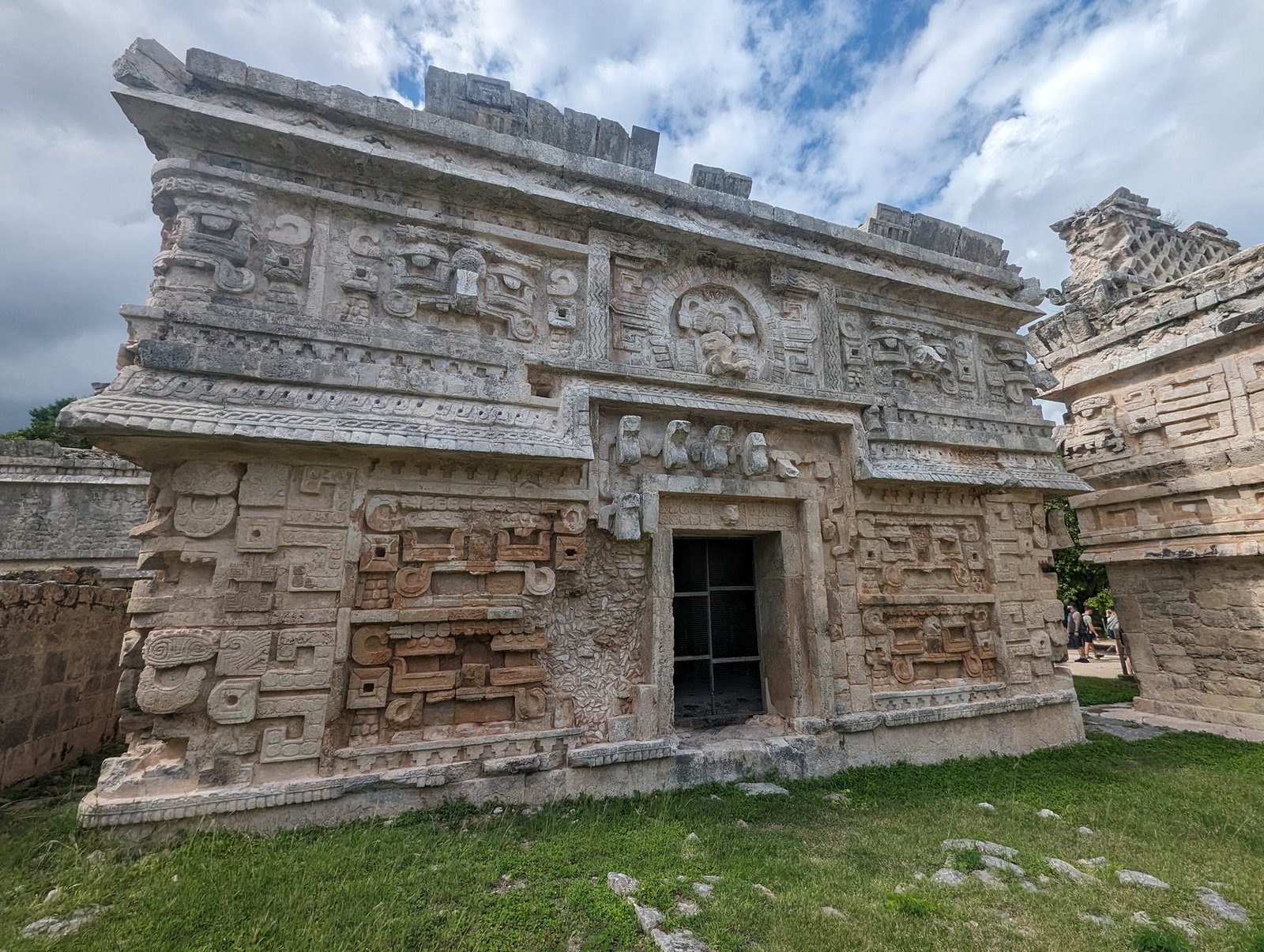
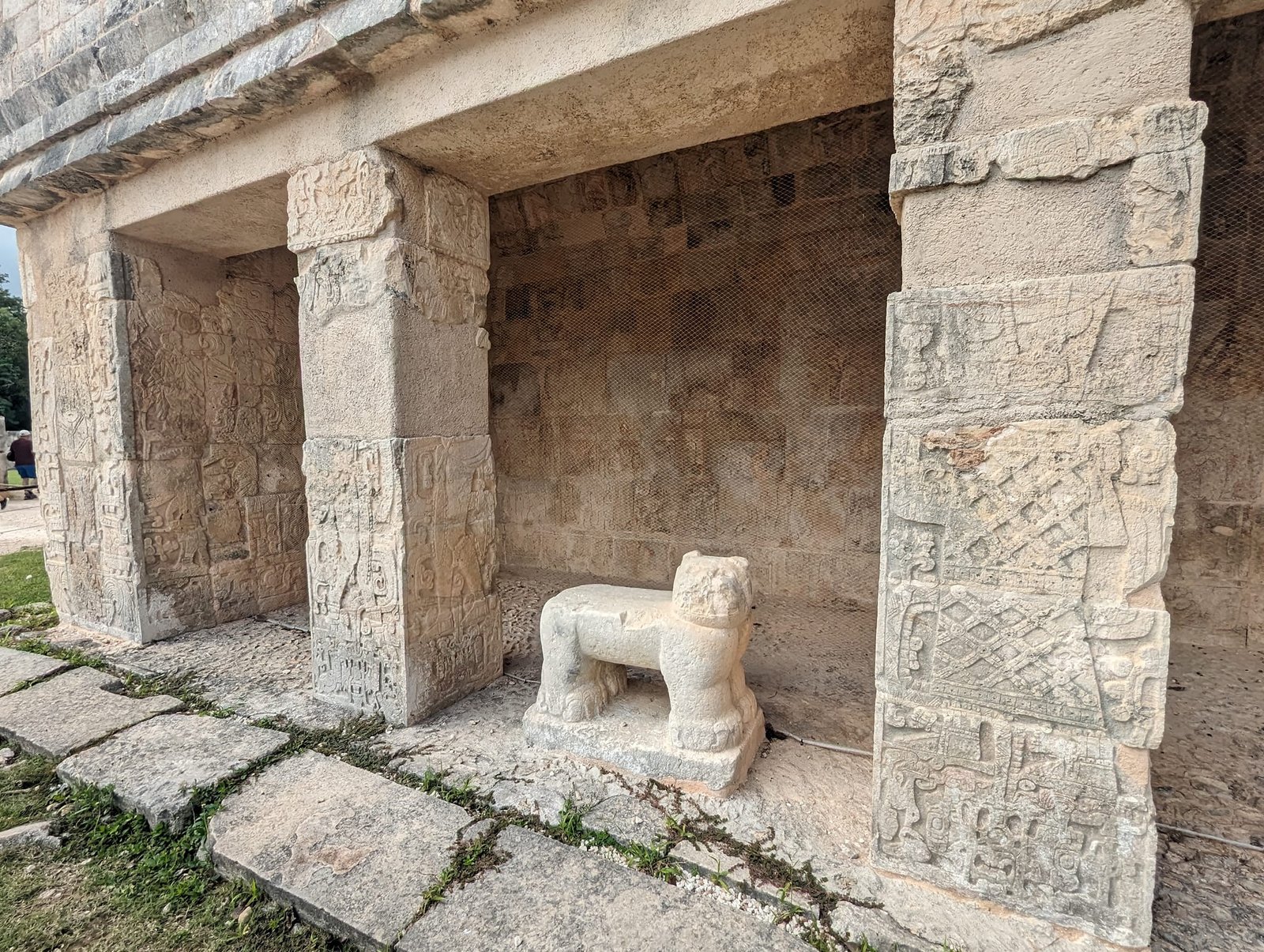
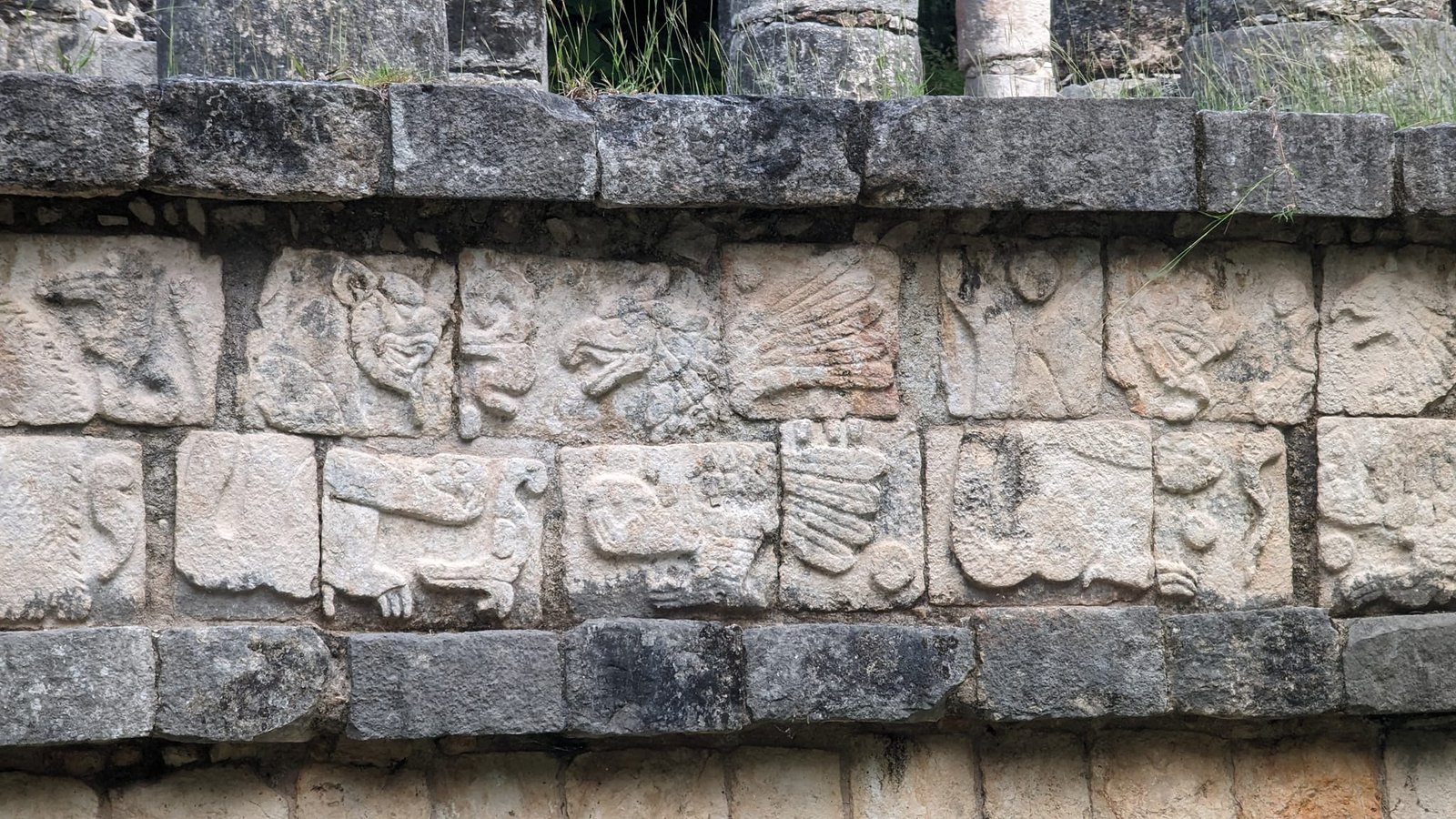
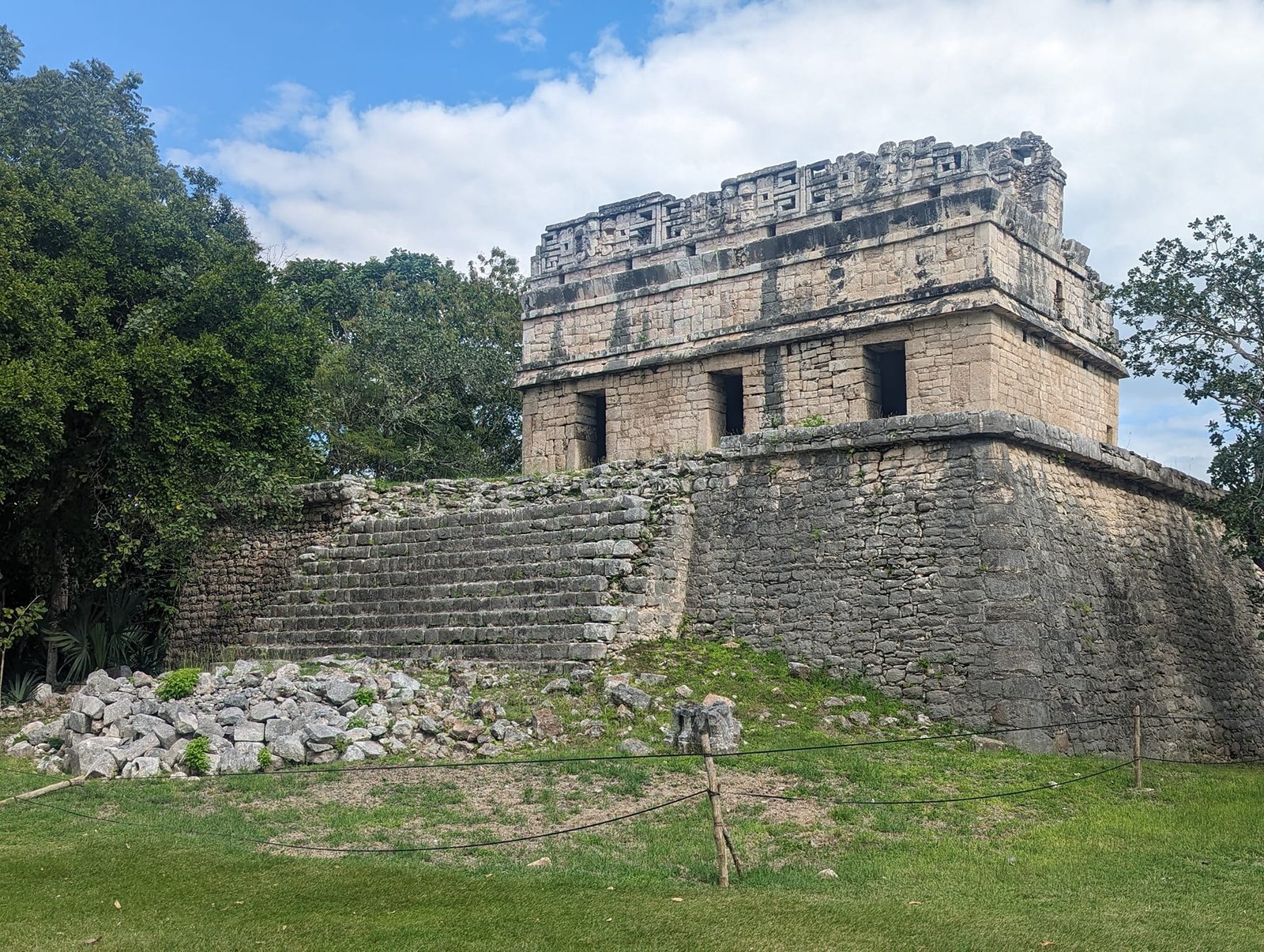
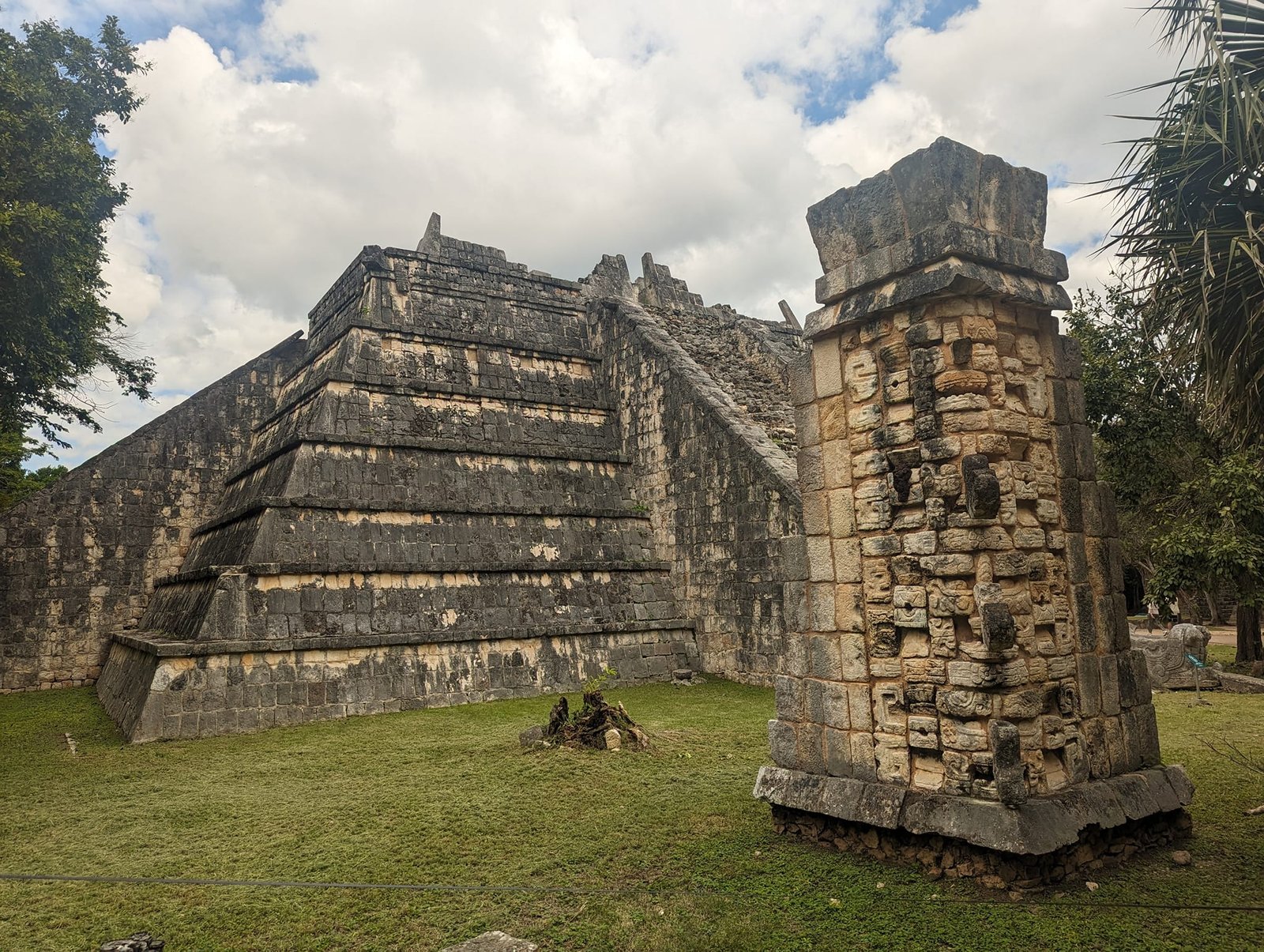
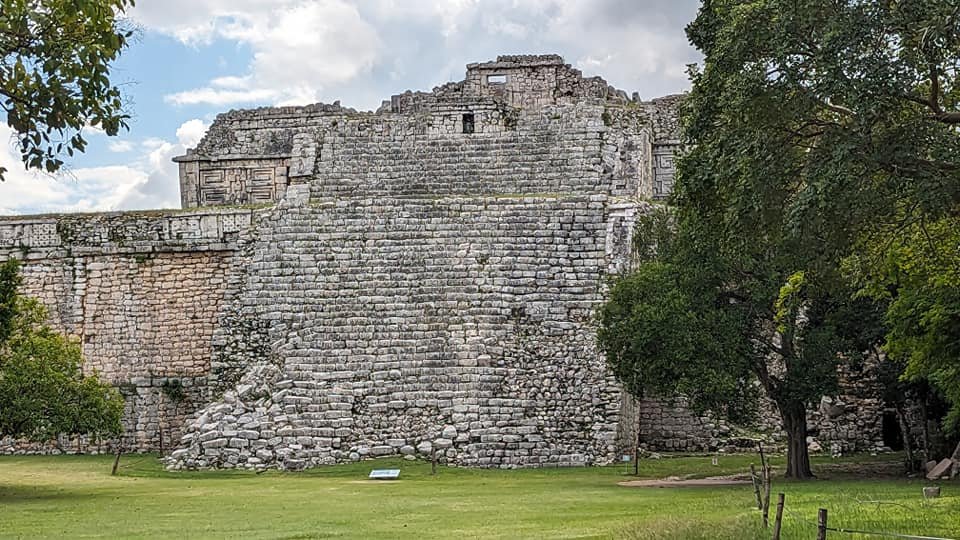
The site also has two cenotes – natural sinkholes that were a source of water for the Maya and a place of sacrifice.
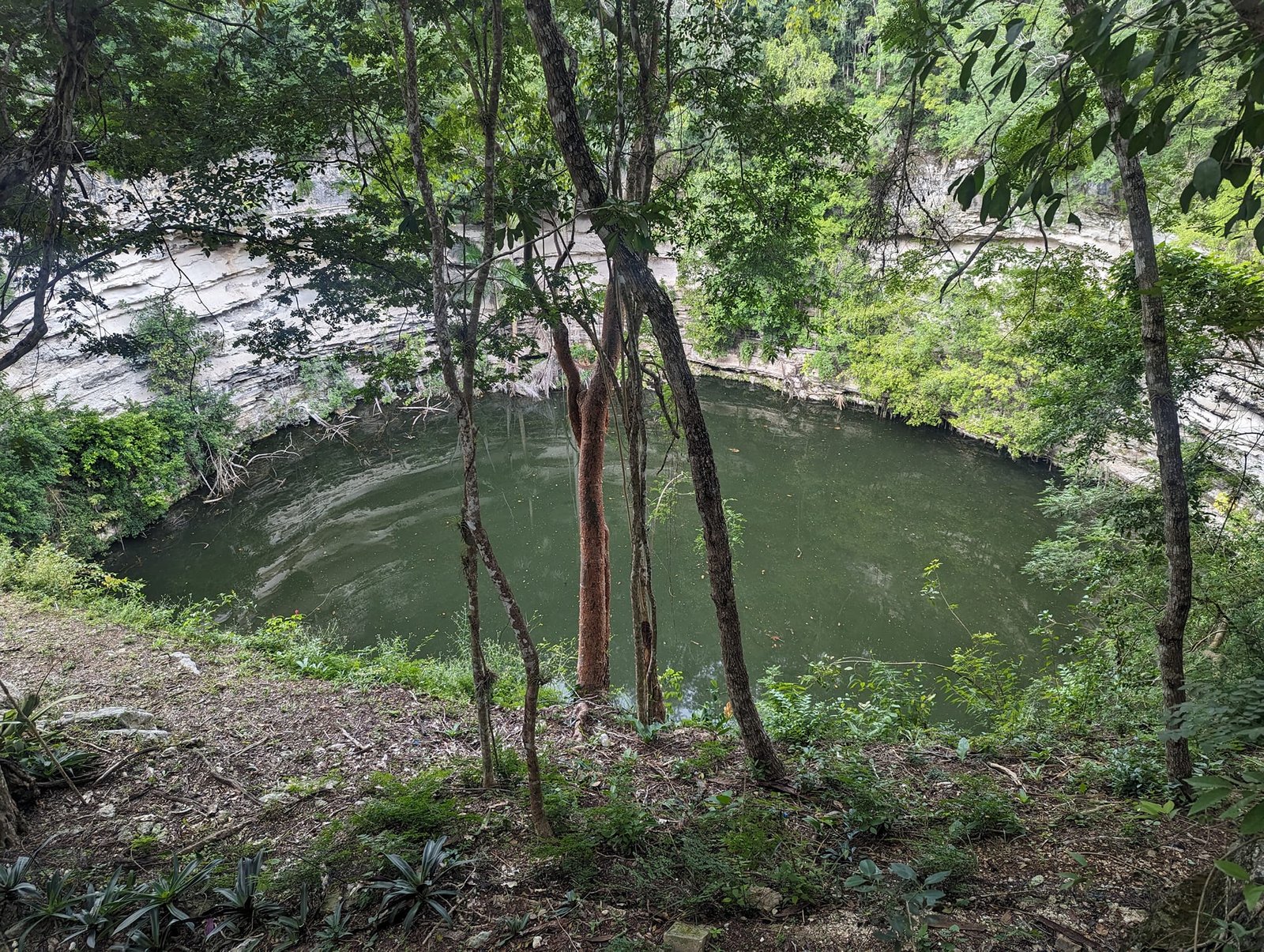
The larger of them, the Sacred Cenote, is about 60 m across, and it is some 27 m from the rim down to the water. In 1904–1910 the American consul Edward Thompson, who then owned the hacienda with the ruins, dredged objects of gold, jade and pottery as well as human remains from its bottom. The land under the main buildings remained private until 2010, when it was bought by the state of Yucatán.
The buildings were linked by a network of raised roads (sacbé) – archaeologists have found more than 80 of them. According to the INAH sign, the arch over Sacbé no. 74 controlled access to the Great Platform at the heart of the city, and the stone column drums lying next to it were piled up in a hurry to block the way. Along the path there is also a traditional Maya house – elongated, with a roof of guano palm leaves. Such houses can still be found in the surrounding villages, though less and less often.


Practical information – tickets, getting there, timing
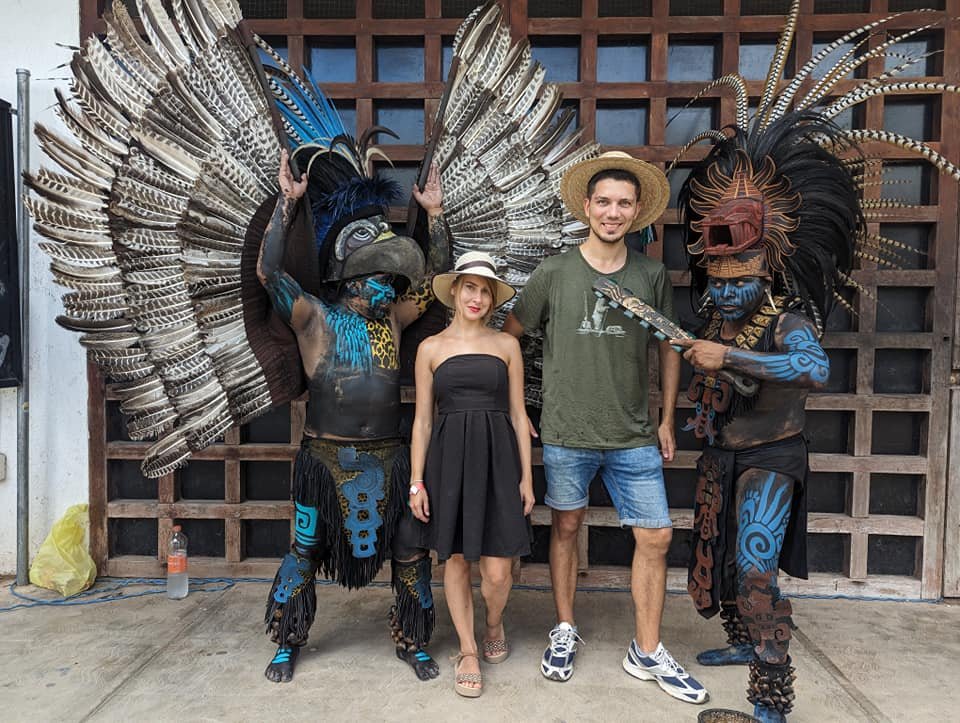
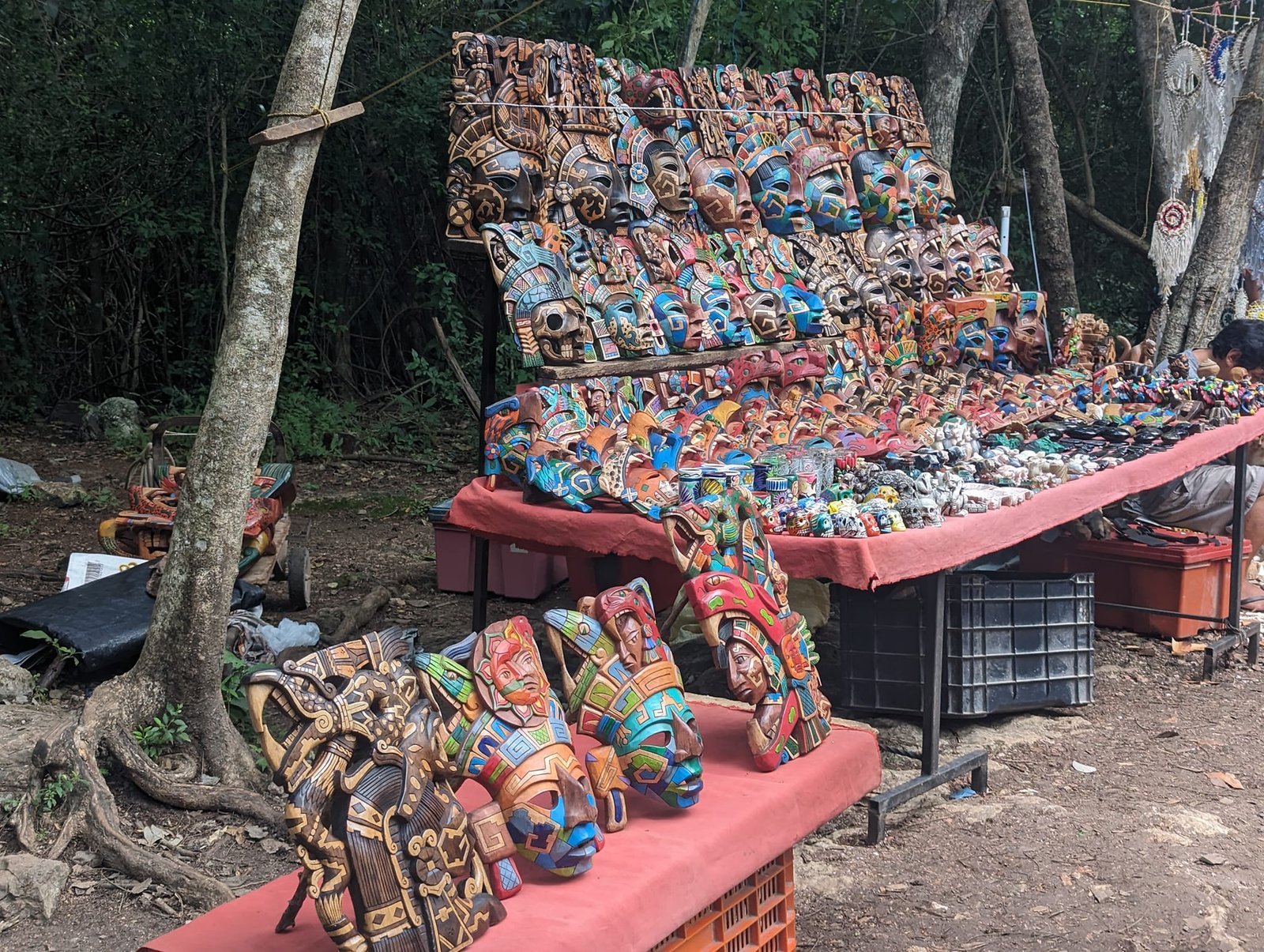
It’s Mexico’s biggest attraction, so it’s worth arriving early. We got there right after opening, shortly after 8 a.m. – there were already some people, but we could still take photos without crowds. At that time of day the temperature is also more pleasant (25–26°C); later we had 31 degrees, with a “feels like” of 36. On the way back it started to rain, so our timing was perfect. Along the paths there are stalls with colourful masks and souvenirs. I don’t agree with the opinions that Chichén Itzá loses its charm because of the crowds – the only downside is precisely the densely packed stalls.
- Entrance ticket – 614 MXN (about €33, November 2023). Yucatán is noticeably more expensive than the rest of the country – the ticket to Teotihuacán was roughly six times cheaper.
- Filming with a camera – an extra fee of 50 MXN (about €3); many archaeological sites in Mexico charge similar fees. A small external microphone was considered professional equipment here, which you’re not allowed to bring in.
- Getting there – a colectivo from Valladolid for 80 MXN (about €4.50) return. You can also take an ADO bus, but it runs less often and costs more.
- Time needed – about 3–4 hours.
- When – right after opening: fewer people and lower temperatures. Bring a hat and water.
As of 2026: since 27 March 2026 the ticket is paid in a single payment at one ticket office – previously the state and federal parts were paid separately (in 2023 it was 524 + 90 MXN). According to the local press, a foreign visitor pays about 680–700 MXN in 2026, Mexicans about 300 MXN and residents of Yucatán 105 MXN; on Sundays Mexicans and foreigners living in Mexico get in free. Since February 2024 the Tren Maya also stops at Chichén Itzá – the station is next to the new visitor centre, home to the Great Museum of Chichén Itzá with more than a thousand exhibits. In the evenings there is the “Noches de Kukulkán” show (433 MXN).


If you like ancient cities, also take a look at the post about Teotihuacán near Mexico City.
Photo gallery