Table of contents
- Map
- The Basilica of Our Lady of Guadalupe
- The Metropolitan Cathedral on the Zócalo
- The National Museum of Anthropology
- The Palace of Fine Arts
- Chapultepec Park and Castle
- The Tláloc Fountain
- Plaza Garibaldi
- The Square of the Three Cultures
- Torre Latinoamericana
- The Angel of Independence
- Biblioteca Vasconcelos
- The colonial district of Coyoacán
- The Island of the Dolls
A short introduction
The capital of Mexico covers 1479 km² and lies at 2240 m above sea level. It is the fourth-largest metropolitan area in the world by population. It has a lot to offer and is tourist-friendly. It’s worth staying here for at least a few days.
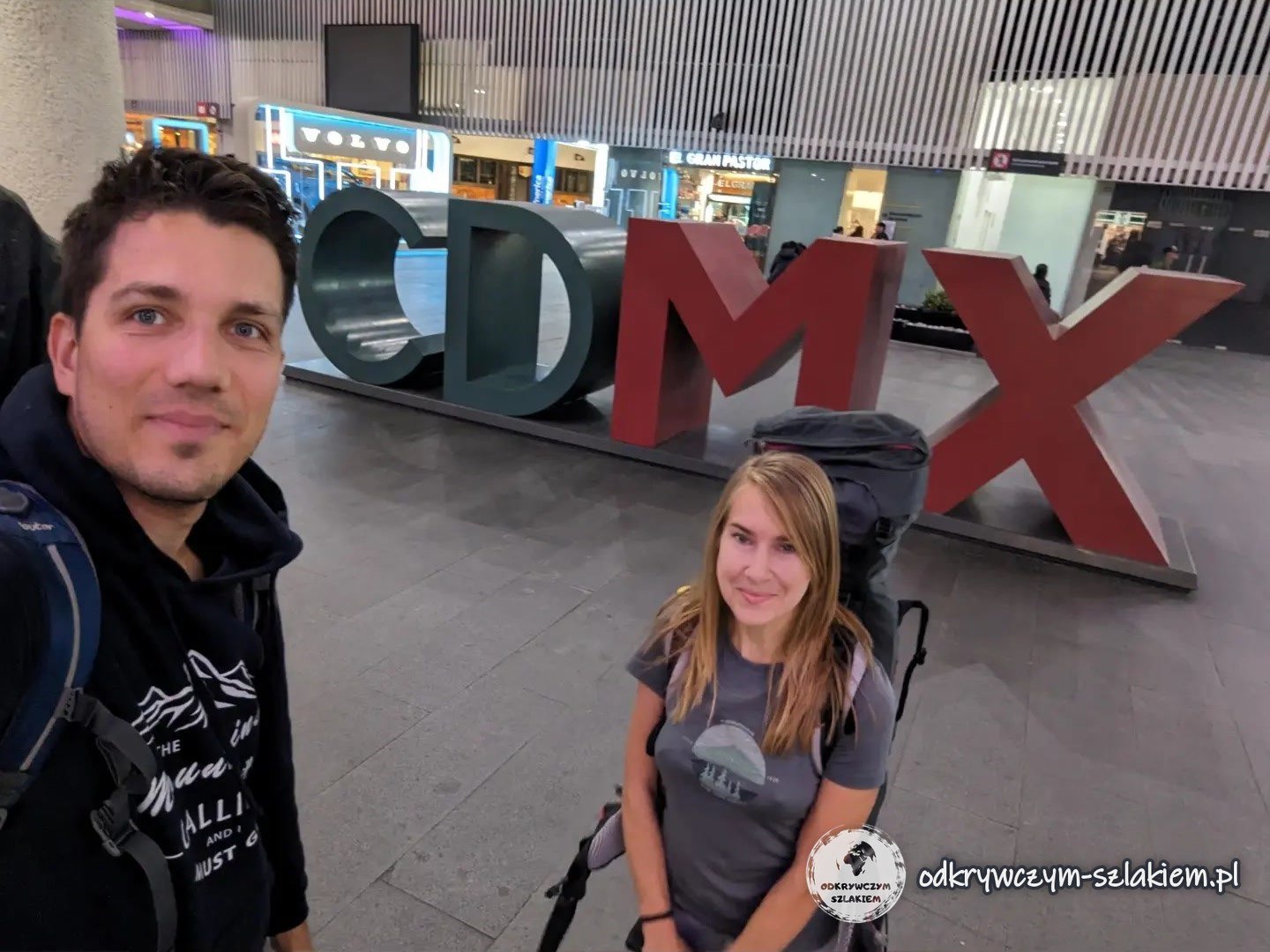
Despite being over 2200 m above sea level, I didn’t feel the altitude out on the street – but it “got me” twice in Walmart: my legs went heavy, and once I left the shop everything went back to normal. In Mexico City we stayed with Enya – we had met her earlier in Berlin, at a name-day party.
Places worth seeing:
The Basilica of Our Lady of Guadalupe
After the Vatican, the shrine of Our Lady of Guadalupe is the place most visited by Christians. This is where the Virgin Mary appeared to an indigenous man (Juan Diego). The last apparition took place in 1531, that is 10 years after the conquest, when the tribes had been subjugated by the Spanish, who later put an end to what they considered the brutal religion of the local peoples, based among other things on human sacrifice. In doing so they sought to destroy Aztec culture. After the apparition, an image of Mary was created. She is said to have asked the man to build a church in her honour, which the Spanish did.
Nearby there is also the Pacio Chapel with a pretty dome and interior.
The shrine is visited by about 20 million pilgrims a year. Images of John Paul II are everywhere – in 1990 he came here on a pilgrimage and beatified, among others, Juan Diego.
The Metropolitan Cathedral on the Zócalo

This impressive building went up after the colonists demolished an Aztec pyramid, whose stones were used to build the cathedral. It is also the seat of the Archbishop of Mexico.
The cathedral stands on the Zócalo – one of the largest squares in the world – and is one of the largest in the Americas; the National Palace is right next to it. Touts invite you to restaurants here, even from first-floor windows.
The National Museum of Anthropology

One of the most important museums in Mexico – you need to set aside a few hours for it. Admission is 90 MXN (about €5). It covers the history of humankind and how the various peoples of Mesoamerica adapted to their surroundings.
The most famous exhibit is the Aztec Sun Stone, and in front of the entrance there are sometimes performances of ritual dances.
The Palace of Fine Arts

This was the first opera house in Mexico and is also a venue for all kinds of cultural events (classical music, opera, dance). It has a beautiful Art Deco interior.
Chapultepec Park and Castle

This city park lies right in the centre of the city. An Aztec sanctuary once stood here, and after the conquest it became the residence of the Spanish viceroys. It has gardens, recreation areas and lots of historic sights. One of them is Chapultepec Castle, where admission costs 90 MXN (about €5). Together with the Palace of Iturbide, it is the only royal palace in North America.
The Tláloc Fountain

It’s a huge sculpture of the rain god lying in a fountain. To see it in full, you have to go up to the viewpoint. In aerial photos it looks much more interesting than in reality.
Plaza Garibaldi

A place with lots of bars and restaurants, where musicians come up to the tables and play songs on request. That’s the only thing that creates the atmosphere, because the square itself is nothing special.
The Square of the Three Cultures

A symbol of Aztec, colonial and modern culture. It is also a memorial to the victims of the 1968 protest, when the authorities opened fire on protesting students, killing several hundred people. Admission is 75 MXN (about €4).
The square brings together three eras: the ruins of Aztec Tlatelolco, the 16th-century church of Santiago and a modernist housing estate from the 1960s. The student massacre happened just before the 1968 Olympic Games.
Torre Latinoamericana

Including its spire, it is 182 metres tall. When it was completed, it was the tallest building in the city. That makes it the most recognisable building – not only because of its height, but also because of the big screen displaying the time. From the top floor you can admire a panorama of the city.
The Angel of Independence
It stands on the Paseo de la Reforma avenue. It is a symbol of Mexico’s struggle for independence. It resembles Berlin’s Victory Column (Siegessäule) and stands in the modern part of the city, which contrasts sharply with the rest of the capital.

Biblioteca Vasconcelos
A huge library that is an architectural work of art. Its interior is very interestingly designed. Unfortunately, publishing photos is forbidden. You can take photos for private use after signing a declaration that you won’t publish them.
The colonial district of Coyoacán

It is one of the oldest districts of Mexico City, so there are many buildings from the 19th and 20th centuries. It has a historic centre with the church of St John the Baptist.
Frida Kahlo and Leon Trotsky, among others, lived here, and the Polish traveller and TV presenter Wojciech Cejrowski also has a house here. The district has an artistic, colonial feel – a completely different place from the rest of the metropolis.
Monumento a La Revolucion

A monument commemorating the Mexican Revolution.
The Island of the Dolls
In 1951 the caretaker Julián Santana Barrera witnessed a child drowning, who left behind a doll. Over the following years he began collecting old and broken dolls on the island, probably to appease the spirit of the dead girl. The island has a dark atmosphere, which is why tourists love visiting it. The first location you find on Google Maps, in the Parque Ecológico de Xochimilco, is wrong.

You need to get to Trajineras Xochimilco – Embarcadero Cuemanco (in the area), where the boats to our destination leave from. When we got there, it turned out that the trip takes 4 to 5 hours and costs about 2400 MXN, or about €110 (a replica of the island), or about 3000 MXN, or about €135 (the original island). The big, colourful, beautiful boats could only be hired privately – you couldn’t share with strangers. So it’s worth paying, but only with a much bigger group. For two people the price was too high.
Practical information:
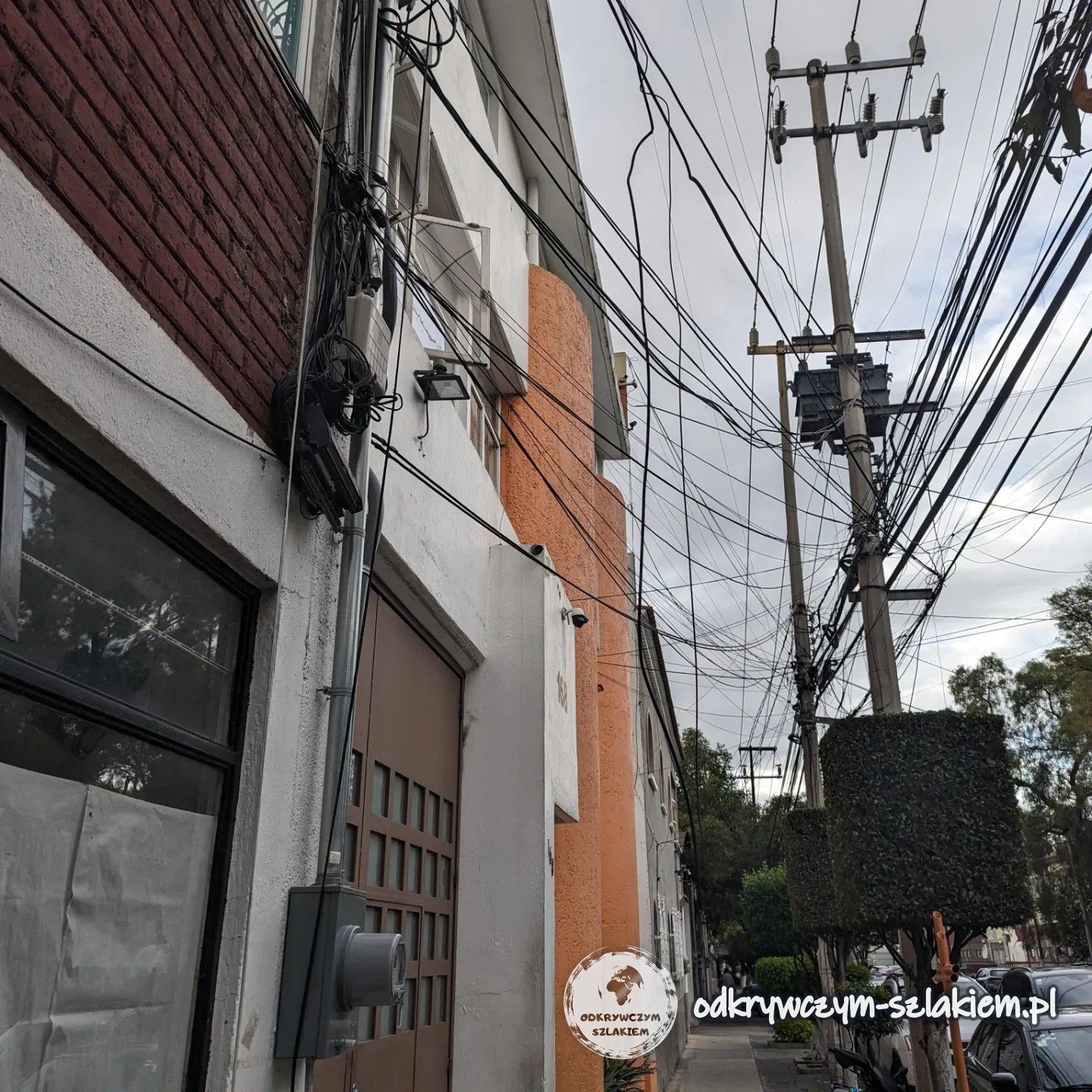
- Safety: The parts of the city considered more dangerous are the north and the south-east (Doctores, Tepito, Iztapalapa, Ciudad Neza, La Merced Market). However, only 1% of crimes involve tourists. When coming back at night, it’s better to order an Uber, and public transport can get incredibly crowded, so keep a particularly close eye on your belongings. Women and children have separate areas at metro stations, from which they board separate carriages.
- My precautions: the first days were stressful – I wore my backpack on my front and a money belt under my shirt, and just in case I carried a “fake” wallet and a spare phone.
- Advice from Enya, who has lived in Mexico for over 20 years: after dark, get off one stop early and avoid dark streets, and wait for your Uber inside a building. In all that time she was robbed once – on a minibus going through a rough neighbourhood. In many places there are lots of police and security guards.
- Mexico isn’t dangerous at every step – people live normal lives here, the risk is simply higher than back home.
- Public transport: The most convenient way to get around is the metro – you buy a card and then top it up. One ride costs 5 MXN (about €0.35). The Metrobús costs 6 MXN (about €0.37). Use buses only as a last resort (uncomfortable rides).
- The metro has 12 lines (it’s the second-largest metro system in North America) and can be so crowded that you have to let several trains go by. A trick to get a seat: ride in the opposite direction to the terminus, stay on and ride back.
- Money: the most convenient way is to pay with a Revolut card and withdraw pesos from ATMs – the withdrawal fee was 30–100 MXN.
- How long to stay: 4 to 7 days.
- Food: be sure to try pozole – a soup made with a special kind of corn, recommended to us by Enya; we had it with chicken, lettuce and radish.
- Another nearby attraction : Teotihuacán (click here to see the post).