Szczecin is the capital of the West Pomeranian Voivodeship, on the Oder and Lake Dąbie. I once wrote that it is a city “by the sea” with no access to it – the Baltic is still quite a way off, but the port, quays and ships are everywhere. Between 2018 and 2026 I came to Szczecin many times. In this post I have gathered the places I photographed on those visits: the Chrobry Embankment, the Pomeranian Dukes’ Castle and the Old Town, the boulevards and Łasztownia, the sights of the city centre, Jasne Błonia with the rose garden and the lakes within the city limits, plus two trips nearby – to the Crooked Forest near Gryfino and to Nowe Warpno. I described the underground shelters and abandoned factories separately, in the post about urbex in Szczecin and Police.
Table of contents
- Chrobry Embankment – a terrace above the Oder
- The Pomeranian Dukes’ Castle and the Old Town
- The Oder boulevards and Łasztownia
- City centre – gates, town halls and a mural
- Jasne Błonia and the rose garden
- Lakes and Międzyodrze within the city
- The Crooked Forest near Gryfino
- Nowe Warpno on the Szczecin Lagoon
- Practical information
Chrobry Embankment – a terrace above the Oder
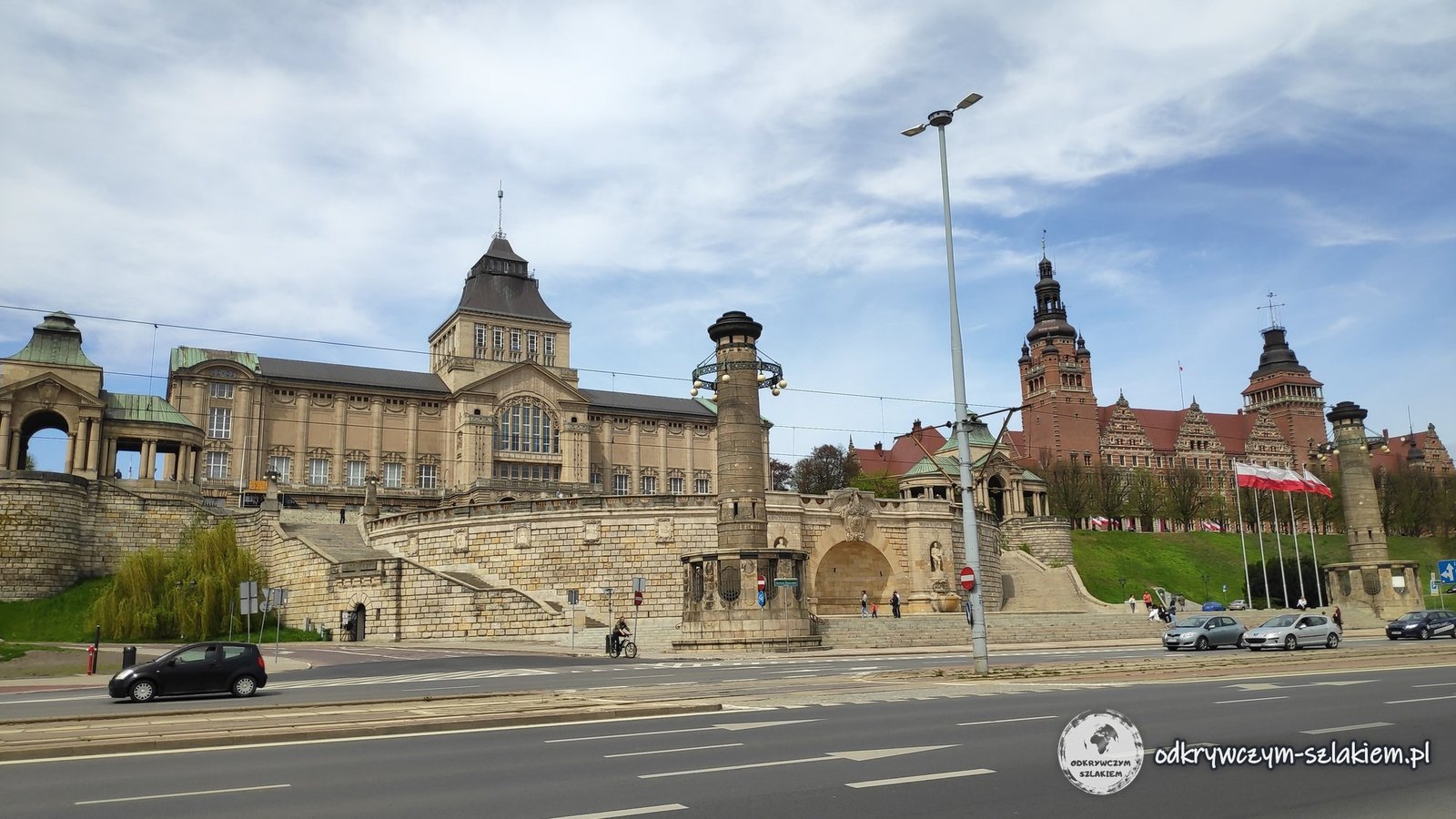
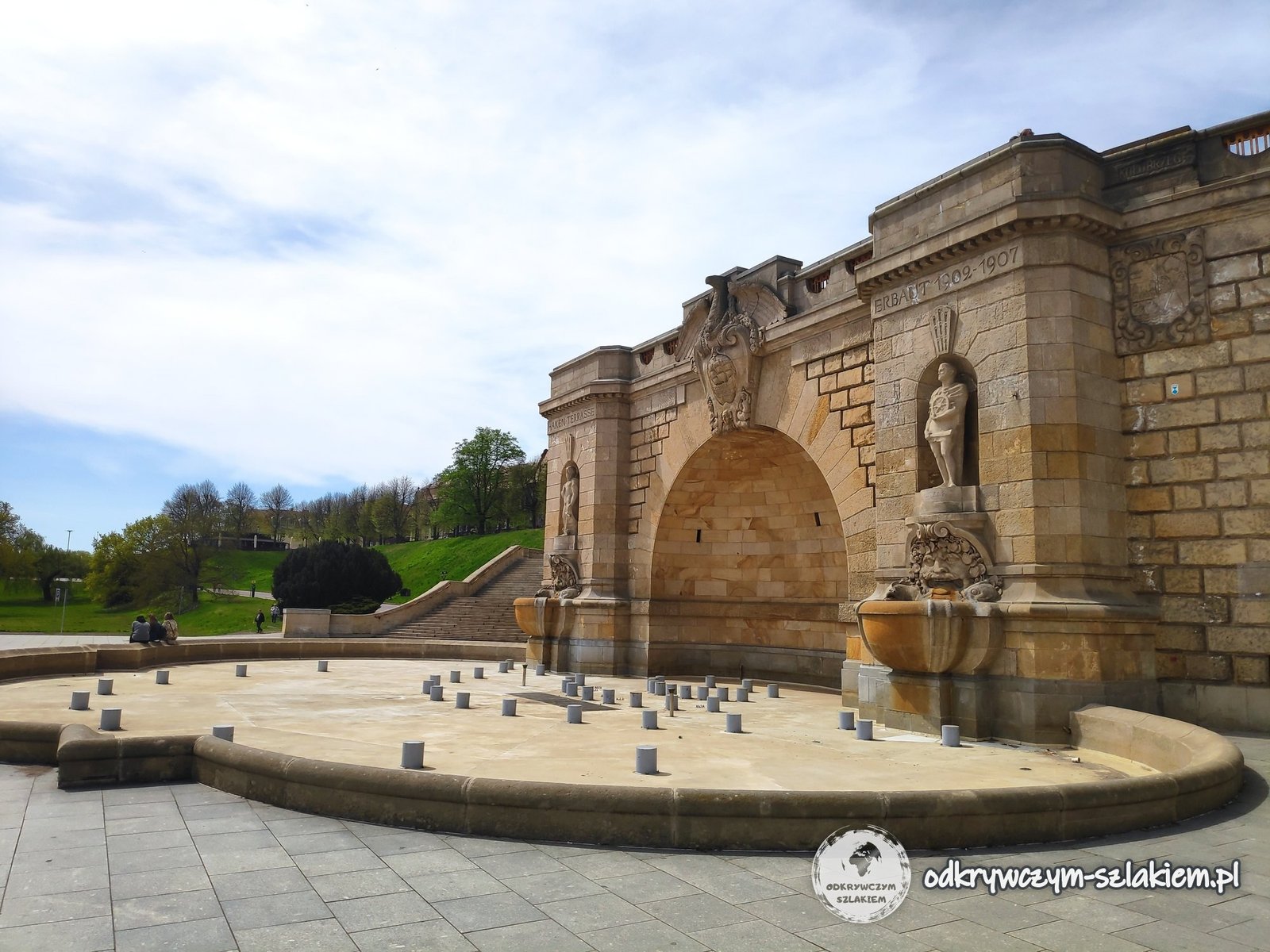
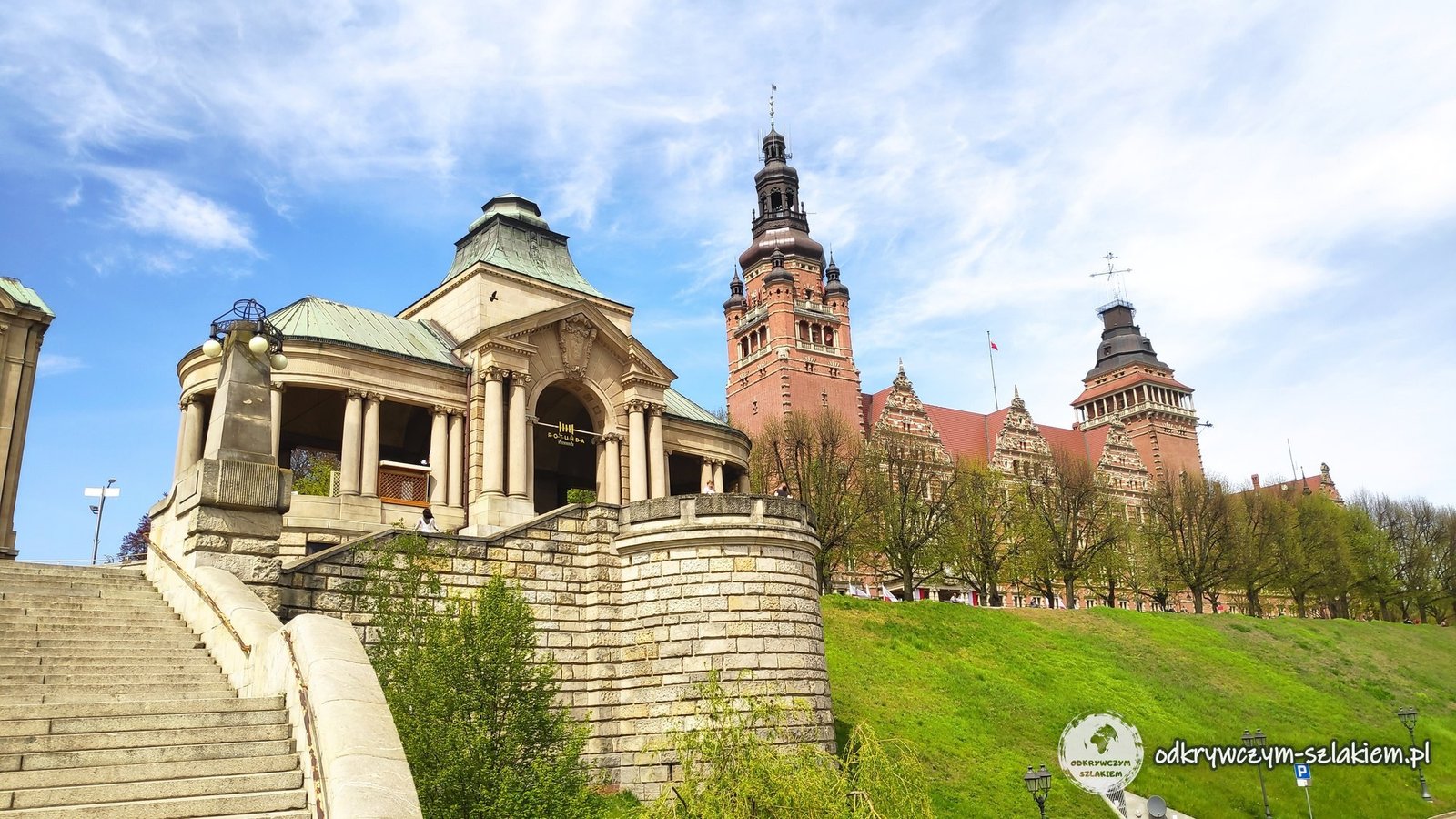
The Chrobry Embankment (Wały Chrobrego) is a viewing terrace on the escarpment above the Oder, about 500 metres long. It was built in 1902–1921 on the site of the former Fort Leopold, to a concept by the city architect Wilhelm Meyer-Schwartau. Before the war it was called Hakenterrasse, after Mayor Hermann Haken, who initiated it. The terrace is lined with monumental buildings: the Voivodeship Office, the National Museum and the buildings of the Maritime University. I took these photos on a sunny day, 9 May 2021.
In the centre, in the retaining wall, there is a semicircular niche with statues, and in front of it a wide fountain. Two lighting towers styled as lighthouses stand in front of the fountain, and on the sides there are two smaller terraces with domes on columns. In the middle of the upper terrace stands the sculpture “Hercules Fighting the Centaur”. Two flights of stairs lead down to the quay, where ships are moored.
The Pomeranian Dukes’ Castle and the Old Town
A few hundred metres from the embankment, on Castle Hill, stands the Pomeranian Dukes’ Castle. Duke Barnim III began building a brick residence here in 1346, and the castle owes its Renaissance look to 16th-century rebuilding – the largest took place in 1573–1582. In 1944 bombing raids badly damaged it, and its reconstruction to the old design lasted from 1958 to 1980. Today it houses the Opera at the Castle, a cinema and concert halls. You can walk around the courtyards without a ticket – I was in the largest one in October 2020.
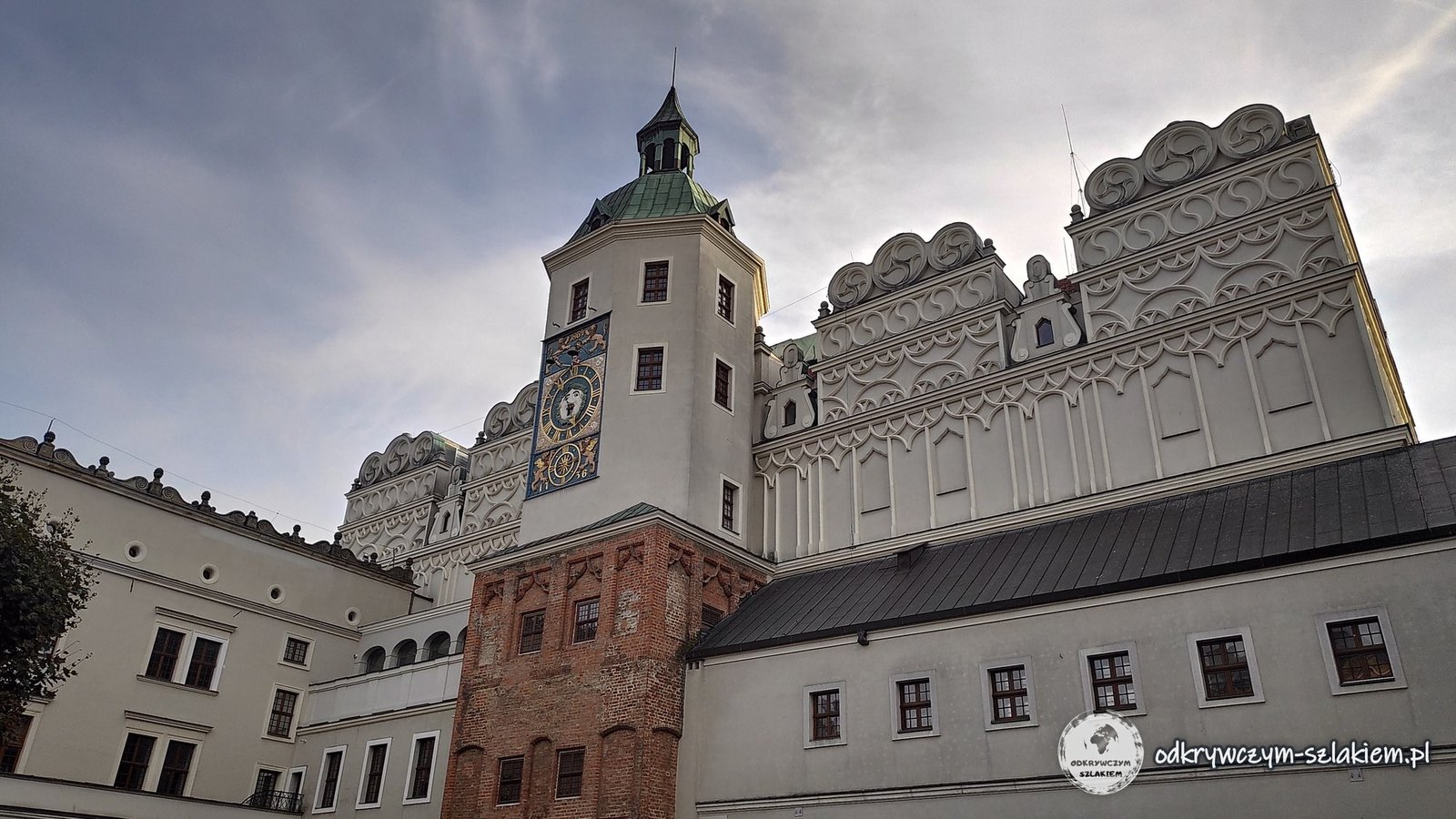
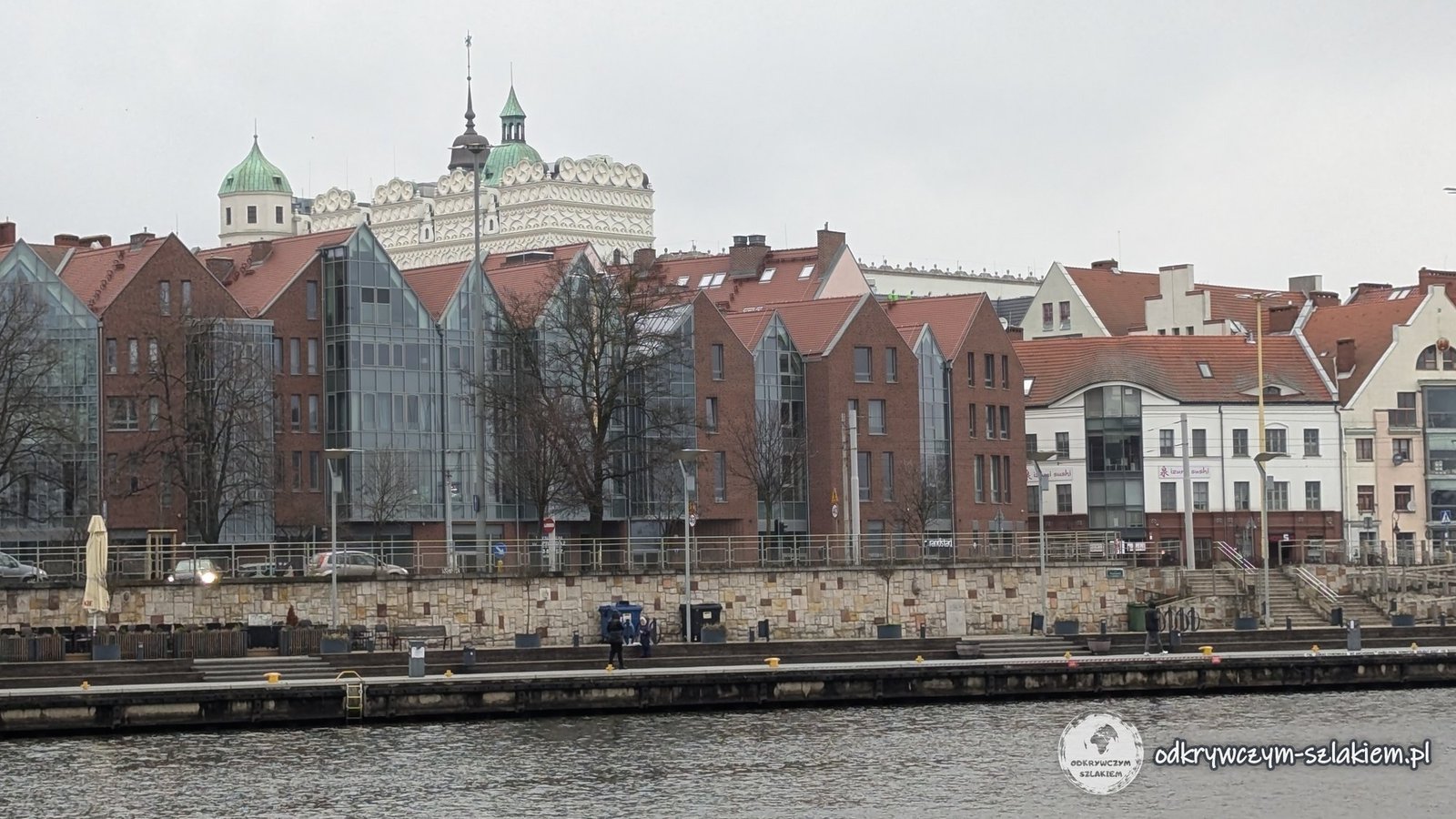
Above the courtyard rises the Clock Tower, and the tallest of the castle towers is the Bell Tower – you need a ticket for it and for the Ducal Terrace on the roof of the north wing. The castle is also easy to see from the other bank of the Oder, from Bulwar Gdyński. I took this photo in March 2025 – below the castle, right by the water, stand the houses of Podzamcze.
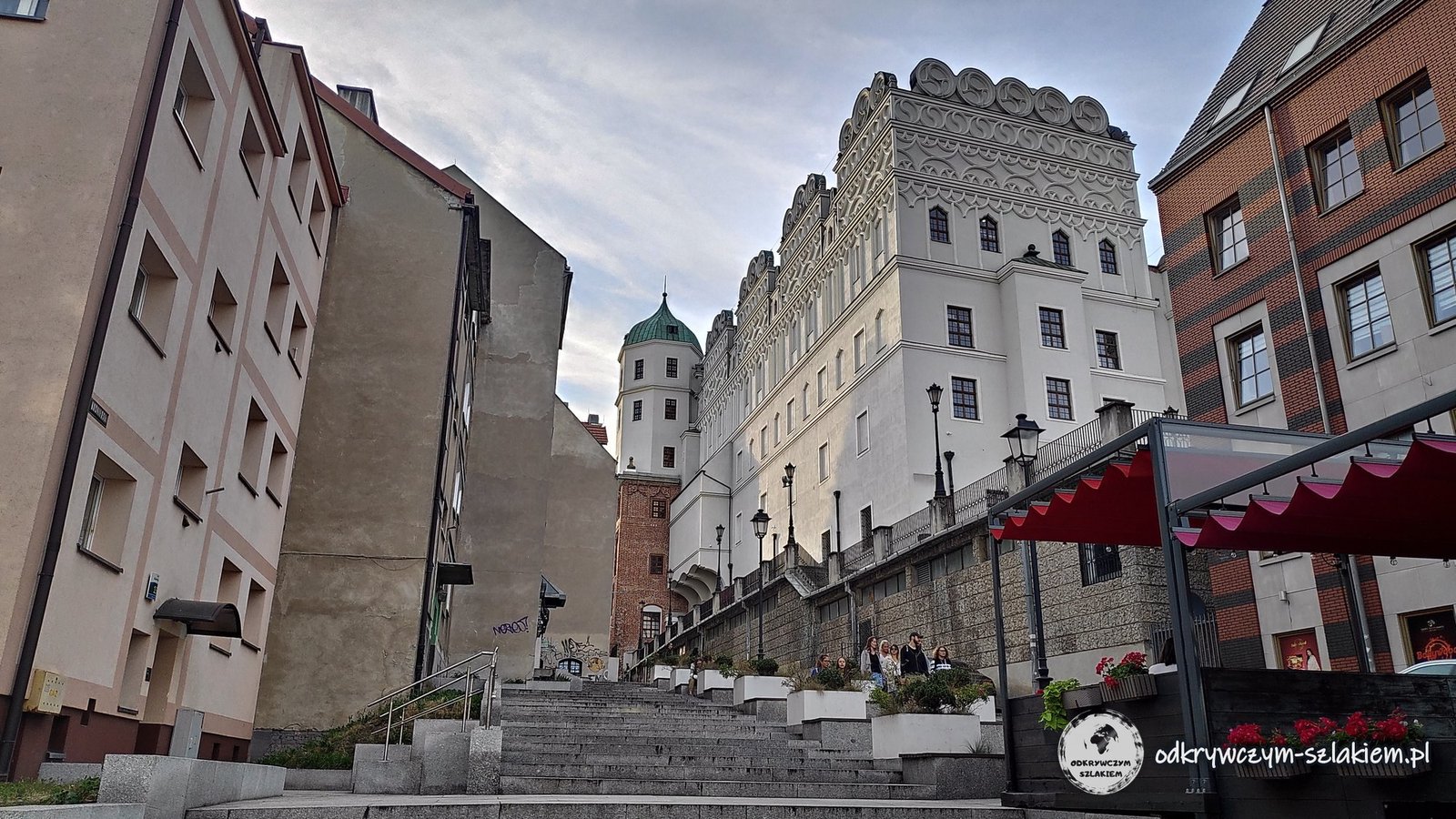
From the castle, steps lead down to Rynek Sienny (Hay Market) – the former market square of the Old Town, badly damaged in the war. On it stands the Gothic Old Town Hall from the 15th century, home to the Museum of the History of Szczecin, and rebuilt colourful houses with cafés and restaurants. I was here in August 2020, in the evening.

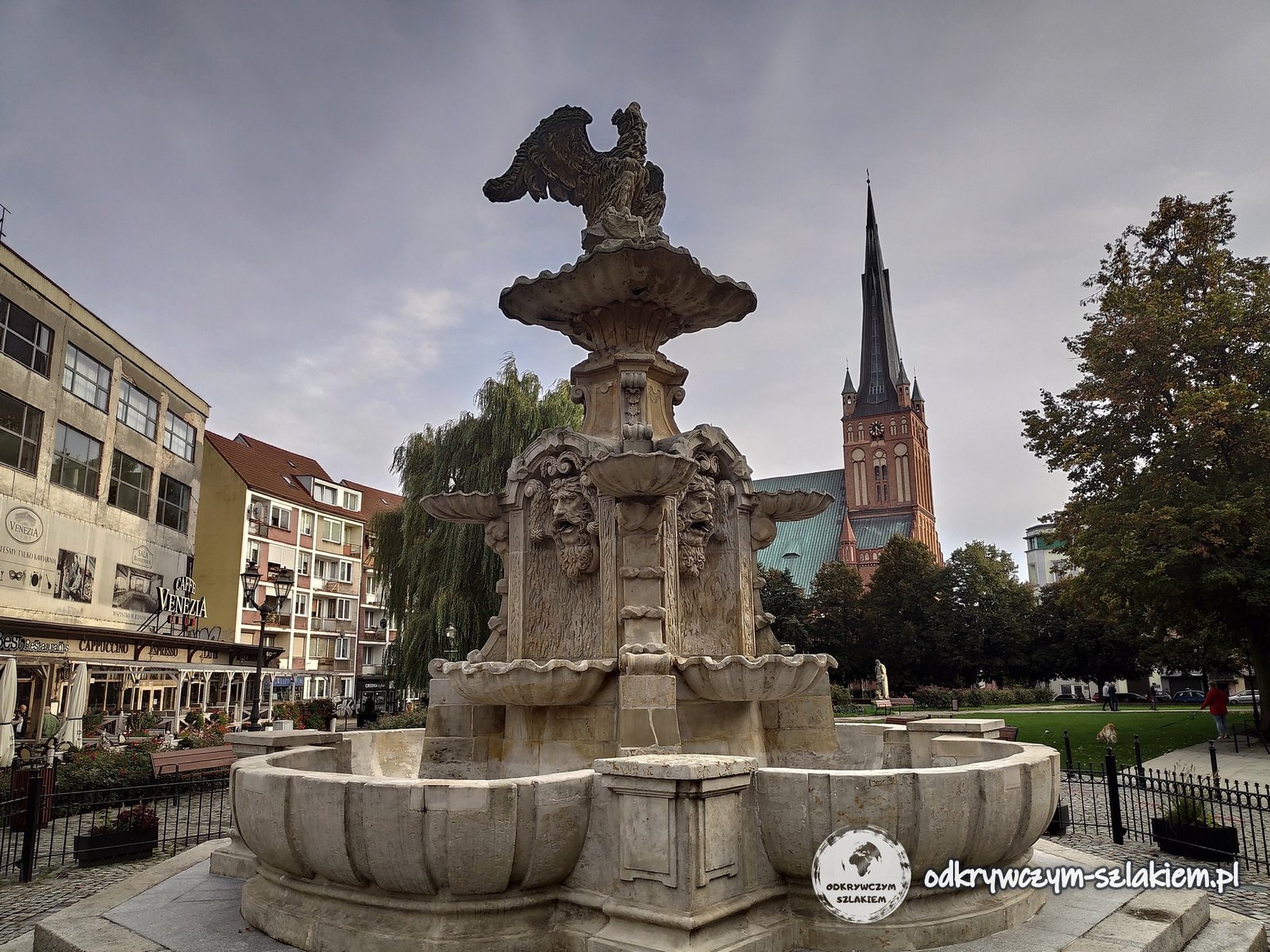
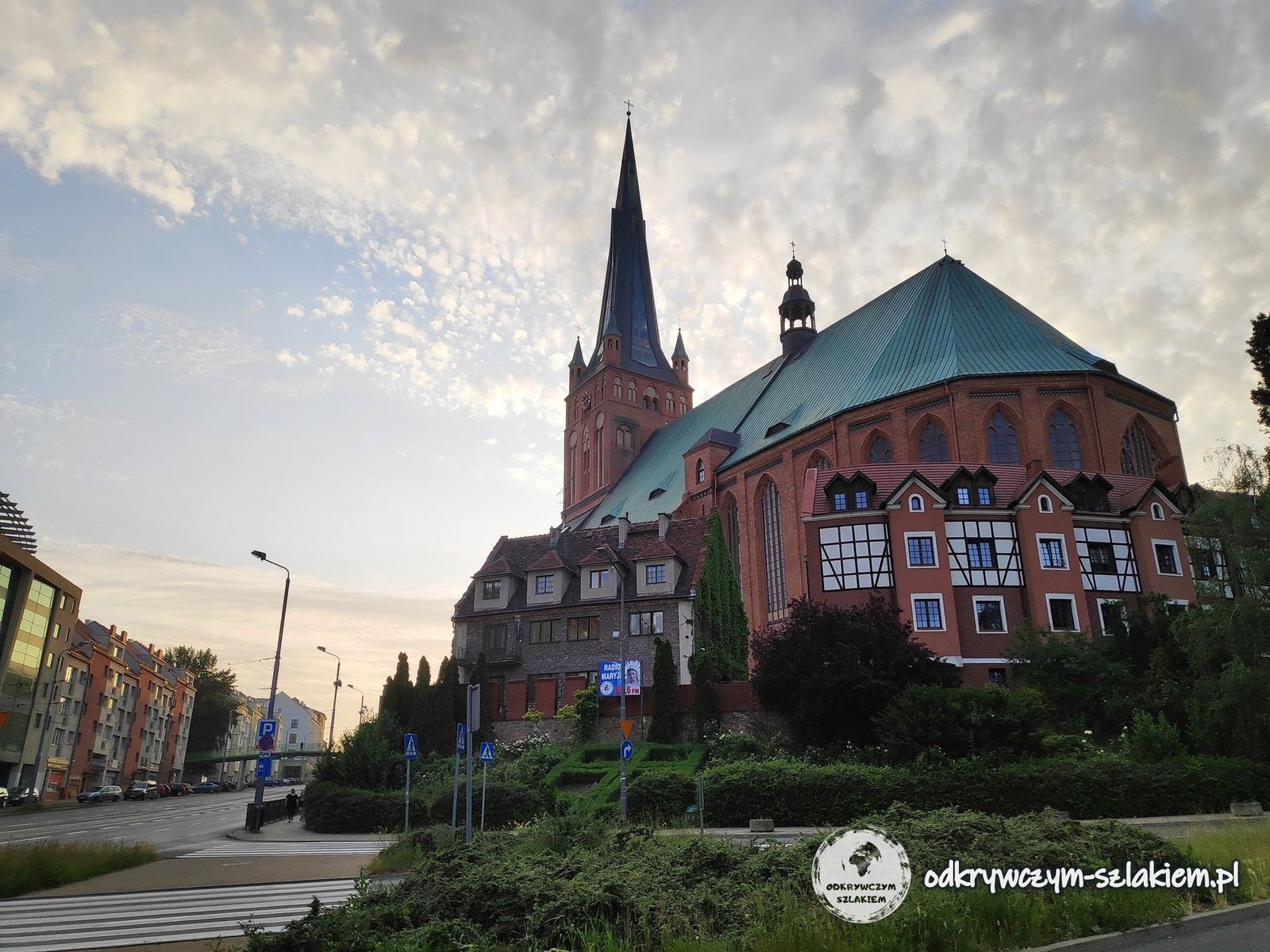
A little further on, on White Eagle Square, stands the Baroque White Eagle Fountain from 1729–1732. From here you can see the tower of St James’s Cathedral above the roofs. The tower is 110 metres high, and a lift takes you up to a viewing terrace at 56 metres. I photographed the fountain in October 2020 and the cathedral in June of the same year.
The Oder boulevards and Łasztownia
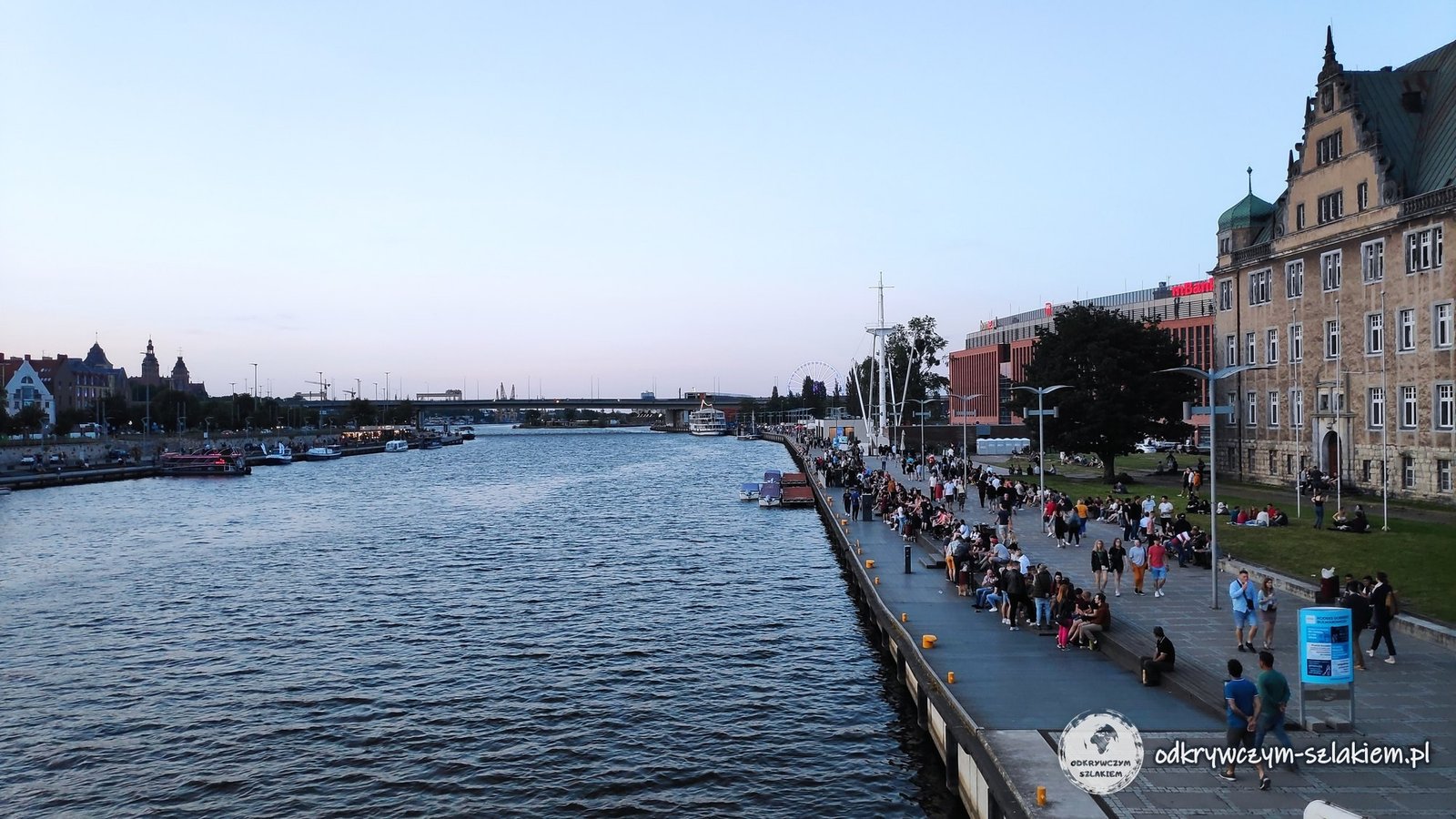
Along the left bank of the Oder, from the railway bridge to the Castle Route, runs Piast Boulevard (Bulwar Piastowski). On a warm June evening in 2021 the steps by the water were packed with people.
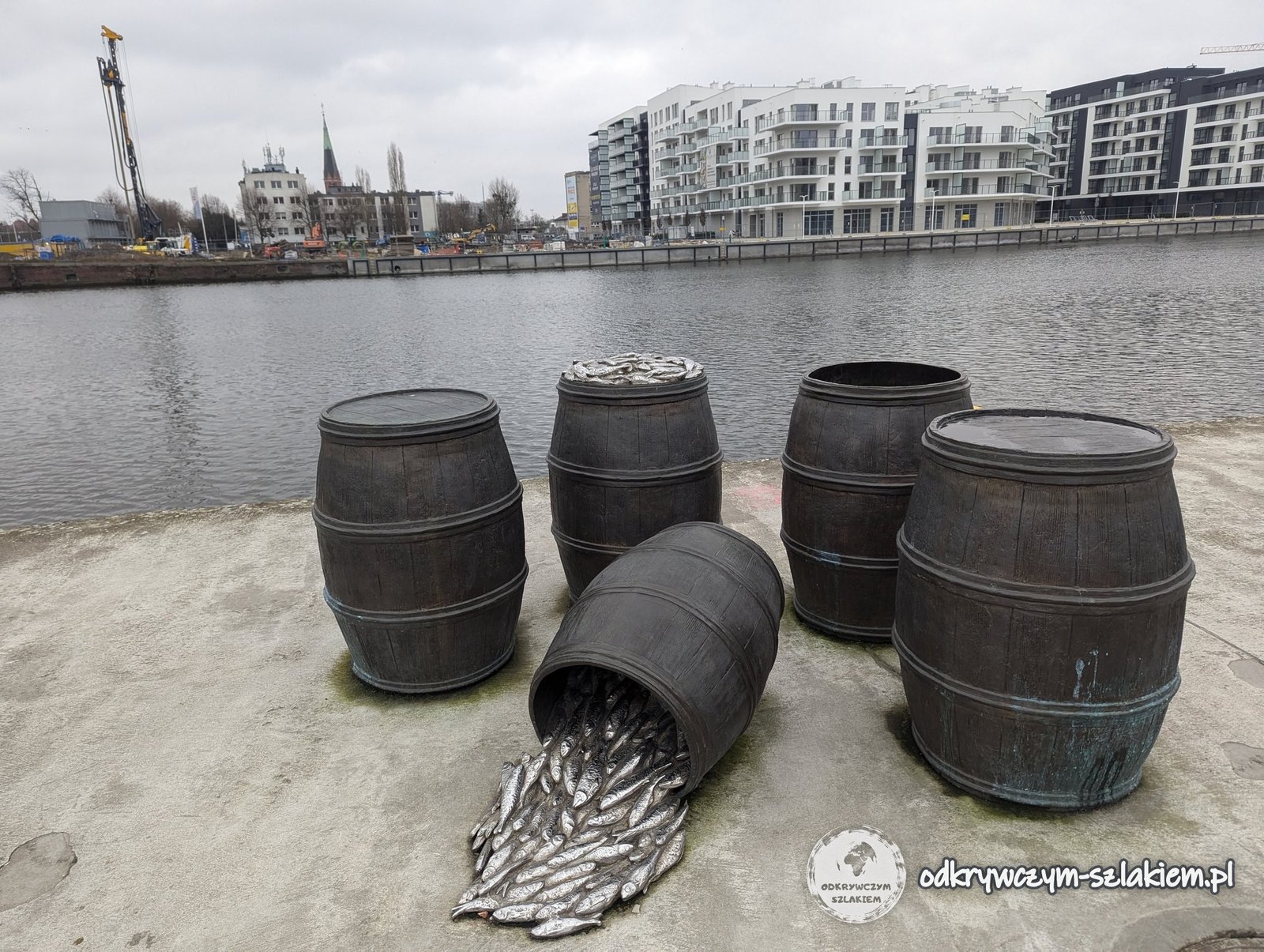
On the boulevard stands a sculpture of Szczecin barrels – metal herrings spill out of one of them. It refers to the history of the city, which grew rich partly on herring fishing. I photographed it in March 2025.
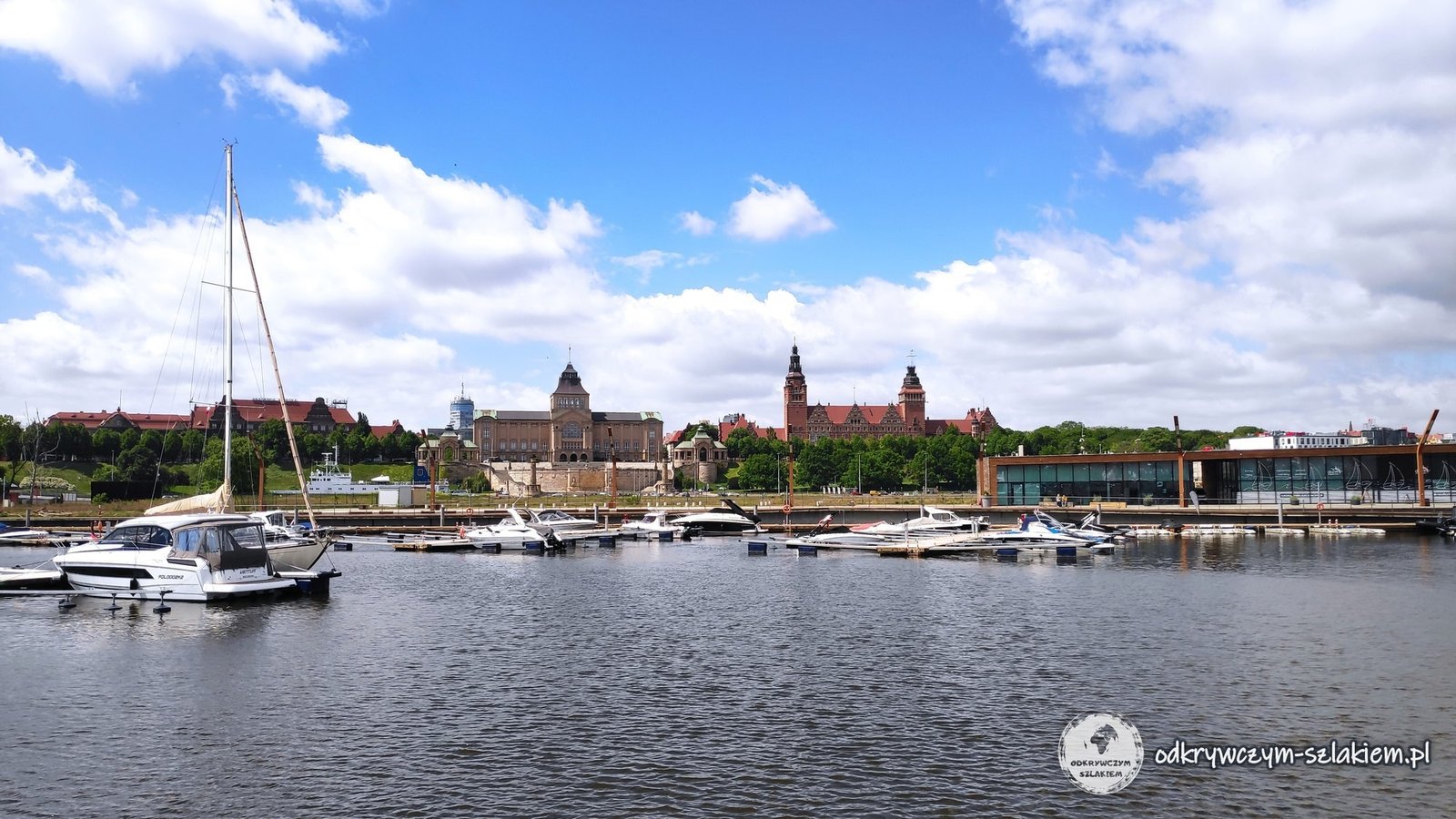
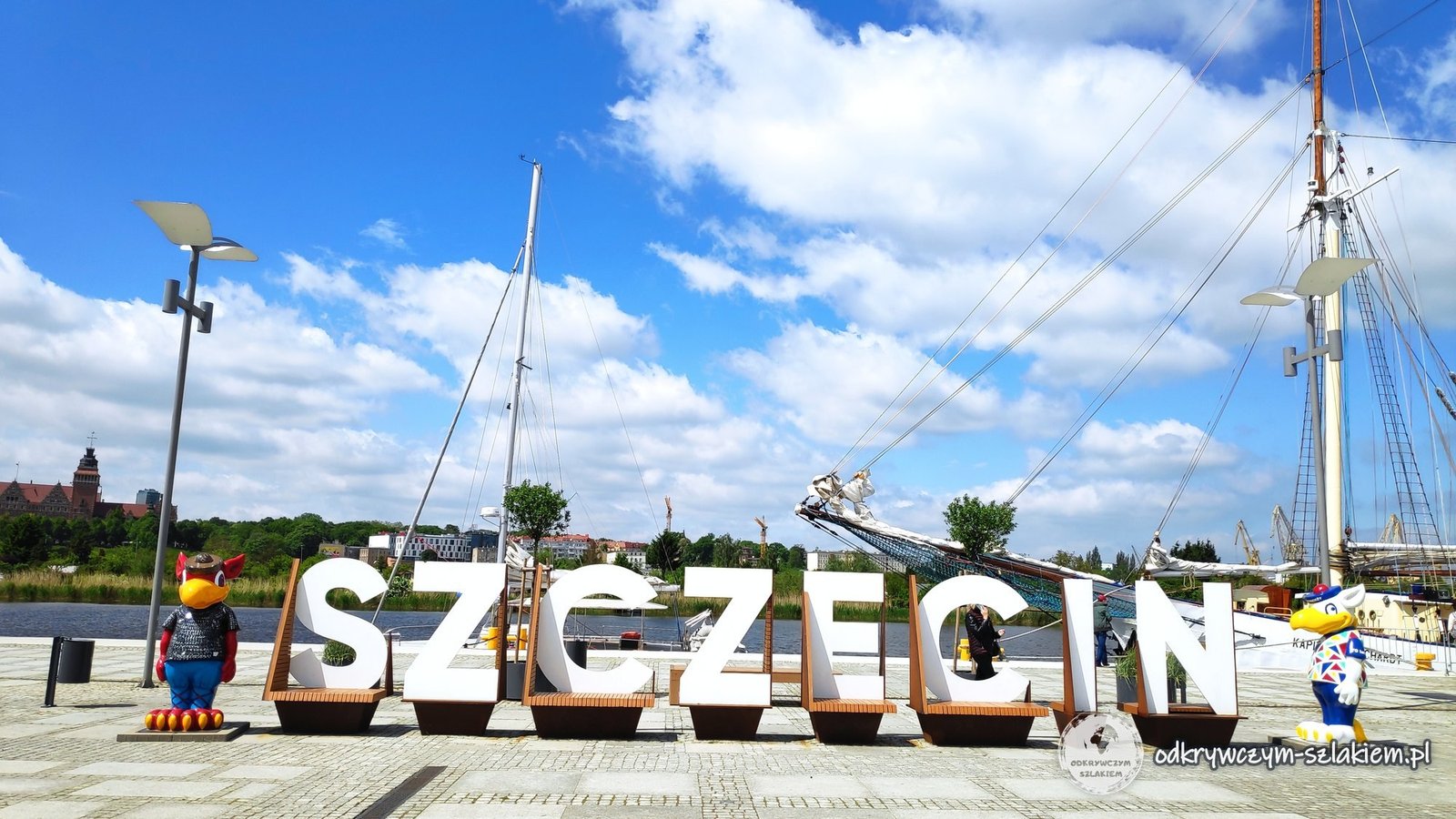
On the other side of the West Oder lies Łasztownia – a former port island where boulevards, a marina and bars have appeared. In May 2021 you could see the Chrobry Embankment across the water from the marina, and a large SZCZECIN sign stood on the quay.
From the Castle Route (Trasa Zamkowa), the elevated road linking both banks, you get a panorama of the Old Town – with the castle, the cathedral tower and the houses of Podzamcze.

City centre – gates, town halls and a mural
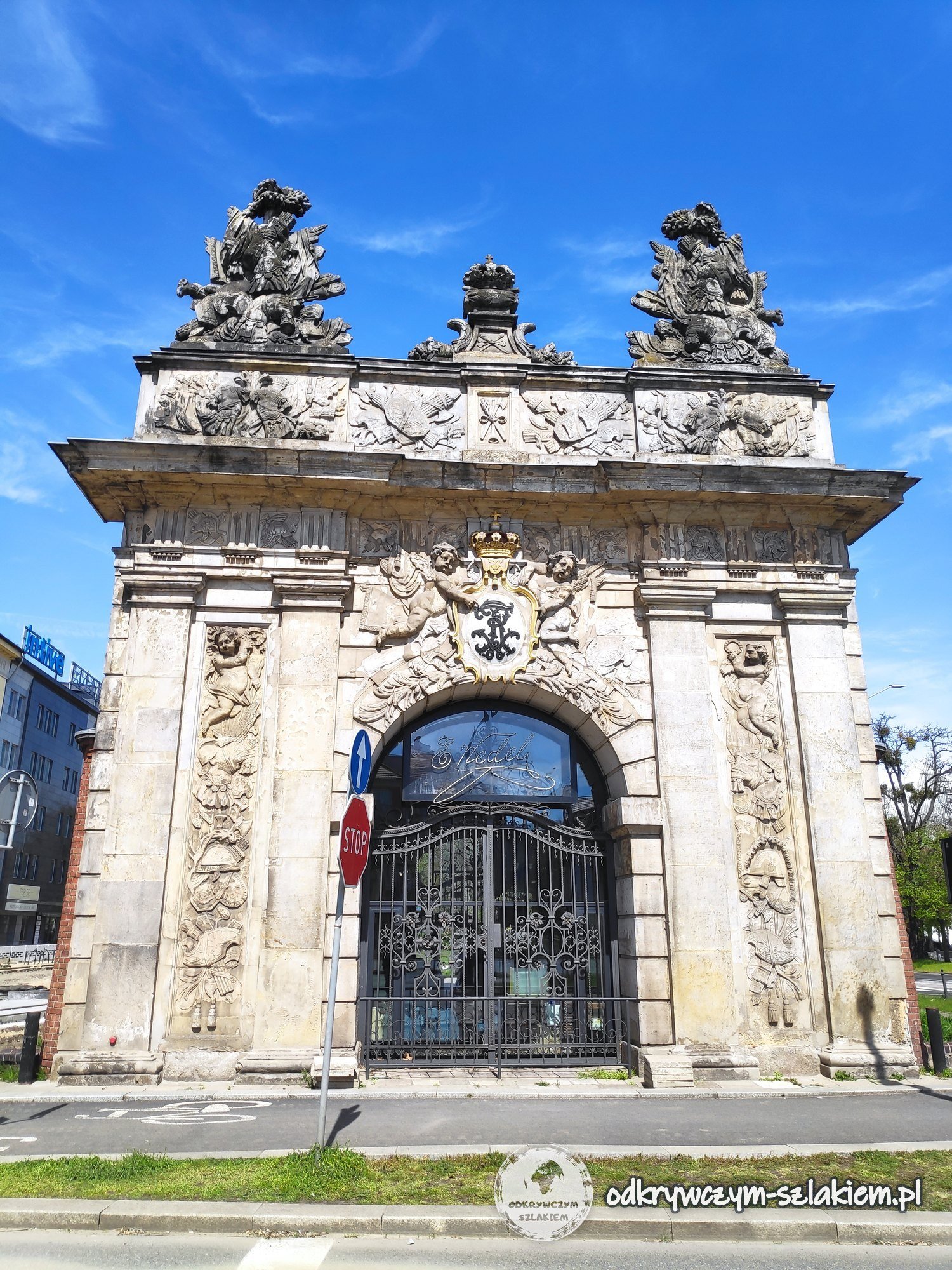
Two Baroque gates of the old fortifications have survived in the city centre: the Harbour Gate (Brama Portowa) and the King’s Gate (Brama Królewska). Both were built in 1725–1728 to a design by Gerhard Cornelius van Wallrawe, with sculptures by Bartholomé Damart. Today the Harbour Gate is a theatre venue, and the King’s Gate, formerly the Anklam Gate, houses a confectionery. I photographed both on 9 May 2021.

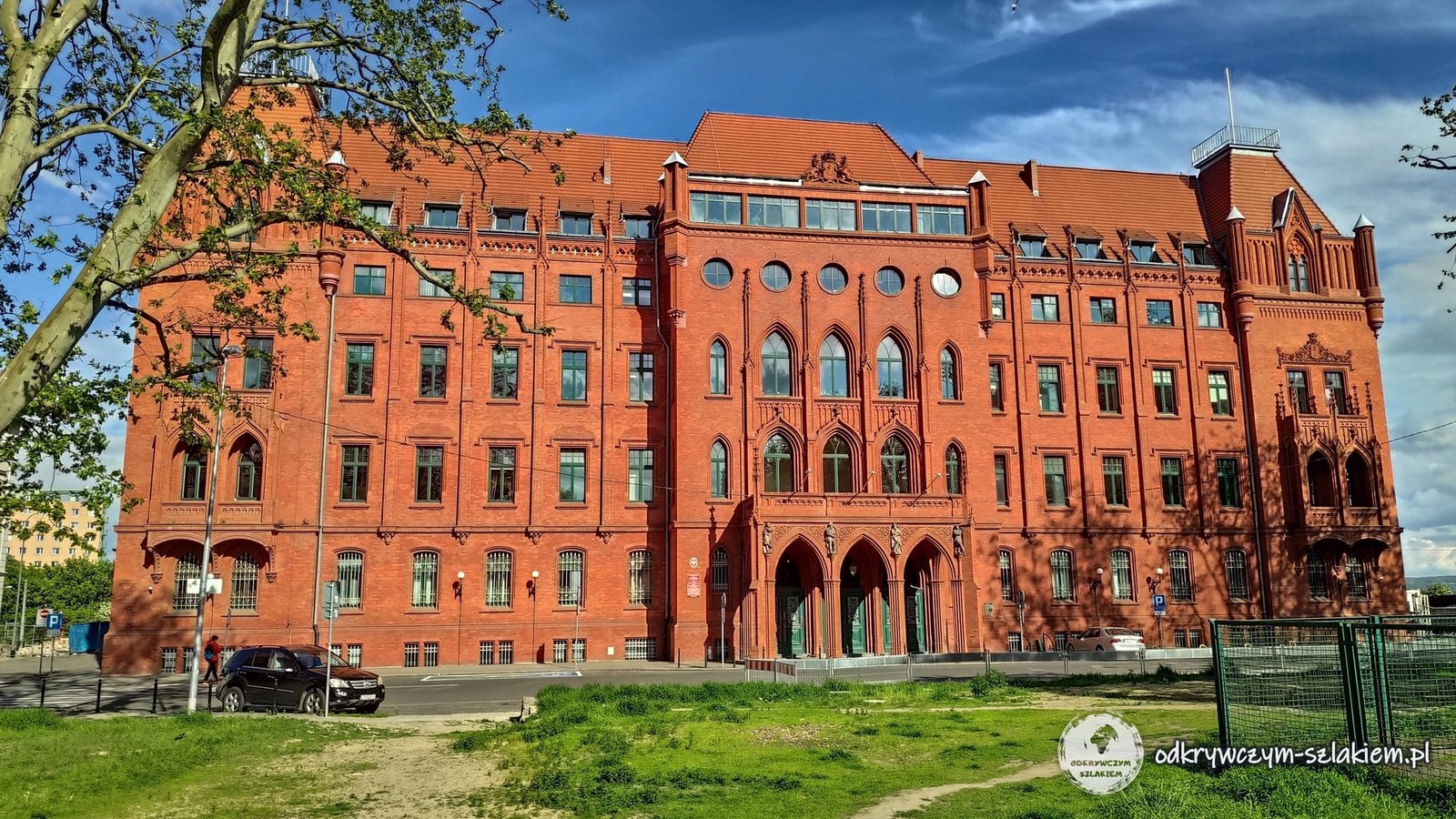
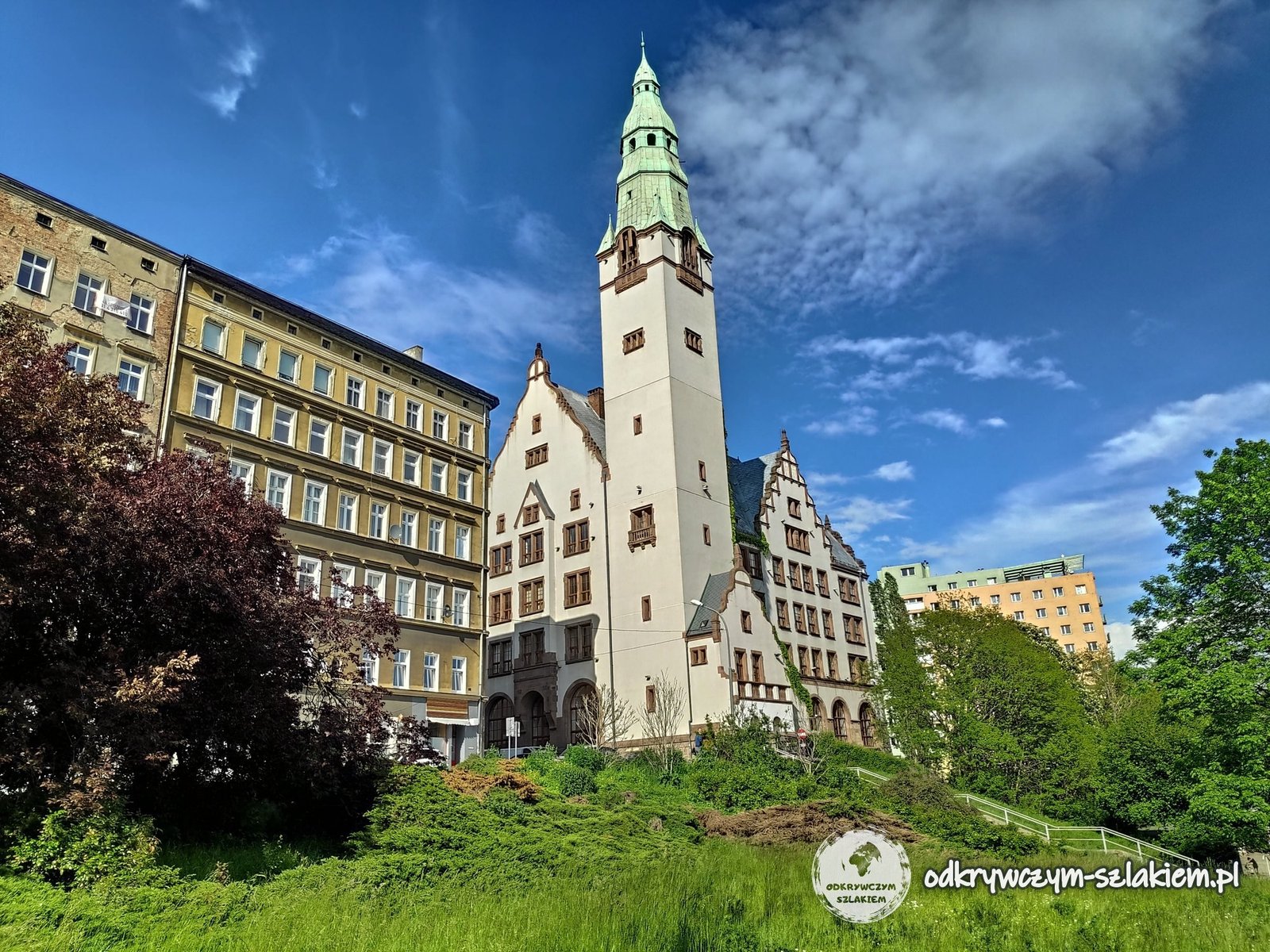
On Batorego Square stands the Neo-Gothic Red Town Hall (New Town Hall) from 1875–1879, designed by Konrad Kruhl. The city authorities sat here until 1945, and today it houses, among others, the Maritime Office. Next to it, on Rybacka Street, rises the tower of the rectorate of the Pomeranian Medical University – it is 68 metres high. The building was put up in 1900–1902 for municipal offices, to a design by Wilhelm Meyer-Schwartau, the author of the Chrobry Embankment. Between the buildings, on Tobrucki Square, the basin of the Manzel Fountain from 1898 has survived – its figures were removed during the war, and today an anchor on a rock stands in it.
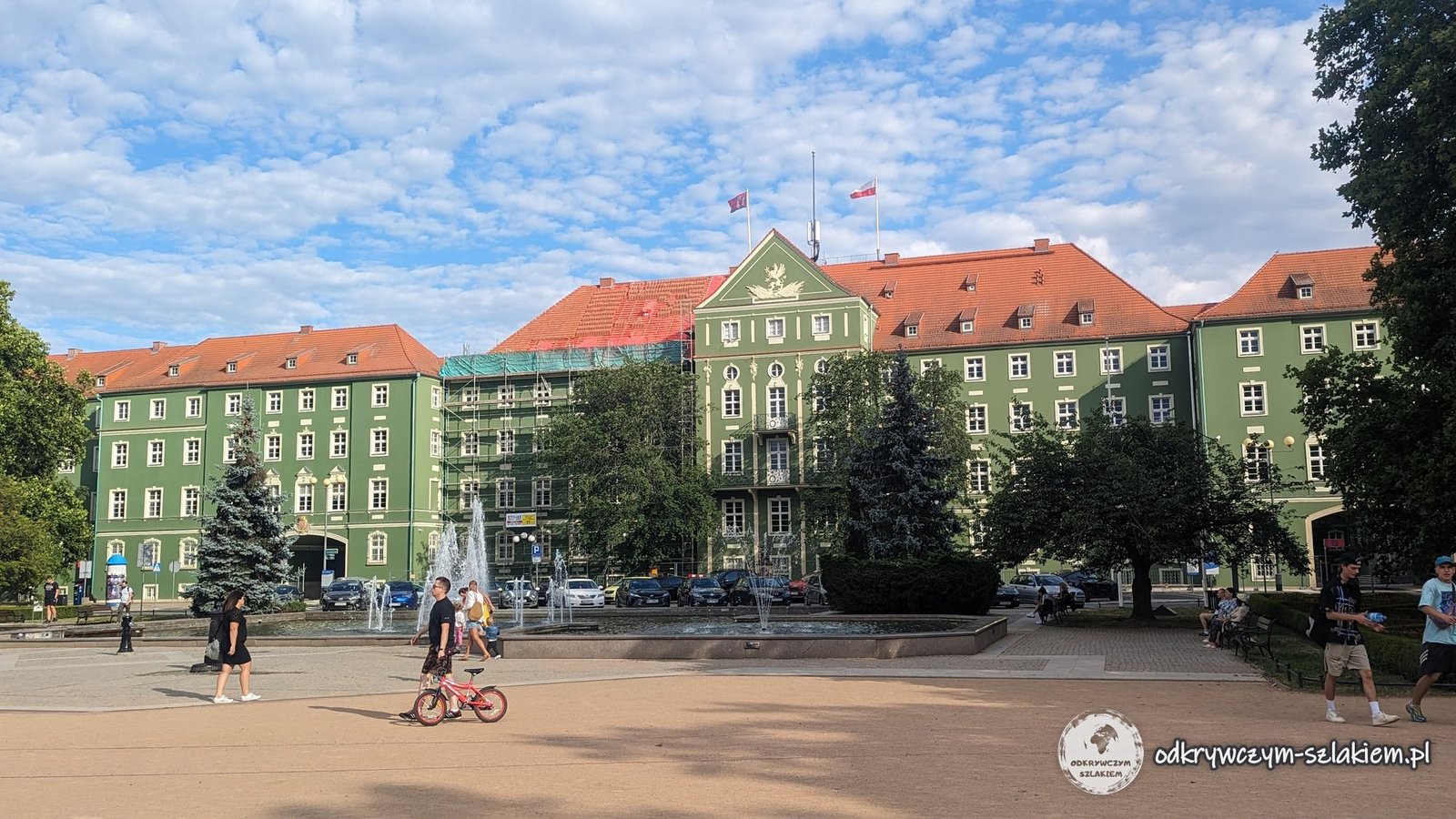
The green building of the City Hall on Armii Krajowej Square is known as the “Spinach Palace”. It was built in 1924–1927 as the seat of the authorities of the Province of Pomerania, and its green plaster was restored during a renovation completed in 2013. I was here in July 2023.
Not far from the main station, on Kolumba Street, runs a long mural with the word SZCZECIN. I walked past it several times between 2021 and 2026; this photo is from April 2023.

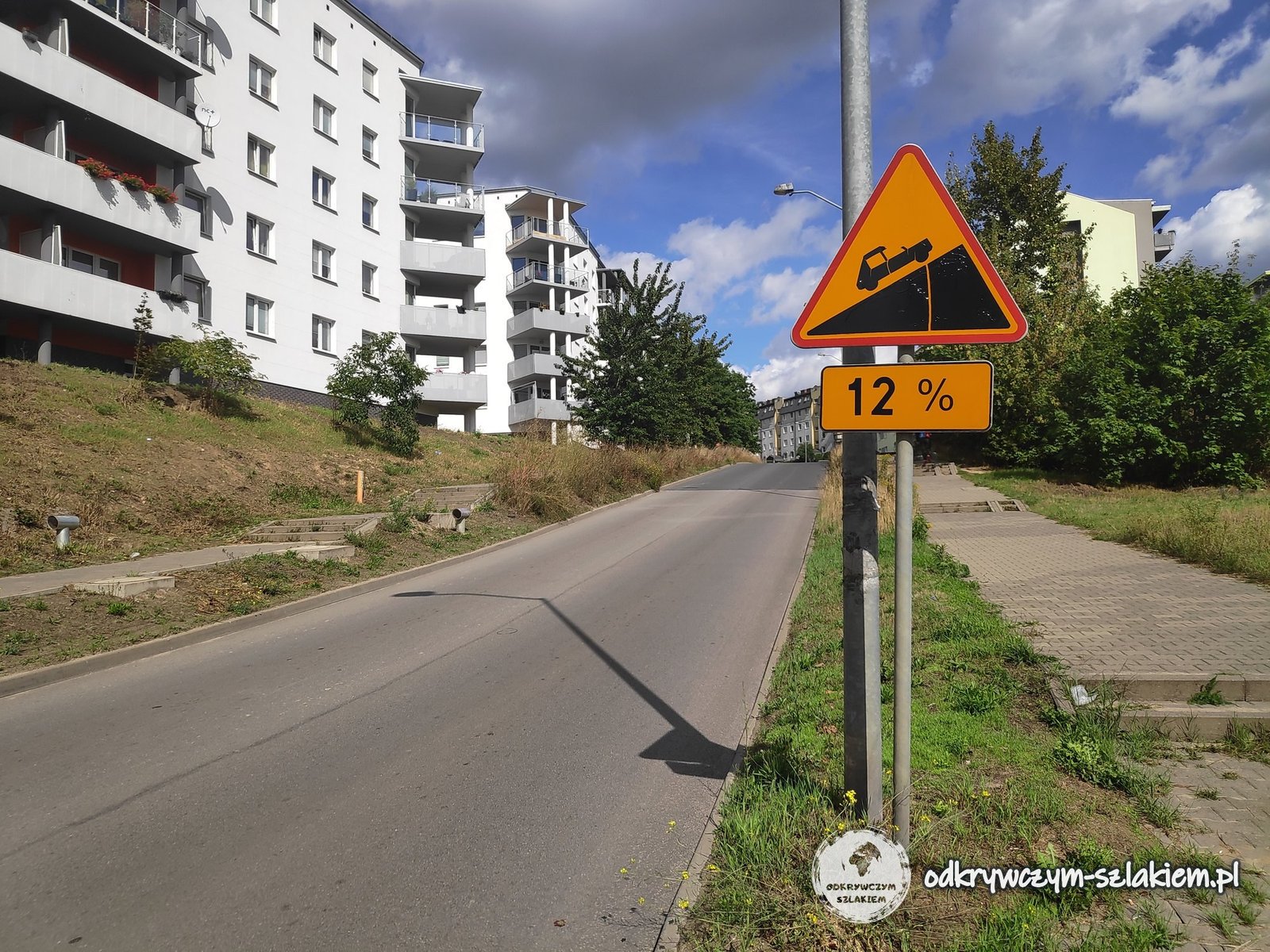
Fun fact: on steep Kusocińskiego Street, next to a sign warning of a 12% gradient, the Polish internet hit “Ale urwał!” was filmed. I took this photo in September 2020.
Jasne Błonia and the rose garden
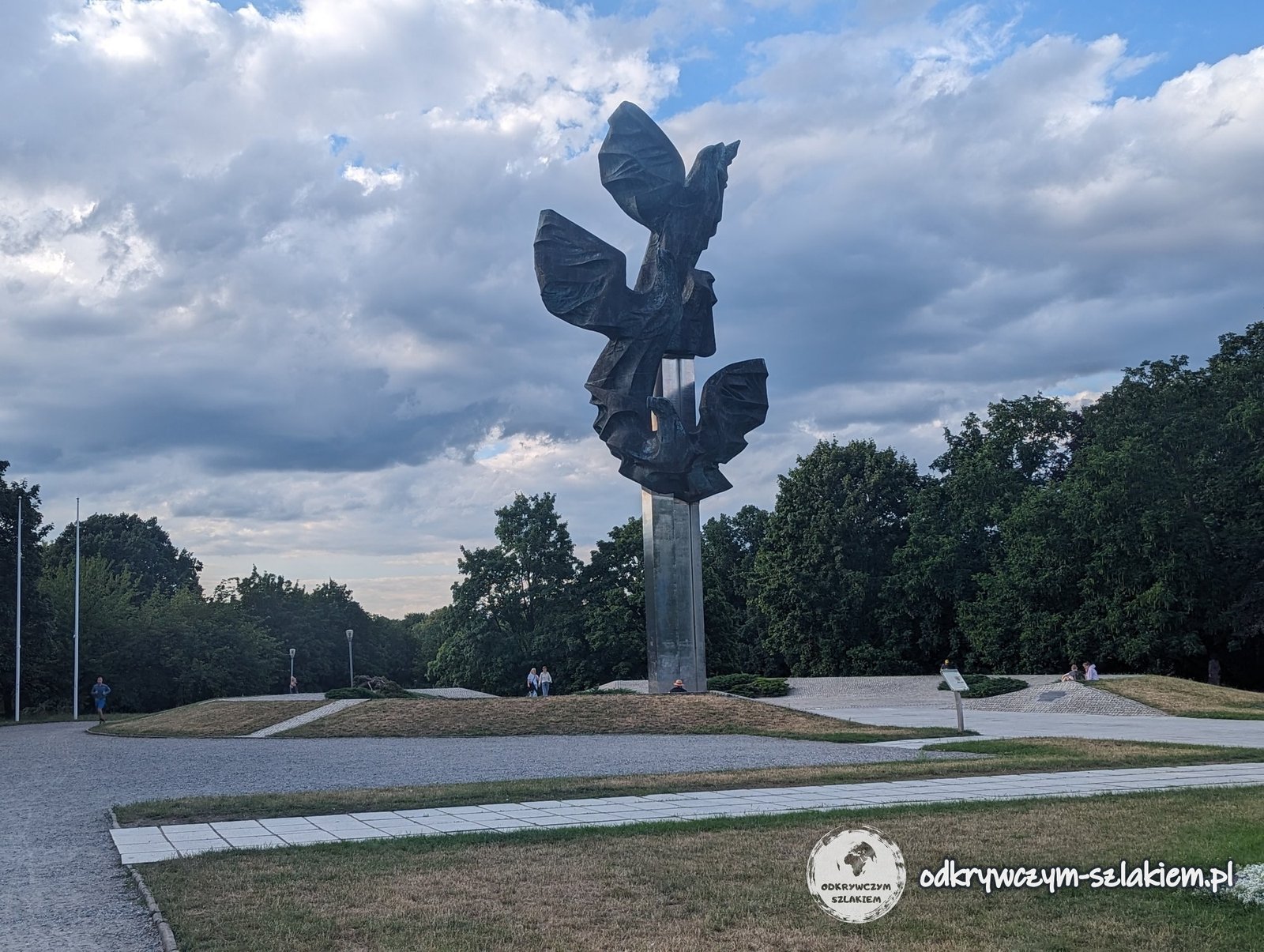
North of the centre lies Jasne Błonia (John Paul II Bright Meadows), laid out in 1925–1927 on land that belonged to the Quistorp family. It bears the Pope’s name since the mass John Paul II celebrated here in 1987. Above the meadows stands the Monument to the Polish Endeavour – three bronze eagles on steel columns. It was designed by Gustaw Zemła and unveiled on 3 September 1979. I was here in July 2023.
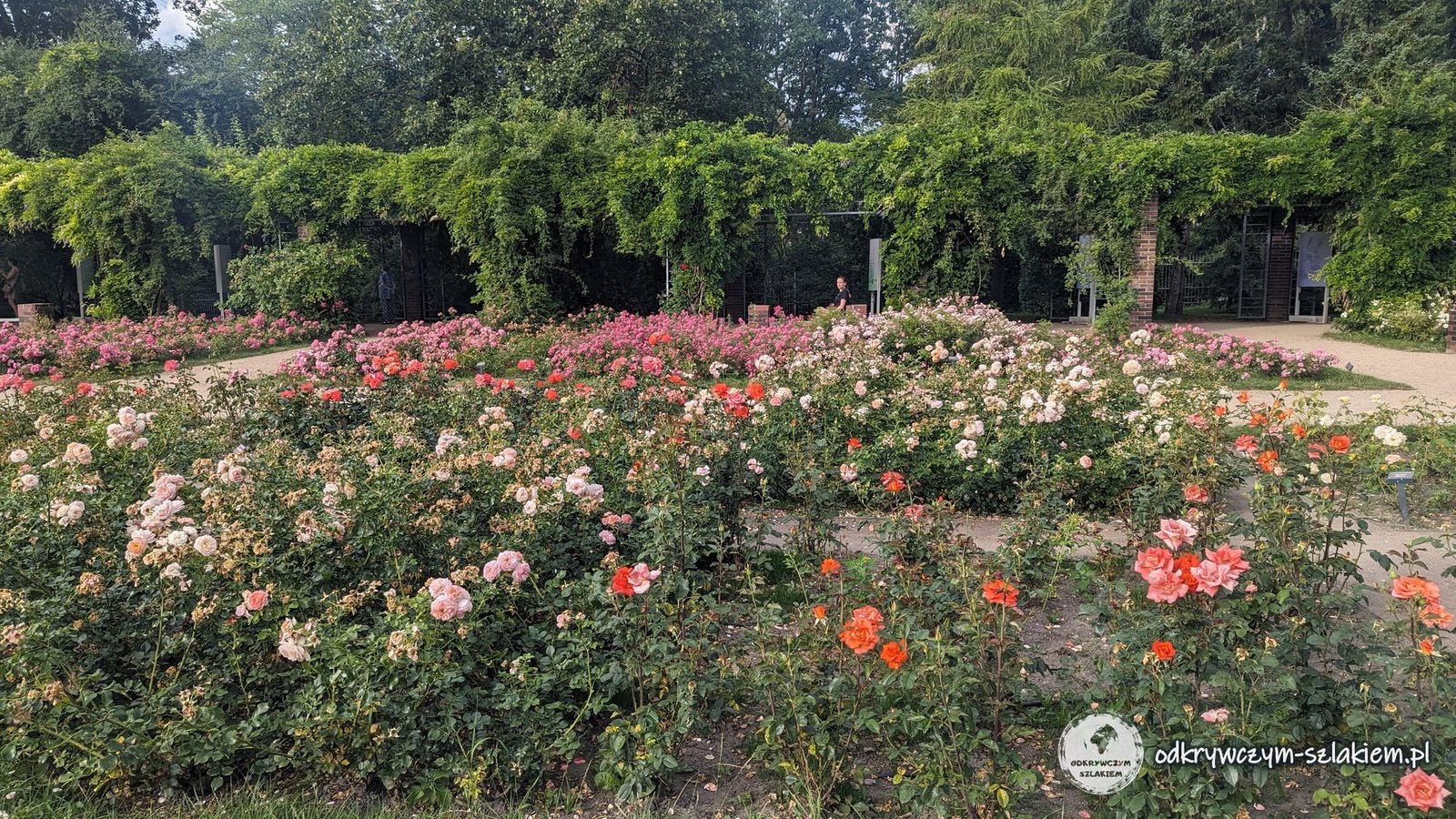
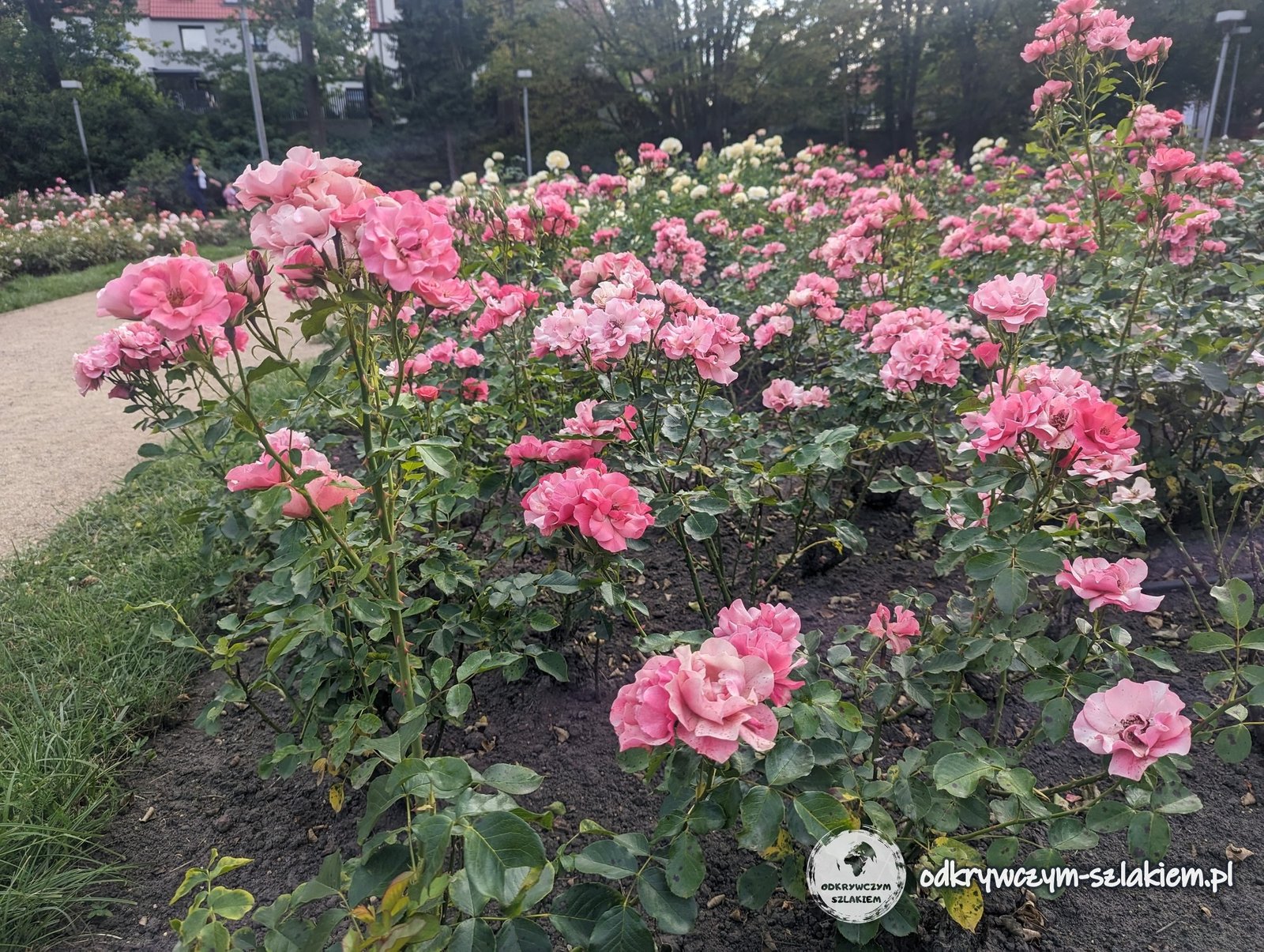
Next to Jasne Błonia begins Kasprowicz Park, and in it the rose garden (Różanka). According to the board by the path, the rose garden opened in 1928 and 8,000 rose bushes were planted in it. In 2007 it regained its original function, and today about 100 species of roses grow here. In mid-July 2023 the bushes were in bloom.
Lakes and Międzyodrze within the city
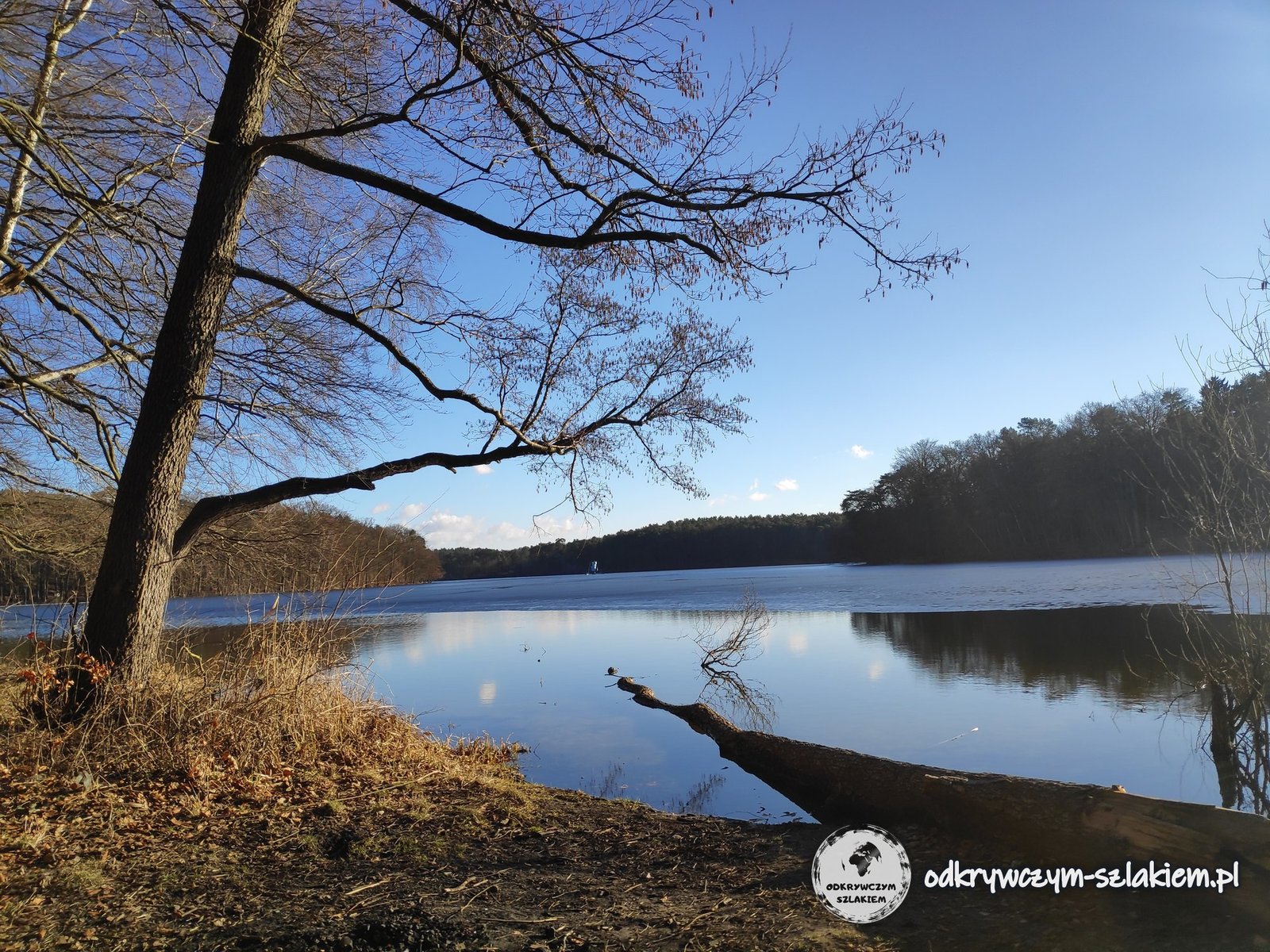
There are plenty of forests and lakes within Szczecin’s city limits. On the western edge of the city, in the Wkrzańska Forest, lies Lake Głębokie. An easy surfaced path runs around it, and there are beaches and places to rest on the shore. I was here at the end of February 2021, on a sunny day.
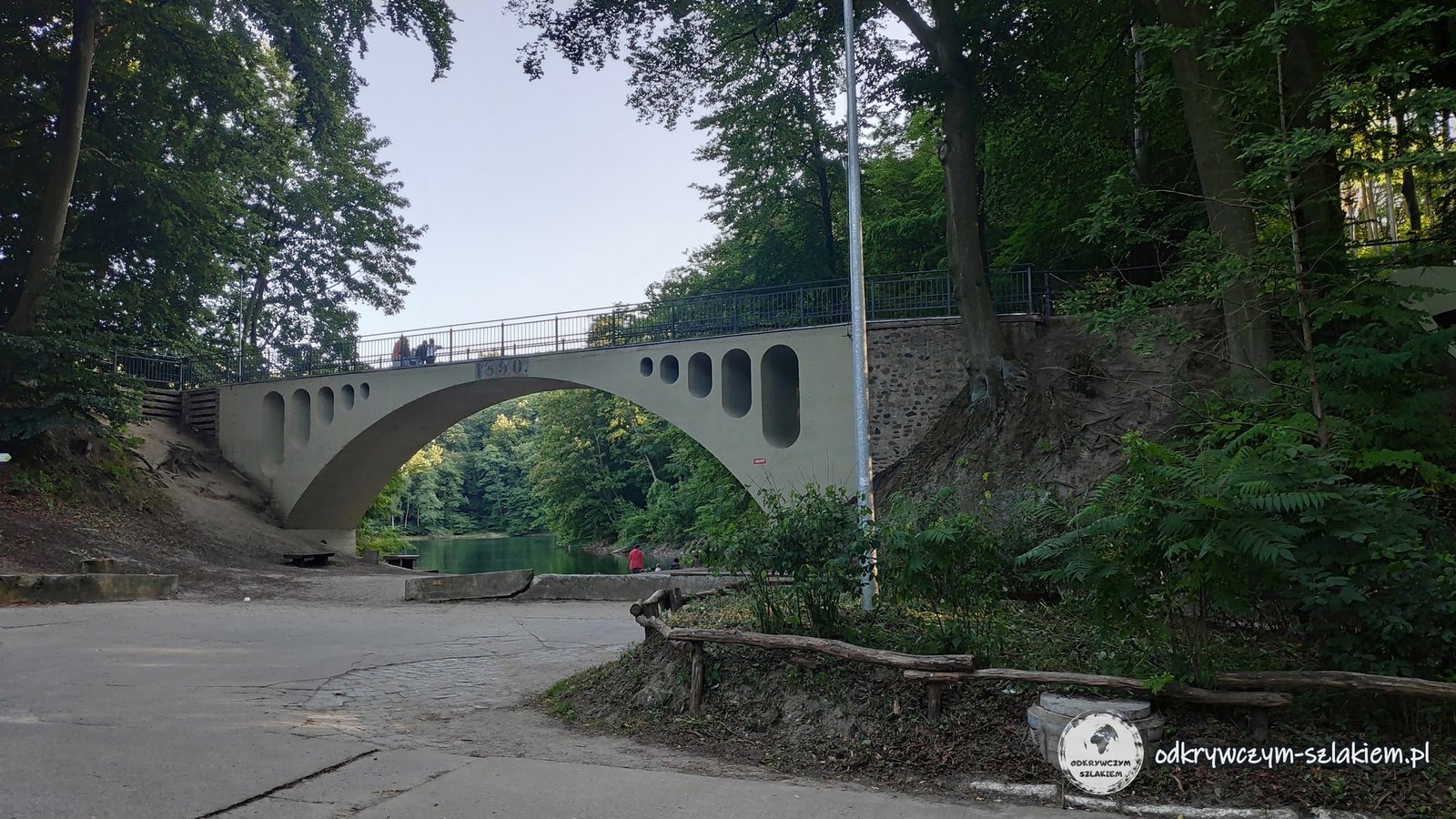
On the right bank of the Oder, in Zdroje, lies the Emerald Lake (Jezioro Szmaragdowe). It formed in the pit of a former chalk and marl mine worked from 1862. In July 1925 the miners struck water and the mine flooded. The lake is up to 18 metres deep, and swimming is forbidden. On the shore a concrete bridge over the track of the old mine railway has survived – I was there in August 2020.
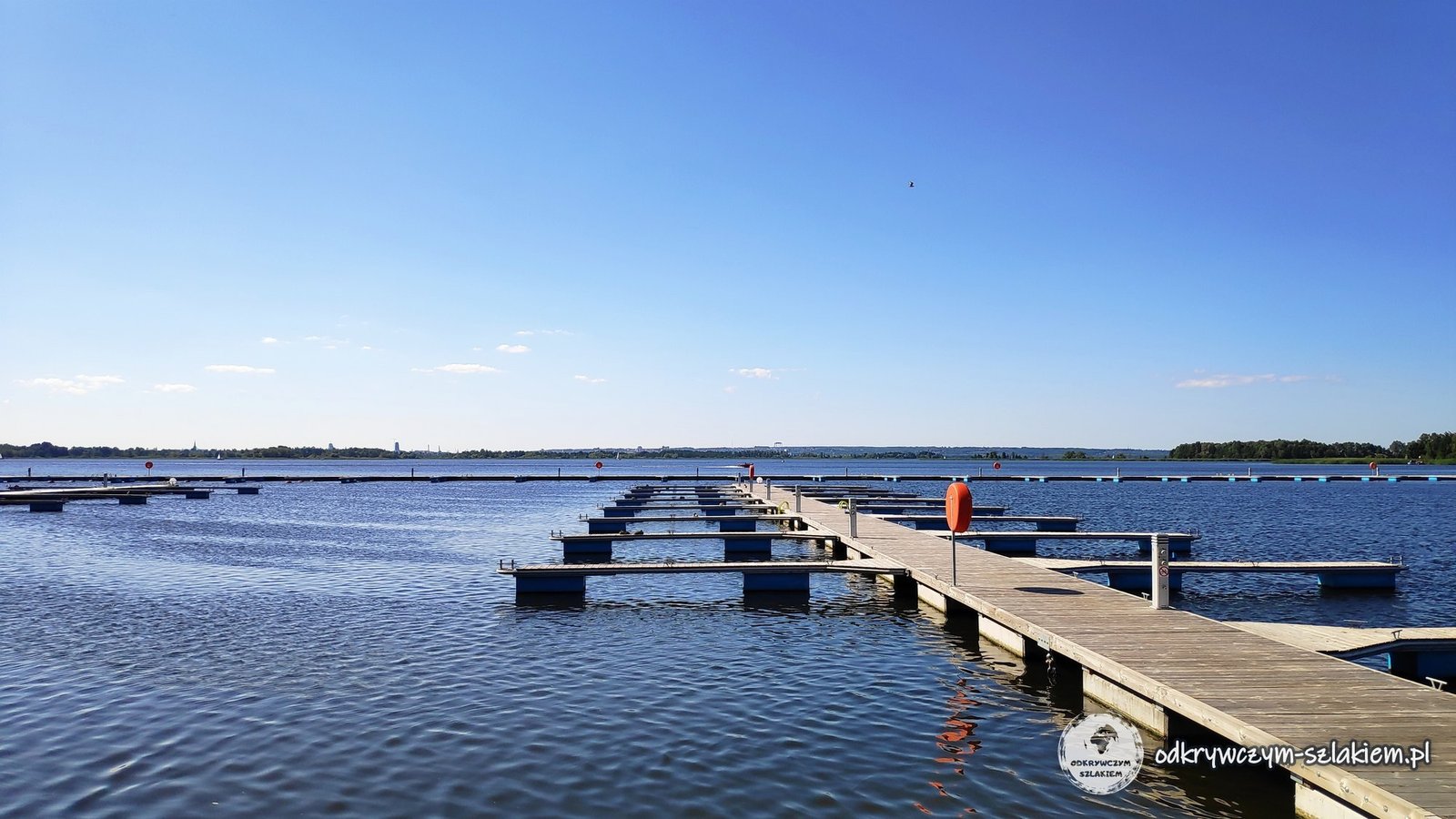
In the east of the city stretches Lake Dąbie – it covers about 54 km² and is connected to the Szczecin Lagoon via the Oder. In the Dąbie district there is a marina with long jetties on its shore. I took the photo in June 2020.
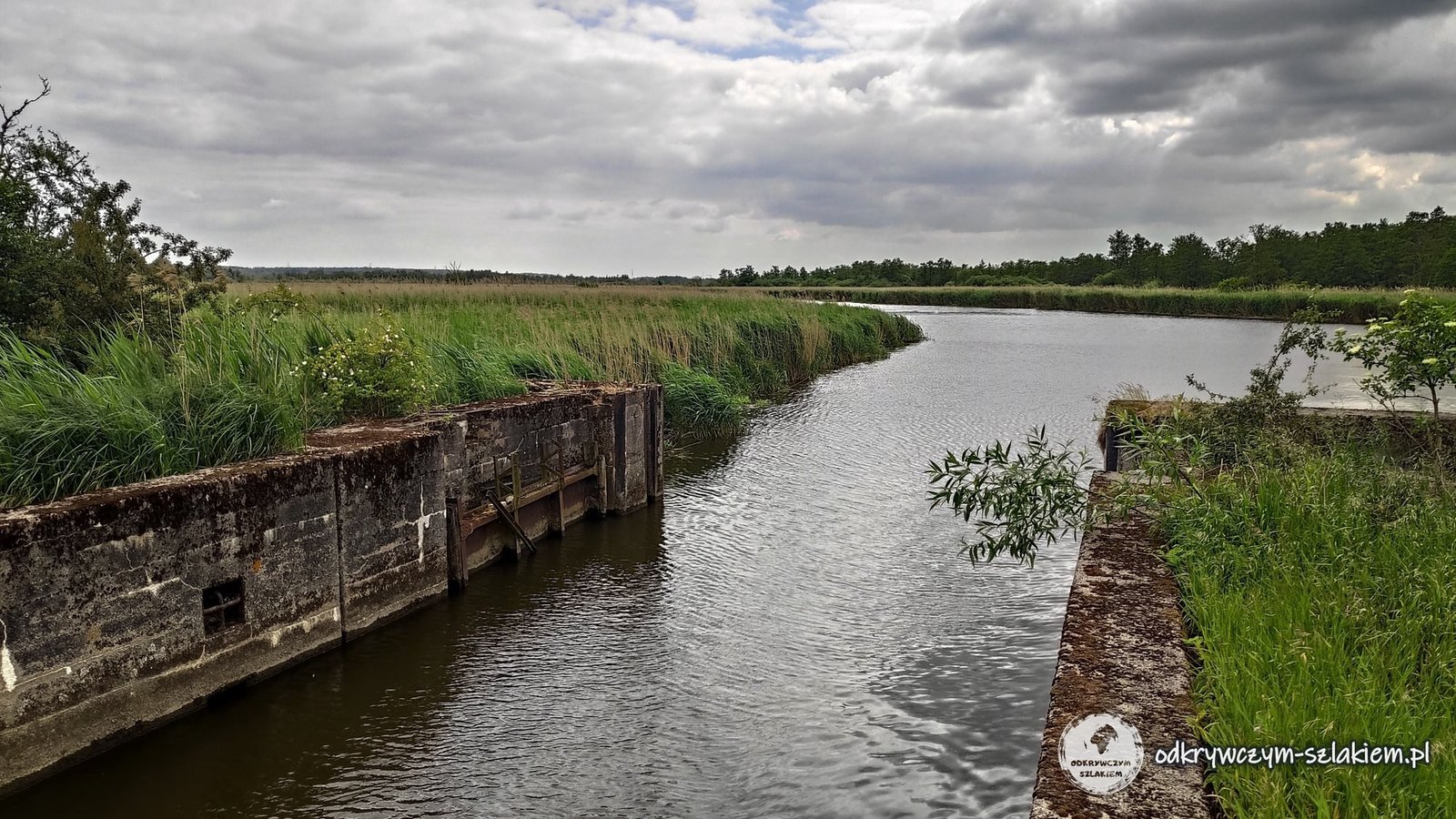
Between the West Oder and the Regalica lies Międzyodrze – a marshy valley criss-crossed by oxbow lakes and channels with a total length of over 200 km. In June 2021 I paddled here by kayak. Old brick and concrete banks have survived along some of the channels.
The Crooked Forest near Gryfino
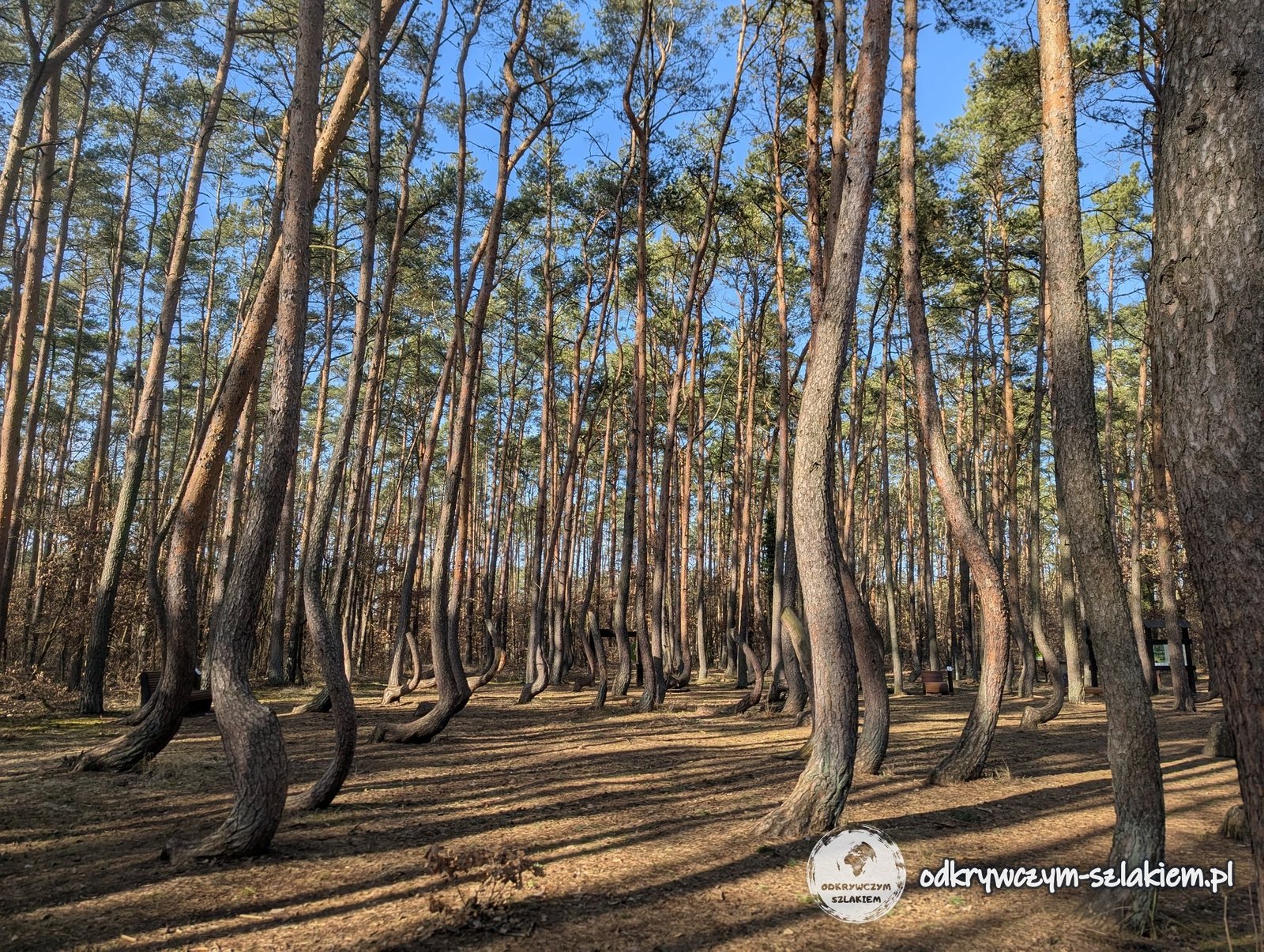
About 4 km from Gryfino, in Nowe Czarnowo, near the Dolna Odra power station, grows the Crooked Forest (Krzywy Las). According to the board on site, it is a group of over 100 pines with trunks bent at the base, growing on an area of 0.5 ha. The trees are a protected natural monument. The forest was most likely planted around 1934, but nobody knows for sure where the crooked trunks came from. In 1971 there were 400 such pines here in 22 even rows, which suggests that people shaped them.

I was here on 28 February 2026, on the day I gave a talk (in Polish) about Mexico at the Włóczykij Festival in Gryfino. At sunny midday quite a few visitors were walking among the pines.

Nowe Warpno on the Szczecin Lagoon
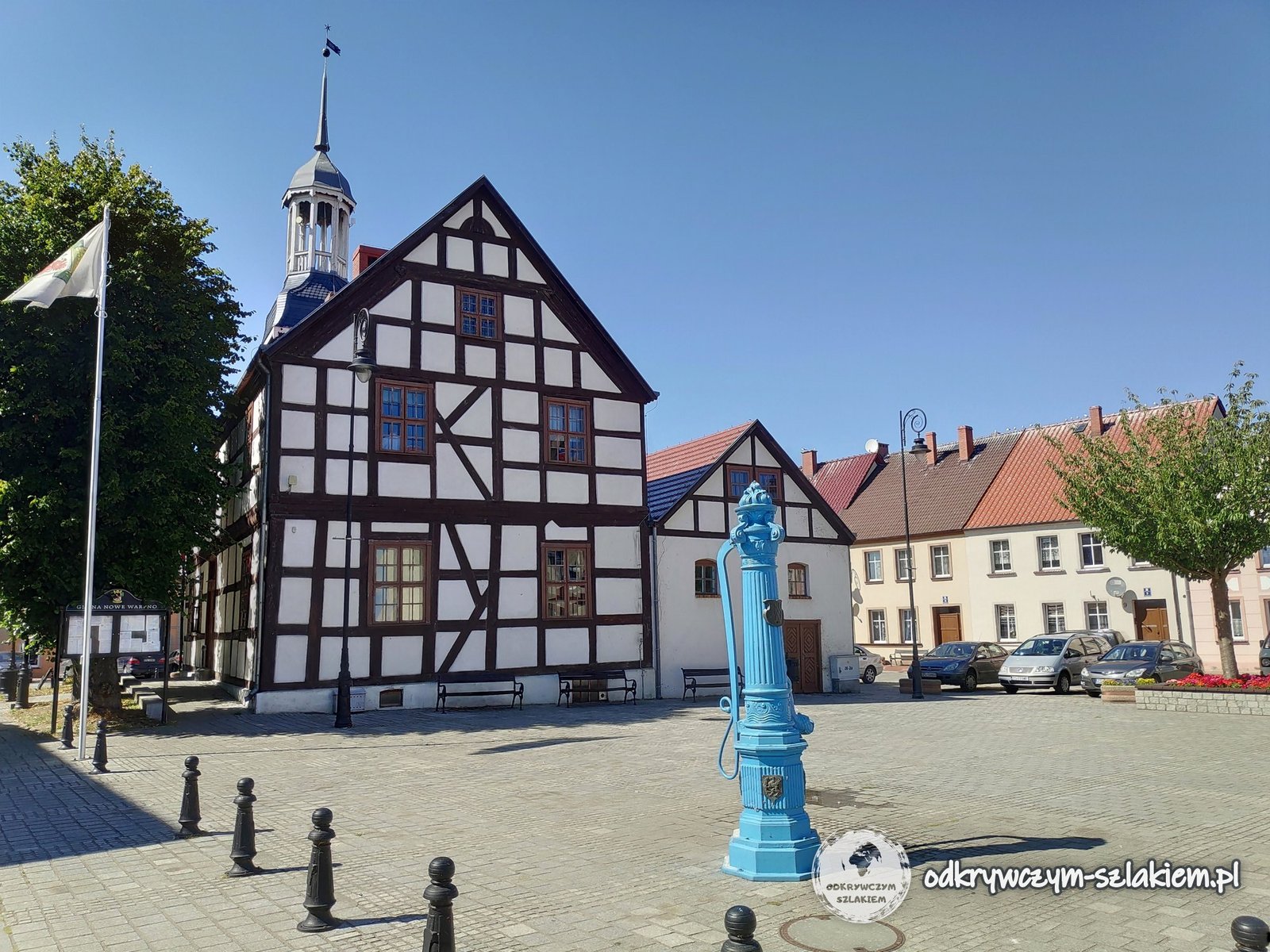
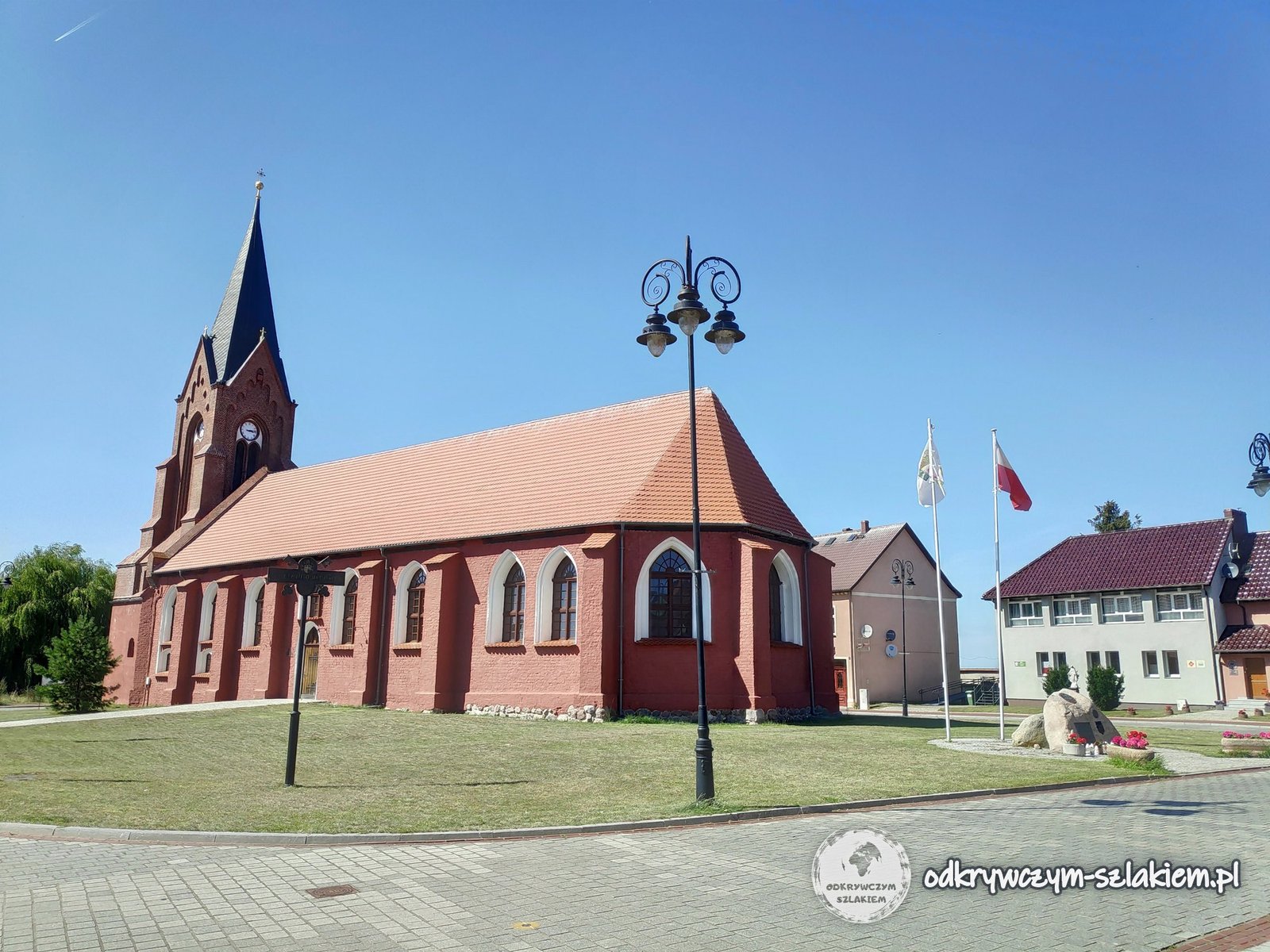
Nowe Warpno is a small town on the Szczecin Lagoon, right by the German border. On the market square stands a half-timbered town hall from 1697, built after the town fire of 1692, and nearby the brick Church of the Assumption, whose history goes back to the 13th century. I was here in August 2020.
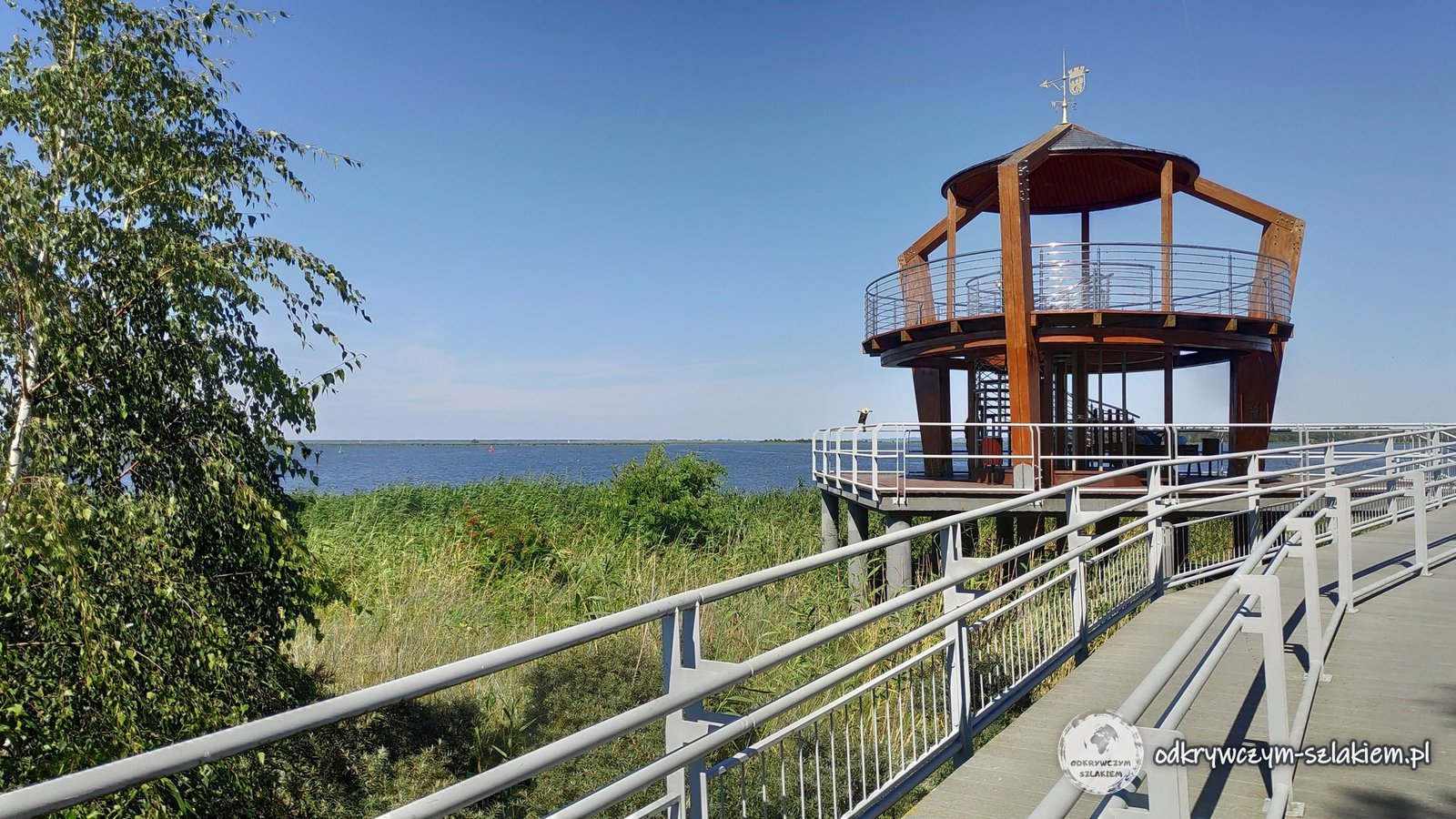
On the shore, at the end of a jetty, stands a wooden lookout pavilion with a view of the lagoon.
Practical information
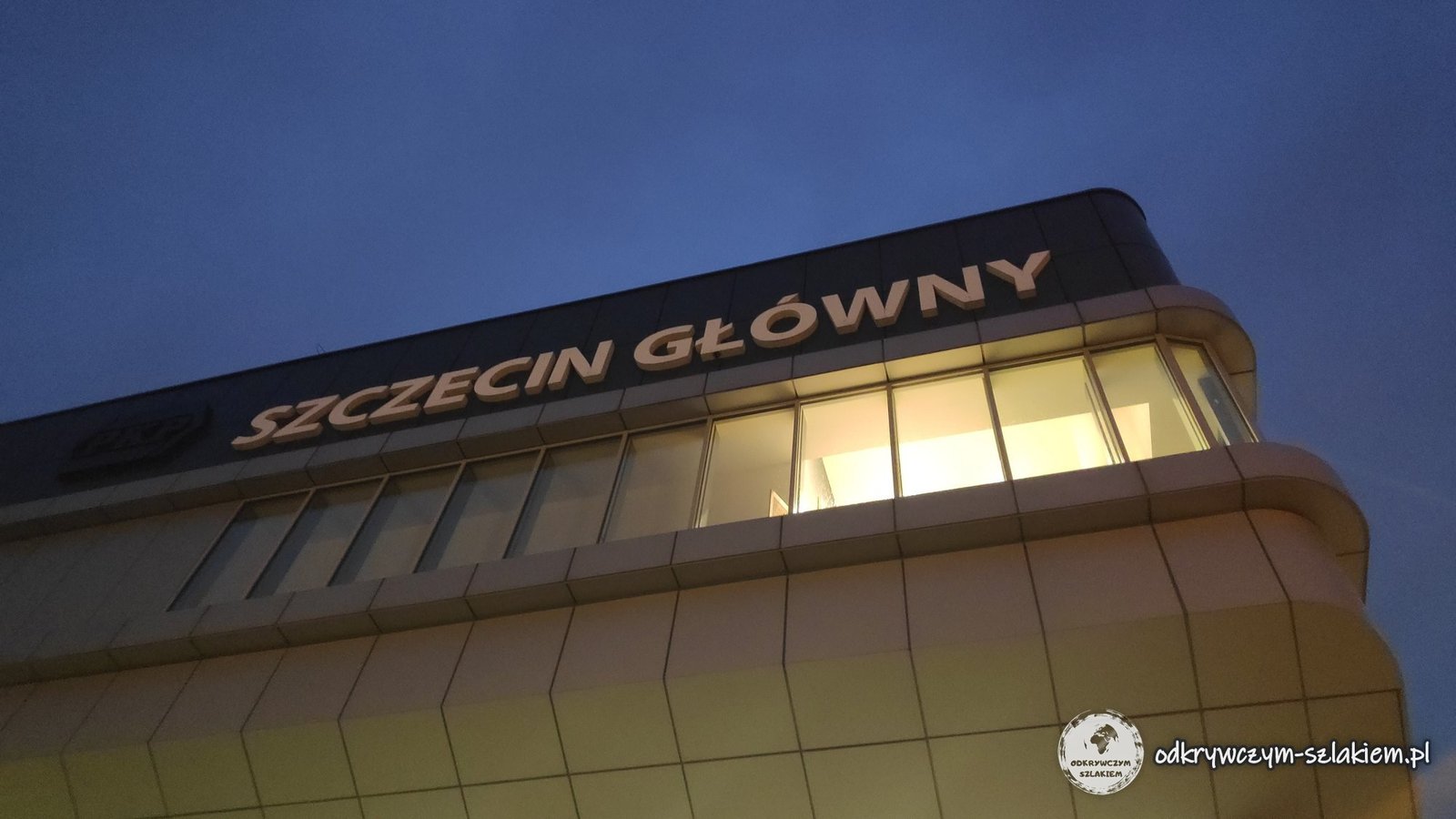
- By train: the main station is Szczecin Główny, on the Oder, about 1 km from the Old Town. There are direct trains from Poznań, Warsaw, Gdańsk and Berlin, among others.
- By bus and plane: long-distance buses stop by the railway station. Szczecin-Goleniów airport is about 45 km north-east of the city.
- Around the city: ZDiTM trams and buses. Ticket prices since May 2025: 15 minutes €0.70, 30 minutes €0.90, 60 minutes €1.40, 24 hours €3.50.
- On foot: the Chrobry Embankment, the castle, Rynek Sienny, the cathedral and both gates are within about 1.5 km of each other. You can cross to Łasztownia over the Long Bridge (Most Długi).
- Crooked Forest: the train from Szczecin Główny to Dolna Odra station takes about 30 minutes, and the forest begins a few hundred metres from the station.
- Cathedral and castle: a lift takes you up to the cathedral’s viewing terrace, and you need a ticket for the Bell Tower and the Ducal Terrace – check current opening hours and prices on the websites of the cathedral and the castle.
- How much time: one day is enough for the embankment, the castle, the Old Town and Łasztownia; the lakes, Jasne Błonia and the Crooked Forest are enough for a second day.
- More of Szczecin: I described the shelter under the main station, the Pionier cinema and the ruins of the synthetic fuel plant in Police in the post Szczecin and Police: urbex.