For more than 40 years the eastern part of Berlin was the capital of the GDR, and you can still see it everywhere – in the architecture, the monuments and the street names. I have already described the Wall and the border crossings in the post Berlin: on the trail of the Berlin Wall, and the Tränenpalast in the post about Berlin’s museums. Here I have collected other places linked to East Germany that I visited: Alexanderplatz with the TV Tower, the area around the Red City Hall and the Marx and Engels monument, Karl-Marx-Allee and the Soviet war memorials in Treptower Park and in the Schönholzer Heide park in Pankow.
Table of contents
- Alexanderplatz – the TV Tower, the World Clock and Haus der Statistik
- The Red City Hall, St Mary’s Church and the Marx and Engels monument
- Karl-Marx-Allee – the former Stalin Avenue
- Soviet War Memorial in Treptower Park
- The Soviet soldiers’ cemetery in Schönholzer Heide
- Practical information
Alexanderplatz – the TV Tower, the World Clock and Haus der Statistik
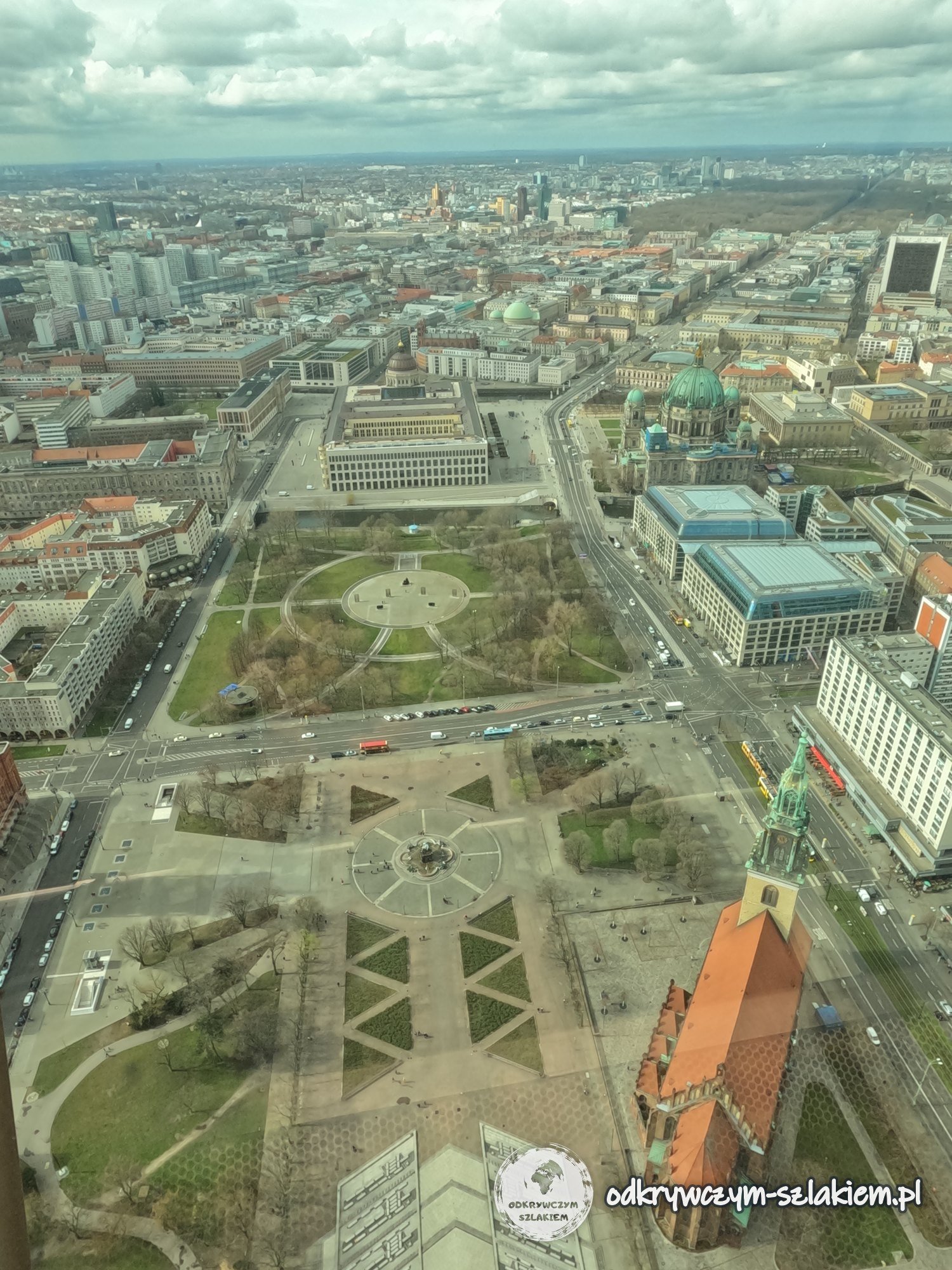
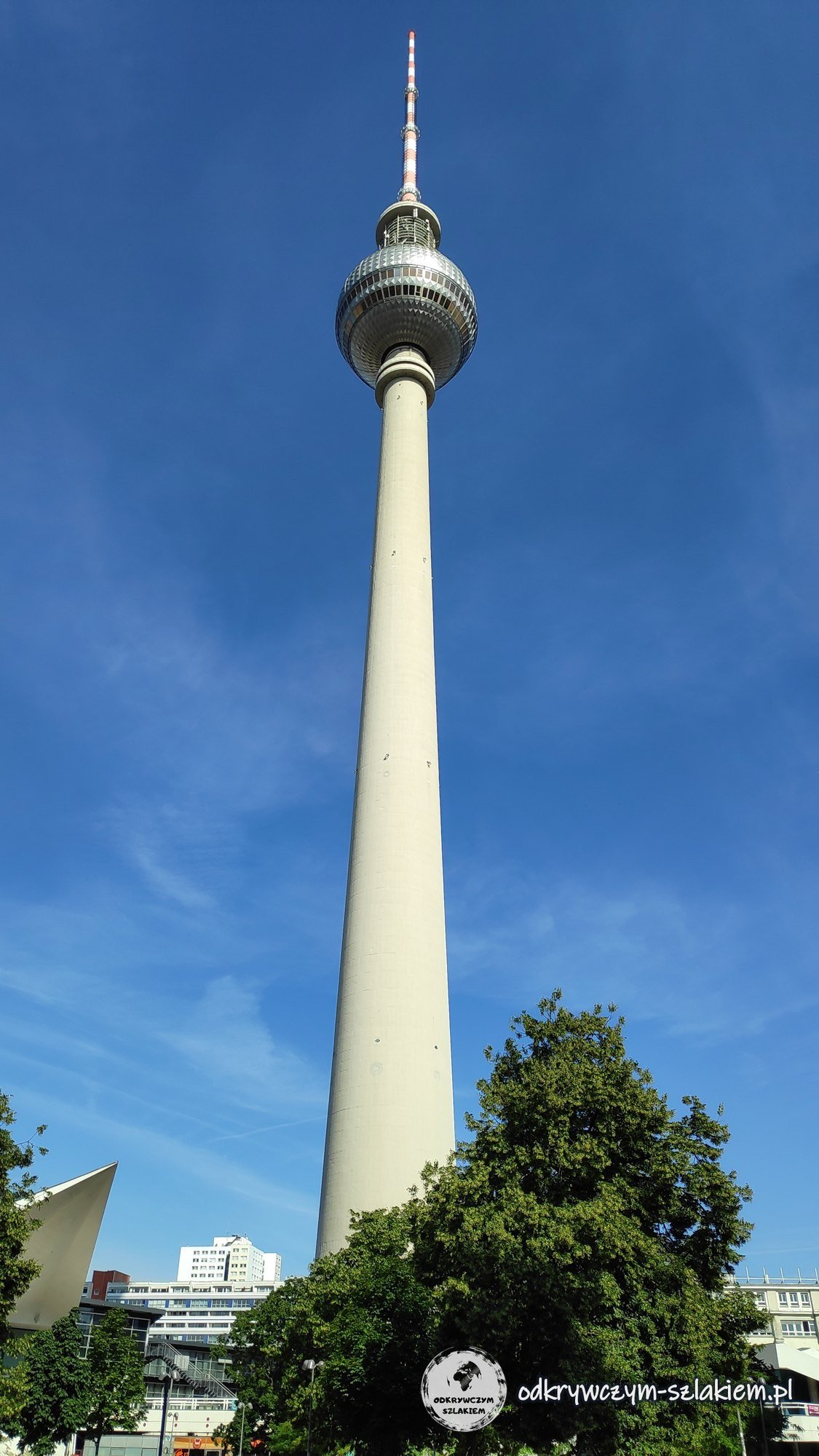
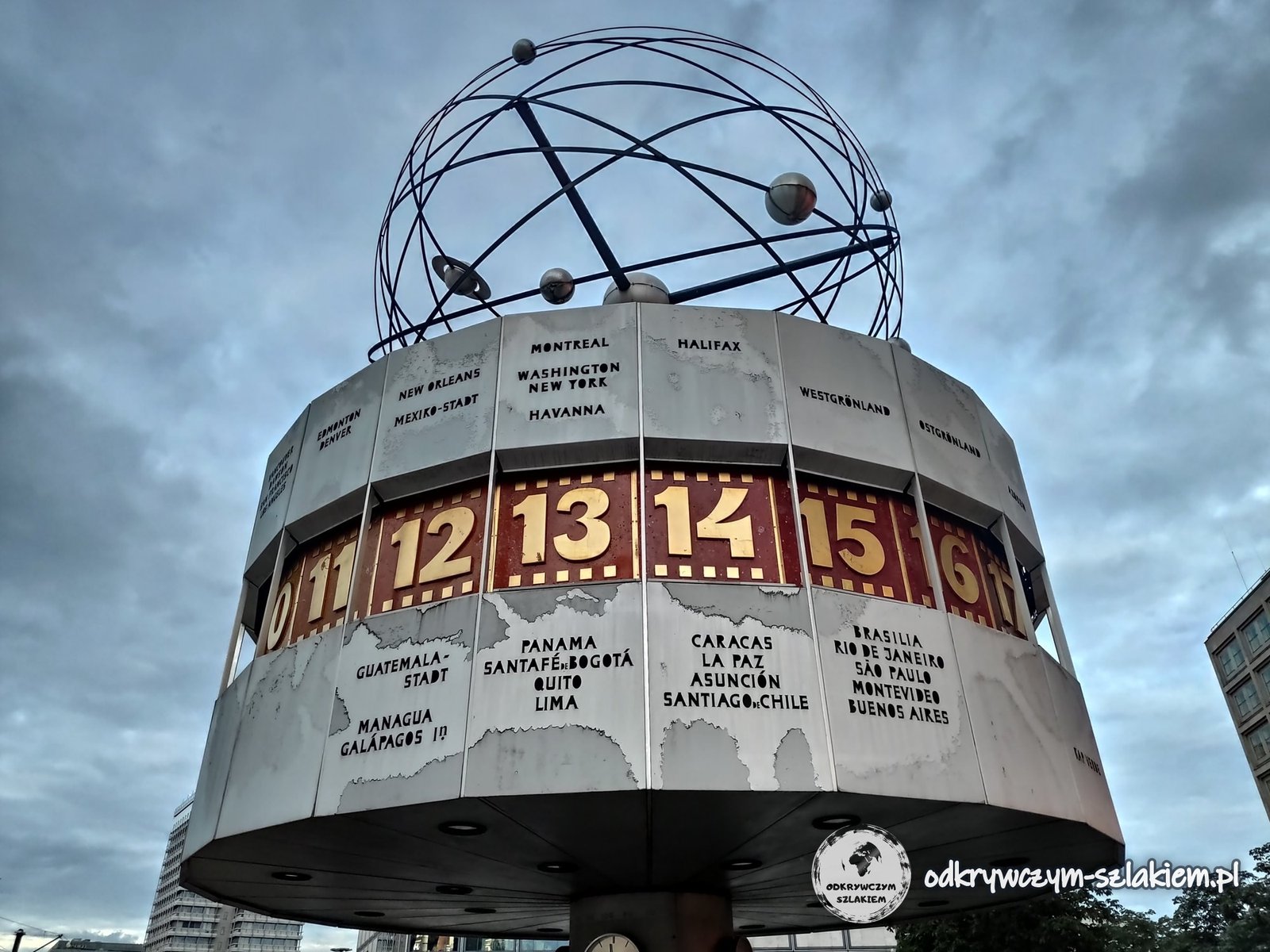
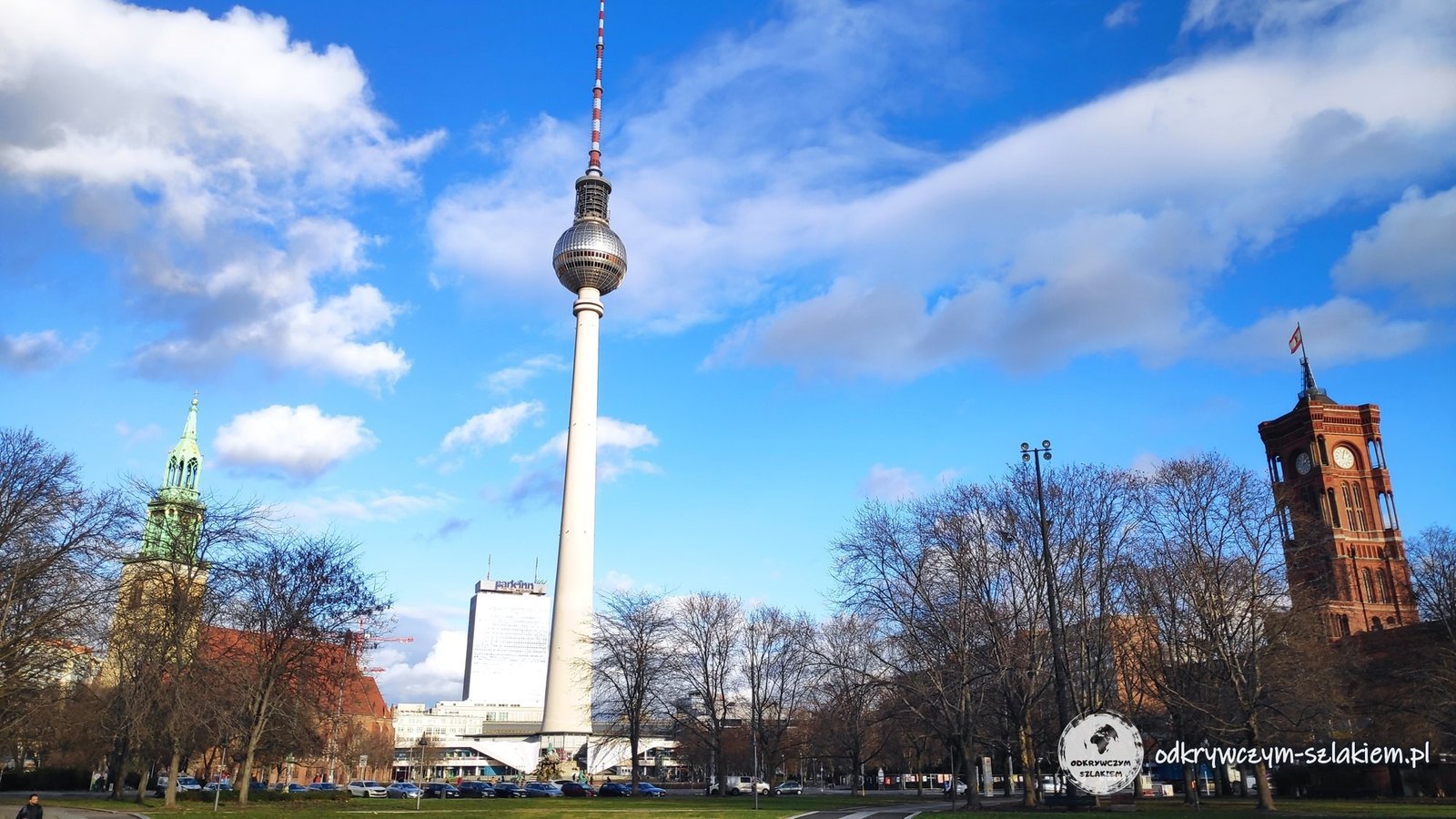
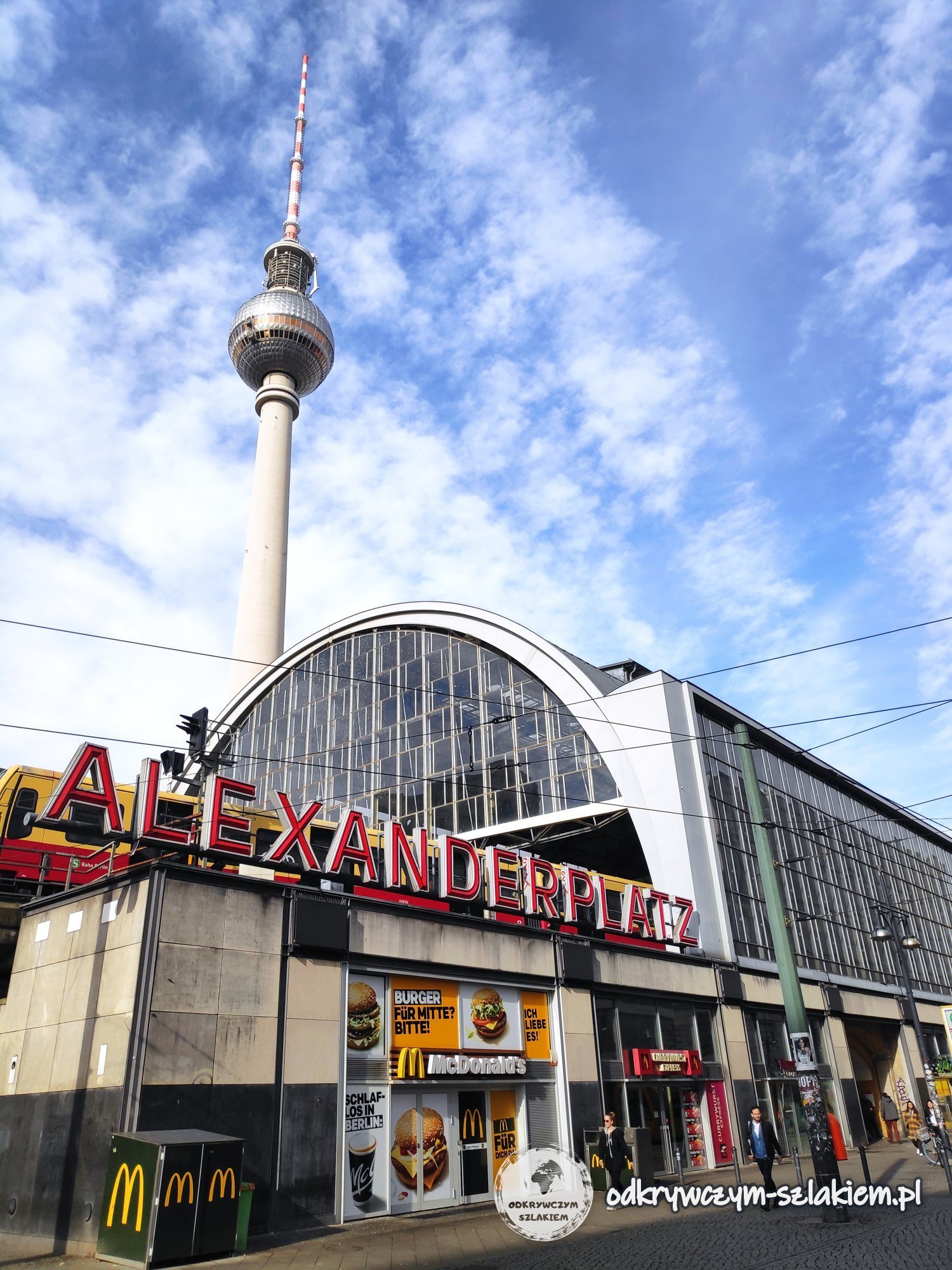
Alexanderplatz is the main square of East Berlin, rebuilt in GDR times. Above it rises the TV Tower (Fernsehturm), 368 m high, built in 1965–1969 – I write about going up to its observation deck in the post Berlin: what to see. In the middle of the square stands the World Clock (Weltzeituhr) from 1969, which shows the time in cities all over the world.
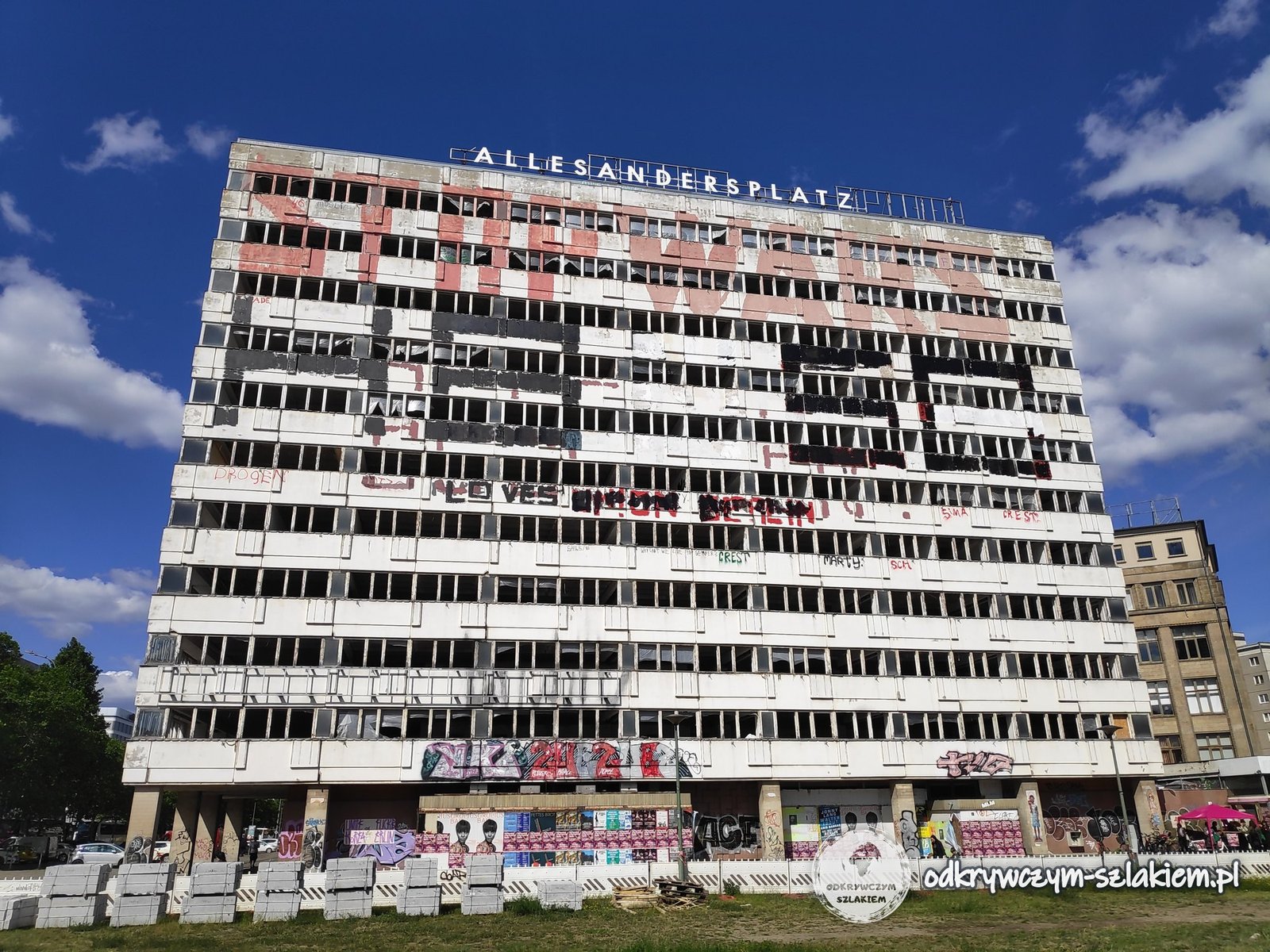
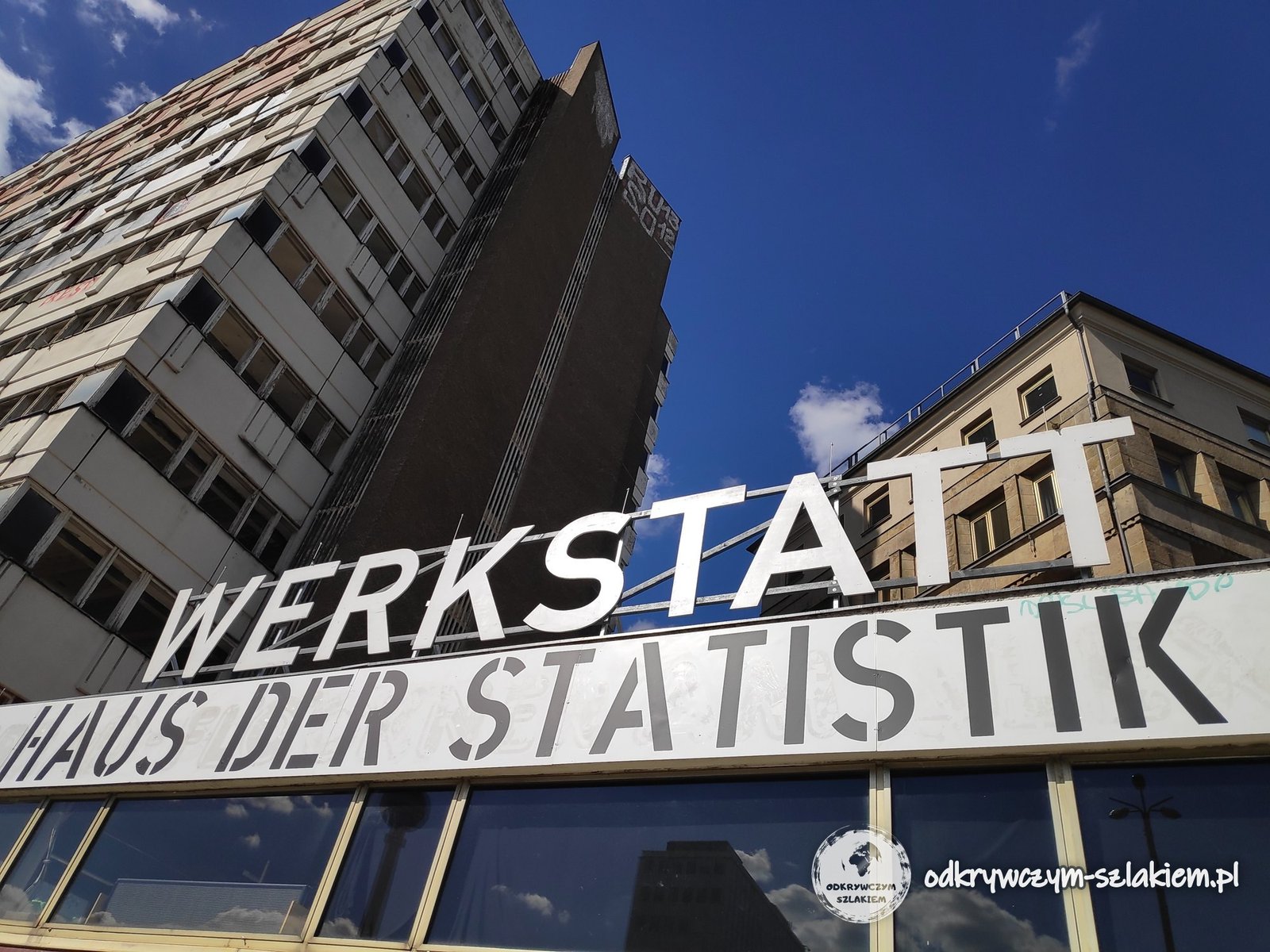
On the north side of the square stands Haus der Statistik – a large GDR-era office building that housed the statistics office. It stood empty for years, and today it is being converted into a place for culture, public offices and housing. When I was here in 2019, a large sign reading “Werkstatt Haus der Statistik” hung on the façade.
The Red City Hall, St Mary’s Church and the Marx and Engels monument
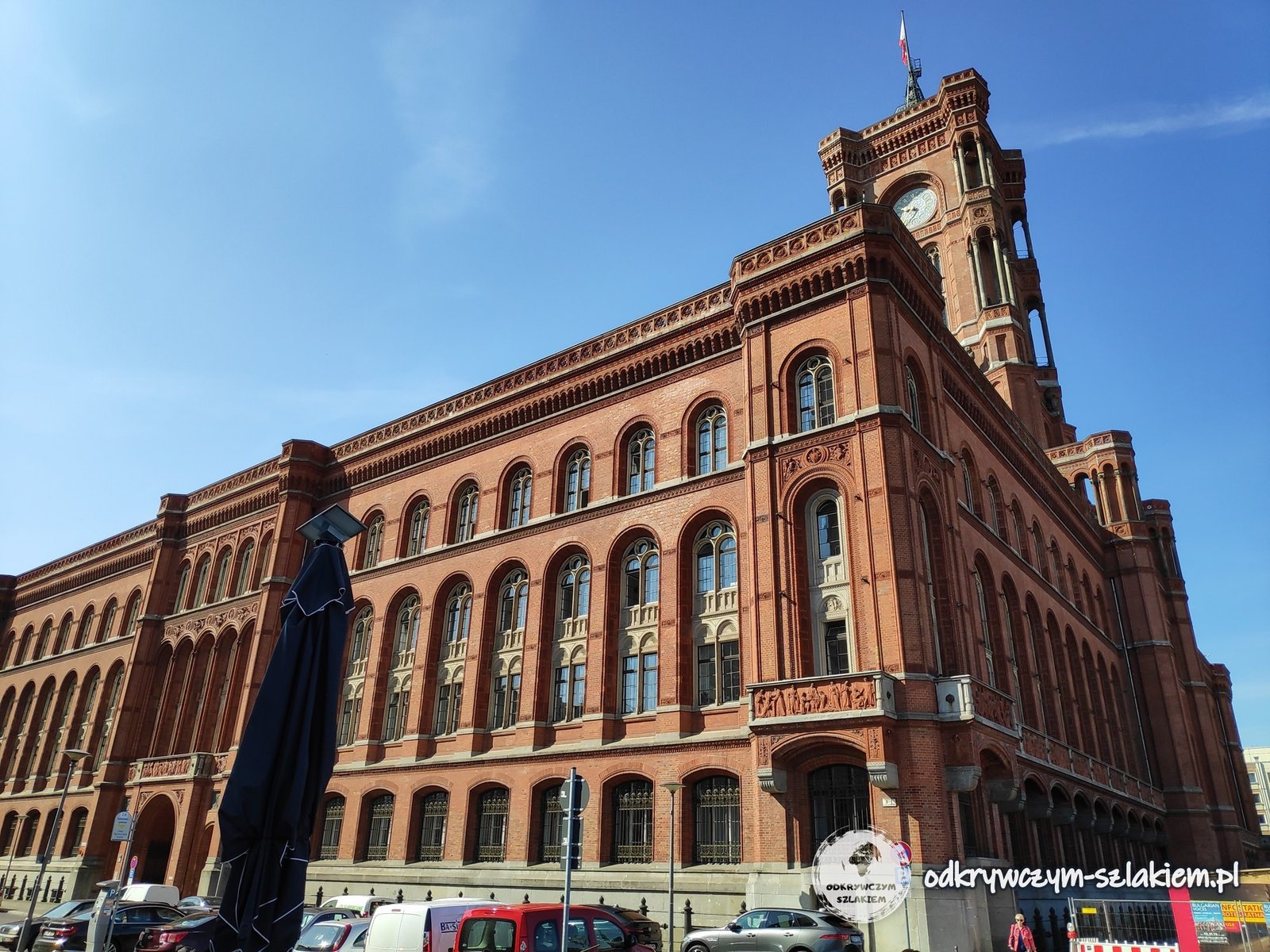
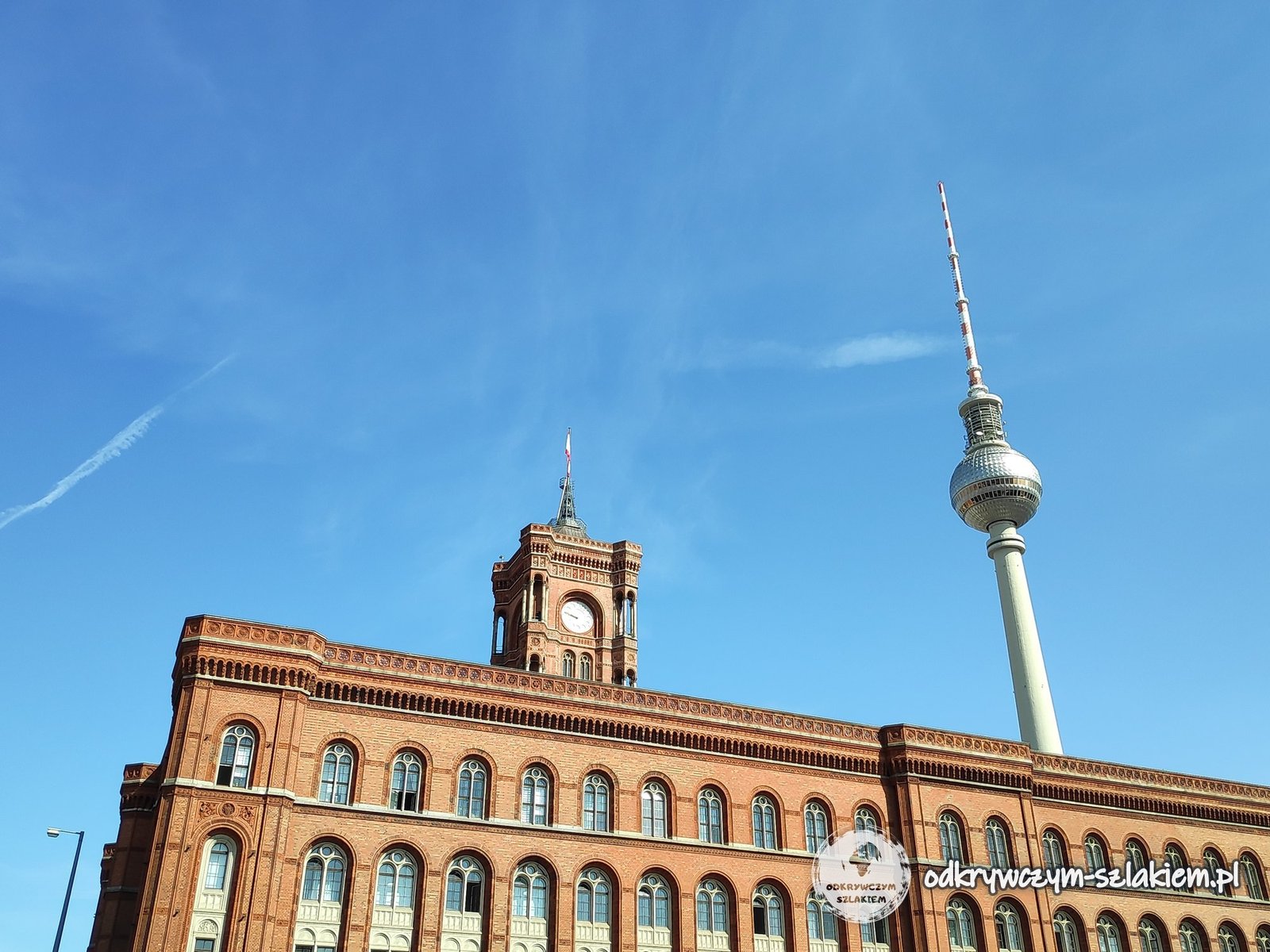
Between Alexanderplatz and the Spree there is a wide open square. On its edge stands the Red City Hall (Rotes Rathaus) from 1861–1869 – in GDR times the seat of the East Berlin authorities, and today of the mayor of the whole city. In front of it is the Neptune Fountain from 1891. It originally stood in front of the royal palace and was moved here after the palace was demolished.
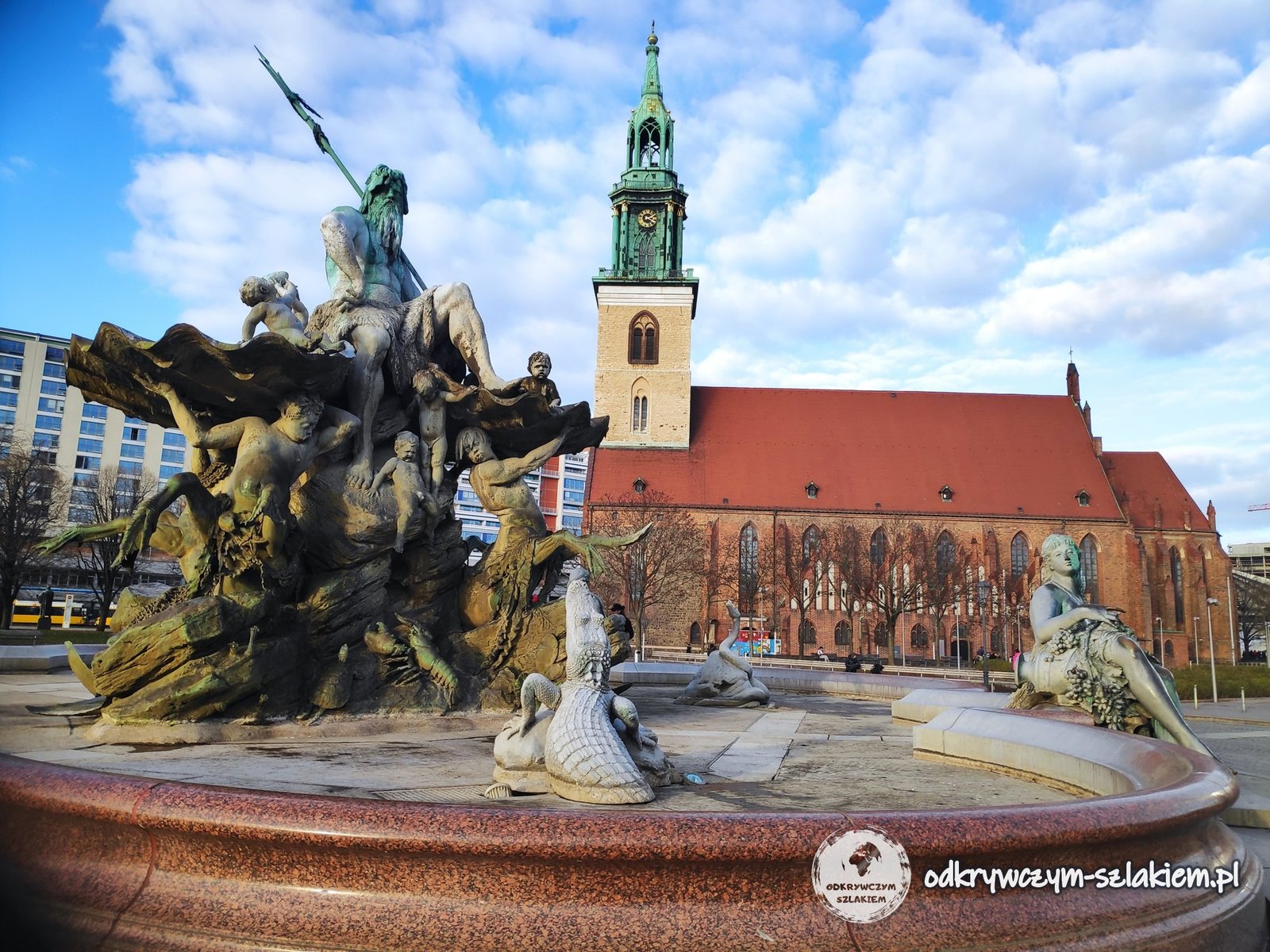
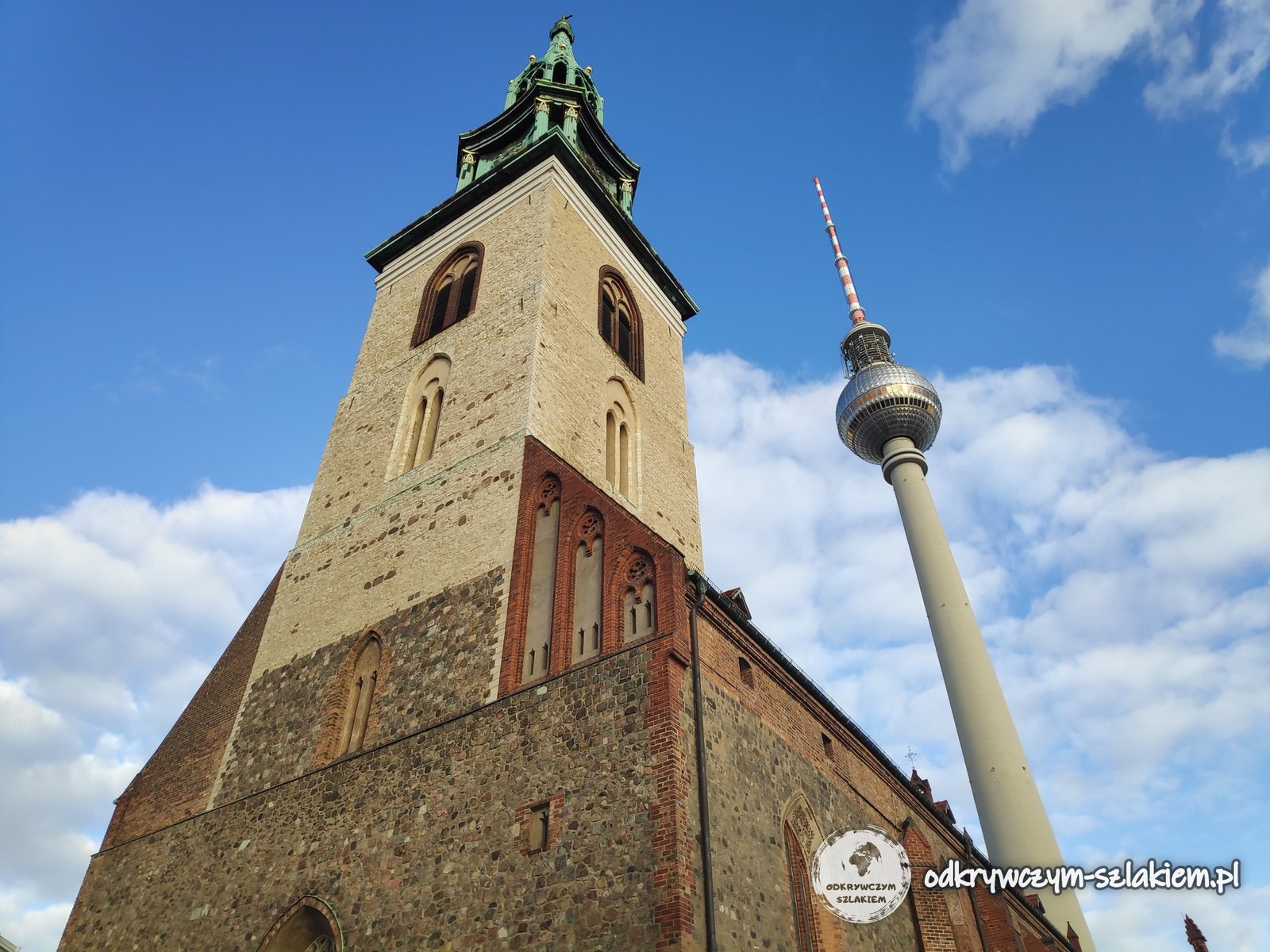
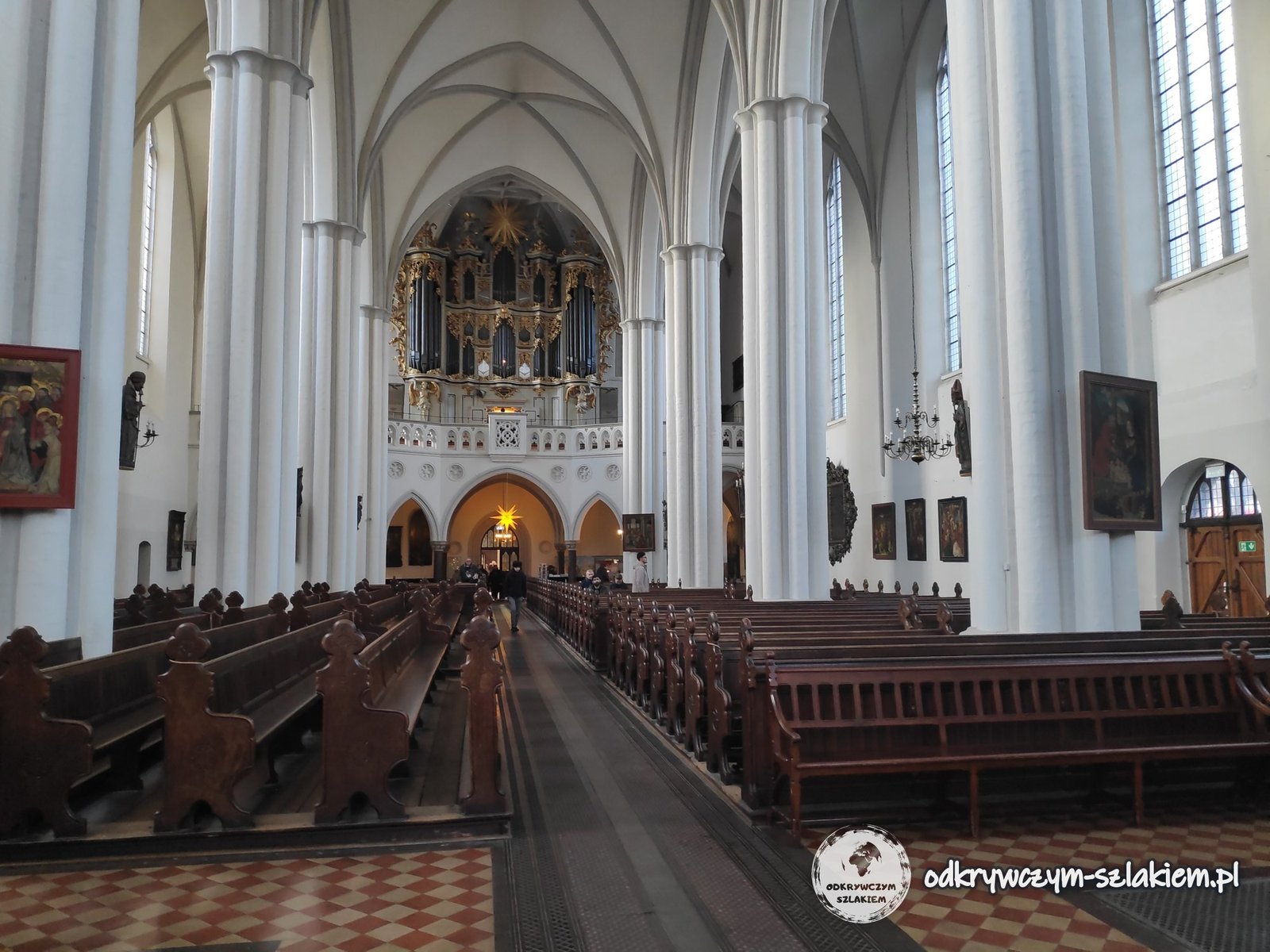
Next to it stands St Mary’s Church (Marienkirche) – one of the oldest churches in Berlin, dating from the 13th century. It stands right at the foot of the TV Tower. In January 2023 there were still Christmas trees inside and a large star under the vault.
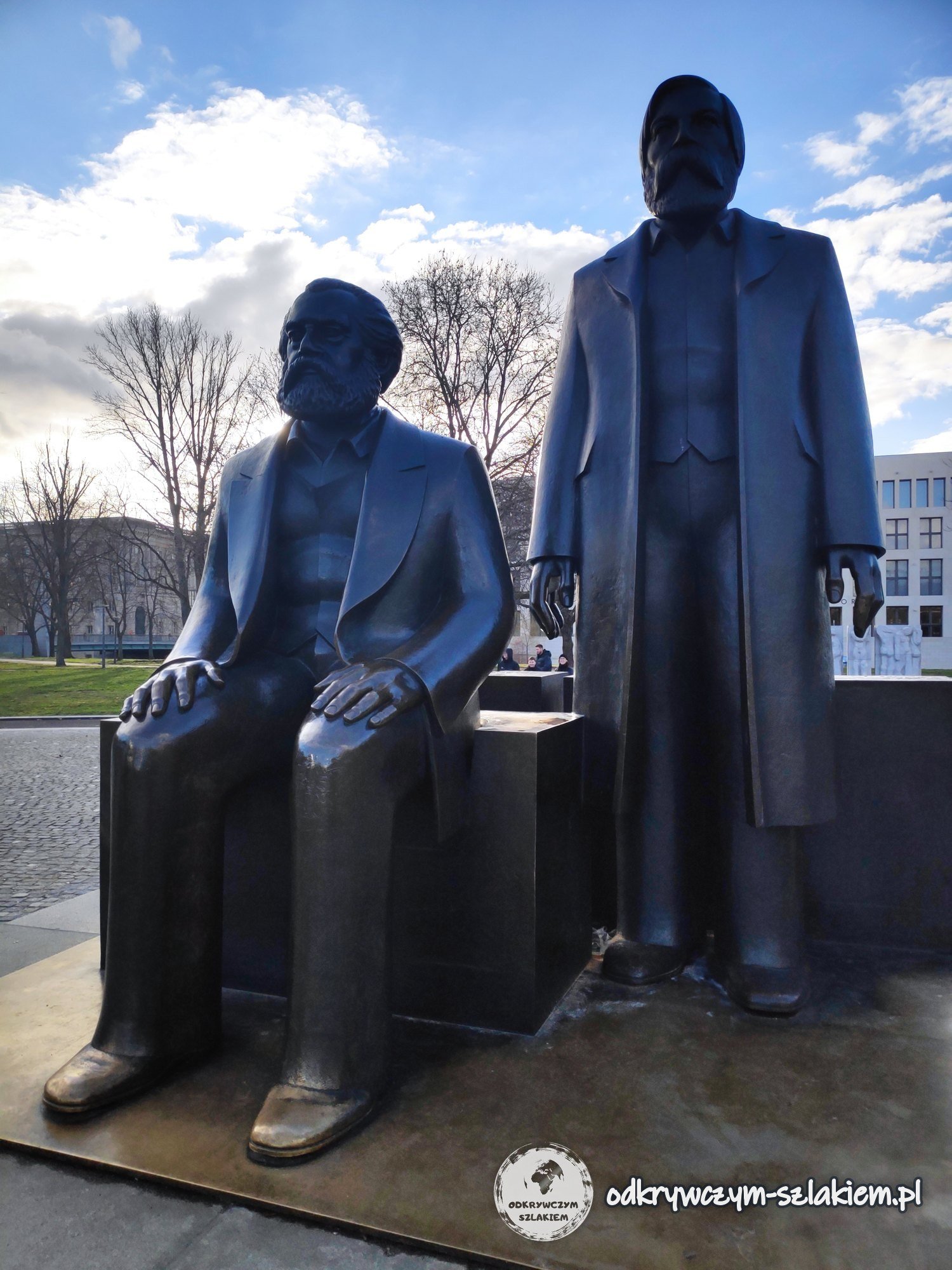
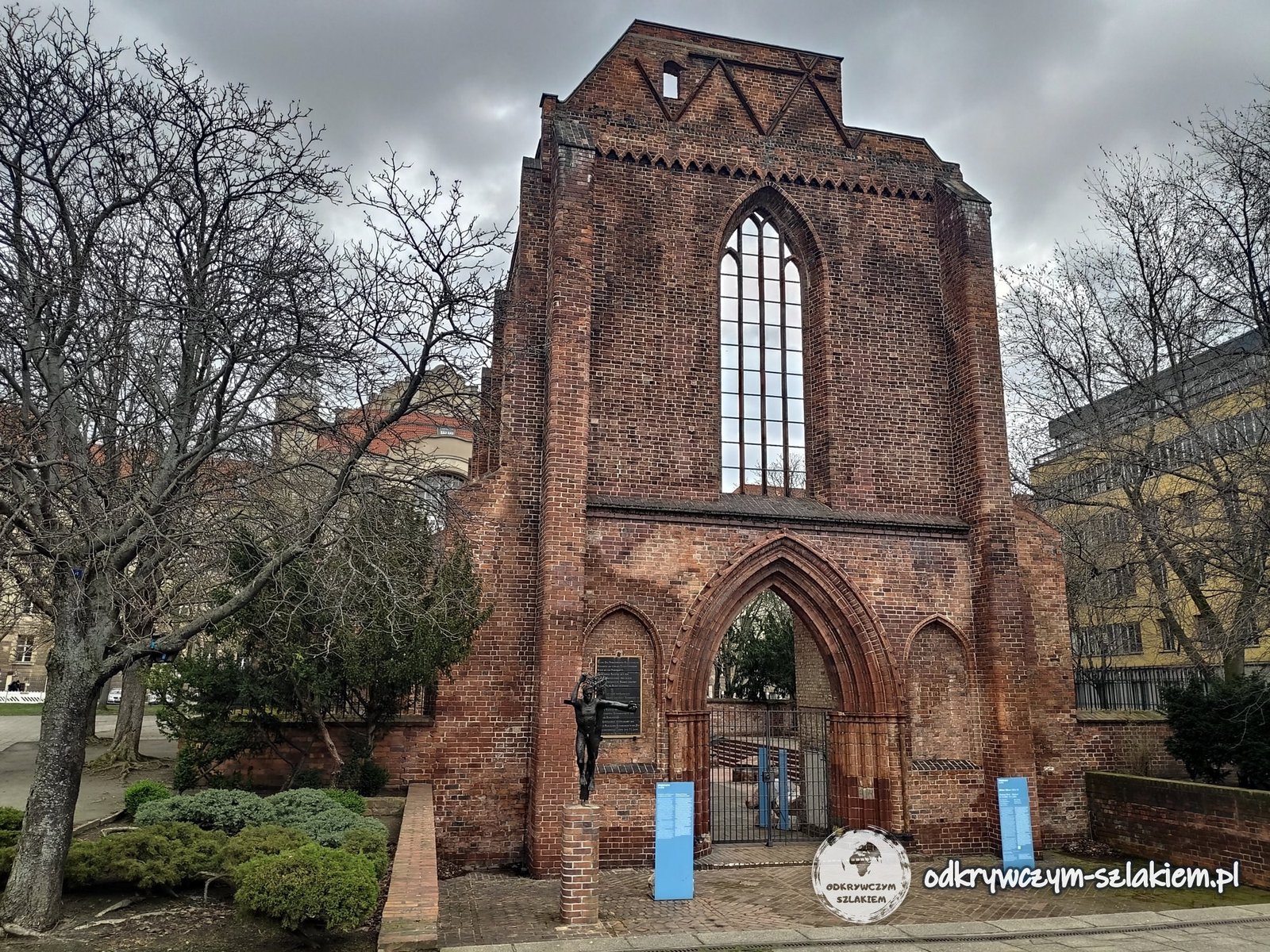
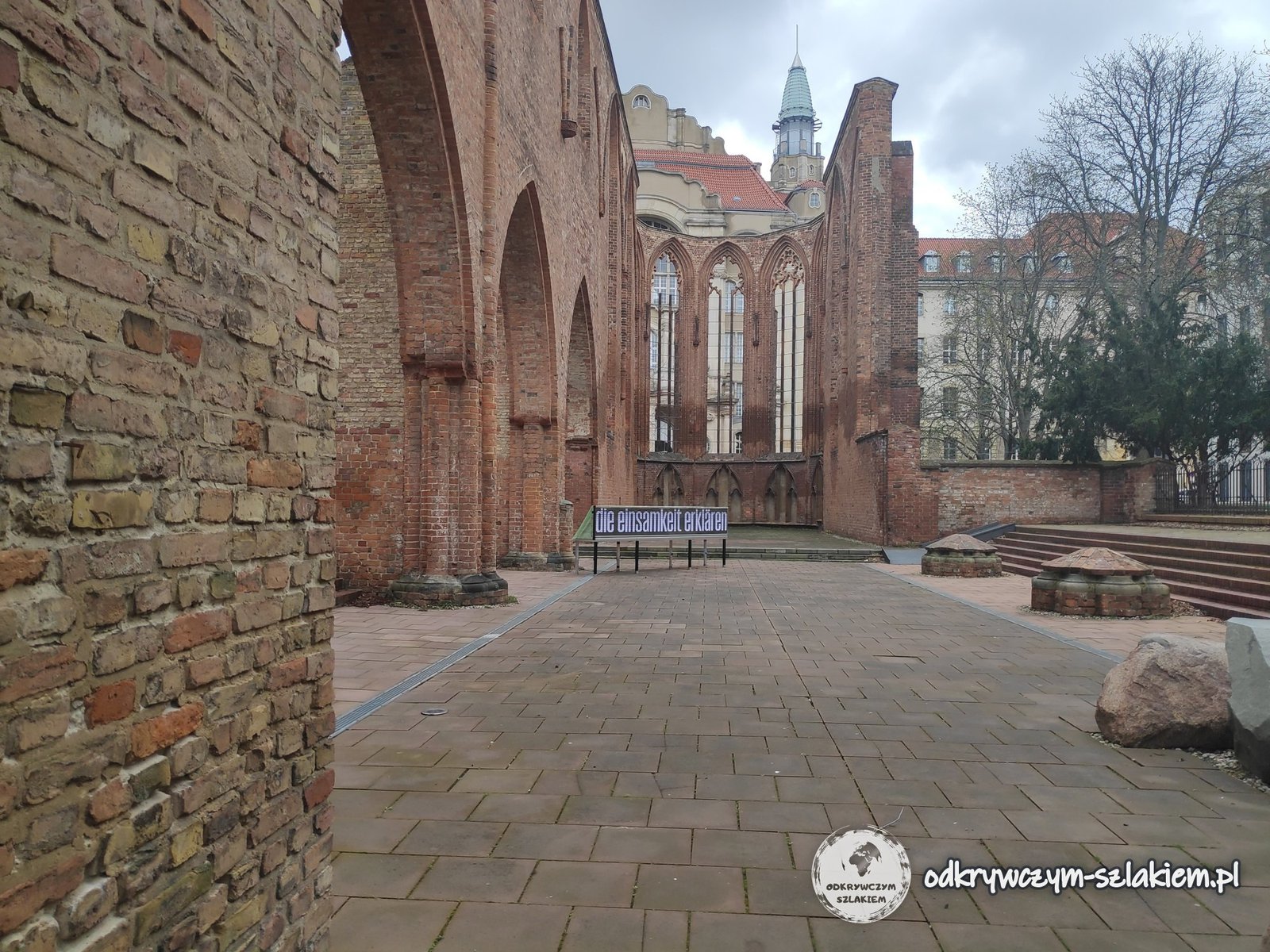
On the other side of the square, on the Marx-Engels-Forum, stands the monument to Karl Marx and Friedrich Engels from 1986 – one of the best-known monuments from GDR times. A little further on, on Klosterstraße, are the brick ruins of the Franciscan church, destroyed during the war.
Karl-Marx-Allee – the former Stalin Avenue
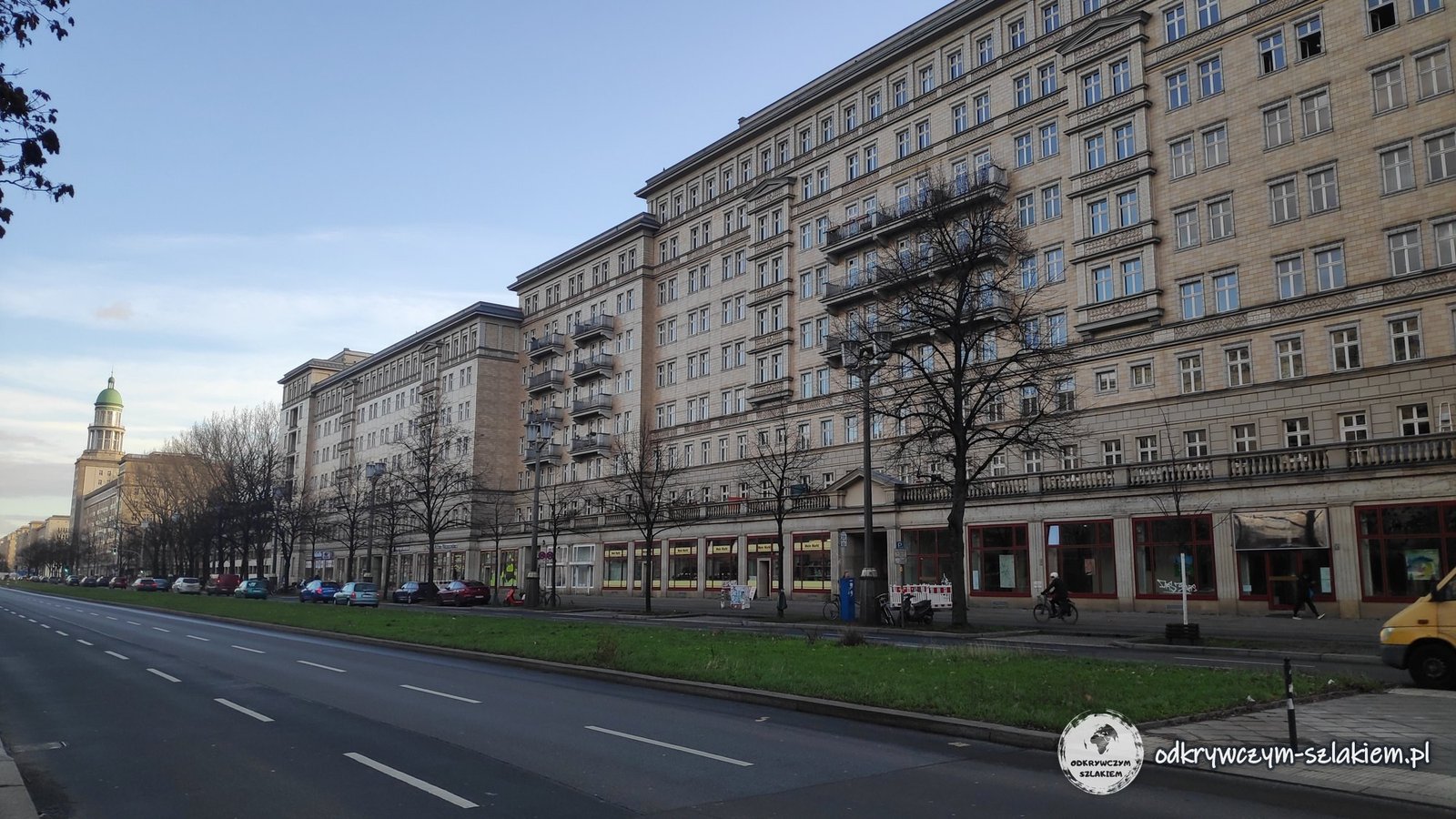
Karl-Marx-Allee is a wide avenue running east from Alexanderplatz to the Friedrichshain district. In the early 1950s monumental apartment blocks in the socialist realist style were built along it – similar to the MDM district in Warsaw. Until 1961 it was called Stalin Avenue (Stalinallee). The section between Strausberger Platz and Frankfurter Tor, which ends with two domed towers, is almost 2 km long. I walked it in January 2023 with Artur.
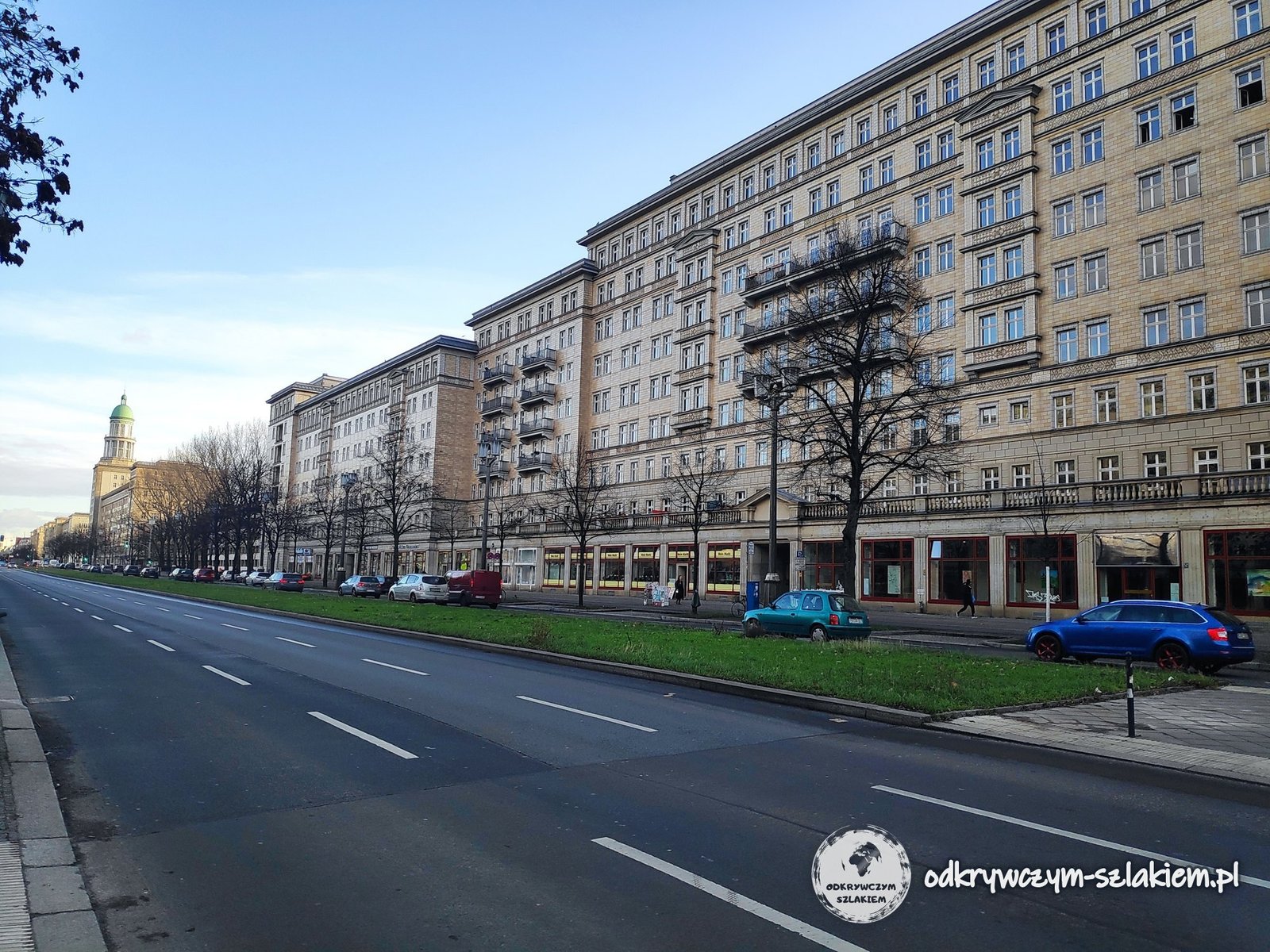
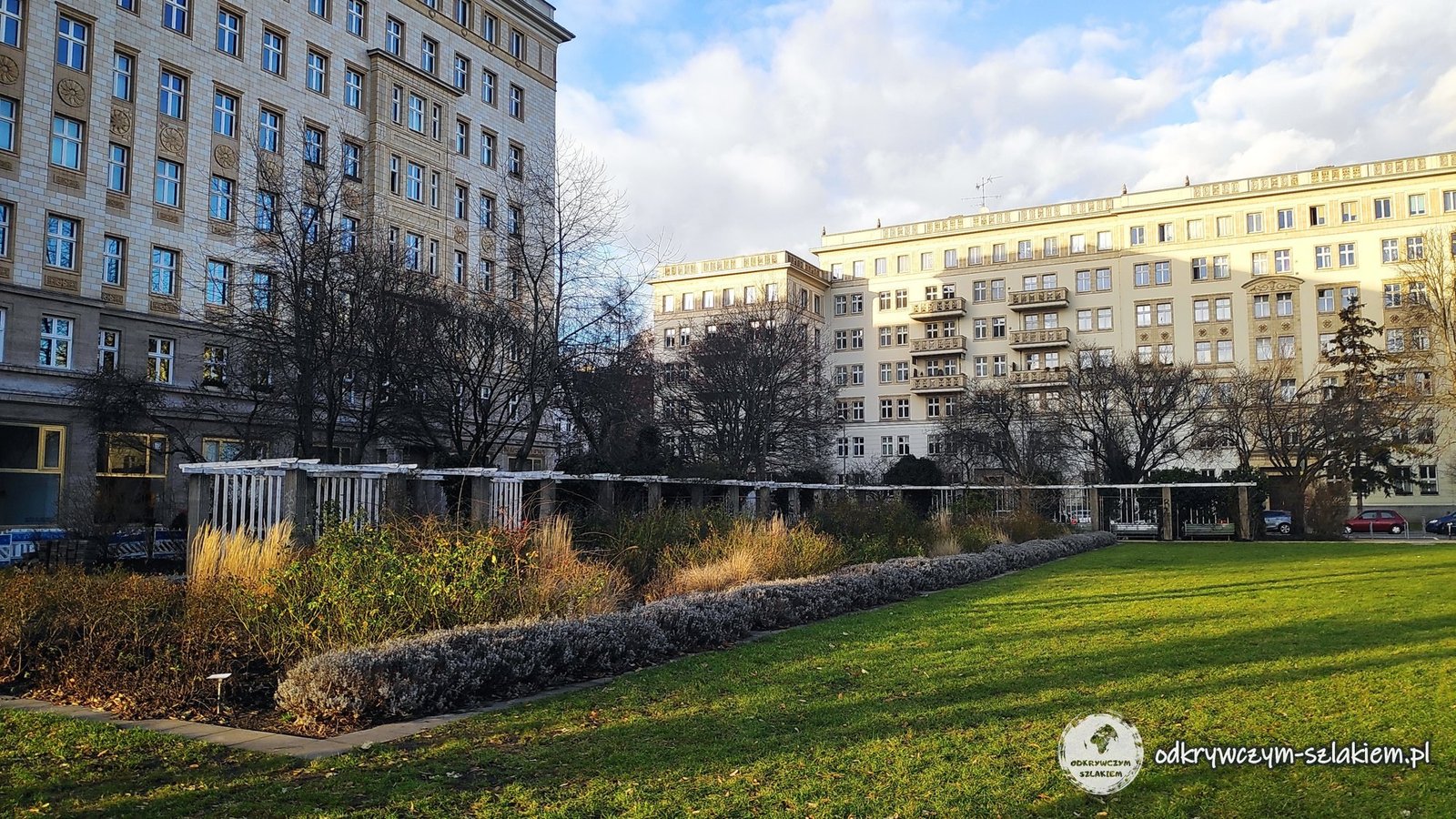
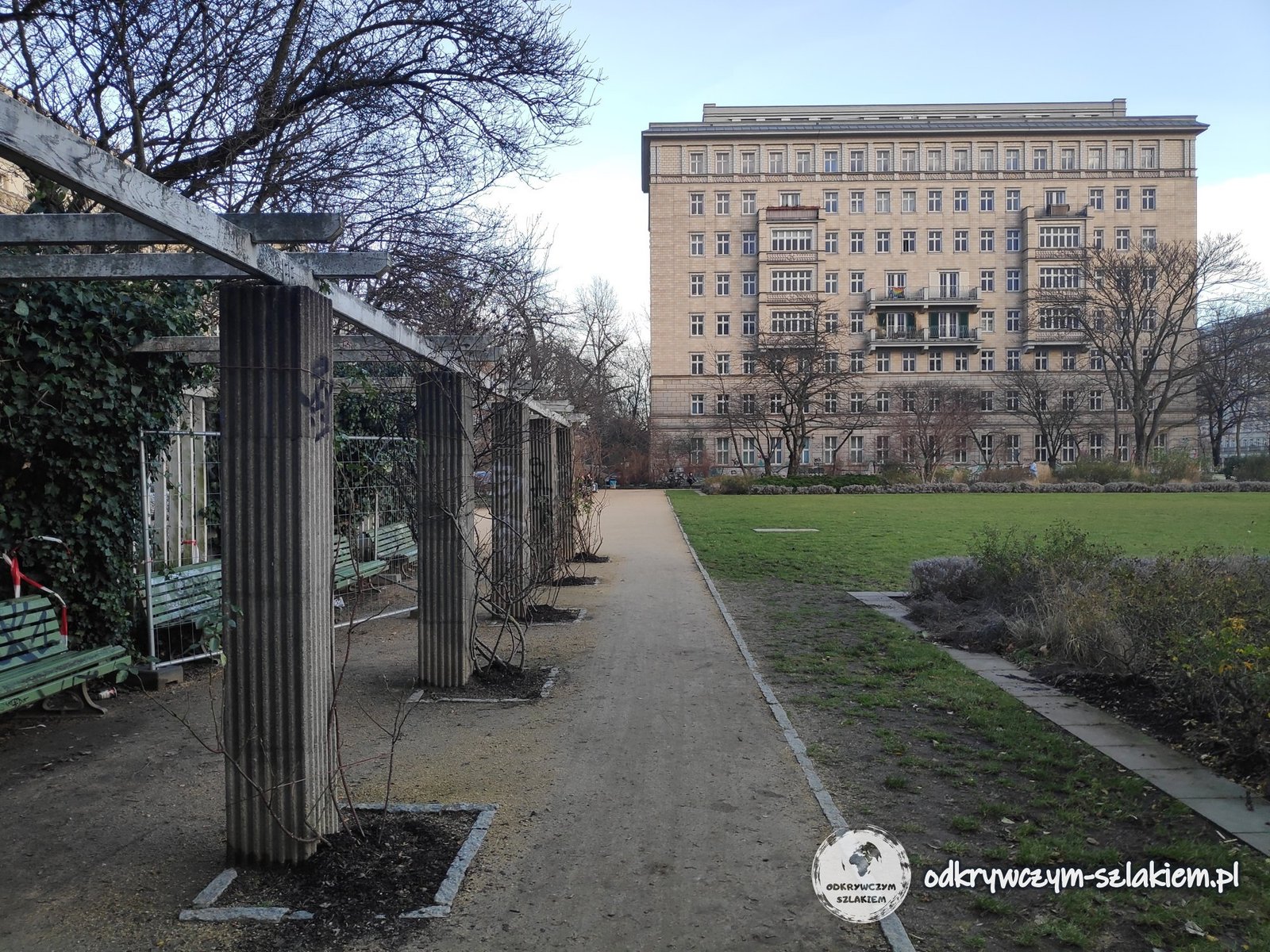
Soviet War Memorial in Treptower Park
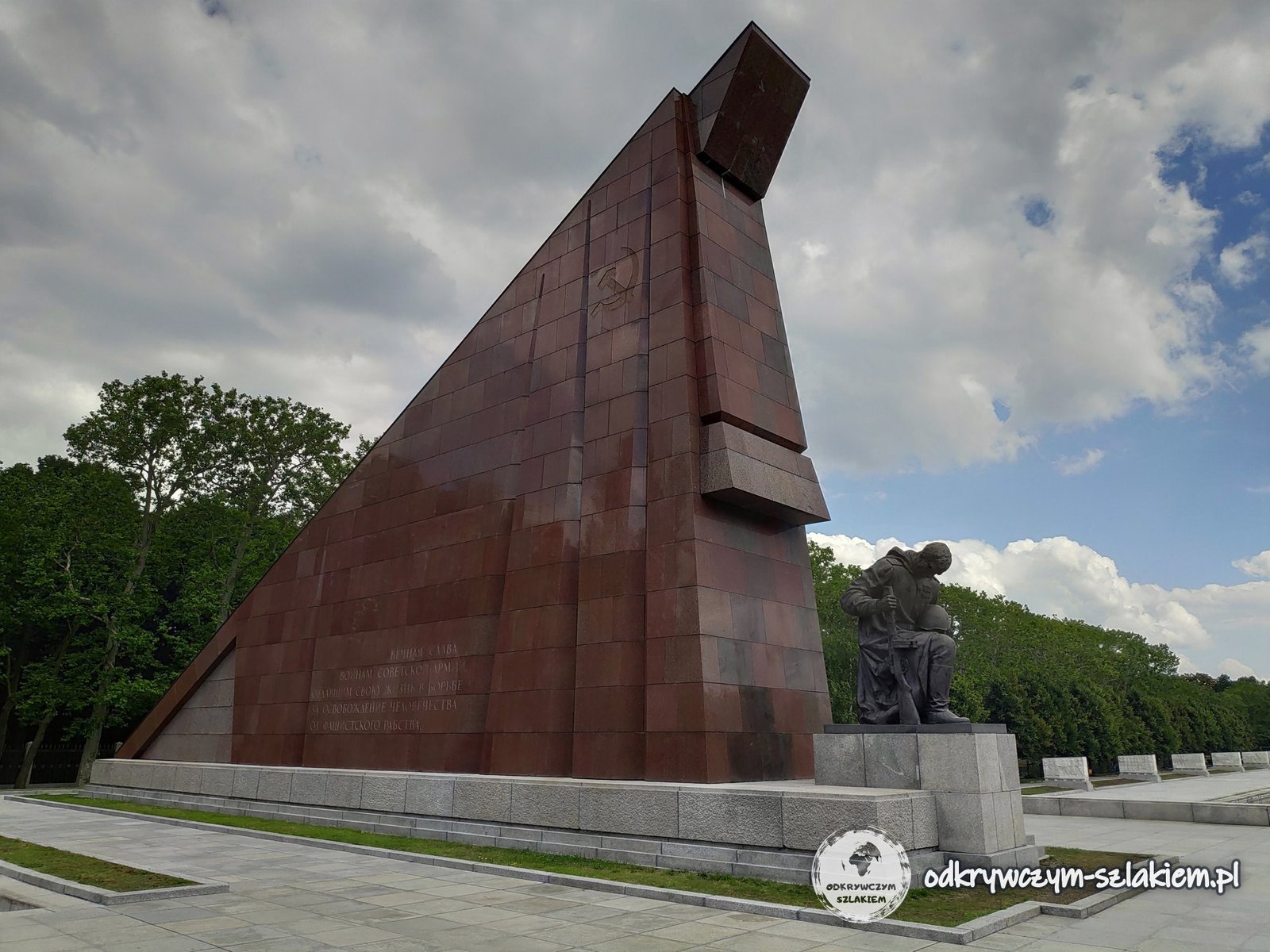
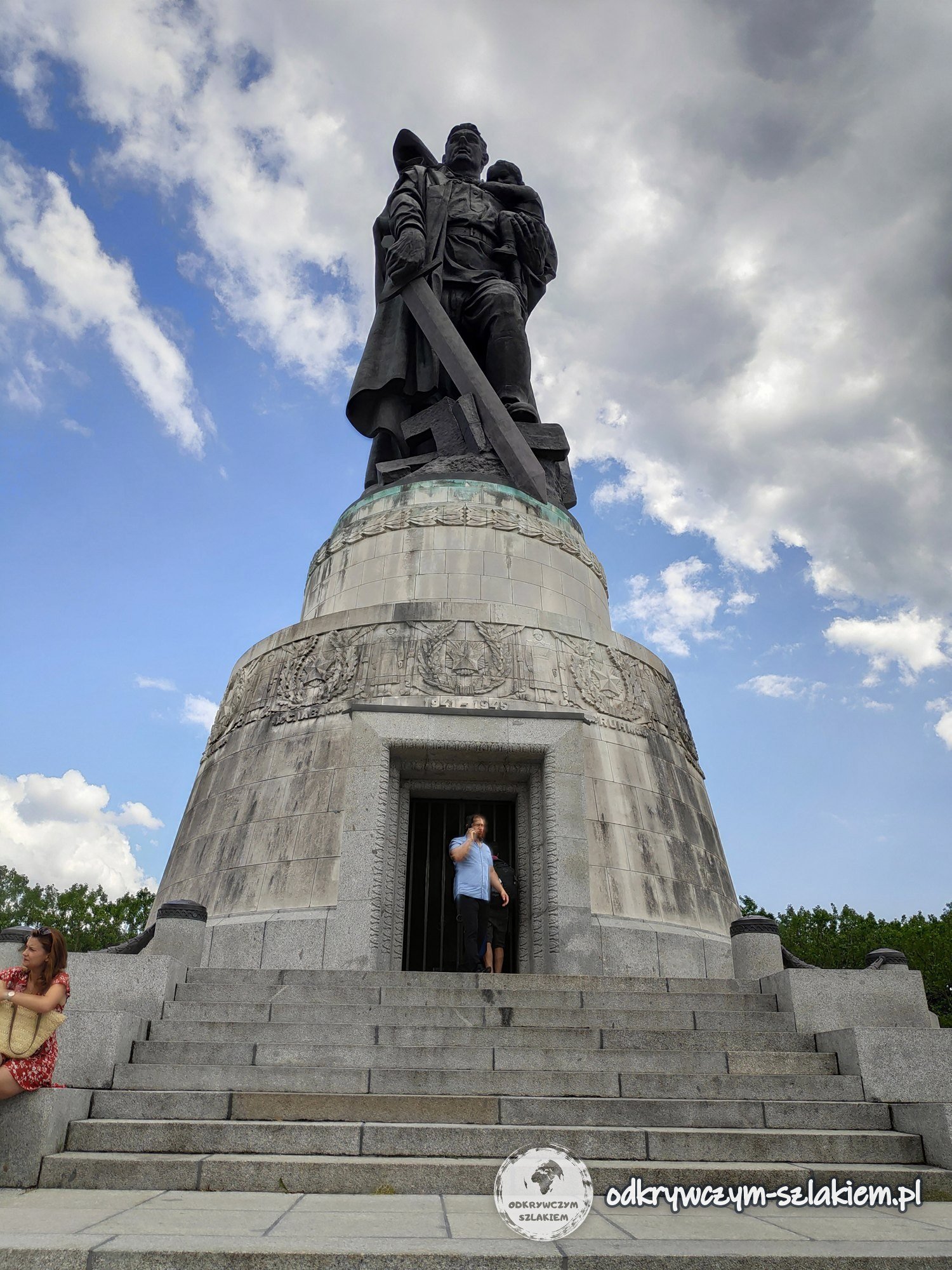
There are three large Soviet war memorials in Berlin – in the Tiergarten, in Treptower Park and in Schönholzer Heide. The largest and best known stands in Treptower Park, on the Spree – I was here in July 2020. The Soviet War Memorial (Sowjetisches Ehrenmal) was built in 1946–1949 as a cemetery for Red Army soldiers who fell in the battle for Berlin; several thousand of them are buried here. The entrance leads through a granite gate, and further on stands the statue of Mother Motherland mourning the fallen.
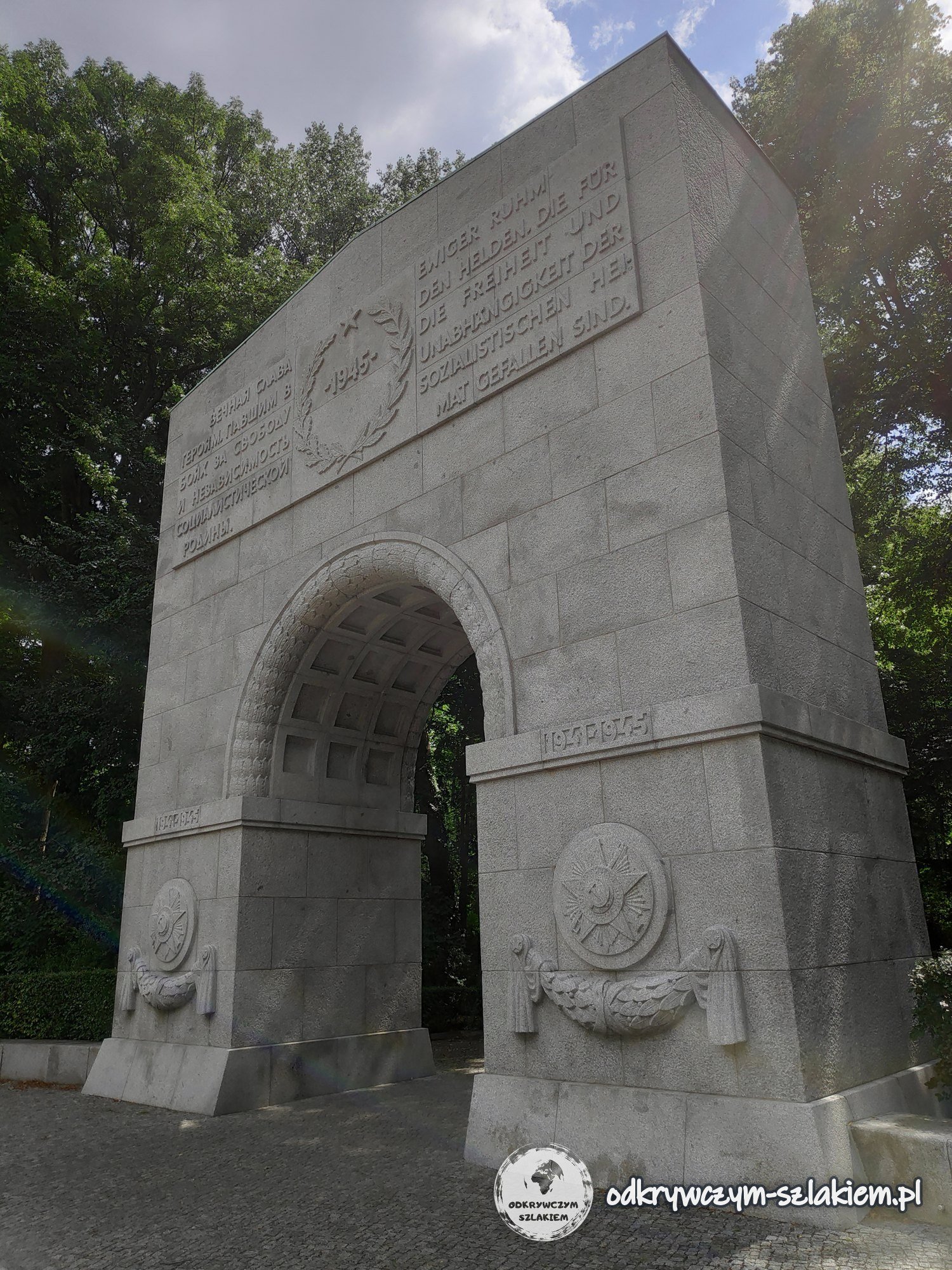
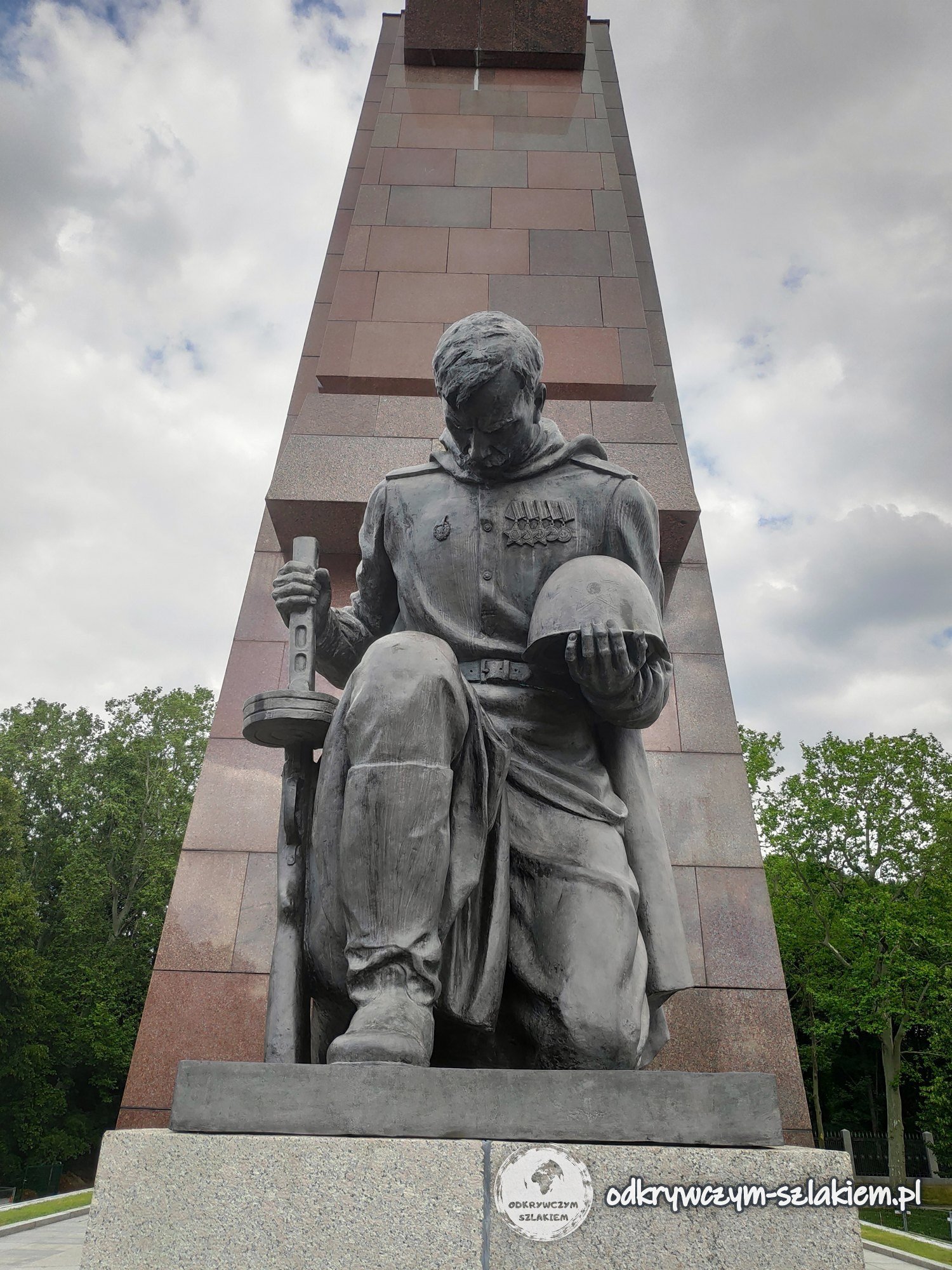
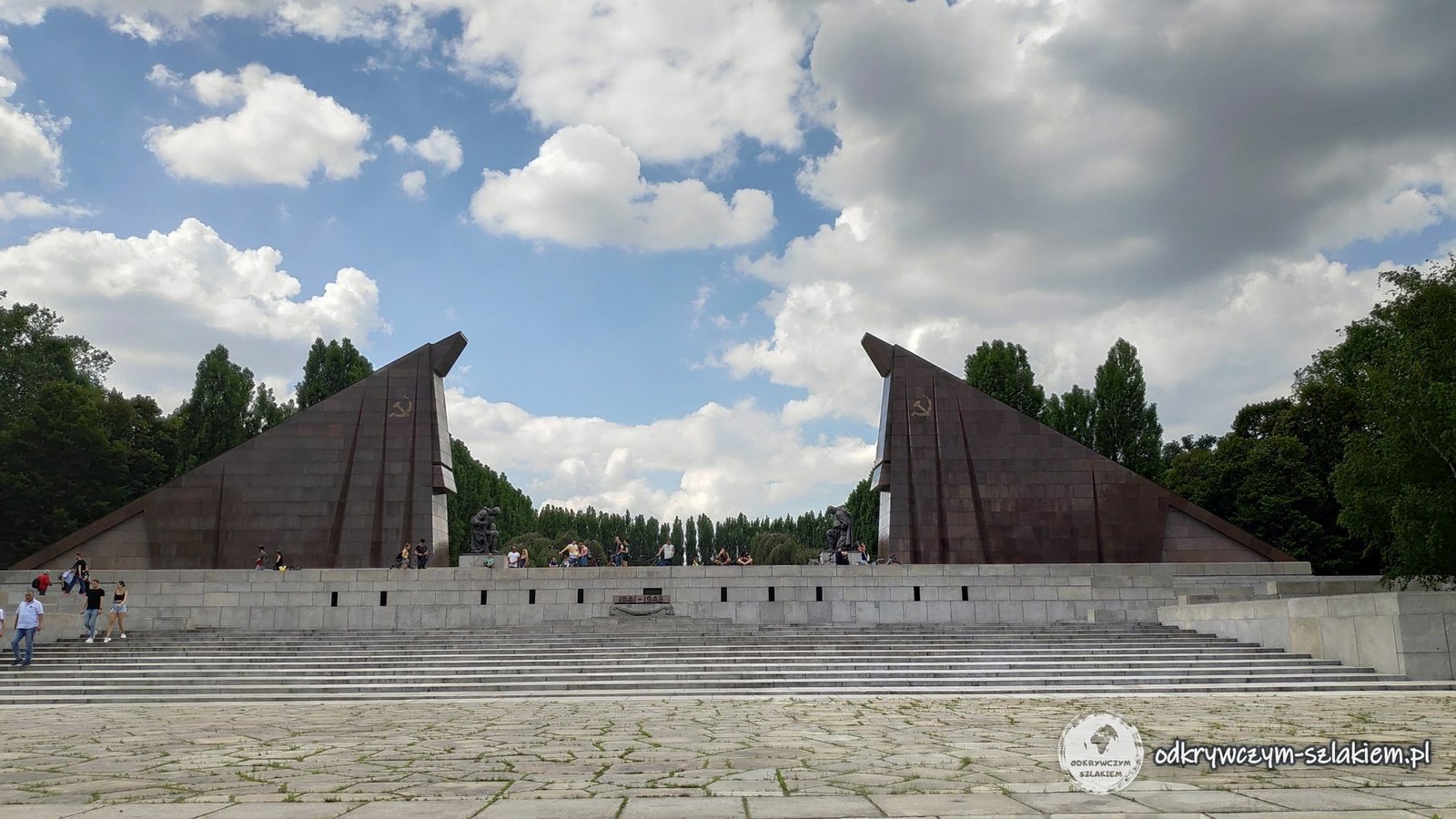
The main avenue ends with two huge, inclined red granite flags with kneeling soldiers. Behind them stretch mass graves and sixteen stone sarcophagi with reliefs – one for each Soviet republic.
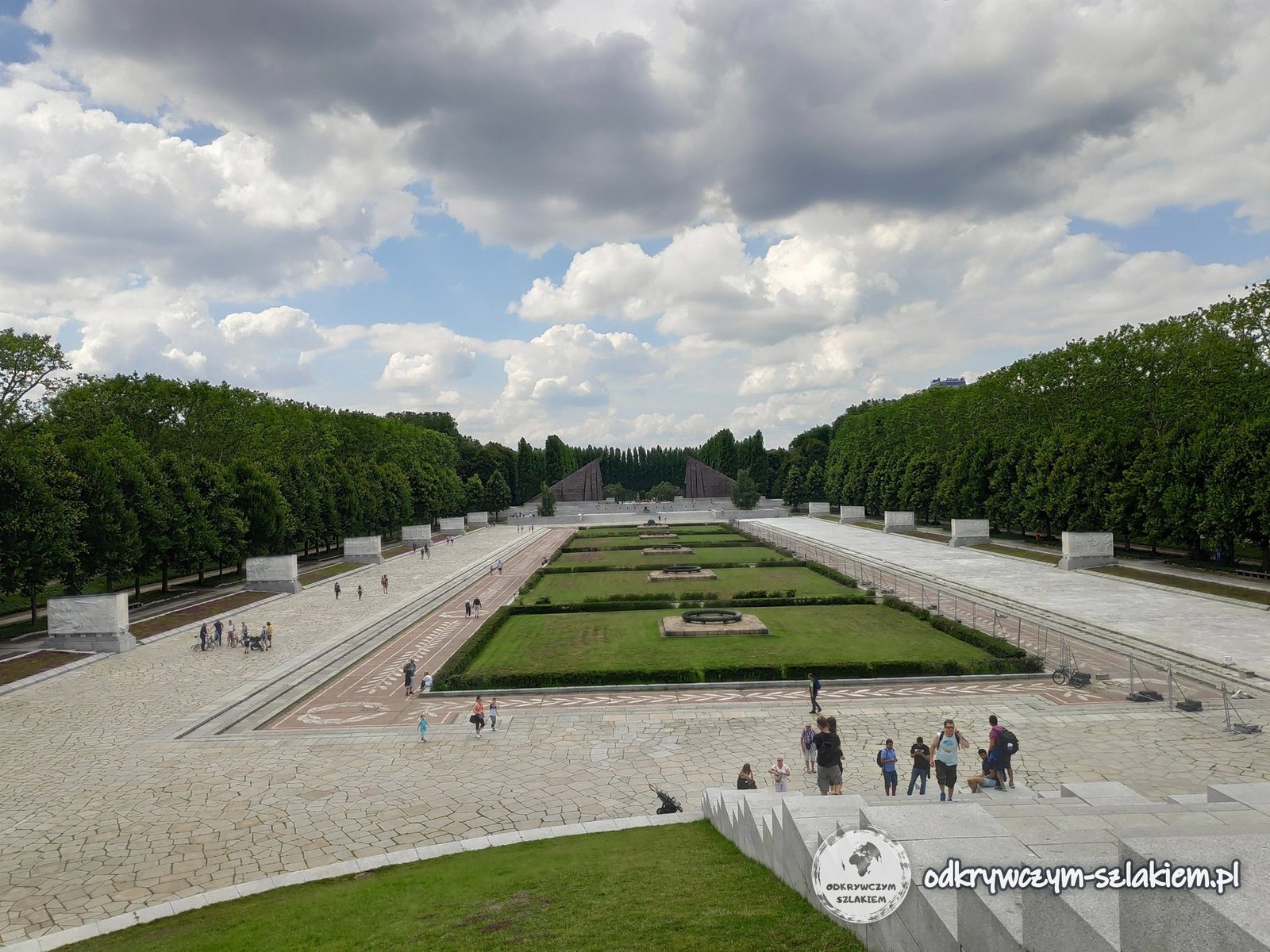
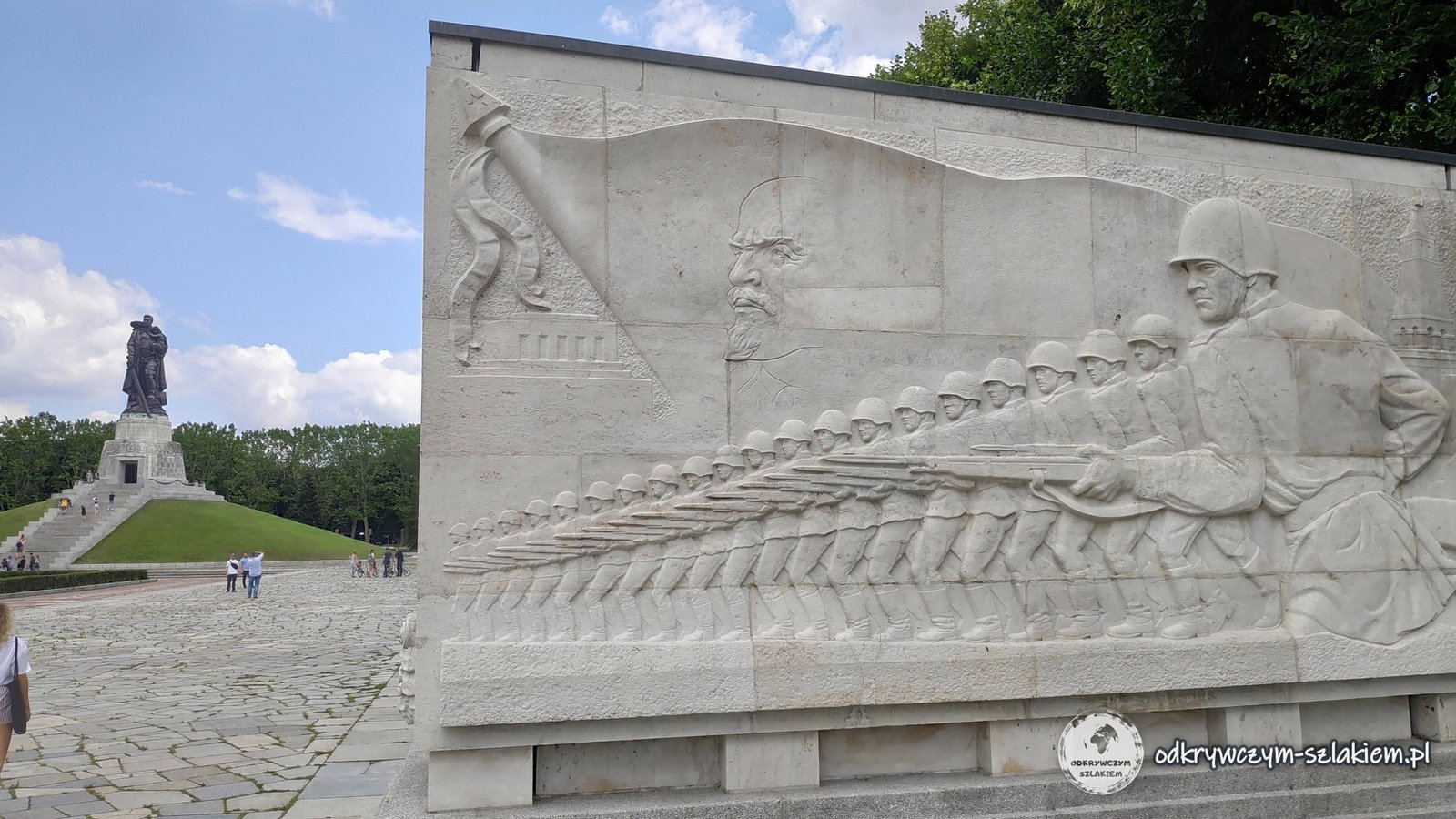
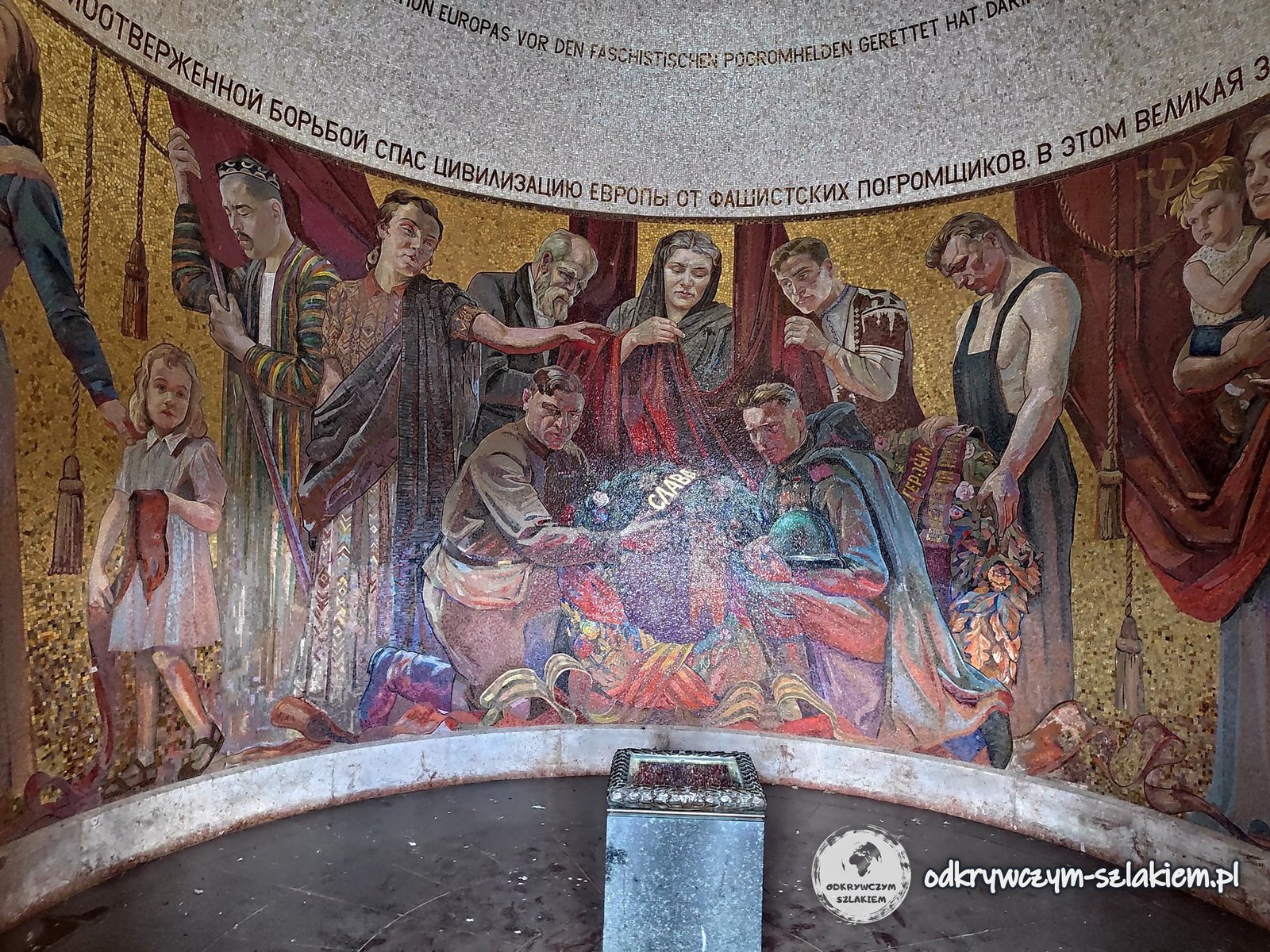
At the end, on a mound, stands the statue of a soldier holding a child, smashing a swastika with a sword. Inside the pedestal there is a small hall with a mosaic.
The Soviet soldiers’ cemetery in Schönholzer Heide
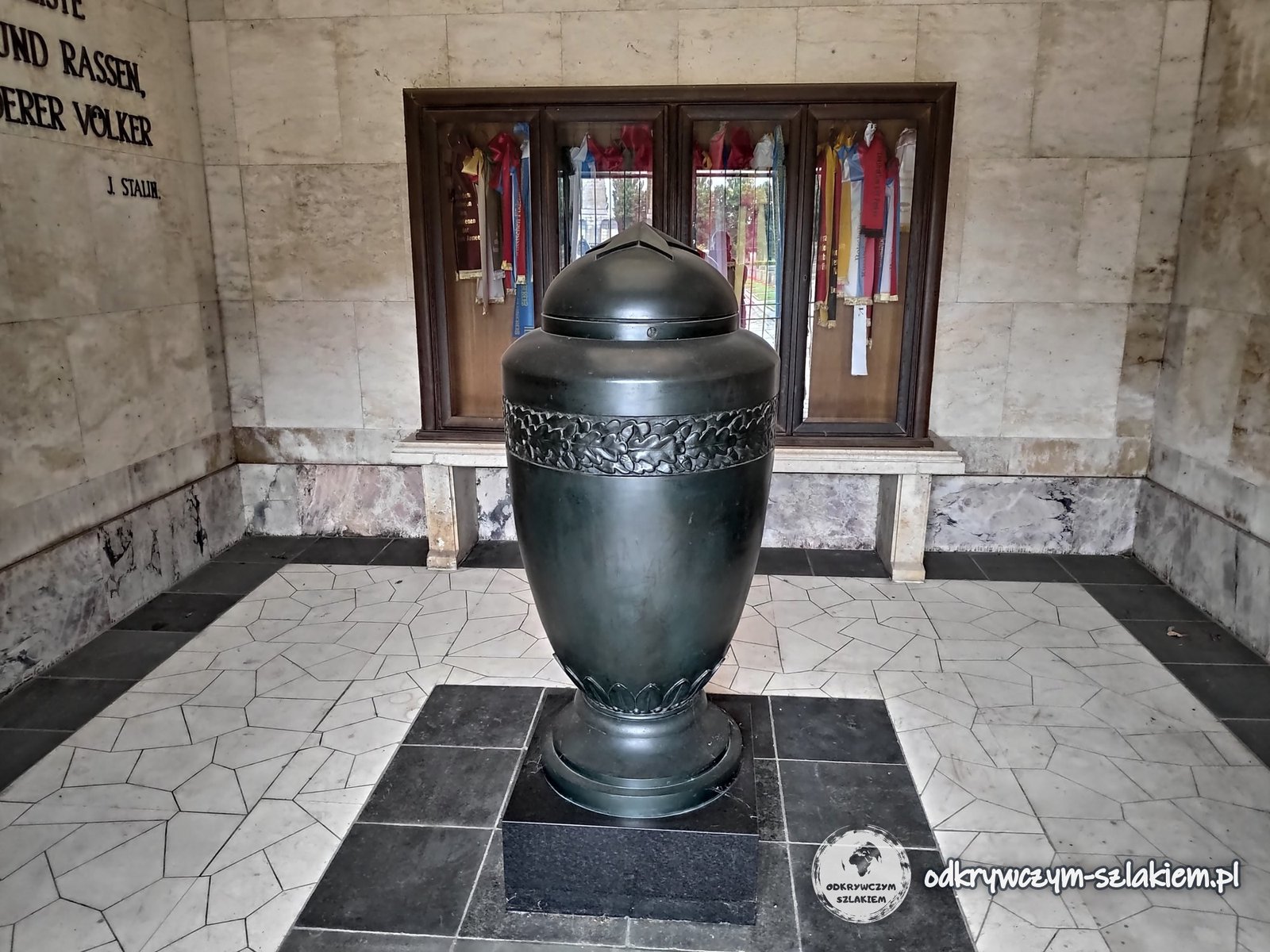
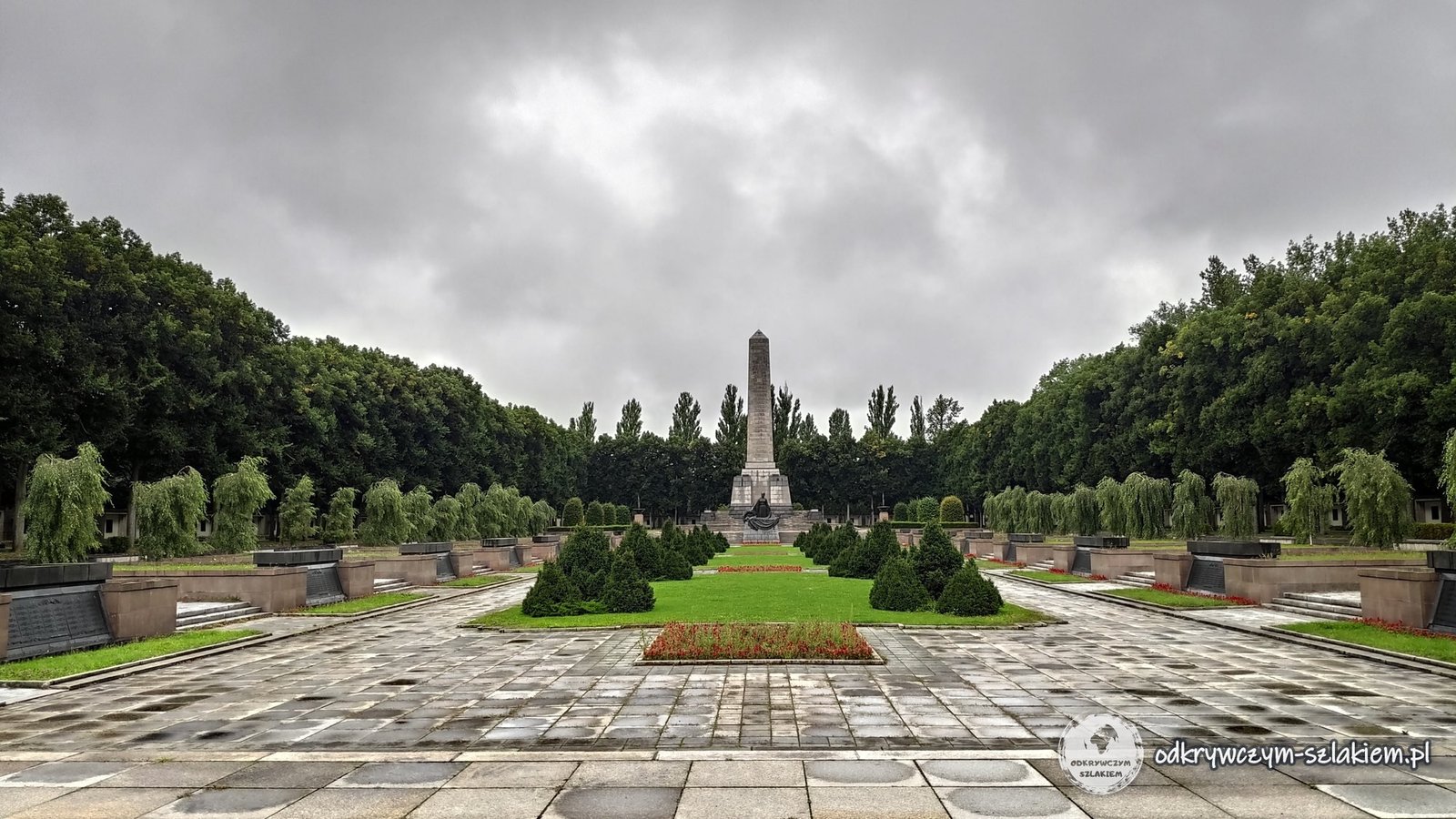
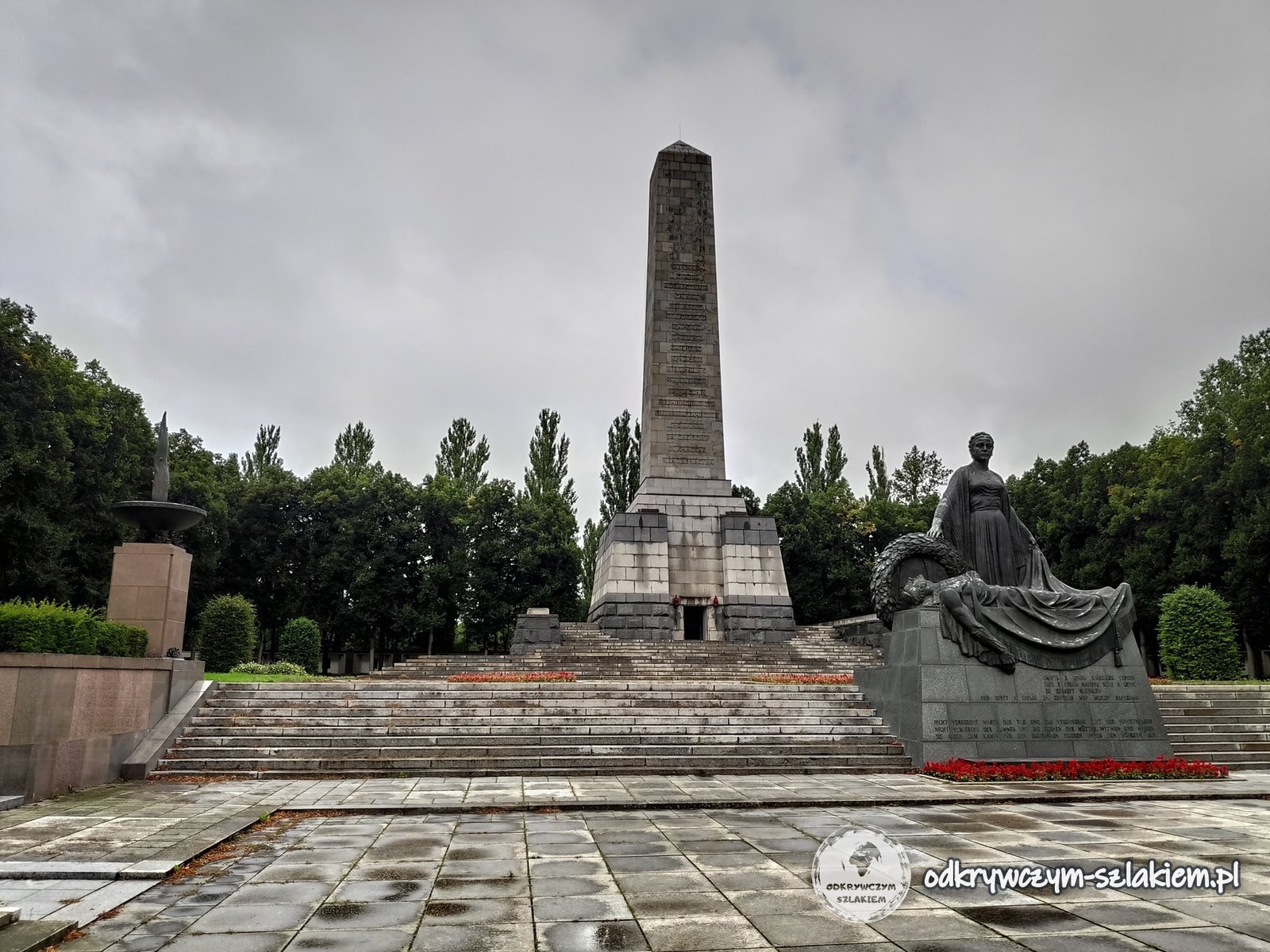
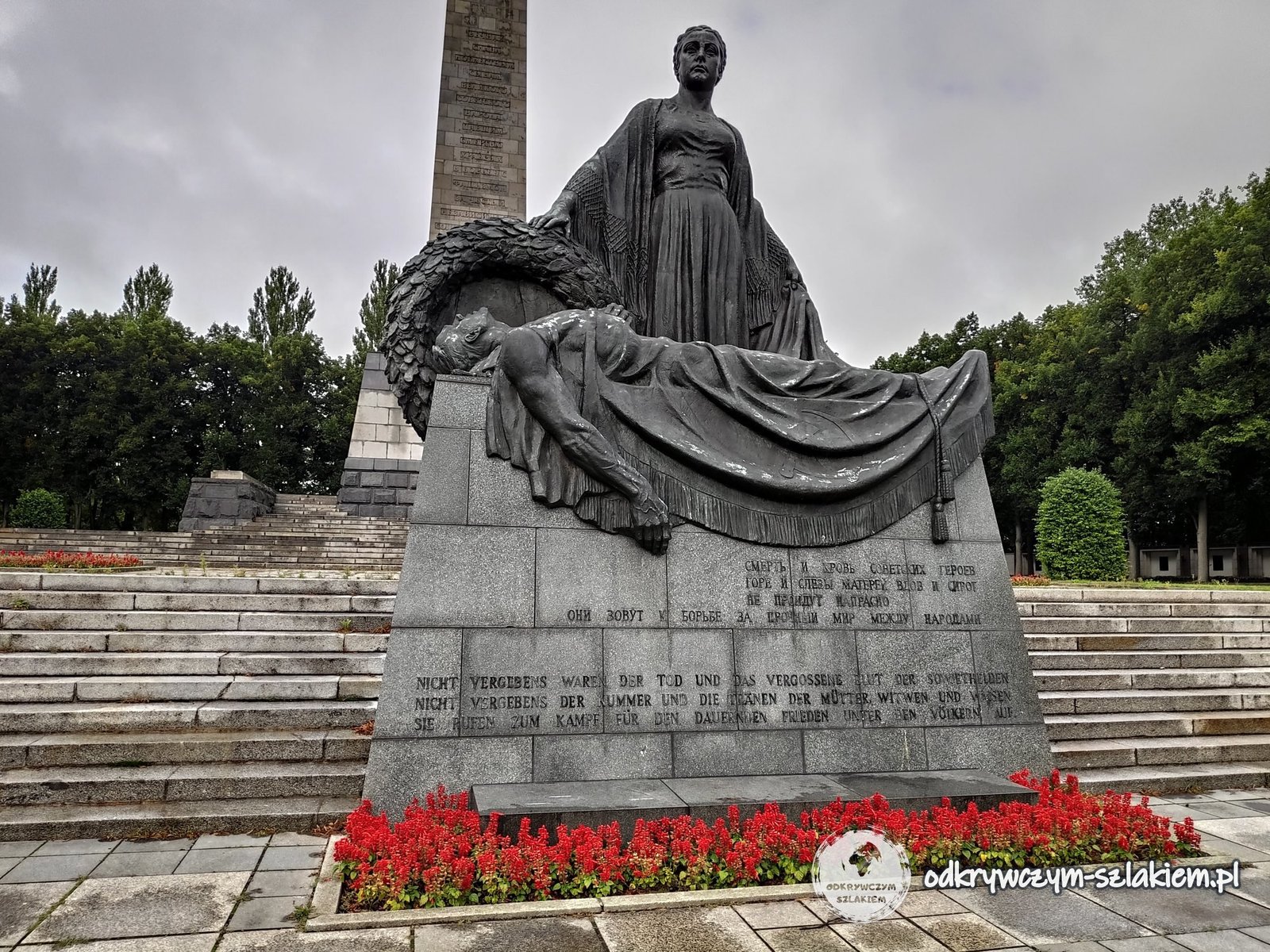
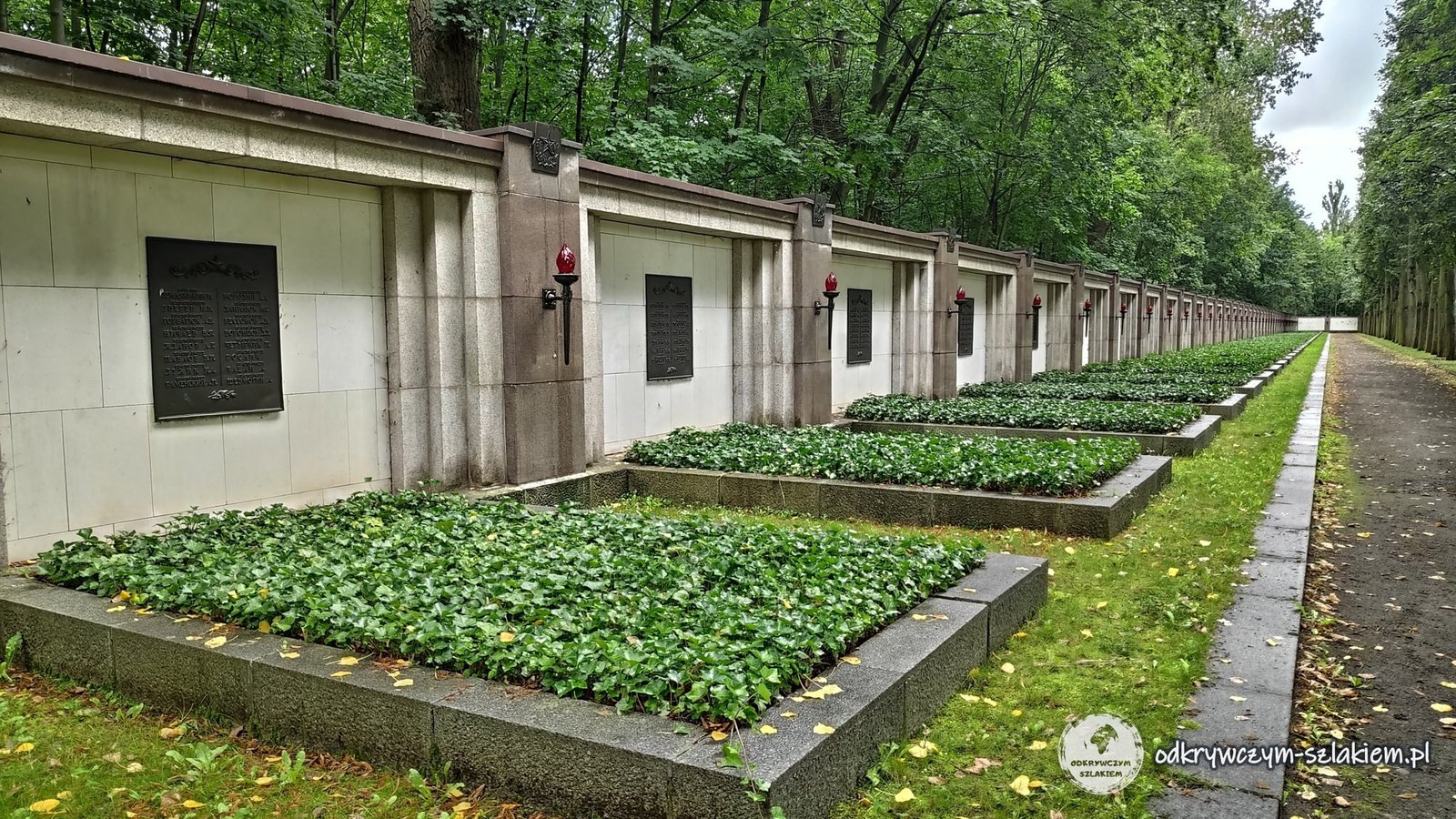
I visited the third, least known memorial in August 2021 – the Soviet War Memorial (Sowjetisches Ehrenmal) in the Schönholzer Heide park in the Pankow district. It is the largest Soviet cemetery in Berlin: more than 13,000 soldiers of the Red Army who fell in the battle for the city in April and May 1945 are buried here. The cemetery was built in 1947–1949.
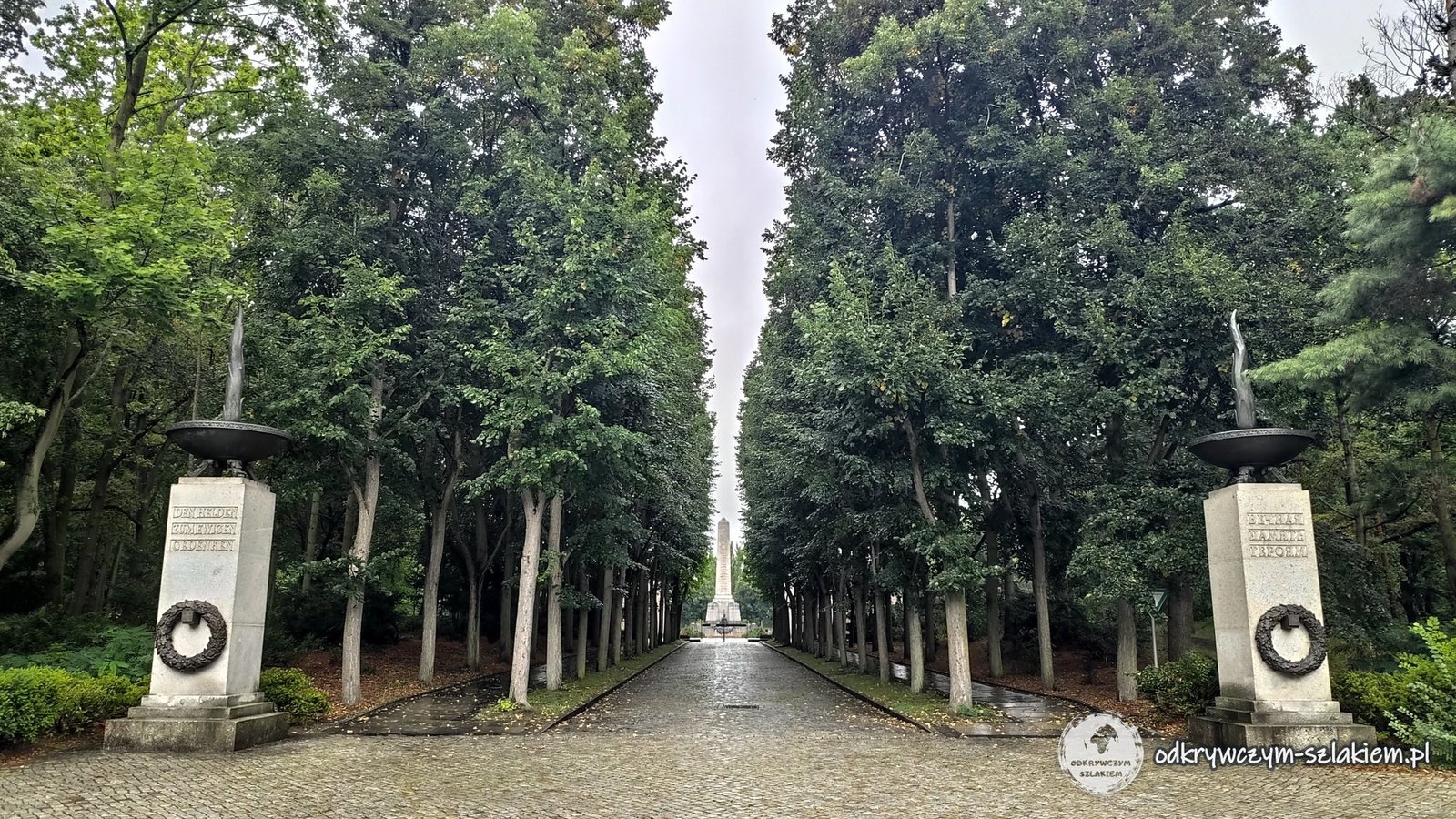
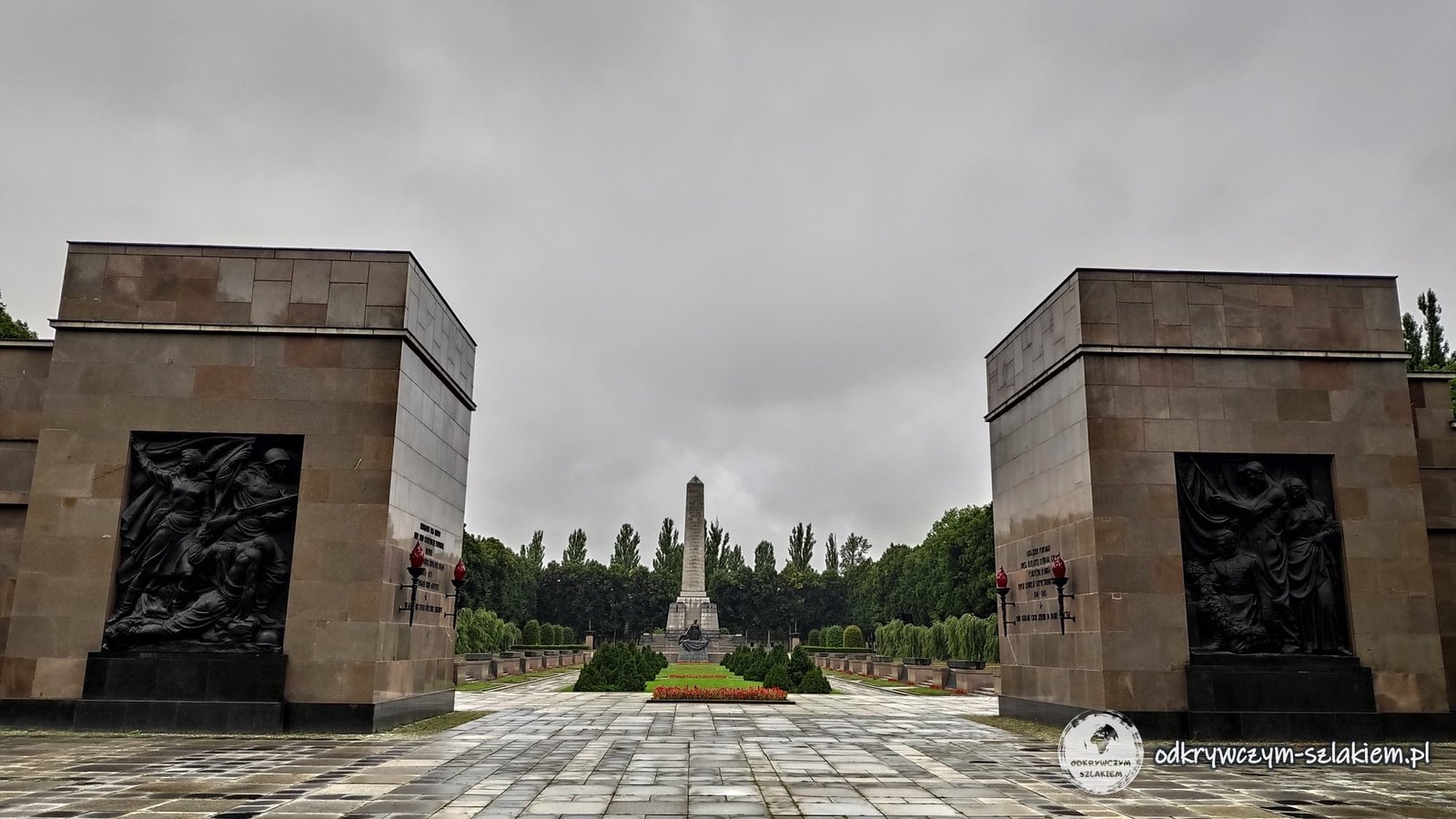
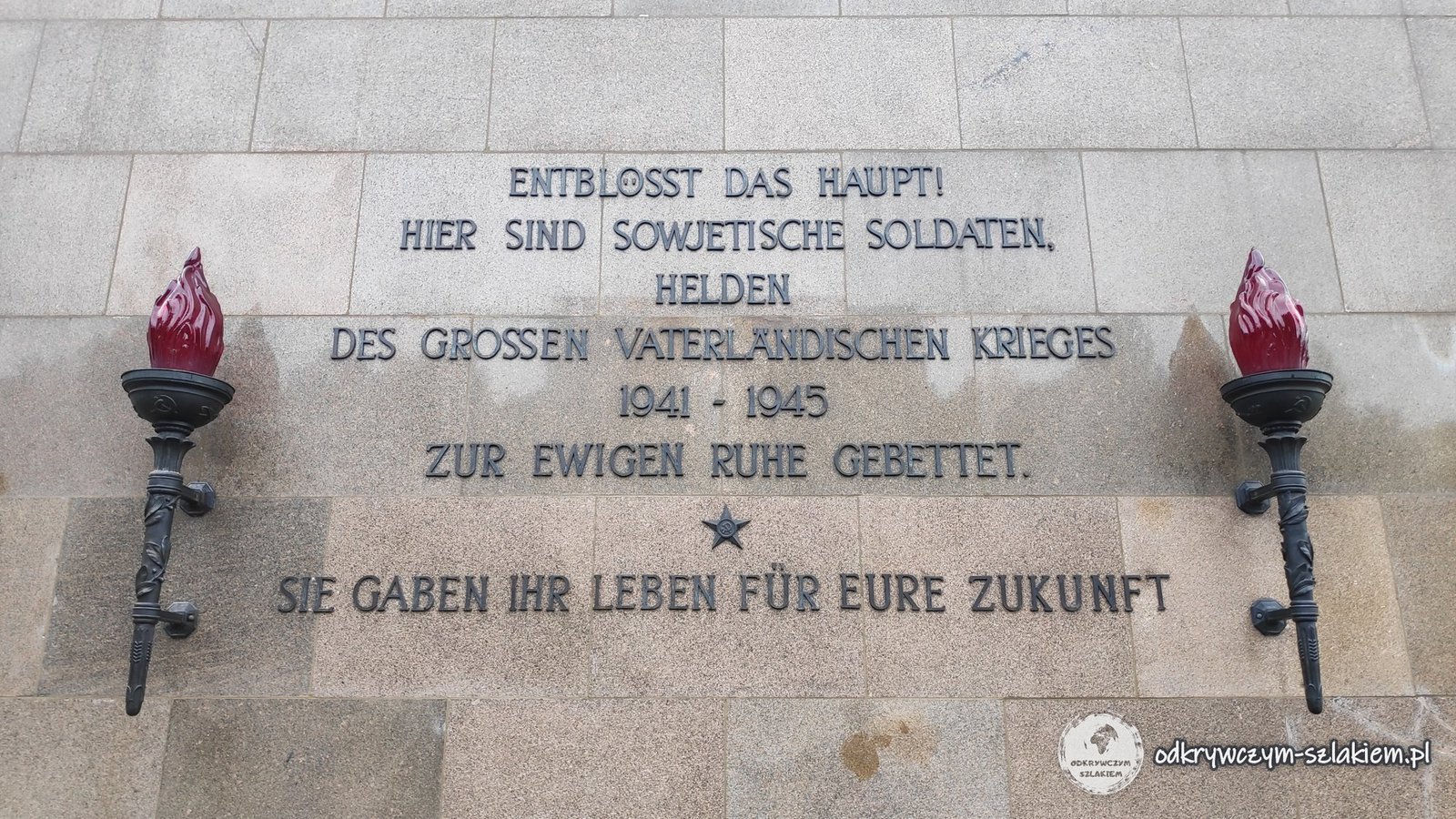
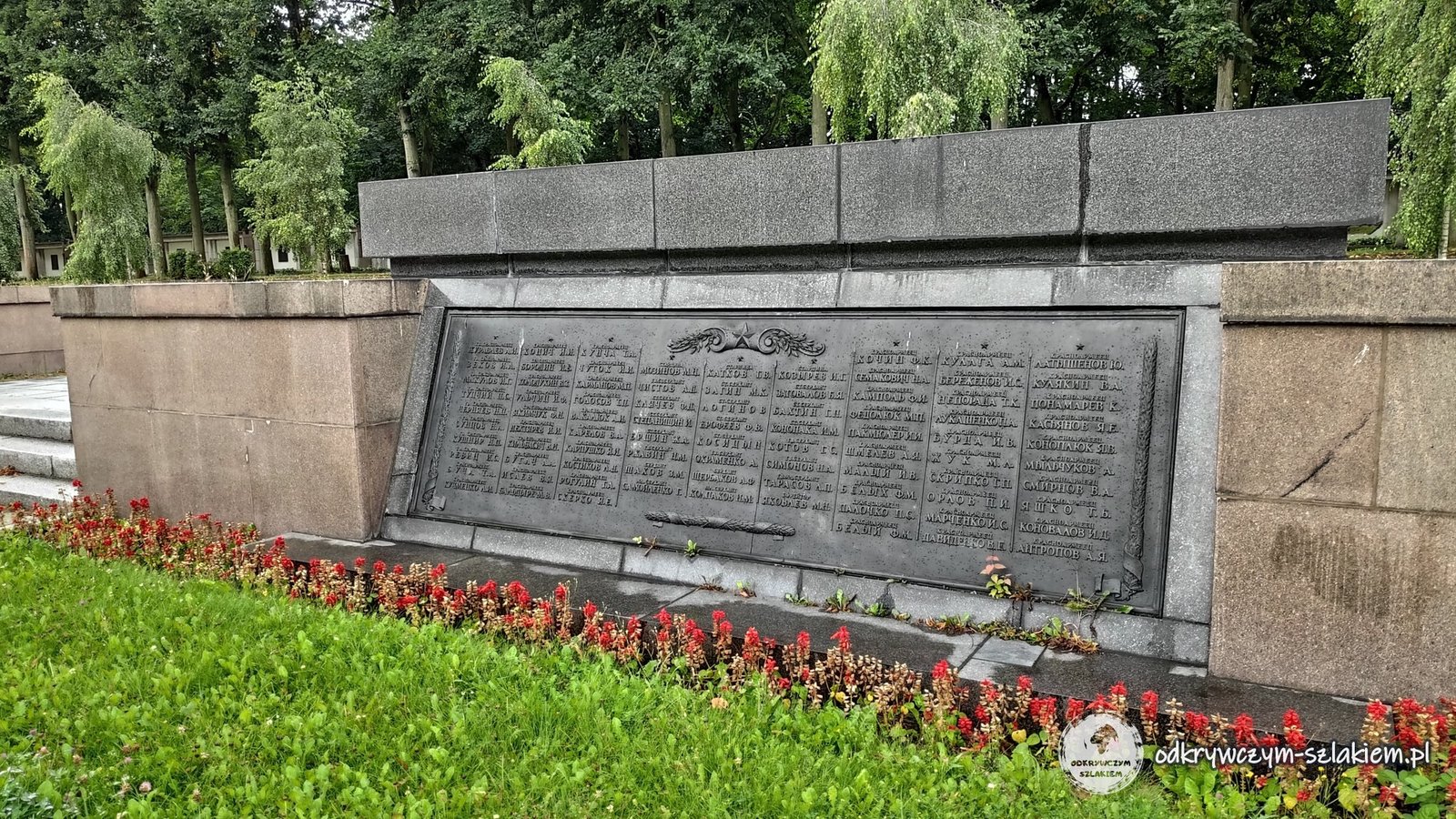
From the entrance a long axis leads to an obelisk, in front of which stands a sculpture of a mother mourning her fallen son. Along the wall surrounding the cemetery run mass graves and bronze plaques with the names of the soldiers.
Practical information
- Free of charge: all the places described here are free, except for going up the TV Tower.
- How to combine them: Alexanderplatz, the Red City Hall, the Marx-Engels-Forum and the monastery ruins are next to each other. For Karl-Marx-Allee, the best option is to take the U5 underground to Strausberger Platz or Frankfurter Tor and walk along the avenue.
- Schönholzer Heide: the park is in the north, in Pankow – the nearest station is the S-Bahn station Schönholz. In the same district is Schönhausen Palace, which I write about in the post Berlin: palaces and castles.
- More about the GDR: the Wall and Bernauer Straße – Berlin: on the trail of the Berlin Wall, the border watchtower on the Havel – day trips from Berlin, and the Monument to the Polish Soldier – Green Berlin.
Photo gallery