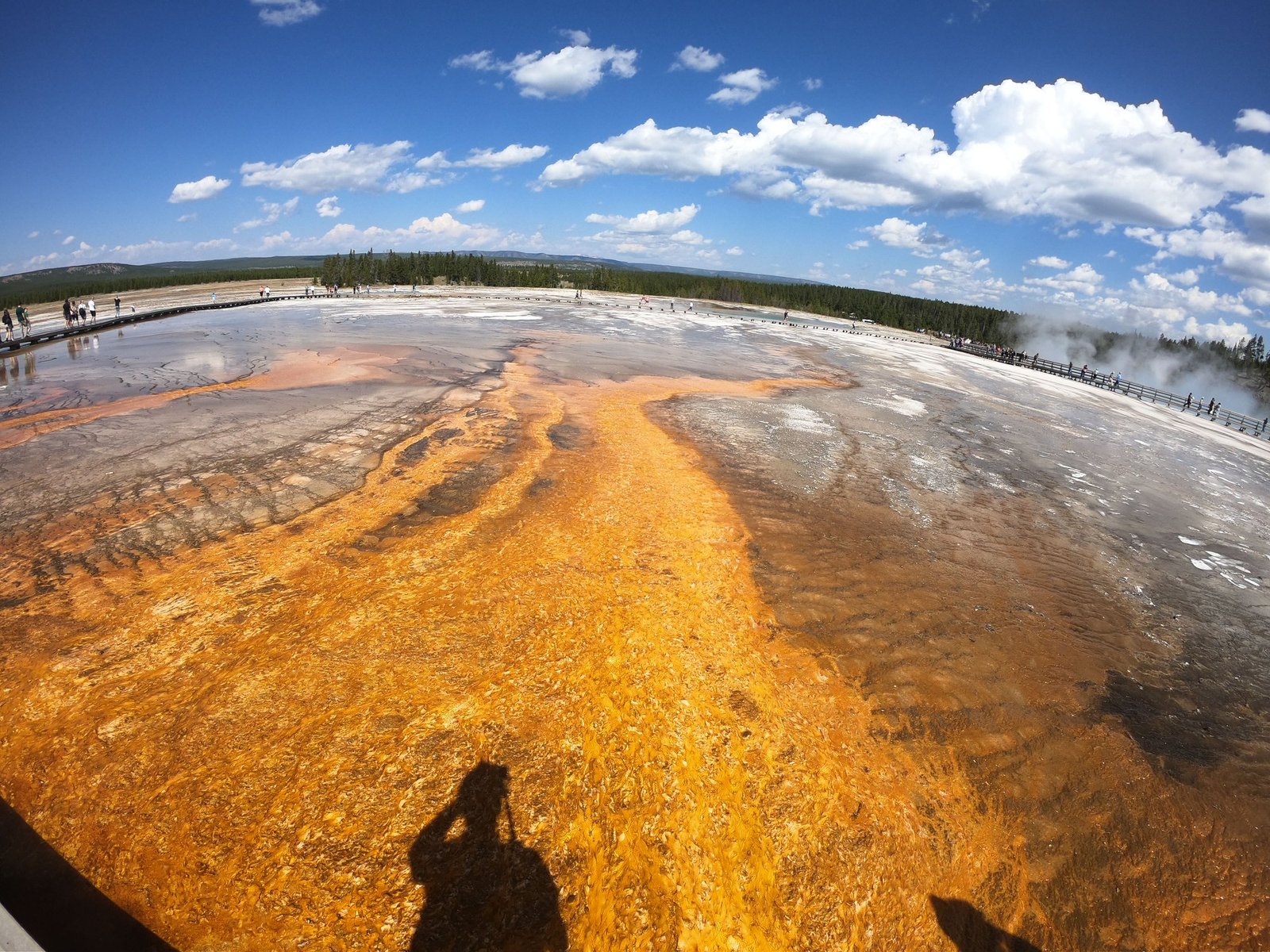
Yellowstone is the oldest national park in the world (established in 1872) and one of the best known. It sits on a supervolcano – beneath the park lies a caldera measuring about 48 × 72 km, and heat from the Earth’s interior feeds thousands of geysers, hot springs and mud pots. It had been on our list for a long time, but during our month-long trip around the USA it was too far from the other places. As it turned out, though, on our Work & Travel programme we worked in neighbouring Grand Teton National Park – and on Saturday 8 September 2018, together with Damian, whom we had met in Yosemite, we went on a long-awaited day trip by coach to Yellowstone. It was one of the activities our employer offered its staff – we got it with a 100% discount.
Table of contents
- The route in one day
- Old Faithful and the Upper Geyser Basin
- Grand Prismatic Spring and the Midway Geyser Basin
- The Grand Canyon of the Yellowstone – Upper and Lower Falls
- Mud Volcano and bison in Hayden Valley
- Practical information
The route in one day
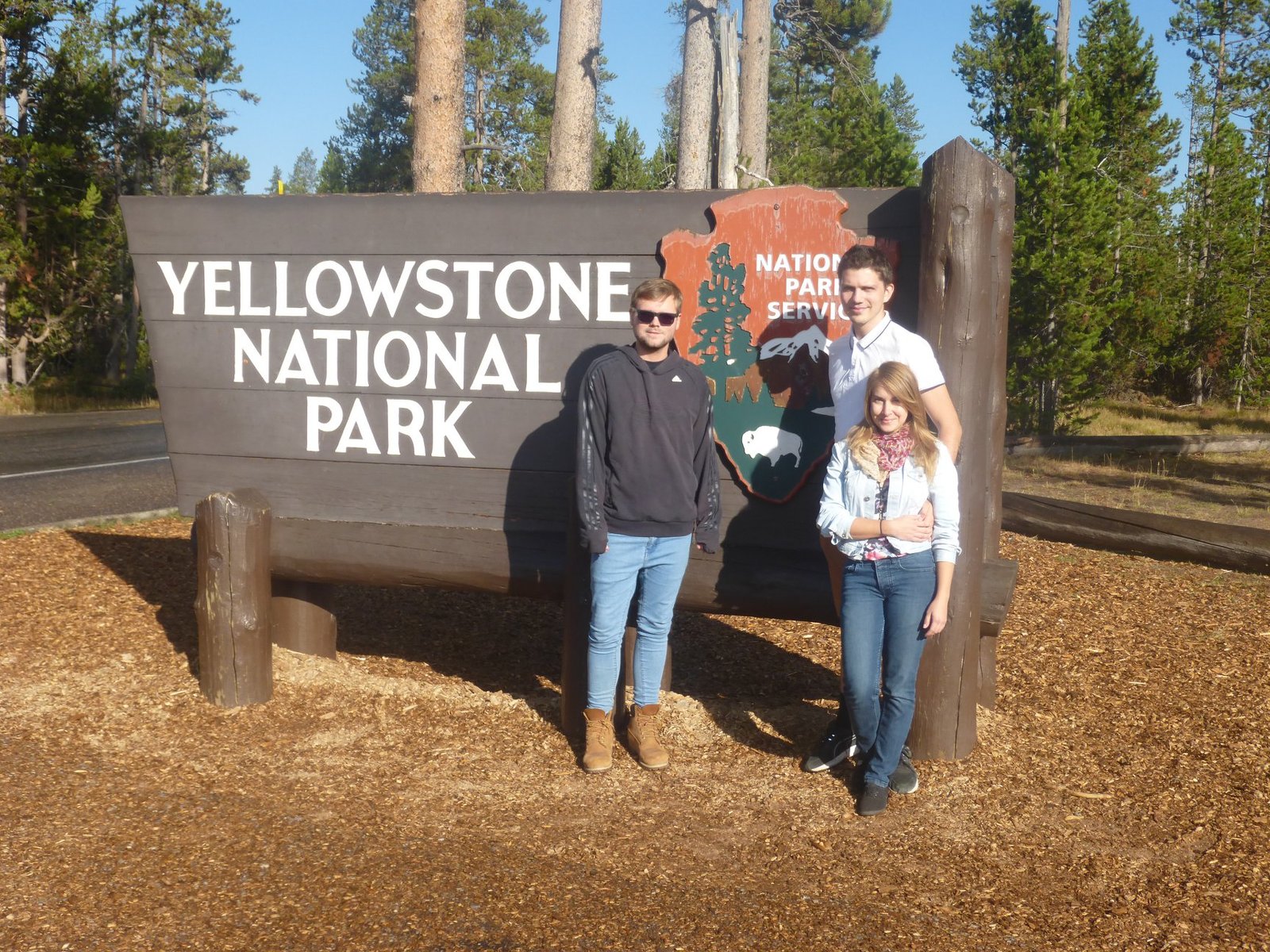
The tour covered the park’s most popular places: Old Faithful, Grand Prismatic Spring, the Fountain Paint Pot trail, the Grand Canyon of the Yellowstone with the Upper and Lower Falls, and Mud Volcano and Dragon’s Mouth Spring. From Colter Bay in Grand Teton, via Jackson Lake Lodge, Old Faithful, Grand Prismatic and Upper Falls and back, we covered about 290 km in total. Unfortunately, with less than a day, it wasn’t possible to see everything – there was no time, for example, for the Mammoth Hot Springs terraces in the north of the park. It’s worth setting aside at least 2–3 days for Yellowstone.
The park covers 8,983 km² – about 96% of it lies in Wyoming, the rest in Montana and Idaho – and in 2025 it was visited by about 4.8 million people. The caldera formed about 631,000 years ago in the third great eruption of the supervolcano (the previous ones took place about 2.1 and 1.3 million years ago). Between 1,000 and 2,000 measurable earthquakes are recorded under the park every year, but the Yellowstone Volcano Observatory sees no sign of an imminent major eruption.
Old Faithful and the Upper Geyser Basin
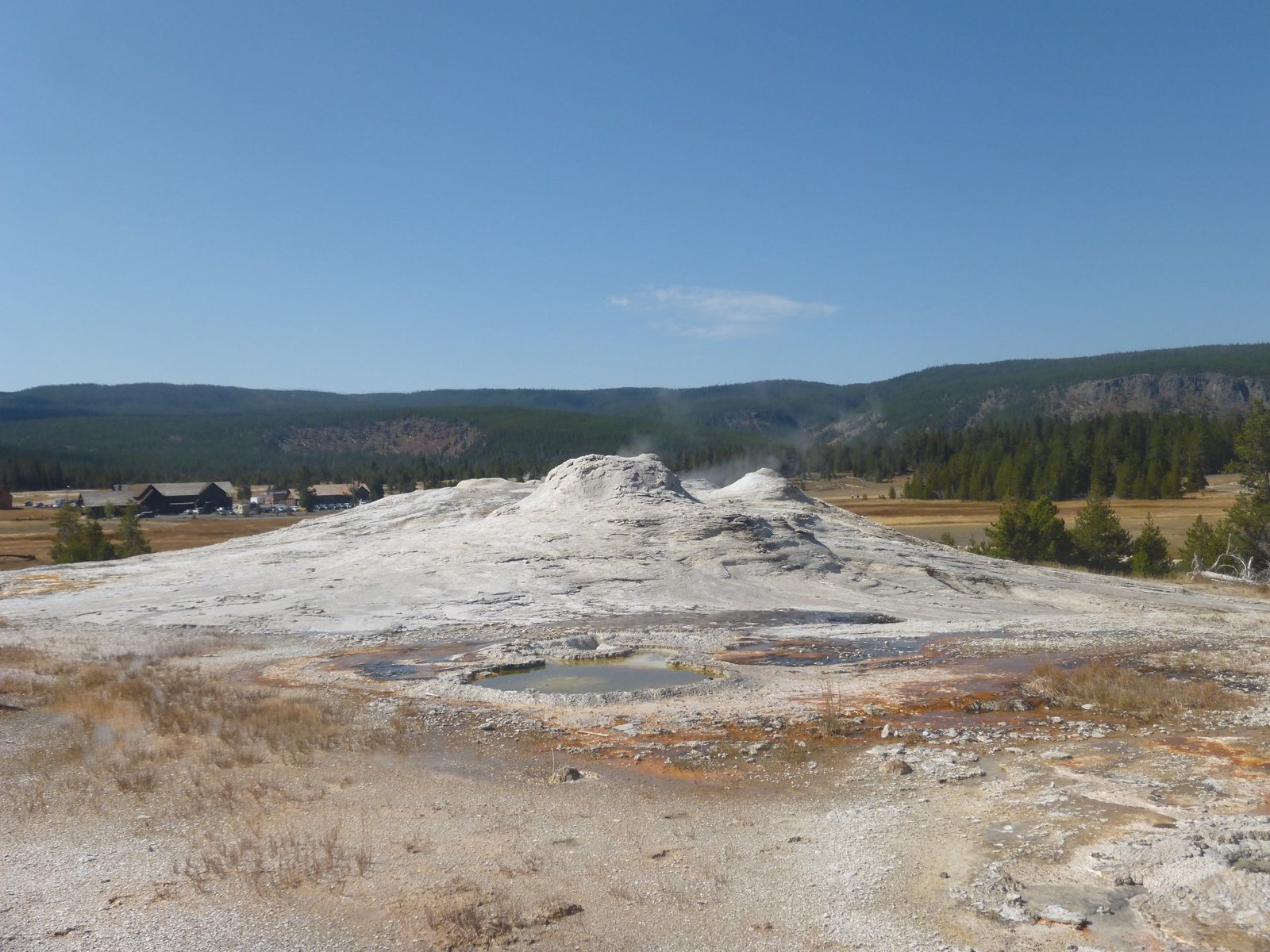
Old Faithful is the most famous geyser in the world – it erupts roughly every 90 minutes, and the park posts the predicted time of the next eruption at the visitor centre and in its app. Around the cone there are benches and boardwalks, so all you need to do is arrive a quarter of an hour early and wait. An eruption lasts a few minutes, and the column of water and steam reaches several dozen metres.
The geyser was named in 1870 by the Washburn–Langford–Doane Expedition – it was the first geyser in the park to get a name. The interval between eruptions averages about 92 minutes, but it depends on the length of the previous eruption: after one shorter than 2.5 minutes the next comes after about 65 minutes, after a longer one – after about 91. A single eruption throws 14,000 to 32,000 litres of water 32–56 m high.
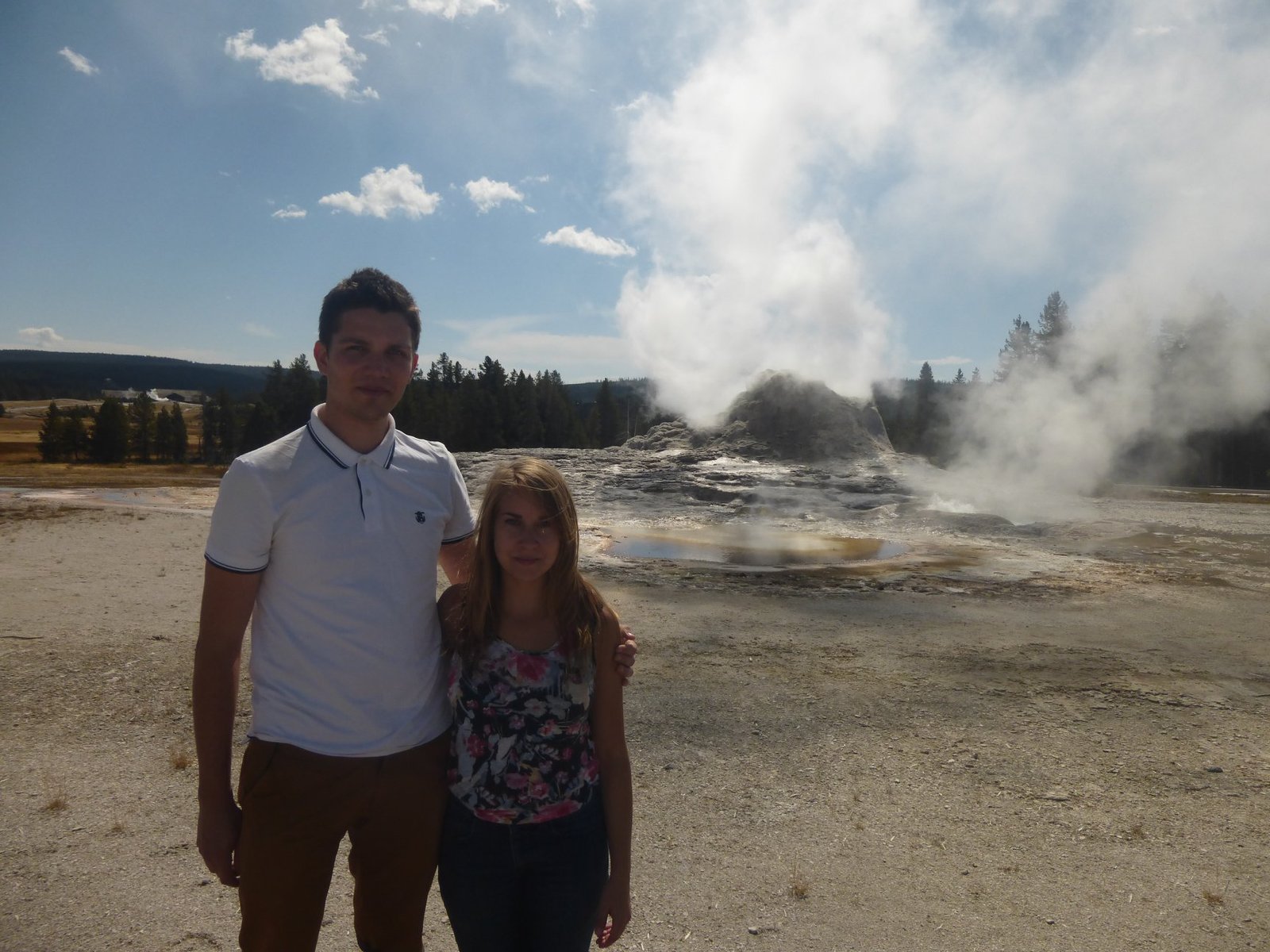
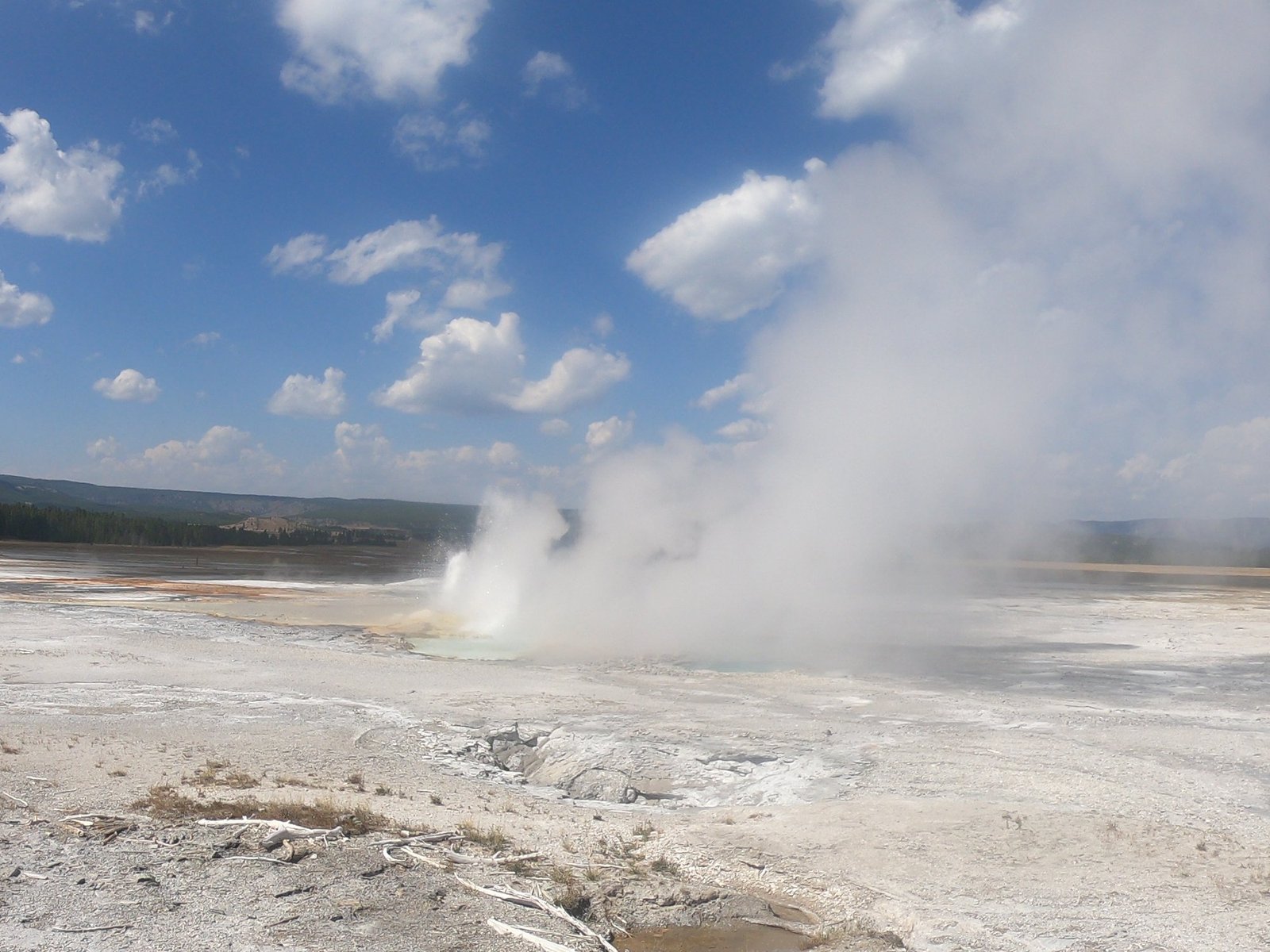

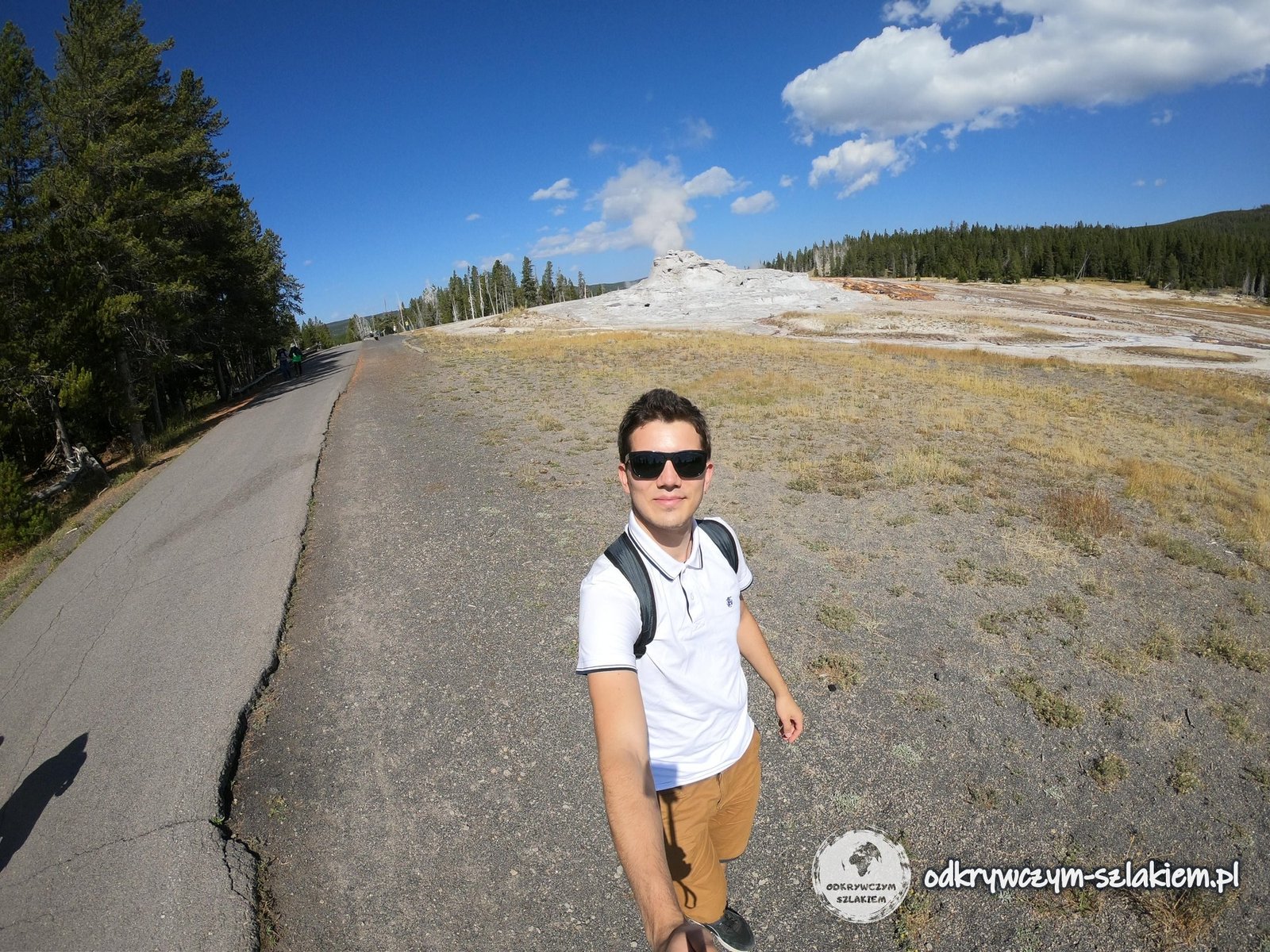
Yellowstone has more than 10,000 hydrothermal features, including over 500 geysers – more than anywhere else on Earth. A geyser is a hot spring whose channel narrows just below the surface: the water cannot circulate freely until the pressure pushes it out. Every eruption leaves a thin layer of silica, from which the cones grow – many of them are several hundred years old.


Grand Prismatic Spring and the Midway Geyser Basin
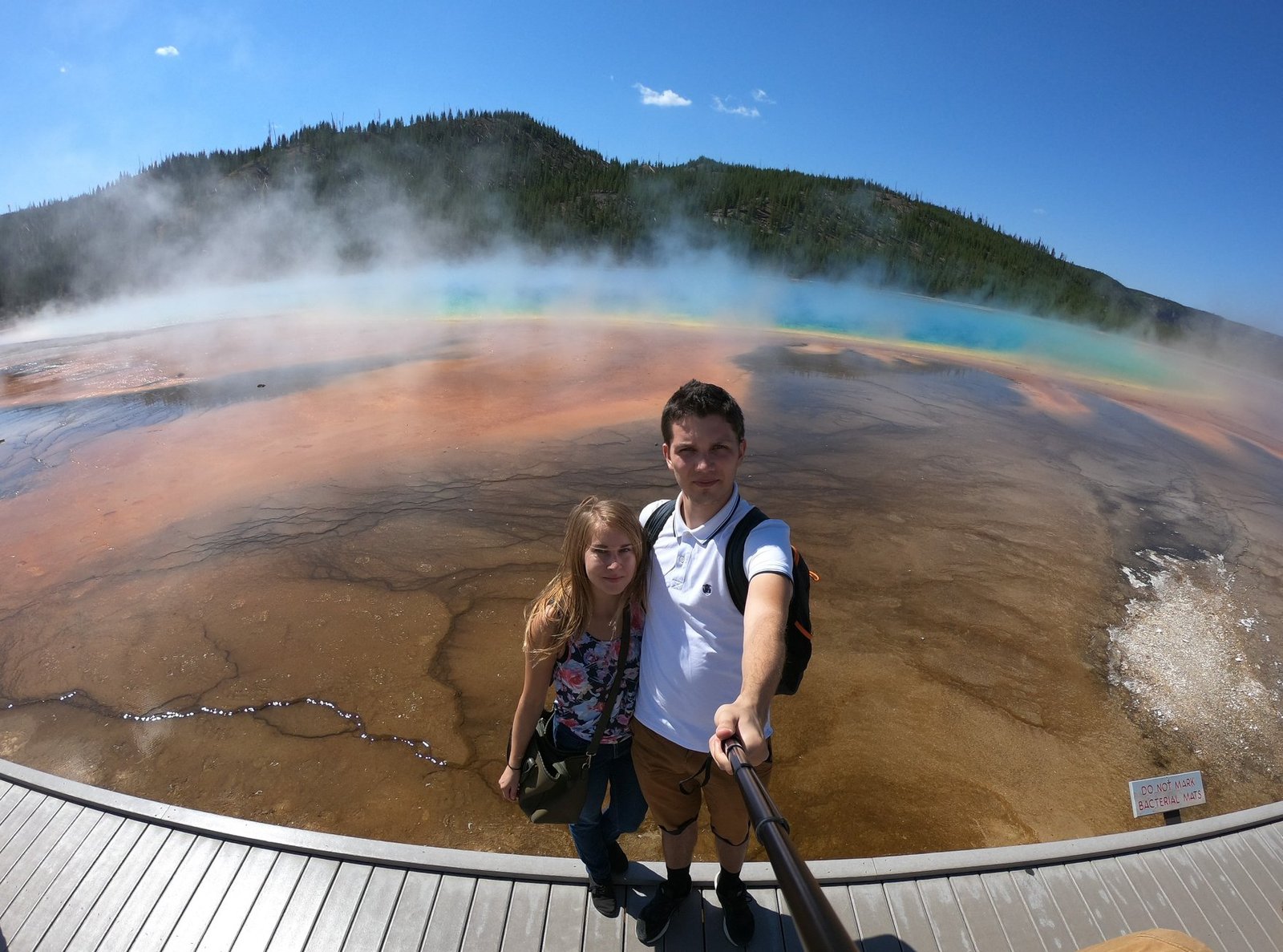
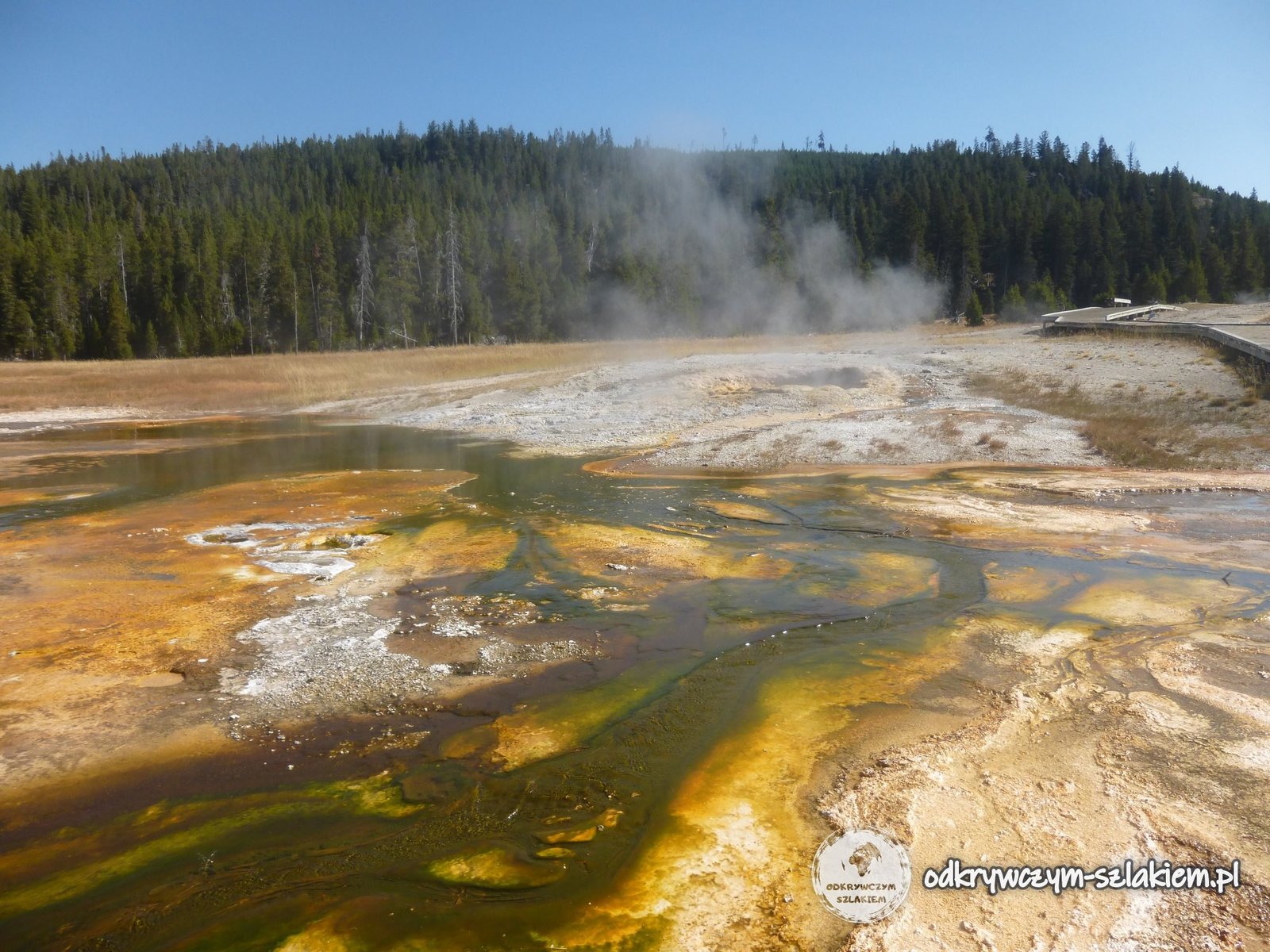
Grand Prismatic Spring is the largest hot spring in the United States, famous for its incredible colours: a blue centre and orange-yellow edges created by bacteria living in the hot water. From the boardwalks above the spring you often see mostly steam – the best view from above is from the overlook on the Fairy Falls trail. Right next to it the crater of Excelsior Geyser steams, and streams of hot water run down into the Firehole River.
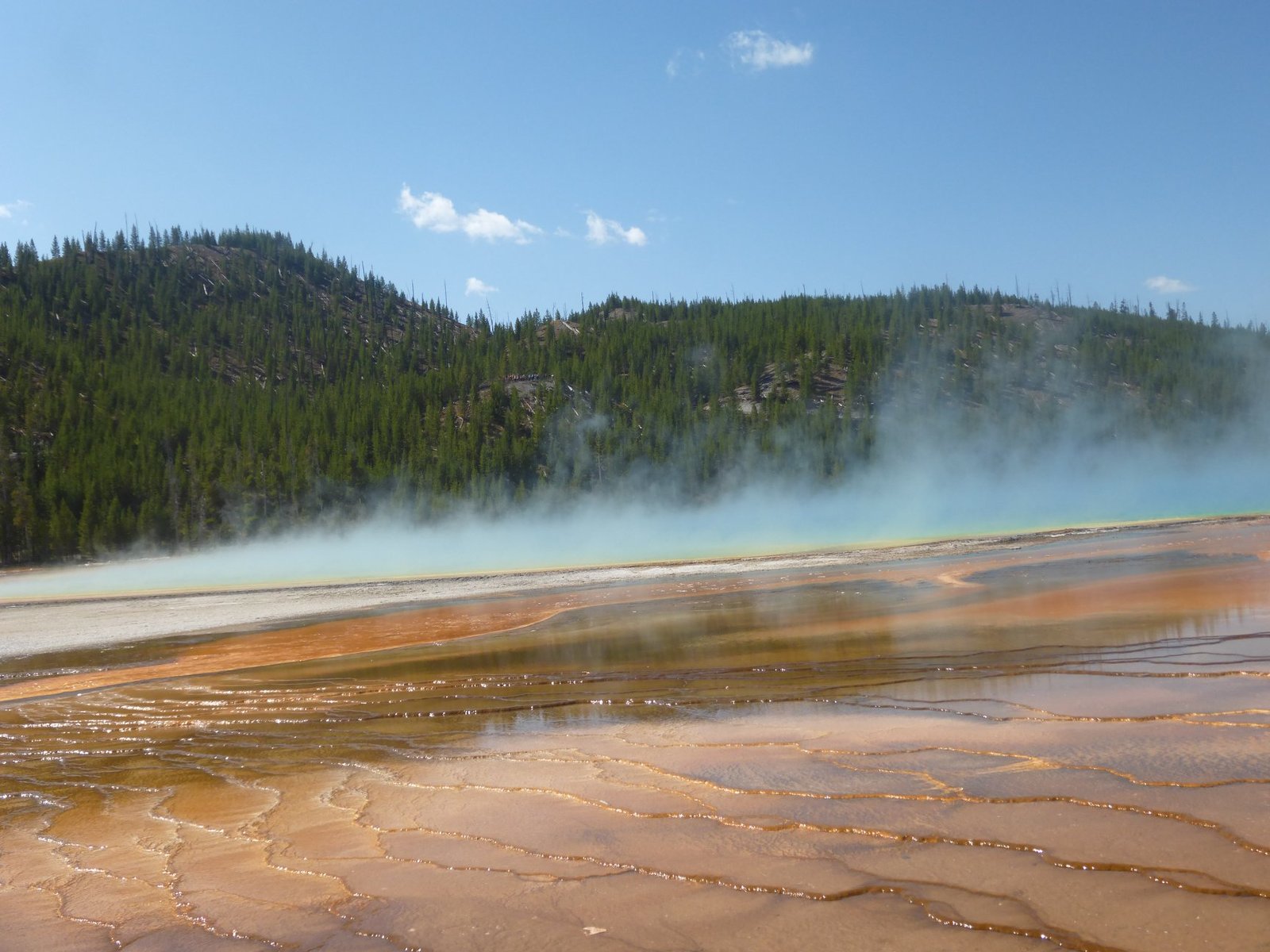
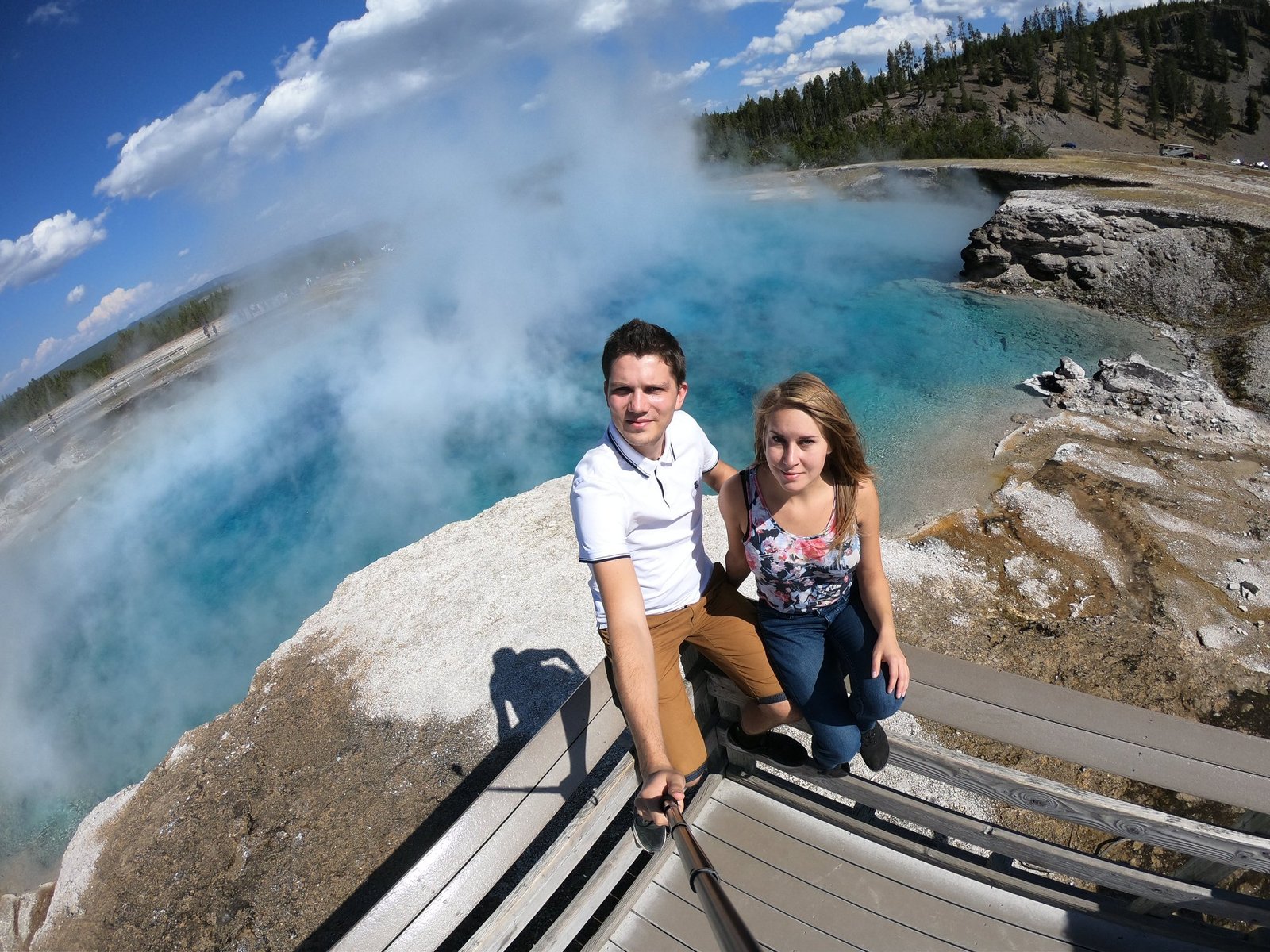
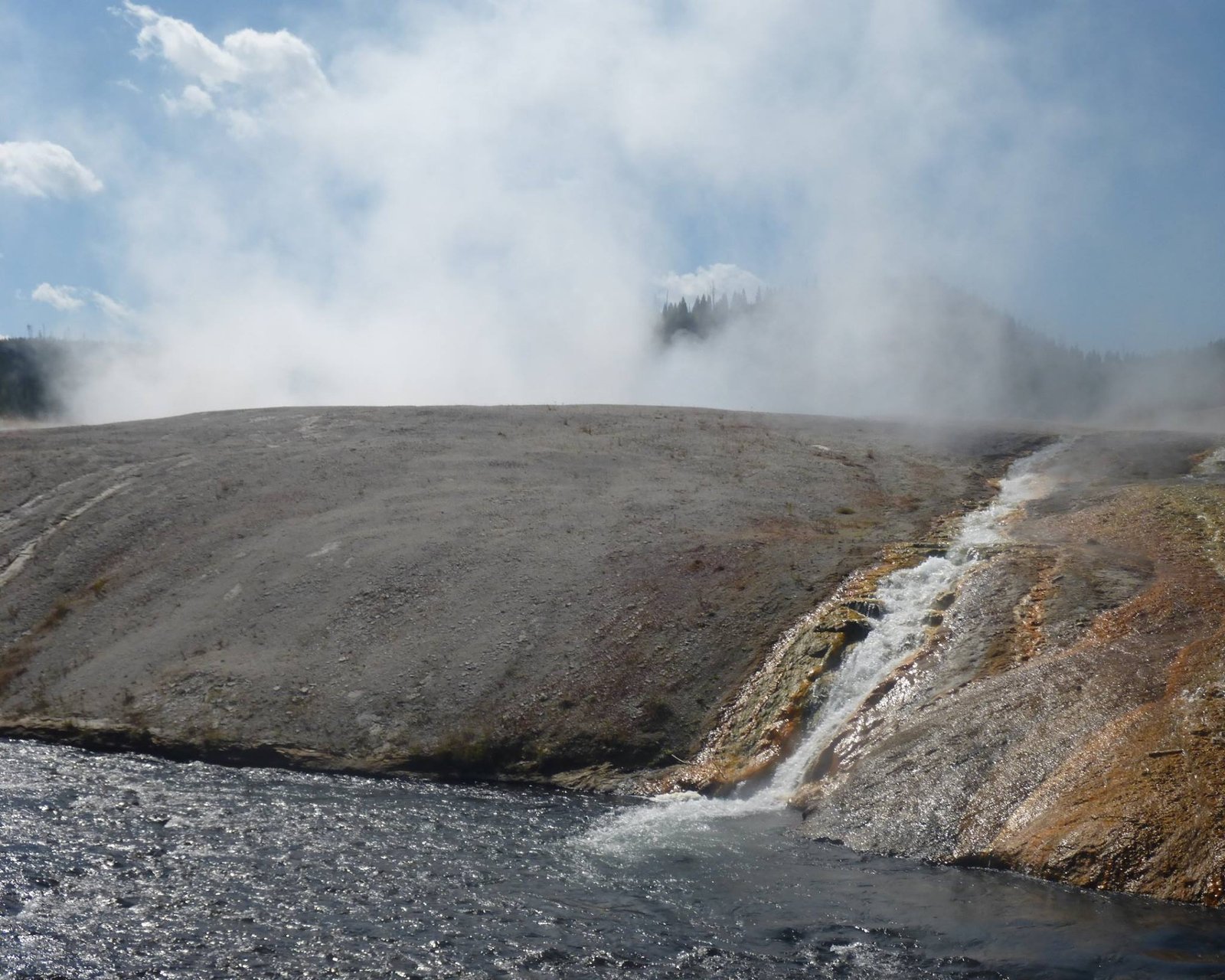
Grand Prismatic Spring is about 110 m across and 50 m deep, and its water is about 70°C. It is the third-largest hot spring in the world; it was named in 1871 by geologists of the Hayden Survey. The colours form bands because each kind of thermophile living here tolerates only a certain range of temperatures – where the water cools, one replaces another. The deep blue of the centre is the natural colour of the water where it is deepest and free of microorganisms. The neighbouring Excelsior Geyser pours more than 15,000 litres of water a minute into the Firehole River.
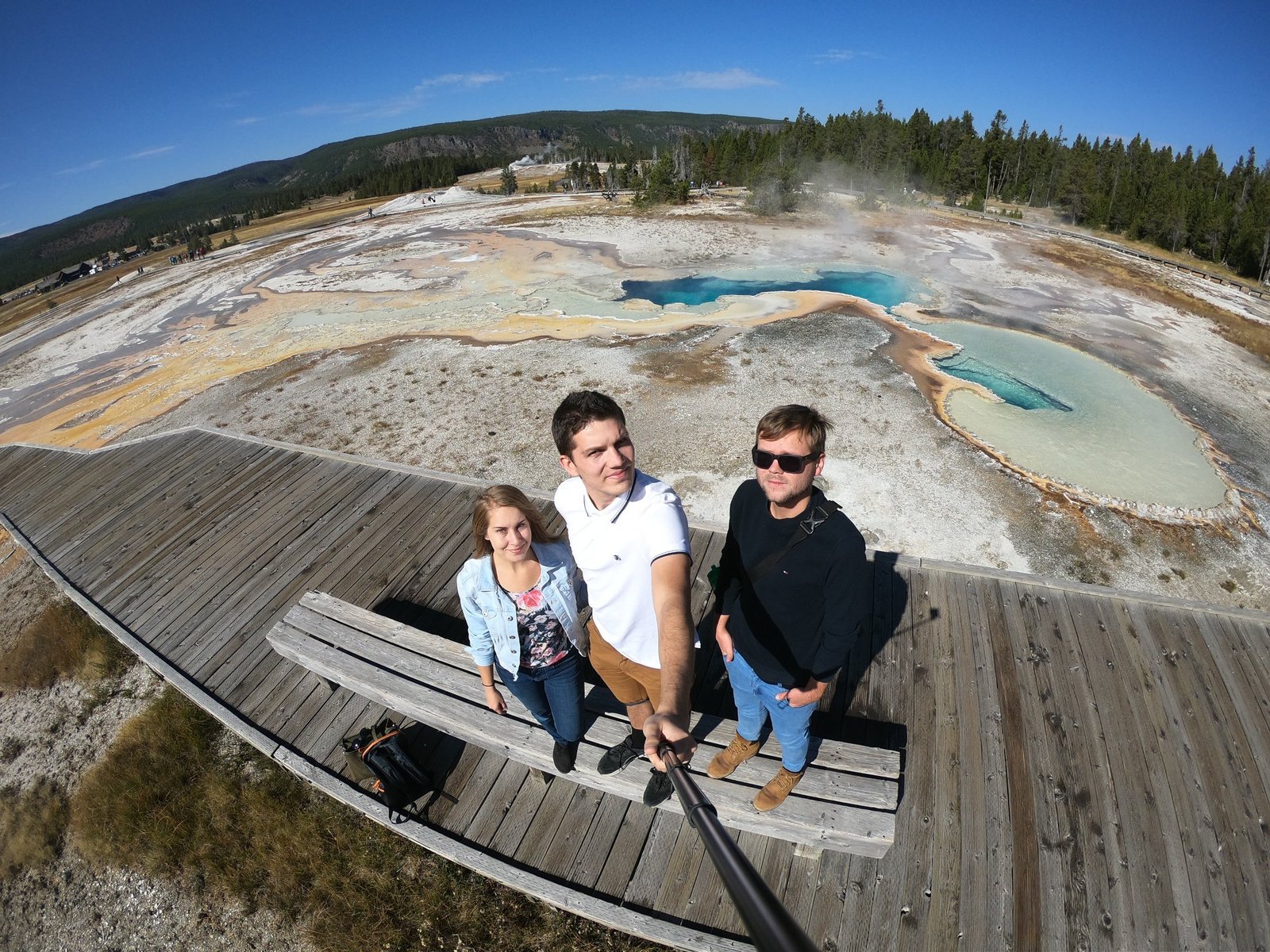
On the way we also walked the short Fountain Paint Pot trail in the Lower Geyser Basin – along boardwalks between bubbling mud pots, geysers and hot springs. One rule applies everywhere: you don’t step off the boardwalks, because the crust around the springs is thin and the water is boiling.


Mudpots are acidic springs with little water: steam from below heats rainwater collected in a shallow hollow, and the acid dissolves the surrounding rock. The typical smell of rotten eggs comes from hydrogen sulphide. Because of the colours of their minerals, mudpots are called “paint pots” – the pinks, beiges and greys of the Fountain Paint Pot are iron oxides.
The Grand Canyon of the Yellowstone – Upper and Lower Falls
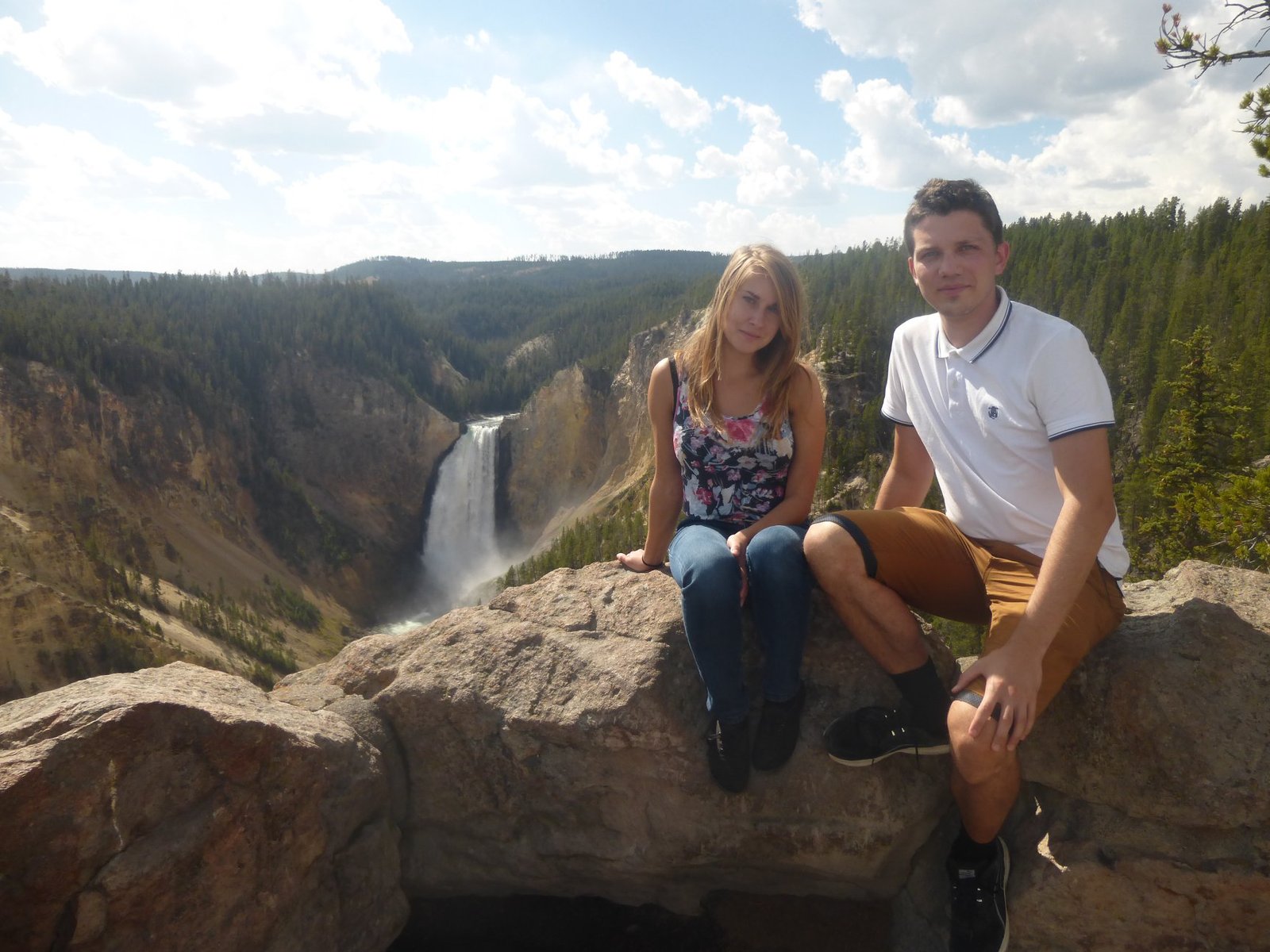
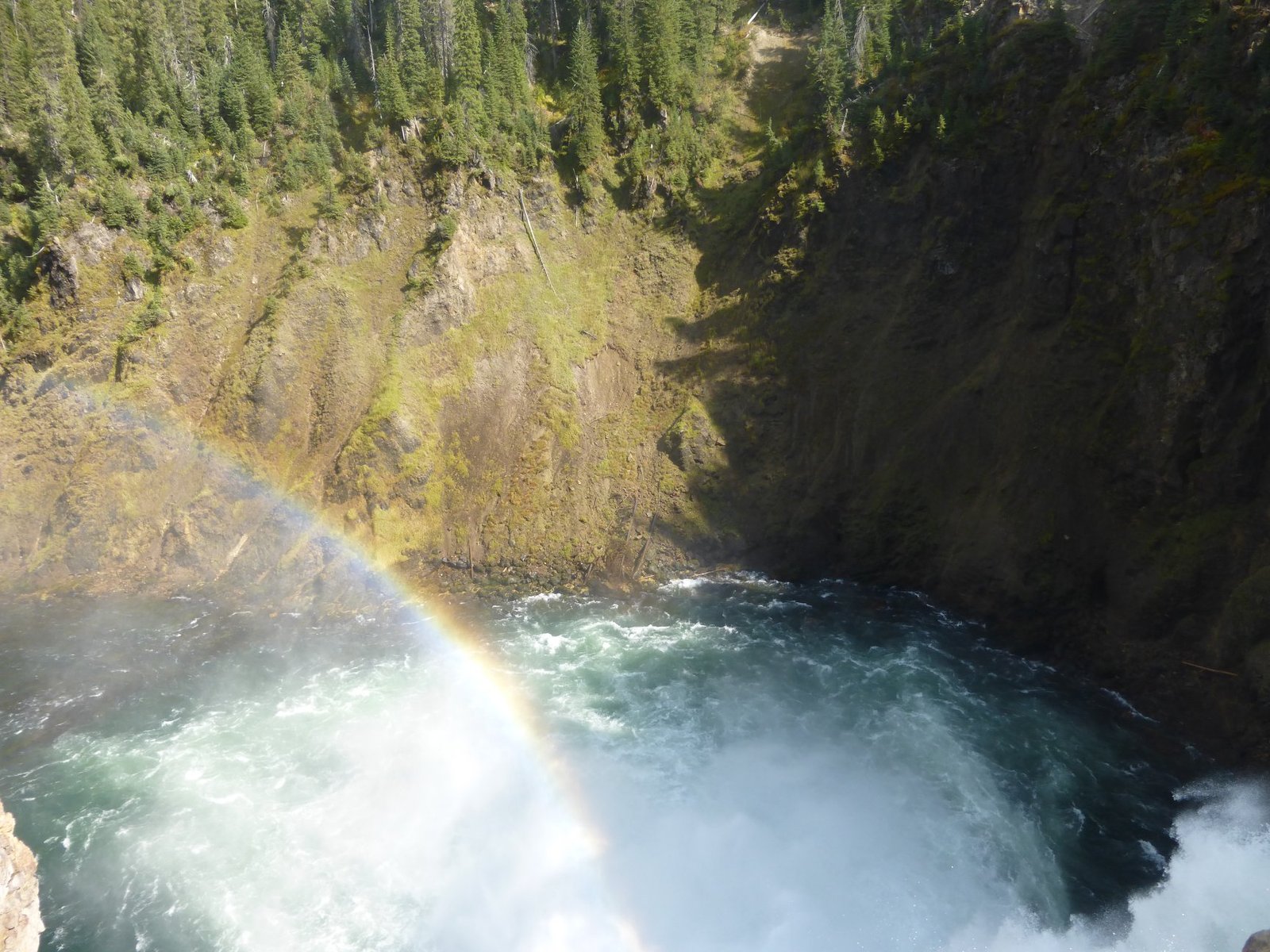
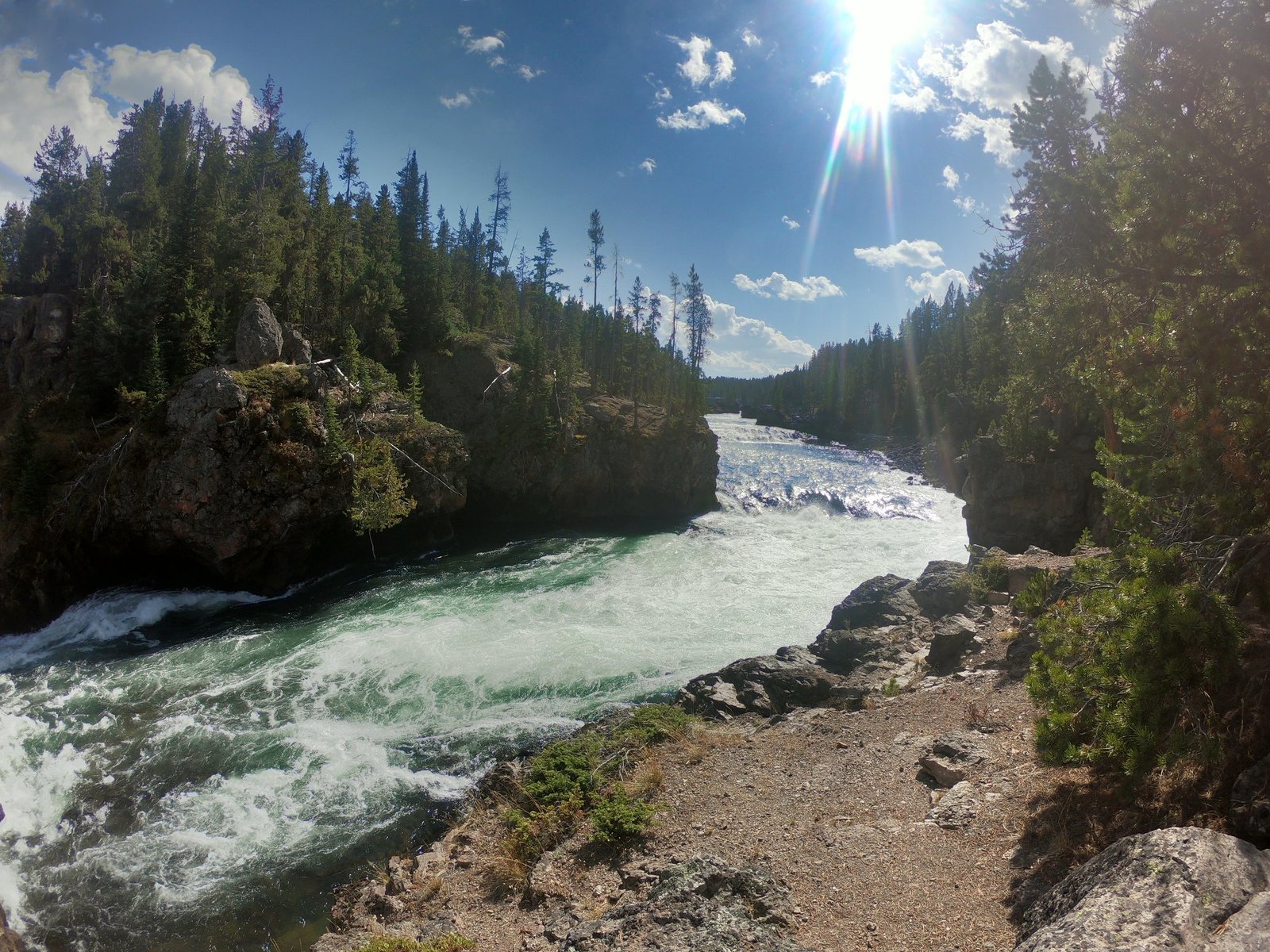
A completely different Yellowstone awaits in the Grand Canyon of the Yellowstone – a gorge with yellow-orange walls that gave the park its name. The Yellowstone River drops here in two waterfalls: Upper Falls (about 33 m) and Lower Falls (about 94 m) – the latter is almost twice as high as Niagara. The best views are from Artist Point and Lookout Point and from the paths along the canyon rim.

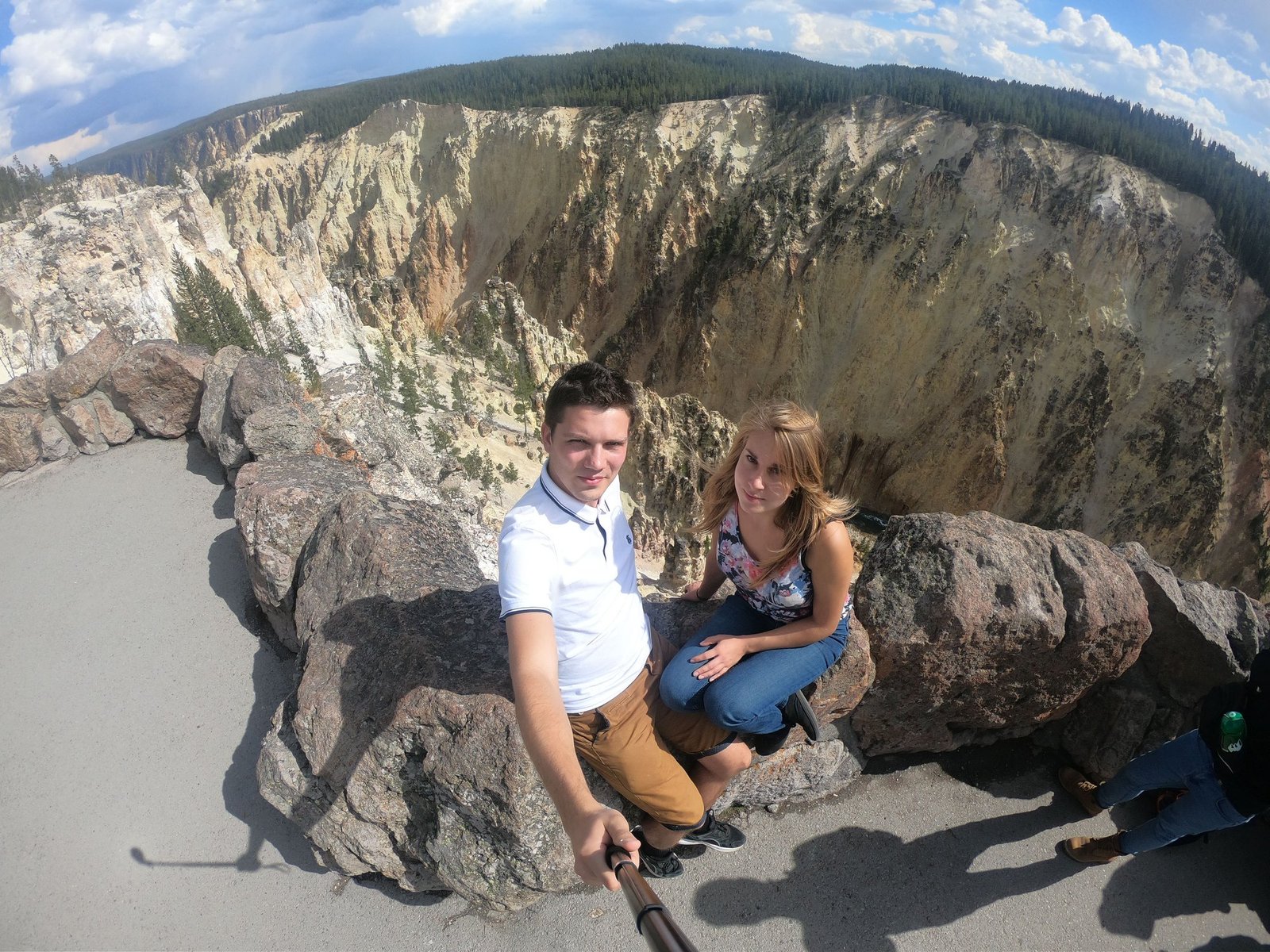
The canyon is about 32 km long and 240–370 m deep. The yellow, orange and pink colours of its walls come from rhyolite altered by hot water – the iron compounds in it oxidise, so the canyon is literally “rusting”. The gorge itself was carved by the Yellowstone River, probably helped by sudden floods when ice dams melted about 14,000–18,000 years ago.
Mud Volcano and bison in Hayden Valley
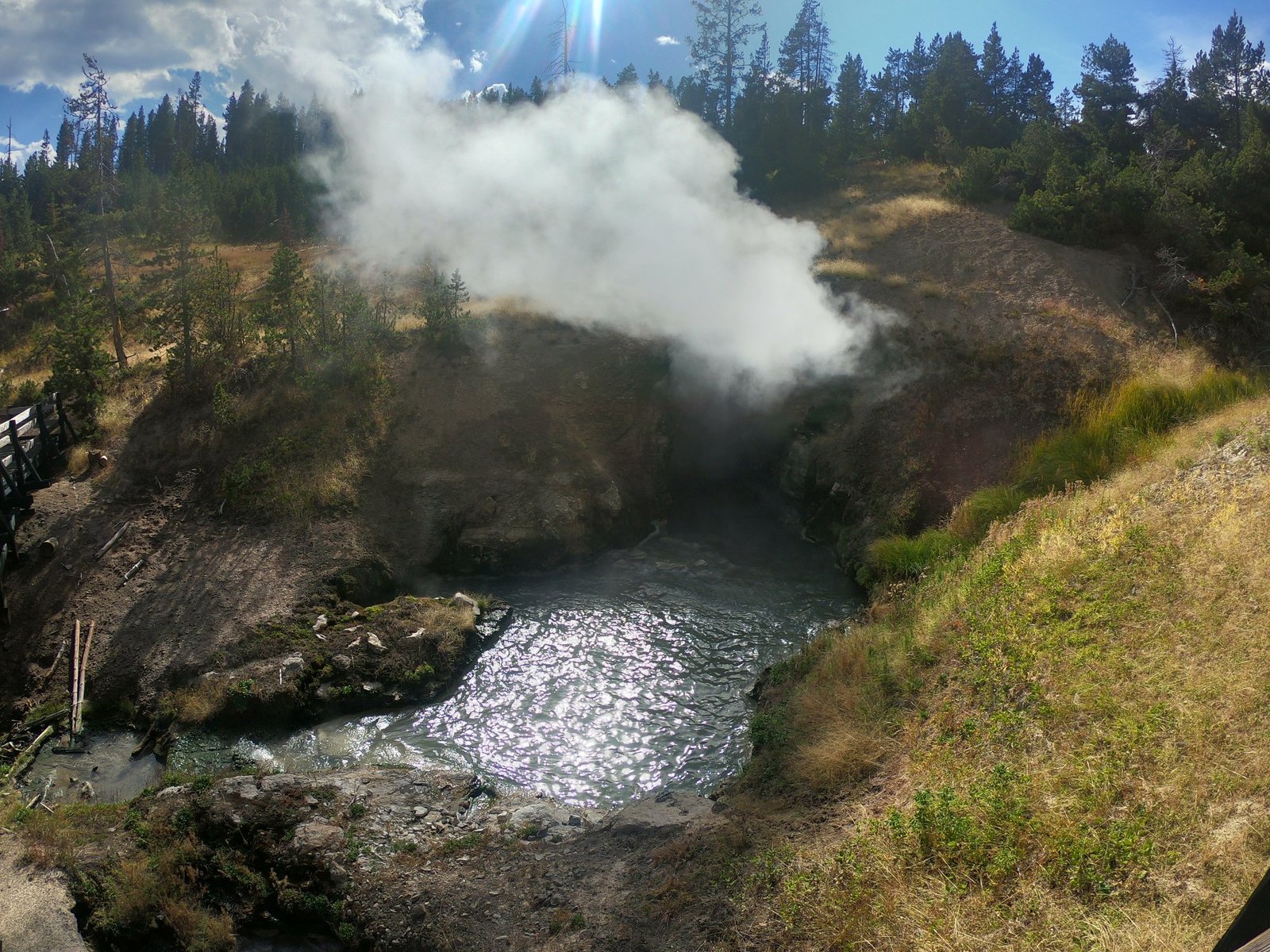
Our last stop was the Mud Volcano area with its bubbling mud springs and the Dragon’s Mouth Spring cave, from which steam bursts out with a roar – you can also smell the characteristic odour of hydrogen sulphide here. On the way, in Hayden Valley, we saw herds of bison – several thousand of them live in Yellowstone and they often graze right by the road.
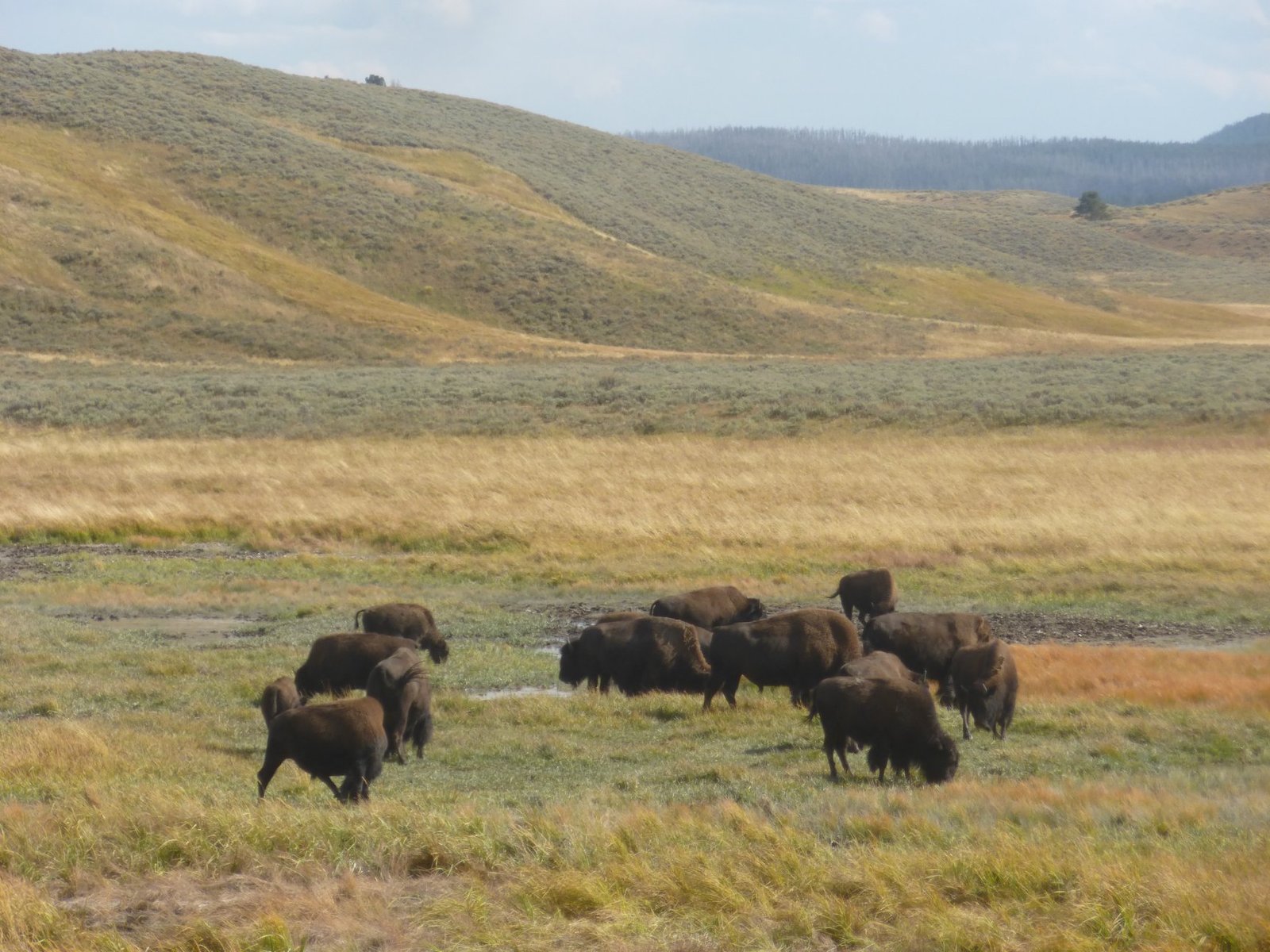
Yellowstone is the only place in the USA where bison have lived continuously since prehistoric times. By 1902 poachers had reduced the herd here to about two dozen animals, and in 2025 the park had nearly 5,300 bison. Bulls weigh up to about 900 kg, yet they can run at around 48 km/h.


Practical information
- Getting there – from Grand Teton to the park’s south entrance it’s just under 60 km; from Jackson and Jackson Hole airport about 100 km. Coach tours of Yellowstone are run by companies from Jackson and from the towns around the park. We went on a tour organised by our employer in Grand Teton – staff got a 100% discount on it.
- Entry – a 7-day ticket per car or the annual America the Beautiful pass. From 2026 visitors from outside the USA pay an extra 100 USD per person at Yellowstone or buy the annual non-resident pass for 250 USD – up-to-date information on nps.gov/yell.
- Safety – in the hot spring areas stay on the boardwalks and trails only. Keep at least 25 m away from bison and elk, and 100 m from bears and wolves.
- How much time – one day is enough for the “highlights” of the southern and central parts of the park; for the north (Mammoth Hot Springs, Lamar Valley) it’s worth adding at least a second day.
- Season and prices (as of 2026) – a standard entrance pass costs 20–35 USD, and if you come from the south through Grand Teton, you pay separately for both parks. Most park roads are not open all year, and from early November to late April few services operate – check the road status before you go.
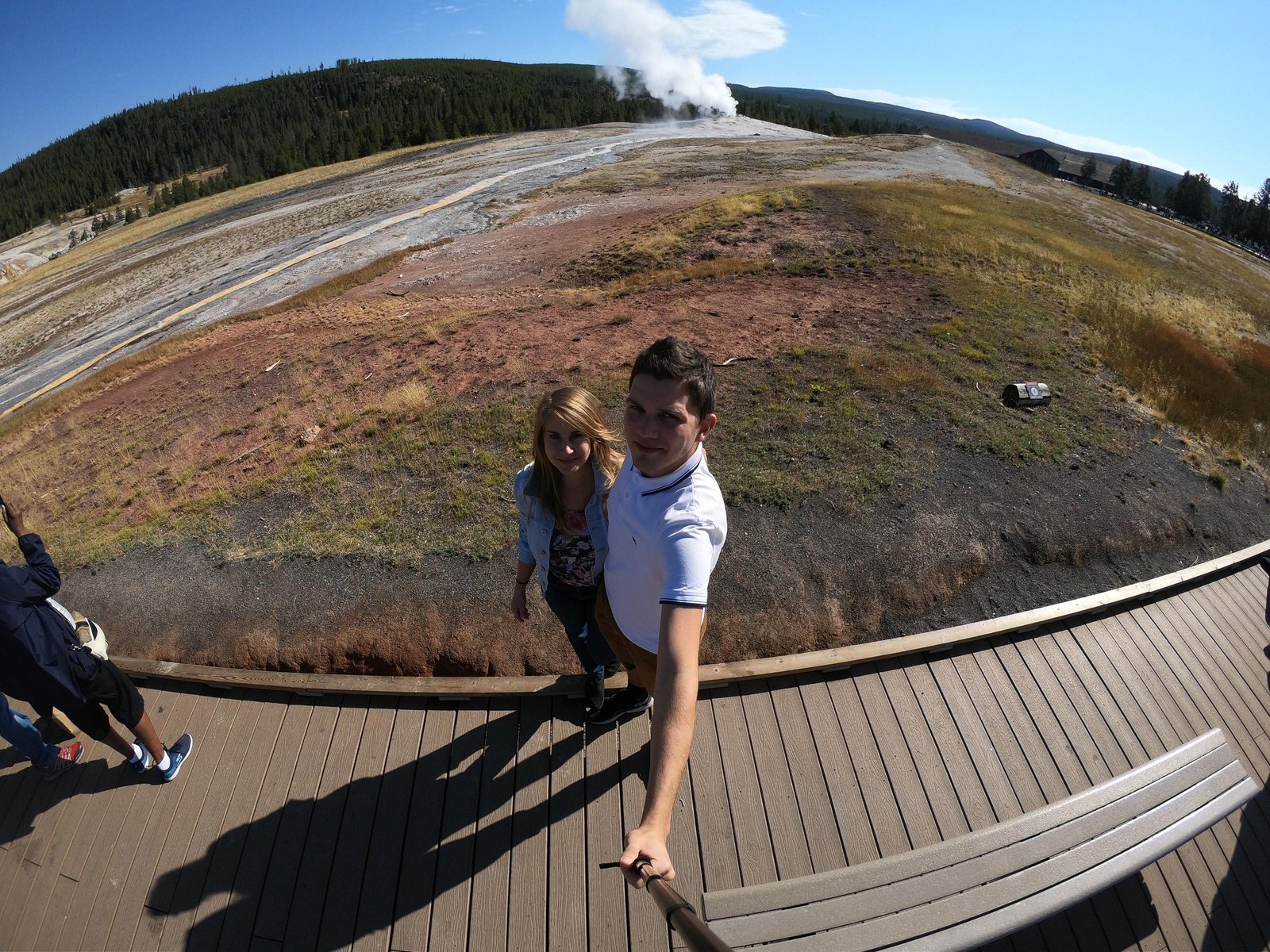
Photo gallery