Palenque was our last stop in the state of Chiapas. We came here on a night bus from San Cristóbal de las Casas and stayed three nights. On the first day we went to the Agua Azul cascades and the Misol-Ha waterfall, on the second – 11 November 2023 – we explored the Maya ruins and the jungle around them, and on the last day we visited Aluxes Ecopark, a centre that rescues wild animals.
Table of contents
- The ruins of the Maya city
- The jungle and the Sendero Motiepá trail
- Aluxes Ecopark
- Practical information – getting there, accommodation, prices
The ruins of the Maya city
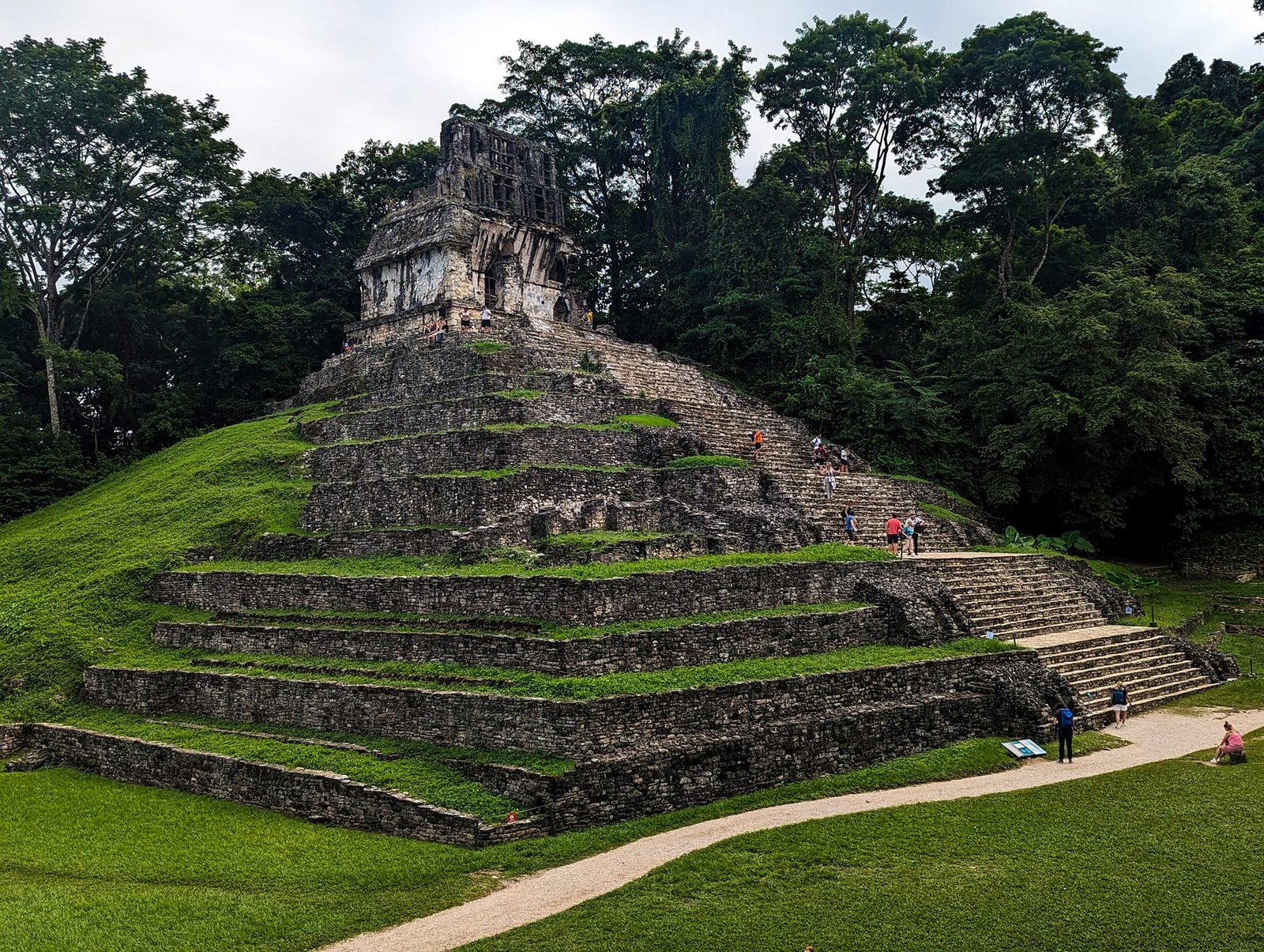
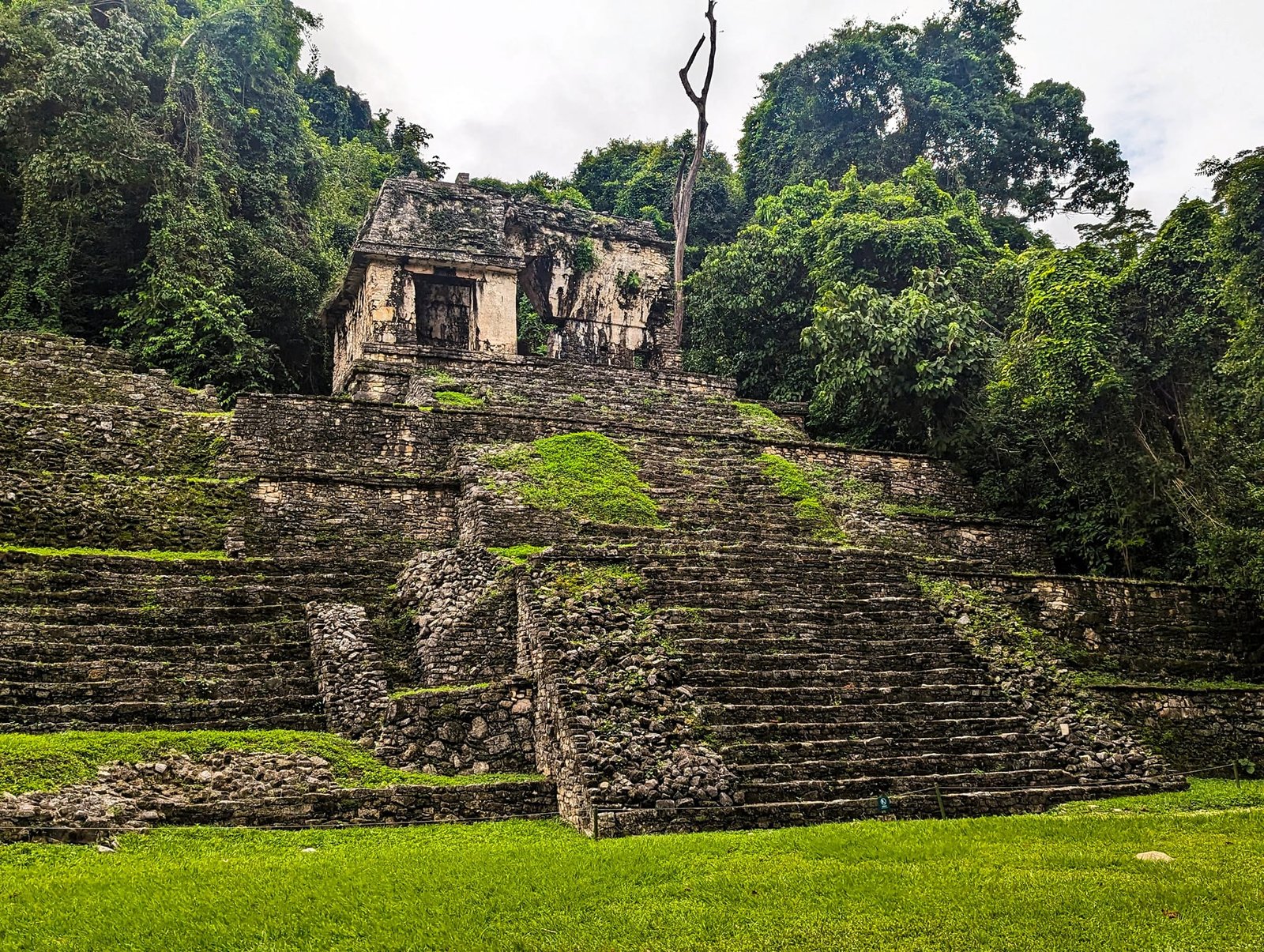
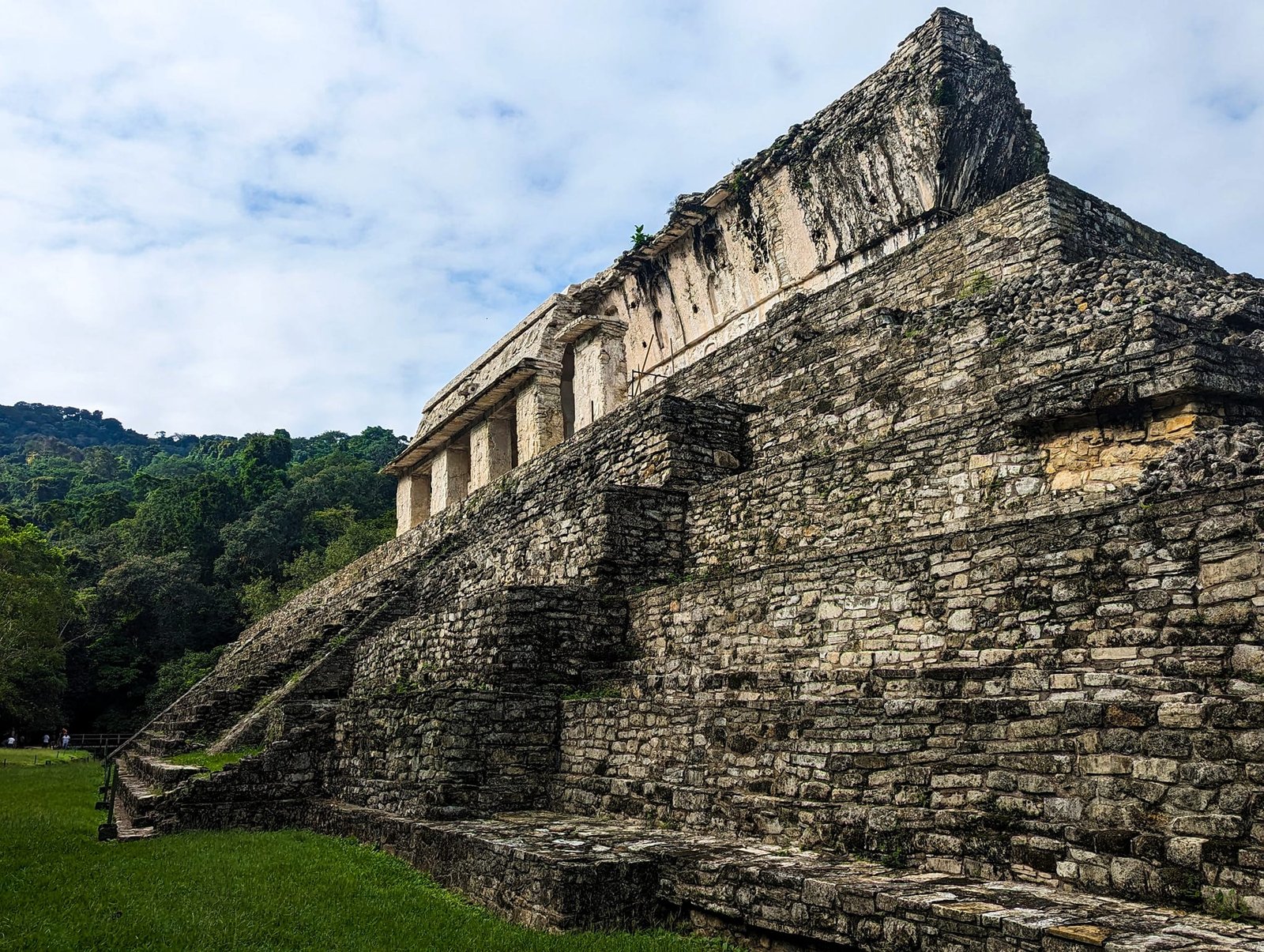
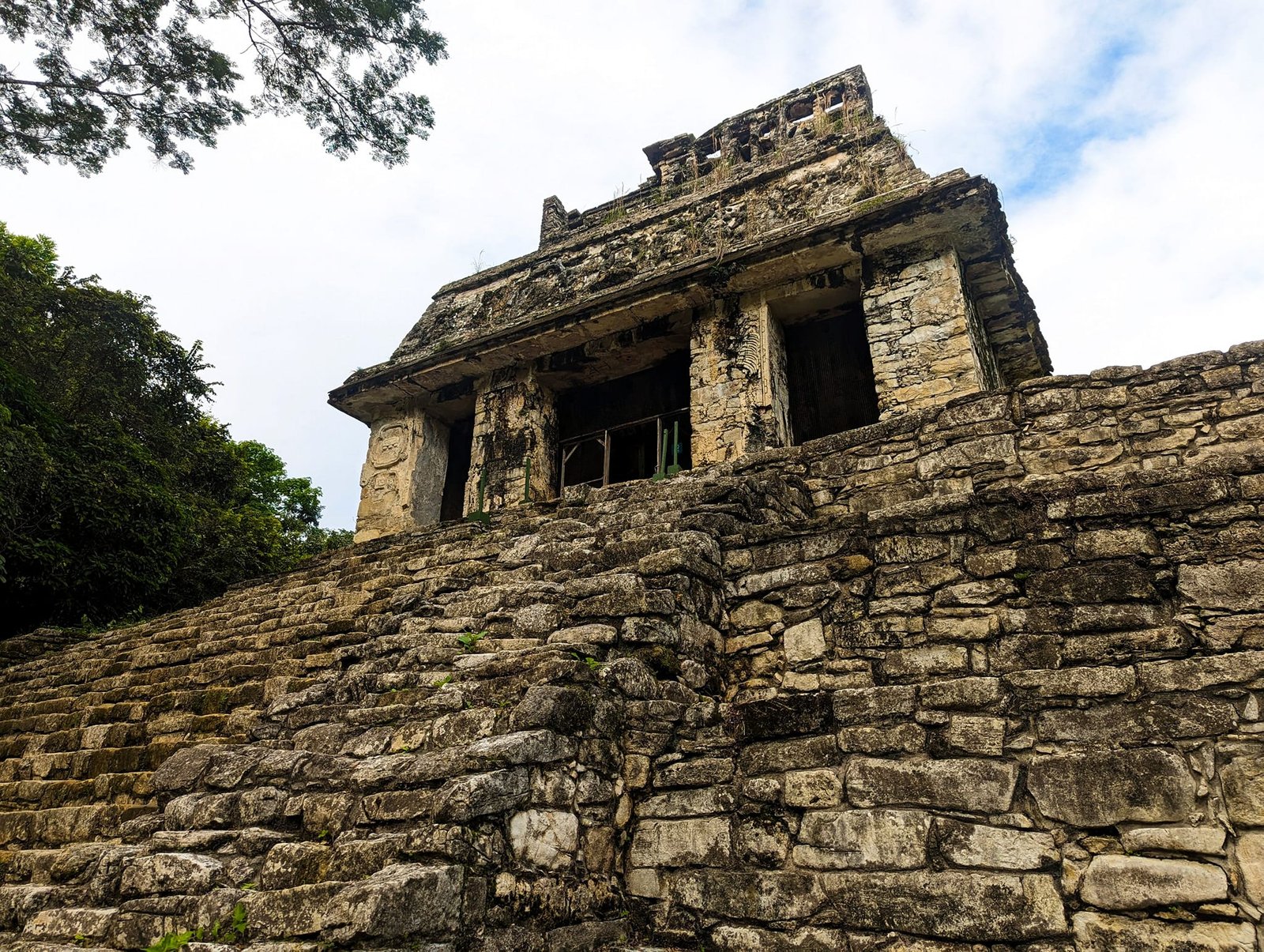
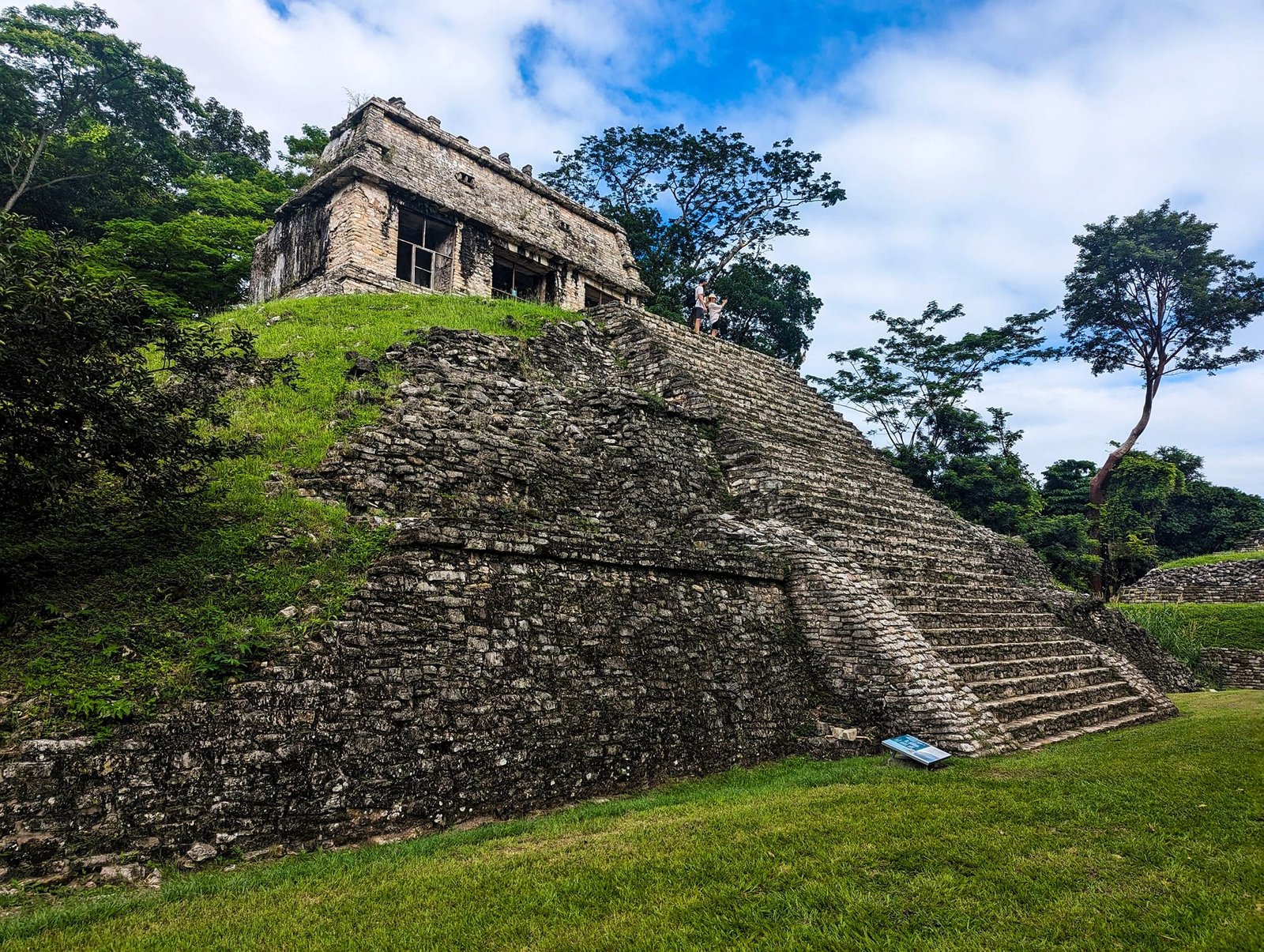
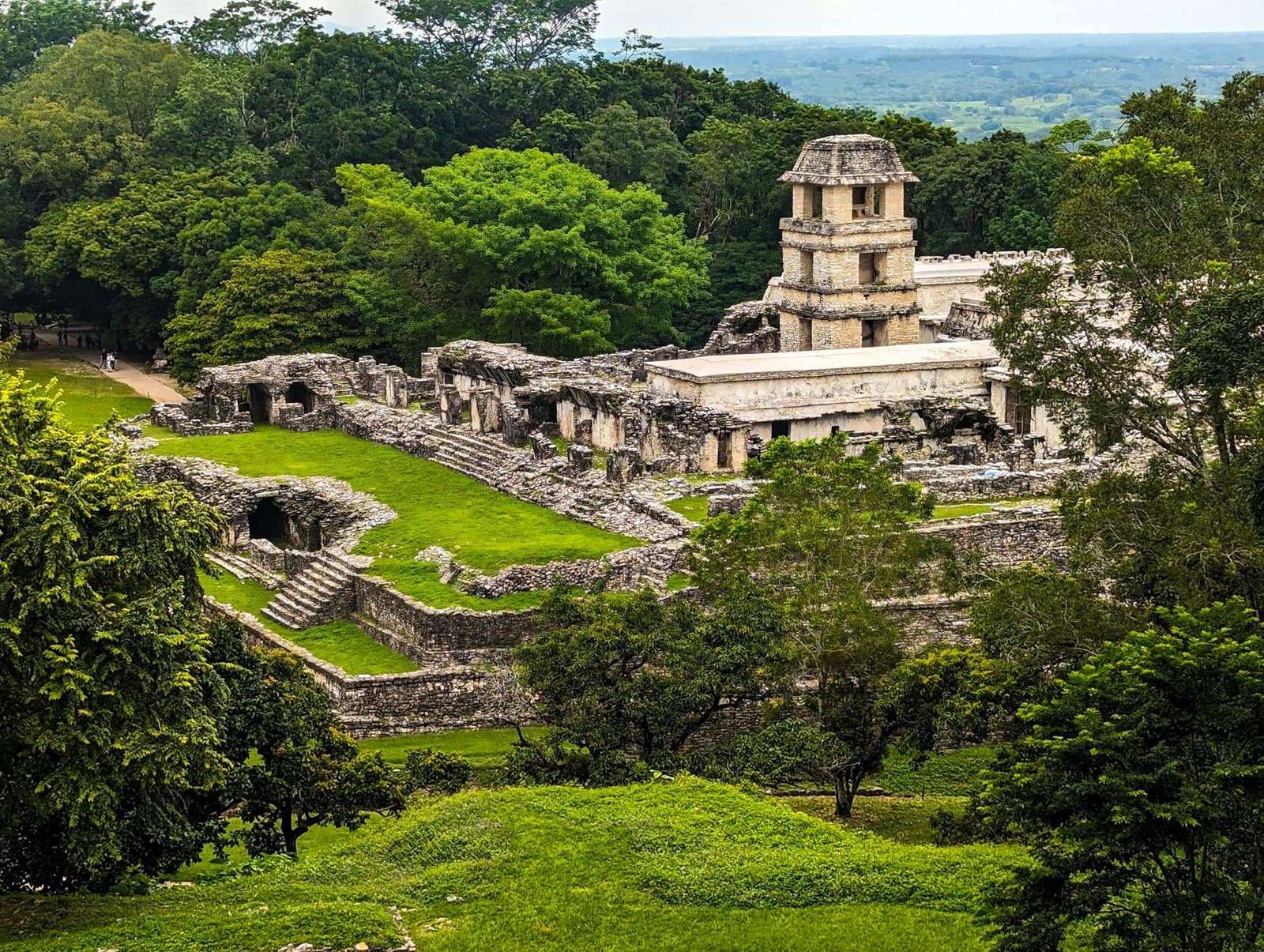
Palenque is associated above all with the archaeological complex just outside the town – the ruins of a Maya city that had its heyday in the 6th–7th centuries and was discovered in the mid-18th century. Today you can visit many temples here (you can climb some of them), a palace, a ball court and an old aqueduct. It is estimated, however, that only 5–10% of the ancient city has been excavated – the rest is still hidden by the jungle.
In the past you could freely climb the pyramids at many archaeological sites in Mexico – since around 2000 this has increasingly been forbidden. In Palenque you can still climb some of the temples, and the bans have one advantage: it is easier to take a photo of a pyramid without people on it.
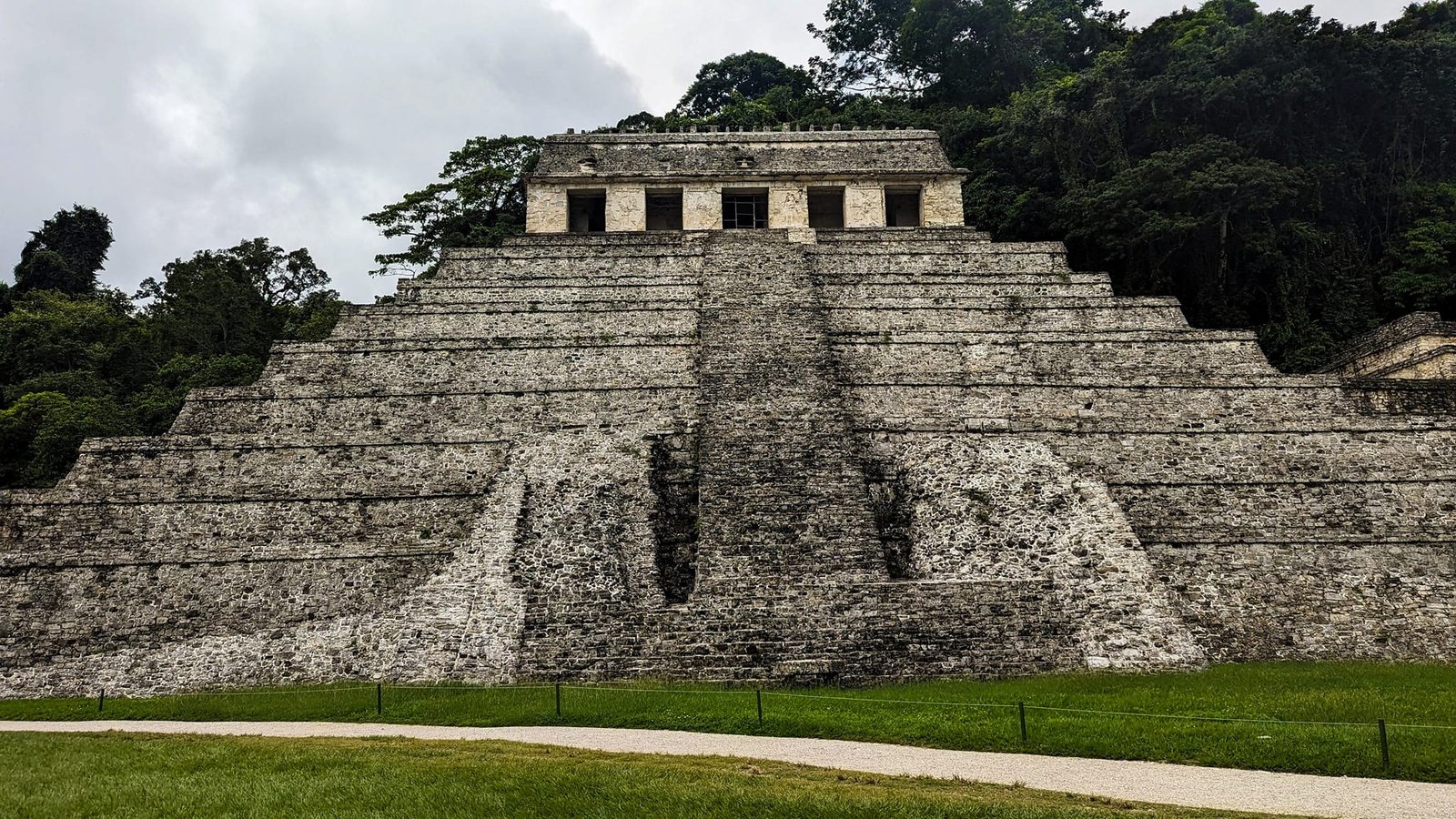
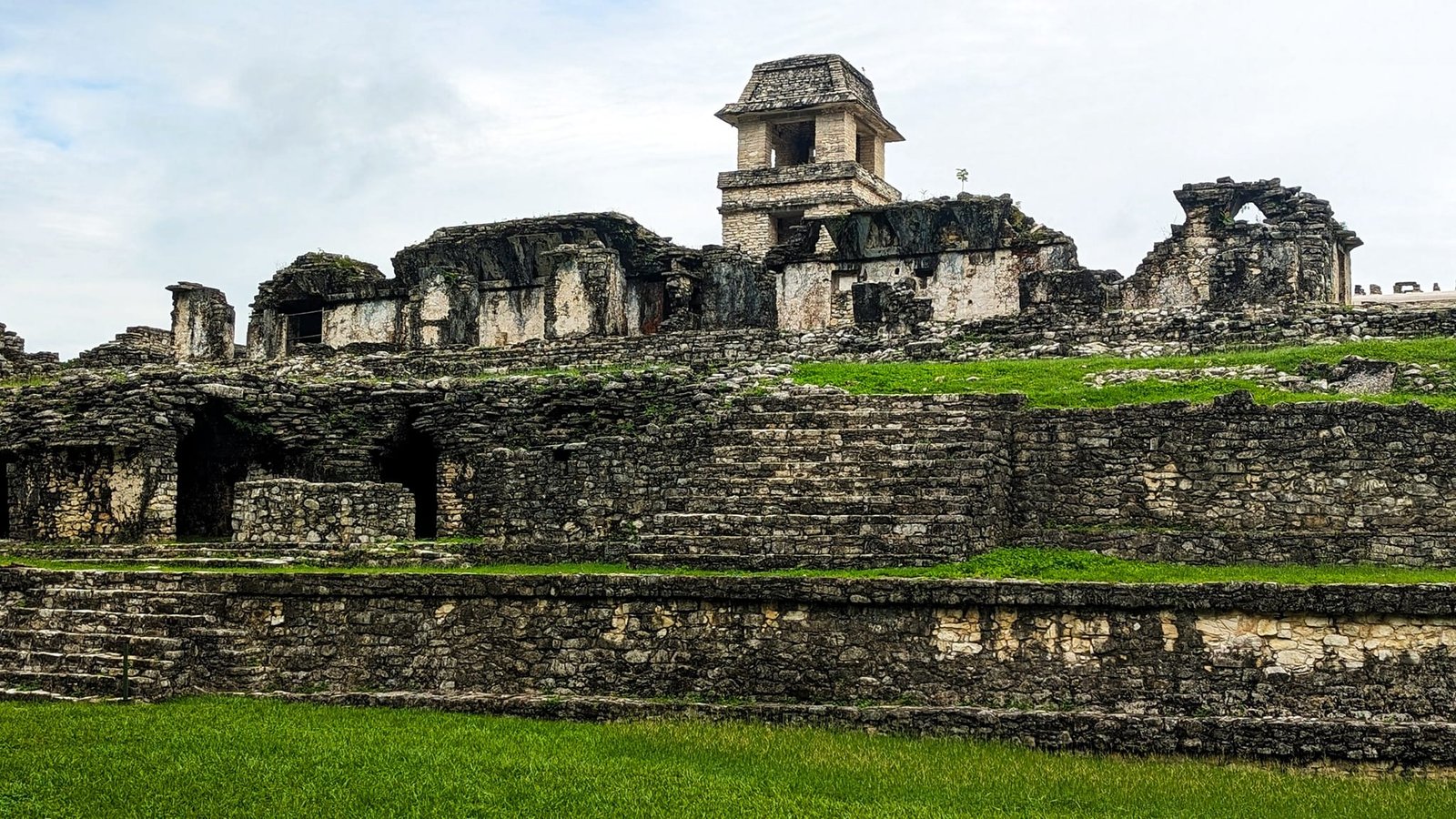
The most famous building is the Temple of the Inscriptions – a stepped pyramid inside which the tomb of the ruler Pakal was discovered in 1952. Opposite stands the vast Palace with its distinctive tower, courtyards and corridors.
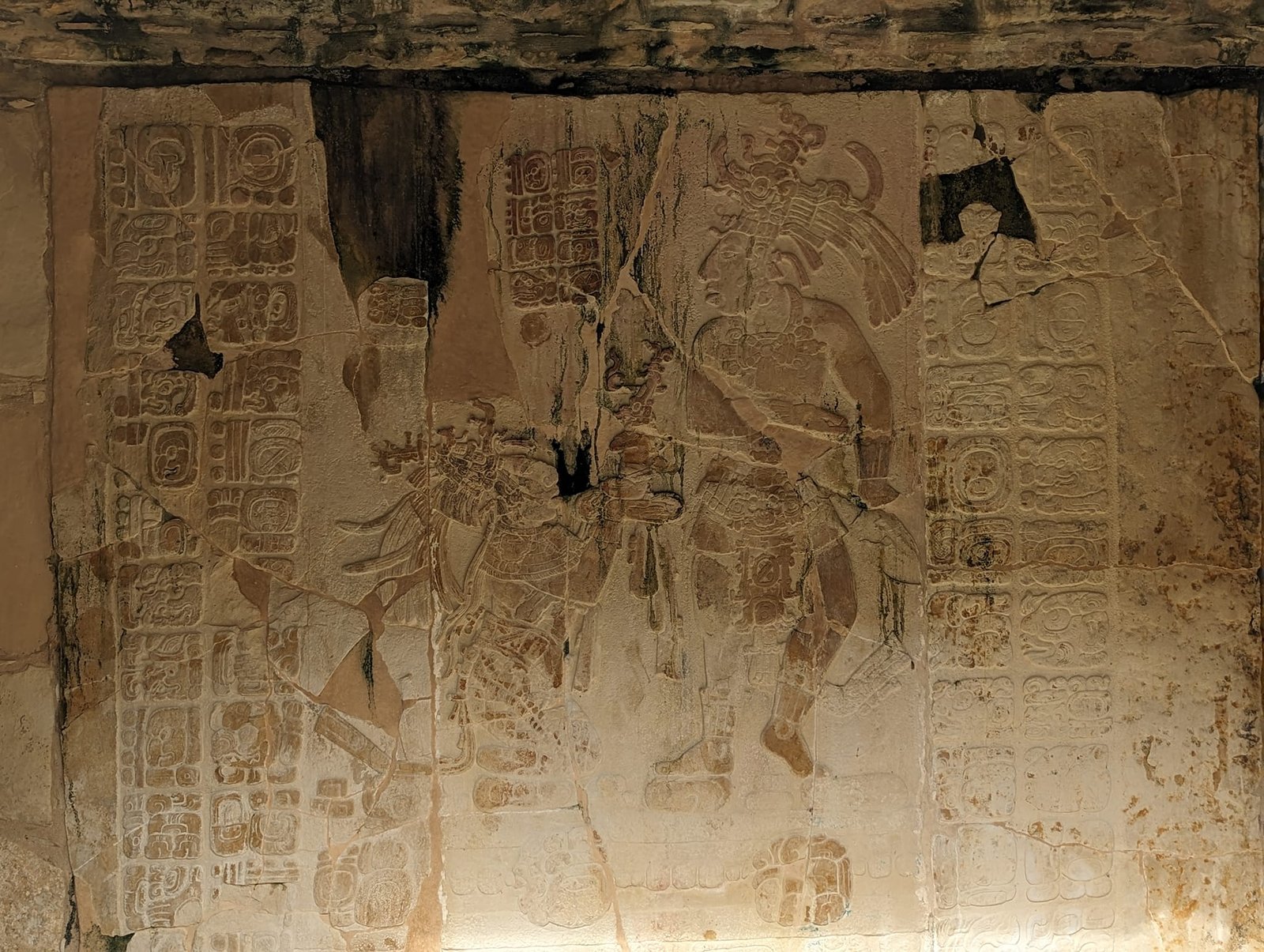
Maya reliefs and hieroglyphs have survived on many of the stones. There is also a ball court for the ritual Mesoamerican ball game, played between two stone embankments.
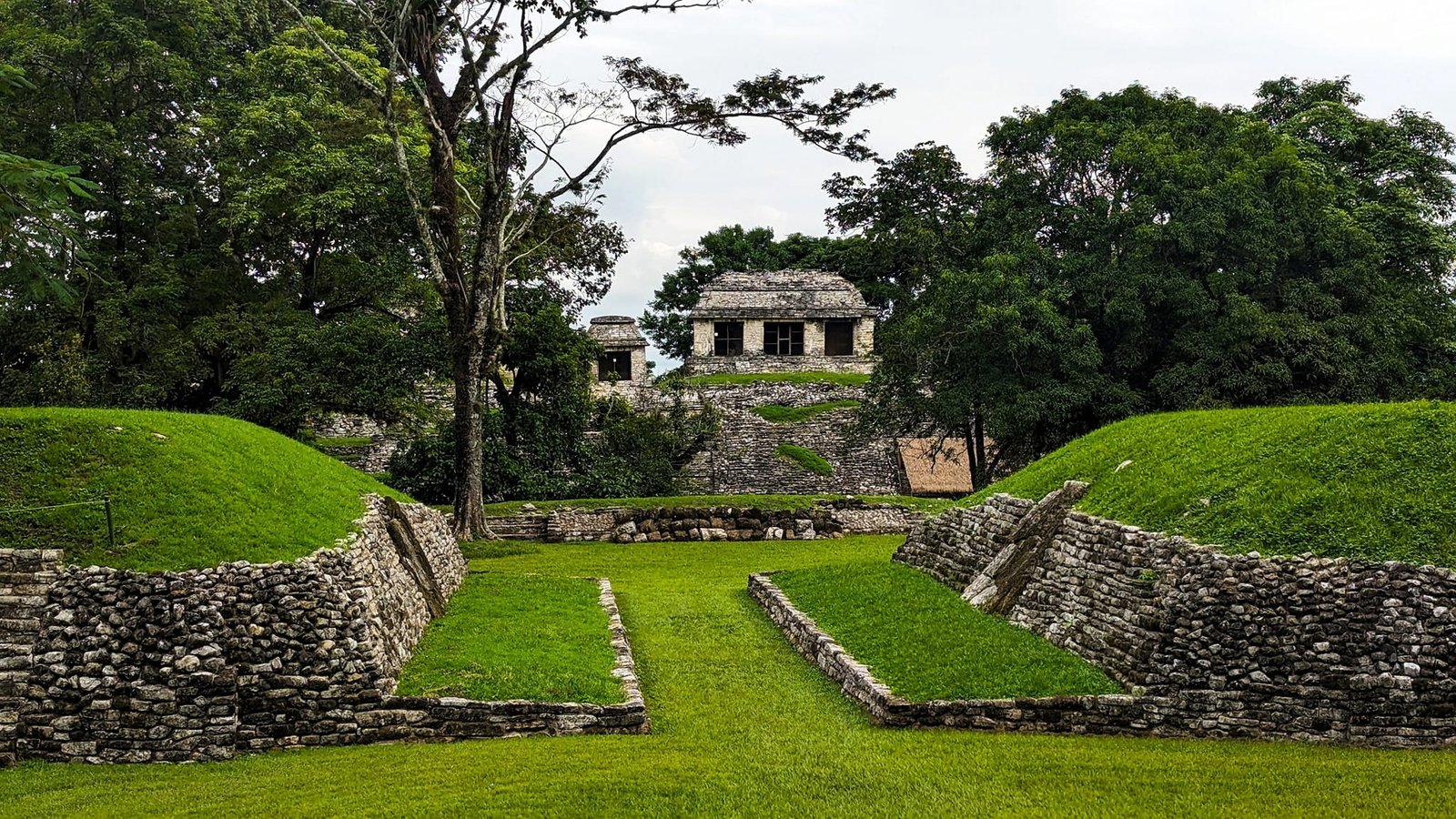
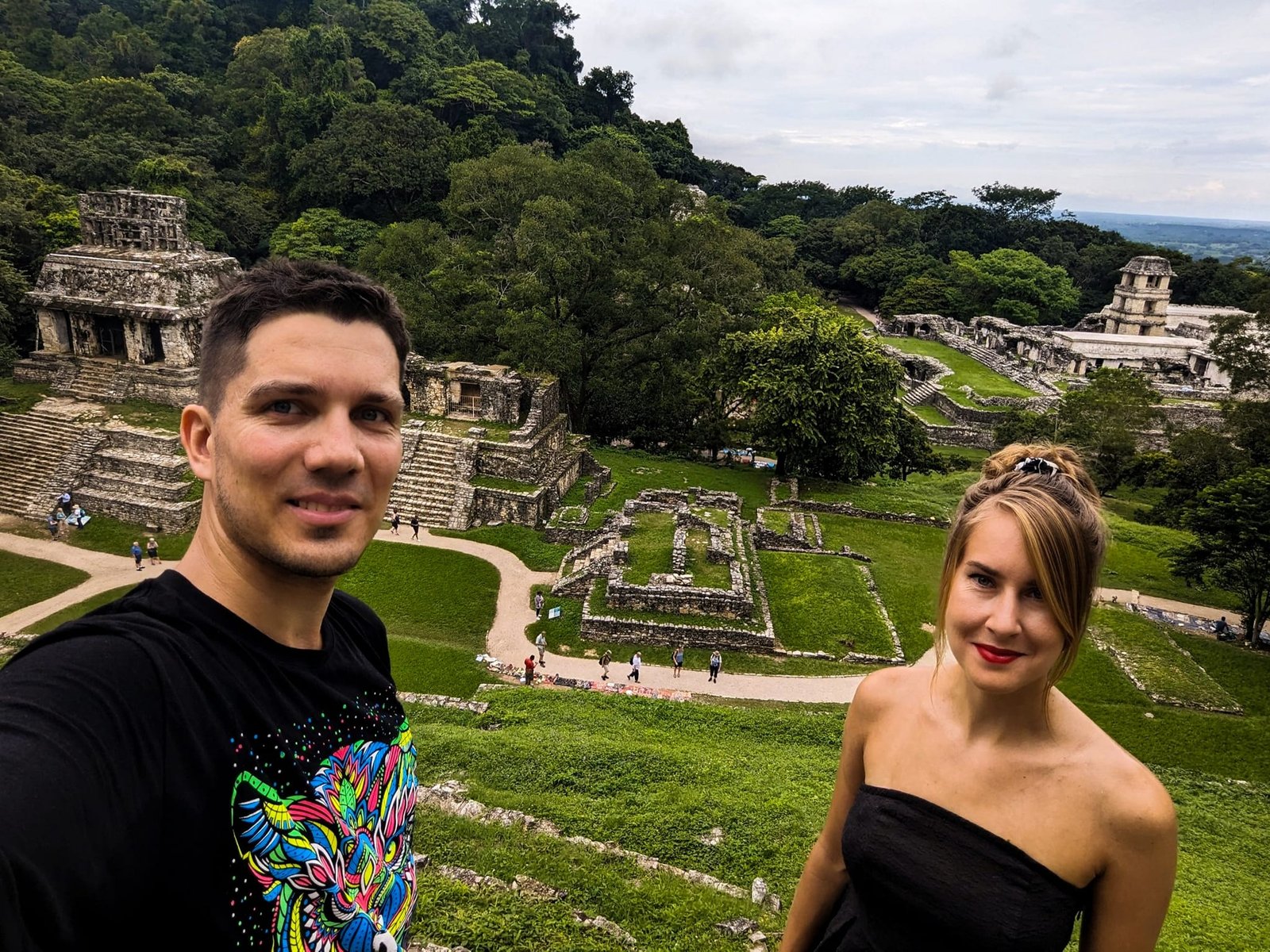
It is also worth climbing the higher temples: from one of them you get the best view of the Temple of the Sun with its openwork roof comb, and in the background – the jungle surrounding the whole complex.
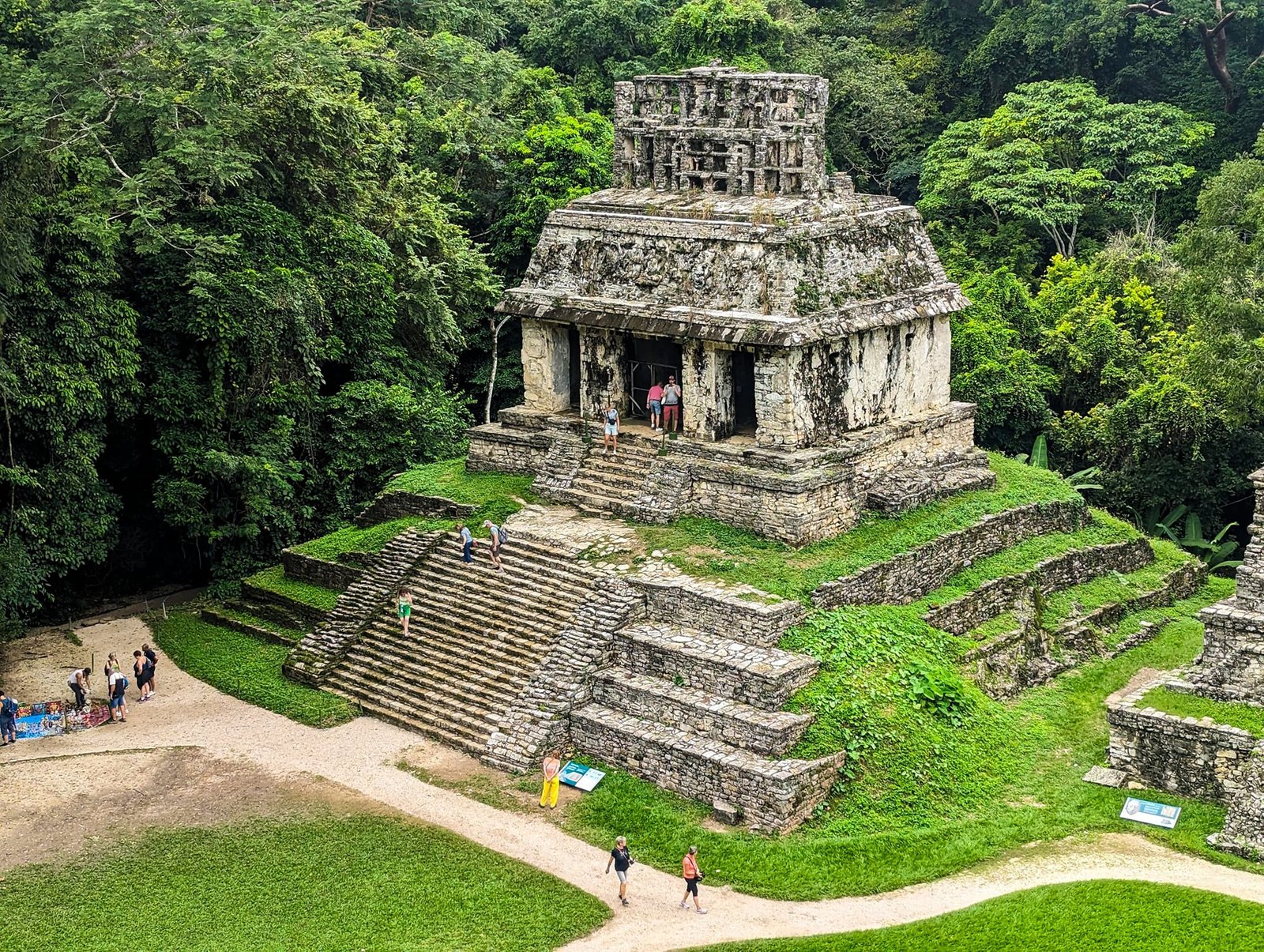
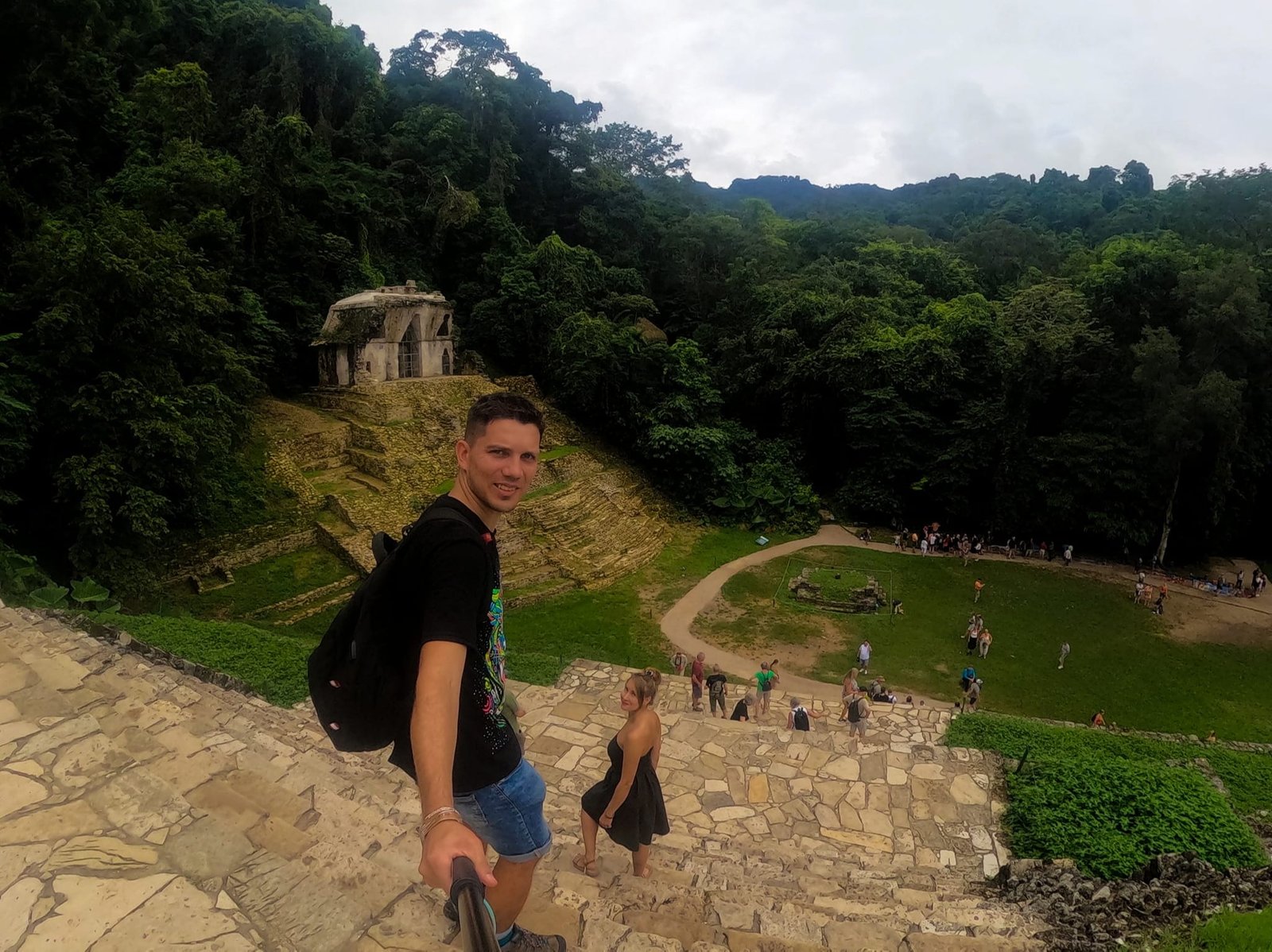
We had good weather: up to 29°C, lots of cloud and sunshine at times. Because rain and a storm were forecast (they only came in the evening), we went first thing in the morning – and that is good advice for any day: in the morning it is cooler and there are fewer people. The on-site museum was being renovated and was closed.
The jungle and the Sendero Motiepá trail
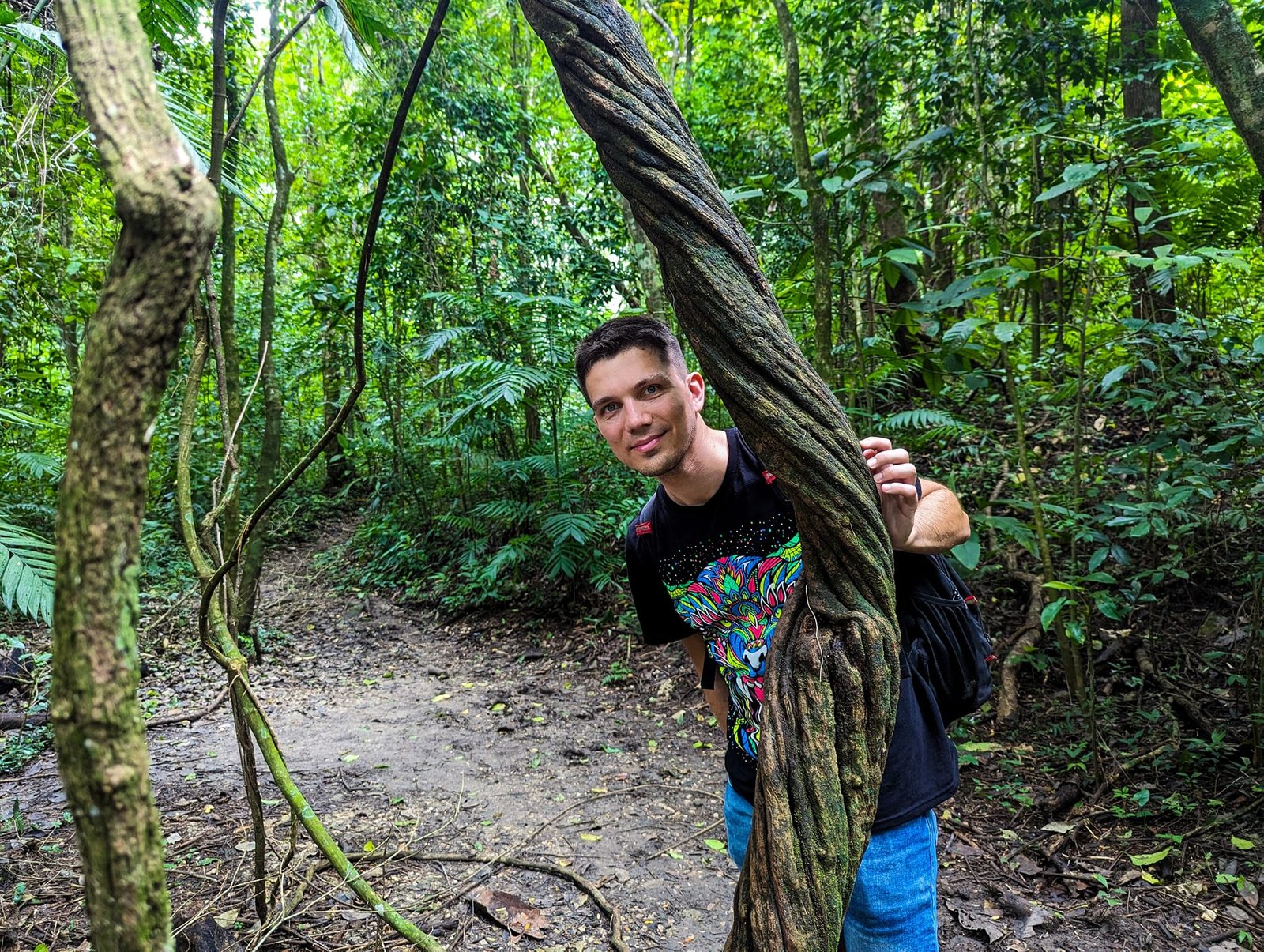
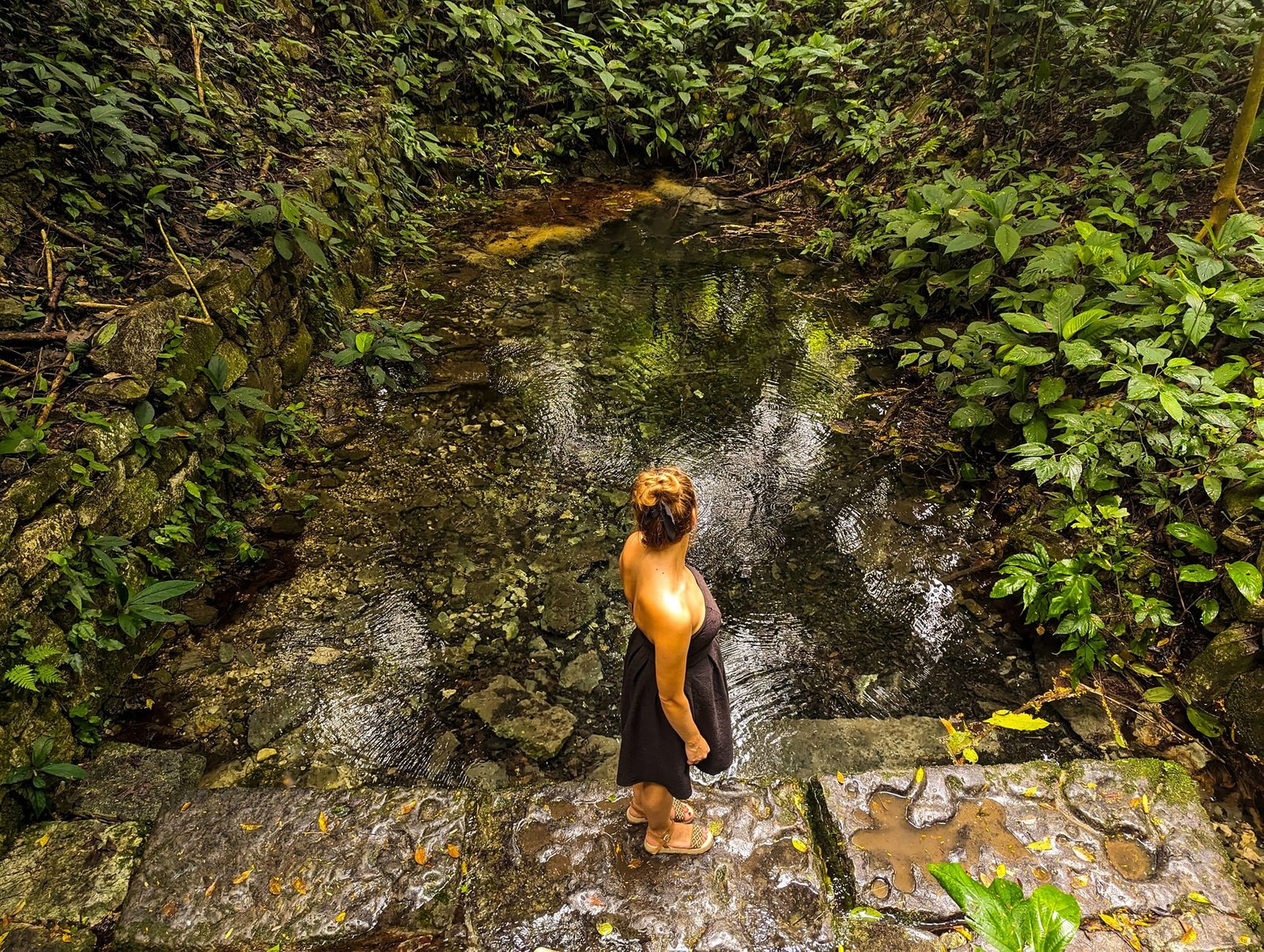
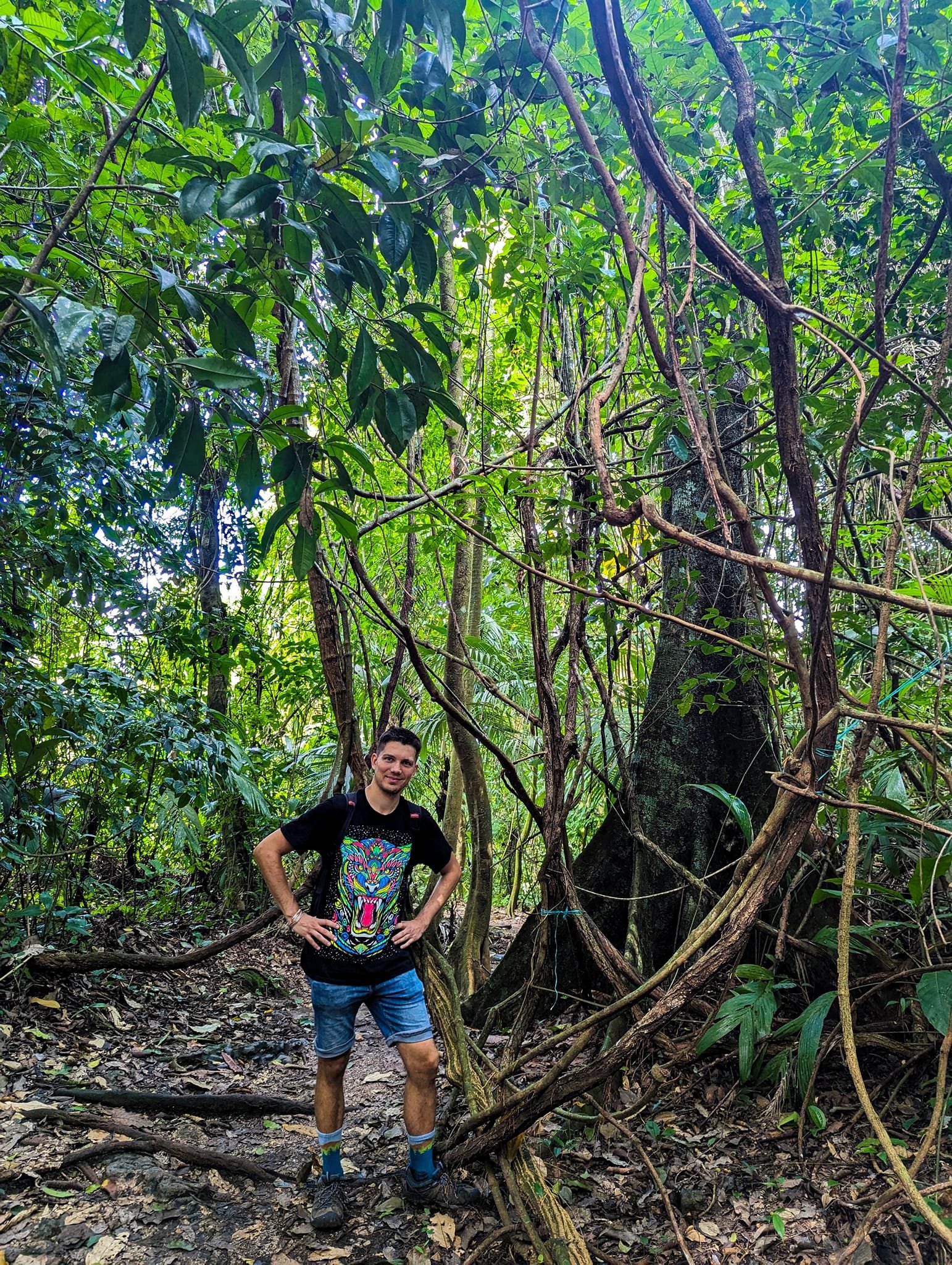
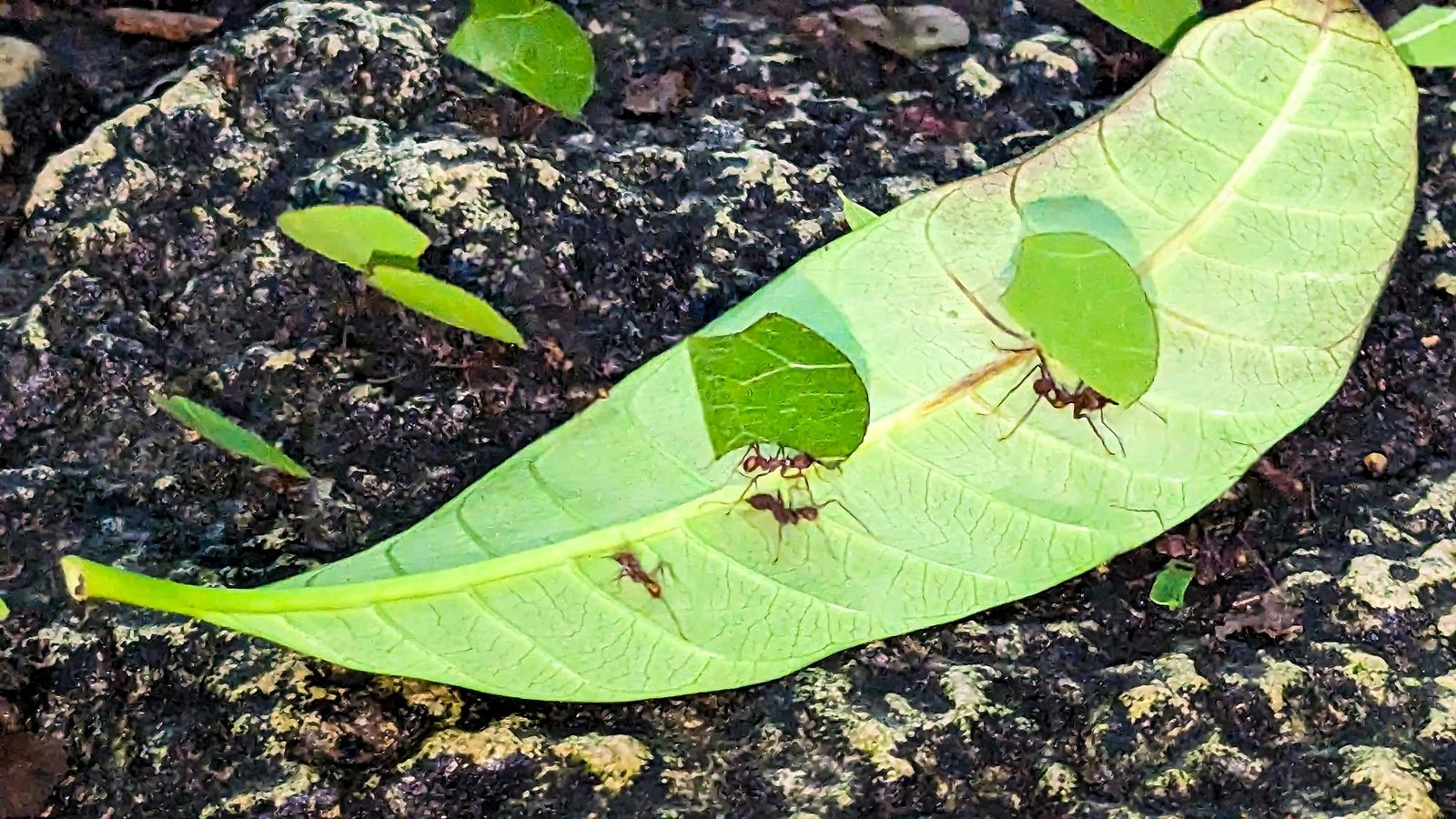
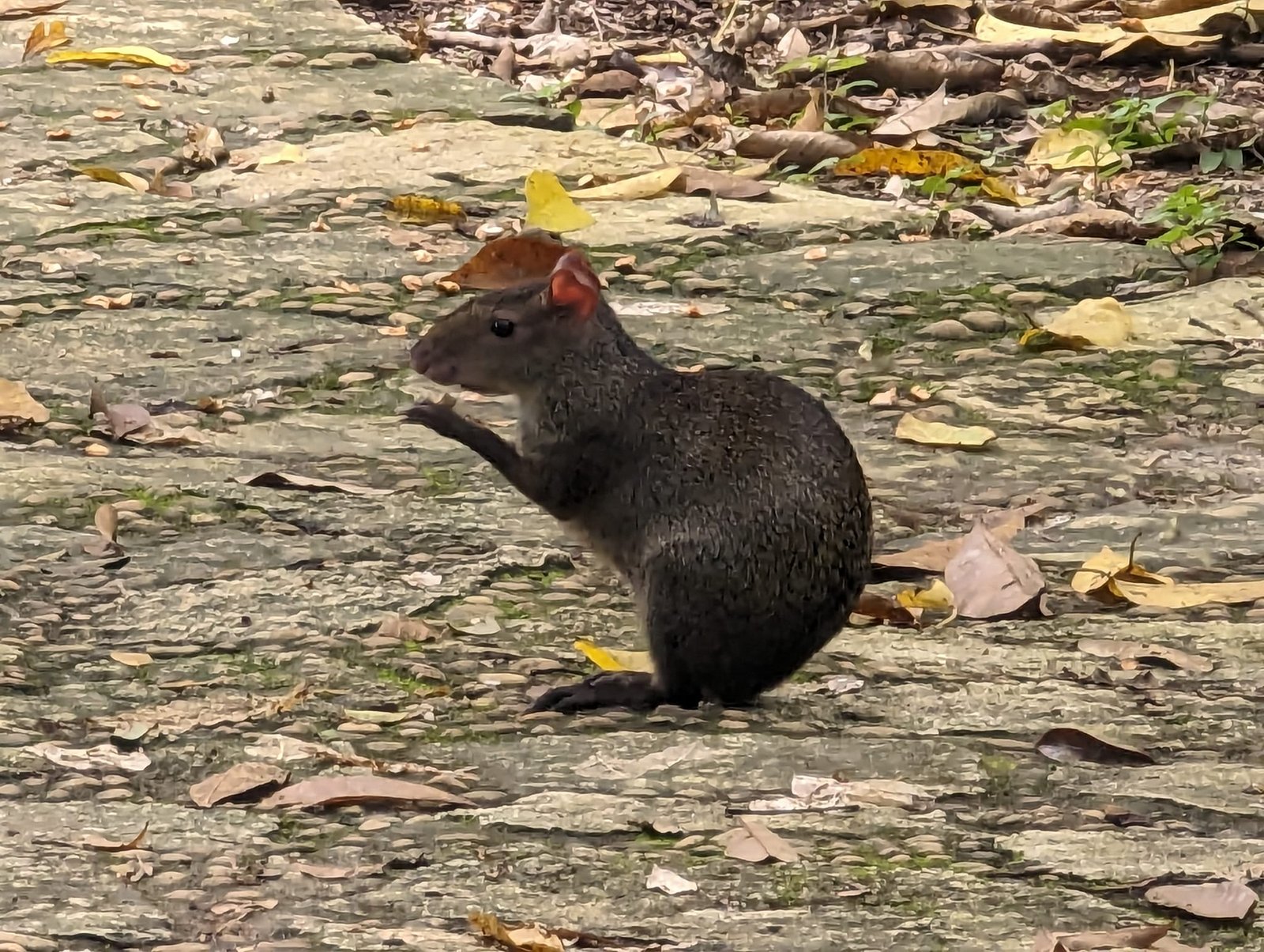
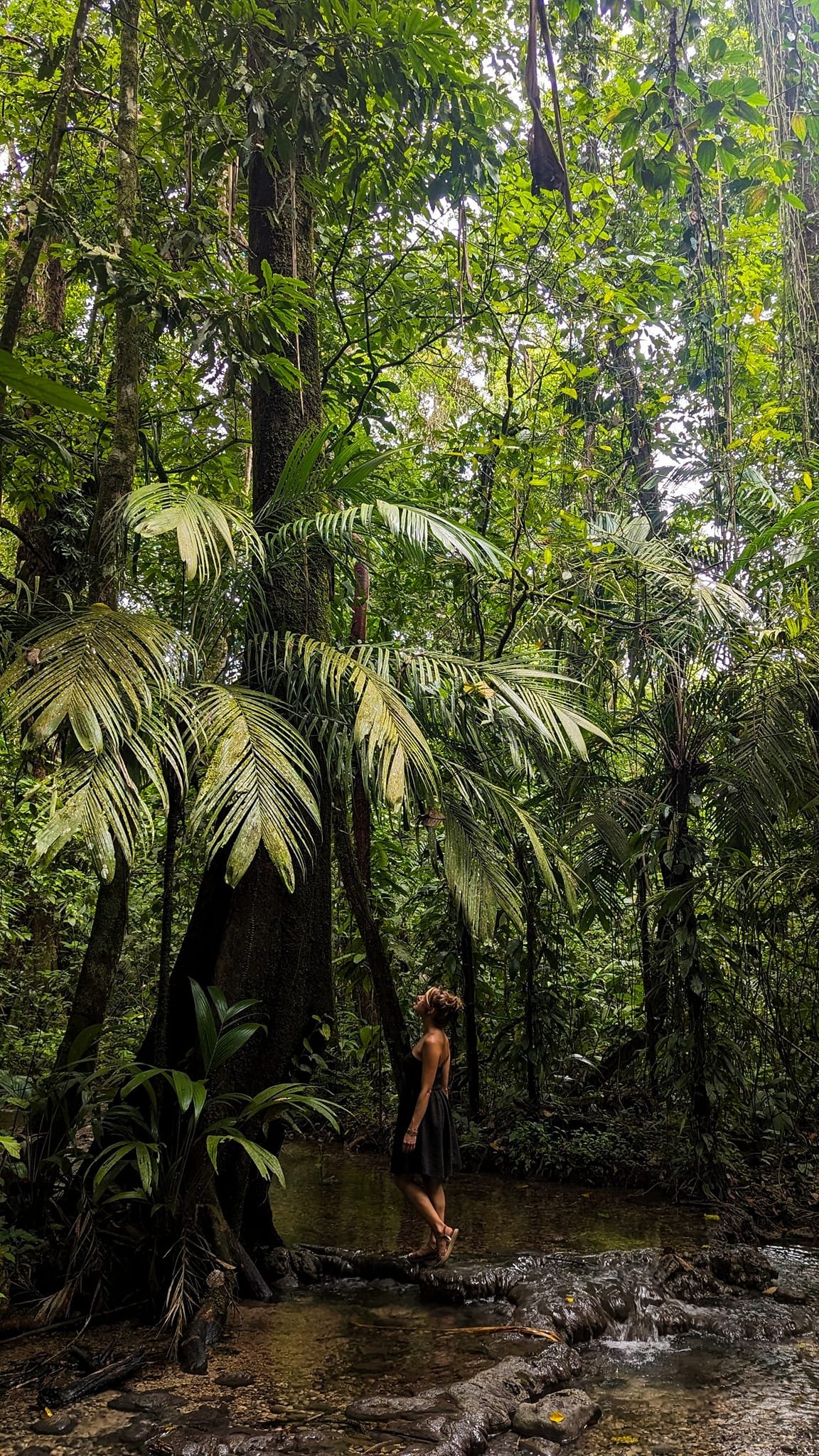
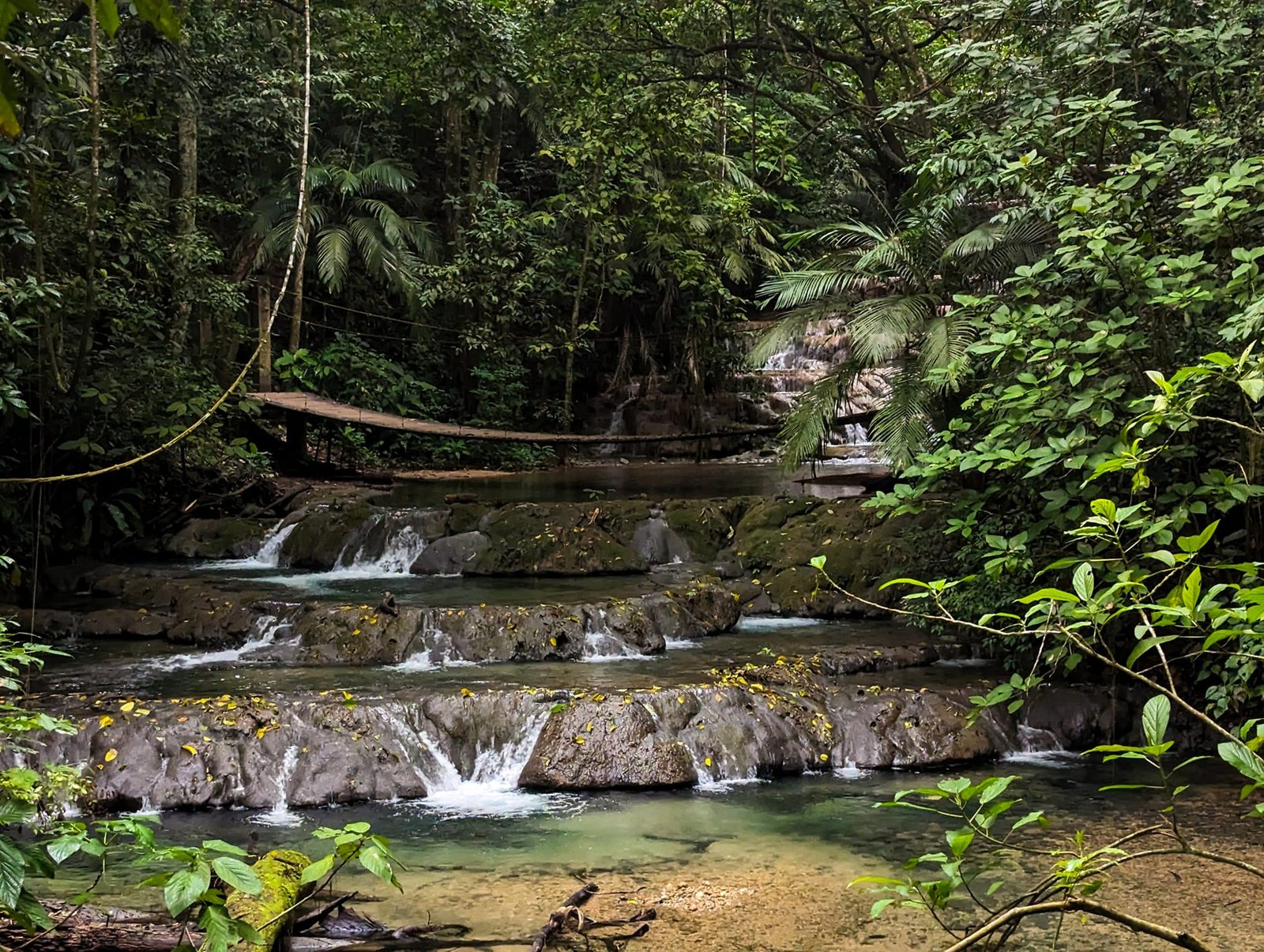
Part of the trail within the ruins leads through the jungle, and the jungle continues beyond them too. After visiting the ruins we walked the Sendero Motiepá trail – a wilder part of the park, whose entrance is right next to the western entrance to the ruins. More than 300 bird species live here, as well as 71 species of reptiles and amphibians. A great experience – it was the first time we had walked through such wilderness, passing only the odd tourist.
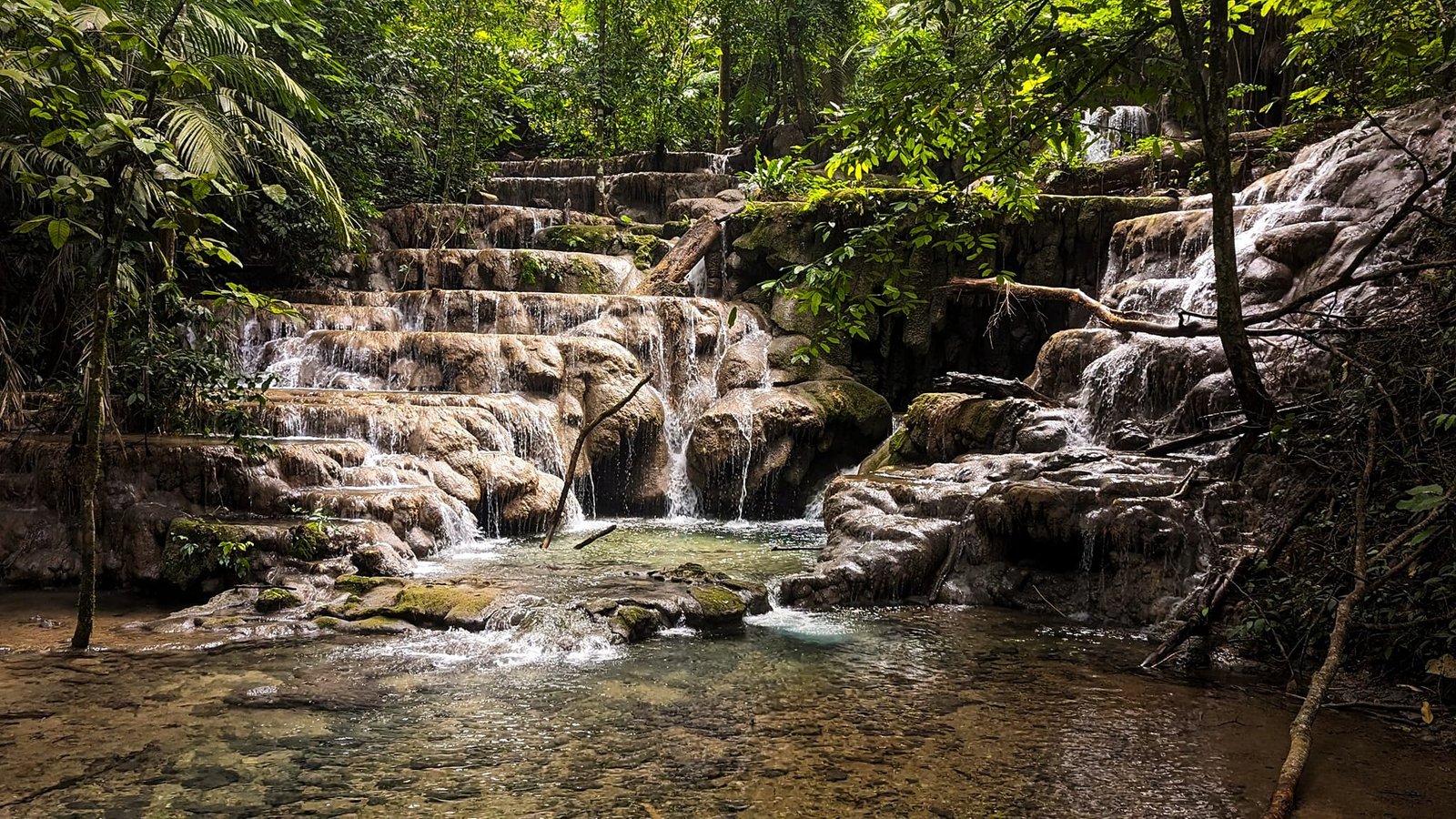
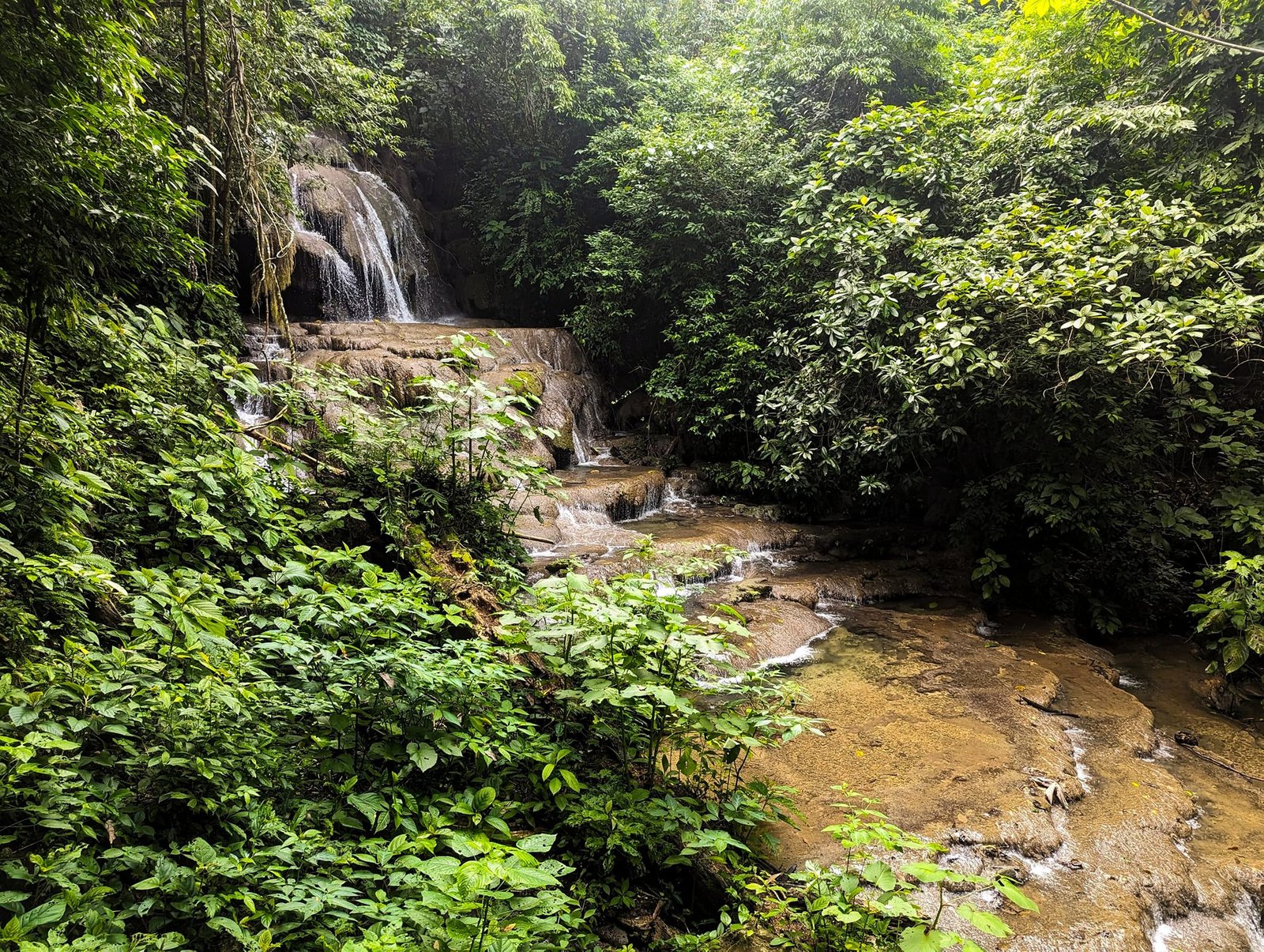
On the trail there are two cascading waterfalls and a “forgotten”, overgrown temple – stone walls emerging from among the roots and leaves.
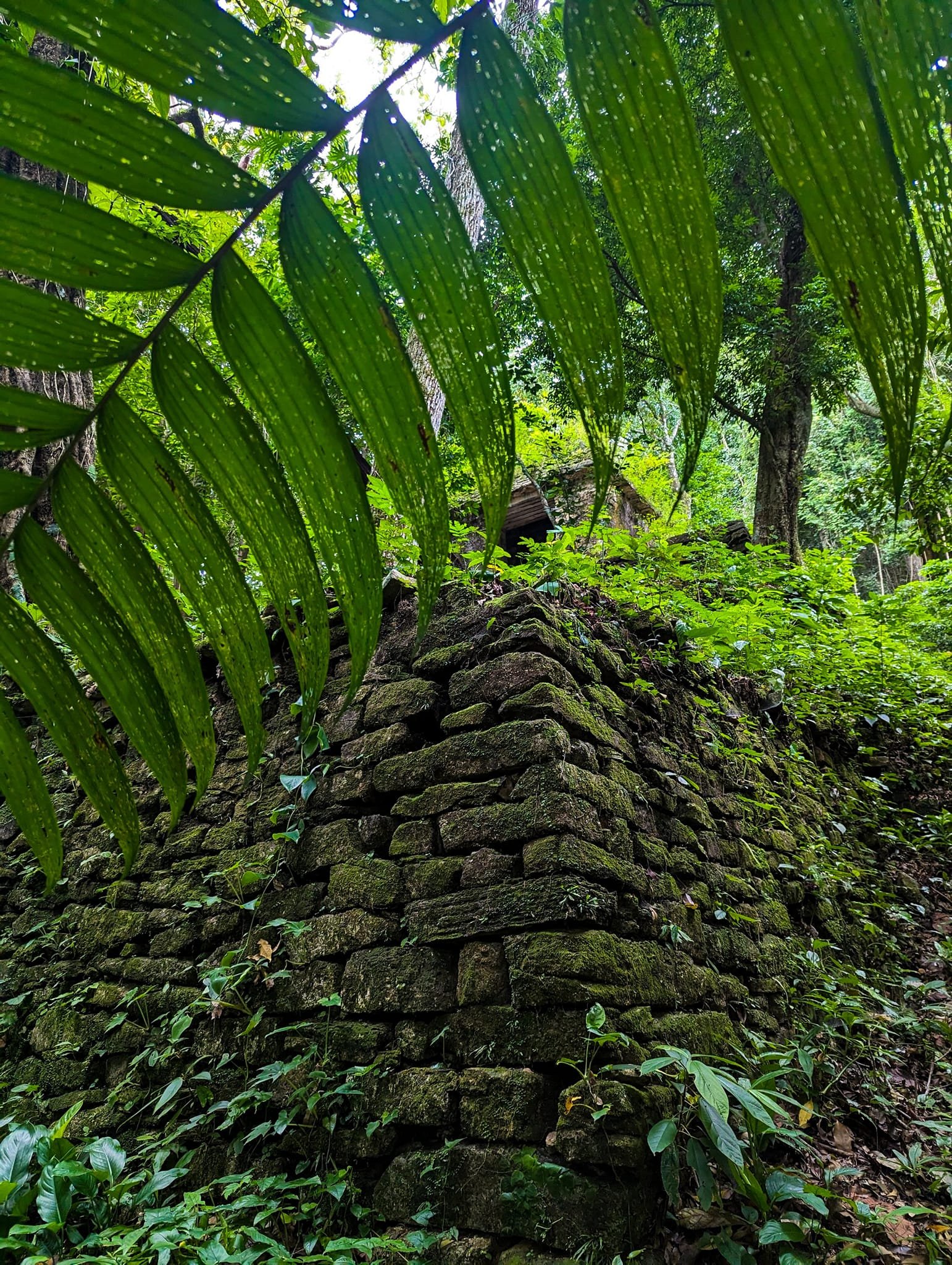
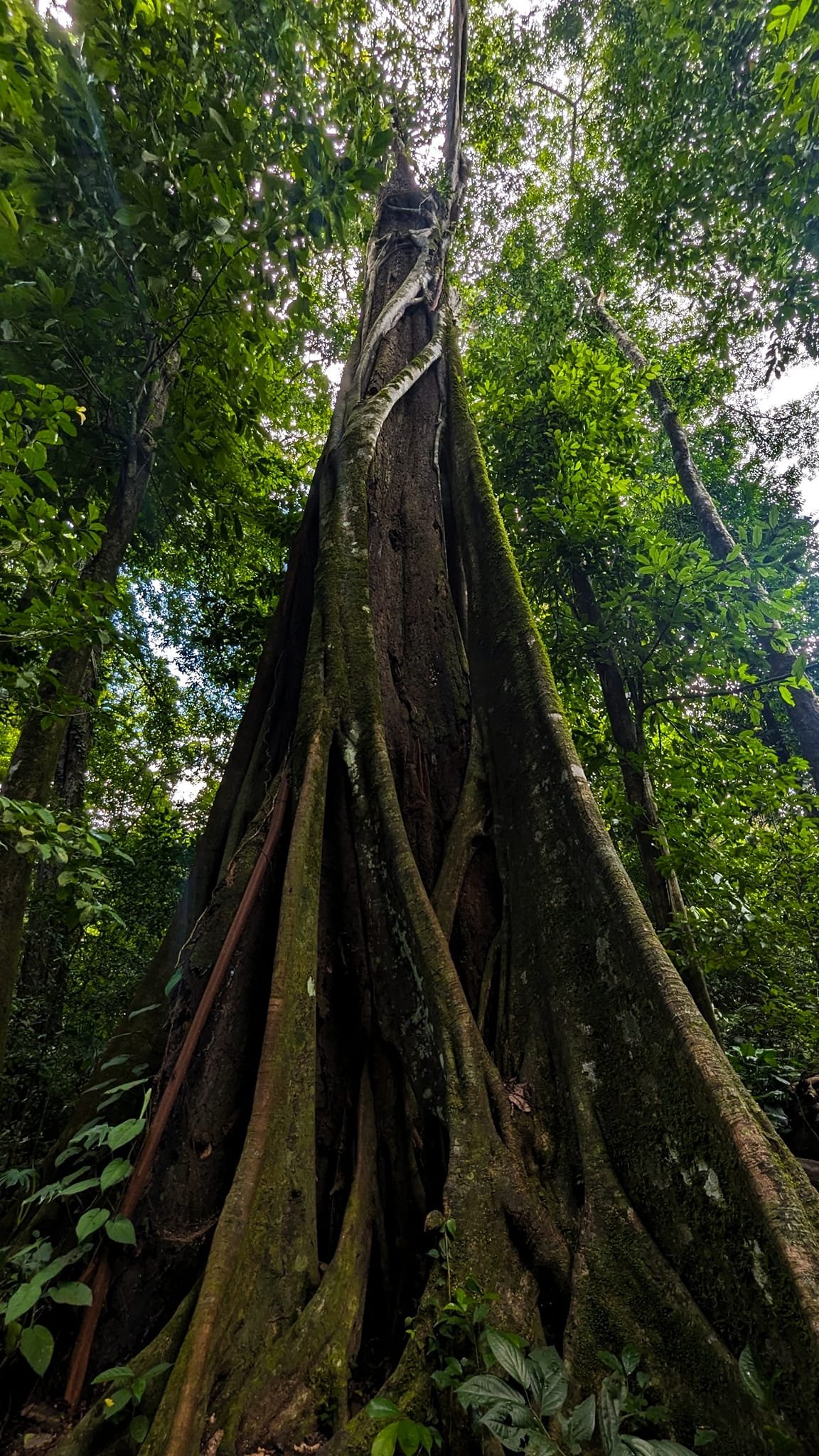
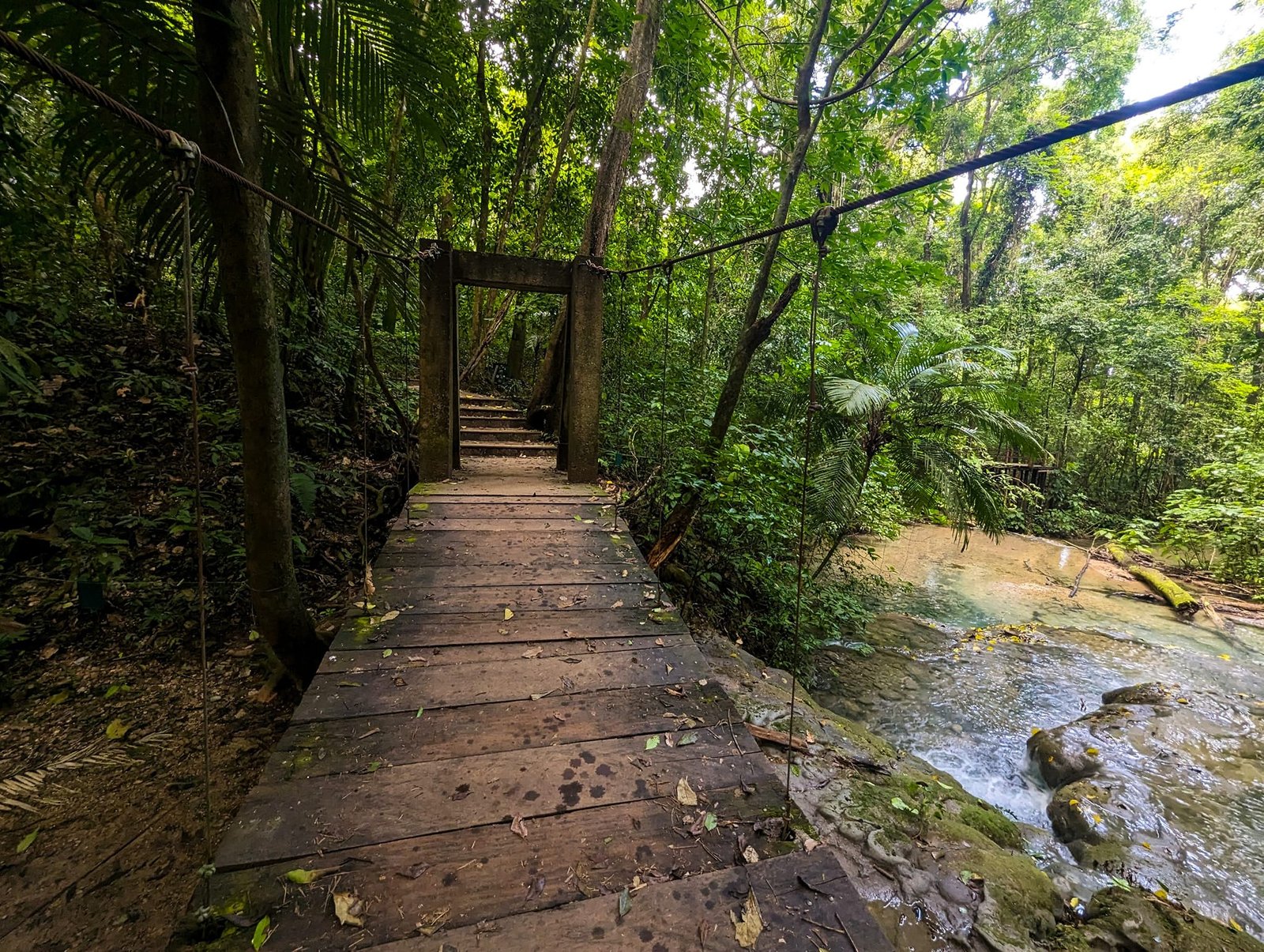
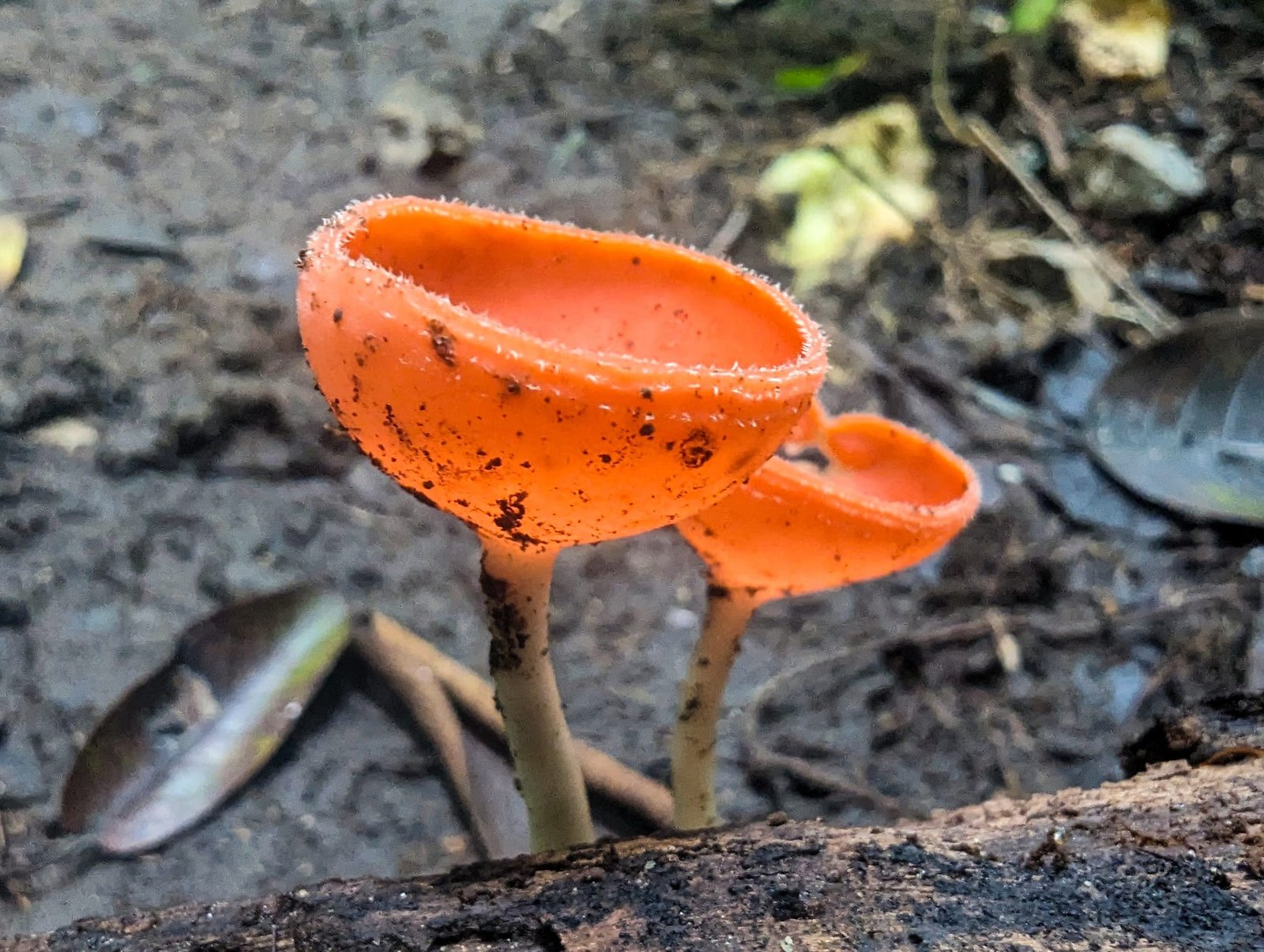
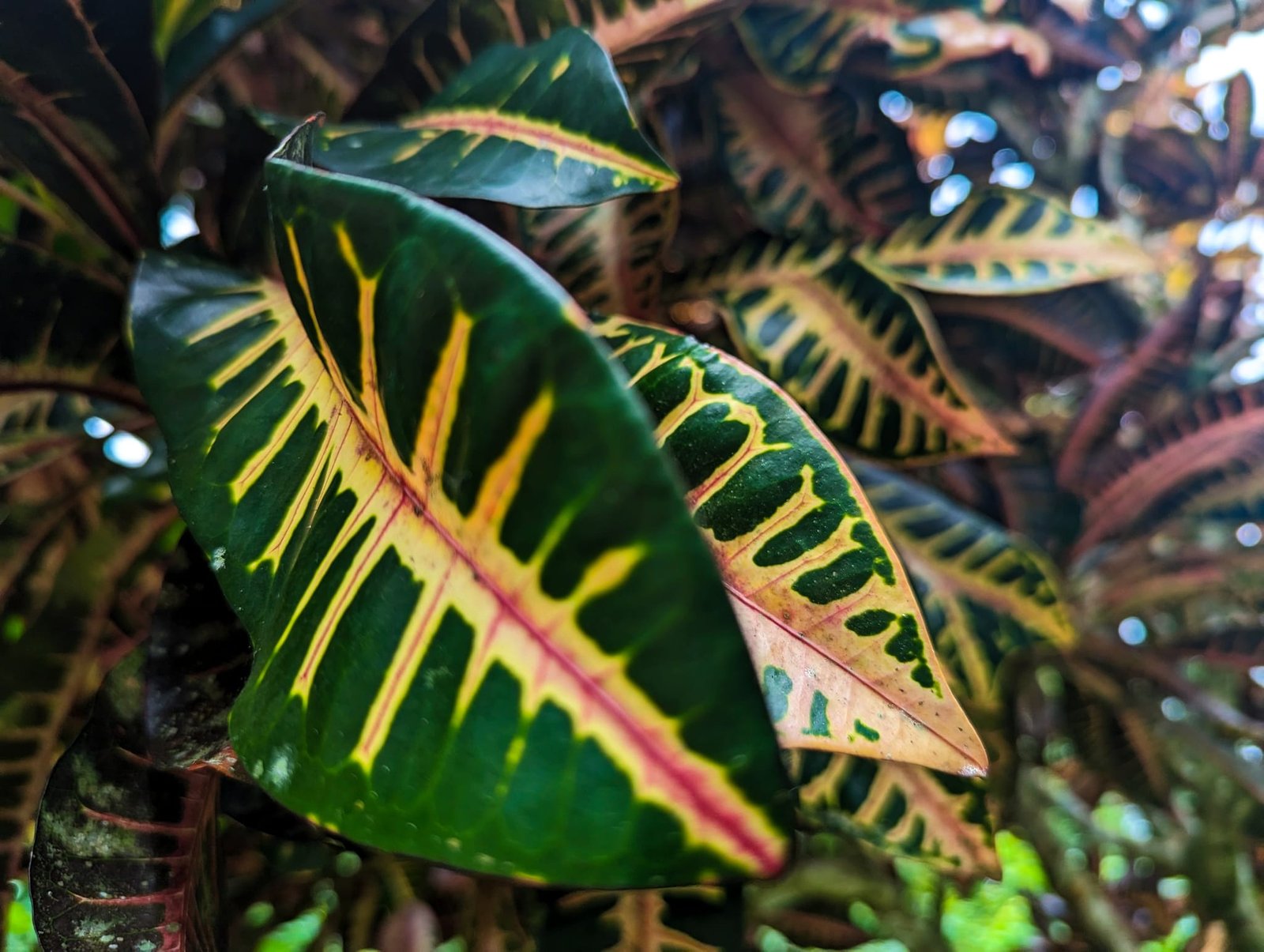
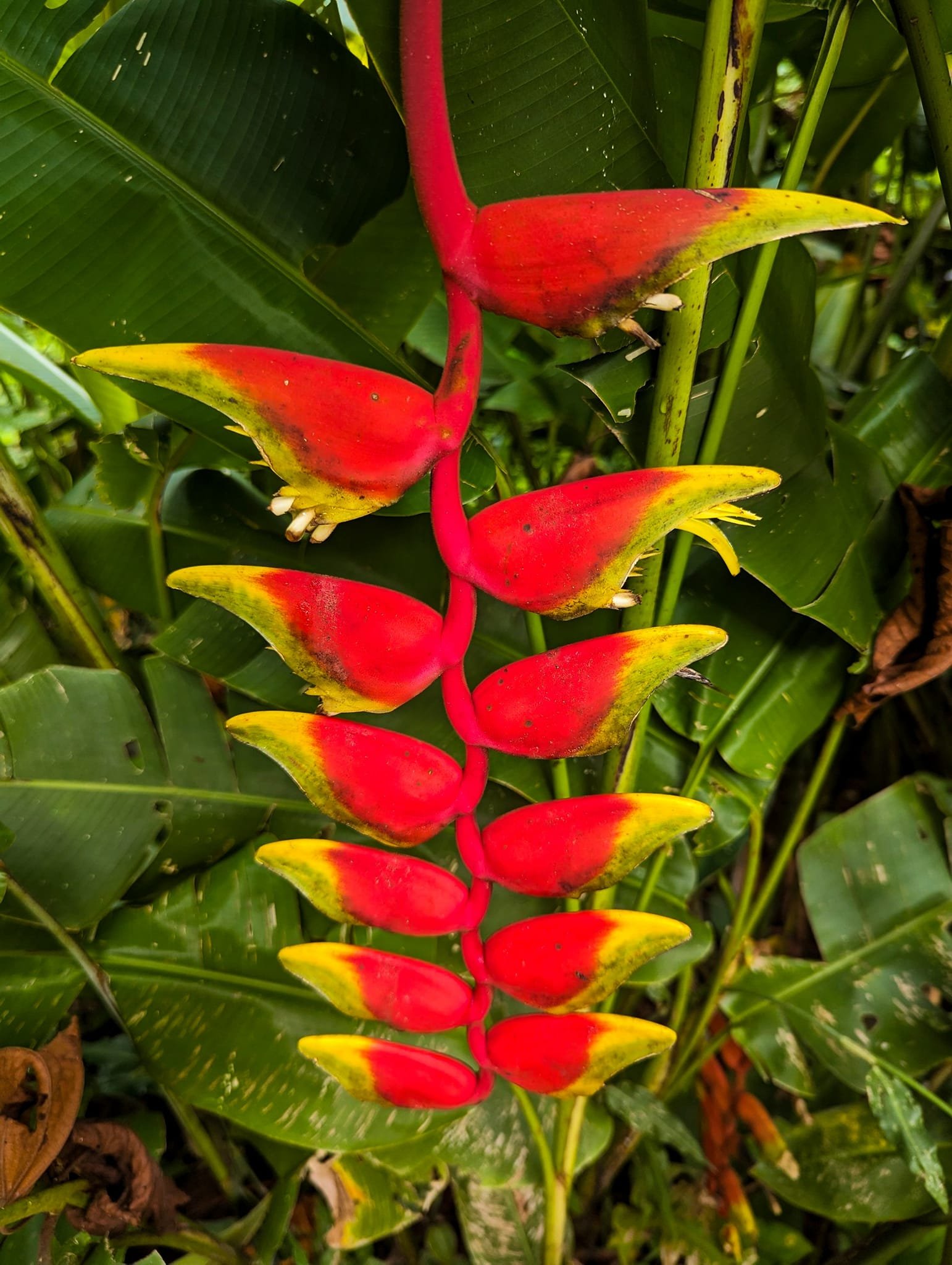
Along the way something catches your eye every few steps: bright fungi on tree trunks, colourful leaves, heliconia flowers.
The ruins and the jungle in a video:
 2:40
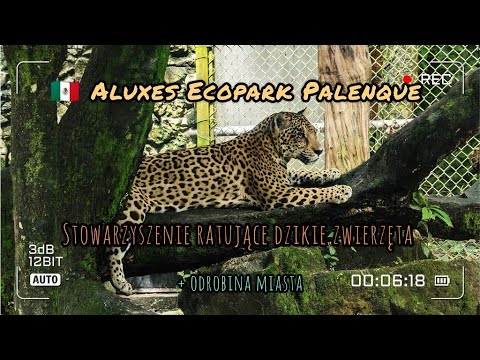
Aluxes Ecopark
On the last day of our stay (12 November) we went to Aluxes Ecopark – it is even closer to the town than the ruins. It is a non-governmental, non-profit association whose goal is to save the ecosystem and wild animals. The animals that end up here are victims of cruelty, malnutrition and quite often illegal trade. They undergo rehabilitation and – whenever possible – return to their natural habitat.
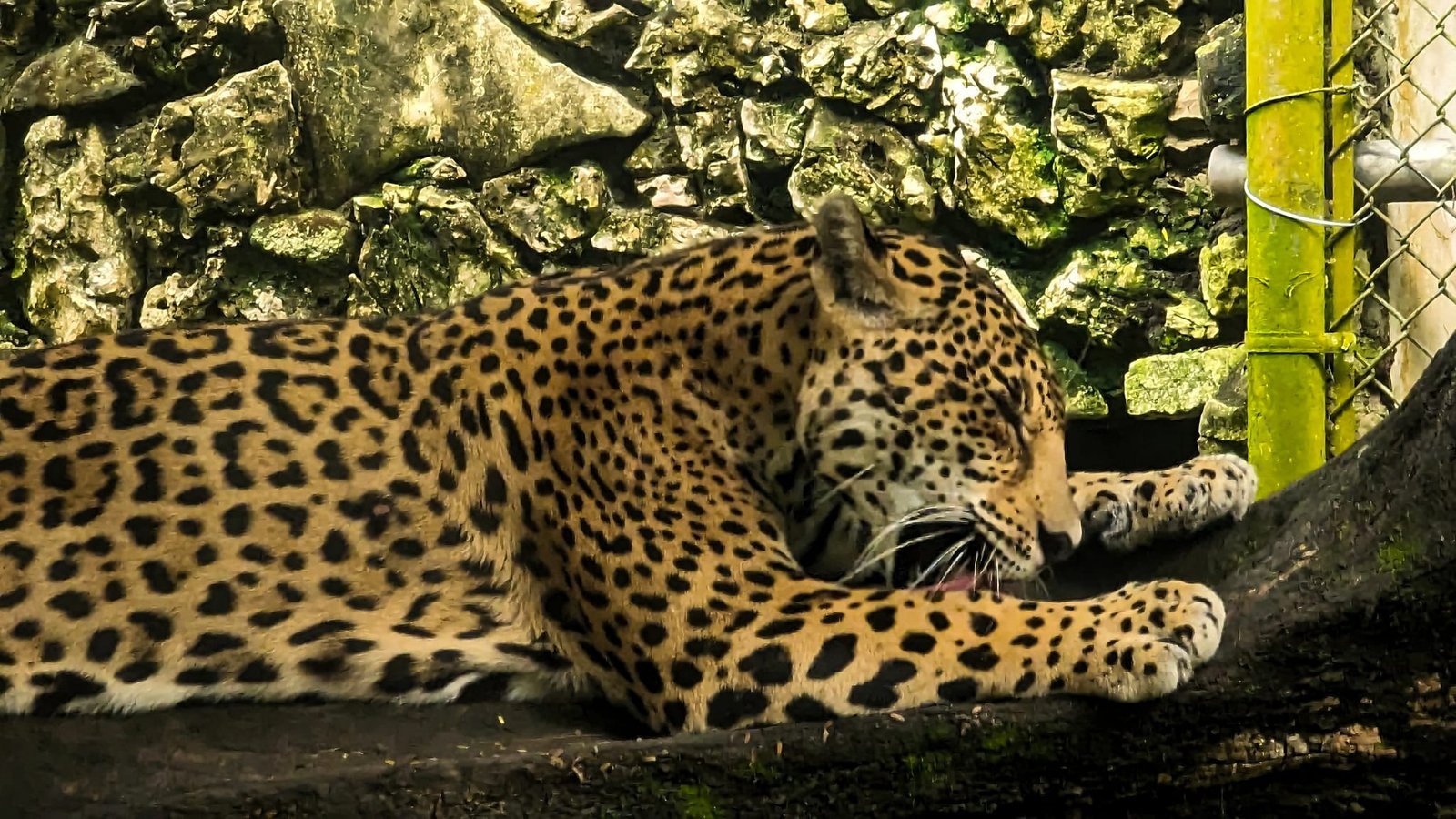
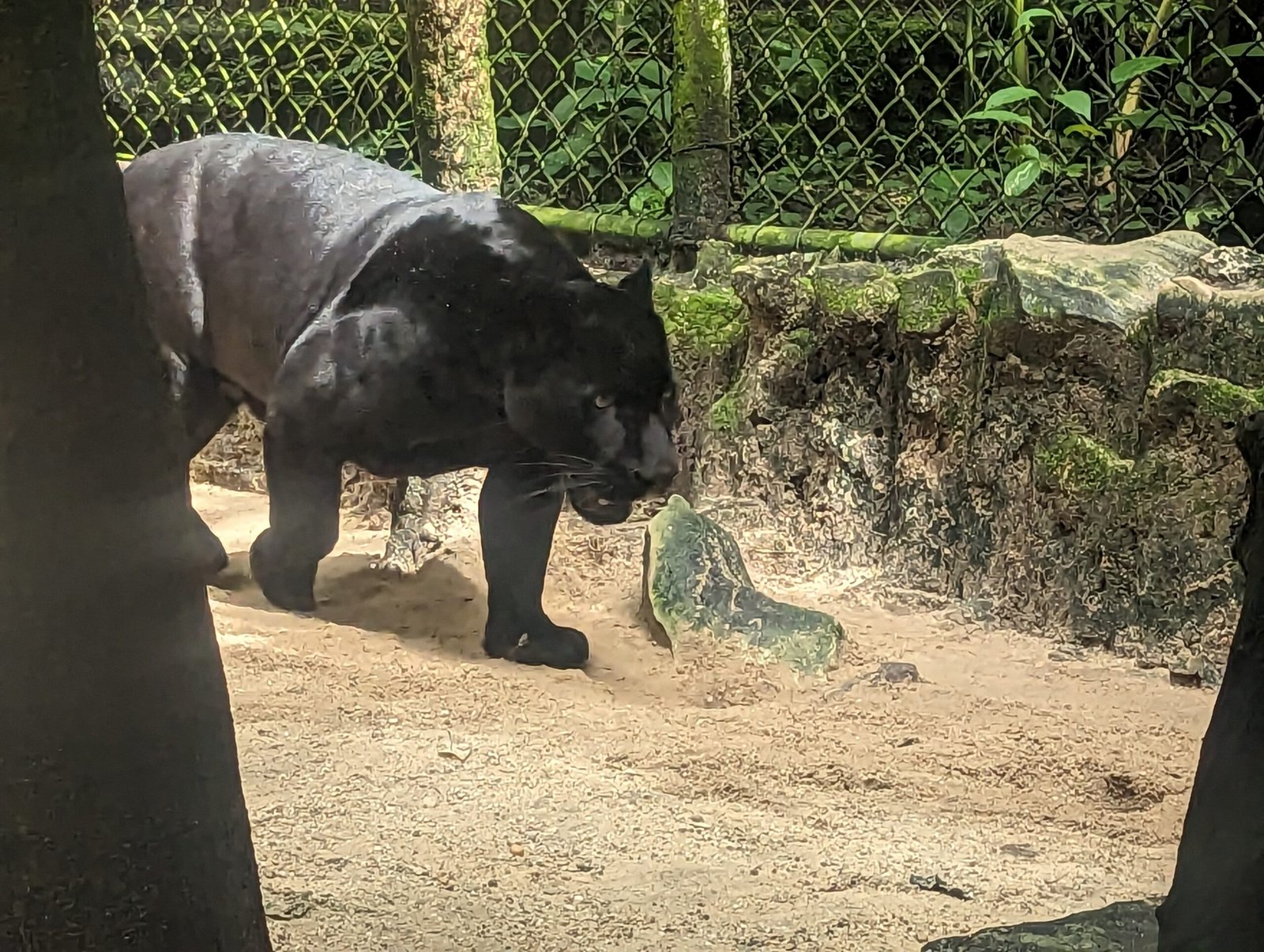
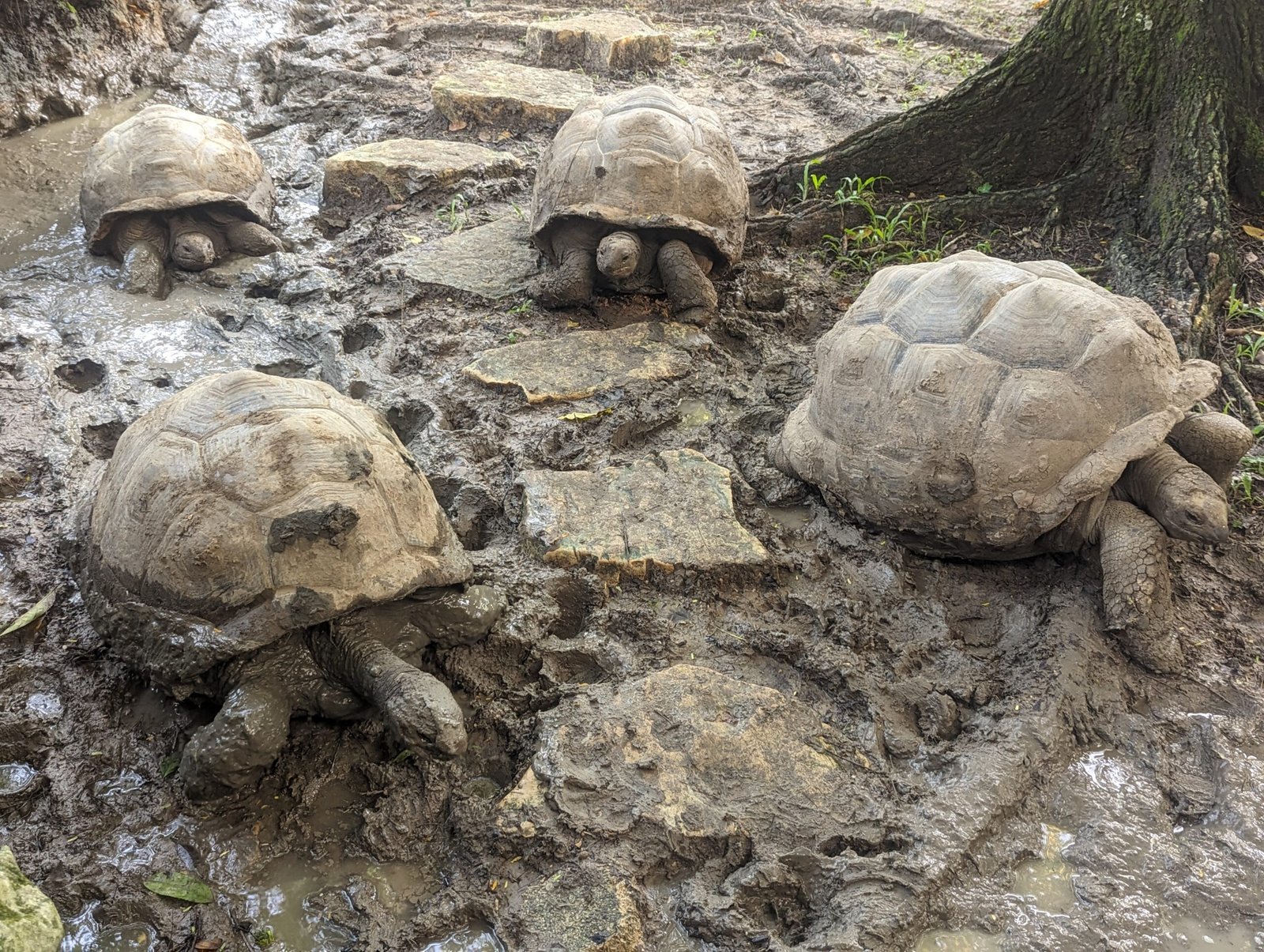
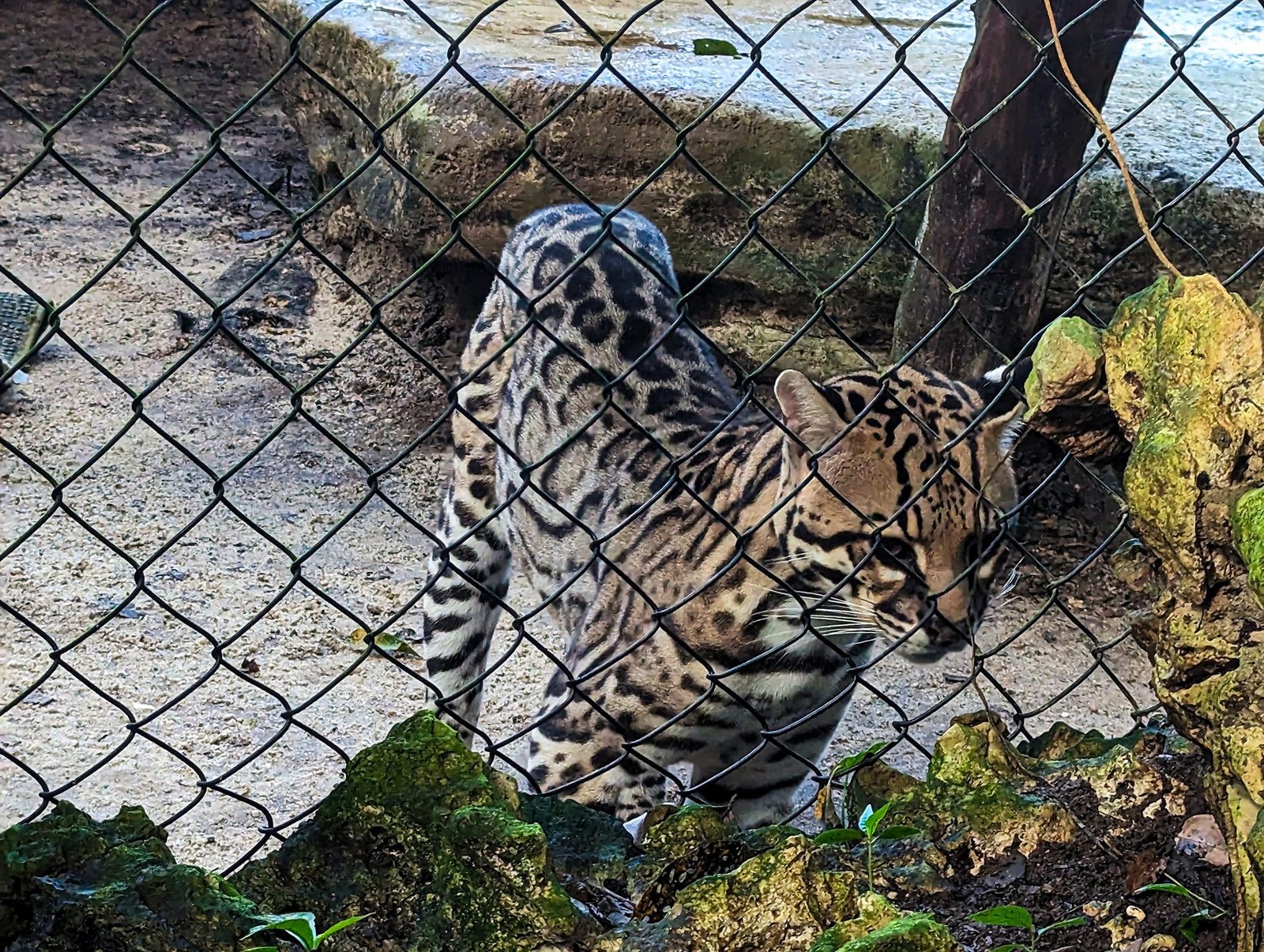
The ecopark lies in the jungle and covers a large area. It is home to amazing wild animals, some of them endangered – mainly from Mexico, though not only: jaguars, an ocelot, crocodiles, turtles, flamingos, parrots and monkeys.
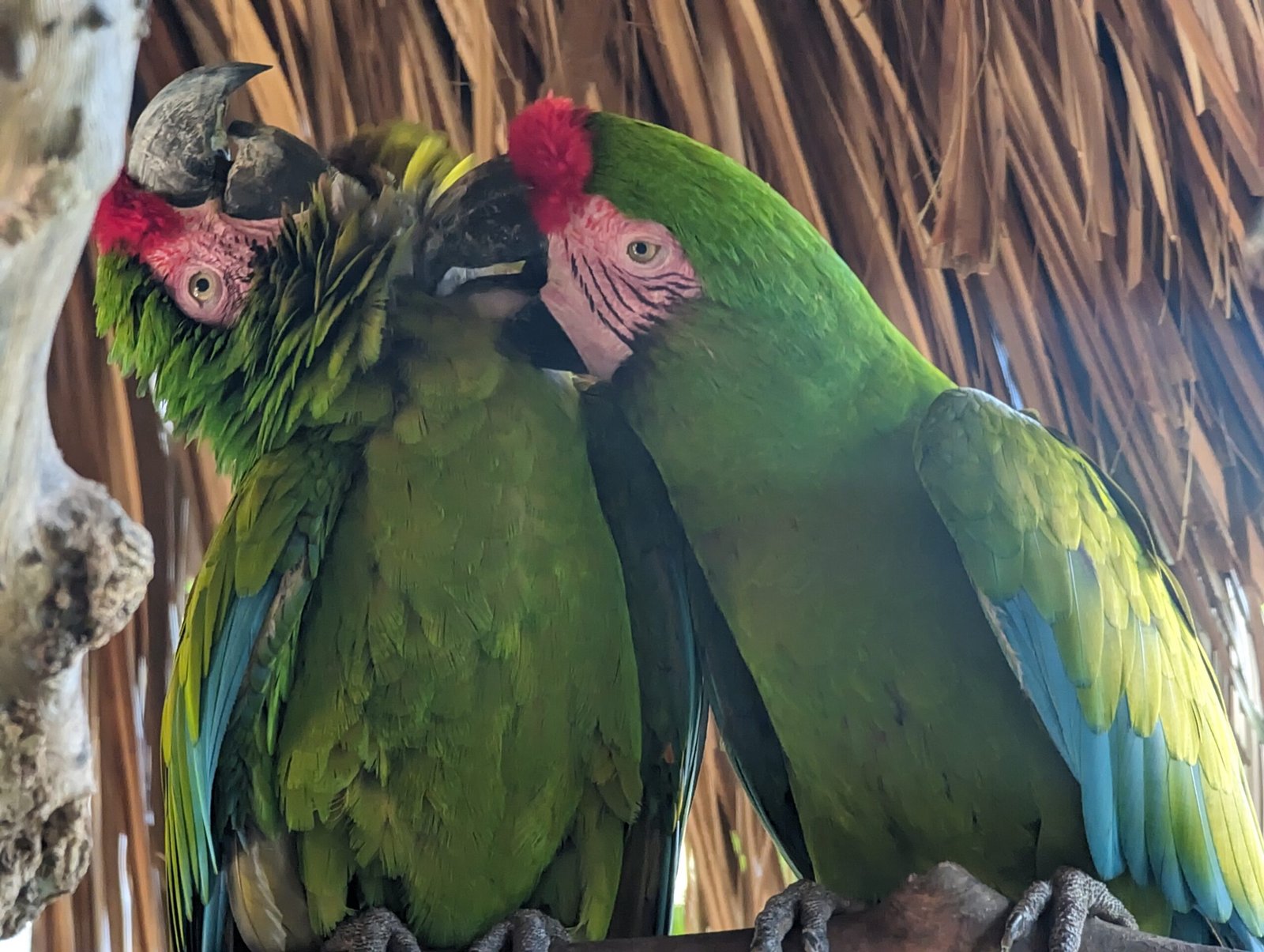

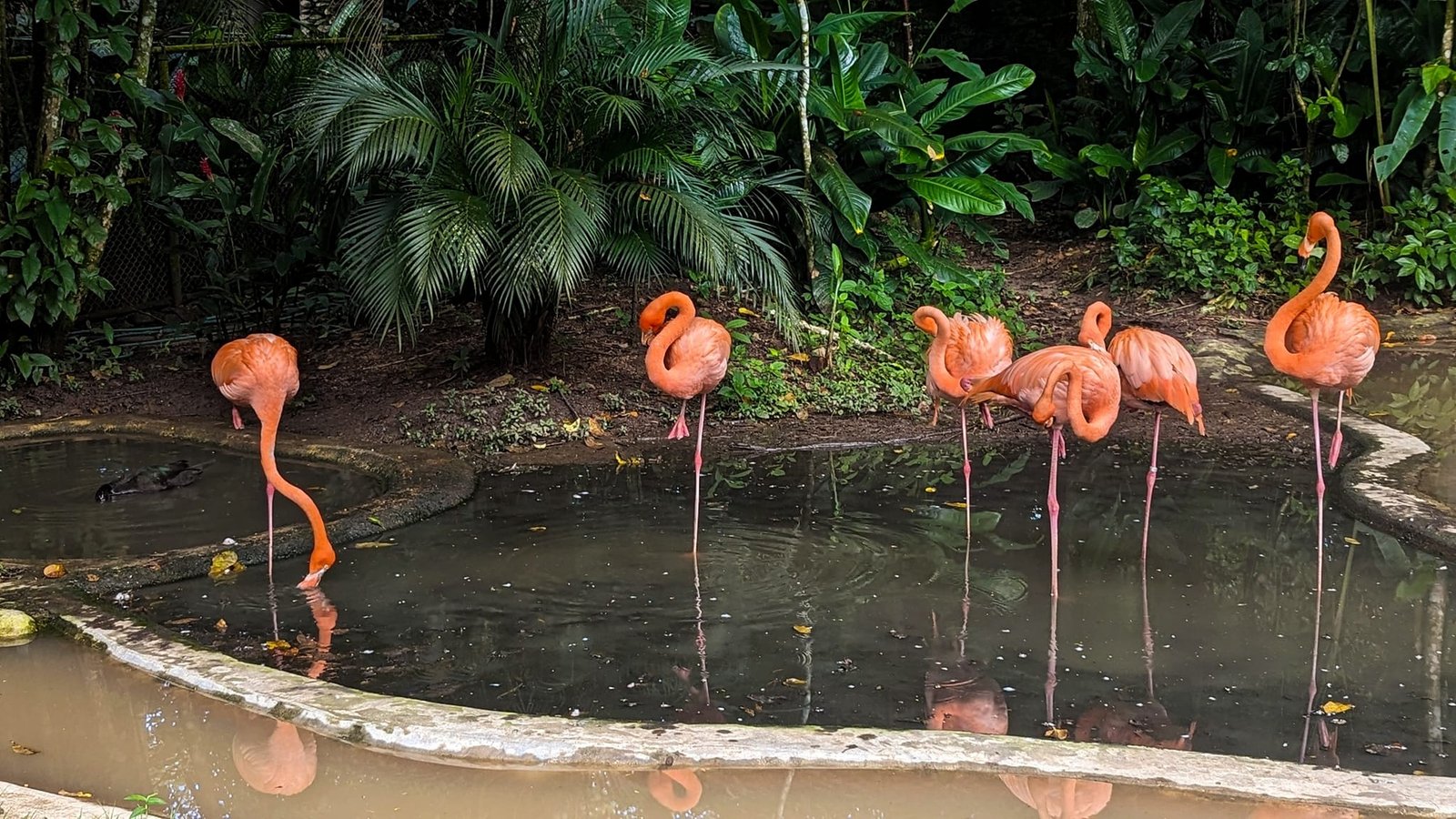
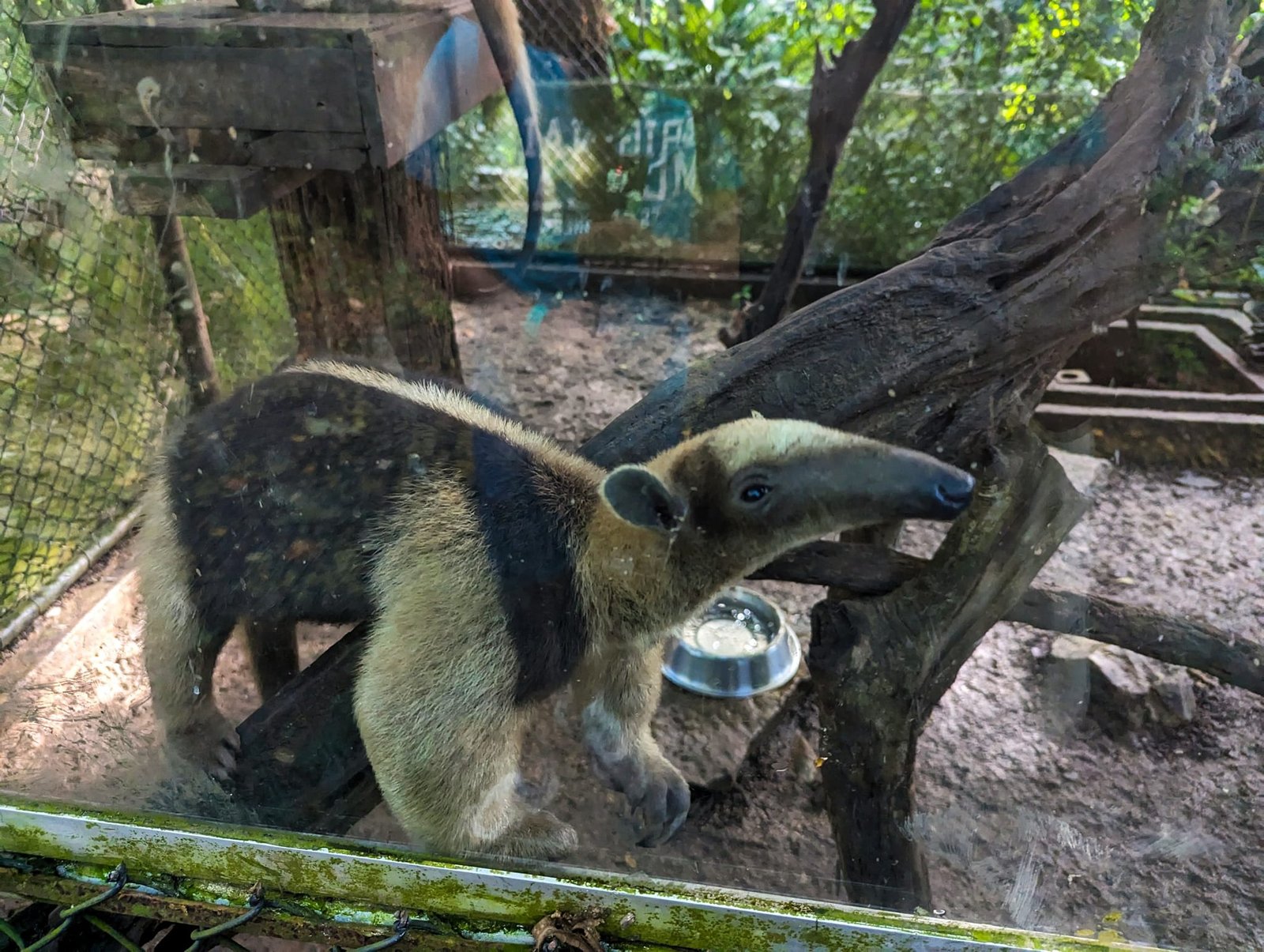
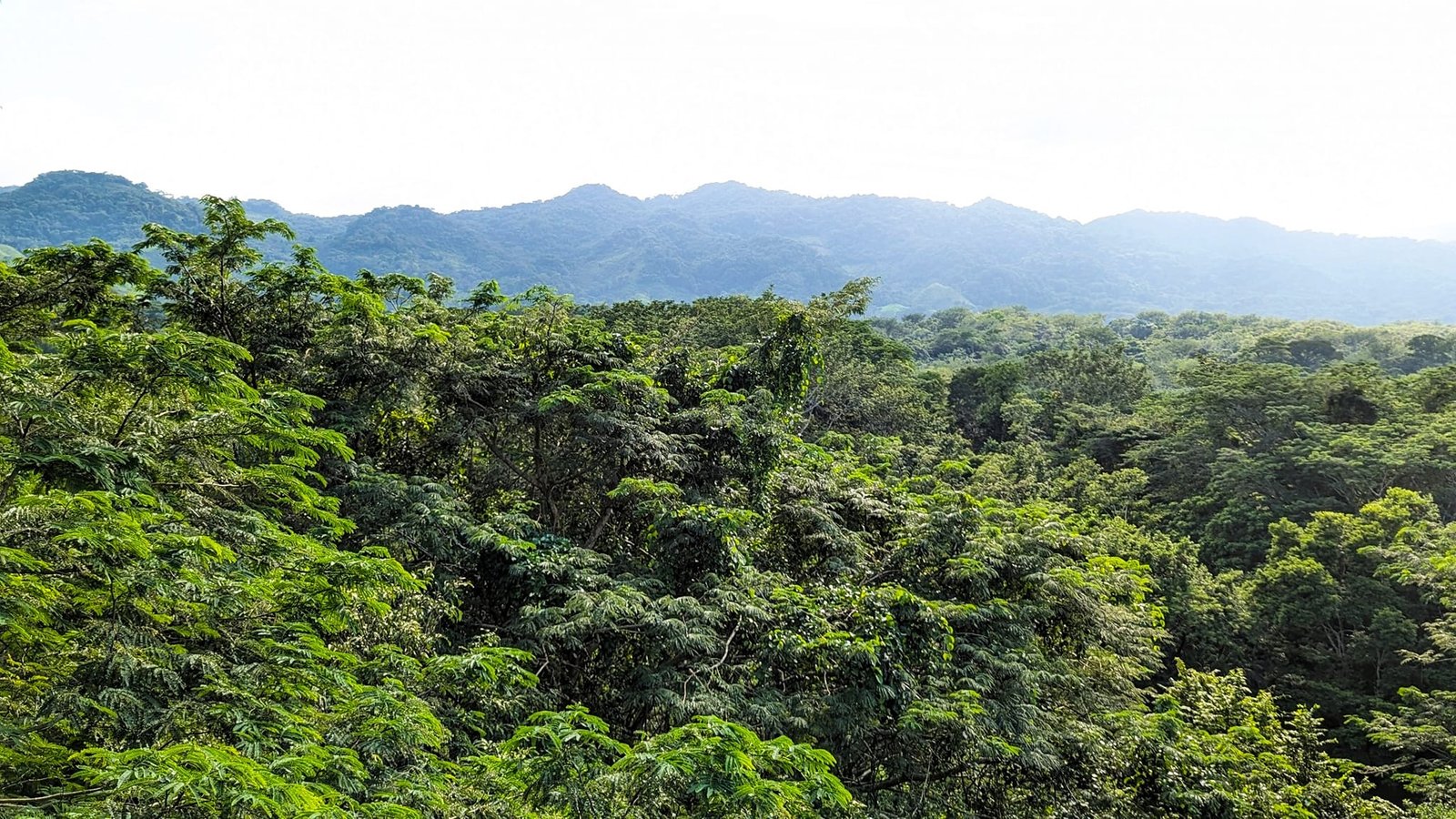
In the middle of the park there is an observation tower taller than the treetops – from up there you can hear the animals and see a nice panorama of the area. We spent 4 hours at Aluxes.
 2:34
Practical information – getting there, accommodation, prices
Prices from November 2023 (in euros at the exchange rate of the time):
- Getting there from San Cristóbal – by ADO night bus for 703 MXN (about €37) per person. It takes the long way round, via Tuxtla Gutiérrez and Villahermosa: the shorter Highway 199 is very winding, considered dangerous, and sections of it are sometimes closed by protests (the separatist movements in Chiapas are not directed at tourists, but they can block the road). The route was fine, it was not bumpy and we managed to sleep – and you save on one night’s accommodation too.
- Accommodation – Hotel Naj Kin, 202 MXN (about €11) per person per night in a double room (we stayed 3 nights).
- Getting to the ruins – a colectivo marked “Ruinas”, 25 MXN (about €1.40) one way; the stop in Palenque is on Google Maps as “Colectivo for Palenque ruins” (3a. Pte. Nte. 2, Centro).
- Tickets to the ruins – the ruins are inside a national park, so you practically pay twice: entry to the national park 104 MXN (about €5.50) and to the ruins 90 MXN (about €5). Filming costs an extra 50 MXN (about €3). Double fees like this are common practice in Mexico.
- Time needed – the ruins together with the Sendero Motiepá trail took us about 4 hours.
- Aluxes Ecopark – the same colectivo as to the ruins (25 MXN), ticket 180 MXN (about €10); for 20–100 MXN (about €1–5) you can also feed a turtle, a small crocodile, fish or a manatee. It is worth setting aside about 4 hours for the visit.
- What we ate – chilaquiles, a popular breakfast: pieces of tortilla covered in red or green salsa, with egg, chicken, cheese, onion, cream and avocado; enchiladas – rolled tortillas with a filling, covered in sauce (e.g. mole), with rice and beans; plus a chelada, beer with lime and salt.
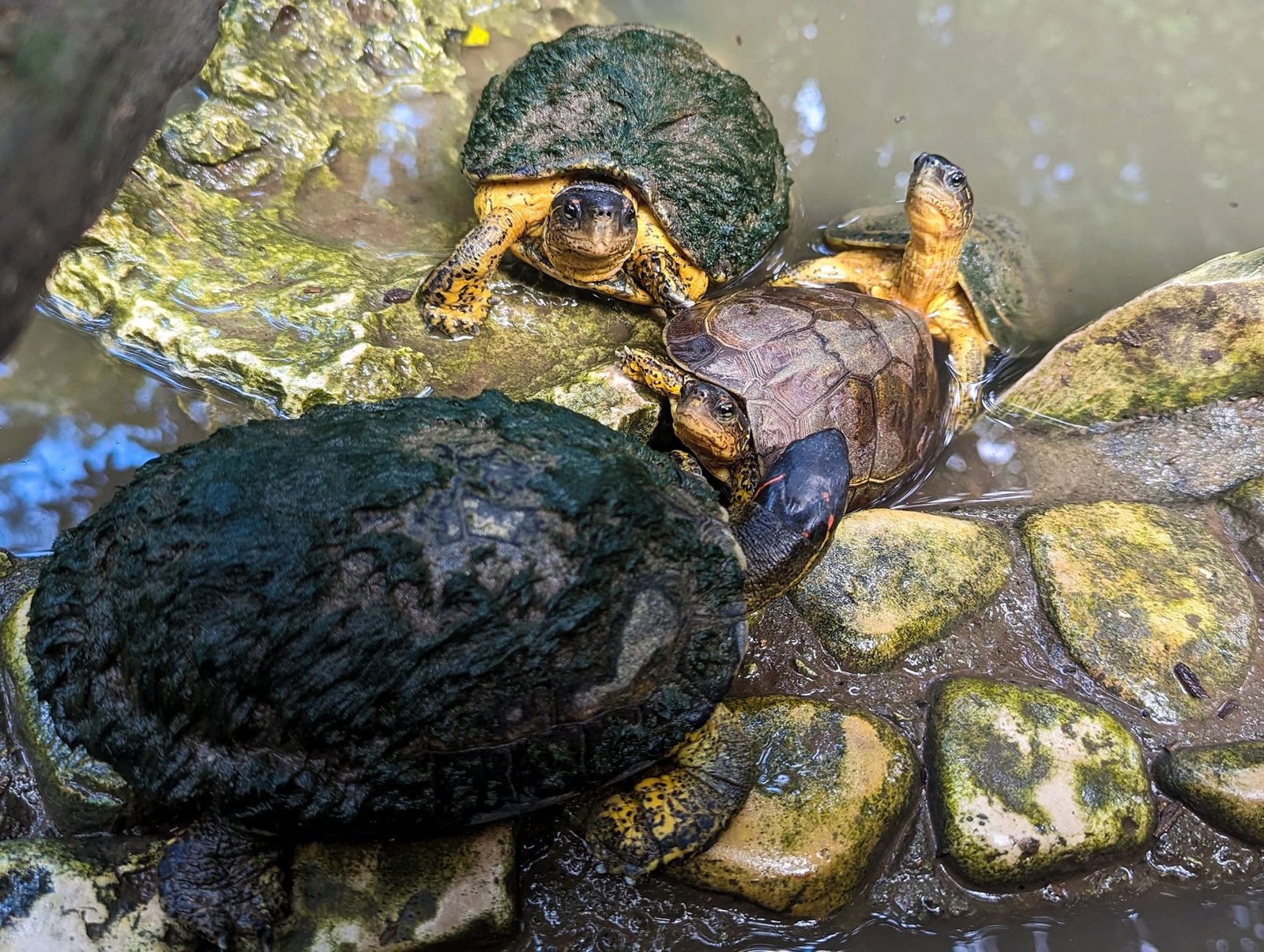

Photo gallery