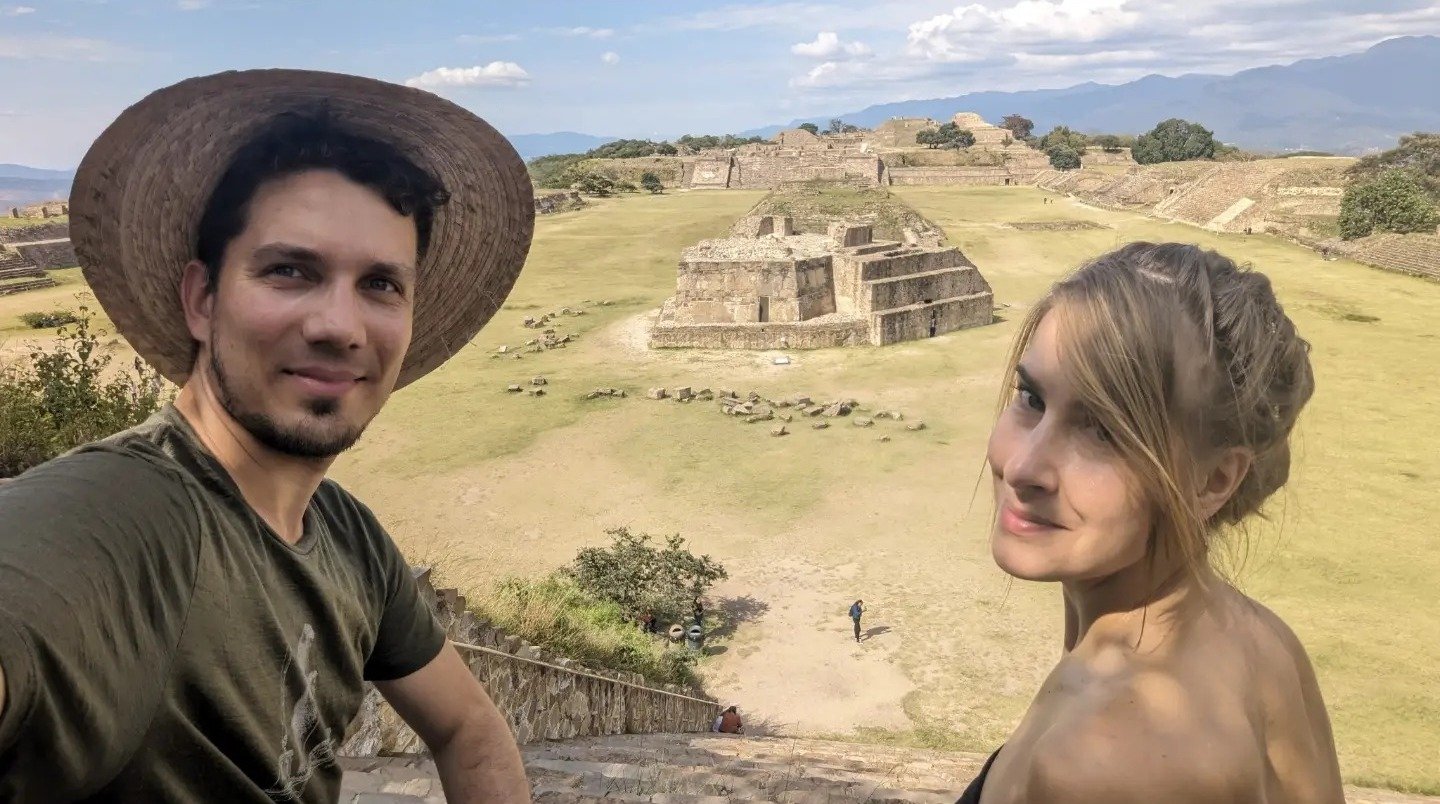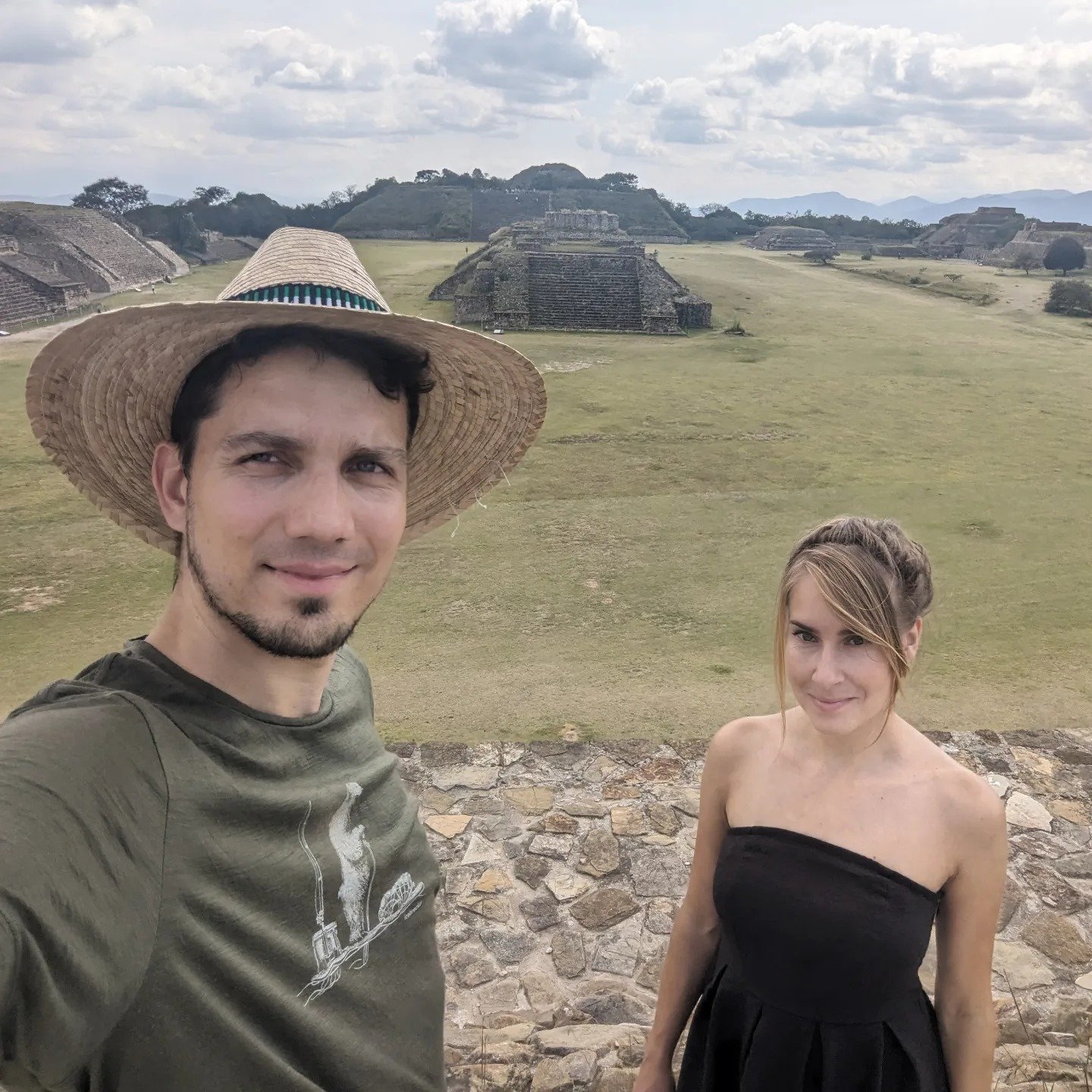
Monte Albán is what remains of an ancient city on a mountaintop just above Oaxaca. For nearly two thousand years – from the 6th century BC to the 14th century AD – it was inhabited in turn by the Olmecs, the Zapotecs and the Mixtecs. Although only about 10% of the old city has been uncovered, there is plenty to see: temples, residential buildings and a ball court. We were here on 20 October 2023, during a few days in Oaxaca.
 6:12
Table of contents
- An ancient city on a mountaintop
- Getting there from Oaxaca – and what not to do
- Back via the market in Oaxaca
- Practical information
An ancient city on a mountaintop
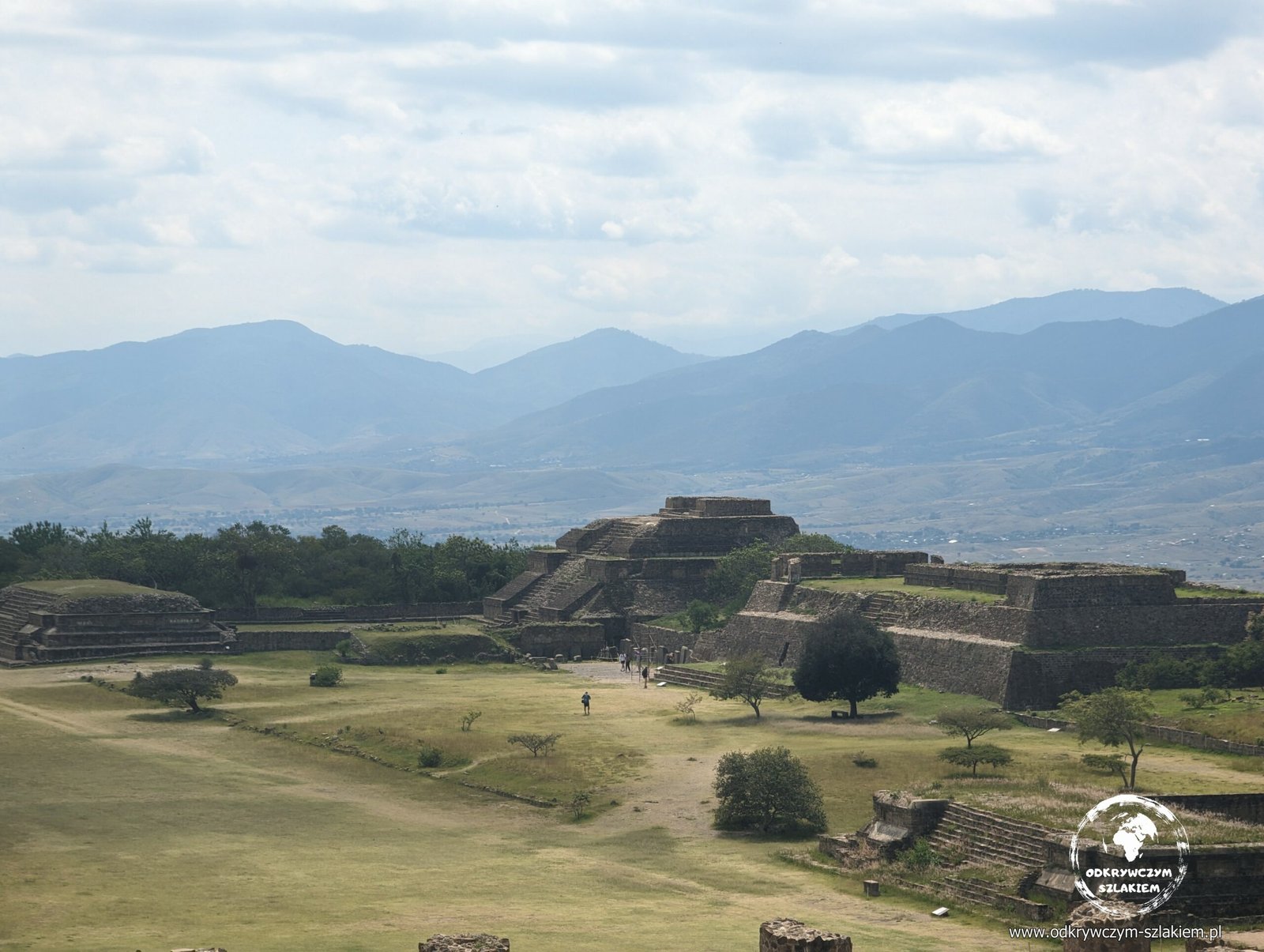
Monte Albán’s greatest asset is its location. The ruins lie at about 2000 m above sea level – about 400 m above the surrounding valleys – on a flattened mountaintop, so from every spot there are panoramic views of the Oaxaca valley and the ranges around it. The heart of the complex is the Great Plaza – a vast grassy space surrounded by temple platforms, with several buildings in the middle.
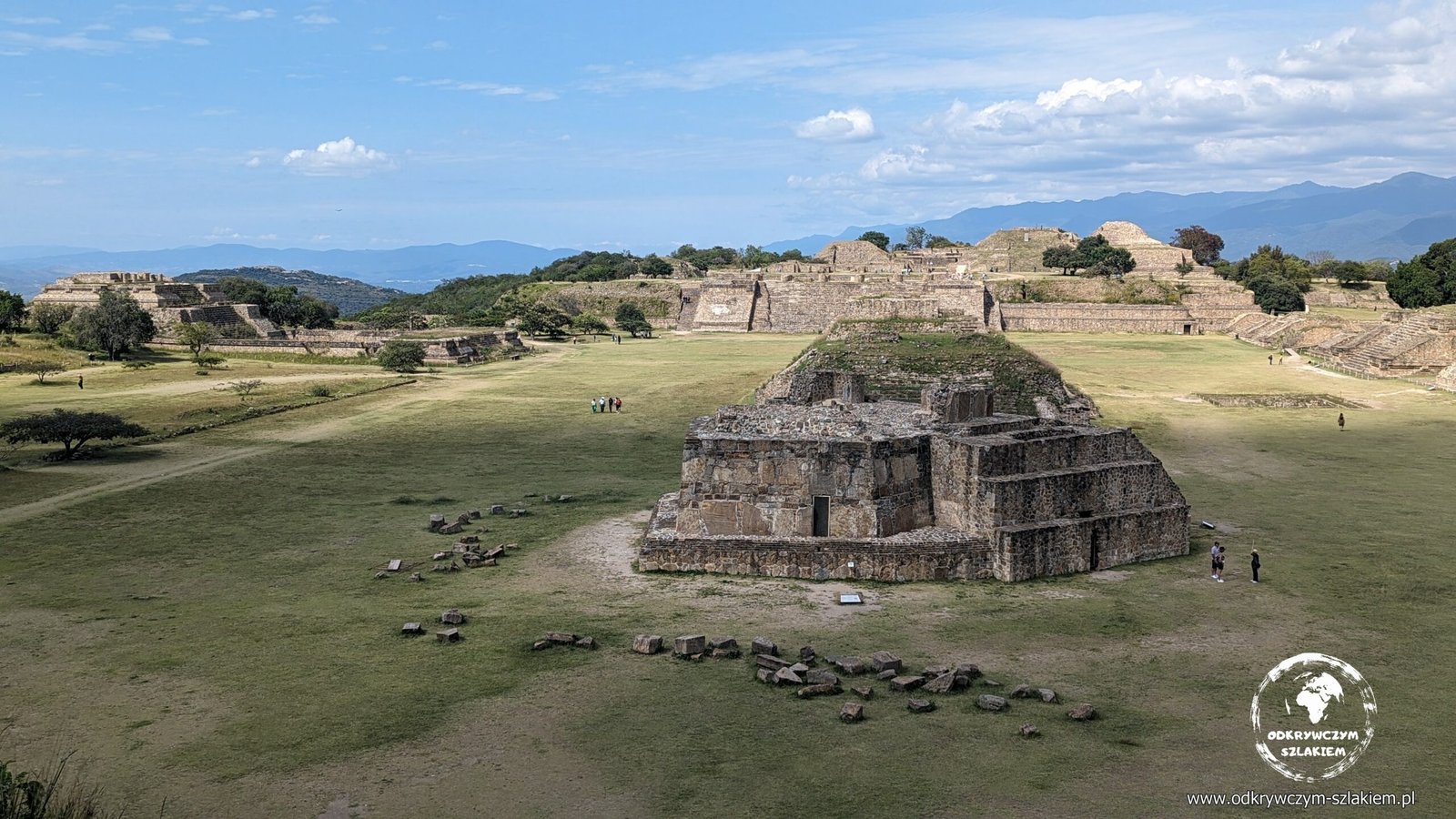
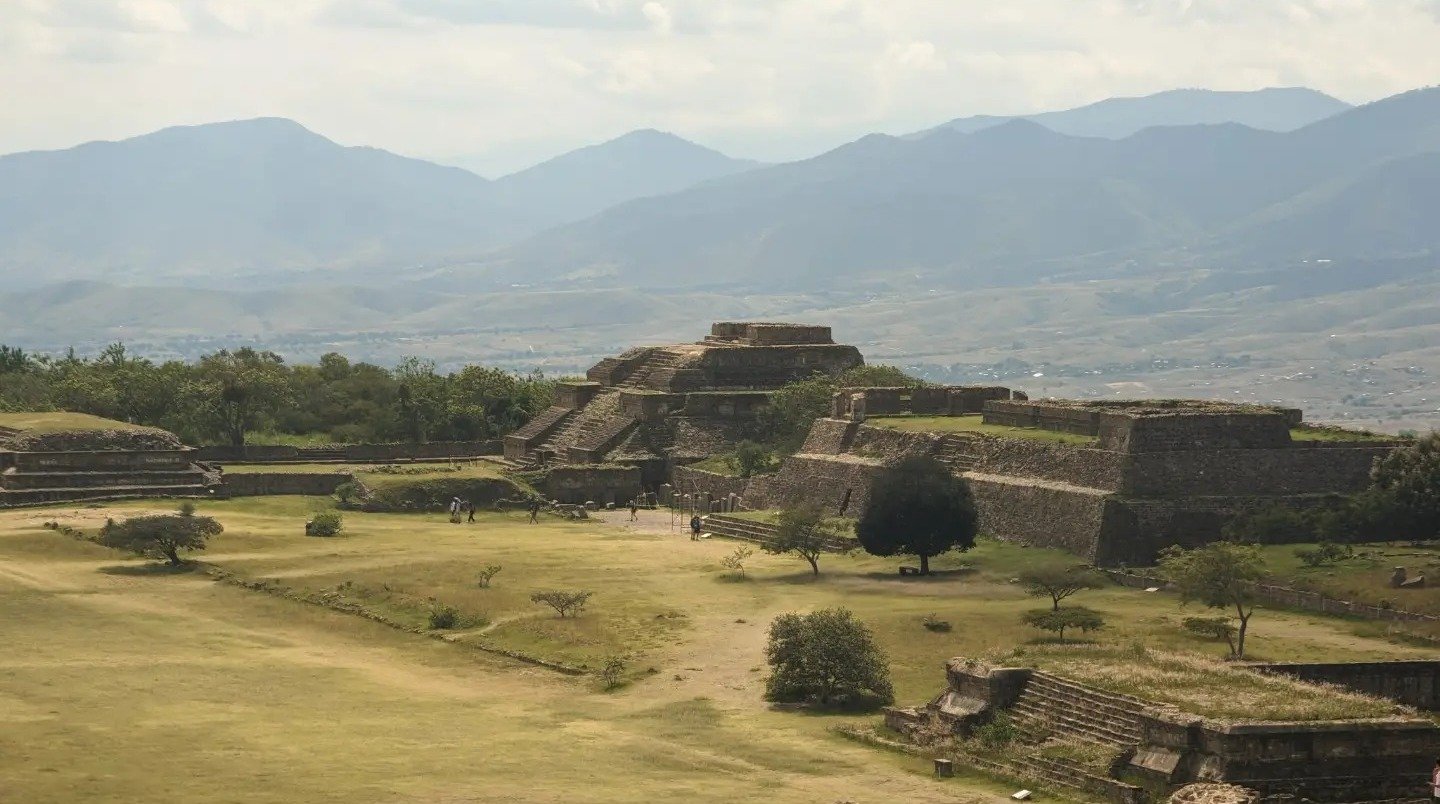
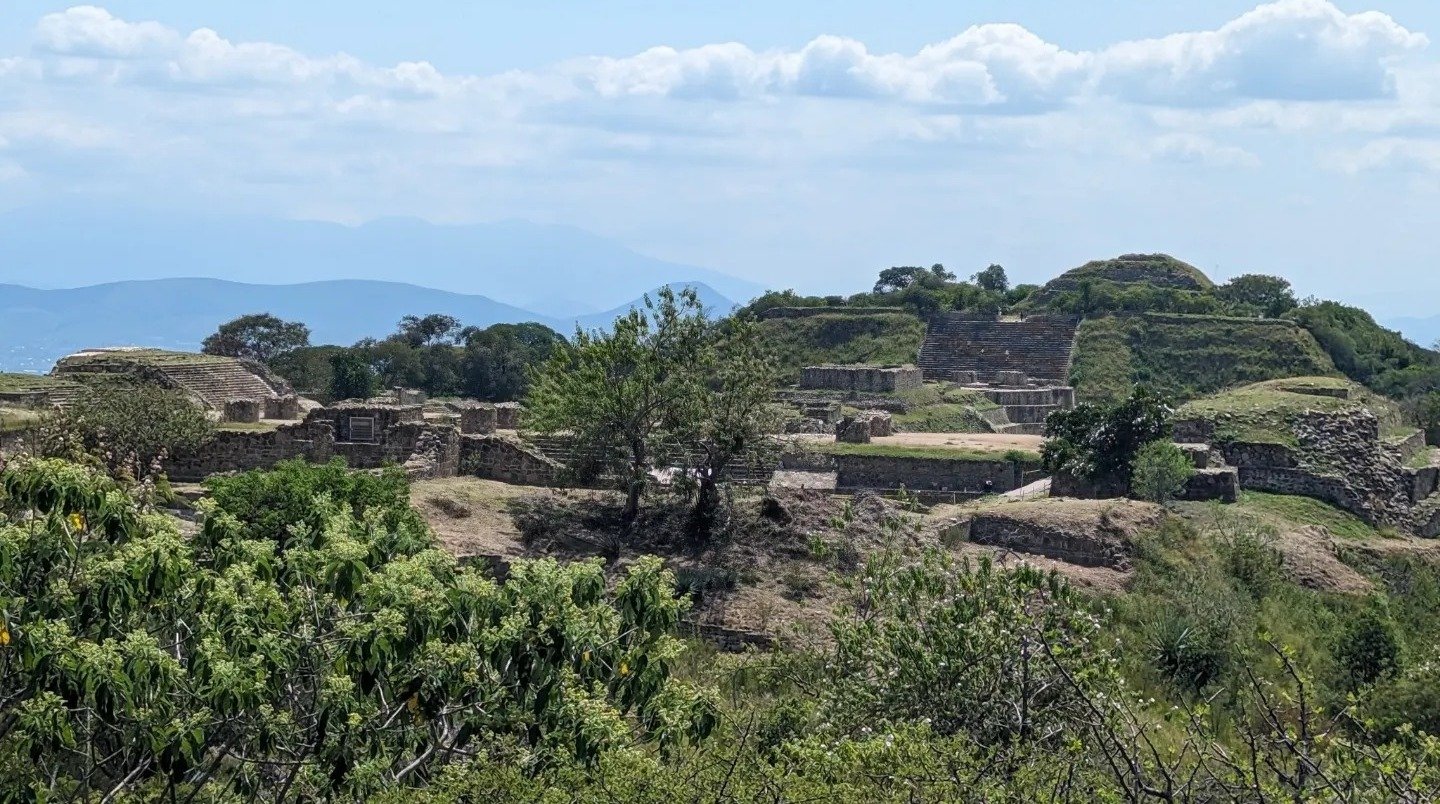
You can climb some of the buildings on stone steps – from the top you can clearly see the layout of the whole city, which is even more impressive. Exploring the entire complex took us about three hours.
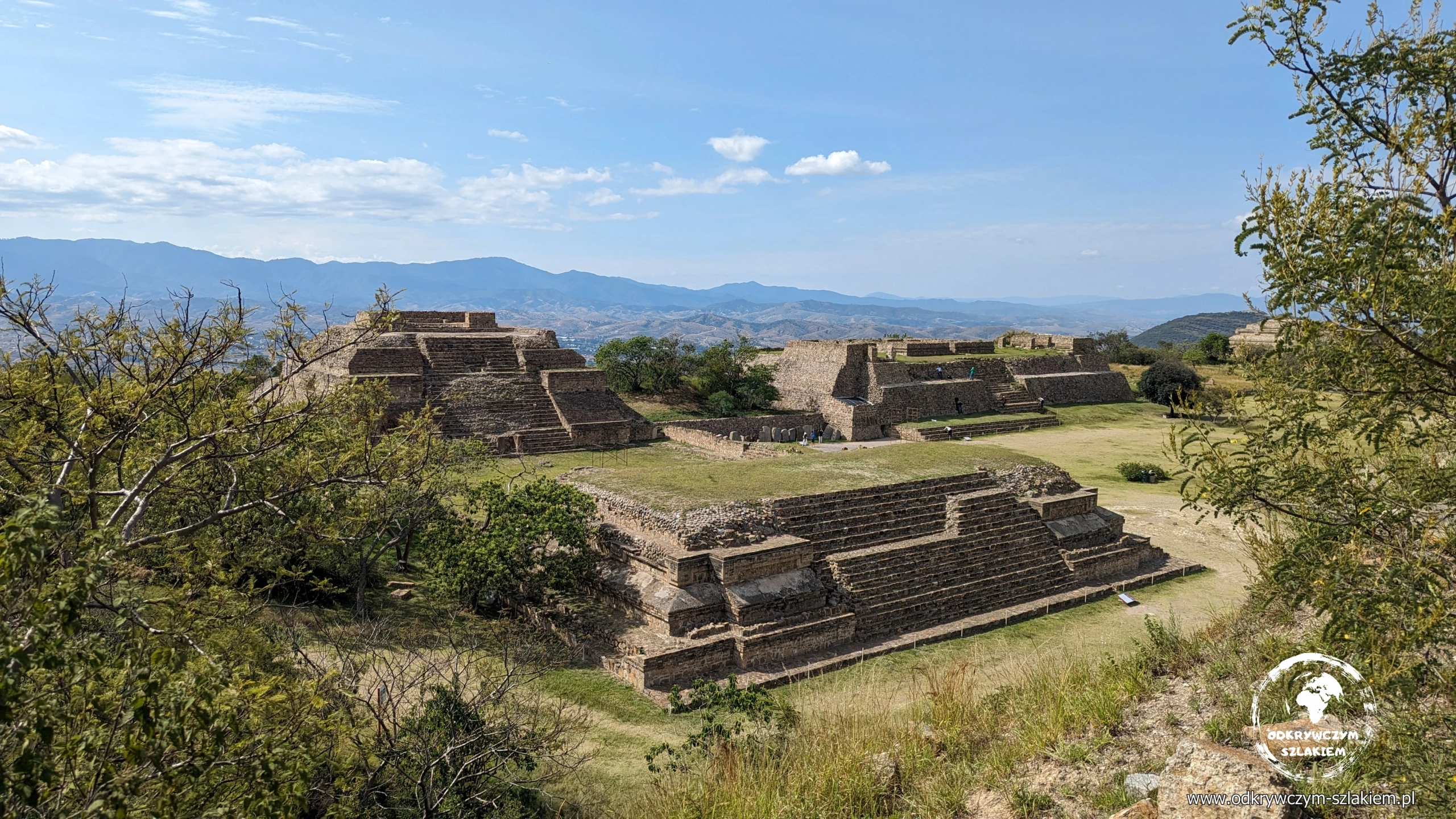
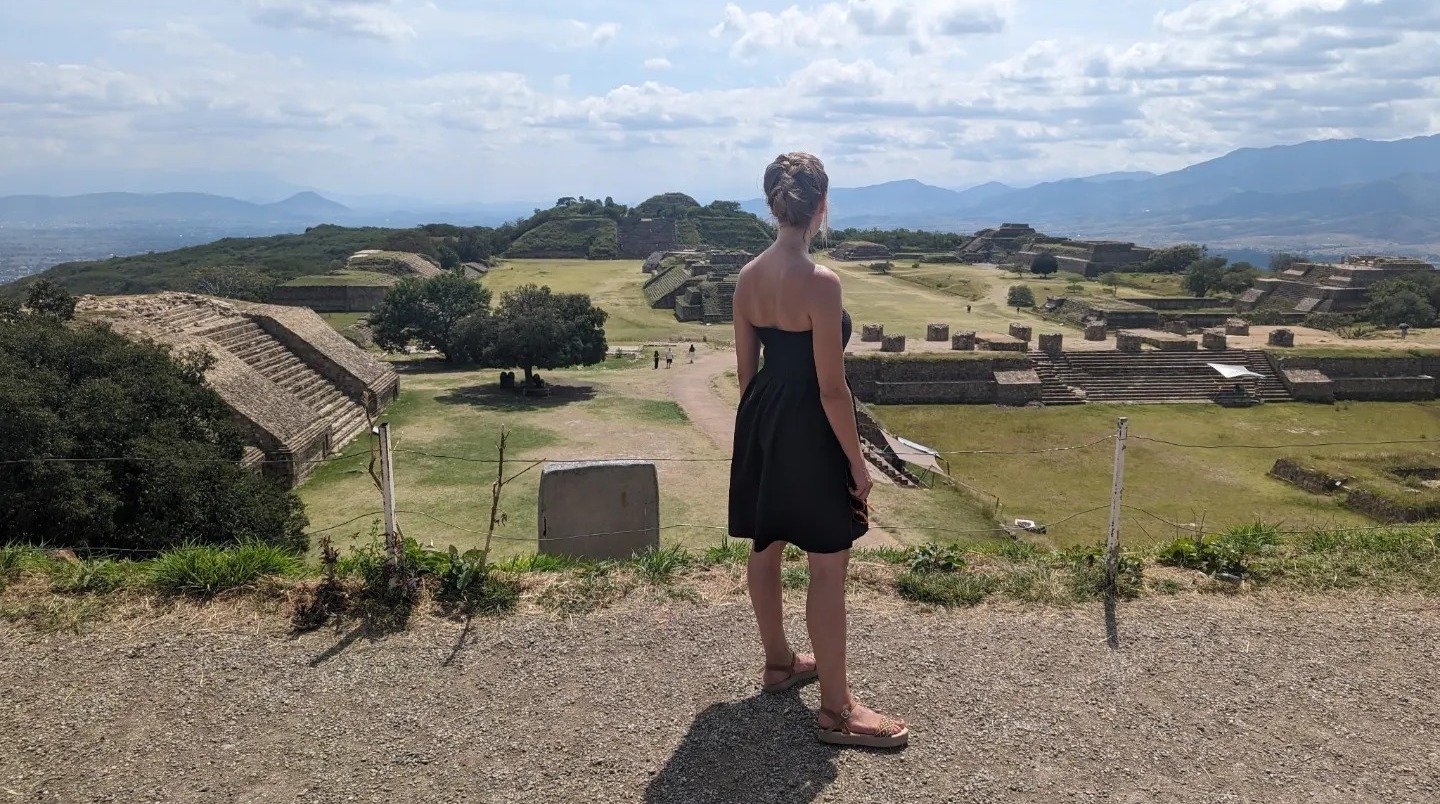
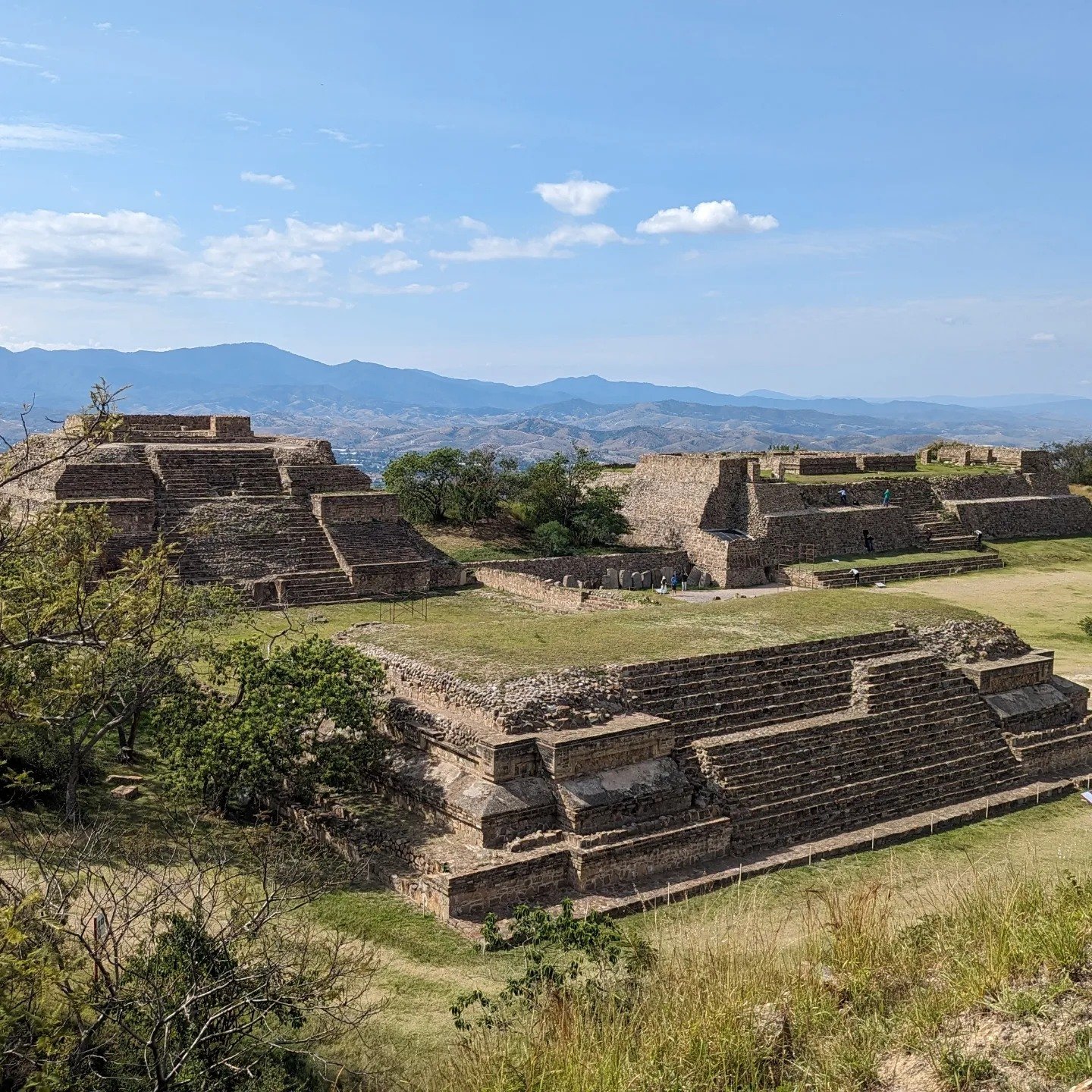
The Great Plaza is surrounded by platforms with wide staircases, and next to it there is an I-shaped ball court with sloping walls on both sides. Since 1987 Monte Albán – together with the historic centre of Oaxaca – has been a UNESCO World Heritage Site.


The Great Plaza measures about 300 × 150 m – to lay it out, the Zapotecs artificially levelled the mountaintop. In the middle stands, among others, Building J, with an unusual arrowhead shape and oriented differently from the other buildings – it may have been used to observe the sky. More than 40 slabs with inscriptions are set into its walls, probably listing places subject to the city. Monte Albán was founded around 500 BC and for almost a thousand years was the main centre of the Zapotecs.
There are also carved stone slabs around the site. The most famous are the so-called Danzantes (“Dancers”) – several hundred slabs with figures carved more than 2000 years ago. By the entrance there is a small museum with Zapotec sculptures and some of the original slabs.


Today researchers believe that the Danzantes depict not dancers but captives who were taken prisoner and sacrificed – hence the naked figures in contorted poses. The museum holds, among other things, the grey clay funerary urn in the photo – the “Lady with a Jaguar Helmet” (Señora con yelmo de jaguar). According to the label, it was found in 1995 by the access road to the ruins; urns like this were placed in tombs as companions of the dead. The most precious find from Monte Albán – the treasure of Tomb 7, discovered in 1932 by Alfonso Caso (ornaments of gold, turquoise and jade, carved bones) and placed there by the Mixtecs – is on display in the Museum of the Cultures of Oaxaca next to the Santo Domingo church in the city centre.
Getting there from Oaxaca – and what not to do
There are two ways to get to the ruins. The more comfortable one is a tourist bus that drops you right at the gate – for example the green buses of Transportaciones Turísticas Mitla (50 MXN, about €3 one way; in 2023 they ran every hour from 9:00 to 14:00, with returns from 10:30 to 16:30, tickets sold on the spot) or Lescas Co Tours Oaxaca.
The cheapest option is a city bus for 8 MXN (about €0.50). It leaves from Calle de Tinoco y Palacios, level with the main square, the Zócalo – it’s best to check with the driver that it goes the right way, because ours didn’t have Monte Albán on its sign. After that you have to take a rickshaw or walk uphill for about an hour.
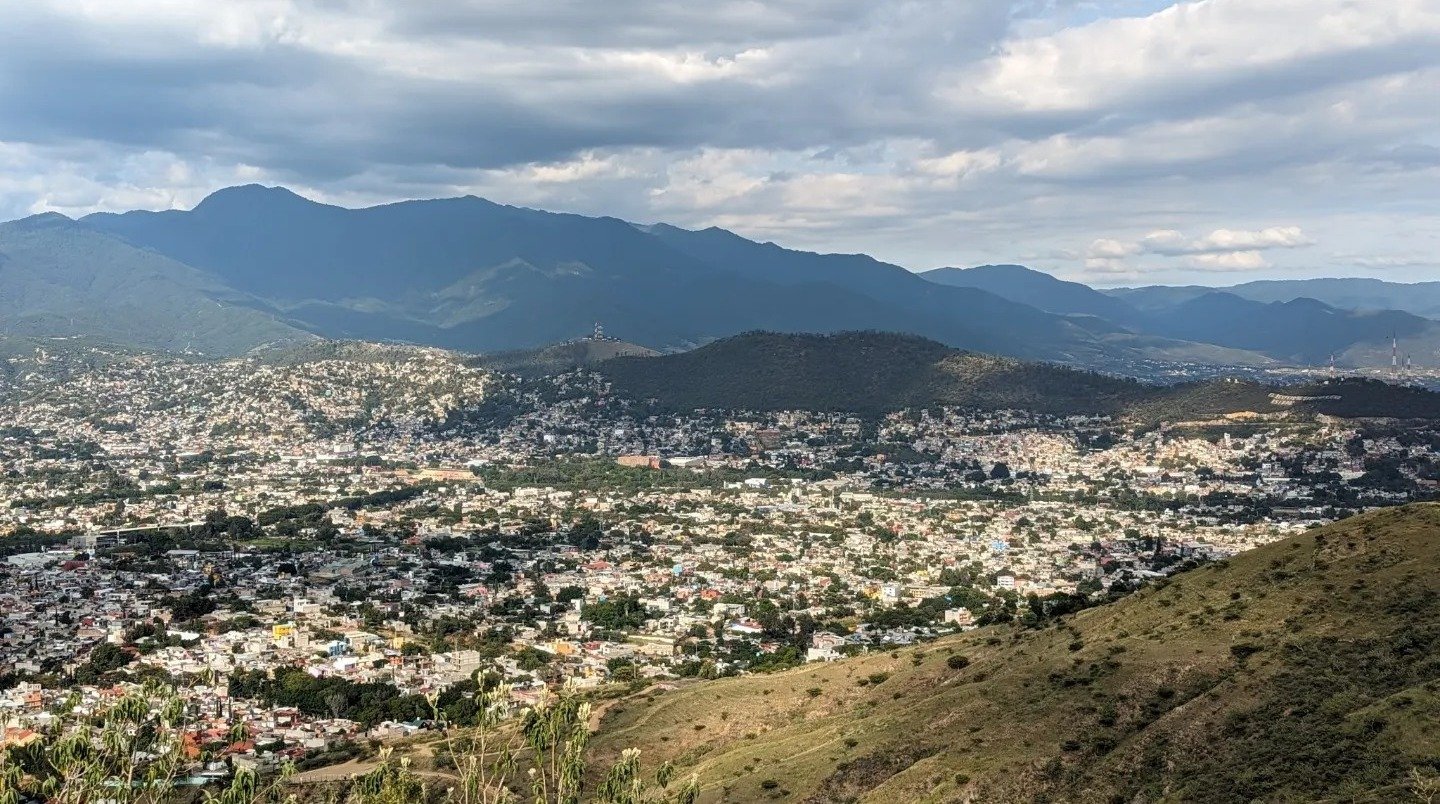
We chose this cheapest option. First, following Google Maps, we got on the wrong bus – the driver decided, however, that we would “get there” and dropped us off roughly an hour’s walk from our destination. Luckily, we happened to catch a ride – some men from the National Guard drove us right up to the ruins. We walked back: first with nice views of the city, and then we got lost in the streets of a poorer neighbourhood on the hillside – I felt uneasy there, while to Patrycja everything seemed fine. We were rescued by a Mexican man who stopped his car, asked where we were going and gave us a lift to the bus stop.
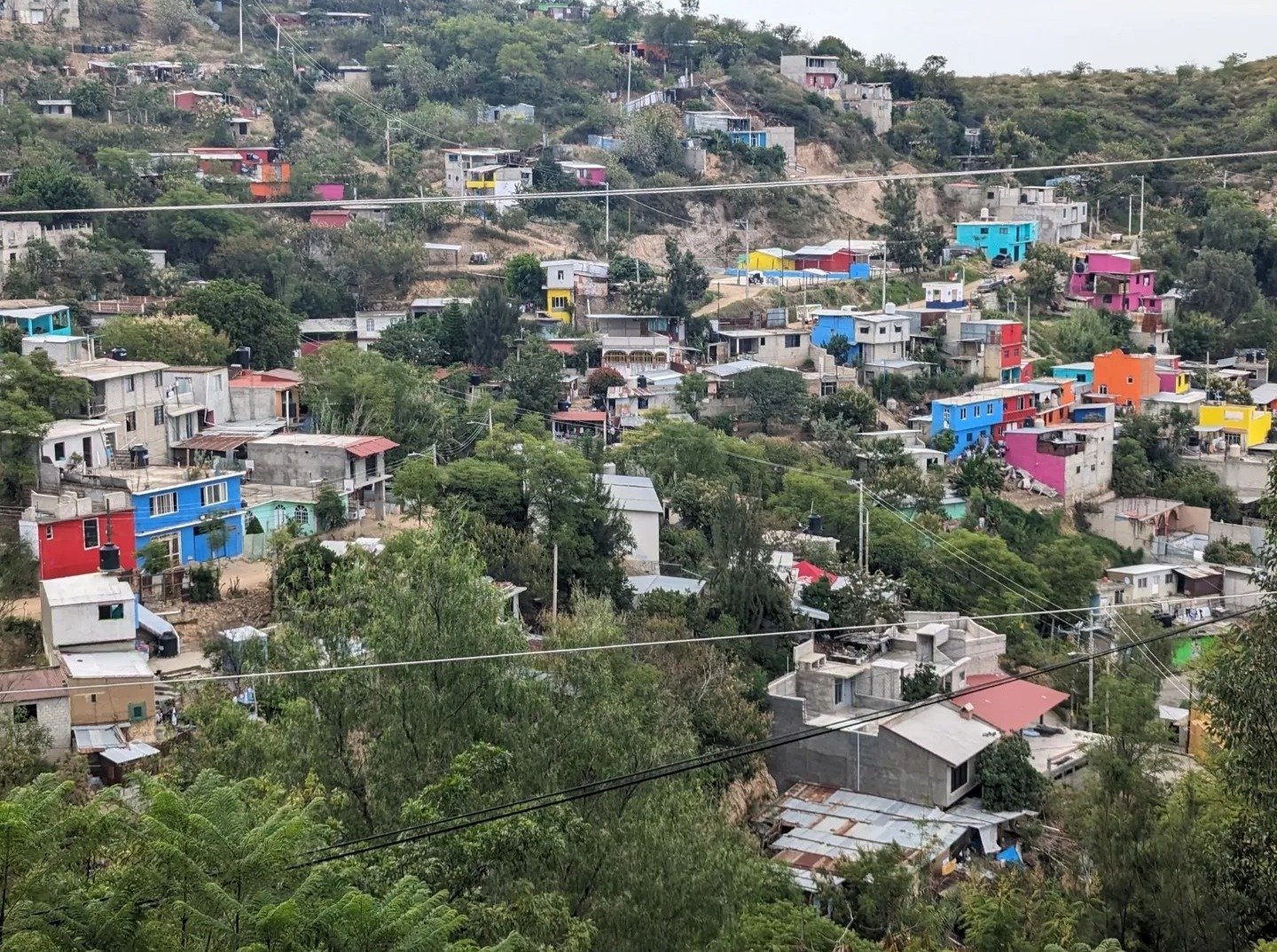
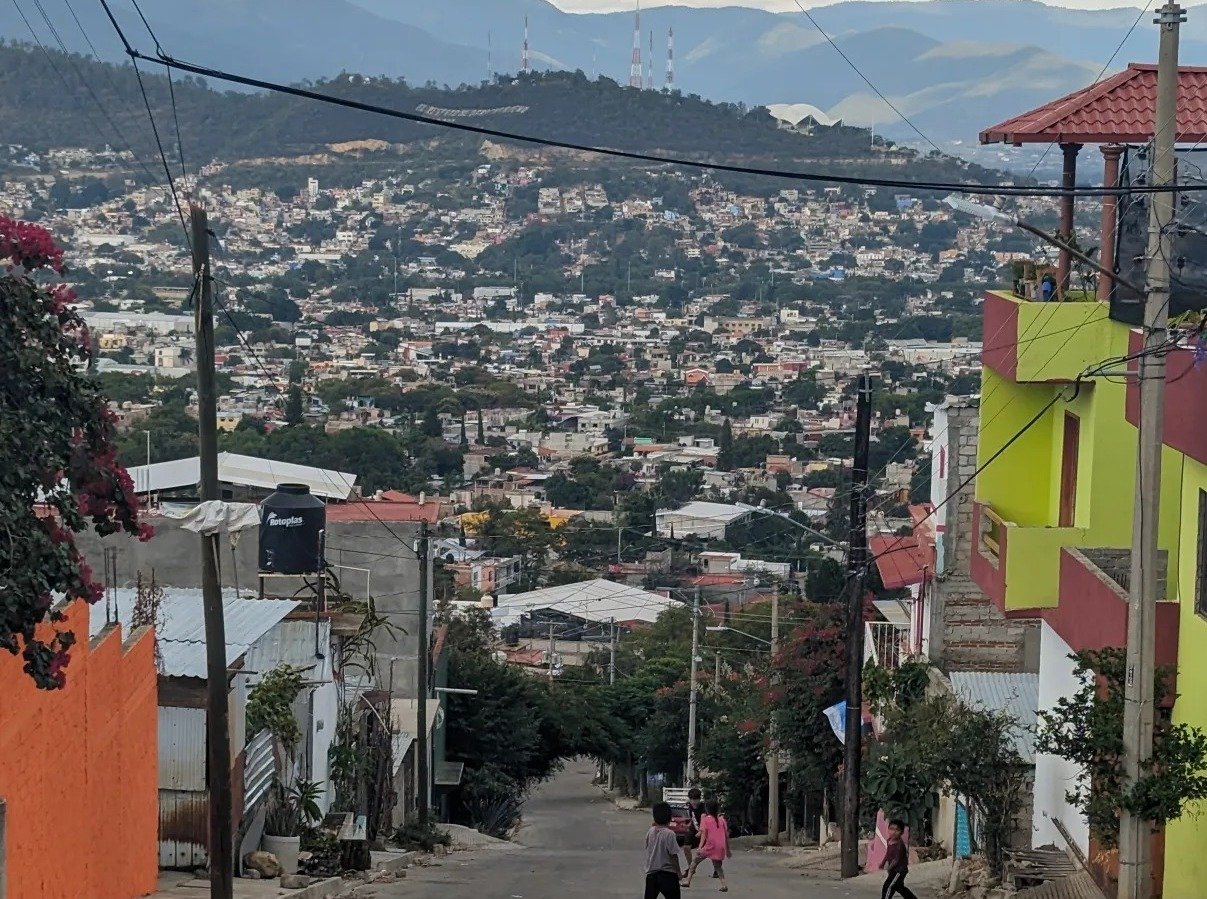
Today we would take the tourist bus. Later, on the bus to Hierve el Agua, we met a traveller who had come back the same way a day after us, in the same circumstances – and in broad daylight he was attacked by a man with a knife (he threw him his money and ran away). Saving a few dozen pesos is not worth walking through unfamiliar, not very safe areas.
Back via the market in Oaxaca
Thanks to the lift we got back early enough to stop by the market and buy a few local products – Oaxaca cheese and chocolate. While buying tortillas I caught a stall with my backpack and knocked off three bread rolls, which of course we had to pay for. It turned out they cost 100 pesos (about €5) altogether – but they had strange, protruding edible figurines on them, so at least they were special. The next day we went to the petrified waterfalls of Hierve el Agua.
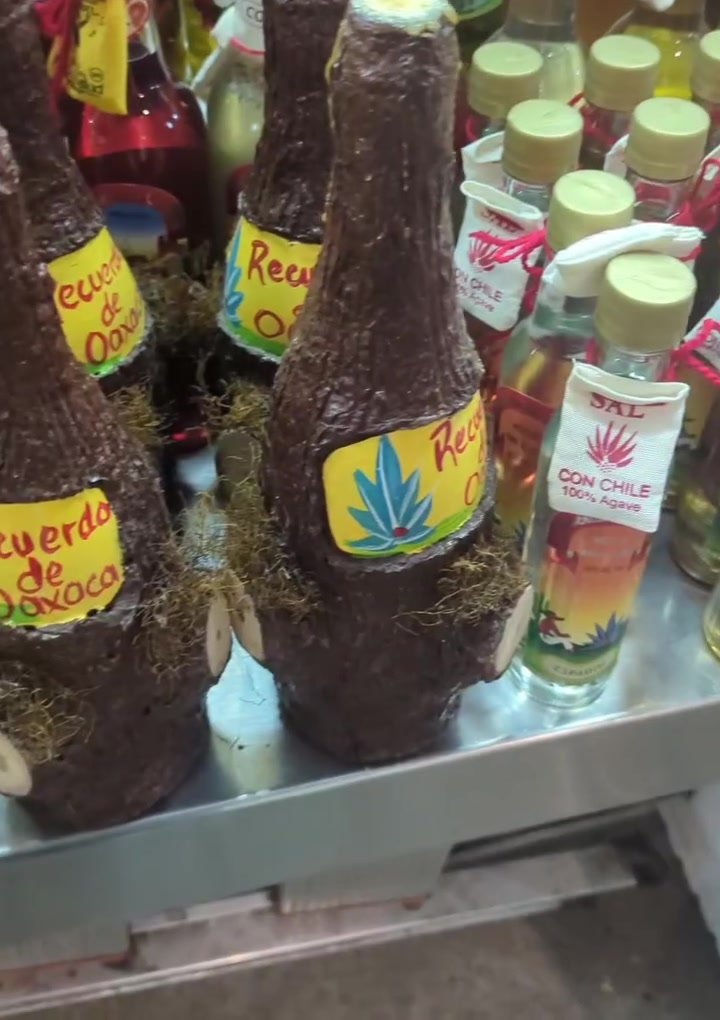
Oaxaca is famous for quesillo – a white cheese wound into a ball from long strands – and for chocolate, used here for a hot drink and for mole sauce. The stalls are also full of fruit and vegetables.


The first photo from the market shows bottles of mezcal – an agave spirit – with little bags of chilli salt tied to them; mezcal is often served with orange slices sprinkled with this salt. Oaxaca is the largest mezcal producer in Mexico, and almost 9 out of 10 litres are made from Espadín agave – hence the name on the labels. The rarer Pechuga is a mezcal distilled a third time with fruit and spices, and traditionally with a raw chicken or turkey breast hung in the still.
Practical information
- Admission – 90 MXN (about €5) + 50 MXN (about €3) for permission to film with a camera (nobody checked it on site); as of October 2023.
- Prices in 2026 – INAH has raised its fees and split the price list: foreigners pay MXN 210 to enter Monte Albán, Mexicans MXN 105. The site is open daily from 8 am to 5 pm, last entry at 4 pm (as of 2026).
- Time needed – up to three hours.
- Getting there – a tourist bus to the gate for 50 MXN one way (recommended) or a city bus for 8 MXN plus about an hour’s walk uphill.
- Altitude – about 2000 m above sea level.
- More about the whole route through Mexico in the post Mexico in 65 days – a trip summary.