About 50 km from Tulum lie the ruins of Cobá – another ancient Maya city. Before Chichén Itzá rose to power, Cobá was the largest city of this civilisation, and its heyday fell in the years 600–900 AD. So far only a few dozen of the more than a thousand buildings swallowed by the jungle have been uncovered – and it is the jungle that makes visiting here completely different from Tulum. These were probably the last ruins we visited in Mexico. Watch my video from Cobá as well:
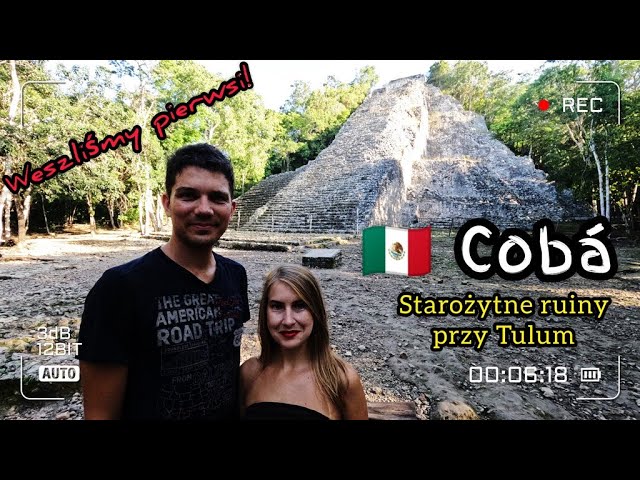 4:33
Table of contents
- From opening time – the Nohoch Mul pyramid all to ourselves
- The ball court, stelae and the observatory
- On foot, by bike or by bike taxi?
- Practical information
From opening time – the Nohoch Mul pyramid all to ourselves
We arrived on Saturday, 2 December 2023, just before the 8:00 opening – to avoid the worst of the heat and the crowds. At first we set a fast pace so that we could admire the most important pyramid on our own. It worked: we met the first other visitor only after an hour. Although Cobá is not as popular as Chichén Itzá or Tulum, the number of tourists grew by the hour.
The main attraction is the Nohoch Mul pyramid – 42 m high, the tallest structure in the northern part of the Yucatán Peninsula. When we were here in December 2023, climbing it was forbidden (since 2020). Since 8 December 2025 it is allowed again – on new wooden stairs built over the original stone steps; only a dozen or so people can be on them at a time.
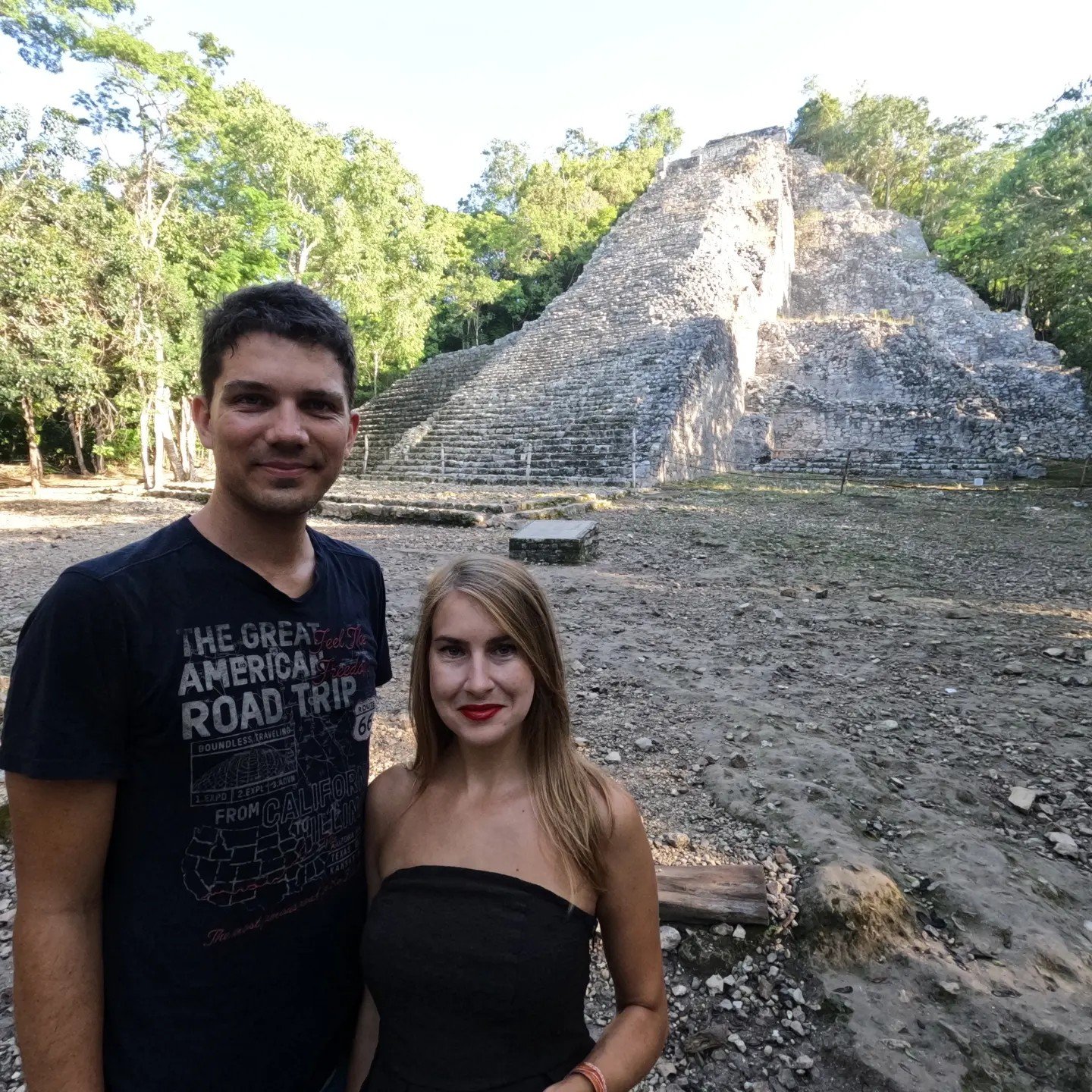
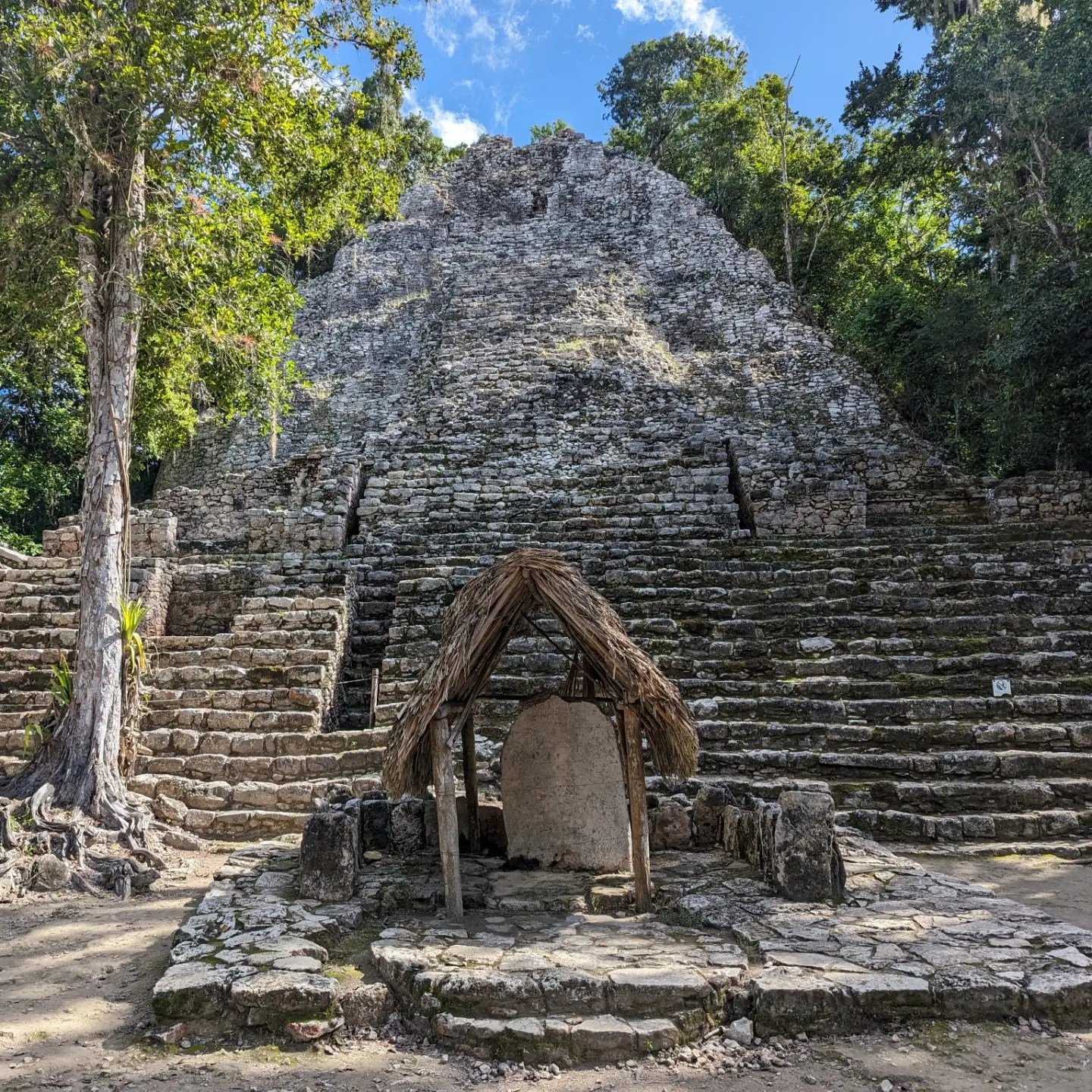
The name Nohoch Mul means “great mound” in Maya. According to the INAH sign, the pyramid has seven levels with rounded corners and two flights of stairs on its south side – the main one has more than 120 steps to the top. The temple on the summit is much younger than the pyramid itself – it dates from the Postclassic period (1100–1450), and the niches of its façade show the figure of the “descending god”, also known from Tulum. In front of the nearby Building X stands the best-preserved stela in Cobá – Stela 30, dated 30 November 780.


On the way you pass more, smaller pyramids and buildings, partly still overgrown by the forest.
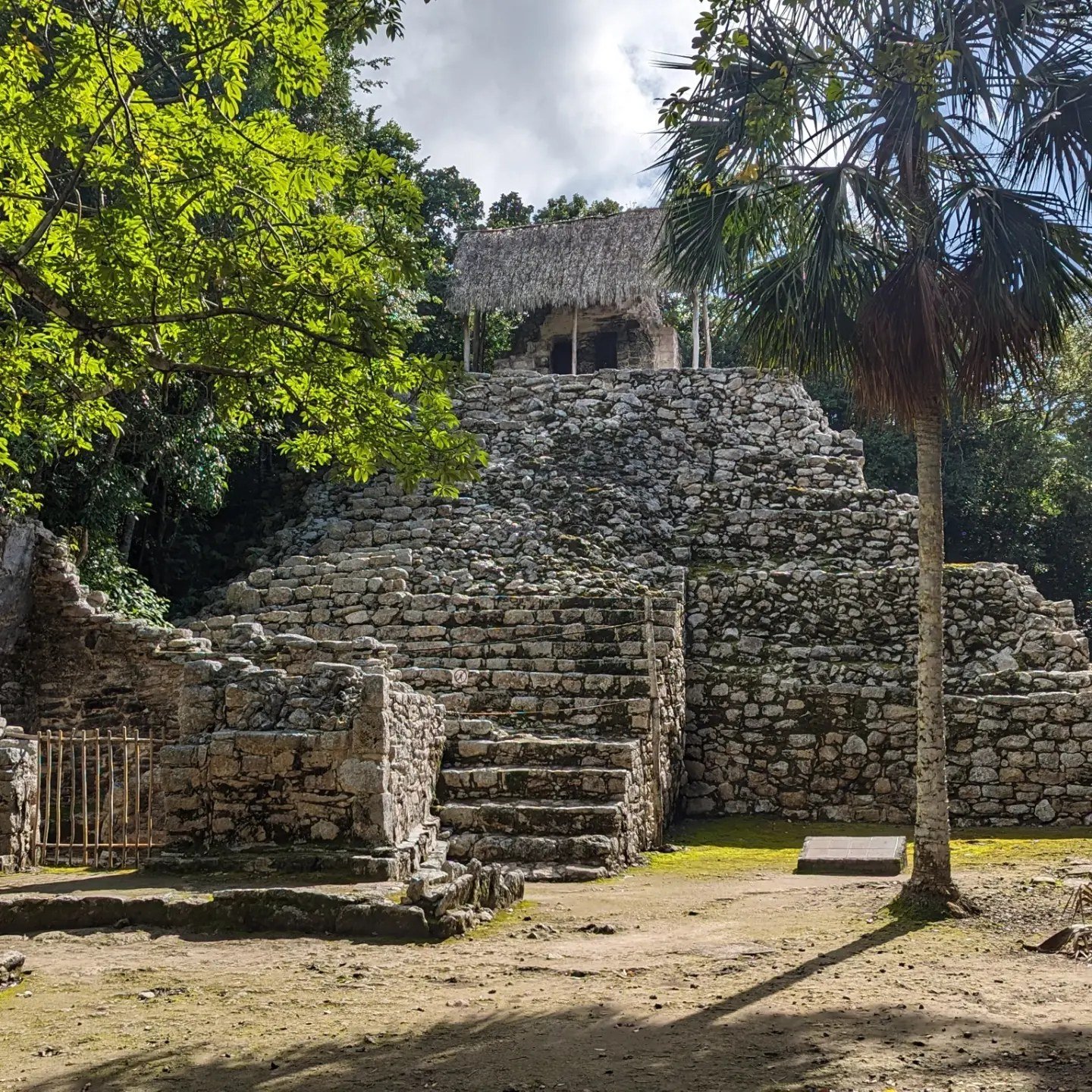
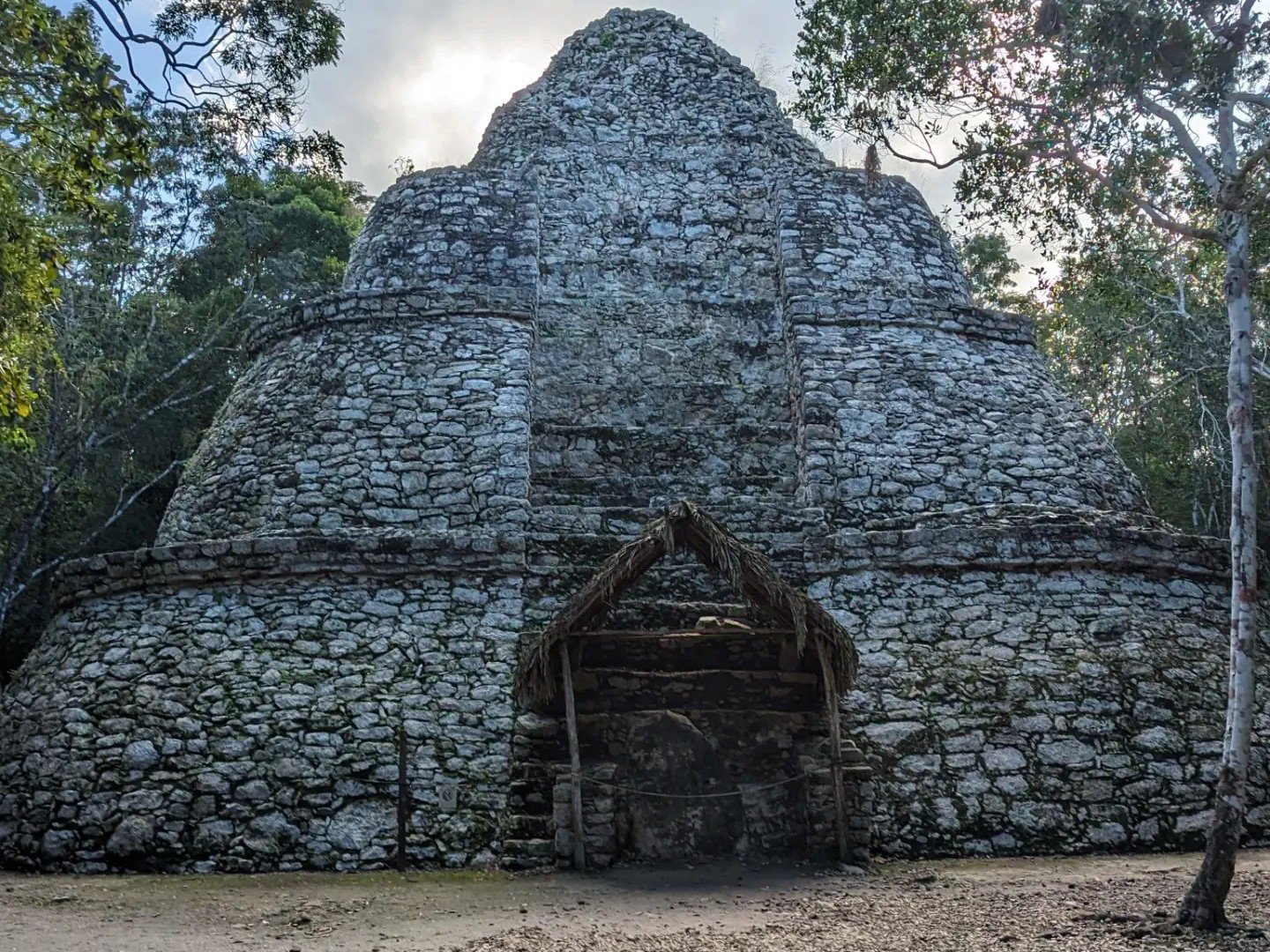
On the paths we also met an ocellated turkey, a bird found only in and around Yucatán, with shimmering blue and green feathers. Nearby stands Xaibé, a building with an almost conical shape.


The ball court, stelae and the observatory
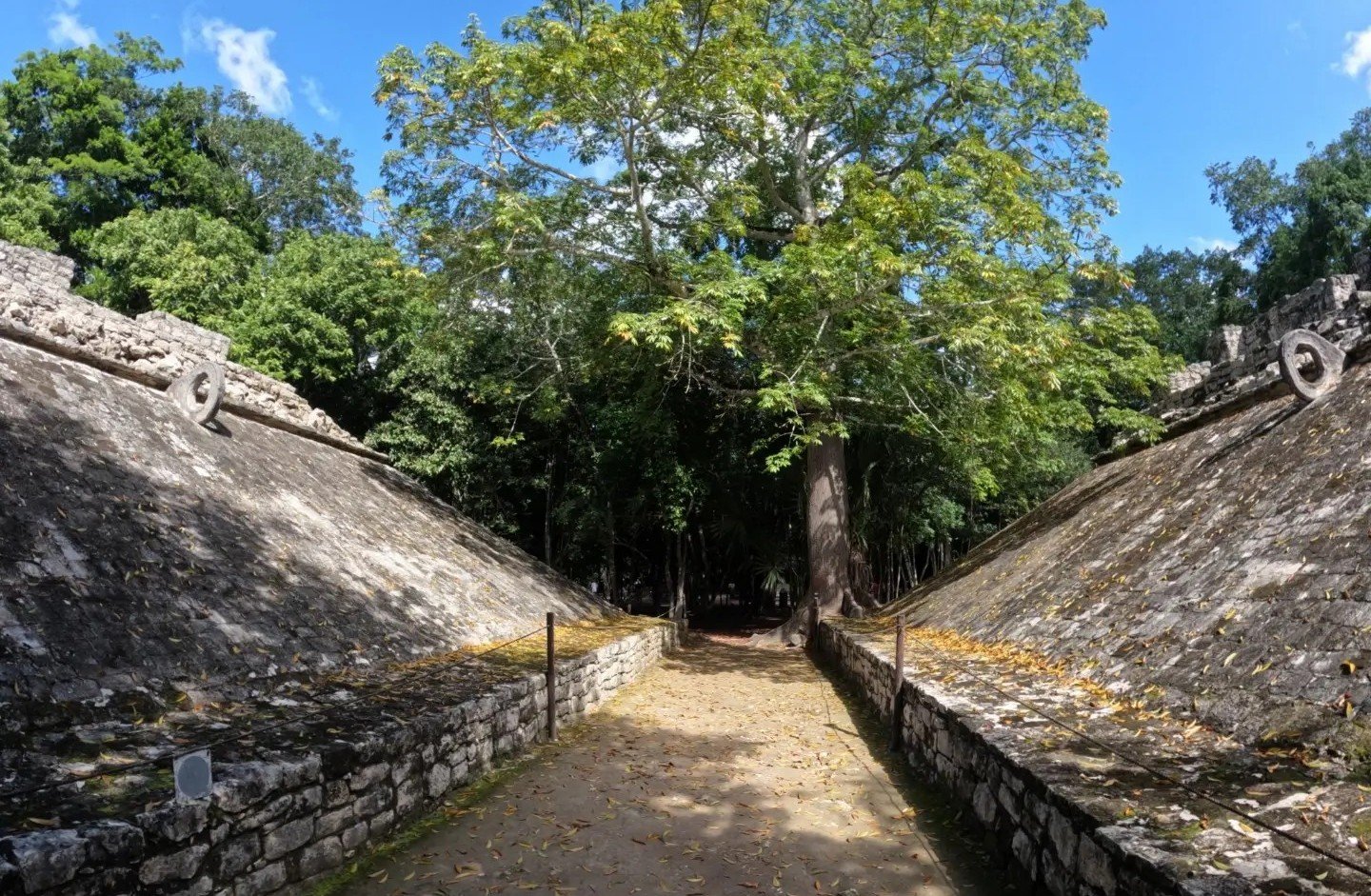
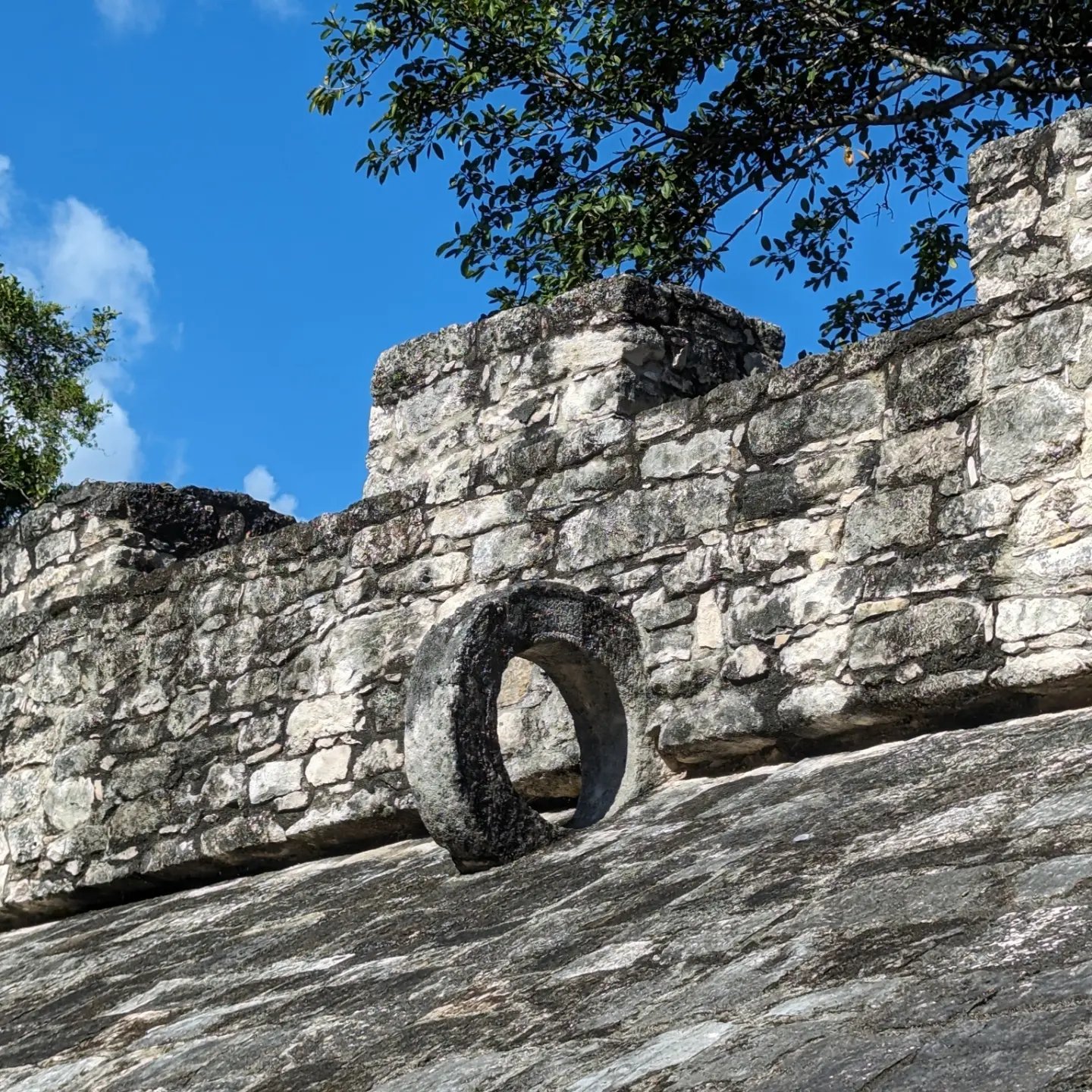
Other interesting structures are the ball court – a long corridor between sloping stone walls with stone rings set into them – and the astronomical observatory. For me, Cobá is among the most atmospheric ancient ruins I have ever seen.
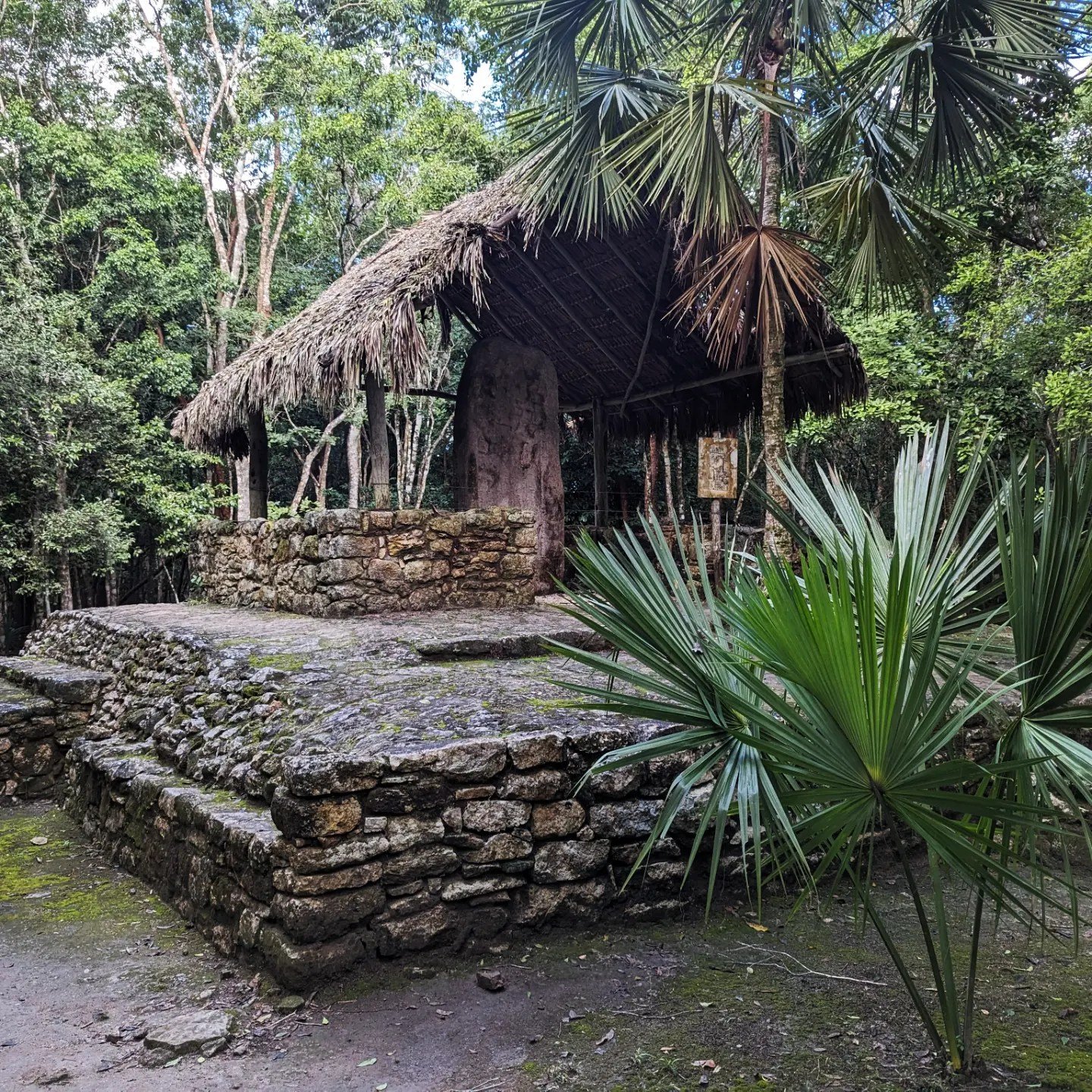
In front of many buildings stand stone stelae with reliefs, now protected from the rain by little roofs of palm leaves.
On foot, by bike or by bike taxi?
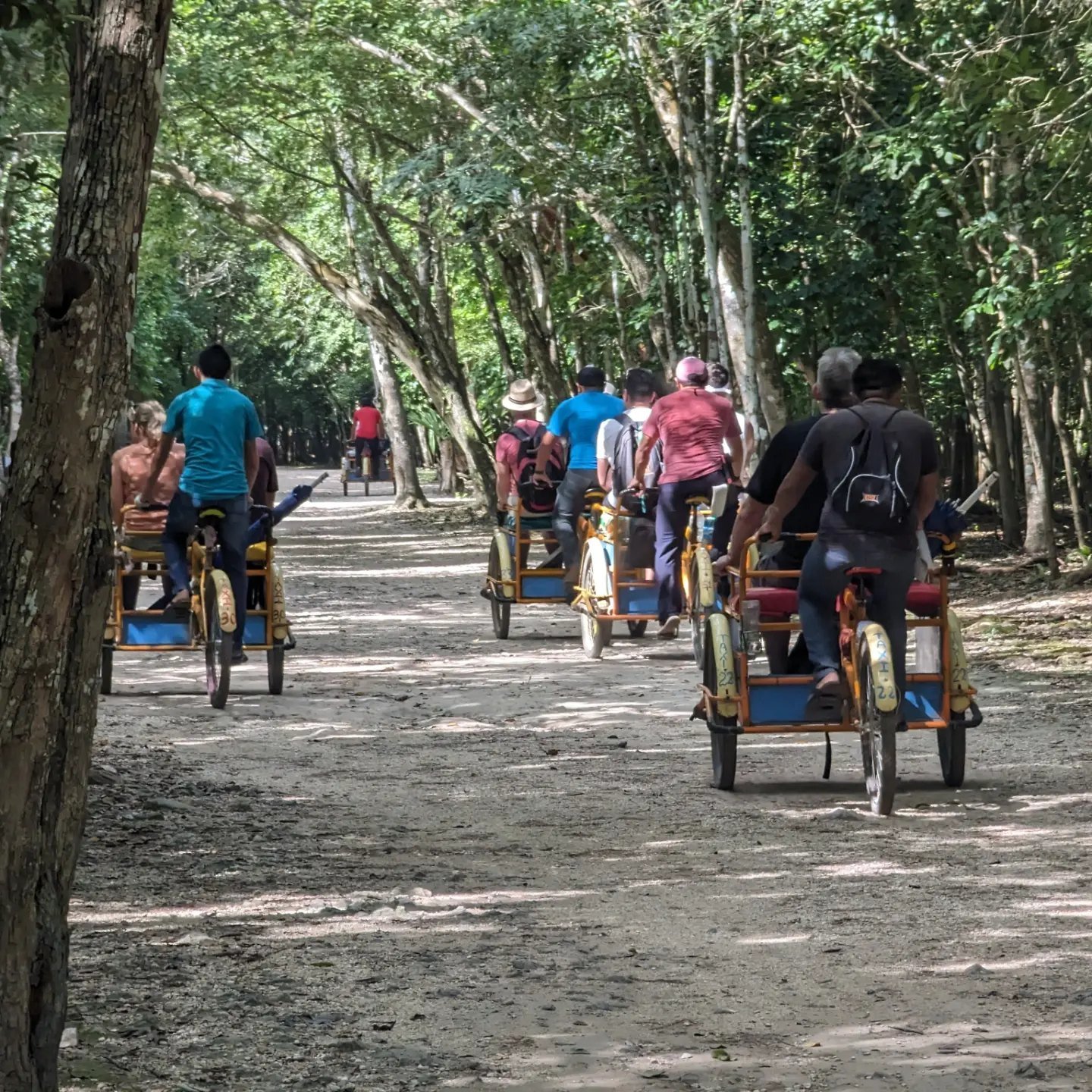
The site is quite large, so a popular option is to rent a bike or take a “taxi” – a pedal-powered rickshaw. For example, it is a little under half an hour on foot from the entrance to the Nohoch Mul pyramid, and the Grupo Macanxoc complex takes another 20 minutes each way.
Cobá is the hub of the largest network of stone causeways (sacbé) in the Maya world – the longest runs more than 100 km west to Yaxuná. At its peak the city had about 50,000 inhabitants, and its built-up area covered some 80 km².
The Macanxoc Group is reached along Sacbé 9, a road 20 m wide that ends right in front of Stela 1. According to the INAH sign, the stela is carved on all four sides and has 313 hieroglyphs. The group has eight carved stelae and as many stone altars, so it was an important ceremonial place. Stela 1 also records the date of the creation of the world in the Maya calendar – written as a row of twenty 13s. Women hold power on many of Cobá’s stelae, and in 2020 researchers deciphered the names of 14 rulers of the city from 500–780, among them a woman named Yopaat.


The nice thing is that most of the buildings stand right next to the forest, so for a good part of the visit we walked in the shade. The downside was regular insect attacks – it is worth bringing repellent.
From Tulum we continued south – to Mahahual and Bacalar, where we spent our last days in Mexico.
Practical information
- Getting there: a colectivo from Tulum – 100 MXN (about €5) per person; it is about 50 km.
- Ticket: 190 MXN (about €10) – 100 MXN tax and 90 MXN entrance fee.
- When: ideally at opening time, 8:00 – fewer tourists and lower temperatures.
- Time needed: 3–4 hours; the distances are considerable, so consider a bike or a bike taxi.
- Prices: as of December 2023.
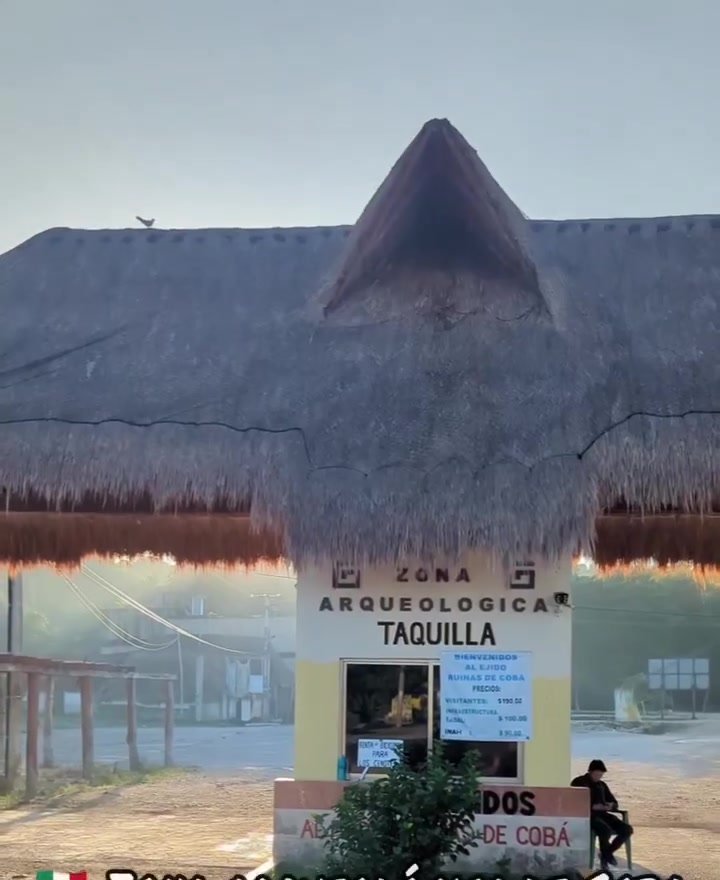
As of 2026, according to INAH, a ticket for foreign visitors costs 210 MXN and for Mexicans 105 MXN. The site is open daily from 8:00 to 17:00, last entry at 16:00; food and pets are not allowed. The ruins lie by two lagoons – Cobá and Macanxoc – and the name Cobá is translated, among others, as “mossy water” or “murky water”.