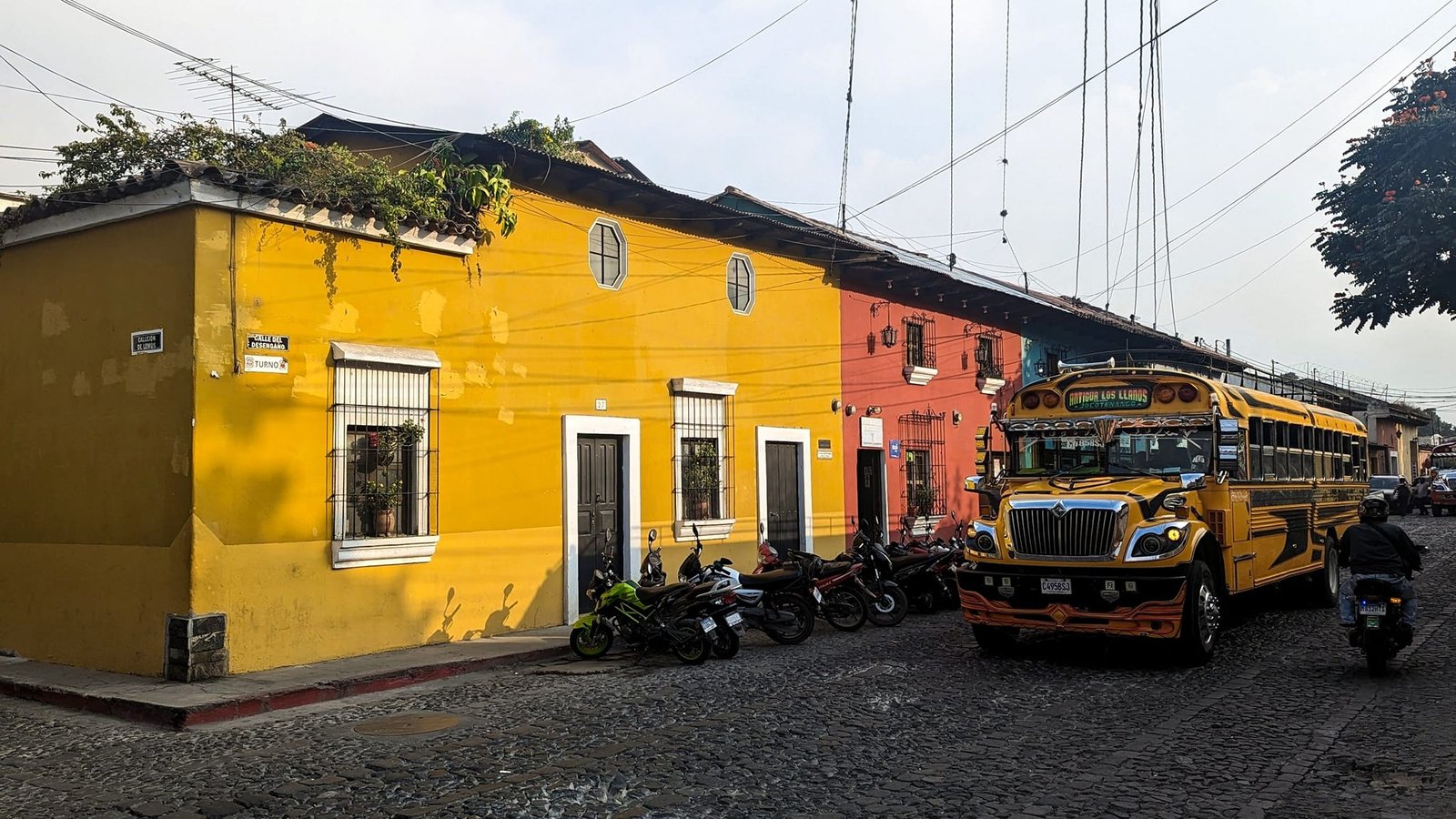
Guatemala, like the whole Northern Triangle of Central America (Guatemala, El Salvador and Honduras), is considered dangerous – because of gangs, crime, poverty and a difficult political situation. So what is safety in Guatemala like in practice? We spent 58 days there, from 20 December 2023 to 15 February 2024, and never once felt threatened. We travelled the whole country independently: from Tikal and Semuc Champey in the north, through more than a month in Antigua and Lake Atitlán, to Quetzaltenango (Xela) and six volcanoes.
In this post I have gathered in one place everything about safety in Guatemala that I wrote in the reports from individual places and that I talk about in my travel talk on the Northern Triangle, plus the current travel advice of the Polish Ministry of Foreign Affairs (MSZ) and the emergency numbers. Our observations are subjective and date from the turn of 2023 and 2024 – and in this part of the world things can change quickly, so check the latest advice before you go.
Table of contents
- In short – is Guatemala safe?
- Our experience from 58 days
- Safety region by region
- Transport – chicken buses, shuttles, boats and a car
- Volcanoes – guides, robberies and climbing bans
- Money, belongings and theft
- Health, water and food
- What the Polish Foreign Ministry says (as of November 2026)
- Practical information
In short – is Guatemala safe?
The country looks after tourists’ safety, popular places are properly guarded these days, and a lot of information on the internet is simply out of date. The risks are real, though, and they concern specific places. Our main conclusions:
- Antigua Guatemala is probably the safest place in the country, and the centres of the villages around Lake Atitlán are safe too.
- Robberies of tourists happen on a few specific trails – we heard about three: on Agua volcano near Antigua, on San Pedro volcano and on the Lower Mayan Trail at Lake Atitlán.
- Gangs operate in the capital – we were only there for one night and a change of bus, in the safest district, Zona 10.
- Theft is a problem across the region – locals say “don’t give papaya”, meaning don’t give a thief the chance.
- The Polish Foreign Ministry rates Guatemala at level 2 – “Exercise particular caution” and advises against travel to four regions – including Petén, where Tikal and Flores are, and San Marcos, where Tajumulco rises.
- On top of that there are the forces of nature: active volcanoes and earthquakes.
Our experience from 58 days
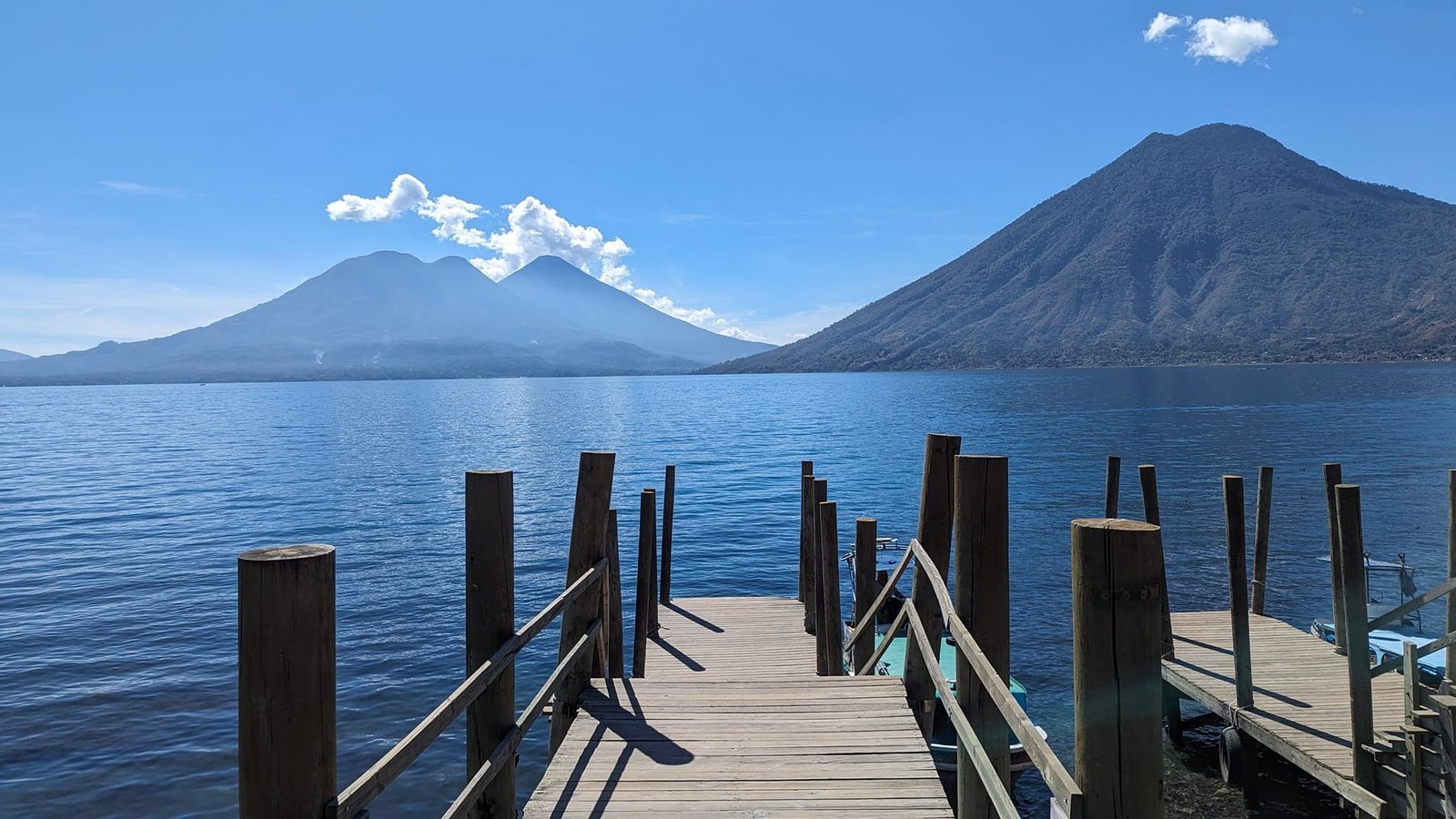
Nothing bad happened to us during our whole stay in Guatemala – we were neither attacked nor robbed, and Guatemala became our favourite country of the whole trip through Latin America. A few situations show well what safety looks like here in practice:
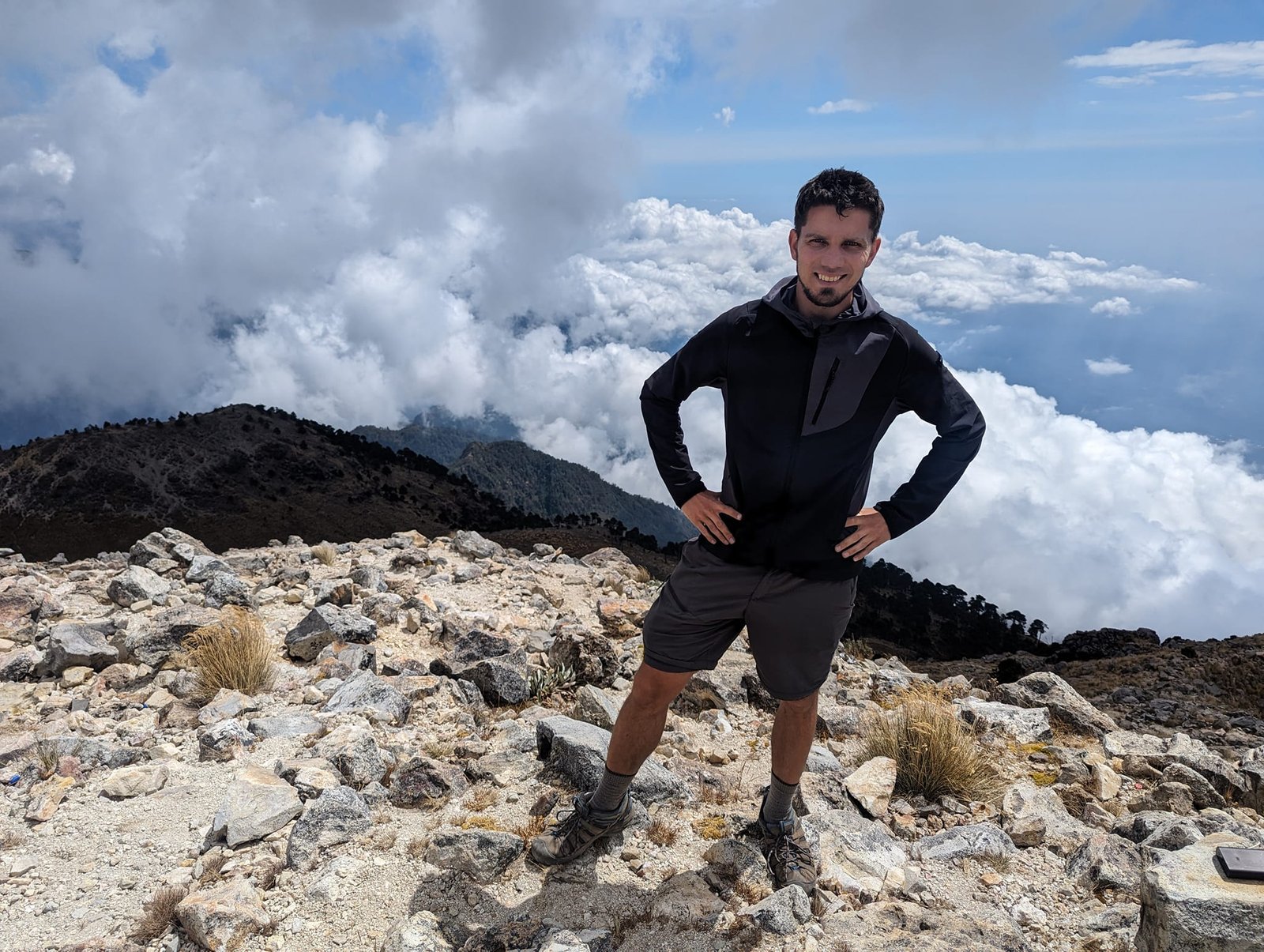
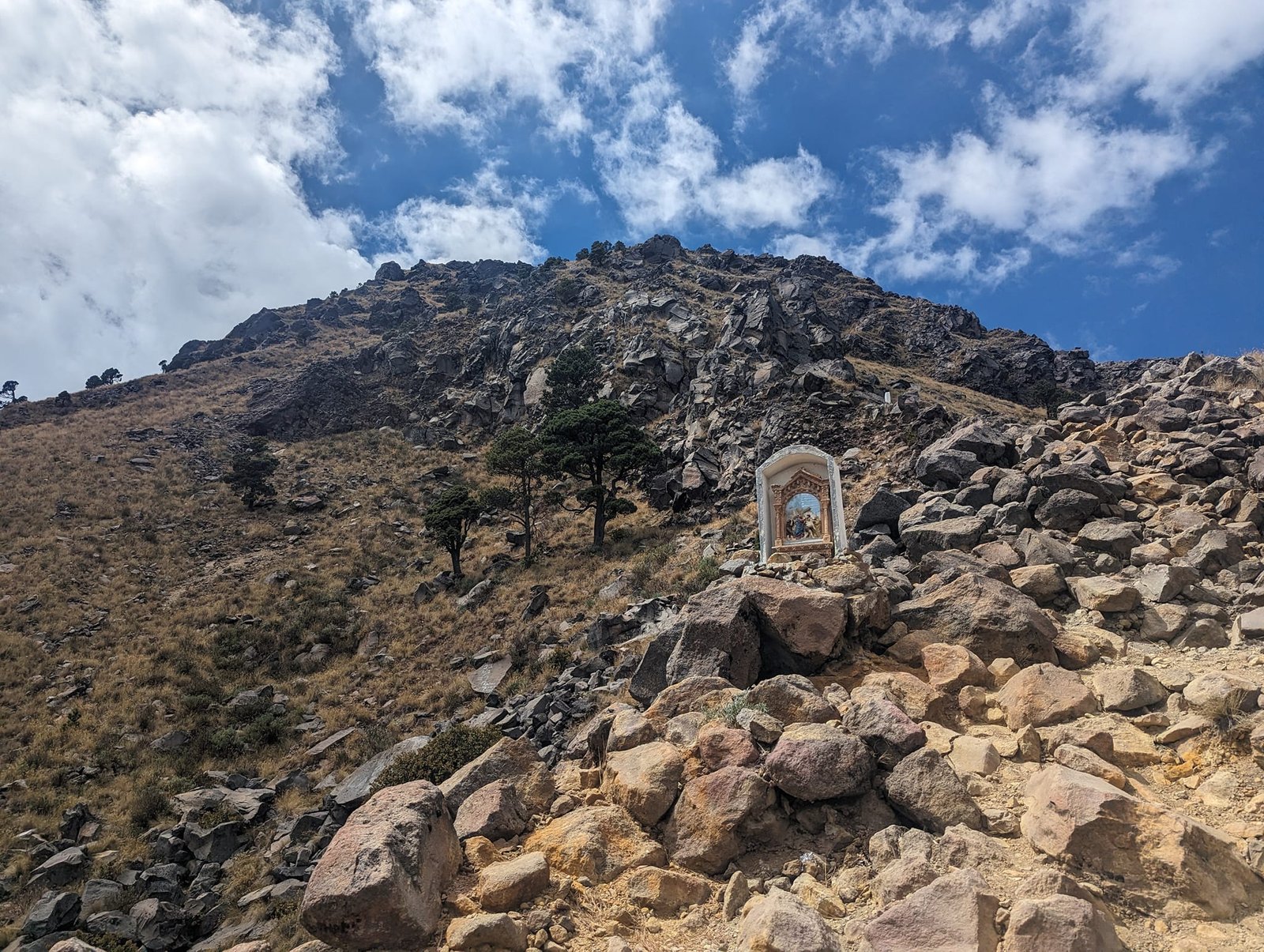
- Tajumulco – we climbed the highest peak in Central America (4,220 m) on our own, without a guide. The only other people going up that day were five police officers – we met them at the summit. After the descent we passed soldiers, both Guatemalan and Mexican. Only a few years earlier drug cartels were active here and going up without a guide was unthinkable.
- San Pedro volcano – because of the risk of robbery we took a guide. In 21 years of work Lorenzo had come across a robbery once, long ago, but just in case he carried an improvised weapon as well as his machete.
- Lower Mayan Trail – we skipped the trail along Lake Atitlán from San Marcos to Santa Cruz and took a boat to Santa Cruz La Laguna instead.
- Politics – at the beginning of October 2023 there were attempts to stop the elected president Bernardo Arévalo from taking office. A month before our arrival there were protests and road blockades all over the country – we worried whether we would get in at all, but by the time we arrived the situation had calmed down. In this region you have to be ready for a sudden change of plans.
- Earthquake – on our last night in Antigua we lived through our first earthquake, magnitude 6.1, about 45 km from the epicentre. Our hosts called everyone out into the courtyard, but only two of the six people in the house came out – I describe it in the post about Antigua.
- El Salvador – we had planned only to pass through it, precisely out of safety concerns. It was in Guatemala that we heard from locals and other travellers that it was now safe for tourists, and we stayed two weeks – more in the post about safety in El Salvador.
Day to day you can see that tourists are being looked after: you meet armed security guards at every turn, police on Tajumulco and park rangers on Pacaya. Still, nowhere in the region do you sightsee carefree – you need eyes in the back of your head, especially when moving with your luggage. I show our whole stay in a short film:
 0:59
Safety region by region
Below are the places we visited, in the order of our route – with what we remember about safety and the assessment of the Polish Foreign Ministry (as of October 2026). The ministry lists whole departments, e.g. Petén, not individual towns.
Flores and Tikal (Petén)
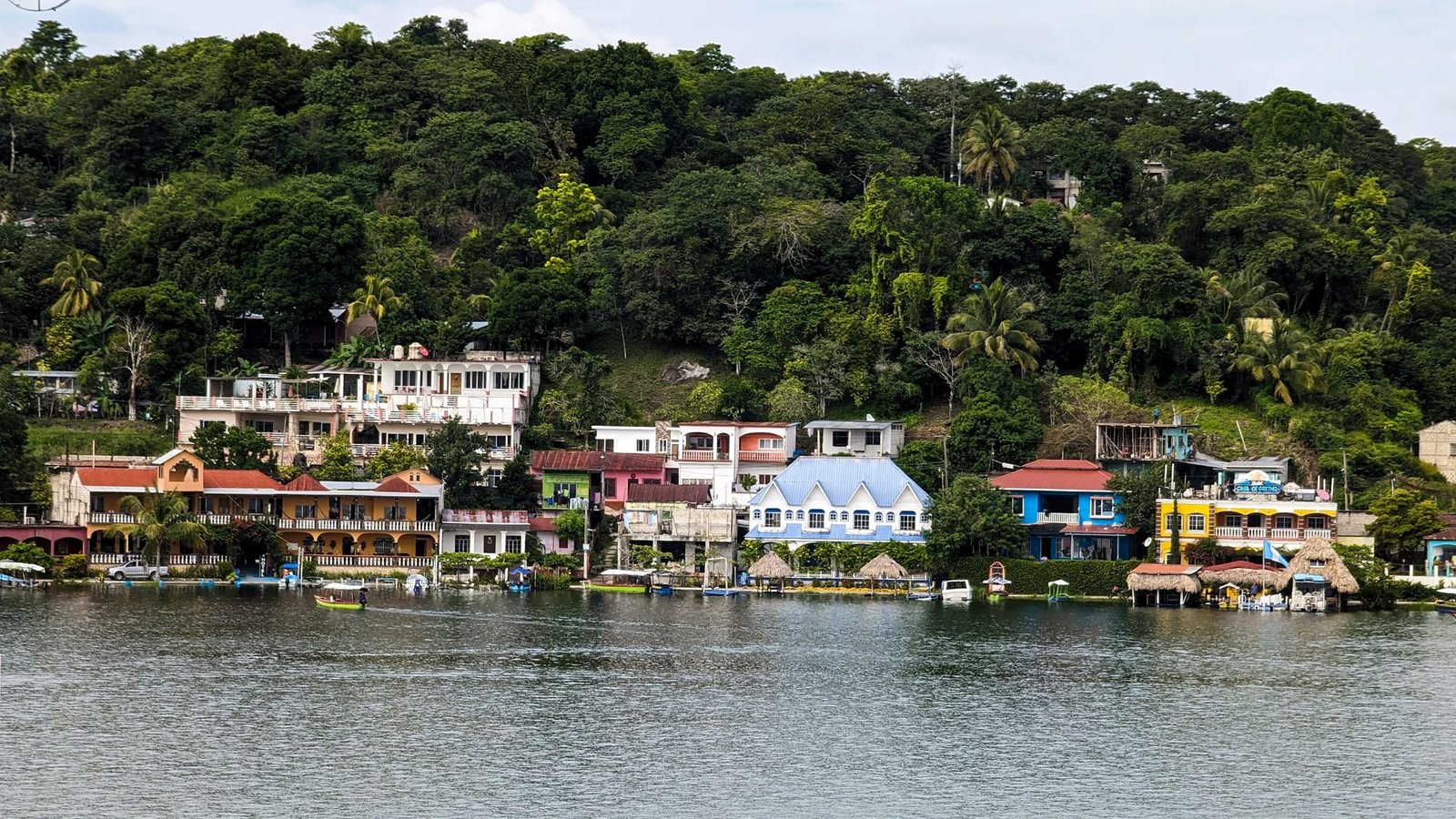
We entered Guatemala from Belize, by shuttle bus from Belize City to the island of Flores. From there we went to Tikal on an organised transfer – leaving the island at 4:30 and returning at 14:00 – and were at the entrance to the ruins before the ticket offices opened. Nothing bad happened to us on the island or in the ruins. You should know, however, that the Petén department, where Tikal and Flores are, is one of the regions the ministry puts at level 3 – “Avoid travel” because of the high level of ordinary crime.
Lanquín and Semuc Champey (Alta Verapaz)
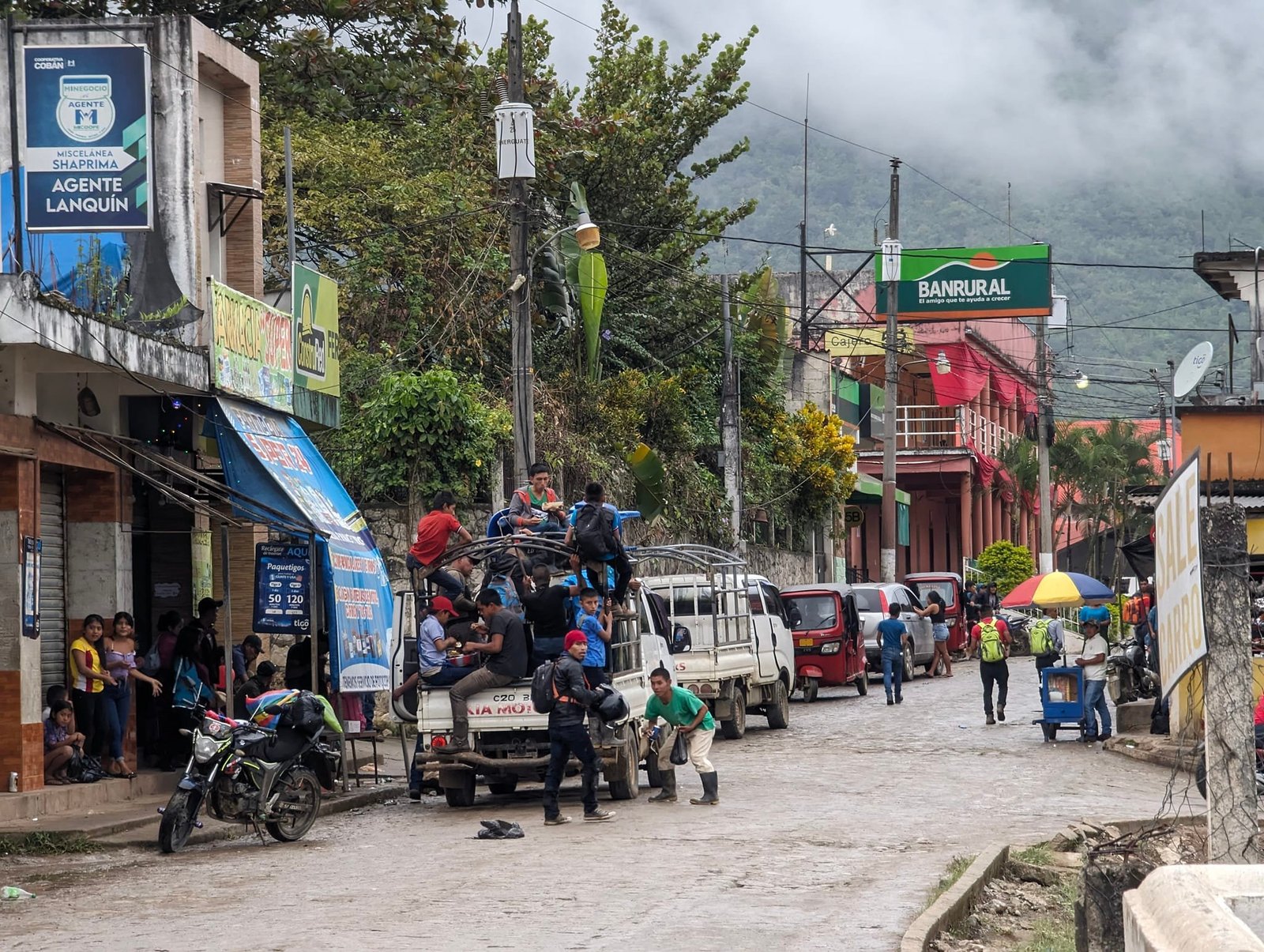
From Flores to Lanquín and then on to Antigua we travelled by shuttle bus. From Lanquín to Semuc Champey you ride in the back of a pickup, often standing (25 Q one way, December 2023). The Alta Verapaz department is on the ministry’s list of particularly dangerous areas, but without advice to avoid travel.
Antigua Guatemala
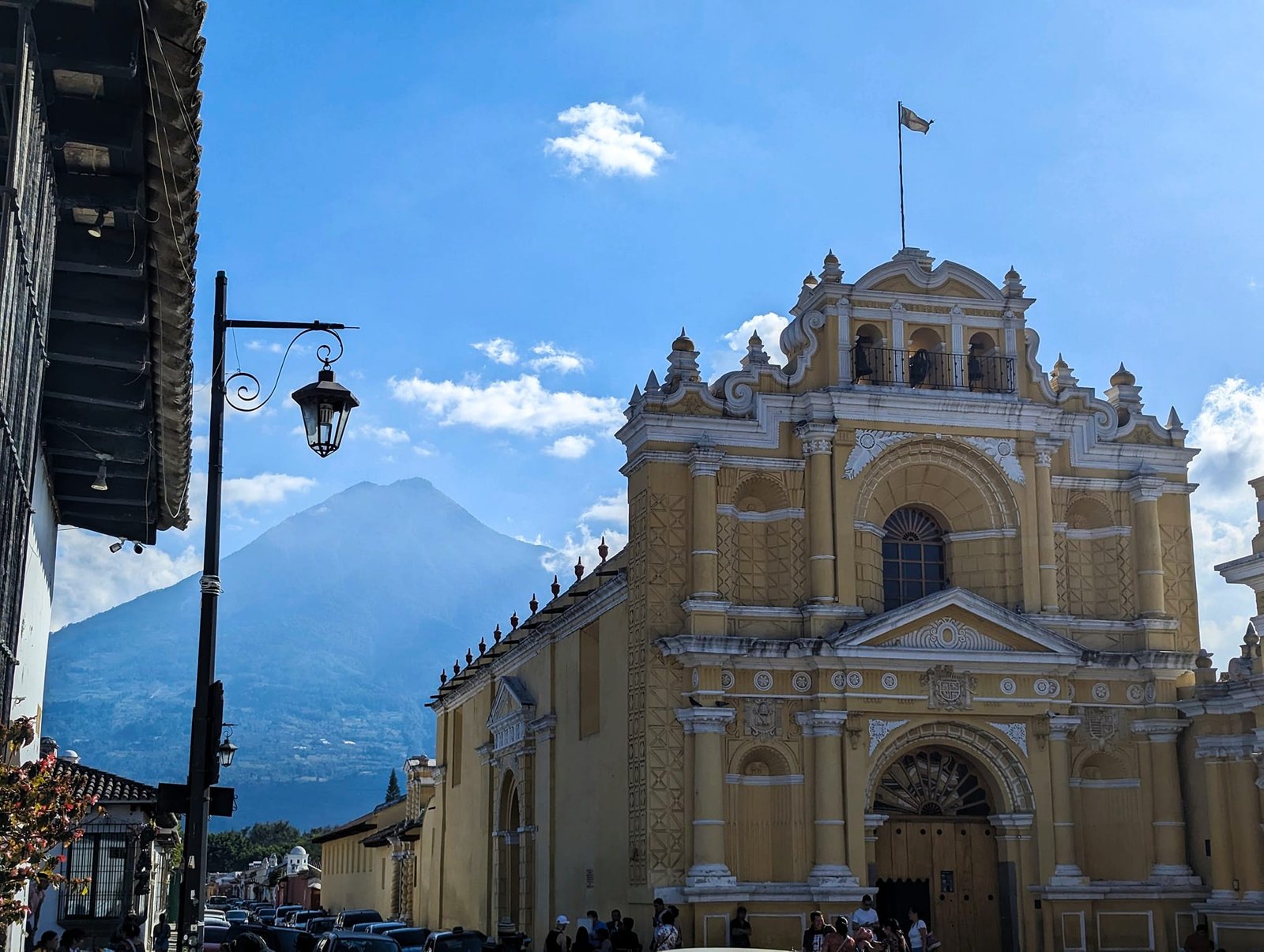
We spent more than a month in Antigua: we were learning Spanish and living with a Guatemalan family. It is probably the safest place in the country – tourists have “taken over” the town, so accommodation was the most expensive on our whole route. We celebrated Christmas in the streets – with concerts, a procession and the burning bulls of “Quema de toritos” – and then New Year’s Eve.
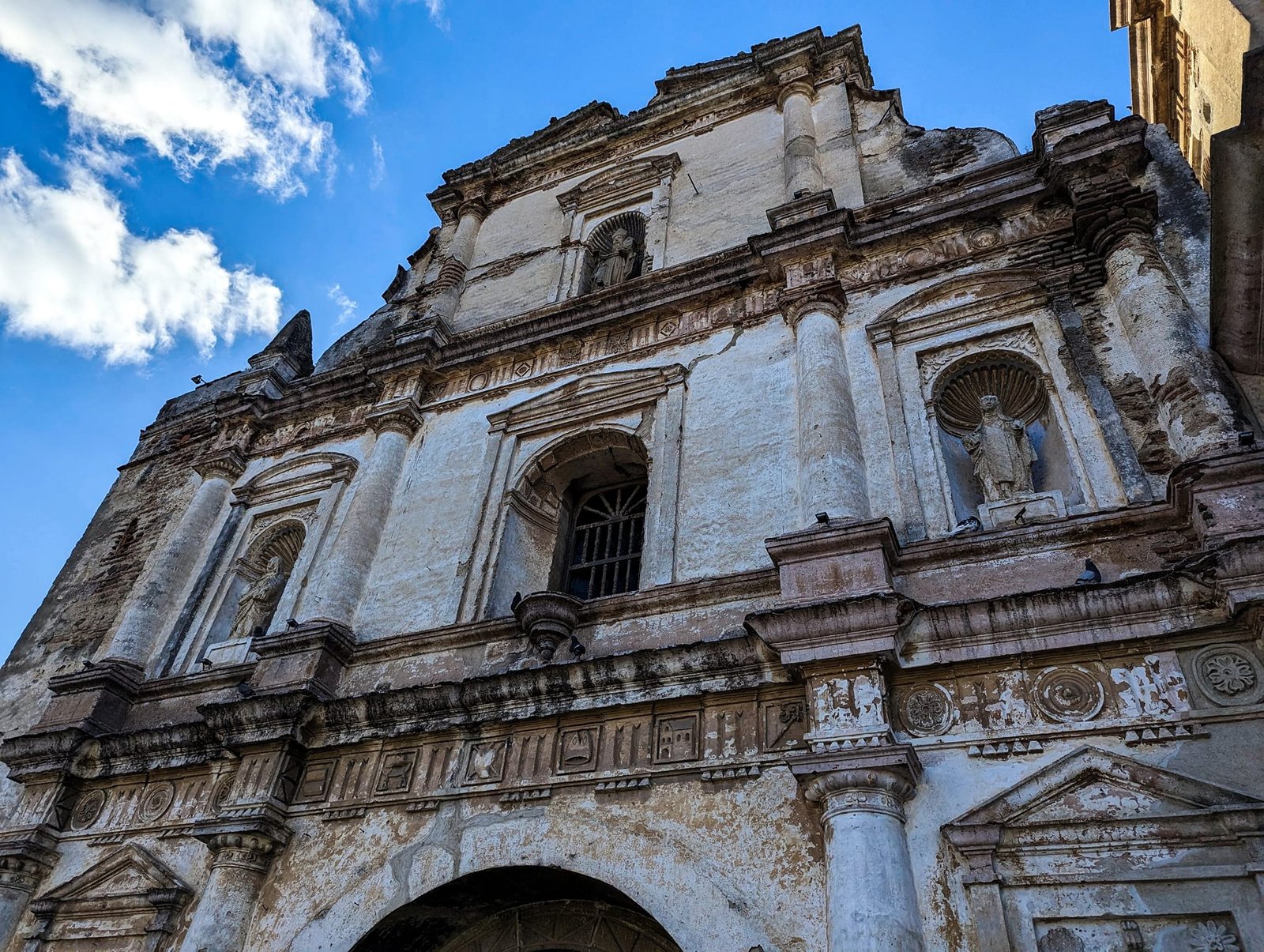
The bigger risk here is nature. Antigua lies at the foot of three volcanoes – Agua, Fuego and Acatenango – and in 1773 a great earthquake destroyed it. That is why people build low houses with courtyards here, which you can quickly run out into when the ground shakes. Right next to the town rises Agua volcano, where robberies happen (more in the part about volcanoes).
Lake Atitlán
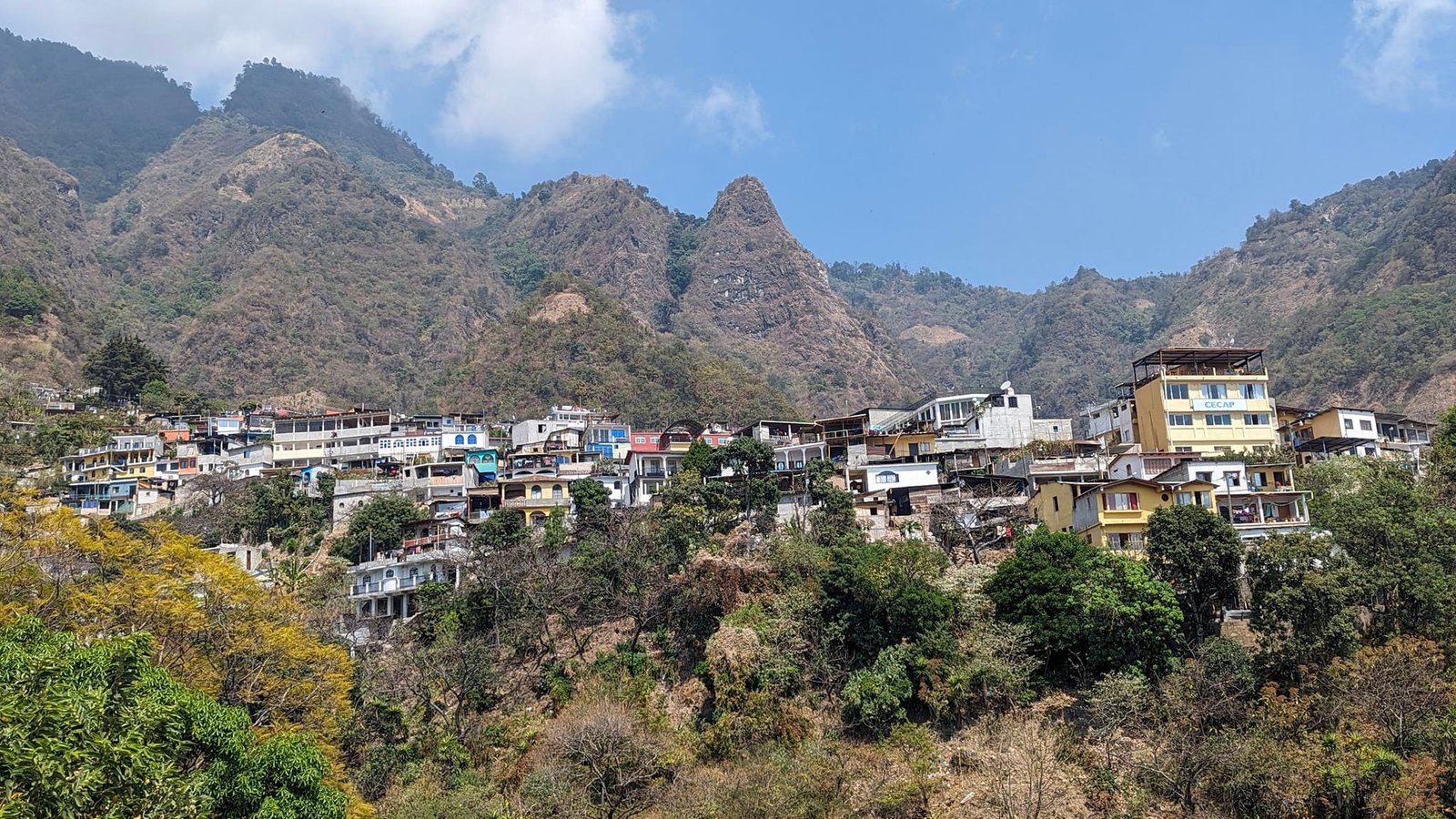
At Lake Atitlán we lived for ten days in San Pedro La Laguna and visited the other villages by boat. The village centres are safe, but robberies happen on the trails. They are most often mentioned on the Lower Mayan Trail – a trail of about 9 km along the shore from San Marcos to Santa Cruz, especially on the stretch beyond Tzununá. The advice is to walk it only in daylight (not too early and not too late), not at the weekend, in a larger group or with a guide. We skipped it and took a boat. The second such place is San Pedro volcano.
We went up to the Indian Nose viewpoint on our own (with Magda) at 8 a.m. – many people go up with organised groups for sunrise, in the dark. On the way you pay to pass the Cerro de la Cruz viewpoint (30 Q) and again at the summit itself (50 Q, February 2024).
Quetzaltenango (Xela), Santa María and Tajumulco
We spent our last ten days in Xela. Around the town and the area we mostly got around by Uber – it was the fastest option and quite cheap. We climbed Santa María and Tajumulco on our own. Tajumulco, however, lies in the San Marcos department, which the ministry also puts at level 3 – “Avoid travel”. At the summit we met only police officers, and after the descent soldiers – the area is still closely monitored.
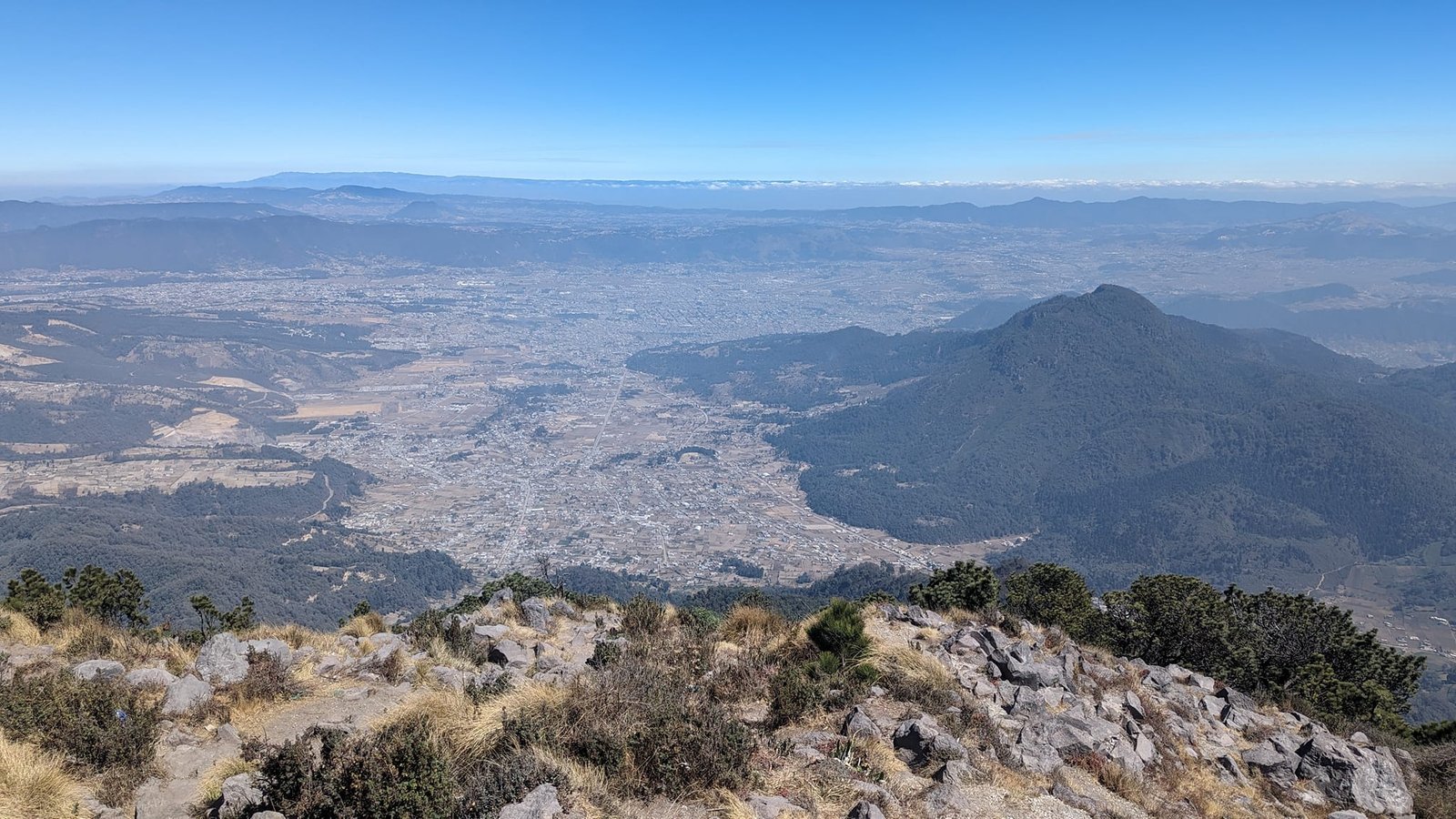
The capital – Guatemala City
Gangs operate in the capital; there are safer and less safe districts. Locals say that outside the capital it is fairly safe. We were only in the city for one night and a change of bus on the way to El Salvador – in the safest district, Zona 10. The ministry lists the whole city among the particularly dangerous areas and advises against travel to the Zona 18 district.
Borders
We entered Guatemala overland from Belize and left for El Salvador on a more professional Pullmantur bus from the capital to Santa Ana (537 Q for two people, February 2024) – the company asks you to be there half an hour before departure for formalities and passport checks. The exit fee (40 BZD) was charged by Belize, and we paid nothing at the Guatemalan borders. Guatemala, El Salvador, Honduras and Nicaragua form the CA-4 area – you can stay in them for a total of 90 days, counted from entry into the first of these countries. Our limit ran out on the day we left Honduras, so we had to extend our stay there. According to the Polish Foreign Ministry you need a passport valid for at least 6 months and a return or onward ticket on entry, and expulsion from one CA-4 country means a ban on entering the others.
Transport – chicken buses, shuttles, boats and a car
We got around Guatemala by shuttle bus, chicken bus, pickup, boat, Uber and once by hire car. Each of them has its own rules:
- Shuttle buses – tourist minibuses that run directly between popular places; from Antigua they go to practically every tourist spot in the country. We used them in the north and on the way to Antigua. Prices for two people (December 2023): Belize City – Flores 52 USD, Flores – Lanquín 70 USD, Lanquín – Antigua 82 USD.
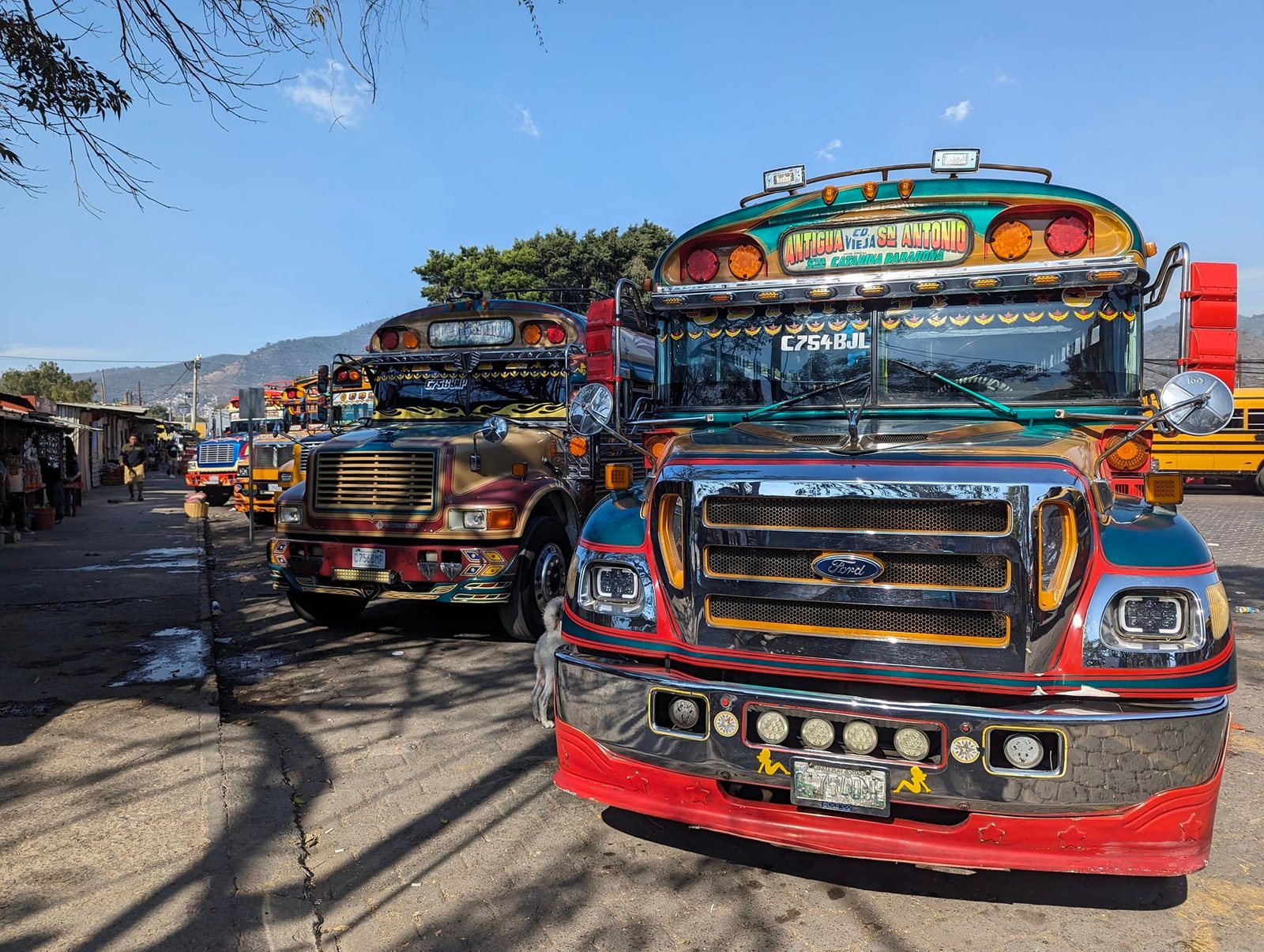
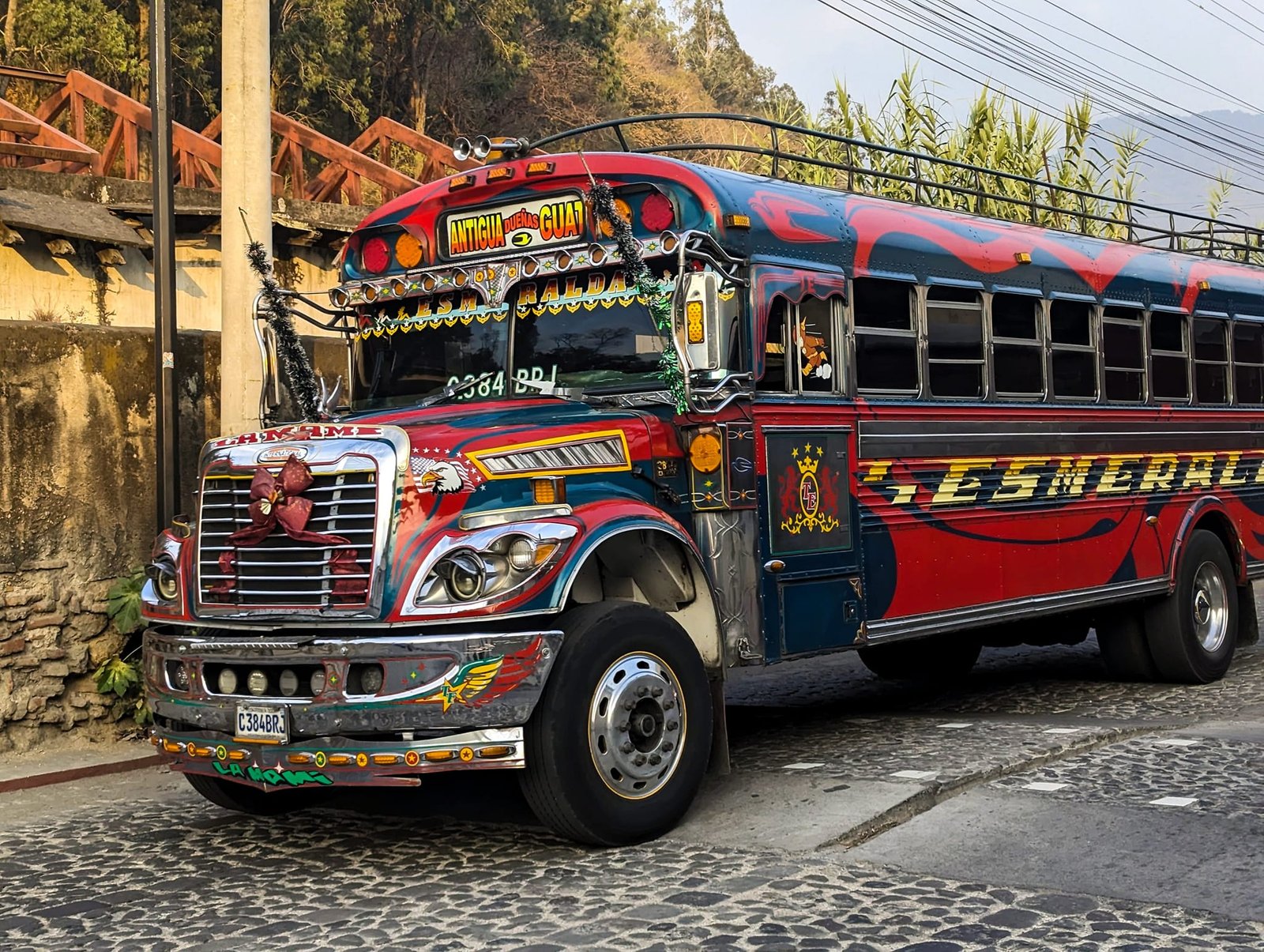
- Chicken buses – converted old American school buses, the cheapest public transport. They leave when they are full, and three people sit on seats made for two children. The driver’s helper collects the money squeezing through almost at ceiling level and jumps onto the roof for the luggage before the bus has stopped – on the way from Atitlán to Xela he walked on the roof while we were driving. In such a crush it is best to keep your backpack with you and keep an eye on things in the overhead rack all the time.
- Pickups – locally, e.g. from Lanquín to Semuc Champey, you ride in the back of a pickup, often standing.
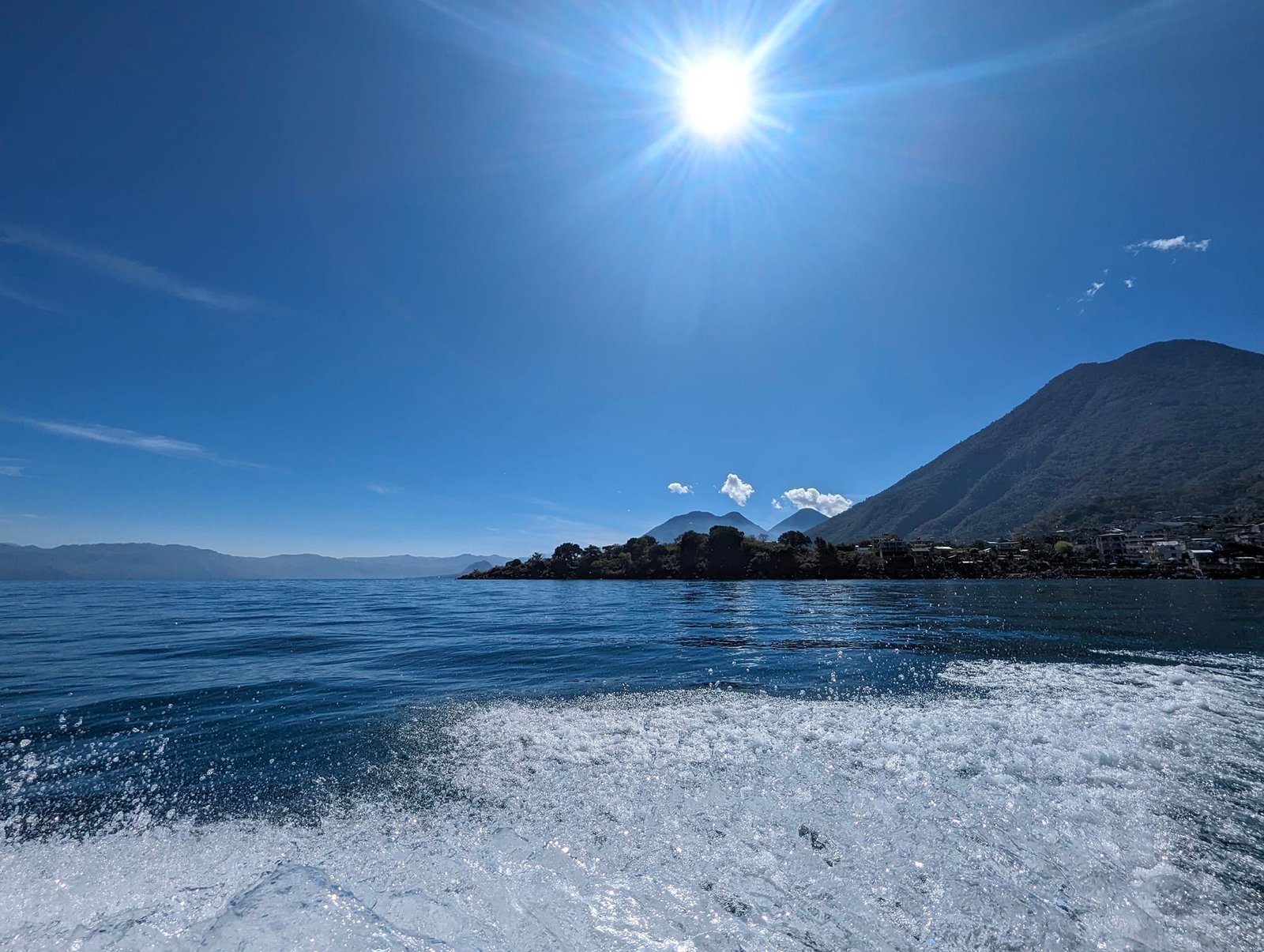
- Boats – on Lake Atitlán the fastest way to get between villages (30–50 Q per person return, February 2024). In the evenings a strong wind picks up and the waves get big – passengers sometimes struggle even to board the rocking boat.
- Uber and taxis – in Xela Uber was the fastest and quite cheap, but for the way back from the Santa María trailhead it is worth ordering it about 20 minutes before you get down, because there are few drivers there. According to the Polish Foreign Ministry, taxis in Guatemala are yellow, green or white, and the minimum fare is 25 Q.
- Car – we hired one for a day to drive from Antigua to El Paredón on the Pacific. The roads have lots of speed bumps, after dark there is not always street lighting, not all motorbikes have lights, pedestrians even less so, and Guatemalans overtake whenever and wherever they like – you have to be especially careful in the dark. At the Hertz rental office the excess for damage was as high as 7,000 Q. The ministry reminds you that you need an international driving permit and that you can hire a car with a credit card or a sizeable cash deposit.
- Early departures – the transfer to Tikal leaves at 4:30 and the first bus to Tajumulco from the Minerva terminal in Xela at 5:00, so on such trips you set off while it is still dark.
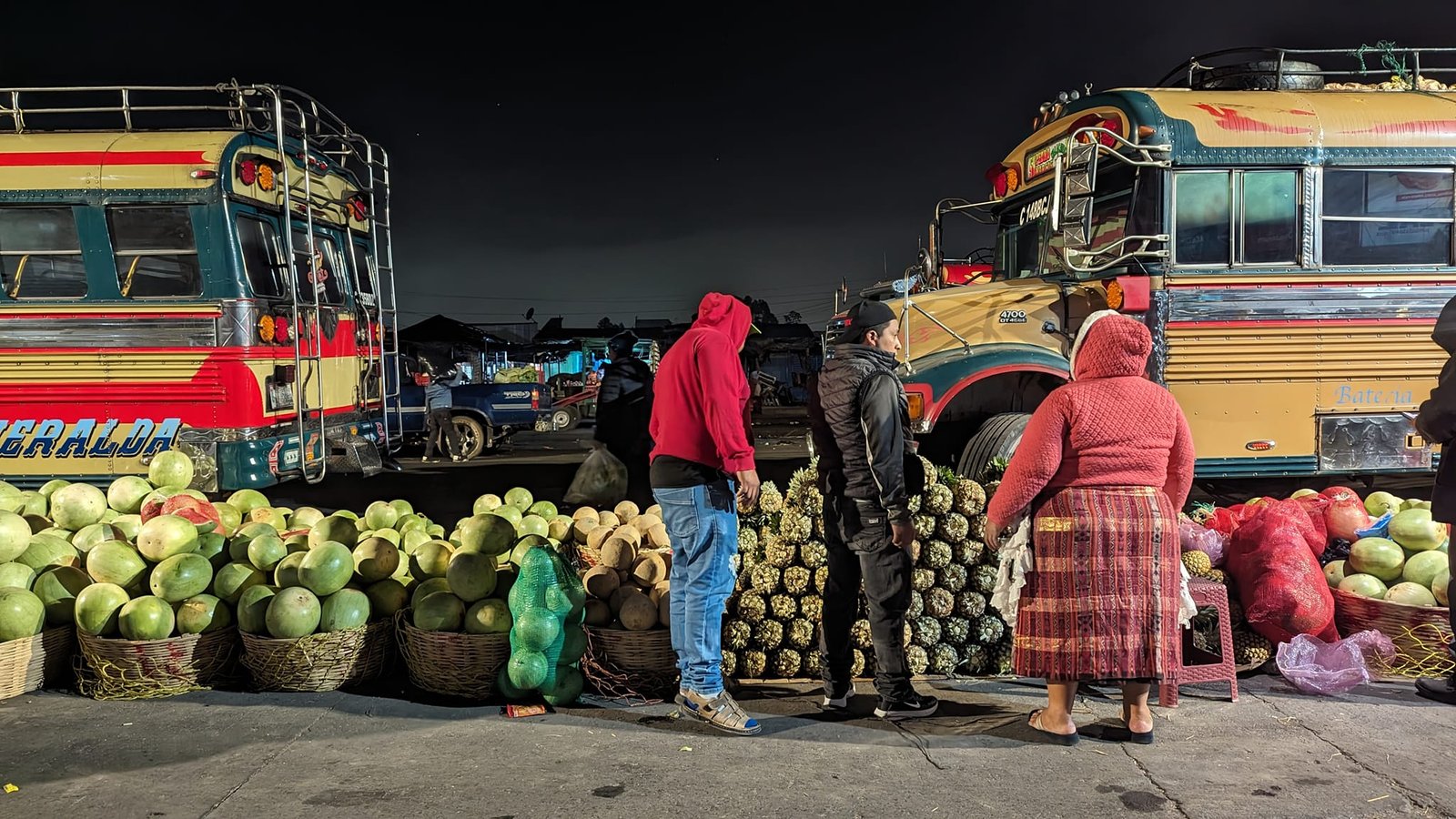
Nothing was stolen from us on a bus in Guatemala, but a few months later, on a night bus in Ecuador, thieves took almost all the electronics out of my backpack. The lessons from that night apply to the whole region: on long routes it is better to choose professional buses or shuttles, and to keep a backpack with valuables on your lap – not under the seat or on the rack. Details are in the post about the theft on a bus in Ecuador.
Volcanoes – guides, robberies and climbing bans
In our view volcanoes are the most interesting thing Guatemala has to offer – we went on six of them. In some places a guide is compulsory, in others strongly recommended. Officially it is about safety – robberies and the risk of getting lost – although we often saw it more as a way of making money. The trails are usually simple and often waymarked, and with a map app (we use AllTrails) getting lost is almost impossible.
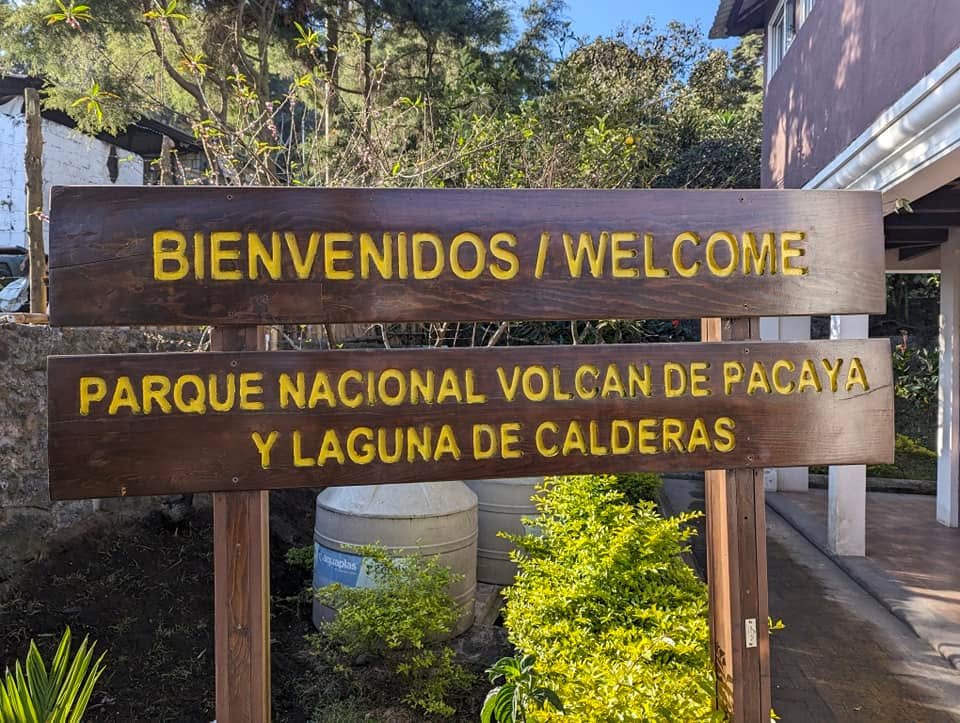
- Pacaya – you cannot go up without a guide; we went on a tour from Antigua (from 125 Q with transport and guide + 100 Q park entry, January 2024). For several years the trail has been safe, with no robberies: many guided groups walk it every day, and you can meet park rangers on the way.
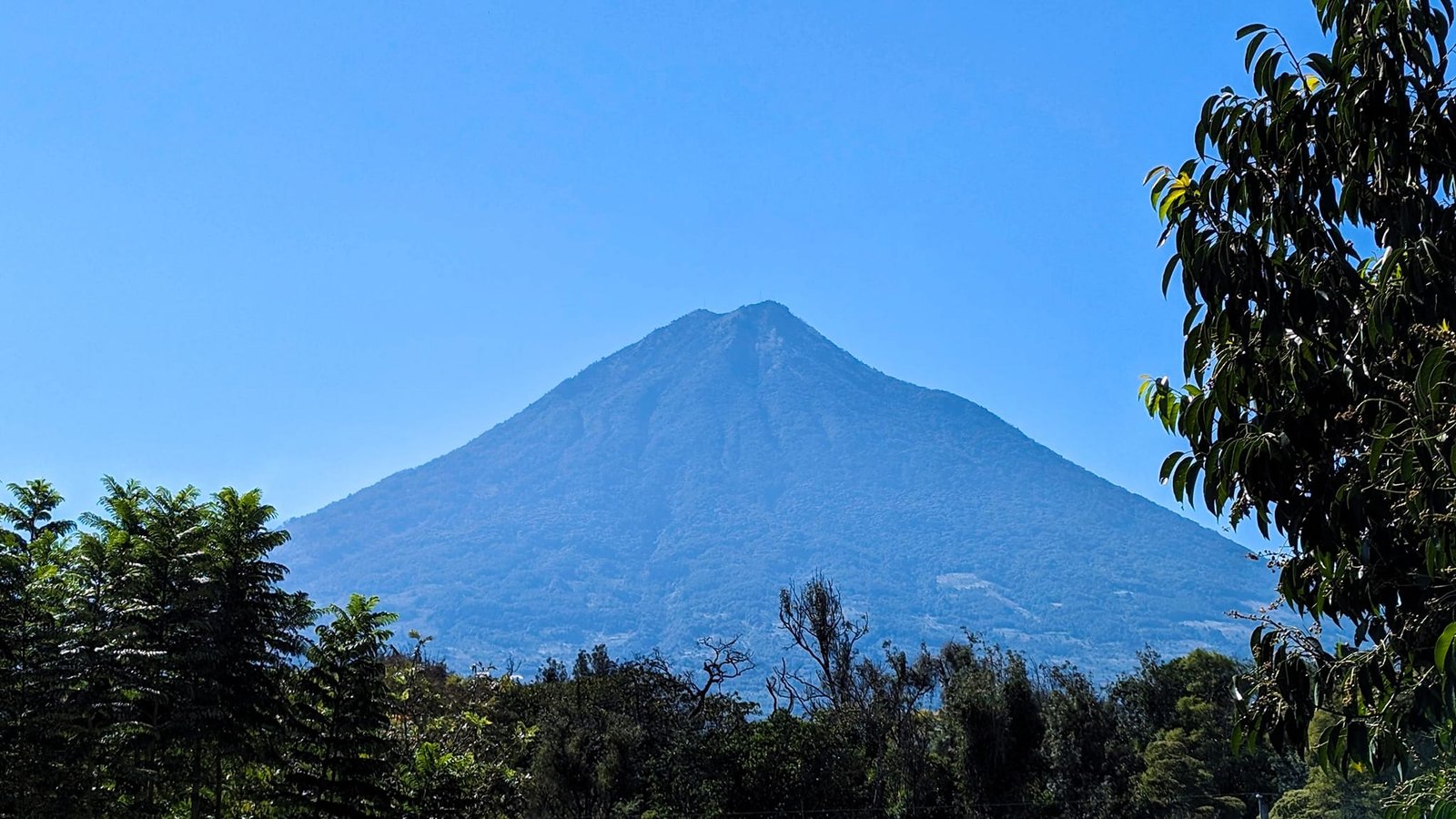
- Volcán de Agua – a less popular volcano right next to Antigua and one of the three places where we heard about robberies. We did not climb it.
- San Pedro – robberies happened near the summit (the robbers come from the Santiago Atitlán side), in the morning and mostly at weekends. That is why we took a guide – we paid 300 Q per person: 200 Q for the guide with transport and 100 Q for entry (January 2024).
 12:55
- Acatenango – practically everyone goes with an agency. The guides have the final say: towards morning the clouds came in, they decided it was dangerous and refused to go for the summit, so we did not reach the top. Everyone carries 4 litres of water – for the hike, dinner and breakfast – and the night in the camp at about 3,600 m is cold.
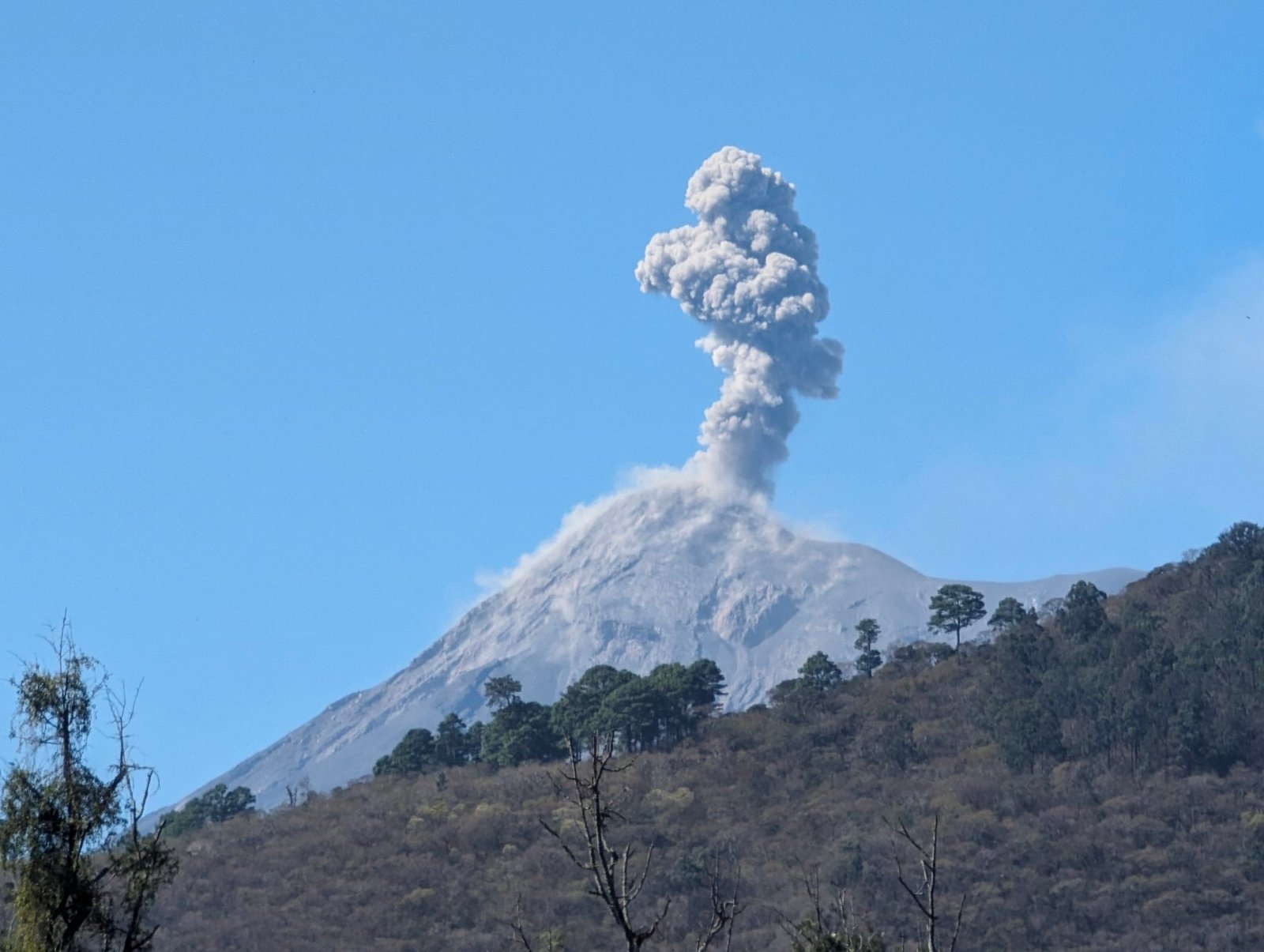
- Fuego – the most active volcano in Central America, erupting every 15–30 minutes. Its last big eruption, in 2018, claimed many lives. In January 2024, for an extra 200 Q, you could go from the Acatenango camp with a guide closer to Fuego.
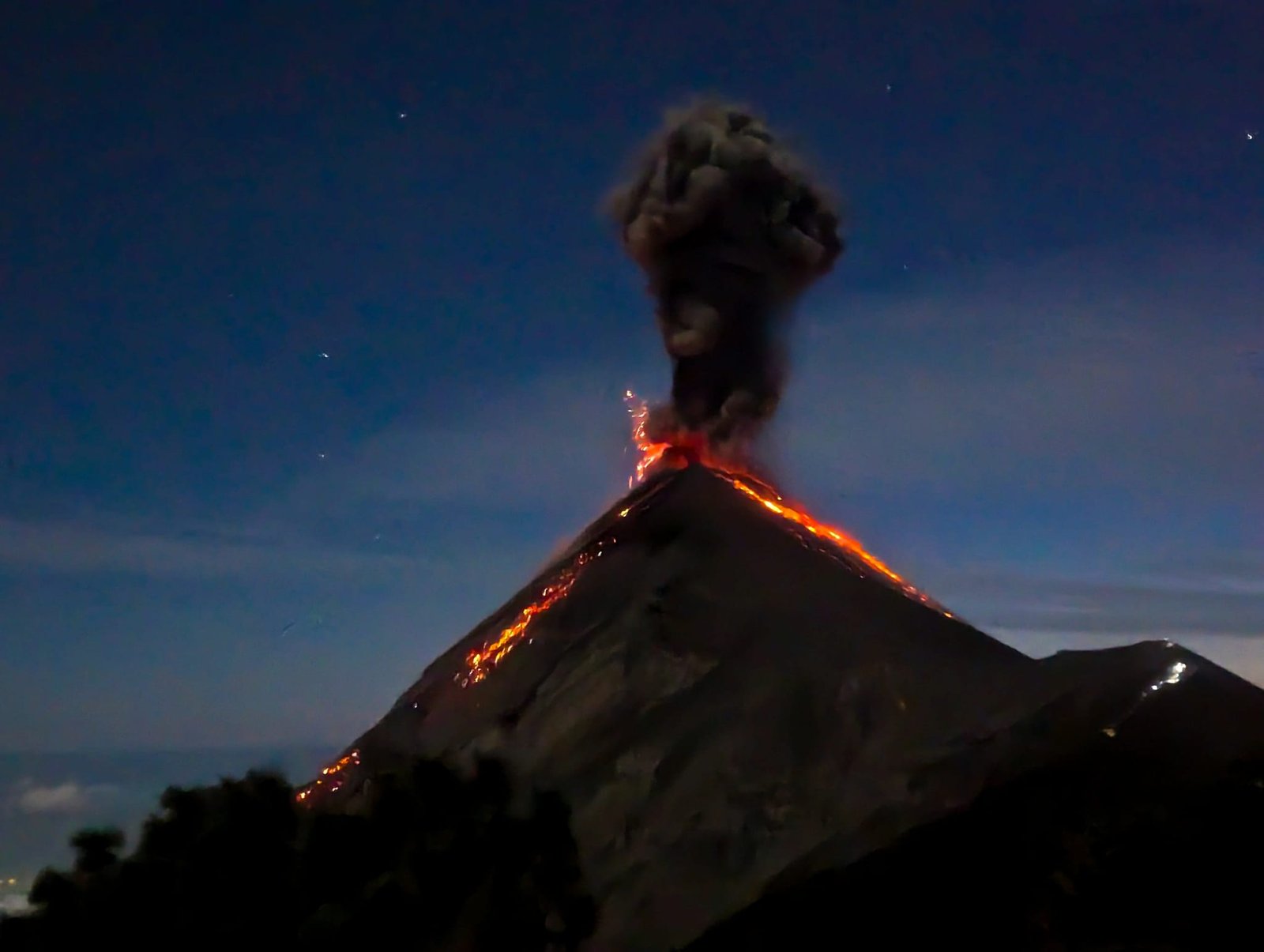
Bans (as of November 2026): in March 2025 the municipality of San Juan Alotenango banned climbing Fuego, and the Guatemalan Tourism Institute INGUAT warned tour agencies about it. In June 2026 INGUAT, together with the national disaster reduction agency (Conred) and the protected areas council (Conap), reiterated the total ban on climbing Fuego and Santiaguito and warned against illegal offers of such tours, sold mainly on social media. At the beginning of August 2026, during increased activity of Fuego, tours to Acatenango were also temporarily suspended. So before buying a tour, check the latest announcements; suspicious offers can be reported on 1500. Santiaguito’s eruptions are watched from the summit of Santa María – just as we did.
- Atitlán, Tajumulco and Santa María – we climbed these three volcanoes on our own, without a guide. Apart from Agua and San Pedro, we consider the other volcanoes we climbed safe.
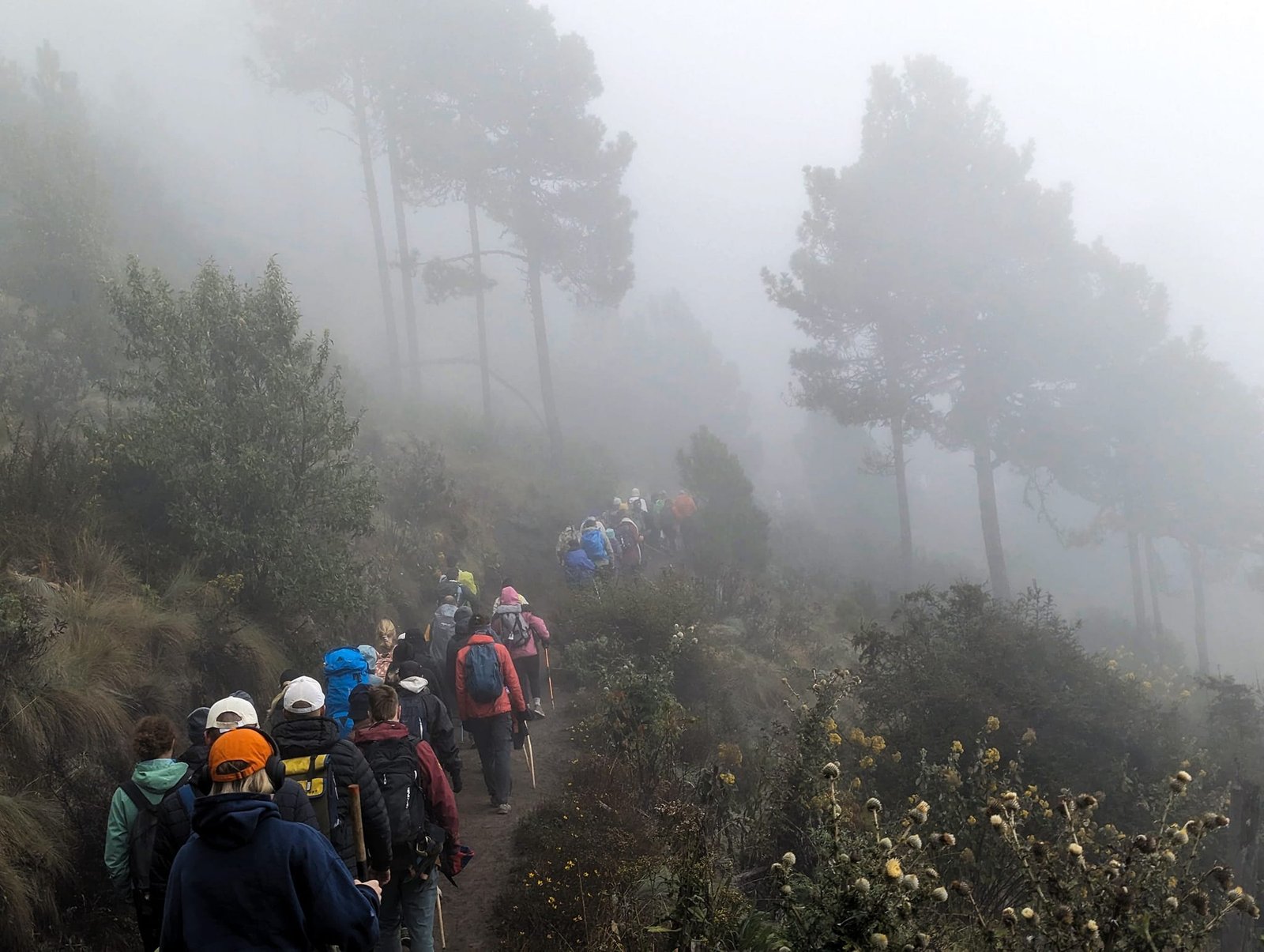
- Start time – set off as early as possible, because the clouds come in at around 10–11 a.m. I have collected trail lengths, prices and where a guide is needed in the guide Volcanoes of Guatemala.
Money, belongings and theft
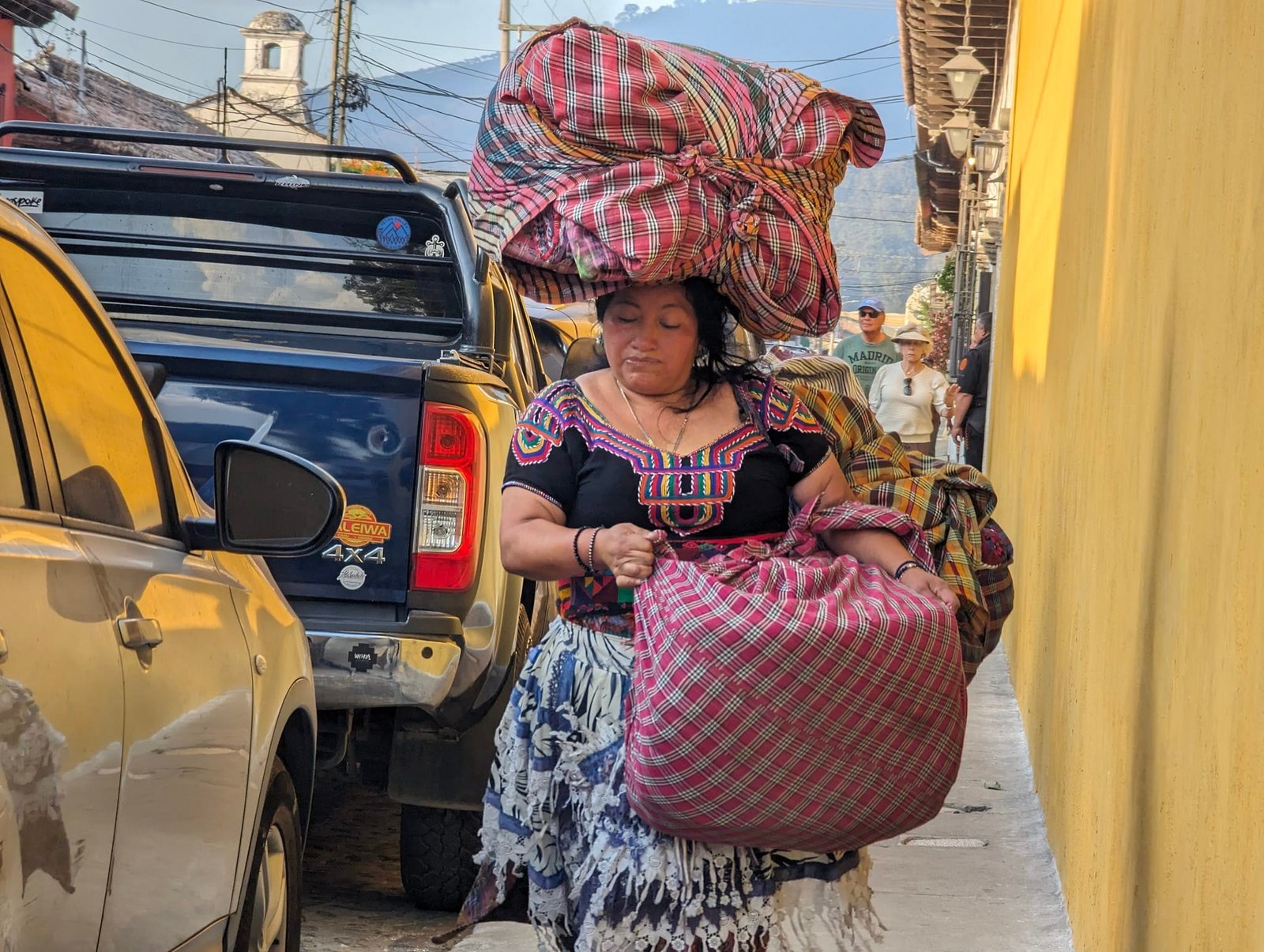
Nothing bad happened to us, but we heard about thefts from other travellers, especially in Guatemala. Across the region there is a kind of acceptance of theft: if you got robbed, it is your own fault. Locals say “don’t give papaya”, meaning don’t give a thief the chance, and in many cases the police will not lift a finger, because there are too many thefts and finding the thief is close to a miracle.
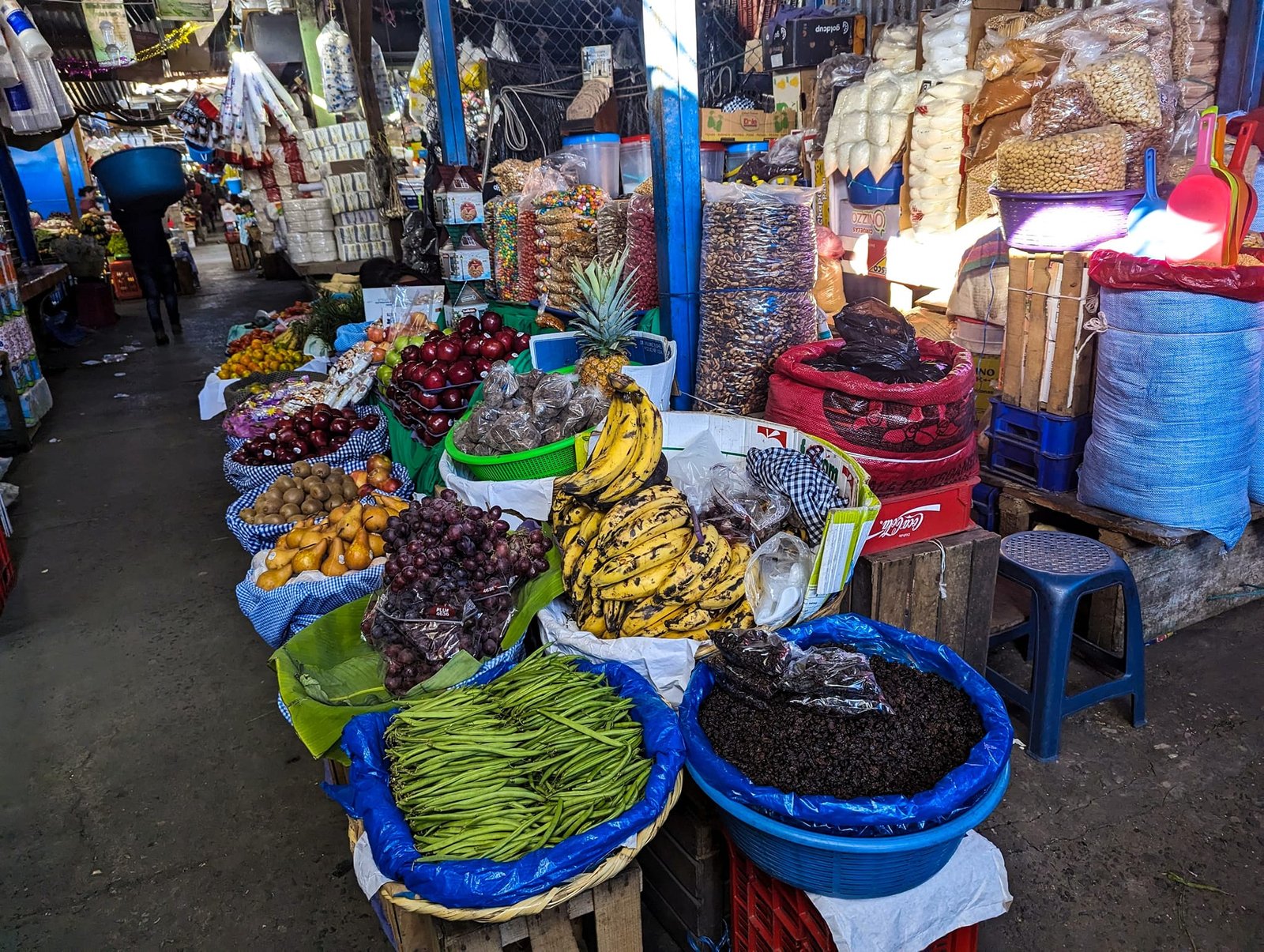
- ATMs – there are few exchange offices, so we withdrew cash from ATMs. Every withdrawal has a fixed fee (January 2024: 31 Q at 5B, 32 Q at Banco Industrial; BAC would not give us cash at all), and the daily limit was 2,000 Q.
- Card and cash – Revolut does not support quetzales, so withdrawals were converted from euros or dollars. Sometimes you can pay by card, sometimes with an extra fee, and sometimes only in cash – always keep a reserve. The Polish Foreign Ministry advises being discreet with cash and expensive items.
- On the bus – keep your backpack with you and the luggage overhead always in sight. Things can also disappear from the luggage hold – in Costa Rica our tent, strapped to the side of a backpack, vanished that way.
- Photos and data – check every now and then that your photos and videos really reached your cloud backup. After the theft in Ecuador I lost part of my material because not all files had uploaded from the app.
- Theft insurance – before the trip we did not think about it at all. On a trip of several months with a laptop and cameras, it is an expense I would not skip today.
Health, water and food
The most important health information – from the Polish Foreign Ministry’s advice and from what we saw on the spot:
- Water – the ministry recommends drinking bottled or boiled water. Access to water is a big problem in Guatemala: at Lake Atitlán we saw residents washing themselves and their laundry in the lake.
- Vaccinations – according to the ministry, a yellow fever vaccination certificate is required only from people arriving from a country where the disease occurs (also after a transit of more than 12 hours). It recommends vaccination against hepatitis A and diphtheria; check the current advice with a travel medicine specialist.
- Medical care – easier to find in cities; both doctor’s visits and hospital stays have to be paid for. Carry medicines with a doctor’s certificate translated at least into English.
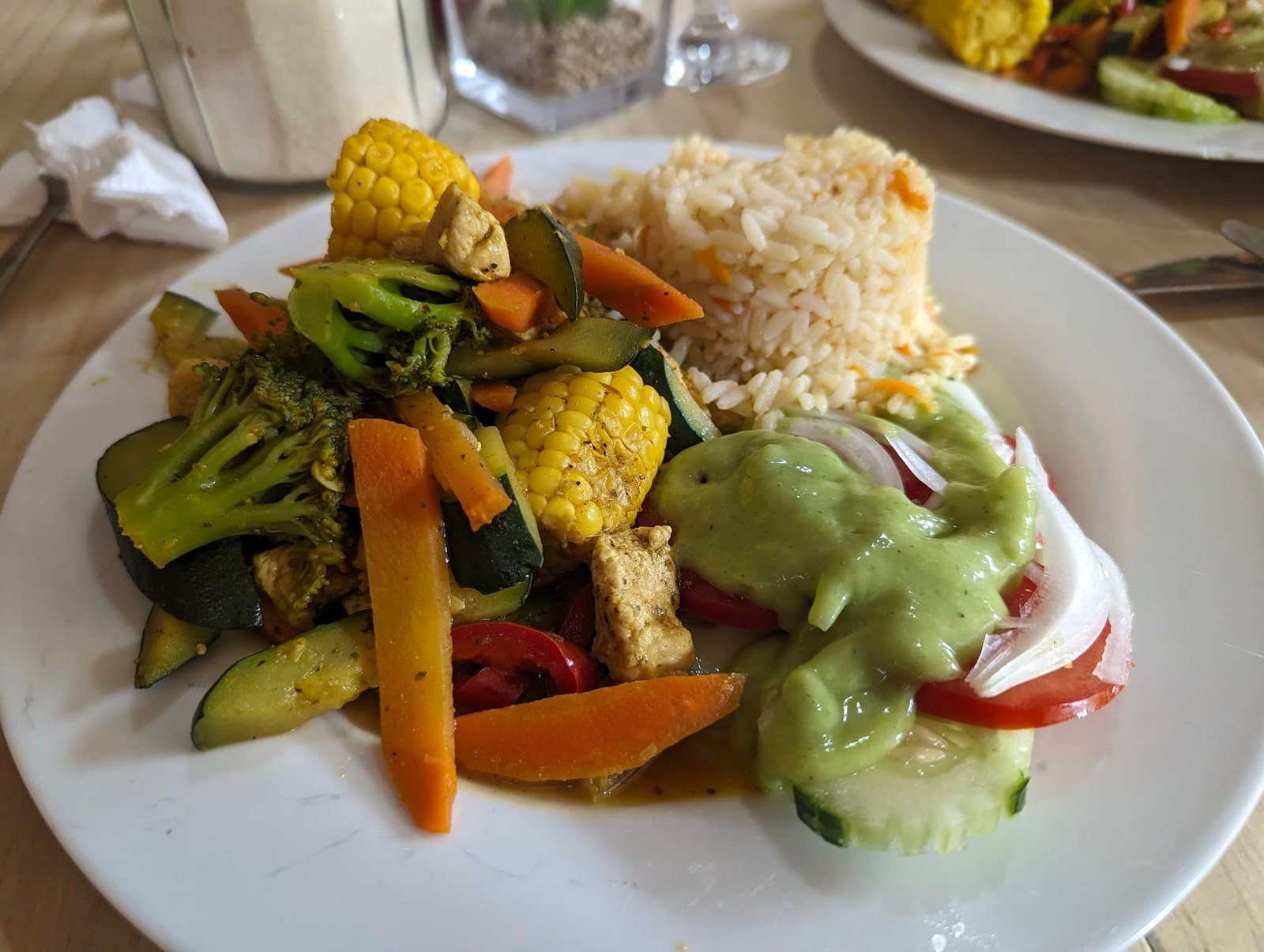
- Food – everyday food is rice with beans and meat, flatbreads with various fillings and fast-food chicken chains.
- Toilets – the paper goes into the bin next to the toilet, because the pipes are narrow.
- Altitude and cold – in the mountains in the south it was up to 28°C during the day in Antigua and up to 23°C in Xela, but the nights are cold (from a few to a dozen or so degrees), and colder still on the volcano summits. Tajumulco (4,220 m) was our first four-thousander.
- Swimming – at Lake Atitlán there are few places to swim (the water is about 21°C), swimming is forbidden in the Chicabal lagoon, and on the Pacific at El Paredón the waves are high.
What the Polish Foreign Ministry says (as of November 2026)
The Guatemala profile in Odyseusz, the travel advice service of the Polish Ministry of Foreign Affairs, was last updated on 9 October 2026. The key points:
- Country warning level – 2, “Exercise particular caution”, meaning a higher risk than in Poland. There is a very high level of ordinary crime, and Guatemala has a reputation for high crime and gang conflict.
- Particularly dangerous areas – Guatemala City, Petén, Huehuetenango, San Marcos, Izabal, Baja Verapaz, Alta Verapaz, Zacapa and Chiquimula.
- Level 3 – “Avoid travel” – the Zona 18 district of the capital and the Petén, San Marcos and Huehuetenango departments.
- Terrorism – no attacks have been recorded recently, but they cannot be ruled out completely.
- Natural hazards – earthquakes, hurricanes, tsunamis and floods.
- Consular help (for Polish citizens) – there is no Polish mission in Guatemala, so direct help is limited. The competent one is the Polish Embassy in Panama, and there is an honorary consul in Guatemala itself. EU citizens can also ask the embassy of another EU country for help.
Compared with our route: Antigua, Lake Atitlán and Xela are not on the list of particularly dangerous areas. Lanquín and Semuc Champey (Alta Verapaz) are on it, and Tikal with Flores (Petén) and Tajumulco (San Marcos) lie in regions to which the ministry advises against travel.
Practical information
Numbers and contacts are as given by the Polish Foreign Ministry and INGUAT (as of November 2026), prices are from the turn of 2023 and 2024.
- Emergency numbers – 911 (main emergency number), 110 (police), 125 (ambulance), 122 (fire brigade) and 1500 (tourist line).
- Tourist assistance 1500 – INGUAT’s helpline, which helps e.g. after losing documents, a robbery or a theft and puts you in touch with embassies. INGUAT works with the police’s tourist security division, which has 15 offices around the country. The ministry also gives 24-hour tourist assistance numbers: +502 2421 2810 and +502 5578 9836.
- Consul and embassy (for Polish citizens) – Polish honorary consul in Guatemala City: tel. +502 5555 0775 (also in emergencies; visits by appointment, Mon–Fri 8:00–17:00). Polish Embassy in Panama: tel. +507 368 0250, duty phone +507 6997 6137.
- Registering your trip – Polish citizens can register a trip in the Odyseusz service (odyseusz.gov.pl) and receive safety alerts while travelling; many countries have similar services.
- Insurance – according to the ministry, Polish policies are not accepted on the spot: you usually pay the full cost of a doctor’s visit, and hospitals require a deposit. After an accident, notify your insurer immediately. It is worth checking whether your policy covers volcano trekking, theft of equipment and regions to which travel is advised against.
- Tours – volcanoes with a compulsory guide are done with agencies from Antigua; do not buy offers to climb Fuego or Santiaguito – they are illegal.
- Apps – Uber (in Xela the fastest and cheap), a trail map app (we use AllTrails) and a translator on your phone.
- SIM card – the market is split between Tigo and Claro. We had Tigo, but Claro reportedly has better coverage.
- Language – it is hard to get by in English, so basic Spanish is very useful. We learned Spanish on a course in Antigua.
- More – the route, costs and transport are in the summary of 58 days in Guatemala, and safety in other countries of the region in the summary of 9 months in Latin America and in the posts about El Salvador and Honduras.