For eight months of travelling through Central and South America – from Mexico through Guatemala, Panama and Colombia all the way to Ecuador – nothing really bad happened to us. That changed on the night of 10 to 11 June 2024, on the night bus from Baños to Cuenca. Thieves pulled almost all the electronics out of my carry-on backpack: a laptop, two GoPro cameras, a portable hard drive, most of the camera accessories, a torch and the chargers. I estimated the loss at around €1,600 (my first quick estimate came to about 1,700 dollars).
It took me a long time to get round to this post – there was always something more important, and to be honest I probably just didn’t want to go back to it. But I promised several times that I would describe the whole thing. So here is the bus theft step by step: how the thieves operated, what we did afterwards, what could not be recovered (photos and videos included) and what I would do differently today. It wasn’t a robbery – nobody got hurt – but that night cut my trip short by roughly a month.
Table of contents
- Our last day in Baños
- The night bus to Cuenca – the theft step by step
- The “fake driver” trick – how the thieves operated
- Police, prosecutors and cameras nobody will ever watch
- What was stolen – and why some photos are missing
- Insurance and going back to Poland
- Practical information – how to protect your gear on a bus
Our last day in Baños
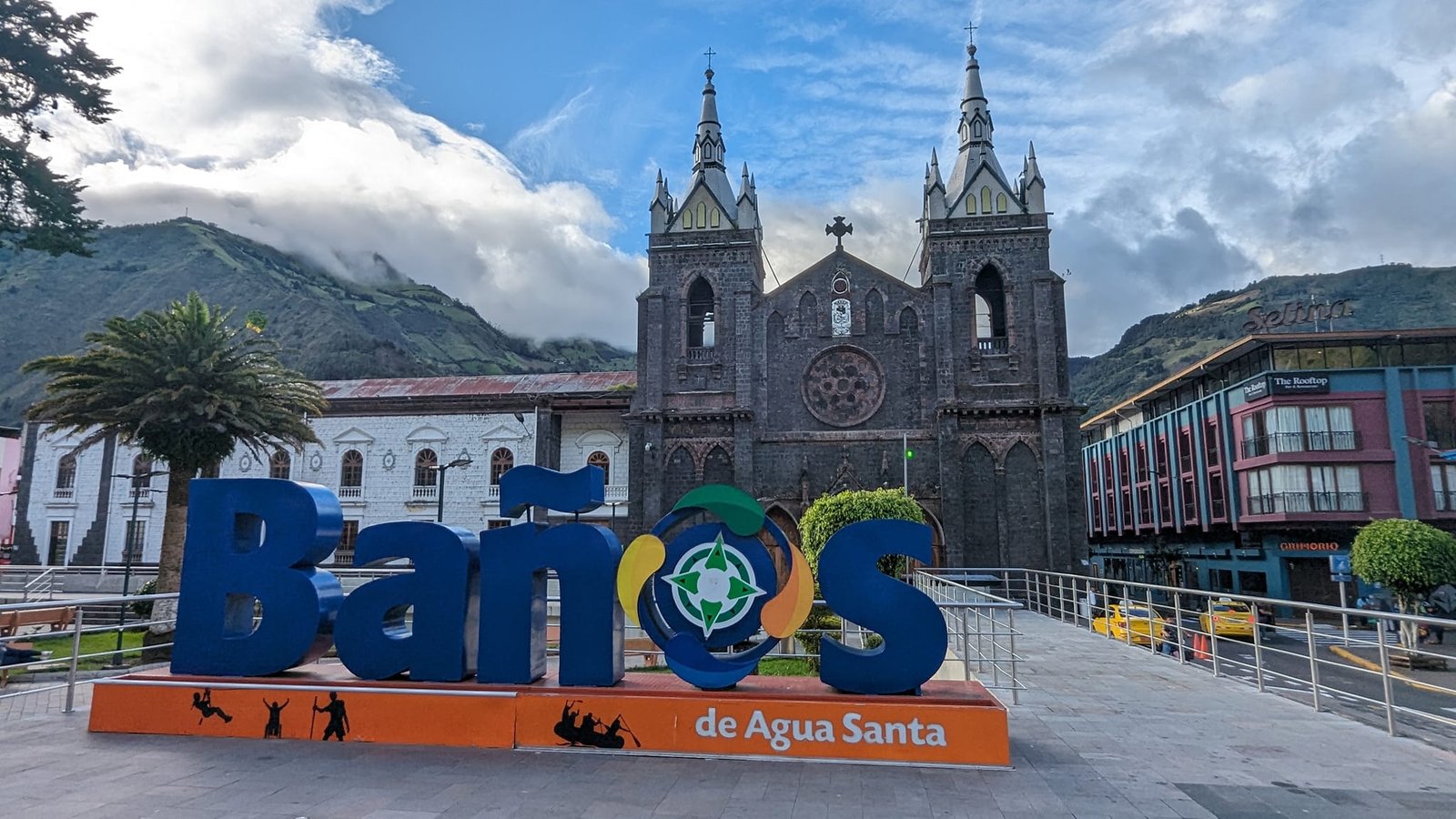
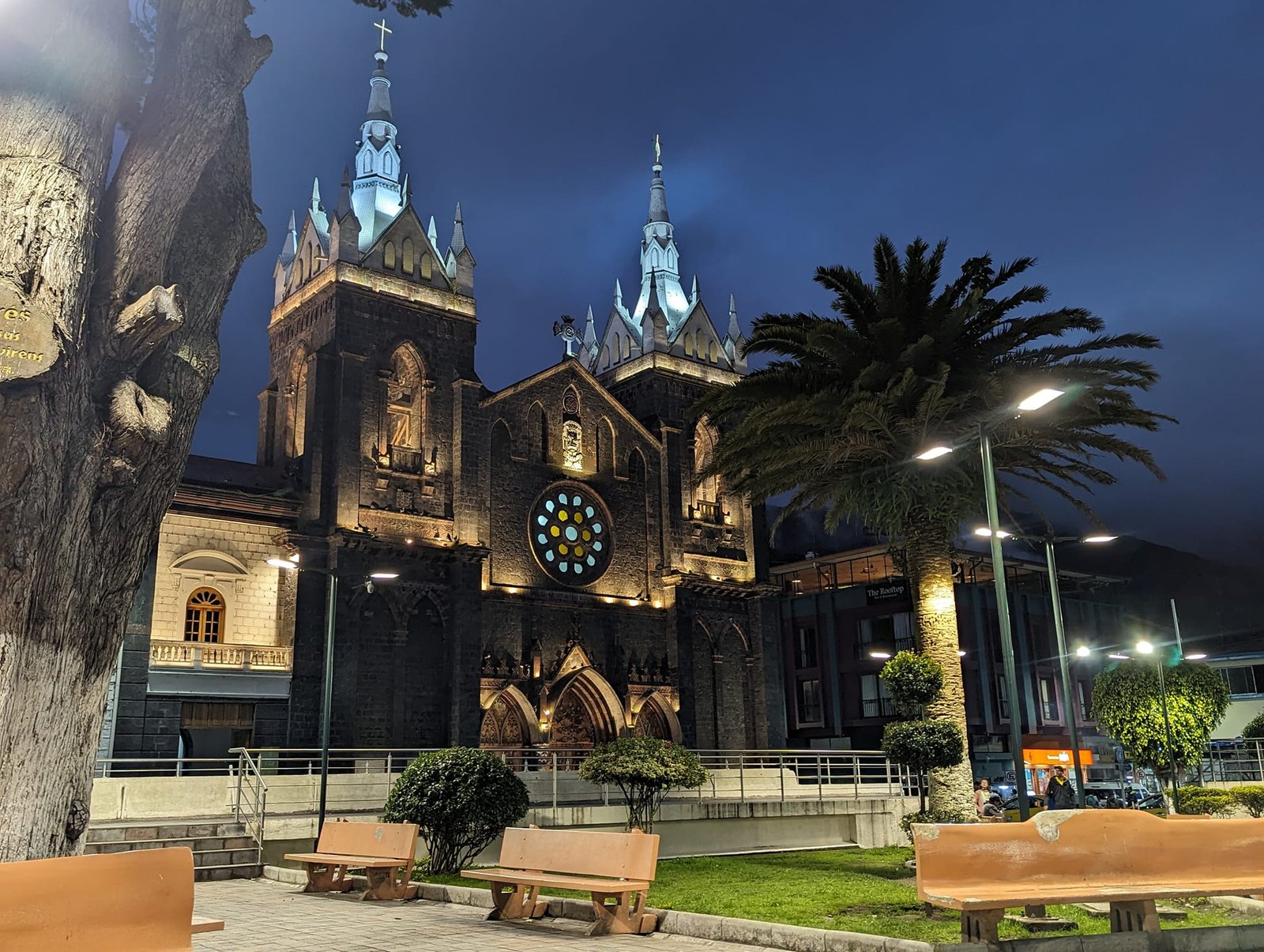
We started Ecuador in Quito, then spent ten days on the Galápagos and did a three-day trek on the Quilotoa Loop. Originally we were going to go straight from Quilotoa to Cuenca, but people recommended Baños de Agua Santa to us – an extreme sports town that Ecuadorians consider a must-see. We stopped there for just one night and on 10 June visited the two best-known sights nearby: the La Casa del Árbol swings and the Pailón del Diablo waterfall. I describe Baños itself in a separate post: Baños – the Pailón del Diablo waterfall, the Casa del Árbol swings and Cuenca.
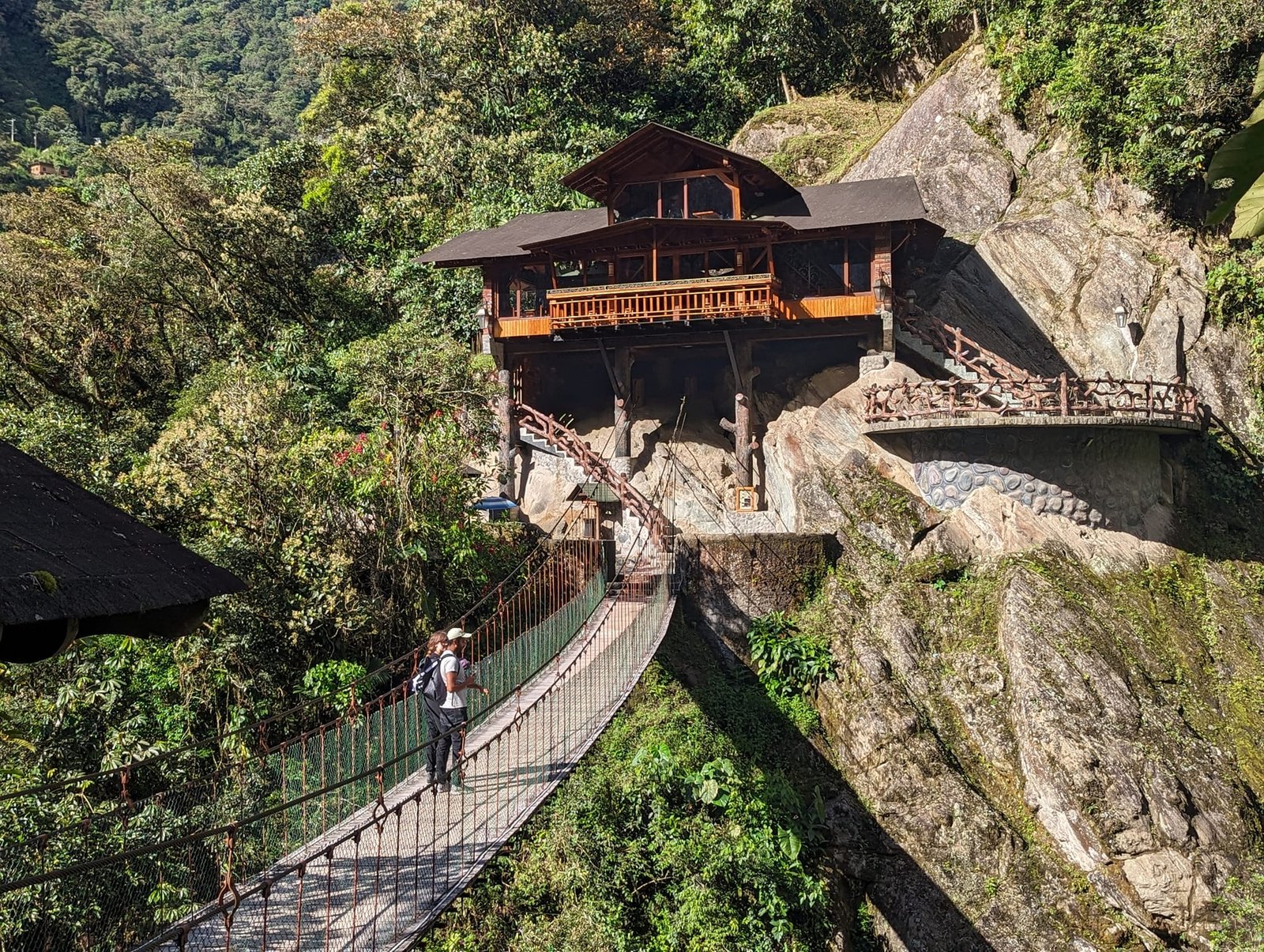
That day had already gone badly. Under the Pailón del Diablo waterfall Patrycja’s main phone got soaked – she had to use her spare one for the rest of the trip, because the parts needed for the repair weren’t available locally. At the time it seemed like the worst bit of bad luck of the whole trip.
The night bus to Cuenca – the theft step by step
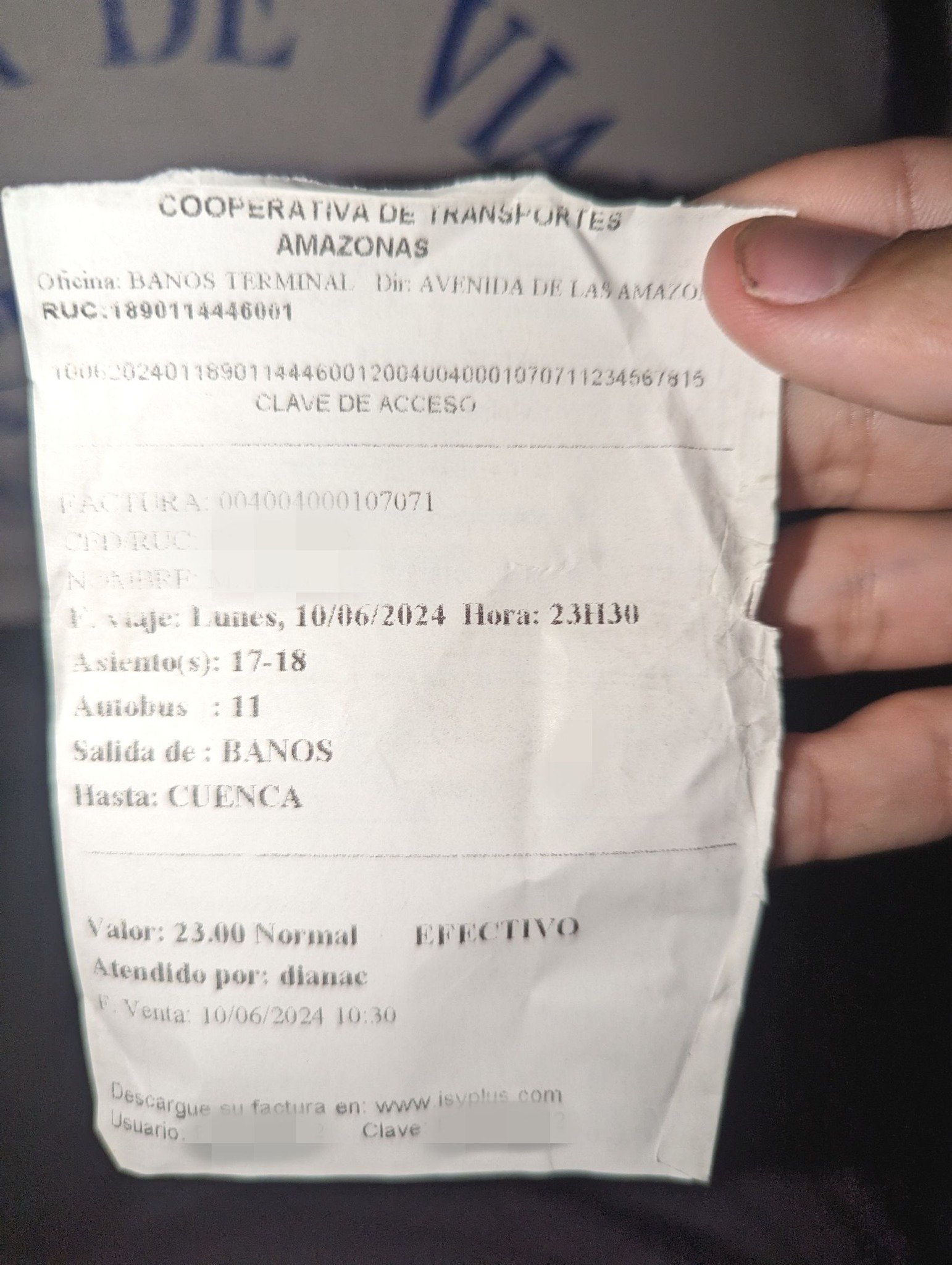
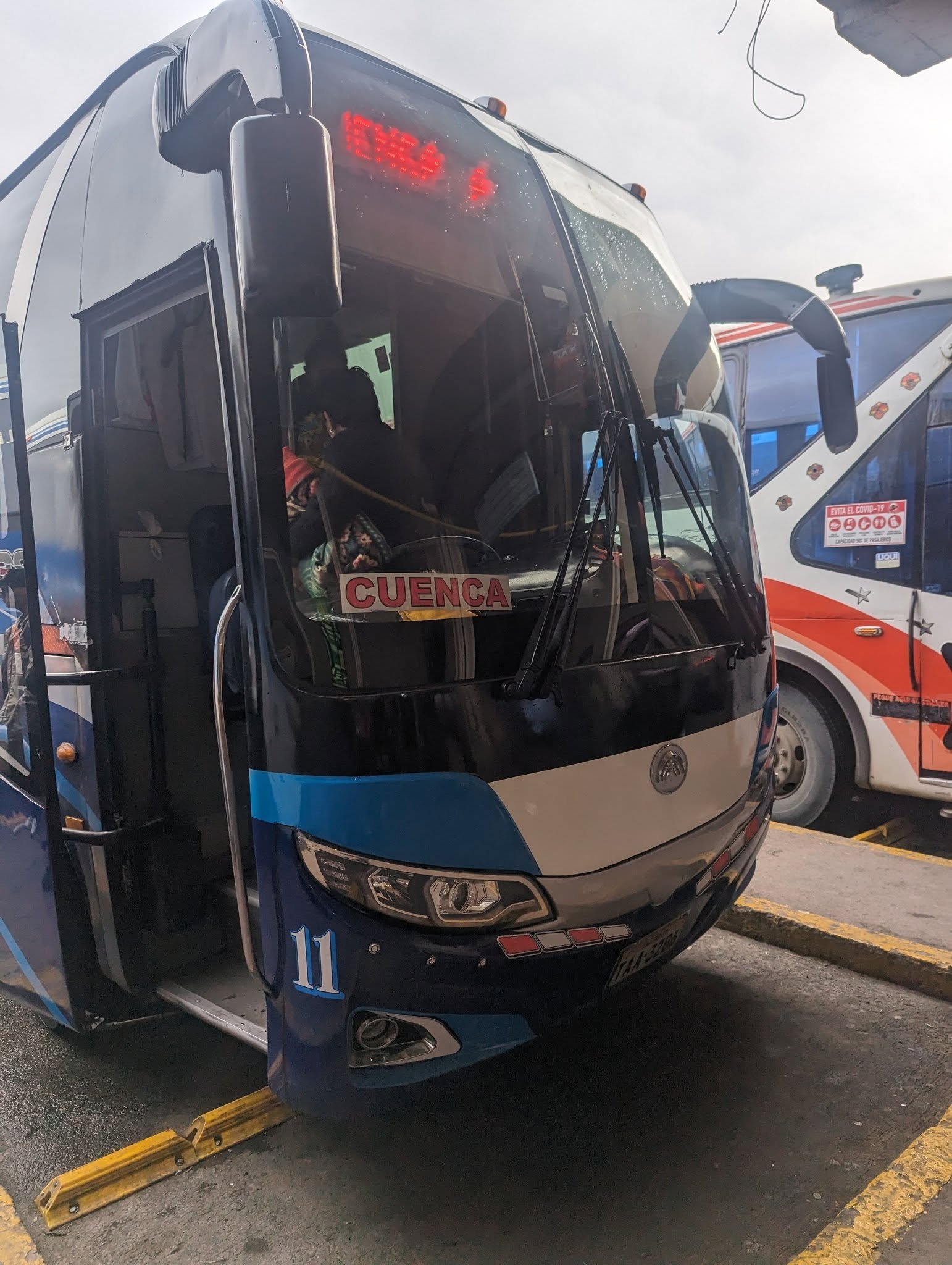
We bought the ticket in the morning at the Baños bus station, at the counter of Cooperativa de Transportes Amazonas: seats 17 and 18 on bus no. 11, departing at 23:30, 23 dollars for both seats. Only this one company ran a night service on the route, so there was no choice.
Just before departure a man in a white shirt got on the bus – the kind drivers wear here. He asked passengers to fasten their seatbelts and to put their backpacks overhead or under the seat “for safety reasons and in line with company rules”. The supposed driver took my carry-on backpack and first tried to squeeze it onto the rack above us, and when it didn’t fit, he pushed it under the seat. After he left I moved the backpack forward and kept it at my feet.
The road wound through the mountains, bend after bend. The backpack kept sliding away, and half asleep I kept pulling it back – I could feel it there the whole time. At one point I squeezed it harder and it turned out to be almost empty. A horrible feeling. The backpack was zipped up and we hadn’t heard a thing – the thieves must have “dived” under the seat quietly and very skilfully. Patrycja’s soaked phone suddenly didn’t matter at all.
The “fake driver” trick – how the thieves operated
At first we felt like fools, because we had always watched our backpack as closely as we could. But after going over everything, we concluded that we hadn’t been robbed by some random person. The bus crew confirmed that the man in the white shirt wasn’t a company employee at all. Right after he left, one man sat down behind us, and soon afterwards another – in the seat next to him. Coincidence? More likely an organised operation – and the other passengers saw it the same way.
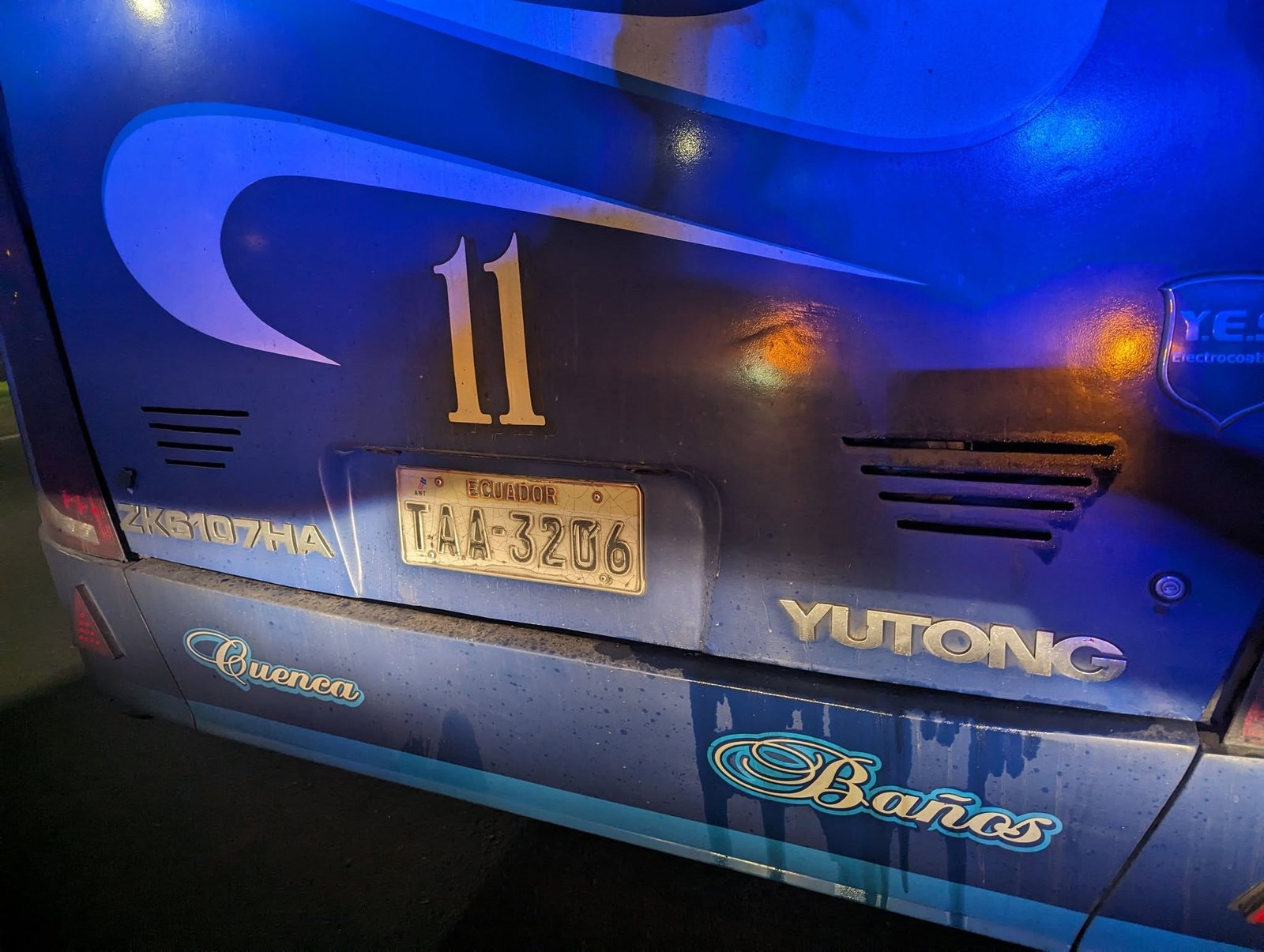
Everything points to this pattern: one person looks for an opportunity, gets on the bus as the “driver”, checks where any potentially valuable luggage is, then gets off and tells his accomplices which seats to take. If we had left the backpack up on the rack, they would probably have taken the whole thing. With the backpack at my feet they had to work a lot harder, but they still managed to secretly pull the most valuable things out of it.
Our European habits lulled us. In Europe, being asked to fasten your seatbelt or stow your luggage doesn’t raise any suspicion, but in South America nobody cares about such things – and that is exactly what should have alarmed us. It’s a pity we only realised this after the fact.
Later we searched online and found that there are many more stories like ours. One of them is about a couple who were taking a daytime bus from Latacunga to Sigchos on the Quilotoa Loop (we had taken that route earlier, in the opposite direction – on our way back from the Quilotoa Loop). The man kept his backpack between his legs, in sight the whole time, didn’t sleep, and only the driver’s assistant was sitting behind them. At the start of the trail they discovered that an expensive camera and its accessories were gone. They quickly called the police and even caught up with the bus, but the camera was no longer on it.
Police, prosecutors and cameras nobody will ever watch
By the time we realised what had happened, the men sitting behind us were gone – they had got off at most a quarter of an hour earlier, we don’t even know where. It was night and we were somewhere in the middle of the country, so the only sensible option was to ride on to the end of the line, to Cuenca. Our fellow passengers decided that we had a right to police help and called the police themselves – while still on the road, shortly after we discovered the theft. They argued with the officers for a long time that in their own country they couldn’t count on being safe on buses – buses which, by the way, have cameras.
The thing with those cameras is almost funny: the recordings aren’t held by the bus company or by the police, but by the national traffic agency (Agencia Nacional de Tránsito). You can’t contact it directly, though – you have to file a complaint with the public prosecutor’s office (Fiscalía), which is roughly like reporting a crime to the police back home. The police said there was nothing they could do, and the drivers said it was our own fault. Nobody wanted to get too involved in looking for our things.
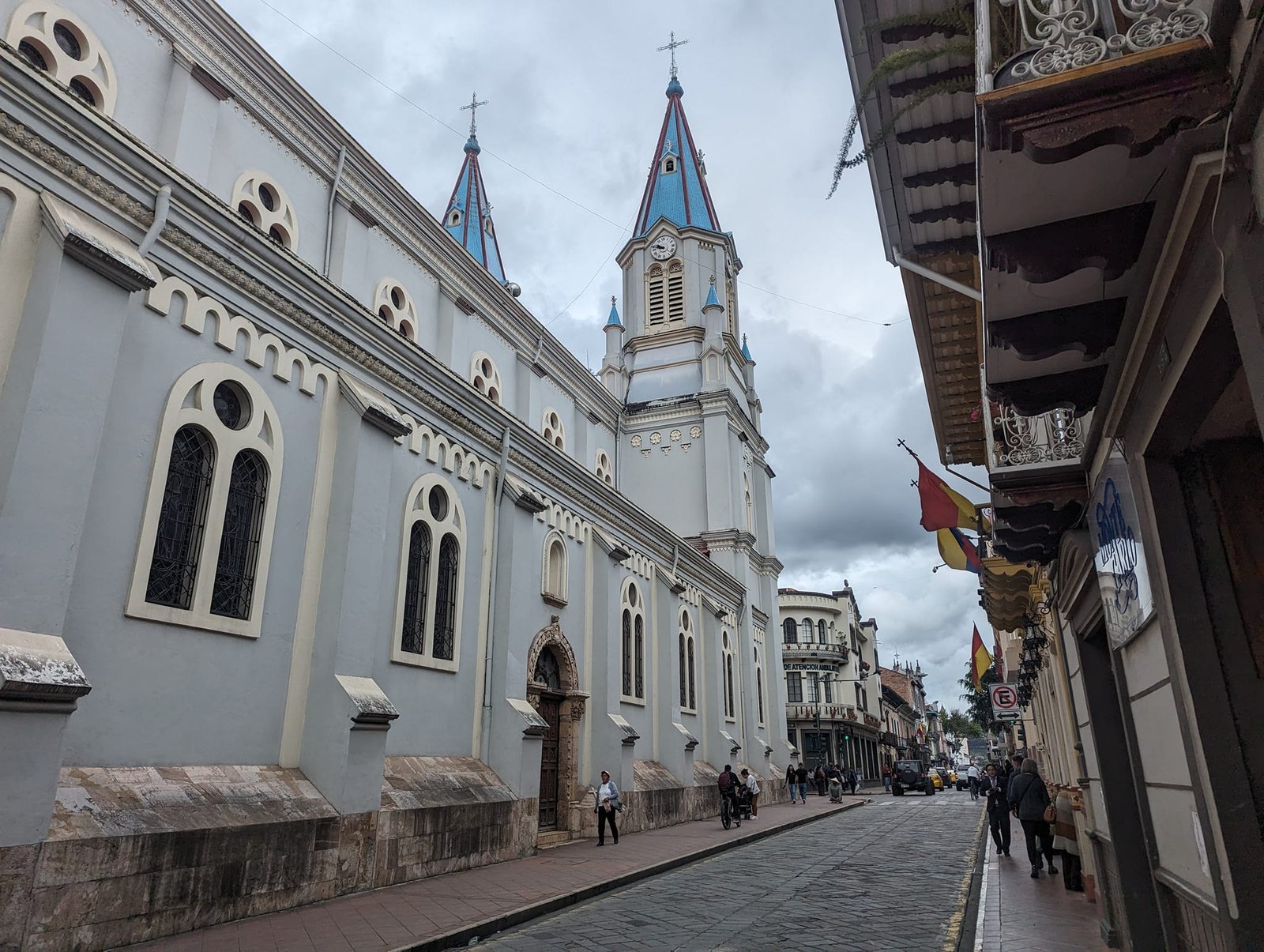
In the end we did file the complaint, but we were told straight away that such cases drag on for a long time and the chances of a good outcome are slim. If anything turned up, I was supposed to be notified by e-mail – except that I would have to collect the items in person in Ecuador. So the thieves are on camera and still go unpunished. Eight months after the report there was still no news, so you can be sure nothing concrete was ever established. Cuenca is a beautiful city in the south of the country, with most of its sights in the historic centre – we walked around it a bit, but in the end we never made it to Cajas National Park.
What was stolen – and why some photos are missing
The backpack they robbed was a small carry-on one – I carried most of our electronics in it. Gone were:
- a GoPro camera with its memory card and a second, broken GoPro (it was due to be exchanged for a new one for a small extra fee),
- a laptop, a portable hard drive and a USB stick,
- camera accessories: a microphone, a lens, poles, protective housings, a light,
- a professional torch with a charging dock, two small power banks, chargers, a multi-USB adapter and a memory card reader,
- bank cards (one Polish and two German), two driving licences, a few souvenir banknotes and small things I no longer remember.
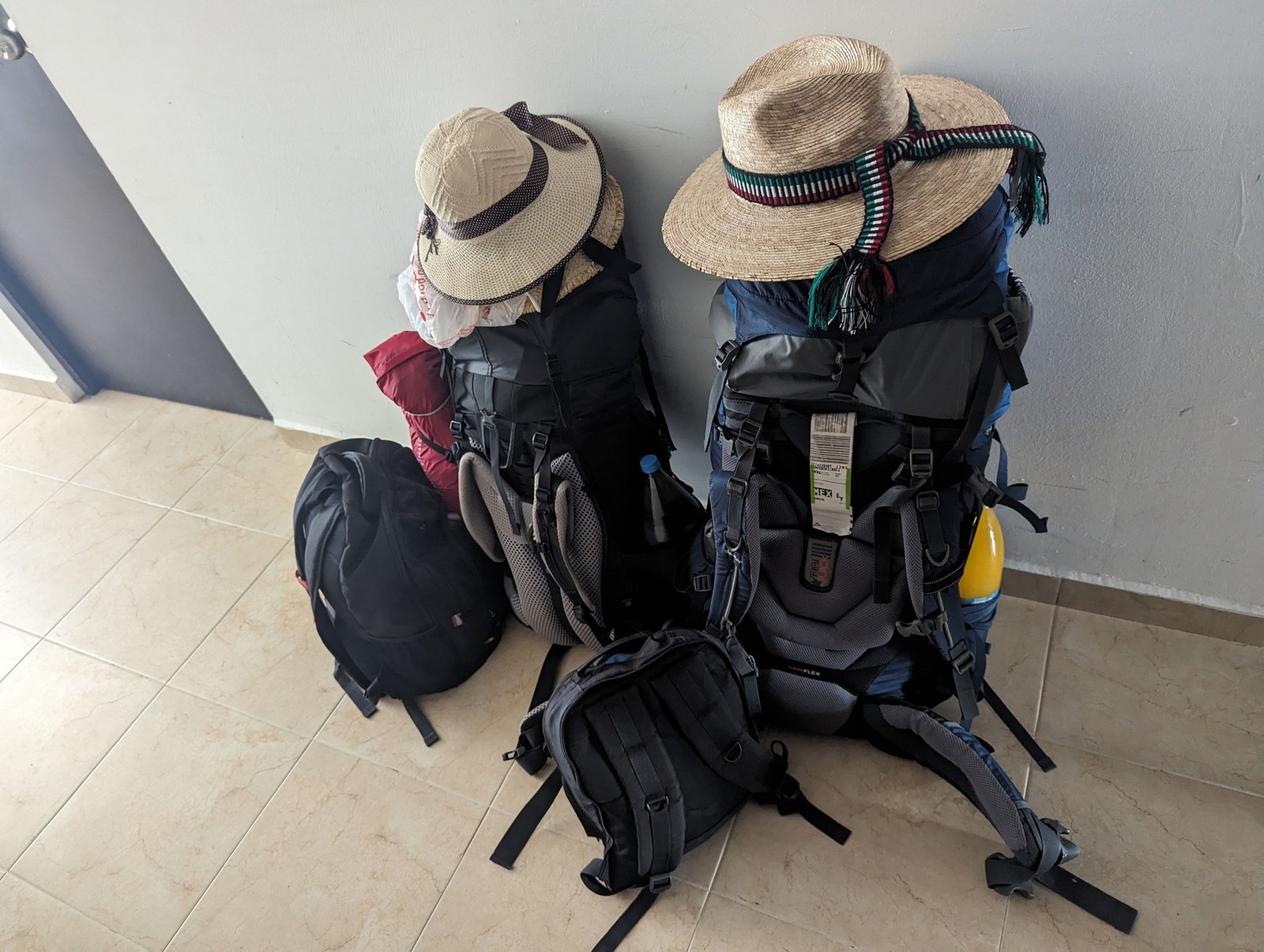
Luckily we still had our passports and phones. What hurt most, though, wasn’t the electronics themselves but the material from the trip. We regularly uploaded most photos and videos to the GoPro cloud and also to the hard drive – so in theory they were backed up twice. Unfortunately the phone app didn’t show any errors when some files failed to upload. As it later turned out, the error messages are only visible in the browser version, which is less convenient and more time-consuming. Because of that I lost about 10% of the material from the whole trip – which is why some posts from this journey are missing photos or footage of certain places. (The photo of the backpacks above is just for illustration – we took it back in Mexico.)
Insurance and going back to Poland
Insurance didn’t go well either. Before the trip we hadn’t thought about theft cover at all – and it wasn’t entirely a conscious decision. Under the policy with one insurer we should have received at most 200 euros in compensation, but we got neither the money nor even a reply. With the second one we hadn’t bought the theft option, which is a pity, because it covered up to about €470. For a long time I wrestled with the idea of starting an online fundraiser to cover the losses, but in the end I decided it made no sense.
We had already decided earlier to shorten the trip and drop some of our plans. After the theft I didn’t have the energy to carry on, and we decided that I would go home even earlier. Patrycja continued through Peru as planned and returned at the end of July. We said goodbye on 17 June in Lima, from where Patrycja headed towards Arequipa. On 19 June I flew from Lima via Madrid to Berlin, and on 21 June I was back in Poland. Changing the flight date cost half the price of the original ticket.
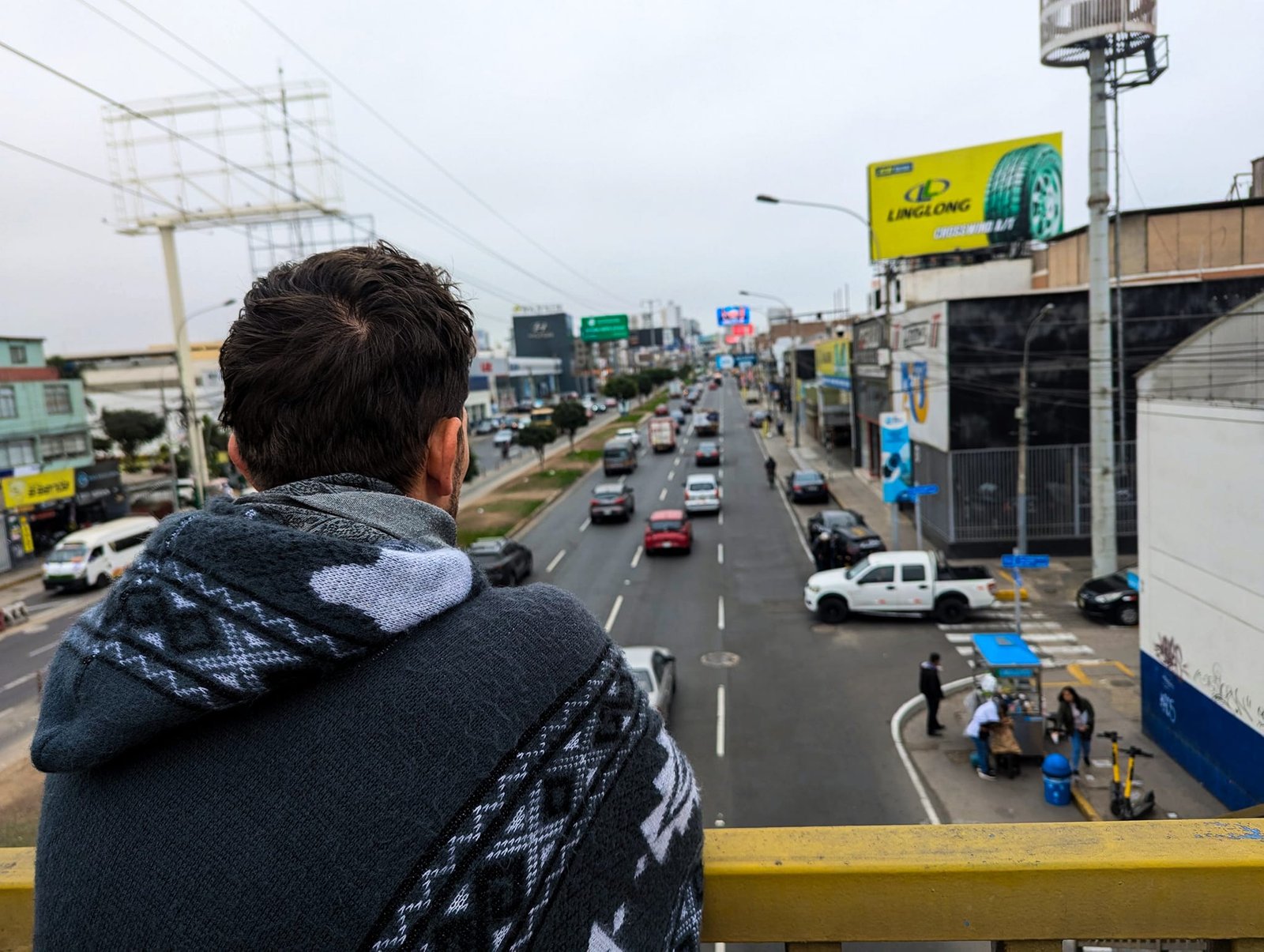
It wasn’t an easy decision, and there was no perfect solution. I missed Peru, which I cared about most, and Bolivia, where I was going to seriously improve my mountain altitude record. Looking back, I regret that this one night cut the end of the trip short, but even then I decided that a few years later I would return to Peru and make up for Bolivia.
Practical information – how to protect your gear on a bus
Latin America isn’t considered a safe region, but if you follow a few simple rules you can avoid most unpleasant situations. In eight months, apart from this theft, we had only one bad experience: attempts to rip off tourists in Nicaragua. Bus thefts happen all over the region, though – locals say “no dar papaya” (“don’t give papaya”), meaning don’t give a thief the opportunity. Here is what we learned from that night:
- Keep the backpack with your valuables on your lap. Not under the seat or on the rack. Not at your feet either, unless the bus has a footrest that stops things from sliding. This was the least professional night bus we took on the whole trip: no curtains, the least comfortable seats and, yes, no footrest. To make matters worse, it was probably the only night bus on which anyone could have robbed us like that at all.
- Don’t obey every “employee”. Someone who tells you to fasten your seatbelt and put your luggage under the seat or on the rack may not be staff at all. In South America that kind of concern for the rules should make you suspicious rather than reassured.
- Watch who sits behind you and next to you – especially if someone takes those seats right after the “driver” has looked over your luggage.
- Luggage overhead – always keep an eye on it. It’s best to keep your most valuable things on you – things can disappear from the luggage hold too (in Costa Rica we lost a tent strapped to the side of a backpack that way).
- On long routes choose professional buses or tourist shuttles, if you have the choice.
- Check that your backup has actually been made. Some of my footage was lost because not all files uploaded from the GoPro app to the cloud. Whatever app you use, check every now and then – ideally in the browser version – that all your photos and videos really have been backed up.
- Insurance with theft cover. On a trip lasting several months with a laptop and cameras, it’s an expense I wouldn’t skip today.
I wrote more about safety in this part of the world in my Guatemala summary – nothing bad happened to us there, as it happens.