After Tikal we headed south to the small town of Lanquín, which we reached on the evening of 22 December 2023. The town itself does not have much to offer, but a dozen or so kilometres away lies one of the best-known places in Guatemala – the natural monument of Semuc Champey: a cascade of limestone pools with turquoise water, with the Cahabón River flowing underneath. We visited it on 23 December, just before Christmas.
Table of contents
- Lanquín
- In the back of a pickup to Semuc Champey
- The viewpoint above the pools
- A swim in the turquoise pools
- Practical information
Lanquín
From Flores to Lanquín the trip takes almost the whole day. Before 10:00 we were at the crossing of the La Pasión River in Sayaxché – there is no bridge, so cars and trucks are carried to the other bank on flat ferries (work on a bridge only resumed in 2025). Further on, the road heads south through the Alta Verapaz department – a sign on highway CA-14 still showed 129 km to Cobán and 343 km to the capital. In the afternoon we passed Cobán and reached Lanquín after 5 pm.


There is not much to see in Lanquín – a market and a few churches, while pickups carrying people to Semuc Champey and the nearby villages drive along the main street every few minutes. It is a good base for Semuc Champey.
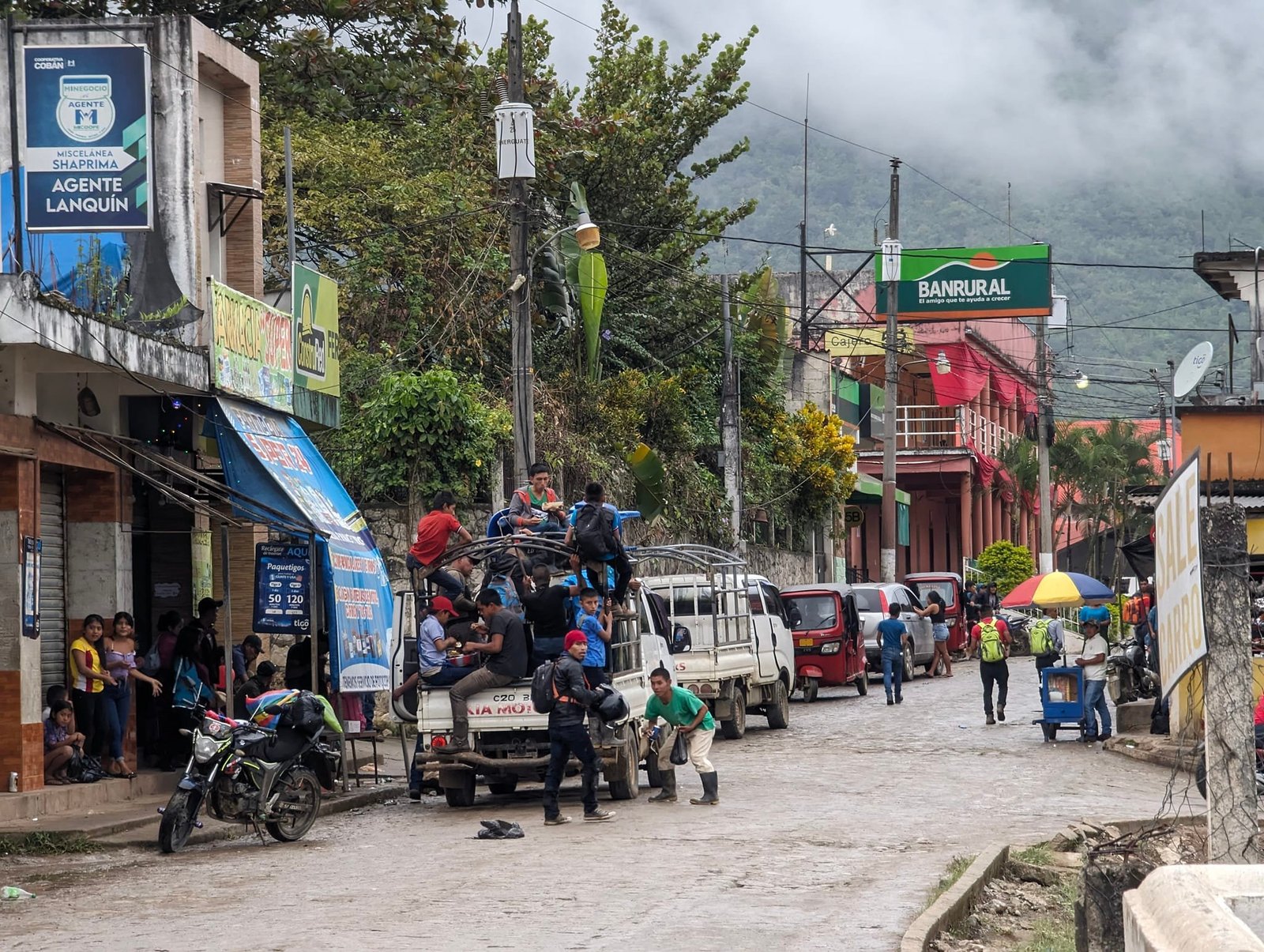
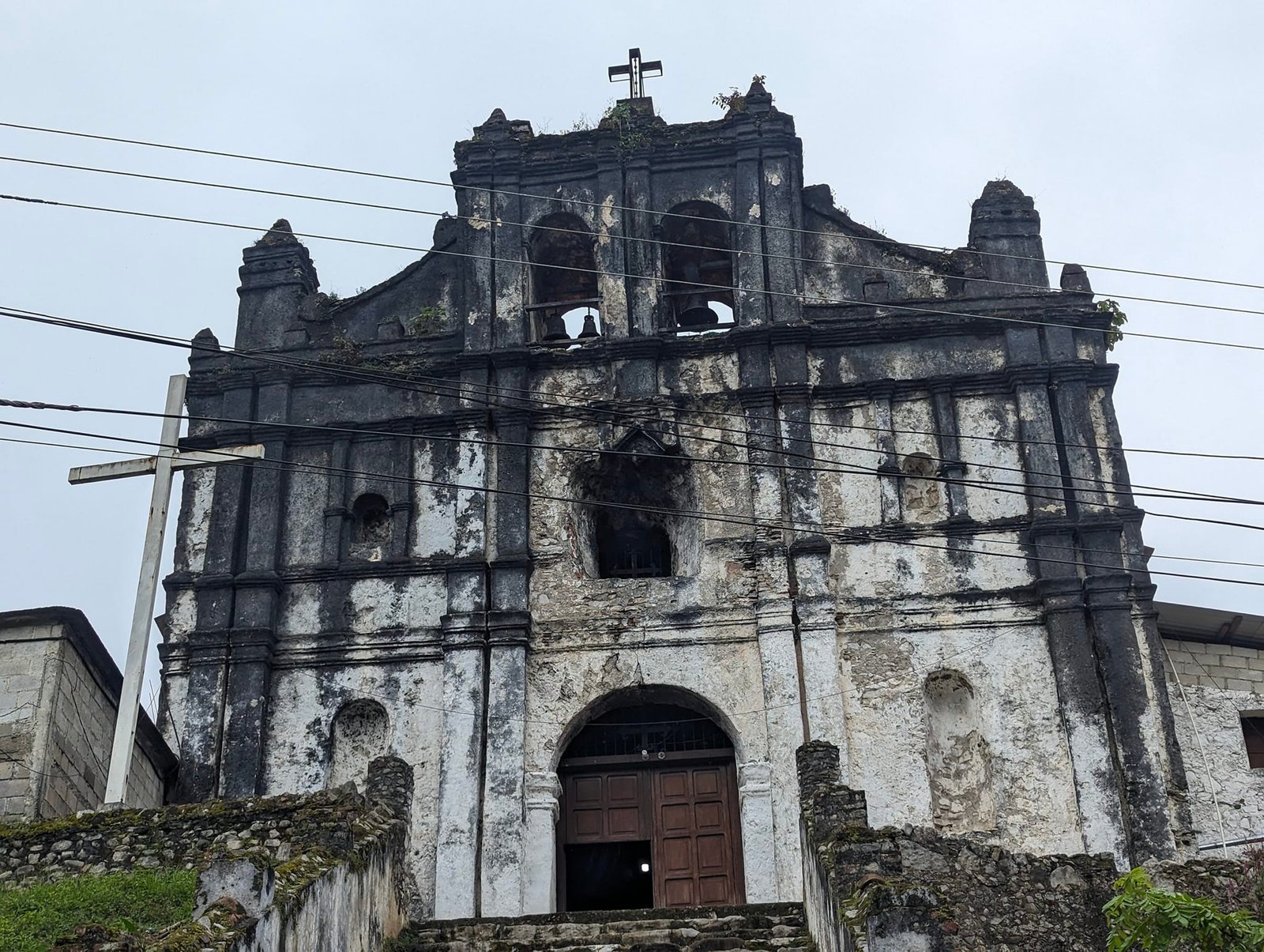
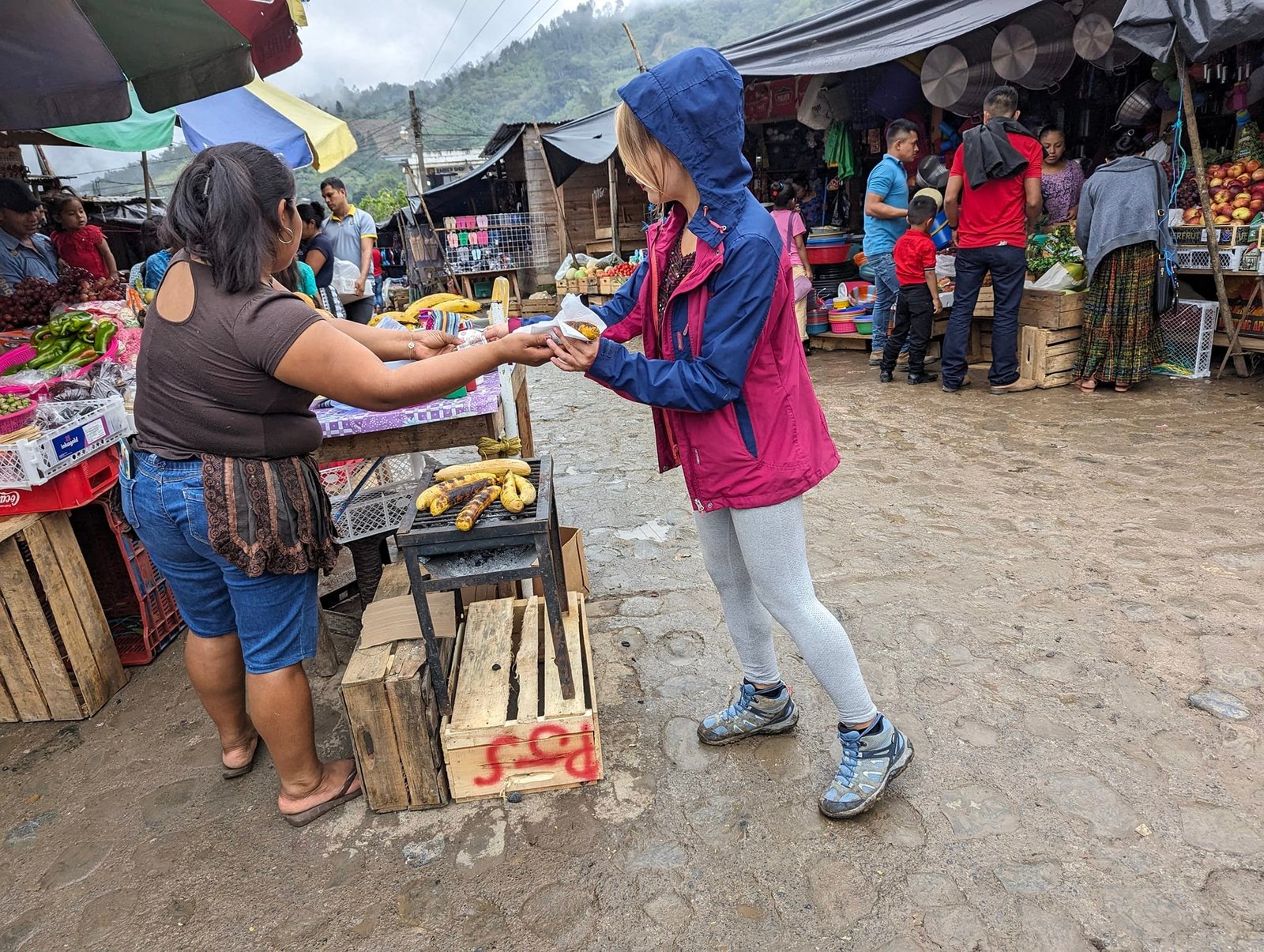
Lanquín lies in a valley at about 380 m above sea level. According to the 2002 census the municipality had about 16,500 inhabitants, 95% of them Q’eqchi’ Maya. The town was founded by Dominican friars around 1540. A little way from the centre, a small white church stands on a terrace with a balustrade. About 1 km from town begins the Grutas de Lanquín national park – a cave system from which thousands of bats fly out at dusk.


In the back of a pickup to Semuc Champey
As usual, though not always, we went on our own. Pickups leave the town regularly and take you there for 25 GTQ (about €3) one way. The road is interesting – bumpy and winding, through a green valley. On the way there we had seats in the cab, and on the way back we rode standing in the back, holding on to the rail and keeping our balance on every bend. We got wet, but we could feel like locals.
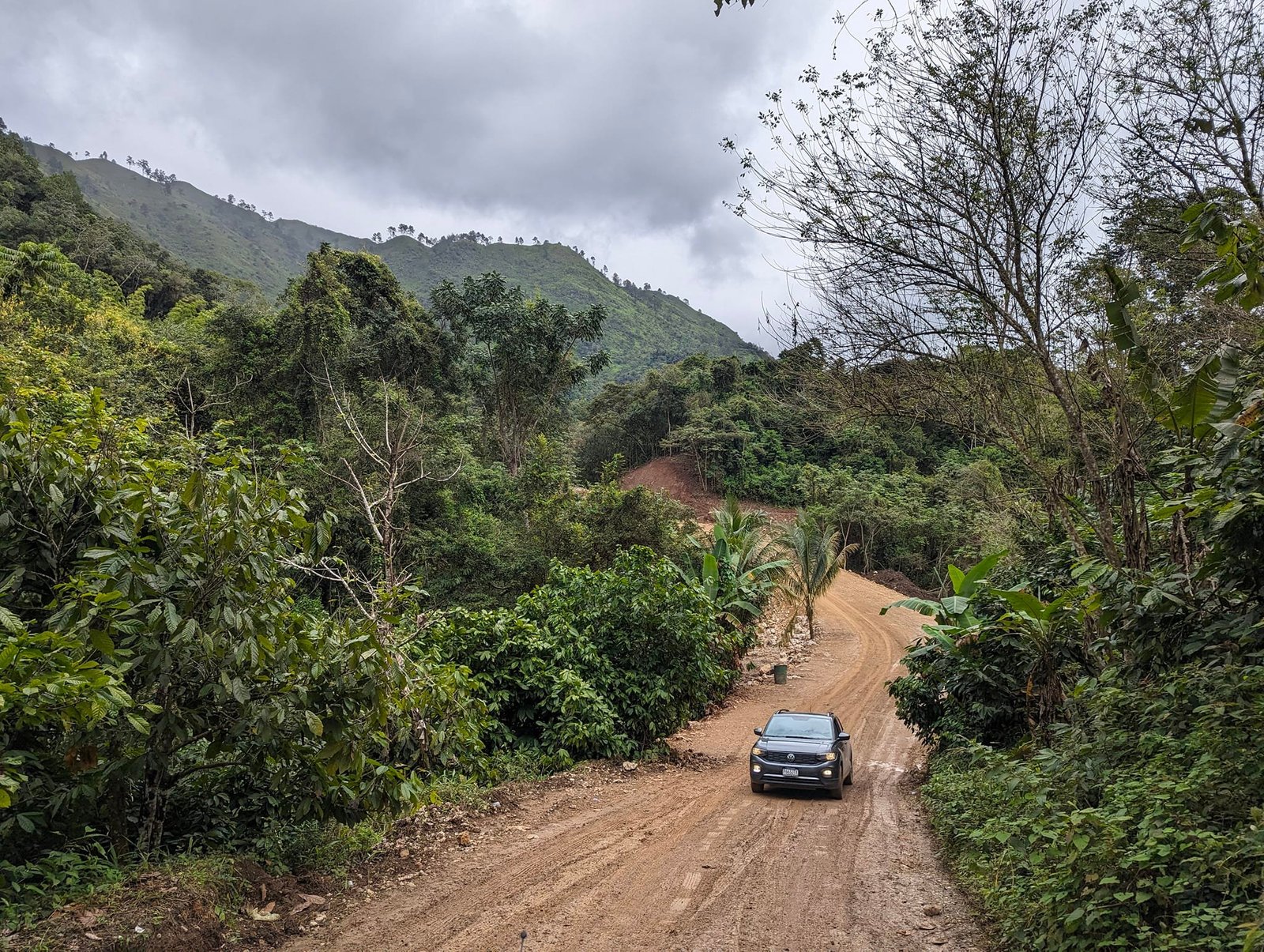
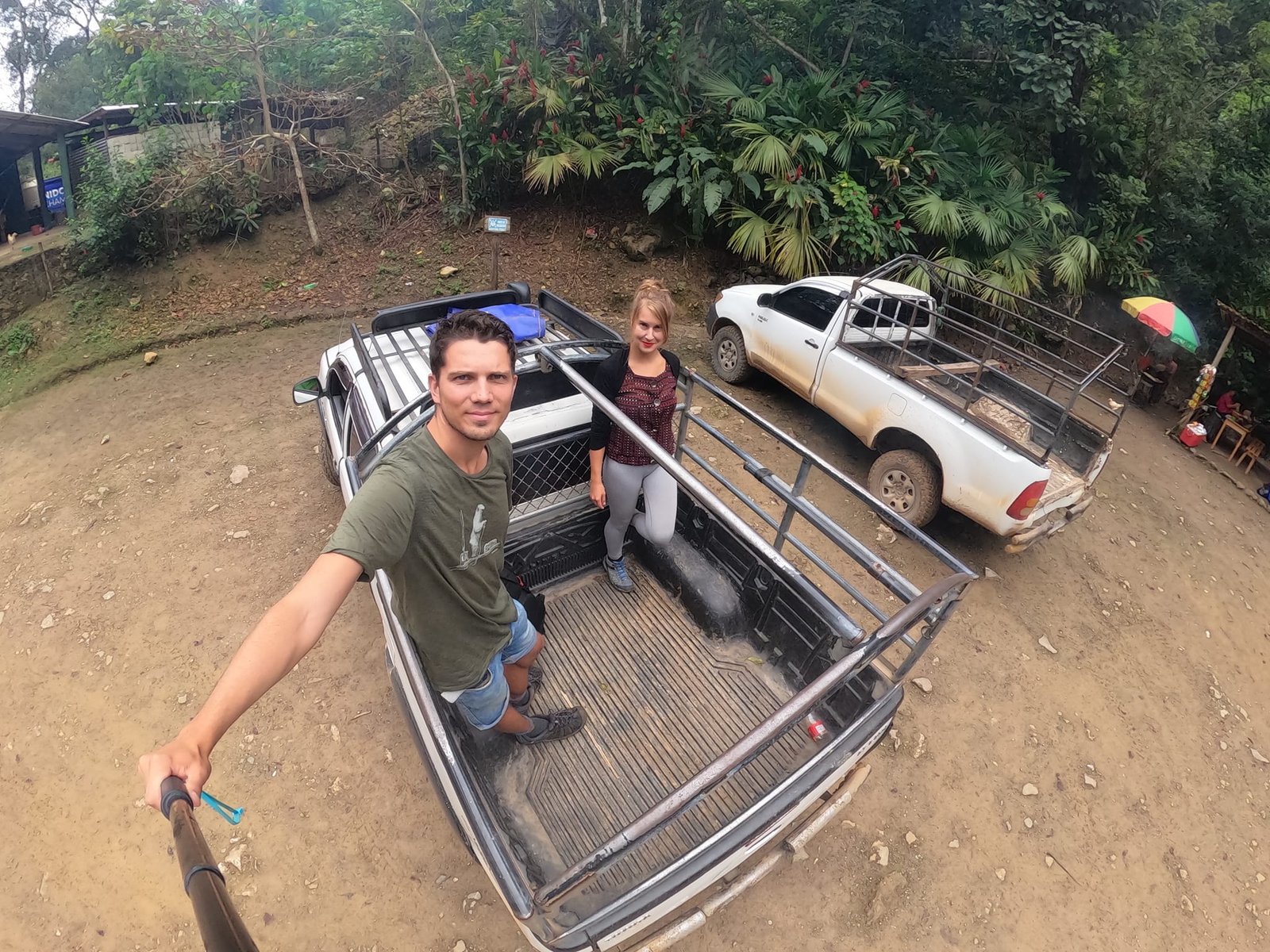
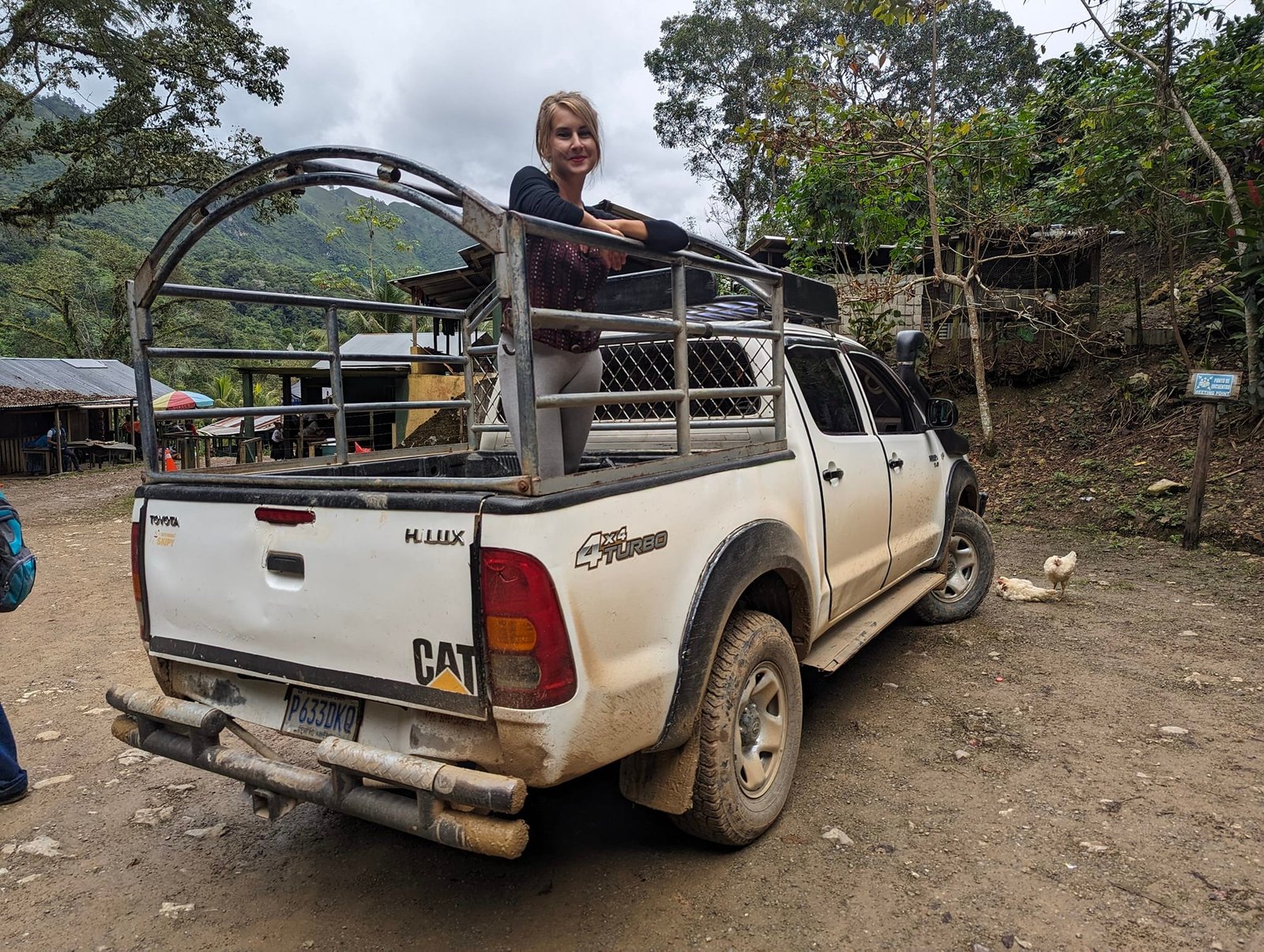
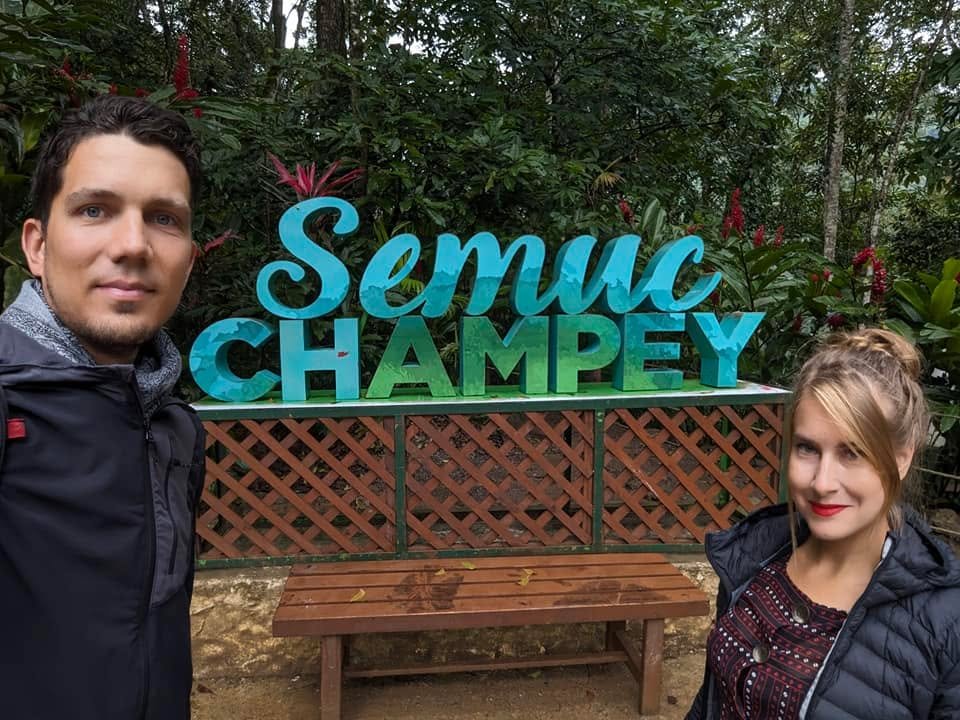
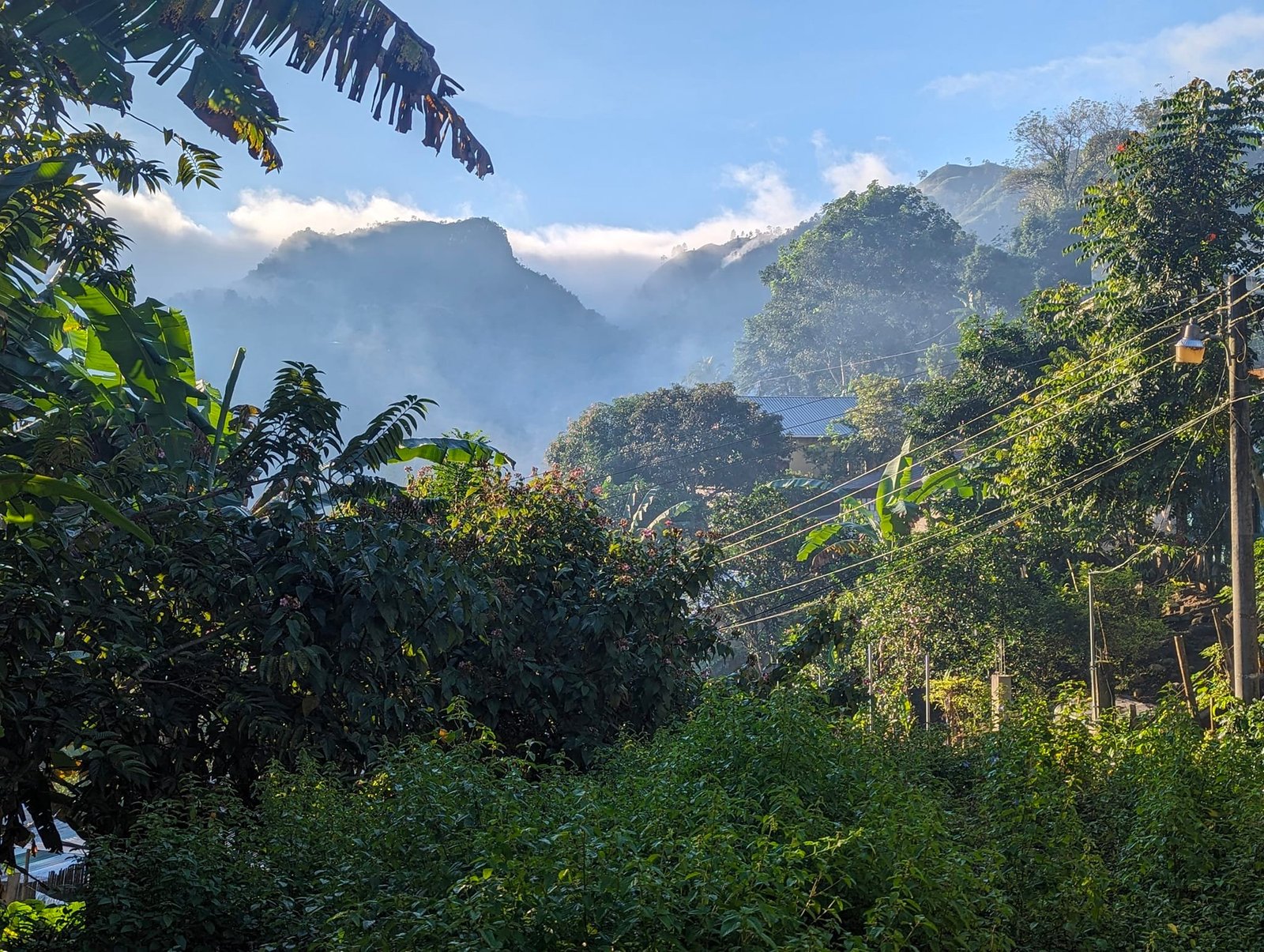
Semuc Champey lies about 11 km south of Lanquín, and the road follows the valley of the Cahabón River, which that morning was wrapped in clouds. In the Q’eqchi’ language the name means “where the river hides under the earth”. In 2005 the area was declared a natural monument (Monumento Natural), managed by the national council for protected areas, CONAP. Travellers have covered the welcome sign at the entrance with stickers from all over the world.


The viewpoint above the pools
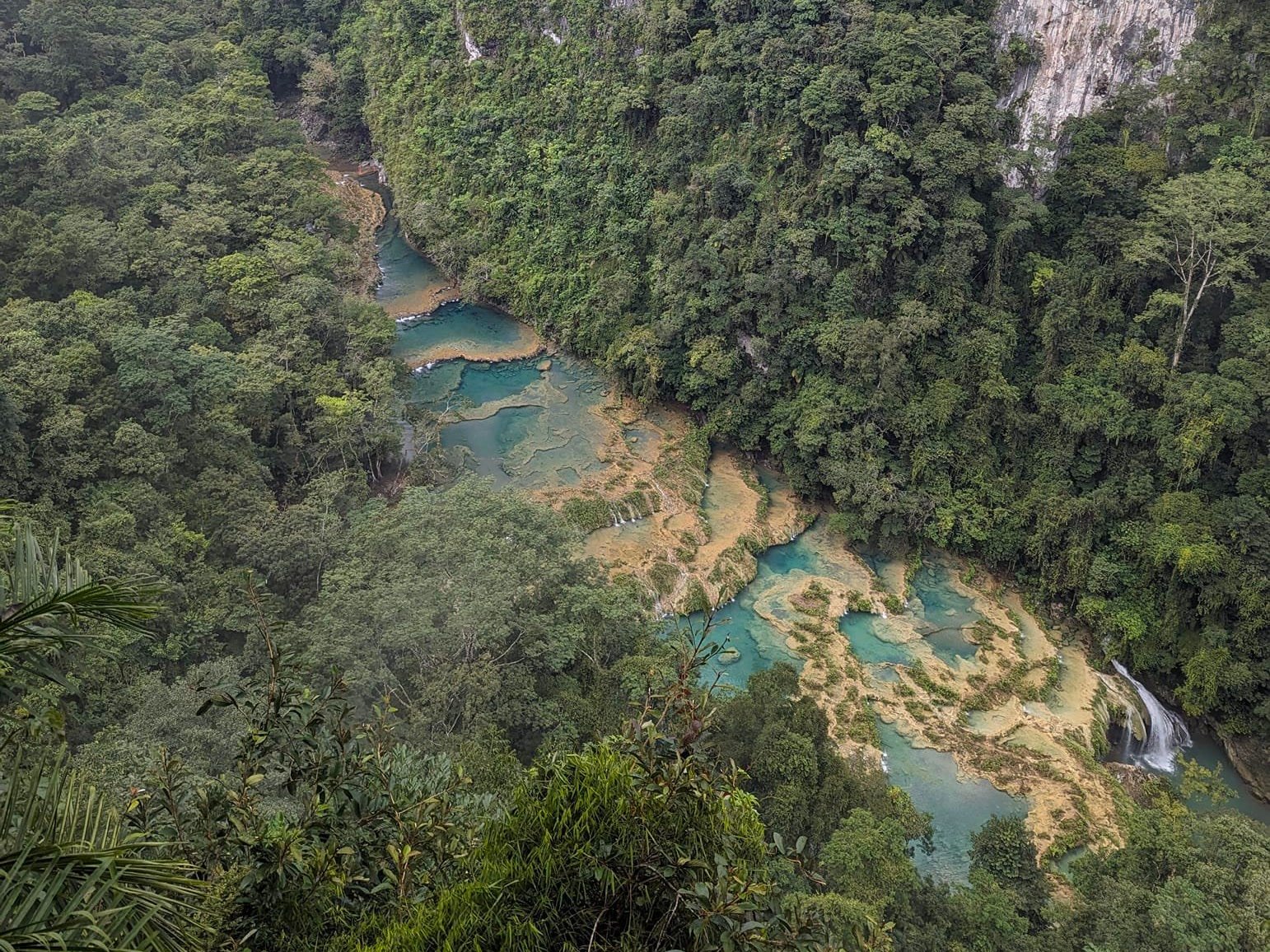
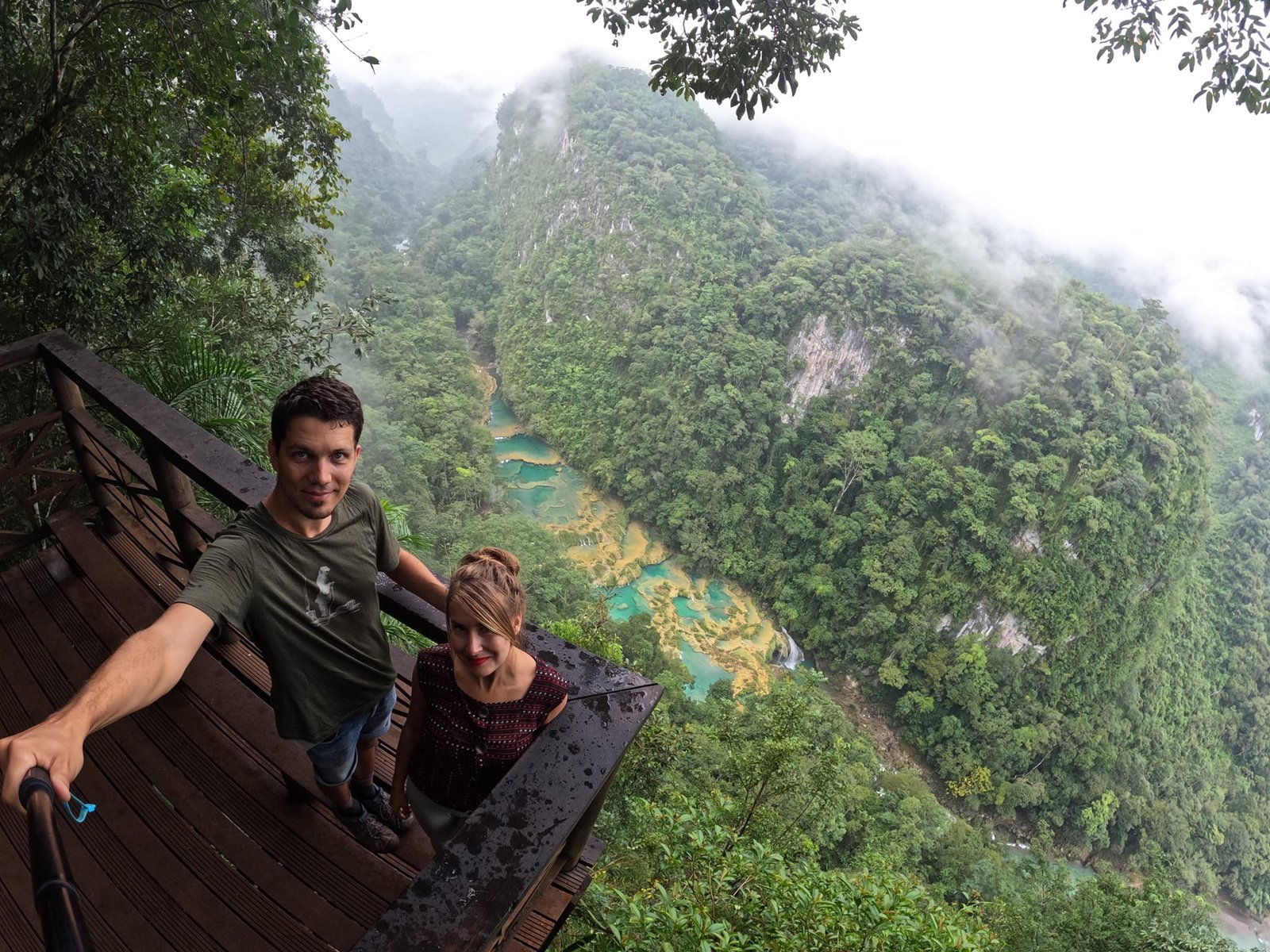
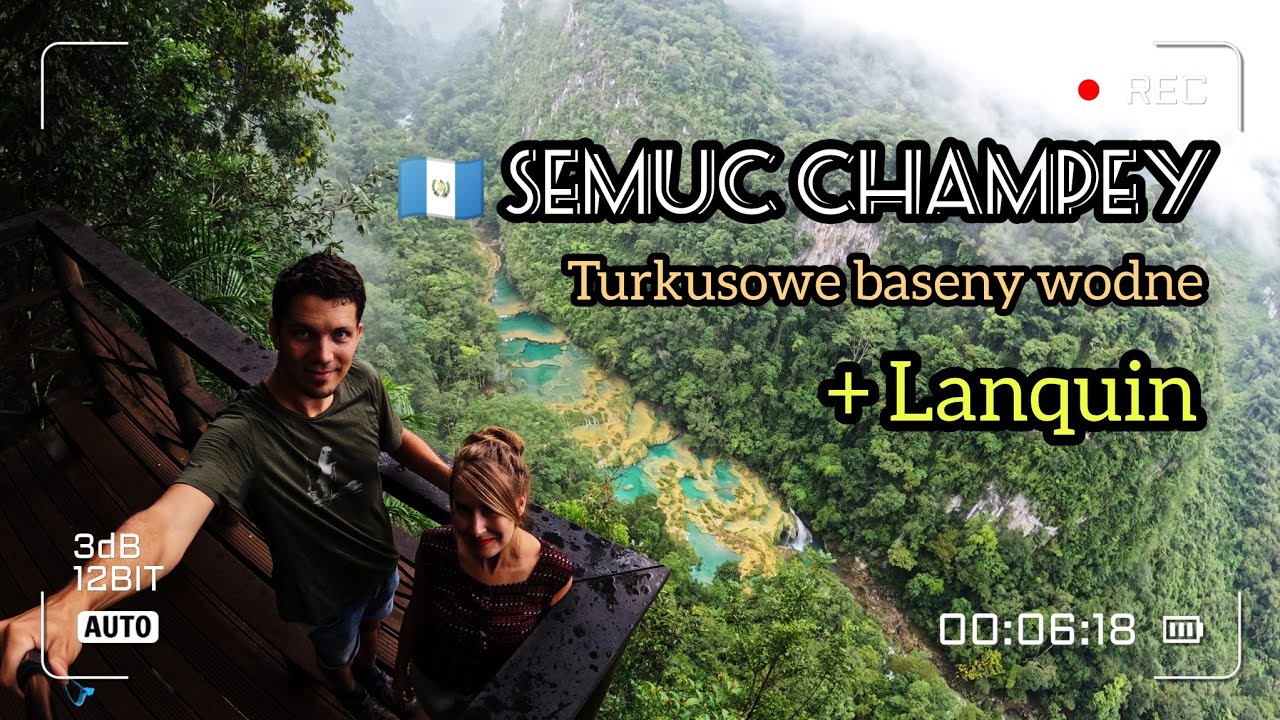
Entry to Semuc Champey cost 50 GTQ (about €6). The jungle begins right behind the ticket office. First we took the path to the viewpoint (mirador), which offers a beautiful view of the turquoise pools in the river valley. By the steps along the trail, local women sell coconuts. At the viewpoint itself, groups turned out to matter more than individual tourists: the security guard practically chased us away because another group was about to arrive – and so on, group after group.
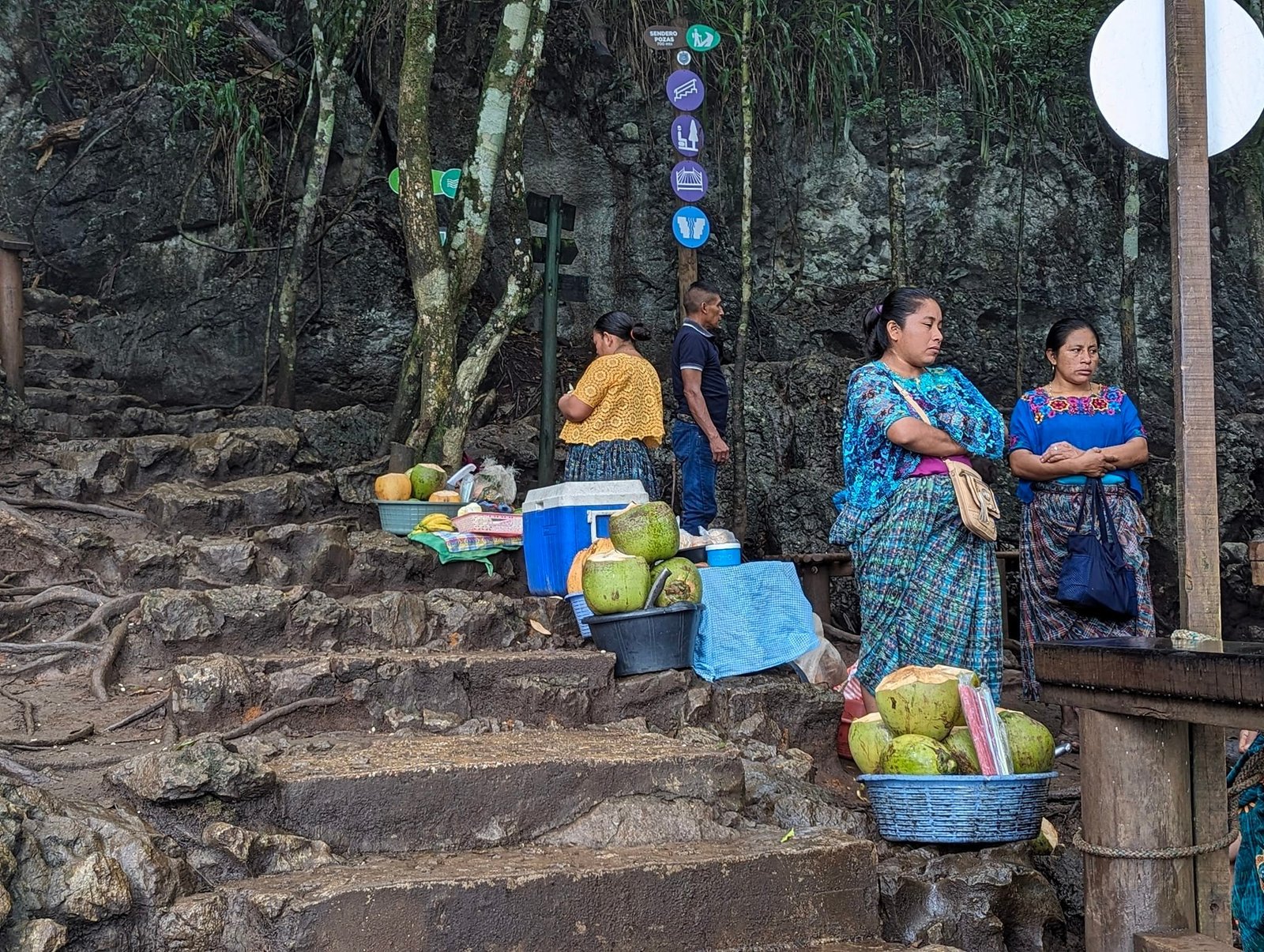
Stone and wooden steps and boardwalks lead through the humid forest to the viewpoint – the climb is steep, and in the mist the steps were wet. According to the map at the entrance, it is the highest mirador, overlooking the whole 350 m or so of pools. The CONAP board recommends bringing swimwear and water shoes, comfortable footwear, water, sunscreen and insect repellent.


A swim in the turquoise pools
After coming down from the viewpoint you can go for a swim. The pools are fairly deep – you can swim in them and even jump in. The water is a bit cool, but it is definitely worth it. The pools lie at different levels and spill over into one another, forming small waterfalls, and the Cahabón River flows beneath them.
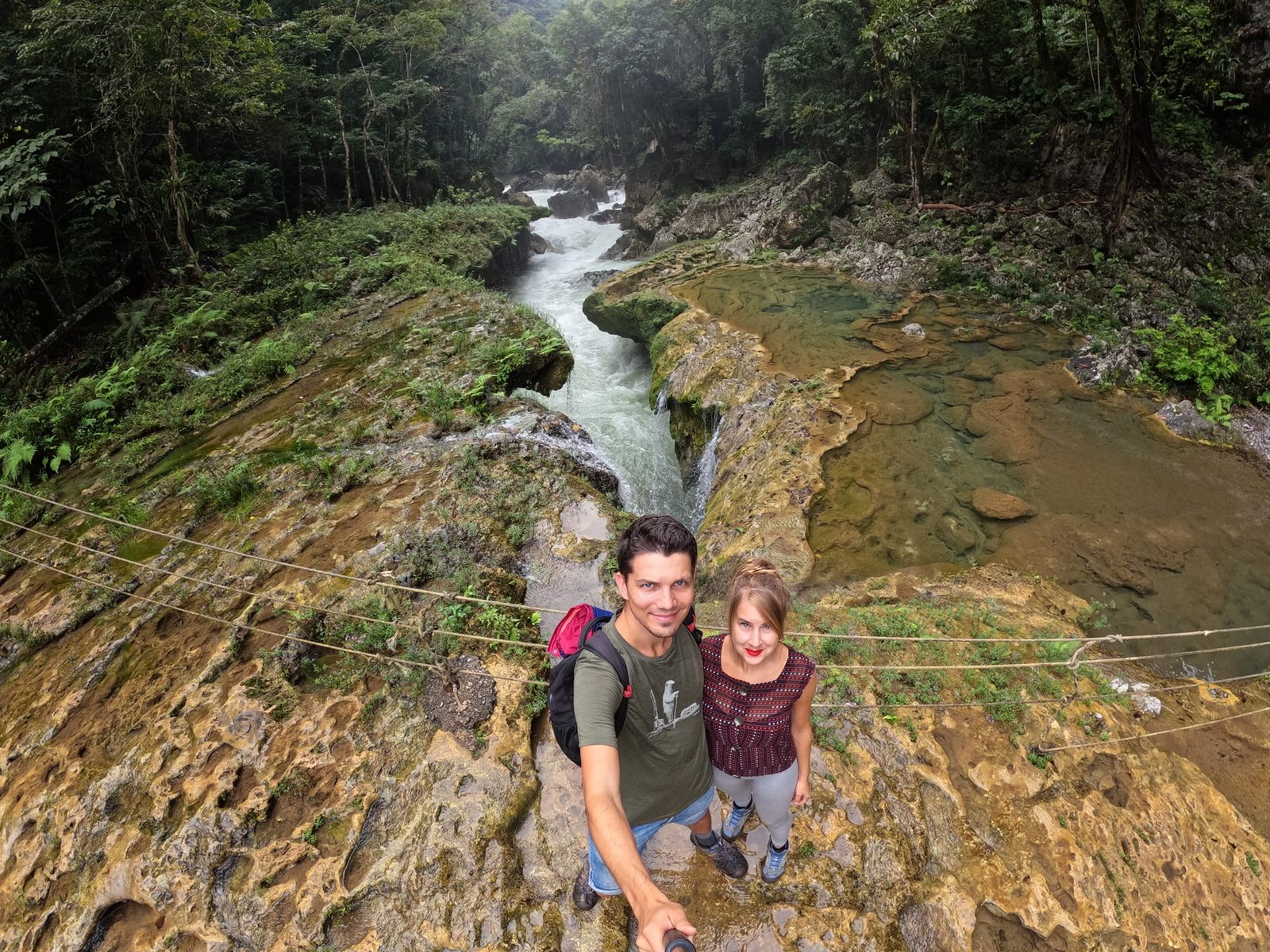
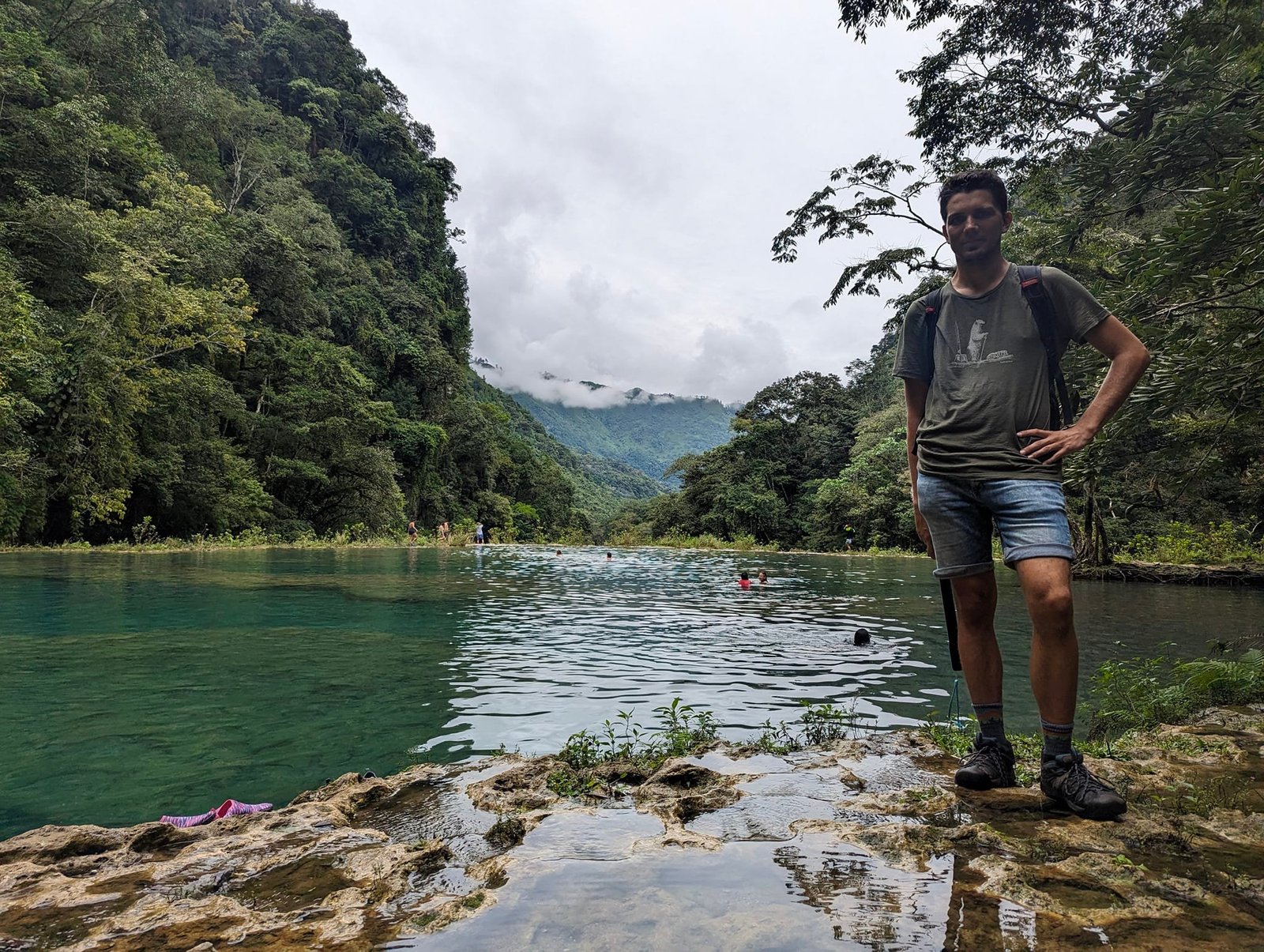
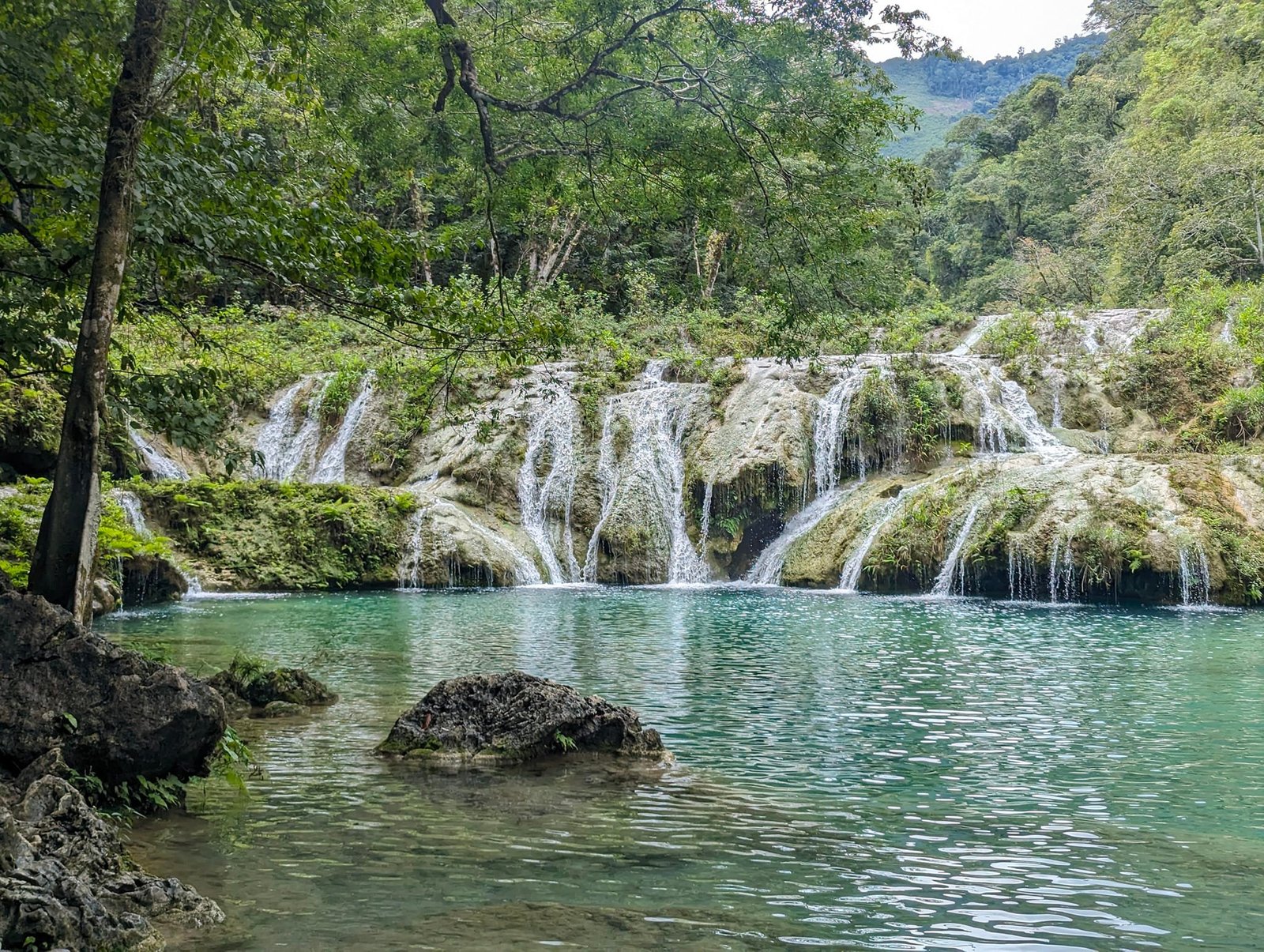
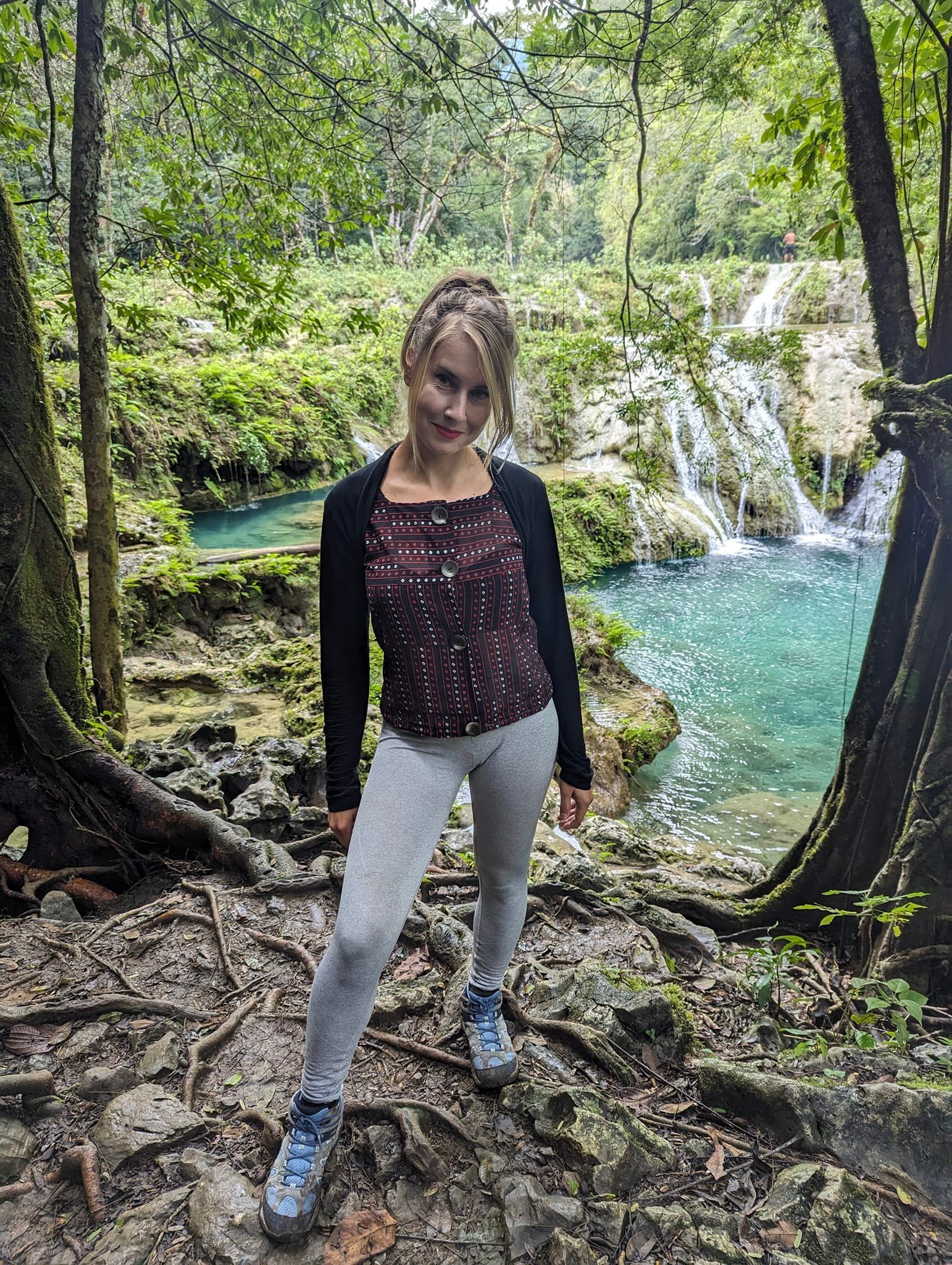
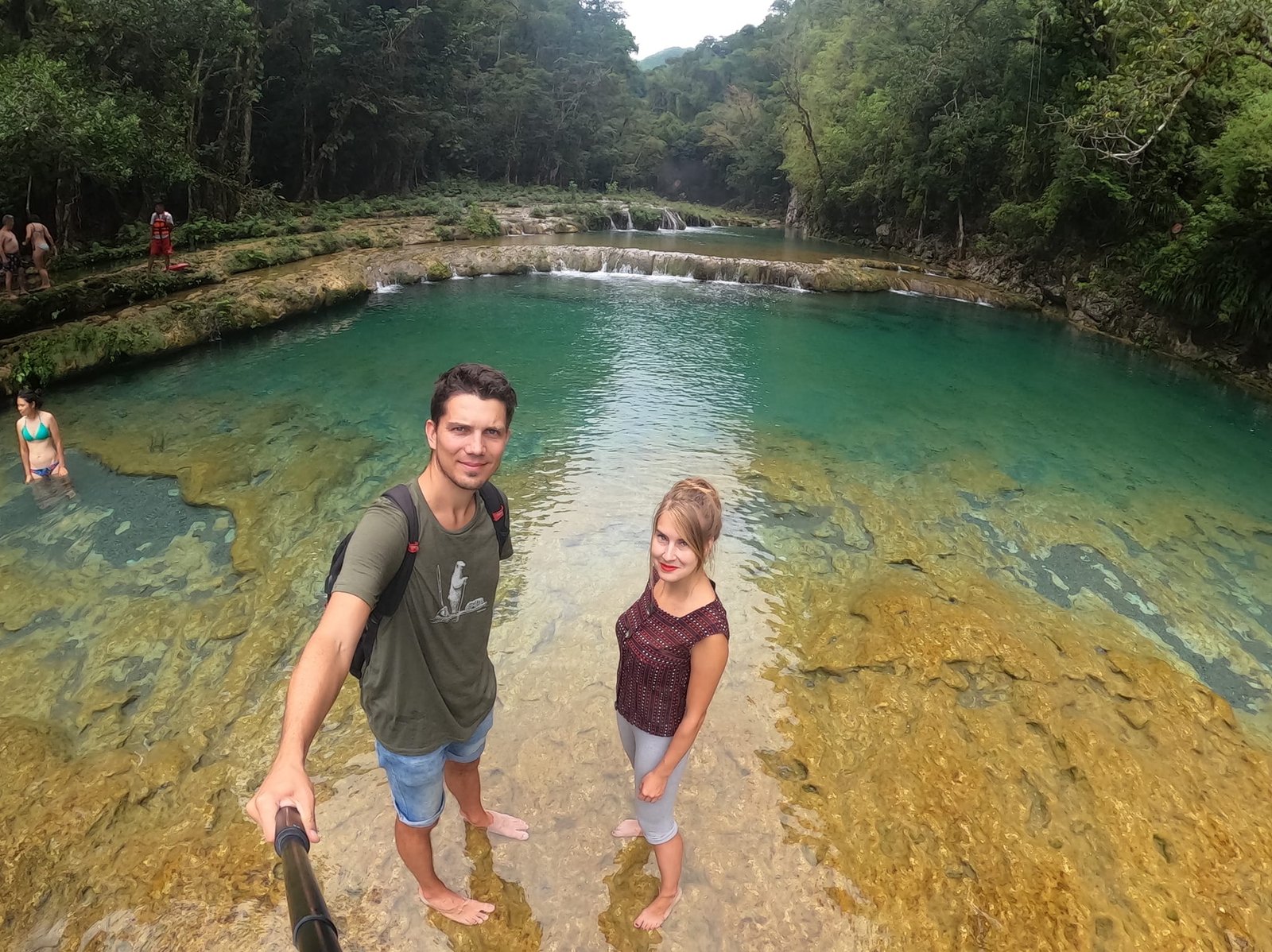
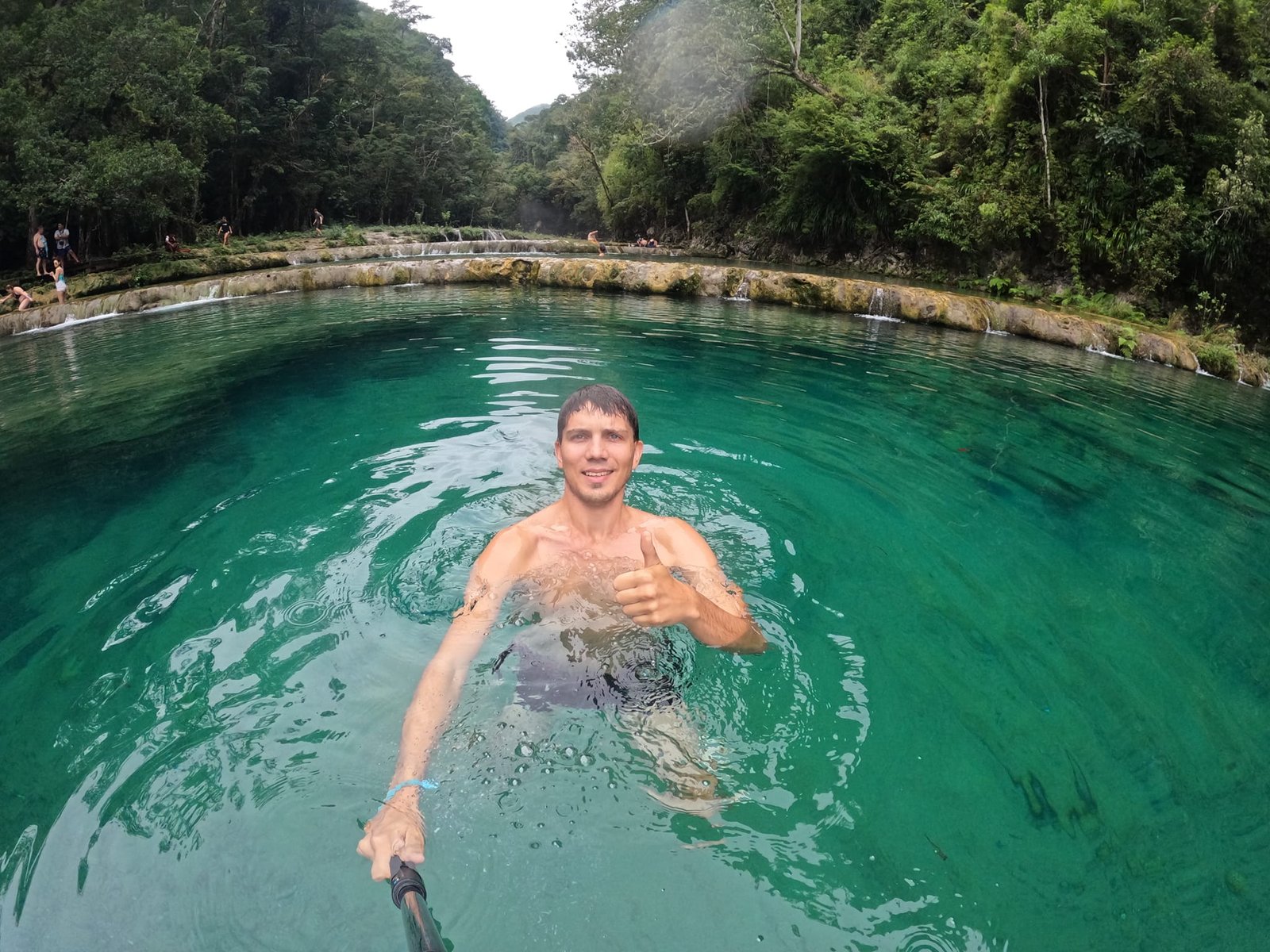
The pools sit on a natural limestone bridge about 300 m long. The Cahabón River plunges beneath it at a spot called El Sumidero, flows through an underground channel and only reappears below the pools. The pools are fed by clear spring water – that is why they are turquoise, while the river next to them is fast and foaming. A signposted path leads to El Sumidero.


It is quite touristy – plenty of guided groups come here, so it is best to arrive first thing in the morning, because later it is hard to take a photo without a crowd. The loop we walked was more than 3 kilometres long. There are also caves in the area, but we gave them a miss.
On Christmas Eve we went to Antigua Guatemala, where we stayed for over a month for a Spanish course; I write about what Christmas was like there in the post Christmas in Latin America.
We travelled to Antigua by shuttle bus with Coban Travels, booked online: departure at 8:00 from the Puma petrol station in Lanquín, arrival at Parque Central in Antigua. Luggage travels on the roof. On the way you pass through Cobán – the capital of the Alta Verapaz department, a region of coffee and cardamom. Alta Verapaz produces about 70% of Guatemala’s crop of this spice, and Guatemala is its largest exporter in the world.


Practical information
- Pickup from Lanquín – 25 GTQ (about €3) per person one way (December 2023); they leave regularly from the town centre.
- Entrance ticket – 50 GTQ (about €6).
- Timing – best in the morning, before the organised tours arrive.
 4:59
Photo gallery