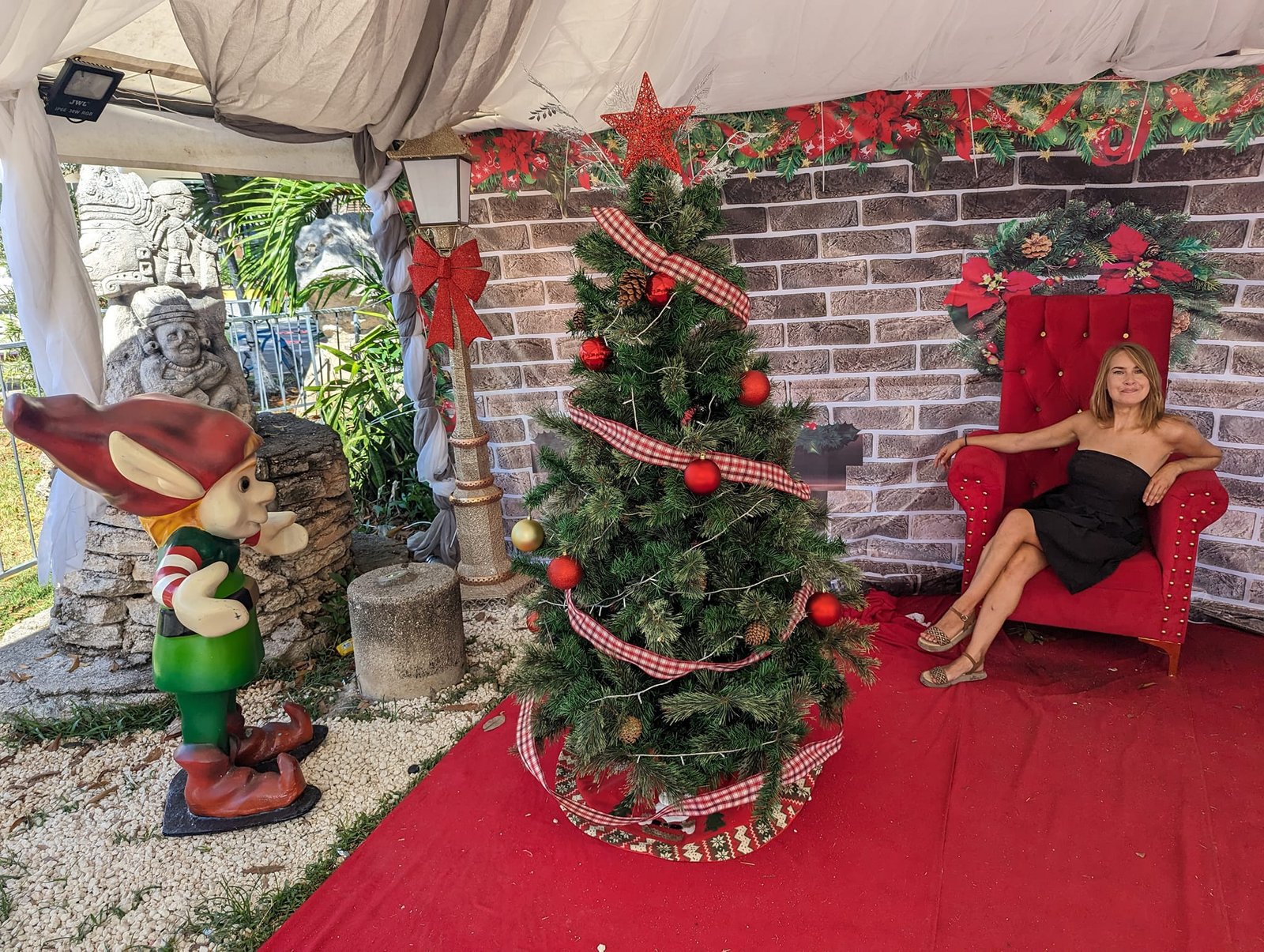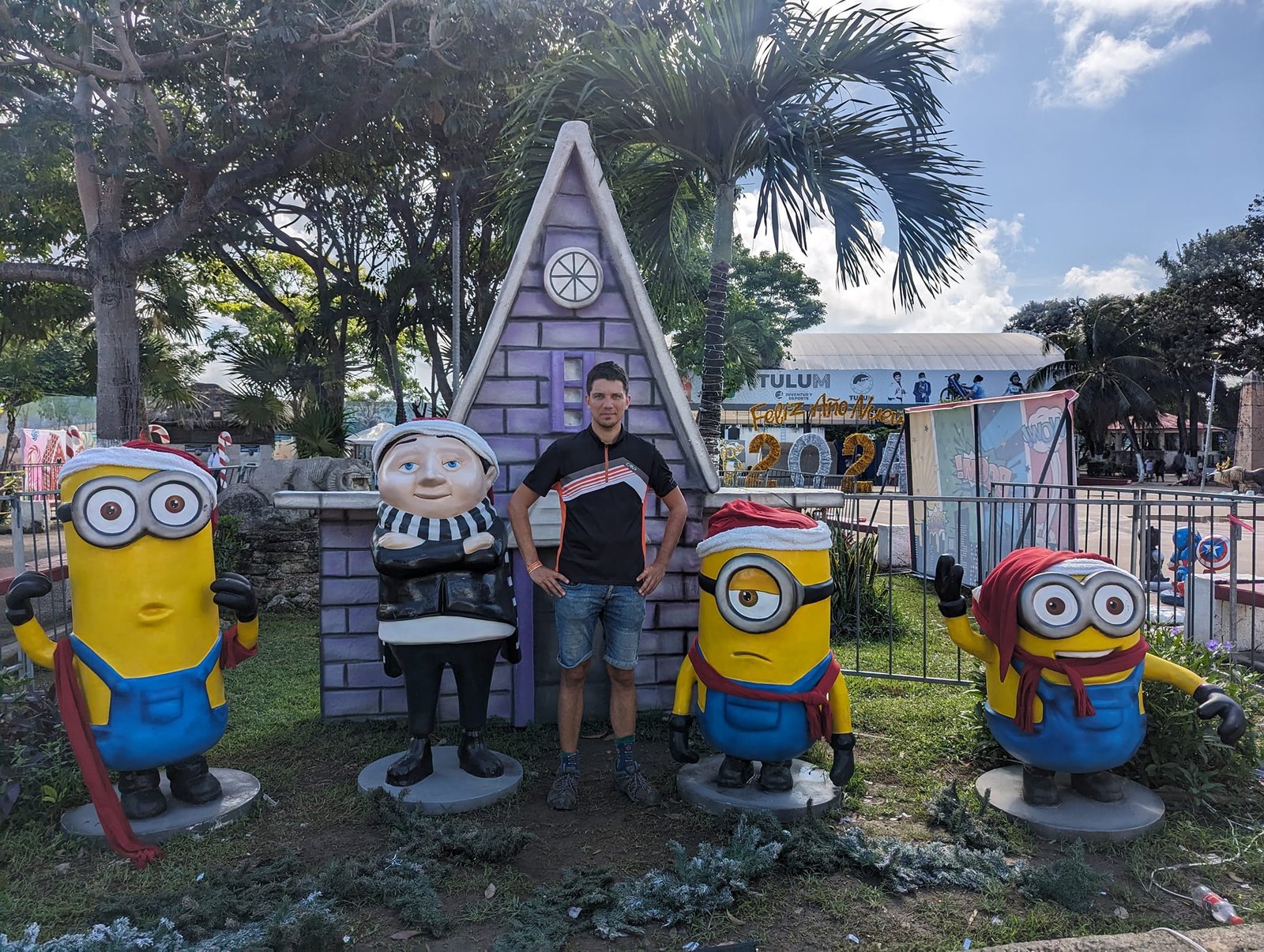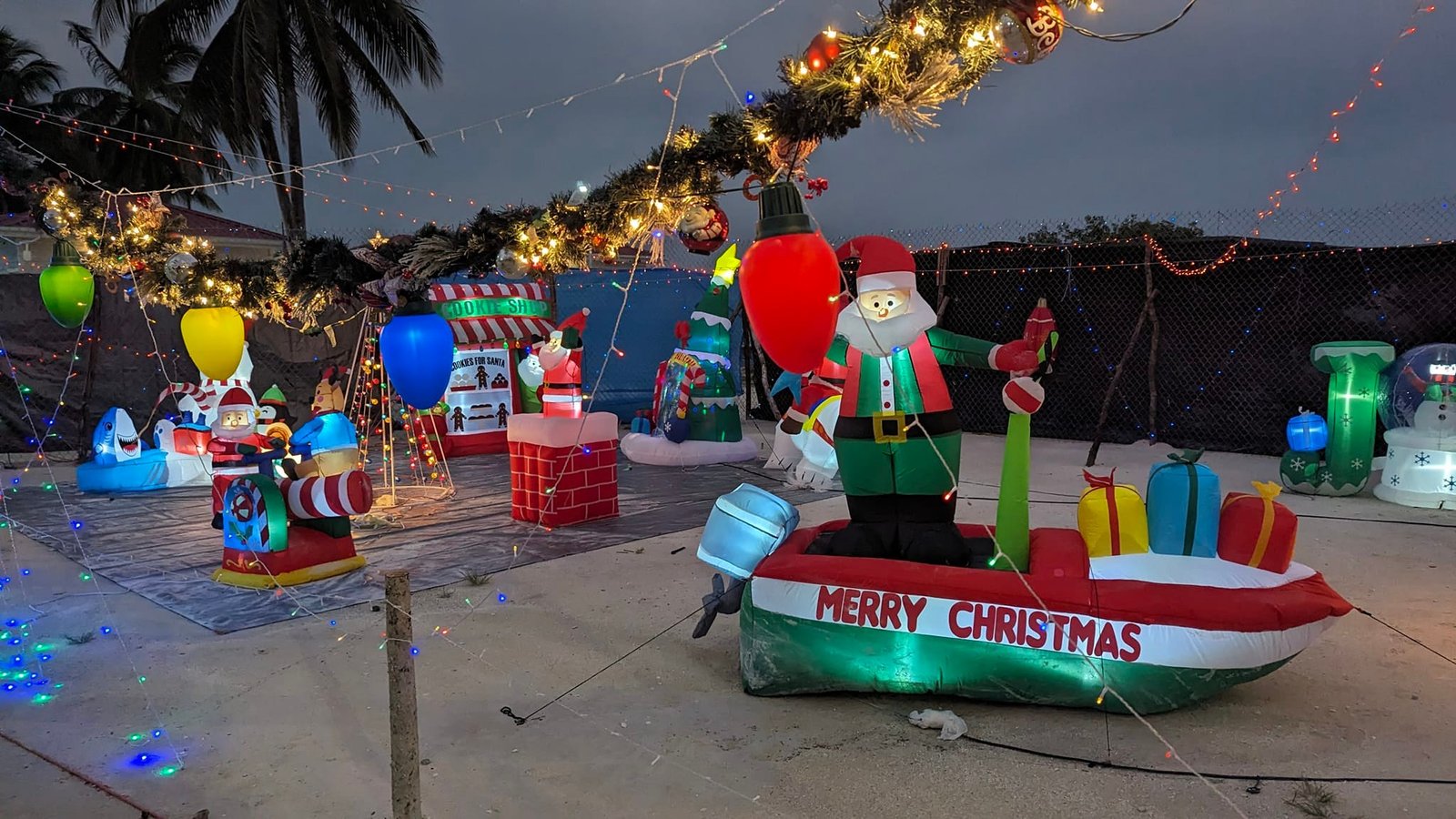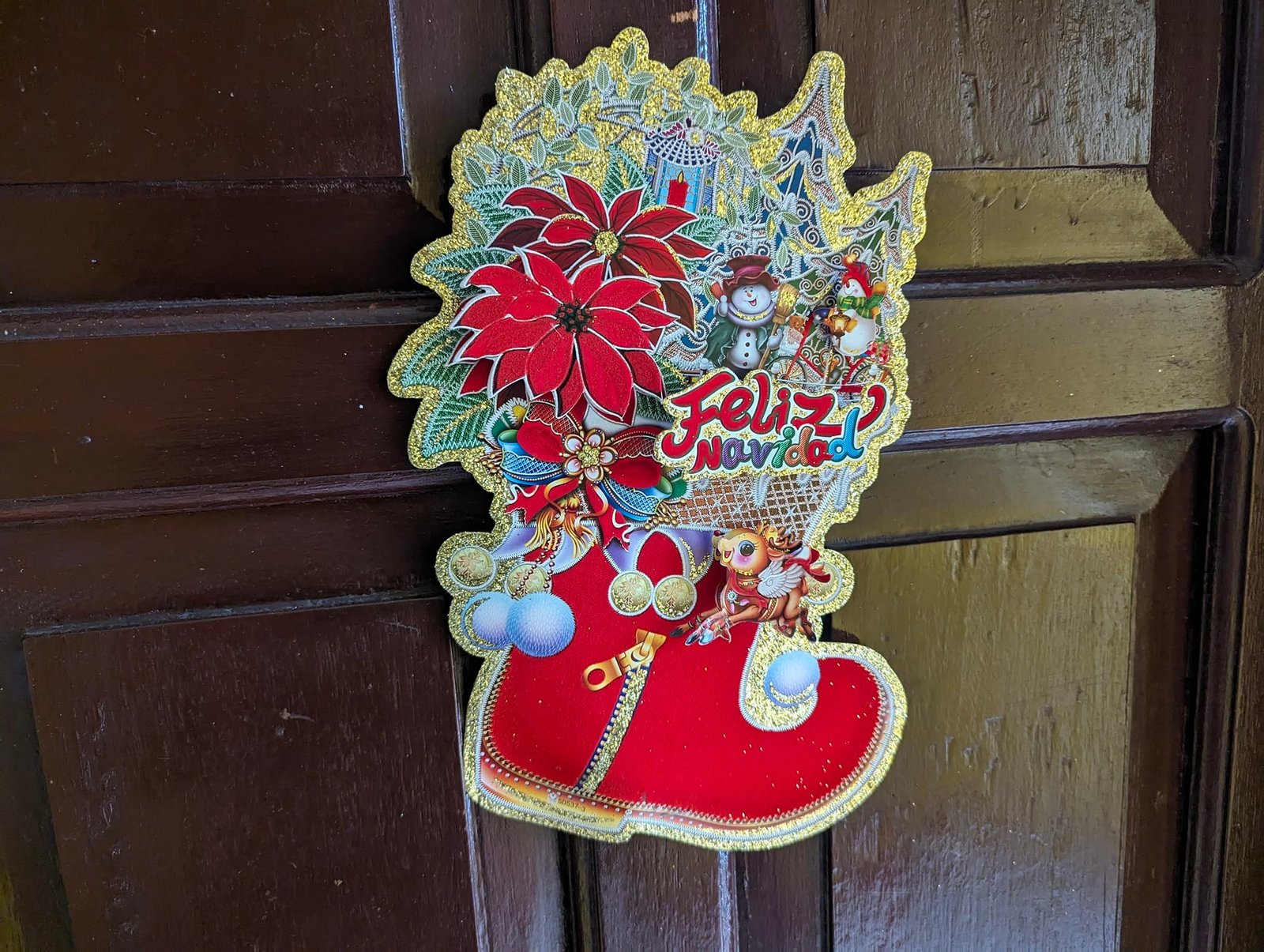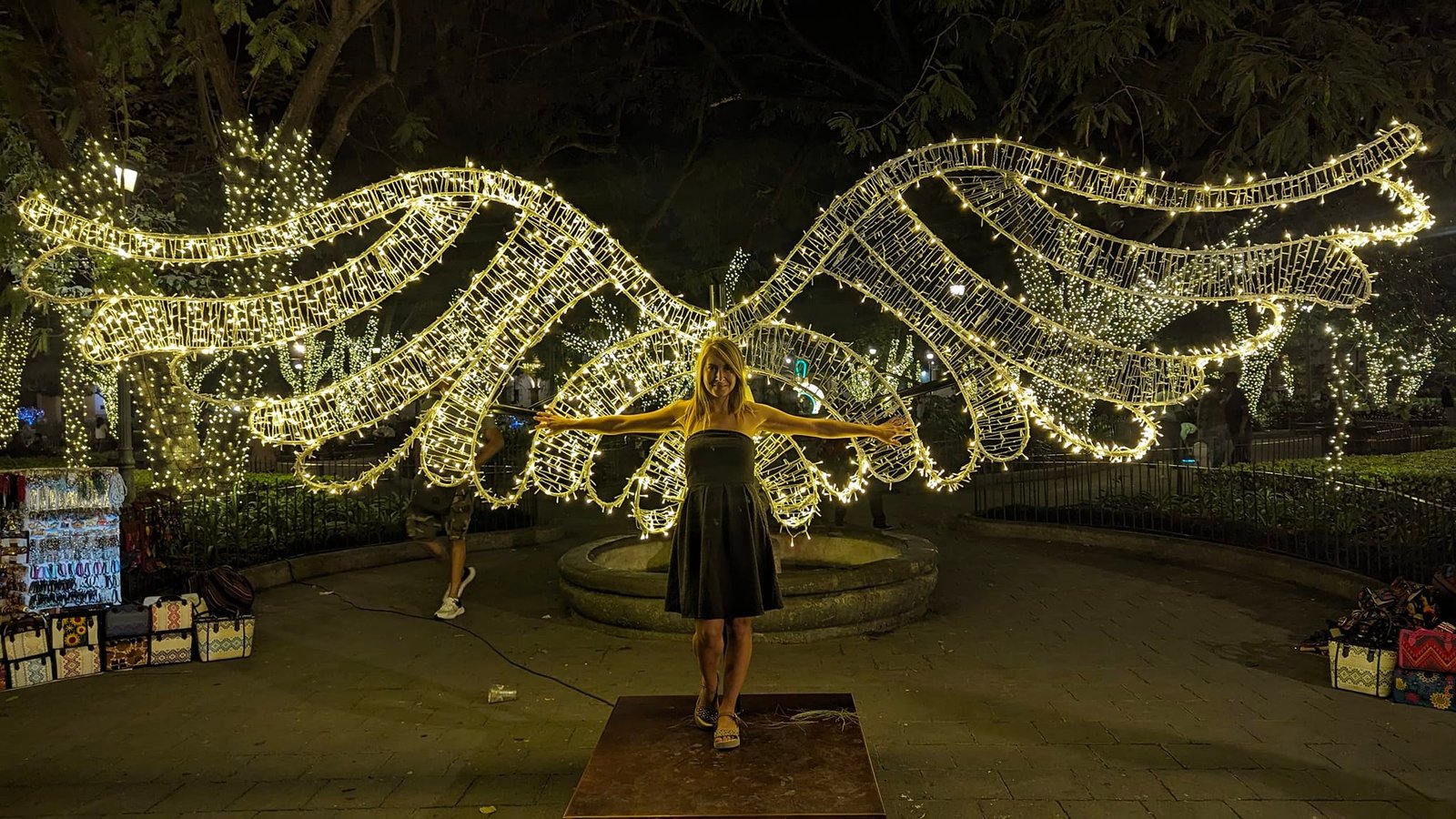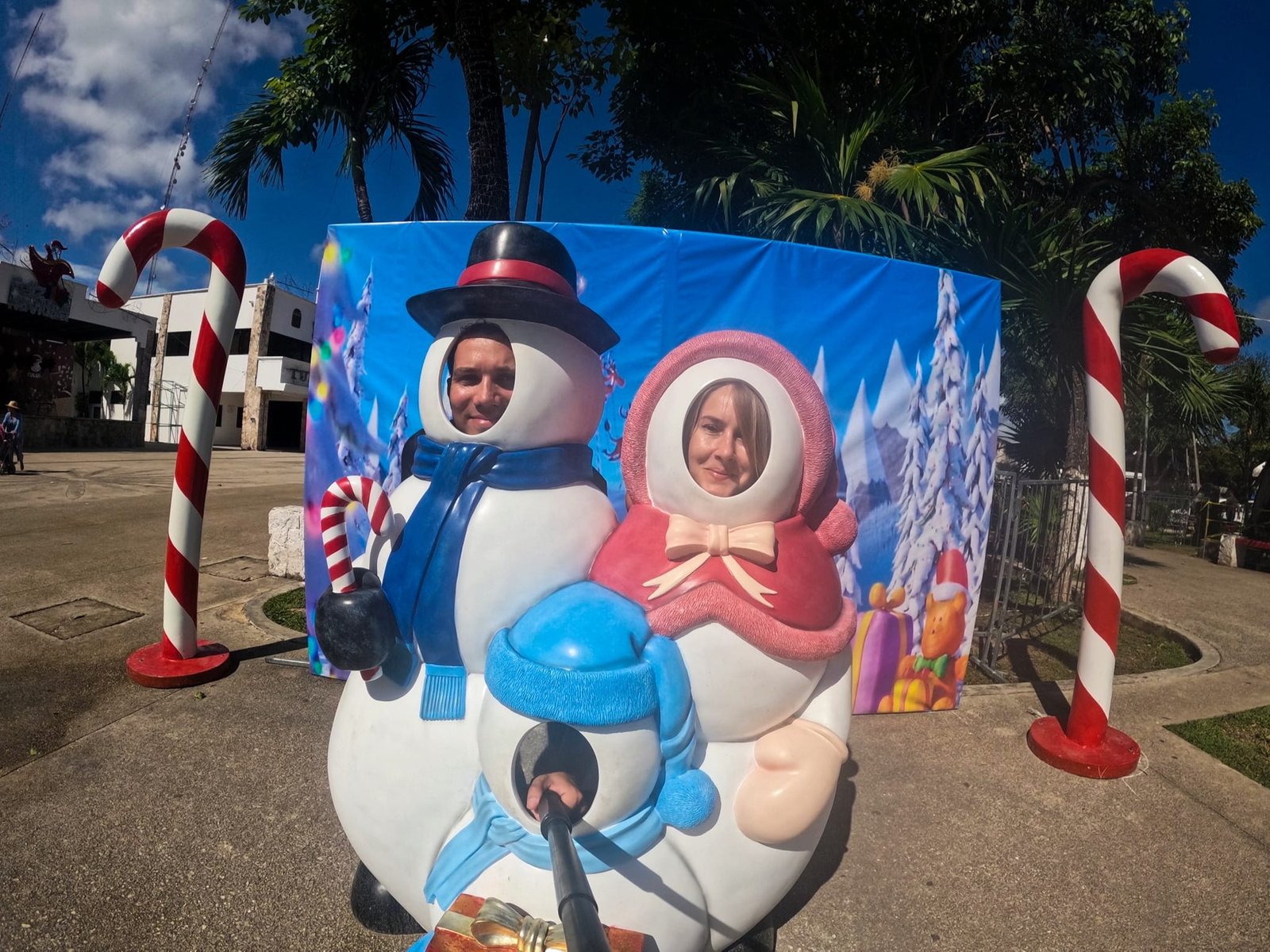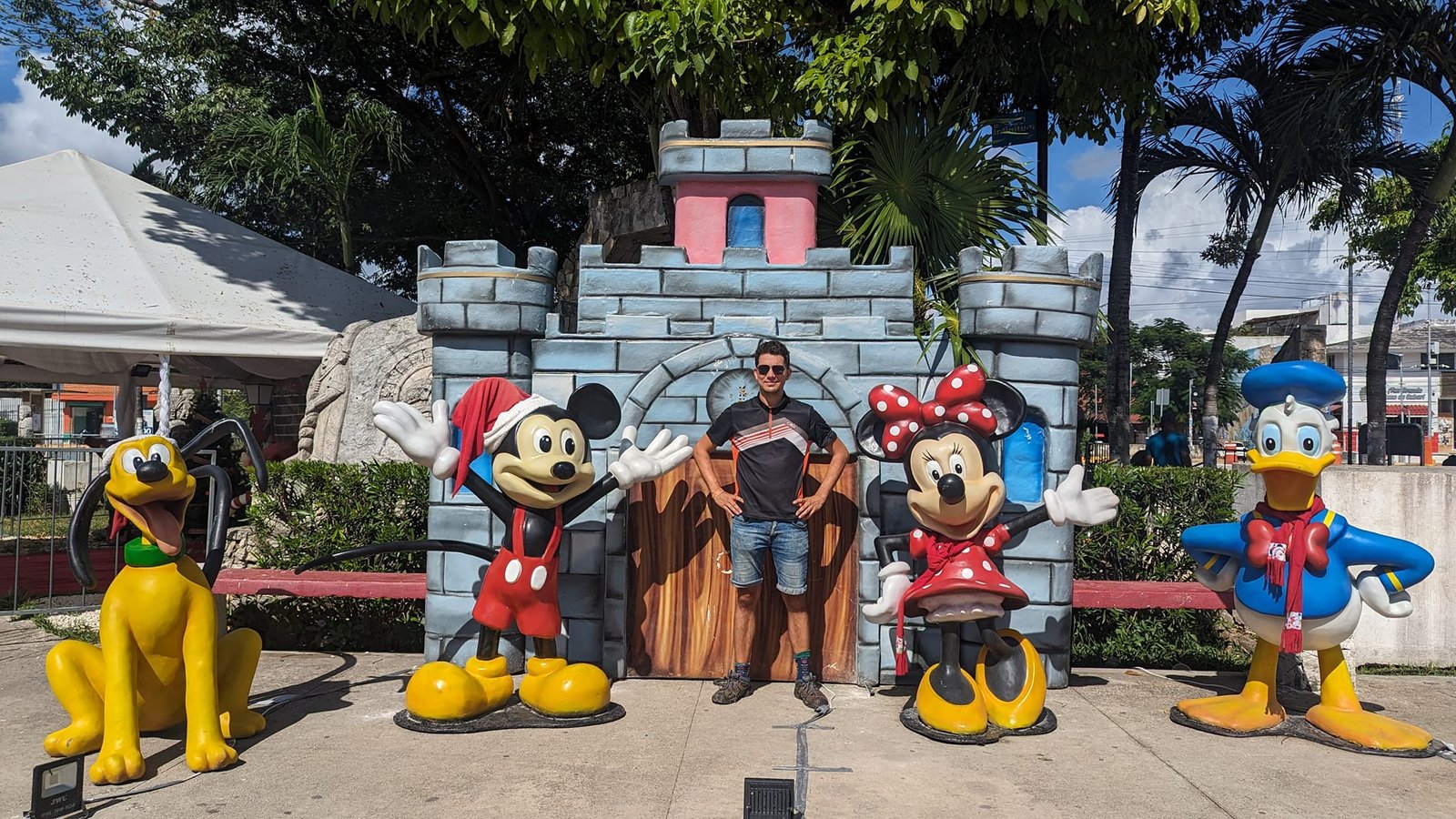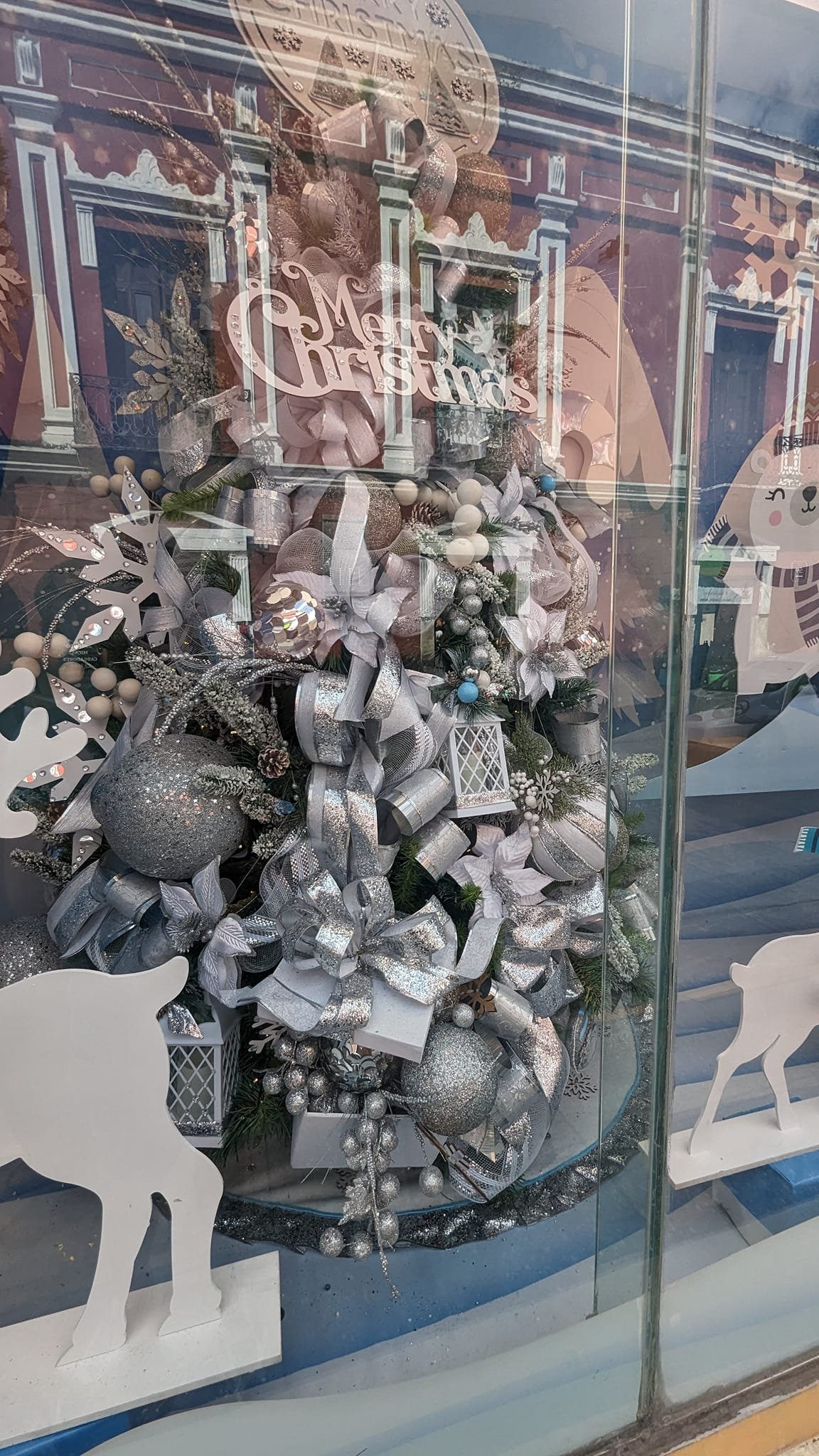
We spent Christmas 2023 on the road – in the middle of a big trip through Latin America. Mexico, Belize and Guatemala, like all the countries we visited later, are Christian, so long before Christmas we started seeing festive decorations in the towns: Christmas trees, nativity scenes, inflatable figures, artificial snowmen, fairy lights and stockings for presents. But Christmas feels different in places where many people have never seen snow – the climate is completely different, yet every effort has been made so that, despite the sunshine and heat, nobody forgets what time of year it is.
Table of contents
- Christmas trees under palm trees – Mexico and Belize
- Christmas Eve in Antigua Guatemala
- Christmas Day – out in the streets
- “Quema de toritos” – the burning bulls
Christmas trees under palm trees – Mexico and Belize
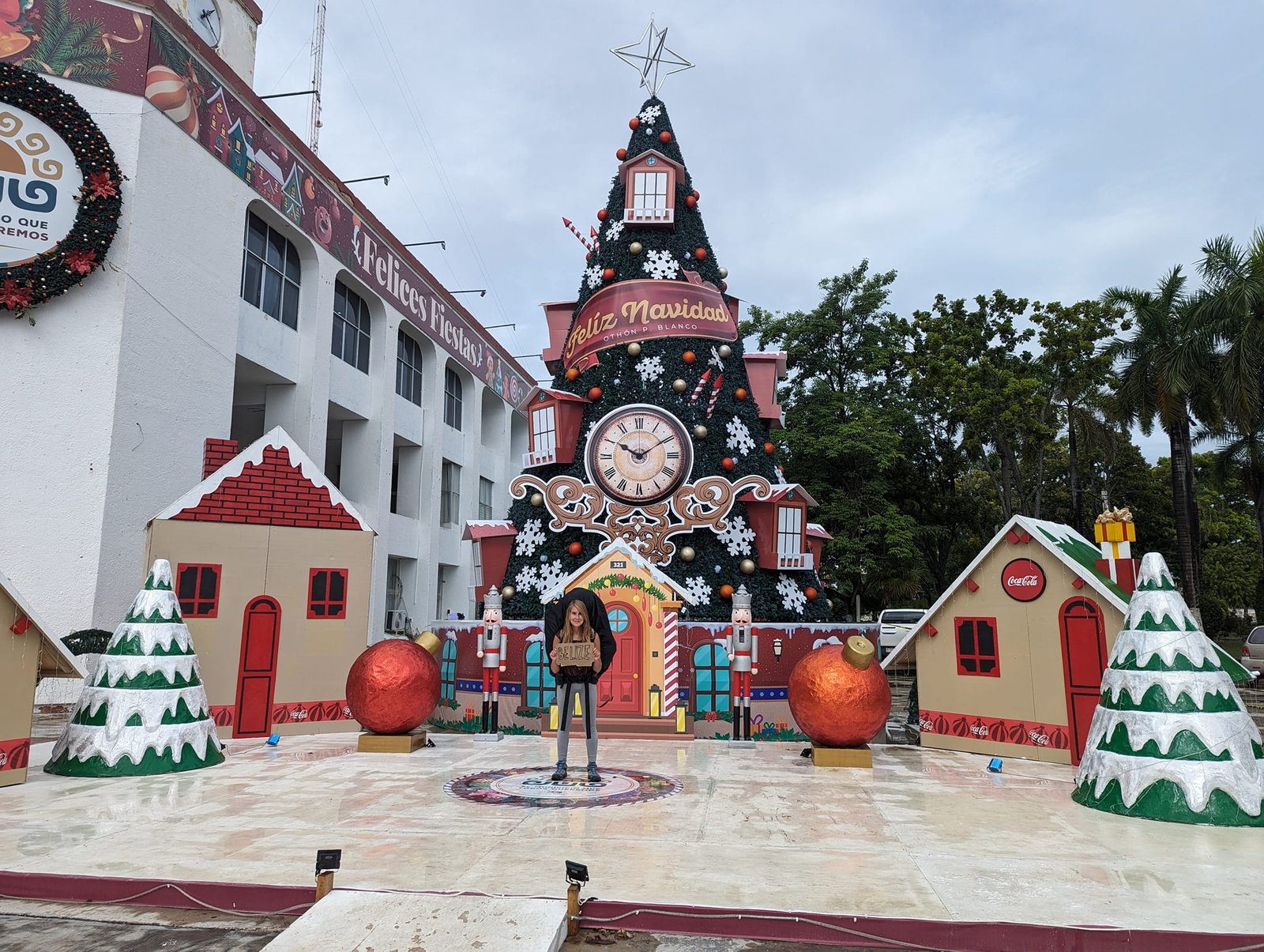
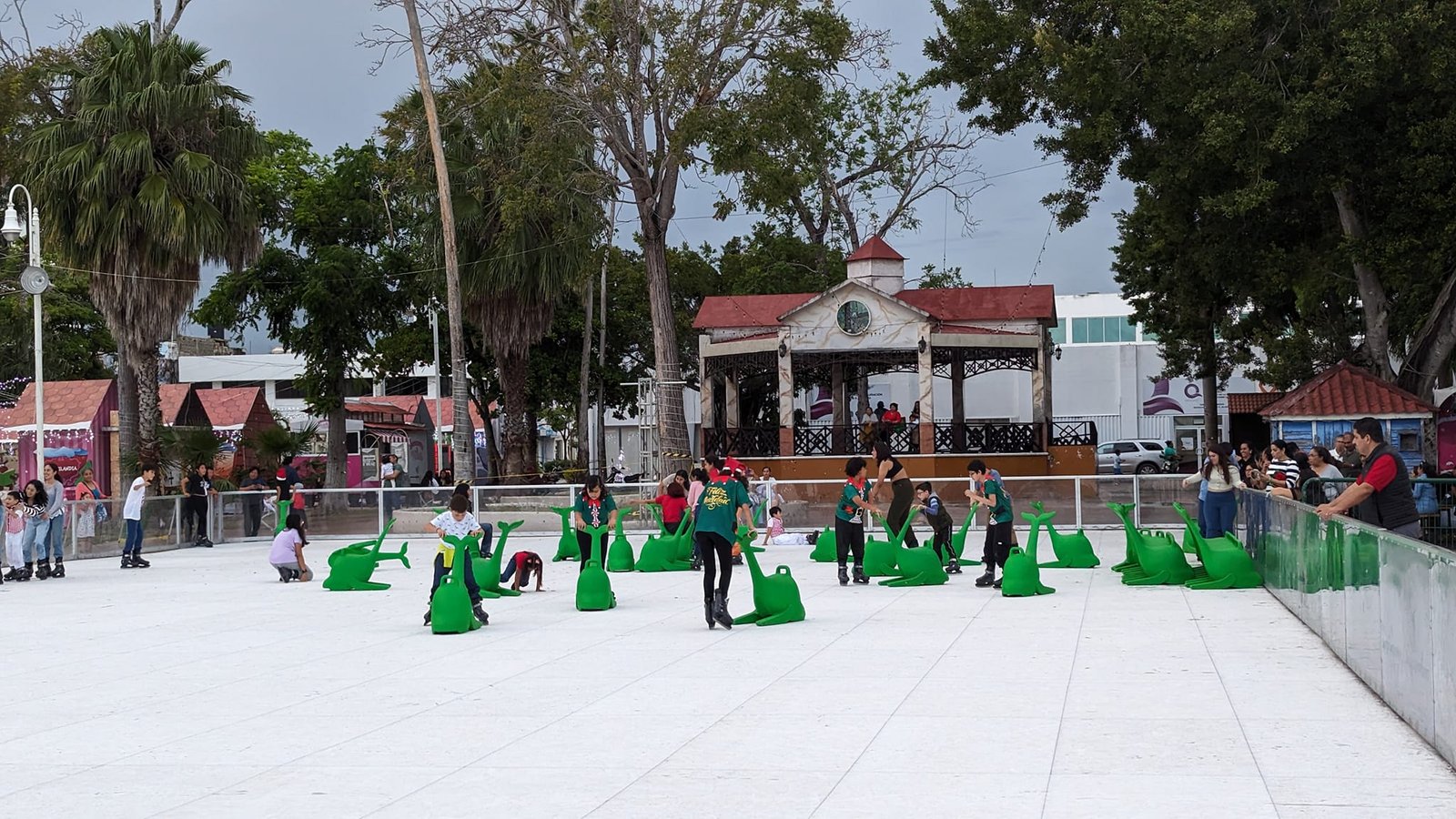
In the Mexican town of Chetumal, the last town before the border with Belize, we came across a Christmas village with little huts and a Christmas tree with a clock, a children’s concert and also an “ice rink” – only without ice.
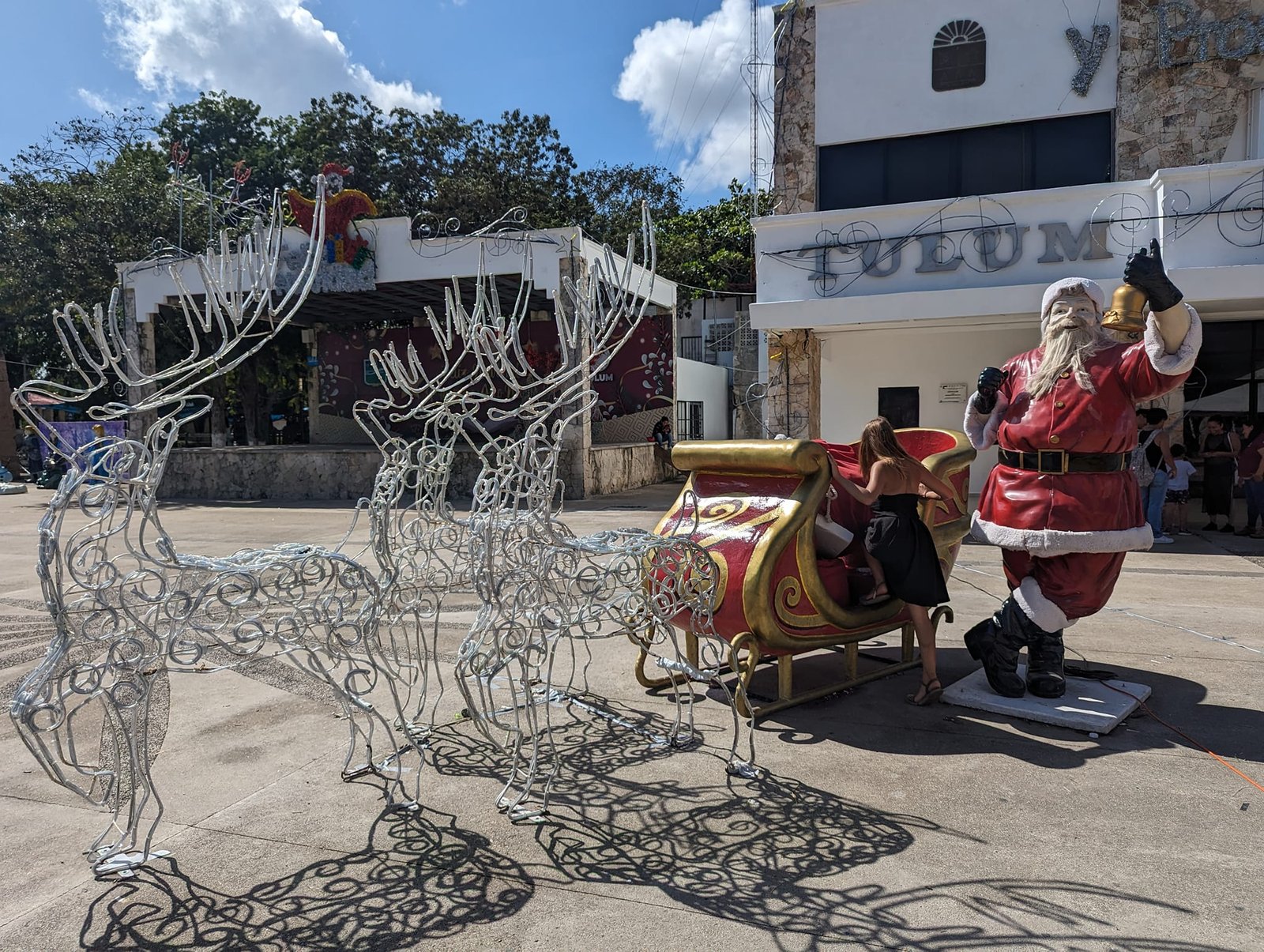
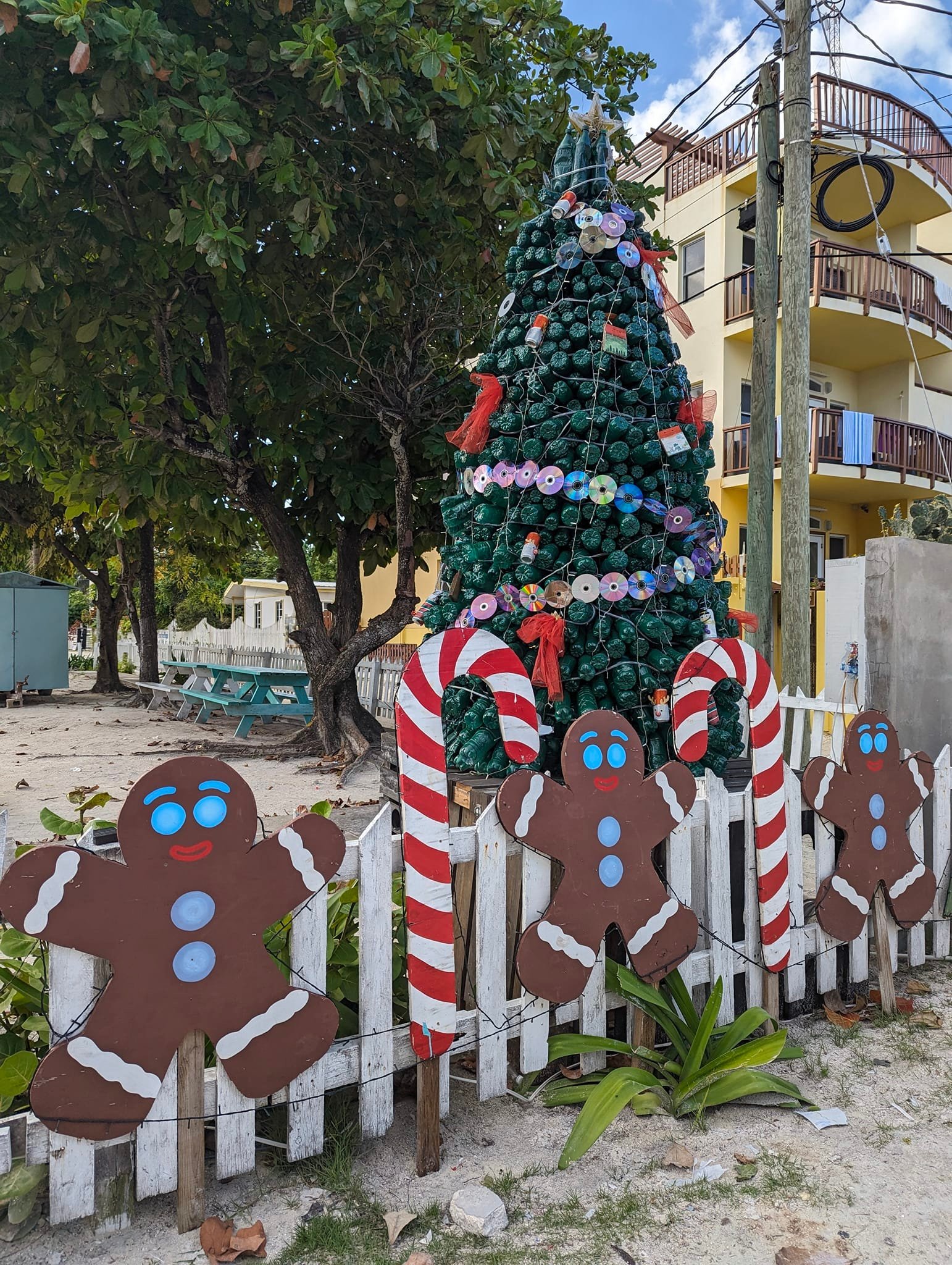
Illuminated reindeer and Santa’s sleigh also stood in Tulum, and on the island of Caye Caulker in Belize a Christmas tree sprang up on the sand by the beach, next to the Lazy Lizard bar.
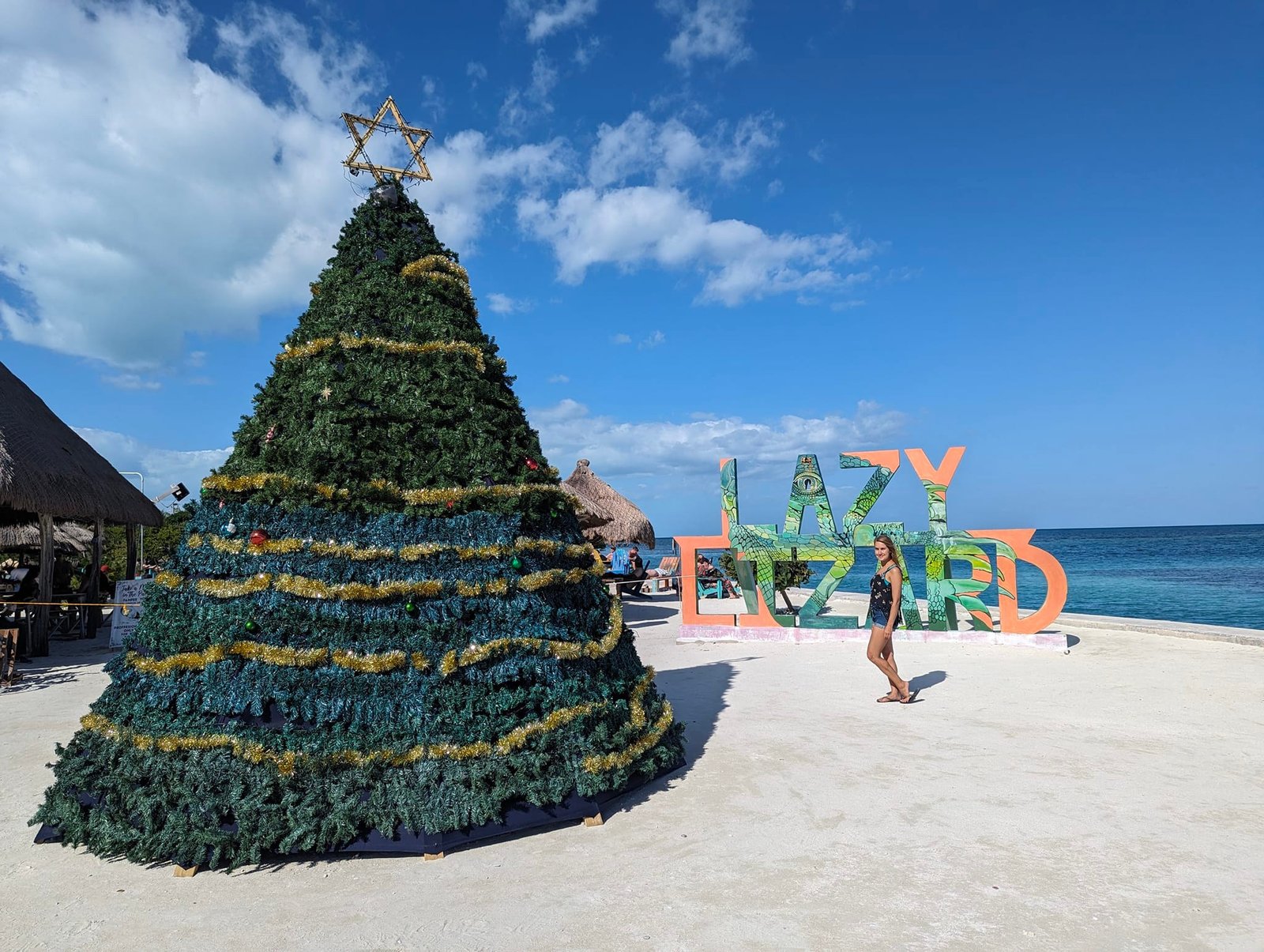
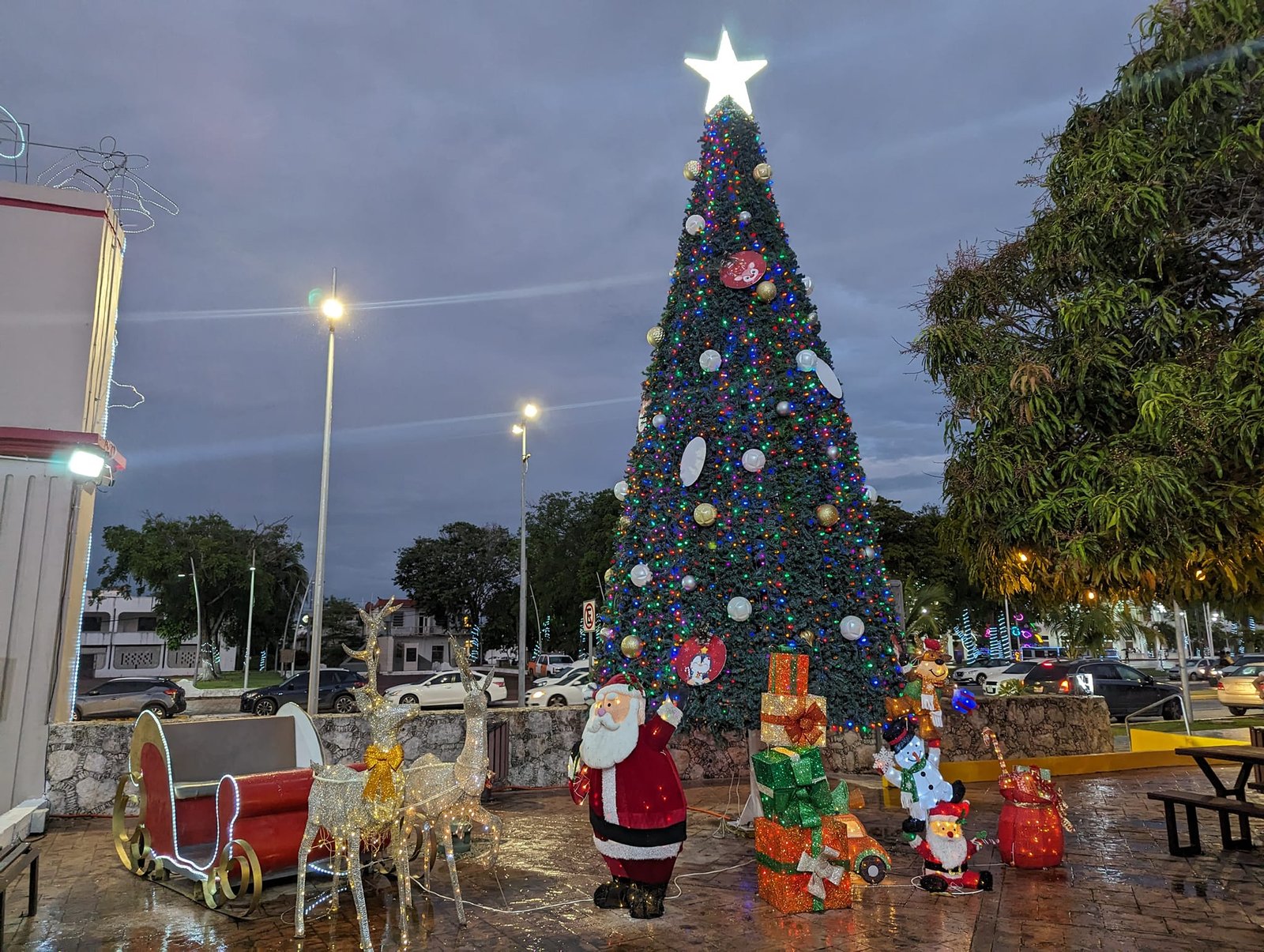
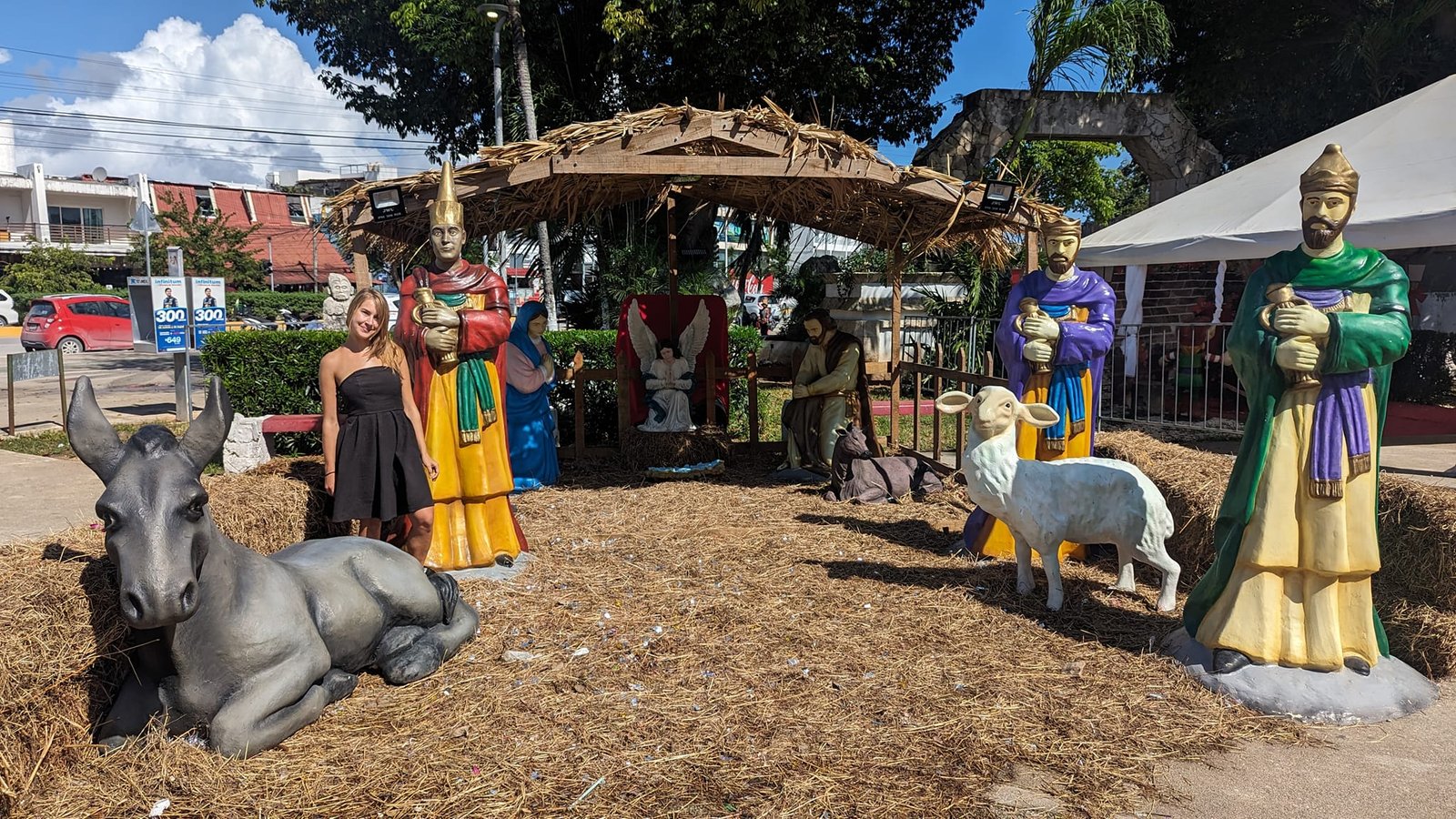
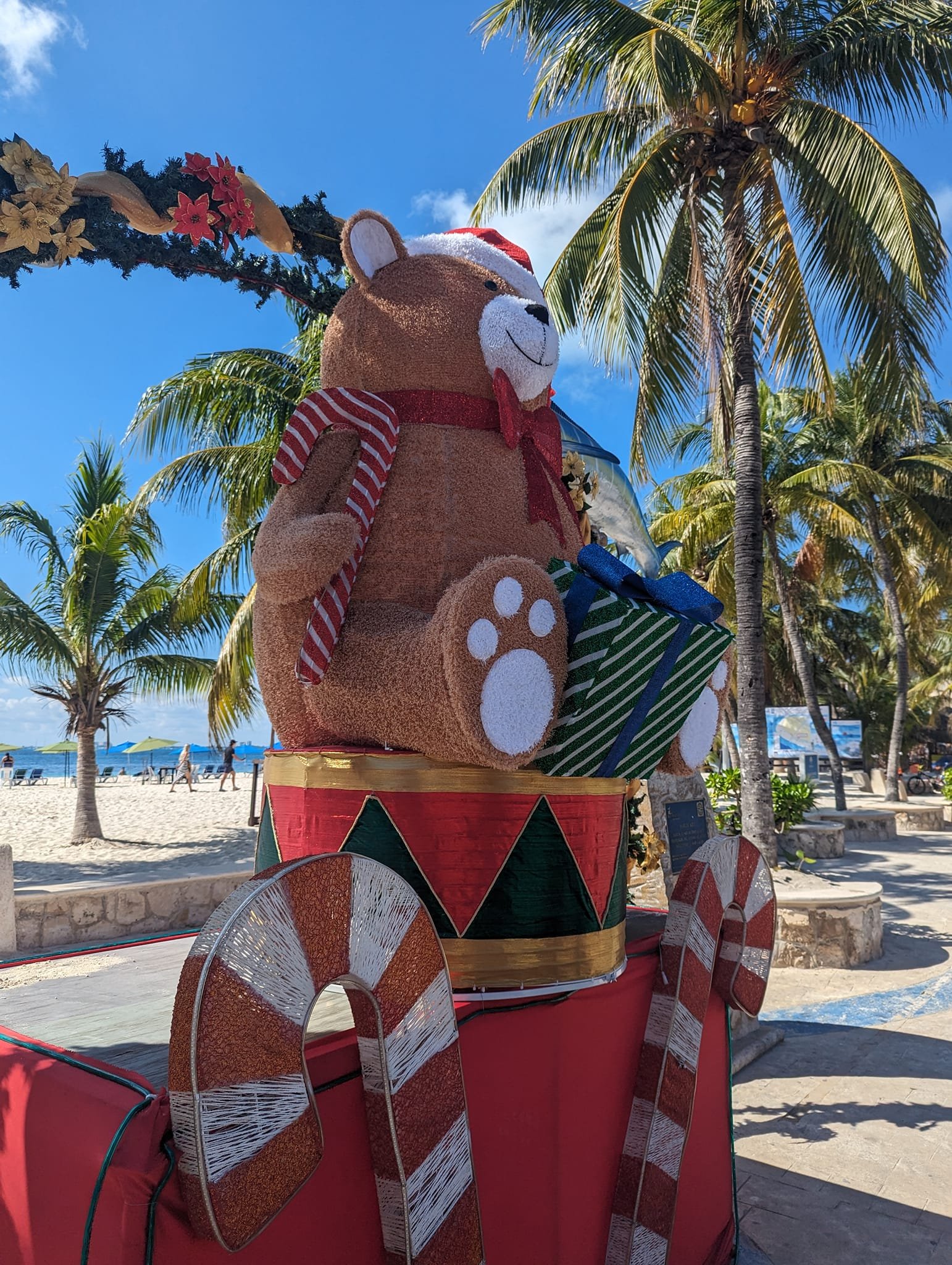
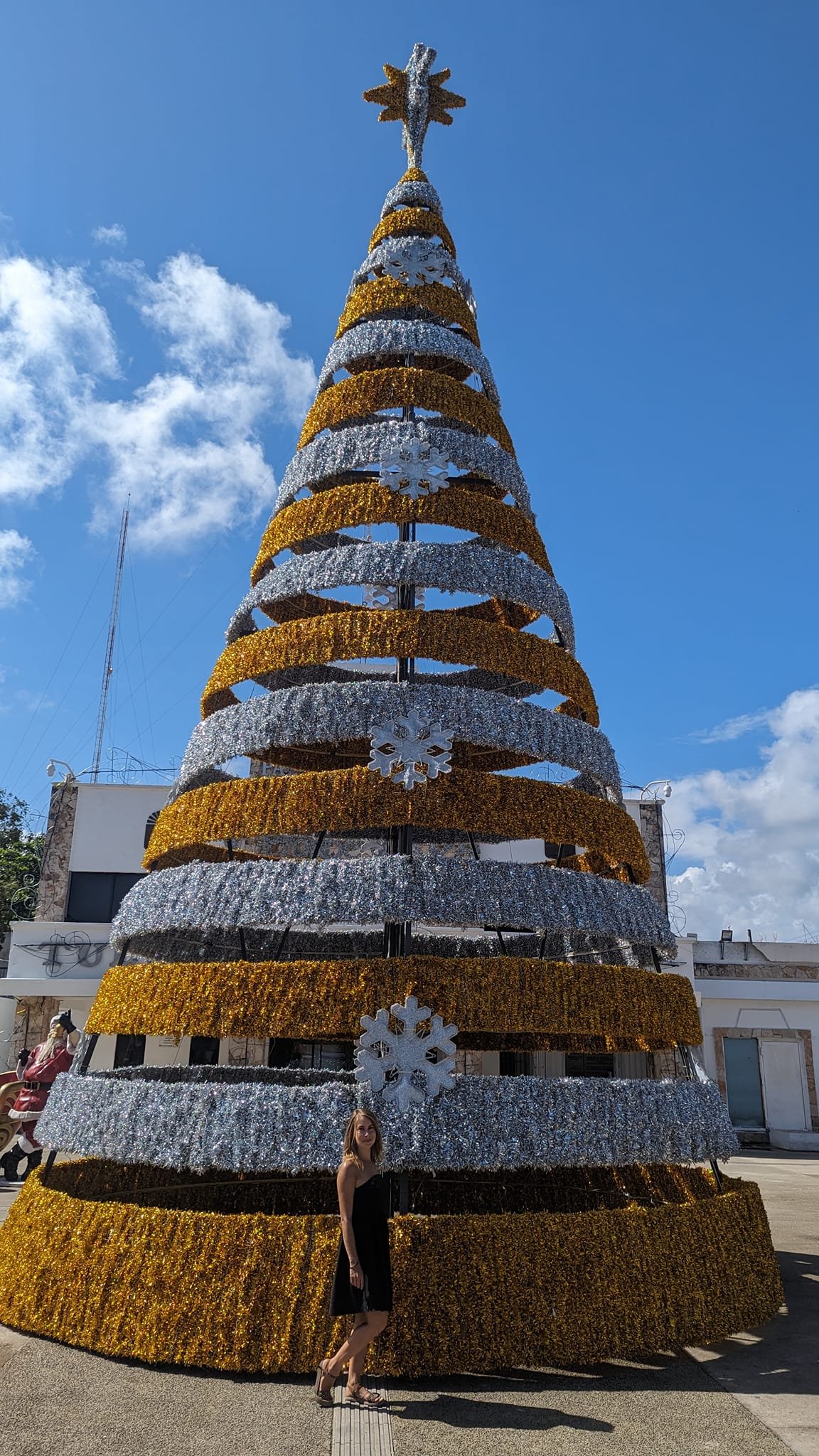
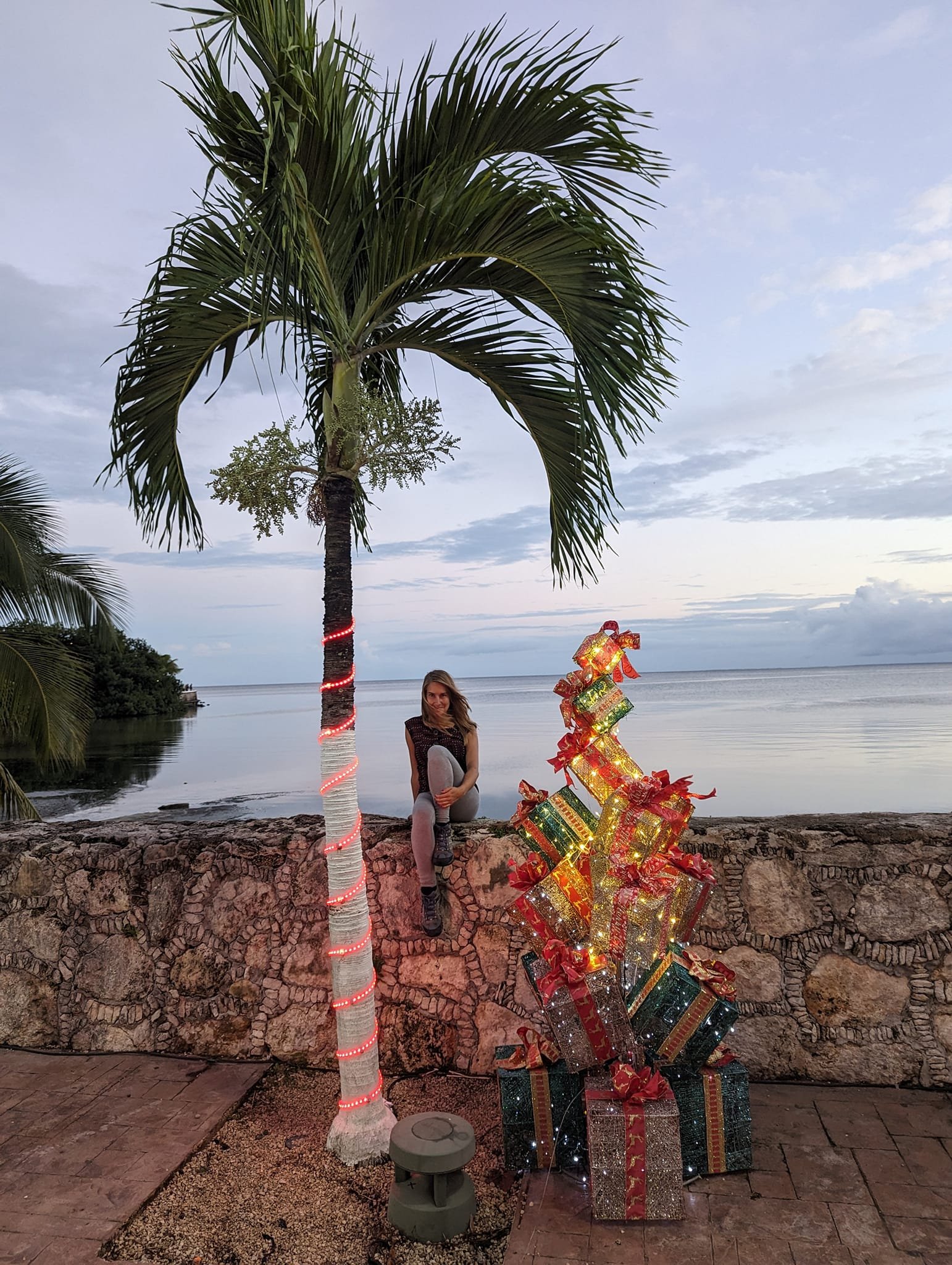
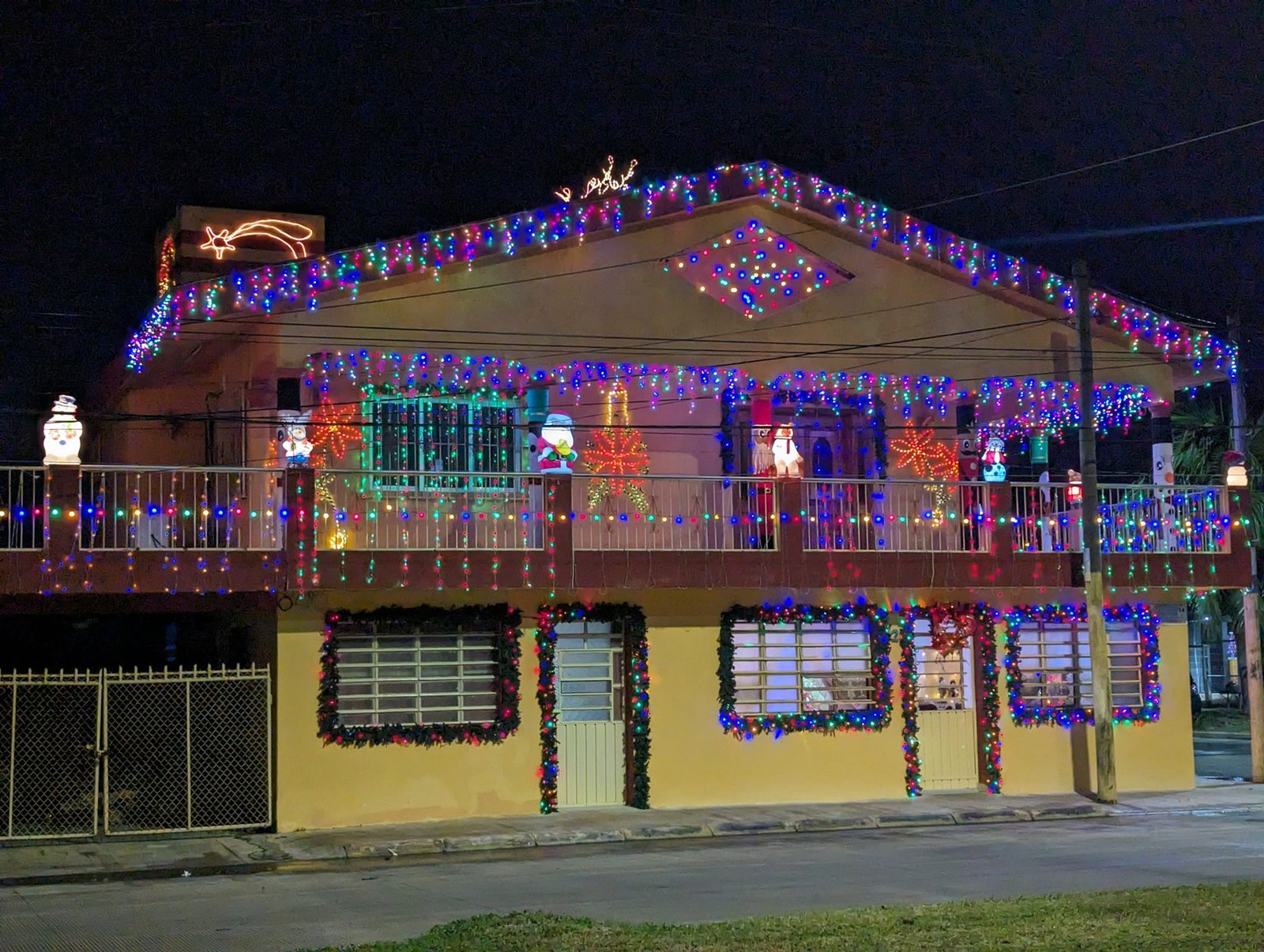
Huge Christmas trees and Santa figures were set up on the seaside promenades, nativity scenes had life-size figures, and in the evenings houses hung with colourful lights glowed just like back home.
Latin America gave the world one of the most popular Christmas plants – the poinsettia. It grows wild from Mexico to Guatemala, where it is called nochebuena, just like Christmas Eve. The Aztecs knew it as cuetlaxóchitl. It was introduced to the USA in the 1820s by Joel Roberts Poinsett, the first US minister to Mexico – hence its English name. Its red “petals” are in fact leaves (bracts).
Christmas Eve in Antigua Guatemala
The day before Christmas Eve, in Lanquín, we heard well-known Christmas carols being sung loudly. We spent Christmas Eve itself on the road – we only reached Antigua Guatemala, where we stayed for more than a month for a Spanish course, on the evening of 24 December. We had no way of preparing even a modest version of the traditional Polish Christmas Eve supper, but we still ended up – if only briefly – at the same table as the Guatemalan family we were staying with.
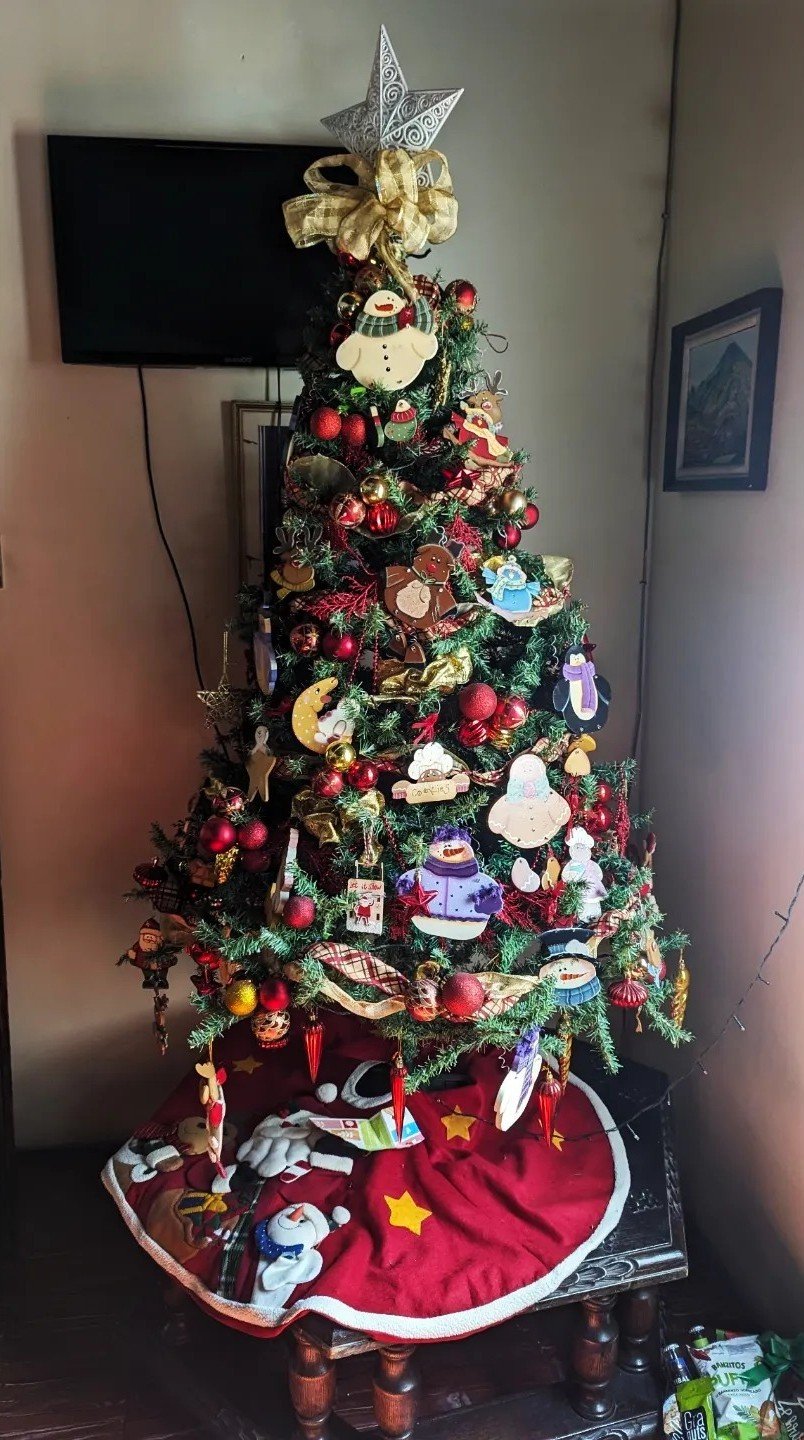
Most Guatemalans are Catholics, followed by Protestants. Christmas Eve is spent with loved ones, but differently than in Poland: at our hosts’ there was no table laden with food – every now and then each person was simply handed a plate of food. There was, however, a Christmas tree and presents.
Before Christmas, posadas make their way through Guatemalan towns: every evening from 15 to 24 December, figures of Joseph and Mary “look for lodging” in another house. After a sung dialogue in which they are turned away several times, the hosts let the guests in for prayers, carols, tamales and ponche.
On Christmas Eve families wait together until midnight and greet the birth of Jesus with fireworks, music and prayer. The traditional food is tamales – red (colorados) and black (negros), made of corn dough with meat and sauce – washed down with hot ponche de frutas, a punch of pineapple, apple, plums, cinnamon and unrefined cane sugar (panela).


Homes have nativity scenes – nacimientos – often made of coloured sawdust and moss. The forerunner of the home nativity scene in Guatemala is said to be Saint Brother Peter (Hermano Pedro) of Antigua, who around 1658 began building one in the house for convalescents that he ran. In many homes the figure of the Child Jesus stays covered until midnight, when 25 December begins.
Antigua was decorated for the season too: on the main square, Parque Central, stood a giant illuminated bauble you could walk through, and even the camionetas were hung with lights – colourful buses converted from old North American school buses, which tourists call chicken buses.


Christmas Day – out in the streets
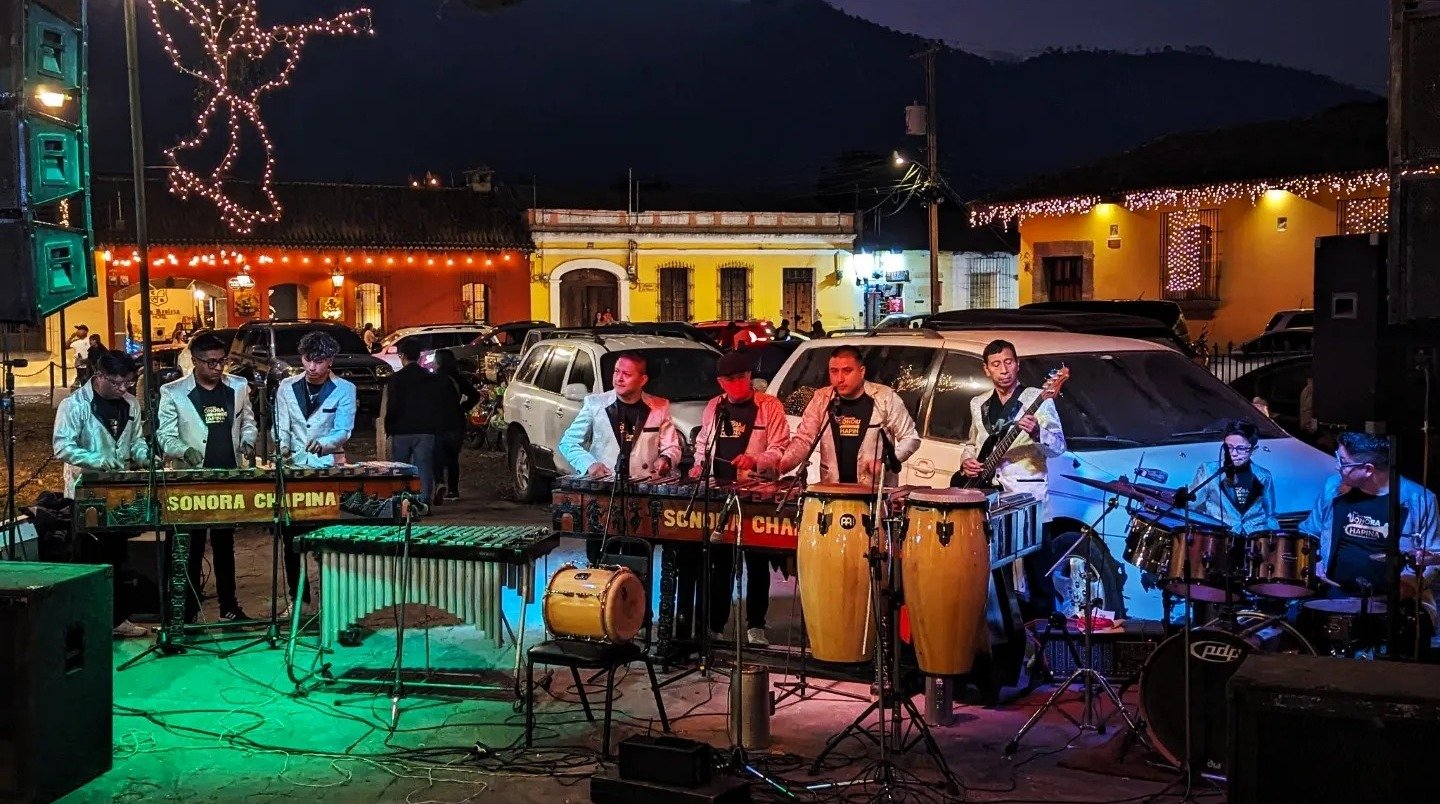
Christmas Day looks completely different from Poland – it is spent outdoors. Antigua was full of food stalls, and local bands were playing in the main square, including on the marimba.
There were crowds on the Cerro de la Cruz hill above the town as well. A stone cross has stood here since 1930, and the viewpoint looks out over all of Antigua and the Agua volcano rising above it (about 3,760 m). Nearby stands a statue of St James the Apostle, a gift from Spain in 1971 – Santiago also appears in the city’s original name, Santiago de los Caballeros de Guatemala. Entry to the hill is free.


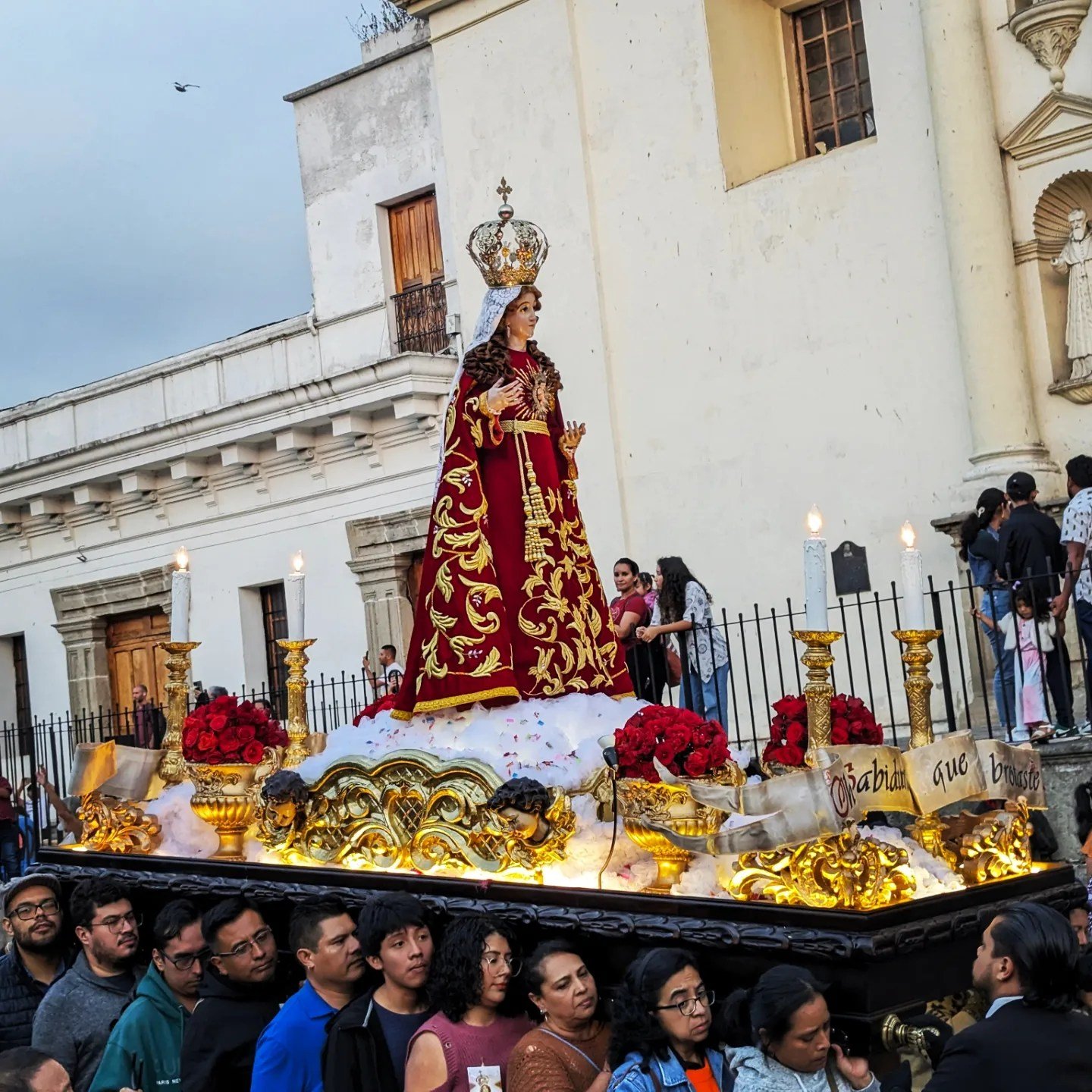
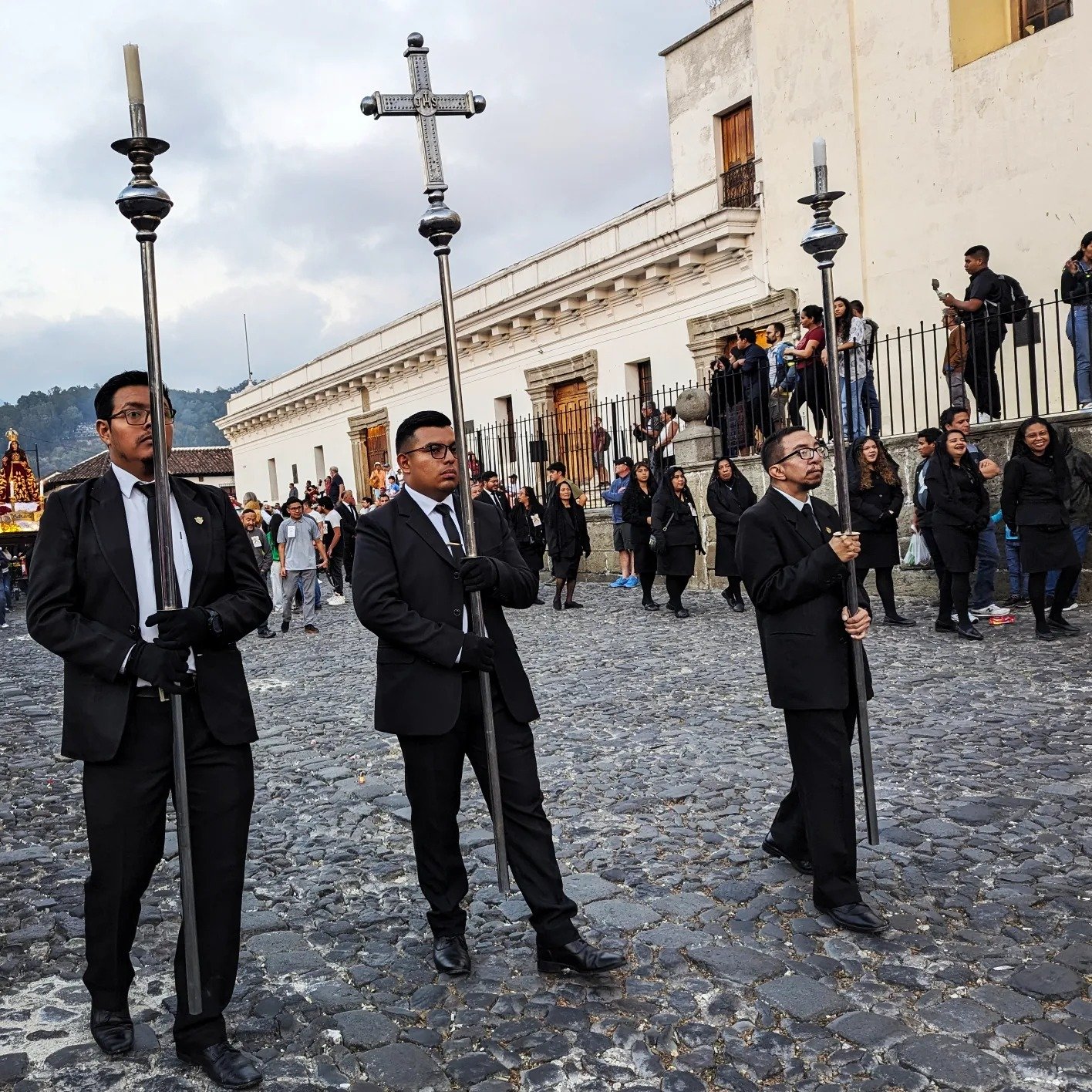
In front of the cathedral giant puppets in colourful costumes strolled about, and in the evening a procession with a statue of the Virgin Mary passed through the streets, led by men carrying crosses.
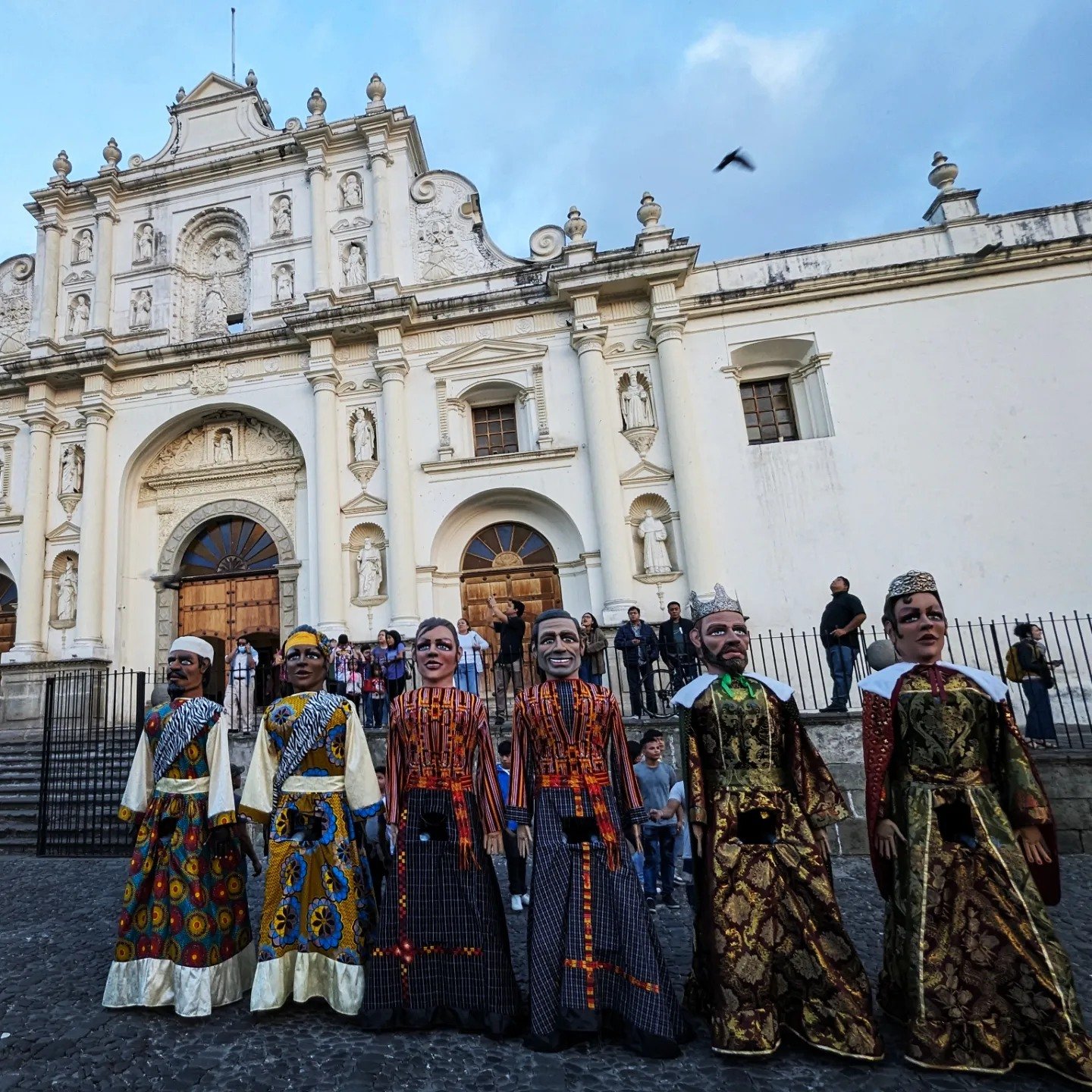
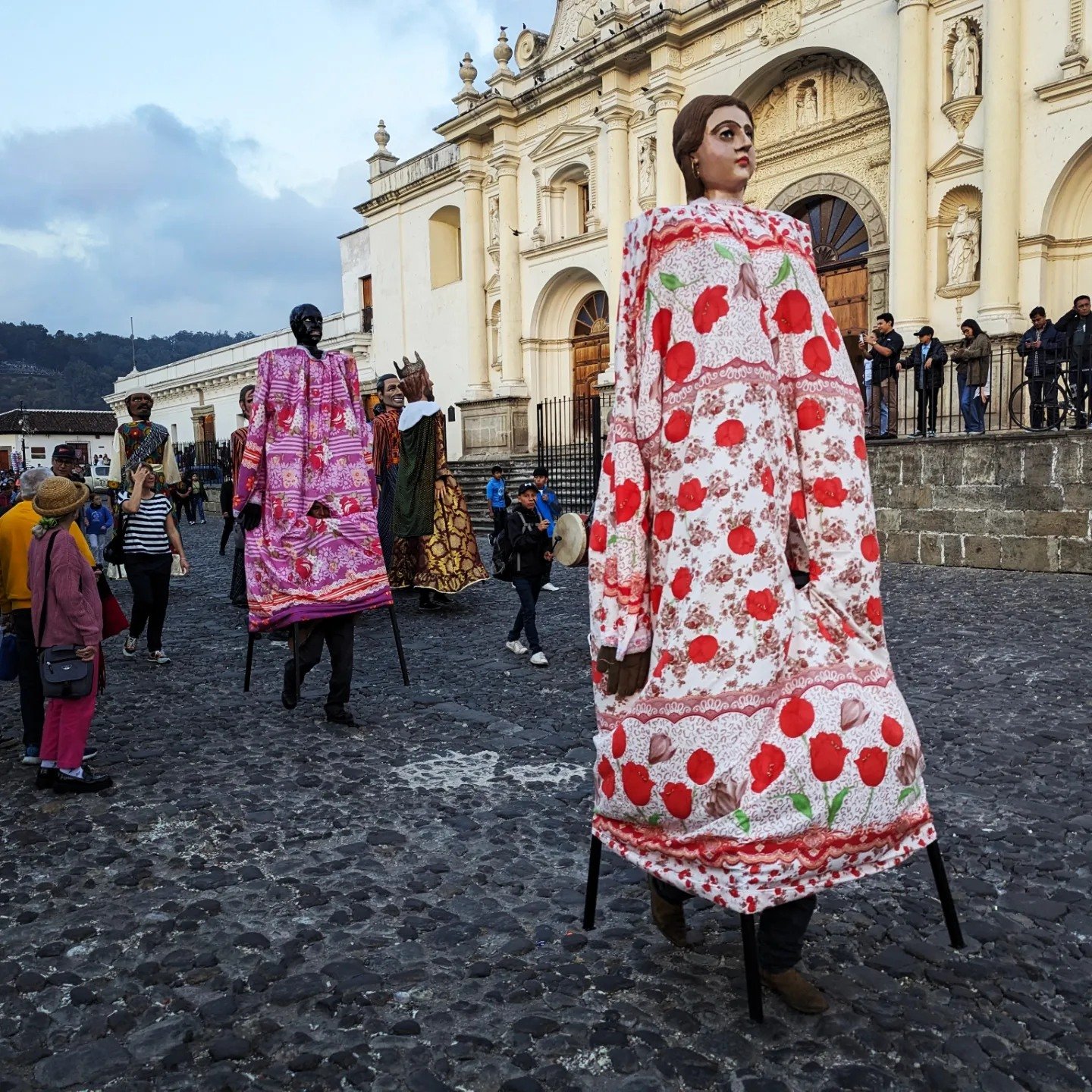
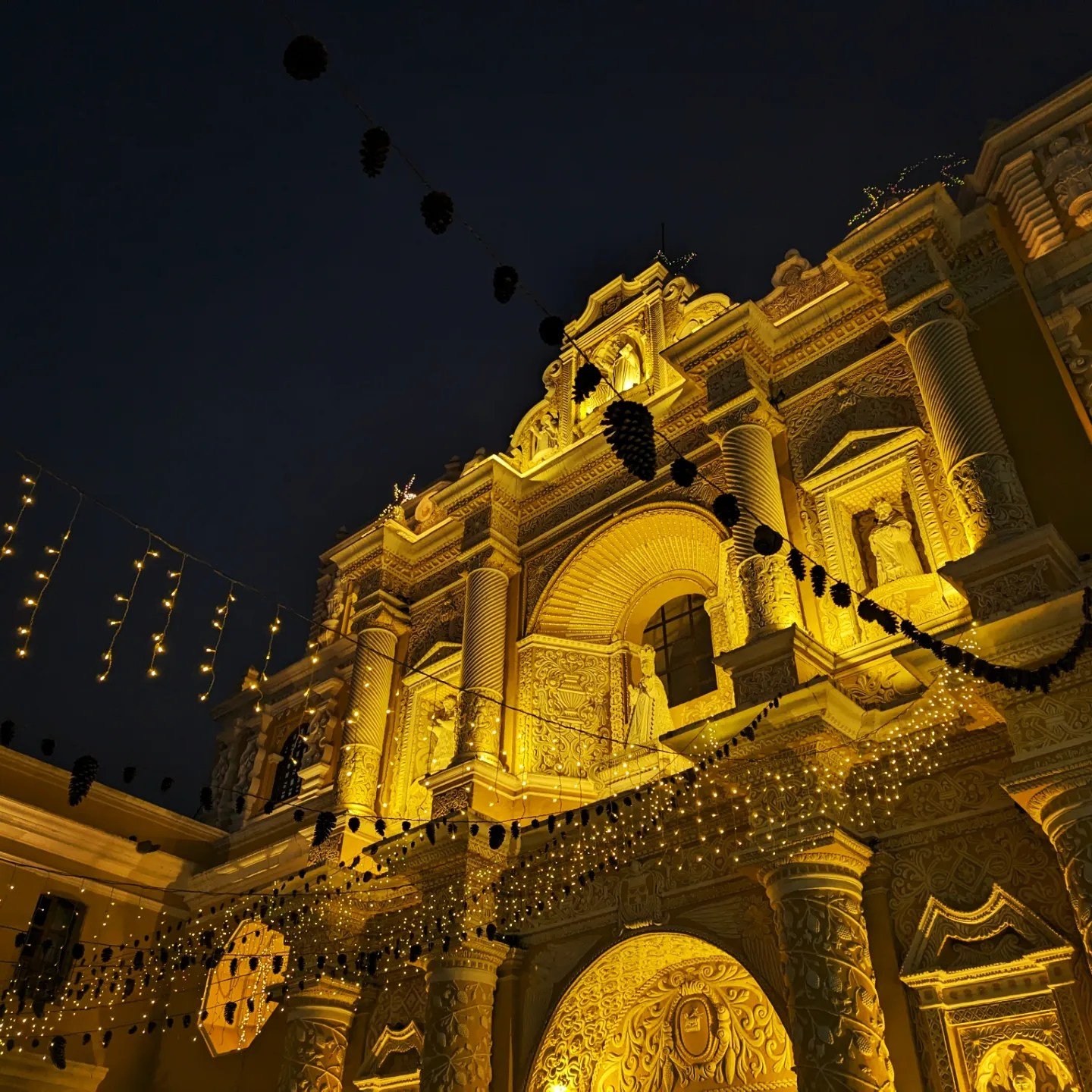
The dance of the giants (baile de gigantes) is a custom dating back to colonial times. The figures are about 3 metres tall, and the dancers hidden inside sway to music played on the marimba. Traditionally they dance on Christmas Eve in front of La Merced church. On Christmas Day they also danced under the arcades by Parque Central, and a brass band played in front of the cathedral.


“Quema de toritos” – the burning bulls
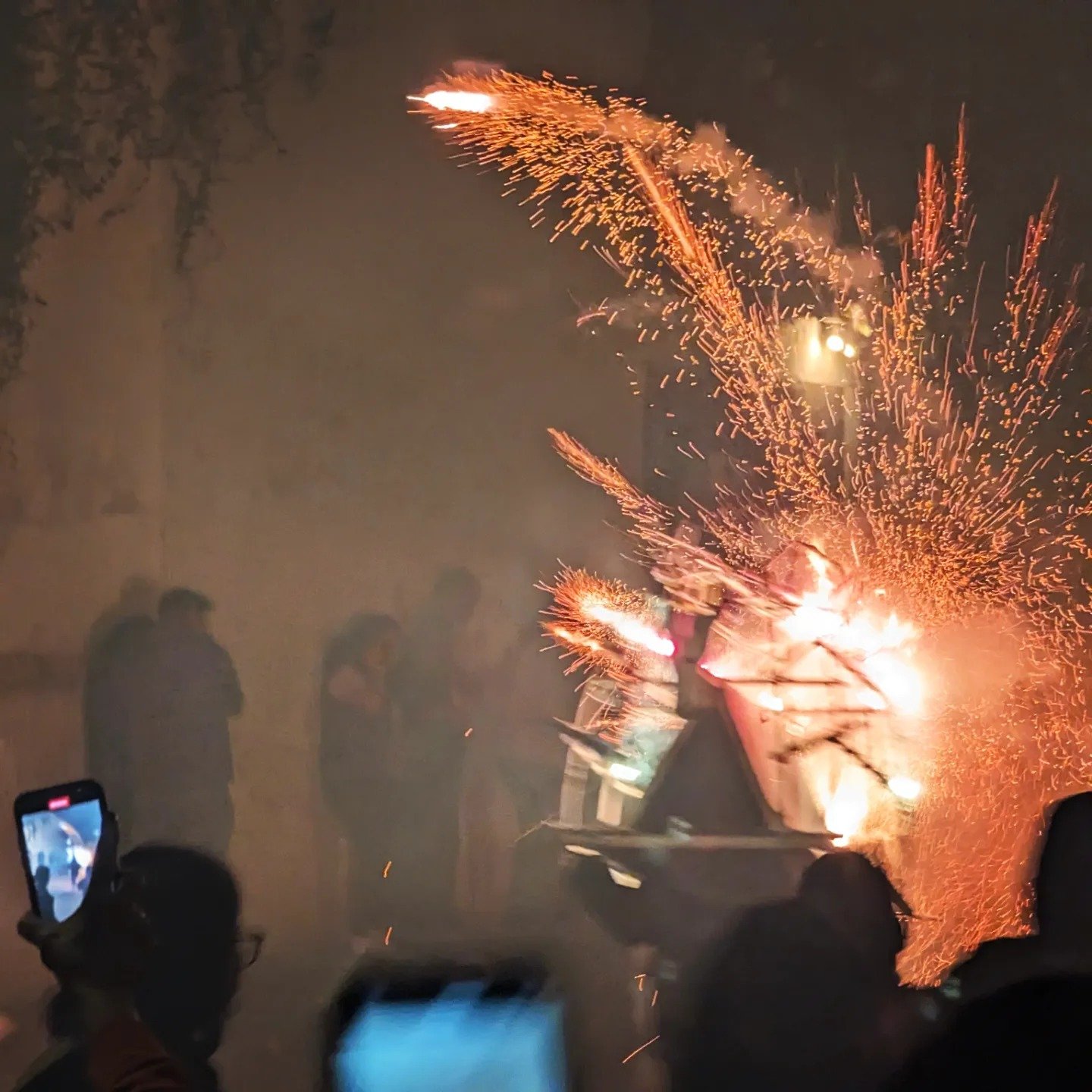
Every so often the procession stopped for the “burning of the bull” – Quema de toritos. The custom comes from Spanish culture: someone puts on a specially prepared frame wrapped in fireworks, with a bull’s mask on top. Once it is lit, the costumed person runs through the crowd and people scatter. When the fireworks start to burn out, the bravest run up to butt heads with the bull. First came the burning bull, behind it the statue of Mary was carried, and then followed the rest of the procession.
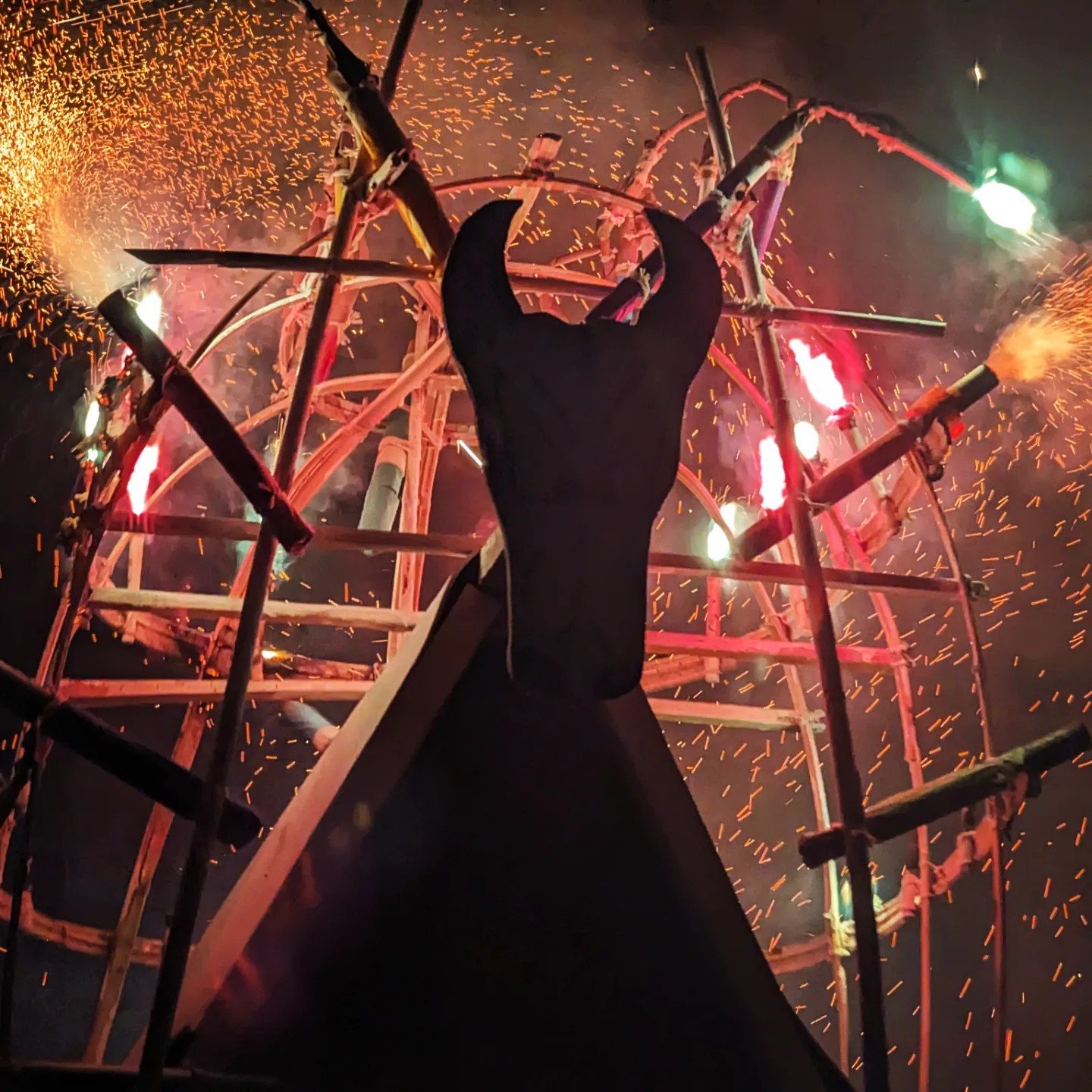
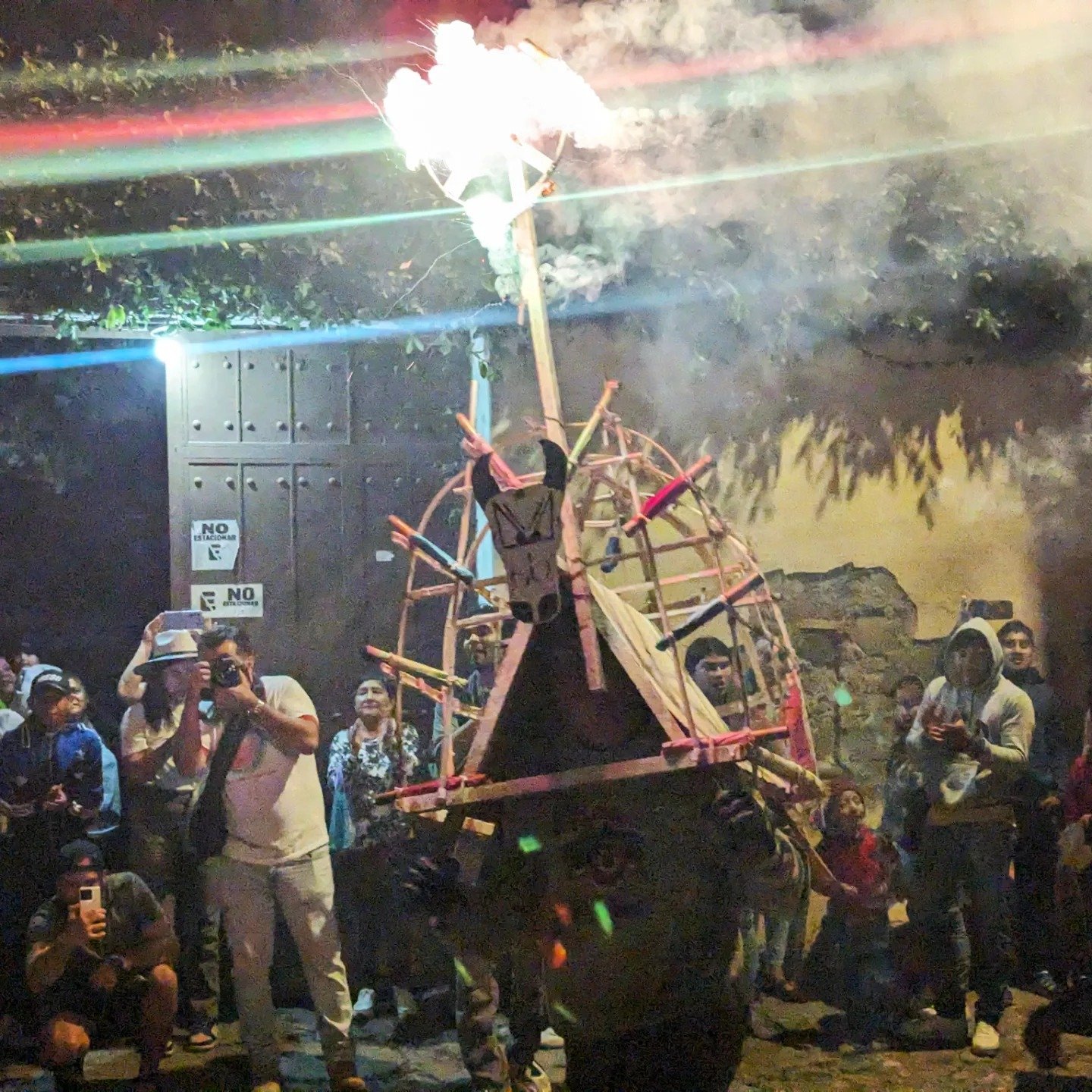
The tradition goes back to colonial times: the “bull” is a frame of wood and wire hung with fireworks. In Antigua, toritos – together with burning “wings” (quema de alas) – also appear on New Year’s Eve on Calle del Arco. The whole festive season here opens on the evening of 7 December, the eve of the Feast of the Immaculate Conception, with the Quema del Diablo – the burning of devil effigies, meant to “rid the house of everything bad”.
The fun goes on late into the night, and in the meantime big fireworks are set off – especially many near the main square. Whole streets were so full of smoke that it was hard to breathe. We had a great time and felt like we were at a village fair.
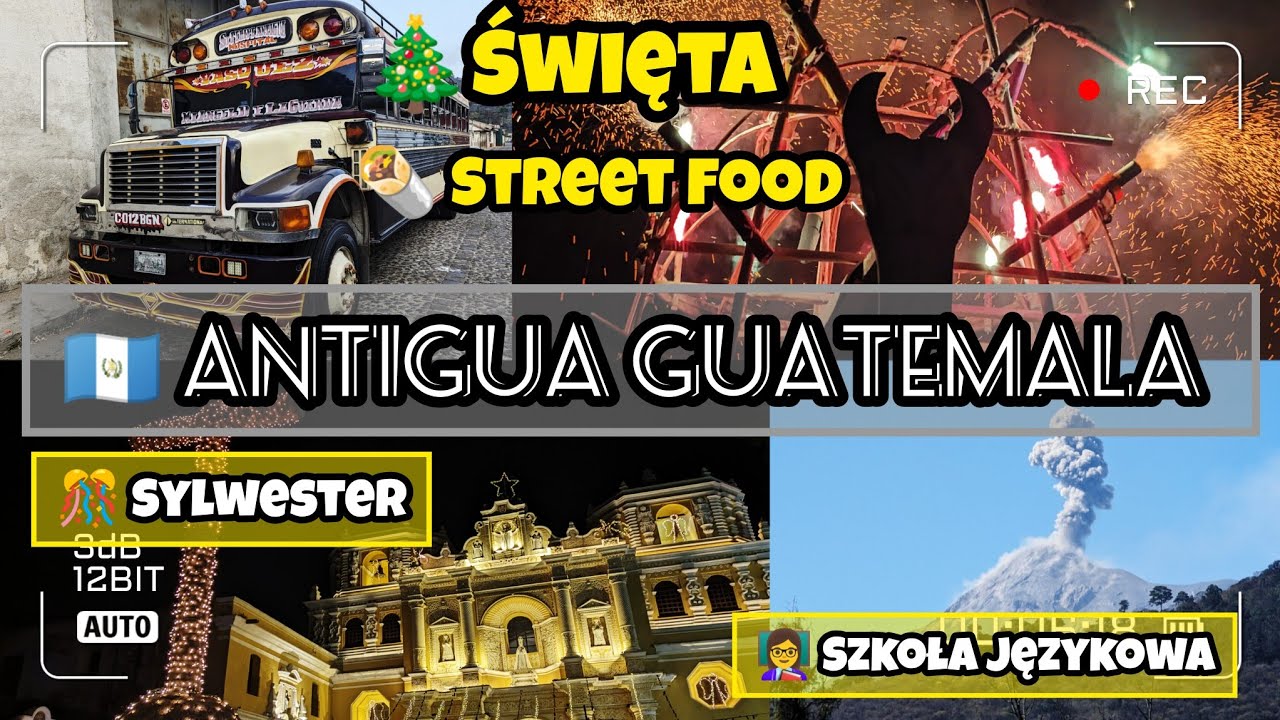
Christmas, the street food, the start of our Spanish course and New Year’s Eve in Antigua are also shown in this video:
 10:15
Photo gallery