In mid-April 2023 we went to visit Guillem (Will), whom we had met in 2018 on Work & Travel in Yosemite – he later studied in Berlin for a few years, and he comes from Tarragona in Catalonia. From there we popped over to Barcelona for not quite two days (13–14 April), and spent the next two (15–16 April) in Tarragona. Straight from there we moved on to the Costa Blanca.
Table of contents
- Barcelona, day 1: Ciutadella, Plaça de Catalunya and the Gothic Quarter
- Modernisme and Gaudí’s buildings
- Barcelona, day 2: Park Güell and Montjuïc
- Tarragona – Roman Tarraco and human towers
- Practical information
Barcelona, day 1: Ciutadella, Plaça de Catalunya and the Gothic Quarter
Barcelona is Spain’s second-largest city by population – you could easily spend a week exploring it, and we had less than two days. We started the first day at the historic Estació de França railway station, from where we walked along the Passeig de Lluís Companys promenade with its triumphal arch.
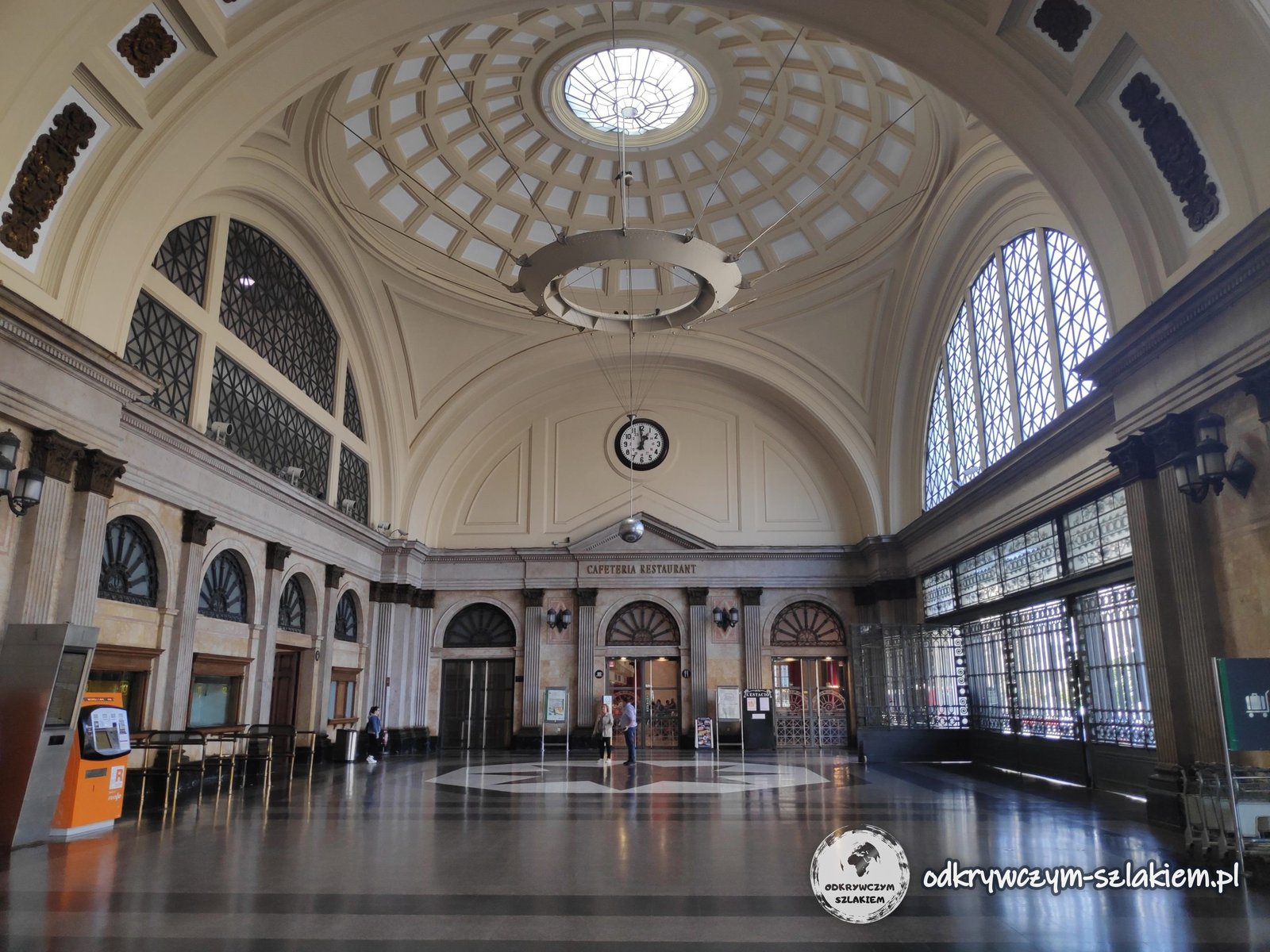
The present Estació de França building opened in 1929 for the Barcelona International Exposition. It was designed by Pedro Muguruza – the station’s two buildings wrap around the tracks in a U shape, and the interiors are decorated with marble, bronze and glass.
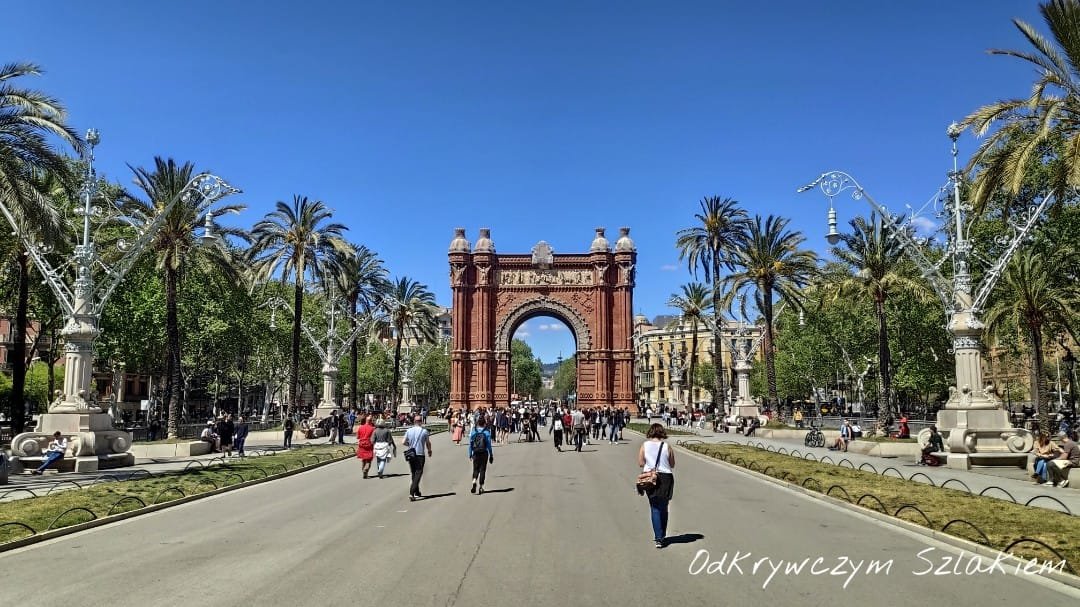
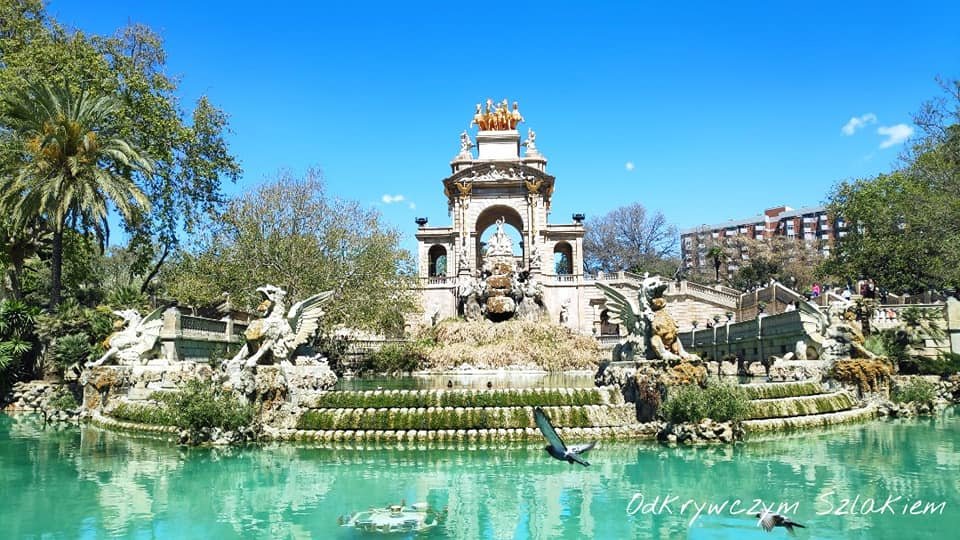
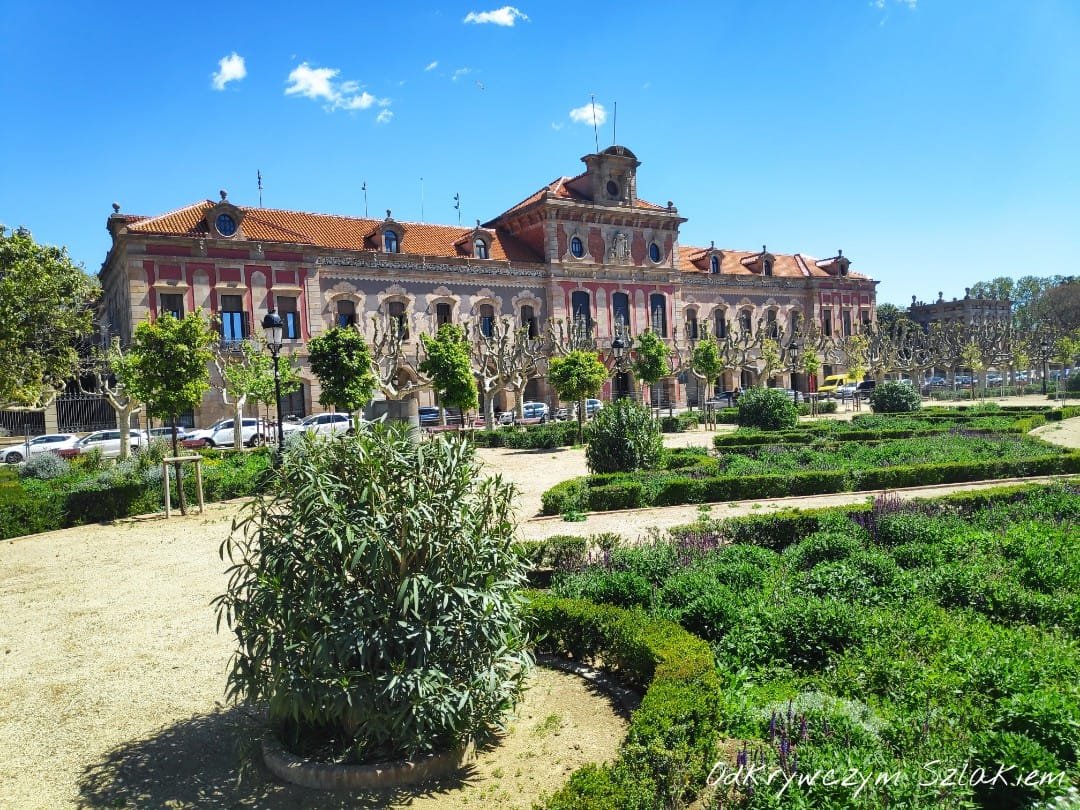
The promenade leads to Ciutadella Park – one of the nicest parks in Barcelona, with the monumental Cascada fountain and the Parliament of Catalonia building.
Next we walked to Plaça de Catalunya in the very centre of the city.
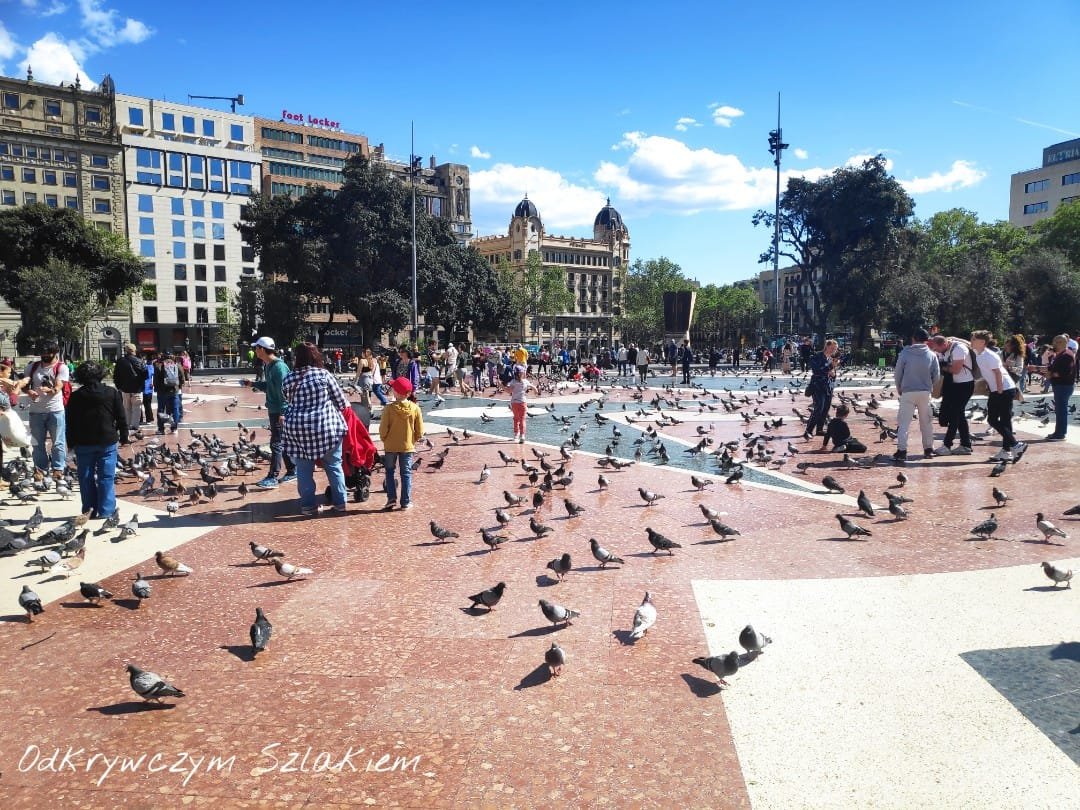
From Plaça de Catalunya, La Rambla runs down towards the port – a 1.2 km promenade that ends at the Columbus Monument. It follows the course of an old, usually dry stream, and its name comes from an Arabic word for a dry riverbed. In the heart of the Gothic Quarter lies Plaça del Rei, surrounded by the buildings of the former royal palace (Palau Reial Major) with the Saló del Tinell and the Chapel of St Agatha. One of the buildings, Casa Padellàs, was moved here stone by stone in 1931 – since 1943 it has housed the Barcelona City History Museum (MUHBA).


In the Gothic Quarter we saw the Gothic Cathedral of Saint Eulalia, built between the 13th and 15th centuries, and the charming Pont del Bisbe bridge connecting two buildings above a narrow lane.
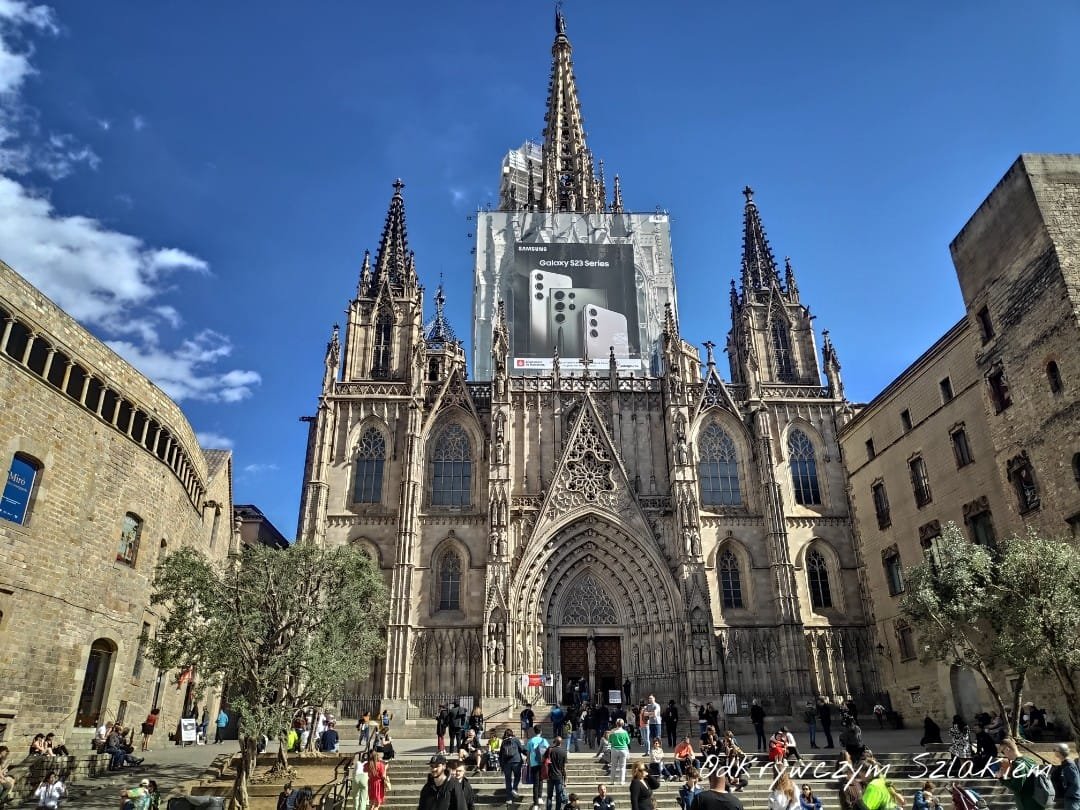
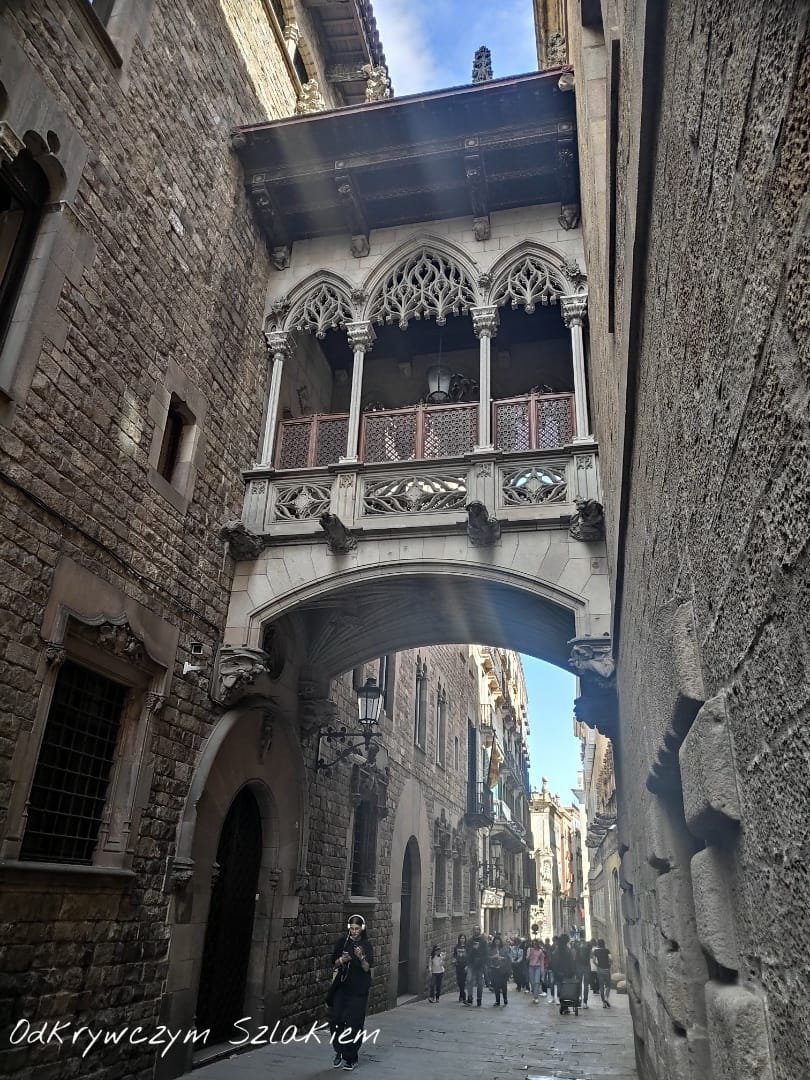
The cathedral was built from 1298 over 150 years, but its neo-Gothic façade was only added at the turn of the 19th and 20th centuries. In the Gothic cloister live 13 white geese – according to tradition, Saint Eulalia’s age when she was martyred.
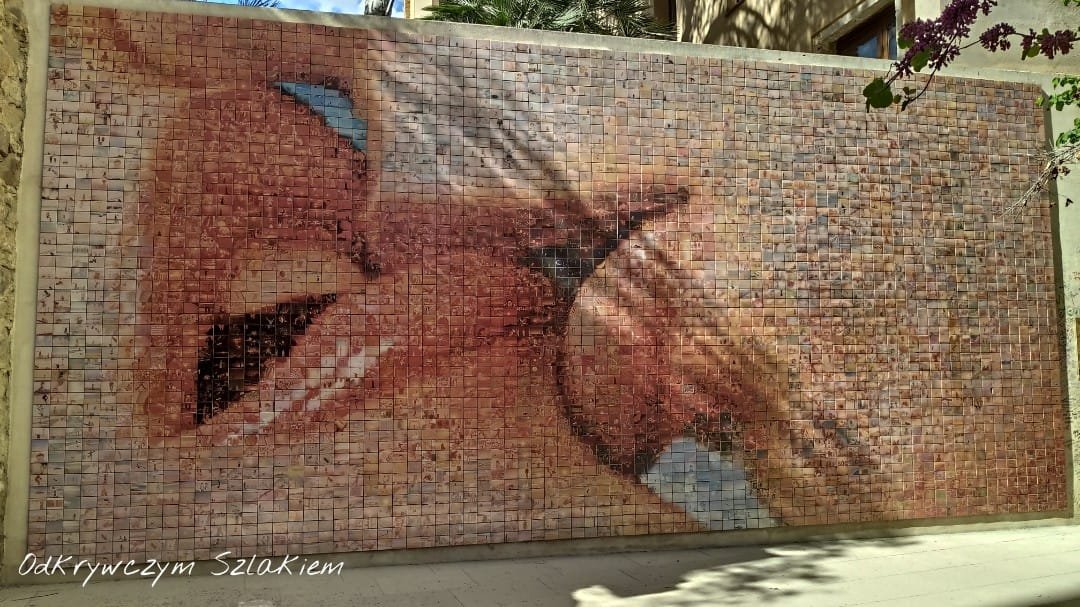
A curiosity is the mural “El Petó” (The Kiss) by Joan Fontcuberta – made of thousands of small photos of Barcelona’s residents, arranged so that from a distance they form the image of a kiss.
Modernisme and Gaudí’s buildings
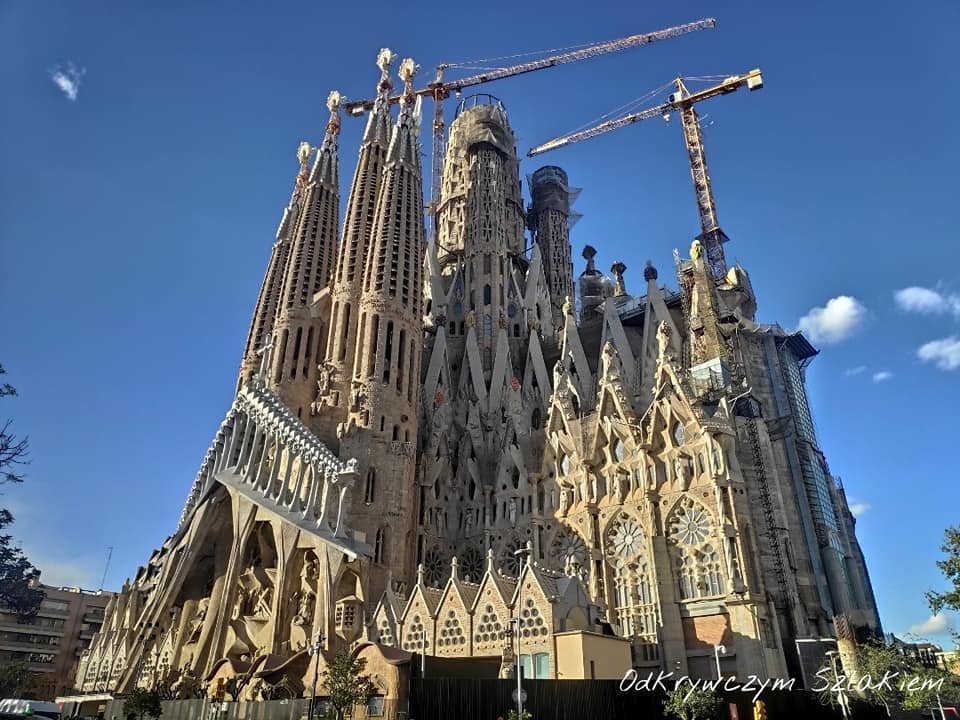
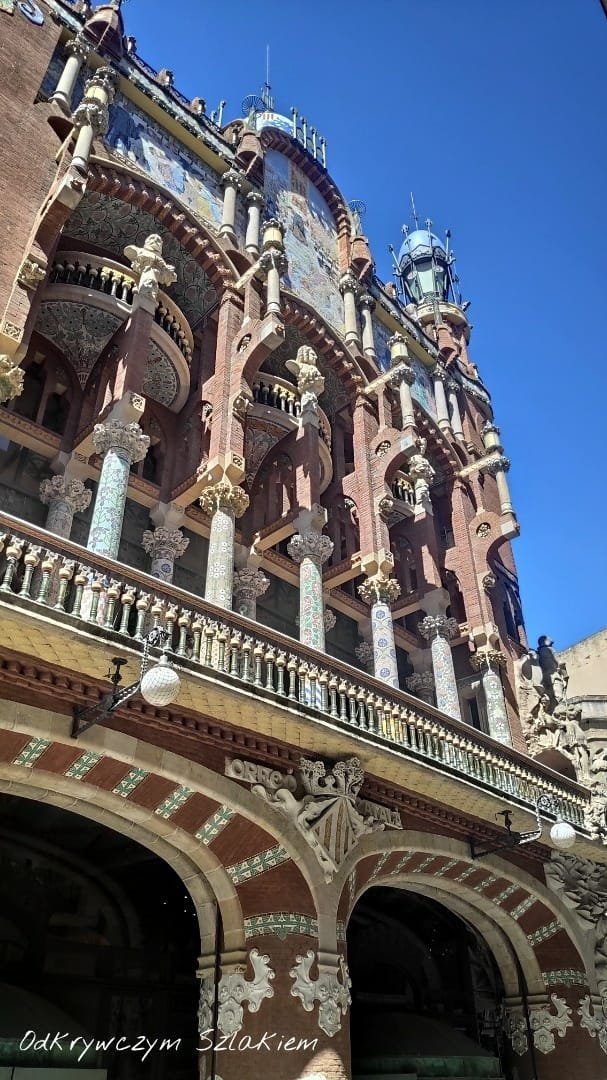
Barcelona is above all Catalan Modernisme – with its best-known architect, Antoni Gaudí. On the first day we saw the Sagrada Família basilica from the outside (the photo at the top of this post) – still under construction, with cranes above its towers. On the way we also passed the richly decorated Palau de la Música Catalana (designed by Lluís Domènech i Montaner).
Construction of the Sagrada Família began in 1882, and a year later Gaudí took over – he devoted the rest of his life to it and is buried in the crypt. When he died in 1926, at most a quarter of the basilica was finished. On 20 February 2026 the central Tower of Jesus Christ reached its full height – at 172.5 m, the Sagrada Família is now the tallest church in the world. Gaudí planned it one metre lower than Montjuïc hill, believing that the work of man should not surpass the work of God.
The basilica has three façades. On the east side stands the Nativity façade – built in 1893–1936, it was the first to be completed (you can see it in the photo at the top of the post). On the west side, facing the setting sun, is the stark, angular Passion façade, begun in 1954 to Gaudí’s drawings; from 1987 its sculptures were made by a team led by Josep Maria Subirachs.


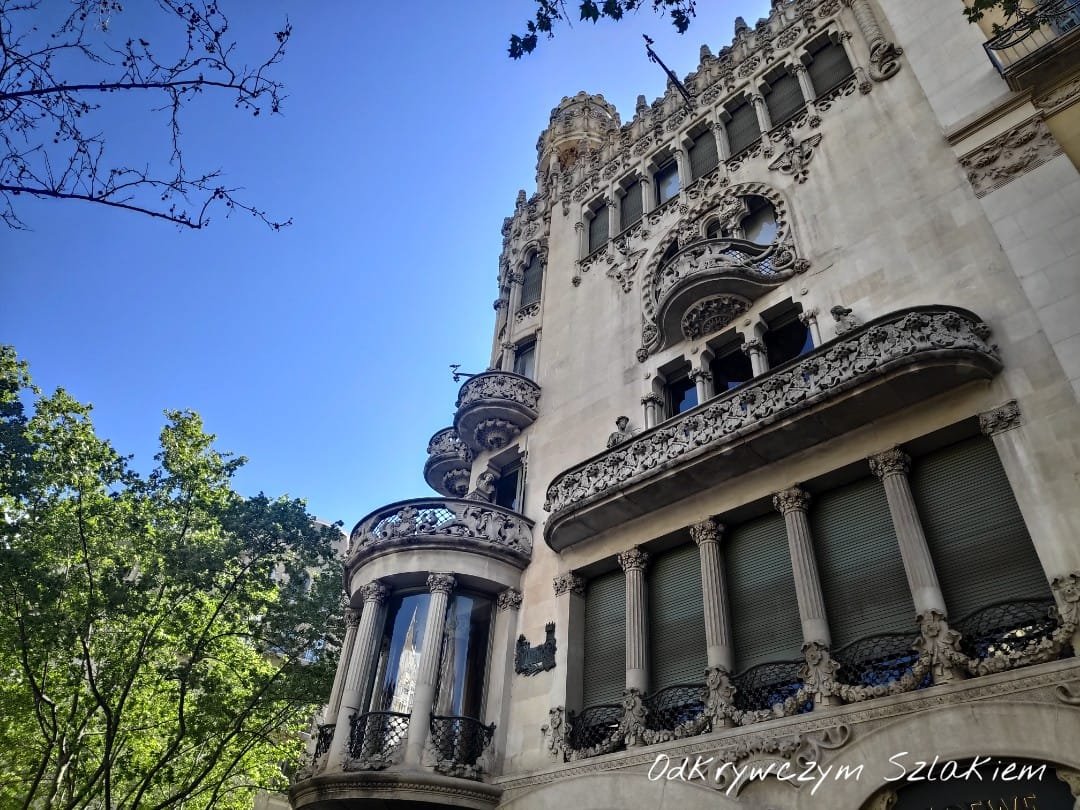
On the grand Passeig de Gràcia stand Gaudí’s Casa Batlló, with balconies that look like masks, and the neighbouring Casa Amatller, and a little further on – Casa Milà, known as La Pedrera, with its undulating stone façade.
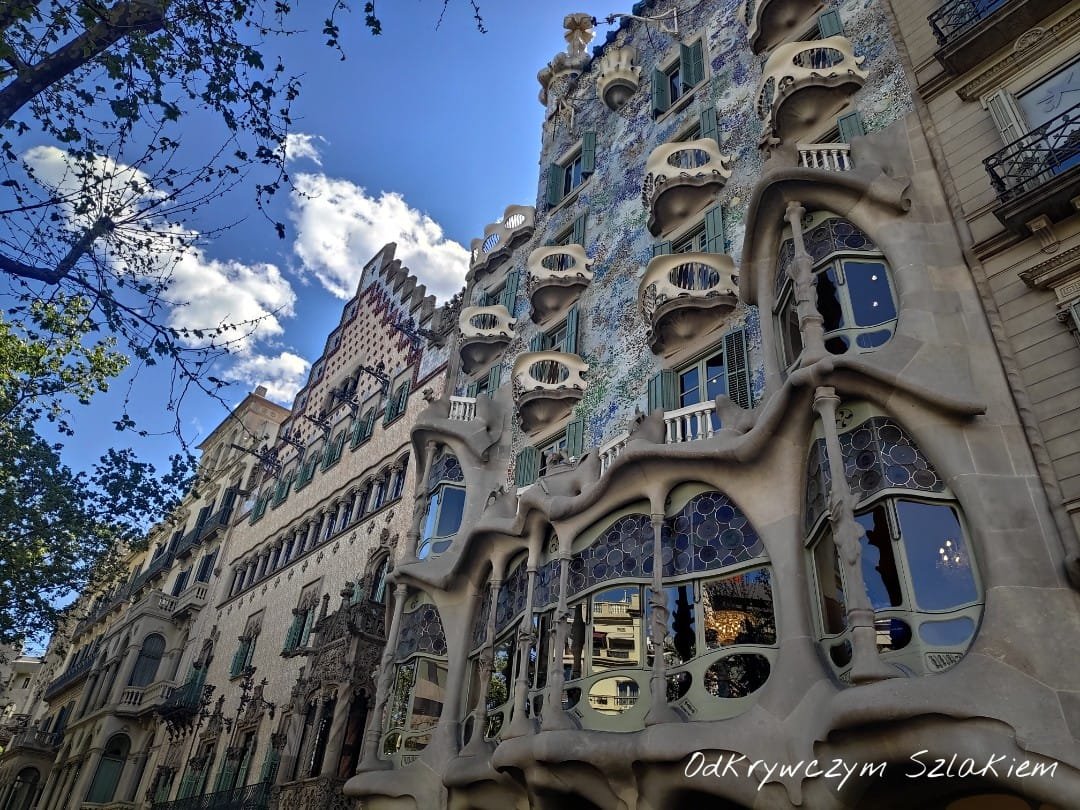
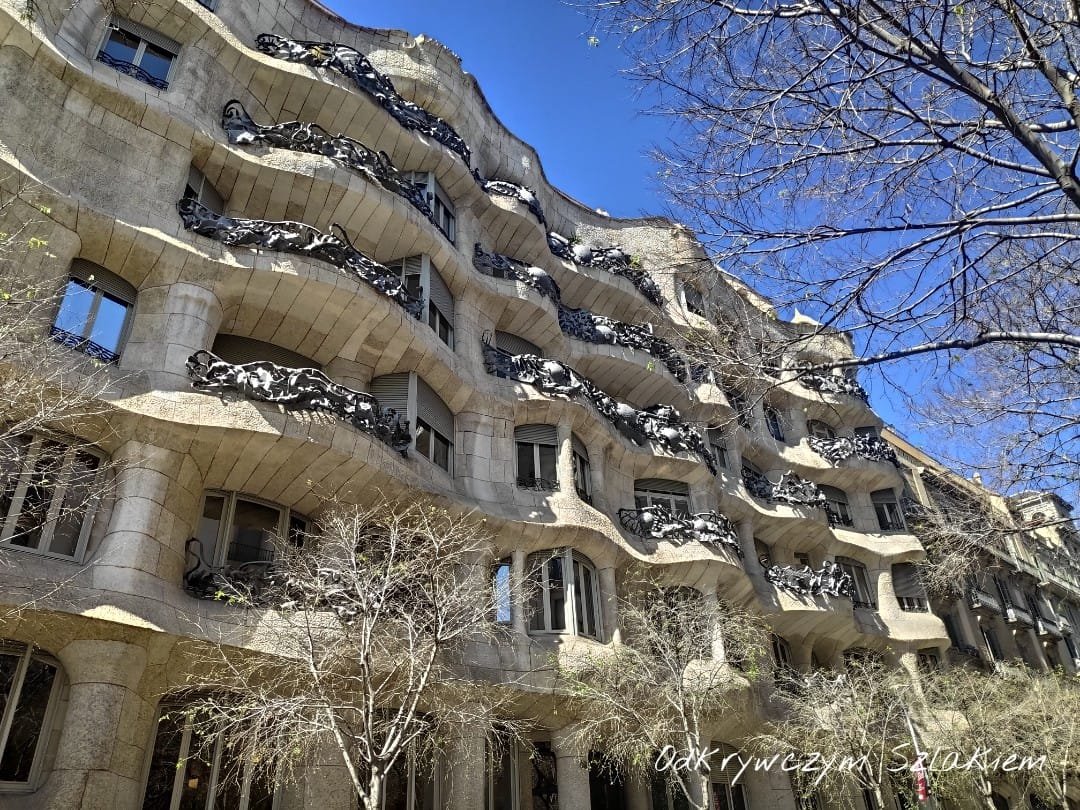
The block on Passeig de Gràcia where houses by Puig i Cadafalch (Casa Amatller), Domènech i Montaner and Gaudí stand side by side is called the Illa de la Discòrdia (“block of discord”) – their owners competed to commission ever more extraordinary façades. Casa Batlló, remodelled by Gaudí in 1904–1906, is known locally as the “house of bones”, and its wavy roof resembles the back of a dragon – pierced, according to a popular interpretation, by the lance of Saint George, patron saint of Catalonia. Casa Milà (1906–1912) was Gaudí’s last residential building; its nickname La Pedrera (“the quarry”) comes from its rough stone façade.
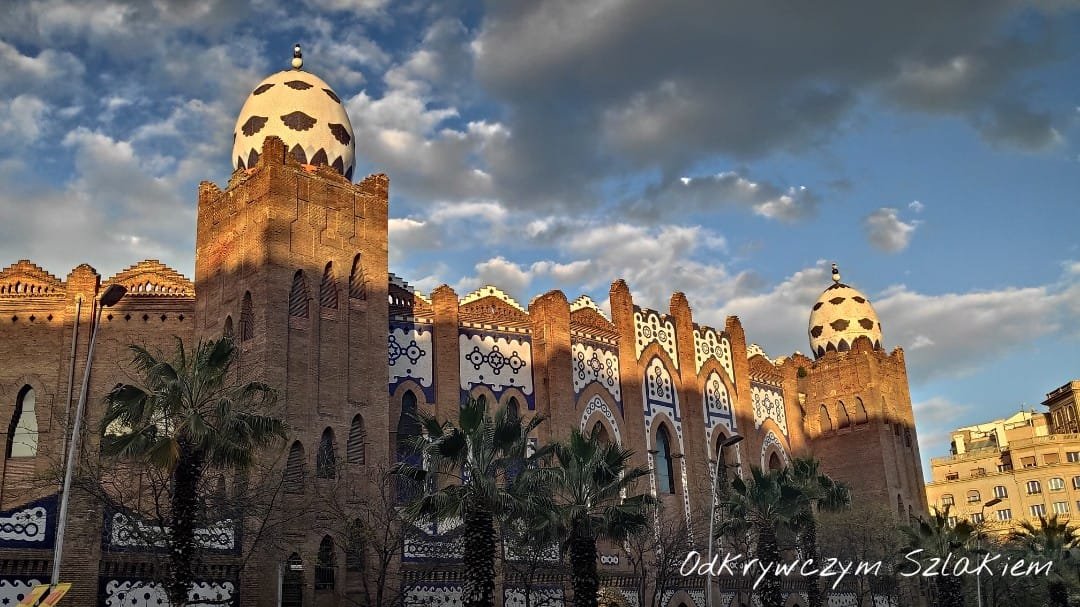
Among the interesting buildings we also remember La Monumental – a former bullring in the Neo-Mudéjar style; bullfights are no longer held in Catalonia.
Barcelona, day 2: Park Güell and Montjuïc
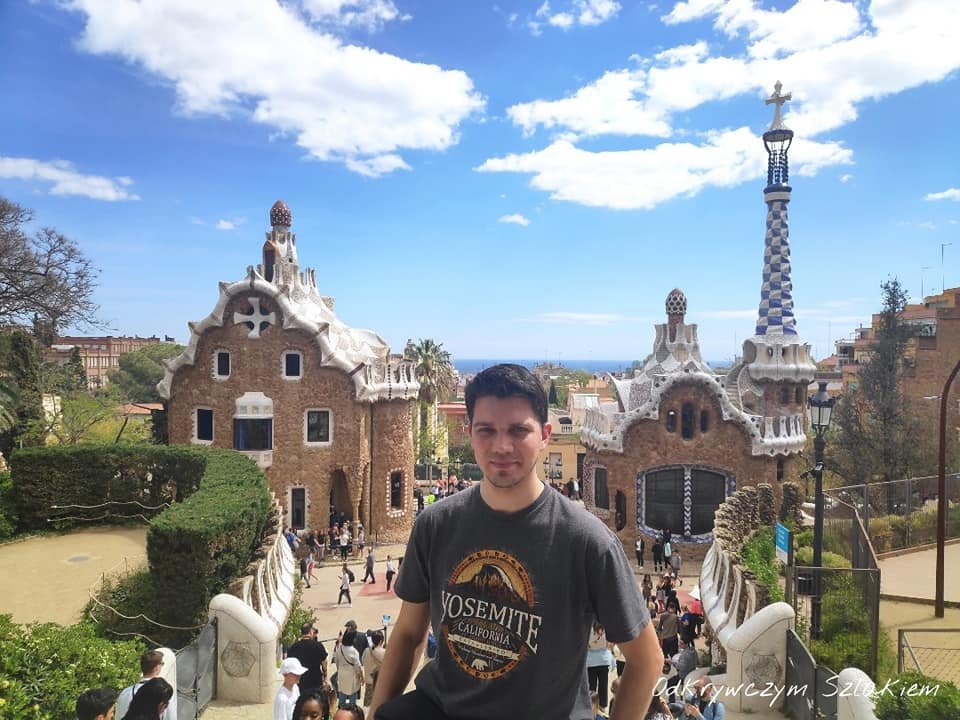
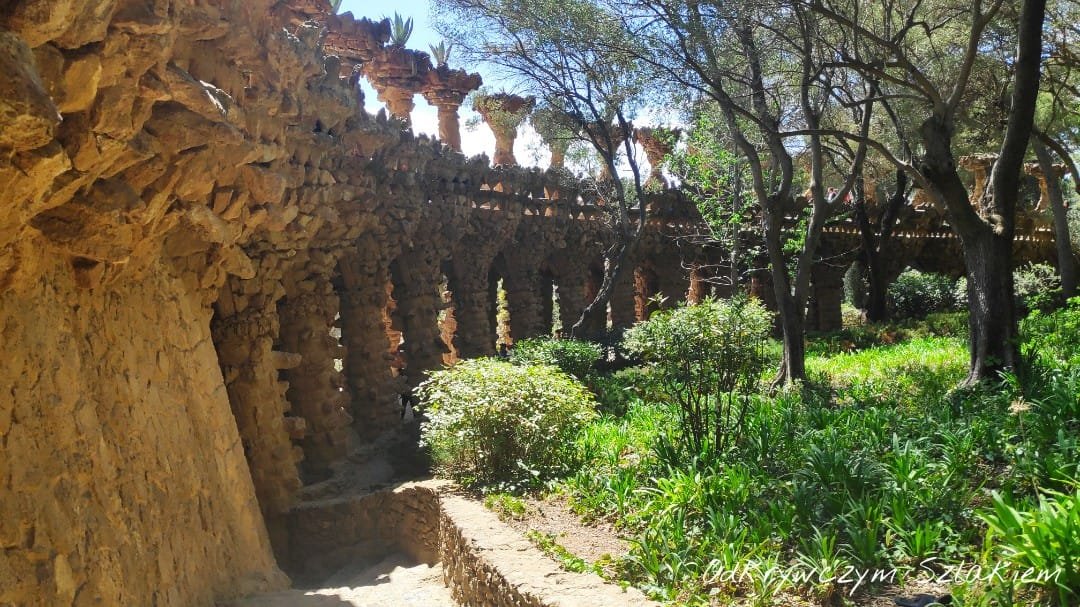
We started the second day in Park Güell, designed by Gaudí – a garden with interesting architectural features: a terrace with a colonnade, the mosaic salamander and stone porticoes. It is an unfinished housing estate project, of which fewer than five buildings were ever built. Entry is with a ticket for a specific time slot – because of a 40-minute delay on the train from Tarragona we only just made it.
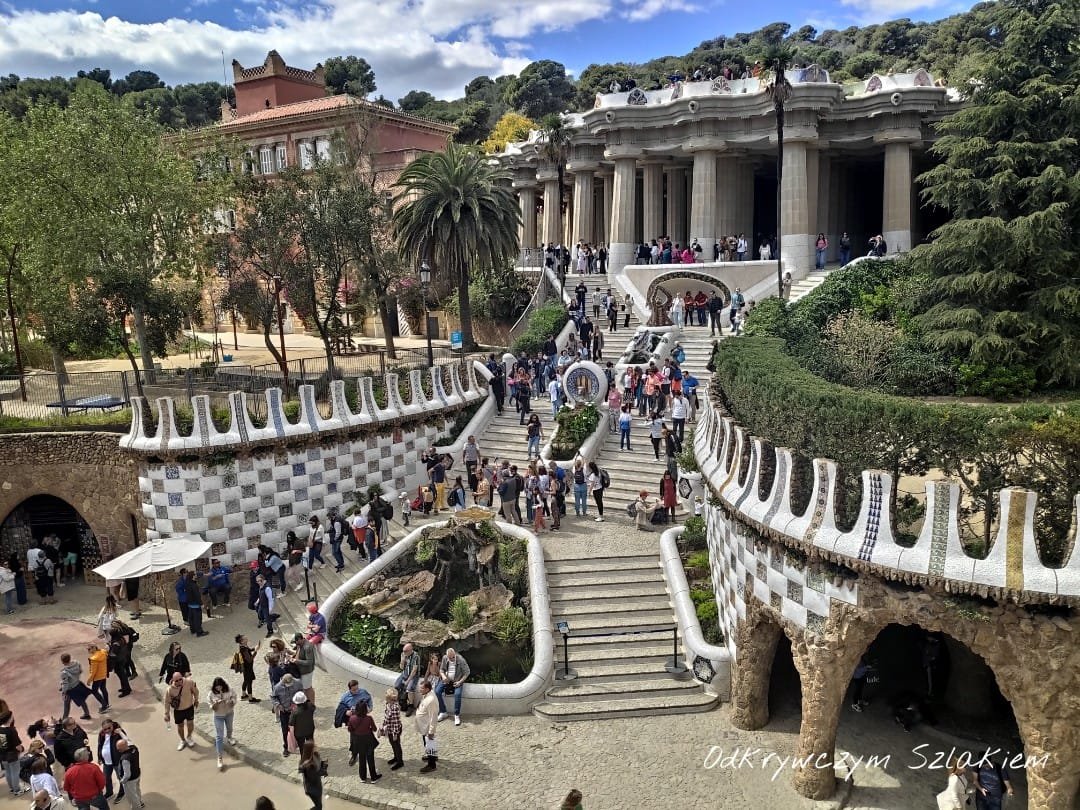
The park was built in 1900–1914 for the industrialist Eusebi Güell, who, inspired by English garden cities, planned a luxury housing estate here with 60 plots – hence the English word “park” in the name. There were not enough buyers, as the area was too far from the centre. Gaudí himself lived in one of the houses from 1906 – today it is a museum.
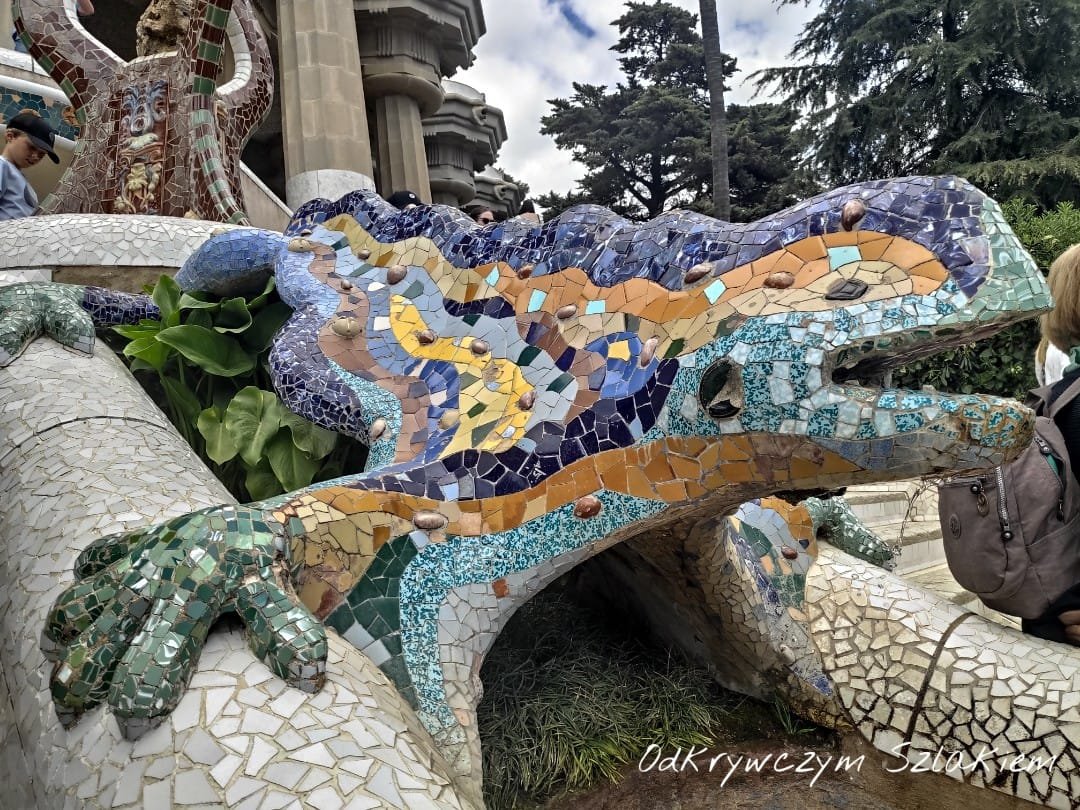
The pink house with a turret where Gaudí lived was designed by Francesc Berenguer as a show home for future residents of the estate (1904); it has been the Gaudí House Museum since 1963. Around the main terrace runs a long, wavy bench shaped like a sea serpent and covered in colourful mosaic – it was designed by Josep Maria Jujol. Since 1984 the park has been on the UNESCO list.


In the afternoon we went up Montjuïc hill – beautiful panoramas and the city’s history in one place. We saw the Olympic Stadium from the 1992 Games and (from the outside) the National Art Museum of Catalonia. Over the two days we walked about 25 km around Barcelona.
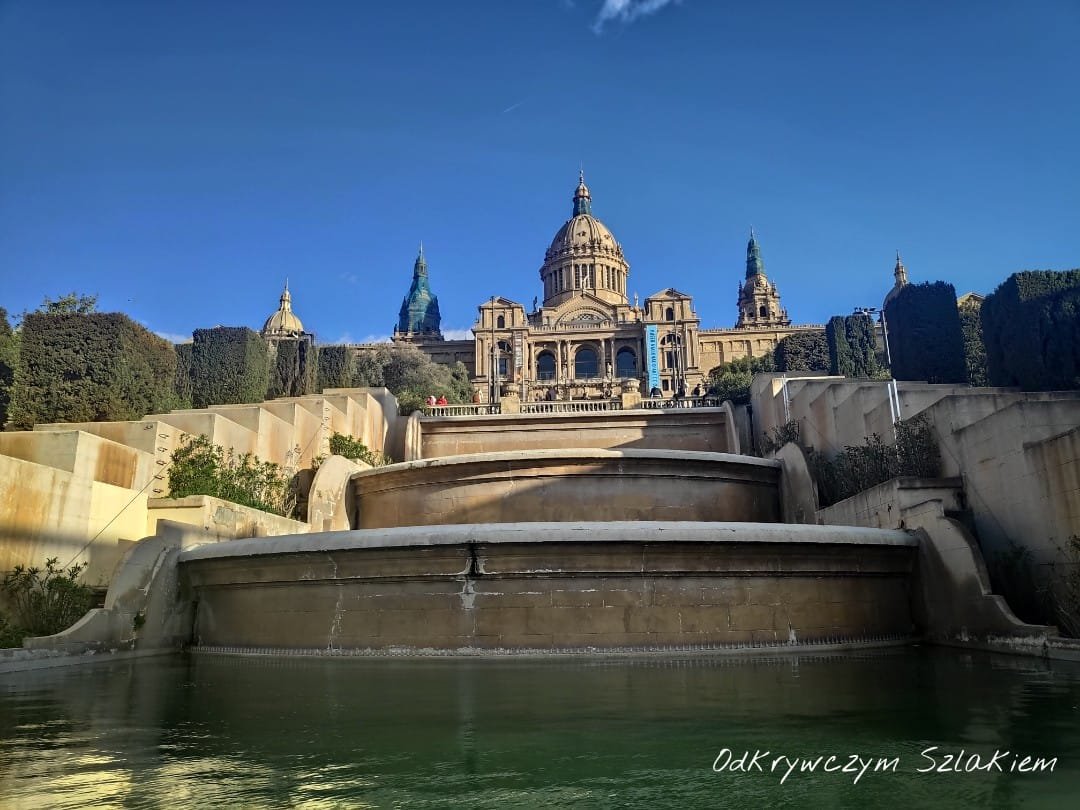
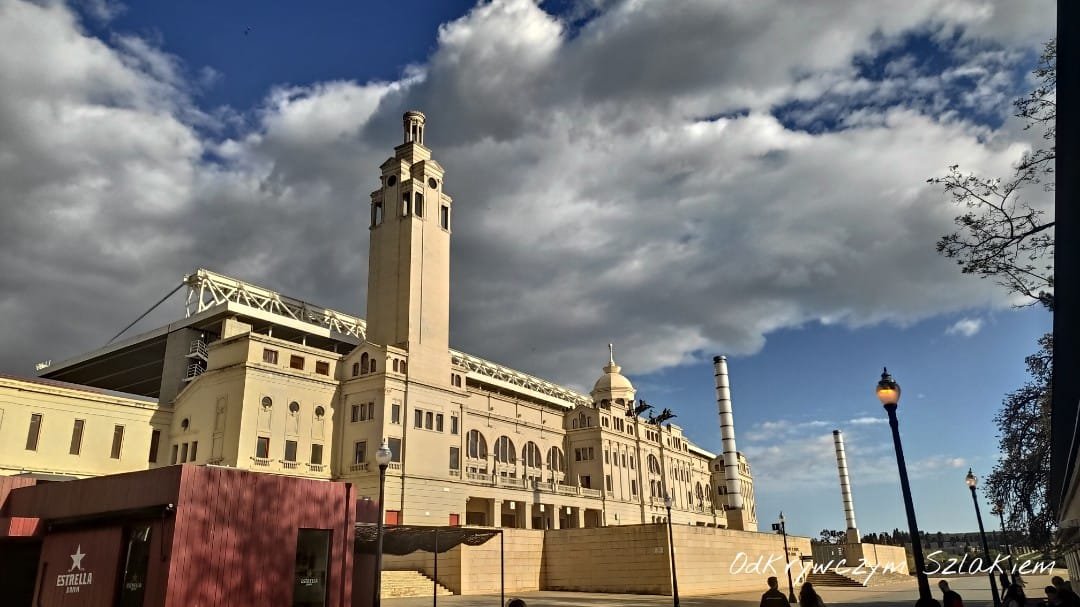
At the top of the hill stands Montjuïc Castle. The first fortifications were begun here in 1640, and the fortress took its present shape in 1779–1799. In the late 19th century anarchists, among others, were imprisoned and tortured here, and in 1940 the president of the Catalan government, Lluís Companys, was executed here. In 2007 the state handed the castle over to the city. Next to the Olympic Stadium stands Santiago Calatrava’s white communications tower (136 m), built for the 1992 Games to transmit the TV coverage. It is meant to look like an athlete holding the Olympic flame, and it also works as a giant sundial.


Tarragona – Roman Tarraco and human towers
It’s hard to believe, but in ancient times Tarragona (Roman Tarraco) was the capital of a province covering most of present-day Spain – hence our jokes about “Tarragona in its heyday”. Roman remains can be seen in many places, the most impressive being the amphitheatre right by the sea. On the first day Guillem showed us around the city, telling us about the history of the buildings and what the ancient city looked like.
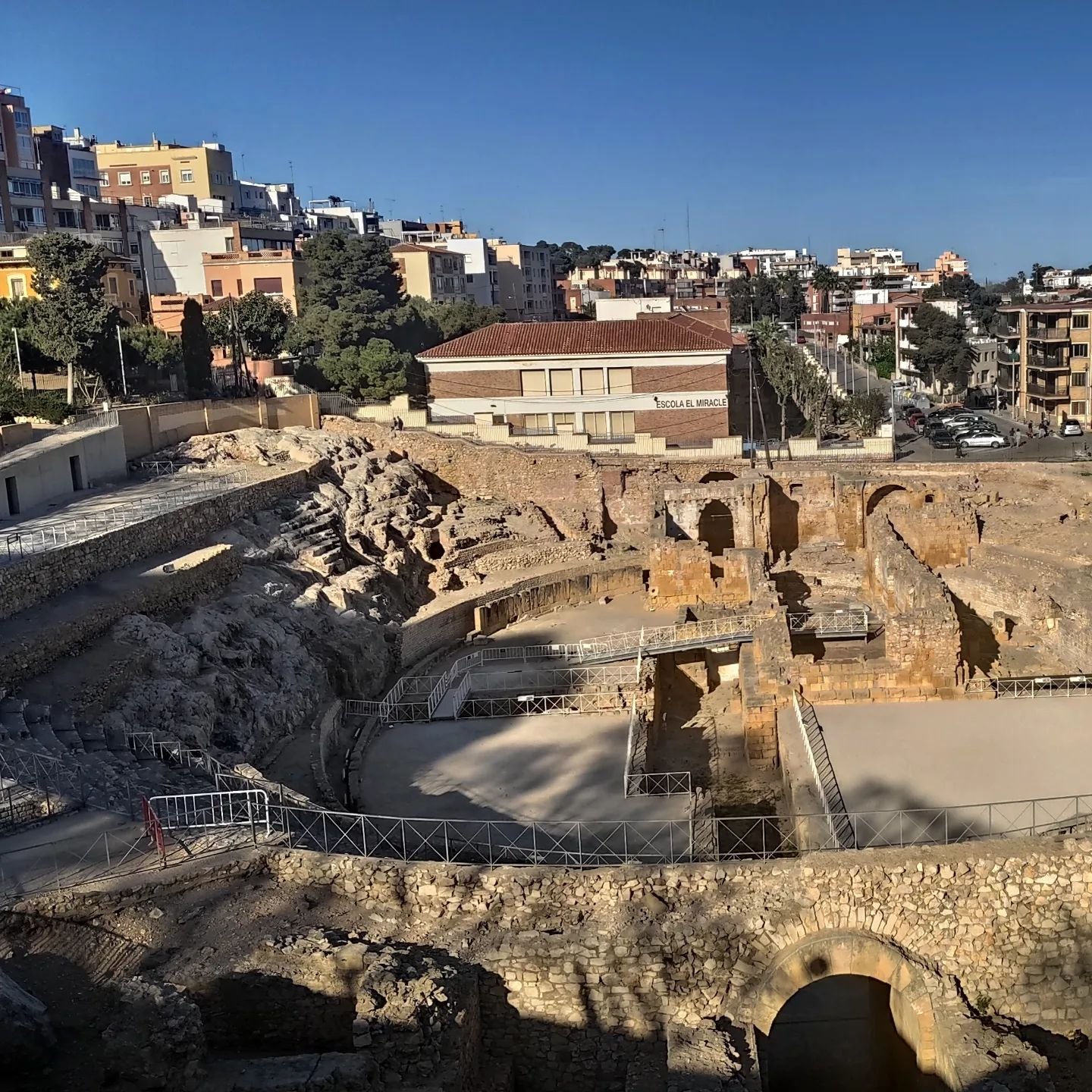
Tarraco was the oldest Roman settlement on the Iberian Peninsula – it was first mentioned in 218 BC. The province of Hispania Tarraconensis was named after it, and Emperor Augustus, who came to Hispania in 27 BC, stayed right here because of his poor health. The amphitheatre, from the turn of the 1st and 2nd centuries, held up to 15,000 spectators. In 259 Bishop Fructuosus and two deacons were burned alive in it, and a basilica was later built here in their honour. Since 2000 the monuments of Tarraco have been on the UNESCO list.
After the walk we stopped at a bar to try regional beers that are hard to find in an ordinary shop, and in the evening we watched a display of castells – building human towers, a tradition typical of Catalan towns, and of Tarragona in particular. The day ended with a barbecue at Guillem’s.
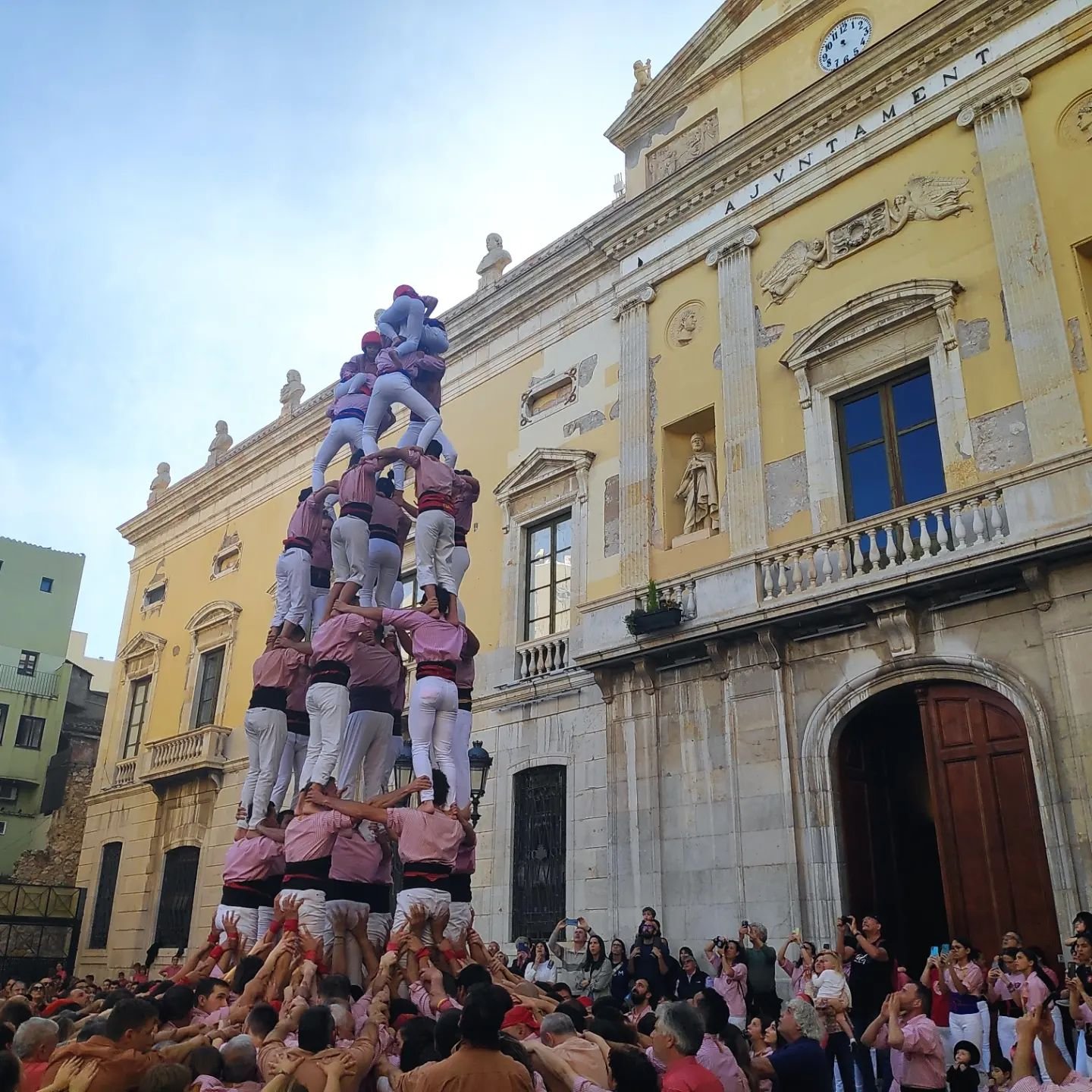
Castells have been on the UNESCO intangible heritage list since 2010. The tradition comes from the nearby town of Valls, where it was first recorded in 1712. A tower counts as a success when the child at the top – the enxaneta – raises a hand and the whole structure is then taken down safely; the children wear special helmets. Every two years, on the first weekend of October, Tarragona’s former bullring hosts the castells competition.
Castells have their own monument in Tarragona: on Rambla Nova stands a tower made of more than two hundred figures – a sculpture by Francesc Anglès unveiled in 1999. Most of the figures form the base, the pinya – the crowd that supports the tower from below.

In the old town it’s worth stopping by the Romanesque-Gothic cathedral and strolling through the lanes lined with old houses, whose balconies are often hung with Catalan flags.
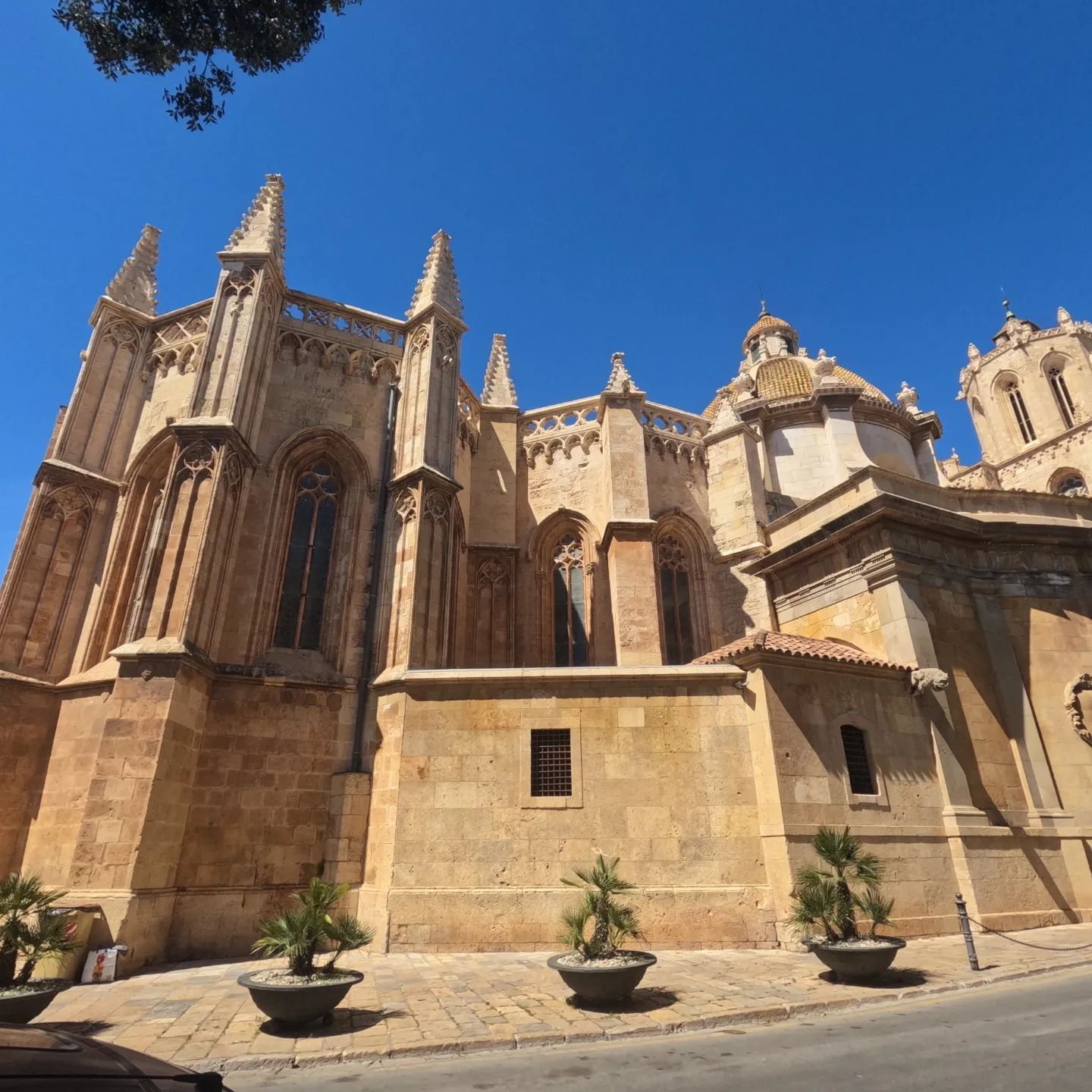
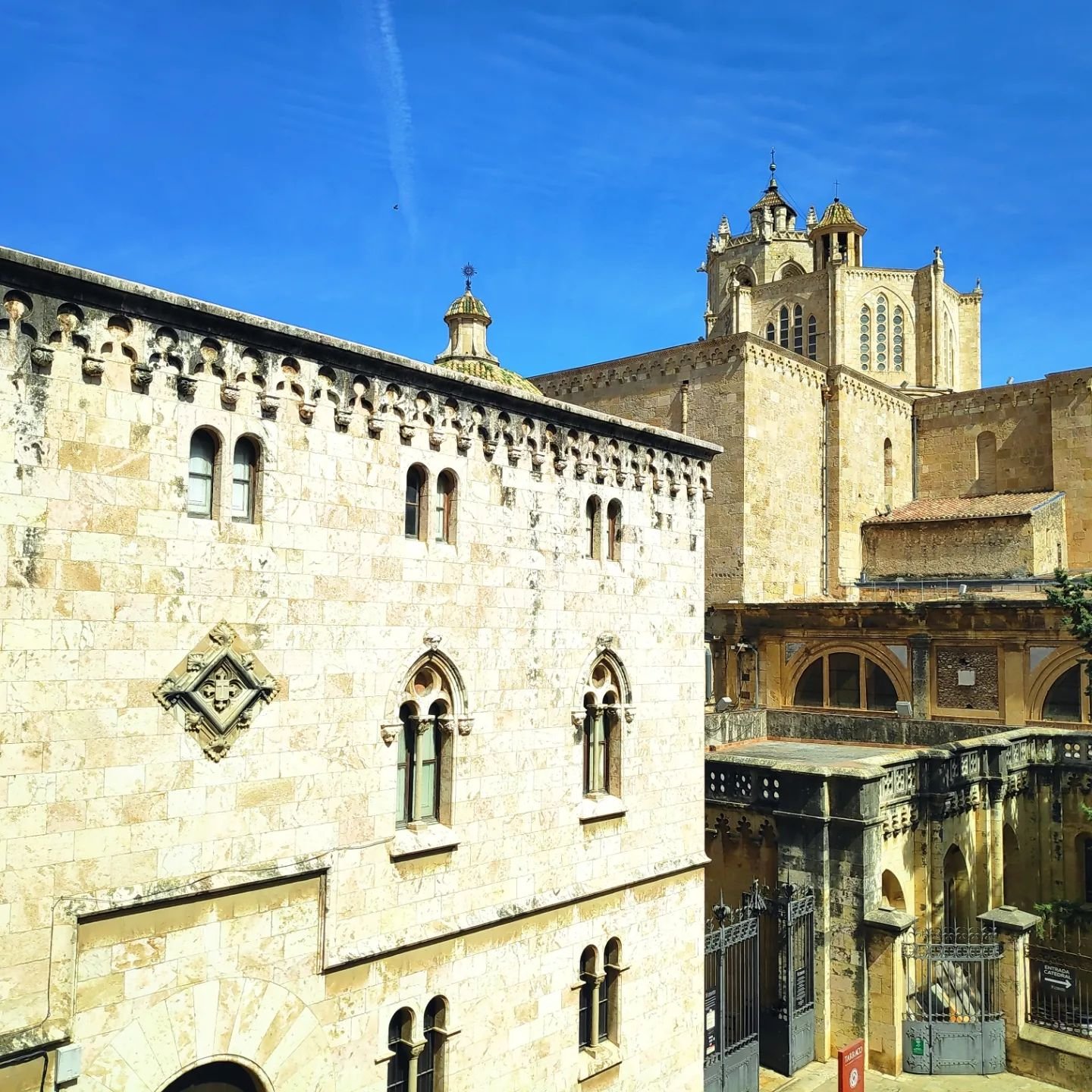
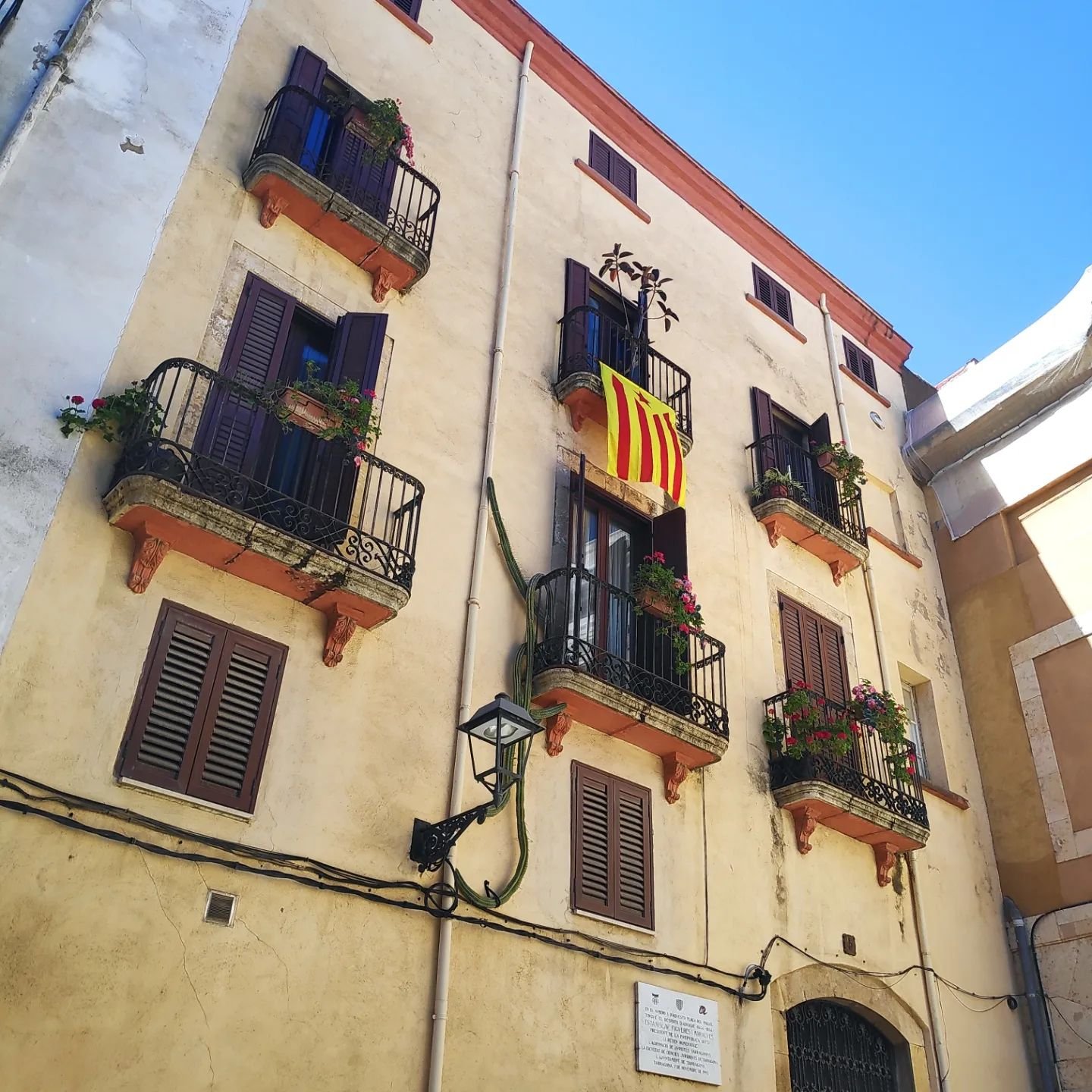
By Rambla Vella, remains of the Roman circus from the reign of Emperor Domitian (AD 81–96) have survived. It was about 325 m long and held around 20,000 spectators; massive vaults that once supported the stands are still standing today. The old town is still surrounded by walls – the oldest parts were built by the Romans at the end of the 3rd century BC. The Baroque Portal de Sant Antoni gate in the walls on Passeig de Sant Antoni dates from 1737.


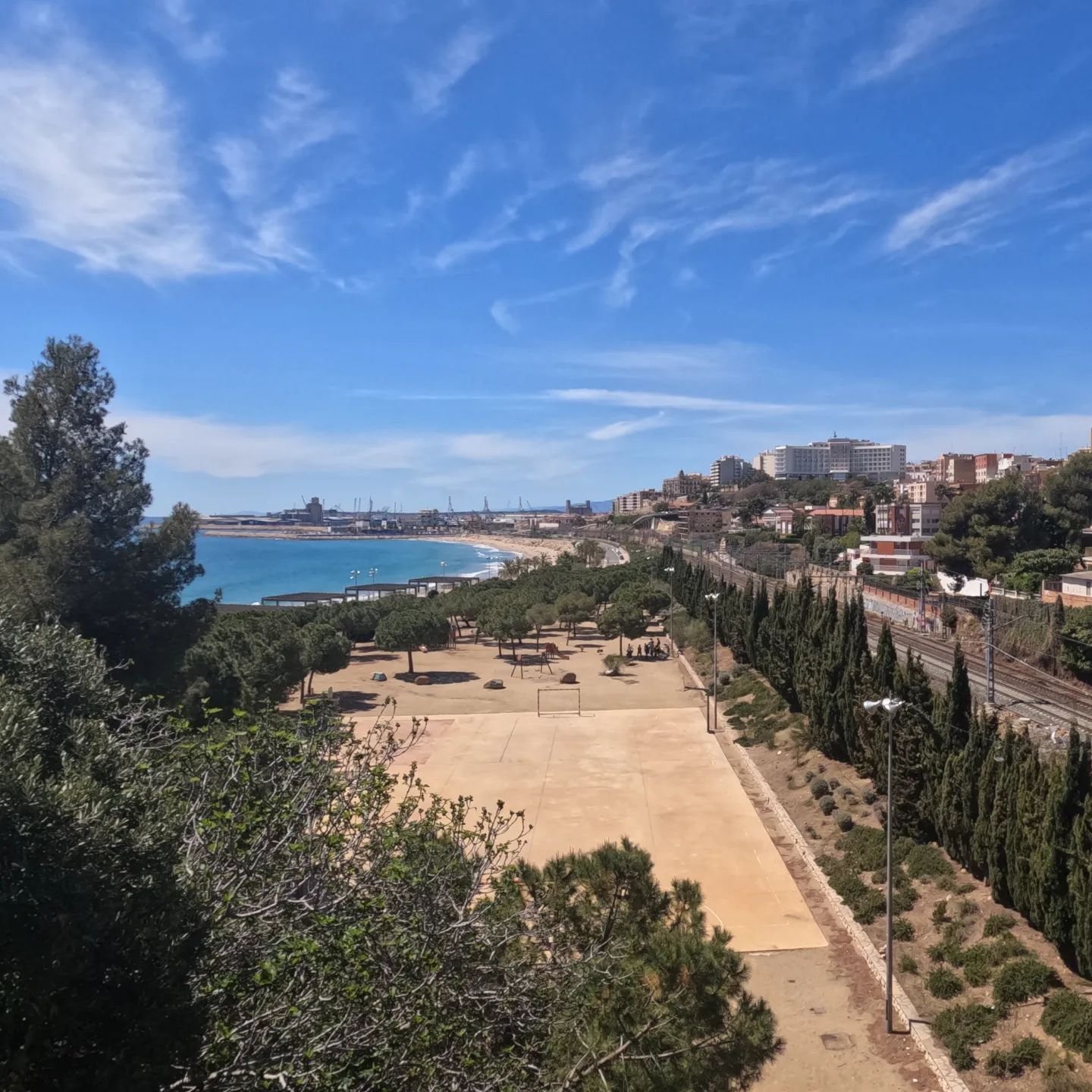
On the second day we took a long walk through the city, with a break on the beach and a view of the coast from the terraces above the sea.
Practical information
- Getting there from Tarragona: the easiest way to Barcelona is the regional train, but punctuality varies – if you have a ticket for a set time (e.g. for Park Güell), leave yourself some time to spare.
- Public transport in Barcelona: ticket prices are reasonable; the 10-journey ticket is the best value.
- Park Güell: tickets are for a specific time – it’s worth buying them in advance and leaving plenty of time to get there.
- Prices: Barcelona is expensive – both accommodation and most shops.
- Crowds: the city is beautiful and well worth a visit, but as with any big city it is very crowded, and the tourist sights are absolutely packed.
- Tickets (as of 2026): a T-casual card for 10 journeys costs from €13, a single ticket €2.90. Entry to Park Güell costs €18; you must enter no later than 30 minutes after the time on your ticket, and once you leave you cannot go back in.