Opole is a city of about 125,000 people on the Oder, and it has been the capital of the Opole Voivodeship since 1950. The Piasts of Opole ruled here until 1532, and since 1963 the city has hosted the National Festival of Polish Song – hence its motto, “the Capital of Polish Song”. I was here on 3 May 2023, after the 3-majówka festival in Wrocław. My walk around the centre took about an hour and a half. Below I describe that route, and at the end – getting there, tickets and opening hours.
Table of contents
- By the Oder – the town walls near the cathedral
- The Piast Tower and the Millennium Amphitheatre
- The synagogue memorial and Rabbi Leo Baeck
- The Groszowy Bridge and the Opole Nike
- The Market Square, the town hall and the Walk of Stars
- Krakowska Street – the Krawczyk mural and the Ceres Fountain
- University Hill
- The Upper Castle and the statue of Władysław Opolczyk
- Practical information
By the Oder – the town walls near the cathedral
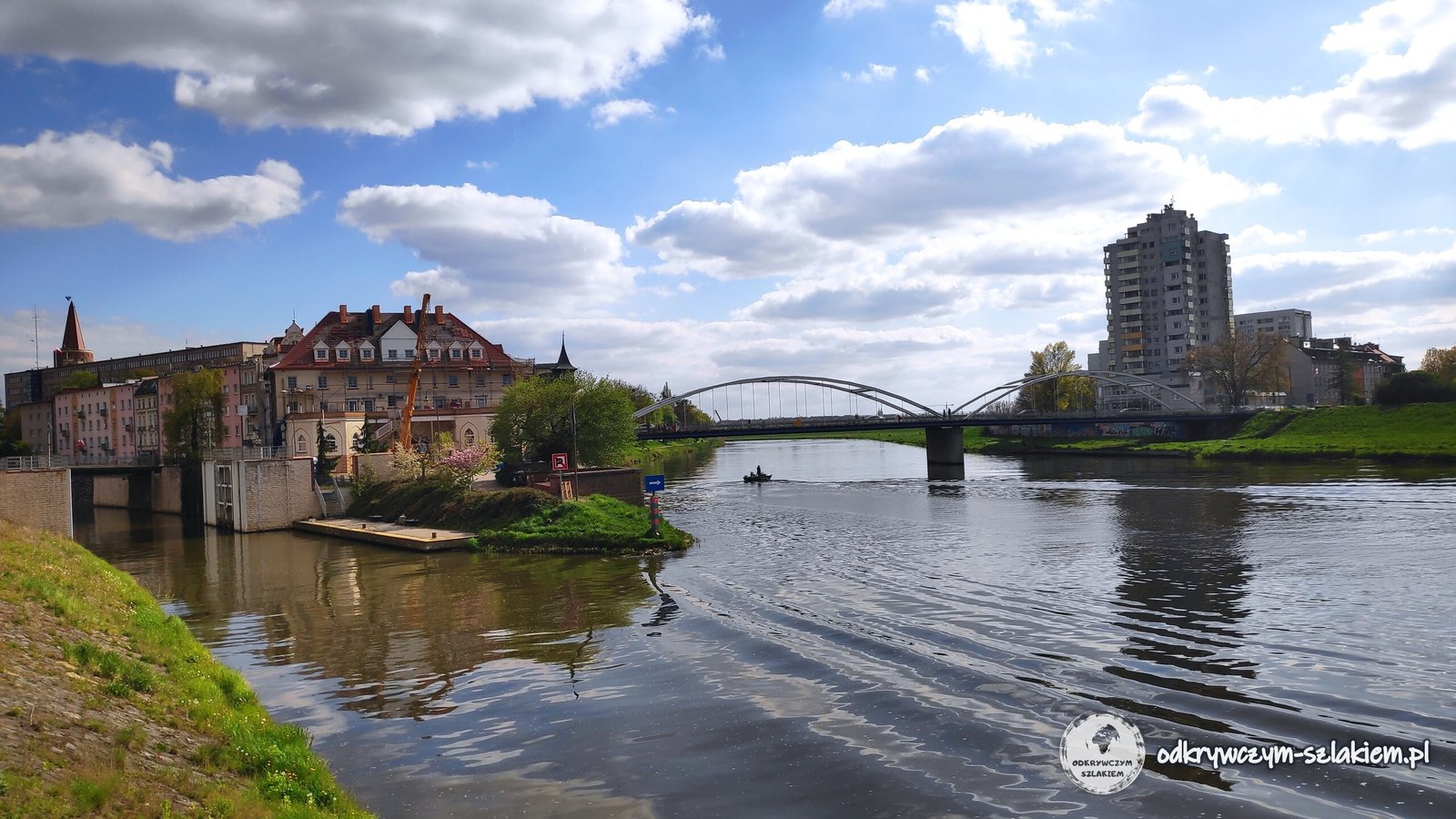
I started the walk by the Oder, at the north-western edge of the old town. From the bank you can see the steel arches of the Piast Bridge (Most Piastowski), which links Pasieka Island with the Zaodrze district, and above the buildings on the island – the spire of the Piast Tower. The old town is separated from Pasieka by the Młynówka. It is often called a canal, but it is in fact an old bed of the Oder – the main current flowed here until the flood of 1600. The name comes from the mills (młyny) that stood on both banks.
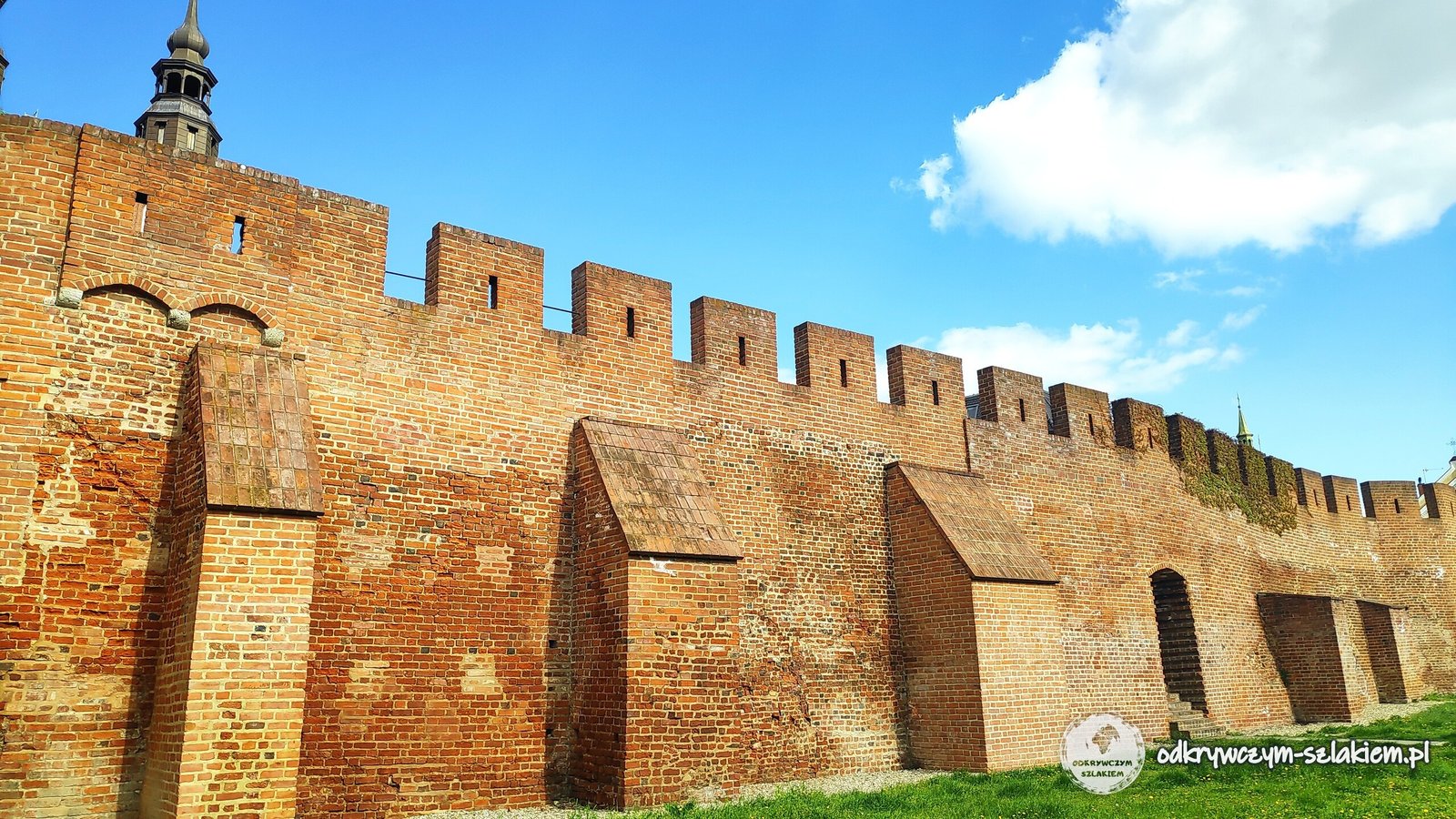
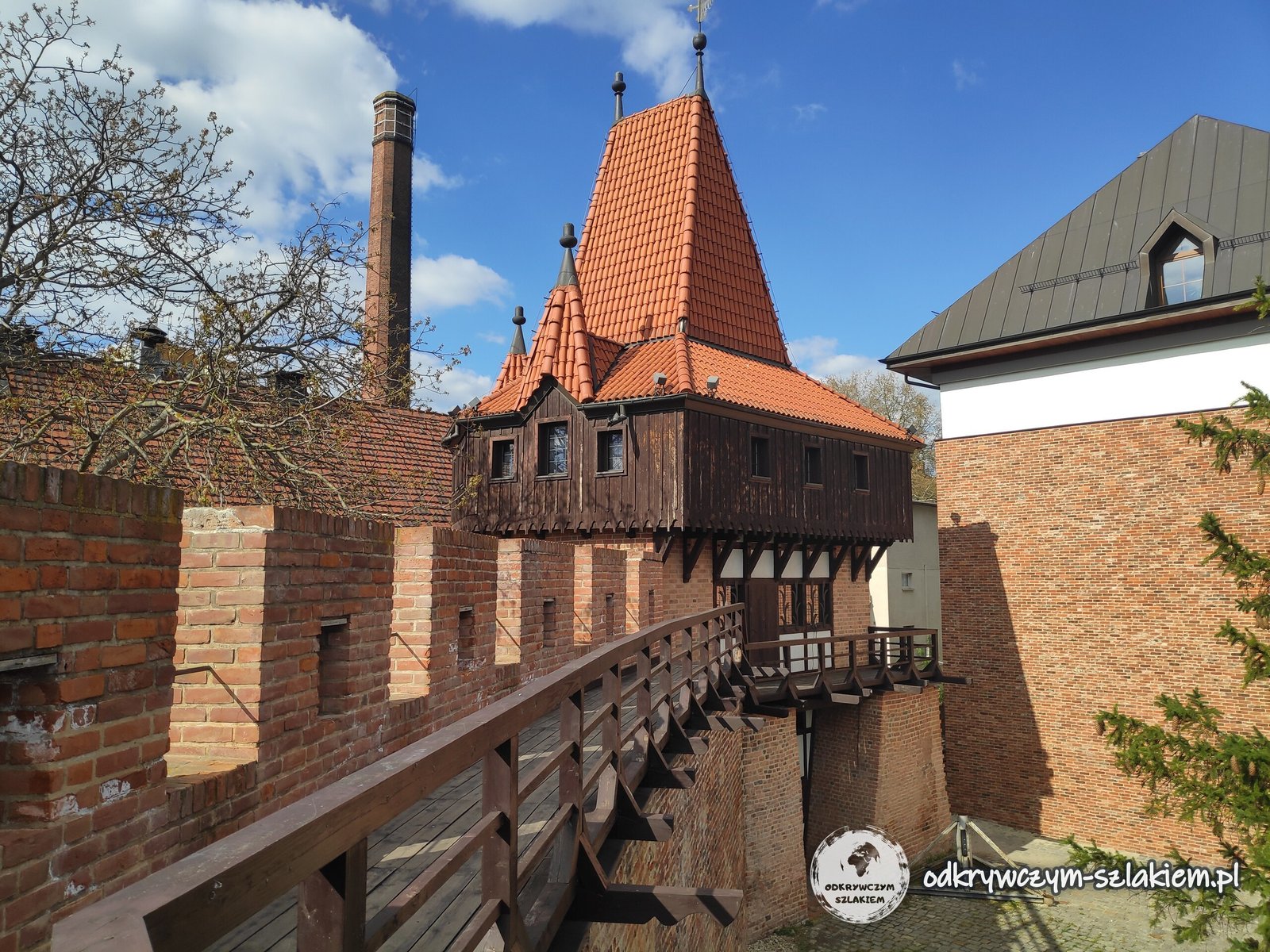
Near the cathedral there is a stretch of the medieval town walls. The brick walls were started under Prince Bolesław I, around 1285. Next to the cathedral they were partly rebuilt – today a wooden gallery with a railing stands on top of the wall.
The Piast Tower and the Millennium Amphitheatre
On the other side of the Młynówka, on Ostrówek, a stronghold of Mieszko I’s state stood as early as around 990, and later the castle of the Piasts of Opole. All that is left of it is the Piast Tower (Wieża Piastowska), about 42 m high. It is traditionally dated to around 1300, although recent research points to the mid-14th century. The castle was demolished in 1928. Protests by Polish townspeople and activists of the Union of Poles in Germany saved only the tower – it was incorporated into the new regency building, today the Voivodeship Office. More than 160 steps lead up to the viewing terrace, and in good weather you can see the Opawskie Mountains from there.
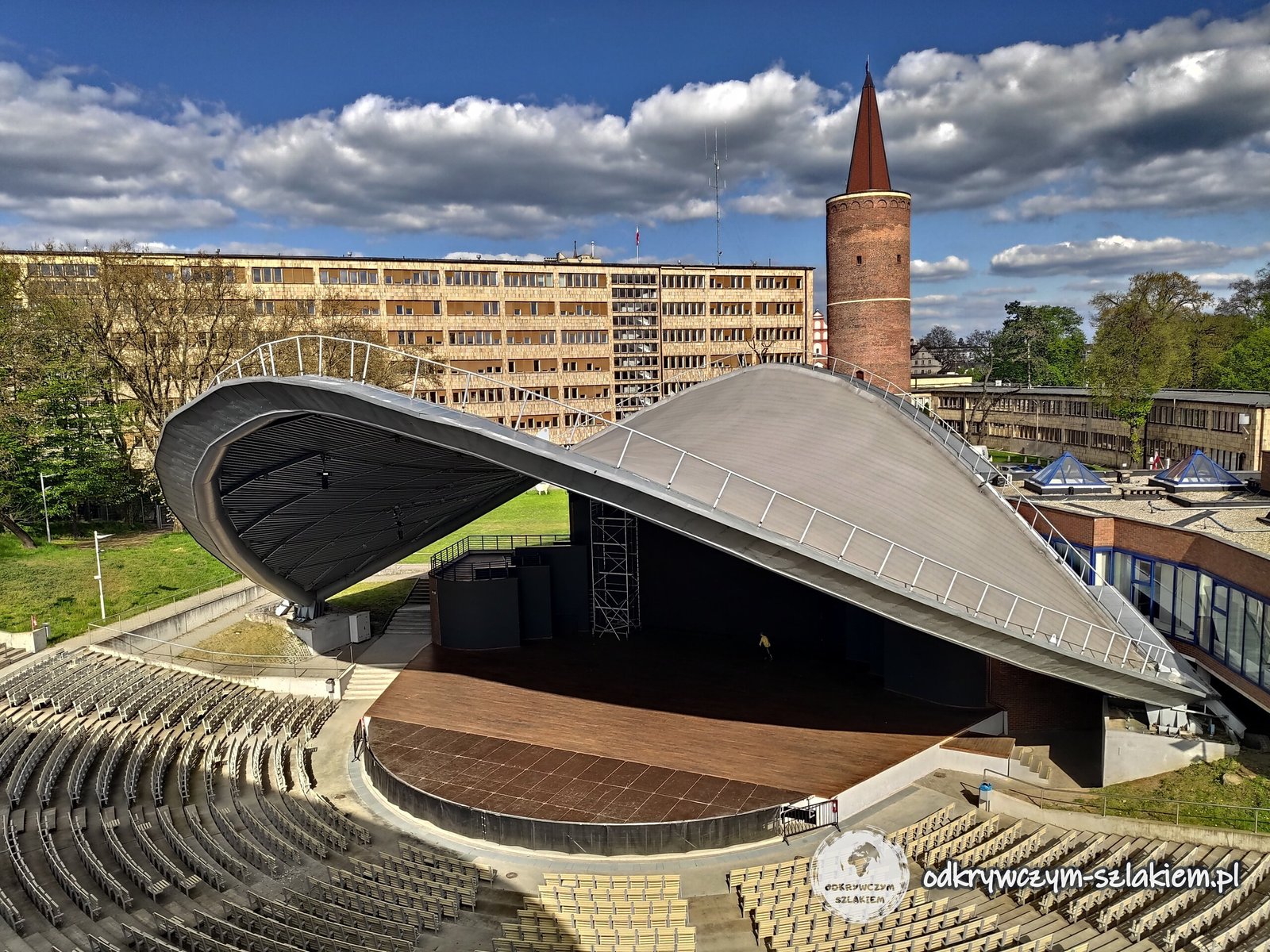
At the foot of the tower stands the Millennium Amphitheatre (Amfiteatr Tysiąclecia), designed by Tadeusz Łagiewski on the model of a fallen fig leaf. The first festival took place here on 19–23 June 1963. It was conceived by two journalists of Polish Radio’s Programme Three, Jerzy Grygolunas and Mateusz Święcicki. After the 2009–2011 rebuild, the auditorium has 3,653 seats and a roof. The building also houses the Museum of Polish Song, with a multimedia exhibition on the history of Polish song from the 1920s onwards. I took my photos from above the back rows of the auditorium – five weeks later the jubilee 60th festival was held here.
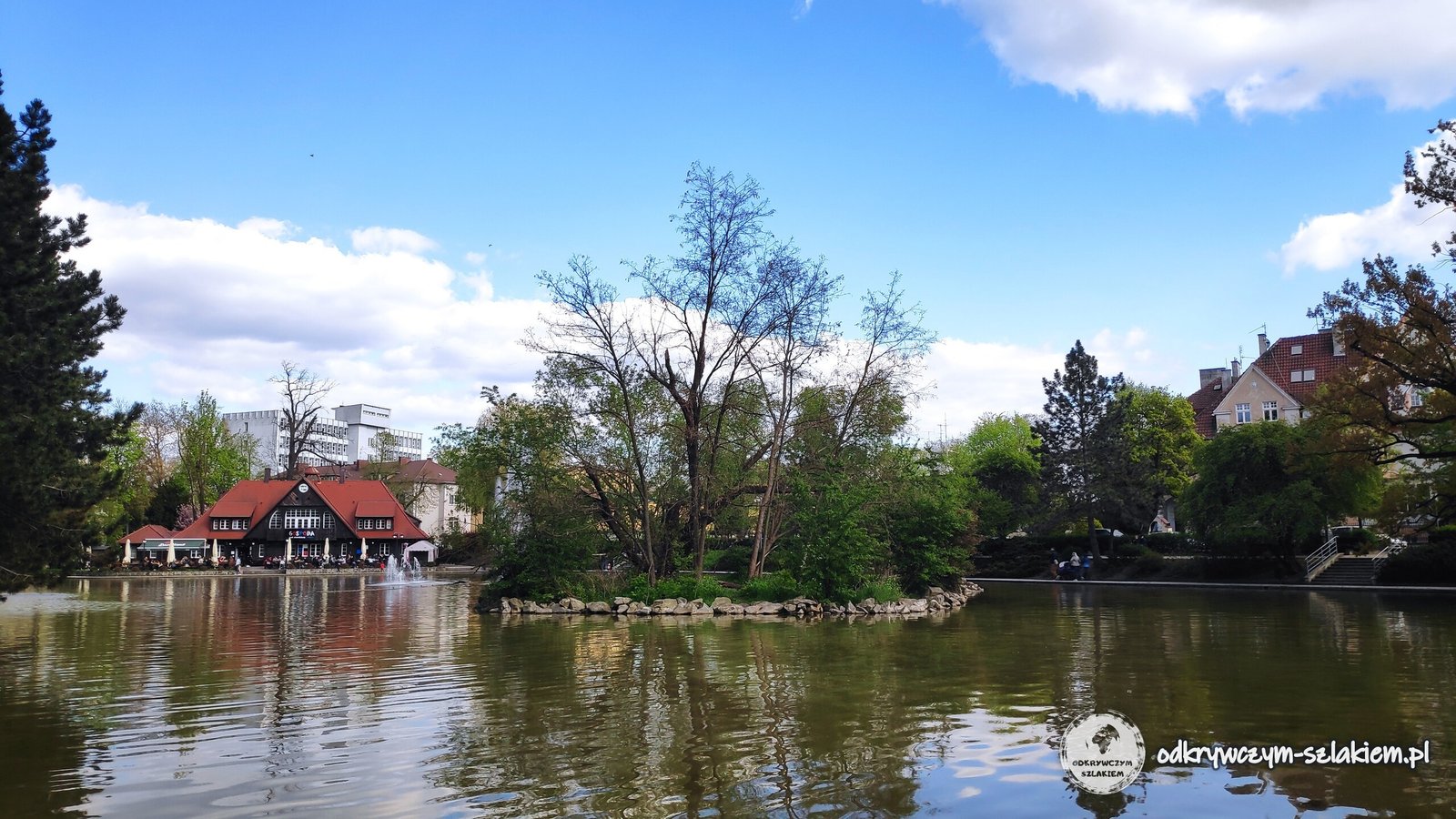
Next to it is a park with the Castle Pond (Staw Zamkowy). By the water stands the wooden Ice House (Domek Lodowy) from 1909, built in the Lusatian style as the headquarters of a skating club.
The synagogue memorial and Rabbi Leo Baeck
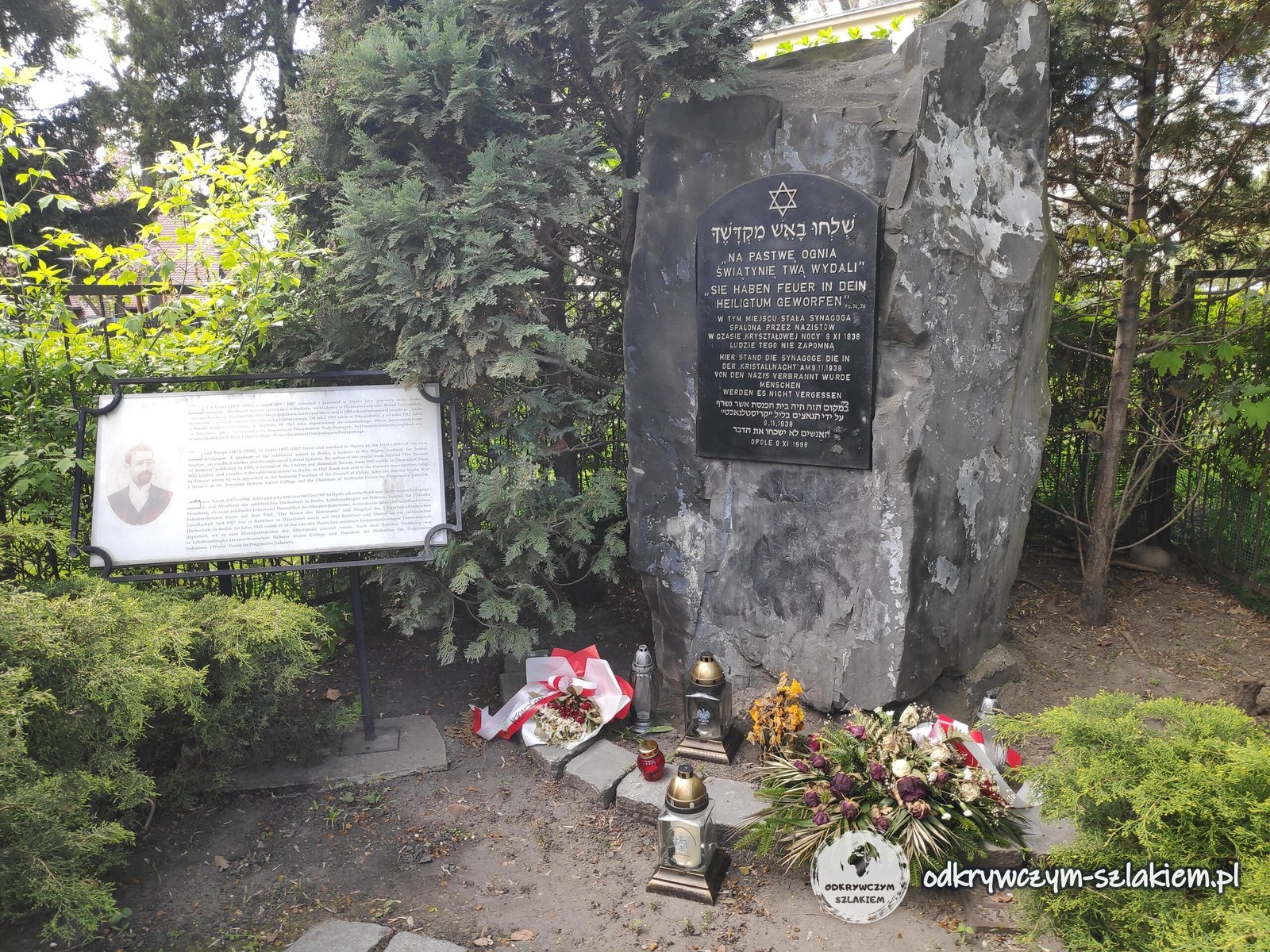
The Neo-Moorish New Synagogue was built on Piastowska Street in 1893–1897. It was opened on 22 June 1897 by Opole’s new rabbi, Leo Baeck – according to the board next to the memorial, he later became a rabbi in Berlin, was deported to a concentration camp in 1943, and after the war was president of the World Union for Progressive Judaism. On the night of 9–10 November 1938, during Kristallnacht, the Nazis forced Rabbi Hans Hirschberg to set fire to the synagogue himself. The ruins were demolished, and today a nursery building stands on the site. Since 1998 the synagogue has been commemorated by a boulder with a plaque in Polish, German and Hebrew: “They have cast fire into thy sanctuary… People will not forget this.”
The Groszowy Bridge and the Opole Nike
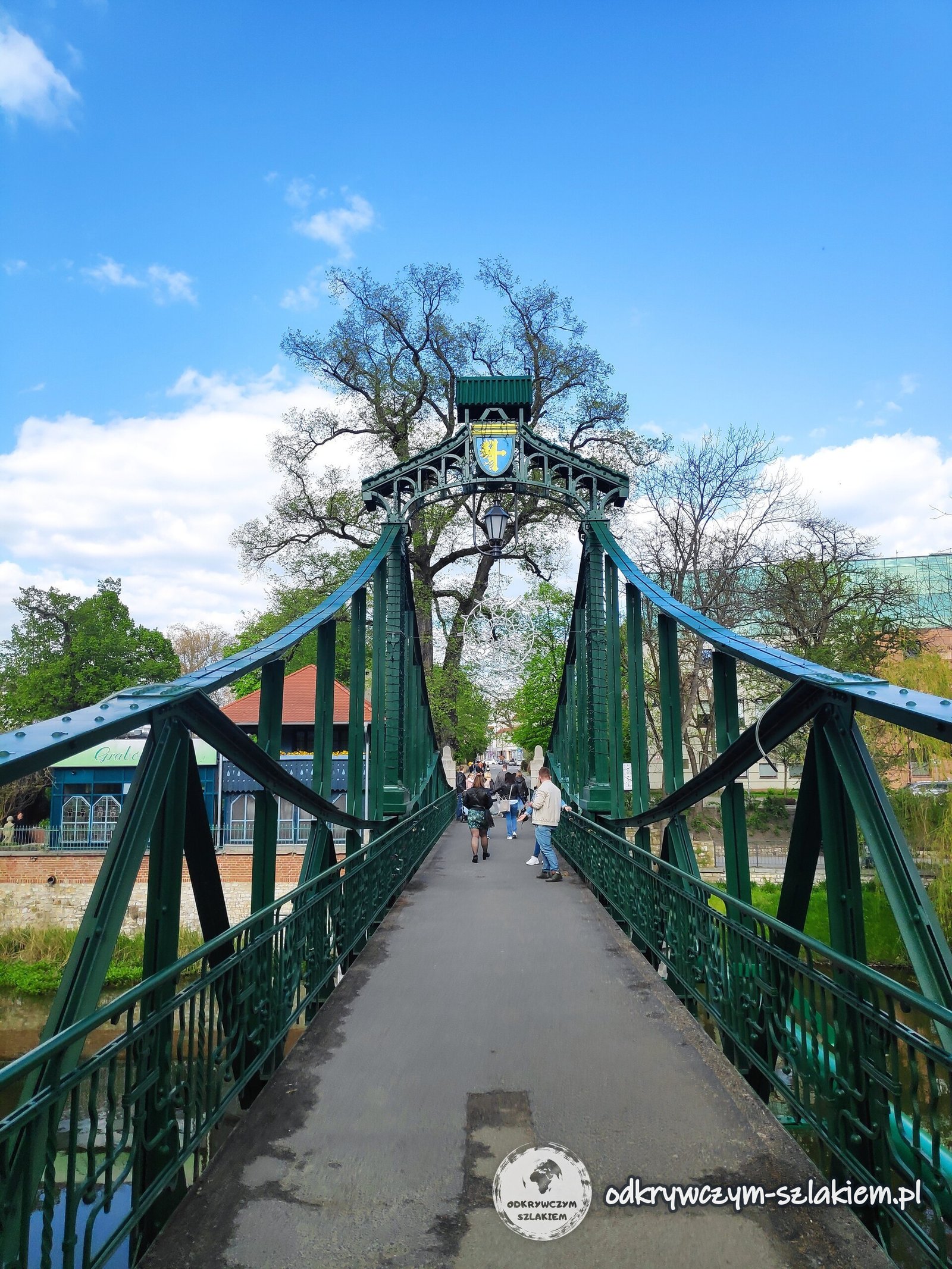
From Pasieka I crossed back to the old town over the Groszowy Bridge (Most Groszowy) – a green Art Nouveau footbridge over the Młynówka from 1903. Its name comes from the old toll for crossing it, which was one grosz. The stretch of the Młynówka between the Cathedral Bridge and the Castle Bridge is called the Opole Venice, and it has been lit up since 2007.
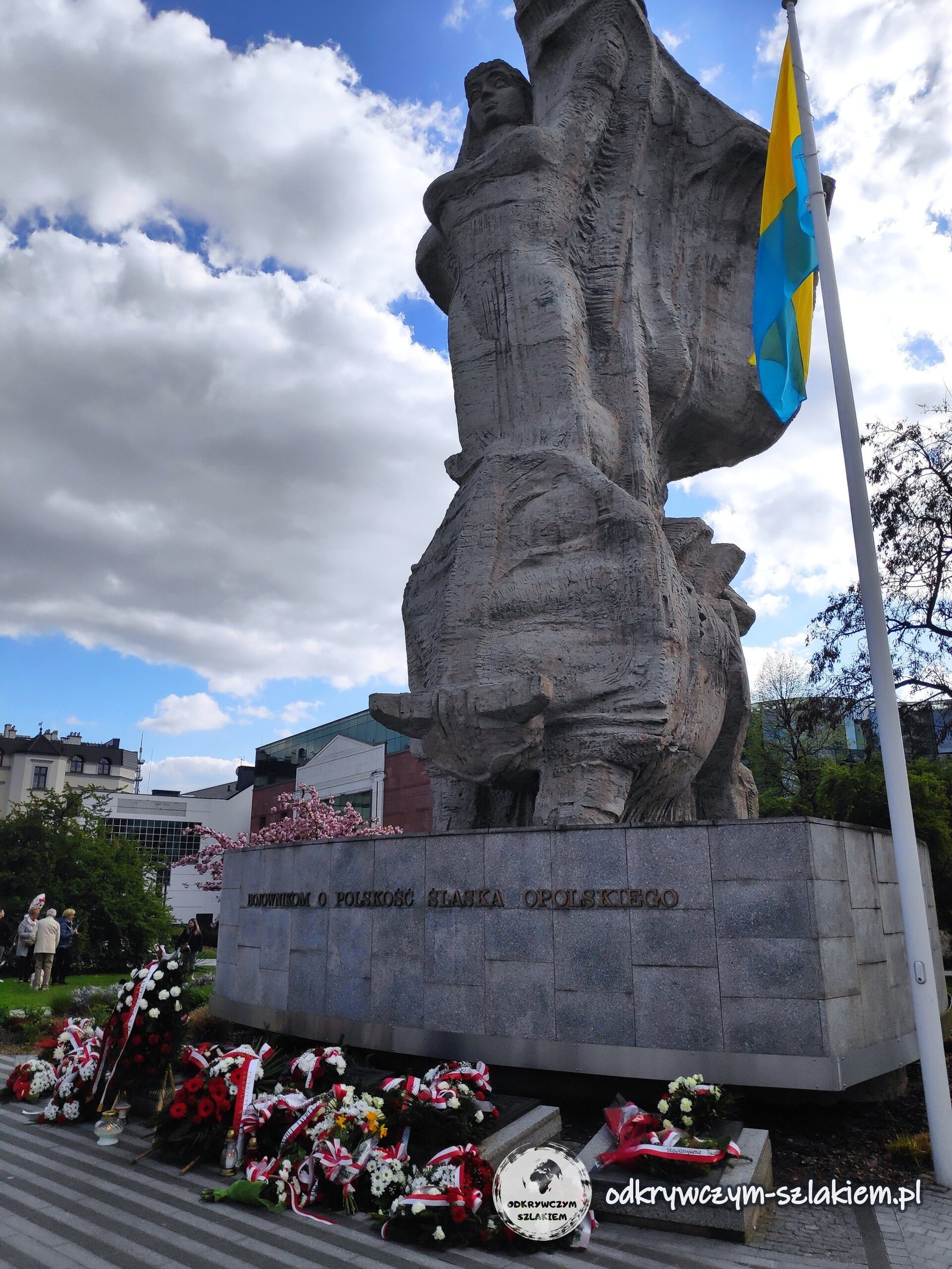
Nearby, on Freedom Square (plac Wolności), stands the Monument to the Fighters for the Polishness of Opole Silesia, known as the Opole Nike. It is 15 m high and weighs more than 400 tonnes. It was unveiled on 9 May 1970, on the 25th anniversary of the end of the Second World War and Opole’s return to Poland. Jan Borowczak’s Nike stands on an aurochs with her wings spread. On 3 May there were wreaths and white-and-red bouquets at its foot.
The Market Square, the town hall and the Walk of Stars
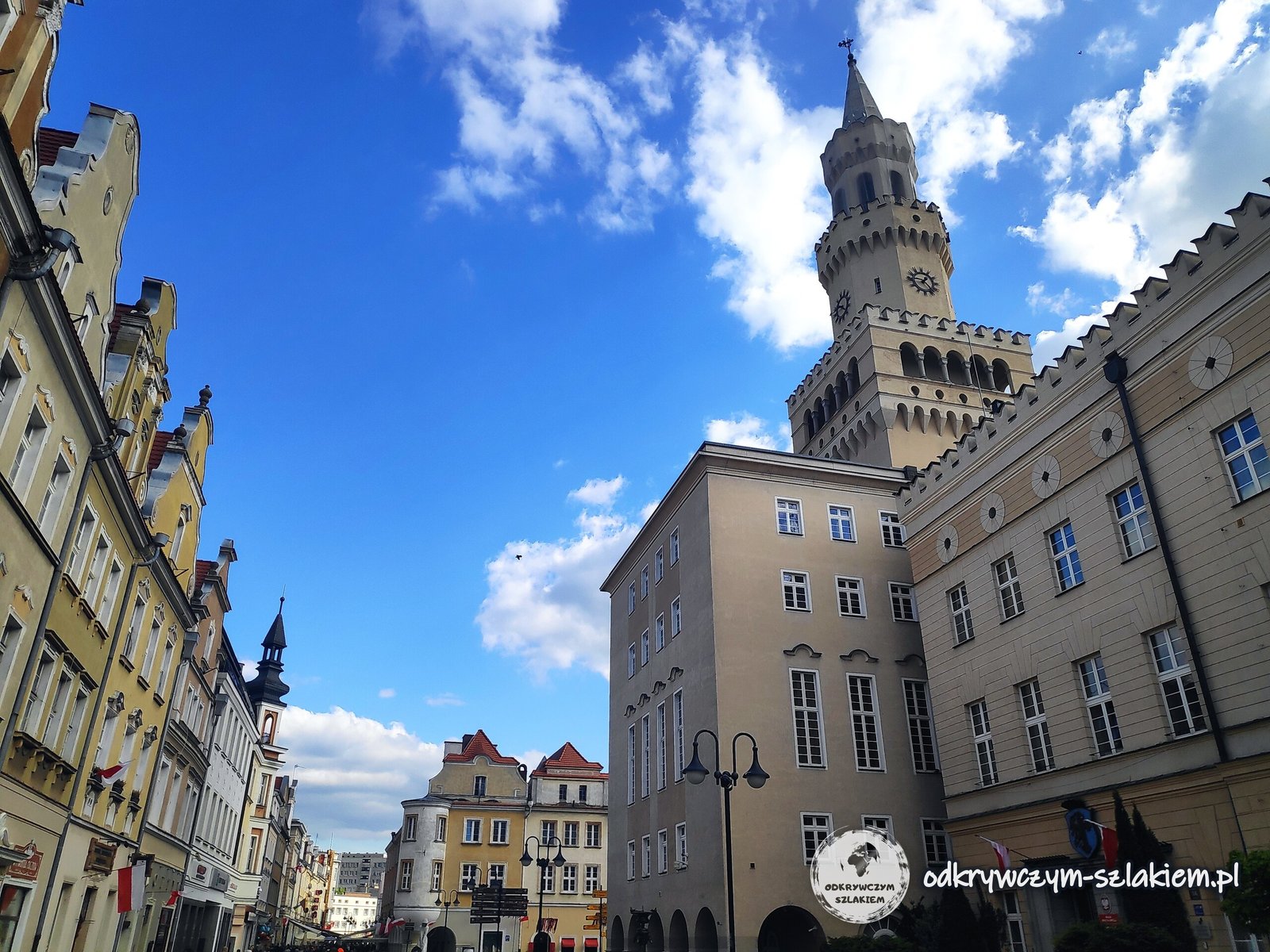
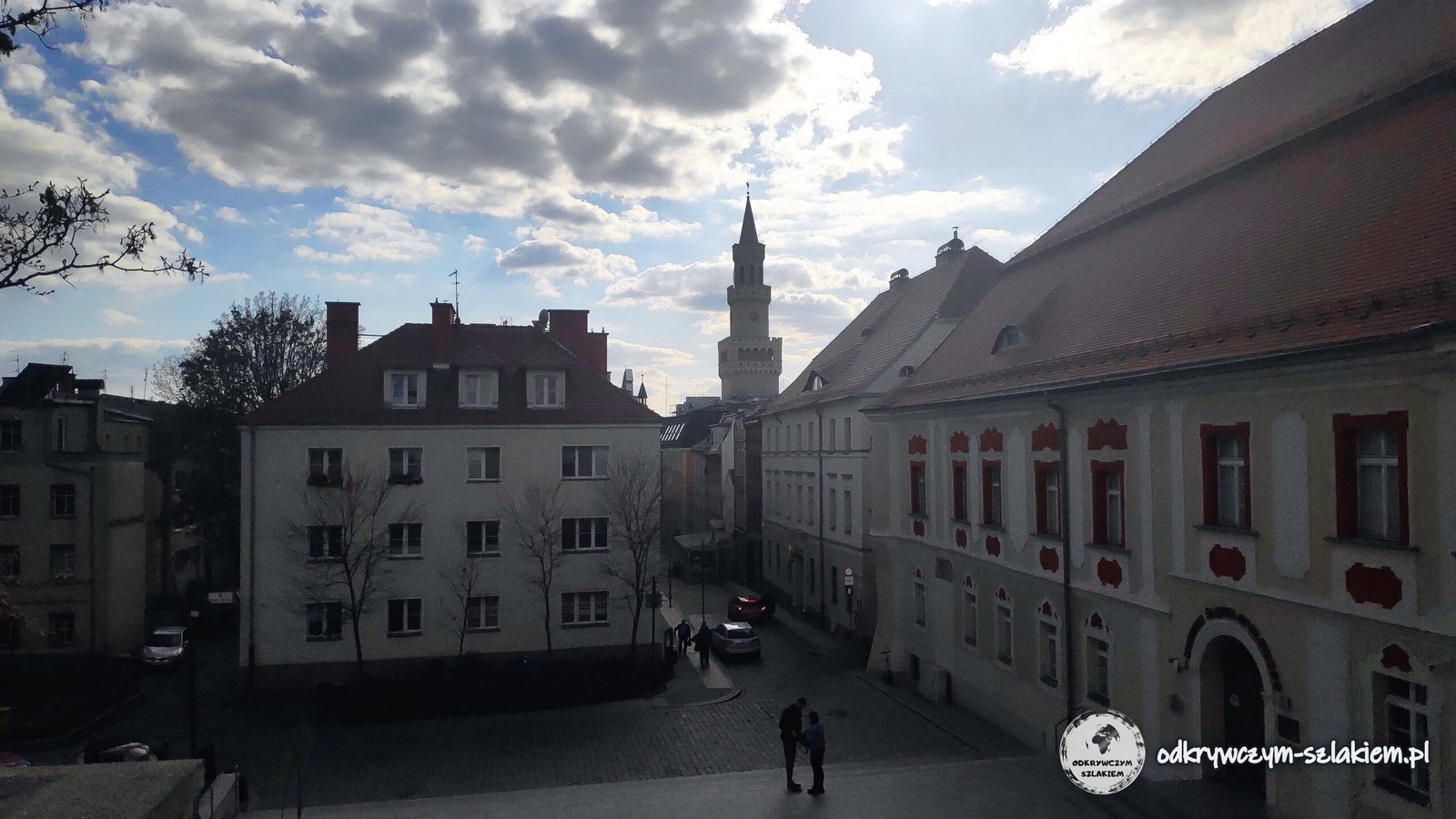
The town hall stands in the middle of the Market Square (Rynek). Its tower was built in 1864, modelled on the Palazzo Vecchio in Florence. On the morning of 15 July 1934, during the demolition of its annexes, the poorly secured tower collapsed – luckily nobody was killed. It was rebuilt in 1936 (it is about 65 m high), and a wing with arcades was added at the same time. The Opole bugle call is played from the tower every day. By the southern wall of the town hall stands an equestrian statue of Prince Kazimierz I, the first ruler to call himself Duke of Opole.
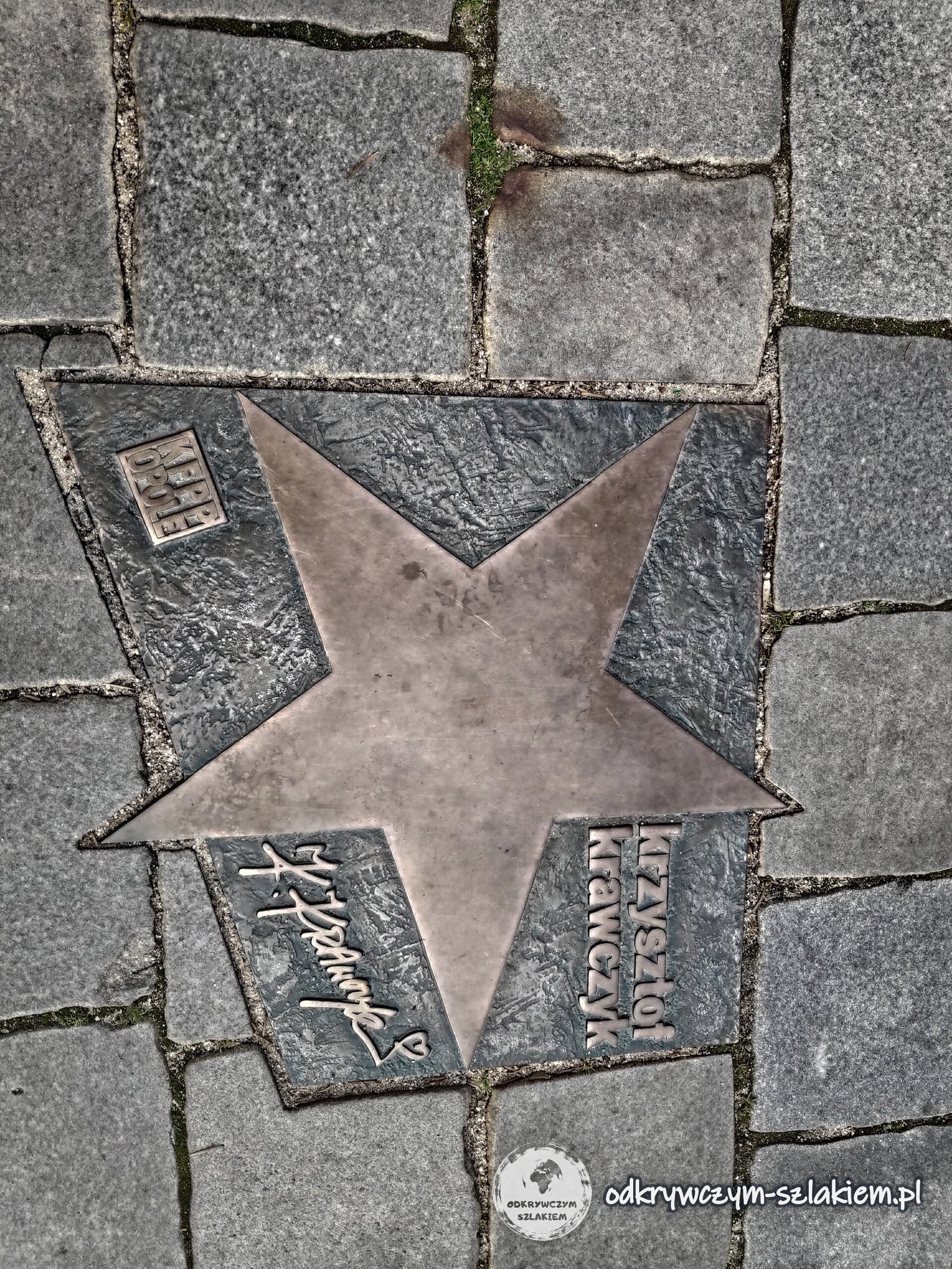
Between the town hall and the houses on the east side of the square runs the Walk of Stars of the Polish Song Festival, created in 2004. The first star, for Czesław Niemen, was unveiled on 28 May 2004. Krzysztof Krawczyk’s star, with his signature, was unveiled on 11 June 2005.
Krakowska Street – the Krawczyk mural and the Ceres Fountain
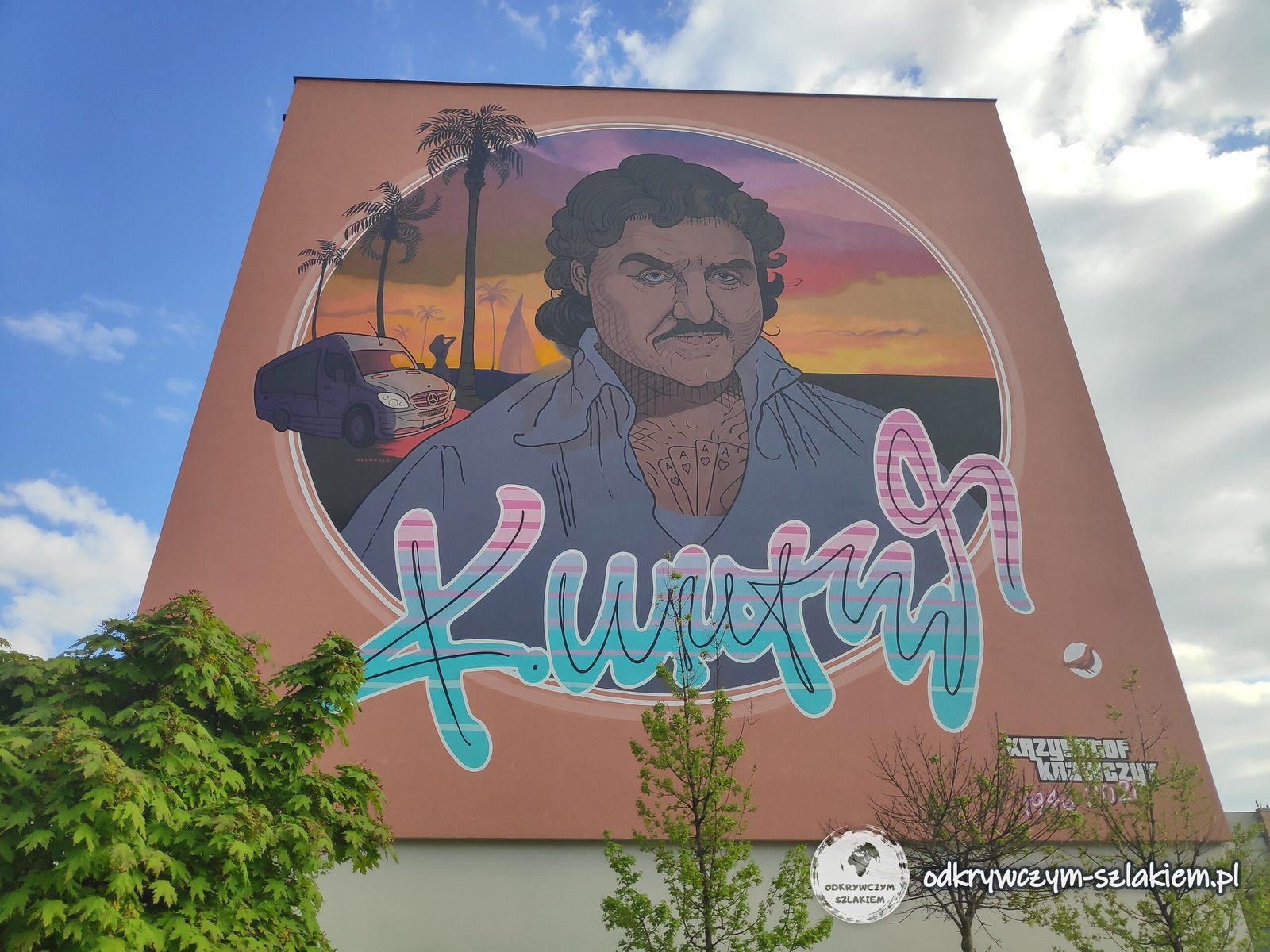
The pedestrian street Krakowska leads south from the Market Square. At its end, on the wall of an apartment block at Krakowska 34A, there is a mural of Krzysztof Krawczyk with the dates 1946–2021. It was unveiled in 2021, during the festival. Bruno Neuhamer’s design won a nationwide competition and refers to the singer’s “American chapter” – there are palm trees, a sunset and a delivery van. You might get the impression that the mural is in the style of the game GTA Vice City.
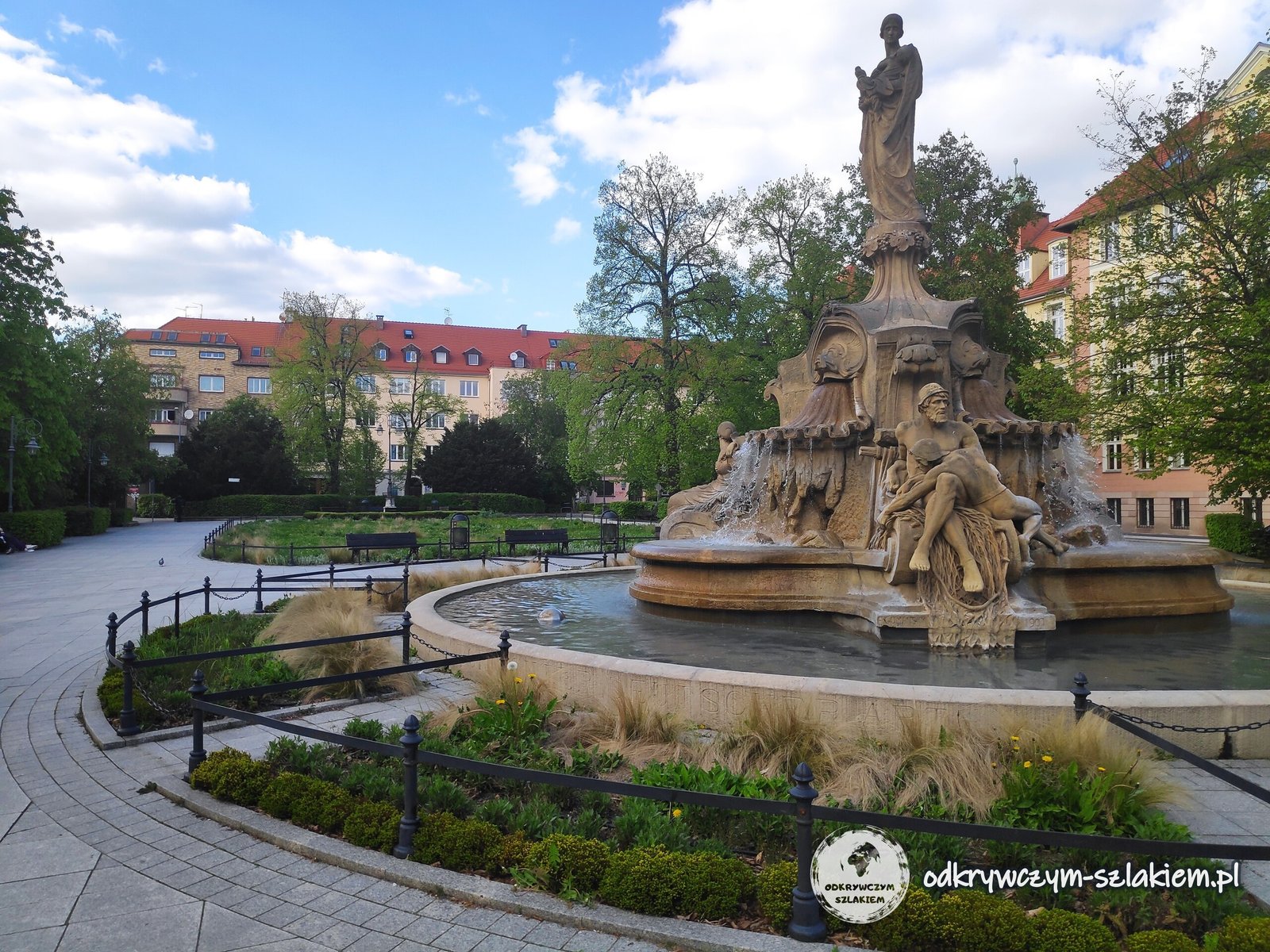
A little further on, on Daszyński Square, stands the Art Nouveau Ceres Fountain from 1904–1907, built for the centenary of the Prussian agrarian reform. In the centre stands the Roman goddess of agriculture, surrounded by Proserpina, Neptune and Hercules – symbols of farming, fishing and mining.
University Hill
Finally, I walked up University Hill (Wzgórze Uniwersyteckie) – the highest point in Opole (165 m above sea level), within the old town. Dominican friars lived here from 1295 to 1811. Since 2001 their former monastery has housed the Collegium Maius of the University of Opole.
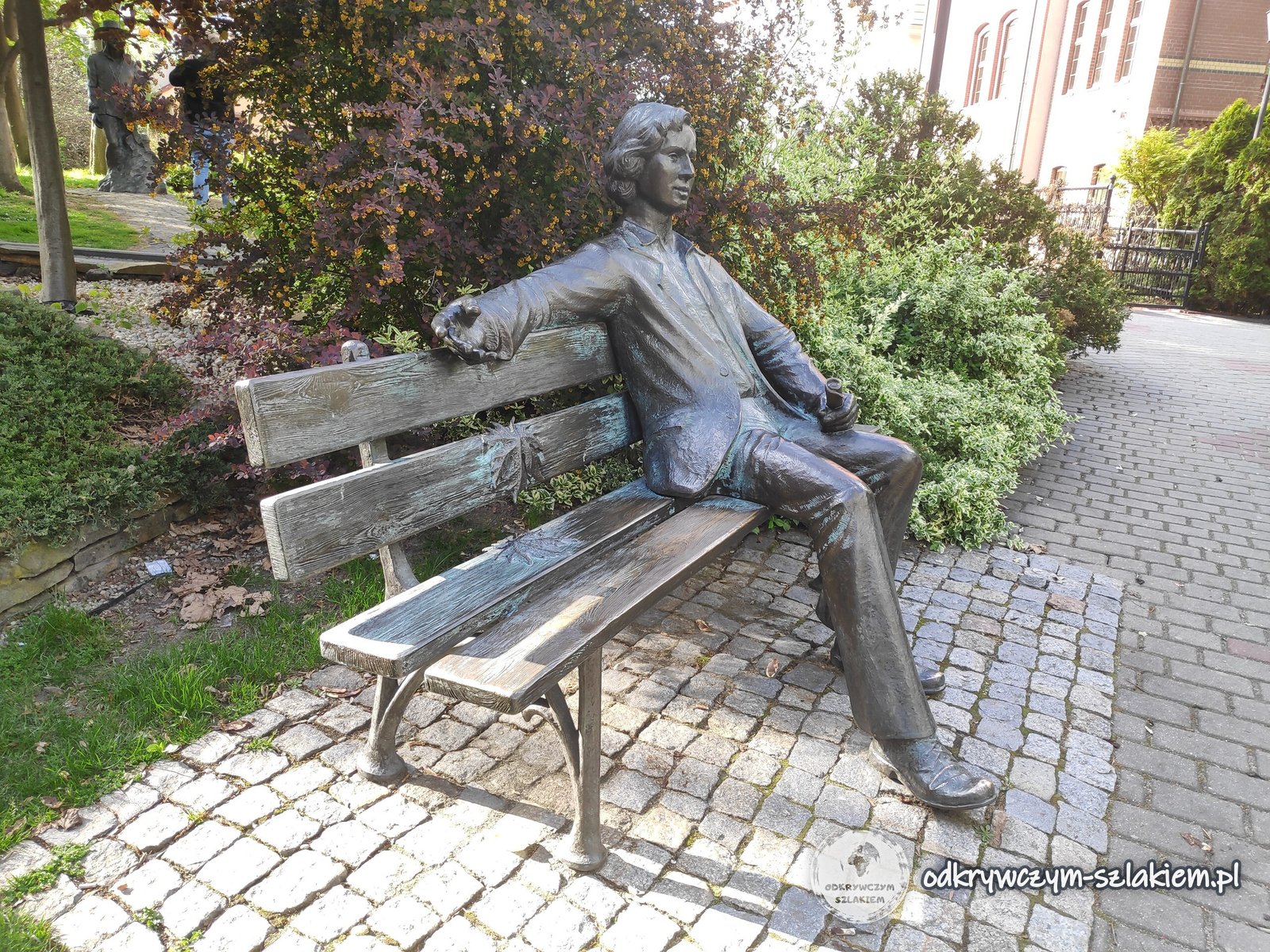
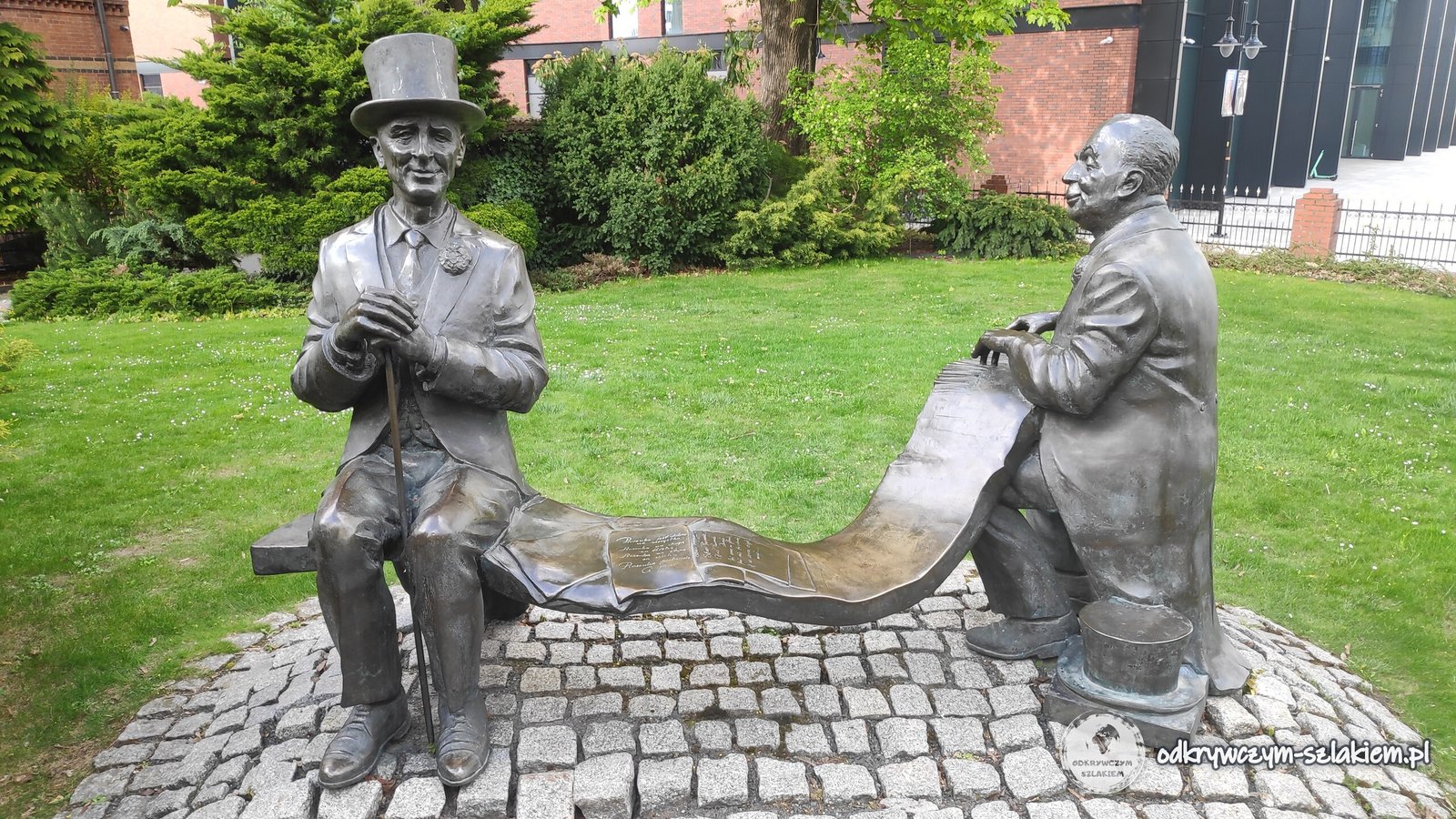
On the eastern side of the hill is Artists’ Square, with sculptures of artists connected with Opole and the festival, including Agnieszka Osiecka, Czesław Niemen and Jerzy Grotowski. Most of them are by Prof. Marian Molenda. Marek Grechuta sits on a bench (a sculpture by Wit Pichurski from 2008), and the leaves on the backrest refer to his song “W dzikie wino zaplątani” (Tangled in Wild Vine). On the Elderly Gentlemen’s Bench sit Jeremi Przybora and Jerzy Wasowski, the creators of the Elderly Gentlemen’s Cabaret (Kabaret Starszych Panów), and the bench turns from a piano keyboard into a ribbon of paper.
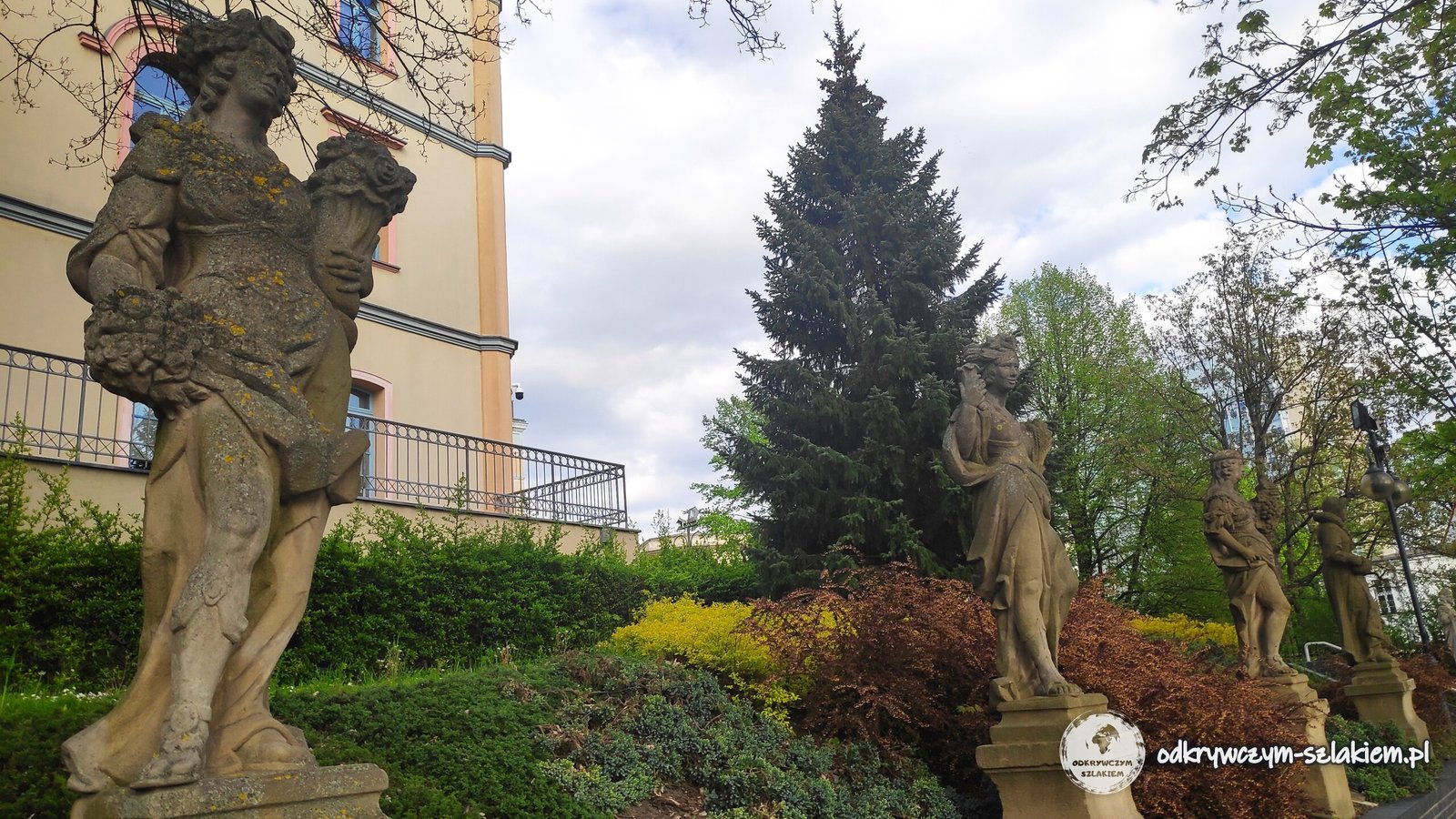
Along the path stand the Baroque statues of the Four Seasons from the workshop of Henryk Hartmann. In 1752 the Frankenberg family ordered them for their residence in Biestrzykowice near Namysłów. Before they came to the hill, they had been decaying for 30 years in the palace park in Rogów Opolski.
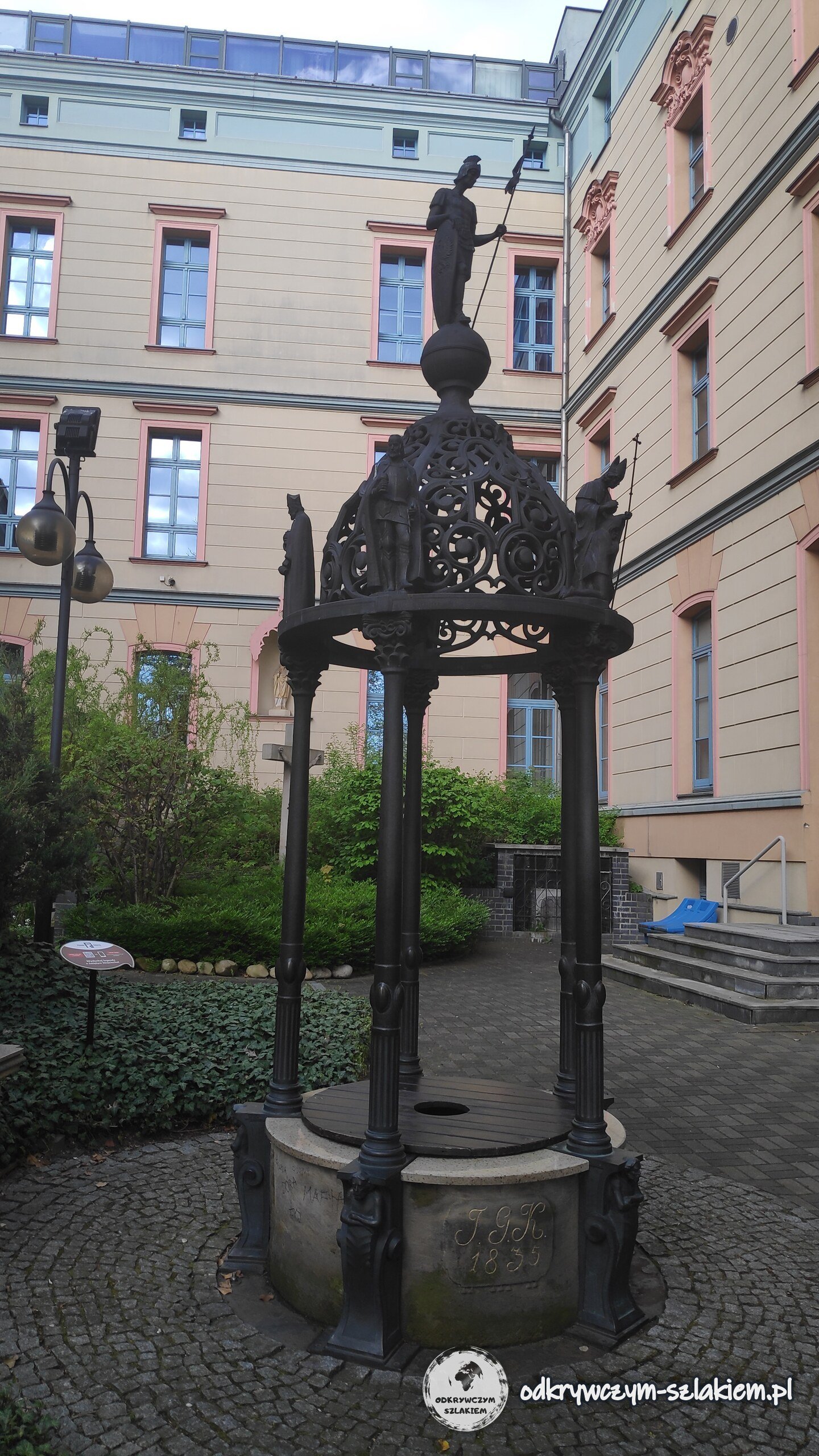
Behind the university building is St Adalbert’s Well, with an openwork wrought-iron dome. According to legend, at the end of the 10th century St Adalbert (św. Wojciech) baptised pagans here, and when he ran out of water, he struck the ground with his crozier and a spring with healing powers gushed out. Hence the hill’s other name – Wojciechowe.
From the hill you can see the old town streets below and the town hall tower.
The Upper Castle and the statue of Władysław Opolczyk
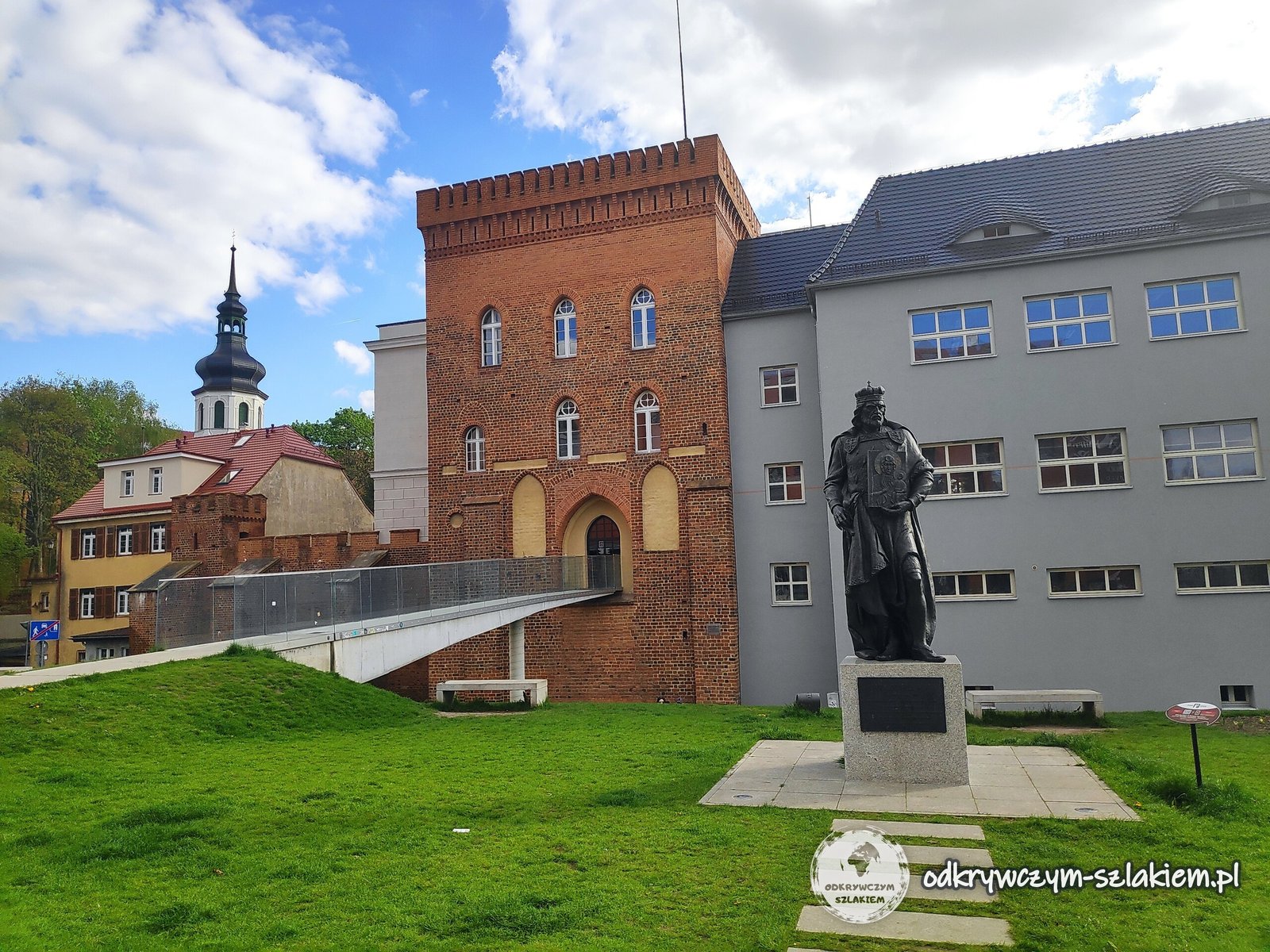
I finished the walk at the Upper Castle (Zamek Górny), built in 1382–1387 by Prince Władysław Opolczyk. The castle burned down in 1615 and was never rebuilt. What survived is a Gothic residential and defensive tower, hidden for years among school buildings. After restoration it has been open to visitors since 2018 – you enter through a reconstructed defensive gallery. In front of the castle stands a 2.5-metre statue of the prince holding an image of Our Lady of Częstochowa. Opolczyk founded the Pauline monastery in Częstochowa, and in 1384 he brought the miraculous icon to Jasna Góra.
Practical information
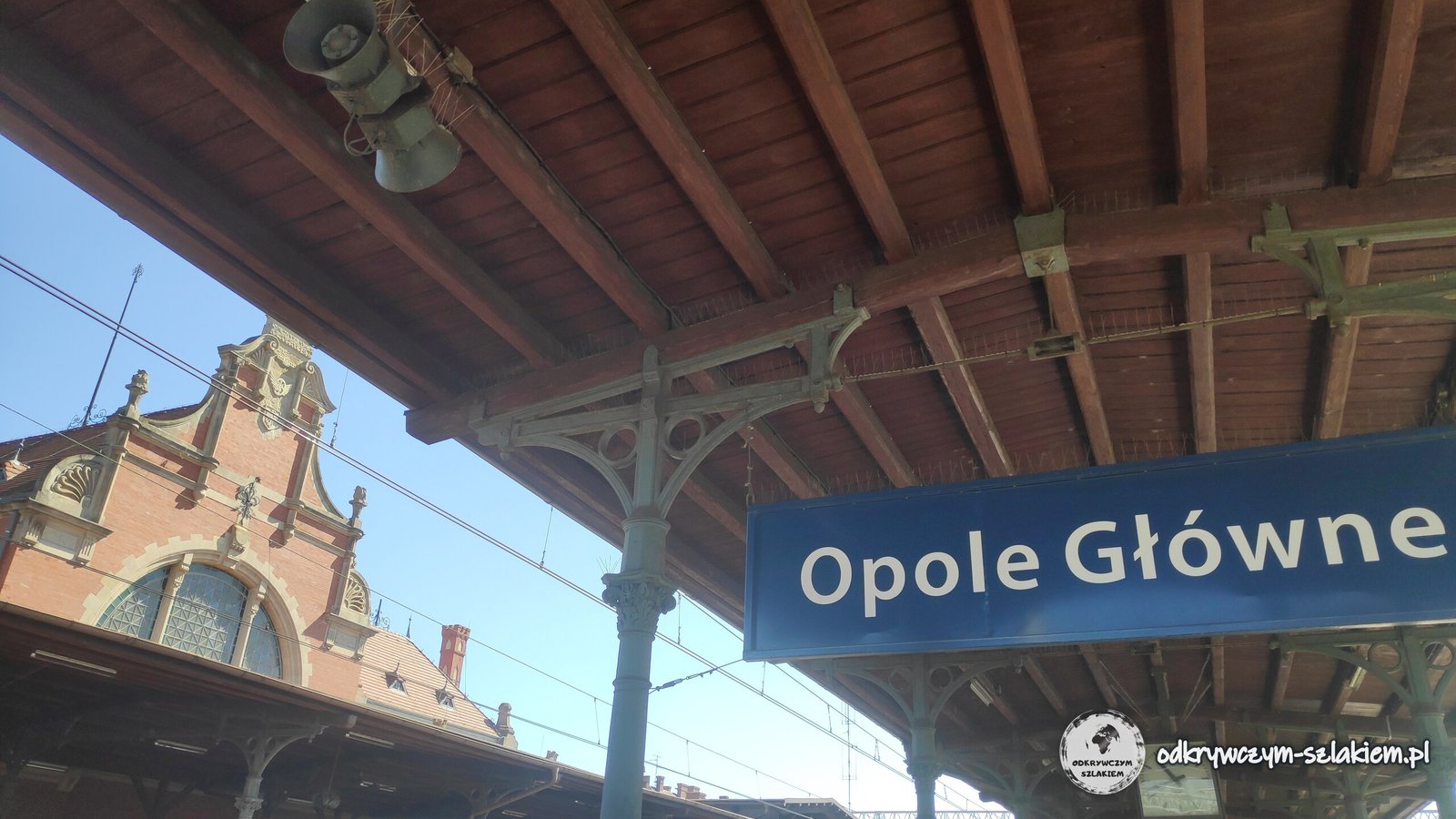
The next day, before 11:00, I was already on the platform at Opole Główne station, taking the train back to Wrocław. The station dates from 1899 and is in the city centre, and its platforms run, unusually, in a curve.
- Getting there: the fastest trains from Wrocław Główny take about 37–38 minutes to Opole, others up to about 50 minutes.
- Piast Tower (2026): standard ticket PLN 20, reduced PLN 15, family ticket (at least 4 people) PLN 13 per person. Entry only with a guide, in groups of up to 10; the visit takes about 40 minutes. Open on Mondays, Tuesdays, Wednesdays and Fridays 9:00–17:00, at weekends 10:00–17:00 (in summer until 18:00), closed on Thursdays. Bookings: tel. +48 77 441 50 20.
- Upper Castle: the same hours, but closed on Tuesdays.
- Museum of Polish Song (2026): Tuesday–Sunday 10:00–18:00 (last entry at 17:00). Standard ticket online PLN 33, reduced PLN 25, family (2+2) PLN 70. On Tuesdays the permanent exhibition is free (individual visitors from 14:00).
- How much time: my walk from the Oder to the Upper Castle took an hour and a half. If you add the Piast Tower (about 40 minutes), the Upper Castle and the museum, plan half a day.
- Festival: the National Festival of Polish Song usually lasts 3–4 days in June.
- Tourist information: Rynek 23.
- More: the Guitar Guinness Record and 3-majówka and Wrocław – what to see.