Lidzbark Warmiński is a small town of about 14,500 people on the Łyna river, about 40 km north of Olsztyn. From the mid-14th century until 1795 it was the residence of the bishops of Warmia, and their Gothic castle is called the pearl of 14th-century Gothic architecture in Poland. I was here on 23 November 2024 on a day trip – the gardens and roofs had a dusting of snow – and came back on Easter Monday, 21 April 2025. Earlier, on 2 June 2023, the castle was one of the checkpoints of Kortostop. In this post I describe Krasicki’s Orangery, the collegiate church, the Market Square, the castle with the Warmia Museum, the High Gate and the railway viaduct over the Łyna, and at the end – tickets, opening hours and getting there.
Table of contents
- Krasicki’s Orangery and the bishops’ gardens
- The Collegiate Church of SS Peter and Paul
- The Market Square and the old town
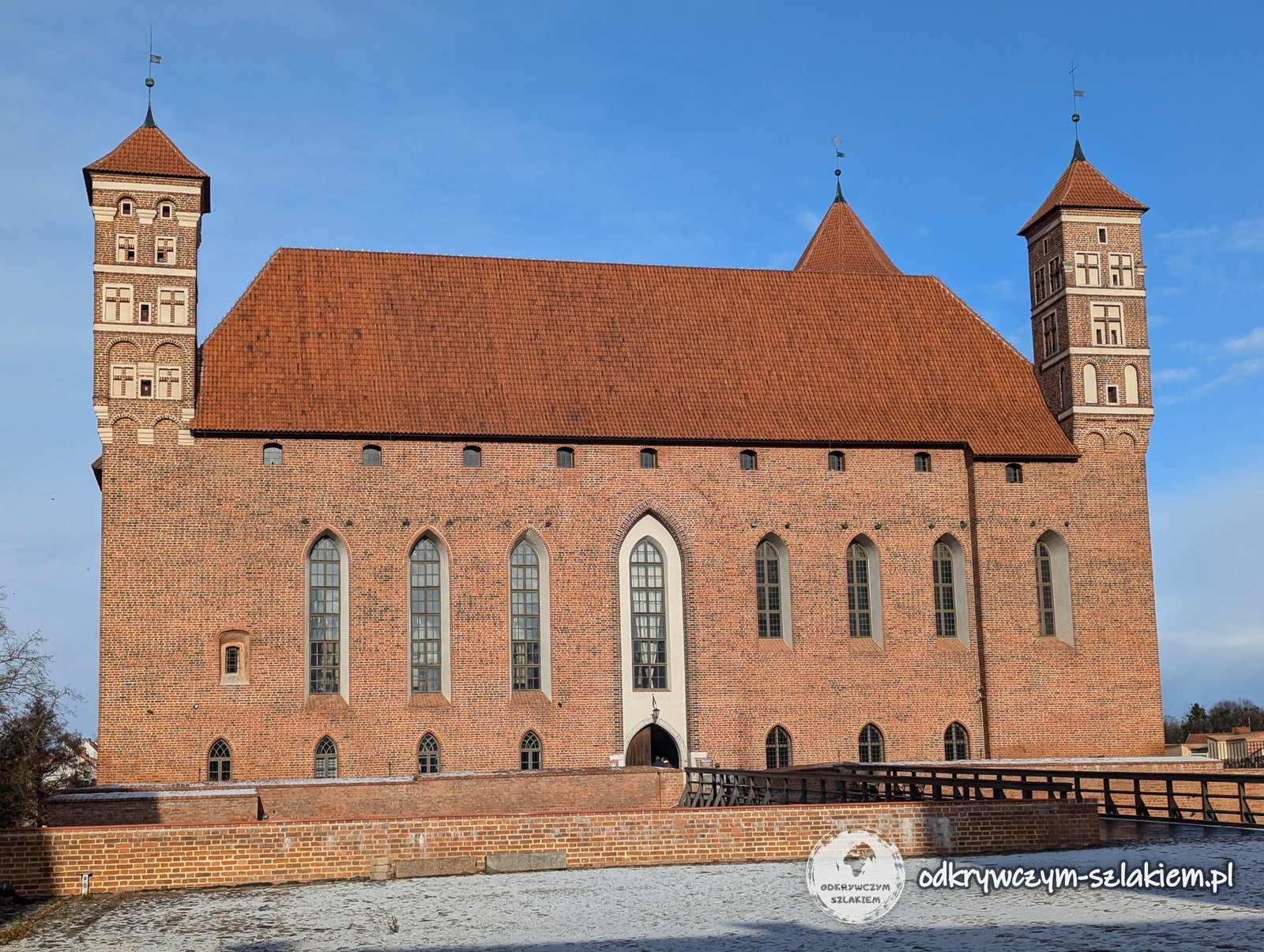
- The castle of the Warmian bishops – history
- The courtyard and its cloisters
- The Great Refectory and the castle chapel
- The bishops’ chambers – Copernicus and Krasicki
- The Battle of Heilsberg in Hoffmann’s painting
- The cellars – heating, stove tiles and a model of the castle
- The armoury
- Painting galleries in the attic
- The High Gate
- Spring by the Łyna – the viaduct and the Napoleon monument
- Practical information
Krasicki’s Orangery and the bishops’ gardens
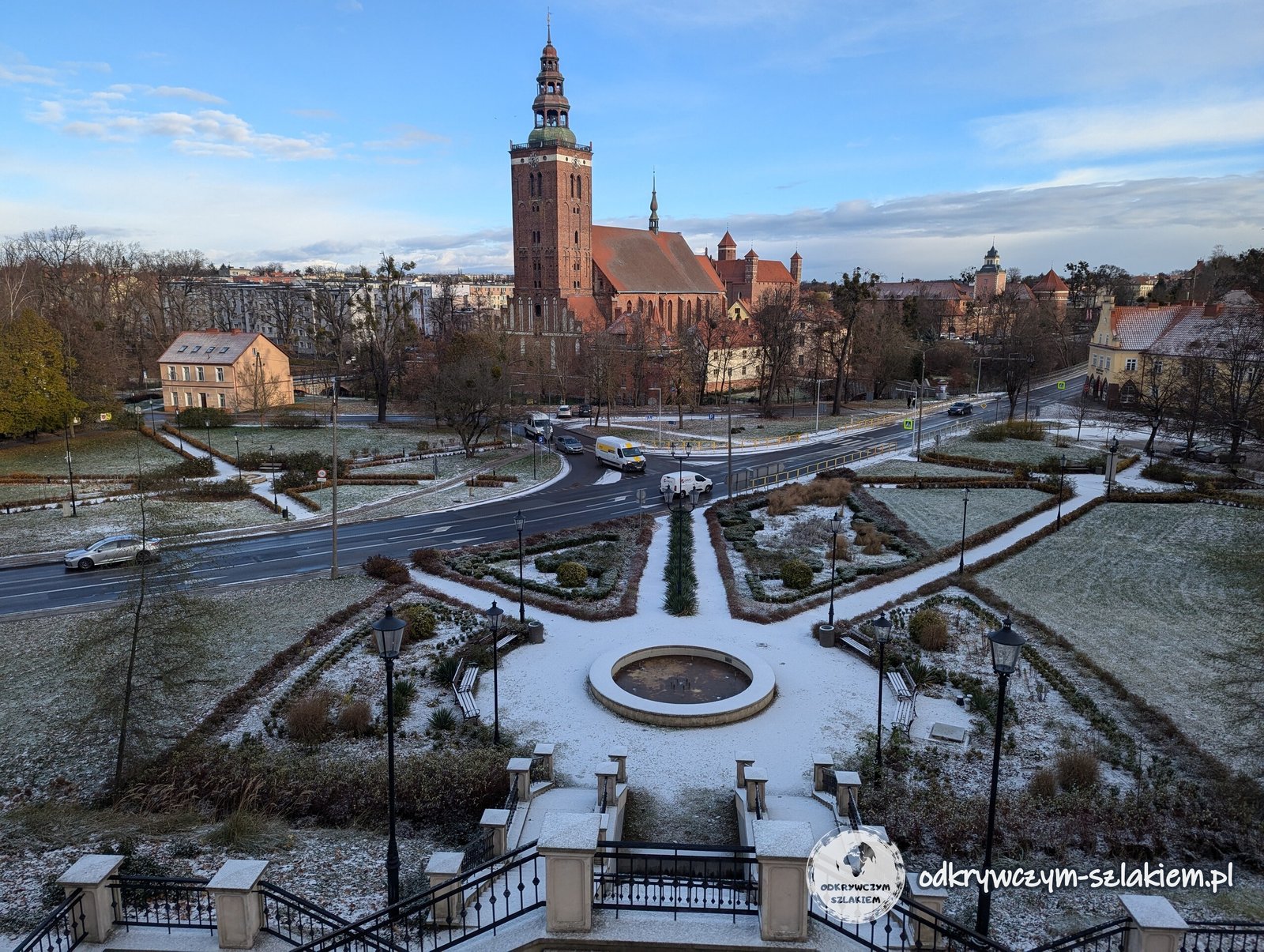
We started the day at Krasicki’s Orangery, which stands on a hill a few hundred metres south-west of the castle. The orangery was built in 1711–1724. Bishop Ignacy Krasicki, a poet and the author of well-known fables, enlarged it in a Baroque-Classicist style and laid out a park around it called Krasiczyn. The building is also known as Bishop Krasicki’s summer palace.

The renovation of the orangery took more than three years and cost PLN 4.4 million (about €1 million). In September 2015 it reopened as the Orangery of Culture, with a concert hall, an exhibition room and the reading room of a teachers’ library. During the work, murals with allegories of the four seasons were uncovered in the octagonal central hall.
The bishops’ gardens already existed here at the end of the 15th century. Their pavilions were destroyed by the Swedes in 1654–1660 and by the Great Northern War in 1705. Bishop Teodor Potocki began rebuilding them, and Krasicki finished the work in 1790. The last renovation recreated the viewing terraces and cascading stairs. From the terrace in front of the orangery you can see the garden and the tower of the collegiate church.
The Collegiate Church of SS Peter and Paul
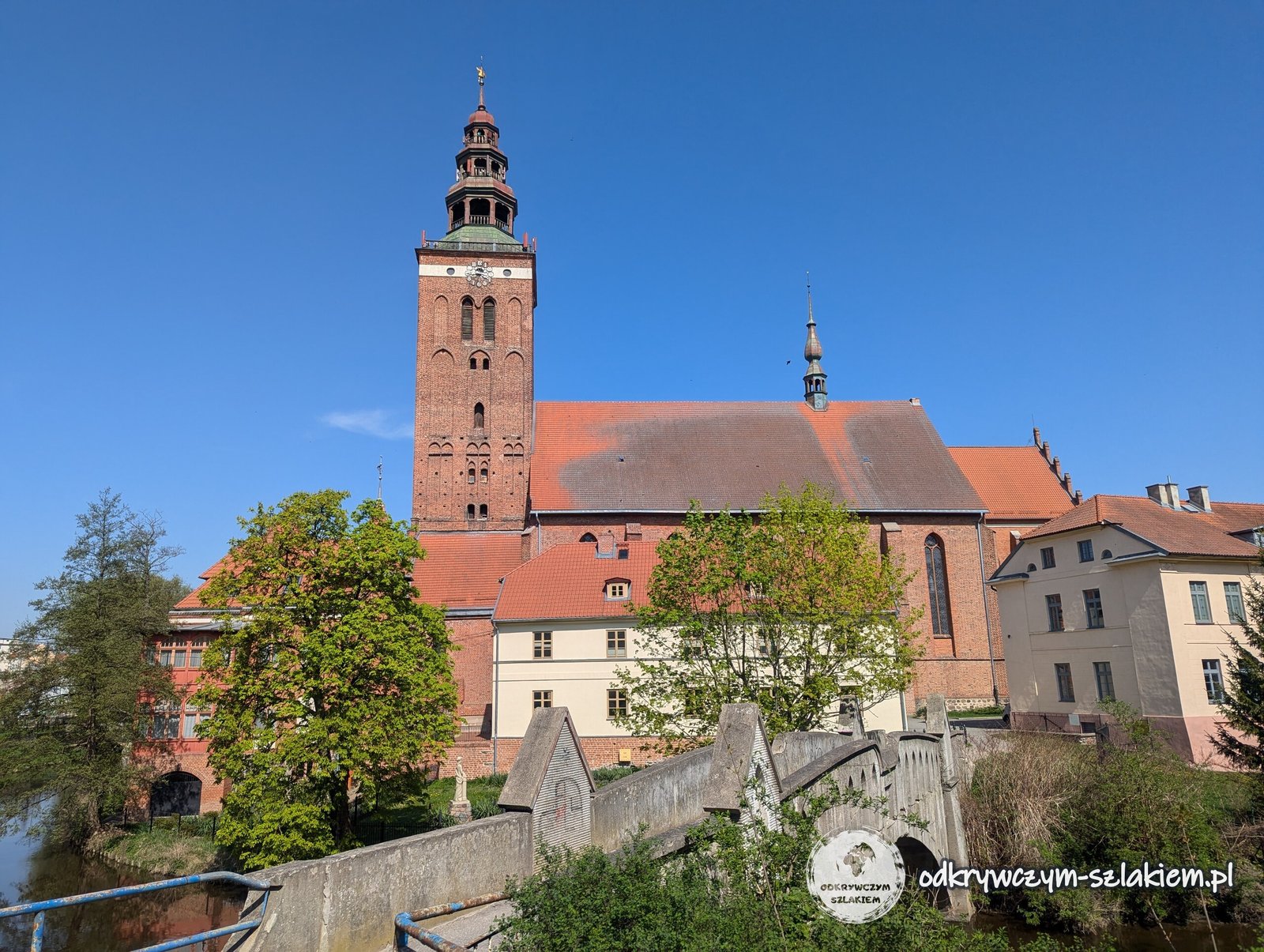
From the orangery we walked to the Collegiate Church of the Apostles Peter and Paul. It is a brick church from the second half of the 14th century, built as a hall church with a nave and two aisles. The tower was raised in stages to 66 m, and after a fire in 1698 it got a Baroque cupola with three lanterns. In 1892–1896 a neo-Gothic chancel was added on the east side. The church has held the title of collegiate church since 2008.
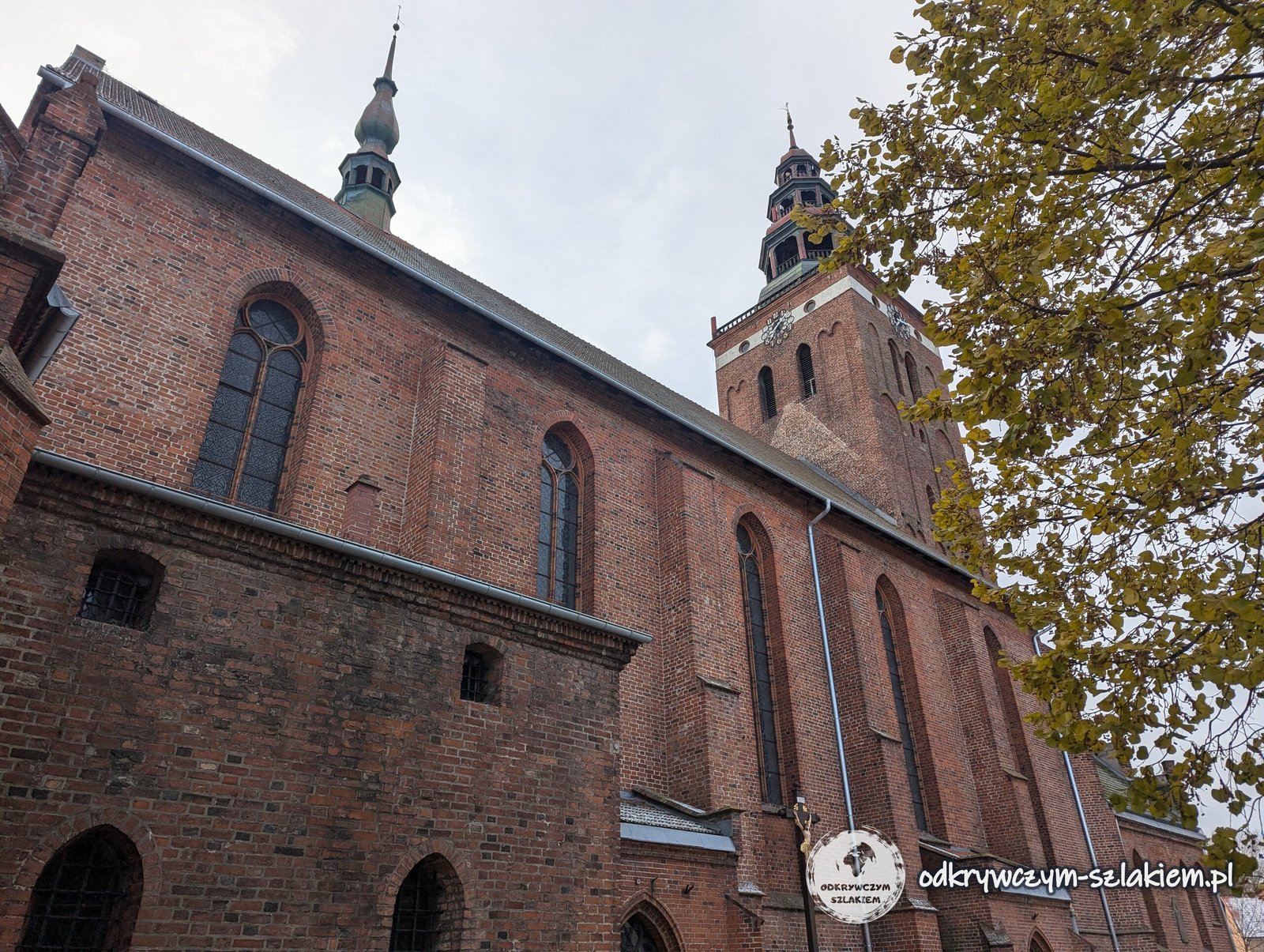
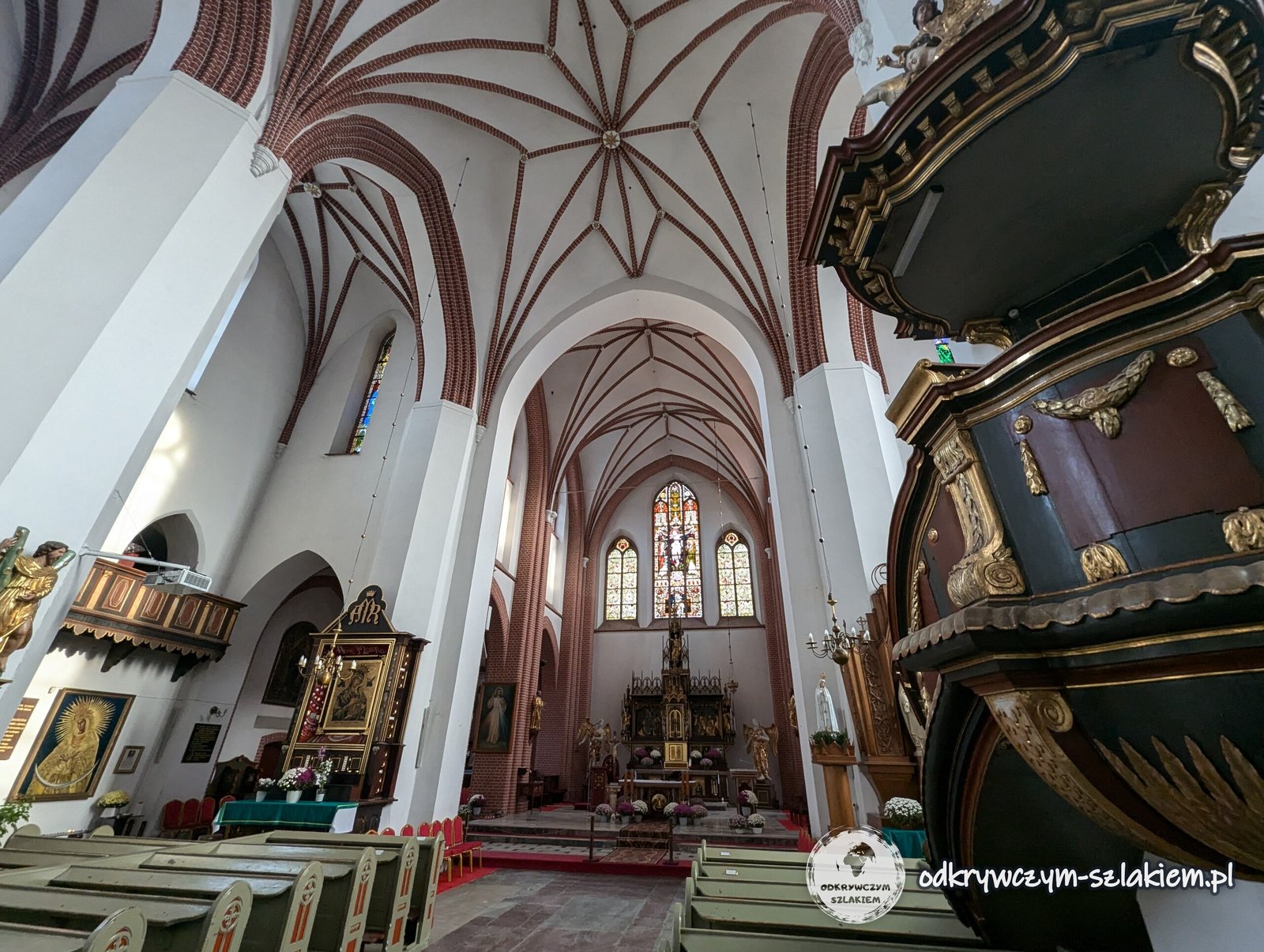
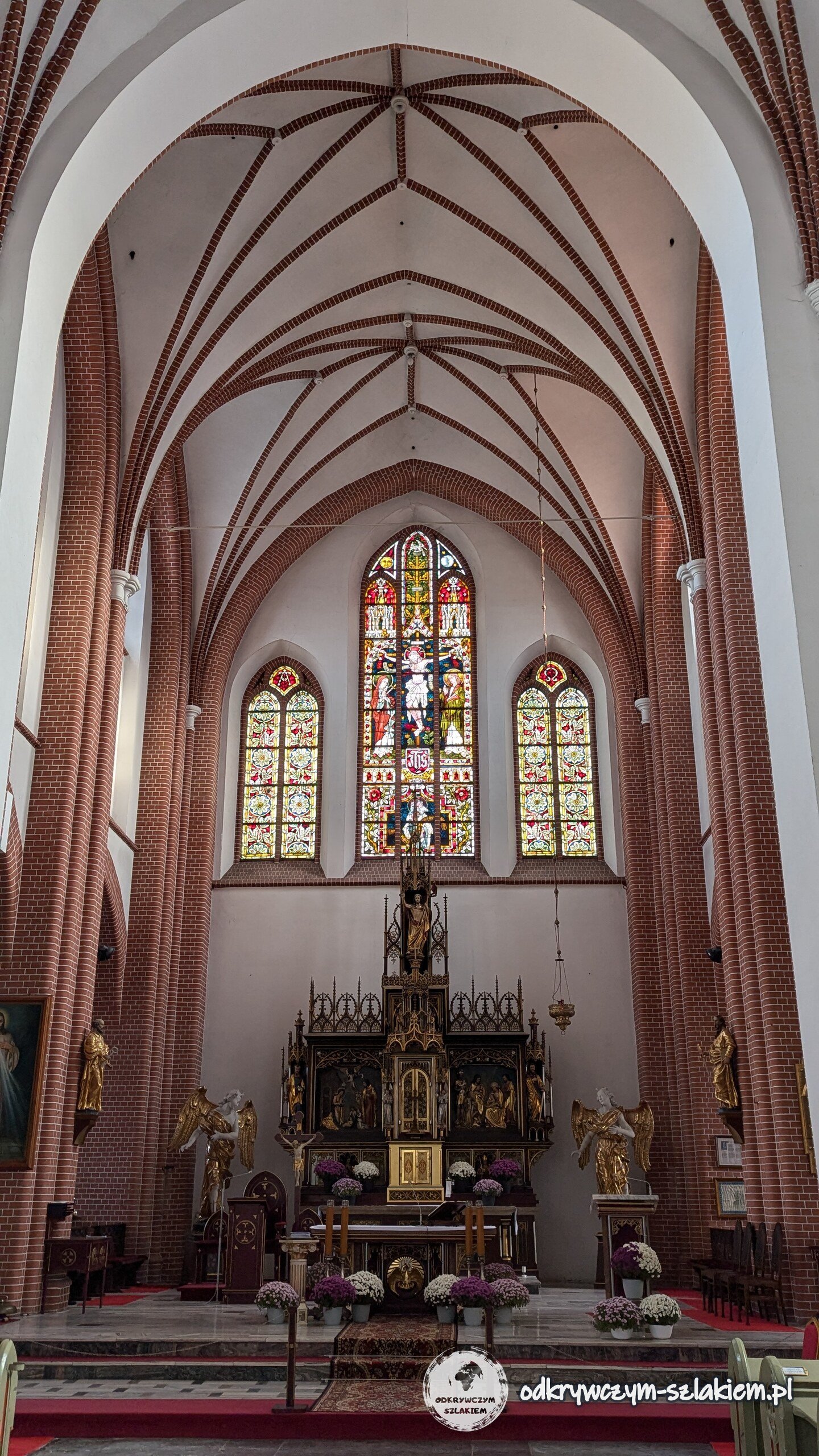
Inside, the white walls and pillars contrast with the red ribs of the star vaults. The neo-Gothic high altar dates from the early 20th century. The church also has a 17th-century painting of Our Lady of the Snows in a silver dress.

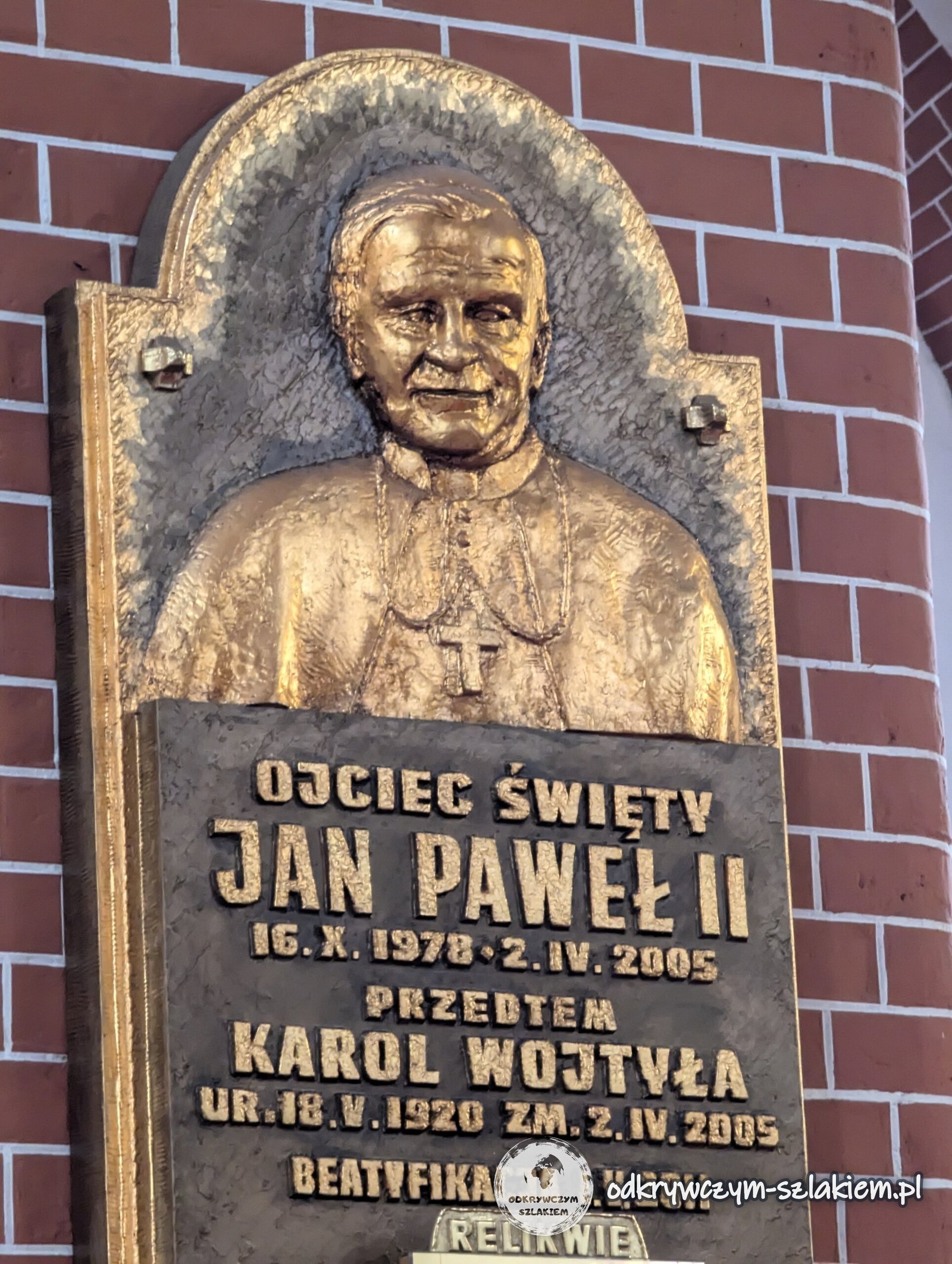
On a brick wall hangs a plaque with a bust of John Paul II, the dates of his pontificate and beatification, and relics.
I also photographed the collegiate church from the river, with a bridge in the foreground.
The Market Square and the old town
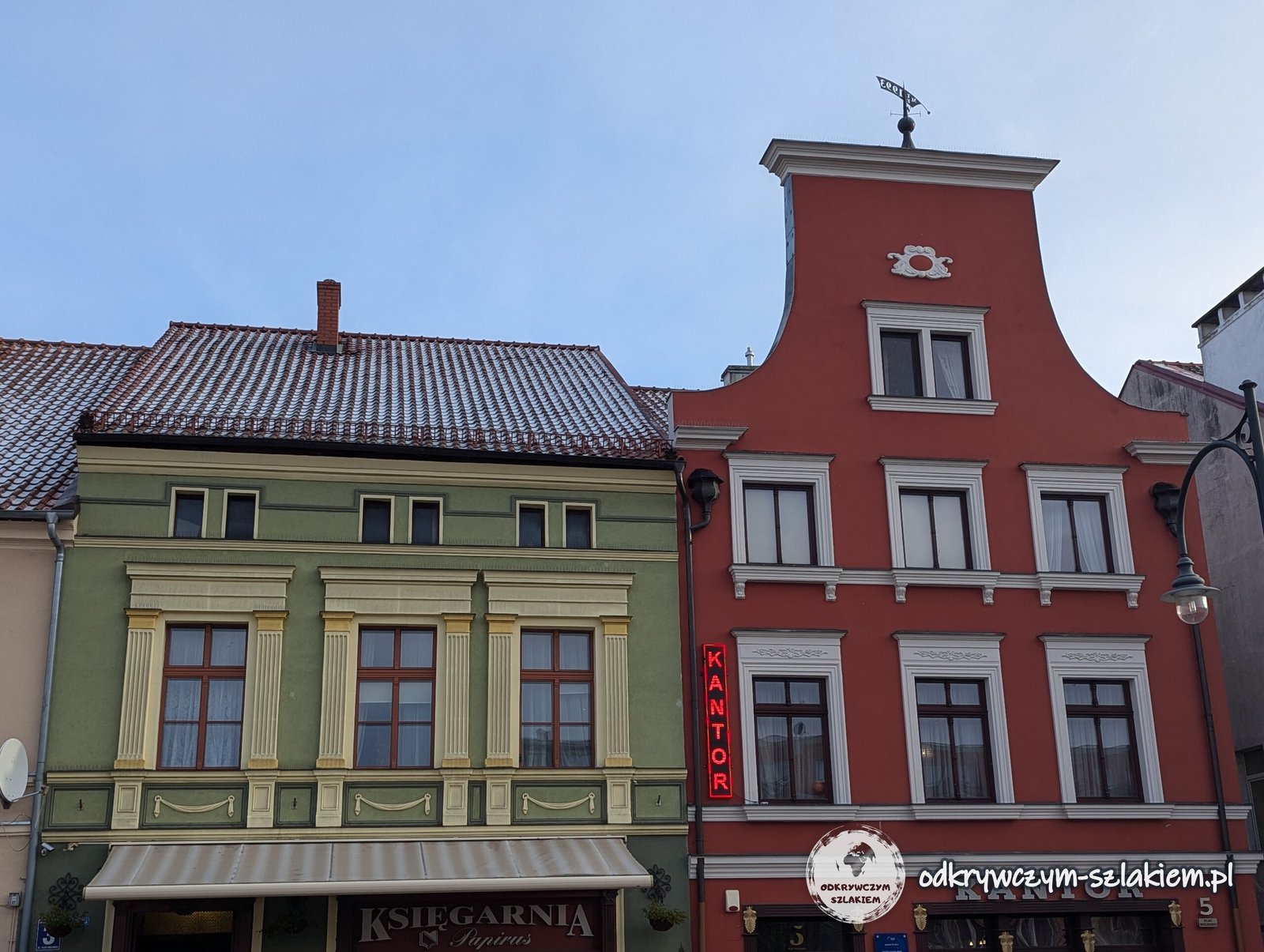
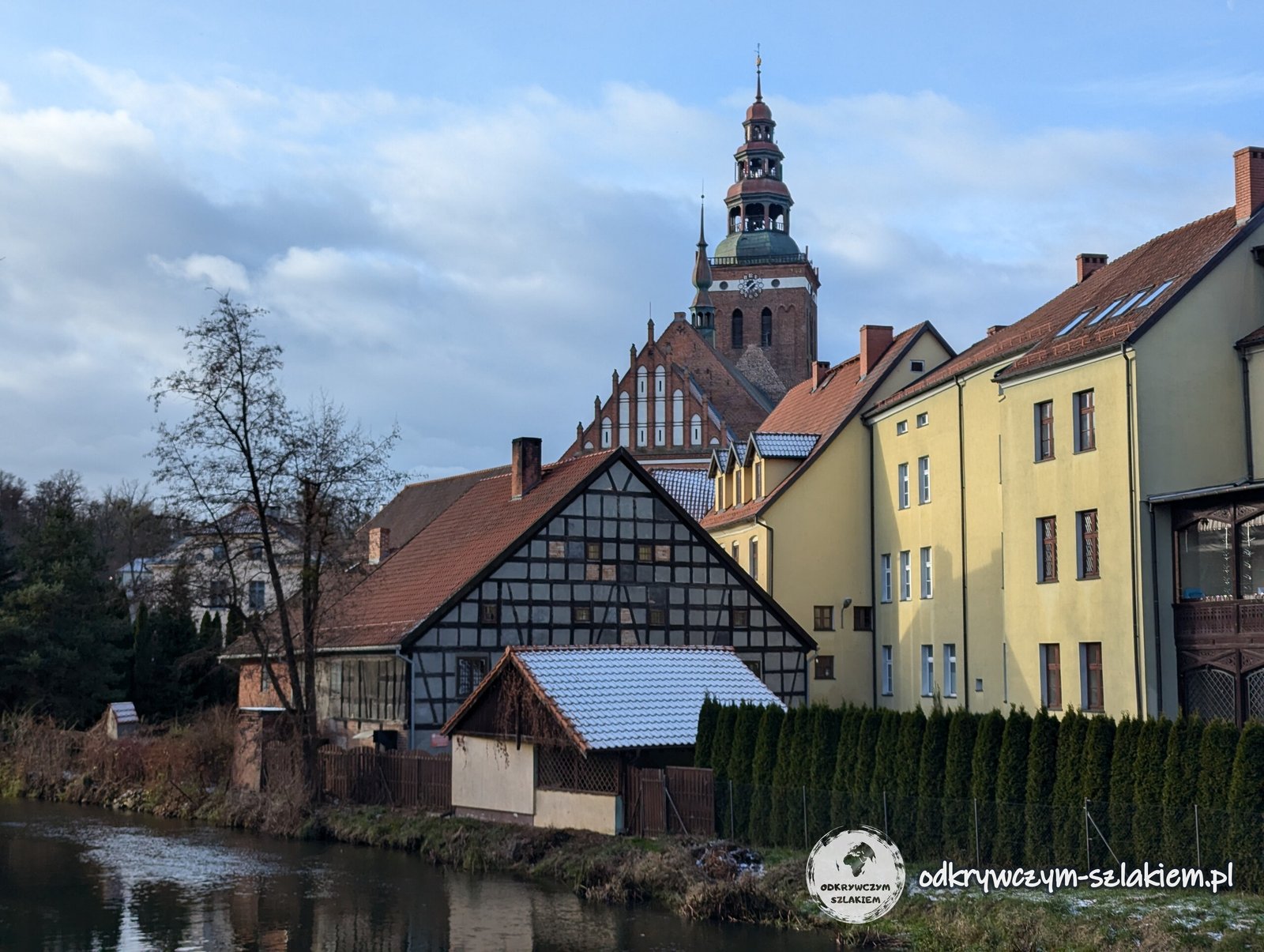
Lidzbark received its town charter on 12 August 1308 from Bishop Eberhard of Nysa, under Chełmno law. The medieval town covered about 5.6 hectares and was surrounded by a wall about 1 km long. In 1414, during the Hunger War, it was besieged by King Władysław Jagiełło. Today the Market Square is lined with colourful houses, with a bureau de change and a bookshop on the ground floor. On the way to the castle, by the river, there is a half-timbered house with the tower of the collegiate church rising above it.
The castle of the Warmian bishops – history
The castle of the Warmian bishops was built in 1350–1401. Work began a year after the bishops moved their seat from Orneta to Lidzbark. The castle has four wings on a square plan with sides of 48.5 m, like the convent houses of the Teutonic Knights, and a tower in the north-east corner – square at the bottom and octagonal higher up. The corner turrets were added after a fire in 1442 and got their final shape under Bishop Lucas Watzenrode, the uncle of Nicolaus Copernicus. The castle is surrounded by a moat.
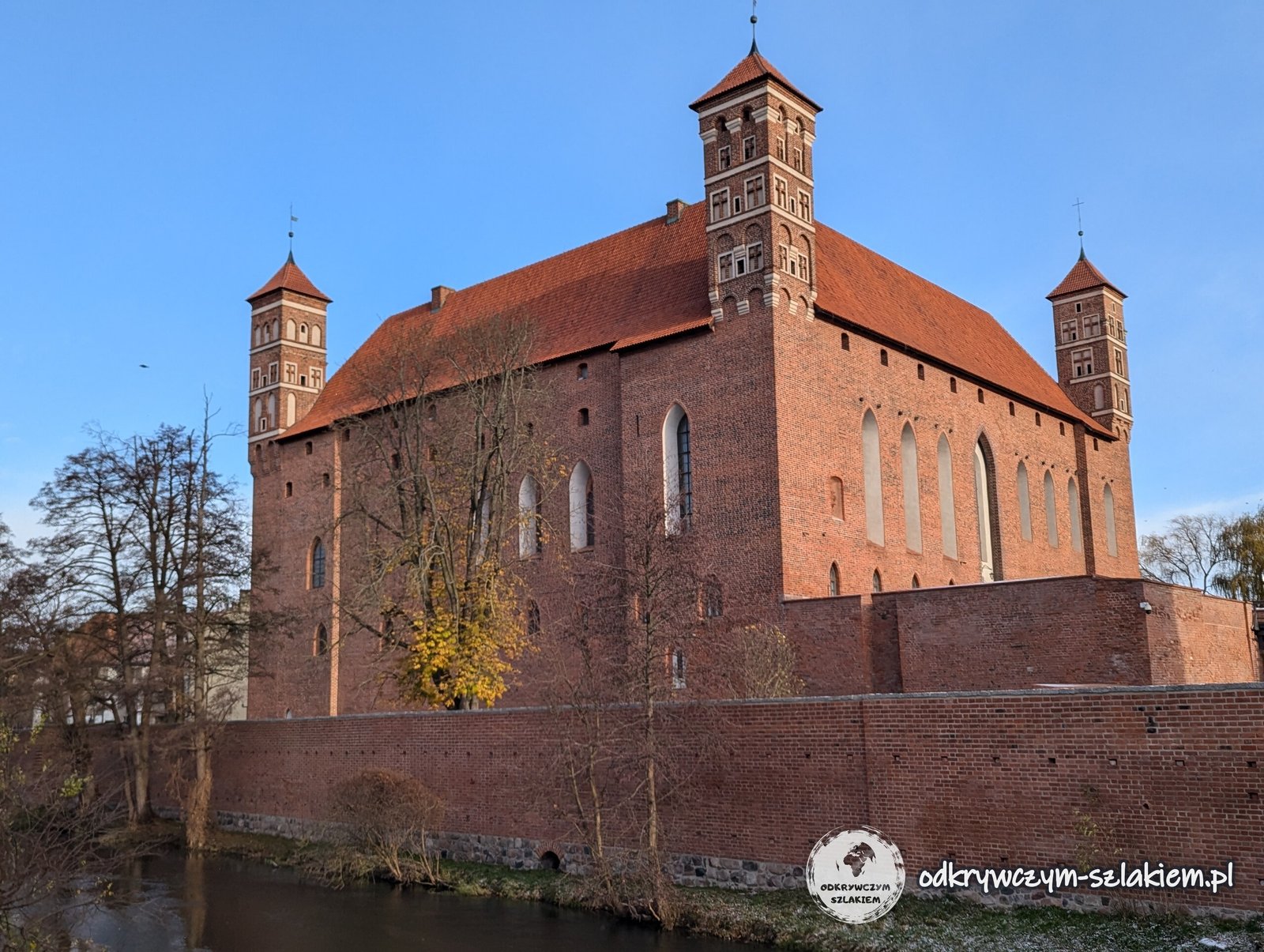
From the town side, the castle is approached through an outer bailey with three wings. The east wing is Bishop Grabowski’s palace. The south wing, with a 14th-century gate tower, was added at the end of the 18th century – today it houses the Hotel Krasicki. In the middle of the courtyard stands a Baroque statue of St Catherine from 1756, funded by Bishop Grabowski.
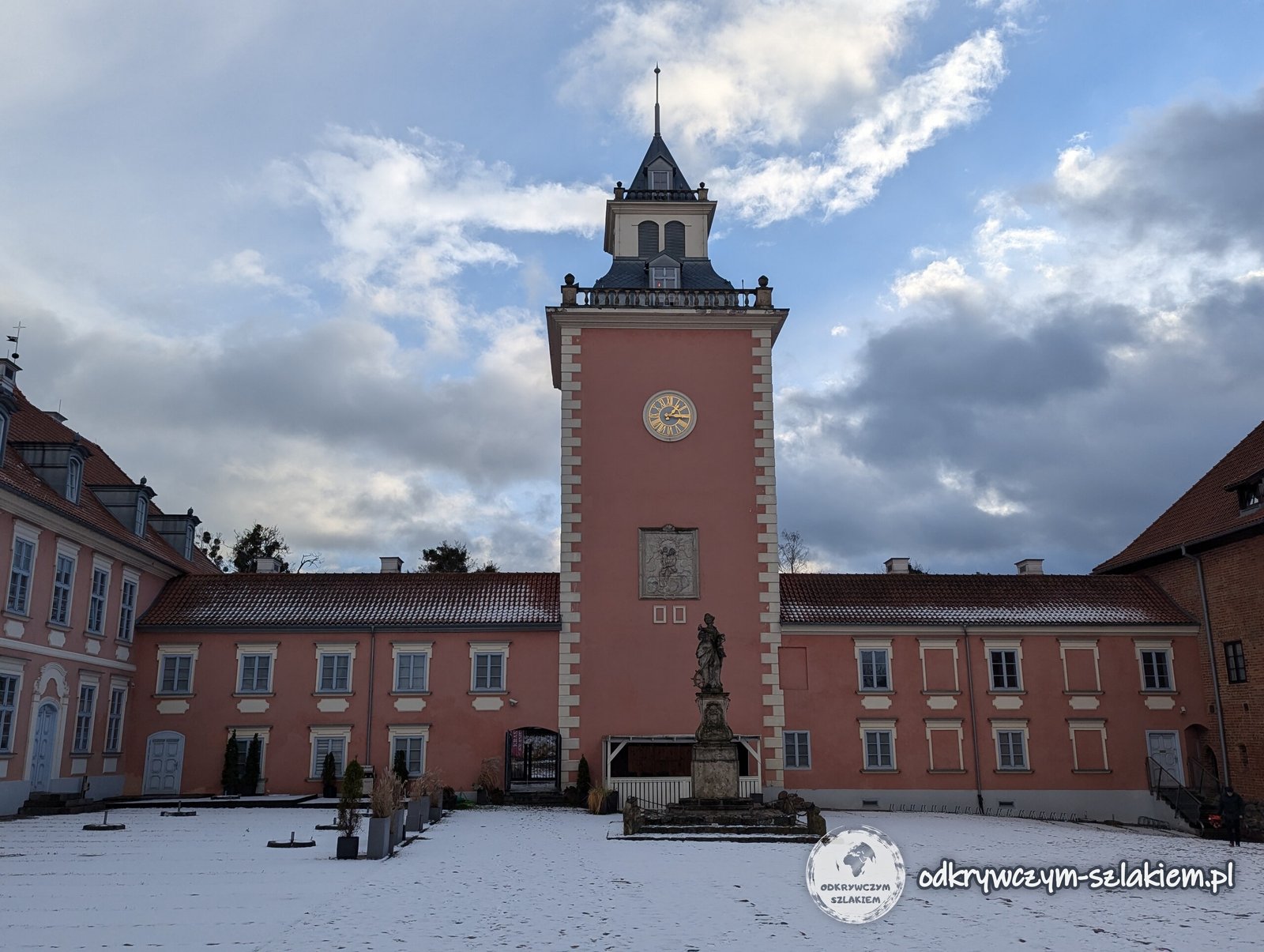
In 1838 the Prussian provincial governor Theodor von Schön called the castle a useless old building that could be sold or demolished. In the second half of the 19th century it was restored under the royal conservator Ferdinand von Quast. From the mid-19th century until 1932 it housed an orphanage. Today the castle is a Monument of History and the home of the Warmia Museum – a branch of the Museum of Warmia and Masuria in Olsztyn.
The courtyard and its cloisters
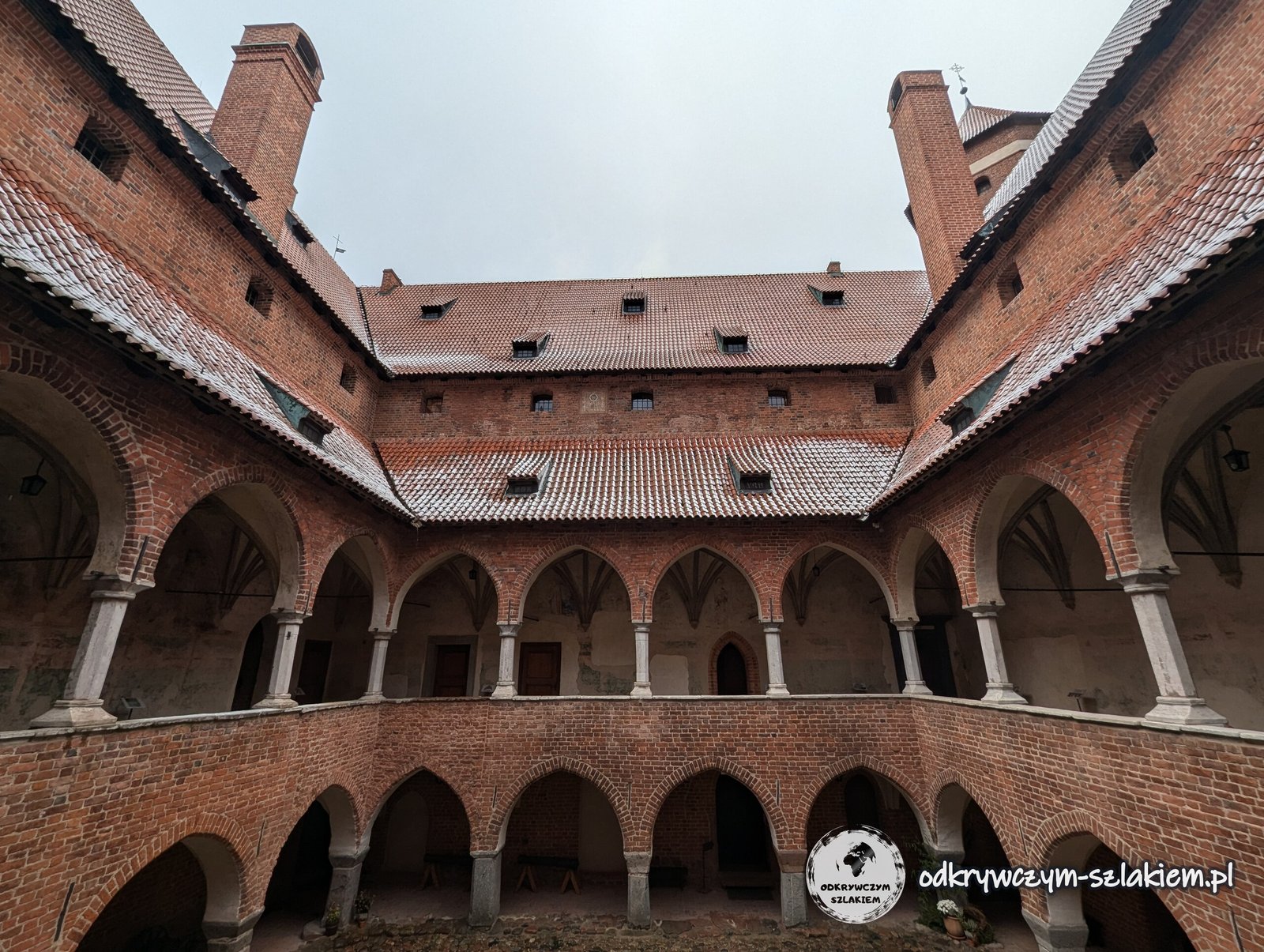
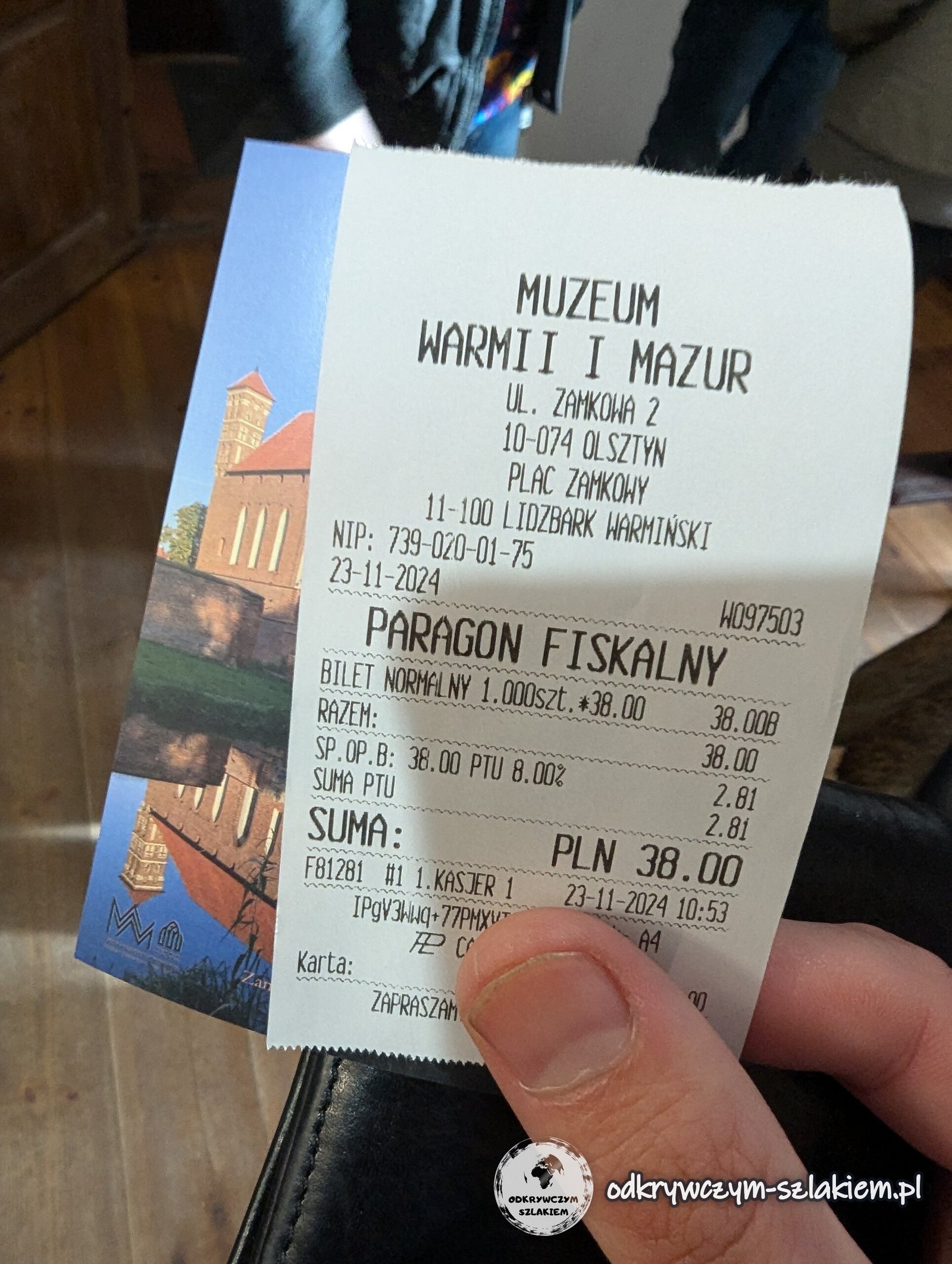
We entered the museum just before eleven – a full-price ticket cost PLN 38 (about €9) at the time. The courtyard is surrounded by two-storey cloisters, added under Bishop Henryk Sorbom, who completed the castle. The courtyard is sometimes compared with the one at Wawel Castle in Cracow. According to a board in the museum, the cloisters, walls and vaults have survived intact since the Middle Ages.
The Great Refectory and the castle chapel
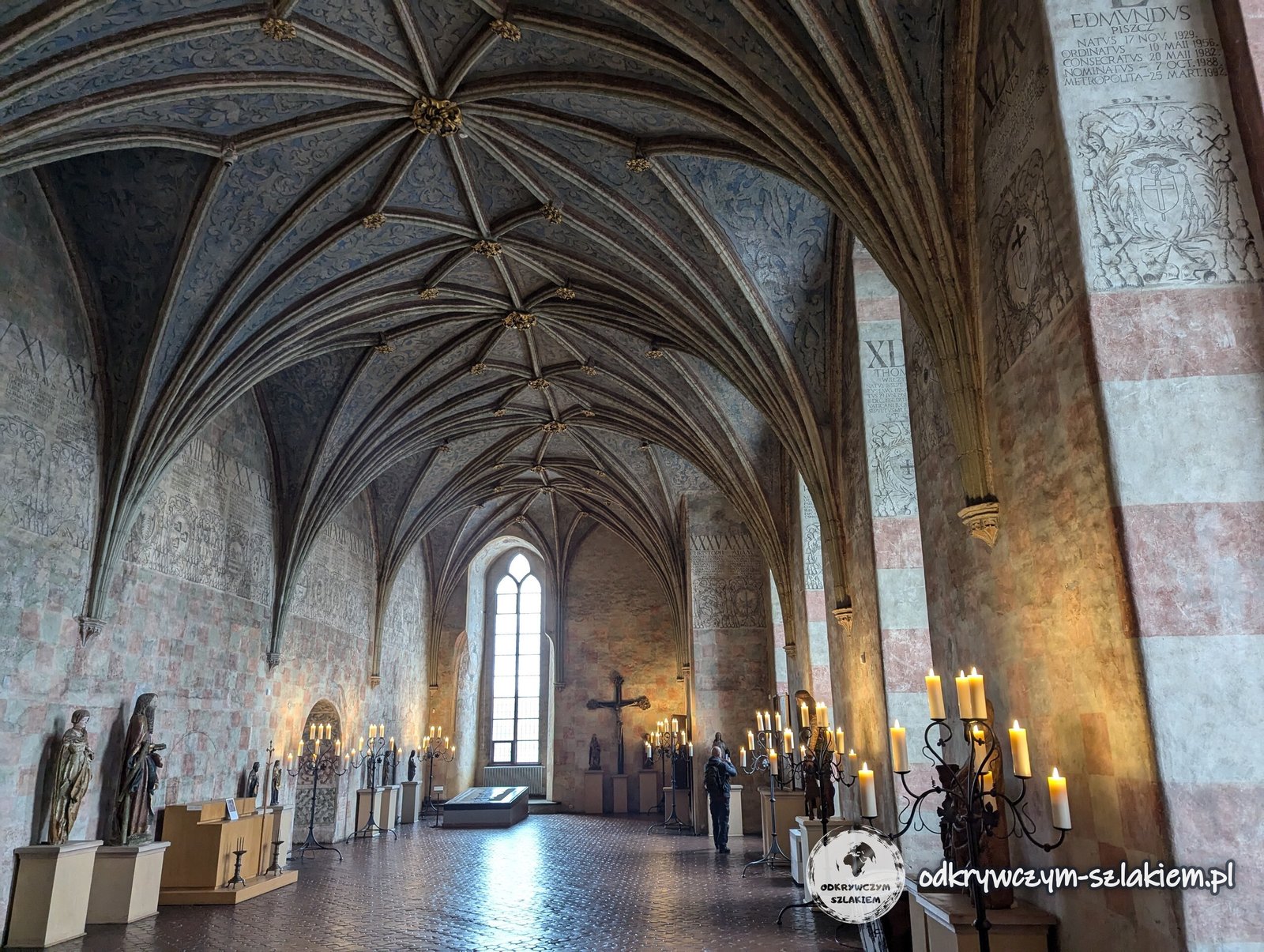
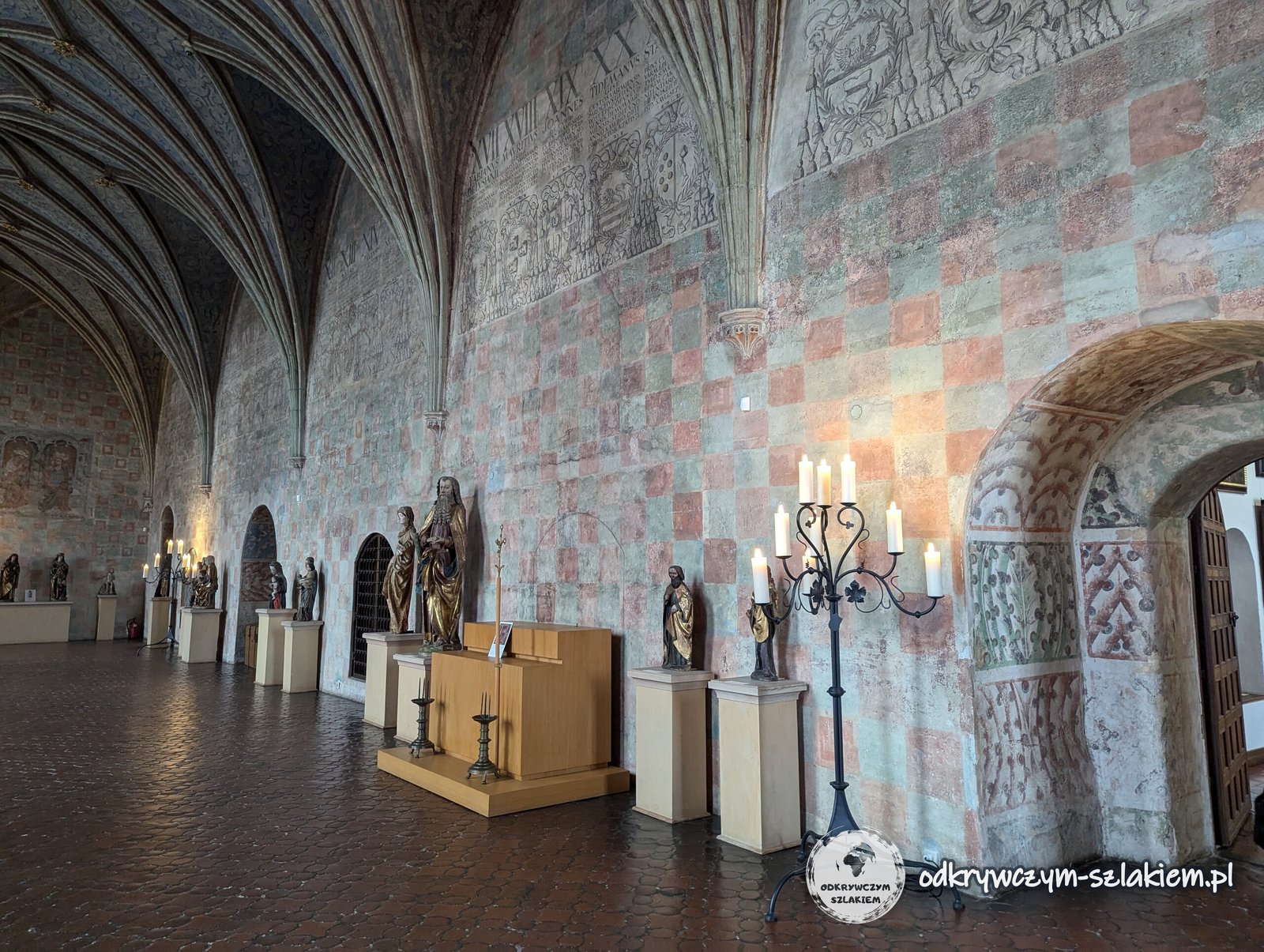
The largest room in the castle is the Great Refectory – 27 m long and 9 m wide. Bishop Krasicki had the wall separating it from the Sibyl Room taken down, so five bays became six. Late-14th-century wall paintings were uncovered here, including the Coronation of the Virgin and a chequerboard pattern. A frieze with the coats of arms of the Warmian bishops has also survived. Since the 1980s the hall has shown Gothic art from the collections of the Museum of Warmia and Masuria. The refectory also holds the tomb slab of Bishop Paul Legendorf from 1494, made by Peter Vischer of Nuremberg.
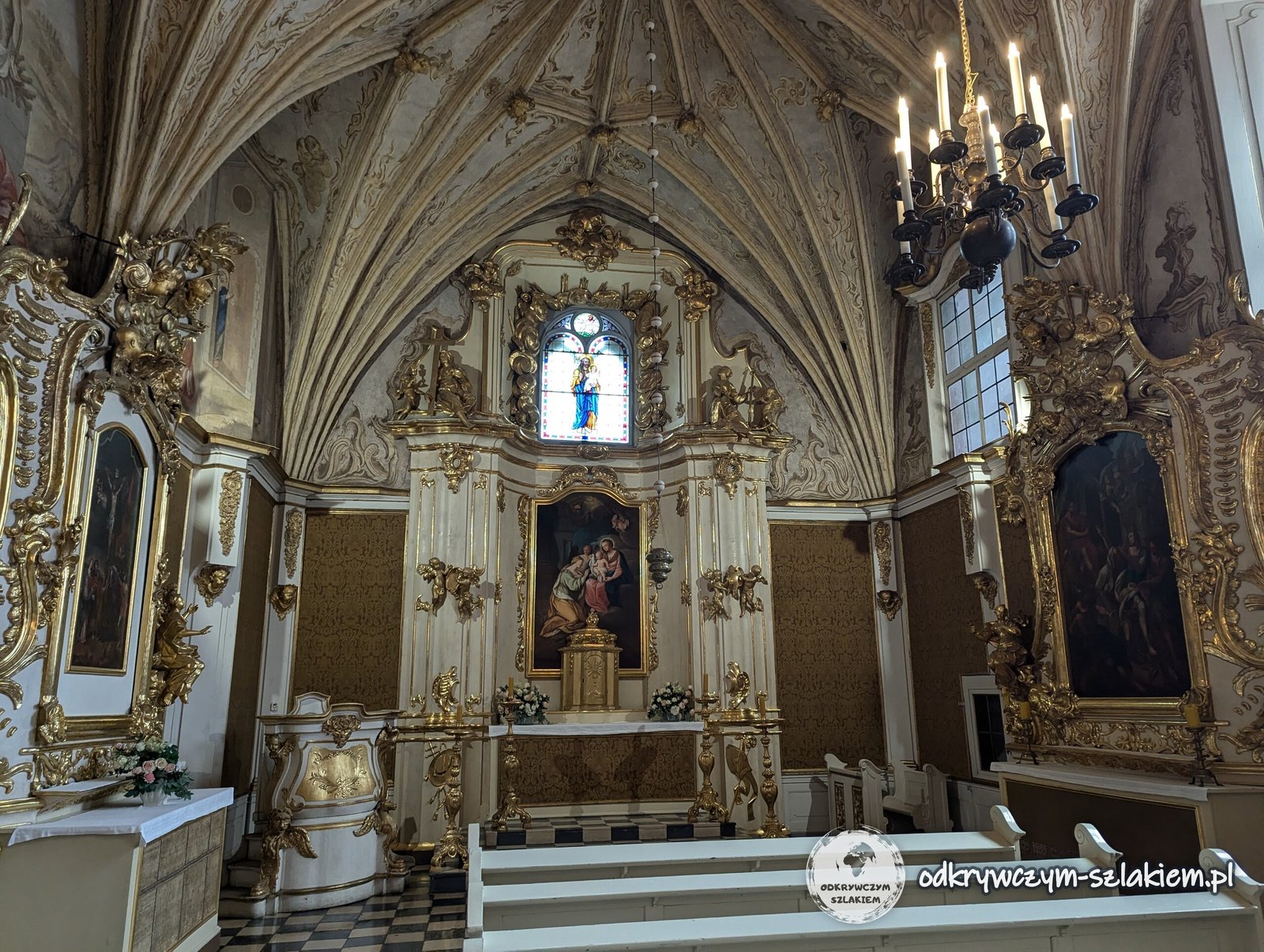
The castle chapel takes up the eastern part of the south wing on the first floor. In the 18th century the Gothic interior was given a Rococo decoration, attributed to Bishop Adam Stanisław Grabowski – gilded altars and ornaments above a black-and-white chequered floor. The organ was restored in 2022–2023, and an inscription by the organ builder Christoph Heinrich Obuch was found inside it.

The bishops’ chambers – Copernicus and Krasicki
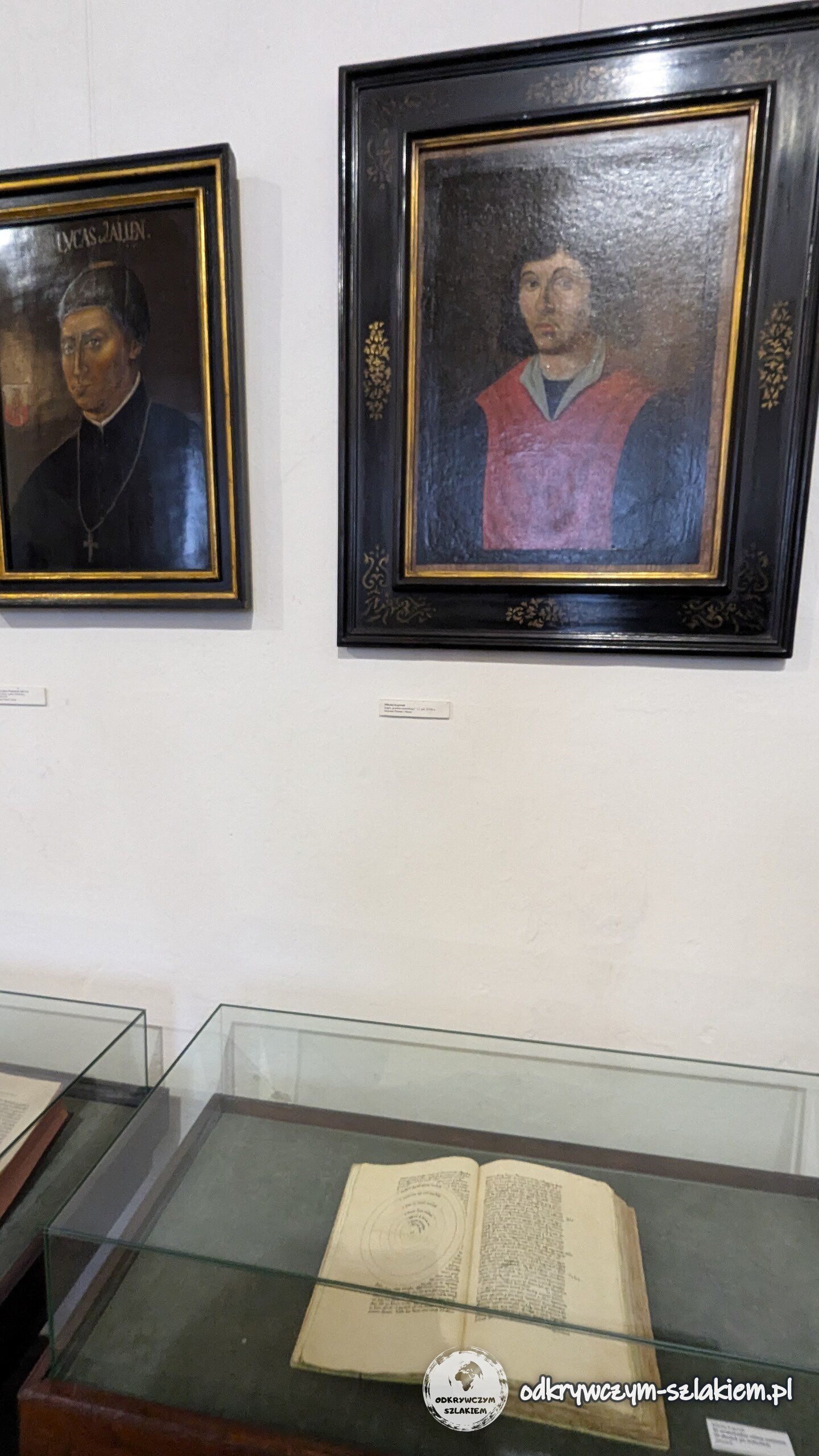
The bishops’ former apartments hold the exhibition “Great residents of Lidzbark Castle”. Among other things, it shows portraits of Bishop Lucas Watzenrode and his nephew, Nicolaus Copernicus. Born in Toruń, Copernicus returned from his studies in Italy and lived in Lidzbark for several years, where his uncle resided. He was the bishop’s secretary and physician. Around 1509 he worked out the first outline of his heliocentric theory here, finished his translation of the letters of Theophylact Simocatta and drew maps of Prussia and Warmia. In the first half of 1510 he moved to Frombork, and a few years later he managed the chapter’s estates in Olsztyn.
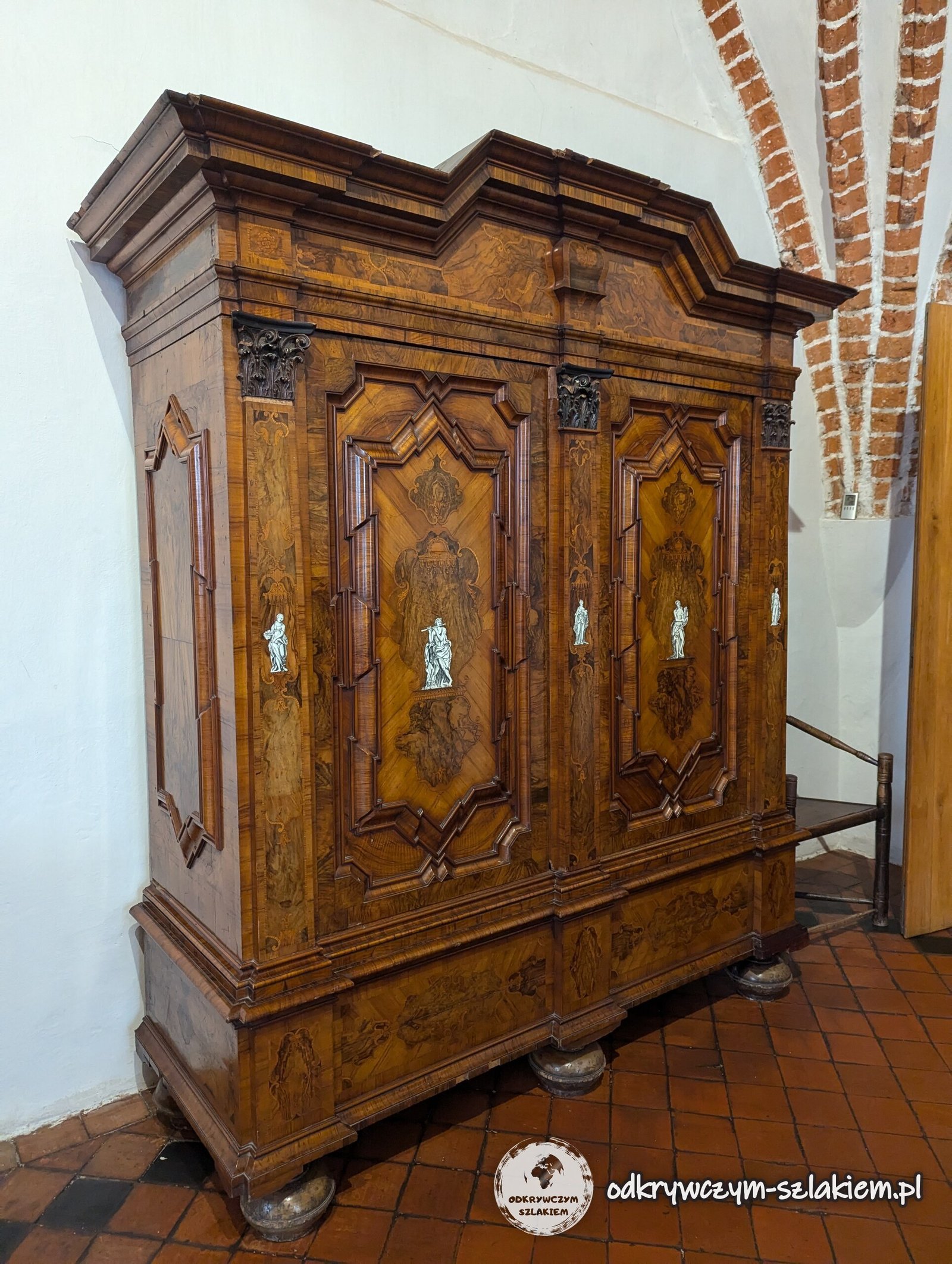
A separate room is Ignacy Krasicki’s study. The chambers are furnished with period furniture – carved and inlaid wardrobes, chests and writing desks – and some of the rooms have painted vaults.

The Battle of Heilsberg in Hoffmann’s painting
The Council Hall in the south wing displays Anton Hoffmann’s painting “The Battle of Heilsberg” – the canvas measures almost 18 m². The Battle of Lidzbark Warmiński, known in German as Heilsberg, was fought on 10–11 June 1807 on the fields west of the town, during Napoleon’s war against the Fourth Coalition. The French, supported by the Saxons, fought the Russians and Prussians – about 180,000 soldiers in total. Around 20,000 were killed or wounded. According to the board in the hall, it was the largest battle of that war fought on what is now Polish soil. Napoleon himself took part, and the name Heilsberg was engraved on the Arc de Triomphe in Paris.
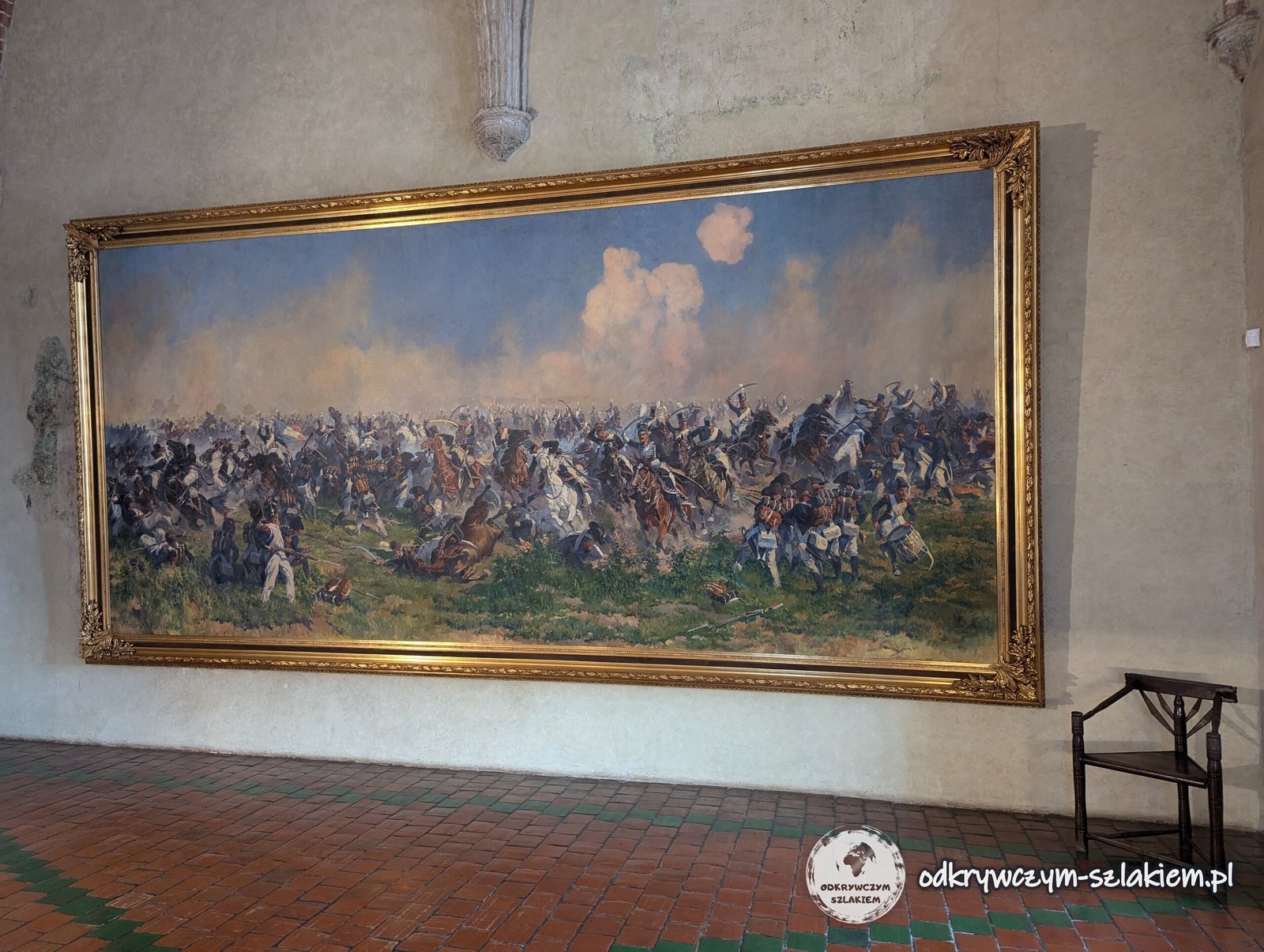
The painting shows Prussian Black Hussars capturing the eagle of the French 55th Line Infantry Regiment. The castle and church of Lidzbark appear in the background. However, the painter worked from a photograph and showed the town from the north-east – the opposite side from the battlefield.
The cellars – heating, stove tiles and a model of the castle
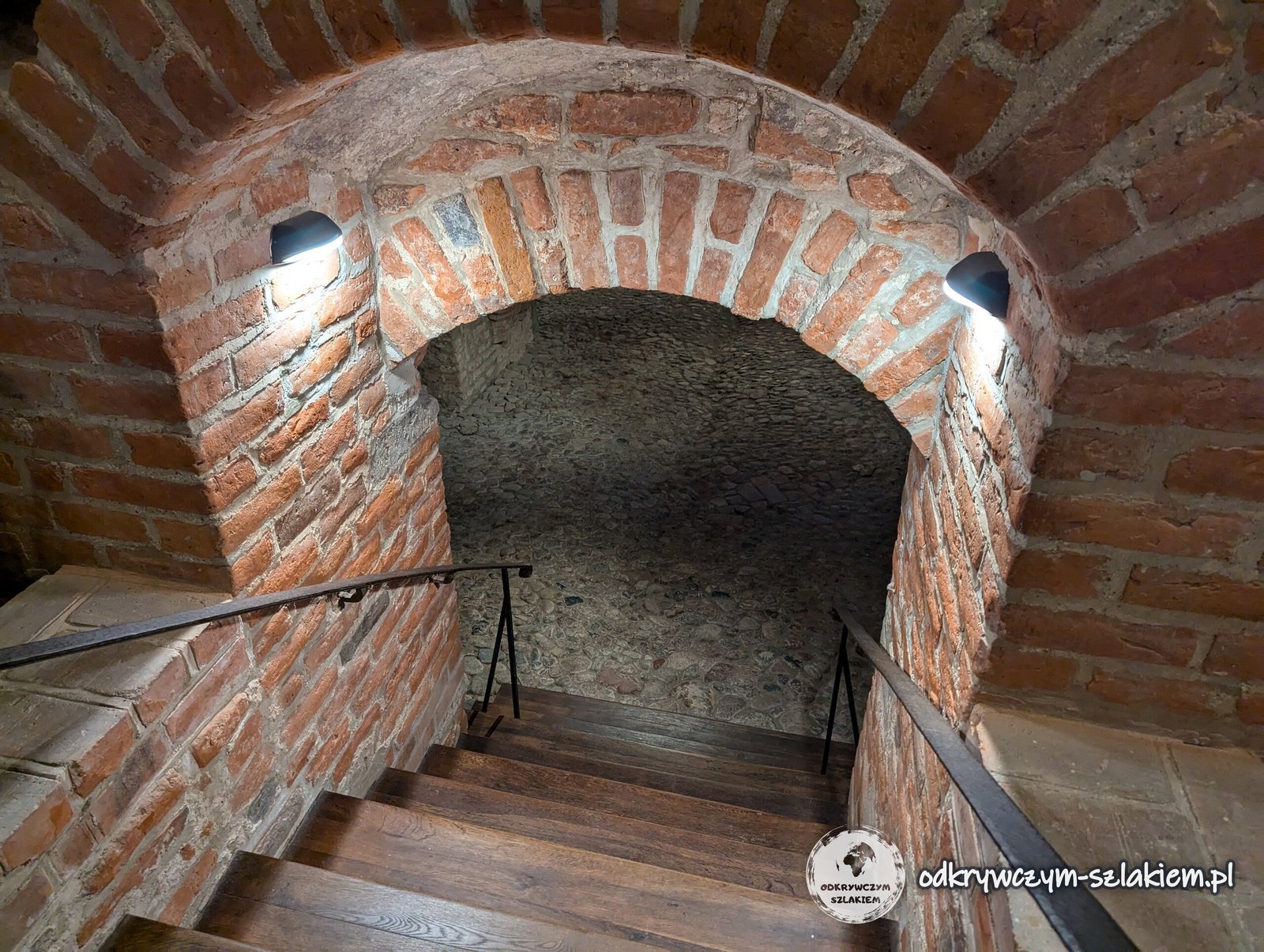
Brick steps lead down to the cellars. There is an exhibition on how the castle was built and archaeological paths among the remains of older walls.
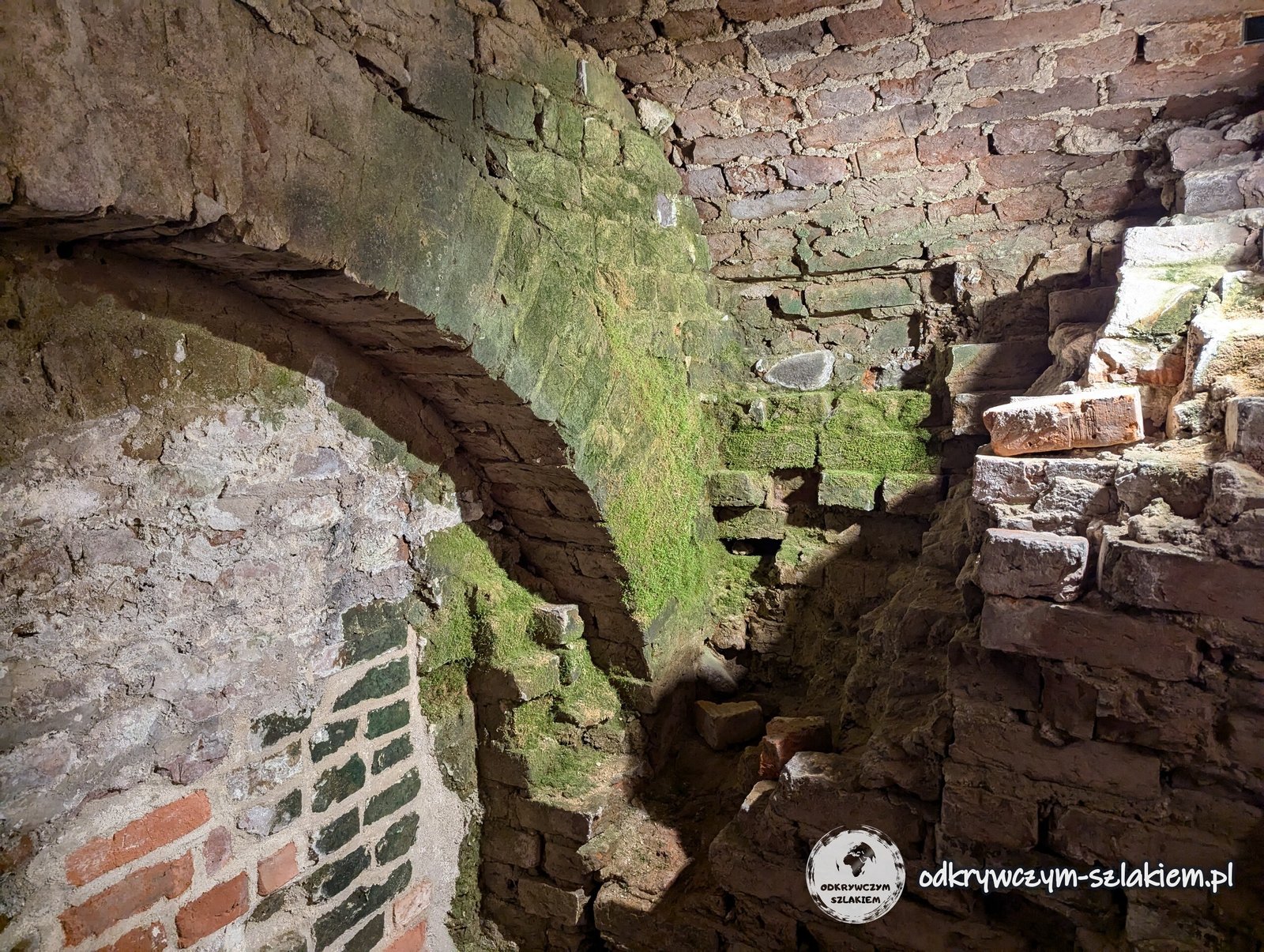
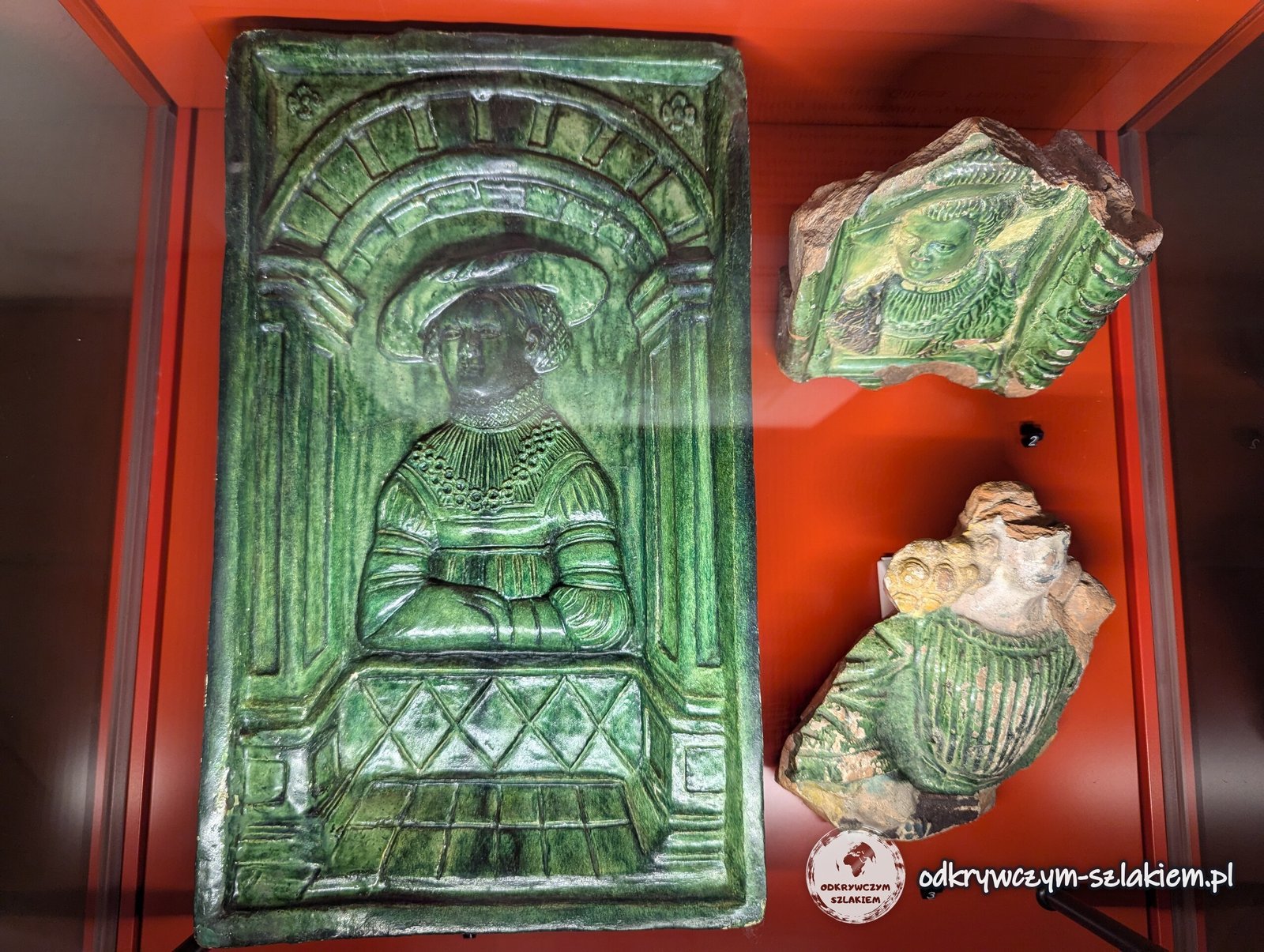
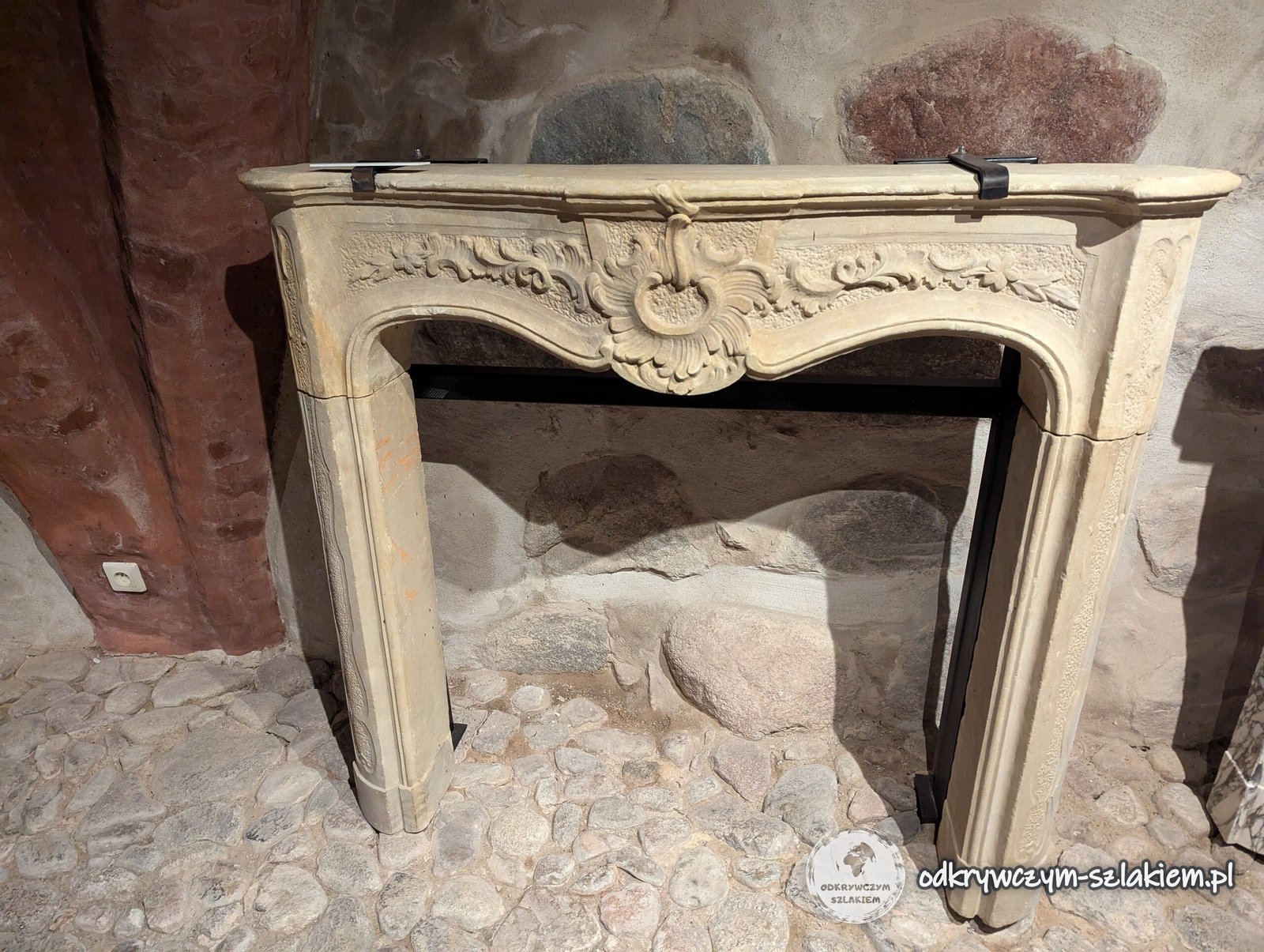
Fun fact: the castle had hot-air heating as early as around 1380. Hypocaust furnaces stood in the cellar under the south wing and heated the former refectory. After the fire of 1442 the system was abandoned, and the rooms were heated with tiled stoves and fireplaces. By the mid-19th century most of the heating devices had been destroyed, and central heating was installed in the 1970s.
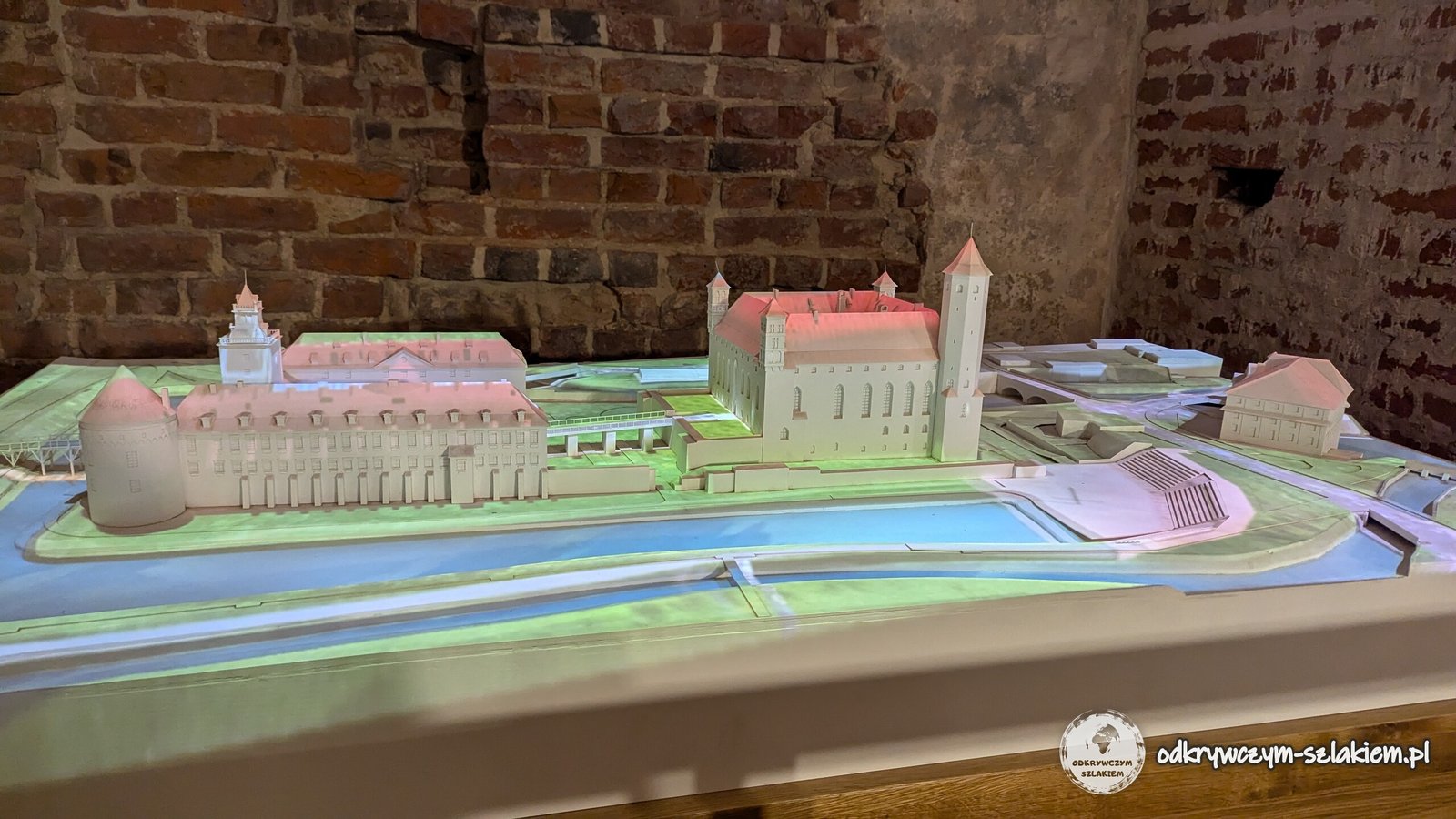
The cellars also hold an illuminated model of the castle with the outer bailey and the river.
The armoury
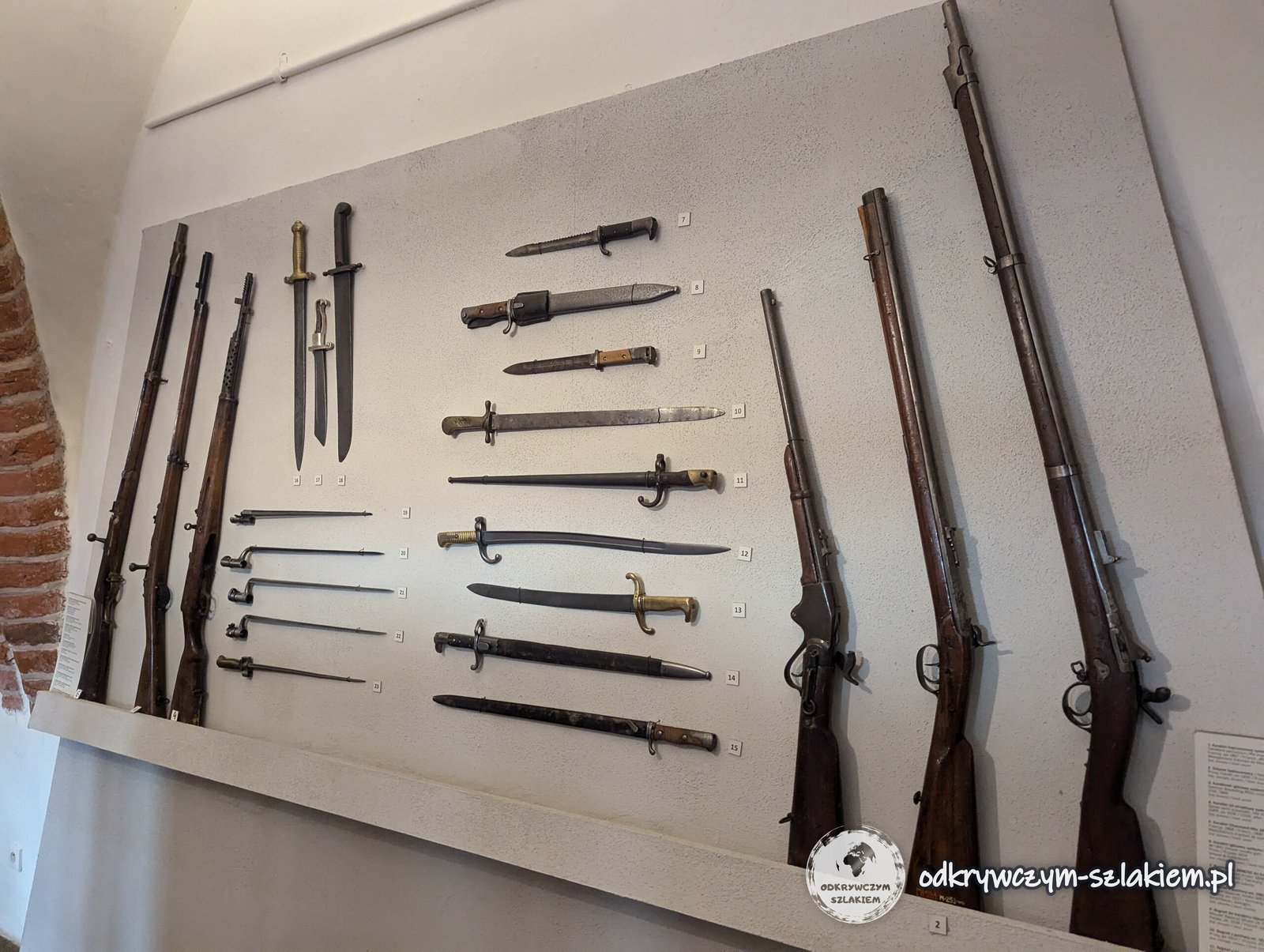
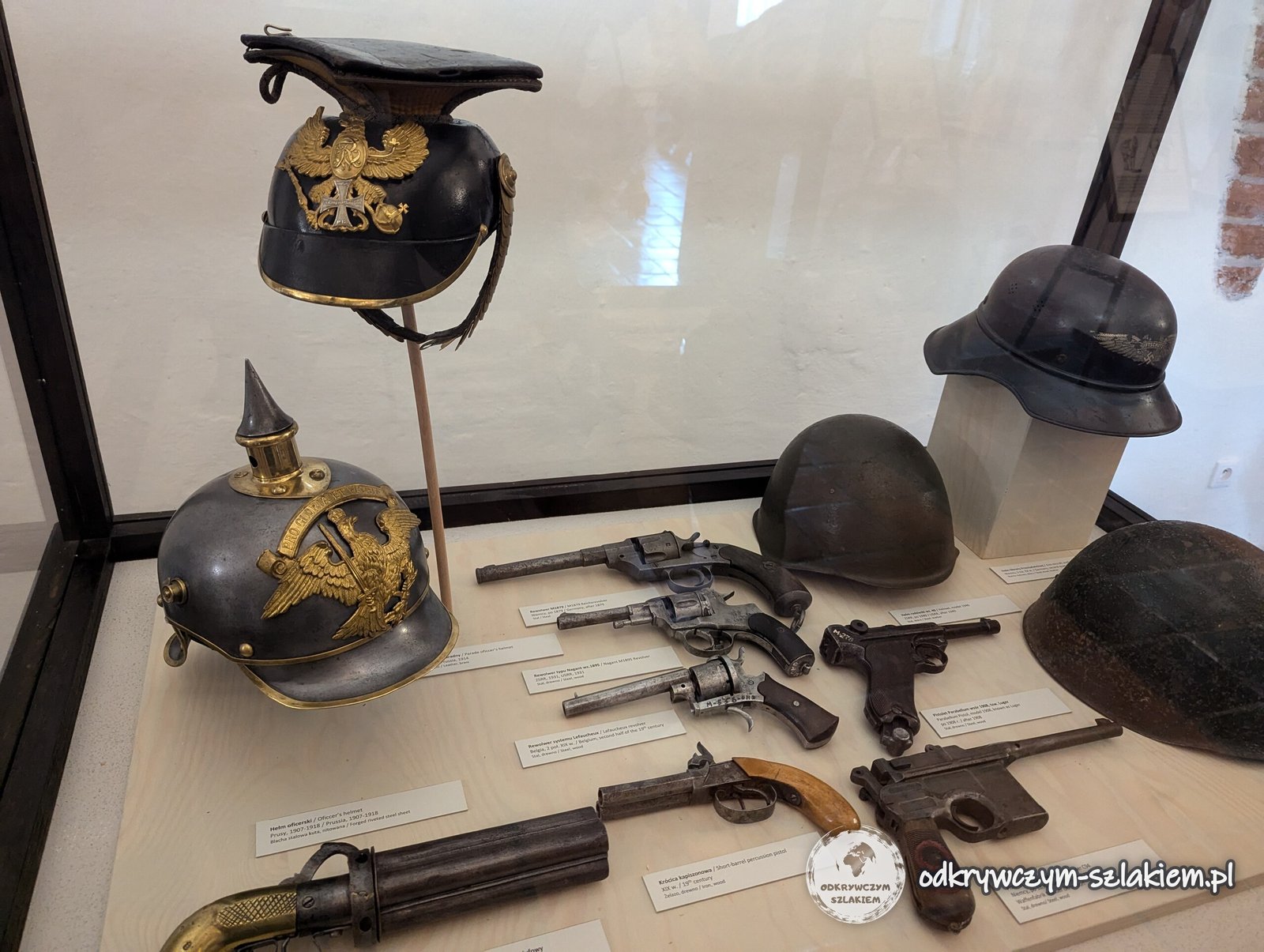
The exhibition of weapons from the 14th to the 20th century from the collections of the Museum of Warmia and Masuria includes suits of armour, helmets and breastplates, sabres, rifles with bayonets and, in display cases, Pickelhaubes and pistols, among other things.
Painting galleries in the attic
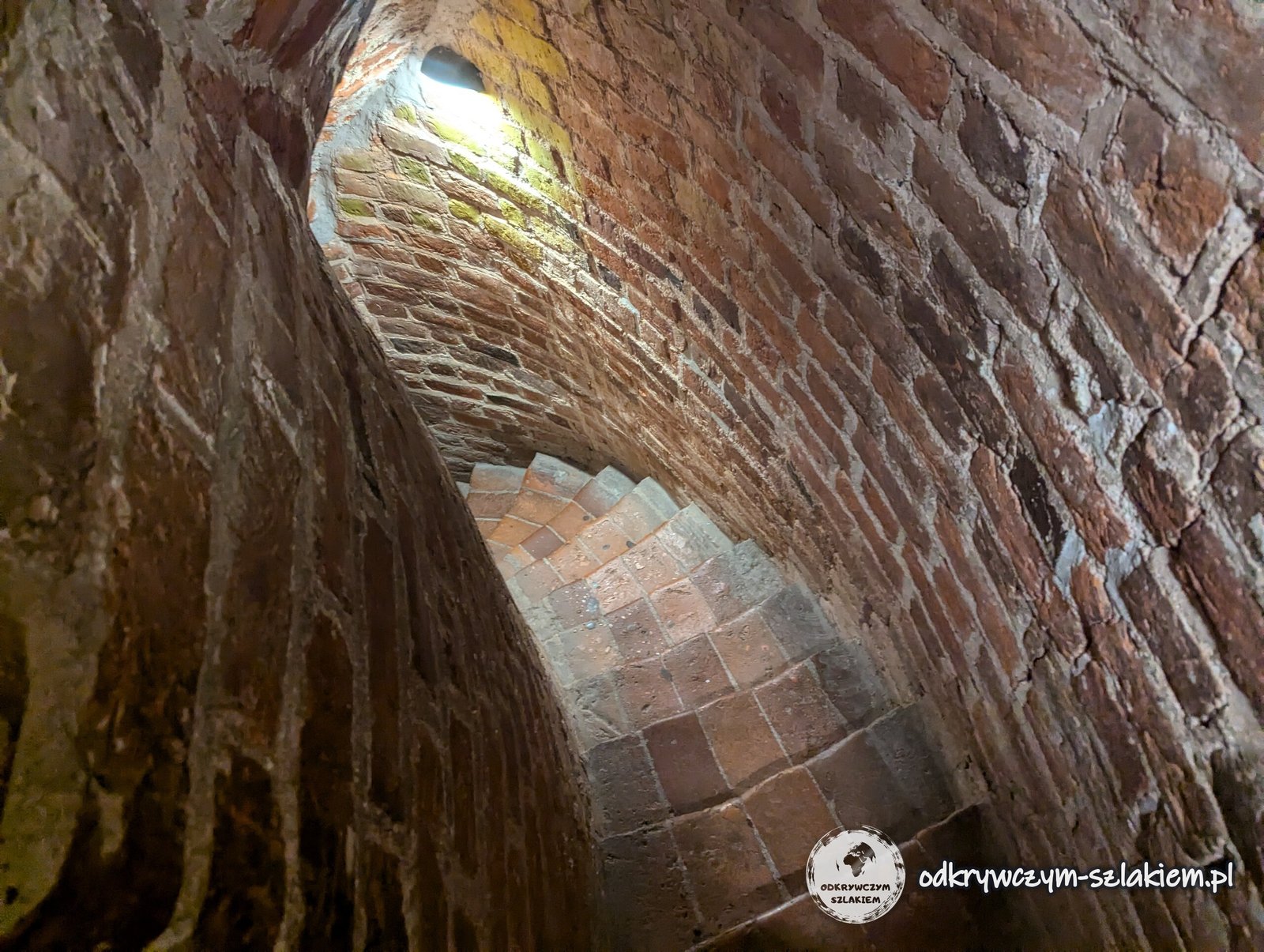
The castle walls also hide narrow brick spiral staircases.
The northern attic houses the Gallery of Polish Painting of the First Half of the 20th Century, with works by colourists such as Jan Cybis and Hanna Rudzka-Cybisowa, among others.
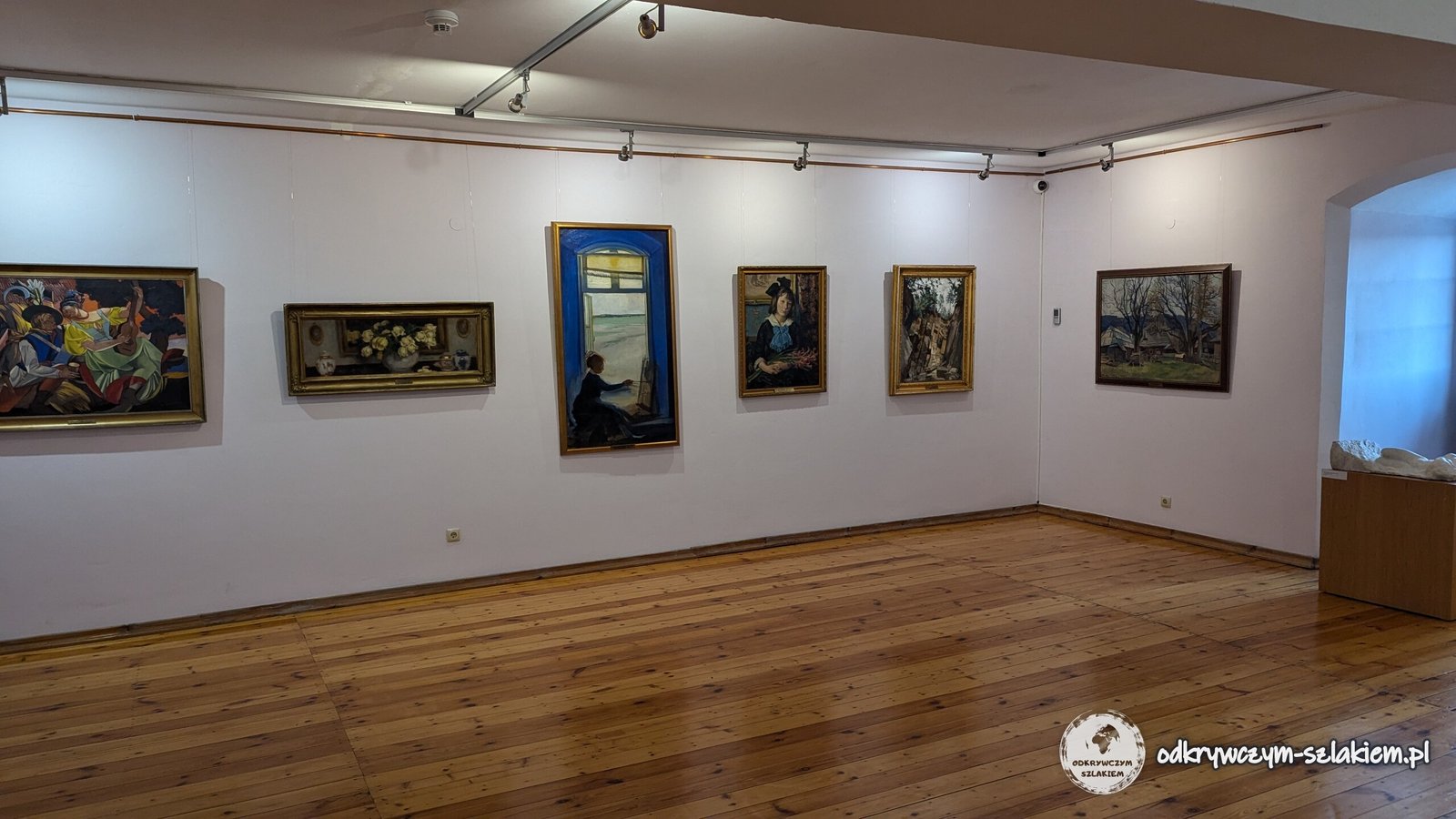

Since 2017 the museum has also had the Attic Gallery for temporary exhibitions. In November 2024 contemporary paintings were on show in the attic.

The High Gate
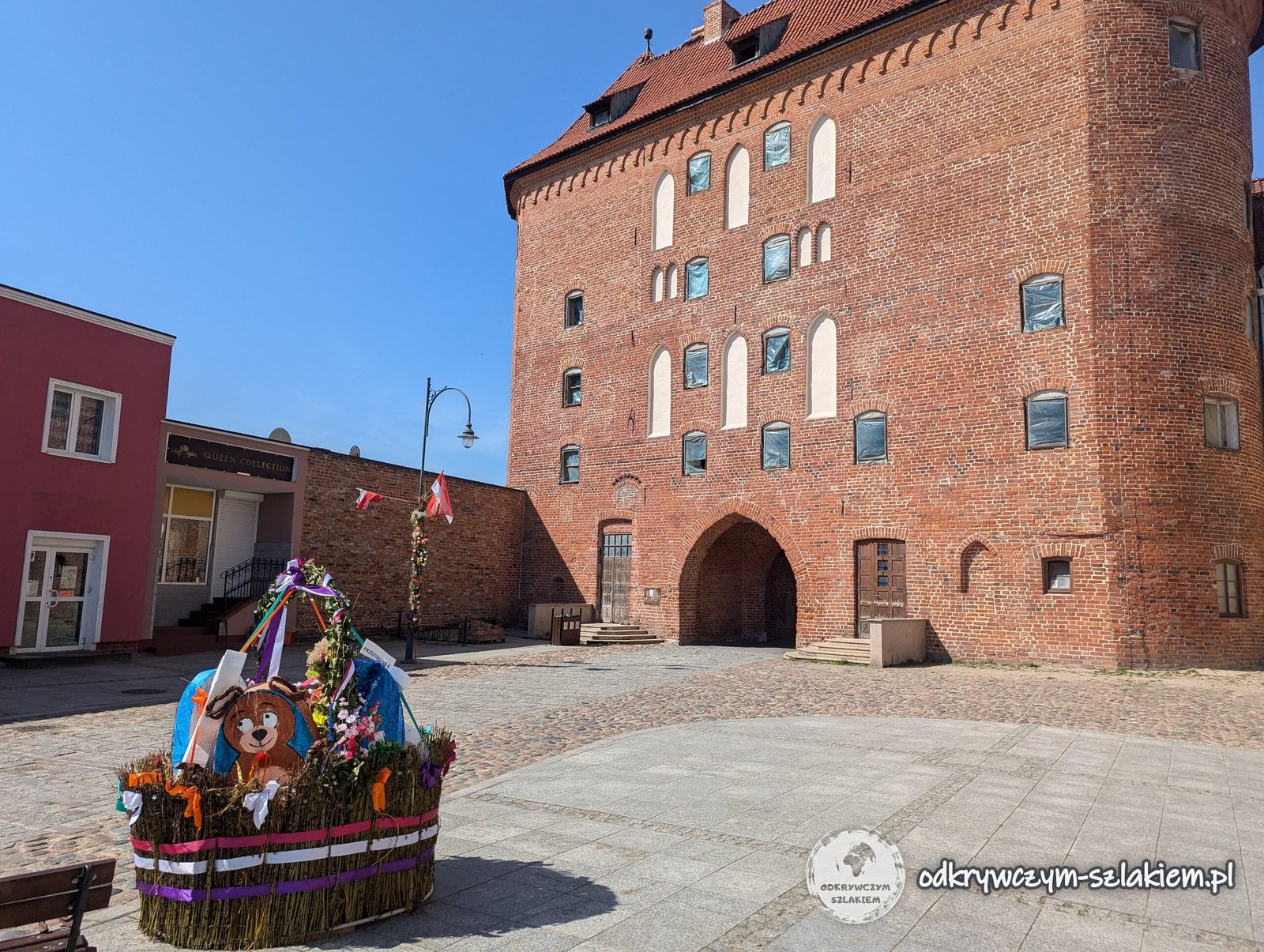
Three gates led into medieval Lidzbark: the Mill Gate, the High Gate and the Church Gate. In 1530 the barbican of the High Gate was raised by a third storey. The Church Gate and the Mill Gate were demolished in 1817–1818, and in 1868 the High Gate proper went too. Only the barbican survived, and it took over the gate’s name. It stands in the north-western part of the old town. I stopped by it at the end of the November trip and again in April, when there was an Easter decoration in front of it.
Spring by the Łyna – the viaduct and the Napoleon monument
In spring I also walked down to the Łyna on the eastern edge of town. A disused steel railway viaduct stands there on tall concrete piers. Lidzbark used to be a railway junction. The first passenger train left here in 1899, and the last one on 1 June 1996. The tracks were later removed, and the station building, restored in 2022, now houses the bus station waiting room and a local museum.
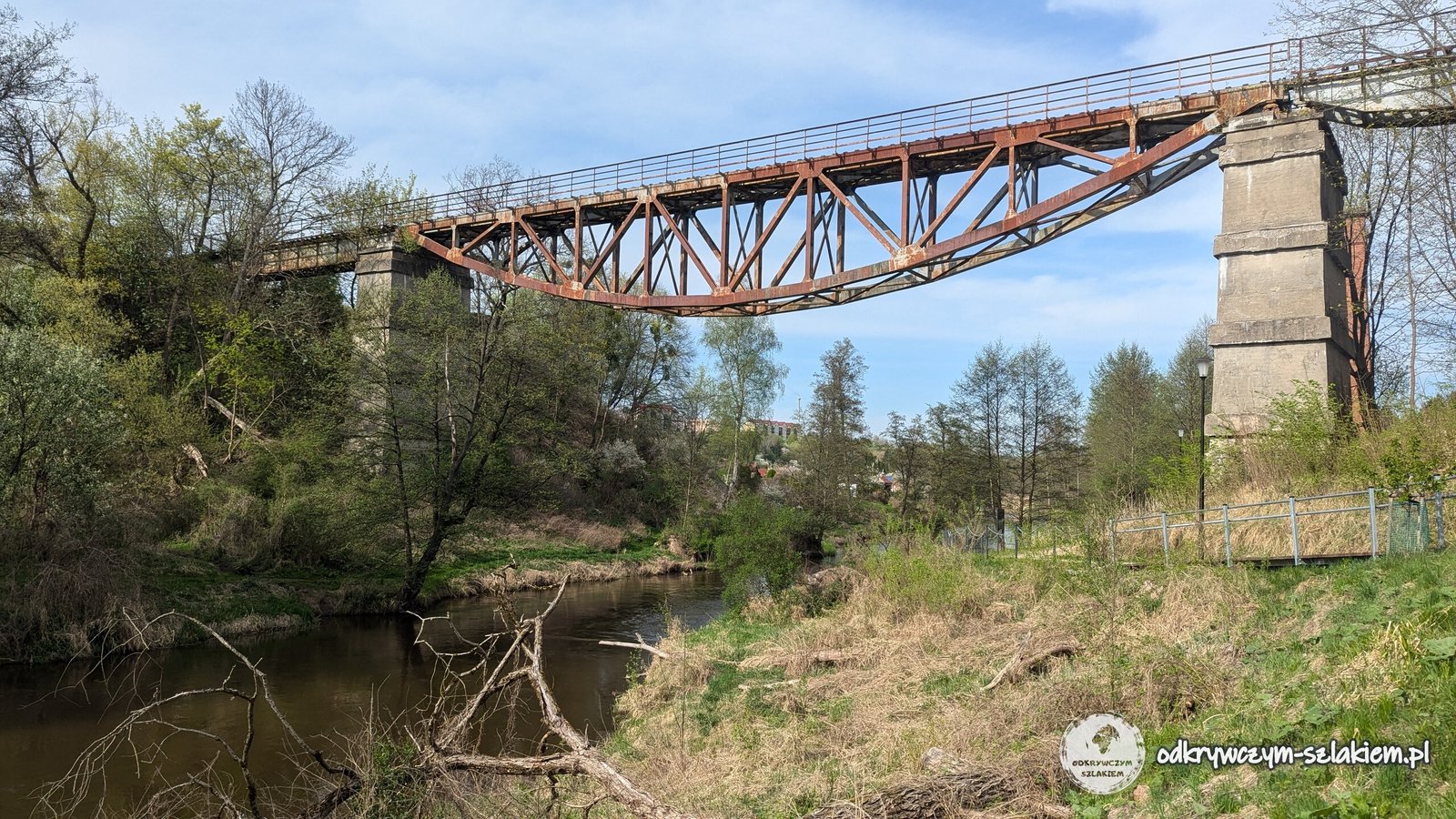
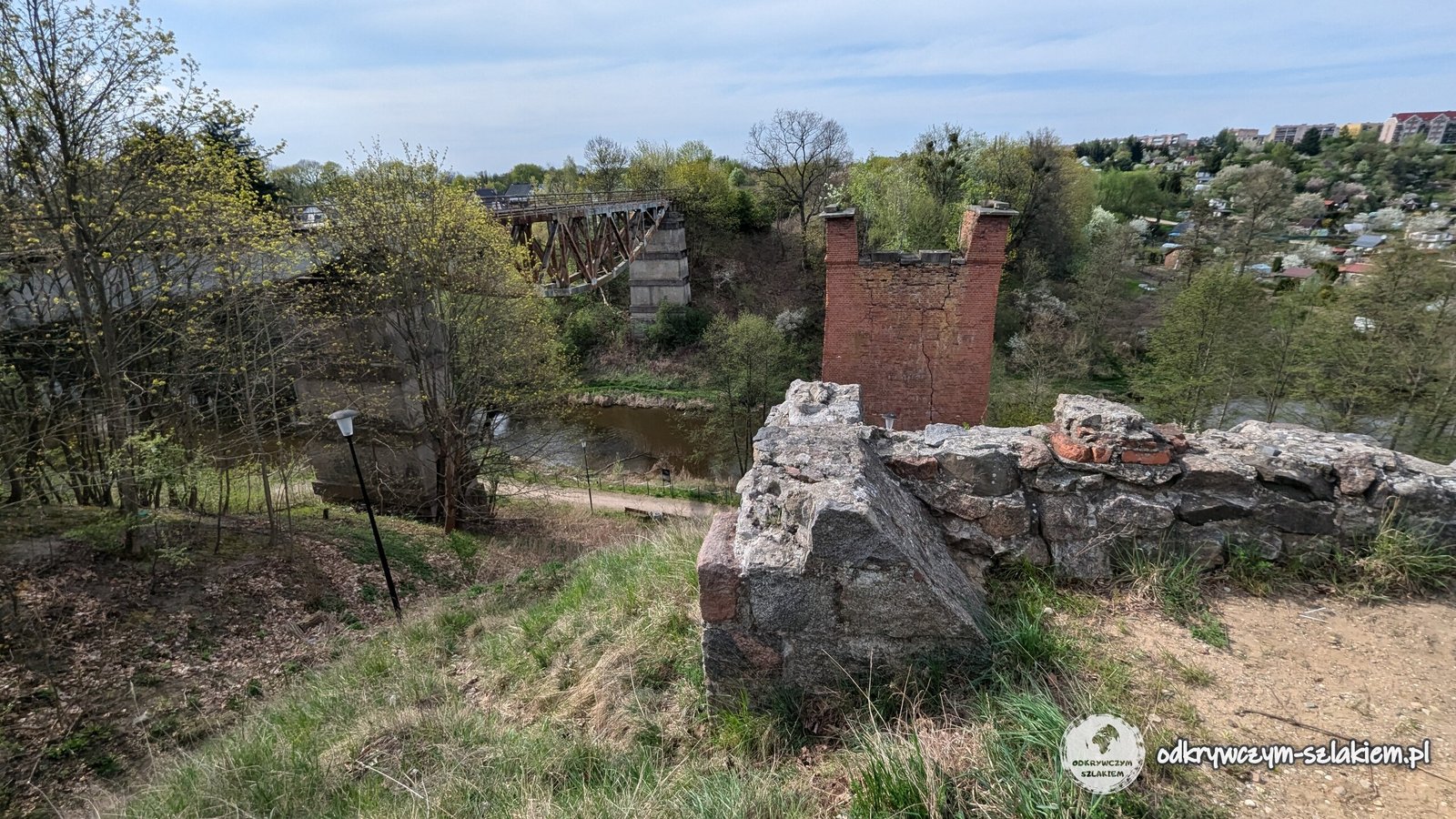
Next to the viaduct stand the ruins of a brick pier and broken concrete blocks, and a path with street lamps runs along the riverbank.

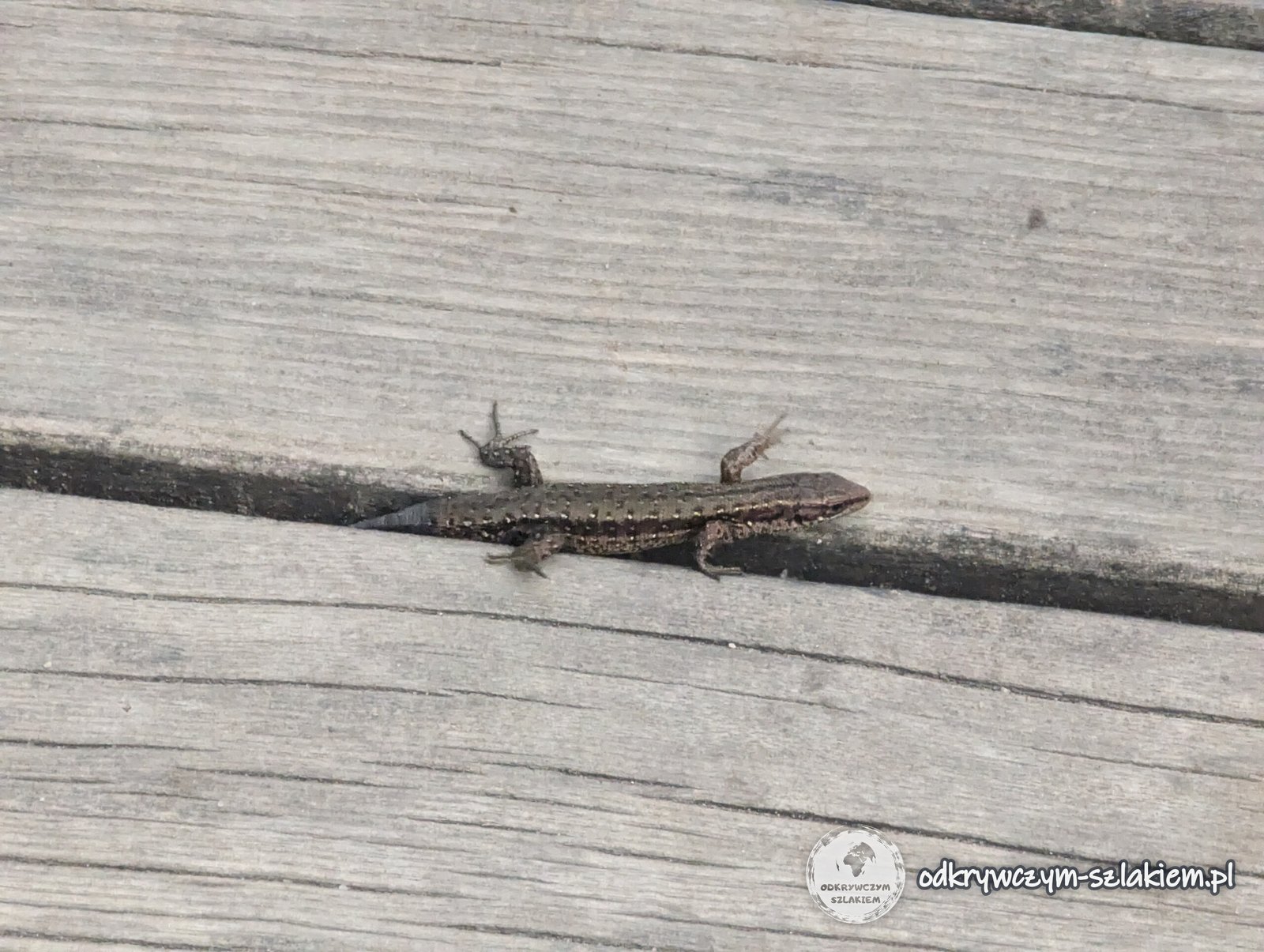
Lizards were basking on the wooden boards by the river.
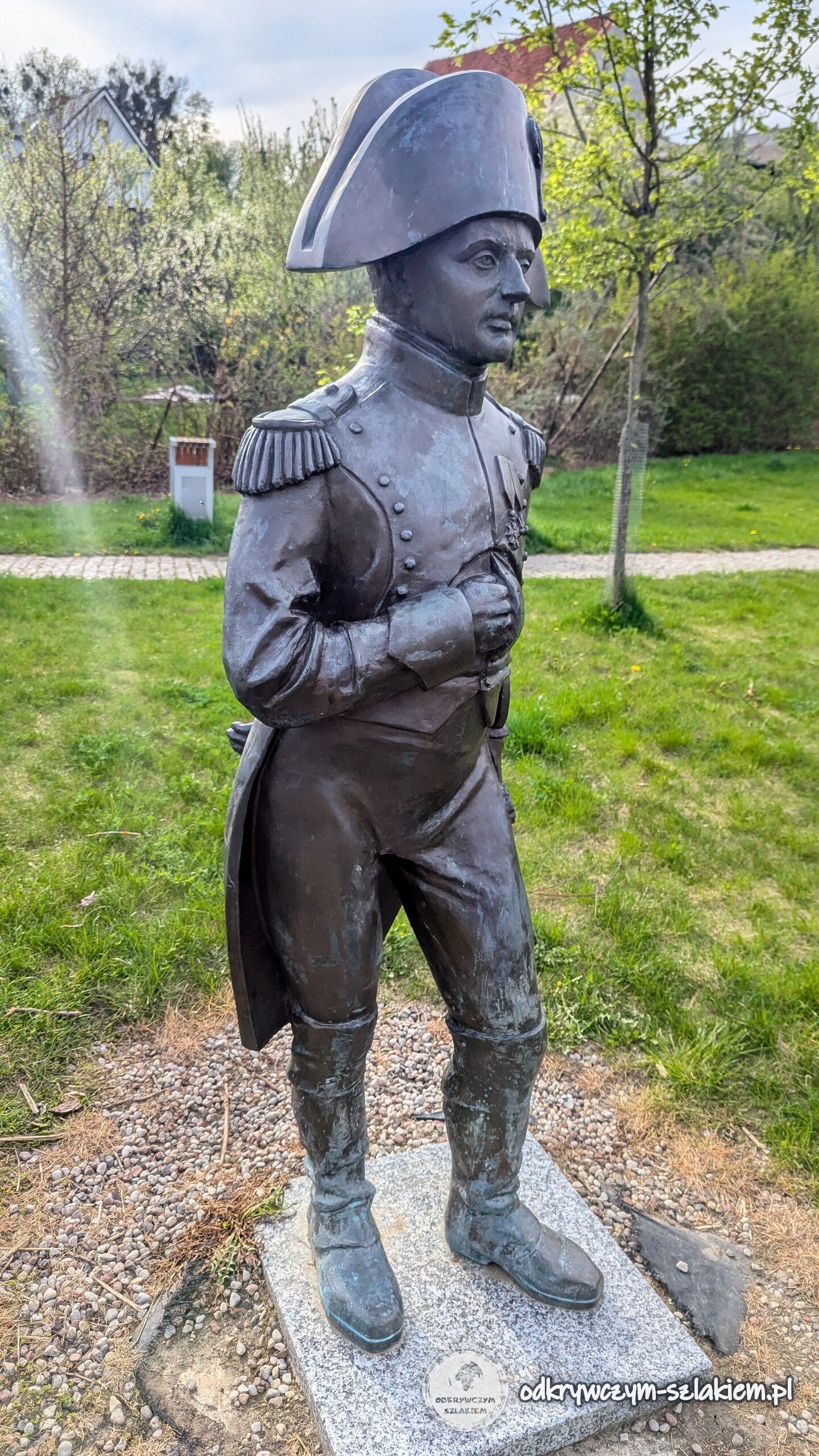
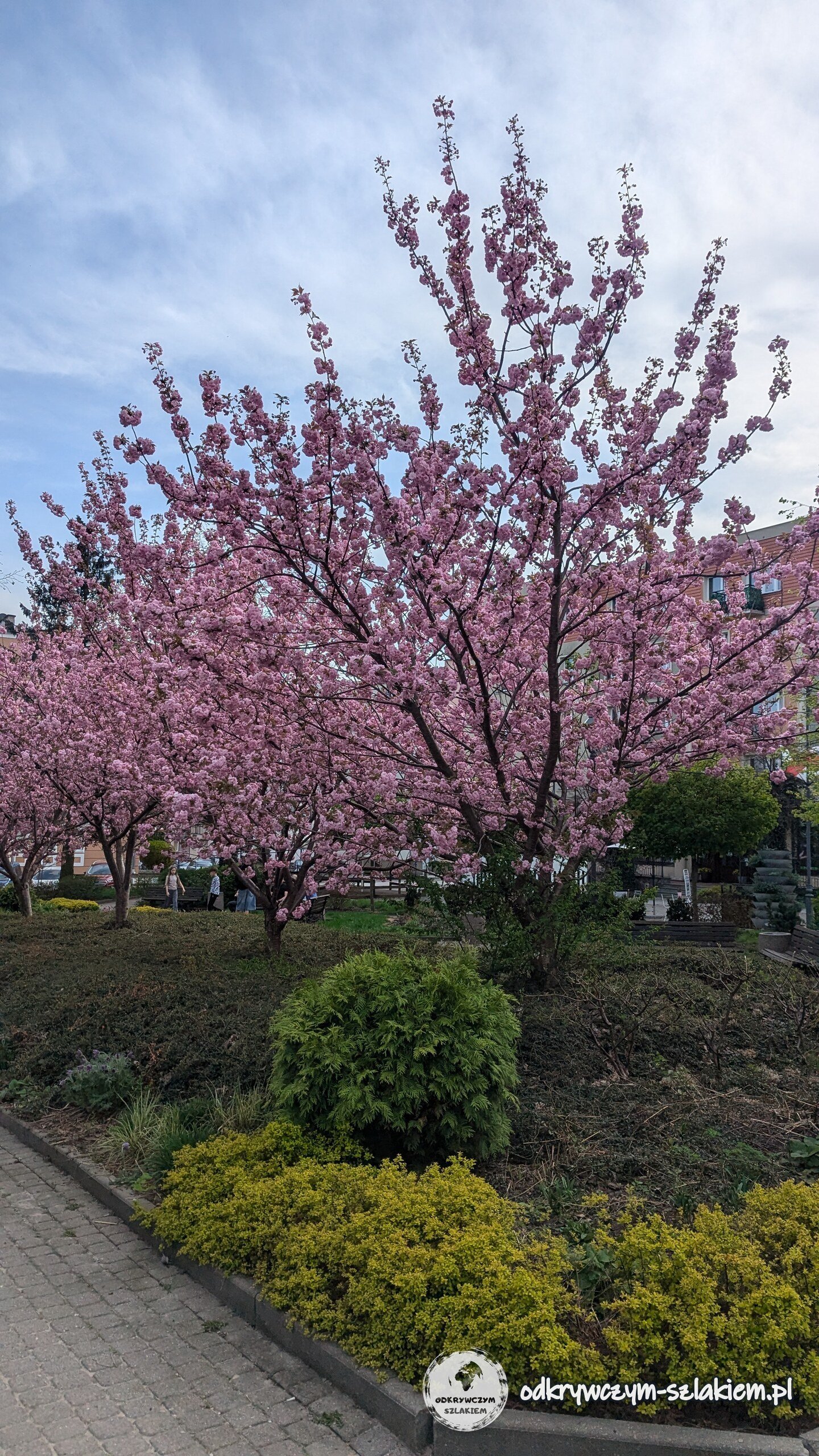
West of the old town, in a park, stands a monument to Napoleon Bonaparte. It recalls the battle of 1807, fought on the fields west of Lidzbark. A re-enactment of the battle is held in Lidzbark every year. The ornamental cherry trees in the centre were in bloom at the time.
Practical information
- Getting there: Lidzbark lies on national road 51 from Olsztyn via Dobre Miasto to Bartoszyce. There are no trains, but minibuses run from Olsztyn, for example via Dywity and Dobre Miasto – you can check the timetable on e-podroznik.pl, among other sites. The bus station is in the former railway station building.
- Warmia Museum tickets (2026): full price PLN 38 (about €9), reduced PLN 25 (about €6), family PLN 85 (2+1, 1+2; about €20) or PLN 105 (2+2, 2+3, 1+3; about €24). The castle tower costs PLN 14 (about €3) and the gardens PLN 9 (about €2). On Tuesdays admission to the permanent exhibitions is free.
- Opening hours (2026): Tuesdays and Thursdays 11:00–19:00; Wednesdays, Fridays, Saturdays and Sundays 9:00–17:00; closed on Mondays. The ticket office closes half an hour earlier. The museum is also closed on some holidays, including Holy Saturday, Easter Sunday and Easter Monday, 1 and 11 November and Christmas.
- How much time: we spent over 2 hours in the castle, and with the orangery, the collegiate church, the Market Square and the High Gate it came to about 3 hours.
- Events: at the end of August or the beginning of September the town hosts the Lidzbark Evenings of Humour and Satire (Lidzbarskie Wieczory Humoru i Satyry), a national competition for the Golden Pin broadcast by Polish TV channel TVP1. There is also a re-enactment of the Battle of Heilsberg every year.
- After sightseeing: the town has Termy Warmińskie – the first thermal spa in northern Poland, with pools, saunas and a hotel.
- More of Warmia: Olsztyn – what to see and a hitchhiking rally to Święta Lipka, with the castle of the Warmian bishops in Reszel.