Shortly after the Pol’and’Rock festival in Poland, from 10 to 24 August 2023, Patrycja and I set off on a two-week trip around Spain and France. We started in Portugal, in Porto, but allowed only half a day for sightseeing – we wanted to reach a friend as quickly as possible, who was in northern Spain at the time, in the Picos de Europa mountains. We were going to get around mainly by hitchhiking. This is the first part of the story: Porto, Galicia, the Picos de Europa and Bilbao. The second part – the south of France and the way home – is in the post Hitchhiking in the south of France.
Table of contents
- The route of the whole trip
- Porto in half a day
- Hitchhiking through Galicia – Santiago de Compostela and wild camping near Lugo
- Picos de Europa National Park – the Covadonga Lakes
- Bilbao – the Guggenheim and the old town
- Practical information
The route of the whole trip
In two weeks we covered a good chunk of western Europe, spending roughly half of the nights in a tent:
- 10–11 Aug – Porto, then hitchhiking to Spain (Tui) and on through Galicia,
- 12–13 Aug – Caldas de Reis, Santiago de Compostela and Lugo (wild camping),
- 13–16 Aug – Covadonga campsite in Picos de Europa National Park, the Covadonga Lakes and a mountain trail, Cangas de Onís,
- 16–18 Aug – Bilbao,
- 19–22 Aug – France: Bayonne, Toulouse, Montpellier and Lac du Salagou,
- 22–24 Aug – the way home: hitchhiking, BlaBlaCar via Lyon and Freiburg, and Flixbus to Poland.
Porto in half a day
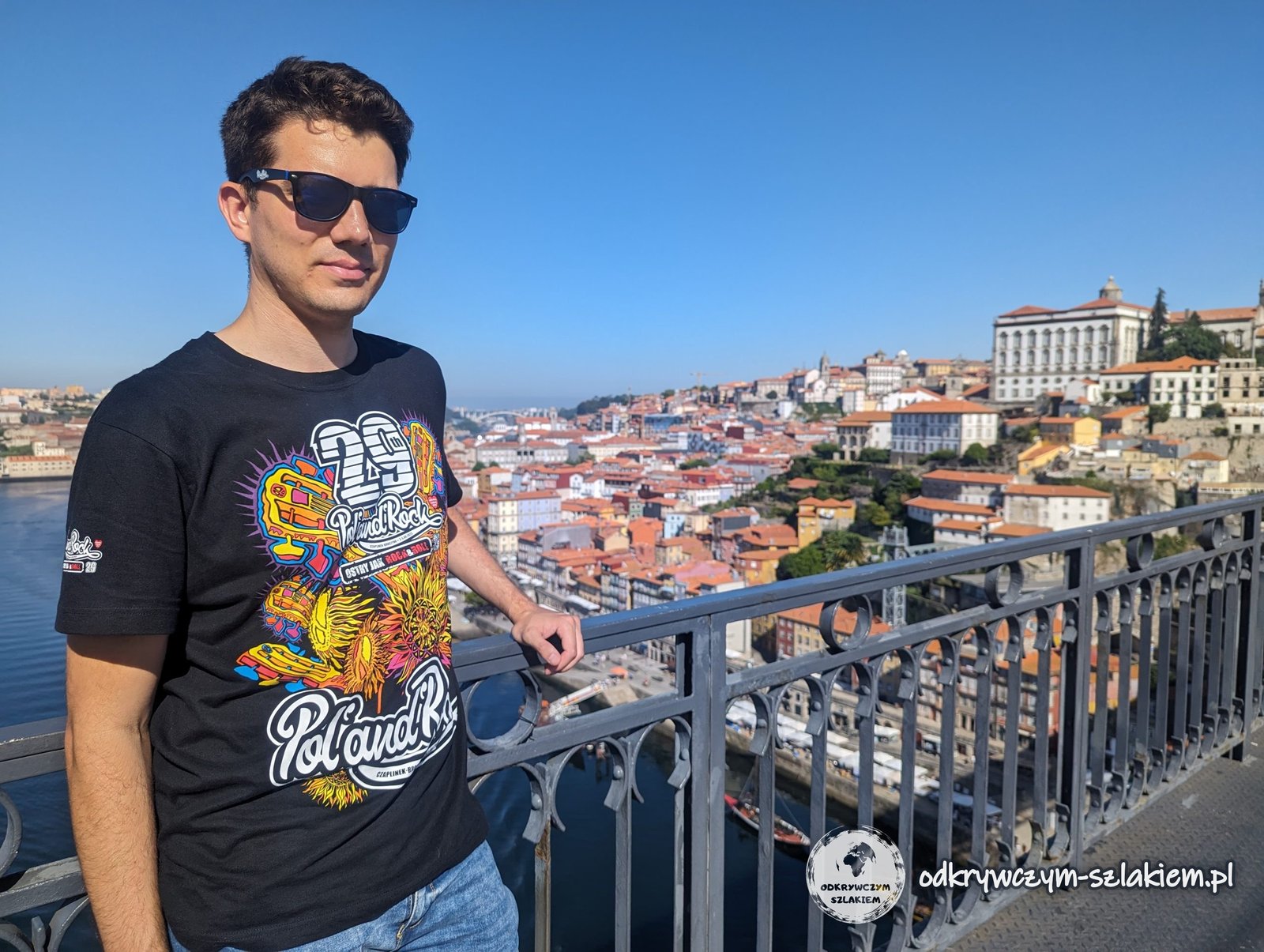
We had only half a day for Porto, so we saw the most important places in the centre. The city’s best-known view is the two-level iron Ponte Dom Luís I bridge over the Douro River, with a panorama of the old districts on the slopes.
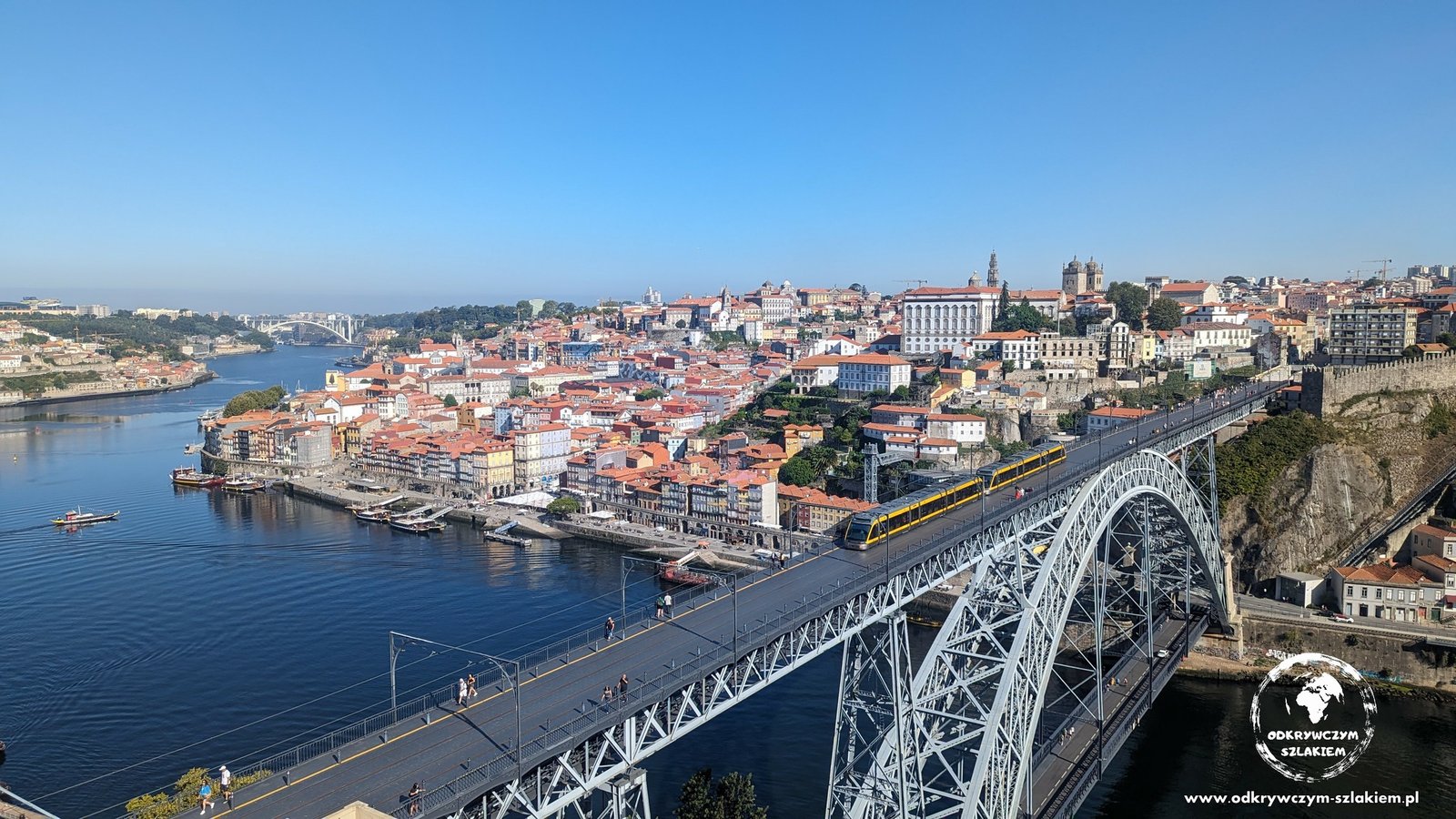
On the other bank of the Douro, in Vila Nova de Gaia, the Monastery of Serra do Pilar stands above the bridge – its church and cloister are both circular, with the same diameter. The church was inaugurated in 1672, and in 1996 the monastery, the bridge and the historic centre of Porto were added to the UNESCO list. The Dom Luís I Bridge opened in 1886; it was designed by Théophile Seyrig, a former partner of Gustave Eiffel. The upper deck carries the metro and pedestrians, the lower one buses, taxis and bicycles.

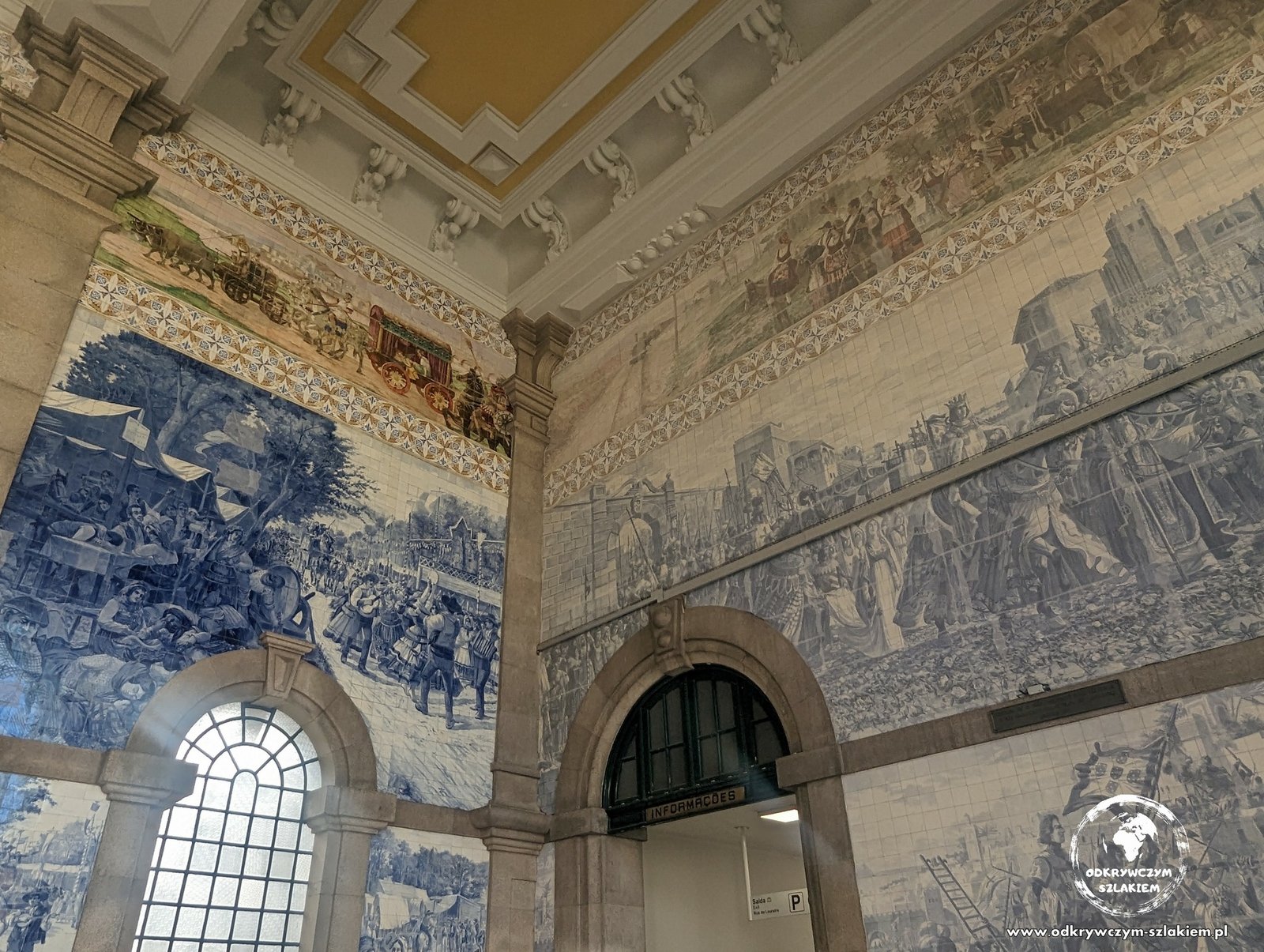
You really have to look into the hall of São Bento station – its walls are covered with thousands of blue-and-white azulejo tiles showing scenes from Portuguese history.
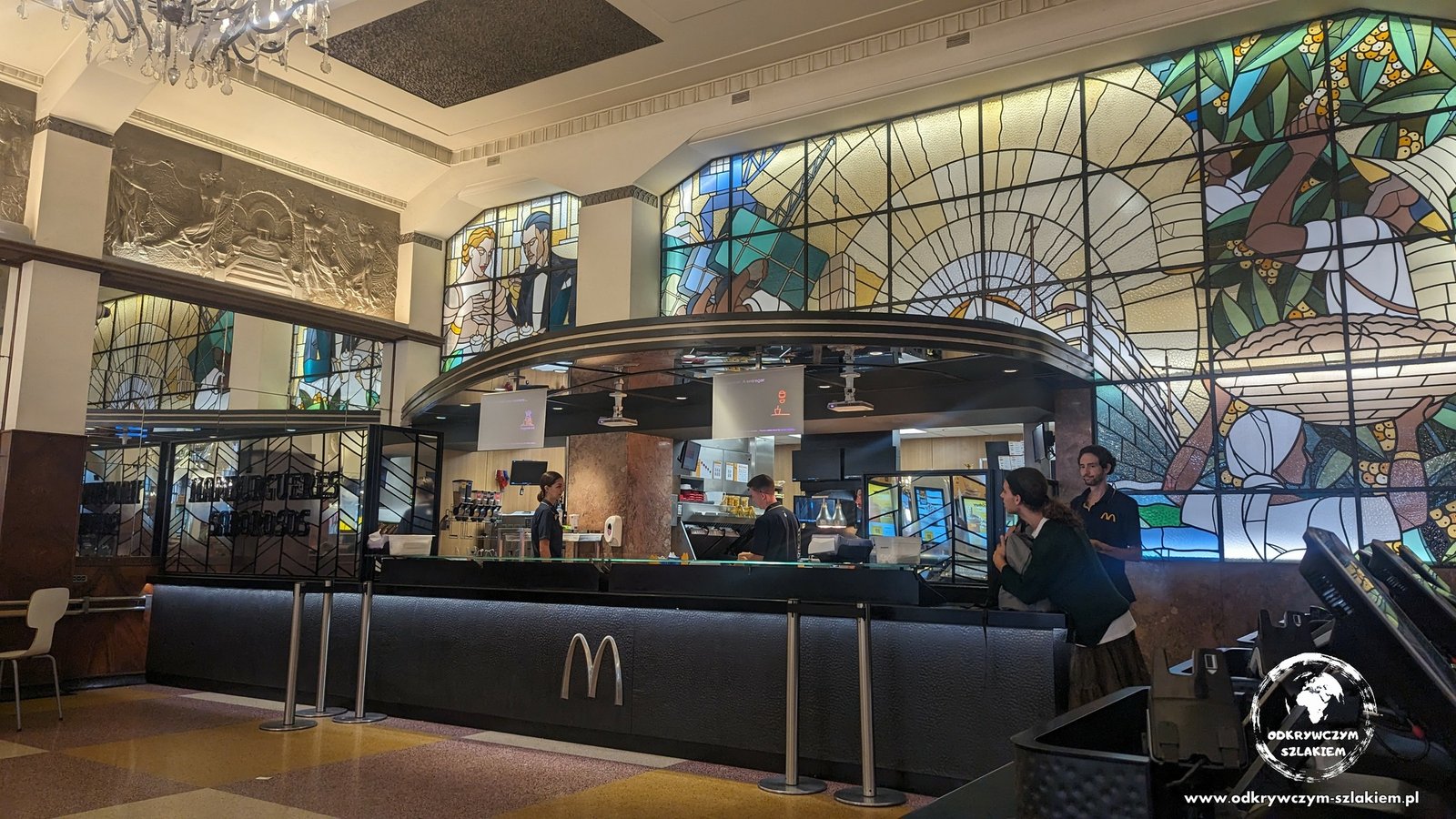
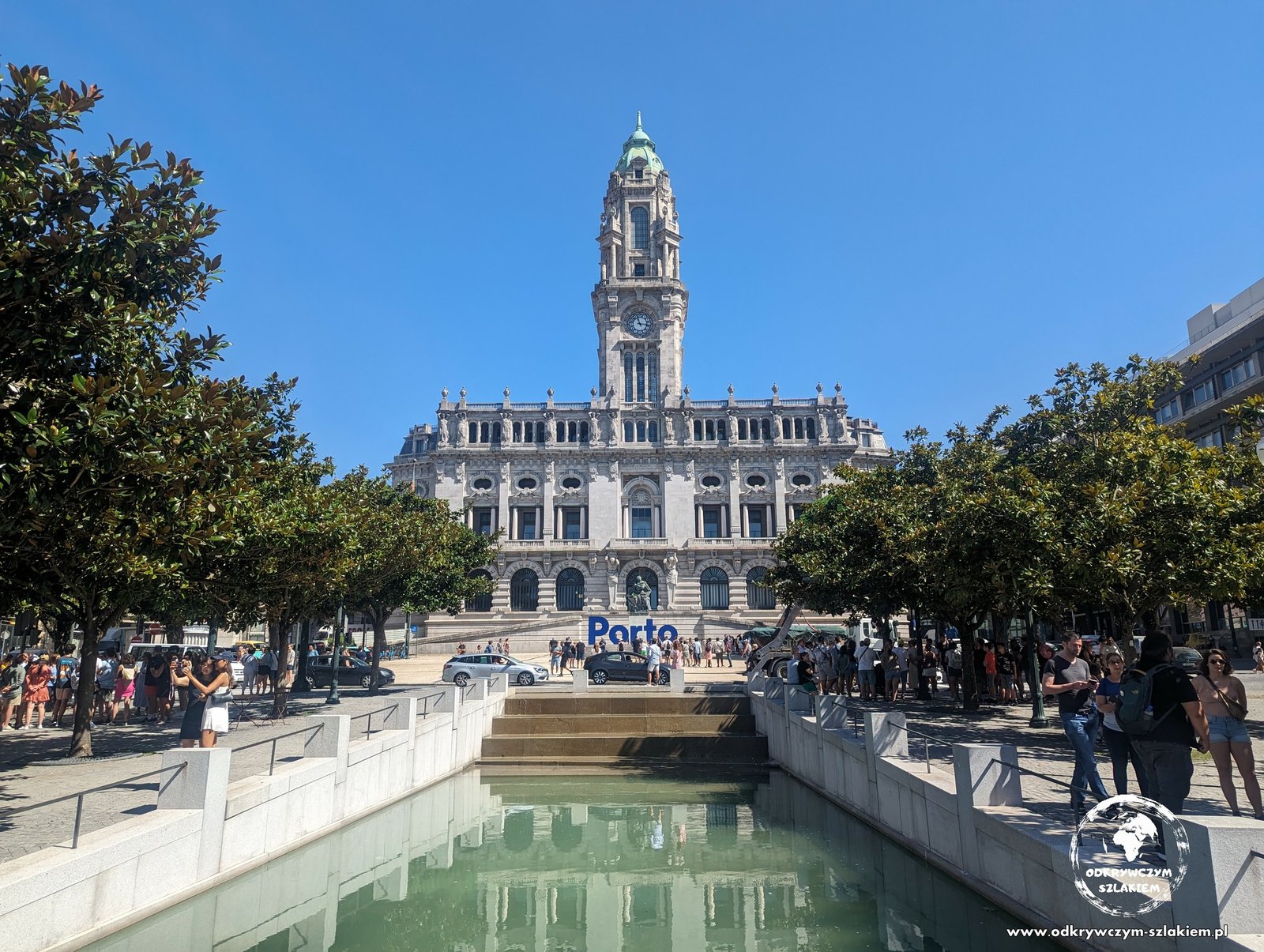
A curiosity is the McDonald’s Imperial – a restaurant in a former café, with stained glass and chandeliers, often called one of the most beautiful McDonald’s in the world. A little further on, at the end of Avenida dos Aliados, stands the city hall with its tall clock tower.
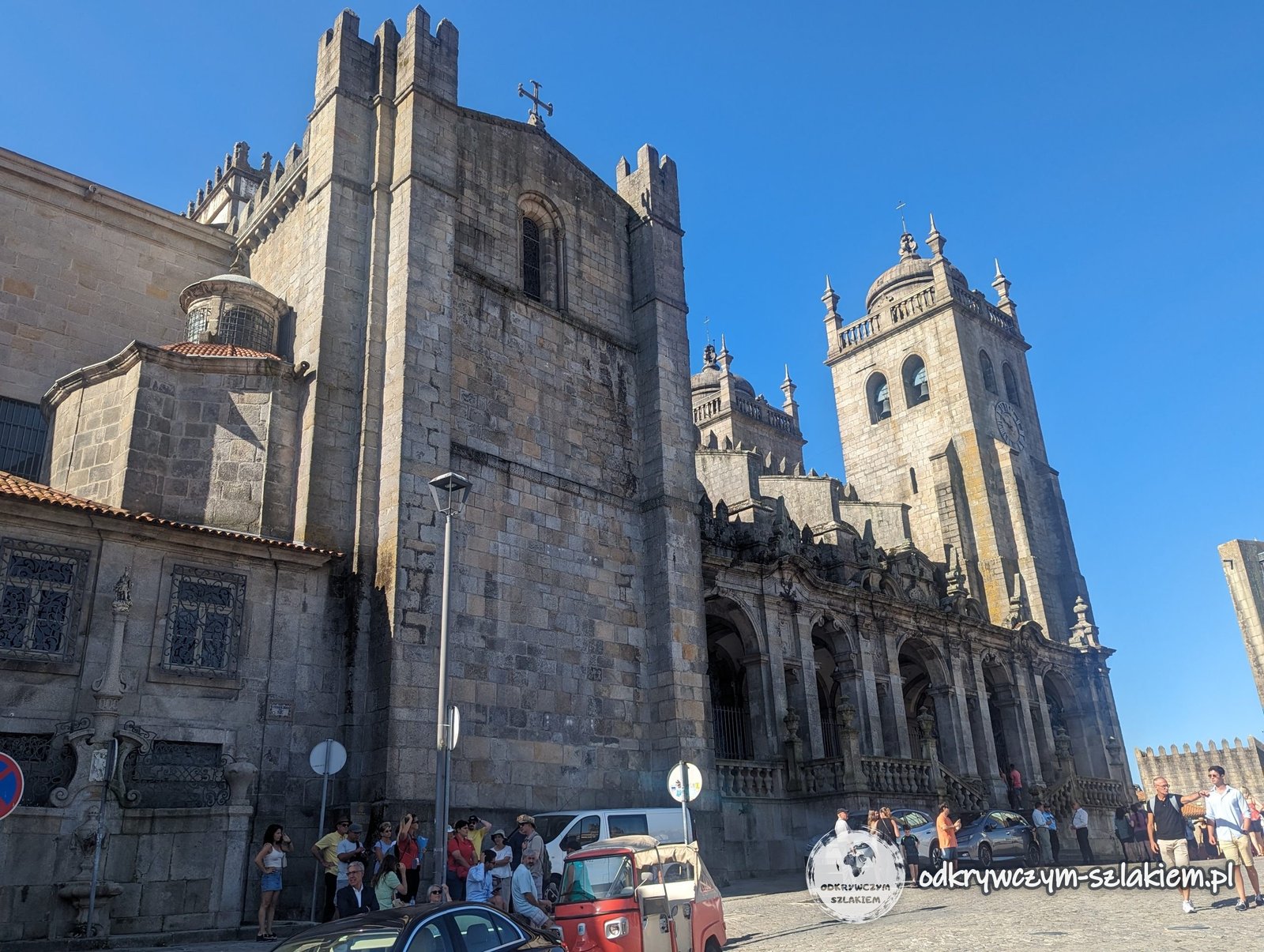
The oldest monument around is Porto Cathedral (Sé) – work on the present building began in the second half of the 12th century, and in 1387 King John I married Philippa of Lancaster here. The symbol of the city, on the other hand, is the Baroque Clérigos complex designed by Nicolau Nasoni: the church from 1732–1750 and, behind it, the Torre dos Clérigos from 1754–1763. The tower is 75.6 m high, and 240 steps lead to the top.

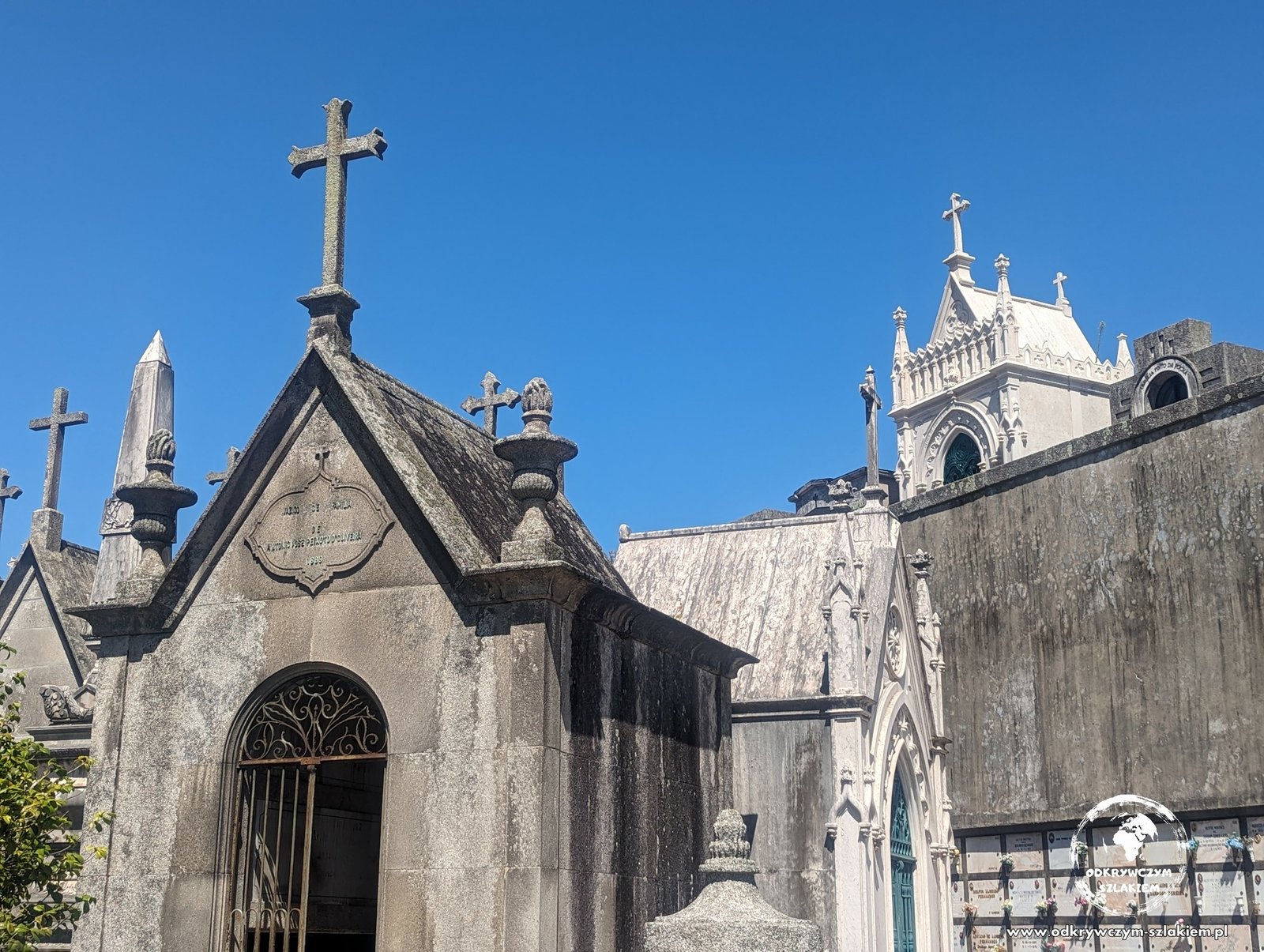
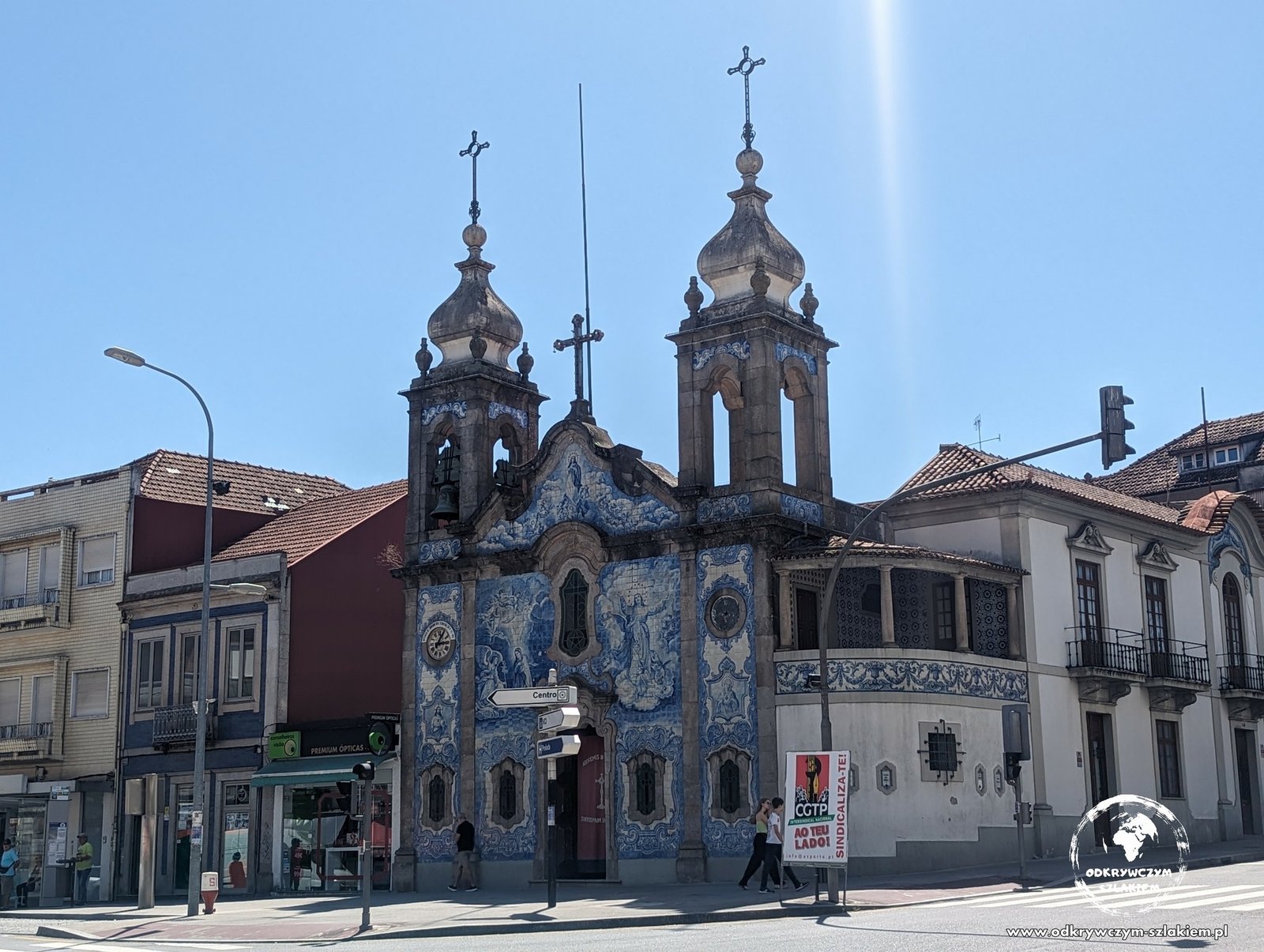
We also visited the old Cemitério da Lapa cemetery with its ornate burial chapels, and walking through the streets we kept coming across more churches with azulejo façades.
Hitchhiking through Galicia – Santiago de Compostela and wild camping near Lugo
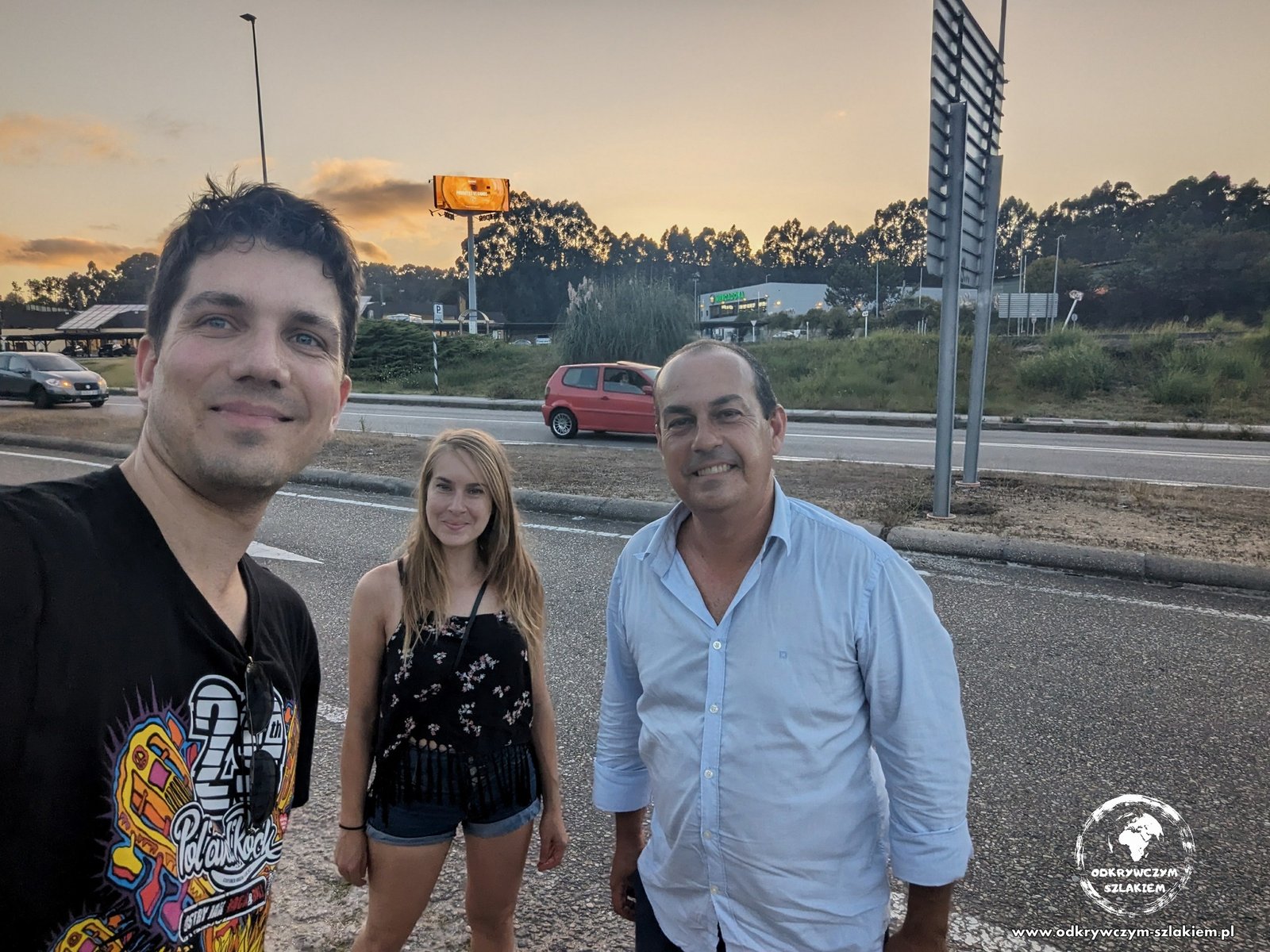
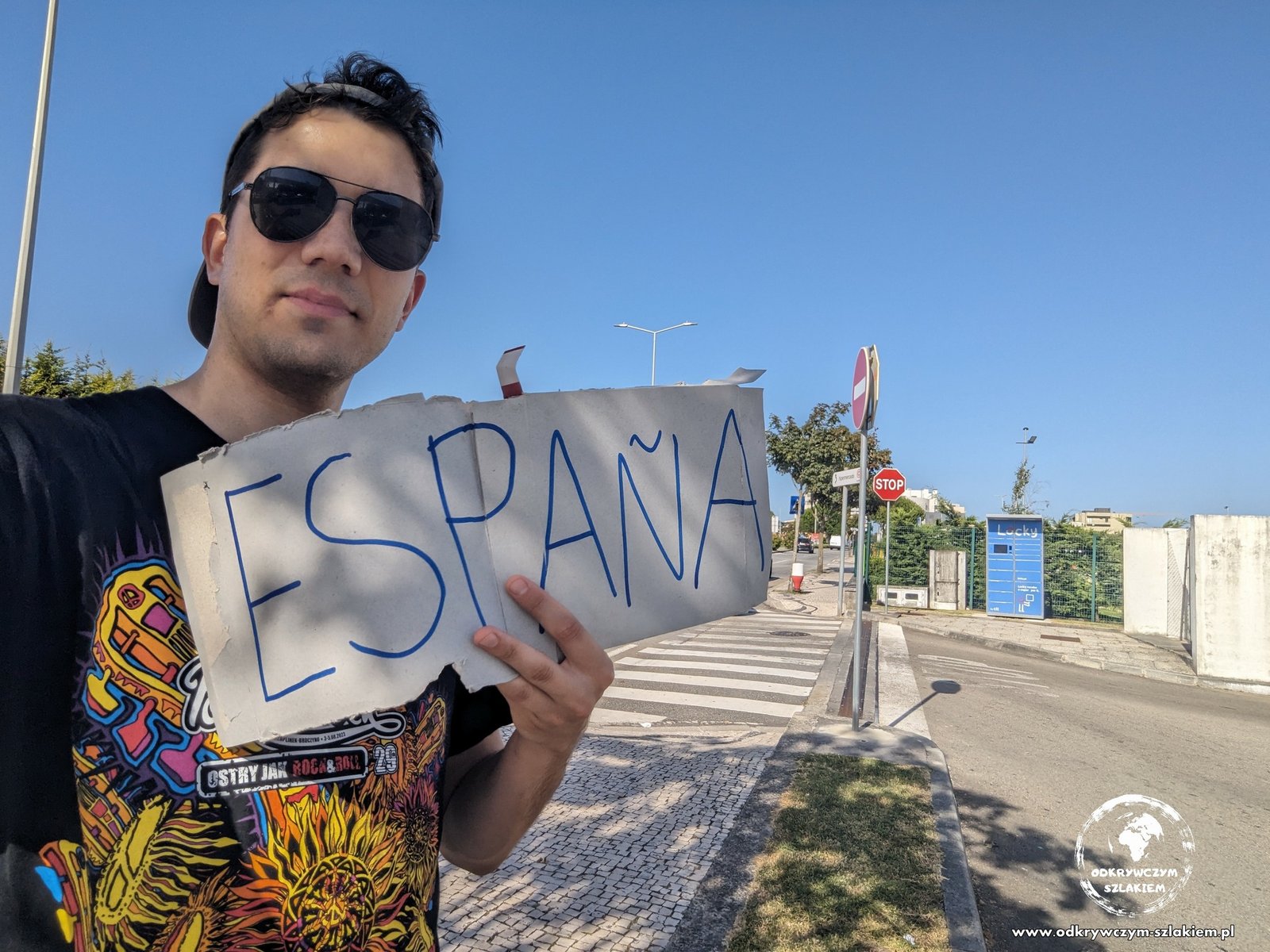
In the afternoon we left Porto and started thumbing a ride towards Spain from Póvoa de Varzim. At first it looked promising – on the first day we covered about 200 km, travelling along the Portuguese–Spanish border to Tui and further into Galicia. At the time we thought it was an average result – as it turned out, it was our best hitchhiking day in Spain. A Portuguese driver took us across the border, but overall hitchhiking here went much worse than it once had for me in Italy.
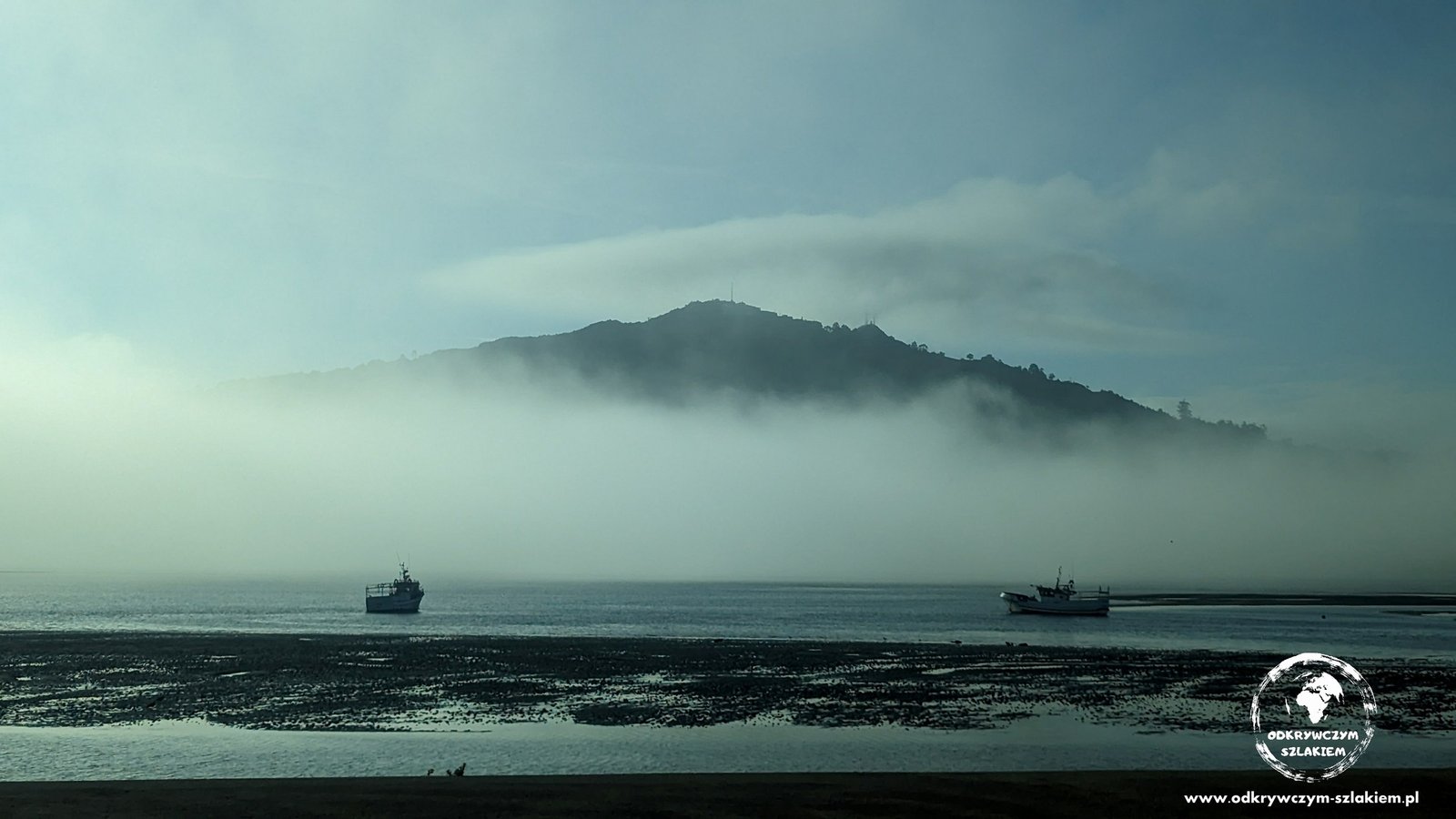
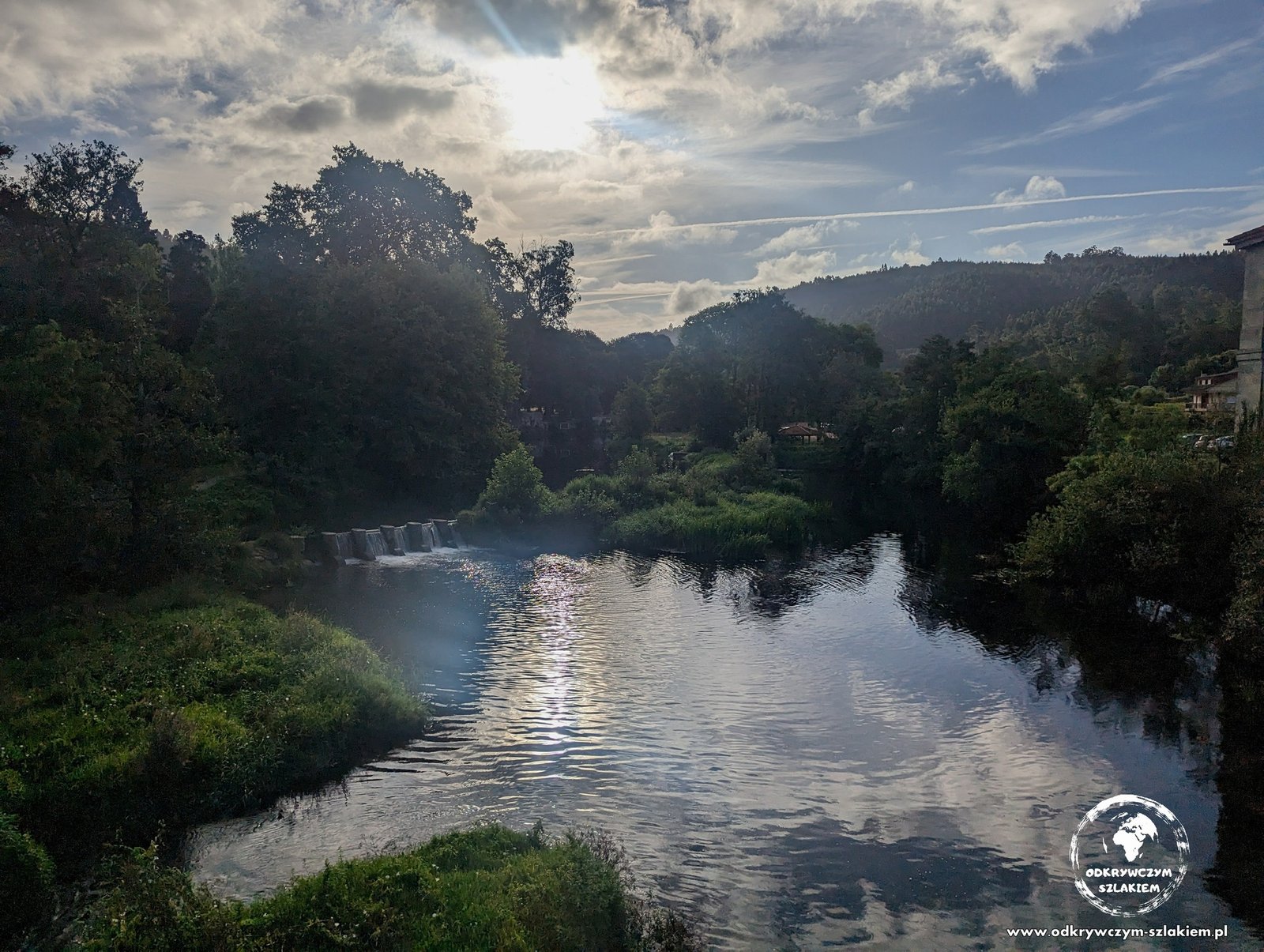
In Galicia we crossed the Camino de Santiago – the pilgrims’ route to Santiago de Compostela – several times. We even spent one night in a pilgrims’ hostel, and in the morning we set off again from Caldas de Reis.
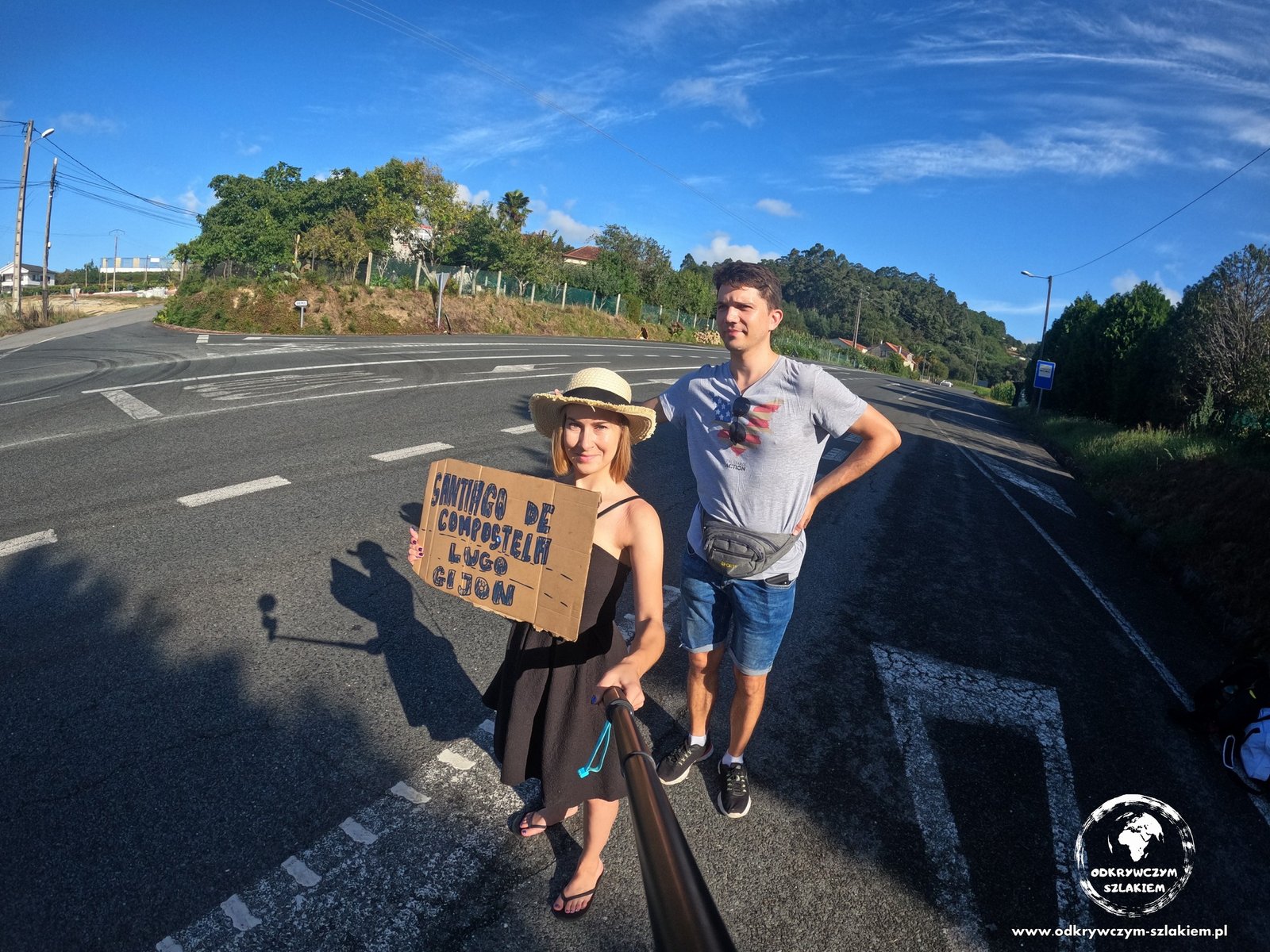
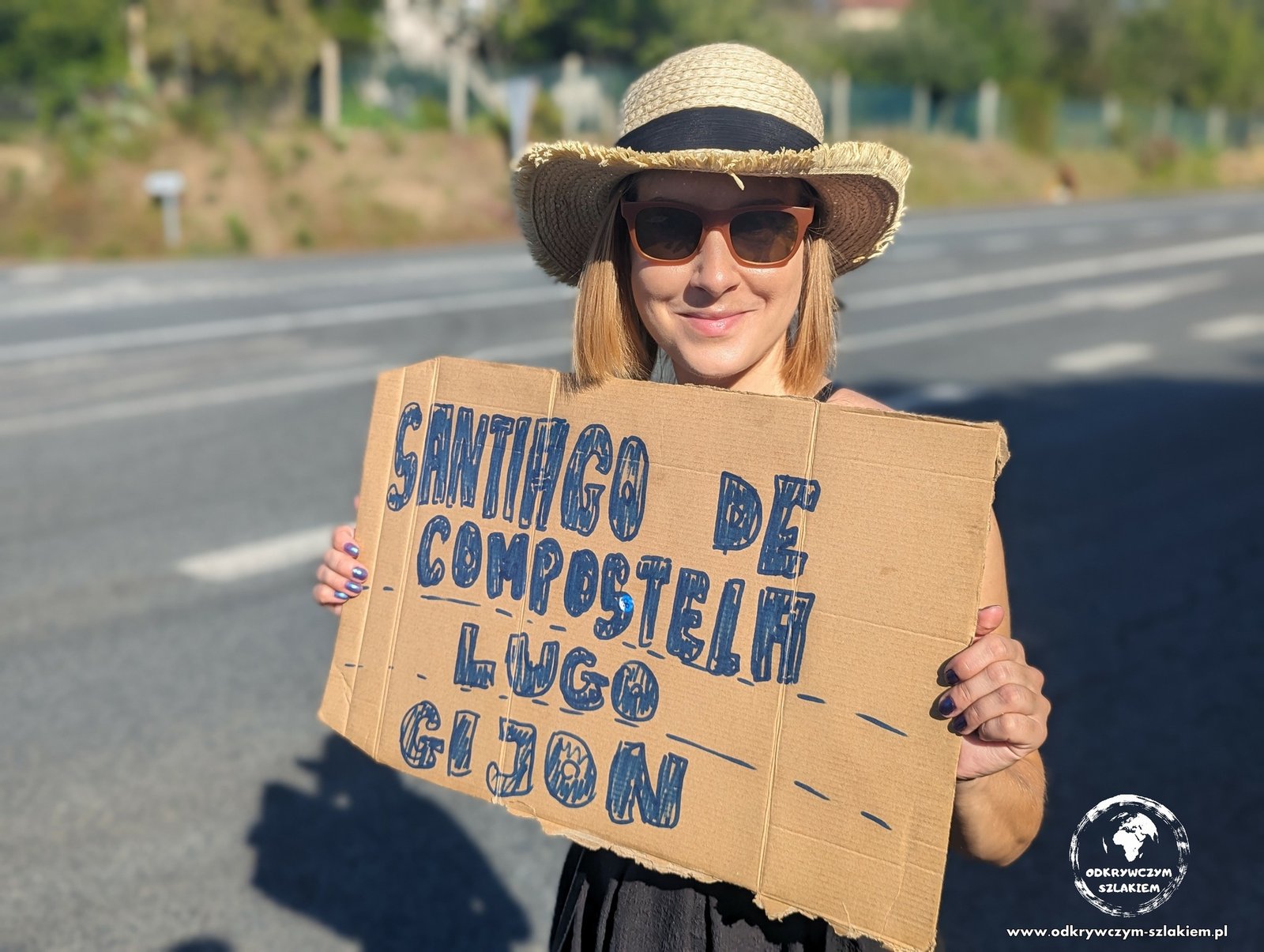
From then on it only got worse. A driver dropped us at the station in Padrón, from where we took a train to Santiago de Compostela. There we wasted loads of time trying to hitch a ride and in the end got on a bus to Lugo. From that point on, so as not to lose whole days, we travelled around Spain only by paid public transport.
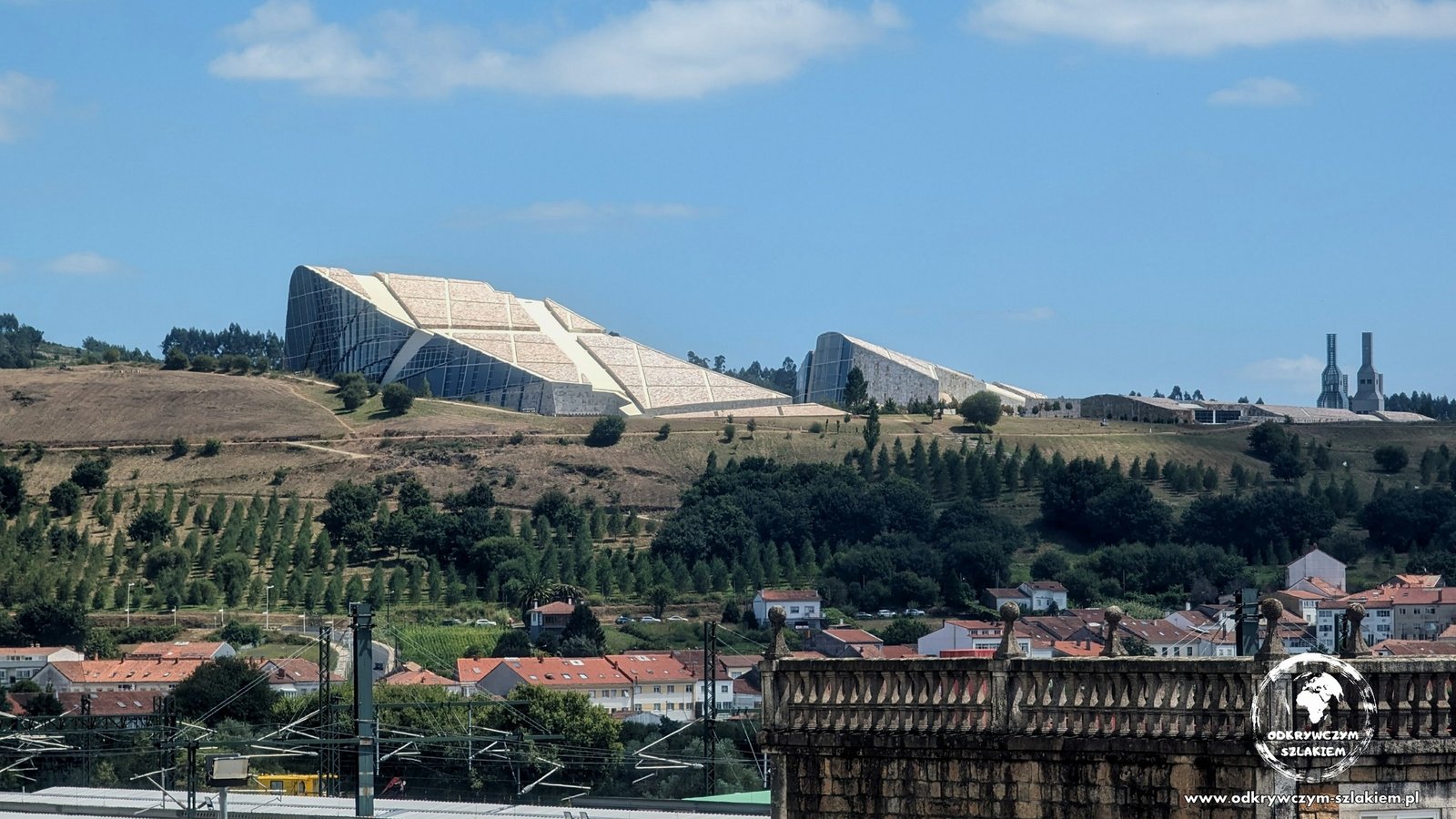
The modern complex on the hill is the City of Culture of Galicia on Mount Gaiás, designed by a team led by Peter Eisenman. Construction began in 2001, and the first buildings, with the Library and Archive of Galicia, opened in 2011. We tried to hitch a ride by the exit road with a cardboard sign reading “Arzúa, Lugo”.

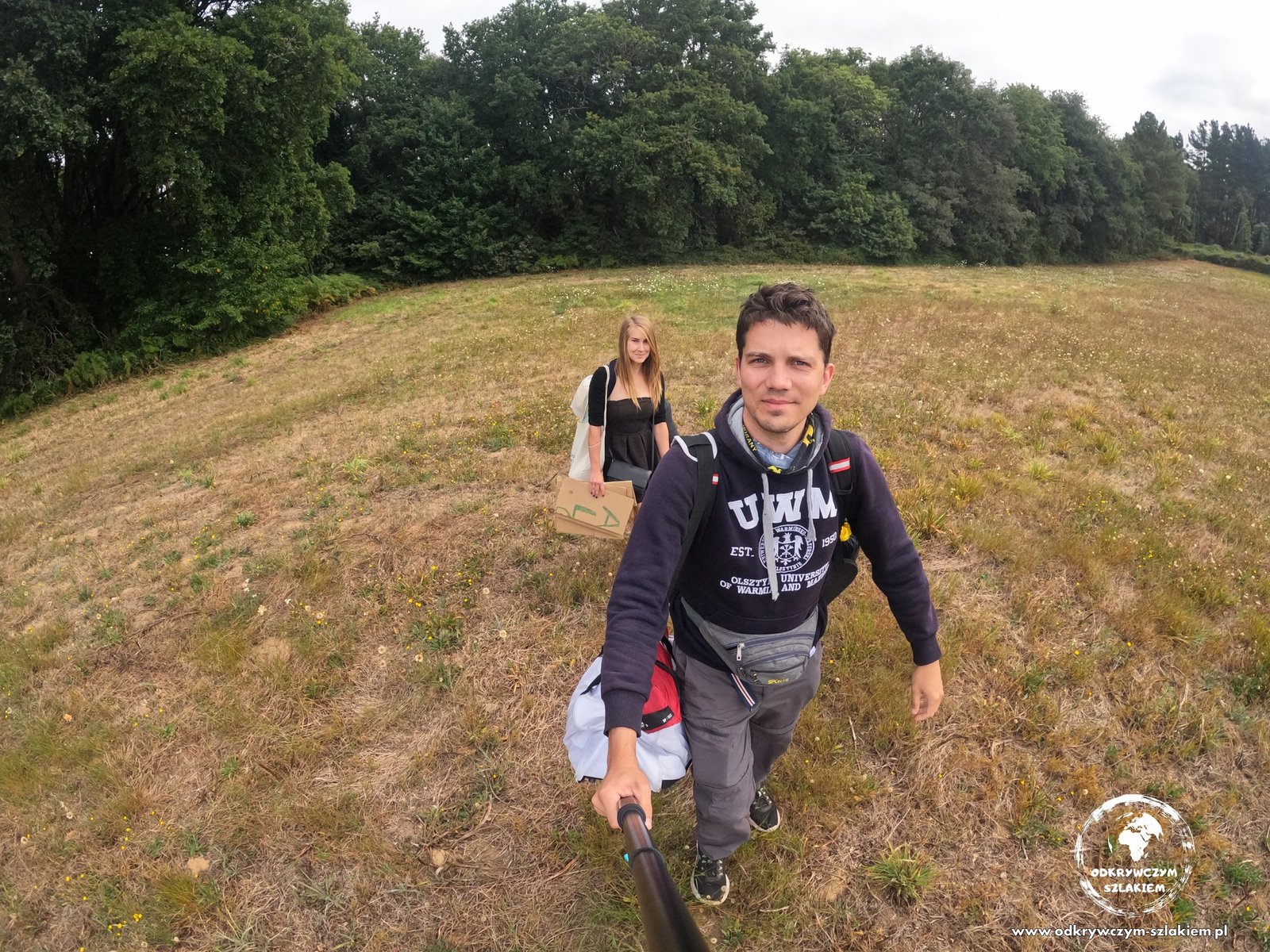
Near Lugo we wild-camped in our tent – we had to walk a bit away from the centre, but in return it was quiet. Getting to the Picos de Europa took us three days in total, one more than we had planned.
Picos de Europa National Park – the Covadonga Lakes
The goal of the first part of the trip was the Covadonga campsite in Asturias, on the edge of Picos de Europa National Park. Once there, it turned out that our friend had decided, for various reasons, to end his trip and go back to Poland, so we only saw each other for one evening. We stayed in the park for two more days. The campsite was decent: with a canteen, a small shop and plenty of showers.
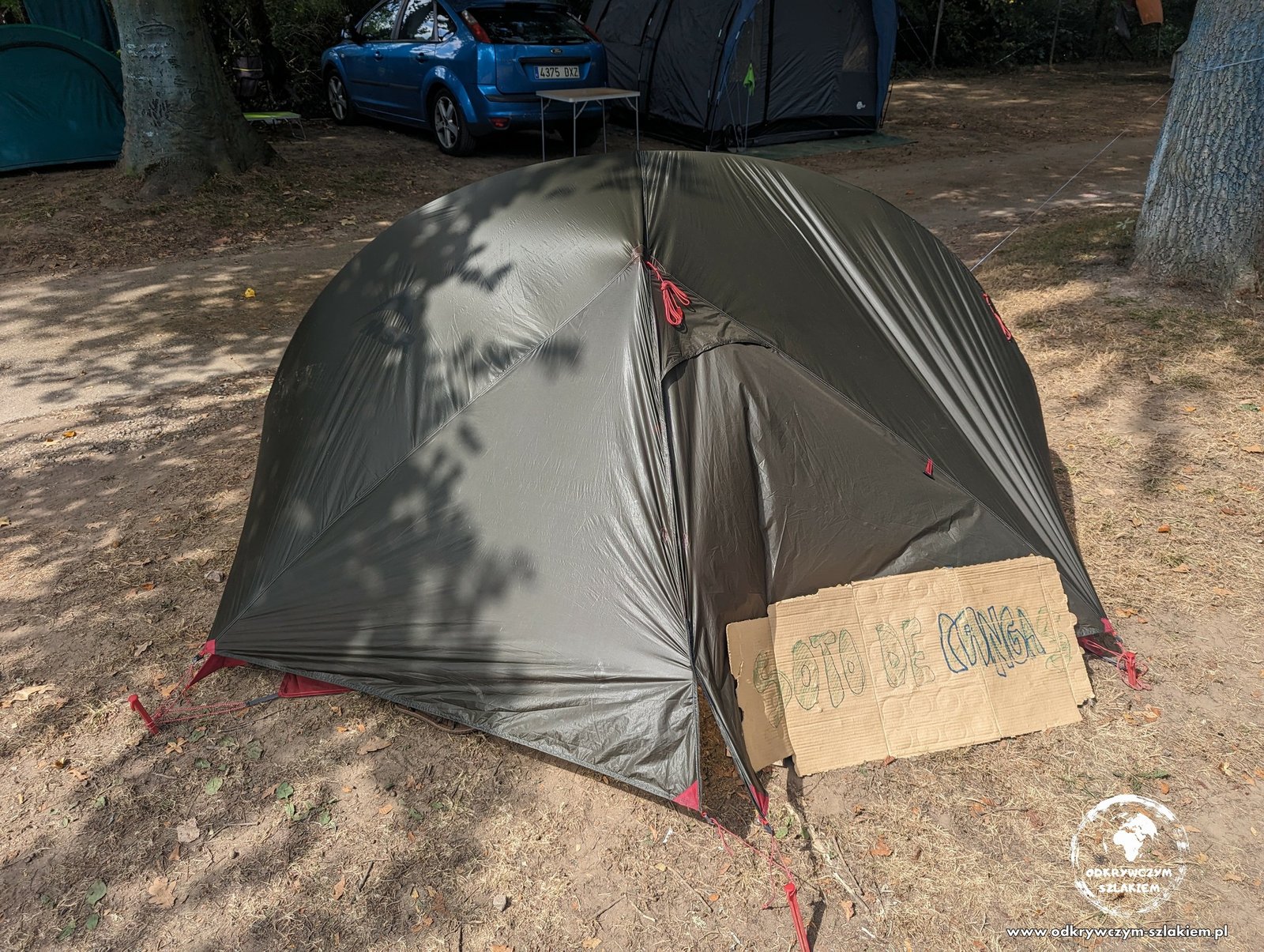
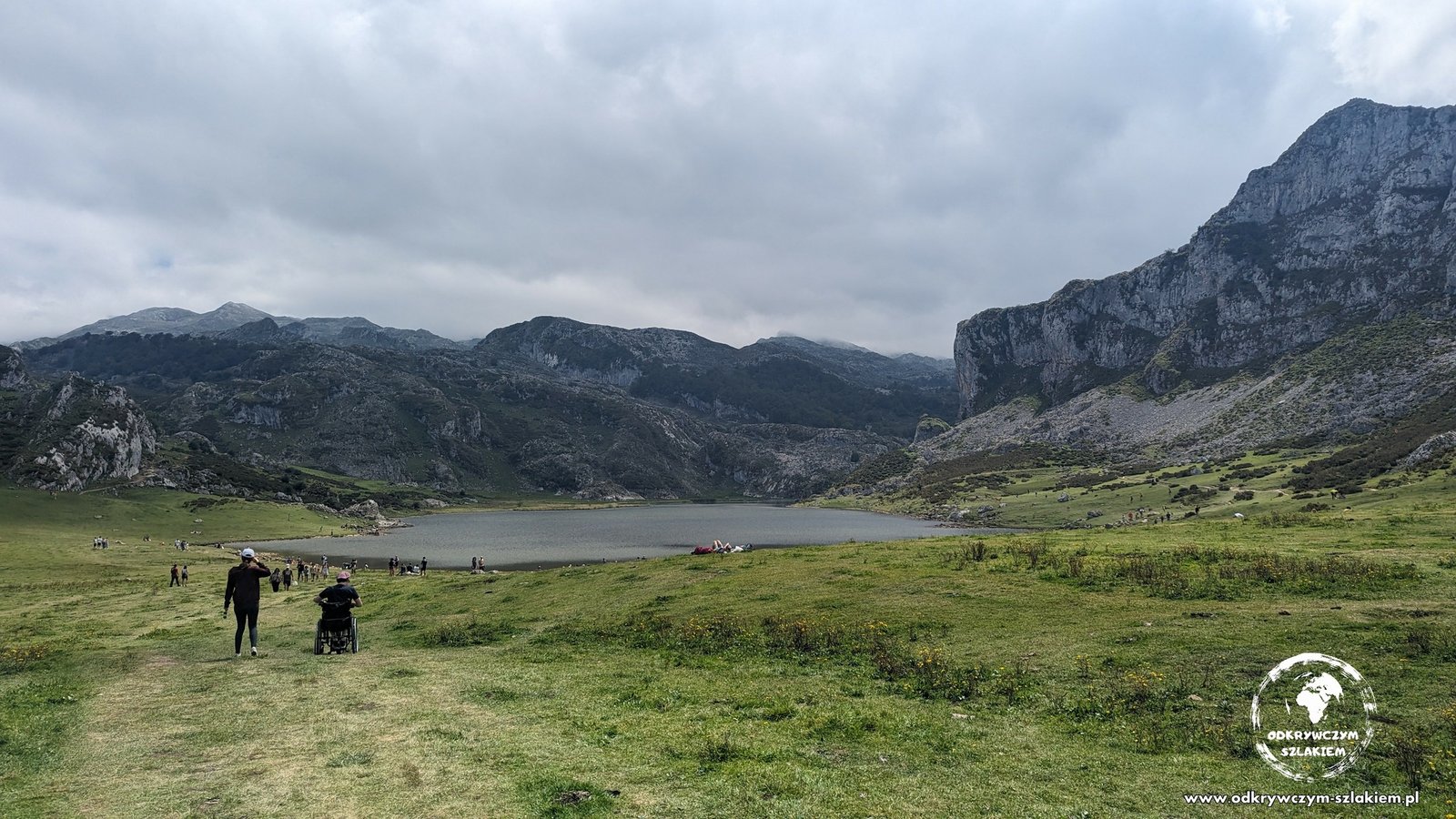
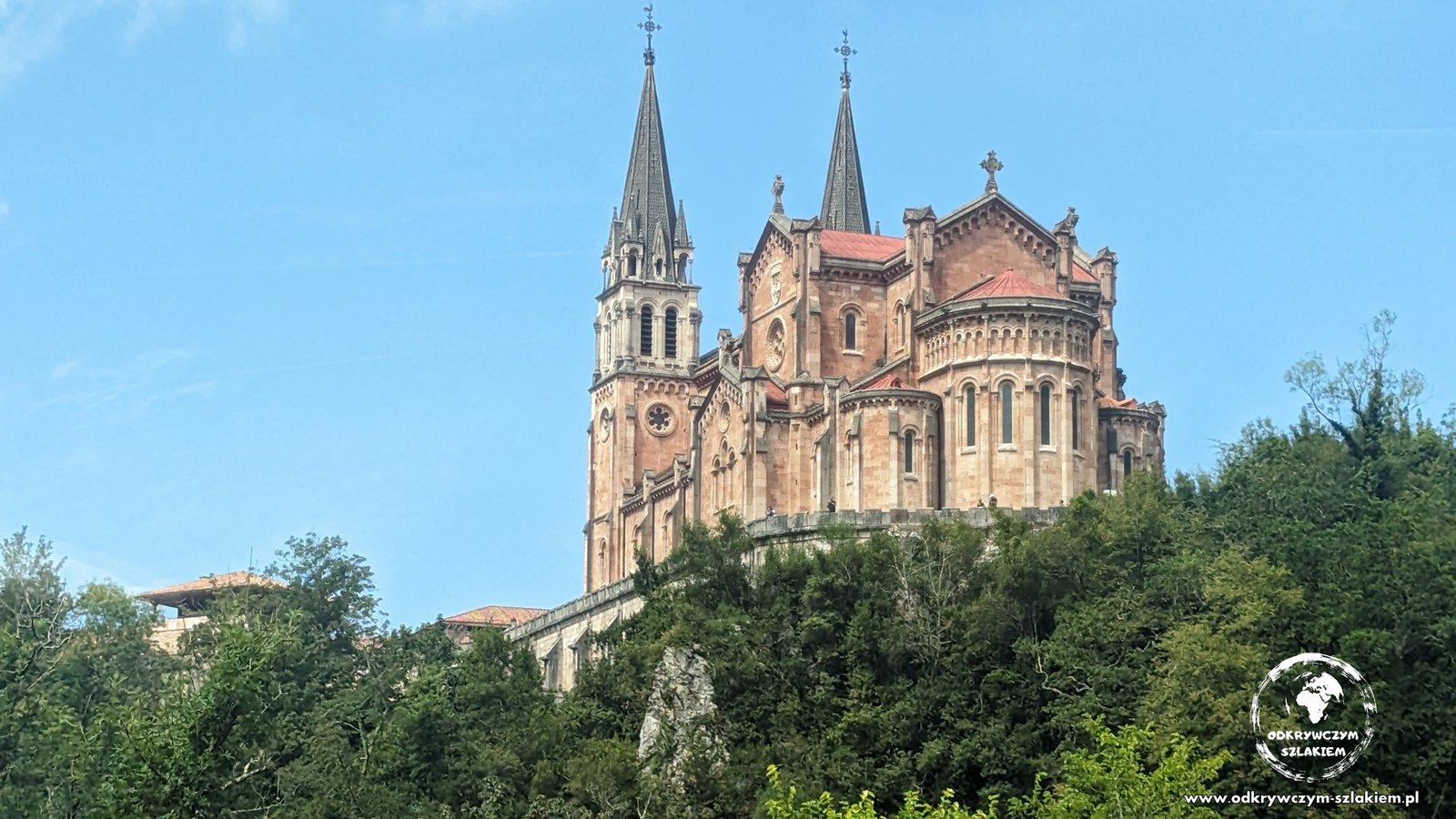
You get to the Lagos de Covadonga by bus – on the way we passed the stone houses of Soto de Cangas and the pink Basilica of Santa María la Real de Covadonga. The bus climbs about 1100 m, and conditions at the top are completely different: lower temperatures and regular fog.

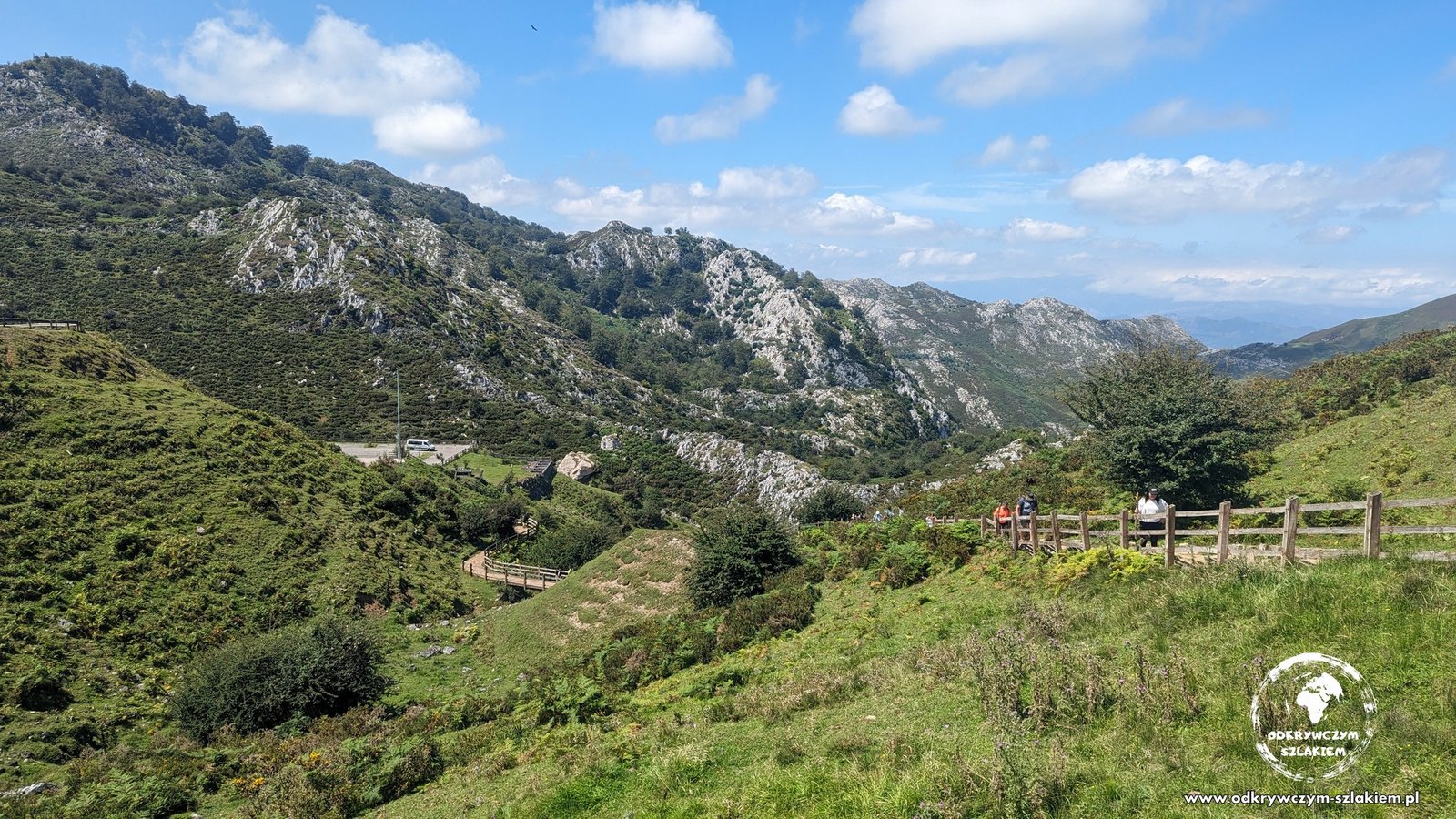
Picos de Europa is Spain’s oldest national park – it was created on 22 July 1918 as the Montaña de Covadonga National Park, centred on the lakes, and has since been enlarged twice. Its highest peak, Torre de Cerredo, is 2648 m high. The two main lakes, Enol and Ercina, are of glacial origin and lie at about 1100 m; the third, Bricial, only fills with water when the snow melts.
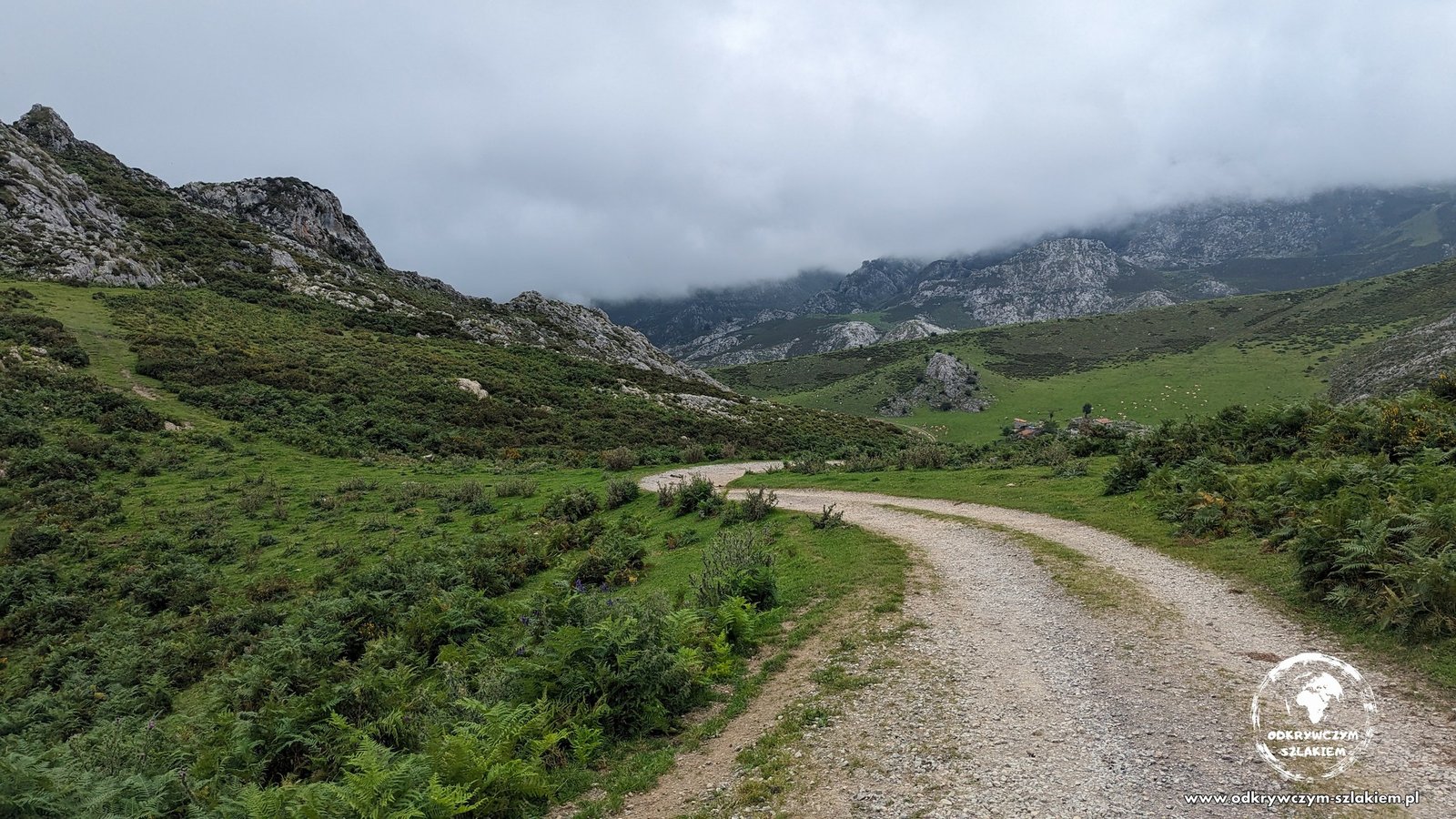
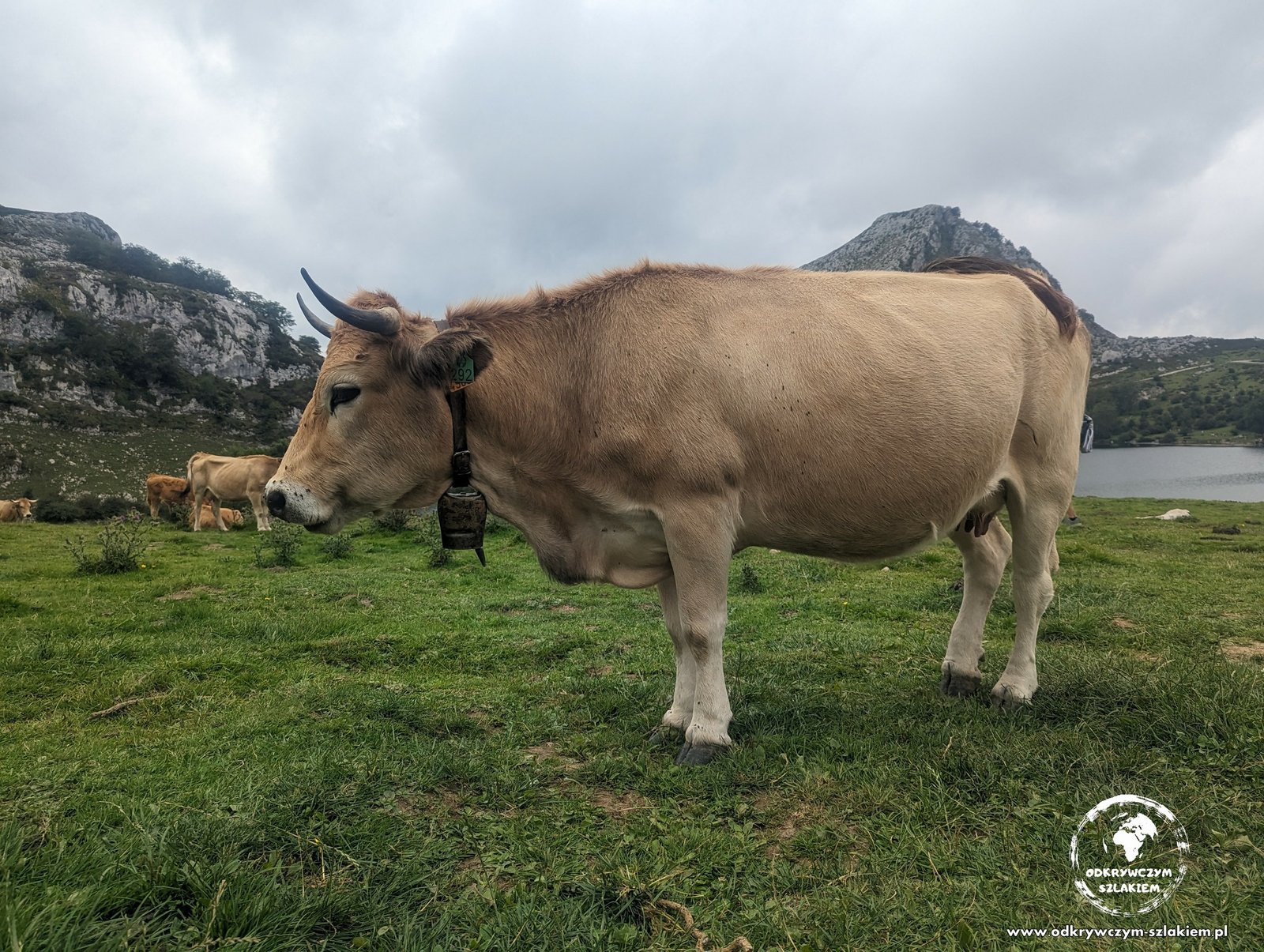
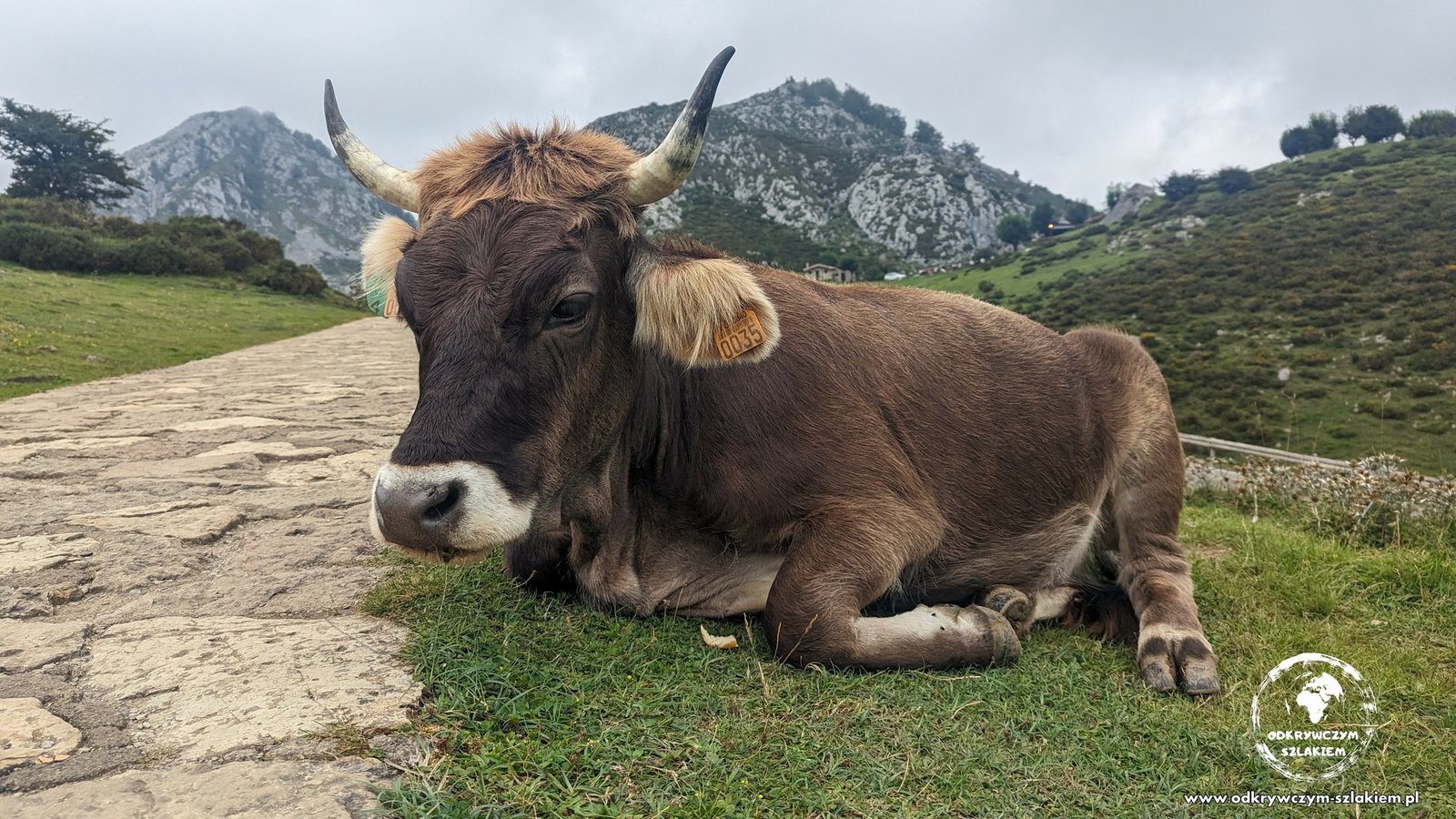
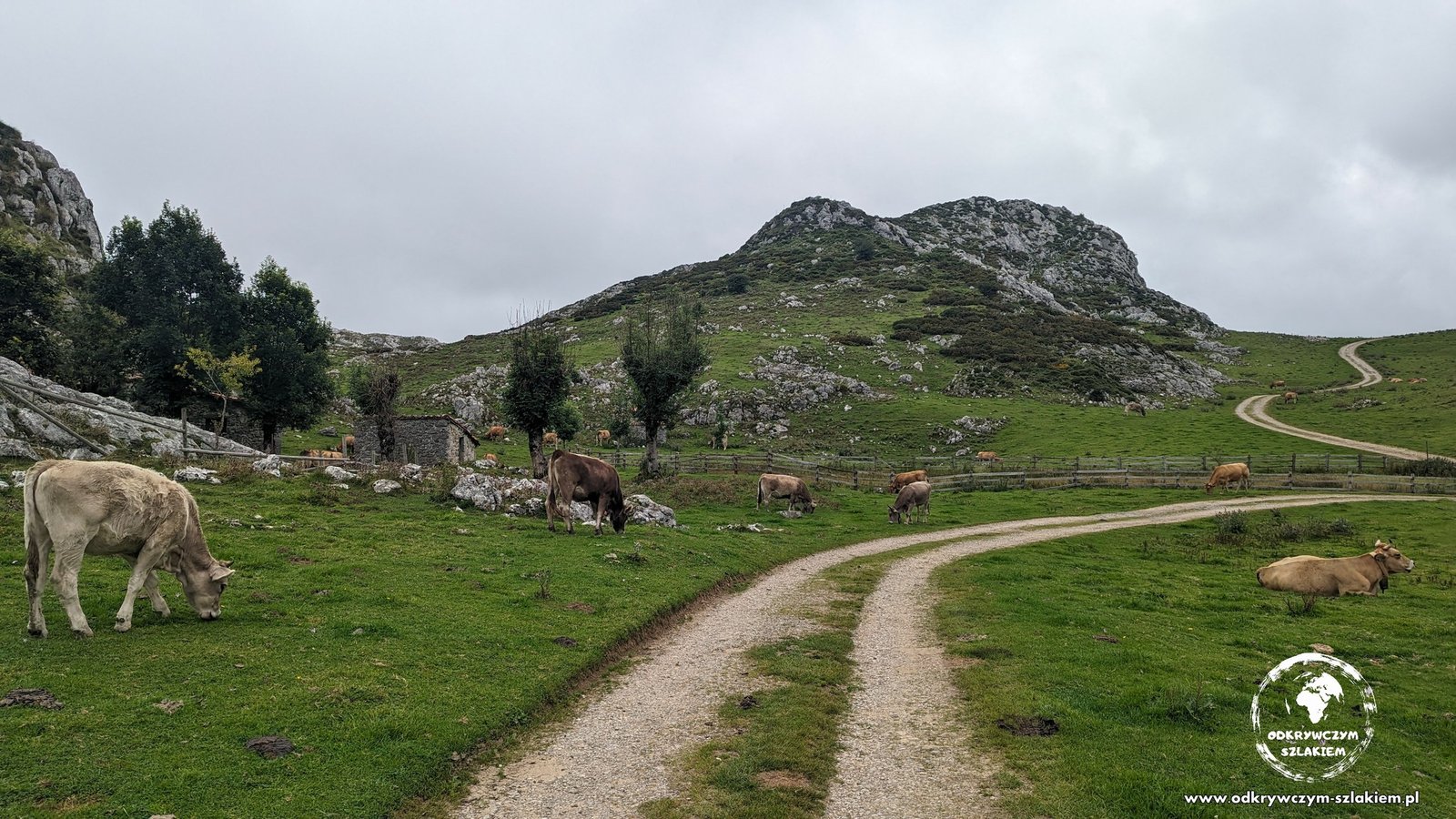
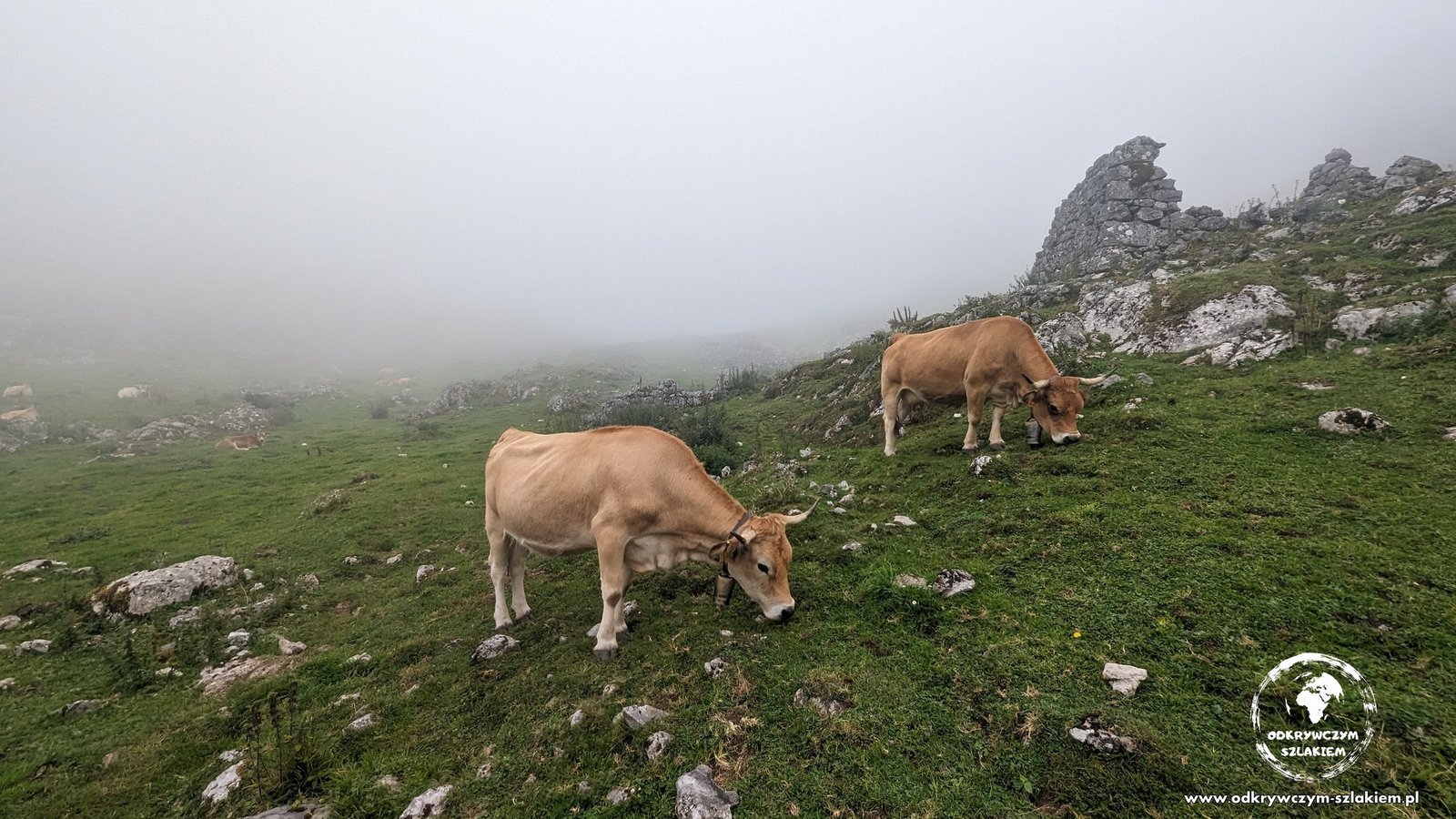
Around the lakes stretch green valleys, limestone rocks and pastures where cows roam freely – often right next to the path.

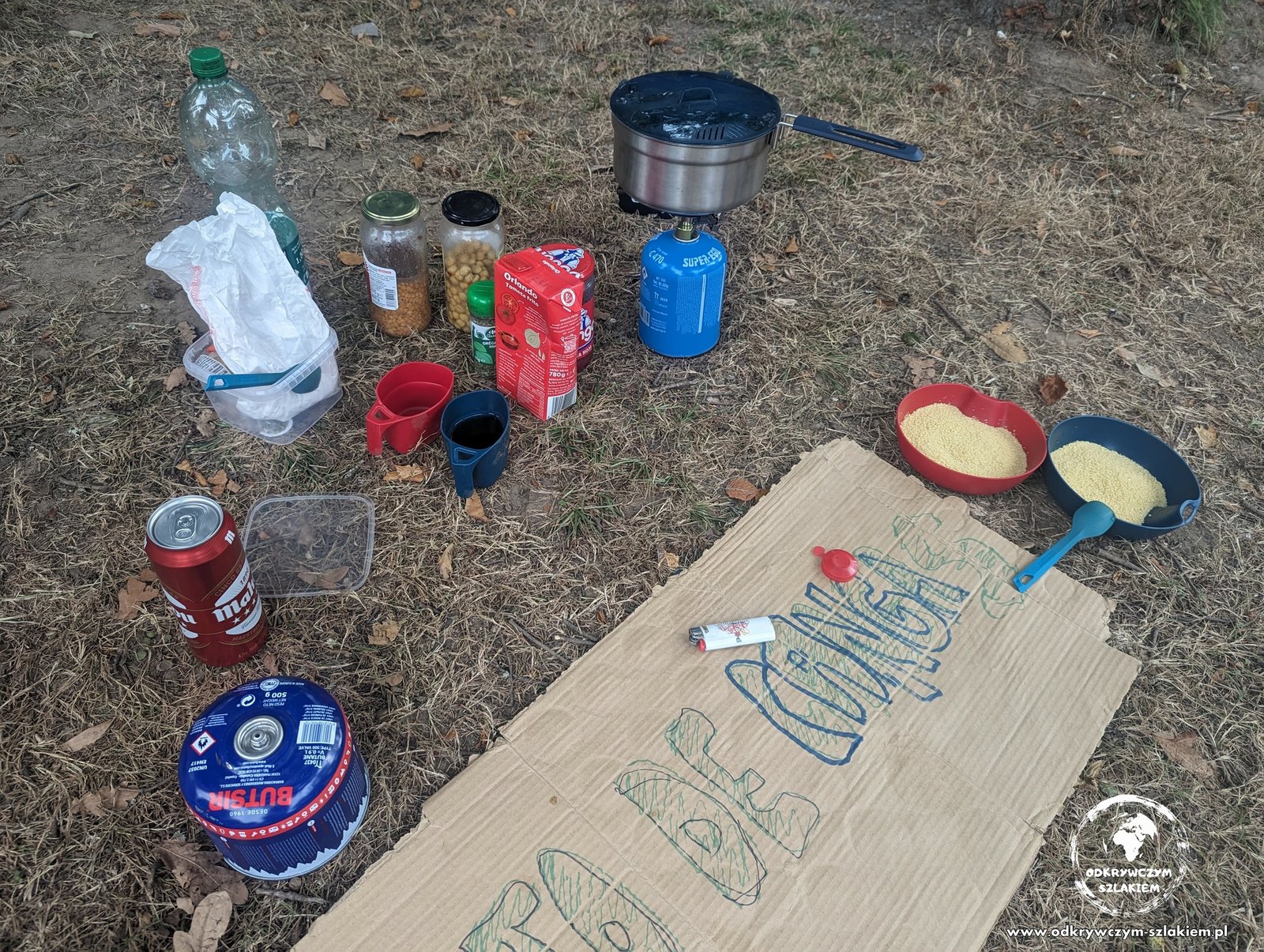
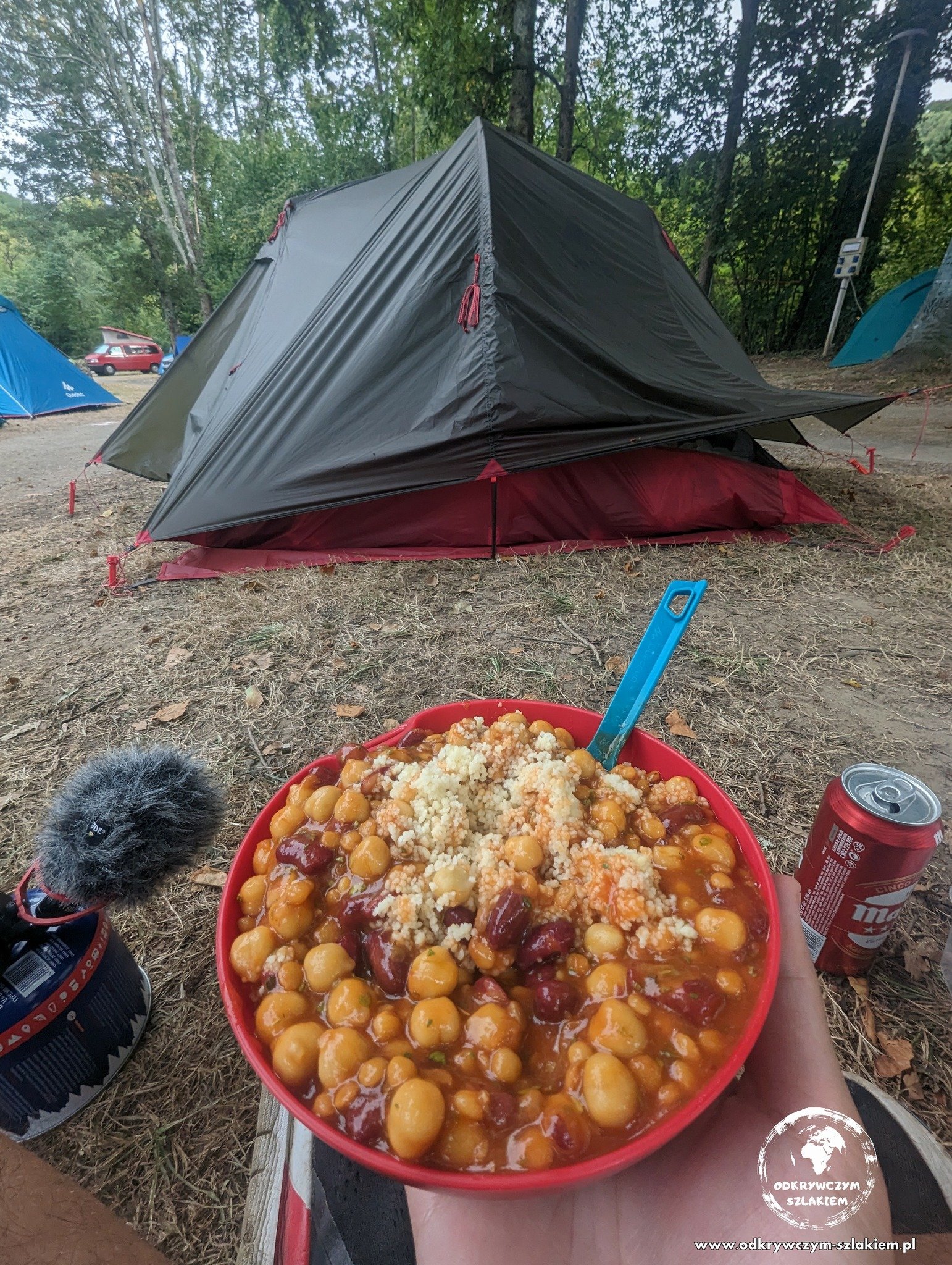
In the evenings we cooked at the campsite on a camping stove – this was what our typical dinner looked like on this trip.
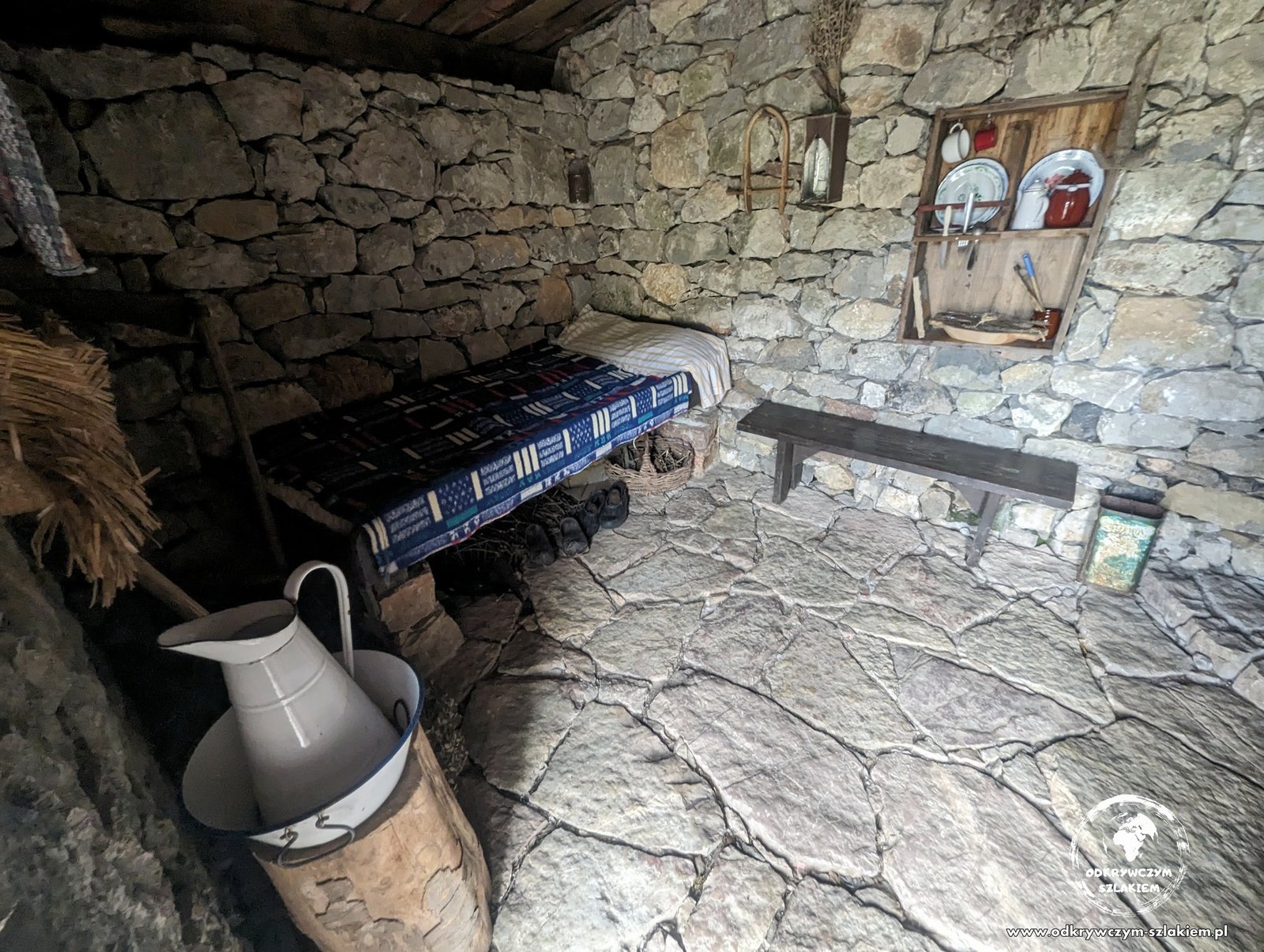
The next day we went back up into the mountains for a hike near the lakes. On the way we looked into a stone shepherd’s hut and passed the remains of an old mine with its little wagons.
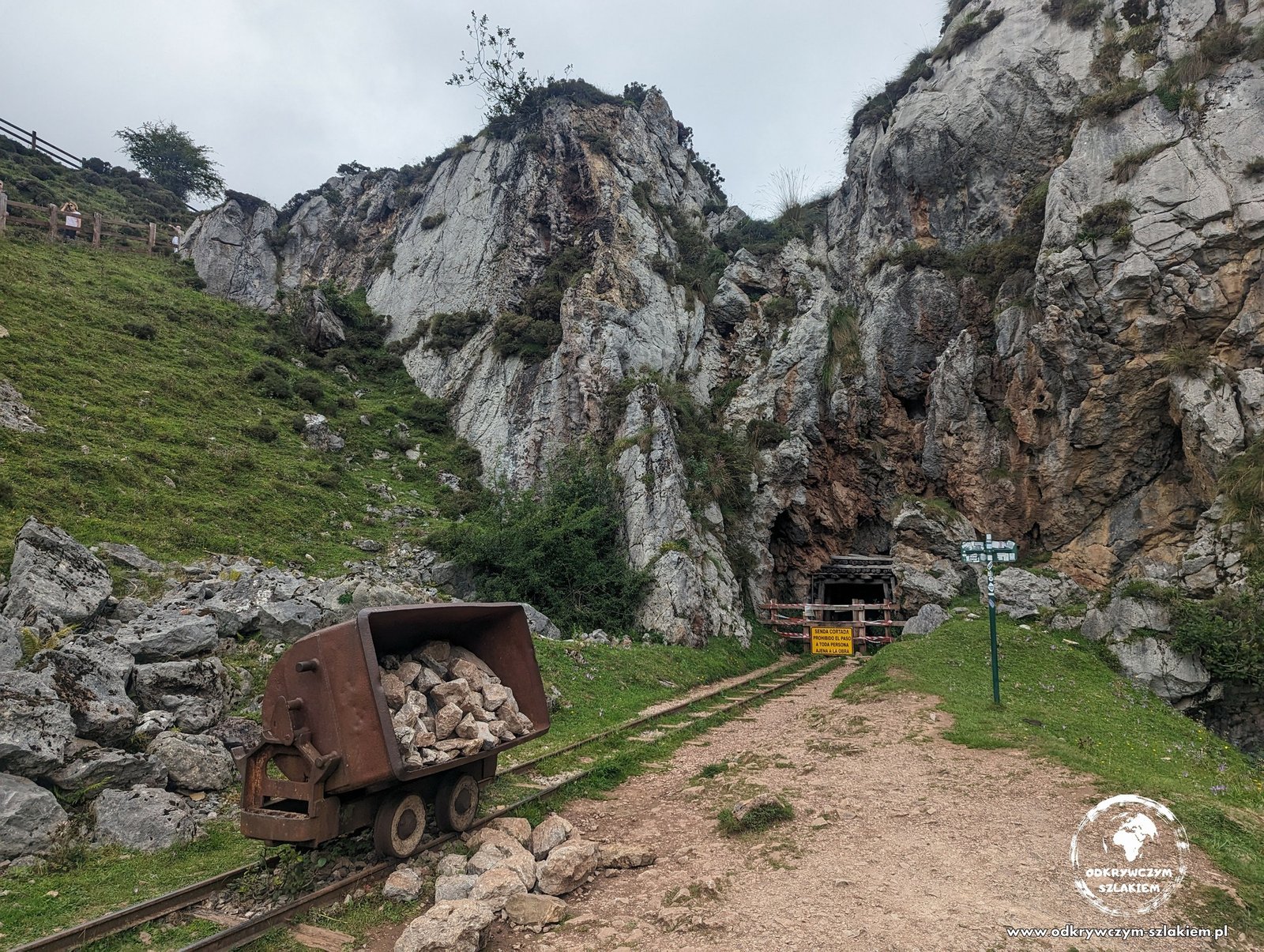
The wagons by the trail are a relic of the Buferrera mine – iron, manganese and mercury ores were mined here until 1979. Right next to it is the Mirador del Príncipe viewpoint, overlooking the vast plain of the Vega de Comeya. There used to be a lake here, which is why it is sometimes called the “missing lake” of Covadonga.

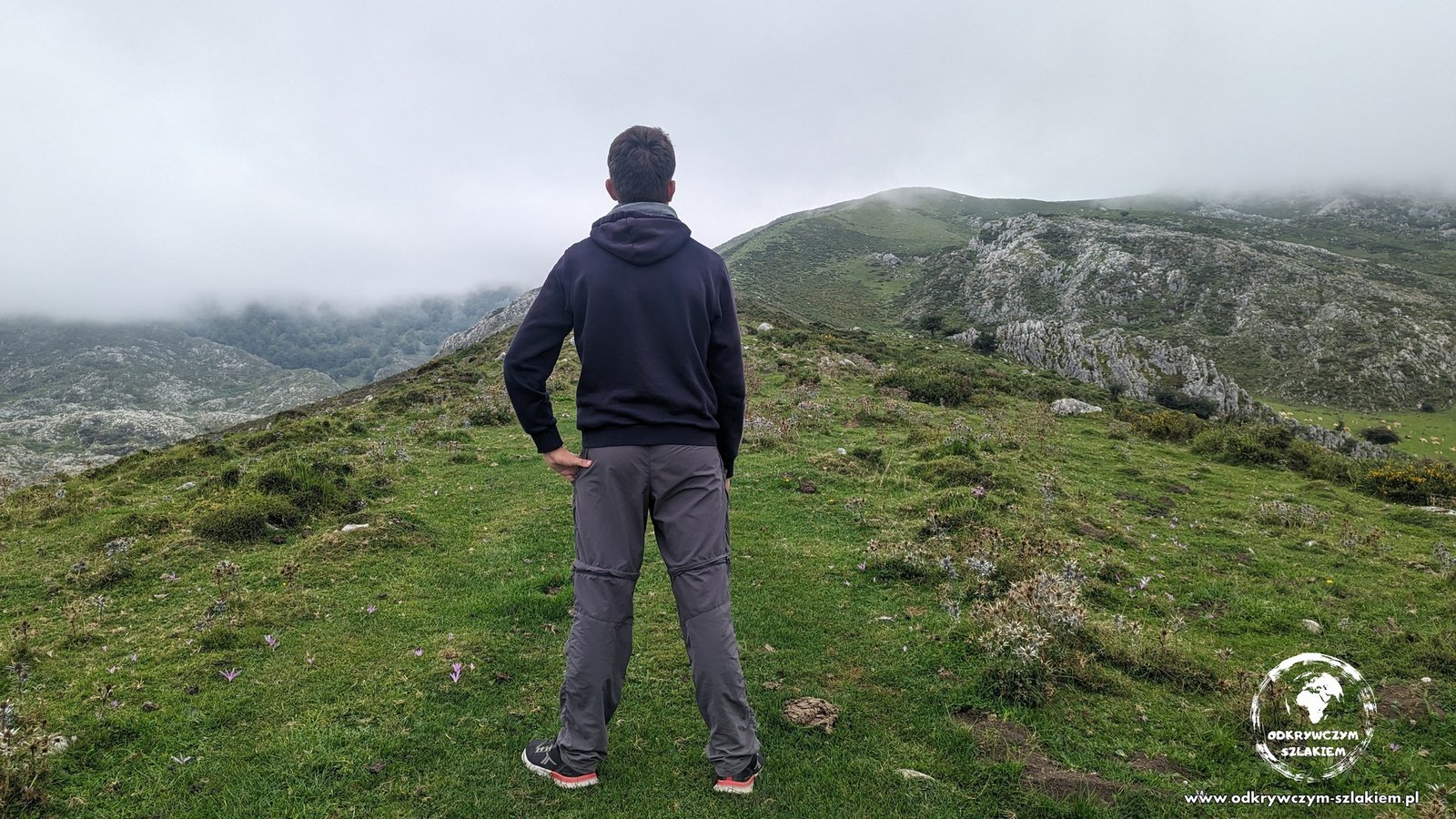
The highest peaks of the range are about 2650 m high; we walked in the lower parts, at 1200–1300 m – higher up we would not have seen anything anyway, because the fog limited visibility. The national park is still definitely worth a visit, ideally in July, when it is warmest.
Before leaving for Bilbao we also stopped in Cangas de Onís at the Roman bridge over the Sella River.
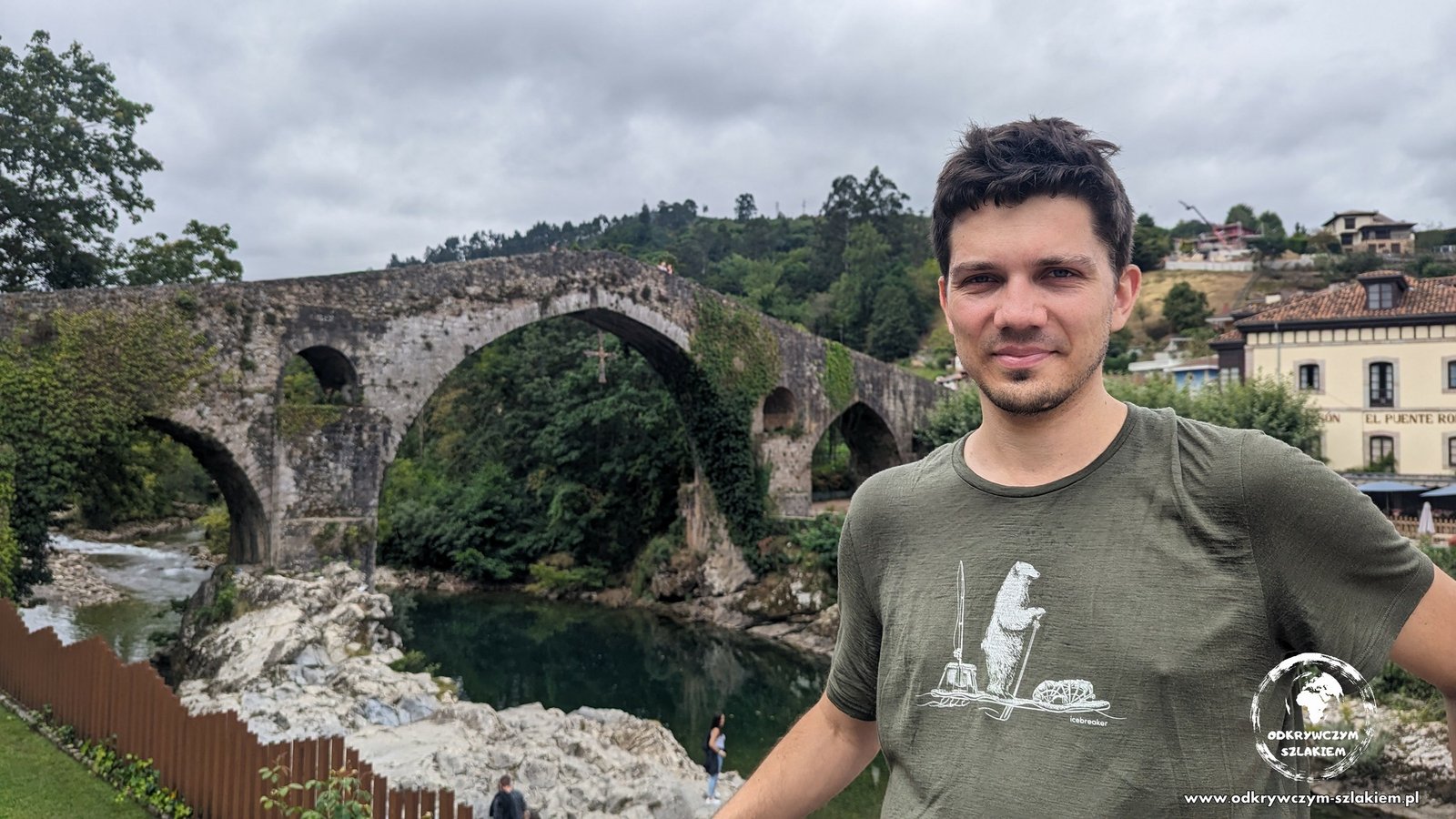
Cangas de Onís is regarded as the first capital of the Kingdom of Asturias. The hump-backed stone bridge over the Sella is called Roman, but it was actually built in the Middle Ages.
Bilbao – the Guggenheim and the old town
Our next stop was Bilbao, where we stayed with Guillem, whom we had met on Work & Travel in the USA. We stayed two days: on the first we saw the main sights (one day is enough for them), and on the second we went to a beach outside the city – it was 36 degrees at the time. We started with the San Mamés stadium, where Athletic Bilbao play.
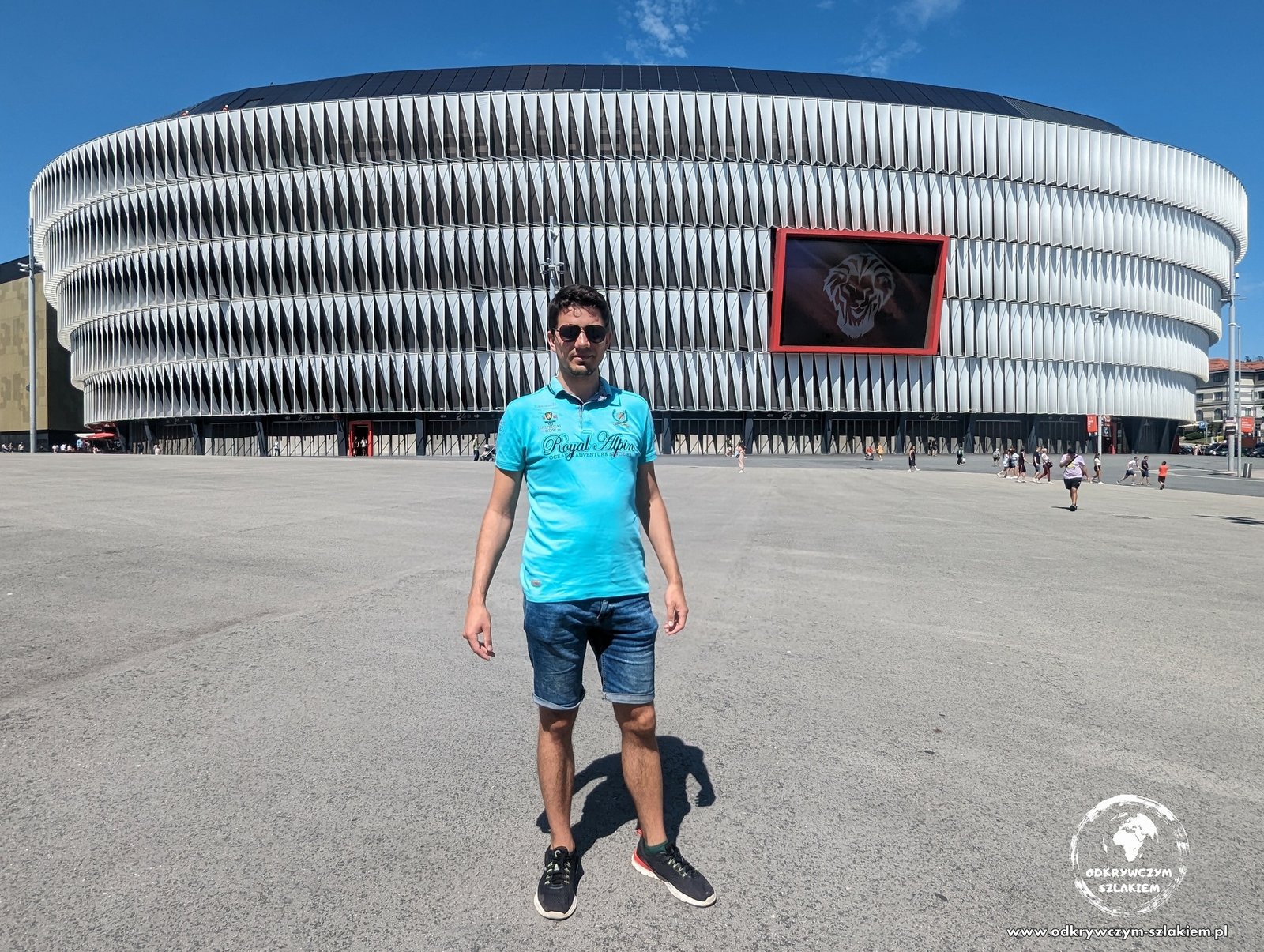
The symbol of the city is the Guggenheim Museum – in front of the entrance stands the flower sculpture of a dog, Puppy, and on the river side the giant spider Maman.
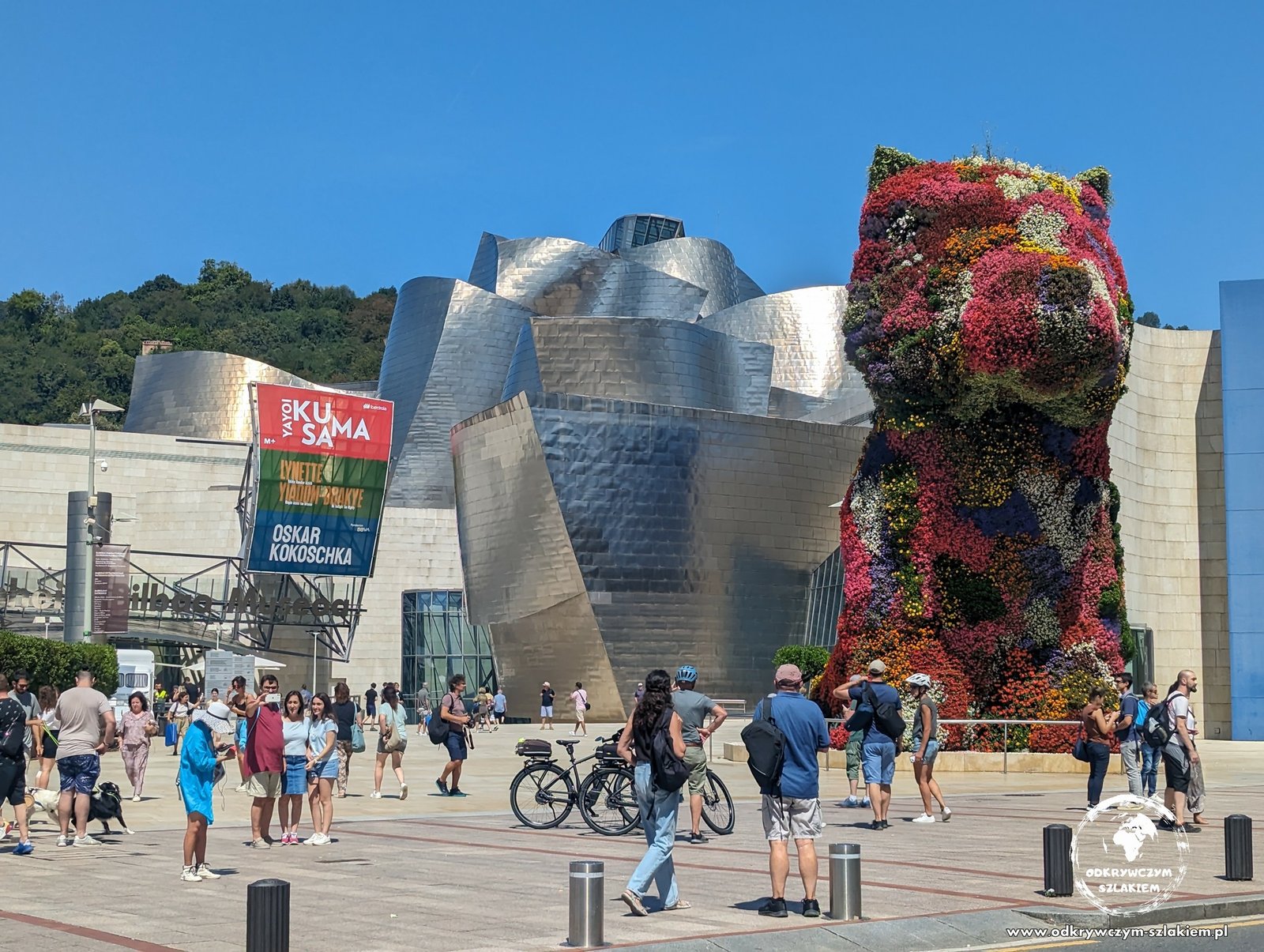
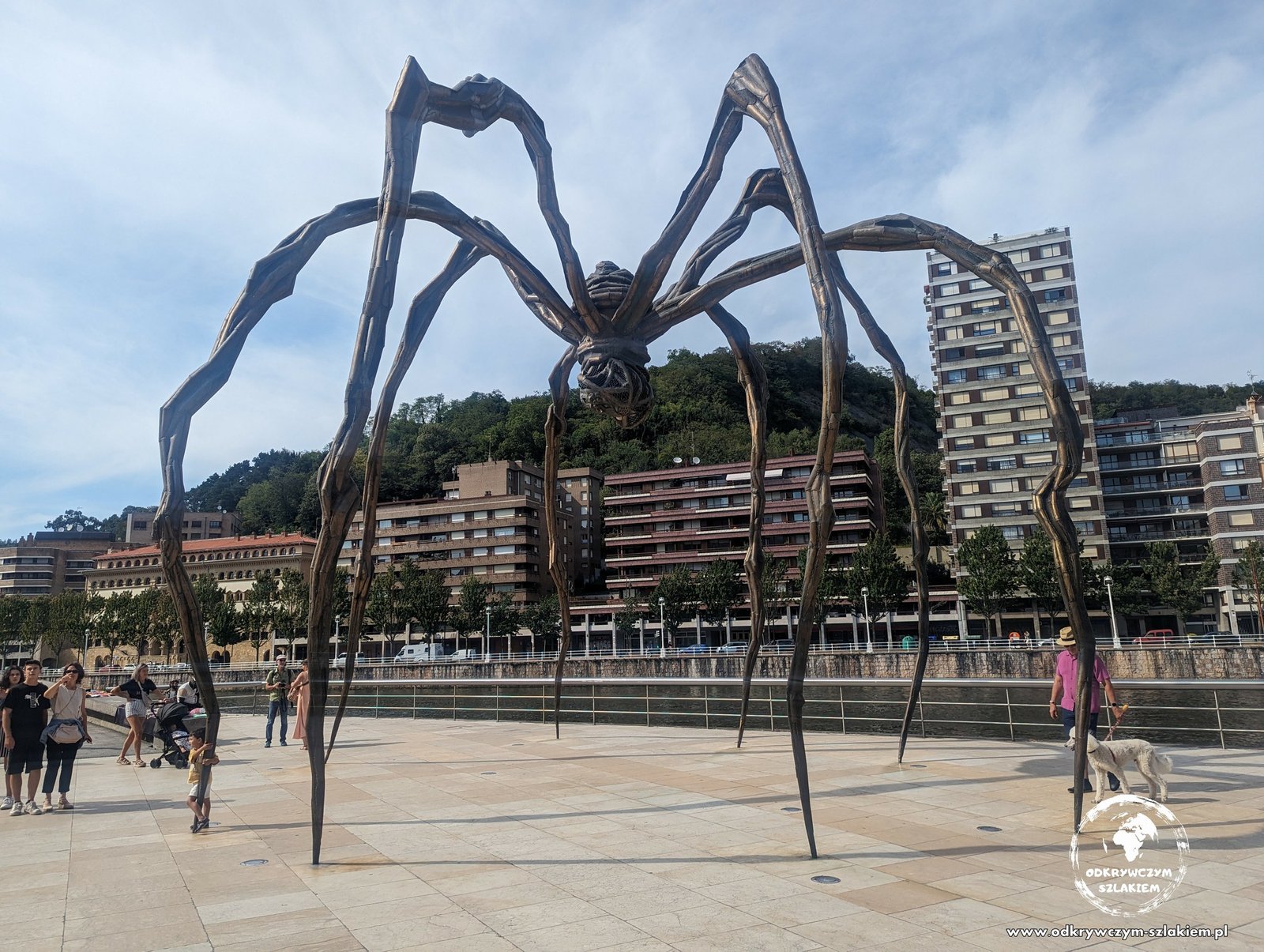
The museum building was designed by Frank Gehry and opened on 18 October 1997. Its curved walls are clad in about 33,000 titanium plates, each roughly 0.4 mm thick, and the base in limestone from near Granada. People even talk about the “Bilbao effect” – that is how much the museum changed this part of the city. Closer to the old town, right by the river, stands the eclectic town hall from 1892, with Jorge Oteiza’s steel sculpture “Variante ovoide de la desocupación de la esfera” in front of it.


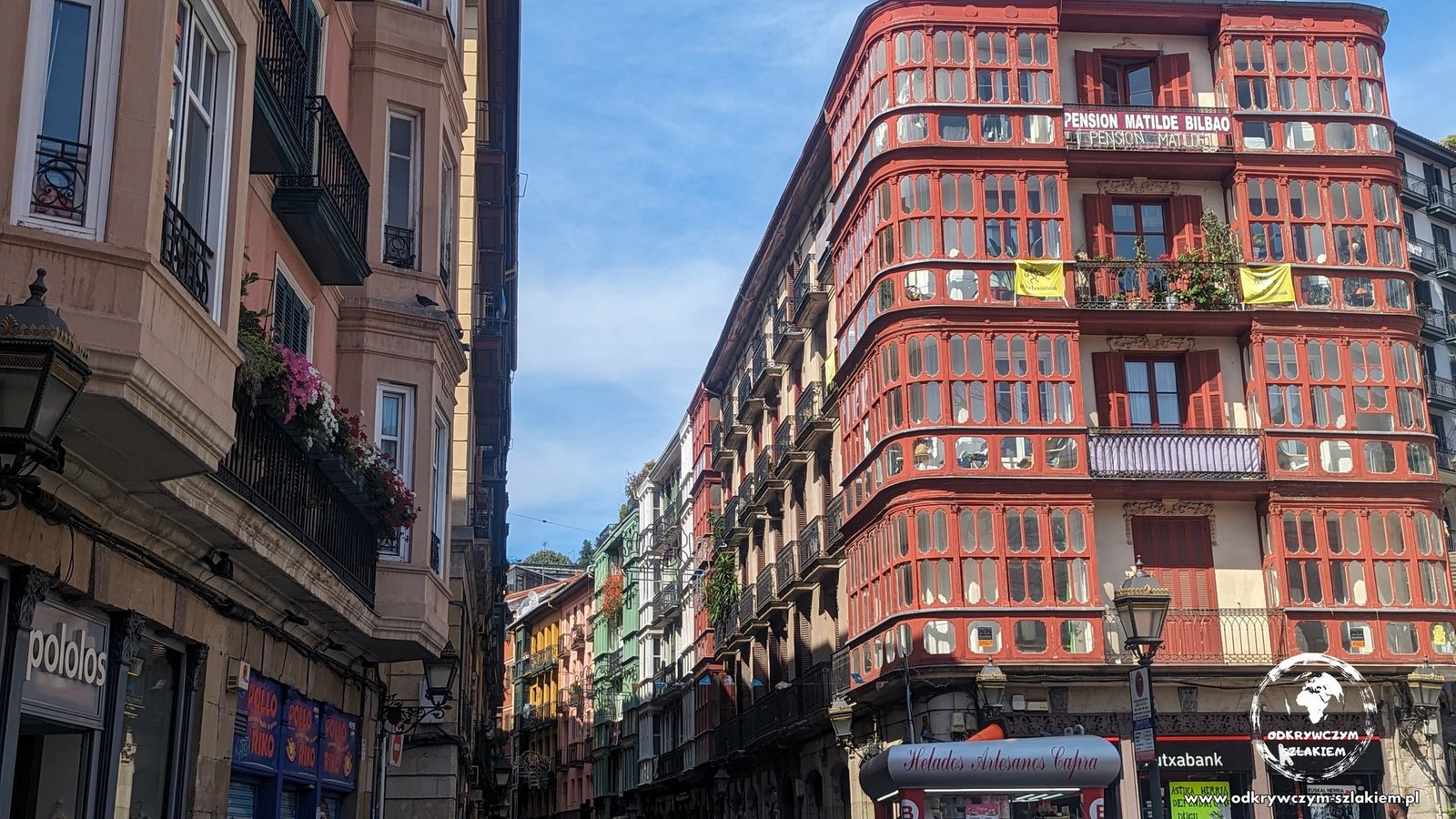
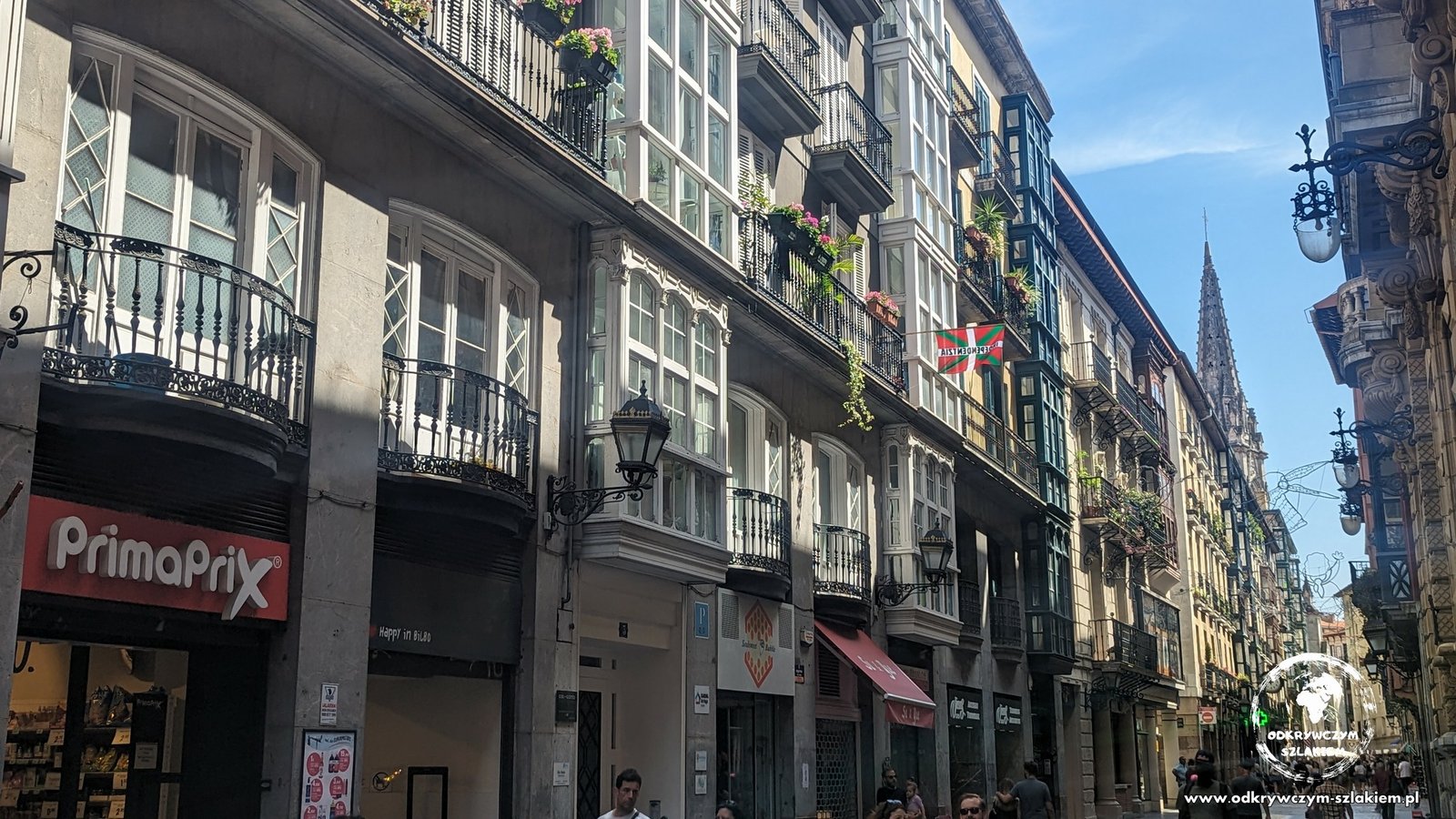
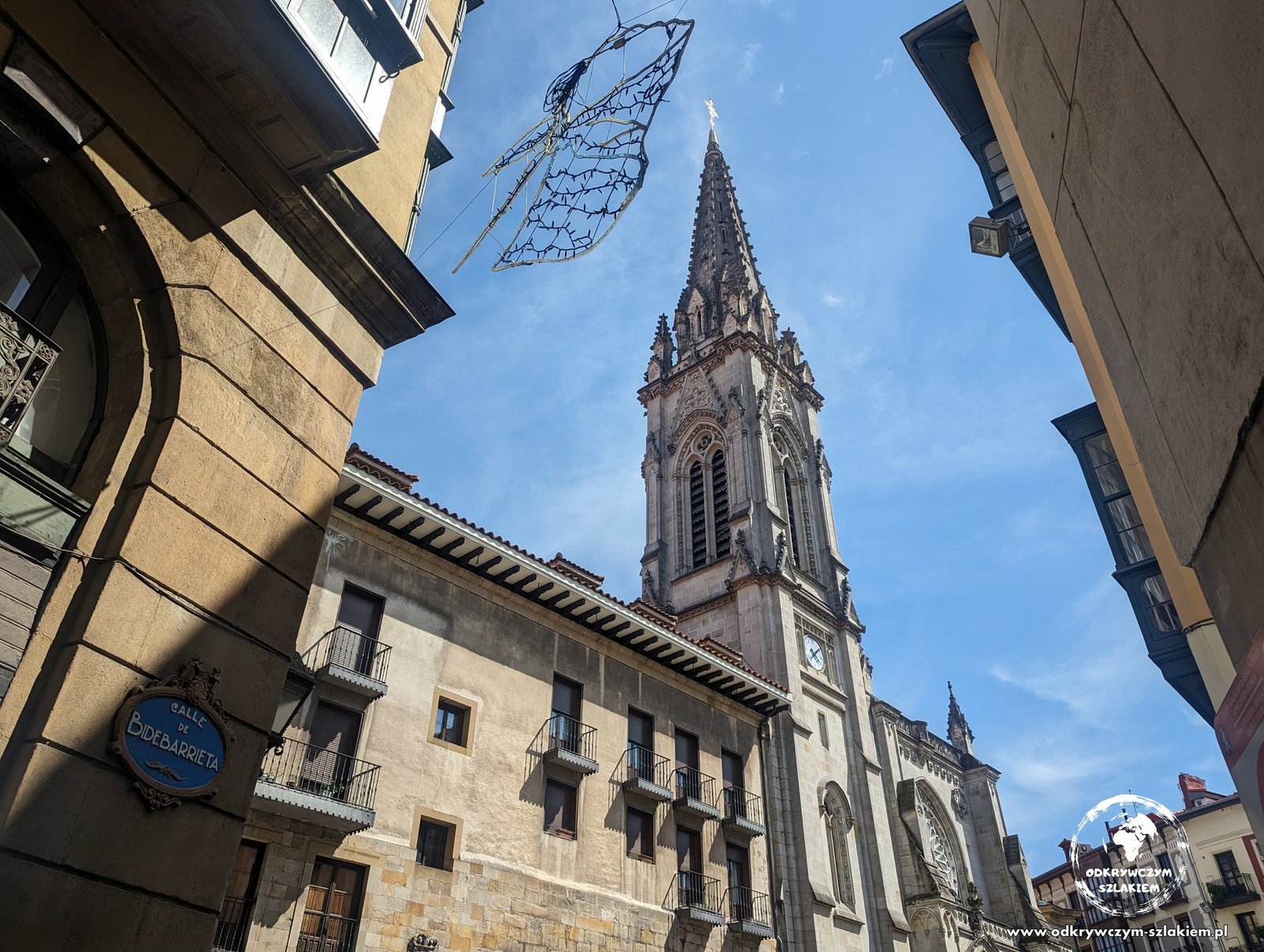
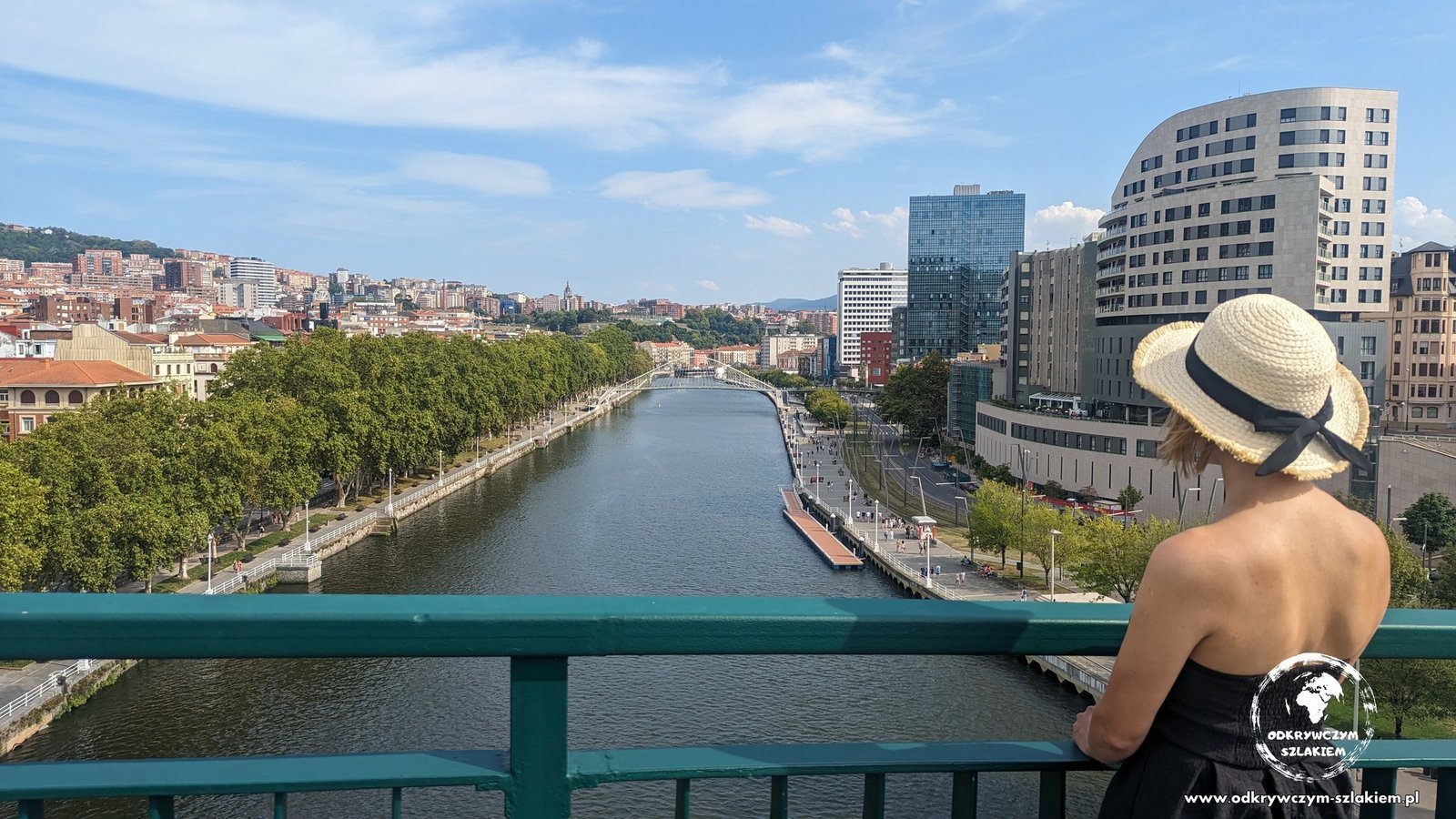
In the old town (Casco Viejo) we strolled through narrow streets with glazed balconies and stopped by the Gothic Cathedral of St James. There is a good view of the city and the river from the Puente de La Salve bridge by the museum.
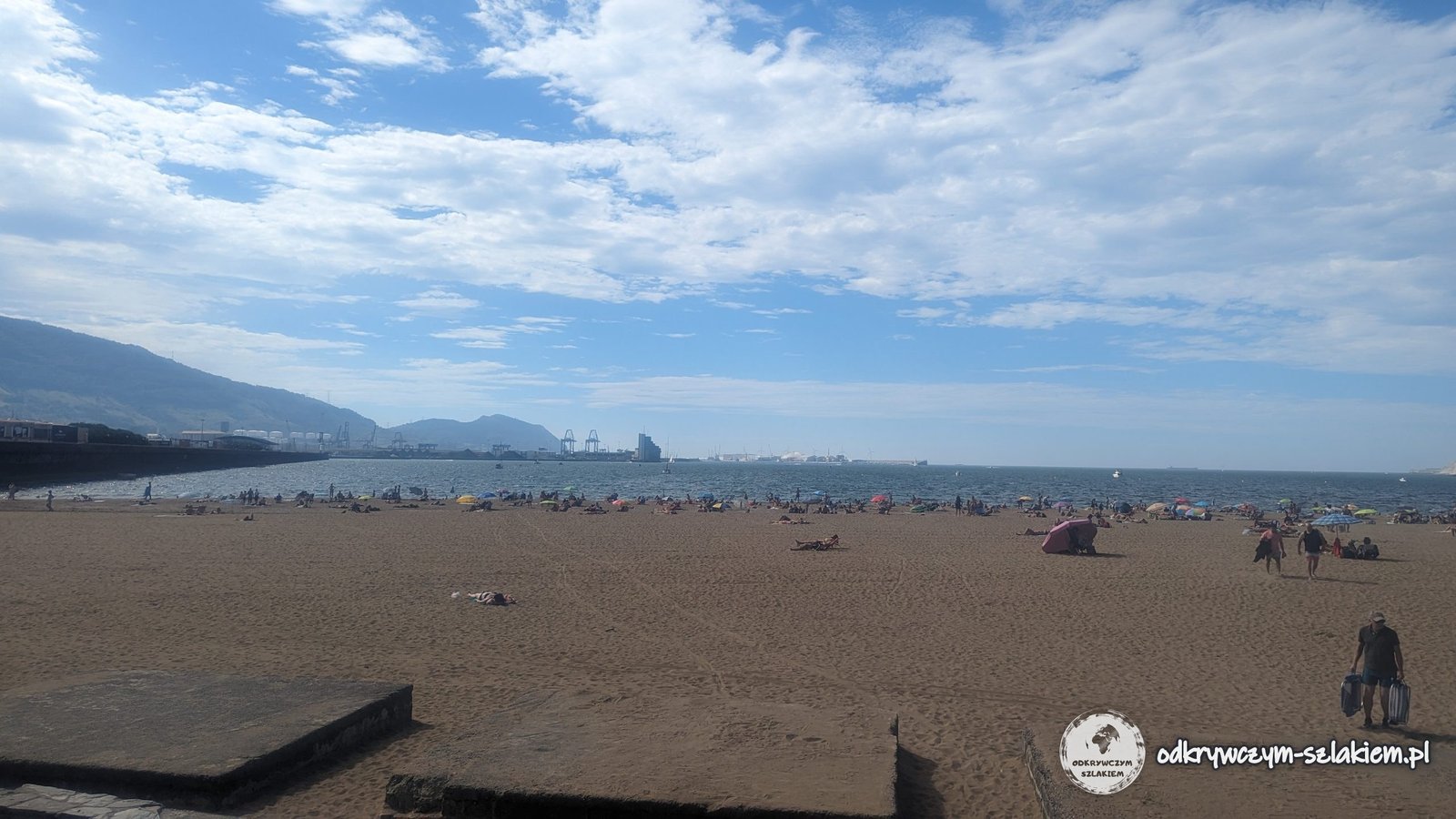
The beach we went to on the second day was Ereaga in Getxo, where the Nervión flows into the sea. From there we walked along the promenade to the Vizcaya Bridge (Puente Bizkaia), which links Getxo with Portugalete. It was built in 1893 to a design by Alberto Palacio, a disciple of Gustave Eiffel, and is the world’s oldest transporter bridge: the steel girder is 45 m above the water, and below it a gondola runs on cables, carrying people and cars to the other bank. Since 2006 the bridge has been a UNESCO World Heritage Site.

From Bilbao we moved on to France – I describe the rest of the trip (Bayonne, the Pyrenees, Toulouse, Montpellier and Lac du Salagou) in the second part of the story: Hitchhiking in the south of France.
Practical information
- Hitchhiking in Spain – it is hard going in the north of the country, so if time matters, plan buses or trains right away. How hitchhiking works in France – in the second part of the story.
- Public transport in northern Spain – poorly developed: a journey of about 300 km with changes can take a whole day, so check bus timetables in advance.
- Covadonga campsite – in Soto de Cangas, on the road from Cangas de Onís to Covadonga; there is a canteen, a small shop and plenty of showers. Current prices are listed by Turismo Asturias (turismoasturias.es).
- Bus to the Lagos de Covadonga – in the high season (including Easter, summer and long weekends) the road from Covadonga to the lakes is closed to private cars, and you go up by bus from car parks in Cangas de Onís and along the road to Covadonga. An adult return ticket costs €9 (as of 2026, buslagoscovadonga.es). It is much colder up there and often foggy, so bring a warm sweatshirt.
- Accommodation – campsites are the cheapest option, and along the Camino de Santiago also pilgrims’ hostels.
- Weather and language – in August it can reach 40 degrees outside the mountains, while the Picos de Europa are much cooler. English is not widely spoken, so a few phrases of Spanish come in handy.
- Vizcaya Bridge – the gondola crossing costs €0.60 per person, and the upper walkway €11 (as of 2026, puente-colgante.com).
- Other posts from Spain: Andalusia in a nutshell, Alicante and the Costa Blanca in winter.
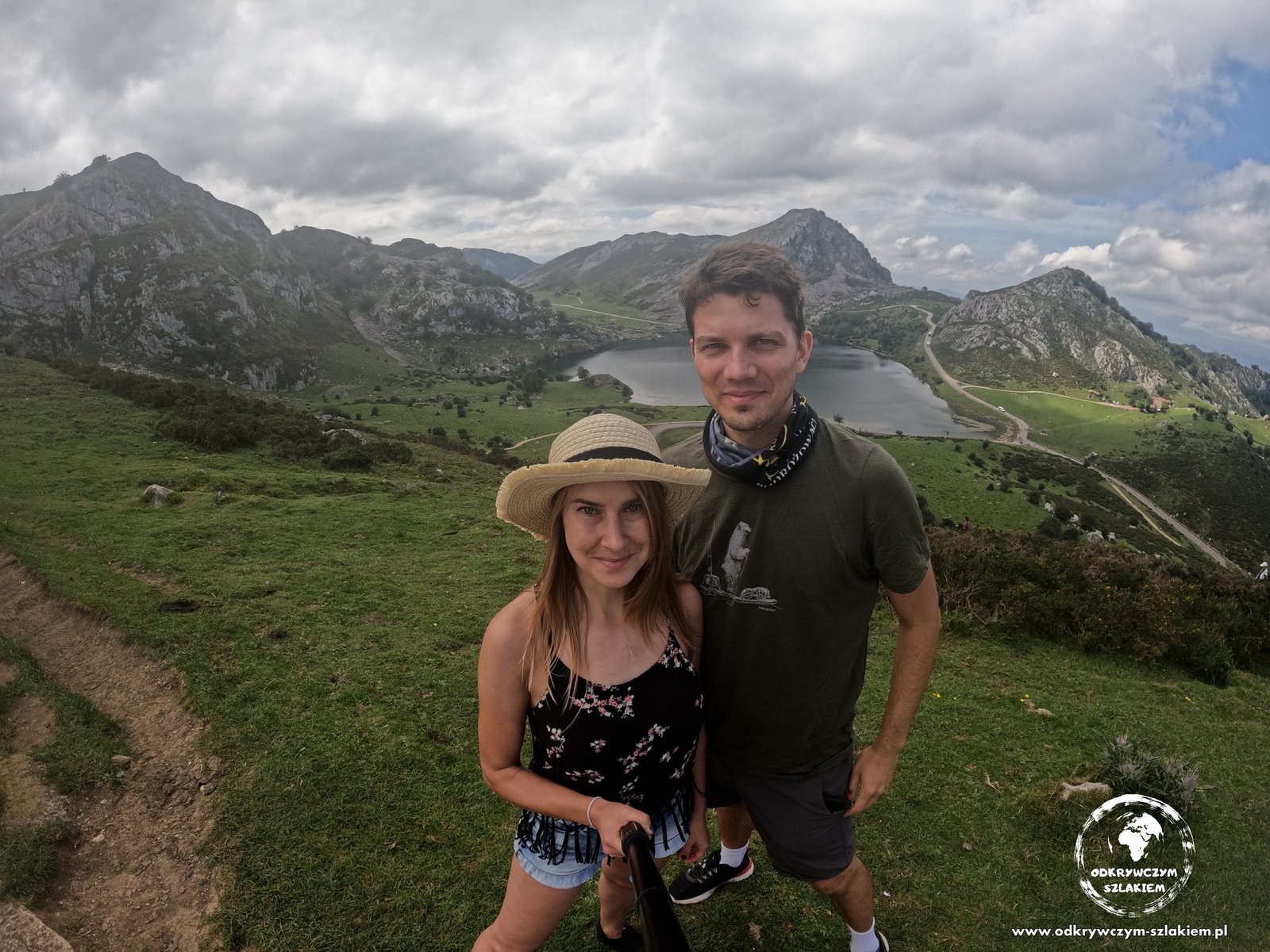
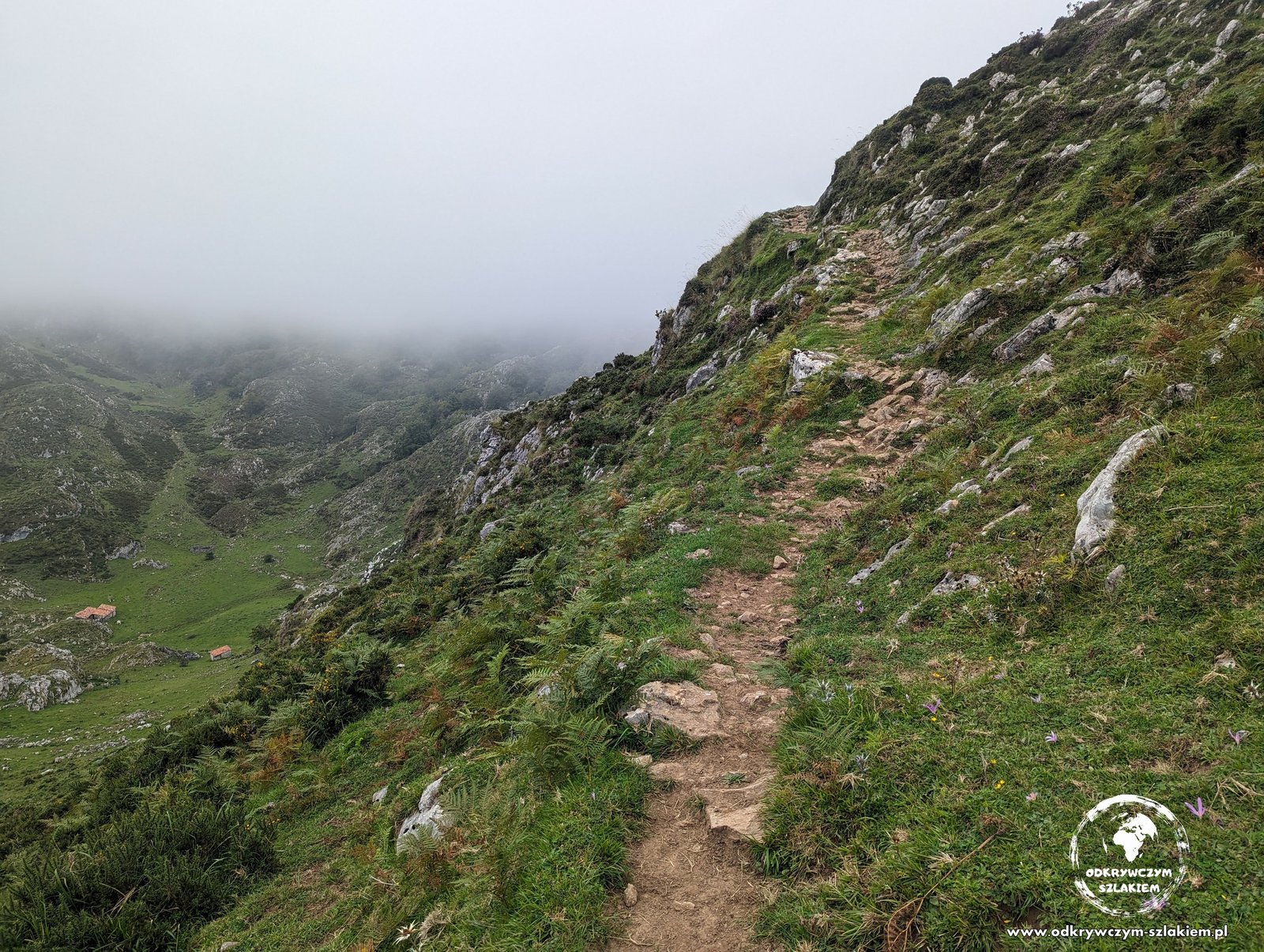
Photo gallery