
Table of contents
A short introduction
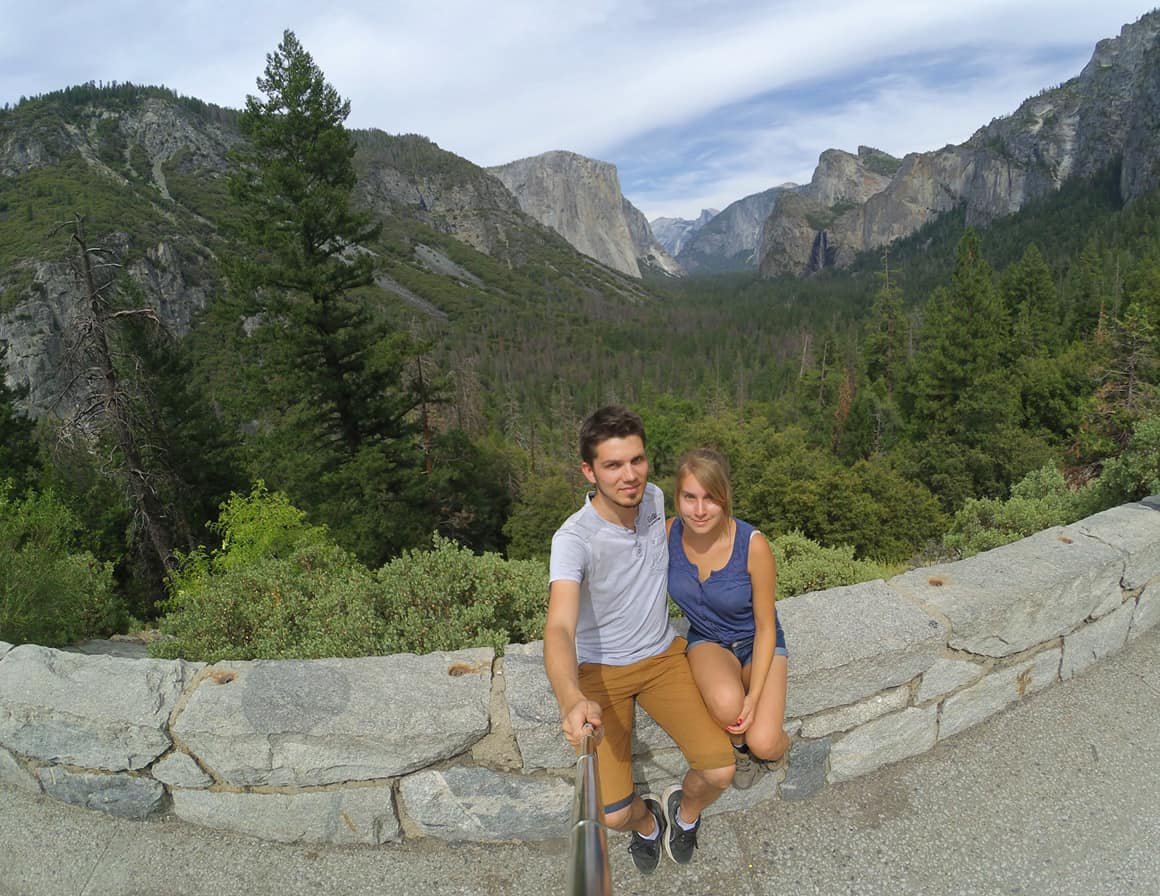
This article is about our stay in Yosemite (Yosemite Valley) on the Work & Travel programme in 2018 (June/July). Our Polish agency was The Best Way. I regularly get questions about all sorts of things, so I decided to gather all the information in one place, in this article. Of course, it is written from our perspective – the year 2018 (some of the information may be out of date). If you are still wondering about something, leave a comment below.
From the idea to the flight
The video above briefly shows the whole procedure (all the steps) we had to go through: from the moment the idea of going together came up to the flight itself. You can find out what guided us when choosing where to work and why we picked Yosemite National Park. In the video I talk, among other things, about our costs, our jobs, the departure and return dates, what the embassy interview and the interview with the employer were like, and why we decided to fly from and back to Berlin.
Questions & answers
Work
Jobs
| Yosemite Valley Lodge | Half Dome (Curry) Village | Big Trees Lodge |
|---|---|---|
| Cook's helper | Cook's helper | Cook's helper |
| Dishwasher | Food service | Dishwasher |
| Houseperson | Roomskeeper |
From The Best Way’s offer we learned that we could work for Aramark in five possible positions.
So the options were: cook’s helper, food service, cleaning guest rooms, dishwashing and, among others, driving a golf cart with bed linen (or receiving deliveries).
You could work in two locations: Yosemite Valley (Yosemite Valley Lodge or Half Dome Village) or in Wawona (Big Trees Lodge).
Yosemite Valley (and especially Yosemite Village) is the place with the most to offer both to tourists and to workers (read below). We didn’t even consider Wawona, 40 km to the south (22 km as the crow flies), where, apart from a hotel, cabins and a shop, there was really not much, and the hiking trails were far less attractive.
At that point the hourly rate was supposed to be $10.50 regardless of the position, and the cost of housing $40 a week.
Start/end date of work
The employer expected workers to start work between 1 and 30 June and to finish it between 15 and 25 September.
Our jobs
I (Maciek) mostly worked as “Food Service” (Curry/Half Dome Village). I stood behind the counter and served food to customers (two meals – breakfast and a combined lunch-dinner). I also had to bring out food that was running low, refill drinks, tell the kitchen what was left, make toast/bagels and clean – like in any job. My shifts were usually roughly 6:45–11:00 and 17:15–21:30. It took me 15–20 minutes to walk to the pavilion in Half Dome Village – in the morning the buses weren’t running yet, and in the evening the last one left at 10 pm. It wasn’t too hard, but it was annoying to get up early and go to bed early. The day was broken up and you had to waste time commuting twice. On the other hand, we got an 11-dollar bonus for split shifts. We had a 15-minute break during the first part of the shift and 15 minutes during the second (half an hour in total).
After a month I started getting shifts as a “Porter”. My job then was taking out the rubbish, clearing plates from the tables, carrying them to the dishwashing area, cleaning windows, floors and so on. The good thing was that I organised my own work and had 8 hours in a row. The usual half-hour break. I got 2 such shifts a week. I also had one-day episodes at the “Ice Corner”, at the till and scooping ice cream.
In all these positions, however, I worked in one place – the Seven Tents Pavilion in Curry/Half Dome Village. Some people, also as “Food Service”, worked at the “Pizza Deck” or the “Meadow Grill”, which were in the same building. There was also a bar serving alcohol (Bar 1899).
Patrycja worked at the Yosemite Lodge Food Court as a “Cook’s helper”. She started work at the earliest at 11:00 and at the latest at 14:00, working about 8/9 hours a day. Apart from serving meals, she made hamburgers and fries.
In general we worked 5 days a week and had 2 days off (we asked for fixed days off on the same days). The net hourly rate always came out above 10 dollars. Working at least 40 hours a week, the paycheque was over $400 a week. On top of that, in the “Food Service” / “Cook’s helper” positions you could very often take food home after your shift (most of it was thrown away anyway) – which saved us quite a lot. Officially you could drink as much as you wanted from the drink dispensers during work. We recommend working in food service in Yosemite!
 5:41
Other jobs
In Yosemite there were lots of different positions for seasonal workers (including Work & Travel) that weren’t in our offer from “The Best Way”, i.e. at: Village Grill, Village Store, Degnan’s Deli, The Ahwahnee (Majestic), Curry Village Gift and Grocery, at the swimming pools, at the bike/raft rental, at campsites, or even as a security guard.
A second (extra) job
We didn’t look for a second/extra job. Working five days a week, with full-time hours guaranteed and a satisfying hourly rate, we preferred to enjoy the park.
I do know, though, that some people looked for a second job. Especially those who had borrowed money specifically for the trip to the States and wanted to bring back as much as possible. They occasionally managed to get extra shifts, but as far as I know, they didn’t rack up many extra hours. So I wouldn’t count on that option.
Overtime
In Yosemite, overtime meant hours above 40 a week, paid at 150% of the normal hourly rate – but the employer wasn’t keen on it. For most of my stay I worked only a modest amount of it – once, though, a manager sent me home early because I had (in their opinion) worked too many hours that week.
Tips
Whether you could get tips depended on the position, but in most cases it was rather impossible. One day, when I worked at the Ice/Coffee Corner, I got about $6 in tips (the total tips were divided by the number of people on the shift).
Saving money
Working in Yosemite, even taking into account the cost of housing and food, you can easily earn enough to travel around the States afterwards, and you can even bring a bit of money back to Poland.
HOUSING
Housing/shared room
A staff member took us to the office, sorted out the formalities and assigned us our housing (unfortunately we had no choice at all). Each area of Yosemite Village has its own housing office. The fact that we ended up at that particular one affected where we were housed.
Patrycja and I came as a couple, but we found out that we would not get housing together, at least for the time being. They said it should change after 2 weeks or a month. We were prepared for that, though.
In theory, people of different sexes weren’t even allowed to visit each other’s rooms. Over time people lost patience and ignored these rules.
We asked several times about getting a place together, but usually we were told there was a long queue of people waiting.
 8:22
How housing is assigned
To be honest, the way housing was assigned is still a mystery to me. At first you got a place, probably temporary, together with other people in the room. If you wanted to change it, you could submit a request on site for a specific type of housing in a specific location. Unfortunately, priority went to workers with more seniority in Yosemite and a better position.
Housing was assigned by an algorithm – whoever had more points got a place sooner. Each position was worth a certain number of points, and so was seniority.
Locations and living conditions
The full list of all locations could be checked at the employer’s office when filling in a request to change your housing. Below I list the ones I have been to and am sure exist.
- Lost Arrow (near Degnan’s Deli) – a dormitory (men on the ground floor, women upstairs).
- wooden cabins by Lost Arrow – small, simple cabins with a few cupboards, two beds and food storage boxes – you had to go to the dormitory to use the toilets.
- Tecoya – near the Village Grill
- a dormitory near The Ahwahnee hotel
- tent cabins in Curry Village
- shared rooms in Curry Village
I (Maciek) lived in Tecoya, in an apartment with a few guys. It was an area where the apartments were mainly for managers, and only two (including ours) were for other workers. One room had two bunk beds (for max. 4 people) and a table, the other two single beds (max. 2 people). We also had a private kitchen, bathroom and walk-in wardrobe. The laundry and dryers were very close. These were great conditions. Unfortunately, that same year (2018) those two apartments were also turned over to managers. In Tecoya there were also large, two-storey wooden houses with many rooms (one of them housed the Housing Office) – I didn’t see the inside of the rooms, but the toilets were in the corridors; on the other hand there was a common room with a TV, books, a table and sofas.
Patrycja lived in the women’s part of the Lost Arrow dormitory (upstairs; the ground floor was for men). She was in a room with three bunk beds (for max. 6 people), basic furniture and a small fridge. There was a shared bathroom, laundry and kitchen outside the room, plus a TV room (with sofas, games, books).
The canvas tent cabins (Curry Village), on the other hand, were built on a completely different principle. They consisted of wooden frames wrapped and covered with canvas. Up to four people could live inside. Inside there was basic furniture and electricity. Everyone had their own locker that could be closed with a padlock. Food was kept outside in so-called “bear boxes” – chests that were also locked with a padlock. Bathrooms/kitchens were shared, in separate buildings.
The wooden cabins (Lost Arrow), in turn, were furnished much like the tent cabins, except that they were usually for 1–2 people, and you used the bathroom/kitchen in the dormitory.
These were areas where only workers lived; nobody else was allowed to be there.
Cost of housing
Before leaving, our Polish agency told us that housing would cost $40 a week. On site, however, it turned out to be around $20–25. Anyway, the cost has changed over the years. Now (2022) I can see it is in the range of $17–$39 a week + a $100 deposit. Compared with other Work & Travel offers, it’s a really good deal.
We (like many other people) had temporary housing (in our case for the whole stay). Because of that, we never paid for our accommodation. It’s a bit strange, because some people, despite having temporary housing, started having a certain amount deducted after about a month.
Things to bring
We already knew that the employer did not guarantee us kitchen utensils or bedding, so we were asked to sort them out ourselves. There were a few things in the shared kitchens, though, and if someone asked the Housing Office for a duvet/pillows, they usually handed them out anyway.
Internet
Unfortunately the internet was quite a problem – we didn’t have it where we lived. Living in the centre of Yosemite Village, our only option was the internet at Degnan’s Deli, which was slow anyway (it was an open network, also for tourists). In this respect things were better in the Curry (Half Dome) Village area. There, the buildings with shared rooms had their own internet (not to be confused with the tent cabins), and you could also use it at the Wellness Center (much faster).
Laundry/dryers
The laundries and dryers were self-service and free for workers (only they had access). However, there was a limited number of machines, so you had to sign up on a list, saying on which day and at what times you wanted to use them. Of course it often happened that we put in a wash/dryer load on the spot, because nobody had booked those hours. You also needed your own detergents (read about shops/shopping below).
Food
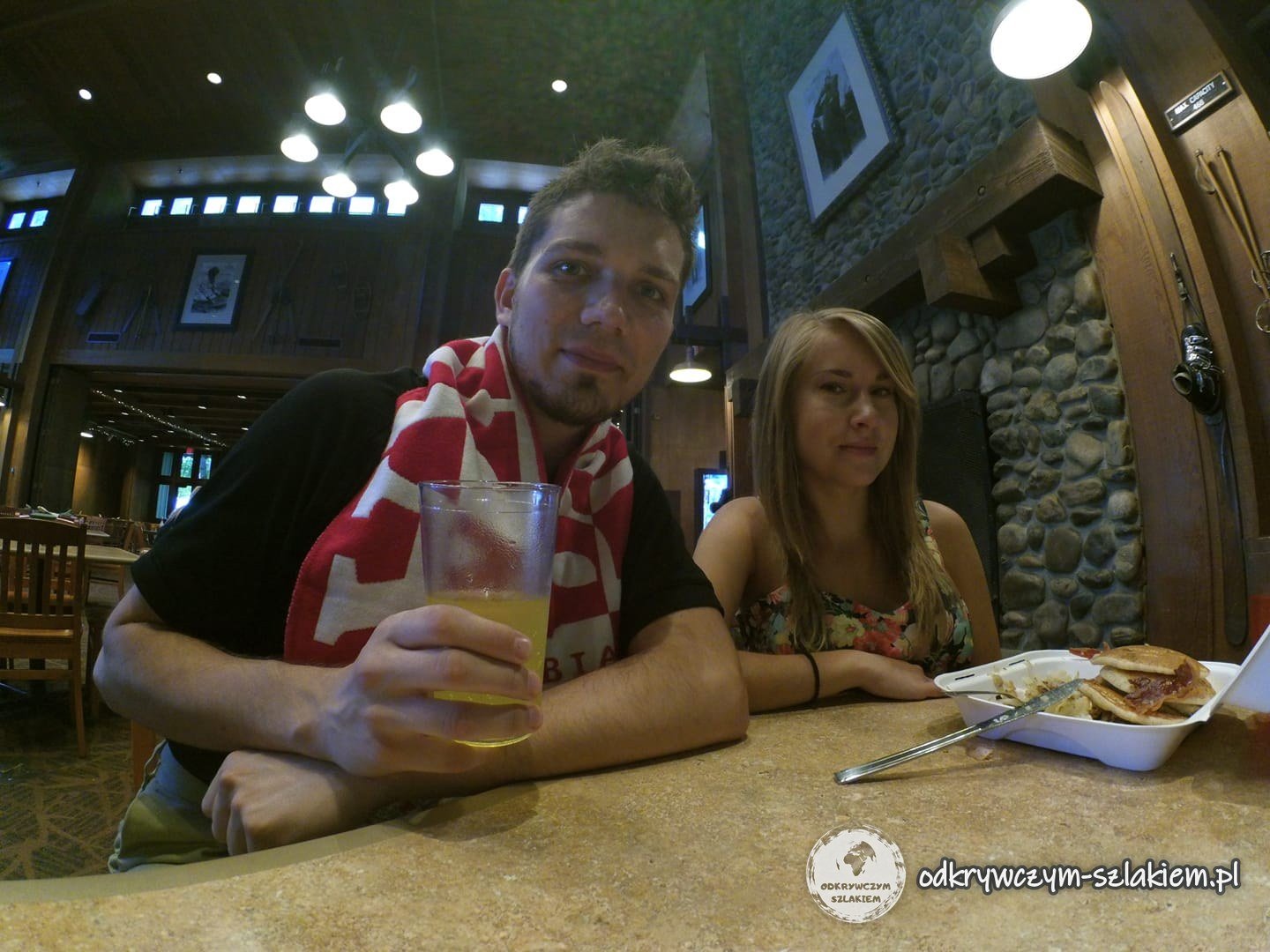
Food is not provided. Workers got a 50% discount on food at all the eateries there. Restaurant workers are in a good position – they don’t really have to worry about food. In Curry (Half Dome) Village we had very good and varied food. For lunch-dinner there was always a choice of several main dishes, plus vegetables and rice/potatoes/pasta. Only the breakfasts were repetitive, but still good (cereal, pancakes, biscuits, French toast, bagels, meat). At Patrycja’s (Yosemite Lodge Food Court) it was similar, but the food was worse and the choice poorer.
You can also eat at Degnan’s Deli/Curry Village Pizza Deck (American food, including pizza) and Village Grill/Meadow Grill (burgers, fries). In the Seven Tents Pavilion there is also the Ice/Coffee Corner, where you can get good coffee and fantastic ice cream.
It’s worth mentioning that at Degnan’s Deli you can refill your water for free from a dispenser (on the ground floor by the toilets). This cuts down on plastic bottle waste. Besides, in summer in places like California, people pay special attention to drinking enough fluids.
For shops and shopping in general, read below.
employer
Interview with the employer before arrival
Our interview with the employer was in the second half of March 2018. Such a late date suited us, because by then we knew our summer semester timetable.
The interview is a formality – an introduction, and then mostly specifics. It was held on Skype and took no longer than 15 minutes. During that time they discussed the position and the arrival date. They asked about our preferences – where we would like to work – and then checked whether that position was still available.
Unfortunately – as it later turned out – the order of the interviews mattered. So as not to skip classes at university, I asked to be put at the end of the queue. Because of that, there were no places left in my (Maciek’s) preferred position (Houseperson – Yosemite Valley Lodge), so I got my second choice (Food Service – Half Dome Village/Curry Village). A pity – it meant that not everyone had equal chances. Patrycja, on the other hand, got her first choice (Cook’s helper – Yosemite Valley Lodge).
As for the arrival date in Yosemite – they pushed hard for us to arrive on Thursday (13 June 2018), but on site it turned out that the training only really started on Monday, so we could easily have turned up two or three days later. In the end it worked out well, because we had a few days to acclimatise and explore.
Information from HR
You had to find out about many things yourself, because the HR office didn’t tell you everything, not even important things, such as where the warehouse with work uniforms was or, say, the training dates. We didn’t even know our work schedule. It’s worth mentioning that in season there is quite a mess there, caused by the large influx of workers. To sum up – HR was so-so, but that didn’t bother us, because we didn’t need to deal with them very often.
Training before starting work
Training was compulsory for all new workers. It lasted two days, about 3 hours in total. First they told us about the park in general and about safety, and the next day specifically about our jobs. At the end we took a test to check how much of the new information we had remembered. Of course it was not difficult and we passed first time (if you failed, you could retake it).
Patrycja started work on Wednesday (the day after the training), and I on Thursday. Nobody told us where to find out about our schedule, so we went straight to our managers. We didn’t even know which day we were starting, and we wasted time getting there for nothing.
Information about the training wasn’t passed on to all workers in the same way, so for some people it took place at HR, while most were somewhere else (Cliff/Mountain Room at Yosemite Valley Lodge).
Employee discounts
Officially we had a 50% discount at every eatery and on some attractions such as rafting. Plus a 10% discount in the shops (excluding alcoholic drinks). The swimming pools, fitness and yoga, on the other hand, were free for workers.
Working in food service, some people unofficially ate for free (e.g. during their break). Every now and then, though, the managers noticed and told people not to do it. Even so, our co-workers on the pizza station were happy to make pizza for us – for our break or to take away after work.
yosemite
Short info
The area of today’s Yosemite was inhabited by Indigenous people as early as 3,500 years ago. In the 19th century, with the Gold Rush, American settlers gained more and more influence in the area. Eventually, at the beginning of the 20th century, there was already a National Park combined with an Indian reservation.
Every year the park is visited by 3–4 million tourists. Elevations range from 648 to 3,997 m above sea level. Its area is 3,030 km².
Yosemite is famous all over the world for its granite cliffs, waterfalls, clear streams, giant sequoia groves, lakes, mountains, meadows, glaciers and biodiversity. Almost 95% of the park is designated as wilderness.
Places in Yosemite
The nearest larger towns from Yosemite Valley are Mariposa (70 km) and Oakhurst (80 km). Sonora (120 km) is a bit bigger, and Fresno (150 km) is the largest city in the area.
Apart from Yosemite Valley in the centre and Wawona in the south, there is Toulumne Meadows in the east and Hetch Hetchy in the north-west.
Popular hikes in Yosemite Valley are those to the Vernal, Nevada, Yosemite (lower and upper part) and Bridalveil waterfalls; to the Glacier Point and Tunnel View viewpoints; to the summits of North Dome, Half Dome, Sentinel Dome, Eagle Peak, Taft Point and Clouds Rest; to Mirror Lake; or a walk on the flat (the Yosemite Valley Loop Trail).
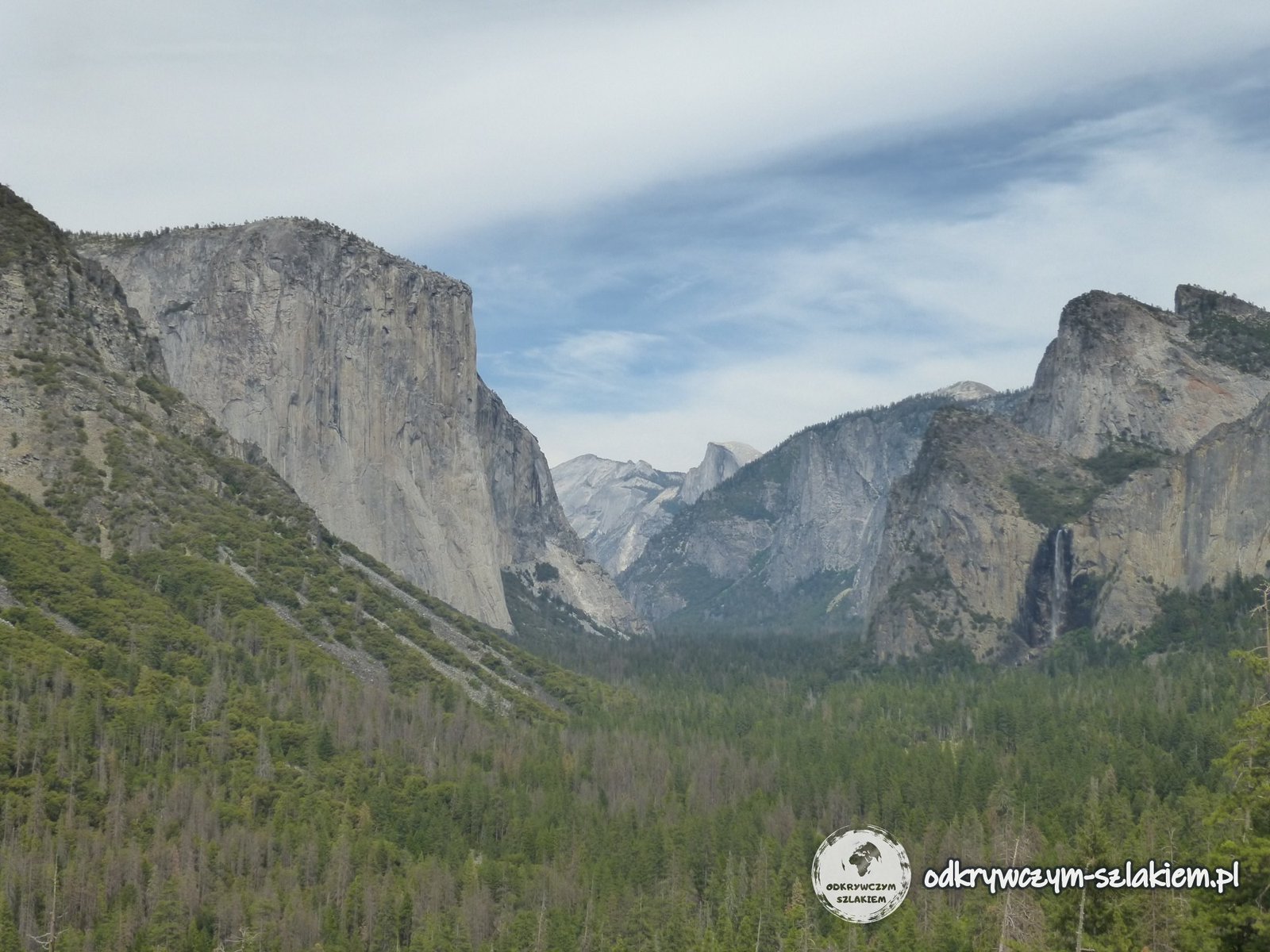
Yosemite Village – the heart of Yosemite
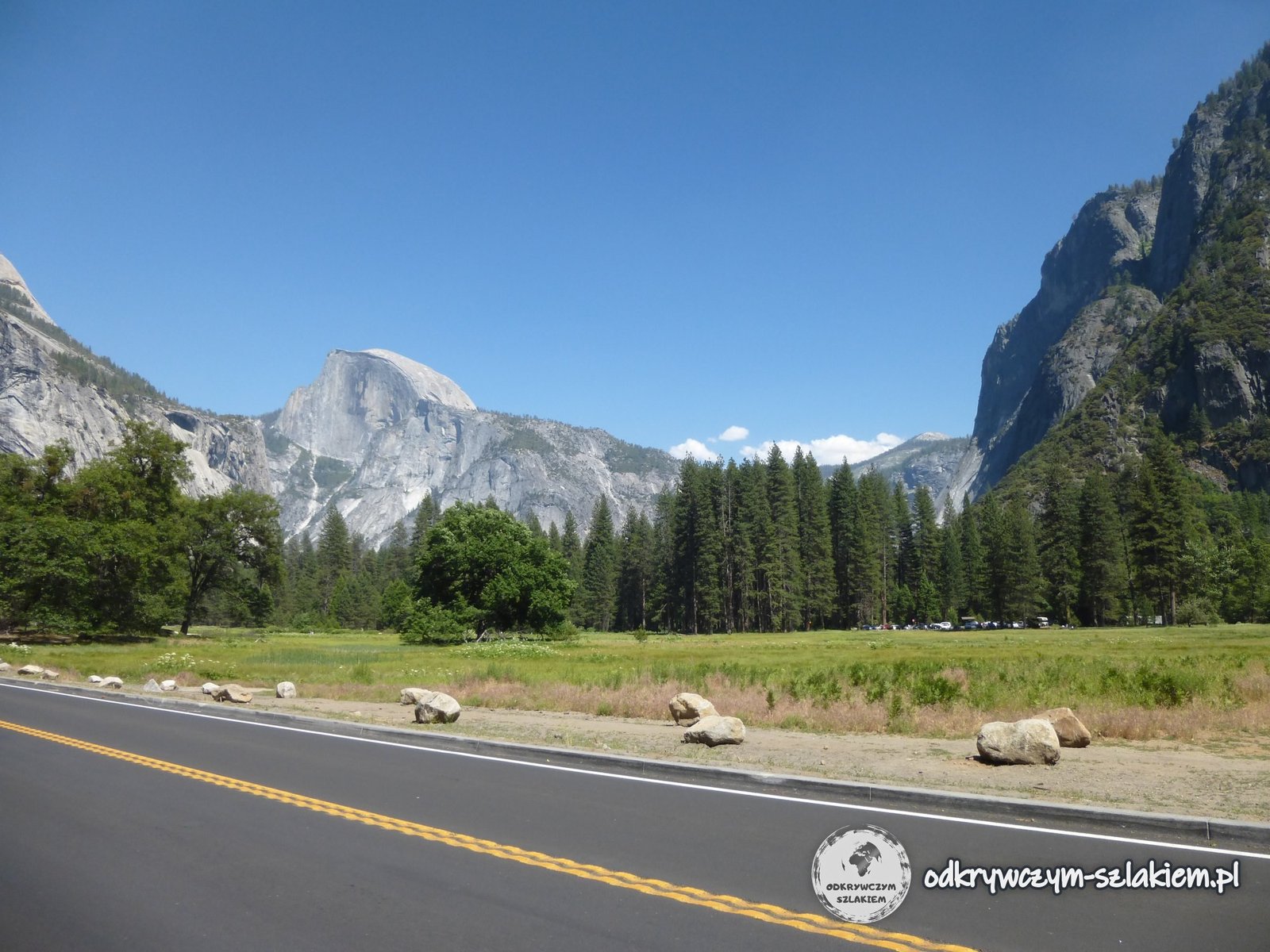
We lived in the very heart of Yosemite – Yosemite Village. We were a few minutes from the Village Store, Village Grill and Degnan’s Deli. Nearby there was also a stop of the green line of the Valley Shuttle (Yosemite Village – number 2/10). In the area there was also the tourist information office, the visitor centre, a museum, the post office and an old cemetery. Good connections to Curry (Half Dome) Village and Yosemite Valley Lodge – a few minutes by bus, up to 20 minutes on foot. It was close to the river (Merced), the lower part of Yosemite Falls and the chapel (Yosemite Valley Chapel).
Wildlife
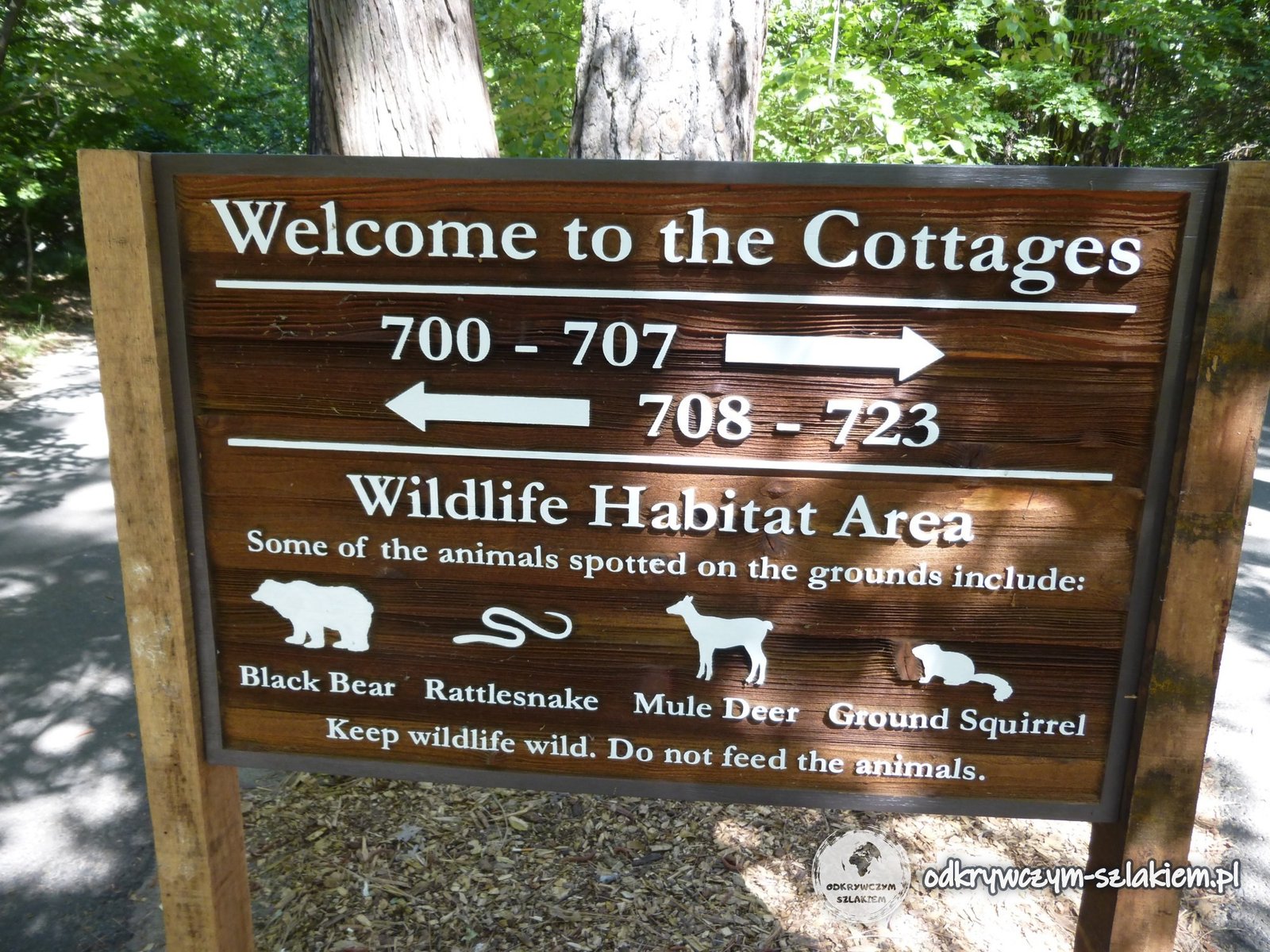
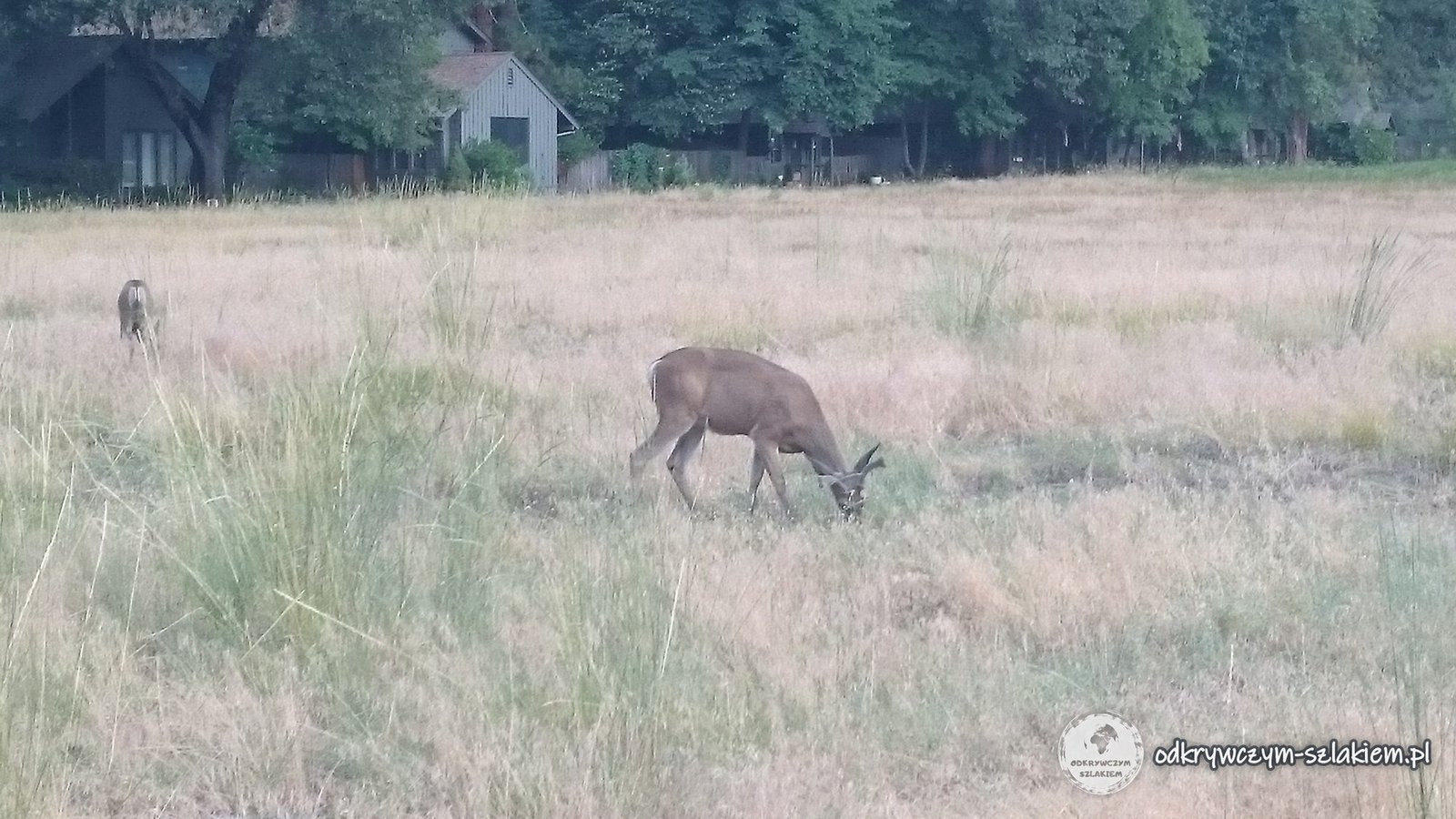
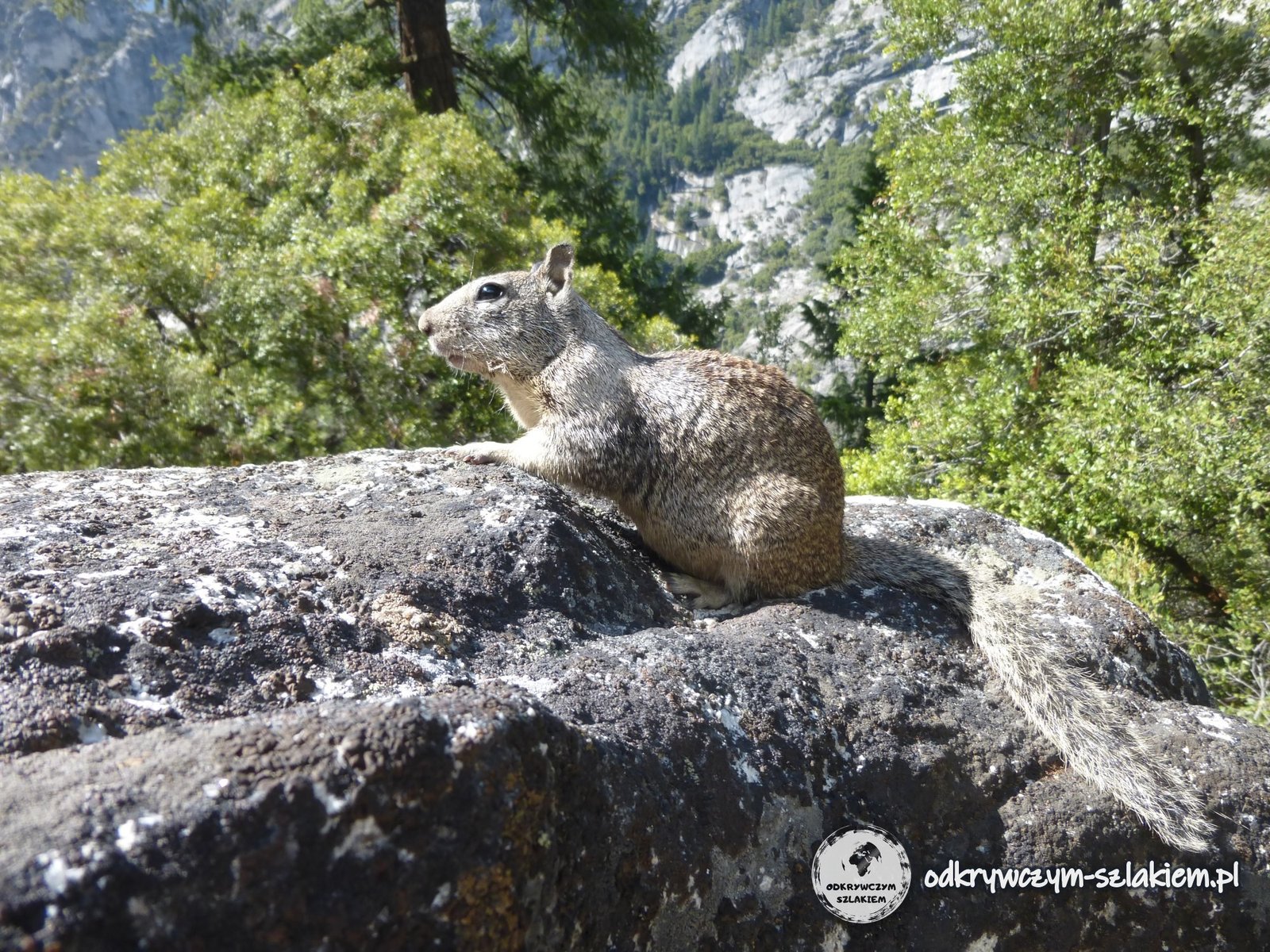
You can see lots of wild animals there – black bears, elk, grey squirrels, foxes, pond turtles, lizards, bats and even a raccoon, a marten or a Steller’s jay. It is also home to rattlesnakes and mountain lions (pumas), but luckily we never came across them.
Common trees in Yosemite include sequoias, black oaks and pines (white, Scots, Jeffrey).
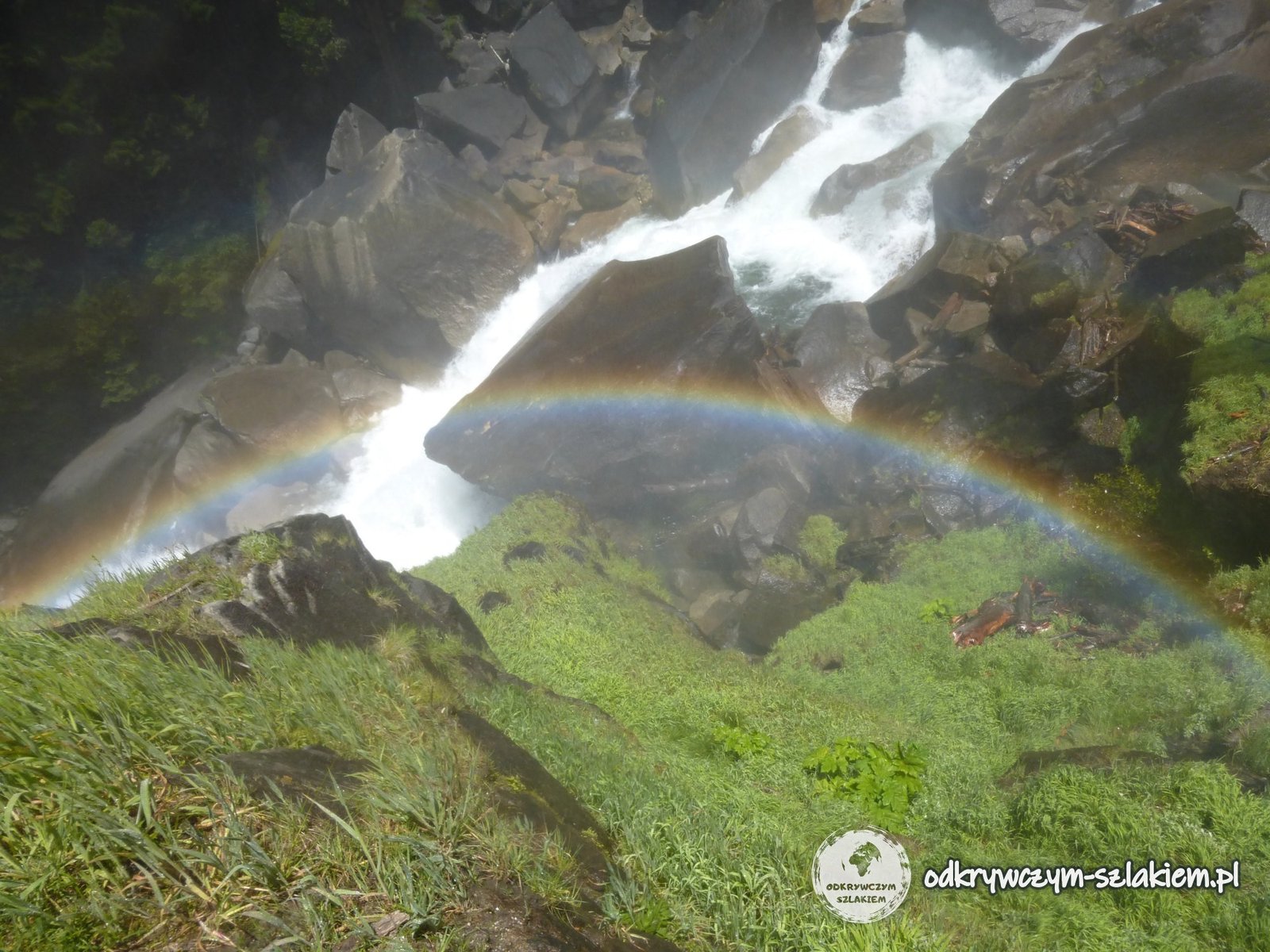
Yosemite is famous for its granite rock formations, a type of igneous rock. There are also many waterfalls, which “work” until roughly the middle of the summer holidays – after that there isn’t enough water.
We saw bears a few times: by Mirror Lake (it was hiding behind a tree), on the way to work (park rangers asked us not to get closer) and in a tree right by the road, where one was gorging on apples – tourists stopped their cars and blocked the traffic.


What to do in your free time?
Apart from lots of mountain hikes, you can go rafting or swimming, rent a bike, have a barbecue, go to the museum, hang out in the TV room or work out at the Wellness Center.
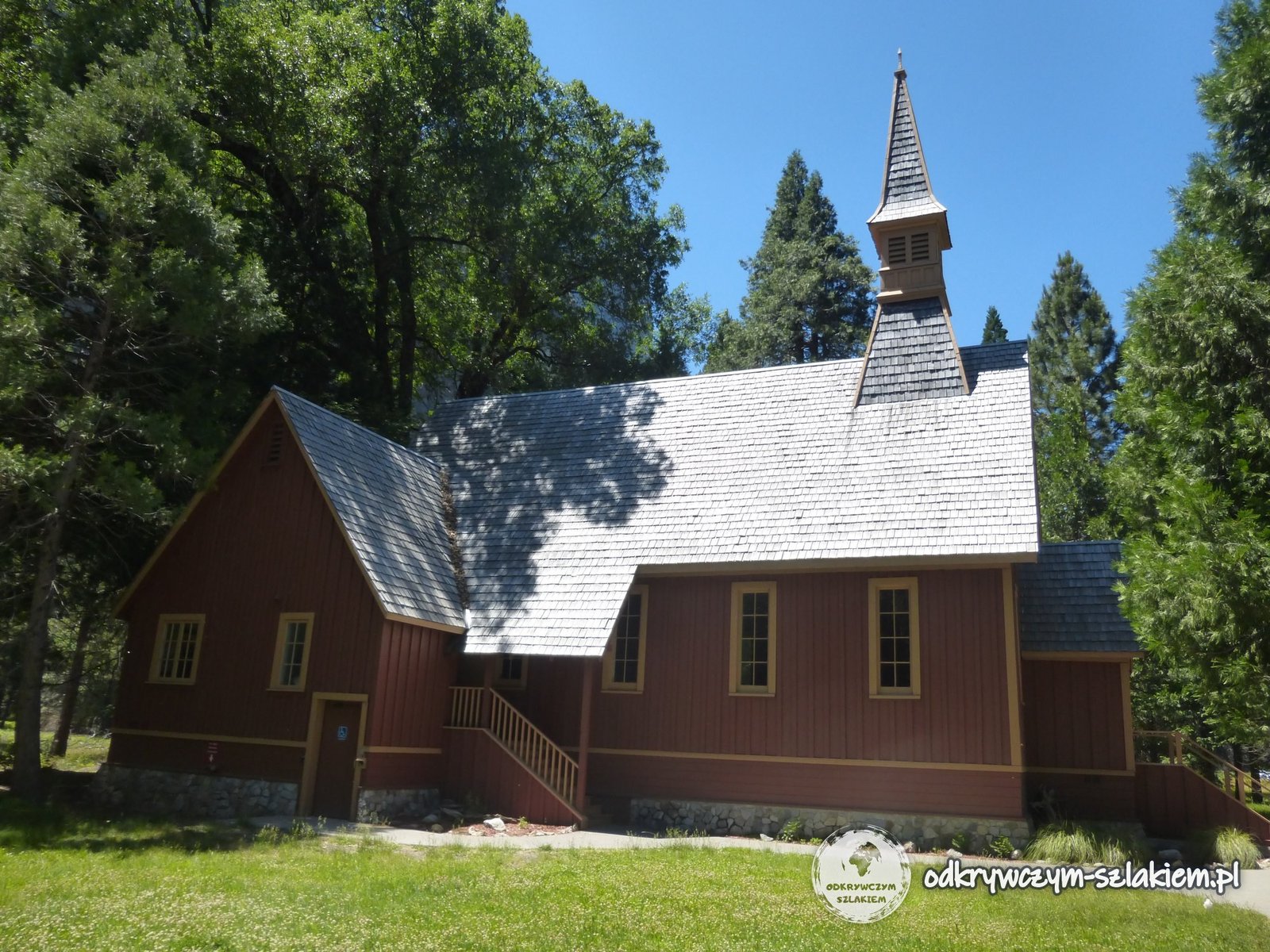
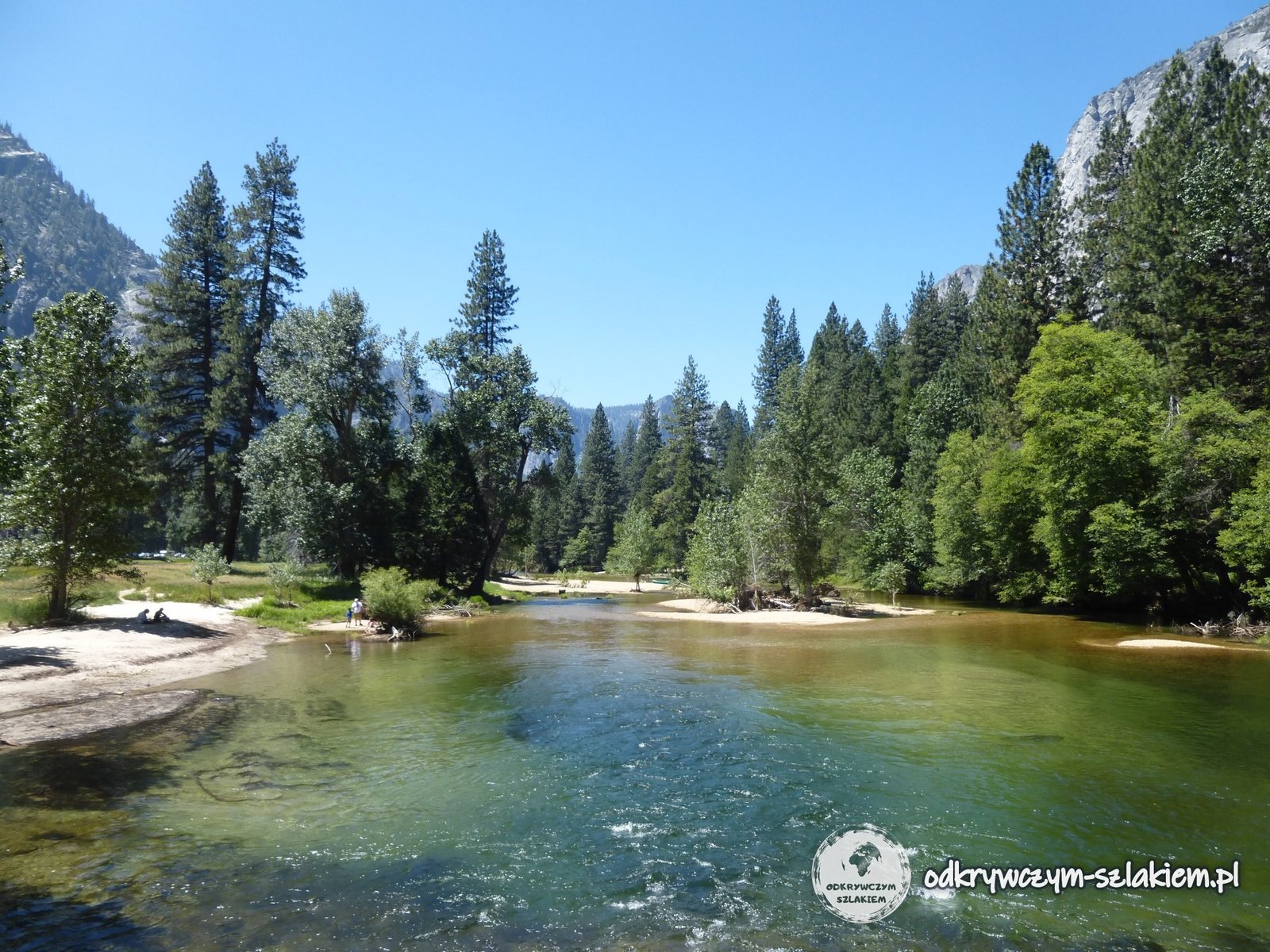
We had almost a week before starting work, so we went exploring straight away: on the first day the lower part of Yosemite Falls (Lower Yosemite Fall), the park museum, the Indian village and the 19th-century cemetery (swimming in the river was out of the question – the water was ice-cold). It’s also worth walking to Sentinel Bridge, with a beautiful view of Half Dome, and to the Yosemite Valley Chapel from 1879 – the oldest and only surviving building of the old Yosemite village. The trails we hiked (about 70 km in total) are described in the post Yosemite – trails and viewpoints.
Shops/shopping
In Yosemite Village there is one main shop – the Village Store. You will probably find most of what you’re looking for there – there is a good choice of food, toiletries and souvenirs. While a lot of groceries in national parks are expensive, beer was reasonably priced there, even compared with cheaper shops.
A similar but much more modest shop is Curry Village Gift and Grocery. If you only want to buy bread, some snacks and something to drink, you can go to the ground floor of Degnan’s Deli. Mountain gear can be found at the Mountain Shop at Curry Village.
You can get to a shop with cheaper food by signing up at the Wellness Center for a free trip on the staff bus. You have to juggle things, though, to fit it around your work schedule. At first we signed up, but had to cancel (we happened to have work that day). Later we no longer needed such a trip.
Wellness Center
I have mentioned this place a few times, so I should explain what it is. The name would translate as a “spa and wellness centre”, but I would say it is a centre for workers. Apart from a fitness room and a yoga room, there is also a computer room. You can also borrow books and films, sign up for events organised for workers and pick up parcels. It is on Sierra Cir in Curry Village.
Where to go for a beer?
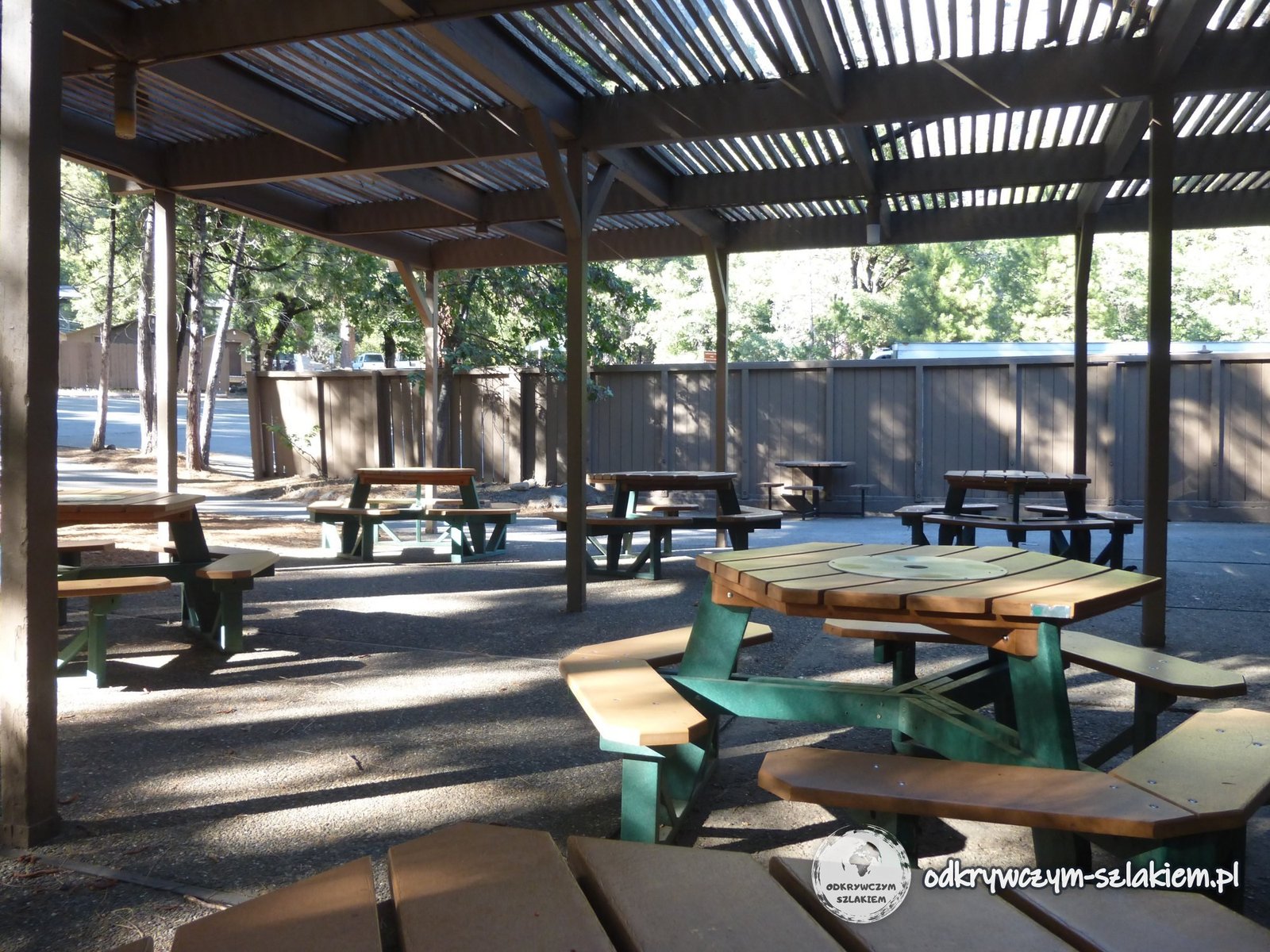
Pretty much anywhere. You can go down to the river, or even to a bar (e.g. in Curry Village). There are lots of picnic tables, and workers regularly had barbecues (drinking beer outdoors is certainly legal in such places).
Restored historic names
When we arrived, some places in Yosemite had different names than they do now – later their historic names were restored (e.g. “Half Dome Village” is now “Curry Village” again, and “The Majestic Hotel” is “The Ahwahnee”).
 5:57
TRANSPORT
Flights
We bought our plane tickets three months before departure (after the interview with the employer). To get to Yosemite, the best option was to fly to Los Angeles (LAX) or San Francisco (SFO). For us, though, it was more convenient to fly to LAX from Berlin.
For a ticket with hand luggage and checked baggage we paid about €350 per person. First we flew 1.5 hours to Stockholm, where we had 2.5 hours to change planes, and then 11 hours to Los Angeles. I regret that we didn’t have window seats and couldn’t admire Greenland.
Getting to the park
Well in advance we also bought tickets for the journey from Los Angeles to Yosemite (310 miles ~ 500 km). We used the Wanderu website (click here) – the carrier was Amtrak. We set off on 13 June in the morning (around 9:00). We were in Yosemite Valley at about 20:00. The journey was quite long – 10/11 hours, with two changes – in Bakersfield from bus to train and in Merced from train to bus (we had to wait for each one). Such a ticket cost about €50 ($60) per person.
We spent our first night in Los Angeles for free thanks to Couchsurfing – our host Joe looked after us well, and in the morning drove us to the stop where our journey to Yosemite began.
 4:17
... but now what?
We got off in the centre of Yosemite Village (by the Yosemite Valley Visitor Center). We made the mistake of not telling the employer our arrival time in advance, but they hadn’t told us where to go either. We thought we would head to the address given in the contract (9001 Village Drive Yosemite National Park CA 95389) and everything would be fine. Not quite, because that address actually covers a large area, not one specific building. If you choose this option, be sure to arrange things with the employer beforehand. At that time everything was already closed. In the end we came across the park rangers’ office (Park Rangers). We explained the situation, they made some calls, and a man from the housing department (Housing Office) came to pick us up.
Free buses – the shuttle bus
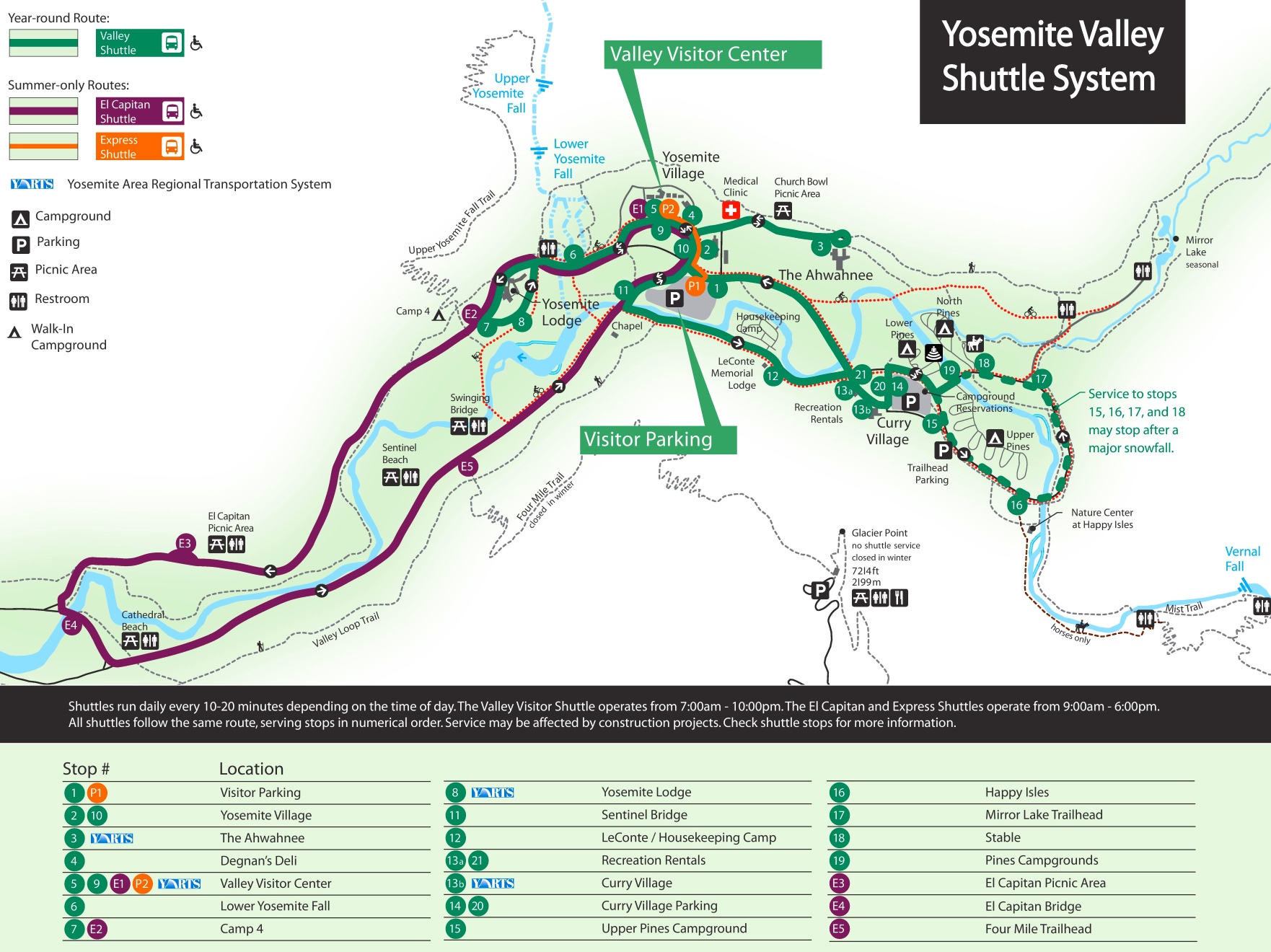
Three lines of free buses – shuttles – run around the park. They run every 10–20 minutes, depending on the time of day.
The route of the year-round green line (Valley Shuttle) has 21 stops at the most important places in Yosemite Village – the bus makes a big loop, so on one route it stops twice at some places. The bus will also take you to the start of many mountain trails. It runs from 7:00 to 22:00, so for my 6:45 shift I walked to work. Even better – always some 20 minutes more exercise. Fun fact – when the bus was full (it couldn’t take all the tourists from the stop), workers had priority boarding (the driver recognised the staff T-shirts).
The purple line (El Capitan Shuttle) runs only in summer and has just a few stops. It takes you, among other places, to the famous El Capitan (a paradise for climbers) and to the start of the Four Mile Trail (to Glacier Point).
The orange line (Express Shuttle) only takes you from the Visitor Parking to the Valley Visitor Center – I don’t really see the point, as these two places are quite close to each other (unless it is meant to take you to the first stop of the El Capitan Shuttle).
natural disasters
Risk of fire and flood
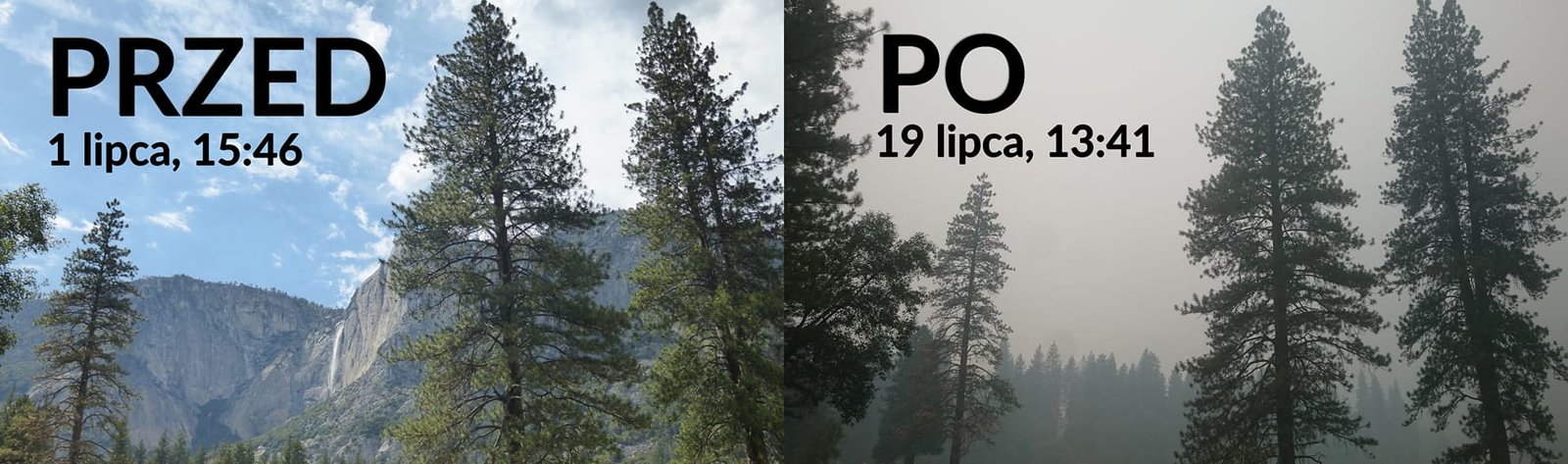
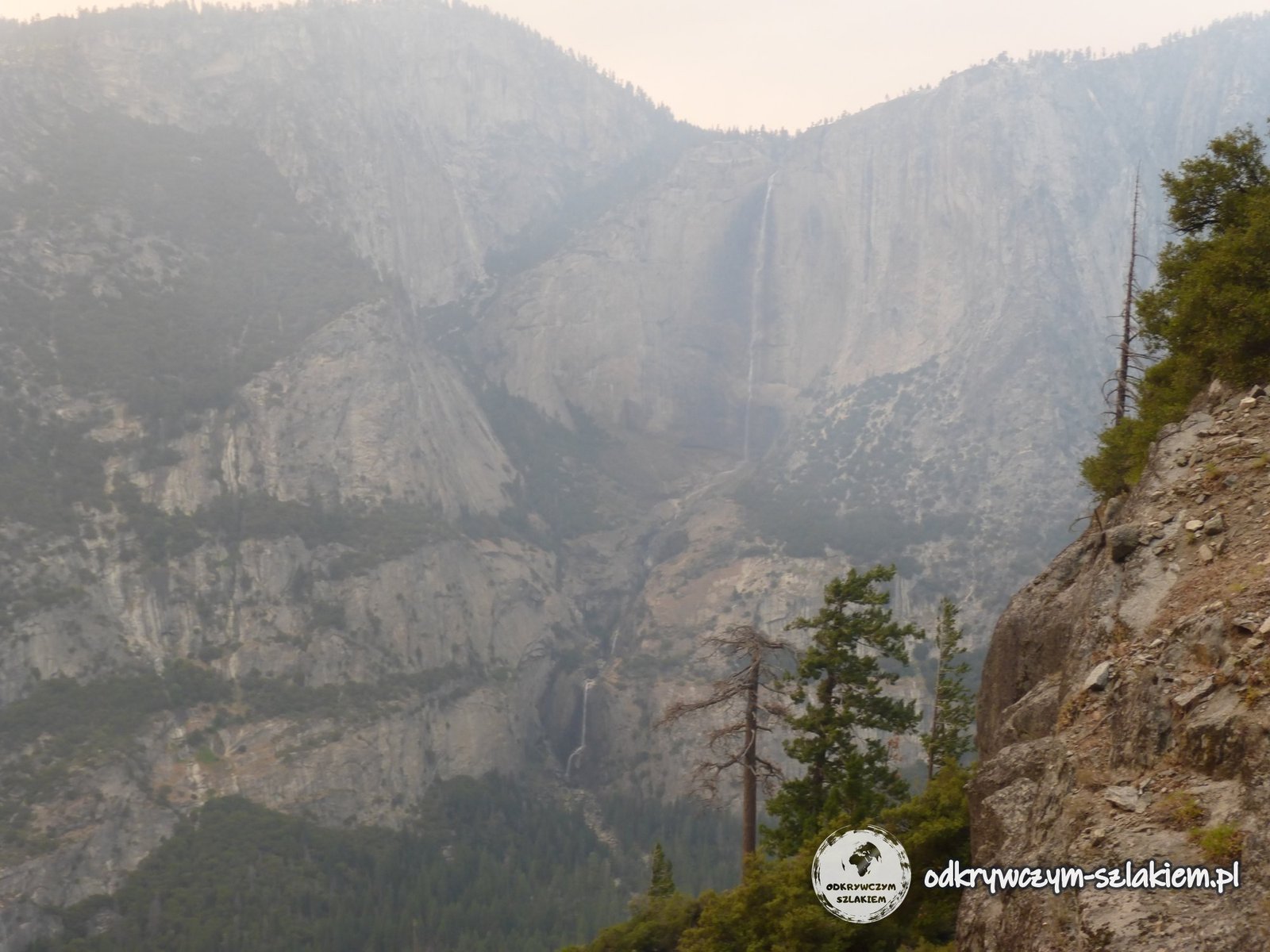
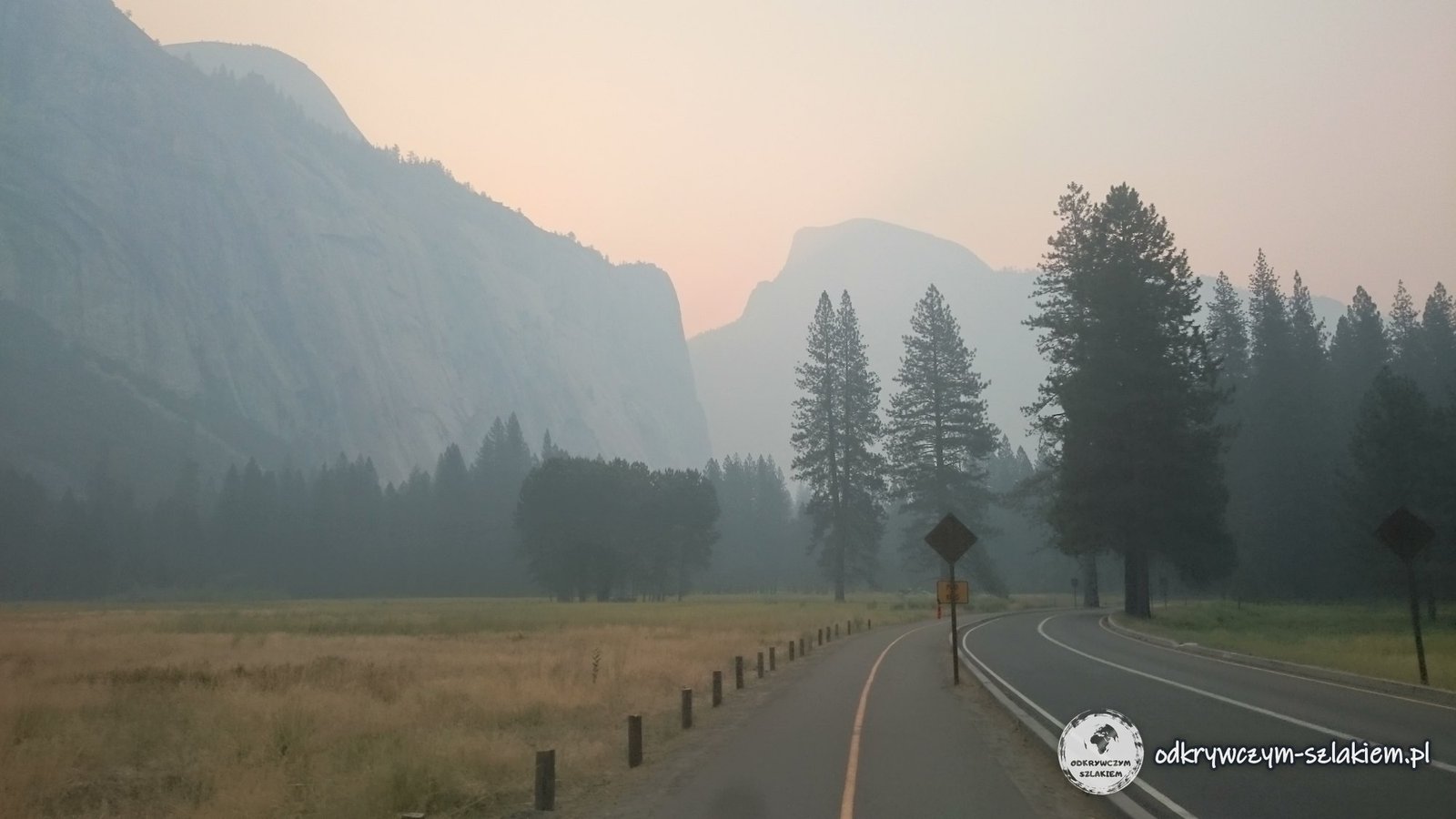
Keep in mind that wildfires happen regularly in California – and Yosemite is no exception (they have broken out there several times over the last few years). In 2018 we experienced the Ferguson Fire – I describe it in the post Evacuation from Yosemite.
Floods can also happen (the flood of the century in January 1997 – in places the water was over 1.5 m deep, and the damage was estimated at 178 million dollars). In summer 2018 some tents at the campgrounds got a bit flooded.
Of course nobody will warn you about the possibility of natural disasters, so as not to put you off working there.
The fire we lived through
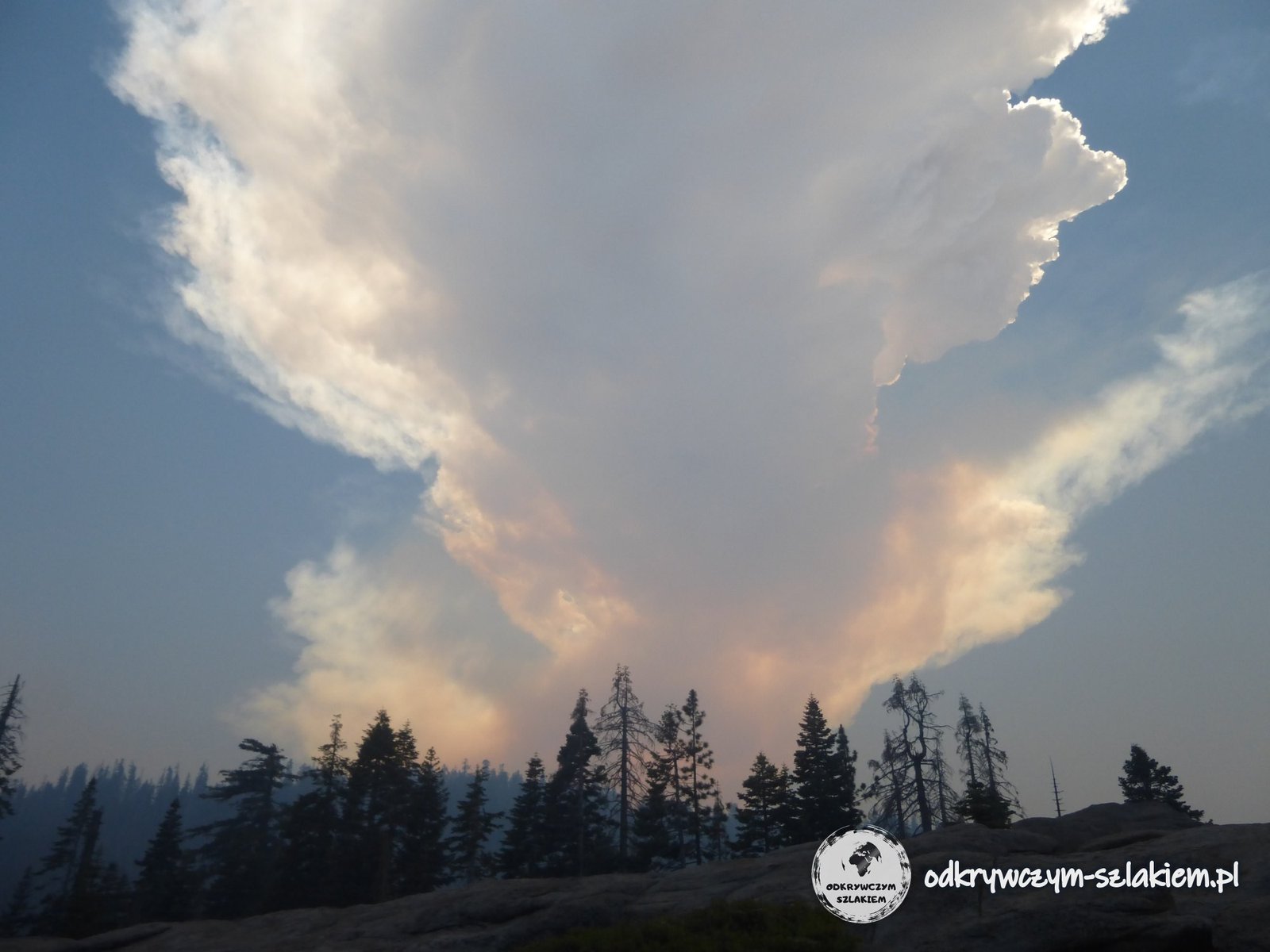
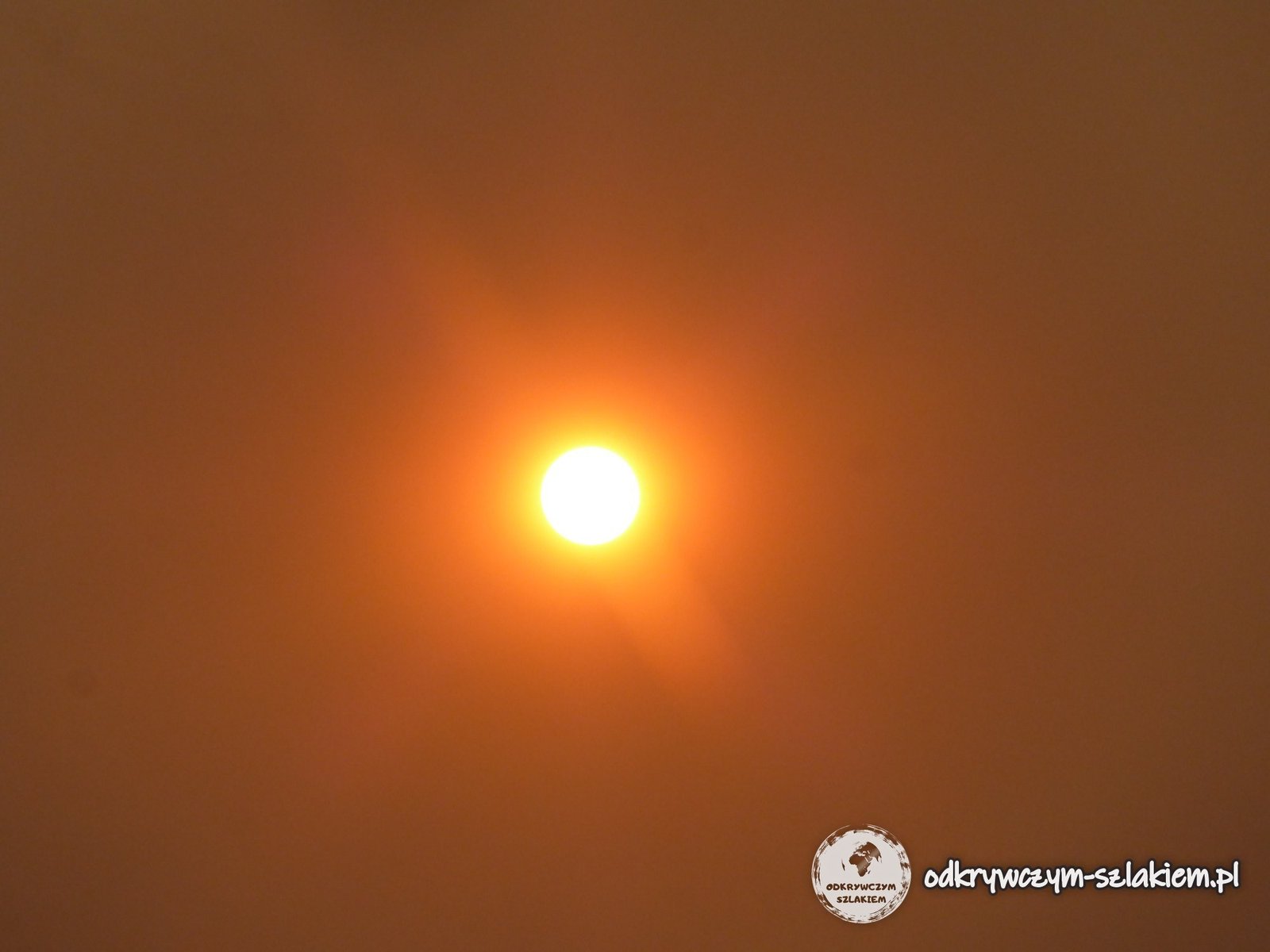
On 13 July 2018, about 30 km south-west of Yosemite Village, the Ferguson Fire broke out. For three weeks the valley was shrouded in smoke, on 25 July the park was closed to tourists, and on 3 August an evacuation was ordered – because of a misunderstanding I stayed behind in the empty park almost alone and only left the next day in a convoy past burning trees. After the Red Cross shelter near Mariposa, we lived for almost a week with the family of Kevin, a colleague from work, near Modesto. I tell the whole story, with videos from my vlog from those days, in a separate post: Evacuation from Yosemite – how a wildfire changed our Work & Travel.
Looking for a new job
We didn’t want to go back to Yosemite – the situation was too uncertain, and we were out of work for 2–3 weeks in total. After long negotiations with the American sponsor of the programme (CIEE) we got jobs in Grand Teton National Park in Wyoming, and the sponsor paid for our flights; others ended up in Florida, Colorado and Alaska, among other places, and some stayed in Yosemite. I describe how the negotiations went (including the first offer, from Mesa Verde) in the post about the evacuation from Yosemite, and what happened next in the post about Grand Teton National Park.
OTHER
Costs
With some agencies you pay no extra fees, but on site in the States you get a lower hourly rate.
Fees:
- Registration fee – about €210 (about €175 with a discount)
- Programme with the FULL PLACEMENT option – the equivalent of $1,010
- Visa – the equivalent of $160
- Flight from Berlin to Los Angeles (with luggage) – about €350
- Visa photos, trip to Warsaw, transport to Berlin – about €45
Visit to the embassy (Warsaw)
Our appointment at the US Embassy in Warsaw was set for 9 May. Beforehand we were told exactly which documents to bring. You couldn’t take in, among other things, a mobile phone, which we left, together with other things, at the E.Wedel Chocolate Lounge café (ul. Piękna 18).
The interview with the consul itself was fairly simple. He asked about my studies, my Work & Travel workplace, how I had managed to get a job in Yosemite, and about my plans for seeing the States.
Sightseeing outside Yosemite while working
While working in Yosemite, outside the park we went to San Francisco and Sacramento (only because of the fire – see evacuation from Yosemite), and not at all to Los Angeles. We did the whole week-long loop from Yosemite via San Francisco and Sacramento back to the park (916 km) by public transport. It’s too far, and working 5 days a week you don’t have time for it. Besides, Yosemite has so much to offer that 3 months is too little to get to know the whole park.
Other workers
The other workers were really nice – we are still in touch with some of them today. Of course there is always someone you don’t get on with, but we can’t complain about the 2018 crew. There were few Poles; the large national groups on the Work & Travel programme were Romanians, Spaniards and Turks.
SSN/bank
If this is your first time on Work & Travel, one day the employer will take you to Fresno to get a Social Security Number (SSN). It is an important document in the United States.
There is also a trip to open an American bank account – since you are paid by cheque, you can’t use the money until you deposit it. Before returning to Poland, it’s best to withdraw everything from the account and then close it.
A park in California and marijuana
Many people don’t think about it, but every time you enter a national park, you leave the state and stand on land controlled by the federal government. As a result, national parks are subject to federal law. This means that state laws do not apply there. So even though, for example, the recreational use, possession and sale of cannabis is legal under Californian law, this does not apply in Yosemite National Park.
And since the federal government still considers marijuana an illegal substance on a par with heroin and ecstasy, bringing it into a national park is therefore breaking the law.
Short summary
The park is wonderful! Because of the great mountain trails, good pay, minimal housing costs and not having to pay for food, as well as the generally good working conditions and nice atmosphere, I particularly recommend the Yosemite offer. We liked this place the most of anywhere in the whole United States!
Shame about the fire. Above all, you need to know that there are wildfires in California every year, so it can happen that a fire leads to the park being temporarily closed, or even evacuated! The evacuation at least taught us one lesson – how to make important decisions and cope in stressful situations.
As I wrote at the beginning – if you have any more questions, leave a comment. A useful information group on Facebook is Work and Travel USA .info PL.

