
I spent the turn of 2025 and 2026 – from 26 December to 3 January – in Spain, visiting my sister Kasia, who lives on the Costa Blanca. That week was all about walks, long and short, along the beaches and streets of Torrevieja and the surrounding area. One day we went further afield: to the 14th-century castle in Almansa, and on the way back to the Santa María Magdalena sanctuary near Novelda, whose architecture clearly echoes Gaudí. There were hikes too – on the PR-CV 442 La Caldera del Gigante trail from Algorfa to Benejúzar – plus a rainbow over the pink lake, New Year’s Eve in the centre of Torrevieja and a New Year’s Day walk in Torre de la Horadada.
It was not my first winter in this part of Spain. My earlier visits in 2022–2023 – Alicante, Benidorm, Elche, Guadalest and Torrevieja itself – are collected in the post Costa Blanca in winter, and the mountain routes inland have a separate post on trails around Alicante. This time almost every place was new to me.
Table of contents
- Torrevieja – walks along the sea
- The pink lake and a rainbow
- The castle in Almansa
- The Santa María Magdalena sanctuary near Novelda
- The PR-CV 442 La Caldera del Gigante trail and Cabezo Redondo
- New Year’s Eve in Torrevieja
- New Year’s Day in Torre de la Horadada
- Practical information
Torrevieja – walks along the sea
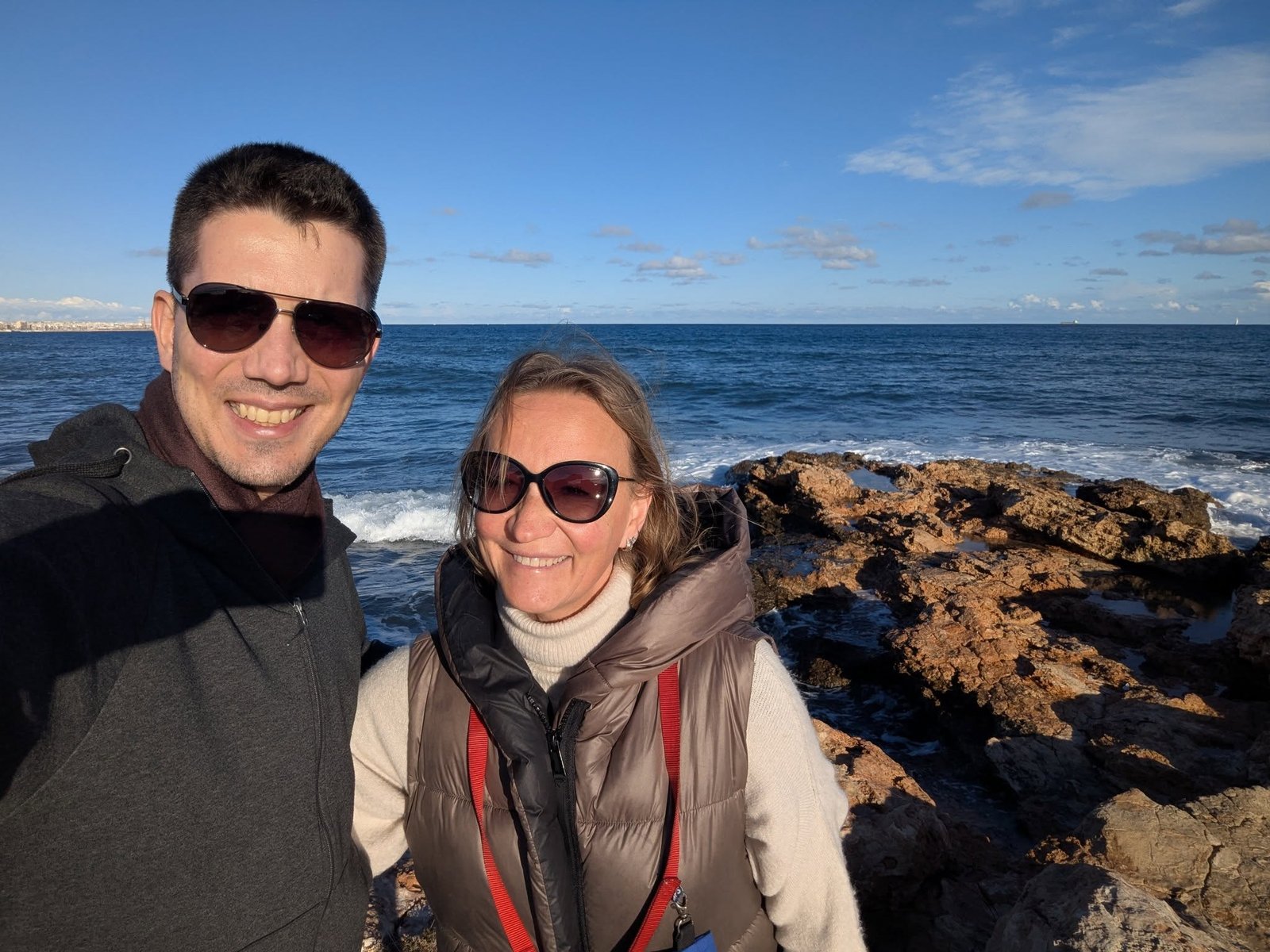
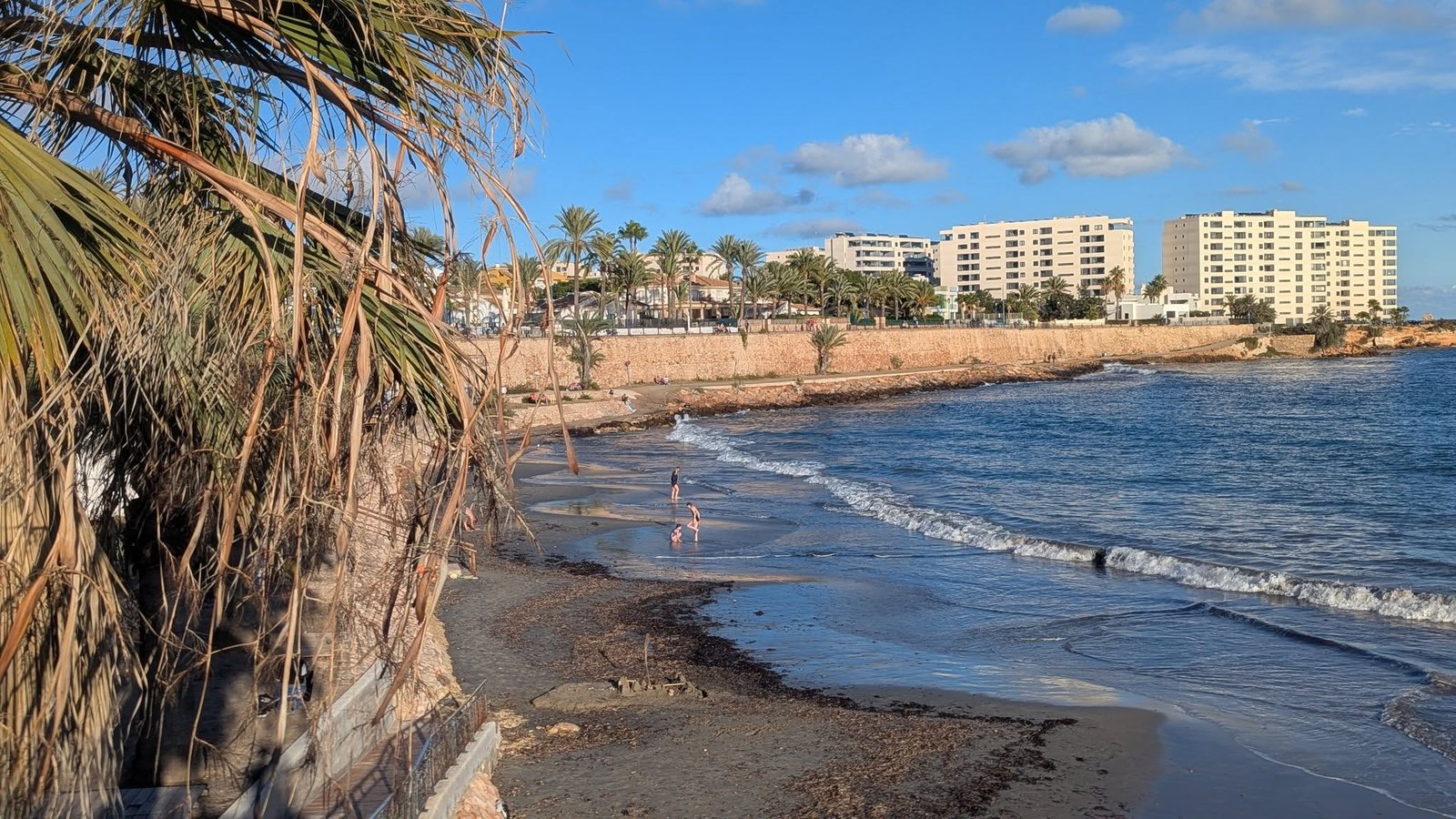
Our base for the whole week was Torrevieja. The first days were quiet: Kasia and I walked along the rocky shore and the seafront promenades, taking breaks on the beaches. It was pleasantly warm in the sun, although the sea was sometimes rough.
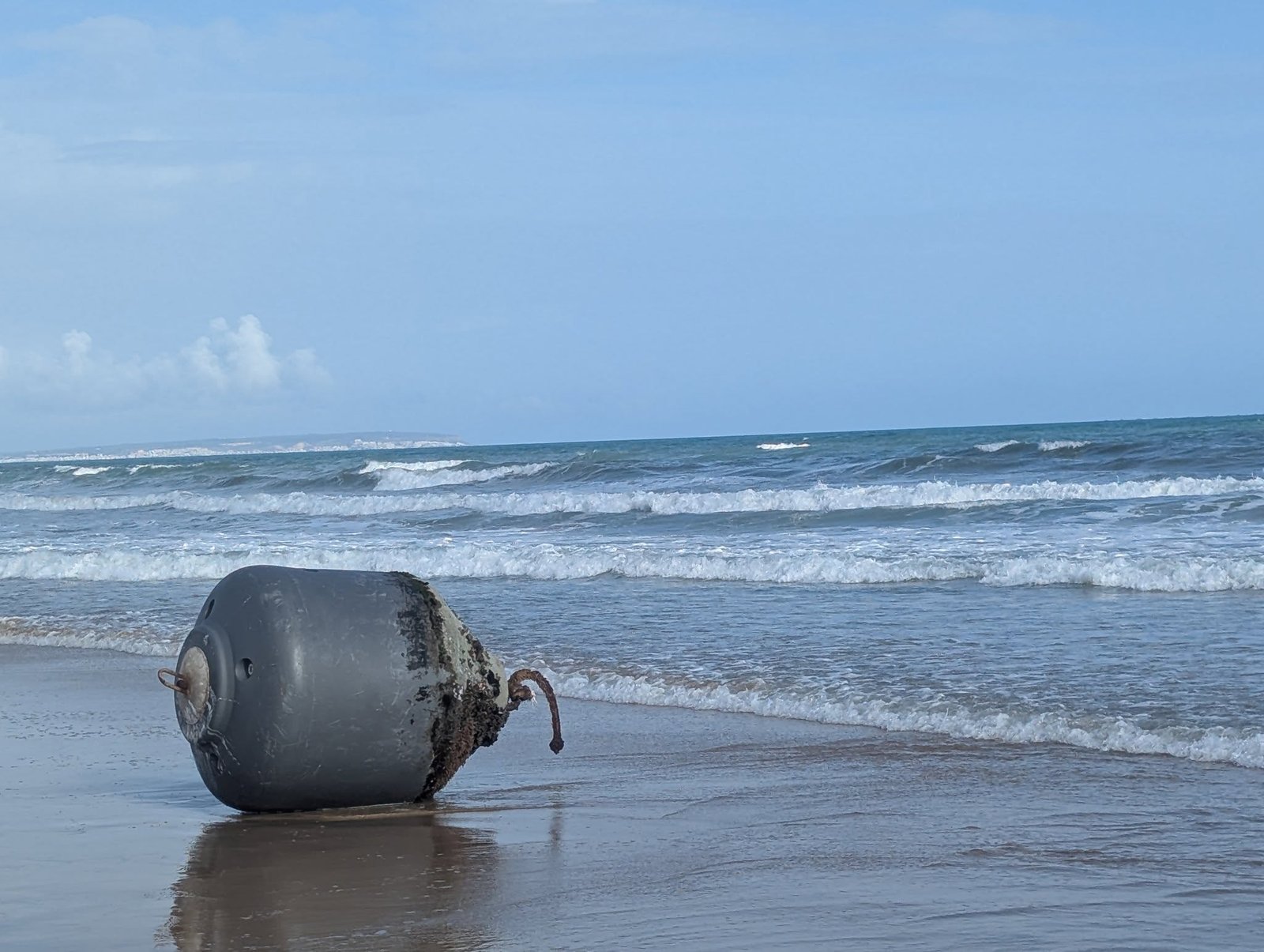
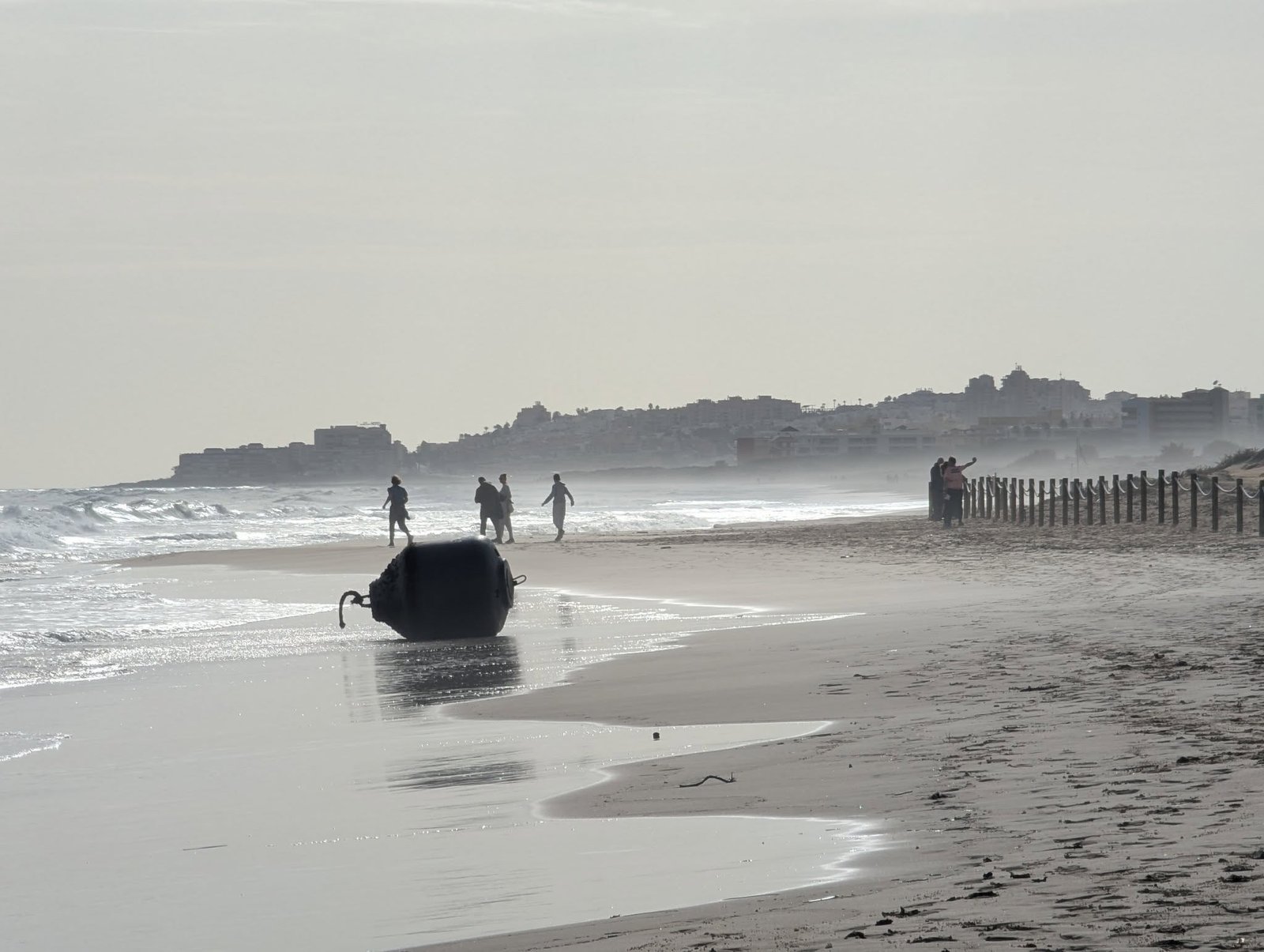
On one of the beaches lay a huge buoy washed up by the waves, and another day a fog hung over the shore, so thick that you could barely make out the buildings in the distance. More about the town itself – where the name comes from, where the cliffs and parks are – is in the Torrevieja section of the 2022 post.
The pink lake and a rainbow
Just outside the town lies the Laguna Salada de Torrevieja – a salt lake where salt is still extracted, famous for its pink water. The colour is at its best in autumn, in sunny weather, so at the end of December it was less pink. Instead, one afternoon a beautiful rainbow appeared over it and was reflected in the calm water.
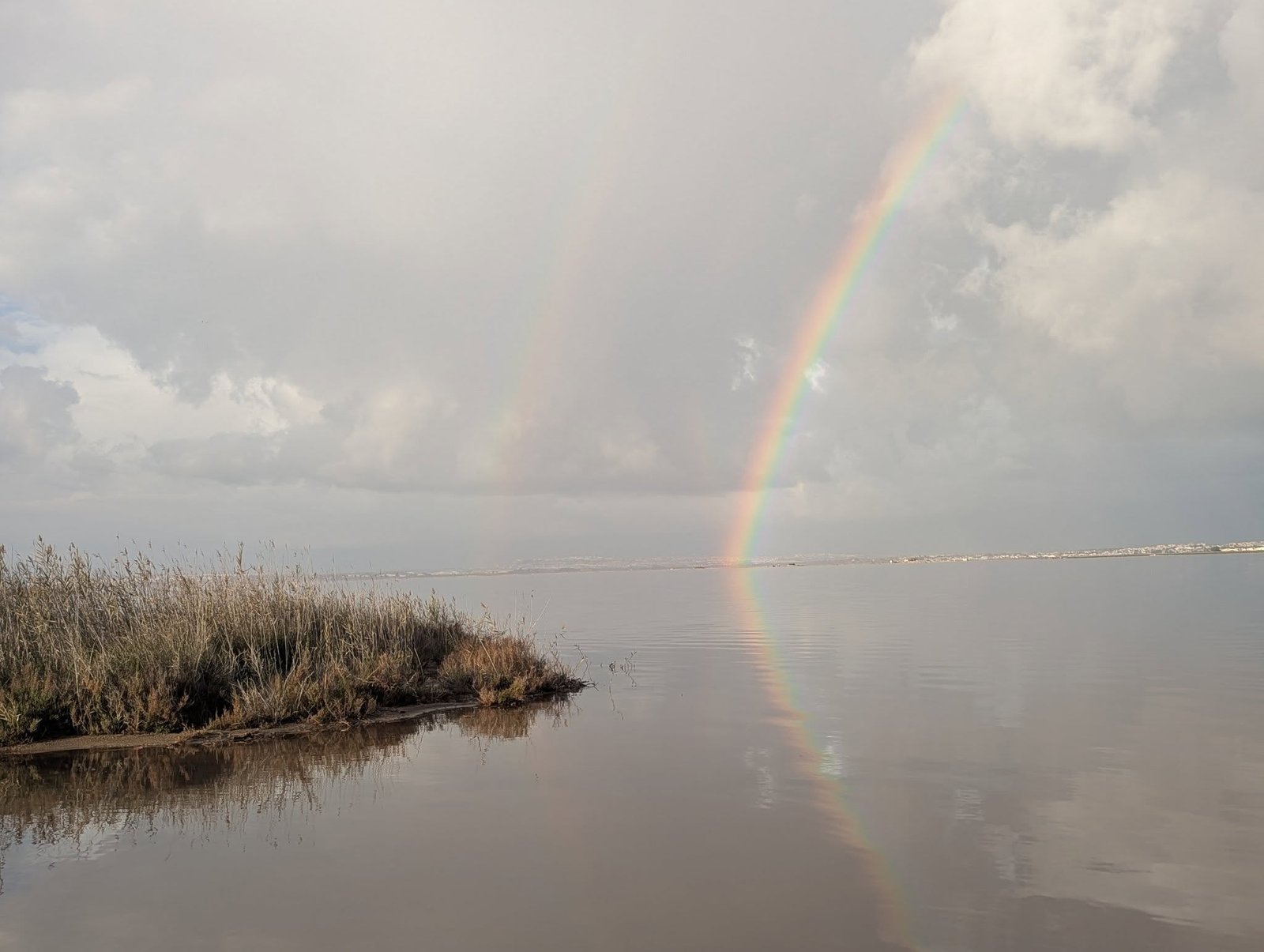
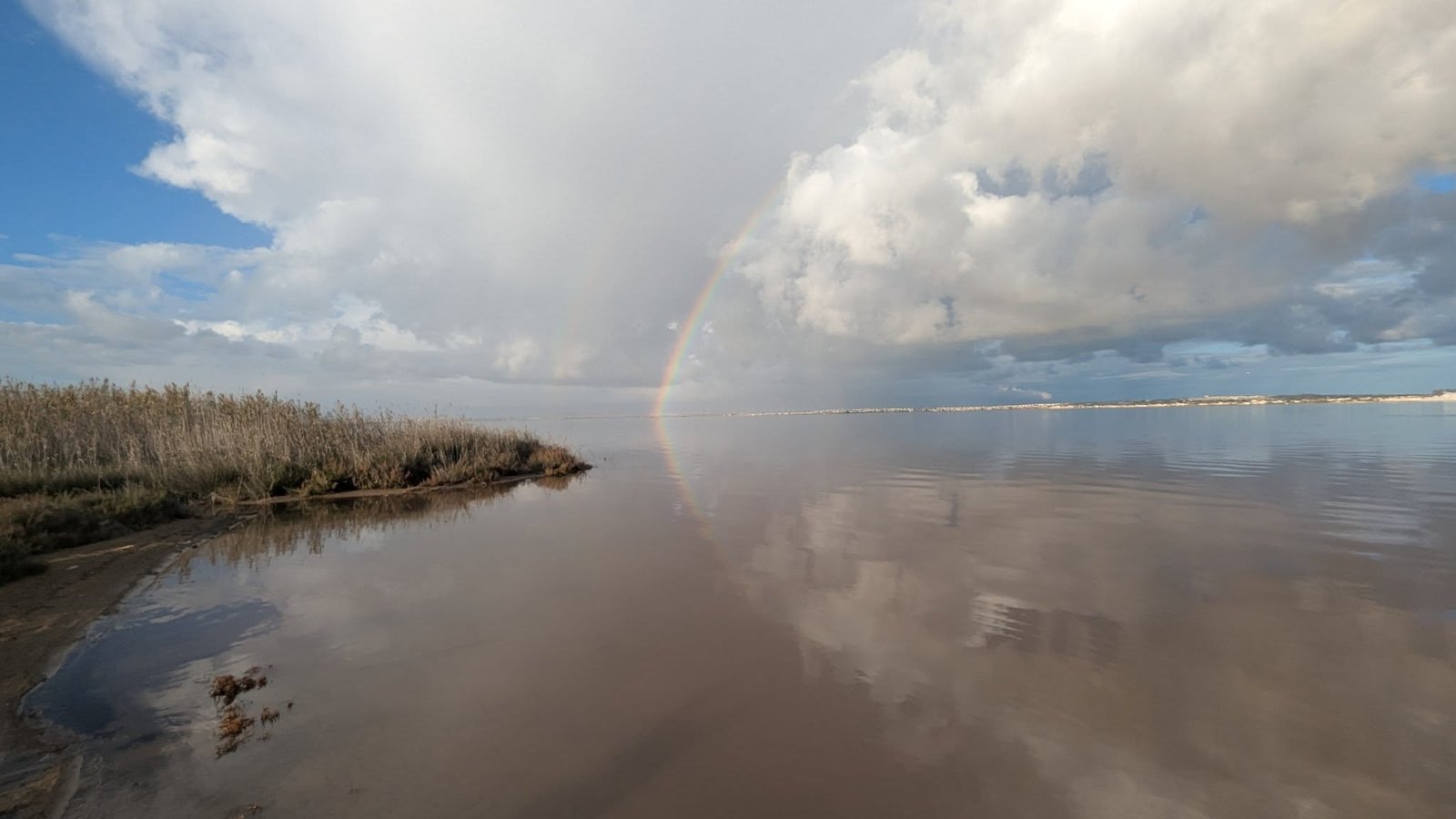
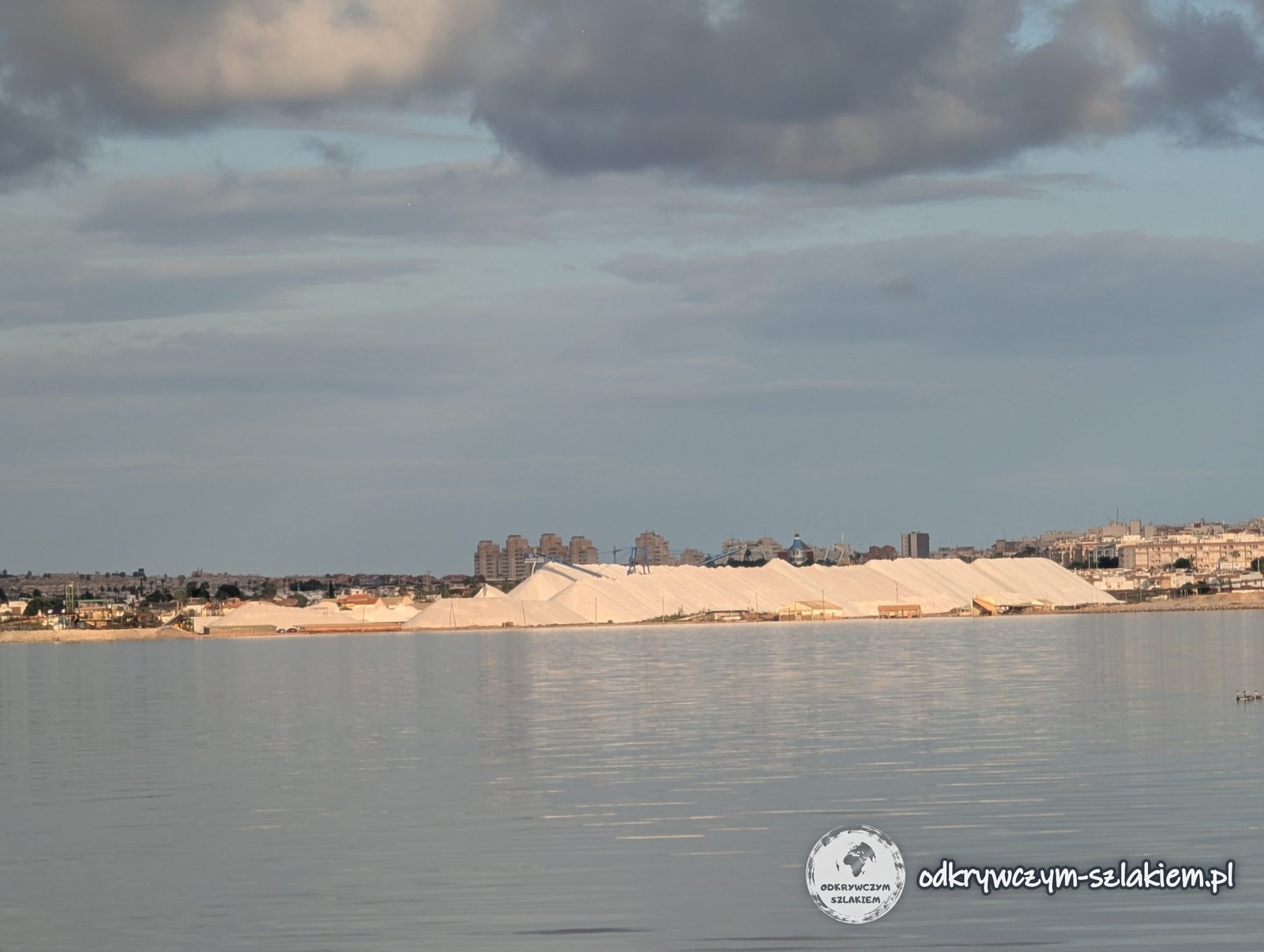
Together with the neighbouring La Mata lagoon, the lake forms a natural park (Parque Natural de las Lagunas de La Mata y Torrevieja), finally established in 1996. Salt has been extracted here since at least the 14th century, and its white heaps can be seen from far away. The pink colour of the water comes from a microscopic alga, Dunaliella, and in the breeding season up to about 2000 flamingos gather on the lagoons.
The castle in Almansa
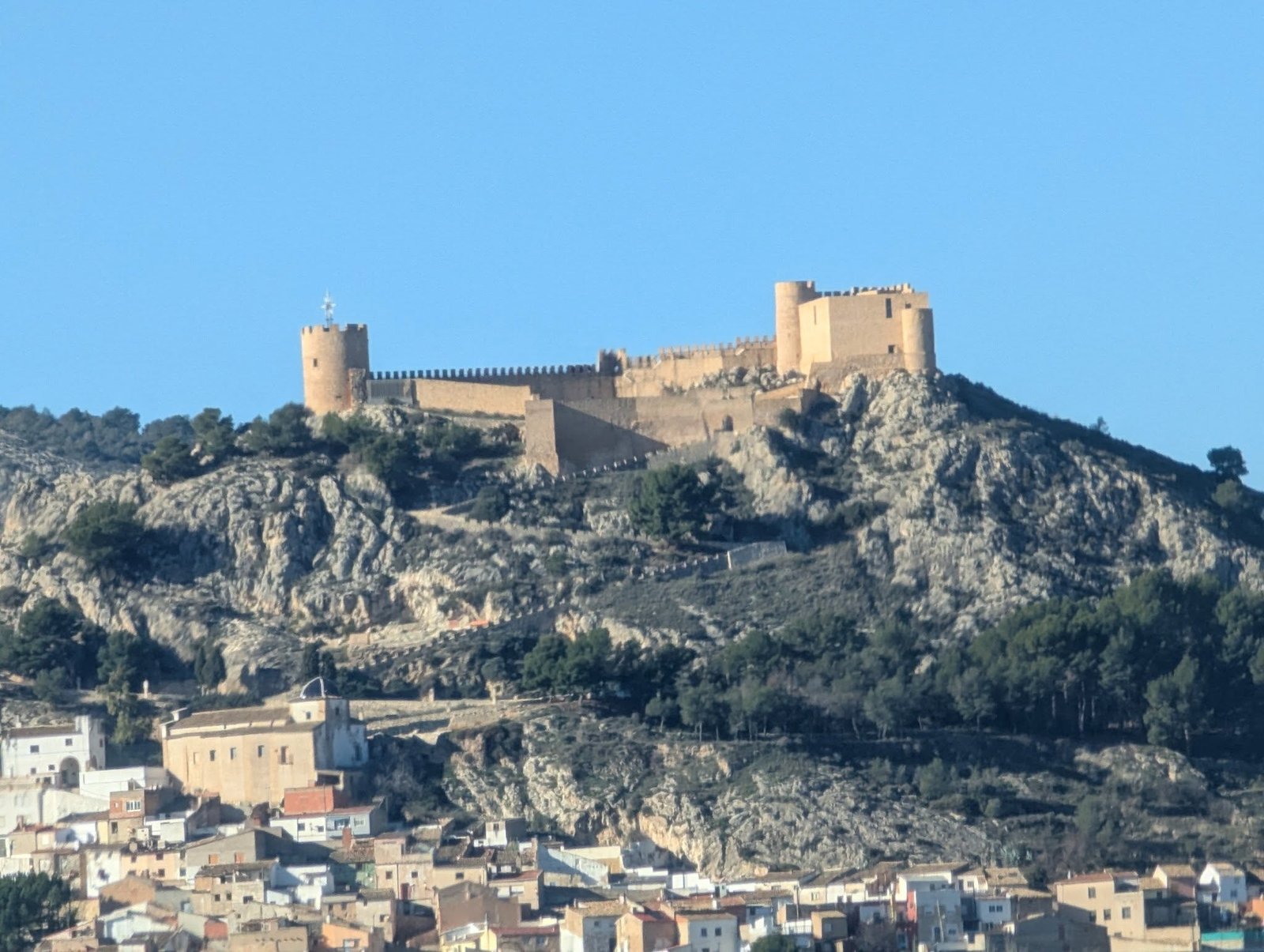
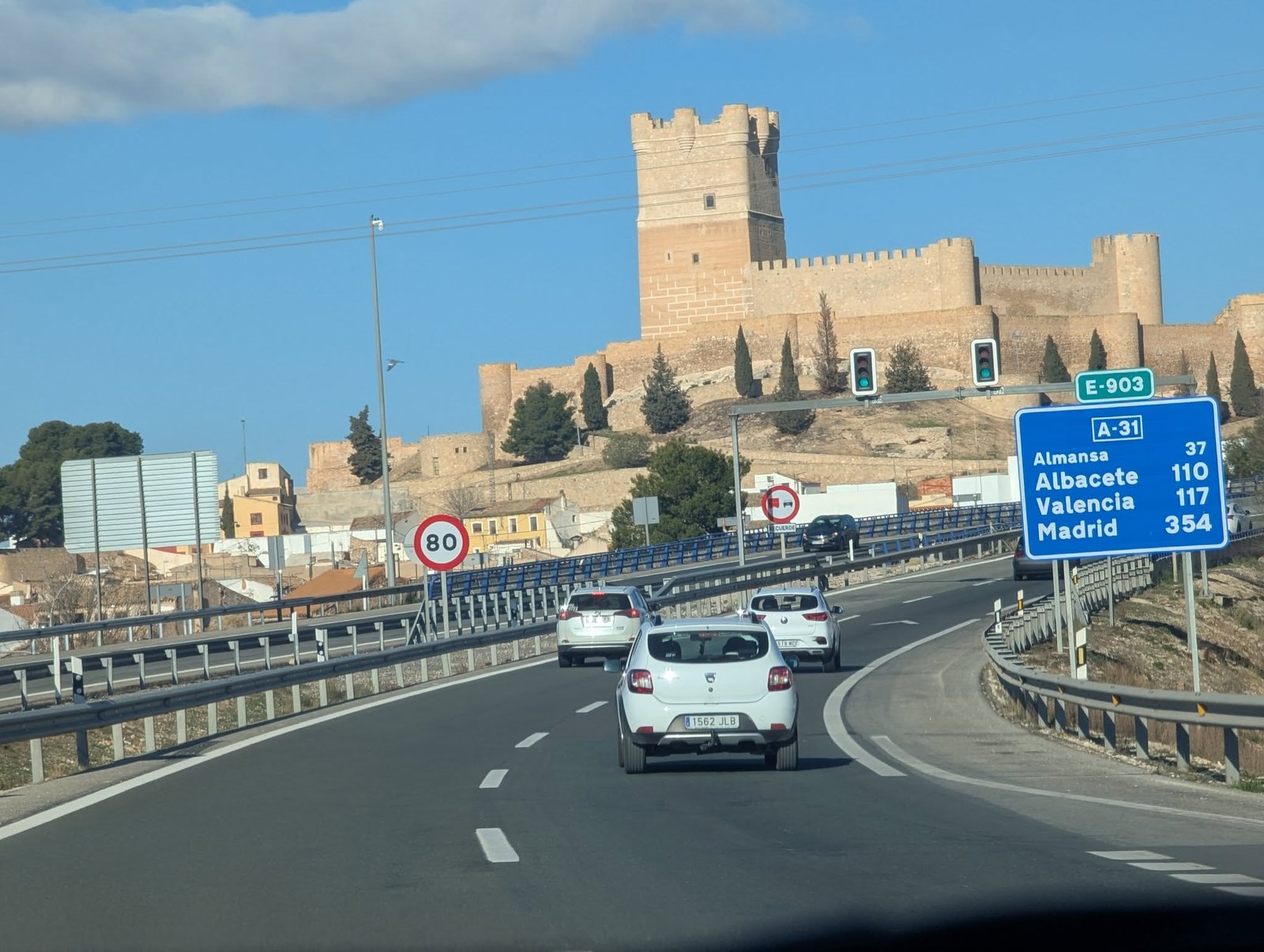
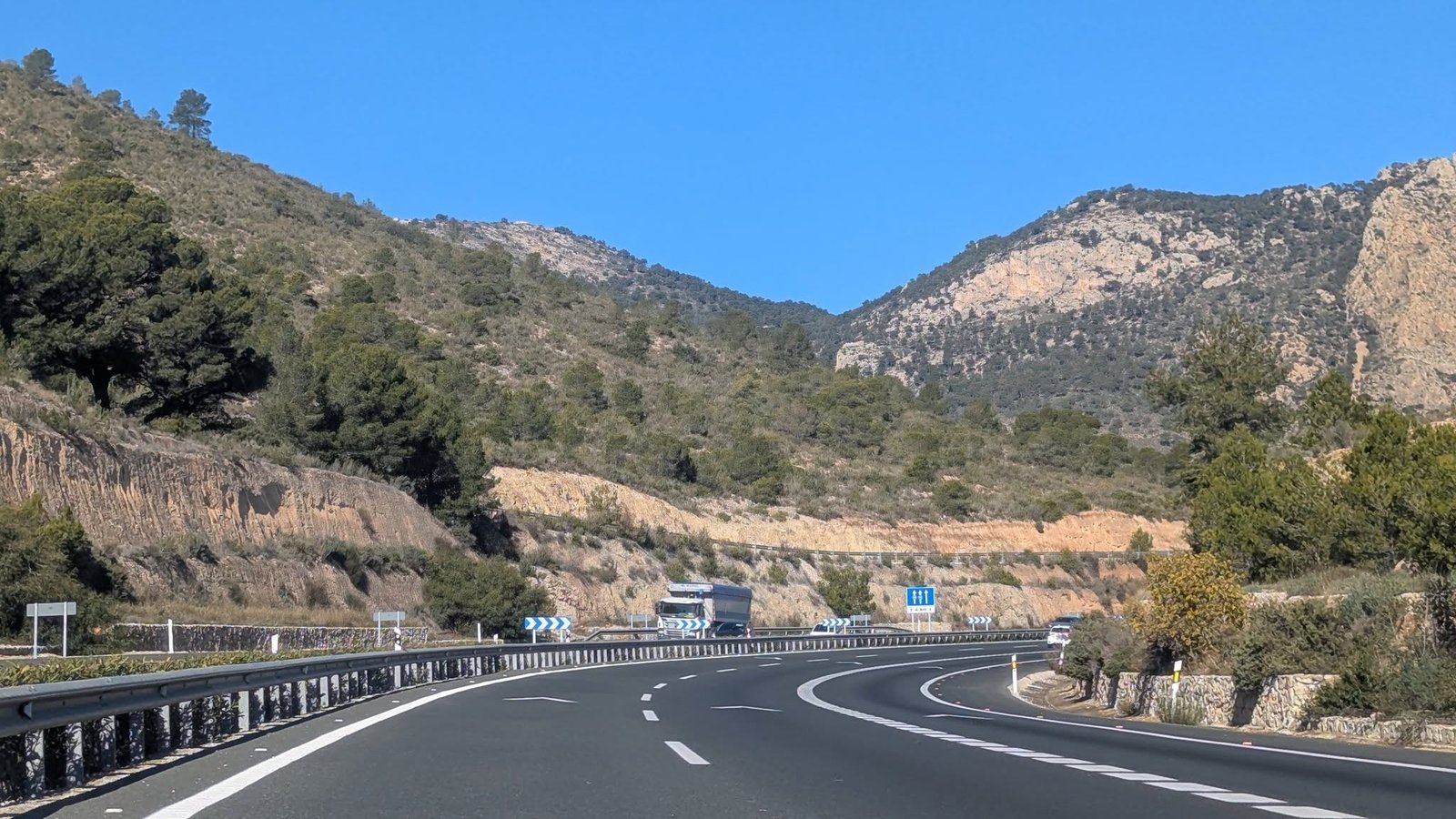
For the longest trip we drove further inland, to Almansa, about 105 km north of Torrevieja. This is no longer the Costa Blanca but the province of Albacete in Castilla-La Mancha. We took the A-31 motorway, from which you can see castles on the rocks above small towns along the way – among others in Sax and Villena.
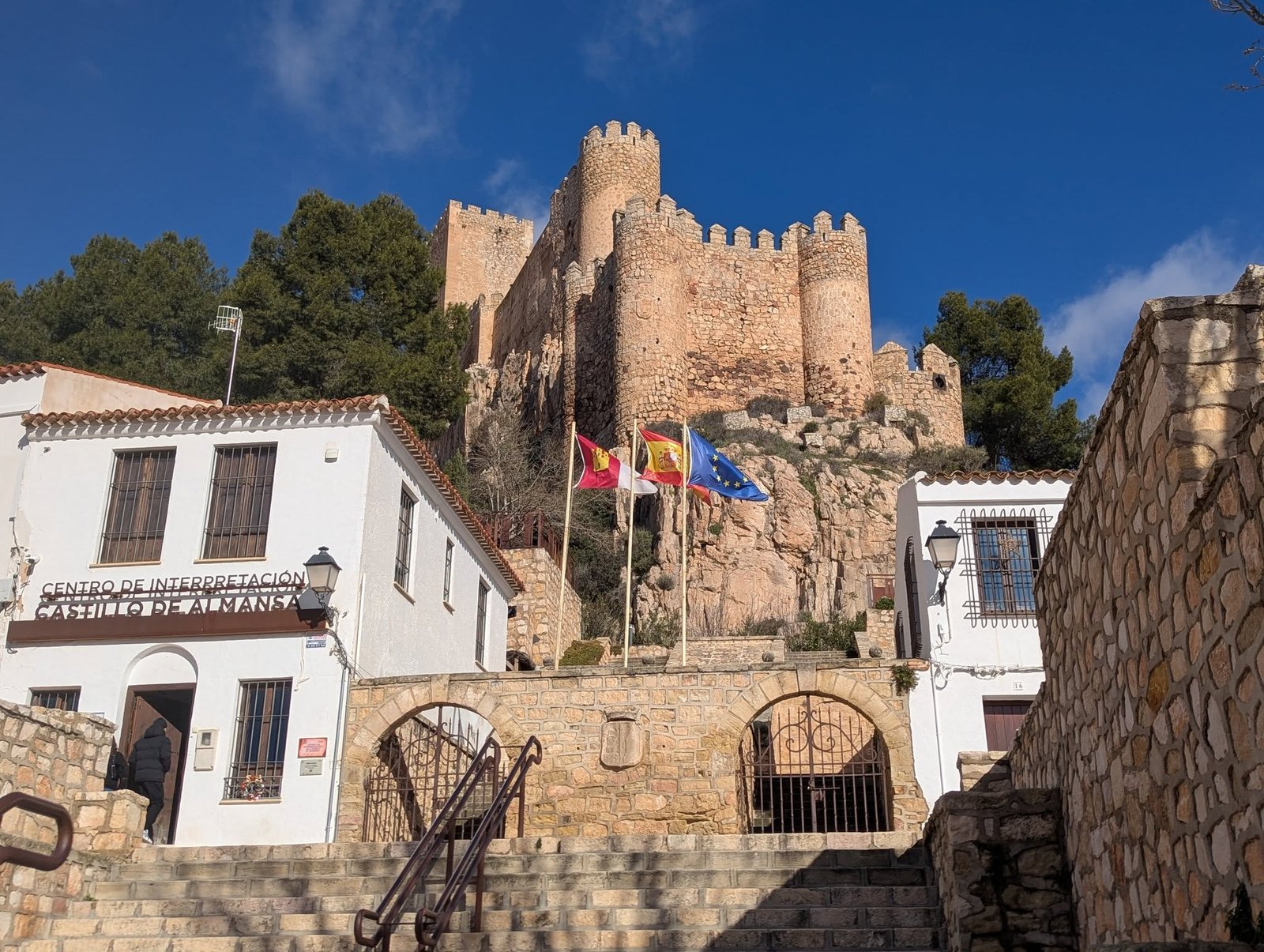
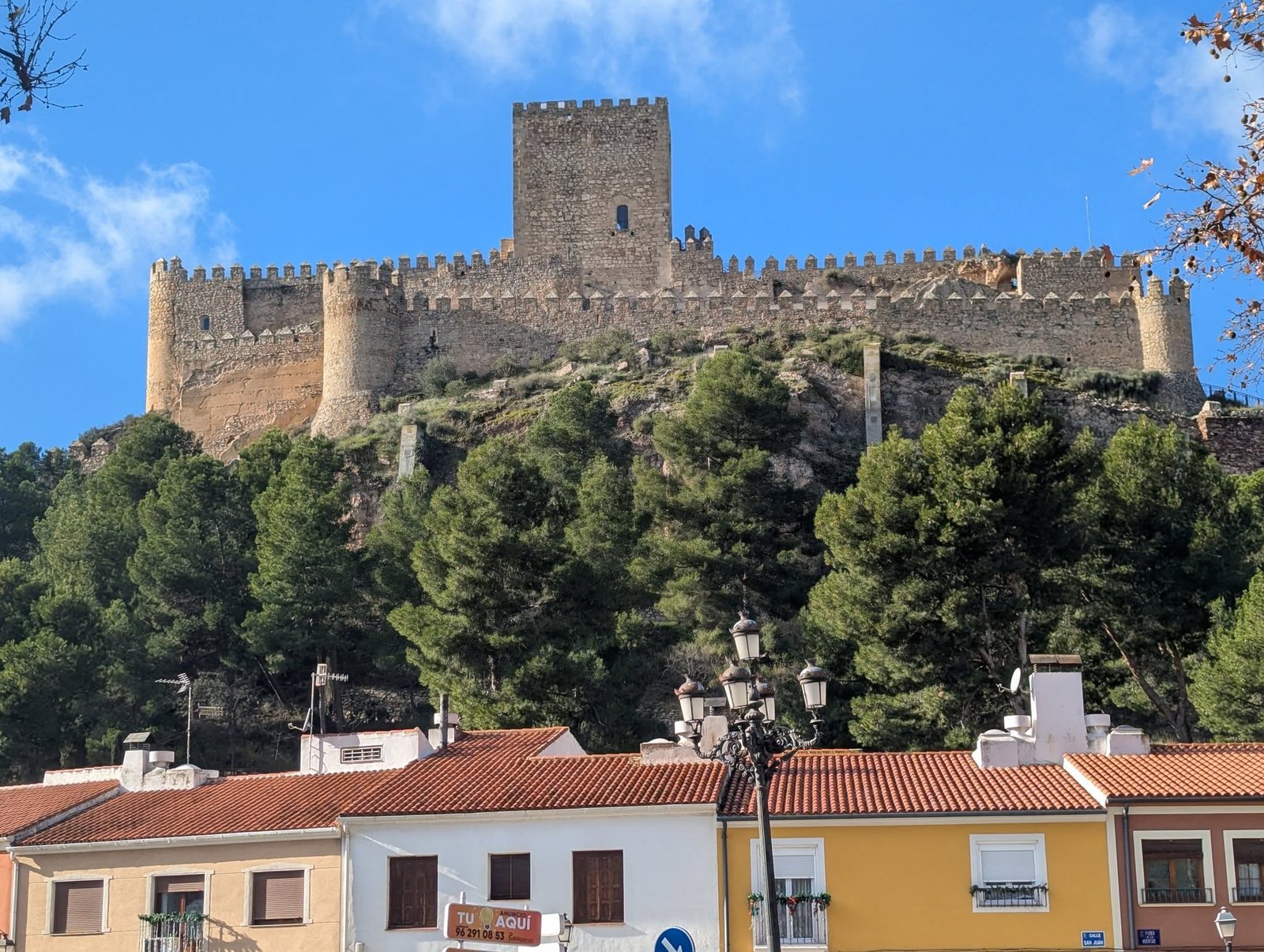
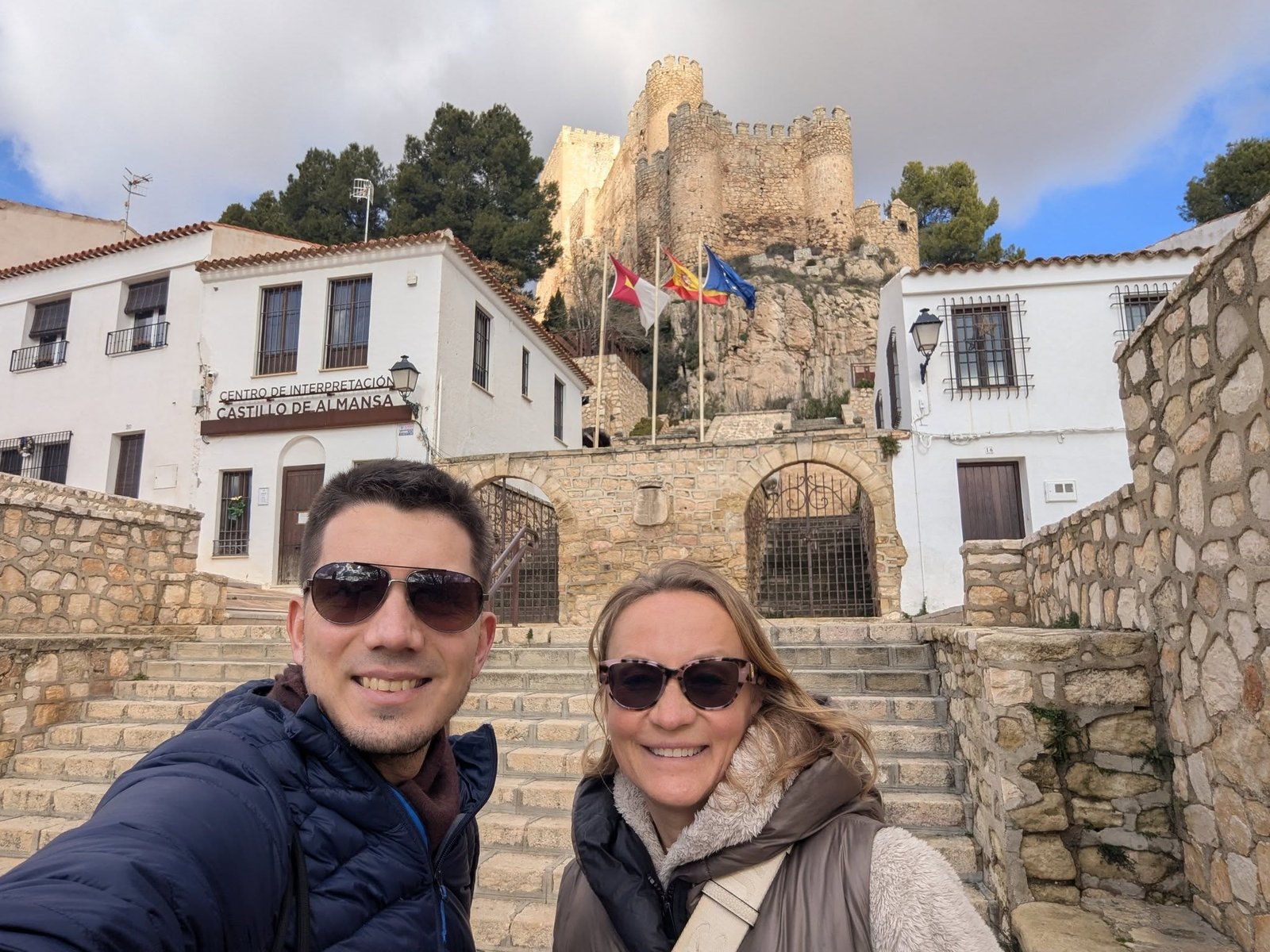
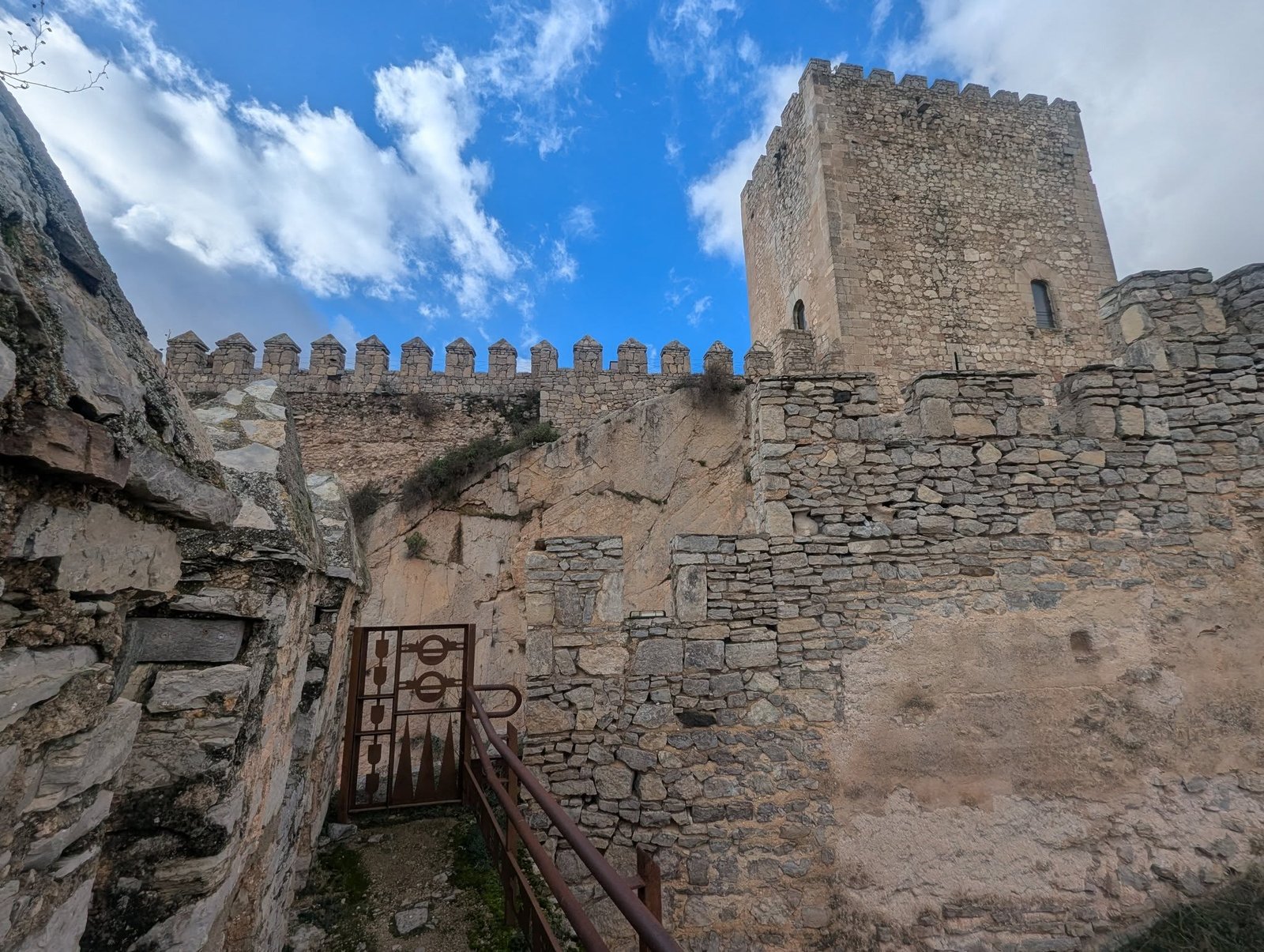
Almansa’s main attraction is its castle from the 14th century, built on the remains of an earlier Arab fortress. It stands on a rocky ridge that rises straight above the town’s roofs. Below the castle there is an information centre (Centro de Interpretación), and from there stairs and a path lead up to the gate.
Inside you can walk along the walls and towers, look into the chambers and climb a winding stone staircase up the keep. The walls are surrounded by huge rocks, and metal steps lead up to the battlements.
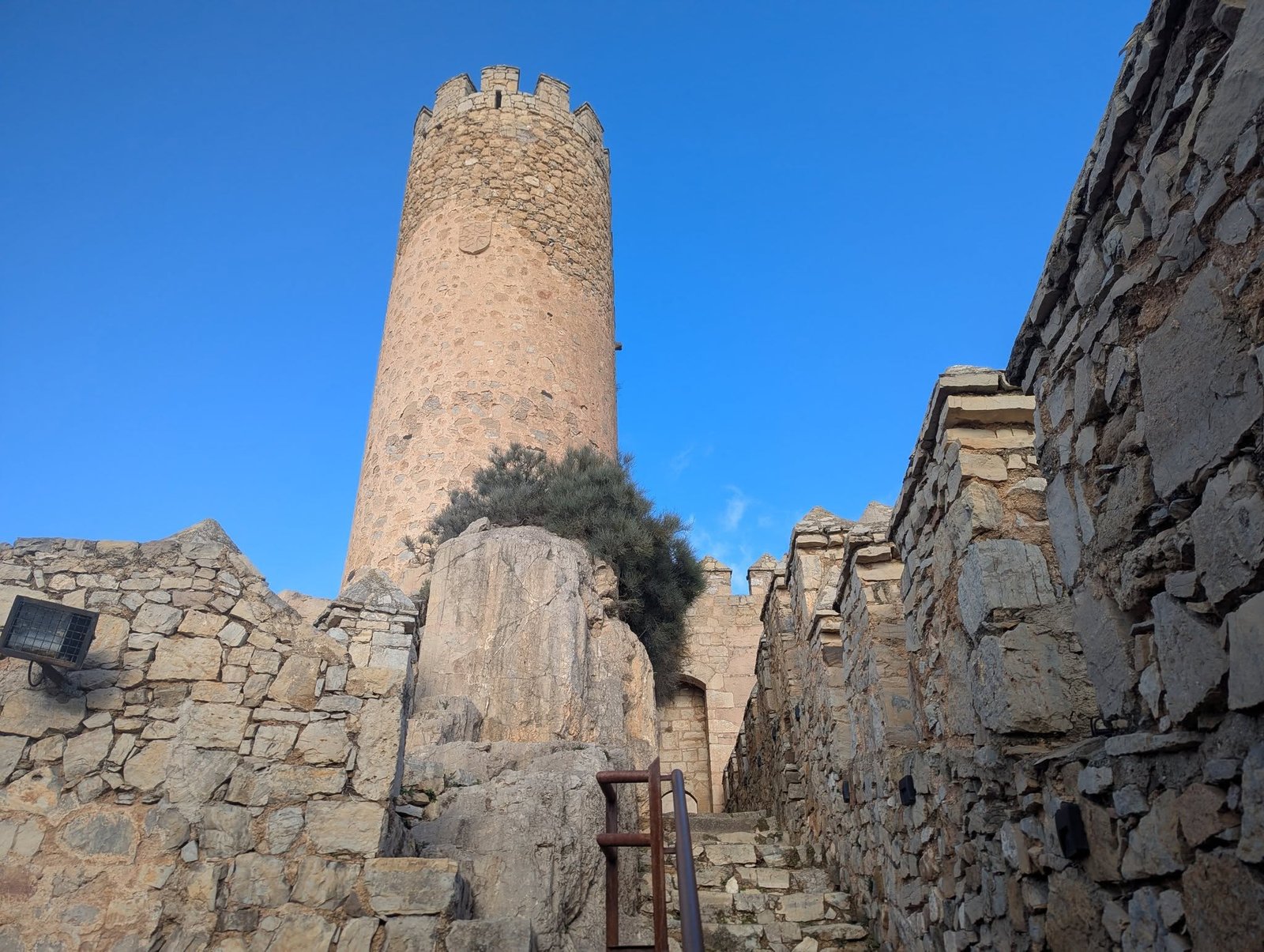
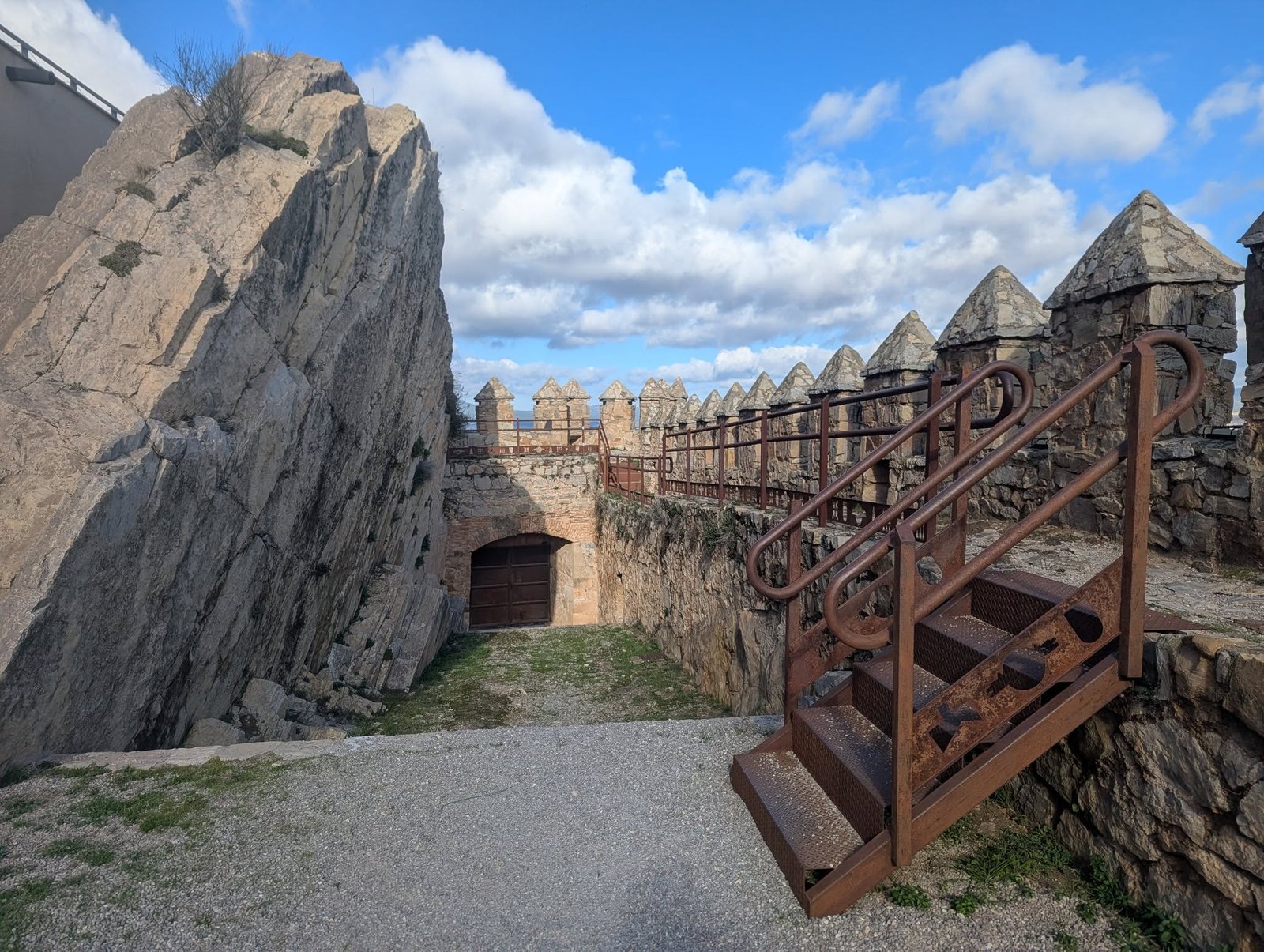
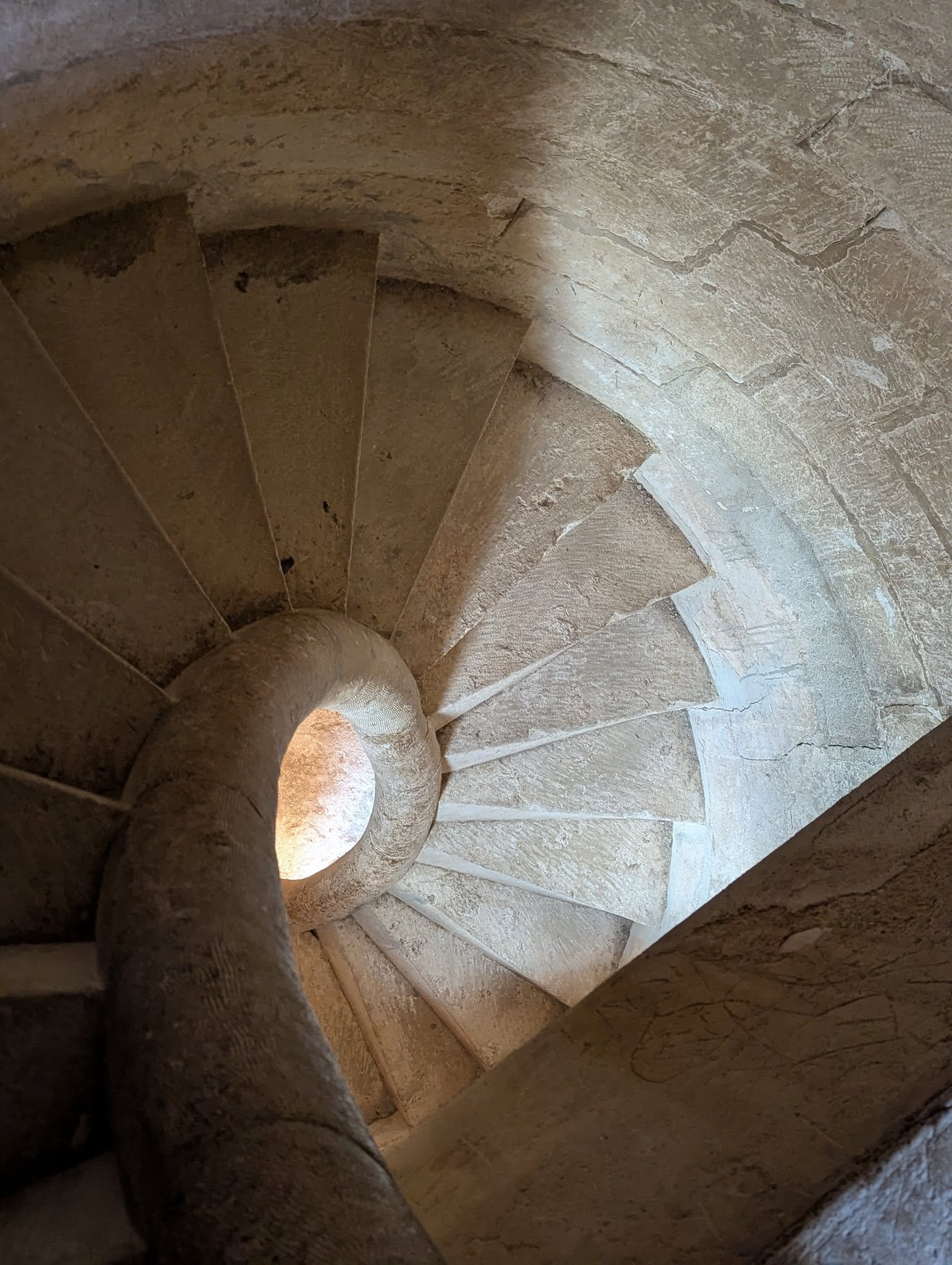
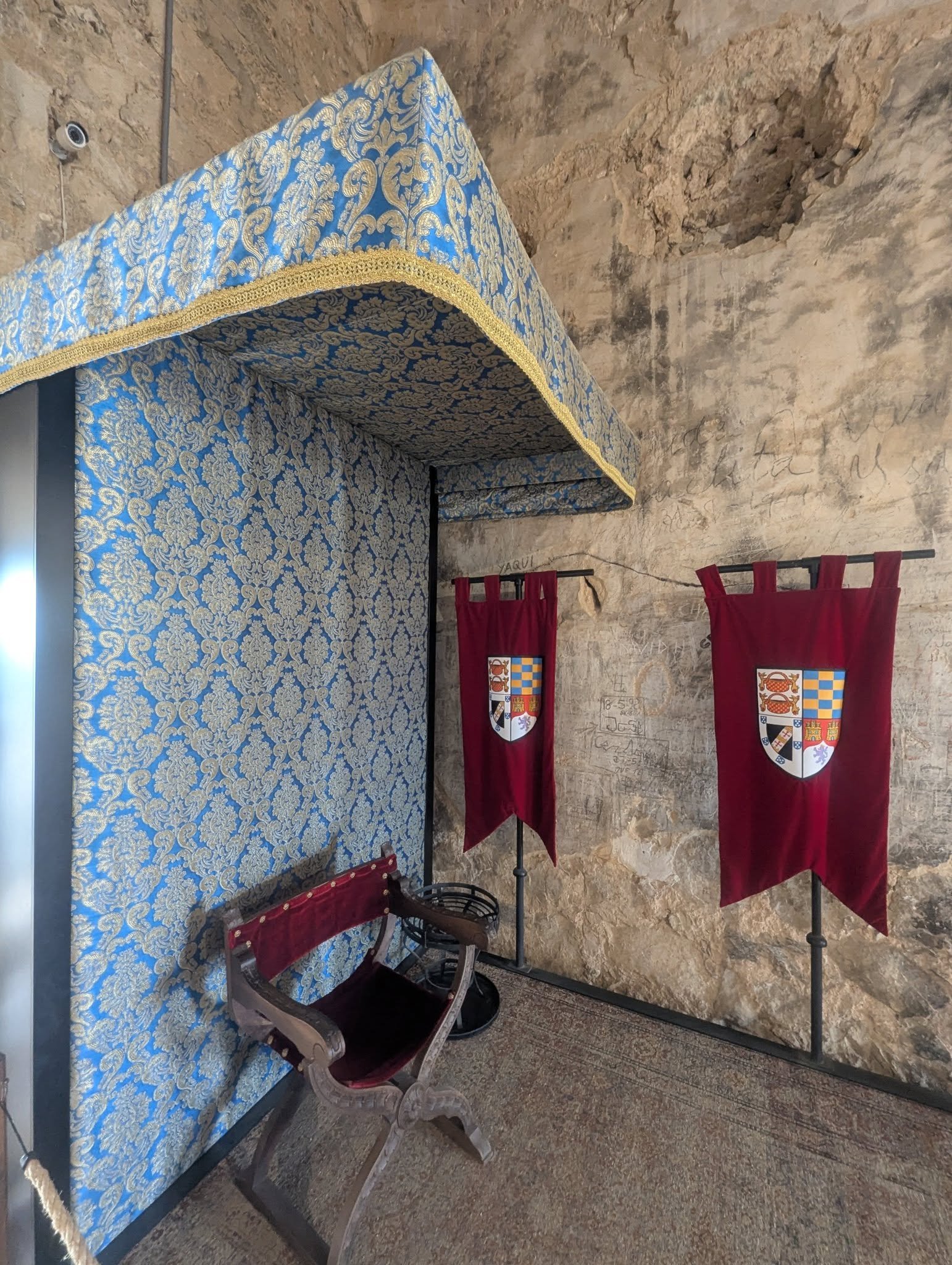
The castle owes its present form to Juan Pacheco, Marquis of Villena, who built the keep and the semicircular towers in 1449–1454 – his coat of arms can be seen on the keep and on the vault keystones. Before that, in the 14th century, the walls had been rebuilt by Don Juan Manuel, lord of Villena. From the 16th century the fortress fell into ruin, and in 1919 the mayor even wanted to demolish it – the royal academies objected, and in 1921 the castle was declared a historic monument. Inside there is a small exhibition with a model of the castle and figures of knights.


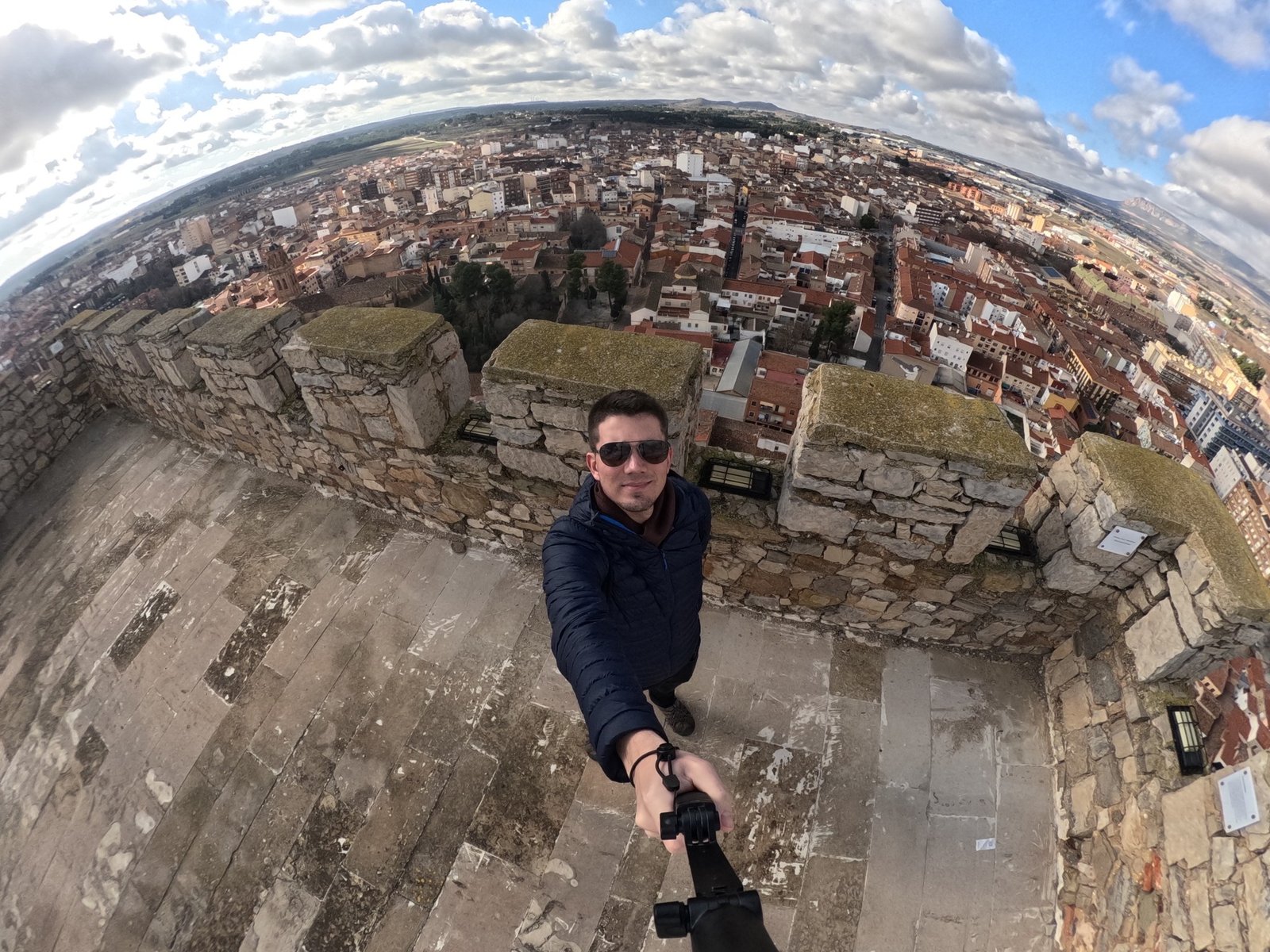
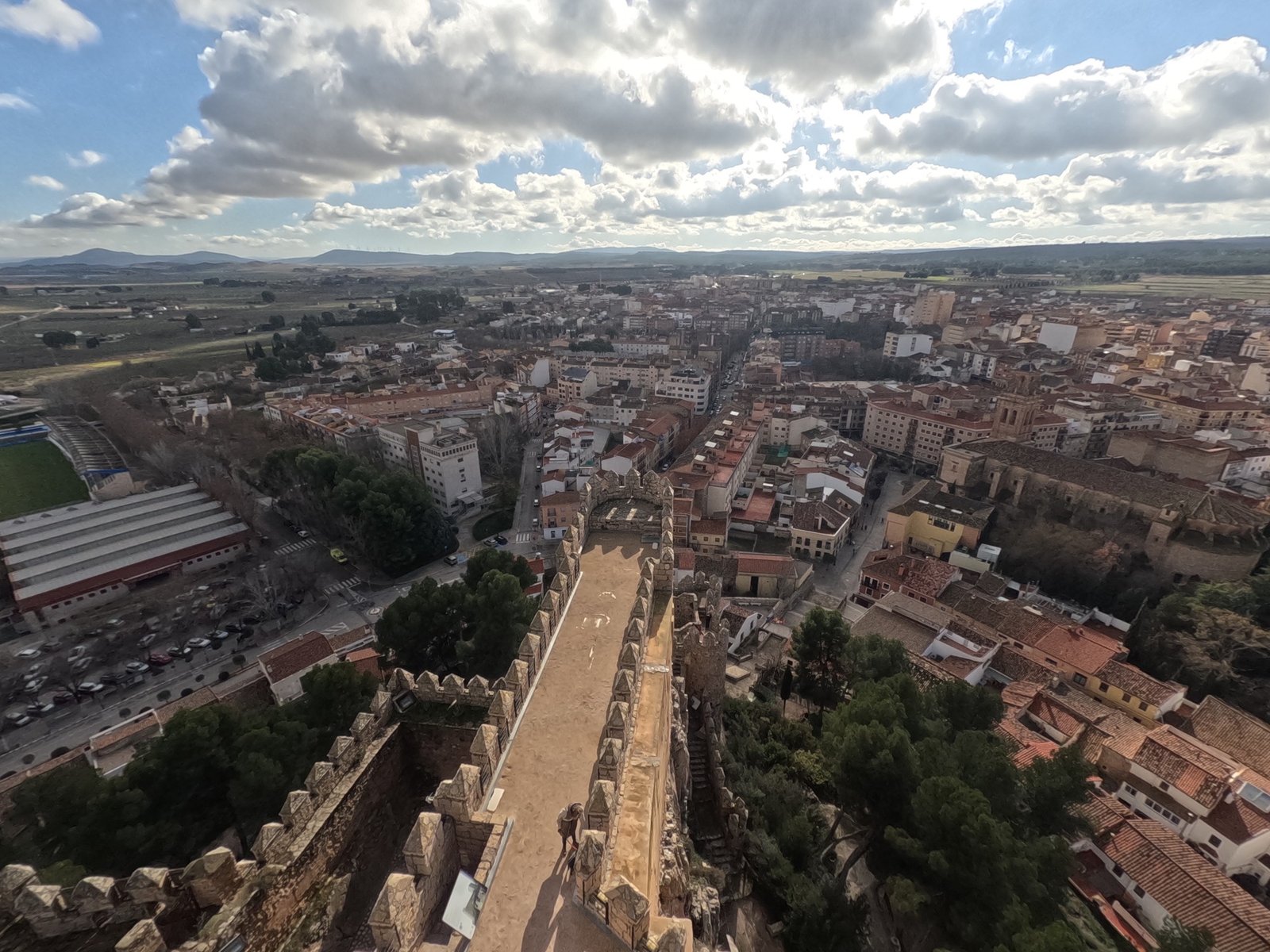
From the tower you can see the whole of Almansa – the old town with its church, and beyond it a flat plain and rocky mountain ranges.
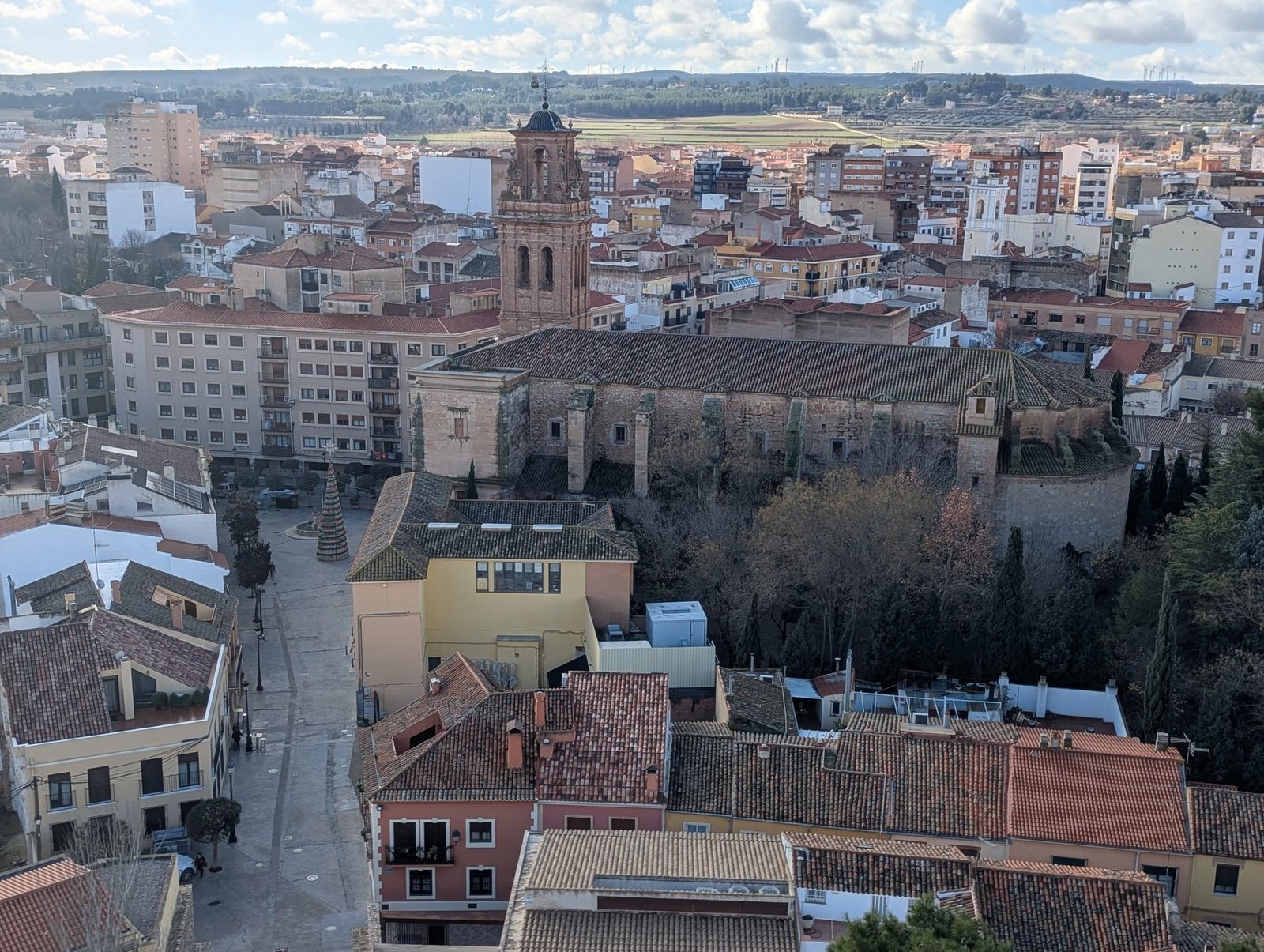
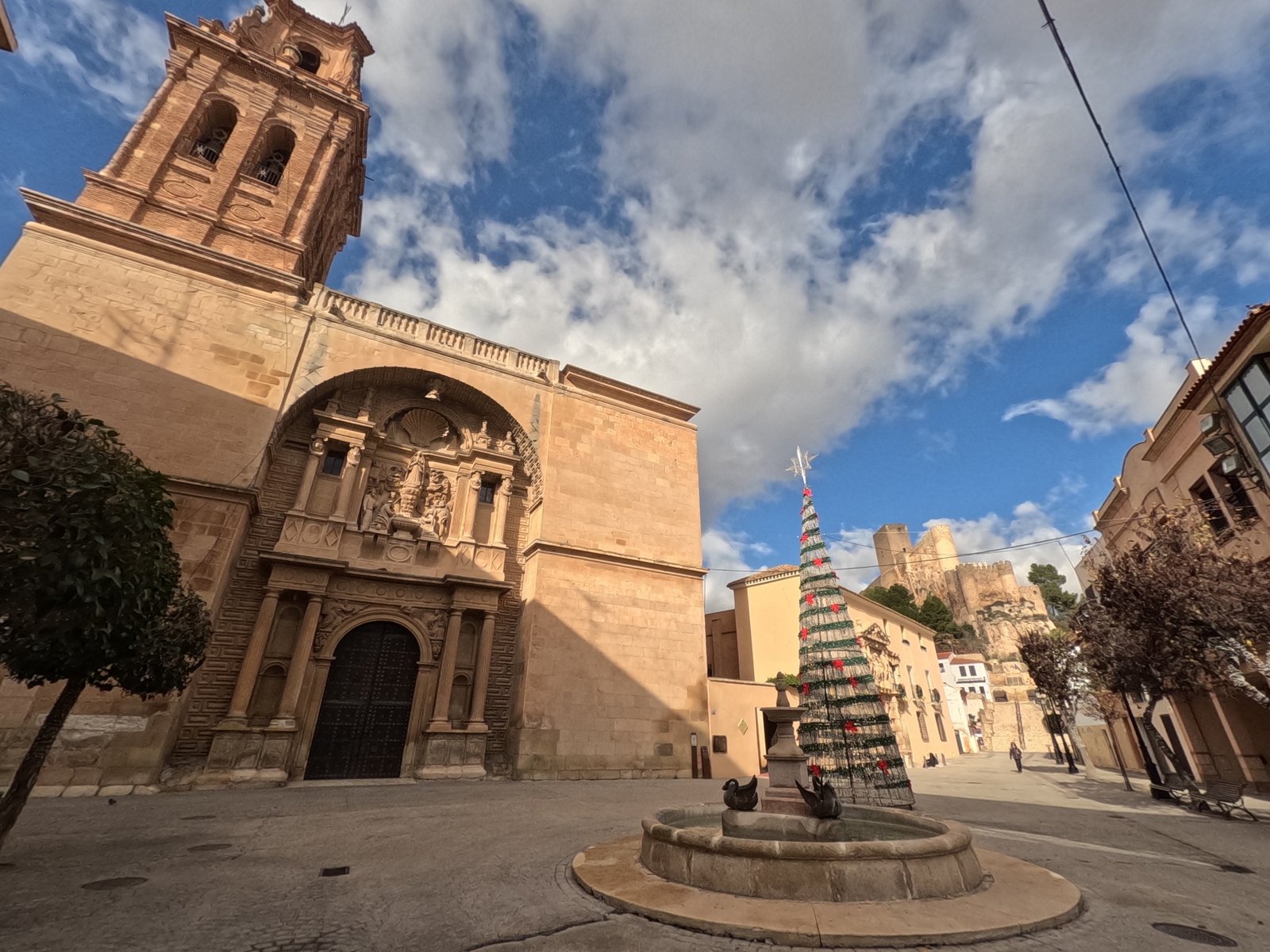
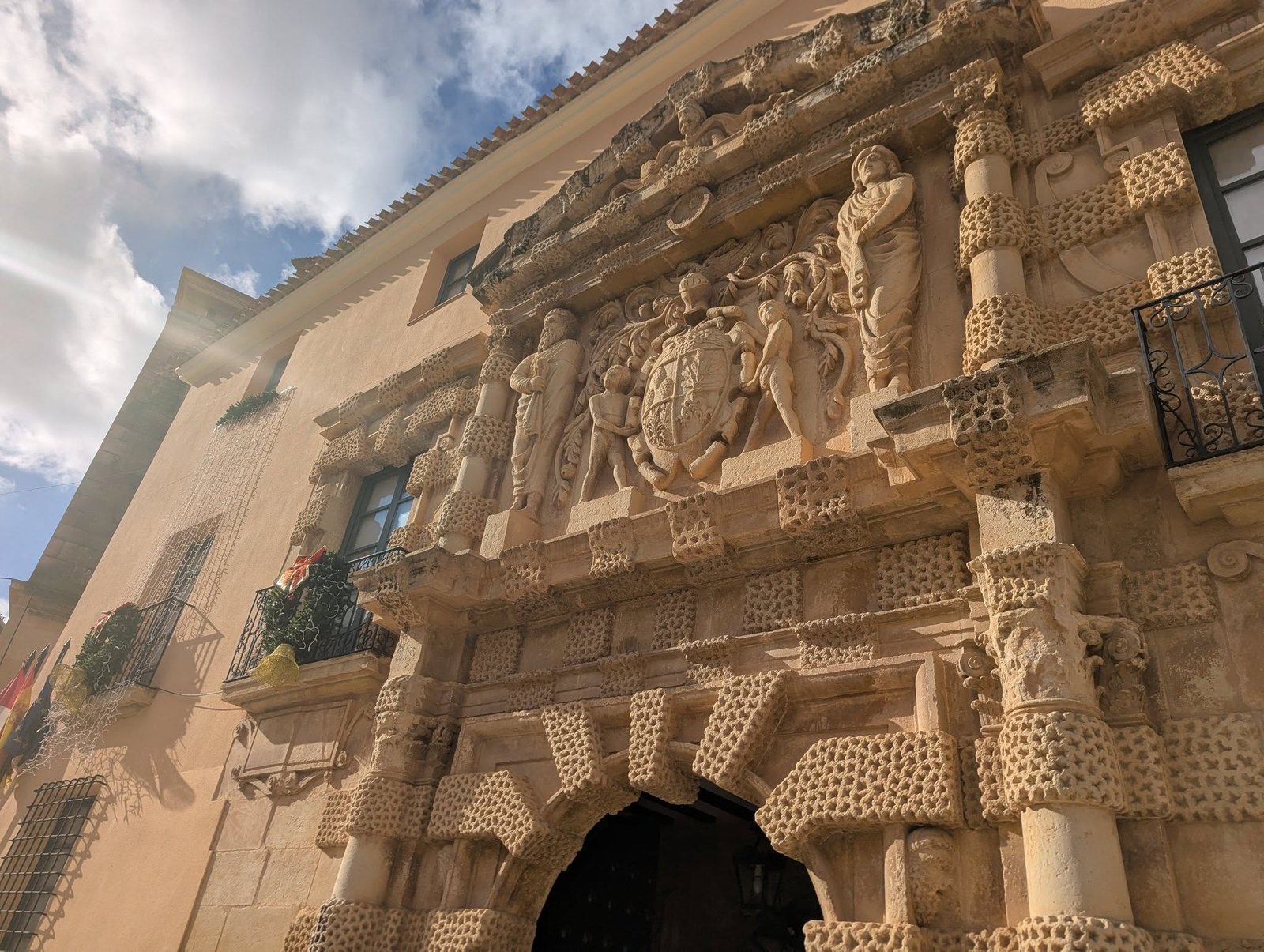
After coming down we took a stroll around the centre. Right below the castle stands the Asunción church, with a Christmas tree set up in front of it for the holidays, and next to it the Casa Grande palace (Palacio de los Condes de Cirat) with a richly carved portal.
Almansa went down in Spanish history for the battle of 25 April 1707 – during the War of the Spanish Succession, the army of Philip V under the Duke of Berwick defeated the supporters of Archduke Charles here, which gave the Bourbons control of eastern Spain.
The Santa María Magdalena sanctuary near Novelda
On the way back we stopped near the town of Novelda (about 45 km north of Torrevieja), where the remarkably picturesque Santuario de Santa María Magdalena stands on a hill. You can see its slender towers rising above the pines from far away.
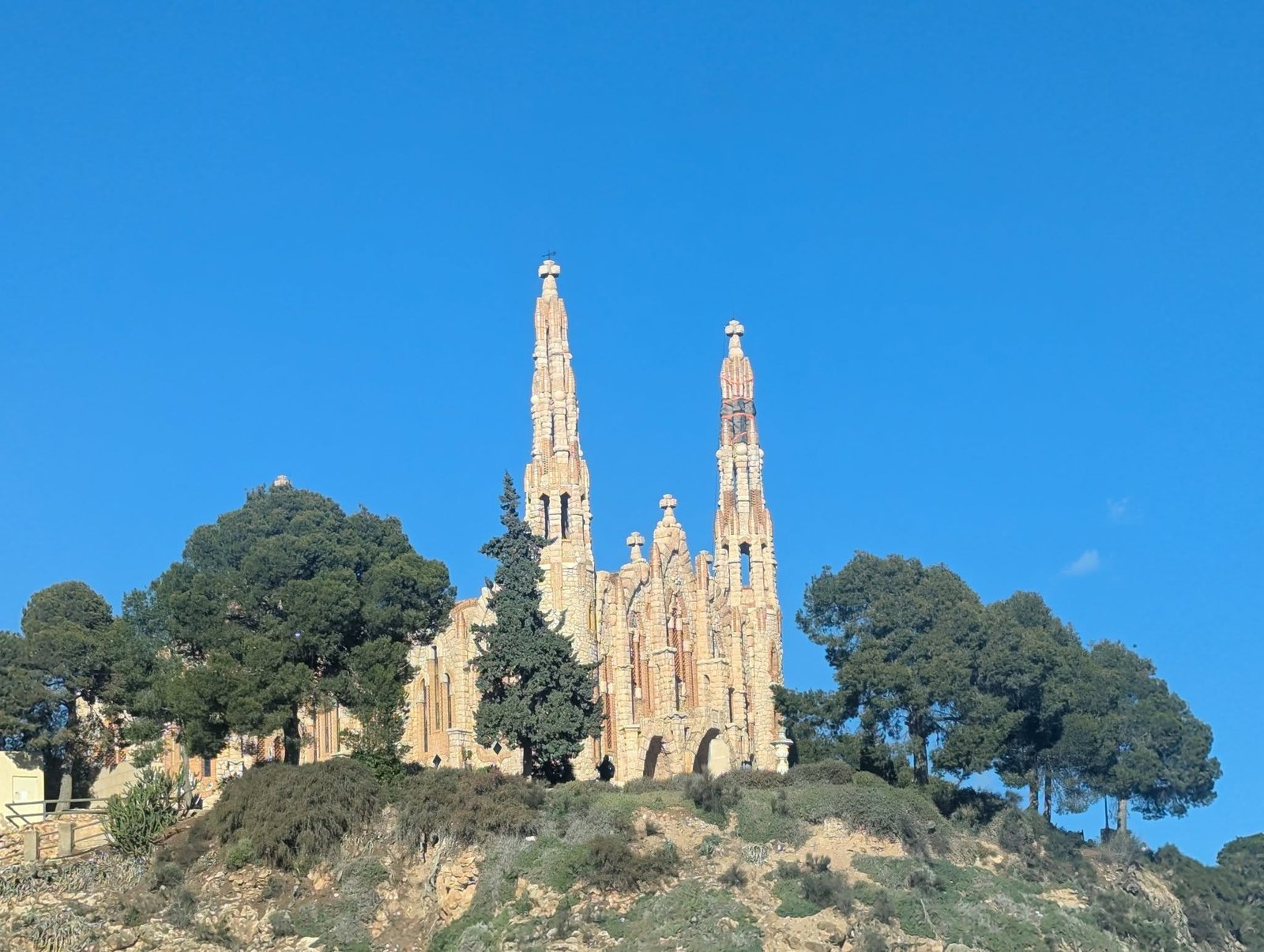
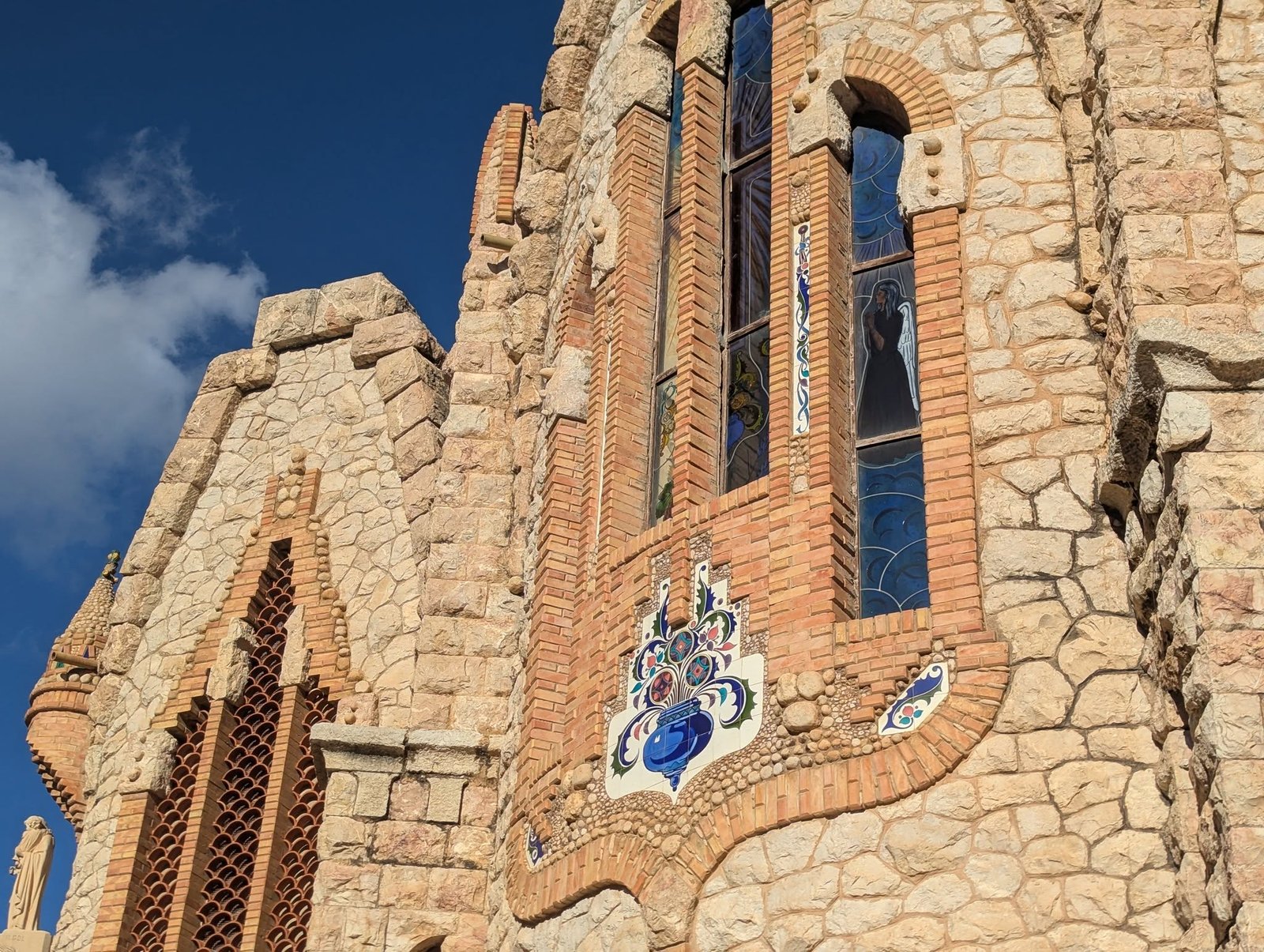
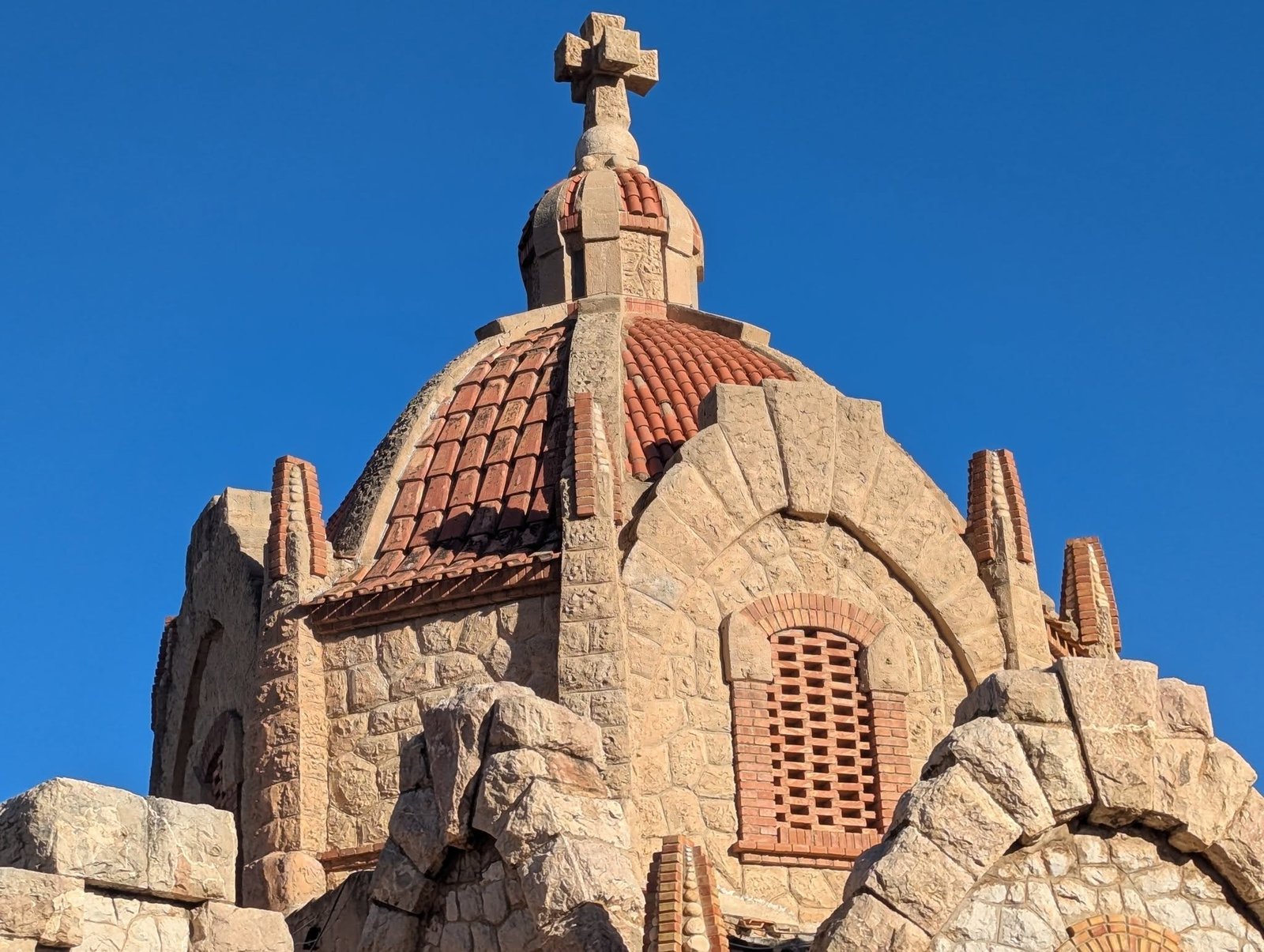
The sanctuary was designed by José Sala Sala, an engineer from Novelda. Construction lasted, with a break, from 1918 to 1946, and the walls were decorated with, among other things, pebbles from the Vinalopó river, coloured tiles and red brick. The two side towers of the façade are each about 25 m high.
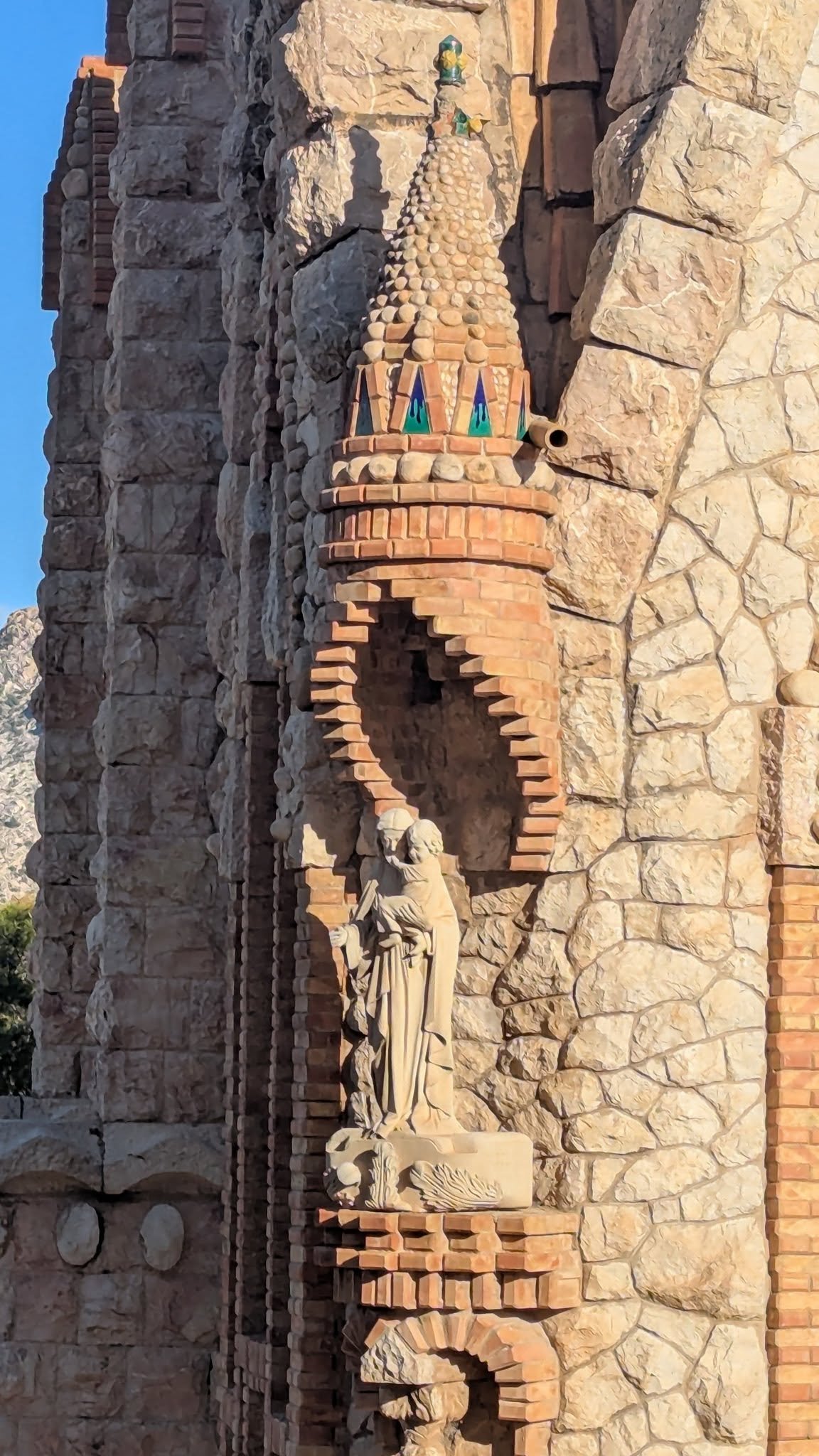
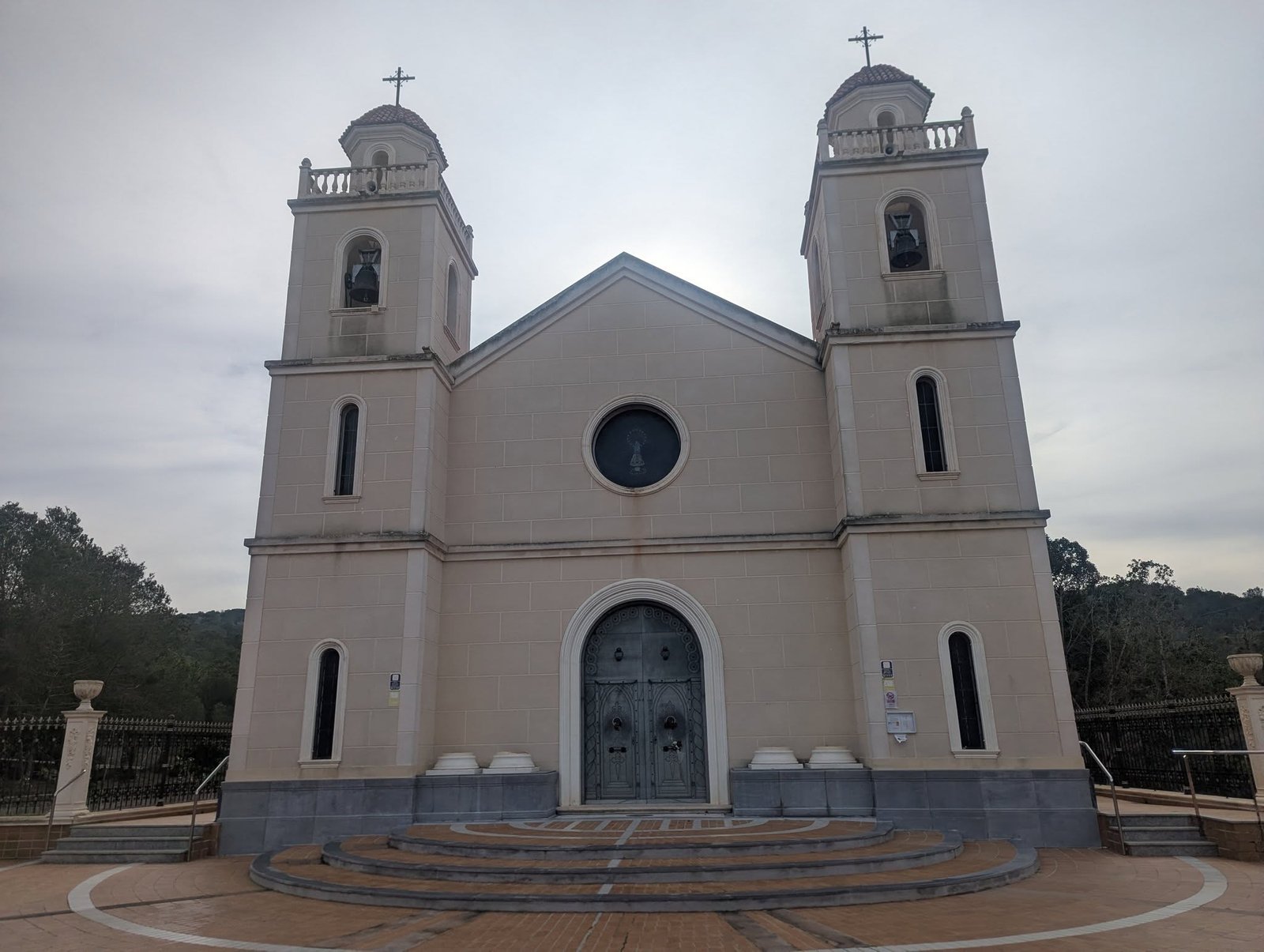
Up close the sanctuary is even more impressive. Walls of pale, irregular stone, pointed-arch windows with stained glass, ceramic decorations, a dome and slim towers – the architecture is clearly inspired by the work of Gaudí. More about Gaudí’s own buildings is in the post on Barcelona.
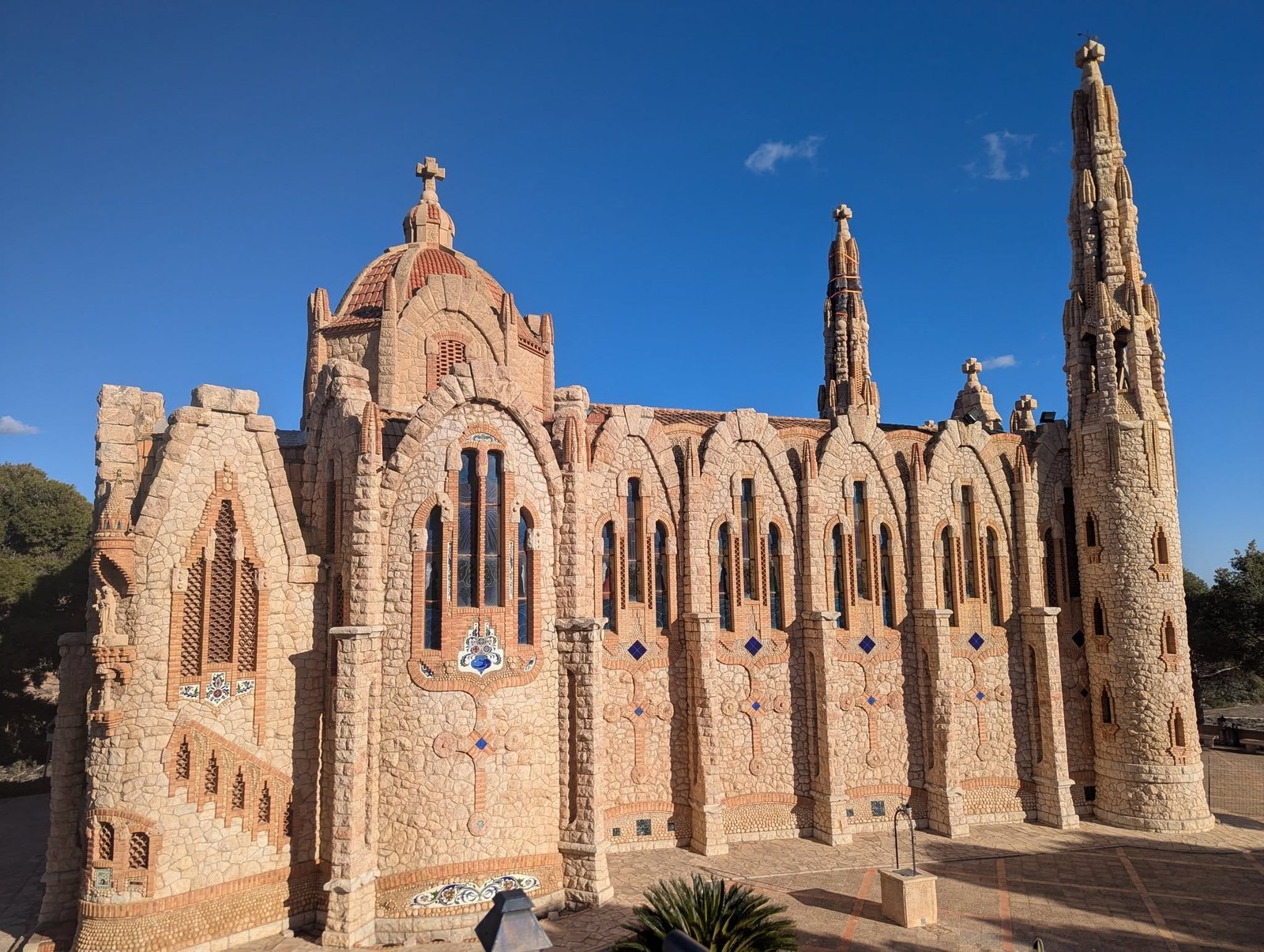
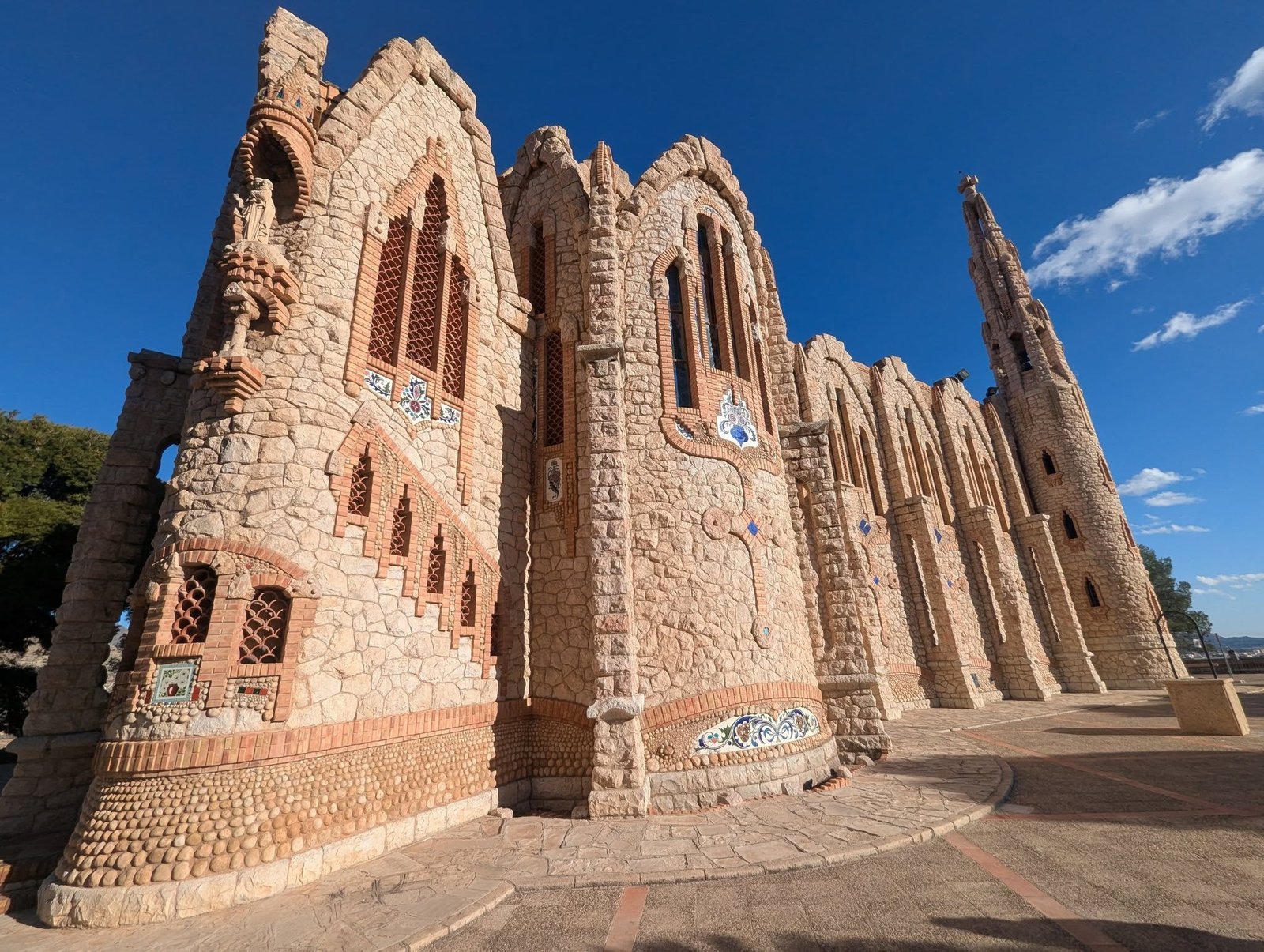
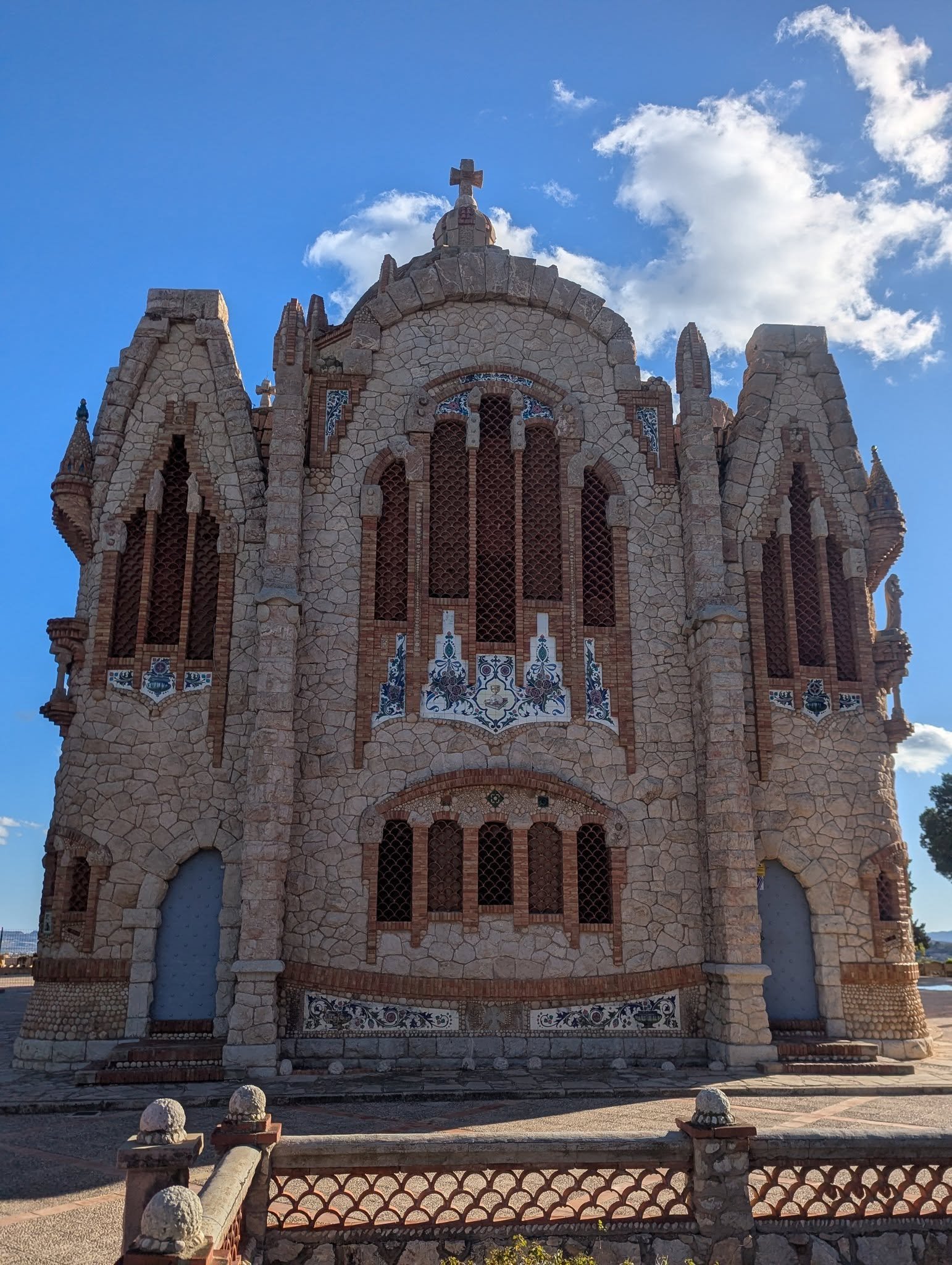
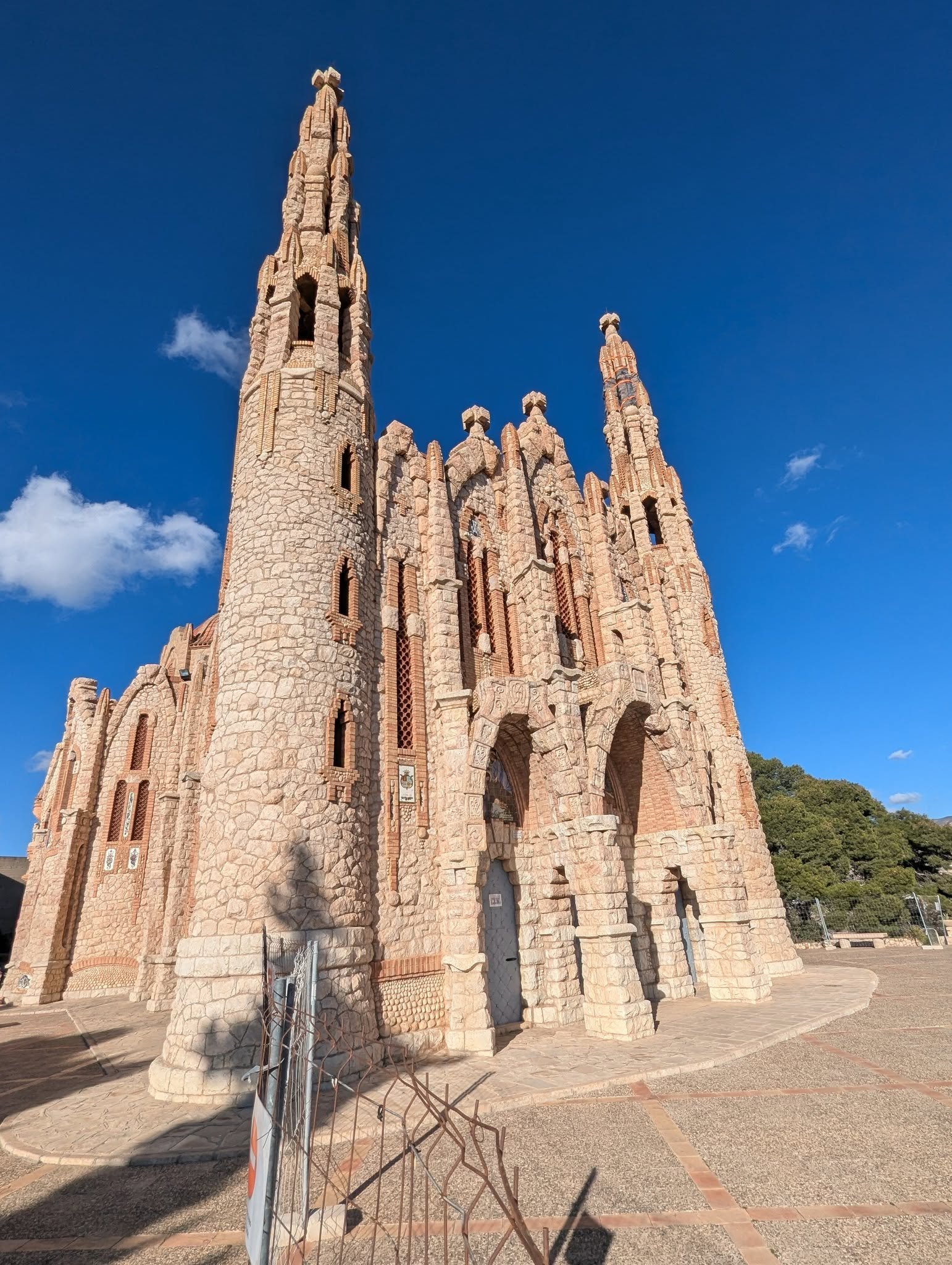
It is worth walking all the way around the sanctuary – it looks a little different from every side, and if you look closely you will spot countless details: statues in niches, ceramic coats of arms and the stone ornaments of the dome.
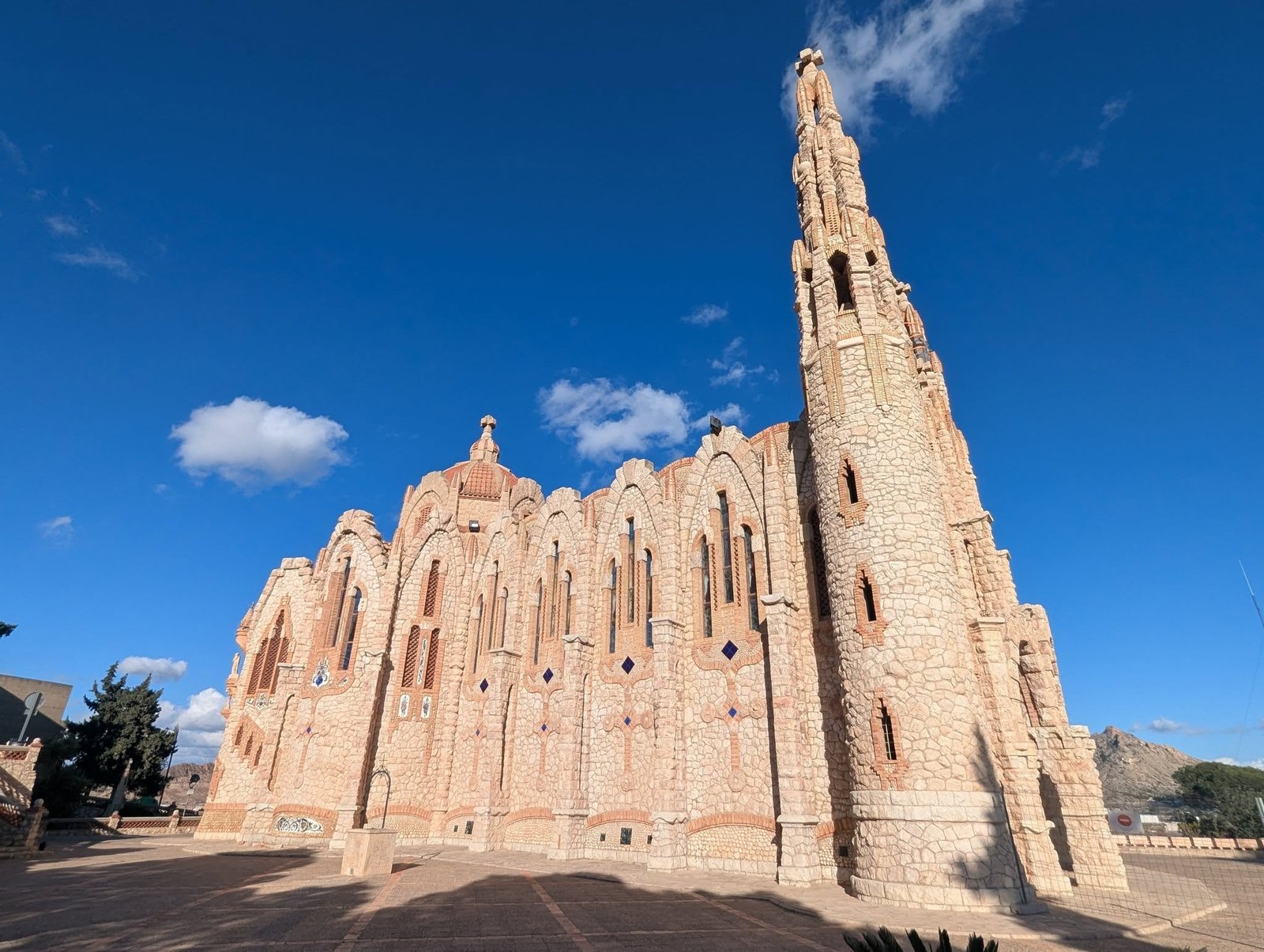
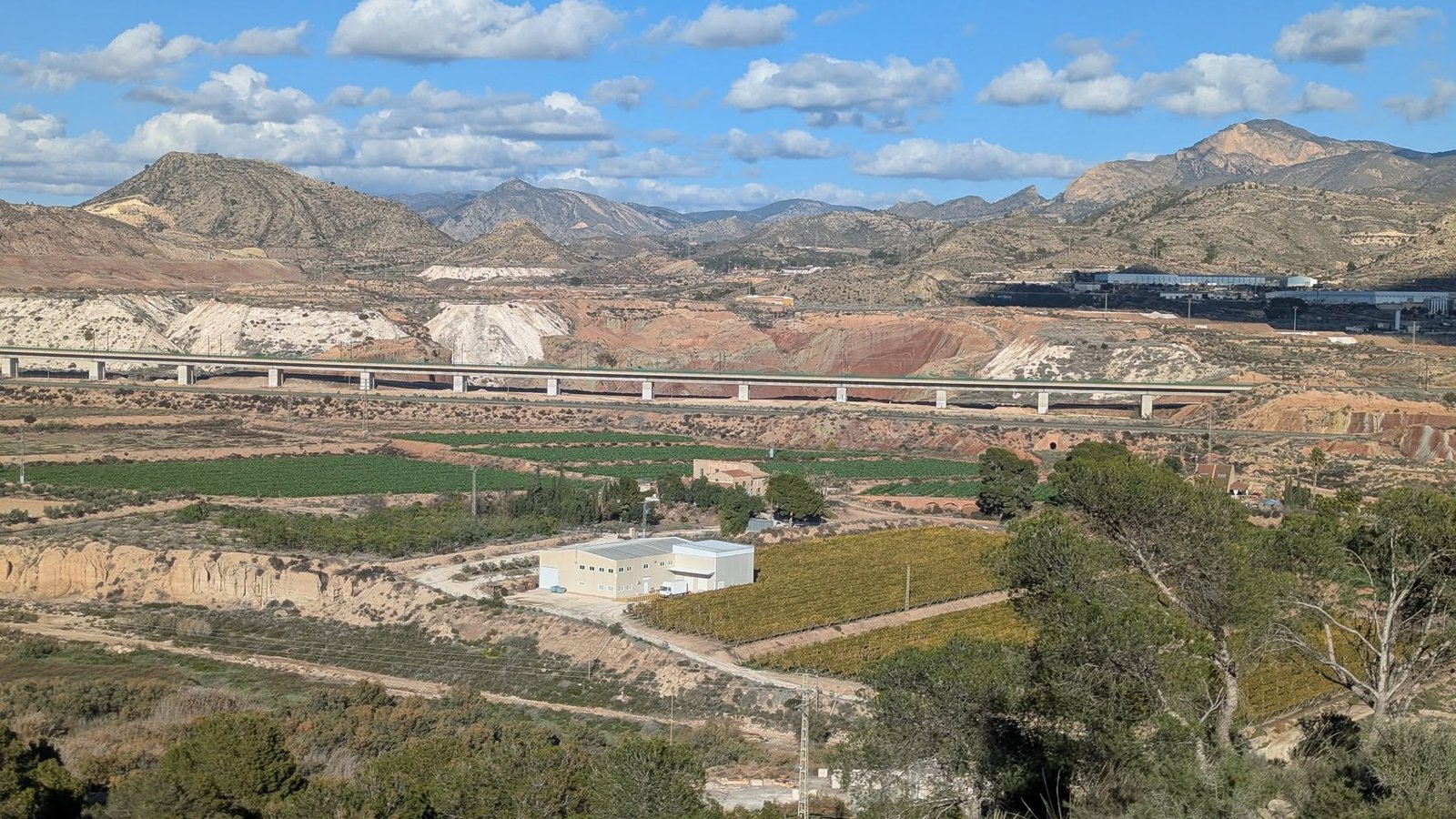
From the sanctuary there is also a nice view over the valley with its fields and the surrounding mountains.
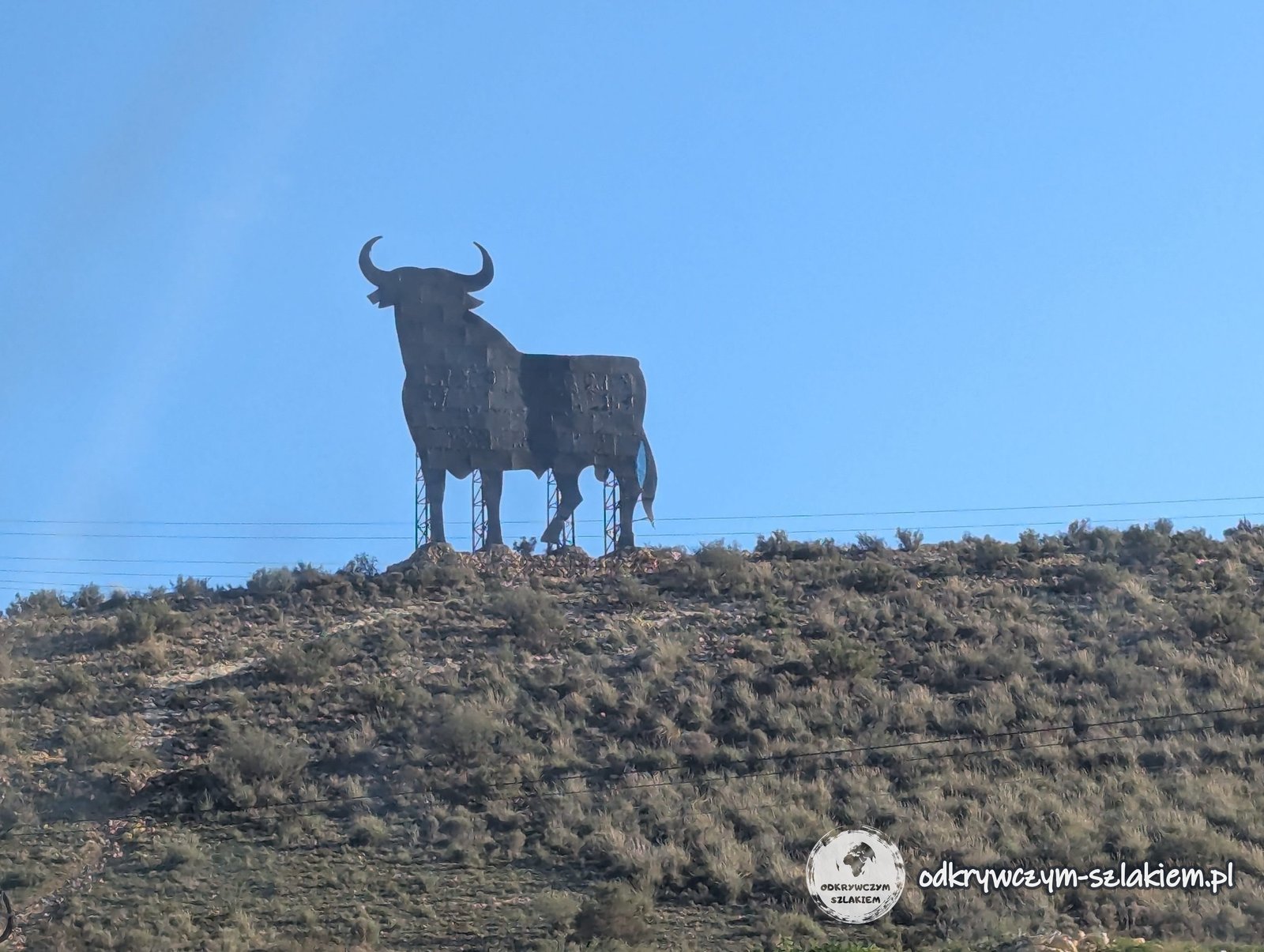
Right next to the sanctuary stands La Mola Castle. The first fortifications here date from the Islamic period, and in the 14th century, under James II of Aragon, a triangular tower was added, 15 m per side and 17 m high – no similar tower is known anywhere else. Further on towards the coast, on a hill by the road to Alicante, we also passed an Osborne bull. These almost 14-metre silhouettes were created in 1956 as an advertisement for brandy; when roadside advertising was ordered to be removed in 1994, the Supreme Court allowed them to stay in 1997 because of their cultural value. There are about 90 of them across Spain.

The PR-CV 442 La Caldera del Gigante trail and Cabezo Redondo
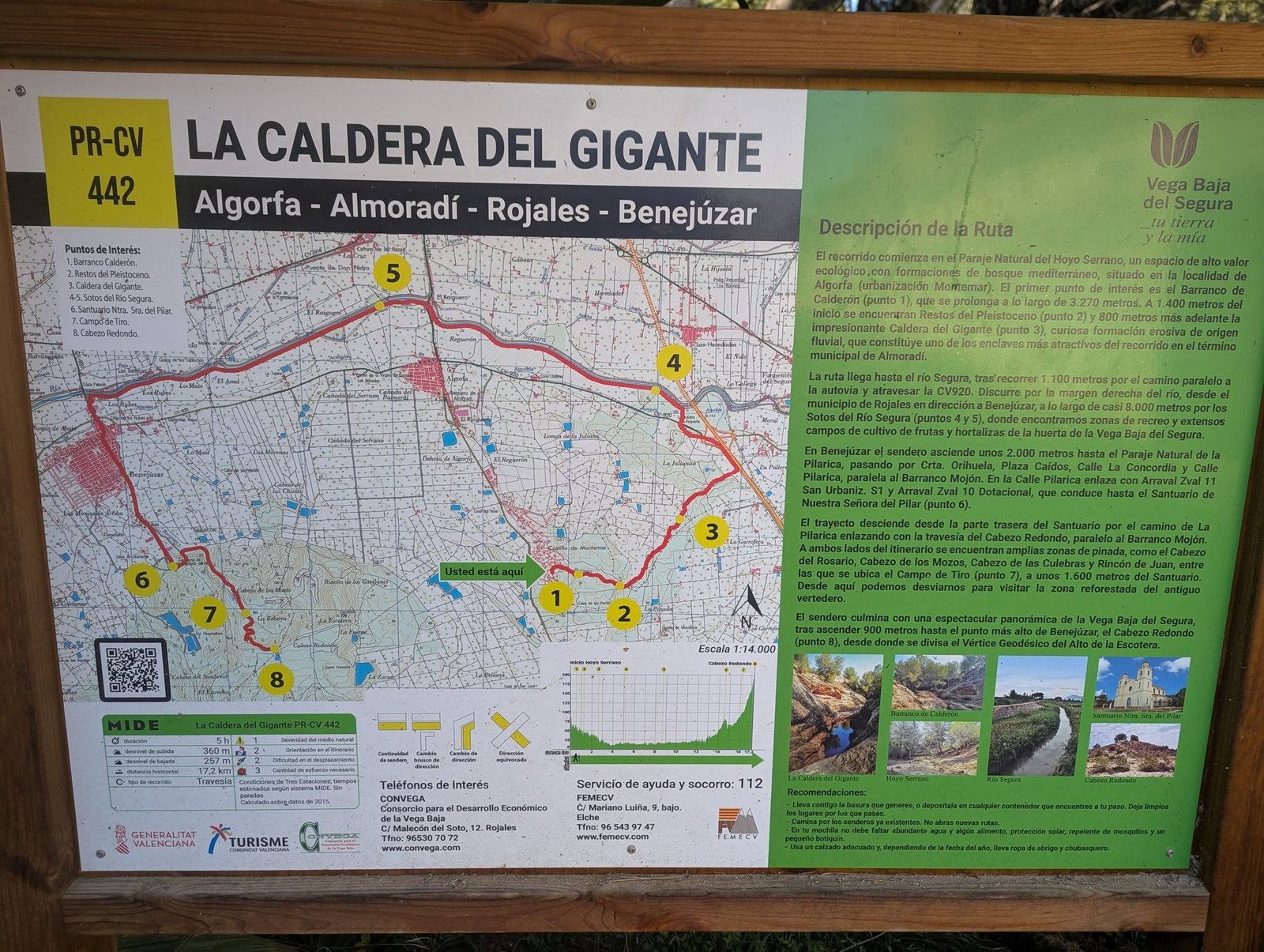
There were hikes as well. The PR-CV 442 La Caldera del Gigante trail runs from Algorfa through Almoradí and Rojales to Benejúzar. According to the board at the start it is 17.2 km one way, about 5 hours of walking and 360 m of ascent – we walked two sections of it, on two different days.
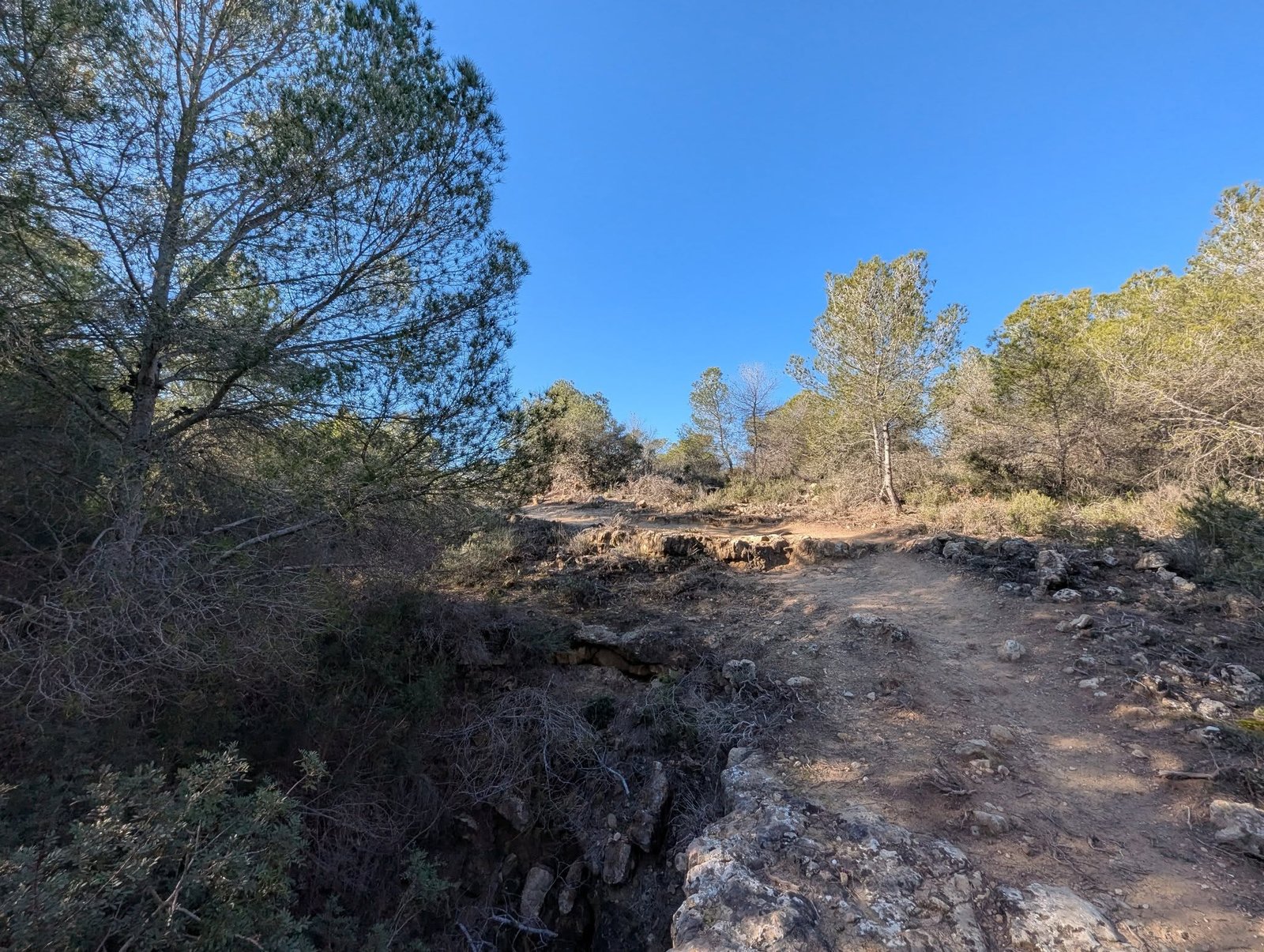
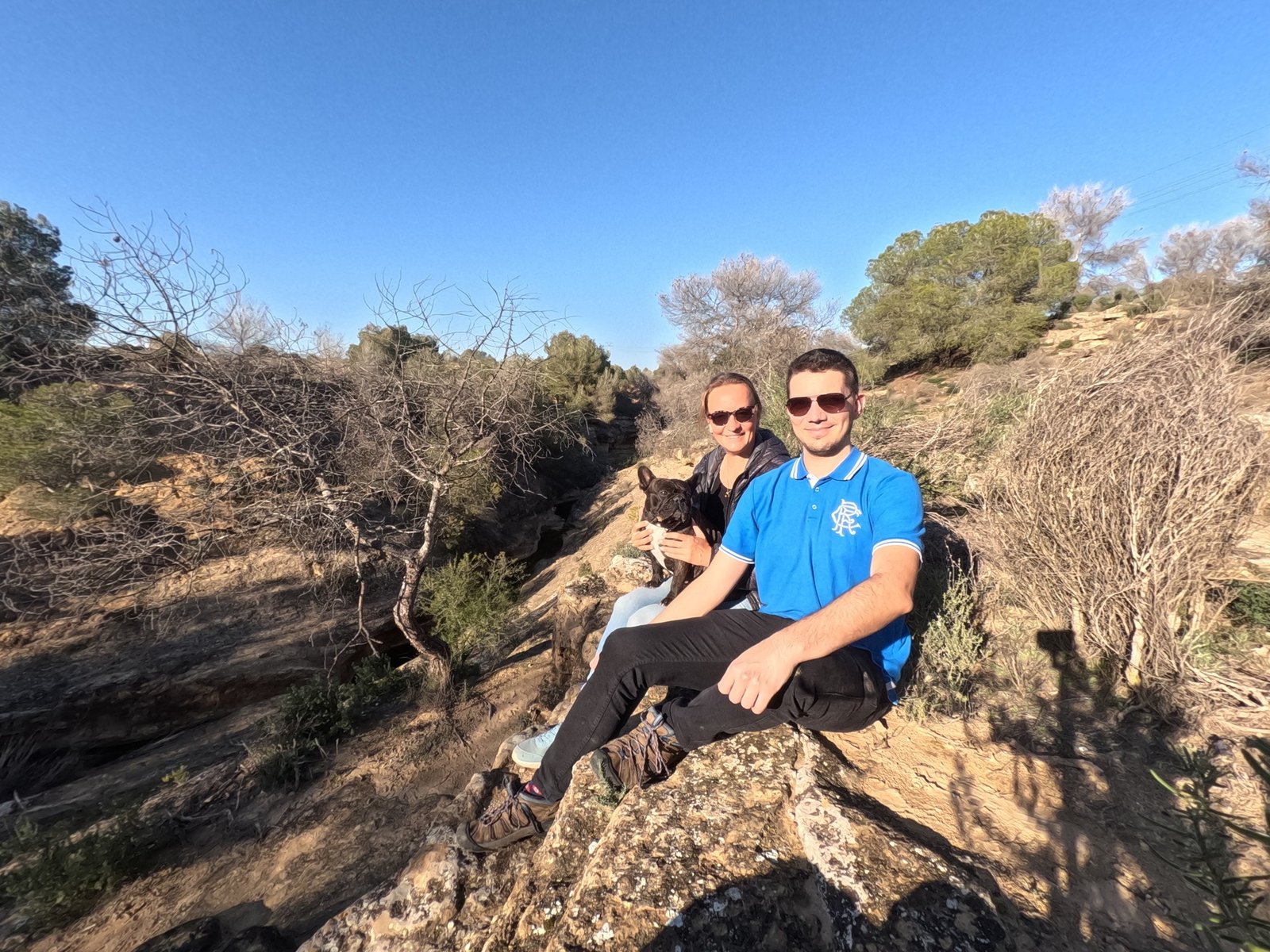
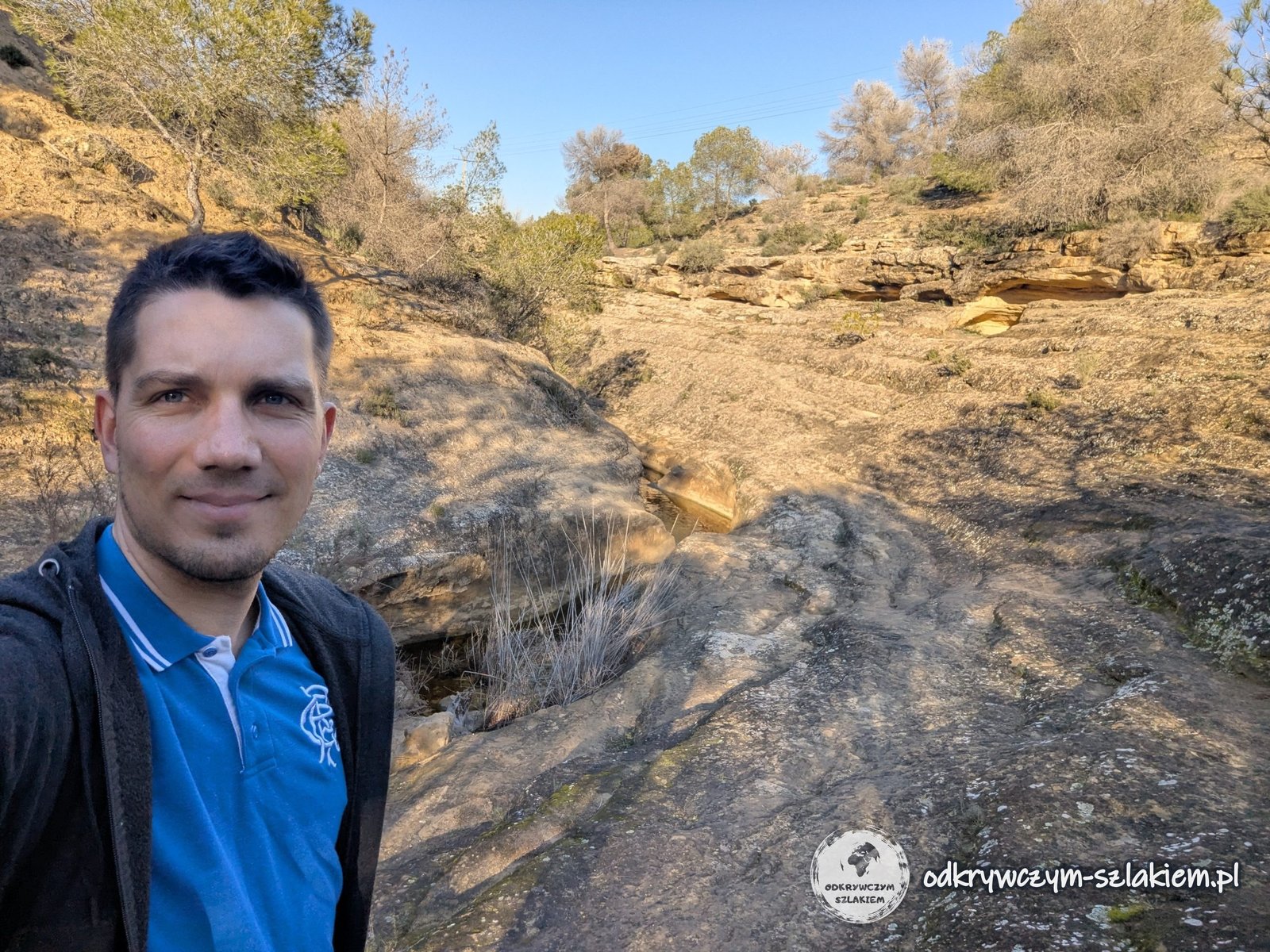
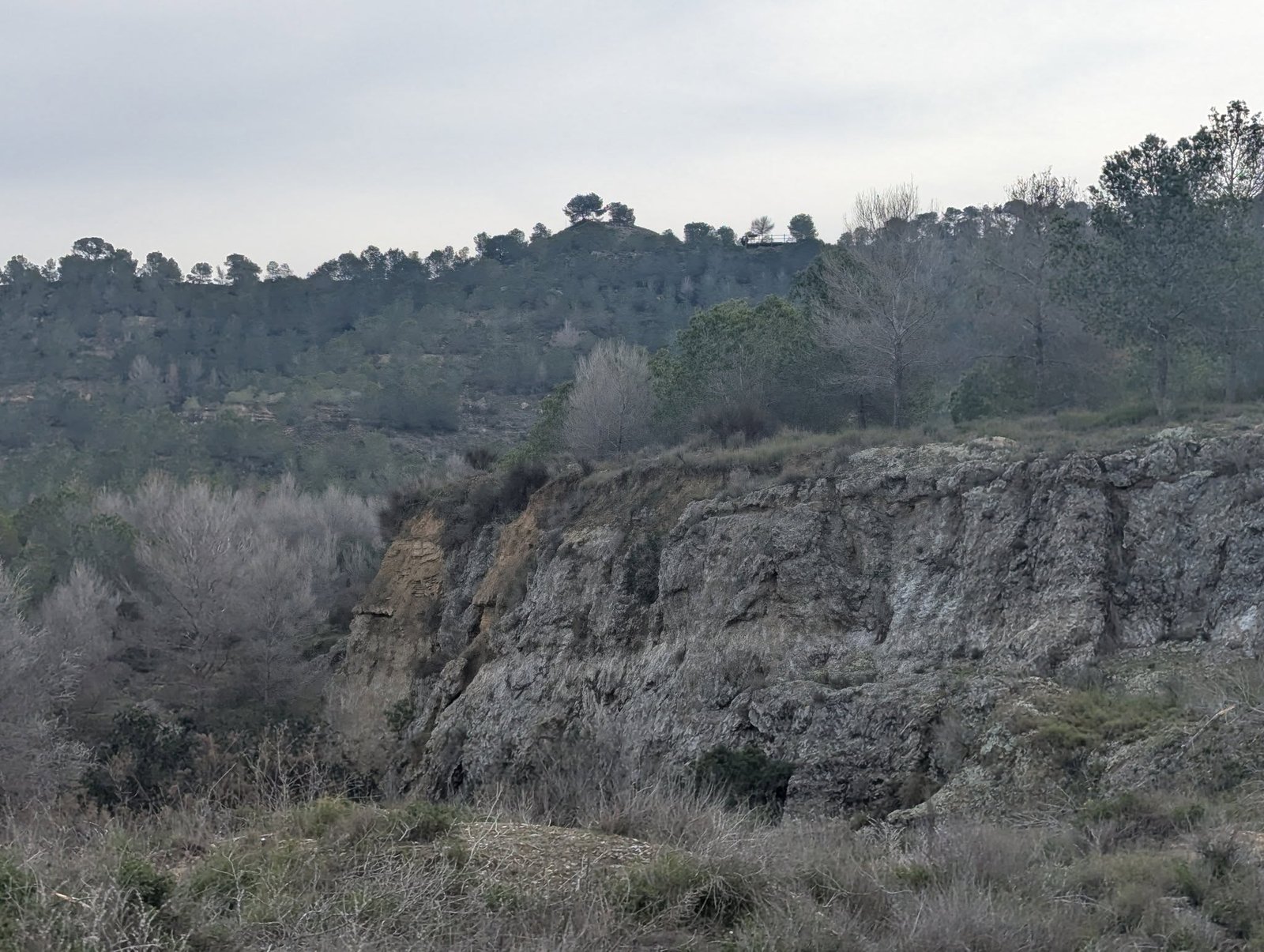
On 31 December we started in Algorfa, in the Hoyo Serrano protected area. The path winds between pines and shrubs, along the Barranco de Calderón ravine and the caldera – the Caldera del Gigante, or “the giant’s cauldron”, is a formation carved into the rock by water. I walked with Kasia and the dog, and – on the last day of the year – in a short-sleeved T-shirt.
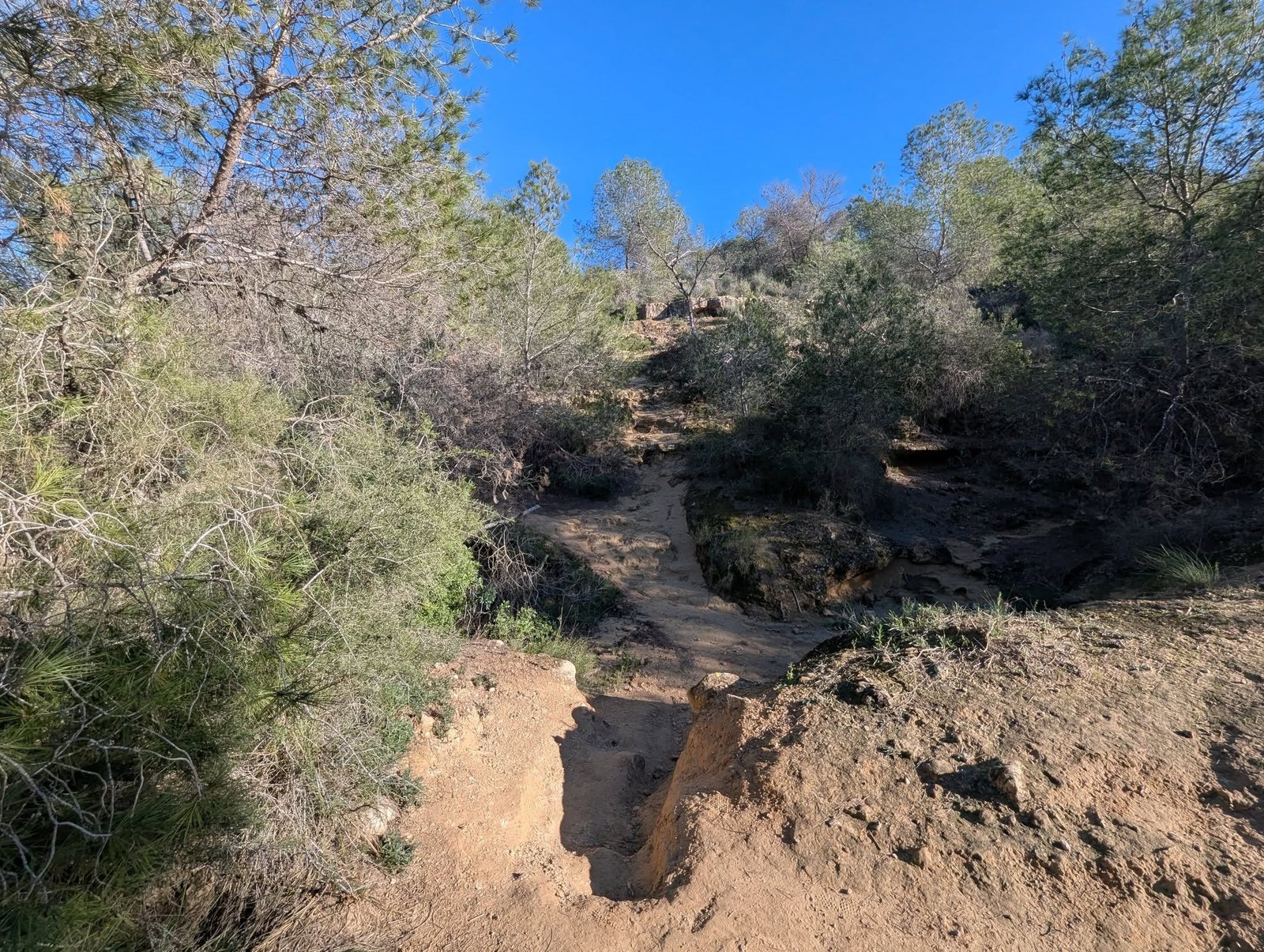
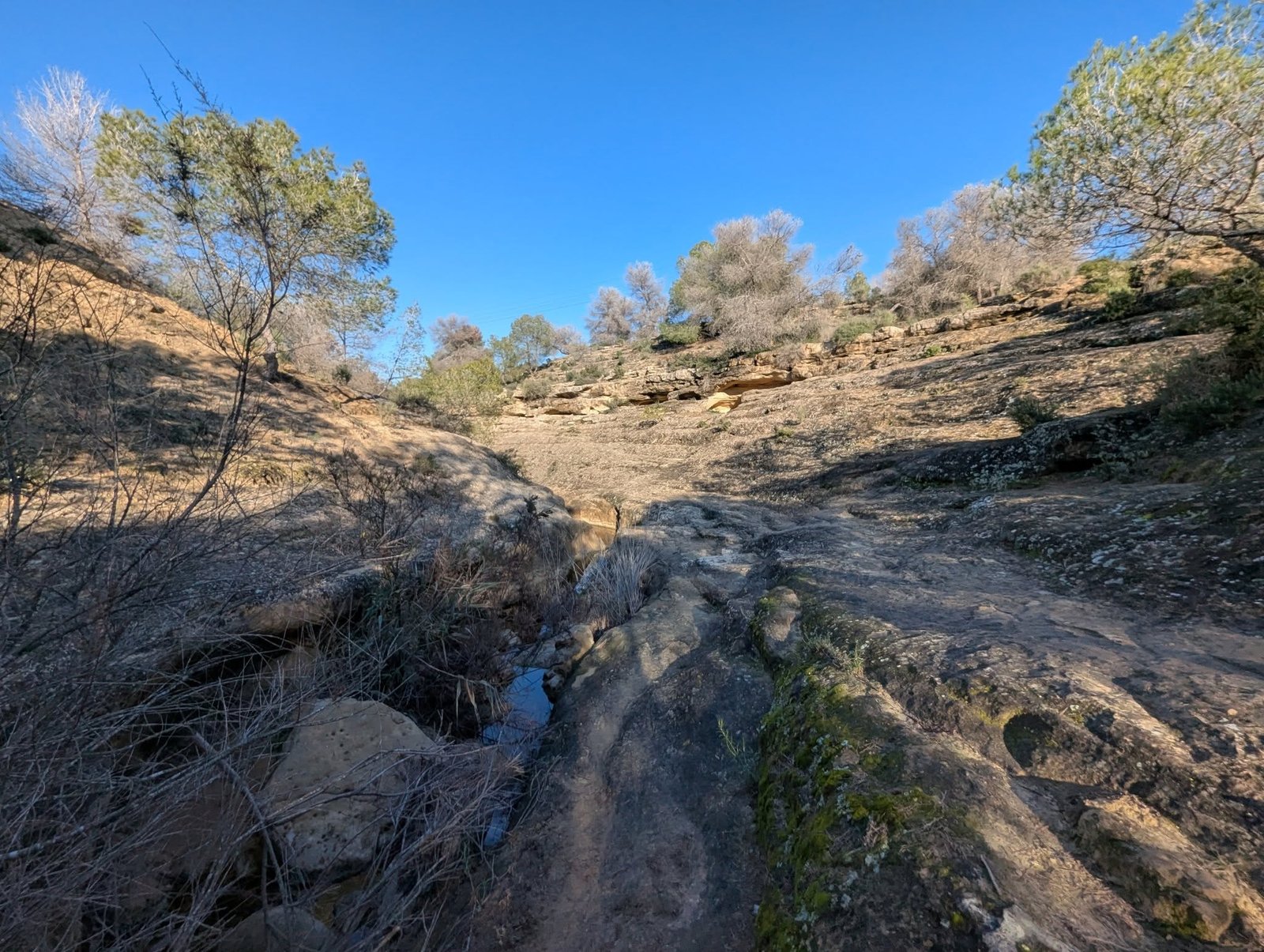
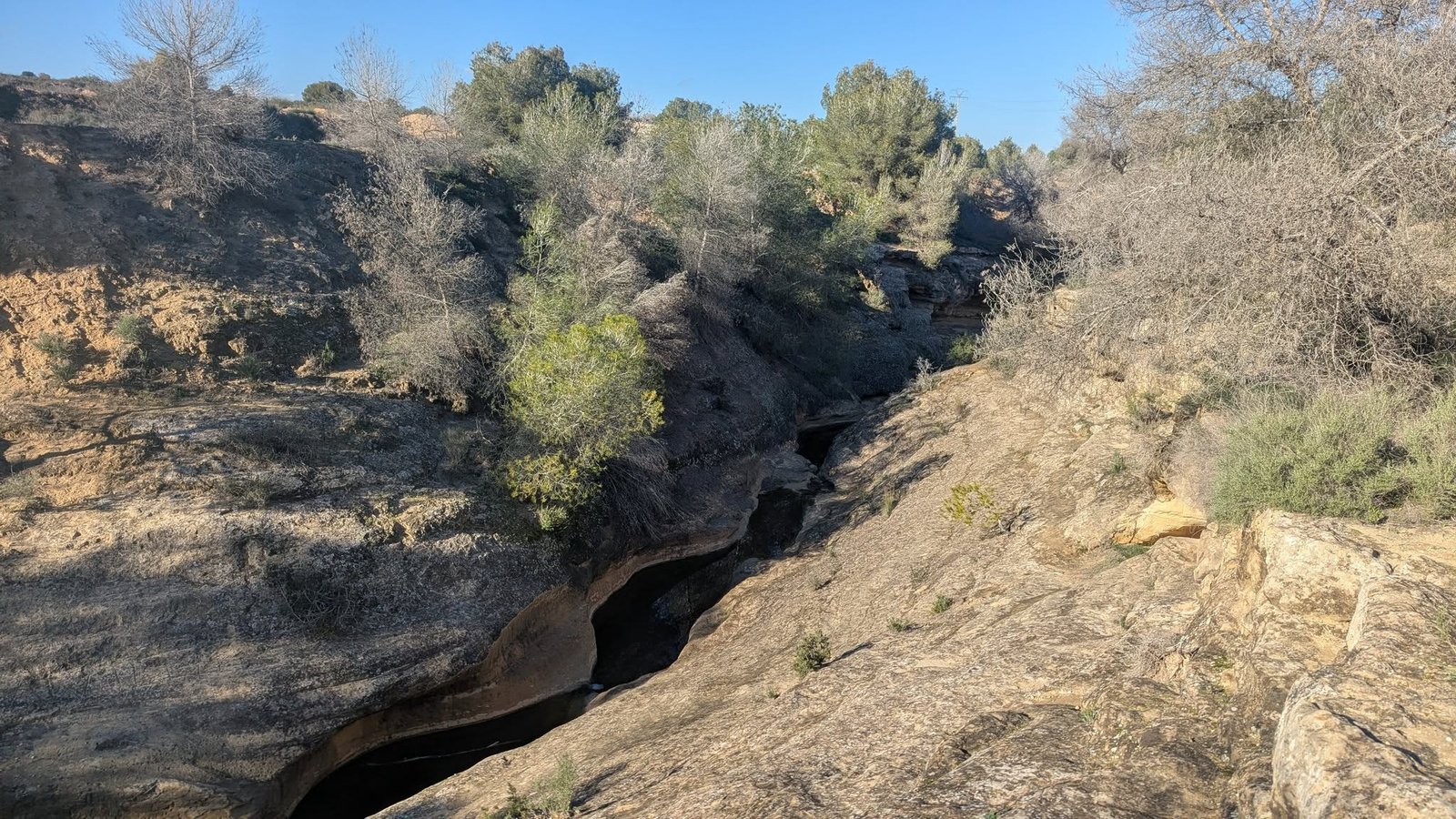
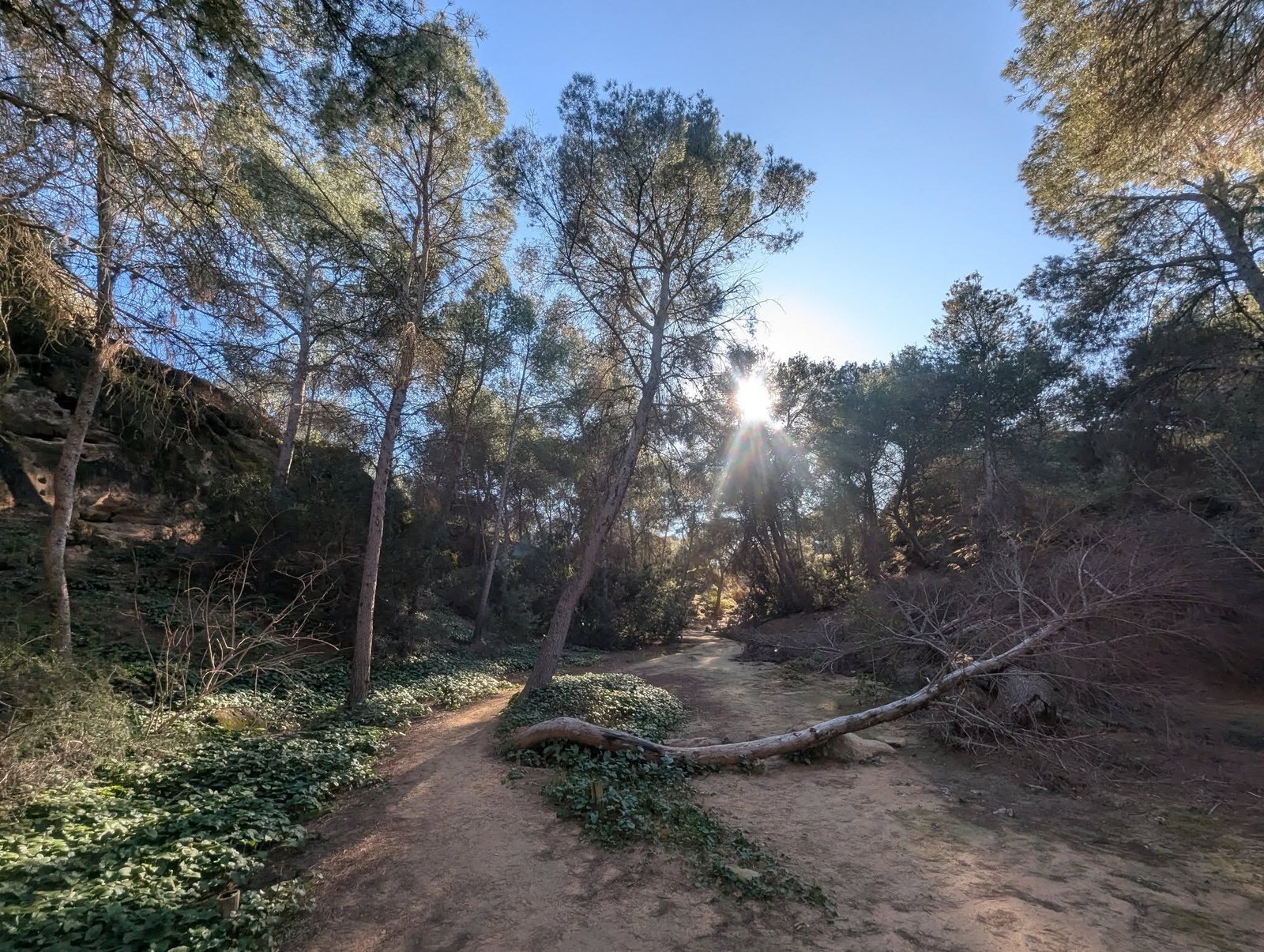
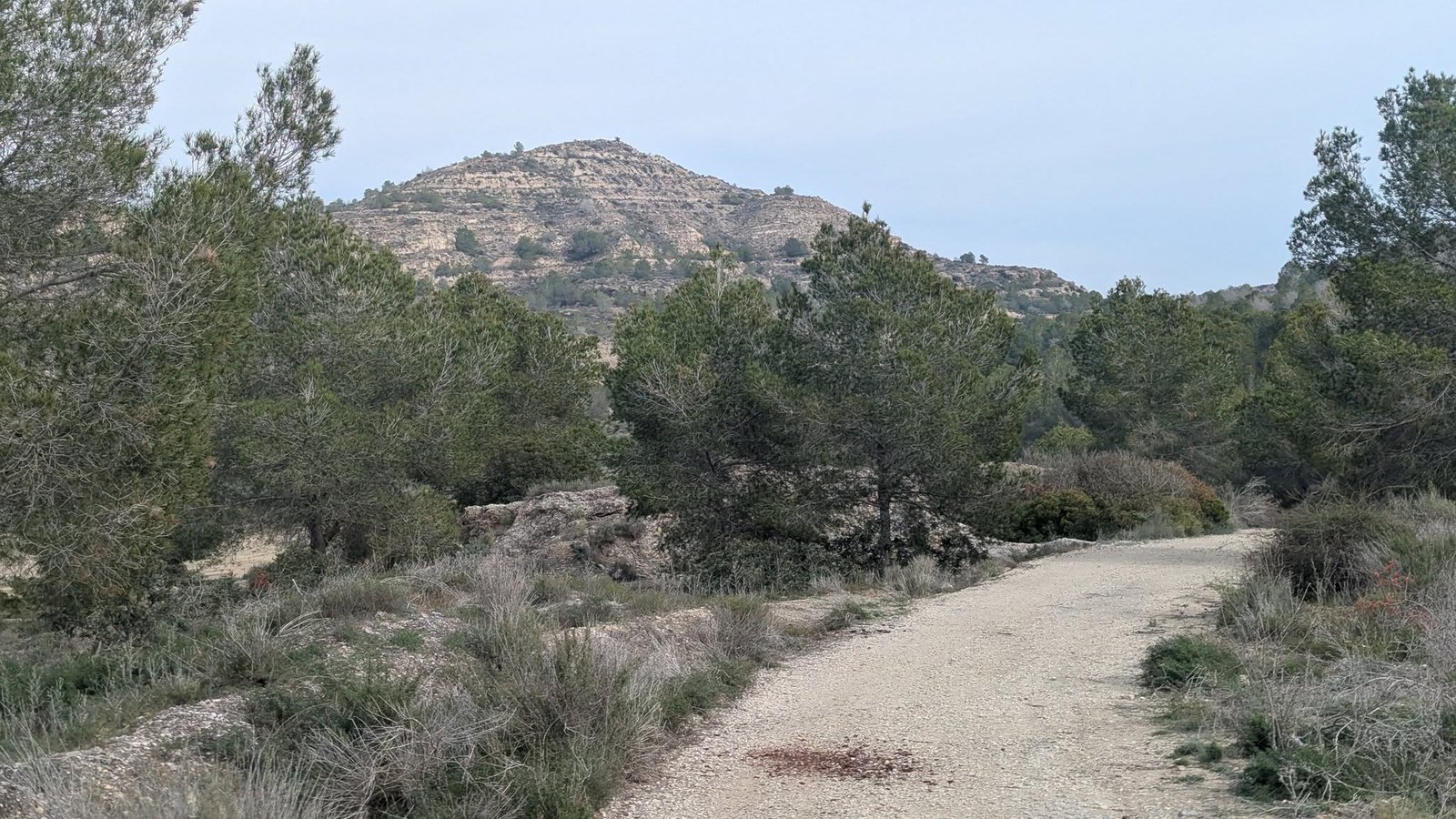
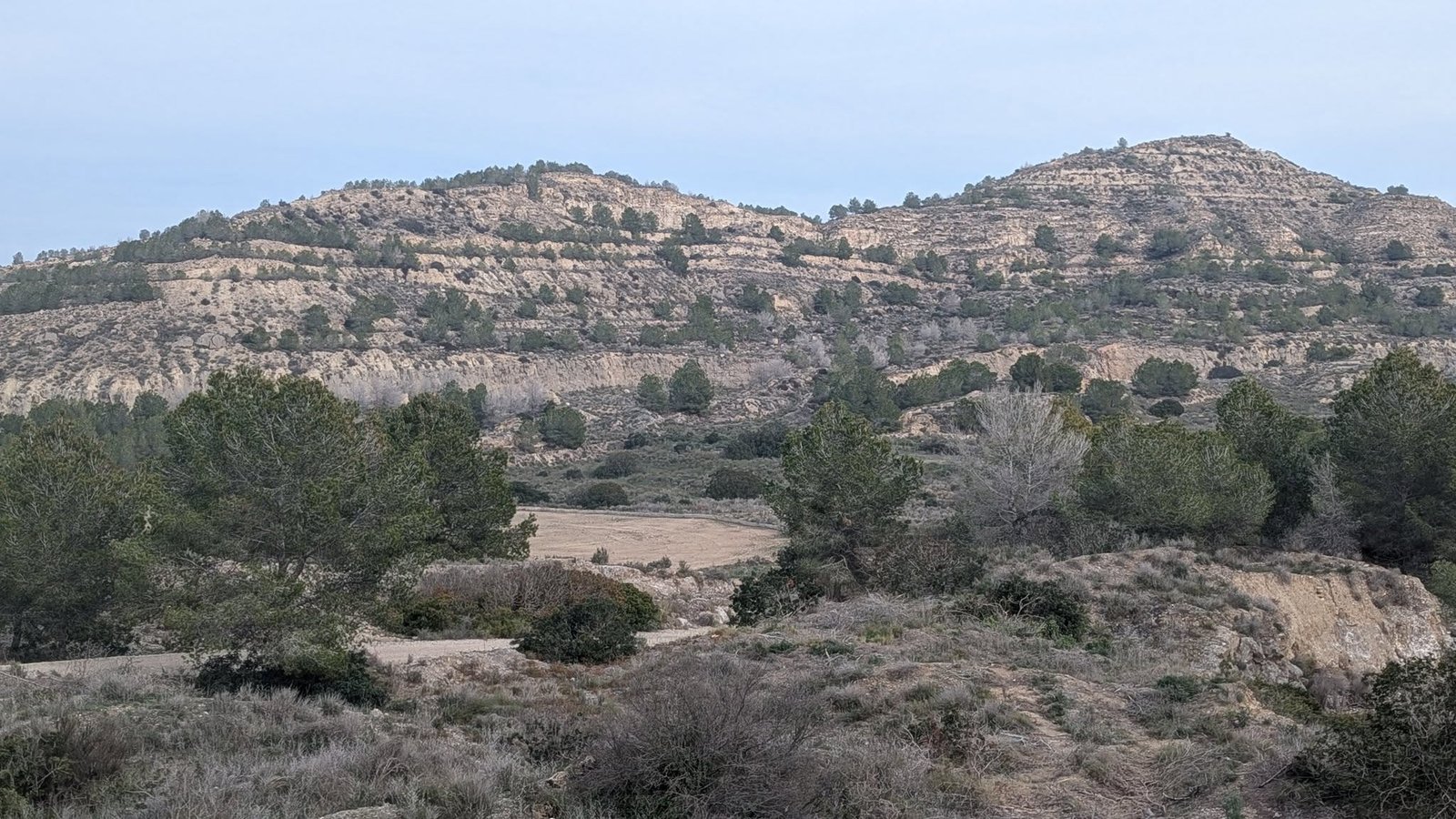
We walked the next part of the trail two days later, this time in Benejúzar. This section was definitely more mountainous. We started at the Nuestra Señora del Pilar sanctuary, from where the trail climbs Cabezo Redondo (about 200 m above sea level) – the highest hill in Benejúzar.
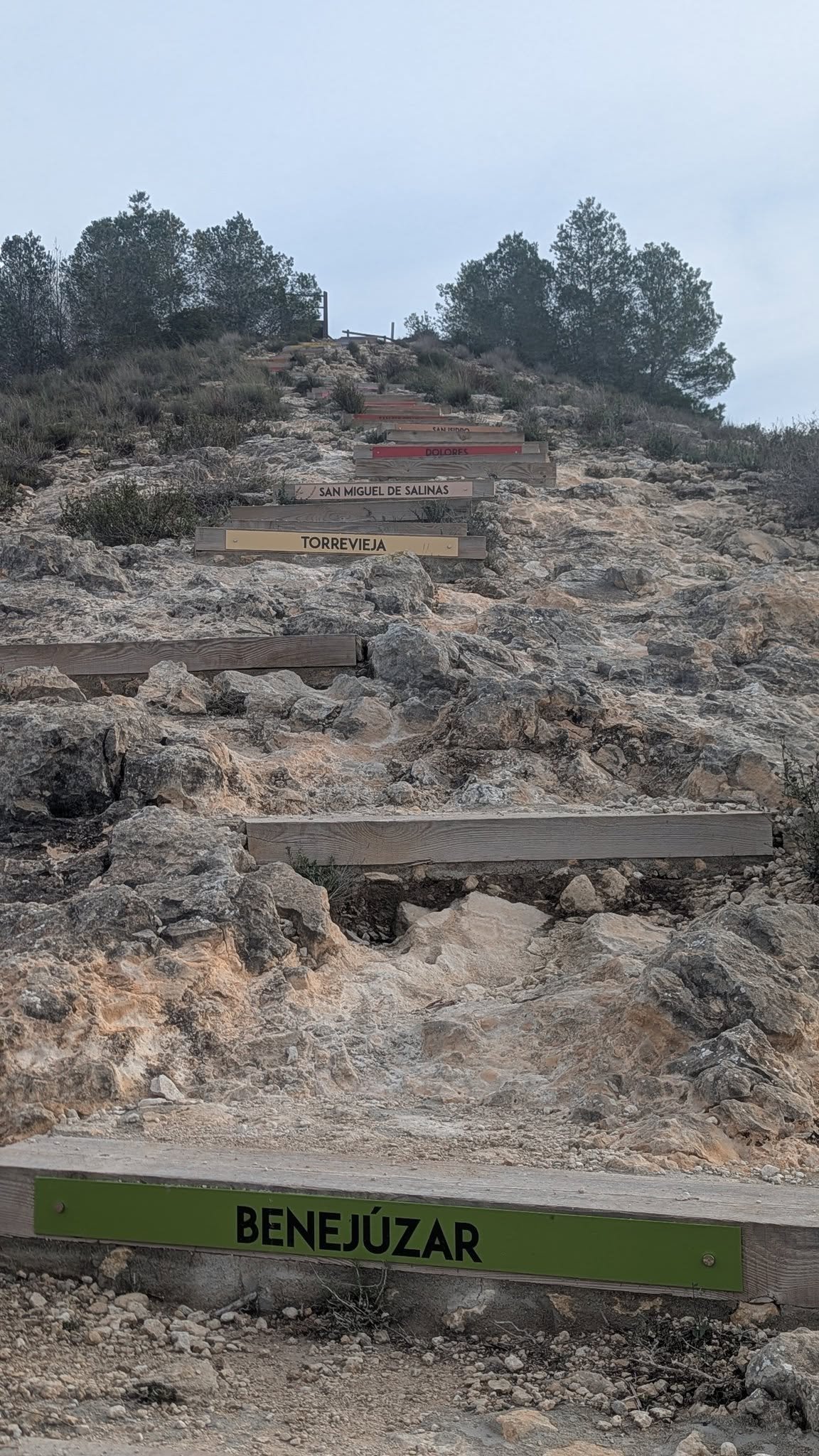
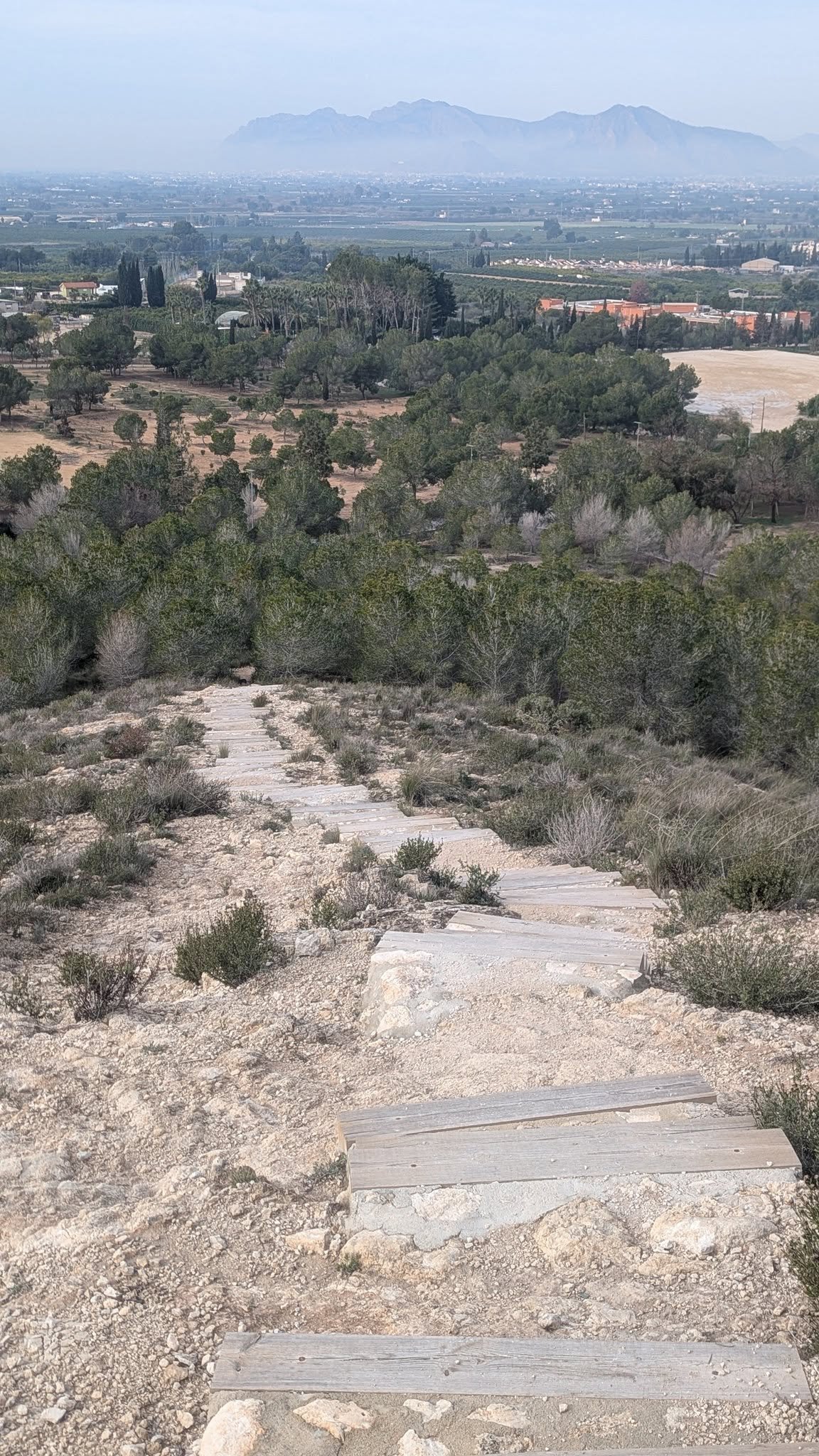
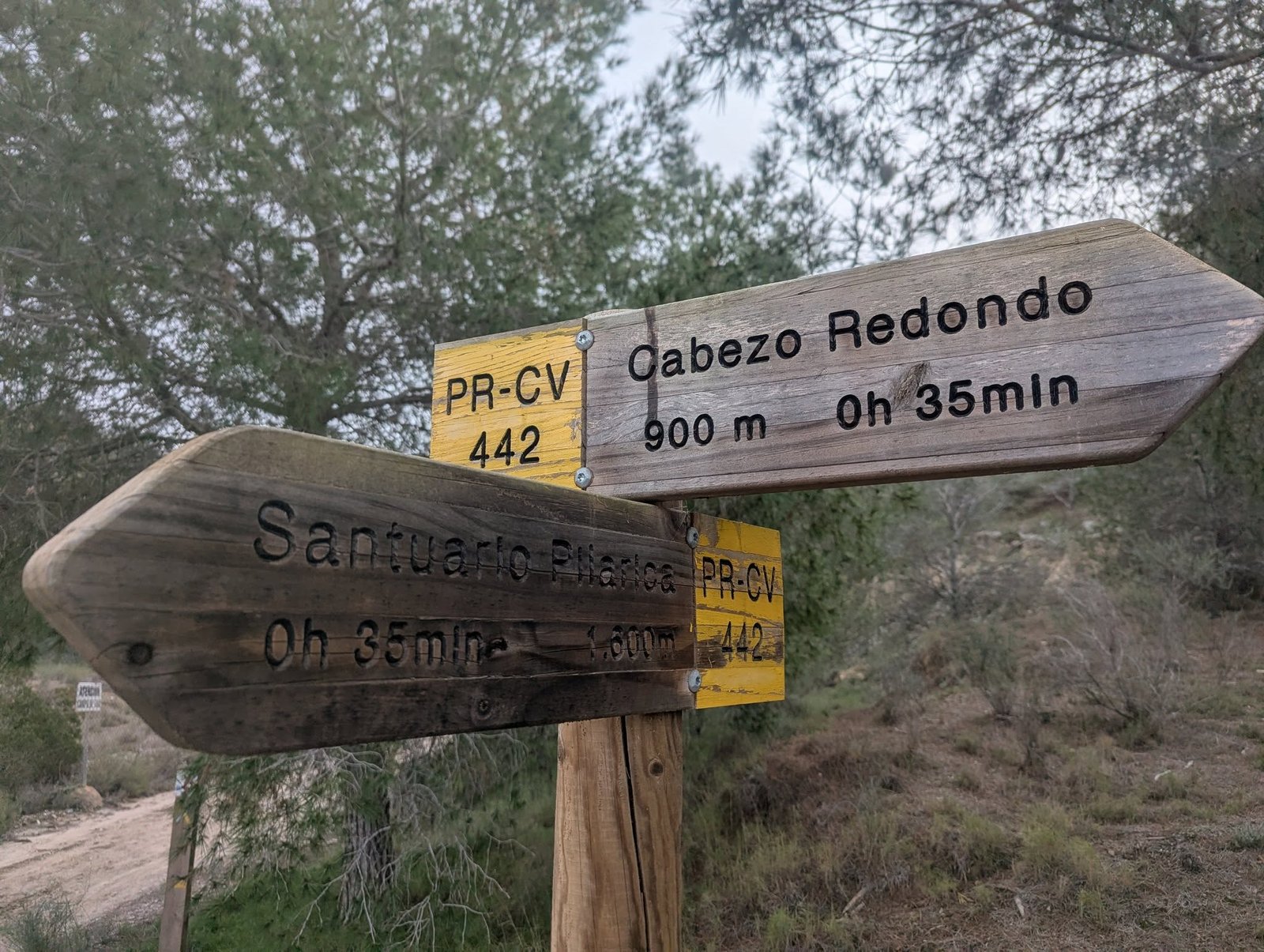
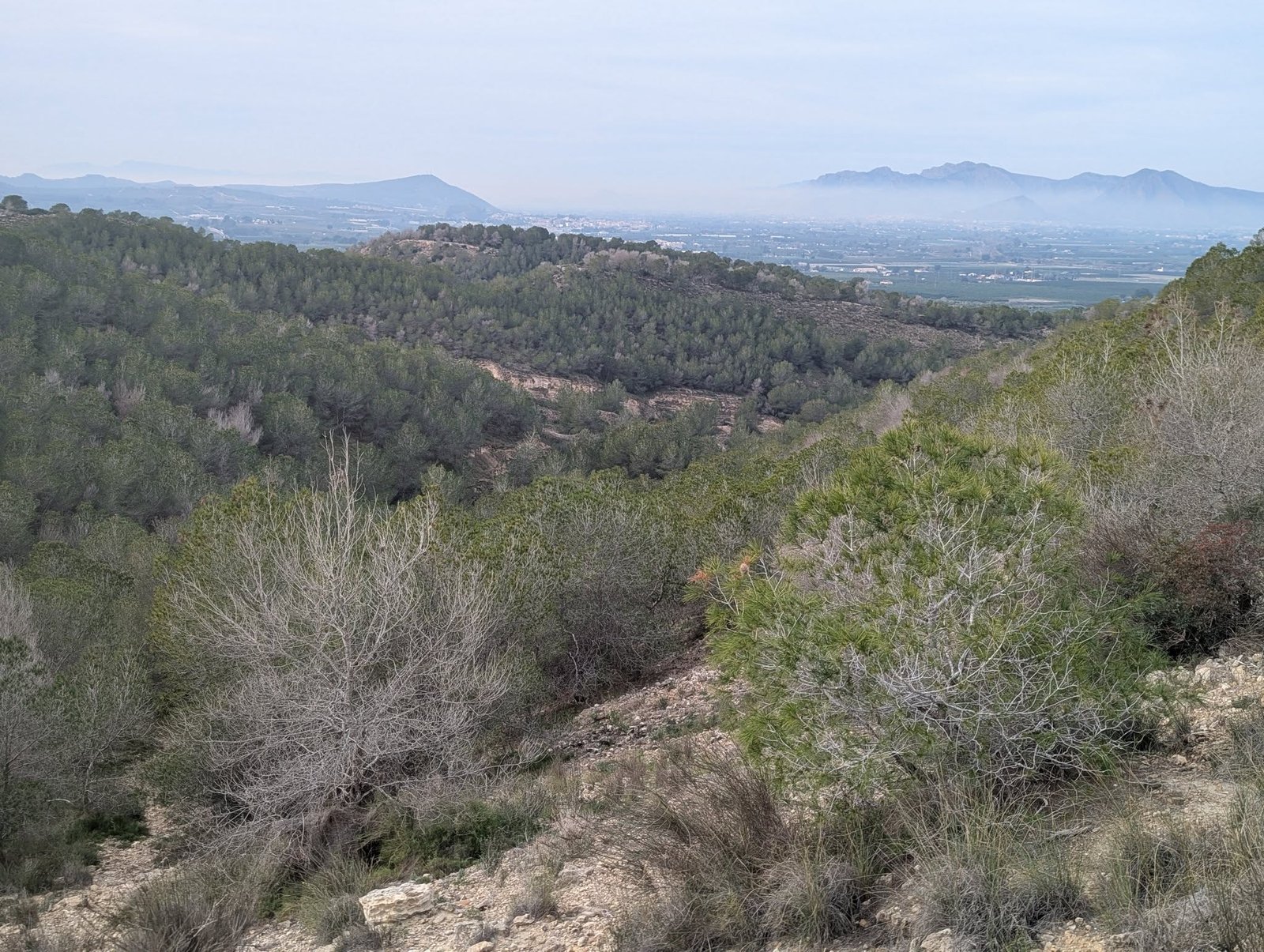
The path leads between pine groves and pale slopes. From the signpost it is only 900 m and about 35 minutes’ walk to the top.
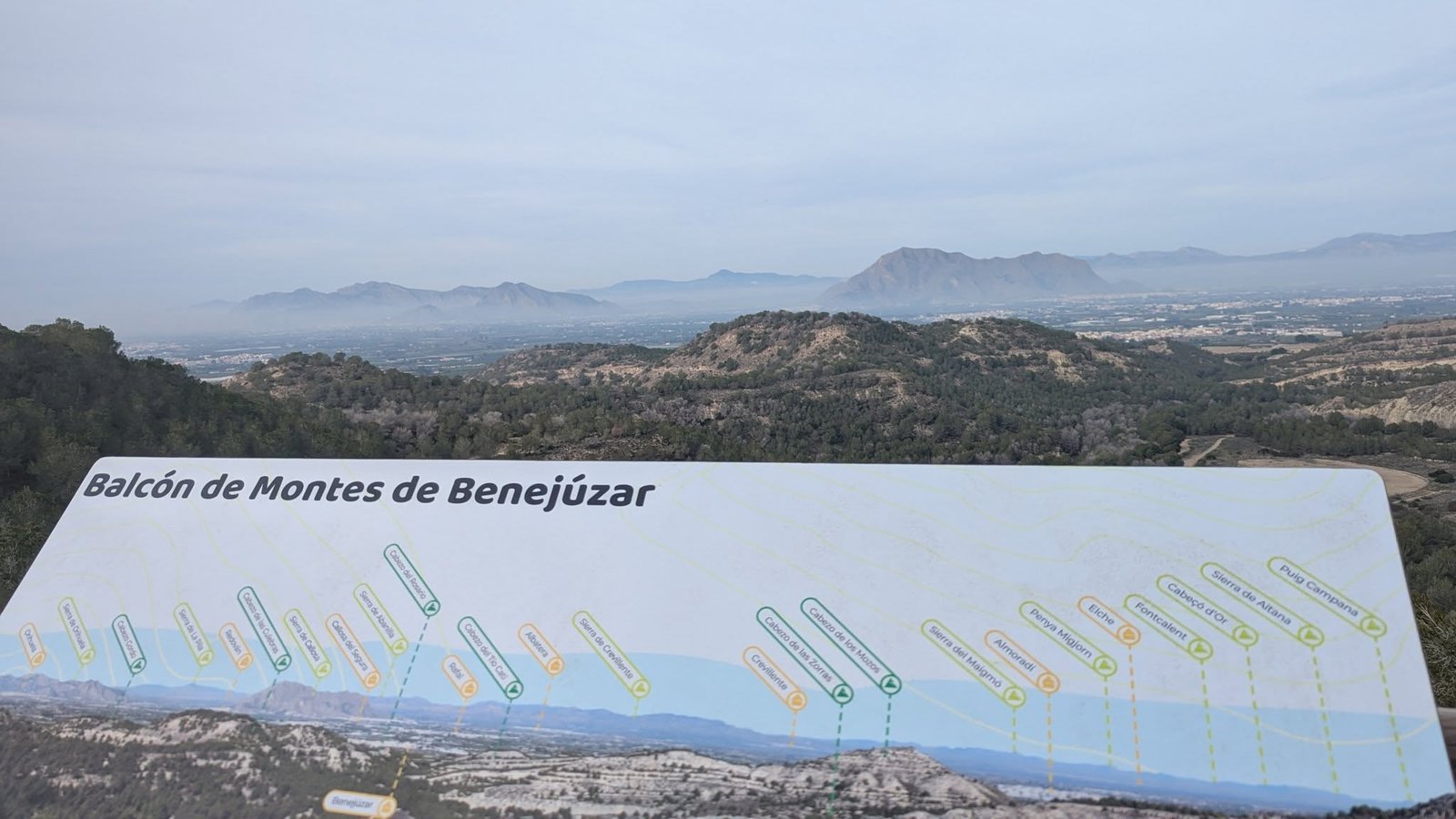
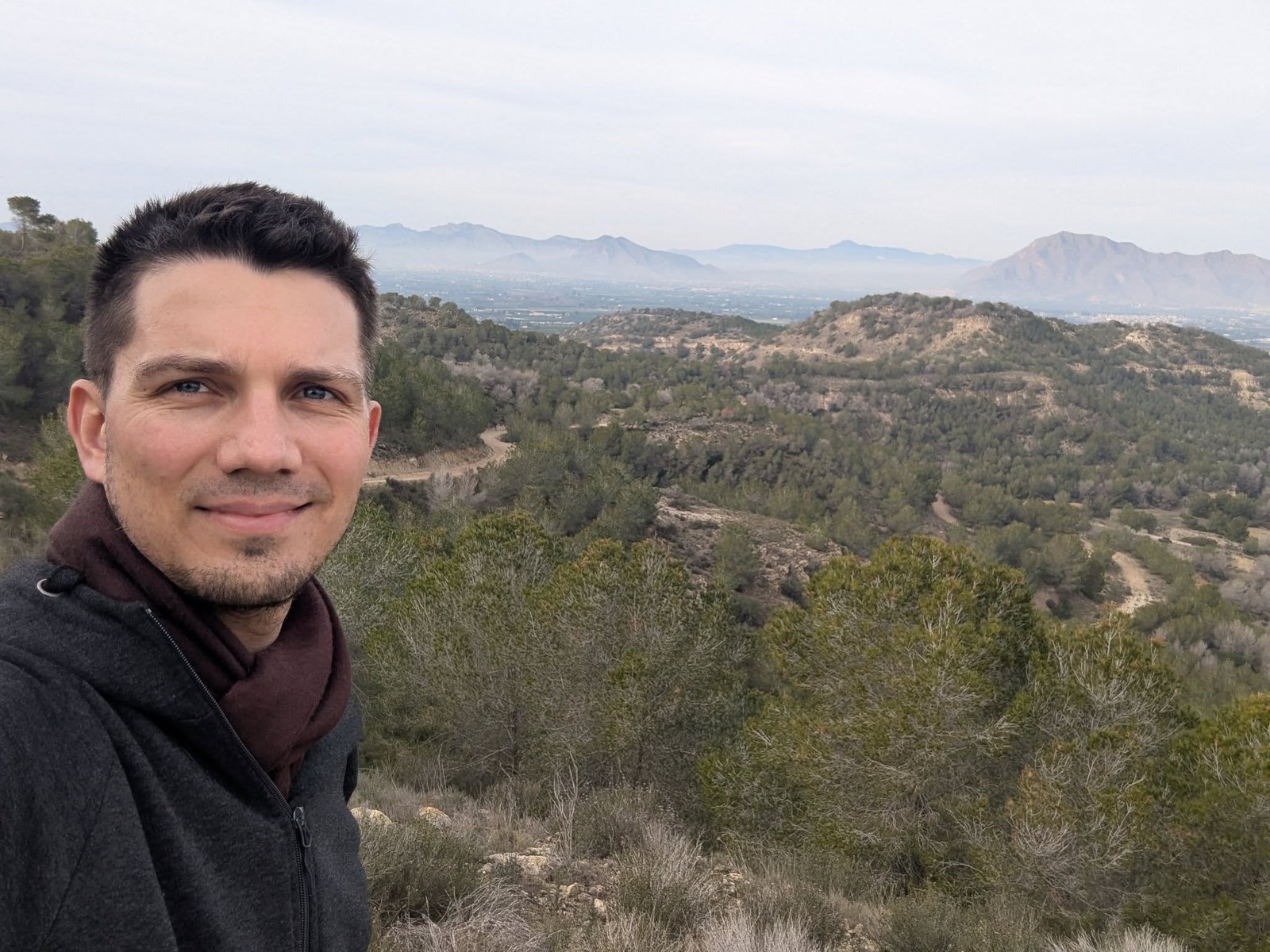
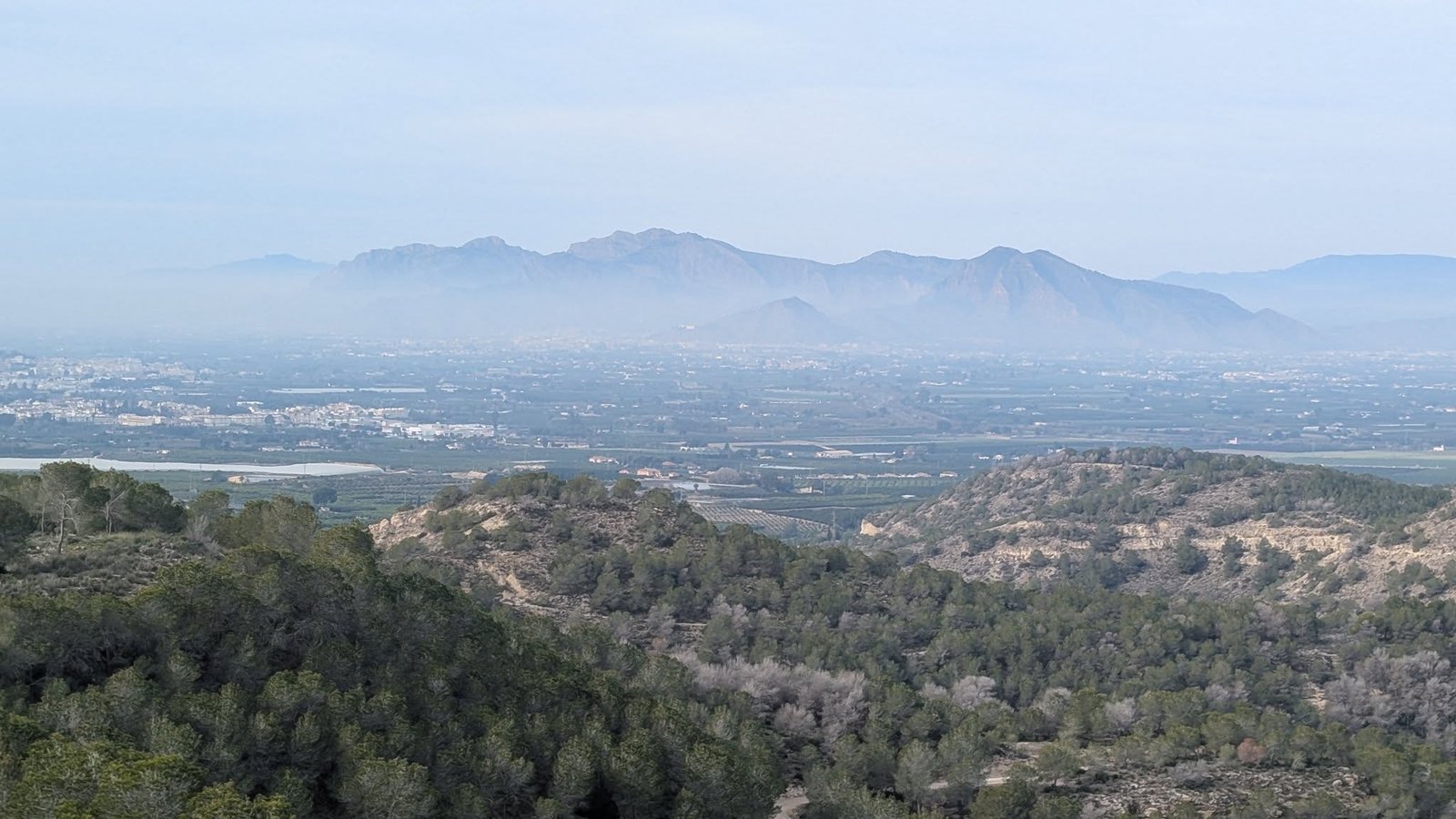
The summit offers a wide panorama of the Vega Baja del Segura valley: on one side mountain ranges, among others around the town of Orihuela, on the other the two salt lakes near Torrevieja. At the Balcón de Montes de Benejúzar viewpoint there is a board describing what you can see on the horizon. It was a bit hazy that day, but the views were still wide.
New Year’s Eve in Torrevieja
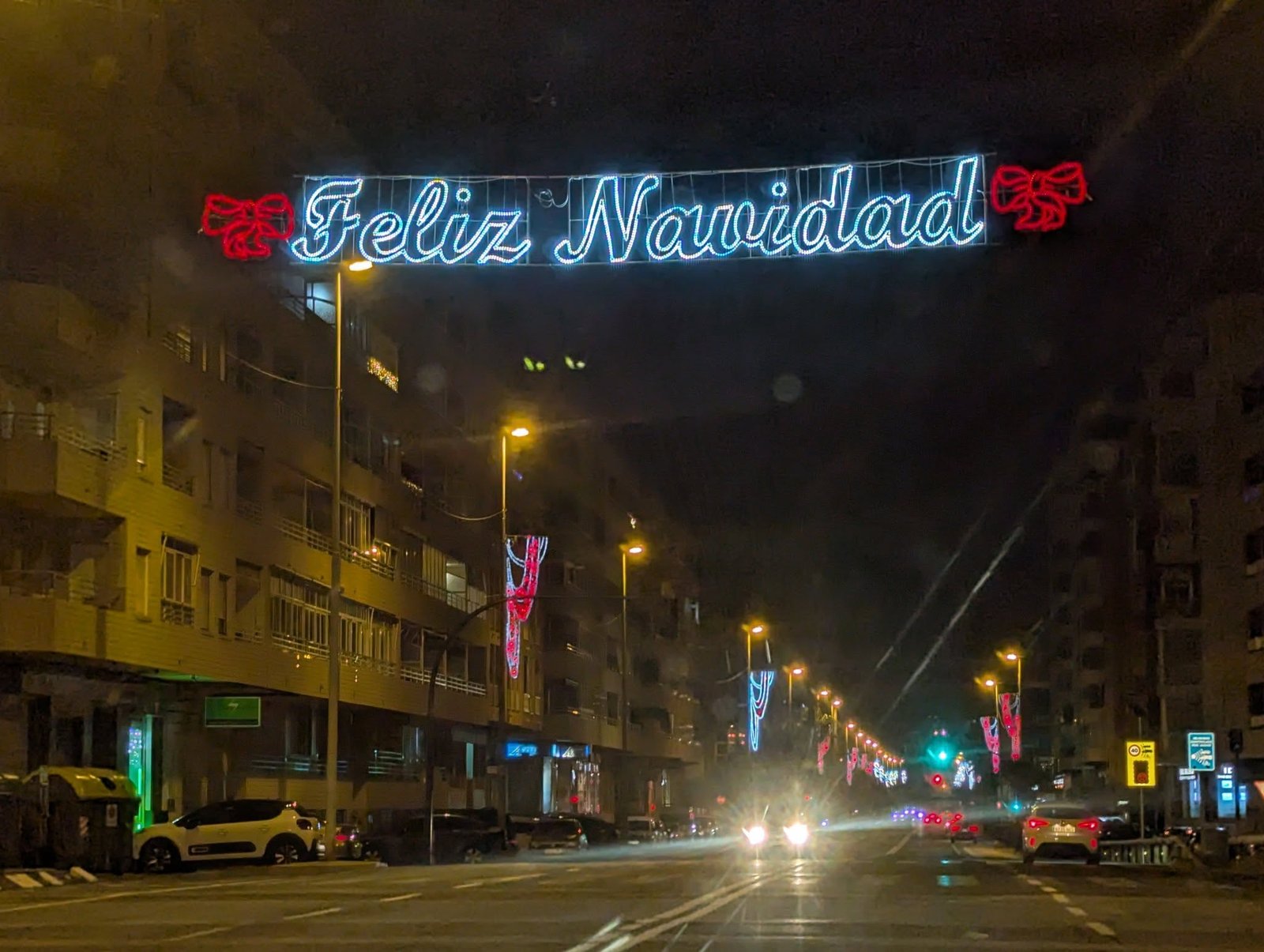
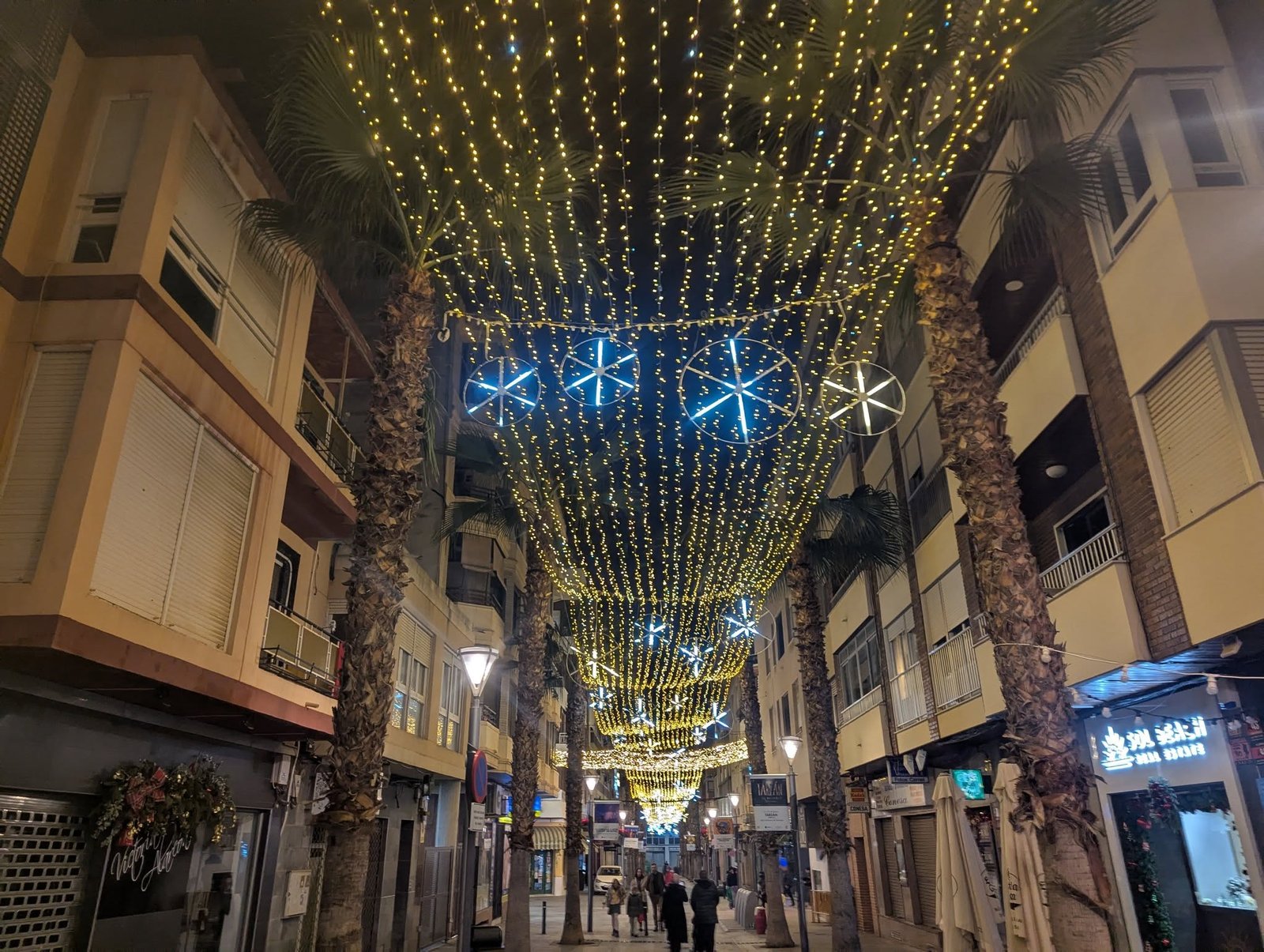
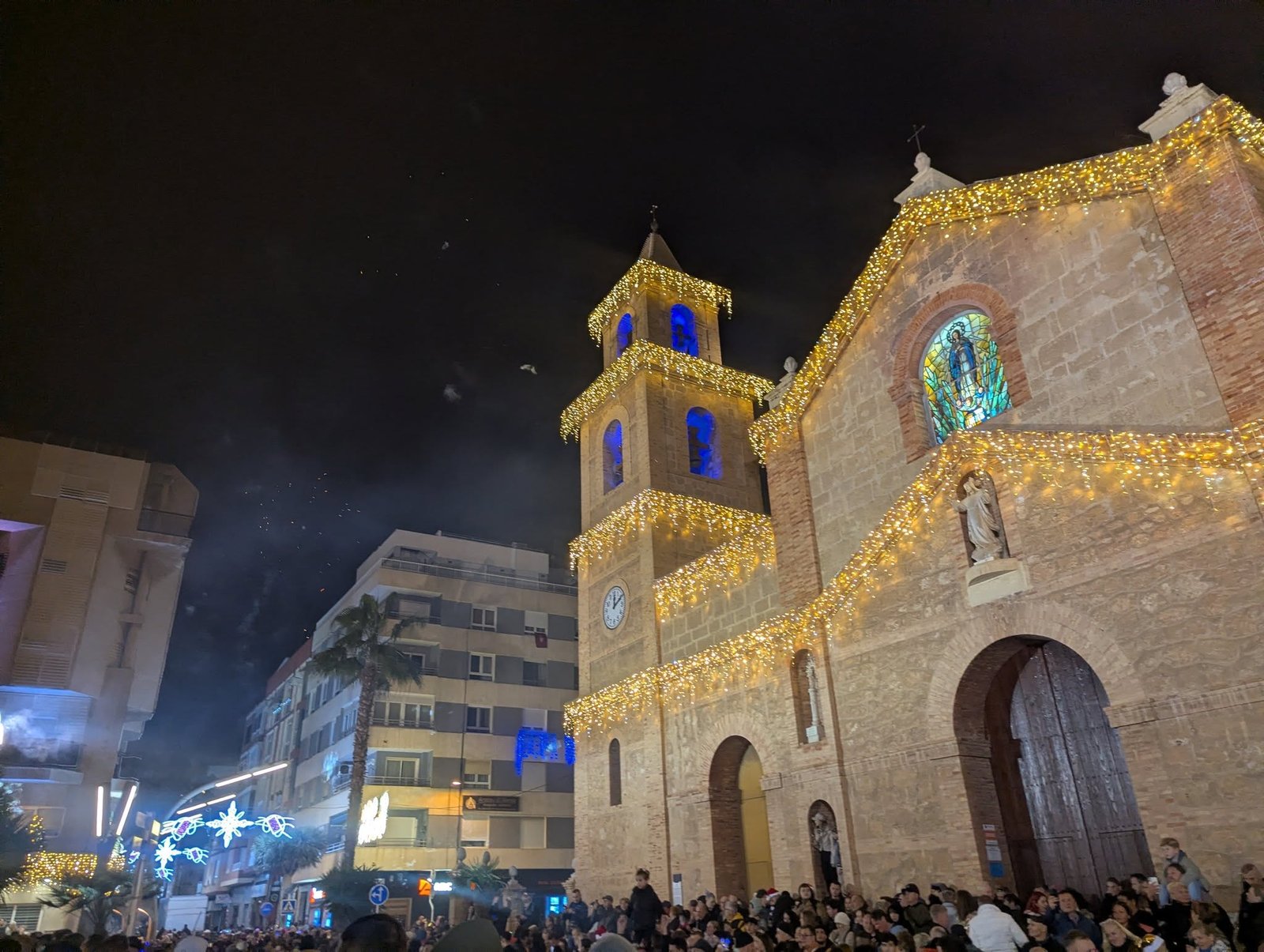
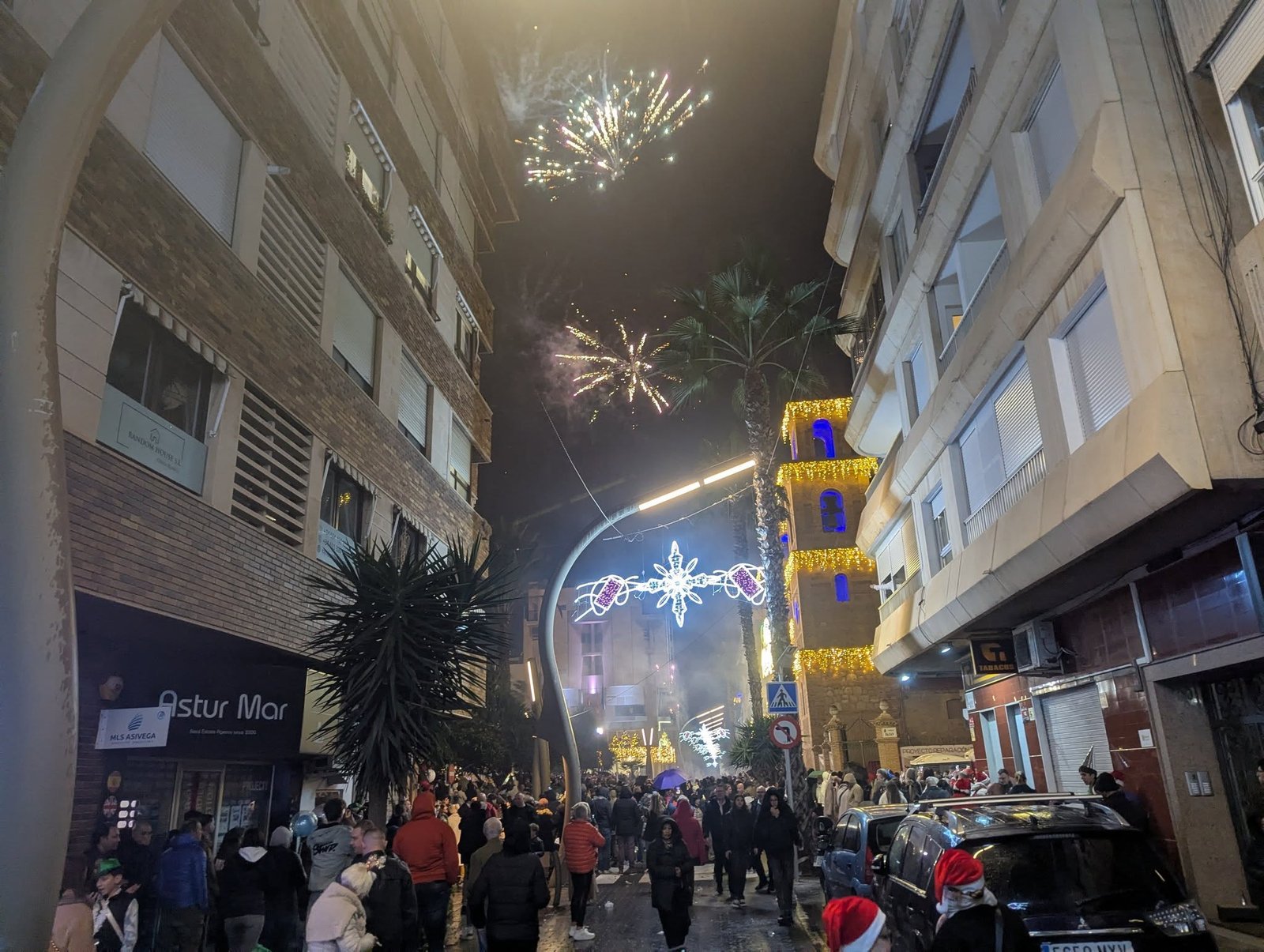
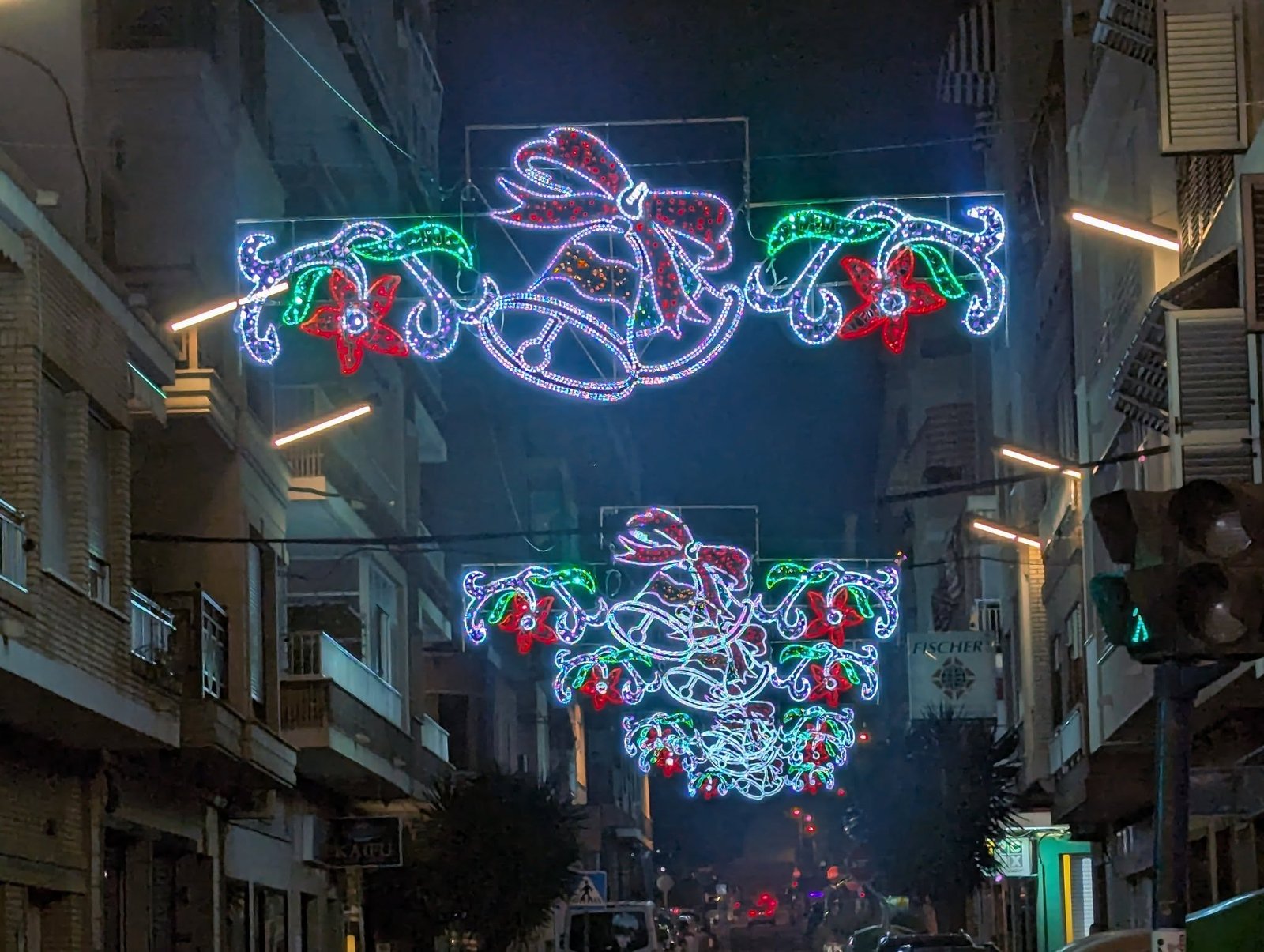
We spent New Year’s Eve in the centre of Torrevieja. The streets were still decorated with Christmas lights – “Feliz Navidad” signs, bells and garlands of lights strung above the pedestrian streets.
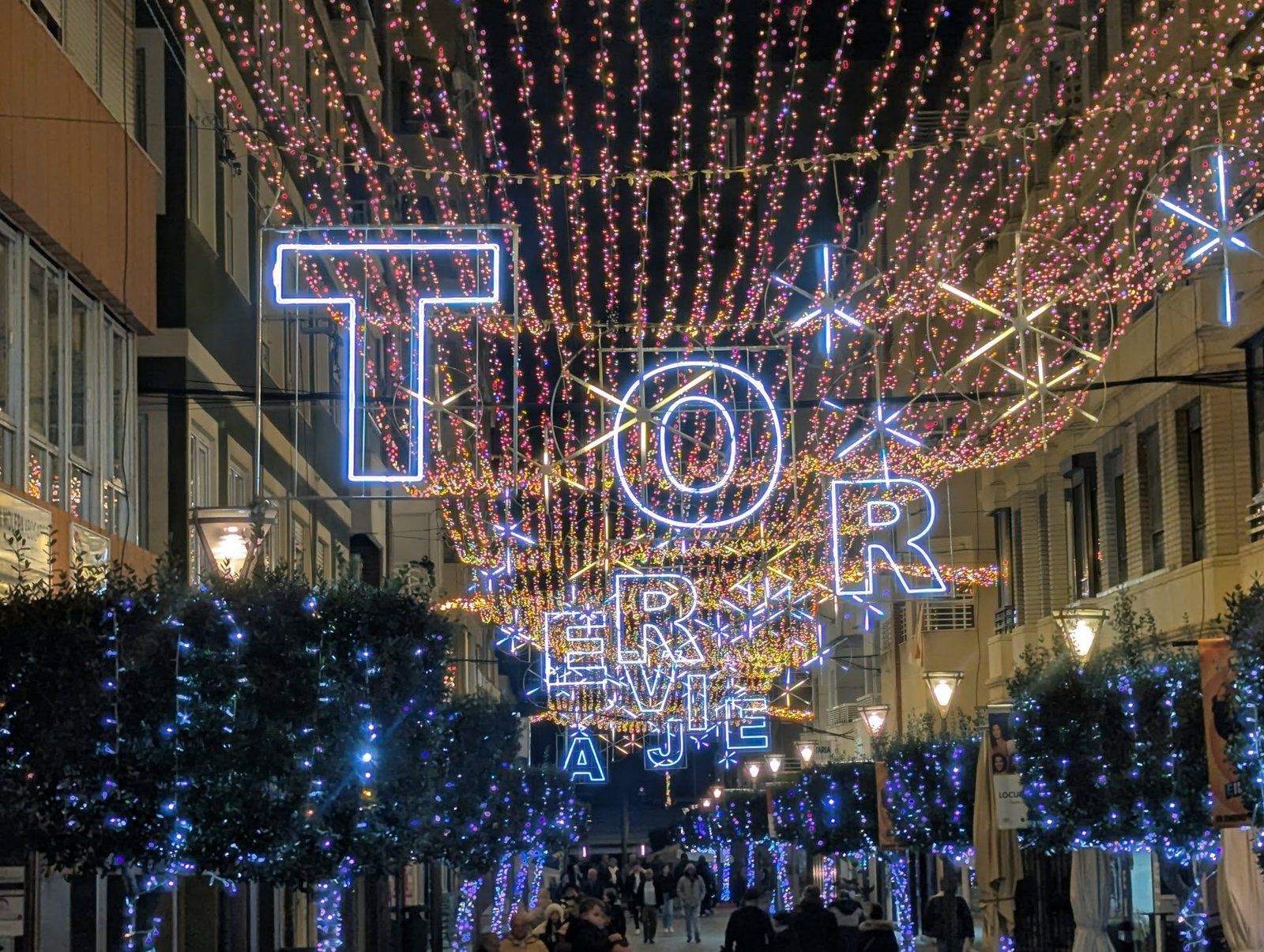
There were plenty of people, but the fireworks right after the countdown turned out to be rather modest. Only about 20 minutes later were the rest set off.
New Year’s Day in Torre de la Horadada
On 1 January, after the New Year’s Eve night, we drove during the day to Torre de la Horadada – a seaside town about 14 km south of Torrevieja. It takes its name from an old watchtower that stands right by the shore, next to a small marina.
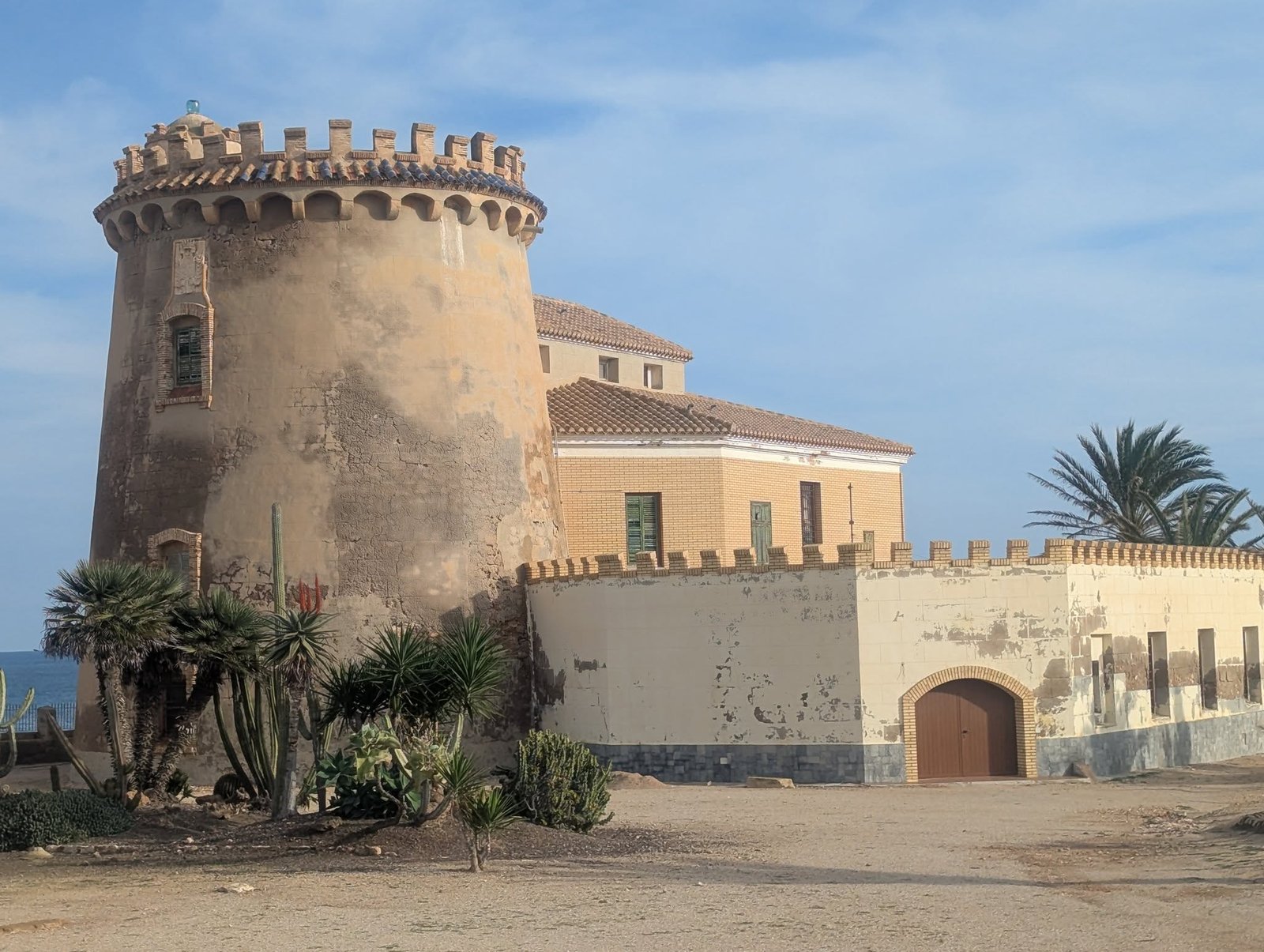
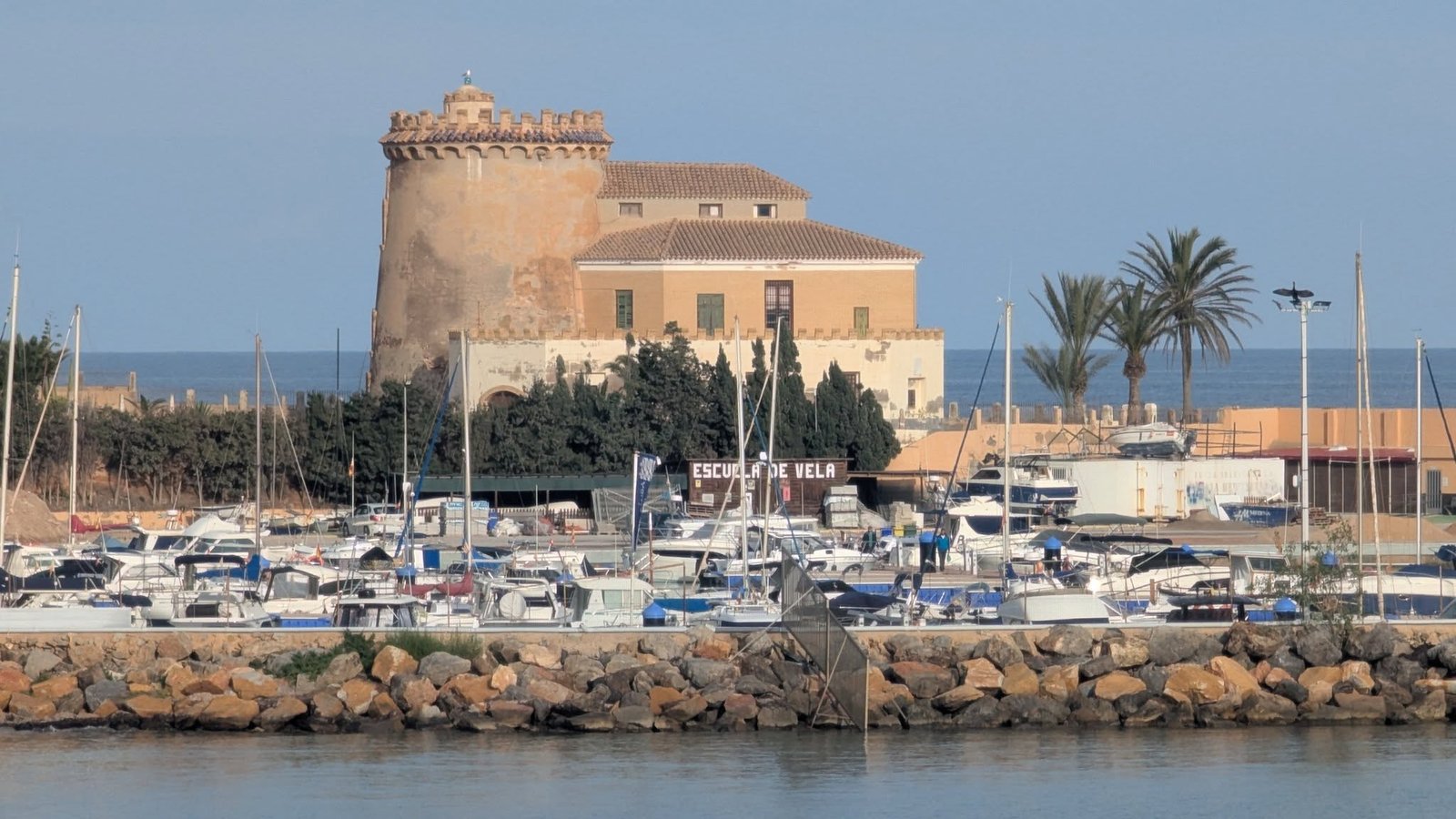
The tower was built in 1591 on the site of an earlier one, as part of the system of watchtowers that protected the coast from pirates under Philip II. It has the shape of a truncated cone topped with battlements and is a protected monument.
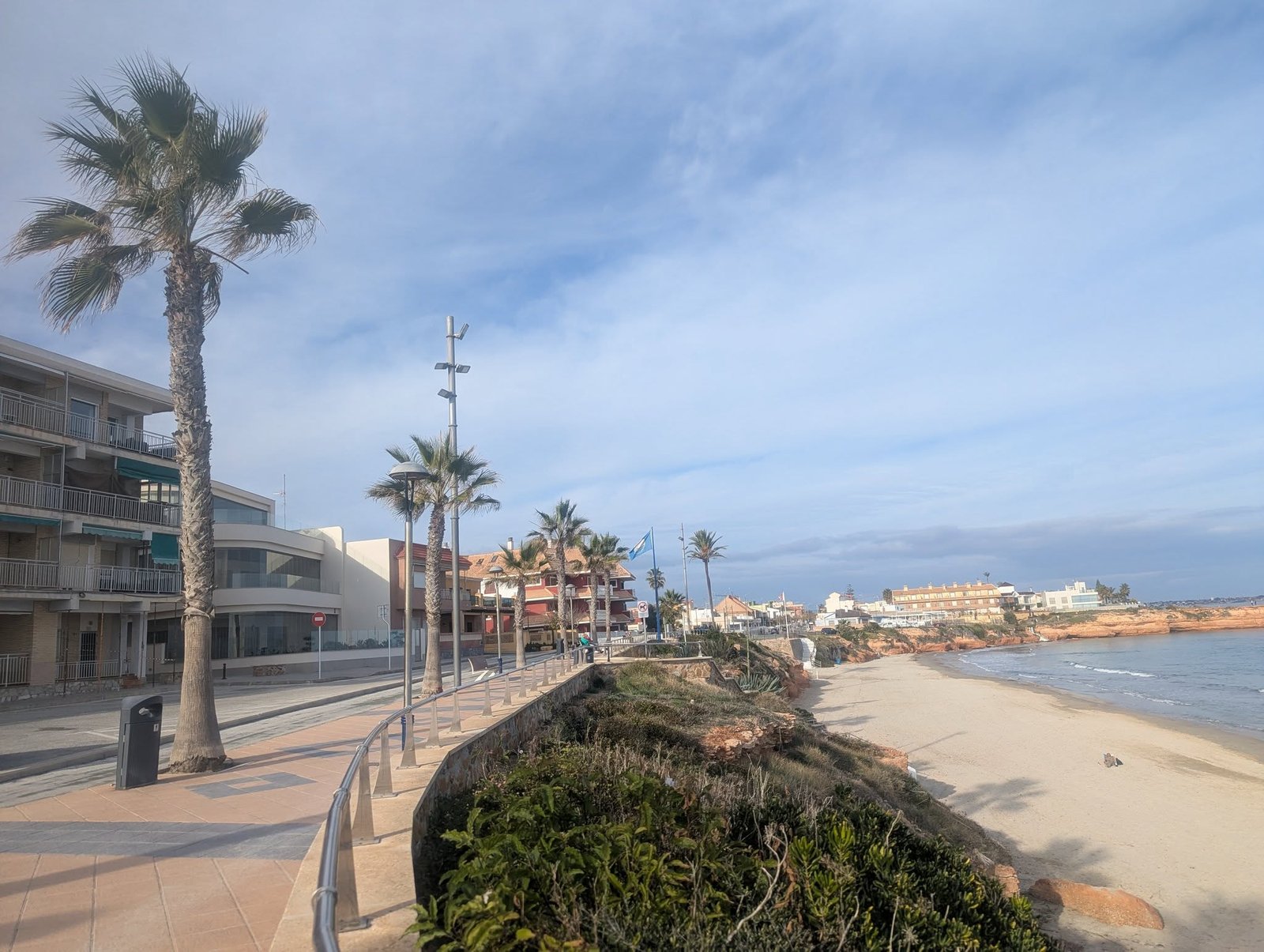
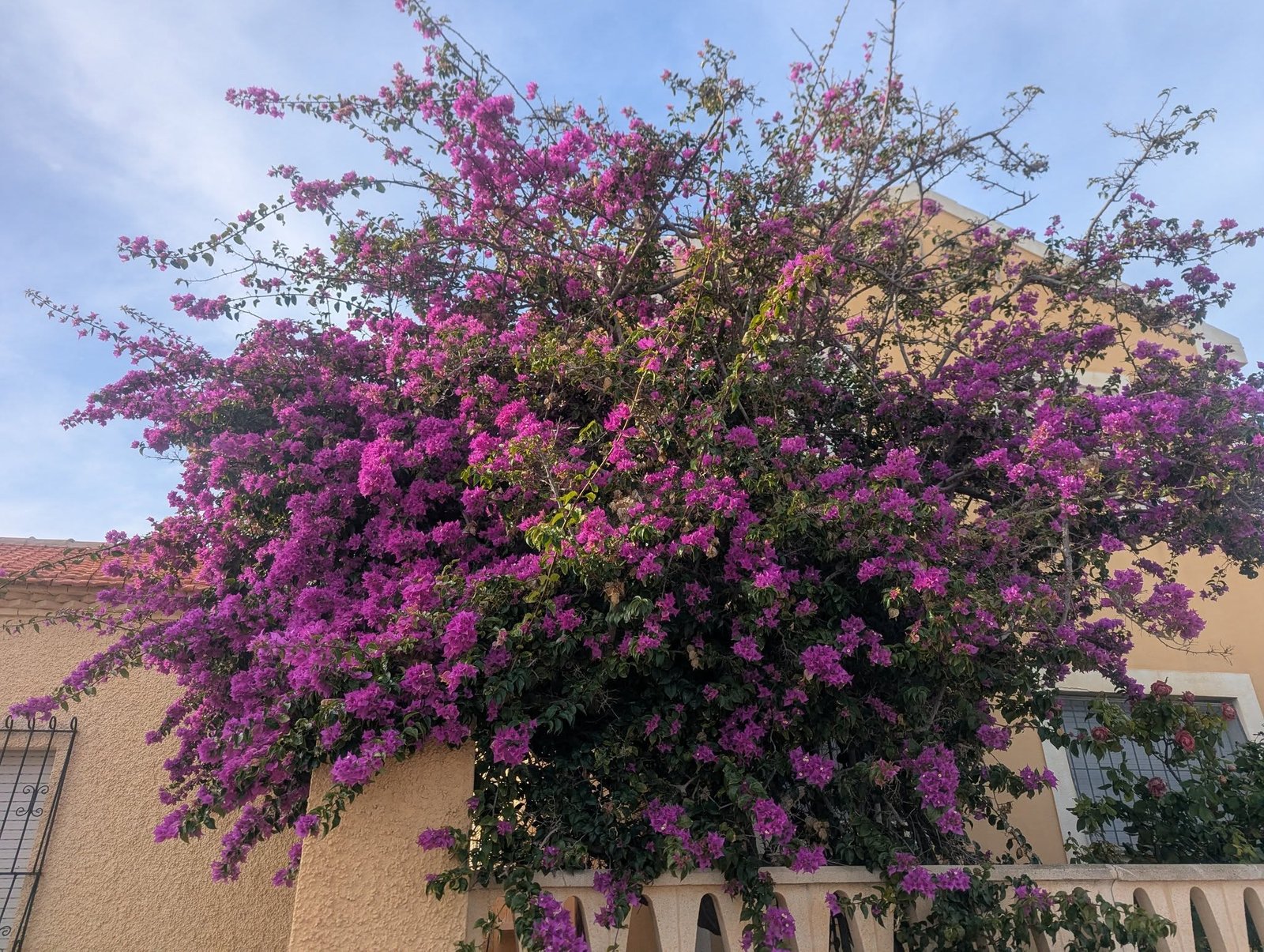
We walked along the beach promenade and through the little streets of the town, where bougainvillea was in bloom despite it being January.
Practical information
- Getting there: Almansa, the sanctuary near Novelda, Algorfa and Benejúzar are easiest to reach by car. Almansa lies on the A-31 motorway, past Villena, already in Castilla-La Mancha; the Santa María Magdalena sanctuary is on the way back to the coast. You climb up to Almansa castle by stairs from the Plaza de Santa María, with a tourist information office at their foot.
- Weather: at the end of December it can be warm during the day in the sun and with little wind – even a T-shirt is enough on the trail. The evenings are chilly, so a jacket comes in handy.
- The PR-CV 442 La Caldera del Gigante trail: 17.2 km one way (Algorfa – Almoradí – Rojales – Benejúzar), about 5 hours and 360 m of ascent. It can be split into shorter sections, e.g. along the caldera in Algorfa and the climb up Cabezo Redondo in Benejúzar.
- The pink lake: it is at its pinkest in autumn, in sunny weather; in winter it is less pink.
- New Year’s Eve in Torrevieja: the fireworks do not necessarily start exactly at midnight – don’t leave straight after the countdown.
- Other posts from the area: Cartagena and Murcia and Valencia in the evening.
More photos
Photos not included in the text.


 Spain
 Poland