In May 2023 we spent two weeks in Ireland (14–28 May) – mostly staying with Patrycja’s family, in two different parts of the country. For the first week we stayed in a town near Dublin, close to the Wicklow Mountains, we spent the weekend in Dublin itself, and the last week in the village of Borris in County Carlow, not far from Kilkenny. Everything was very green, and the weather was a pleasant surprise – the longer we stayed, the warmer and sunnier it got.
Table of contents
- Glendalough – a loop around two lakes
- Wicklow town – cliffs by the sea
- Turlough Hill and Camaderry – a quieter trail
- Powerscourt Waterfall and Maulin
- A weekend in Dublin
- Borris, Kilkenny and Carlow
- Practical information
Glendalough – a loop around two lakes
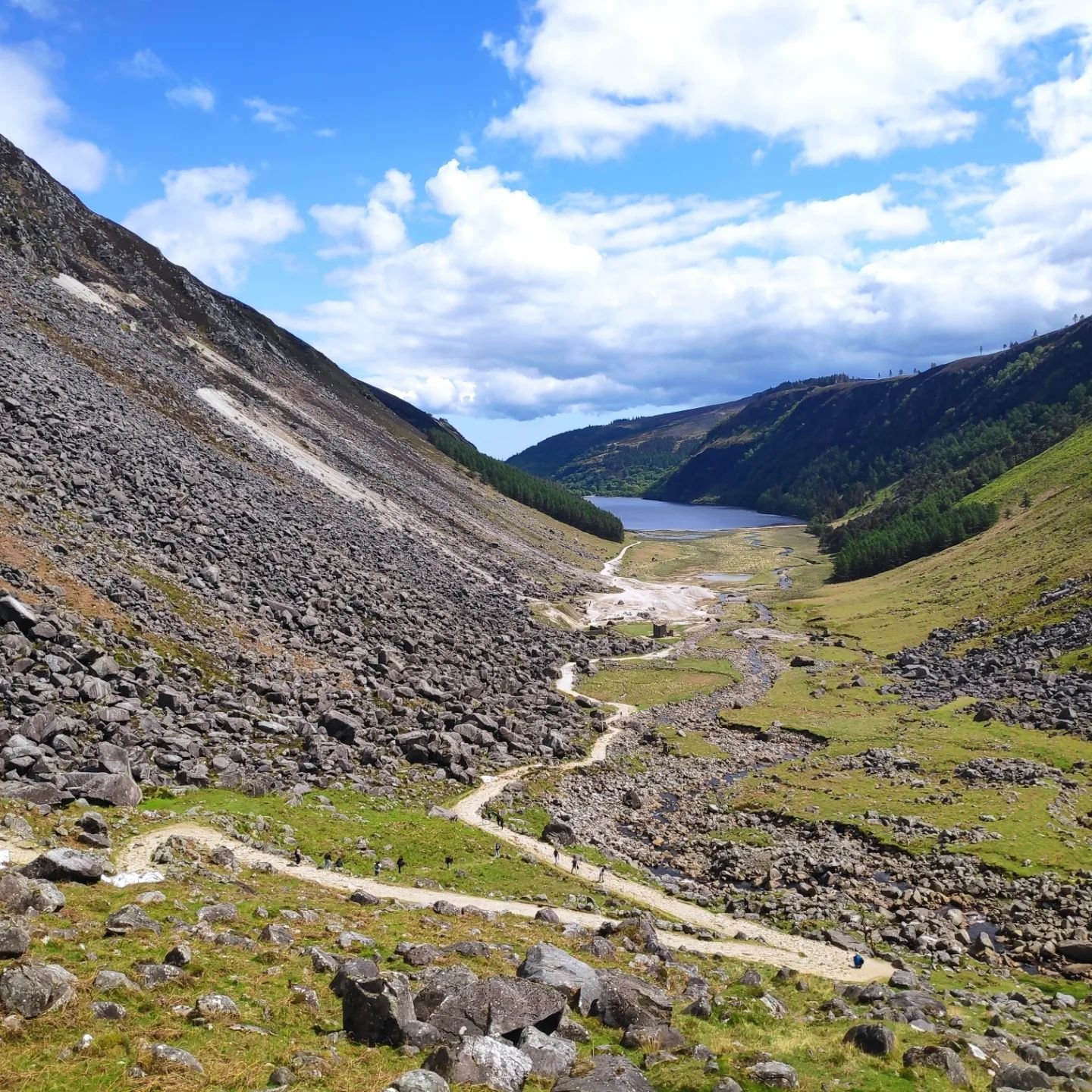
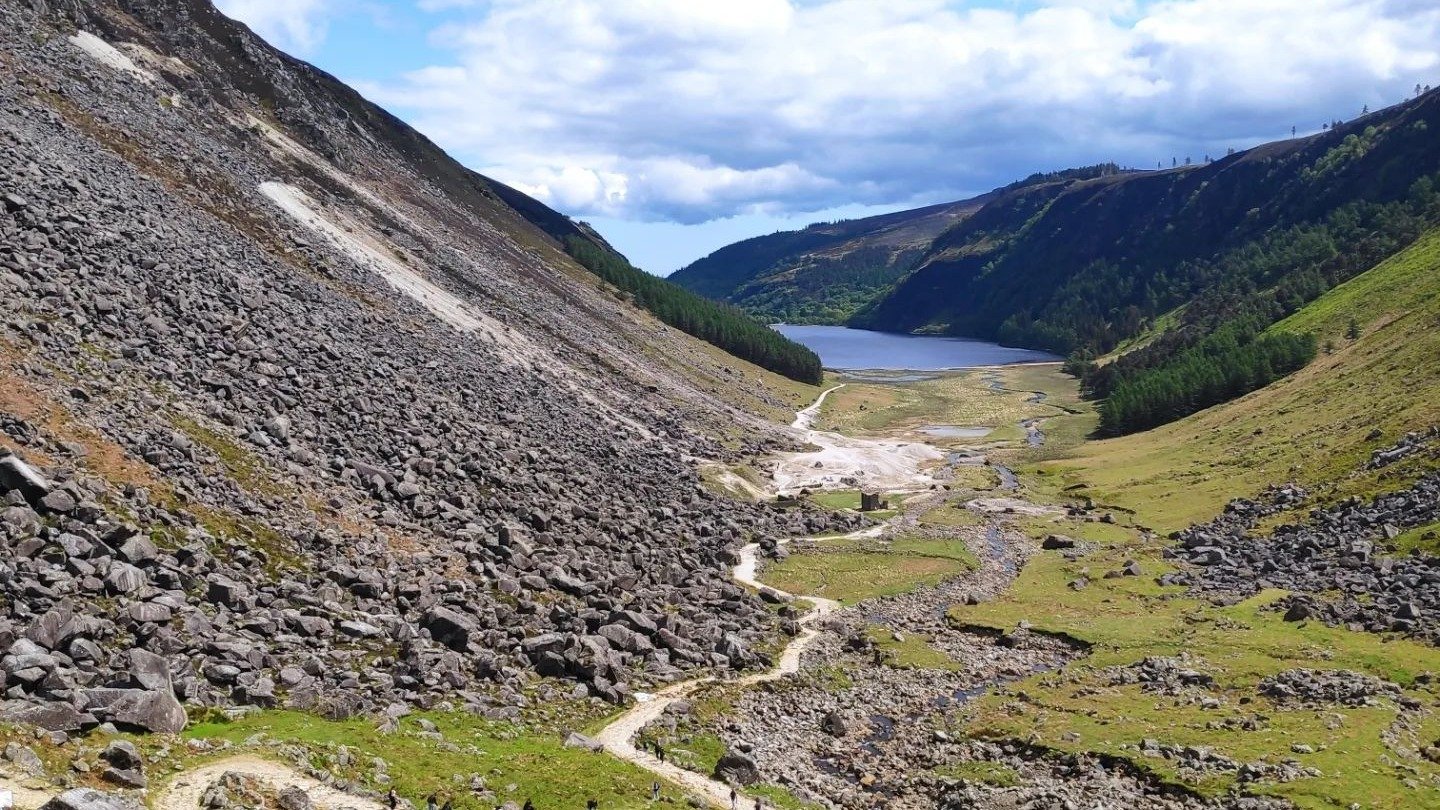
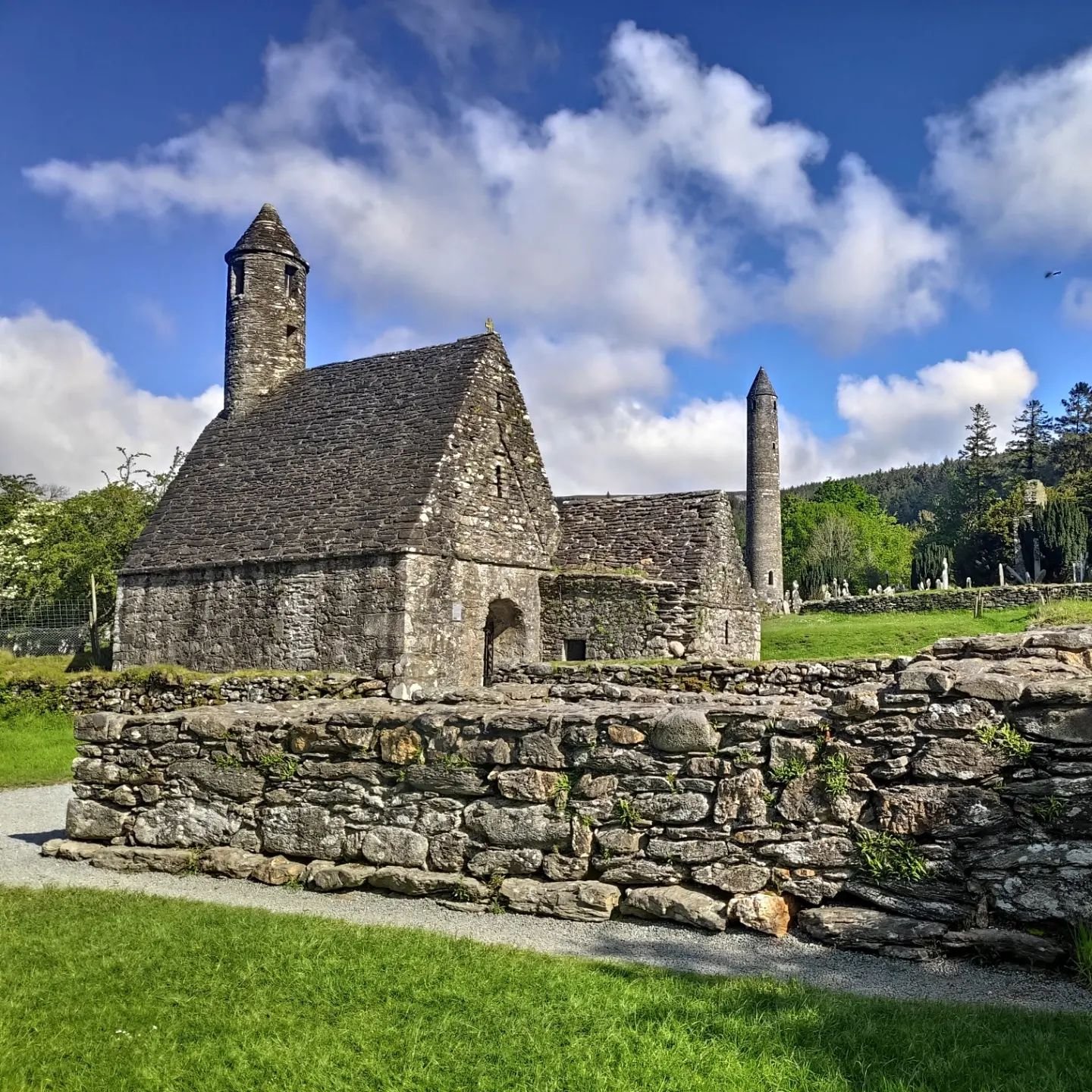
We started sightseeing on 15 May with the best-known place in Wicklow Mountains National Park – the Glendalough valley. We did a 15-kilometre loop along the Lower Lake and the Upper Lake. Right next to the visitor centre stand the buildings of an early medieval monastic settlement founded by St Kevin – a small stone church and a slender round tower.
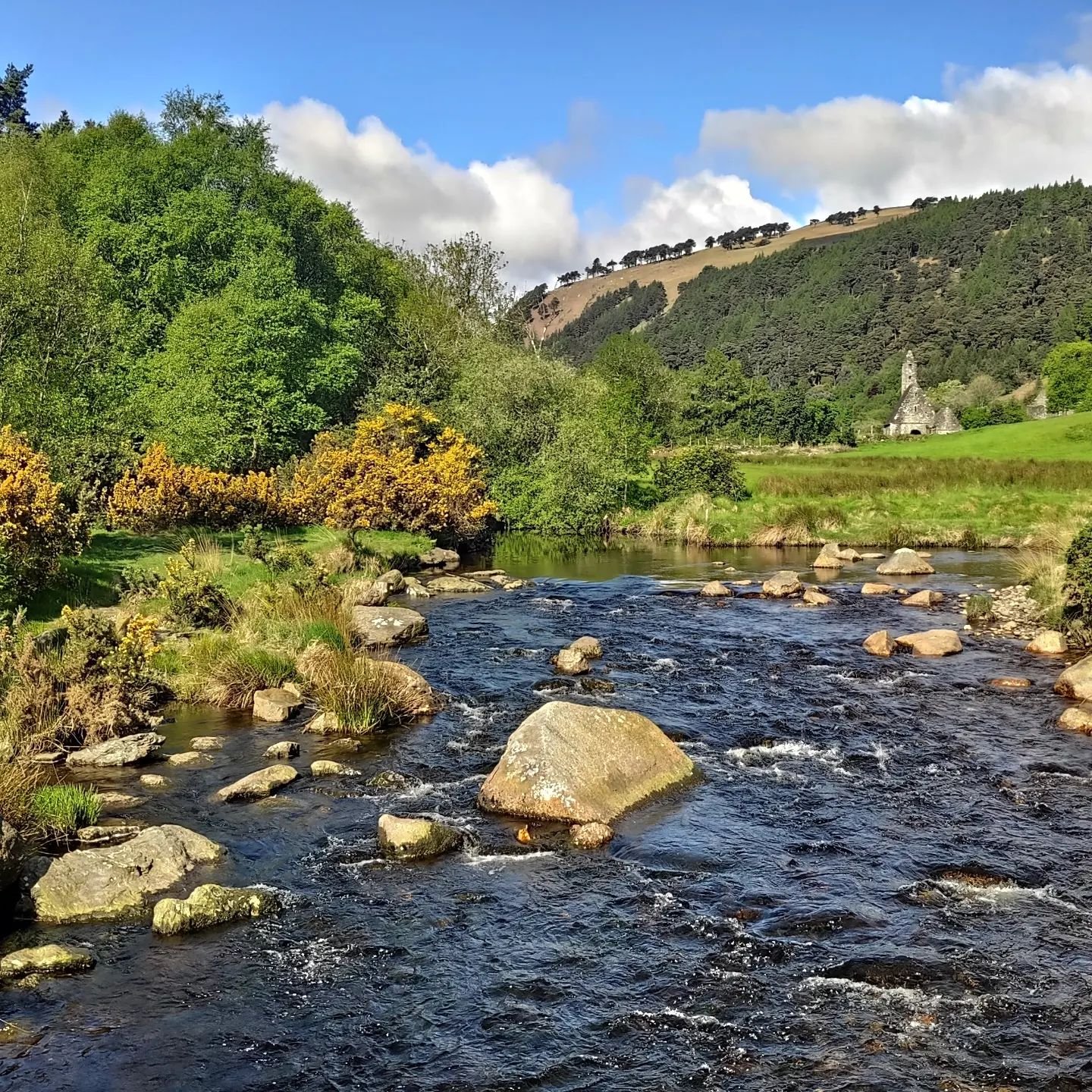
For most of the route you walk on a specially built path, and on the steeper and boggy sections – on evenly laid wooden boards with a non-slip metal mesh. There were lots of tourists on the trail, including organised groups, and the car park was full.
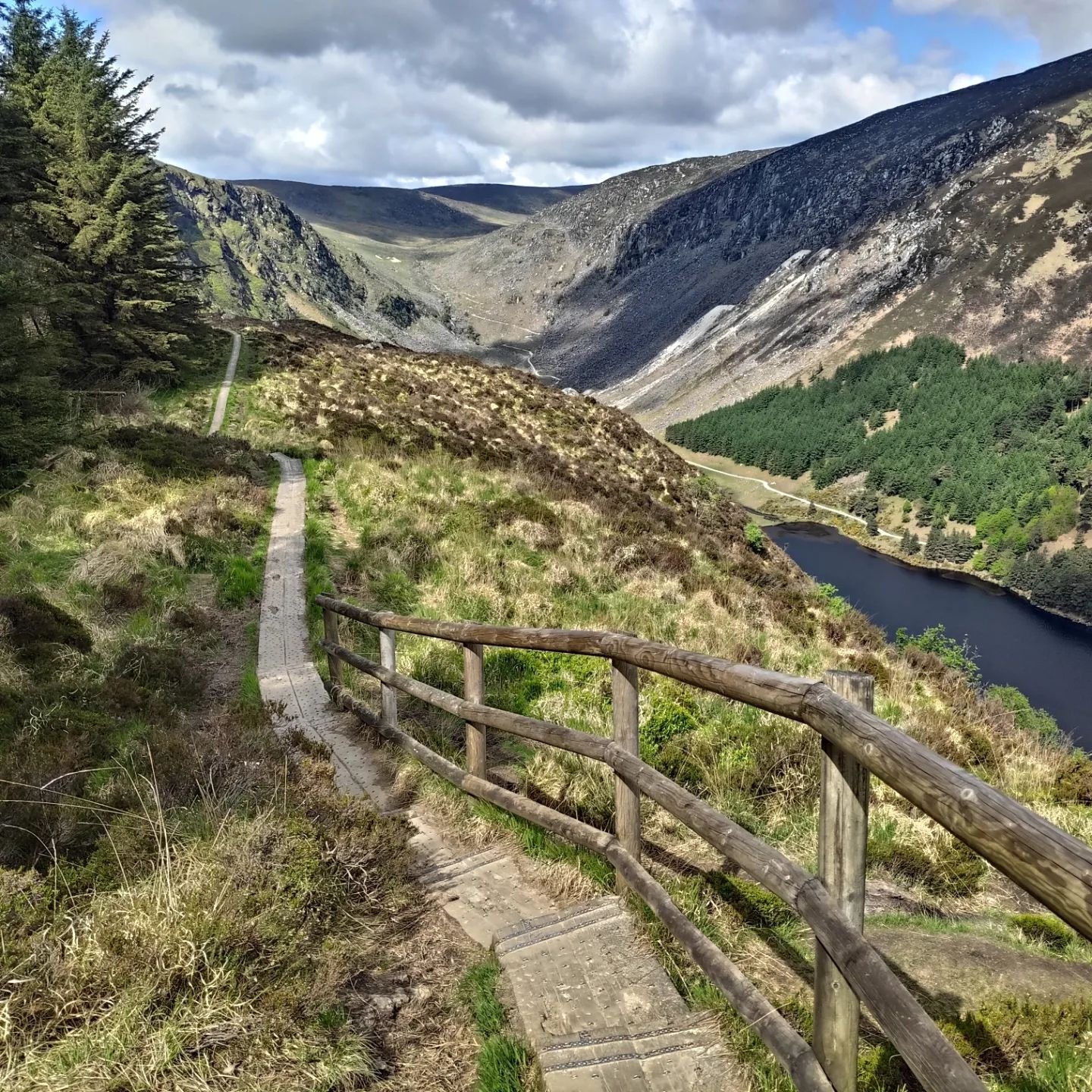
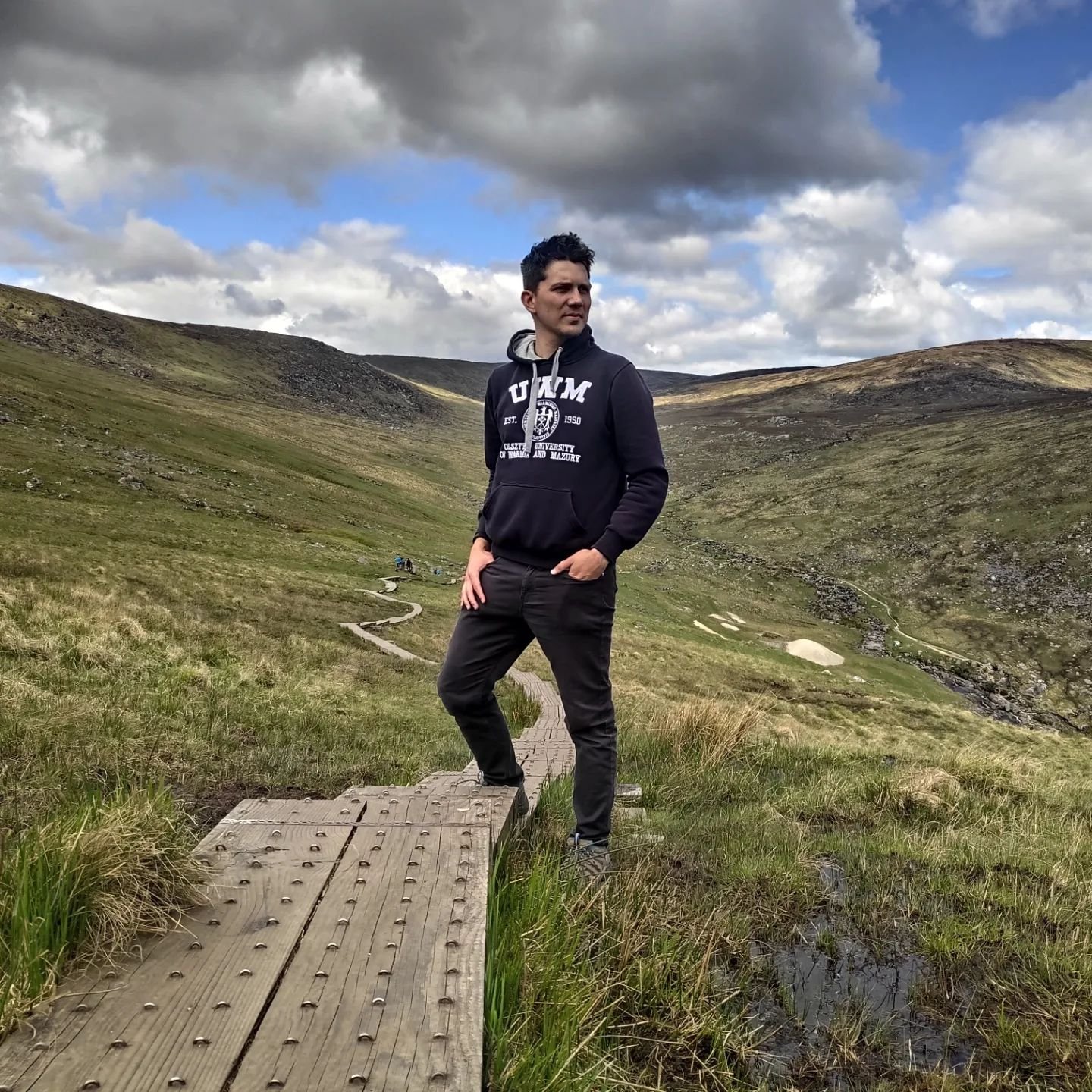
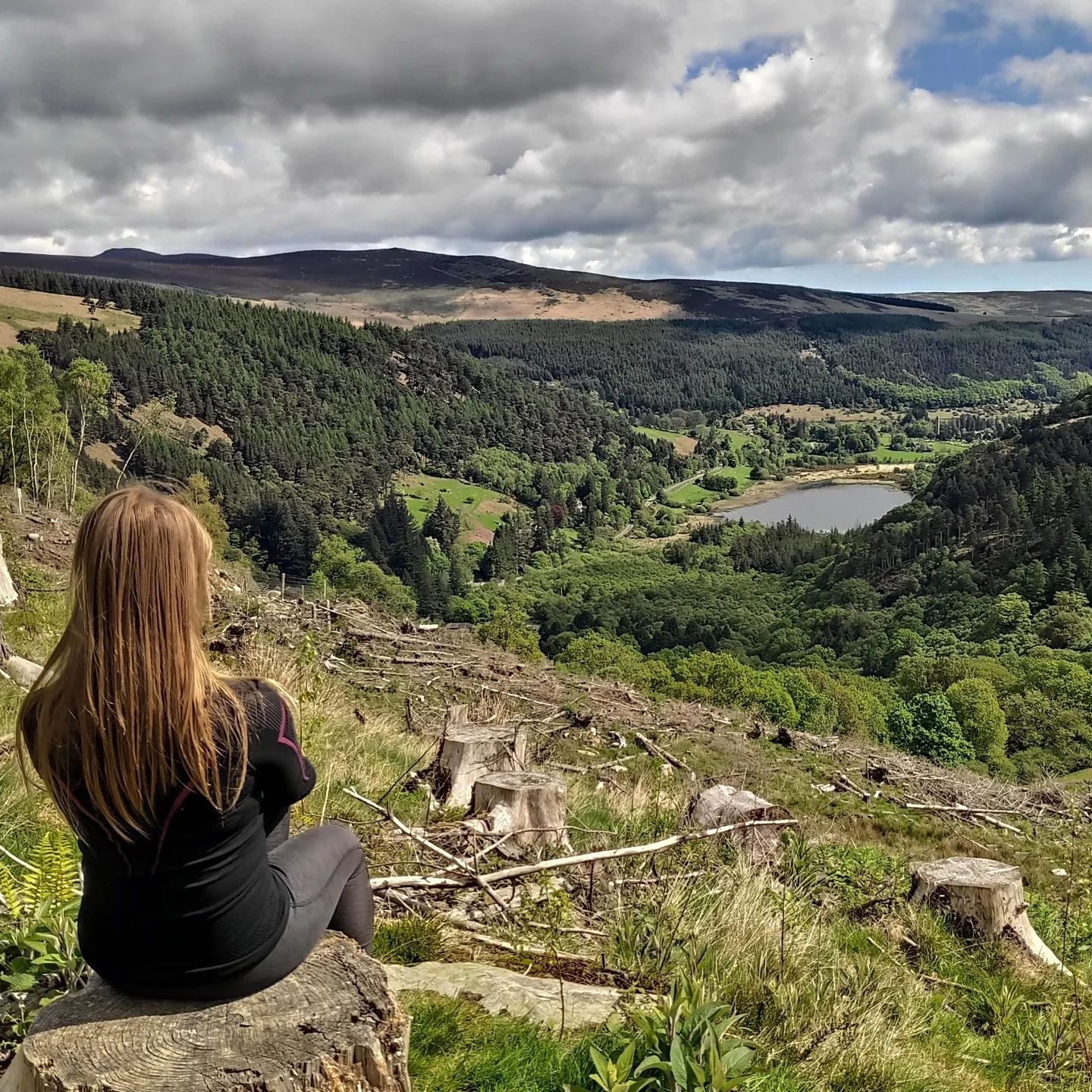
On the way back part of the route leads over boulders, along a mountain river that forms cascades before flowing into the lake. By the Upper Lake we also passed the remains of an old mining village. The forest ends quite low here – a little higher up there is nothing but grass and rock.
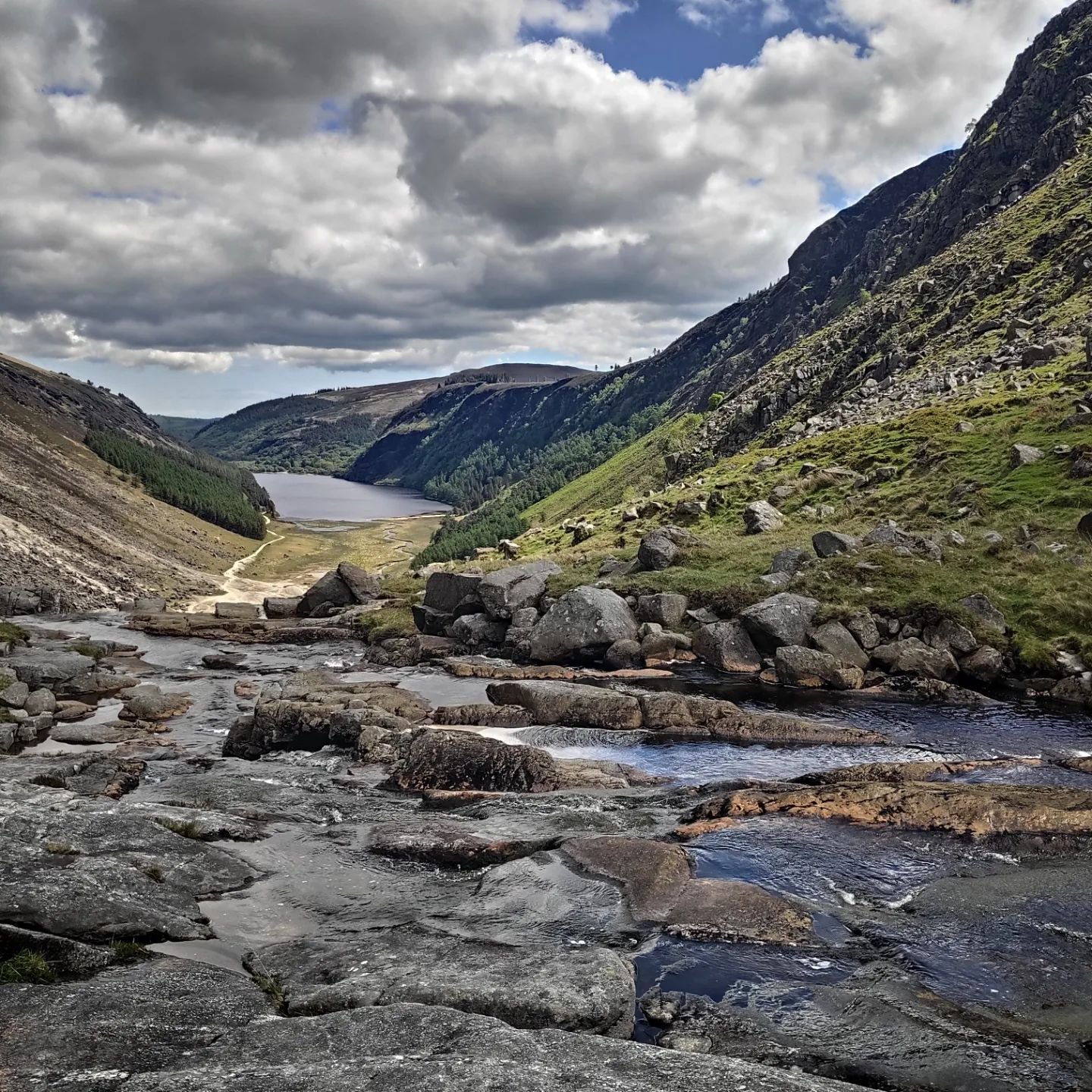
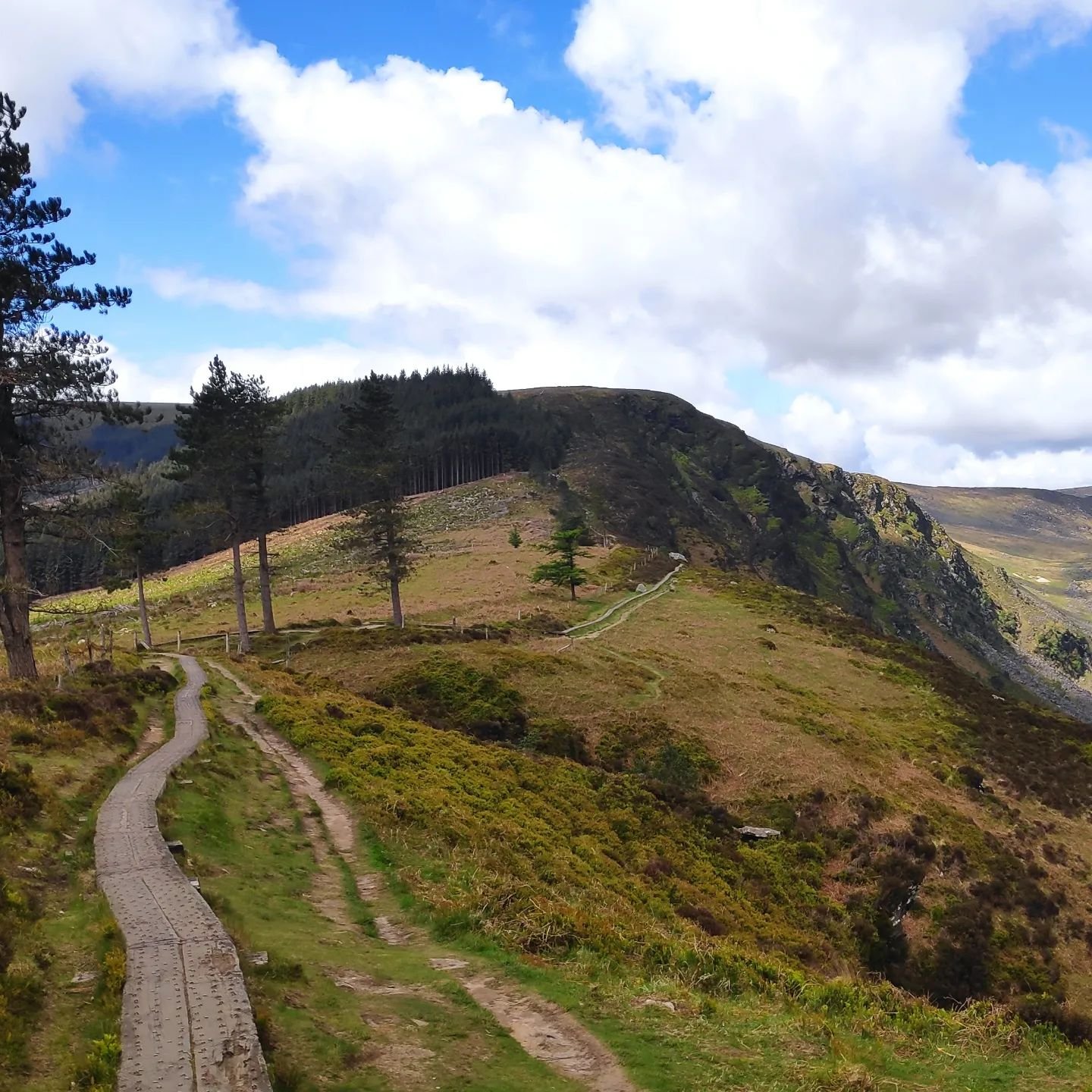
The loop took us 5 hours, with just under 700 metres of elevation gain. We were lucky with the weather: it was 13–14 degrees at most and sometimes very windy, but the sun was shining most of the time.
Wicklow town – cliffs by the sea
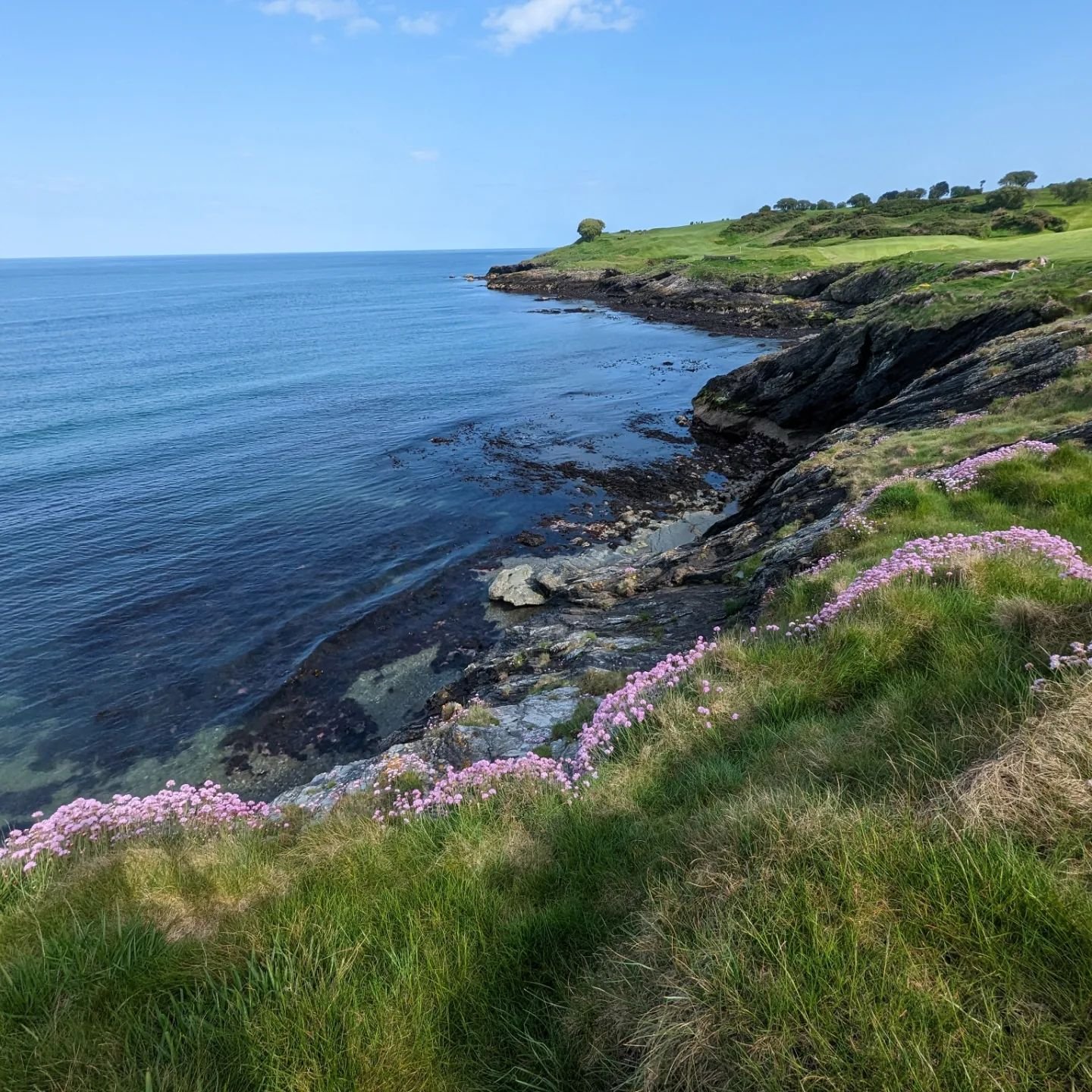
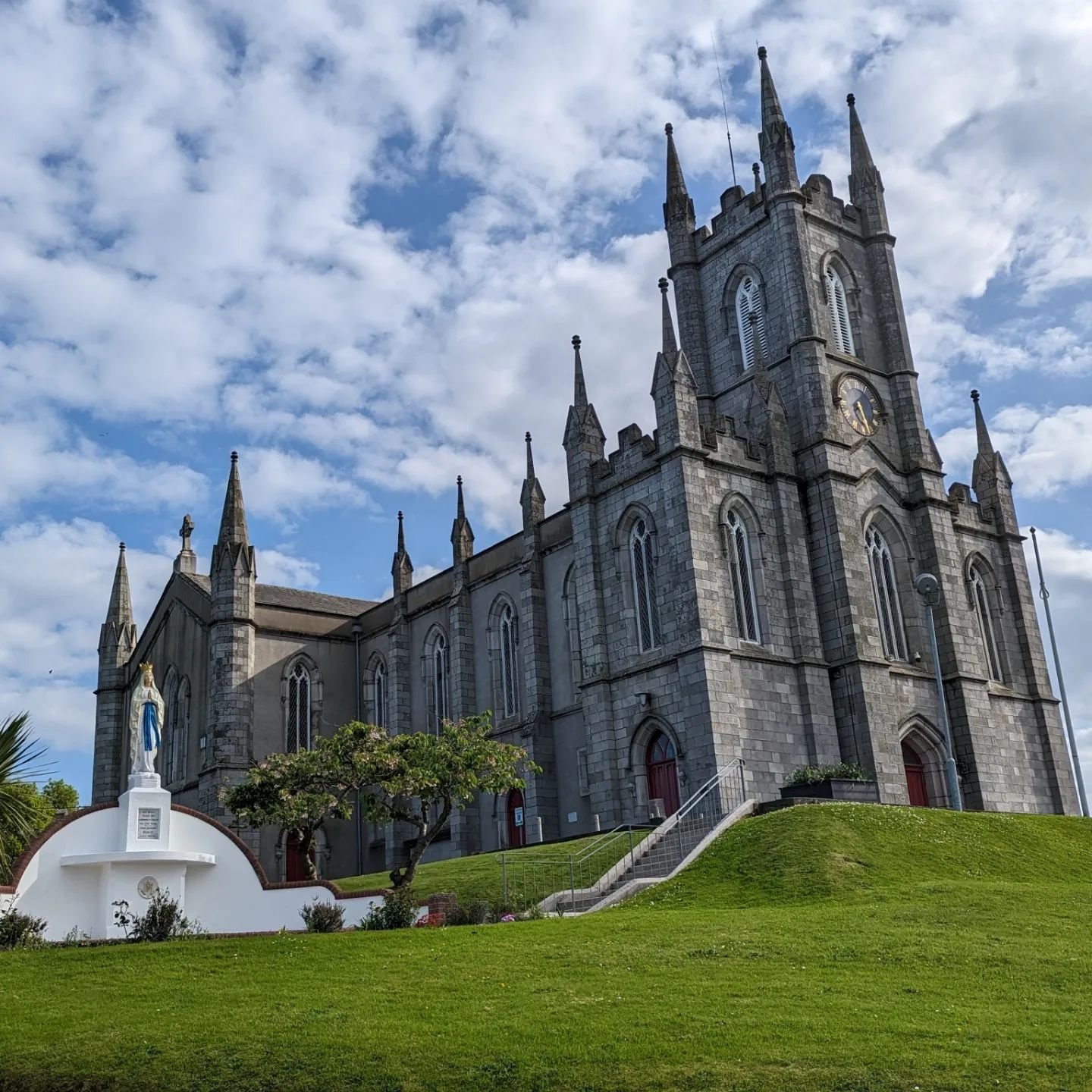
On Tuesday (16 May) we walked to the town of Wicklow. The best part was the walk along the coastline – the cliffs are not high, but very pretty. By the water you can see the ruins of Black Castle, old cannons and a harbour, and a bit further on there is St Patrick’s Church and the old gaol. Add to that charming, typically Irish streets.
Turlough Hill and Camaderry – a quieter trail
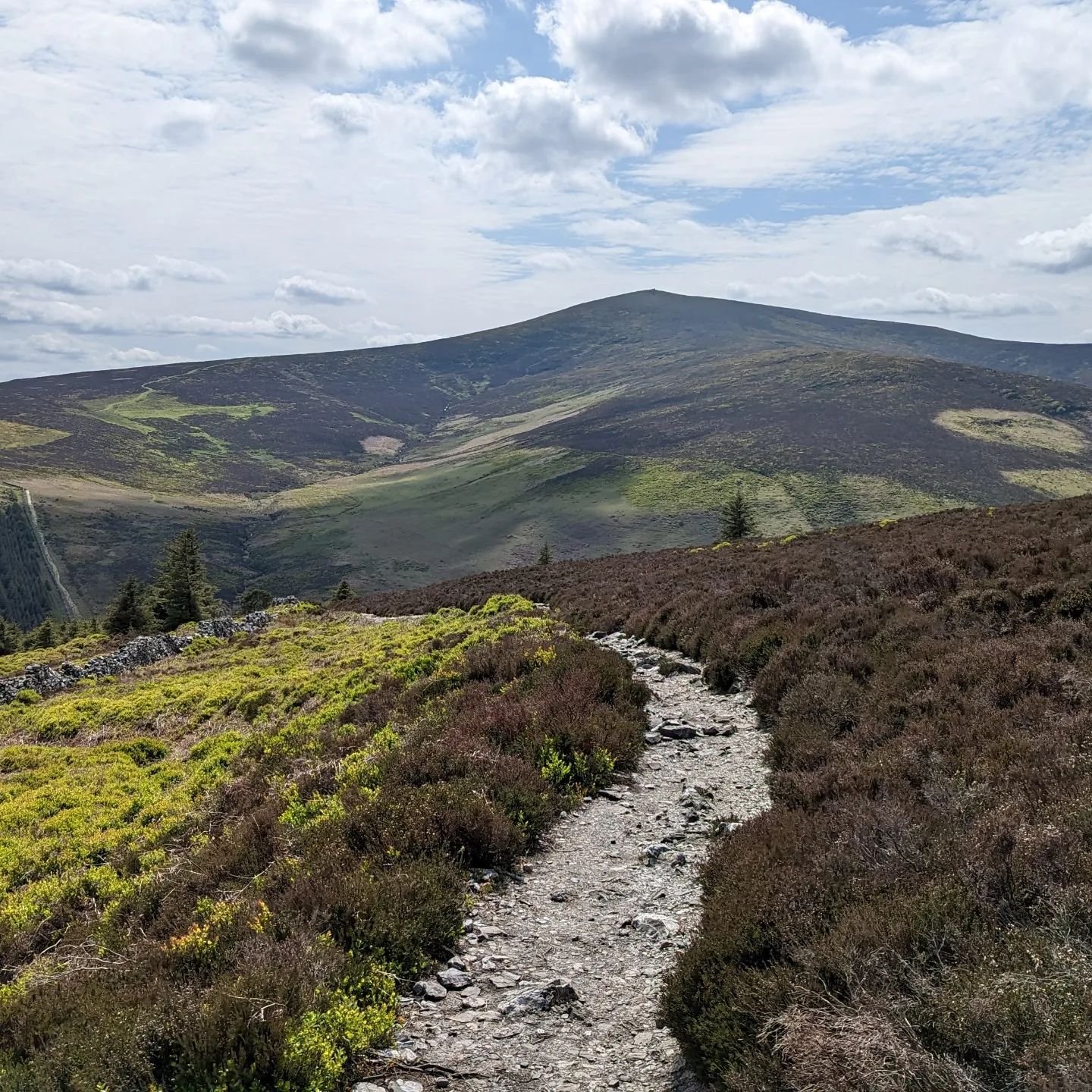
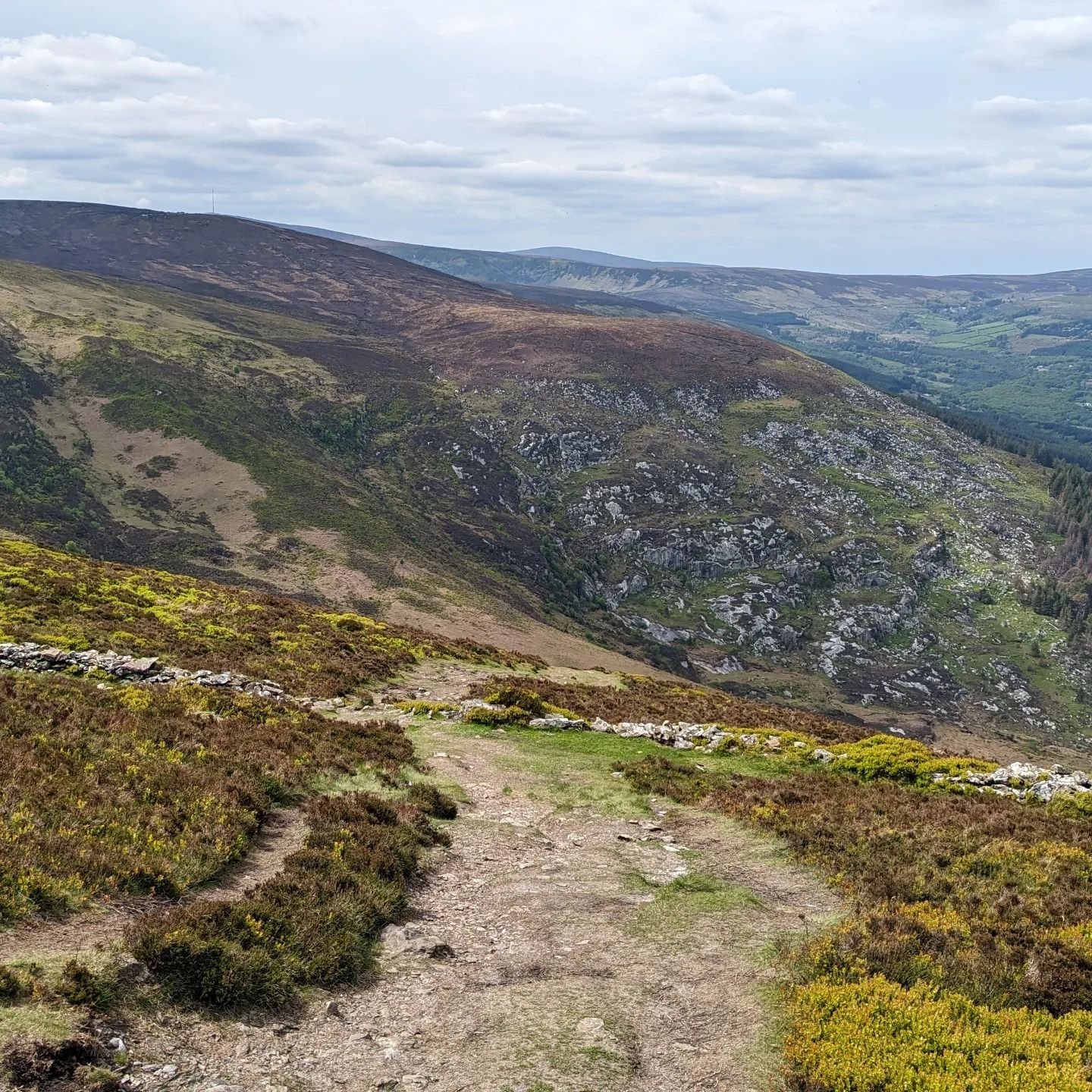
On Wednesday (17 May) we set off on our second mountain trail. We took the bus one stop further than Glendalough – to the Wicklow Gap pass – and from about 470 m we climbed Turlough Hill and Camaderry. The first part was trivial – a tarmac road for the workers of the reservoir of the pumped-storage power station on top of Turlough Hill. After that there was mud at regular intervals, and at times the trail was not entirely clear.
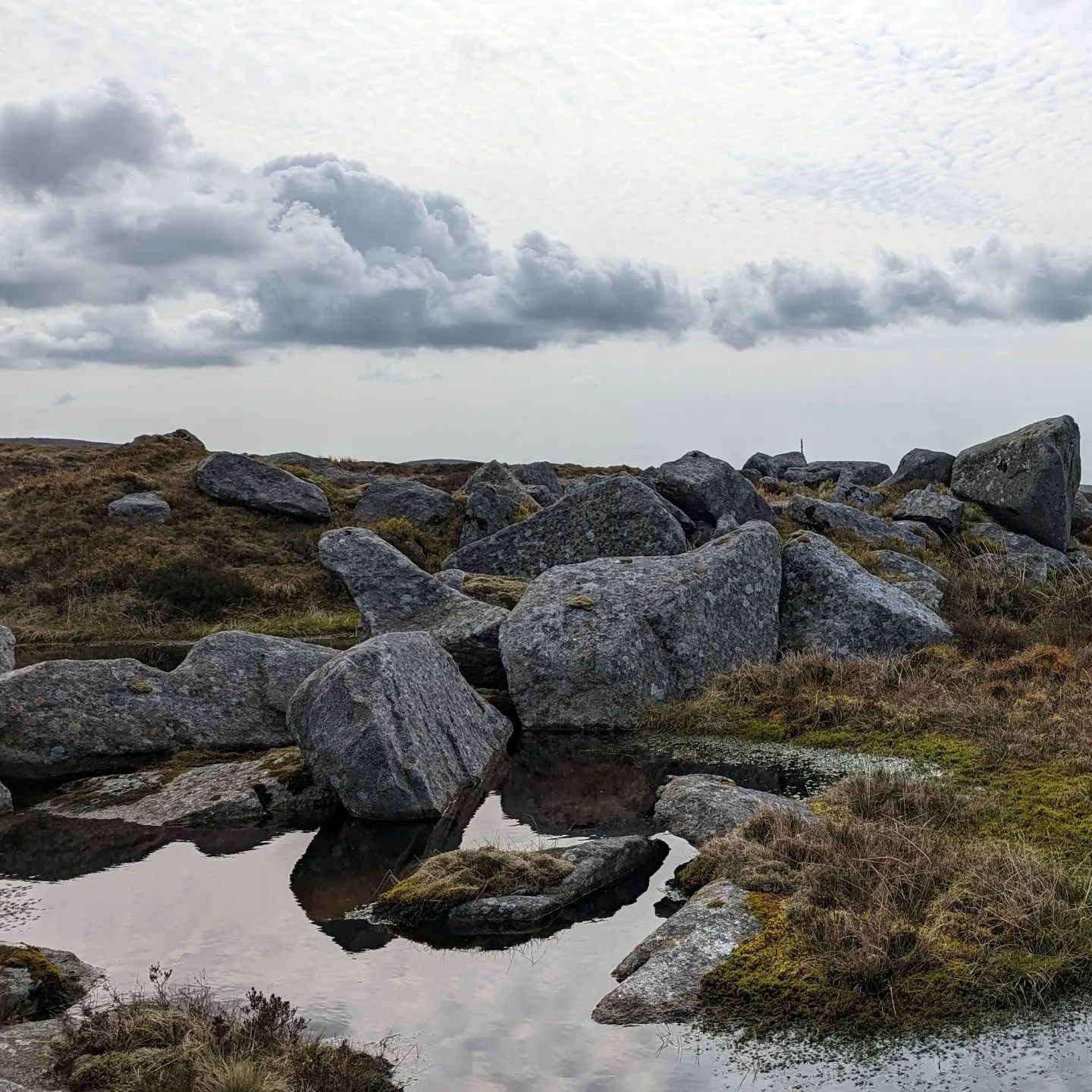
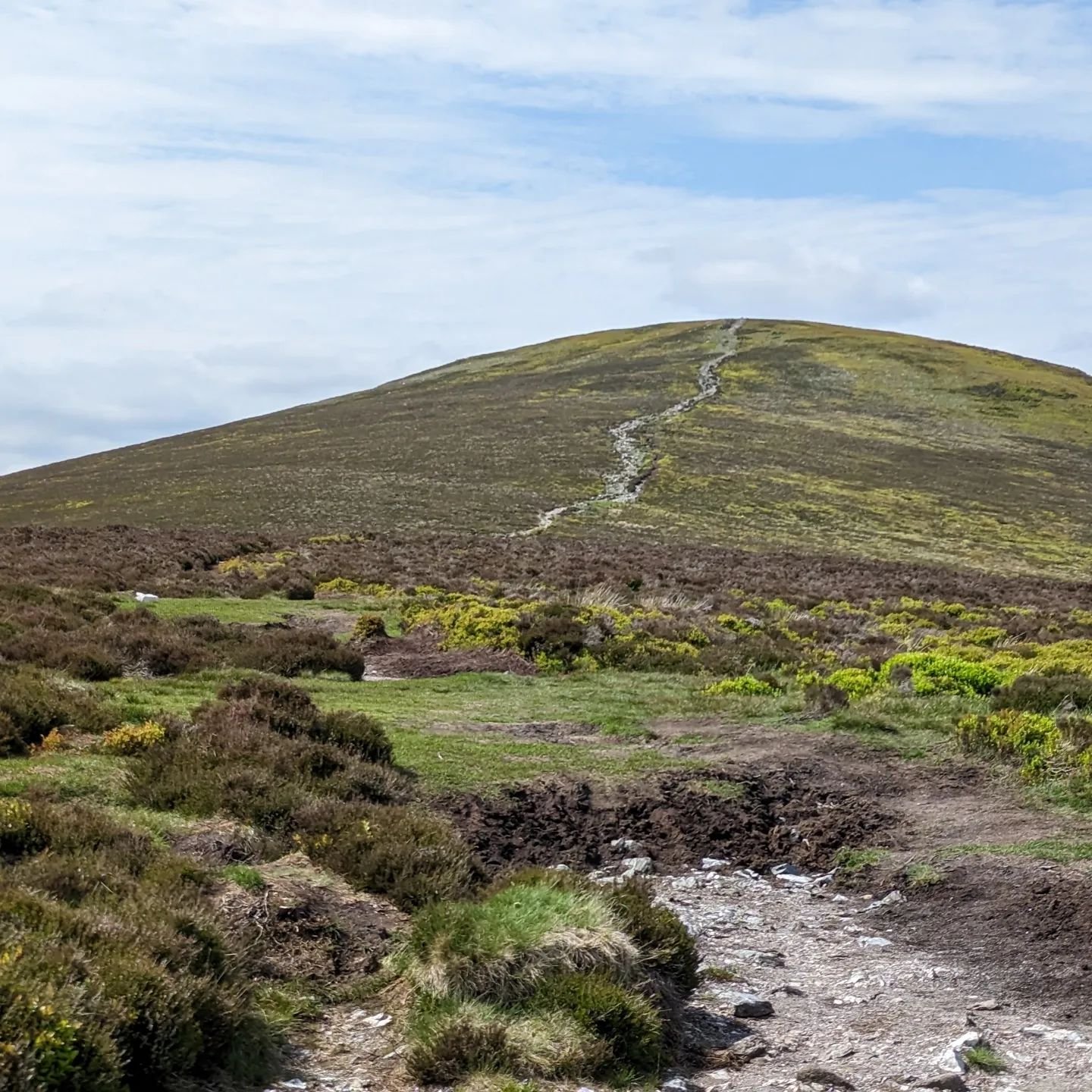
There were far fewer tourists here – most of them only stop by coach at the viewpoint at the pass. It is a less beautiful trail than Glendalough, but it had its good moments. Taking our time, we covered more than 13 km in 5 hours, with 550 metres of elevation gain – in sunshine, with a light wind and 16–17 degrees, in other words in perfect conditions.
Powerscourt Waterfall and Maulin
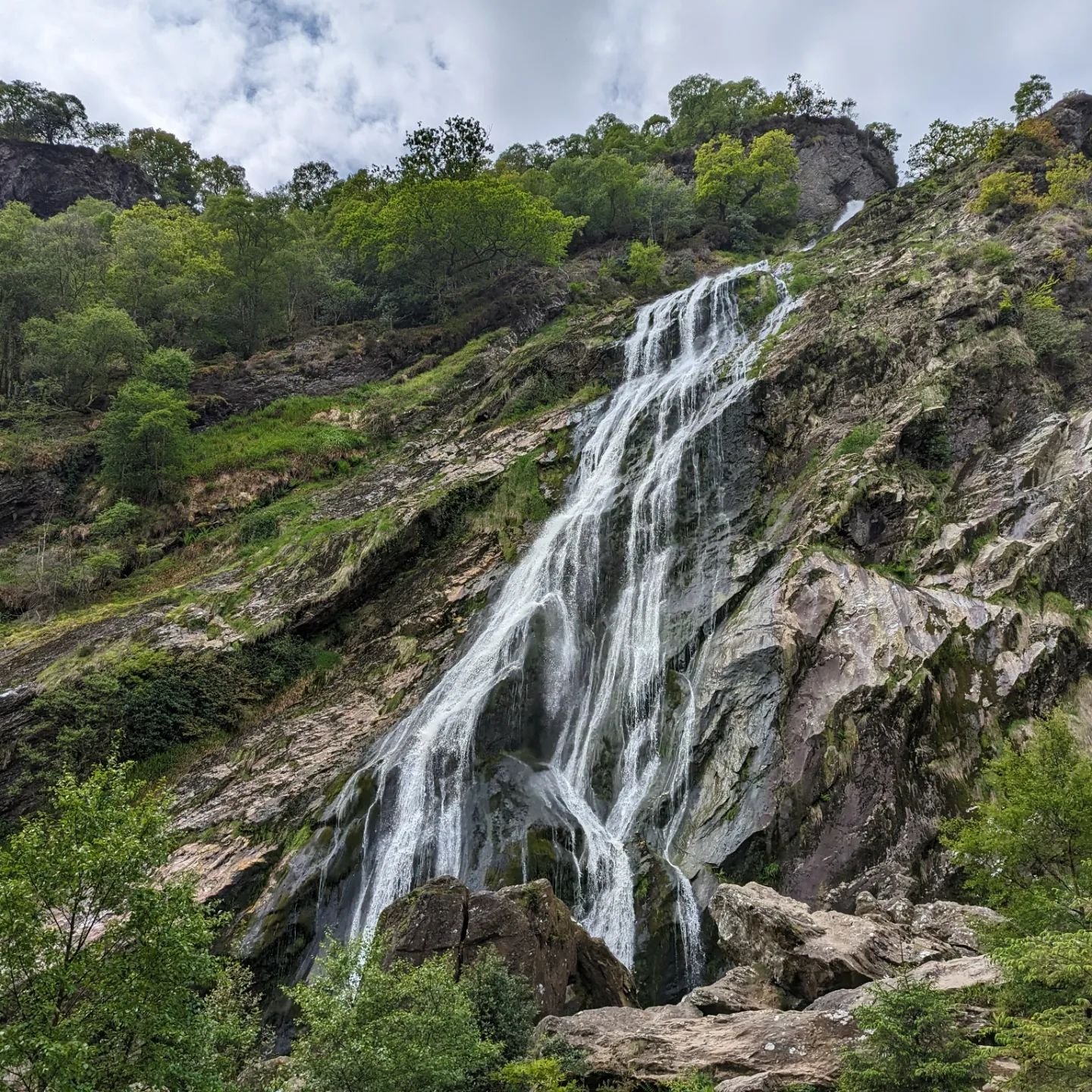
On Thursday (18 May) we started from Djouce Woods. First we went down to Powerscourt Waterfall, 121 m high – the highest in Ireland, a big attraction of the area and a popular picnic spot for families and groups.
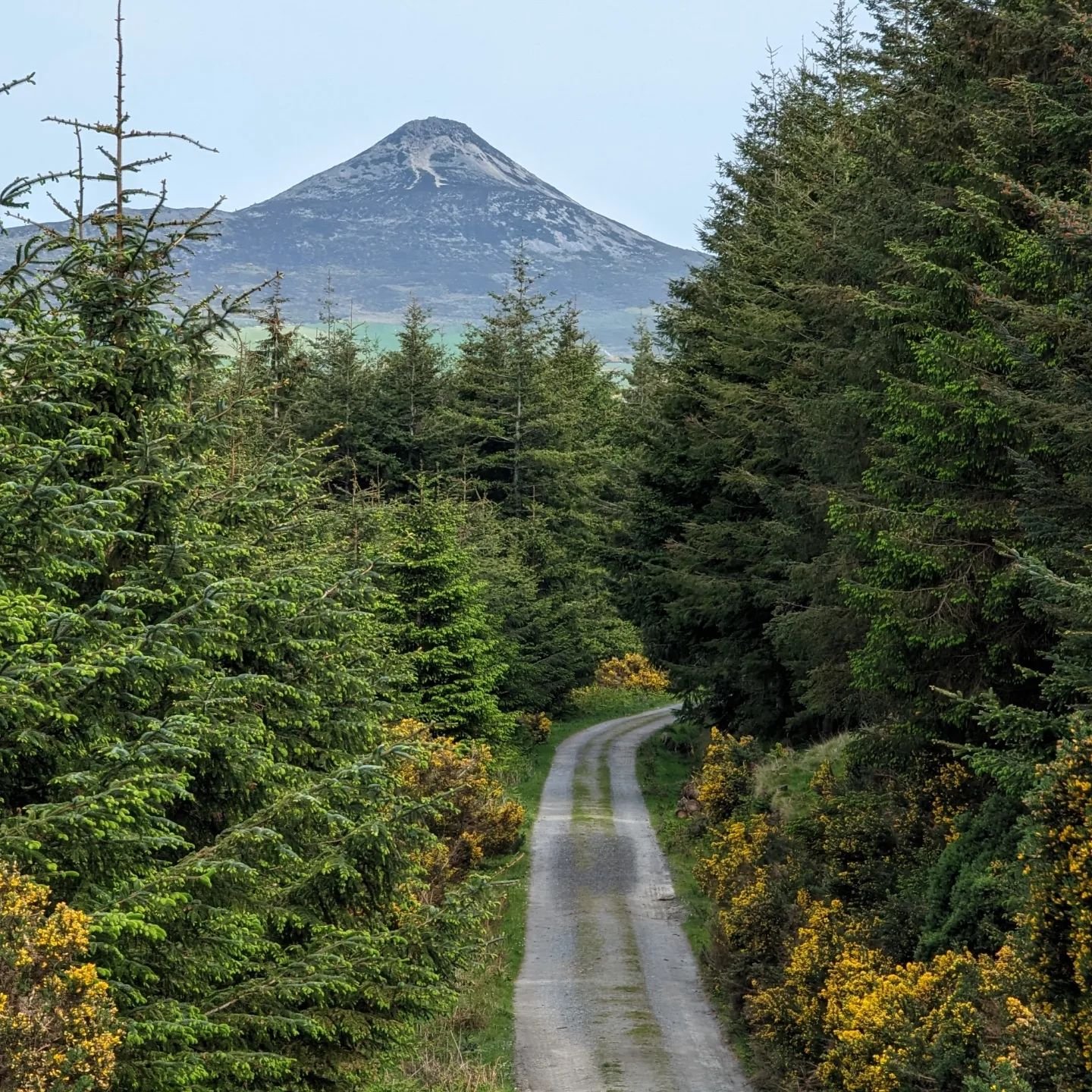
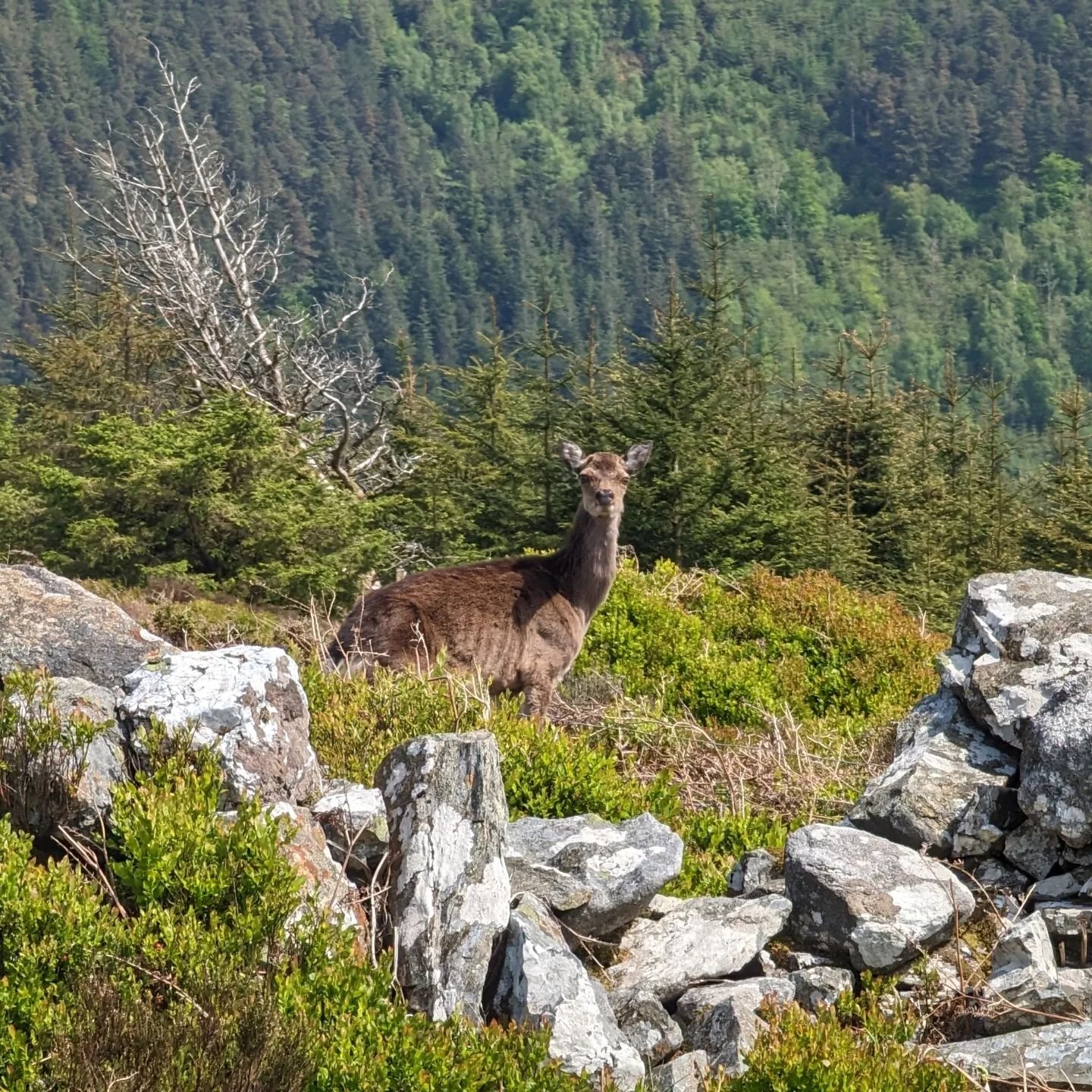
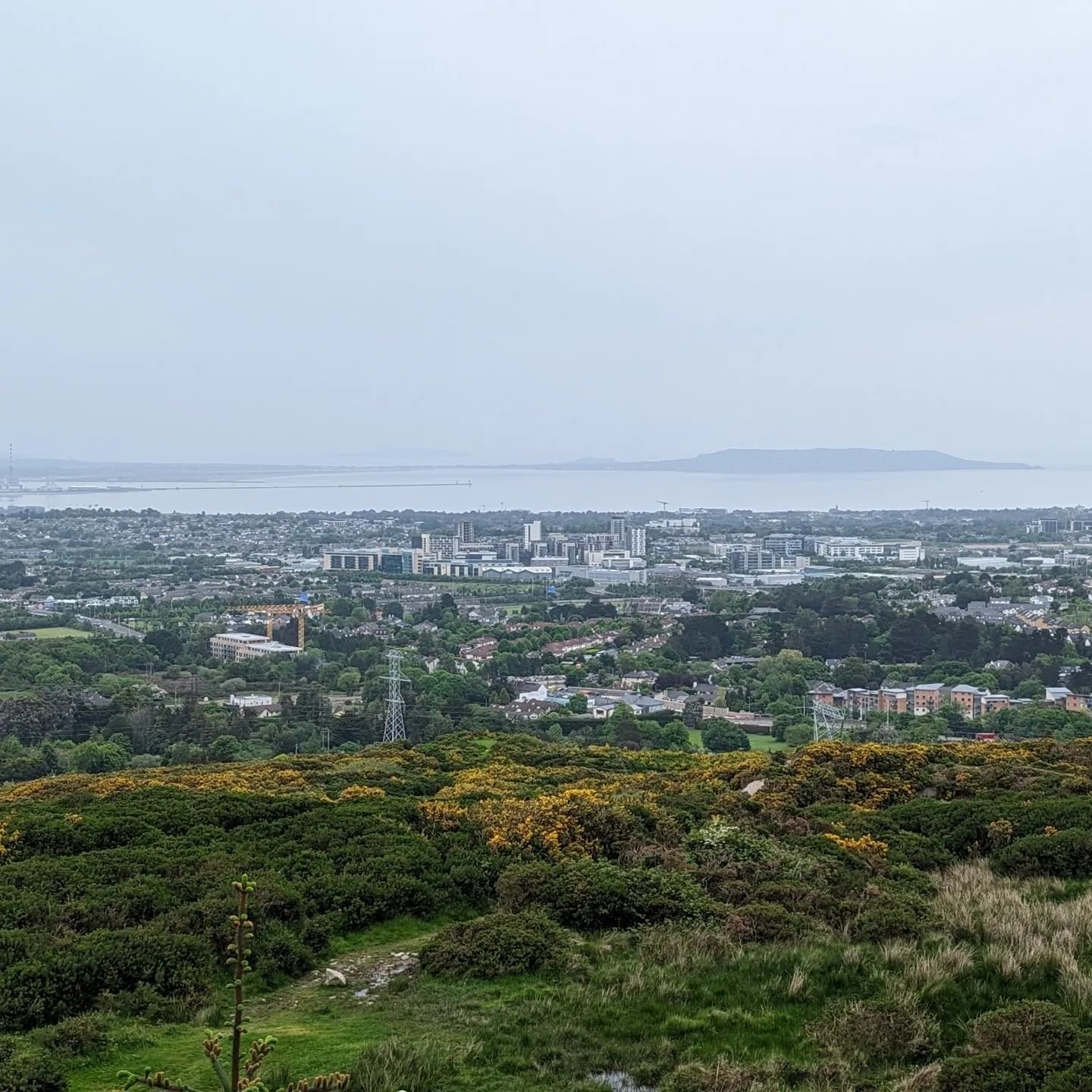
Taking the shortest way to the main trail, the Wicklow Way, we had to climb steeply through the forest for more than a kilometre – after that it was easy. Soon afterwards we reached the second goal of the day – the summit of Maulin, with a good view of Wicklow town, part of Dublin and the Howth peninsula. It added up to more than 10 km in 4.5 hours and almost 600 m of elevation gain. On the way we also met a deer.
A weekend in Dublin
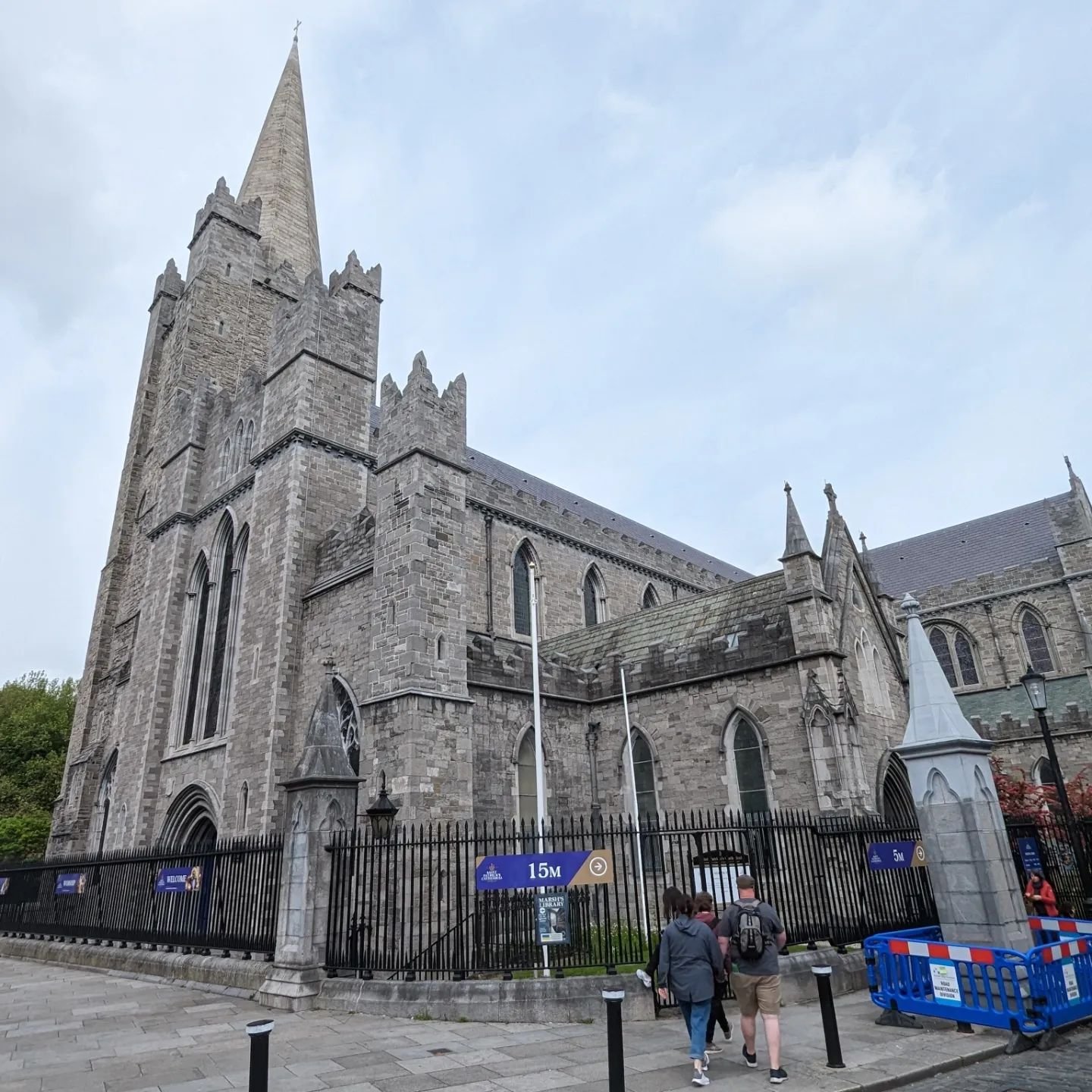
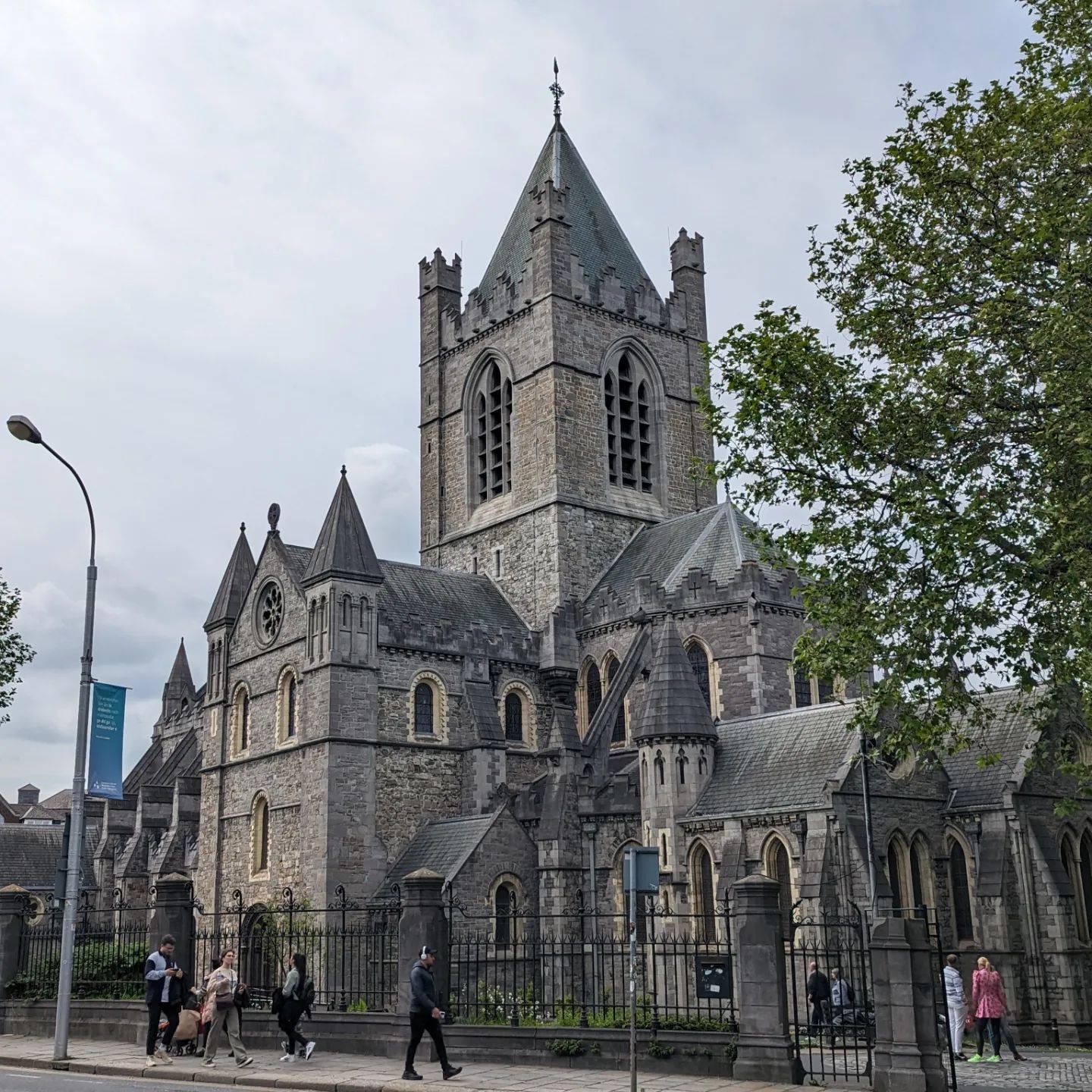
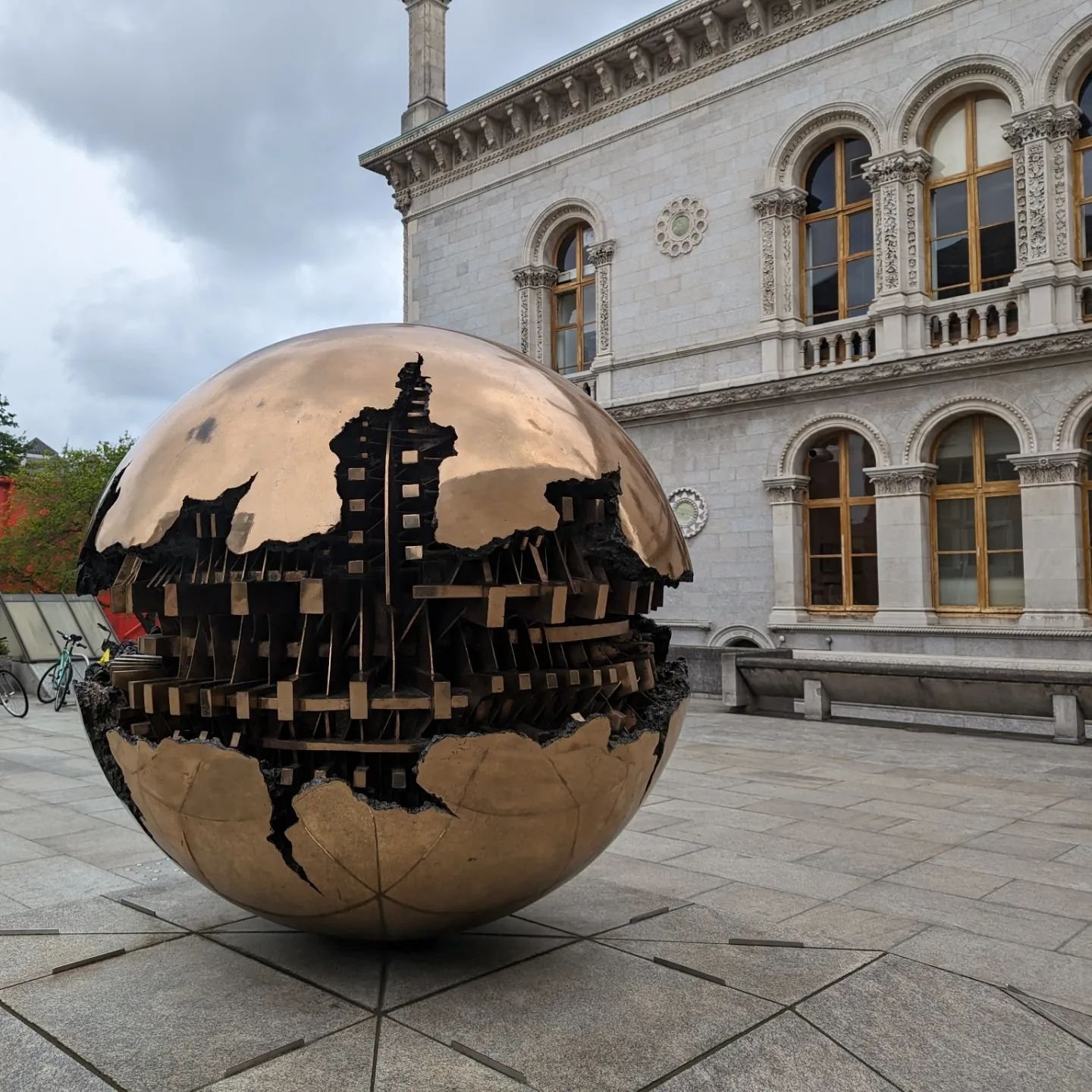
We spent the weekend of 19–21 May in the capital, where Robert and Asia joined us. In Dublin the cathedrals are the main sights: St Patrick’s (from 1191, the largest church in Ireland) and Christ Church. In the centre there is also Dublin Castle – a symbol of the era of British rule.
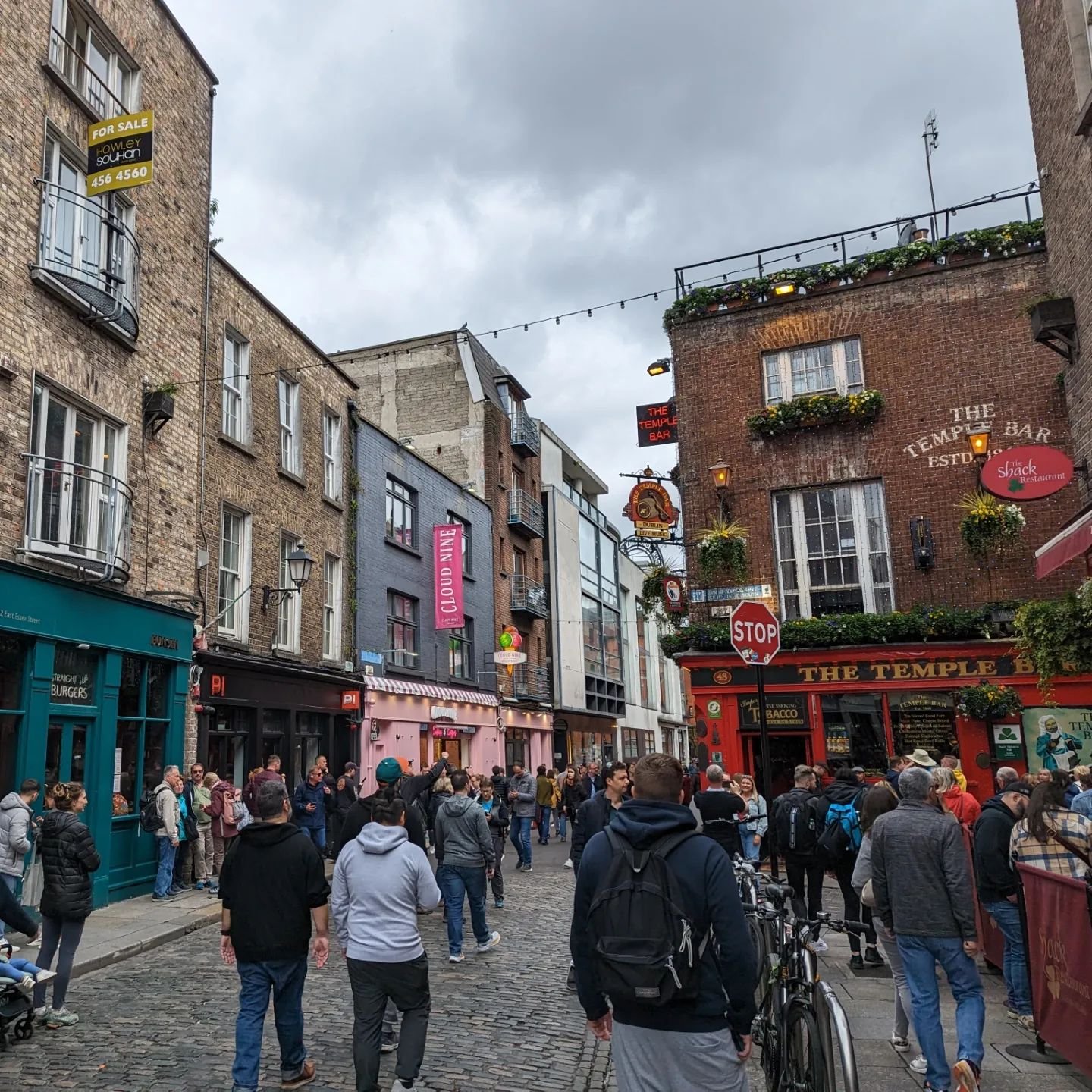
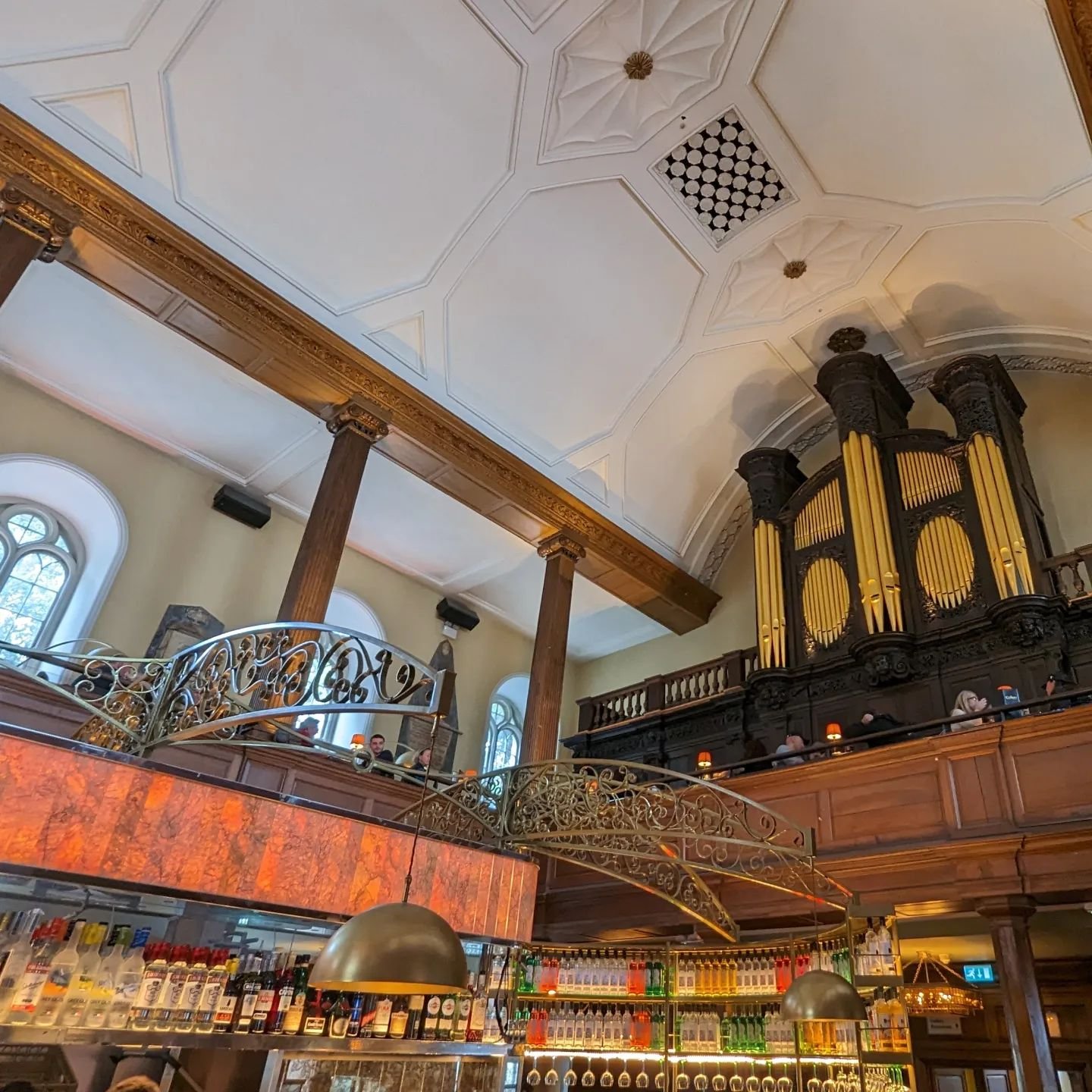
But Dublin is above all about pubs. We visited, among others, a pub in a converted church, The Palace Bar, The Temple Bar and The Brazen Head, considered the oldest pub in Ireland – despite the early hour it was hard to find a free seat.
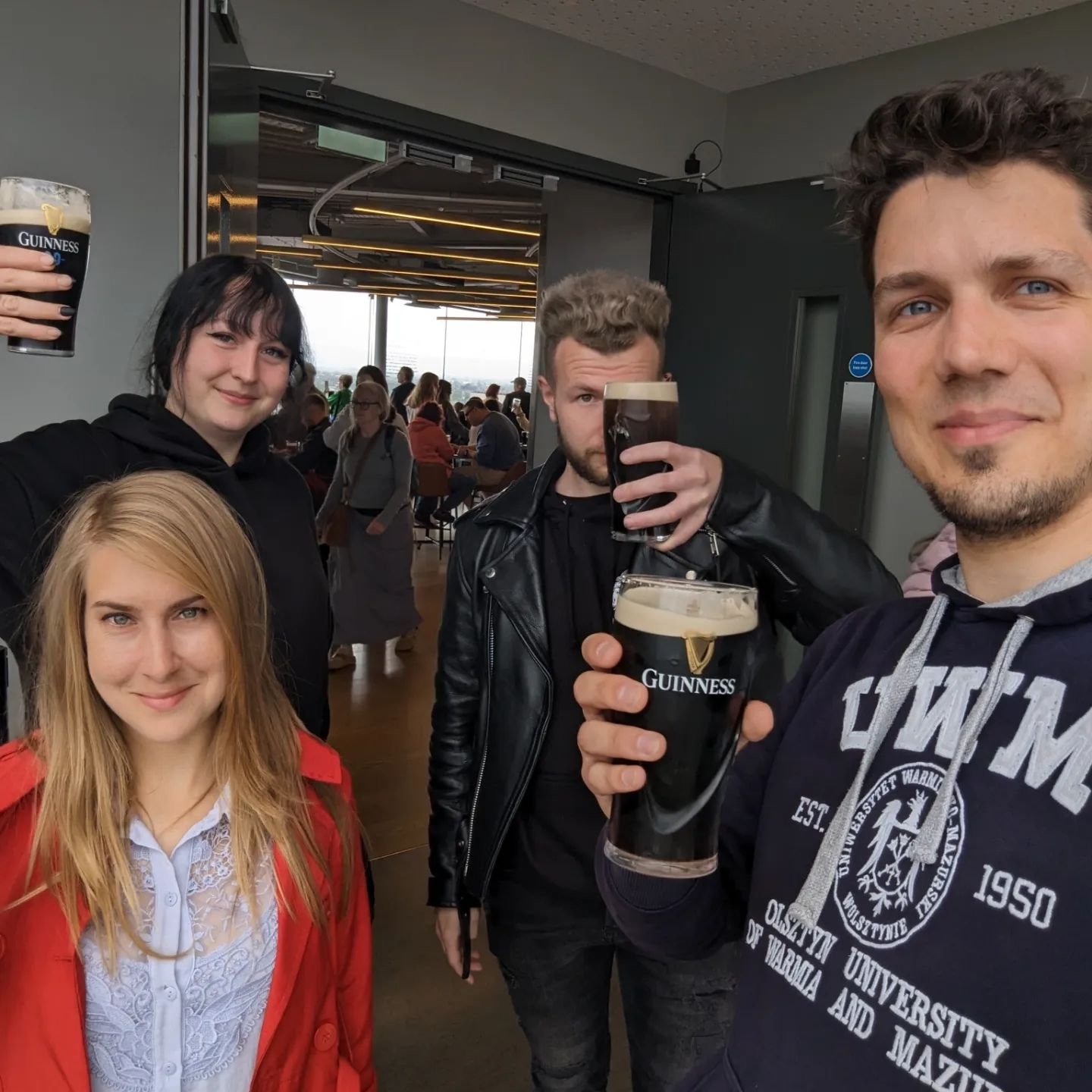
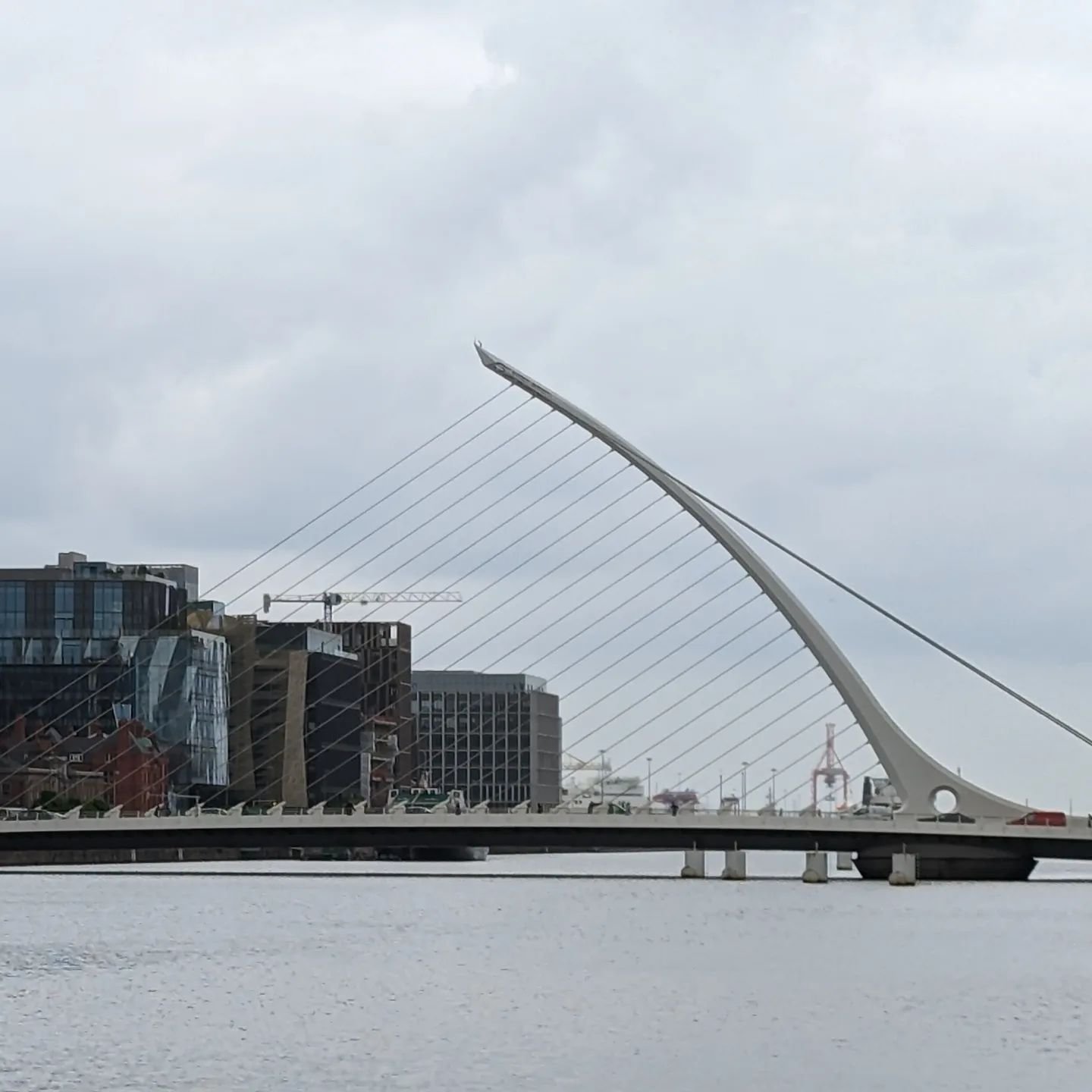
We also went to the Guinness Storehouse, which shows the history and brewing process of the most famous Irish beer – at the very top you get a pint included in the ticket price. A nice place, but expensive (a standard ticket about €26, depending on the date €20–30), and to be honest we expected something more. Over the River Liffey stands the Samuel Beckett Bridge, shaped like a harp – the symbol of Ireland, and a bit further from the centre lies the huge Phoenix Park with monuments, ponds and a zoo.
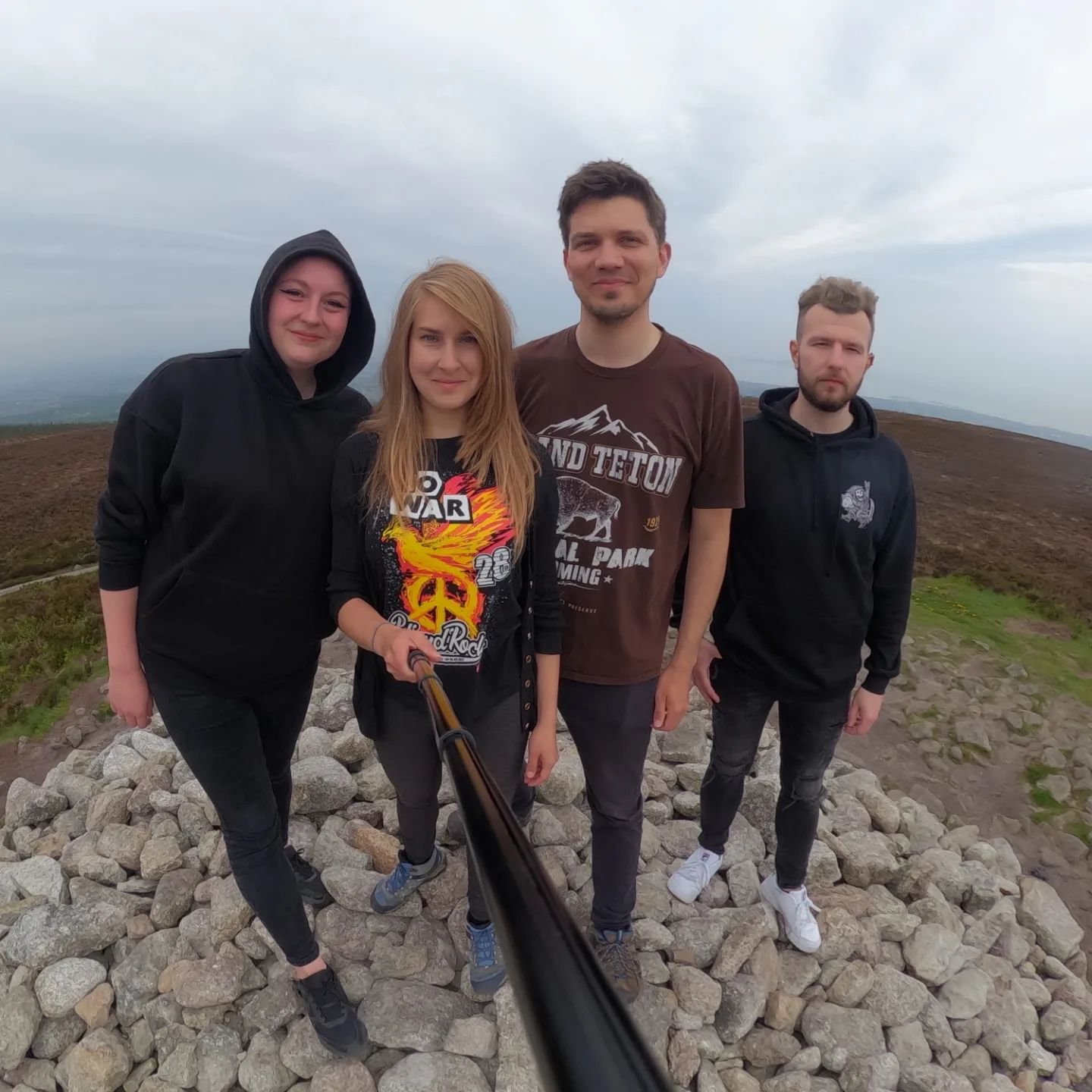
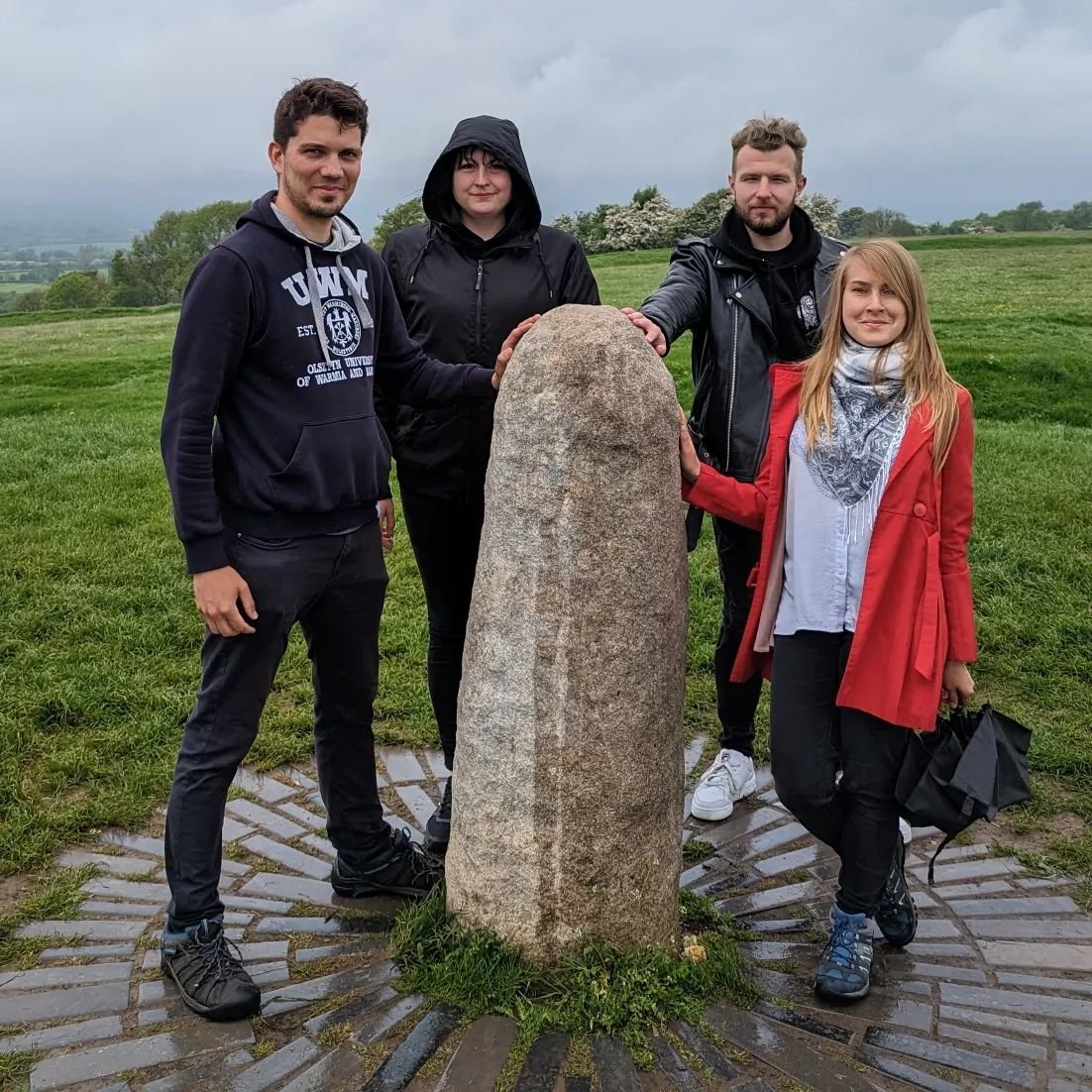
Getting to the mountains from Dublin is a hassle, so we chose a trail close by – up to Fairy Castle (536 m), from where you can see the southern part of the city. We also went to the Hill of Tara outside the city, home to the Lia Fáil – one of the two coronation stones, which according to Celtic mythology had magical powers.
Dublin itself did not win us over. The big downside is the expensive attractions and accommodation priced like in Scandinavia – our apartment for 4 people for 2 nights cost €490, and that was the best offer apart from dorm rooms.
Borris, Kilkenny and Carlow
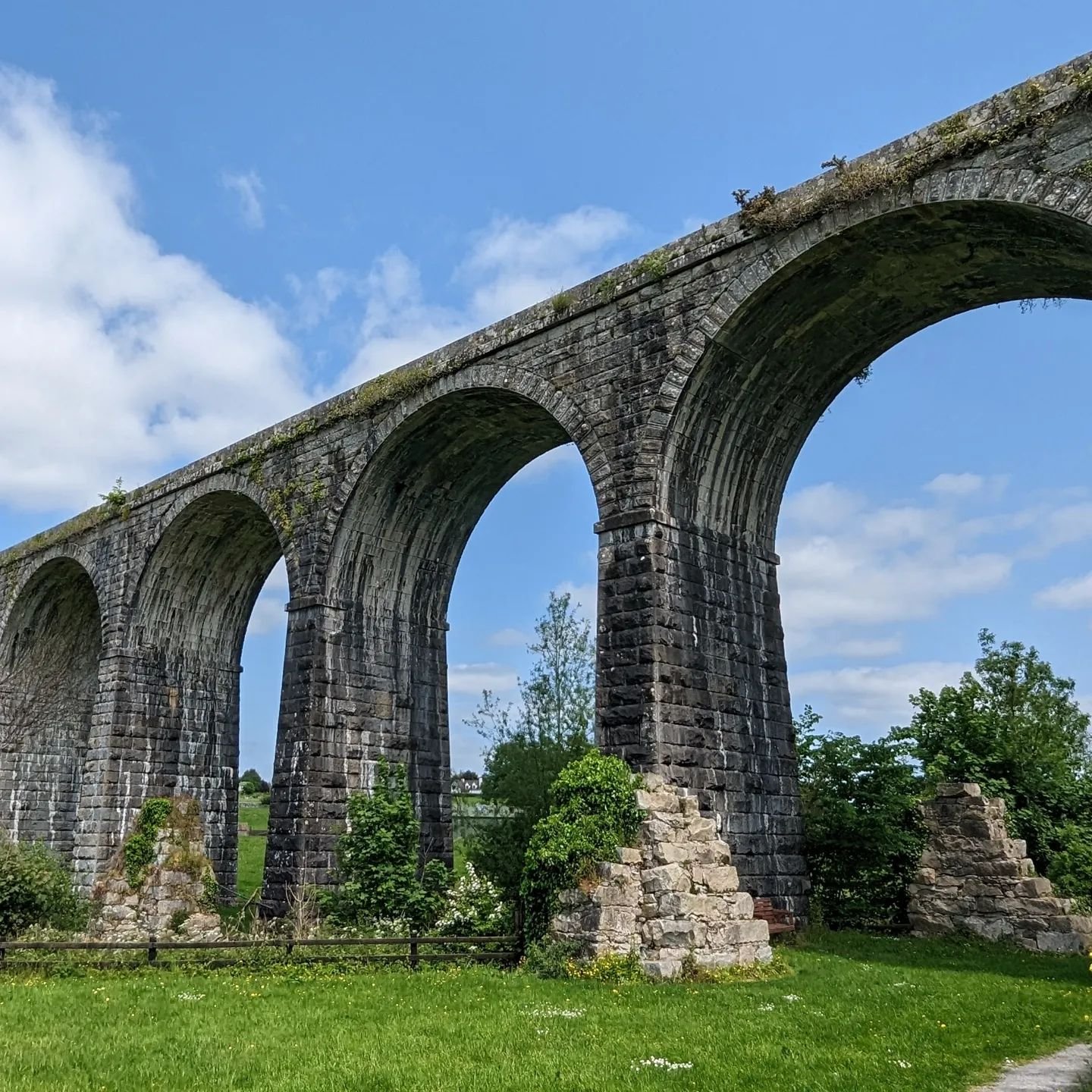
We spent the last week (21–28 May) with Patrycja’s family in the village of Borris in County Carlow. It was supposed to be a quiet week, but as usual it turned out very active. In Borris itself there is a 19th-century stone railway viaduct, and we cycled along the River Barrow. We also managed to go paddleboarding on the river and play volleyball with the locals.
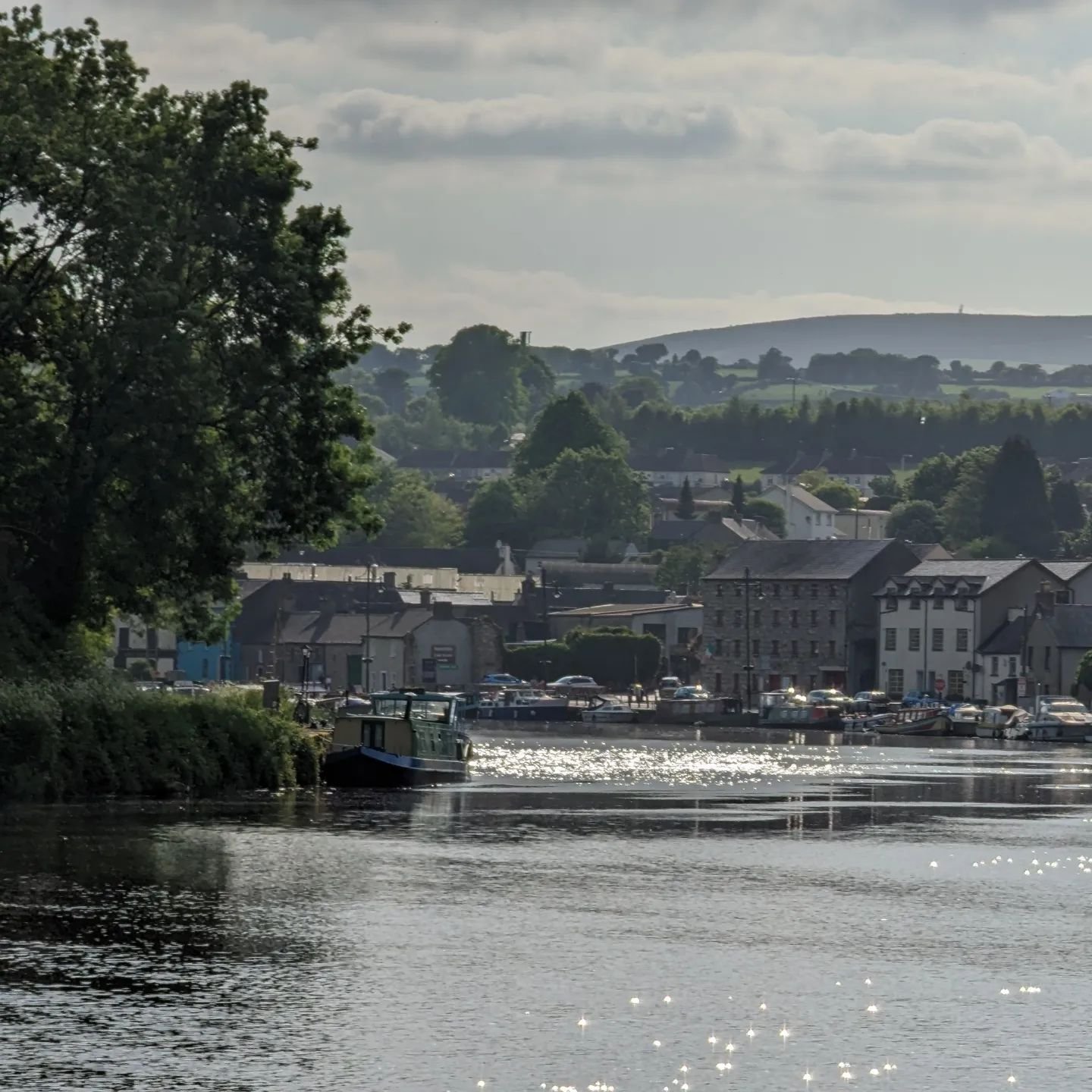
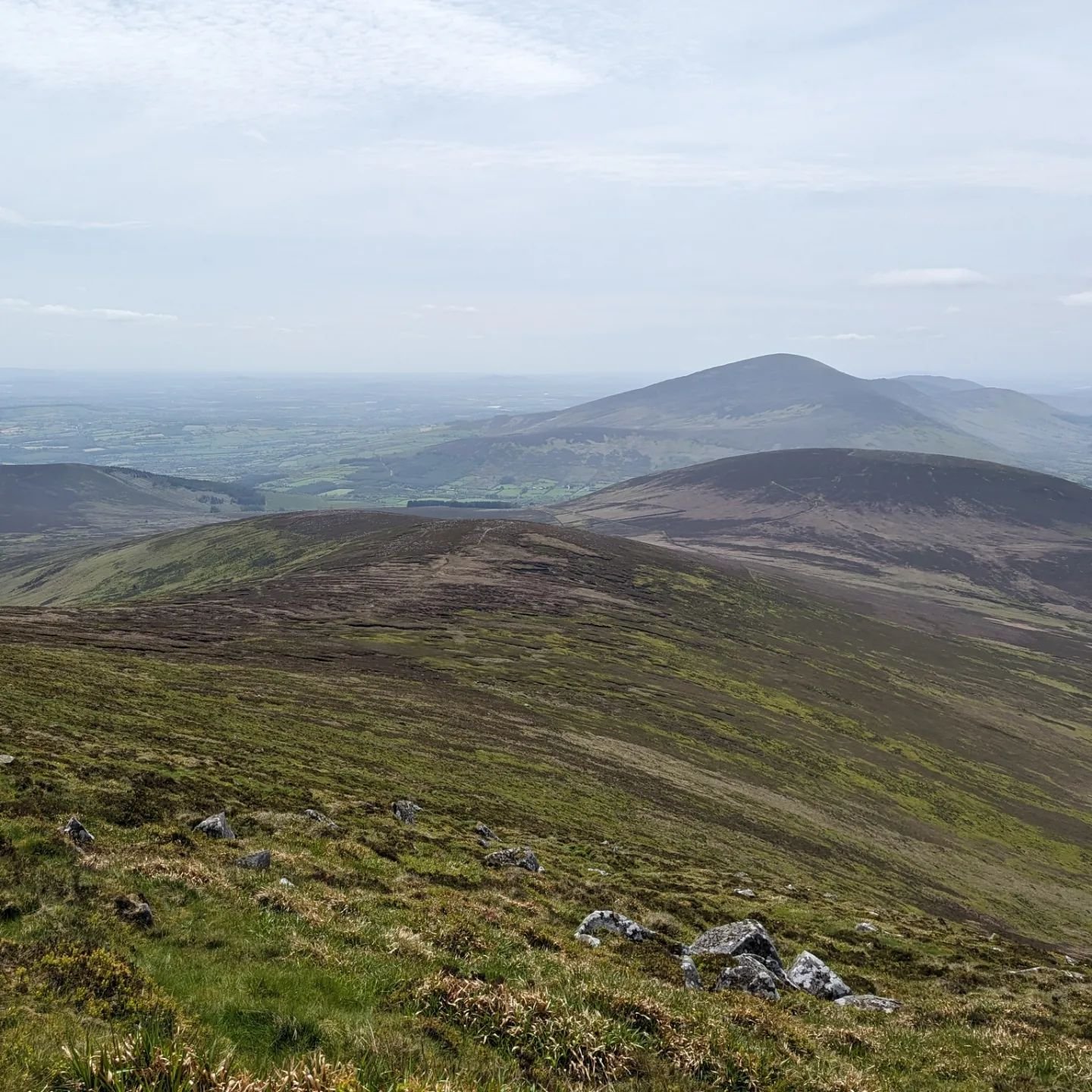
We climbed two nearby peaks. The first trail, about 12 km, led to Knockroe (about 540 m) and Mount Leinster (about 800 m) with its transmitter mast – technically easy, but with quite a lot of elevation gain (about 850 m) and in a very strong wind.
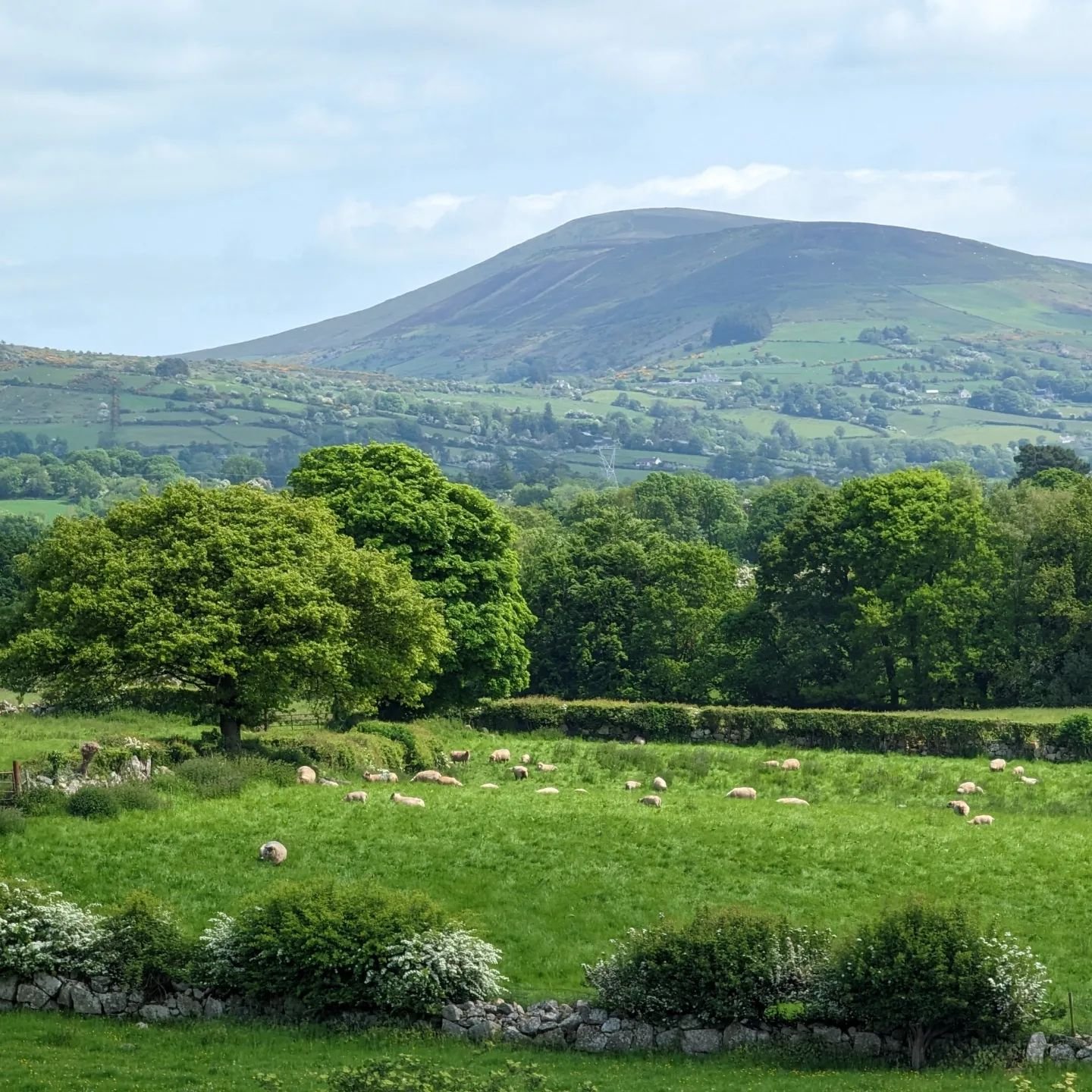
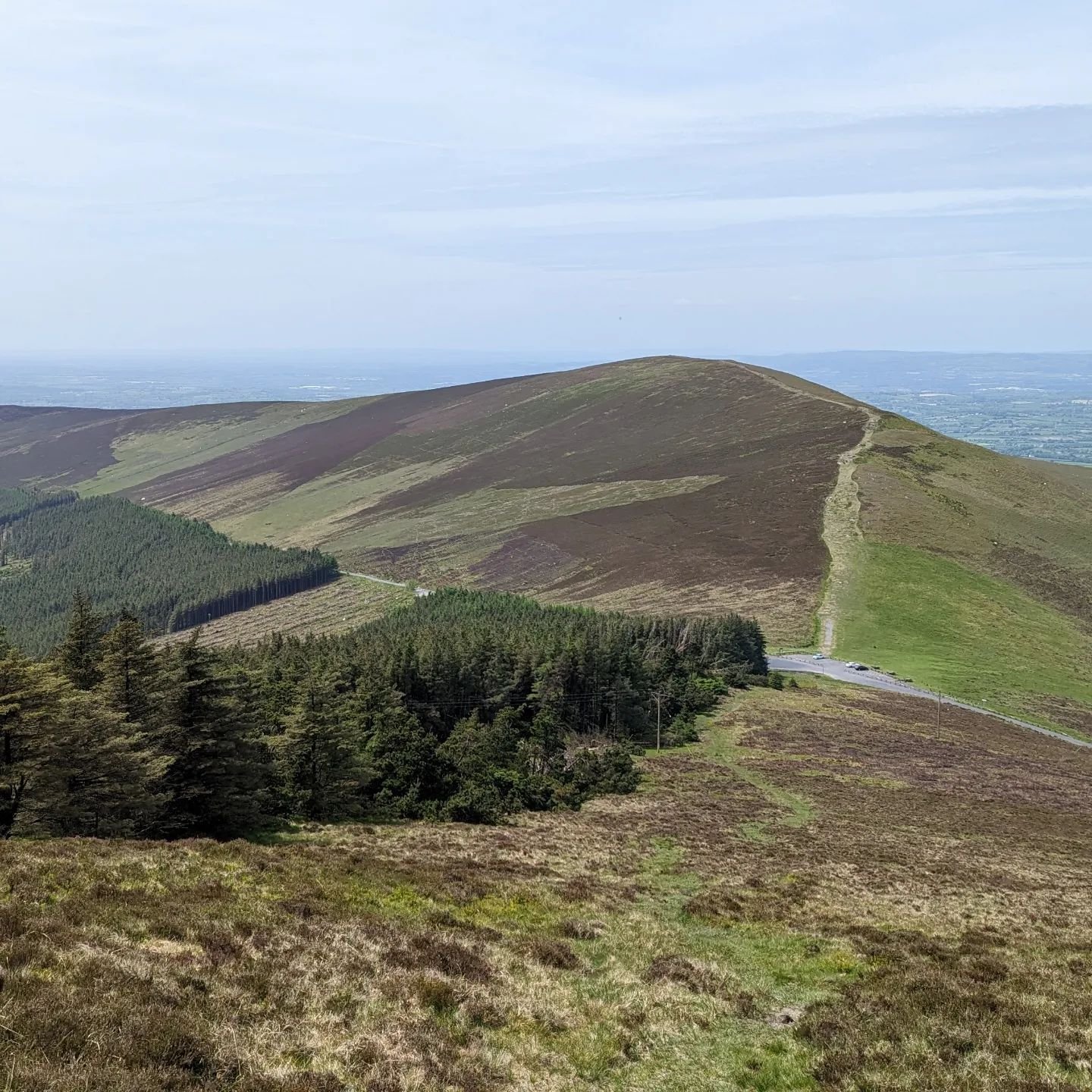
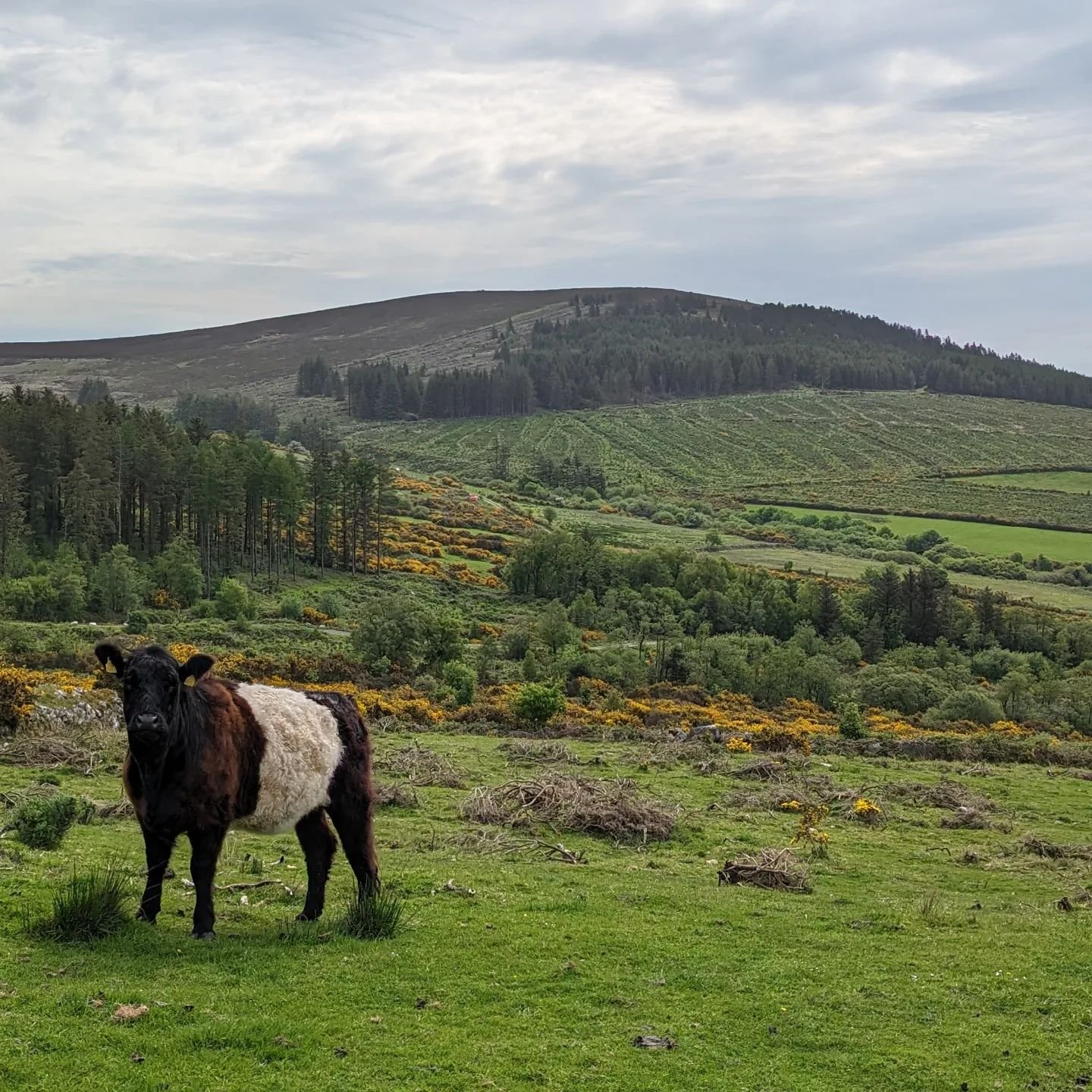
On Brandon Hill (515 m) we had a cloudless sky and only a light wind. The distances were still nothing special, but it turned out to be our longest trail in Ireland – about 16 km and 840 m of elevation gain. These are low mountains, but the views are pretty enough – only the closer you get to the top, the stronger the wind and the colder it gets.
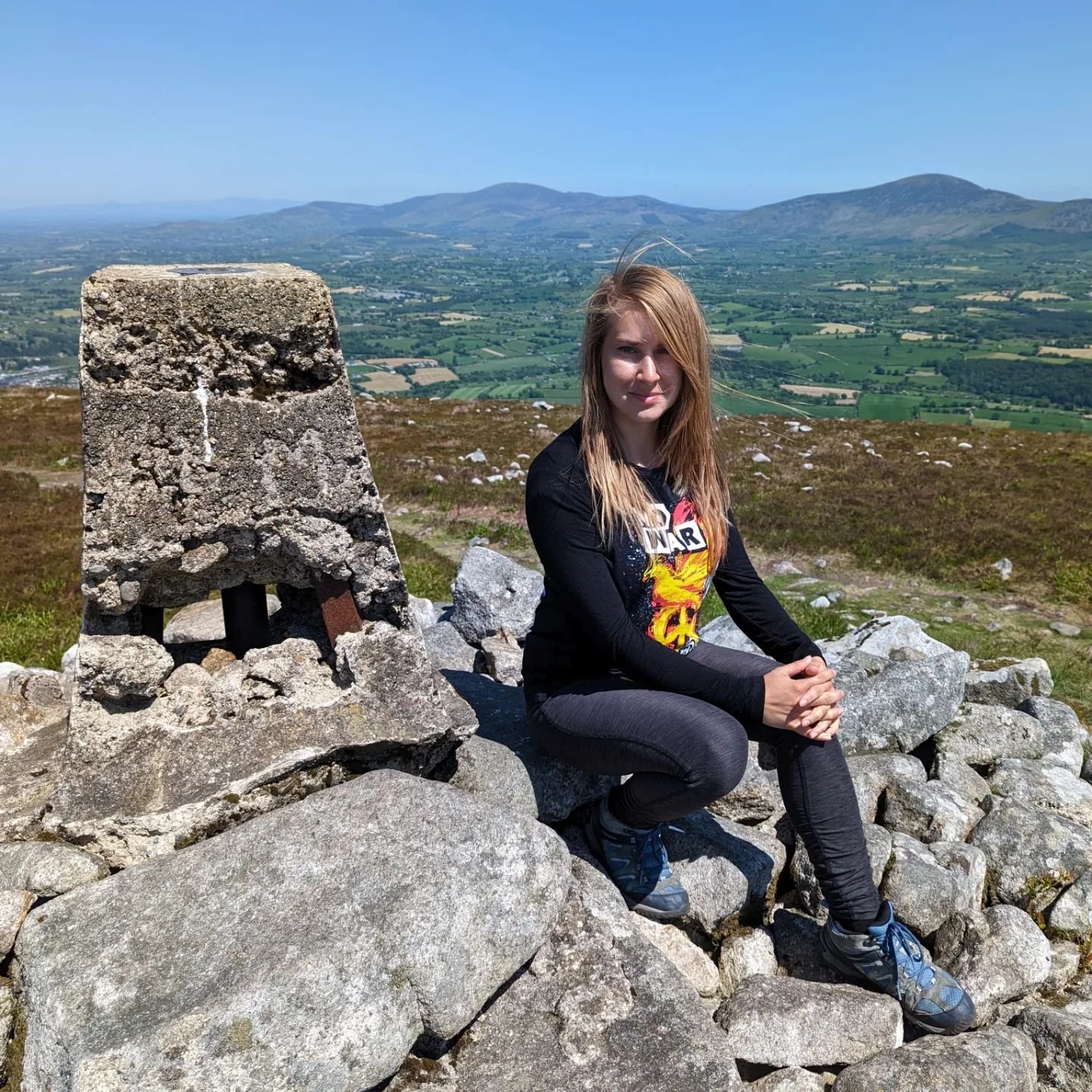
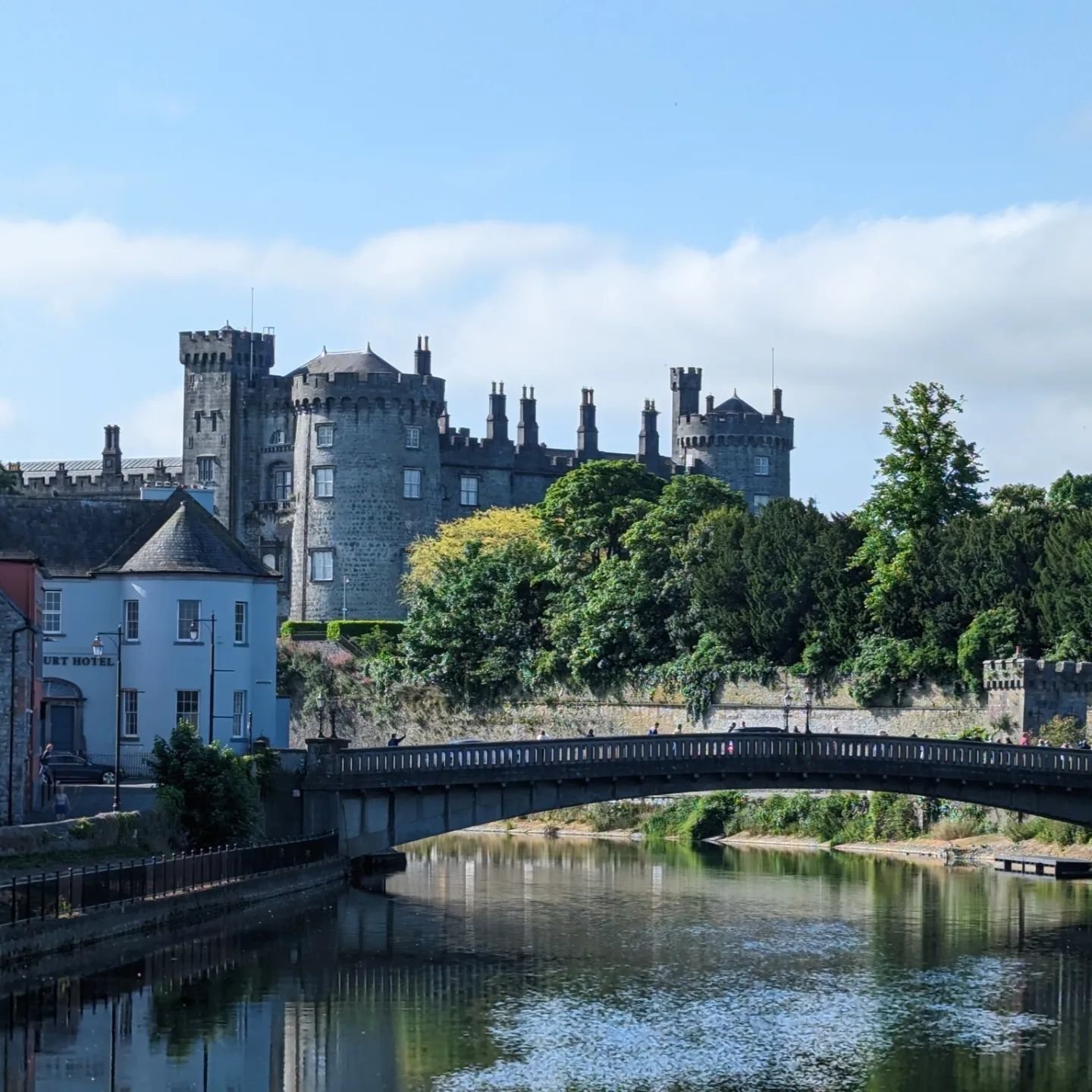
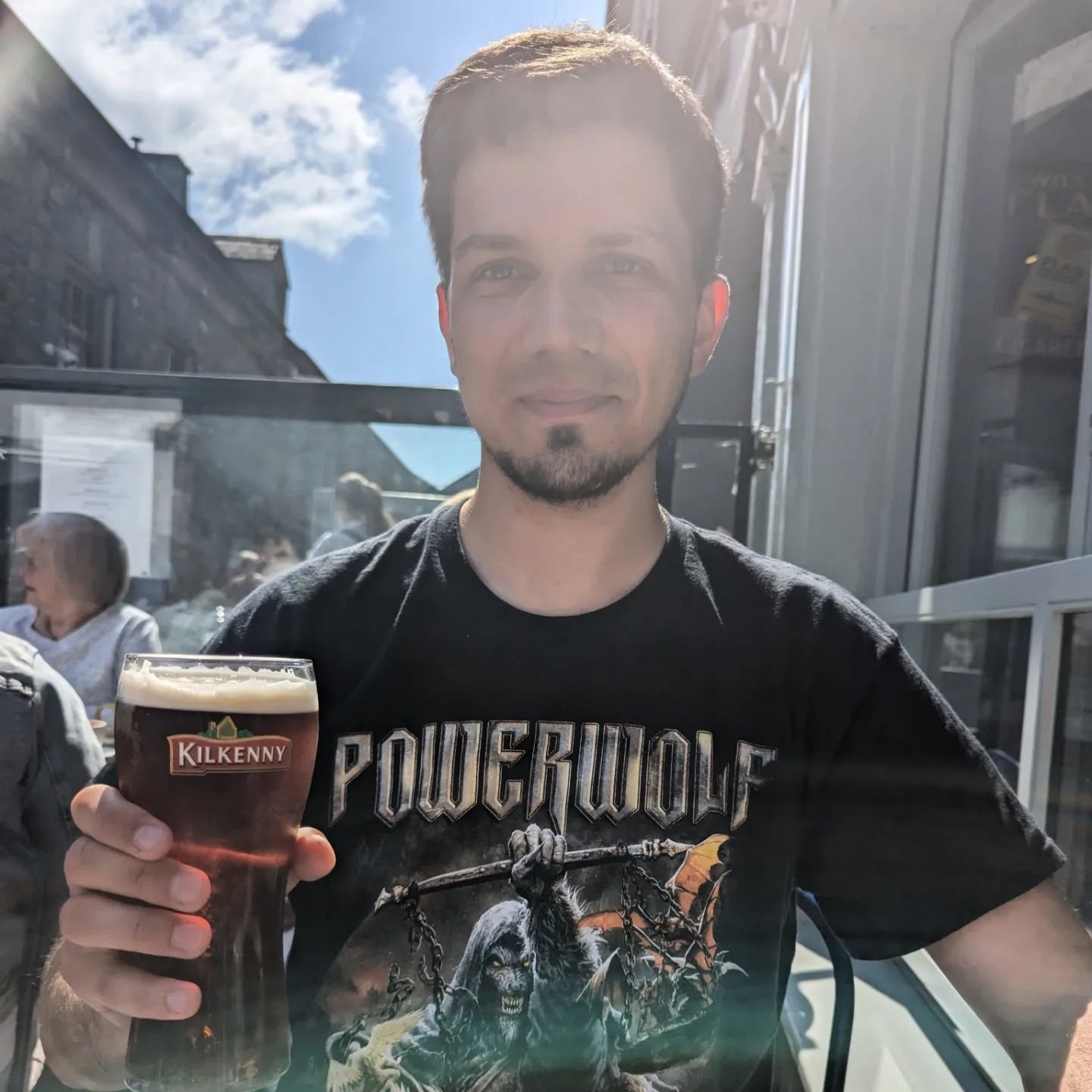
We also visited the towns of Carlow and Kilkenny – the latter is famous for its castle on the River Nore and for its beer, which of course we tried. We also went to Woodstock Gardens & Arboretum.
Practical information
- When: we were there in the second half of May. It rained on only two days, the temperature rose from 13–14 to the high teens, and there was more and more sunshine – in spring we got an “Irish summer”. On the mountain tops it gets very windy.
- Transport: this is the biggest downside of travelling around Ireland – many interesting places are hard to reach by public transport, and car hire is very expensive. We got to the Wicklow Mountains (Glendalough, Wicklow Gap) by bus; around Borris Patrycja’s family sometimes gave us a lift.
- Prices: high – both in shops and for accommodation (close to €100 per person per night is standard). A ticket to the Guinness Storehouse cost about €26.
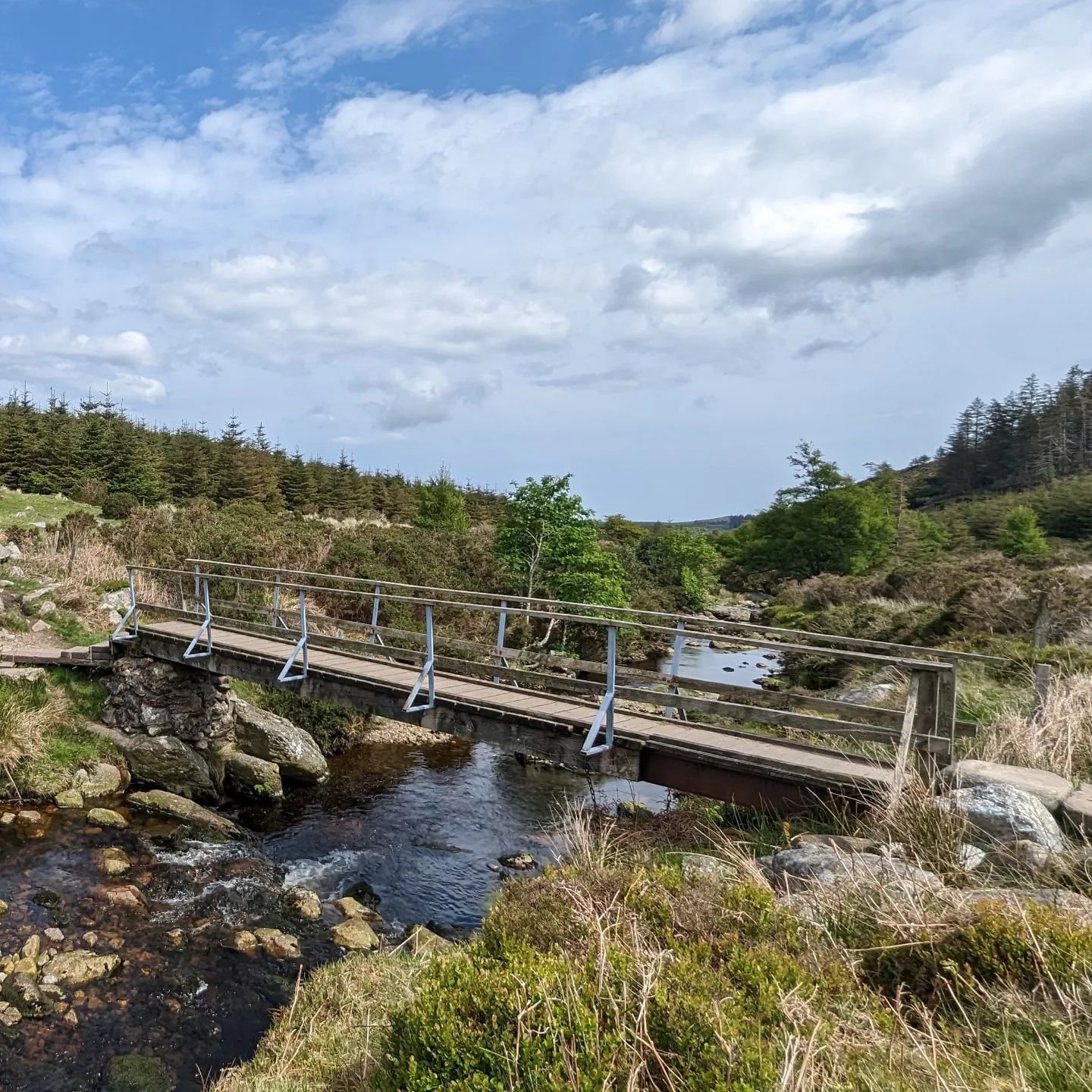
- Trails: in the Wicklow Mountains the trails can be muddy and are not always well marked (except for Glendalough and the Wicklow Way) – it is worth having a map on your phone and waterproof shoes.