At the beginning of October 2024 (1–11 October) I was in Spain once again, on the Costa Blanca. Just like the year before, when we went to the area around Madrid – El Escorial, Segovia and Toledo, my sister Kasia, my aunt Teresa and I planned a trip of several days in a private car. We had to find dates that suited everyone and that would also let me get back to Poland in time for the Zaniemyśl Travellers’ Day, where I was giving a travel talk (in Polish).
We chose the eastern part of Andalusia. The main point was to be Granada, with Lorca on the way. On the way back we stopped in the witches’ village of Soportújar in the Sierra Nevada mountains, spent the night in Almería, walked a loop in the Tabernas Desert and finally stopped at the Arab-style tea house Carmen del Campillo near Elche. All in all we covered about 900 km by car in 4 days (6–9 October).
I had already explored Andalusia before, in the winter of 2020 – the plan of that route in a nutshell included Málaga, Seville, Cádiz and Ronda, among others. Back then there was no time for Granada, the Sierra Nevada and the area around Almería. This time I partly made up for it – partly, because sooner or later I will have to go back to Granada anyway (why – see the part about the Alhambra).
Table of contents
- Lorca – a stop on the way to Granada
- Granada – the city centre
- Albaicín – the Arab quarter of Granada
- The Alhambra – buy your tickets well in advance
- Soportújar – the witches’ village in the Sierra Nevada
- Almería
- The Tabernas Desert – a loop through a lunar landscape
- The Carmen del Campillo tea house
- Torrevieja – quiet days by the sea
- Practical information
Lorca – a stop on the way to Granada
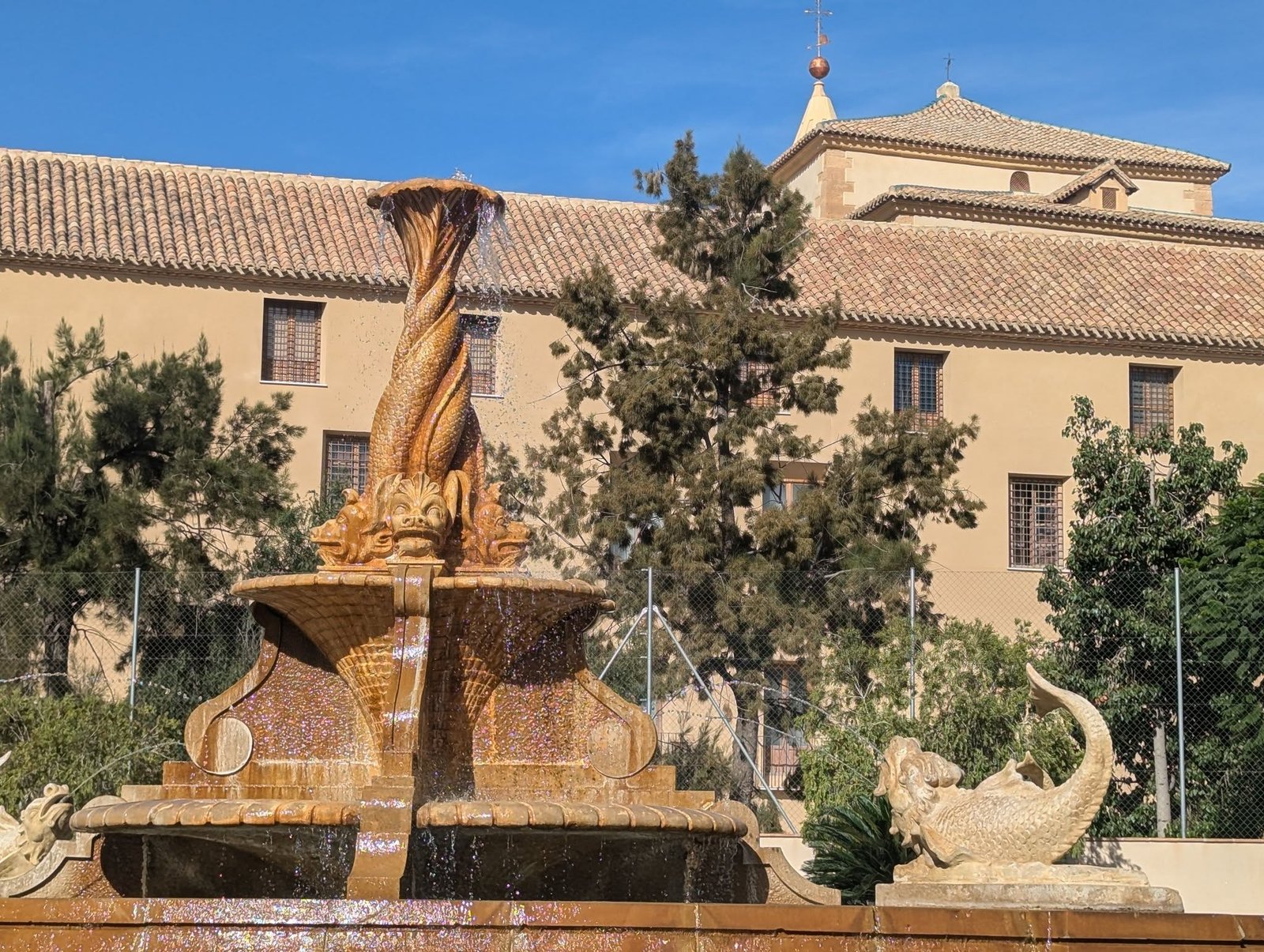
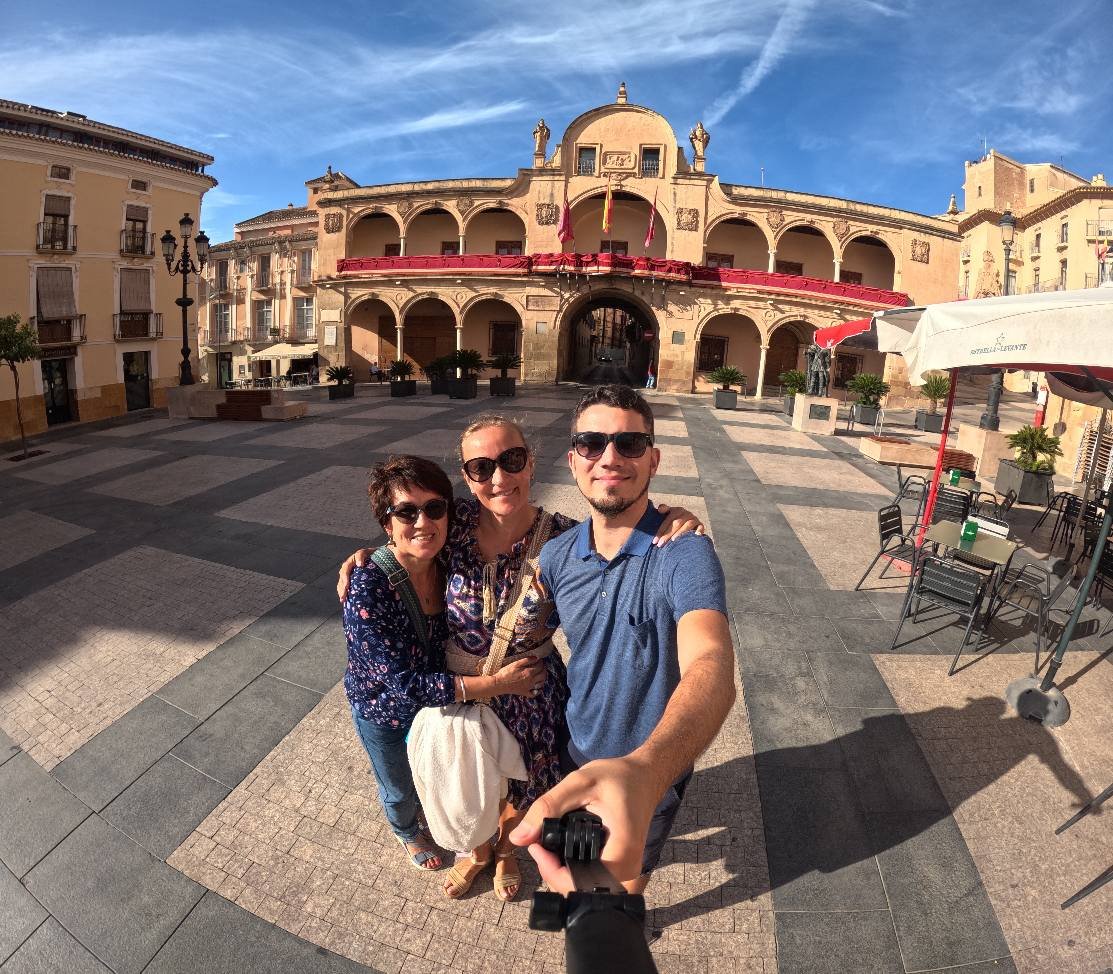
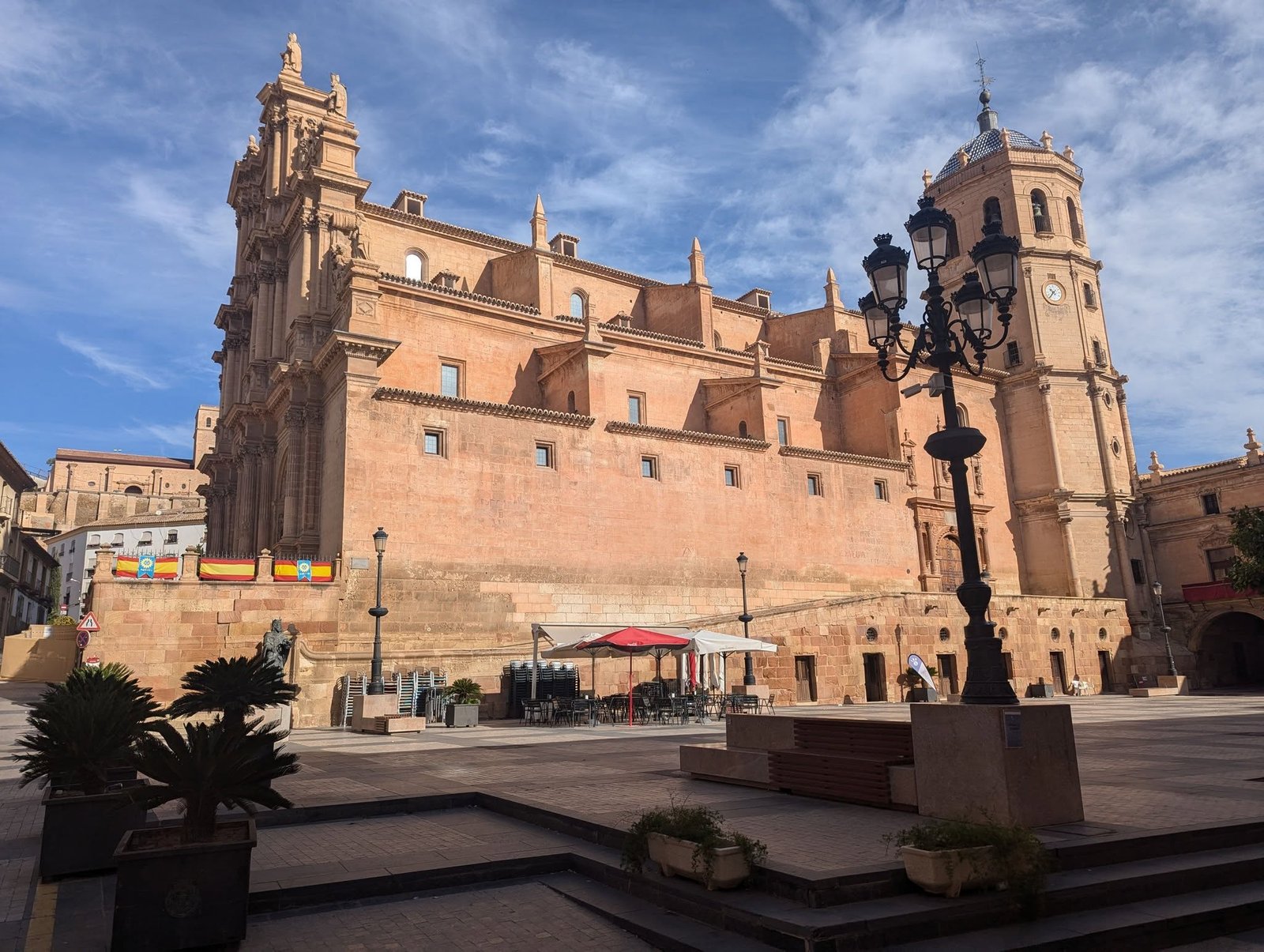
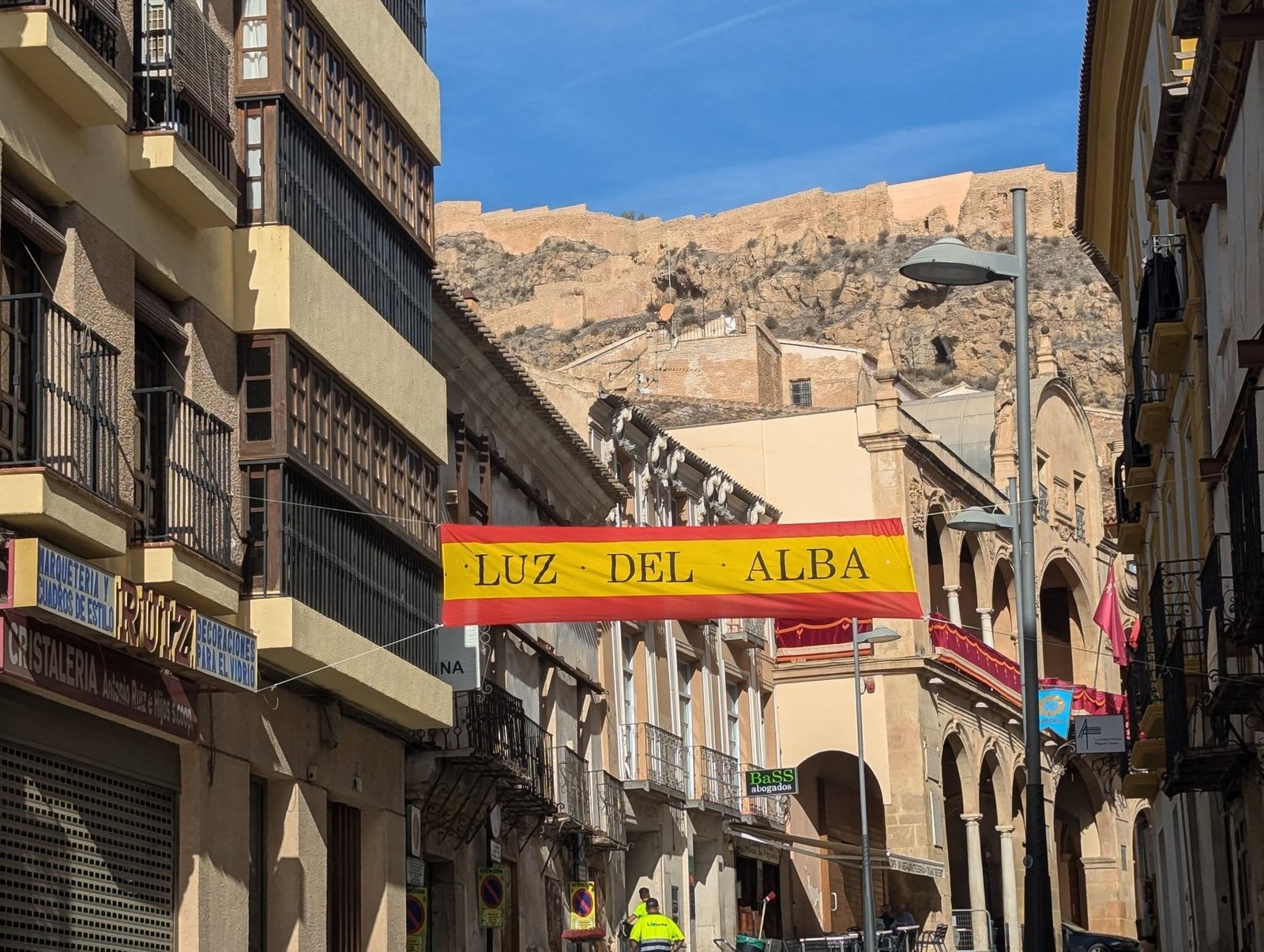
Our first stop on the way to Granada was Lorca. Formally it is not Andalusia yet but the Region of Murcia, but it lies on our route. In the morning we walked around the centre. Its heart is the Plaza de España, with the arcaded town hall and the collegiate church of San Patricio.
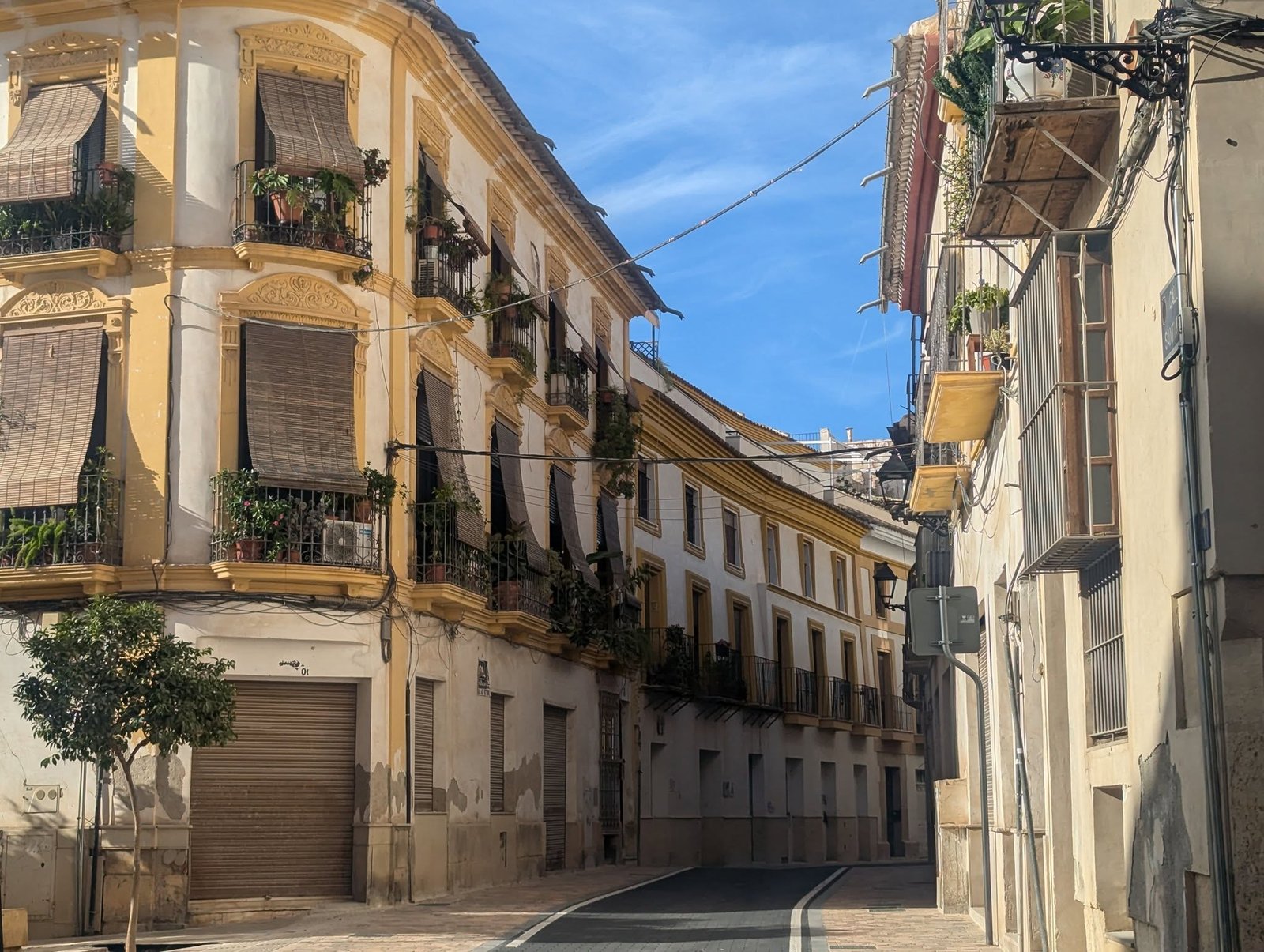
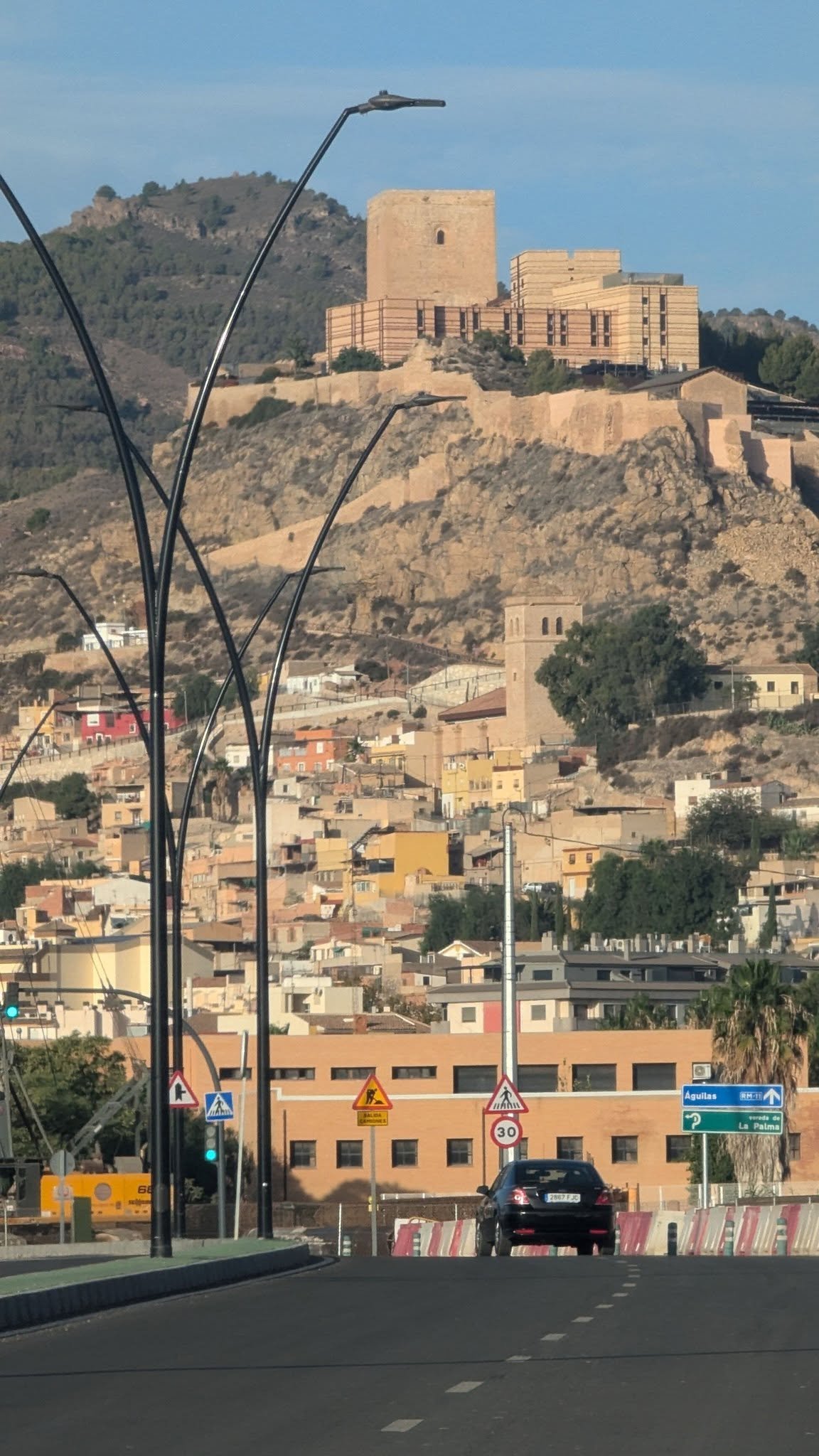
Above the town, on a rocky hill, towers the castle – Castillo de Lorca. You can see it from many streets in the centre, above the roofs of townhouses with balconies full of flowers.
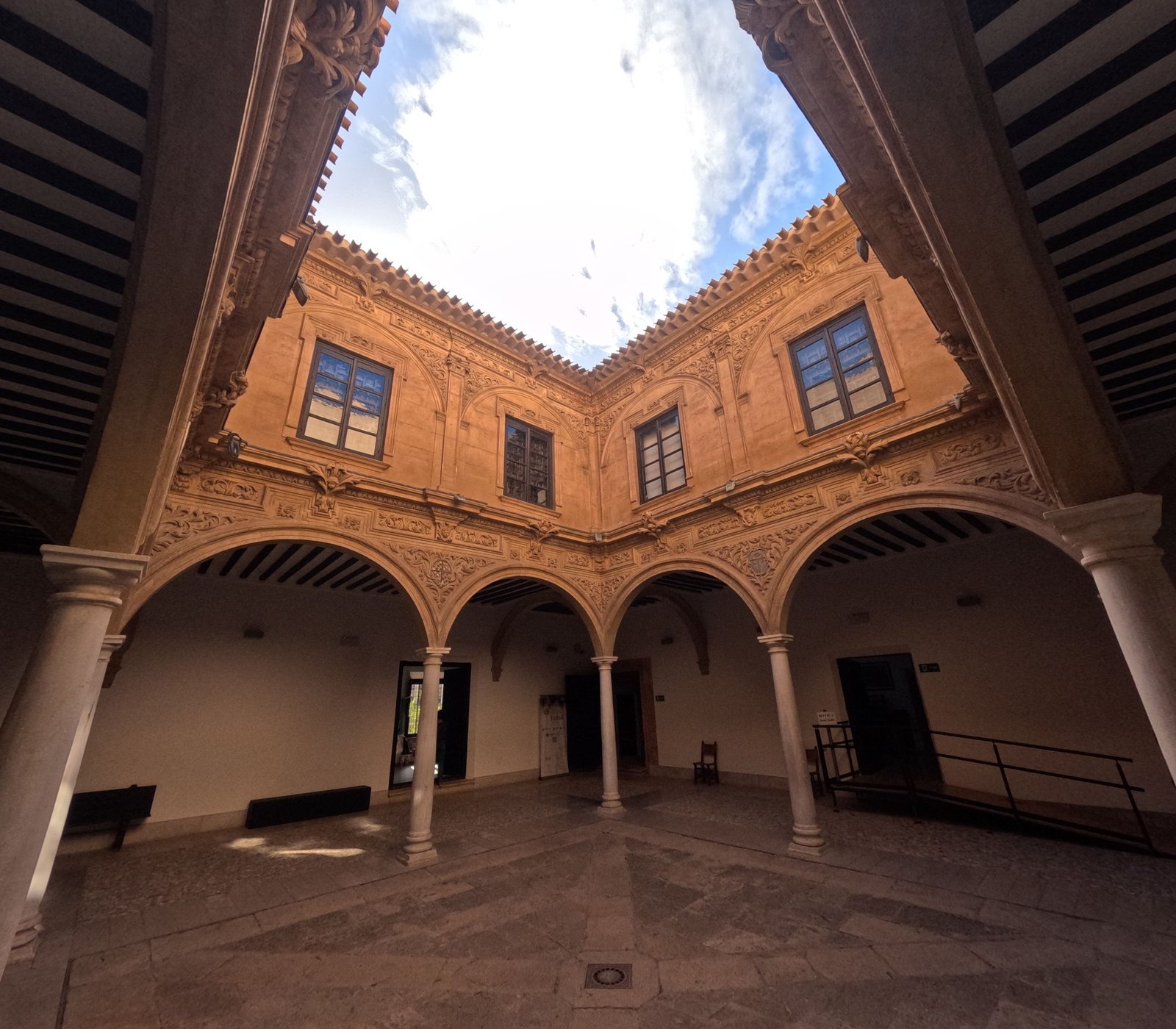
We also looked into a courtyard with stone arcades in one of the historic buildings in the centre.
Granada – the city centre
In the afternoon we reached Granada. This was the centre of the last Muslim state on the Iberian Peninsula – the Emirate of Granada – and the influence of Arab culture is visible at every step. There are plenty of sights, so even without the Alhambra we had lots to do. A walk around the centre was enough.
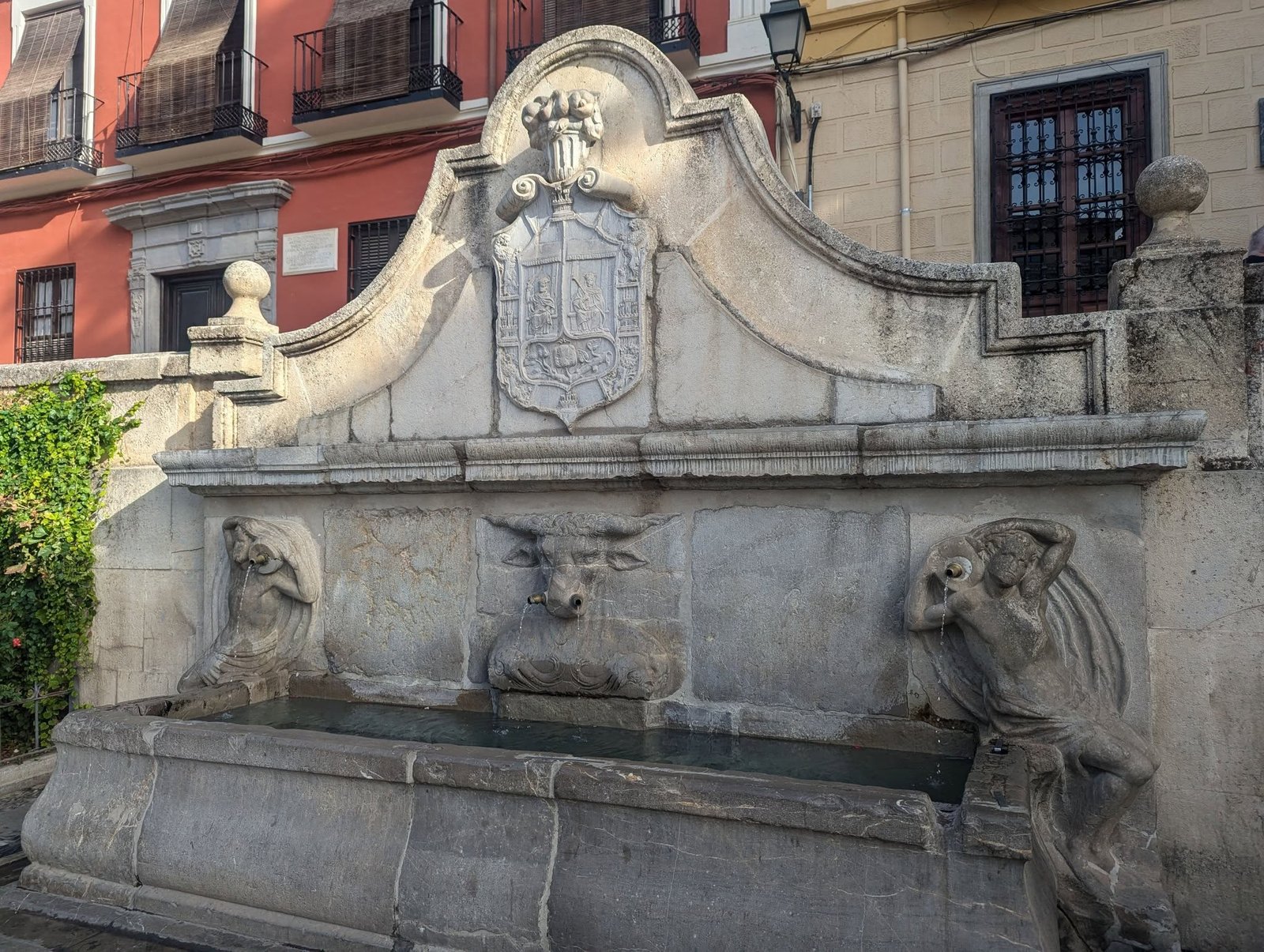
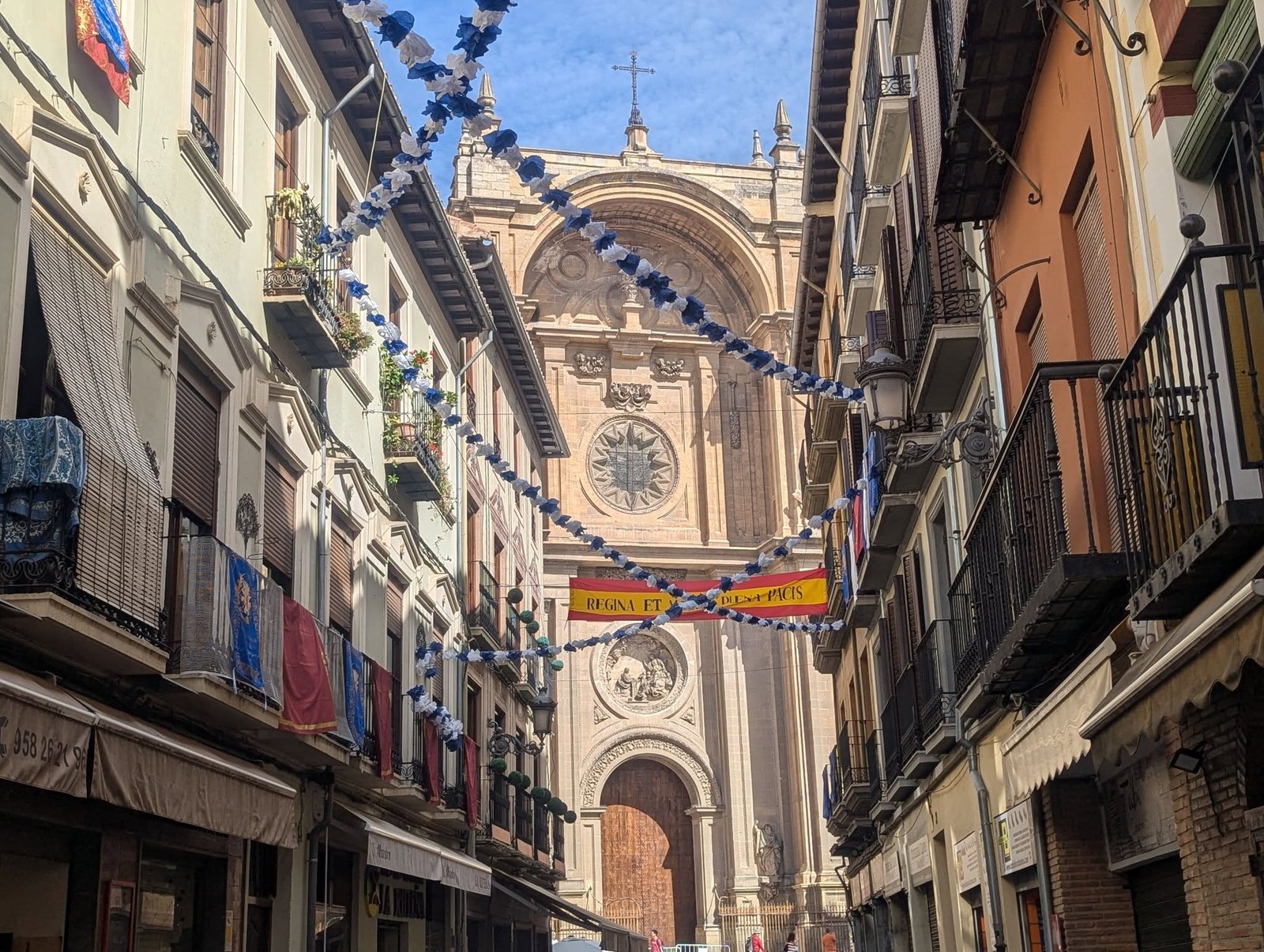
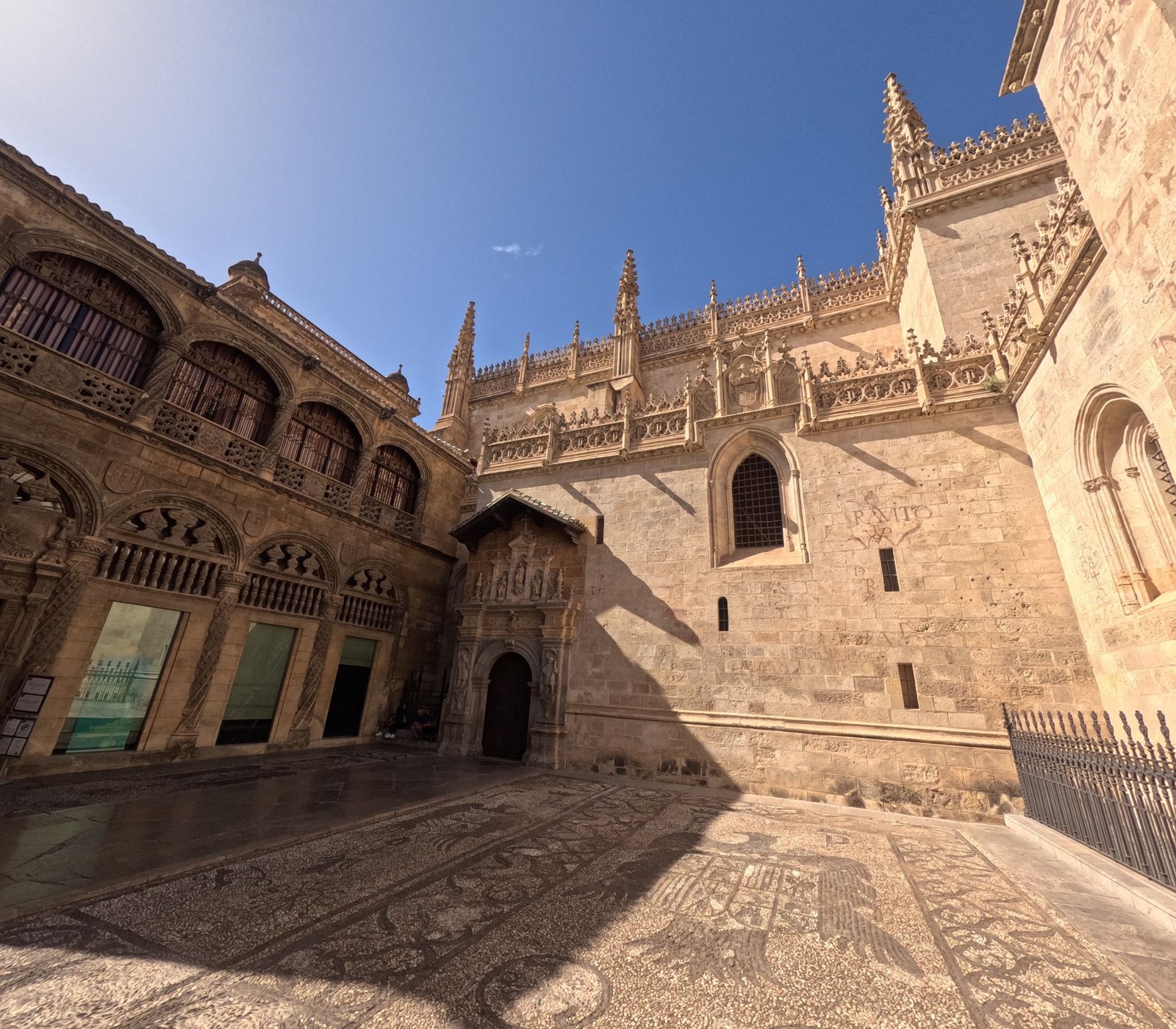
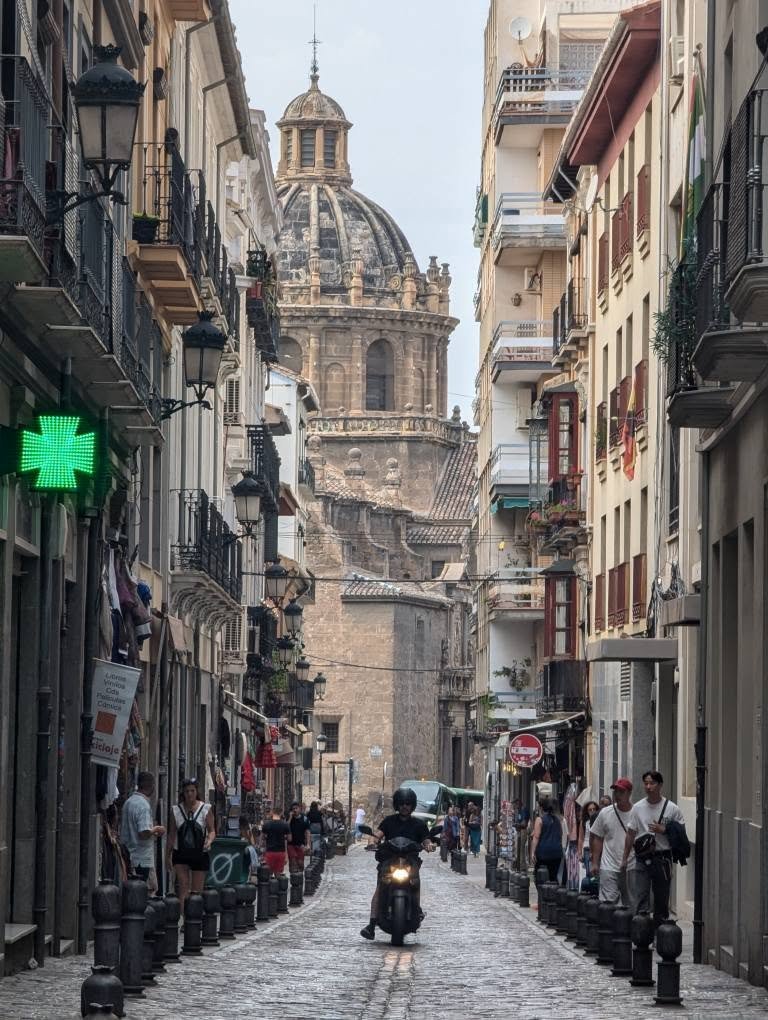
Right in the middle of the city stands the cathedral, whose monumental façade closes off a narrow street, decorated at the time with blue and white garlands. Right next to it is the Gothic Royal Chapel (Capilla Real), with a square in front of it paved with a pebble mosaic.
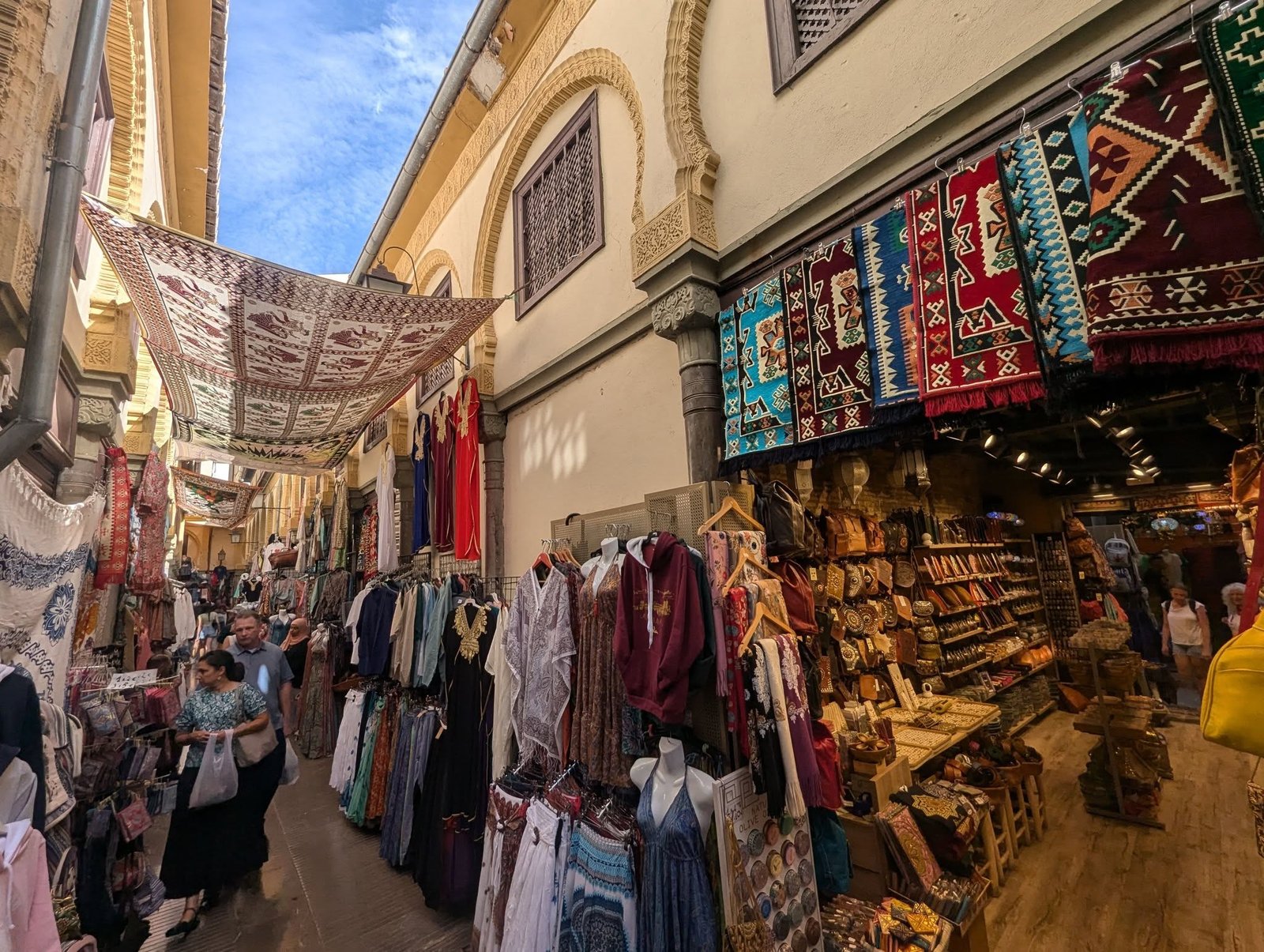
The lanes around the cathedral are lined with stalls selling Arab-style souvenirs – rugs, bags, lamps and clothes.
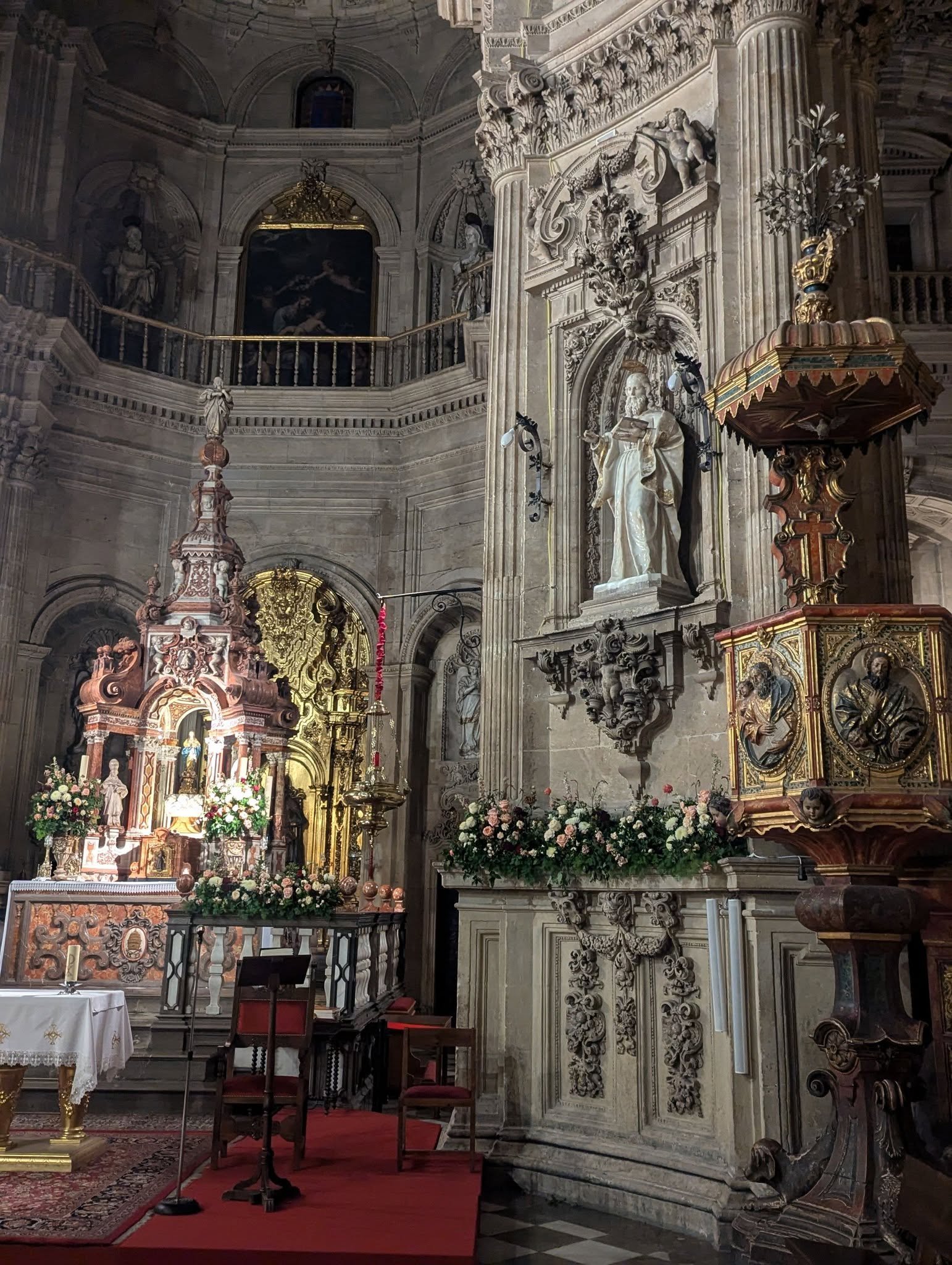
During a break from sightseeing there was time for Spanish snacks, and in the evening we also looked into one of the churches in the centre.

Albaicín – the Arab quarter of Granada
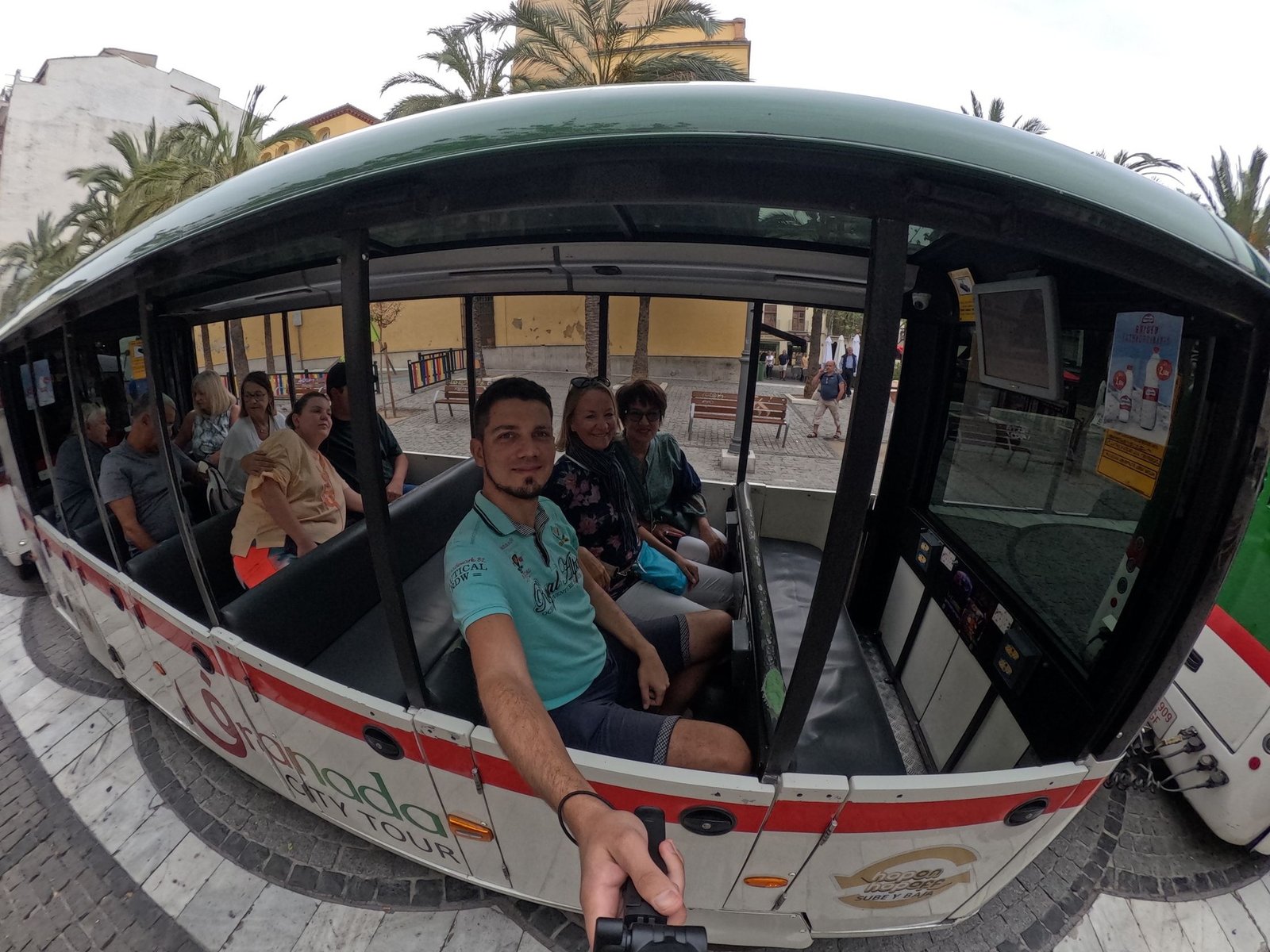
On the second day we set off for the Albaicín quarter, on the hill opposite the Alhambra. Part of the way we took the Granada City Tour tourist train, which runs as a hop-on hop-off service.
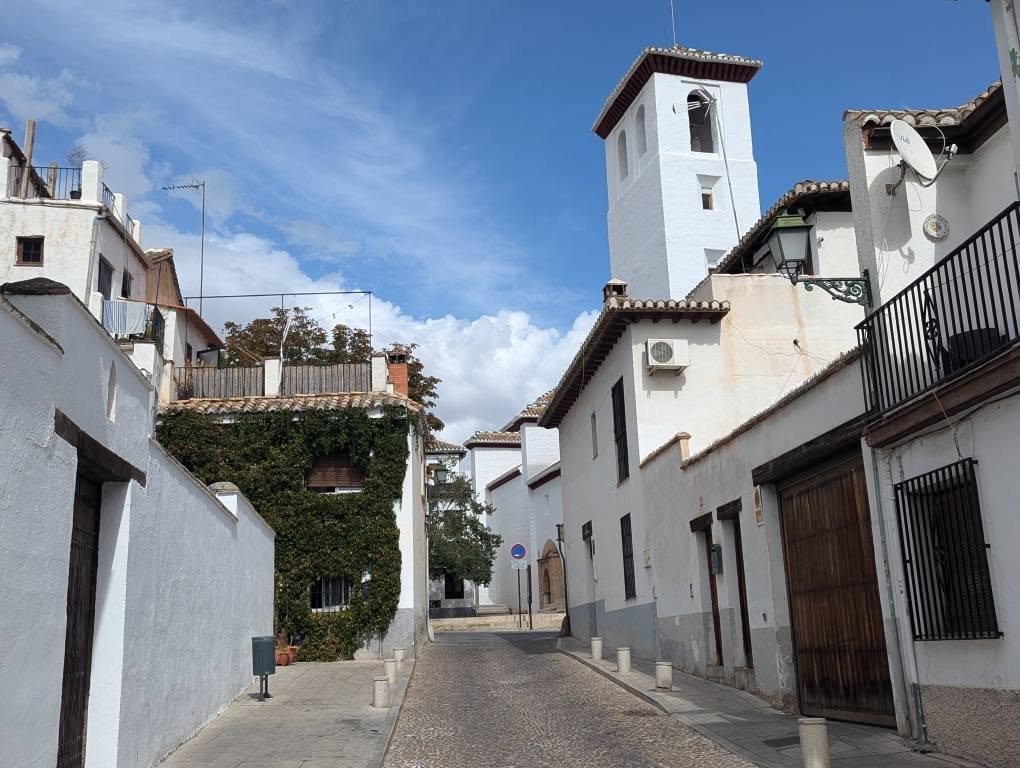
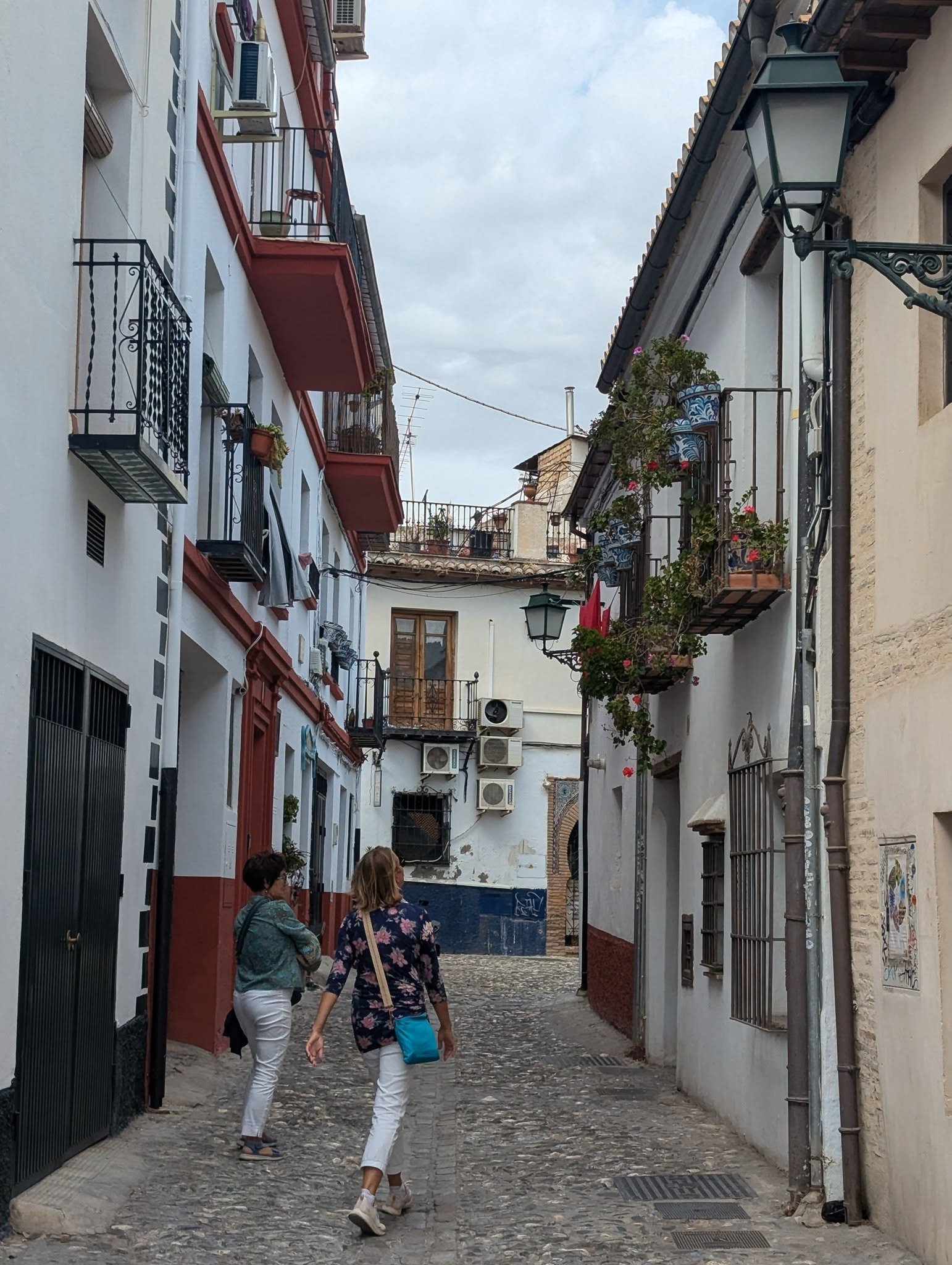
The Albaicín is a maze of narrow, winding lanes between white houses, with church bell towers rising above them. Here, too, the strong influence of Arab culture is visible.
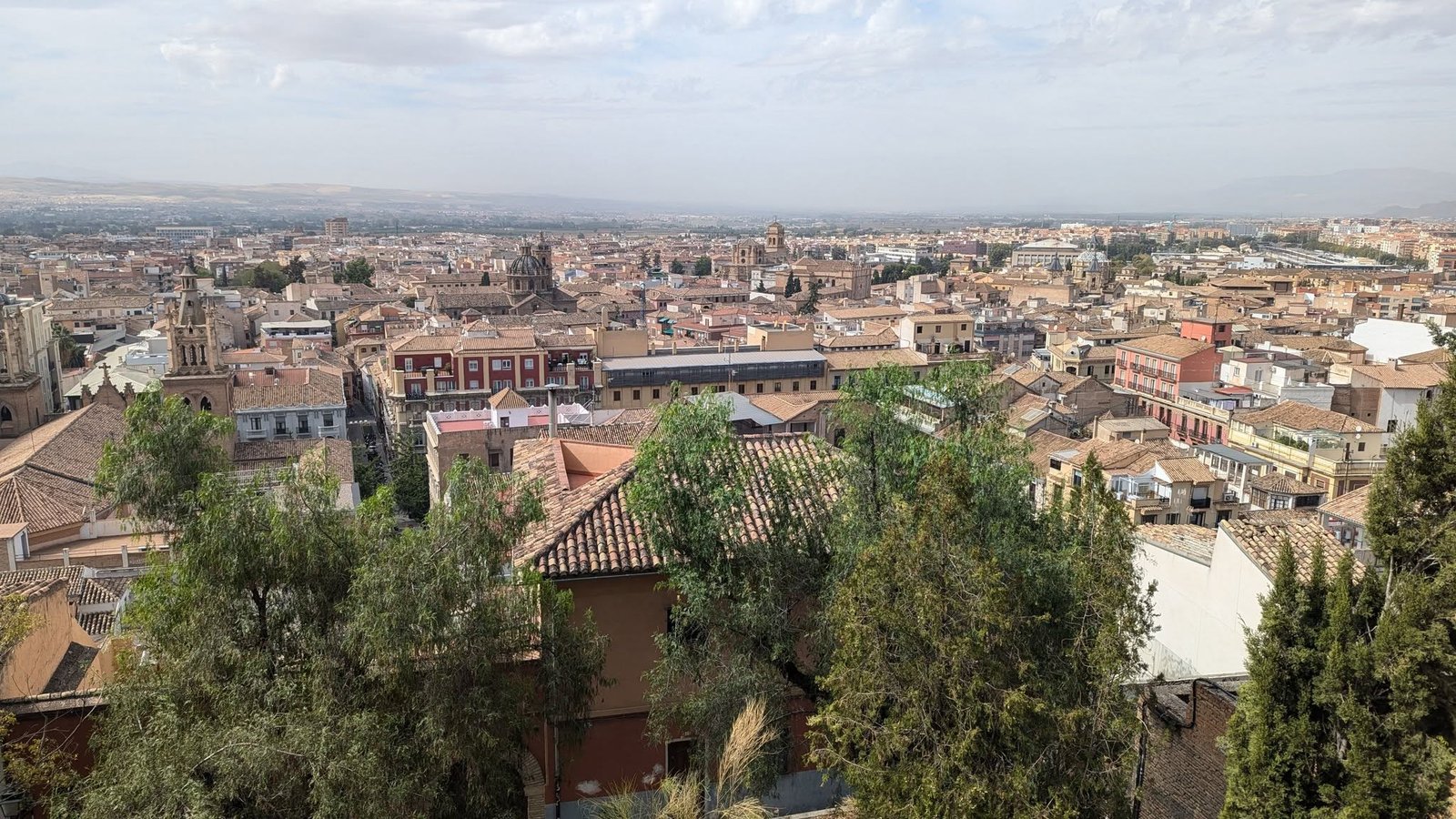
The viewpoints on the hill offer a panorama over the roofs of Granada, and on the other side of the valley you can see the Alhambra.
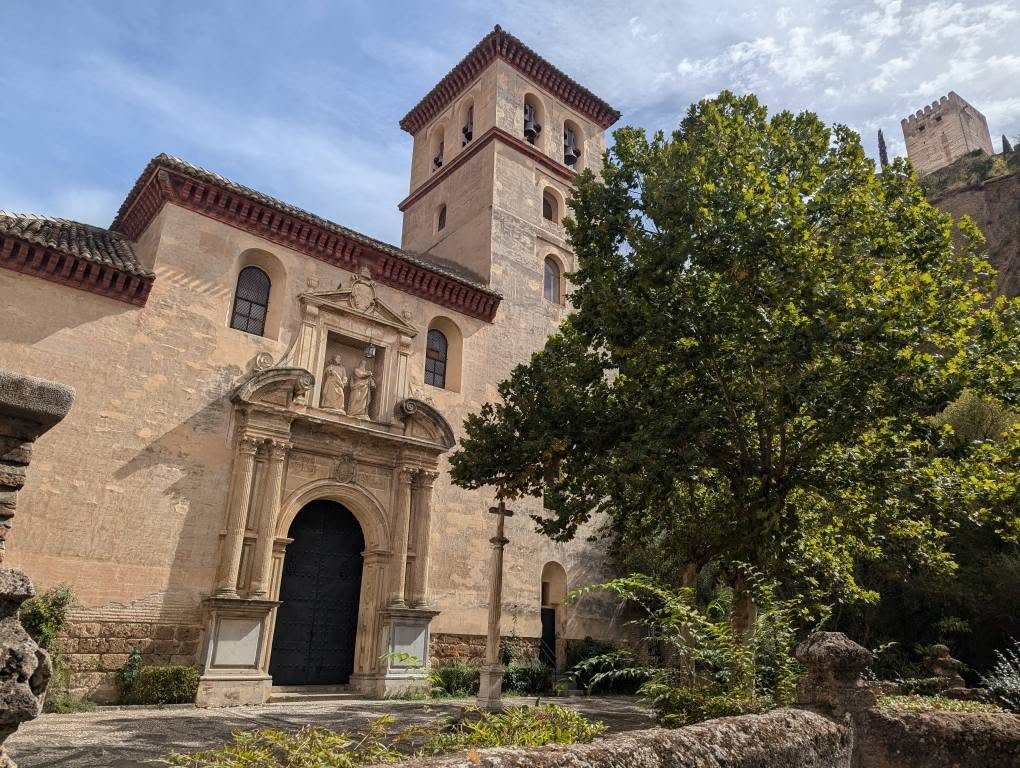
At the foot of the hill on which the Alhambra stands, we passed more churches – the towers of the fortress were already peeking out from behind the trees.
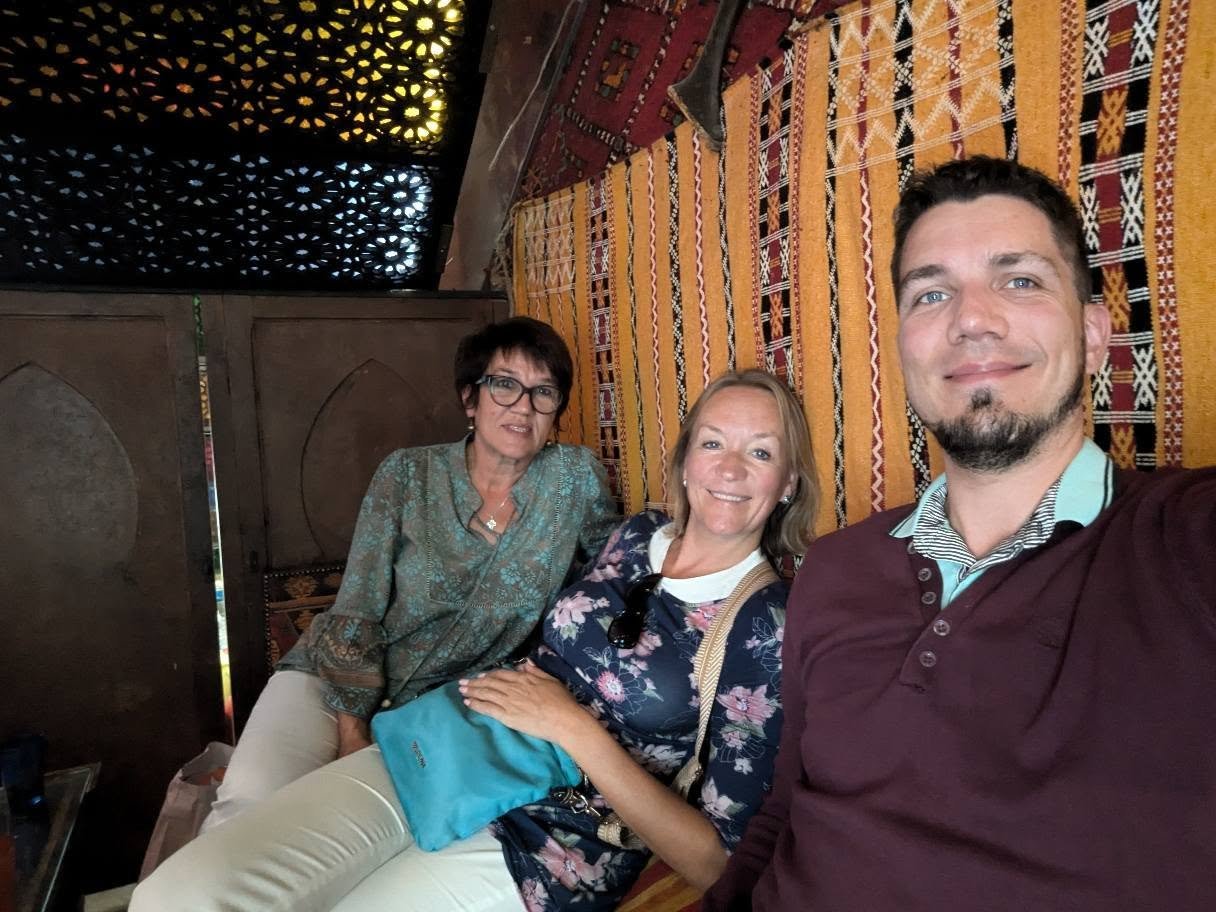
We ended the evening in a tea house decorated in Arab style, with colourful fabrics on the walls and openwork lamps – a foretaste of what awaited us on the last day near Elche.
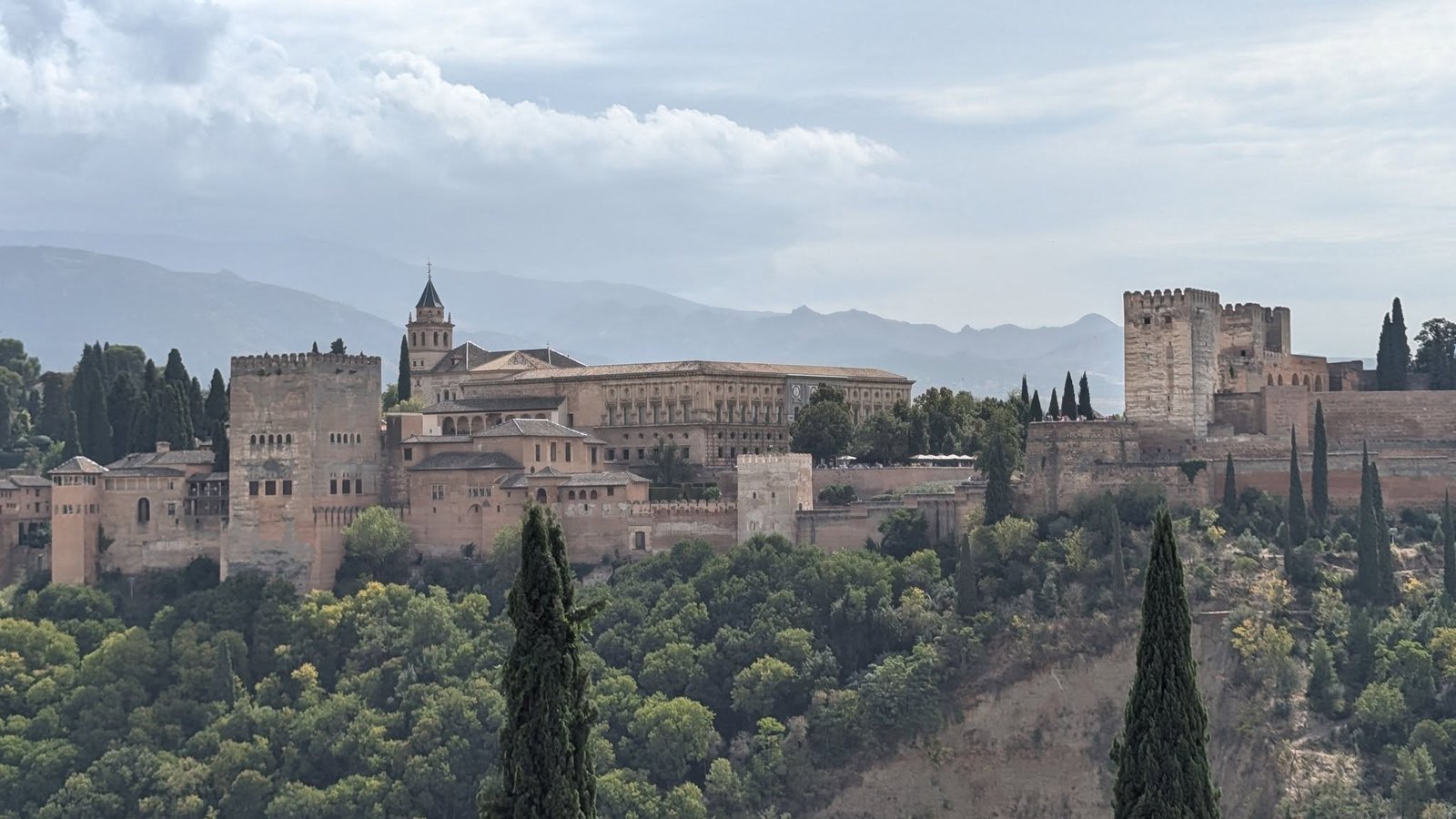
The Alhambra – buy your tickets well in advance
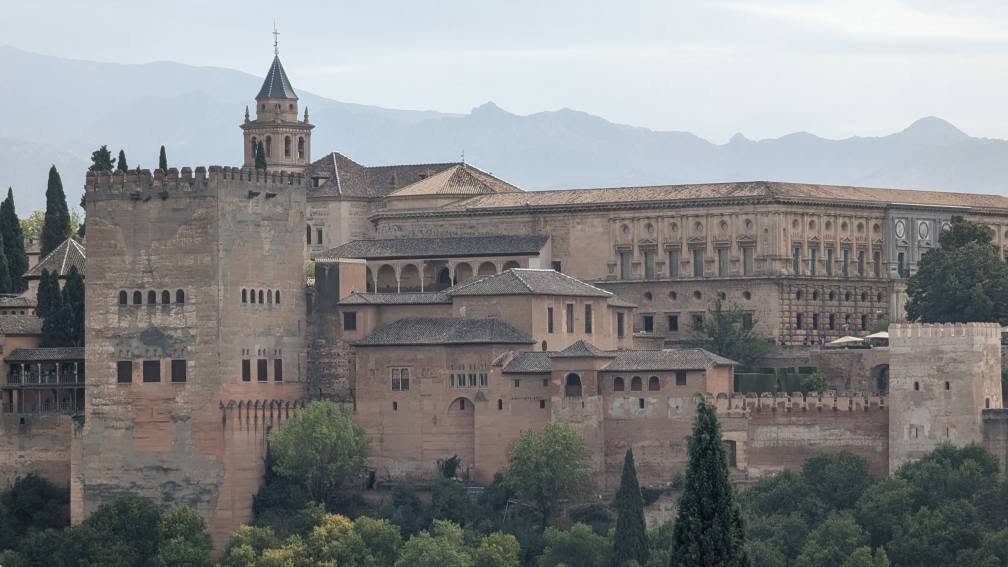
The Alhambra – a complex of palaces and a fortress on a hill above Granada – is by far the city’s biggest attraction and one of the best-known monuments in Spain. Unfortunately, we did not visit it. We tried to buy tickets two weeks before our arrival and it was already too late: every slot was sold out until the first days of November. So we only saw the Alhambra from the outside, from the Albaicín – and that is why sooner or later I will have to go back to Granada.
If you are planning a trip to Granada, buy your Alhambra tickets well in advance. A few rules from the official ticket website tickets.alhambra-patronato.es (as of October 2026):
- because the number of places is limited, buying tickets in advance is recommended, preferably on the official website – other ways of buying do not guarantee that tickets will be available;
- tickets are personal – when buying you give your ID card or passport number, and at the entrance you have to show the original document;
- you enter the Nasrid Palaces at the time printed on your ticket – if you are late, you lose the right to visit this part; the other parts (the Alcazaba, the Partal and the Generalife) can be visited without a set time;
- once bought, the date and time of the visit cannot be changed, and tickets are non-refundable.
Soportújar – the witches’ village in the Sierra Nevada
On the third day we left Granada for the Sierra Nevada mountains, to the Alpujarras region, where white villages cling to the slopes.
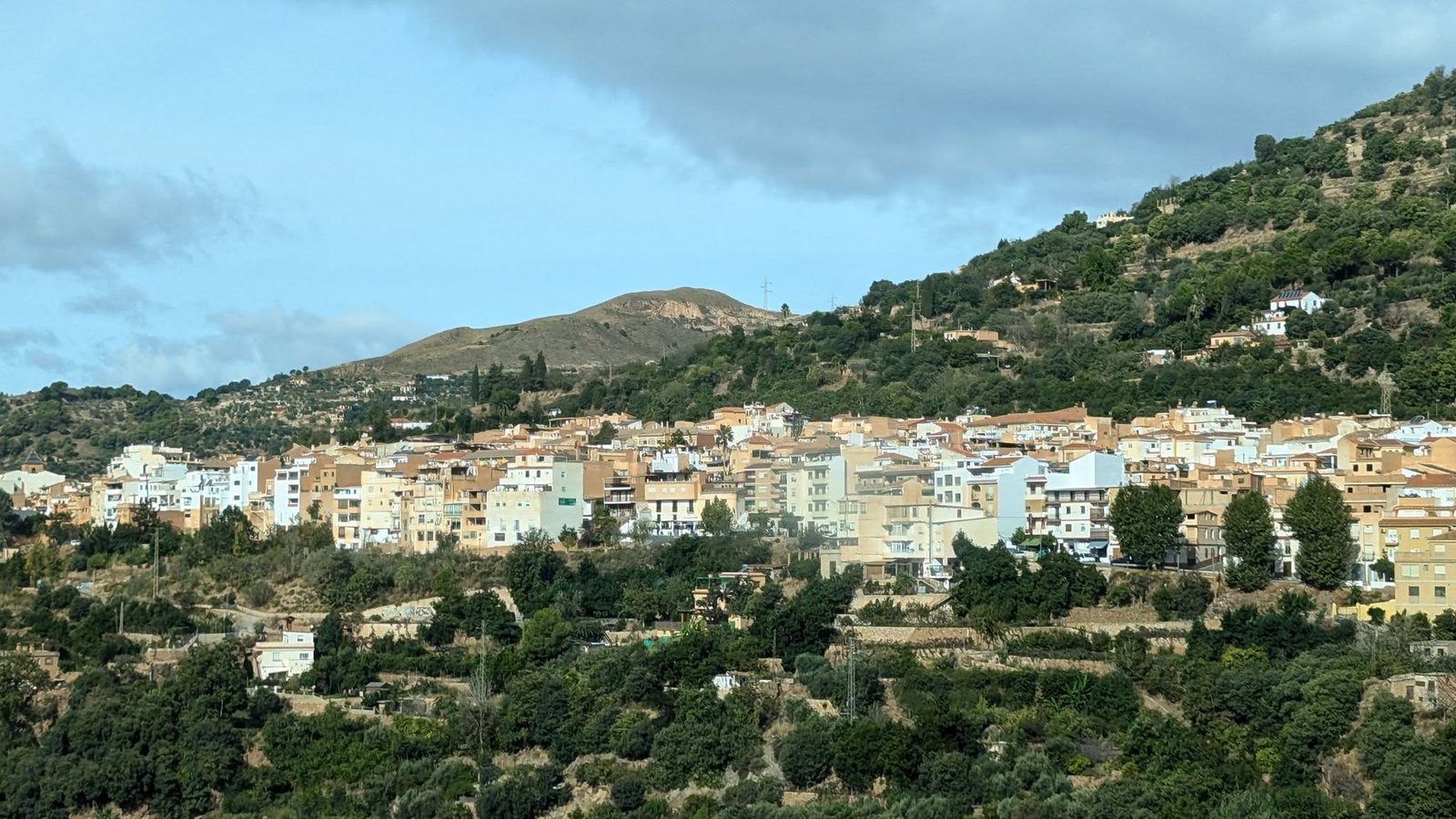
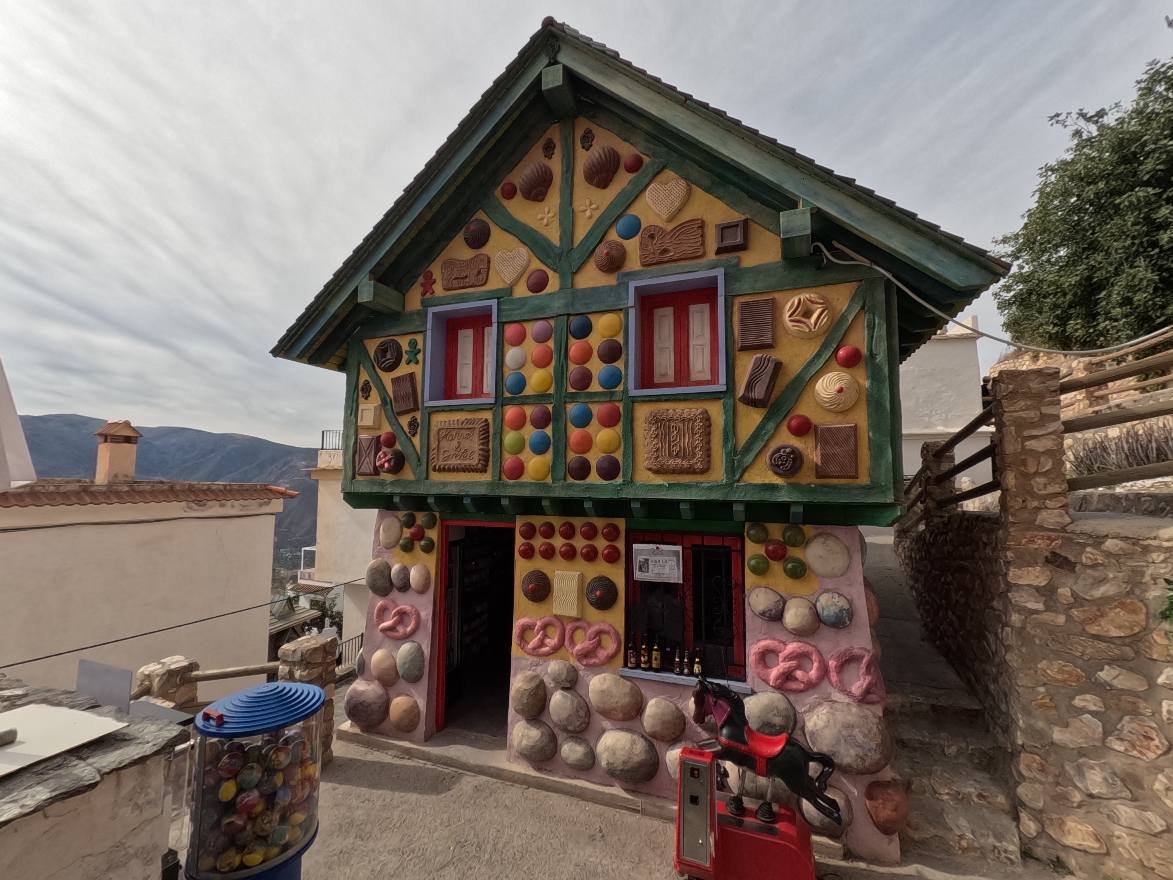
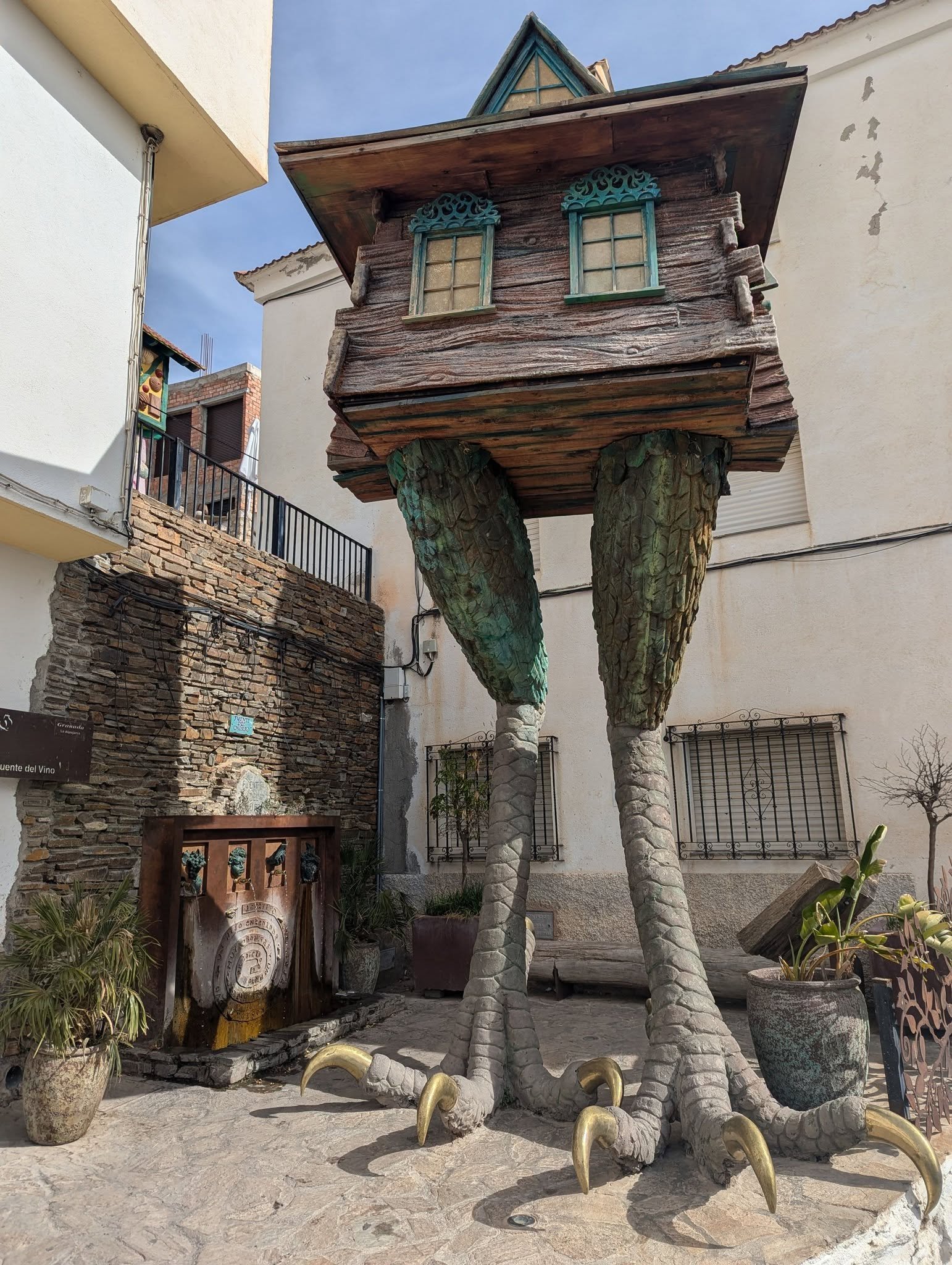
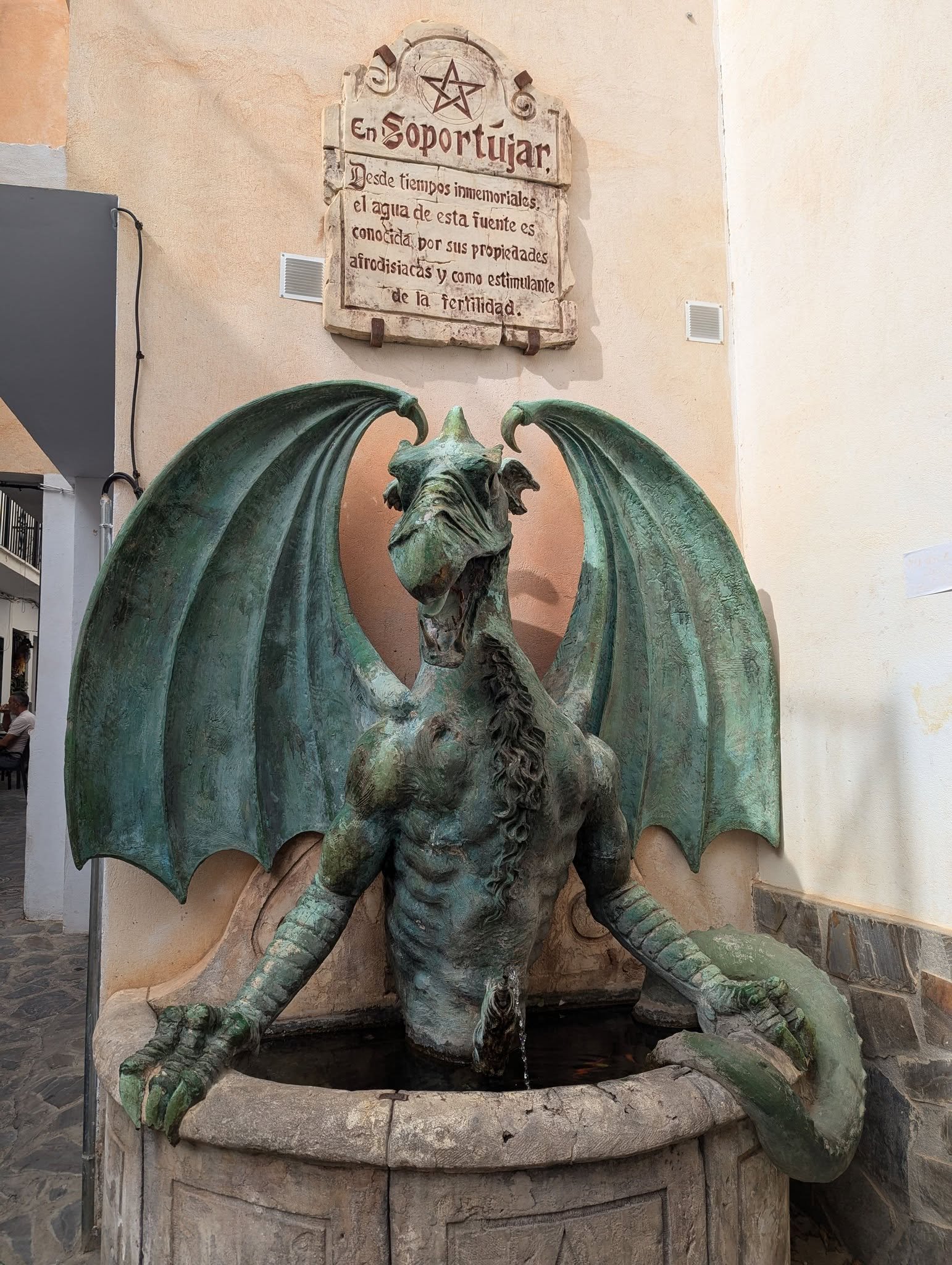
We drove to the village of Soportújar. Someone once came up with the idea of turning it into a witch-themed tourist attraction. Strolling through the lanes, you can come across Baba Yaga’s hut, a gingerbread house, a big spider, a snake and even a dragon, cauldrons and a flying broomstick.
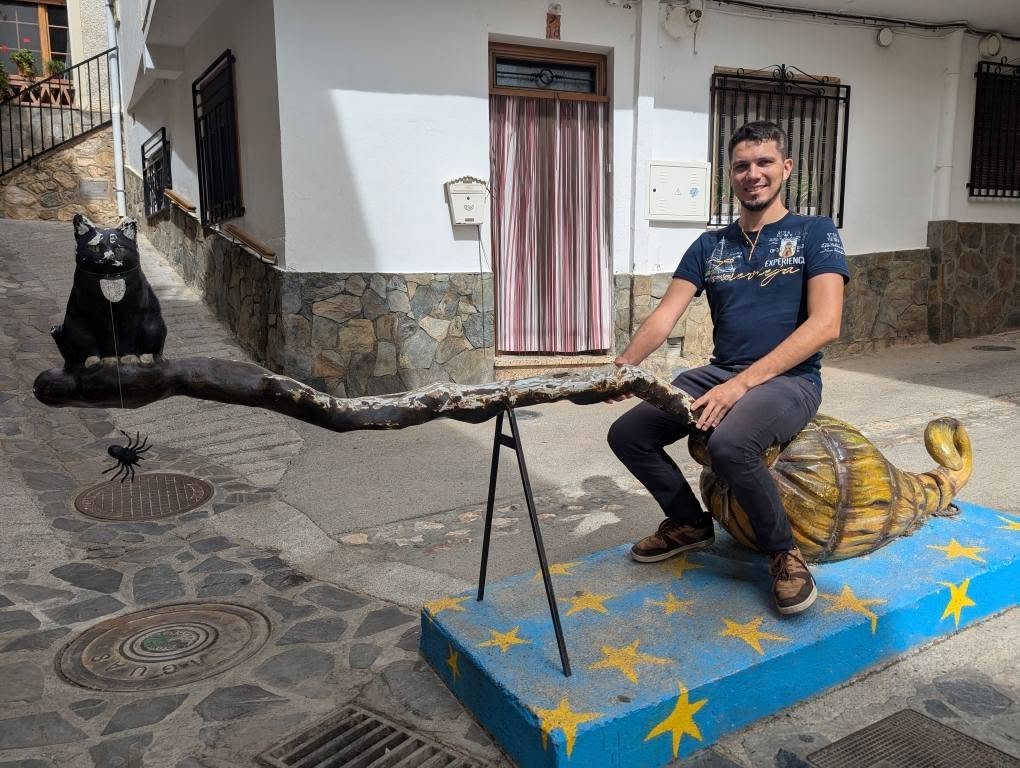
I sat down on a giant snail guarded by a black cat.
Almería
We spent the next night in Almería. It is also quite a big city, with a fortress on a hill – the Alcazaba. We did not go inside: the fortress was being renovated, and besides, we arrived after opening hours. There were far fewer tourists than in Granada, the city seemed almost deserted, and all the main sights could be covered quickly.
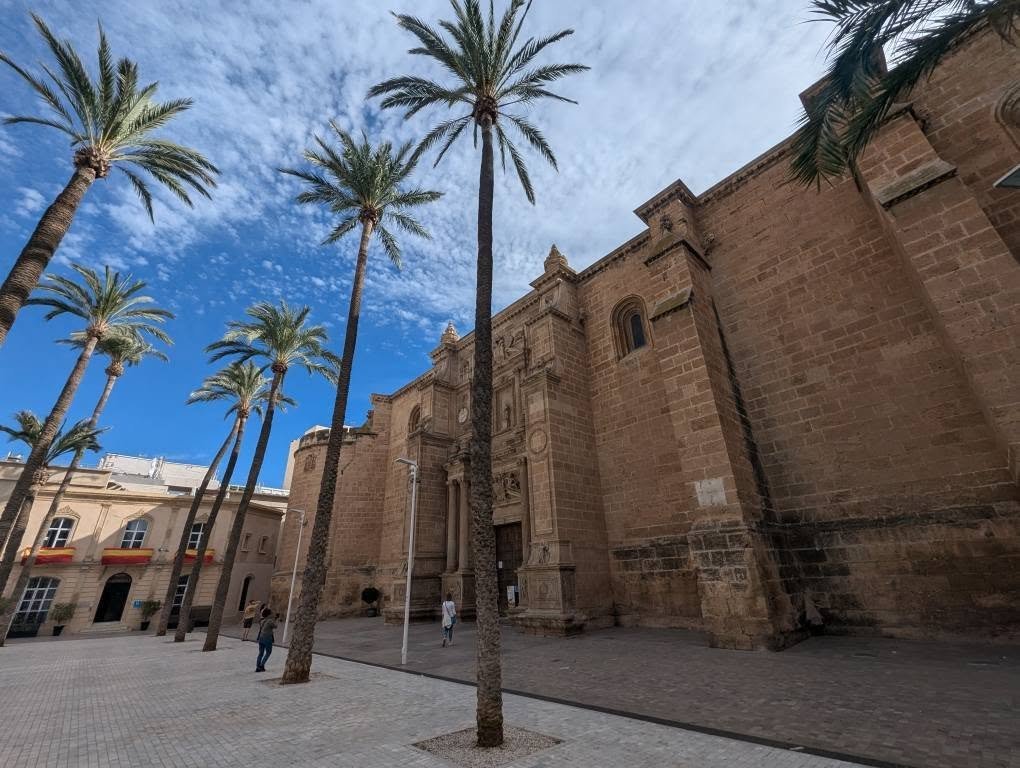
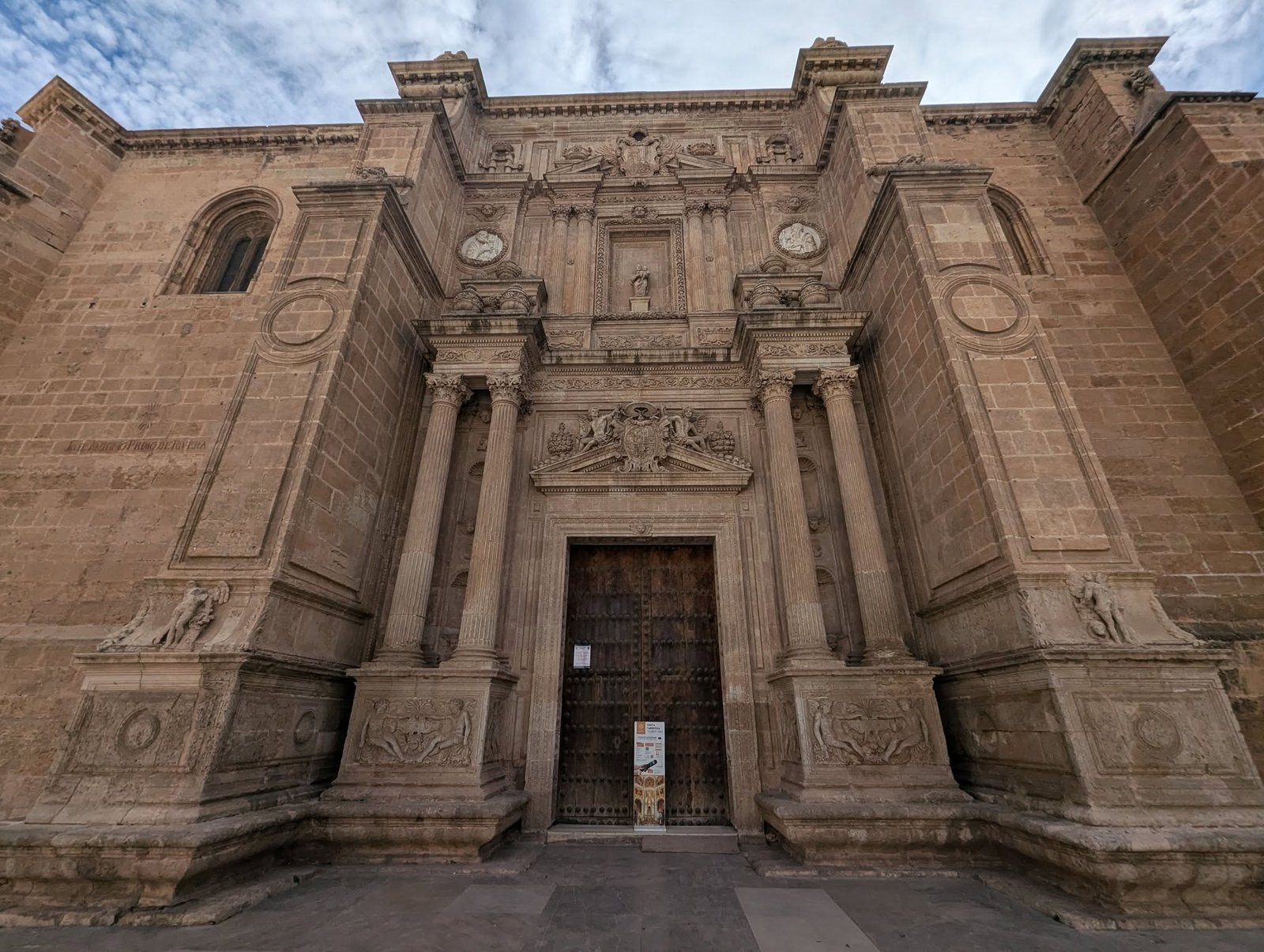
In the centre stands the cathedral, which from the outside looks more like a stronghold than a church – with massive walls and towers.
The Tabernas Desert – a loop through a lunar landscape
On the morning of the last day of the road trip we drove to the Tabernas Desert, not far from Almería. Many westerns were filmed here, and there are several Wild West theme parks in the area. This time there was no time for them – one day I should visit one.
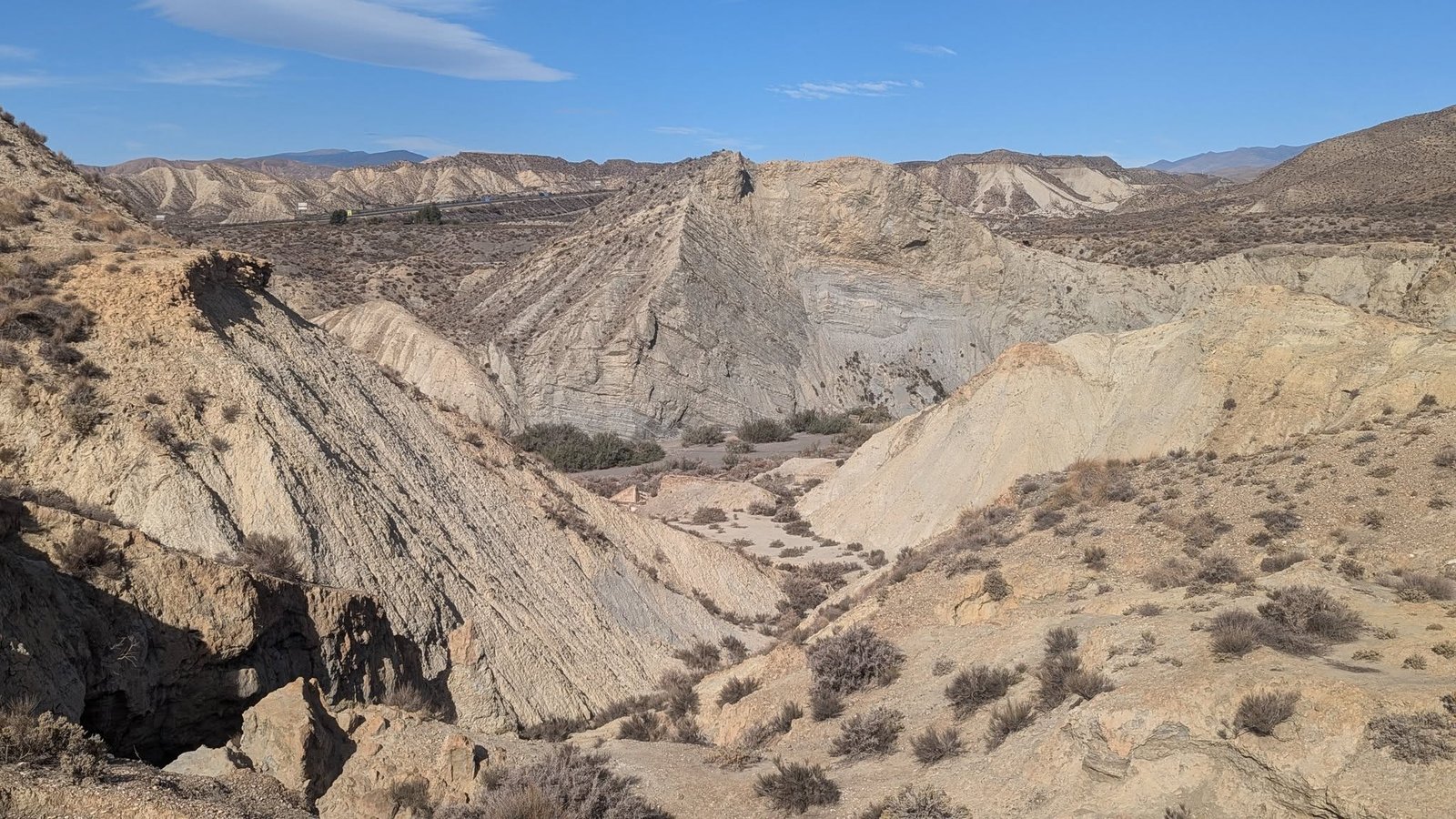
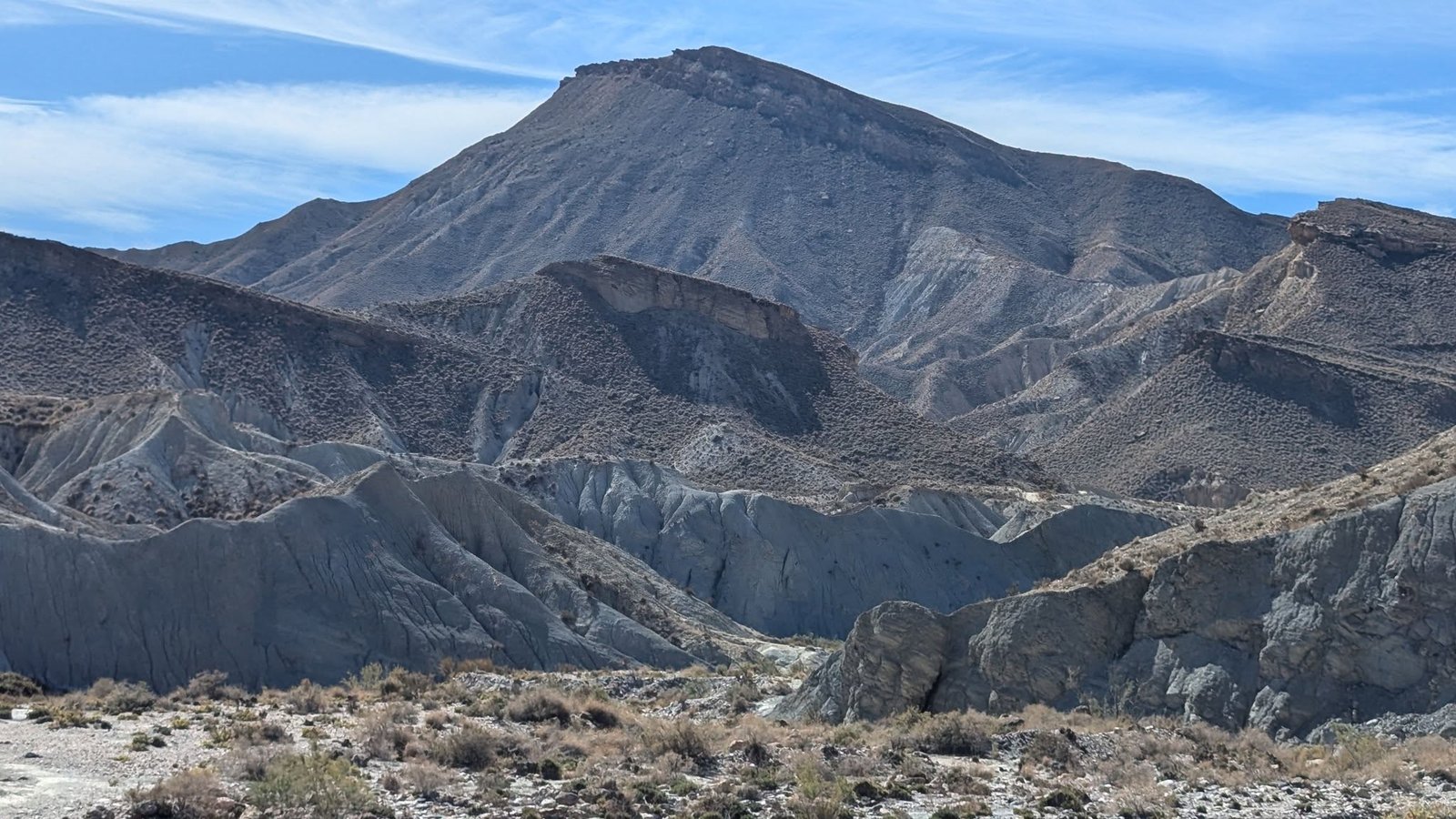
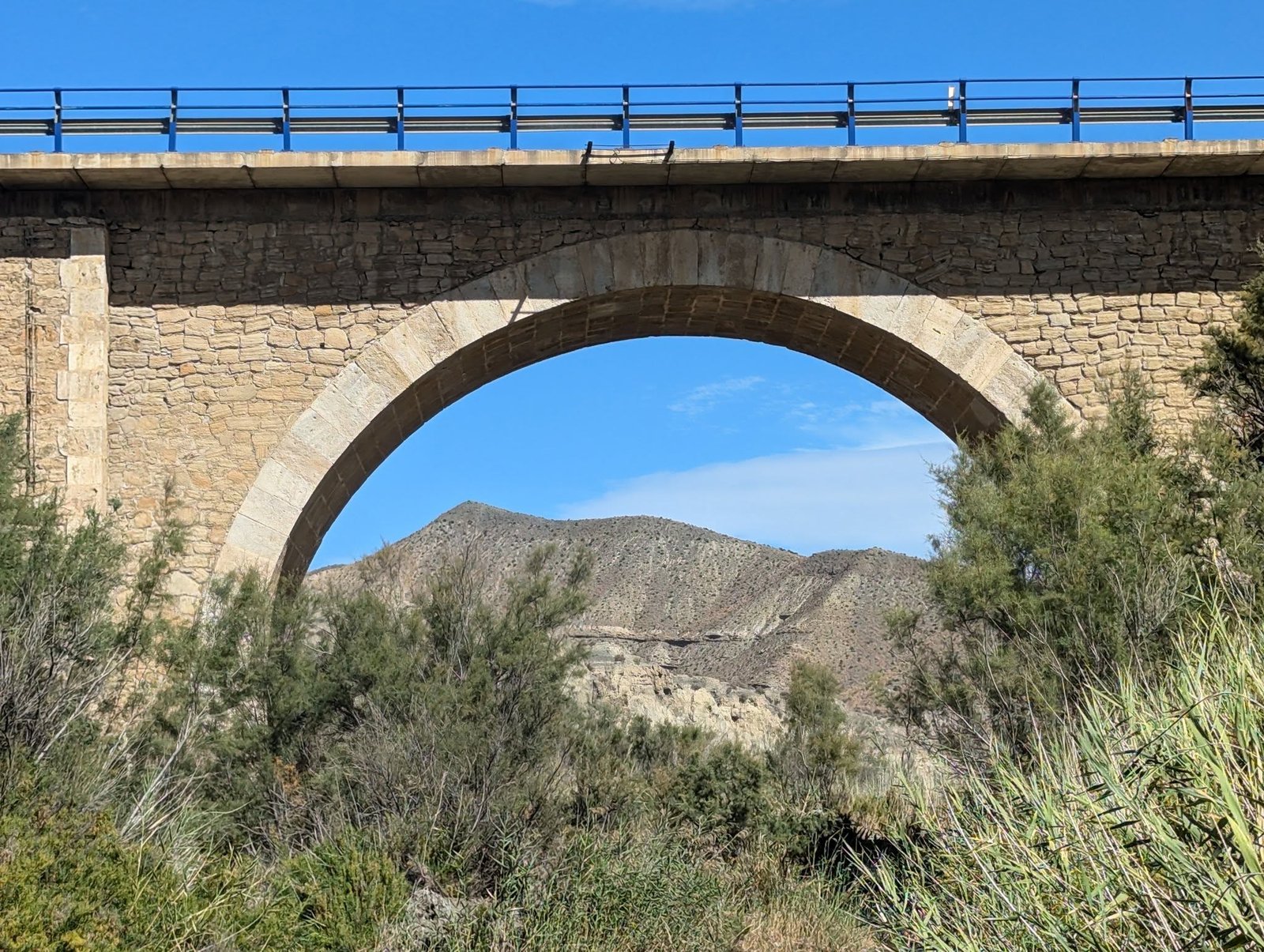
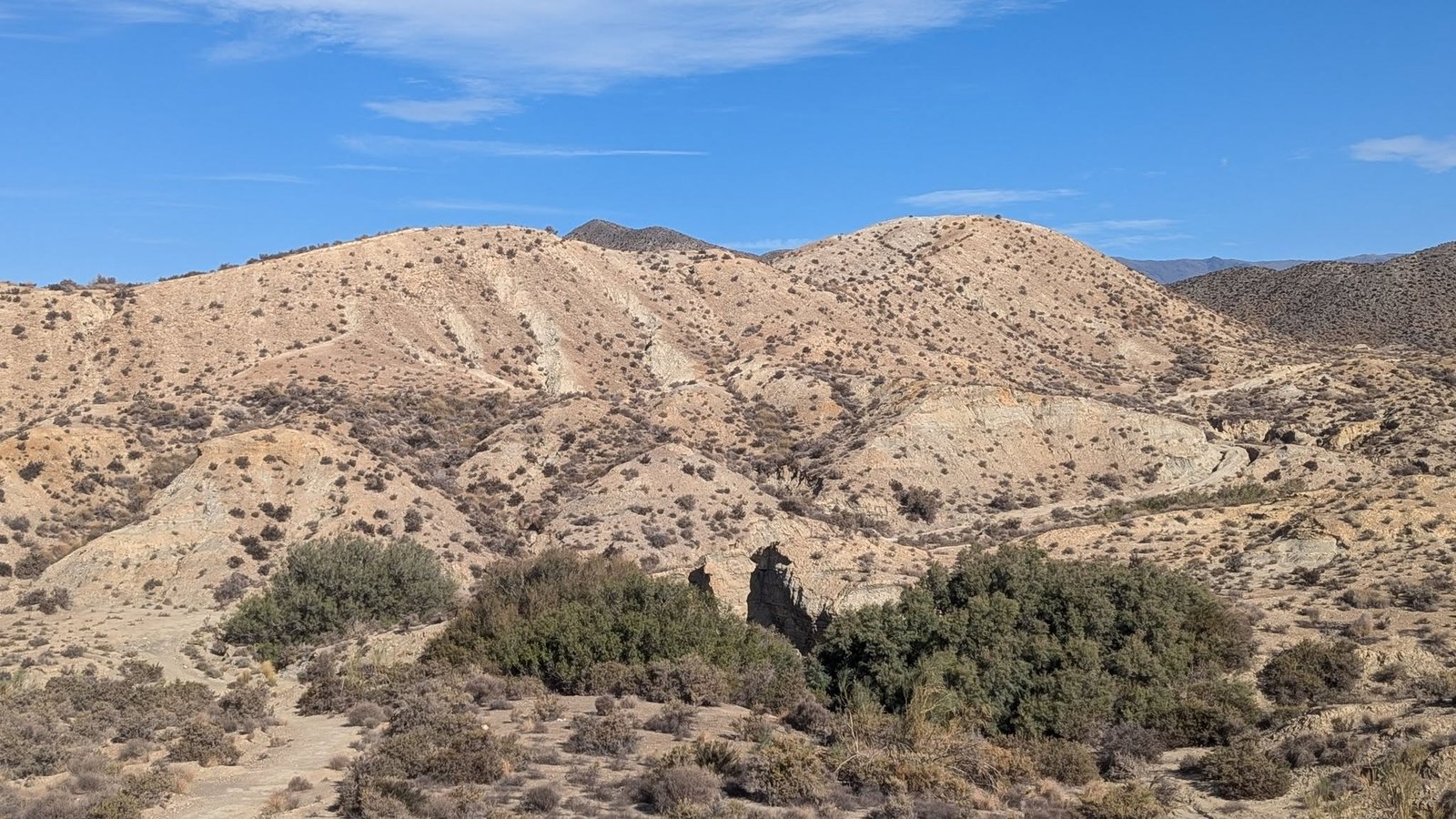
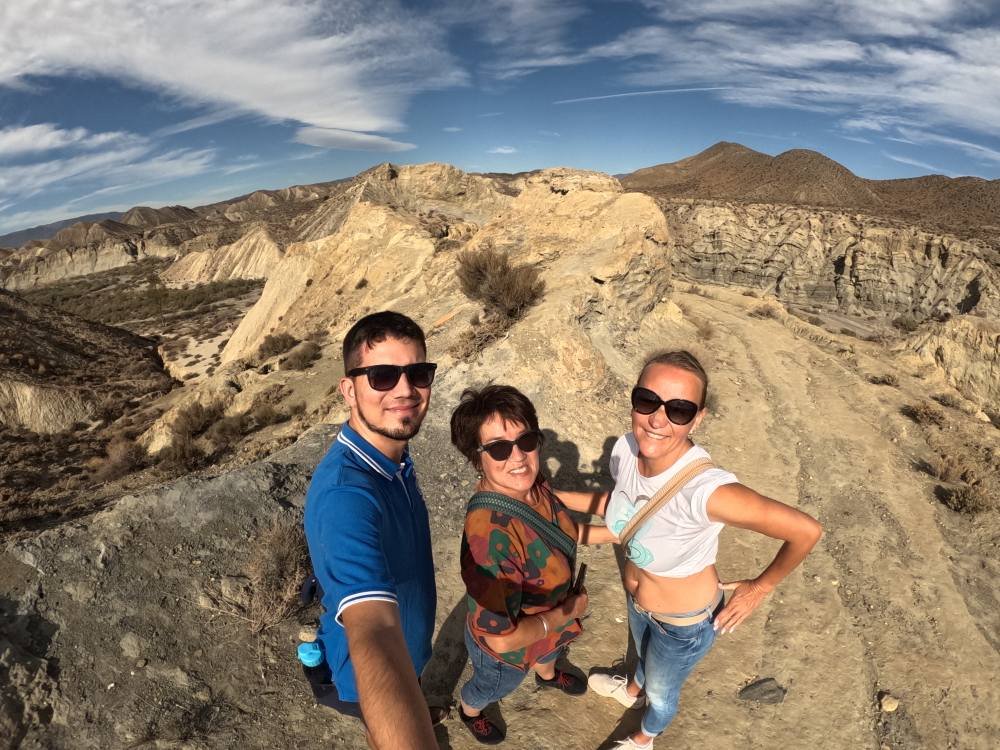
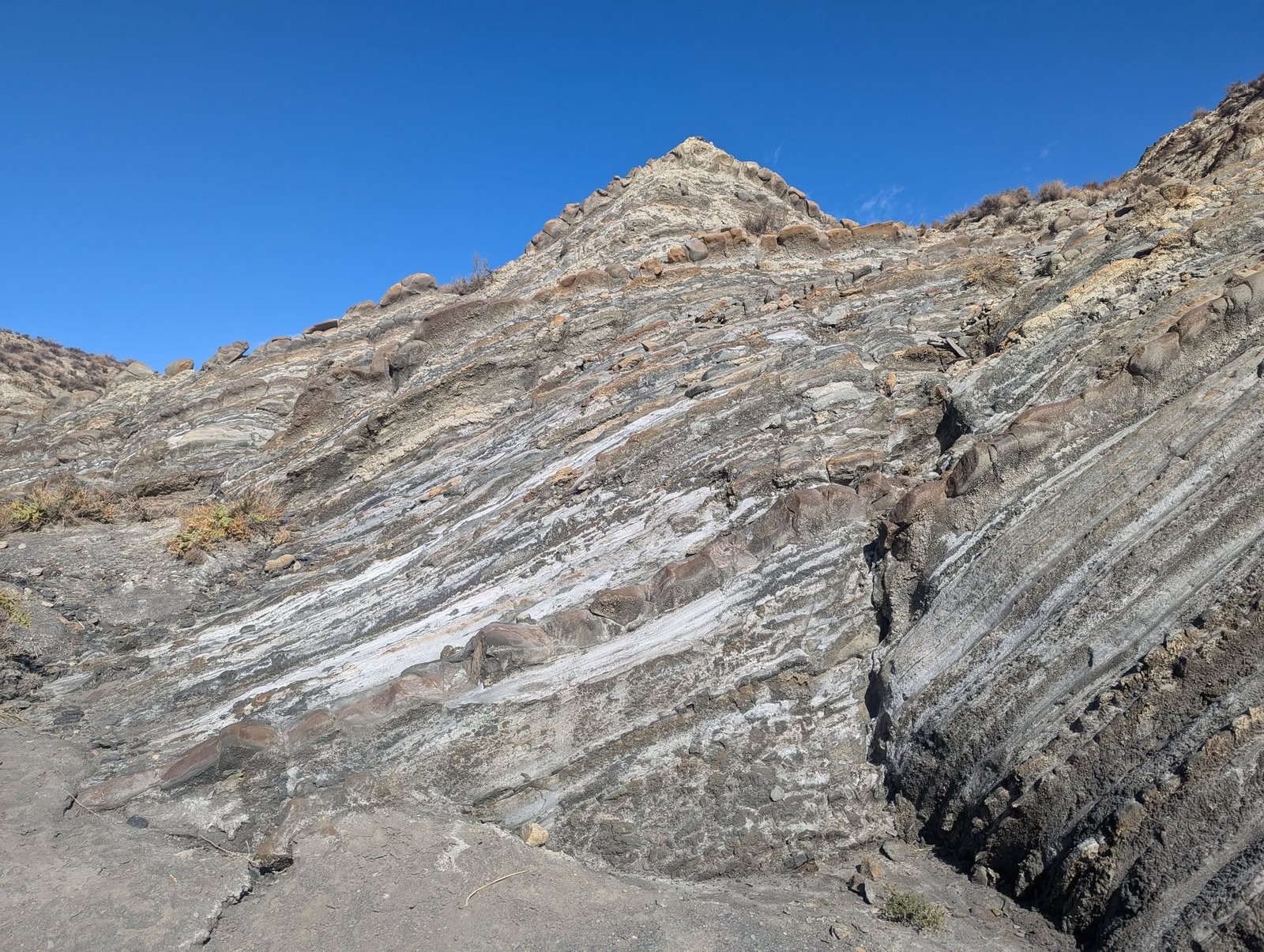
Instead we walked a 6-kilometre loop among dry hills and gullies. The landscape is beautiful, almost lunar: bare slopes, dried-up riverbeds and only the odd clump of bushes here and there.
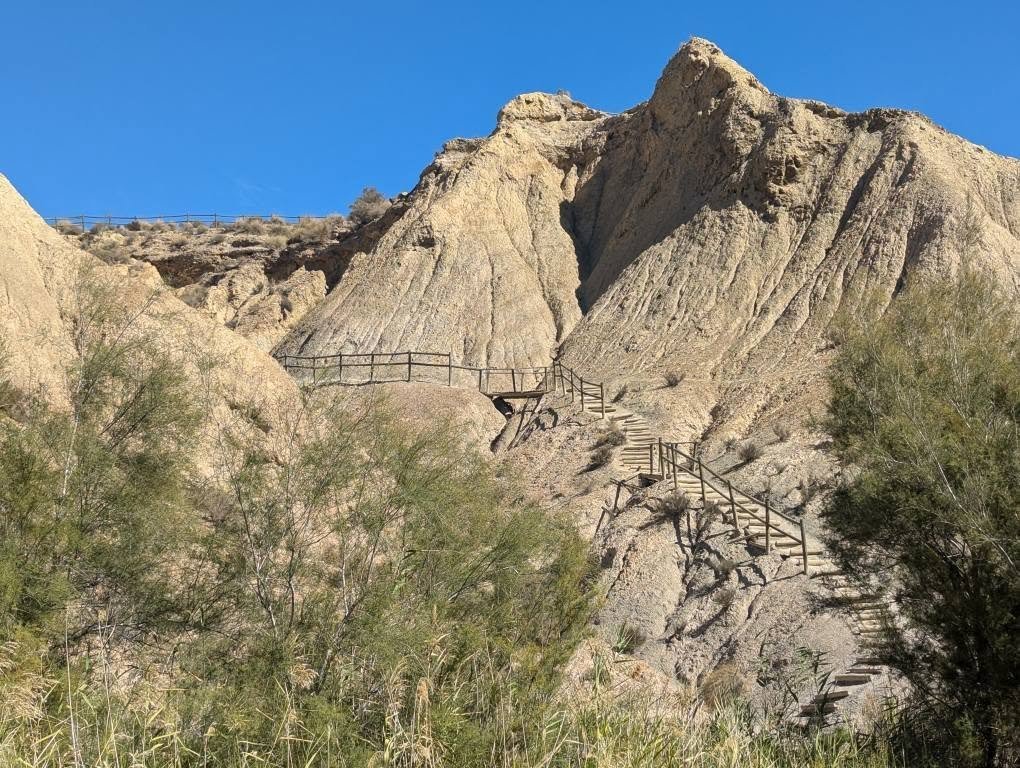
Wooden steps and walkways with railings lead up the steeper slopes.
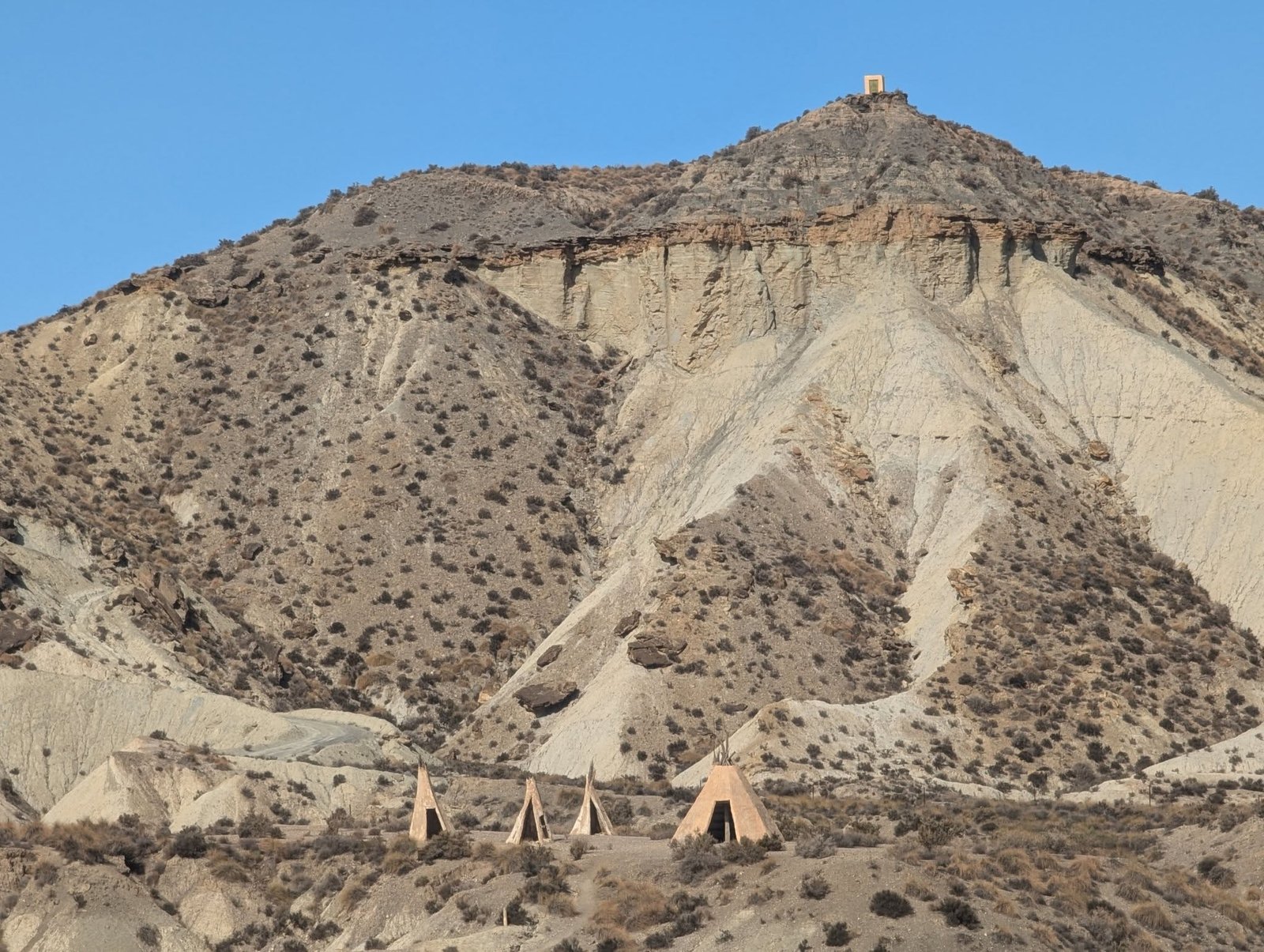
In places you can see folded rock layers, and at the foot of one of the hills there are Native American tipis – just like on a western film set.
The Carmen del Campillo tea house
Our last stop was the Carmen del Campillo tea house in Crevillent, near Elche. More than 40 years before our visit, its owners bought a large plot of land and slowly began to decorate it, creating many rooms in Arab style.
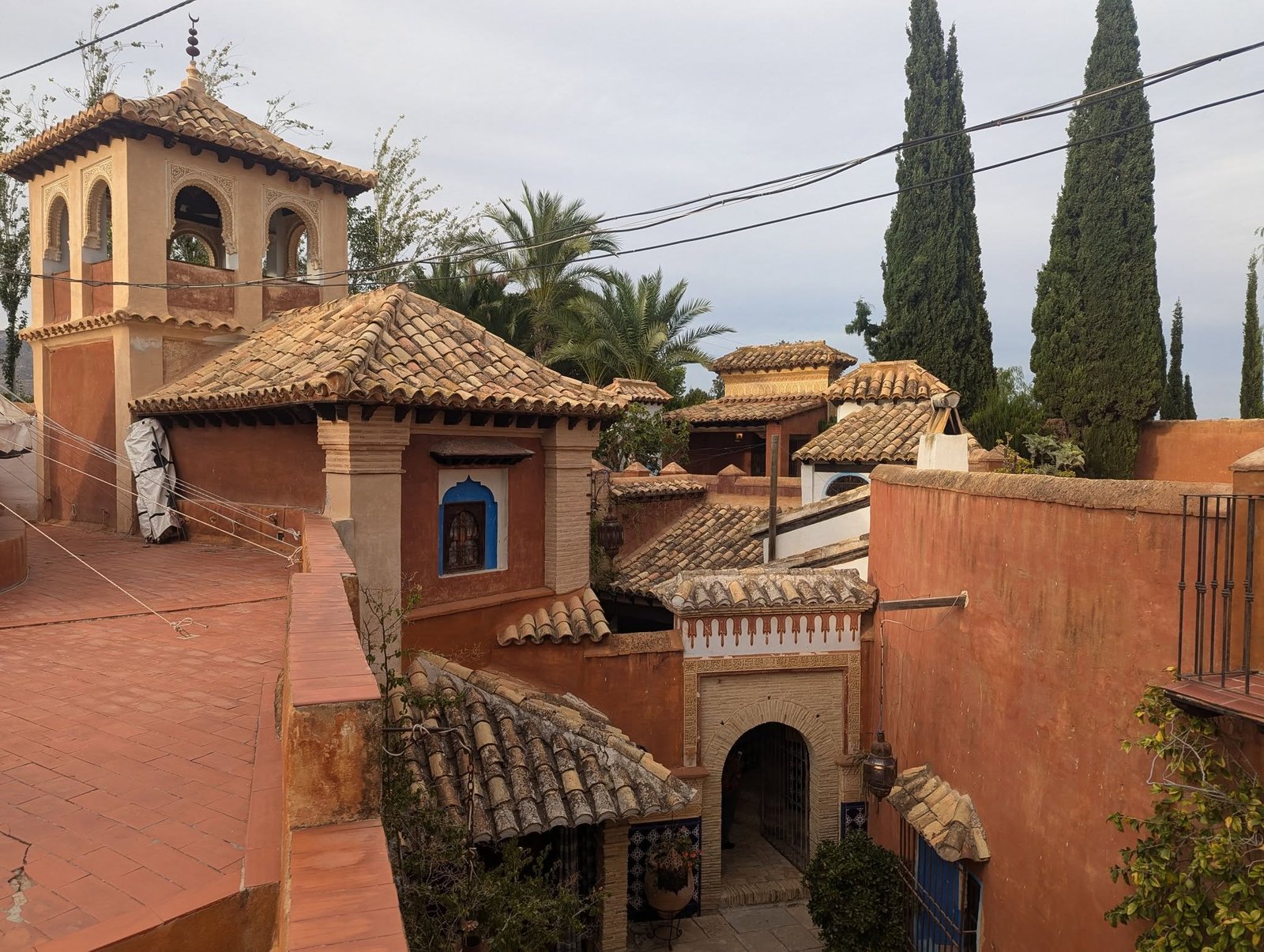
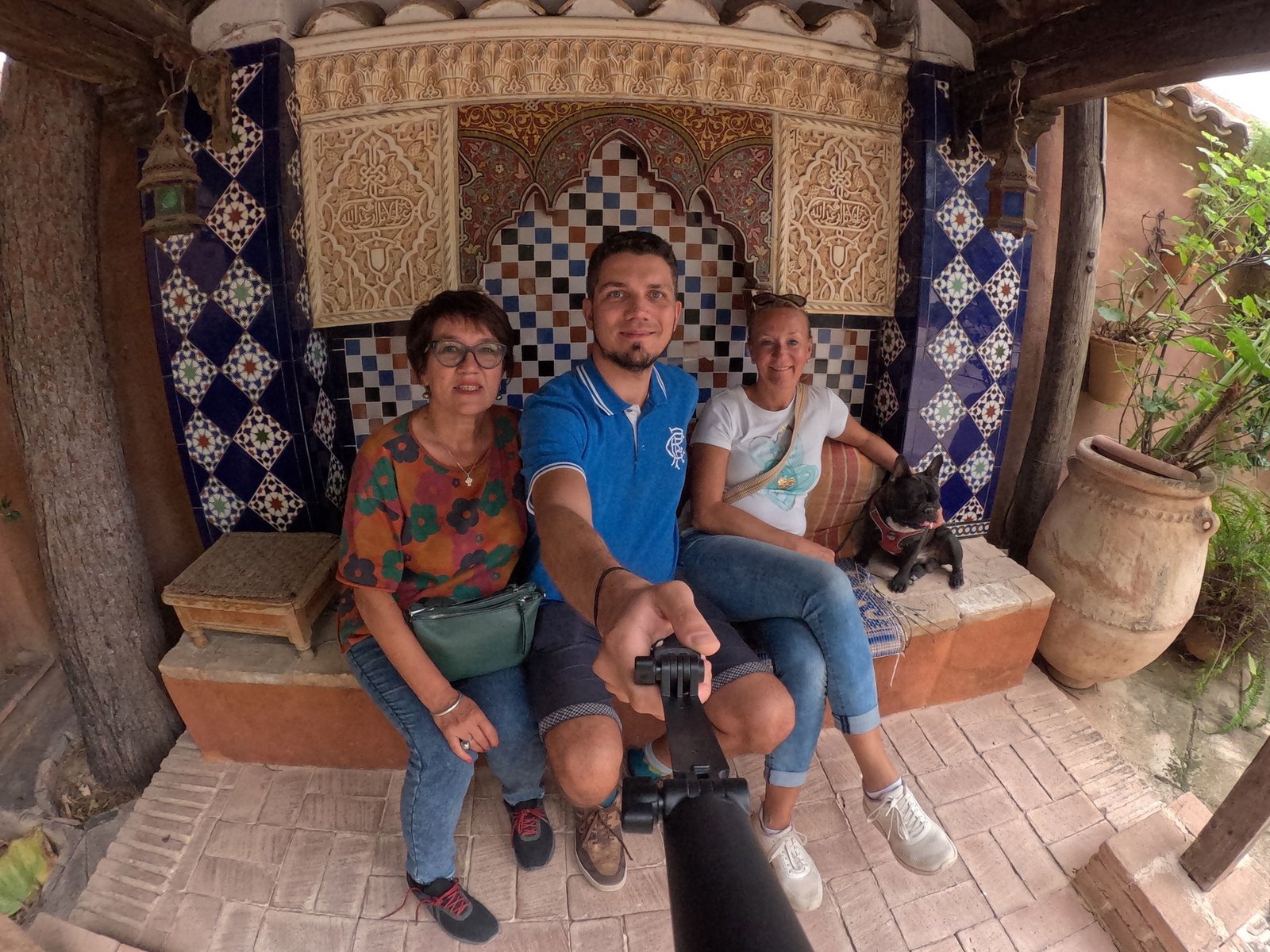
Every room looks different: there are lounges with low sofas, cushions and rugs, arches decorated with stucco, colourful tiles and lamps.
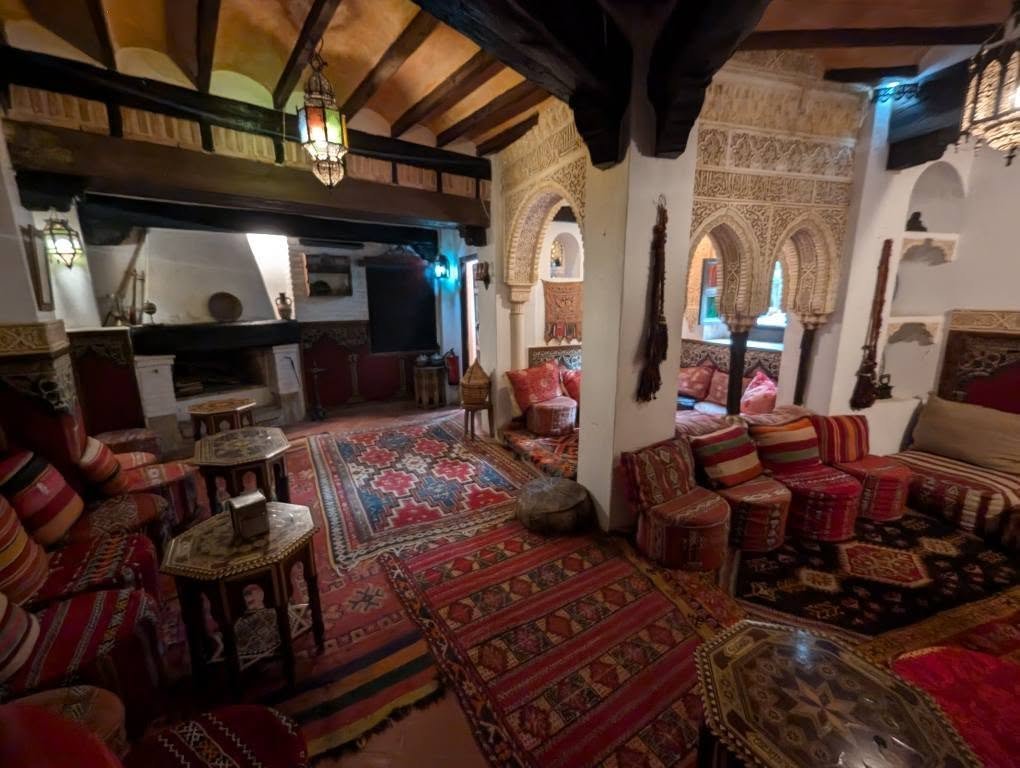
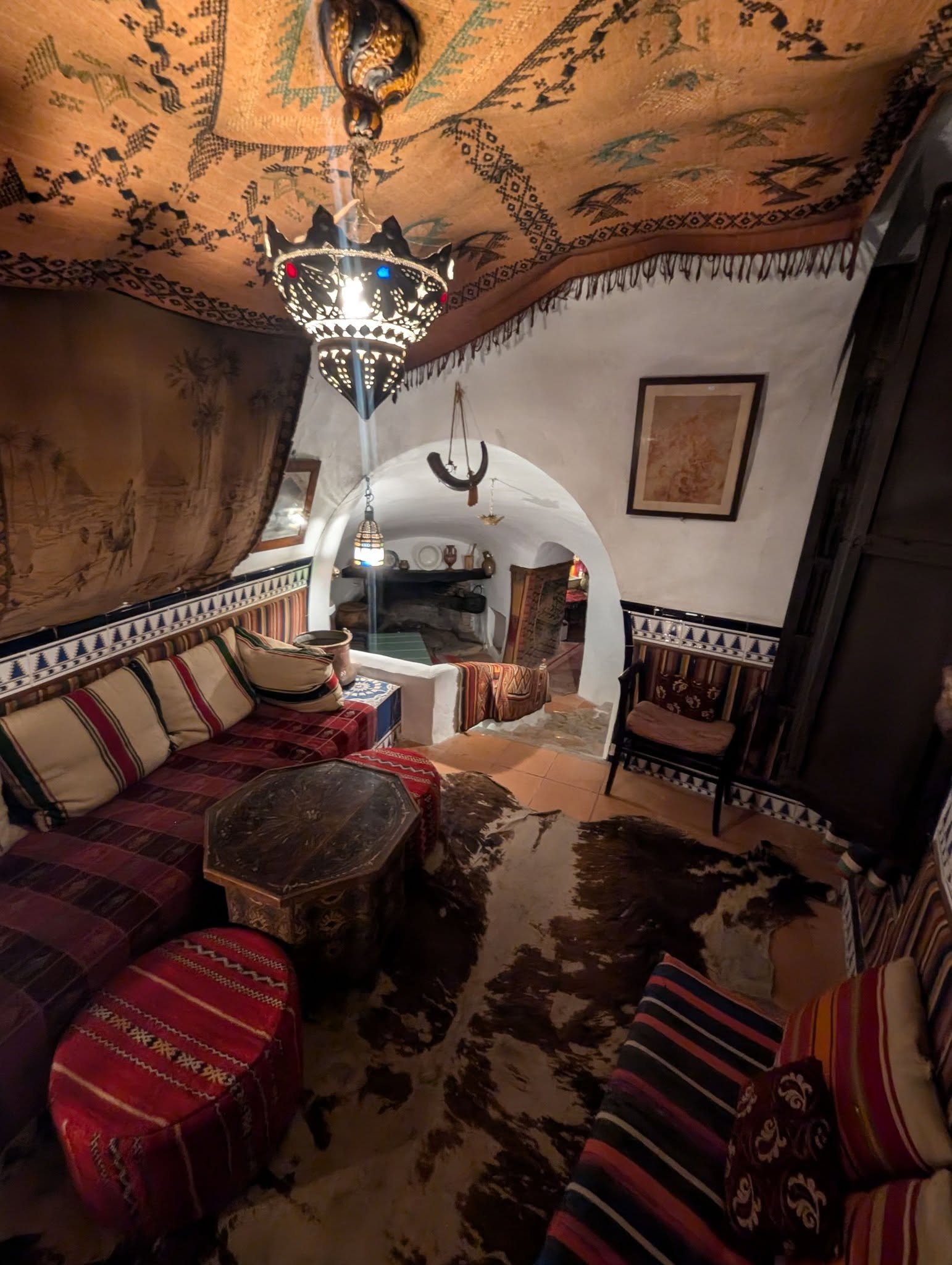
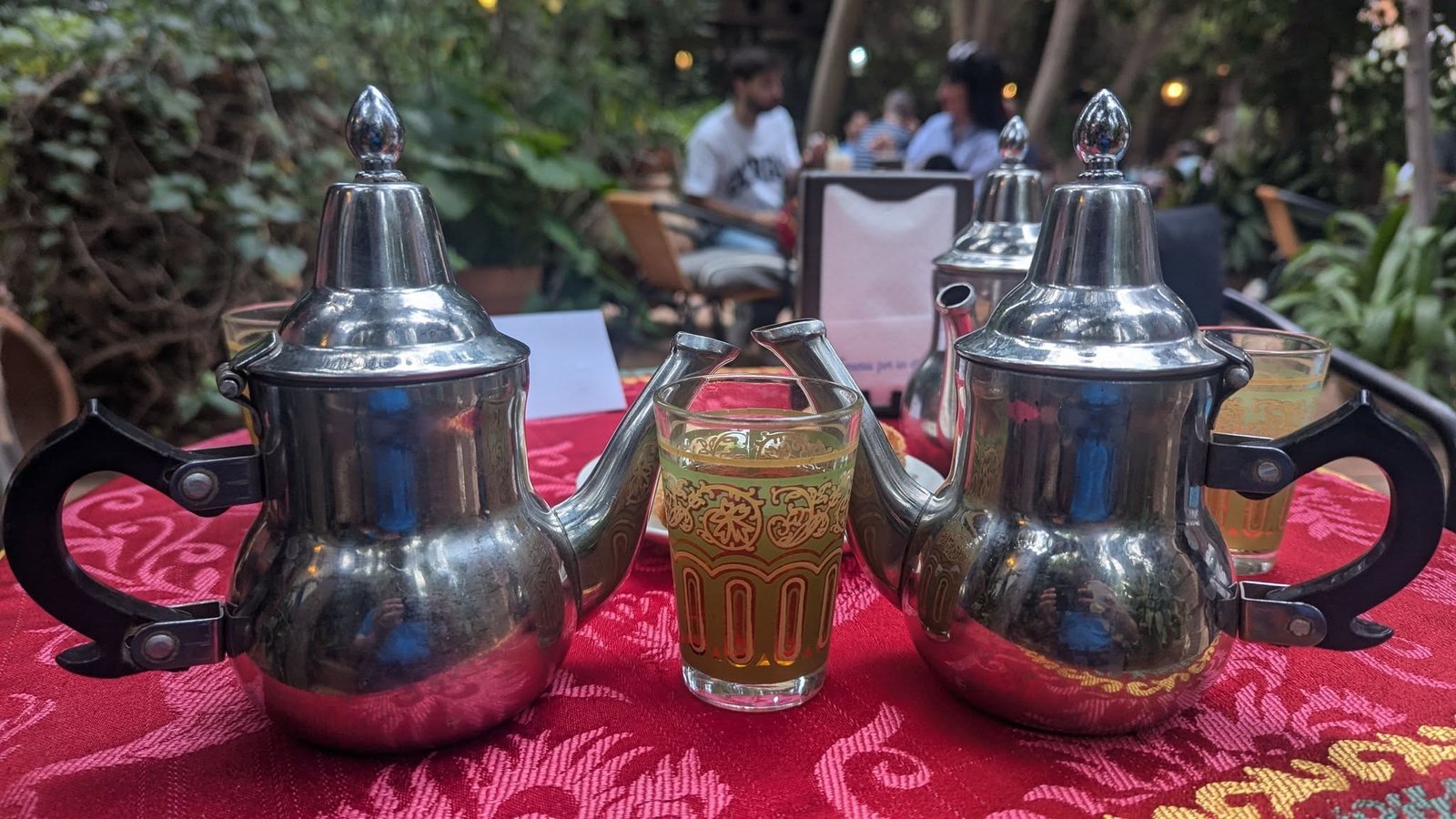
Tea is served in metal teapots with small glasses. It is definitely worth a visit.
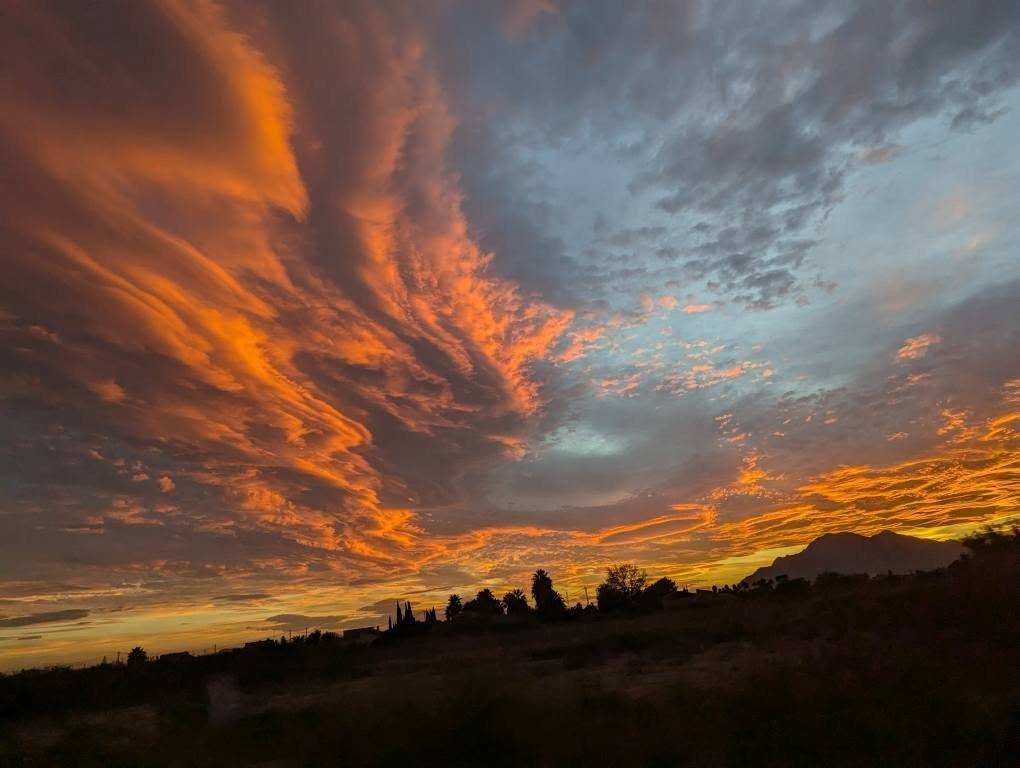
We drove back to Torrevieja at sunset.
Torrevieja – quiet days by the sea
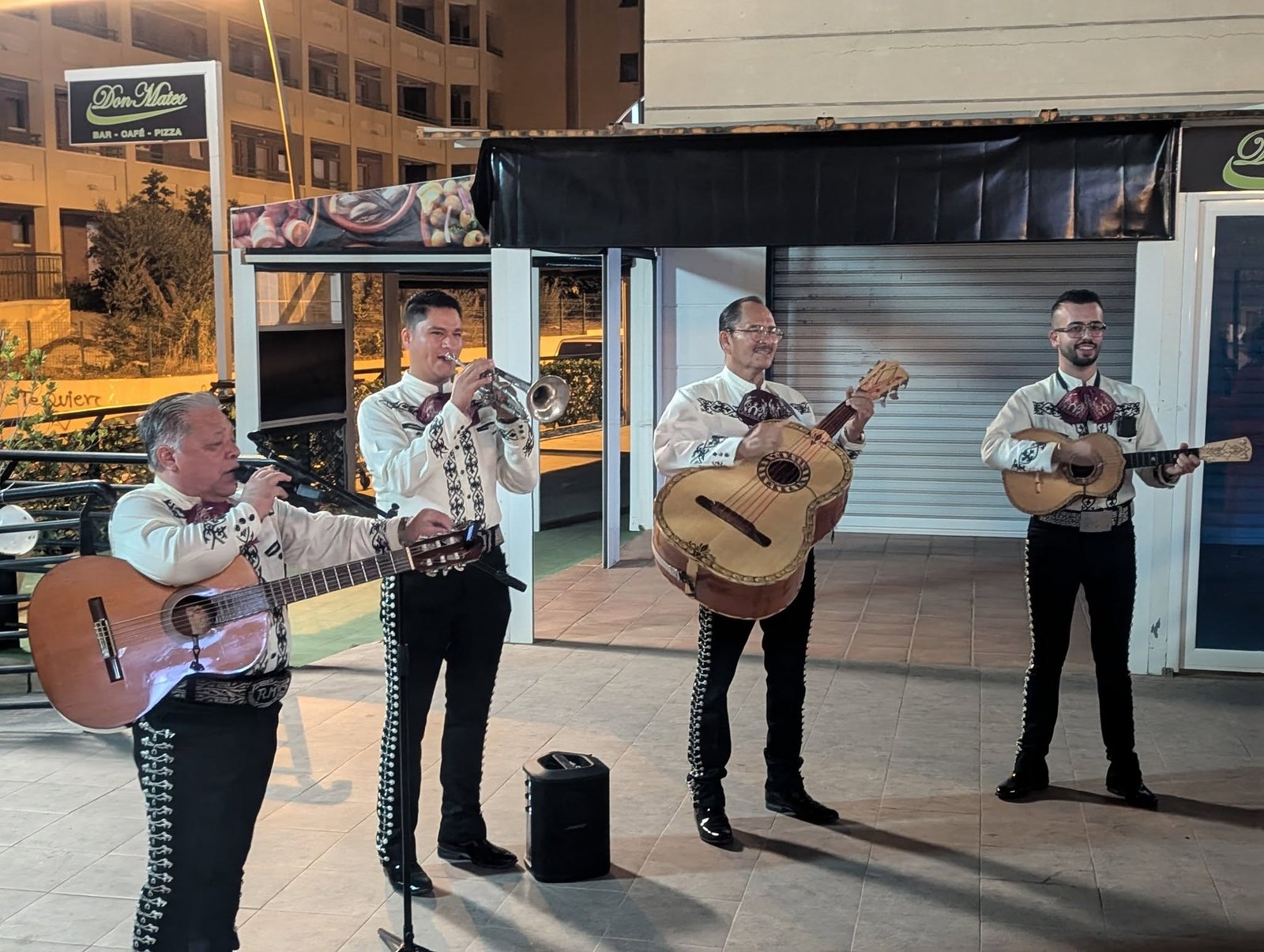
The rest of the time, before and after the road trip, we spent relaxing in Torrevieja. One evening a mariachi band was playing in the street.
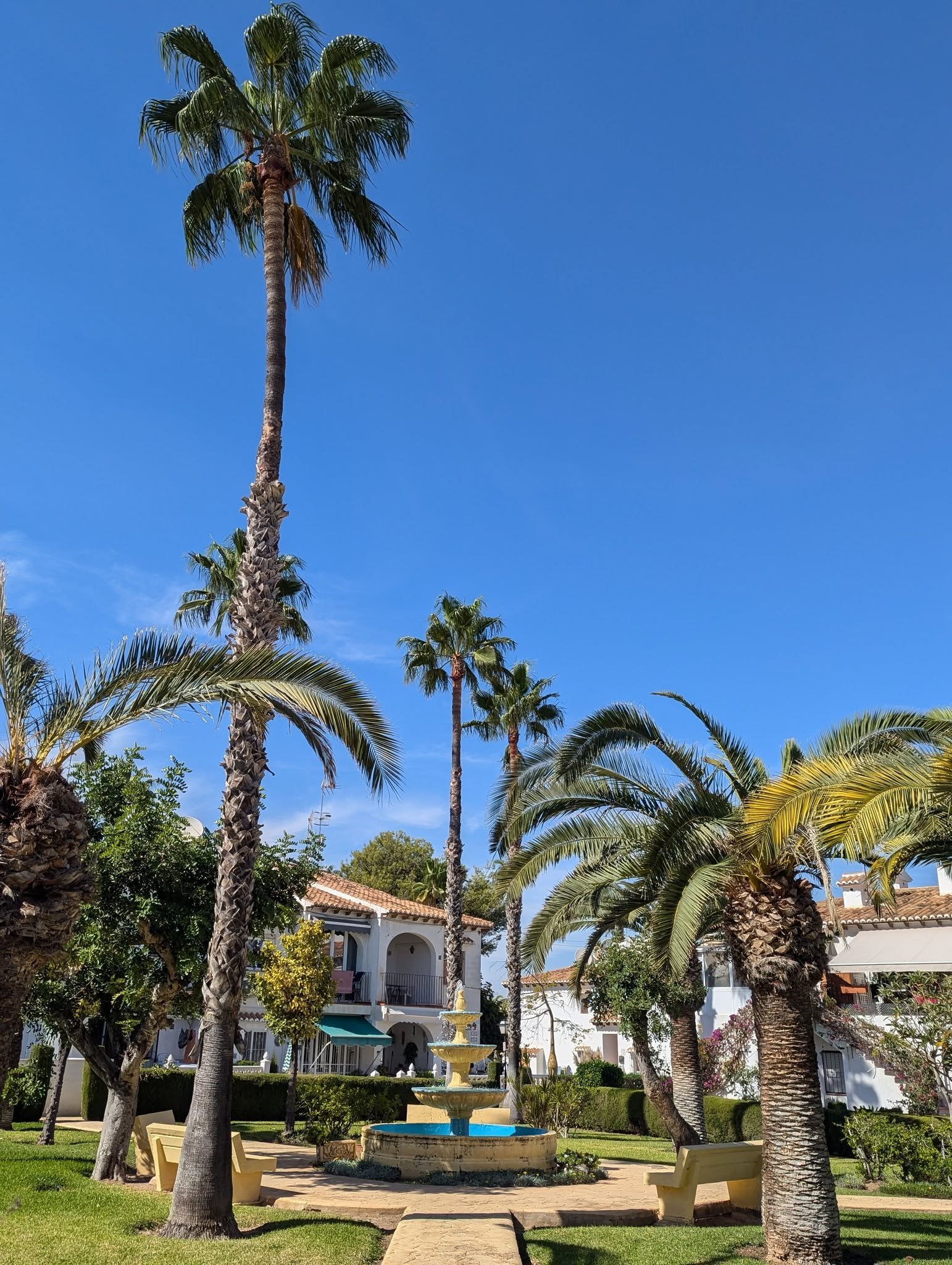
More about the town itself – the pink lagoon, the promenade and the cliffs – is in the part about Torrevieja in the post about the Costa Blanca in winter, and about Elche and its palm grove – in the part about Elche of the same post. My next stay on the Costa Blanca, at the turn of 2025 and 2026, is described in the post about the castle in Almansa, Novelda and Caldera del Gigante.
After returning to Poland I had to travel the same day from the airport in Gdańsk to Olsztyn and then on to Poznań, to make it to Zaniemyśl in time. It was tight, but I made it.
Practical information
- How much time: 4 days of driving around in a private car were enough for Lorca, Granada, Soportújar, Almería, the Tabernas Desert and Carmen del Campillo.
- Accommodation: two nights in Granada and one in Almería.
- Route: Torrevieja – Lorca – Granada – Soportújar – Almería – Tabernas Desert – Carmen del Campillo – Torrevieja, about 900 km in total.
- The Alhambra: tickets have to be bought well in advance – two weeks before our arrival we could no longer find any free slots until the beginning of November. The booking rules are in the part about the Alhambra.
- Almería: in October 2024 the Alcazaba was being renovated – check the opening hours before you go.
- The Tabernas Desert: we walked a loop of about 6 km. The western parks are a separate attraction we did not have time for.
- Other posts from Andalusia (winter 2020): Caminito del Rey, Torcal de Antequera and the cities collected in the Andalusia sightseeing plan in a nutshell.
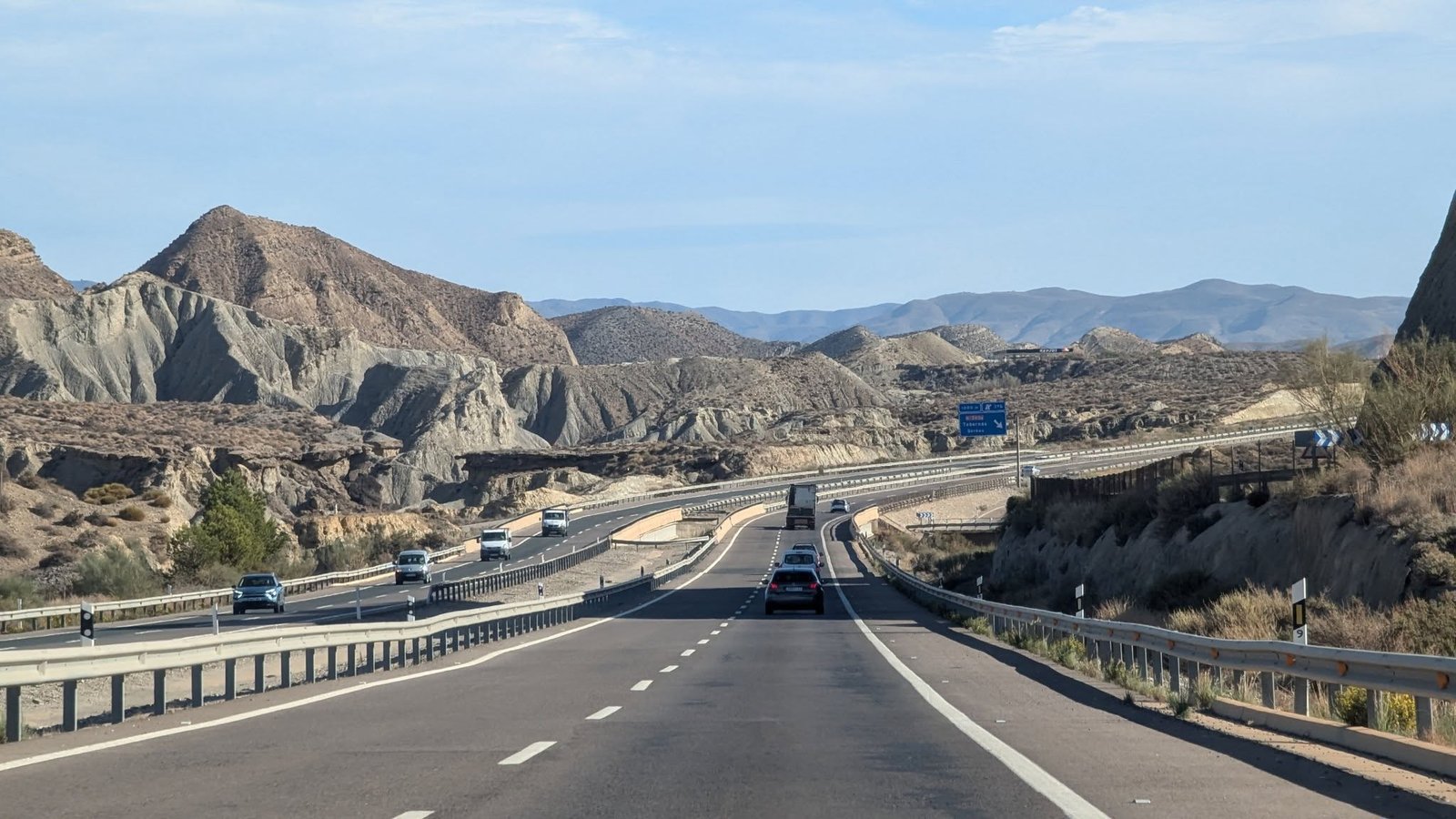
Photo gallery