3:46



 3:46
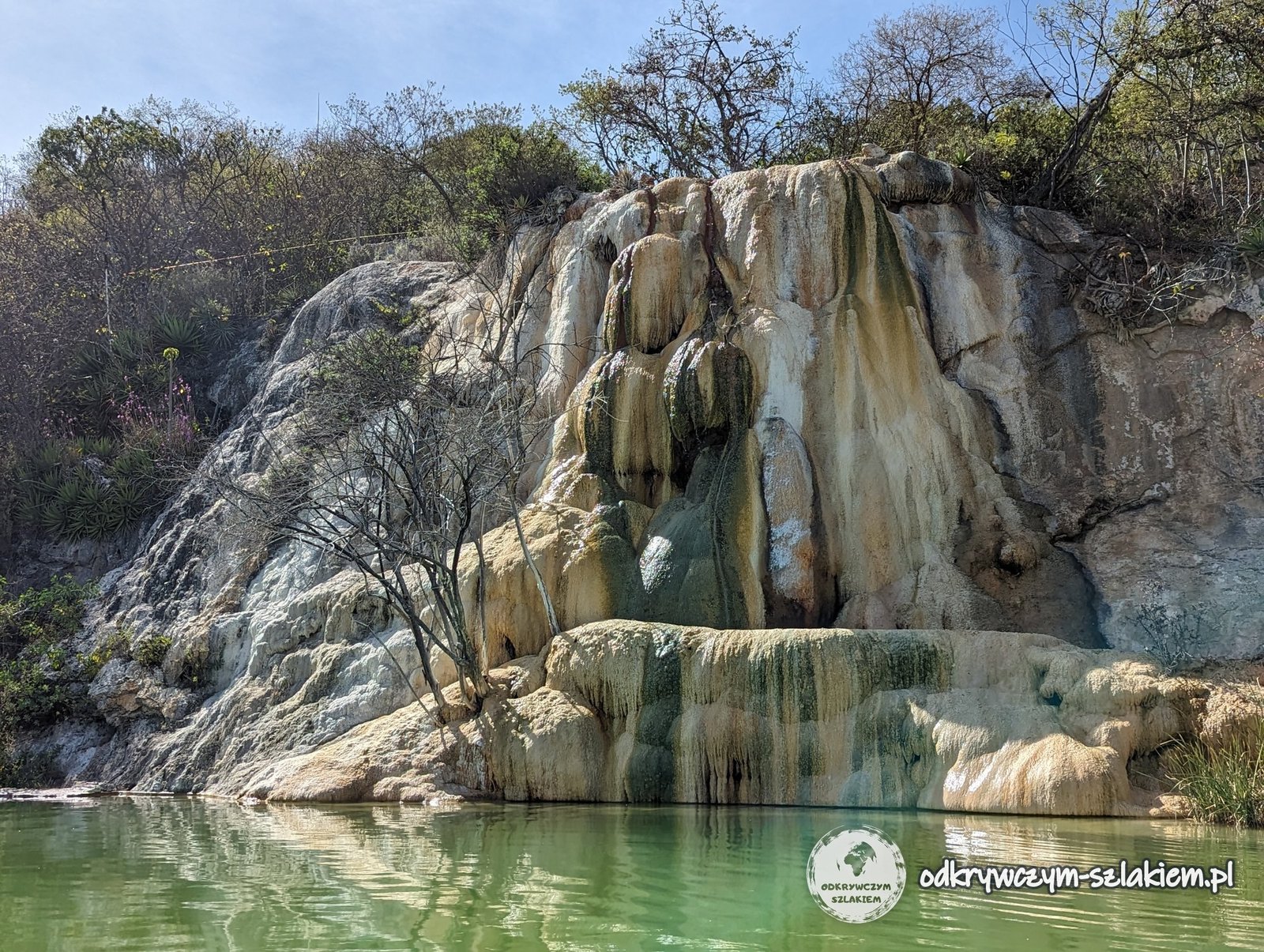
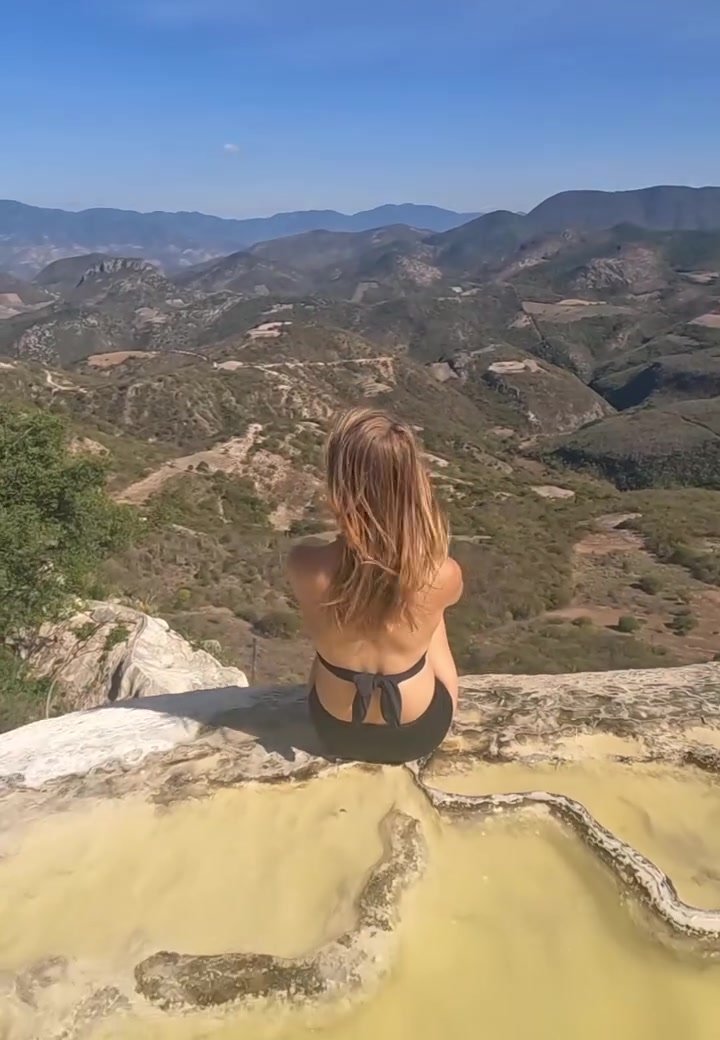
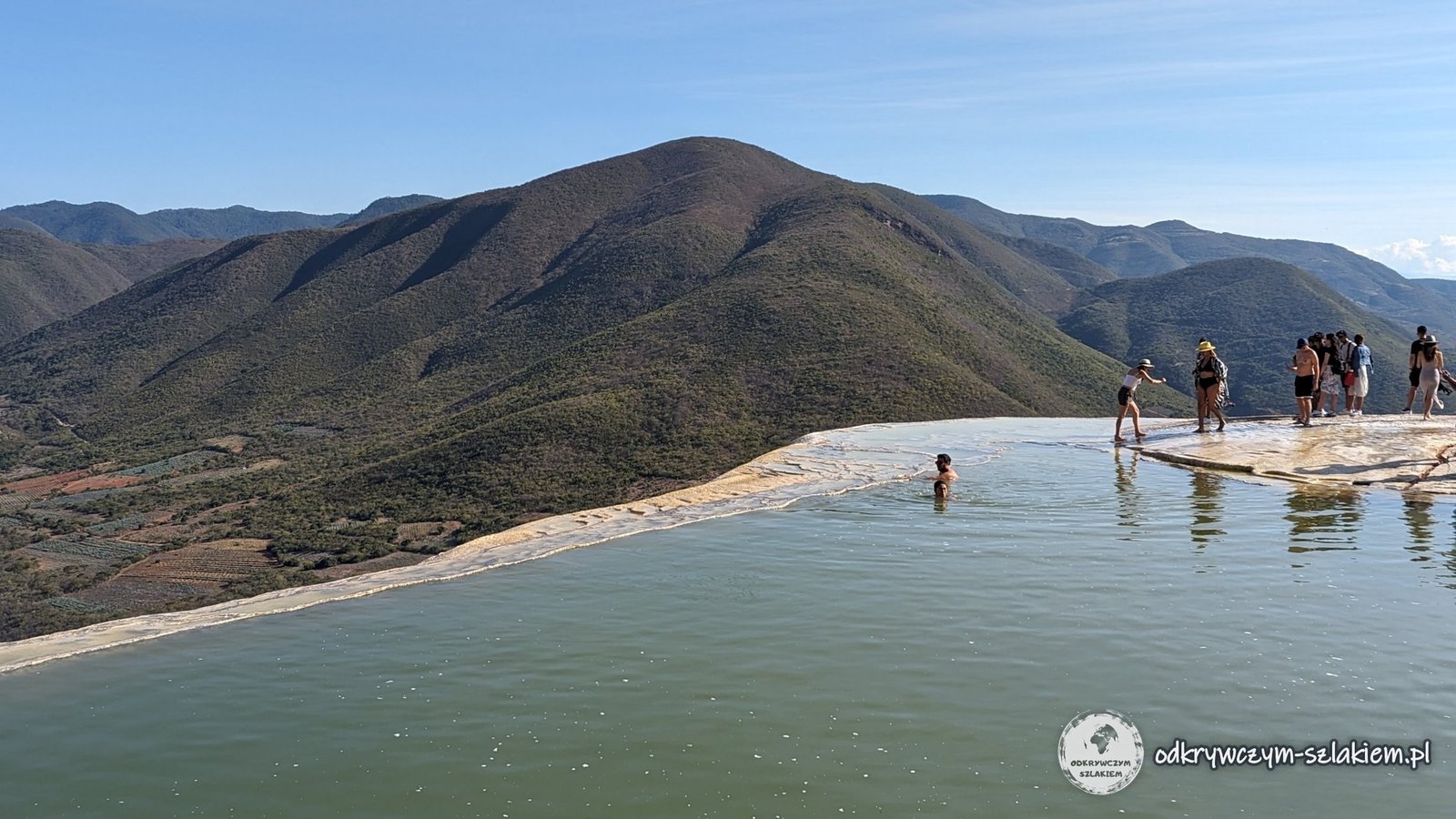
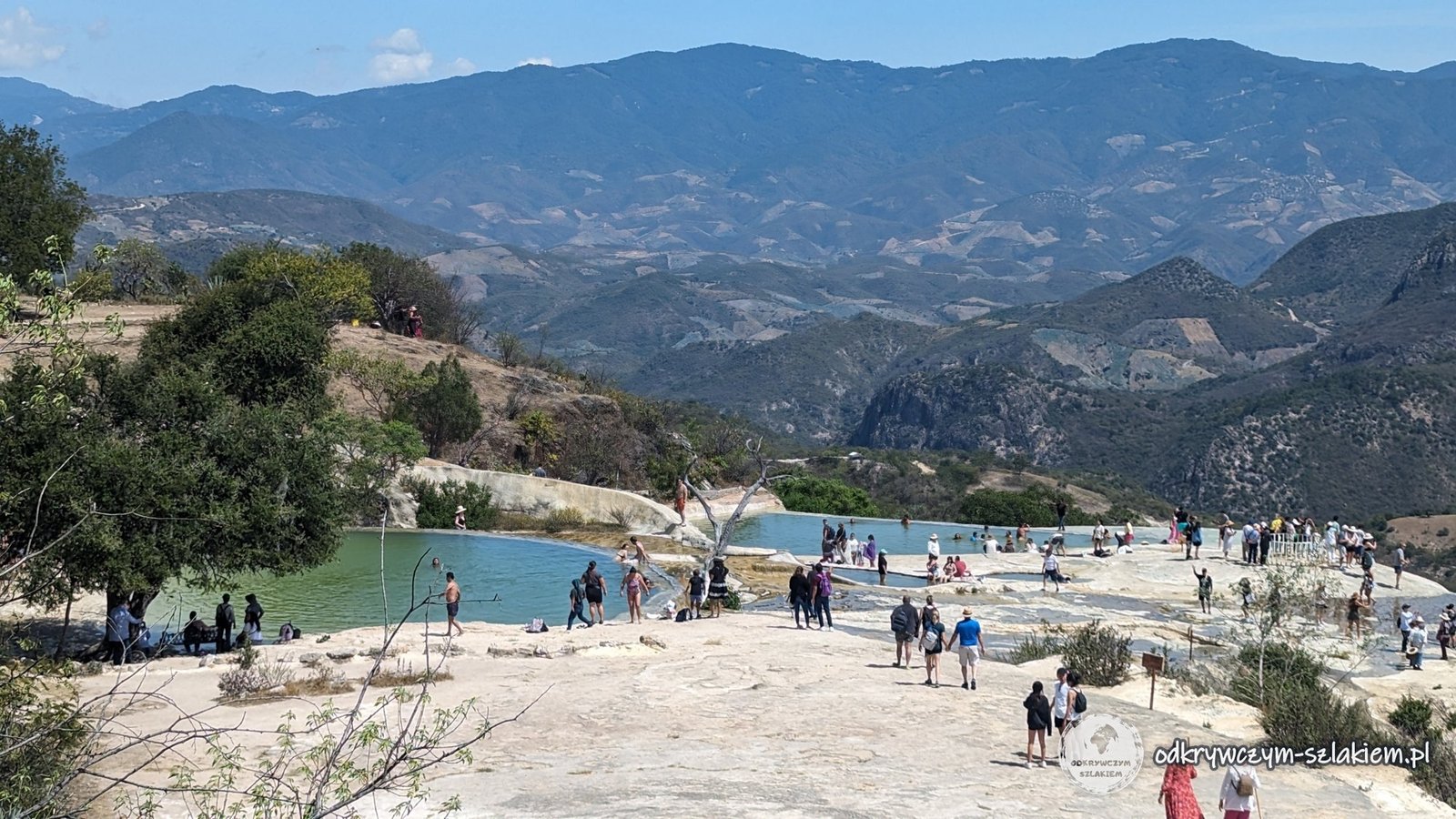
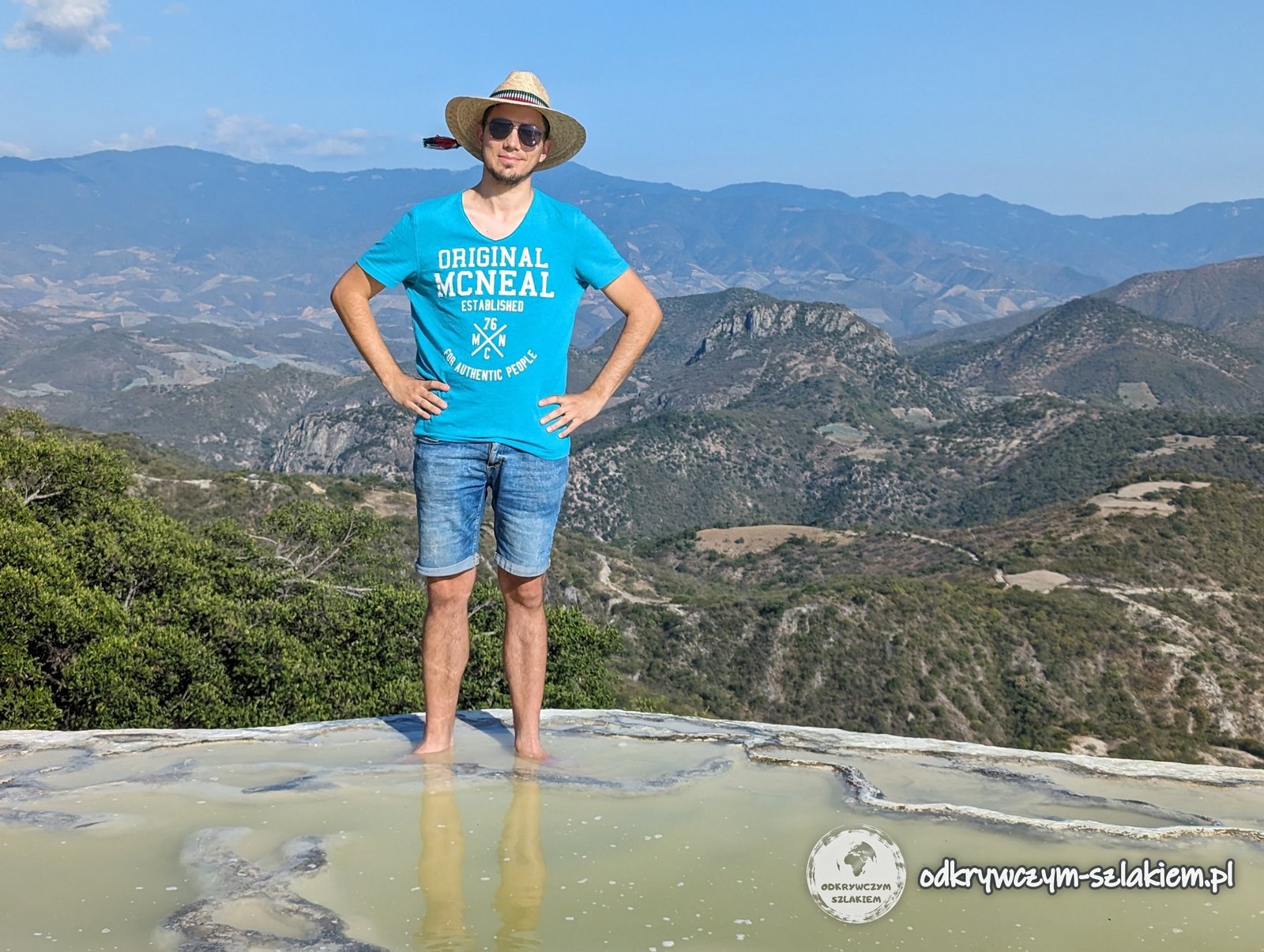
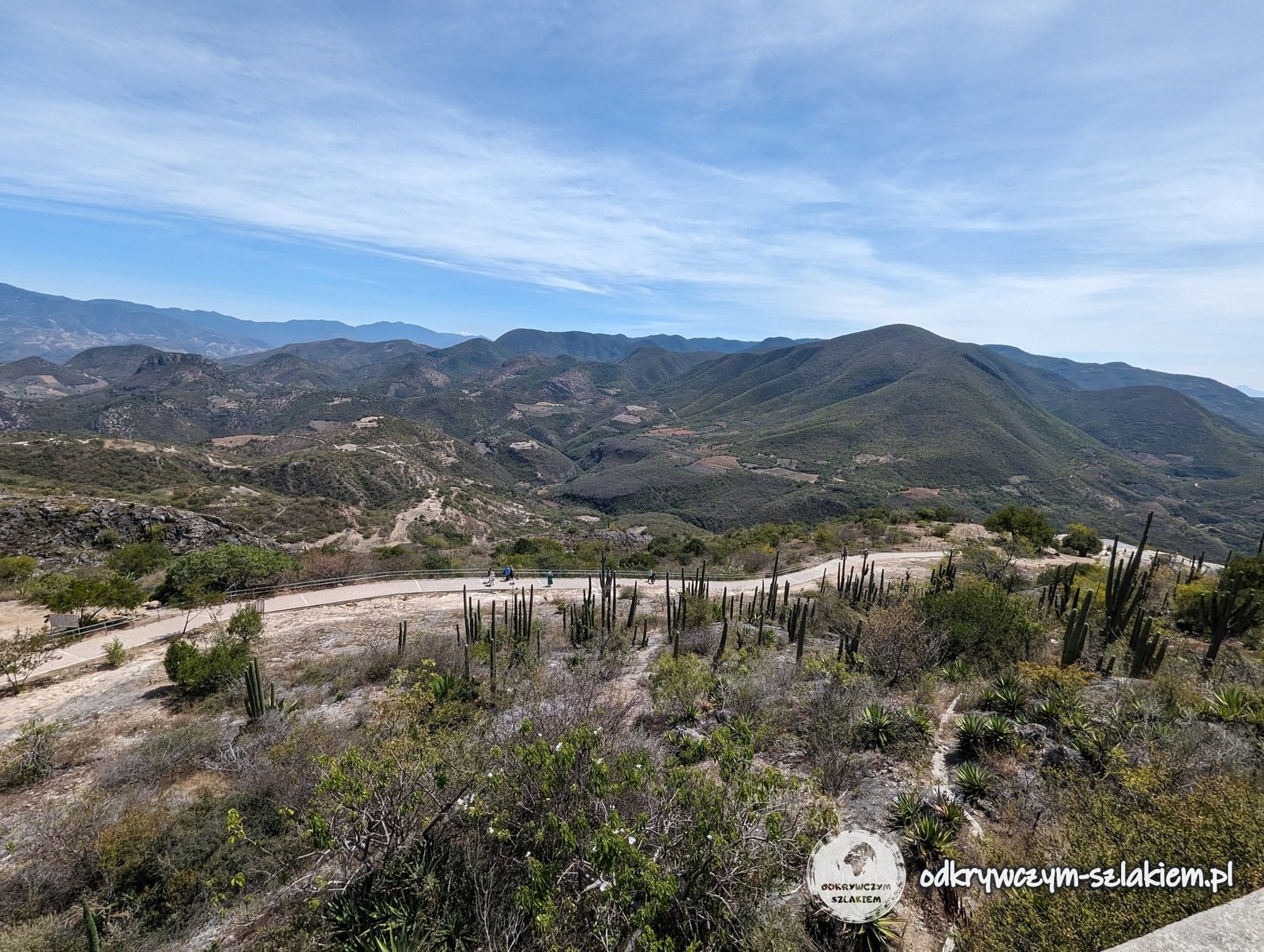
Hierve el Agua is a definite “must-see” when you are in the city/state of Oaxaca. There is a stunning mountain panorama here. The place is best known, though, for its petrified waterfalls and spring water. Apart from Pamukkale, it is the only place where you can see something like this. There are also natural and artificial pools where you can swim. Unfortunately, despite its name (in Spanish “hierve el agua” means “the water boils”), the water is only a little over 20 degrees.
For us it was the biggest must-see around Oaxaca – we were here on 21 October 2023, the day after Monte Albán.
You can book an organised tour combined with a visit to Mitla. But then you have little time on site. It’s worth coming on your own, so you can enjoy the view and swim in the springs.
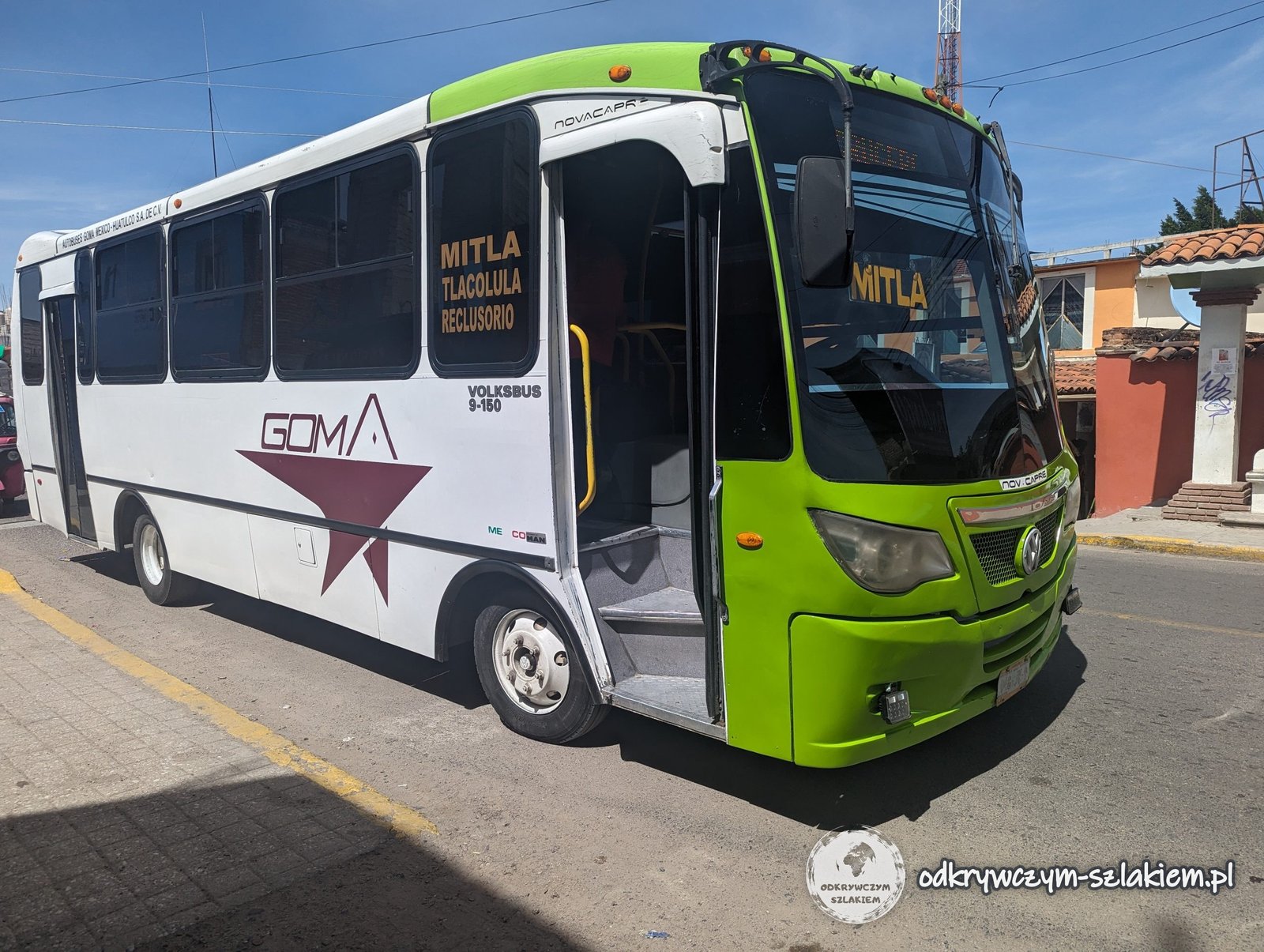
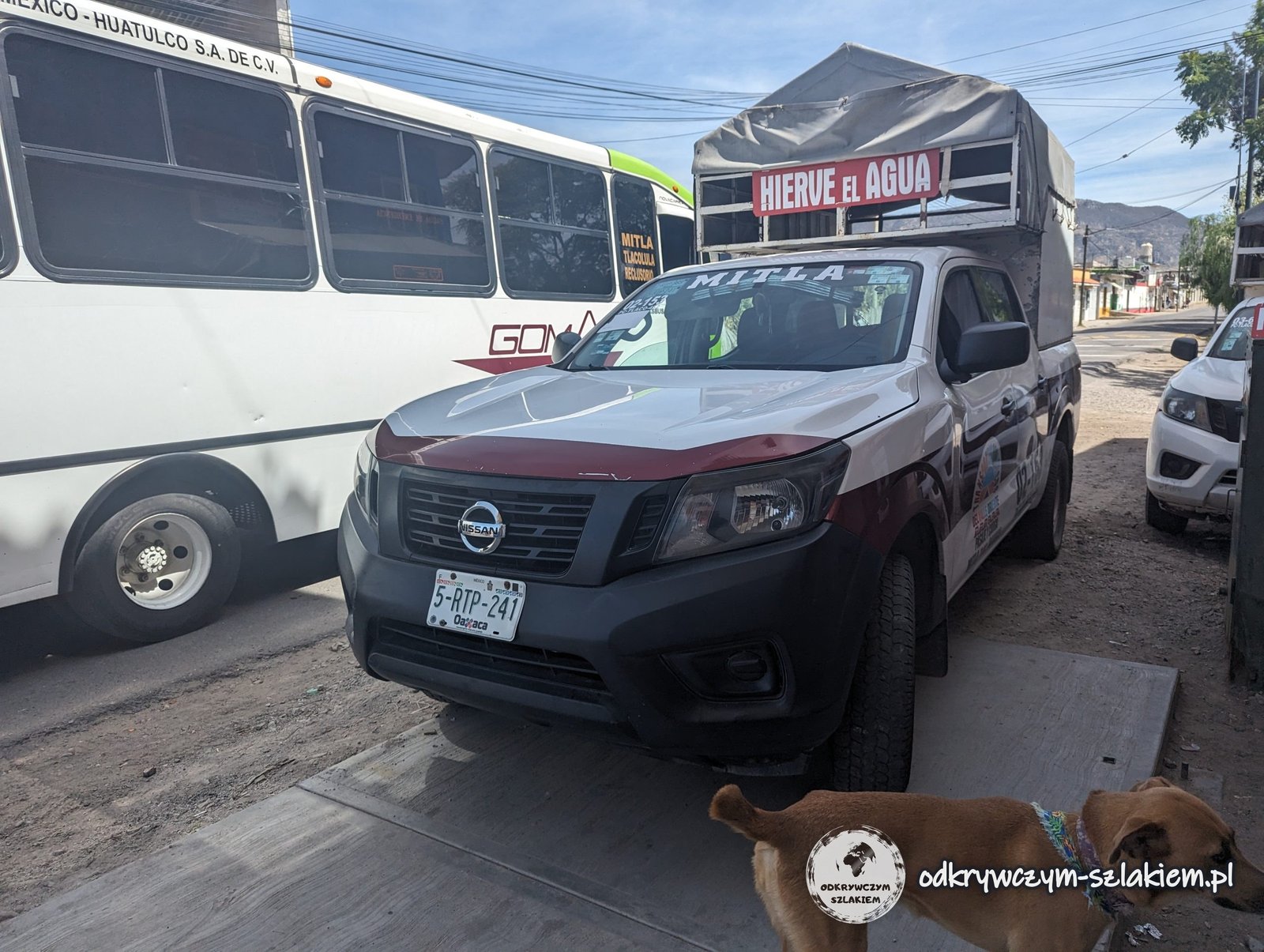
The cheapest way is to take a bus from the central bus station (Second Class Bus Station, map below) in the city of Oaxaca to Mitla (San Pablo Villa de Mitla), and then a pick-up truck. It is usually already waiting at the stop. If you don’t want to pay more, you have to wait until enough people turn up (about 10). The total travel time is about 2 hours.
Buses to Mitla take federal highway 190 through Santa María del Tule and Tlacolula – they have a “Mitla” sign behind the windscreen. Mitla is about 44 km from Oaxaca, and Hierve el Agua about 70 km east of the city, in the municipality of San Lorenzo Albarradas. The pickups going to the falls wait at the stop in Mitla and carry a red “Hierve el Agua” sign on the roof.
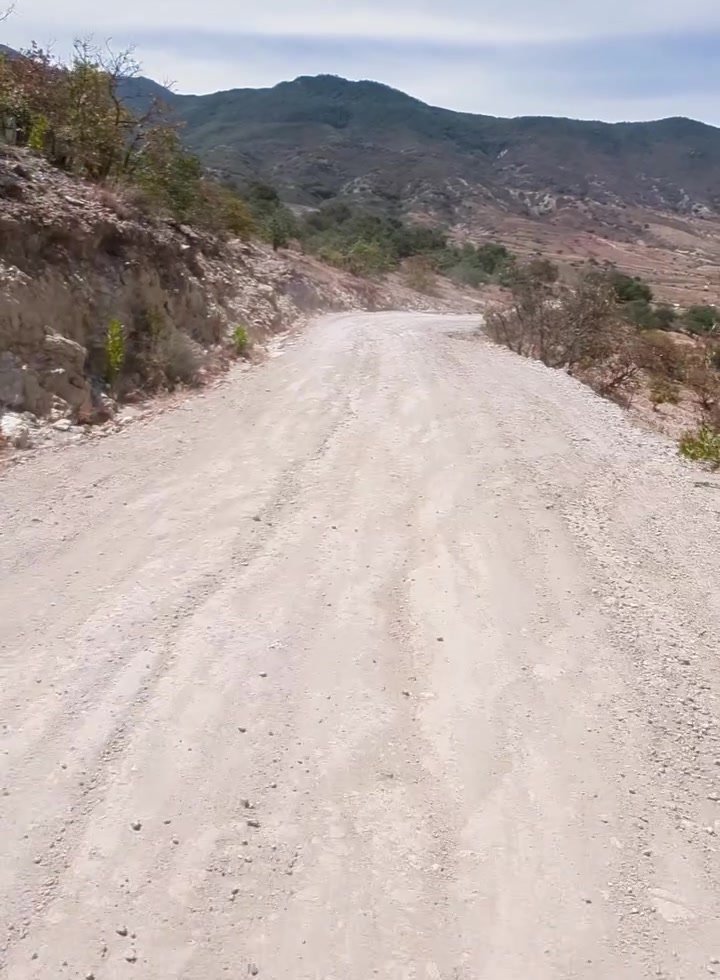
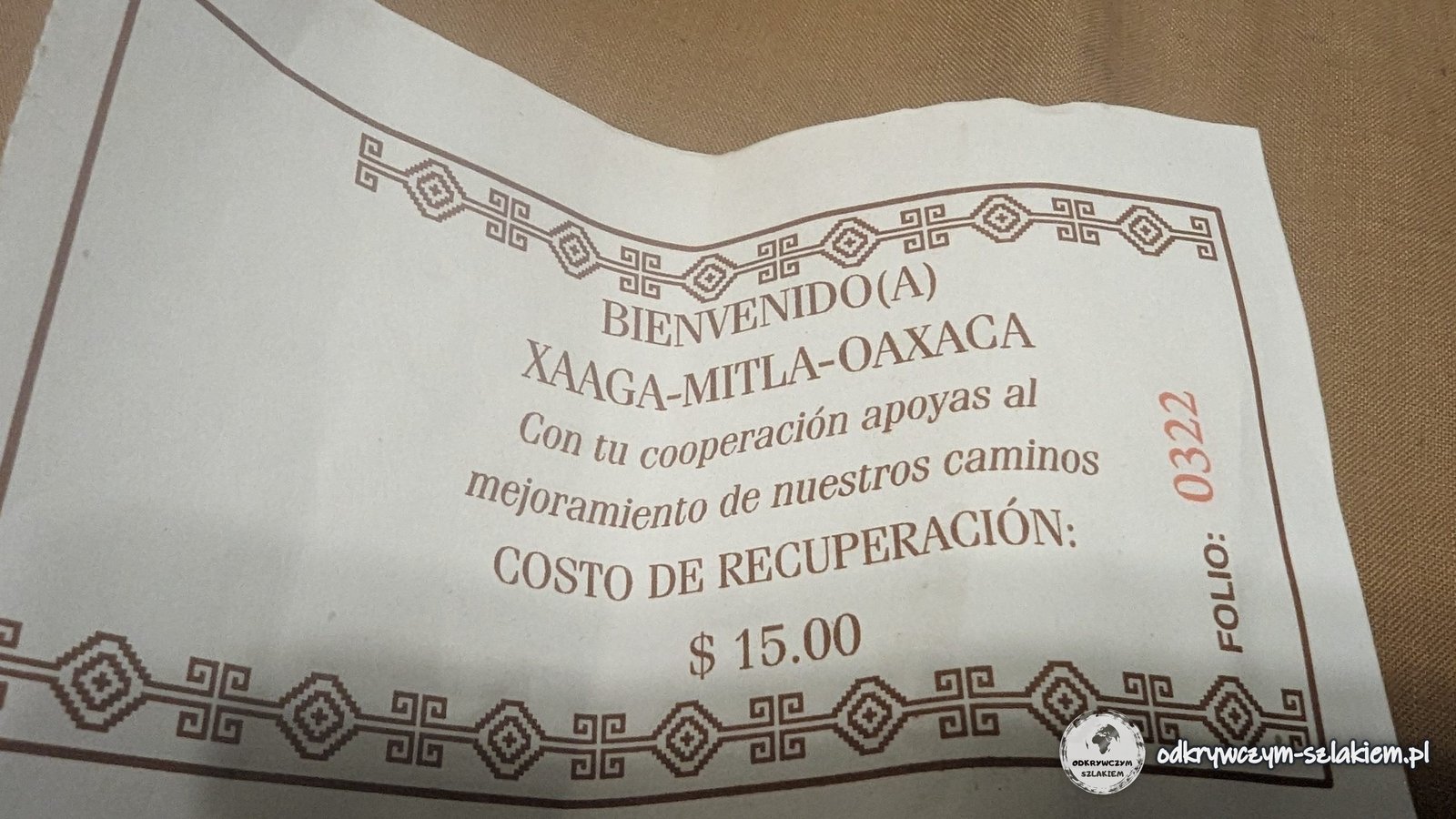
The pick-up drives along a winding gravel road through the mountains. On the way you pay a small fee for the road’s upkeep (amounts in the Costs section).
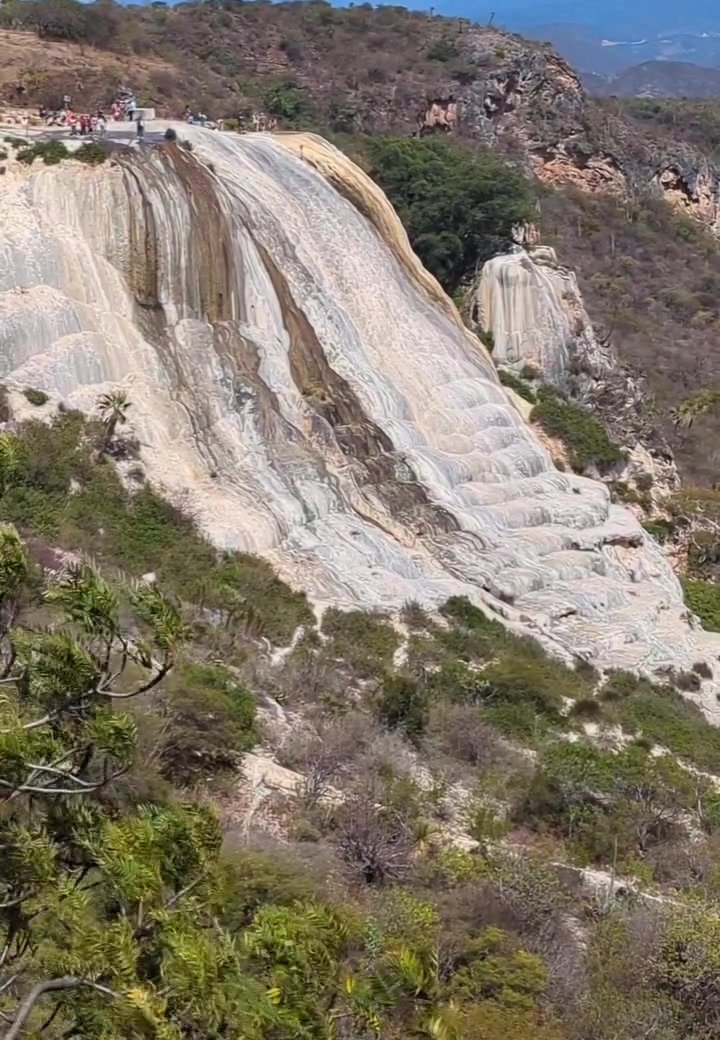
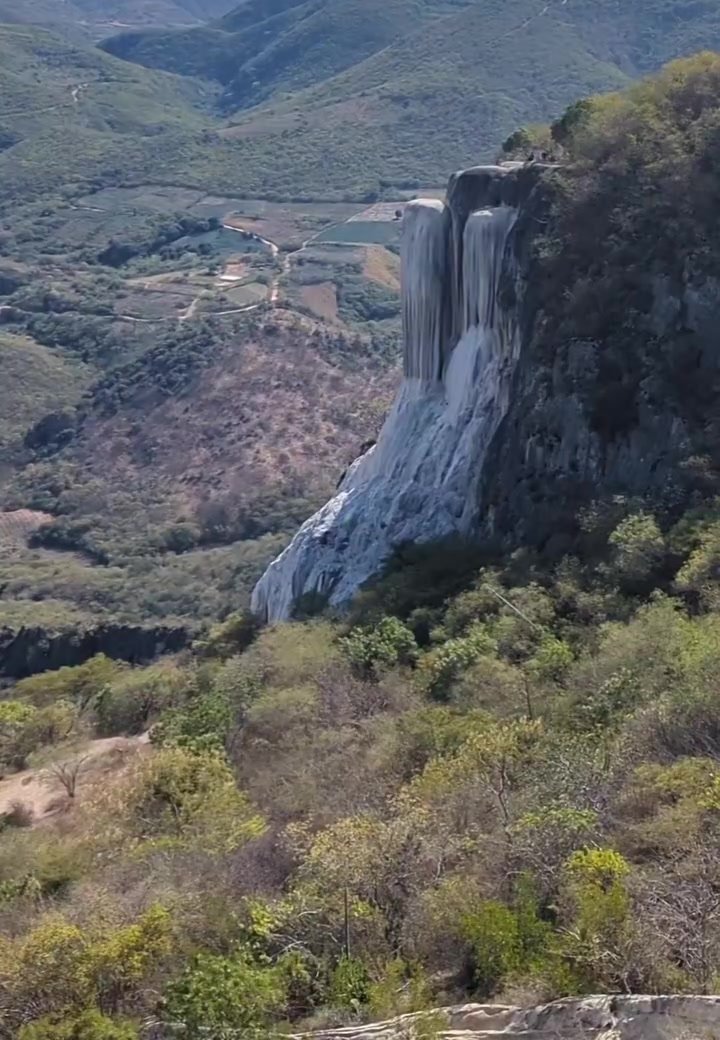
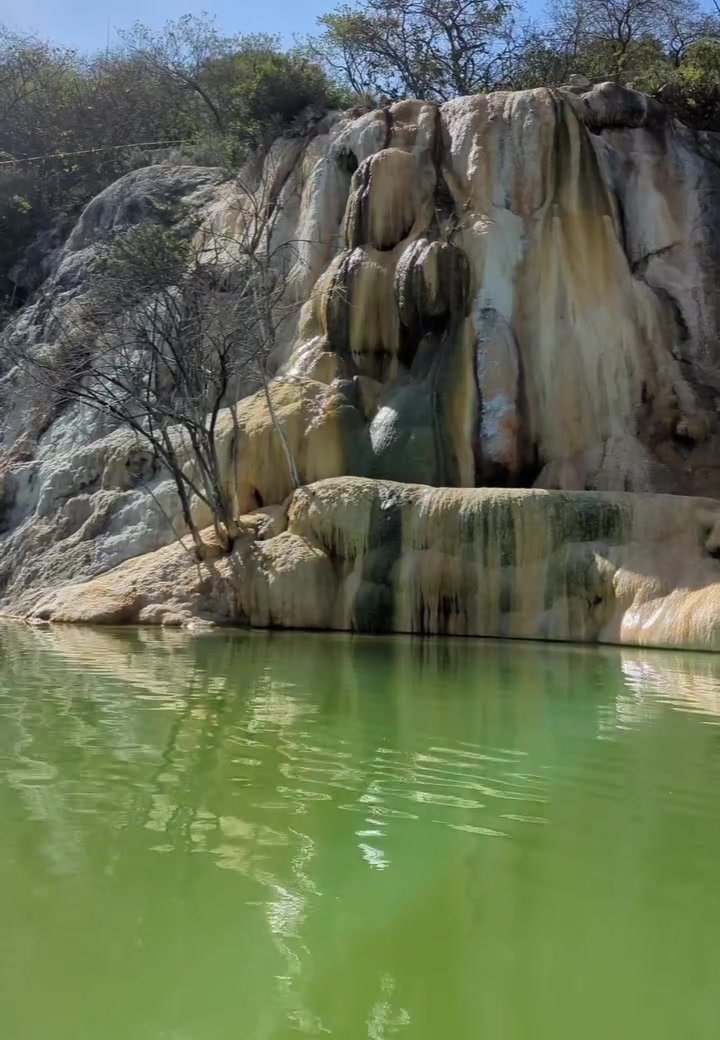
The best-known view of Hierve el Agua is the petrified waterfalls – white, “frozen” cascades running down the mountainside. They were formed by minerals (mainly calcium carbonate) deposited over thousands of years by spring water flowing down the cliff. The effect is reminiscent of Pamukkale in Turkey.
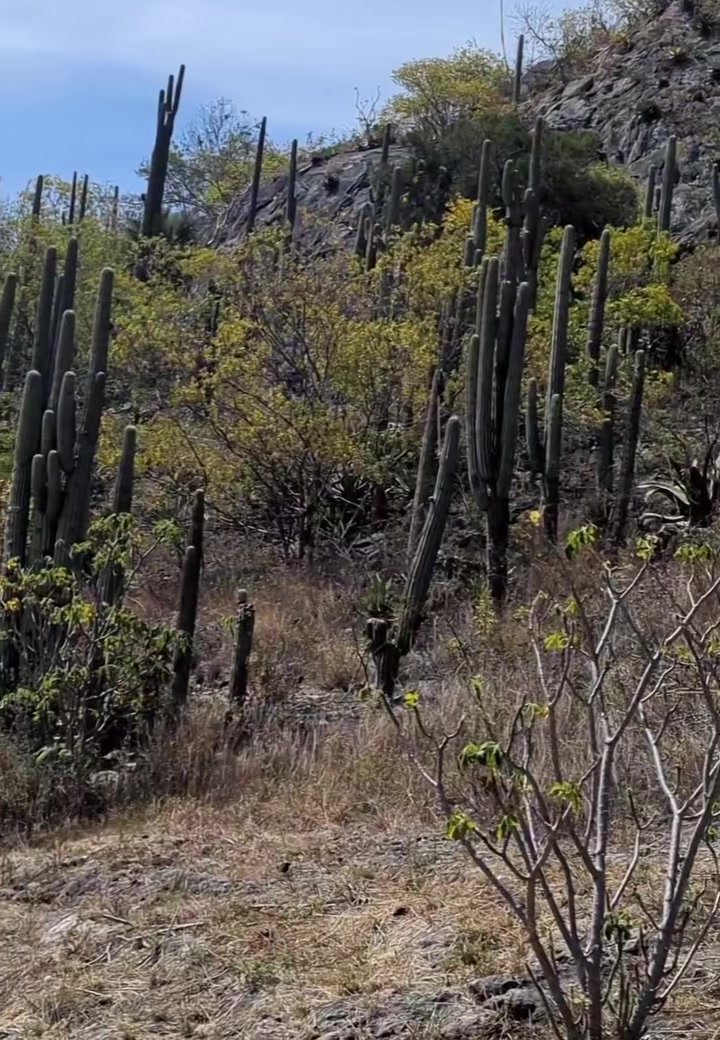
Paths lead around the formations among columnar cacti. They’re worth walking – from the side and from below, the petrified waterfalls look completely different than from above, by the pools.
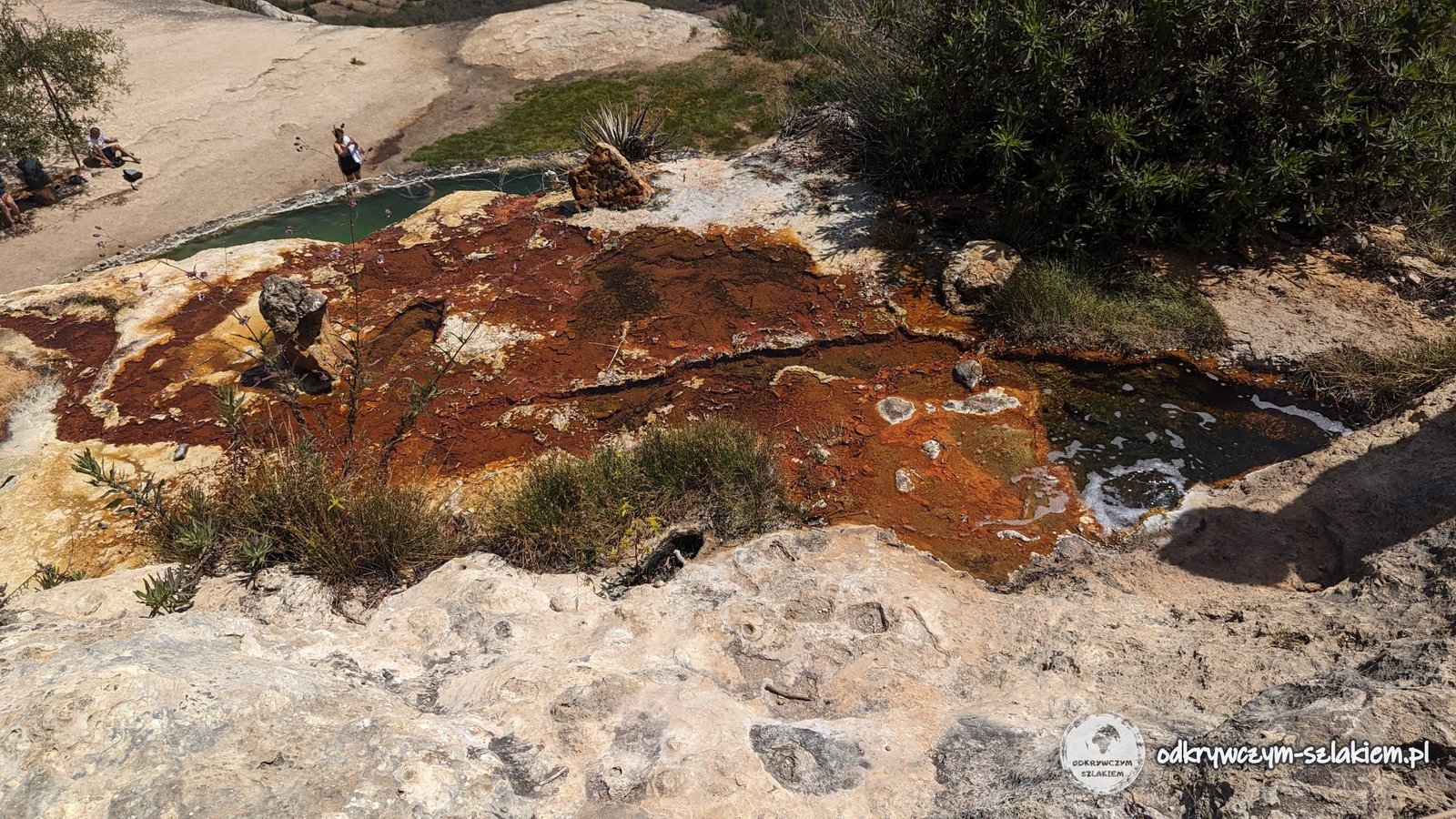
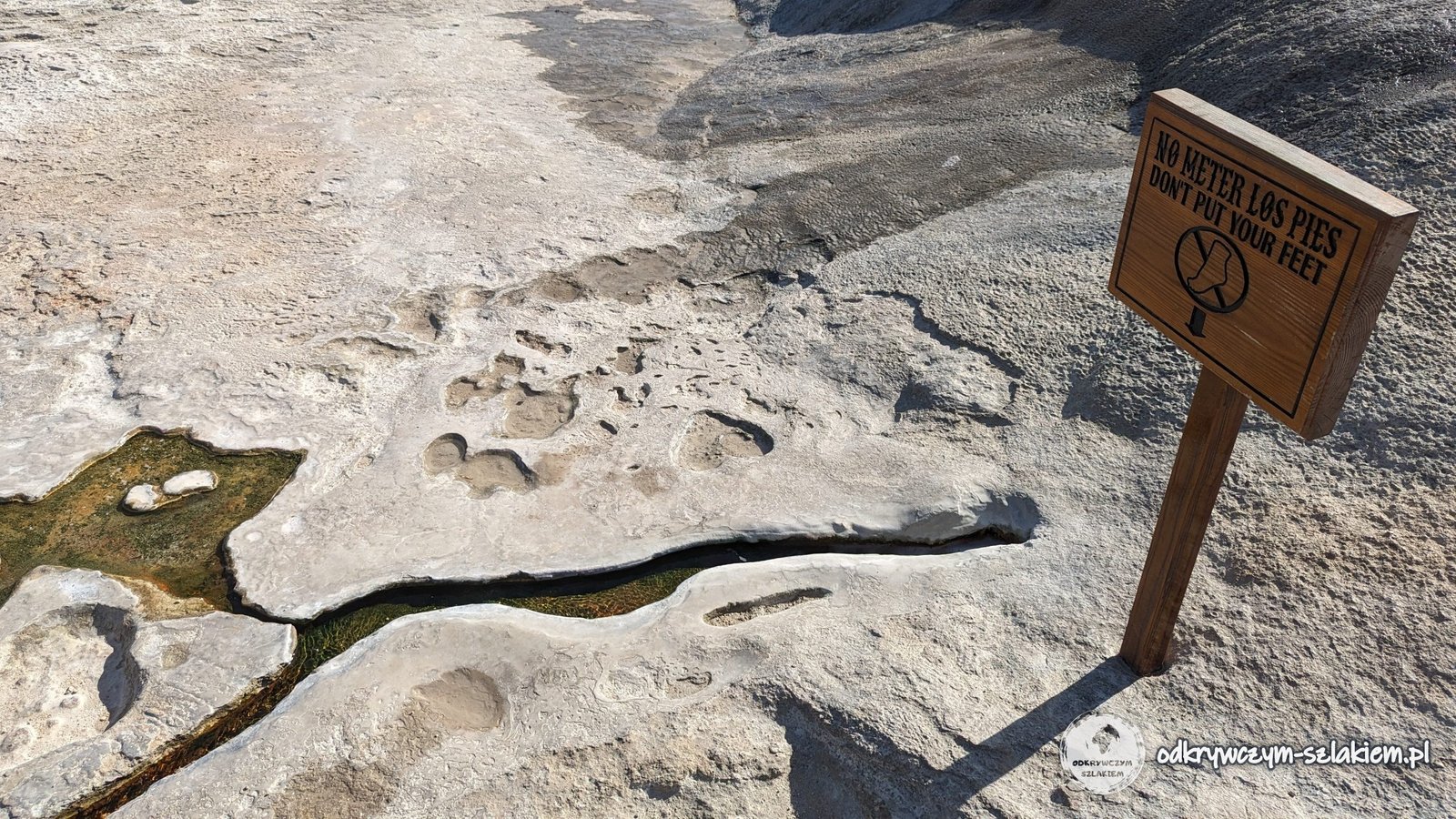
There are two petrified waterfalls: the larger Cascada Grande and the smaller Cascada Chica, also called the Amphitheatre. The cliffs they “flow” down rise 50–90 m above the valley. The spring water is oversaturated with calcium carbonate and runs over the white rock in shallow channels, where a rusty orange coating also settles on the bottom. Small signs saying “No meter los pies” stand by the channels, asking you not to put your feet in them. The slopes also preserve irrigation terraces and canals built by the Zapotecs more than 2,500 years ago.
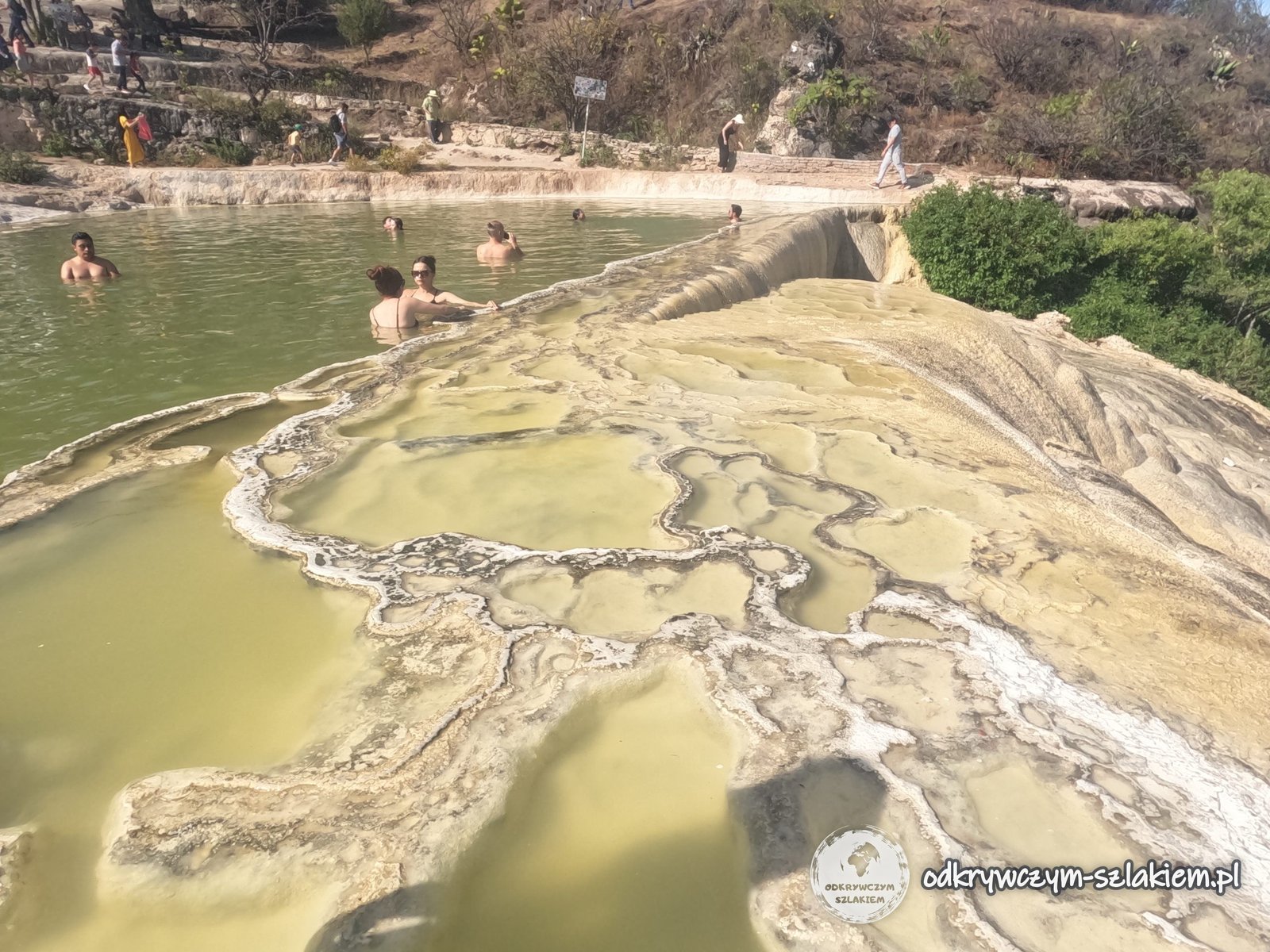
On the edge of the cliff there are natural and artificial pools with spring water. Despite the name (in Spanish “hierve el agua” means “the water boils”), the water isn’t hot at all – it was about 24 degrees. Swimming with a view of the mountains and the valley was the best part of the day for us, which is why it’s worth coming on your own and not rushing back.
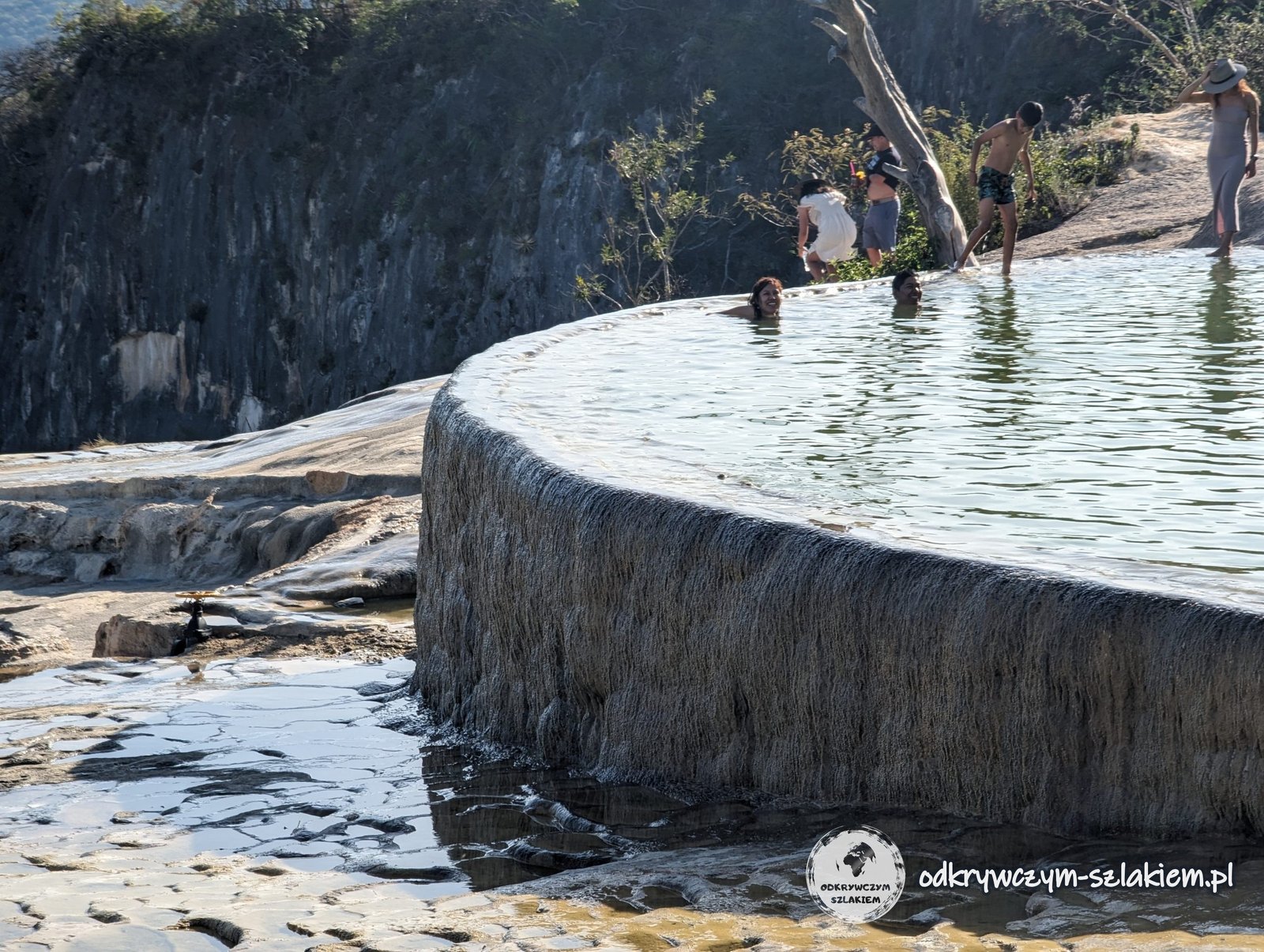
The water spills from pool to pool over low, wavy rims of mineral deposits – the petrified waterfalls grow in the same way, from settling calcium carbonate. It is easy to see at the round pool: its wall has become covered with a grey “curtain” of deposits that the water runs down. The water in the springs is 22–27°C.
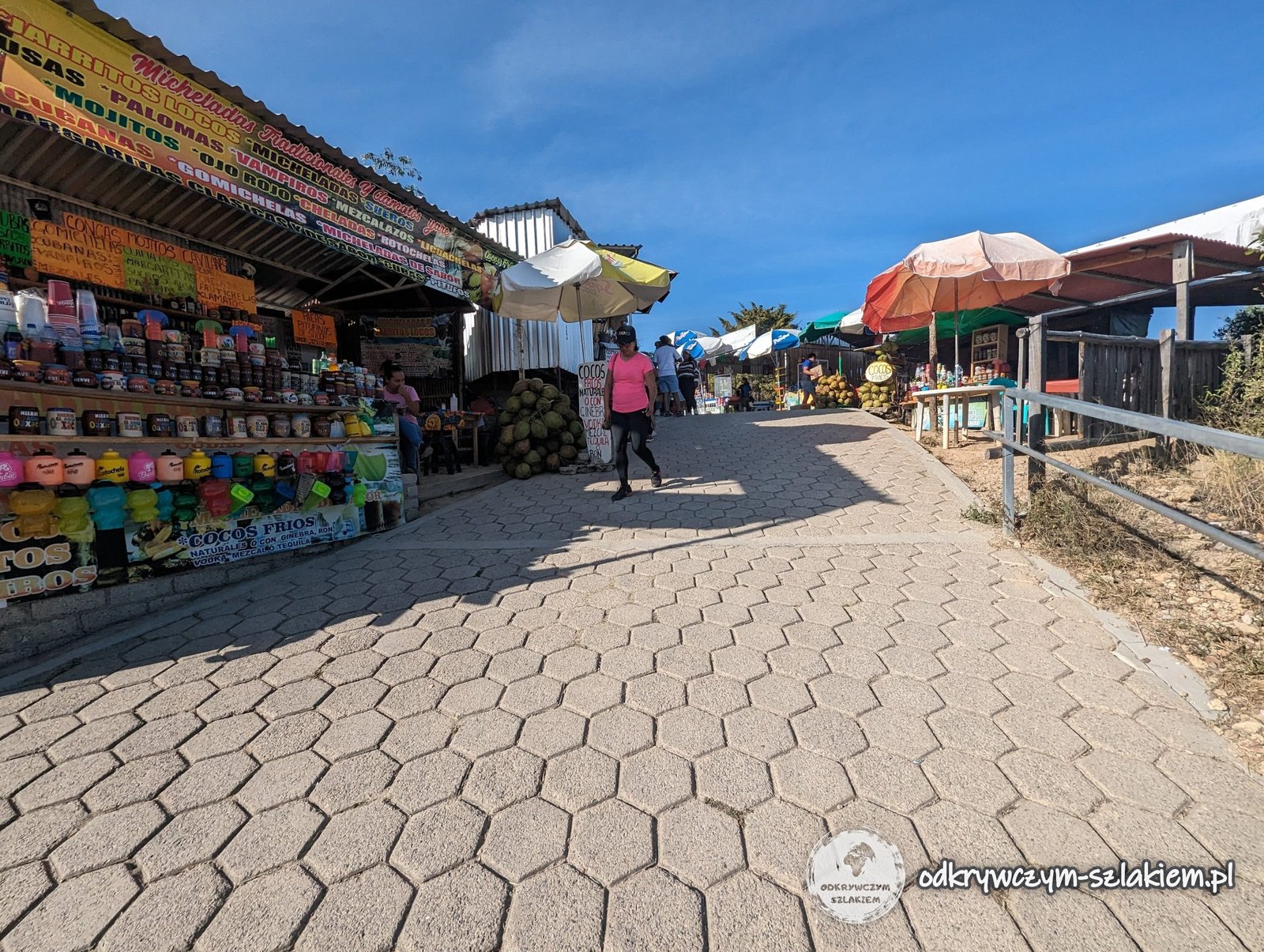
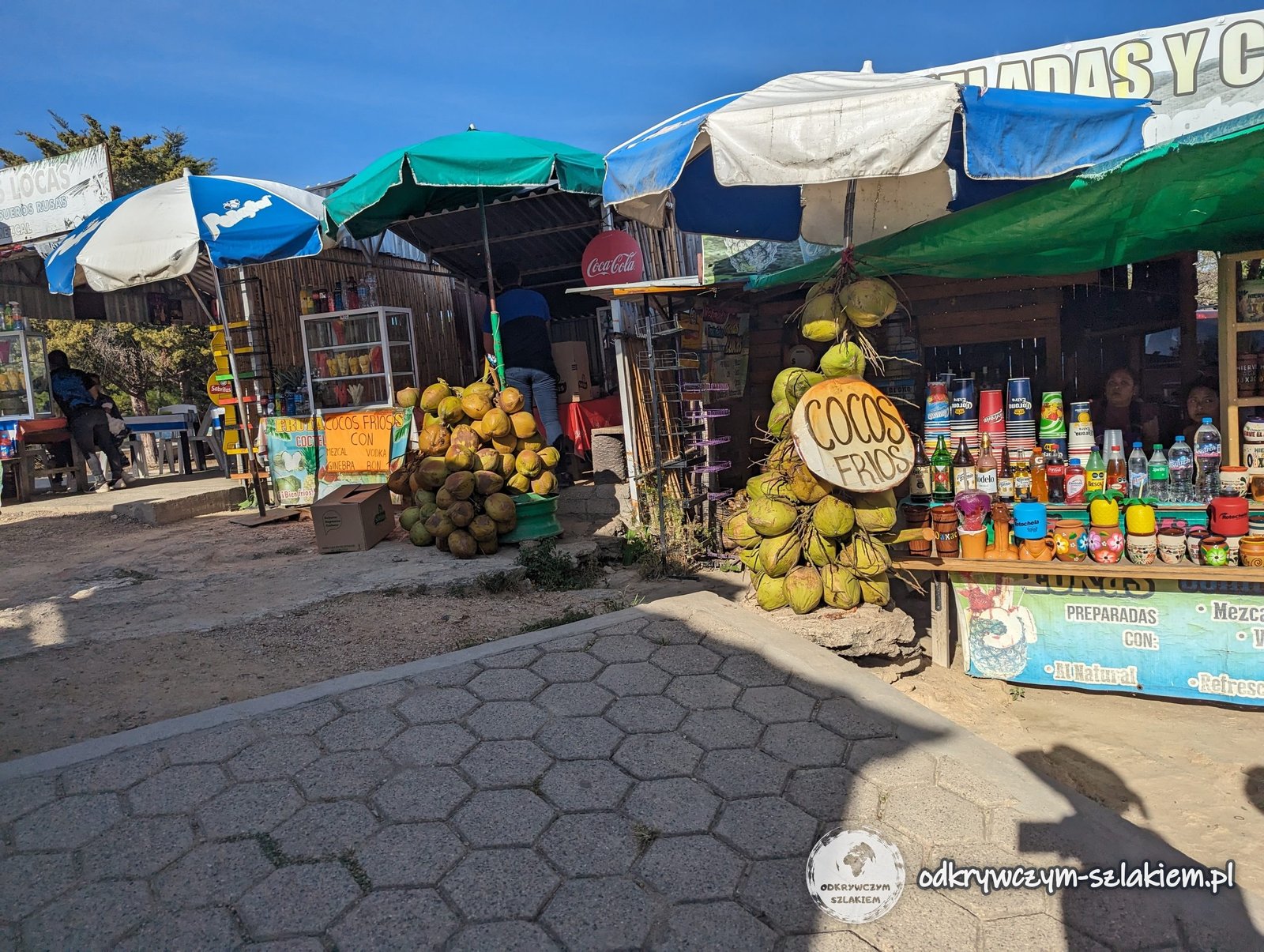
By the car park runs a paved alley of stalls: souvenirs, colourful cups and pottery, mezcal, micheladas and cocos fríos – chilled coconuts you can have topped up with mezcal, vodka, gin or rum.
We went back by pick-up as well. At one point a Mexican got on – an extra passenger – and sat on the tailgate latch. During the ride the tailgate opened; luckily he stayed on it and didn’t end up on the ground.
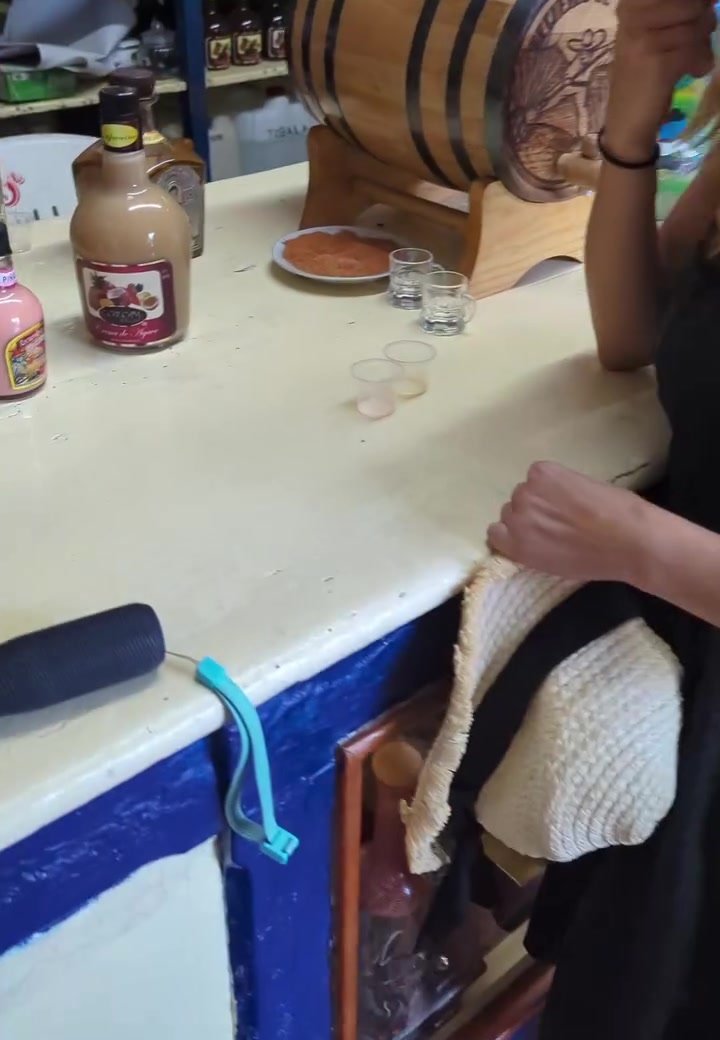
Back in Mitla we went to a mezcal tasting – the spirit this region is famous for. It is made from agave, and each variety of the plant gives a different flavour. At the end we bought a piña (pineapple) mezcal liqueur.
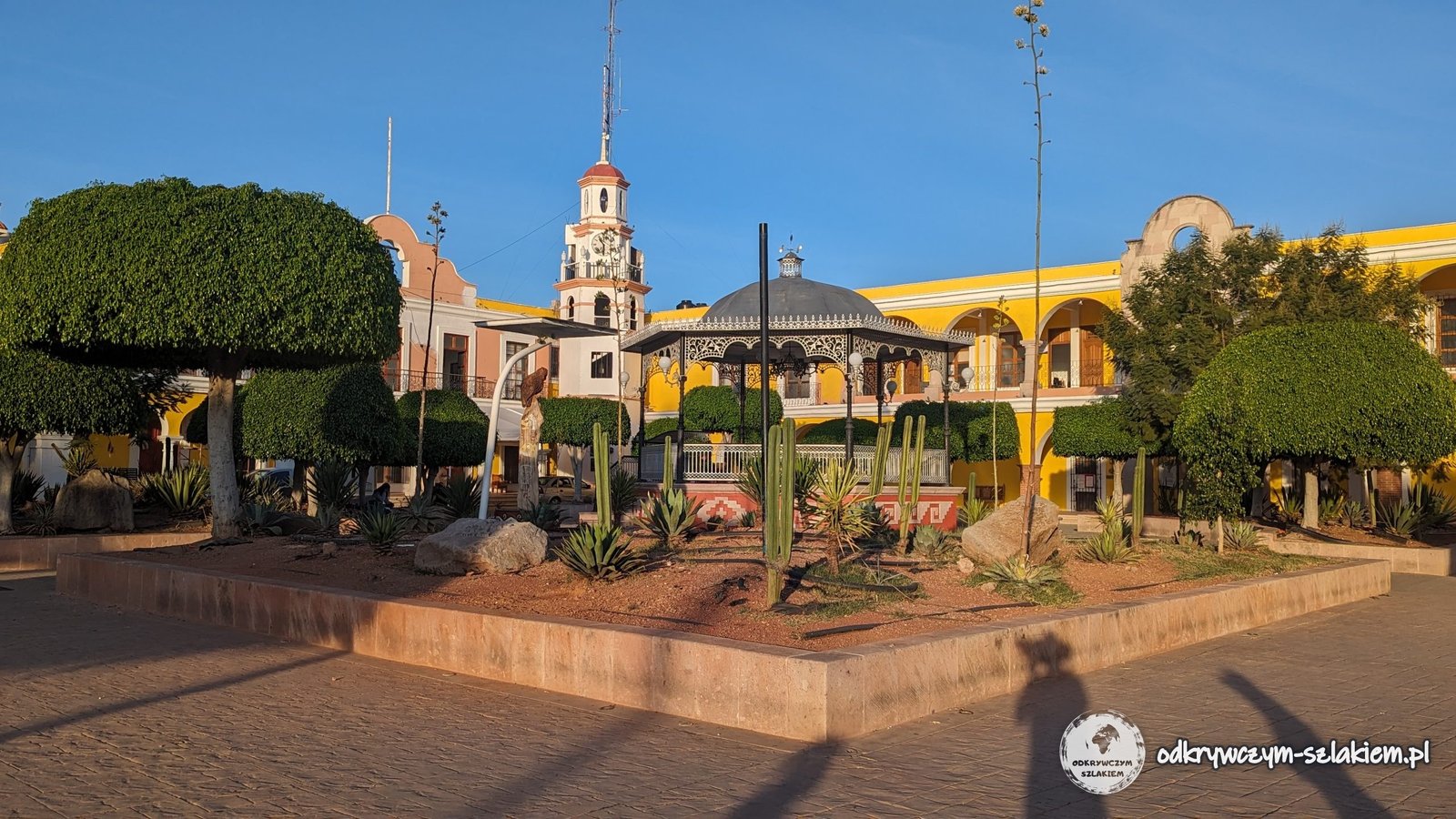
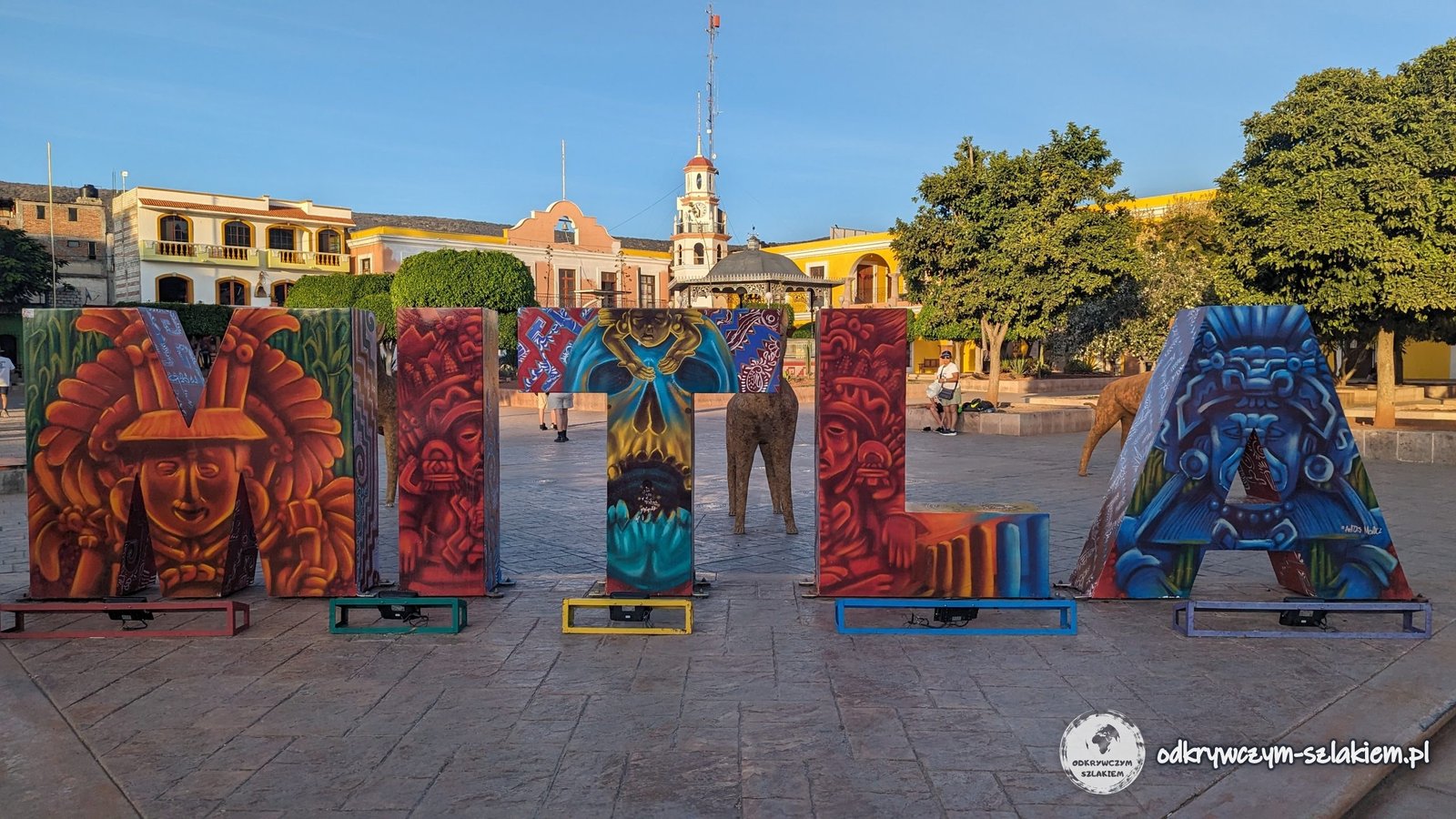
Mitla (officially San Pablo Villa de Mitla) has been a Pueblo Mágico since 2015. The name comes from the Nahuatl Mictlán – “place of the dead”, while in Zapotec the town is called Lyobaa, “place of rest”. It is best known for its Zapotec ruins with geometric mosaics (grecas) made of thousands of stones fitted together without mortar, and for the 16th-century church of San Pablo built on a pre-Hispanic platform next to them. Colourful painted MITLA letters stand on the main square.
The road fee comes with a ticket – this one, for 15 MXN, is printed with “Xaaga – Mitla – Oaxaca” and says the money goes towards improving the roads. Hierve el Agua is run by local communities: in 2005–2007 the site was closed because of a dispute between San Lorenzo Albarradas and San Isidro Roaguía over its management and income, and the access road has been blocked several times since. So it is worth checking that it is open before you go.
Stay with me on the road – follow me wherever you like best.
Clicking loads the profiles from Facebook, Instagram and YouTube (they may set cookies).