We entered Nicaragua on Tuesday 19 March 2024 – on a direct night shuttle from La Ceiba in Honduras straight to León. At the border we had minor problems because of a visa we had recently extended, but in the end everything went smoothly (everyone entering also has to pay 13 USD). Nicaragua turned out to be cheaper and more laid-back than its neighbours – a country of contrasts: on the one hand beautiful colonial towns, on the other rural mud huts, plus volcanoes and one of the few places in the world where you can sandboard down an active volcano.
 1:00
Table of contents
- León – the white cathedral
- Cerro Negro – sandboarding down a volcano
- Masaya, Laguna de Apoyo and colonial Granada
- Ometepe – the island of two volcanoes
- Safety, scams and border crossings
León – the white cathedral
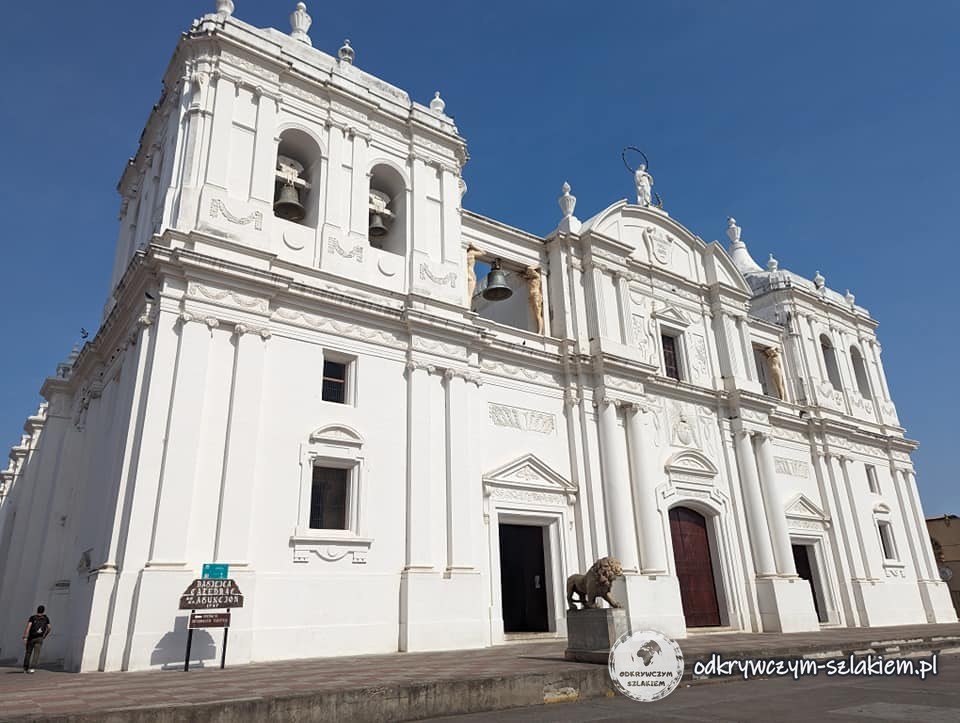
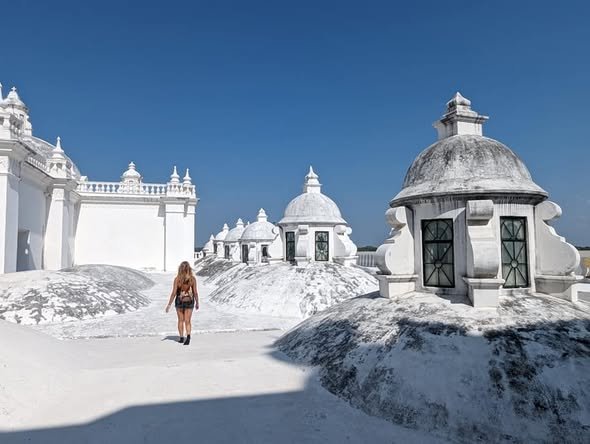
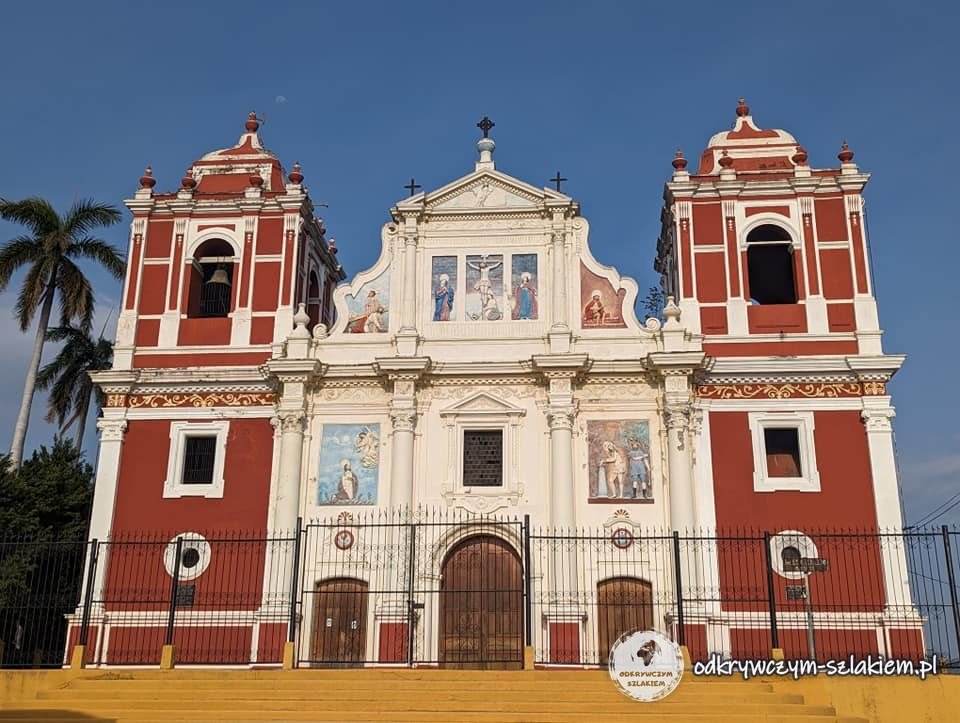
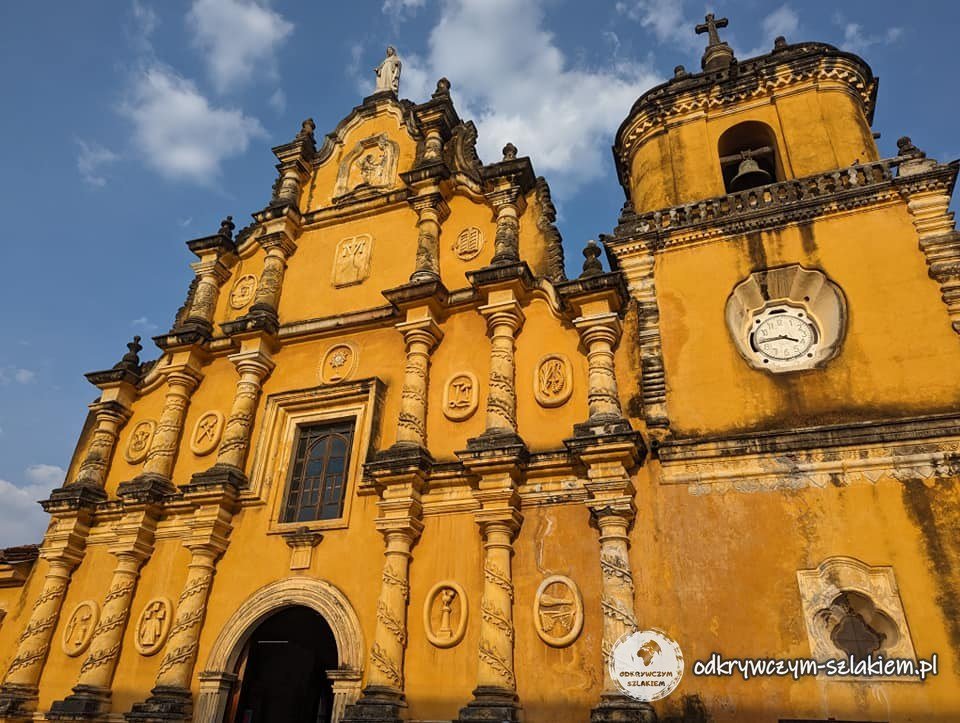
León was the capital of independent Nicaragua, and its main attraction is the white cathedral, the largest in all of Central America (the Basilica of the Assumption, a UNESCO World Heritage Site). Unfortunately the interior was closed, but for 3 USD we could go up onto its roof. A rather peculiar rule applied there: you had to take off your shoes and carry them in your hands. It was nice at the top – white domes all around – although we had expected a better panorama.
Cerro Negro – sandboarding down a volcano
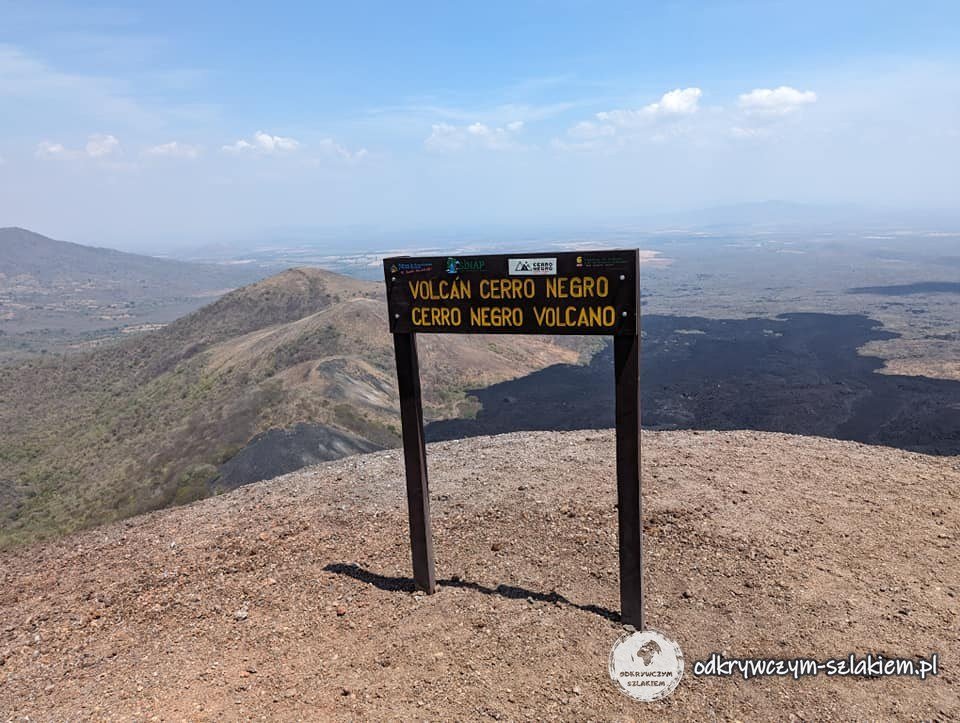
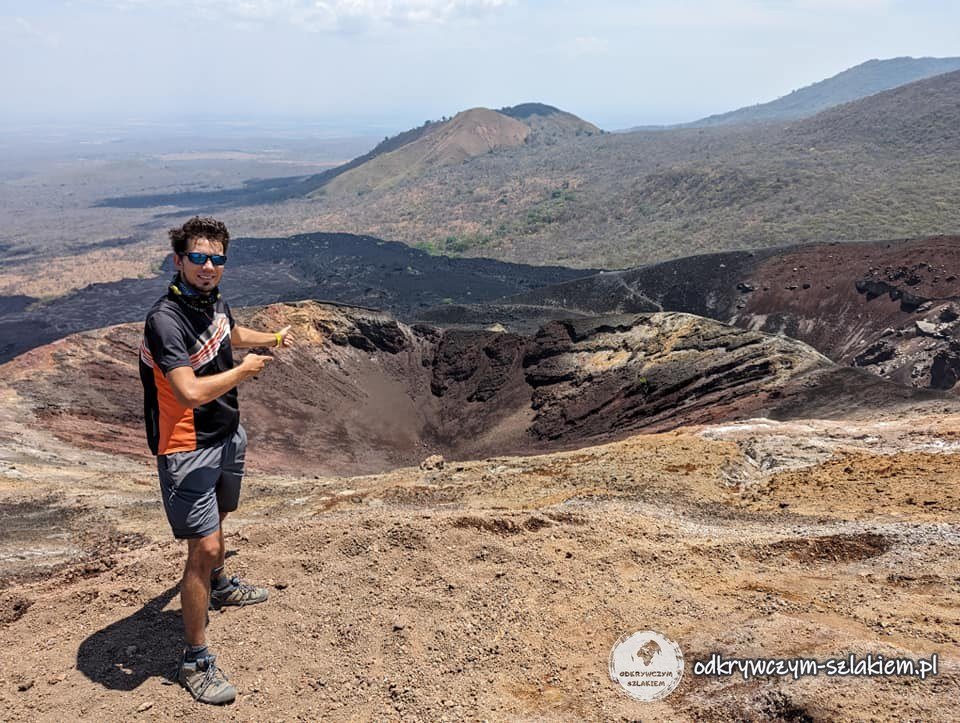
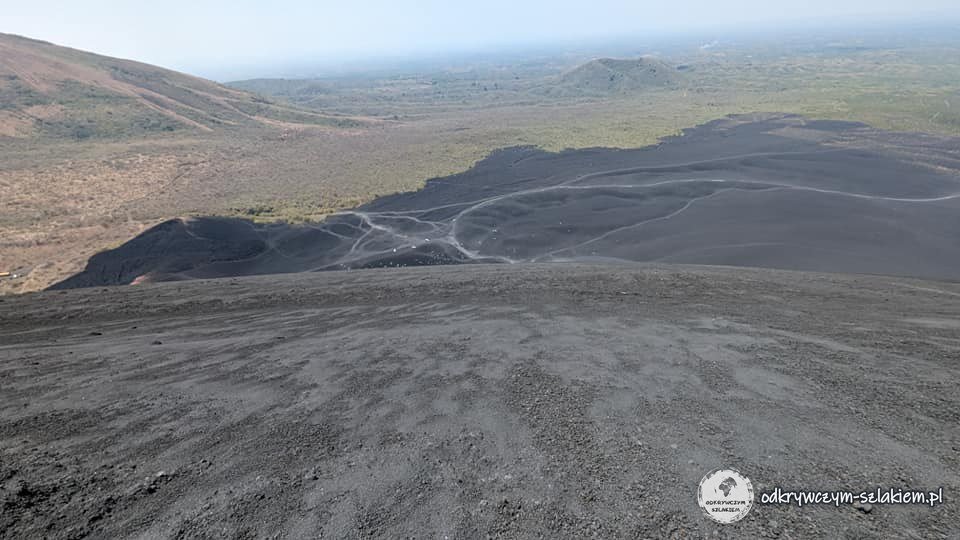
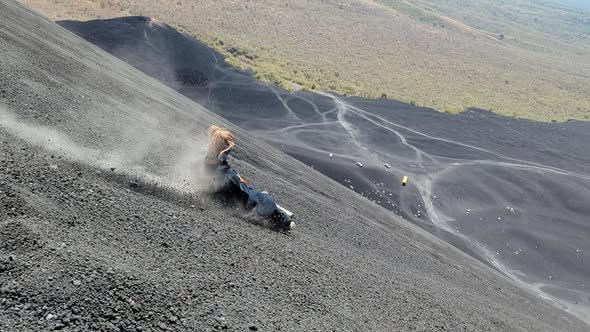
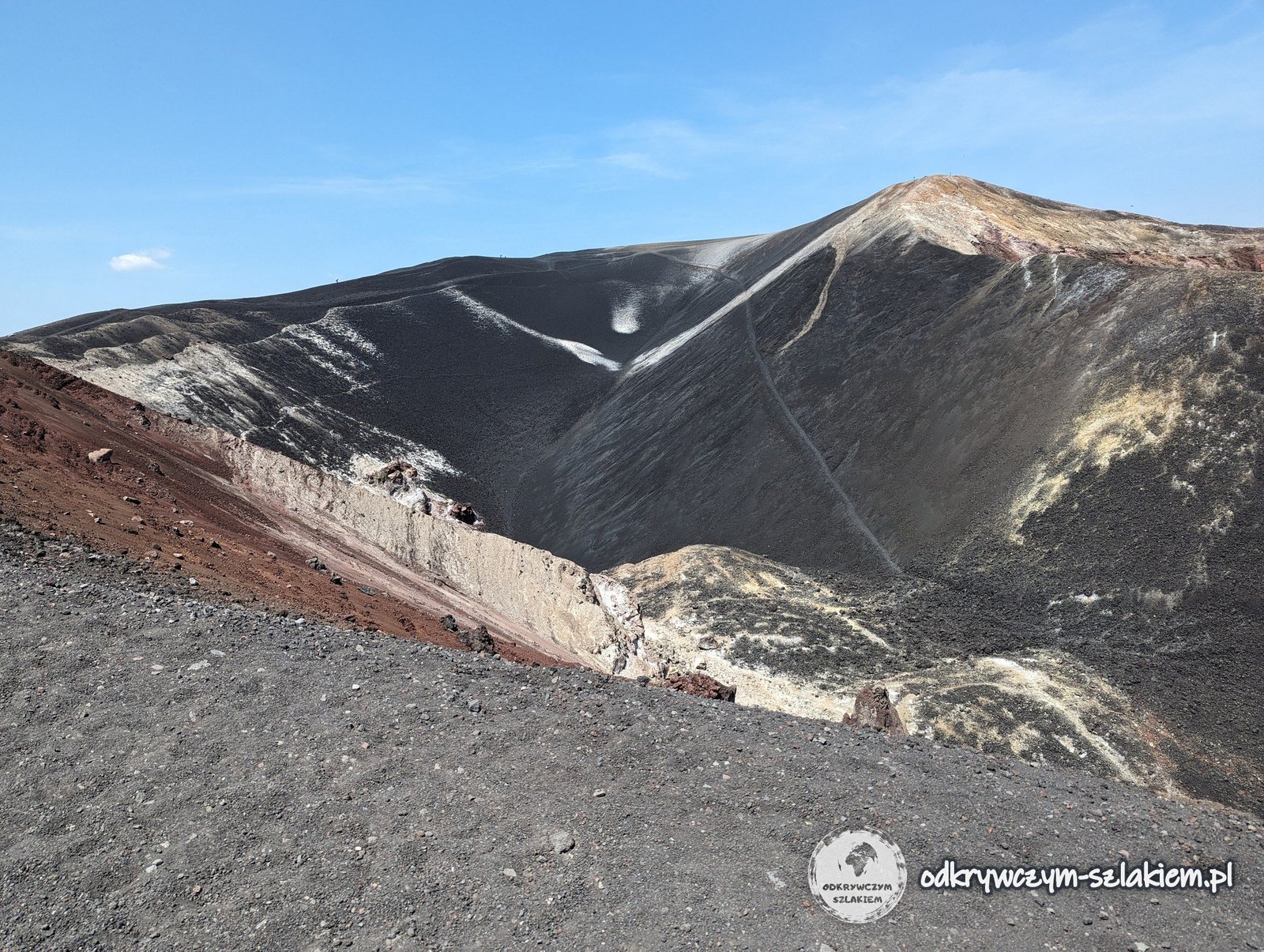
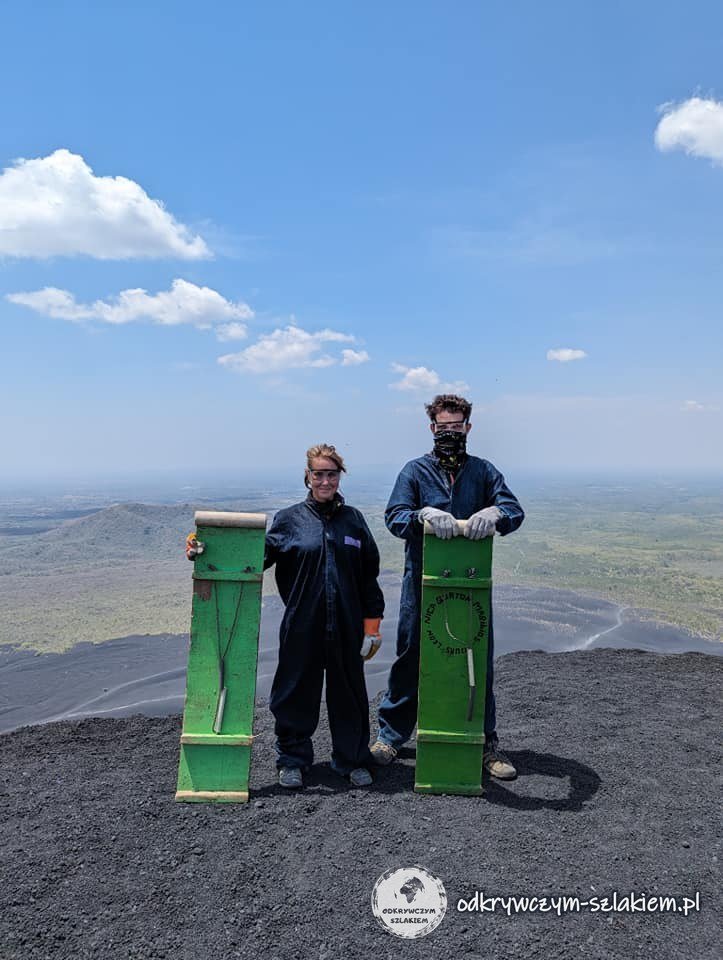
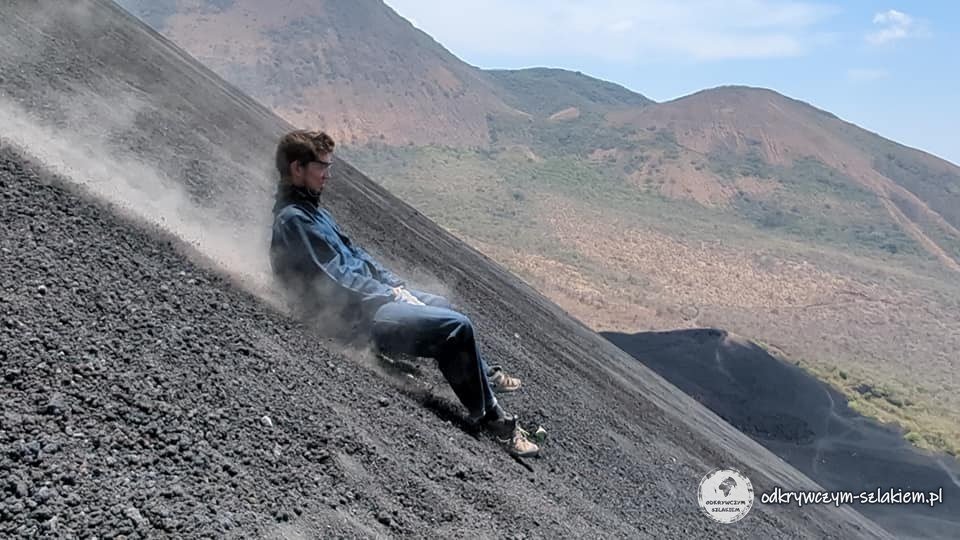
Near León rises Cerro Negro (“black hill”) – an active volcano you can sandboard down. It is the only place of its kind in the world, made possible by its structure (it consists mainly of loose sand) and the direction of the wind. Today it is one of Nicaragua’s main tourist attractions and something it would be a shame not to do. Going on your own is a hassle, so almost everyone goes on an organised tour – and so did we. For 35 USD per person we got transport both ways, the entrance ticket, equipment hire, a souvenir T-shirt and fruit on the way back.
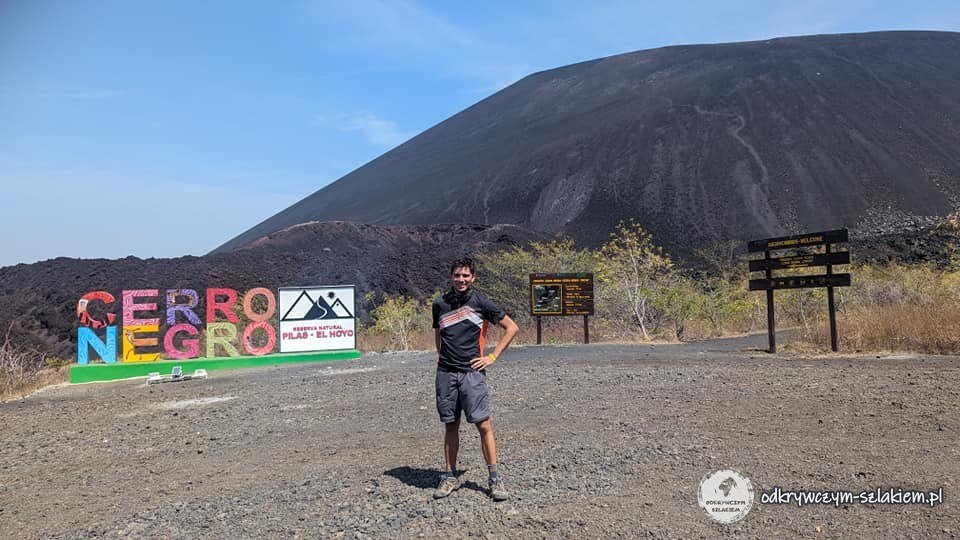
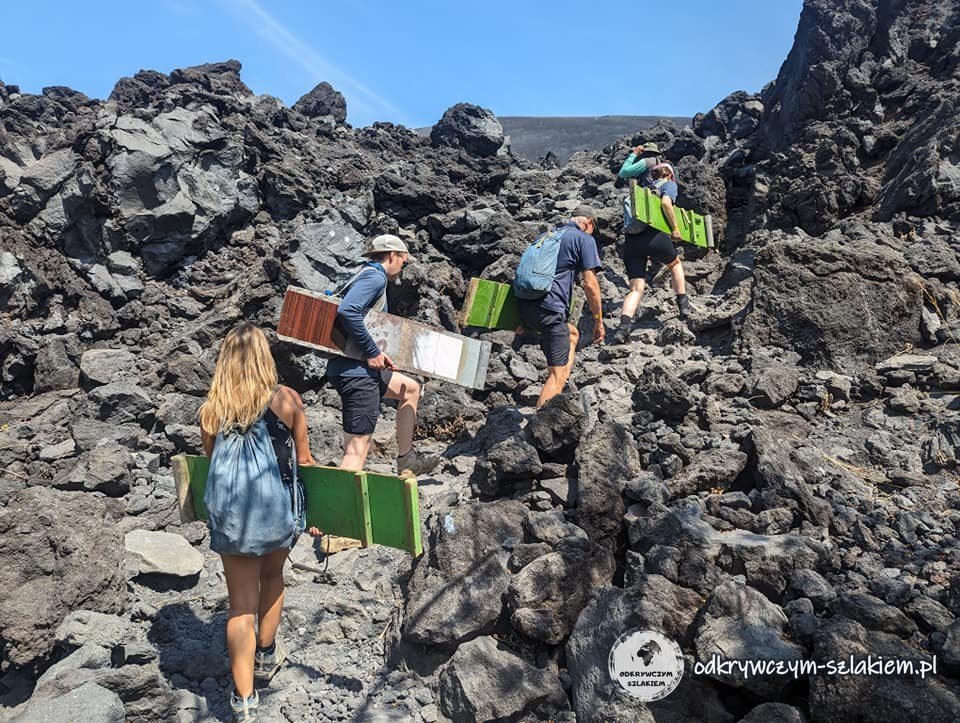
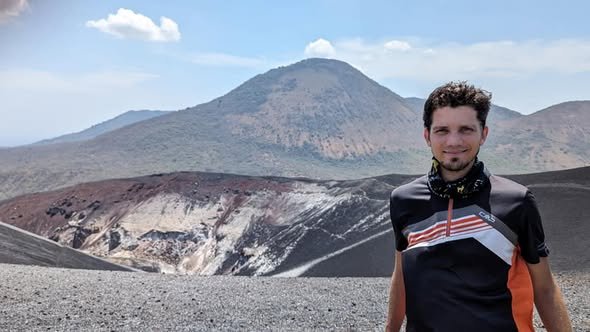
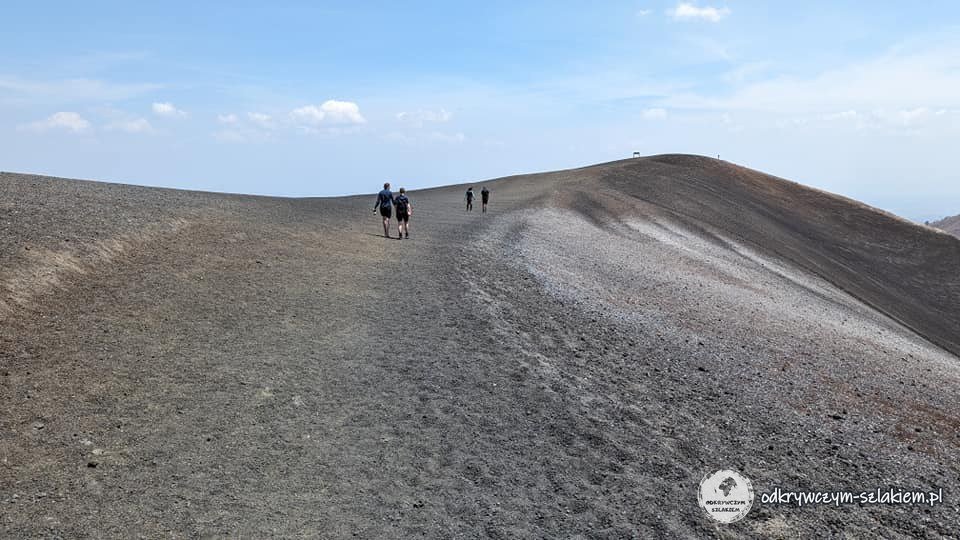
From the summit (726 m) you can see a whole chain of volcanoes forming a magnificent panorama, and under your feet you can feel that the ground is hot. To get there you have to climb about 500 metres (45–60 minutes), carrying your own board and protective suit. Then comes the reward – the ride down the black slope. It does not always end smoothly (Patrycja got a bit banged up when she wiped out), but it is one of those attractions that are really worth trying. Prices as of March 2024.
Masaya, Laguna de Apoyo and colonial Granada
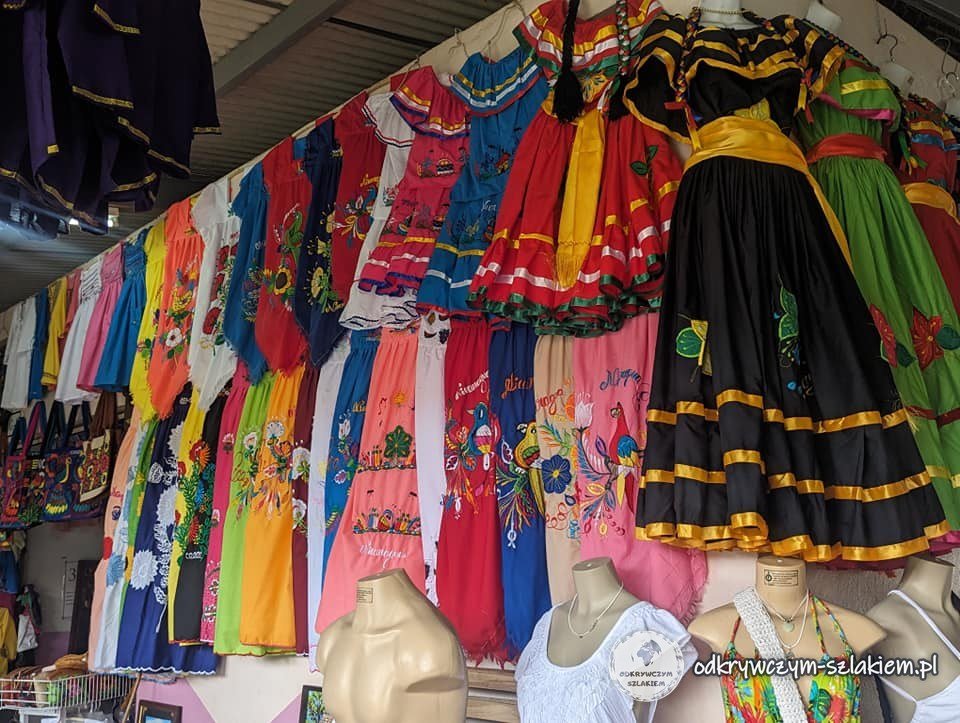
In the town of Masaya we planned to climb the Masaya volcano, but it is currently hyperactive and nobody is allowed anywhere near it – a pity, because normally you can watch the lava inside the crater. Instead, we saw a bit of this “creative”, rather colourful town, where we did not meet a single other tourist.
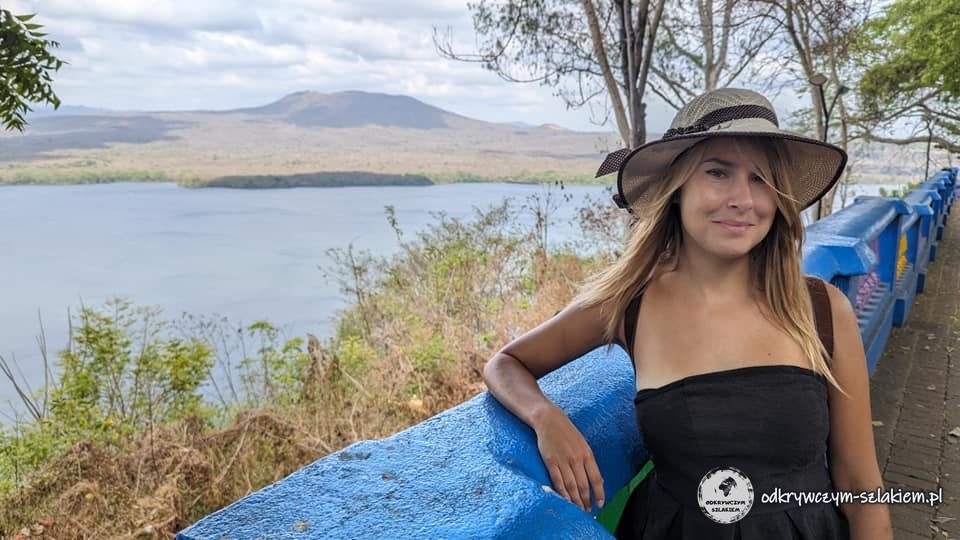
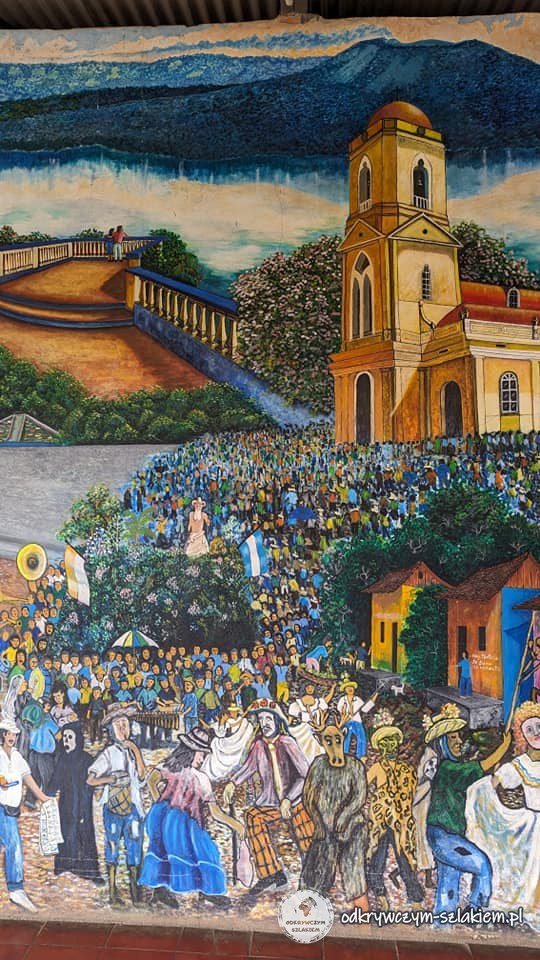
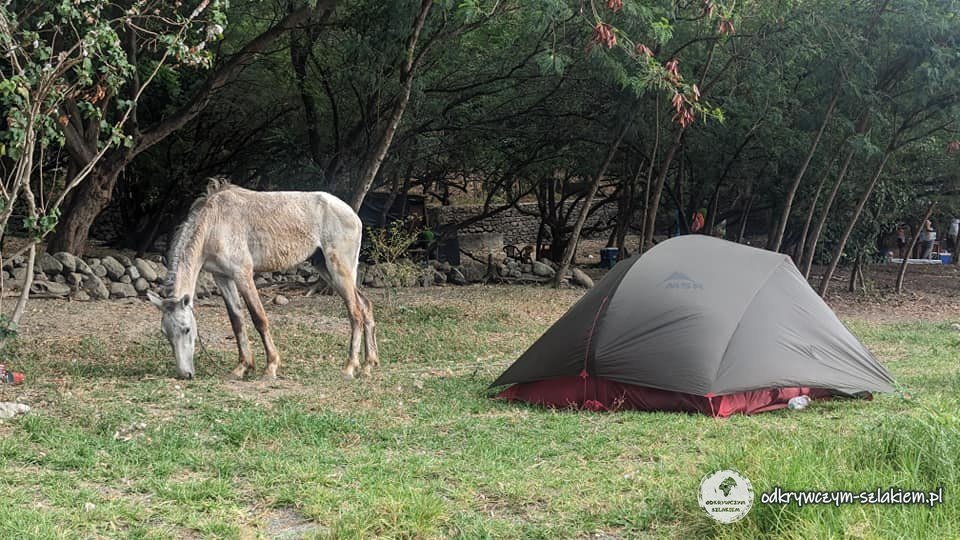
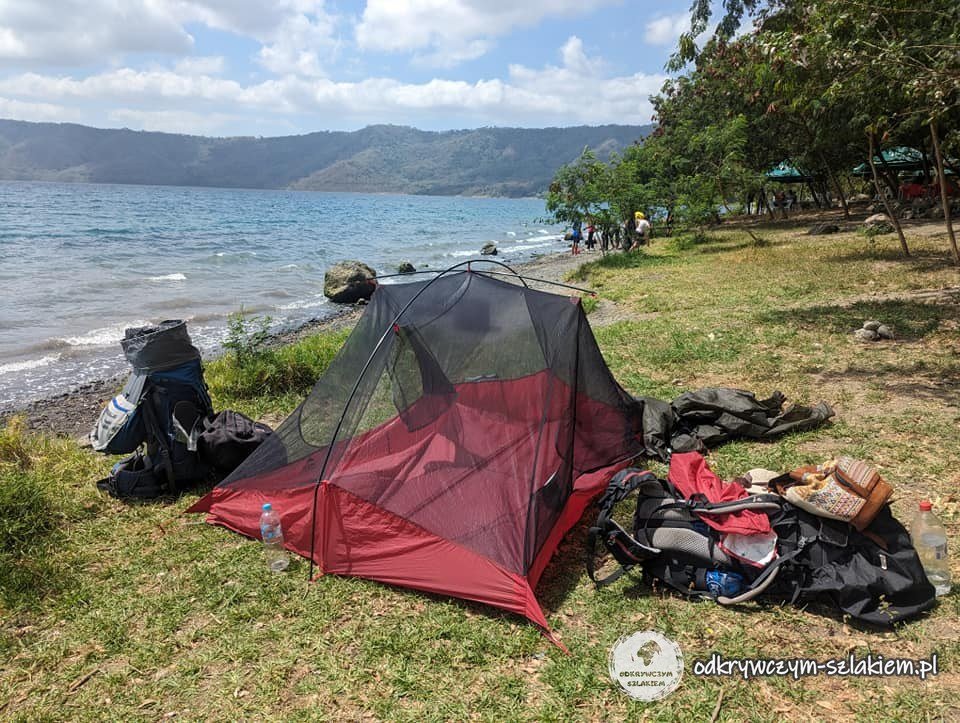
Another day we spent a night wild camping by Laguna de Apoyo – a lake of volcanic origin. During the day it was packed with crowds, but at night there was only us and one local family nearby. A great place for swimming, and after dark it has its own atmosphere. In the early morning lots of people came down to the beach to clean it (we do not know whether this was only for Holy Week or always). Either way, wherever we went, things seemed fairly clean.
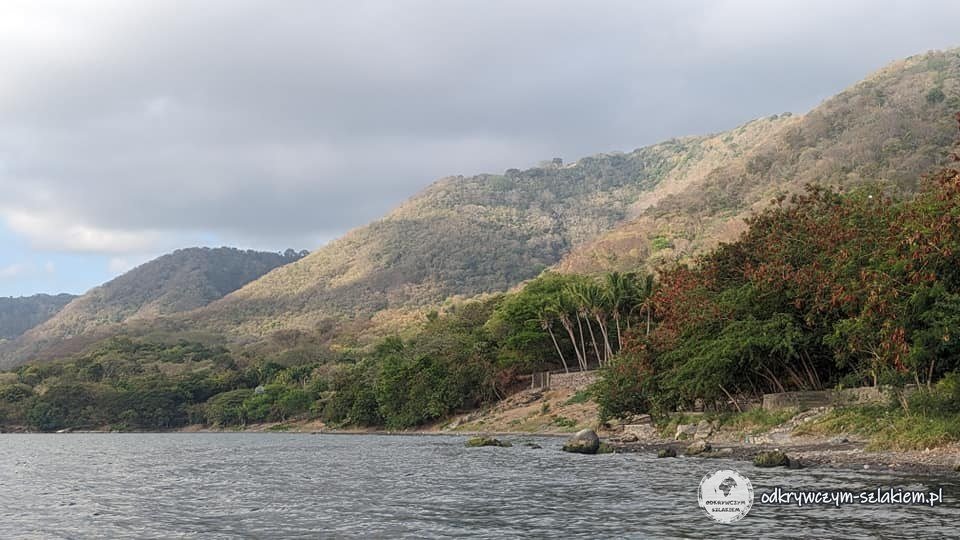
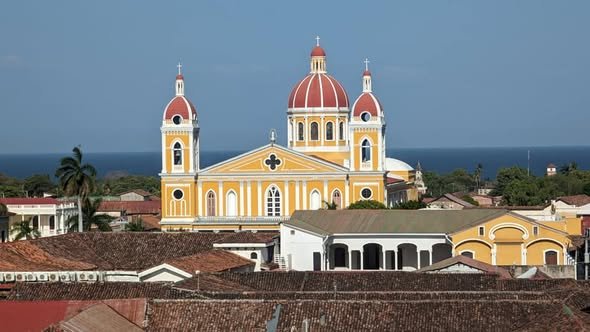
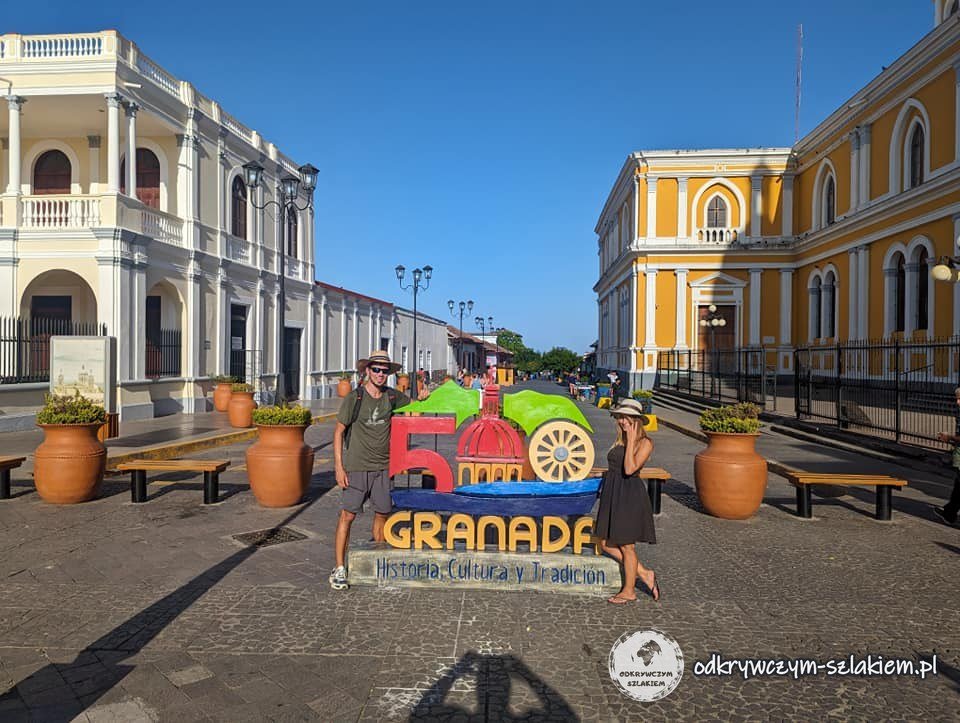
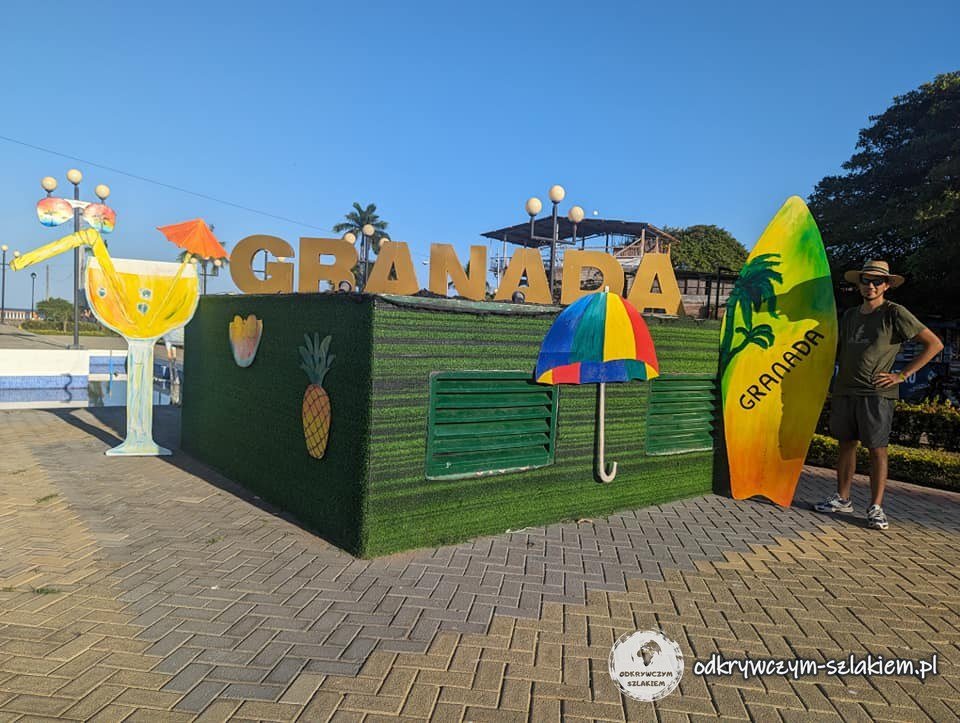
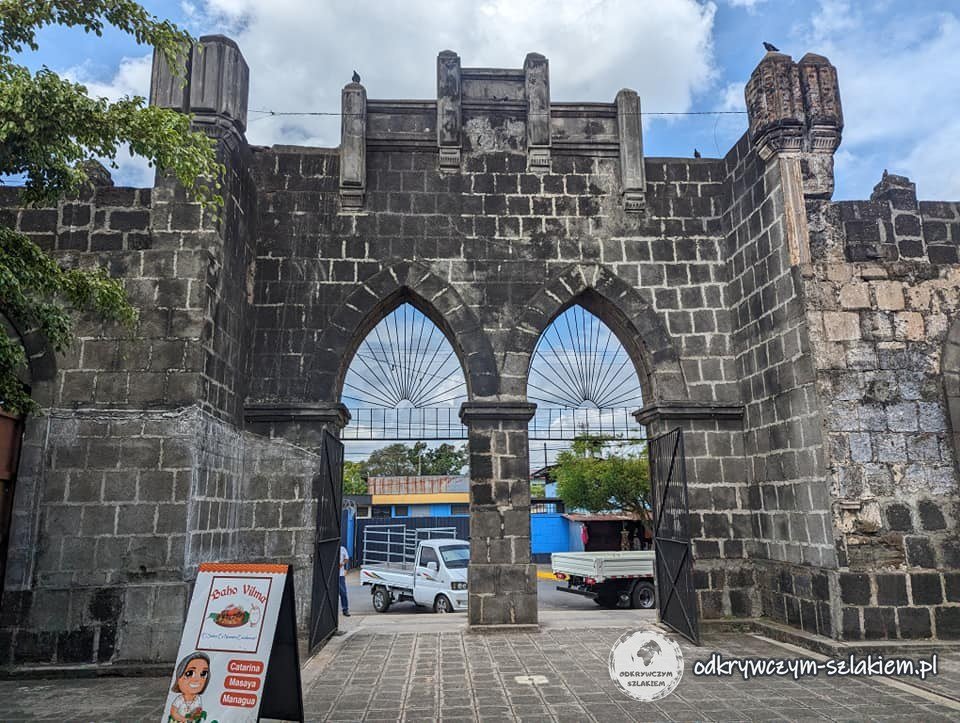
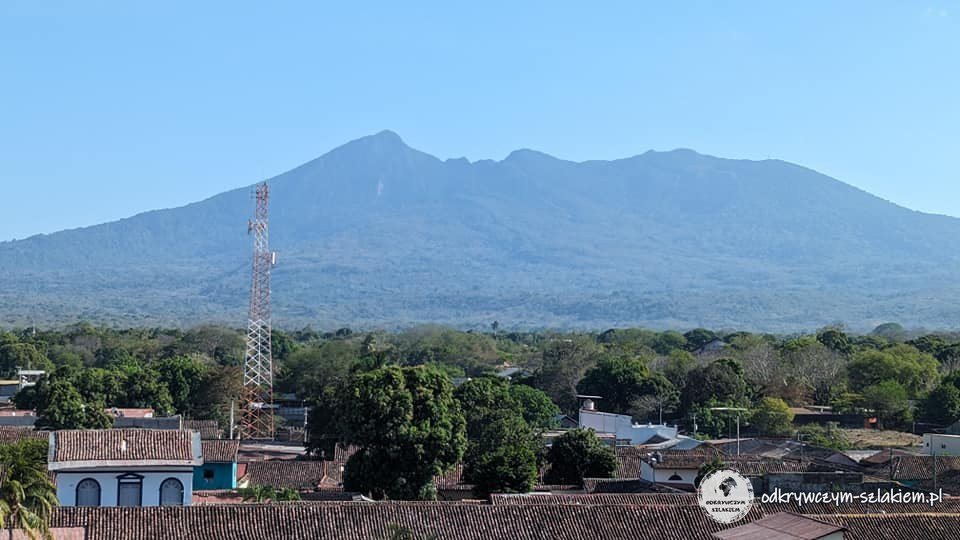
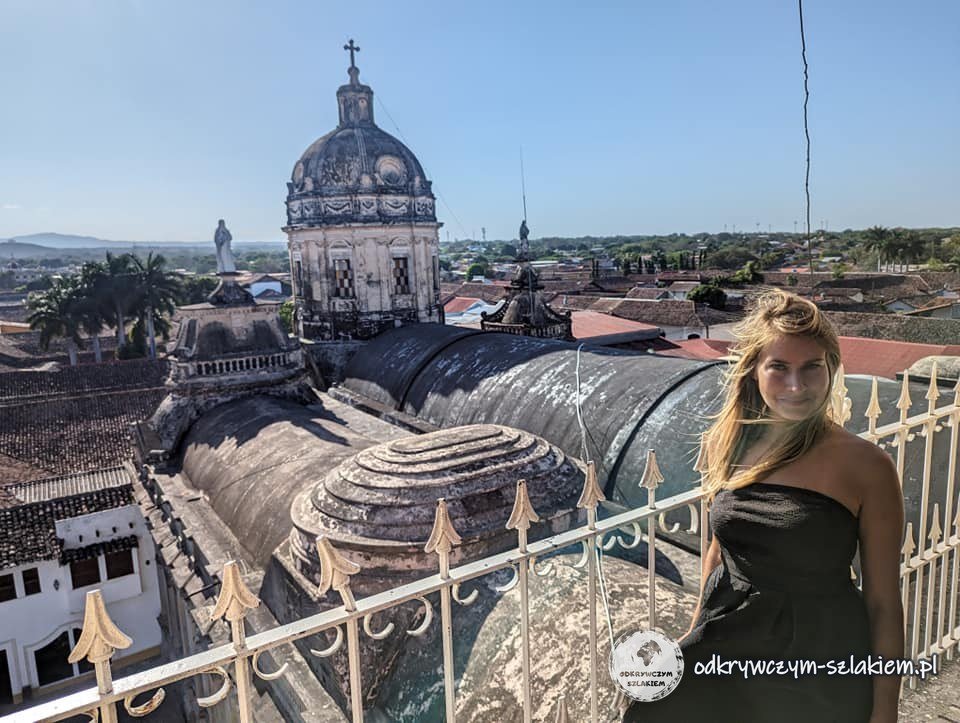
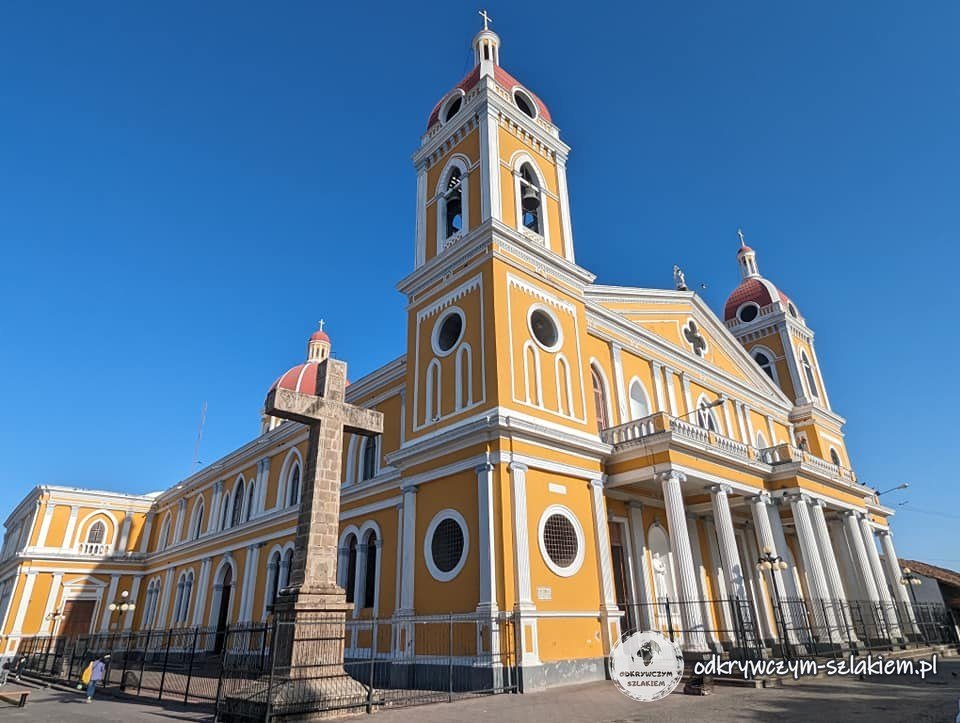
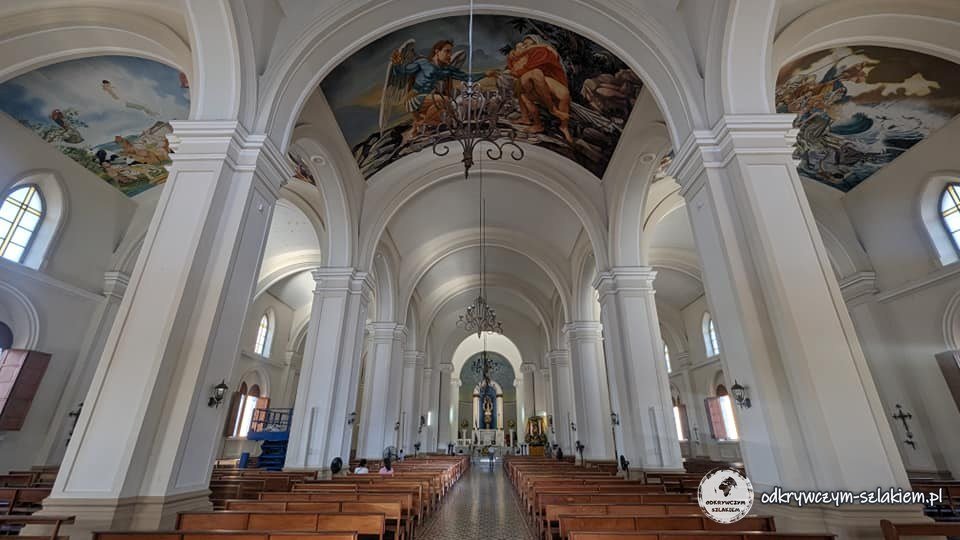
Granada is another pretty colonial town. It is worth climbing the tower of the Iglesia de la Merced – for just 1 USD you get a beautiful view of the Mombacho volcano and the cathedral. Some people also take a trip to Las Isletas de Granada, a network of 365 tiny islets in the lake. Entry to Mombacho itself costs money, so we only admired it from afar.
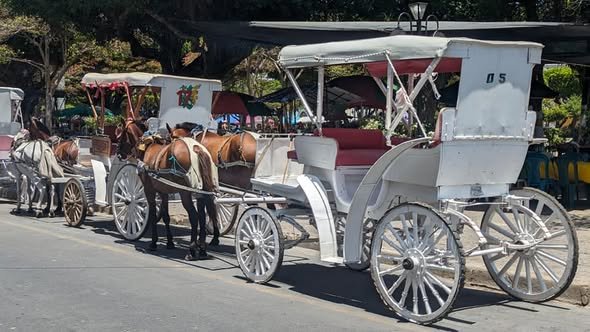
Nicaragua’s currency is the córdoba (roughly 40 to the euro), and to make things easier you can pay in US dollars in many places. Shop prices are similar to those in Poland, bars are much cheaper (a beer costs practically the same as in a shop), and accommodation starts at about 10 USD per person. On average we spent about 21 USD per person per day here – including accommodation, food, local transport and sights (as of March 2024).
Ometepe – the island of two volcanoes
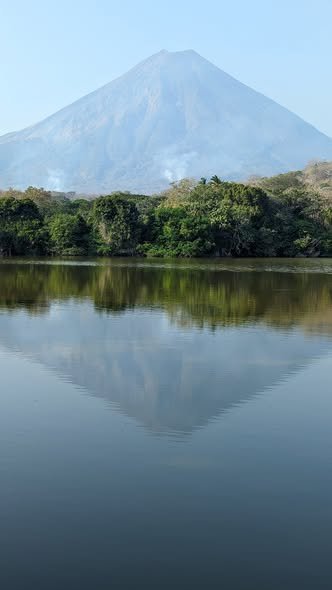
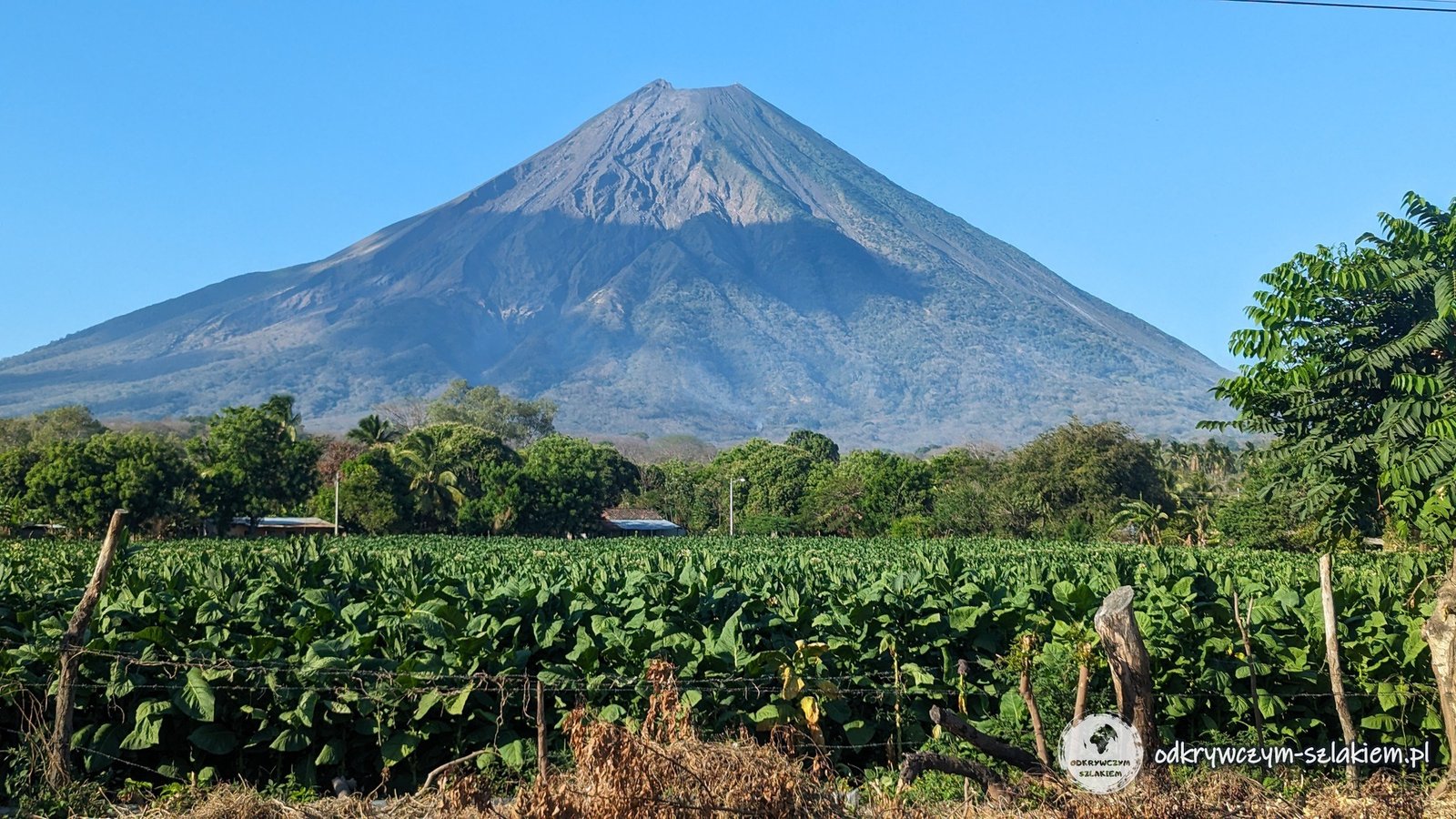
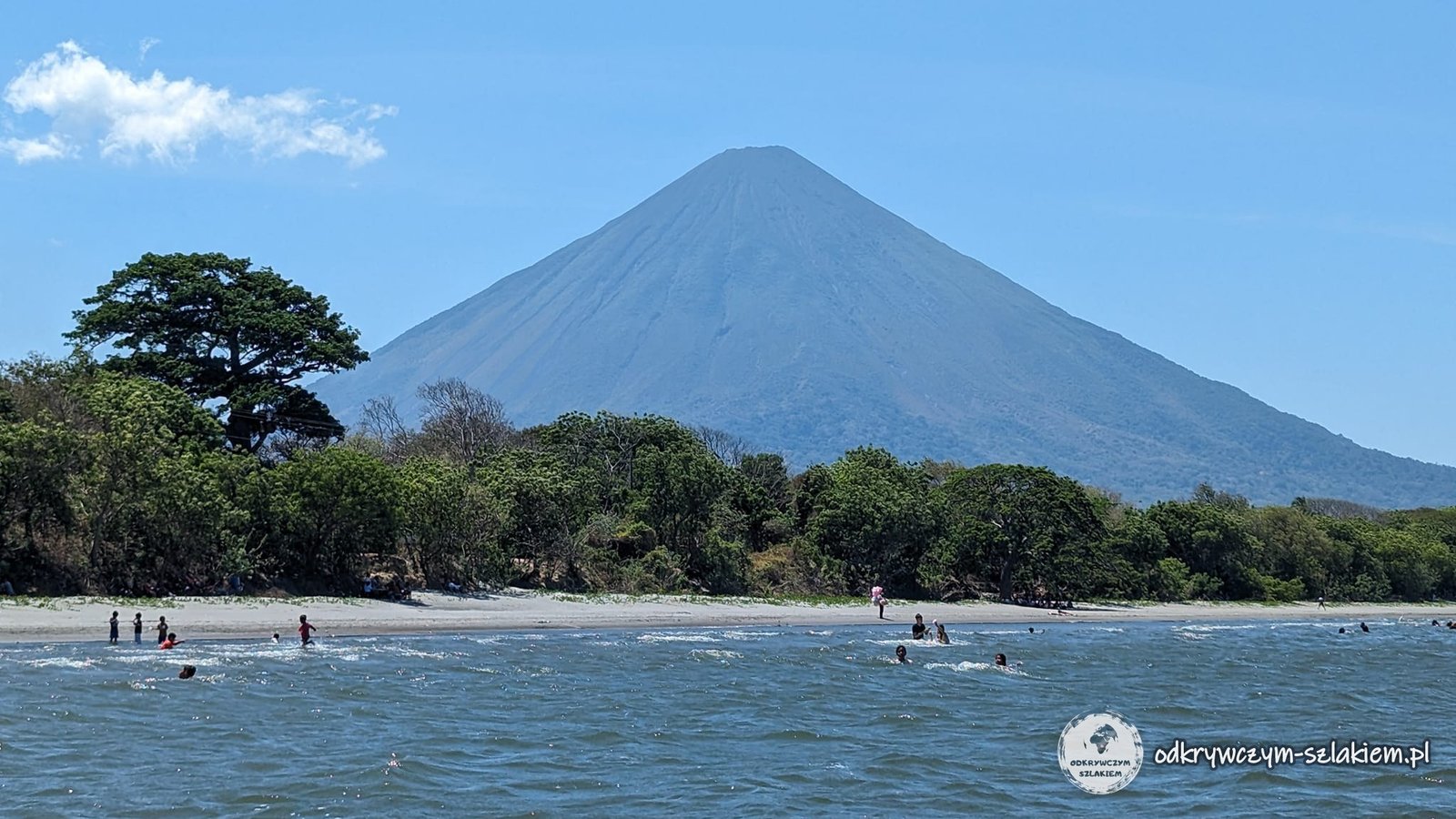
Our next stop was the island of Ometepe (23–31 March 2024), the ninth-largest lake island in the world, formed by two volcanoes – Concepción and Maderas – rising straight out of Lake Nicaragua. Our stay turned out differently than we had planned: we stayed much longer (waiting for a GoPro to be delivered to Costa Rica – our previous one broke in Honduras – and giving up on a trip to the Pacific because of outrageously expensive accommodation over the Easter weekend).
We did not climb either of the two volcanoes. Why? We do not like the policy of paying for every hike (usually a compulsory guide plus the national park entrance) – in Guatemala, for example, we did most of the volcanoes on our own. On top of that there were the high daytime temperatures, which make walking less pleasant, and no guarantee of views: tours start in the morning, when the peaks are often shrouded in clouds. So we admired Concepción and Maderas from a distance – we are saving the ambitious mountains for later.
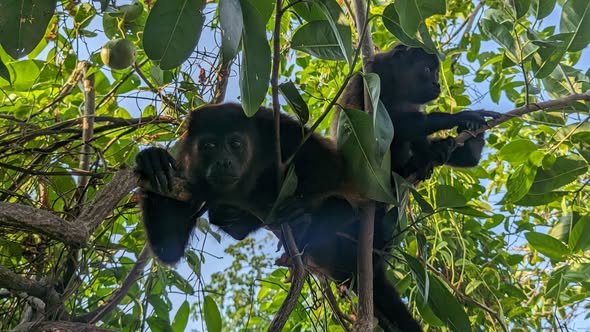
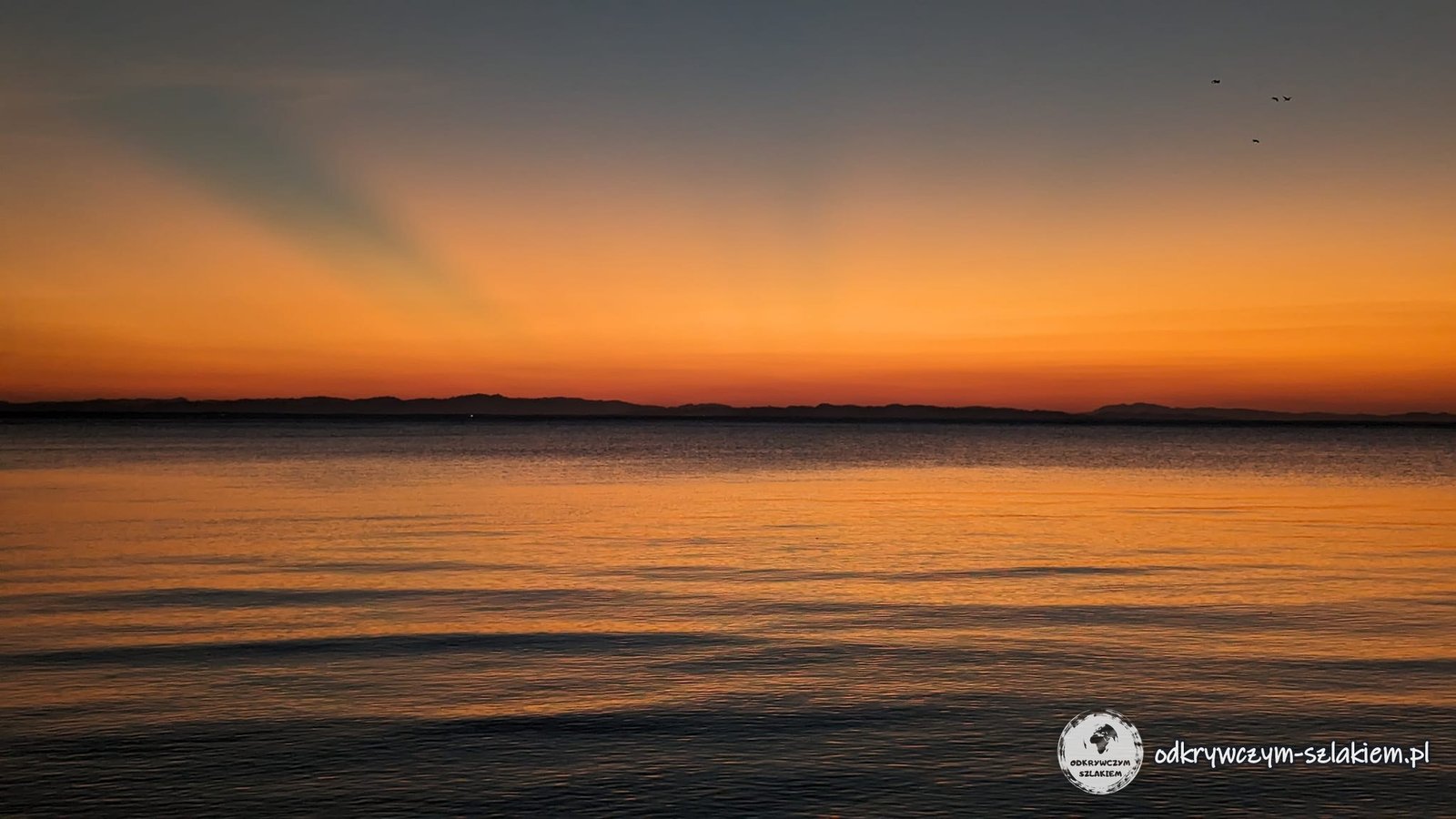
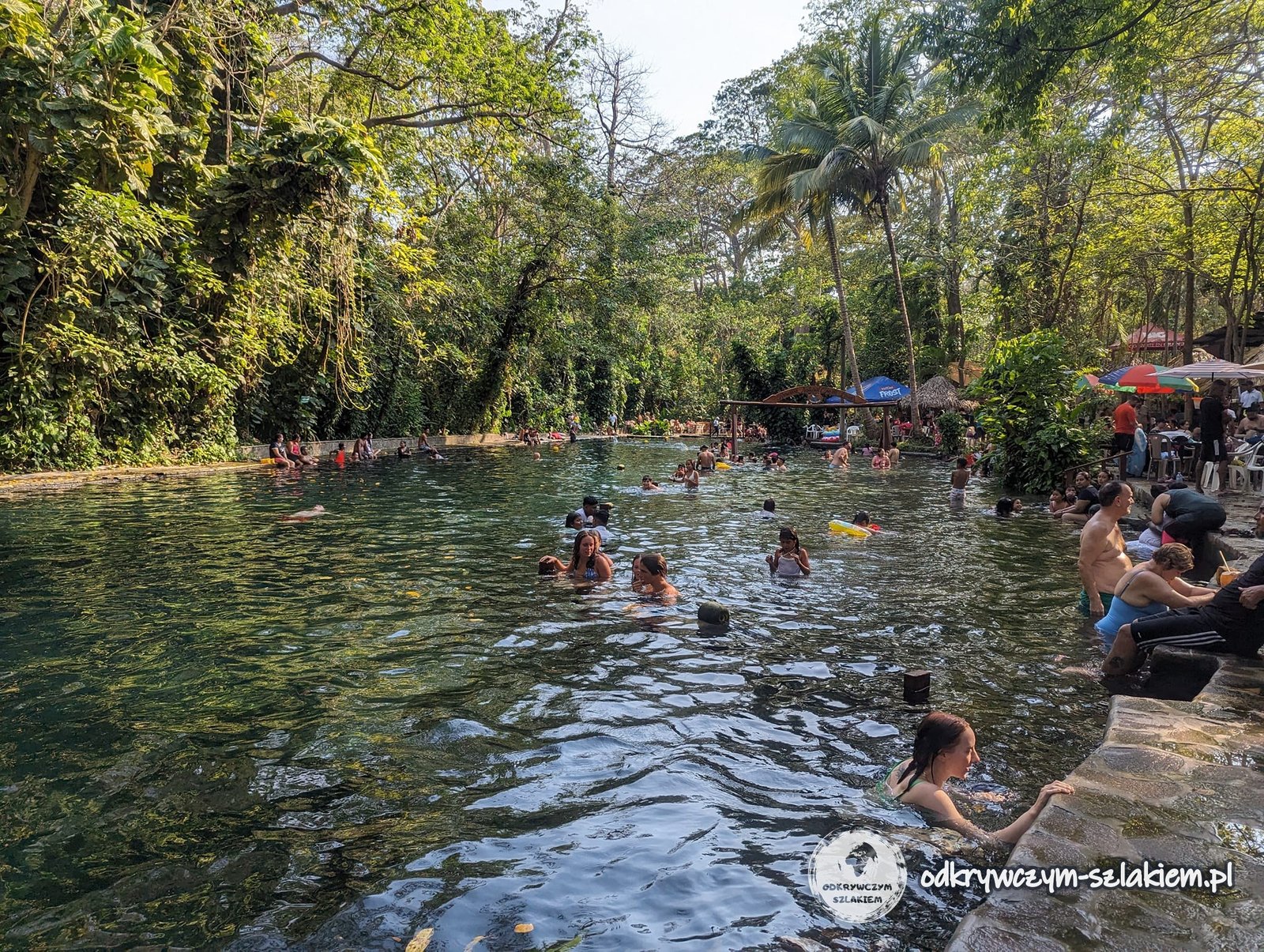
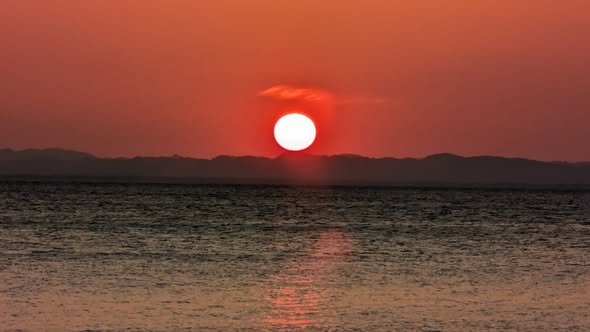
So what did we do? We went to Punta Jesús María – a well-known sunset spot with a beautiful beach; to the Charco Verde reserve with a protected lagoon, a private beach, monkeys and a butterfly house; and to Ojo de Agua, a natural spring turned into a refreshing pool with a few short trails (on the way we passed plantain plantations and monkeys). For swimming in the lake itself it is better to pick a beach – the bottom can be muddy – and among the nicest are Punta Jesús María and Santa Cruz.
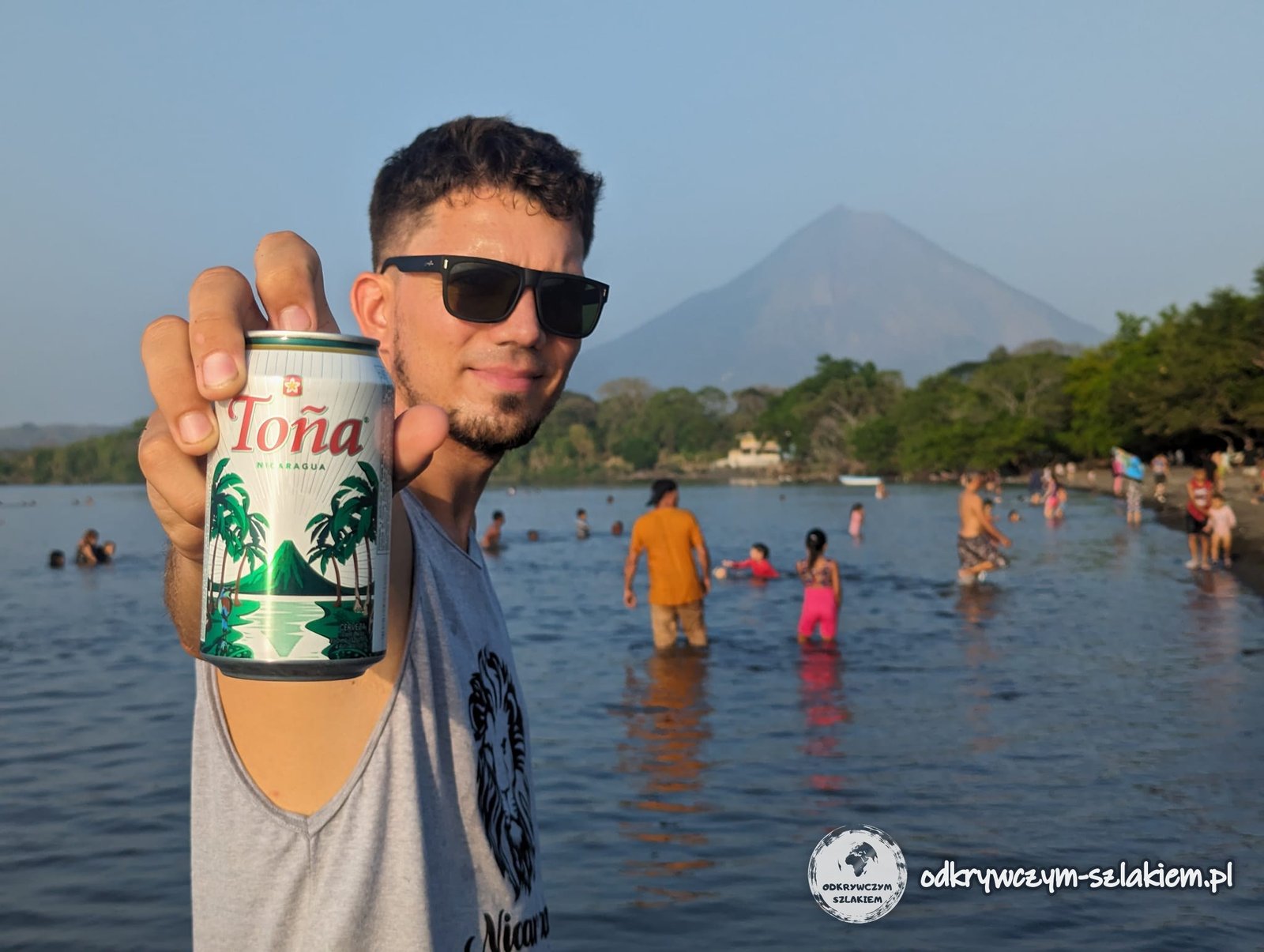
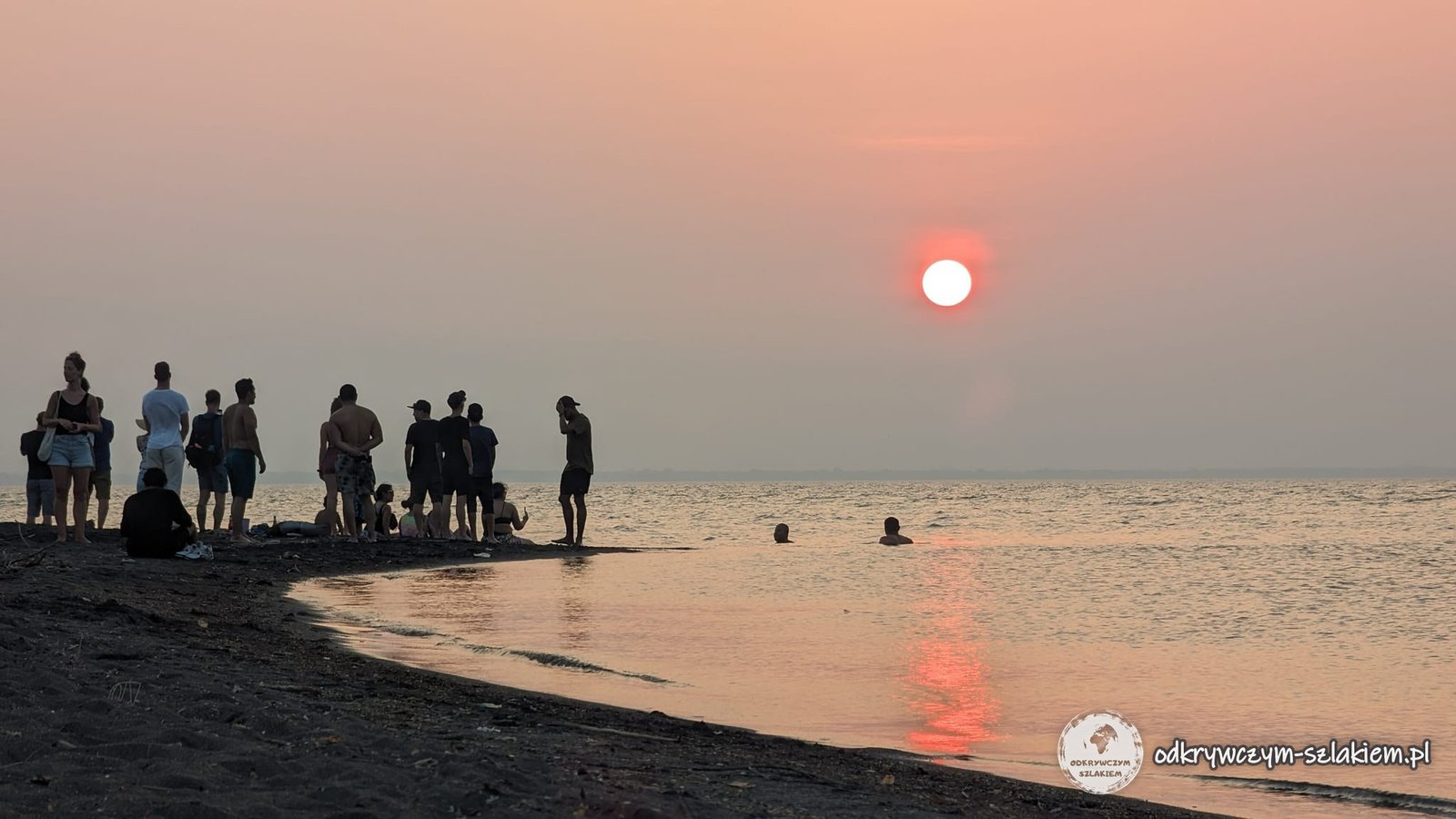
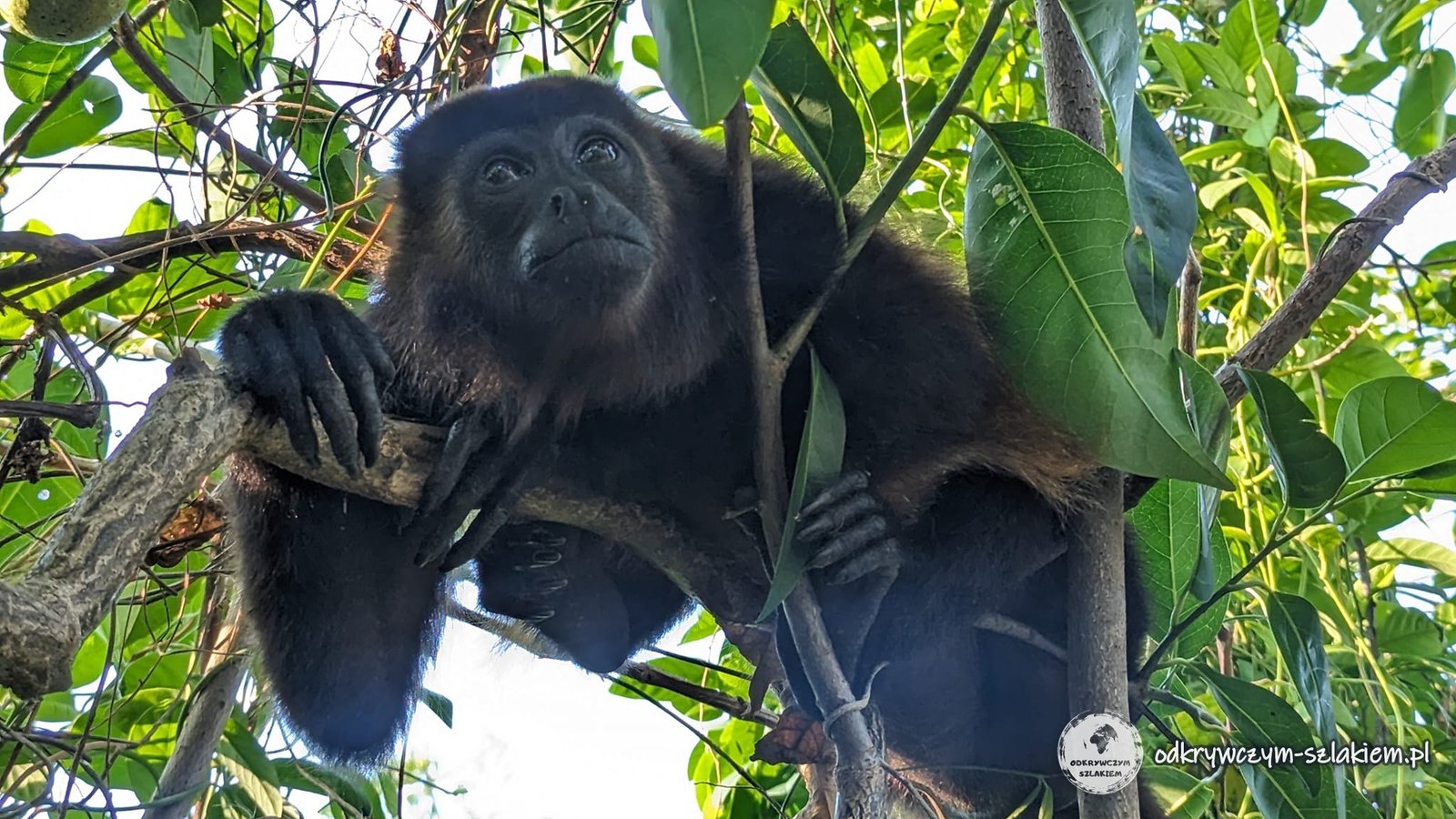
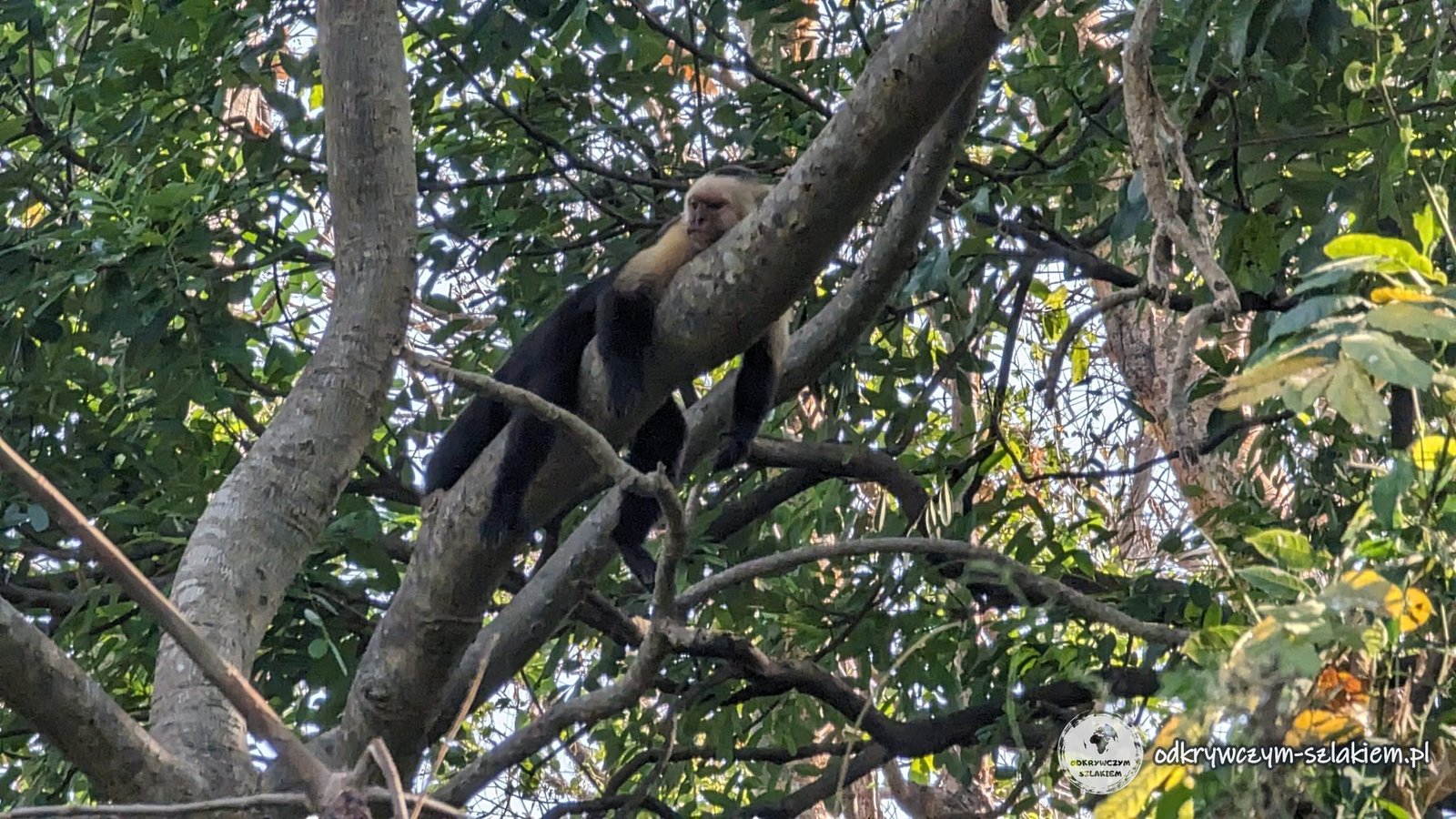
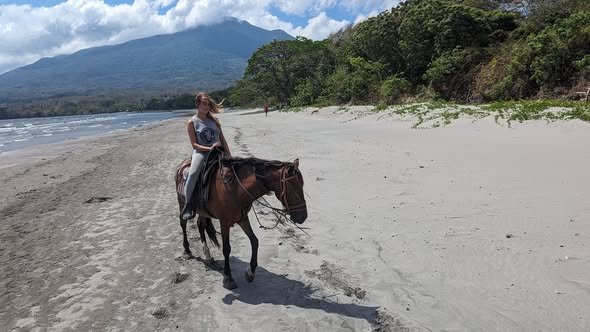
On the other part of the island Patrycja and I went horse riding near the Maderas volcano (on the way we saw petroglyphs) and to a beach with a good view of both volcanoes.
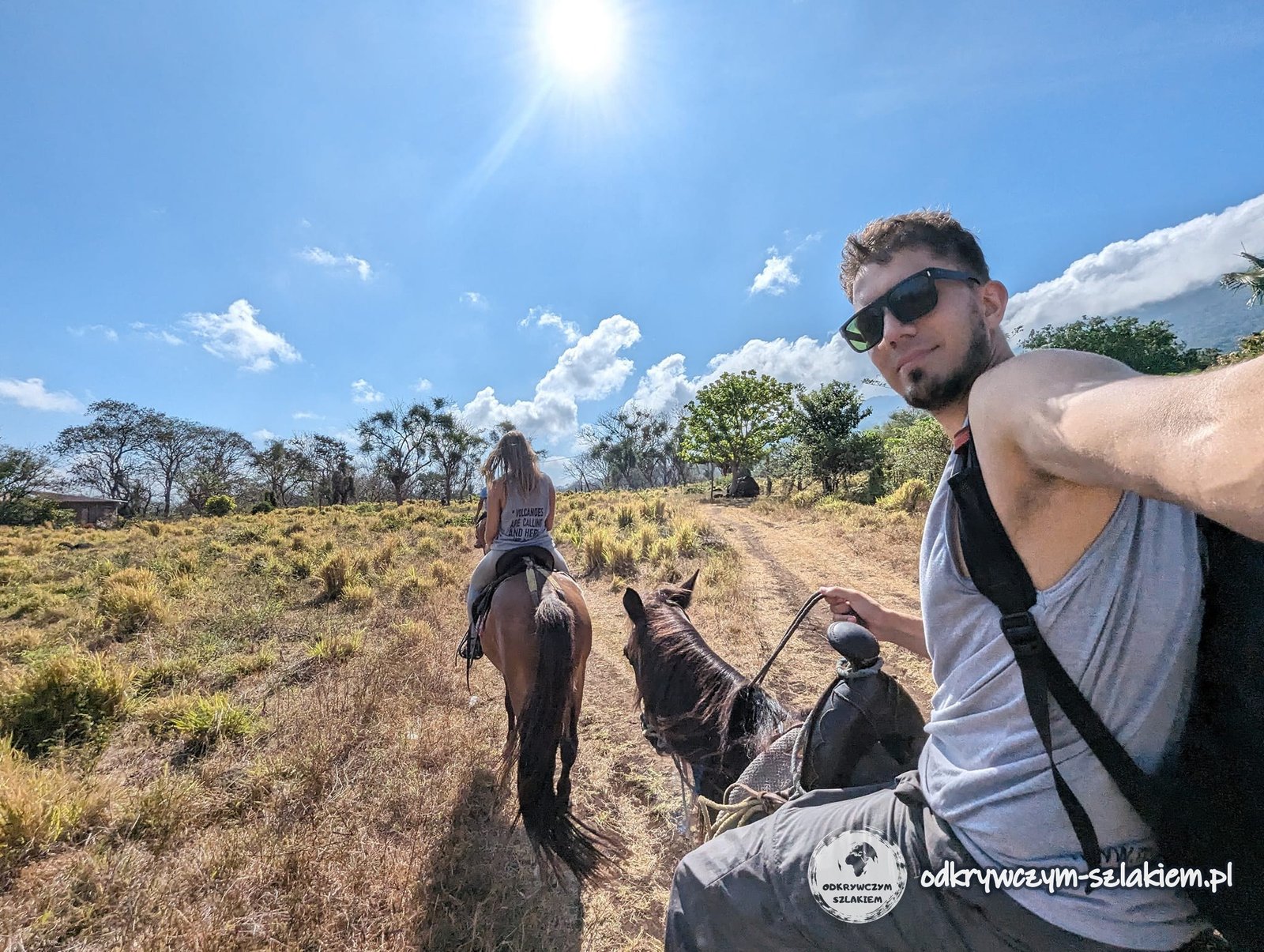
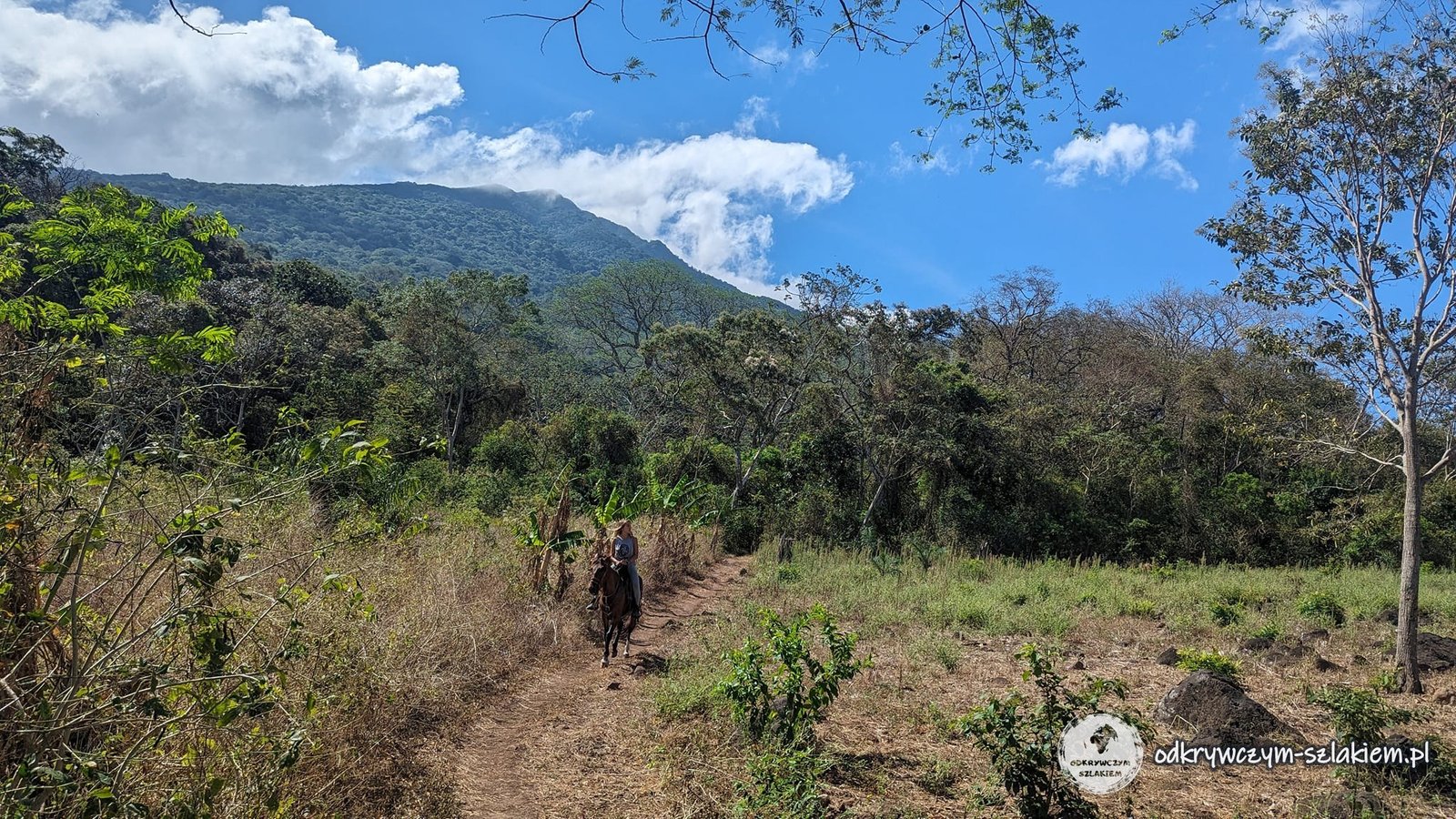
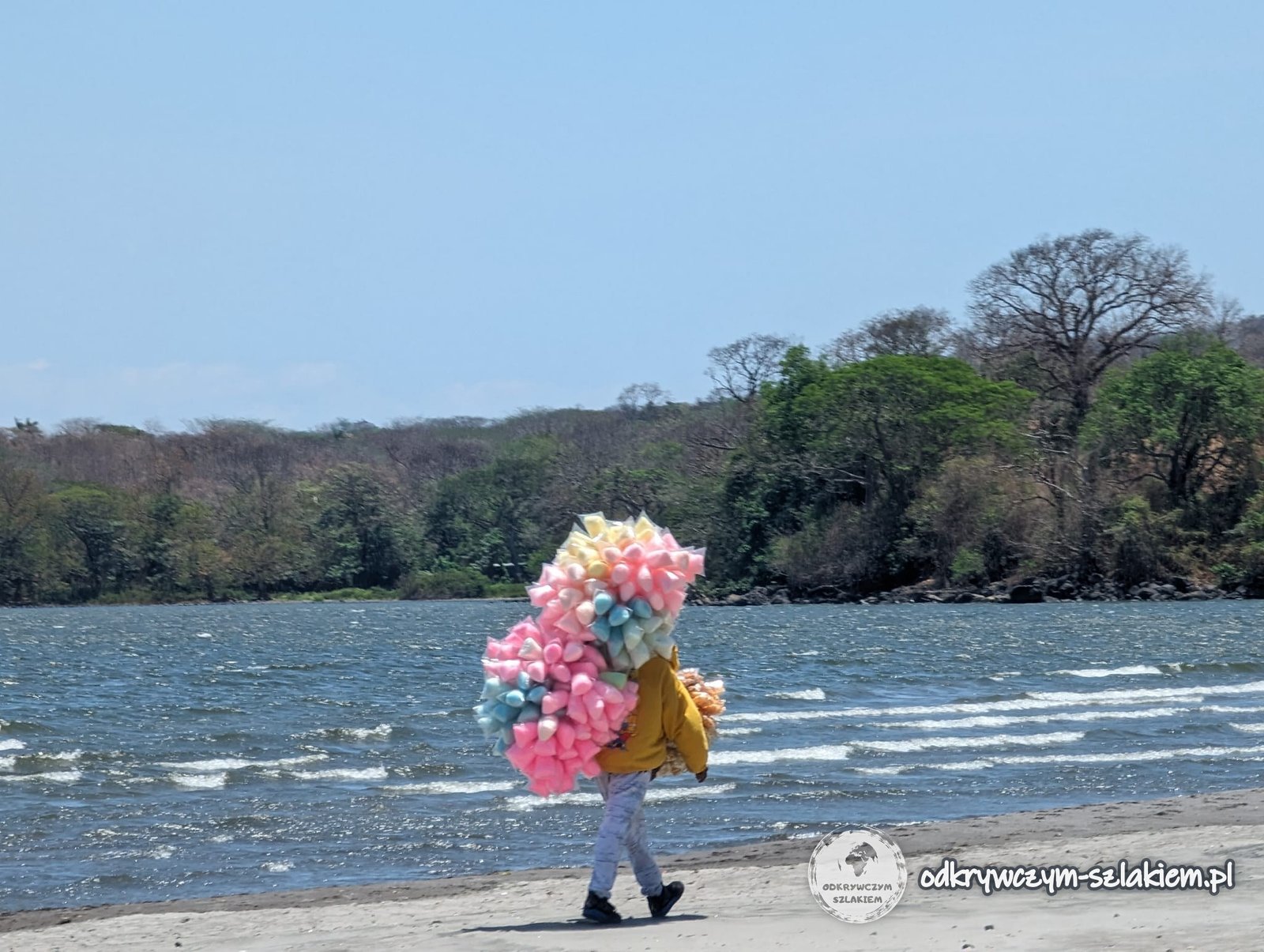
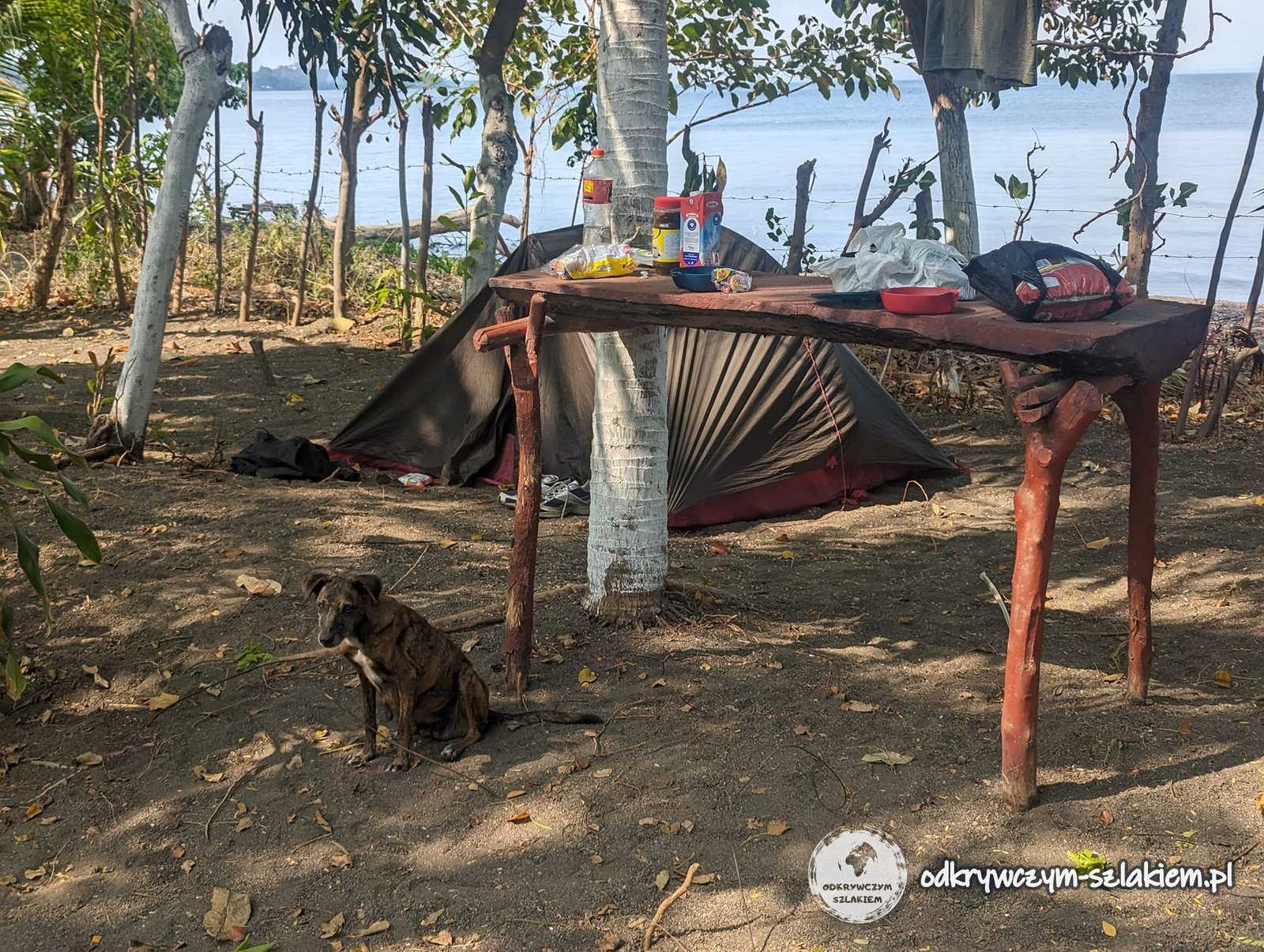
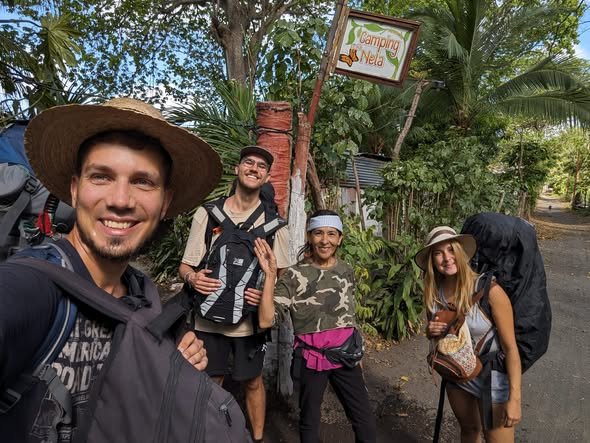
We got around the island mainly by public bus (chicken bus), a bit by hitchhiking (three times) and sometimes by unofficial taxi. Renting a scooter is very popular, but it did not pay off for us. For the whole stay we slept at the Doña Nella campsite in Moyogalpa – the largest town, where the ferries leave from and where there is a supermarket – paying just 150 córdobas (about €3.70) per person per night. There was good company and it was a great place to relax a bit; lunch at our favourite eatery cost about €2.30. Practical prices (March 2024): bus 10–22 córdobas (€0.25–0.50), Charco Verde 5 USD, Ojo de Agua 10 USD (5 of which you can spend at the bar), horse riding with Zaki 10 USD per hour.
Safety, scams and border crossings
Is Nicaragua dangerous? In fact, it is considered one of the safer countries in Central America. The Polish Ministry of Foreign Affairs of course warns about robberies and thefts – as it does for every country we have been to – but safety here is measured differently than in Poland or Germany. Not once did we feel threatened. We avoided places that might be risky (poor neighbourhoods, the Pacific coast) and anything to do with politics. The political situation is unstable – since 2018 there have been periods of unrest, and since the 2021 election nobody wants to talk about politics in public; people are intimidated. As a tourist, it is better to avoid speaking about politics in public and to stay away from demonstrations.
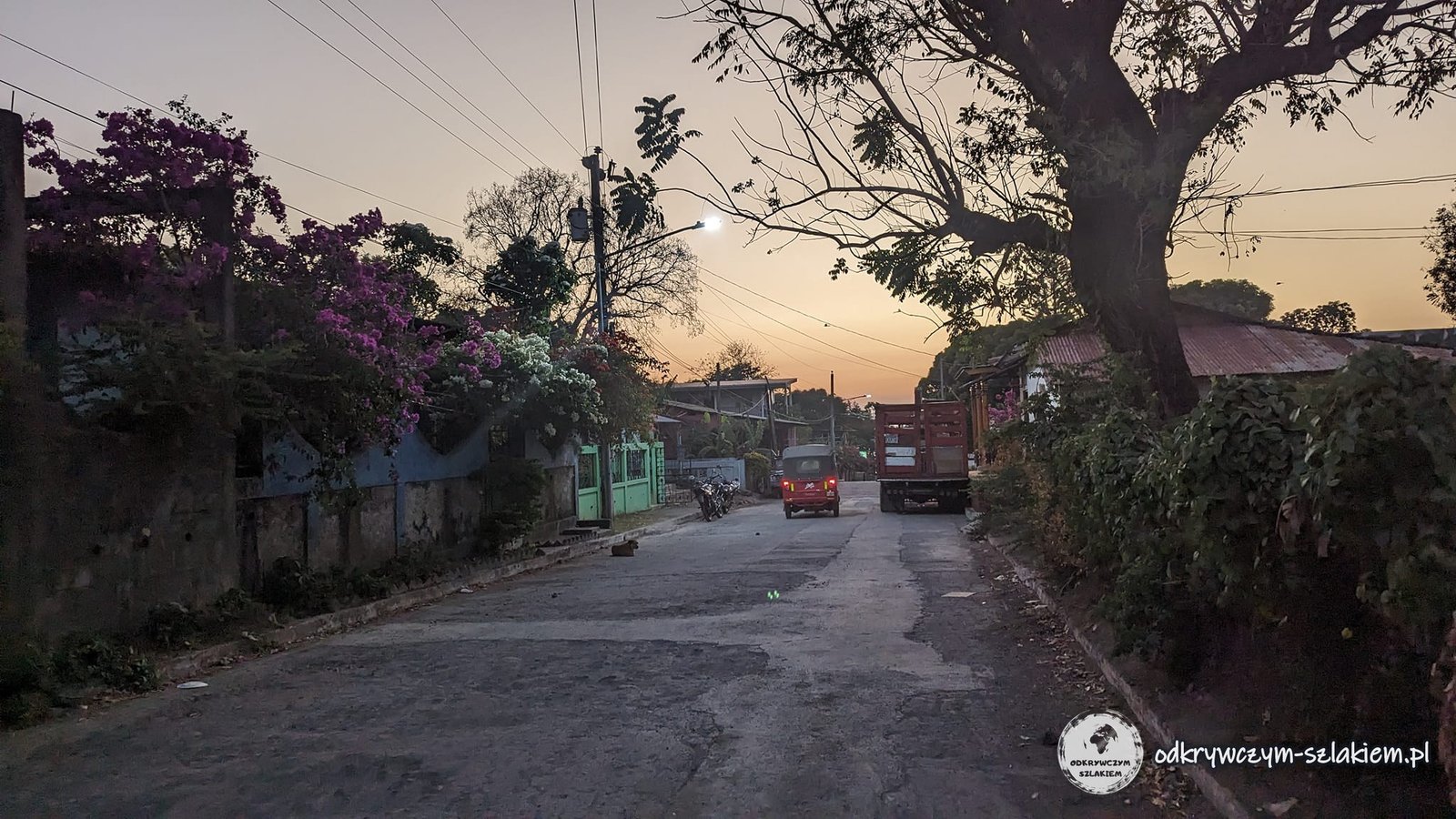
One evening, as we were wild camping by Laguna de Apoyo, a local advised us to move closer to the “bar”, i.e. closer to civilisation, where the risk of theft is lower. We listened and everything was fine.
What really struck us – and what we did not come across anywhere else – is how often people here try to rip off tourists. “There is no bus / there won’t be one / it will come late” – said, as it happens, by someone renting out scooters, someone offering a room instead of our free tent, or by taxi drivers. We had the impression that almost at every step someone was trying to get money out of us.
And what about the borders? All the fees were official (and luckily they are not charged at every crossing). The border offices usually look very professional. Apart from entry and exit fees, extra taxes are sometimes charged – we paid one when leaving Nicaragua – and this happens even more often on domestic ferries (as in Mexico, Honduras and Nicaragua). We ourselves had no unpleasant experiences, although we heard that some friends of ours were asked for a bribe when entering Nicaragua, and apparently they were not the only ones.
Photo gallery