6:14
 6:14
The state of Oaxaca was once home to various ethnic groups, including the Zapotecs and the Mixtecs. Descendants of these ancient civilisations still live in the area and keep up their customs. Near the city of Oaxaca, their heritage has survived in the form of numerous ruins at Mitla and Monte Albán. Together with Hierve el Agua, they are among the main tourist attractions near the city. The region is also home to indigenous and Afro-Mexican communities.
From Puebla it took us over 5 hours to get here by bus, with no toilet and one stop – with food poisoning it was a fight for survival for me (it lasted a week; Patrycja was fine, even though we ate the same things). In the evening the bus station was full of migrants, which worried us – needlessly. Mexico is the main migration route to the USA, and for the migrants themselves the journey north, including on the “train of death”, is very dangerous. The city was already decorated for Día de Muertos two weeks before the holiday.
The Spanish founded the town of Antequera here in 1529; in 1532 Emperor Charles V granted it city status. The name Oaxaca comes from the Nahuatl Huāxyacac (“among the guaje trees”), and “de Juárez” was added in 1872 in honour of Benito Juárez – a Zapotec from this state who became President of Mexico. Since 1987 the historic centre, together with Monte Albán, has been a UNESCO World Heritage Site.
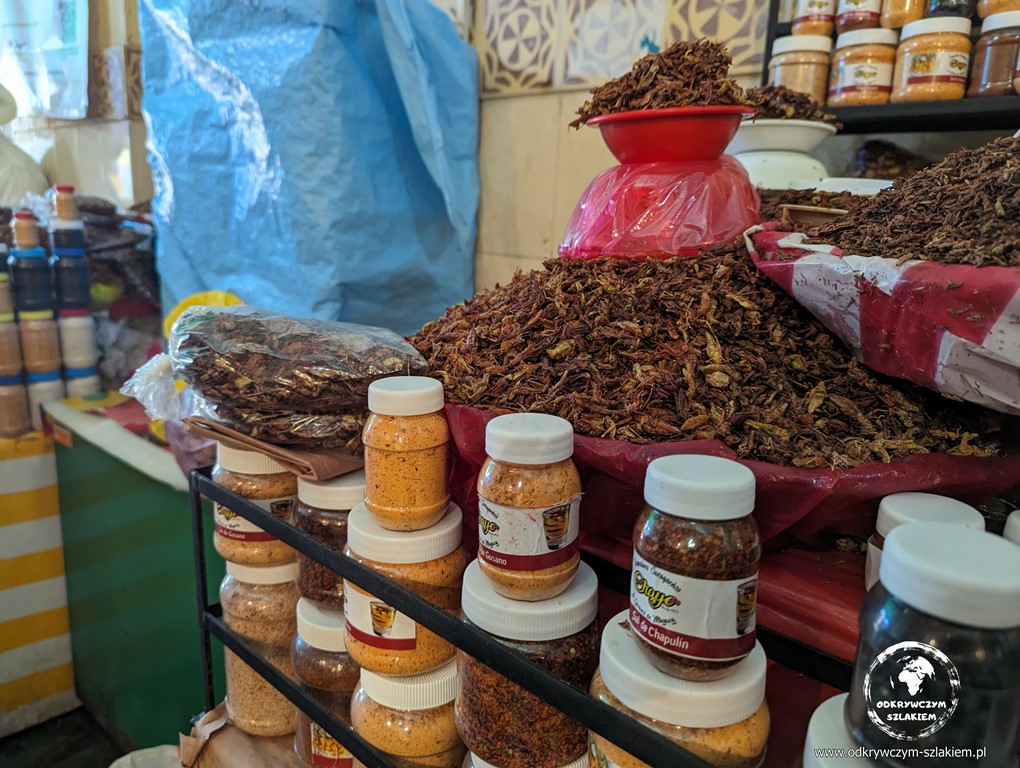
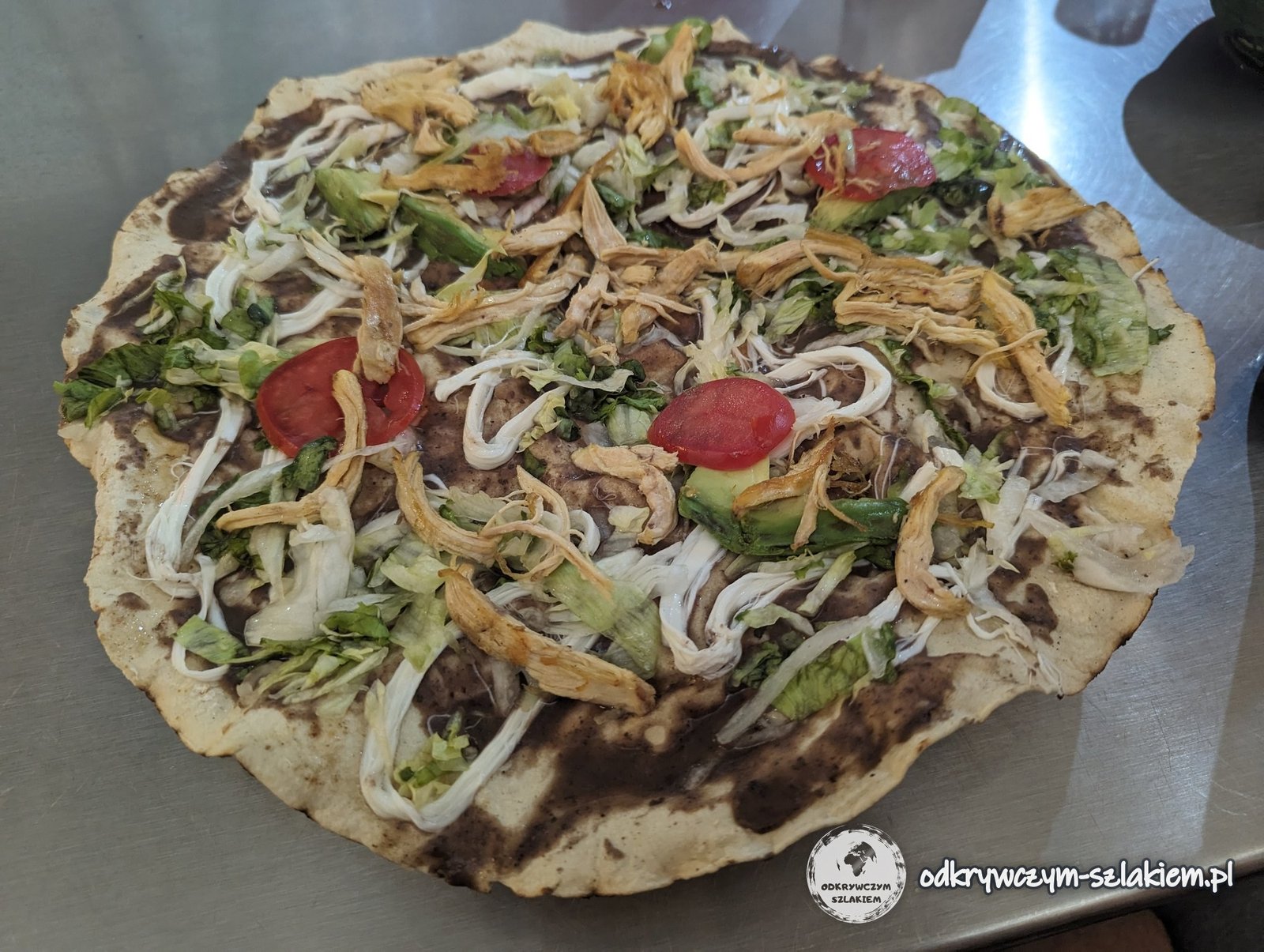
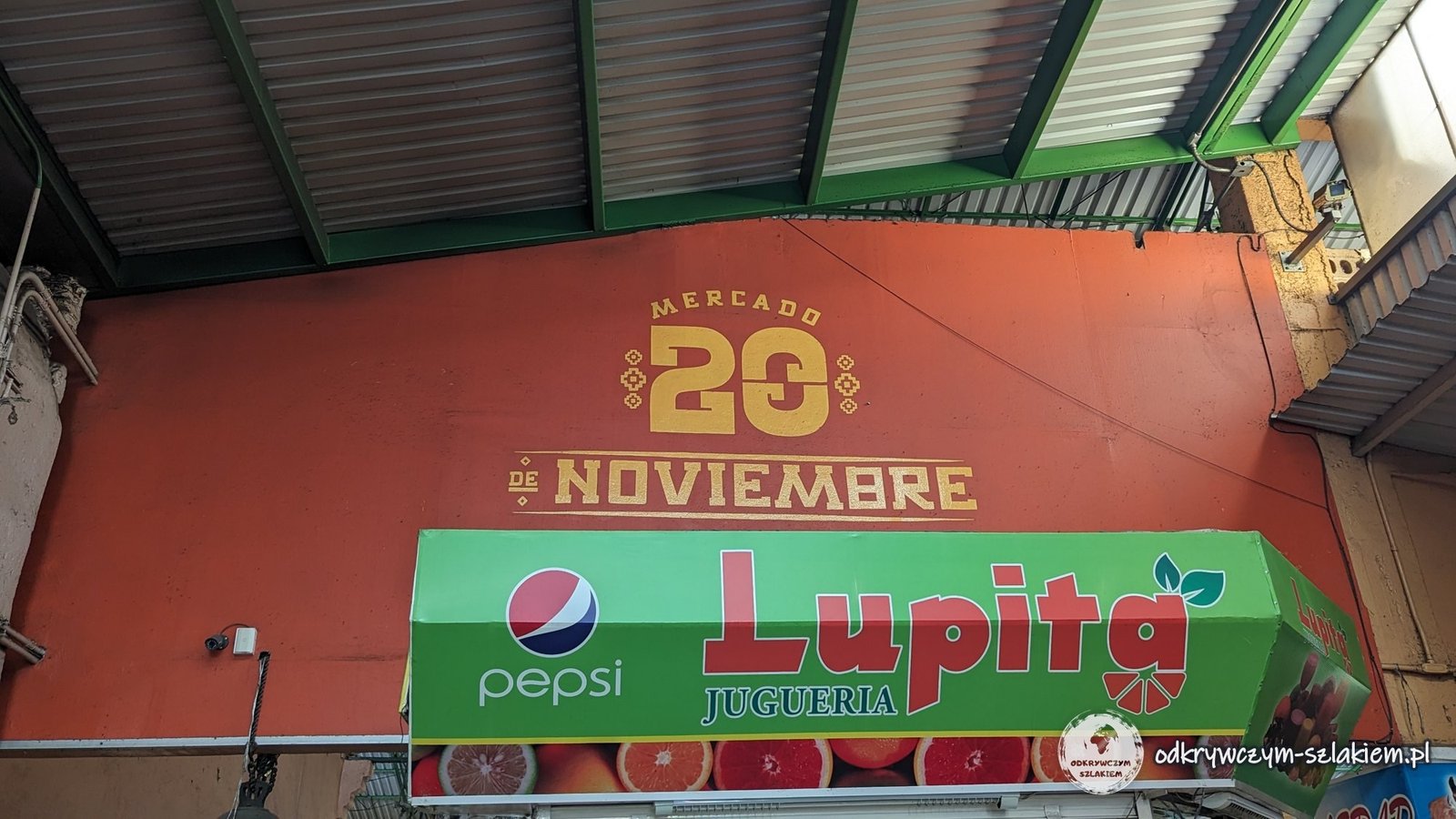
This is a food market. You can buy typical local products, for example:
At one stall I tried tejate – a drink made of corn flour and fermented cocoa; for me it tasted too strange. The market also has sights you need to get used to – like a pig’s head on the counter.
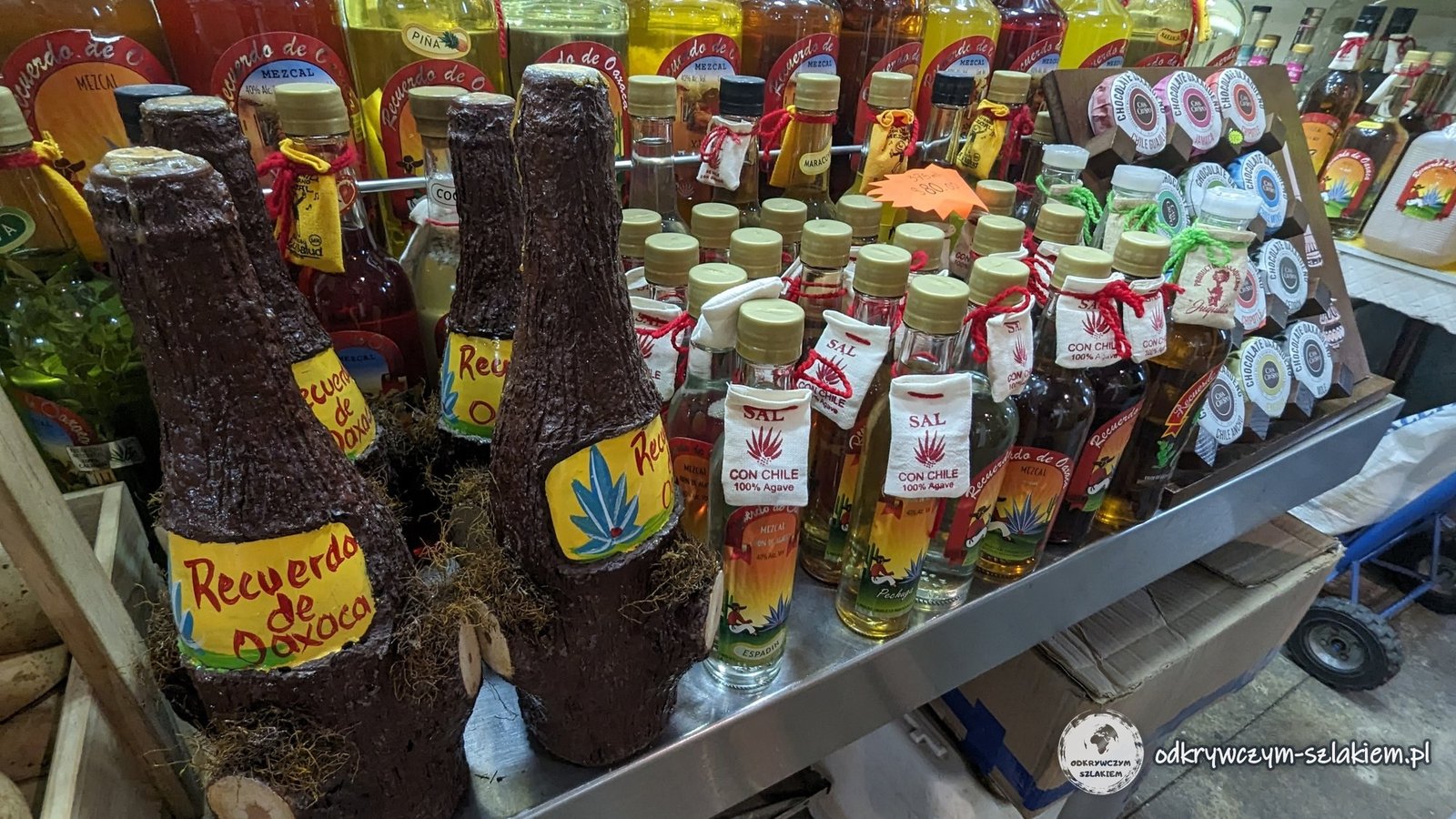
Mezcal rules here – it’s made from agave, but from the whole heart of the plant, not from its juice (tequila is made only from blue agave). The coloured kind was weaker, the clear kind stronger.
Oaxaca is known as the “land of seven moles” – among them the black mole negro, coloradito, amarillo, verde and chichilo. Mezcal is the pride of the whole state: in 2023 Oaxaca produced about 90% of Mexico’s certified mezcal, and the small town of Santiago Matatlán on the road to Mitla has more than 150 distilleries.
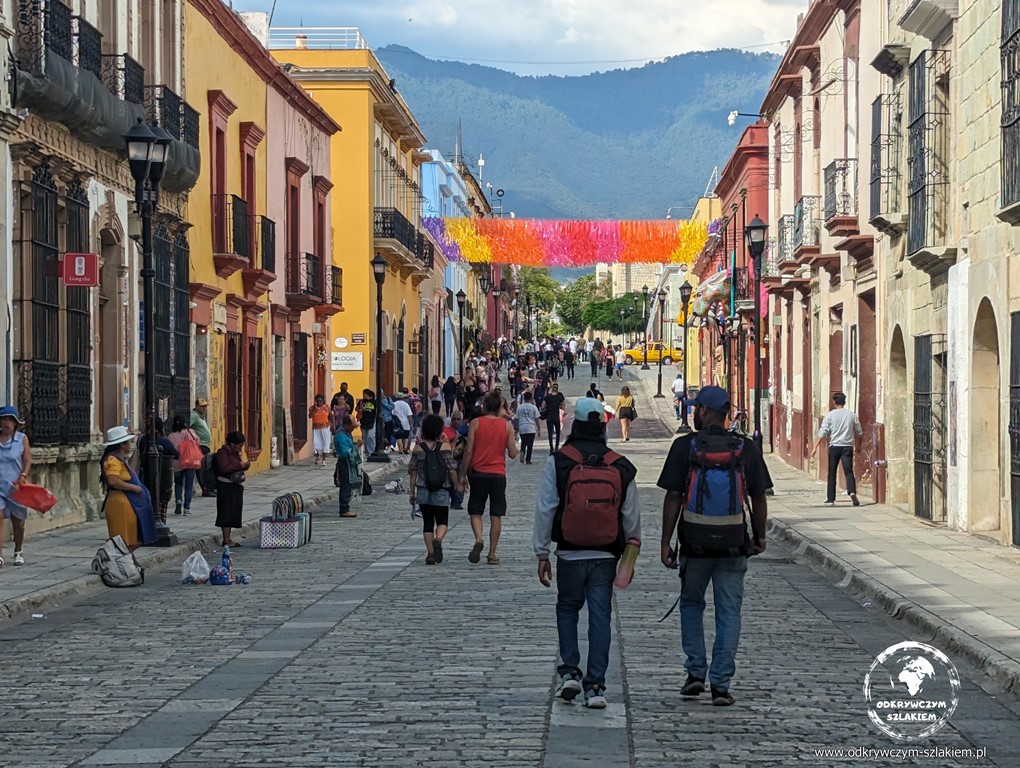
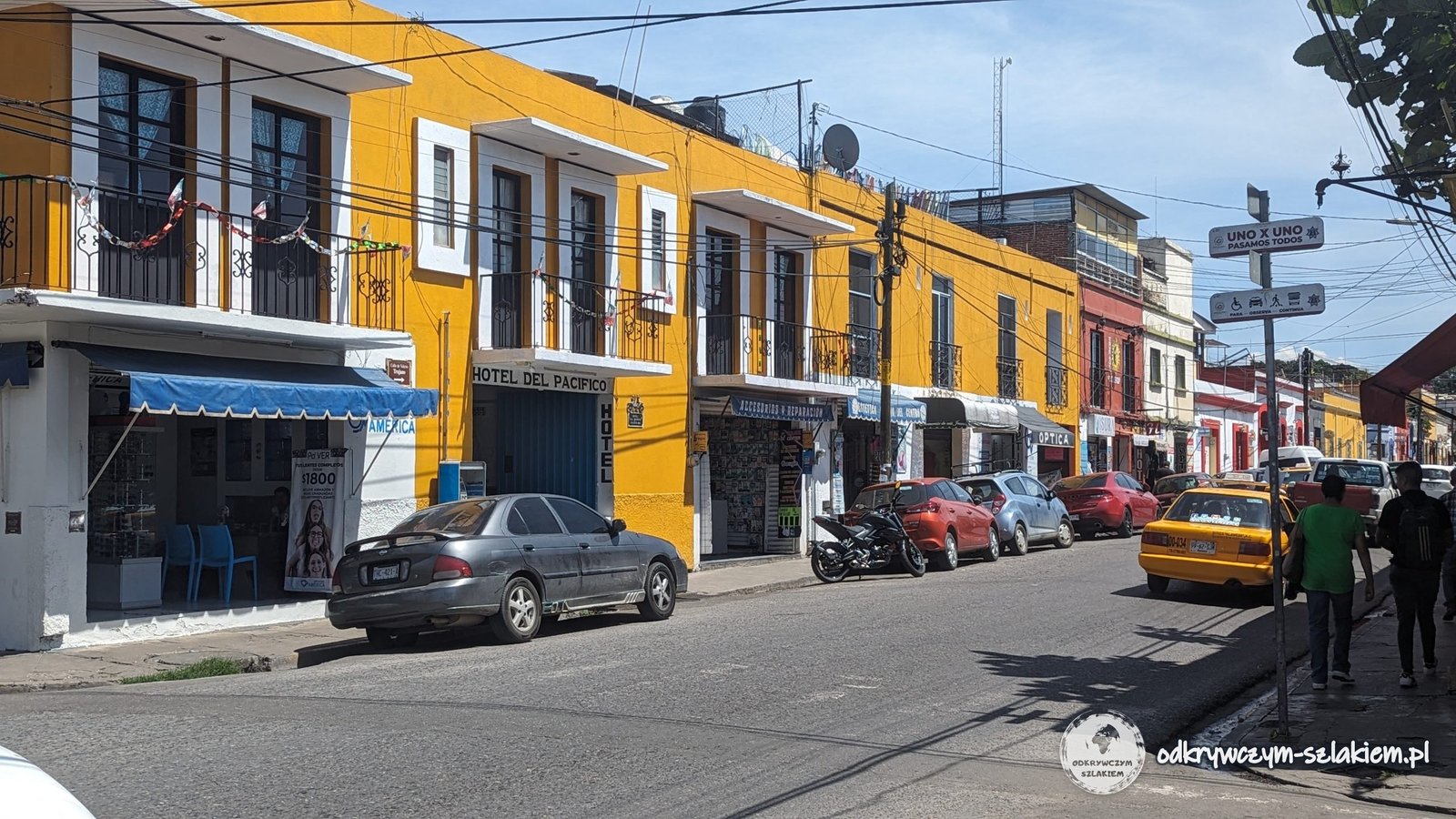
This is a street worth strolling along. What catches the eye are the mountains appearing between the buildings, and the skeletons in dresses placed in the windows. It has a nice atmosphere.
From Oaxaca on I also started “hunting” for photos of VW Beetles – you still see them often in Mexico.
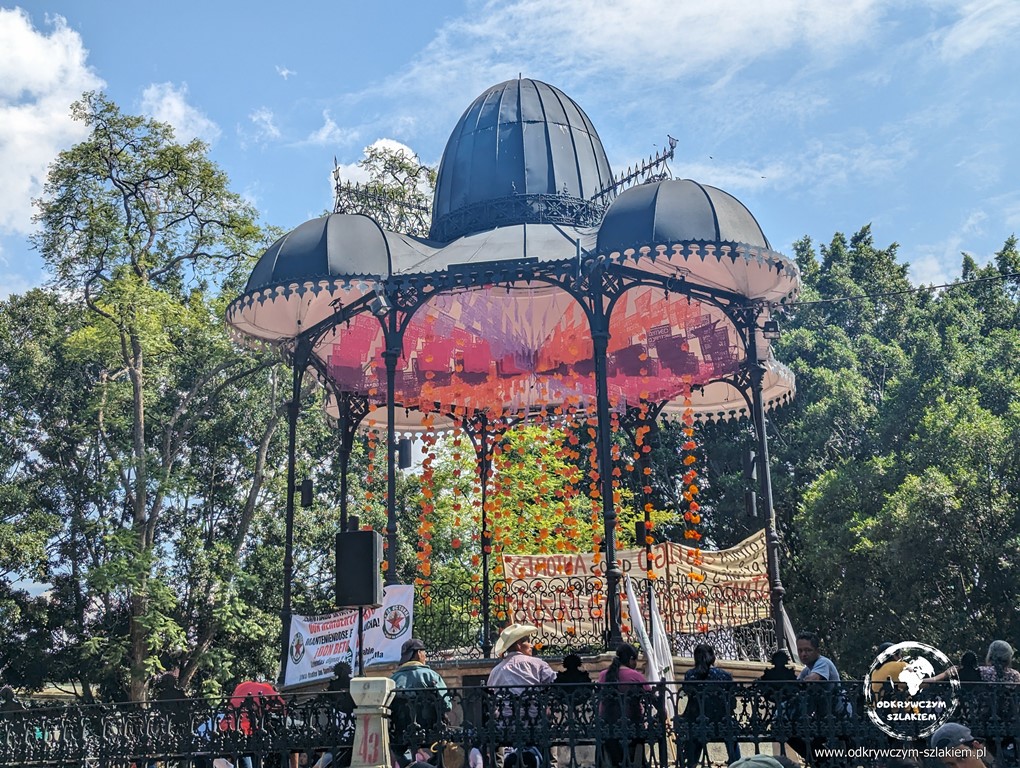
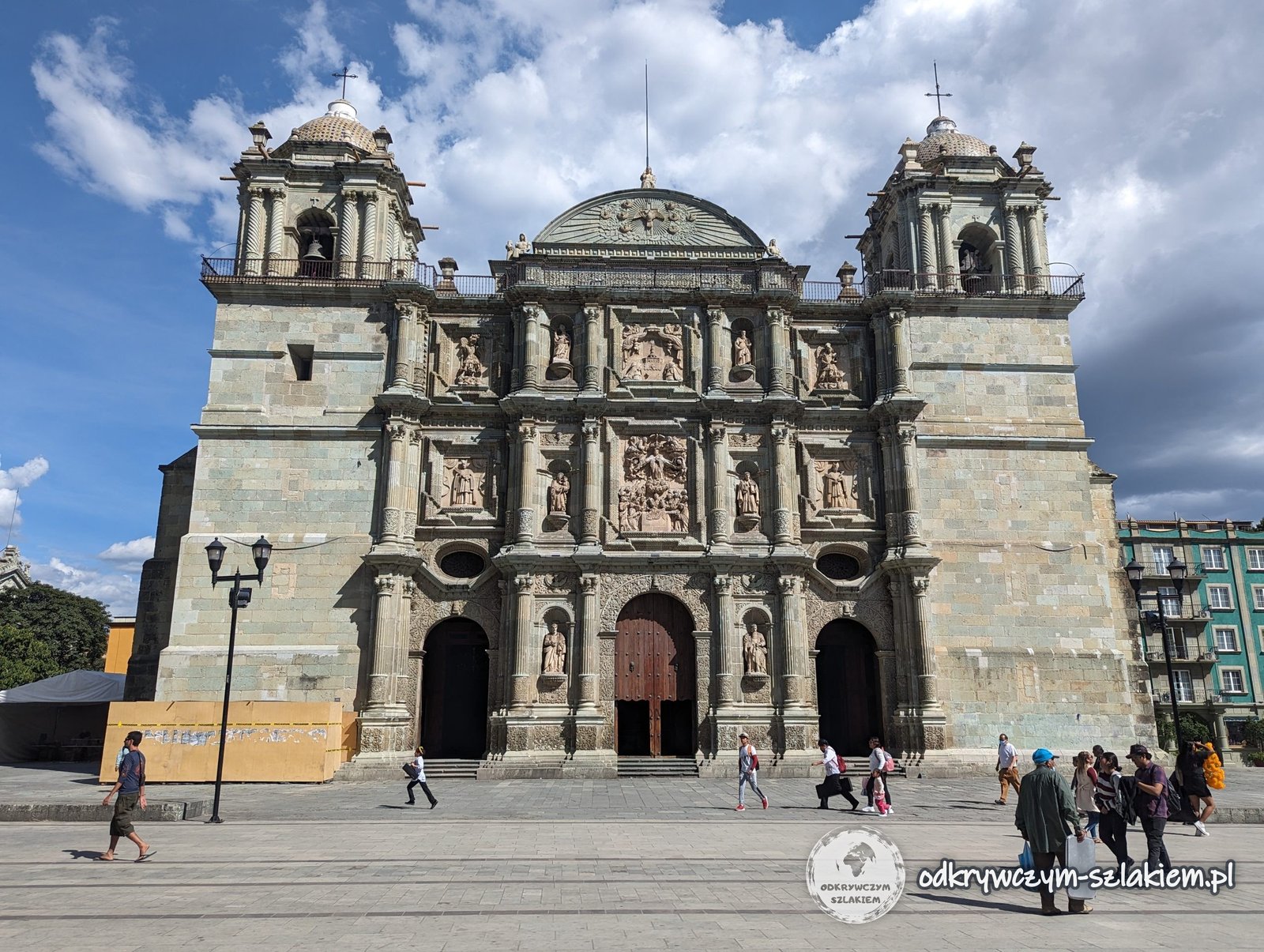
It is in the city centre. Throughout the colonial period the square had no paving or pavements, only a marble fountain, which is now its main ornament. Today it is an important spot in the city where holidays and festivals are held. It is also a meeting place for the locals. Next to it is the cathedral (Catedral Metropolitana de Oaxaca), which you can enter for free.
Like many buildings in the centre, the cathedral is built from the greenish local cantera verde stone. In the evening vendors, musicians and dancers in colourful costumes fill the square and nearby streets.
The present cathedral is already the third on this site – the two earlier ones were destroyed by strong earthquakes in the 16th and 18th centuries.
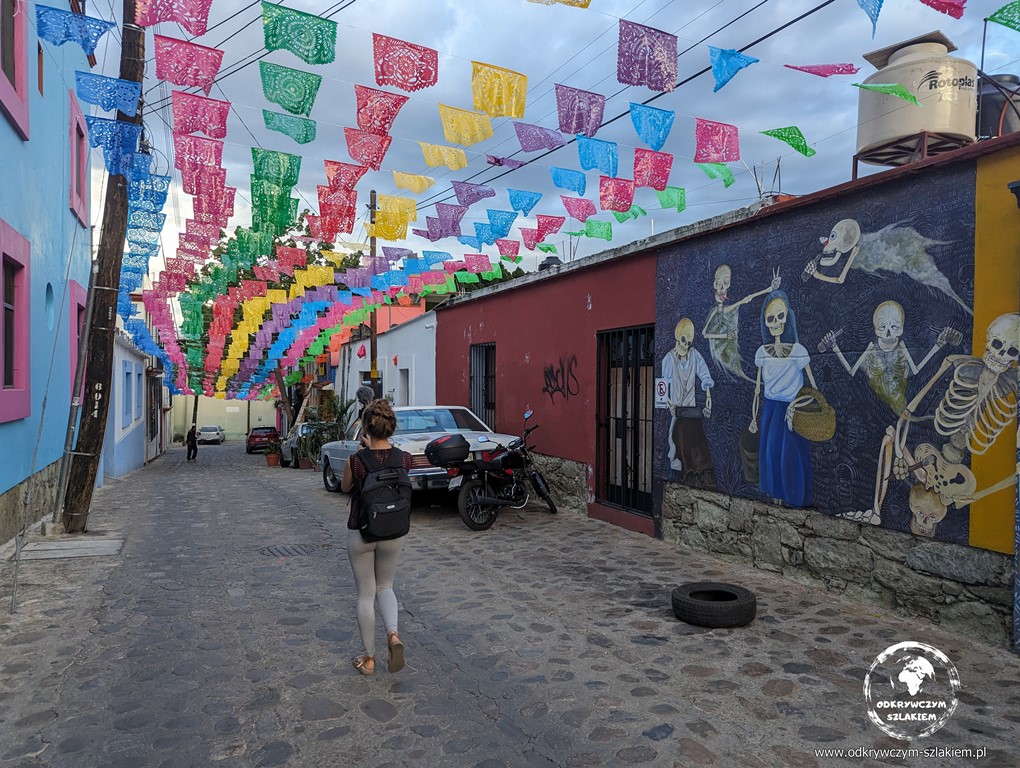
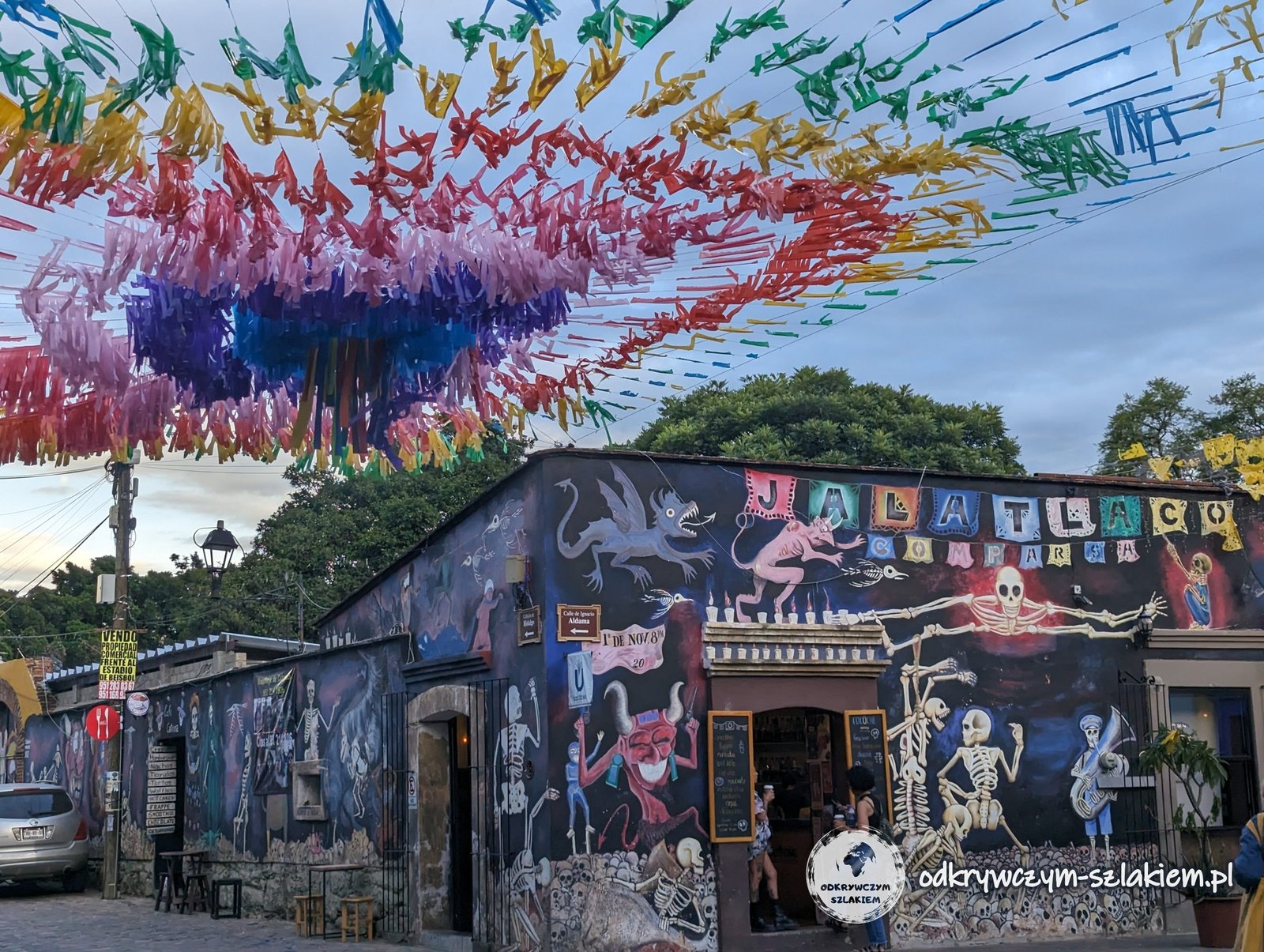
This is a pretty and interesting area. It has many murals with Mexican themes.
It is one of the oldest districts of the city, with cobbled streets and low houses. Colourful papel picado hangs above the streets and the walls are full of murals.
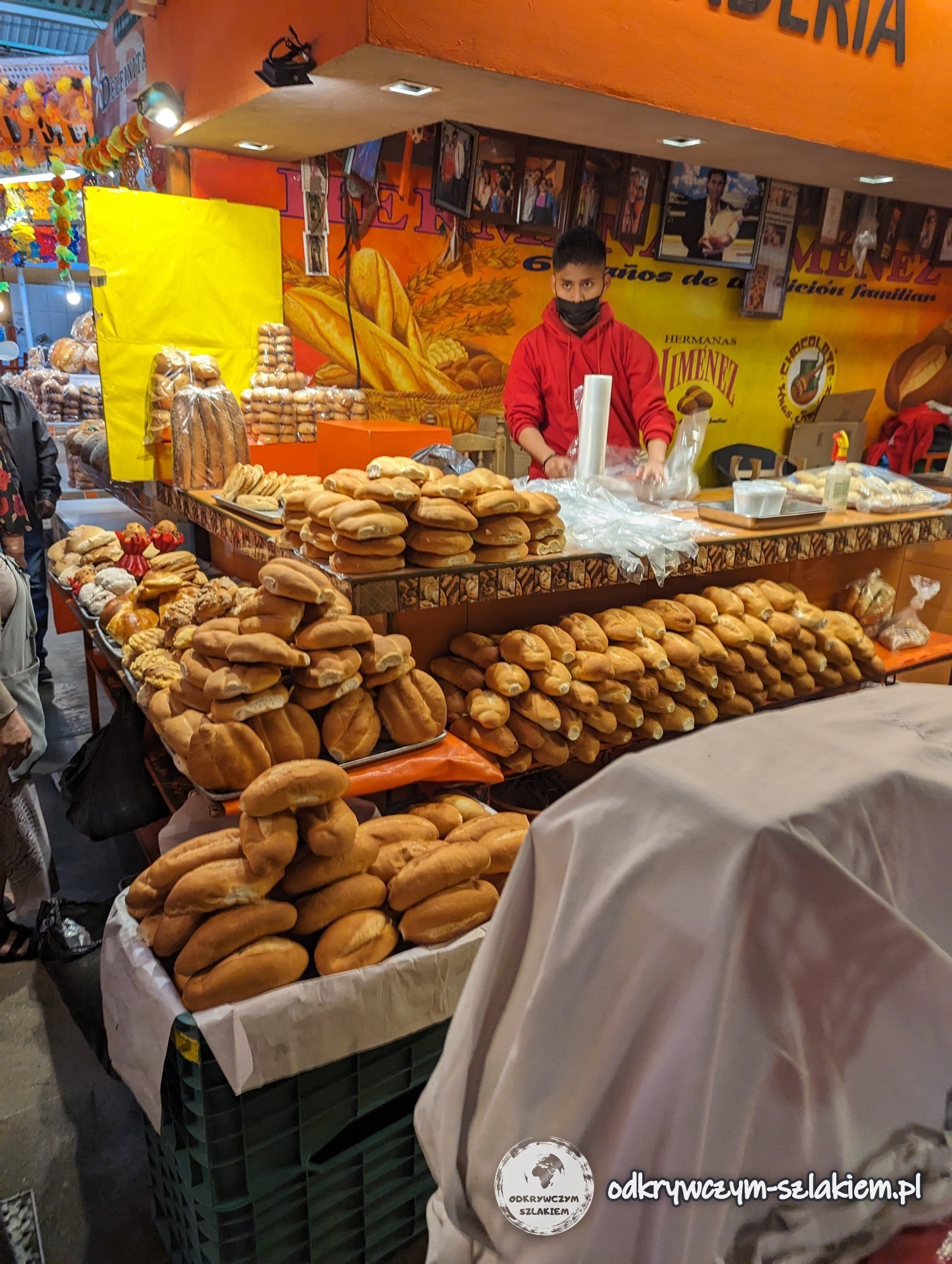
Here you can buy mainly bread. It’s worth walking around the market, but be careful not to knock over any of the rolls piled up in stacks. When I knocked a few over with my backpack, we had to buy them, which was fine with us until we found out how much they cost.
The market is best known for its grill aisle, where you choose raw meat and the stall grills it on the spot.
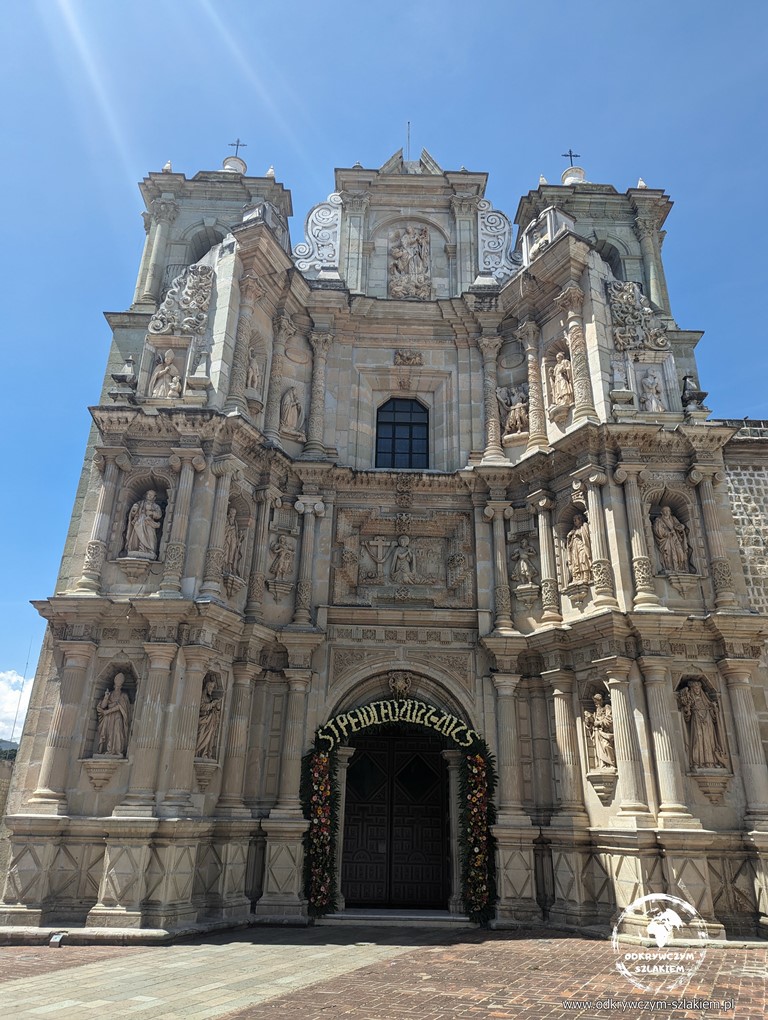
This is a Roman Catholic basilica built in the Baroque style. It is located in the city centre. It has been inscribed on the UNESCO World Heritage List. It’s really impressive.
The basilica was completed in 1690. It is dedicated to the Virgin of Solitude (Virgen de la Soledad), patron saint of the state of Oaxaca, and its richly carved façade resembles an altar screen.
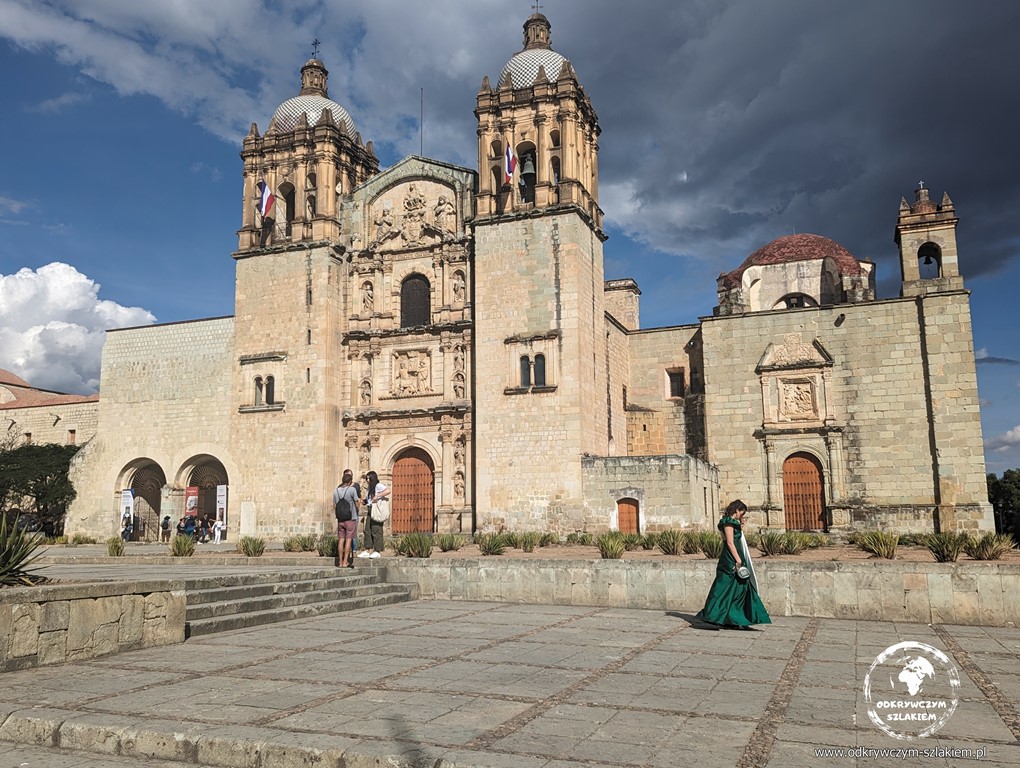
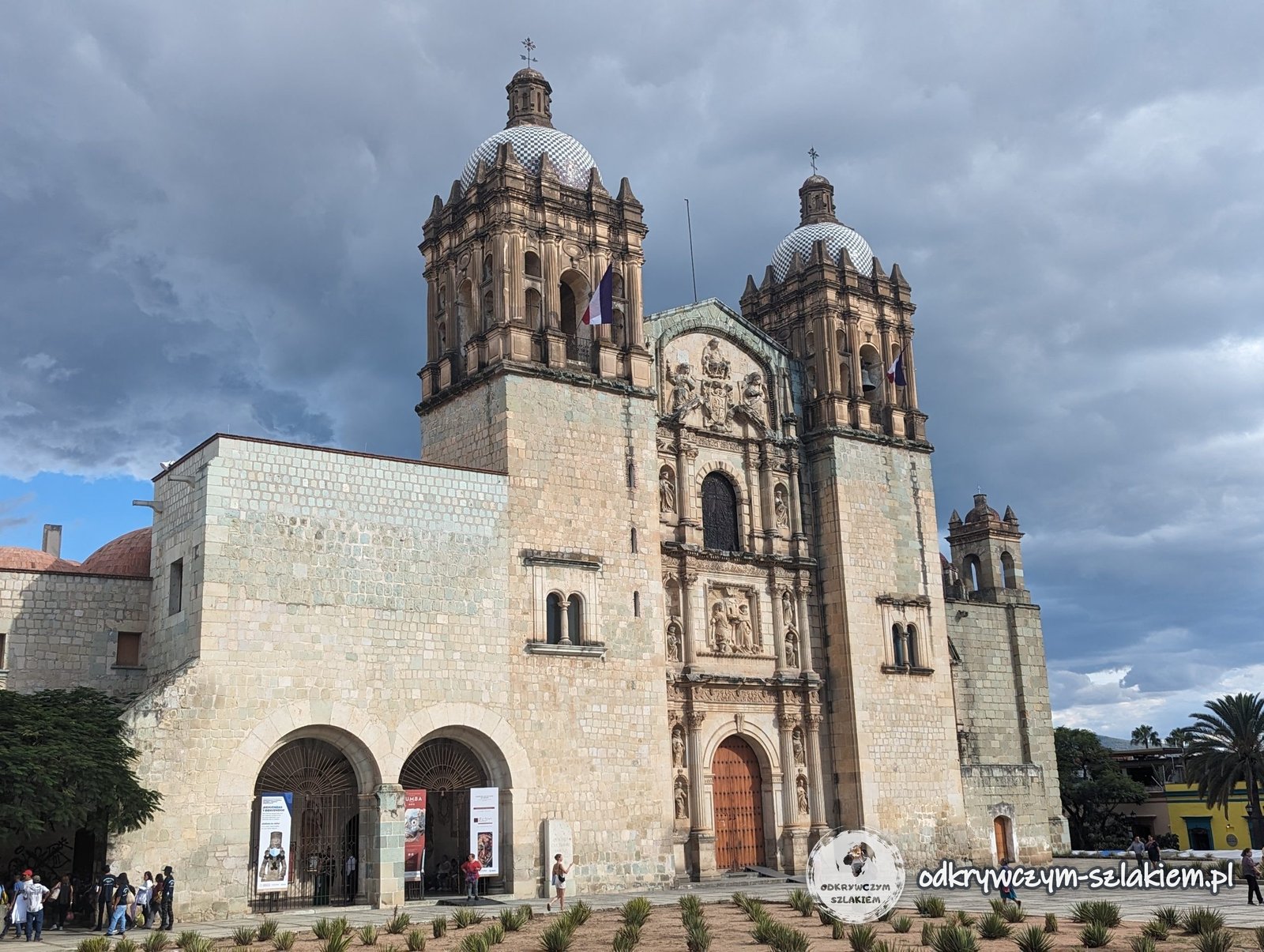
Like the basilica, this building is on the UNESCO World Heritage List. The Baroque church houses a museum collection. There is an entrance fee.
The former monastery houses the Museum of Oaxacan Cultures, whose greatest treasure is the find from Tomb 7 at Monte Albán.
The Dominicans began building the monastery in 1575, the church was consecrated in 1611 and the last works were completed in 1731. The interior is covered in gilding and colourful stucco, and one of its decorations is the family tree of Saint Dominic. The treasures of Tomb 7 were discovered in 1932 by the archaeologist Alfonso Caso – they include Mixtec gold jewellery, a skull covered in turquoise mosaic and rock crystal goblets. A museum ticket costs MXN 210 for foreigners (as of 2026); the museum is closed on Mondays. Behind the monastery lies an ethnobotanical garden with plants from Oaxaca – it can only be visited with a guide.
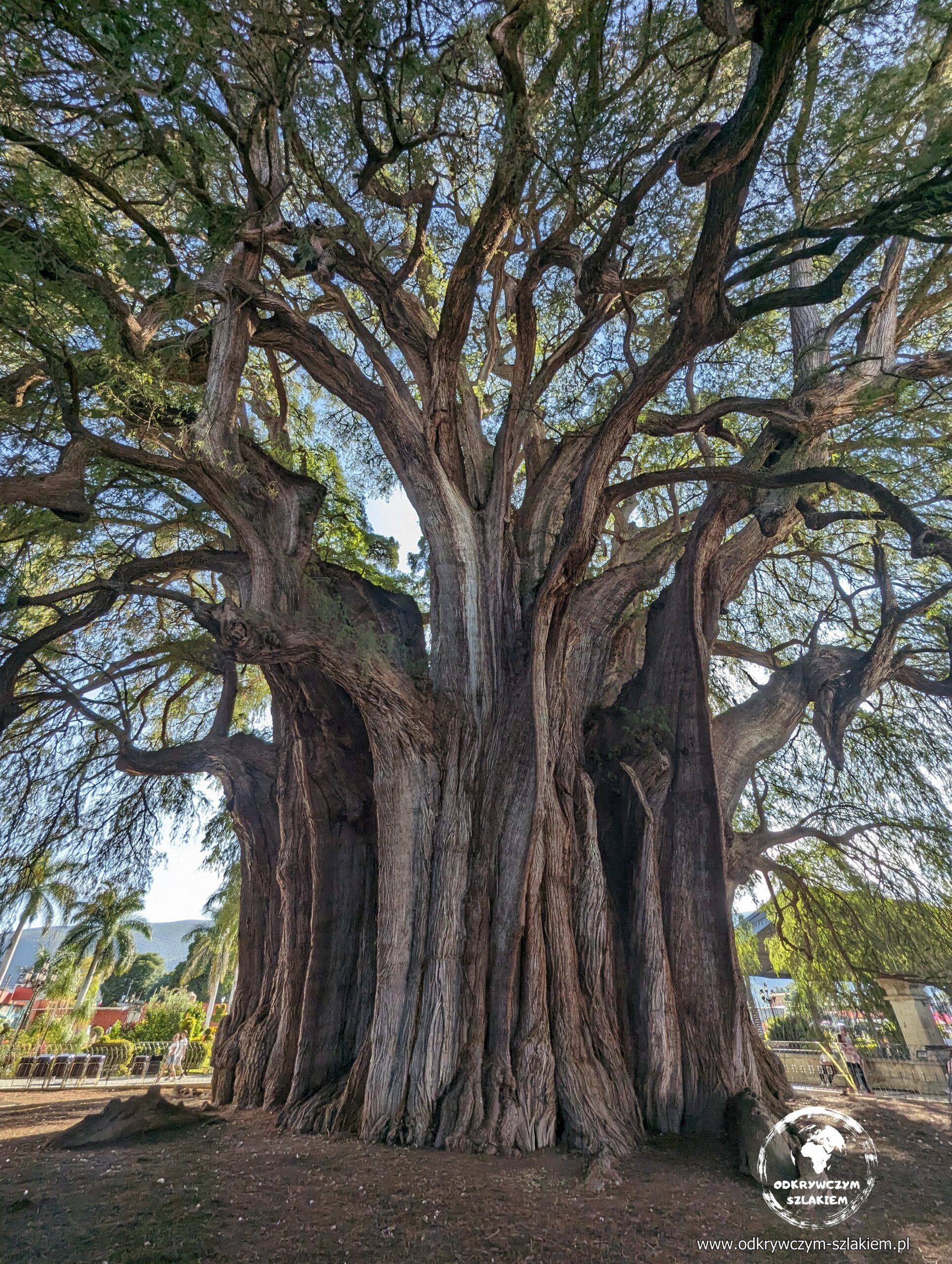
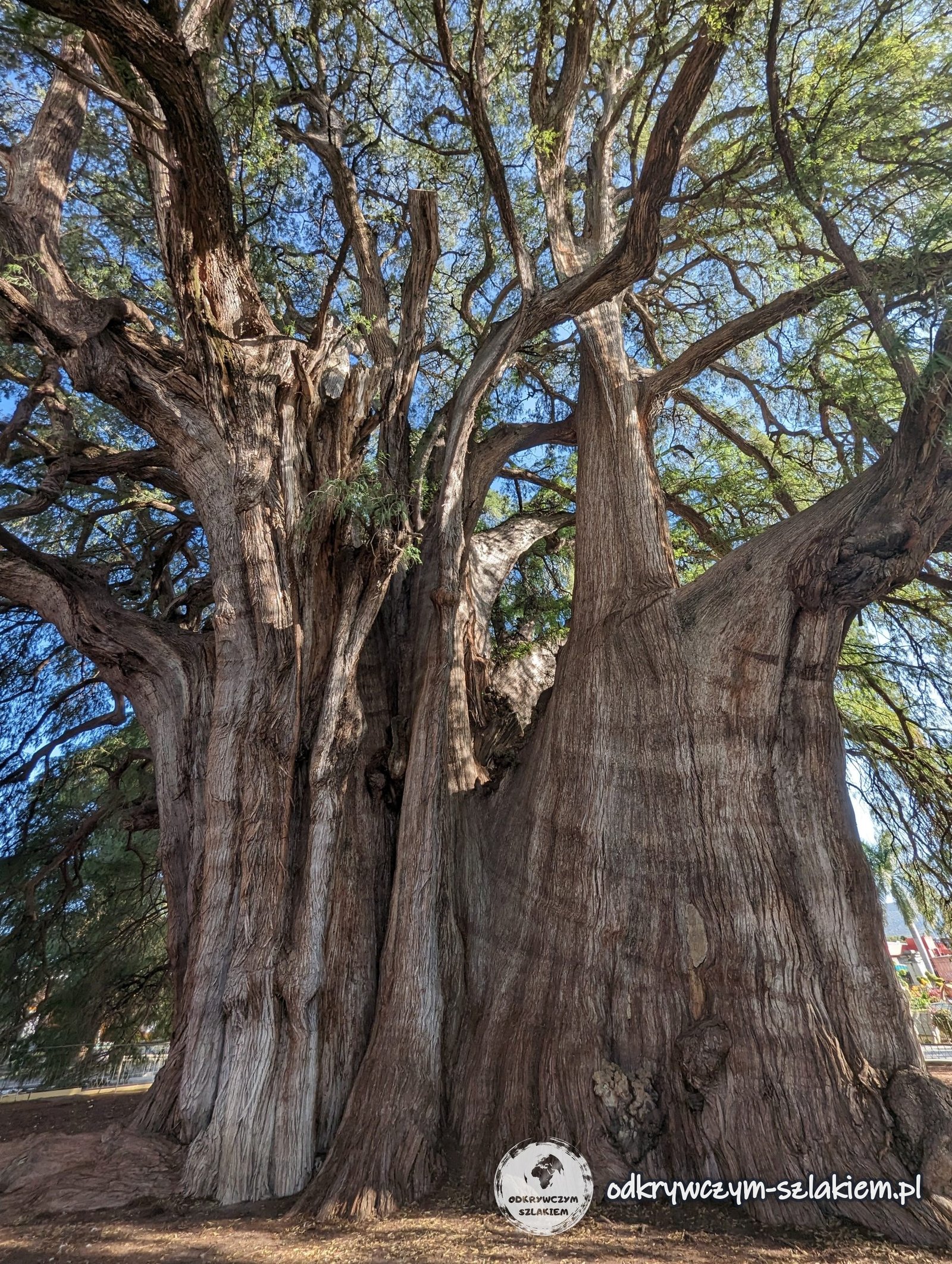
This is the widest tree in the world. To see it up close and to go into the little church, you have to pay 20 MXN (about €1.20). From the city of Oaxaca it’s only half an hour by colectivo. You can catch one at the central bus station. The ride costs 35 MXN (about €1.90).
It is a Montezuma cypress (ahuehuete) with a trunk over 40 metres around, estimated to be some 1500–2000 years old.
According to the sign by the tree, it is 42 m tall with a trunk 14.05 m in diameter, a volume of about 817 m³ and a weight of about 636 tonnes.
The tree grows next to the church in the small town of Santa María del Tule, about 10 km east of Oaxaca on the road to Mitla and Hierve el Agua – so it is easy to combine with a trip in that direction. DNA tests have shown that it is a single tree, not several grown together. According to a Zapotec legend, it was planted about 1,400 years ago by Pechocha, a priest of the wind god Ehécatl. The tree’s birthday is celebrated on the second Monday of October.
The town’s biggest festival is the Guelaguetza (Zapotec for “to give and to share”) – a showcase of dances and costumes from all eight regions of the state. The main performances take place on two Mondays in July (Lunes del Cerro) in the amphitheatre on the Cerro del Fortín hill – in 2026 on 20 and 27 July. Tickets for the lower sections A and B cost about MXN 1,300–1,600 in 2026, while the upper sections C and D are free.
There are also craft villages nearby: San Bartolo Coyotepec is famous for its black barro negro pottery (the shine comes from polishing the almost dry clay before firing), San Martín Tilcajete and San Antonio Arrazola for colourful carved wooden figures called alebrijes, and Teotitlán del Valle for wool rugs coloured with natural dyes. The rainy season falls in summer, with the most rain in June.
Stay with me on the road – follow me wherever you like best.
Clicking loads the profiles from Facebook, Instagram and YouTube (they may set cookies).