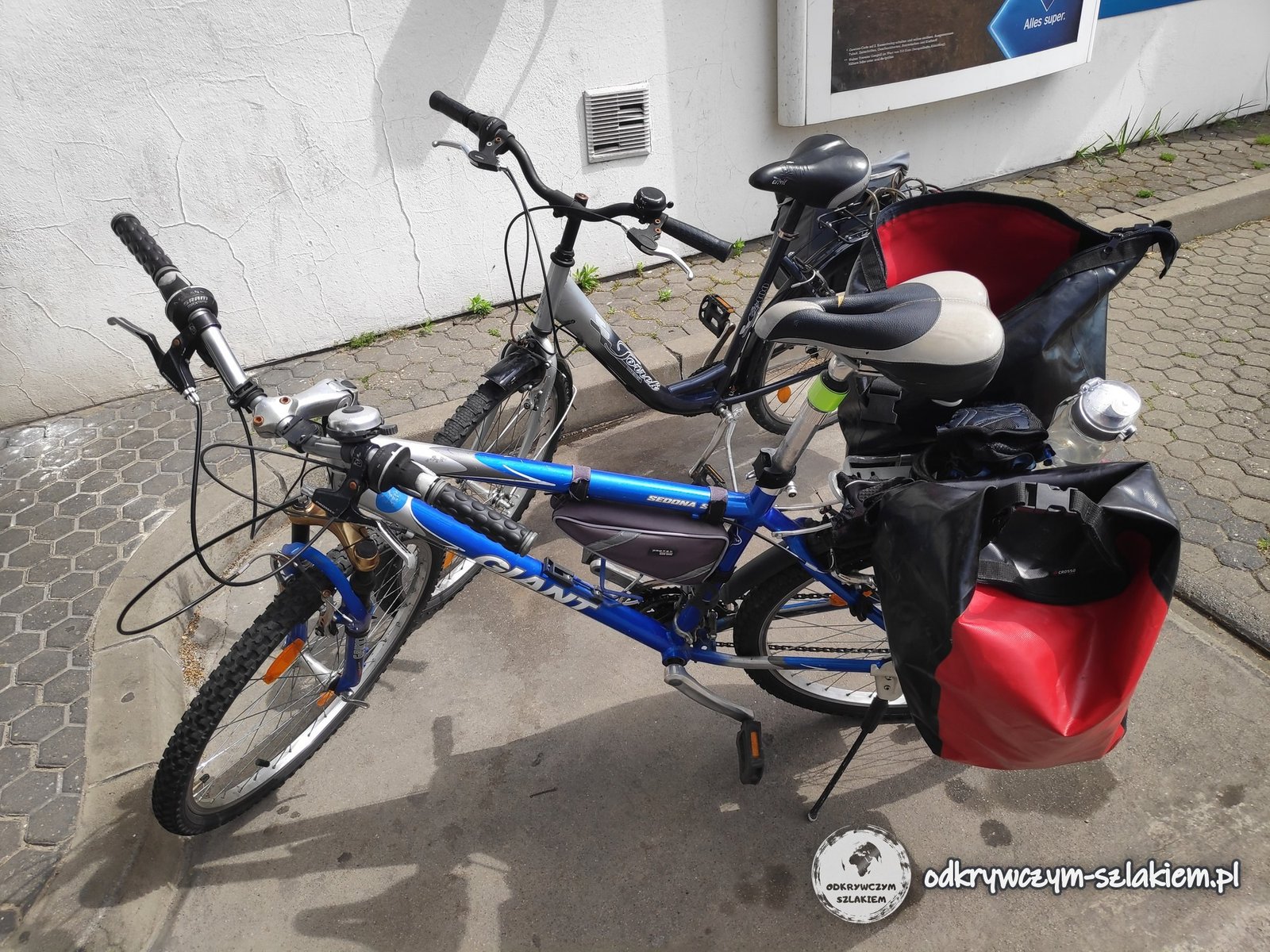
When I lived in Berlin, I usually took the S-Bahn or a regional train for trips out of the city – I described several of them in the post Day trips from Berlin. This post is its second part, this time by bike. Twice Patrycja and I went to Brandenburg for two days on bikes with panniers and a tent. At Easter 2021 we rode north-east, through Bad Freienwalde to the Oderbruch on the Oder. In May 2022 we went west, through the town of Brandenburg an der Havel and on along the Havel. We spent both nights in the tent at bivouac sites by the water.
Table of contents
- Buch and Börnicke – sculptures on the old sewage farms and an old manor
- Bad Freienwalde – old barracks and ski jumps
- A night by the Alte Oder in Neugaul
- The Oderbruch – Neulewin and the memorial in Platkow
- Through Werder and Wust to Brandenburg an der Havel
- Brandenburg an der Havel – the New Town and the Old Town
- The Marienberg – a garden, a vineyard and the Friedenswarte tower
- Along the Havel valley to Pritzerbe
- The bivouac site in Mögelin on the Havel
- Practical information
Buch and Börnicke – sculptures on the old sewage farms and an old manor
The first trip fell on Good Friday, 2 April 2021. Travelling to Poland for the holidays was difficult at the time, so we decided to spend them on our bikes. We made our first stop while still inside Berlin, in the district of Buch, on the former sewage farms (Rieselfelder) of Hobrechtsfelde. From the end of the 19th century Berlin’s sewage was spread over these fields, and they were closed in 1985. Today there are woods, meadows and pastures here, and the area is protected.
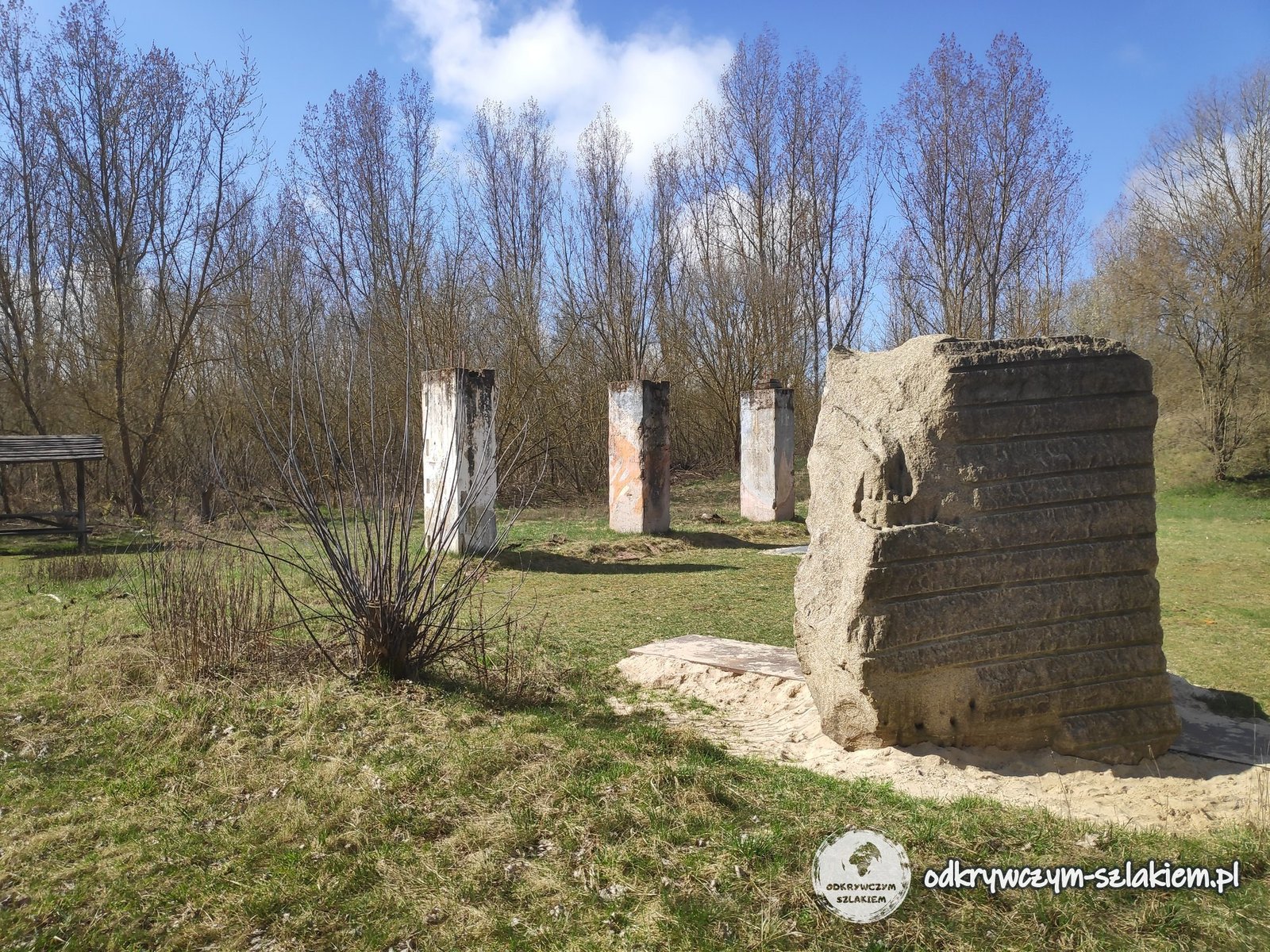
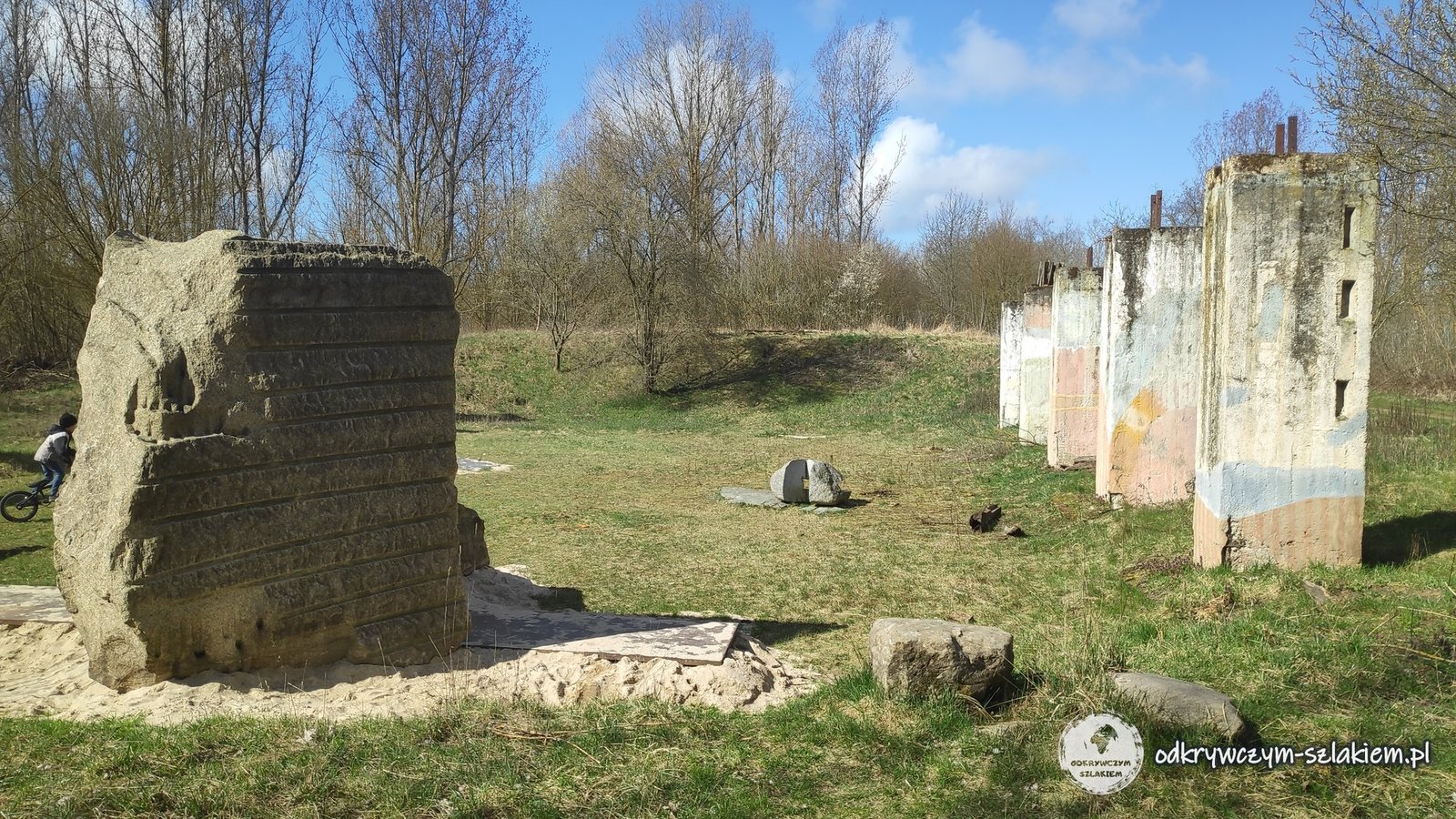
Along the paths stand stone and wooden sculptures from the international symposium “Steine ohne Grenzen” (“Stones without borders”), held since 2001. There are more than 100 of them in the woods around Buch and Hobrechtsfelde, made by artists from over 25 countries. Behind one of the stone sculptures stand colourfully painted concrete pillars – the remains of an old barn of the Hobrechtsfelde estate.
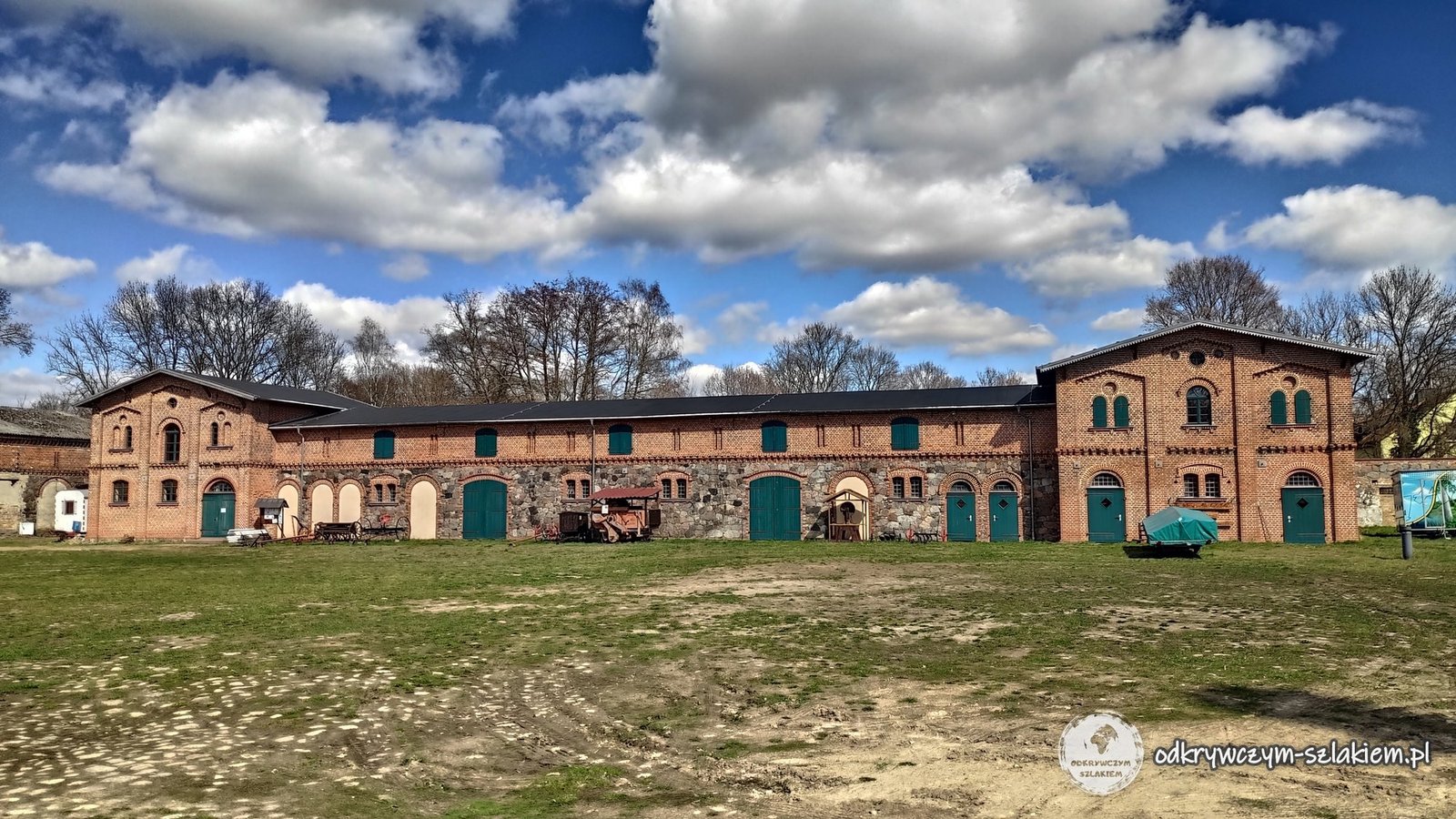
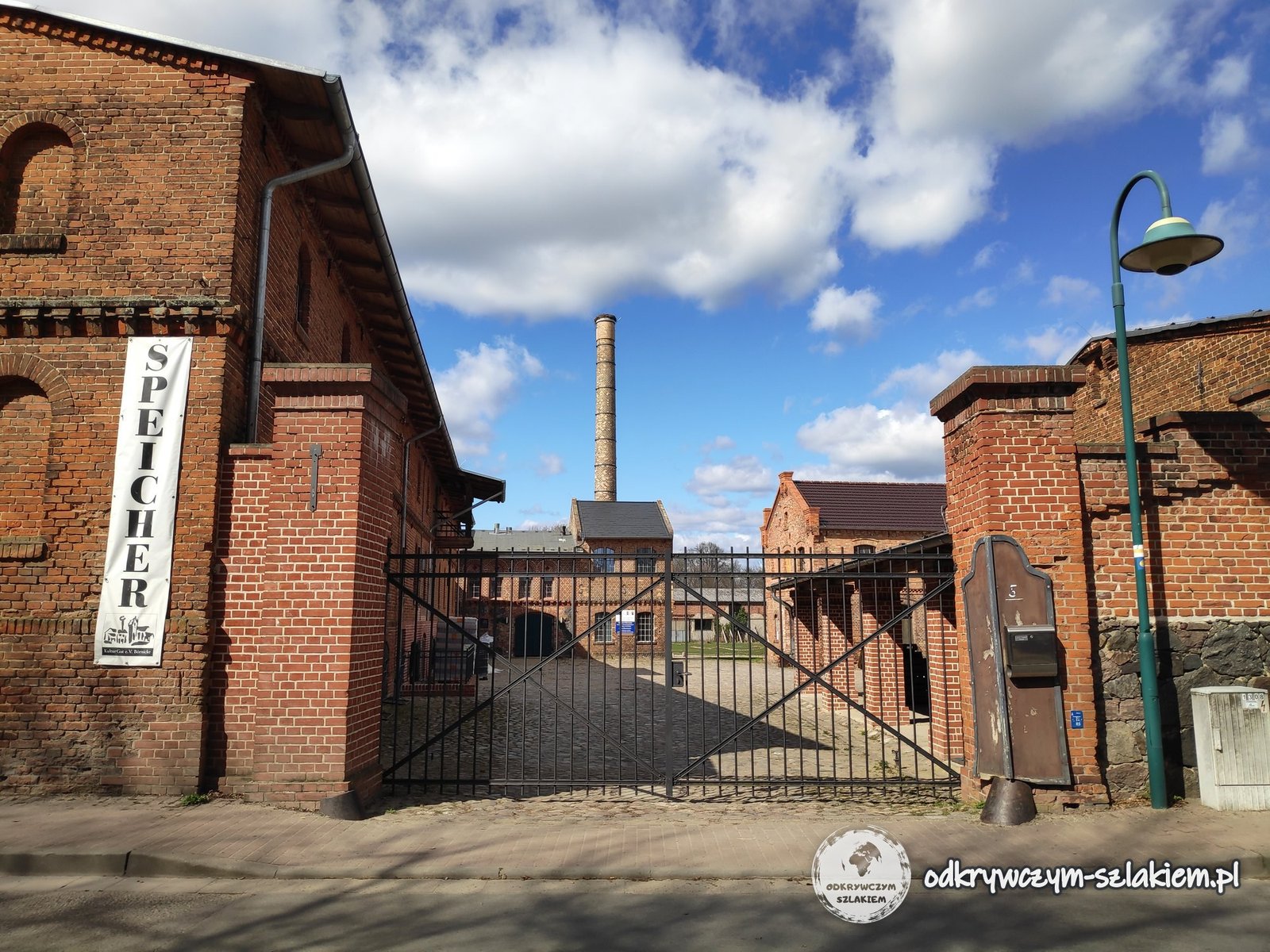
Beyond Bernau, in the village of Börnicke, which now belongs to that town, we rode past an old manor farm (Gutshof). There is a manor house from the mid-19th century and long farm buildings of brick and fieldstone, with old farm machinery standing in front of them. Since 2020 the former distillery with its tall chimney has housed the brewery of the Erste Bernauer Braugenossenschaft cooperative. The estate also appeared in the Netflix series “Dark” – the former stable and distillery were used for scenes in the Tannhaus factory set in 1888.
Bad Freienwalde – old barracks and ski jumps
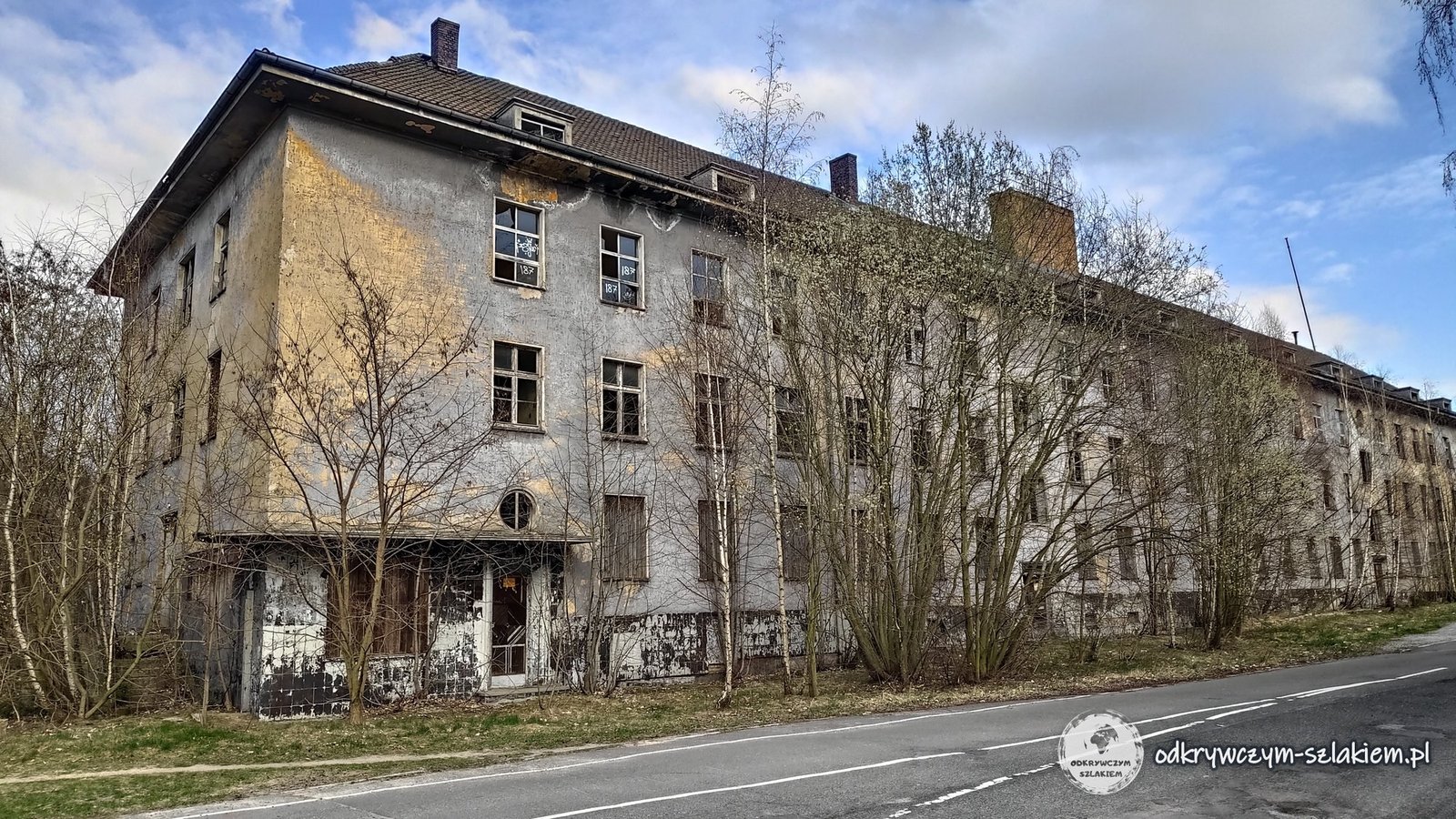
After five in the afternoon we reached the spa town of Bad Freienwalde (Oder) on the edge of the Oder valley. In the Waldstadt estate stands a derelict block of former barracks. They were built in 1935–1936 for the Wehrmacht, and after the war, until 1993, Soviet and later Russian troops were stationed here. Some of the blocks were renovated and turned into a housing estate, but this one stands empty.
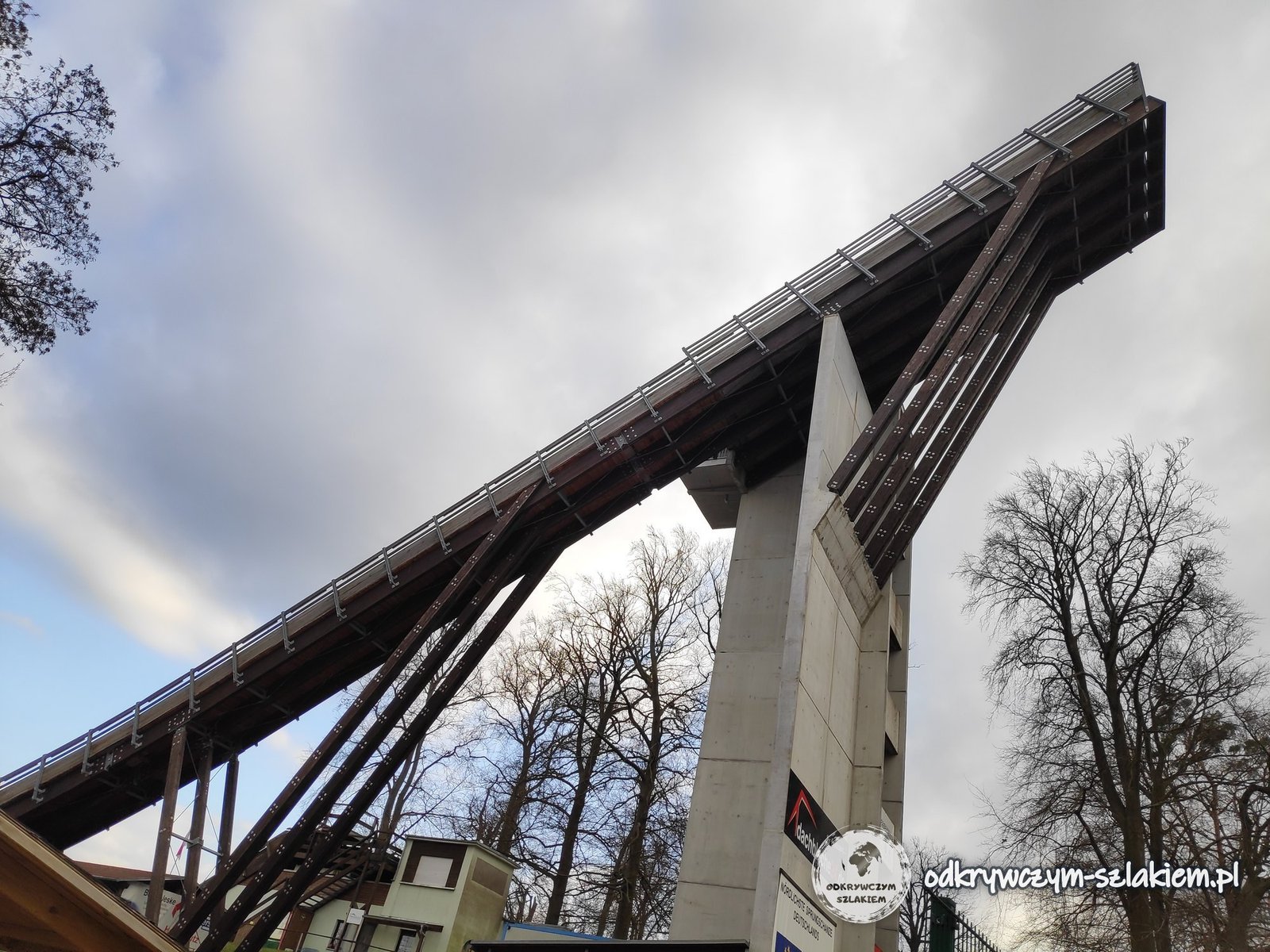
A few hundred metres away, in the Papengrund, are the ski jumps – the northernmost ski jumping centre in Germany. There are four jumps here, and the largest, the K60 (Kurstadtschanze Helmut Recknagel), opened in 2008. The old Papengrund jump was built as early as 1930. Next to the largest jump is the Schanzenturm observation tower, with 161 steps to the top.
A night by the Alte Oder in Neugaul
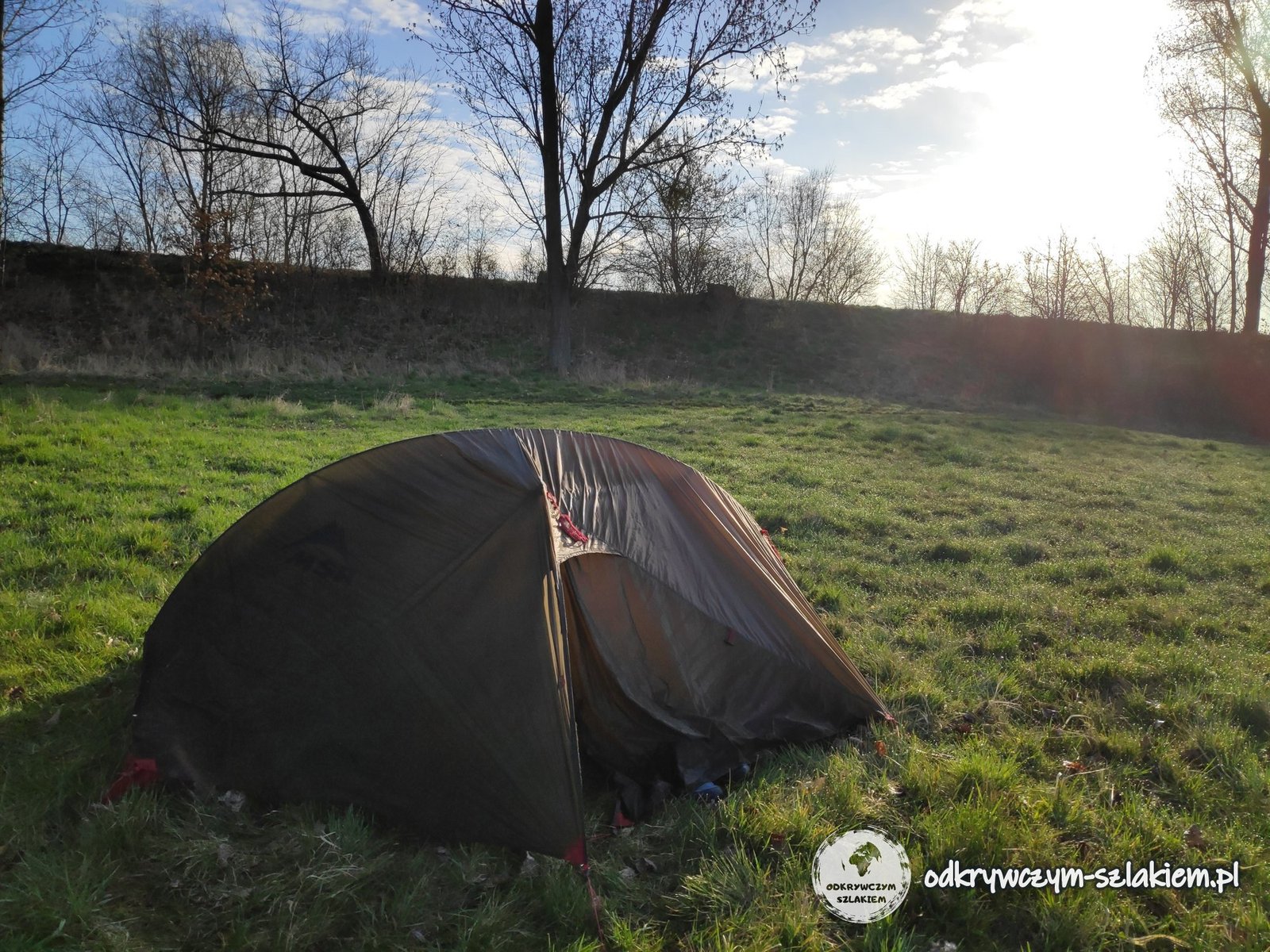
For the night we rode about 10 km further east, to Neugaul near Wriezen. By the river Alte Oder (Wriezener Alte Oder), next to a bridge, is the Biwakplatz Neugaul – a meadow where you can pitch a tent. From Buch it is just under 60 km by road. I posted a photo of this spot on Facebook at the time, together with Easter greetings.
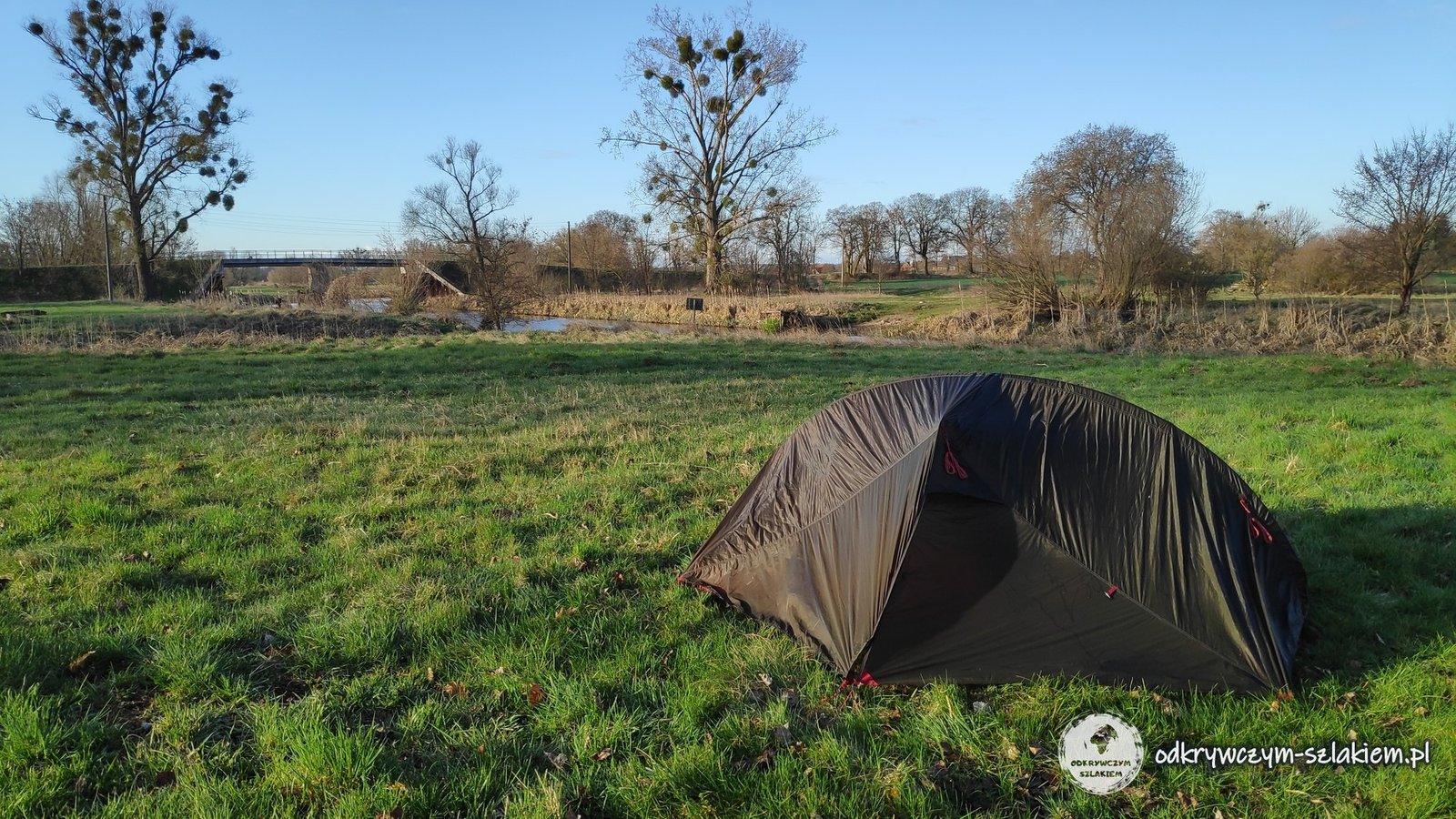
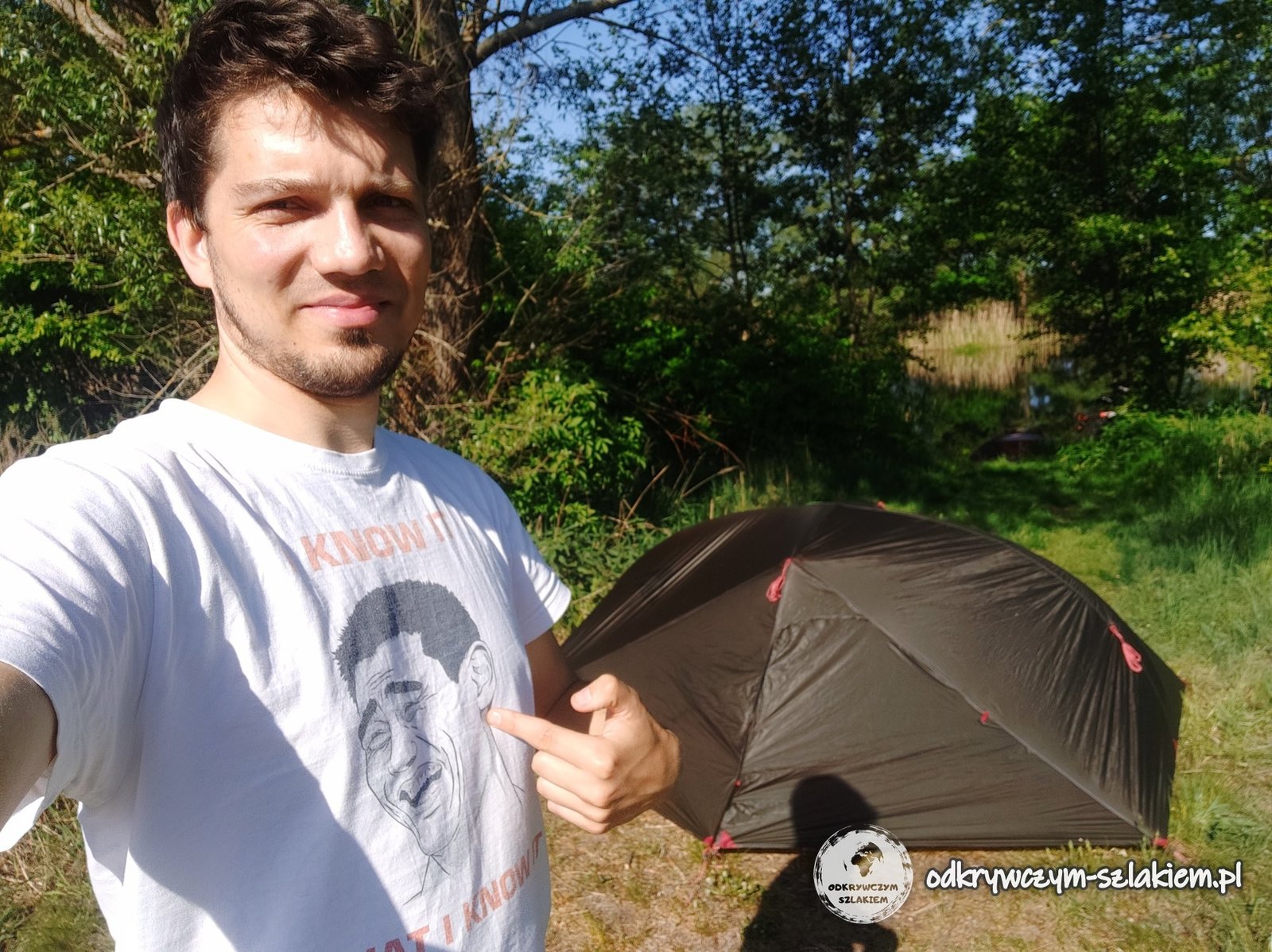
The bivouac site is just a meadow by the water, with no toilet and no drinking water, so you need to bring your own. I took the photos of the tent on Saturday, 3 April, before eight in the morning.
The Oderbruch – Neulewin and the memorial in Platkow
On the second day we rode through the Oderbruch – a flat, agricultural lowland along the Oder. It used to be marshland flooded by the river. It was drained in 1747–1753 under King Frederick II, and colonists’ villages were founded on the new fields. One of them is Neulewin, where 80 families settled. The Oder, which forms the border with Poland here, is a few kilometres away.
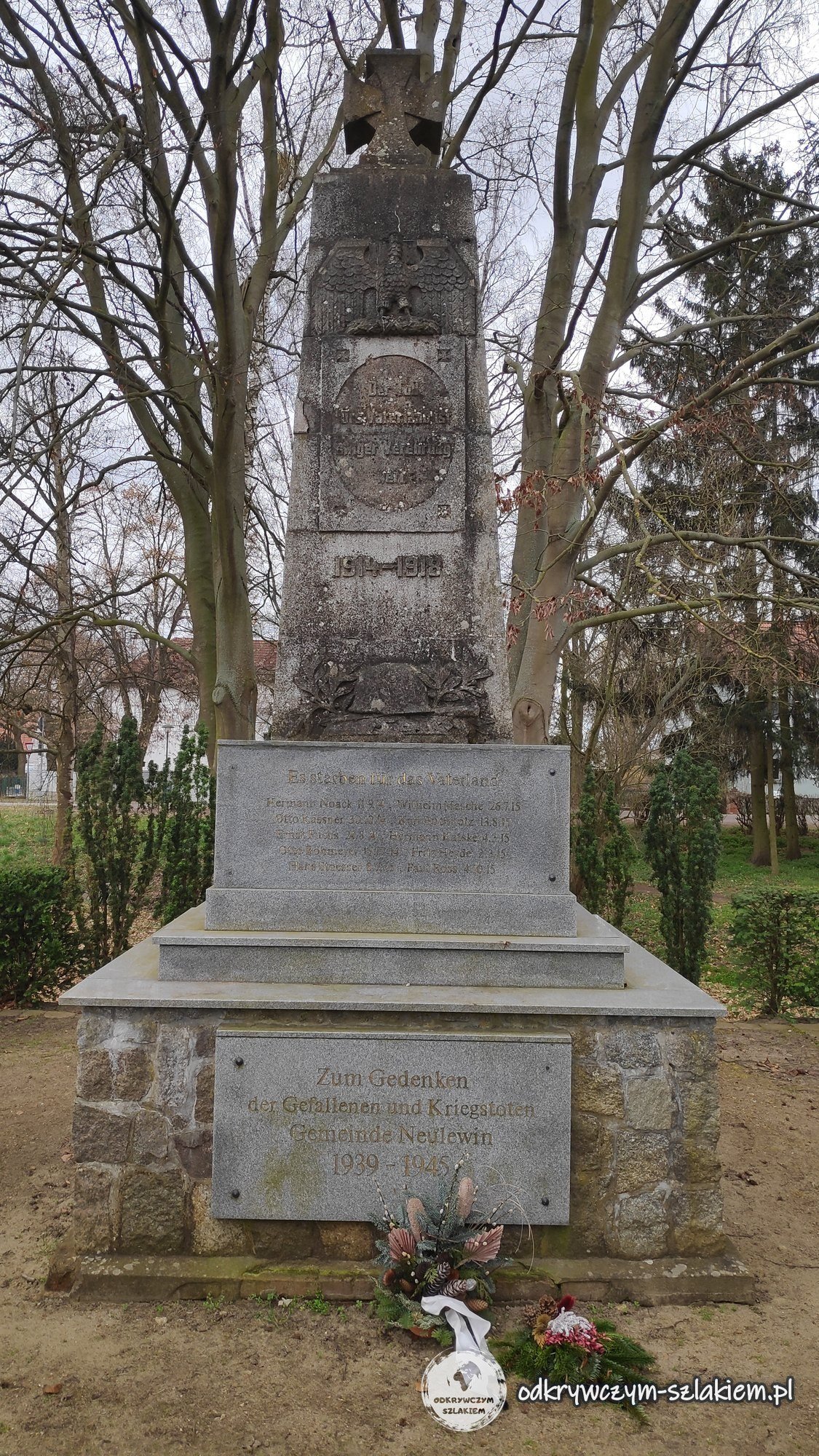
In Neulewin there is a war memorial. The upper plaque lists the names of villagers who were killed in 1914–1915, during the First World War, and the lower one commemorates the fallen and war dead of the municipality of Neulewin from 1939–1945.
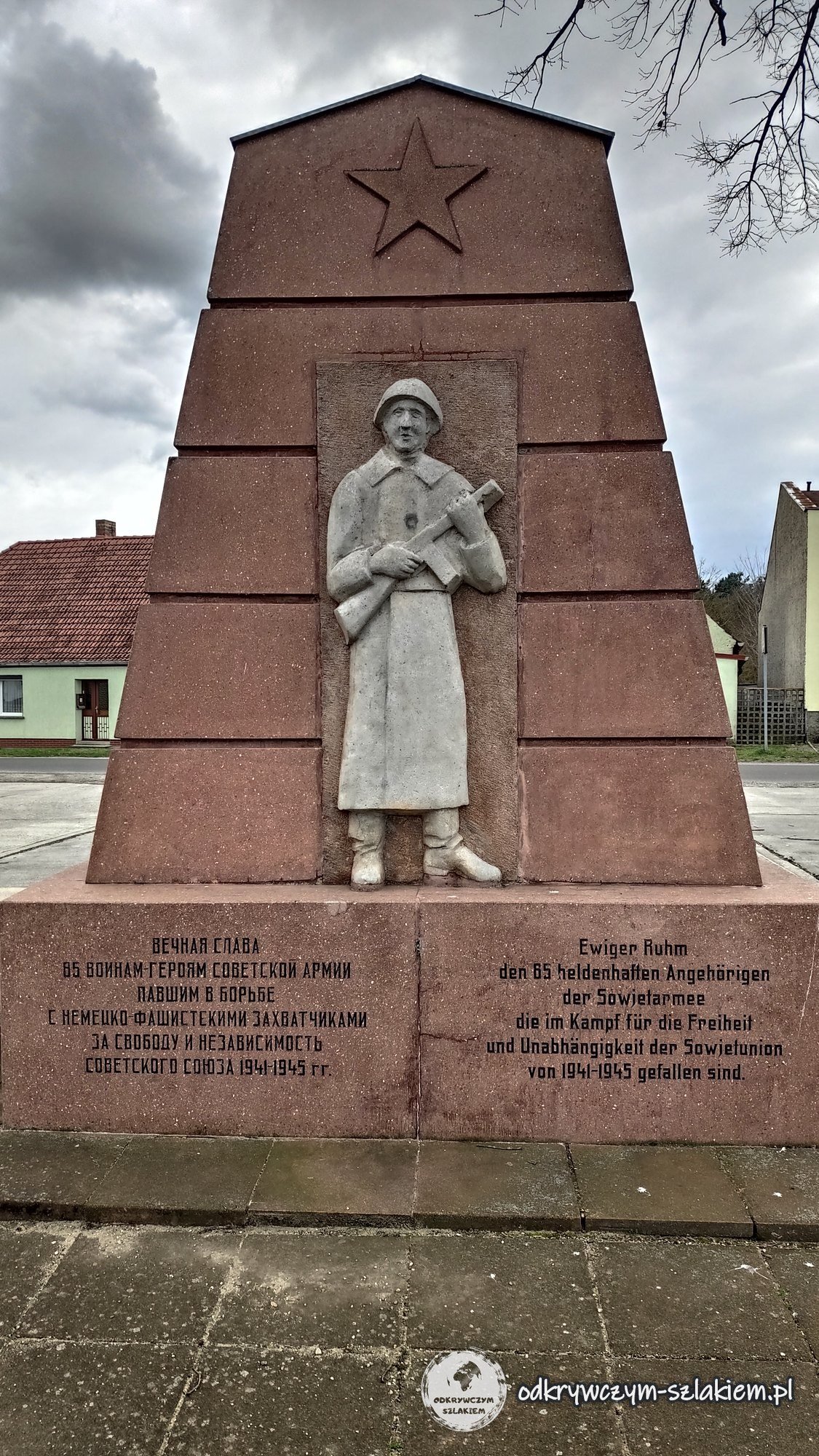
In the afternoon we reached the village of Platkow near Seelow. Here stands a Soviet war memorial with a relief of a soldier holding a rifle. The inscription, in Russian and German, gives eternal glory to 85 soldiers of the Soviet Army who fell in 1941–1945. It is a mass grave of soldiers killed in April 1945. A few kilometres away, on the Seelow Heights, a battle was fought on 16–19 April 1945, after which the Red Army moved on Berlin. I described the Soviet memorials in Berlin itself in the post Berlin: traces of the GDR.
In total we covered about 120 km in two days. The nearest railway station, Seelow-Gusow on the RB26 line to Berlin, is about 3.5 km from Platkow.
Through Werder and Wust to Brandenburg an der Havel
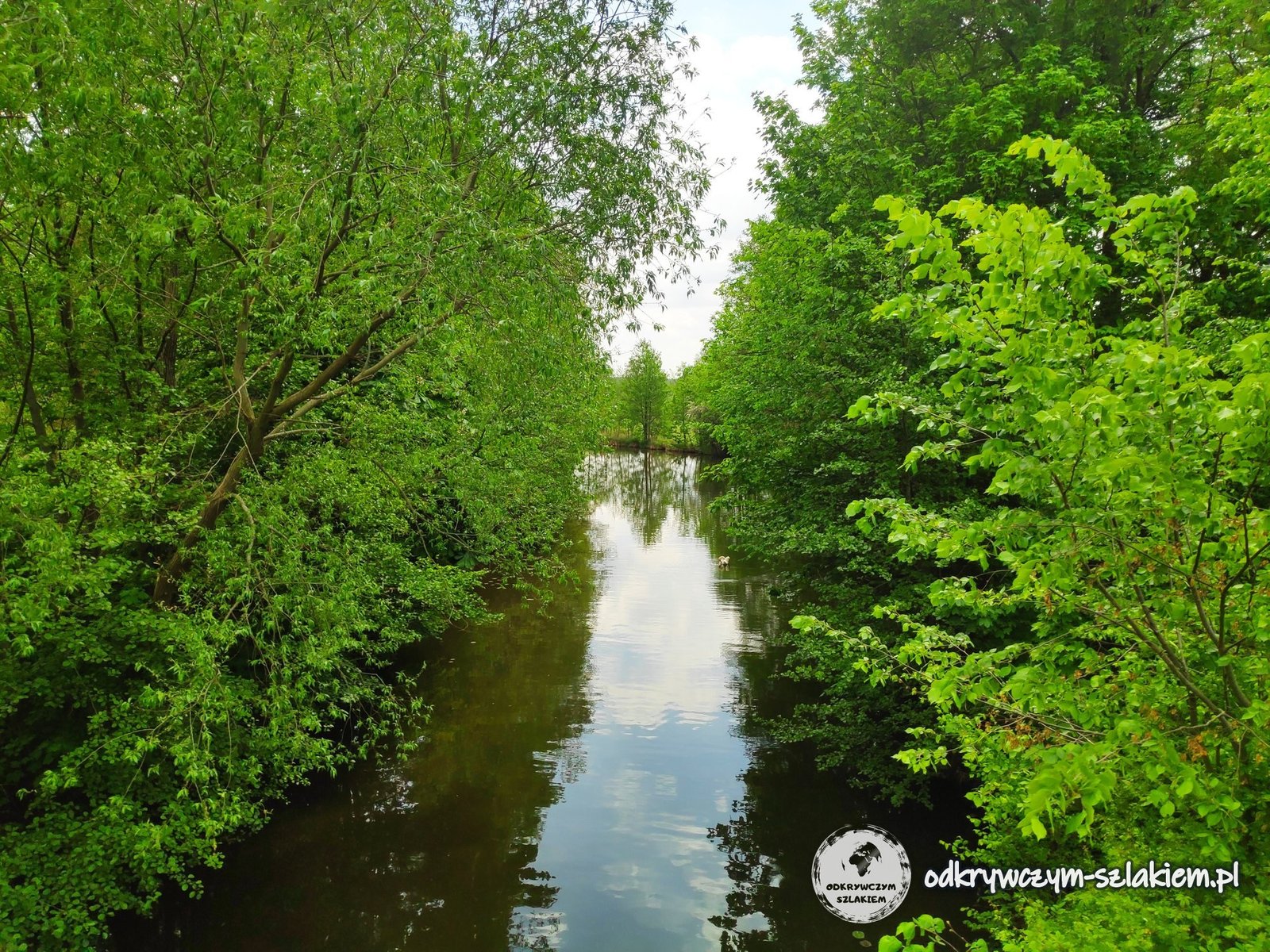
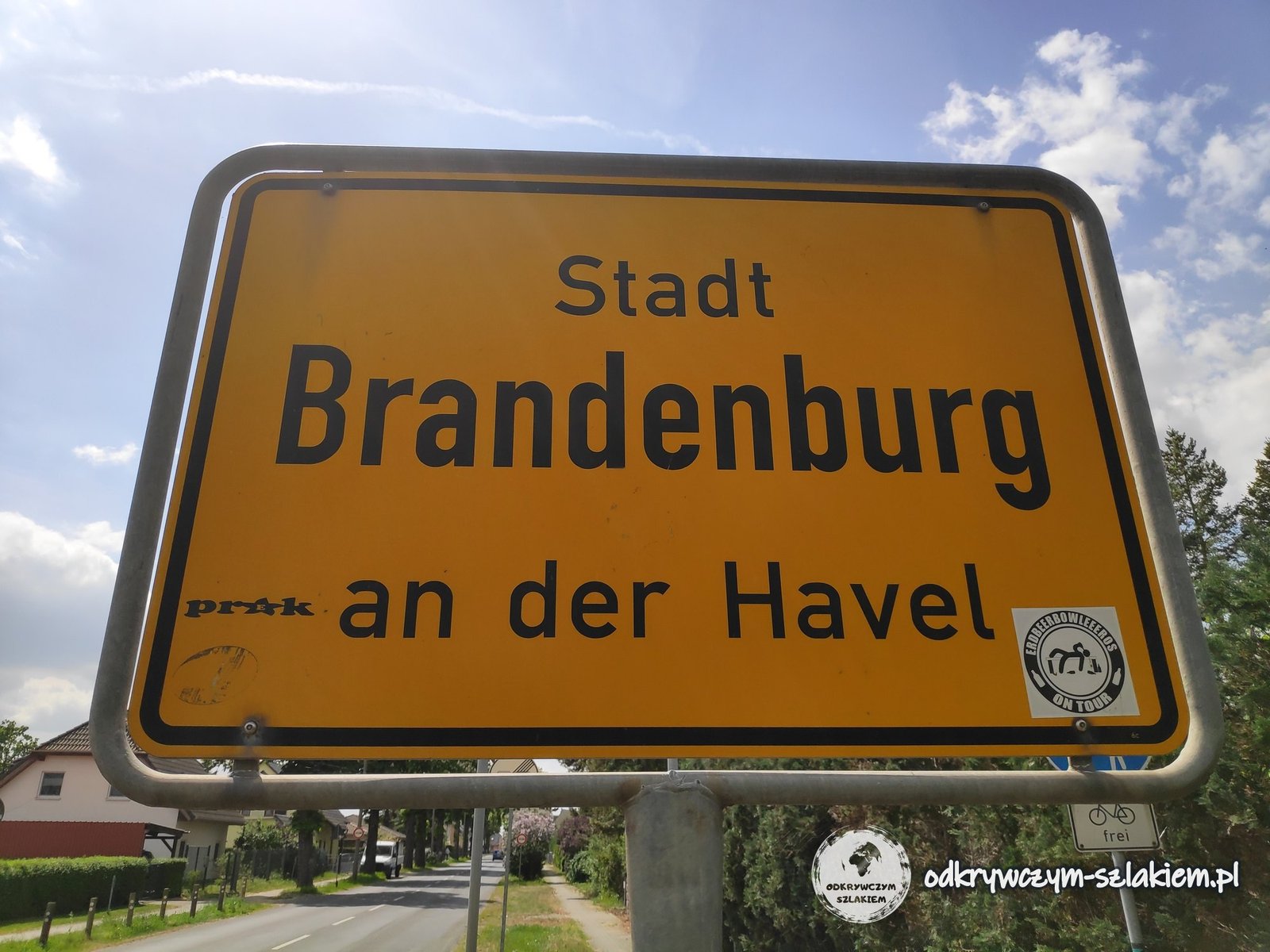
The second trip was on the weekend of 14–15 May 2022. We both had time off, so once again we took the bikes with panniers and the tent – this time west of Berlin. Before noon we were in Werder (Havel), a small town just beyond Potsdam, which I described in the post Potsdam and Wannsee. We carried on west, and in Wust we crossed the Emster Canal (Emster Kanal), overgrown with greenery. From Werder to the town sign of Brandenburg an der Havel it is about 25 km.
Brandenburg an der Havel – the New Town and the Old Town
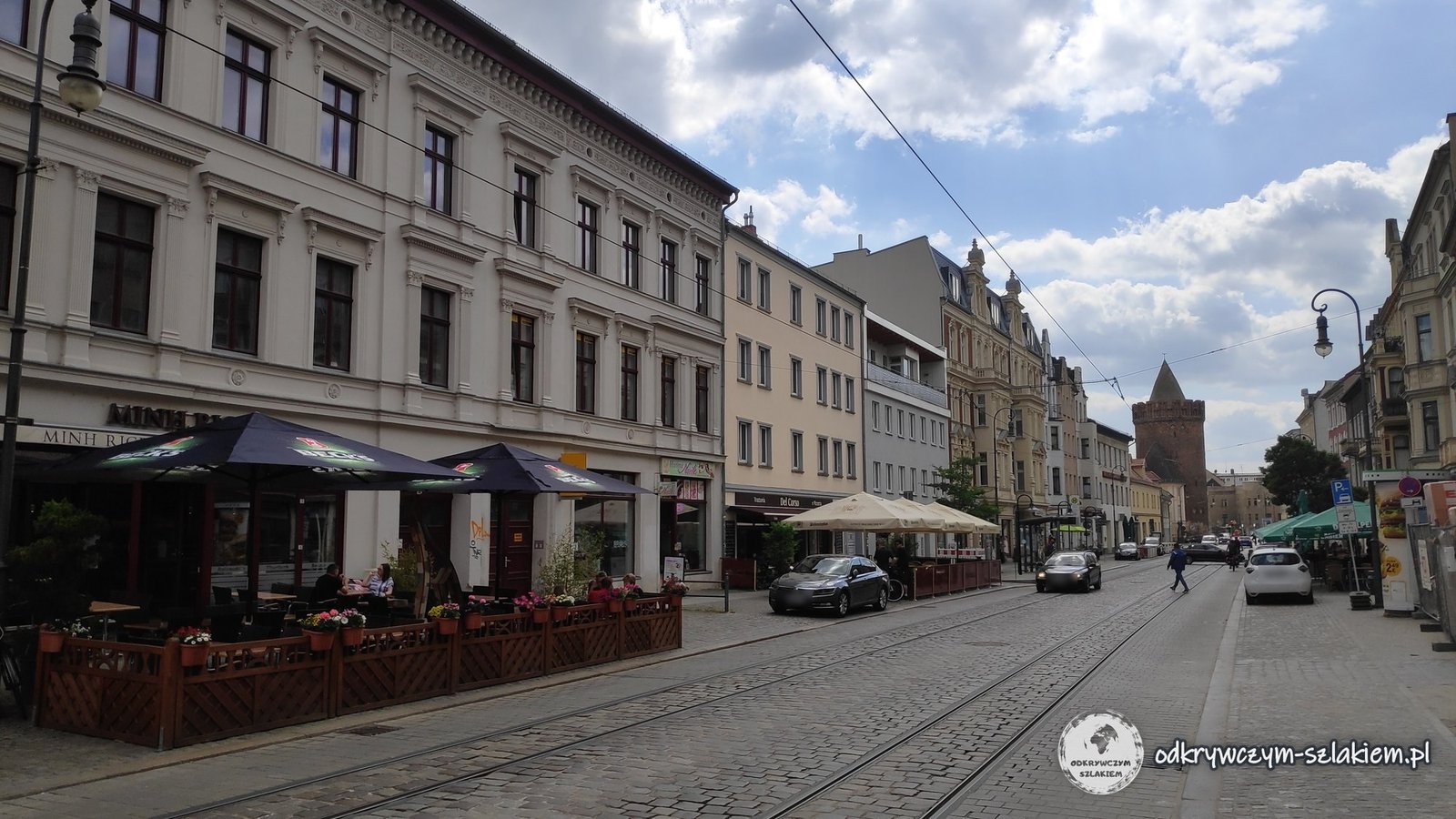
The whole Margraviate of Brandenburg, and today the state of Brandenburg, took its name from the Brandenburg fortress, which stood on an island in the Havel. The historic centre has three parts: the cathedral island (Dominsel), the Old Town (Altstadt) and the New Town (Neustadt). We started in the New Town, on Steinstraße with its restaurants and outdoor seating. At its end stands the Steintorturm – a gate tower about 29 m tall, the largest of the four surviving towers of the medieval fortifications. Inside there is a small exhibition on shipping on the Havel and the history of the town, and a viewing platform.
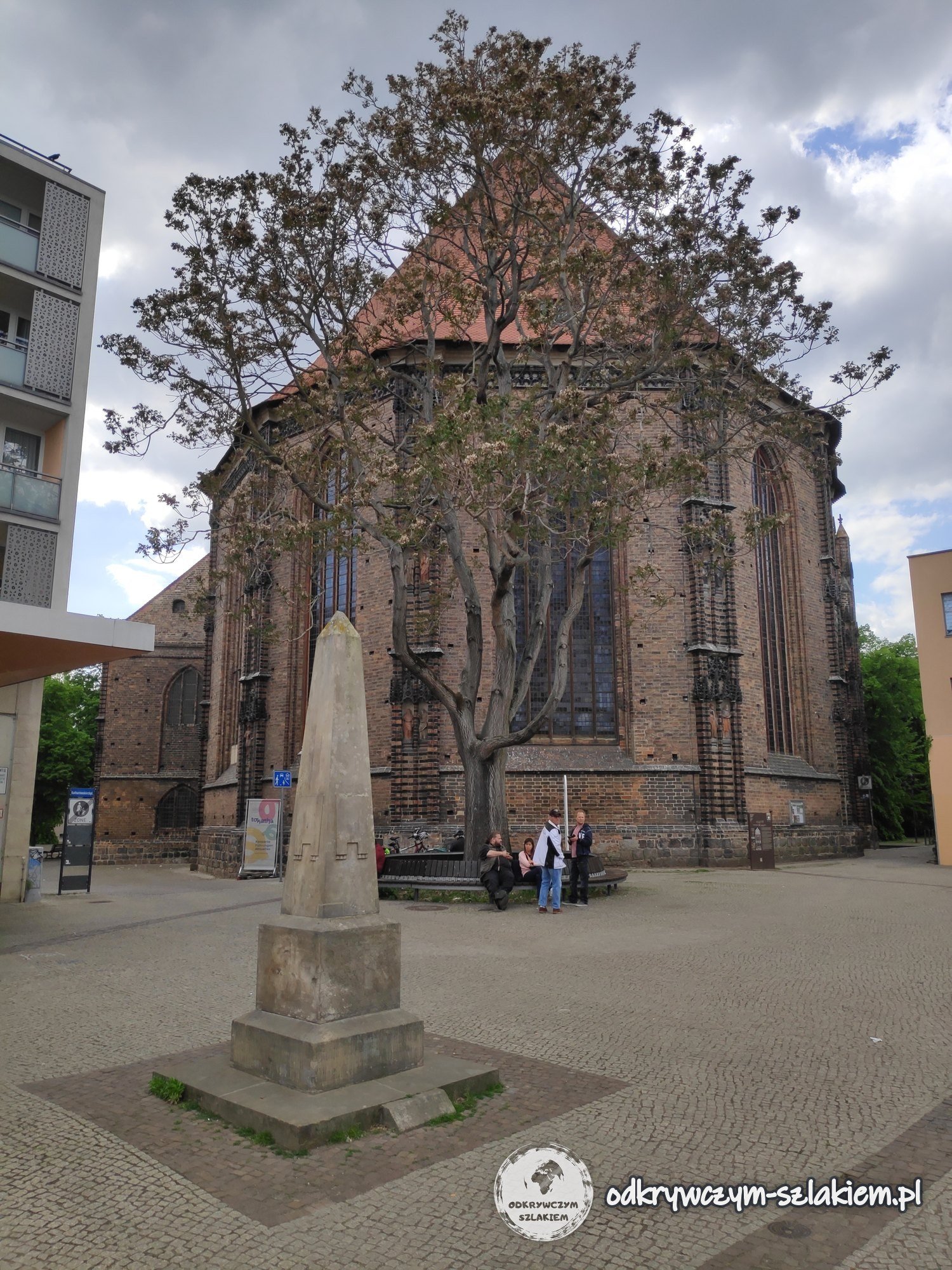
We had lunch in one of the restaurants on Steinstraße. A little further on stands the brick Gothic St Catherine’s Church (St. Katharinen), built from 1401. It has richly decorated gables, and inside, among other things, a winged altarpiece from 1474. The obelisk in front of the church is a Prussian milestone.
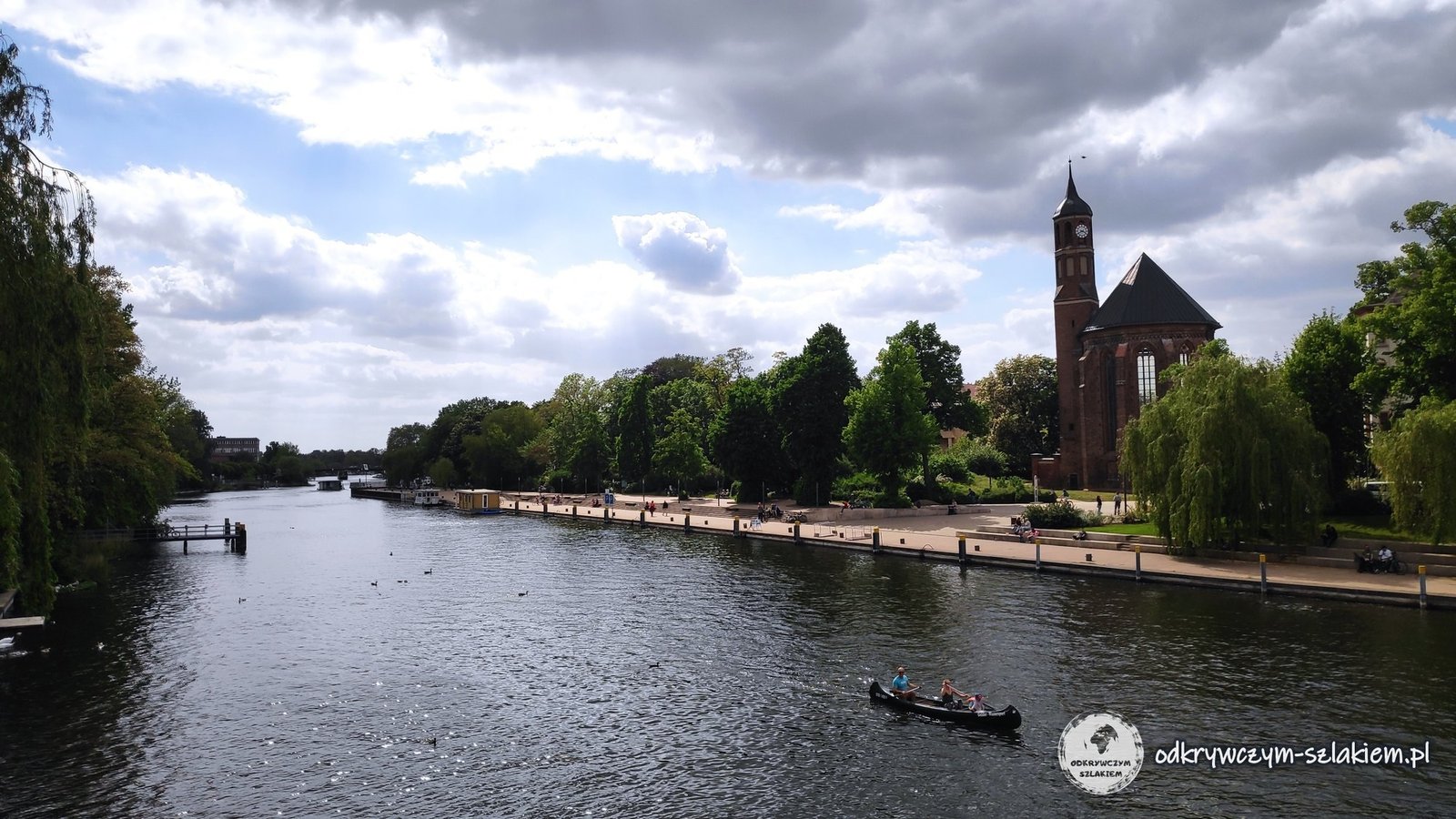
We crossed the Havel to the Old Town on the Jahrtausendbrücke. From the bridge you can see the brick St John’s Church (St. Johannis) with its tall tower, standing right on the riverbank.
On the Altstädtischer Markt square stands the Gothic Old Town Hall (Altstädtisches Rathaus) from the 15th century, one of the most important surviving town halls in Brandenburg. By the entrance stands the Roland – a 5.35-metre sandstone figure of a knight from 1474, a symbol of the town’s independence. By the fountain on the square sits a small bronze pug. It is one of nearly 30 “Waldmops” figures placed around the town in memory of Loriot – the German humorist who was born in Brandenburg an der Havel in 1923 and invented this character.

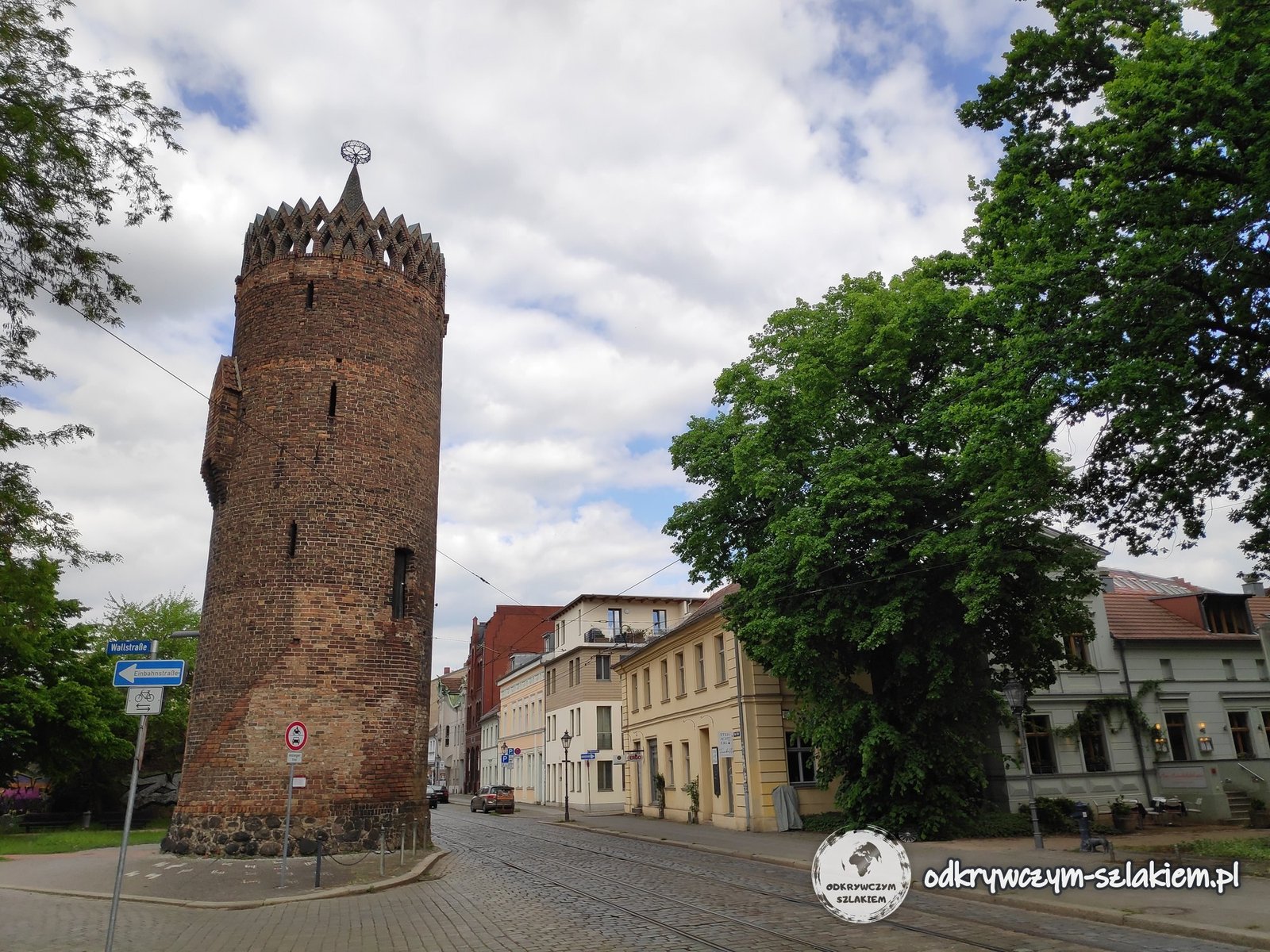
A few hundred metres away, on Plauer Straße, stands the Plauer Torturm. Together with the Rathenower Torturm it is one of the two surviving gate towers of the Old Town.
The Marienberg – a garden, a vineyard and the Friedenswarte tower
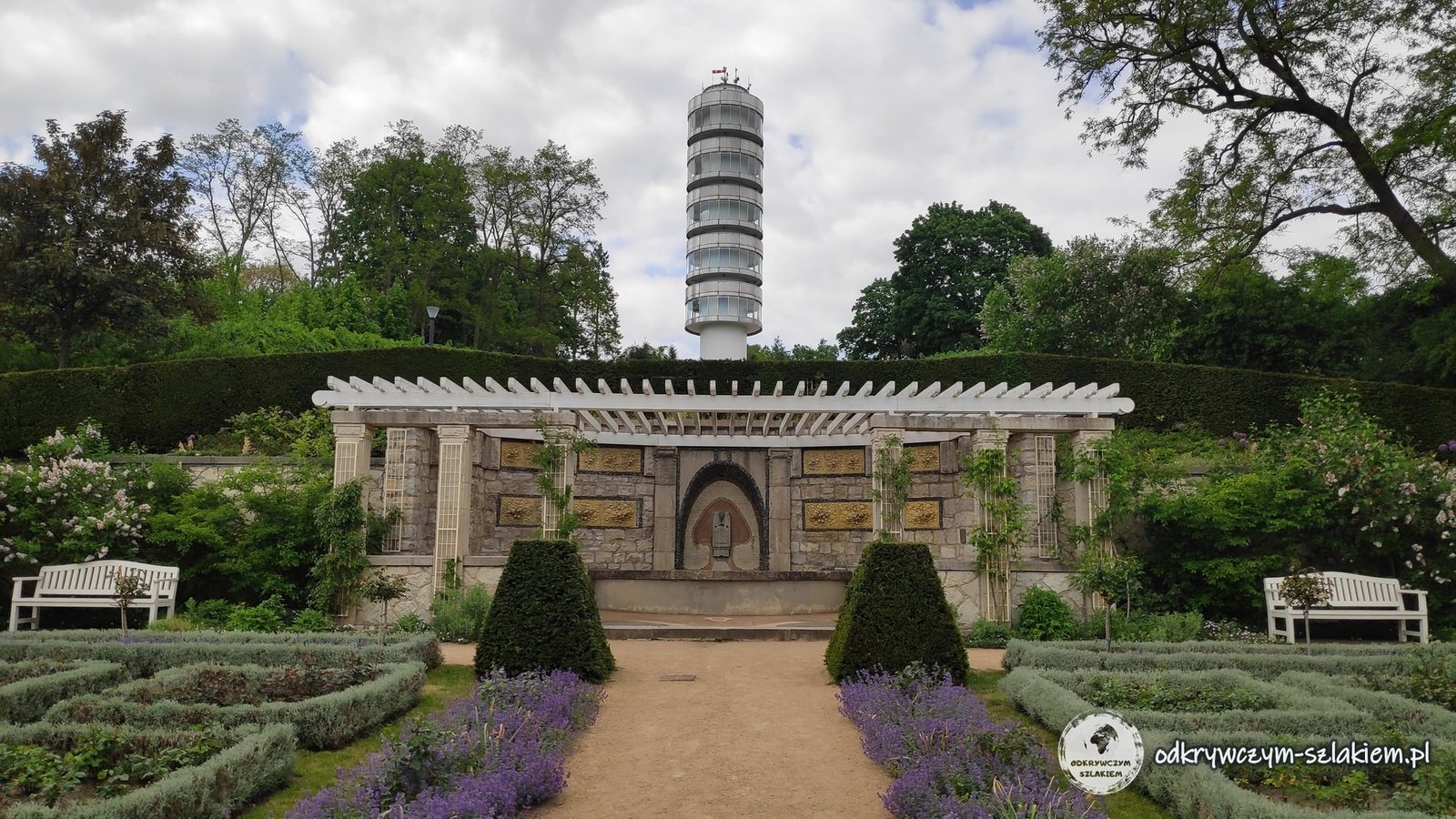
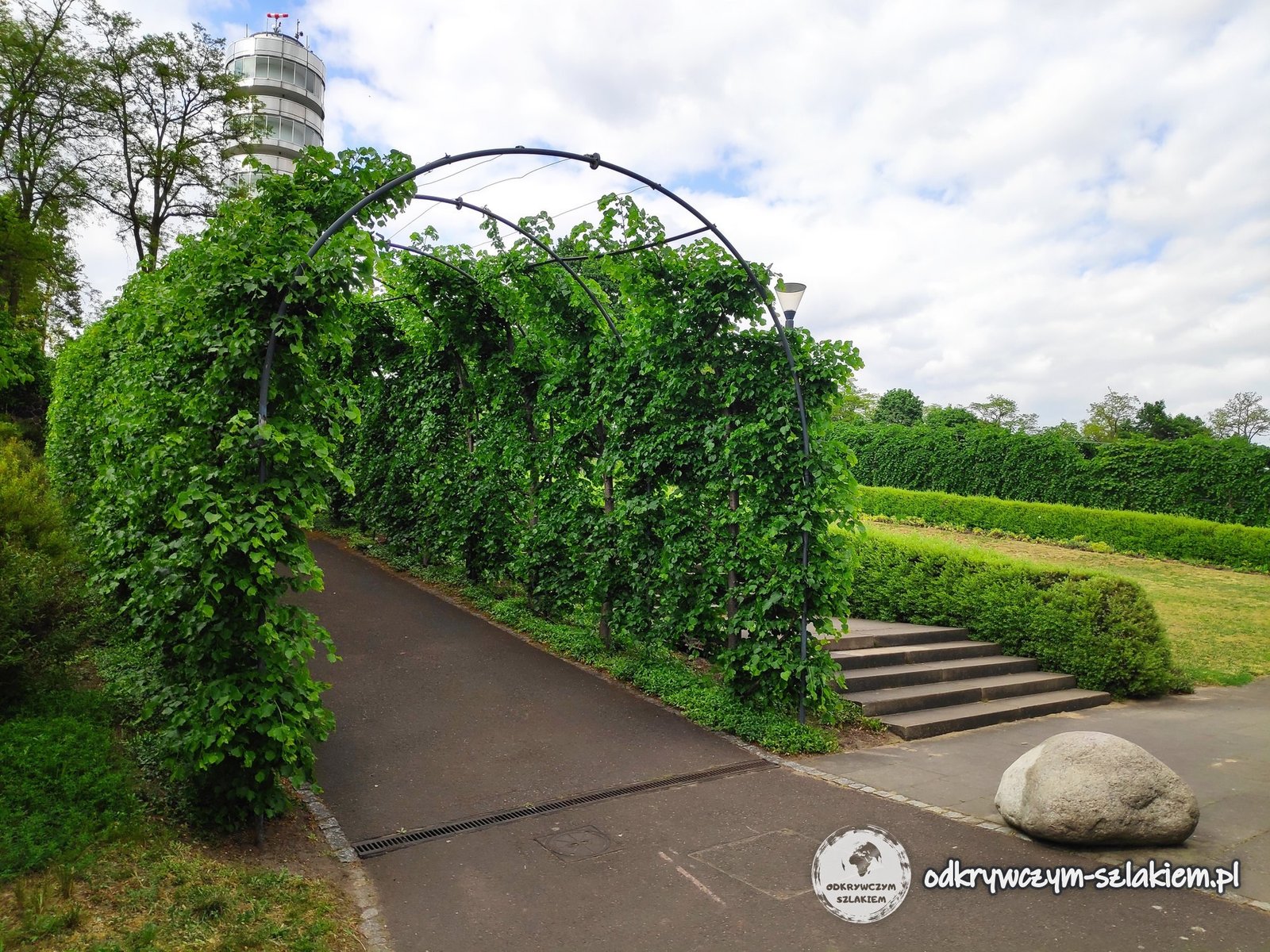
From the Plauer Torturm it is a short ride to the Marienberg – a hill 69 m high, the highest point in the town. It is covered by the 30-hectare Bürgerpark Marienberg, redesigned for the Bundesgartenschau 2015 federal garden show. The southern entrance leads through a garden with lavender and clipped shrubs, closed off by a stone wall with a pergola, golden reliefs of fruit and a mosaic in an arched niche. Further on, the path runs under a green tunnel of climbing plants.
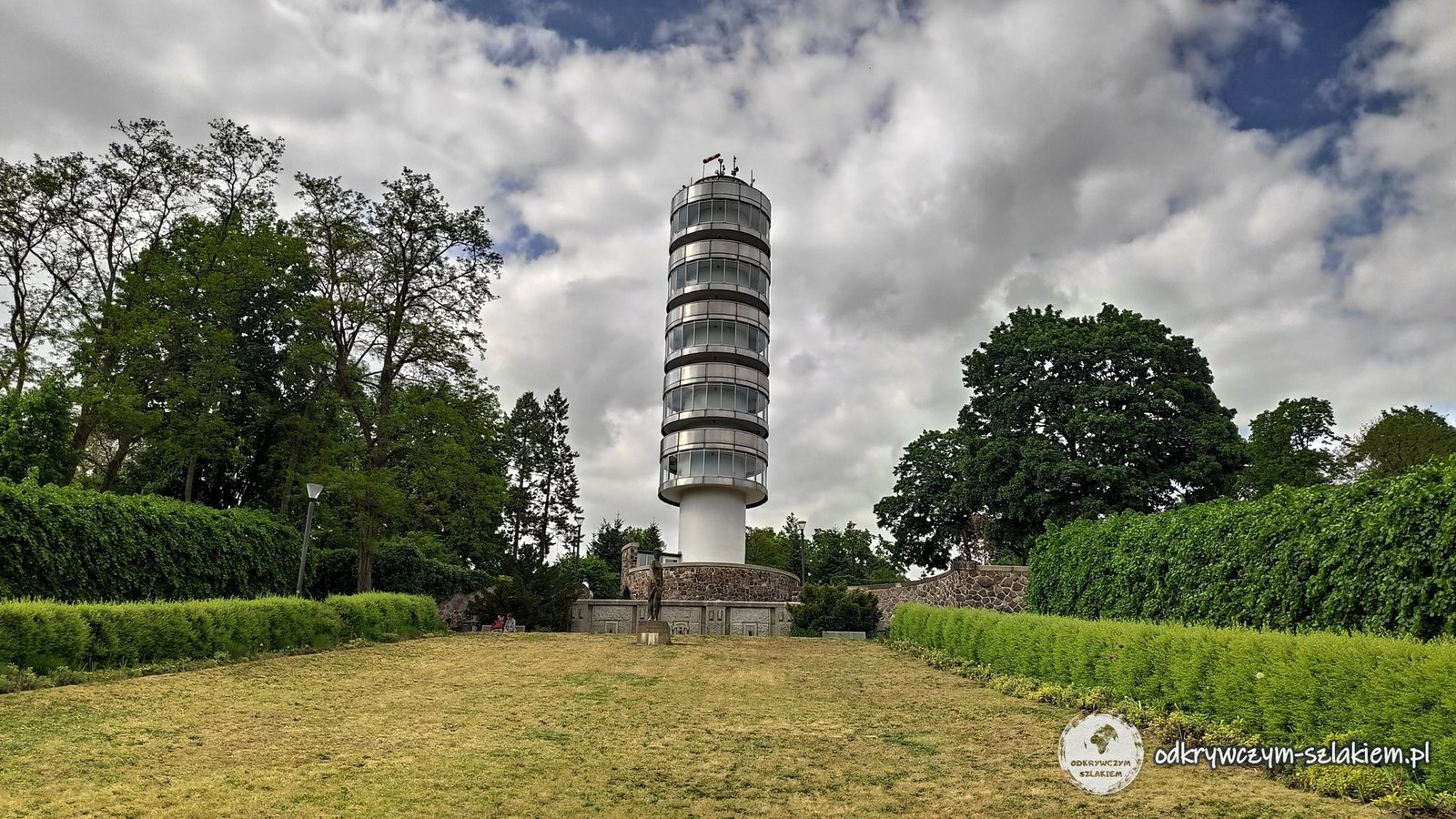
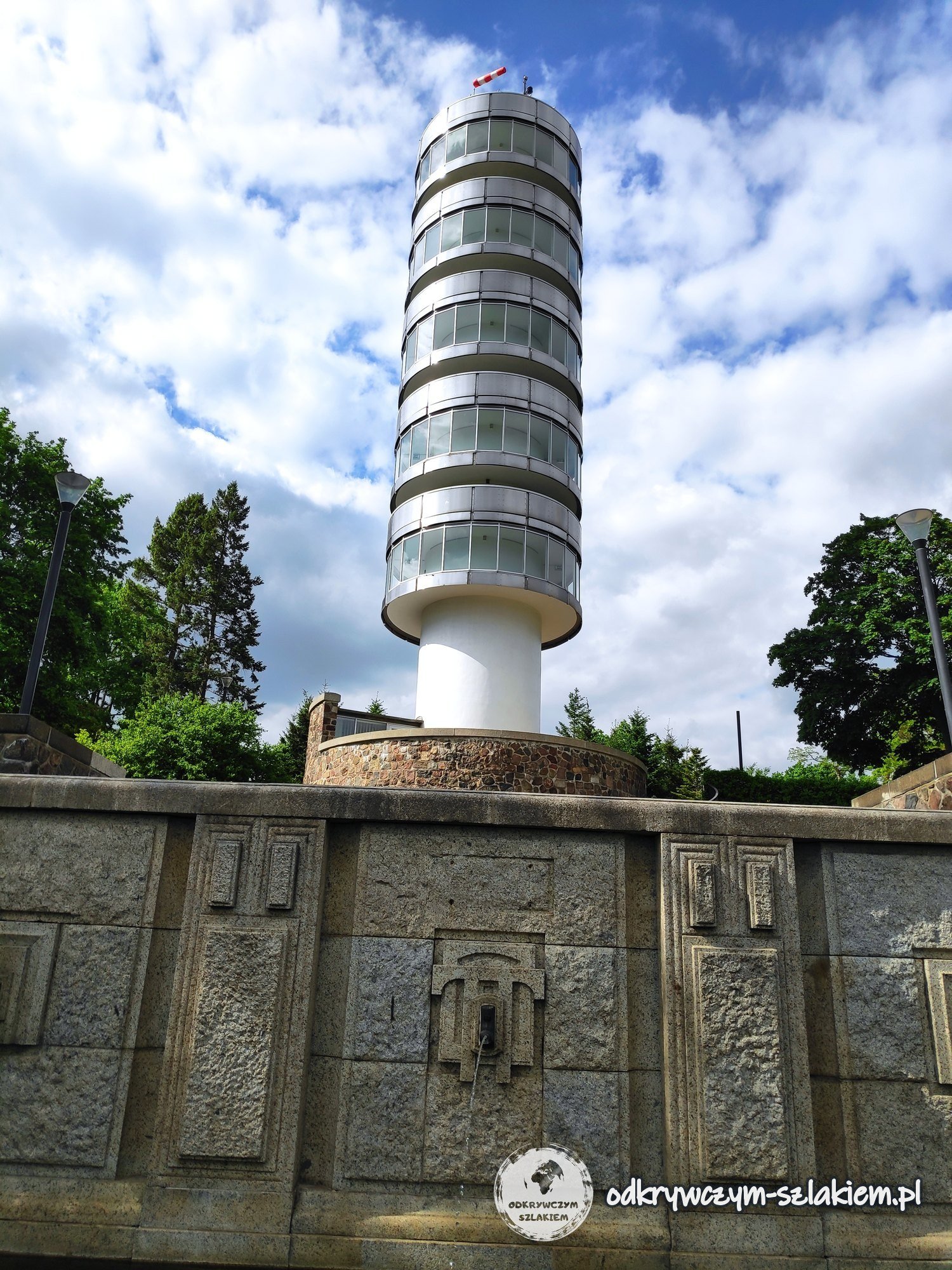
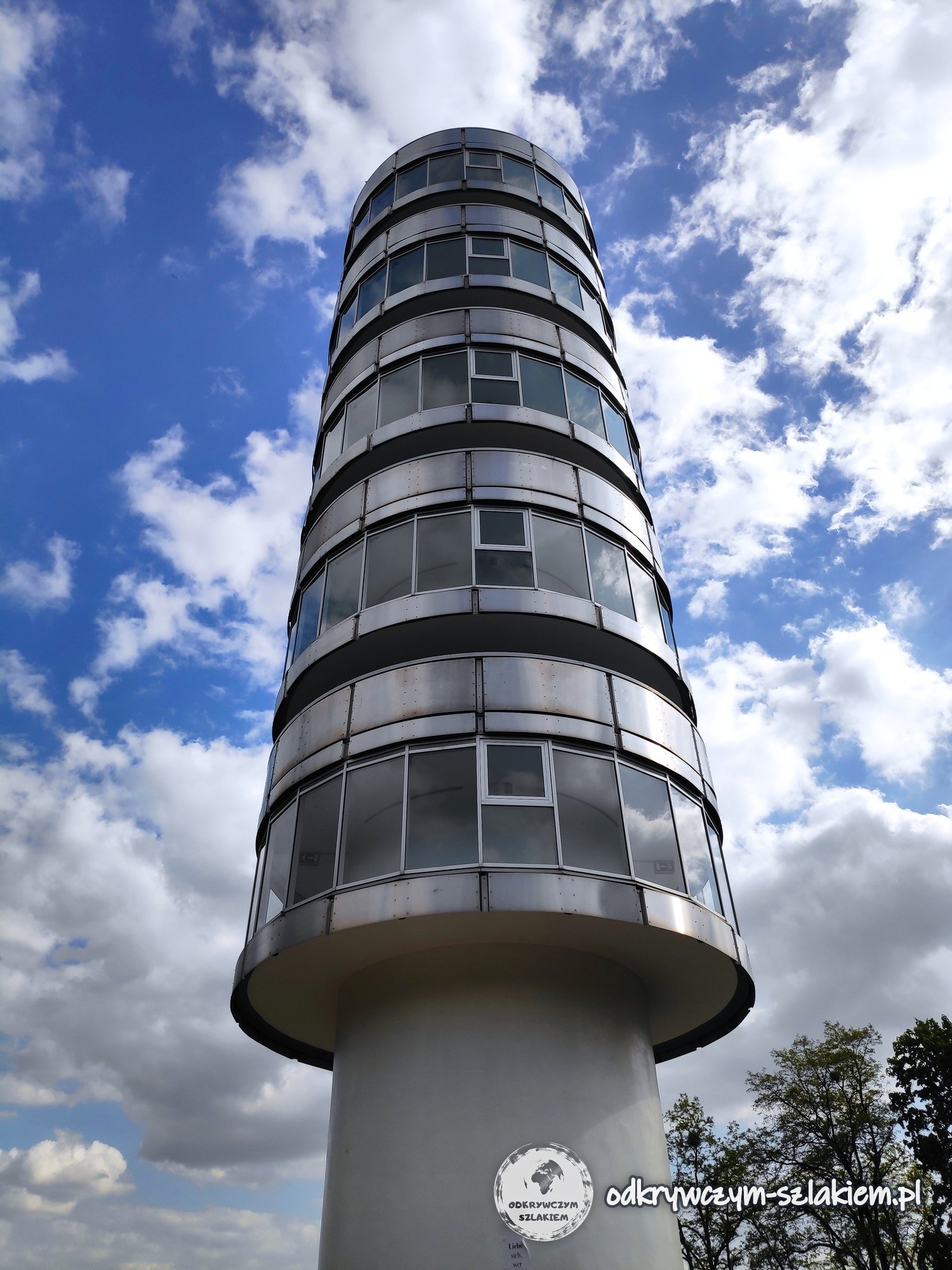
On the summit stands the Friedenswarte observation tower. The first tower, the Bismarckwarte, opened here in 1908, and in 1958 it was renamed Friedenswarte (“Peace Watchtower”). In 1974 the old tower was blown up, and within a few months a new one was built on its stone base and opened for the 25th anniversary of the GDR. It is 32.5 m tall, with two spiral staircases of 180 steps each and ten platforms: five glazed and five open. In good weather you can see objects as far as 60 km away.
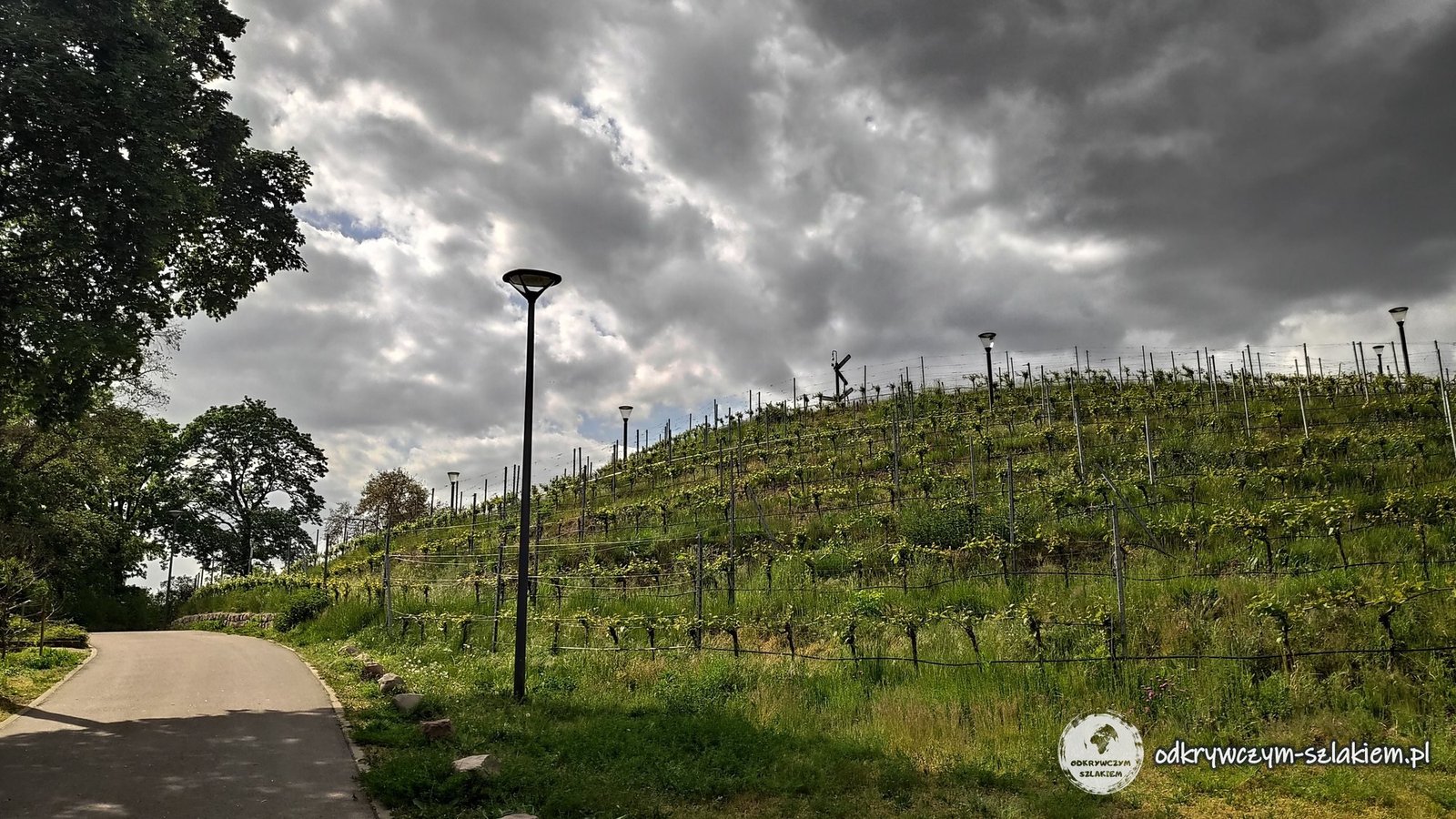
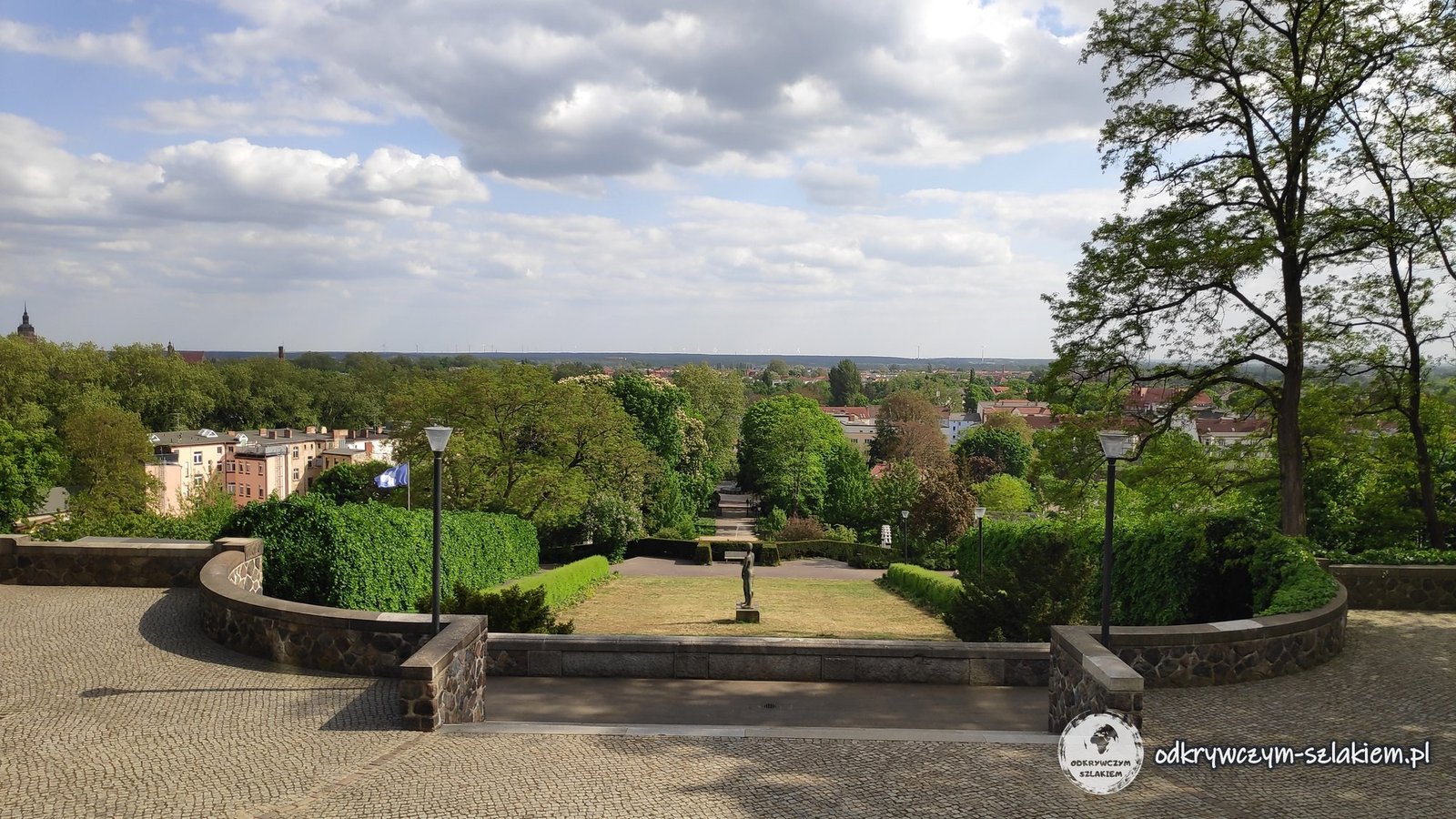
On the slope of the Marienberg there is also a vineyard. A cobbled path runs between the rows of vines, with the Friedenswarte rising above them. From a terrace on the slope you can see the roofs of the town and the surrounding woods.

Along the Havel valley to Pritzerbe
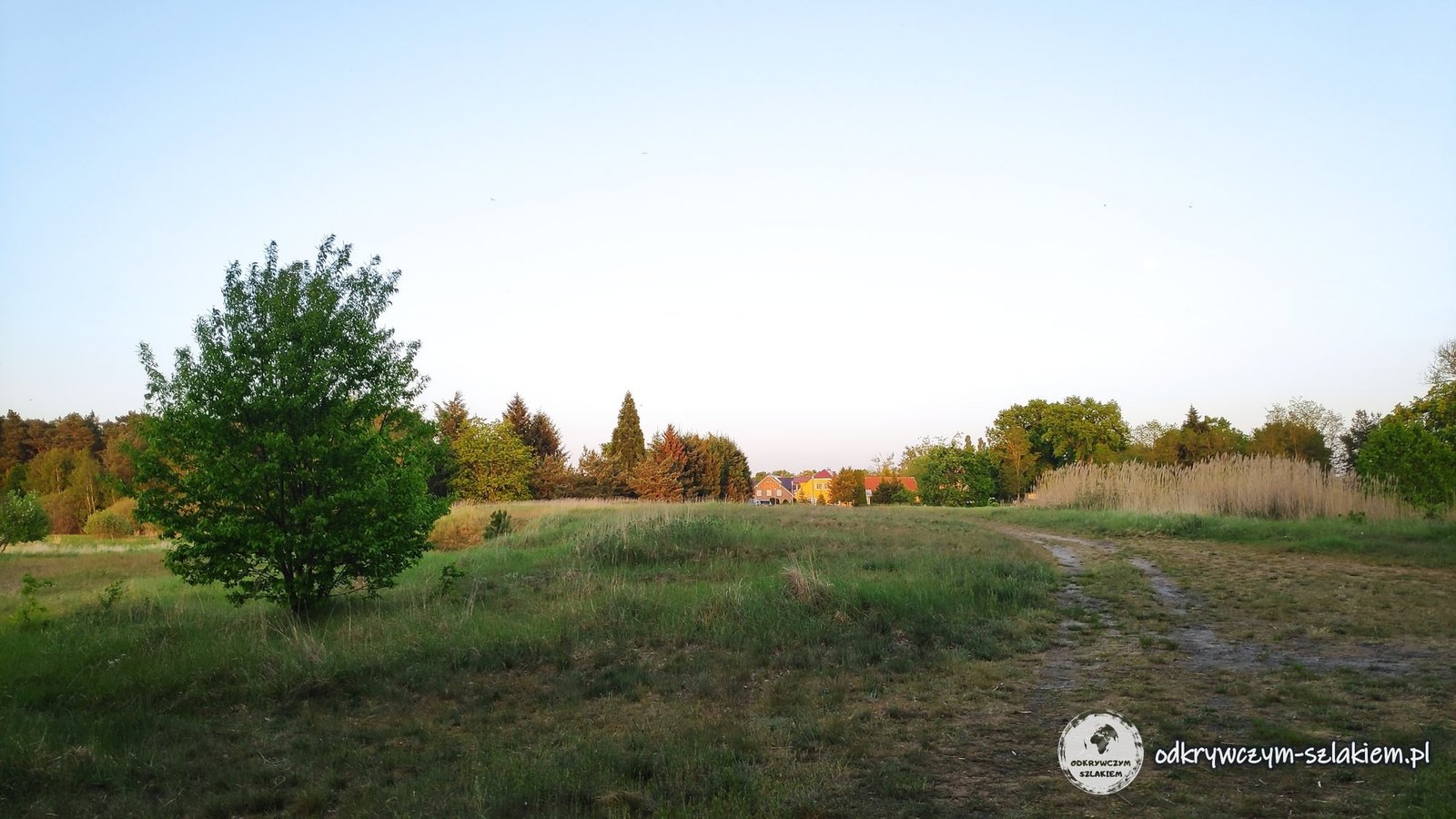
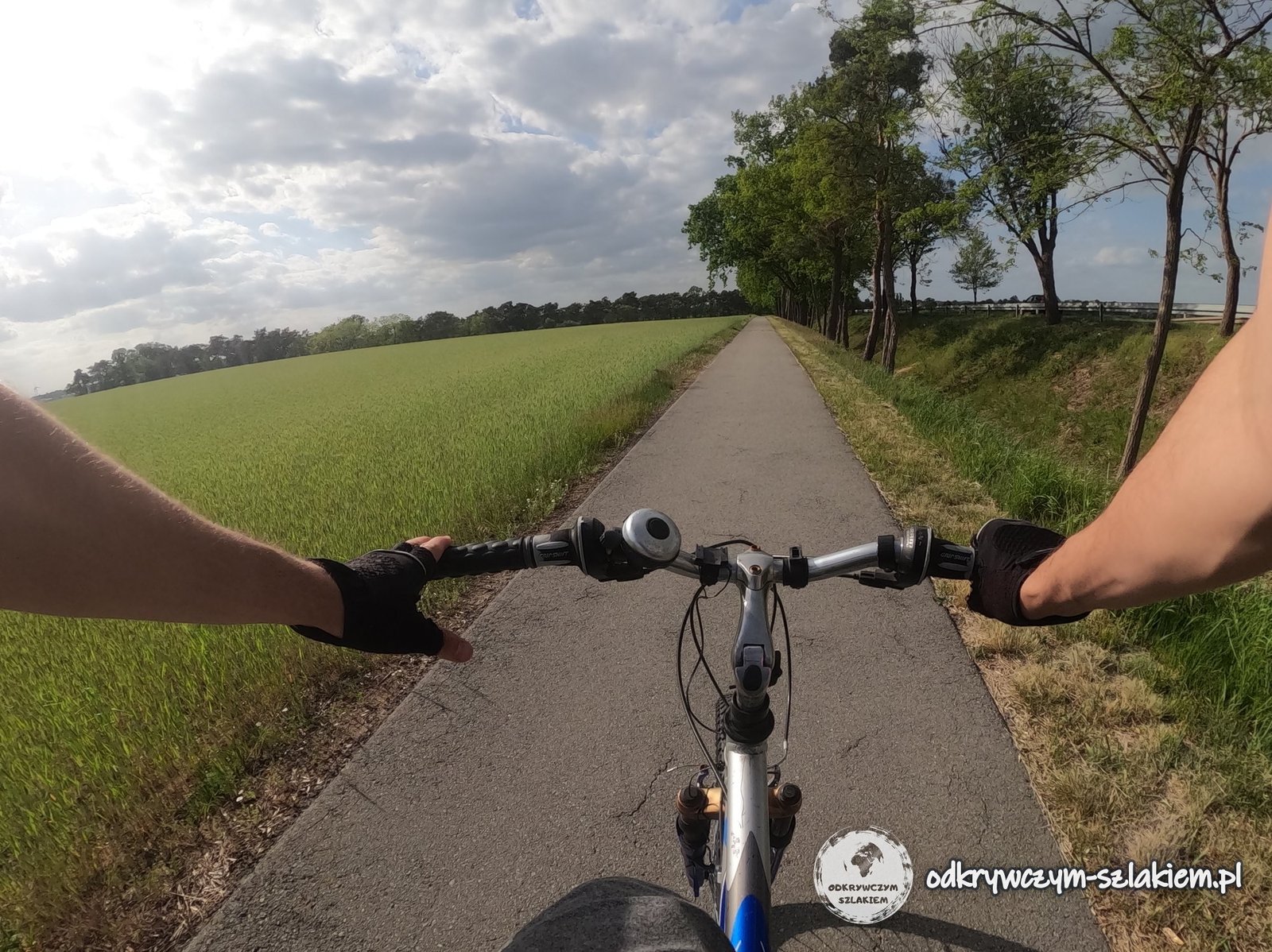
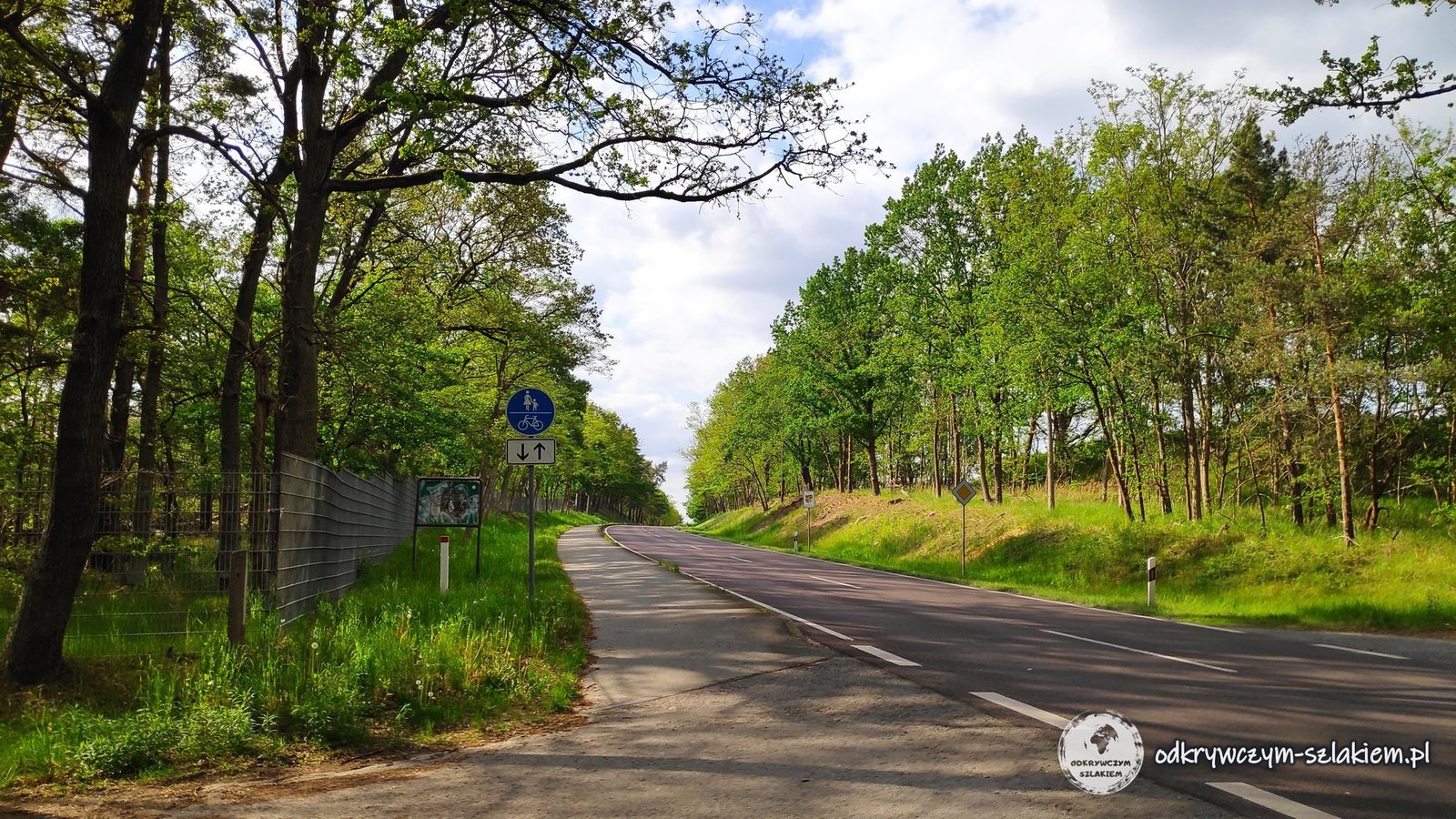
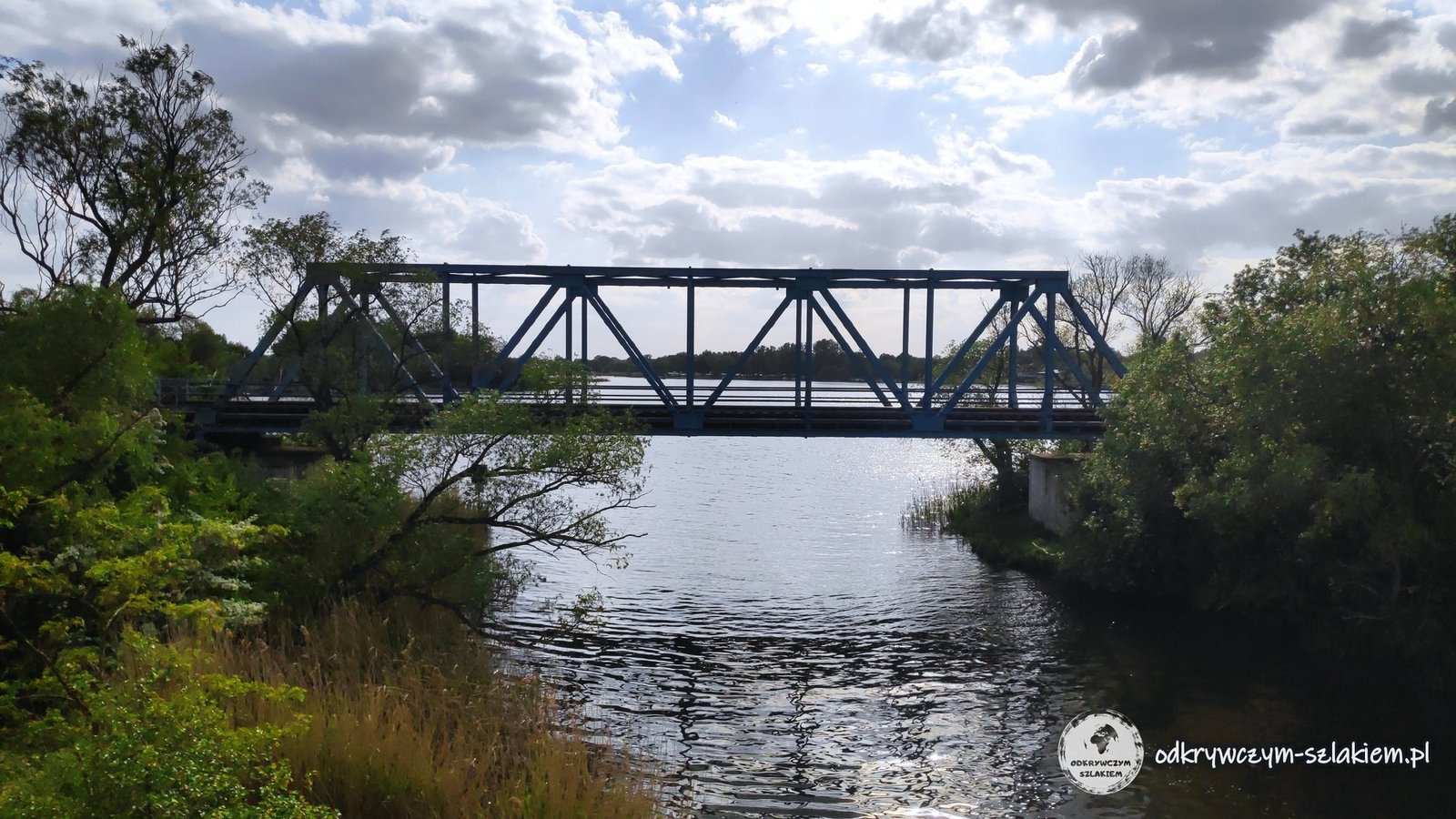
Late in the afternoon we set off north from Brandenburg an der Havel, along the Havel valley. A separate cycle path runs along the road to Rathenow, and further on an asphalt path between fields – the photo at the top of this post was taken there.
In Pritzerbe a steel truss railway bridge crosses the Havel. The RB51 trains from Brandenburg an der Havel to Rathenow run here, stopping among other places in Pritzerbe, Premnitz and Mögelin.
The bivouac site in Mögelin on the Havel
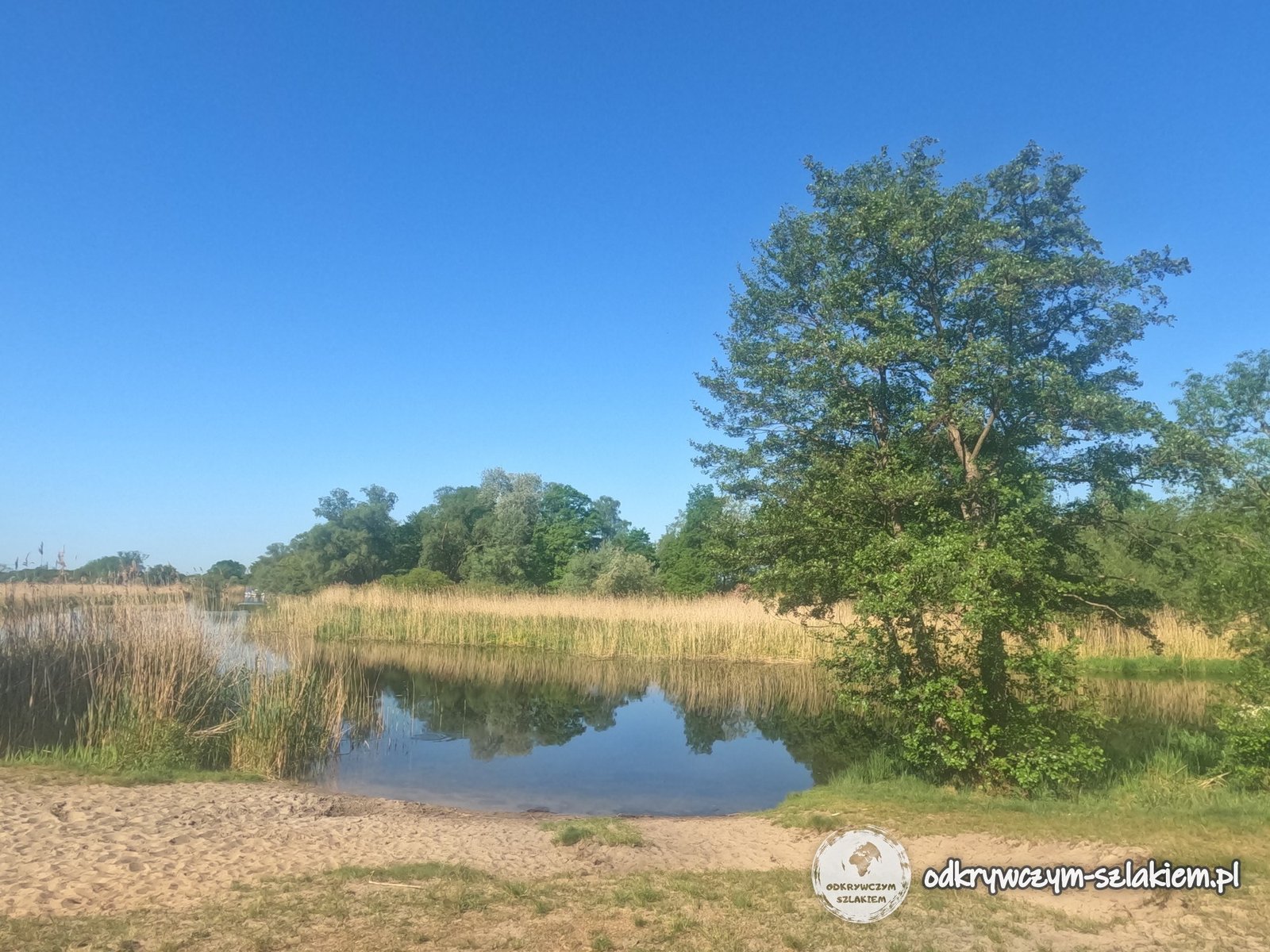
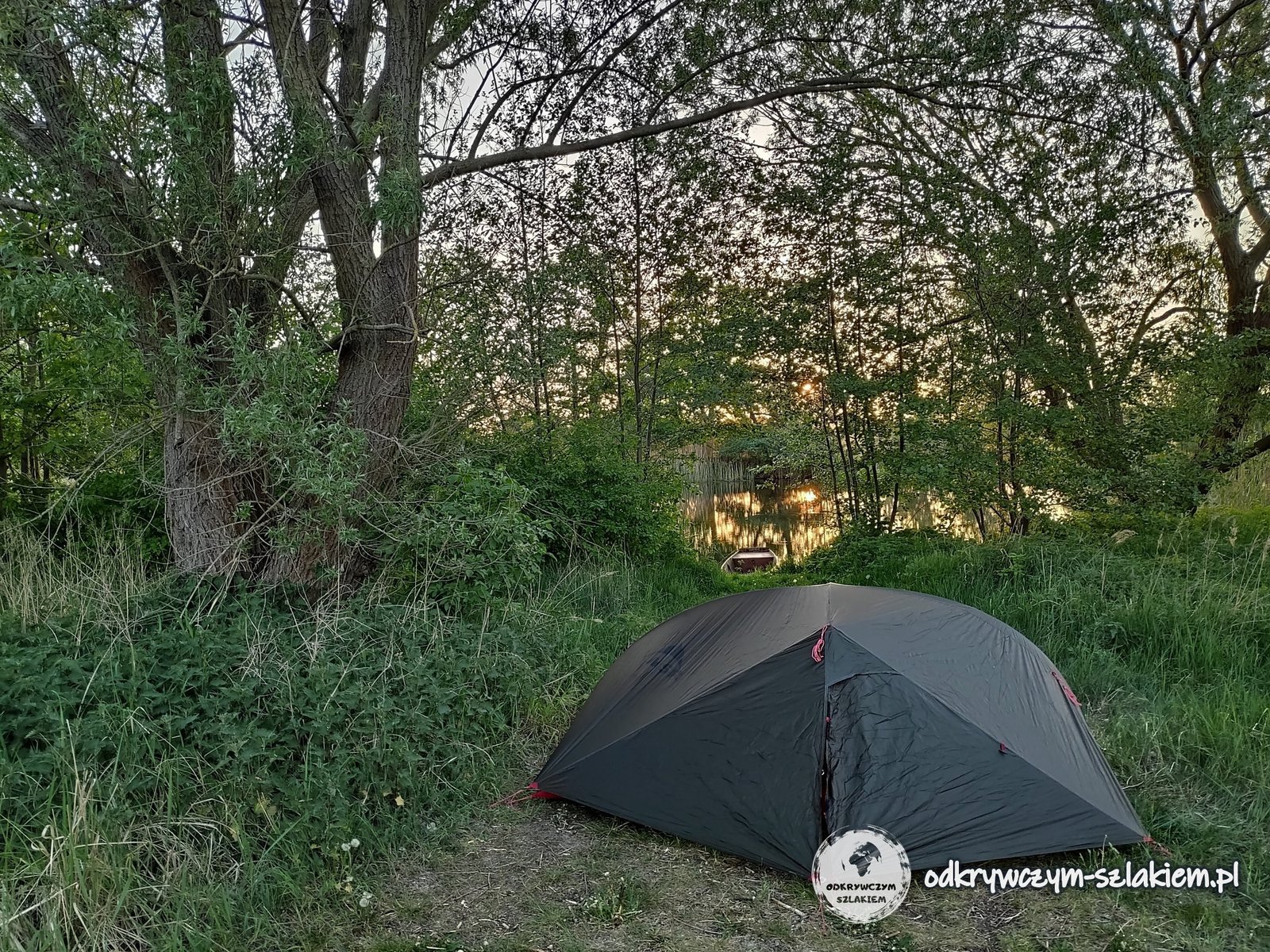
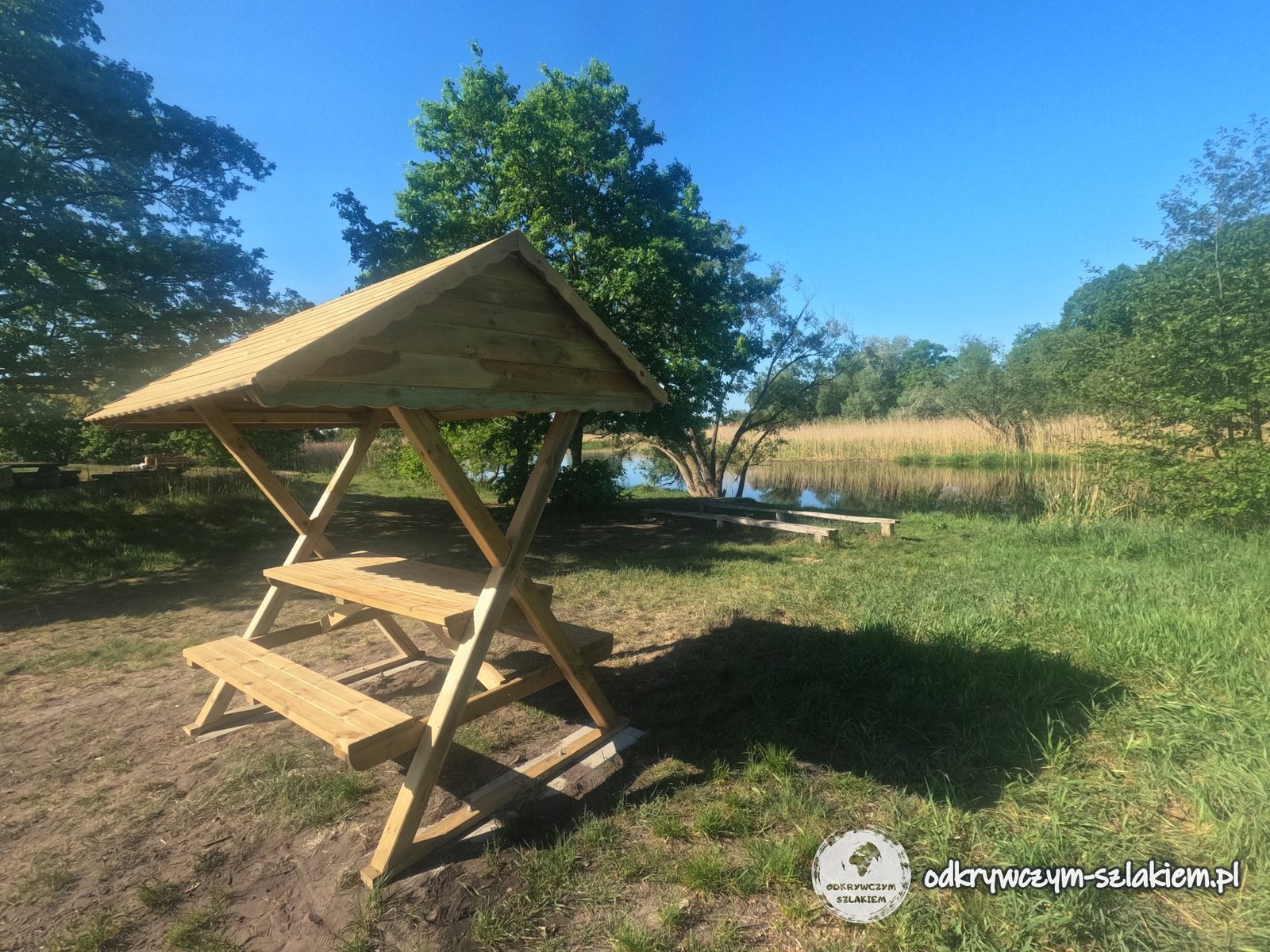
At around half past eight in the evening we reached Mögelin, now part of the town of Premnitz. On a side arm of the Havel (Mögeliner Havel) there is a free bivouac site (Biwakplatz) with a shelter and tables. Wild camping is not allowed in Germany, but there are places where you can pitch a tent for free or for a small fee. We looked for them on the OpenCampingMap (opencampingmap.org). That day we rode about 60 km from Werder to Mögelin.
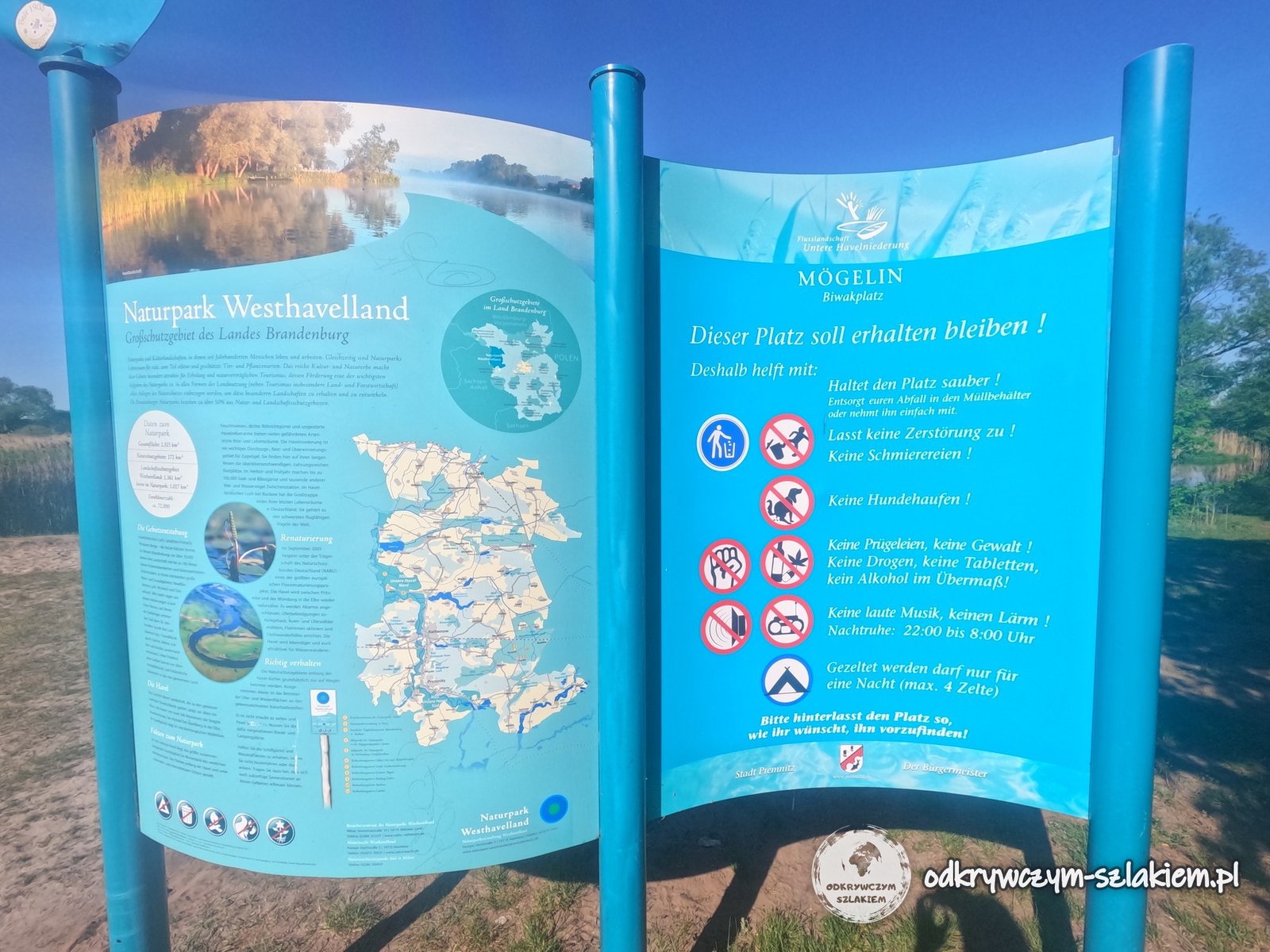
The board at the site shows a map of the Westhavelland Nature Park and the site rules. You can pitch a tent for one night only, and no more than 4 tents may stand there at a time. Quiet hours are from 22:00 to 8:00, and rubbish must go in the bin or be taken away with you.
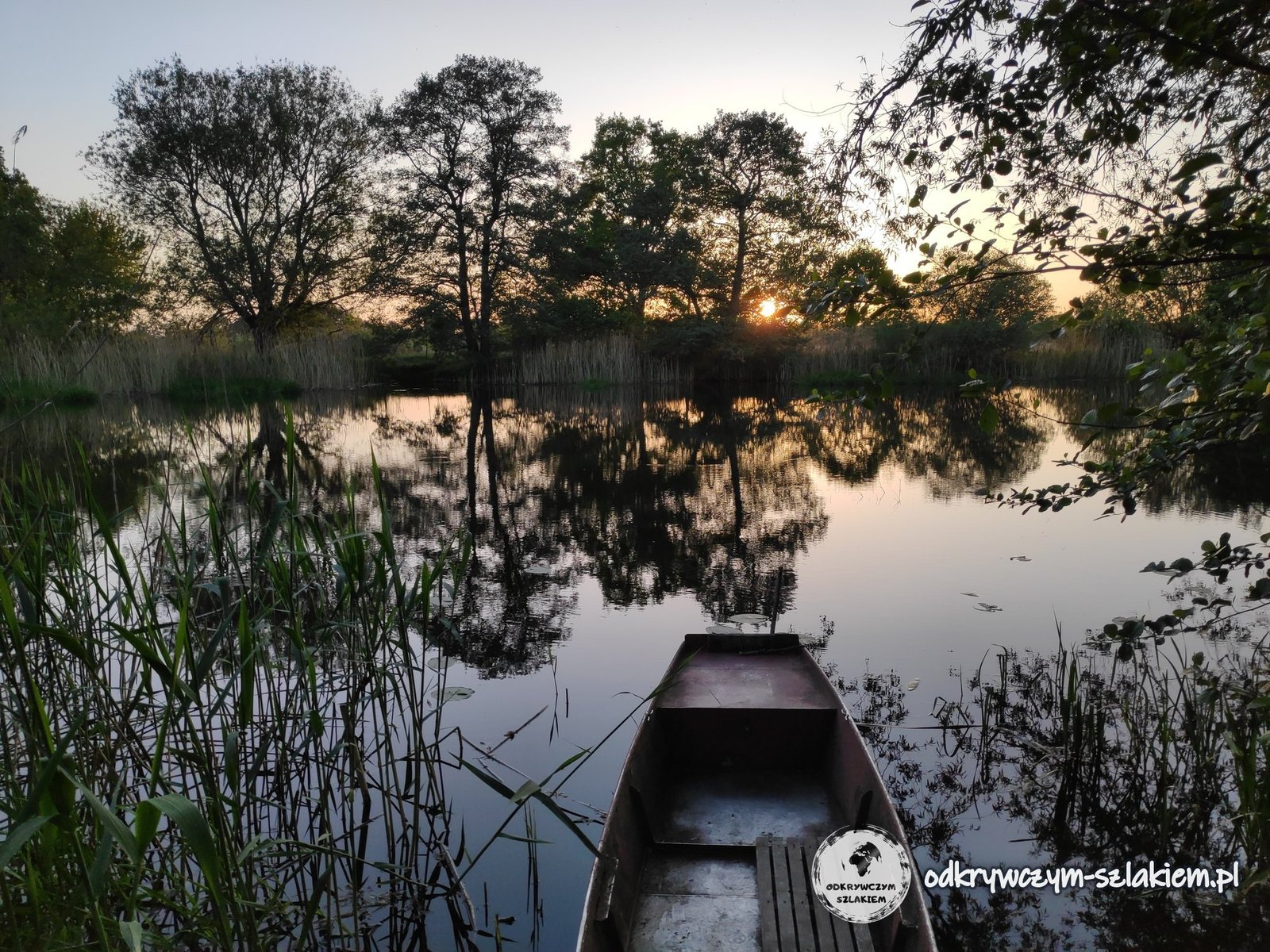
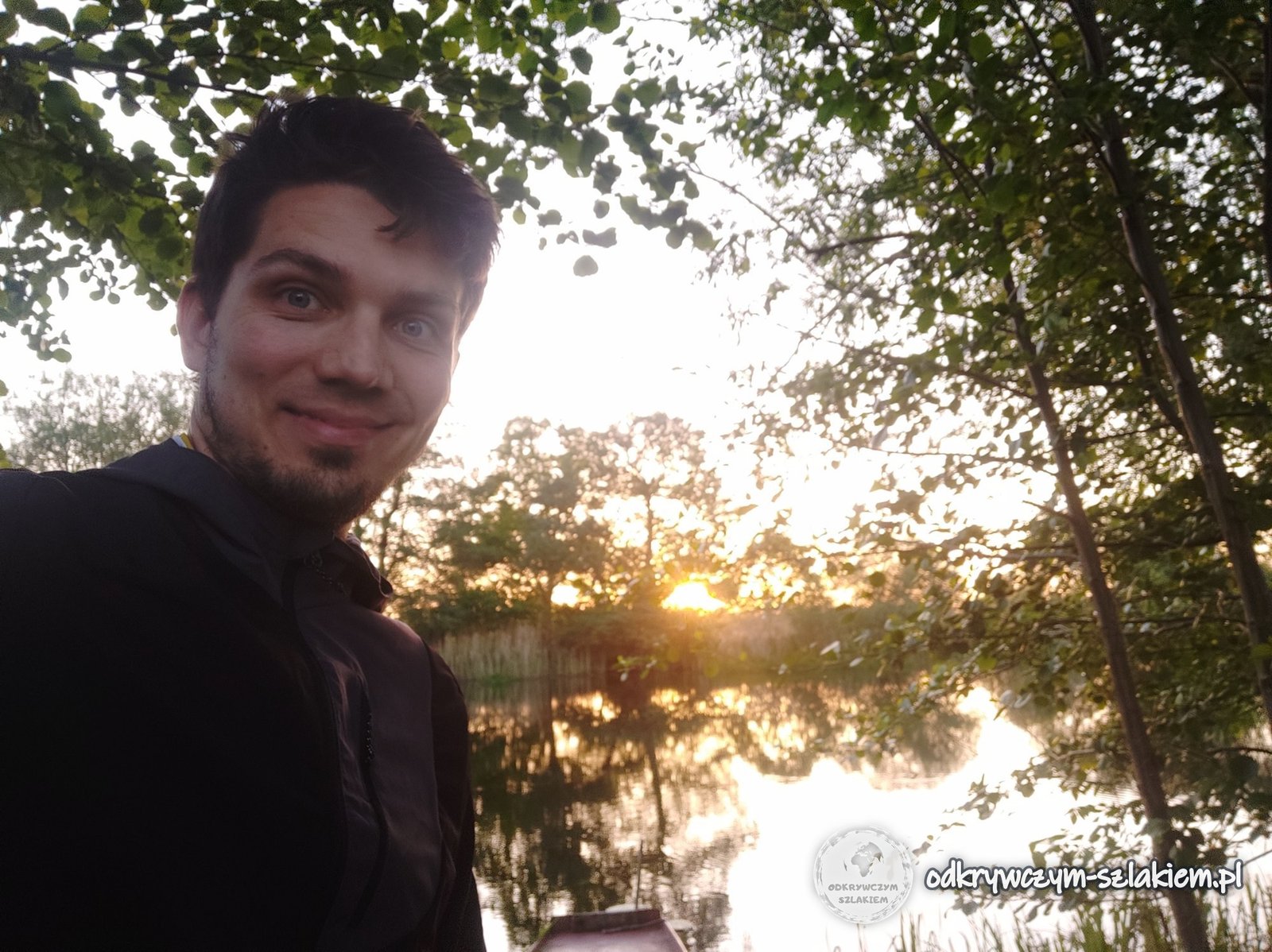
At around 20:40 the sun was already sinking behind the trees on the other side of the water. In the morning, on Sunday 15 May, I took a few more photos of the site and of the riverbank with its small sandy beach.
Practical information
- Bikes on trains: you can take a bike on the S-Bahn, the U-Bahn and regional trains, but only in the marked carriages and when there is space – staff can refuse. A bike needs its own ticket (Fahrradkarte): a single in zones Berlin AB costs €2.70, ABC €3.30, and for the whole VBB network (Berlin and Brandenburg) €4.60. A 24-hour bike ticket for the whole VBB network costs €7.50 (prices as of October 2026; from 1 January 2027 – €7.80). The Deutschlandticket does not cover bikes.
- By train to the Havel: the RE1 runs from Berlin via Werder (Havel) to Brandenburg an der Havel (about an hour from Berlin Hbf). The RB51 runs hourly from Brandenburg an der Havel via Pritzerbe, Premnitz and Mögelin to Rathenow, and from Rathenow the RE4 goes to Berlin (about an hour).
- By train to the Oderbruch: the RB26 runs from Berlin Ostkreuz via Seelow-Gusow to Kostrzyn, and the RB60 links Eberswalde, Bad Freienwalde, Wriezen, Seelow and Frankfurt (Oder). The S2 S-Bahn goes to Bernau.
- Overnight stays: wild camping is forbidden in Germany. Free or cheap bivouac sites (Biwakplätze) and rest areas for canoeists (Wasserwanderrastplätze) can be found on opencampingmap.org. At some of them you can stay only one night, and not all of them have a toilet or water.
- Observation towers: the Friedenswarte on the Marienberg is open from April to October, on selected days of the week, 10:00–17:00. The Schanzenturm in Bad Freienwalde – from April to October, Tuesday to Sunday, 10:00–17:00; a ticket costs €2 (reduced €1).
- The Havel route: the waymarked Havel-Radweg runs from Brandenburg an der Havel to Rathenow – this stage is about 67 km long and passes through Plaue, Pritzerbe and Milow, partly on cycle paths beside roads and partly on minor roads.
- More: I described day trips from Berlin by train in the post Day trips from Berlin, a water park in Brandenburg in Tropical Islands, and another cycling trip with a tent in By bike to the Pyramid in Rapa.
Photo gallery