Comino is the third-largest island of Malta, lying between the main island and Gozo – its area is barely more than one percent of Malta. It is famous above all for its crystal-clear, light-blue water, and this is the part of the country most besieged by tourists and influencers hunting for the perfect photo. Only a handful of people live here permanently, and there is one hotel and two camping spots. We visited the island on 26 October 2020, the fifth day of our week in Malta.
Table of contents
- The Blue Lagoon
- The L-Għar ta’ Bla Saqaf rock window
- Crystal Lagoon
- St Mary’s Tower
- Other beaches
- Practical information
The Blue Lagoon
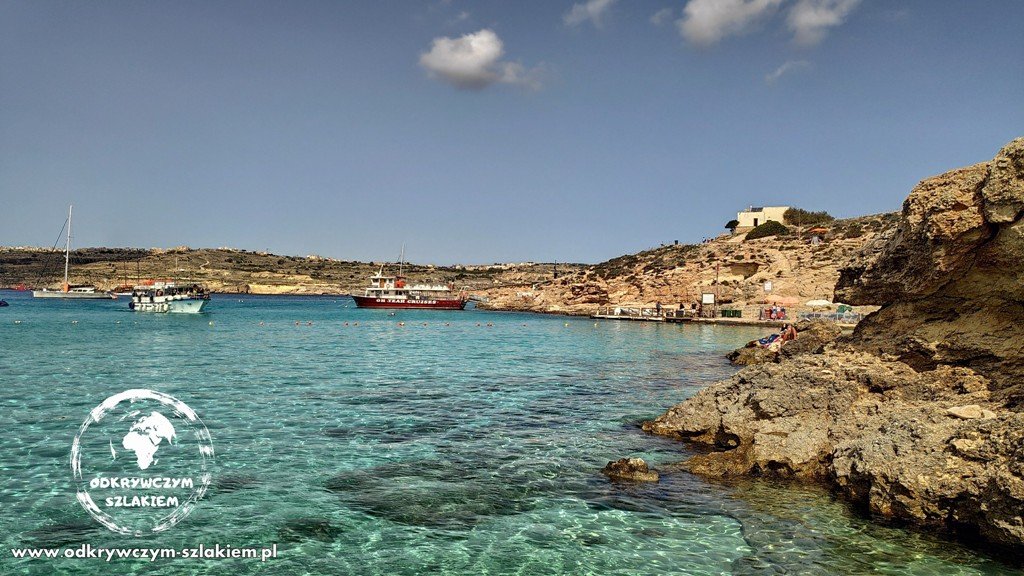
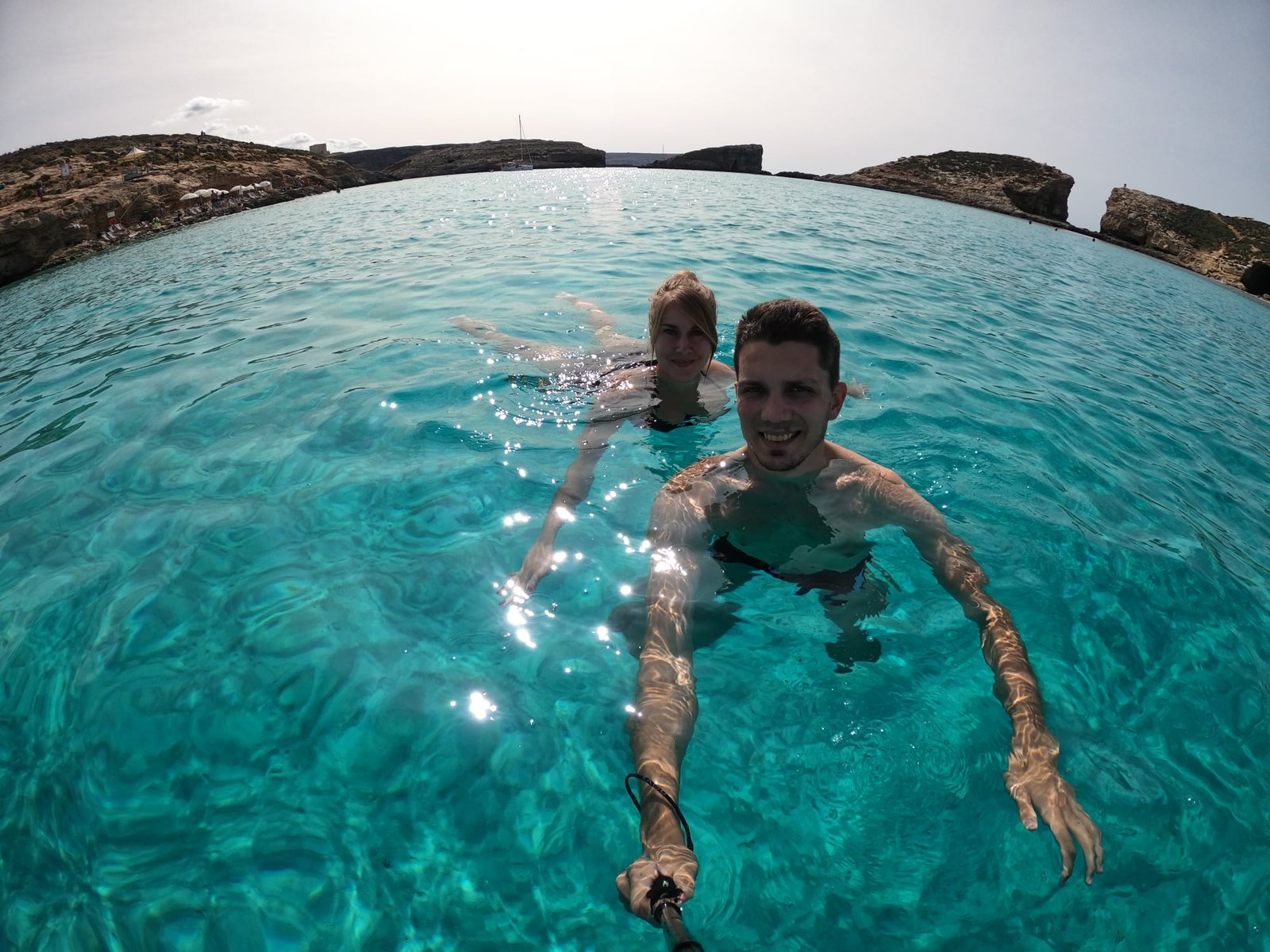
The Blue Lagoon is Comino’s best-known bay – the island’s calling card and, for many, the symbol of all of Malta. The shallow water here has an incredible light turquoise colour. There is little space on the shore and usually crowds of tourists, so spreading out a blanket can be almost impossible. Visiting during the pandemic, we had no trouble at all and easily found a spot for ourselves on a tiny beach.
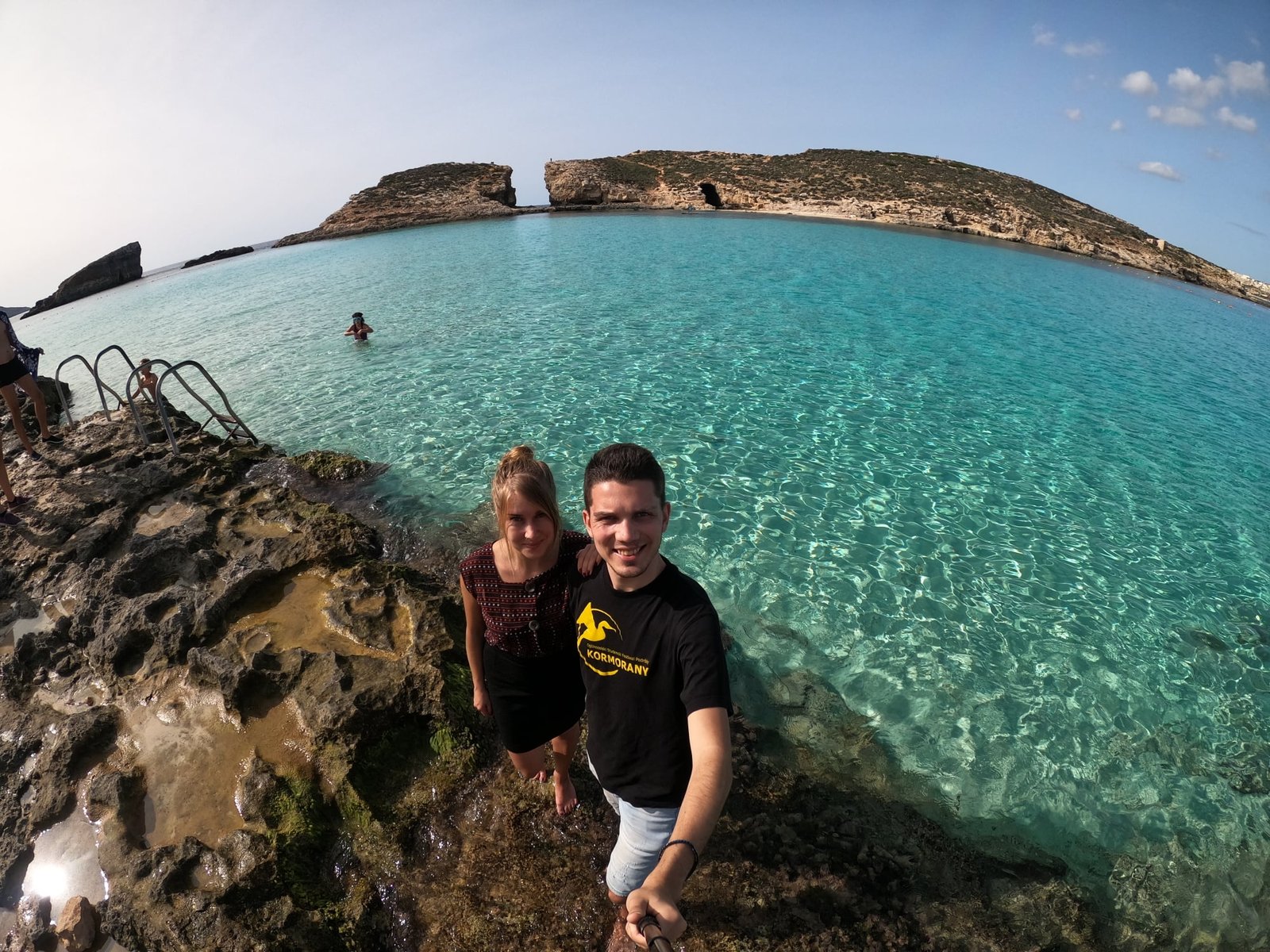
On the other side of the lagoon lies the tiny islet of Cominotto, and along the rocky shore the boats that bring tourists over from Malta and Gozo are moored.


You climb down into the water from the rocks on metal ladders, and the part of the lagoon marked off with buoys is kept for swimming – boats and yachts anchor beyond it. The light, sandy bottom gives the water its distinctive colour. In the cliff of Cominotto, on the other side of the lagoon, you can see a cave. At the peak of the 2024 season there were up to 12,000 people here at once, so since 1 May 2025 you can only go ashore at the Blue Lagoon with a free online booking. The limit is 4,000 people at a time, in three slots: 8:00–13:00, 13:30–17:30 and 18:00–22:00. The booking gives you a QR code, which you exchange for a wristband at the entrance.


The L-Għar ta’ Bla Saqaf rock window
L-Għar ta’ Bla Saqaf (also called It-Tieqa or Taħt il-Ħnejja) means, loosely translated, “the cave without a roof” or “the window”: a huge hole in the rock through which you can see the stony bottom and the turquoise water. The effect is amazing. It lies on the way from the Blue Lagoon to Crystal Lagoon, so it is worth stopping here, if only for a photo.


Beyond the rock window the path continues south along the cliff edge, and St Mary’s Tower is already visible on the horizon. The limestone walls are clearly layered, and detached blocks of rock lie at their foot. The whole of Comino is a nature reserve and bird sanctuary protected under the Natura 2000 network – about 50–80 pairs of Yelkouan shearwaters breed here.
Crystal Lagoon
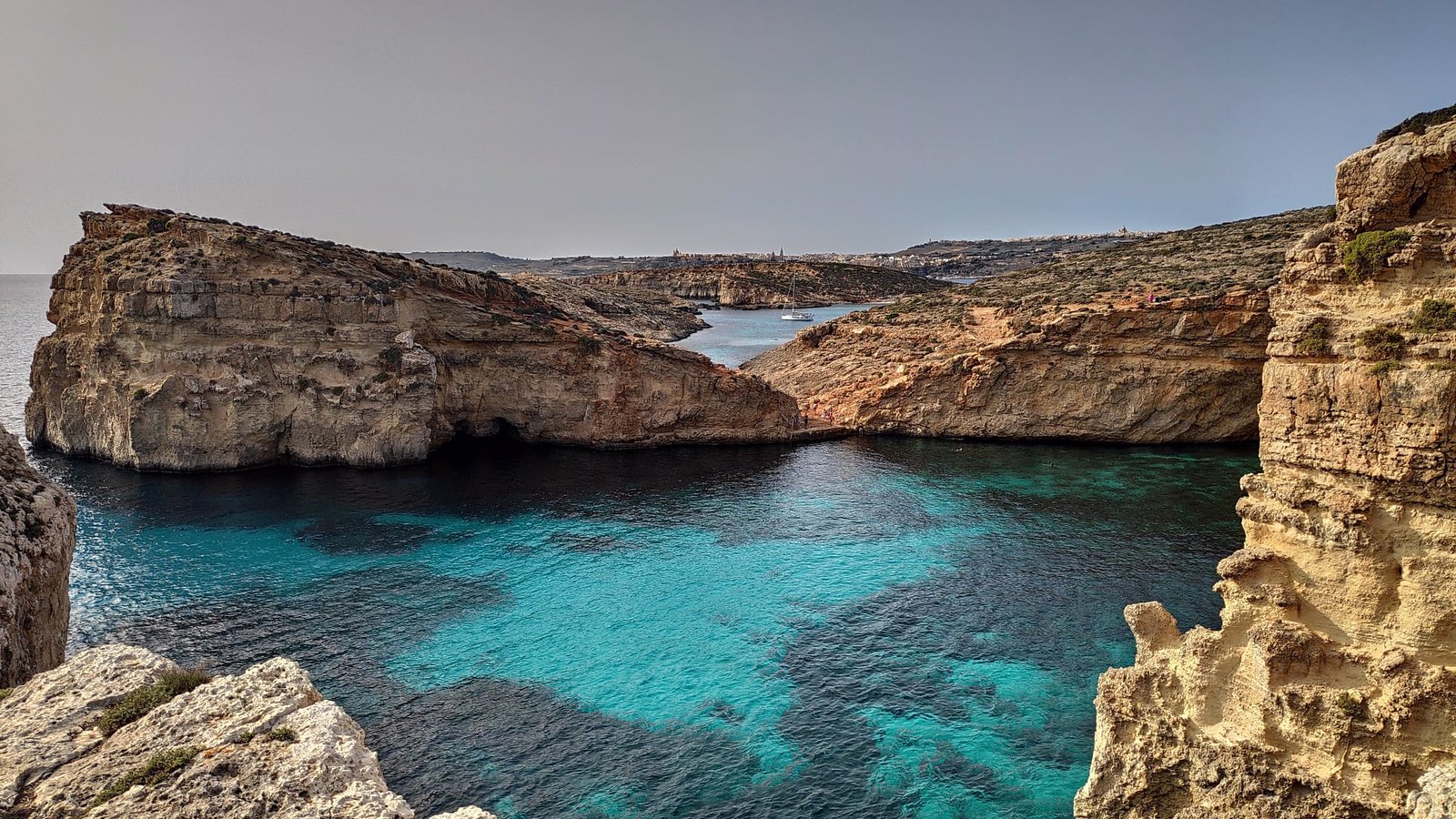
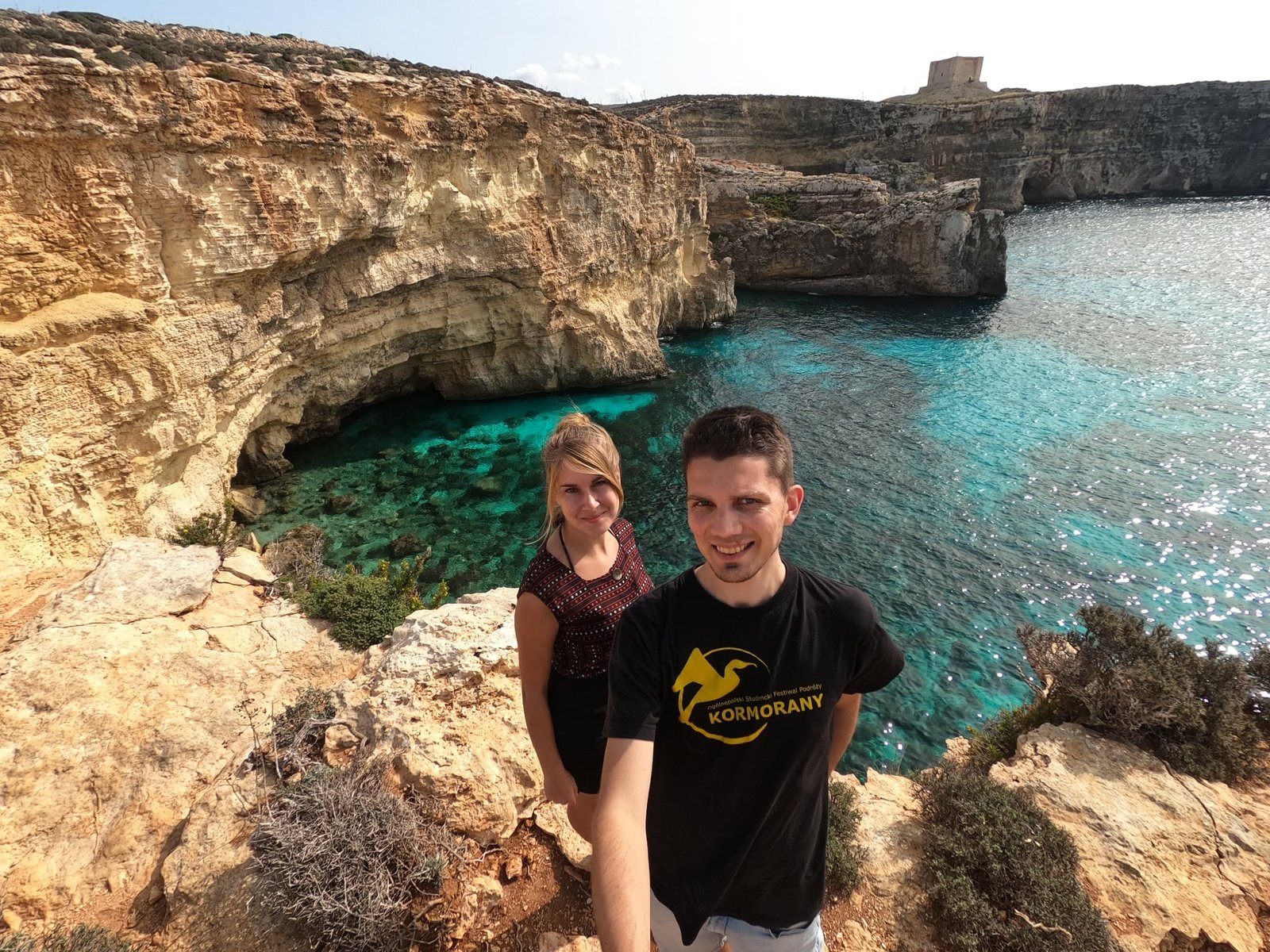
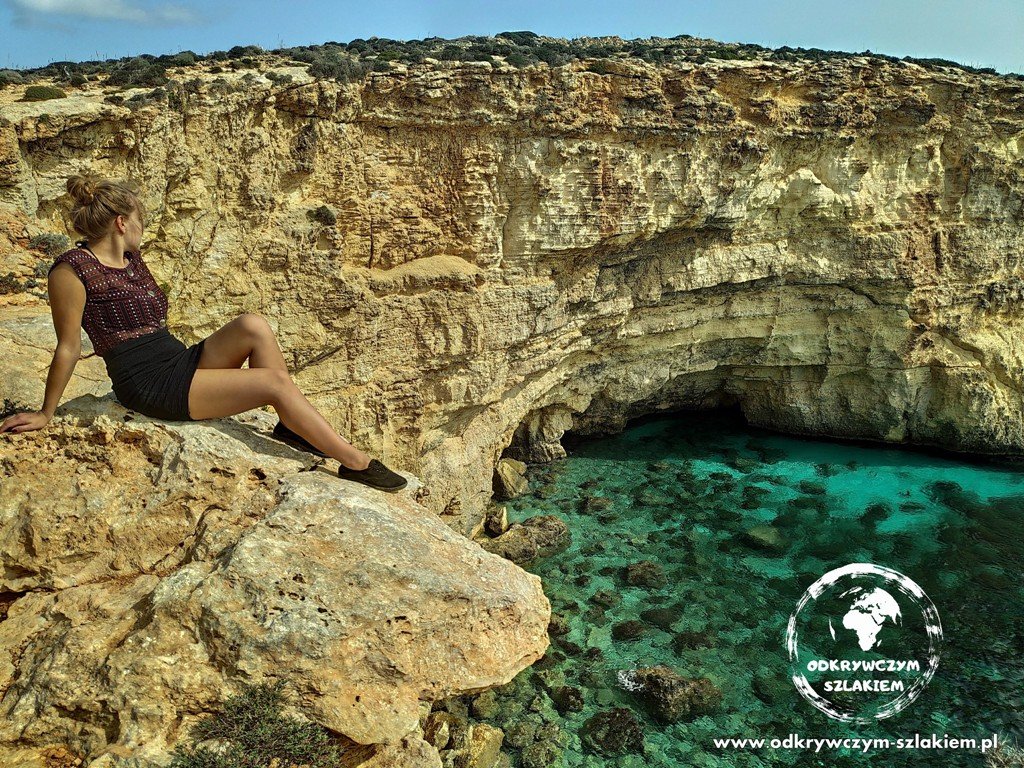
Crystal Lagoon is another wonderful bay, not far from the Blue Lagoon. The best view of the stony bottom and the transparent water is from above, from the cliff. There is no beach here, but it is worth going down to see the cave – you can easily swim into it. It is also a very good spot for snorkelling.


St Mary’s Tower
St Mary’s Tower is one of the stone watchtowers, built in 1618. It was once part of a system of fortifications that provided defence and communication between Malta and Gozo. It is worth walking up to it as part of a stroll around the island.
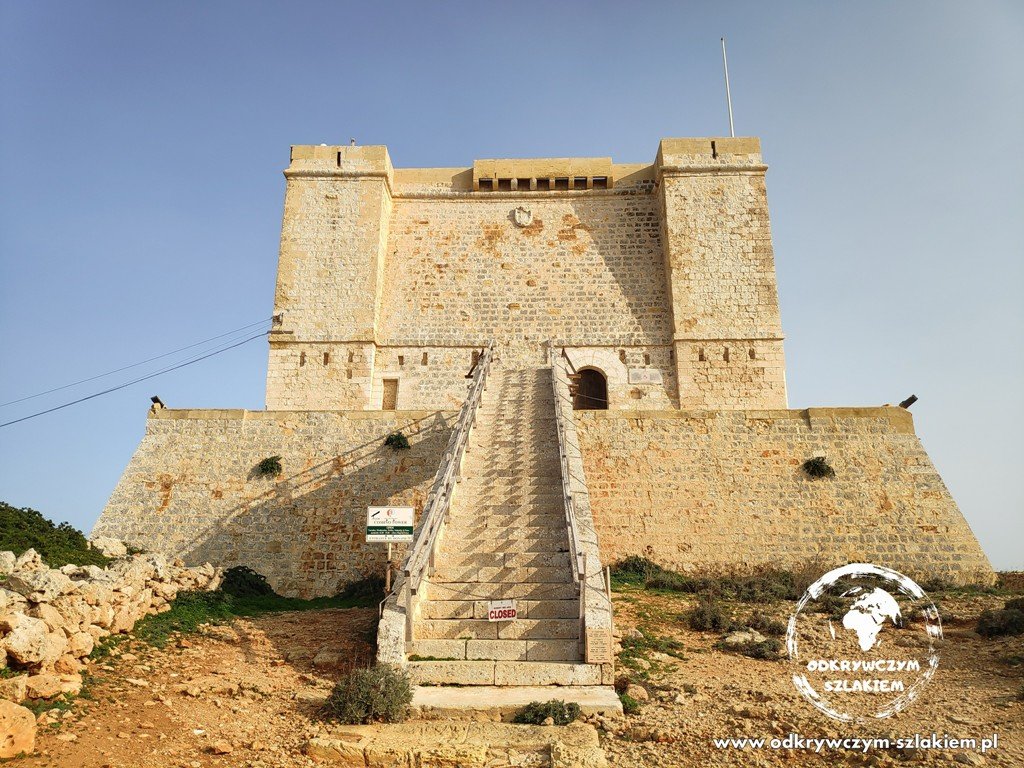

The tower stands on the edge of the cliff, about 80 m above the sea. It is about 12 m high with walls some 6 m thick – the tallest and also the most expensive of the towers the Knights of St John built under Grand Master Alof de Wignacourt. It was meant to deter pirates, who in the Middle Ages hid in Comino’s caves, and in times of danger up to 60 soldiers could be garrisoned here. During the uprising against the French (1798–1800) suspected spies were held here, and from 1982 to 2002 the Maltese army used it to watch for smugglers and poachers hunting birds. Since its restoration in 2002–2004 the tower has been open to visitors. In the film “The Count of Monte Cristo” (2002) it played the Château d’If prison.
The former barracks and isolation hospital
Not far from the tower, a little to the north, stands a long two-storey building with arcades – the former barracks the Knights built for the tower’s garrison. During the French occupation Comino served as a quarantine station, and in the early 20th century the barracks were periodically used as an isolation hospital for patients with infectious diseases. Pink oleanders were flowering in front of the building.


Other beaches
If you have more time, you can walk to the beaches in the bays of San Niklaw and Santa Maria – especially recommended for those who value peace and comfort.

Above Santa Maria Bay stands a small chapel, today dedicated to the Return of the Holy Family from Egypt. A chapel on this spot is recorded as early as the 13th century, and the present building dates from 1618 – the same year St Mary’s Tower was built. In front of the entrance there are two information boards: one about the church and one about the hermitage. Between the chapel and the hotel bungalows is the police station.
Practical information
- Getting there – boats to Comino leave from the port of Ċirkewwa in the north of Malta (the same place the ferries to Gozo depart from).
- The crossing – the boat from Ċirkewwa to Comino takes about 20 minutes. In 2026 a return ticket cost about €13–15, depending on the operator.
- Boat times – in summer the boats run roughly from 9:00 to 18:00. The last one leaves at 18:00, so make sure you are on time. In winter, after the clocks go back, the boats stop earlier – you have to hurry with your sightseeing and check the current timetable.
- When to arrive? – the Blue Lagoon is almost always crowded, so to get a good spot it is best to be there before 10:00.
- Accommodation – there is only one (expensive) hotel on the island, so Comino is usually visited as a day trip.
- Snorkelling mask – worth taking, especially for Crystal Lagoon.
More about the whole week – Valletta, Mdina, the Dingli Cliffs, Popeye Village and Gozo – in a separate post: Malta in a week – an itinerary for Malta, Gozo and Comino.