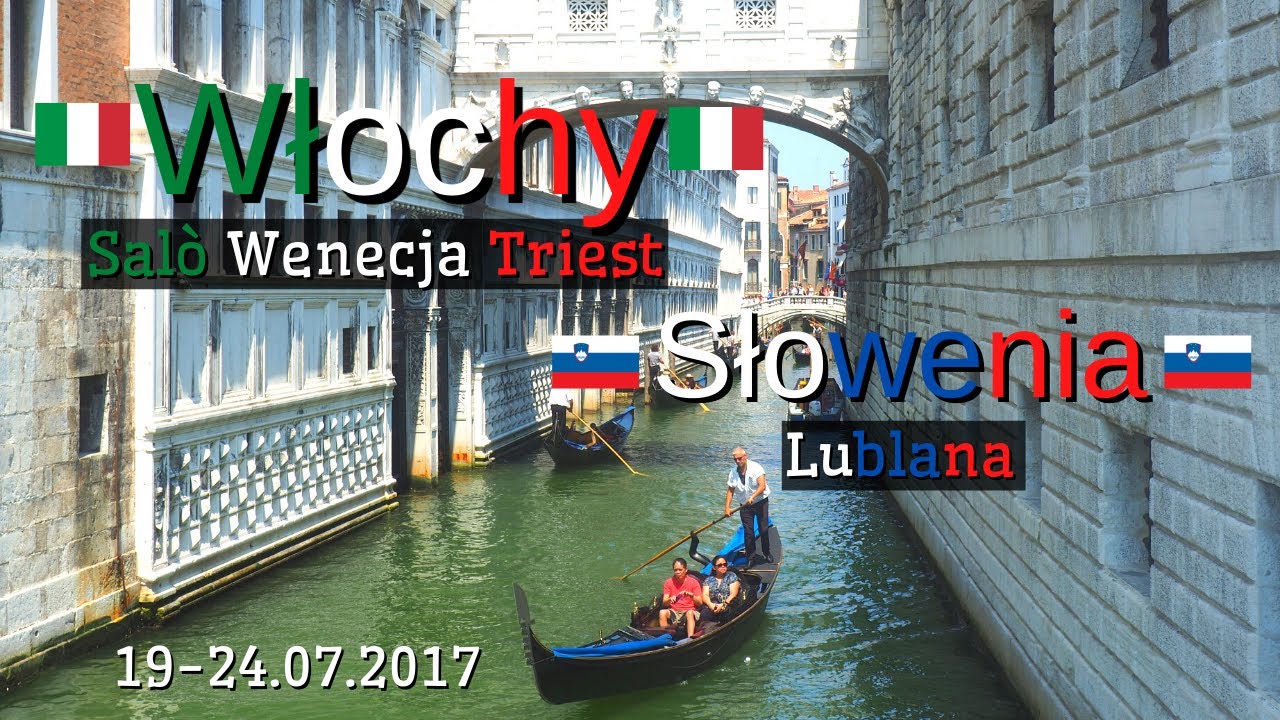






Early in the morning (19 July 2017) Michał and I flew from Warsaw to Bergamo (Orio al Serio, Italy) – watch the video above from the beginning. The flight cost us about €21 per person. We were heading for Lake Garda, specifically its southern part – around Sirmione. We meant to get around mainly by hitchhiking, but at first reality put our plans to the test a little. For the first few hours we tried to hitch a ride near the airport – with no luck, so like it or not, we decided to pay for a bus to Brescia (a dozen or so euros per person). The problem was that motorways started right next to the airport, and the other roads didn’t lead towards our destination. In hindsight, we should have tried hitchhiking from the airport car park.
To Brescia we covered just over 50 km. Hitchhiking again was harder going. After walking a considerable distance, we believed less and less that we’d succeed. Luckily, an Italian man stopped at a bus stop. He told us he could take us close to the western part of Lake Garda, which clashed a bit with our plan. In the end, though, we agreed. Greetings to Rino Fiorentino! This time we covered over 30 km and got out at a crossroads.
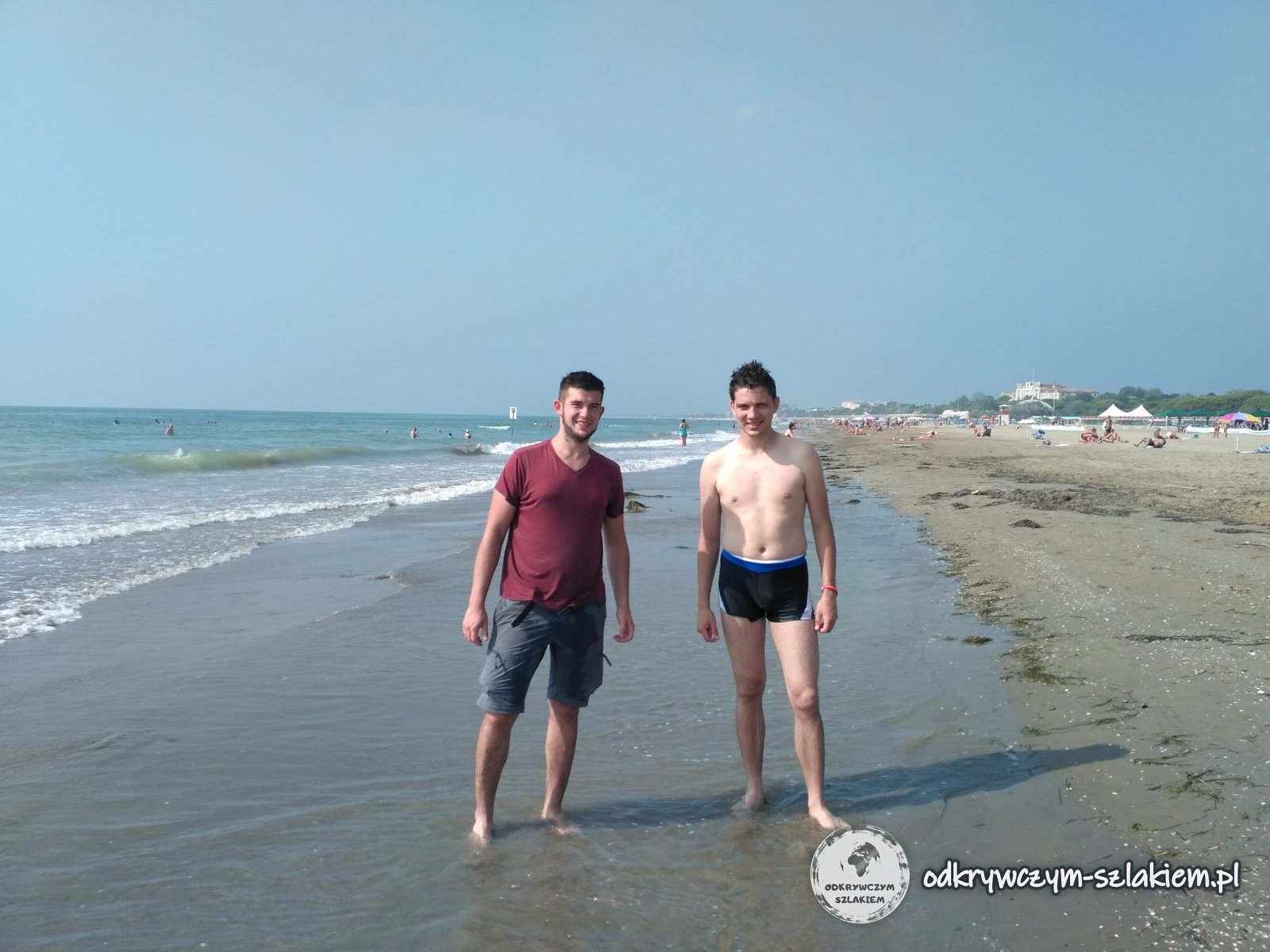
Before long a few guys stopped and gave us a lift of about 10 km to the town of Salò on Lake Garda. We explored the part of the town by the lake, went for a swim, had pizza, and at the end of the day pitched our tent right next to a campsite. Since all the shops closed early that day, we went to bed without a drink to our names.
Salò lies on the western shore of Lake Garda – the largest lake in Italy, covering about 370 km². The lakeside promenade was built after the earthquake of 1901. The town’s name went down in history because of the Republic of Salò – the fascist Italian Social Republic of 1943–1945. Rome remained its official capital, but the foreign ministry and the offices that issued government communiqués were in Salò, while Mussolini lived in nearby Gargnano.
Watch from 0:52. On the second day, in the morning, we found out we had camped on private property, but the owner didn’t make any trouble. We headed to the lake again, where after a quick swim we were going to start hitchhiking towards Venice. While packing up on the beach we met some locals (all thanks to a shared love of the track Hilight Tribe – Free Tibet). It turned out each of them came from a different country – among them were a Ukrainian and an Albanian. We spent a good few hours with them.
After doing some shopping we marched off towards the road out of town. Not long after, an elderly couple gave us a lift out of town, and then we caught another ride – we covered about 20 km to Desenzano del Garda.
As we walked to the next exit road, a driver who was ultimately heading to Verona stopped. After more than 50 km we ended up near the town of San Martino Buon Albergo (near Verona). Hitchhiking from the petrol station, however, turned out to be fruitless. We were already getting ready to pitch the tent when suddenly a lady stopped who, seeing us in the same place for the second time, decided to drive us further into the town, where after a while we found another place to pitch the tent (though we had to walk quite a bit).
Watch from 2:05. The third day meant lots of hours wasted hitchhiking in vain, in full sun, in front of the motorway entrance in San Martino Buon Albergo. In the end, not wanting to waste any more time, we got on a train and rode to Venice (Santa Lucia).
That day we saw Venice mostly after sunset. While looking for a corkscrew for our wine, we met some Poles, who told us, among other things, about the Venetian island of Lido, which has a beach and better prospects for pitching a tent. We got to the island by “water bus”, which serves as public transport. On the beach we met two Canadians, and then we pitched the tent in a greener area.
Right outside Santa Lucia station you see the Grand Canal – Venice’s main waterway, which winds through the city for about 3.8 km in the shape of a reversed S. Until the 19th century the Rialto Bridge was the only way across; today four bridges span the canal, including the Ponte degli Scalzi right by the station. On the other side of the water stands the church of San Simeone Piccolo with its green dome, built in 1718–1738 to a design by Giovanni Antonio Scalfarotto and modelled on the Pantheon in Rome.
Watch from 3:48. On the fourth day, after a swim in the sea on Lido, we went back to the main part of Venice, where this time, in daylight, we got to admire the biggest tourist attractions – including St Mark’s Square and the Bridge of Sighs. The city has its own interesting atmosphere – narrow streets and beautiful buildings. Without the map on my phone we’d have been lost for a long time. We knew it would be hard to hitchhike out of Venice, so once again we decided to take the train. The next goal of our trip was the capital of Slovenia – Ljubljana.
Lido, where we went swimming, has hosted the Venice International Film Festival since 1932 – according to the Biennale, the oldest film festival in the world. The first edition ran from 6 to 21 August 1932 on the terrace of the Hotel Excelsior. On St Mark’s Square we stopped in front of the façade of the basilica, where golden mosaics shine above the portals.
So in the evening we arrived in the border town of Trieste. We walked around the centre a little, had a beer by the sea and started looking around for a place to pitch the tent. To do that we took a bus and walked quite a long way into Parco Farneto until we finally found reasonably flat ground.
The centre of Trieste is Piazza Unità d’Italia – according to the city’s tourism portal, the largest square in Europe facing the sea. Blue lights set in the pavement mark the former waterline of the old harbour. Not far from the square we saw the floodlit Roman theatre from the 1st–2nd century AD, which held up to 3,500 spectators. For centuries it was hidden by later buildings, and the excavations were completed in 1938.
Watch from 5:28. On the fifth day we made our way to the road out of town to hitch a ride to Ljubljana. We had nothing to drink, and it was Sunday (most shops closed). We did manage to drop into a pizzeria that had only just opened, where we quenched our thirst and got a piece of cardboard for a hitchhiking sign. Then we got a lift to the border village of Opicina, where at the last minute we managed to do some shopping in a local store. Next we walked to another road towards the border, where after quite a long time two Italians stopped and took us straight to Ljubljana. It turned out they were heading for Budapest – our next destination. A pity, because we could have gone further with them, but we didn’t want to skip the capital of Slovenia.
For the first time on this trip we decided to spend the night in a hostel. By Slovenian standards it wasn’t too expensive, and it was in the centre too (Dragondoss Hostel – it came to €38.54 for two people in a room with one more person). We explored the centre, and late in the evening we went to a shisha bar (Hadouta Shisha Lounge). On Sunday a lot of places were closed, but in the end we managed to find one that was open (Bar ‘Shooters’). After a while we met a group of Slovenians and stayed with them until morning. Fun fact: on Prešernov trg square there is a spot where Ljubljana has its “own weather”. High up there is an installation that sprinkles water, giving the impression of rain.
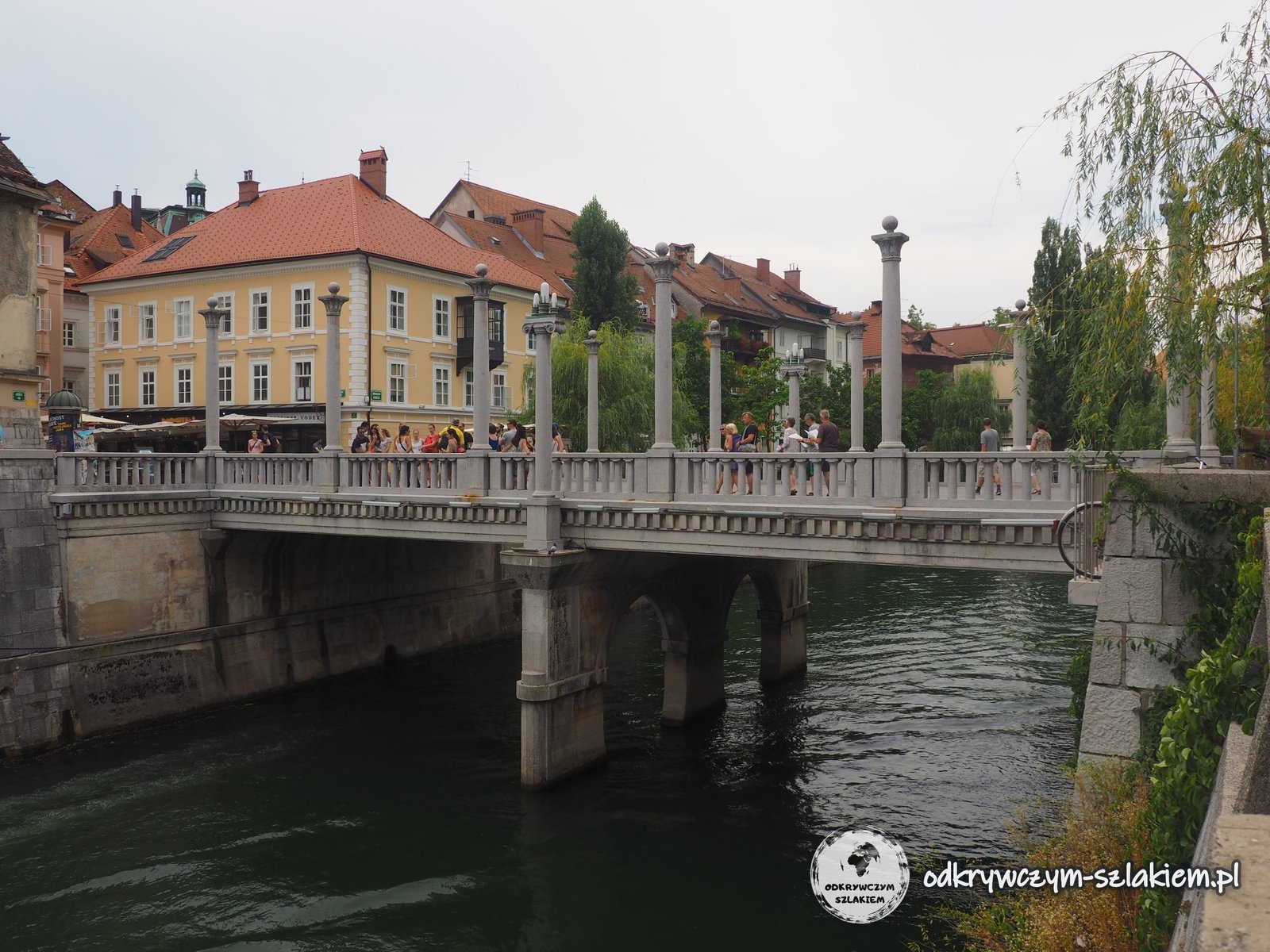
The Ljubljanica embankments and their bridges were redesigned between the wars by the architect Jože Plečnik, and on 28 July 2021 these and other works of his in Ljubljana were added to the UNESCO World Heritage List. One of these bridges is Cobblers’ Bridge (Čevljarski most), designed in 1931, with two kinds of columns – Corinthian ones outline the shape of the bridge and Ionic ones carry the lamps. Its name comes from the cobblers who took over the stalls of the butchers, who had been moved off the bridge because of the stench of meat. Next to the installation on Prešernov trg stands a sign reading “The area with Ljubljana’s own weather”.
Watch from 6:29. The sixth day was another hitchhiking failure. At first we wanted to get to Lake Balaton, but as time went on we set our sights on the capital of Hungary. We wasted loads of hours trying to hitch a ride in the rain. So in the end, like it or not, we decided to take the night train to Budapest.
We didn’t pay for a sleeping car. It turned out that in the regular compartments you could fold the seats down without any problem too, which was basically all we needed (we had a funny door – see the photo below). I don’t know whether it was out of simple kindness, a mistake, or because the conductors didn’t care about stations beyond the border, but on the train we were sold a ticket only as far as a town still in Slovenia (Hodoš), so we paid much less. The train left after midnight, and we reached Budapest at about 8:30. The ticket offices at Ljubljana station closed at 22:00.
The next three days of the trip, in Budapest, are covered in the next article – click here :).
Stay with me on the road – follow me wherever you like best.
Clicking loads the profiles from Facebook, Instagram and YouTube (they may set cookies).