On the third weekend of January 2023 (21–22 January) we popped over from Berlin to Hamburg – Germany’s second-largest city and one of the biggest ports in Europe. January isn’t the best time for walks by the water, but even in the grey the city made a good impression on us. We’ll definitely have to come back some time in a warmer season. On Saturday we focused on the port and the new HafenCity district, and on Sunday on the centre and the area around Lake Alster.
Table of contents
- Speicherstadt and the Elbphilharmonie
- Landungsbrücken and the old Elbe tunnel
- The port up close – the ferry, Dockland and Altonaer Balkon
- Sunday: the Alster, Planten un Blomen and the town hall
- Practical information
Speicherstadt and the Elbphilharmonie
We started Saturday near the Main Church of St. Catherine (Hauptkirche St. Katharinen) – one of Hamburg’s five main churches, standing right next to the warehouse district.
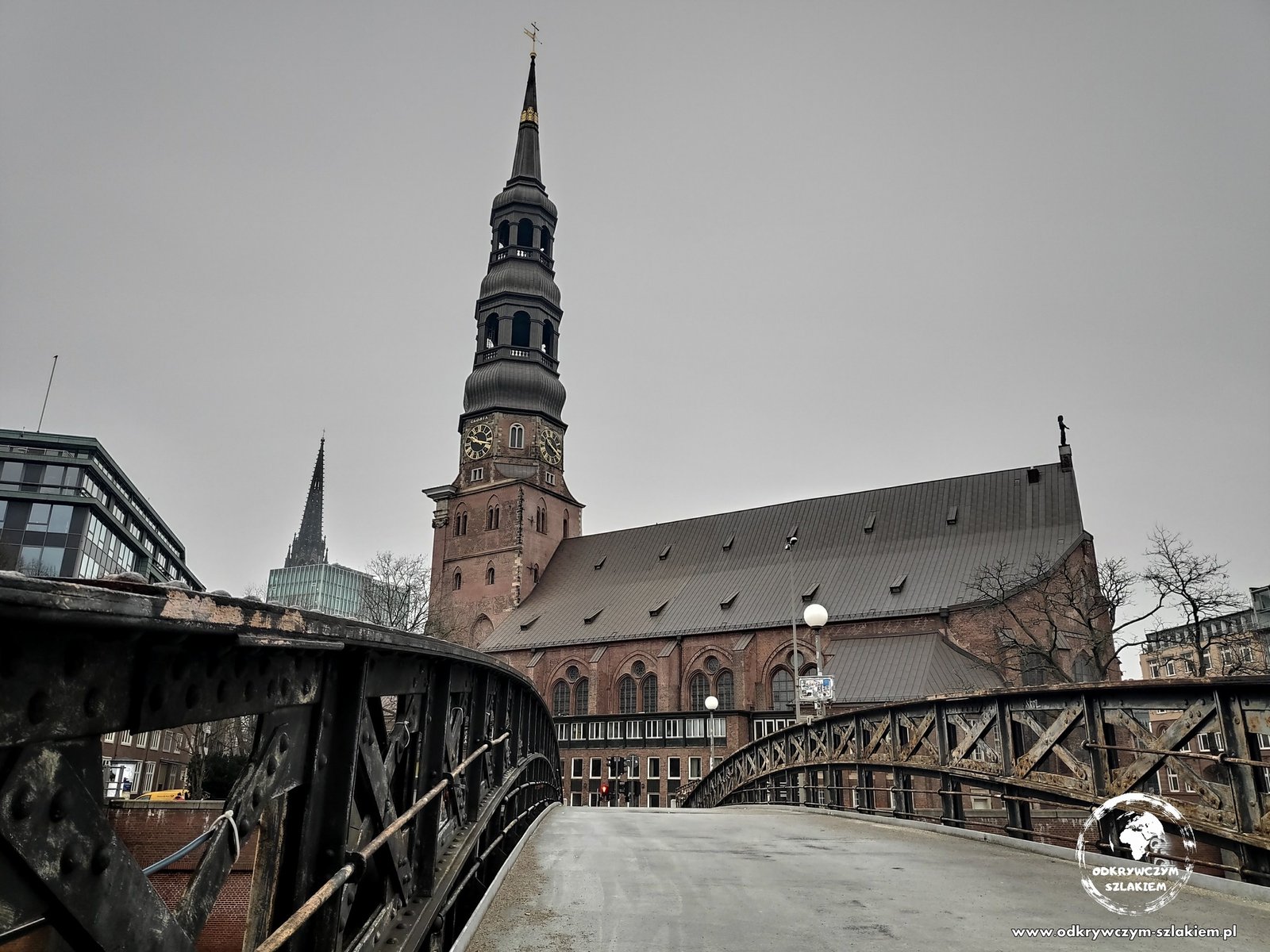
Speicherstadt is a former district of red-brick port warehouses, built on wooden piles on islands between canals. Today it is a UNESCO World Heritage Site and one of the most distinctive places in the city – it looks especially nice from the little bridges over the canals.
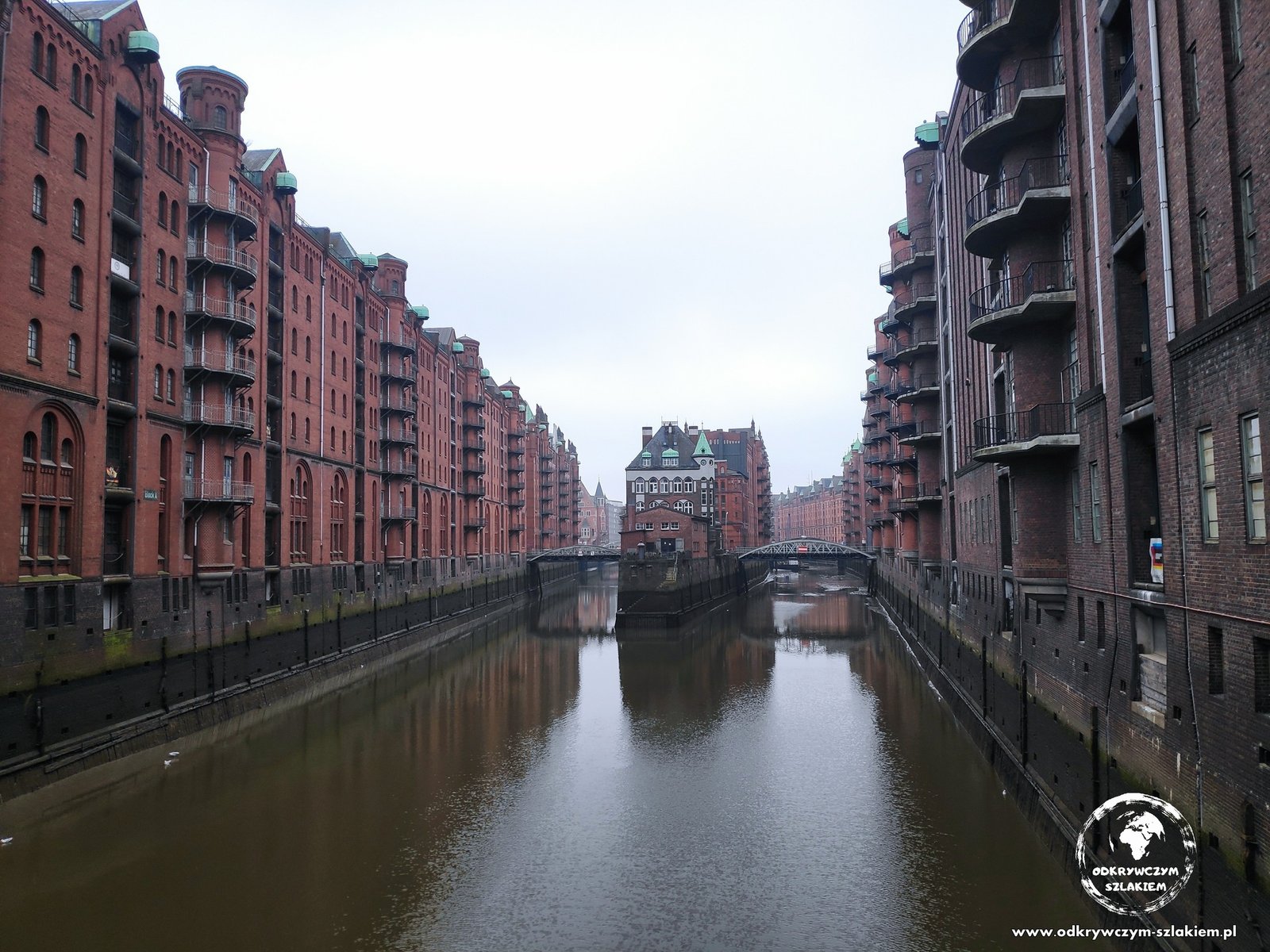
The Speicherstadt was built in 1883–1927. It came about because Hamburg joined the German customs union in 1888 and needed a free port outside the customs border – about 20,000 people were forcibly relocated to make way for it. The buildings stand on some 3.5 million wooden piles. It is the largest historic warehouse complex in the world, and in 2015 it was added to the UNESCO list together with the neighbouring Kontorhaus district and the Chilehaus. Since 2000 one of the warehouses has housed Miniatur Wunderland, the world’s largest model railway.
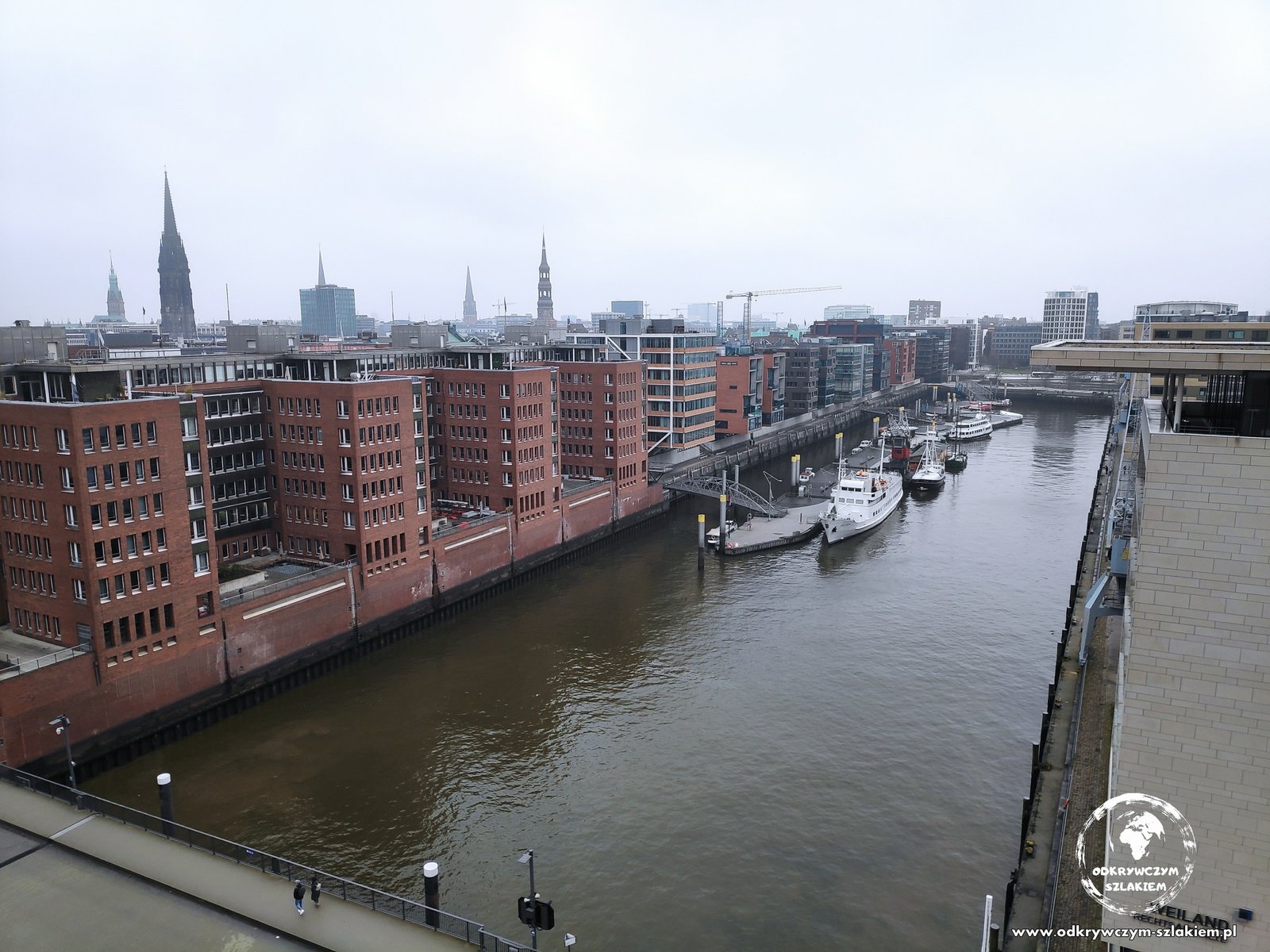
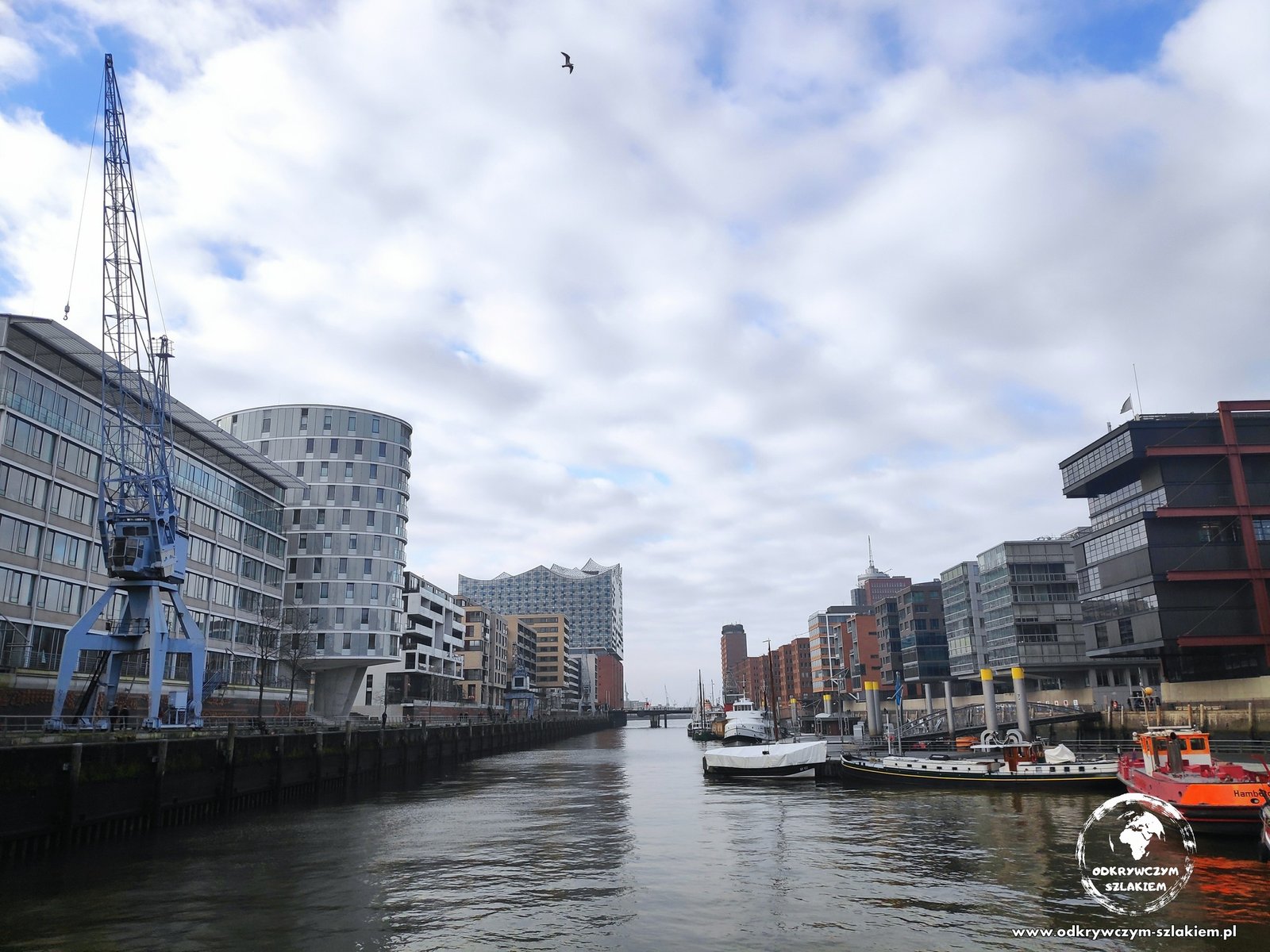
A few minutes further on, at the tip of the new HafenCity district, stands the Elbphilharmonie – a concert hall with a wavy glass structure built on top of an old brick port warehouse. You get to the Plaza viewing terrace, which runs all the way around the building, by long, curved escalators. Entry to the terrace is free (tickets for a specific time are issued), and the view of the port, the Elbe and HafenCity is great.
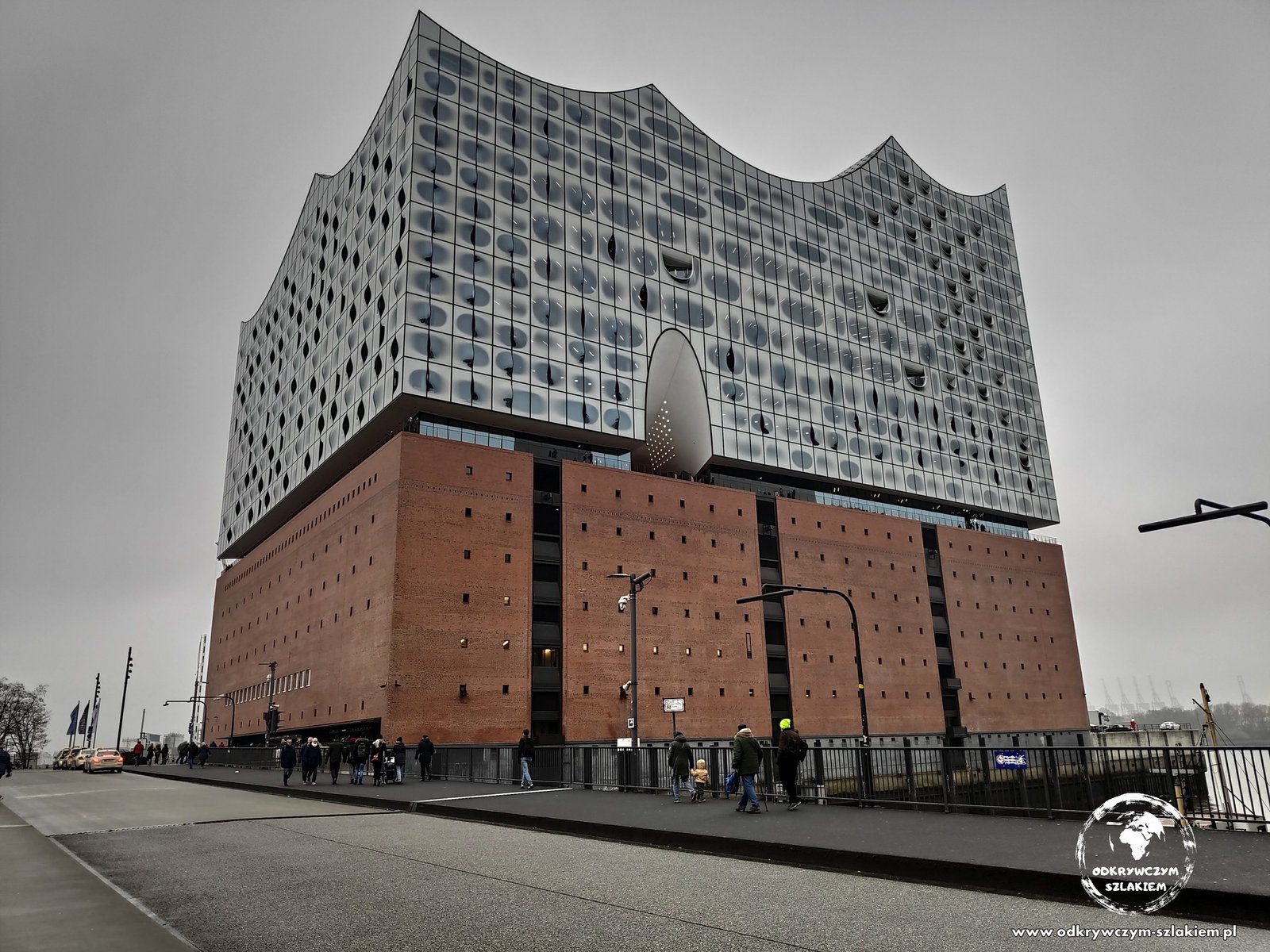
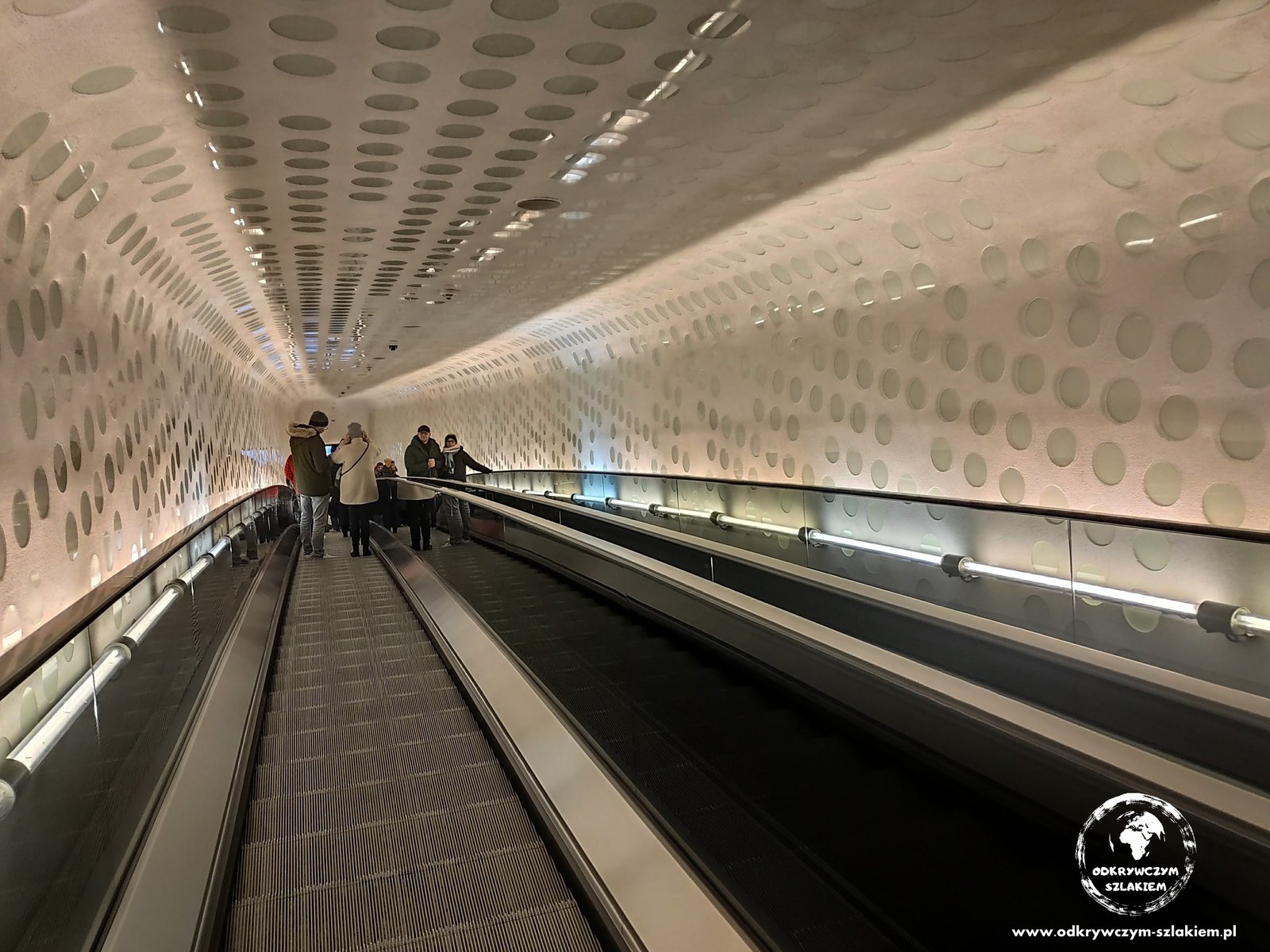
The concert hall opened on 11 January 2017. The glass extension on top of the brick Kaispeicher A warehouse from 1963–1966 was designed by the Swiss firm Herzog & de Meuron; the building is about 110 m high at its highest point, and it cost €866 million. The curved “Tube” escalator is 82 m long, the Plaza is 37 m above the ground, and the Grand Hall seats 2,100. By 2025 more than 25 million people had visited the Plaza.
From the concert hall we walked to the Magellan-Terrassen – stepped terraces by the water in HafenCity.
Landungsbrücken and the old Elbe tunnel
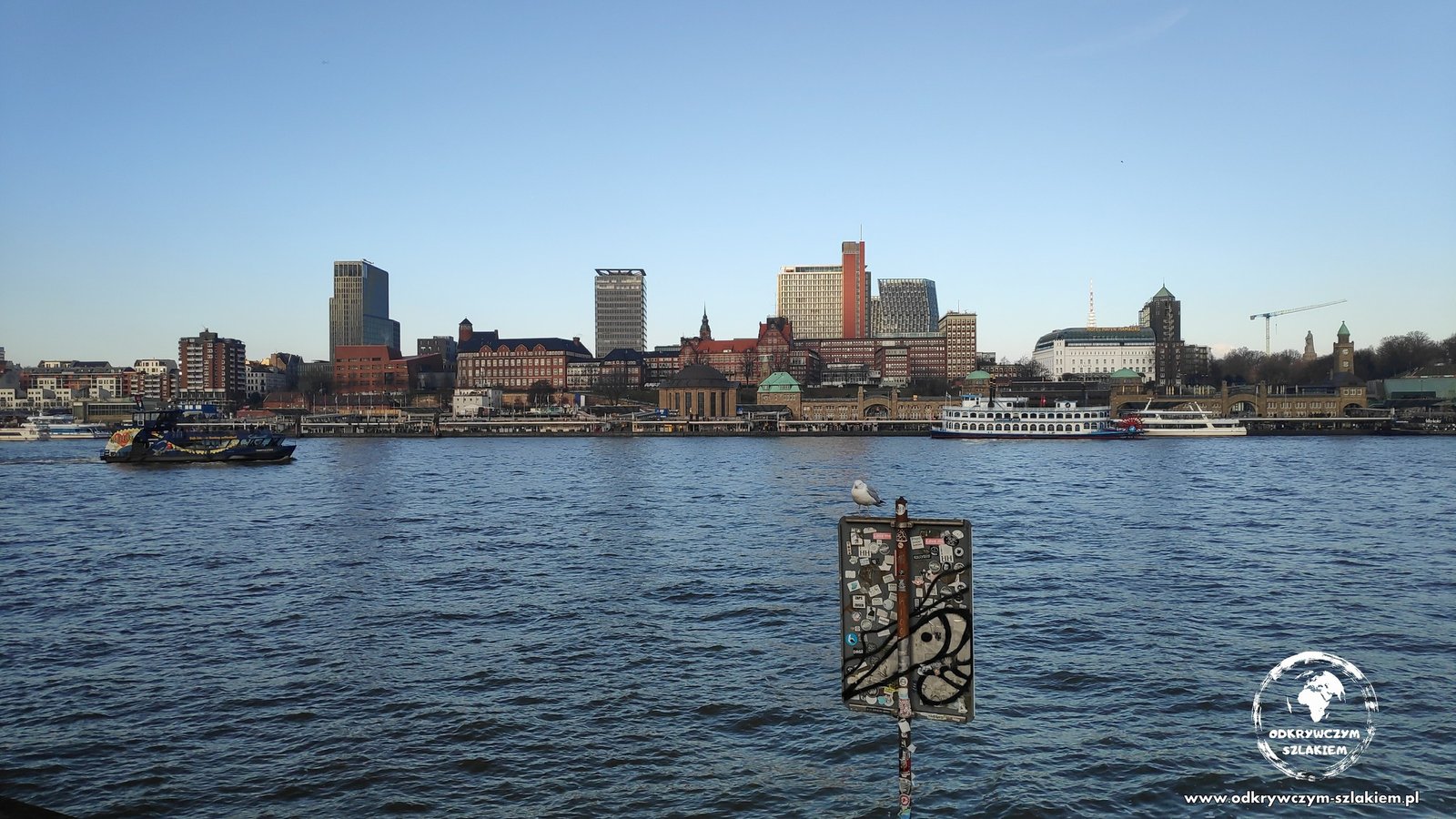
Along the waterfront we walked to the Landungsbrücken – floating piers from which ferries and tour boats depart. An elevated metro line runs above them, and from the terrace on the hill above the piers you can see this whole part of the port.
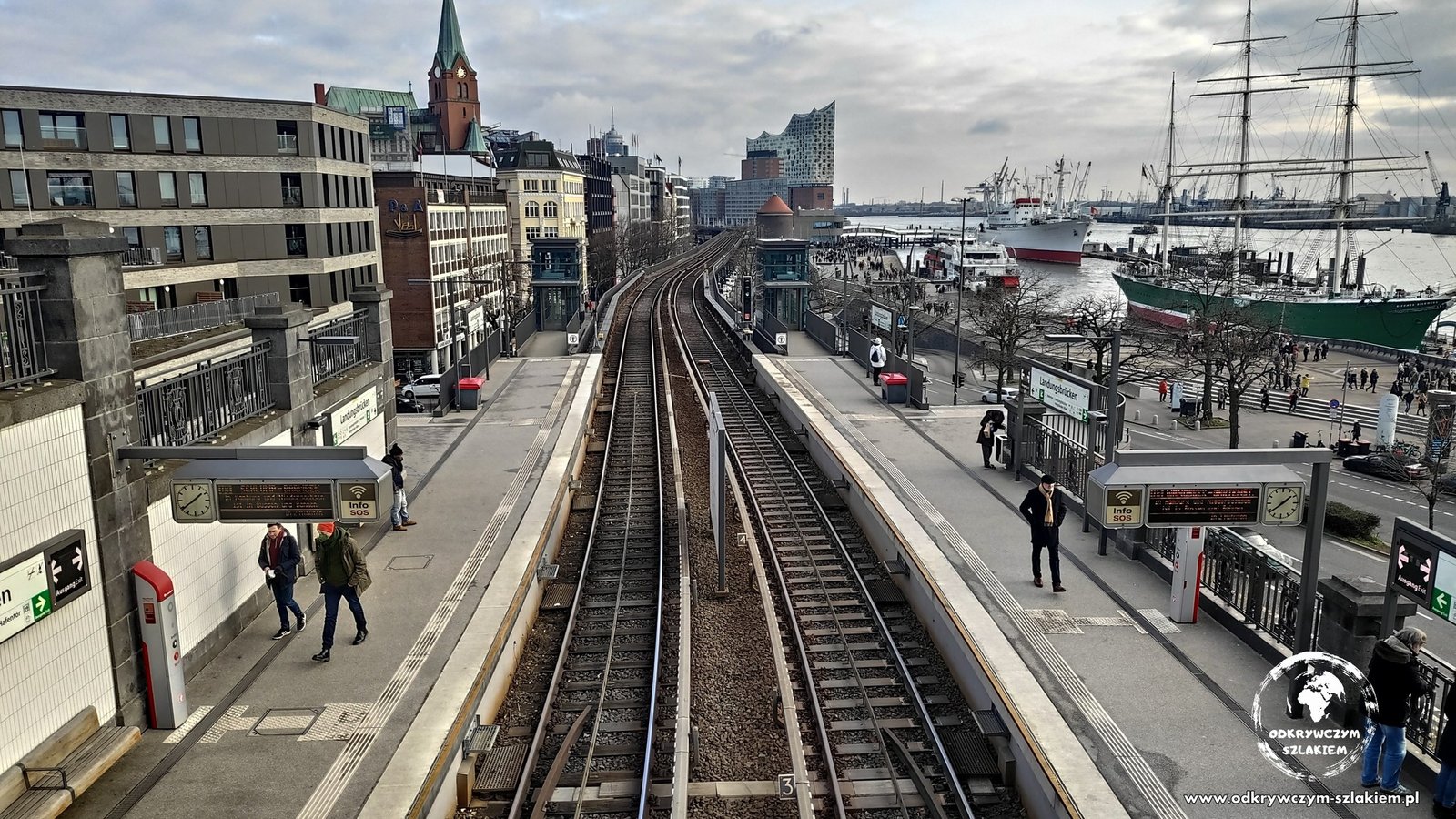
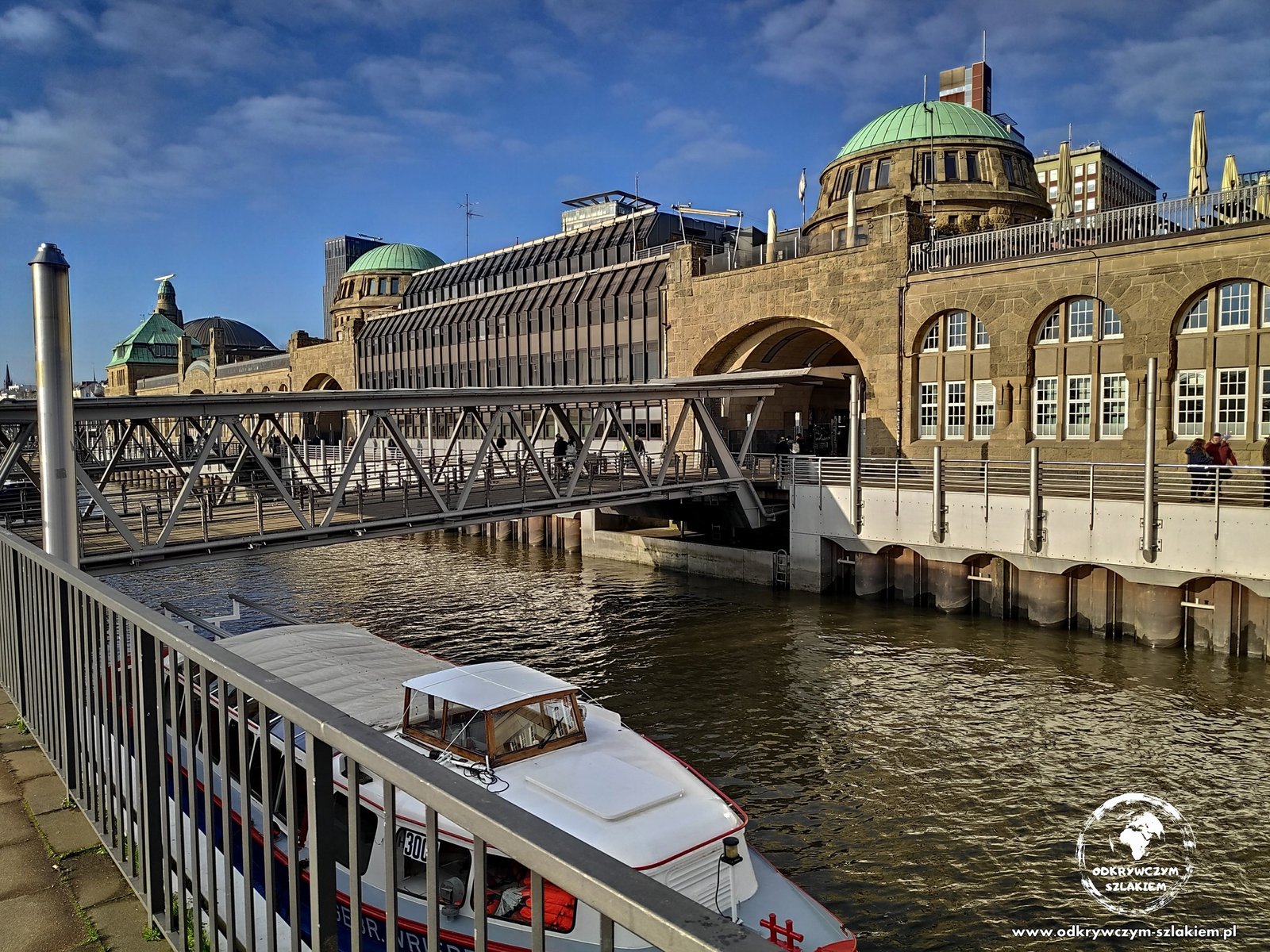
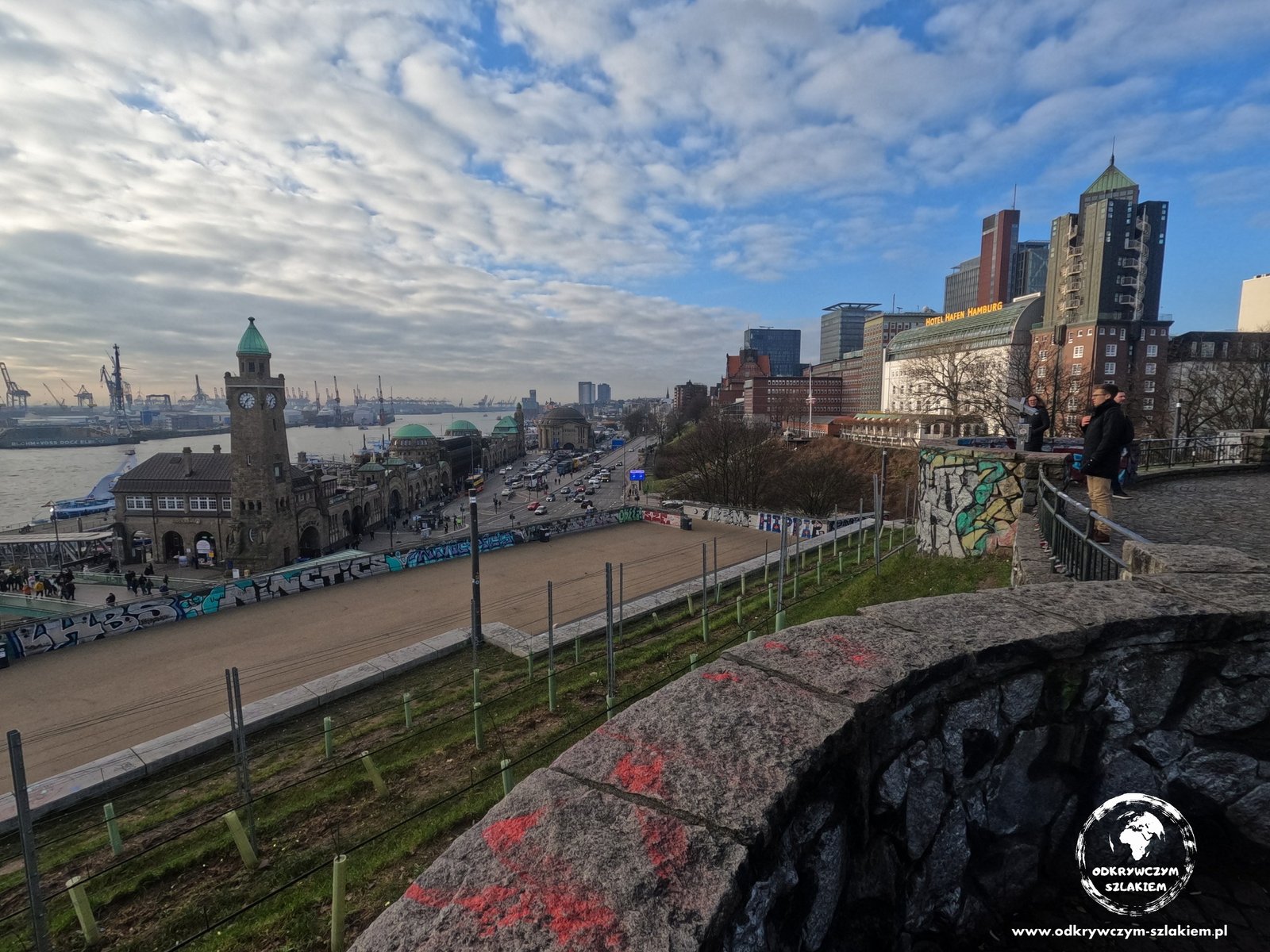
The stone building of the landing stages was built of tuff in 1907–1909. The floating pontoons are 688 m long in total and rise and fall with the tide – a gauge on the Pegelturm clock tower shows the current water level. At the eastern end lies the three-masted museum ship Rickmer Rickmers, and ferry line 62 to Finkenwerder leaves from Bridge 3.
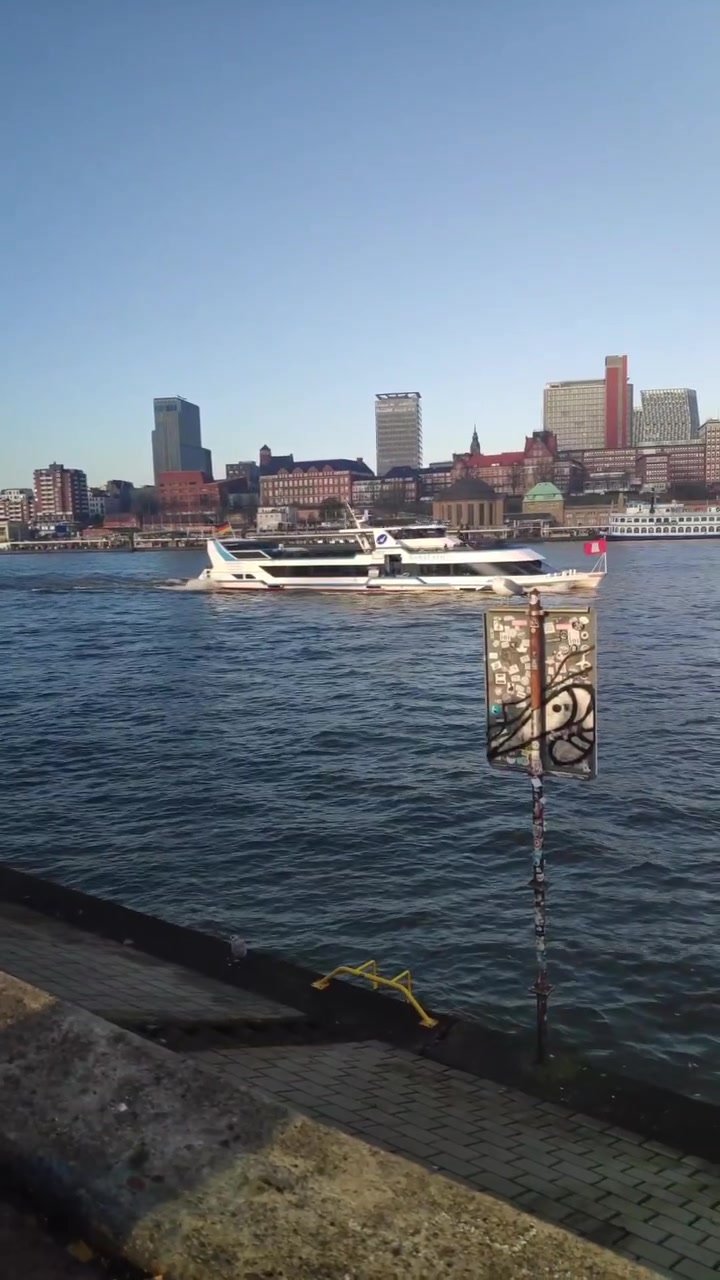
Next to the piers is the entrance to the old Elbe tunnel (St. Pauli Elbtunnel). You go down to the tunnel by lift or by stairs in a huge shaft, and the tunnel itself lies 24 metres underground and is 426 metres long. Walking through is free. On the other side of the river there is a viewpoint (Aussichtspunkt Alter Elbtunnel) – the best place to see the Hamburg skyline with the Landungsbrücken and the Elbphilharmonie (the photo at the top of the post).
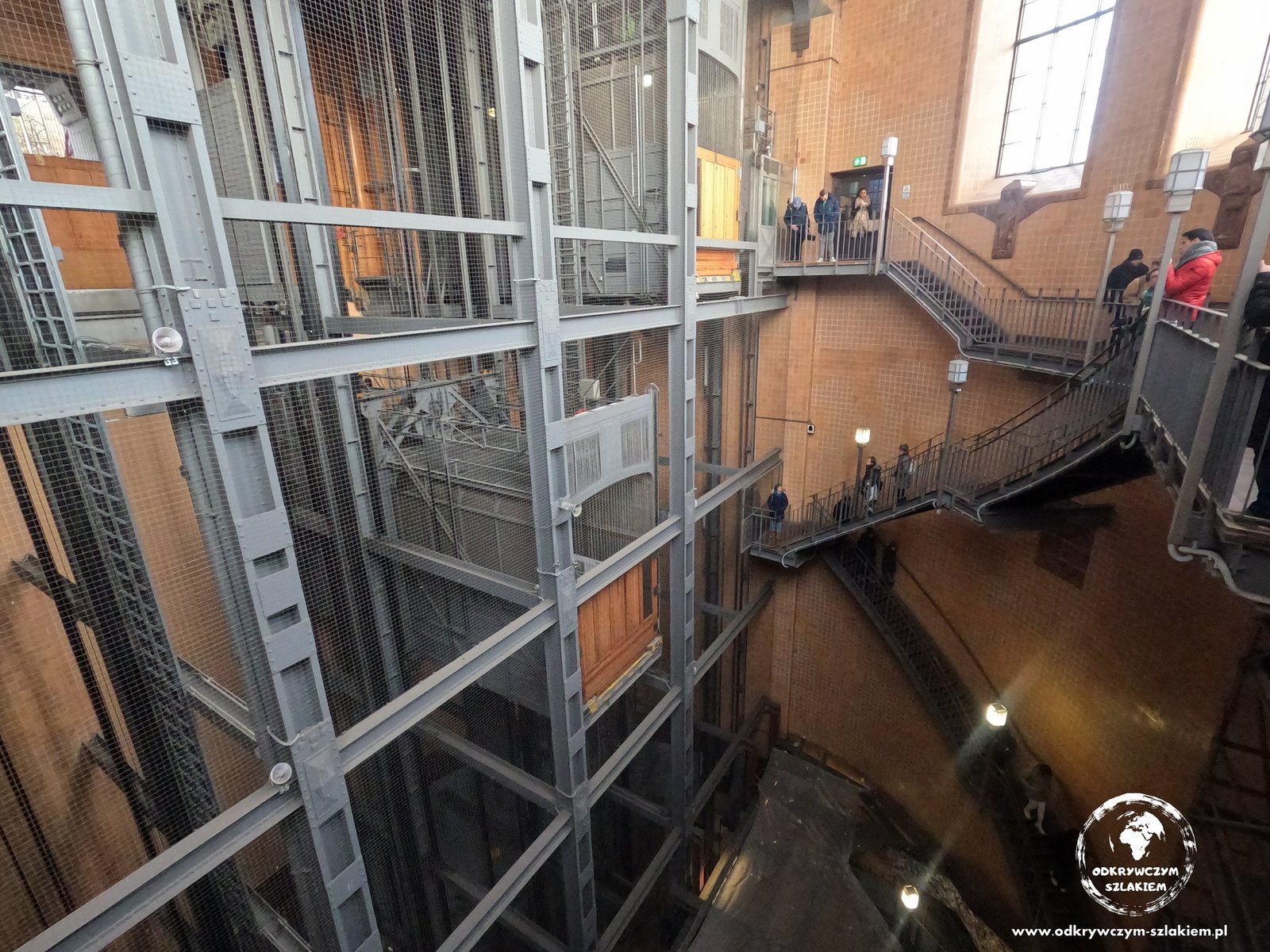
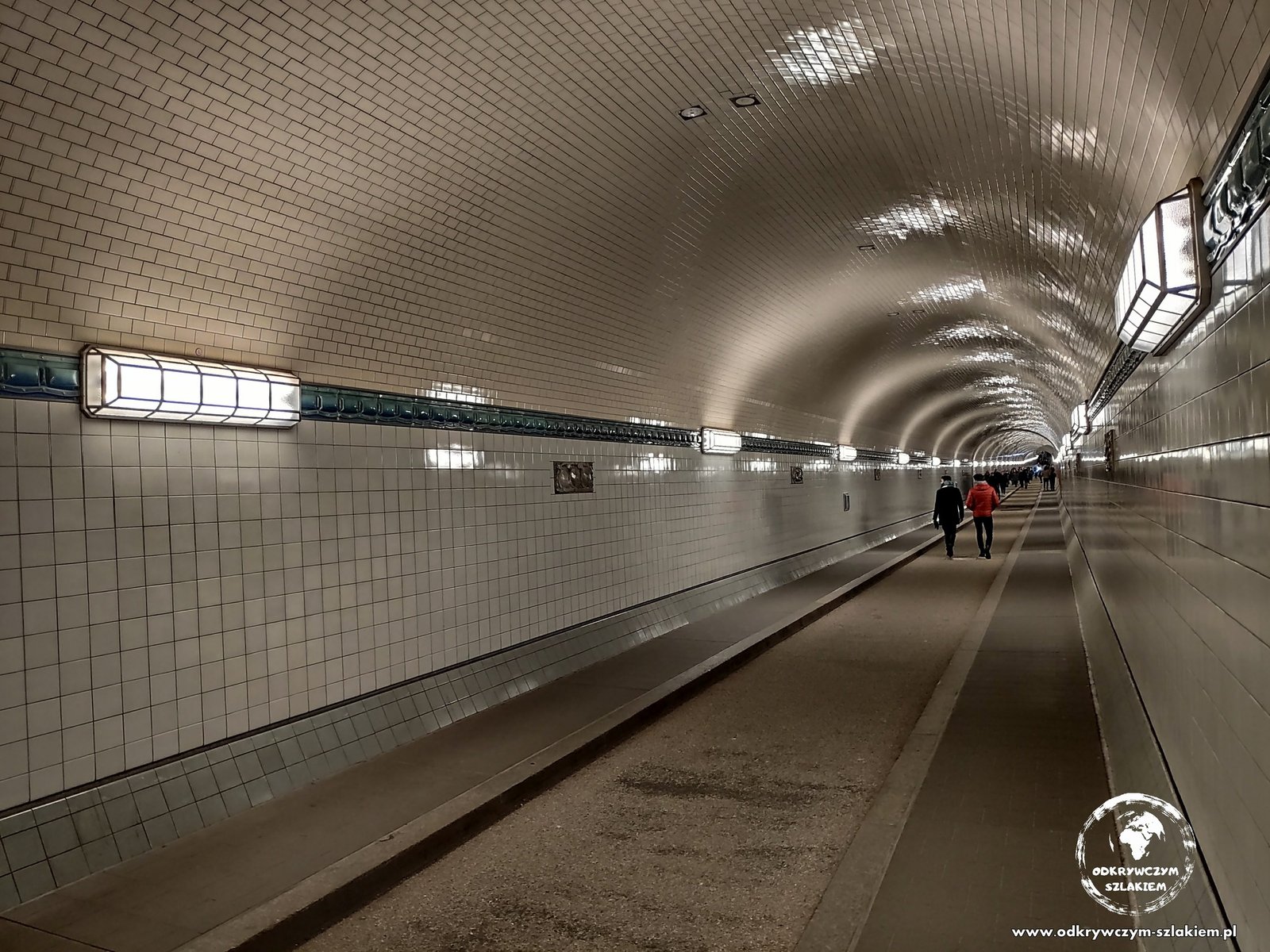
The tunnel opened to pedestrians on 7 September 1911. It has two tubes, and vehicles were lowered into it by eight lifts – four on each bank. Since 2019 it has been closed to cars, while pedestrians and cyclists can use it free of charge around the clock. Renovation of the western tube was completed on 4 May 2026; the whole project cost €131.8 million. About every 10 m the tiled walls have small ceramic reliefs – fish, crabs, mussels, and even rats and objects thrown into the river.
The port up close – the ferry, Dockland and Altonaer Balkon
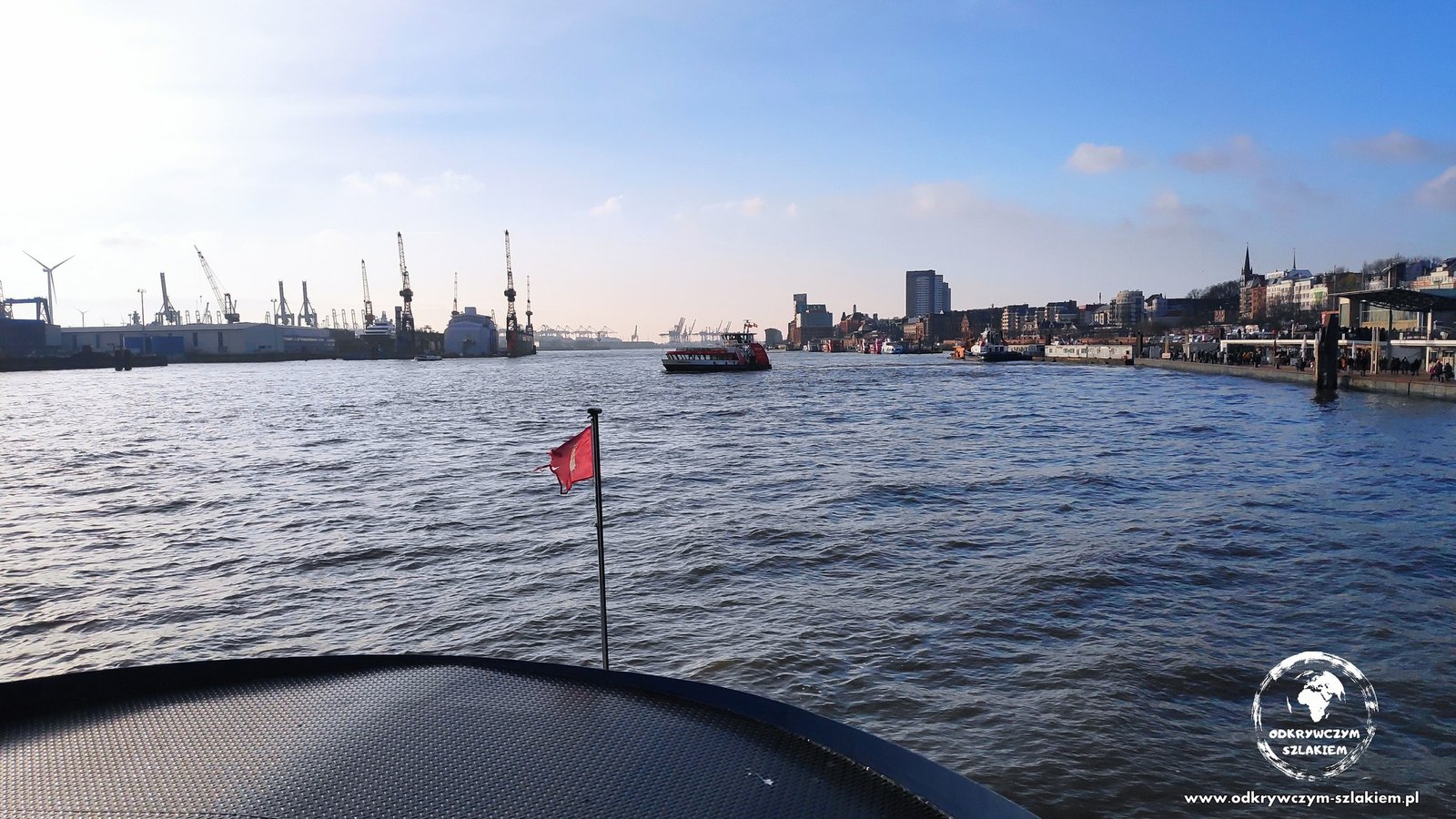
A nice way to see the port from the water is an ordinary ferry – in Hamburg the boats are part of public transport, so a trip on the Elbe doesn’t require a separate tour.
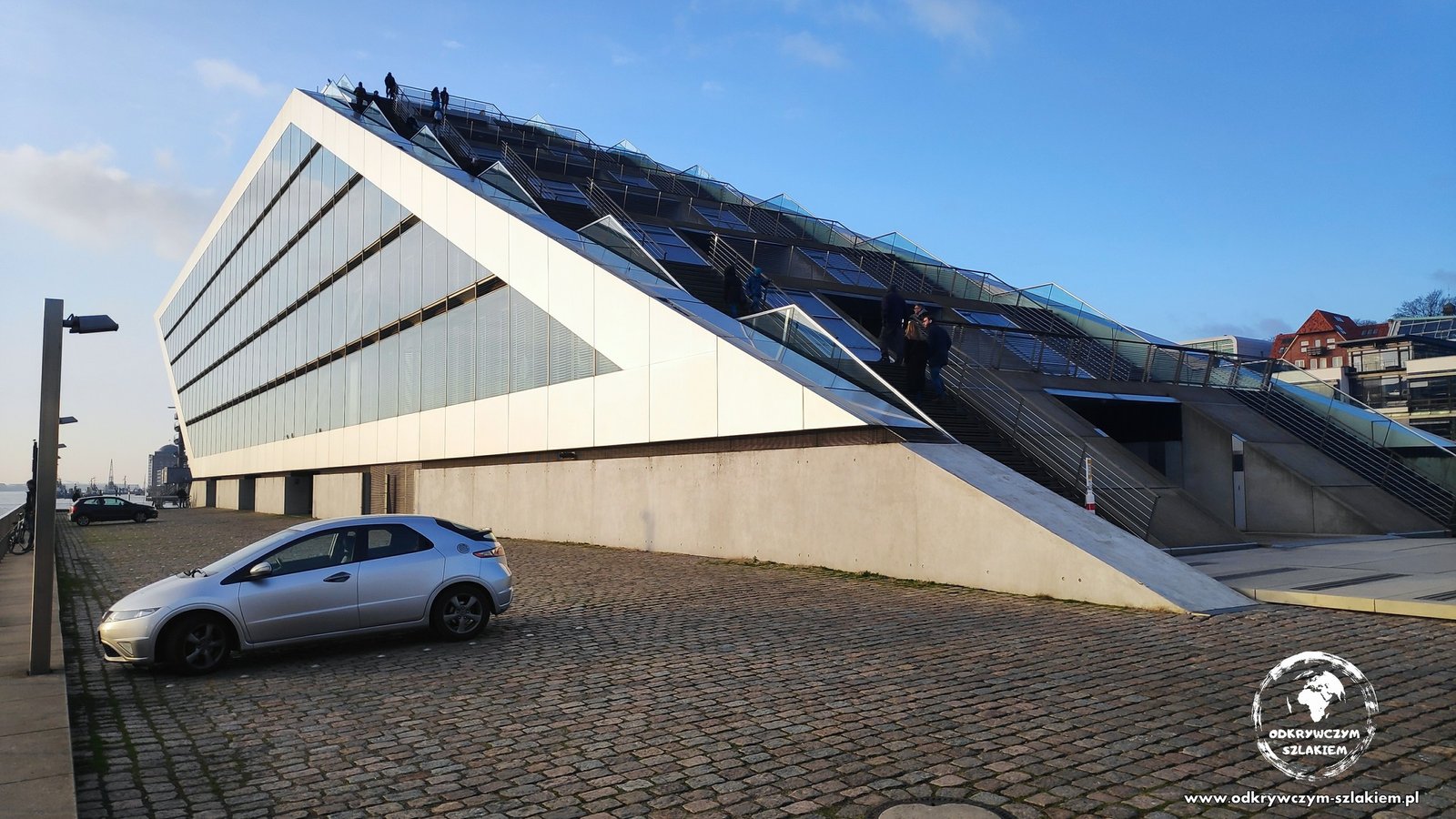
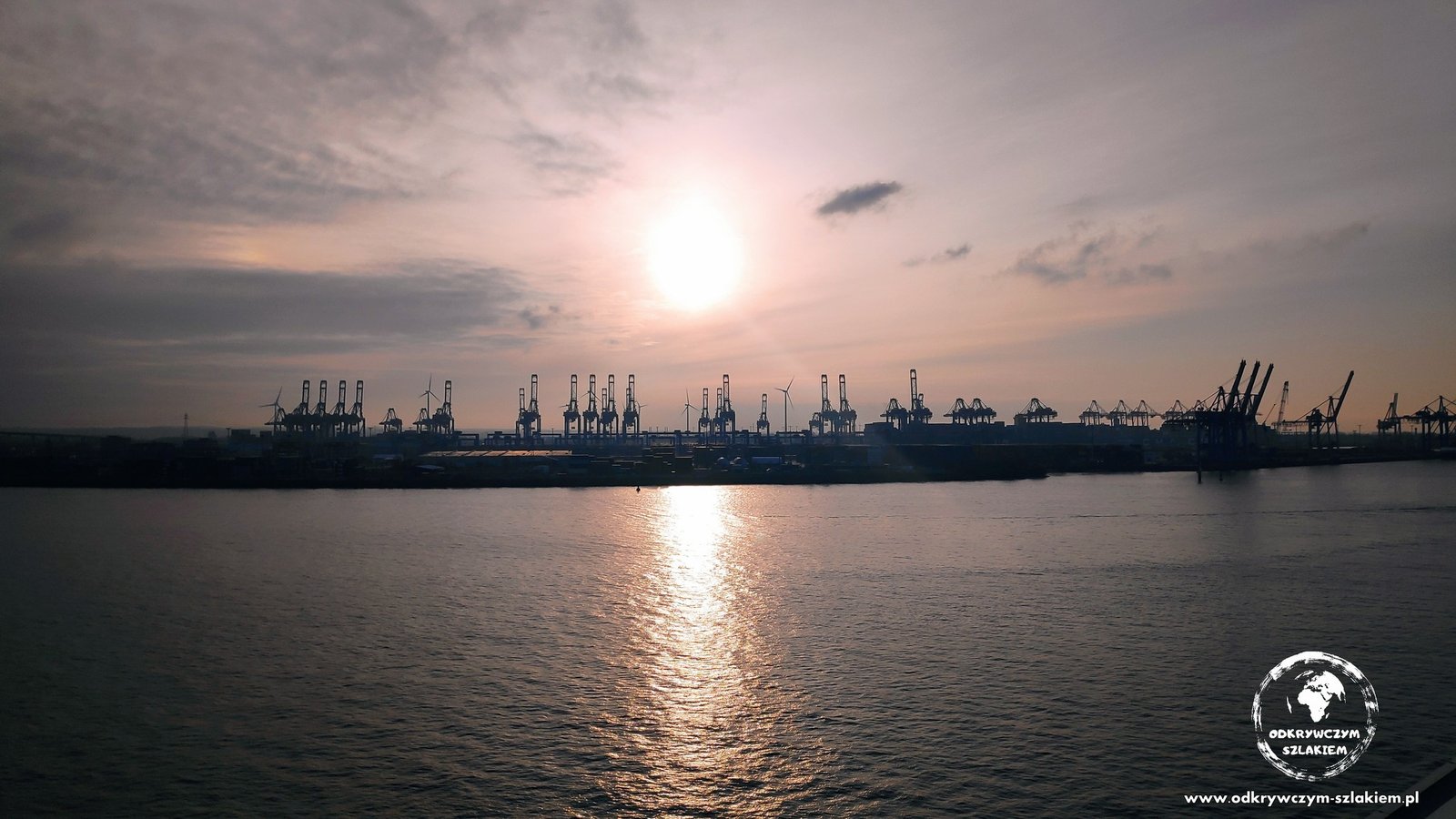
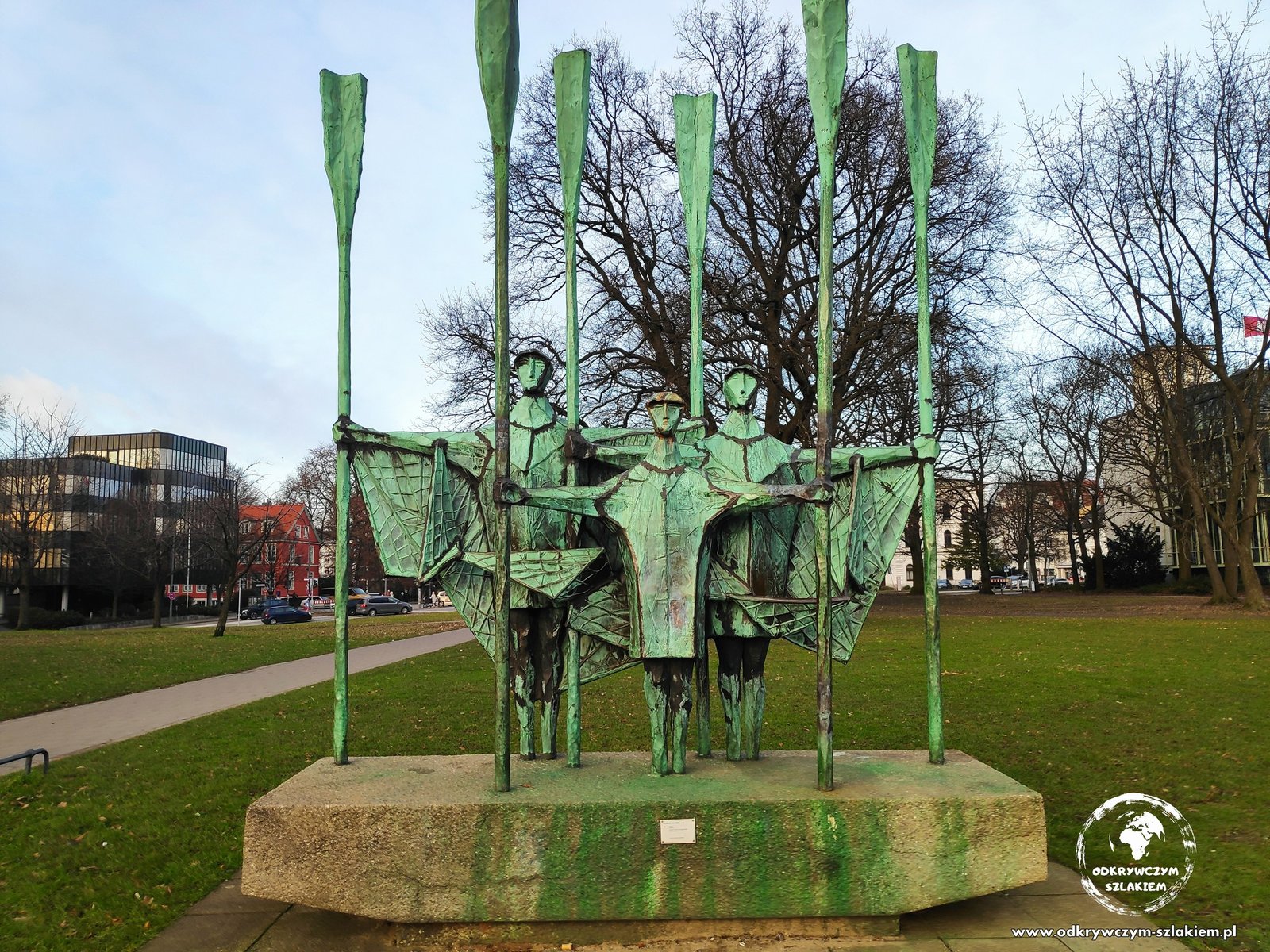
Our next viewpoint was the Dockland office building, shaped like a ship’s bow – public stairs lead up to its roof, and from the top you can see the Elbe and the container terminal. We watched the sunset over the port on our way to the Altonaer Balkon park on the bluff above the river, where Gerhard Brandes’s 1968 sculpture “Fischer” stands.
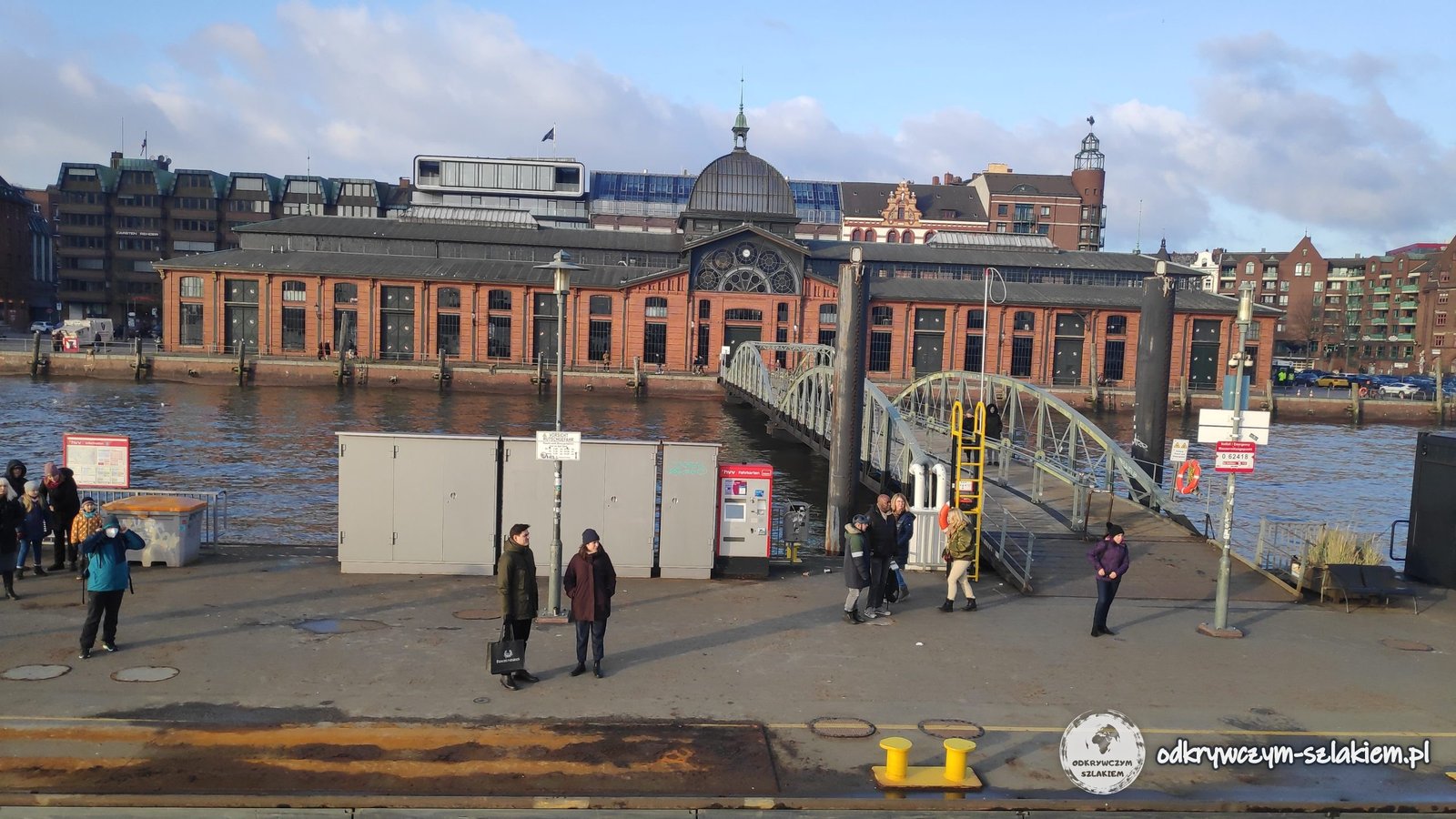
Altona was a separate town until 1938. Right on the Elbe stands the brick Fischauktionshalle, a fish auction hall from 1895–1896. In the 1970s it faced demolition, but local residents got it listed as a monument, and it reopened after restoration in 1984; today it is used for events. Next to it the Fischmarkt is held every Sunday morning – Sunday trading here before church was allowed as early as 1703. The white Altona Town Hall is the former station of the Altona–Kiel railway and has served as the town hall since 1898; an equestrian statue of Emperor Wilhelm I stands in front of it.

At dusk we also took a walk along the Reeperbahn – the best-known nightlife street in the St. Pauli district, just under a kilometre long. We started at Hans-Albers-Platz, a square full of bars with a statue of the actor and singer Hans Albers by Jörg Immendorff, and finished by the Tanzende Türme – two “dancing”, leaning high-rises from 2012 at the eastern end of the street.


Sunday: the Alster, Planten un Blomen and the town hall
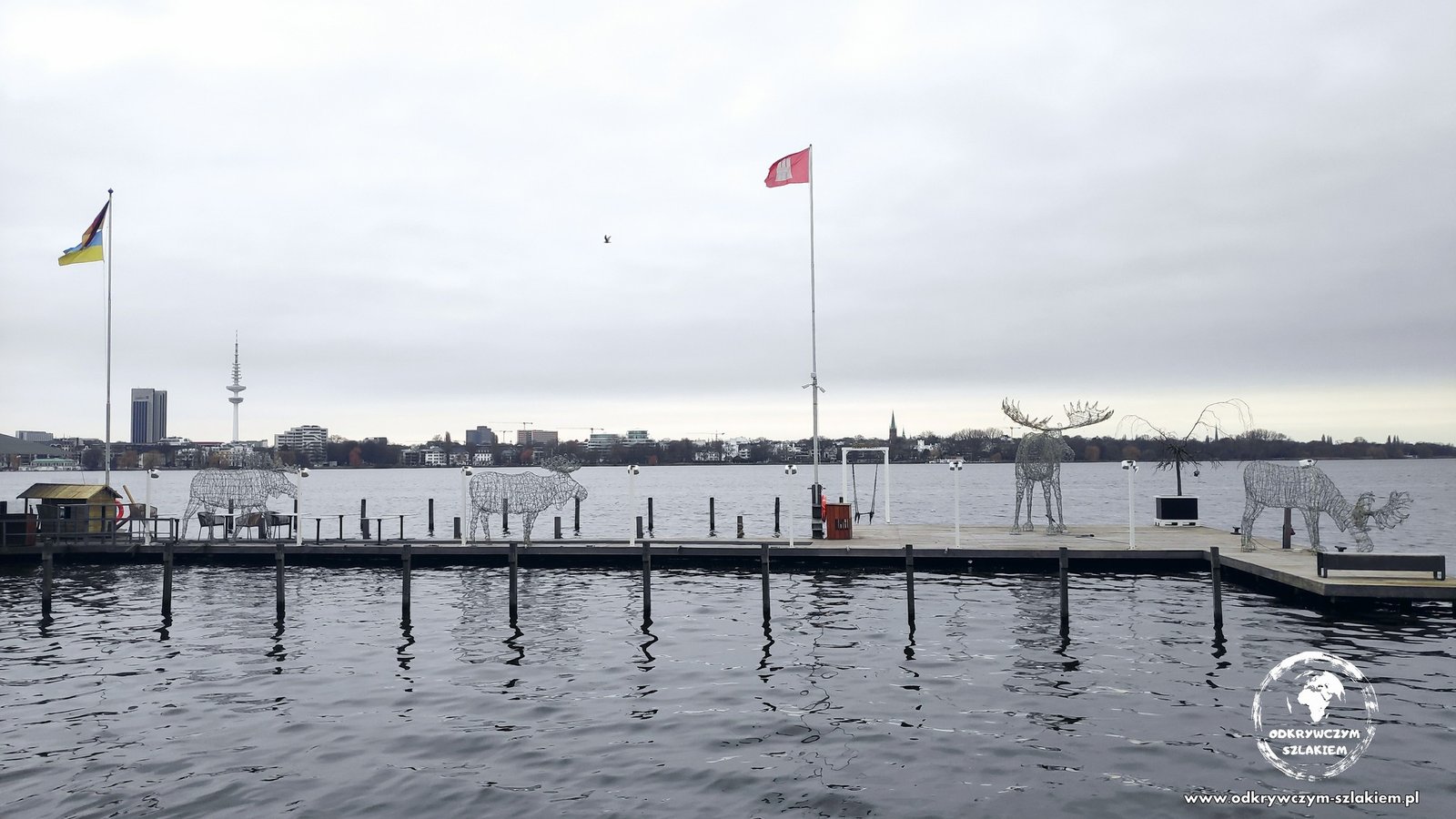
On Sunday we started at the Außenalster – a large lake in the middle of the city, surrounded by parks and villas.
Then we went to the Planten un Blomen park with its Japanese garden (Japanischer Garten). The Heinrich-Hertz-Turm TV tower rises above the park.
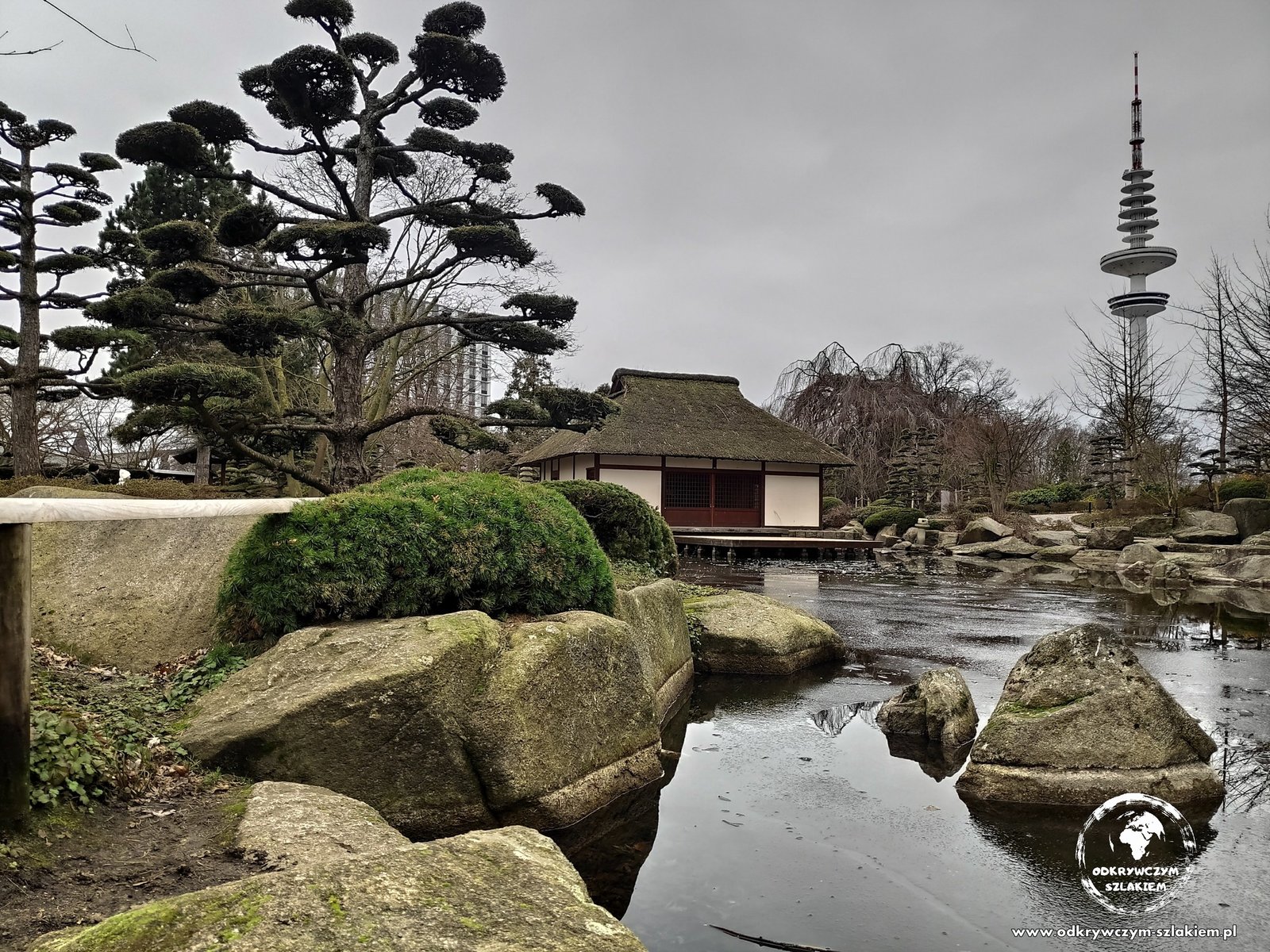
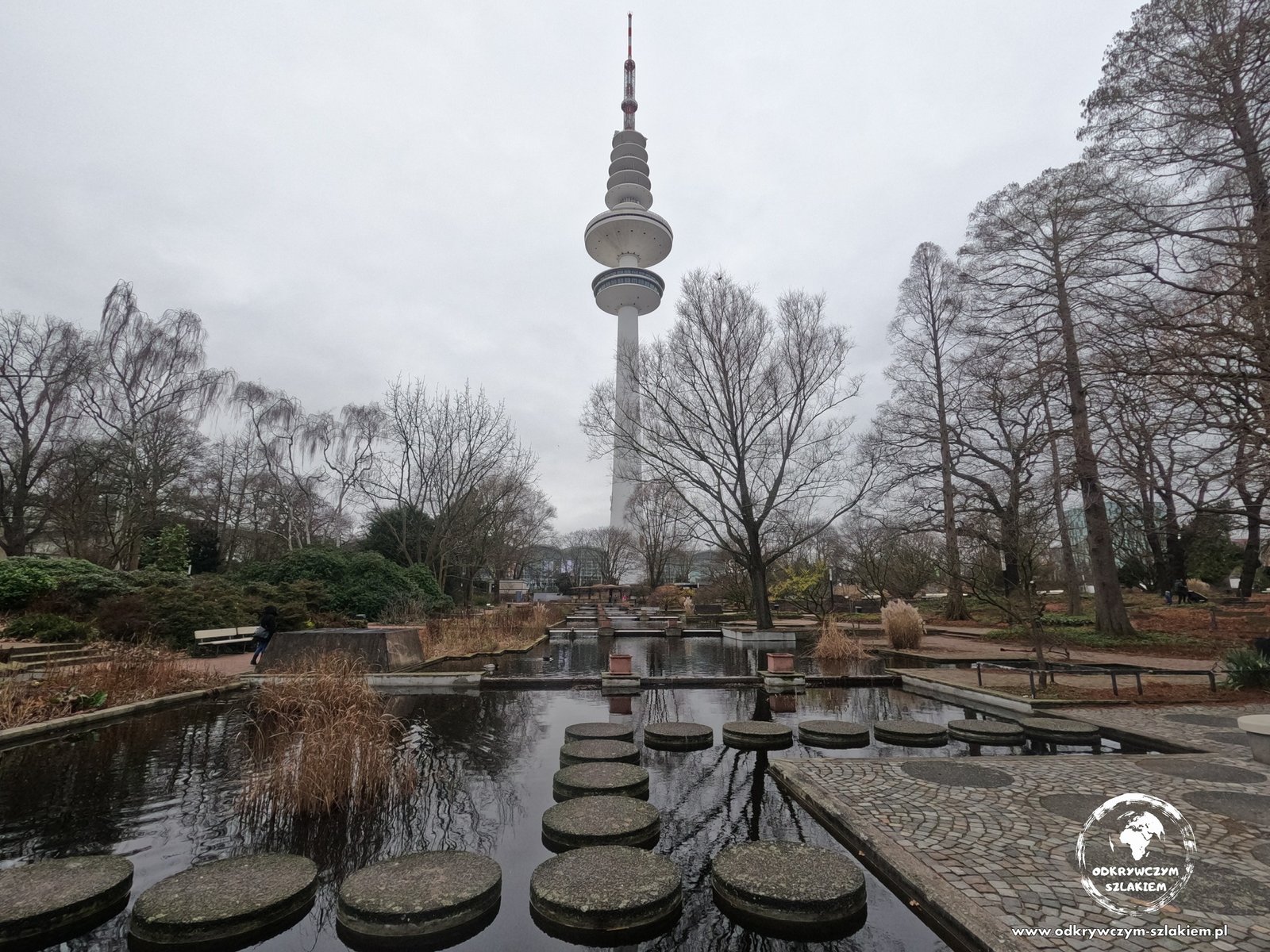
Not far away, in the Sternschanzenpark, stands the Schanzenturm, a water tower from 1907–1910 that was taken out of service in 1961. Residents protested against its conversion into a hotel, collecting more than 6,000 signatures, but the hotel opened in 2007. On Johannes-Brahms-Platz, in turn, stands the Laeiszhalle, a concert hall from 1904–1908 built with a bequest from the shipowner Carl Laeisz. He left 1.2 million marks for it, and his widow Sophie raised the sum to 2 million. The Great Hall has about 2,000 seats.


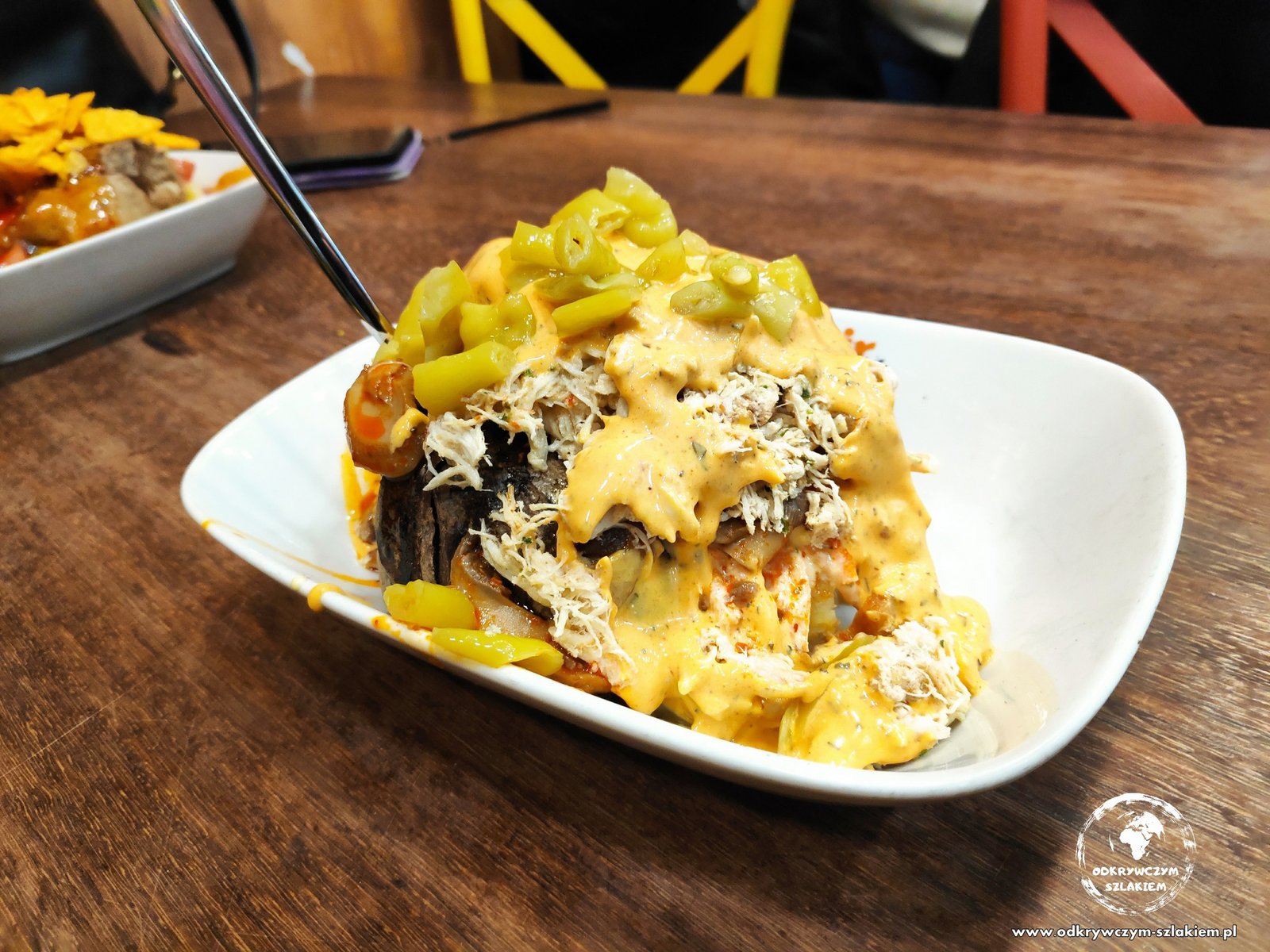
For lunch we tried kumpir – a big baked potato stuffed with various toppings, very popular in Hamburg.
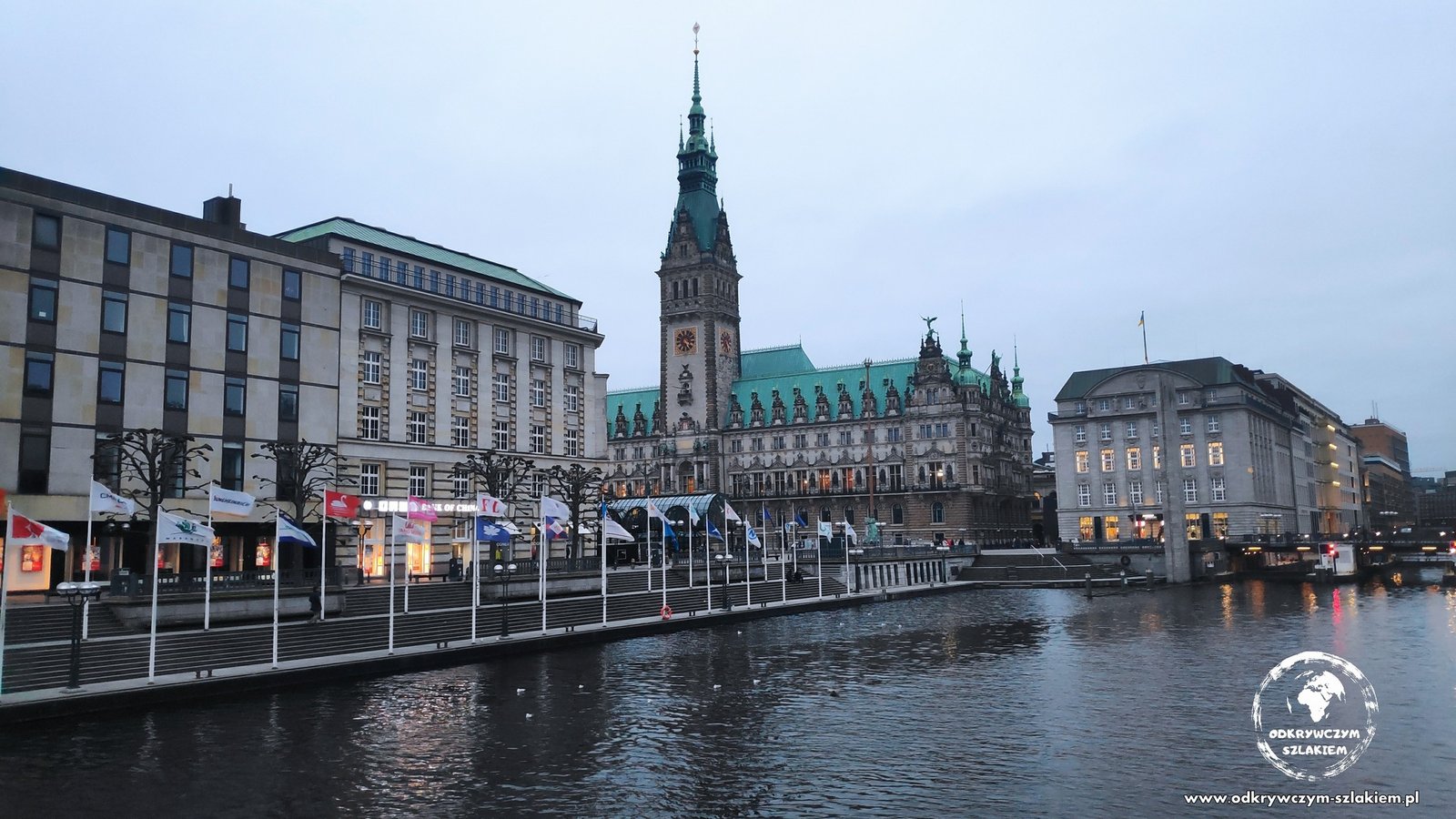
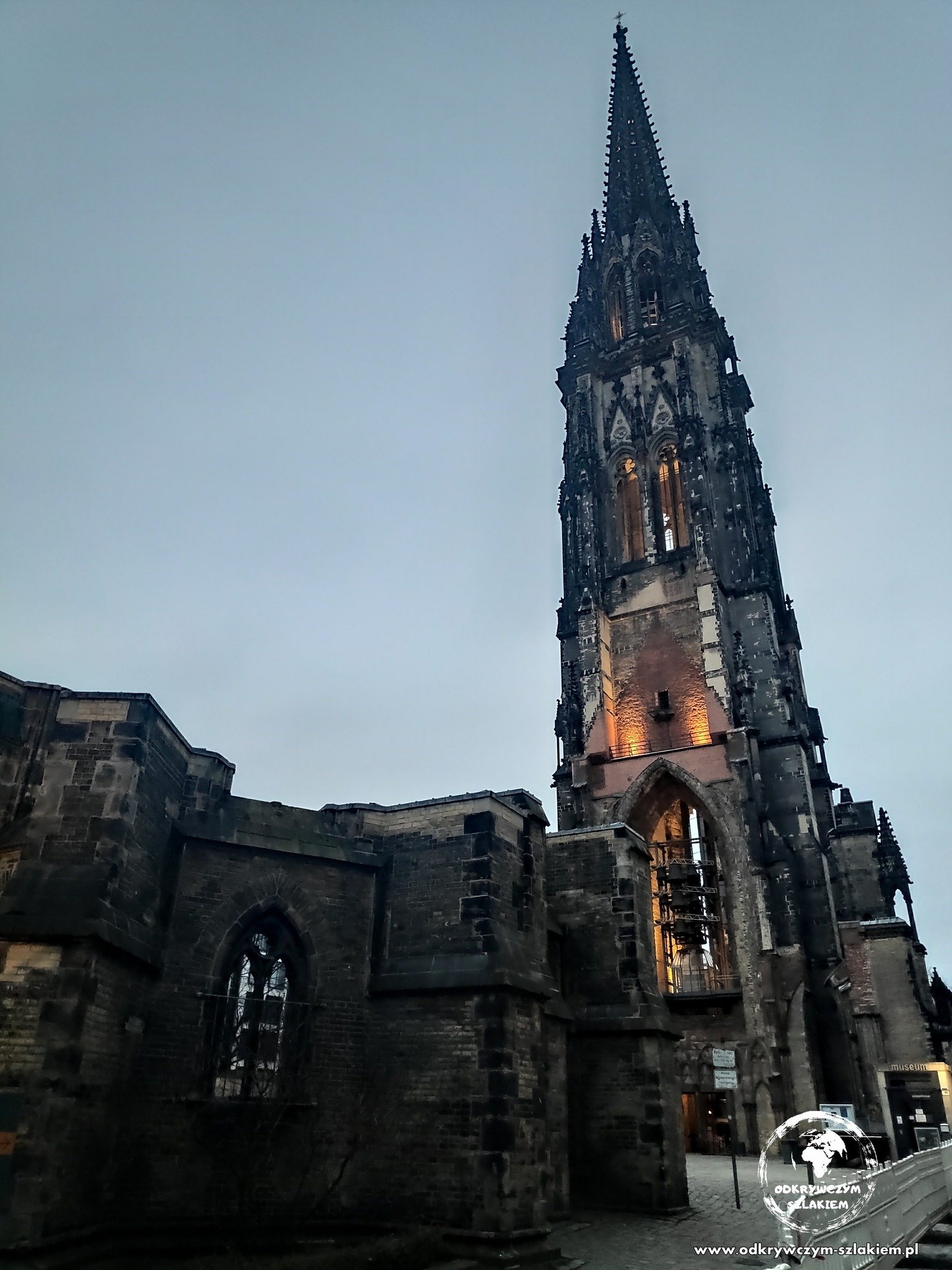
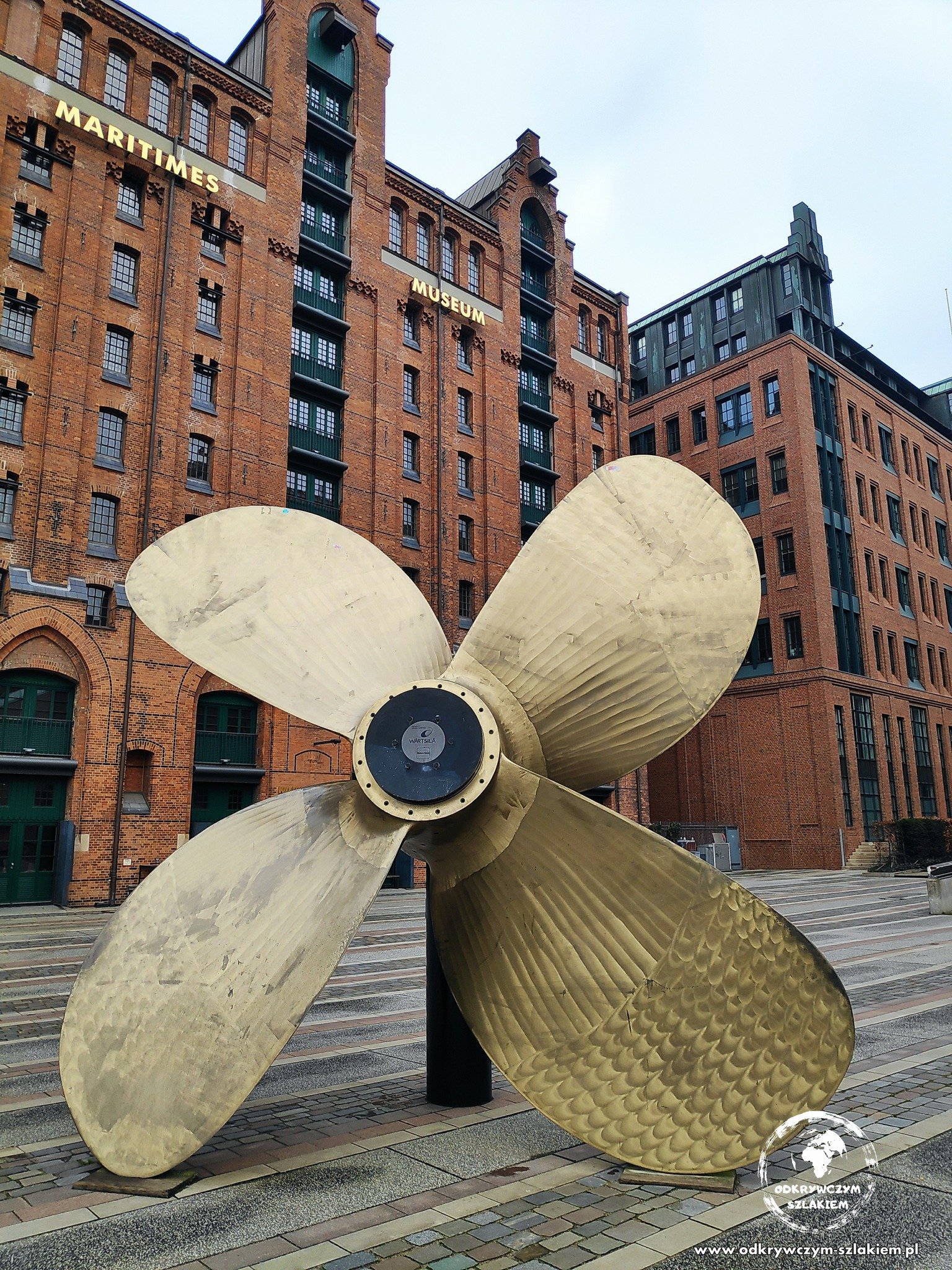
In the afternoon we explored the centre: the neo-Renaissance town hall by the canal, the Jungfernstieg promenade on the Binnenalster lake and the ruins of St. Nicholas’ Church, left after the destruction of the Second World War as a memorial. On the way we passed a huge ship’s propeller and a monument to the pirate Klaus Störtebeker, and finally the memorial park at the former Hannoverscher Bahnhof station on Lohseplatz, from where Jews, Roma and Sinti were deported during the war.
In 1940–1945 more than 8,000 Jews, Sinti and Roma from Hamburg and northern Germany were deported from the Hannoverscher Bahnhof – most of them to ghettos, concentration camps and extermination camps. The denk.mal Hannoverscher Bahnhof memorial was opened in May 2017 on the surviving section of platform 2 in the Lohsepark; panels with the victims’ names stand by the remains of the tracks. A documentation centre is planned nearby.


Practical information
- How much time? A weekend is enough for the main sights, but in winter the days are short – in a warmer season you have more time for walks by the water and in the parks.
- Elbphilharmonie: the Plaza viewing terrace is free, with entry on a timed ticket (from the ticket office on site or booked online).
- The Elbe tunnel: free for pedestrians; it’s worth crossing to the other side for the view of the city skyline.
- Ferry: ferries on the Elbe run as part of public transport – a cheap way to see the port from the water.
- Food: try kumpir or a fish roll at the Landungsbrücken.
- In the same area, about an hour’s drive from Hamburg, is the Heide Park amusement park in Soltau.
- Altona Fischmarkt – every Sunday from 5:00 to 9:30 (from 7:00 between November and March). On summer Sundays about 70,000 people come, in winter 5,000–10,000.