Gdynia is the youngest city of the Tricity. Work on the port began here in 1921, and Gdynia received its town charter in 1926. The city centre was built mostly before the Second World War, and in July 2026 the modernist centre of Gdynia was inscribed on the UNESCO World Heritage List. I was here on Saturday, 7 June 2025. I started in Orłowo with its pier and Orłowo Cliff, then walked through the forest on Kępa Redłowska, and in the evening I was in the city centre: at ORP Błyskawica, Dar Pomorza and Gdynia Aquarium. A few photos come from earlier visits – in July 2014 and March 2016 – and the next day I also visited an alpaca farm in Bojano near Gdynia. I described the other two cities of the Tricity in the post Gdańsk in a weekend – the Main Town, the Motława, the Shipyard and Sopot.
Table of contents
- Orłowo – the pier and Orłowo Cliff
- Kępa Redłowska – a forest on the cliff
- The South Pier – ORP Błyskawica and Dar Pomorza
- Gdynia Aquarium
- The end of the South Pier and the Dreamer
- The alpaca farm in Bojano
- Practical information
Orłowo – the pier and Orłowo Cliff
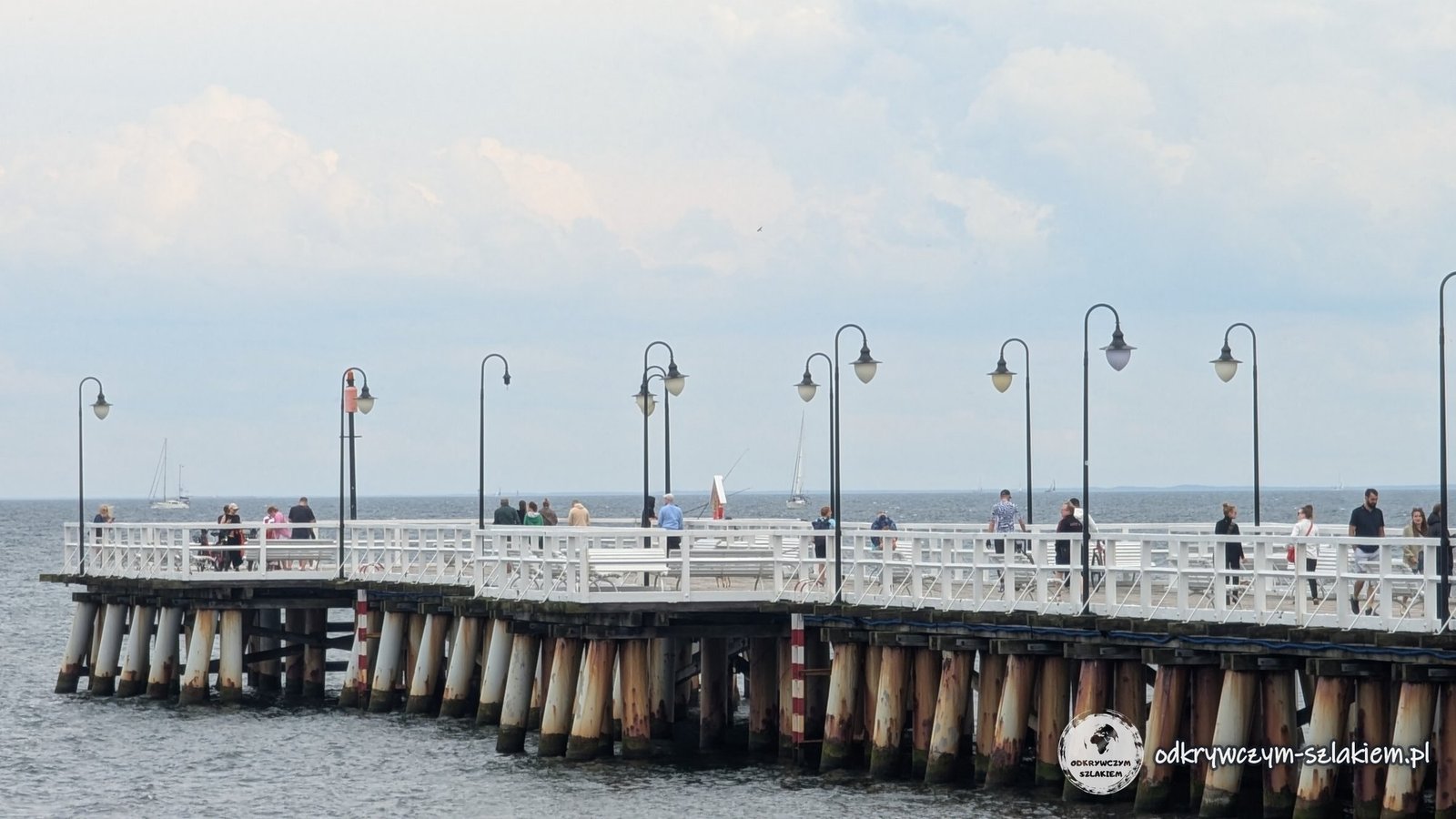
Orłowo is a seaside district in the south of Gdynia, right by the border with Sopot. Its best-known landmark is the wooden pier, 180 metres long. In 1934 it was extended to 430 metres, but in the winter of 1949 a storm destroyed more than half of the structure. Only the remaining part was rebuilt – hence its length today.
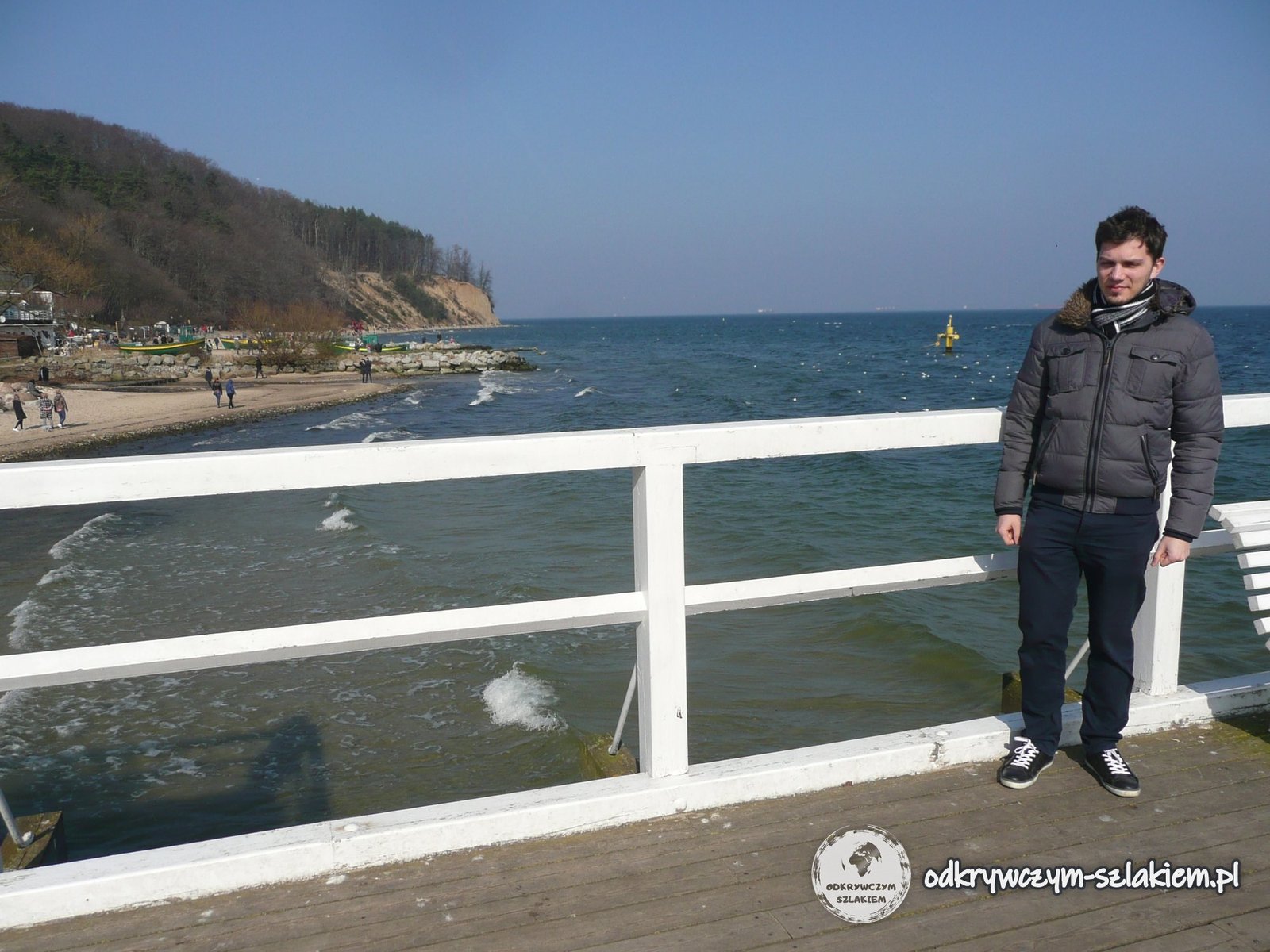
From the pier you get a good view of Orłowo Cliff (Klif Orłowski) – a steep shore that closes off the beach to the north. The cliff is about 650 metres long and keeps retreating: the waves wash out its base and the wall slides back by about 1 metre a year on average. Trees grow right up to the very edge.

From the pier I walked along the beach to the foot of the cliff. Fallen tree trunks lie there, having slid down together with the earth. The beach continues further north, towards Redłowo.

I was also on Orłowo Pier in March 2016. The trees on the cliff had no leaves yet, and waves with white crests were rolling across the bay.
Near the entrance to the pier there is a bench with a statue of Antoni Suchanek (1901–1982) – a marine painter who lived in Orłowo for many years. A little further on, at ul. Orłowska 6, stands Żeromski’s Cottage (Domek Żeromskiego). A plaque on the wall recalls that the writer Stefan Żeromski lived here in 1920 – in this house he worked on his novel “Wiatr od morza” (Wind from the Sea).


Kępa Redłowska – a forest on the cliff
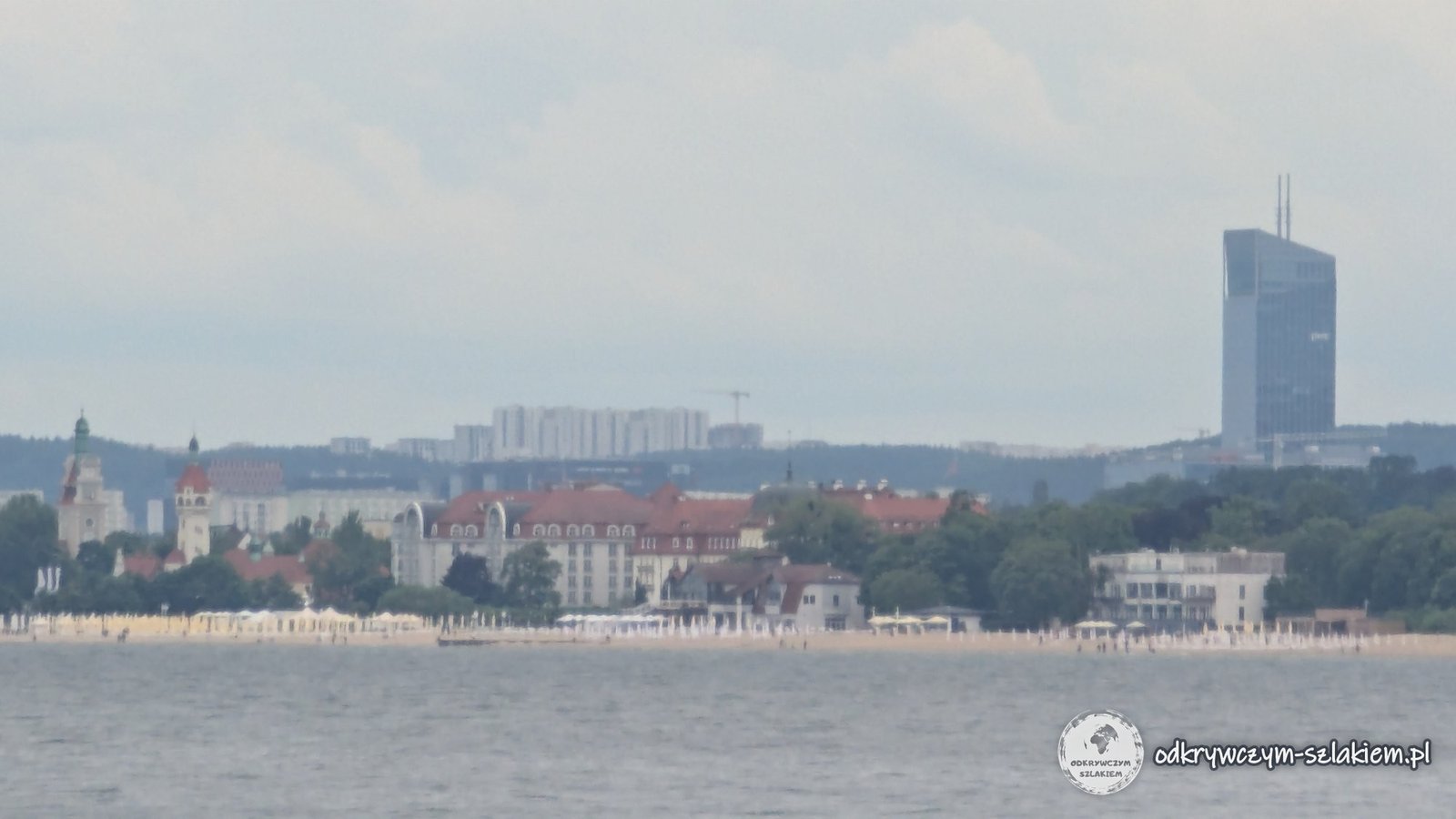
Orłowo Cliff is part of Kępa Redłowska – a wooded hill between Orłowo and Redłowo. As early as 1938, the Kępa Redłowska nature reserve was created in the eastern part of the hill – one of the oldest reserves in Poland. It covers about 122 hectares and mainly protects natural beech forest. From the edge of the cliff you can see the bay, the pier and the beach in Orłowo, and far away on the horizon the Olivia Star skyscraper in Gdańsk.
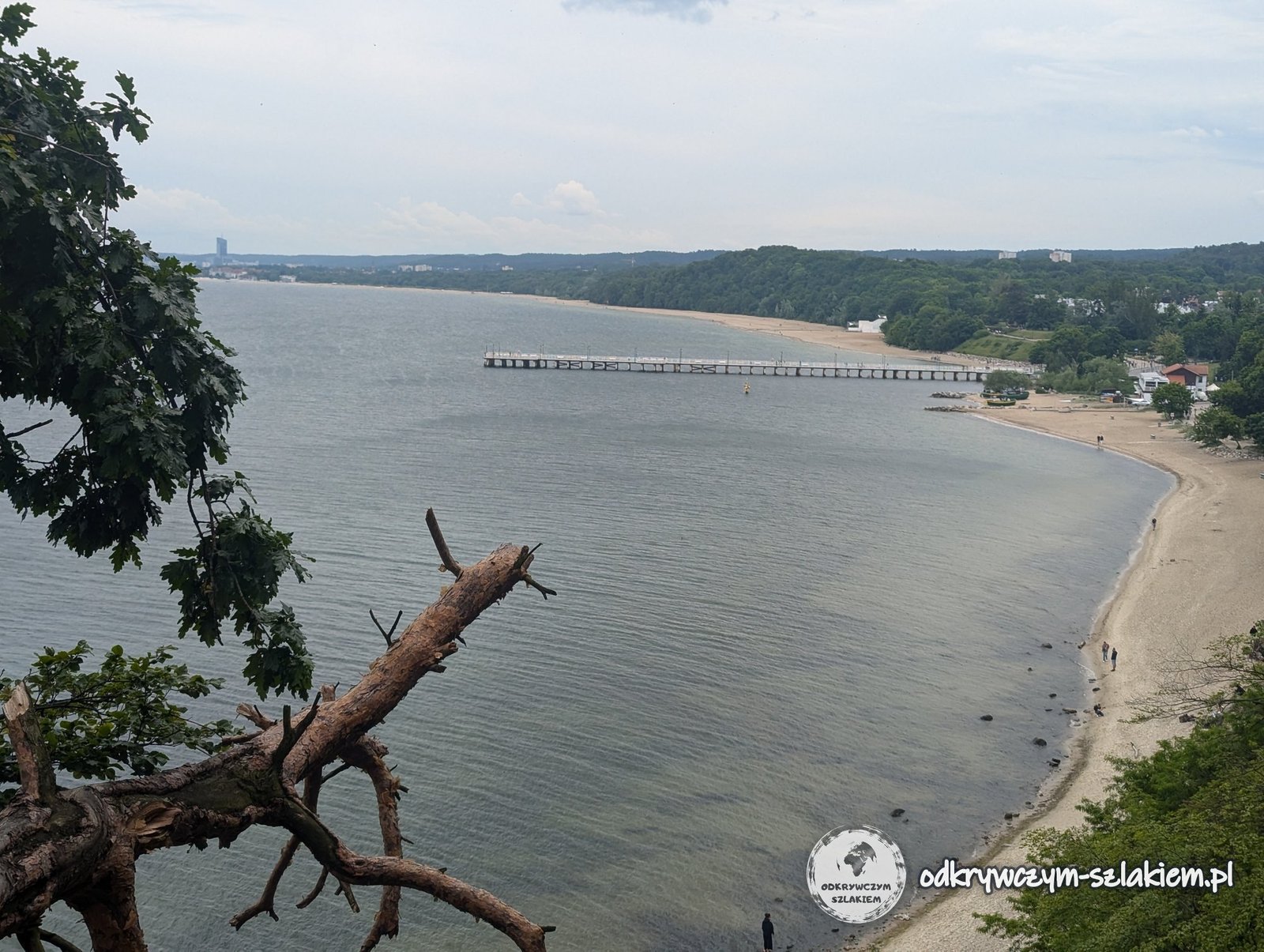
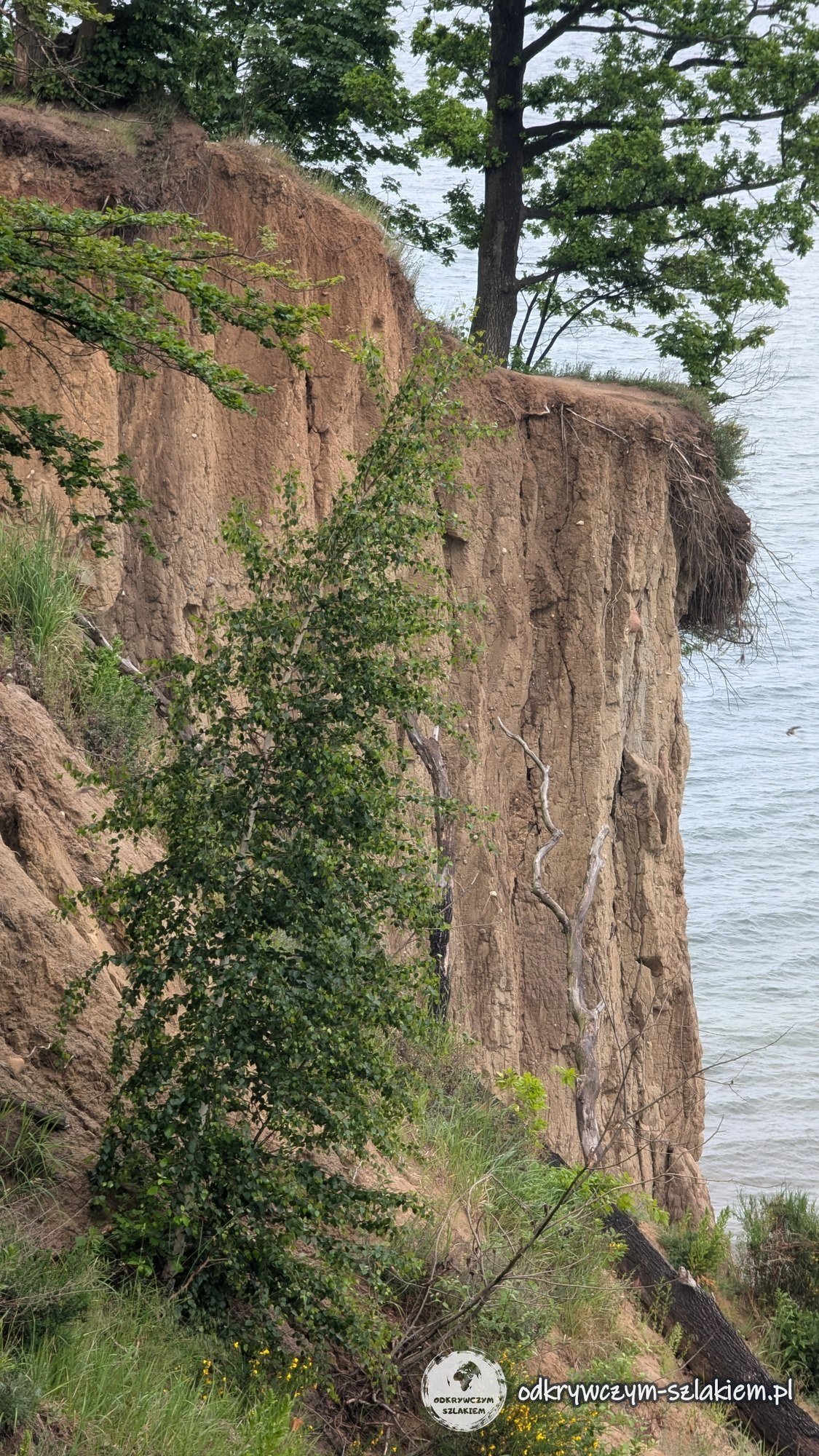
The path along the top of the cliff runs right next to the edge in places. Below it the wall drops almost vertically to the sea, and tree roots stick out of the ground on the path itself.

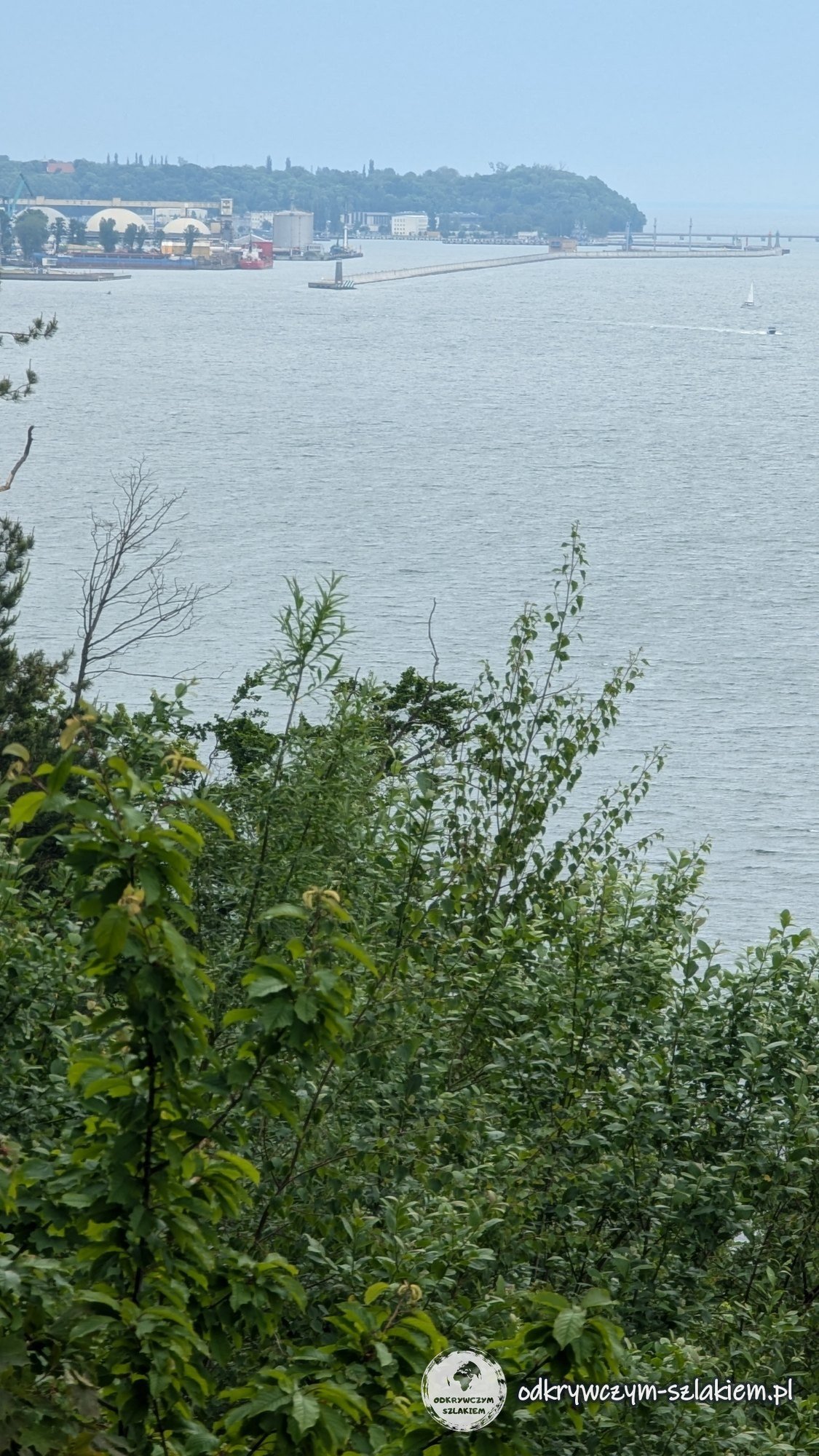
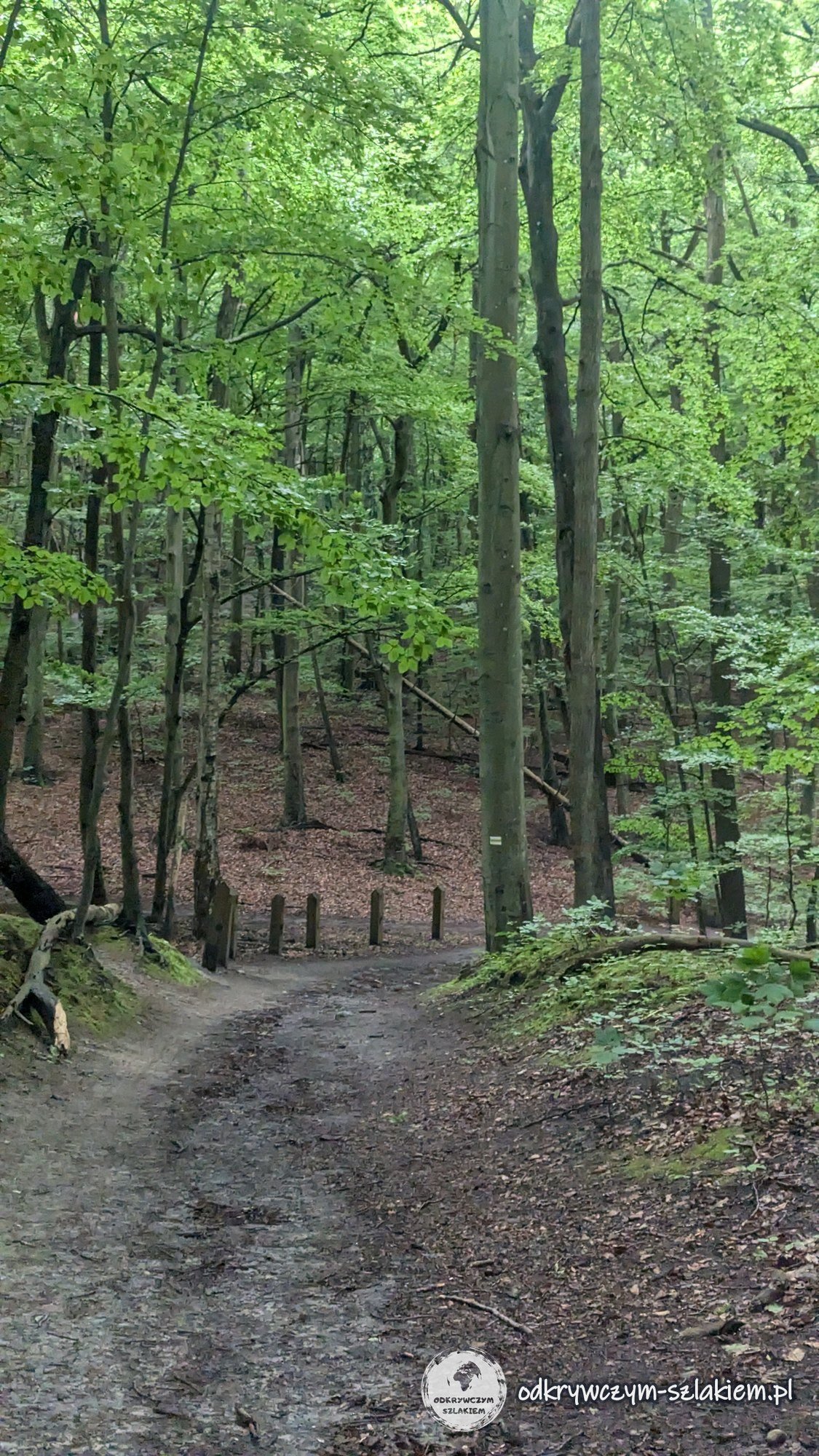
Further north the trail leaves the cliff edge and leads through a beech forest. Between the trees you can still see the Gulf of Gdańsk and the port of Gdynia.
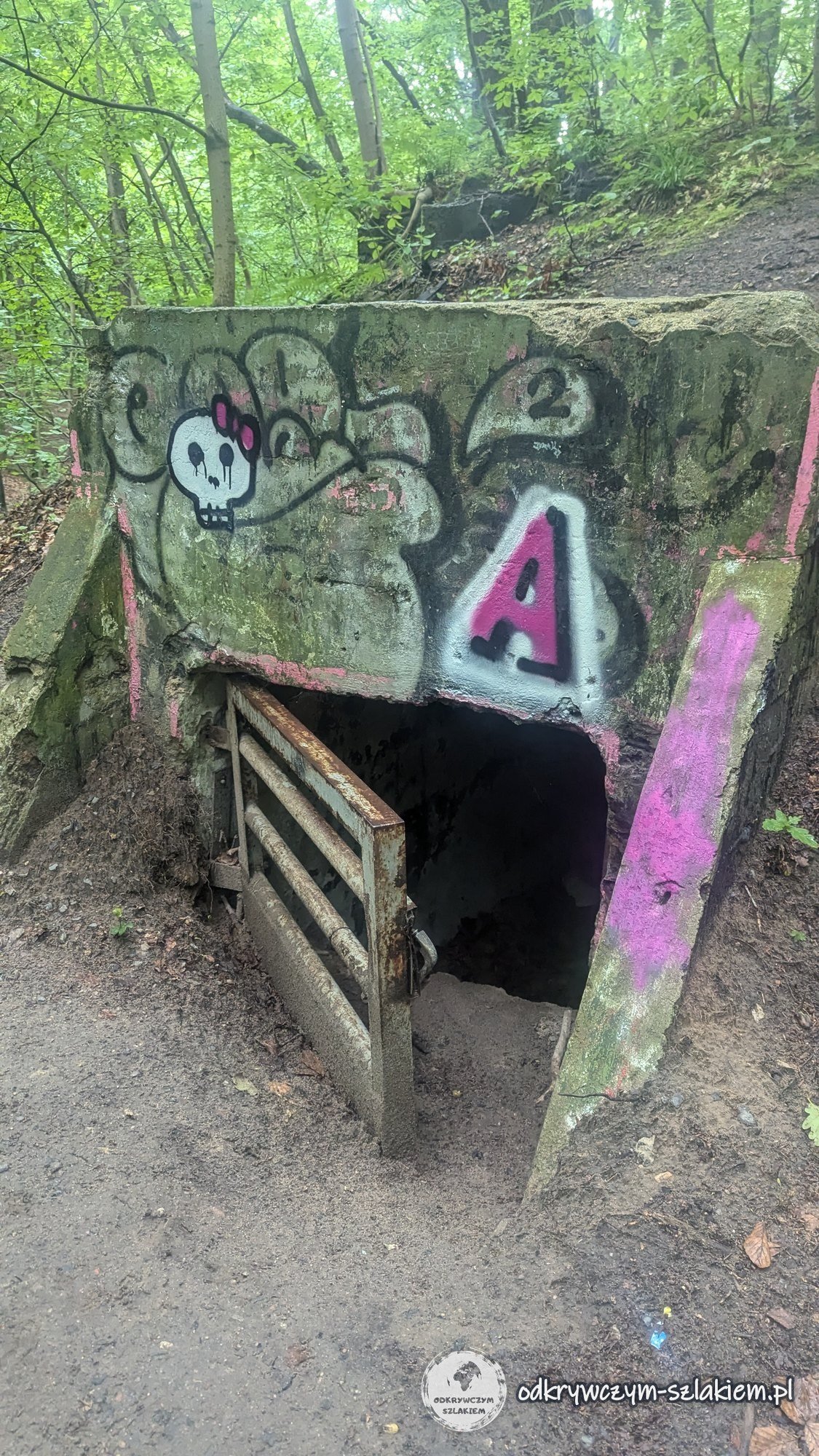
In the forest there are remains of old military fortifications – concrete bunkers, now covered in graffiti. By one of the paths stands a wooden cross with a plaque reading “IX 1939. Body to the Earth, Soul to God, Heart to the Homeland”. It marks the site of a grave from September 1939 – according to the plaque, the remains were moved to the Cemetery of the Defenders of the Coast in Redłowo. The Germans took Gdynia on 14 September 1939.

In March 2016 I walked the same path along the cliff. With no leaves on the trees, the edge of the drop itself was easy to see. In a few places the edge forms sandy outcrops with trees growing on top, their walls dropping steeply to the sea.


The South Pier – ORP Błyskawica and Dar Pomorza
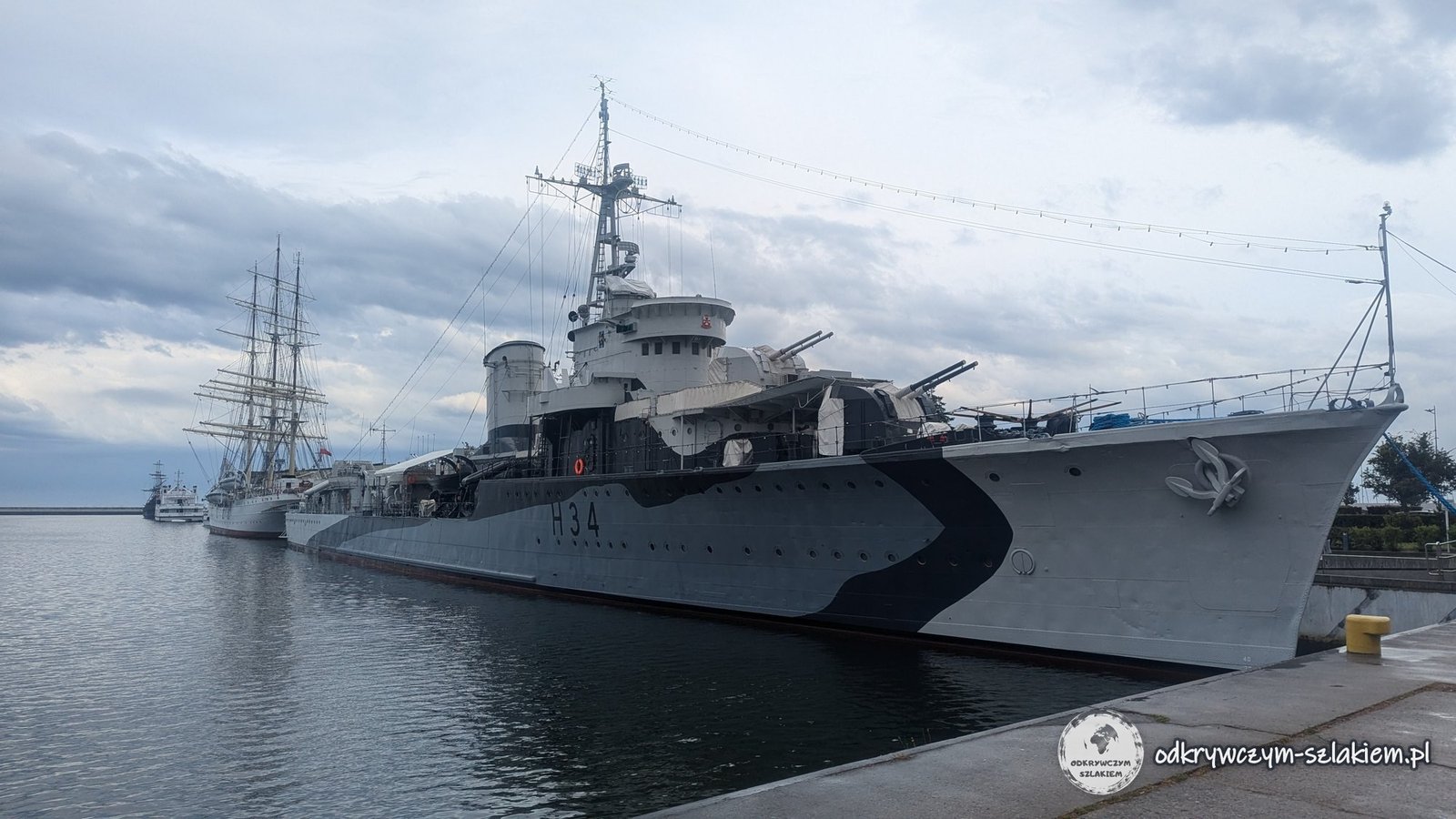
By early evening I was in the city centre. From Kościuszko Square the South Pier (Molo Południowe) juts out into the bay, and two museum ships are moored along its quay. The first is the destroyer ORP Błyskawica, built at the J. Samuel White shipyard in Cowes, Britain, and commissioned into the Polish Navy in 1937. During the Second World War she fought at Narvik, among other places, and took part in the Dunkirk evacuation and the Normandy landings. Since 1976 she has been a museum ship in Gdynia – the oldest surviving destroyer in the world.
Next to her lies Dar Pomorza, known as the White Frigate. The sailing ship was built in 1909 in Hamburg as a German training ship. In 1929 she was bought with money from a public collection, and in 1930 she arrived in Gdynia. As a training ship she made 102 voyages, trained more than 13,000 cadets and, in 1934–1935, became the first ship under the Polish merchant flag to sail around the world. Since 1983 she has been a museum ship, a branch of the National Maritime Museum.

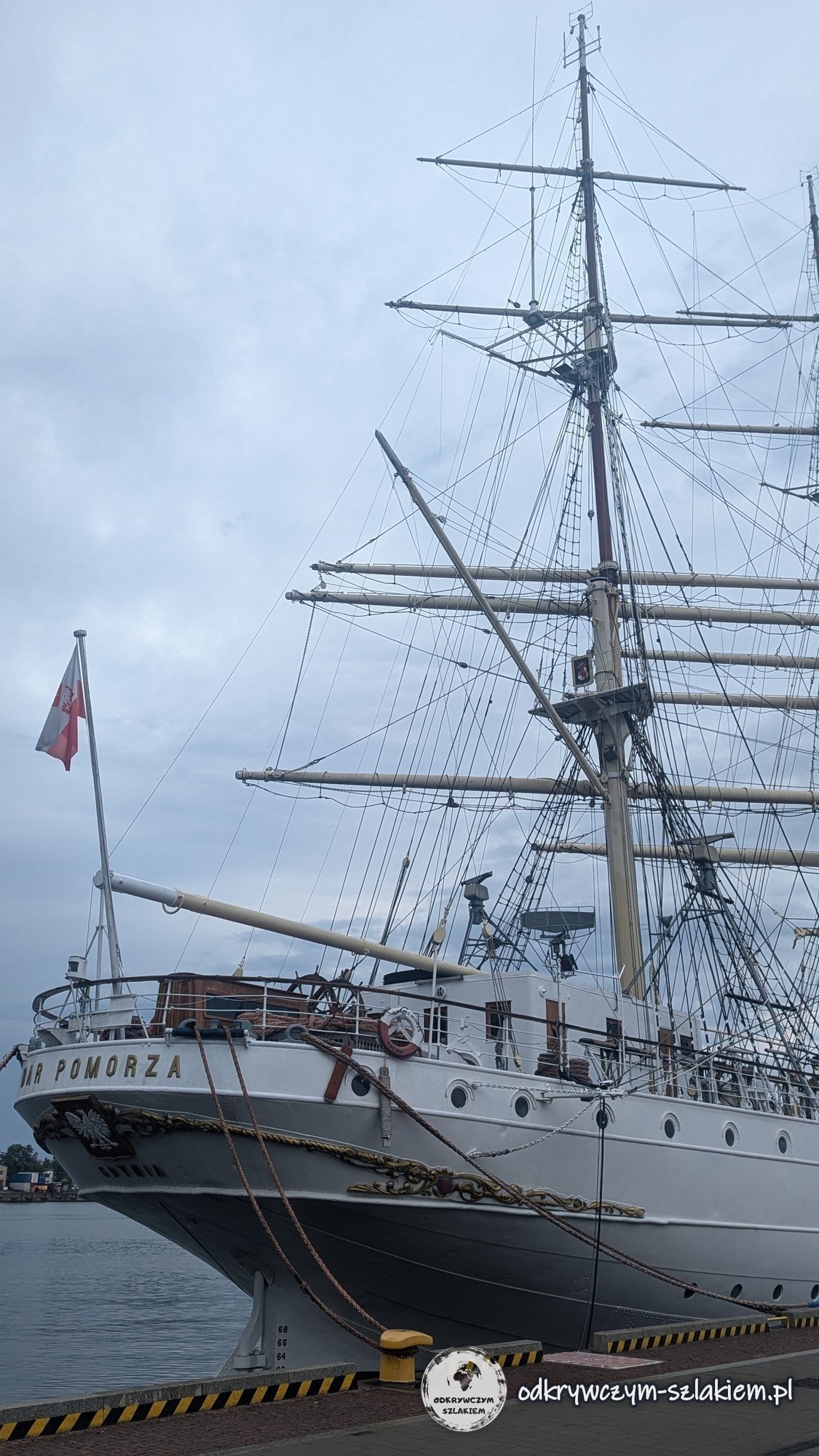
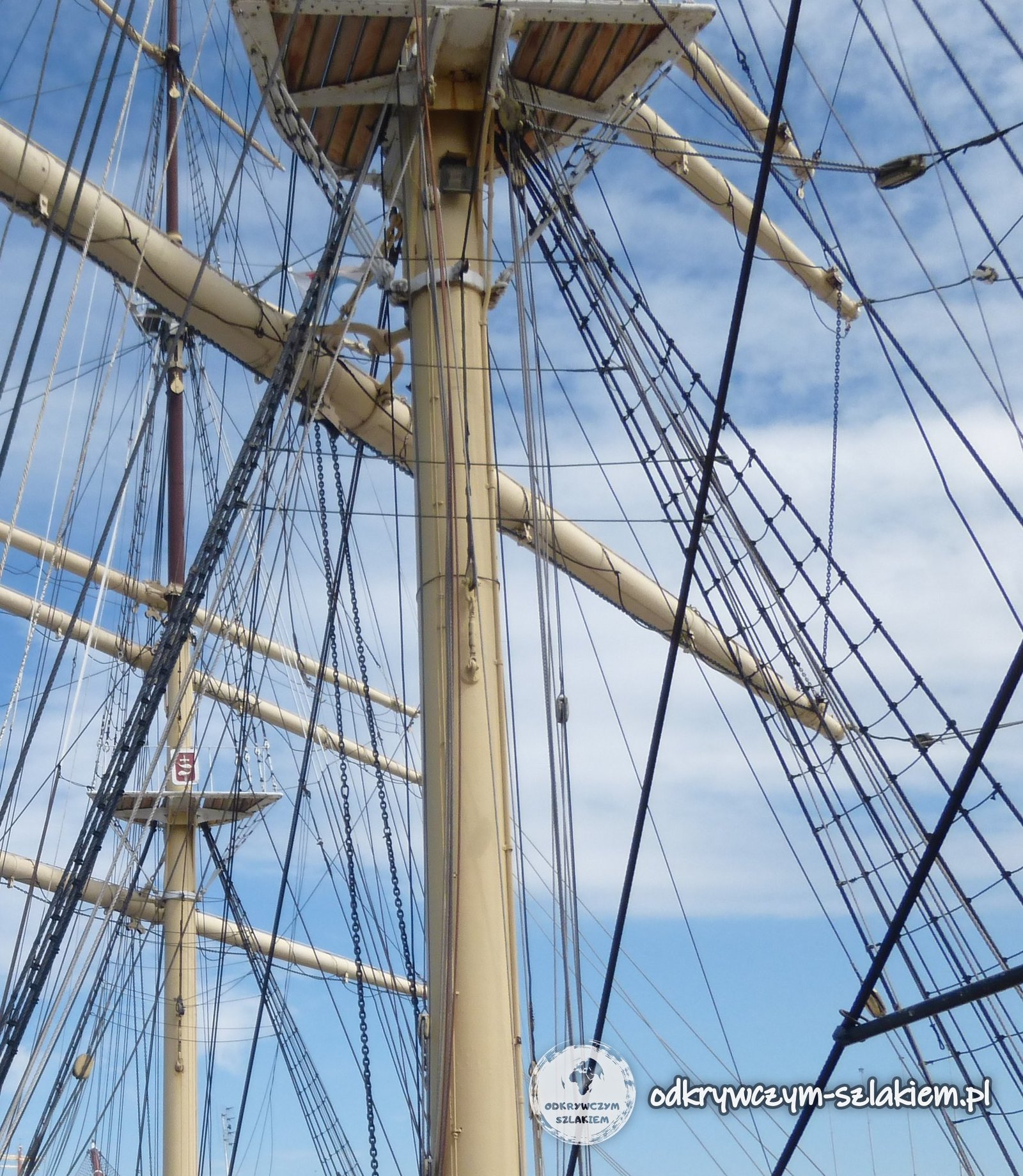
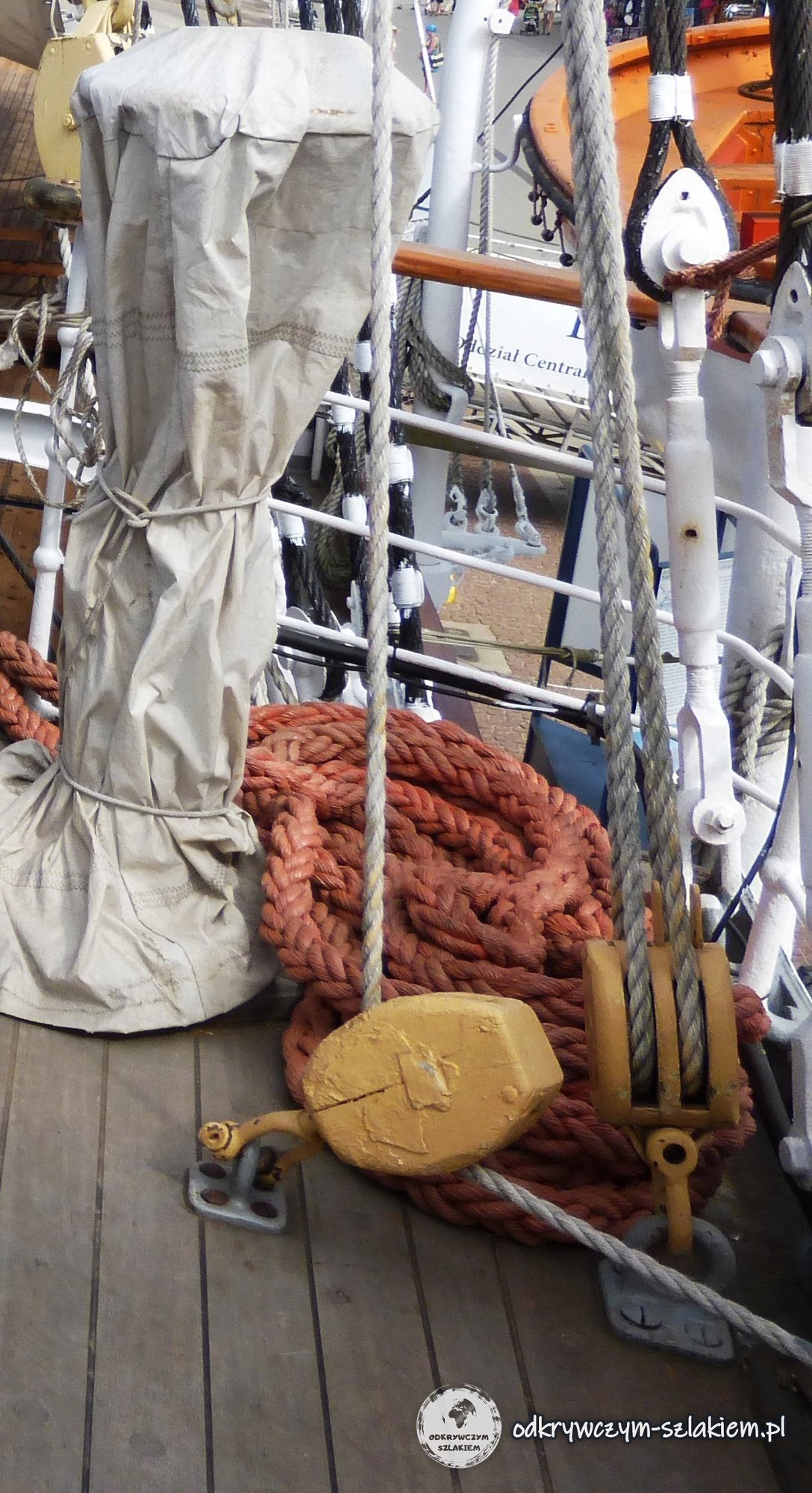
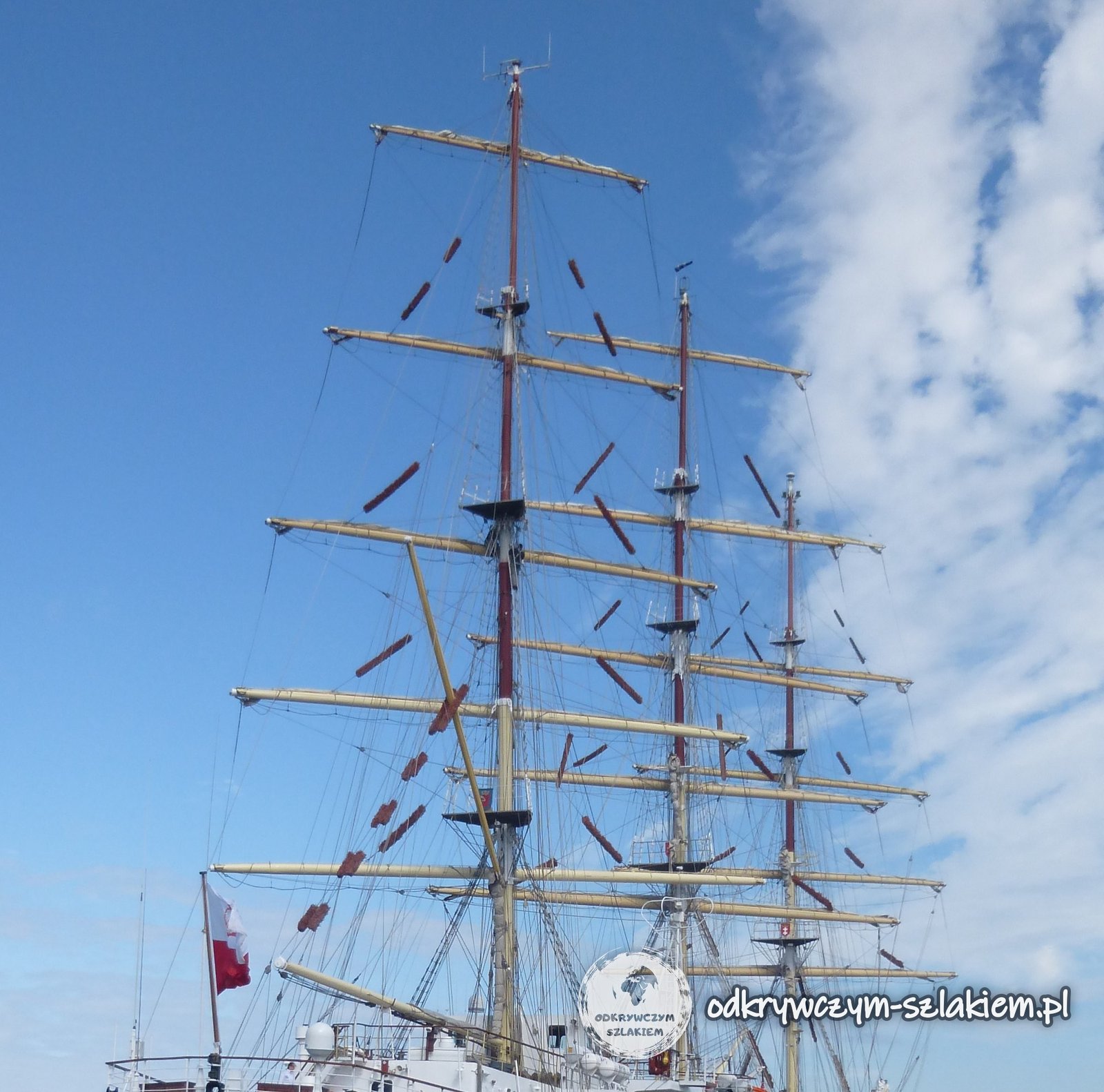
I was on board Dar Pomorza in July 2014. The ship is a frigate (a full-rigged ship) – she has three masts carrying yards, the tallest reaching about 41 metres, and her sails total 2,100 m². From the deck you can see all the rigging: yards, shrouds, blocks and coils of rope. The visit is not limited to the deck – the exhibition spans four levels of the ship, and the interiors include the commander’s saloon, the officers’ mess and the cabin of the writer Karol Olgierd Borchardt, author of the maritime classic “Znaczy Kapitan”.
In 2014 Dar Młodzieży, the successor to Dar Pomorza, was also moored at the Pomeranian Quay (Nabrzeże Pomorskie). She was built at the Gdańsk Shipyard and has sailed as a training ship since 4 July 1982 – today for Gdynia Maritime University. In 1987–1988 she sailed around the world, rounding Cape Horn among other capes.
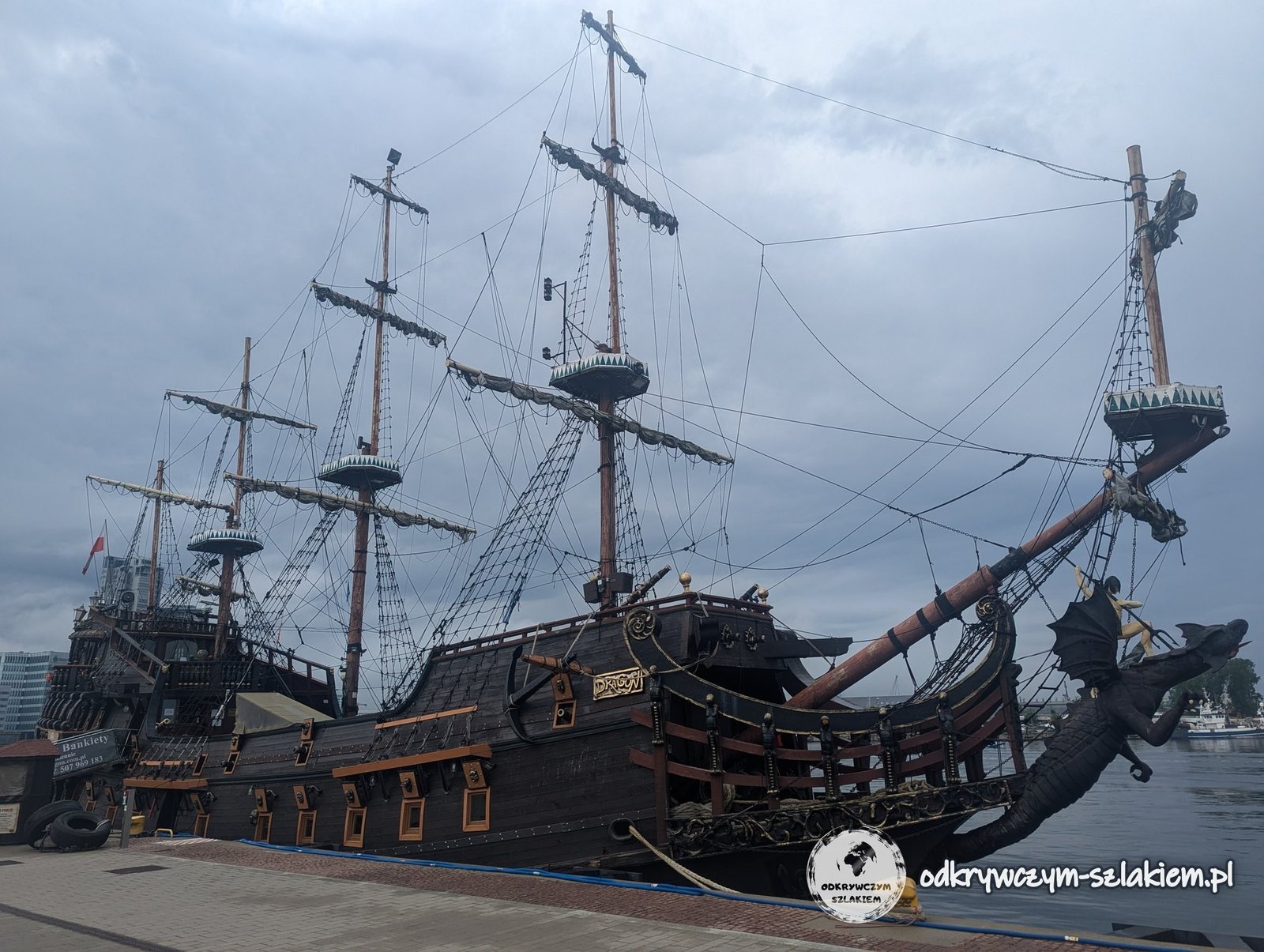
A little further on, the Dragon galleon is moored – a passenger ship styled as a 17th-century galleon, with a dragon figurehead on the bow. She takes passengers on cruises around the Gulf of Gdańsk, and there is a restaurant on board.
Gdynia Aquarium
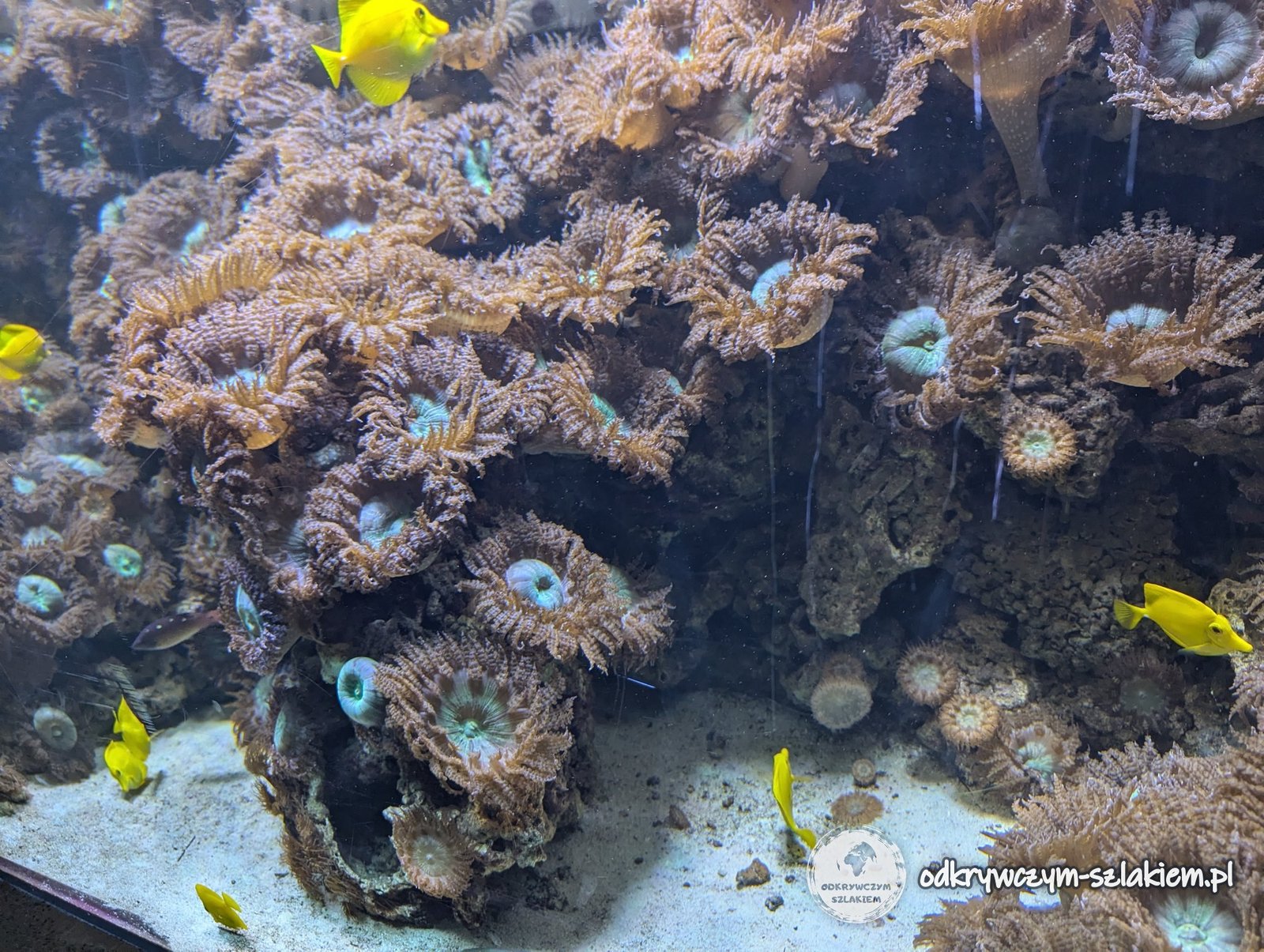
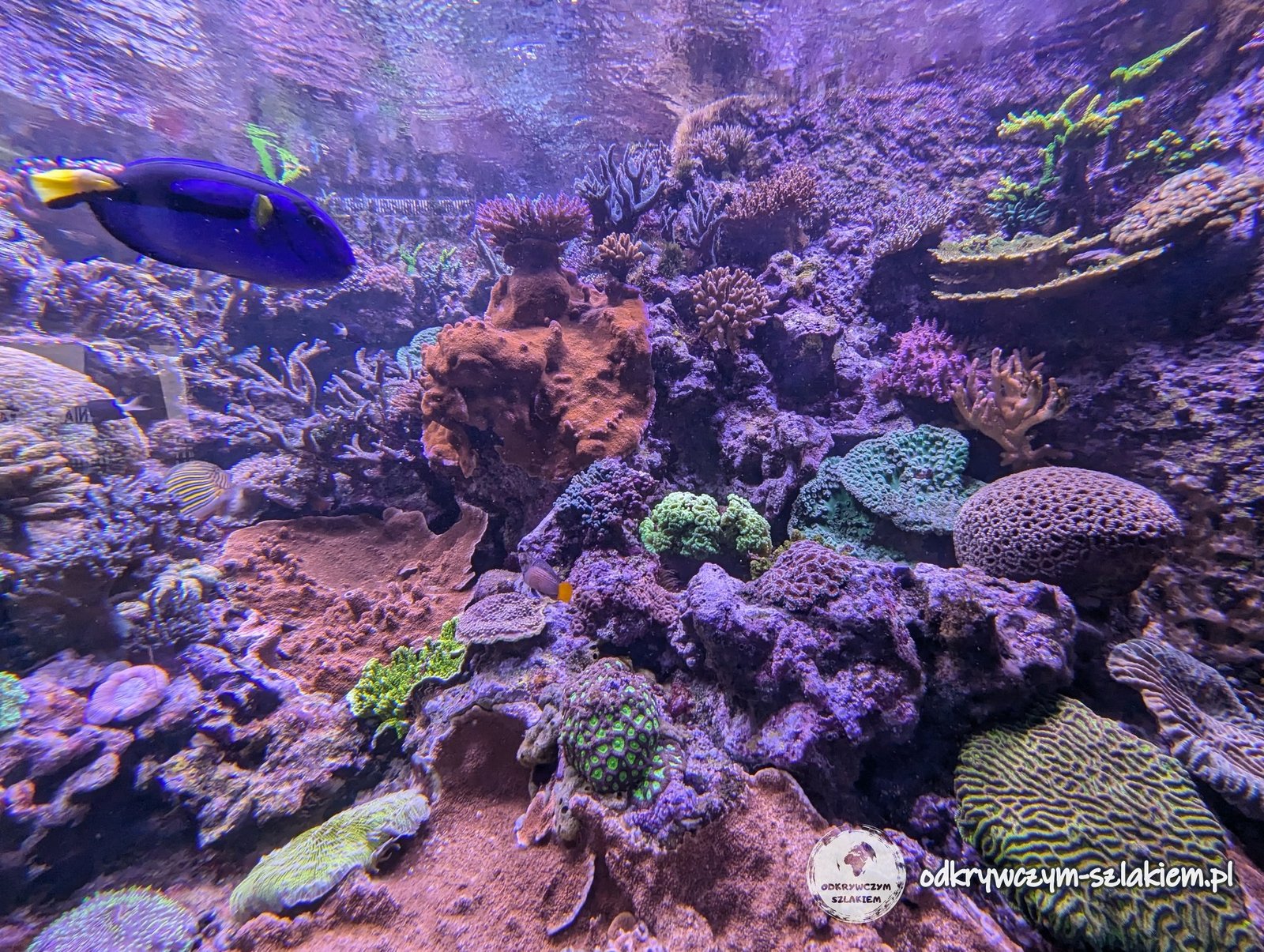
The South Pier is also home to Gdynia Aquarium (Akwarium Gdyńskie). It was founded in 1971 as the Oceanographic Museum and Marine Aquarium, and it welcomed its first visitors in June 1972. It is run by the Sea Fisheries Institute and housed in a modernist building from 1938. One of the large tanks recreates a coral reef, where a blue regal tang swims among other fish.
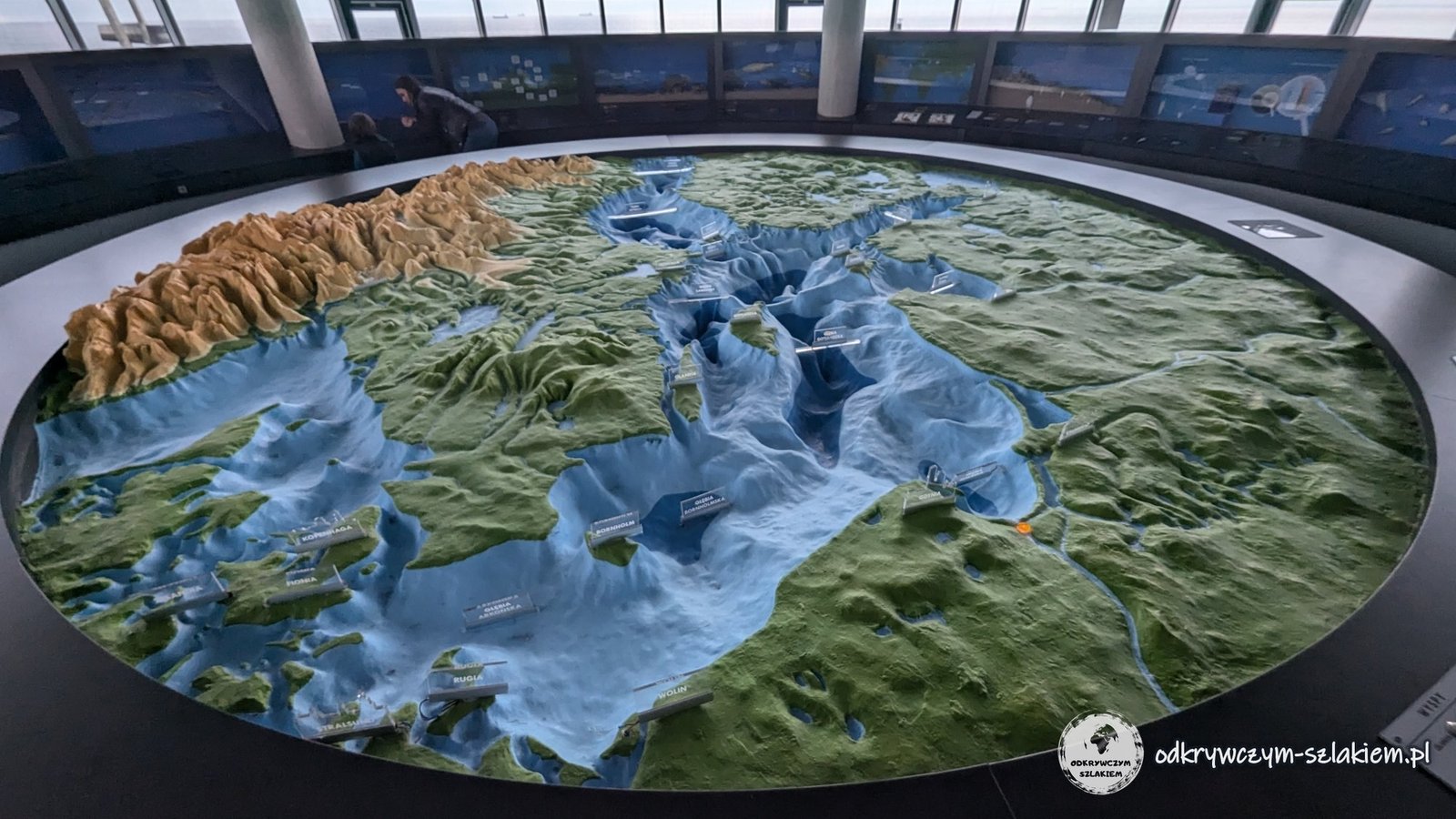
On the third, top floor is the Baltic Room. In the middle stands a large three-dimensional map of the seabed showing its deeps, islands and port cities, and the windows look out over the Gulf of Gdańsk.
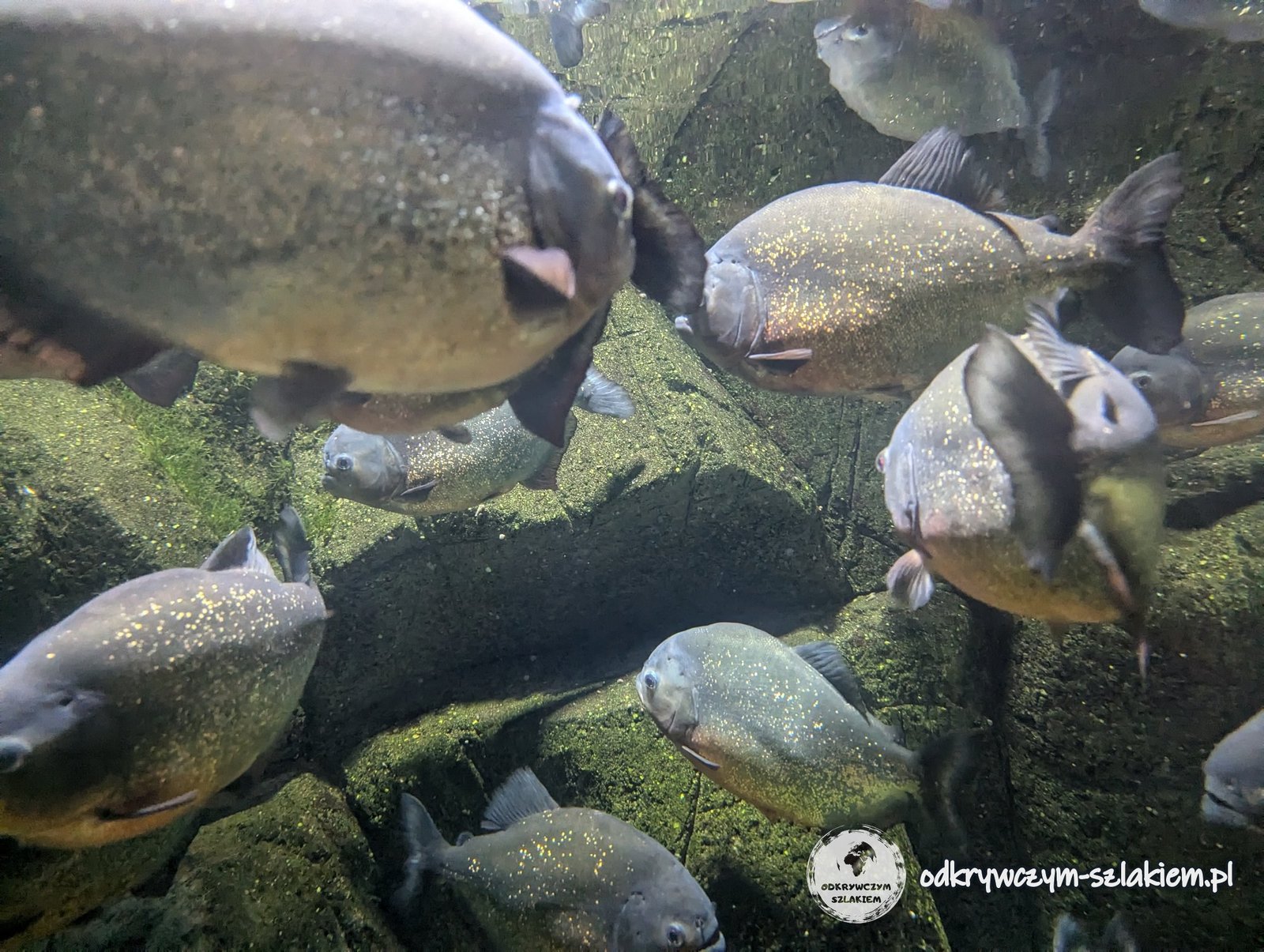
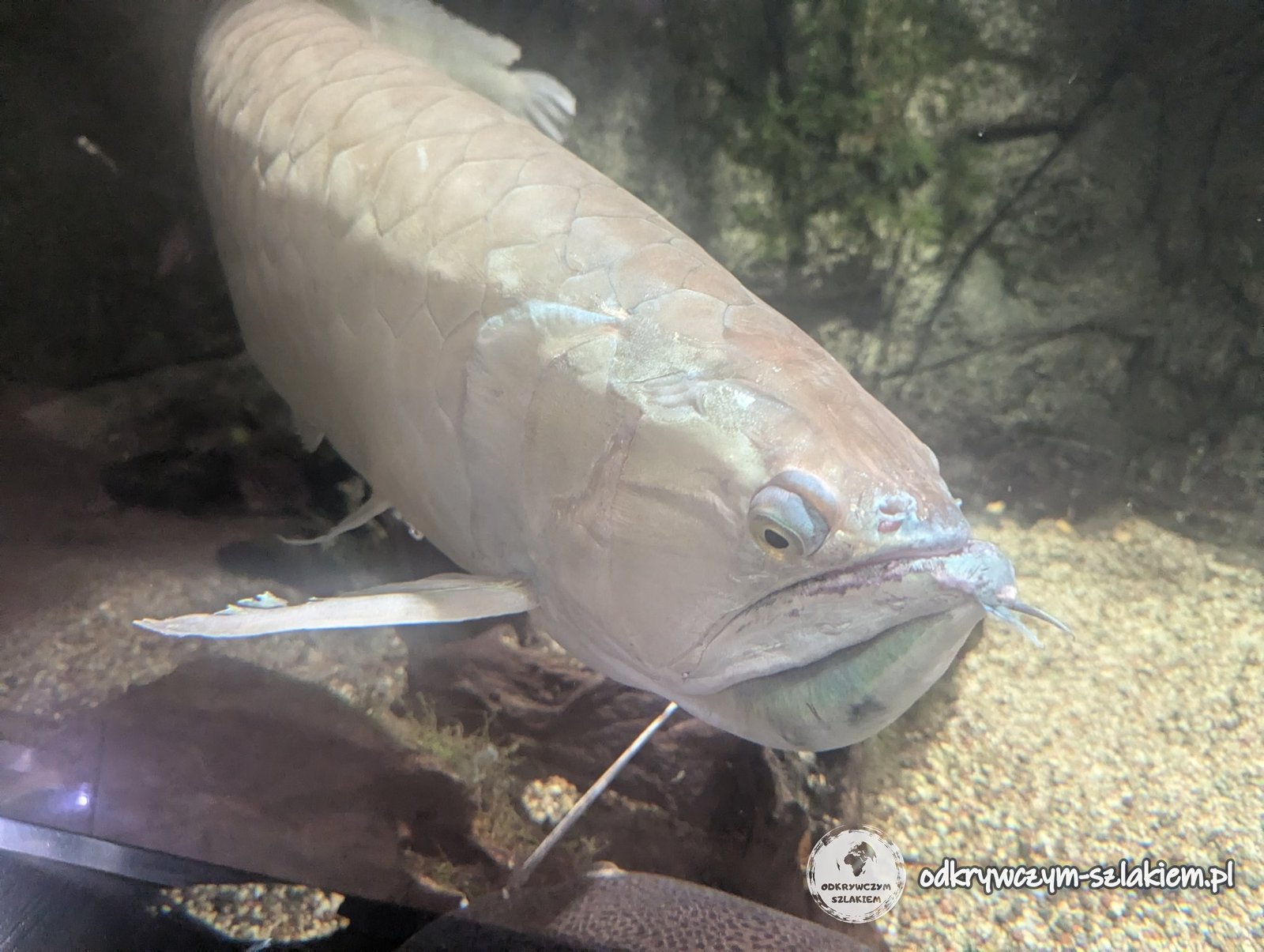
The tanks with fish from South American rivers hold piranhas and a silver arowana, among others – a large silvery fish with two barbels on its lower jaw.
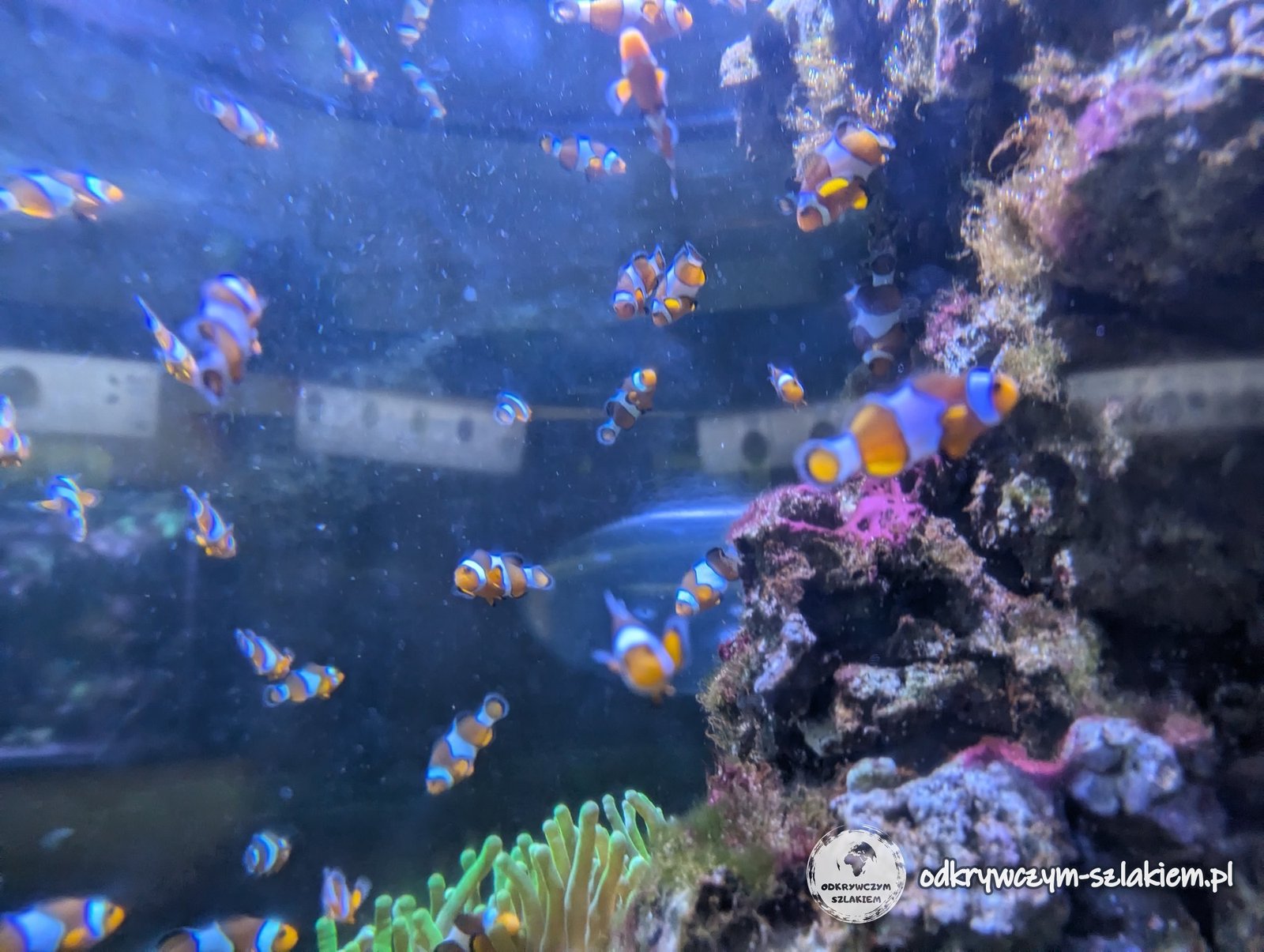
In the tanks with fish from tropical seas swim shoals of clownfish and lionfish – fish with long, striped fins that carry venomous spines.

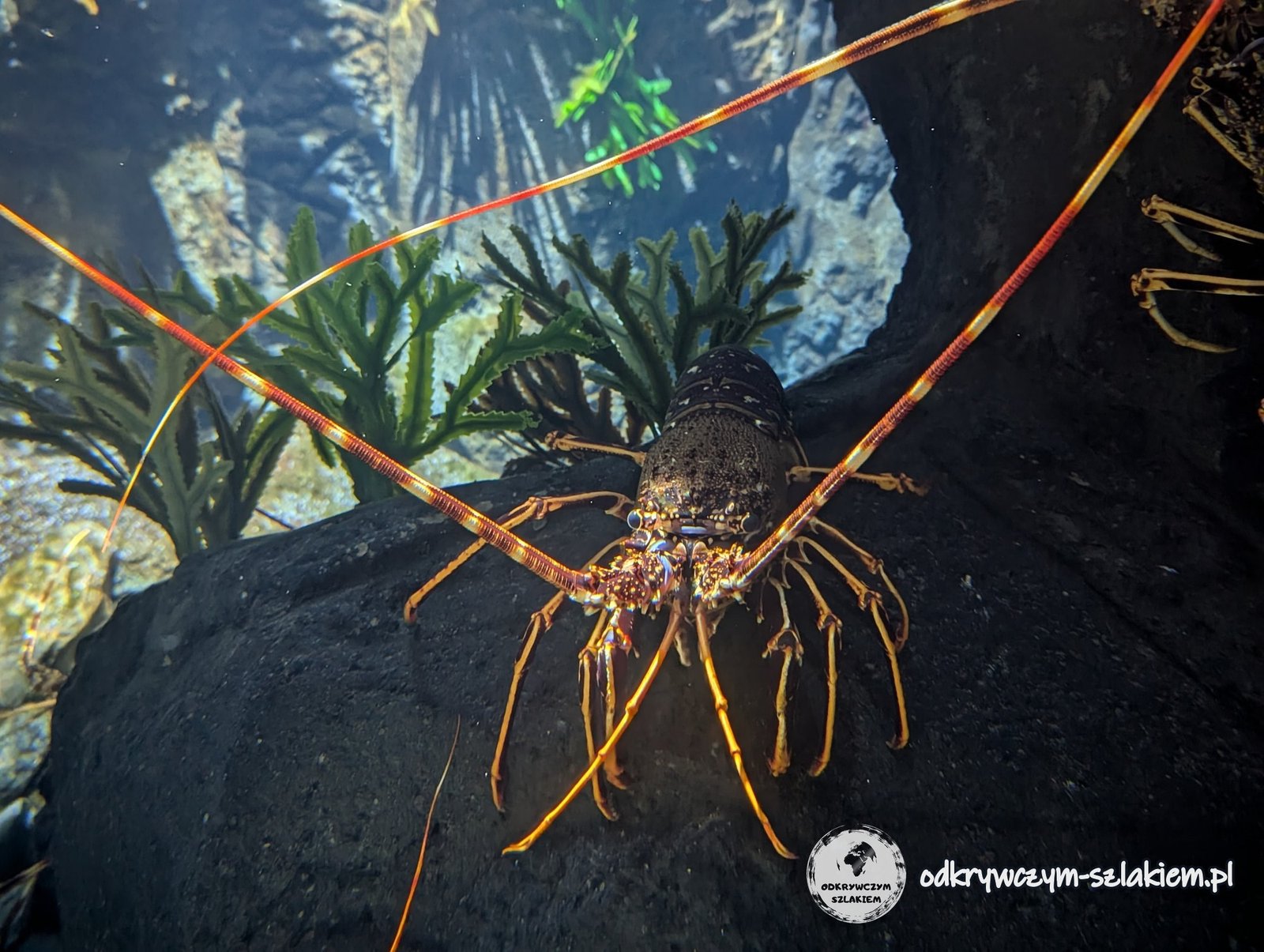
Reptiles and invertebrates have their own tanks too. The snapping turtle comes from North and Central America. It is a poor swimmer, so it buries itself in the mud and waits motionless for prey. In a darkened room, under blue light, jellyfish drift.


The end of the South Pier and the Dreamer
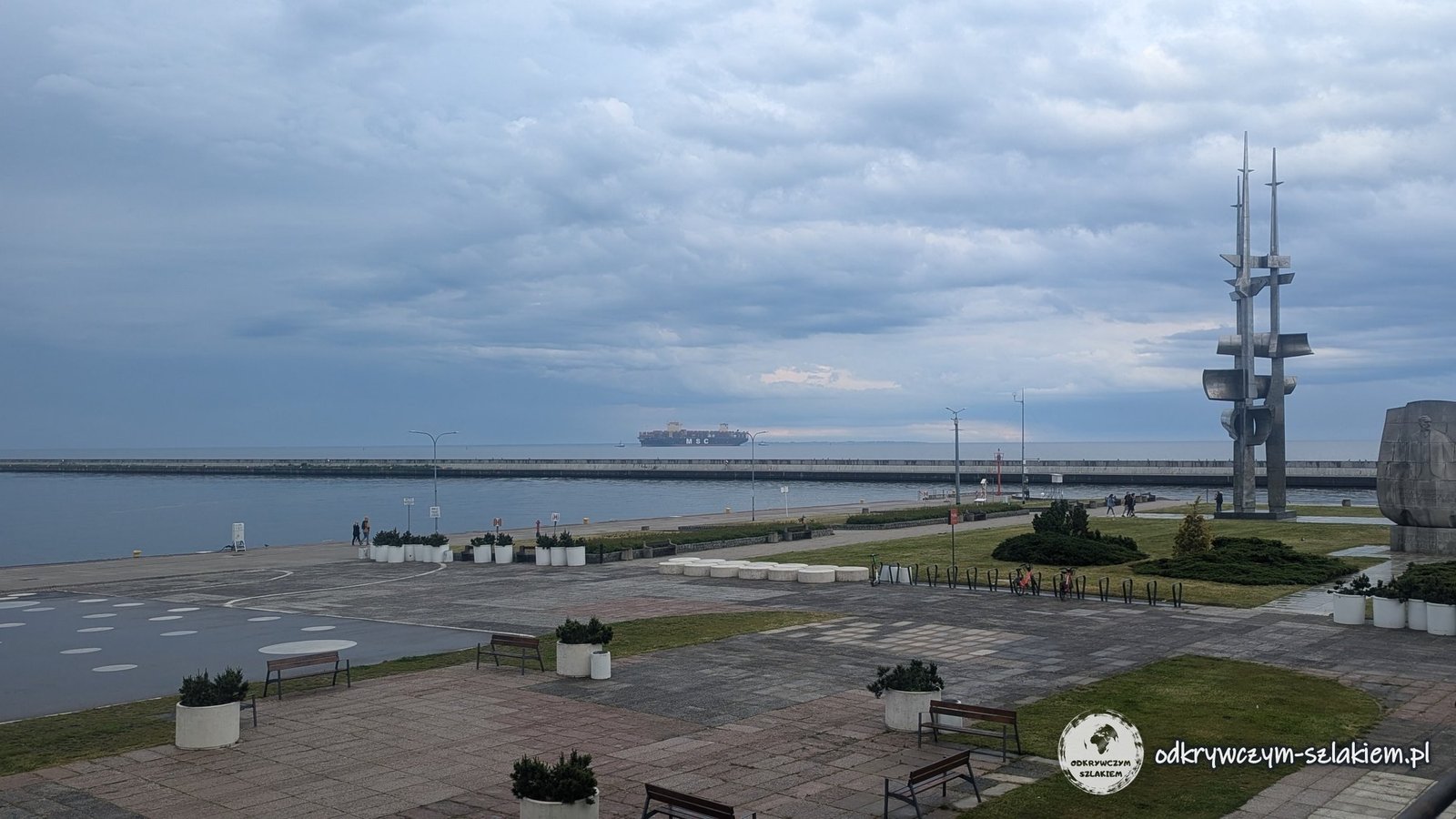
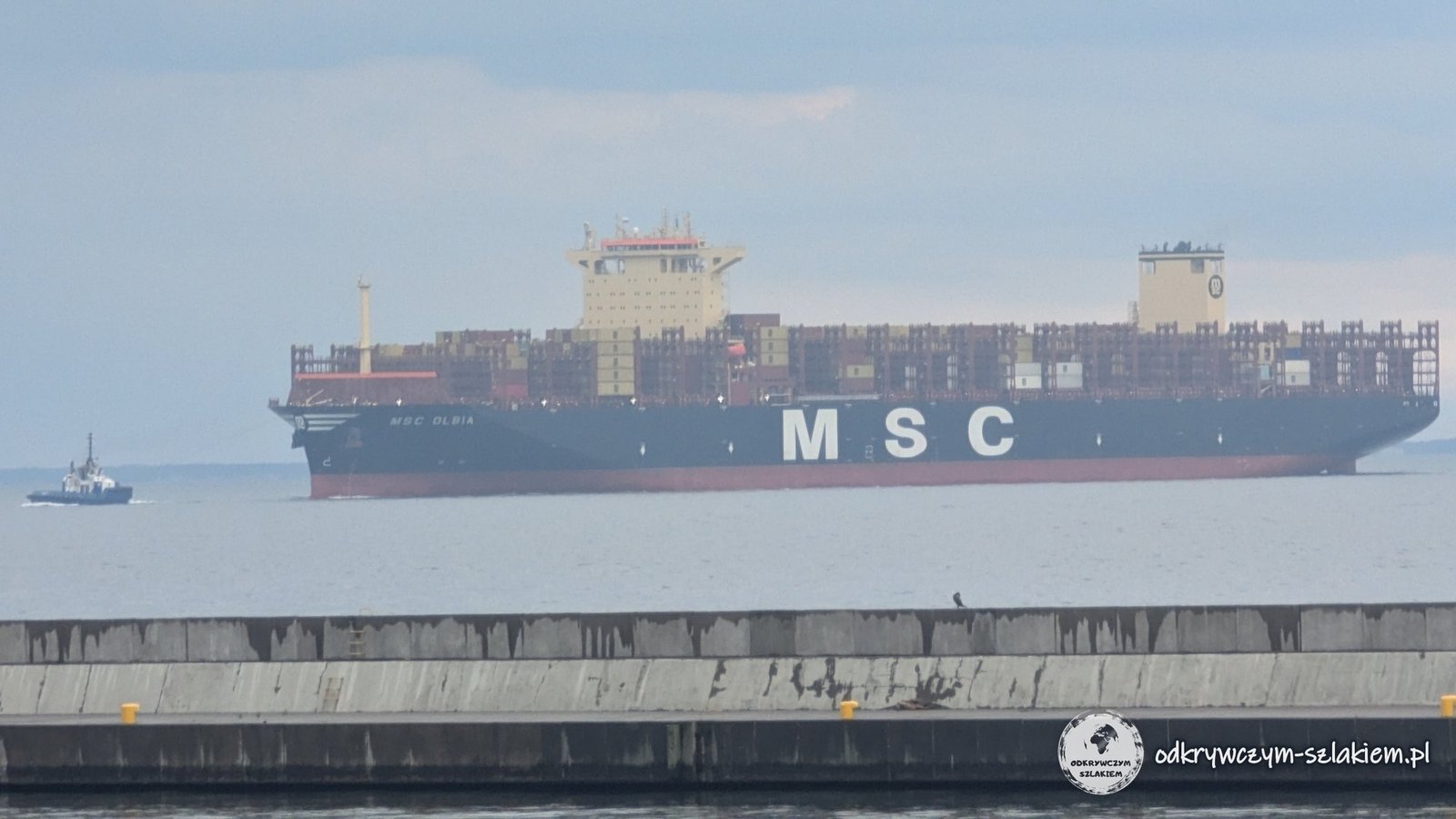
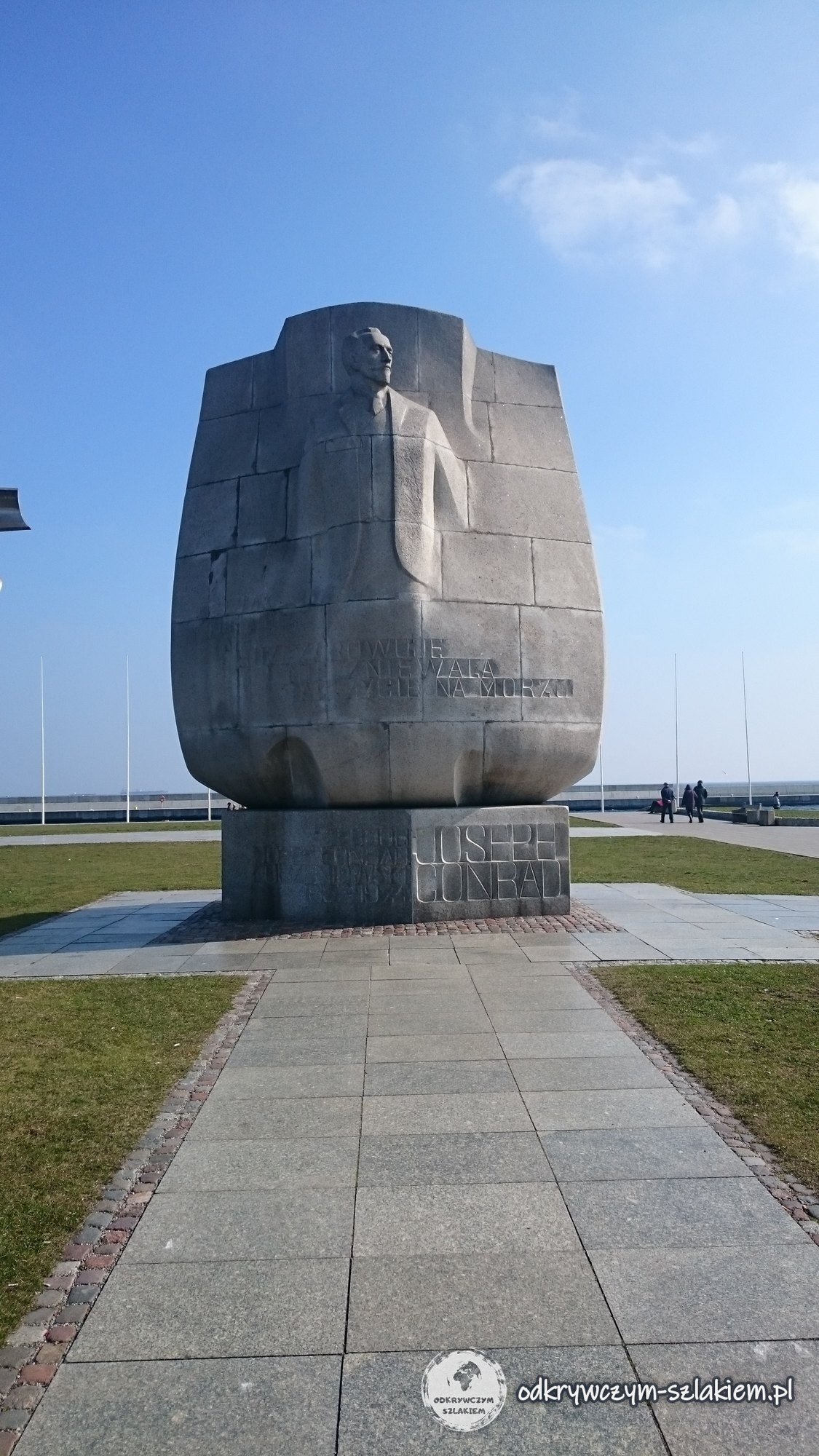
From the aquarium windows you can see the end of the South Pier, which is more than 600 metres long. It holds the Joseph Conrad monument from 1976 – a stone sculpture with the writer’s face – and a tall sculpture shaped like masts with sails. Beyond the breakwater a large MSC container ship was in view.
I had already seen both monuments up close in March 2016. The Conrad monument bears a quotation from “Lord Jim”: “There is nothing more enticing, disenchanting and enslaving than the life at sea”. Next to the mast sculpture, the Sea Towers skyscrapers rise in the background.

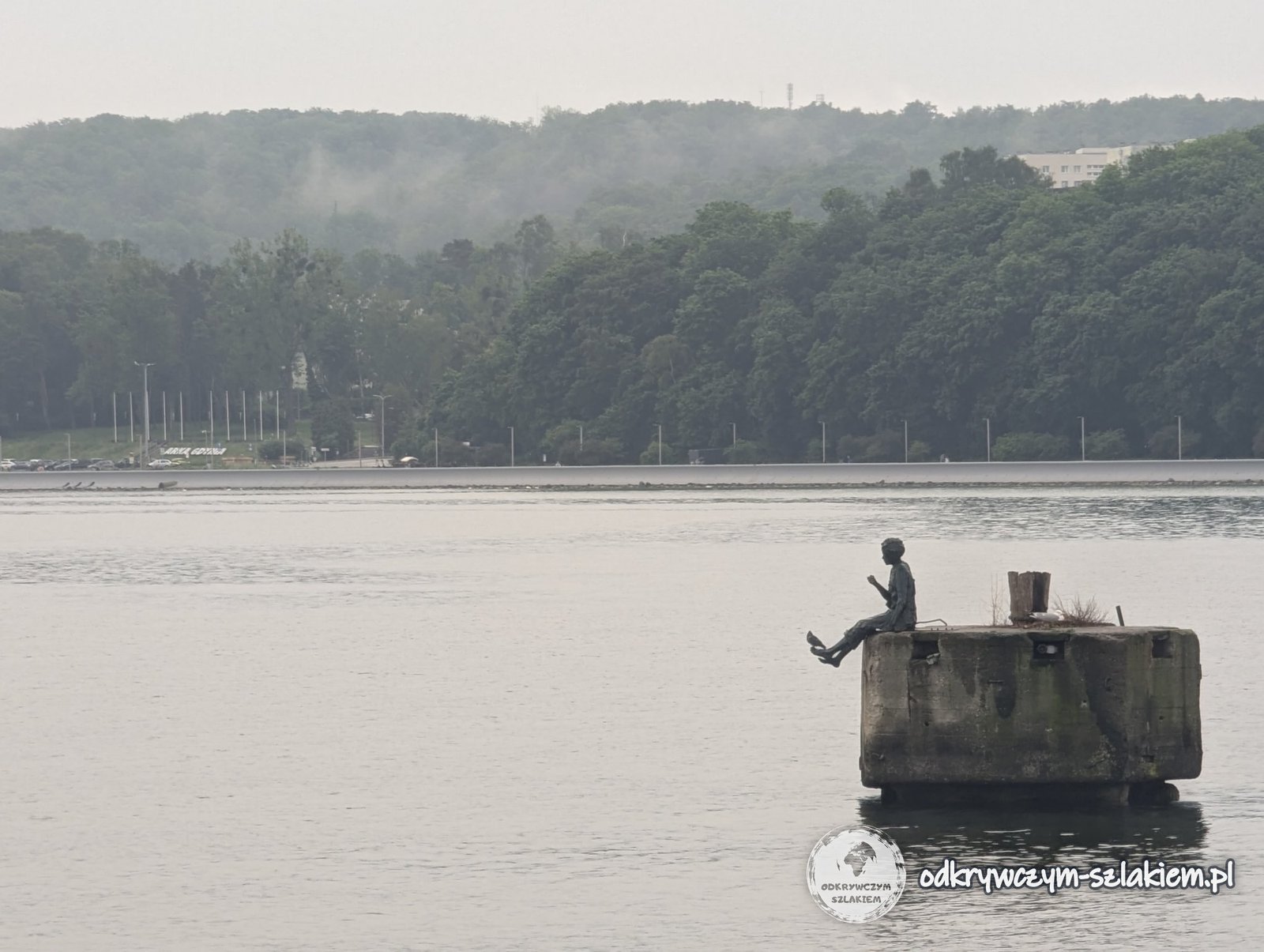
After leaving the aquarium I walked along the pier. A few dozen metres from the shore, on a concrete mooring dolphin in the water, sits a boy with a baton in his hand – a sculpture called “The Dreamer – Conductor of the Waves” (Marzyciel – Dyrygent Fal). Behind it runs the Seaside Boulevard (Bulwar Nadmorski) – a promenade more than 1.5 km long to the beach in Redłowo, below the wooded slope of Kamienna Góra. That evening, mist hung over the hill.
The alpaca farm in Bojano
The next day, Sunday 8 June 2025, I was in Bojano – a village in the Szemud municipality, about 12 km west of central Gdynia. It is home to the Alpaki Bojano farm. The first three white alpacas arrived here in July 2016, and today the herd numbers about 40 animals of two breeds: huacaya, with dense, fluffy fleece, and suri, with long fleece that hangs in locks.
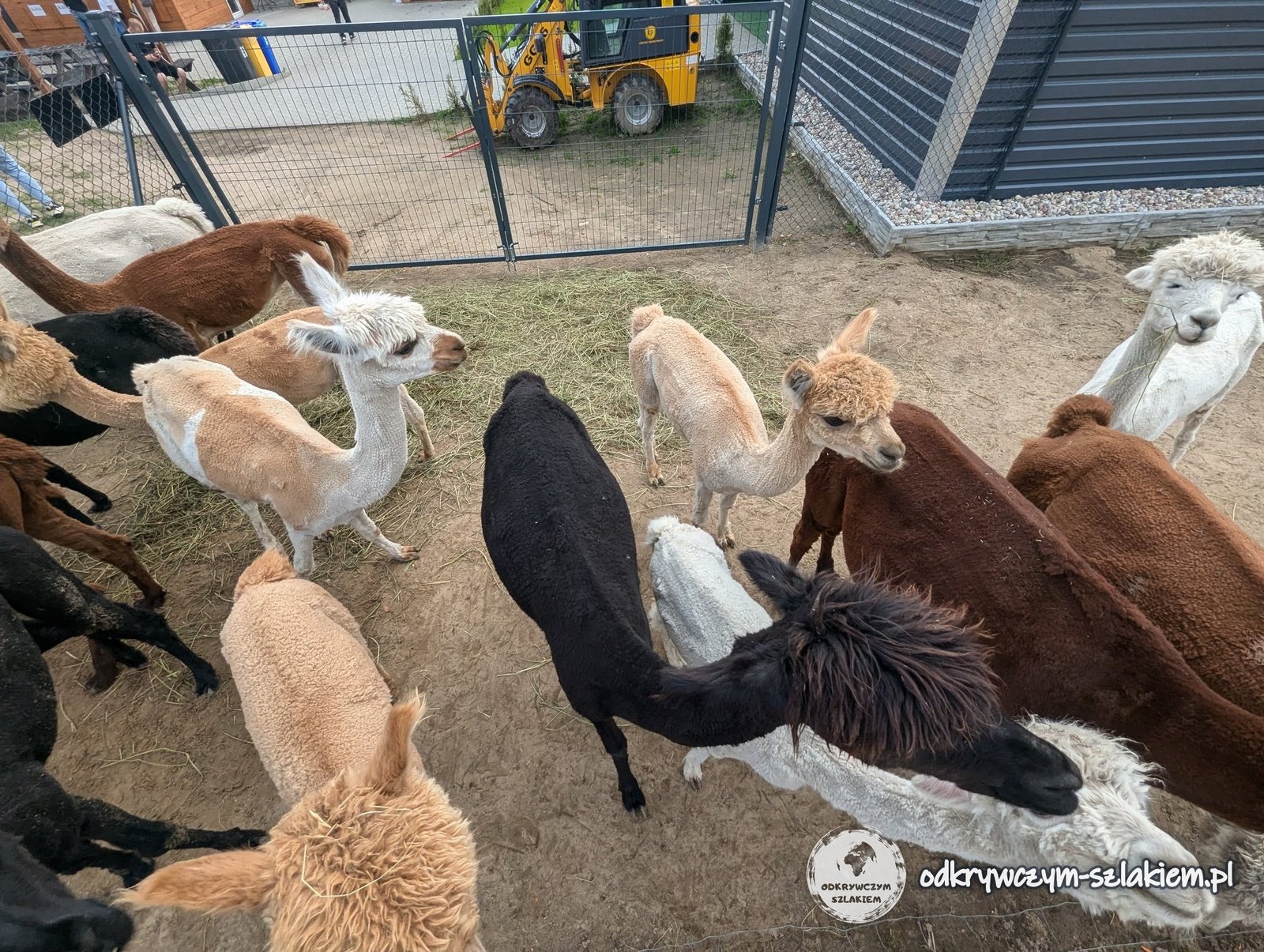
The ticket includes a cup of feed – I got chopped carrots. With the cup in hand you go into the paddocks, and the alpacas come up by themselves and eat from your hand.
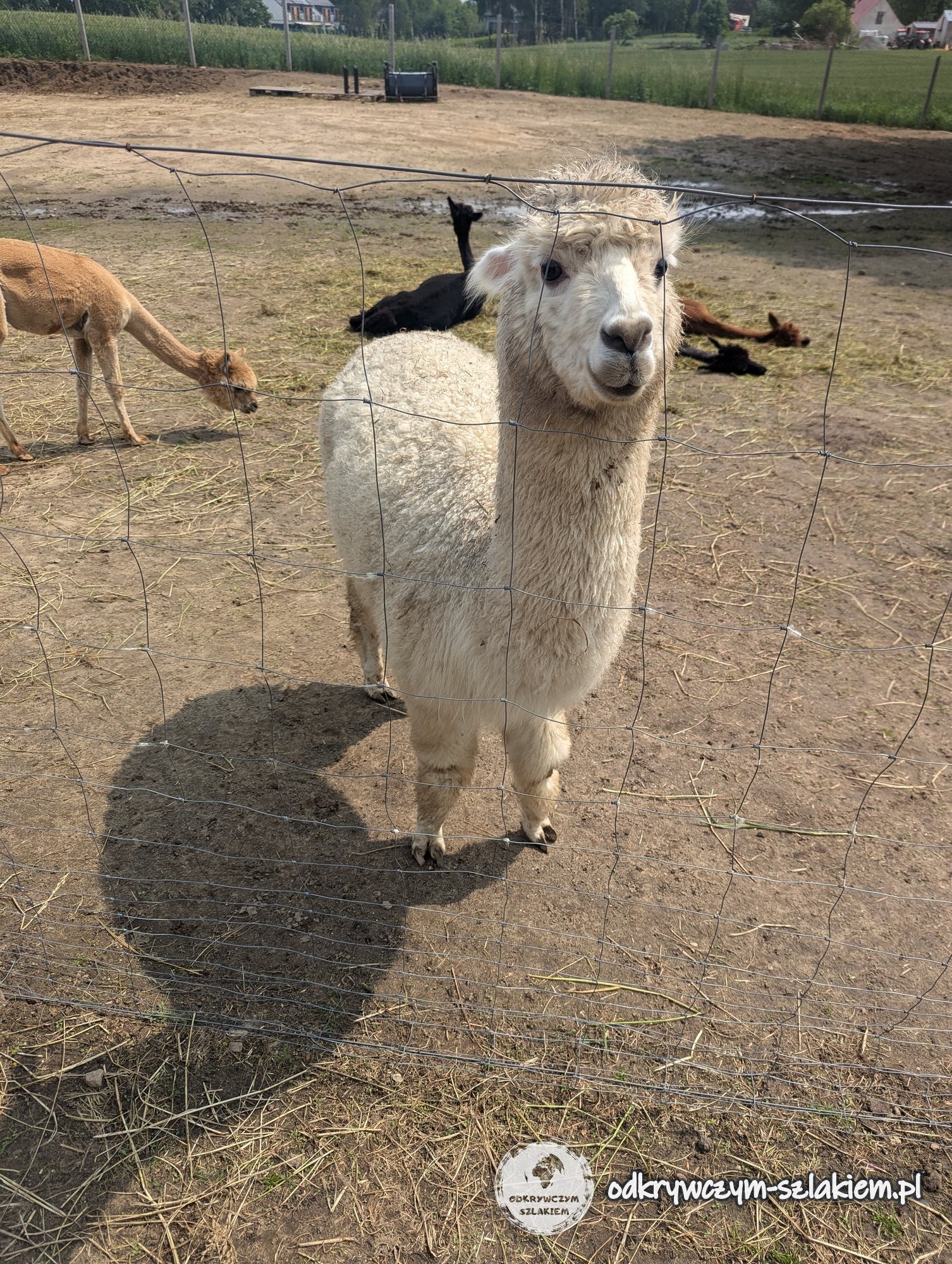

Alpacas come from the Andes – from Peru, Bolivia and Chile – and are bred for their wool, among other things. They are shorn once a year, usually in spring – in June part of the herd in Bojano had already been shorn.

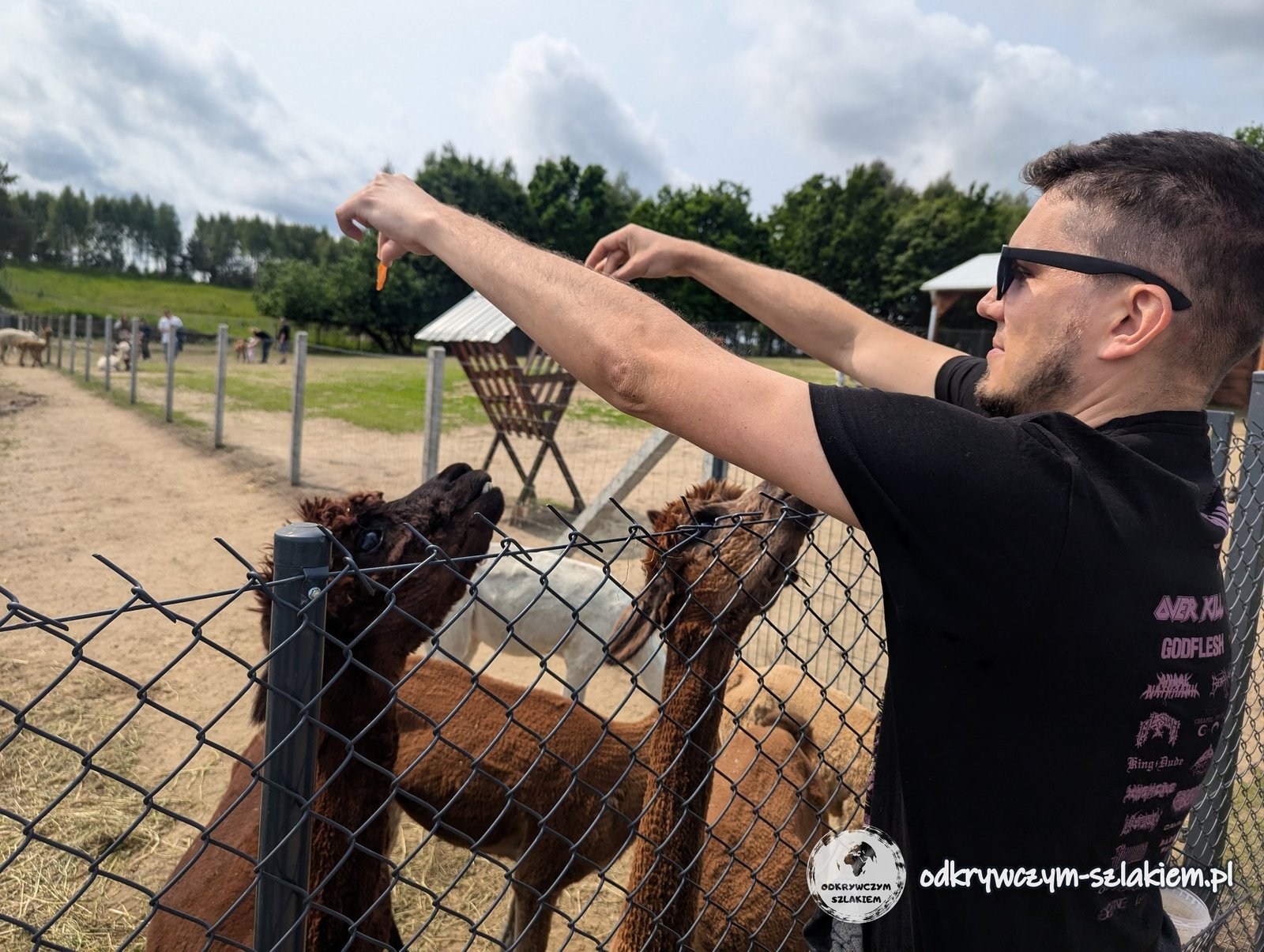
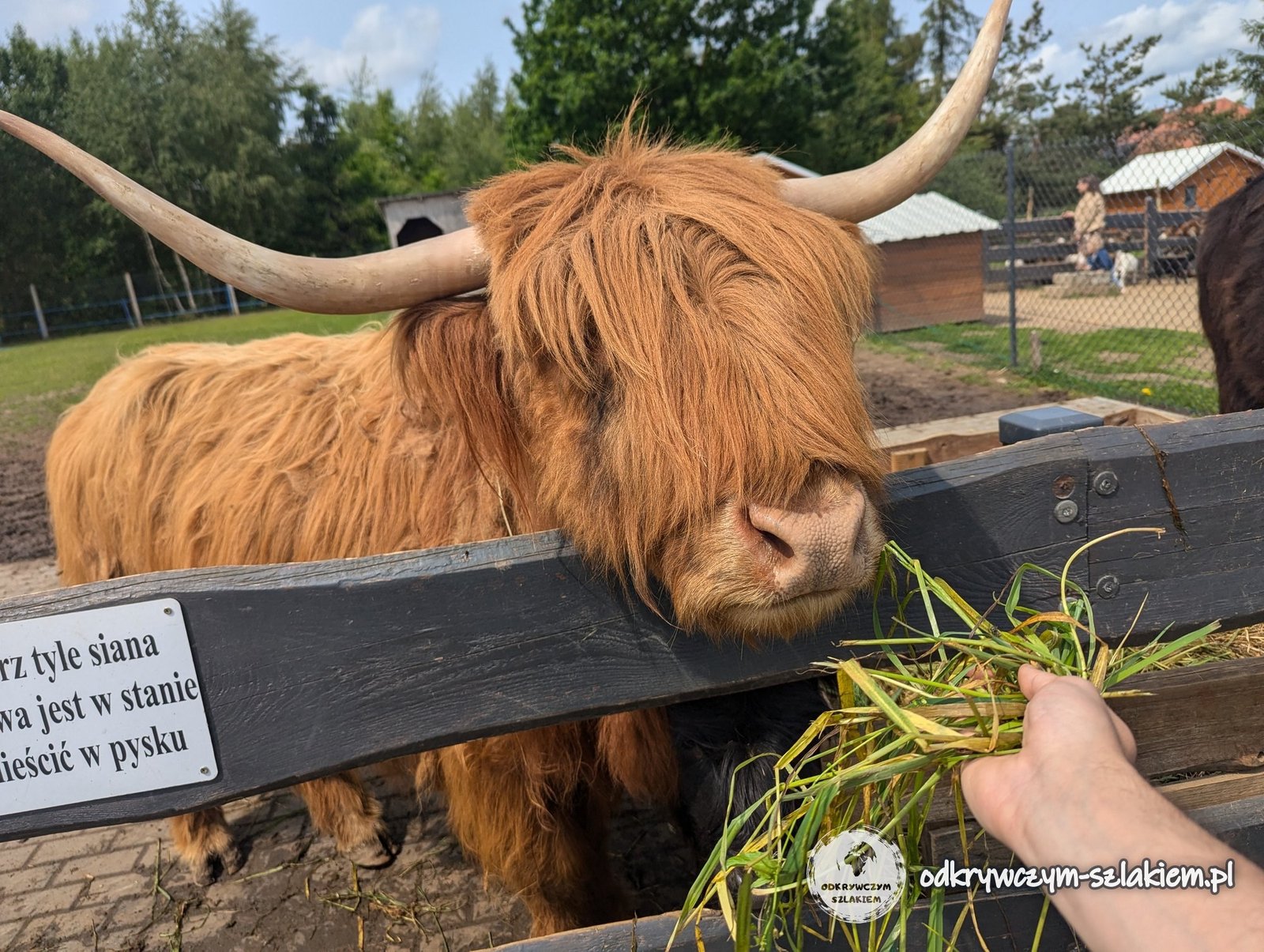
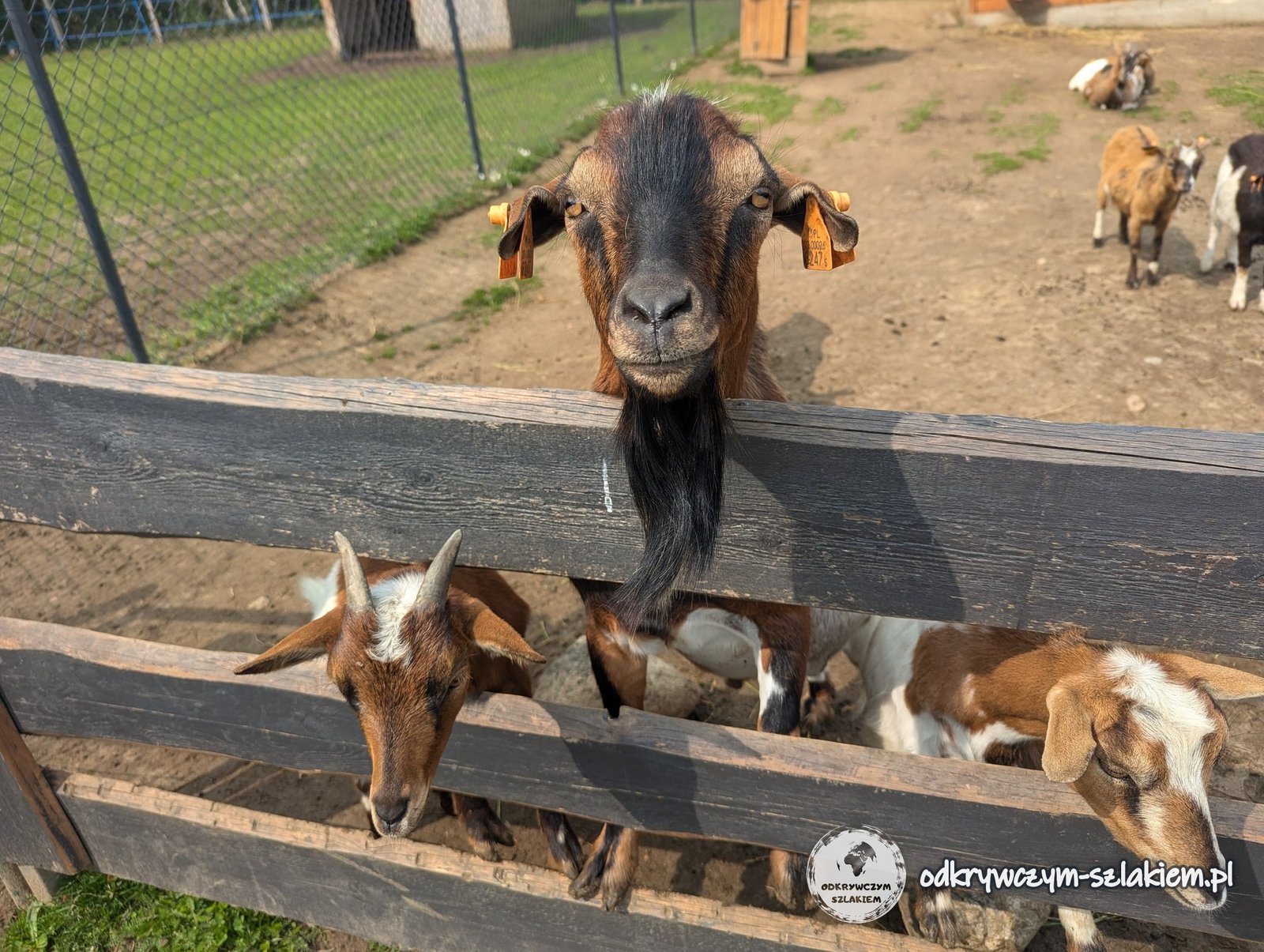
Besides the alpacas, the farm is home to Highland cattle with long, ginger coats, miniature goats, Valais Blacknose sheep, Ouessant sheep, a Shetland pony, fallow deer and rabbits.
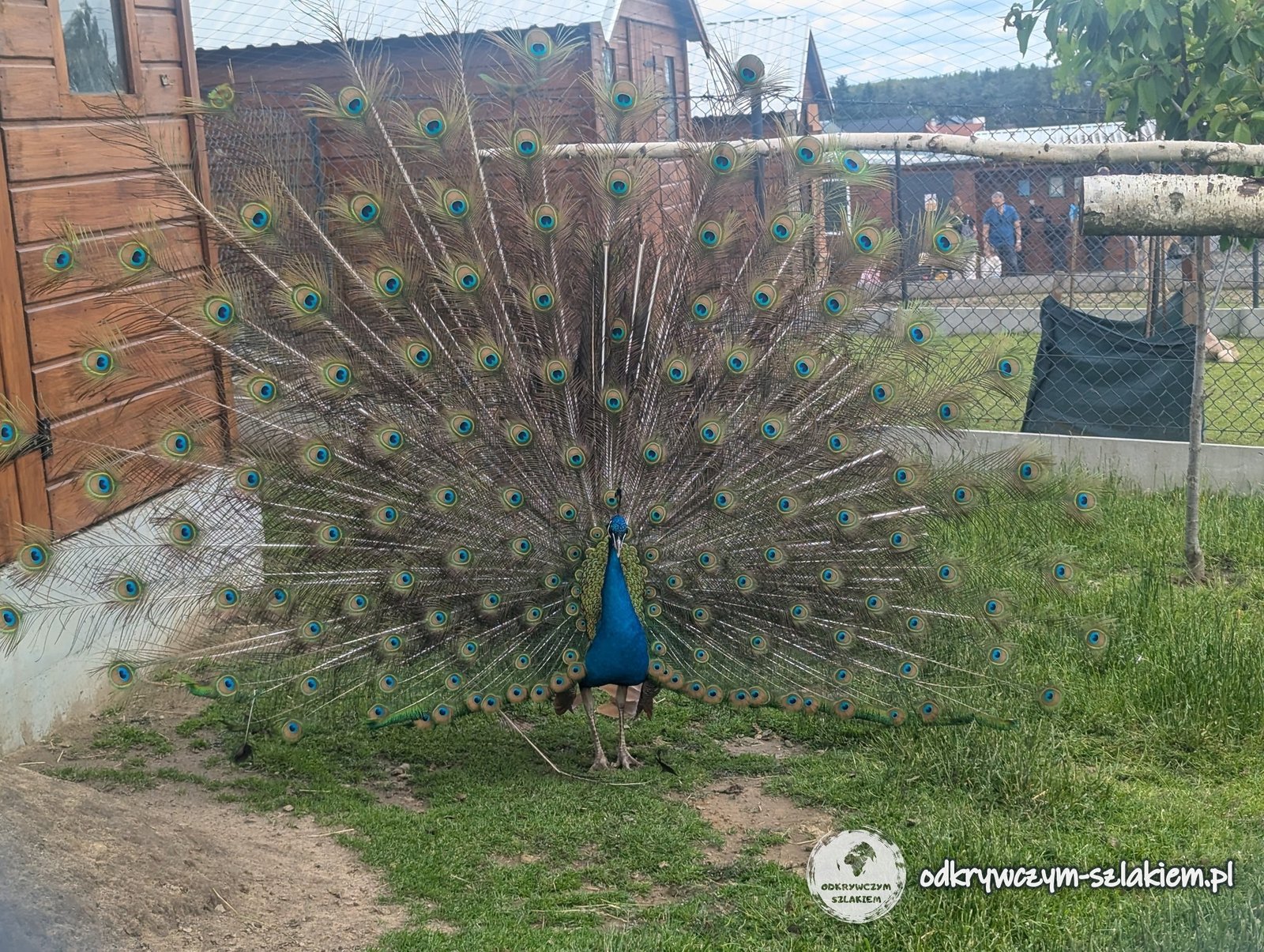
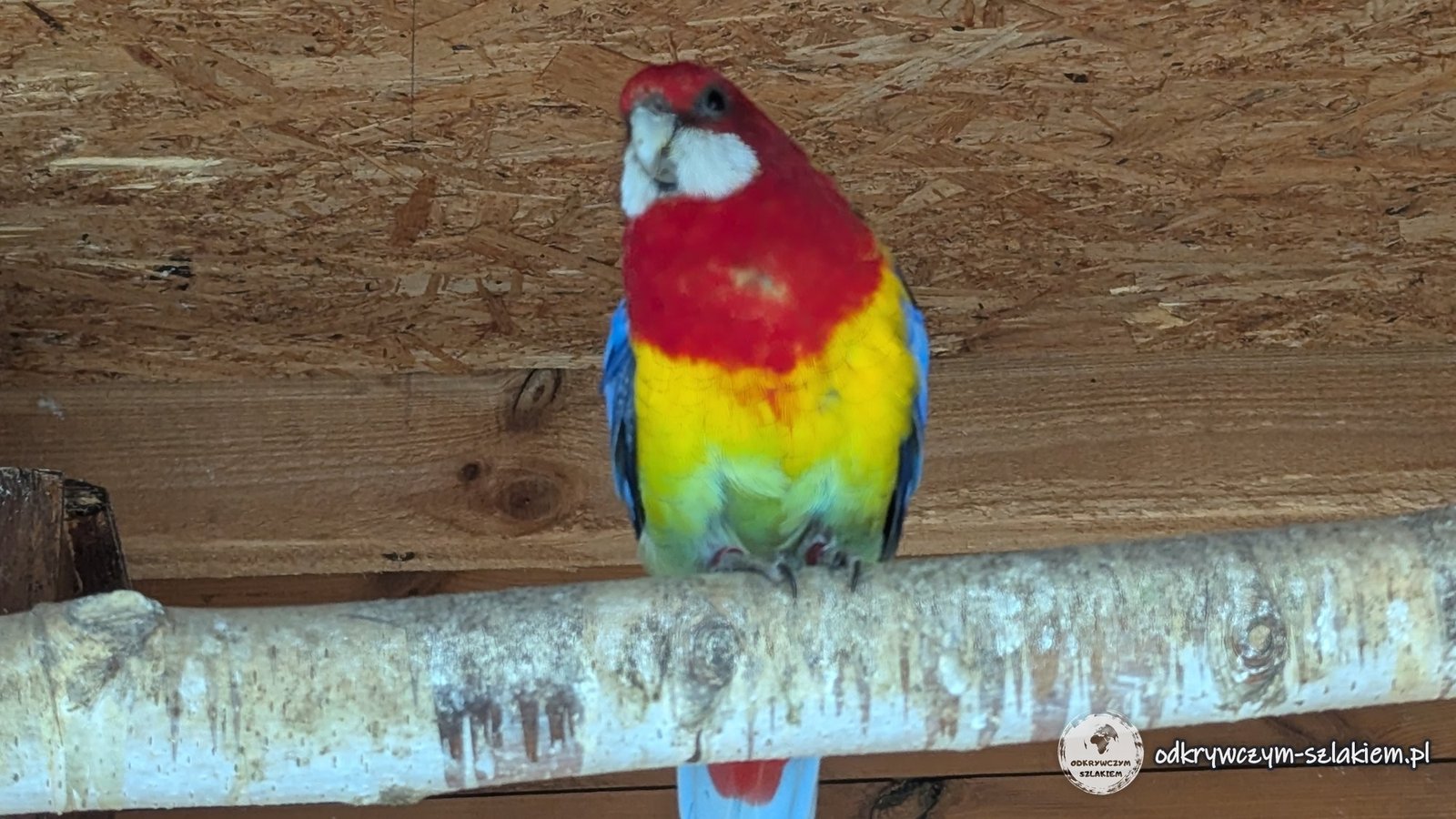
There are birds too: peacocks, chickens, geese and parrots – including colourful rosellas in a wooden aviary.
Practical information
- By SKM train: the SKM commuter train from Gdańsk Główny to Gdynia Główna takes about 34 minutes and runs about every 10 minutes during the day; Polregio trains take 20–25 minutes. The nearest station for Orłowo is Gdynia Orłowo. Check current fares on the SKM website.
- Orłowo pier: from Gdynia Orłowo station you can walk to the pier in about 20 minutes. Entry to the pier is free, and from the pier you can see the Sopot coast.
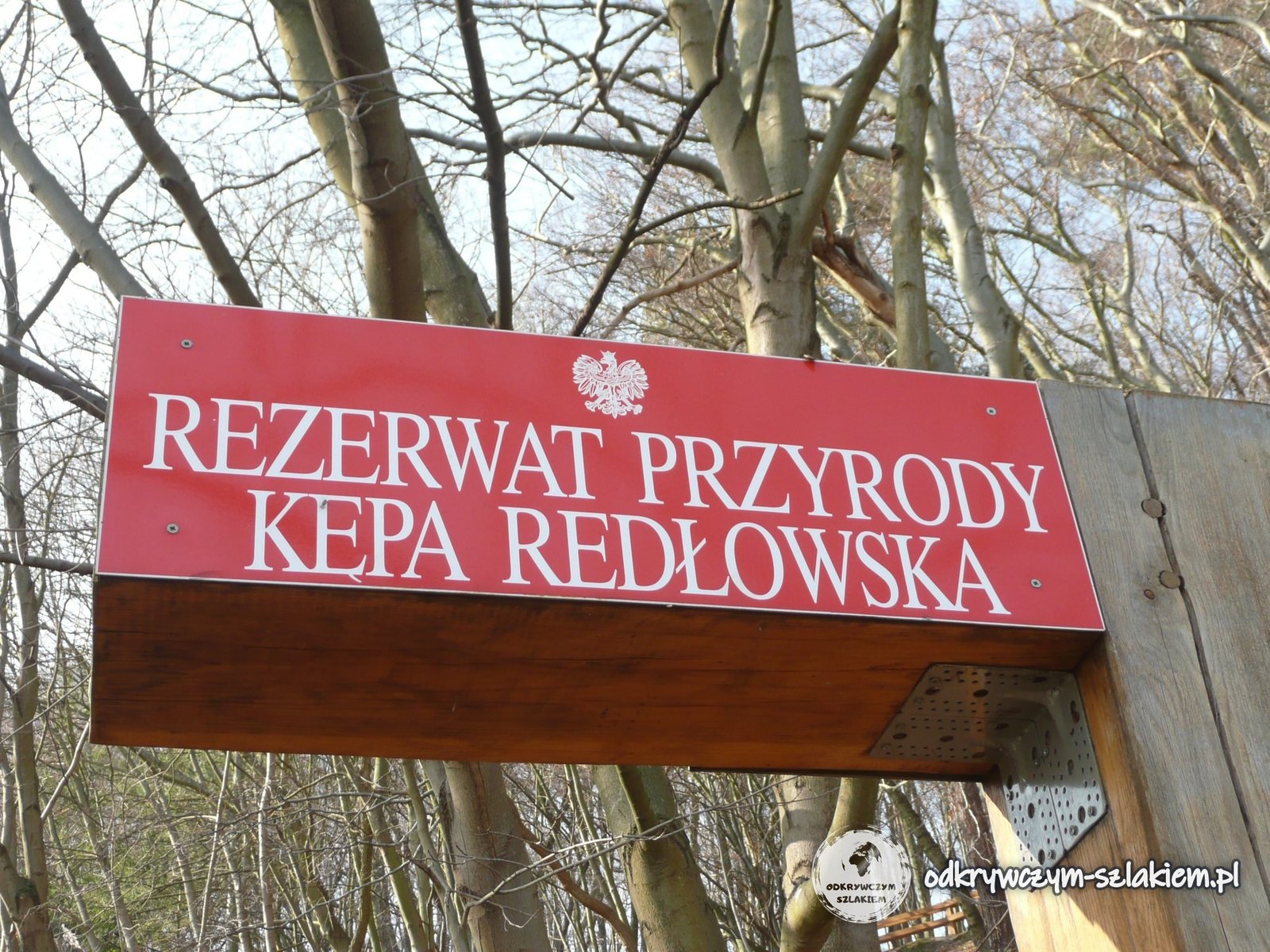
- Kępa Redłowska: this is a nature reserve – stick to the marked paths. The cliff is eroding, so do not go right up to the wall or to the edge of the drop.
- To the city centre: from Gdynia Główna station it is about 1 km to Kościuszko Square and about 2 km on foot to the aquarium on the South Pier.
- Gdynia Aquarium: in 2026 a standard ticket costs 48 zł from May to August and 43 zł from September to April (reduced 34 zł / 30 zł); children under 5 enter free. From April to September the aquarium opens at 9:00 and closes between 19:00 and 21:00 (depending on the month); from October to March it is open 10:00–17:00. Ticket offices close half an hour earlier, and from November to February the aquarium is closed on Mondays.
- Dar Pomorza: a ticket in 2026 costs 28 zł (reduced 17 zł). In the 2026 season the ship was open Tuesday to Sunday, 10:00–17:00 (last entry one hour before closing); check the hours for the following months on the National Maritime Museum website.
- ORP Błyskawica: the ship can be visited from 1 April to 31 October, except on Mondays (from May to September 10:00–18:00, with a break 13:00–14:00). A ticket in 2026 costs 15 zł (reduced 10 zł). The ship may close at short notice for Polish Navy ceremonies.
- Alpaki Bojano: the farm is on Słoneczna Street in Bojano. In 2026 a ticket costs 35 zł (children under 1 go free), and animal feed and the inflatable play hall are included. No booking is needed. Opening hours change during the year – check them on the farm’s website.
- How much time: allow about 2 hours for Orłowo with the pier, the cliff and a walk on Kępa Redłowska, and at least an hour for the aquarium alone.
- More of Pomerania: Gdańsk and Sopot in a weekend and Kashubia – Szymbark, Wieżyca tower and the Radunia Gorge.
Photo gallery