On Monday 9 November 2026 Łukasz, Mateusz, Sebastian and I took the train from Bucharest to Brașov (German Kronstadt) and stayed until Wednesday. Brașov lies at the foot of the Carpathians in Transylvania, in the Țara Bârsei region (Burzenland). It was founded by medieval German settlers – the Transylvanian Saxons – and to this day the old town is surrounded by stretches of wall with towers and gates. It has about 238,000 inhabitants. A curiosity: from 1950 to 1960 the city was called Orașul Stalin (Stalin City). I describe, in order, the ride through the Prahova Valley, the old town, the climb up Tâmpa mountain, the towers and the citadel, and at the end there is practical information. Bucharest, where we spent the days before and after Brașov, has a separate post.
Table of contents
- By train from Bucharest through the Prahova Valley
- Piața Sfatului and the old town hall
- The Black Church
- Strada Sforii, Catherine’s Gate and the Schei Gate
- Șchei: Casa Junilor and the grave of Andrei Mureșanu
- The Weavers’ Bastion and the walls below Tâmpa
- Tâmpa – up the trail to the top and Brașov by night
- The Black Tower and the White Tower
- The Cetățuia citadel on Strajă Hill
- The streets and buildings of the old town
- Practical information
By train from Bucharest through the Prahova Valley
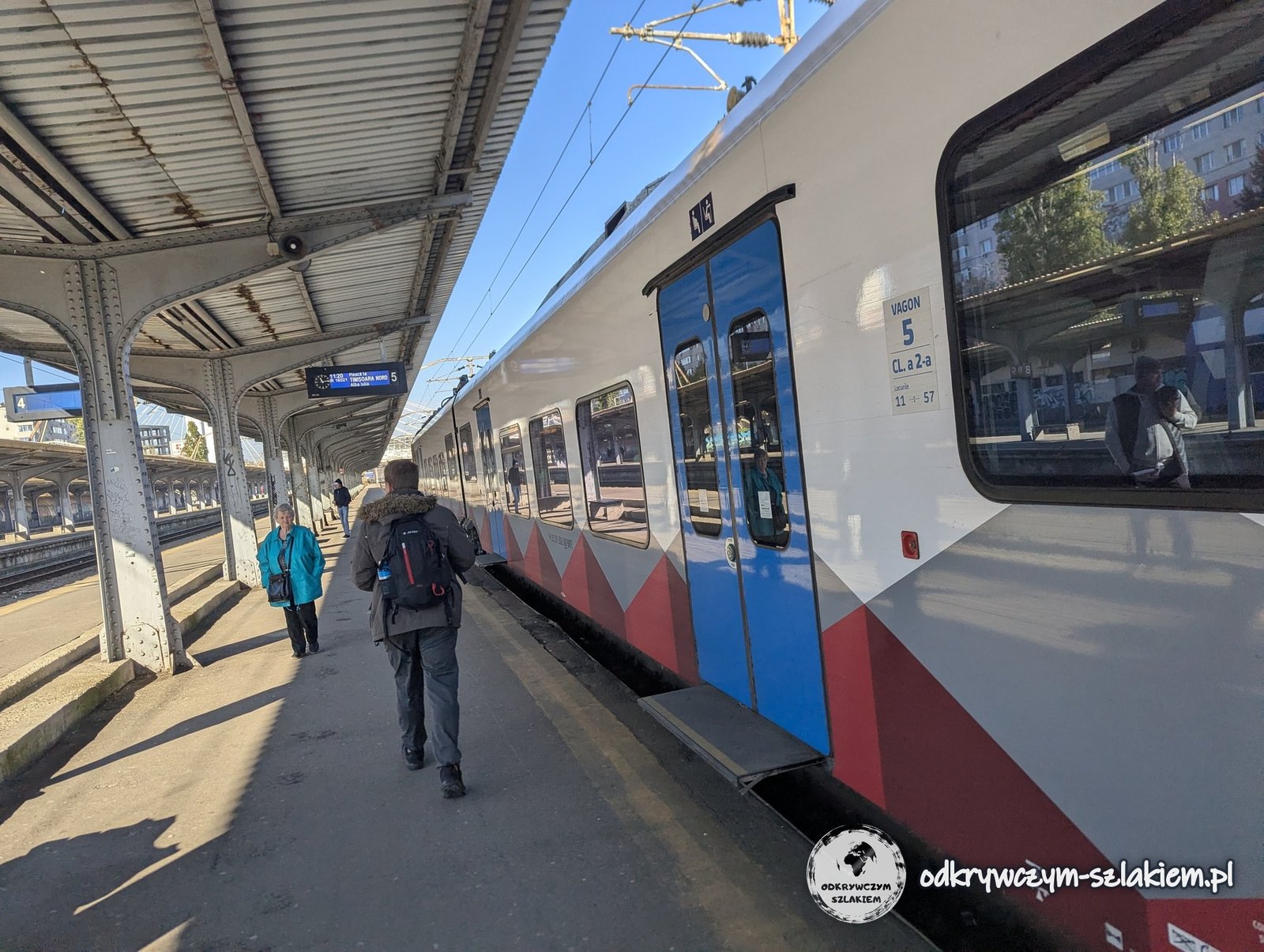
From North Station in Bucharest it is about 166 km by rail to Brașov. There are several dozen direct trains a day, run by as many as six operators – the fastest InterCity trains take about 2 h 15 min, InterRegio trains about 2.5–3 hours. We took an InterRegio train to Timișoara, which left at 11:20 and reached Brașov just under half an hour late.

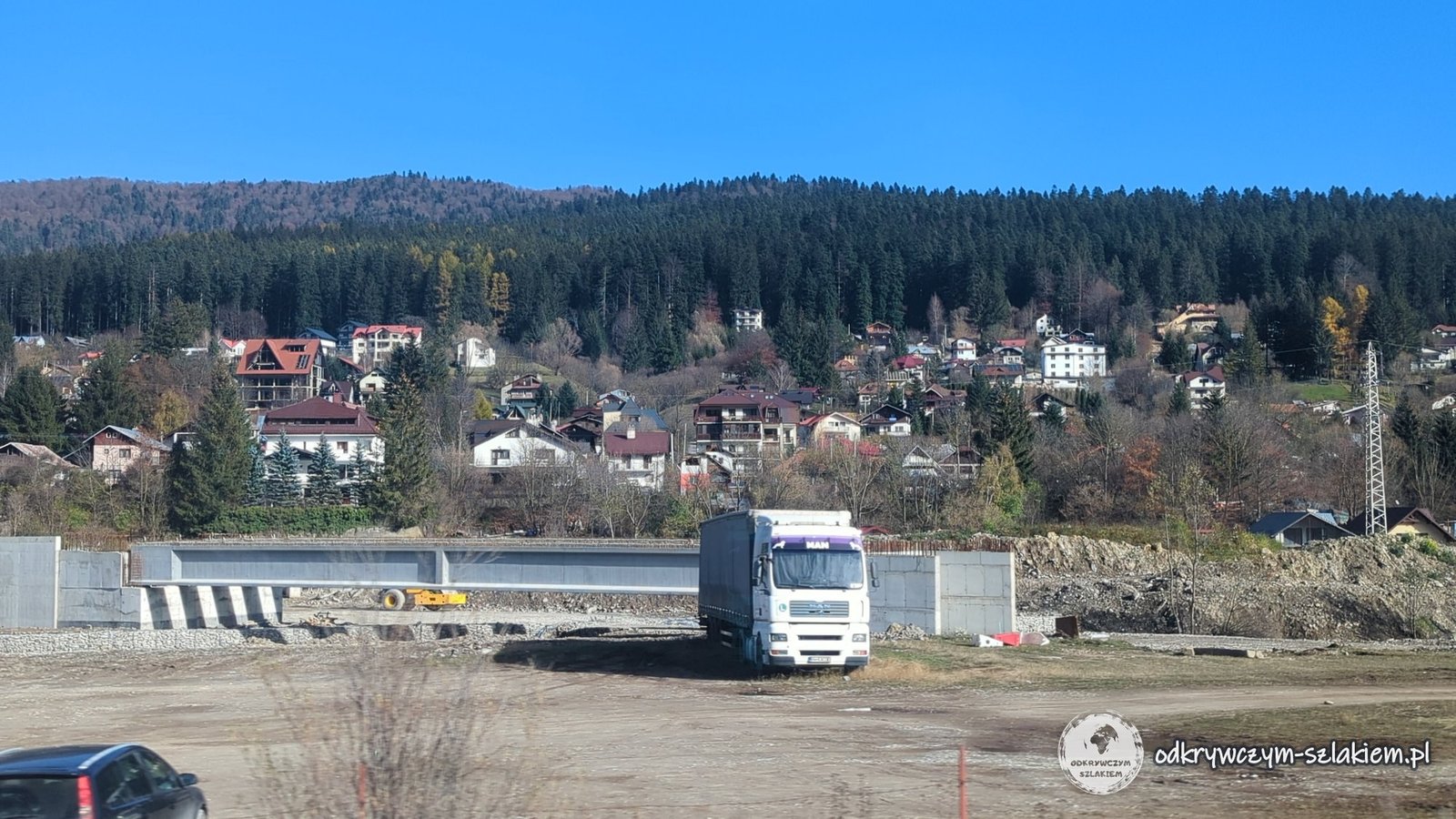
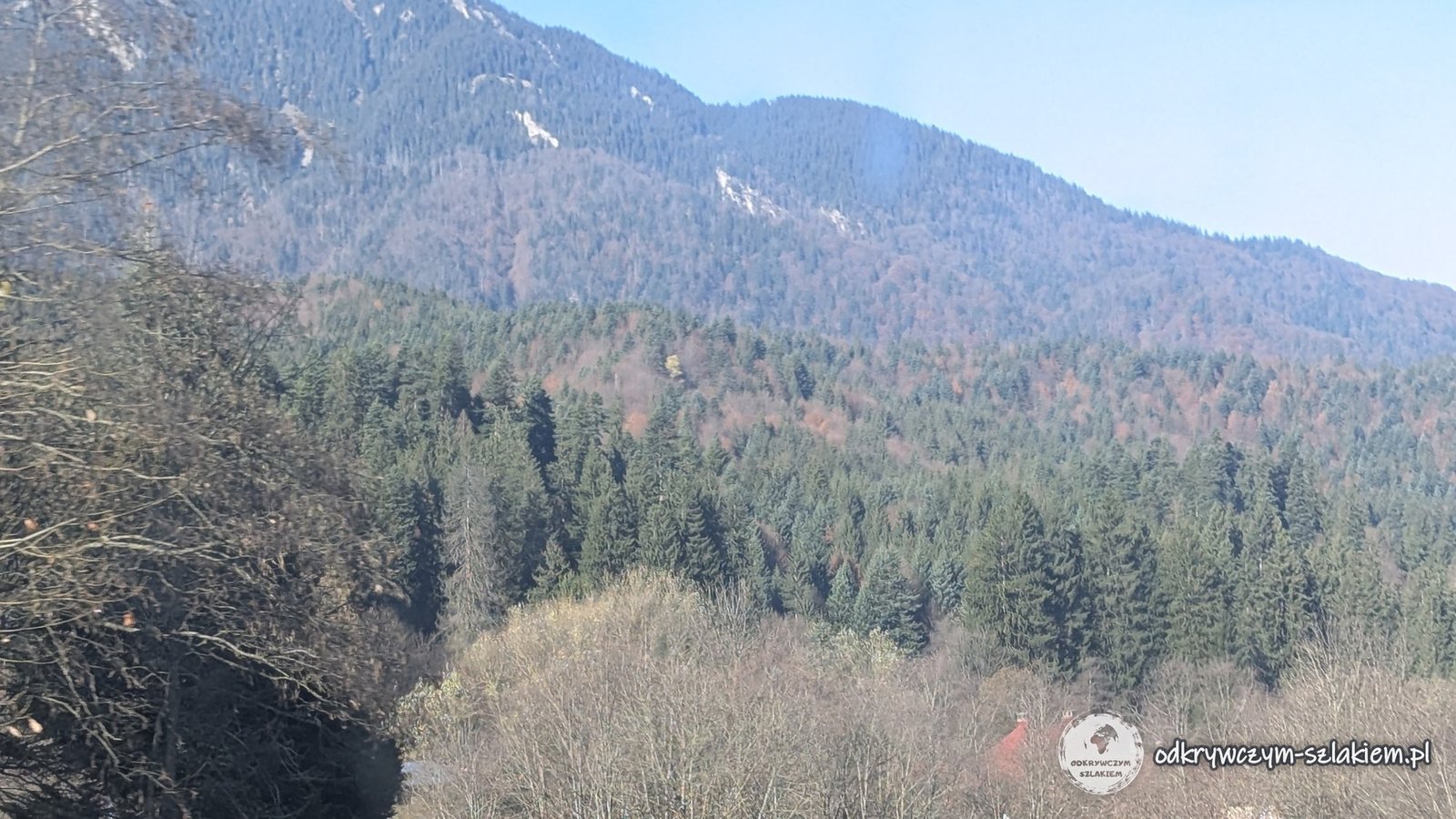
After Ploiești the line enters the Prahova Valley and climbs into the Carpathians. The train passes Sinaia – the town with the royal Peleș Castle – and, in Bușteni, Cantacuzino Castle on the hillside, completed in 1911 for Prince Gheorghe Grigore Cantacuzino, twice prime minister of Romania. In 2022 the castle played Nevermore Academy in the Netflix series “Wednesday”. Above Bușteni rise the steep walls of the Bucegi massif; on Caraiman peak (2,291 m) stands the 28-metre Heroes’ Cross of 1926–1928, according to Guinness World Records the highest-altitude summit cross in the world. Predeal station lies at 1,033 m above sea level, and from there the line descends to Brașov.
Piața Sfatului and the old town hall
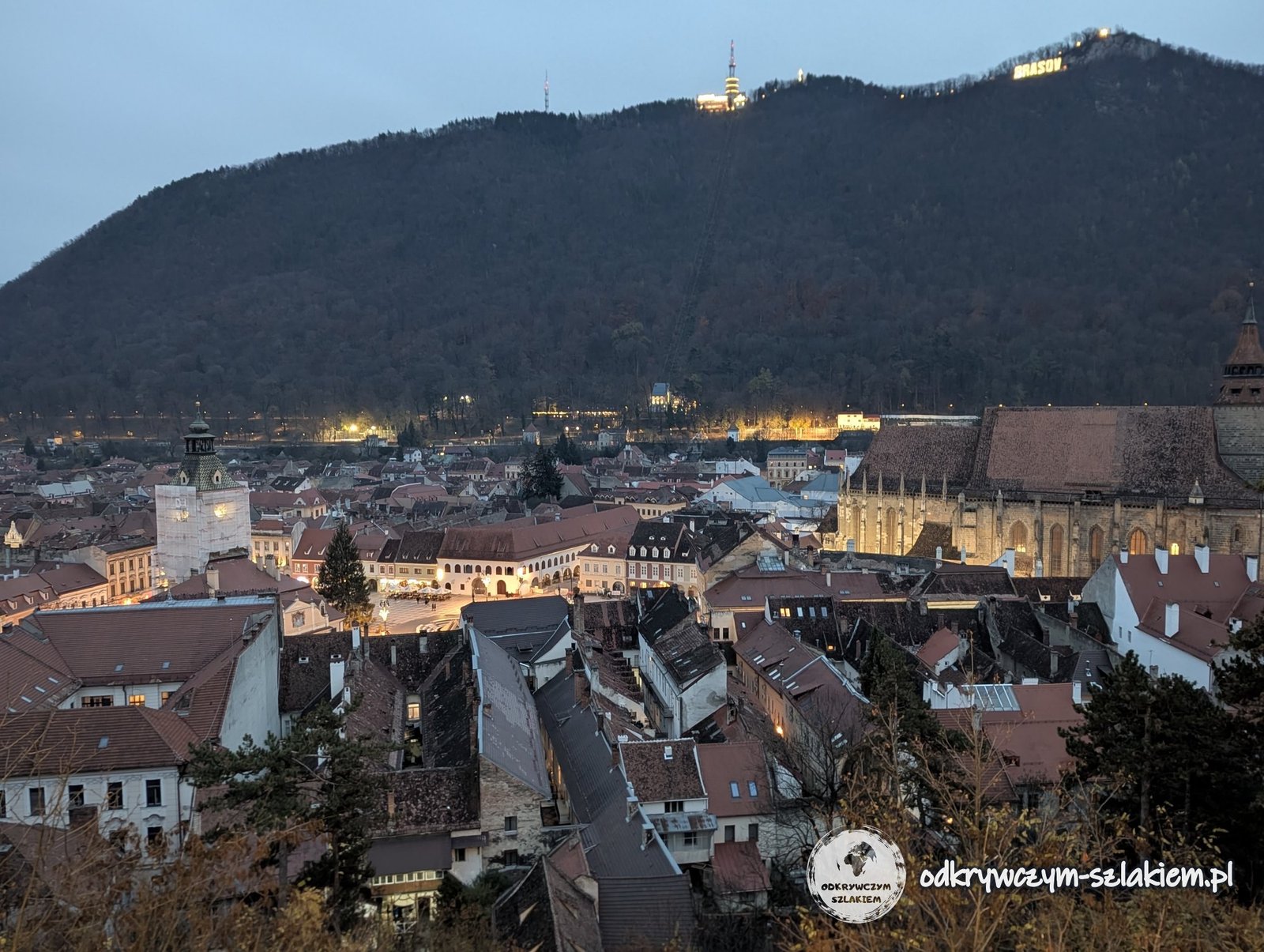
The heart of the old town is the main square, Piața Sfatului (Council Square). Markets were held here as early as 1364, and under communism the square was called Piața 23 August. In the middle stands Casa Sfatului – the old town hall, whose history goes back to 1420. For more than 500 years it was the seat of the city authorities, it also housed a prison, and since 1950 it has been the Brașov County History Museum. From the square there is a good view of the wooded Tâmpa with its huge BRAȘOV sign.

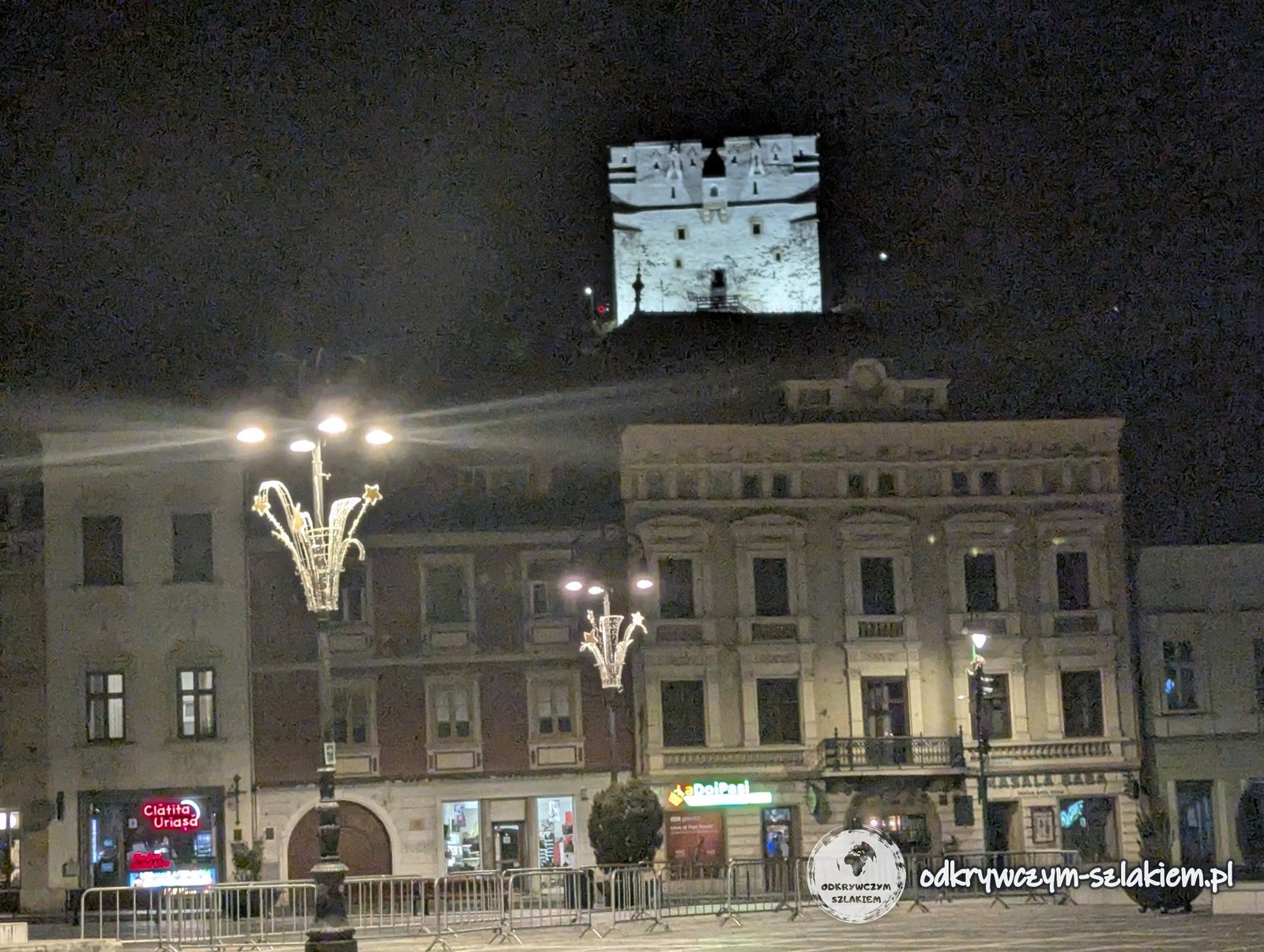
In November 2026 the town hall tower was under scaffolding and a huge Christmas tree had already been set up next to it. In 1688 Stefan Stenert, master of the shoemakers’ guild, was beheaded on this square for resisting the Austrian troops entering the city. In the evening and at night the square is lit up, and high above it, on the hillside, you can see the bright White Tower.

The Black Church
A few dozen metres from the square stands Brașov’s most famous monument – the Black Church (Biserica Neagră), built from 1383 to about 1477. Originally Catholic, it has been a Lutheran church since the Reformation. It measures 89 × 38 m and its tower is 65 m high; it holds the largest bell in Romania, weighing 6.3 tonnes. The name supposedly comes from the walls blackened in the great fire of 1689, although some historians think it only caught on at the end of the 19th century and that the walls were darkened by pollution.

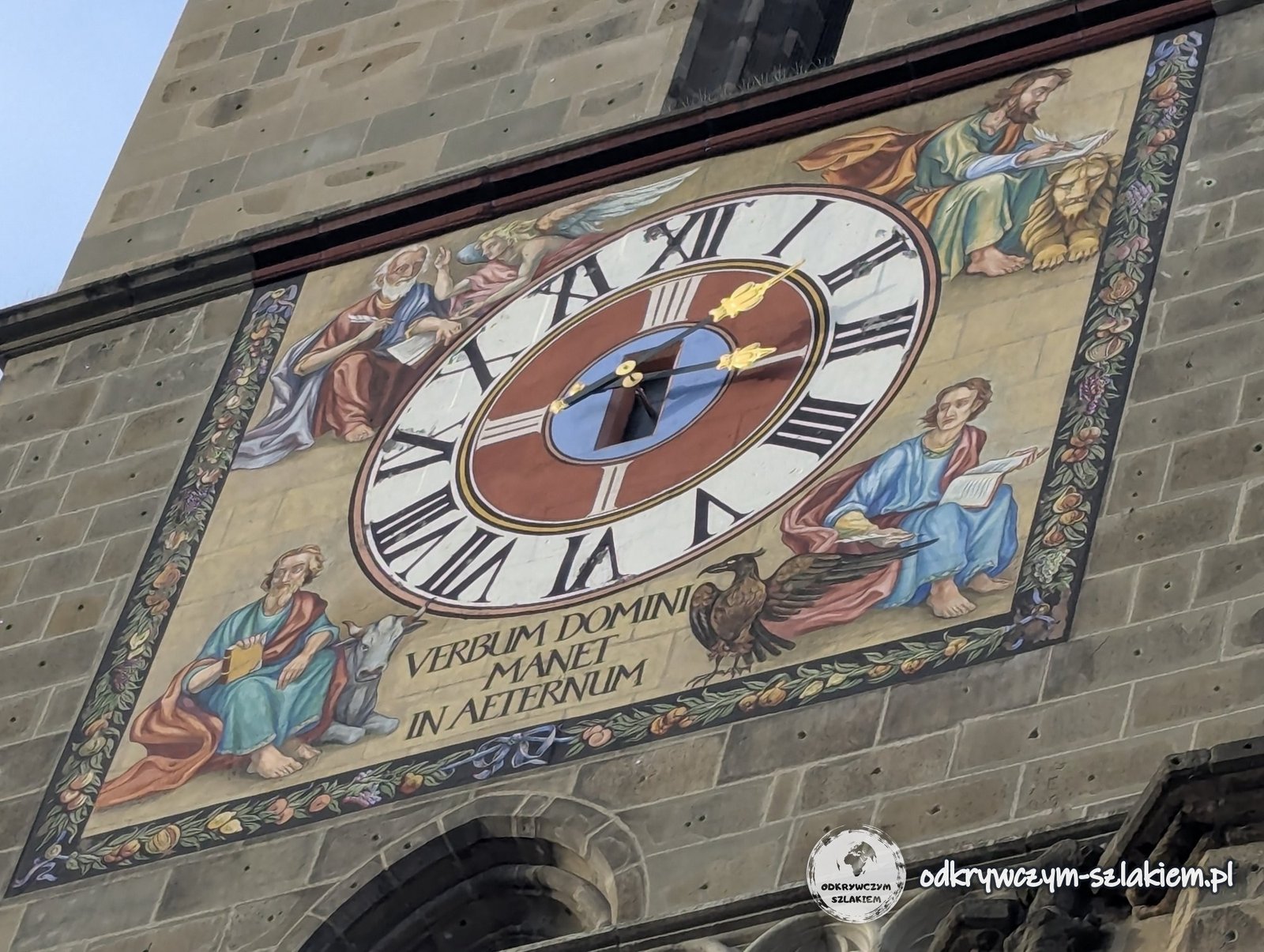
Inside there is a Buchholz organ from 1839 – almost 4,000 pipes, the largest mechanical organ in Romania – and one of the richest collections of Anatolian carpets in Europe, donated to the church by merchants trading with the East. On the tower there is a painted clock face with the four evangelists and the Latin motto of the Reformation “Verbum Domini manet in aeternum” (the word of the Lord endures for ever).
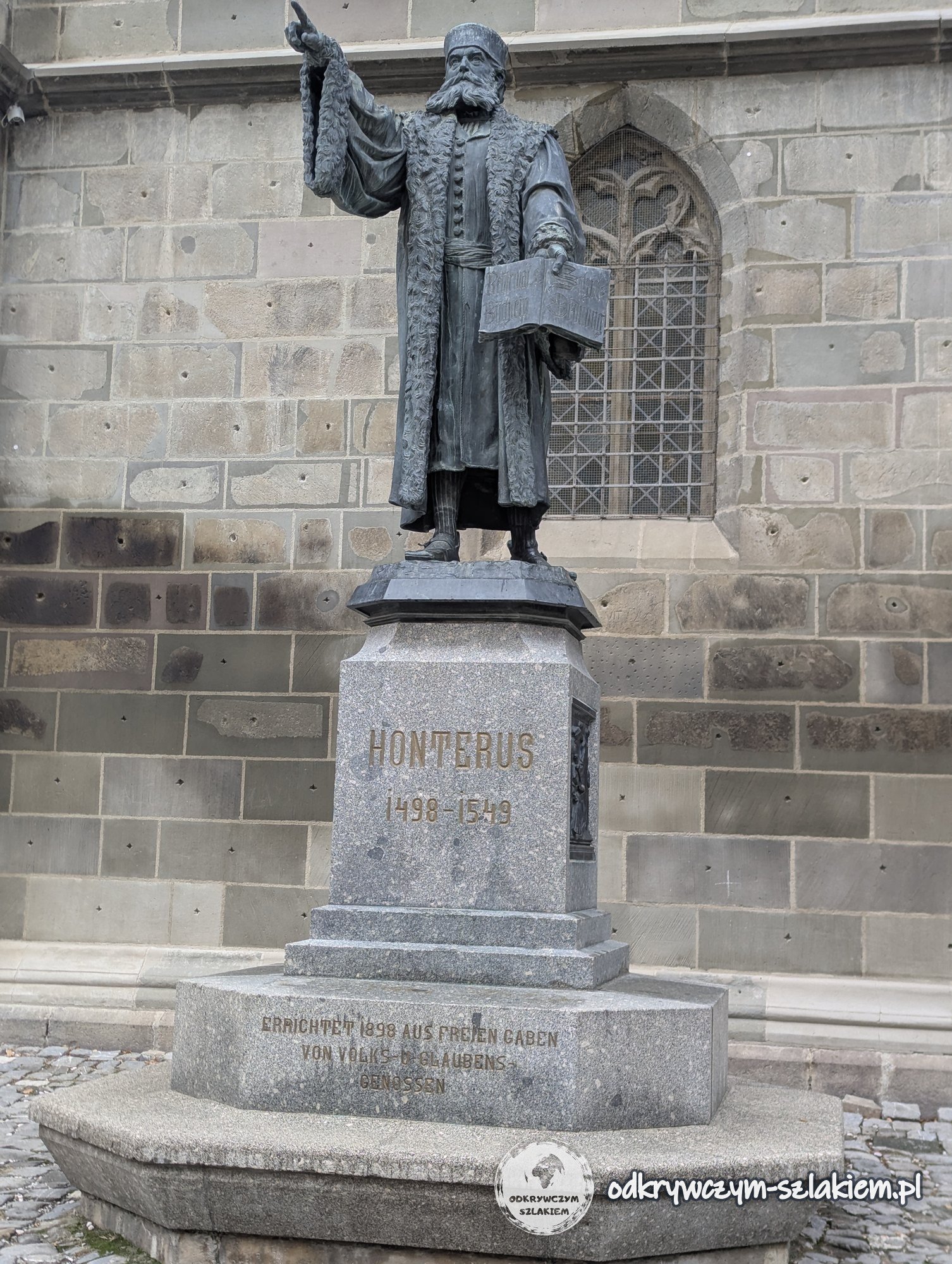
In front of the church stands the statue of Johannes Honterus (c. 1498–1549) – a Brașov-born humanist and Lutheran reformer of Transylvania, who founded a grammar school and a printing press in the city and published the first map of Transylvania in Basel. The statue by the Berlin sculptor Harro Magnussen was unveiled in 1898; with his right hand Honterus points to the school named after him.
Strada Sforii, Catherine’s Gate and the Schei Gate
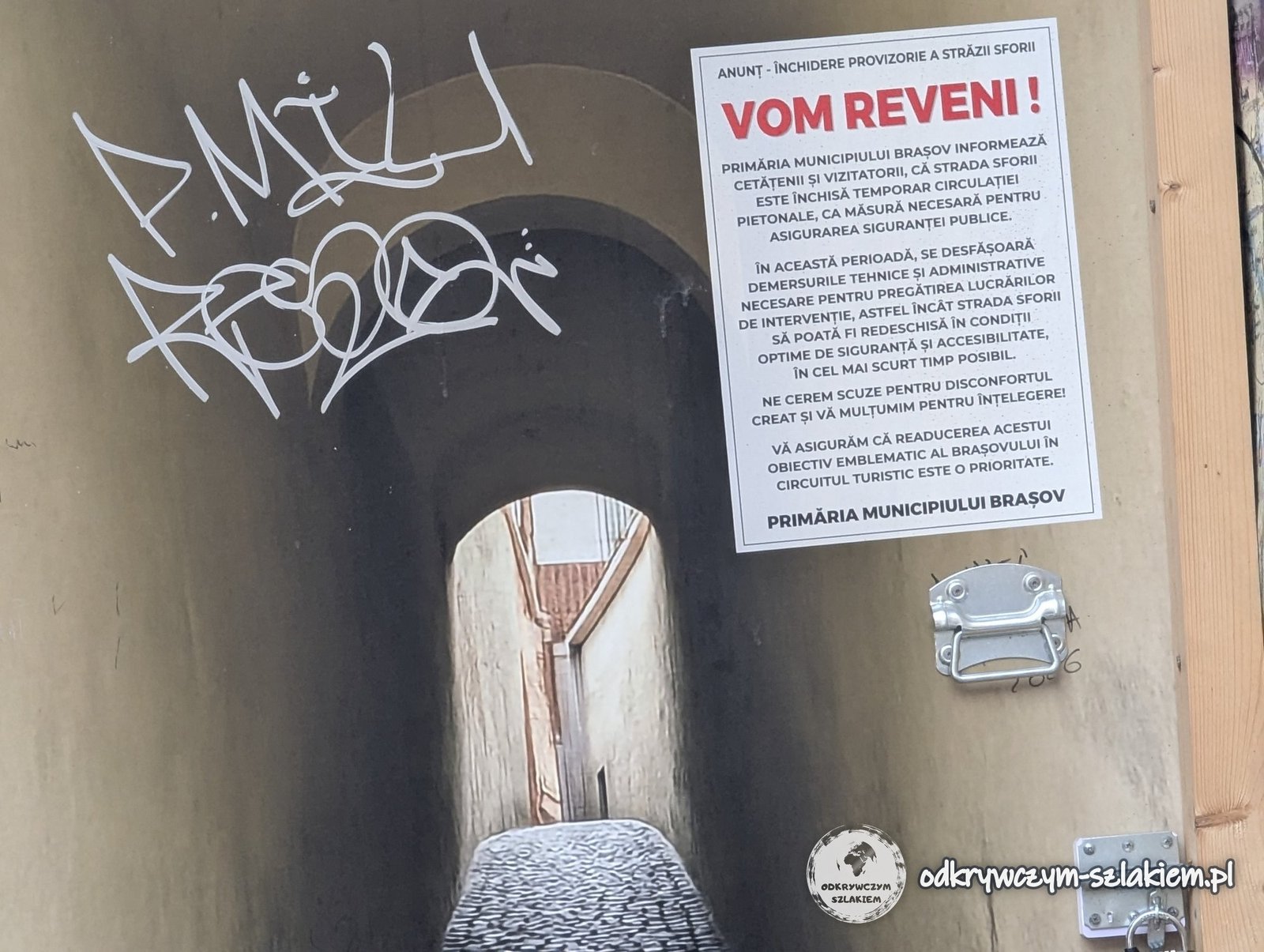
In the south-western part of the old town is Strada Sforii (Rope Street) – 80 m long and only 1.11–1.35 m wide. Mentioned in documents from the 17th century, it originally served as a passage for firefighters; it is considered the narrowest street in Romania and one of the narrowest in Europe. We could not walk through it: the street has been closed since November 2025 because plaster was falling off the walls on both sides, and a city hall notice at the entrance says “Vom reveni!” (We will be back!). In September 2026 the city signed a contract to secure it, but no reopening date has been given.
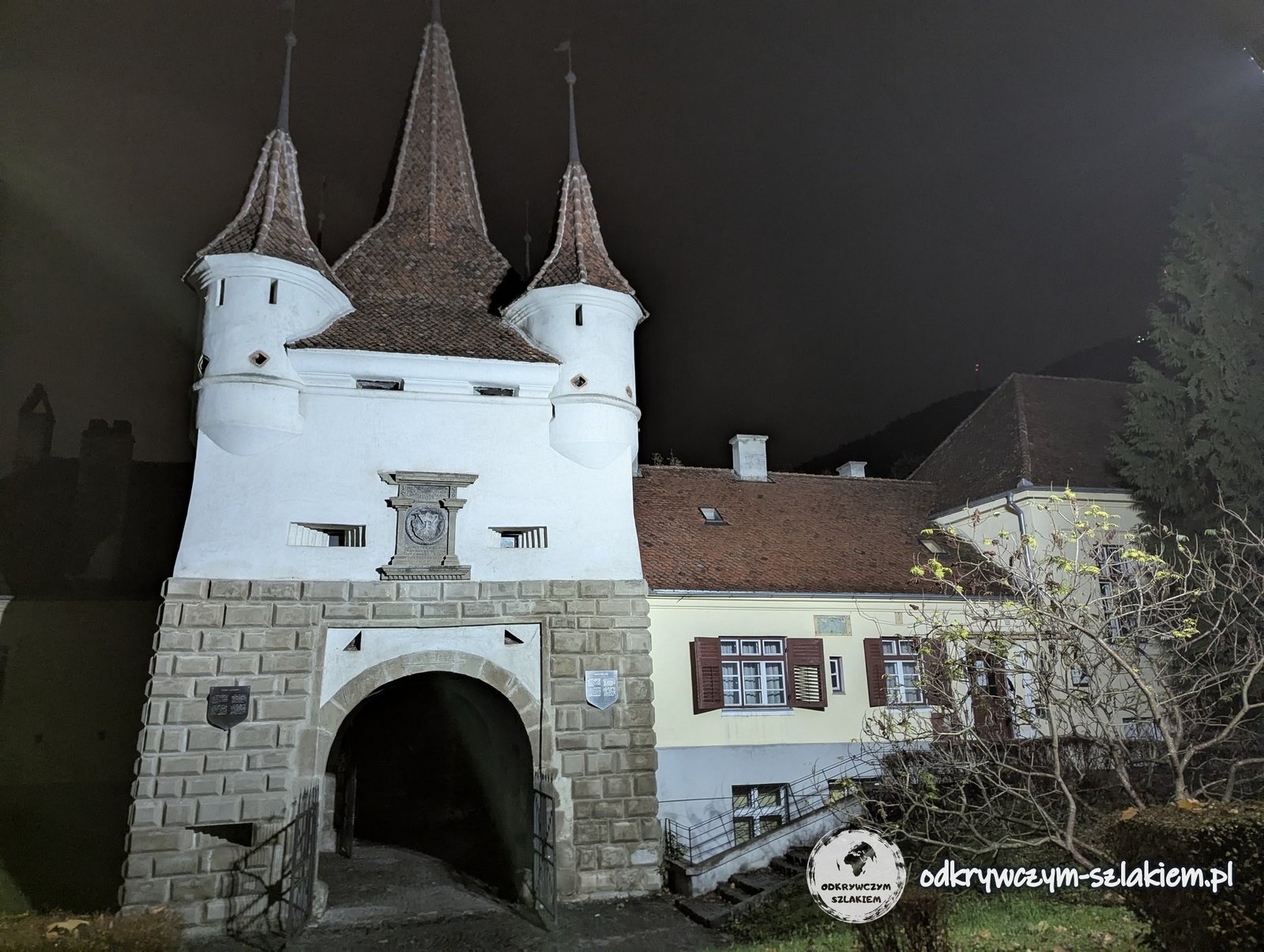
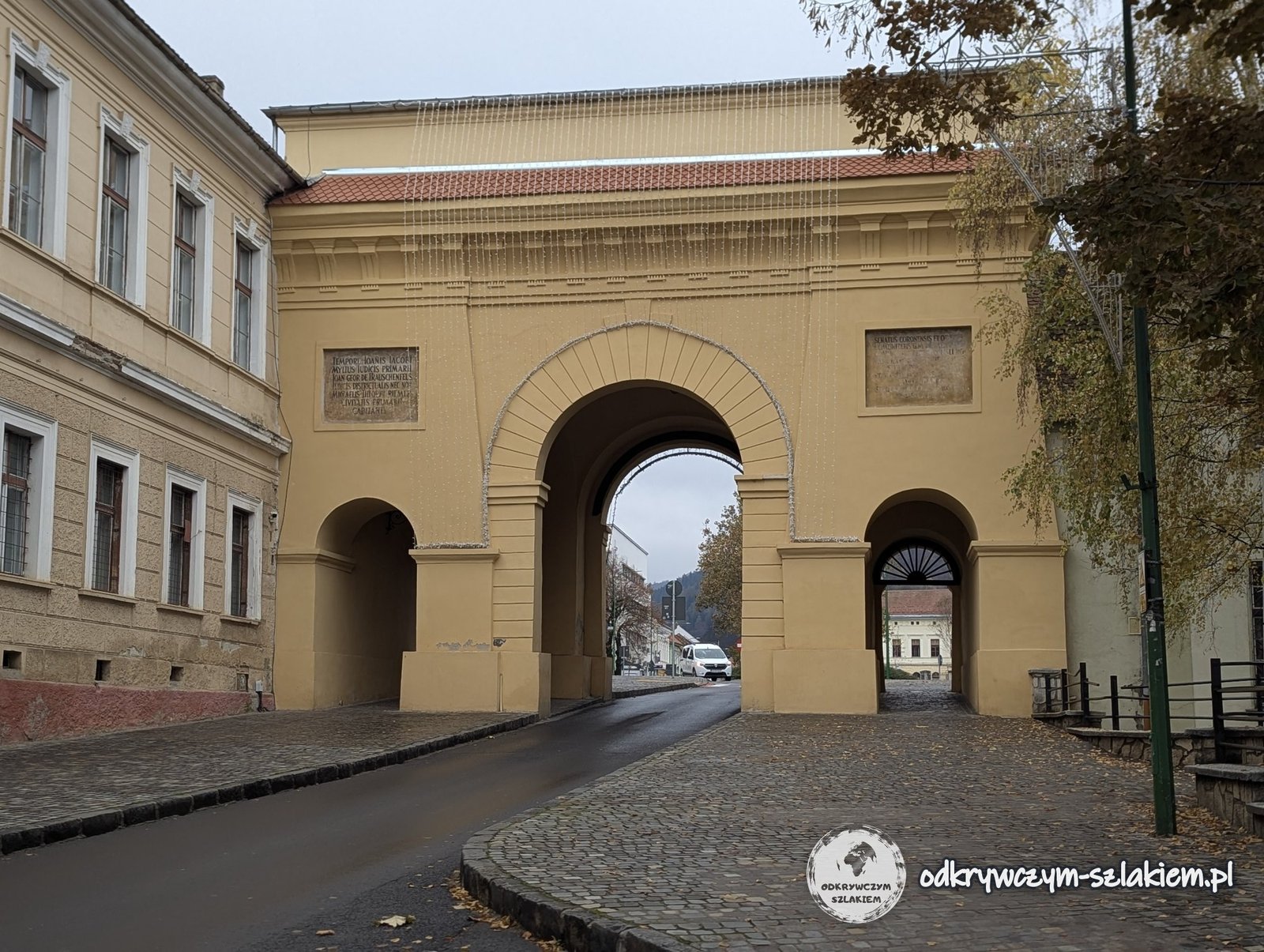
A few steps further on stands Catherine’s Gate (Poarta Ecaterinei) from 1559, built by the tailors’ guild – the only original medieval city gate that survives. Its four corner turrets showed that the city had its own judiciary and the right of the sword (ius gladii), meaning it could sentence people to death. Documents call it Porta Valacca, because it was the only way into the city for the Romanians of the neighbouring Șchei district, who were not allowed to live within the walls. Next to it is the classicist Schei Gate (Poarta Șchei) of 1827–1828, shaped like a triumphal arch, with Latin inscriptions commemorating Emperor Francis I’s visit in 1817.

Șchei: Casa Junilor and the grave of Andrei Mureșanu
Beyond the Schei Gate begins the old Romanian district of Șchei. Right by the gate stands Casa Junilor – a room with a small exhibition of the festive costumes of the Junii, which is also a tourist information point. The Junii (Youths of Brașov) are groups of young men from Șchei – there are seven of them, each with its own costume. Their customs are documented since 1728, and their main event is a parade on horseback through the old town, “Coborârea în Cetate” (the descent into the city), on the first Sunday after Orthodox Easter.
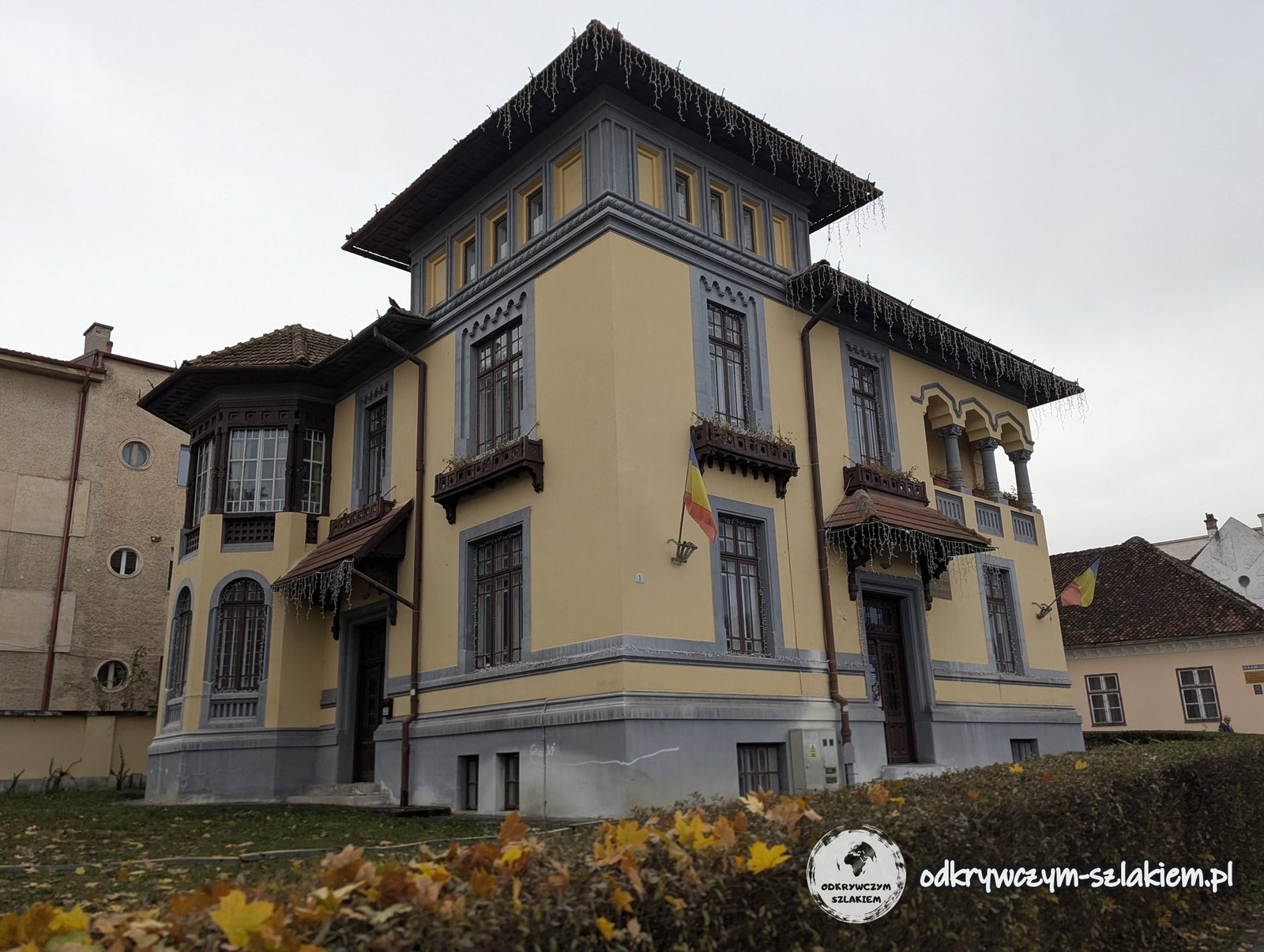
Not far from the gates, on Gheorghe Baiulescu Street, is Groaveri Cemetery with the grave of Andrei Mureșanu (1816–1863) – the poet who wrote the words of “Deșteaptă-te, române!” (“Awaken thee, Romanian!”), Romania’s national anthem since 1990. Mureșanu died in Brașov; he was first buried at the Tocile church in Șchei and moved to Groaveri in 1883. A Romanian flag flies by his tombstone. The composer Iacob Mureșanu and the linguist Sextil Pușcariu, among others, are buried in the same cemetery.
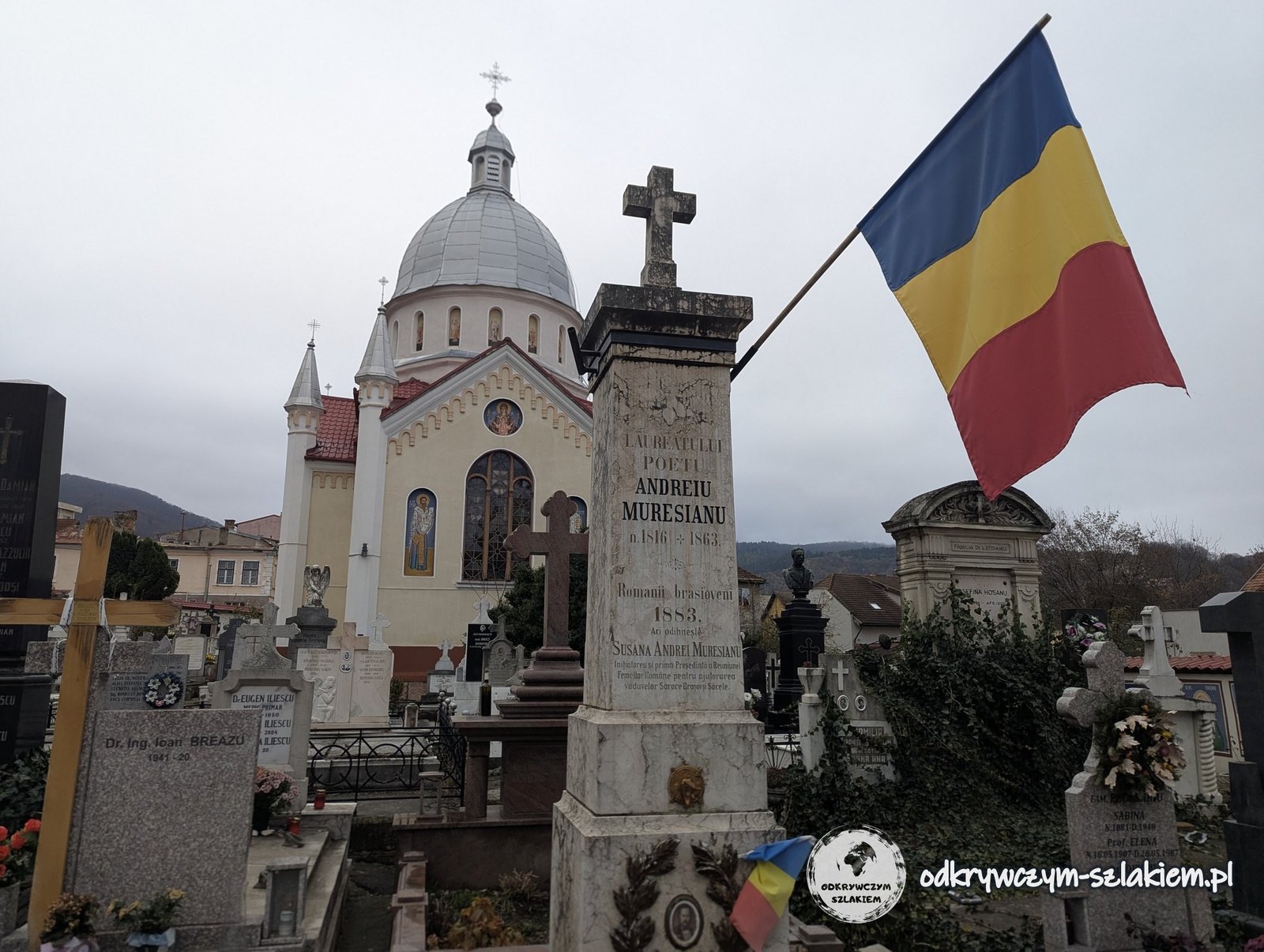
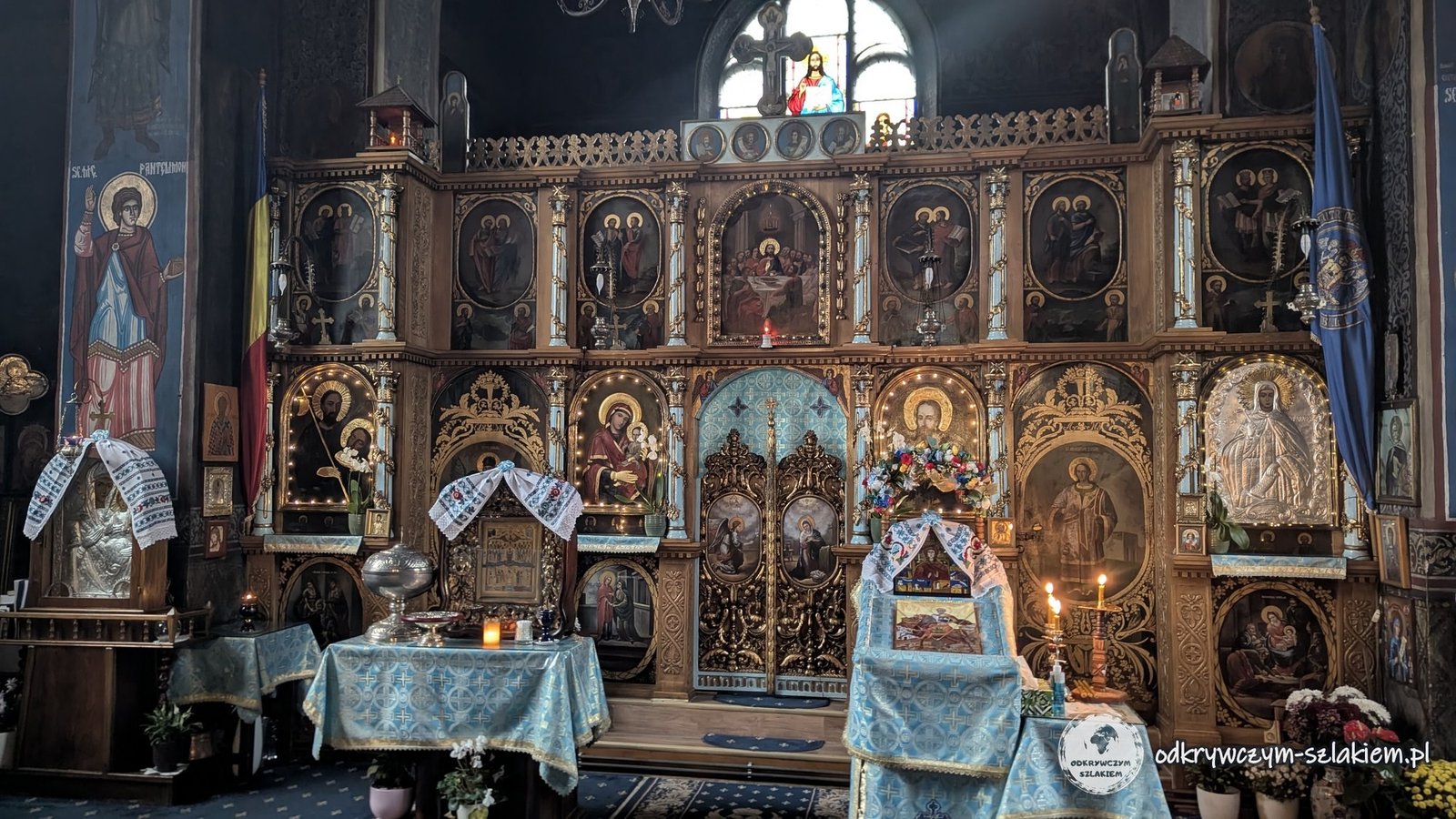
Above the cemetery rises the Church of Saint Paraskeva (Cuvioasa Paraschiva) of 1874–1876, originally built as a cemetery chapel – with icons painted on the façade and a carved, gilded iconostasis inside.

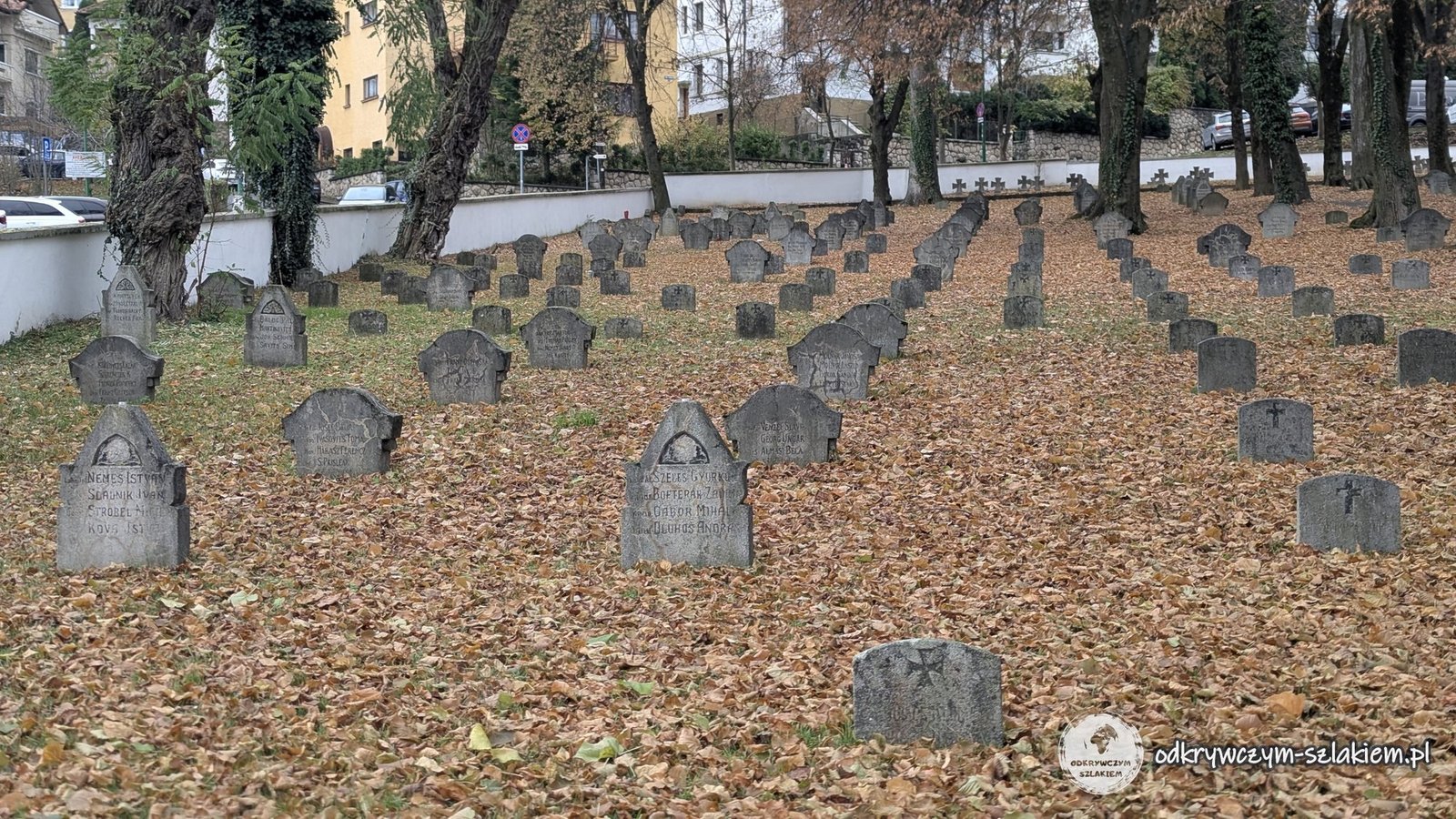
Right next to it is the cemetery of the heroes of the First and Second World Wars – the largest war cemetery in the city. 754 soldiers rest here: 596 from the First World War and 158 from the Second; originally there were about 900 graves, including 360 German ones, but some of the fallen were exhumed. Rows of small stone headstones stand among the trees, in November covered in leaves.
The Weavers’ Bastion and the walls below Tâmpa
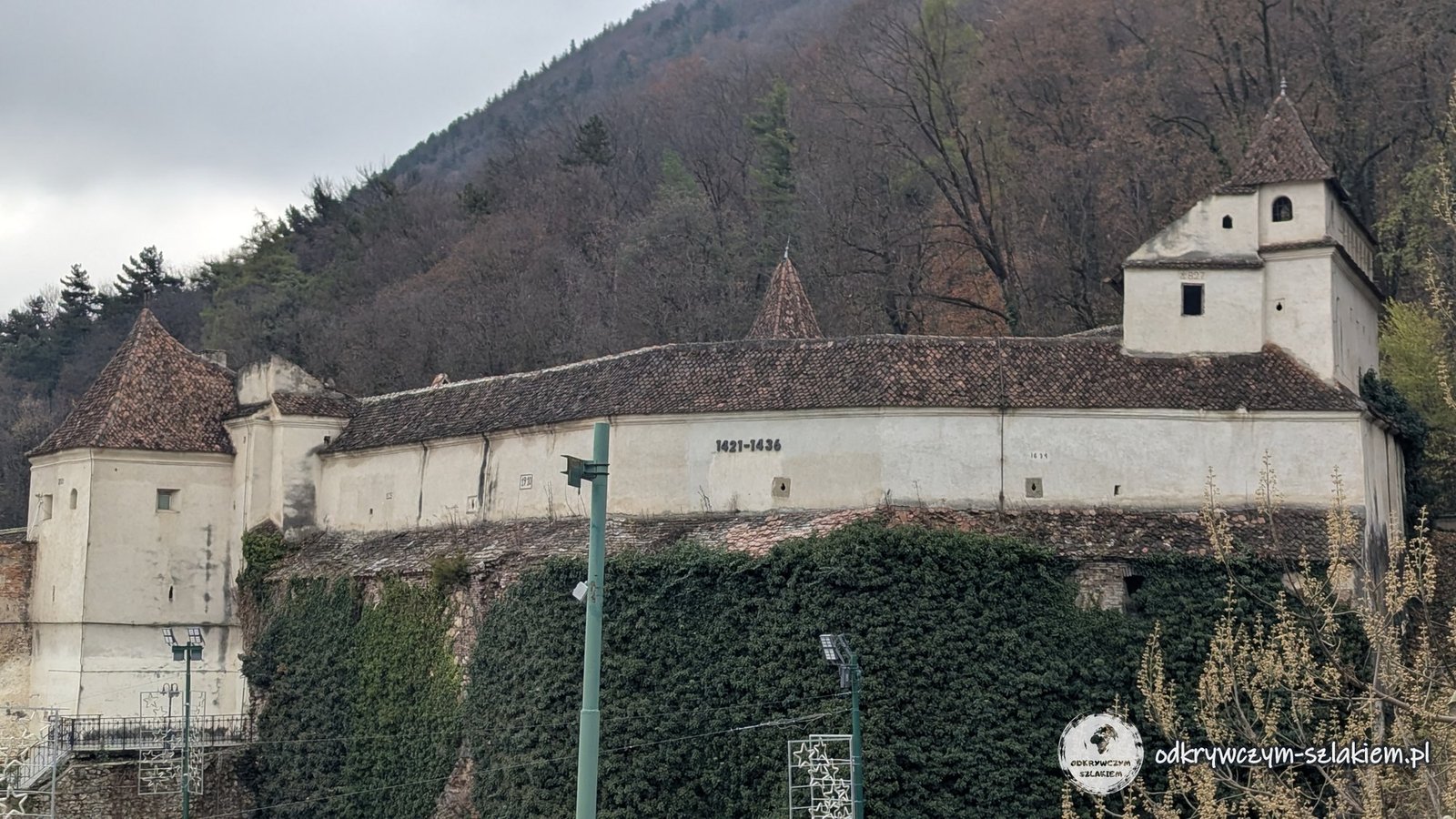
Along the south-eastern stretch of the walls, at the foot of Tâmpa, runs the Promenade below Tâmpa (Aleea de sub Tâmpa). Here stands the Weavers’ Bastion (Bastionul Țesătorilor), built and defended by the linen weavers’ guild – in two stages, in 1421–1436 (the dates are on the wall) and 1570–1573. After an earthquake in 1710 it was rebuilt, and since 1910 it has housed a museum.
Tâmpa – up the trail to the top and Brașov by night
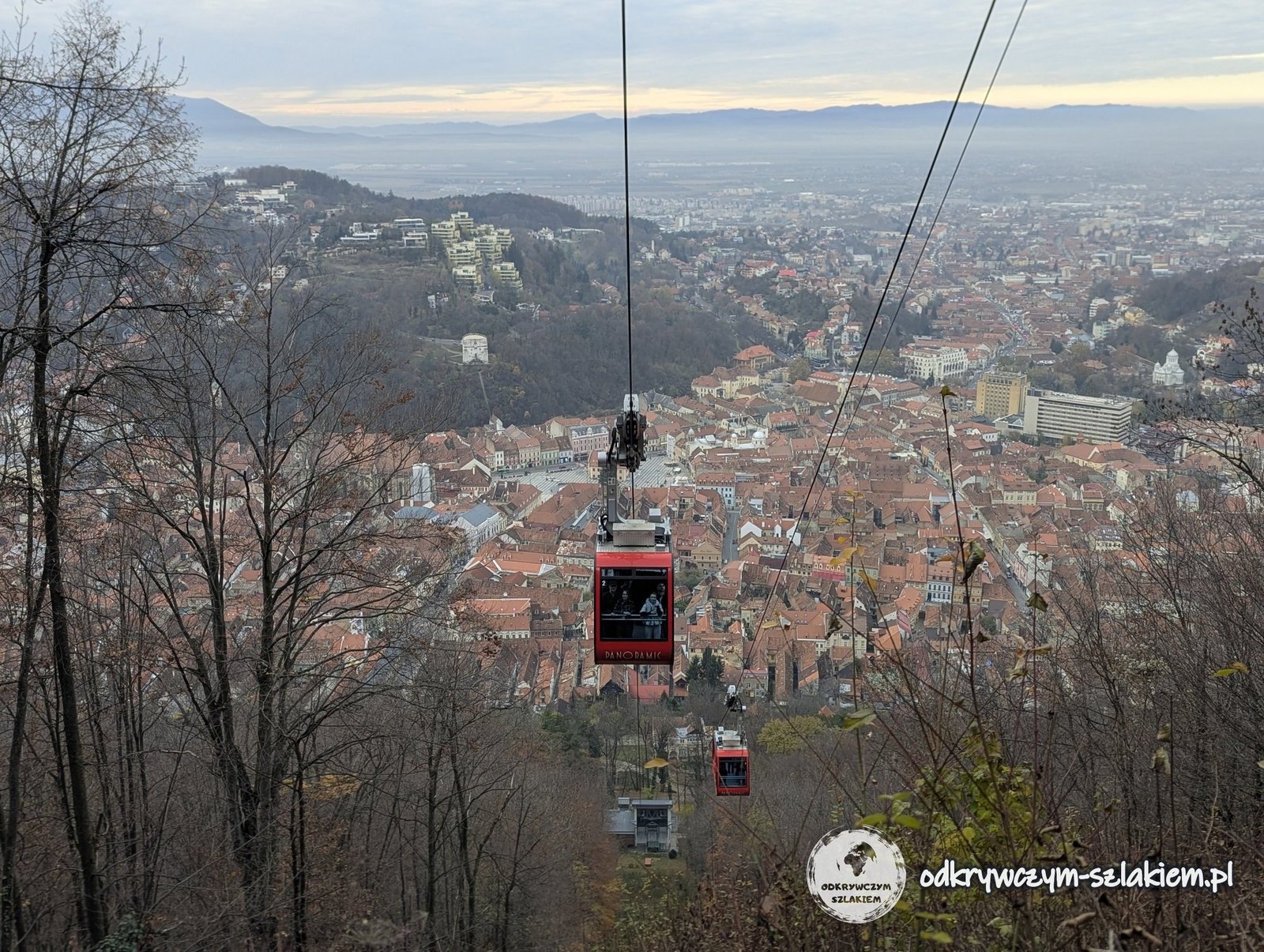
Above the old town rises the wooded Tâmpa mountain – 960 m above sea level and almost 400 m above the city. Its summit and slopes are a nature reserve. A cable car from 1969, modernised and reopened in October 2025, goes up the 573-metre route in 2 minutes 20 seconds. We walked up the Serpentine trail (Drumul Serpentinelor), marked with a red triangle: it was laid out in 1837 and has 25 hairpin bends, about 3 km and about 380 m of ascent. From the lower cable car station to the summit it took us about 1 h 15 min, with stops.

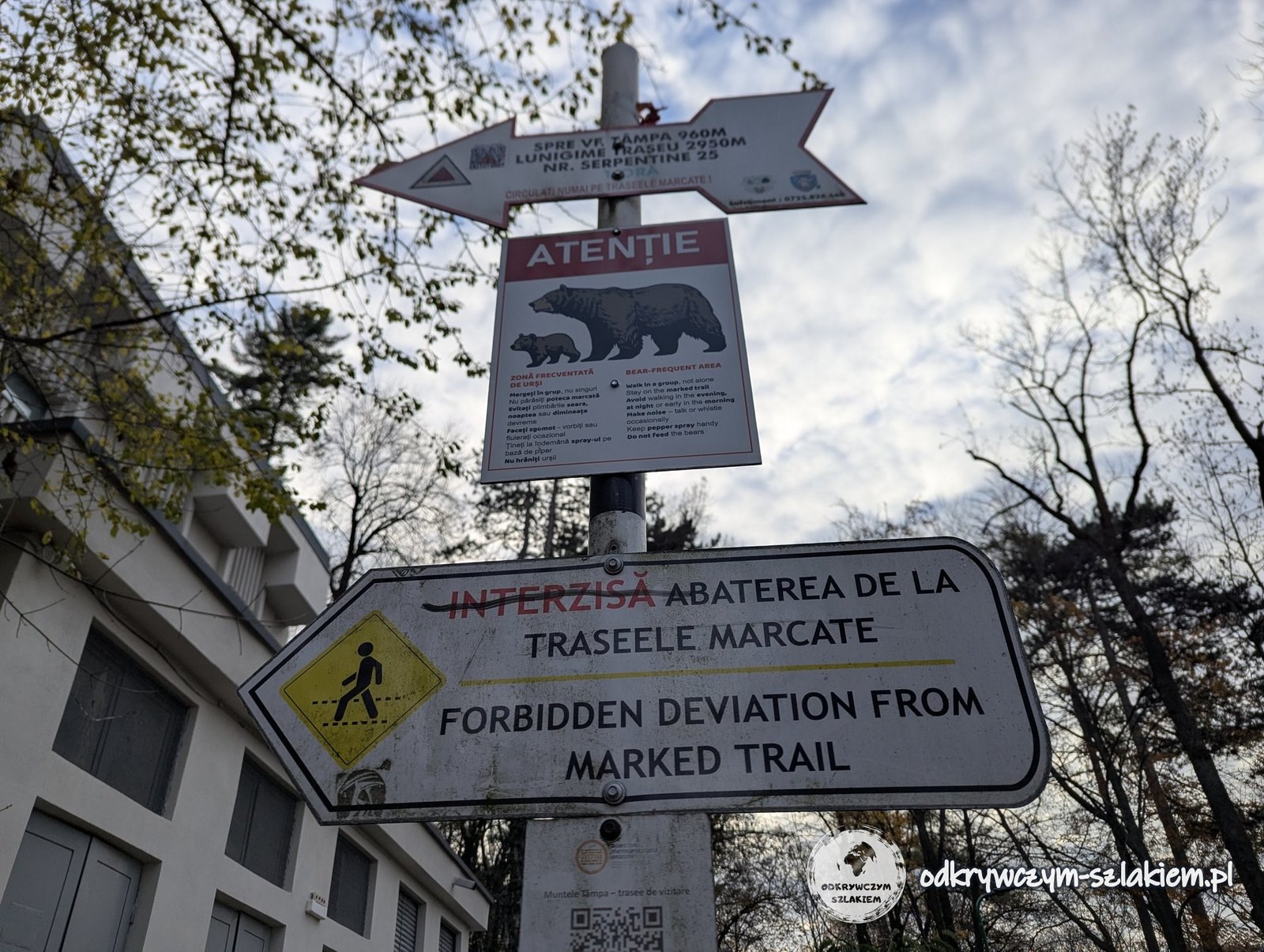
At the start of the trail there are signs warning of bears and forbidding leaving the trail. Brown bears live in the Tâmpa reserve – in summer 2024 tracks and a cub were seen on the trails, and in October 2025 a bear attacked a hiker on the trail from Tâmpa to the neighbouring Postăvarul massif.
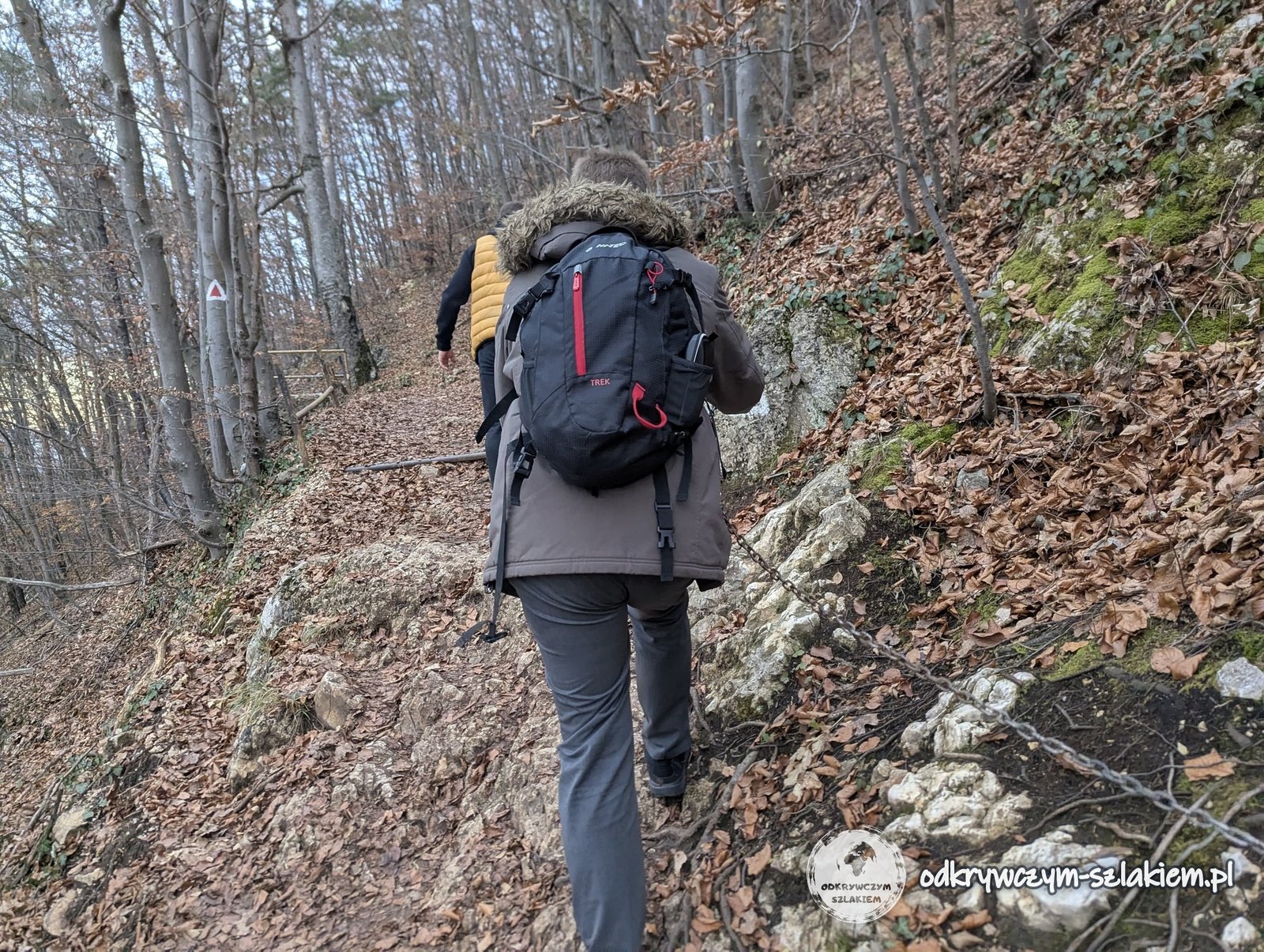
The trail was steep and slippery: fallen leaves covered the hairpins, with stones and roots underneath; on the rocky stretches a chain runs along the path to hold on to. On the way we stopped for a rest several times, and between the trees we kept seeing the red roofs of the old town and the cable car cabins passing over the forest.


The Brassovia fortress, mentioned in 1434, once stood on the summit; on the orders of John Hunyadi it was dismantled in the mid-15th century and its stone was used for the city walls. In 1896 the Hungarians put up the Millennium Monument here – a column about 20 m high with the statue of a warrior – for the thousandth anniversary of the Hungarian settlement in the Carpathian Basin. In September 1913 two attackers blew up its base in protest against Hungarian rule in Transylvania, and in December a storm toppled the statue. By the summit there are now two viewpoints: a stone wall with a panorama board and, a little higher, a round stone platform with a semicircular wall you can sit on.
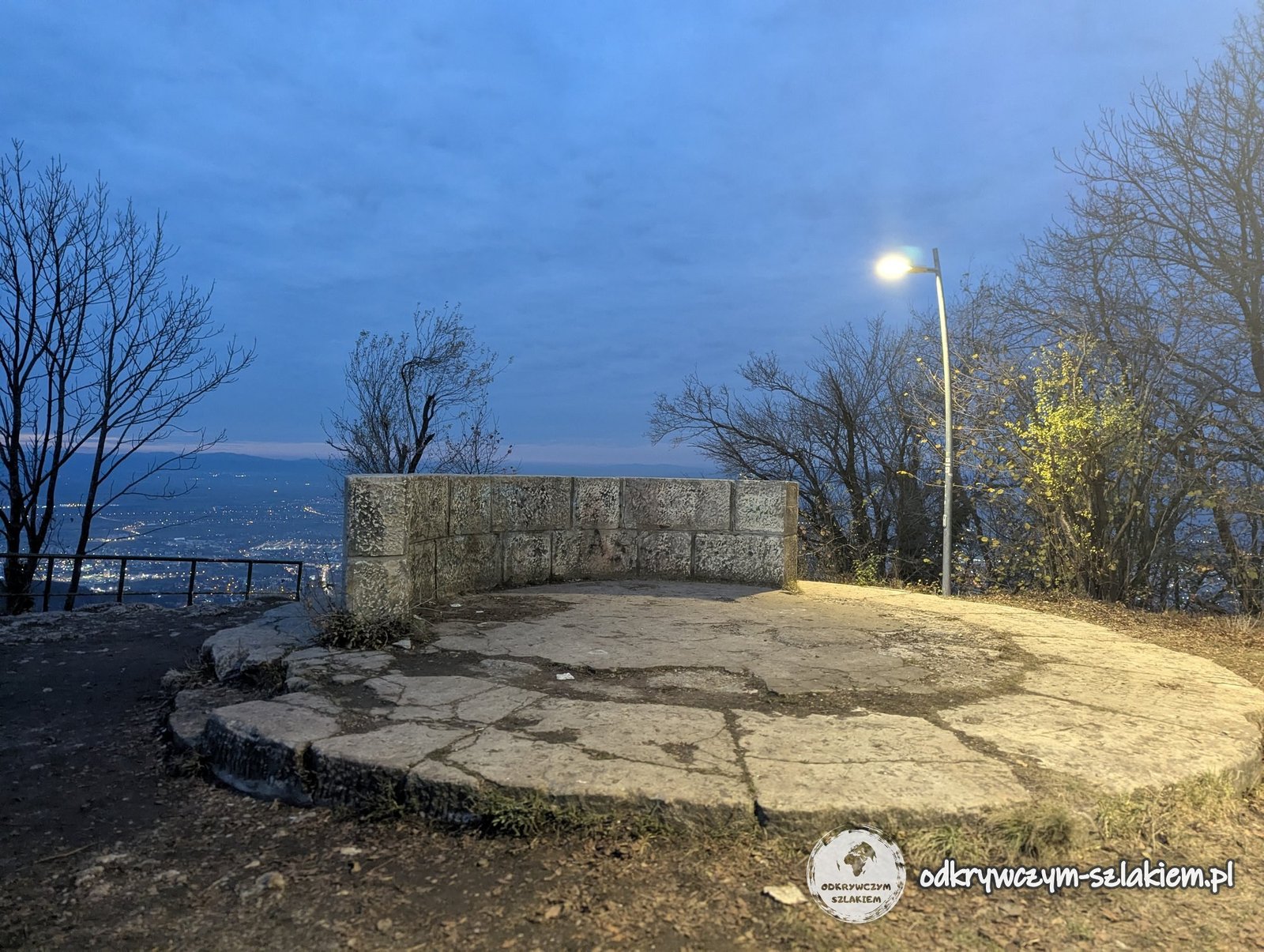
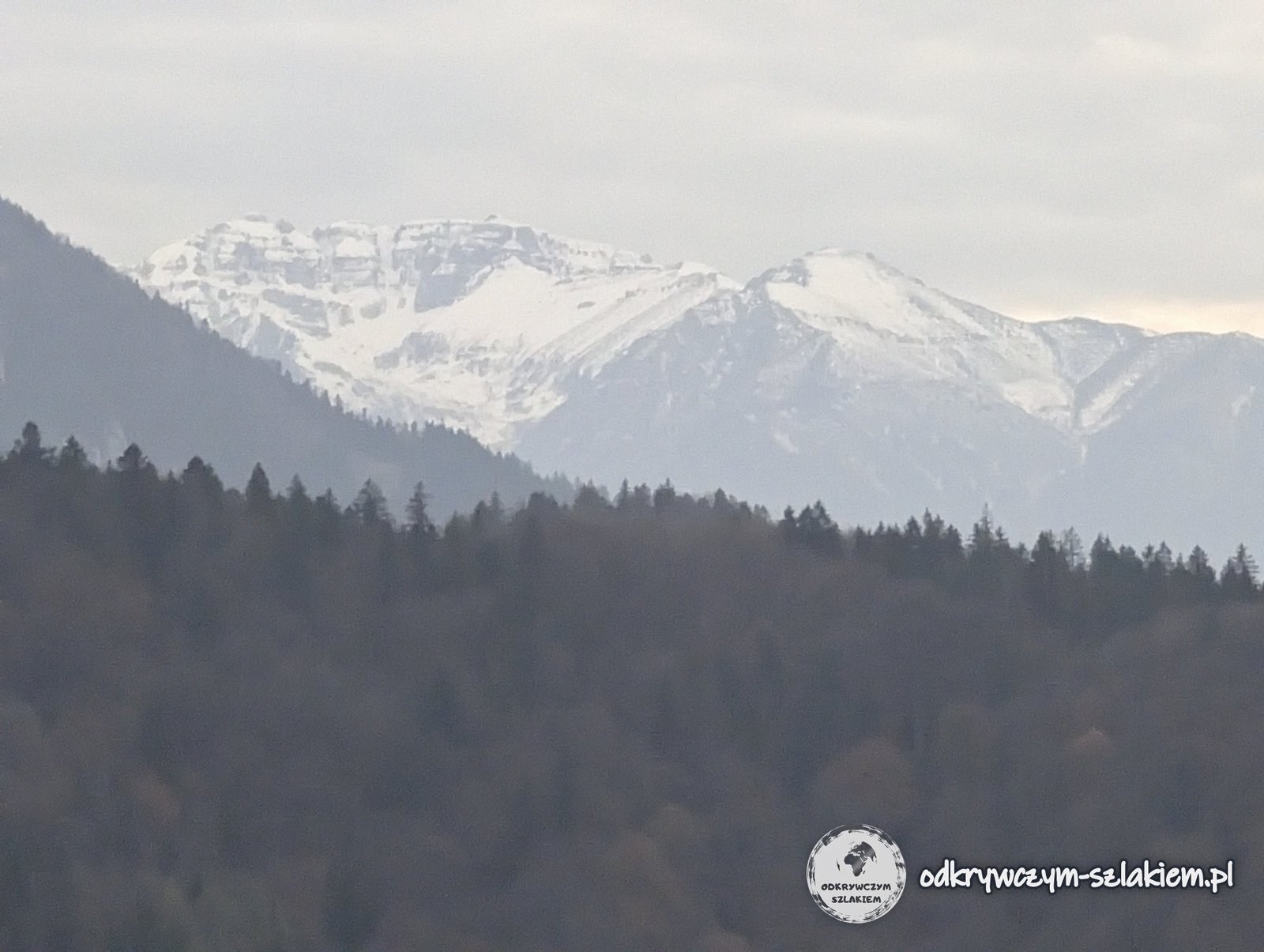
From the summit (the sign says 960 m) you can see the whole city, the citadel on Strajă Hill, the Bârsa plain and the snowy peaks of the Carpathians.

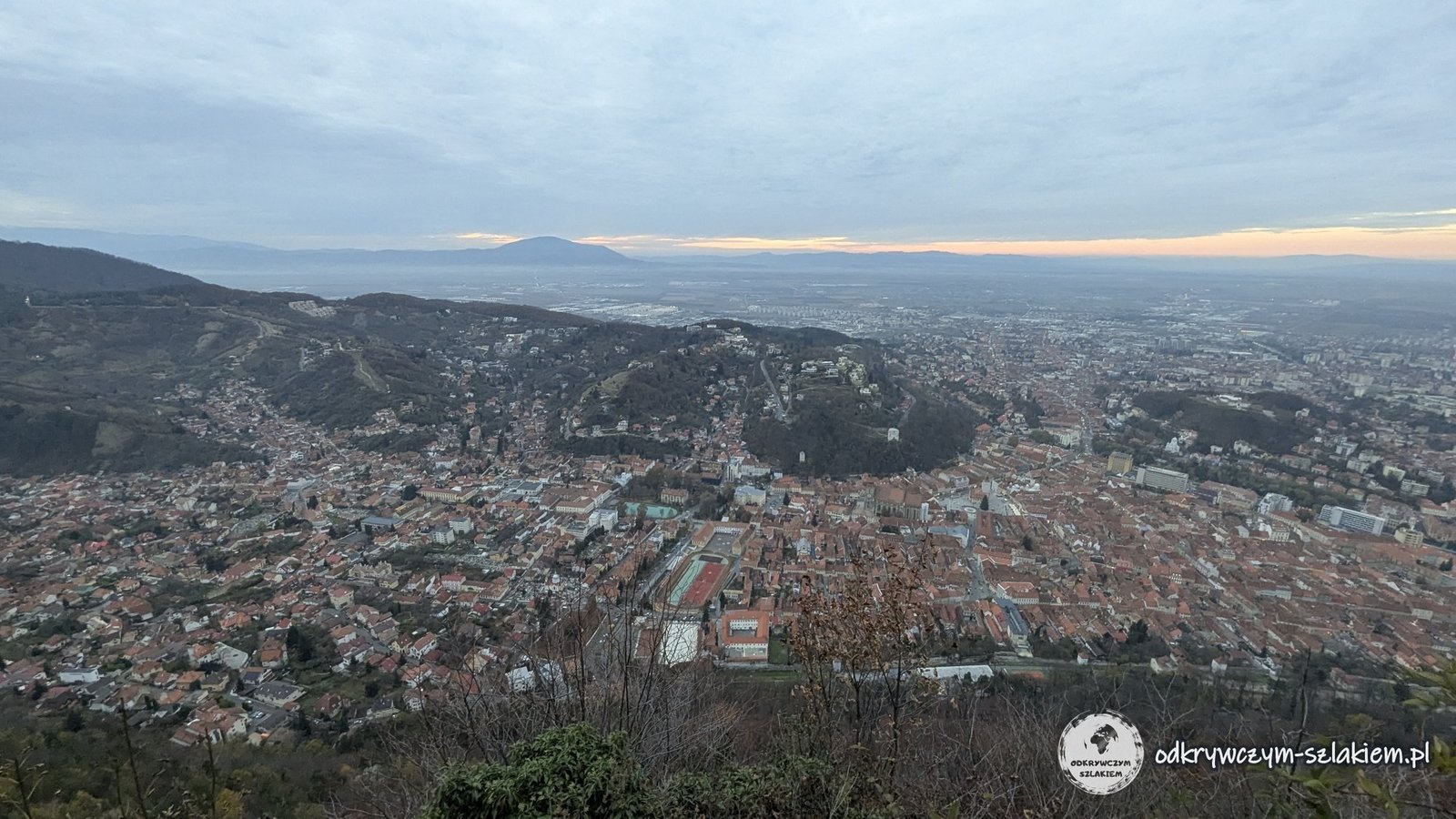
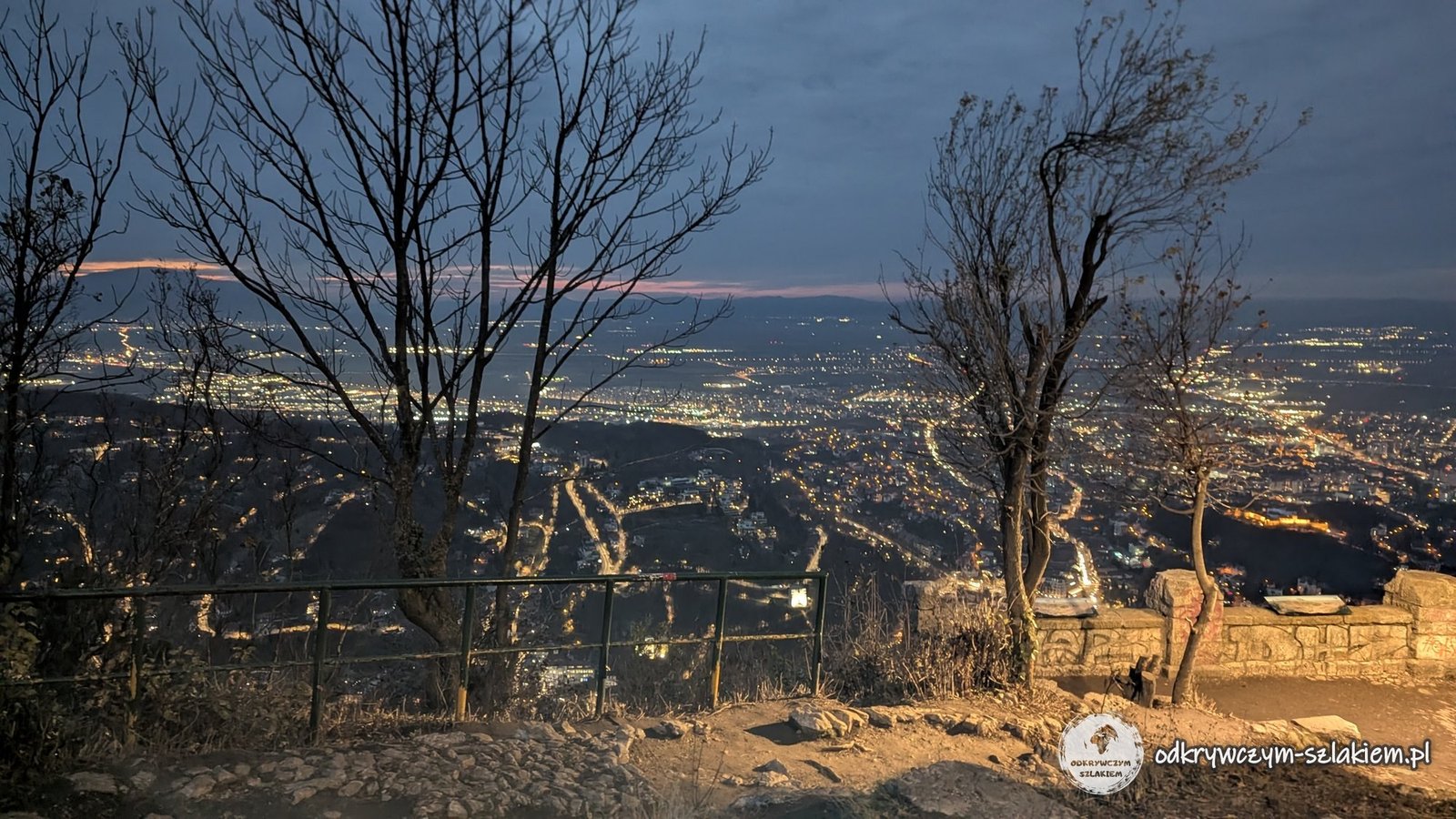
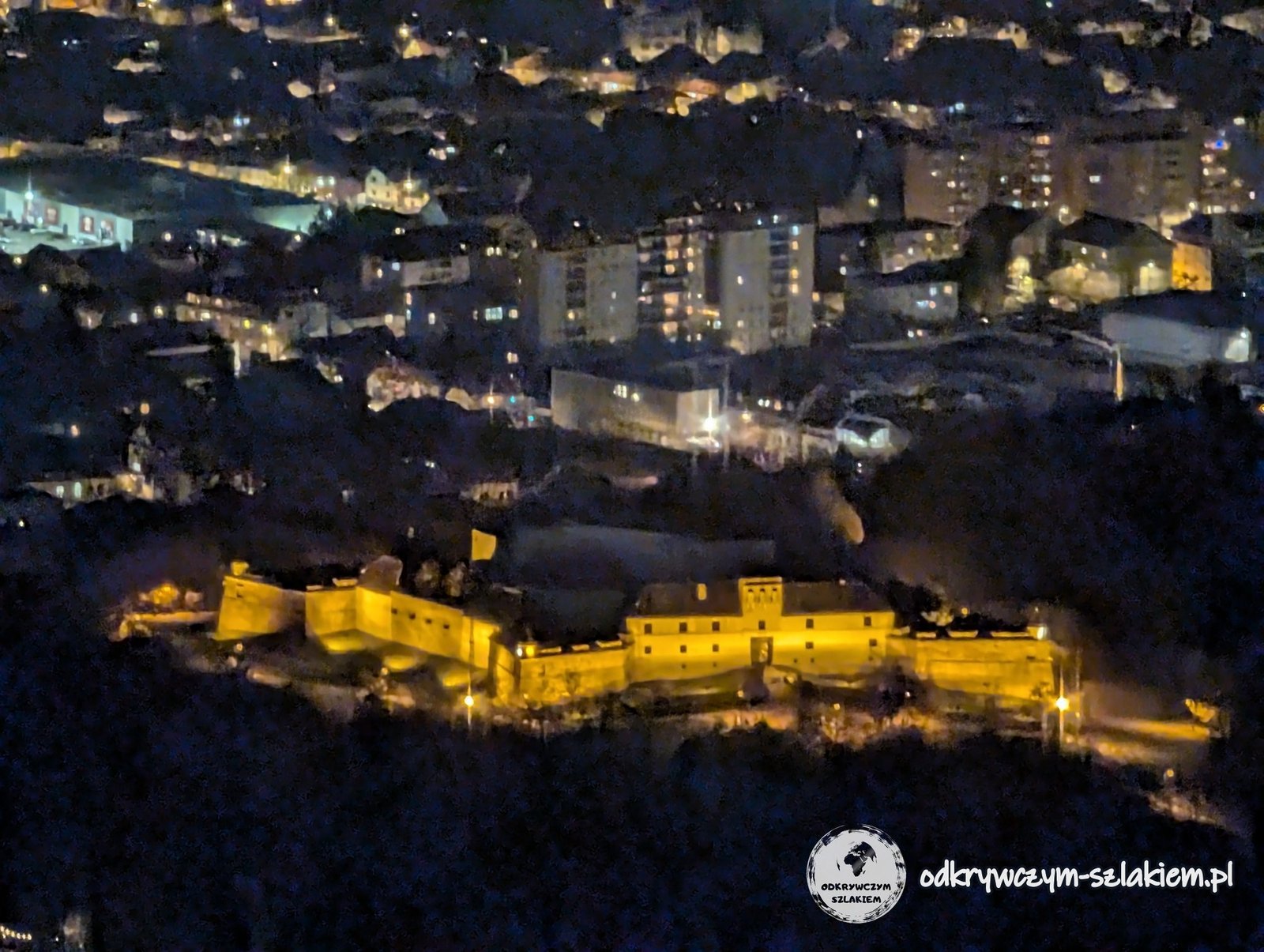
We stayed at the top until dusk. After sunset the lights of the whole city came on below us, and on Strajă Hill the citadel lit up in gold. We went down the same trail in the dark, using our phone torches.

The Black Tower and the White Tower
On the other side of the old town, on the hillside above the Graft stream, stand two towers of the old fortifications. The Black Tower (Turnul Negru) dates from about 1460; since 2001 it has been open with an exhibition on the city’s defences, and it has a glazed roof on top. Higher up stands the round White Tower (Turnul Alb) of 1460–1494, about 20 m high. A path runs along the walls, and stairs lead up to the towers.


From below the Black Tower you look down on the Black Church against Tâmpa, and from the White Tower on the whole old town with its square. We came here in the afternoon and stayed until dusk, when the lights below were coming on.

The Cetățuia citadel on Strajă Hill
North of the old town, on Strajă Hill, stands the Cetățuia citadel. In 1524 wooden fortifications were built here around an older watchtower, later replaced with stone. The citadel then served, among other things, as a warehouse, barracks and prison, and from 1981 as a restaurant. The city won it back from a private company after about 7 years in court; in September 2023 it opened for a week and then closed for renovation (in spring 2026 the interior was still closed, while the area around the walls was open).
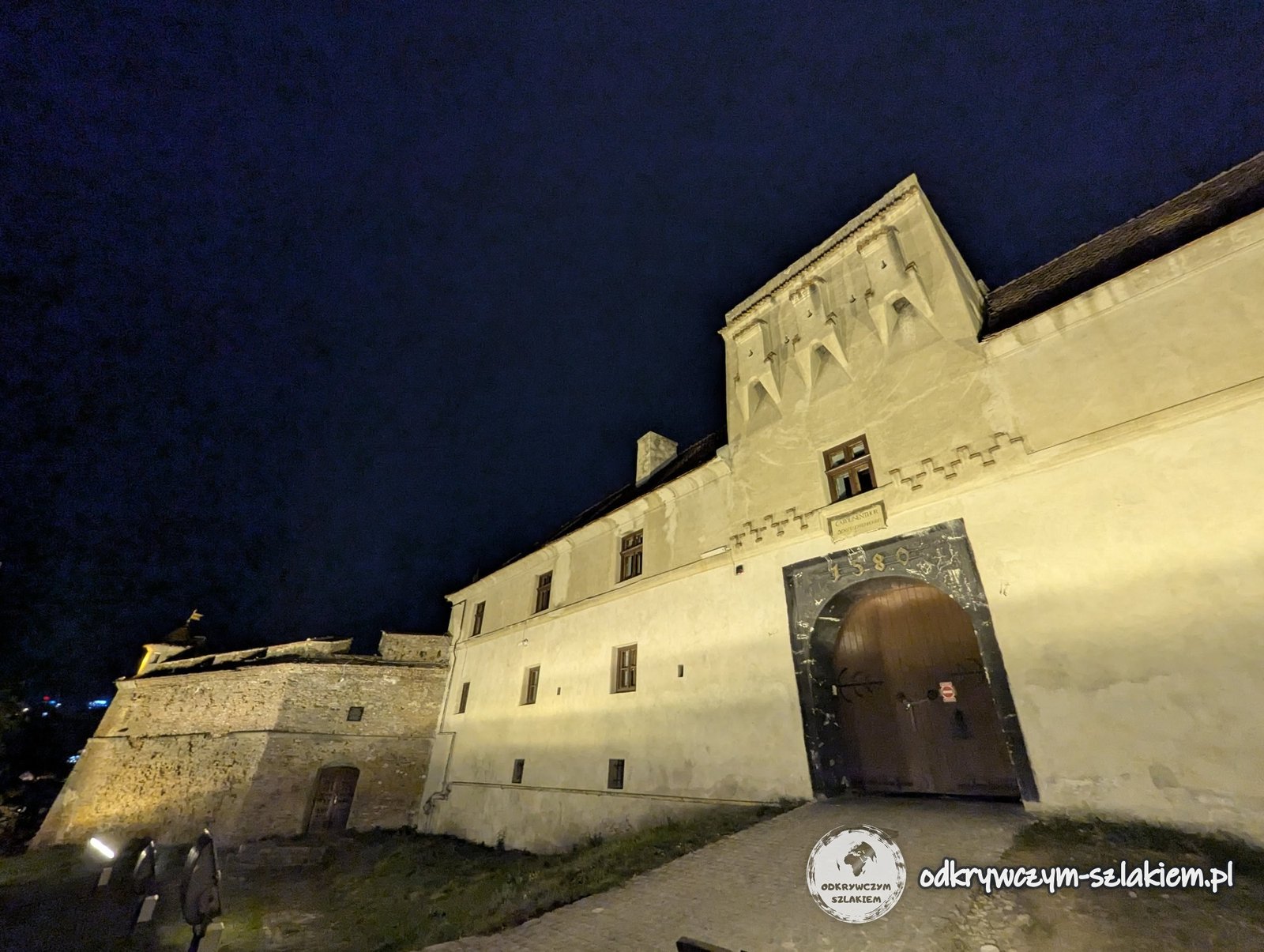

We walked up the hill in the evening and went all the way around the lit-up walls. From the top you can see the newer districts of Brașov and Tâmpa with its illuminated sign.
The streets and buildings of the old town
The main street of the old town is the pedestrian Republicii, leading north from the square and lined with shops and cafés. Between the square and the gates it is worth looking into the side streets with 19th- and early 20th-century buildings, such as Mureșenilor Street with the Catholic Church of Saints Peter and Paul.

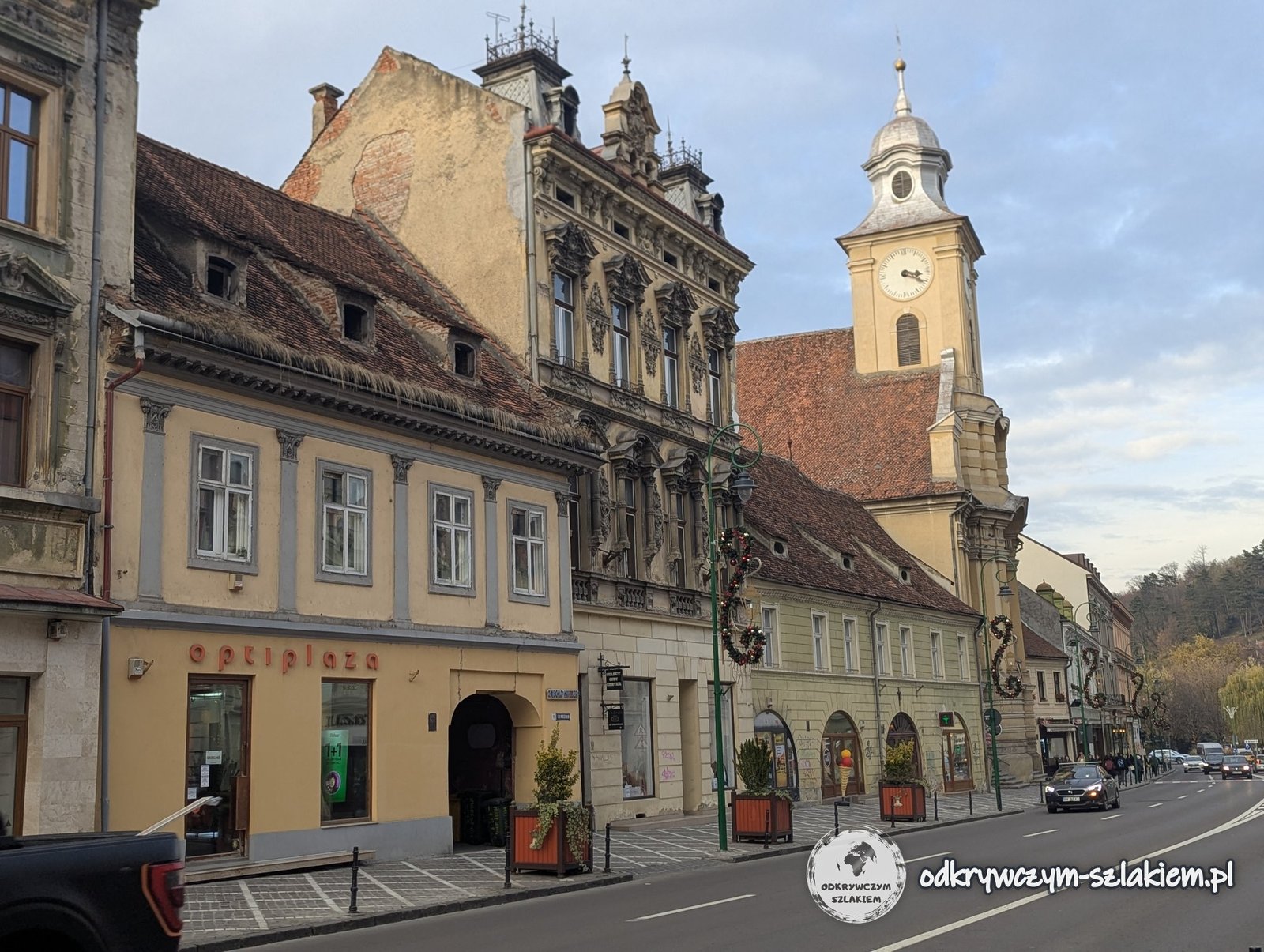
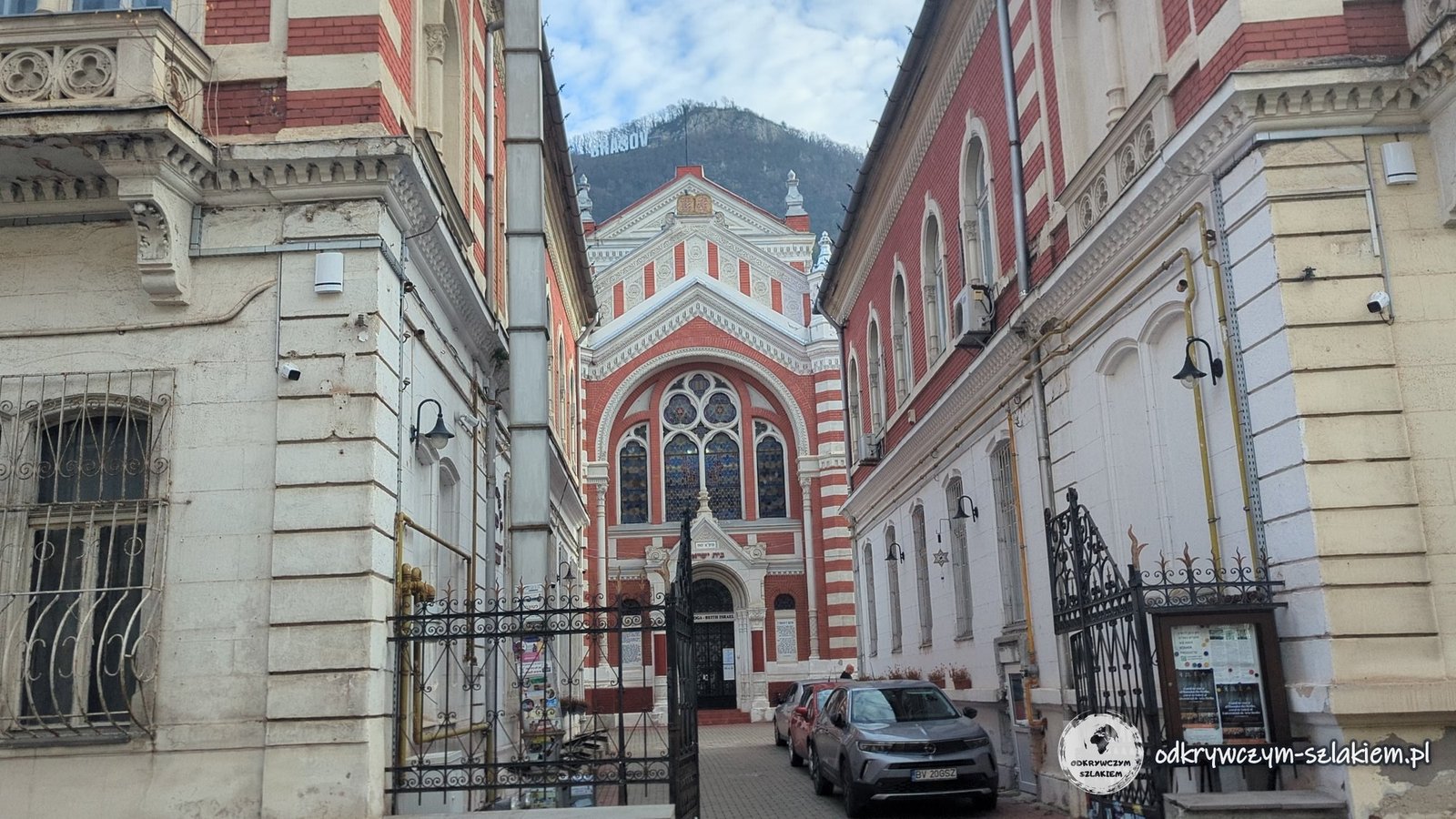
On Poarta Schei Street stands the Beth Israel Synagogue, built in 1898–1901 to a design by Lipót Baumhorn in the Hungarian Art Nouveau style, with neo-Gothic and Moorish elements. In 1940 it was vandalised by Iron Guard legionaries, and during the war it served as a gym; today it is in use again.
On Eroilor Boulevard, at the northern edge of the old town, stand grand early 20th-century buildings, including the former Palace of Justice of 1902 (now the Brașov County Prefecture) and the Post Palace of 1906 by Nicolae Titulescu Park, which is still a post office. At night they are lit in colour.


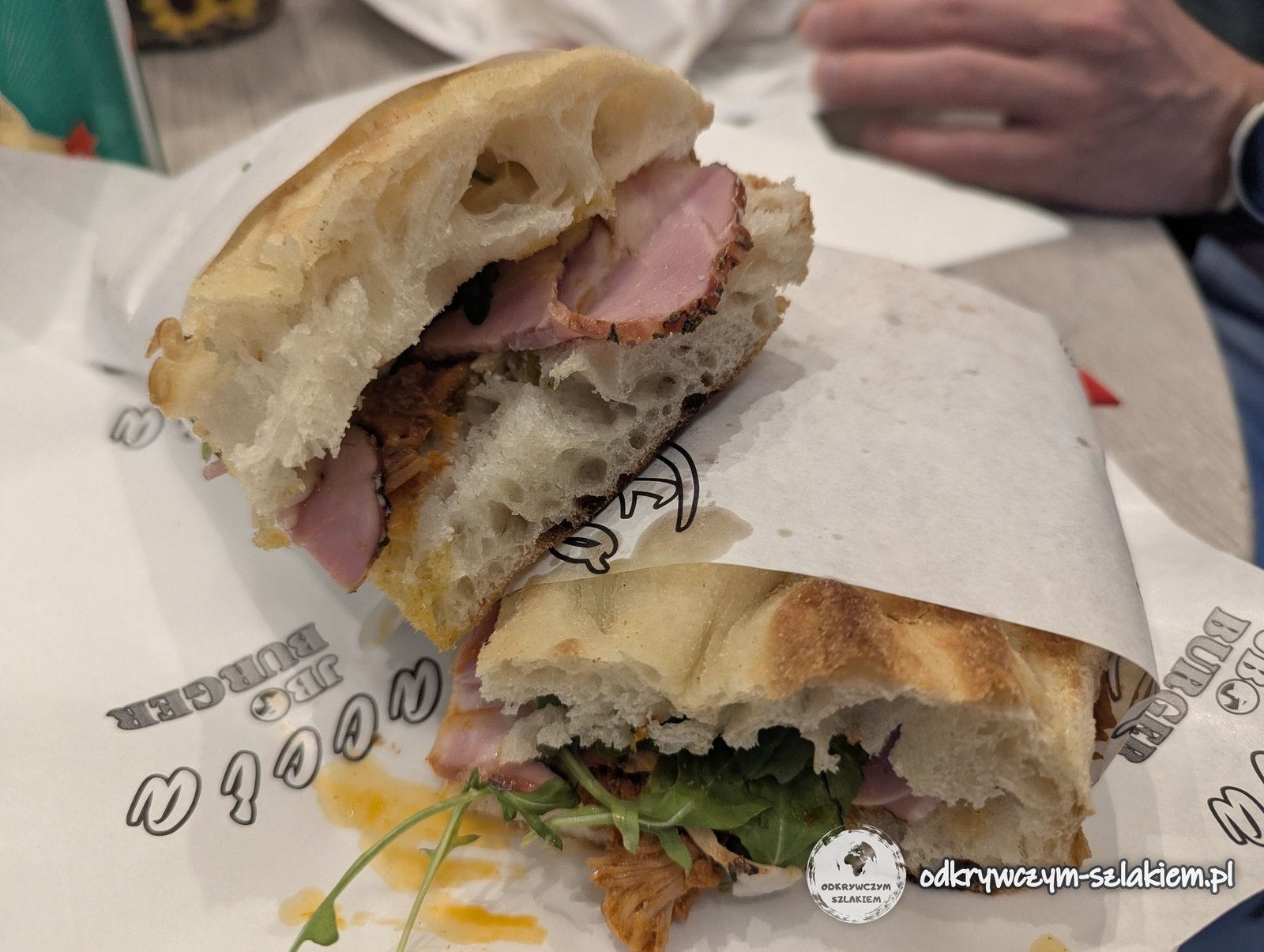
For lunch we had focaccia at JB Burger Focacceria on Michael Weiss Street, a few minutes from the square – it cost 55 lei, and the drinks were free. For a quick snack there are also bakeries – a cheese plăcintă cost 4.50 lei and a covrig (Romanian pretzel) with cheese 3.50 lei.
Practical information
- Getting there from Bucharest: by train from North Station (București Nord) – several dozen connections a day, six operators with separate fares (CFR Călători, InterRegional Călători, Transferoviar, Softrans, Regio Călători, Astra Trans Carpatic). The fastest IC trains take about 2 h 15 min, IR trains about 2.5–3 hours; an InterRegional Călători second-class ticket cost 68.5 lei in 2026. CFR Călători tickets can be bought at the ticket office, from machines, online and in the app. The best views from the window are around Sinaia, Bușteni and Predeal.
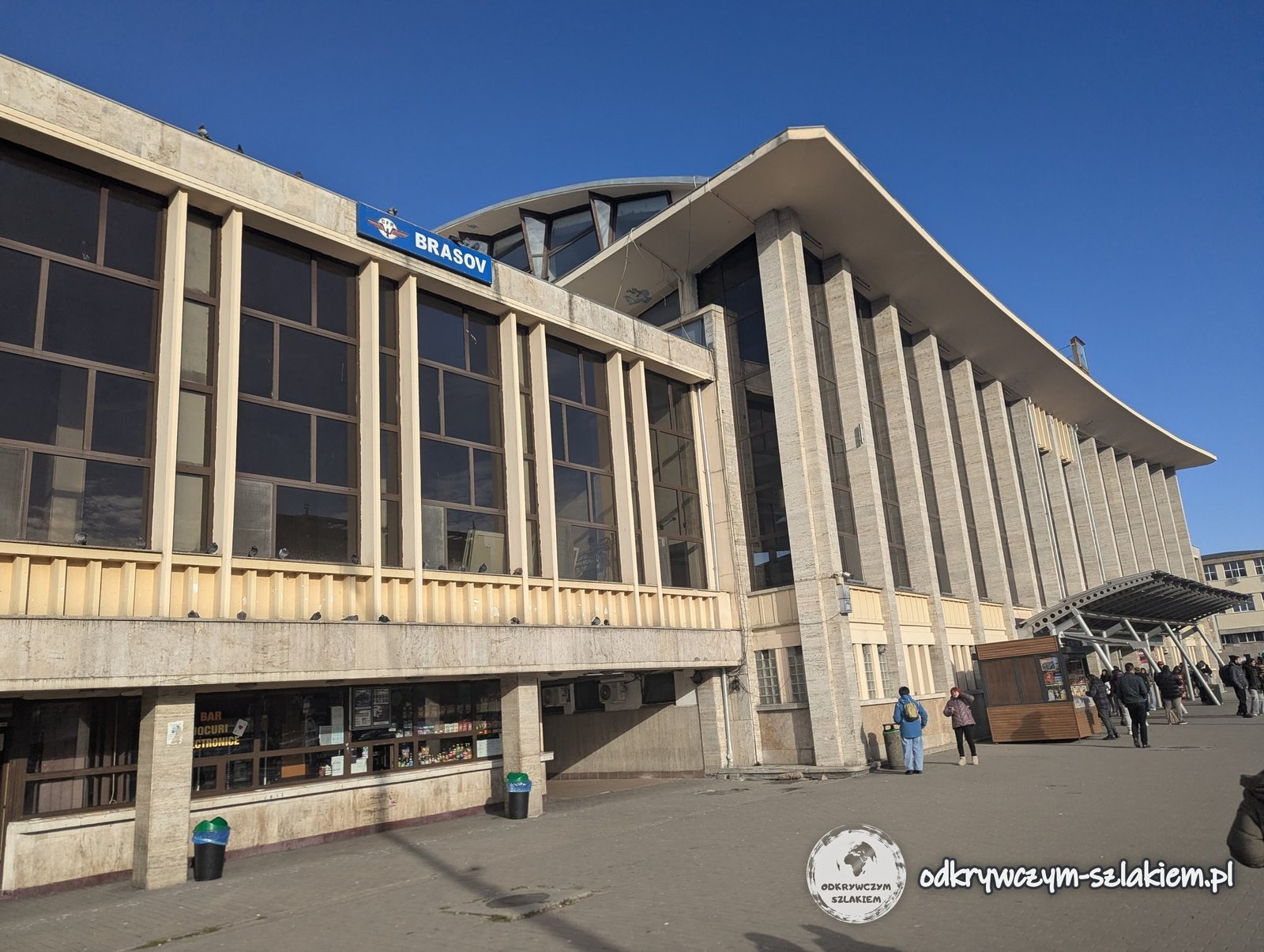
- From the station to the centre: Brașov station is about 3 km from the old town. Bus no. 4 goes to the centre from the Terminal Gară stop (ticket 5 lei; since April 2026 public transport has been free on Fridays). On the way back, board at the Livada Poștei stop.
- By plane: since 2023 Brașov has its own airport, Brașov-Ghimbav; in 2026 Wizz Air flew from here to Katowice and Warsaw, among other destinations. Bus A1 runs from the airport to the centre and the station (about 20–25 minutes).
- Tâmpa: the Serpentine trail (red triangle) starts by the lower cable car station and is about 3 km long (1:15–1:30 h up). It is steep and can be slippery (leaves, stones, roots) – shoes with a good grip help. The cable car ran from Tuesday to Sunday, about 9:30–17:00 (maintenance on Mondays), and a return ticket cost 45–50 lei (prices from 2025–2026 – check before you go). If you stay for the sunset, take a torch – the trail is not lit. Do not leave the trail: bears live in the forests around Brașov.
- Black Church: ticket 30 lei (students 25 lei, pupils 20 lei); from mid-October to the end of March open Tue–Sat 10:00–18:00, Sun–Mon 12:00–18:00. In November 2026 it was closed on some Mondays for autumn cleaning – check the hours on the church’s website.
- Weavers’ Bastion: ticket 11 lei, open Tue–Sun 9:00–17:00 (last entry 16:30). Strada Sforii has been closed since November 2025 (as of November 2026).
- Excursions: from Brașov it is easy to take a bus from the Autogara 2 bus station to Râșnov (about 15 km south-west of Brașov) with its 13th-century fortress and to Bran (about 25 km south-west of Brașov) with its castle associated with Dracula – although most historians say Vlad the Impaler never lived there.
- How much time: two full days – one for the old town, the gates, the towers and Cetățuia, the other for Tâmpa and Șchei – or three with a trip to Bran and Râșnov.