At the beginning of November 2026 I flew to Romania for a few days with Łukasz, Mateusz and Sebastian. On Friday 6 November we landed in Bucharest in the evening; on Saturday we explored the centre and in the evening went to an FCSB match at the Arena Națională. On Sunday after dark we walked to the Palace of the Parliament, and on Monday we took the train to Brașov, which has a separate post. On Wednesday 11 November we came back to Bucharest and, before our evening flight to Warsaw, still saw the Arc de Triomphe, King Michael I Park and Free Press Square. Bucharest has been the capital of Romania since 1862 and, with about 1.7 million inhabitants, is its largest city. Around 1900 it was called “Little Paris” – that era left French-style palaces in the centre and even an arc de triomphe of its own. I describe the places in the order of our route, and at the end there is practical information: getting in from the airport, tickets, prices and Bucharest’s two airports.
Table of contents
- The Old Town (Centrul Vechi)
- University Square and the National Theatre
- The Romanian Athenaeum
- Revolution Square
- The Cișmigiu Gardens and Kretzulescu Palace
- Calea Victoriei: the Macca-Villacrosse passage, the Zlătari Church and the CEC Palace
- The Stavropoleos Monastery
- The Old Princely Court (Curtea Veche)
- FCSB v Corvinul Hunedoara at the Arena Națională
- The Palace of the Parliament and Unirii Boulevard
- North Station (Gara de Nord) and Calea Griviței
- The Arc de Triomphe
- King Michael I Park (Herăstrău)
- Free Press Square: the House of the Free Press and the Wings monument
- Practical information
The Old Town (Centrul Vechi)
We stayed in a flat on the edge of the Old Town (Centrul Vechi), a few minutes from Piața Unirii. It is a small district of cobbled lanes – Lipscani, Covaci, Șelari, Gabroveni – where merchants and craftsmen have traded for centuries. The street names come from old trades – Lipscani from the merchants who sold goods from Leipzig (Romanian Lipsca).


Between the streets, old inns (hans) have survived – merchants’ courtyards with storerooms, shops and rooms for travellers. The best known, Hanul lui Manuc on Piața Unirii, was built in 1806–1808 by the Armenian merchant Manuc Bei; in the mid-19th century it had 107 rooms. Through Hanul cu Tei of 1833 a passage with art galleries now runs between Lipscani and Blănari streets, and the restored Hanul Gabroveni, named after merchants from Gabrovo in Bulgaria, has housed a municipal cultural centre since 2014.
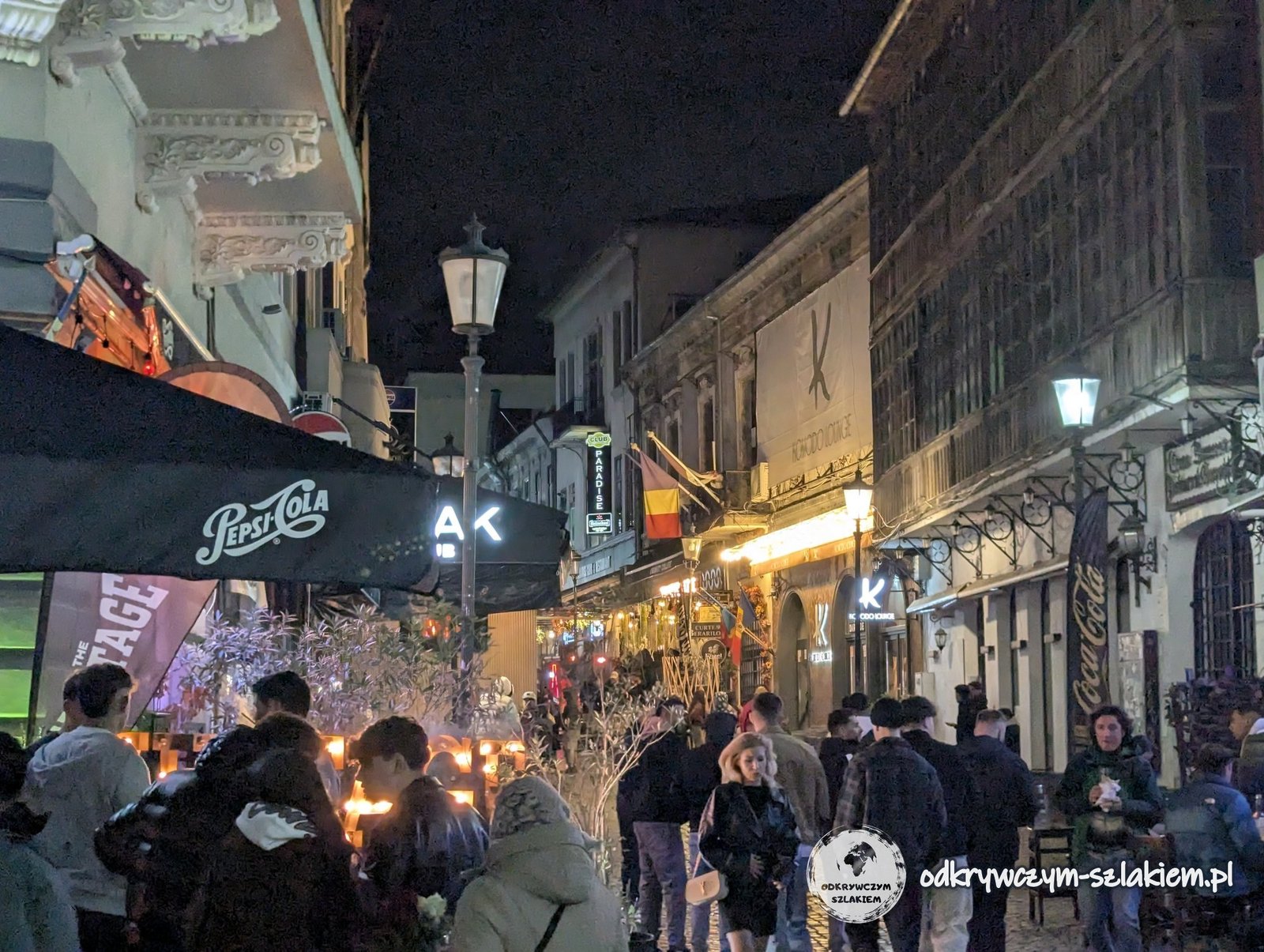
By day there are mostly cafés and terraces here, and in the evening the Old Town turns into the biggest cluster of bars and clubs in Bucharest. On Saturday after the match we came back here at night – the bars were open until morning and crowds were walking down Lipscani. You have to be careful, though: quite a few places in the Old Town rip off tourists, and as locals told us themselves, there are few normal bars here.
University Square and the National Theatre
From the Old Town we walked to University Square (Piața Universității) – one of the most important places in Romania’s recent history. On the night of 21–22 December 1989 protesters built a barricade of restaurant tables here, by the InterContinental hotel; that night about 50 people were killed in Bucharest. In spring 1990 a 52-day student protest against former communists took place on the square, called the Golaniad – after the word “golani” (hooligans), which President Ion Iliescu used for the protesters. It was ended in June 1990 by a brutal intervention of miners from the Jiu Valley.
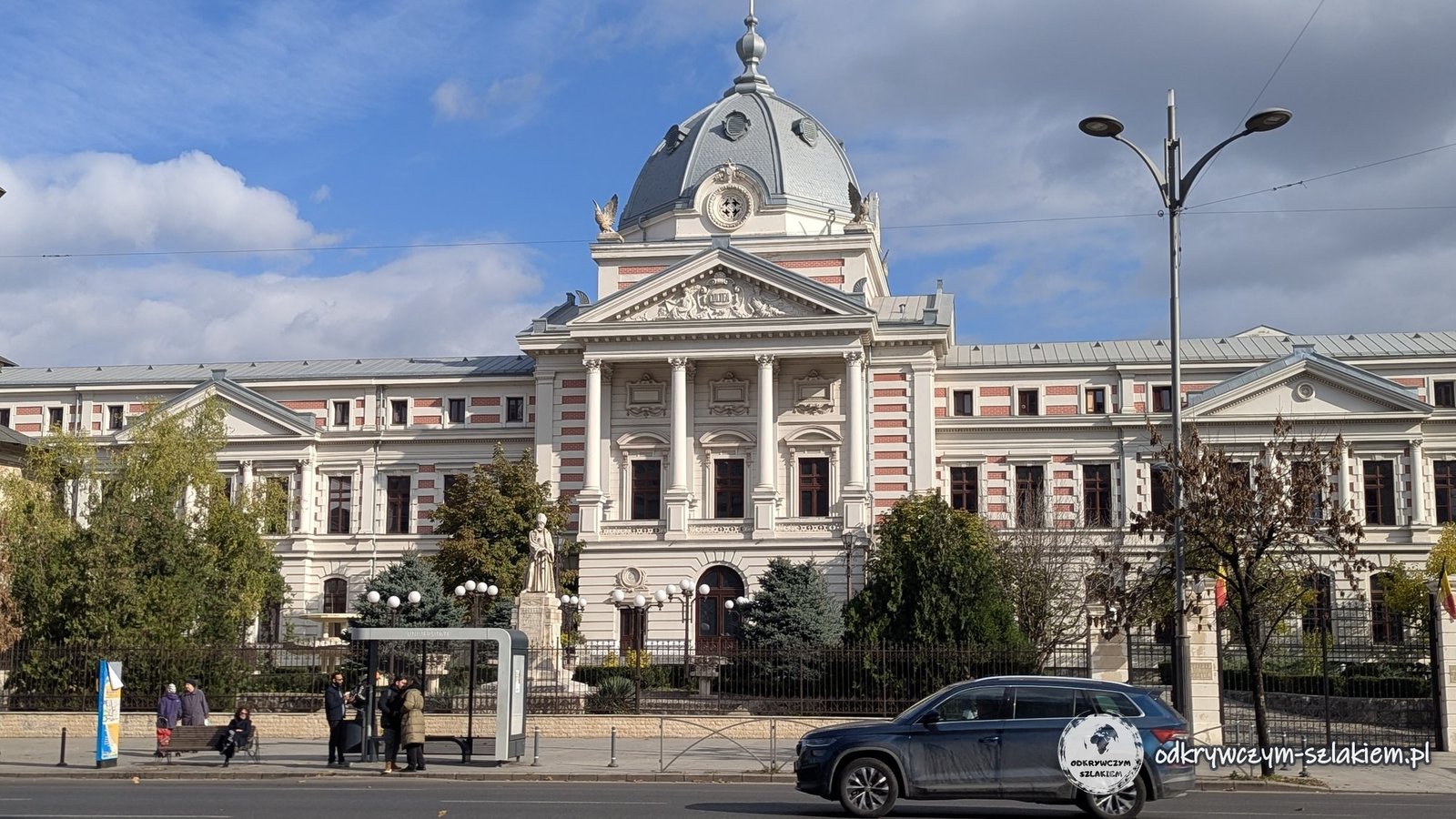
Around the square stand, among others, Colțea Hospital – founded in 1704 by Mihai Cantacuzino as the first hospital in Bucharest (the present building dates from 1888–1897) – and the neo-Gothic Suțu Palace of 1833–1835, home to the Bucharest City Museum.

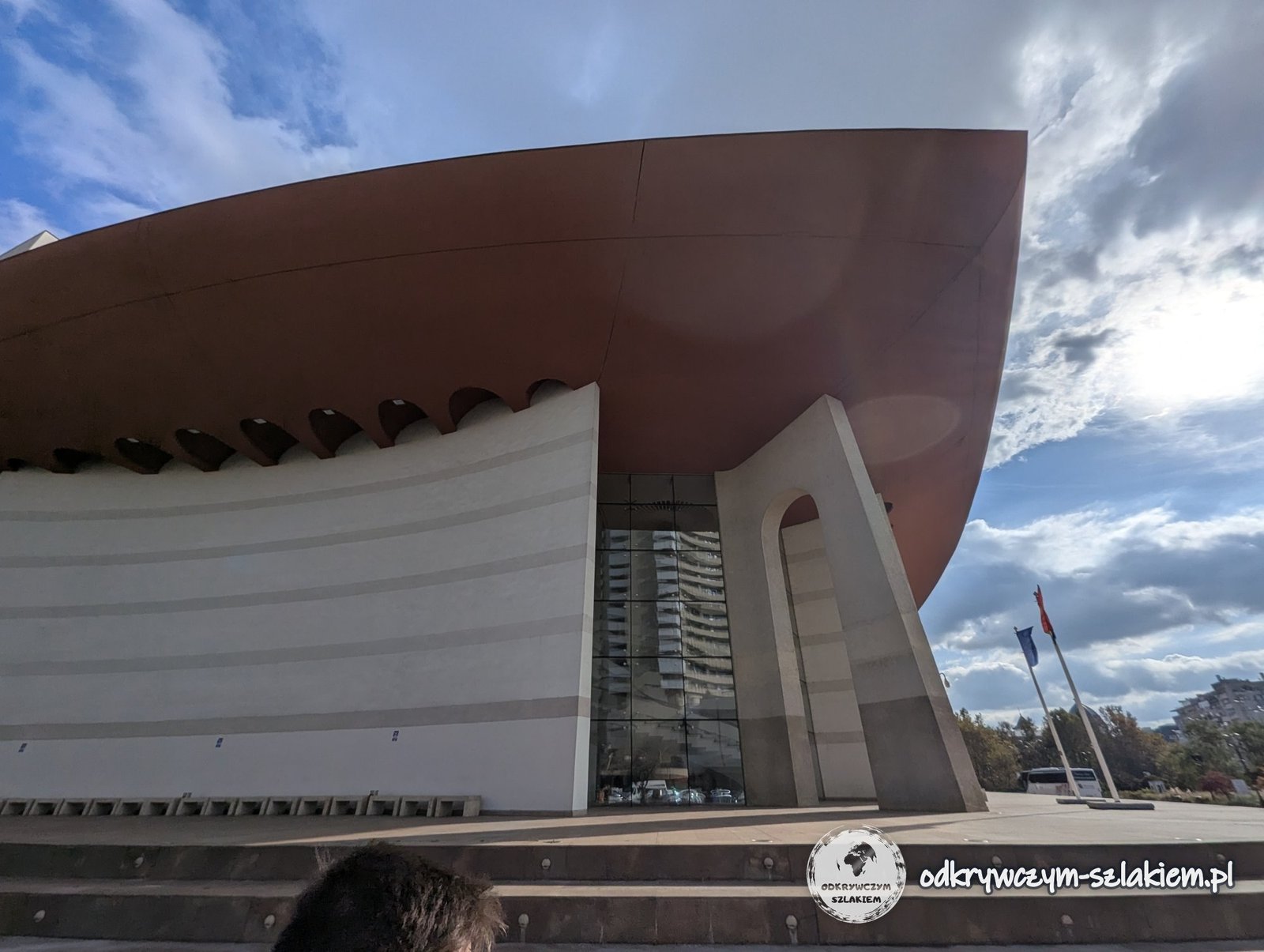
In front of the National Theatre stands a sculpture group by Ioan Bolborea from 2010 – characters from the comedies of Ion Luca Caragiale, one of Romania’s most important playwrights, riding on a cart (original title: “Căruța cu paiațe”, “The Cart of Clowns”). The theatre building opened in 1973. Its distinctive roof, which critics compared to Caragiale’s hat, displeased Ceaușescu and was built over with concrete in the 1980s; during the 2011–2015 renovation the theatre got its original shape back.
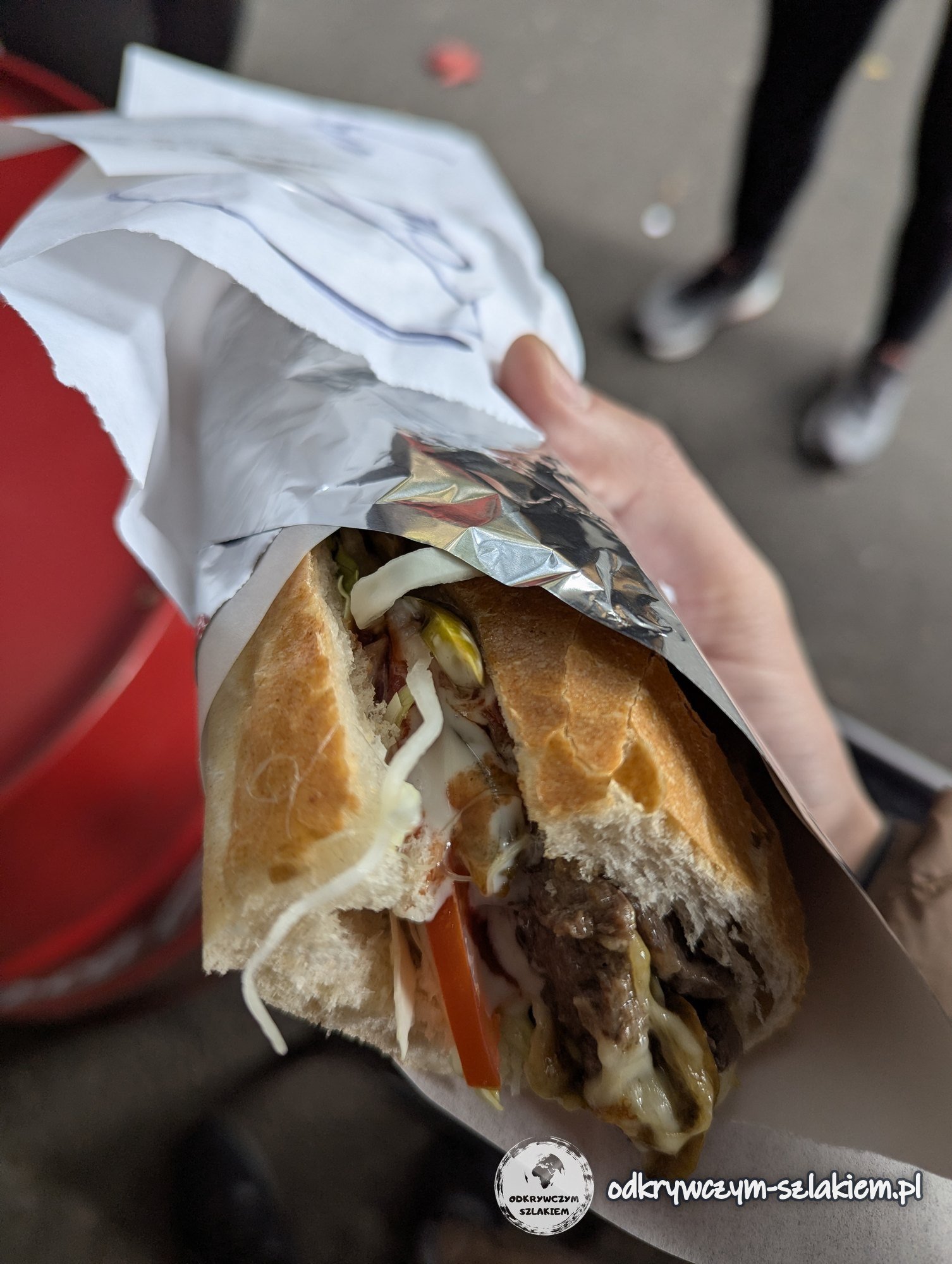
For a quick lunch we had sandwiches at BOMBER Sub Sandwich on Batiștei Street, just behind the theatre: a double burger sub cost 54 lei and a can of Tuborg 12.50 lei.
Walking north along Nicolae Bălcescu Boulevard, we passed the brick Italian Church (Biserica Italiană) – a neo-Romanesque Catholic church from 1915–1916, built for Bucharest’s Italian community. It is still owned by the Italian state.

The Romanian Athenaeum
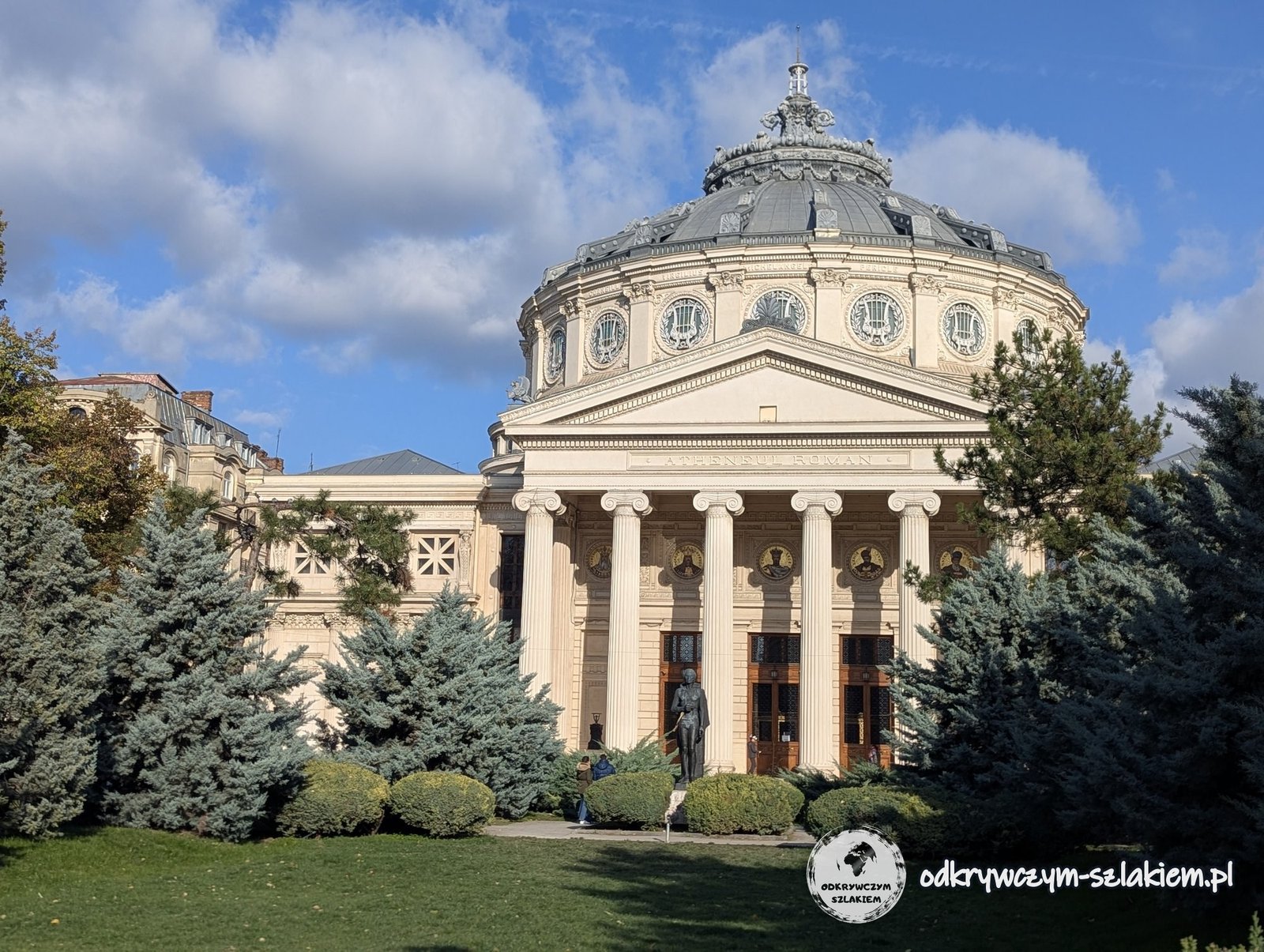
Along Bălcescu Boulevard we reached the Romanian Athenaeum (Ateneul Român) – a concert hall opened in 1888 and designed by the French architect Albert Galleron. It was paid for by a public collection under the slogan “Dați un leu pentru Ateneu!” (“Give a leu for the Athenaeum!”). The dome is 41 m high.
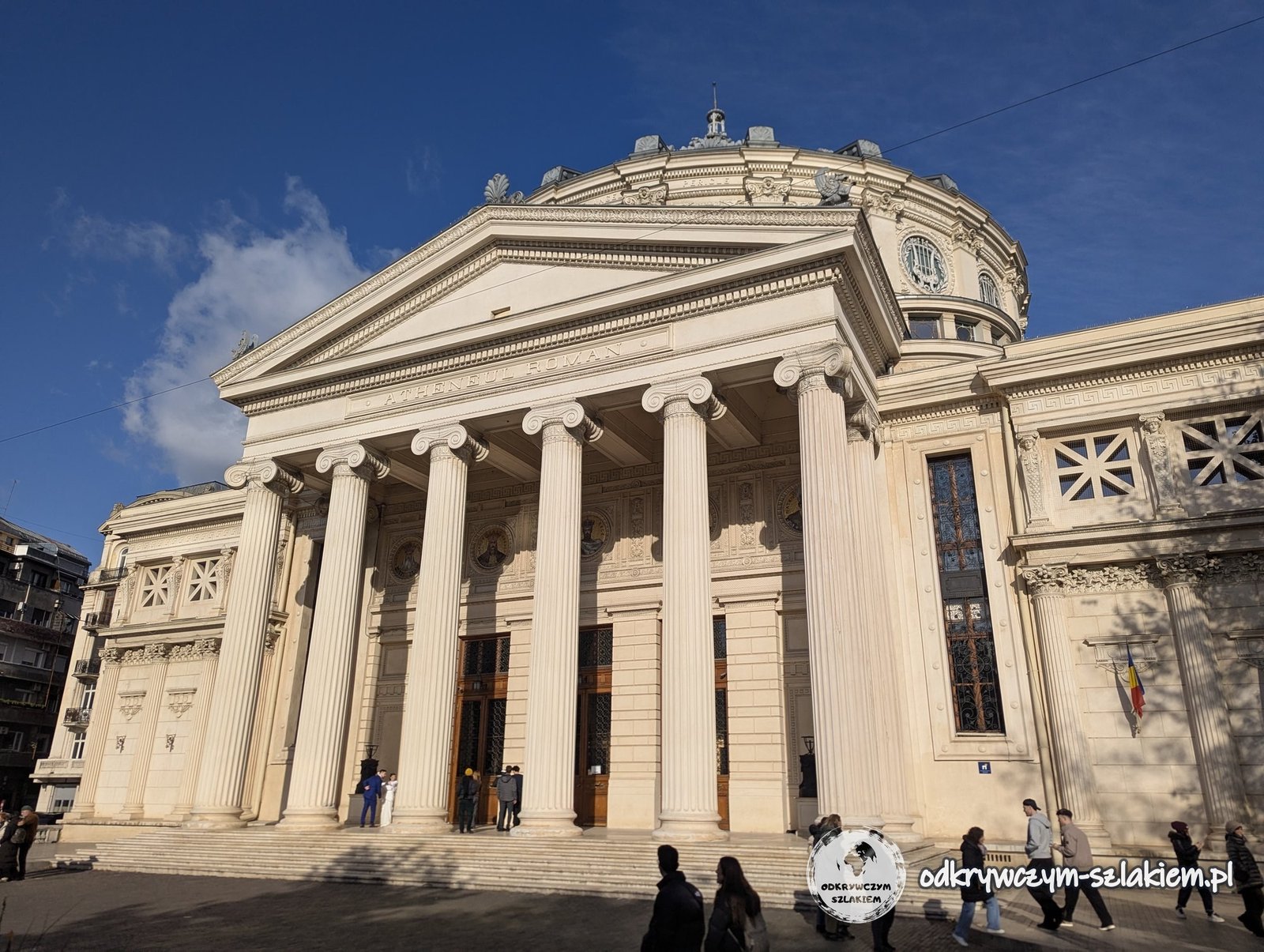
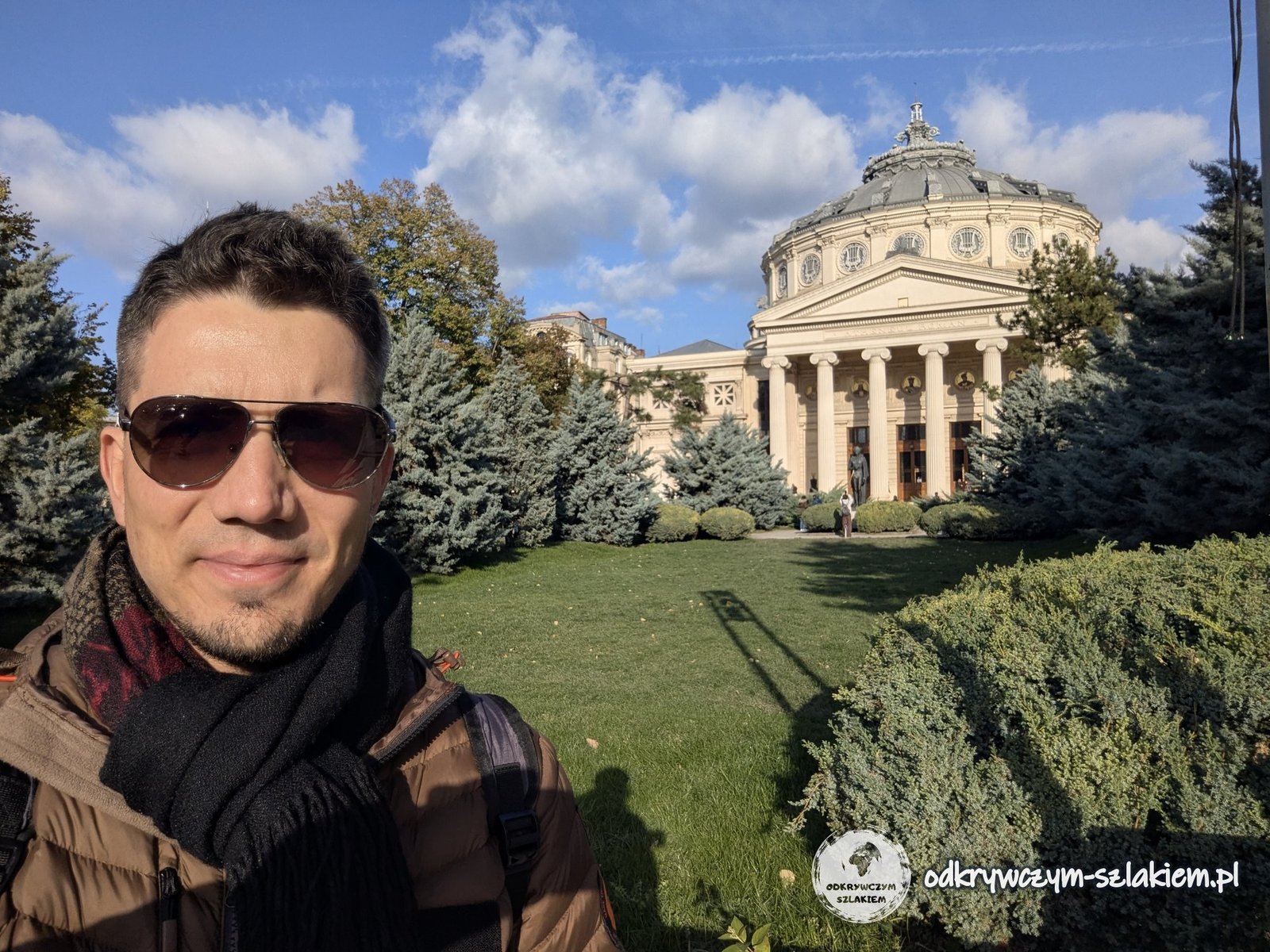
Inside there is a hall with almost 800 seats, home of the George Enescu Philharmonic; every two years it hosts the George Enescu International Festival. The walls of the hall are decorated with a fresco by Costin Petrescu about 75 m long, showing the history of Romania from Trajan’s conquest of Dacia to the union of the country in 1918. The interior can only be visited in short slots between rehearsals – details are in the practical information.
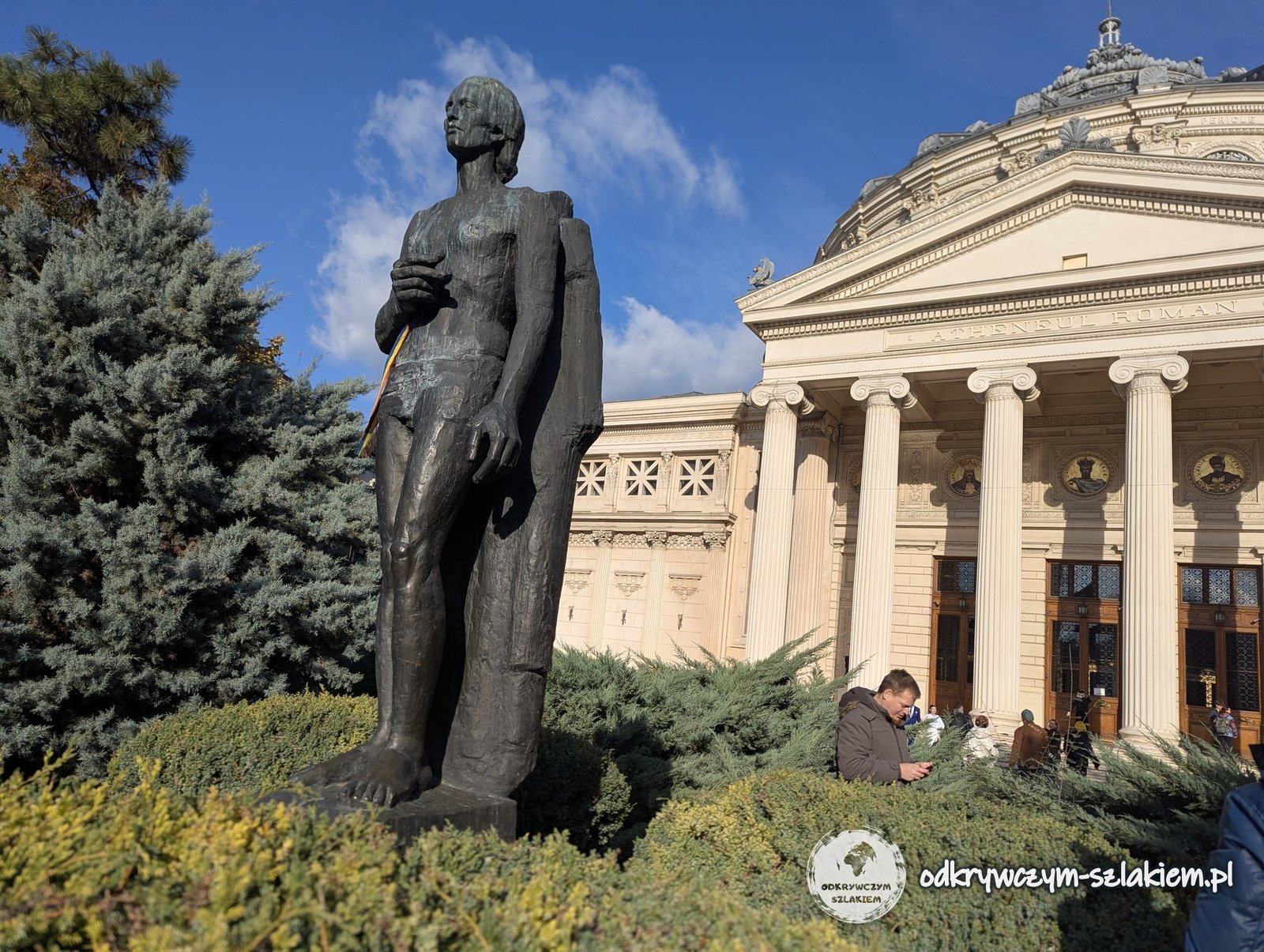
In front of the Athenaeum stands a statue of Mihai Eminescu (1850–1889) – regarded as Romania’s national poet, author of the poem “Luceafărul” – by Gheorghe Anghel from the 1960s.
Revolution Square
Right behind the Athenaeum, on Calea Victoriei, begins Revolution Square (Piața Revoluției). On one side stands the former Royal Palace, which now houses the National Museum of Art of Romania.

Next to it is the Central University Library from 1895 with an equestrian statue of King Carol I. It was designed by Paul Gottereau, who also designed the CEC Palace. During the 1989 revolution the building burned down together with more than 500,000 books; it only reopened in 2001. Opposite stands the building of the former Central Committee of the Communist Party, now the Ministry of Internal Affairs.

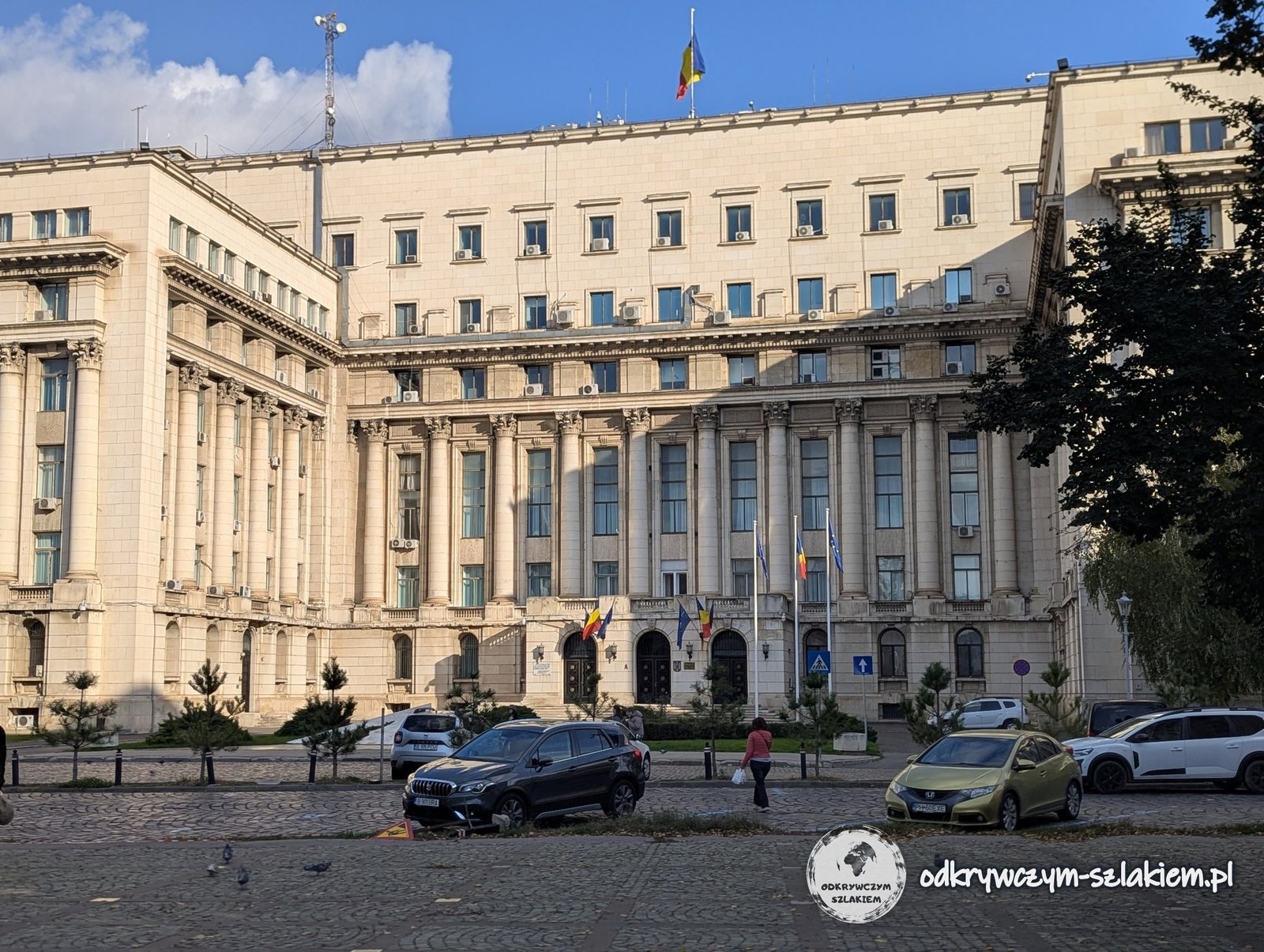
On 21 December 1989 Nicolae Ceaușescu gave his last speech from the balcony of this building to some 100,000 people – after barely a minute it was interrupted by whistles and shouts. The next day the dictator fled from the roof by helicopter; he was caught the same day and on 25 December executed together with his wife Elena. In front of the building stands the Memorial of Rebirth from 2005 – a 25-metre marble obelisk with a dark shape on top, which locals nickname “the potato on a stick”.

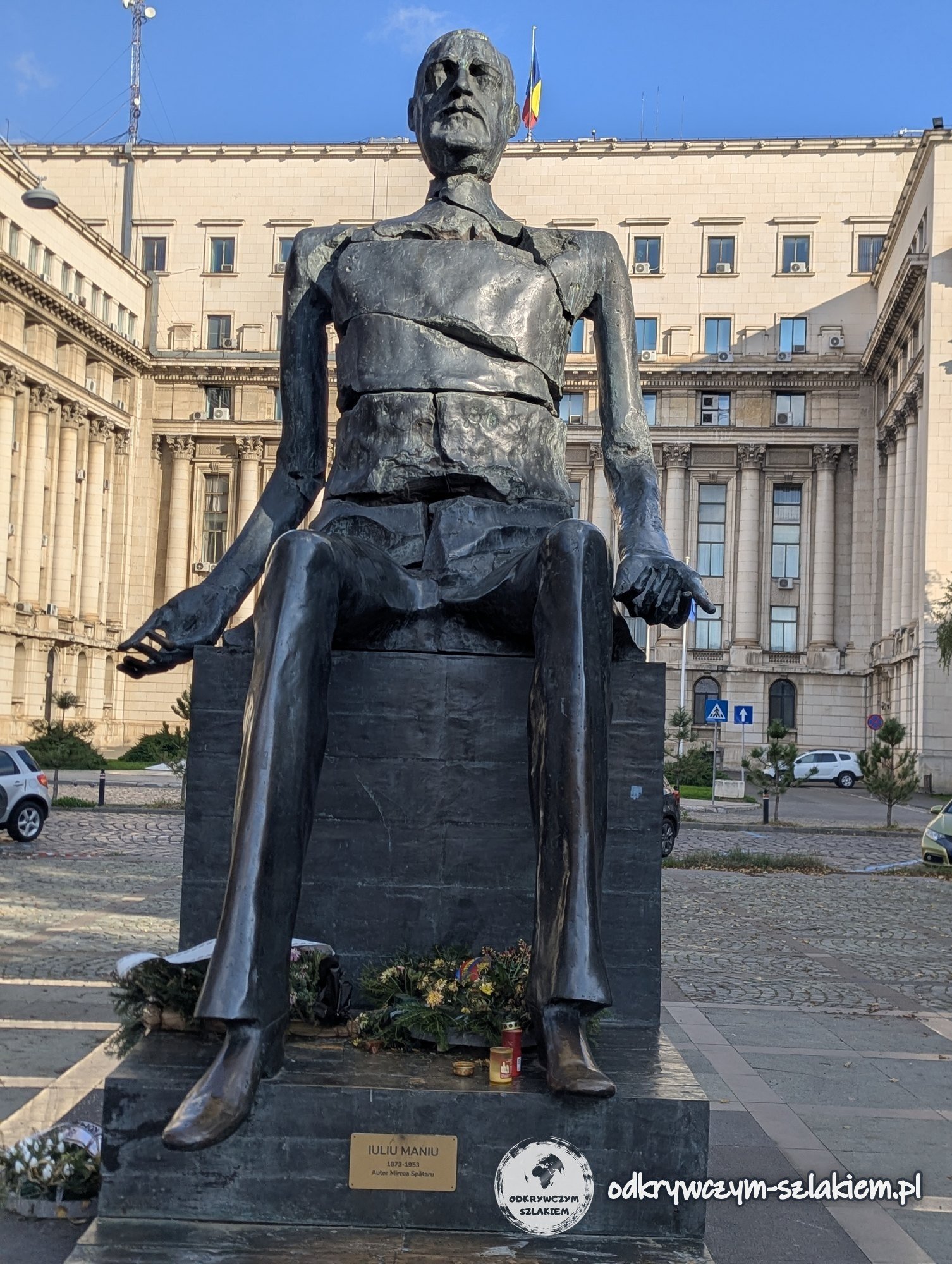
A little further on sits the elongated bronze figure of Iuliu Maniu. Maniu led the National Peasants’ Party and was prime minister three times between 1928 and 1933; after the communists took power he was sentenced to life imprisonment and died in Sighet prison in 1953. The monument by Mircea Corneliu Spătaru was unveiled in 1998.
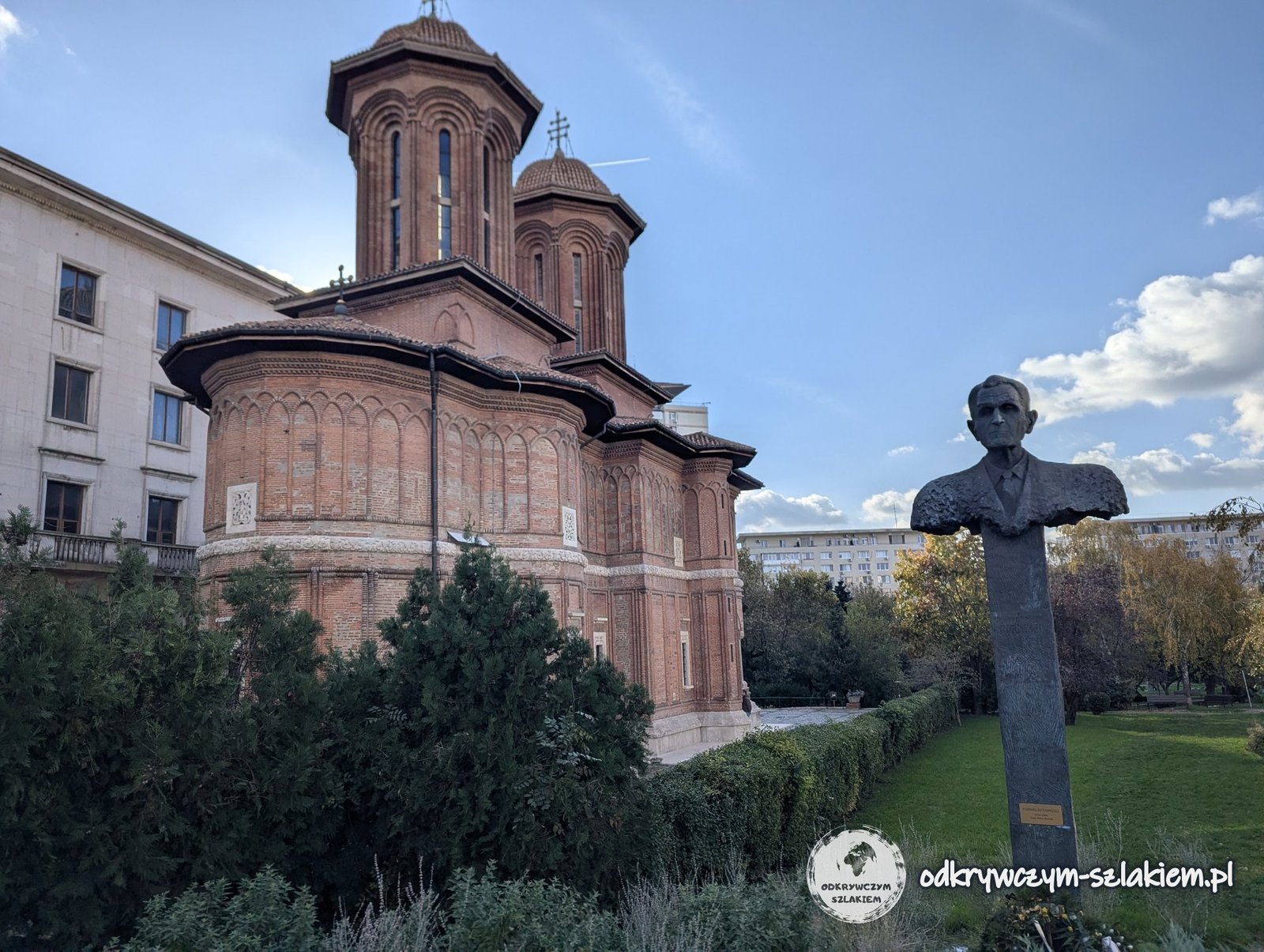
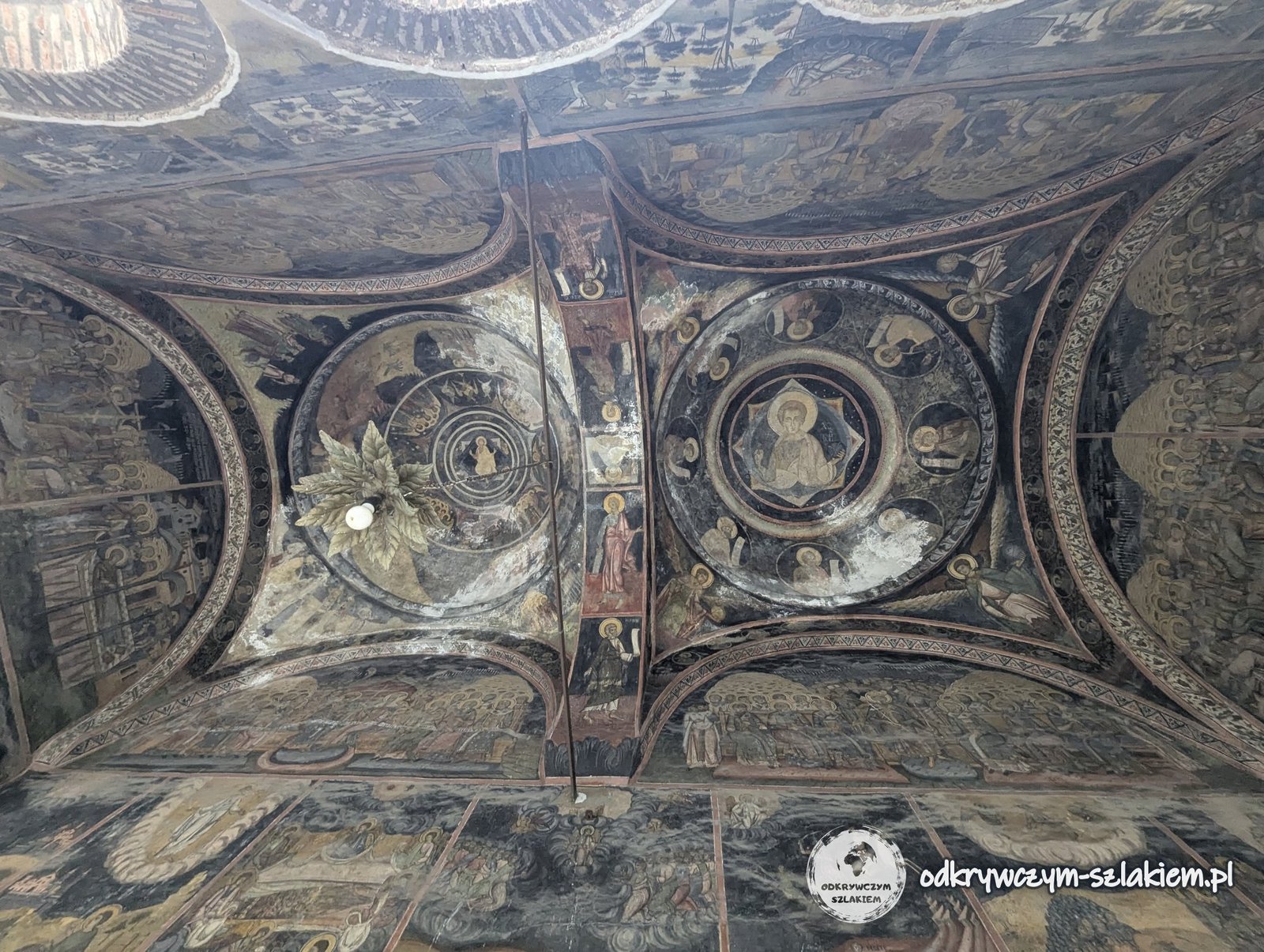
At the edge of the square, on Calea Victoriei, stands the brick Kretzulescu Church (Crețulescu) of 1720–1722, founded by the boyar Iordache Crețulescu and his wife Safta, daughter of Prince Constantin Brâncoveanu. The paintings in the porch are original, and the interior was painted by Gheorghe Tattarescu in 1859–1860. The brick has only been exposed since a restoration in the 1930s; under communism the church was to be demolished.
The Cișmigiu Gardens and Kretzulescu Palace
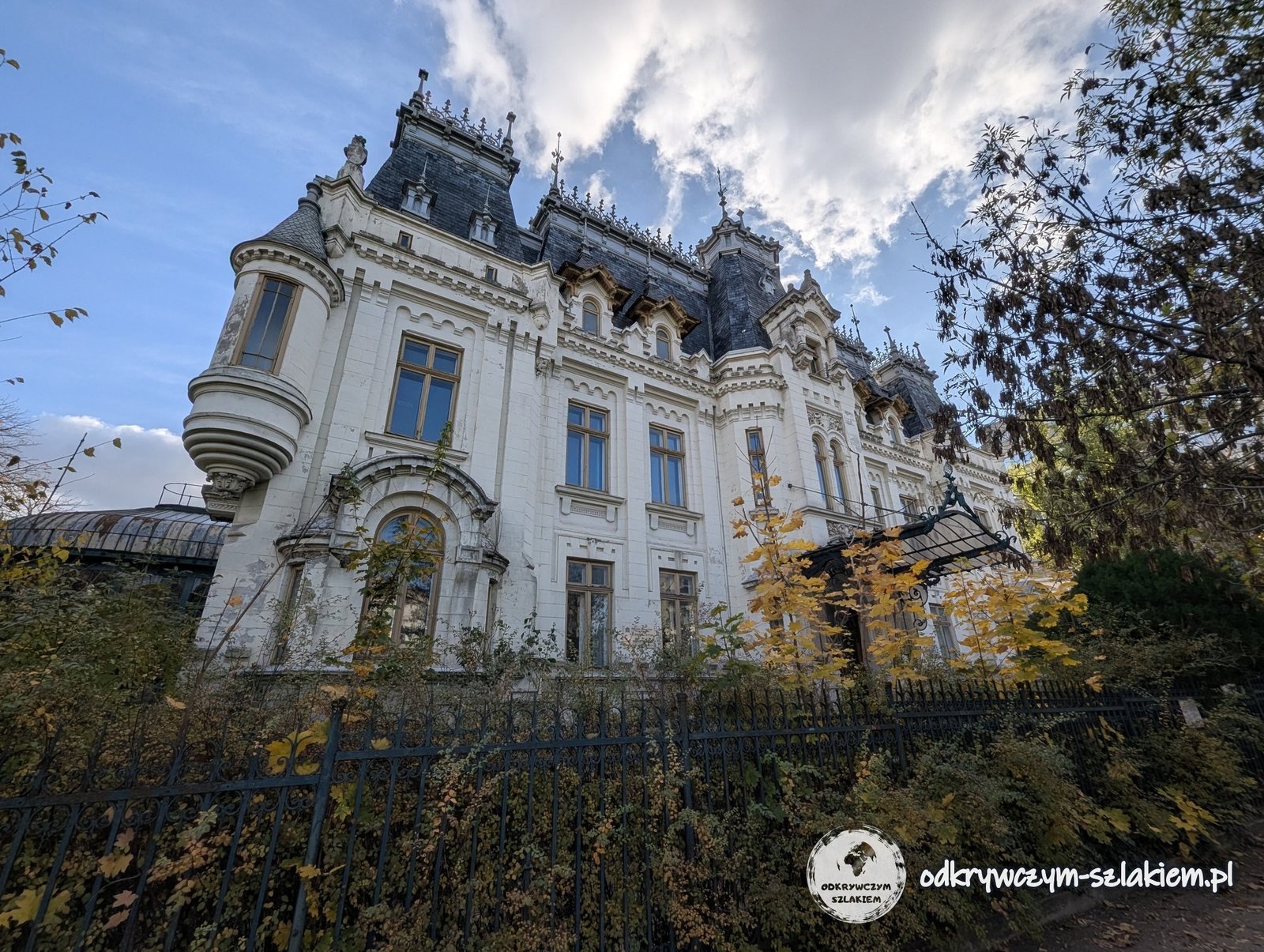
From Revolution Square we went to the Cișmigiu Gardens. At their edge, on Știrbei Vodă Street, stands Kretzulescu Palace of 1902–1904, built for Elena Kretzulescu to a design by Petre Antonescu – who also designed the Arc de Triomphe. The city bought it in 1927, from 1972 to 2011 it housed UNESCO’s European Centre for Higher Education, and today it belongs to the Ministry of Education and is not open to visitors.

The Cișmigiu Gardens are the oldest public park in Bucharest, opened in 1847. They were designed by Wilhelm Meyer, formerly director of the imperial gardens in Vienna. The name comes from the Turkish word çeşme (fountain) – a “cișmigiu” was the official in charge of the city’s fountains, who lived on this spot. The centre of the park is taken up by an artificial lake created on the site of a former marsh, and along the paths there is, among other things, the Writers’ Rotunda with busts of Romanian authors. In November the flower beds were still blooming red while the trees had already turned yellow.

Calea Victoriei: the Macca-Villacrosse passage, the Zlătari Church and the CEC Palace
From the gardens we came out onto Regina Elisabeta Boulevard. At its junction with Calea Victoriei – Bucharest’s most famous street – stands the monumental Cercul Militar Național (National Military Circle). Construction began in 1911 and it opened in 1923; it was designed by Dimitrie Maimarolu in the French academic style. A 17th-century monastery, Sărindar, used to stand on this spot.

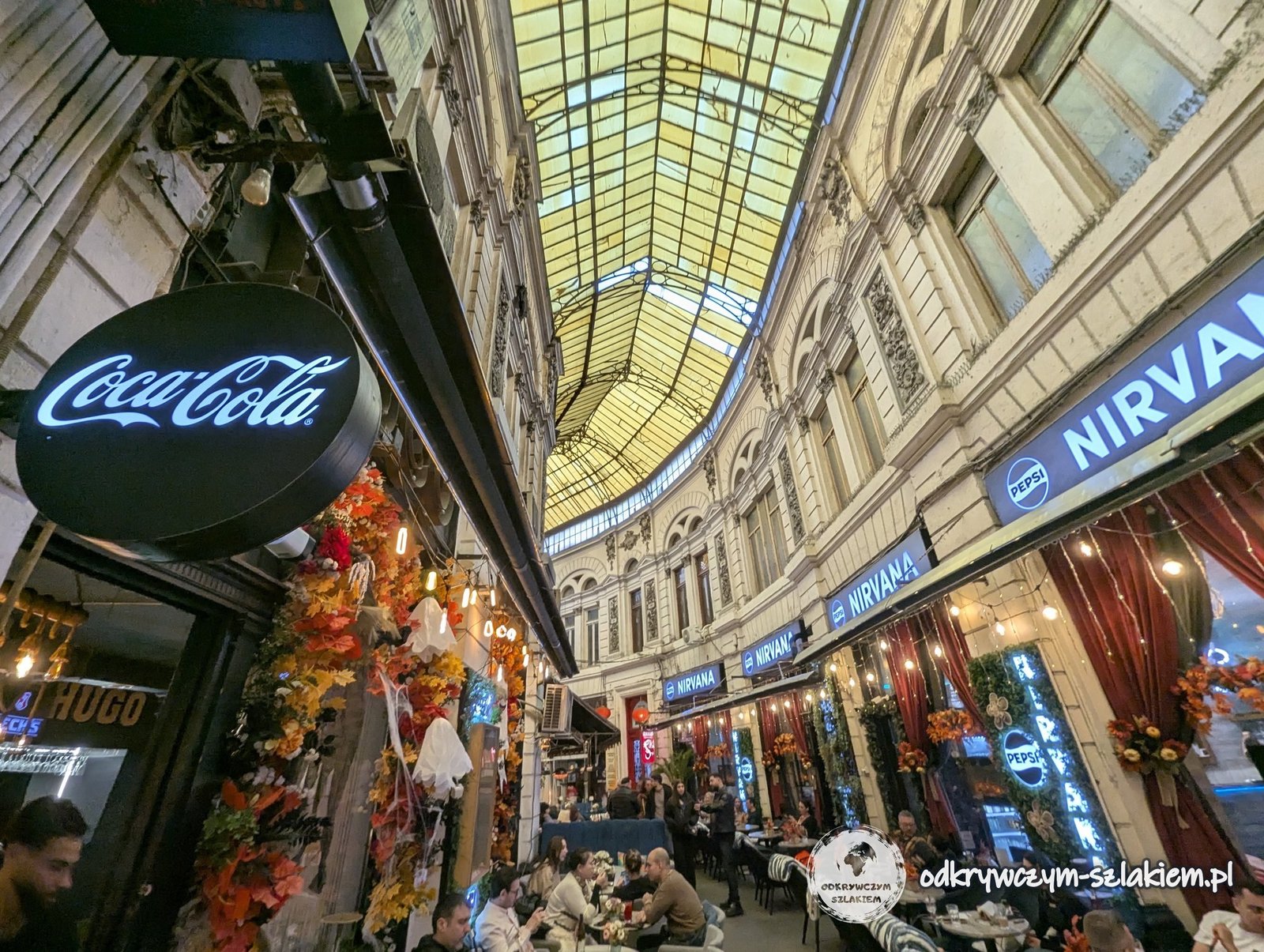
A little further on, the Macca-Villacrosse passage from 1891, designed by Felix Xenopol, branches off Calea Victoriei. It is shaped like an elongated horseshoe – two arms from Calea Victoriei join before the exit to Eugeniu Carada Street – and is covered by a yellowish glass roof. It is named after the city architect Xavier Villacrosse and Mihalache Macca, the builder’s brother-in-law. Today the glass roof covers mostly cafés and shisha bars.

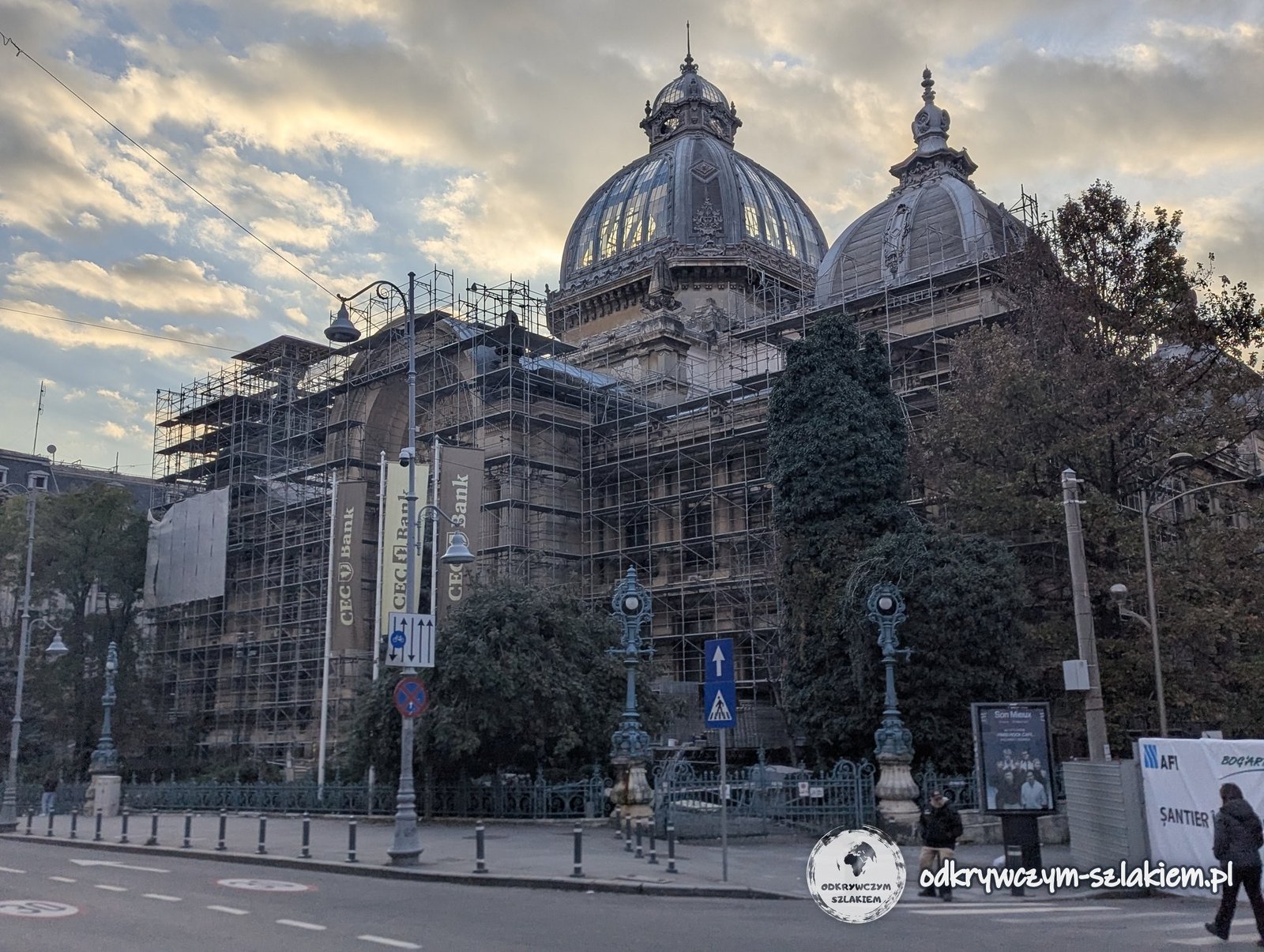
Across Calea Victoriei stands the small Zlătari Church – built of brick since 1635 (founded by Prince Matei Basarab) and rebuilt to Villacrosse’s plans after earthquakes in the 19th century. It keeps a relic of the right hand of Saint Cyprian. Right next to it rises the CEC Palace of 1897–1900, the seat of CEC Bank, with domes of glass and metal – also the work of Paul Gottereau. In November 2026 the whole building was under scaffolding.

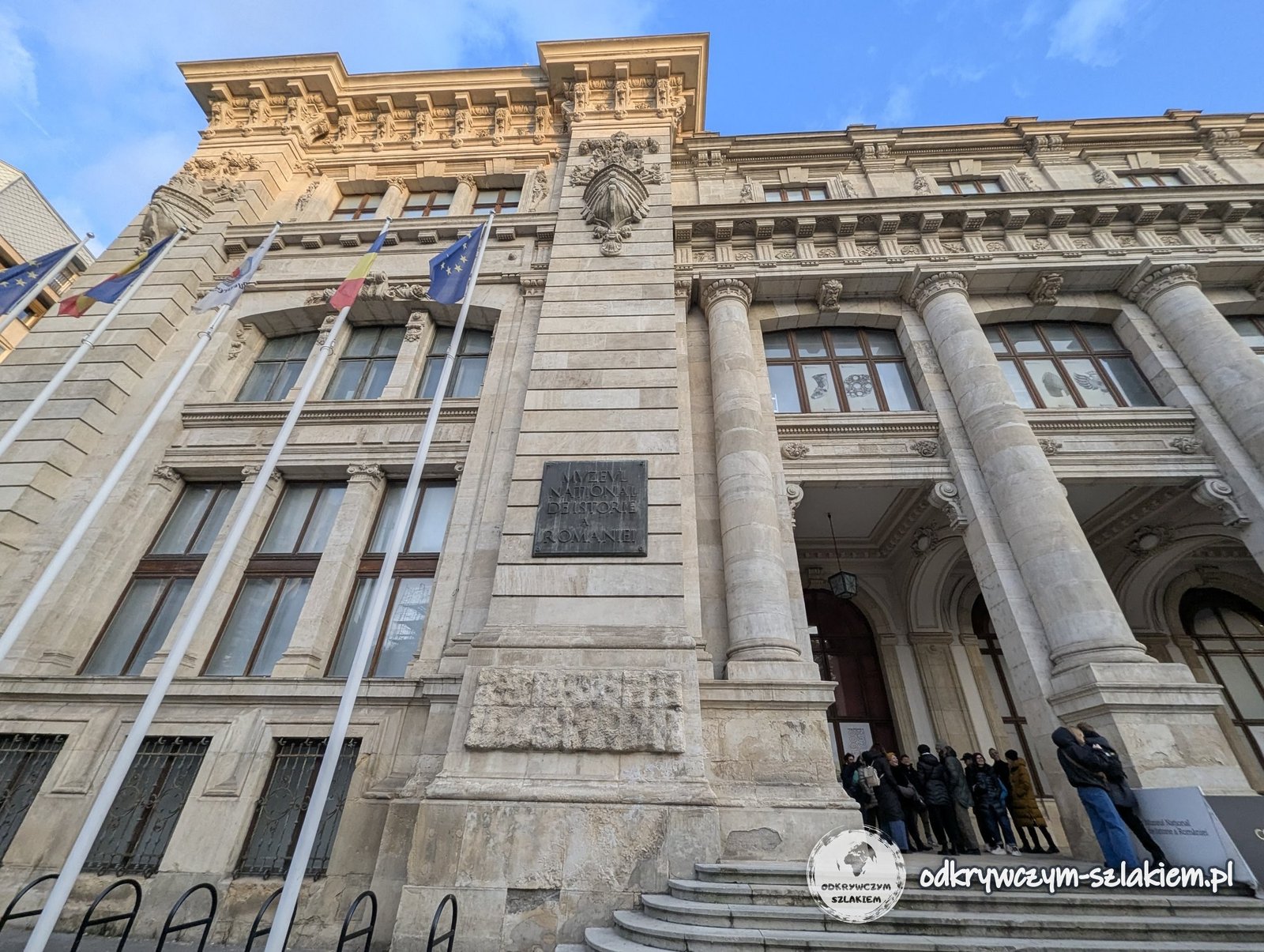
Opposite the CEC Palace stands the former Post Palace of 1894–1900, designed by Alexandru Săvulescu, which has housed the National Museum of Romanian History since 1972. Most of the museum has been closed for renovation since 2002; in November 2026 you could see the treasury with the Romanian crown jewels, the plaster cast of Trajan’s Column and the lapidarium (Wed–Sun 9:00–17:00, ticket 32 lei).
The Stavropoleos Monastery
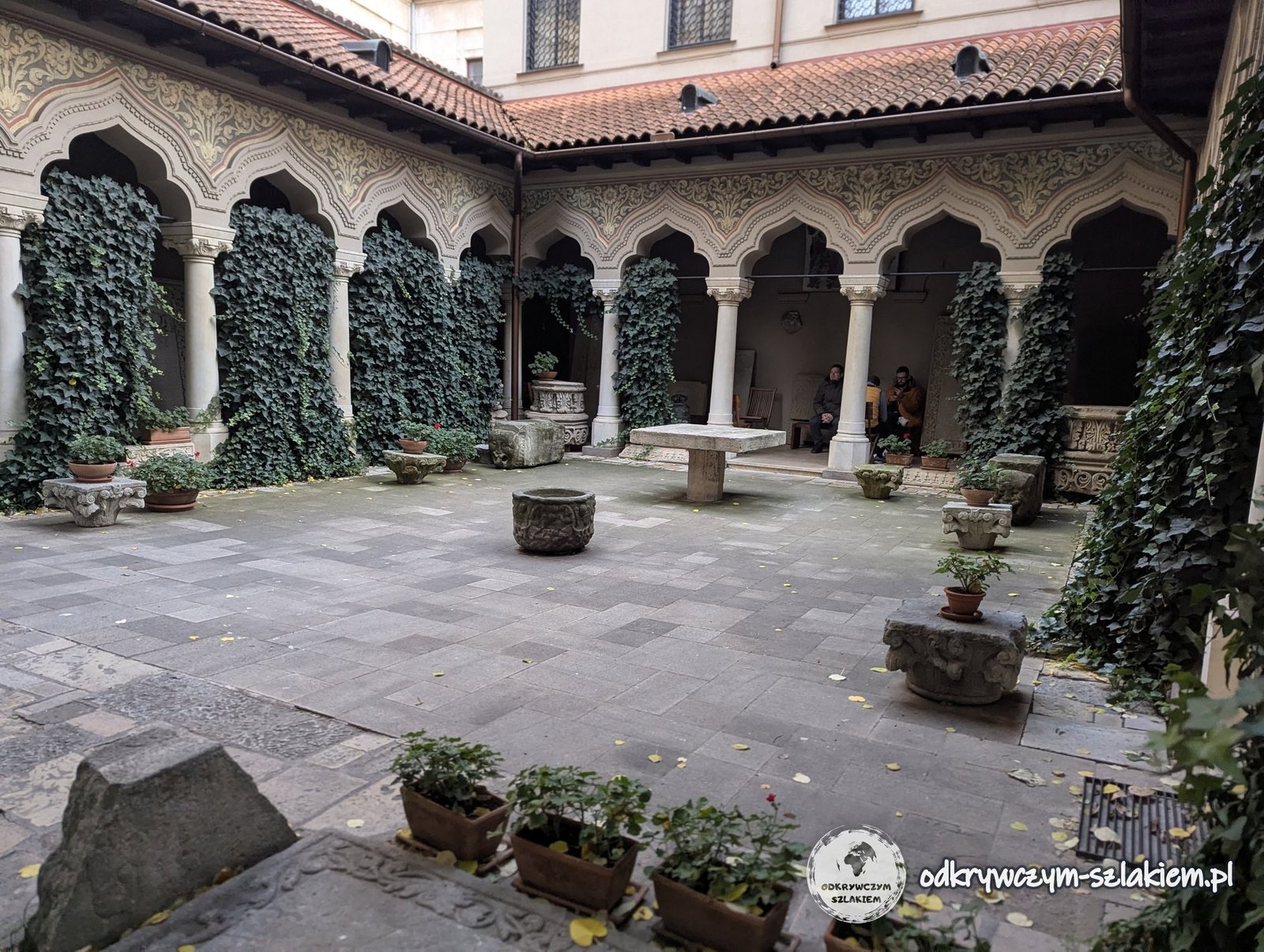
A few steps from Calea Victoriei, in Stavropoleos Street, stands the small church of the Stavropoleos Monastery, completed in 1724. It was founded by the Greek monk Ioanichie Stratonikeas from Epirus, who built it next to his inn; two years later he became Metropolitan of Stavropolis (“city of the cross”) – hence the name. The church is in the Brâncovenesc style, with a portico of carved stone columns and arches and paintings on the façade.
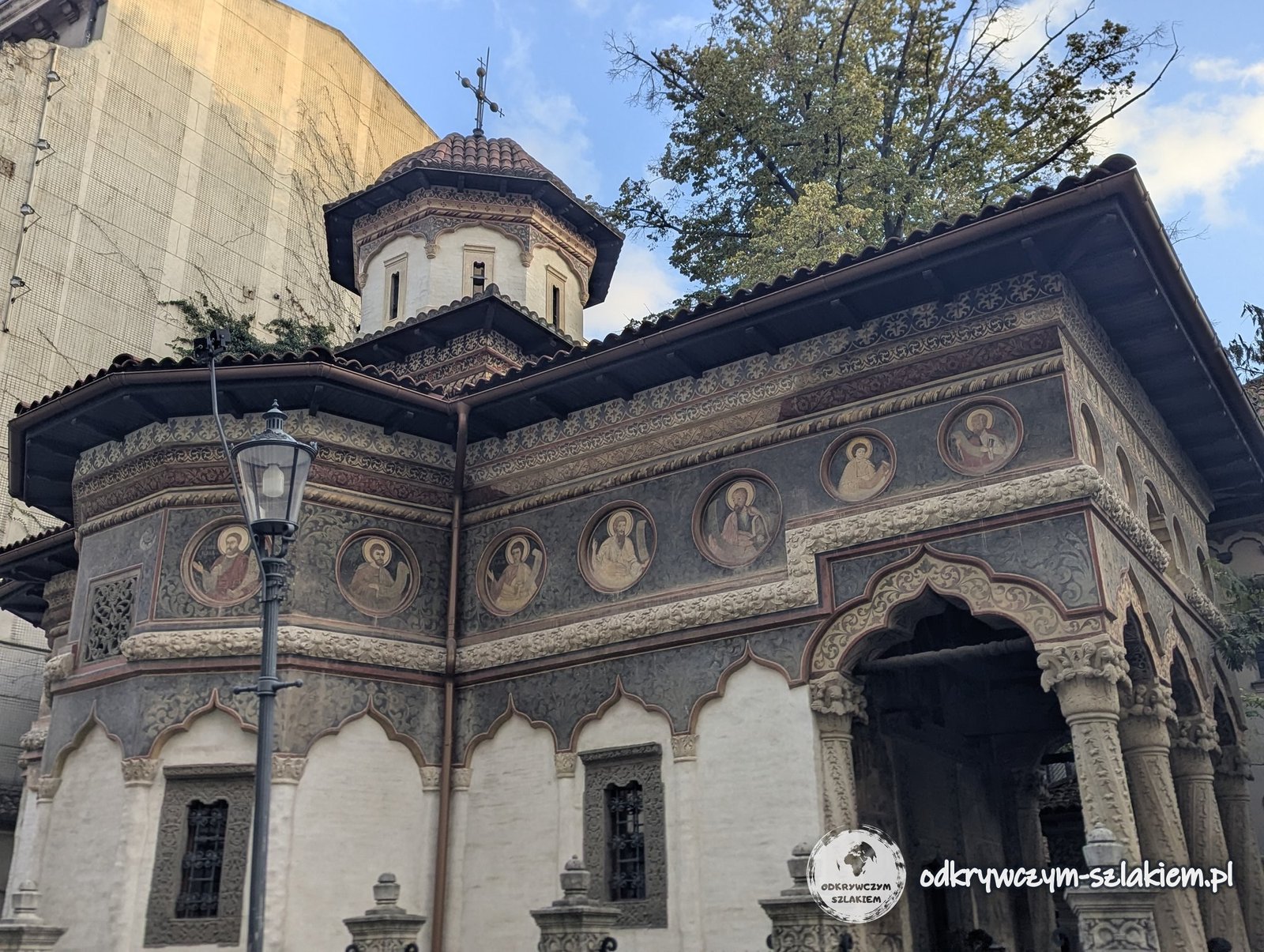
After the inn was demolished, the church was restored in 1904–1940 to a design by Ion Mincu. A cloister with a lapidarium – tombstones found around the church, columns and capitals – runs around the courtyard. Since 2008 it has been a convent, known for its choir singing Byzantine music. The church is open daily from 8:00 to 19:00.

The Old Princely Court (Curtea Veche)
A few steps from Stavropoleos are the remains of the Old Princely Court (Curtea Veche). A document issued here on 20 September 1459 by Vlad III the Impaler is the oldest certain mention of Bucharest – which is why 20 September is celebrated as Bucharest Day. The court ceased to function after a fire in 1718. The museum in the palace ruins has been closed since 2015; in 2026 the city announced that the ruins would be secured.
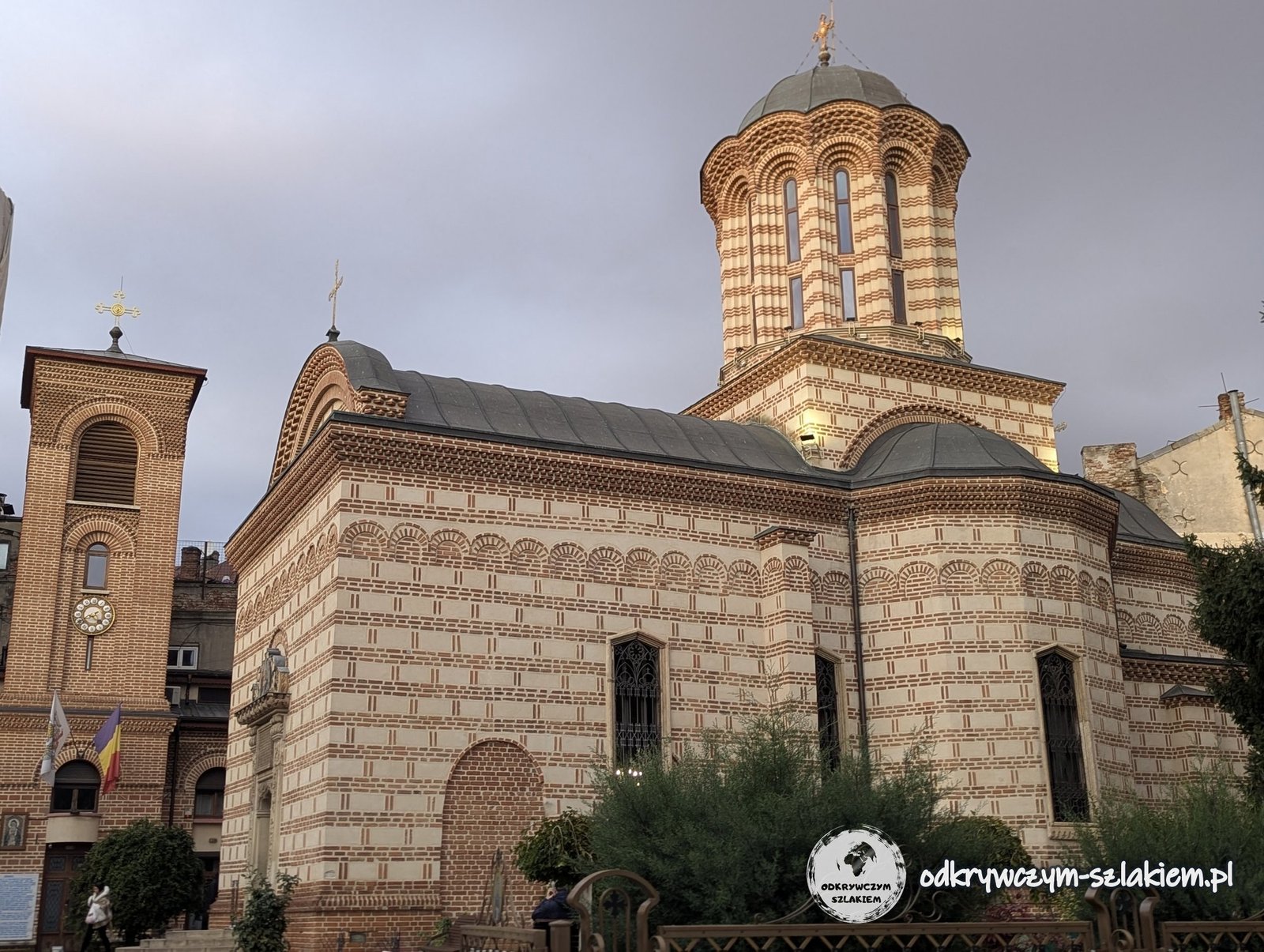

Next to the ruins stands the Saint Anthony – Curtea Veche church, founded in the mid-16th century by Prince Mircea the Shepherd (Mircea Ciobanul), who is buried here. It is considered the oldest church in Bucharest preserved in its original form, and for about two centuries the princes of Wallachia were crowned in it. Its walls are striped with bands of brick and light plaster.
Vlad the Impaler was a 15th-century prince of Wallachia, known for his cruel punishments of enemies; Bram Stoker took the name for Dracula from his nickname Drăculea. In Bucharest you even come across his image on murals – this one was near Revolution Square.

FCSB v Corvinul Hunedoara at the Arena Națională
On Saturday 7 November 2026 in the evening we went to the Arena Națională for FCSB v Corvinul Hunedoara in round 15 of the Romanian Superliga. The Arena Națională has 55,634 seats and is the largest stadium in Romania. It opened in 2011 on the site of the old Lia Manoliu stadium; it has a retractable roof, hosted the Europa League final in 2012 and four matches of Euro 2020 in 2021.

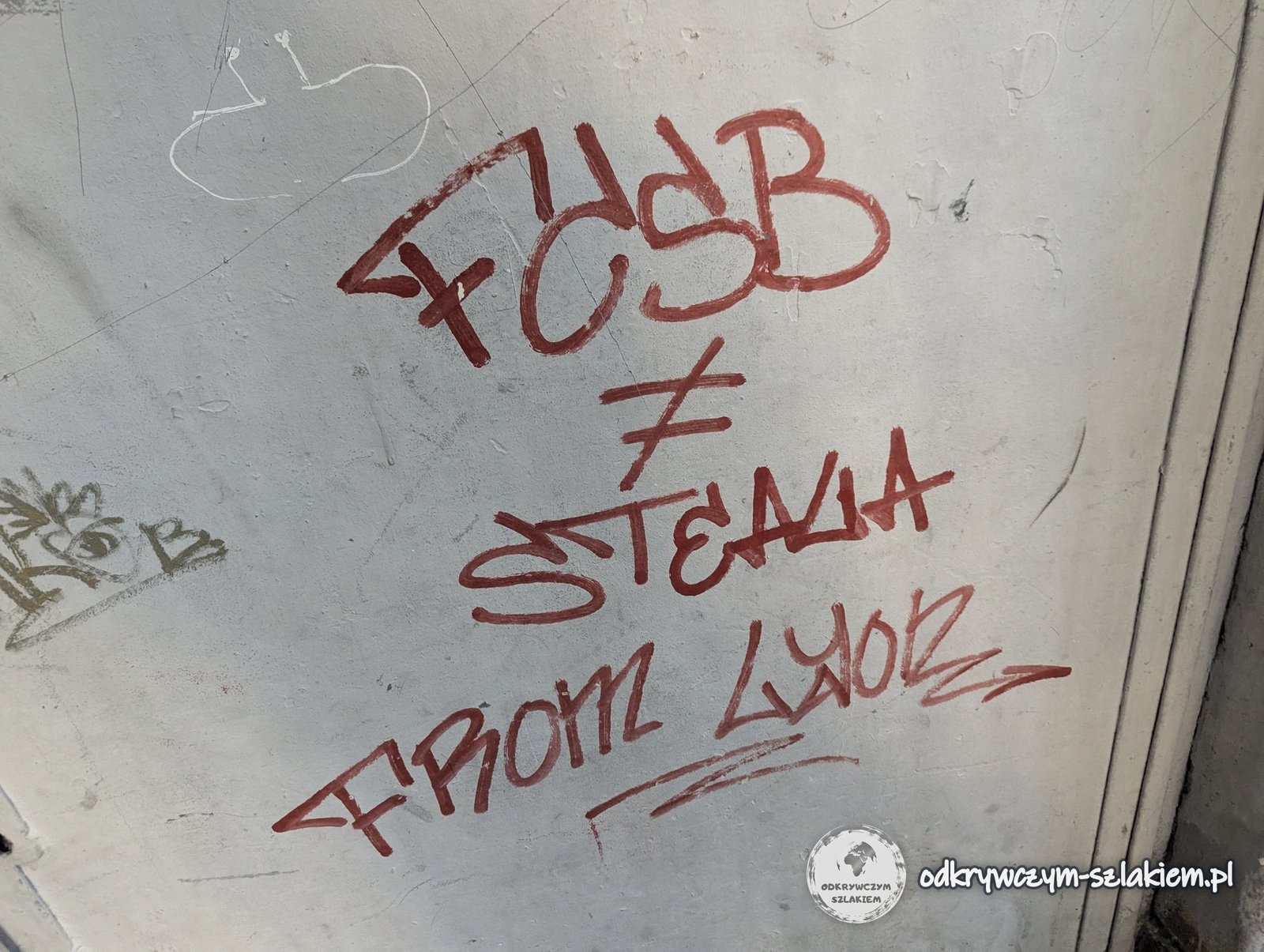
Until 2017 FCSB played as Steaua Bucharest. After years of court battles with the Ministry of Defence, which owns the army club CSA Steaua, it had to change its name and crest, and the courts awarded CSA Steaua the trophies won before 2003 – including the 1986 European Cup. Since 2015 FCSB has no longer played at the army’s Ghencea stadium but at the Arena Națională. The dispute over who is the “real Steaua” is visible in the streets – in Bucharest we kept seeing graffiti saying “FCSB ≠ Steaua”.
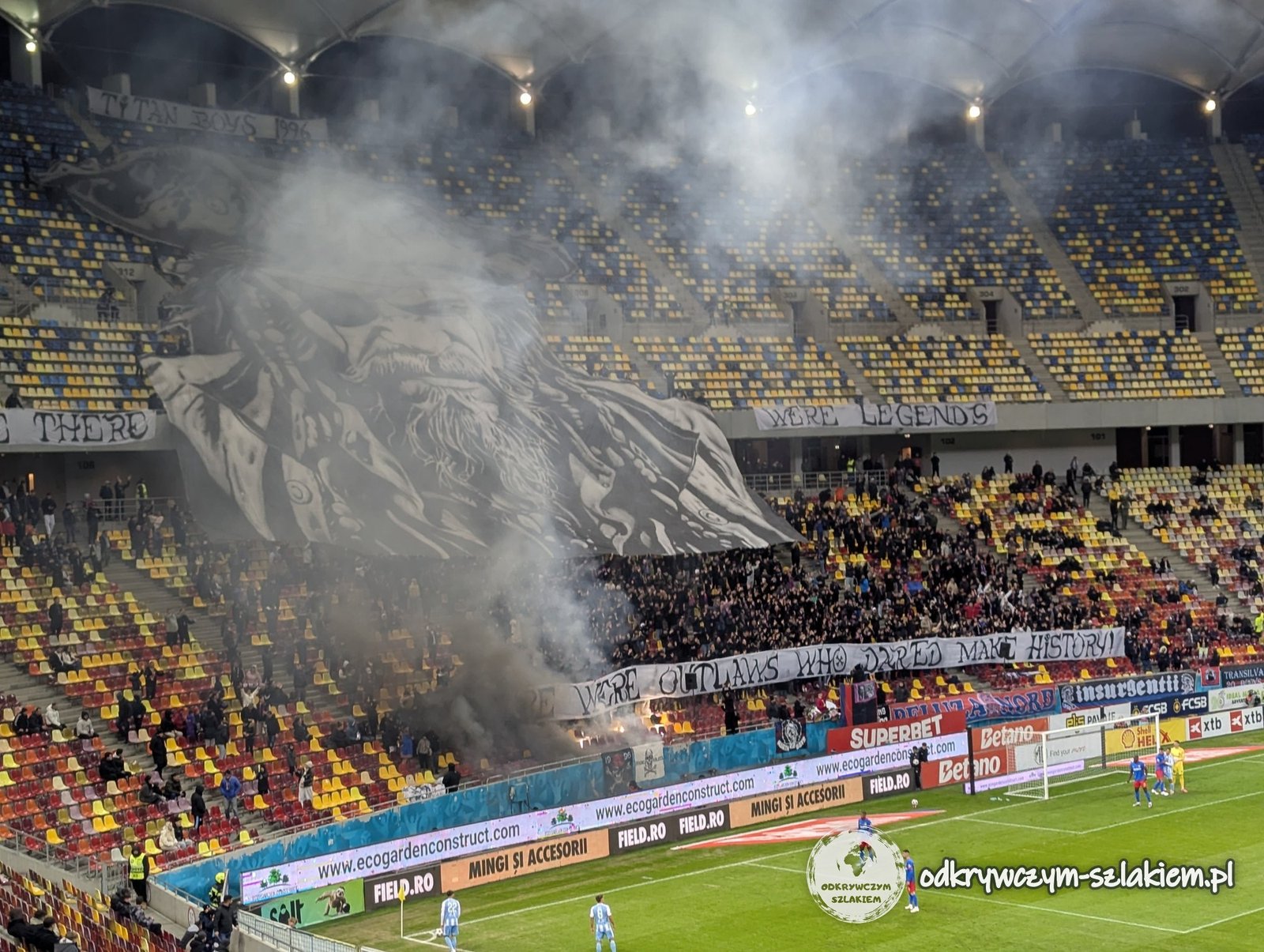
The match kicked off at 20:30. We bought our tickets online for 50 lei each, plus a 2.5-lei transaction fee – only seats in the organised fans’ stand were cheaper. According to Romanian radio about 5,700 spectators came, so the huge stadium was mostly empty, but the FCSB fans had prepared a display for kick-off: a huge banner with the face of a bearded man and the slogan “We’re outlaws who dared make history”, plus flares whose smoke covered the whole stand.
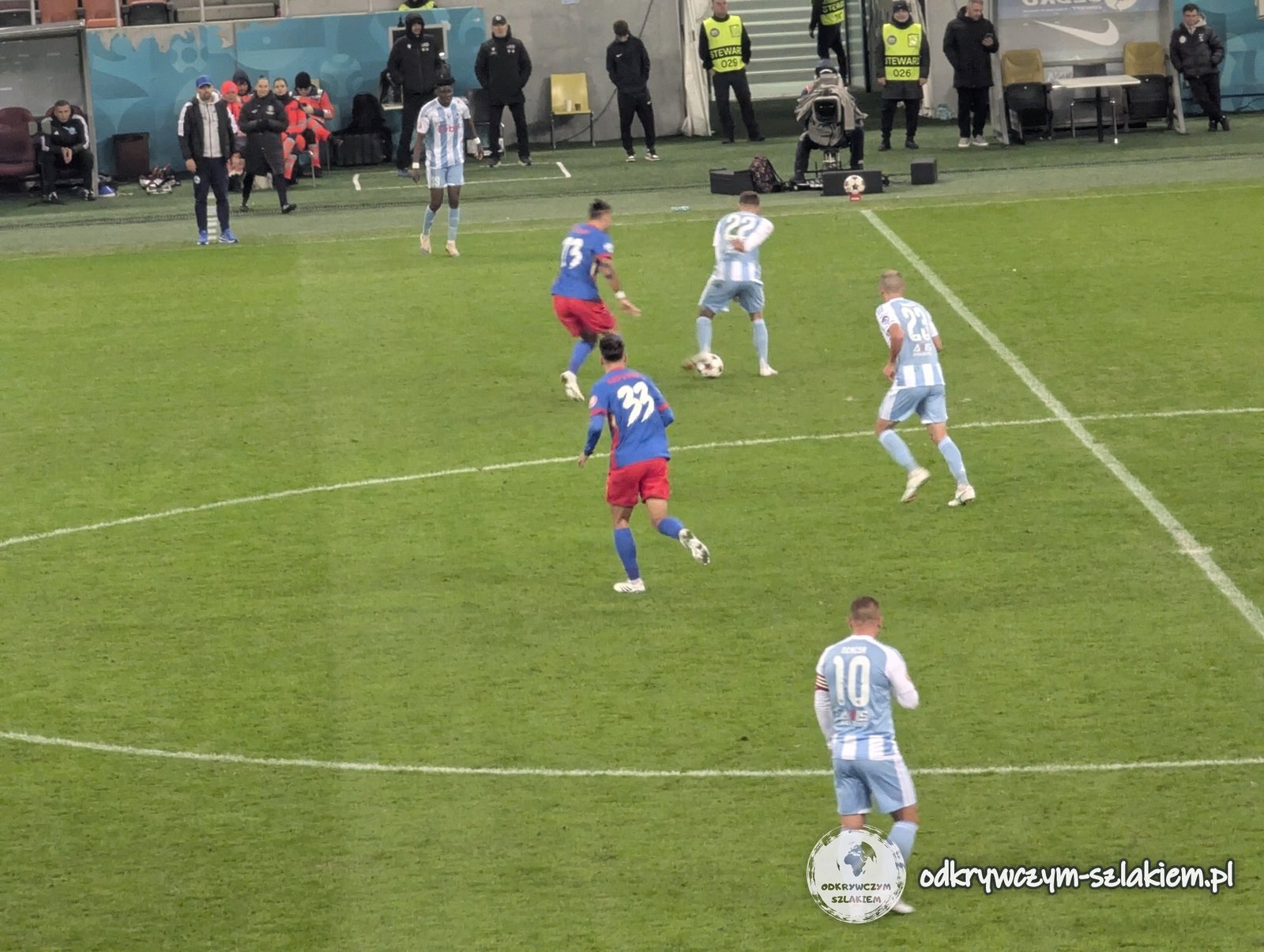
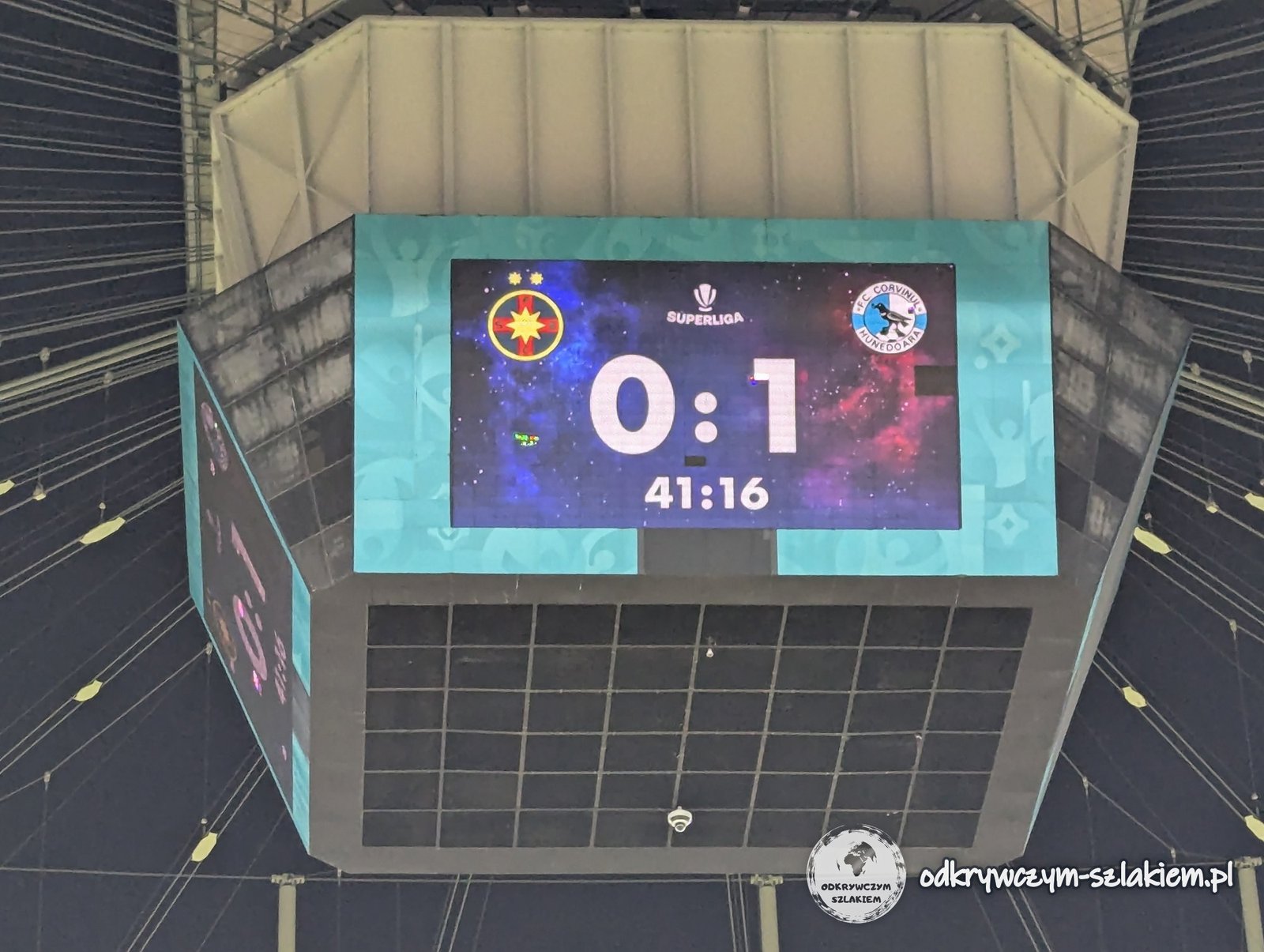
The only goal was scored in the 41st minute by Andrej Fabry of Corvinul – from outside the box. The newly promoted side from Hunedoara won 1–0, and for FCSB it was a third defeat in a row. At the stadium a beer (Tuborg, 0.4 l) cost 15 lei, and water and soft drinks 10–12 lei.


The Palace of the Parliament and Unirii Boulevard
On Sunday evening we walked along Unirii Boulevard to the Palace of the Parliament (Palatul Parlamentului) – Nicolae Ceaușescu’s former House of the People (Casa Poporului). The foundation stone was laid on 25 June 1984, and construction was only completed in 1997, after the dictator’s fall. The chief architect was Anca Petrescu, who won the competition at the age of 28; about 700 architects worked under her. The building measures 240 × 270 m, is about 84 m high and reaches 92 m underground. According to Guinness World Records it is the heaviest building in the world. Today it houses the Chamber of Deputies and the Senate, as well as the Museum of Contemporary Art.

For the palace and the surrounding Civic Centre (Centrul Civic) about 7 km² of the old centre were demolished, and some 40,000 people had to move out. Unirii Boulevard, which leads to the palace, was originally called the Victory of Socialism Boulevard. It is about 2.8 km long and 92 m wide – more than the Champs-Élysées in Paris, which Ceaușescu wanted to surpass. Monumental 1980s blocks line both sides.

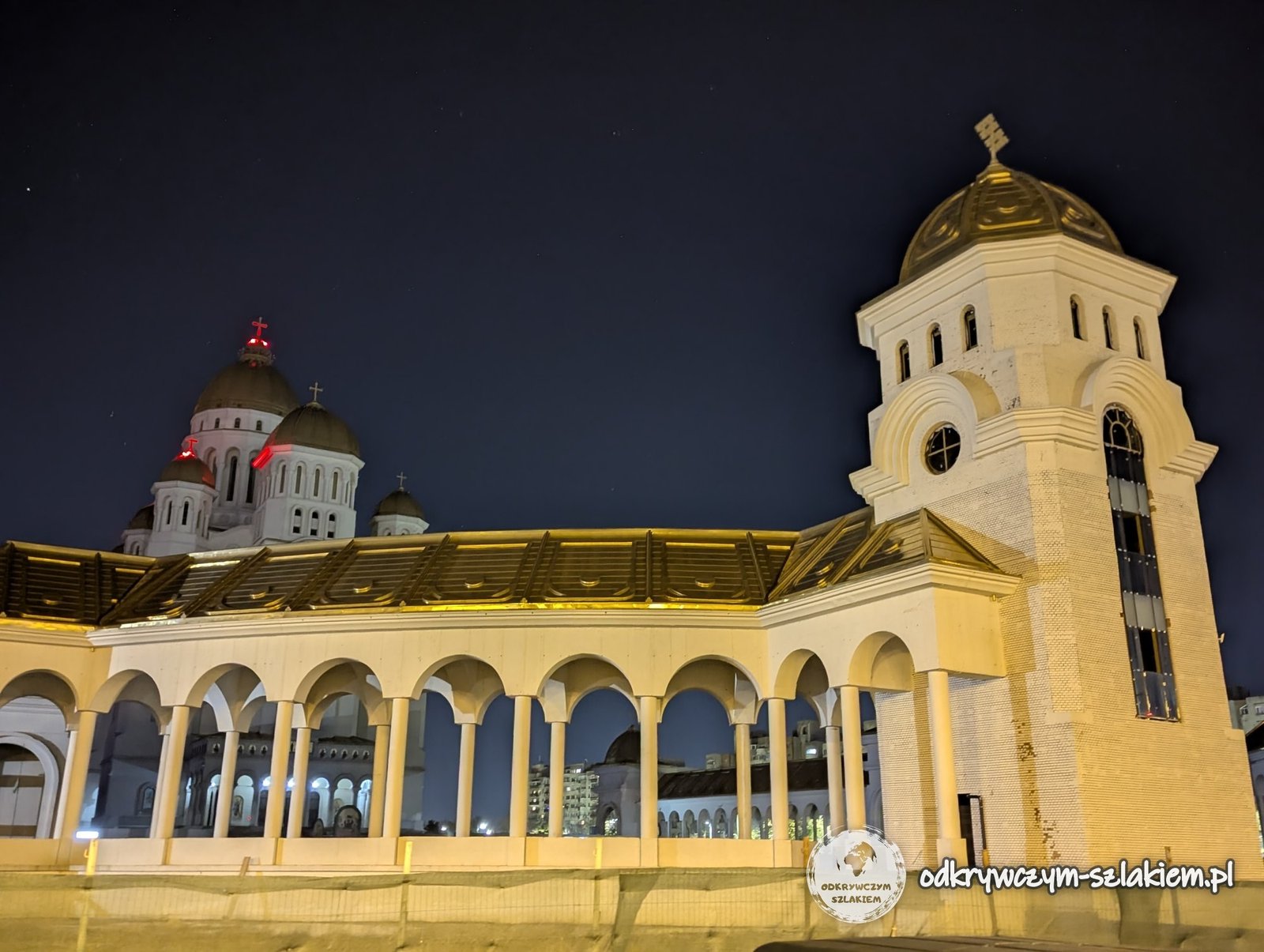
Behind the palace, on Izvor Street, stands the new People’s Salvation Cathedral (Catedrala Mântuirii Neamului) – the tallest Orthodox church in the world (127 m; some sources give 133 m including the cross). The altar was consecrated in November 2018 and the whole church with its mosaics in October 2025. In the evening we walked to the colonnade and the ornate gate around the cathedral.

North Station (Gara de Nord) and Calea Griviței
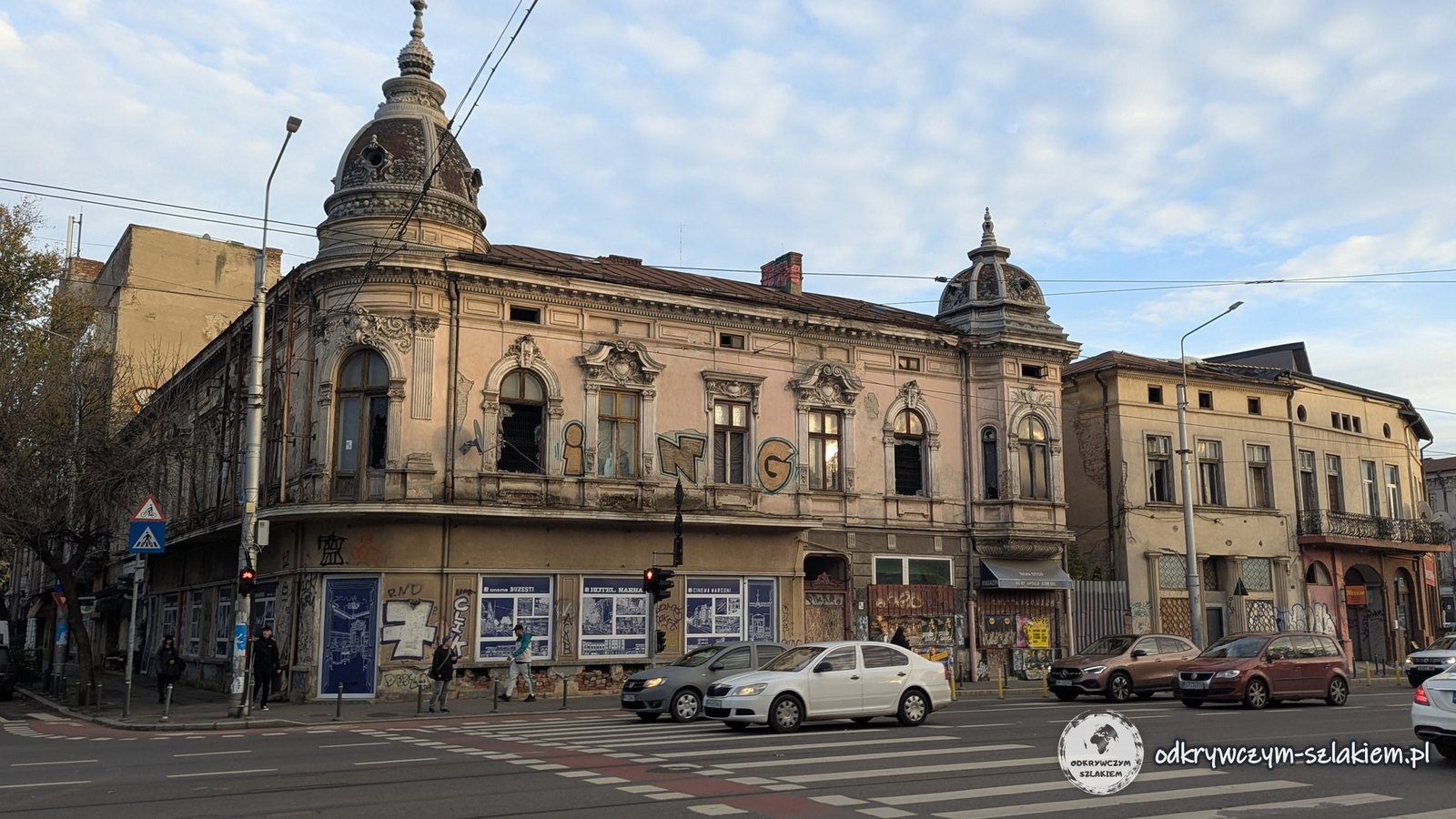
On Monday morning we went to North Station (Gara de Nord, officially București Nord), where the train to Brașov leaves from. It is the largest railway station in Romania, opened in 1872 as Gara Târgoviștei; it has 8 platforms and 14 tracks. On Wednesday afternoon we came back here from Brașov and went for a meal nearby before our flight. Along Calea Griviței, which runs from the station towards the centre, there are richly decorated but often neglected buildings.
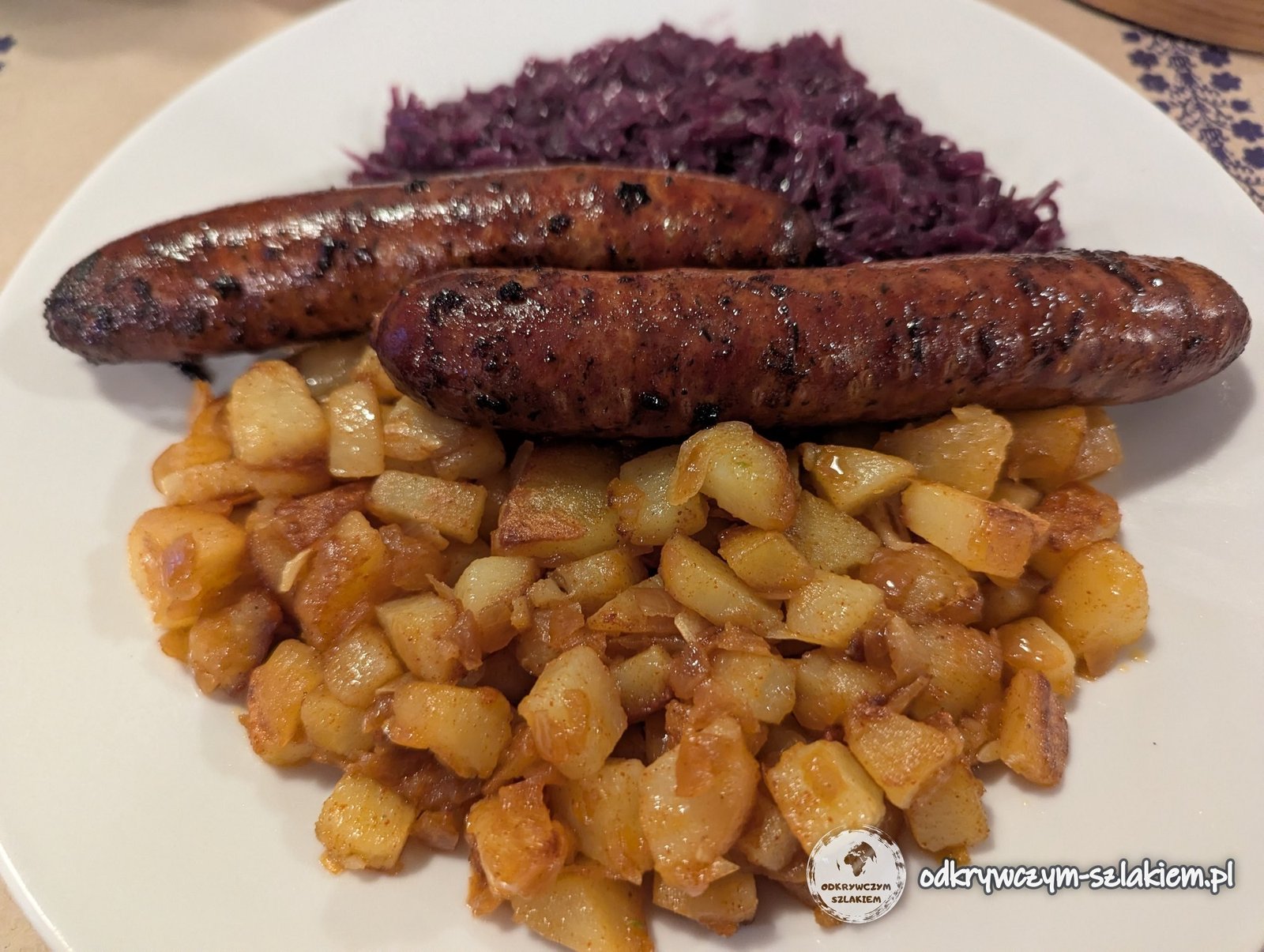
We ate at the Old Kitchen restaurant on Sfinții Voievozi Street, a few minutes from the station. Beef stew (tocană) with mashed potatoes and sausages with roast potatoes cost 69 lei each, bean goulash 55 lei, and a bottle of Csíki beer from Transylvania 20 lei.

The Arc de Triomphe
After lunch we went north to the Arc de Triomphe (Arcul de Triumf). The first, wooden arch was put up here after independence was won in 1878, another in 1922, and the present stone façade in 1935–1936 to a design by Petre Antonescu. The arch is 27 m high and modelled on the one in Paris. Since March 2025 you can go up to the terrace on top (Tuesday–Sunday, 10:00–18:00). We were here after dark, when the arch is lit up.

King Michael I Park (Herăstrău)
From the arch it is a short walk to King Michael I Park – until 2017 it was called Herăstrău. It covers about 187 ha, 74 ha of which is a lake, and part of it is an open-air museum – the Dimitrie Gusti Village Museum. We walked along the lake in the dark, all the way to the northern exit at Free Press Square.
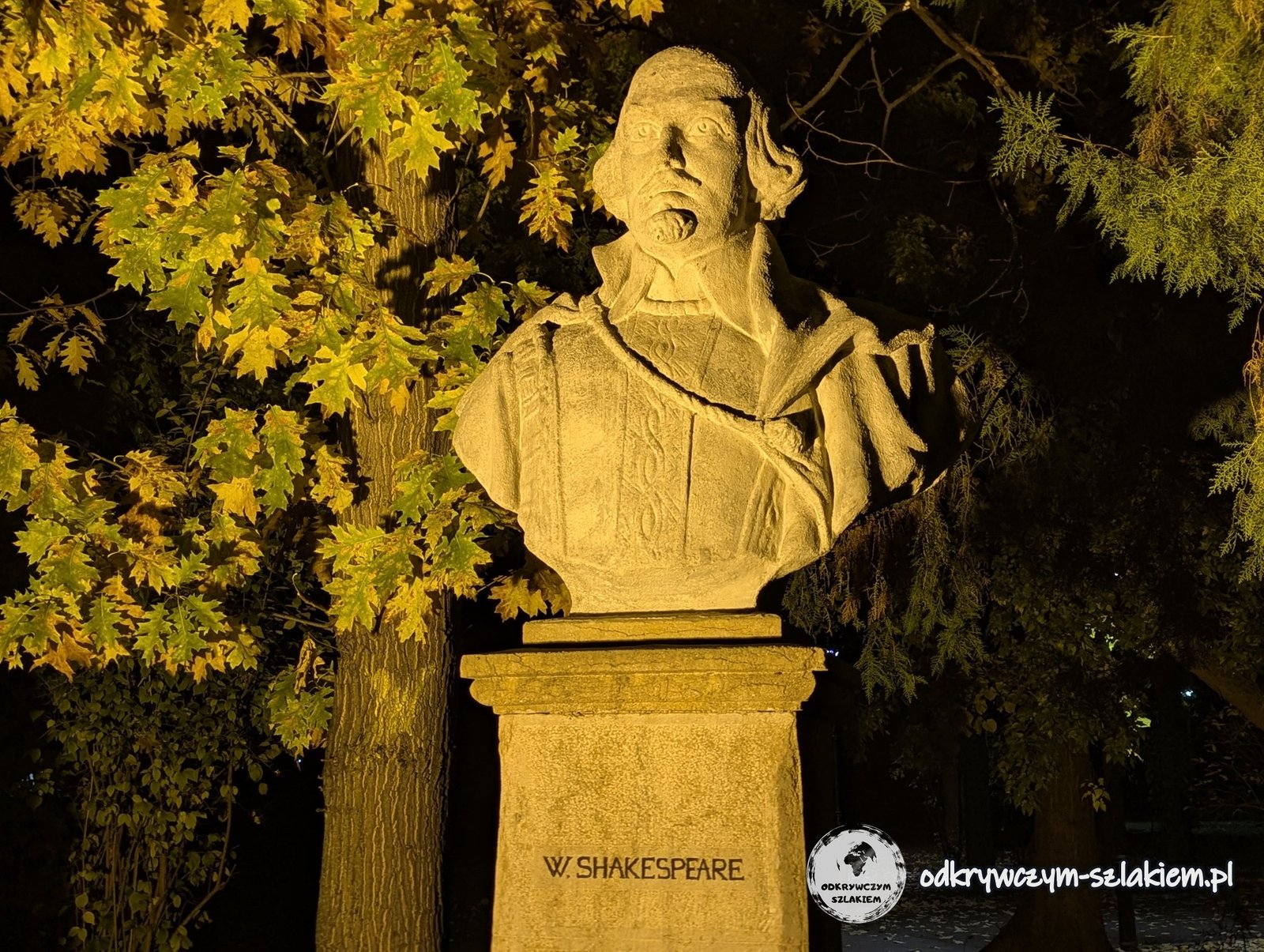
In the park there is, among other things, Rose Island (Insula Trandafirilor) with bronze busts of the “founding fathers” of the European Union from 2006 – including Jean Monnet, Robert Schuman, Konrad Adenauer and Alcide De Gasperi. Along the paths there are also stone busts of writers and composers from 1953, including Shakespeare, Beethoven and Mark Twain.

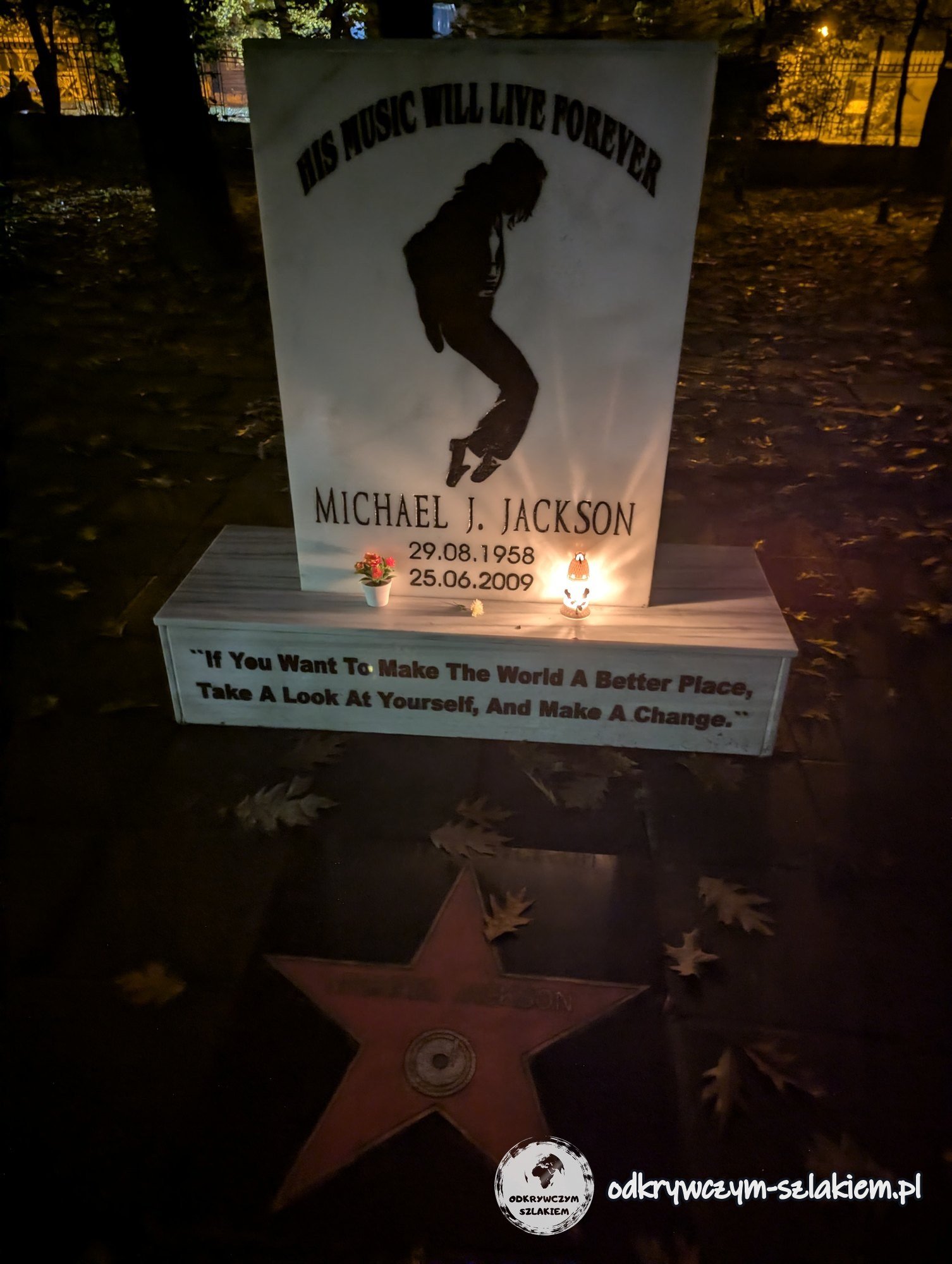
There is also a Michael Jackson alley, opened on 29 August 2009, on what would have been the singer’s 51st birthday, with a memorial plaque where fans still light candles. Jackson played in Bucharest on 1 October 1992 at the National Stadium (Lia Manoliu) on his Dangerous World Tour; the concert was later released on the DVD “Live in Bucharest”.
Free Press Square: the House of the Free Press and the Wings monument
Towering over Free Press Square (Piața Presei Libere) is the House of the Free Press (Casa Presei Libere). It was built in 1952–1957 as Casa Scînteii – the seat of the newspaper “Scînteia”, the organ of the Communist Party. Horia Maicu designed it after the Stalin-era skyscrapers of Moscow, especially the main building of Moscow University – which is why it looks so much like the Palace of Culture and Science in Warsaw. It is 91.6 m tall (104 m with the antenna) and was Bucharest’s tallest building until 2007.
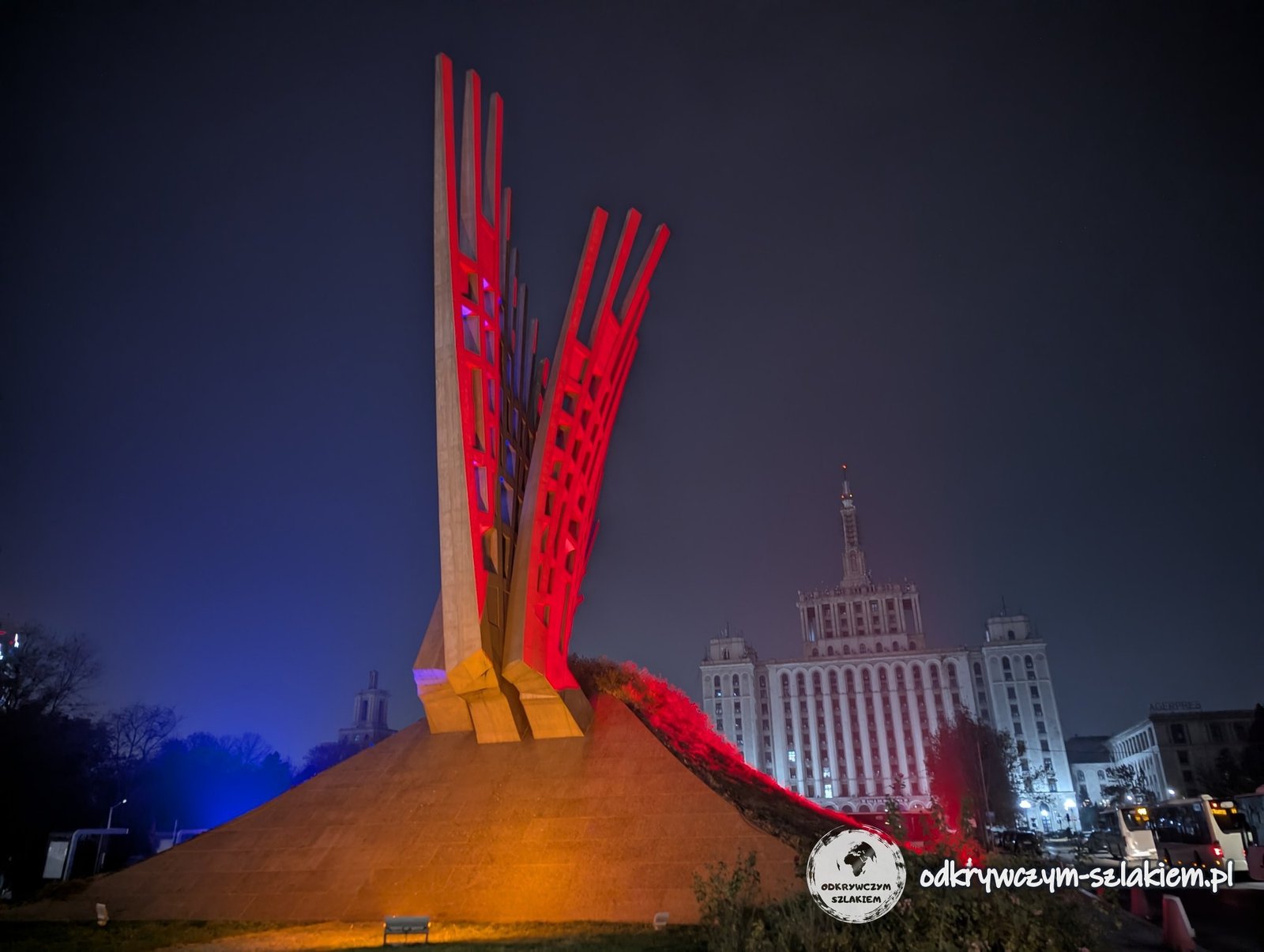
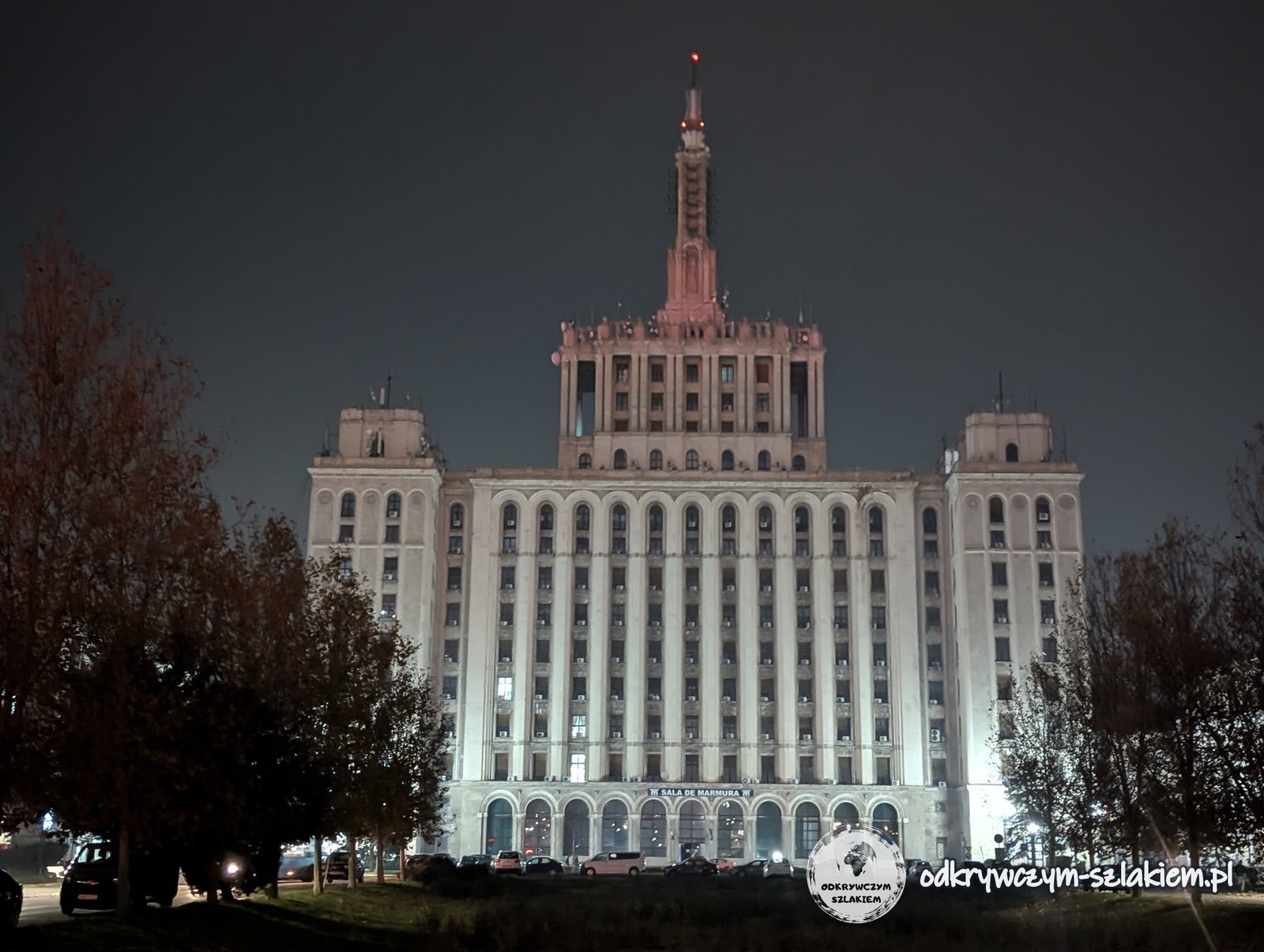
Until March 1990 a 9-metre statue of Lenin stood in front of the building – today it lies behind the palace in Mogoșoaia near Bucharest. In 2016 the Wings monument (Aripi) by Mihai Buculei, officially the Monument of the Anti-Communist Struggle, was put up in its place. Its three bronze-covered steel wings are about 30 m high with the plinth and are lit up in the evening – when we were there, in the colours of the Romanian flag. From the square it is about 2 km to Băneasa Airport, where we flew from that evening.

Practical information

- Airports: Bucharest has two airports with passenger flights. The main one, Henri Coandă (Otopeni), is 16.5 km north of the centre – we flew in there with Ryanair from Gdańsk. The smaller Aurel Vlaicu (Băneasa) is 8.5 km from the centre; from 2012 it handled only business flights, scheduled flights returned in 2023 and since 2026 Wizz Air has had a base here – we flew back to Warsaw from here. Before your trip, check which airport your flight leaves from.
- From Otopeni Airport to the centre: bus 100 (formerly 783) runs around the clock to Piața Unirii, takes about 45 minutes and costs 3 lei; since April 2026 it only stops at the departures hall. A train also runs from the airport to North Station (Gara de Nord) about every 40 minutes.
- Public transport: an STB ticket for buses, trams and trolleybuses valid for 90 minutes costs 3 lei, combined with the metro (120 minutes) 7 lei; a 24-hour surface-transport ticket is 8 lei, a 72-hour one 20 lei; a metro ride costs 5 lei (prices from November 2026). In vehicles with card logos you can pay contactless at the validator. The centre – from University Square via Revolution Square to the Old Town – is easy to cover on foot.
- Money and prices: Romania uses the leu (RON); in November 2026 one euro was about 5.35 lei. You can pay by card almost everywhere. Sample prices: a can of Ursus beer (0.5 l) in a shop – about 4.90 lei, a beer at the stadium – 15 lei, a large sandwich at a snack bar – about 54 lei, a main course in a restaurant – 55–70 lei.
- Watch out in the Old Town: many places rip off tourists – check the prices on the menu before ordering and the bill before paying.
- Palace of the Parliament: tours daily 9:00–17:00, only with a guide and after booking by phone at least 24 hours ahead (groups of 10 or more by email, 3 days ahead). A ticket for the standard route costs 85 lei (students 55 lei, children 40 lei). You need the original of your ID card or passport, and the entrance is from Izvor Street (as of November 2026).
- Athenaeum: visiting the hall costs 15 lei, but is only possible in short slots between rehearsals (in November 2026 usually half an hour or an hour a day). The George Enescu Philharmonic publishes the times for each month.
- FCSB match: we bought tickets for the league match at the Arena Națională online – 50 lei each plus a 2.5-lei transaction fee (November 2026); only seats in the organised fans’ stand were cheaper.
- Electricity: Romania uses type C and F sockets, 230 V, 50 Hz (IEC data, as of 2026) – plugs from most of continental Europe fit without an adapter.
- How much time: one full day on foot is enough for the centre – the Old Town, Calea Victoriei, the Athenaeum, Revolution Square and the Cișmigiu Gardens. The Palace of the Parliament with its interiors, King Michael I Park with the Arc de Triomphe and Free Press Square make a second day. The train to Brașov takes about 2.5–3 hours – more in the post about Brașov.