In the summer of 2018 Patrycja and I were working in Yosemite National Park on the Work & Travel programme – I write about the job itself, the accommodation and life in the park in the post Yosemite – information – Work & Travel USA 2018. We were supposed to stay until September, but on 13 July the Ferguson Fire broke out a few dozen kilometres from the valley, and it was only fully contained on 19 August. For three weeks we lived in smoke, then the park was closed to tourists, and on 3 August an evacuation was ordered – and through a misunderstanding I was left almost alone in the empty park. Below is the whole story: from the first smoke, through a convoy past burning trees and a Red Cross shelter, to staying with a family near Modesto we had never met before and a new job in Wyoming. Each stage comes with a video from my vlog from those days.
Table of contents
- Smoke over the valley – the first days of the fire
- A closed park and a week in San Francisco and Sacramento
- A plan for Mammoth Lakes and the evacuation order
- How Patrycja and I missed each other
- A week cut off from the world – and a convoy after all
- The shelter near Mariposa
- With Kevin’s family near Modesto (and the night-time sprinklers)
- Negotiating with the sponsor and a new job in Grand Teton
- What it taught us
Smoke over the valley – the first days of the fire
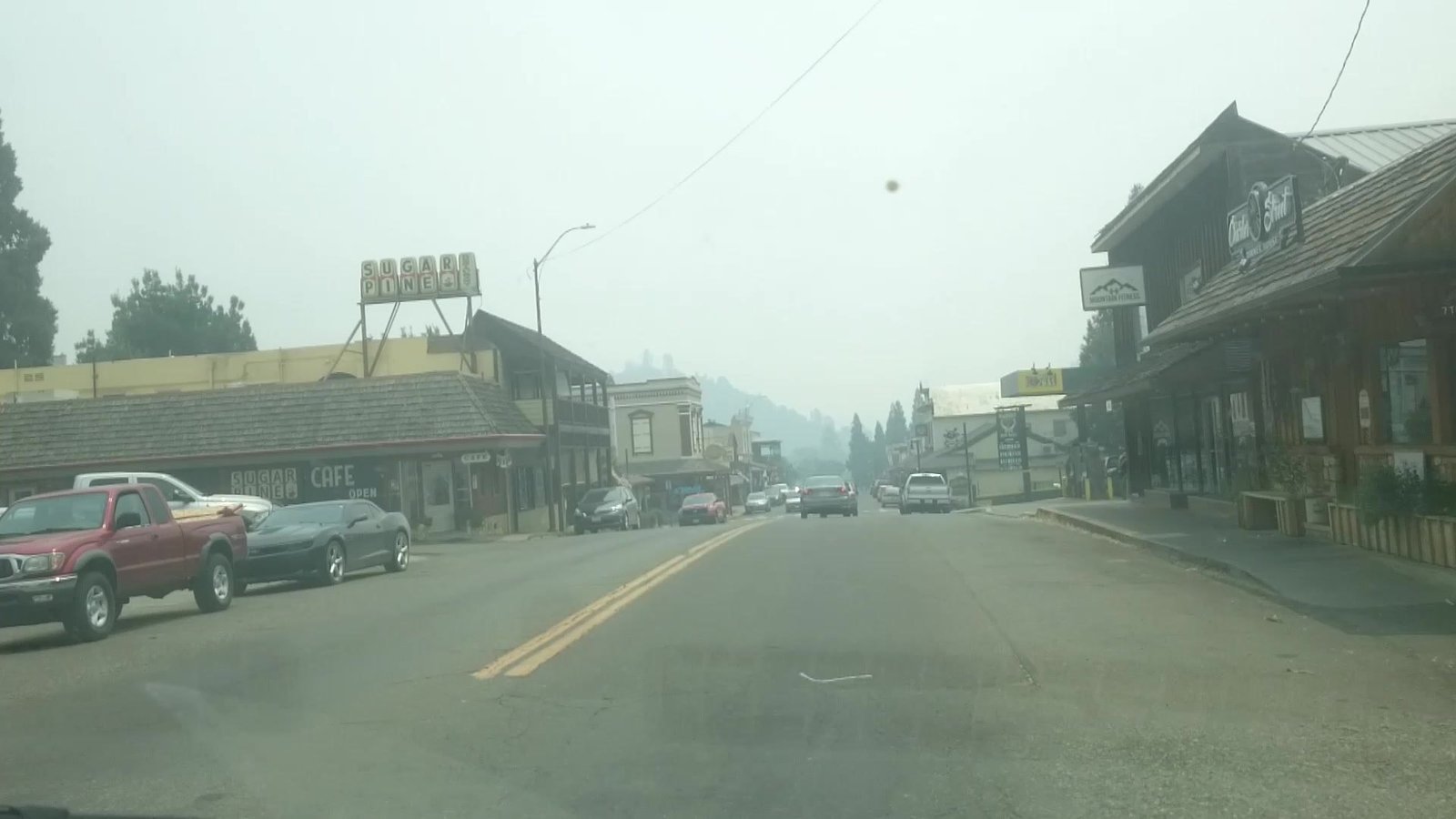
The fire broke out on the evening of Friday 13 July near Savage’s Trading Post, about 30 km south-west of Yosemite Village – caused, as it turned out much later, by an overheated catalytic converter of a car. The first effect we felt was a power cut: because of the firefighting operation we had no electricity until Sunday morning (we made it in time for the second half of the World Cup final, France vs Croatia). The service buildings in the park had their own generators; private residents were worse off. At that point we knew little about the fire and were sure it would be put out within a few days.
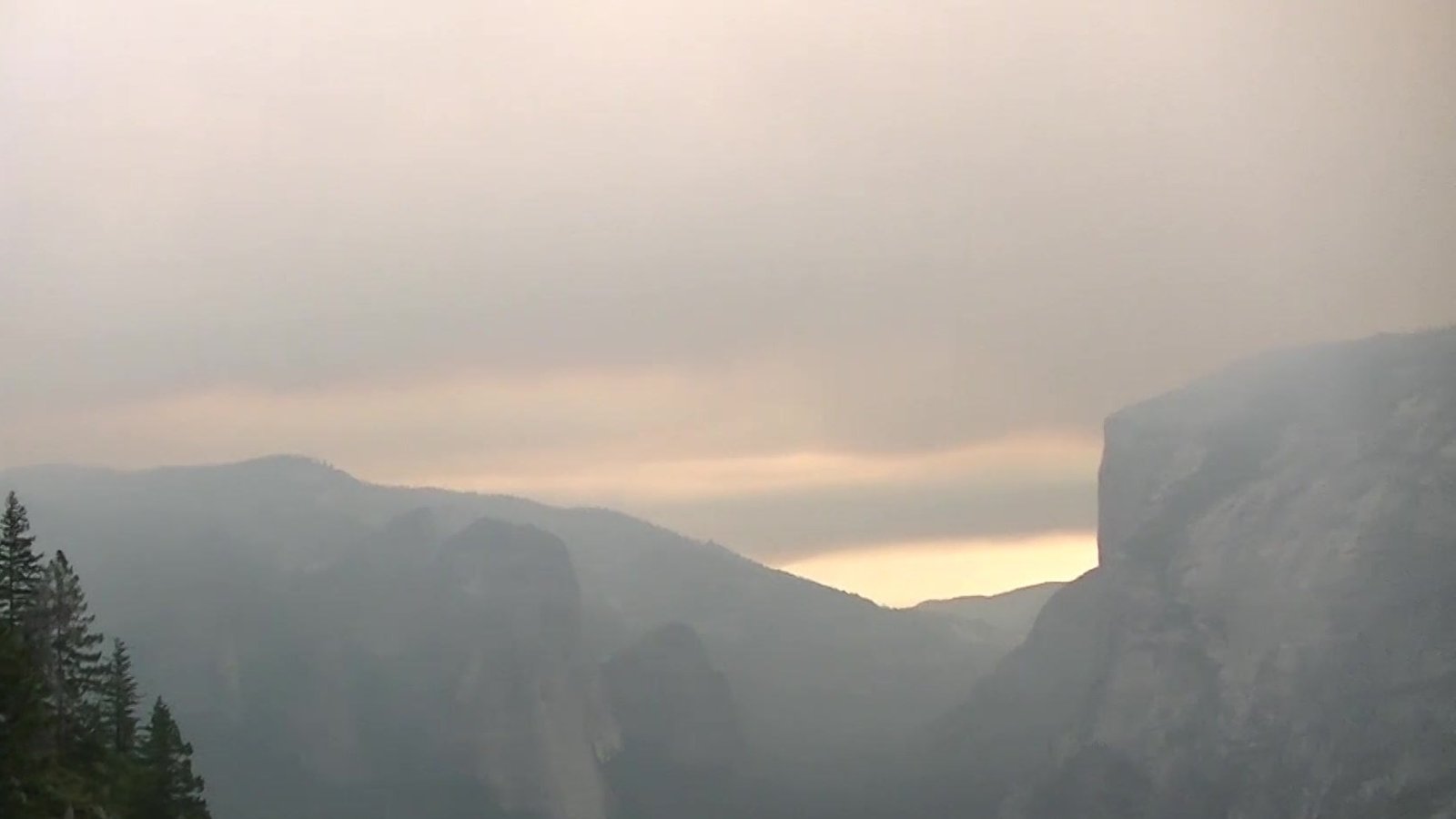
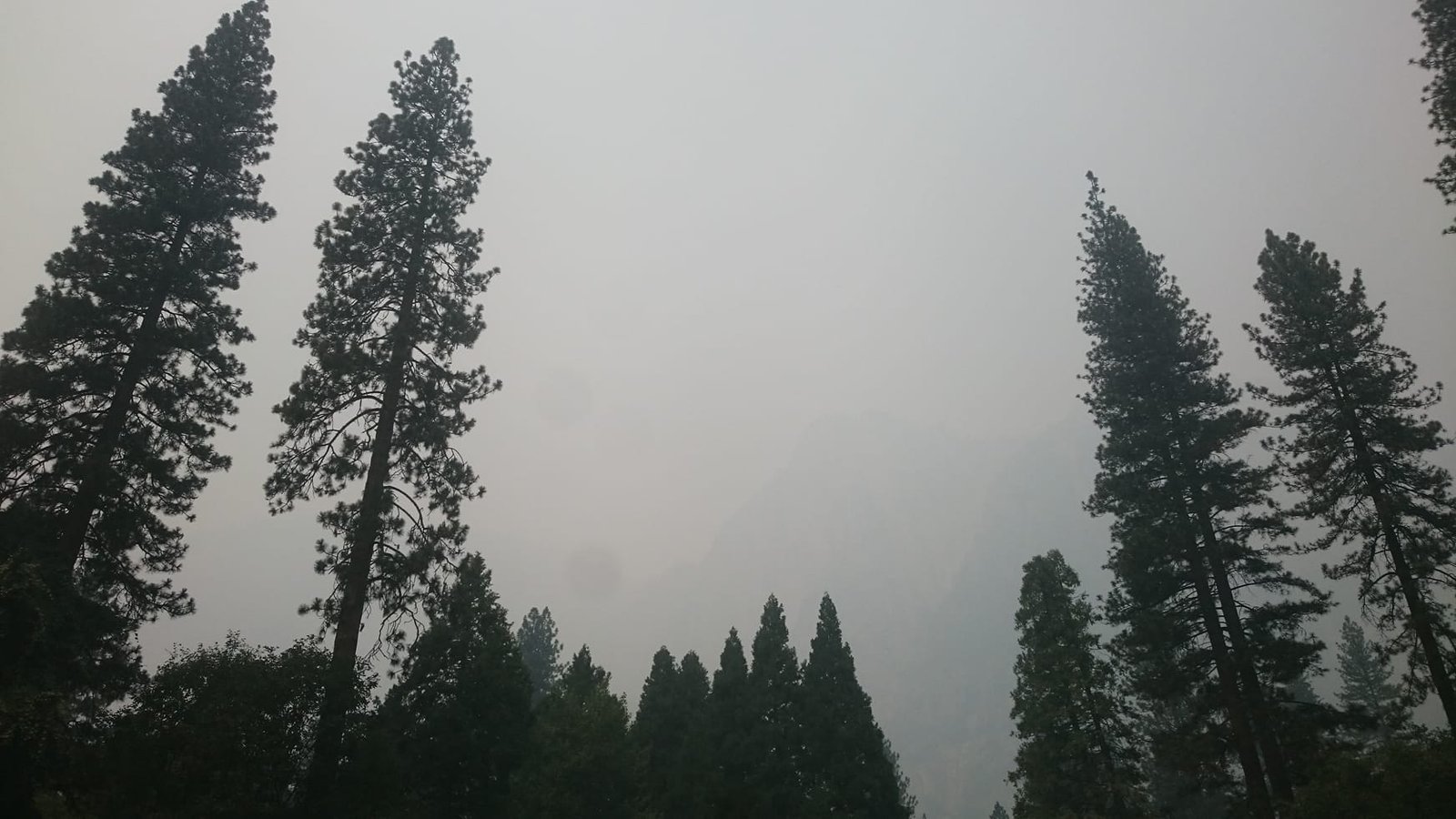
The smoke blew into the valley on Sunday 15 July – the very day we hiked the Four Mile Trail up to Glacier Point (2199 m). Instead of two- and three-thousand-metre peaks we saw a grey wall; at first we thought it was fog. We waited a long time for the smoke to clear, and in the end we went back down the same way – more about that hike in the post Yosemite – trails and viewpoints.
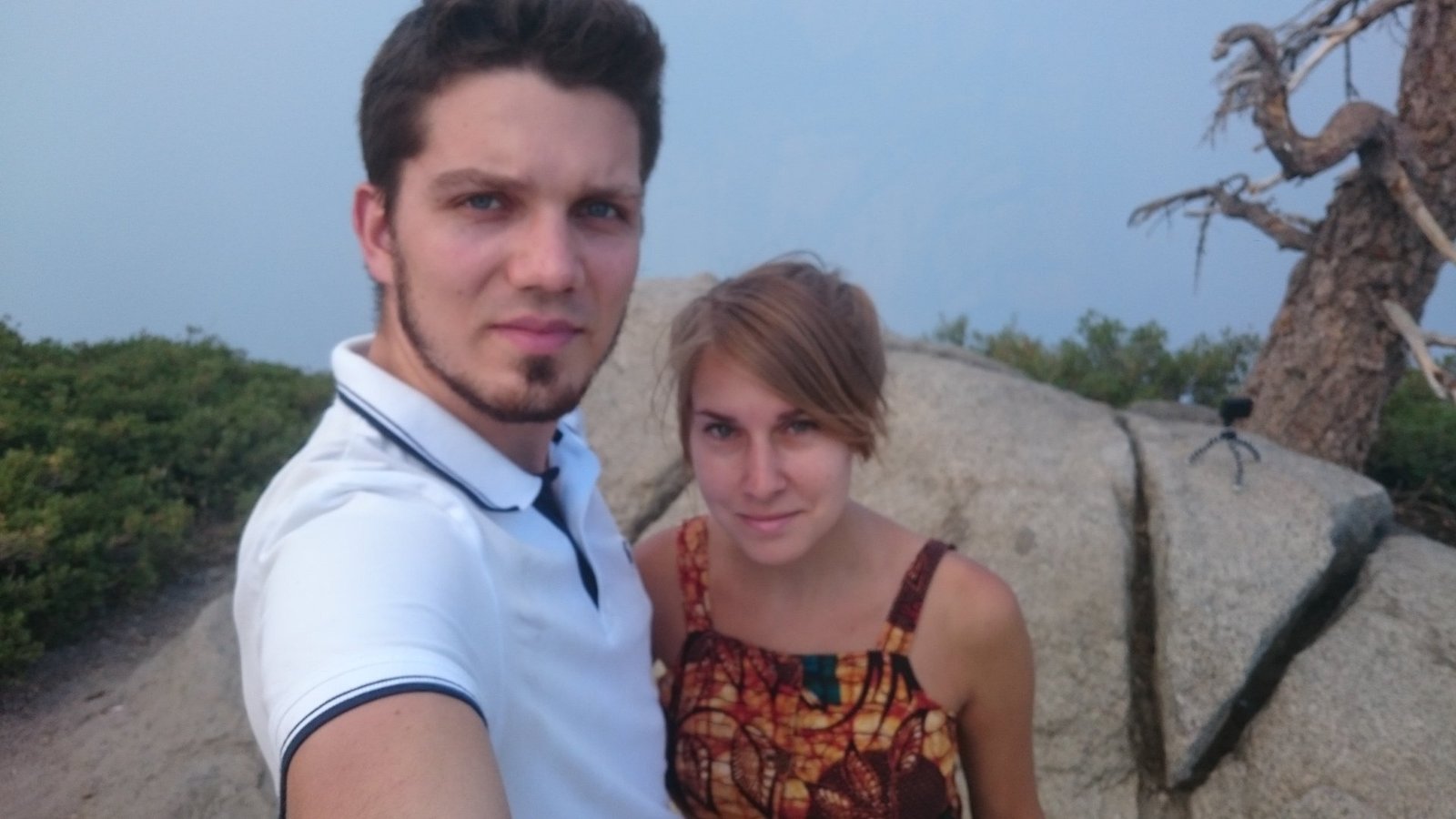
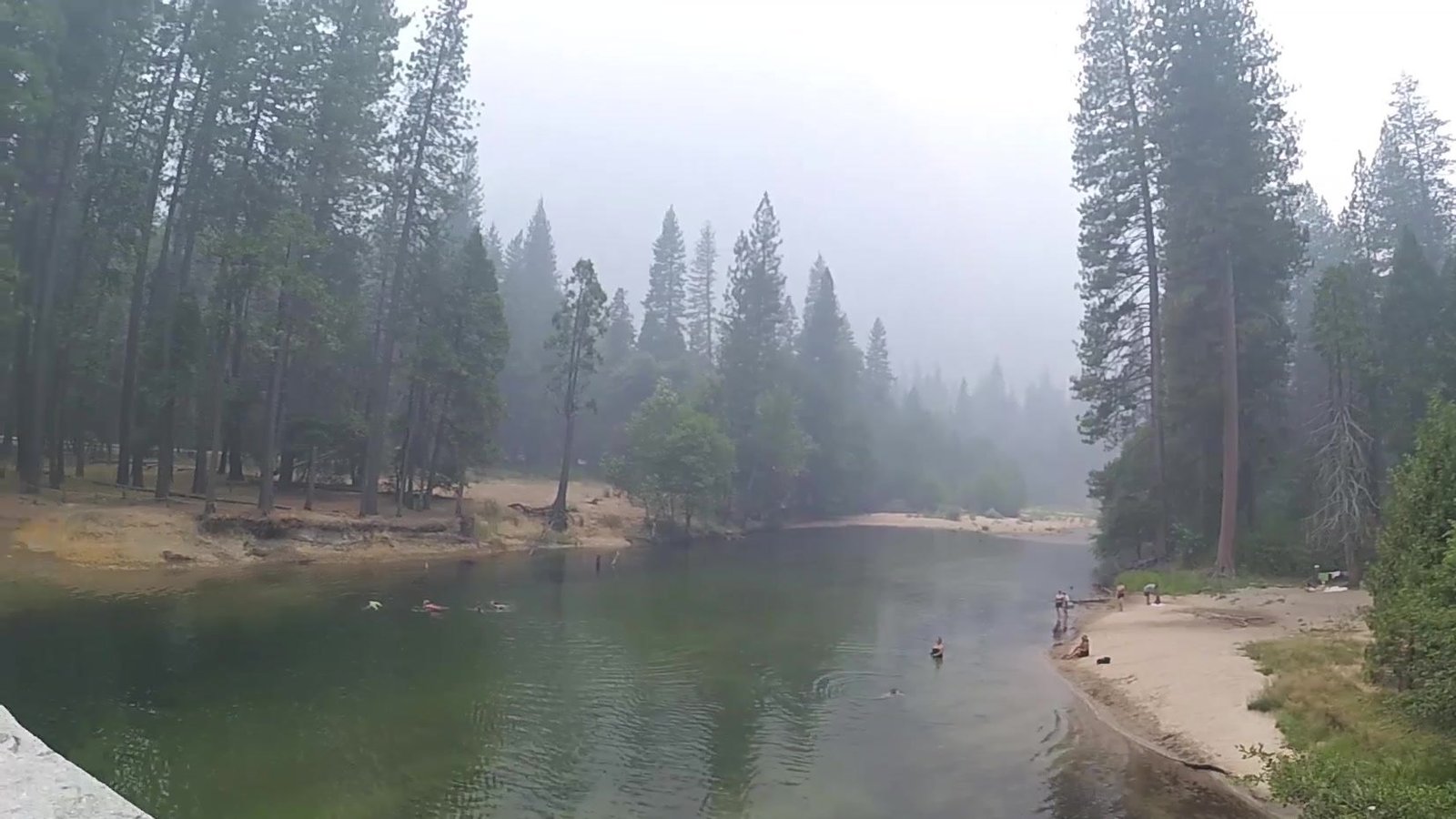
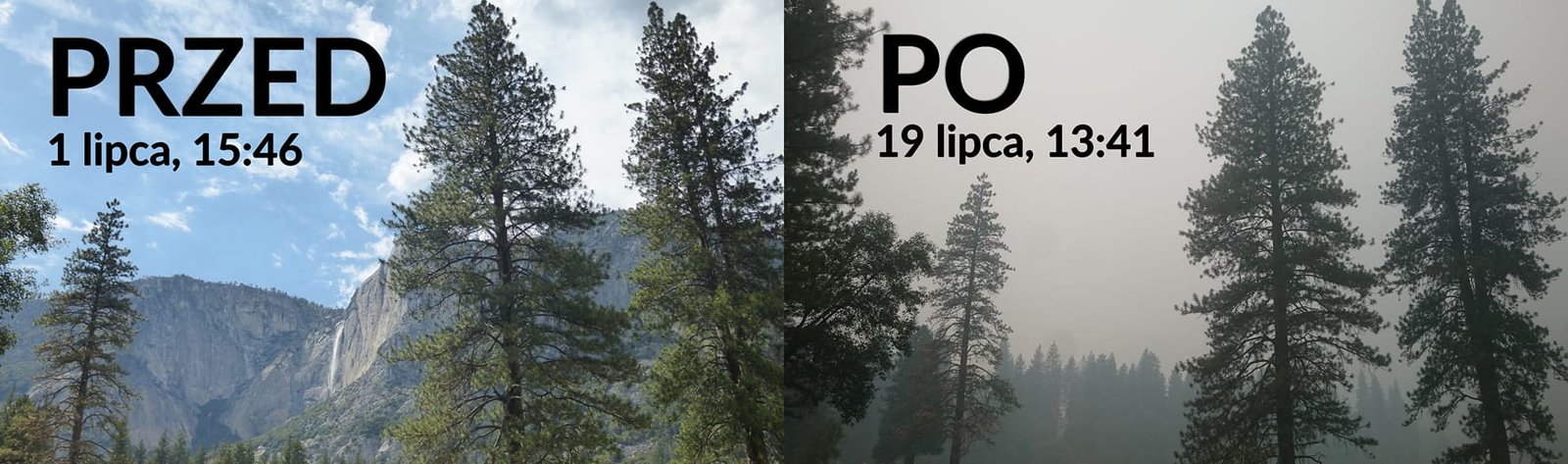
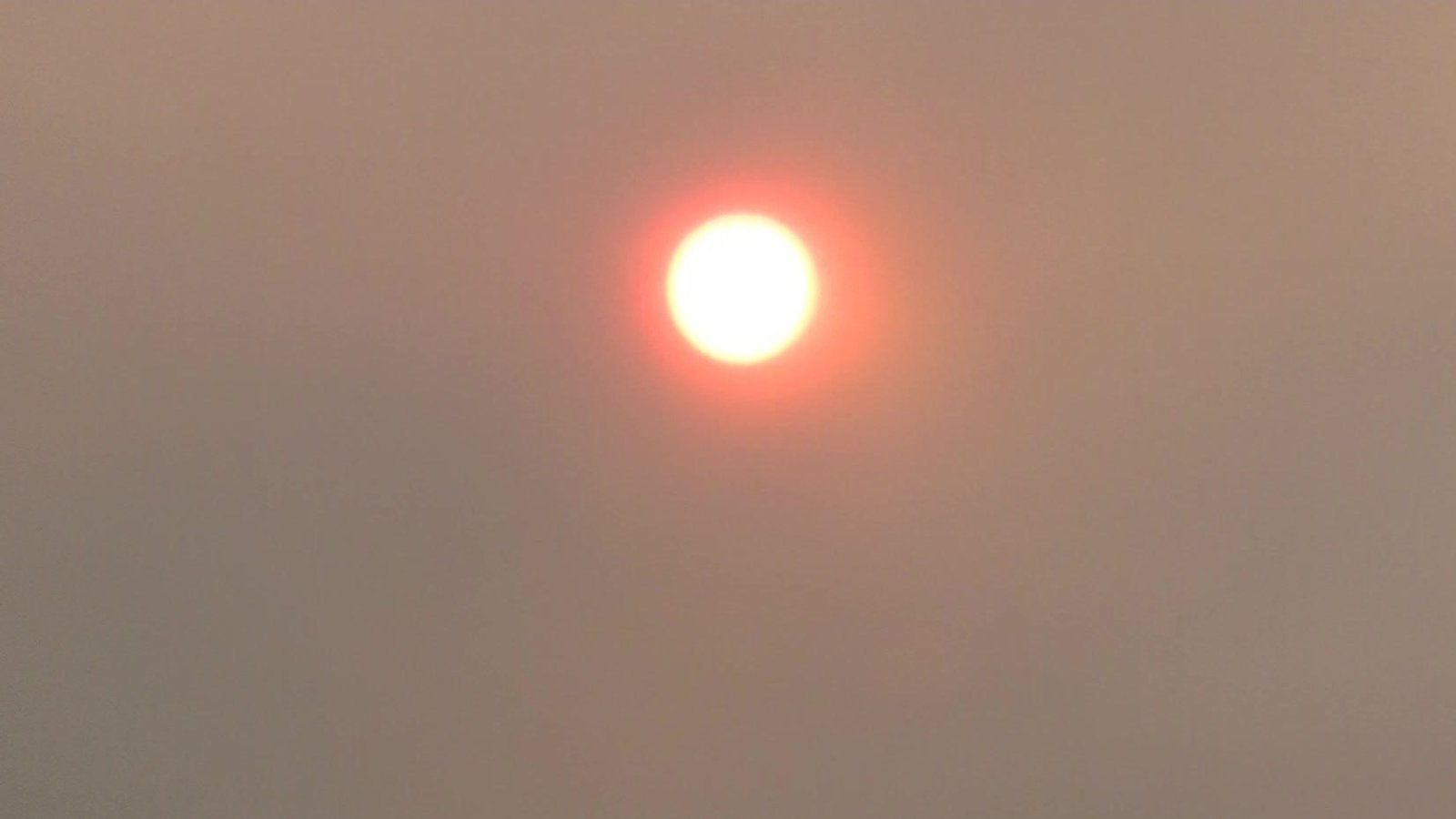
The following days looked the same: in the morning you could see nothing in the distance, in the evening the smoke thinned out, and the next morning it was back. Little light reached us during the day, and the sun shone through the smoke like a red ball. The difference is best seen in two photos from my way to work, taken from the same spot: on 1 July Yosemite Falls was in the background, on 19 July just a grey haze.
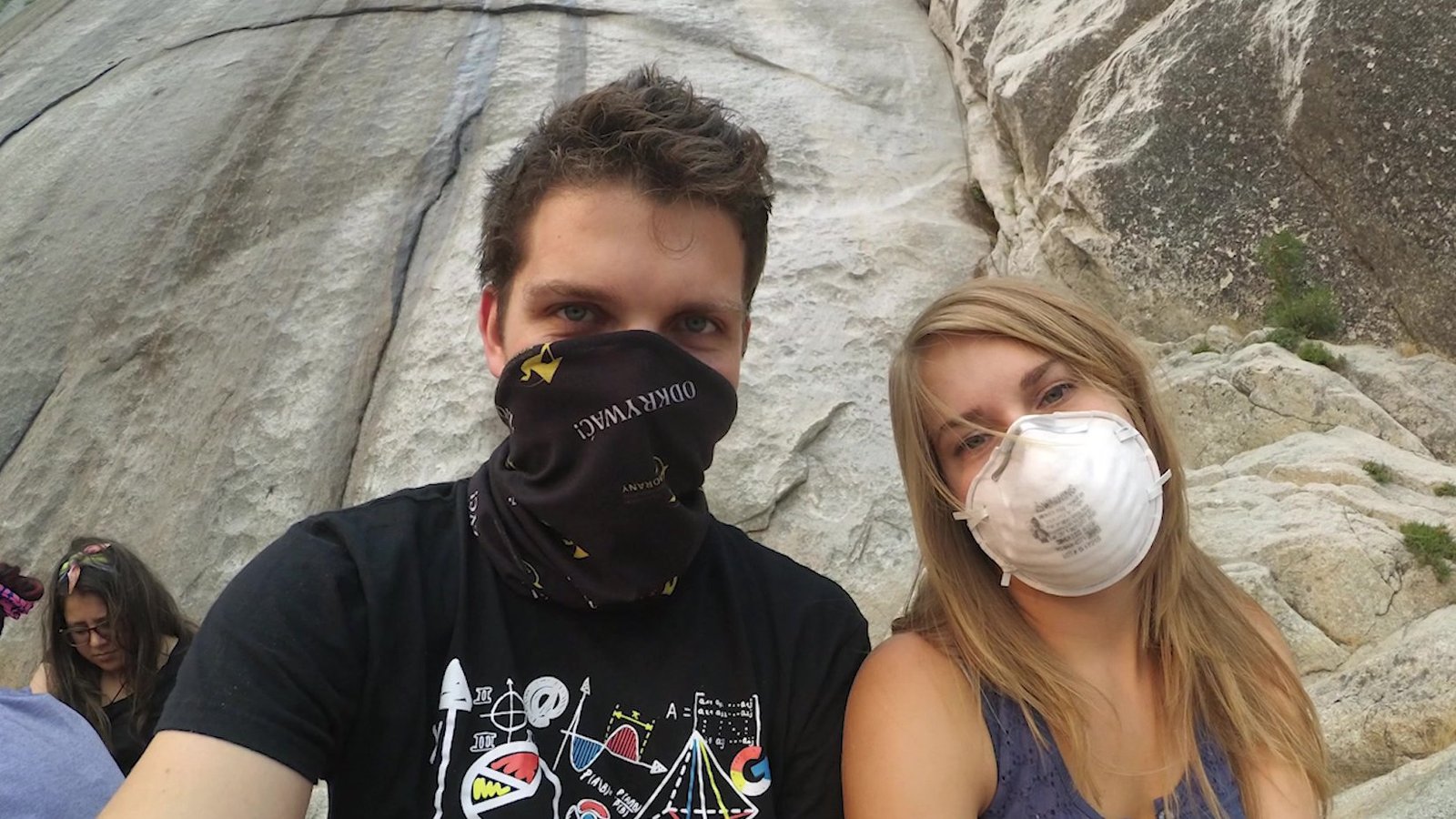
Breathing in the smoke was bad for our health, so we started wearing protective masks. Our most important mountain plans fell through too, including climbing North Dome and Half Dome. On 22 July the fire covered about 117 km², 2903 people were fighting it, and only 6% of it was contained. Fortunately the fire was not heading our way – the problem was the smoke, which covered such a large area that you had to drive quite a distance to get out of it.
The park started to empty. Hotel occupancy dropped from almost 100% to about 70%, the pools were sometimes closed, and rafting practically stopped. Restaurants closed earlier, and staff were more and more often sent home before the end of their shift – by 22 July it had happened to me once, to some people several times. When there was a bit less smoke, in the evenings we went to the “Couch”, an unofficial viewpoint near Half Dome Village – once with Ana from Colombia, who was keen to learn Polish words from us. Every now and then the wind blew the smoke away and let us see a bit more.
 3:41
A closed park and a week in San Francisco and Sacramento
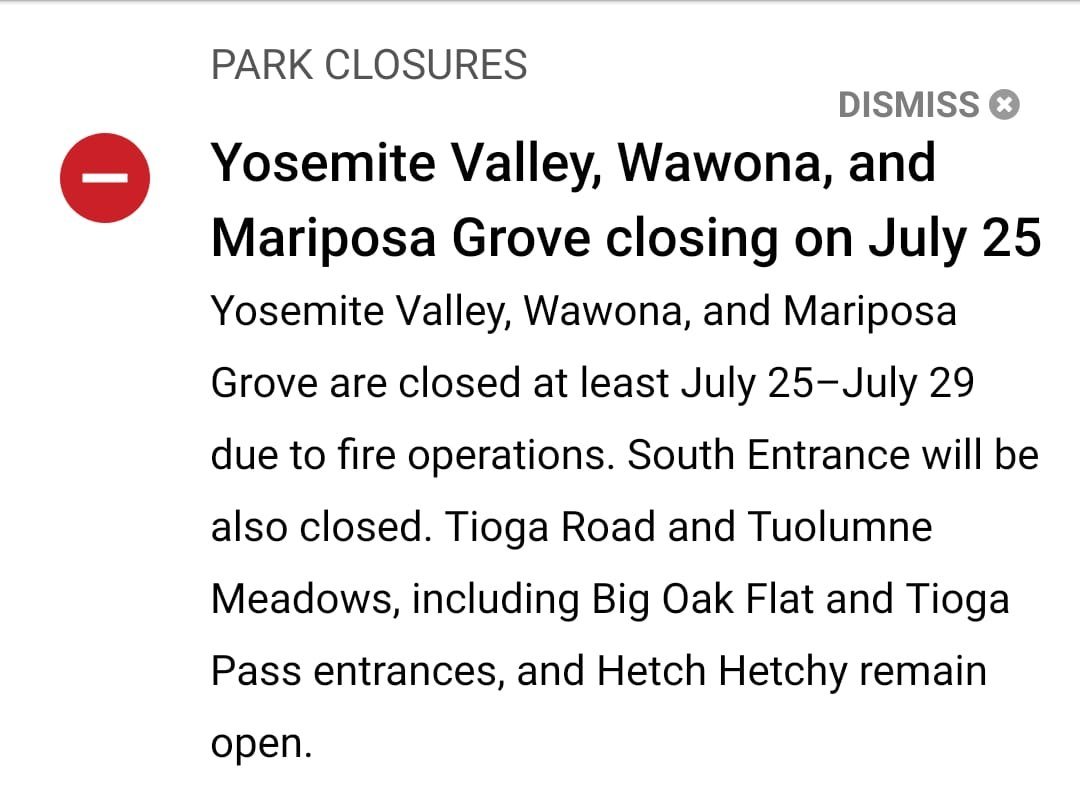
On 24 July things started to get complicated. Firefighters from all over California were brought in, and tourists were told to leave the park by noon the next day. From 25 July Yosemite Valley, Wawona and the Mariposa Grove of giant sequoias were closed – according to the park’s announcement “at least until 29 July” – together with the access roads from the west (the main link with the outside world) and from the south. Patrycja no longer had any chance of work; I was offered shifts serving meals to park staff, as any moment now there would be no tourists at all. Officially, the word was that the park would reopen the following week “90% sure” – and we kept hearing such assurances right to the very end. That same day, on my way to work, I saw a bear sitting in a tree by the road, gorging itself on apples.
Instead of sitting in the smoke without work, we decided to leave for a few days. On the morning of 25 July we took a paid bus for people leaving the park to Fresno, about 150 km to the south. Nine of us from work, including Will, wanted to rent a van there and head to San Francisco together. It did not work out: the person paying had to be over 25, and out of the whole group only I was that old. I had too little money in my Polish account, I did not have an American one yet, and I could not rent a car through an app either, because my driving licence had stayed in Poland (the international one was not enough). We split up – the others stayed in Fresno, while we bought a tent at Walmart, walked just under 5 km, pitched it in town, and the next day took public transport to San Francisco.
 3:49
 4:13
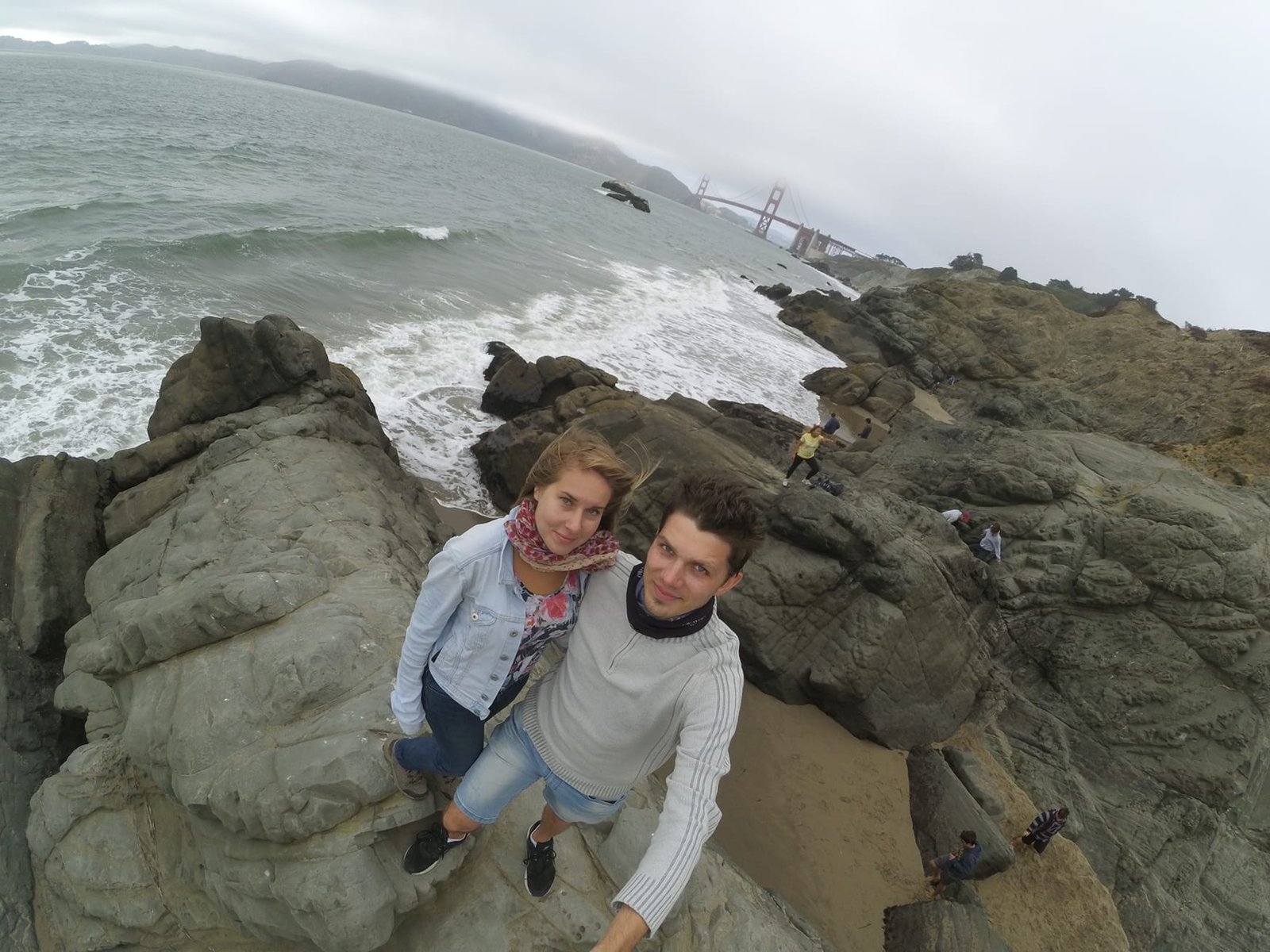
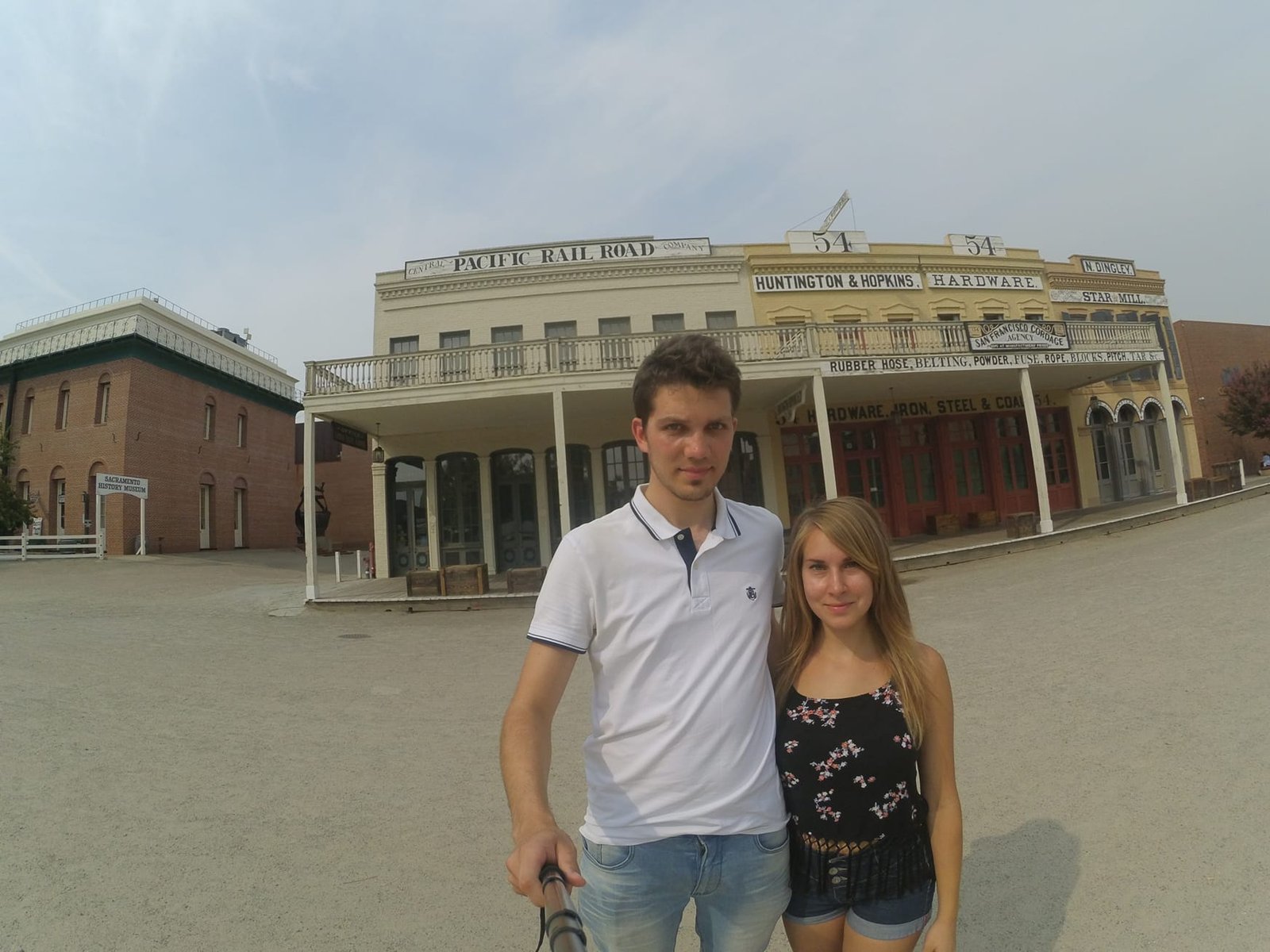
San Francisco greeted us with cold, wind and clouds right above our heads – after the Californian heat I was colder in the tent than probably ever before. Then we went to Sacramento, the state capital, where it was almost 20 degrees warmer. I describe both visits separately: with a tent in San Francisco and sightseeing in Sacramento. The whole loop from Yosemite through San Francisco and Sacramento back to the park was 916 km by public transport.
Before we left, we had heard that the park was due to reopen on Monday 30 July, so we came back that day – although we did not really believe it. Only one road from the west was open; the others were closed because the fire was close and parts of the roadway were blocked by branches of burnt trees. Once a day, at 14:00, a free bus for staff ran to the park from the town of Sonora. By public transport from Sacramento (departure at 9:50) you could only get as far as Modesto, about 80 km from Sonora. There we spent 40 minutes looking for internet to order an Uber – in the end the office staff of a garden centre gave us their Wi-Fi password. The ride to Sonora cost 45.27 USD for two people, and we caught the bus at the last minute.
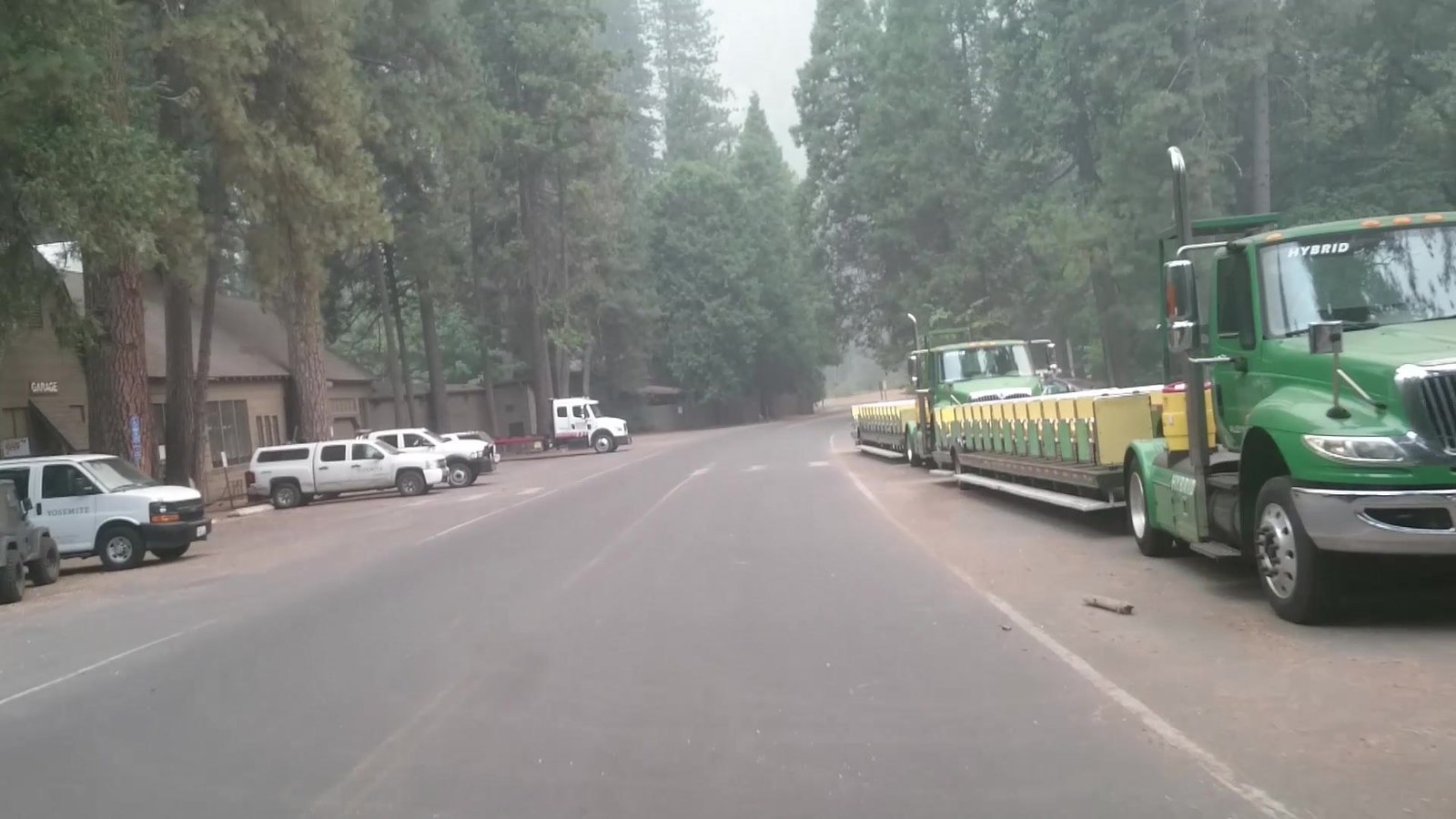
In the park we found as much smoke as when we had left, and a real ghost town – the tourists and some of the staff had already gone. We met the first person only after half a kilometre, outside my apartment: my neighbour Szymon, also from Poland. Over the next days most people simply rested, because there was hardly any work. I managed to get two days in the staff canteen – doing the same as before, just for fewer people (one day part of the ceiling collapsed in one spot and flooded part of our floor, as if the fire were not enough). We also joined a Romanian BBQ right outside our apartment – one of my roommates was Lucian from Romania.
 6:57
A plan for Mammoth Lakes and the evacuation order
After a few more days in the smoke and without work, we wanted to get away for a while again – this time east, to Mono Lake and Mammoth Lakes, a town below Mammoth Mountain (3370 m above sea level) surrounded by lakes. The opportunity came by itself: two park employees were leaving to look for new jobs at Lake Tahoe (about 200 km to the north) and could give us a lift in that direction. Only Highway 120 was still open – the same road we had come back on from the west, which also lets you leave to the east. The plan: by car to Lee Vining (about 70 km), and from there about 50 km south by hitchhiking.
On the morning of 3 August, packed for a few days, we stopped at the petrol station in Yosemite Village. A park ranger asked us there whether we really wanted to leave, since an evacuation could be ordered at any moment, and once out we might not be able to get back in. Our drivers were not planning to return anyway, but we had to decide on the spot. We did not really believe in an evacuation, but we stayed just in case. On Facebook I had just announced our trip to Mono Lake, and a moment later I added: “We’re not going anywhere”. An hour later the evacuation was ordered.
The threat was not the fire itself but the smoke, harmful to health, plus trees falling onto the roads – we risked being cut off from the world. Everyone was to report to the pavilion in Half Dome Village (now Curry Village again), which was my workplace. There you signed up on the list of evacuees, got a free meal and the information that buses would take everyone to a shelter. Not knowing what would happen next, we decided to pack everything – thinking that we might never come back and would have to look for work elsewhere.
 6:56
How Patrycja and I missed each other
After packing we were supposed to meet at my apartment. I packed everything except the food and waited. Patrycja did not come for a long time, so I thought she might need help with her things. We could not call each other – we had no American network, and there was no Wi-Fi where we lived. I left my things in the room and went to her dorm, but she was no longer there. When I came back, my suitcase and my laptop bag were gone too – only a half-packed box of food was left. I decided the most sensible thing was to stay put, or we would miss each other again.
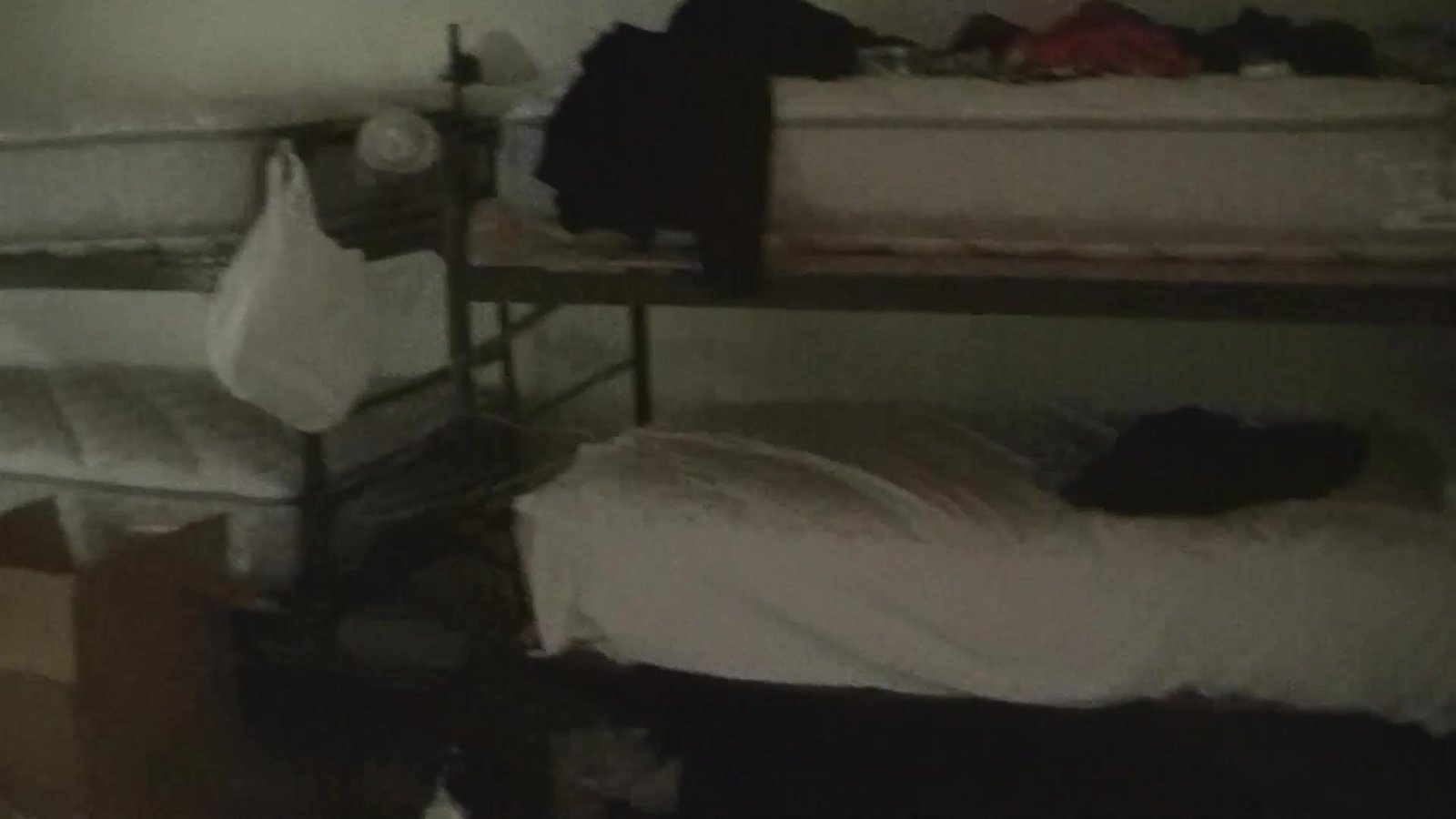
What had happened? Patrycja was being hurried to leave the dorm as quickly as possible. Before being driven to the bus meeting point she wanted to stop at my place, but when she got there, a staff member suggested that I had surely been hurried too, so I had left my things and gone to the bus. She was assured that I had “definitely” taken another bus. So my suitcase and laptop went with her to the shelter about 70 km away, and I stayed in the park.
After a while one of the park managers told me that all the buses had already left. I was not to worry, as I was safe – but my isolation from the world would last about a week.
A week cut off from the world – and a convoy after all
I was left with my phone, wallet, a pillow, a sheet, a towel and a good supply of food and drinks. What I did not have were toiletries, a phone charger or a change of clothes. Luckily the employer allowed those who stayed to take the most necessary things from the shop for free – I took groceries, hygiene products and a charger. Michael, one of the park employees, also brought me a jigsaw puzzle and notebooks so I would have something to do – a very kind gesture. Thanks to other employees’ phones I finally managed to talk to Patrycja.

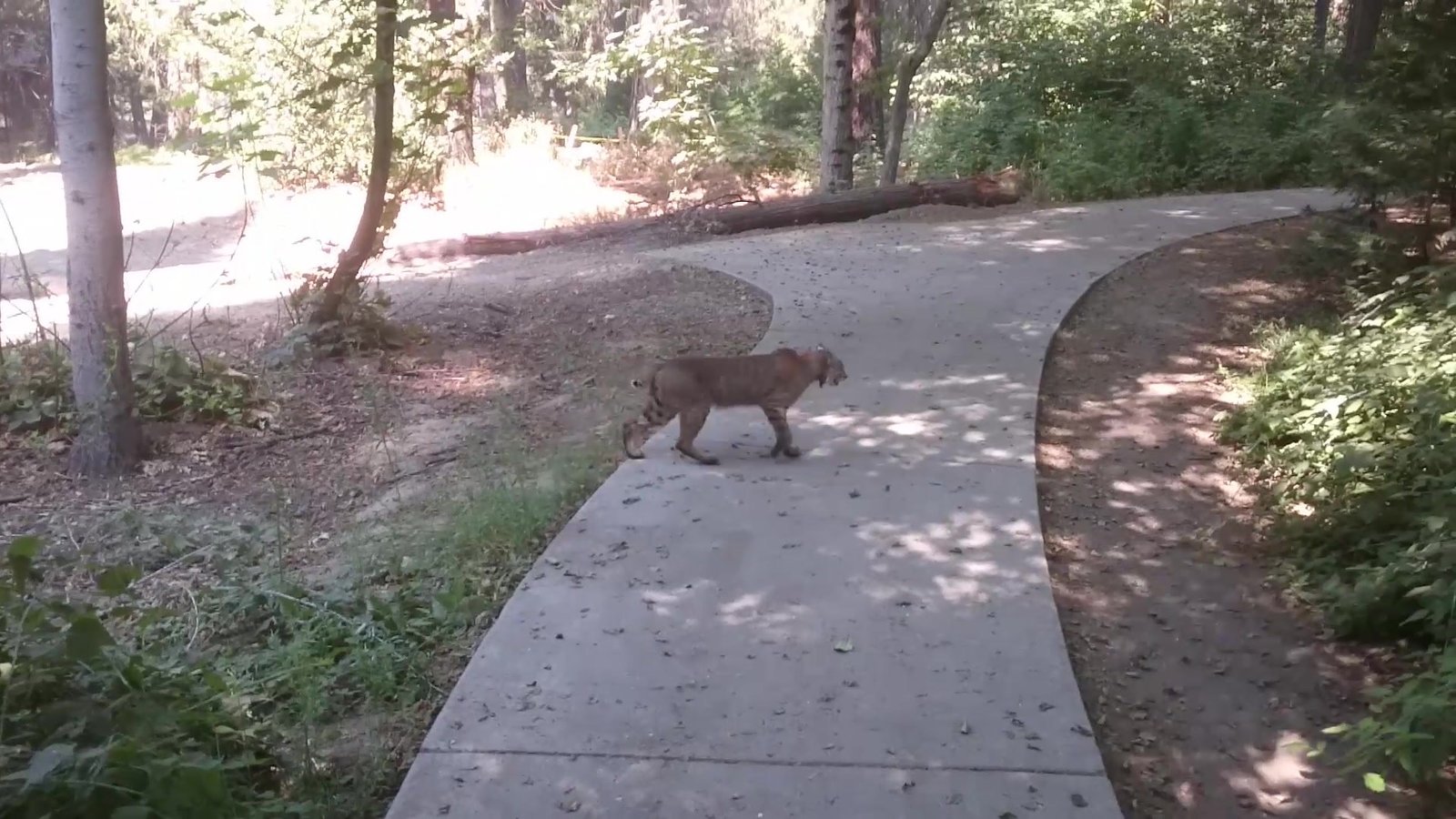
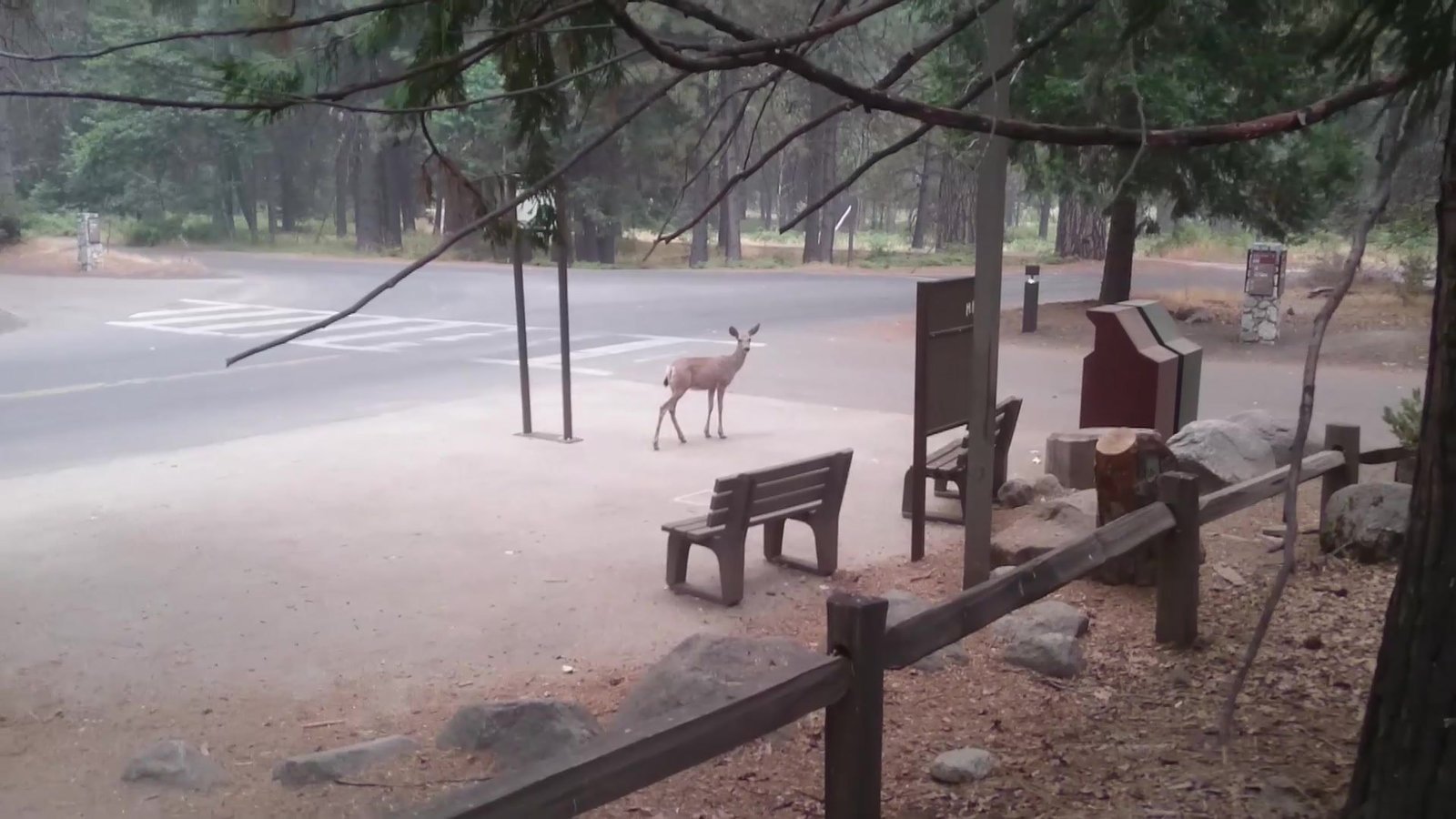
During that time in the deserted park I saw more animals than people. That night I slept really well.
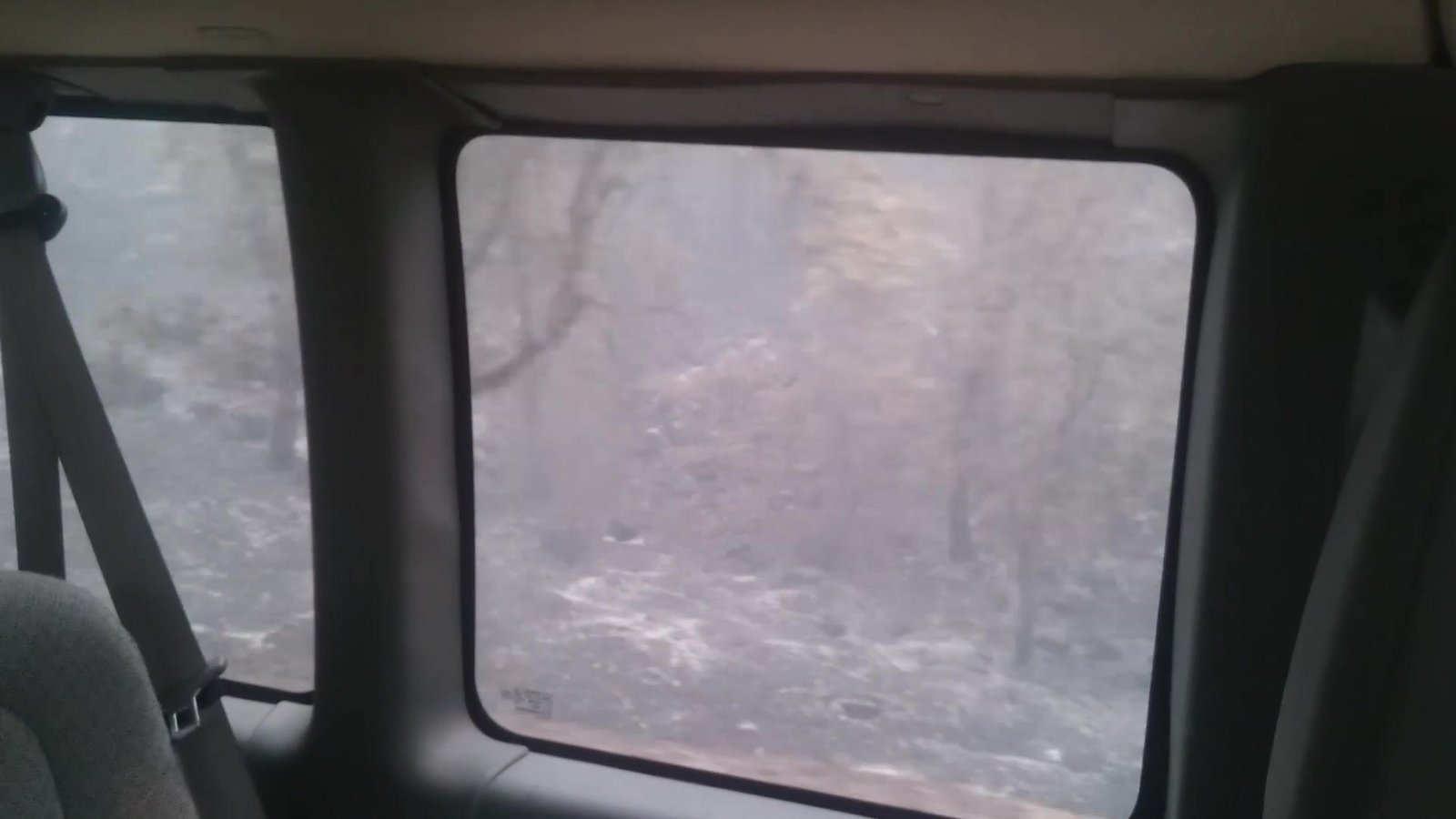
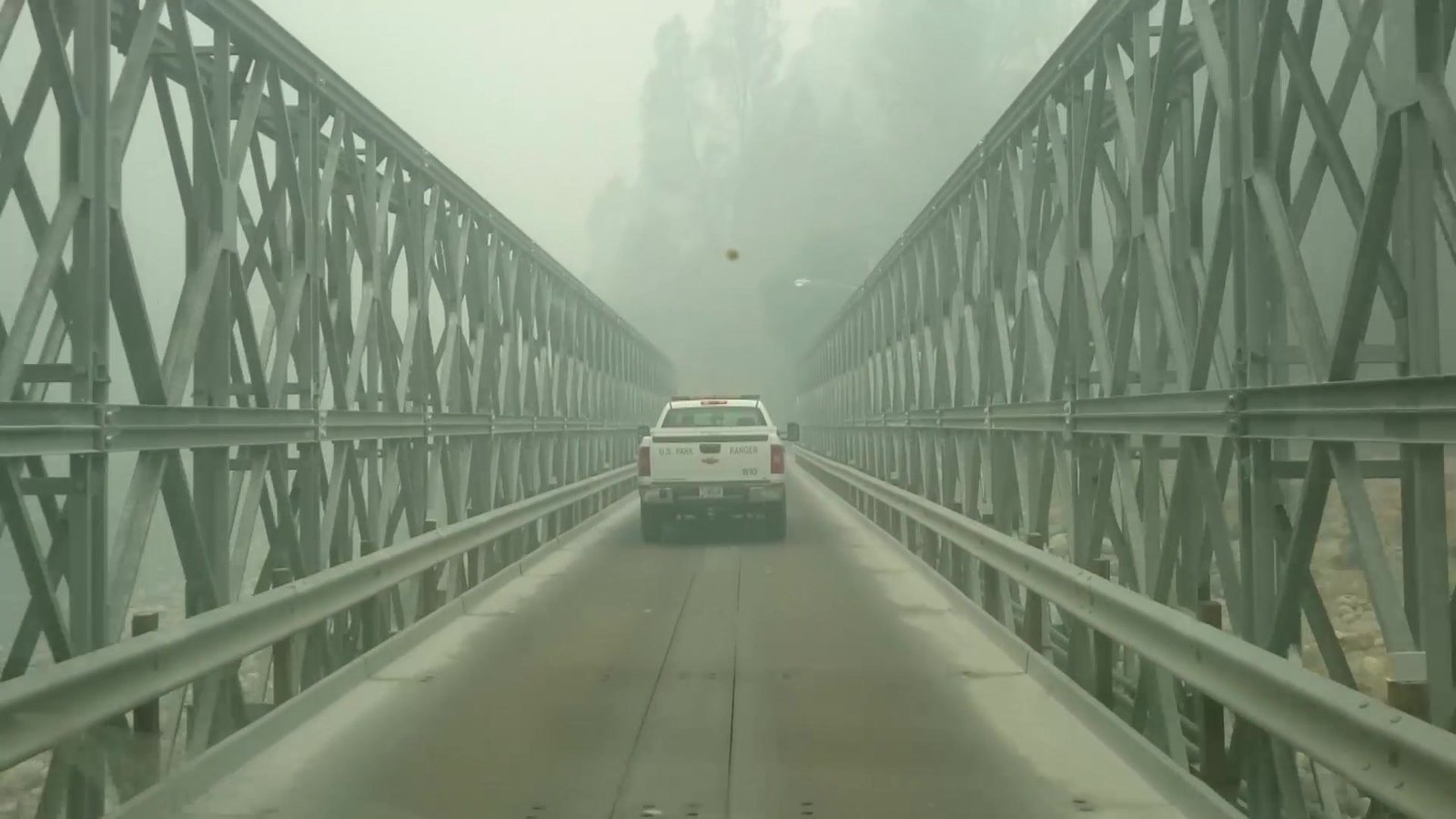
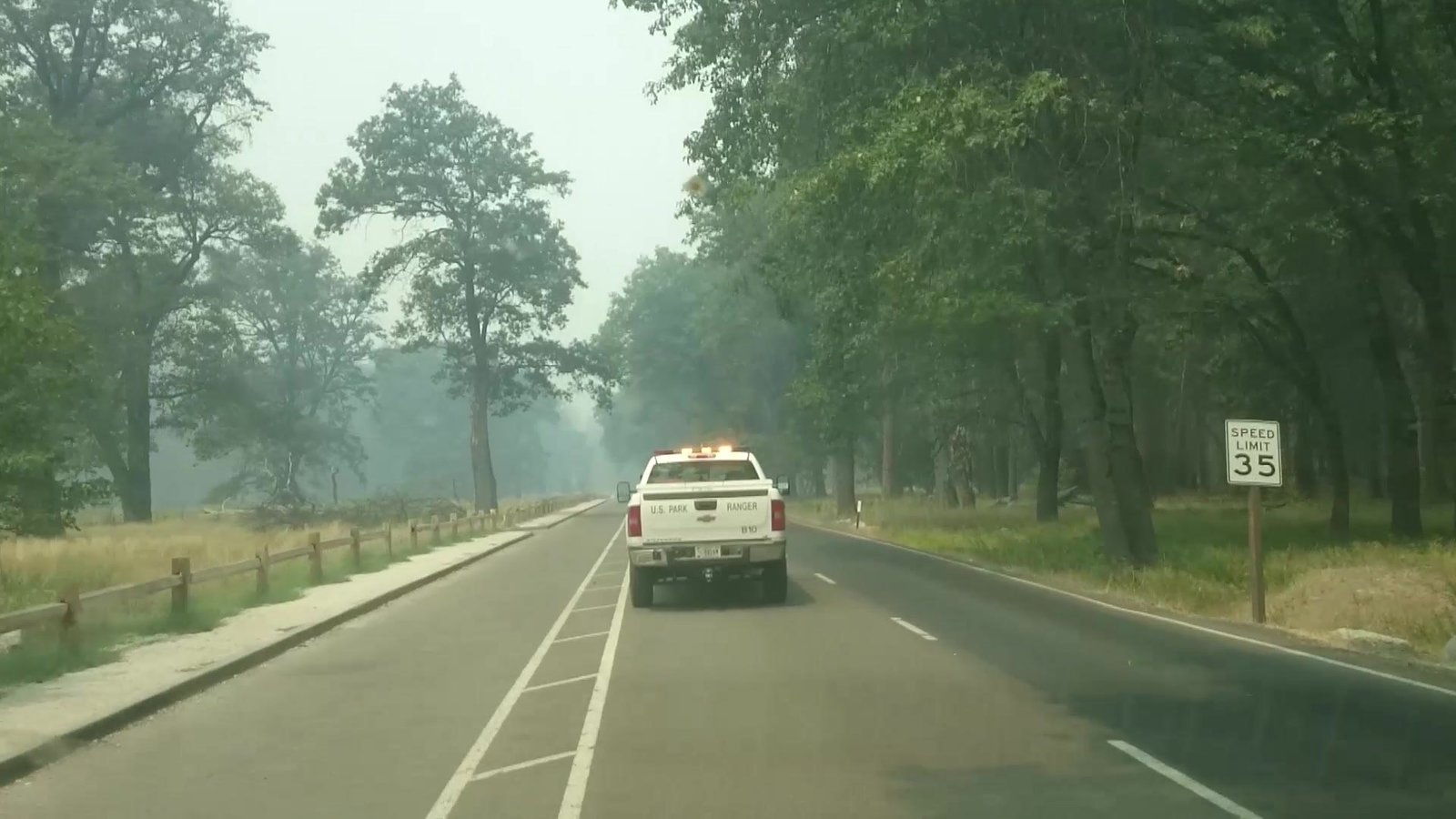
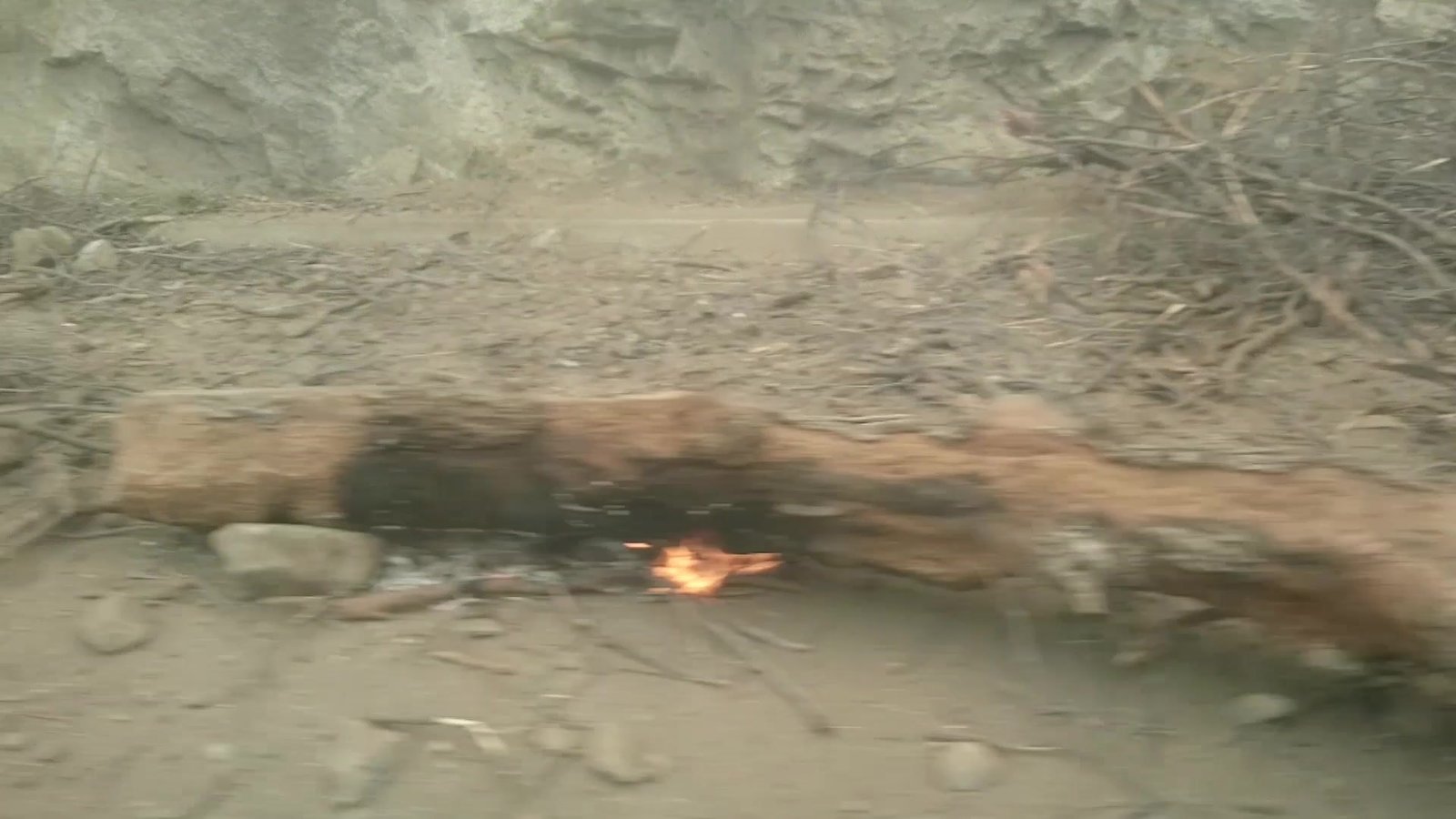
The announced week ended after one day. On the morning of 4 August I took out the rubbish, washed and dried the only set of clothes I had – and found out that a convoy with the last people would leave the park that same day. I packed the rest of the food and was given a lift to the meeting point. I rode in a van with David, one of the Yosemite managers. A park ranger car led the convoy, and the route ran close to where the fire had started. Burning pieces of trees lay on the road, and a burnt forest passed by outside the window.
 4:38
The shelter near Mariposa
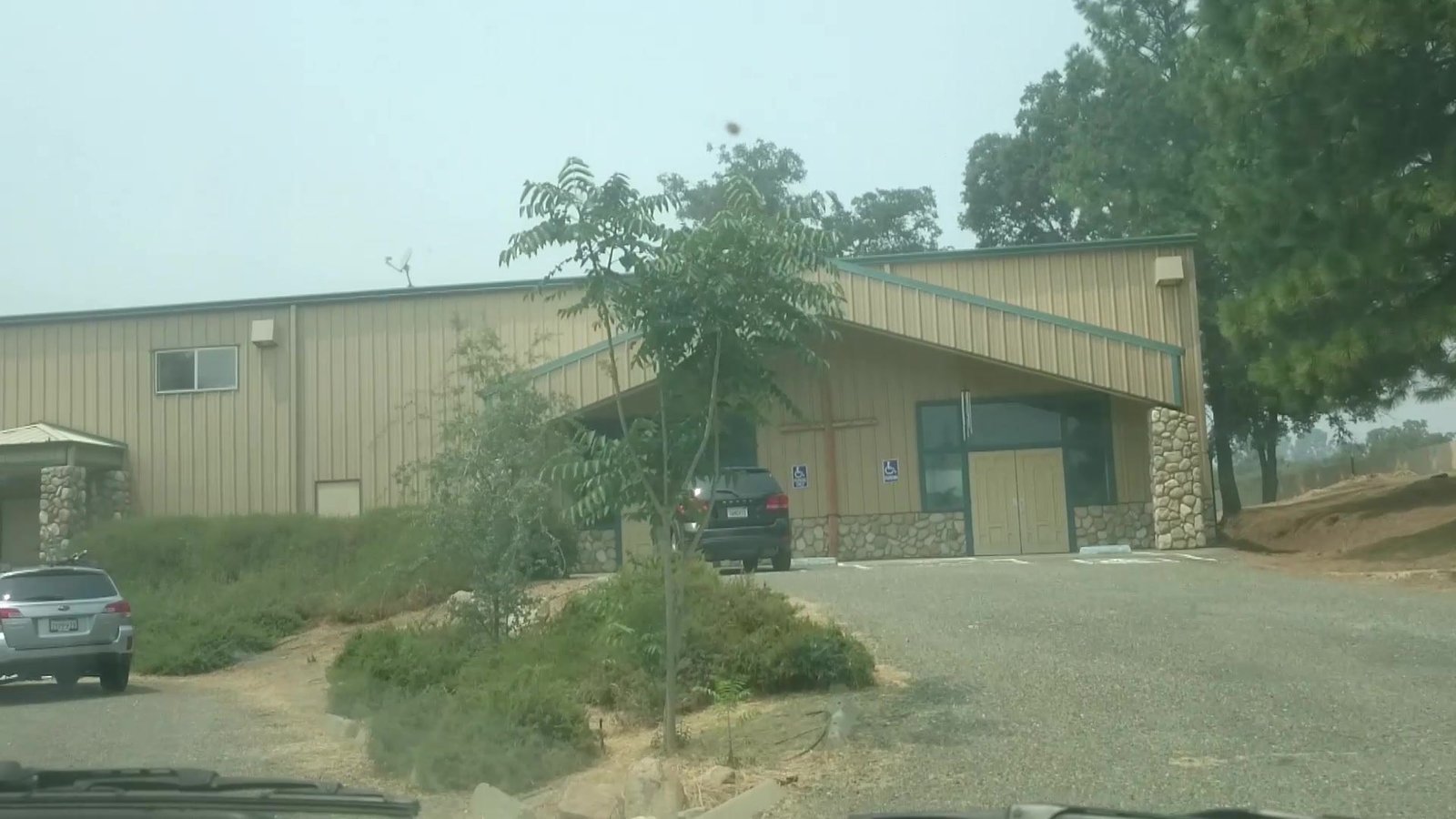
The convoy ended at a shelter near Mariposa, in the town of Bootjack, in the building of the Christian community New Life Christian Fellowship. This is where Patrycja and most of the evacuees had arrived the day before. The American Red Cross handed out food and basic personal hygiene products.
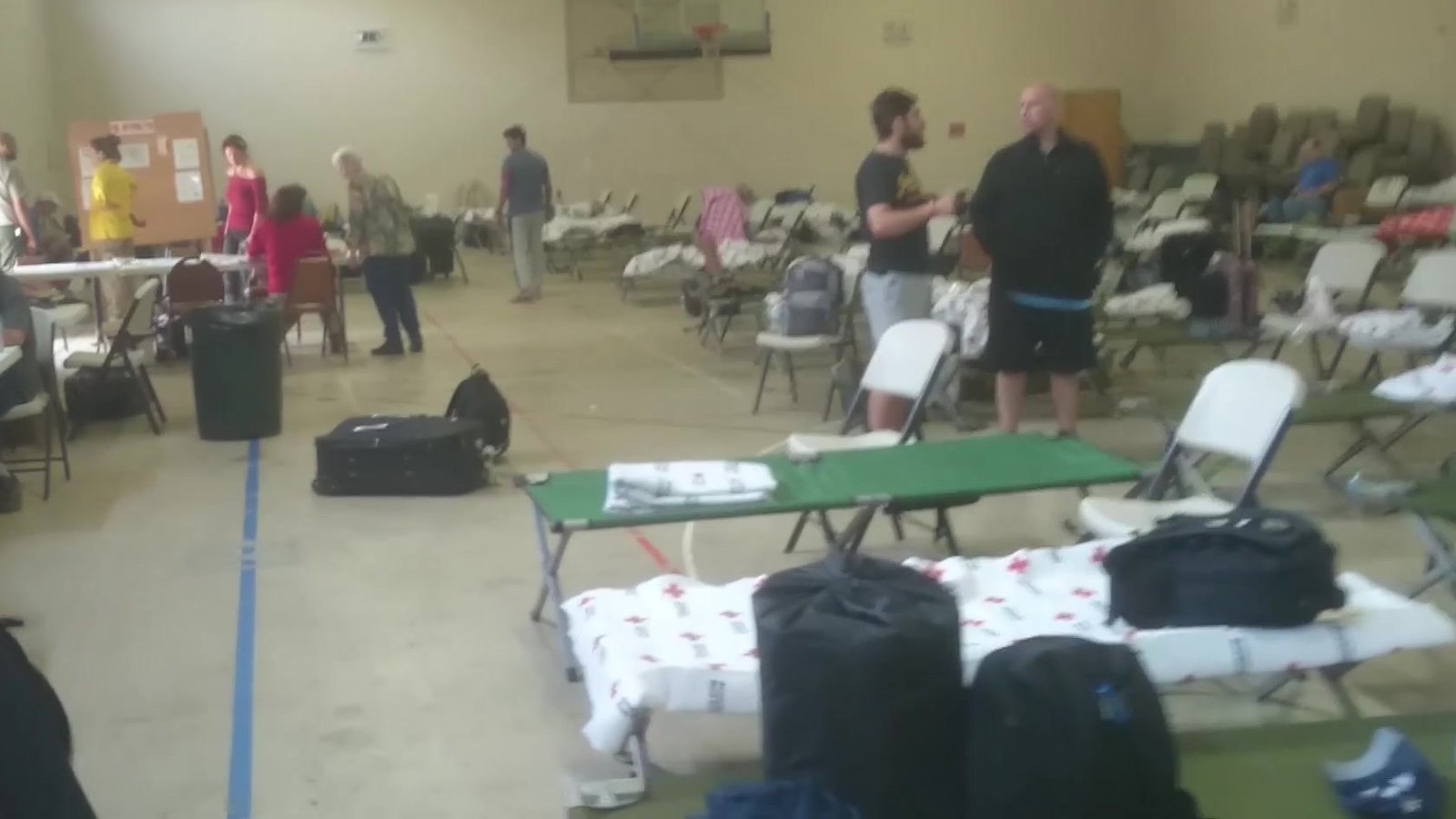
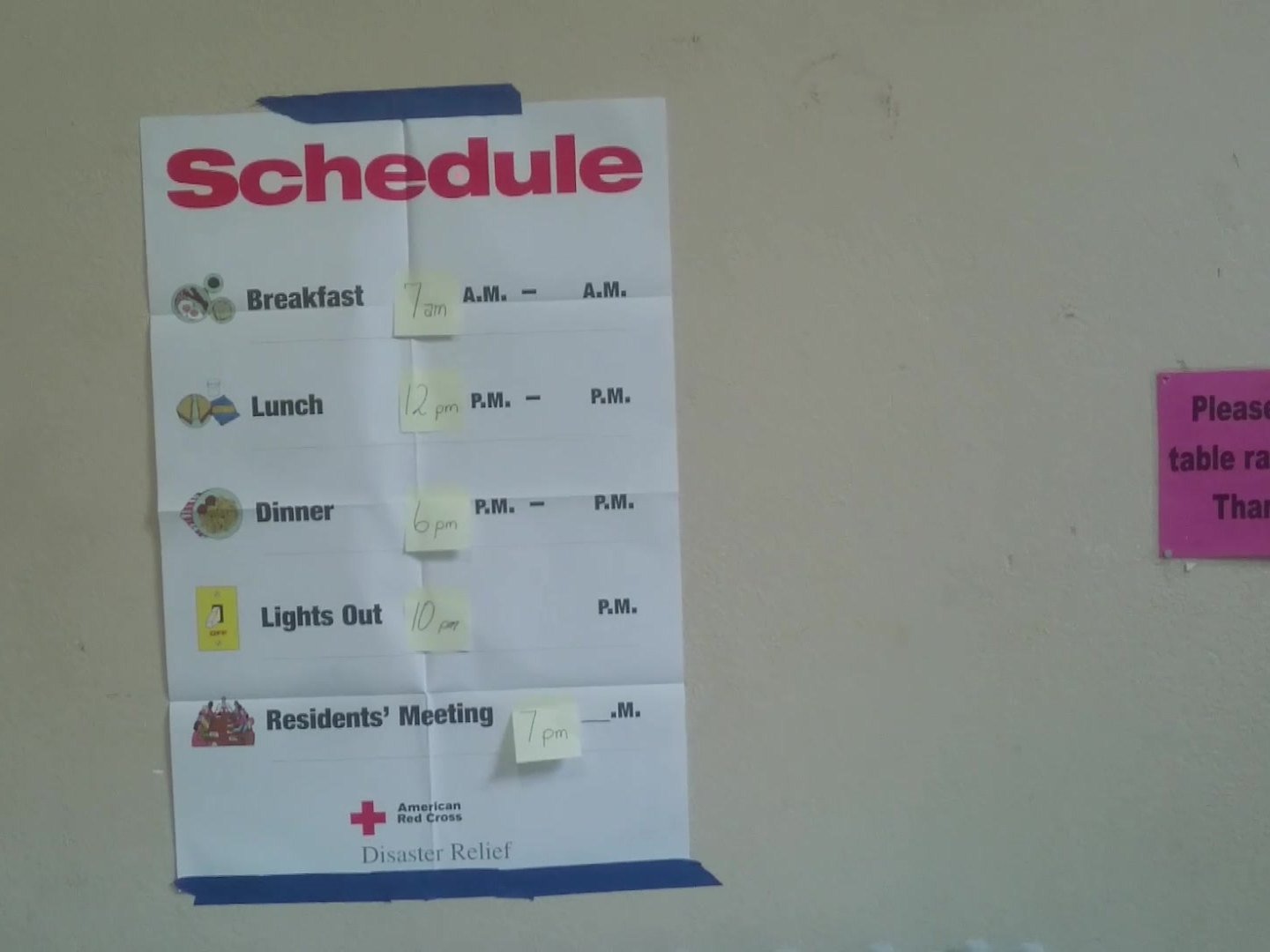
In a large hall there were rows of camp beds, one next to the other. The rules were simple: breakfast from 7:00, lunch from 12:00, dinner from 18:00, lights out at 22:00. You had to sign up for a shower well in advance, and time was limited – there was only one bathroom per gender. Alcohol was banned on the whole site. Those staying here were mainly older people, Work & Travel students and people who lived far away but wanted to go back to Yosemite – they had nowhere else to go. There were quite a few people from work around, but the prospect of spending a longer time here was not very appealing.
With Kevin’s family near Modesto (and the night-time sprinklers)
Patrycja did not stay in the shelter long. She got a camp bed next to David, a colleague from work, and he got an invitation from Kevin – also an evacuated Yosemite employee – to his family home. Anyone who needed help was welcome there. Patrycja agreed straight away, and that same day a friend of Kevin’s came to pick them up.
I got there a day later: David drove me more than 100 km from the shelter to Kevin’s family home in Waterford near Modesto. I have very fond memories of those hour and a half of talking about everything, and on the way we finally left the smoke zone behind. The house was short of places to sleep – at the peak more than 10 people were staying there, including several cooks from Yosemite who prepared special dishes for everyone – so we pitched our Walmart tent in the garden.
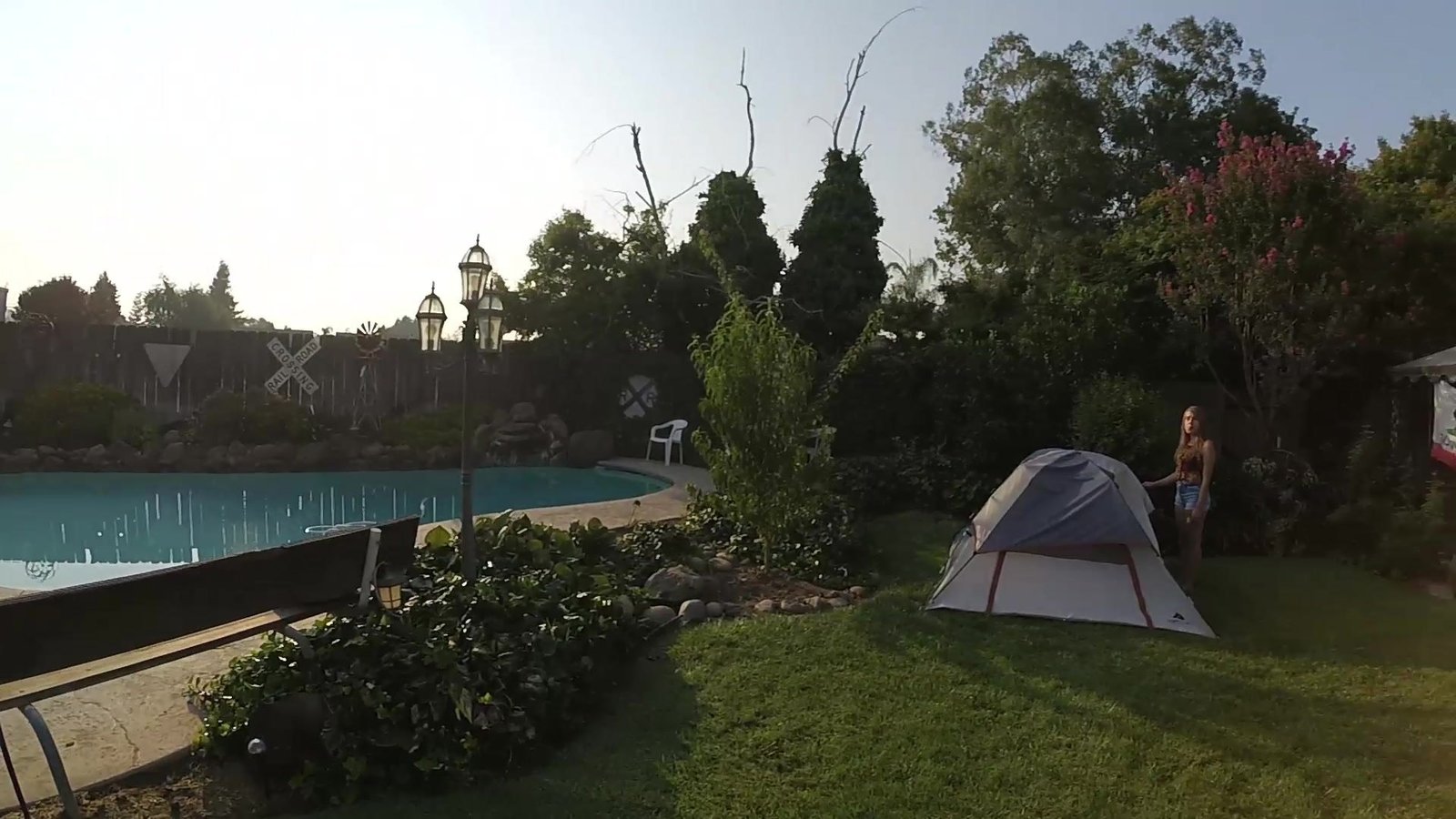
One night, right in the middle of it, the garden sprinklers suddenly switched on – aimed straight at our tent. We then moved it to another part of the garden. Apart from that it was a real place to catch our breath: we used the pool, went for walks around the area, once to an abandoned mill (you could not go inside, and from the outside it was not very impressive), and I even went to the hairdresser. We spent just under a week here in a really lovely atmosphere. Kevin’s family took in people they had never known before – we are enormously grateful to them for that.
 6:00
Negotiating with the sponsor and a new job in Grand Teton
We did not want to go back to Yosemite – the situation was too uncertain, and every week without work meant considerable losses. Patrycja had not worked since the park closed to tourists, and I only had the odd shift; altogether we were without work for 2–3 weeks. So throughout our stay at Kevin’s we negotiated with the programme’s American sponsor, CIEE (Council on International Educational Exchange). It took a long time and cost us a lot of nerves, and the sponsor did not treat everyone equally: it helped some people more, others less. Many people got no help paying for temporary accommodation during the evacuation and had to pay out of their own pocket; it was similar with new job offers and free transport. To this day we have mixed feelings about it.
First we were offered dishwashing jobs in Mesa Verde National Park in Colorado: 9.30 USD an hour, only 30 hours a week guaranteed, over half an hour’s commute each way, and on top of that far from where our later trip was supposed to start. Having no choice, we agreed – but during the same conversation an offer came up from Grand Teton National Park in Wyoming. A similar position to the one in Yosemite, 9.60 USD an hour, 48 hours a week, a shared room a few minutes’ walk from work, 93 USD a week including three meals a day, free buses and activities, plus mountains and Yellowstone nearby. The choice was obvious.
The sponsor bought us tickets for the next day, 9 August: from Fresno (we got there from Modesto by train) to Jackson Hole with a change in Los Angeles, for about 920 USD – we only paid extra for the luggage. Will, with whom we had once planned to go to San Francisco, was on the same plane to Los Angeles. Because of the evacuation and the closed roads he had not managed to go back to Yosemite for his things, and he got a new job in Alaska. Others ended up in Florida and Colorado, among other places, and some stayed in Yosemite.
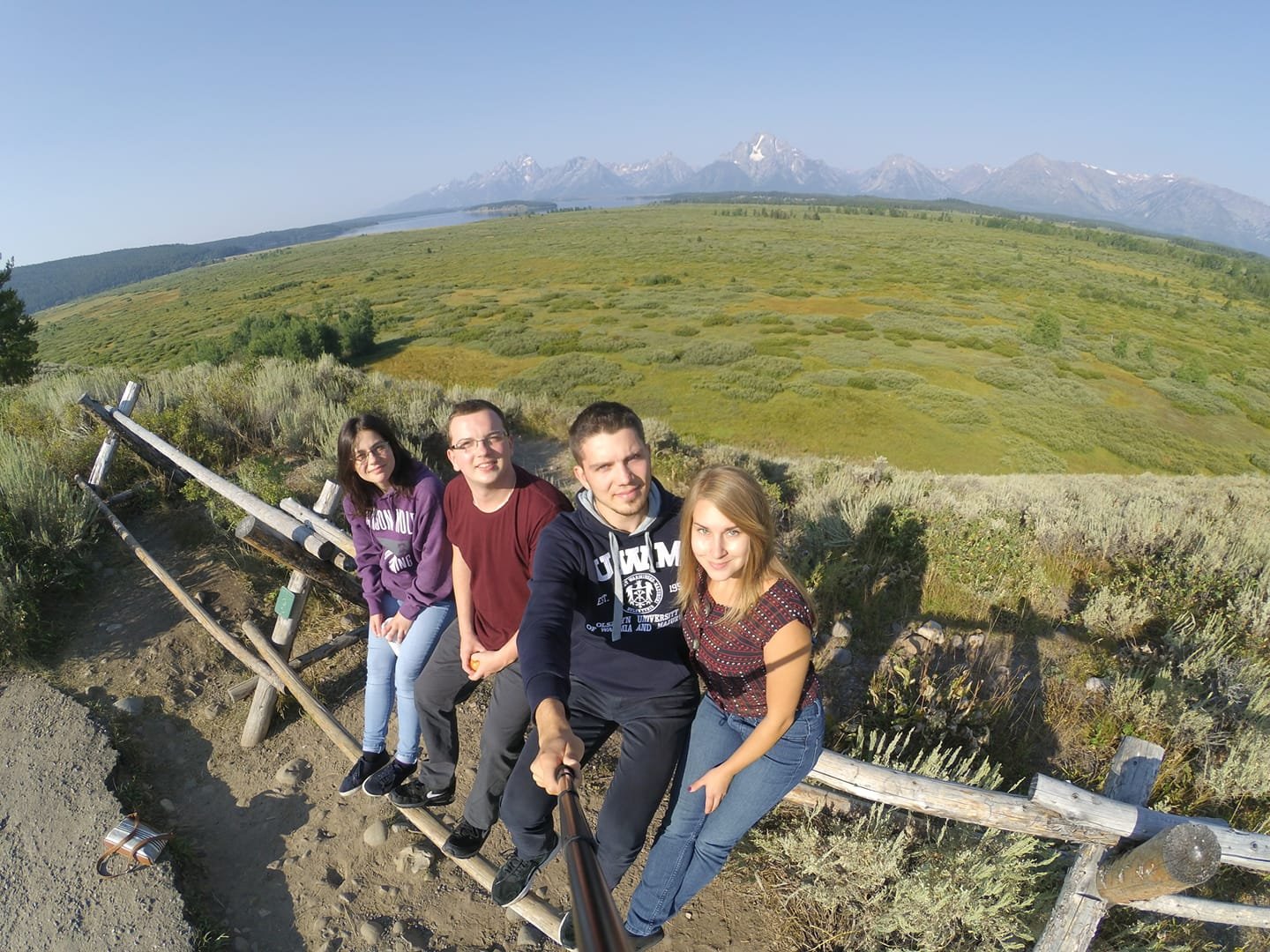
In Grand Teton we got a shared room for the first time in the USA, and right after we arrived the Poles living there welcomed us. We had flown out of a state full of smoke – and in Wyoming too, smoke from distant fires blew in every now and then. What happened next I describe in the post about Grand Teton National Park.
 4:37
What it taught us
Looking back, the evacuation taught us above all to make important decisions under pressure and to cope with stressful situations. A few things worth knowing if you are going on Work & Travel to California or to a national park in summer:
- Fires are part of the Californian summer. Forests burn in California every year, and a park can be closed for several weeks. Nobody will warn you before you leave, so as not to put you off the job – you have to factor it in yourself.
- For us the smoke was more dangerous than the fire. When the air is bad, a protective mask comes in handy, and longer mountain hikes have to be put off.
- Make sure you can stay in touch. We had agreed to meet at my place, but when the plan fell apart, without an American SIM card and without Wi-Fi in our accommodation we could not contact each other – and we missed each other at the worst possible moment.
- Phone, charger, documents and a change of clothes – always with you. My suitcase left without me, and I was left without a charger and without clothes.
- Driving licence and a US bank account. To rent a car you needed your Polish driving licence (the international one was not enough), money in the account and to be over 25.
- A financial cushion. Over 2–3 weeks without work we lost money anyway – without the hospitality of Kevin’s family it would have cost us much more.
- It pays to negotiate with the sponsor. The first offer was not the best – a better one only came up during the conversation.
Despite everything, we have no regrets. Only because of the fire did we see San Francisco and Sacramento, meet Kevin’s incredibly hospitable family and end up in Grand Teton, with Yellowstone nearby – during our month-long trip after work ended we would not have managed to get there. We went back to Yosemite in October, this time without smoke – and climbed, among other things, Sentinel Dome.
Timeline
- 13 July – the Ferguson Fire breaks out; no electricity until Sunday morning.
- 15 July – the smoke reaches Yosemite Valley (Glacier Point in smoke).
- 25 July – the valley closes to tourists, we leave for Fresno.
- 26–30 July – San Francisco and Sacramento.
- 30 July – back to the deserted park.
- 3 August – evacuation; I stay in the park almost alone.
- 4 August – the convoy, the shelter near Mariposa and Kevin’s family home.
- 9 August – flight from Fresno via Los Angeles to Jackson Hole and a new job in Grand Teton.
- 19 August – the fire is fully contained.
 6:19
Photo gallery