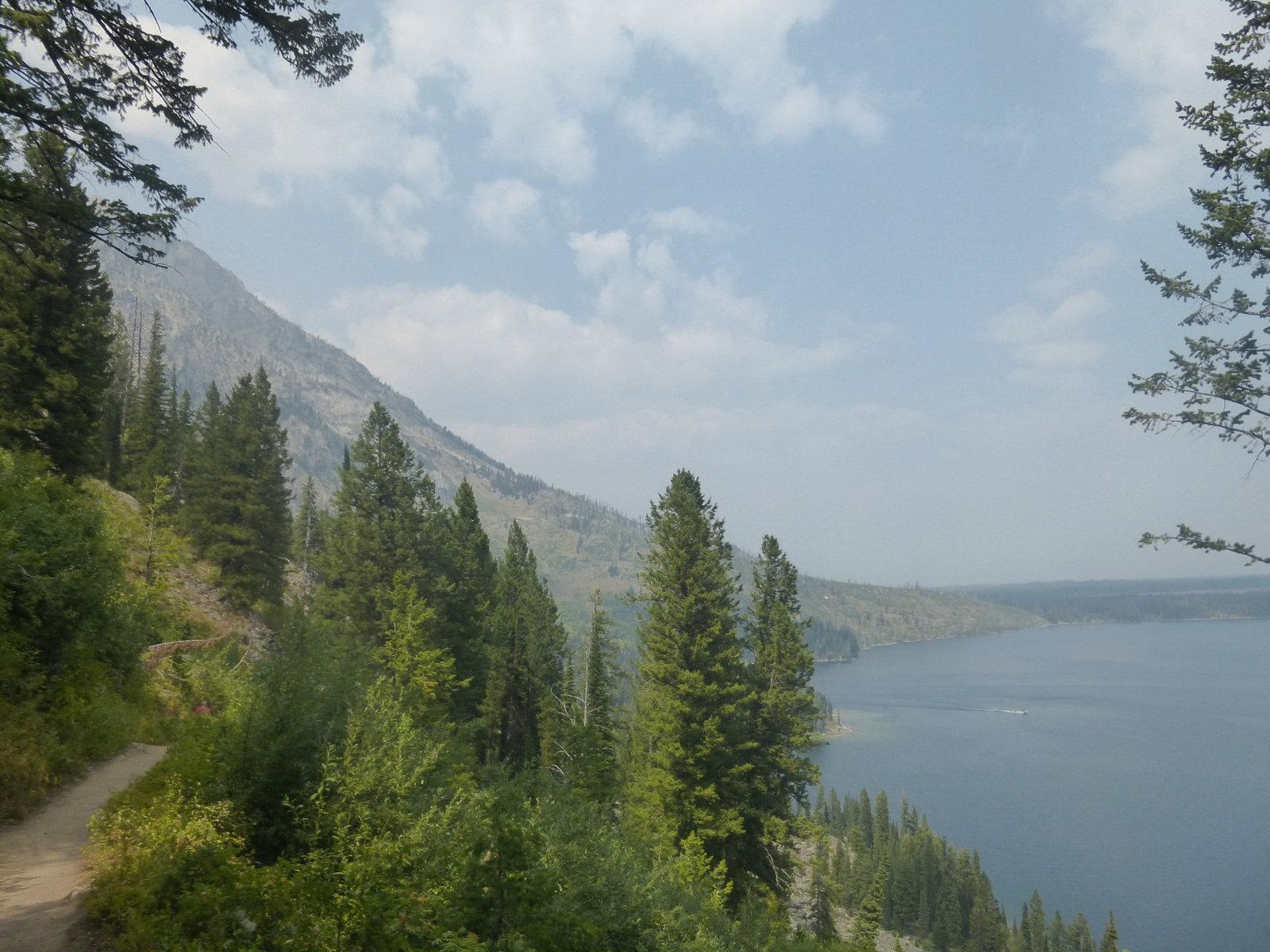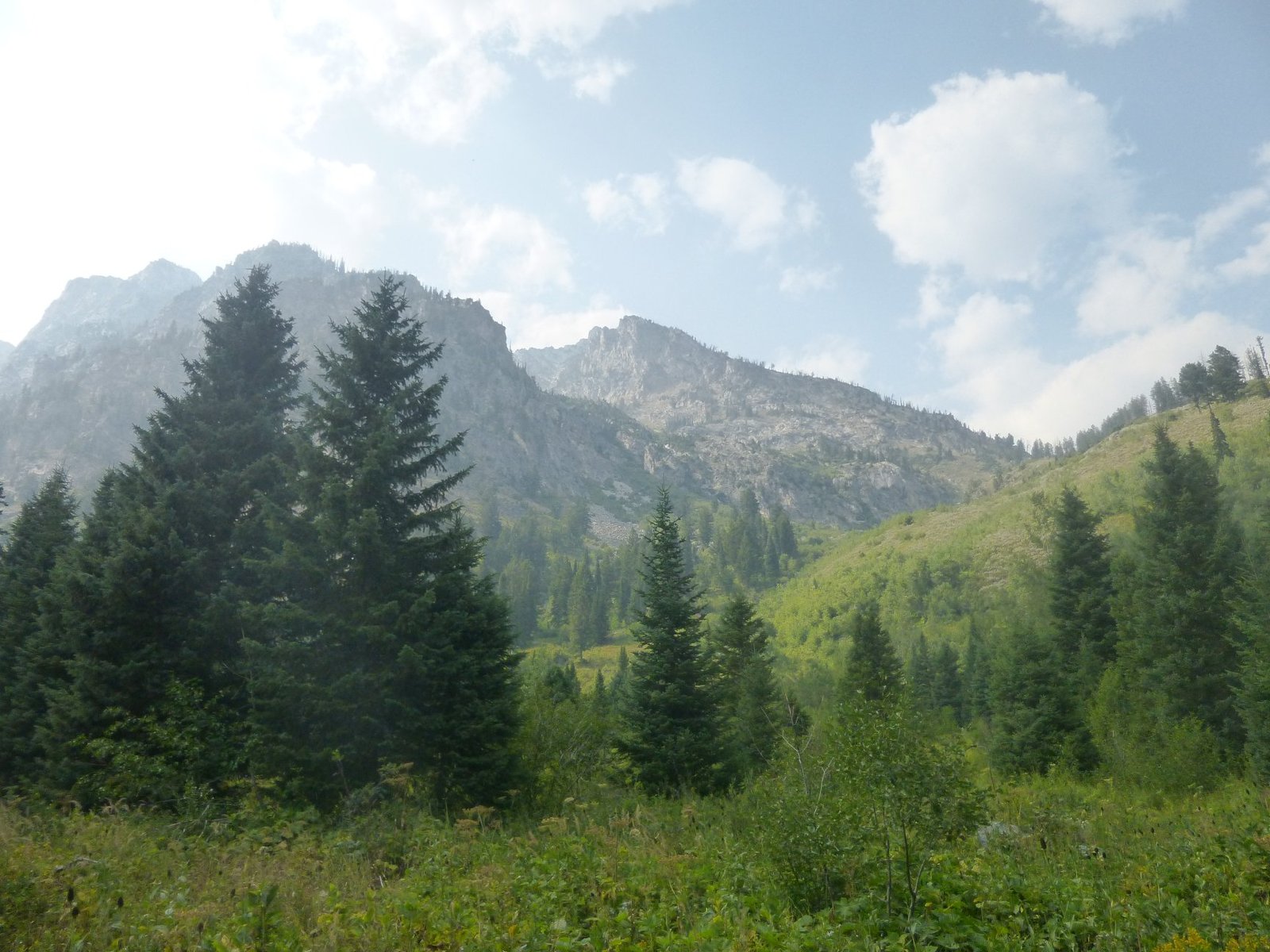
Grand Teton National Park in Wyoming was our home for a month and a half in the summer of 2018. We ended up here by chance – on the Work & Travel programme we were supposed to work all summer in Yosemite, but a wildfire and the evacuation of the park changed our plans. After long negotiations with the programme sponsor we got a new job – in a kitchen at Colter Bay Village on Jackson Lake. It turned out to be one of the best things that could have happened to us: lakes, forests, the jagged peaks of the Teton Range, bears, moose and bison, and Yellowstone right next door. Below is what we saw on our days off – the toughest trips, to South Teton and along the Paintbrush Divide trail, have a separate post. Each trip also comes with a video from my vlog from that day.
Table of contents
- From California to Wyoming
- Colter Bay and Jackson Lake
- Jenny Lake and Hidden Falls – with a bear on the trail
- Rafting on the Snake River
- On horseback and into the town of Jackson
- Delta Lake, Surprise Lake and Amphitheater Lake
- Bears – how to behave
- Practical information
From California to Wyoming
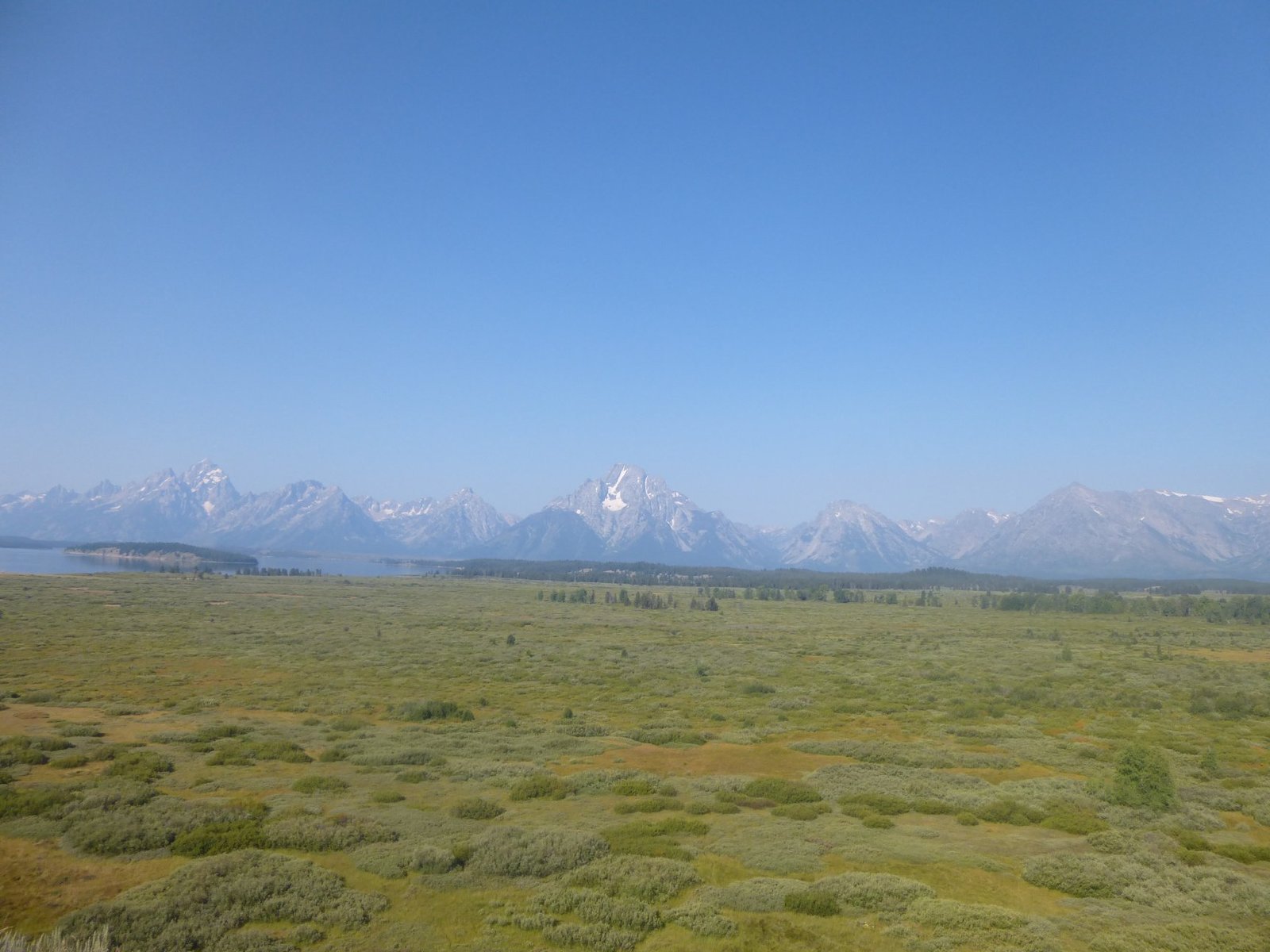
We flew from California to Wyoming at the beginning of August – from Los Angeles to Jackson it is more than 1200 km. Wyoming is the least populated state in the USA (about 600,000 inhabitants), and Grand Teton is a park full of lakes, forests and mountains. Yellowstone is less than 60 km away. Financially we were still losing out – because of the break in work after the fire – but we really wanted to see this area, and during our month of travelling after the job ended we would not have managed to get here. Life sorted it out for us.
On 9 August we flew from Fresno to Jackson Hole, changing in Los Angeles – the tickets, about 920 USD, were bought for us by the programme sponsor; we only paid for the luggage. From the airport the employer’s transport took us to Colter Bay Village. Unlike in Yosemite, we got a shared room, and right after we arrived the Poles living here came to say hello.
 4:37
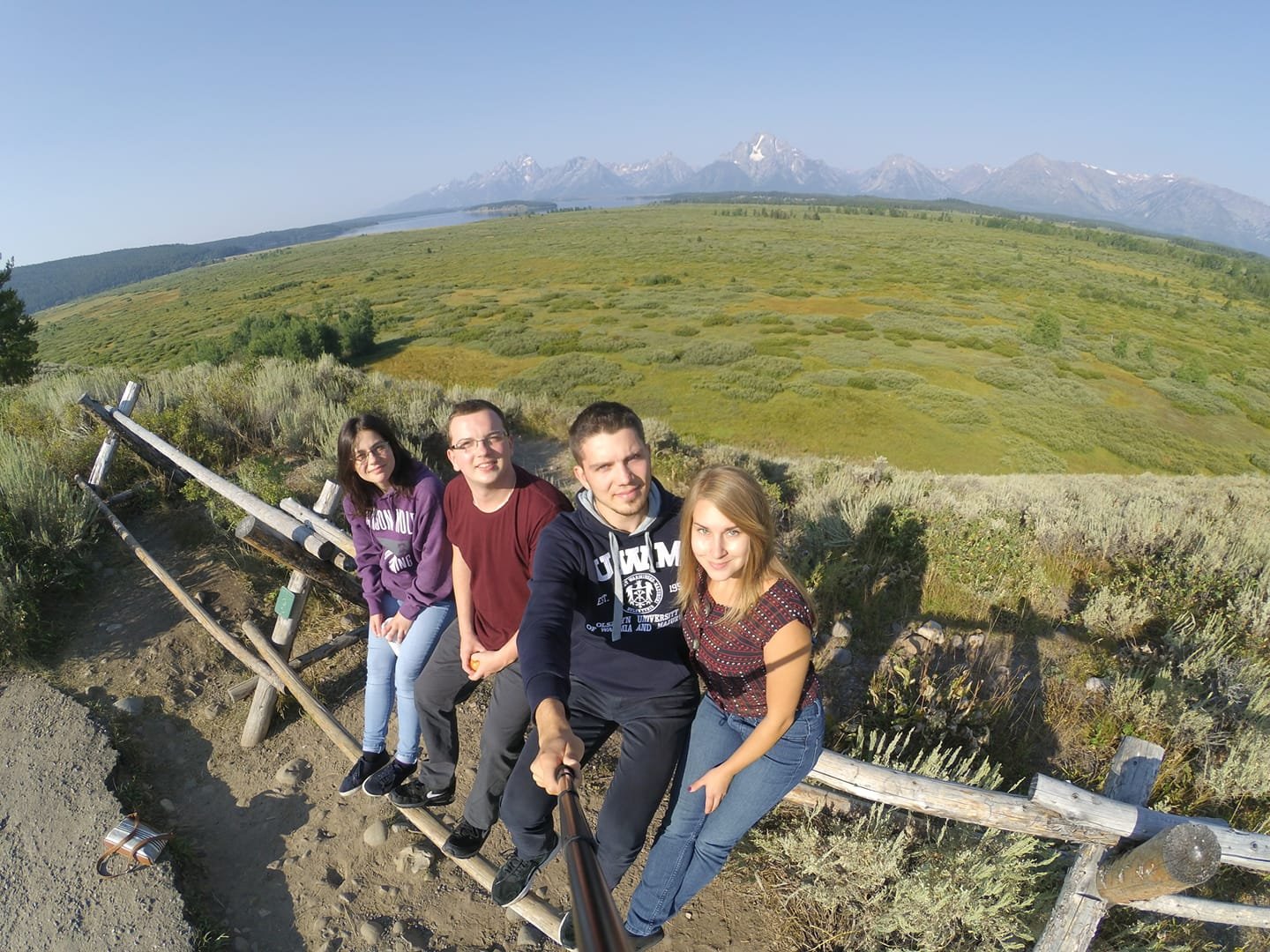
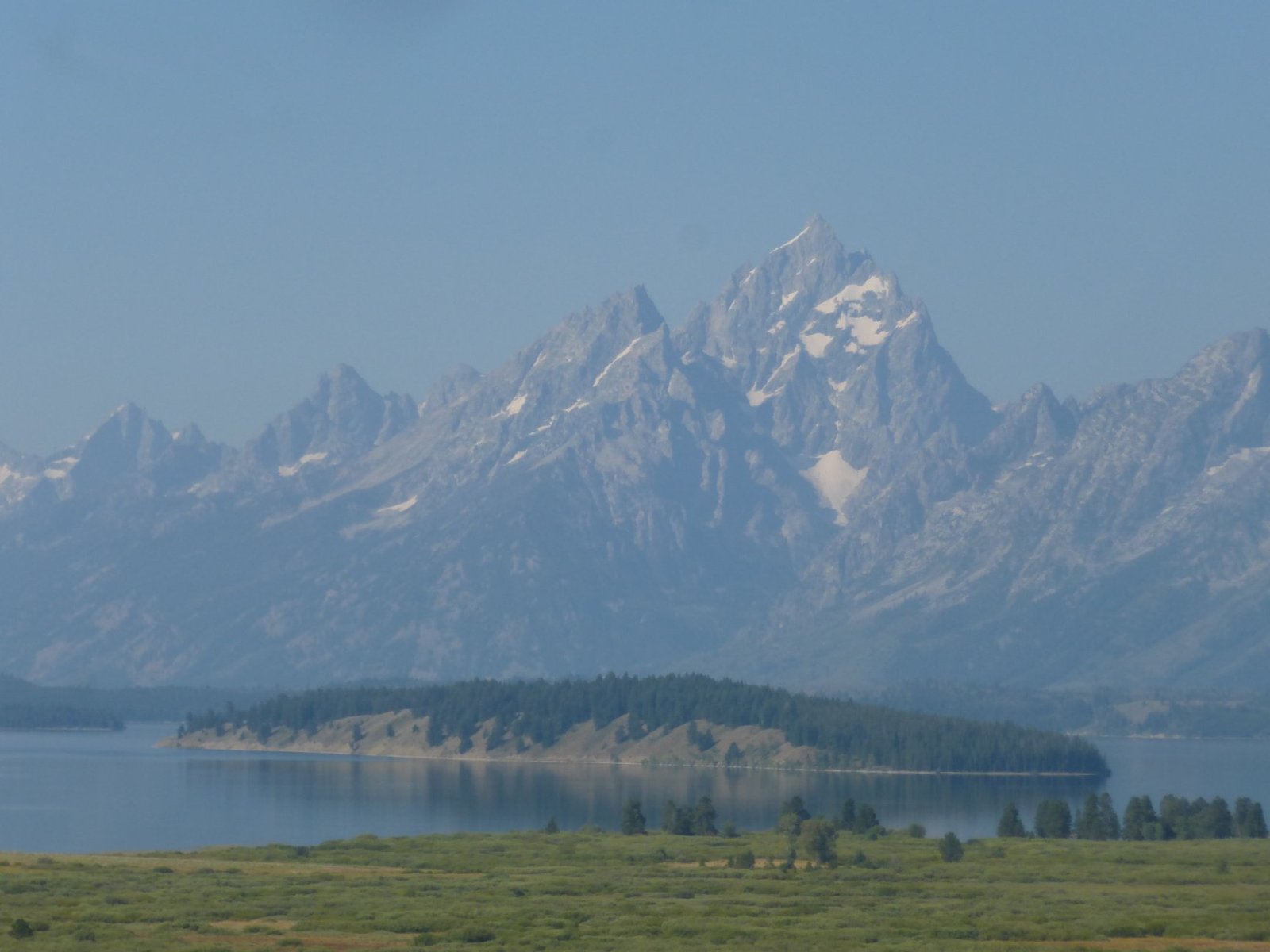
We lived in Colter Bay Village, at an altitude of about 2080 m above sea level (for comparison, in Yosemite we had lived at about 1200 m). We worked as “kitchen workers” six days a week, so there was little time left for trips – but we made use of every day off. Every day we had the Teton Range in front of us, with its highest peak, Grand Teton (4199 m). Sometimes it was hidden by smoke from distant fires – we had fled California because of the flames, and yet in Wyoming a grey haze hung in the air every now and then.
The work was harder than in Yosemite: shifts of at least 10 hours, six days a week (towards the end there were even 13-hour ones). Patrycja always started at 5 a.m., I started at 5, 7, 9 or 10 – I liked the early shifts best, because they were the easiest and there was still time left for the evening after work. We earned 9.60 USD gross per hour, with 48 hours a week guaranteed, but overtime only counted above 56 hours. Accommodation cost 93 USD a week, but that included three meals a day, free buses and activities. We had less than a 10-minute walk to work, the break was included in working time, and at the end of the contract we got a bonus of 4 USD for every day worked. I worked in the staff canteen (Employee Dining Room) – I helped prepare meals, served them and kept the place clean – while Patrycja, on the other side of the wall, made breakfasts for guests and later salads.
 3:08
A lot of Poles worked in the park, so one day we cooked a Polish dinner for our co-workers: pork cutlets, potatoes, cucumber salad with sour cream and chicken soup. Everyone was impressed! And at one of the Polish parties Iwan, a friend from Taiwan, “officially” became a Pole – after reciting the patriotic children’s poem “Kto ty jesteś? Polak mały” (“Who are you? A little Pole”). Earlier, before we arrived, there had also been a Bulgarian dinner – like Poles, Bulgarians were very numerous among the Work & Travel participants.
Free events were regularly organised for the staff – among other things we went to concerts by a band made up of employees, and once I went to a football match in Jackson Hole. At more than 1900 m above sea level it was hard to keep up at full speed.
 4:33
Colter Bay and Jackson Lake
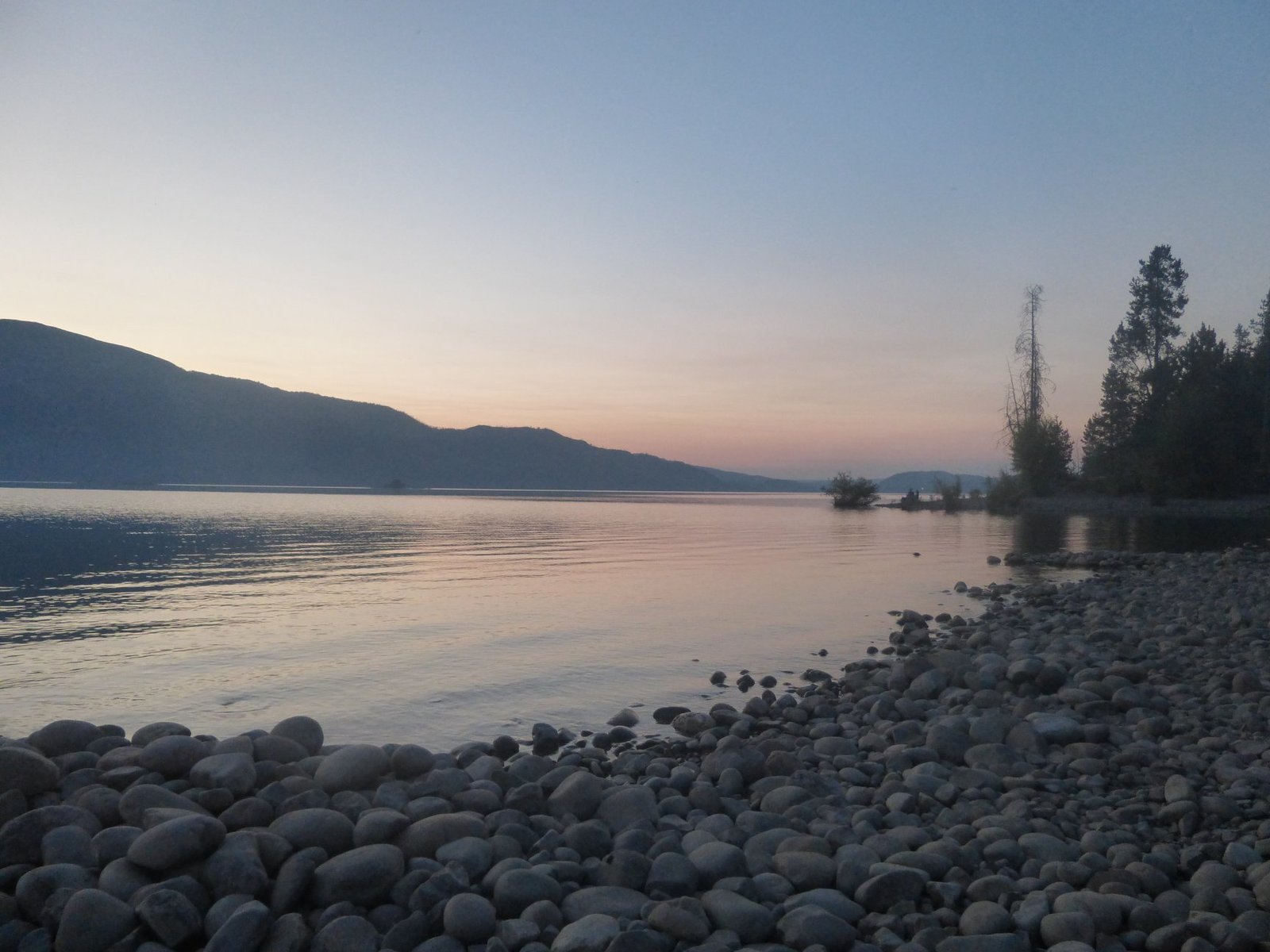
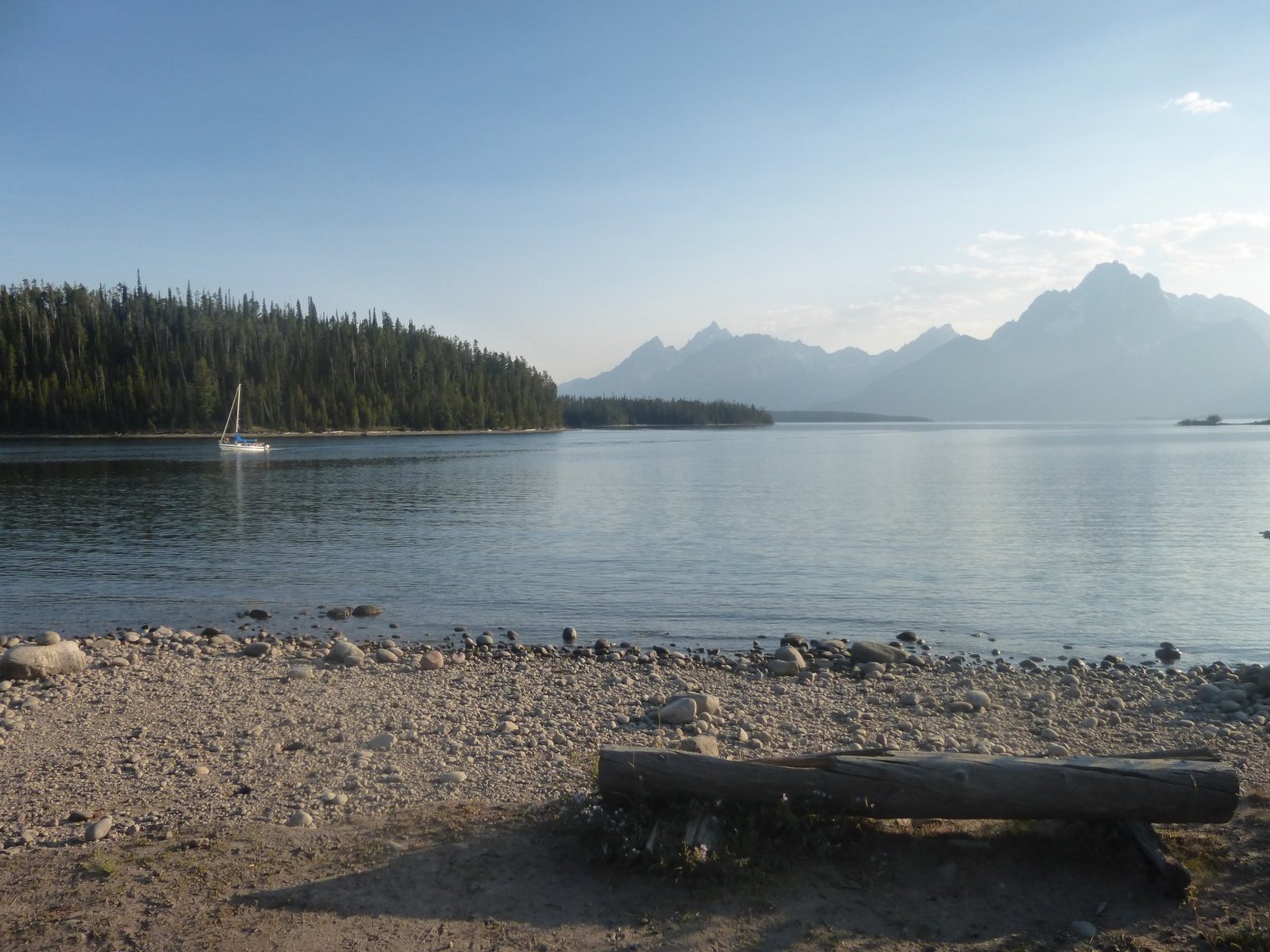
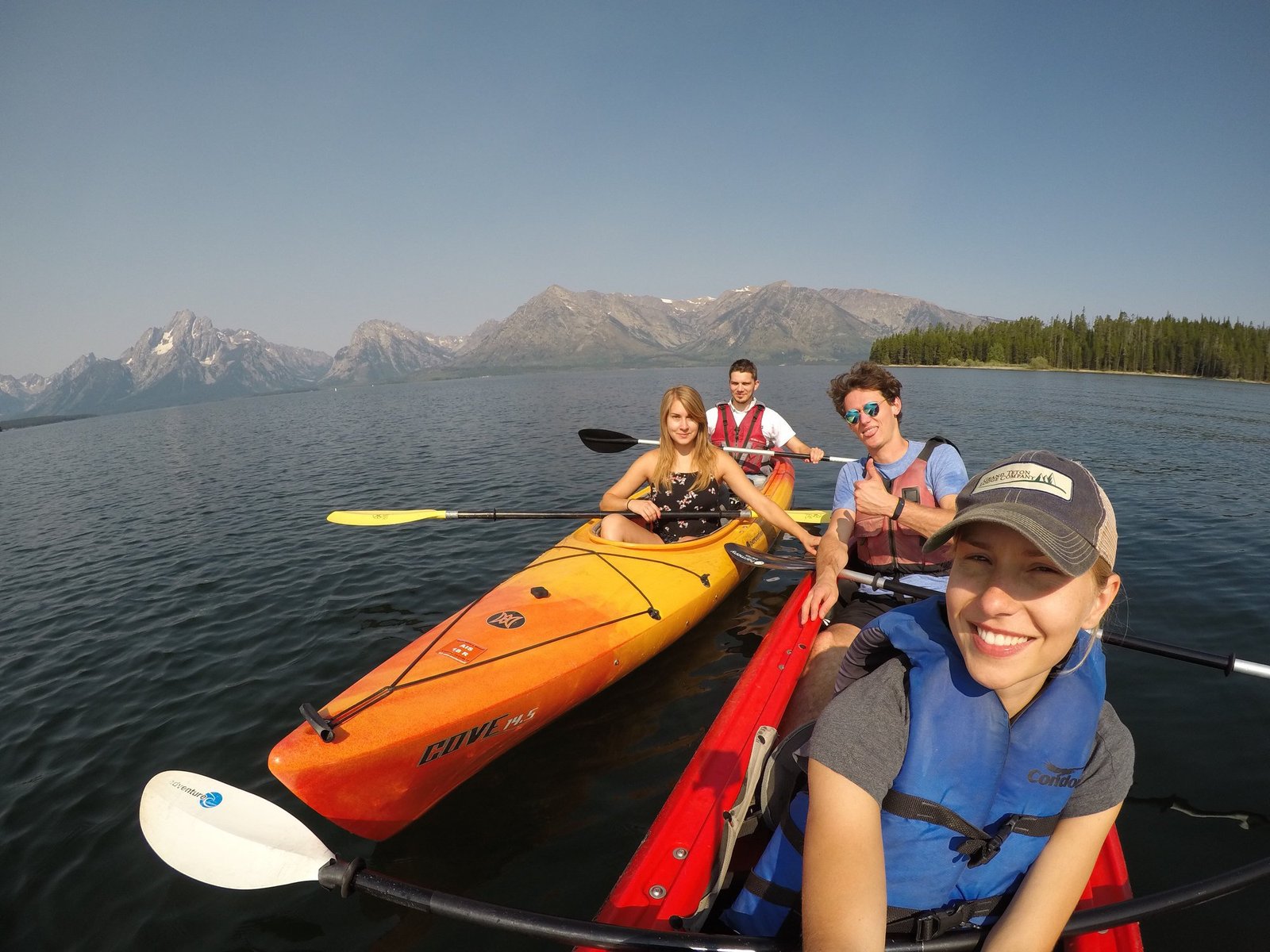
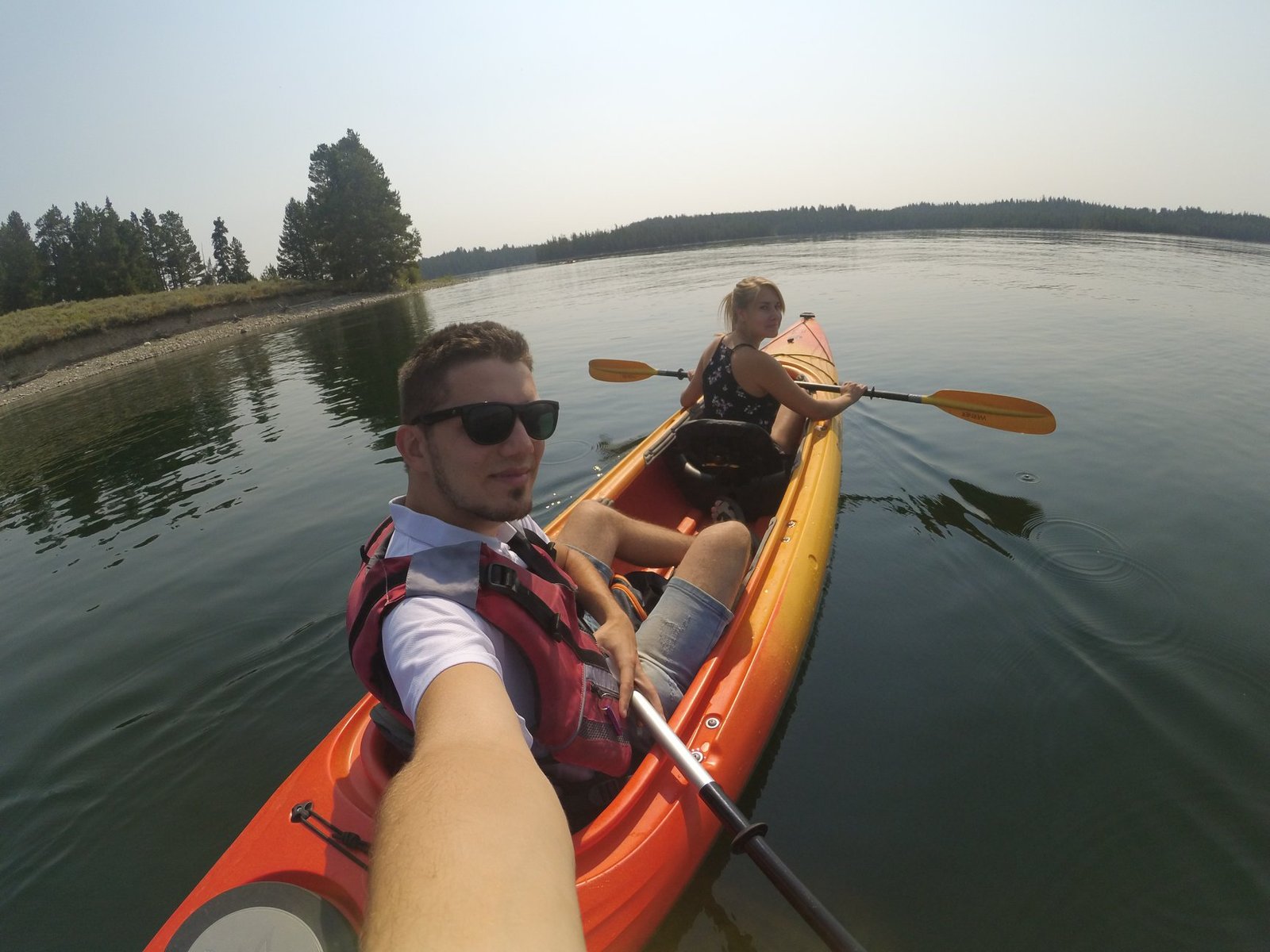
We spent the first days mostly outdoors, right next to home. Staff got plenty of activities for free – kayaks, horse riding, rafting, football and even a trip to Yellowstone (from the employer, with a 100% discount) – so we immediately took kayaks out on Jackson Lake – the loop was about 7.5 km. The water was calm, and the whole Teton Range rose above it. In the evenings we went to watch the sunset over the lake – along the Colter Bay Lakeshore Trail, a short (about 4 km) loop around the peninsula. On the very first day, after sorting out the paperwork in the employer’s office, we walked it and swam in the lake: the water was cold and the entry stony, but the scenery was magnificent.
 4:26
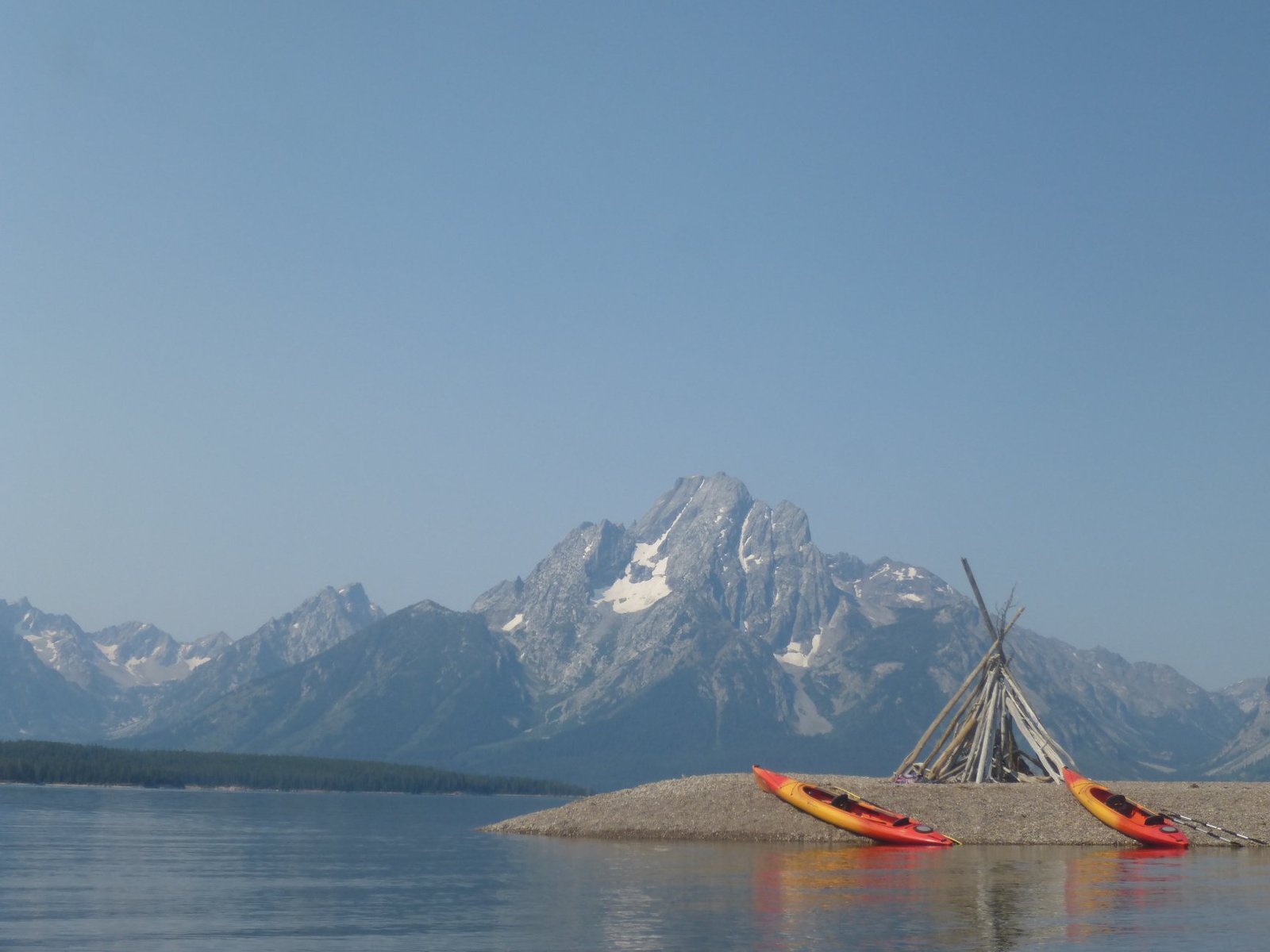
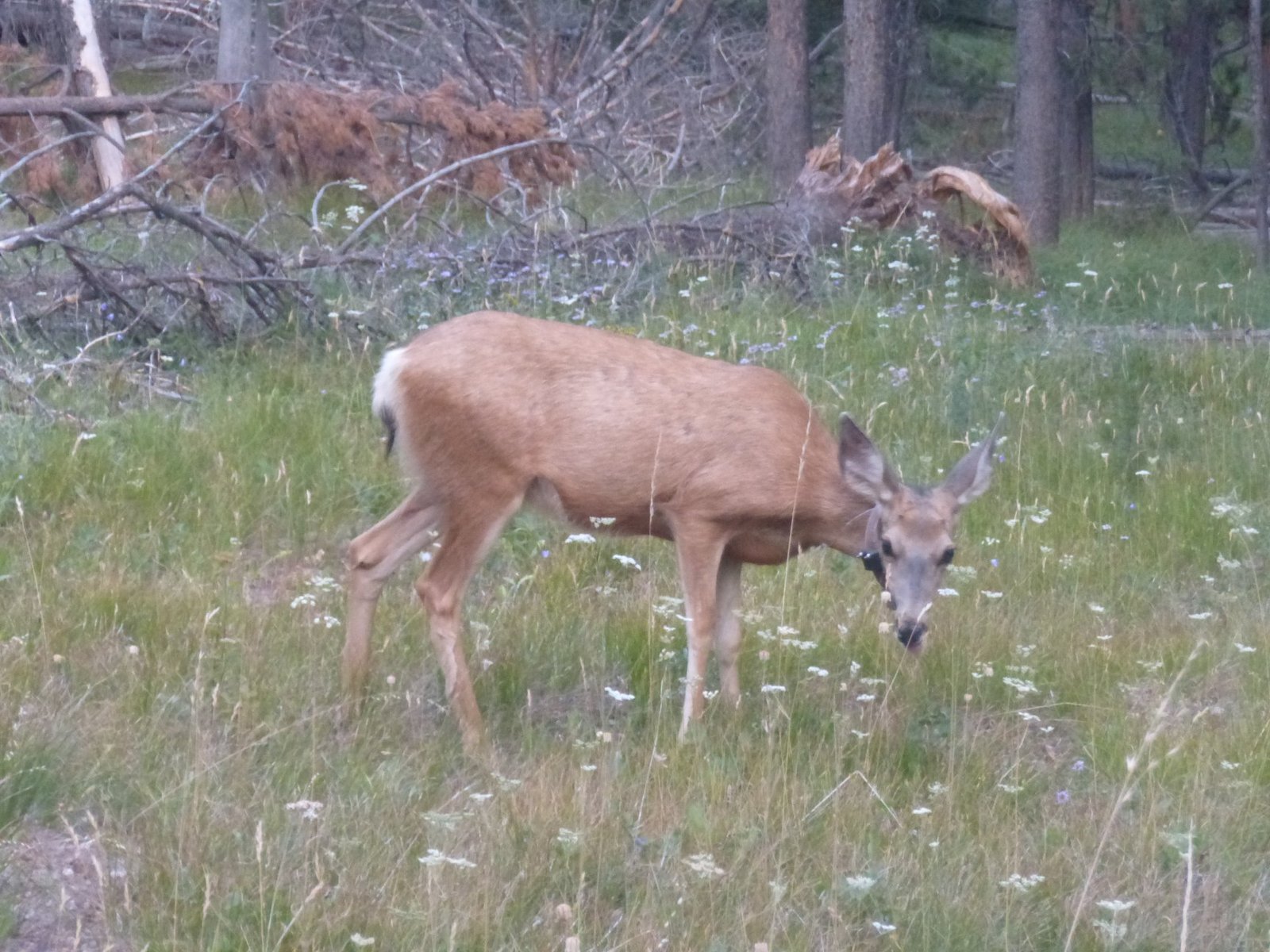
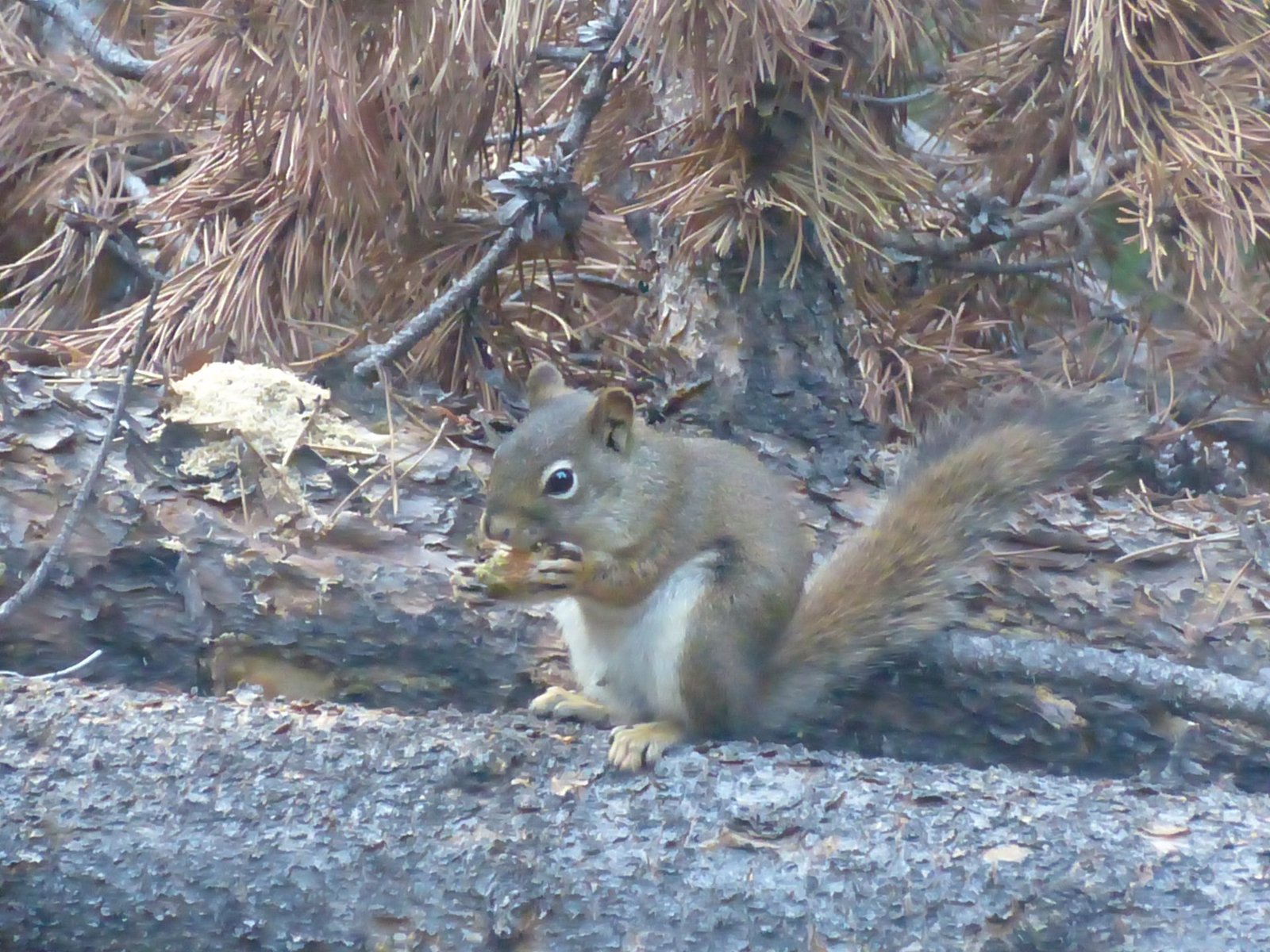
On our first longer hike – the Hermitage Point Trail (about 16 km, mostly through forest and almost flat) – we got more tired than we should have: our bodies were only just getting used to living above 2000 m. We kept coming across animals: mule deer, squirrels and birds. In Grand Teton wildlife is within arm’s reach, but you have to remember not to feed the animals and to keep your distance.
 4:44
Jenny Lake and Hidden Falls – with a bear on the trail
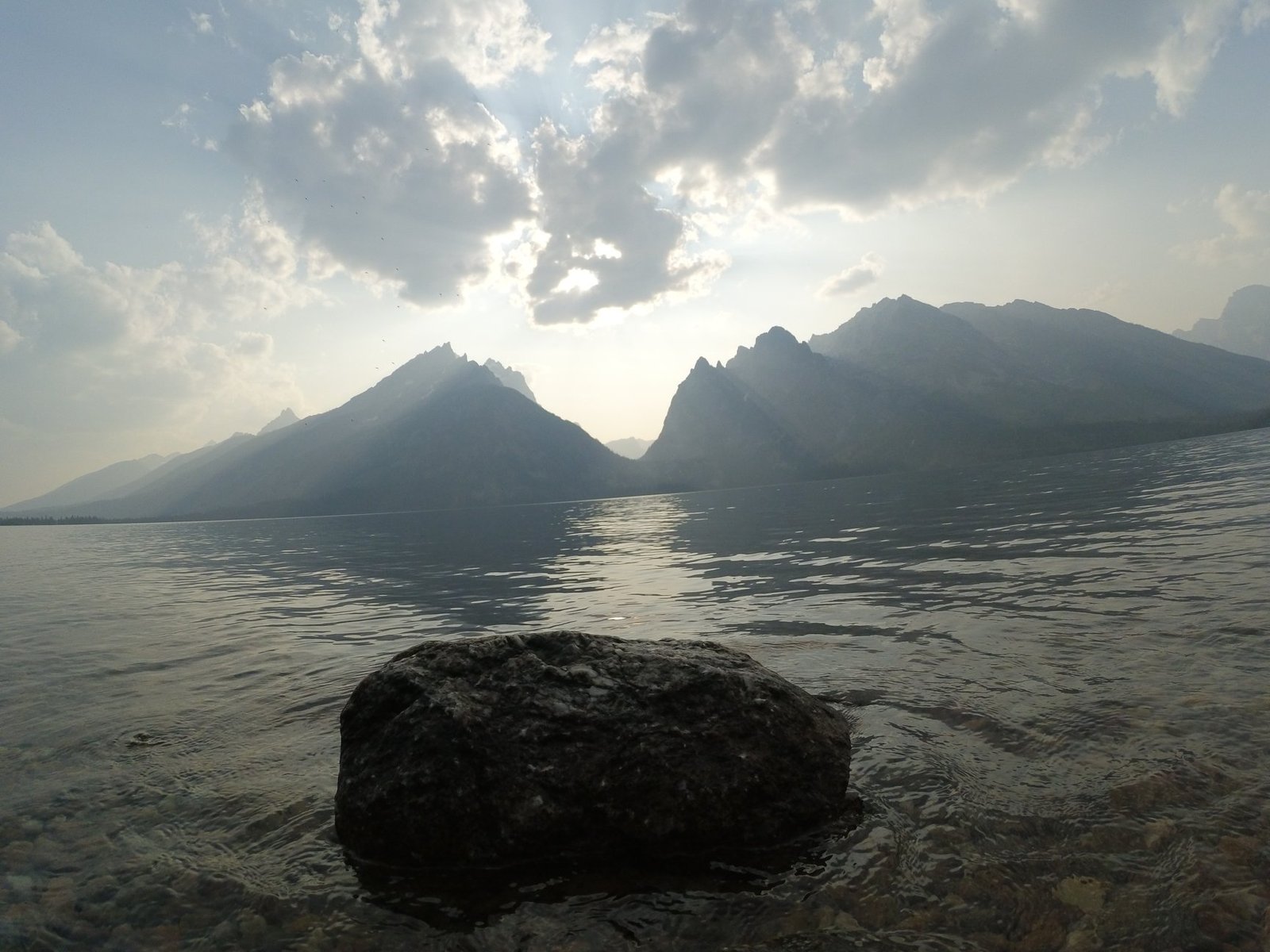
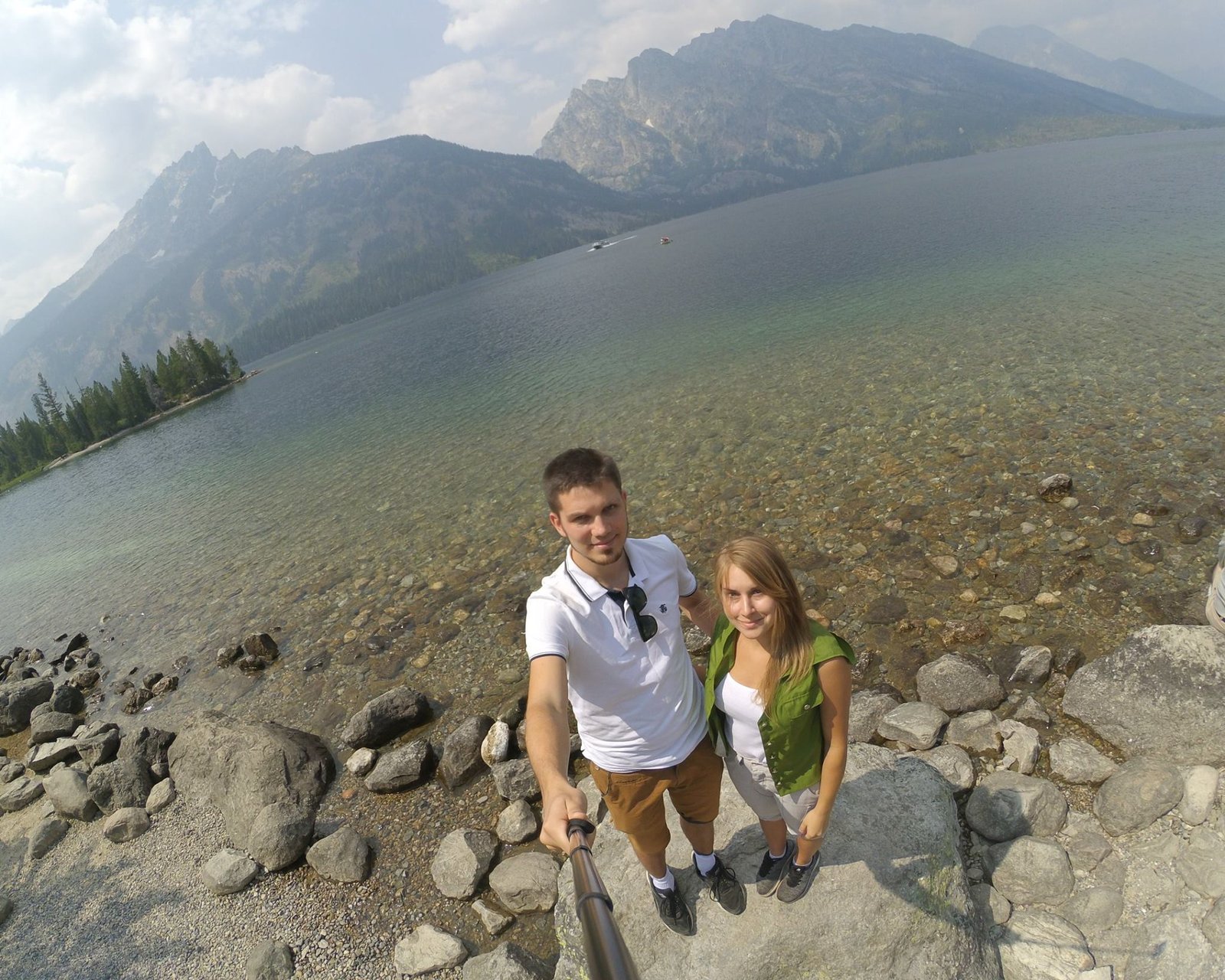
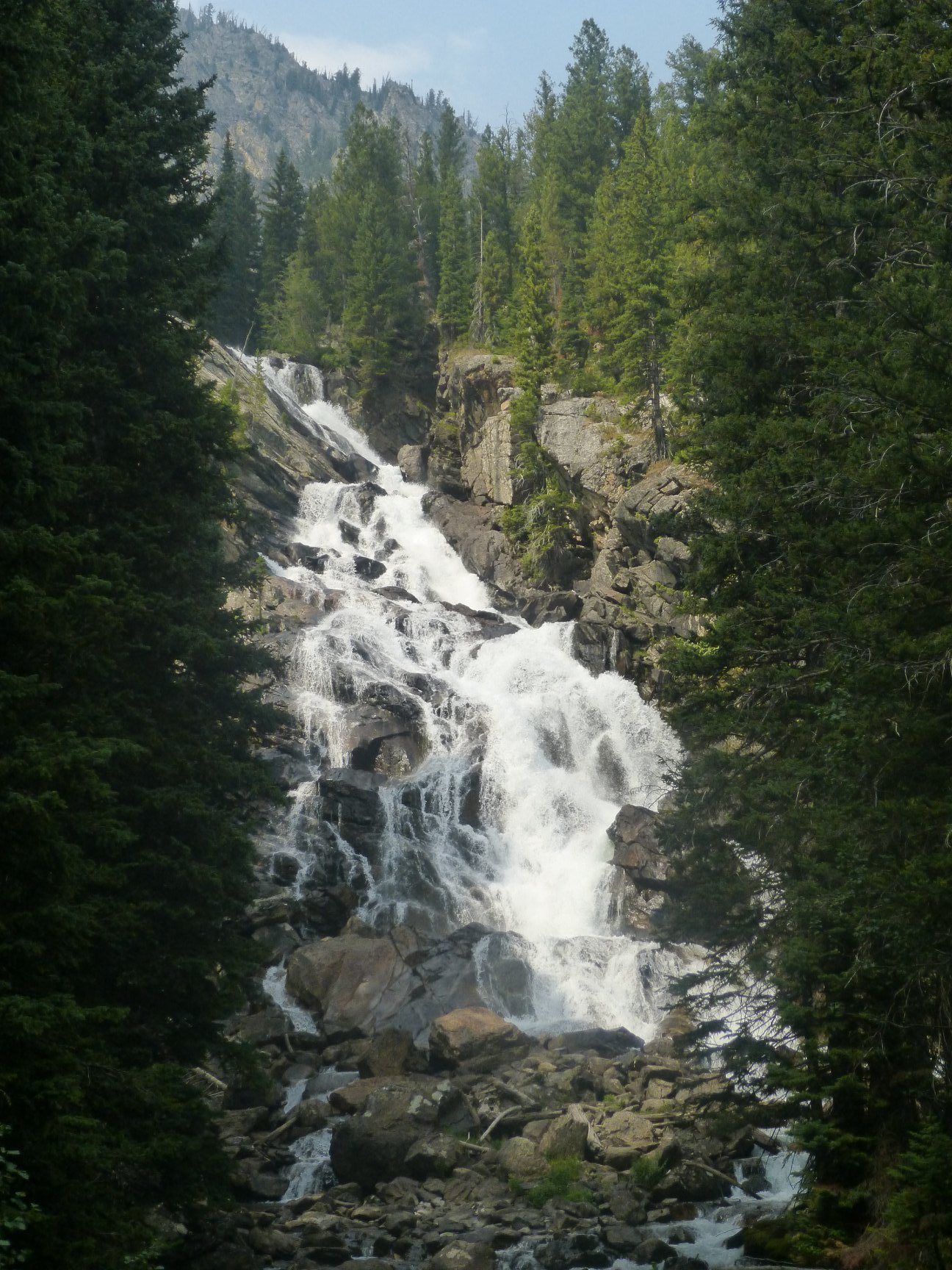
On 19 August we walked around Jenny Lake – one of the most beautiful lakes in the park, at the foot of the highest peaks of the Teton Range. The loop around the lake is about 12 km, without any major climbs. On the west side it is worth making a detour to Hidden Falls and the Inspiration Point viewpoint (a boat also runs across the lake and shortens the way) – with these detours we walked about 15 km. We got there on the staff bus, and back – as our co-workers advised – by hitchhiking, with a cardboard sign saying “Employees asking for a ride to Colter Bay Village”. It worked without a problem, in two cars.
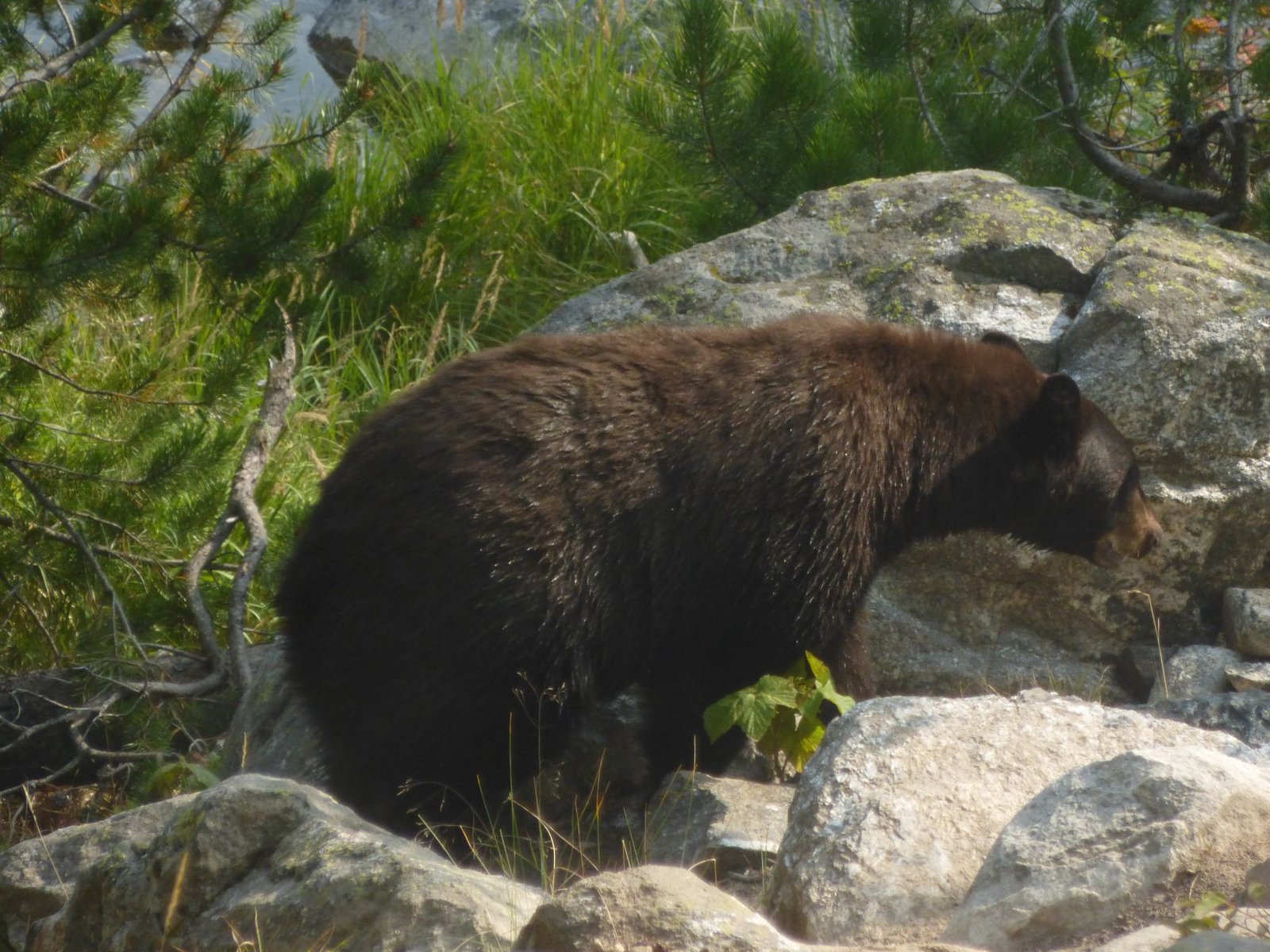
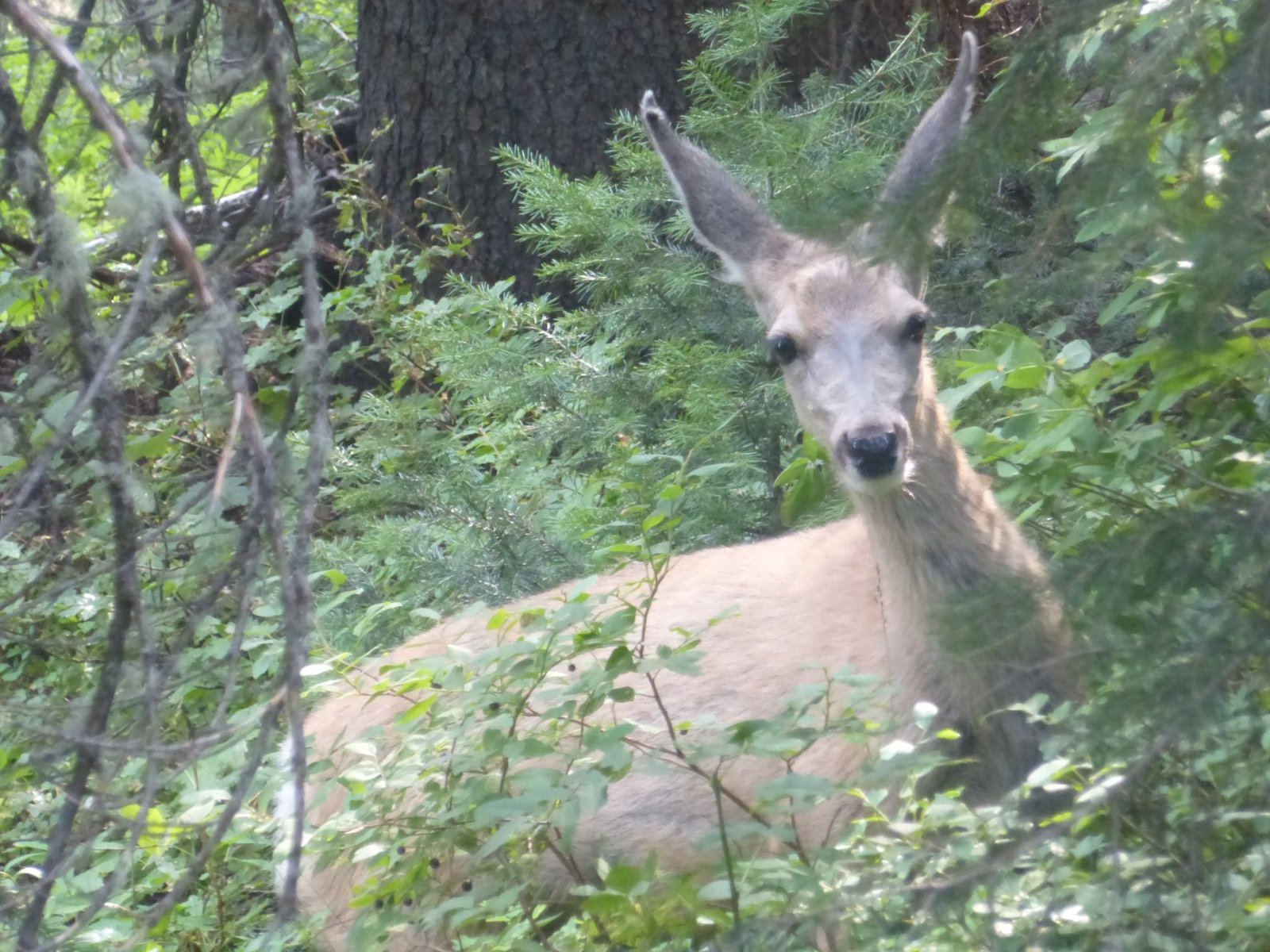
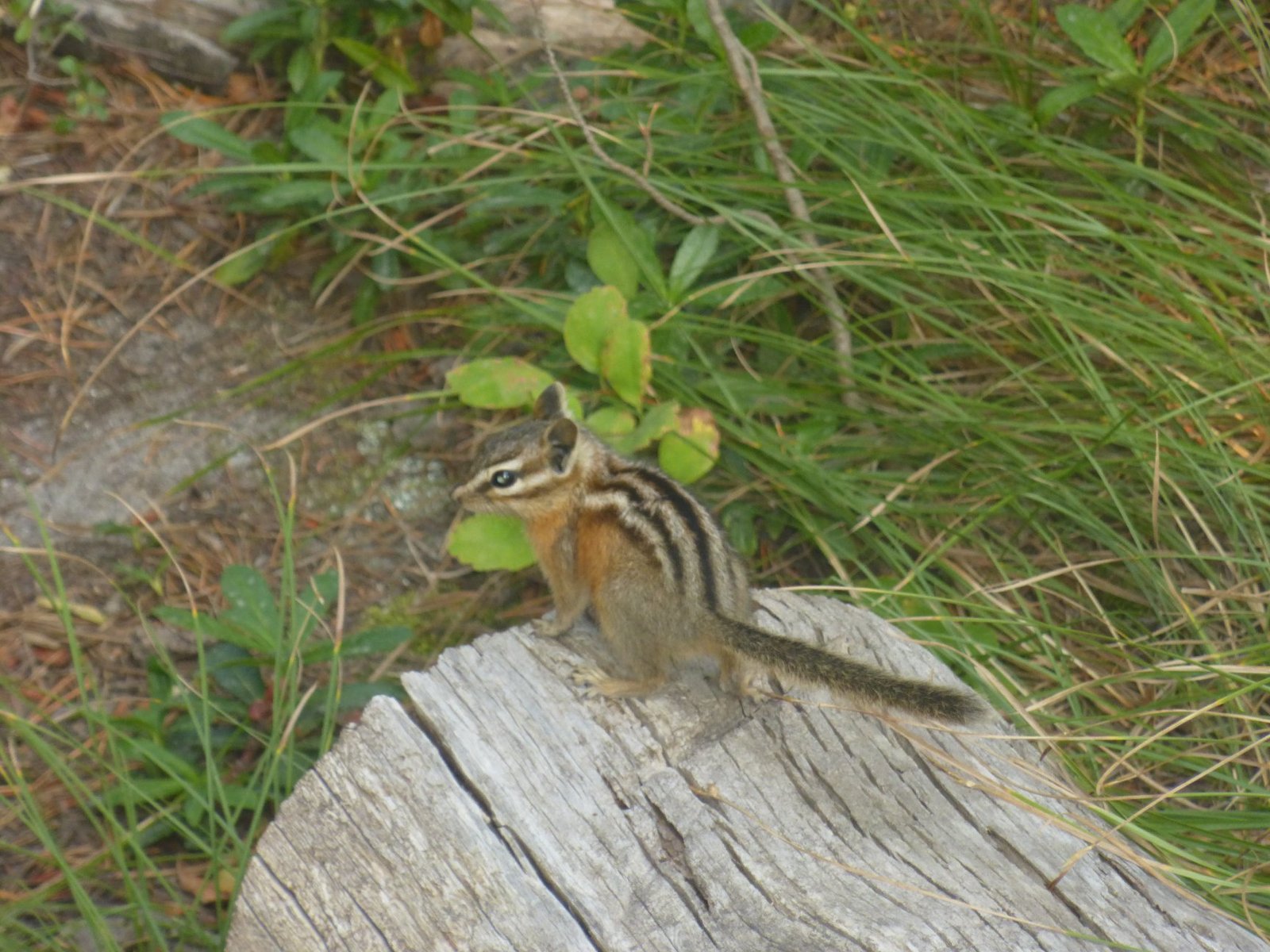
That day we were lucky with animals: by the trail, just ahead of us, we met a black bear (our first one on a trail!), calmly searching through the bushes, plus a doe and chipmunks that were not afraid of people at all. How to behave when you meet a bear is described below.
 9:24
Rafting on the Snake River
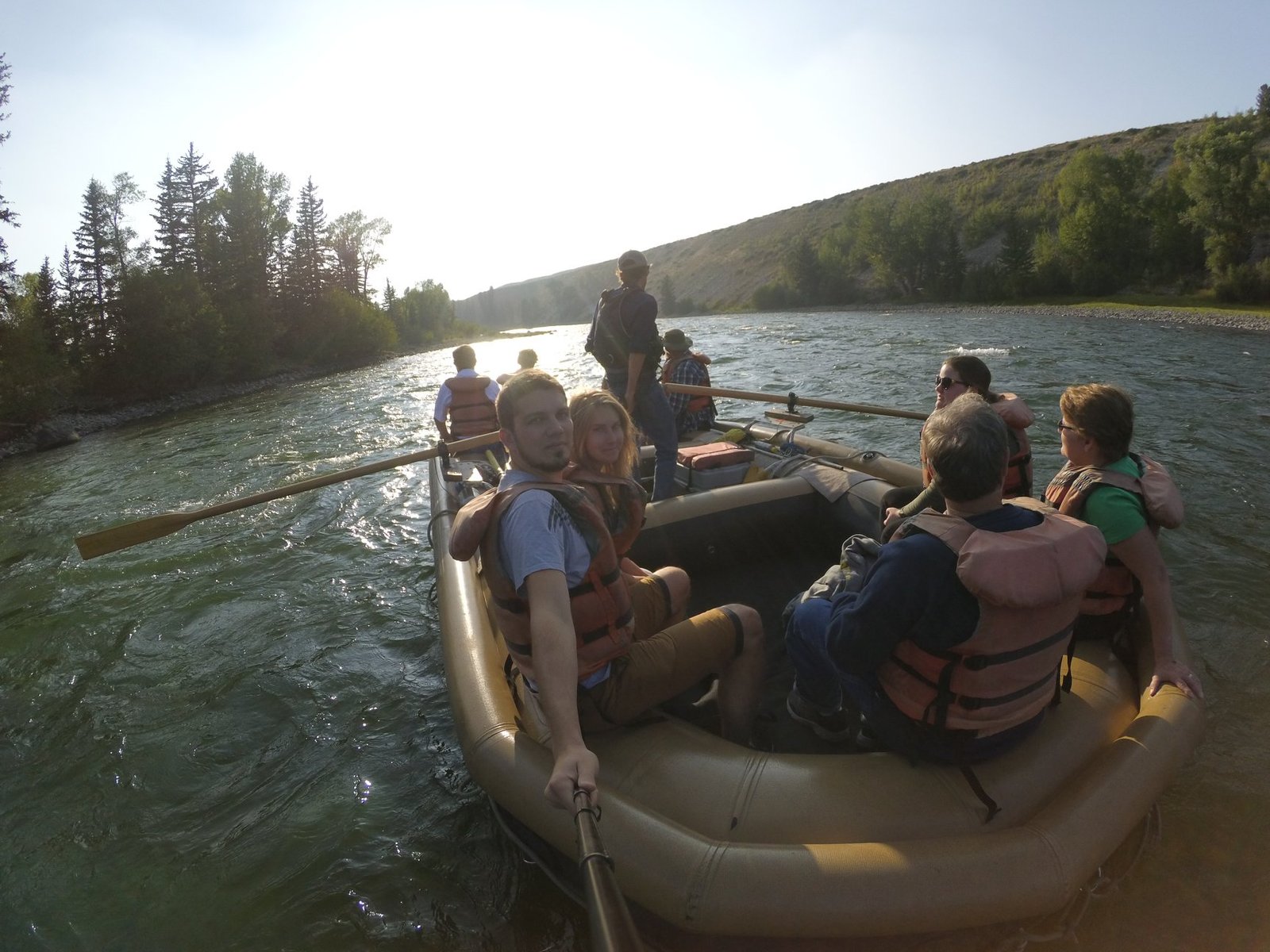
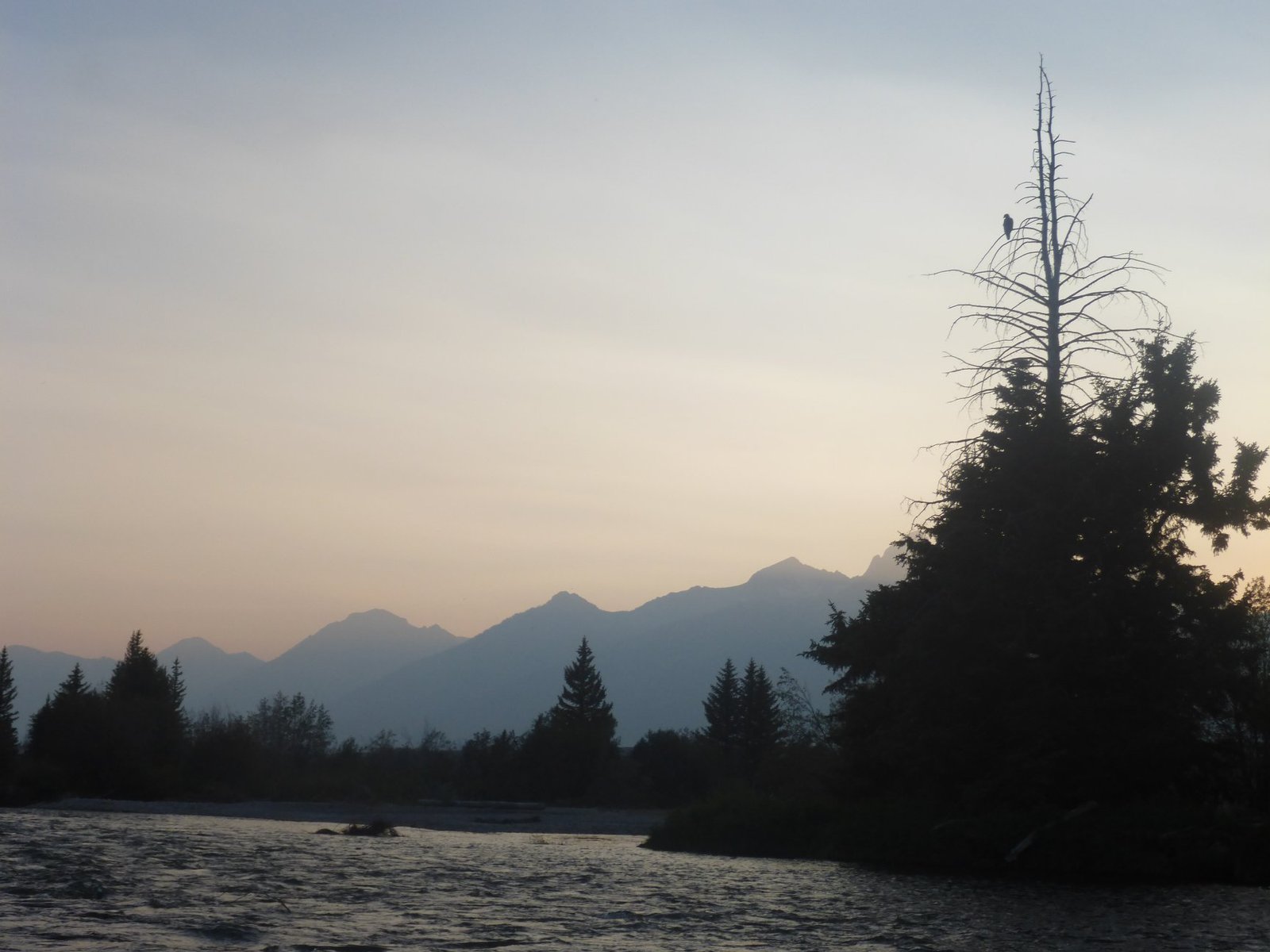
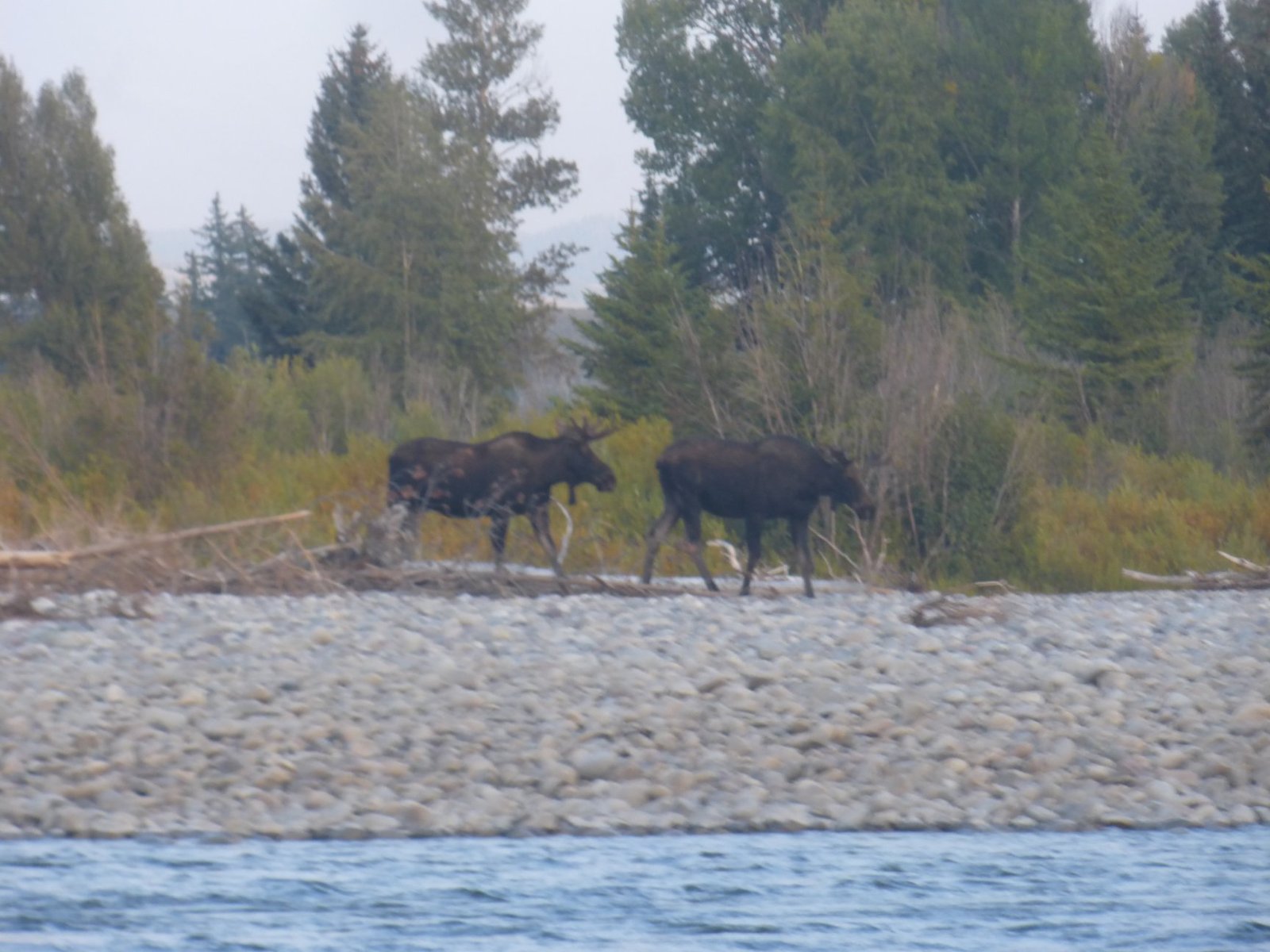
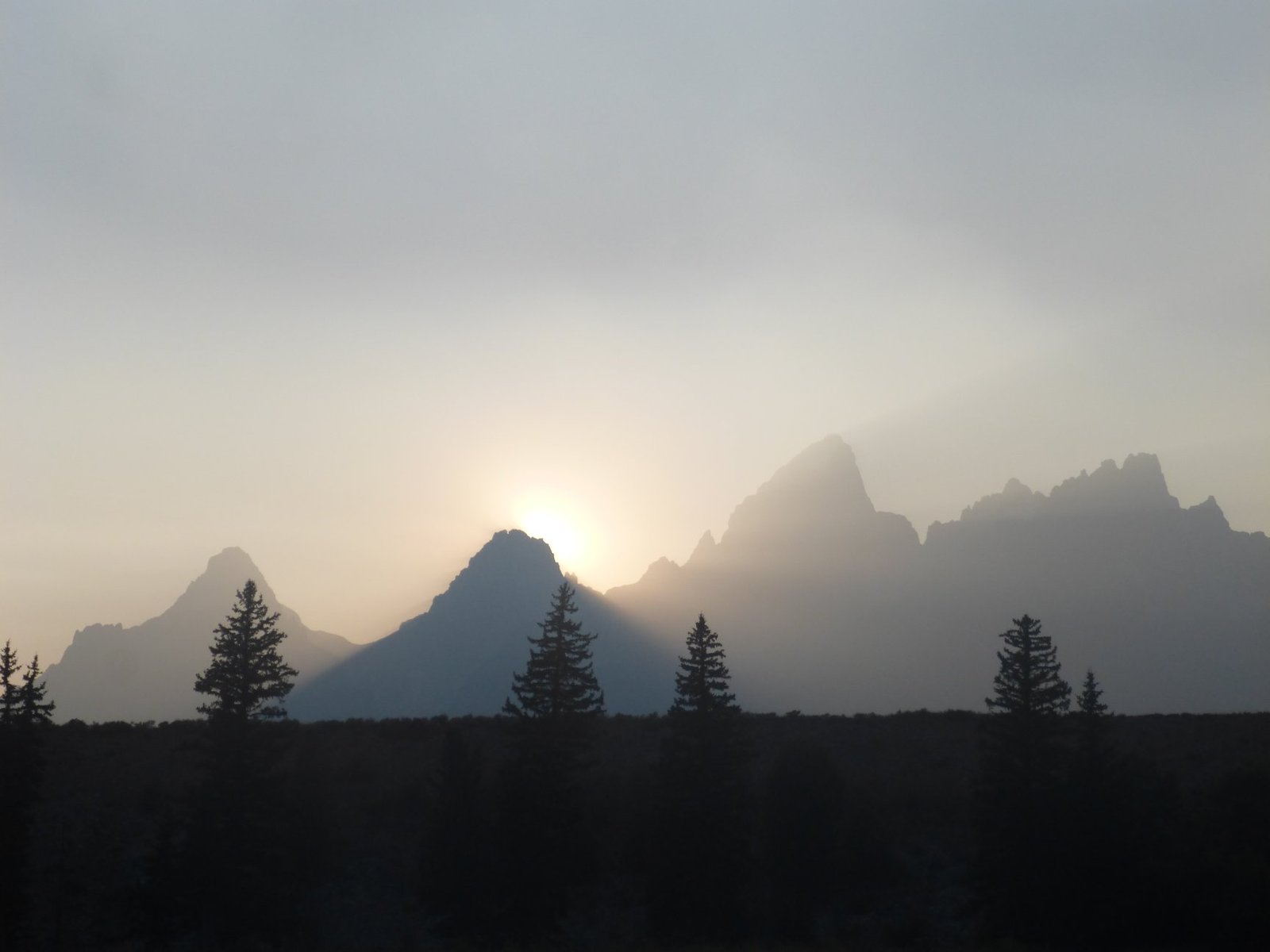
On 23 August, after the morning shift, we floated down the Snake River on a raft – a two-hour, 16-kilometre rafting trip with a guide from Deadman’s Bar (they drive you there from Jackson Lake Lodge), free for park employees. In places the current was quite fast, but it is more of a float for admiring nature than a whitewater thrill. And there was plenty of nature: we counted 12 beavers and 3 moose, and at the end the sun set behind the Teton Range.
 4:48
On horseback and into the town of Jackson
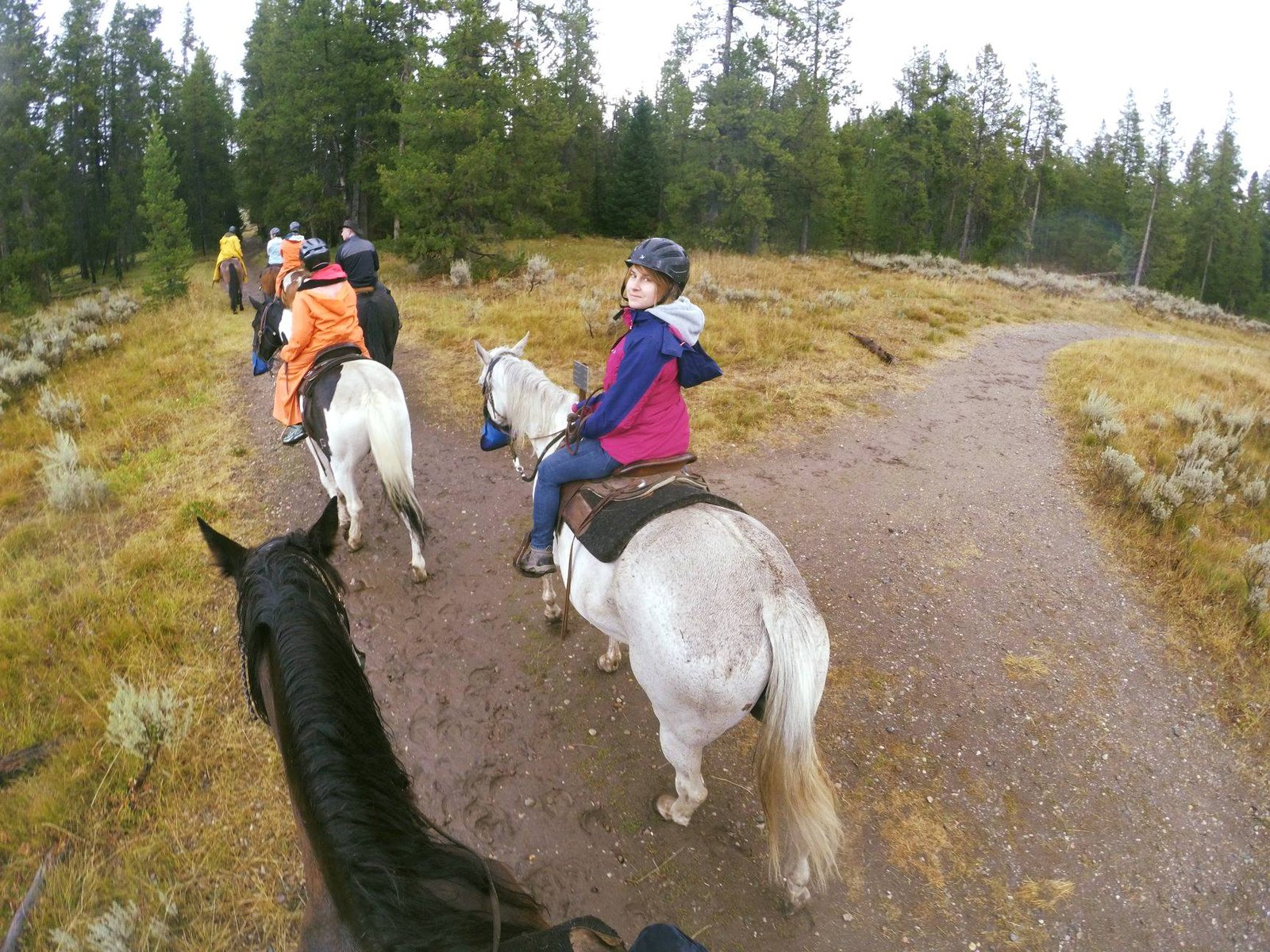
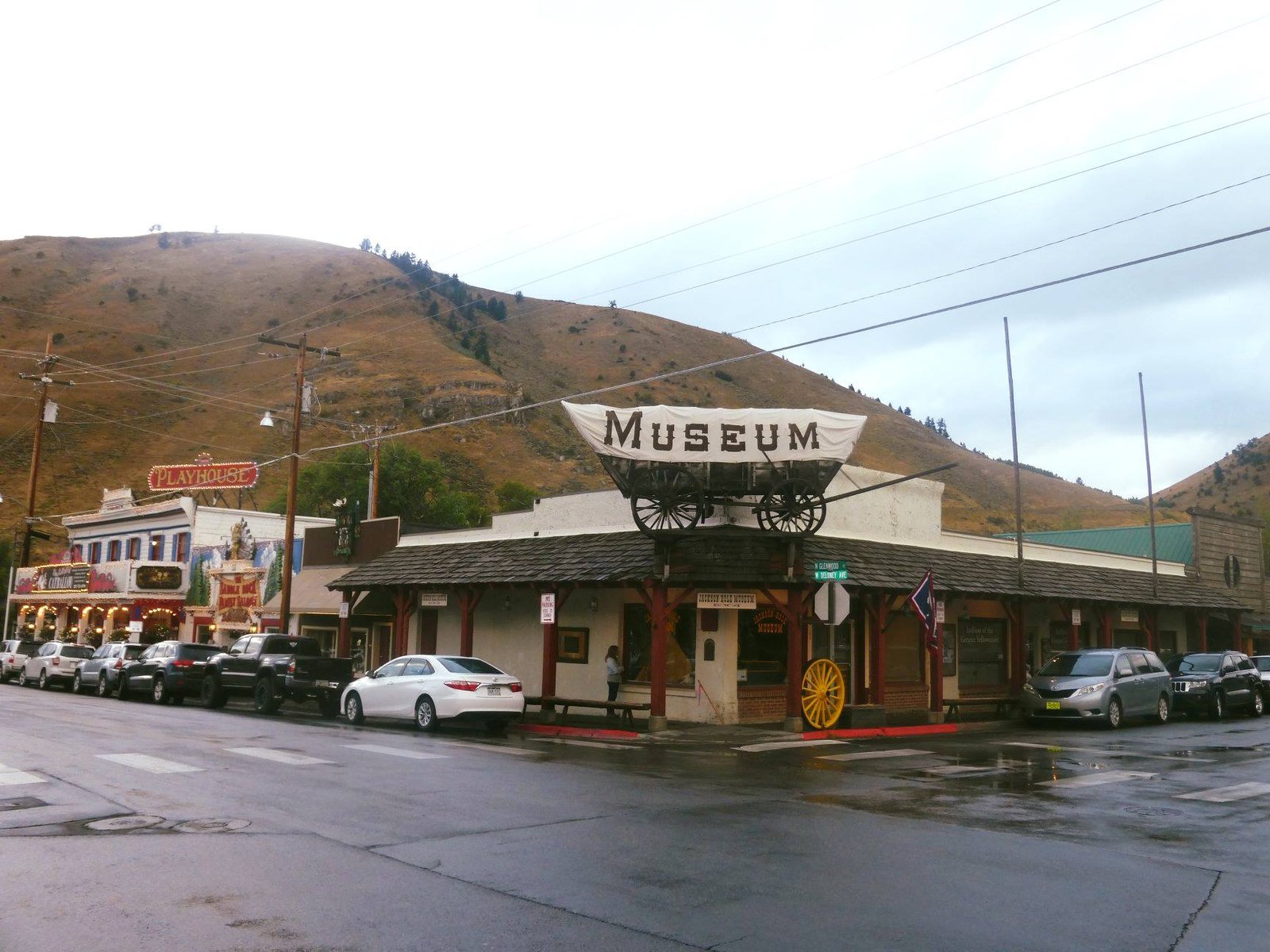
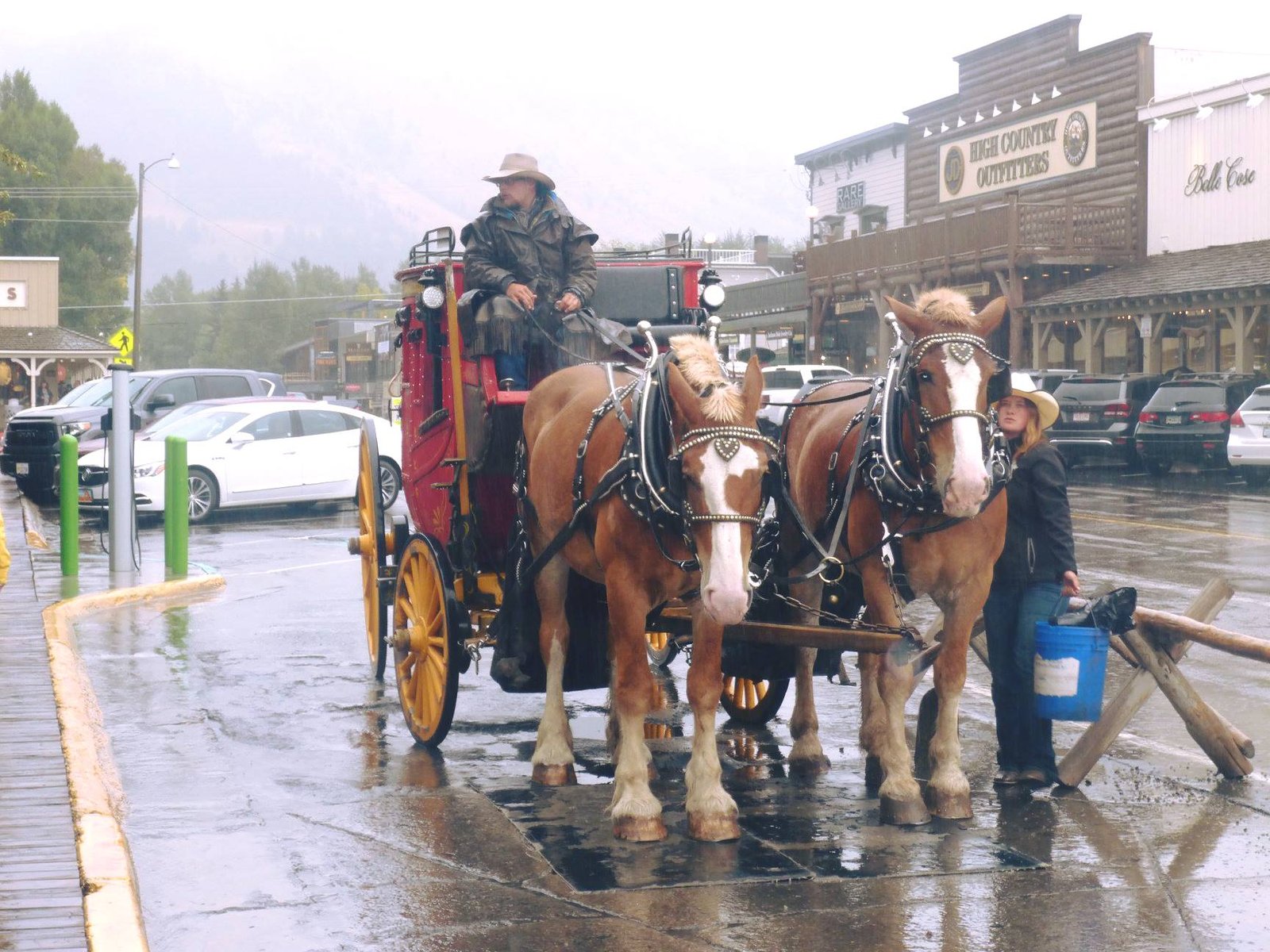
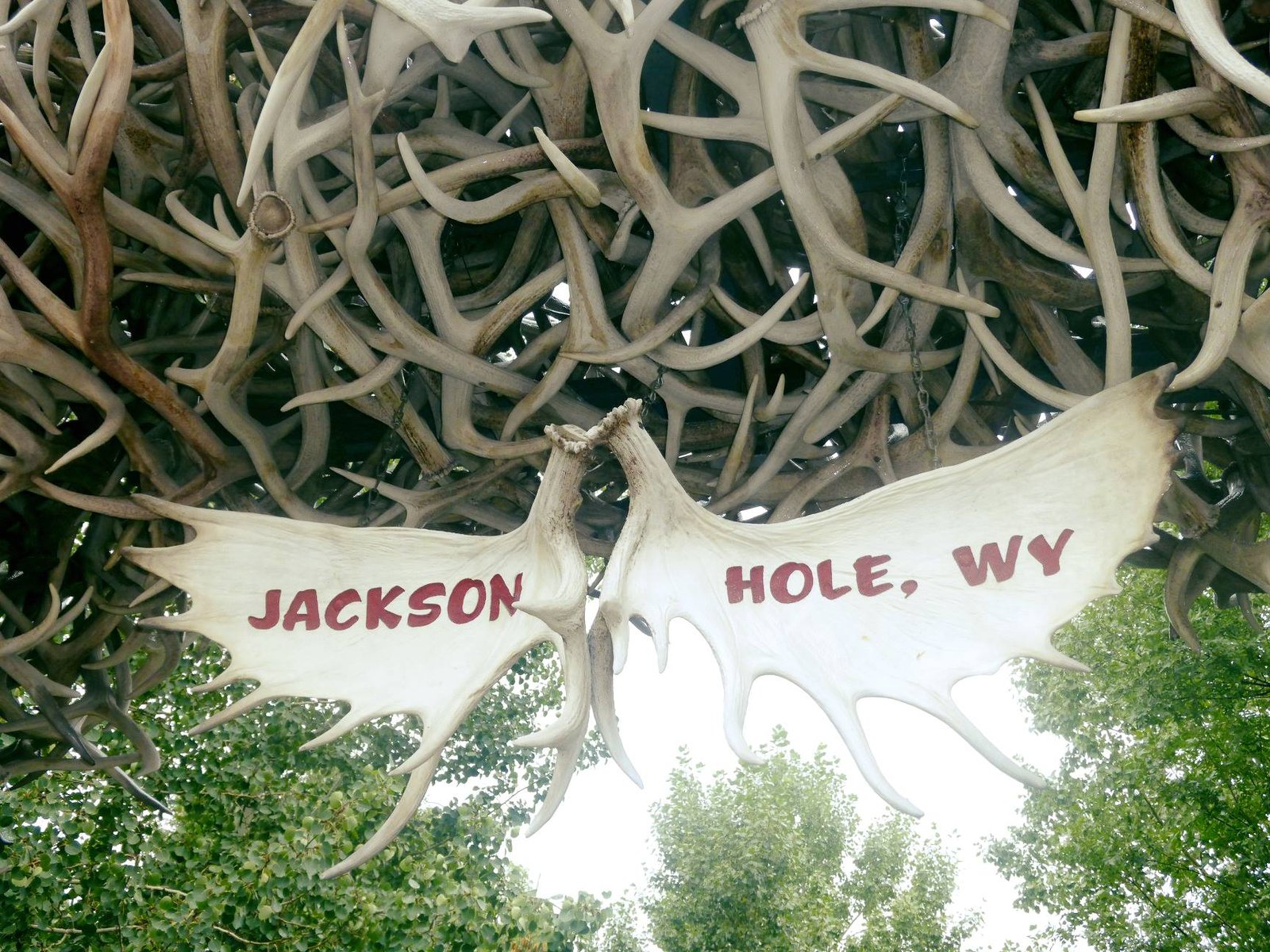
On 27 August, a day off, we went on a two-hour horse ride from the stables in Colter Bay Village (free for staff) – partly along the Hermitage Point trail we already knew. Horse riding was a completely new experience for us. In the afternoon we went to the town of Jackson – the capital of the Jackson Hole valley – mainly to finally open a bank account: since we started working in Yosemite we had been collecting uncashed pay cheques. Unfortunately it rained all day, we did not manage to see everything we had planned (for example going up Snow King Mountain with its view of the town), and the museums are closed on Mondays. What was left was a walk around the Wild West centre, a stagecoach in the street and the famous arches made of elk antlers (Elk Antler Arch) around the town square – the symbol of the town. Public transport in Jackson is free.
On the way back we carelessly went to the wrong bus stop (in the other direction the bus left from a different place), and it was the last bus of the day. It was getting dark, so we started hitchhiking – this time without a cardboard sign – and successfully, because the driver happened to be going to Colter Bay Village, about 65 km. In general, hitchhiking was our main means of transport here: in Wyoming we covered more than 300 km that way, coming back from the mountains and from town.
 8:25
Delta Lake, Surprise Lake and Amphitheater Lake
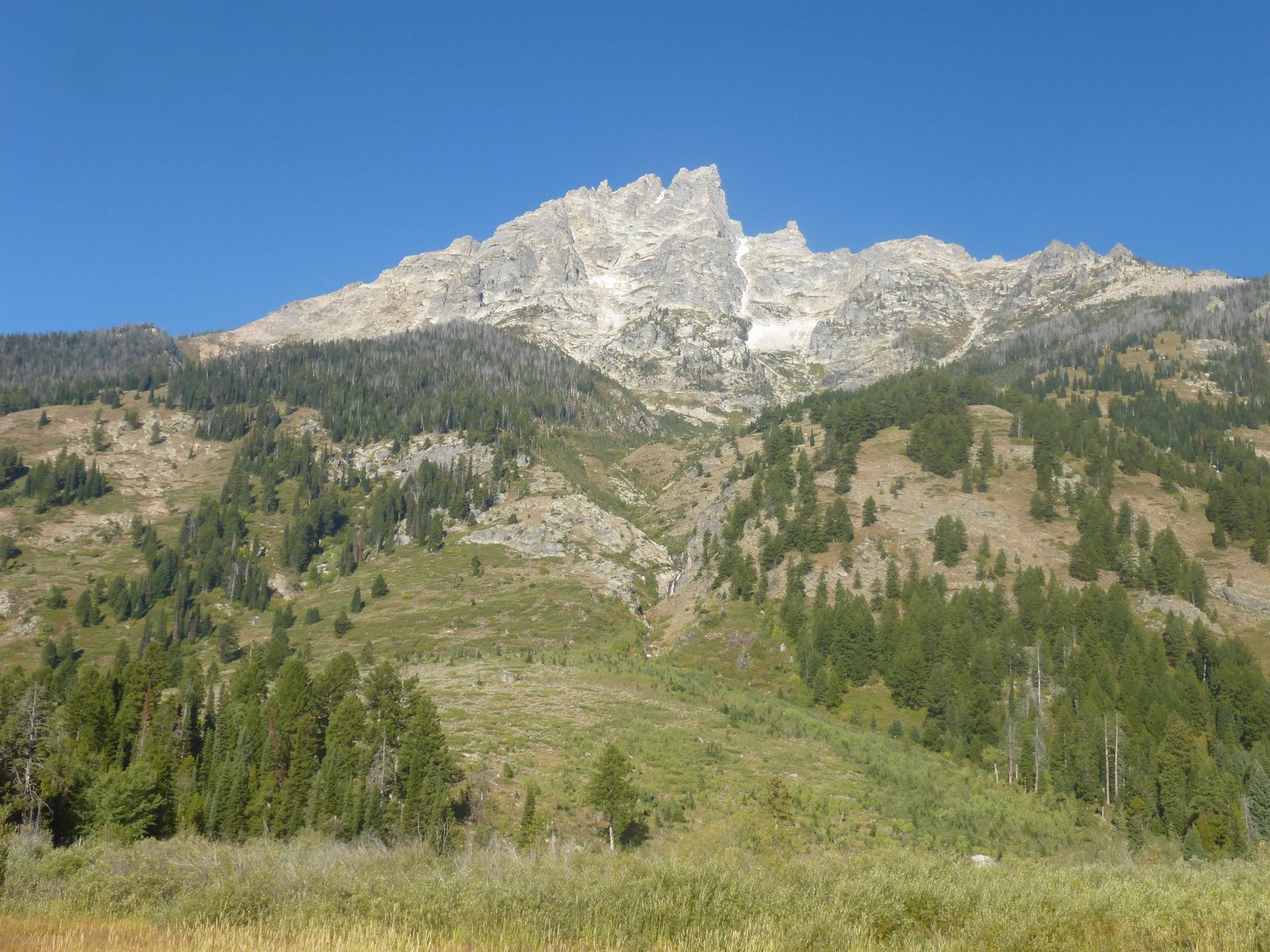
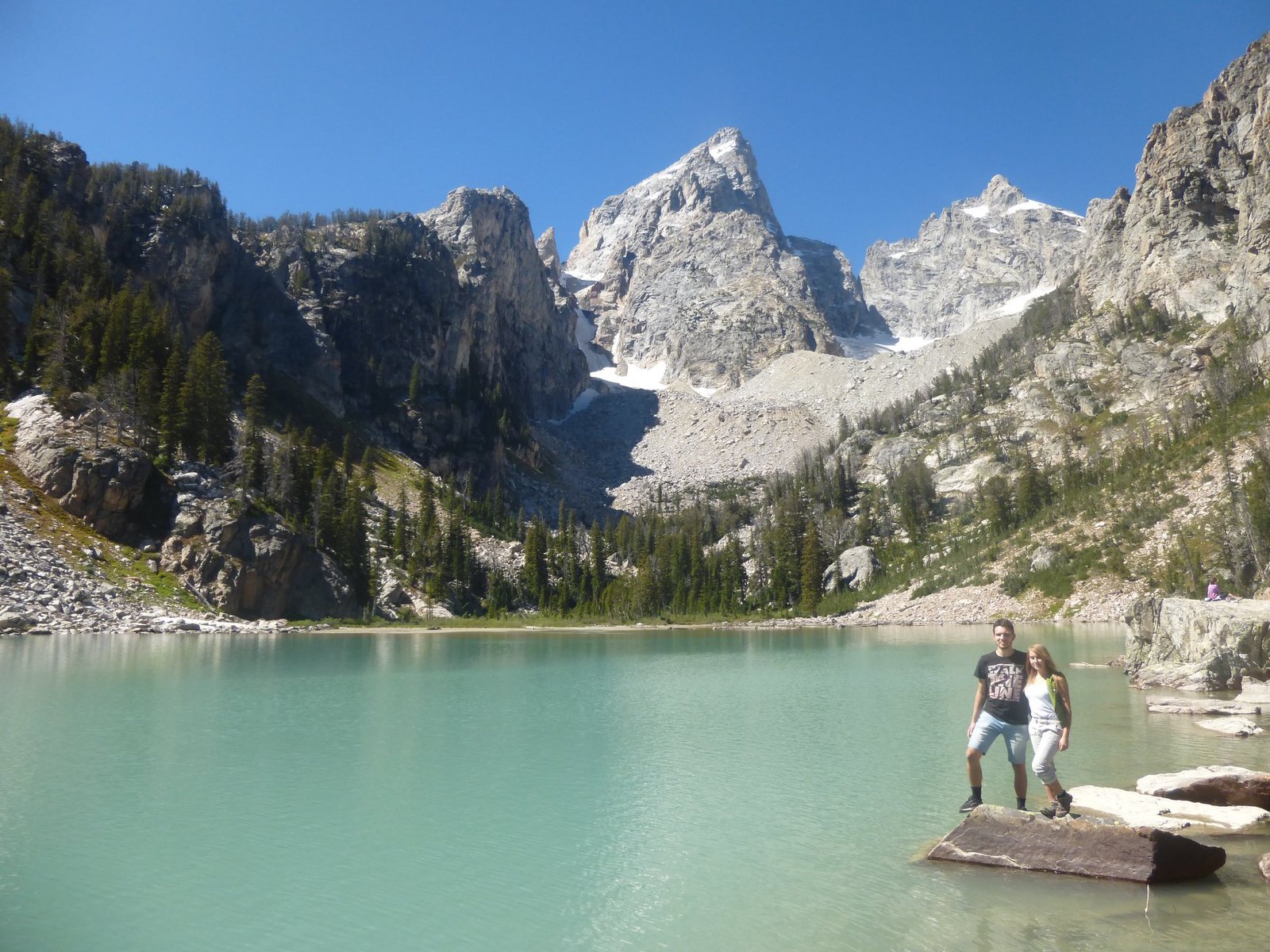
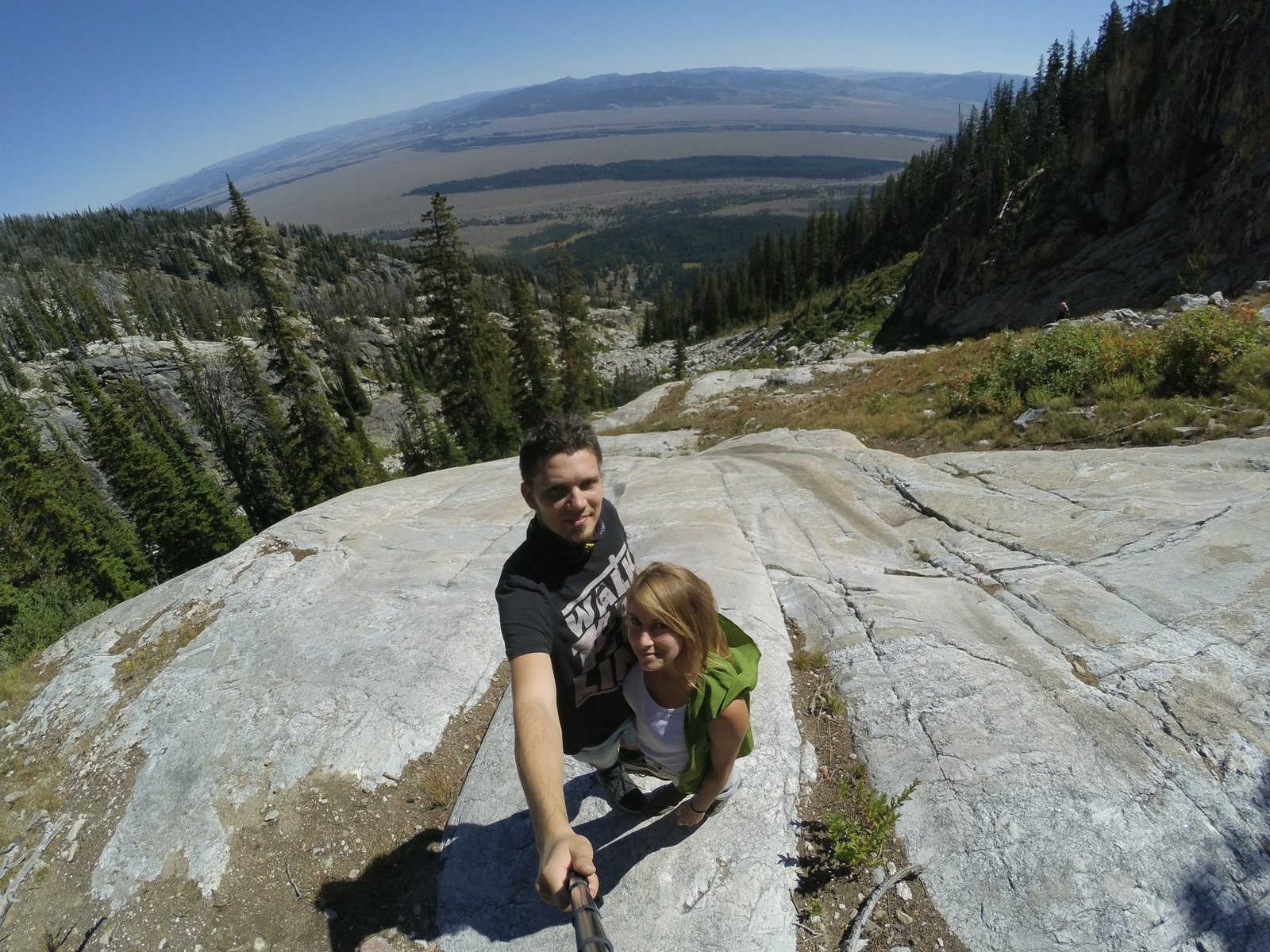
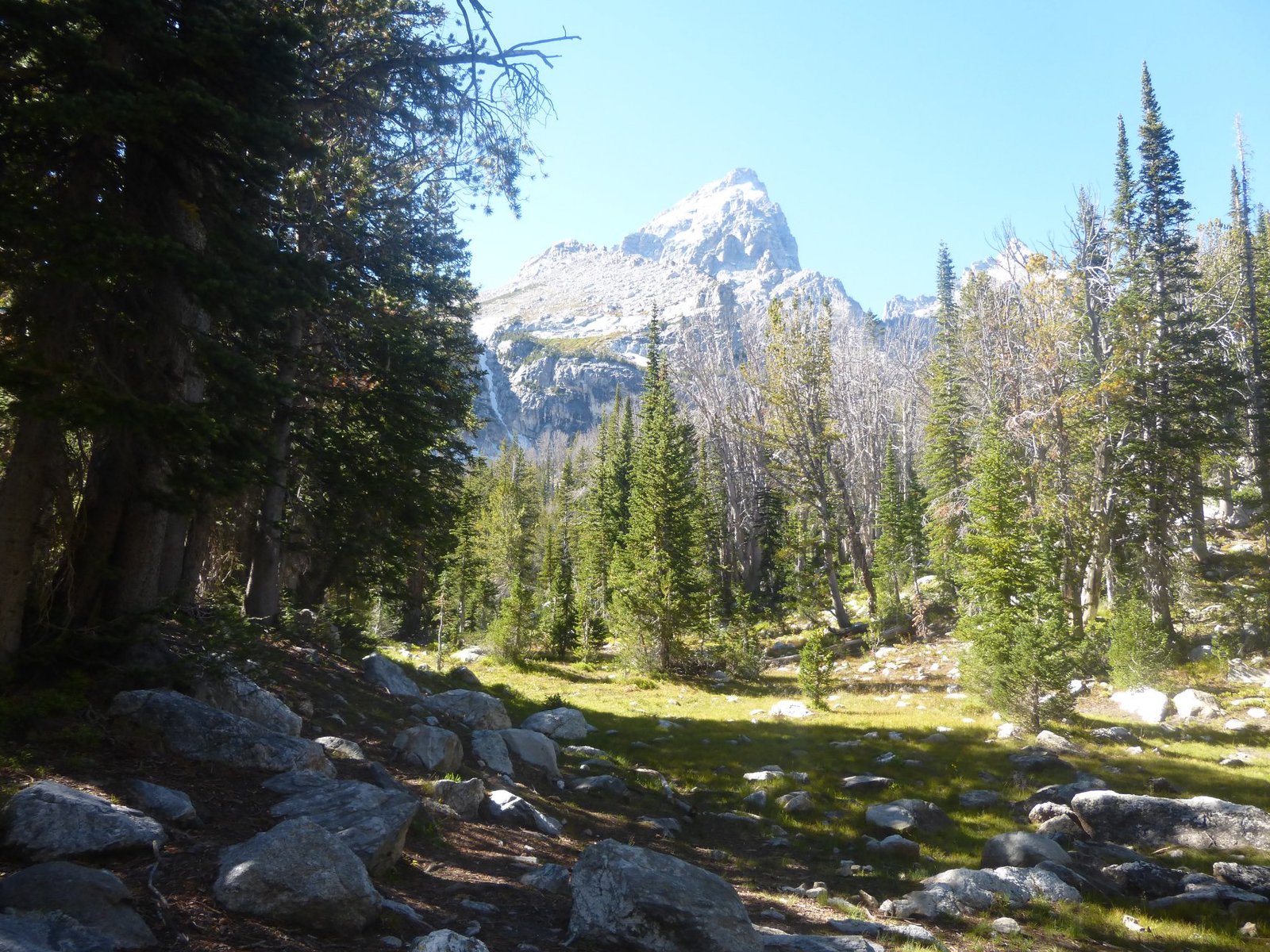
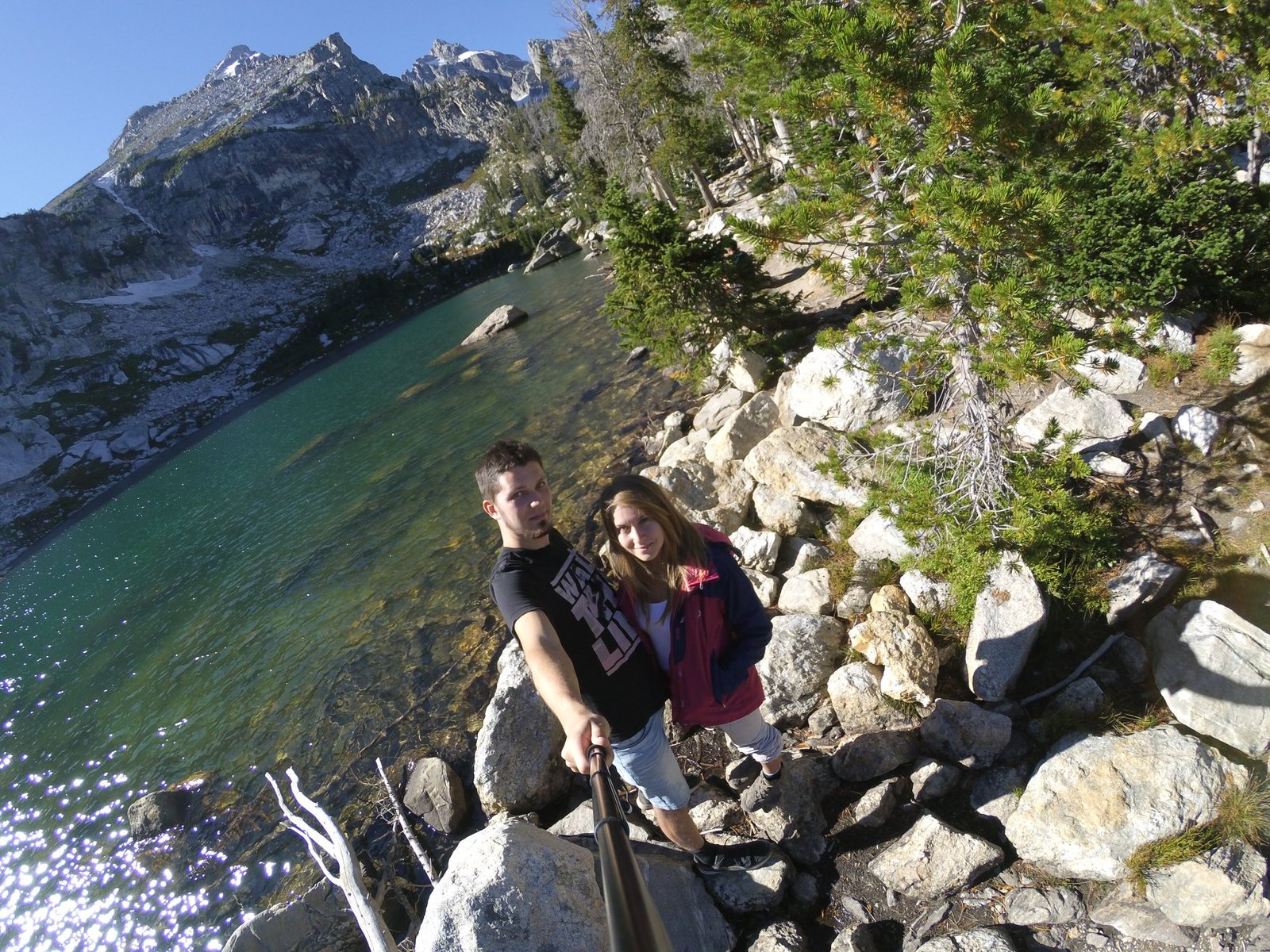
On 3 September, after six days of work (the last ones 13 hours each!), we set off on our longest trip in Grand Teton so far – more than 23 km and about 1100 m of elevation gain (on the trail from Lupine Meadows; starting at about 2070 m). Our goal was two lakes: Delta Lake (2748 m) and Amphitheater Lake (2956 m). We got to the Jenny Lake Visitor Center on the staff bus (it ran only twice a day); the first 4 km along Jenny Lake are almost flat, then the trail climbs with a view of Bradley Lake. There is no official trail to Delta Lake, and getting there meant scrambling over boulder fields in places – although on the way back it turned out that a path we had not noticed earlier avoids most of the rocks. But it was the most beautiful view we had seen in the park so far: the incredible, turquoise colour of the water and the face of Grand Teton right above the lake. We also met another Work & Travel participant from Poland there.
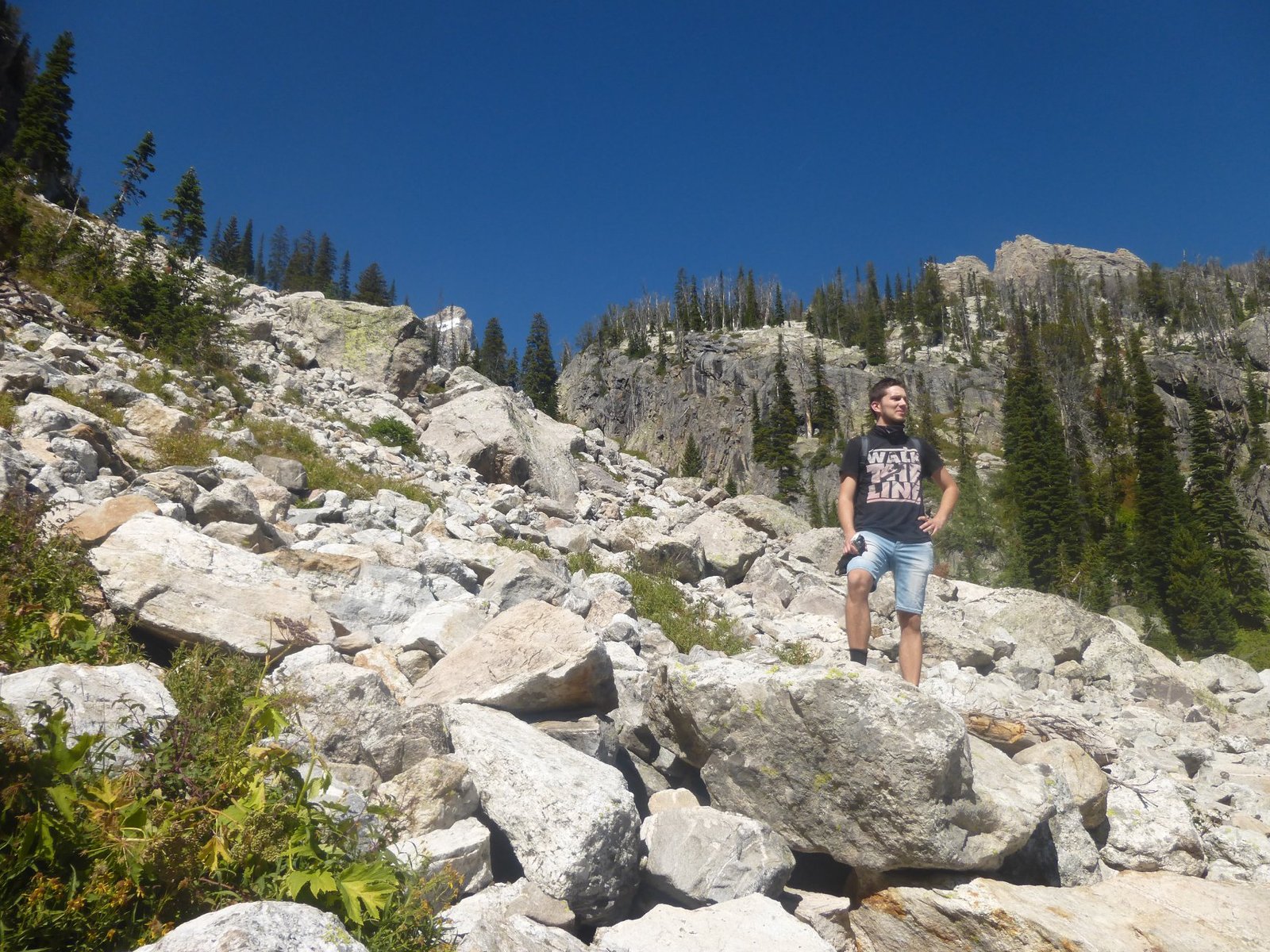

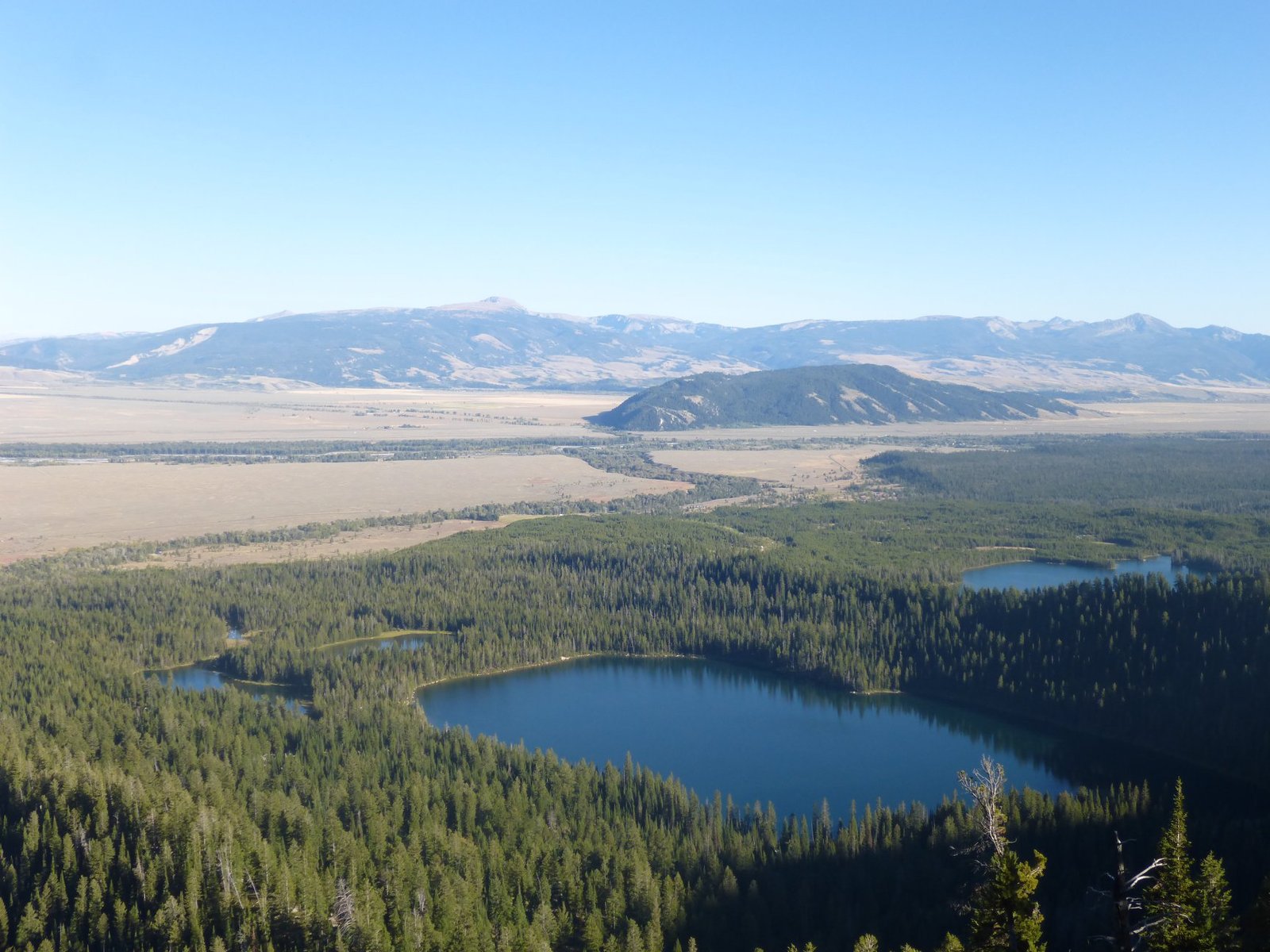
After the demanding first part we walked the next route much more slowly. On the way we stopped by Surprise Lake (2920 m), and Amphitheater Lake was the highest place we had been to so far (2956 m; before that our record was probably Glacier Point in Yosemite – 2199 m). From up there you can also see Bradley Lake and the whole Jackson Hole valley. As usual, we hitchhiked back to Colter Bay Village – we had left our cardboard sign at the Visitor Center in the morning and picked it up literally moments before the building closed.
 12:23
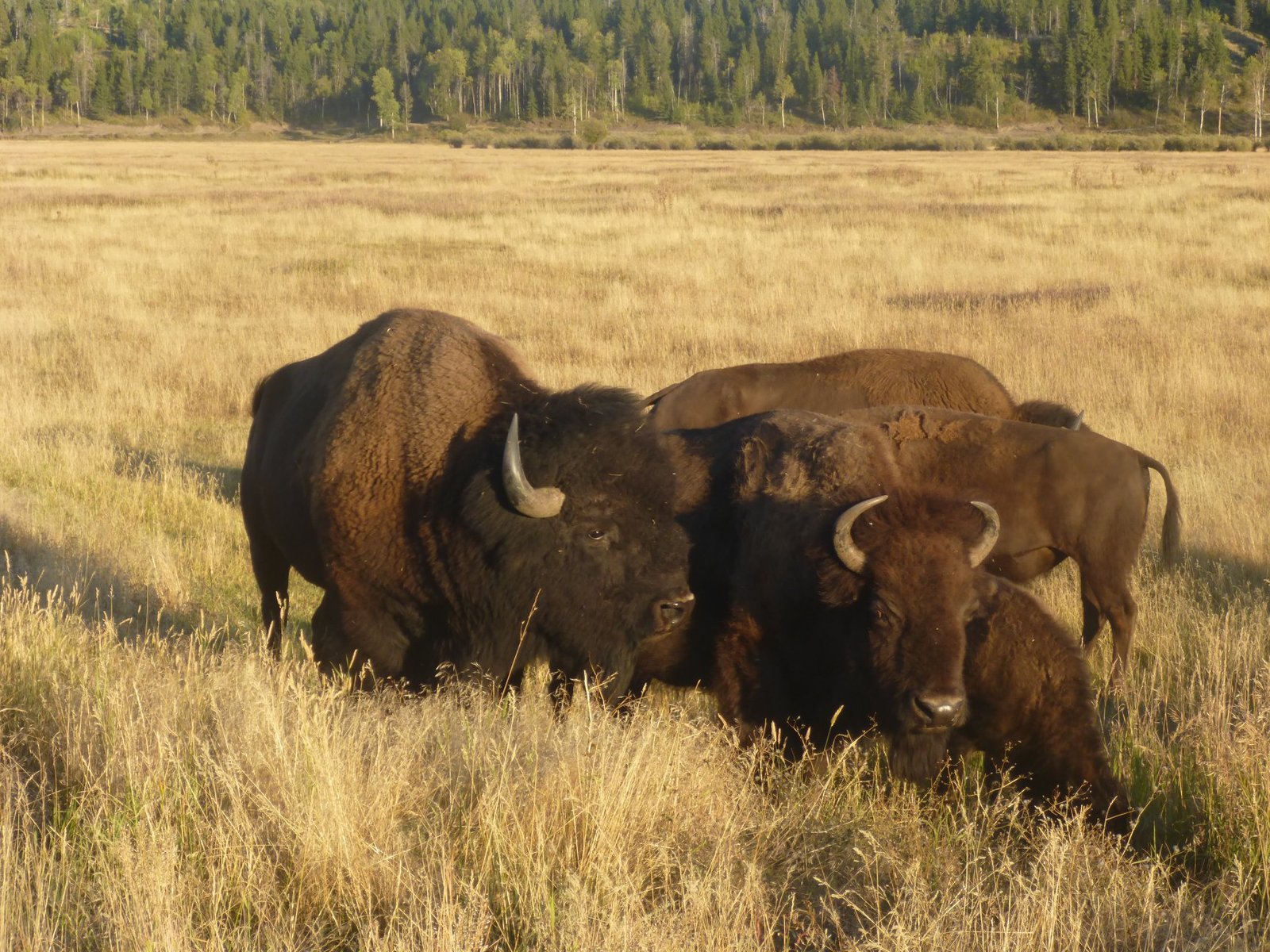
The next day, on the way back from Jackson Hole, we stopped by a herd of bison grazing right next to the road. A few days later we went on a trip to Yellowstone – the oldest national park in the world. The trip was provided by our employer, and staff got a 100% discount on it.
Bears – how to behave
Both in Yosemite and in Grand Teton we came into contact with bears (Grand Teton is home to both black bears and grizzlies). A few rules we were taught:
- Do not go out on the trail alone and do not walk quietly – the bear must know you are there. A surprised bear feels threatened.
- Keep your distance. If you meet one, back away slowly without turning your back, without taking your eyes off the bear and without running.
- Never lure bears with food. Store food safely – campsites have metal food lockers (bear boxes), and in the mountains you carry sealed containers.
- Carry bear spray with you and know how to use it.
Practical information
Getting there
The nearest airport is in Jackson (Jackson Hole Airport) – it lies inside the park. Salt Lake City is about 450 km away, and from Colter Bay to the south entrance of Yellowstone it is less than 60 km. The best way to get around the park is by car; in season there are also buses from Jackson to some places, and hitchhiking – as in our case – worked perfectly.
Entrance
There is a fee to enter the park (a 7-day pass for the whole car or the annual America the Beautiful pass). Since 2026, visitors from outside the USA pay an extra 100 USD per person in Grand Teton or buy an annual pass for non-residents for 250 USD – you can check the current prices at nps.gov/grte.
Sleeping in the mountains
To spend the night on the trail (outside campsites) you need a paid permit (backcountry permit) and a bear-resistant food container. More about this in the post about South Teton and the Paintbrush Divide trail.
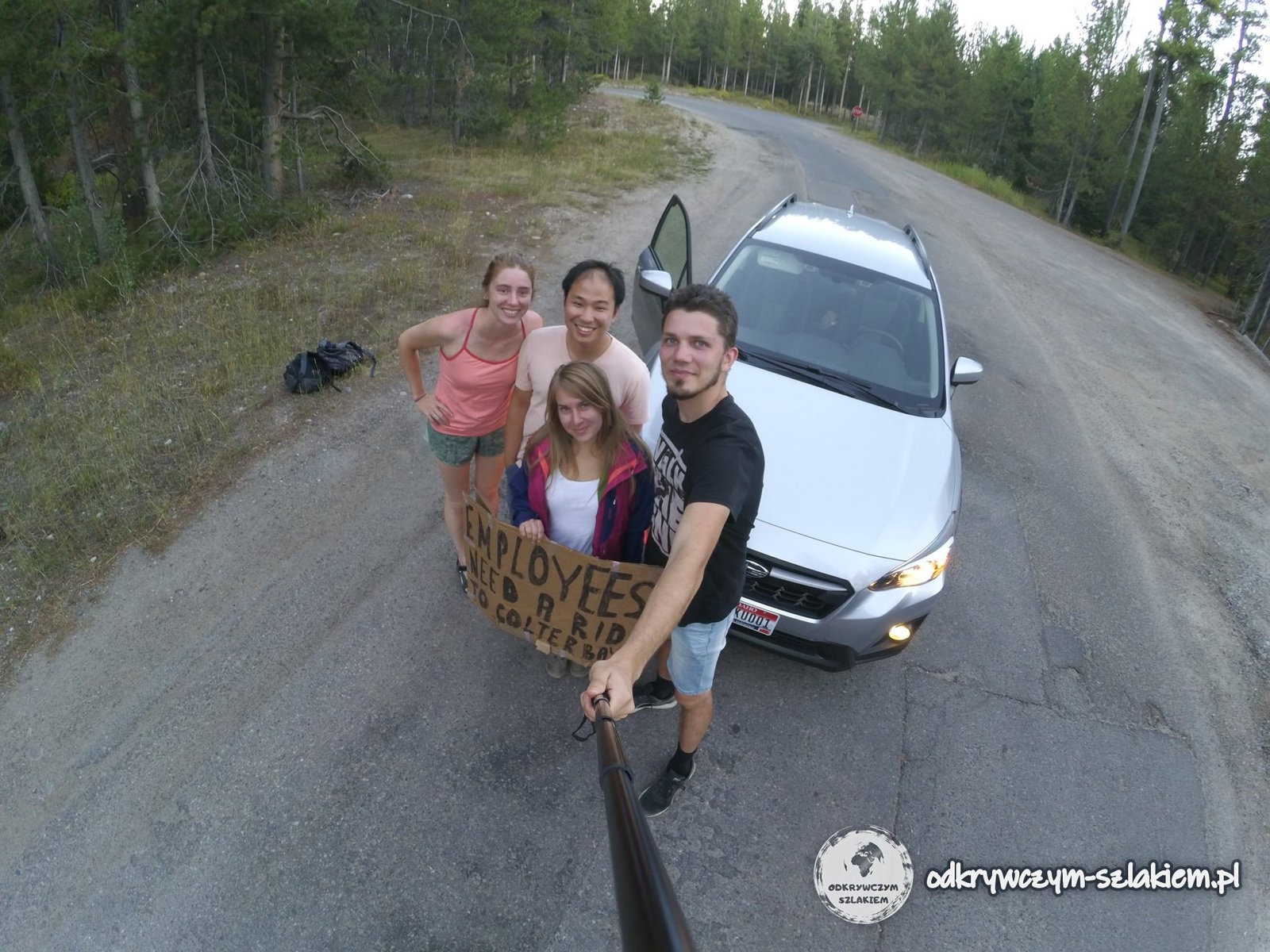
Photo gallery