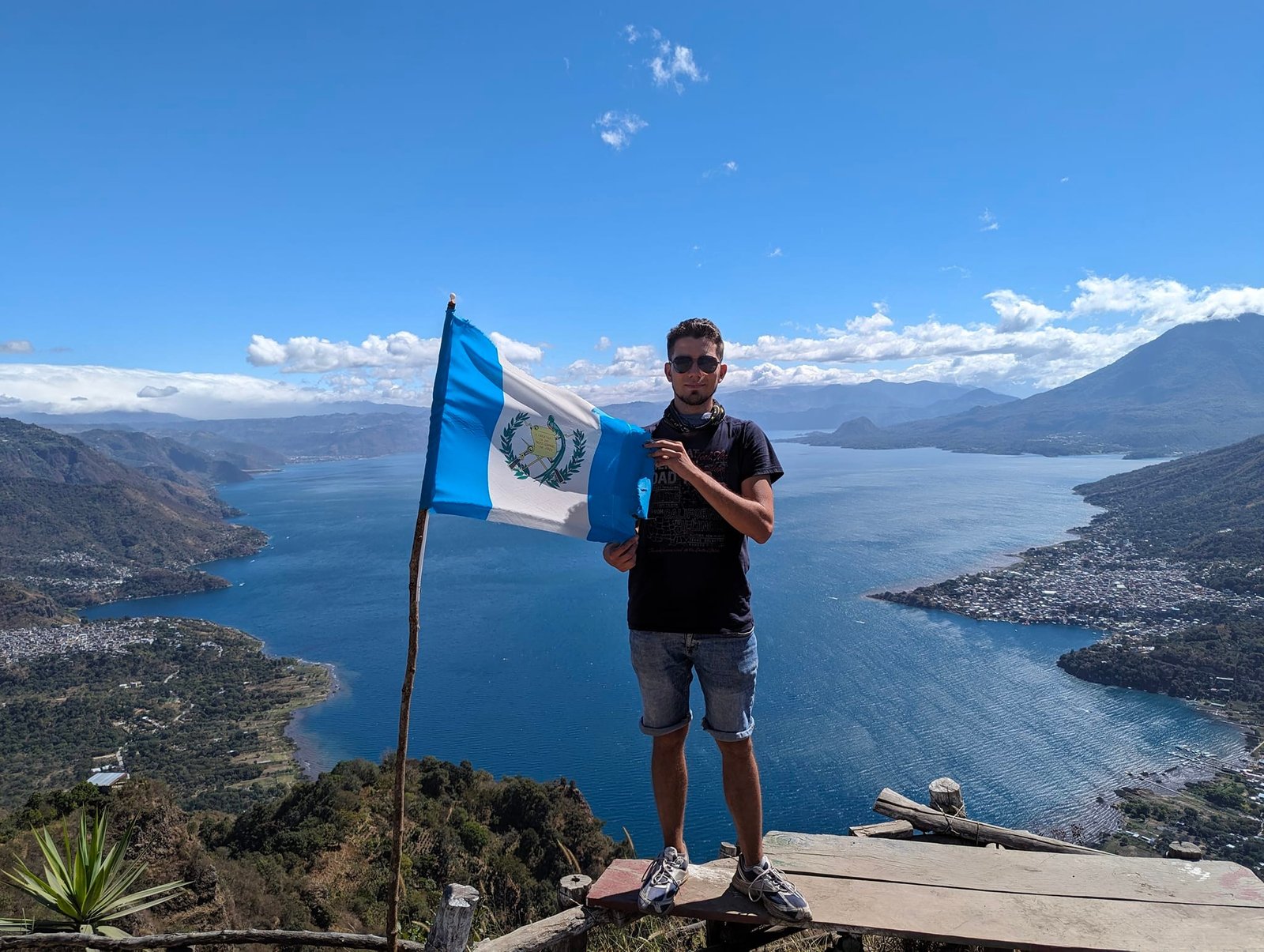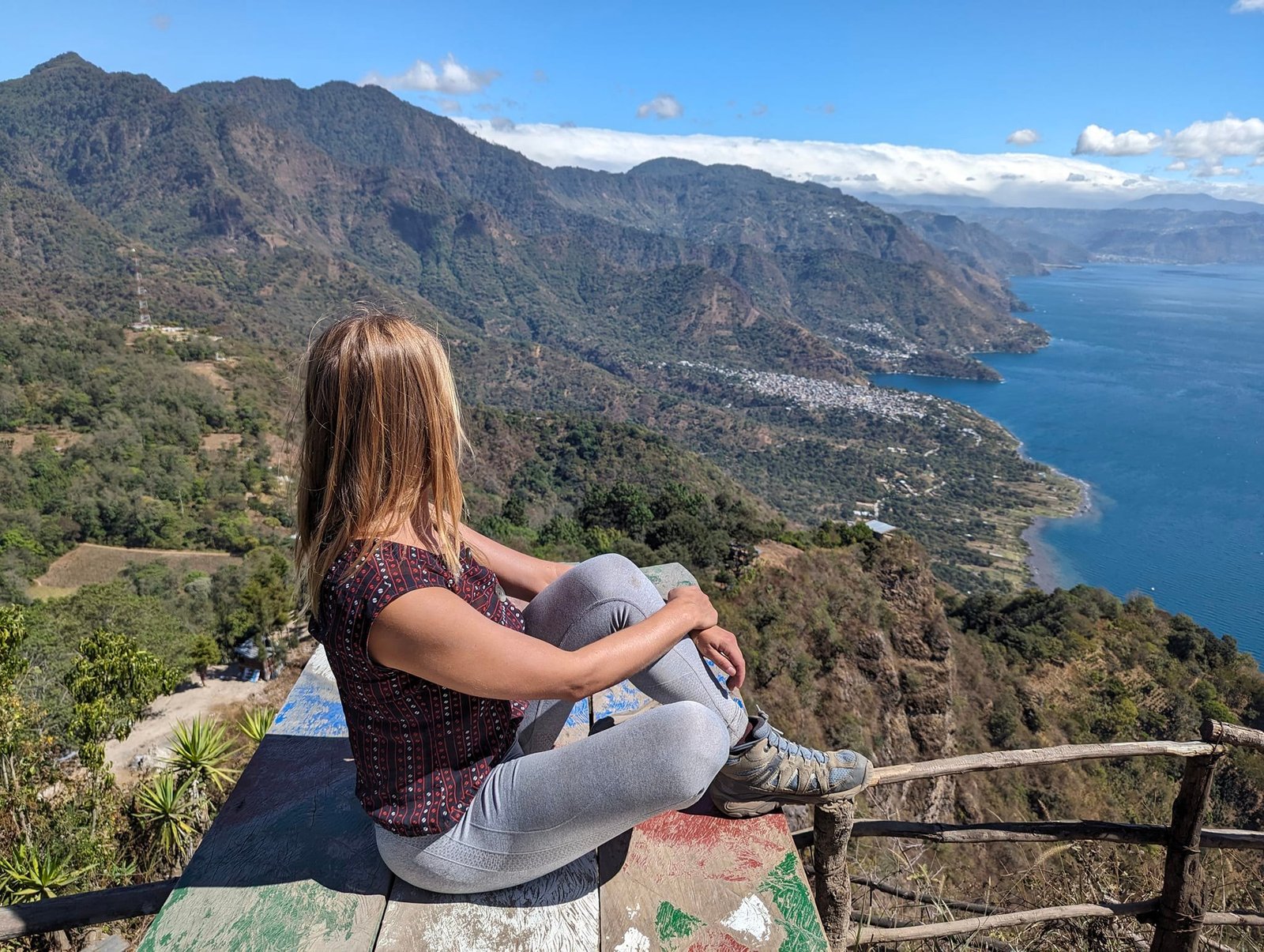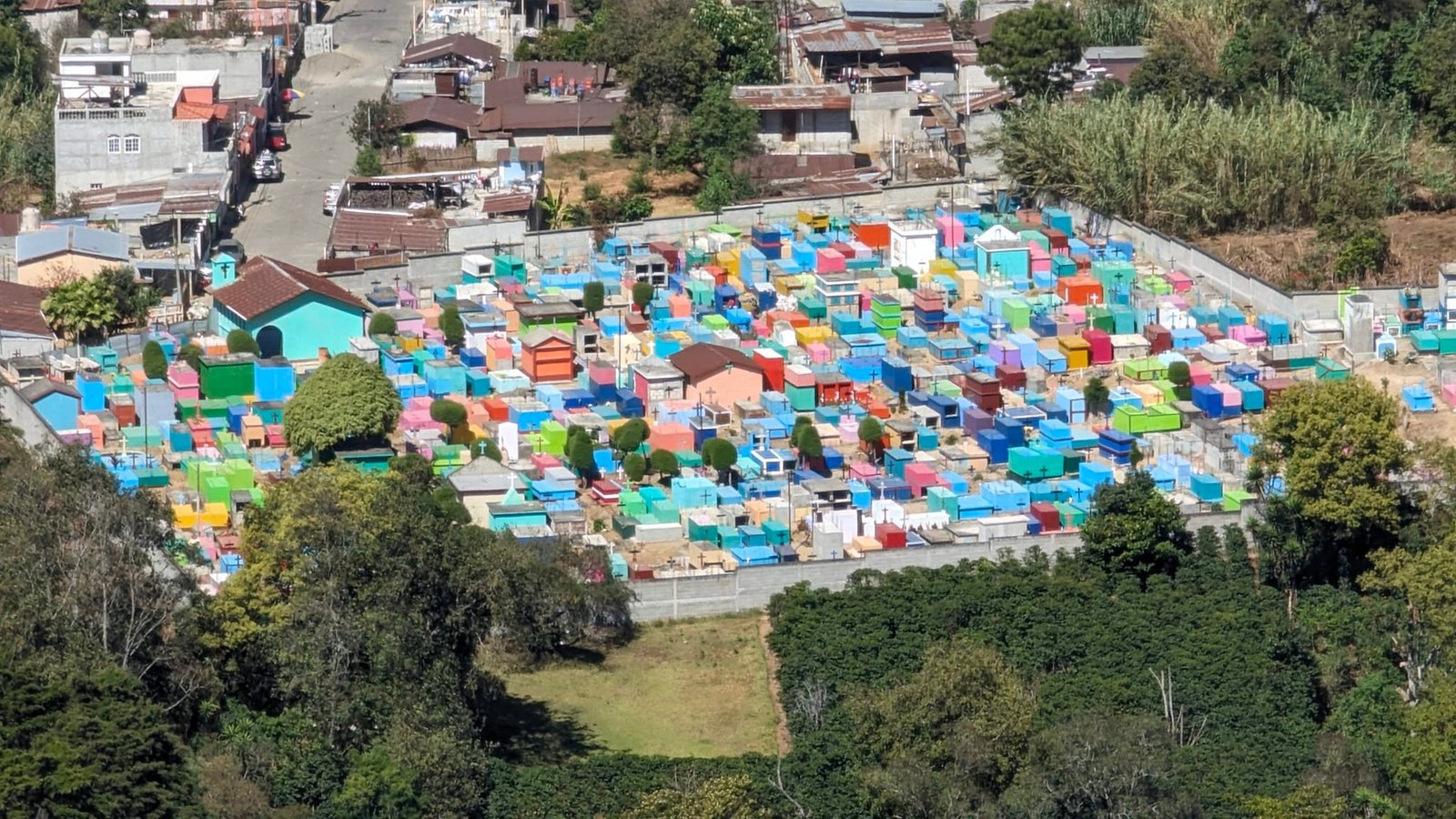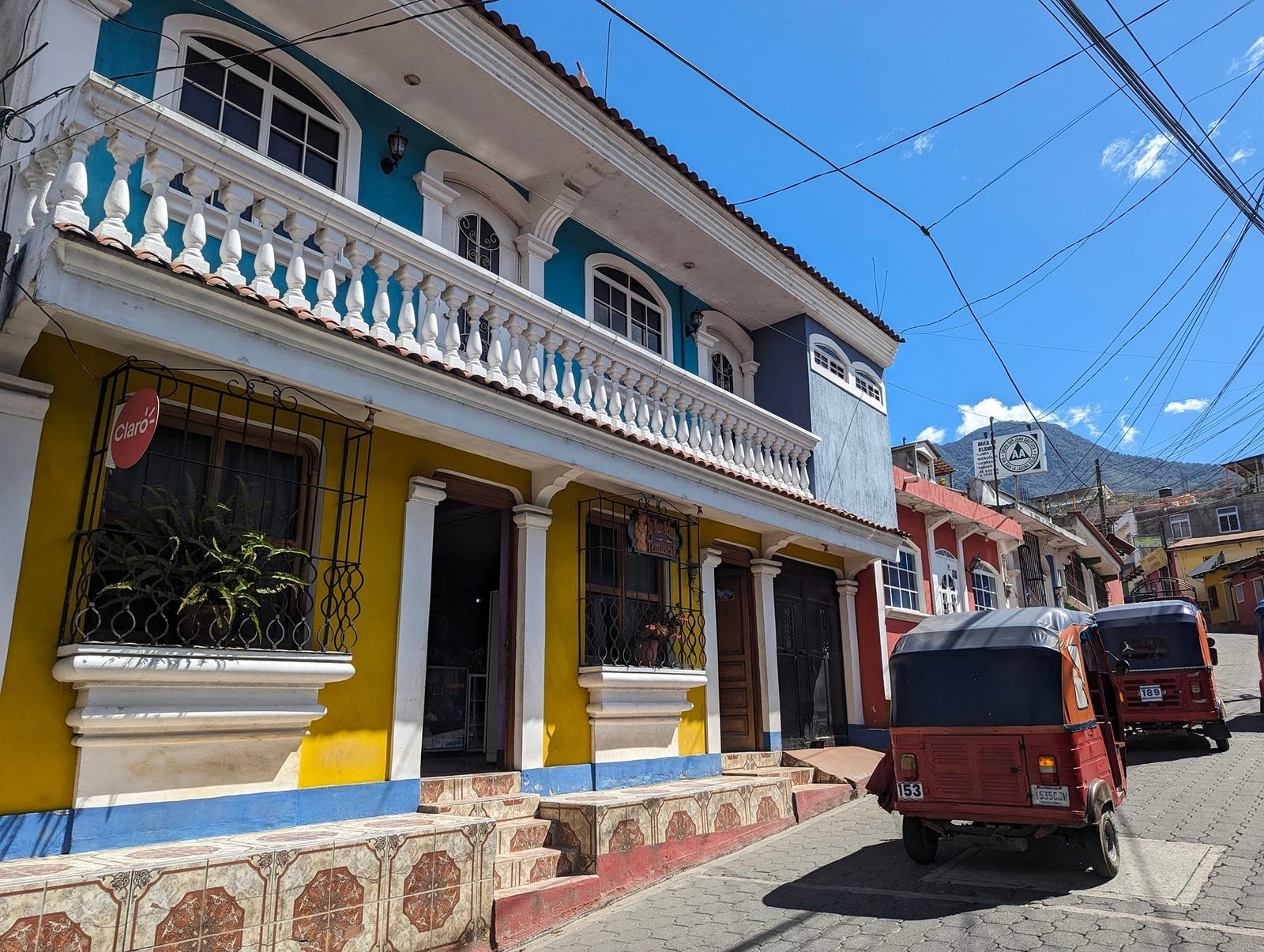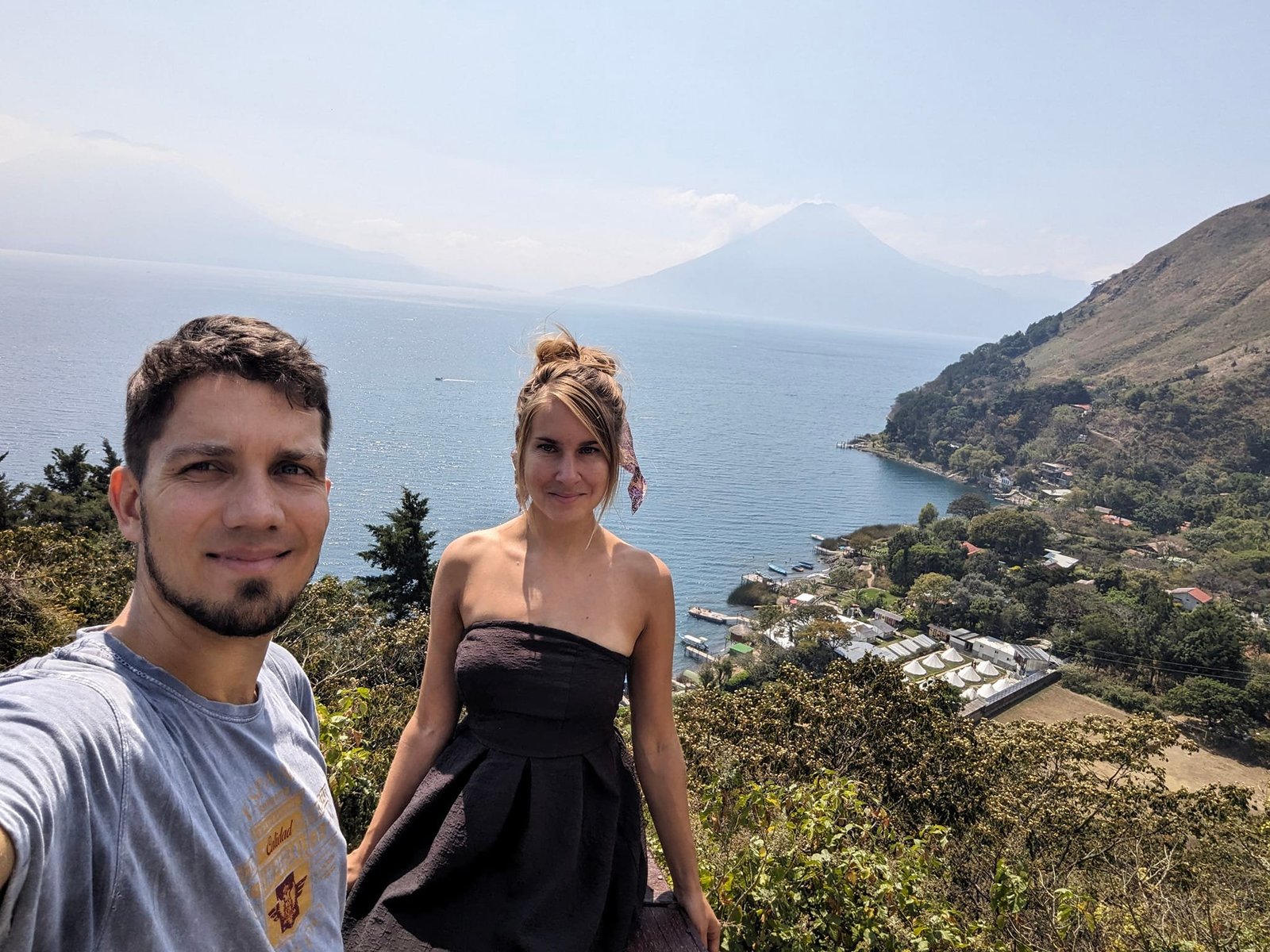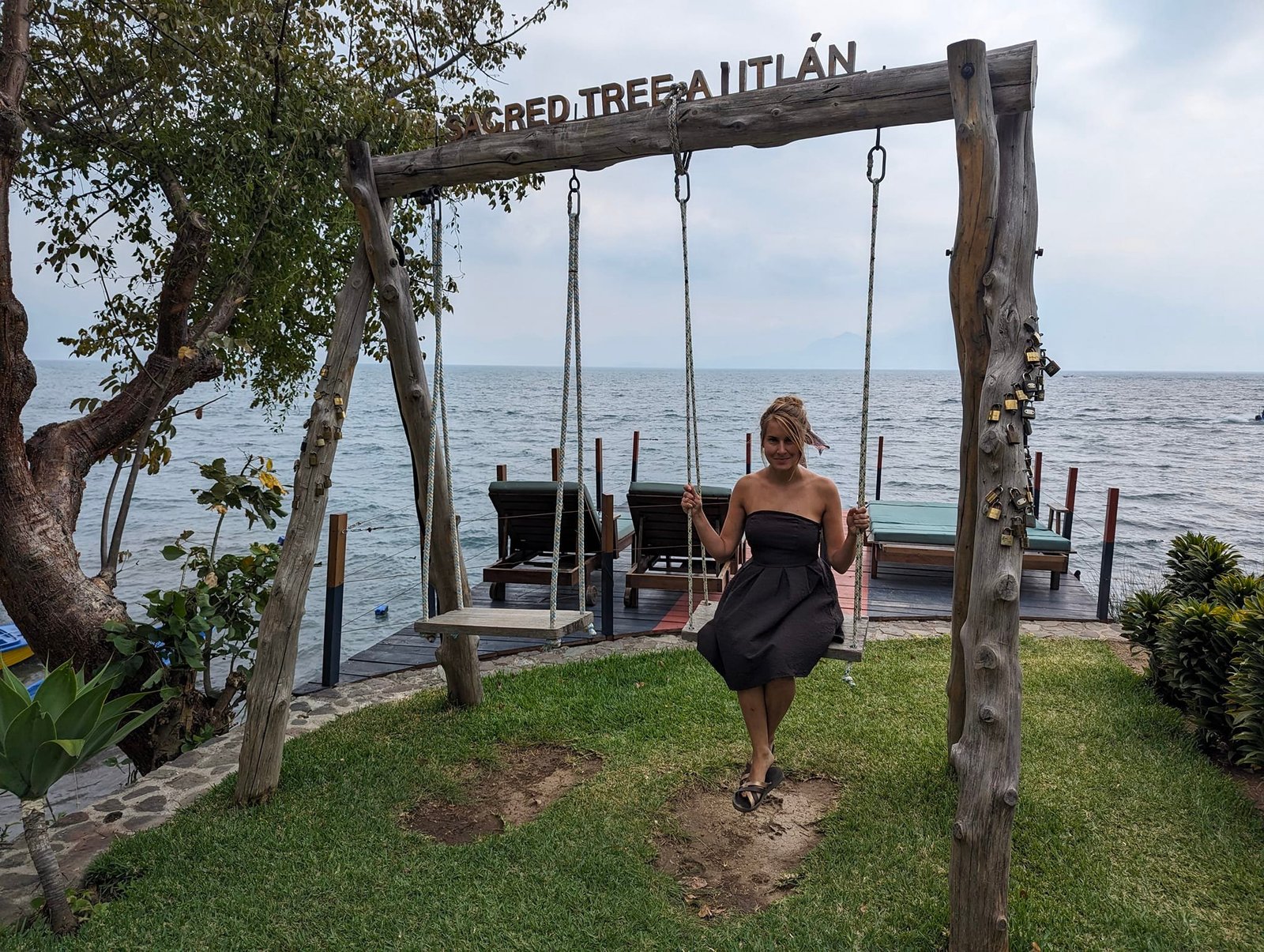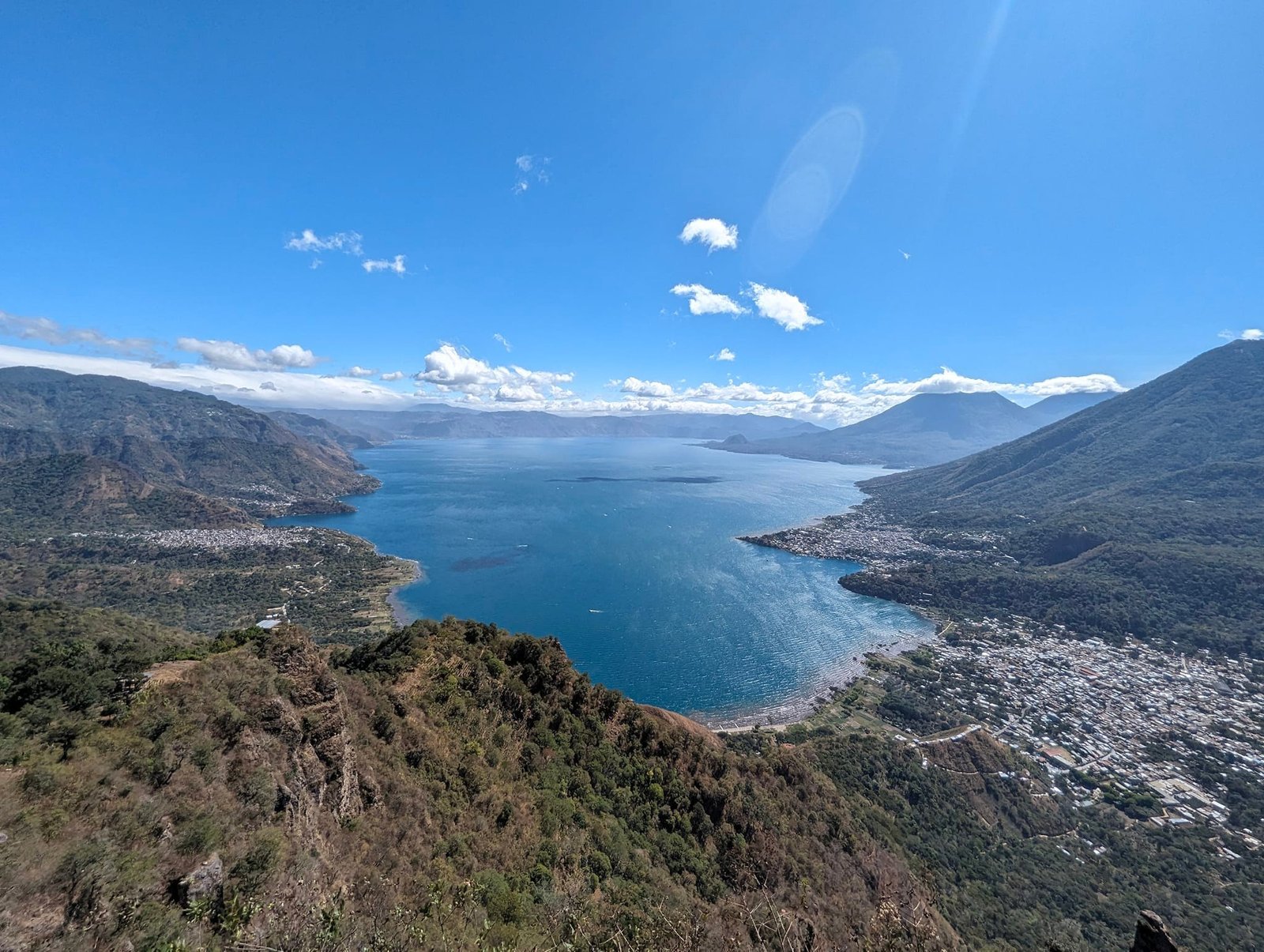
After Tikal, Semuc Champey and five weeks of learning Spanish in Antigua, on Saturday 27 January 2024 we went to Lake Atitlán – one of those places in Guatemala that are without doubt worth seeing. We stayed in San Pedro La Laguna until 5 February. From this base we visited the other lakeside villages by boat and on foot: we climbed to the Indian Nose viewpoint, strolled around colourful San Juan, in San Marcos Patrycja jumped into the lake from 12 metres, we looked in on Santa Cruz, perched on a hillside, and near Santiago Atitlán we searched the forest for quetzals – Guatemala’s national bird. From San Pedro we also climbed two volcanoes above the lake, San Pedro and Atitlán, but those trips have a separate post: Volcanoes of Guatemala.
 14:49
Table of contents
- Lake Atitlán – volcanoes, legends and boats between the villages
- San Pedro La Laguna – our base on the lake
- Indian Nose (Rostro Maya) – the best view of the lake
- San Juan La Laguna – murals, hats and umbrellas
- San Marcos La Laguna – a 12-metre jump and a hippie vibe
- Santa Cruz La Laguna – by boat instead of the Lower Mayan Trail
- Quetzals near Santiago Atitlán
- Mirador Nido del Colibrí above San Pedro
- Practical information
Lake Atitlán – volcanoes, legends and boats between the villages
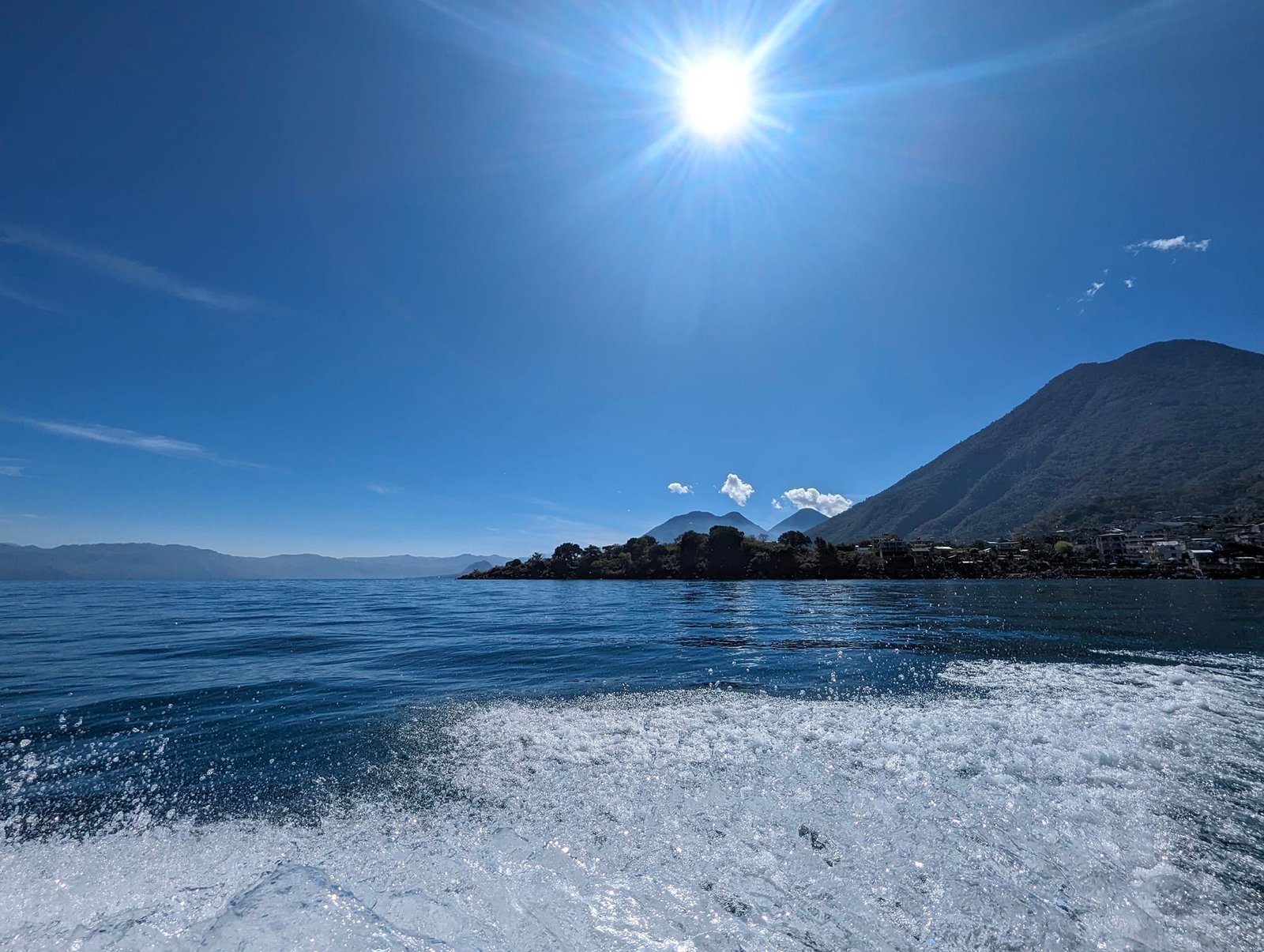
The lake is surrounded by mountains and volcanoes, and along its shore lie villages, almost every one of them a little different and with something interesting to offer. In such a small area people speak as many as 28 dialects of Mayan languages. The lake also has plenty of stories attached to it: in its waters lies a sunken Mayan city, which some see as Atlantis, and the Cerro de Oro hill on the shore is said to have inspired Antoine de Saint-Exupéry – specifically the drawing of the elephant swallowed by a snake in “The Little Prince”. The afternoon wind that picks up over the lake, in turn, is said to cleanse people of their sins.
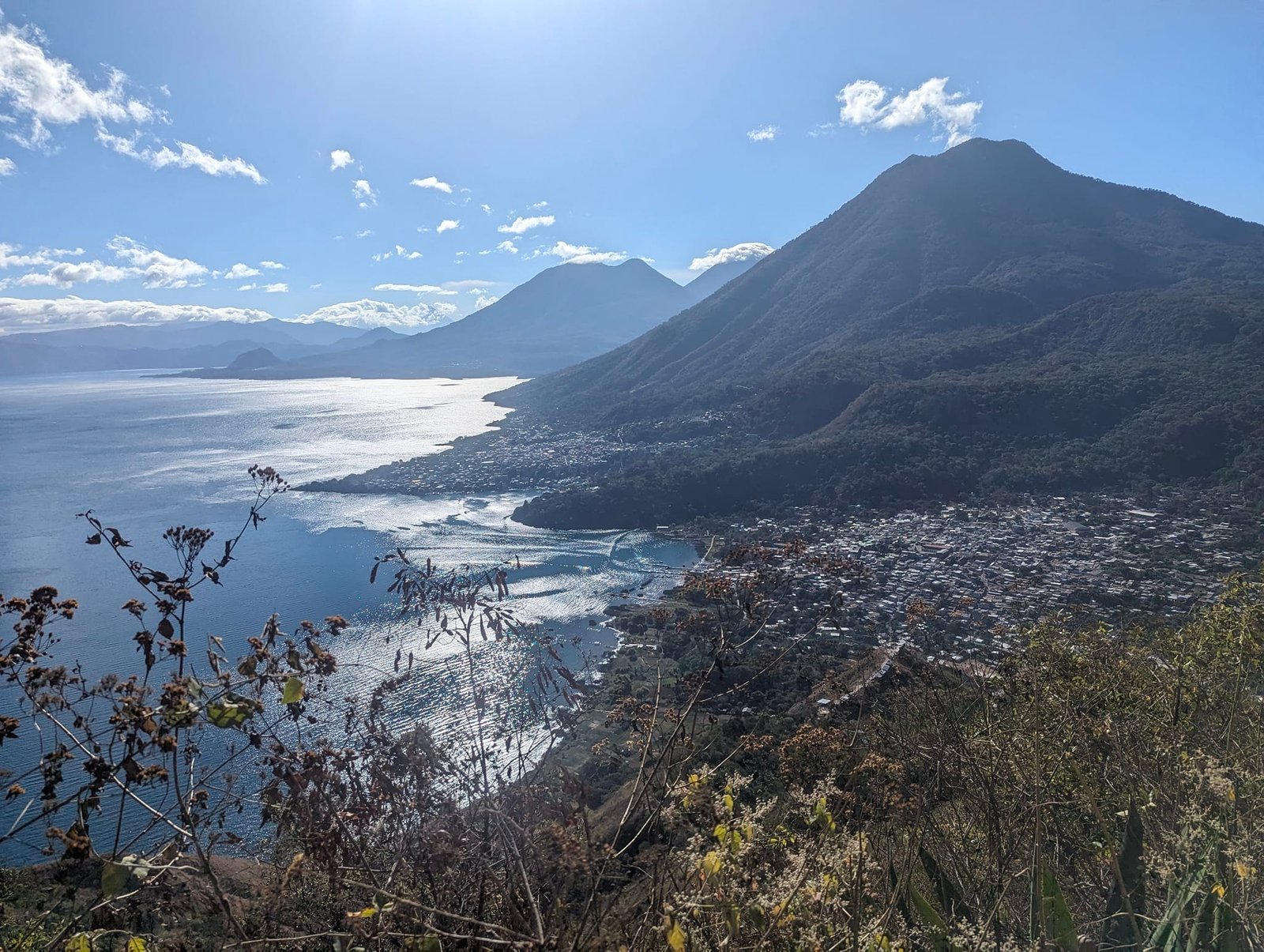
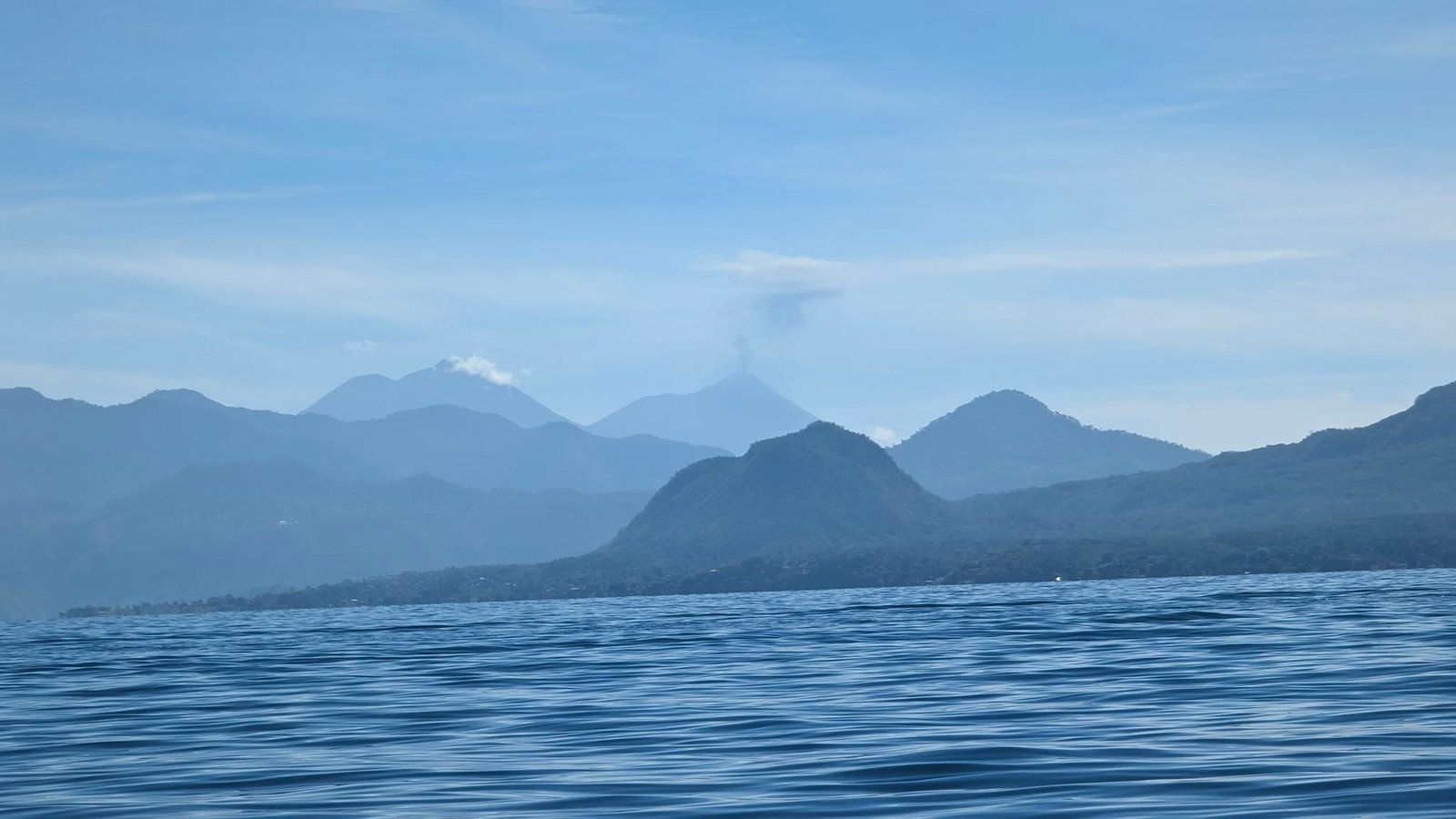
The easiest way to get between the villages is by the boats that leave from the piers along the shore. From San Pedro to San Juan it takes just a few minutes, to San Marcos about 10 minutes. In the evenings a strong wind gets up and the waves come, so the crossing turns into a real roller-coaster ride, and passengers sometimes struggle even to climb into the rocking boat. When visibility is good, you can even see the smoking Fuego from the lake – the volcano whose eruptions we had watched earlier from Acatenango.
San Pedro La Laguna – our base on the lake
We chose San Pedro La Laguna as our base because accommodation here is the cheapest on the whole lake – we paid about €5 per person per night, without breakfast. We stayed in two hotels. The second one, Hotel Peneleu, turned out to be better and much cheaper than the first, but when we first booked it had no free rooms. Both had a rooftop terrace from which you can watch the sunrise over the lake. We never went to Panajachel at all – it was the furthest from the places we wanted to see, and we had also read that it is the most boring village on the lake.
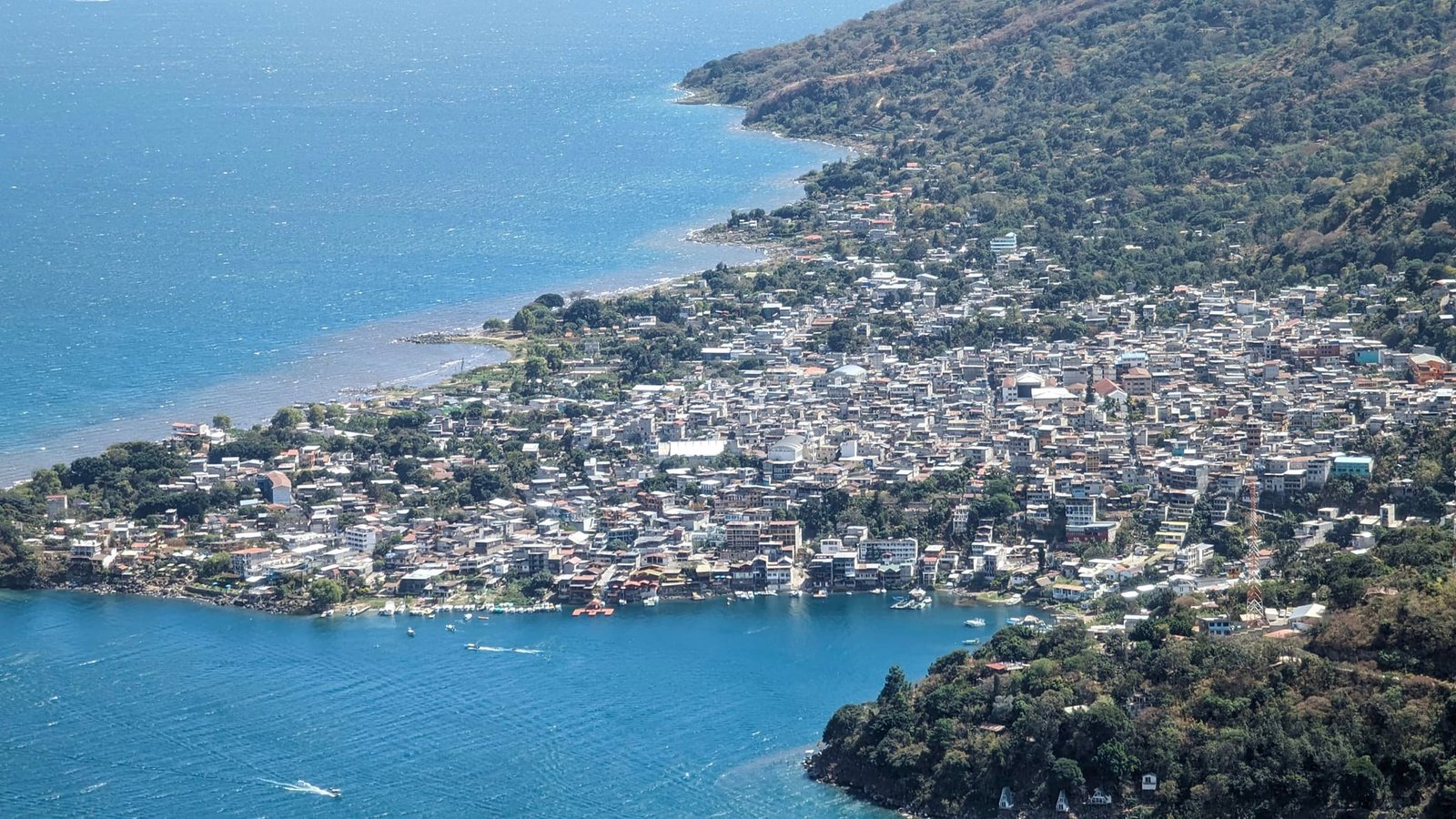
On the shore we saw locals from San Pedro washing themselves and doing their laundry in the lake. Access to water is a big problem in Guatemala, especially for people living in mud huts. Unfortunately we have few photos of the village itself – including its murals – because some of the phone photos from those days were lost.
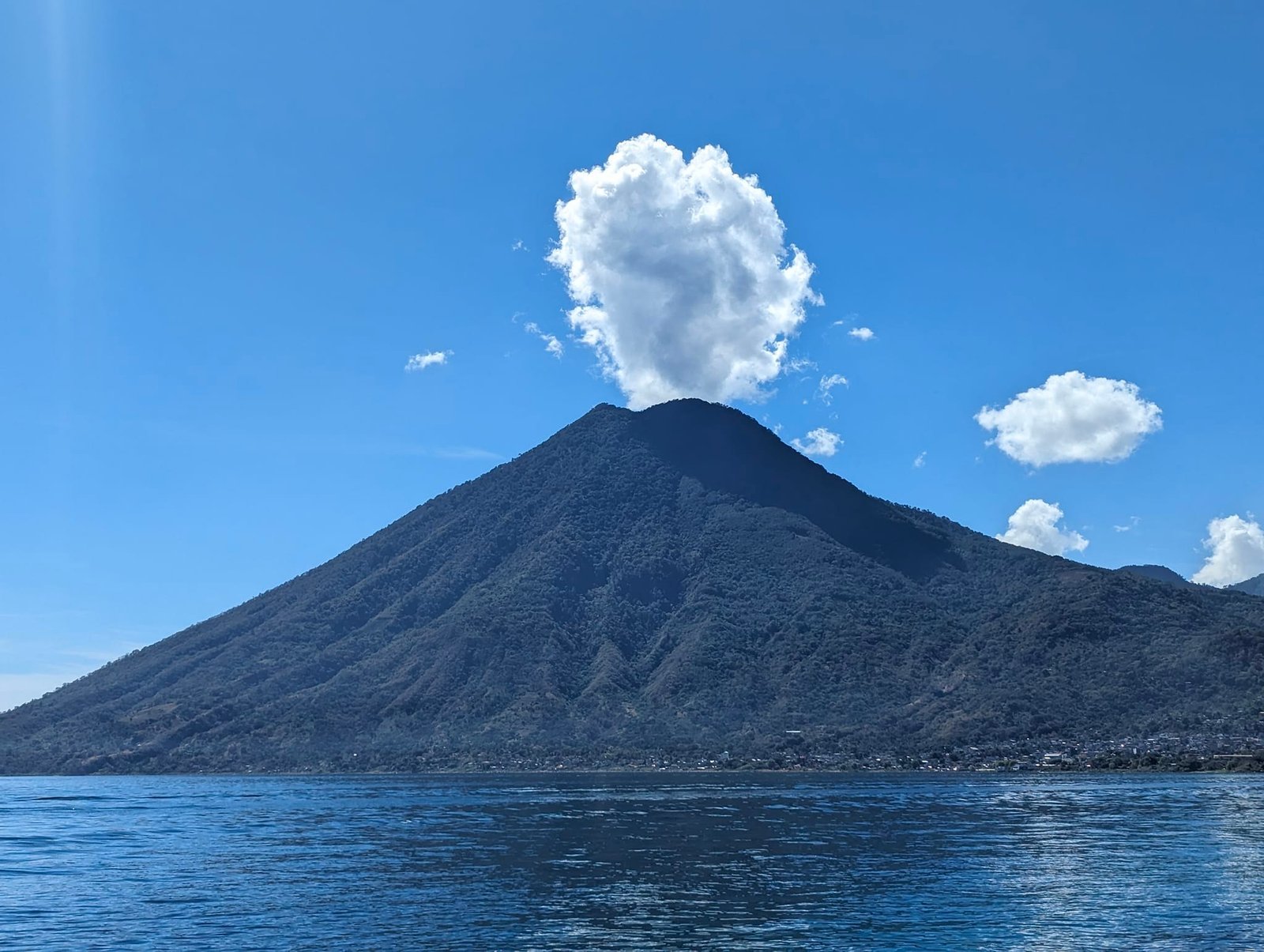
San Pedro is overlooked by the San Pedro volcano (3020 m). We climbed it on 31 January with Magda, Samuel and our guide Lorenzo, and on 4 February we climbed Atitlán (3537 m), the highest of the volcanoes around the lake. I describe both routes in the post Volcanoes of Guatemala.
Indian Nose (Rostro Maya) – the best view of the lake
On Sunday 28 January, the day after we arrived, we went with Magda to the Rostro Maya viewpoint, also known as Indian Nose (2200 m). Where does the name come from? If you tilt your head to one side, the outline of the hill looks exactly like the nose on an Indigenous face. Many people come up here with organised groups for the sunrise, but then you have to walk in the dark – we set off on our own at 8 a.m.
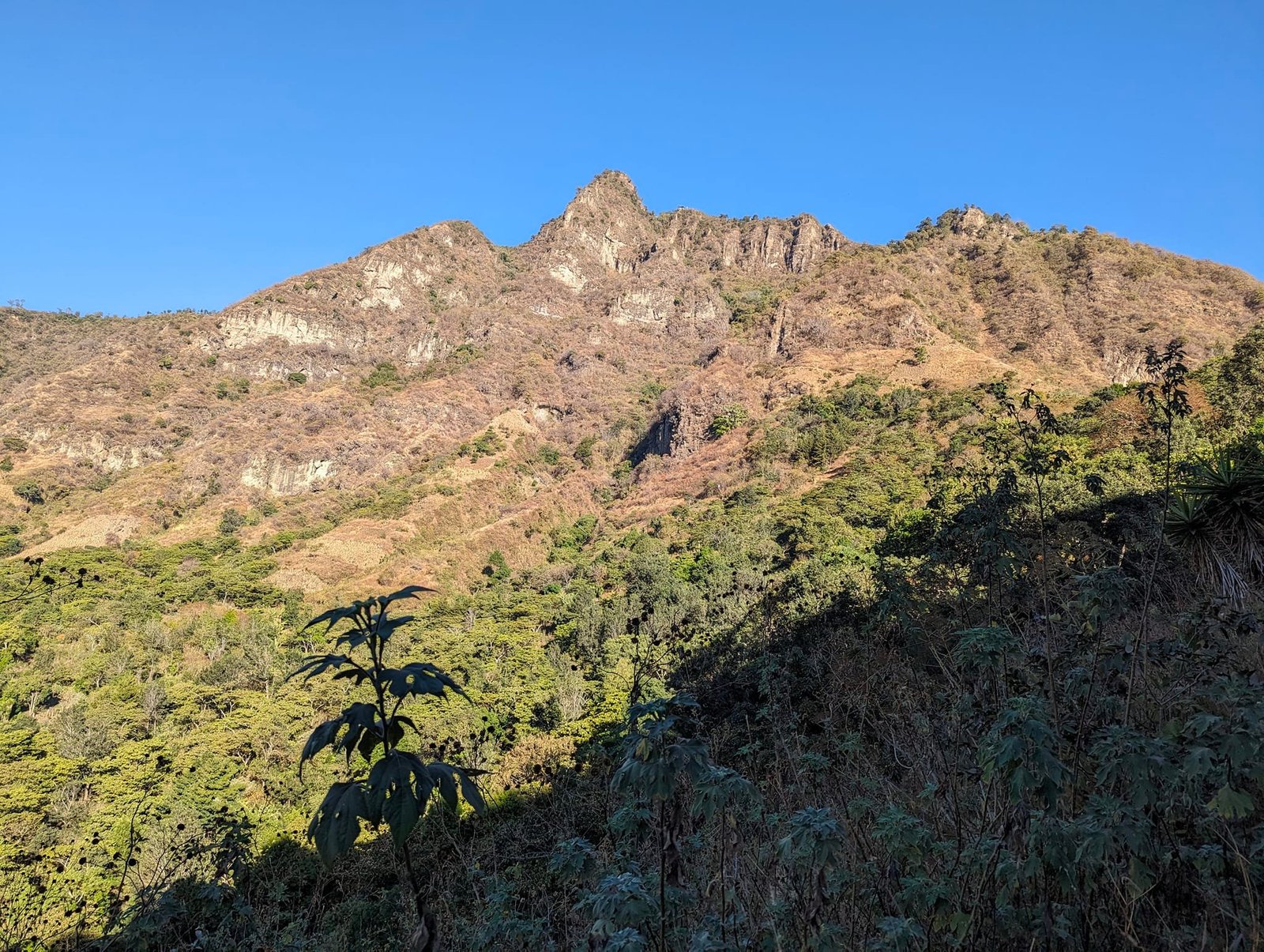
First we took a boat from San Pedro La Laguna to San Juan La Laguna – a few minutes and 30 Q (about €3.50) per person return. At that time of day there are no tourists yet, so at the first viewpoint, Kaqasiiwaan (Cerro de la Cruz), we were among the few people there. It lies on the way, so like it or not you have to pay 30 Q for it, and at the top of Indian Nose another 50 Q.
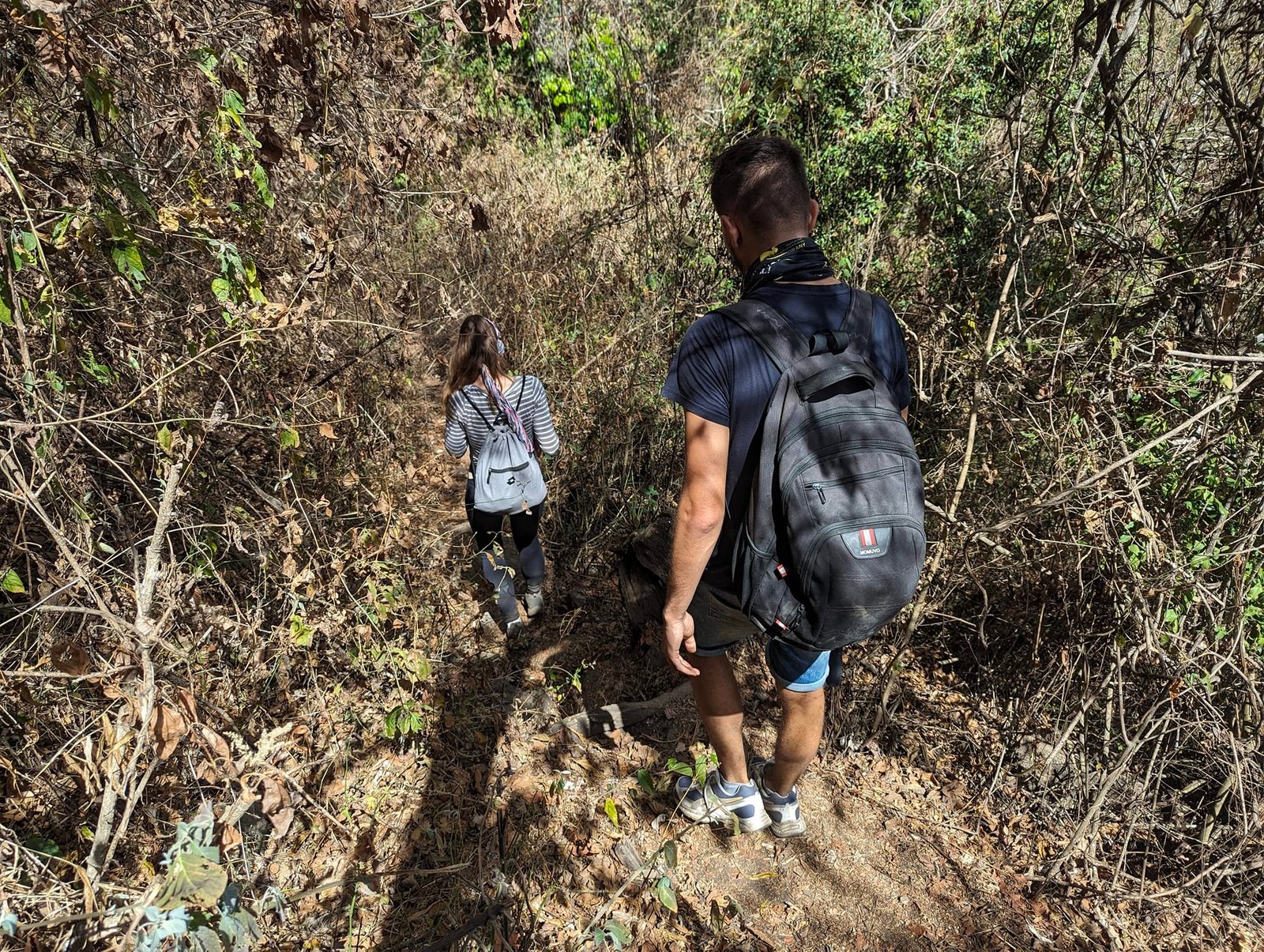
It was supposed to be a warm-up hike, but it turned out to be more than 700 m of elevation gain and about 8 km return. We did a small loop around the hill, so we came back a slightly different way – shorter, but steeper.
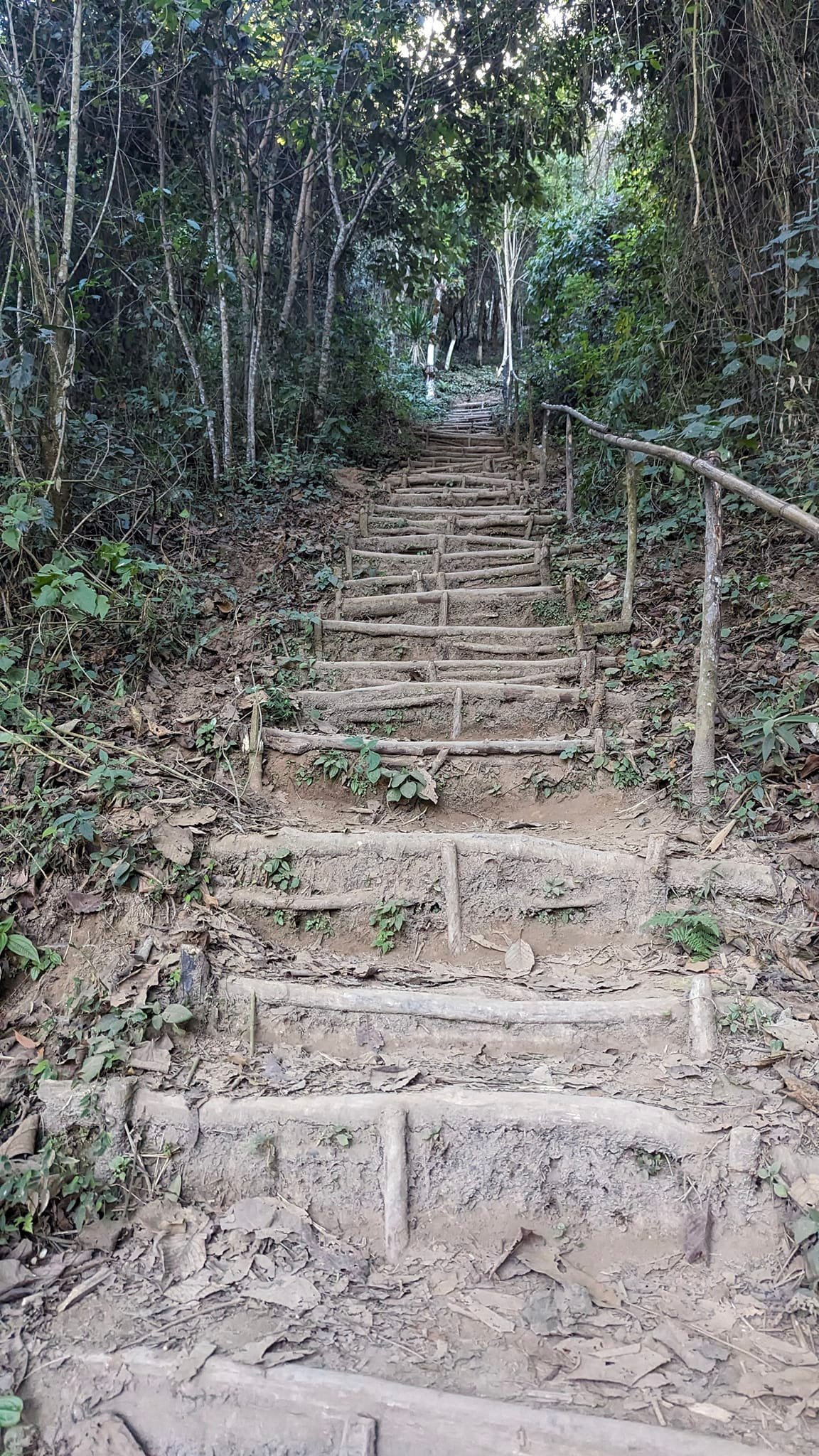
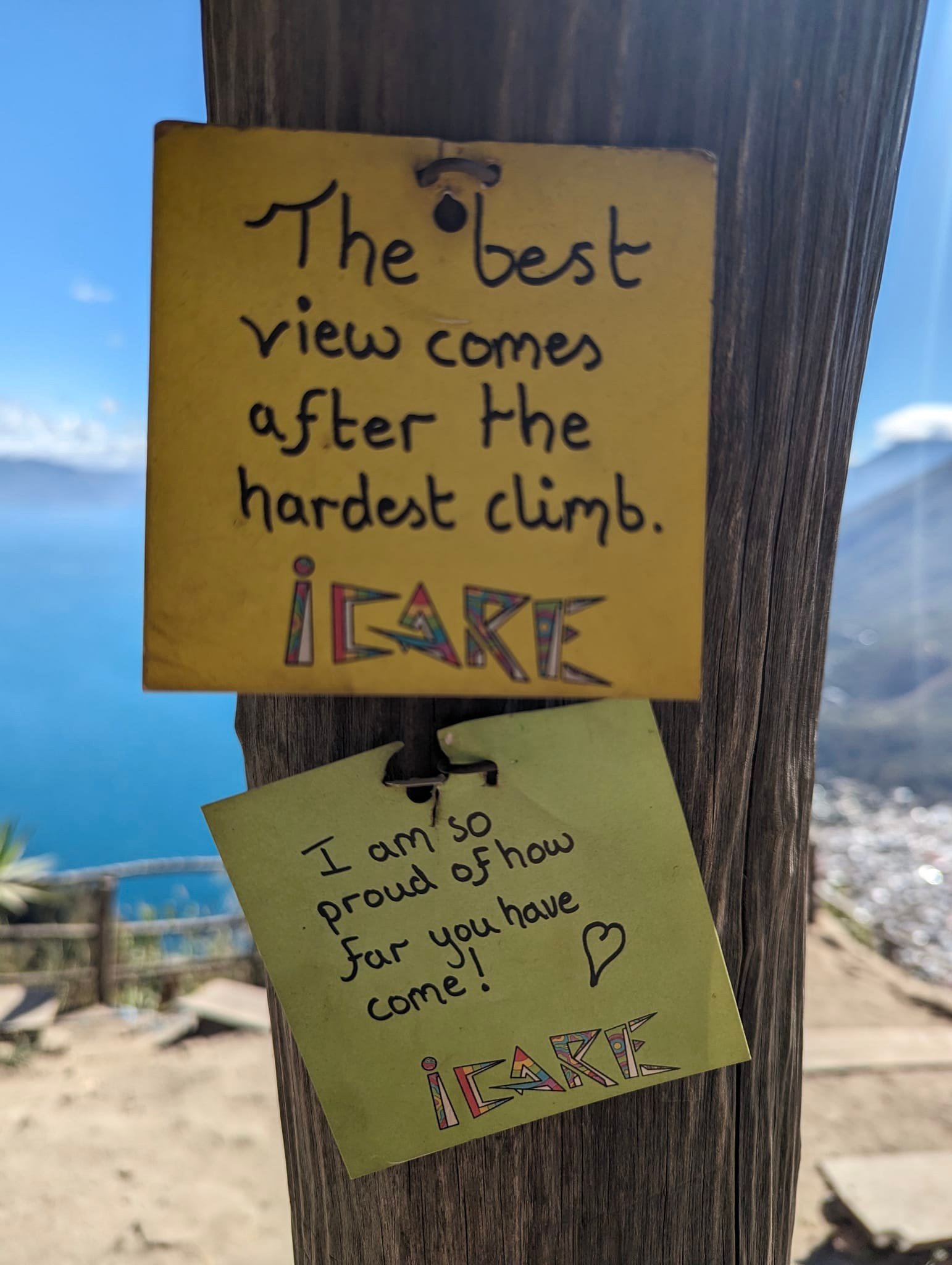
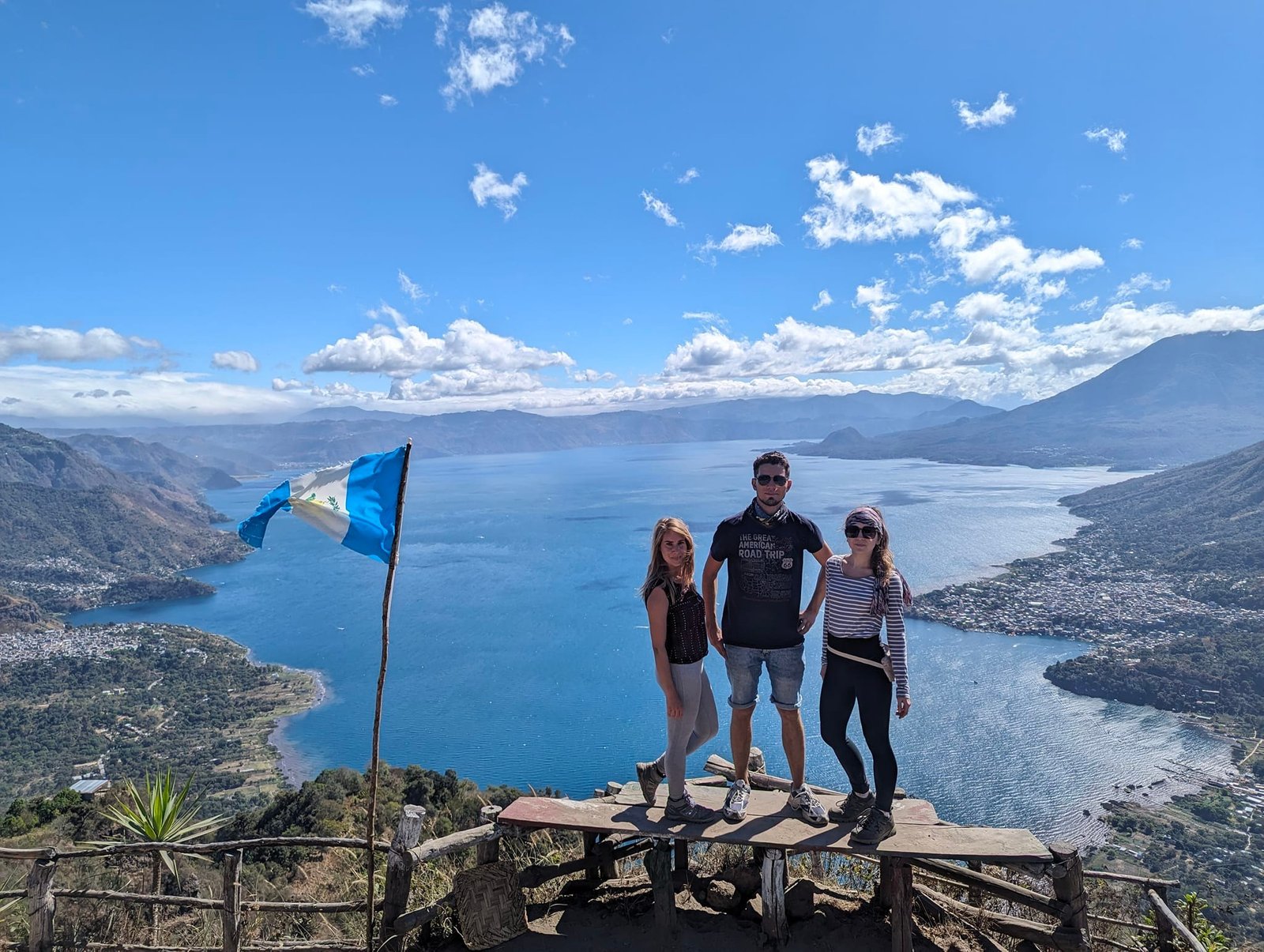
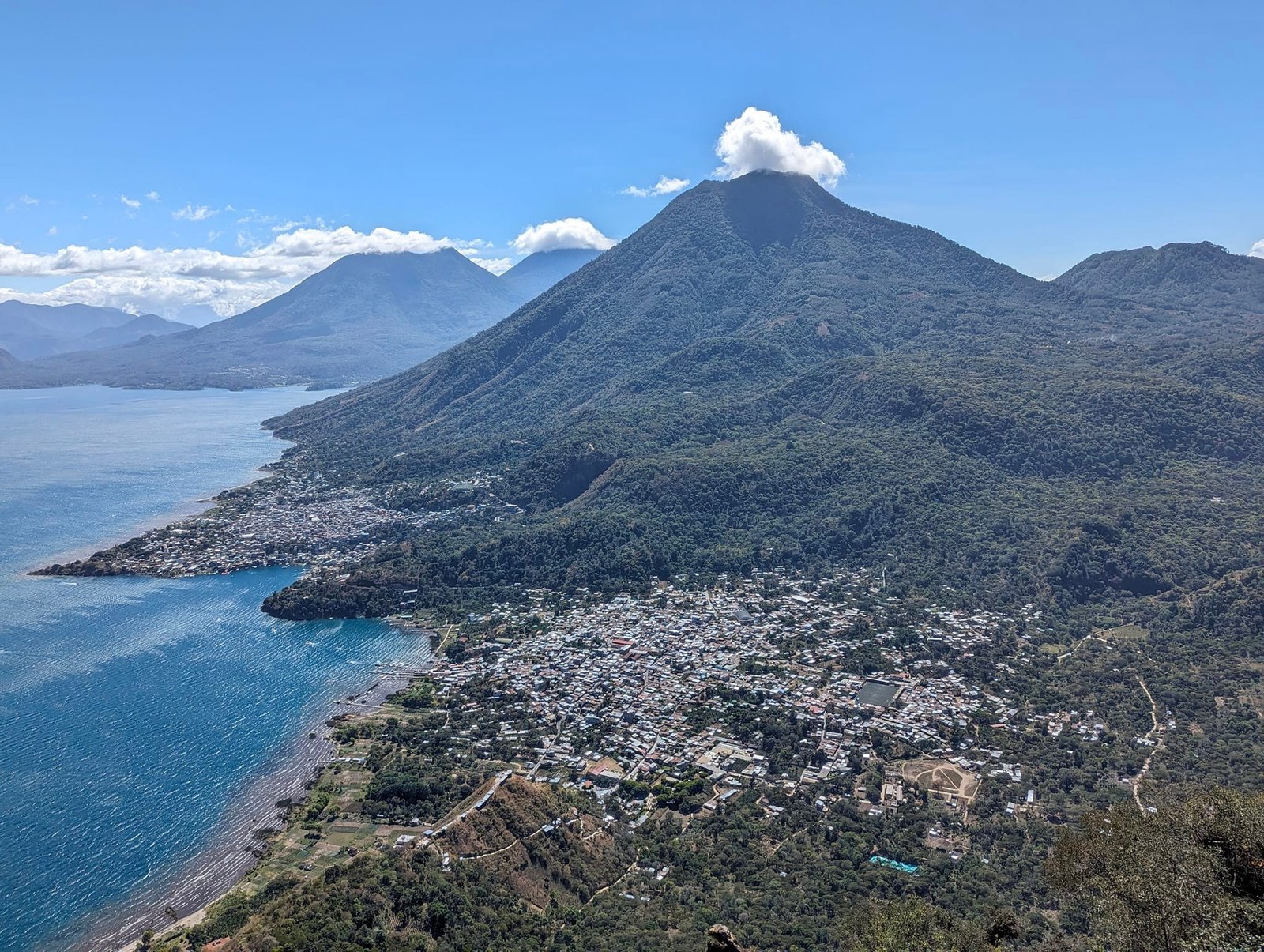
From the top you can see the whole lake, the surrounding volcanoes and the villages on the shore – in our opinion it’s the best view over Atitlán. Indian Nose was also the first summit we reached on this trip.
San Juan La Laguna – murals, hats and umbrellas
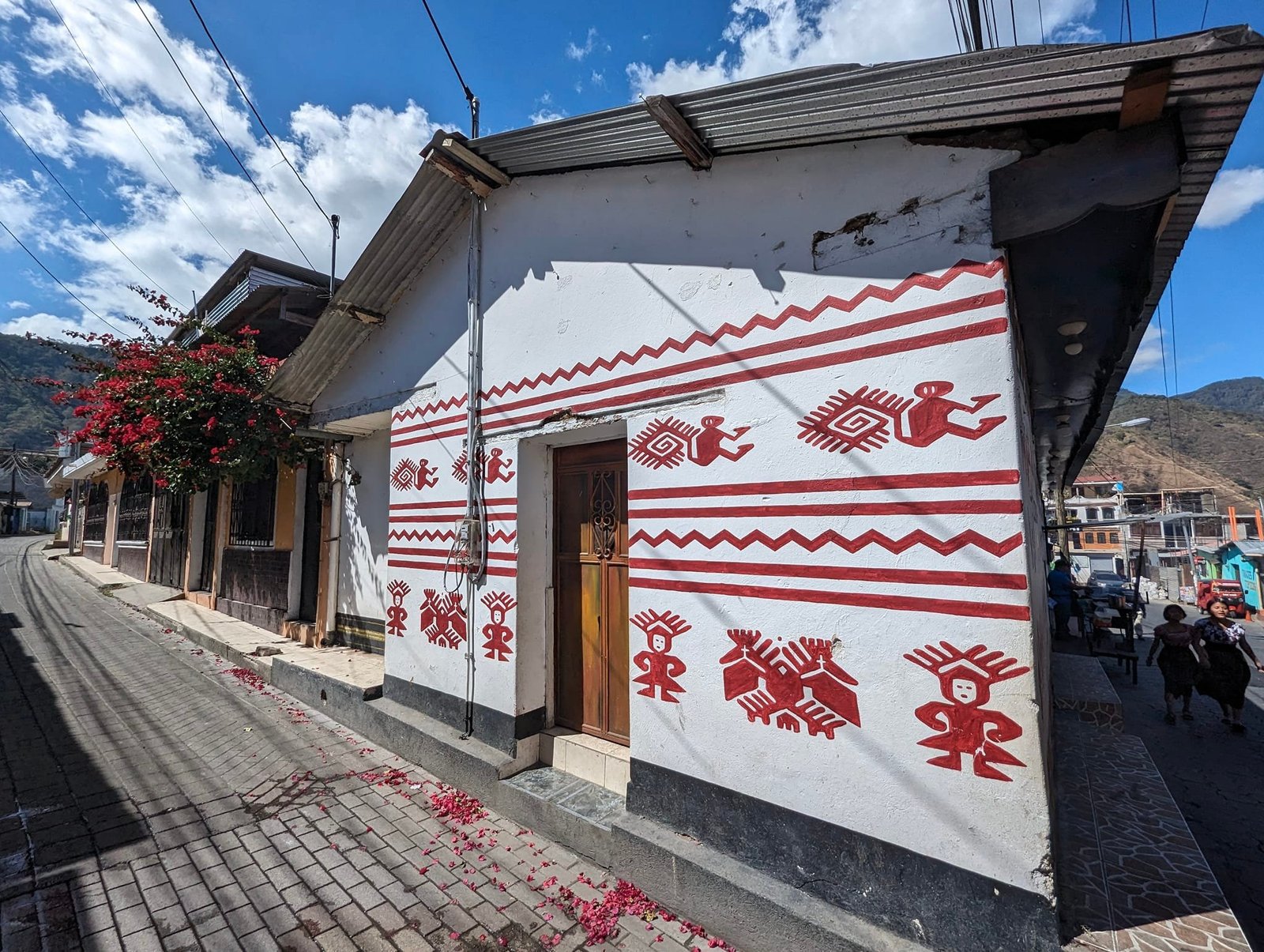
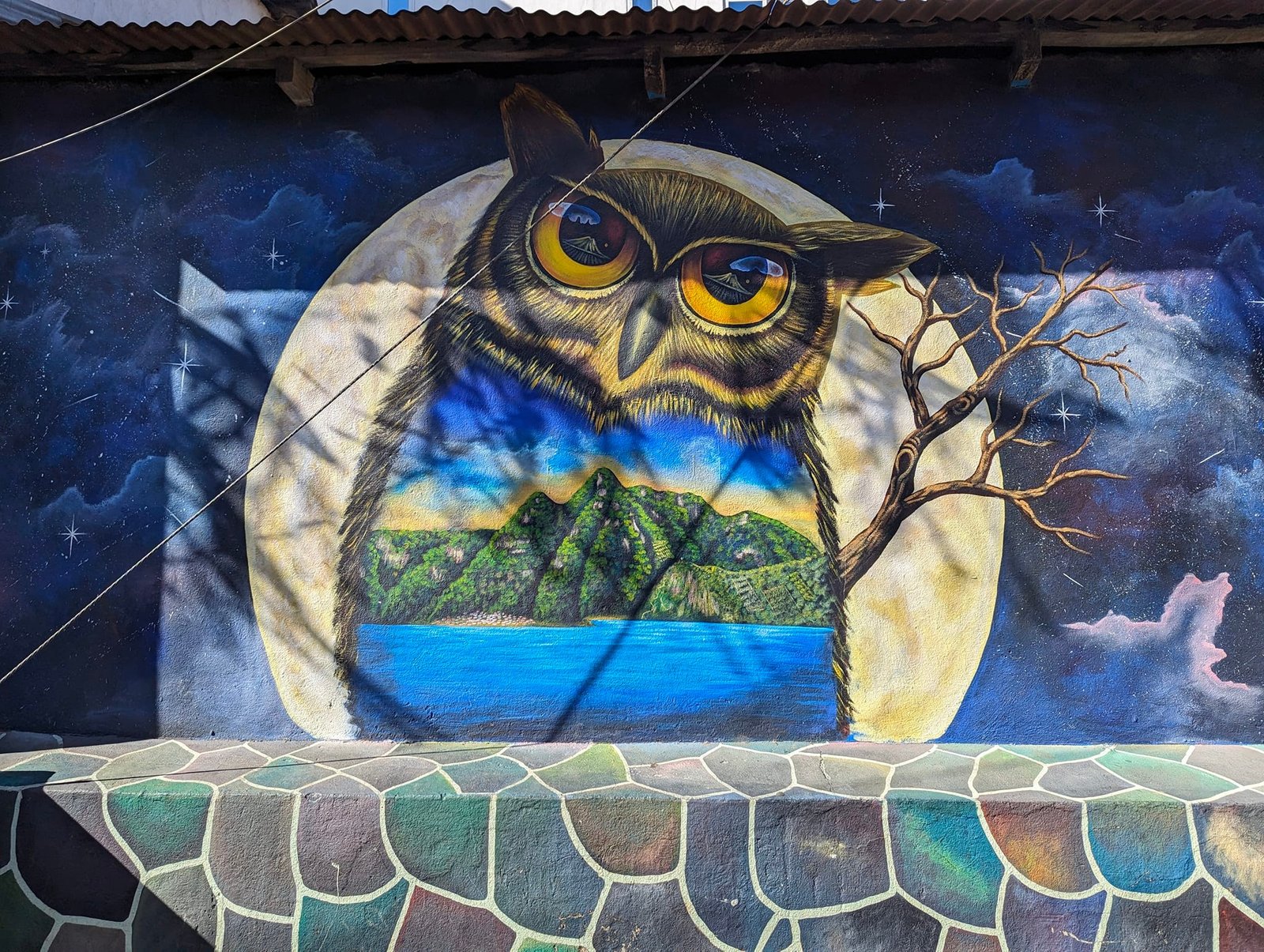
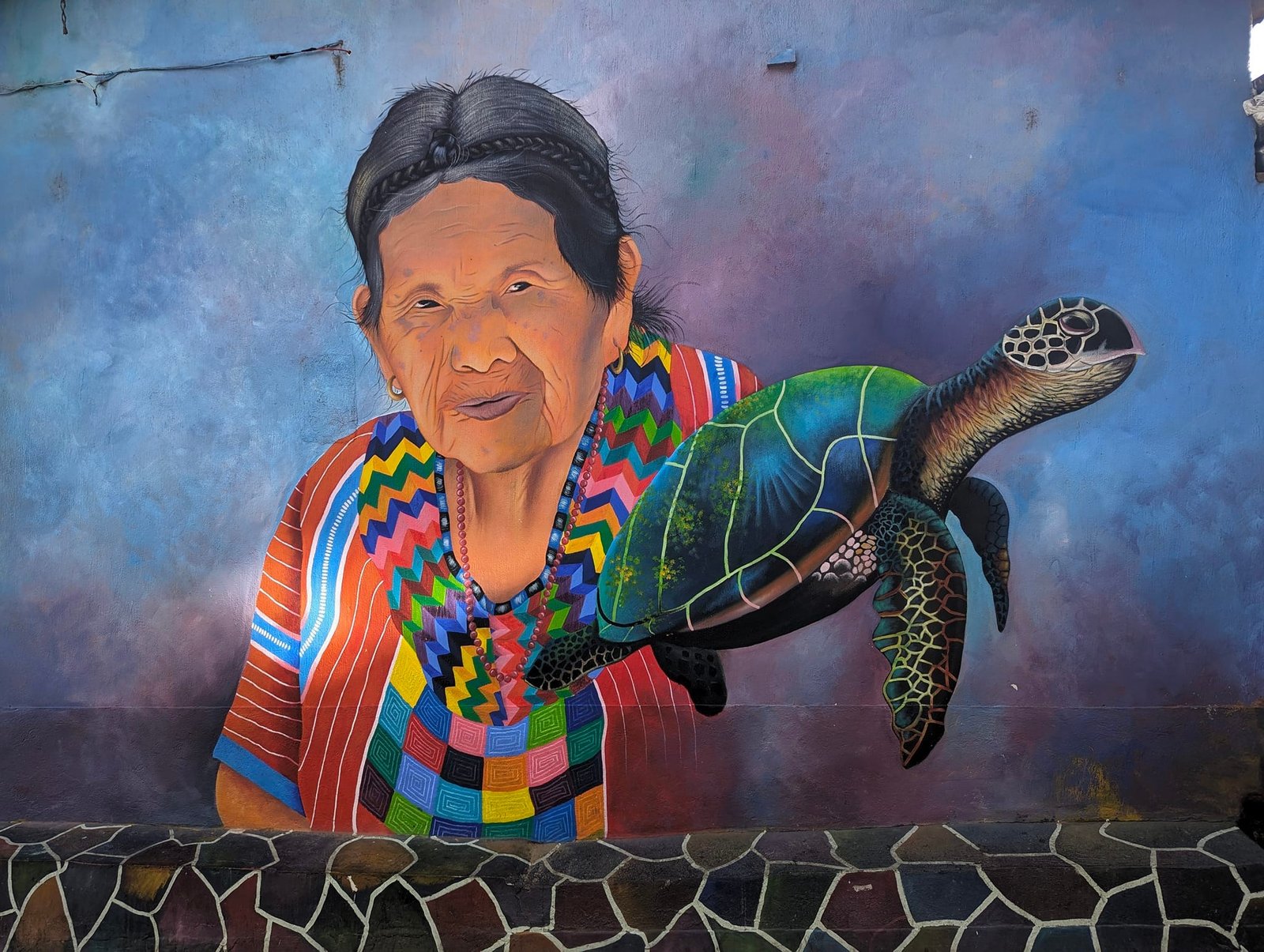
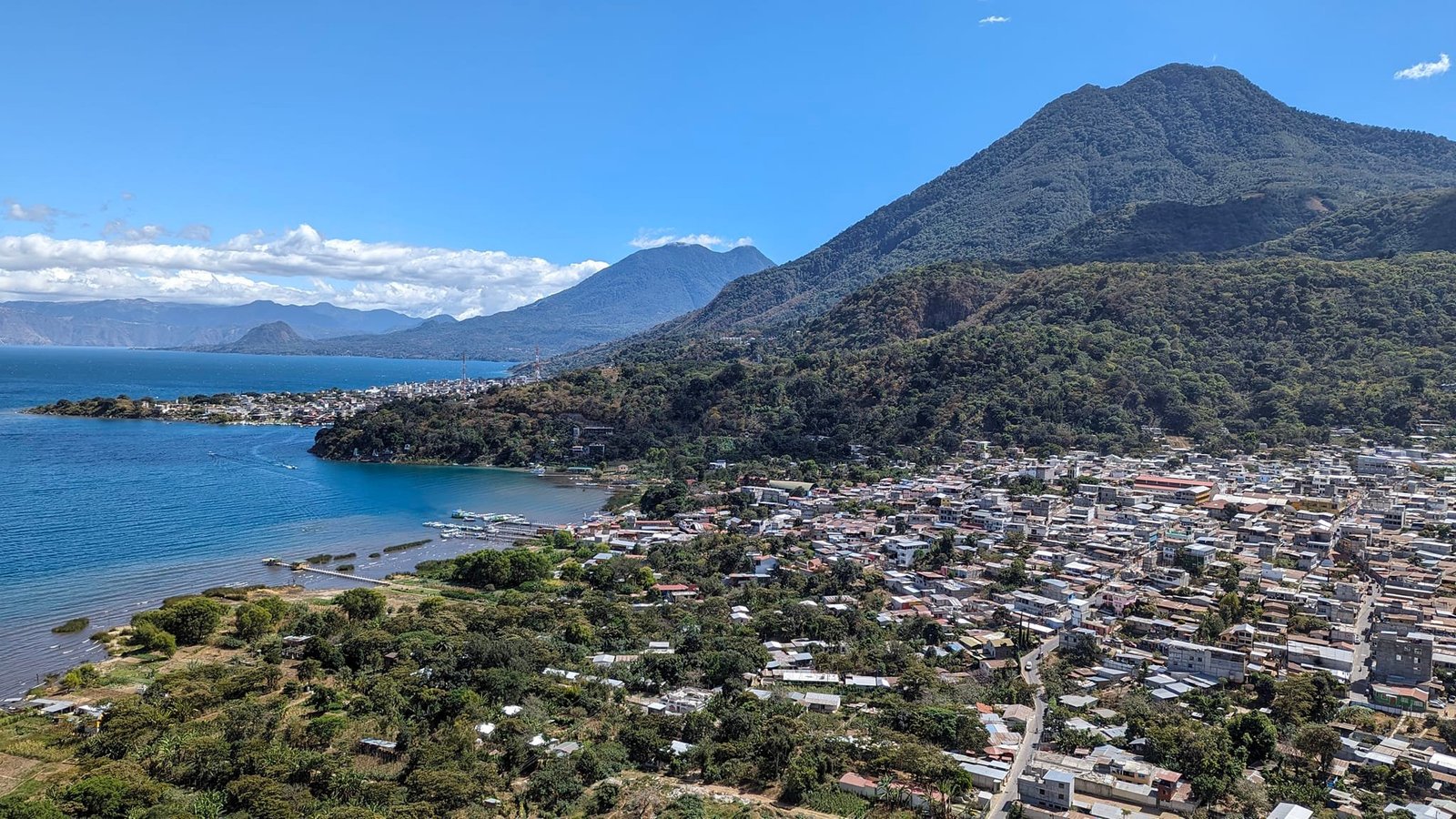
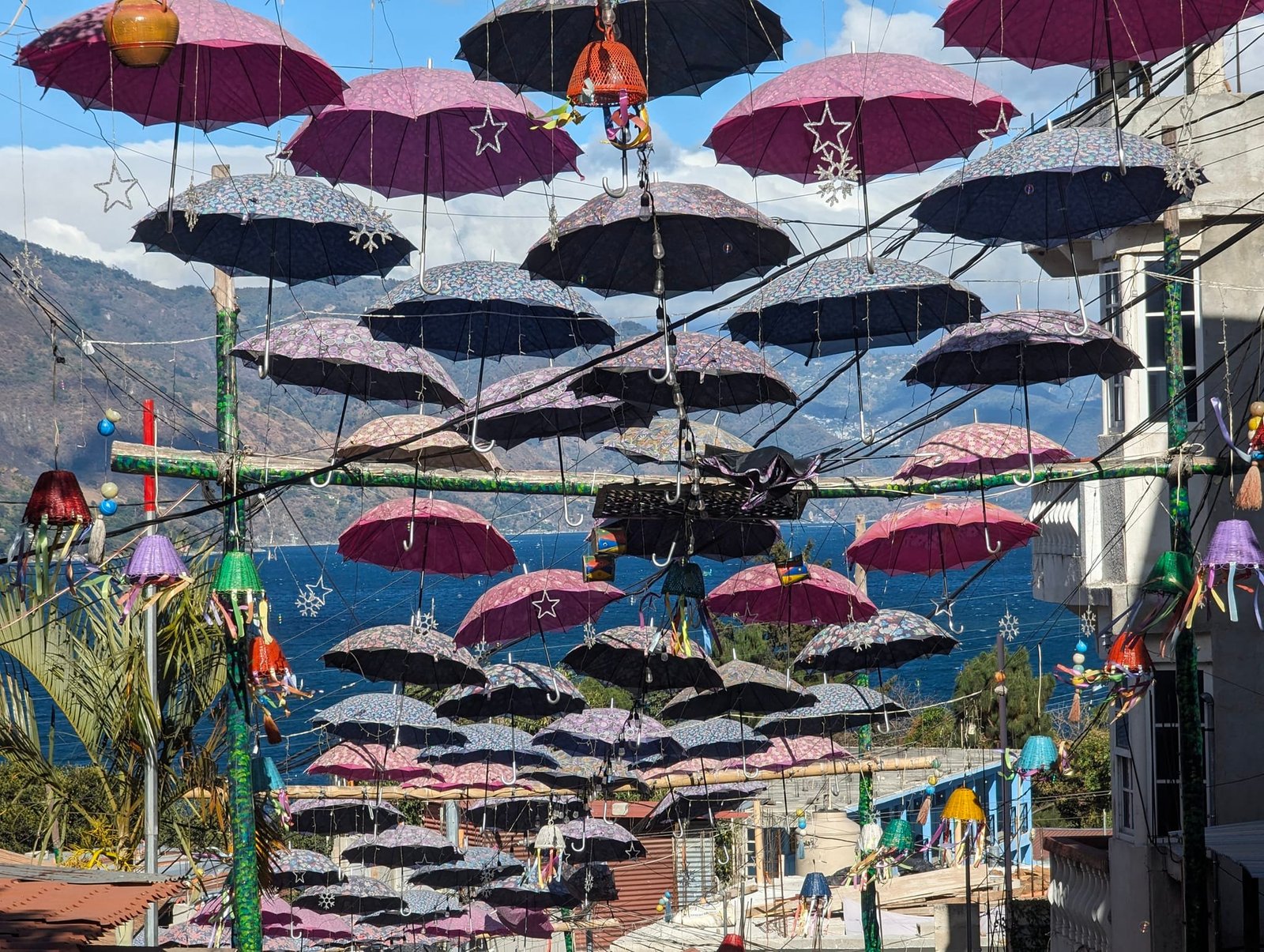
After coming down from Indian Nose we explored San Juan La Laguna. It’s a pretty, colourful village with lots of interesting murals and themed streets – there is a street of hats and a street of umbrellas, among others. Later, whenever someone asked us where to go on the lake, San Juan was the place we recommended.
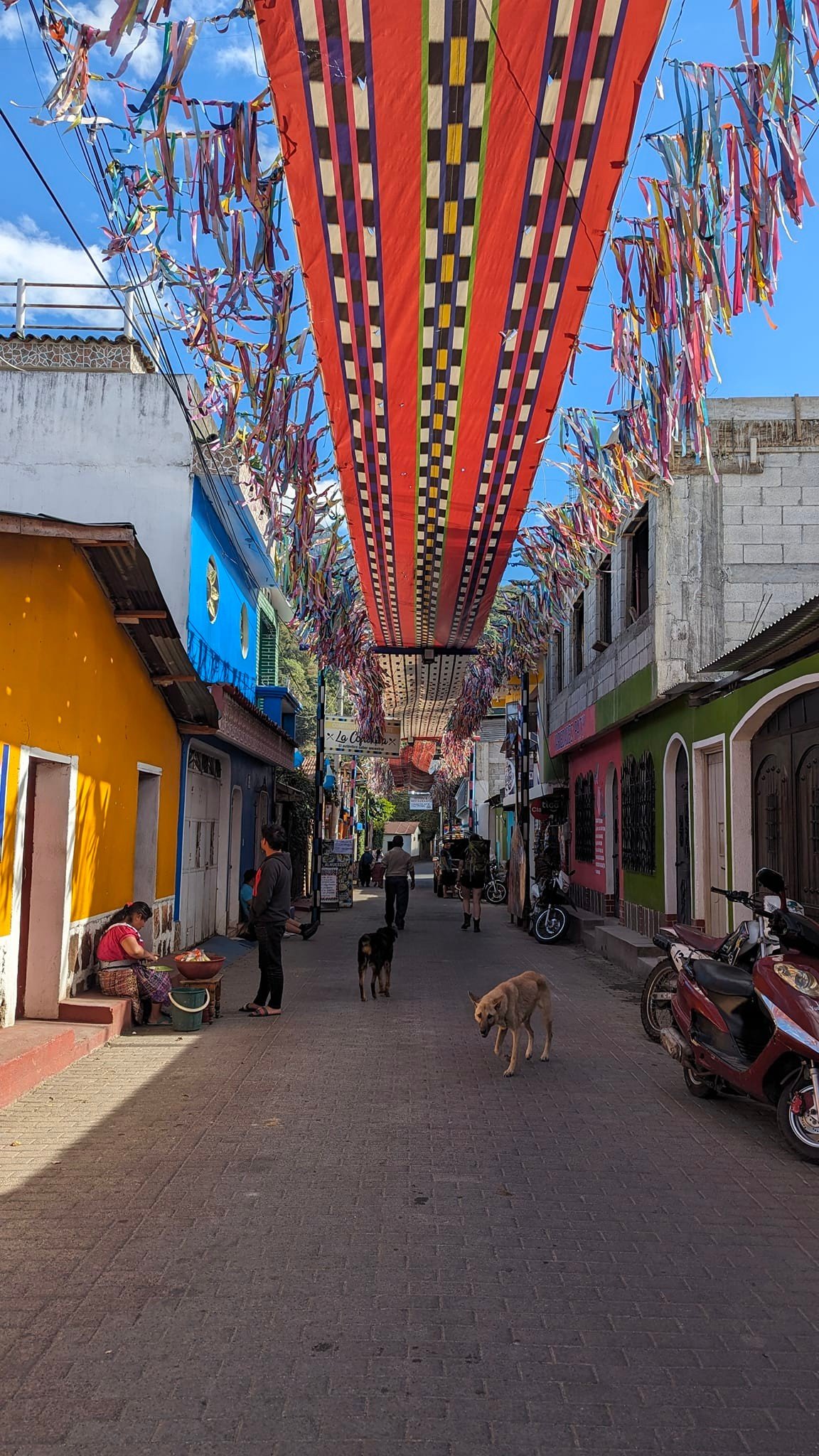
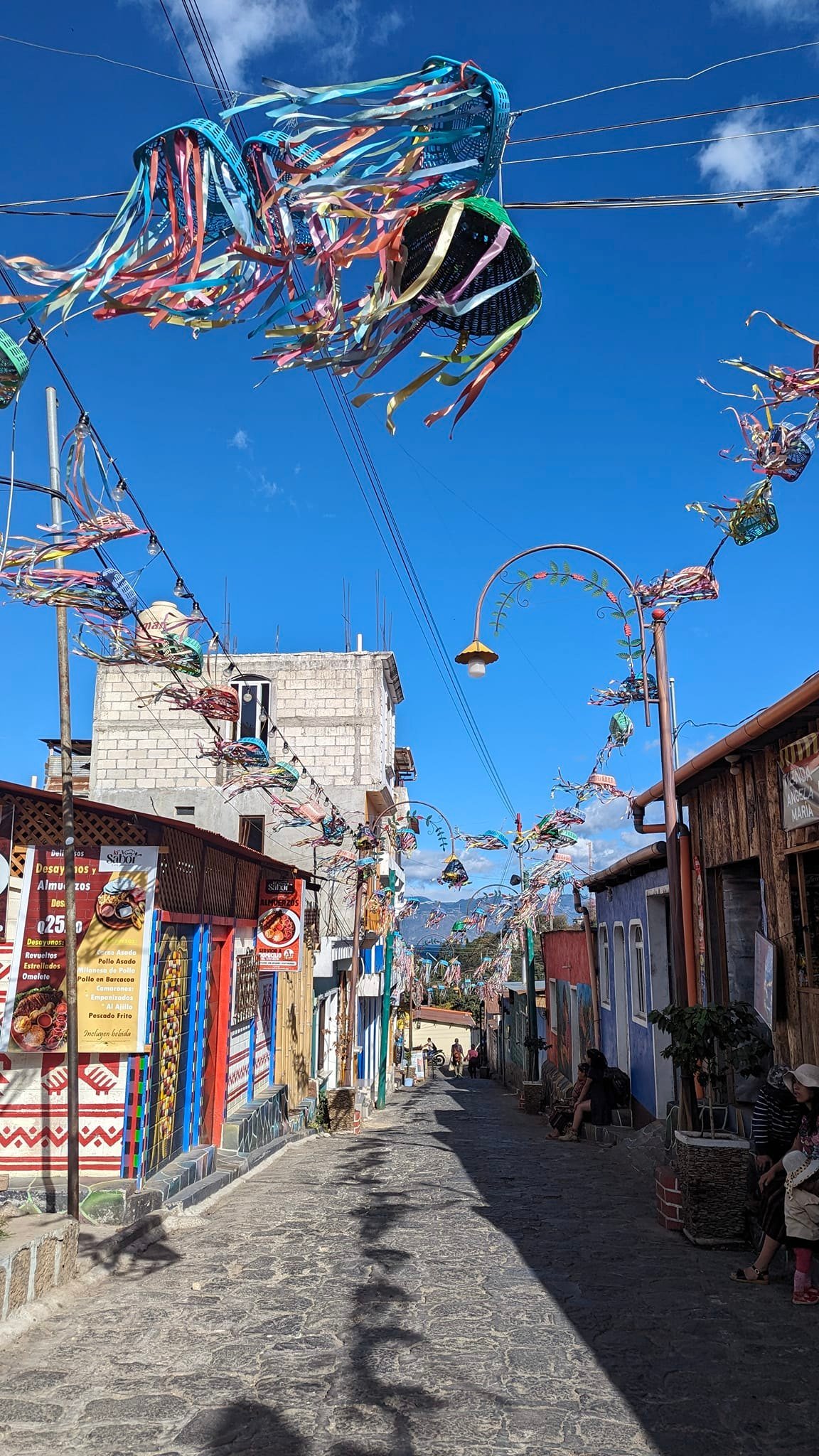
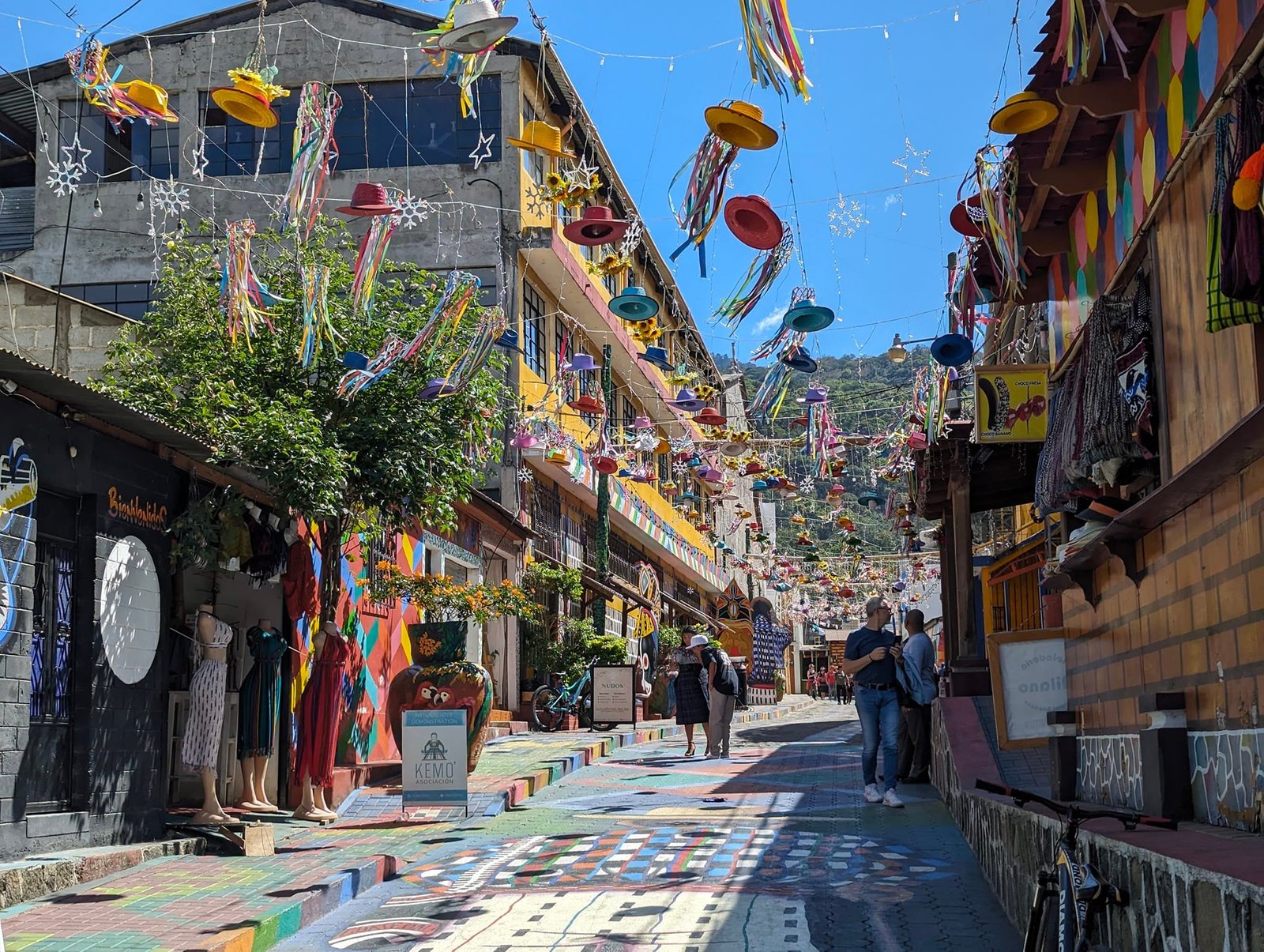
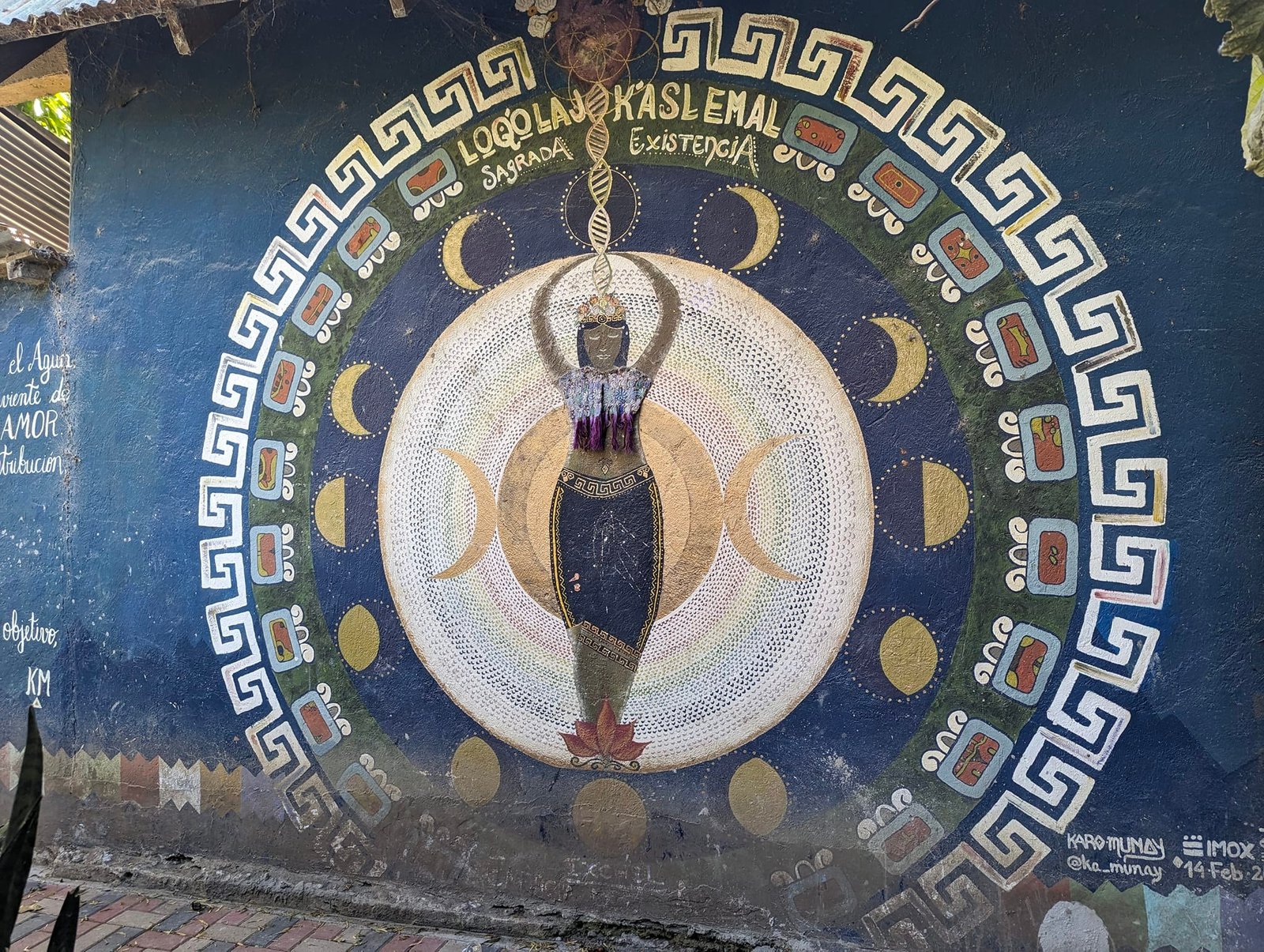
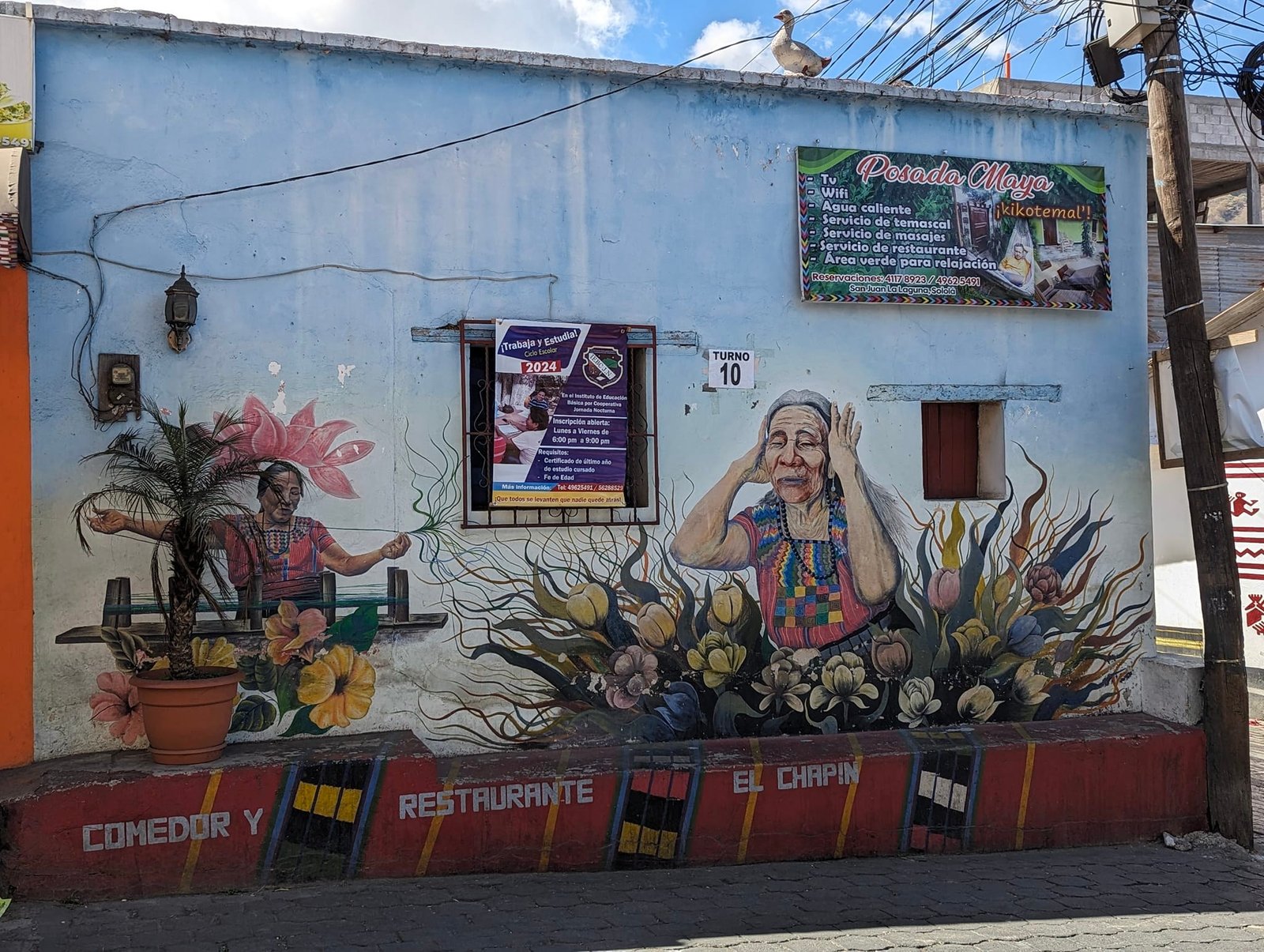
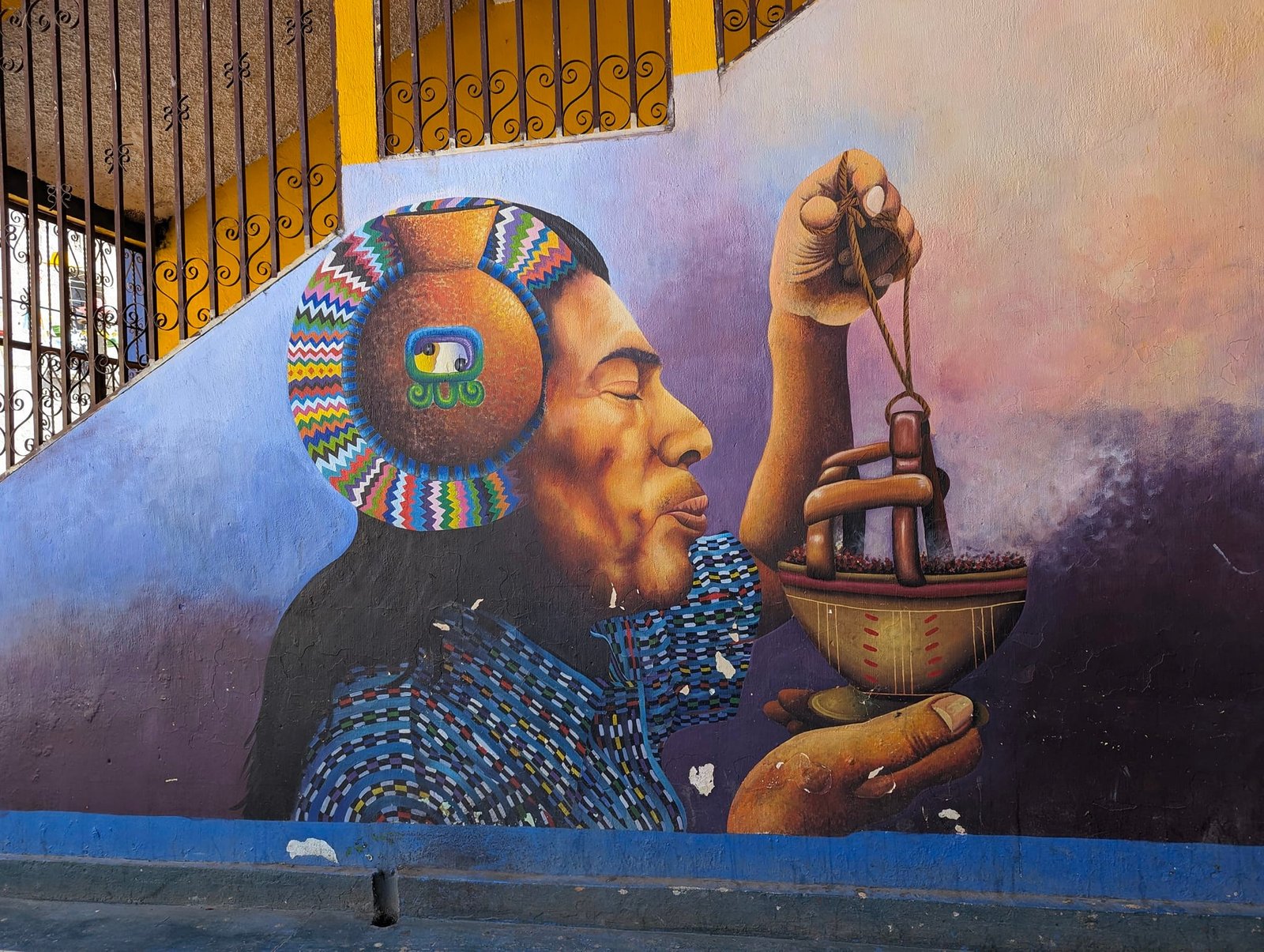
There are murals at every turn. Many of them show the daily life of the Maya – weavers at their looms, elderly residents in traditional dress – and the animals that live around the lake.
San Marcos La Laguna – a 12-metre jump and a hippie vibe
On 30 January we took a boat with Kinga to San Marcos La Laguna – just 10 minutes from San Pedro. The village is known for its nice spots for sunbathing and swimming.
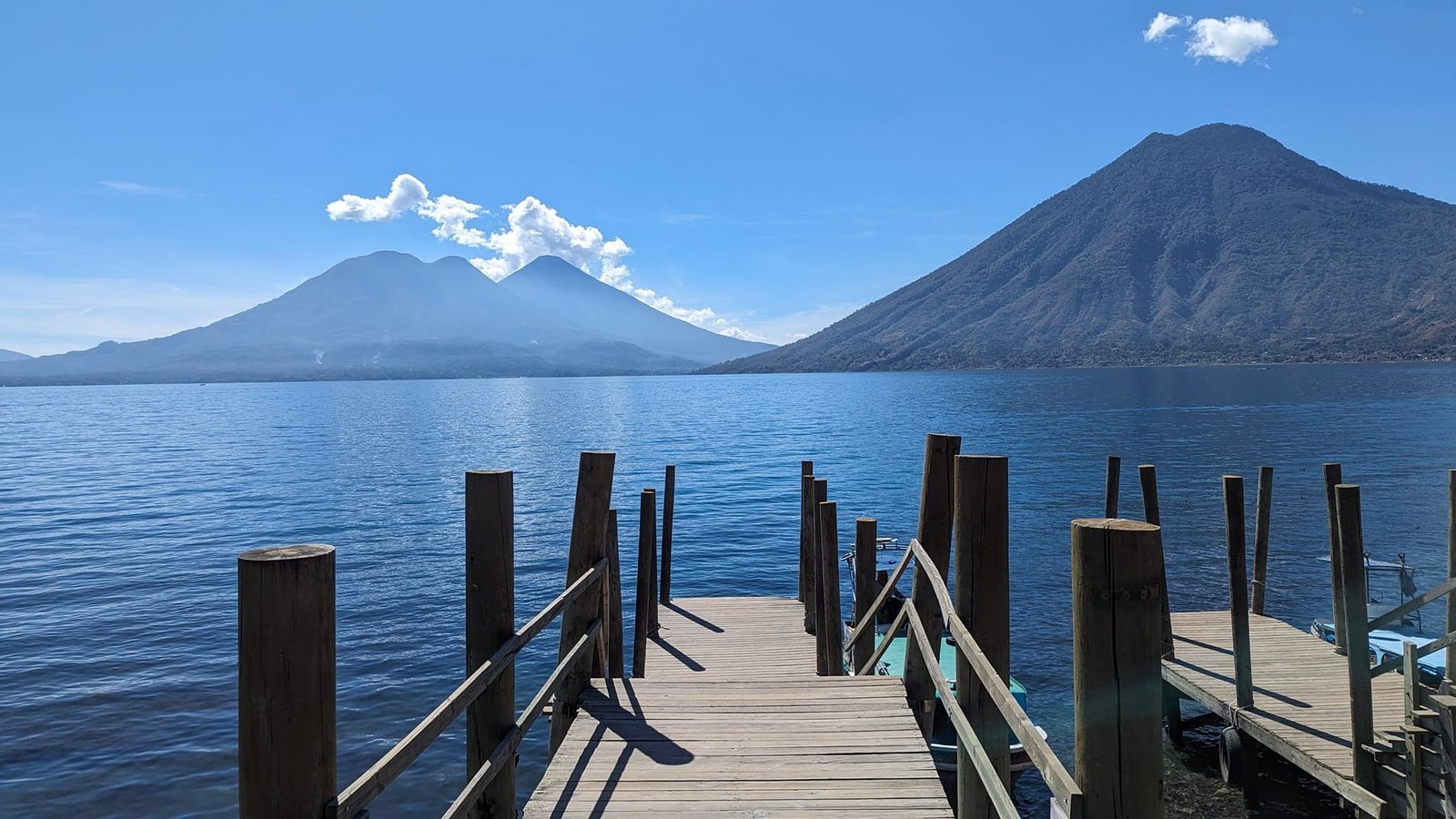
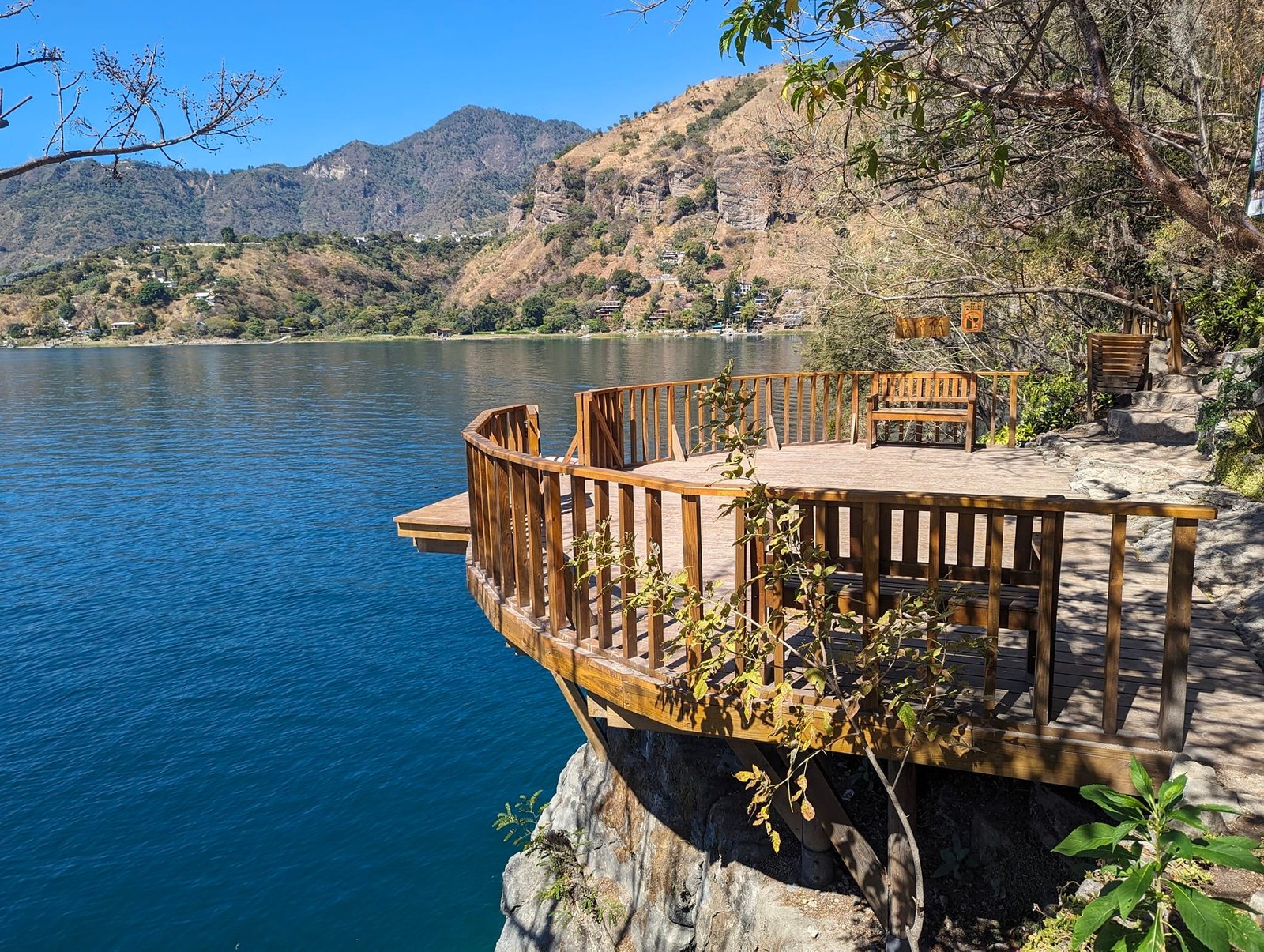
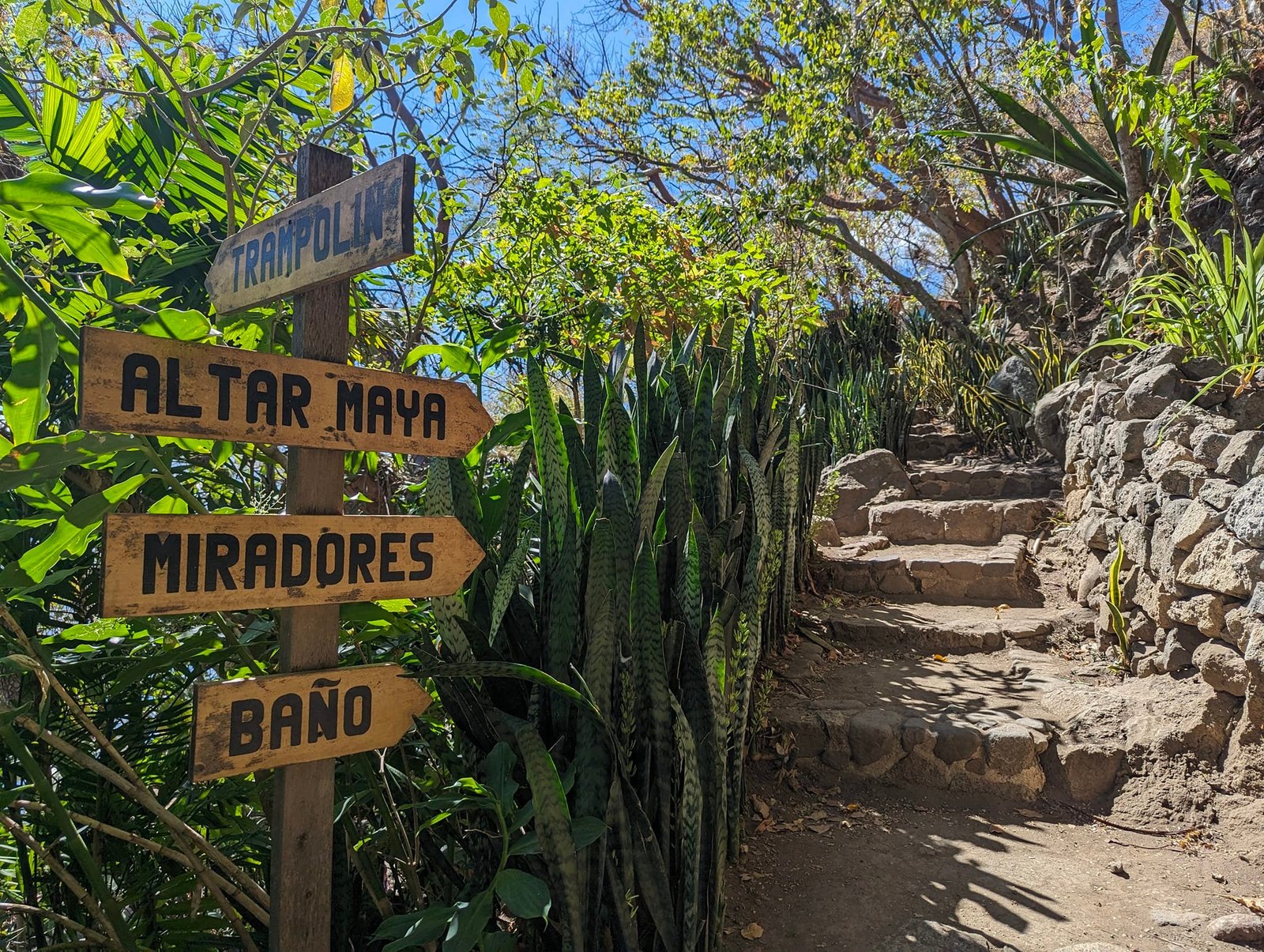
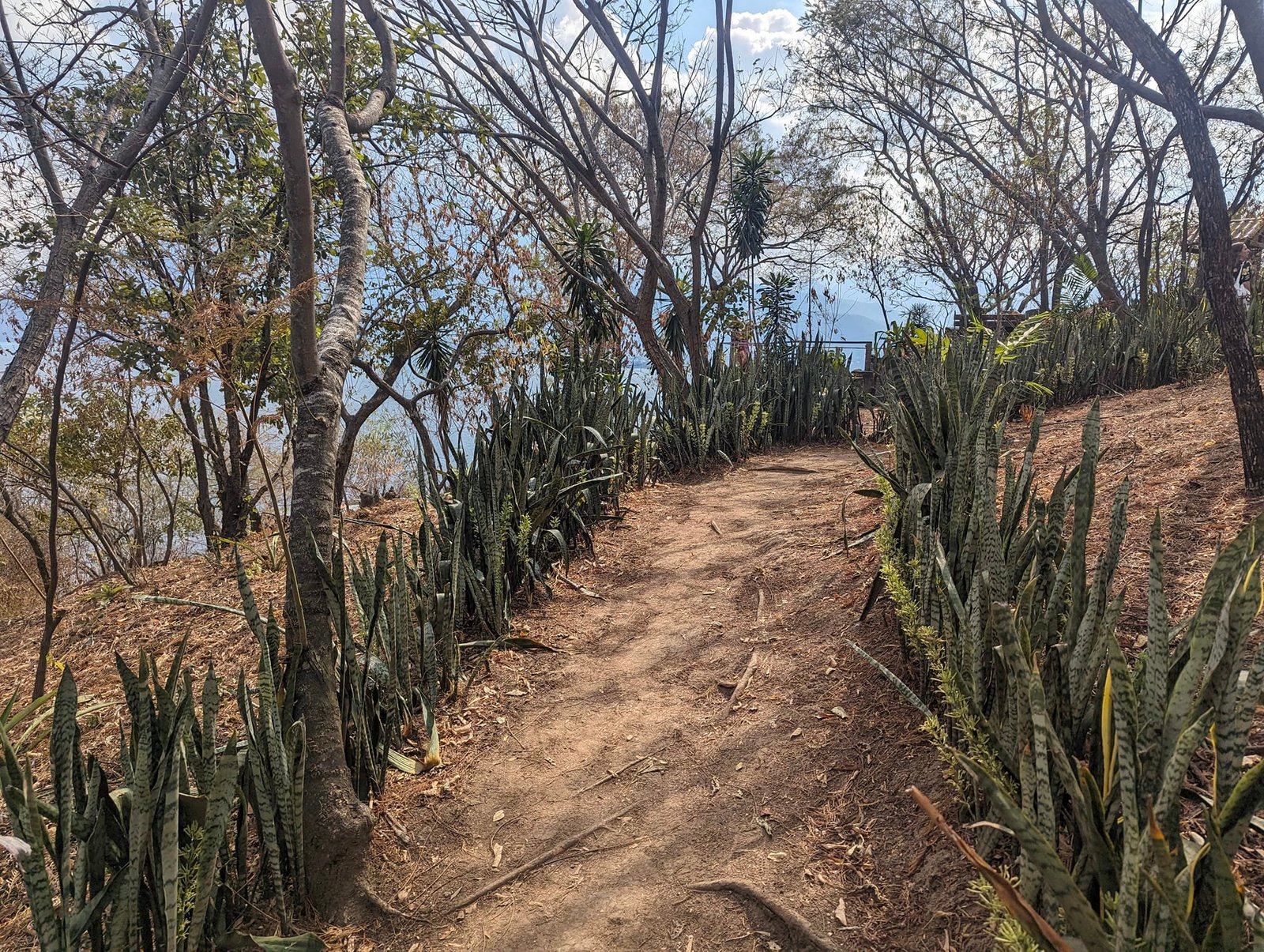
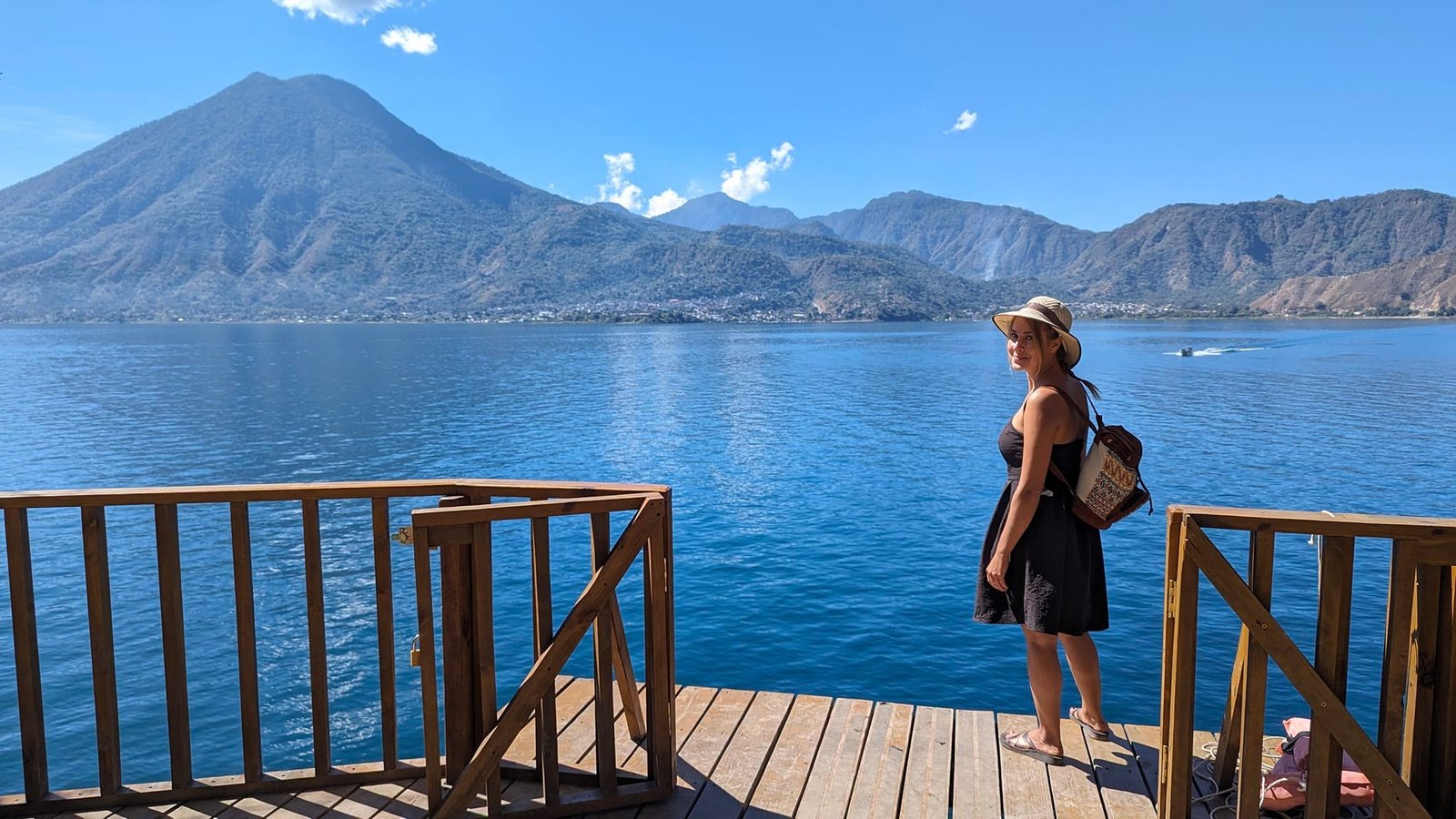
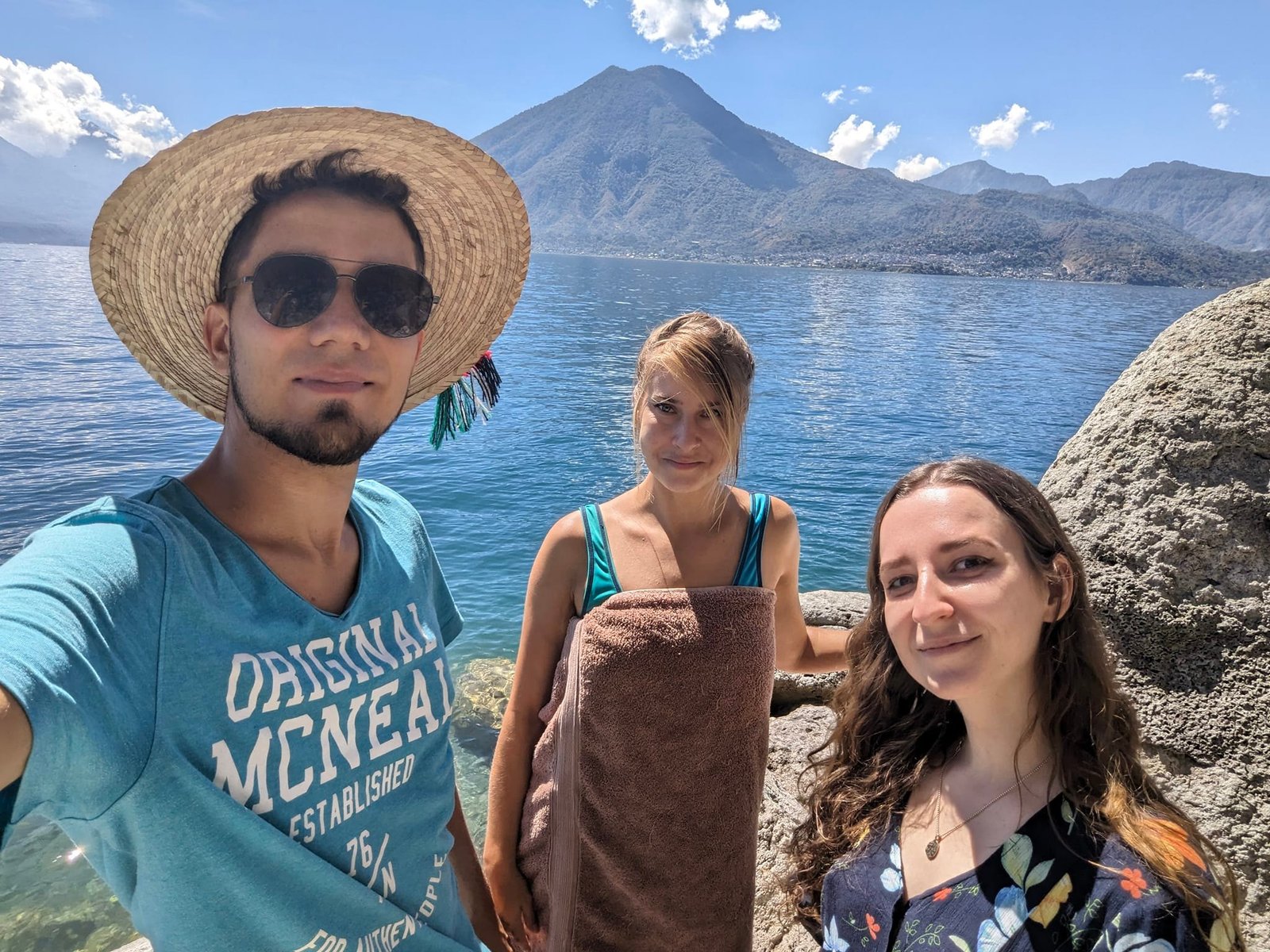
The best known is the Cerro Tzankujil nature reserve (entry 20 Q, about €2.30). Paths lead between the rocks to viewpoints, a Mayan altar and a wooden platform from which you jump into the lake from 12 metres. Only Patrycja jumped – of course she couldn’t resist. Unfortunately the water isn’t very warm: it’s about 21°C, all year round.
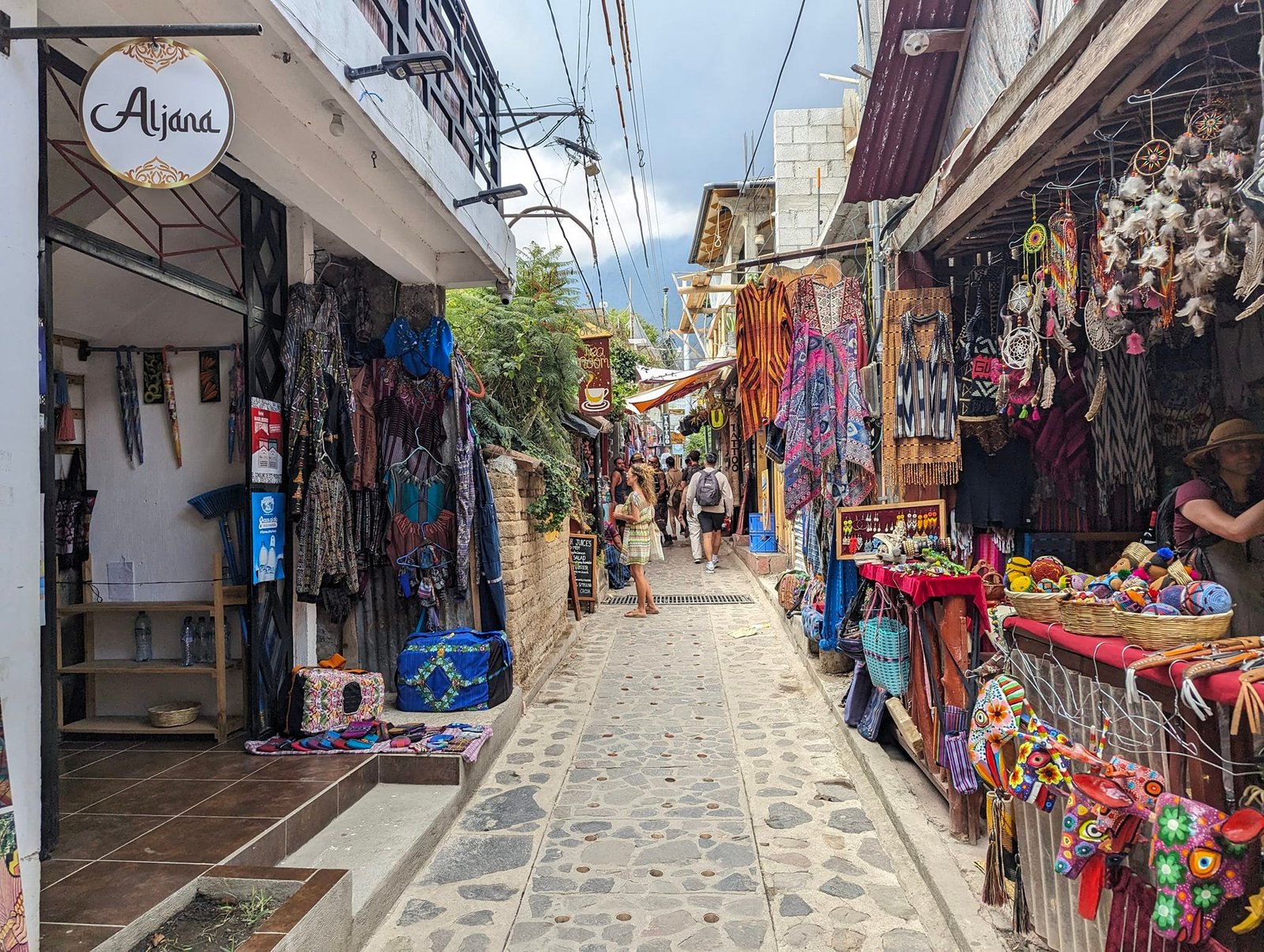
San Marcos has a strong hippie vibe. The shops and restaurants along the main pedestrian street are styled just like that, and there really are lots of hippies here. That’s why tourism is particularly noticeable: you can easily order European or vegetarian food and buy “spiritual” souvenirs. In the afternoon it got cold and the clouds came in, so we went back from the lake to the village centre.
Santa Cruz La Laguna – by boat instead of the Lower Mayan Trail
At Atitlán you need to be careful where you walk. The village centres are safe, but hold-ups do happen on the trails. They are mentioned most often in connection with the Lower Mayan Trail – an approximately 9-kilometre trail along the lakeshore from San Marcos to Santa Cruz (about 3 hours one way), especially on the stretch beyond Tzununá towards Santa Cruz. The advice is to walk it only in daylight (not too early and not too late), not at the weekend, in a larger group or with a guide. Most people probably walk it without any trouble, but the risk is there. Because of the risk, and because we didn’t want to pay for a guide on such an easy trail, we skipped it and on Friday 2 February took a boat to Santa Cruz.
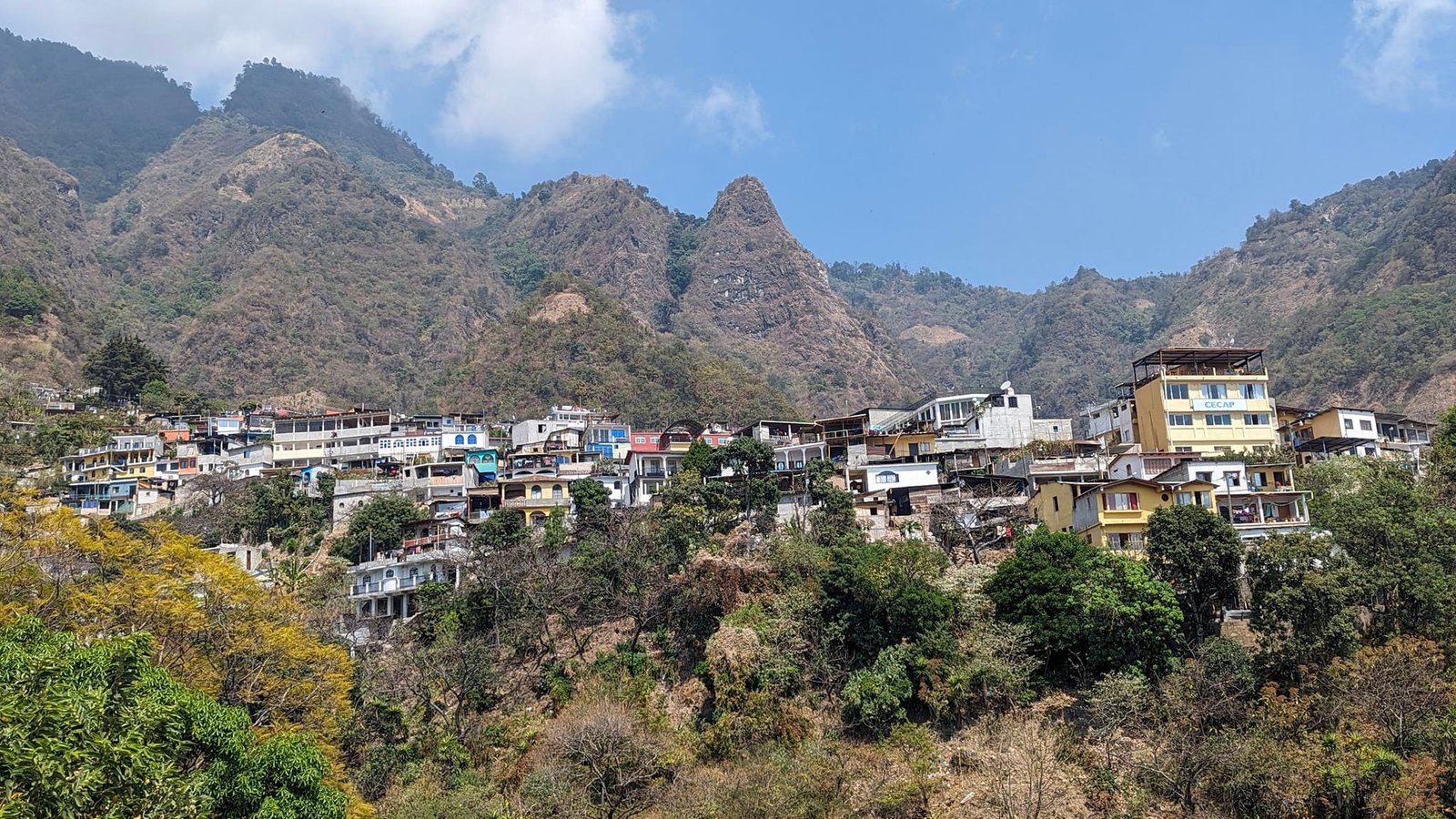
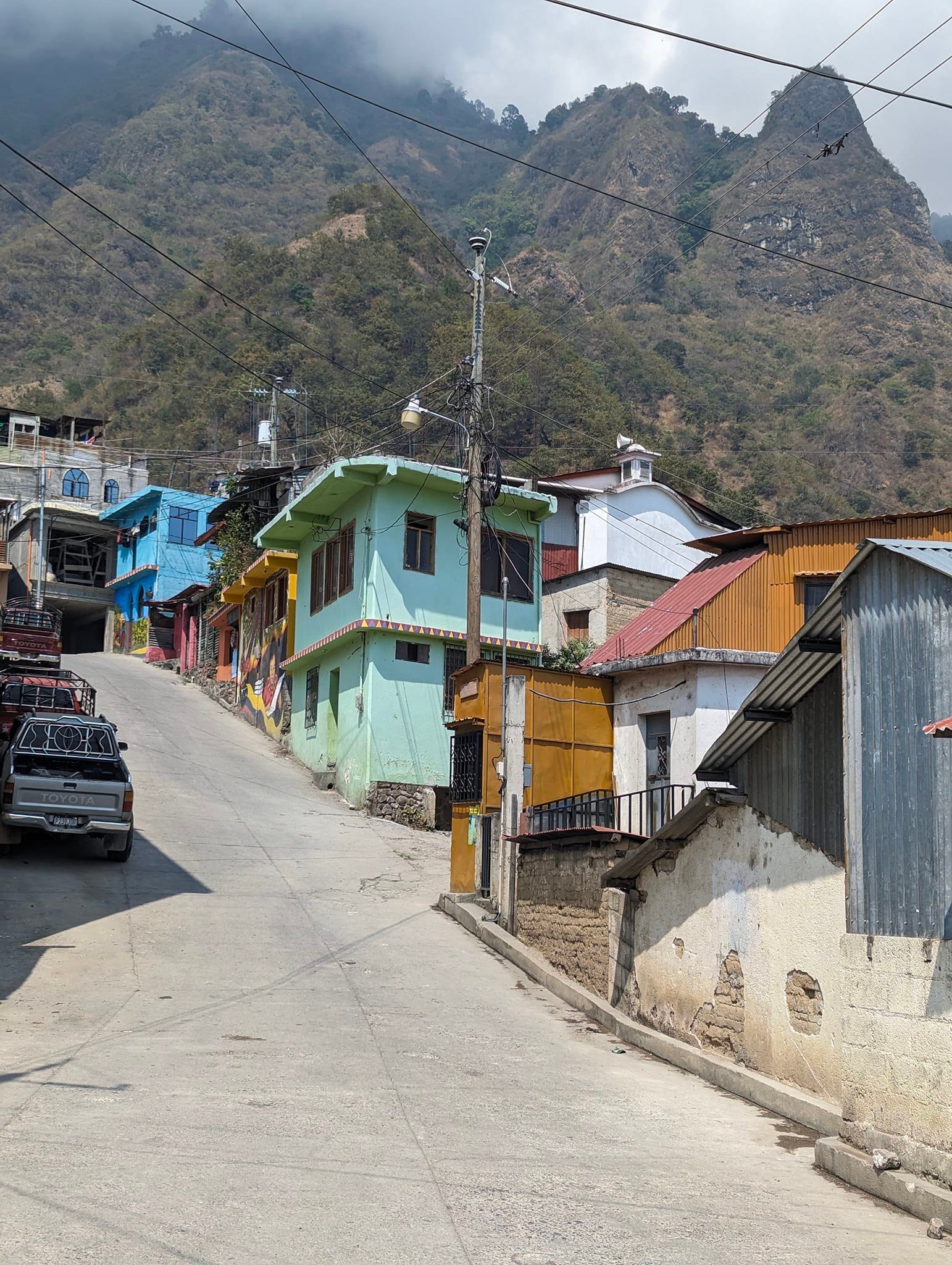
Unfortunately there isn’t much to do in Santa Cruz La Laguna. What sets it apart from the other villages is that it lies higher up, on a steep slope. There are narrow lanes, loads of tuk-tuks, nice murals and the Mirador Tzanjuyú viewpoint overlooking the lake and the volcanoes. There are few tourists. We ate a delicious pizza quesadilla here for 60 Q (about €7). There are also a few spots for sunbathing by the water, but we didn’t get the best weather – it was cloudy and visibility was poor.
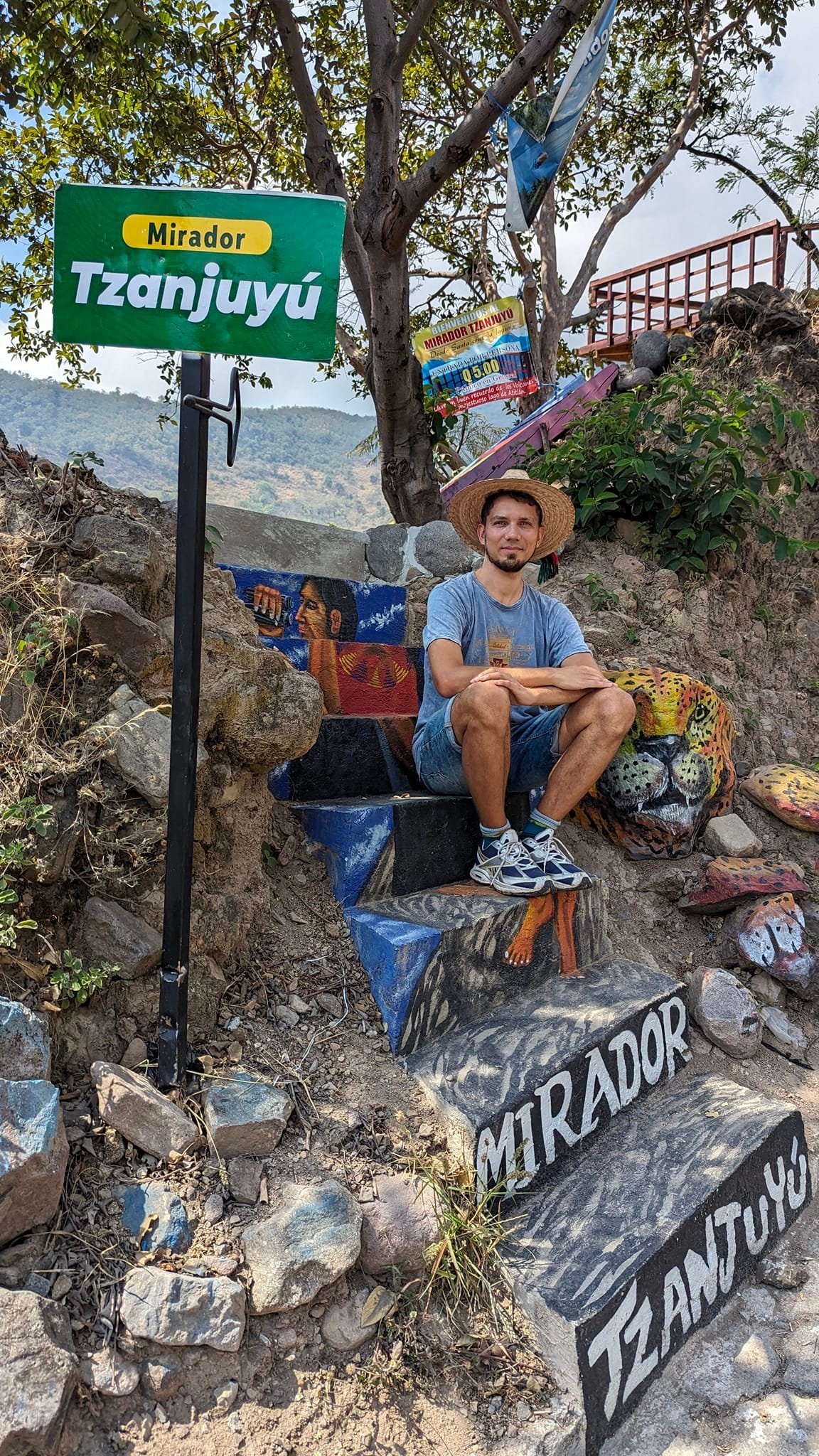
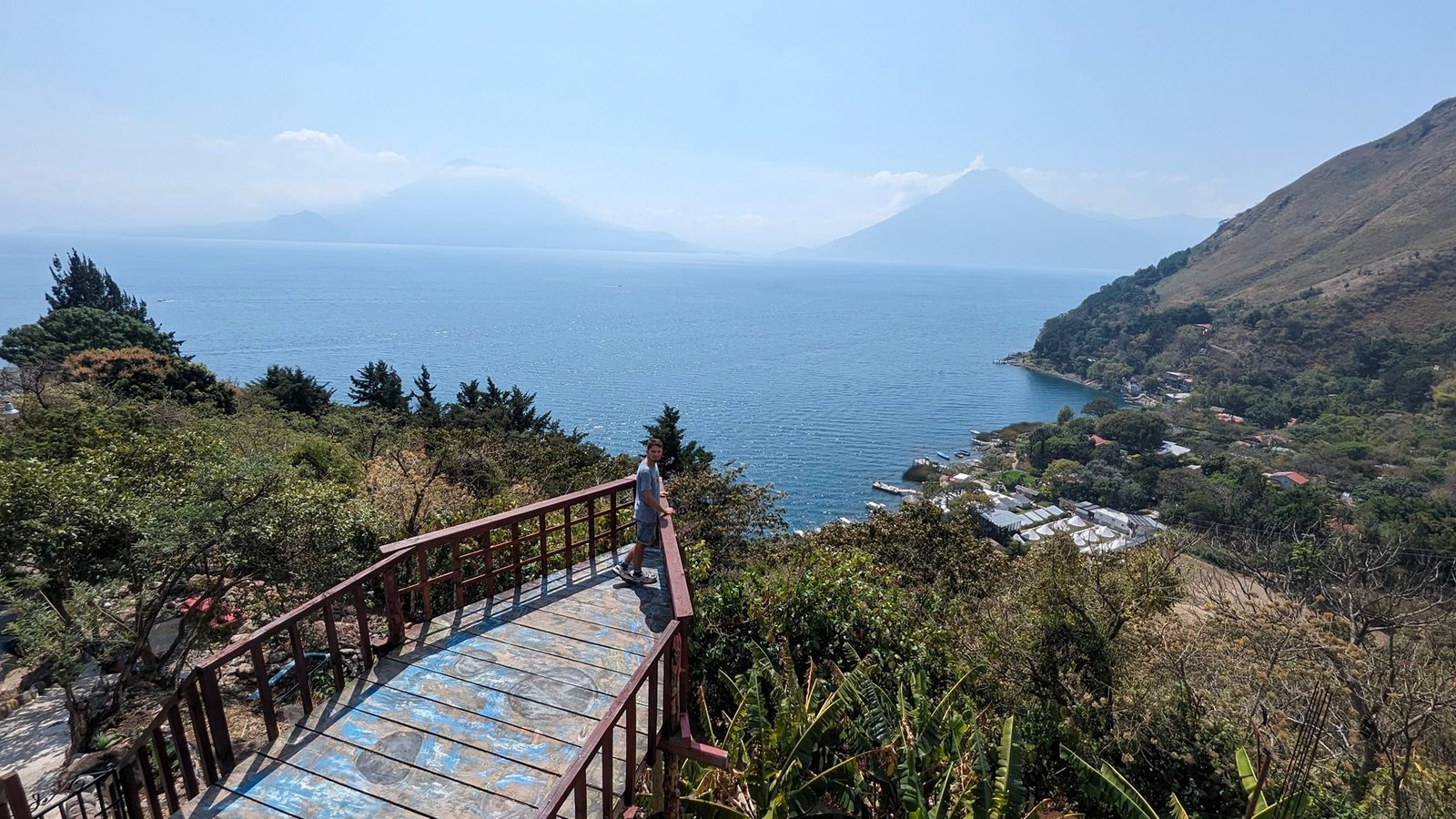
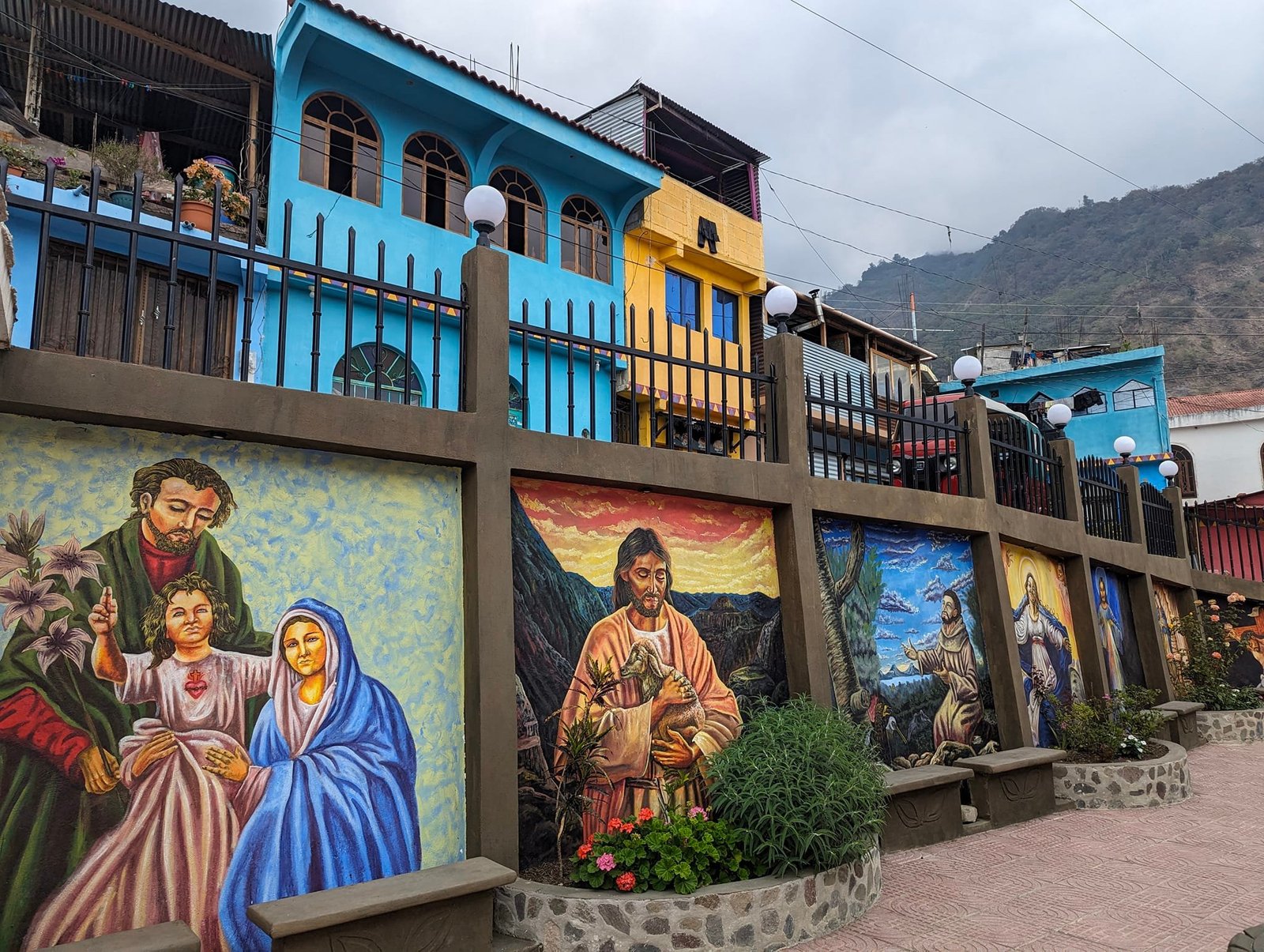
The video below first shows the climb up the San Pedro volcano and then our day in Santa Cruz.
 12:55
Quetzals near Santiago Atitlán
On Saturday 3 February we went with Magda and Jeferson to see quetzals (quetzal in Spanish) near Santiago Atitlán. The quetzal is Guatemala’s national bird, and this is where most of them live. The currency is named after it, it appears on the flag, and a city was even named in its honour – Quetzaltenango, where we went a few days later. In the past it was a sacred bird of the Maya: rulers wore headdresses decorated with the green feathers of its tail. The birds were caught, their feathers plucked, and then they were released again. Lucky people can even spot a quetzal in the jungle around Tikal.
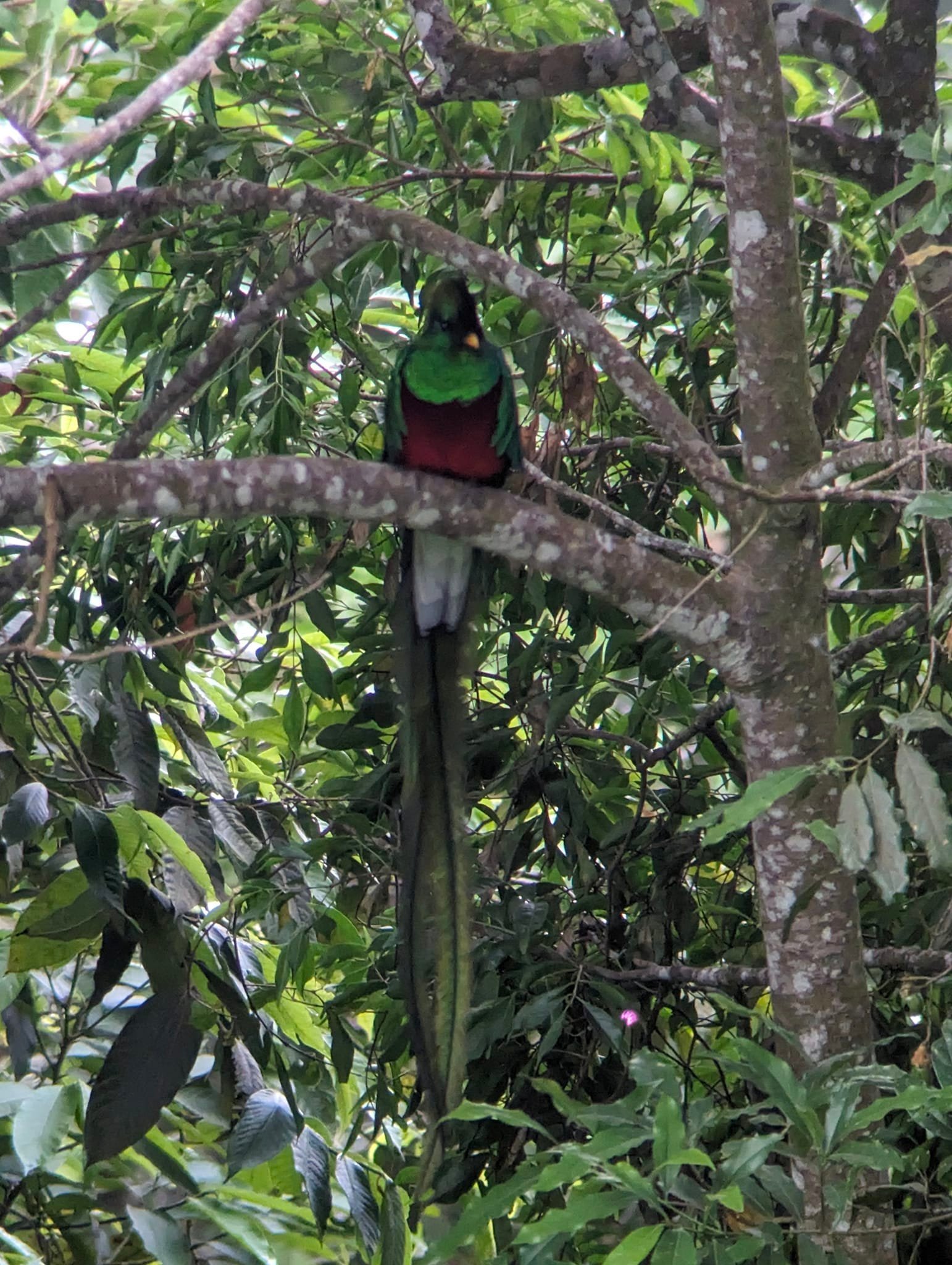
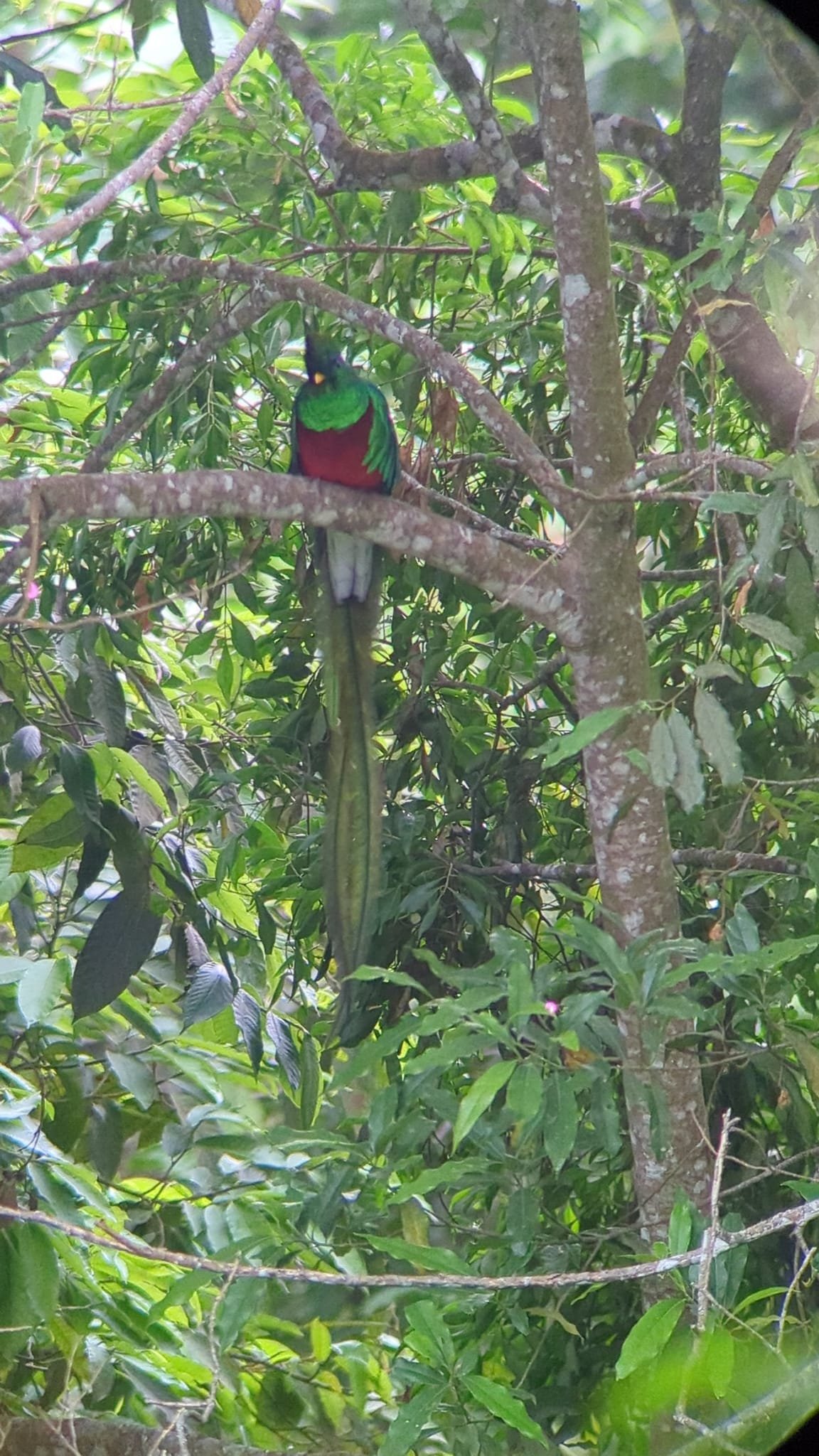
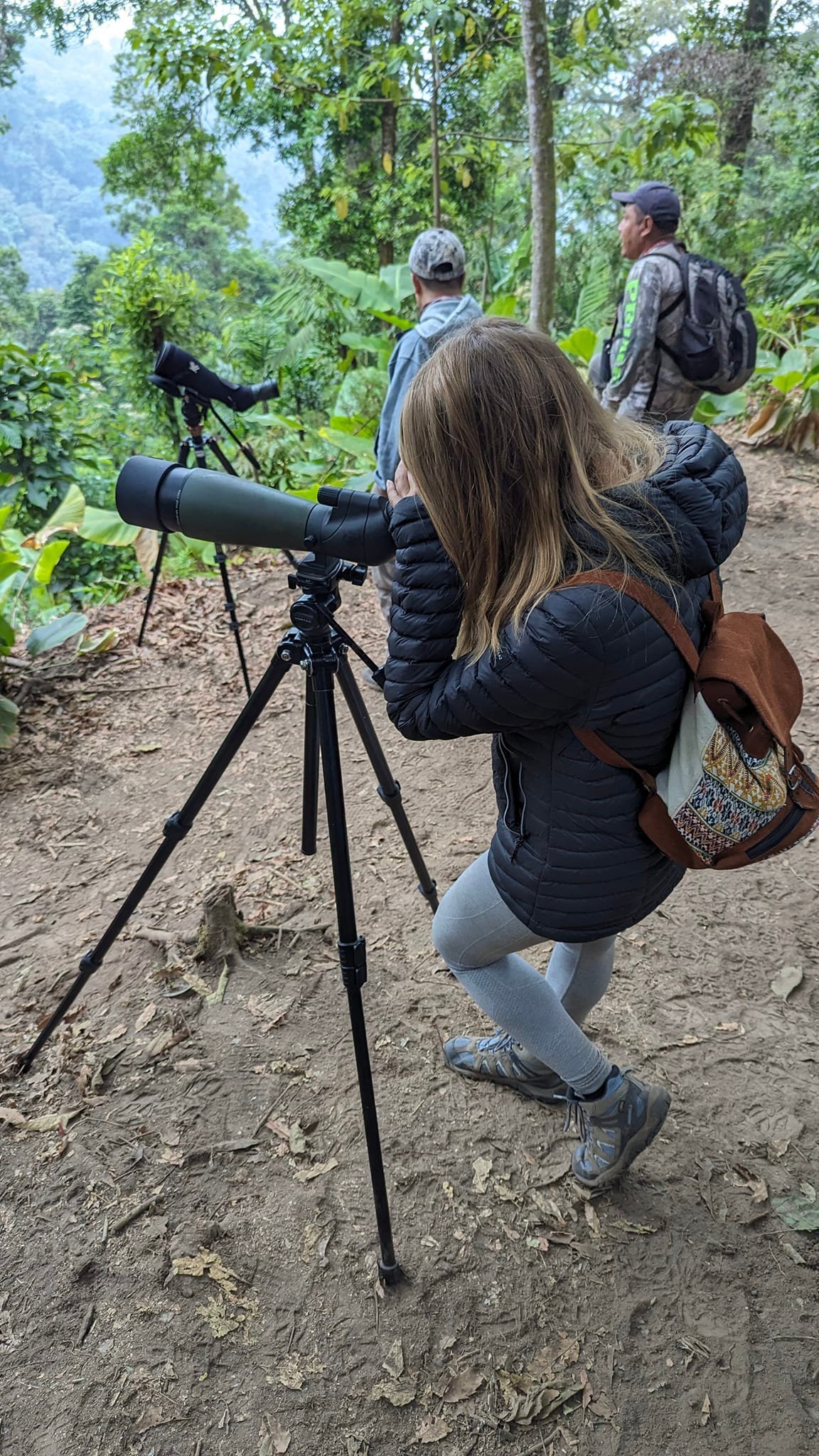
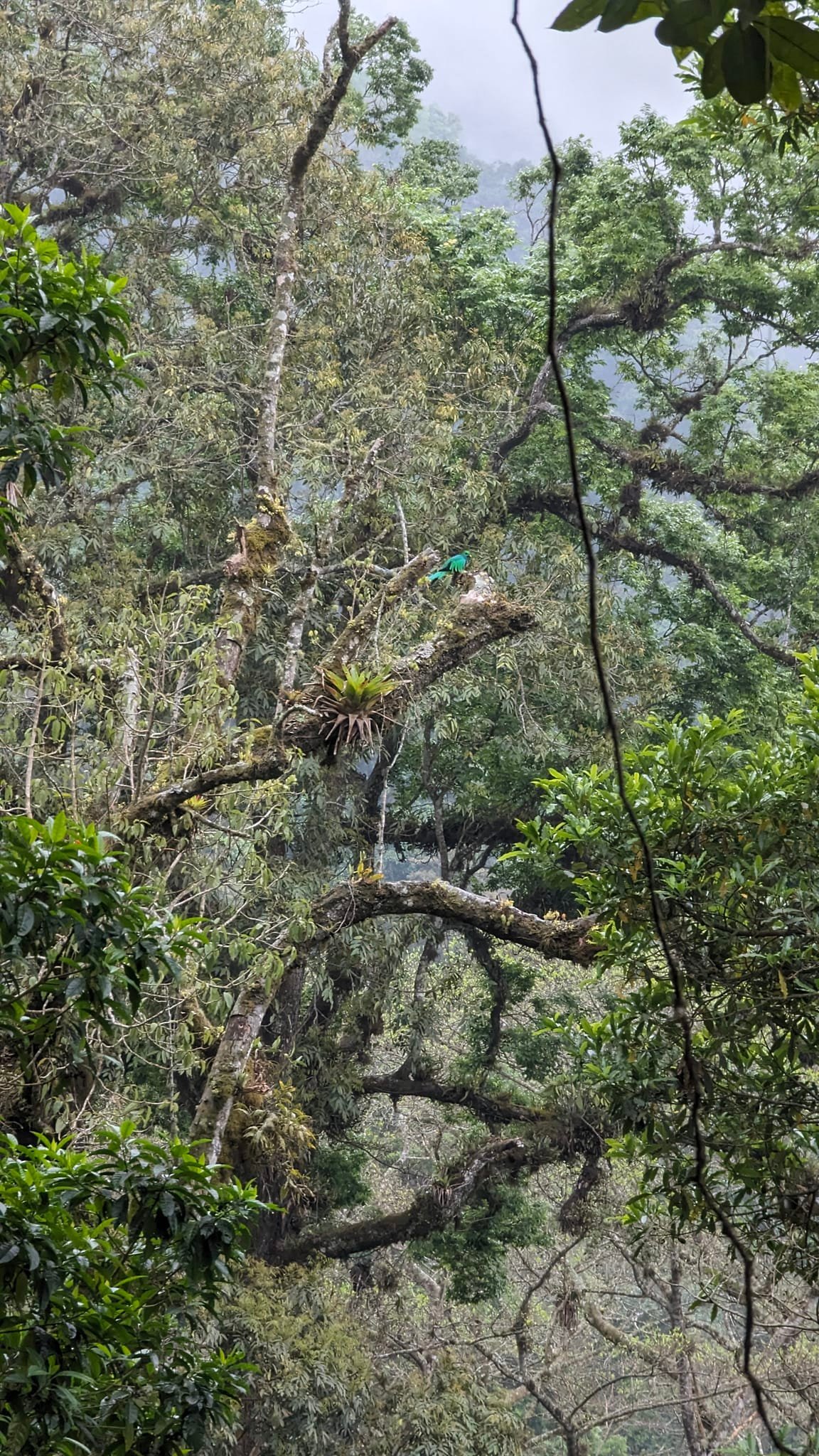
To see them, we had to set off at 6:00 a.m. Quetzals like the cool, so in the morning you can find them in the lower parts of the forest, and when it gets warmer they fly higher up the slopes of the volcano. At the turn of January and February they pair up, so it’s a good time for watching them. Our guide had a special spotting scope, so we could watch the birds from quite a distance.
- Location: around Santiago Atitlán.
- Price (February 2024): 150 Q (about €17.50) per person – for the guide.
- Route: a loop of about 4.5 km, about 4 hours in total.
About 10 minutes from the start of this trail begins the route up the Atitlán volcano (3537 m), which we climbed the next day – more about it in the post Volcanoes of Guatemala.
Mirador Nido del Colibrí above San Pedro
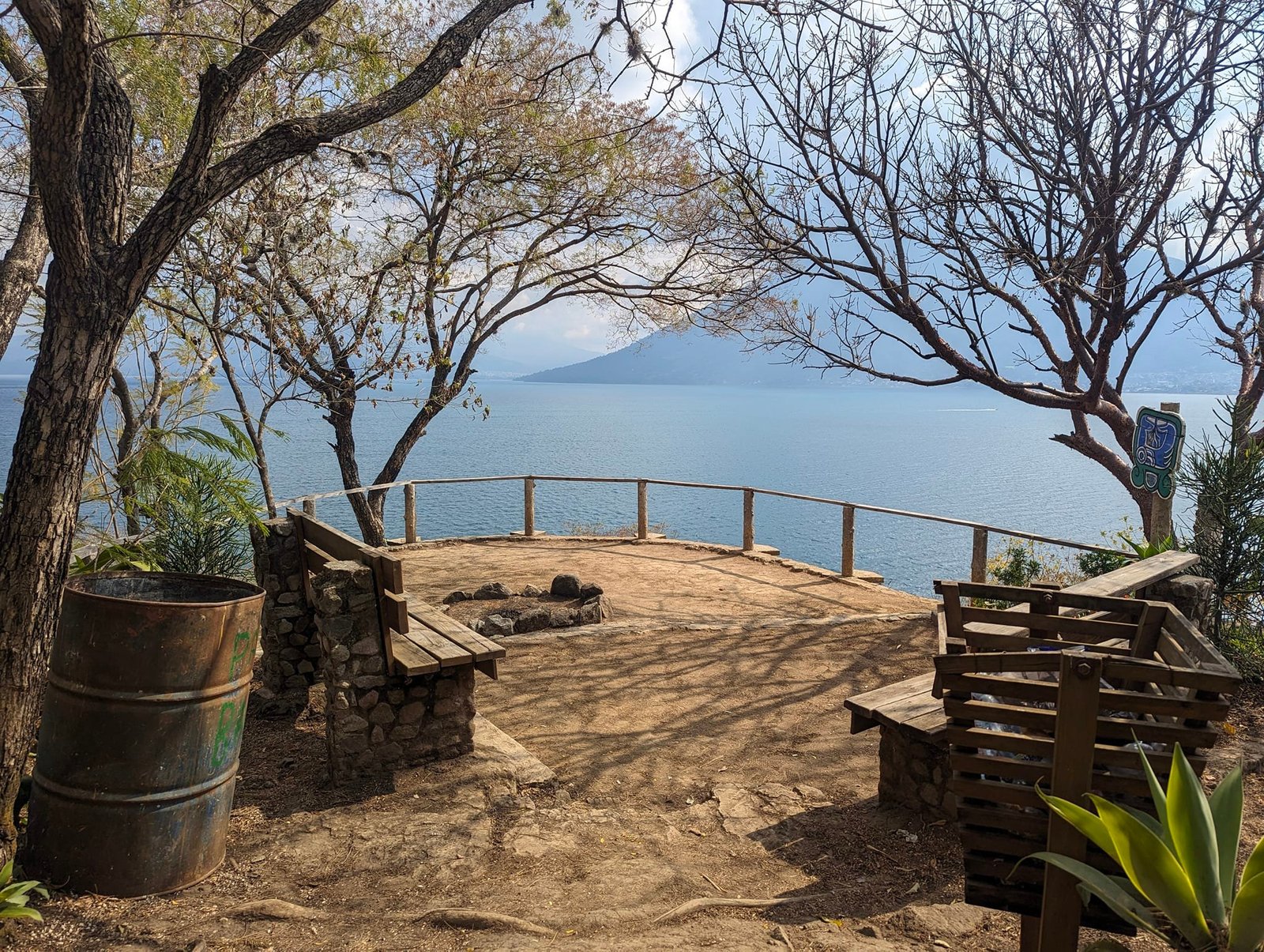
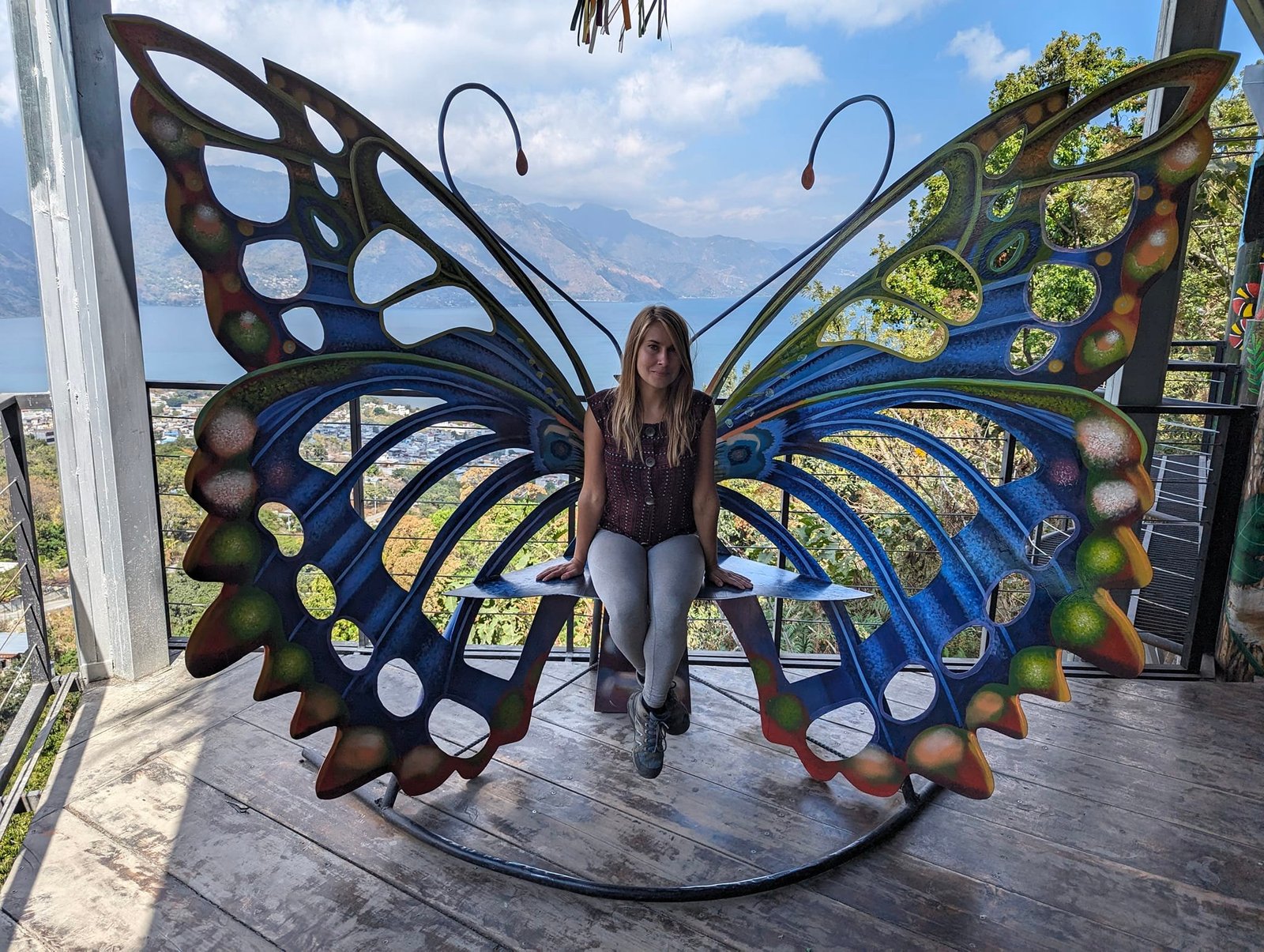
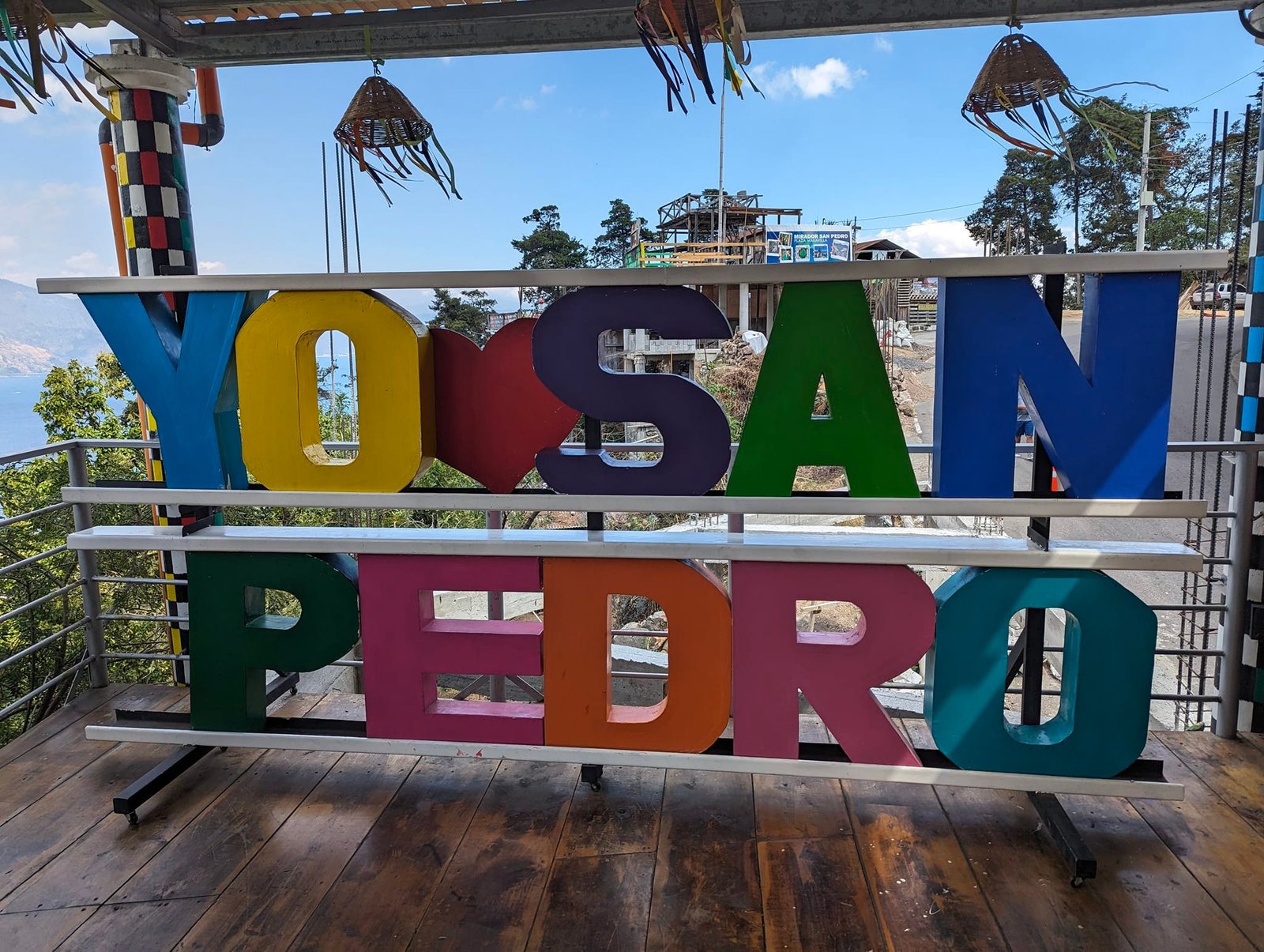
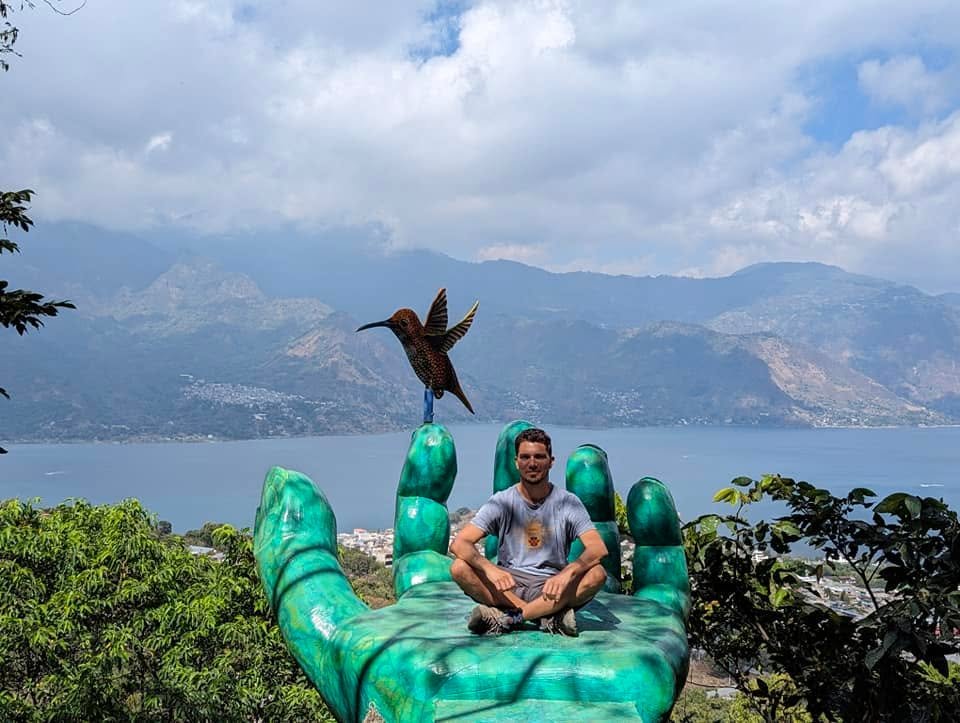
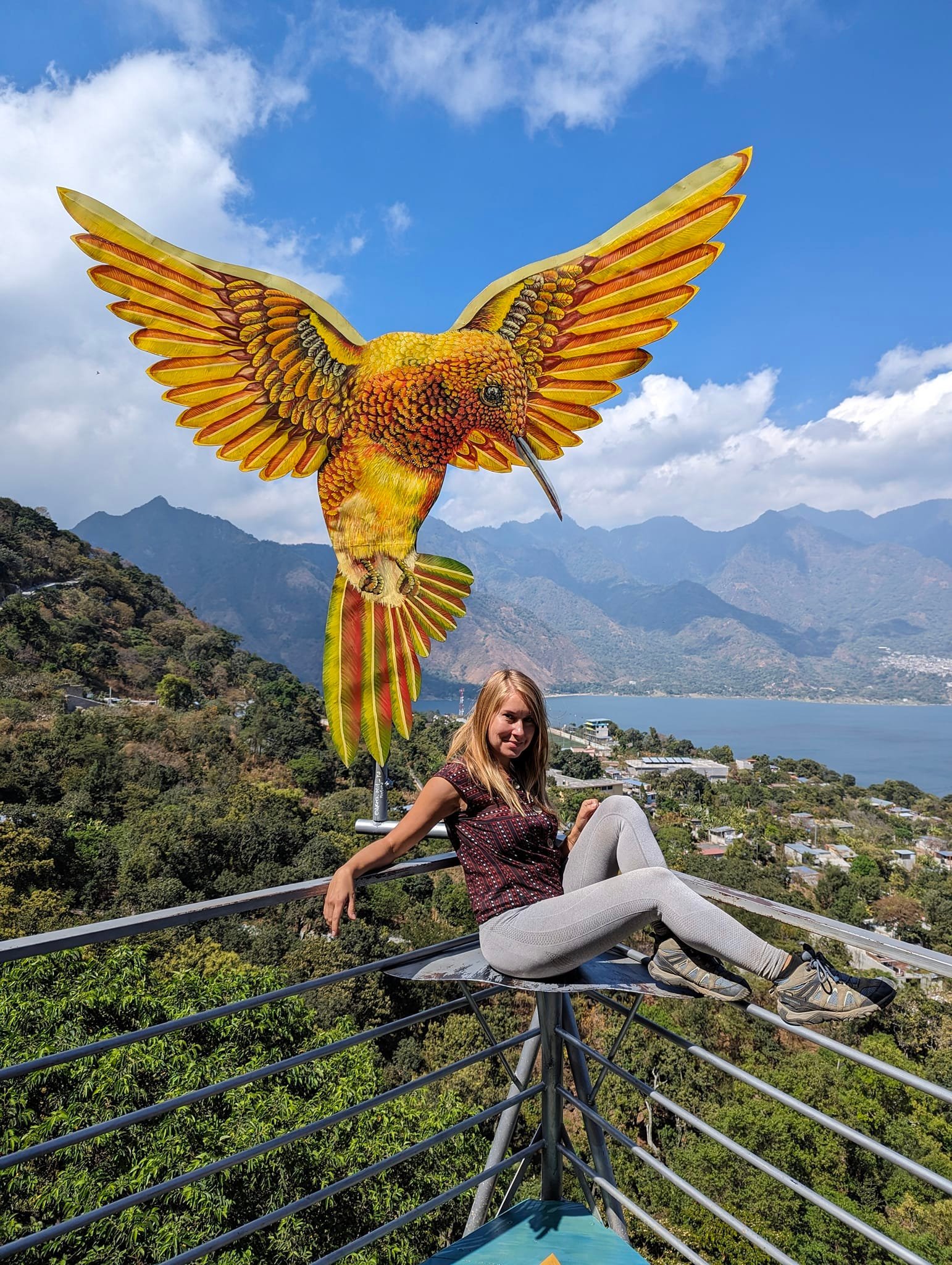
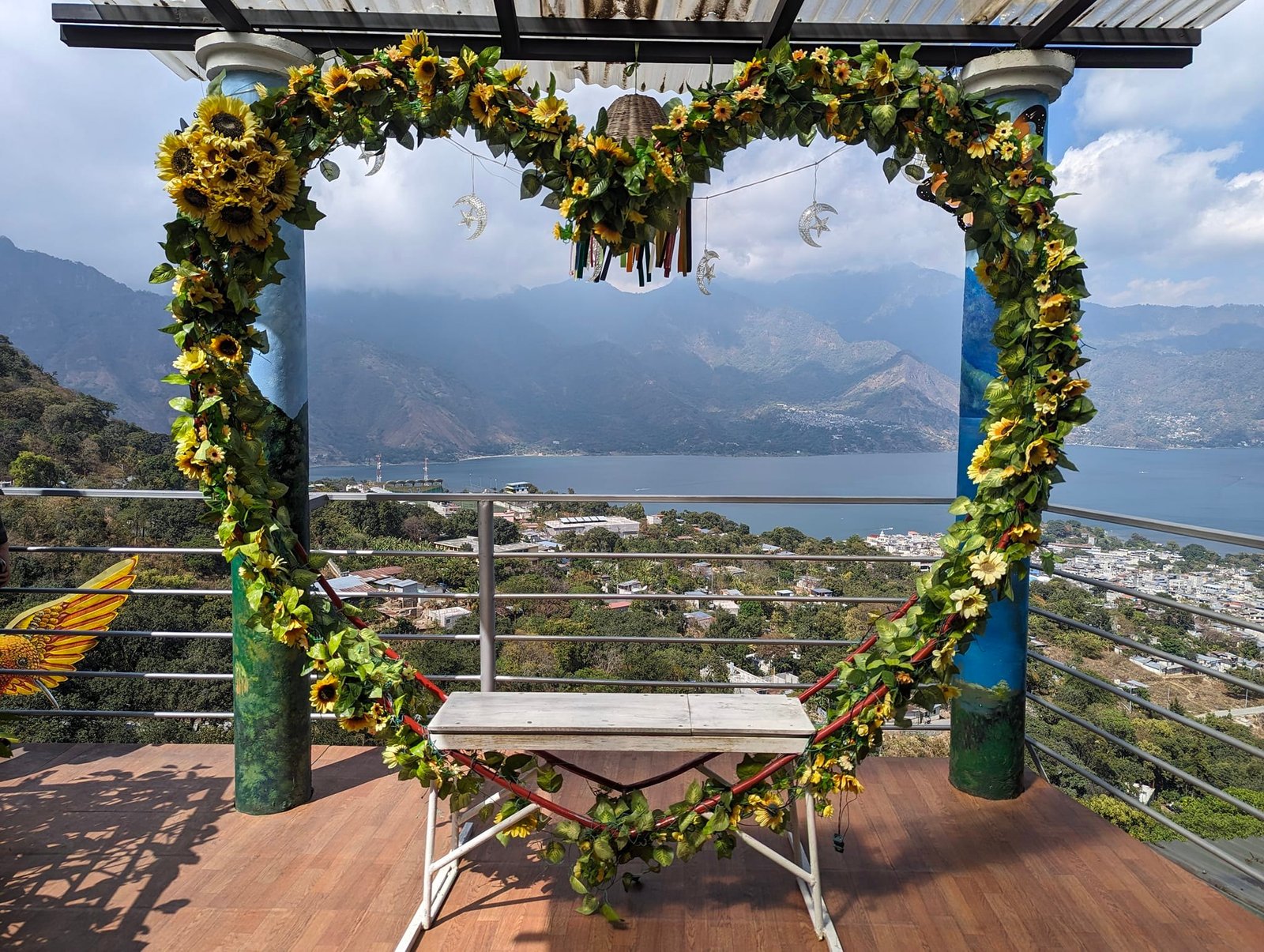
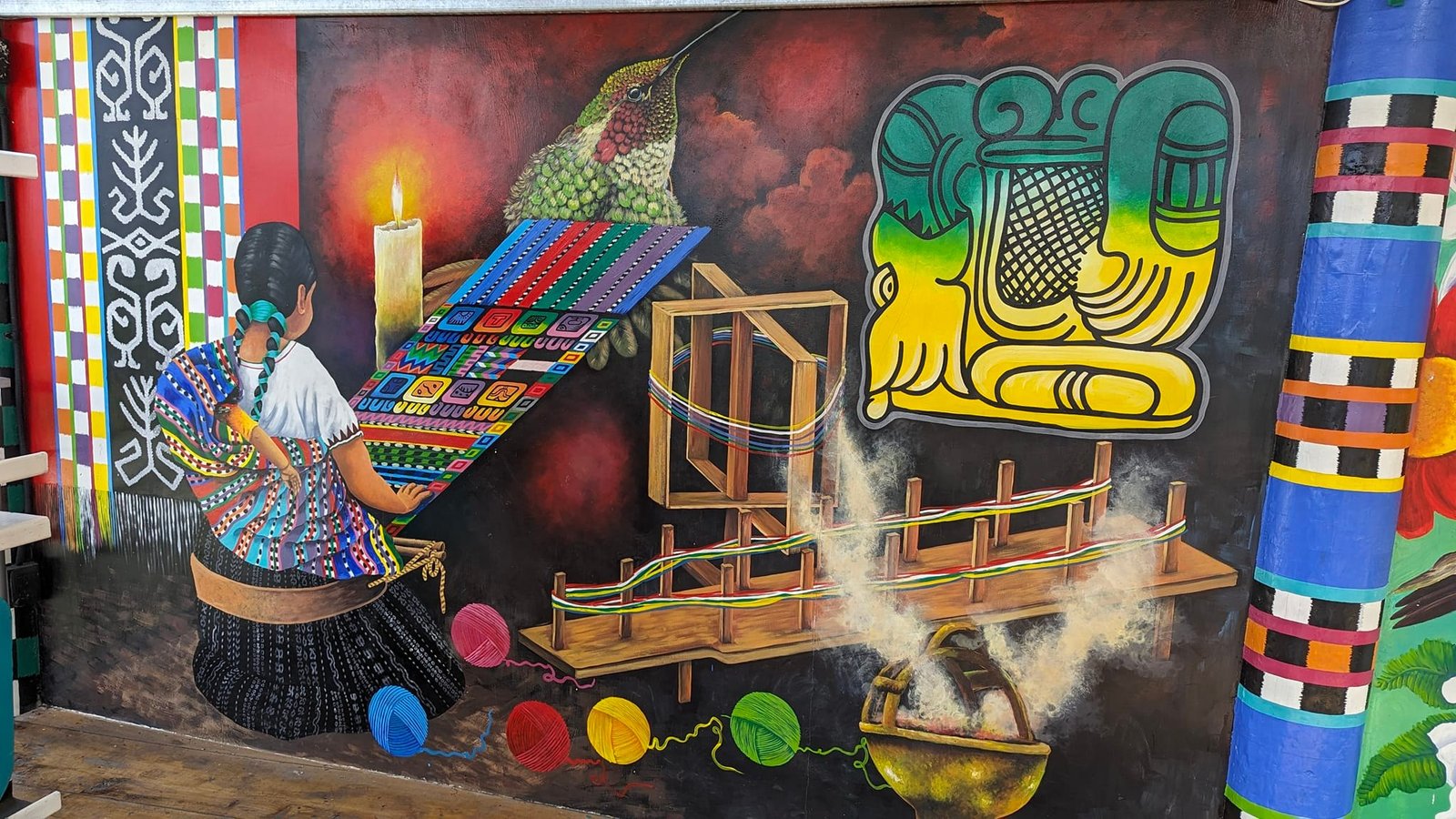
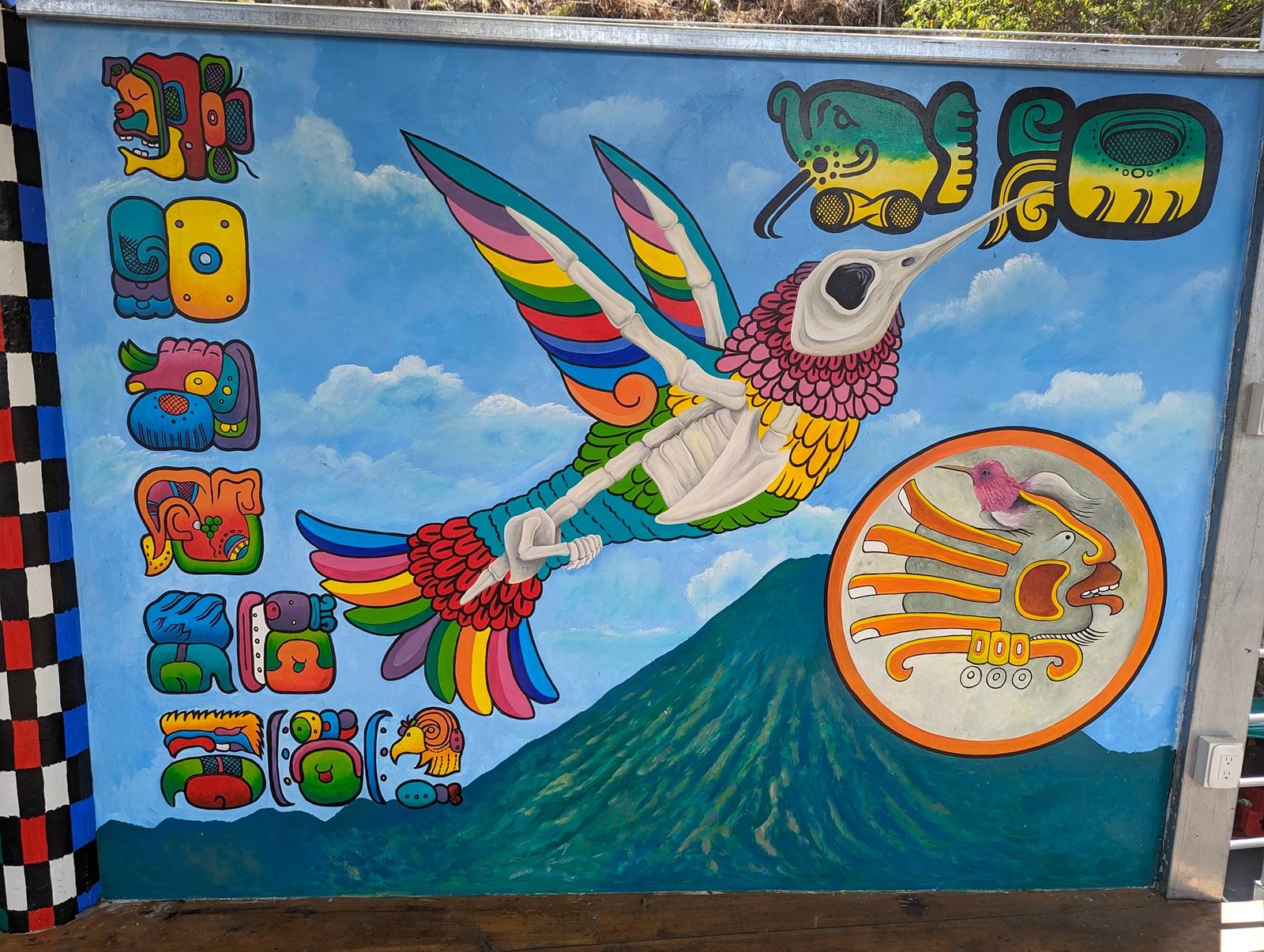
On the way back from the quetzals we stopped at the Mirador Nido del Colibrí viewpoint (“Hummingbird’s Nest”) near San Pedro La Laguna – entry 20 Q (about €2.30). Here you can take a photo under a giant hummingbird or on a huge green hand, look at murals and, above all, gaze down on San Pedro and the lake.
On 5 February we took a public bus from the lake to Quetzaltenango (Xela), from where we climbed, among others, the Santa María and Tajumulco volcanoes.
Practical information
The key information in a nutshell (prices from January and February 2024).
- Currency – prices are given in quetzales (Q); 1 Q was worth about €0.12 (about US$0.13).
- Accommodation – cheapest in San Pedro La Laguna: about €5 per person per night, without breakfast. Hotel Peneleu was cheaper and better than our first hotel, and from the roof you can see the sunrise over the lake. We skipped Panajachel.
- Boats (return, per person) – from San Pedro to San Juan 30 Q (about €3.50), to San Marcos 30 Q (about €3.50), to Santa Cruz 50 Q (about €6). In the evenings the waves are big.
- Entry fees – Indian Nose: 30 Q for passing through Cerro de la Cruz and 50 Q at the top; Cerro Tzankujil reserve in San Marcos: 20 Q; Mirador Nido del Colibrí: 20 Q; quetzal watching with a guide: 150 Q.
- Safety – in the whole of Guatemala we never once felt threatened, and the village centres around the lake are safe. Hold-ups do happen on the trails, though – especially on the Lower Mayan Trail between San Marcos and Santa Cruz. If you want to walk it, do so only in daylight, not at the weekend, in a group or with a guide. We took a guide for the San Pedro volcano – more in the section on guides and safety in the volcano post.
- Swimming – the lake water is about 21°C all year round.
- Food – in touristy San Marcos it’s easy to find European and vegetarian dishes; in Santa Cruz a pizza quesadilla cost 60 Q (about €7).
Photo gallery