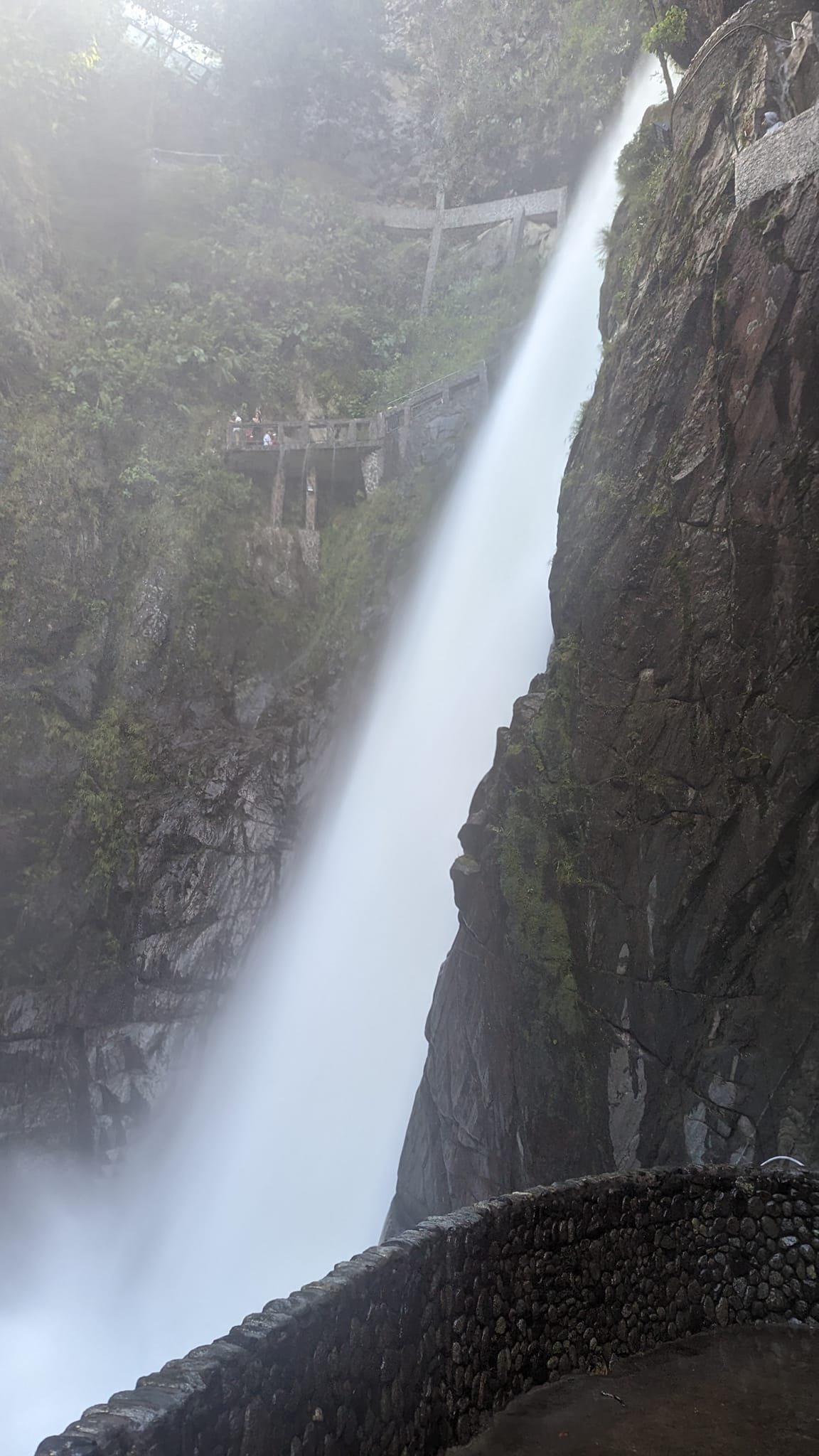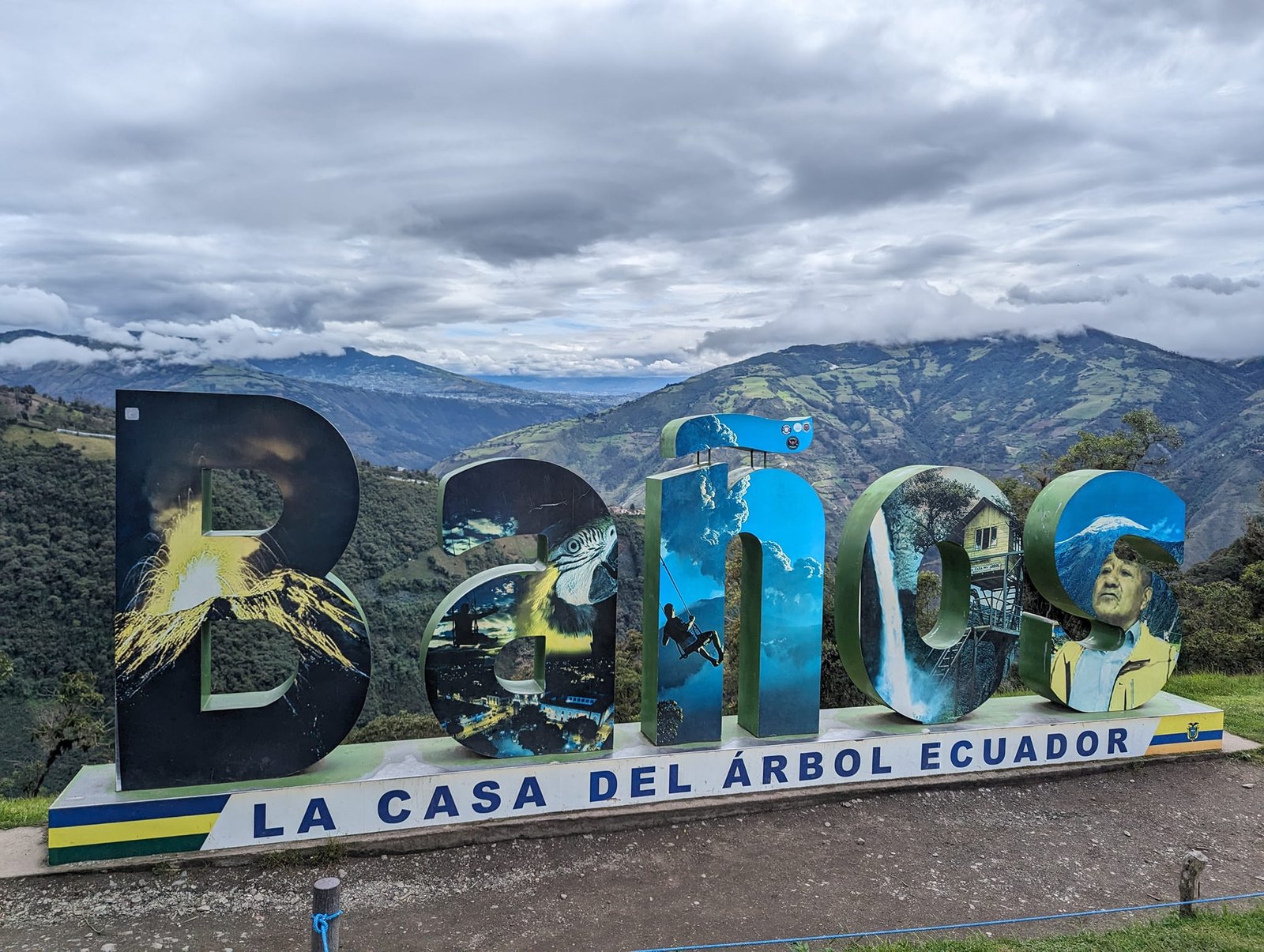
We began Ecuador with Quito and ten days in the Galápagos, and then hiked the three-day Quilotoa Loop. From there we were supposed to go straight to Cuenca, in the south of the country, but people recommended Baños de Agua Santa to us – a place considered a must on any Ecuador itinerary. Our schedule was tight, so we only stayed one night and fitted all the sightseeing into a single day, 10 June 2024. There was just enough time for the two best-known sights in the area: the La Casa del Árbol swings and the Pailón del Diablo waterfall.
At night we took a bus to Cuenca – and that’s where we were robbed, which has a separate post: Robbed on a night bus in Ecuador. Here I focus on what we managed to see: Baños, the swings above the valley, the waterfall and the city of Cuenca.
Table of contents
- Baños de Agua Santa – the extreme sports town
- La Casa del Árbol – swings above the valley
- The Pailón del Diablo waterfall – the trail down, the bridge and the grotto
- Cuenca – a walk around the historic centre
- Practical information
Baños de Agua Santa – the extreme sports town
Baños is to Ecuador what San Gil is to Colombia – an extreme sports town. It lies in a valley overlooked by steep green slopes, and the centre is small: a square with a stone clock tower, palm trees and a basilica of dark stone.
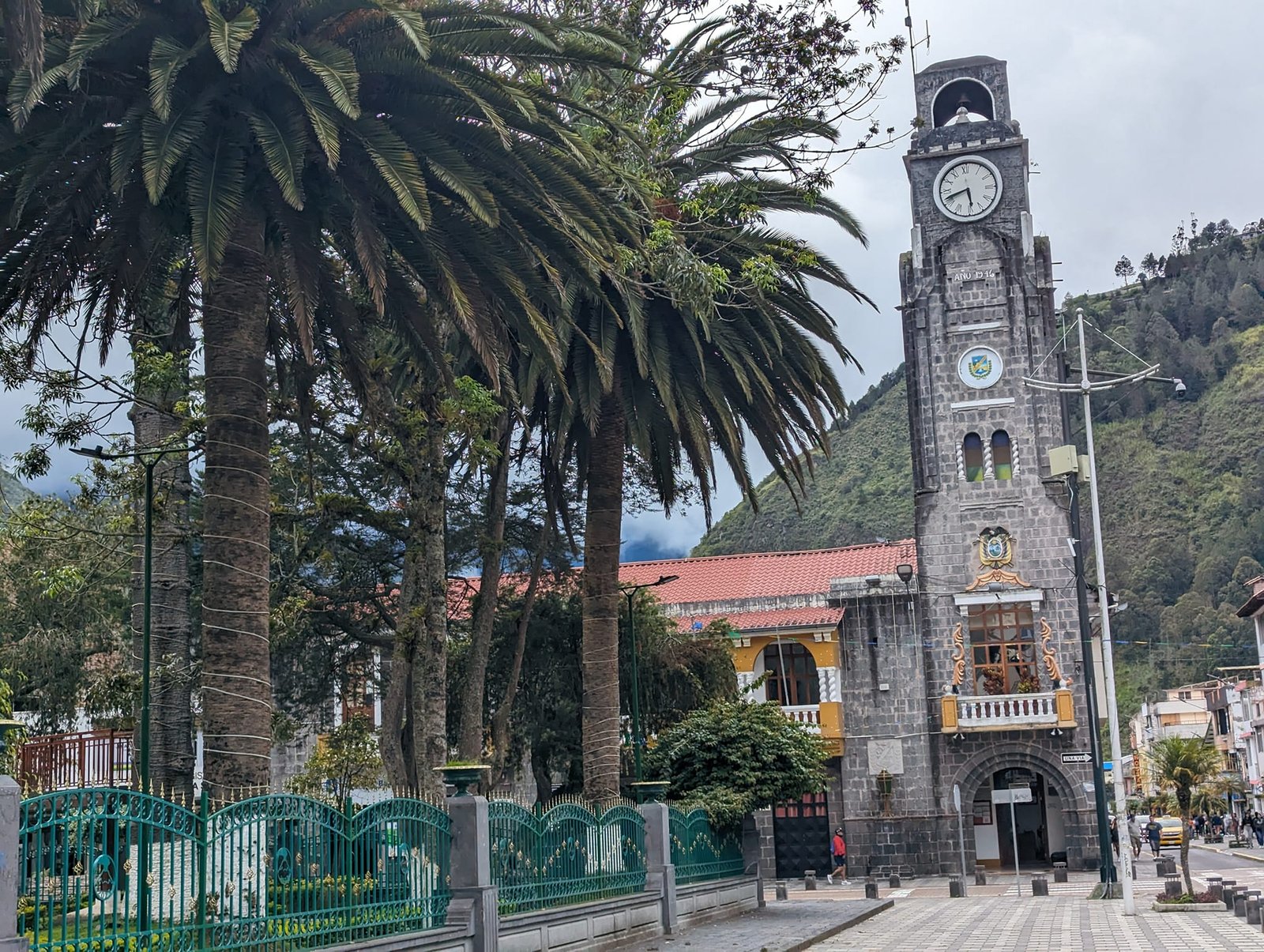
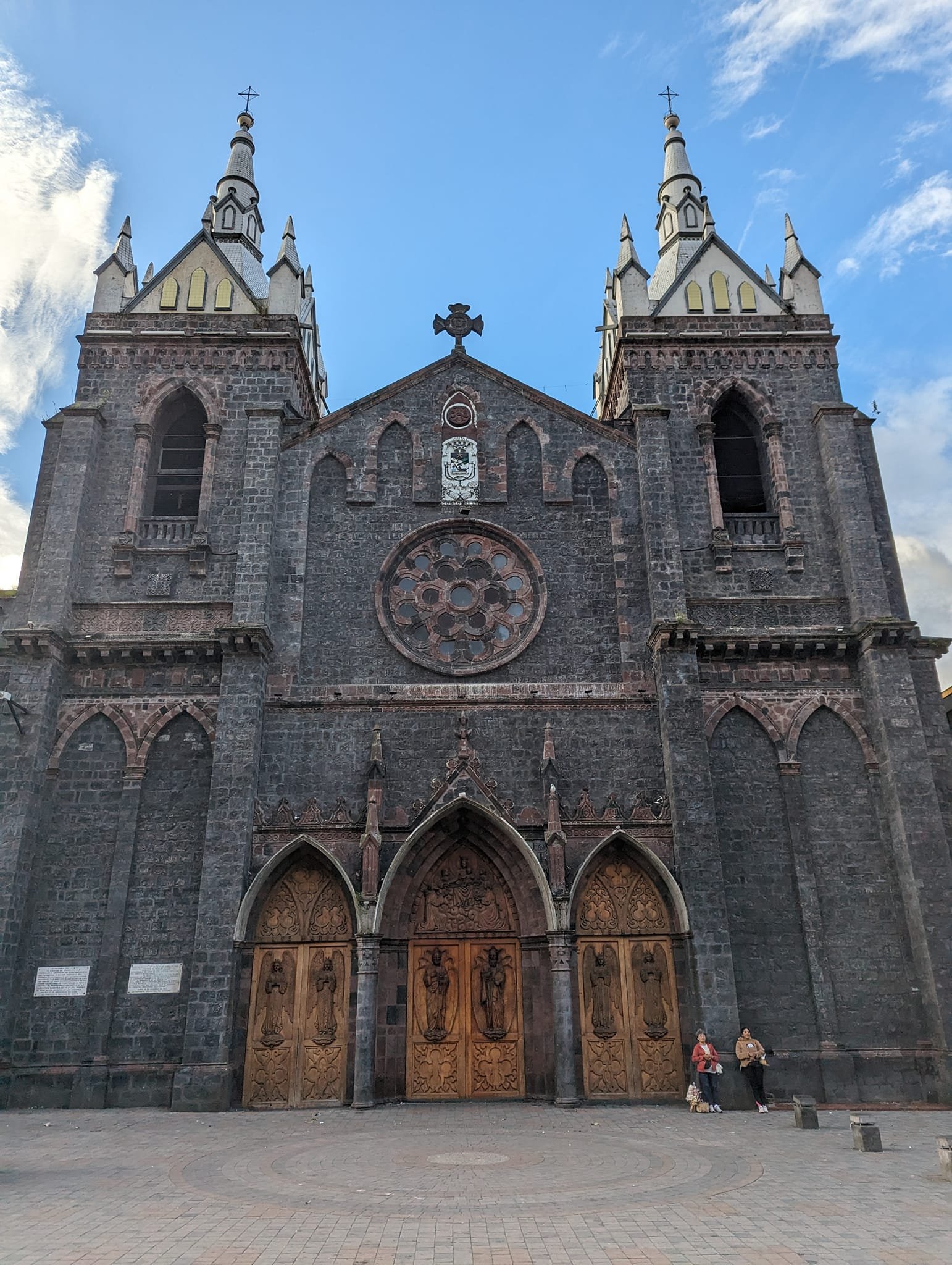
We had no time for extreme sports. The area’s best-known attractions are the La Casa del Árbol swings and the Pailón del Diablo waterfall anyway – both are roughly half an hour away from Baños. In the morning we went to the swings, and in the afternoon to the waterfall.
La Casa del Árbol – swings above the valley
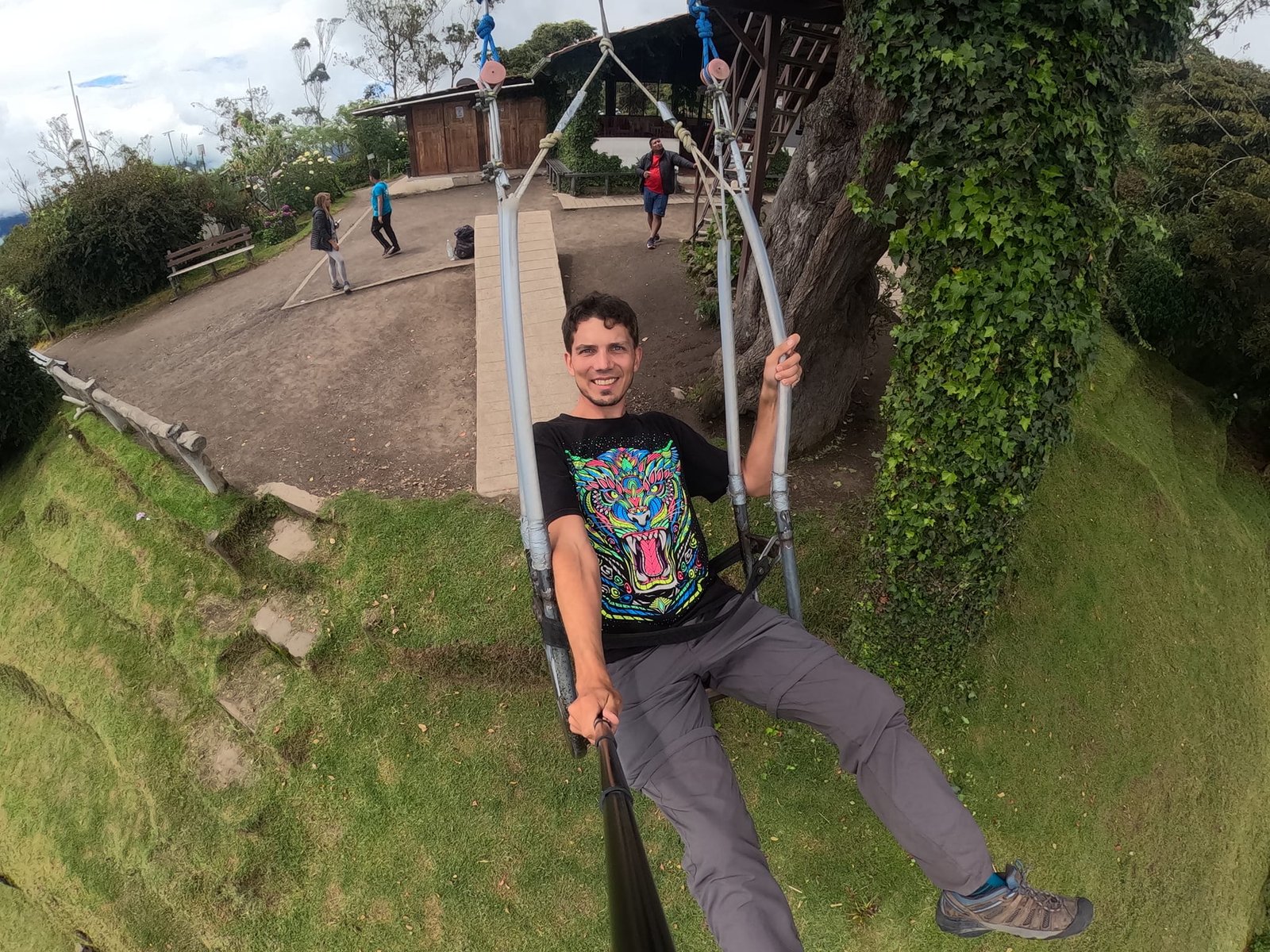
La Casa del Árbol is a wooden treehouse with a swing hanging over a steep slope and a view of the mountains. Buses run here from Baños several times a day – a ticket costs 1 dollar, and entry is also 1 dollar. If you don’t want to spend half a day here, you have to fit in with the timetable: we arrived after 11:30, and the bus back was already at 13:00.
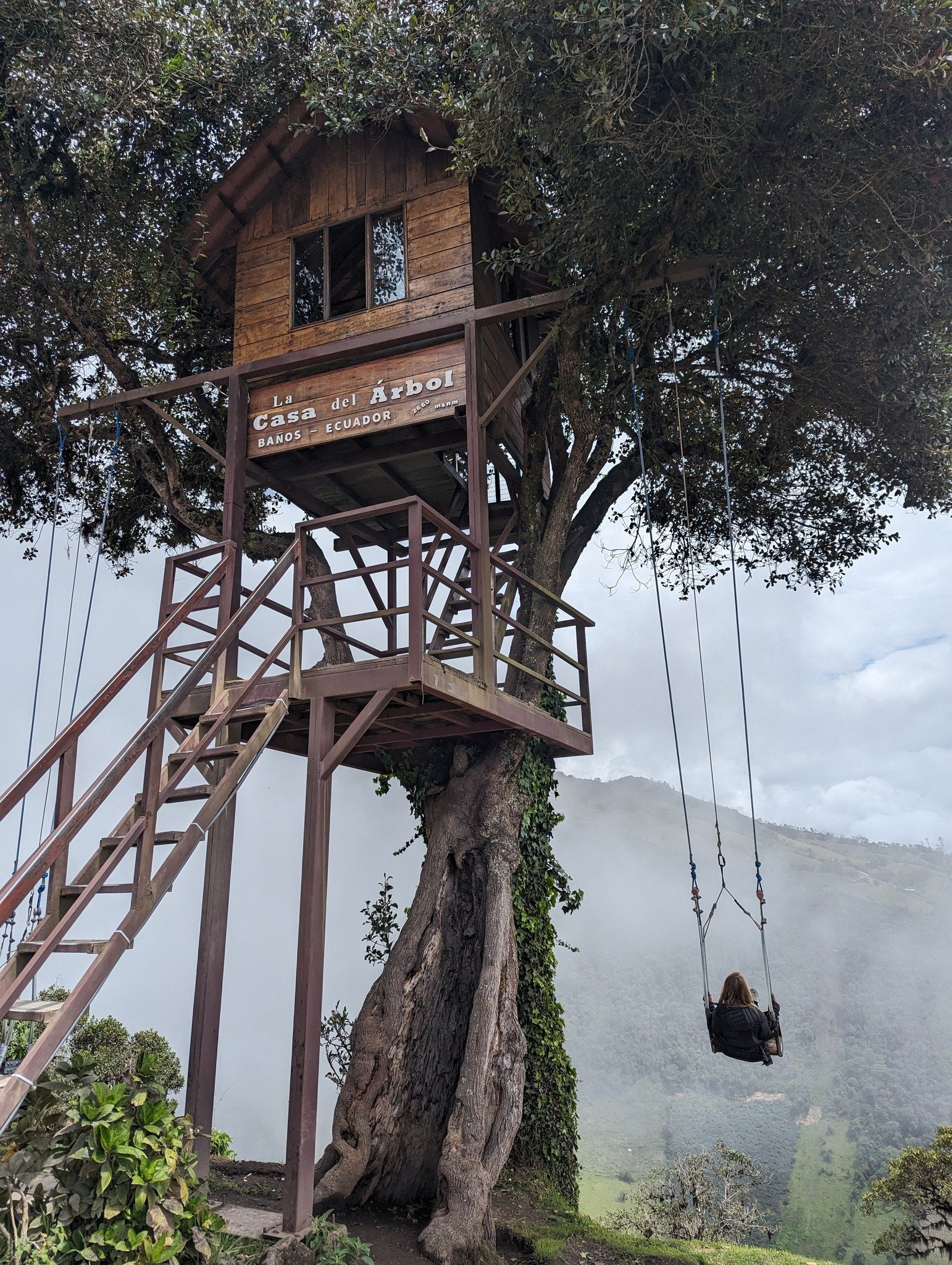
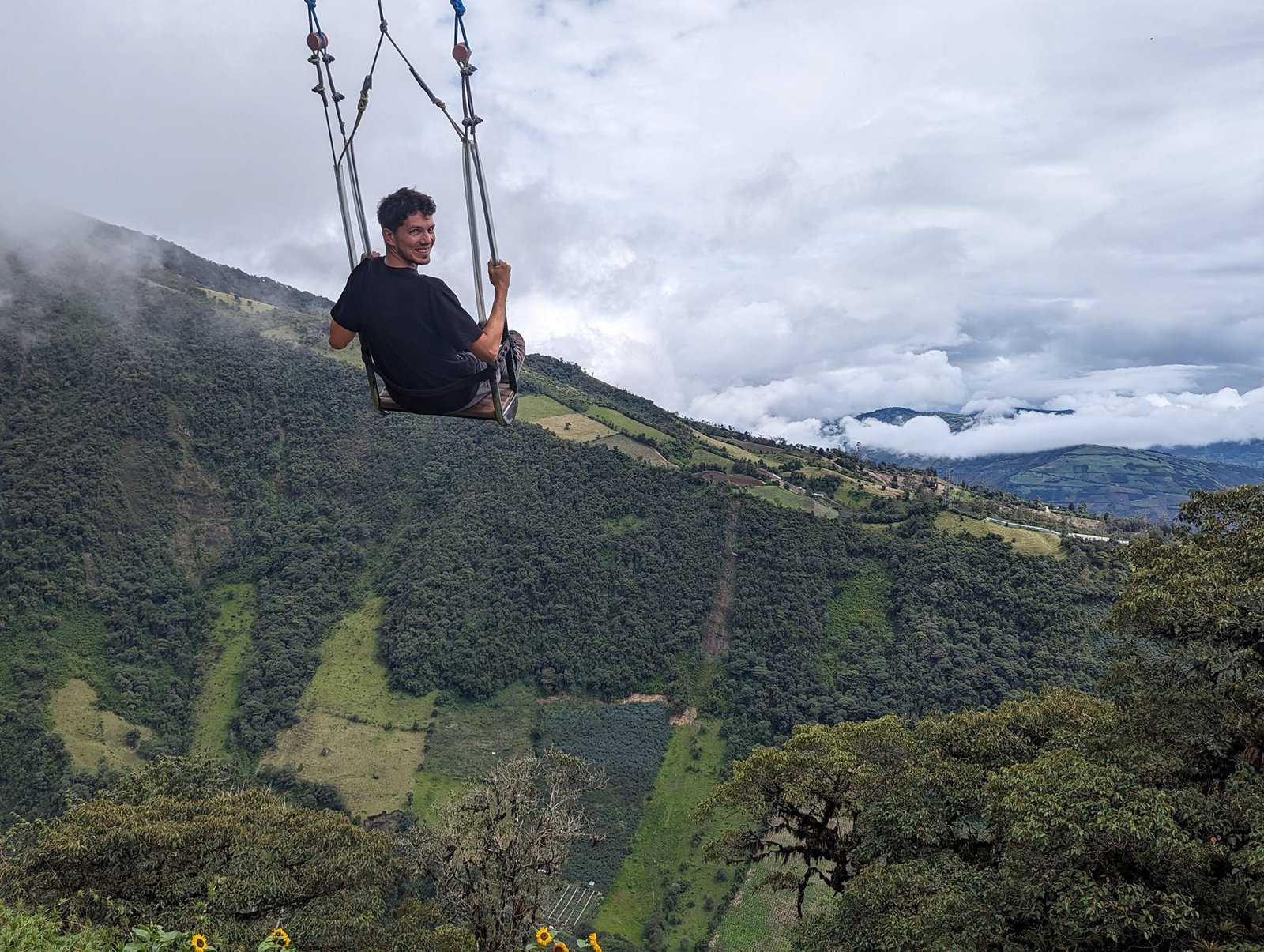
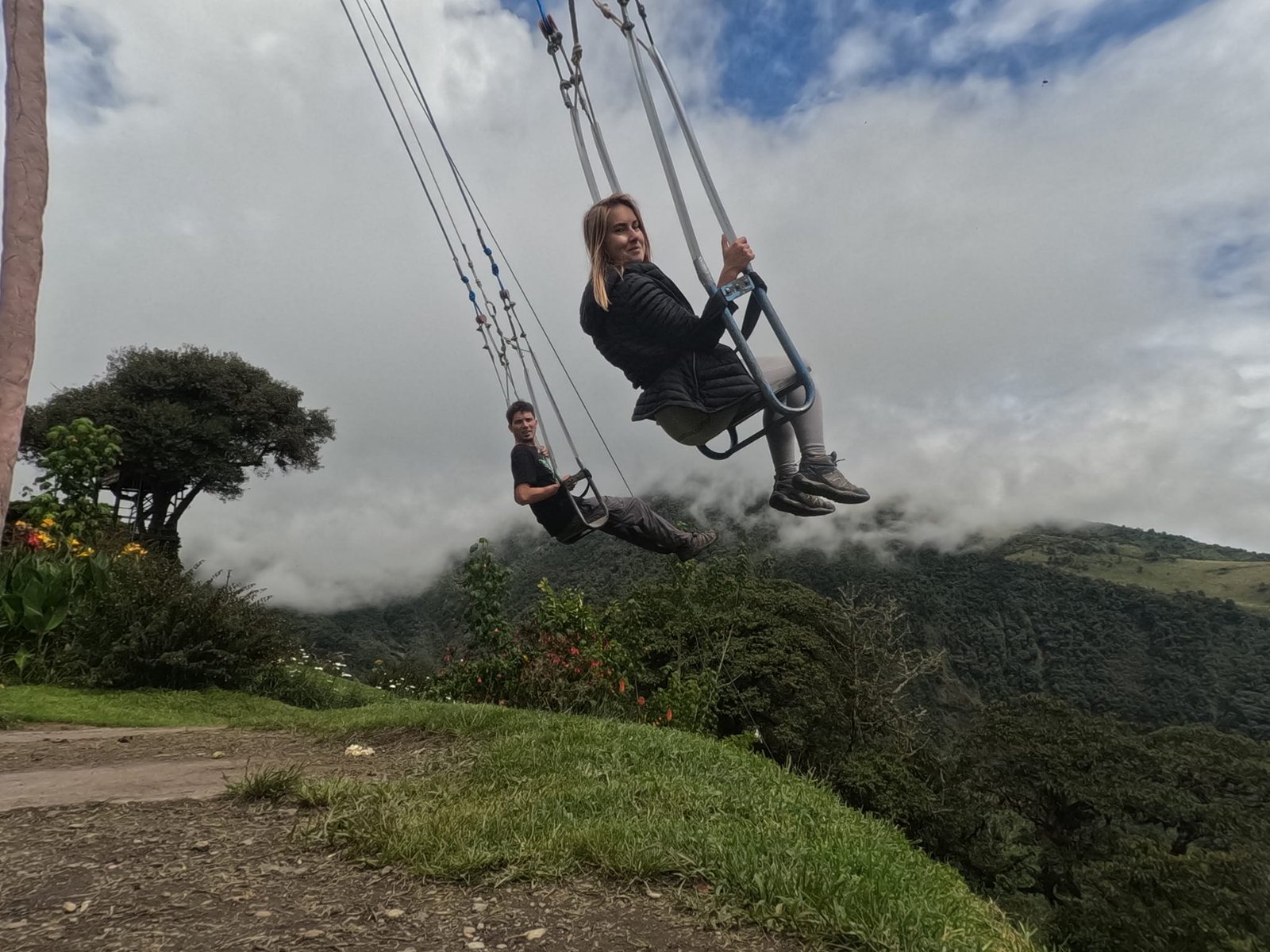
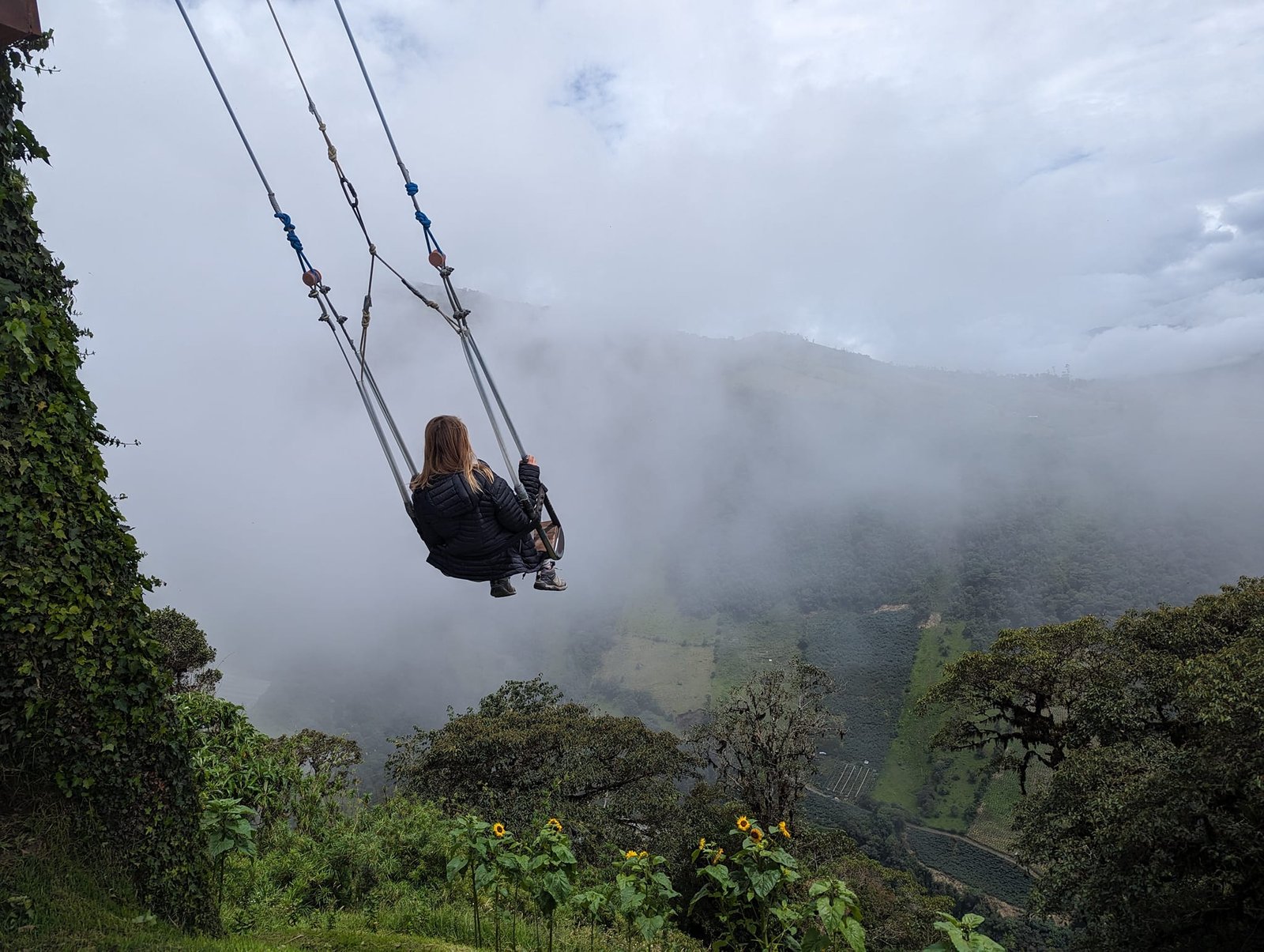
There are several different swings to choose from, plus a ride on a small zip line, just a little above the ground. That day the valleys around were covered in clouds, so in some of the photos we’re swinging straight into the mist.
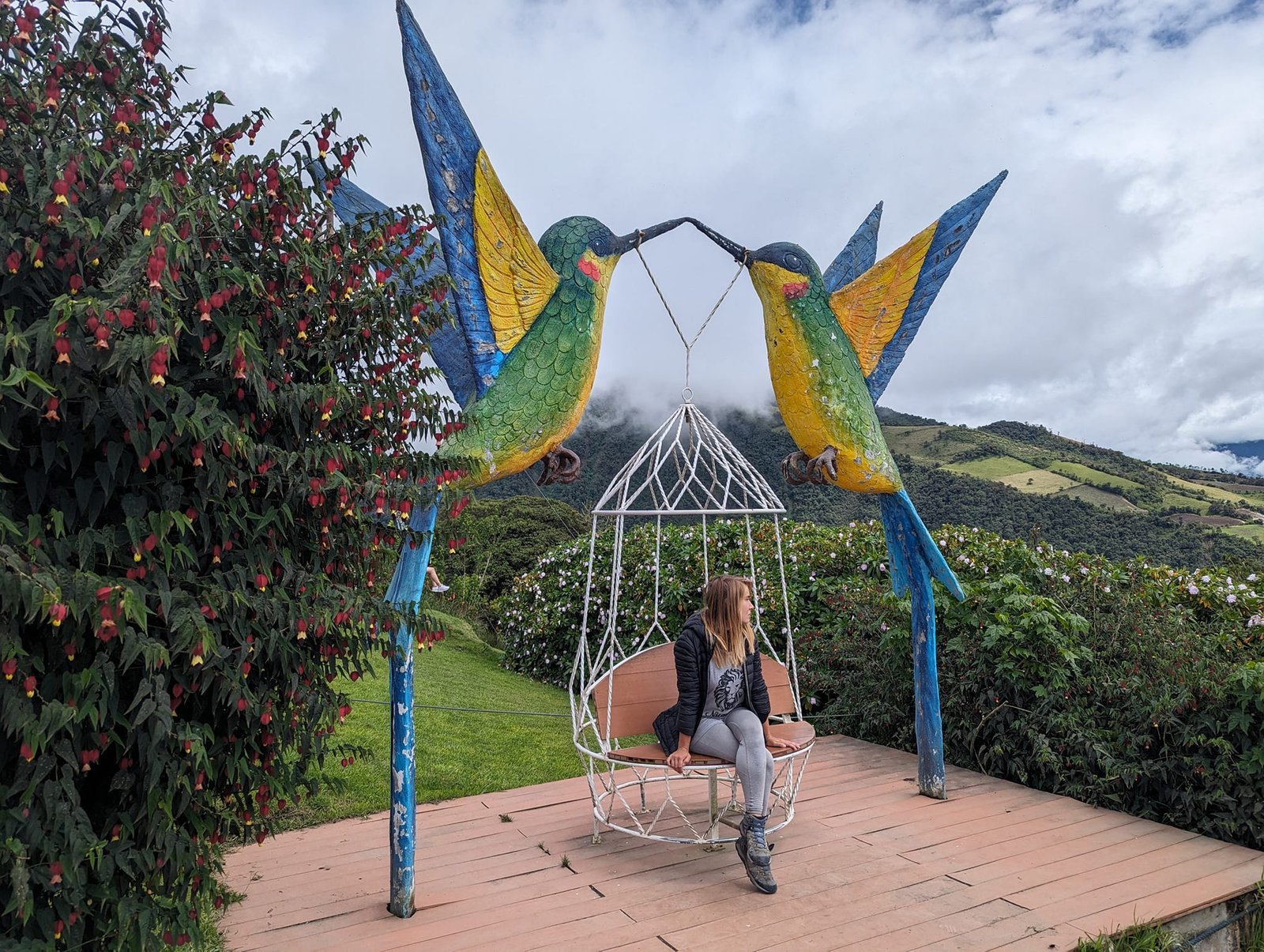
The area also has loads of viewing platforms set up specially for photos and panoramas – for example, a decorative seat between two huge hummingbird figures.
The Pailón del Diablo waterfall – the trail down, the bridge and the grotto
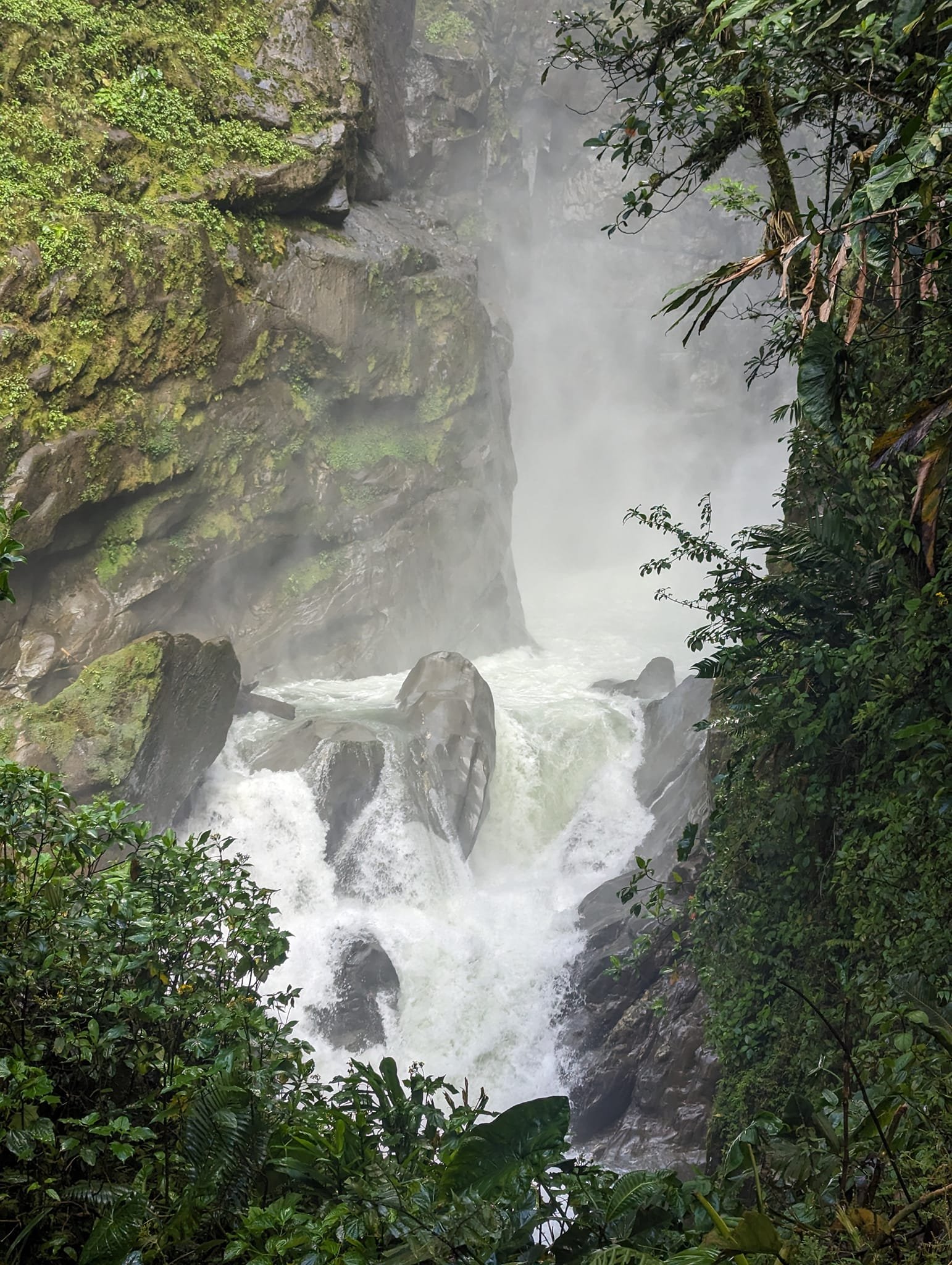
The El Pailón del Diablo waterfall is in the village of Río Verde, and the bus from Baños costs 0.75 dollars. Once there, you have two routes to choose from: a shorter one – to a viewing platform above the waterfall – and a longer one that takes you down to the bottom of the gorge to see the waterfall from below. Entry to the trails costs 3 dollars each.
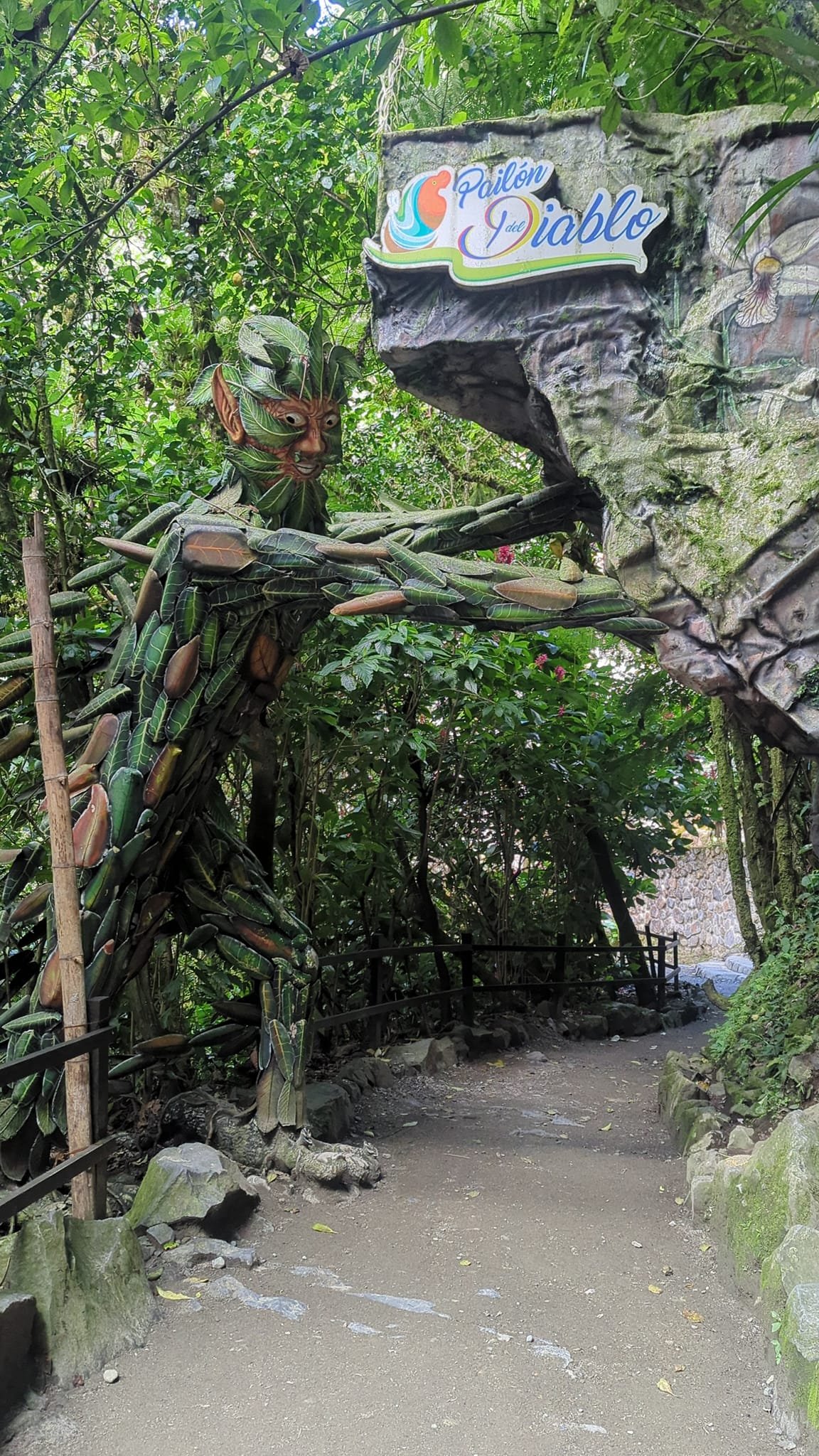
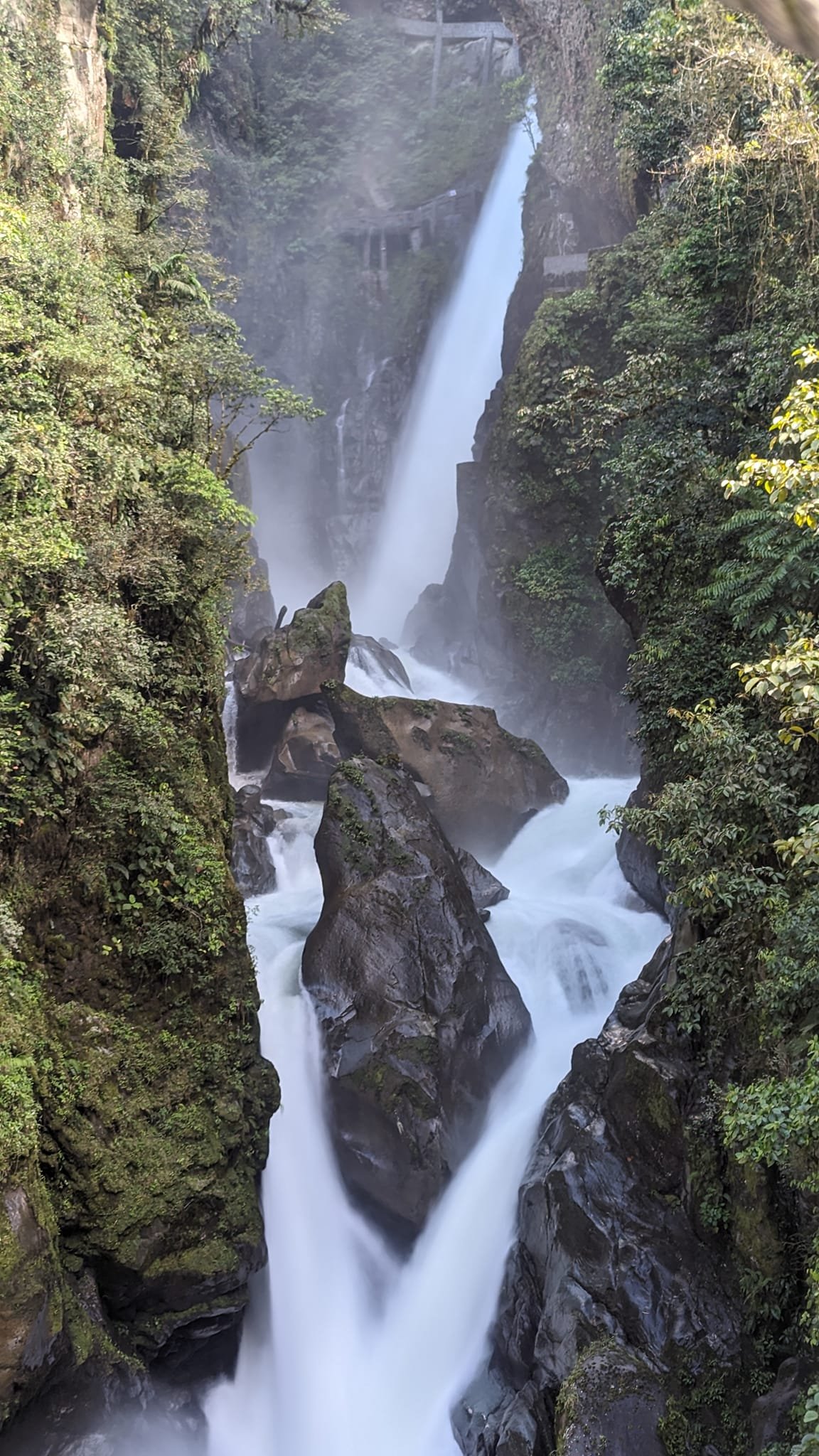
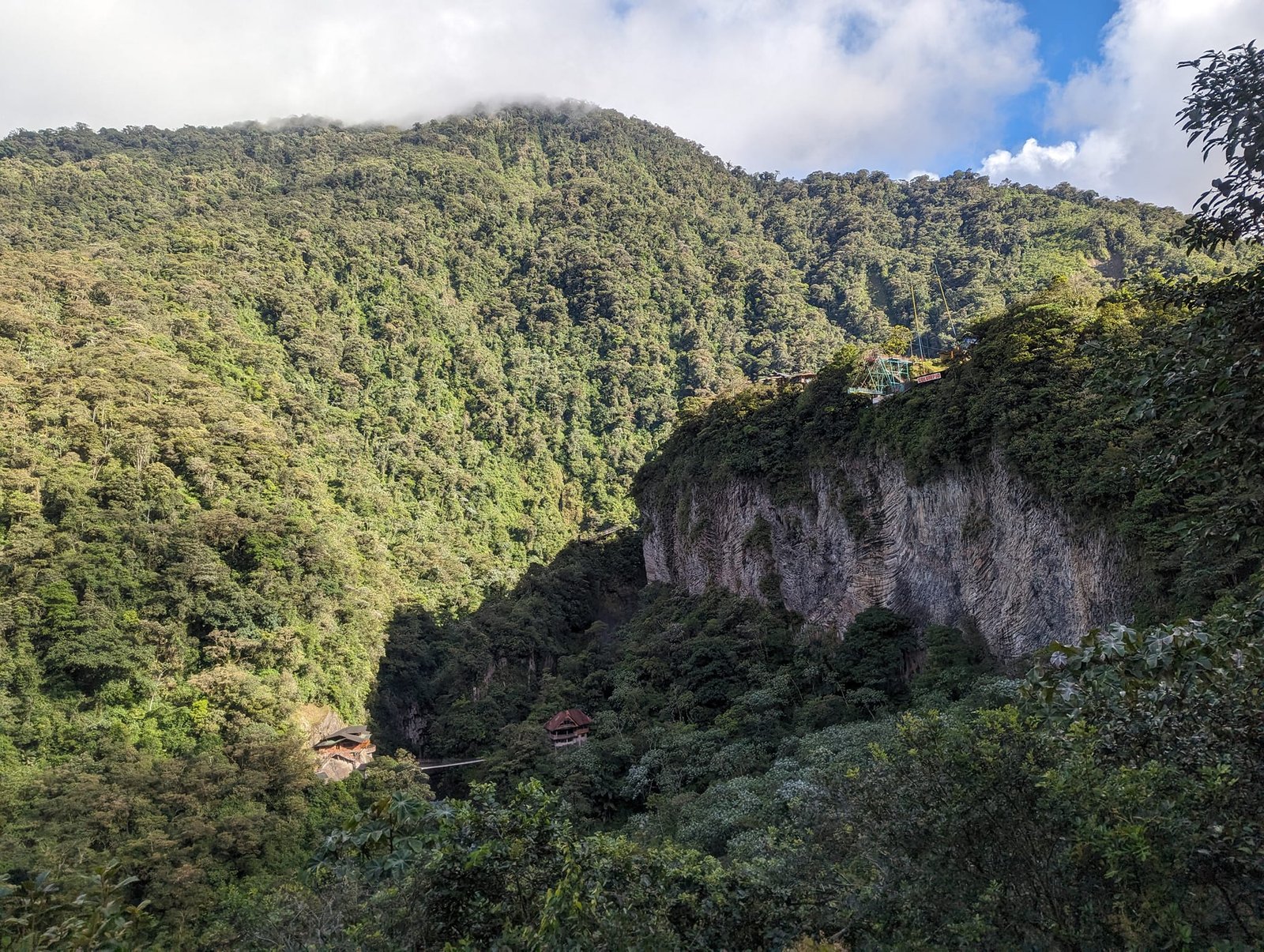
We chose the longer option. The path leads down a wooded gorge, and on the way you cross a suspension bridge.
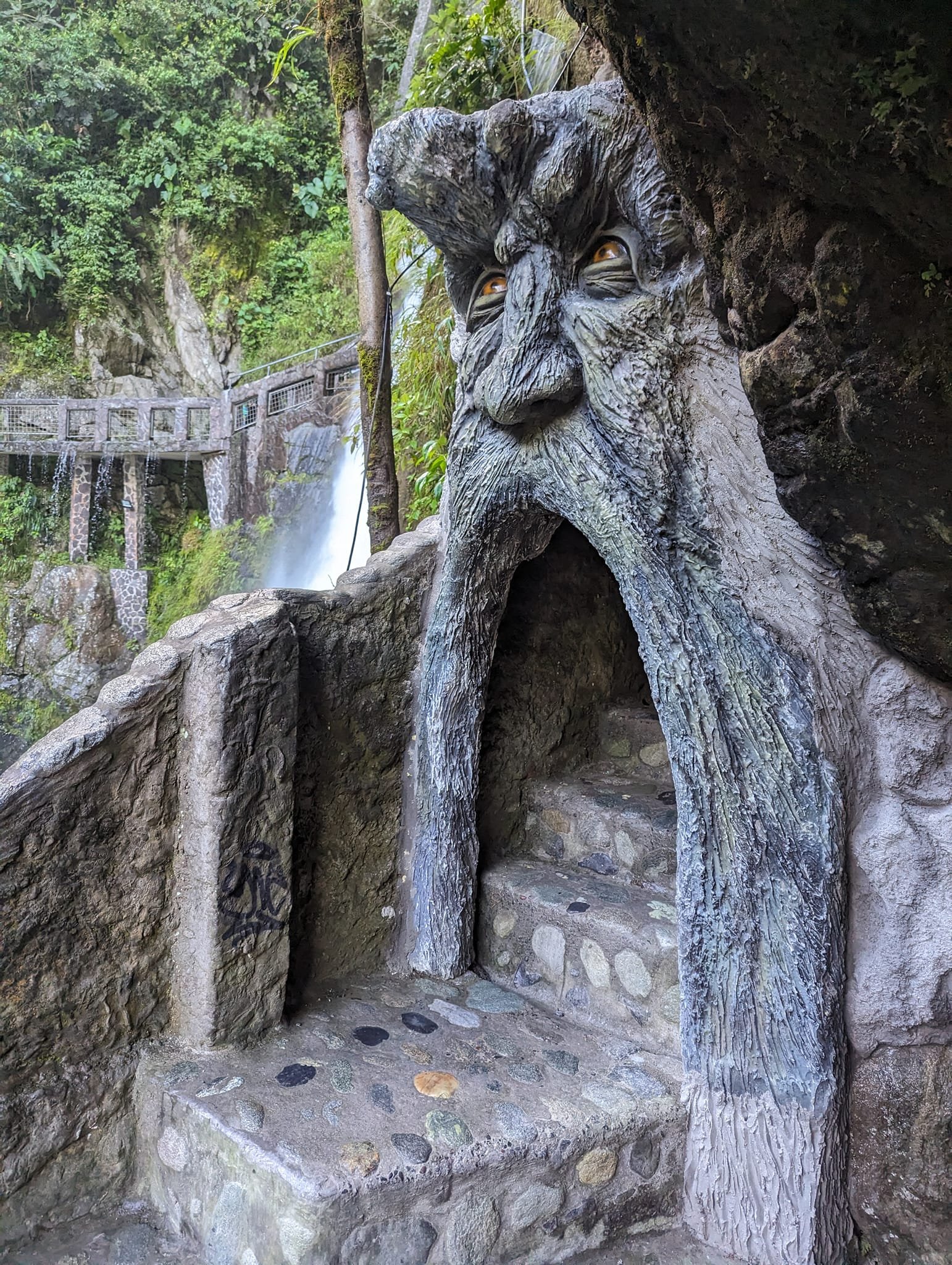
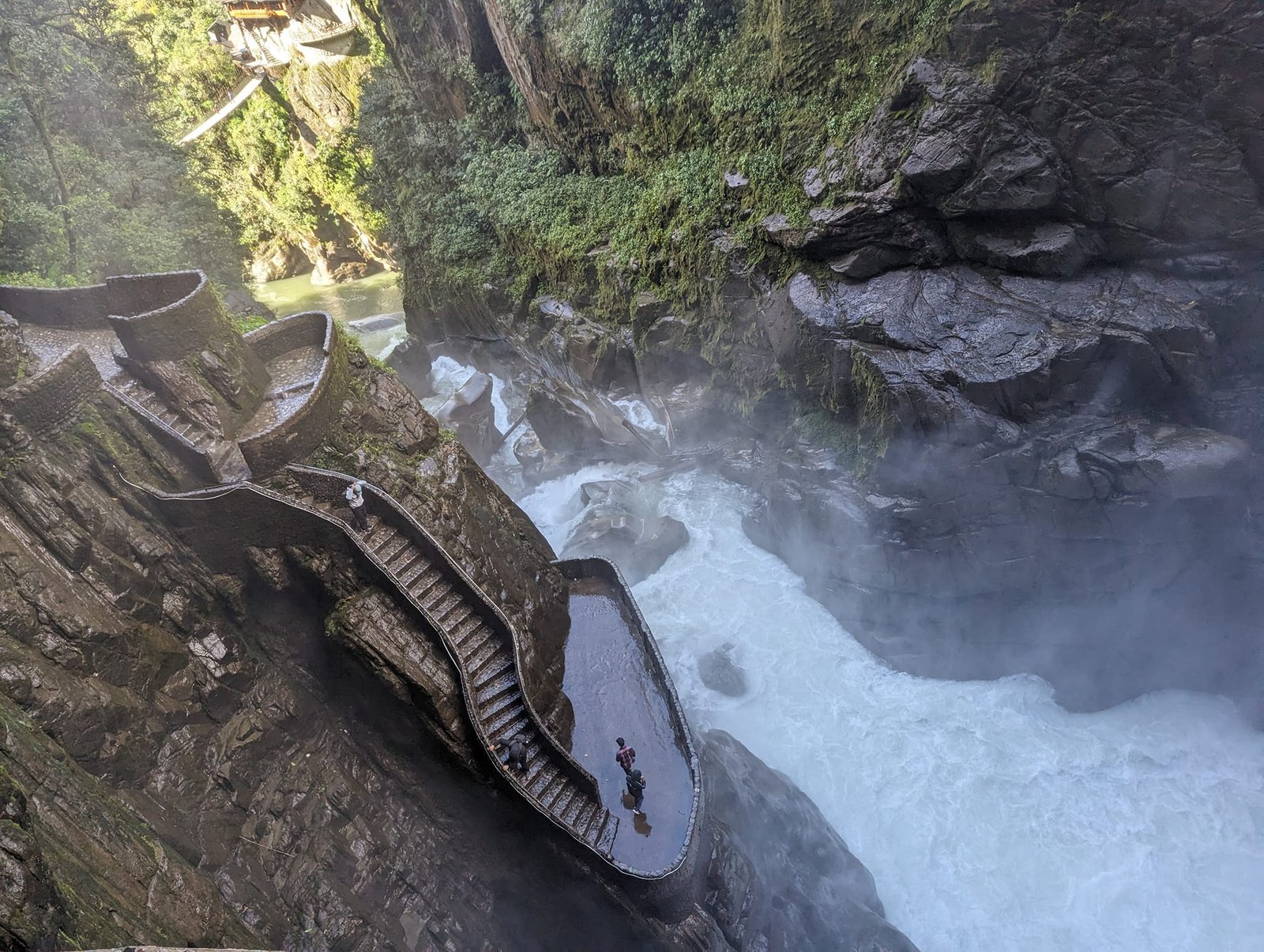
At the bottom there are stone steps and little balconies stuck to the rock right next to the waterfall. The water pours straight onto them and the spray soaks everything around – this is exactly where Patrycja’s main phone got flooded.
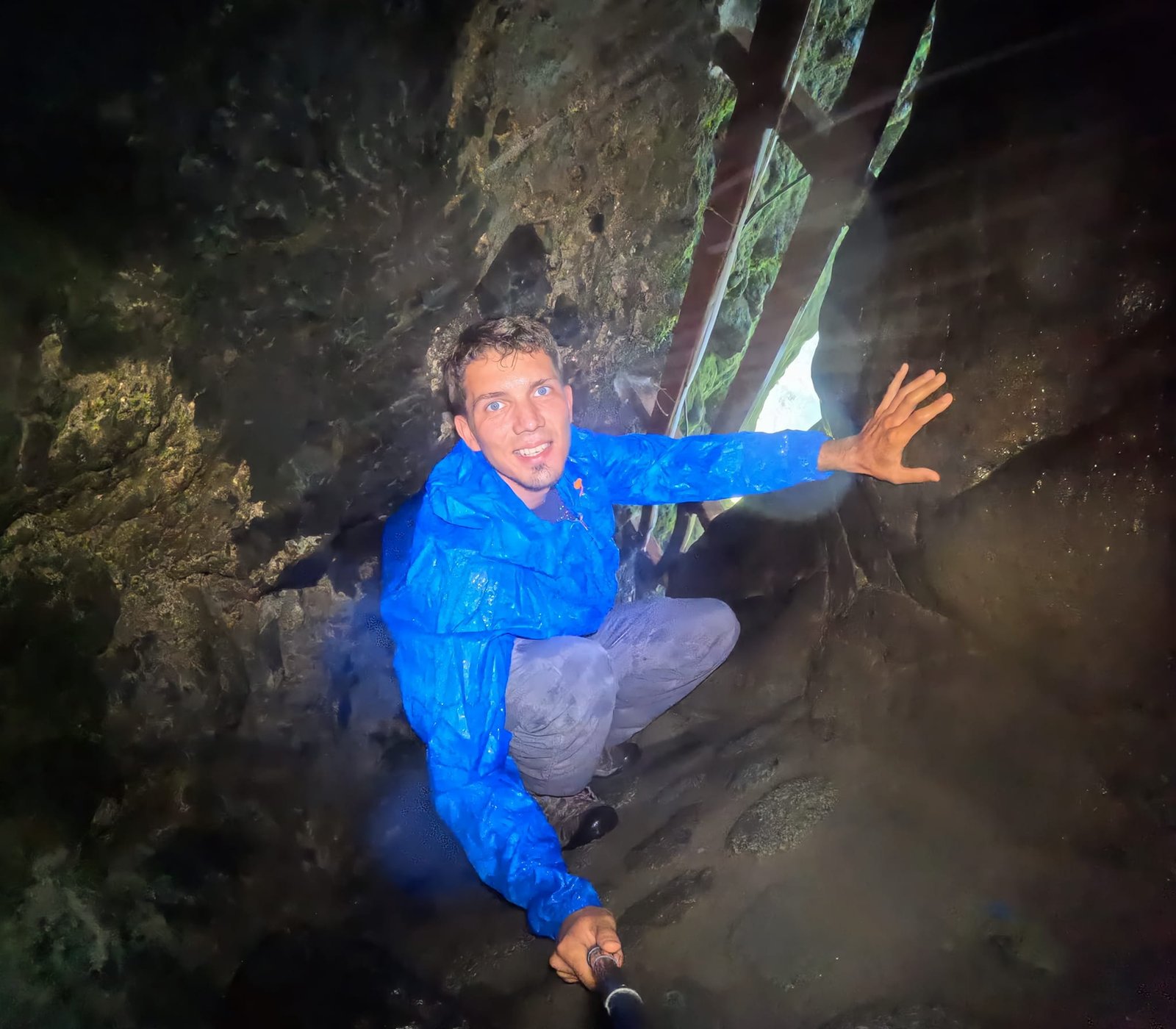
Finally we went through a low, narrow grotto, where you have to do a bit of contortionism.
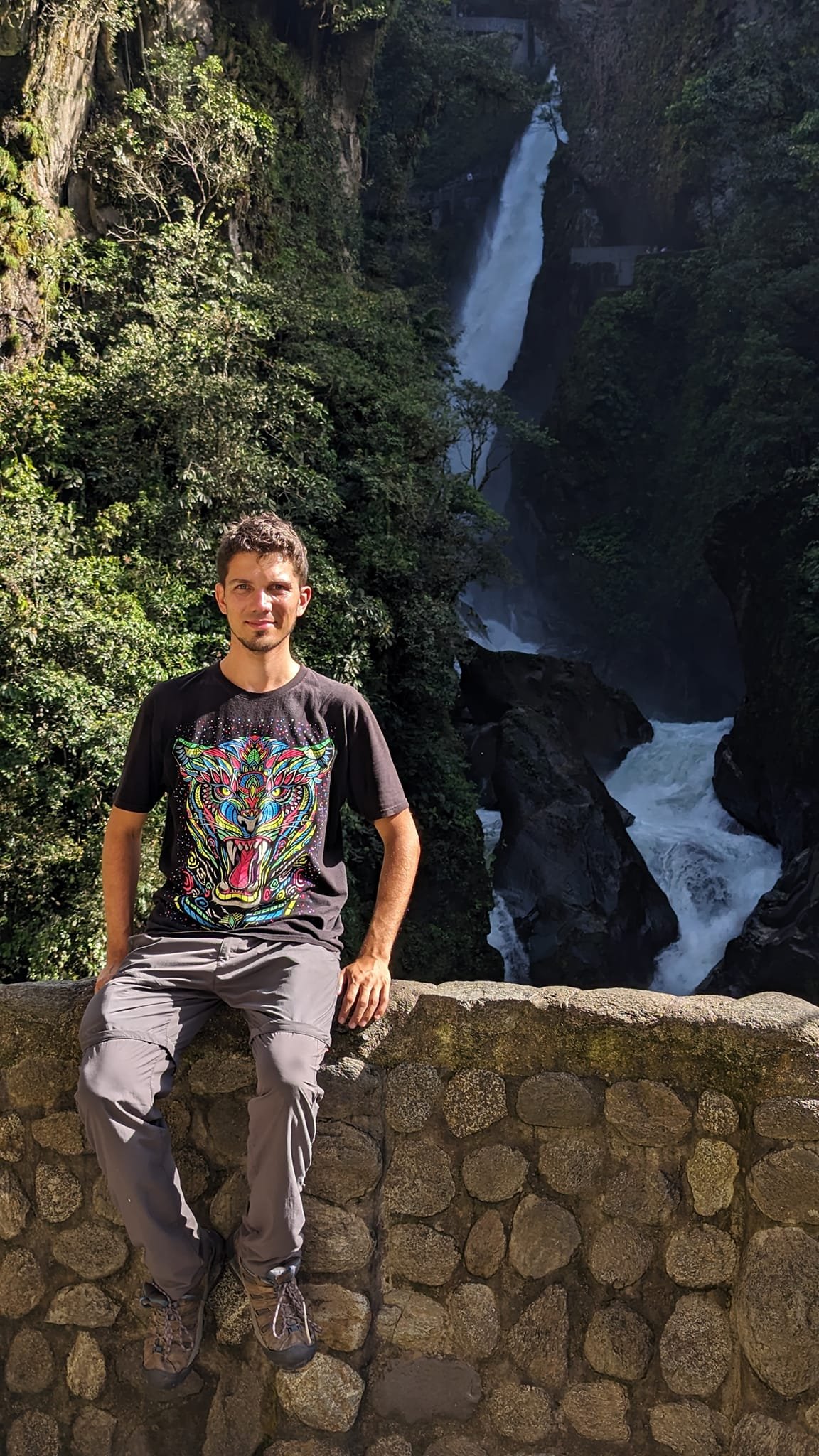
Was it worth it? The waterfall is pretty and the descent is impressive, but in our opinion not enough to make a special trip to Baños just for it.
Cuenca – a walk around the historic centre
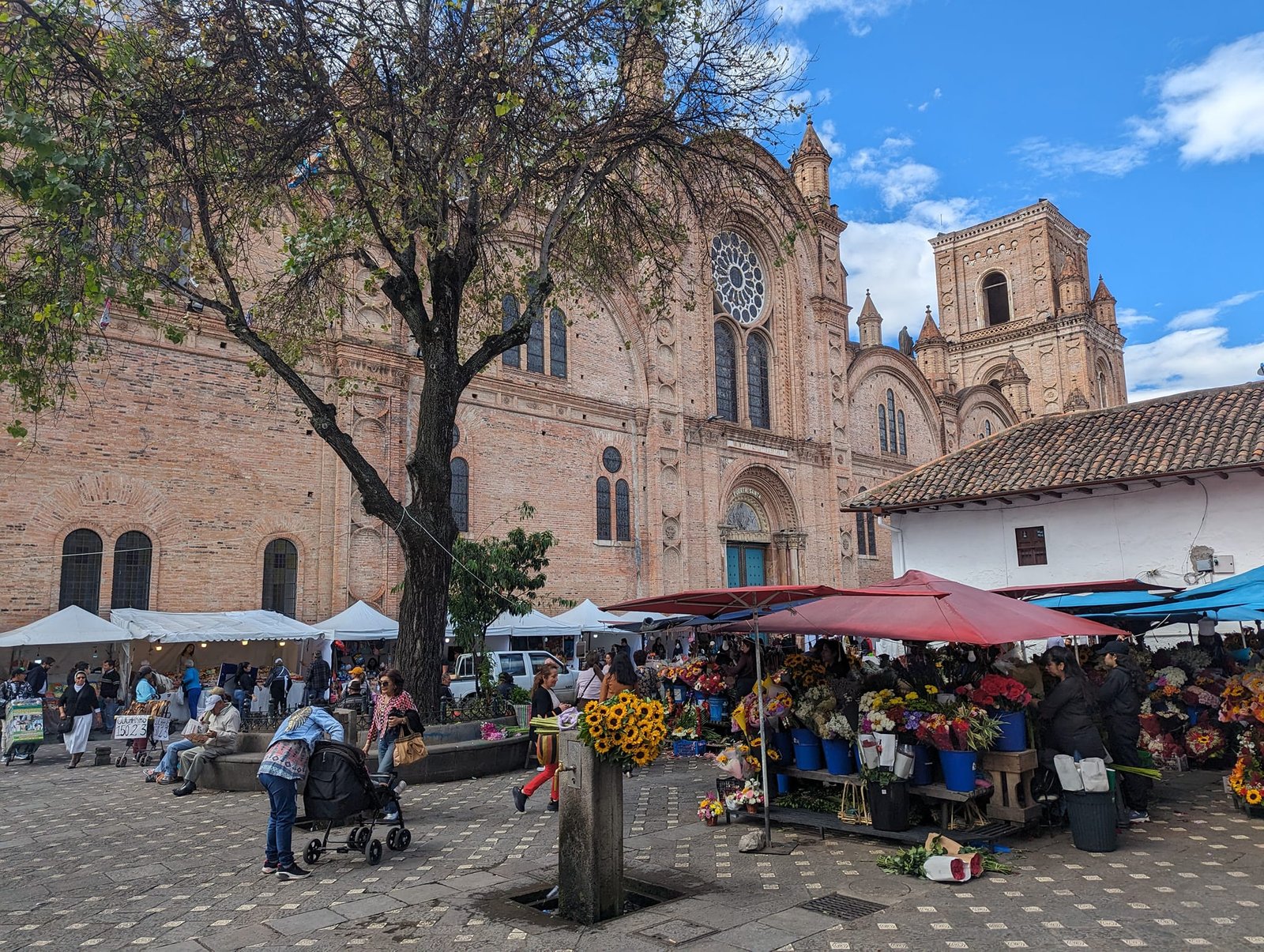
Cuenca is a beautiful city in the south of Ecuador, and most of its sights are in the historic centre. Really, all you need to do is wander the streets to get a feel for the city. The blue domes of the New Cathedral tower above the red roofs.
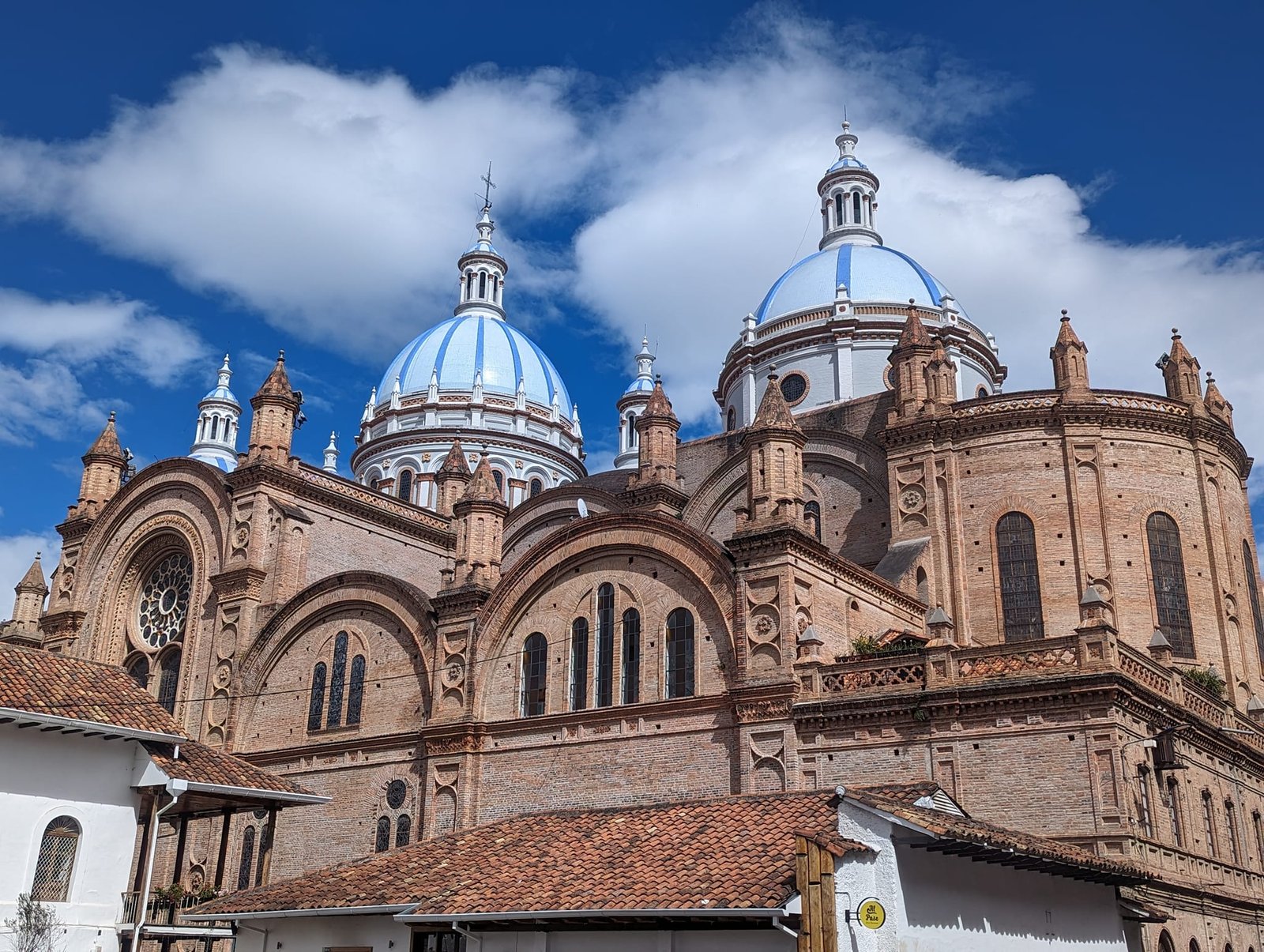

On the way we passed one church and old townhouse after another, and on the squares – street carts selling food and sweets.

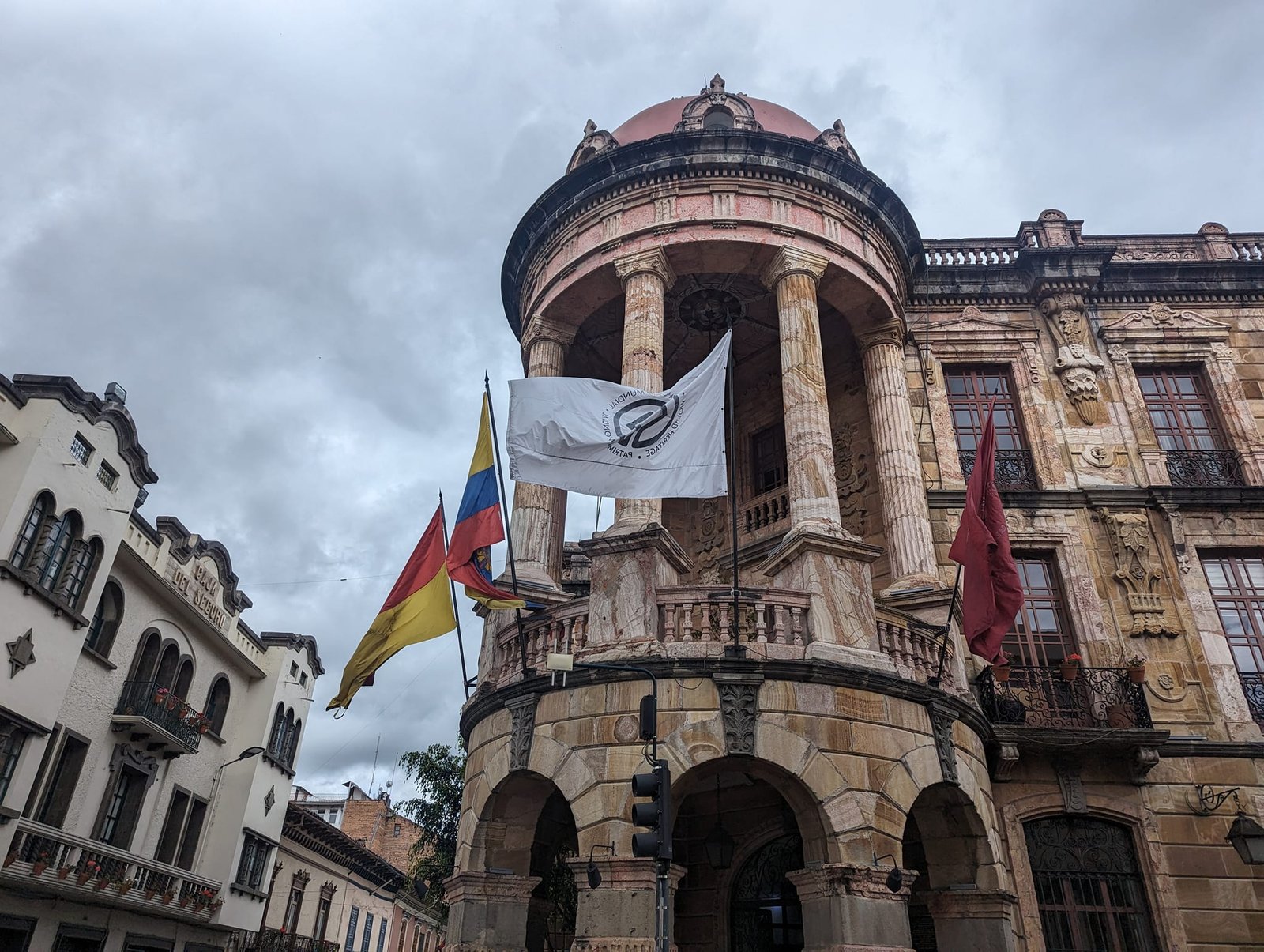
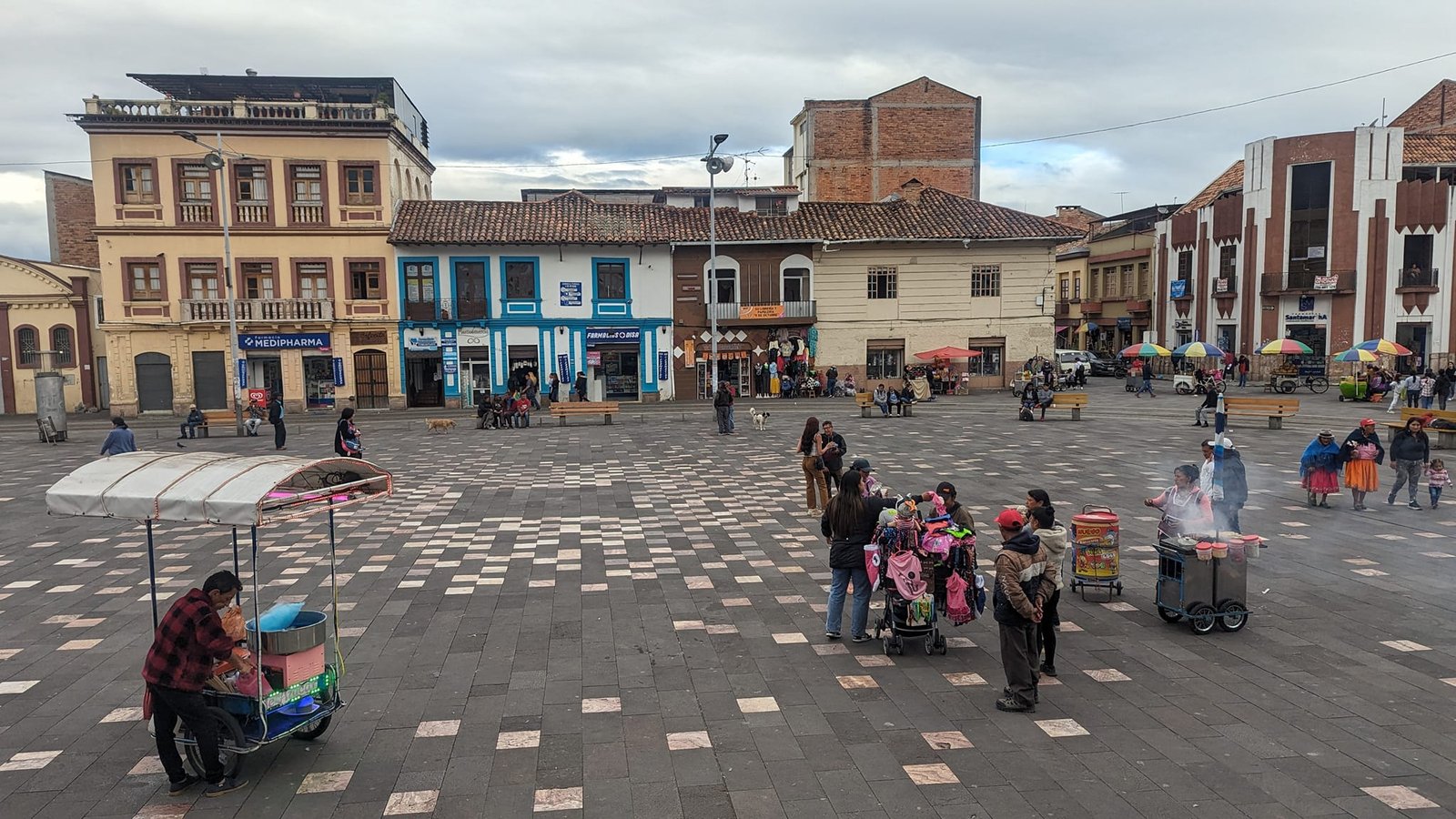
Right by the cathedral we came across flower stalls, and a few streets further on – souvenirs, hats and clothes. We were also going to visit Cajas National Park, but in the end it didn’t work out. The park lies about 30 km west of Cuenca, at altitudes from about 3100 to over 4400 m above sea level. It’s Andean páramo – high-altitude grassy wilderness with more than two hundred glacial lakes (the best known is Laguna Toreadora by the main road) and forests of polylepis trees, called quinual here. Trails of various lengths cross it, and you can get there on an ordinary bus heading from Cuenca to the coast. We stayed in Cuenca until 14 June, when we set off for Peru on a night bus.
Practical information
The key information in a nutshell (as of June 2024):
- How much time: one day and one night were enough for La Casa del Árbol and Pailón del Diablo. For the extreme sports Baños is famous for, you need to plan more time.
- La Casa del Árbol: bus from Baños several times a day – 1 dollar, entry – 1 dollar. Arriving after 11:30, the return bus was at 13:00.
- Pailón del Diablo: bus from Baños to Río Verde – 0.75 dollars, entry to the trails – 3 dollars each. The shorter route leads to the platform above the waterfall, the longer one down to the bottom, across the suspension bridge, the balconies and through the grotto.
- What to bring to the waterfall: a rain jacket and a waterproof phone case – everything gets wet at the bottom.
- Onward travel: we went from Baños to Cuenca on a night bus, and from Cuenca to Peru on a night bus too. Instead of the planned 12 hours, the ride took more than 14.
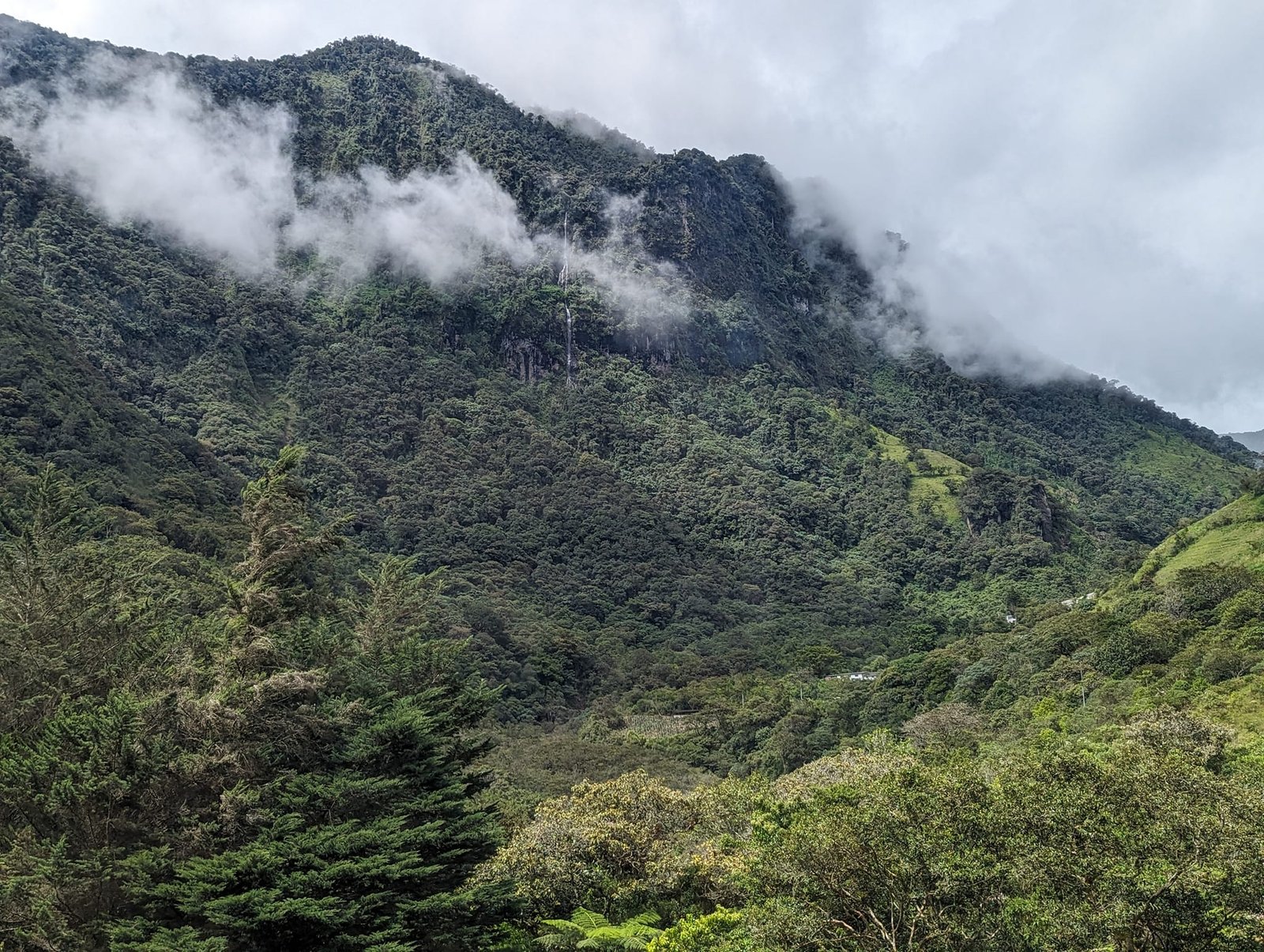
Photo gallery