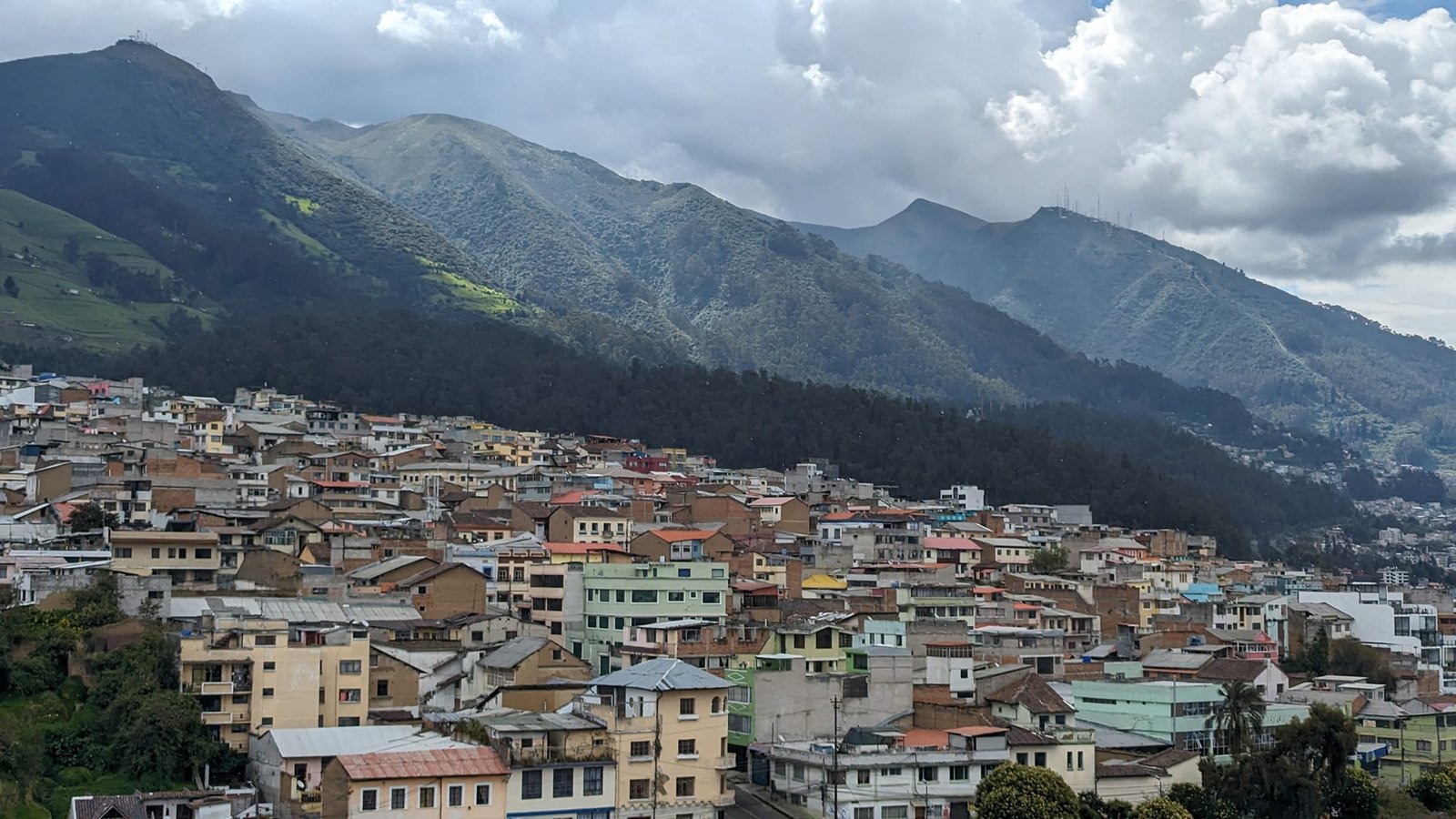
On 24 May 2024 we crossed the Colombia–Ecuador border and that same day reached Quito – our first stop in Ecuador. We spent four days here. We stood on the equator line in the town of Mitad del Mundo and learned that the real equator runs 240 metres away, at the Intiñan museum. We climbed onto the roof of the Basilica of the National Vow, saw the statue of the Virgin Mary on El Panecillo hill and got to know the old town on a free walking tour. From here, on 28 May, we flew to the Galápagos.
Our route:
- 24 May – the Rumichaca border crossing and the journey to Quito,
- 25 May – Mitad del Mundo, the “Middle of the World”,
- 26 May – free walking tour of the old town, El Panecillo hill in the afternoon,
- 27 May – the Basilica of the National Vow and a last walk around the centre.
Table of contents
- Entering Ecuador and the state of emergency
- Quito and Couchsurfing hospitality
- Mitad del Mundo – the “Middle of the World”
- Where does the equator really run? The Intiñan Museum
- Free walking tour – fruit, chocolate and Aya Huma masks
- Quito’s old town
- The Basilica of the National Vow
- Virgen de El Panecillo
- Practical information
Entering Ecuador and the state of emergency
We entered Ecuador from Colombia via the Rumichaca border crossing – I wrote about our last days in Colombia and the trip to the border in the post on Medellín, Guatapé, Cali and Las Lajas. In 2024 foreigners crossing Ecuador’s land border had to have a criminal record certificate, so it’s best to get one before you leave home and check the current rules.
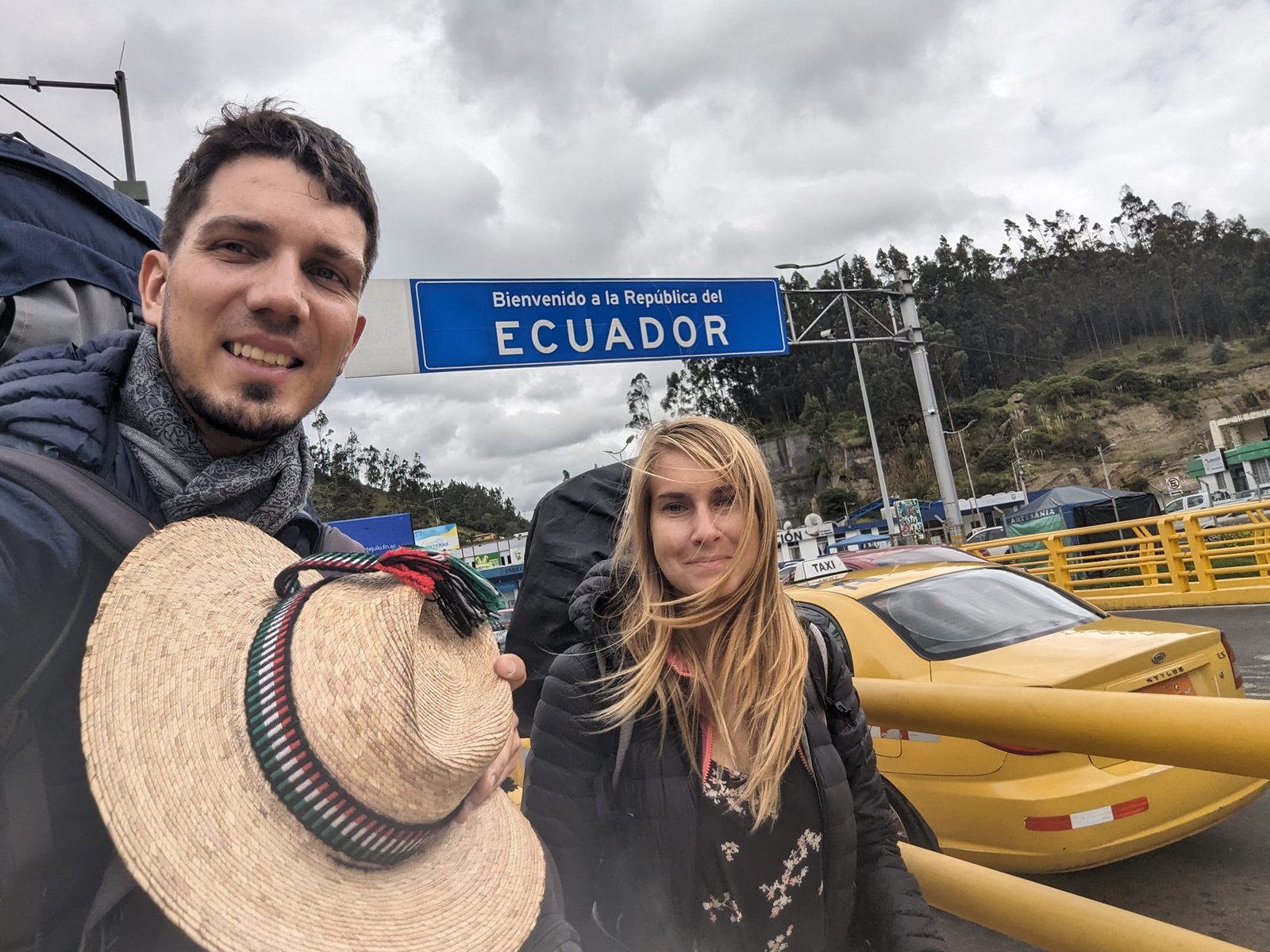
From January 2024 Ecuador was under a state of emergency. It was declared after a drug lord known as Fito escaped from prison. At the same time, armed attackers stormed a public TV station. We were in Guatemala then and at first we were a bit stressed, but we knew that the situation in any given place can change very quickly. There had been protests in Guatemala and Panama too, and yet we travelled around both countries without any problems. In May there were simply more police and soldiers on Ecuador’s streets, which actually made us feel safer.
Quito and Couchsurfing hospitality
Quito lies at about 2850 m above sea level. Technically it is the highest capital city in the world, because Bolivia’s constitutional capital is Sucre, not La Paz, which lies higher.
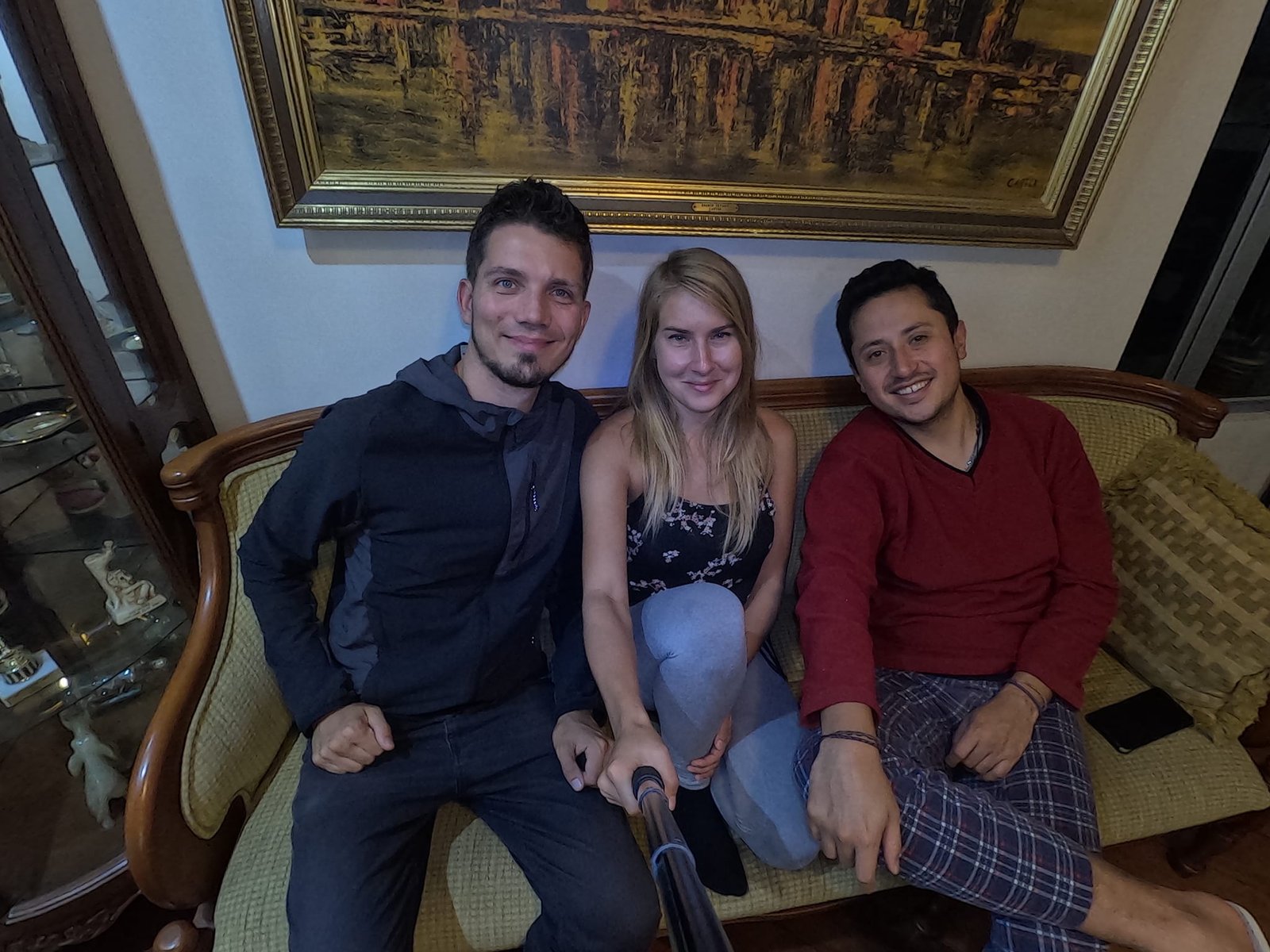
A very nice part of our stay was the hospitality of Edwin, our Couchsurfing host. We spent a lot of time talking together and watched a basketball game, and Edwin gave us plenty of sightseeing tips. In Colombia we had had no luck with Couchsurfing, but in Ecuador it got off to a great start. And that’s not all: when we flew to the Galápagos, we left our big backpacks with Edwin and took only hand luggage.
Mitad del Mundo – the “Middle of the World”
About 20 km north of Quito runs the equator, which gave the country its name (in Spanish ecuador means exactly that – the equator). A whole tourist town with lots of attractions was built here and named Mitad del Mundo, the “Middle of the World”. Entry cost 5 dollars.
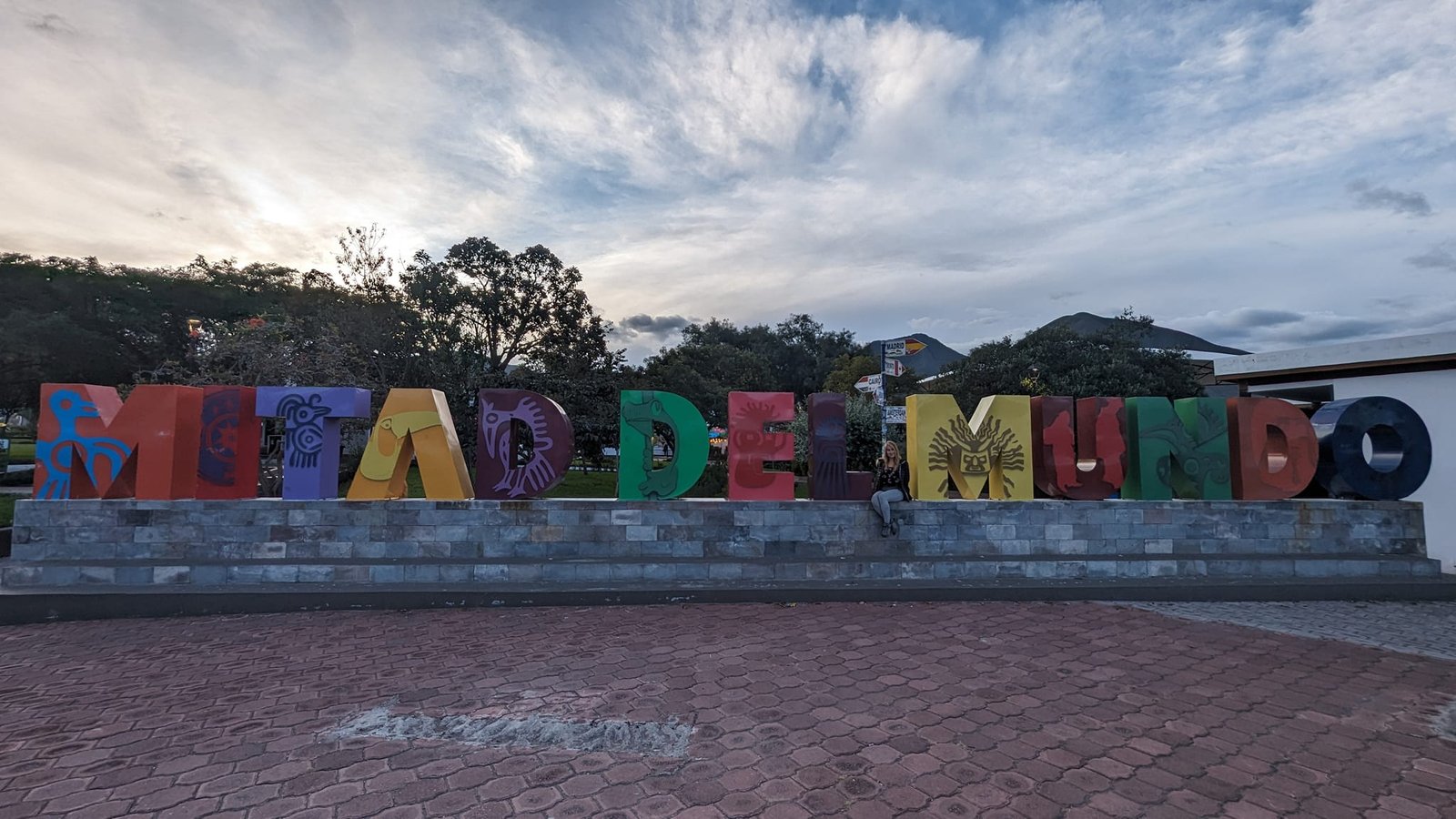
The town’s centrepiece is a 30-metre monument topped with a huge globe. Inside is Ecuador’s ethnographic museum, and from the top you can see the whole town and the surrounding mountains.
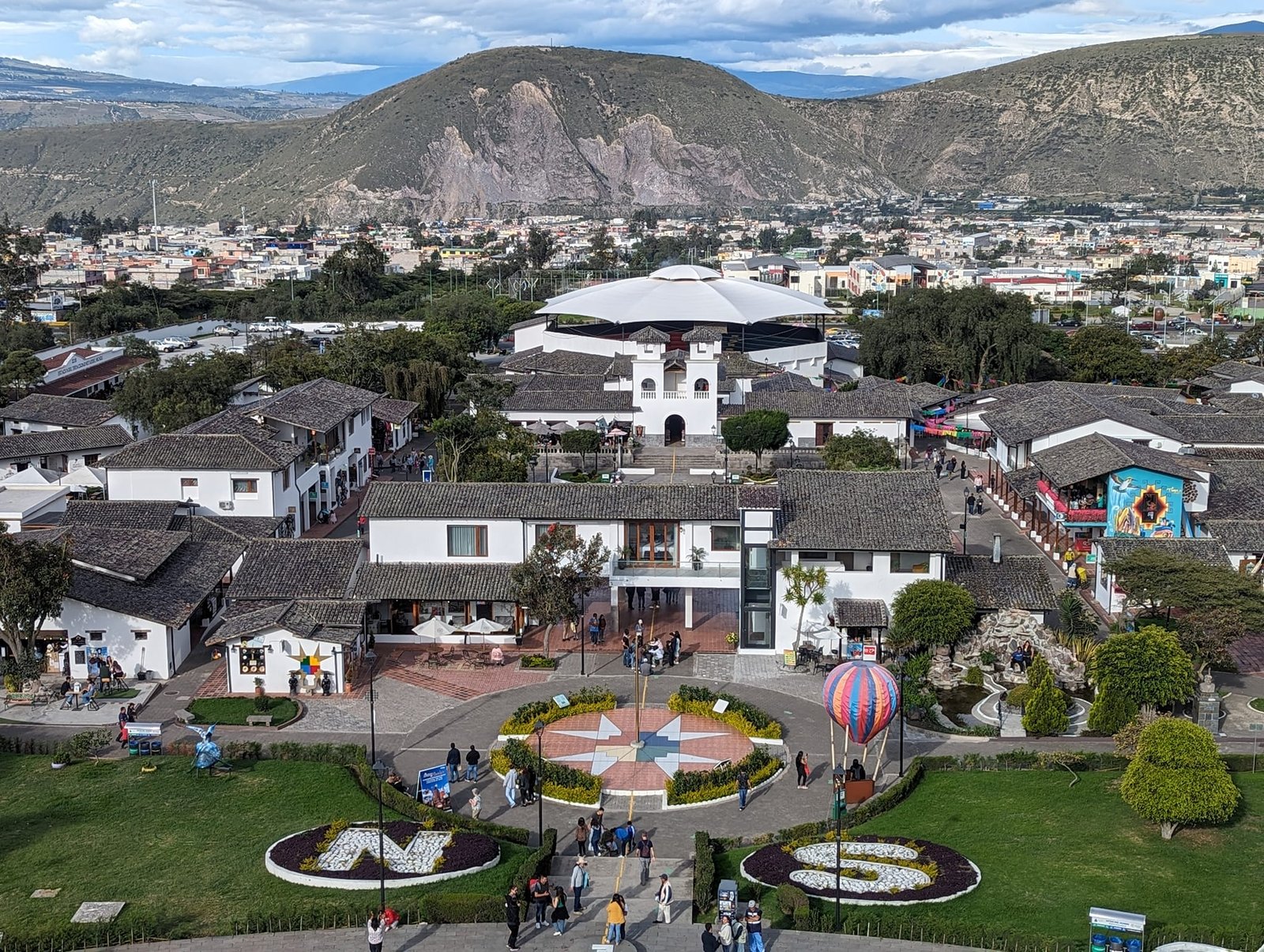
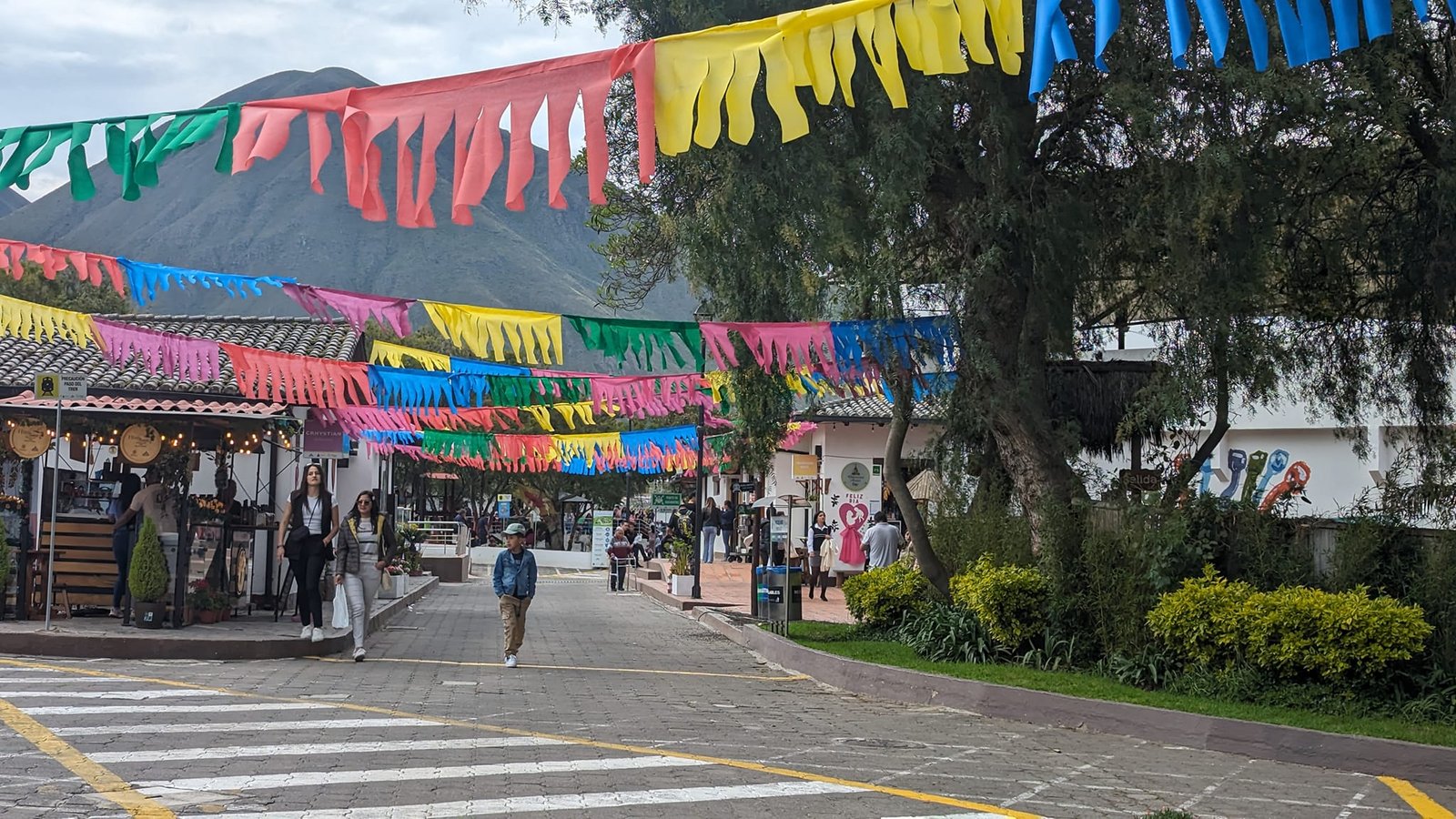
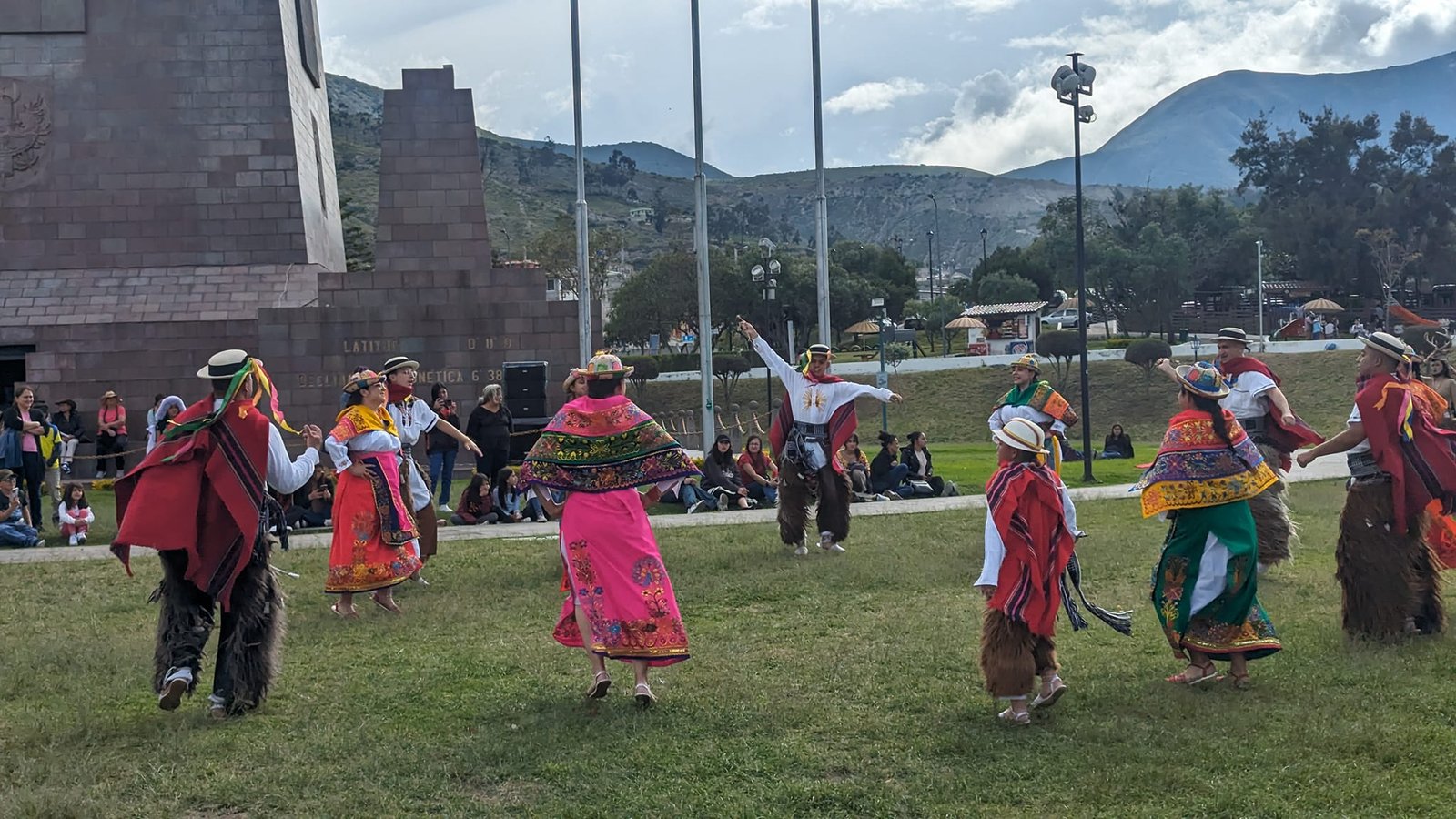
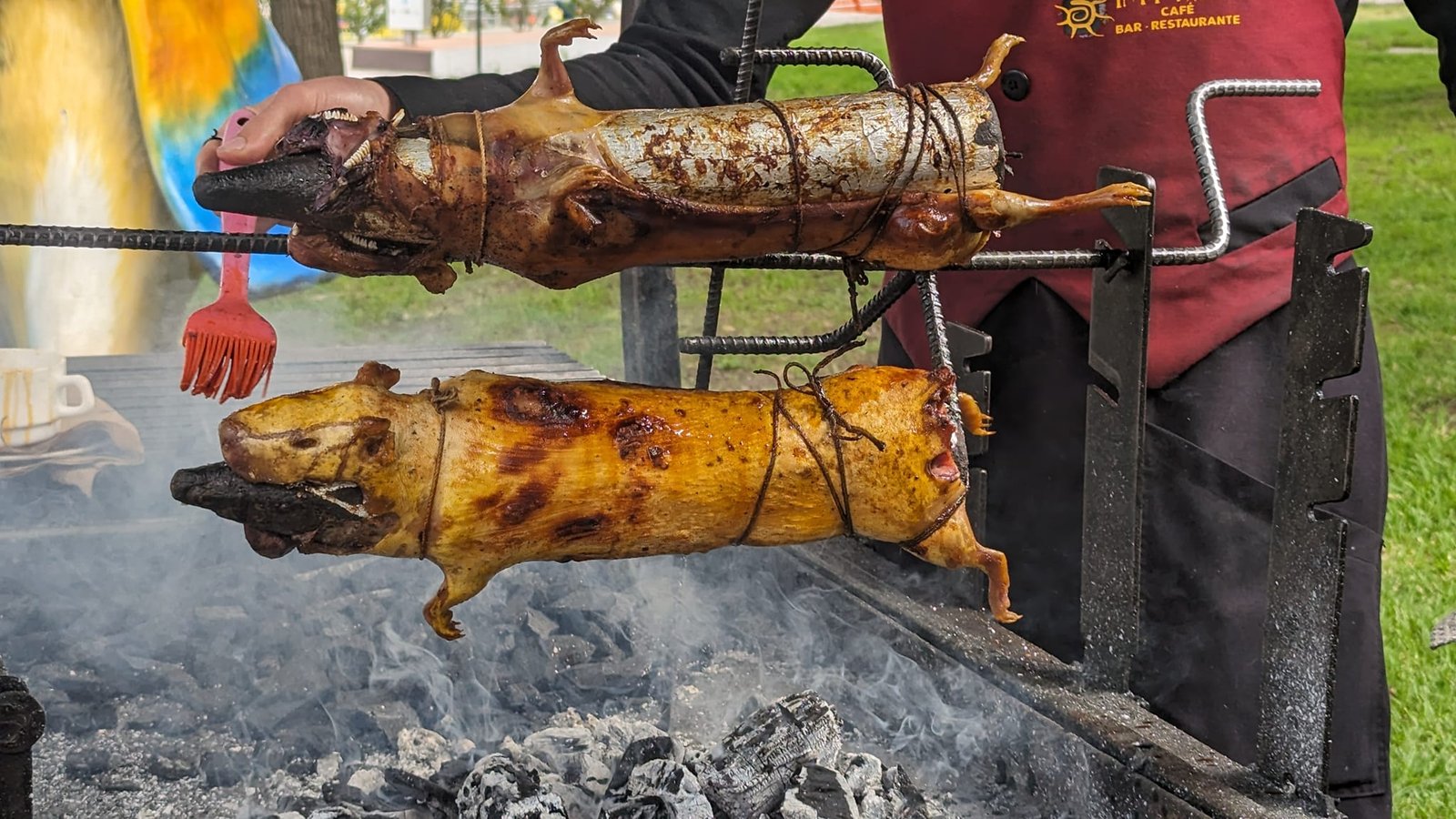
Colourful bunting was strung between the pavilions, and on the lawn we came across a dance show in traditional costumes. Over the coals, guinea pigs – cuy, a traditional Andean dish – were roasting on spits.
Where does the equator really run? The Intiñan Museum
Through the town, straight to the monument, runs a line that was supposed to mark the real equator – or at least that’s what people believed until recently. Of course we couldn’t resist taking photos on the line itself. We also tried to balance an egg on the head of a nail – one of the local games.
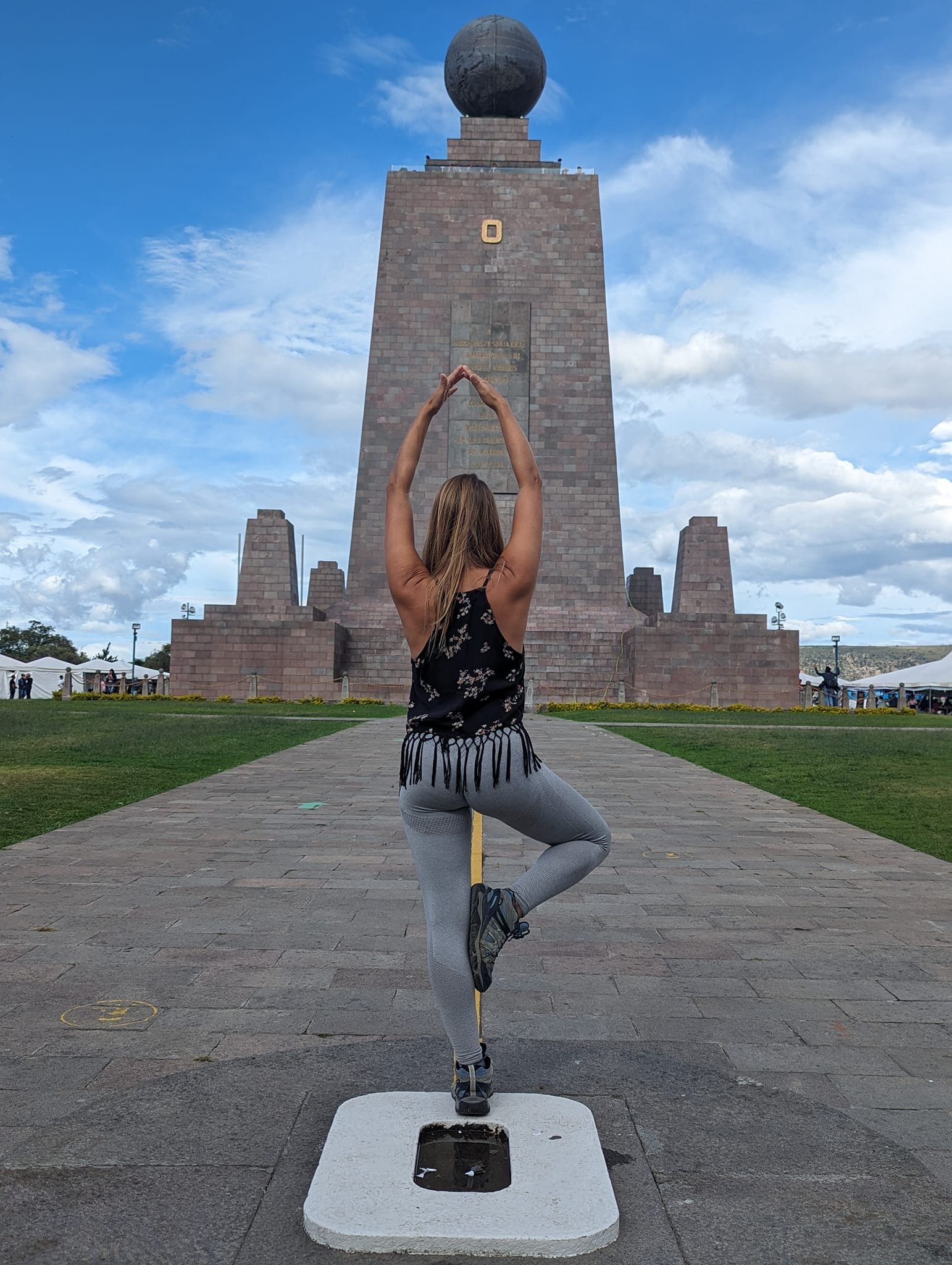
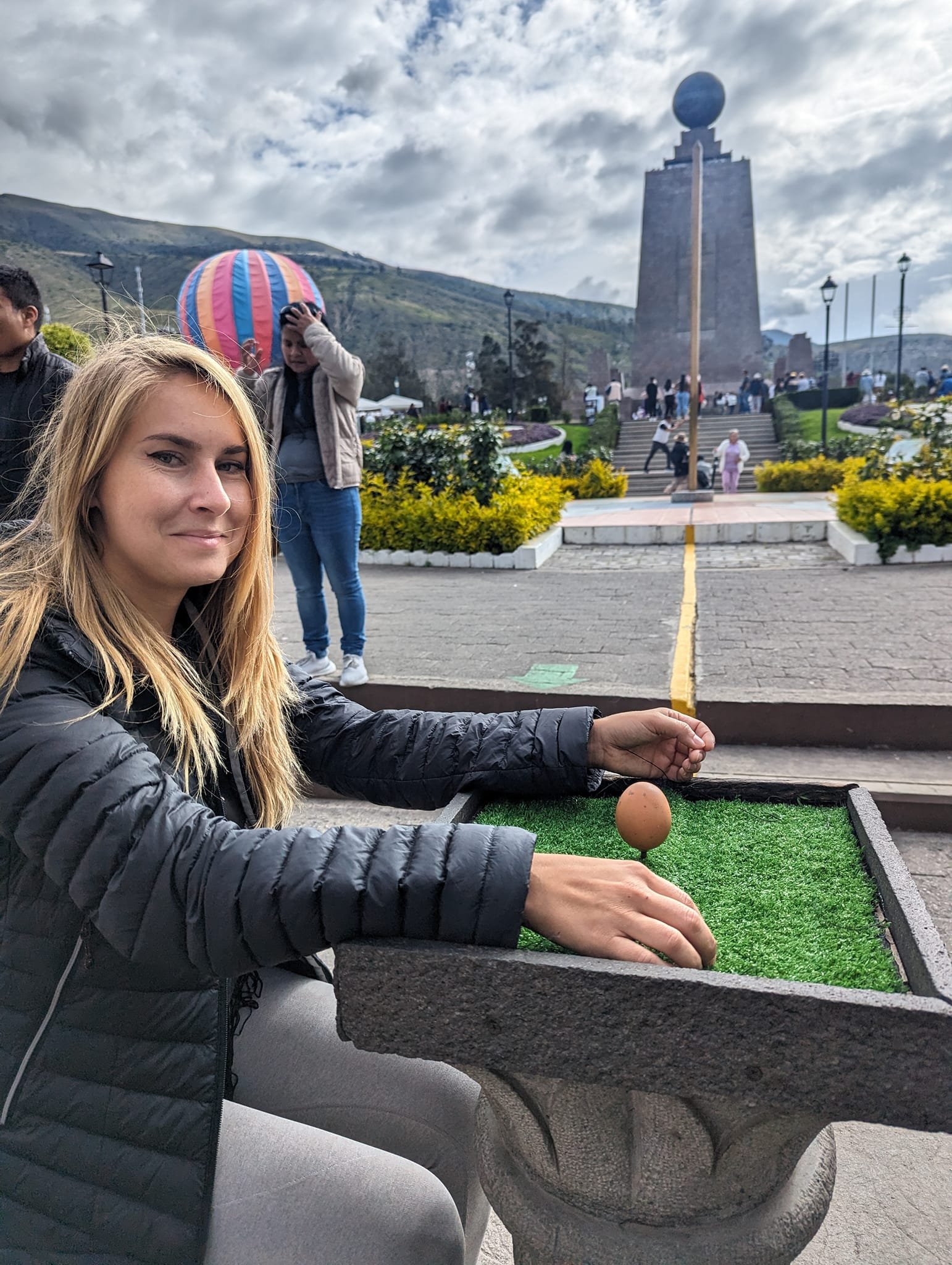
The line, however, was based on measurements by an 18th-century French geodesic mission, which was off by just 240 metres. So if you want to stand on the real equator, you have to go to the Museo de Sitio Intiñan, a few minutes away from Mitad del Mundo. Entry there also costs 5 dollars.
Free walking tour – fruit, chocolate and Aya Huma masks
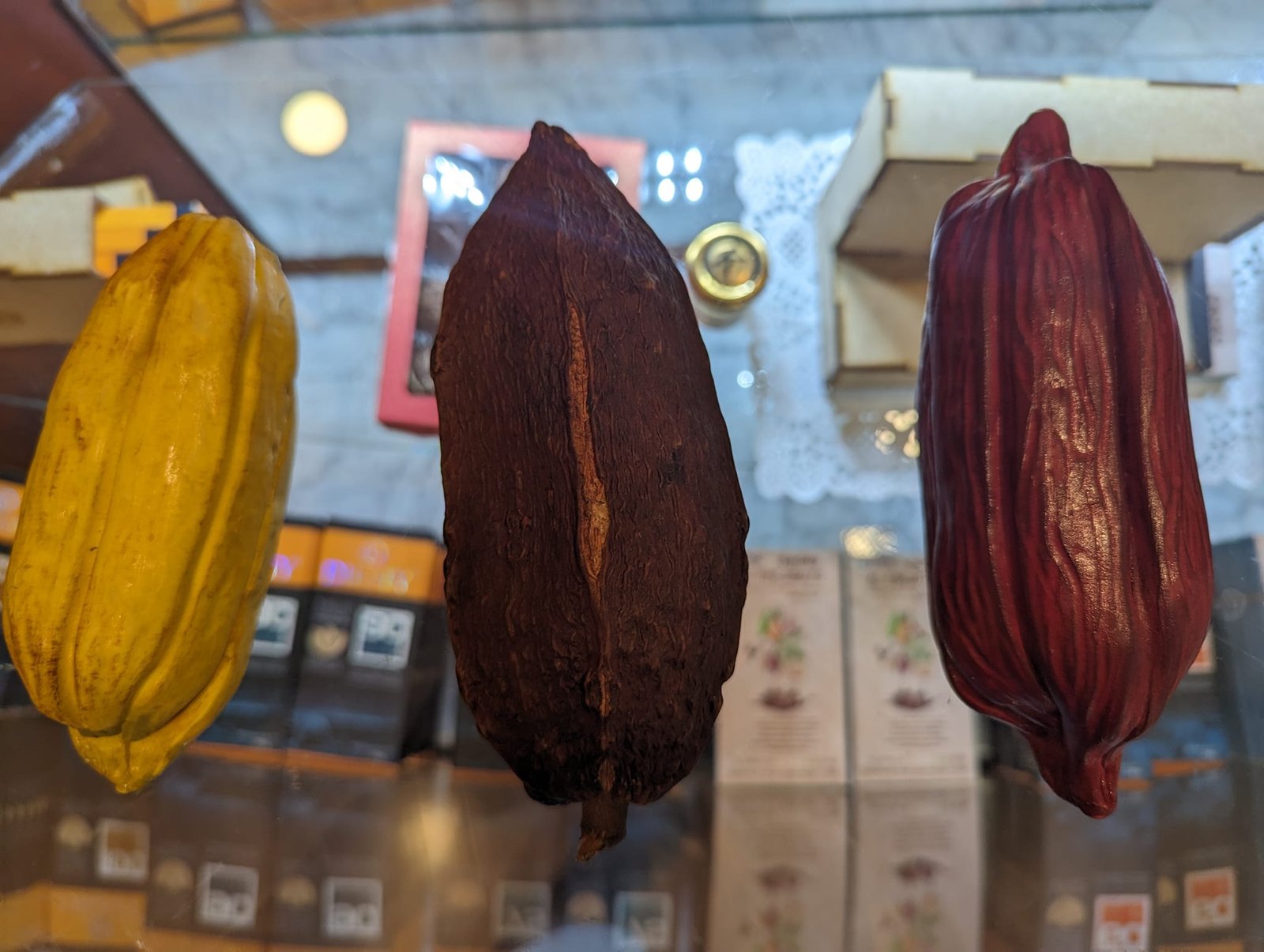
Encouraged by recommendations from other travellers, we went on a free walking tour of the old town. Besides sightseeing there was a tasting – we tried lots of fruit, chocolate and alcohol, and the guide told us a lot about Ecuador’s history and economy.
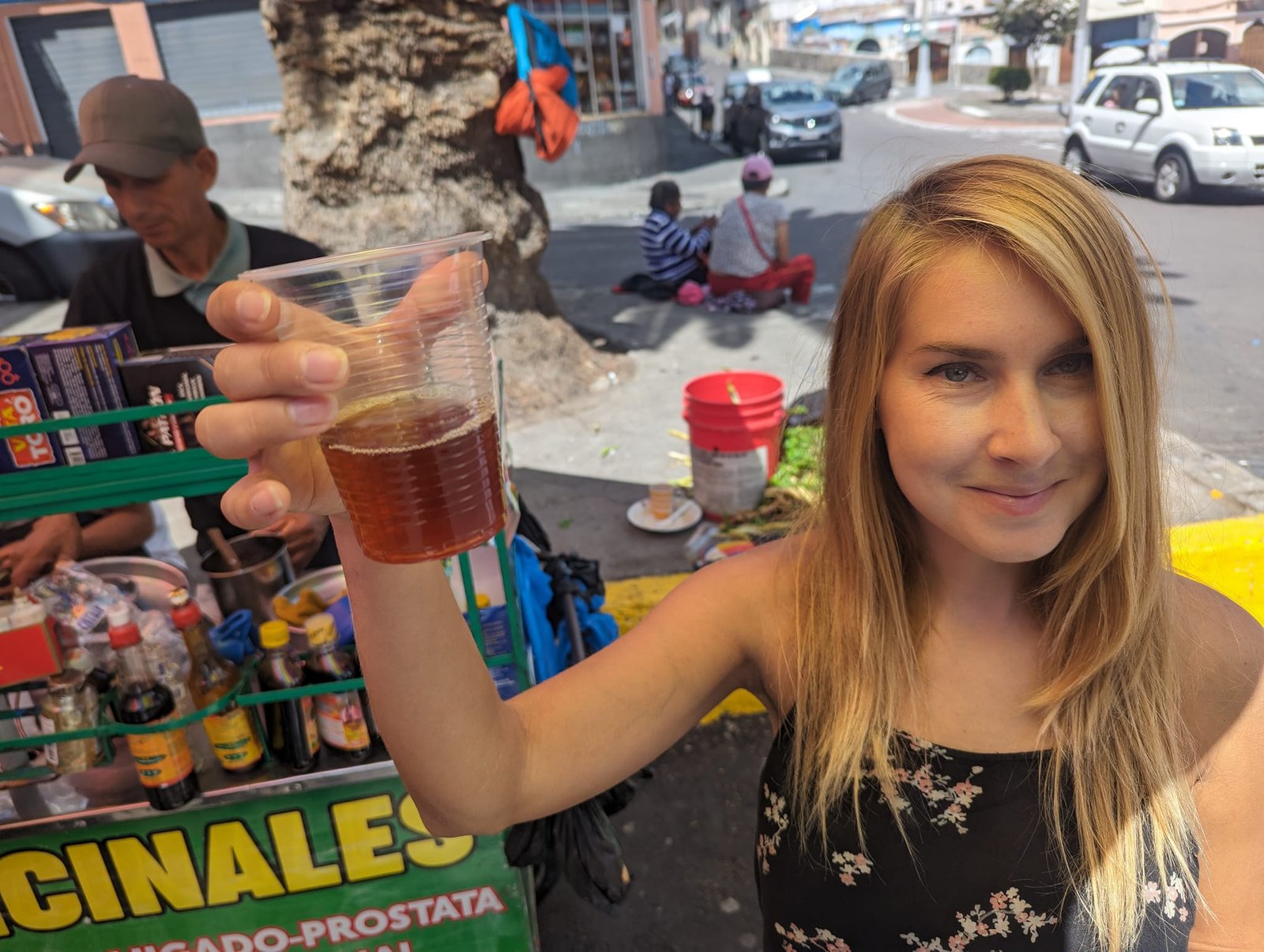
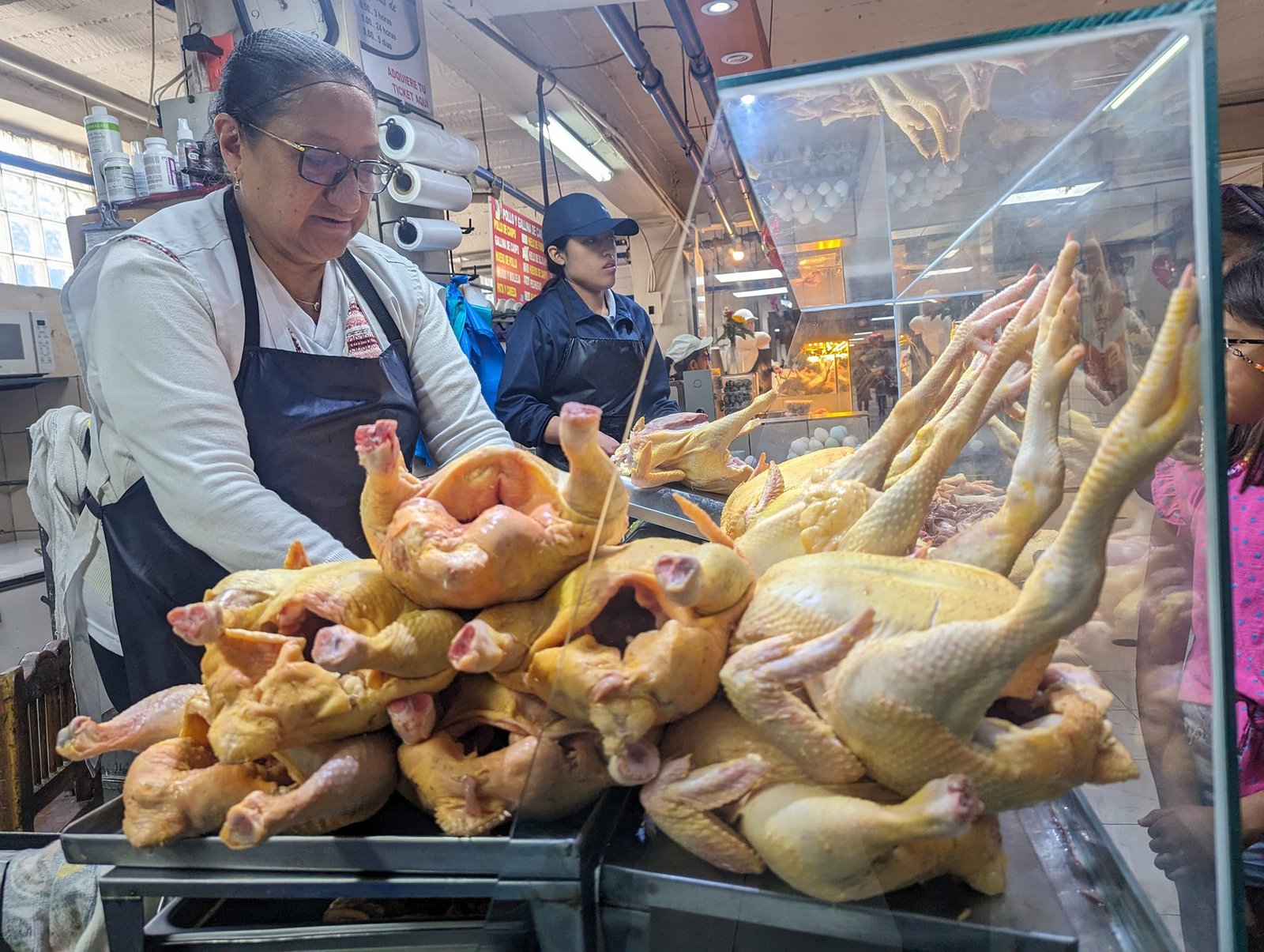
On the way we also looked into a market.
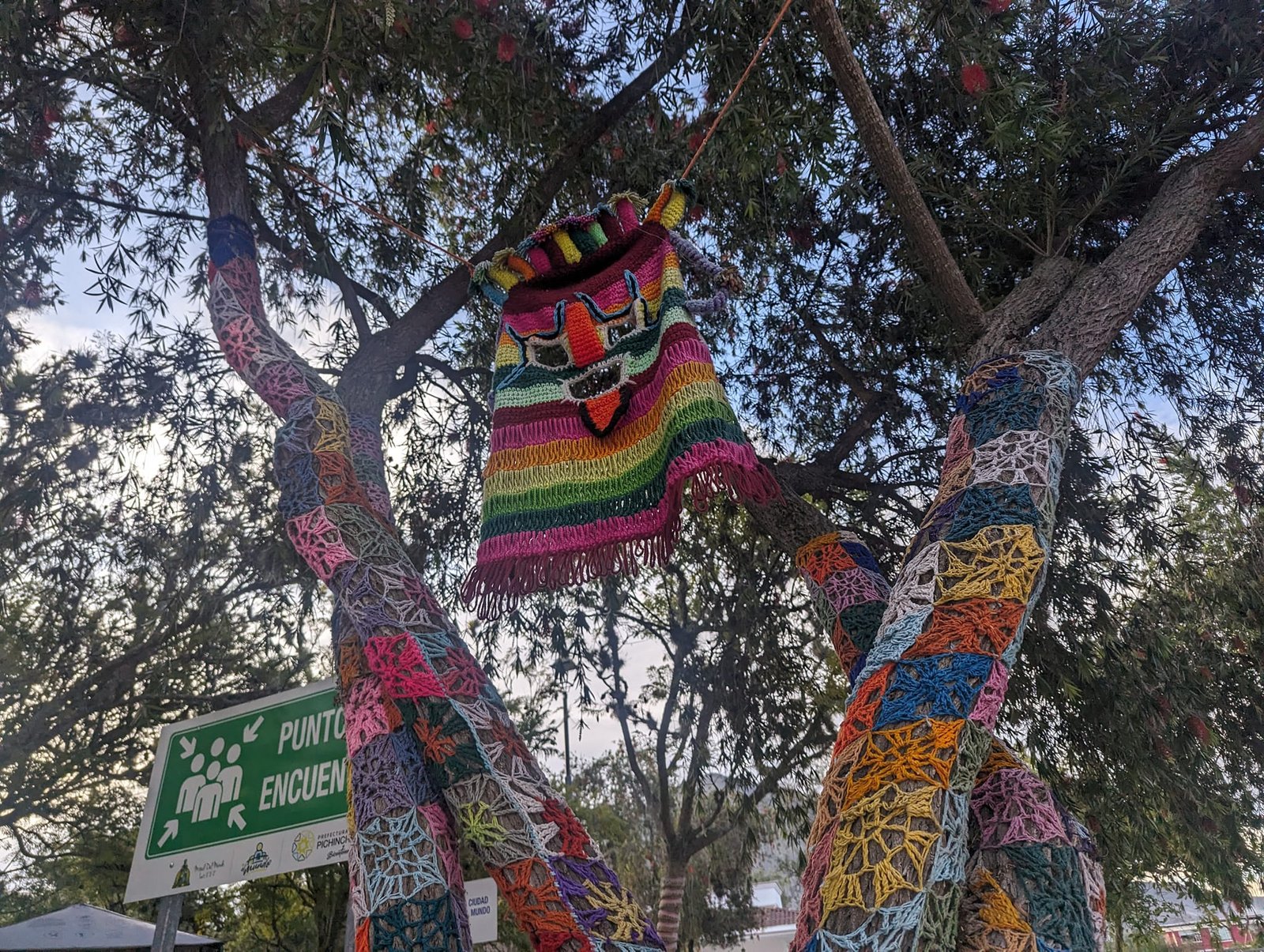
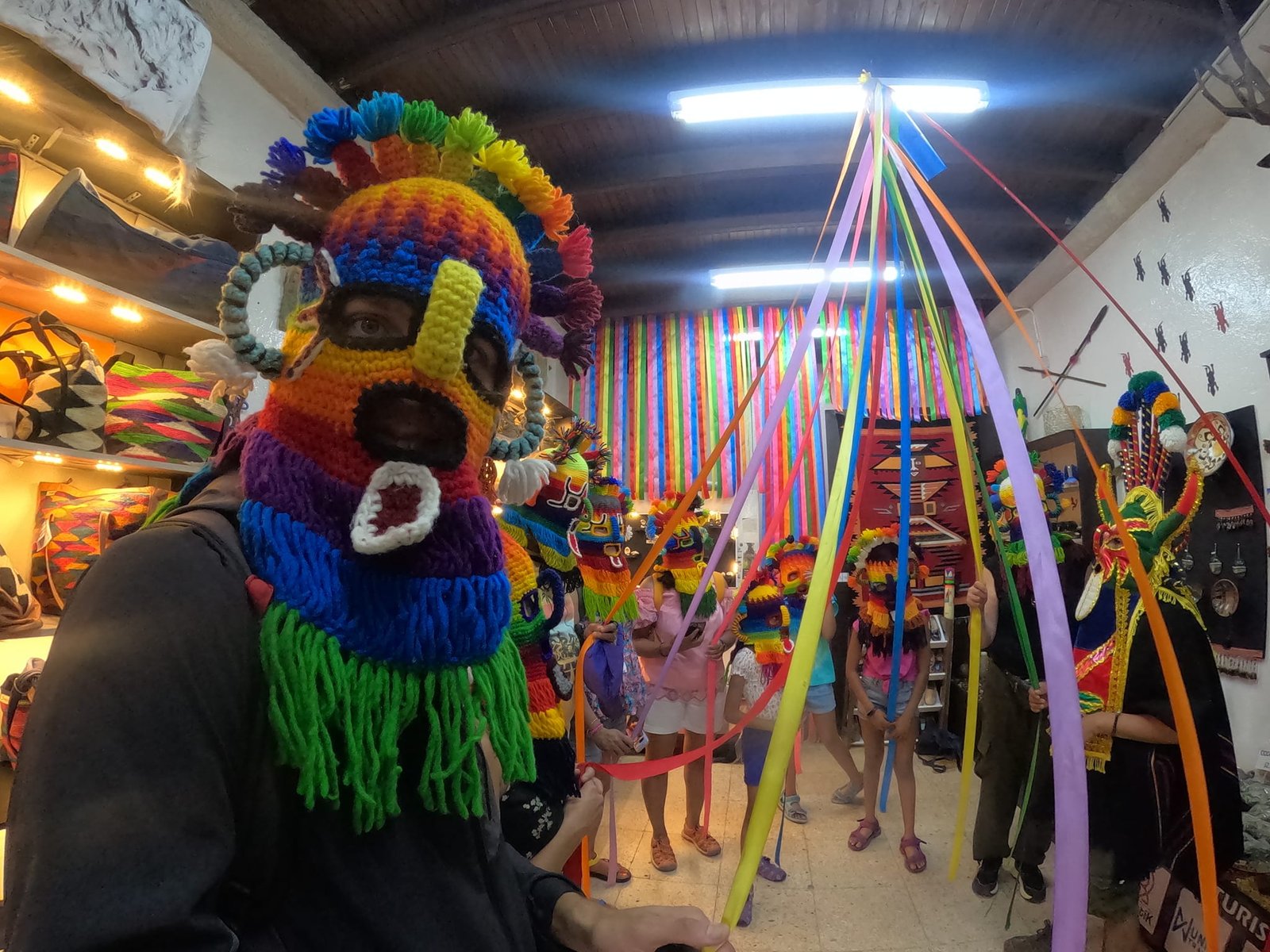
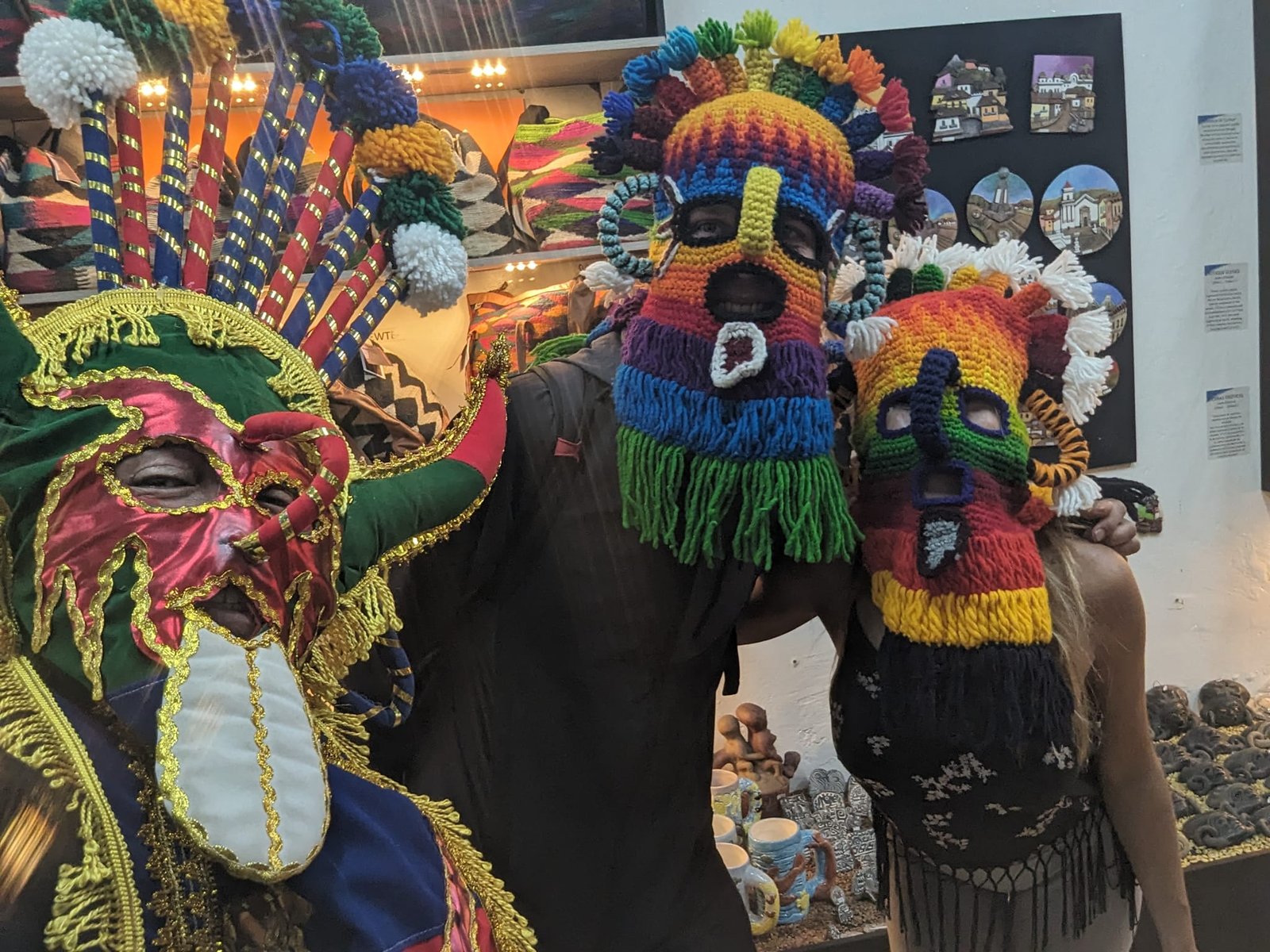
We could also put on colourful Aya Huma masks and dance in them like the Incas during the winter solstice celebrations.
Quito’s old town
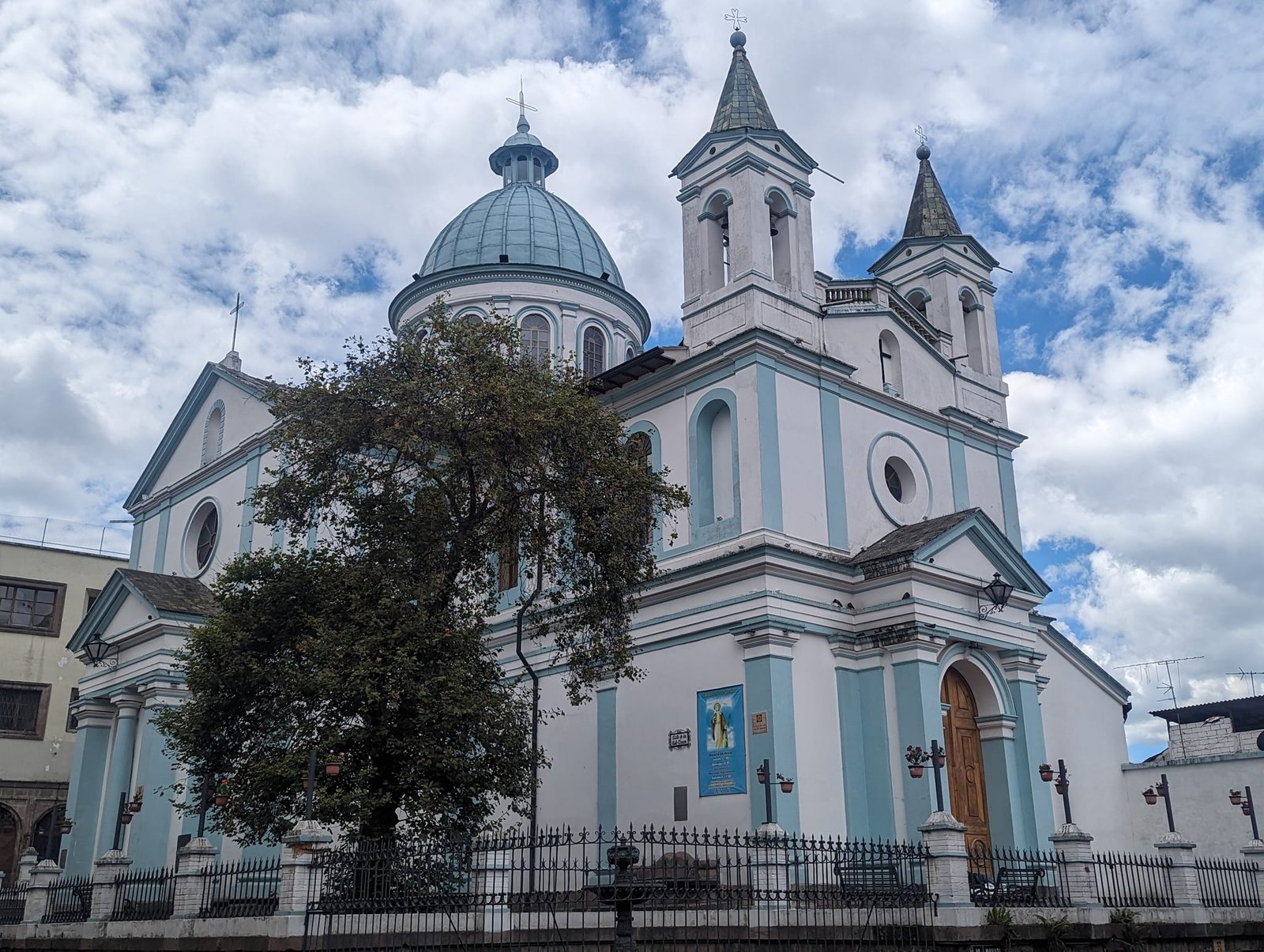
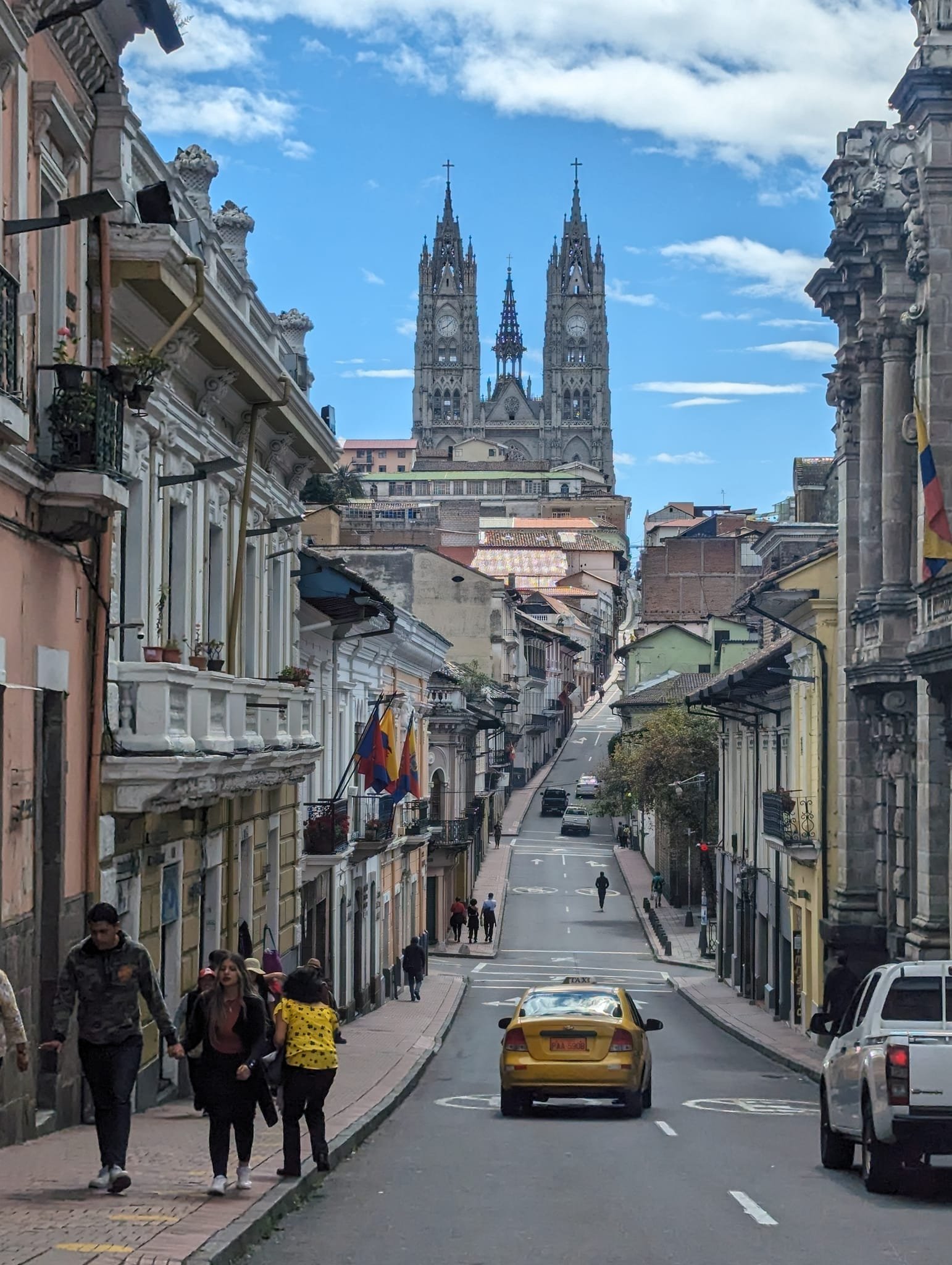
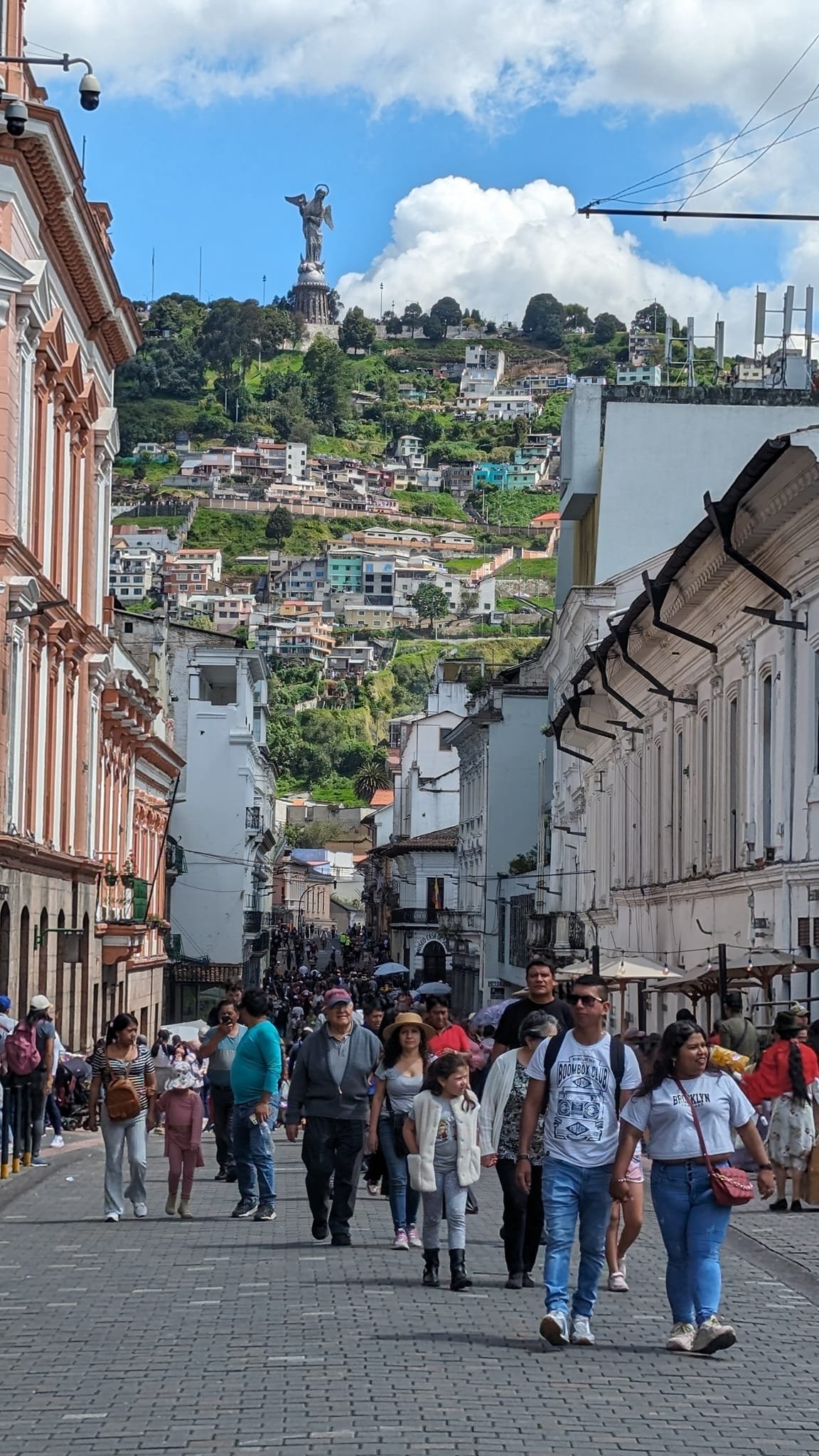
Quito’s historic centre is a maze of steep streets lined with colonial houses. At the end of many of them you can see either the towers of the Basilica of the National Vow or the statue of the Virgin Mary on El Panecillo hill.
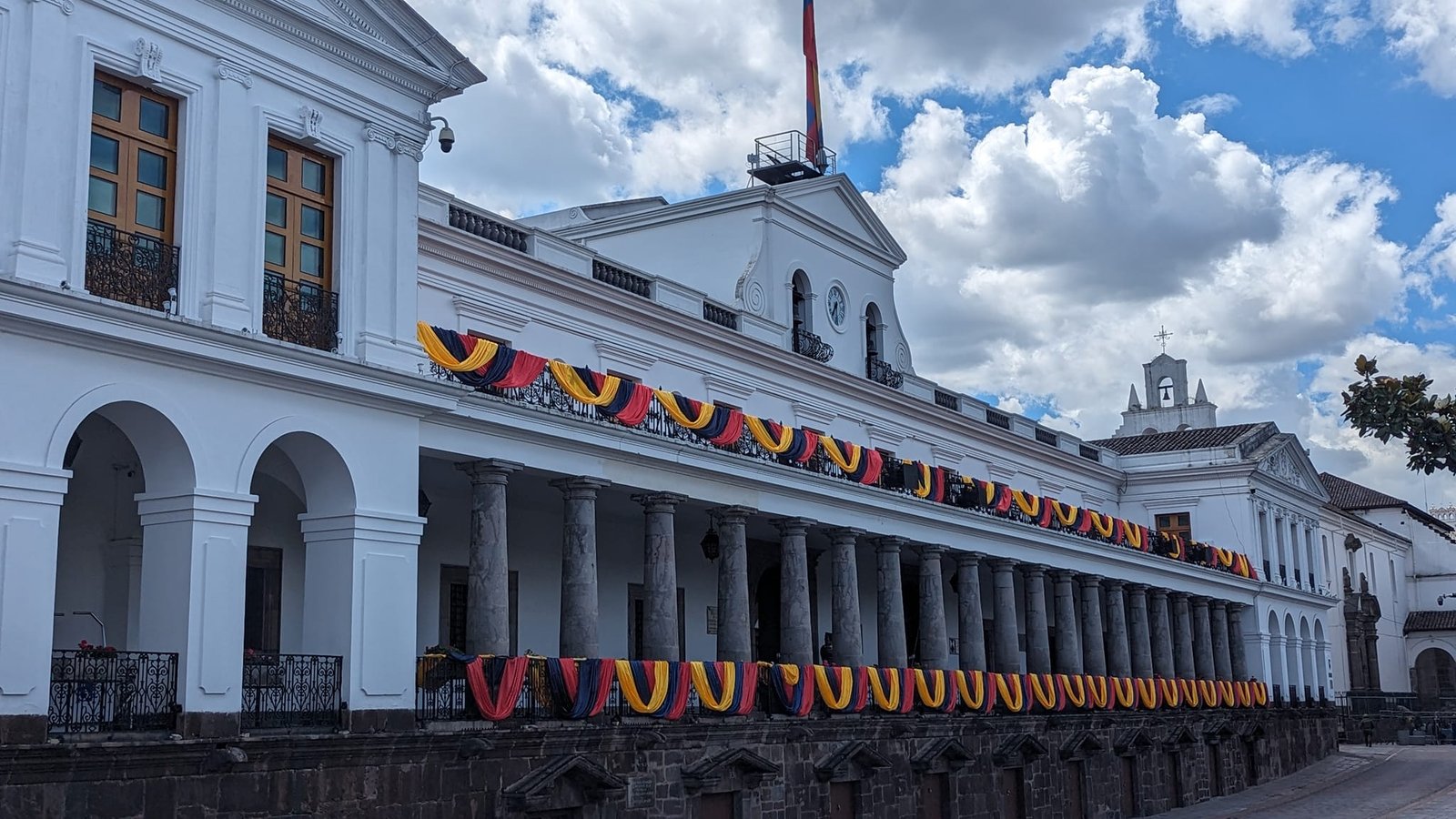
On Plaza Grande stands the white Carondelet Palace, the seat of Ecuador’s president. On the day of our visit its colonnade was decorated in the national colours.
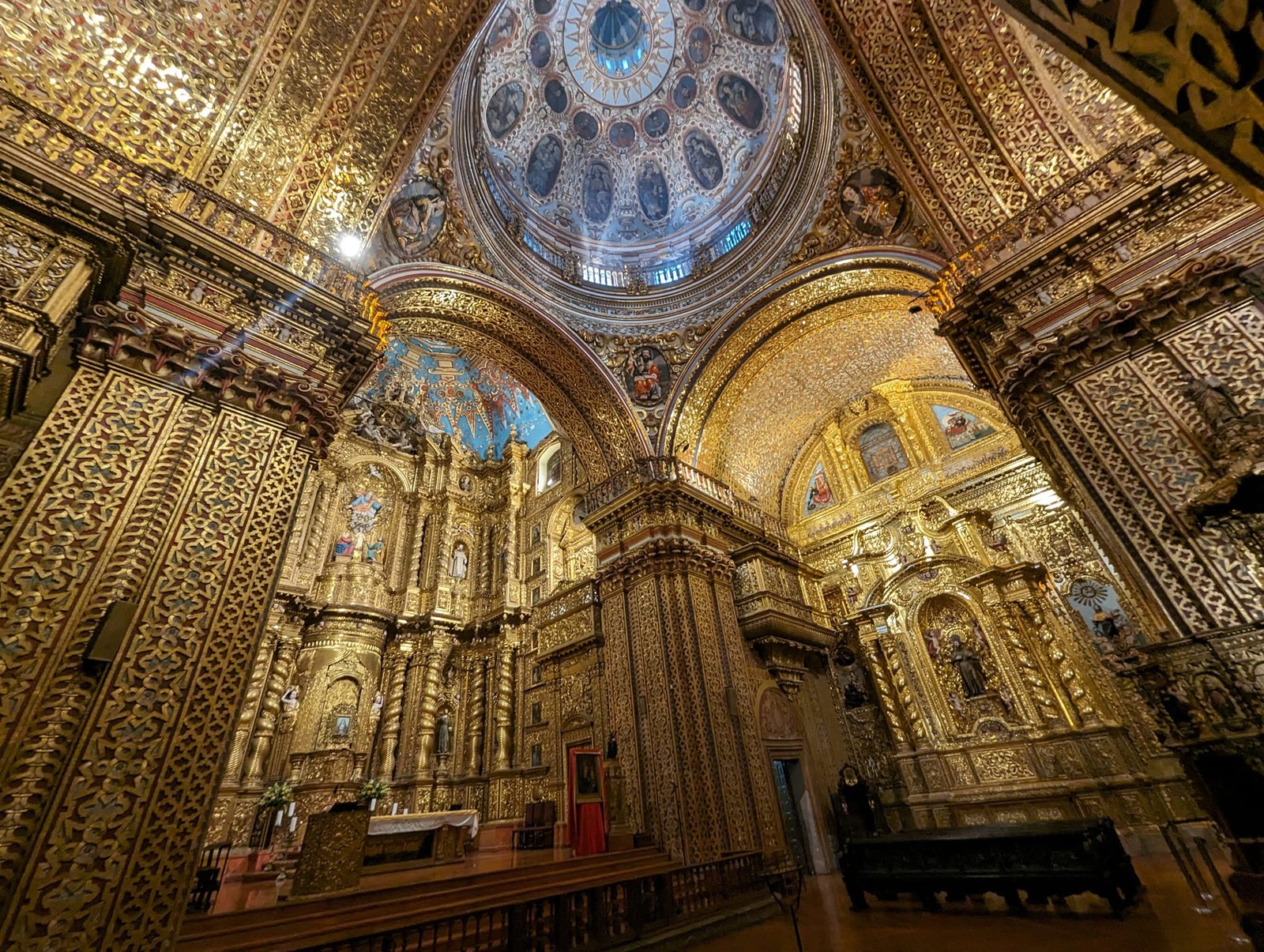
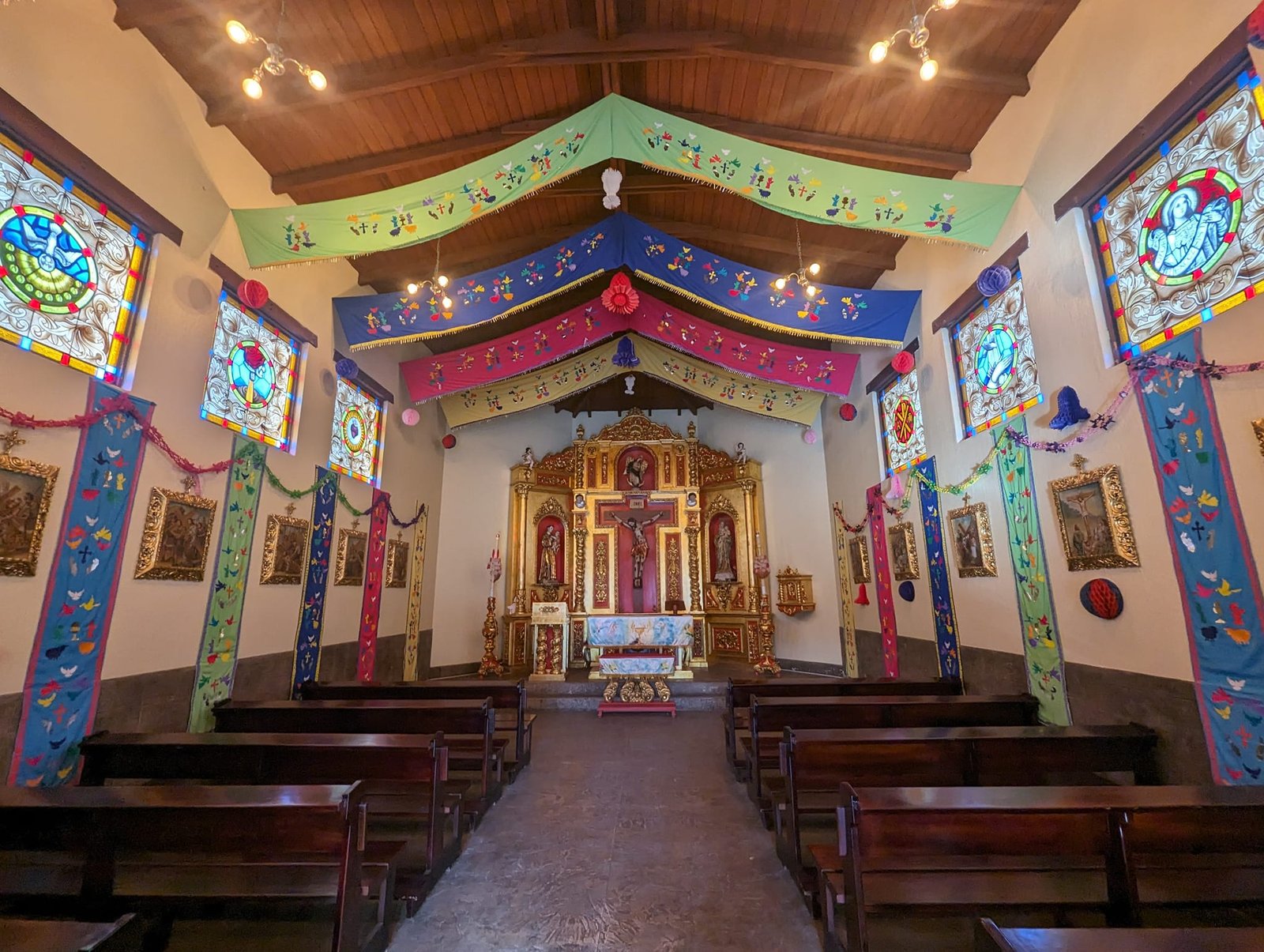
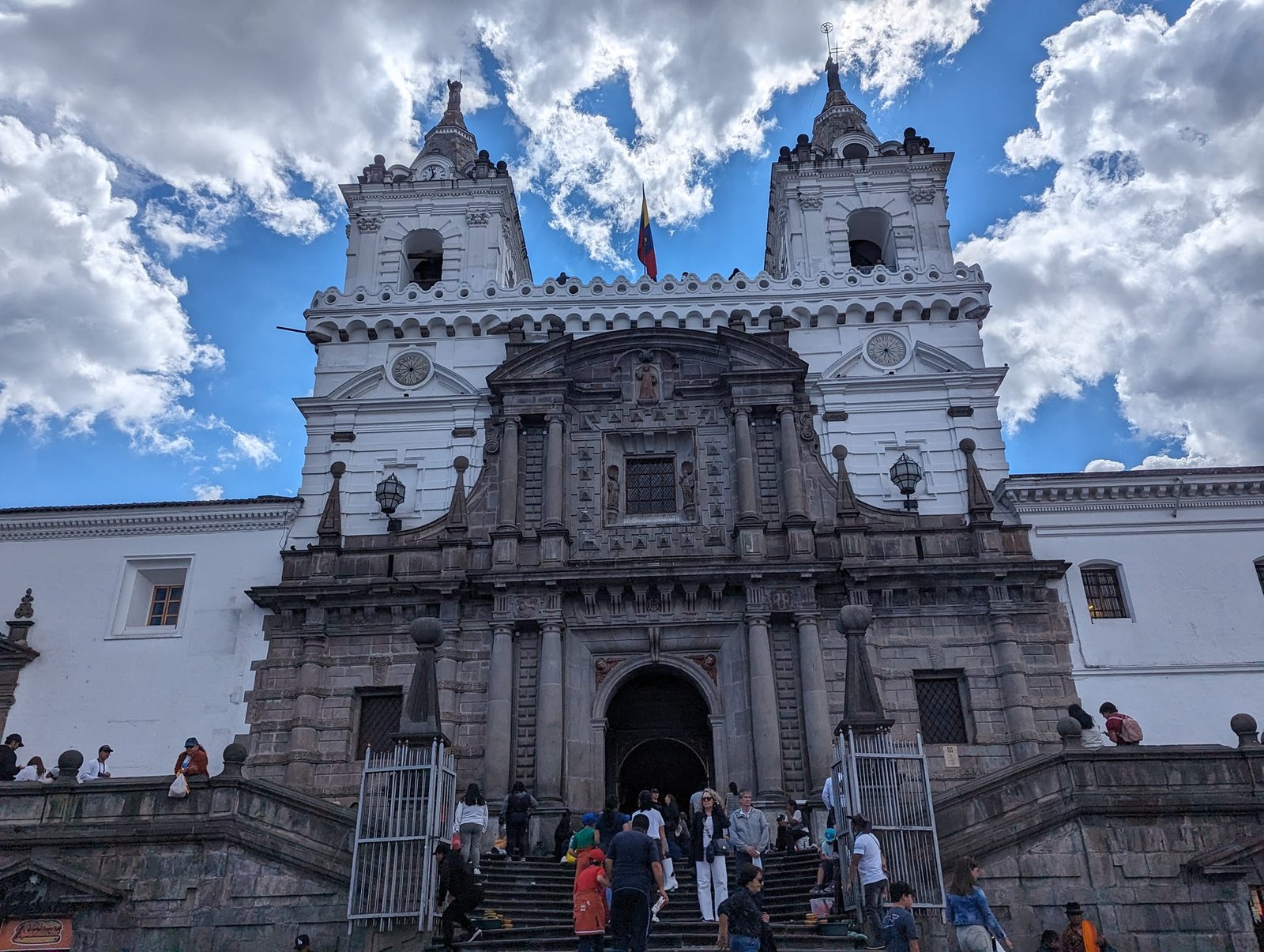
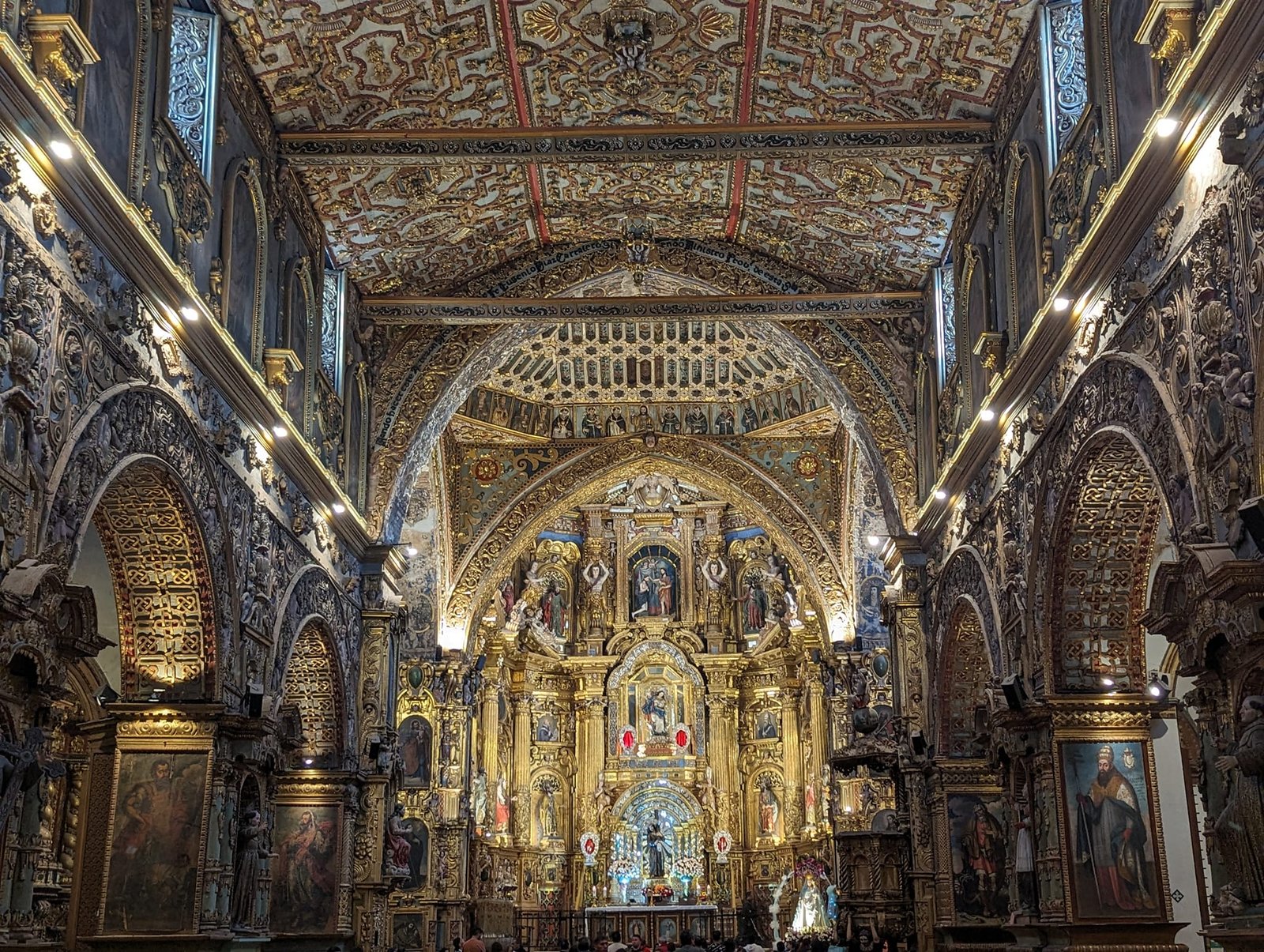
A little further on, on San Francisco square, rises the Church of San Francisco. The stone façade with its two white towers is impressive, but the real treasure is inside – the interior glitters with gilded Baroque decoration.
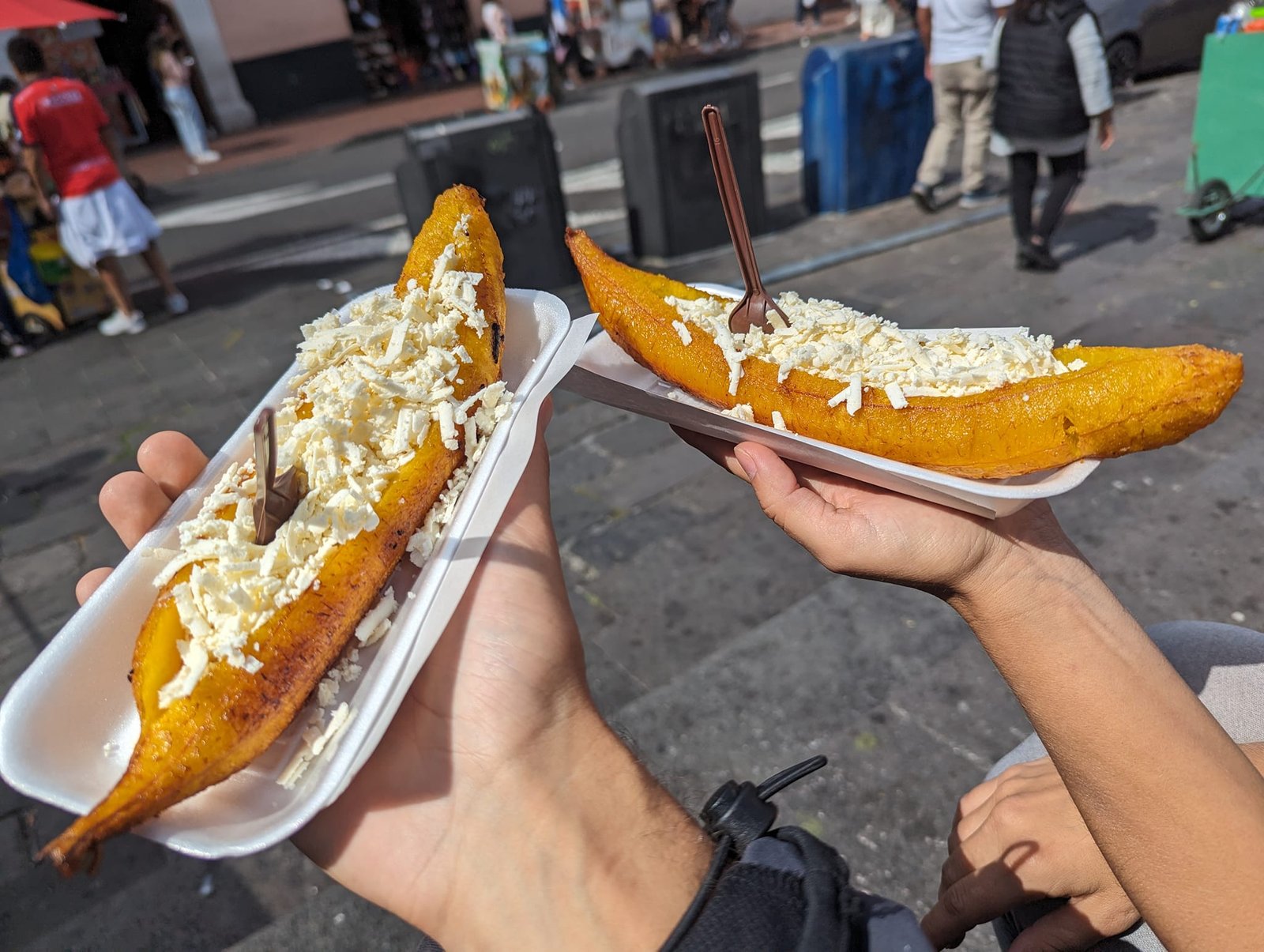
It’s easy to grab a snack on the streets – we went for fried plantains with cheese.
The Basilica of the National Vow
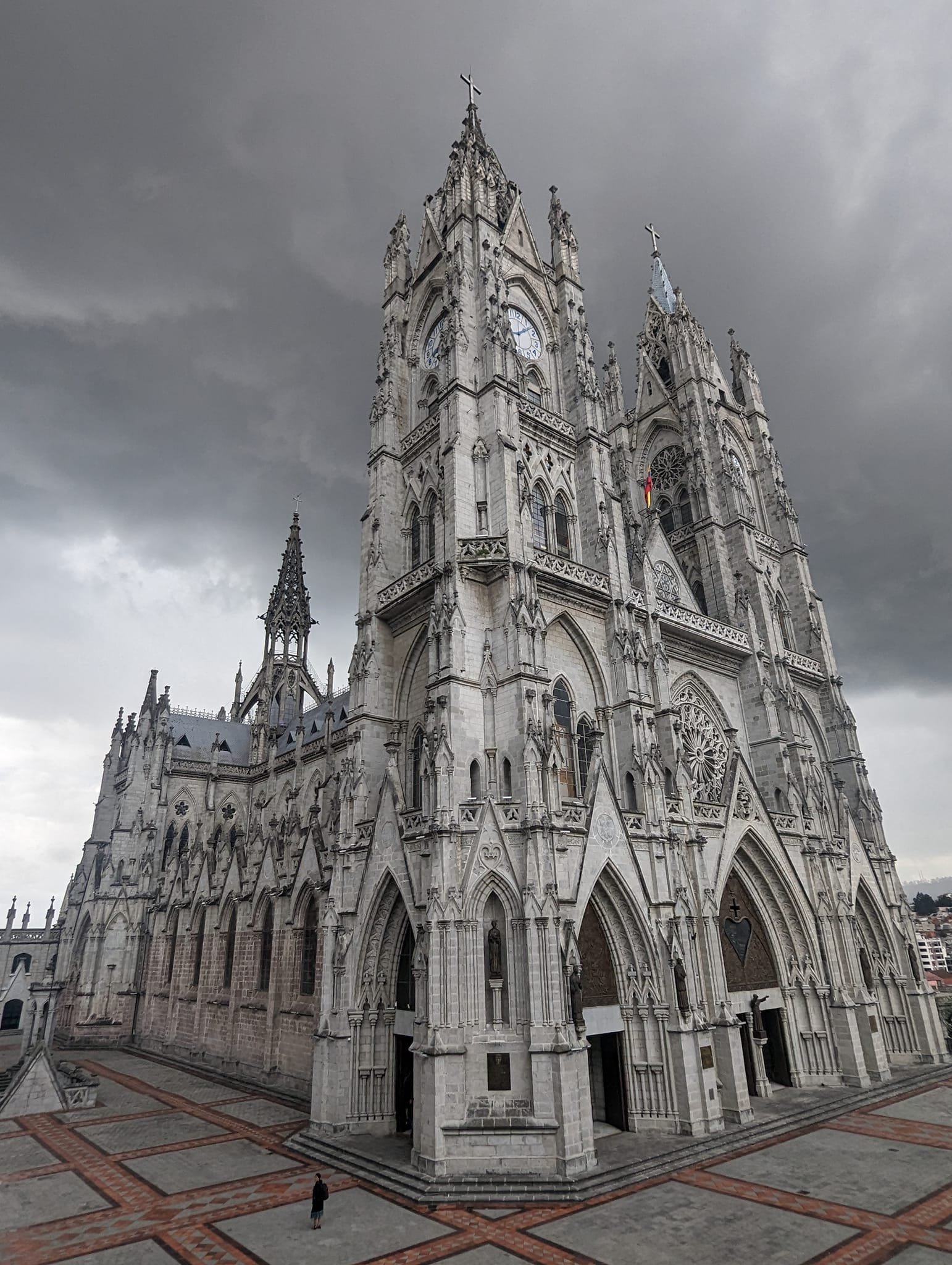
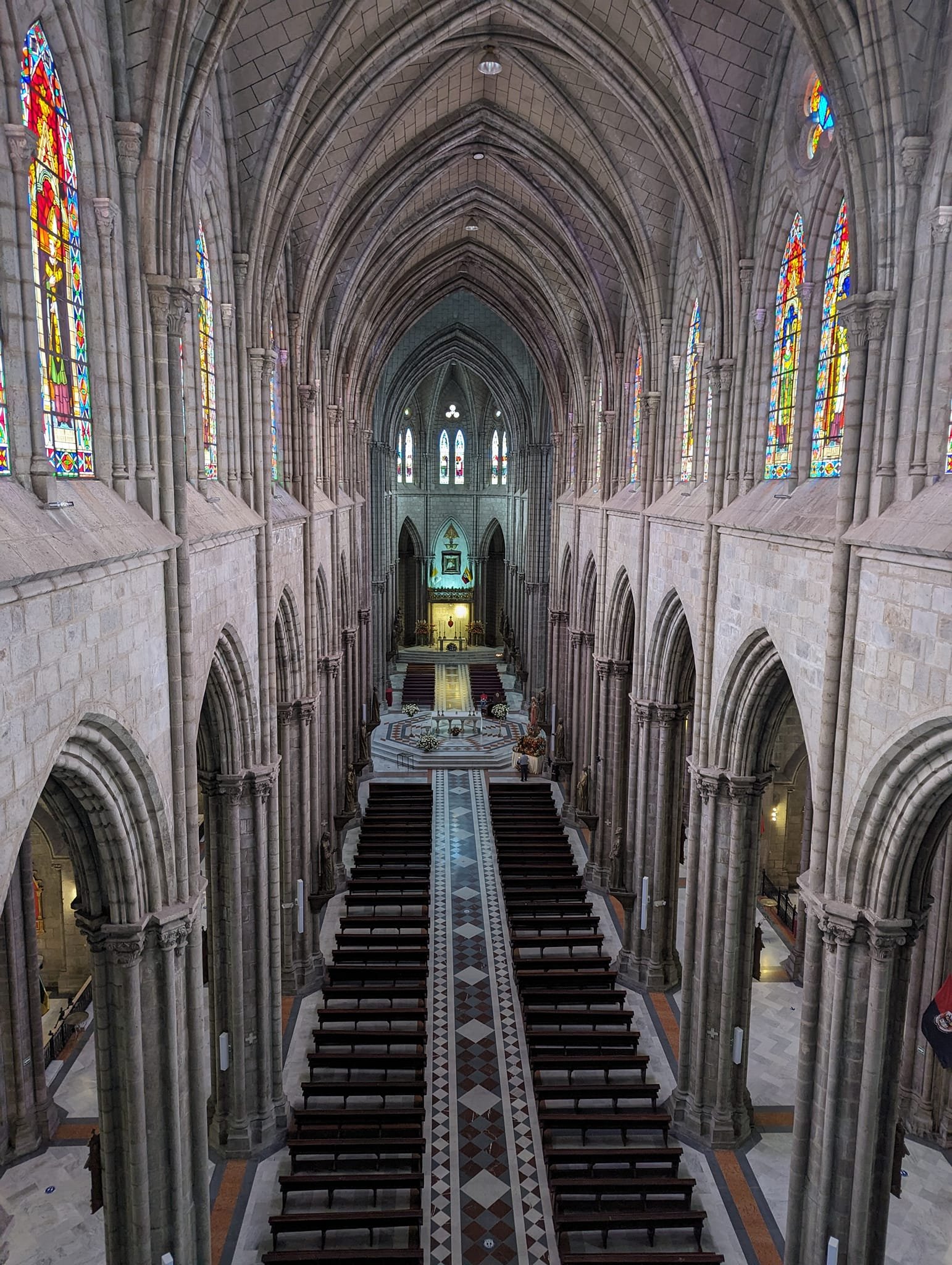
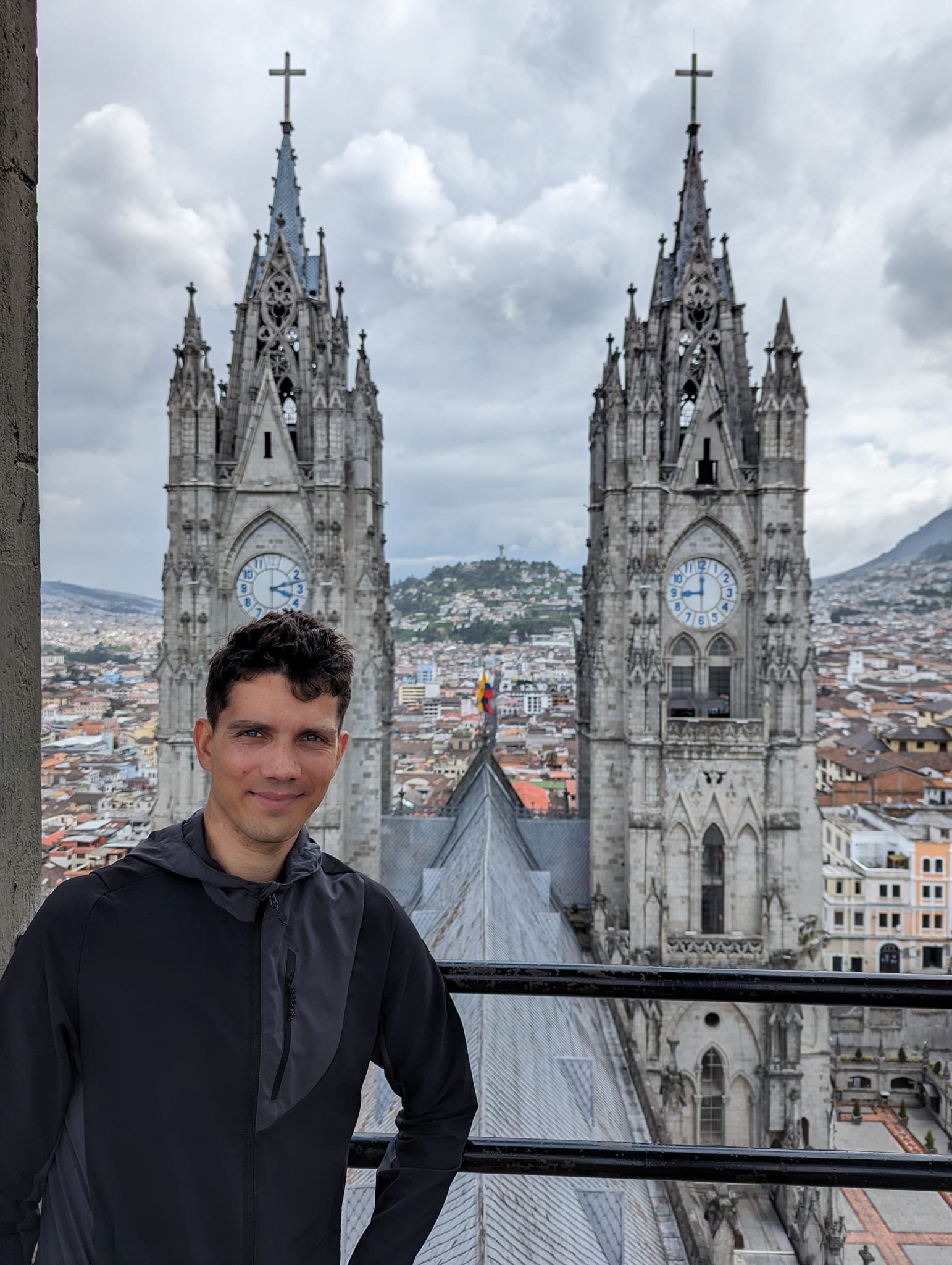
One of Quito’s main sights is the Basilica of the National Vow (Basílica del Voto Nacional) – the largest neo-Gothic basilica in the Americas. Entry to the inside cost 2 dollars, and to the roof 4 dollars.
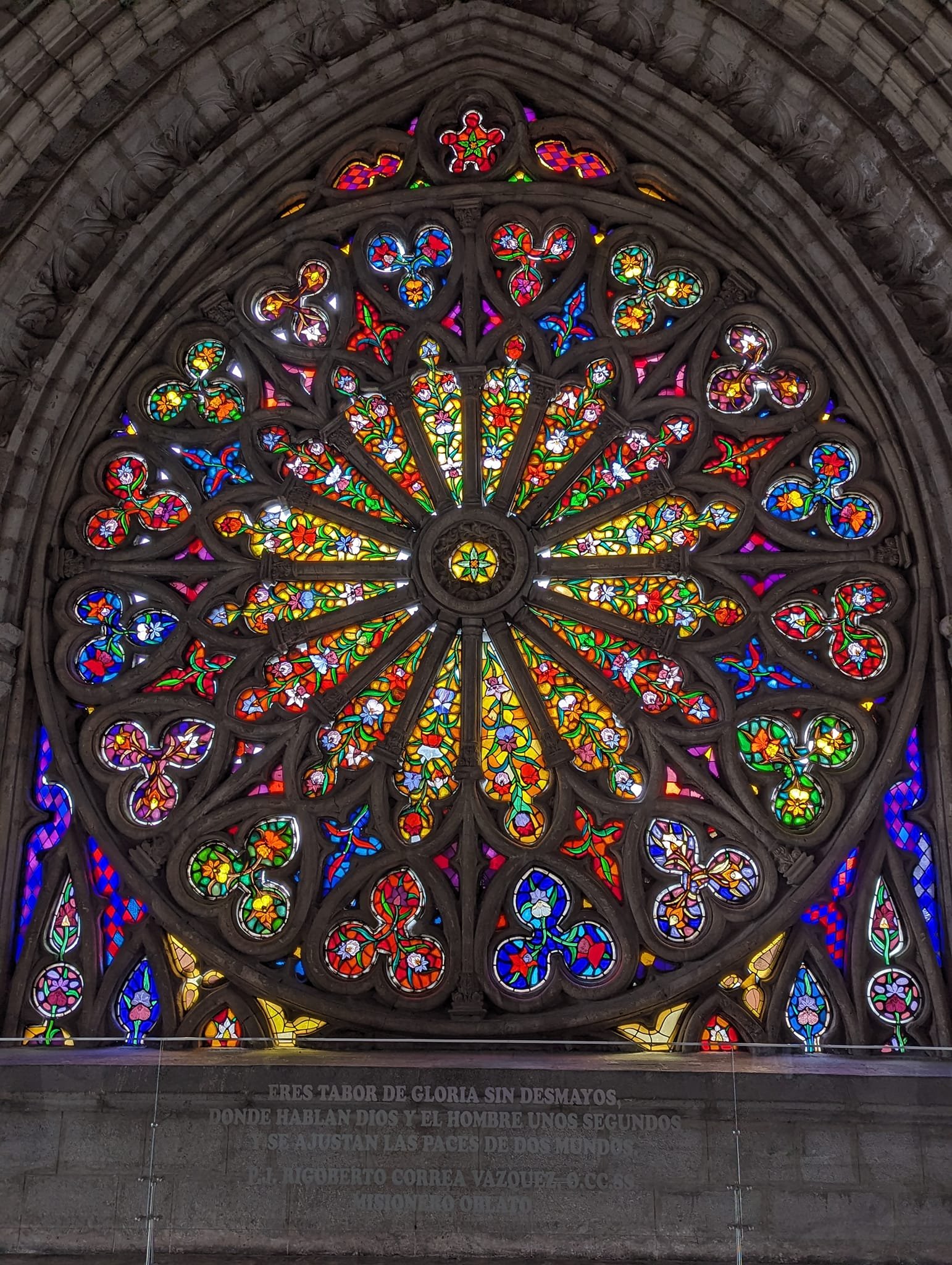
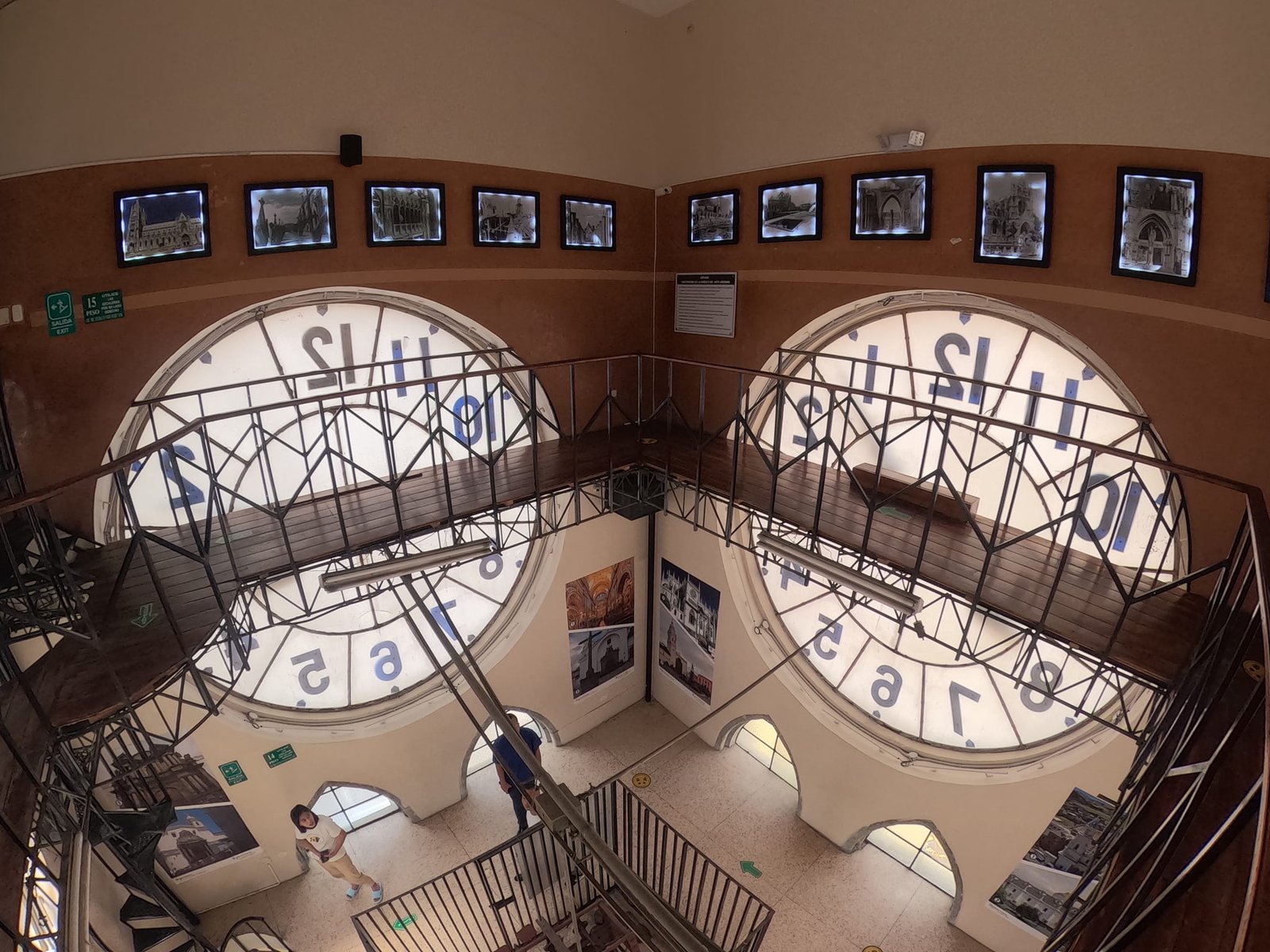
The interior is tall and bright, with colourful stained glass in the rose windows. On the way up you pass, among other things, a room where you can see the huge clock faces from the inside.
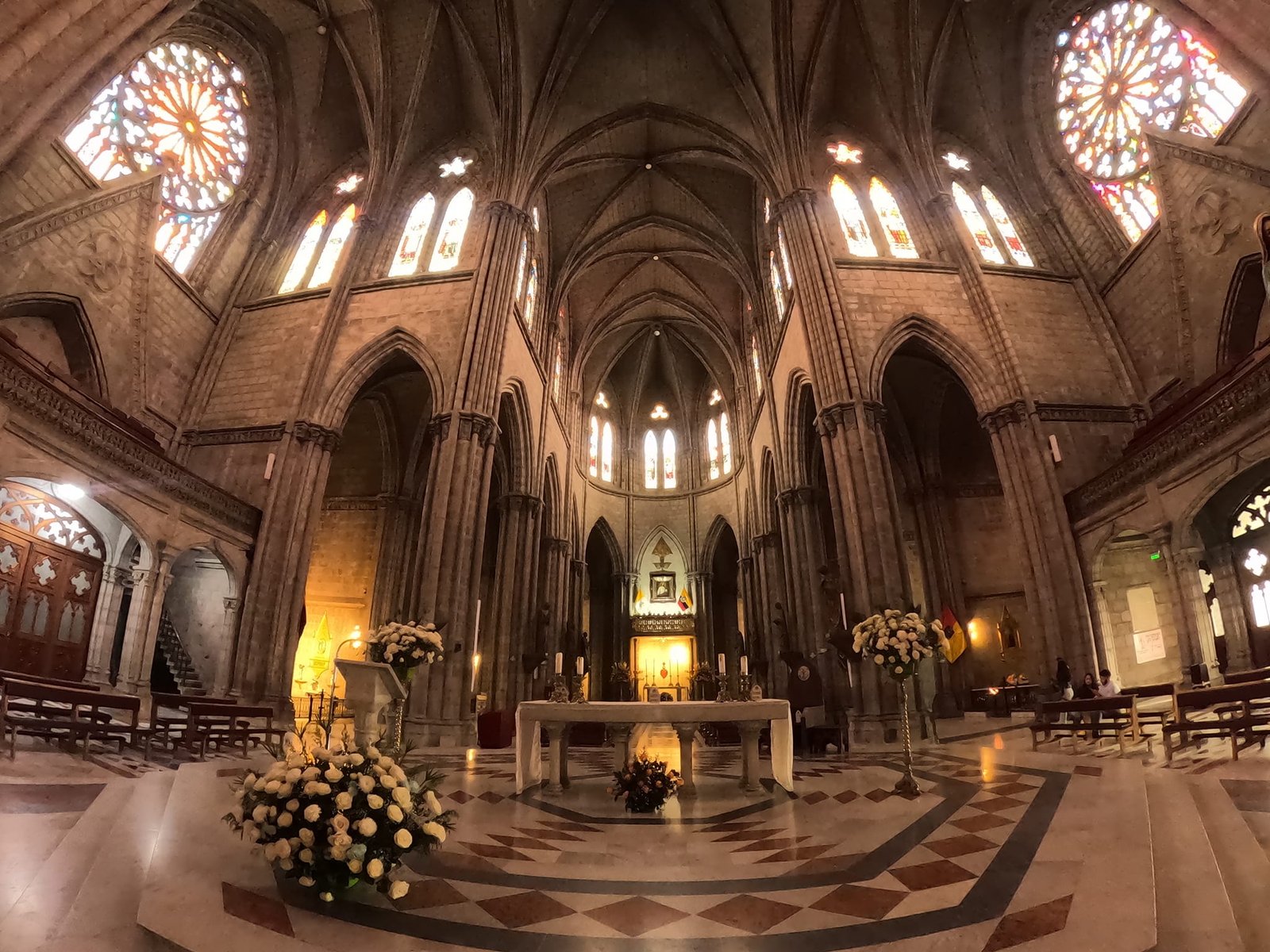
From above you can look down on the nave from a perspective you don’t get from below, and from the roof – just like from El Panecillo hill – a panorama of the city opens up.
Virgen de El Panecillo
The Virgen de El Panecillo is a 41-metre monument to the Virgin Mary, even taller than the statue of Christ in Rio de Janeiro. It stands on El Panecillo hill, right above the old town.
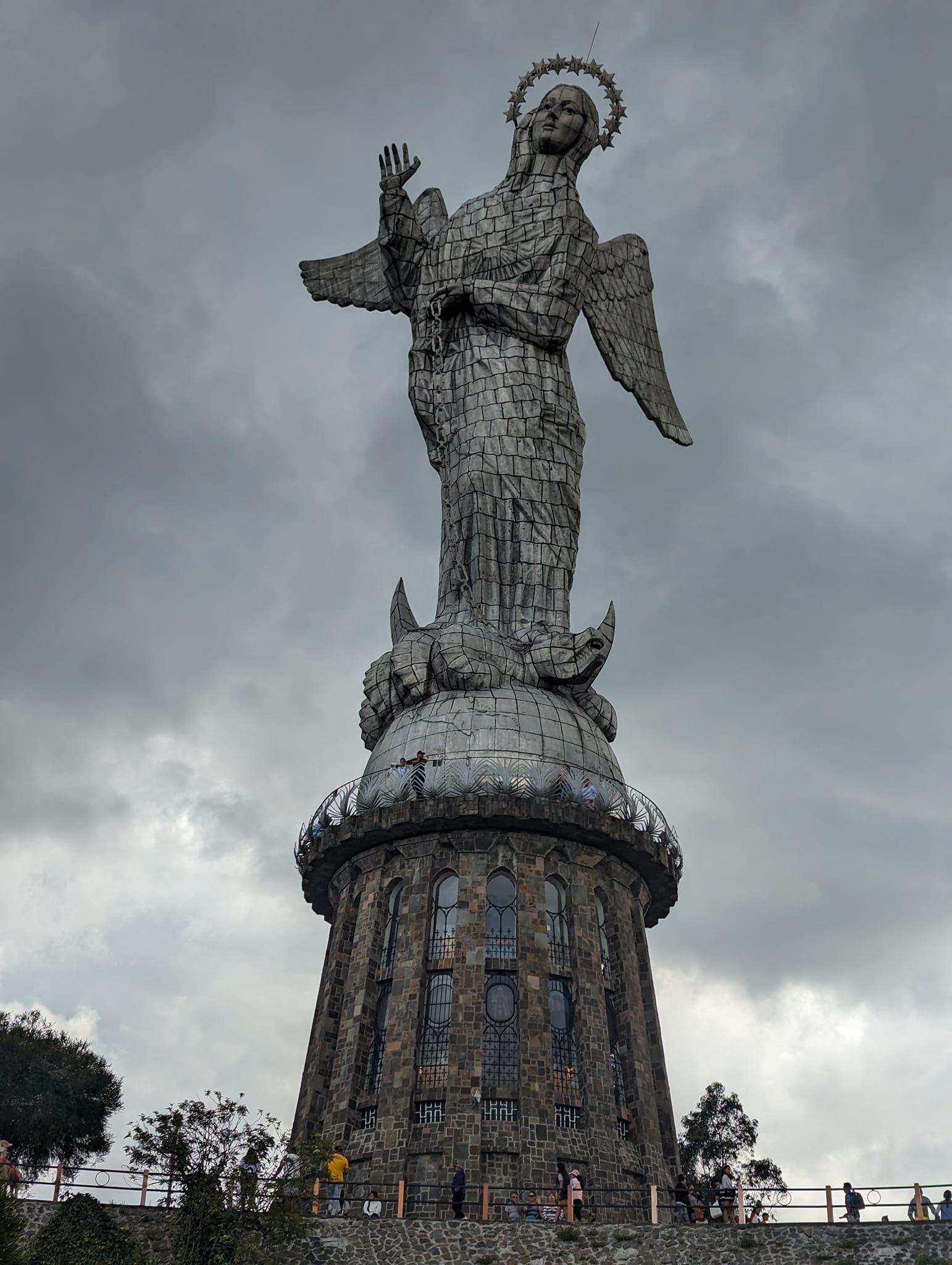
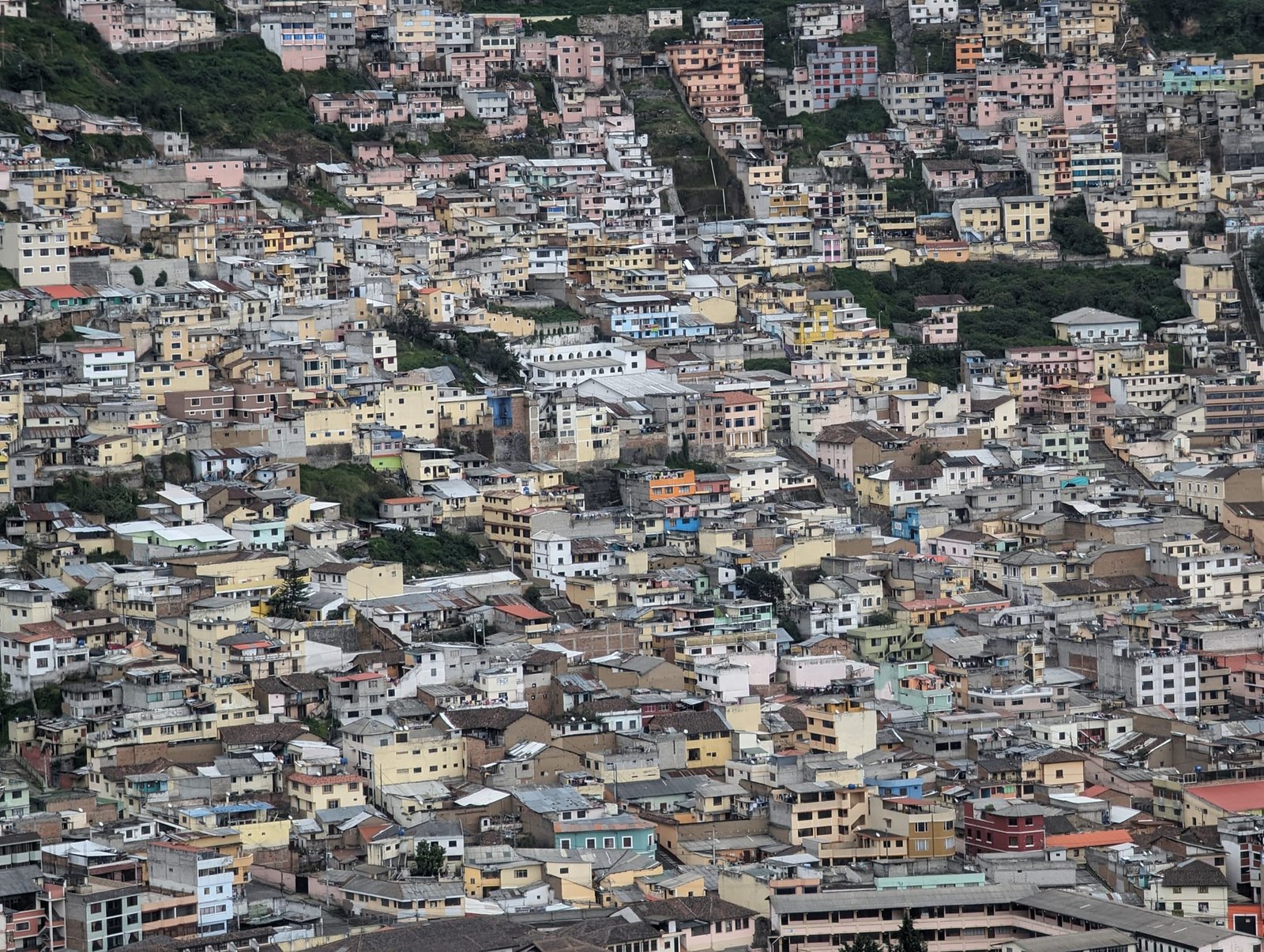
From the hill, as from the basilica, there is a panorama of the city – you can clearly see how Quito’s buildings climb high up the slopes of the surrounding mountains.
Practical information
- Currency – Ecuador uses the US dollar, so all prices are given in dollars (May 2024).
- Land border – in 2024 foreigners crossing Ecuador’s land border had to have a criminal record certificate. Get one before you leave and check the current rules.
- Safety – a state of emergency had been in force since January 2024; in May there were more police and soldiers on the streets, and nothing bad happened to us.
- Mitad del Mundo – about 20 km north of Quito, entry 5 dollars; the monument with the globe houses an ethnographic museum.
- Museo de Sitio Intiñan – a few minutes from Mitad del Mundo, entry 5 dollars; this is where the real equator runs.
- Basilica of the National Vow – interior 2 dollars, roof 4 dollars; a beautiful panorama of the city from the top.
- Virgen de El Panecillo – a 41-metre statue on the hill above the old town and another viewpoint over Quito.
- Free walking tour – a good way to get to know the old town, with a tasting of fruit, chocolate and alcohol.
- Couchsurfing – in Quito we found a great host, Edwin, who helped us plan our sightseeing and stored our big backpacks while we were in the Galápagos.
From Quito we flew to the islands for ten days – I wrote about the costs, ferries and snorkelling in the post The Galápagos on your own.
Photo gallery