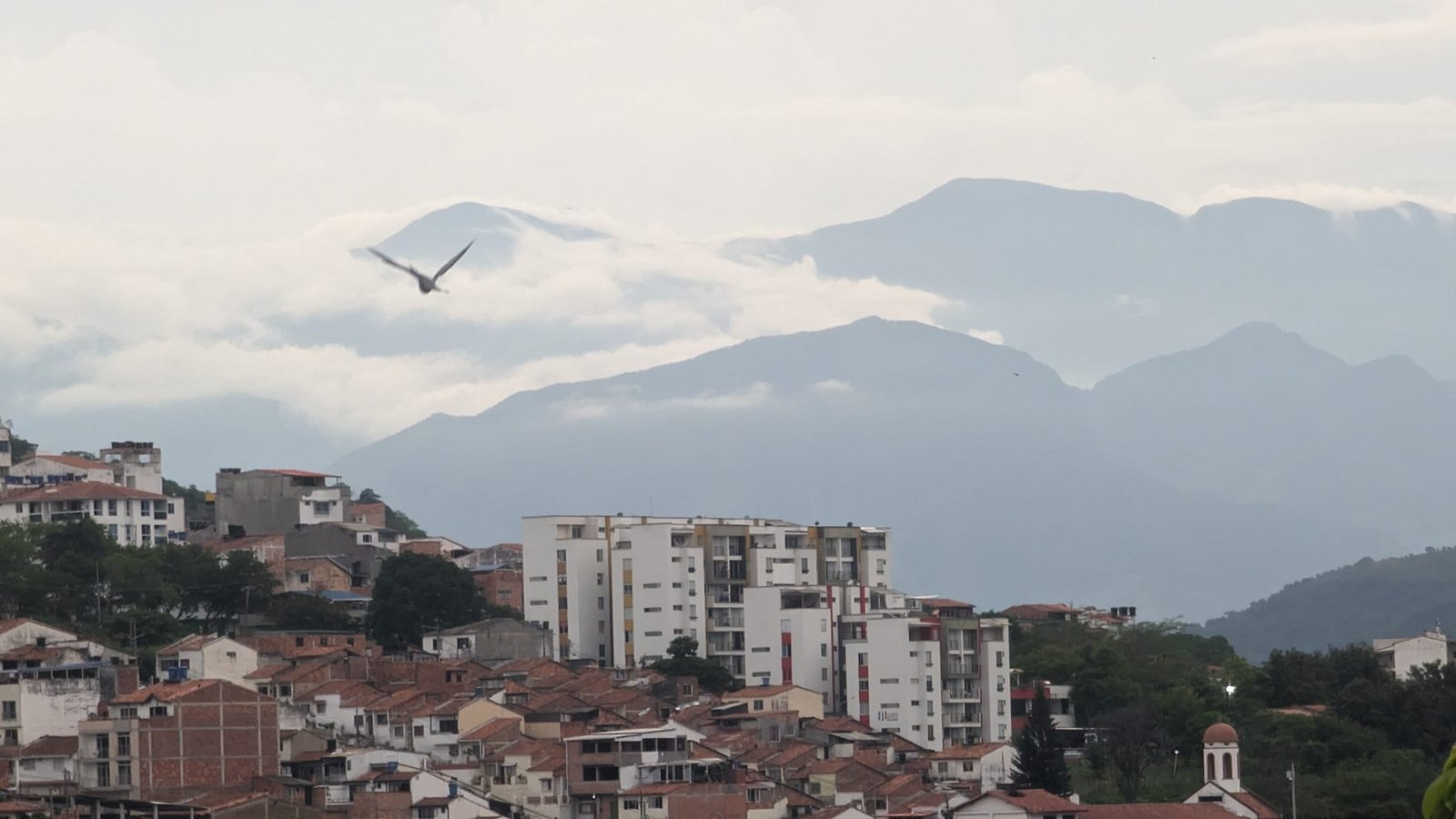
On 12 May 2024, after a few days in Santa Marta and Tayrona National Park, we left the Colombian Caribbean and headed inland – into the mountains of the Santander department, to San Gil. This small town is not called Colombia’s adventure sports capital for nothing: there is a huge choice of activities, from paragliding over the Chicamocha Canyon, through rafting on wild rivers, to canyoning and zip lines. We stayed here until 17 May and on three days in a row tried something different every day. It was the most exciting adventure of this stage of the trip, and the adventure sports in San Gil turned out to be our best memory of the whole of Colombia.
All three were a completely new experience for us. We had once done a parachute jump near Lviv, and before this we had only been rafting on calm rivers, such as the Merced in Yosemite or the Snake in Grand Teton. Besides all these “crazy” things, the area also has charming small towns – above all Barichara, considered by many to be the prettiest town in Colombia, from where an easy trail leads to Guane.
Our route:
- 12 May – travel from Santa Marta to San Gil,
- 13 May – first walk around Barichara,
- 14 May – paragliding over the Chicamocha Canyon,
- 15 May – rafting on the Río Fonce, in the evening the centre of San Gil,
- 16 May – the trail from Barichara to Guane and the zip line,
- 17 May – departure towards Bogotá.
Table of contents
- San Gil – Colombia’s adventure sports capital
- Paragliding over the Chicamocha Canyon
- Rafting on the Río Fonce
- The longest zip line in South America
- Barichara – the prettiest town in Colombia?
- On the trail from Barichara to Guane
- Practical information
- Summary
San Gil – Colombia’s adventure sports capital
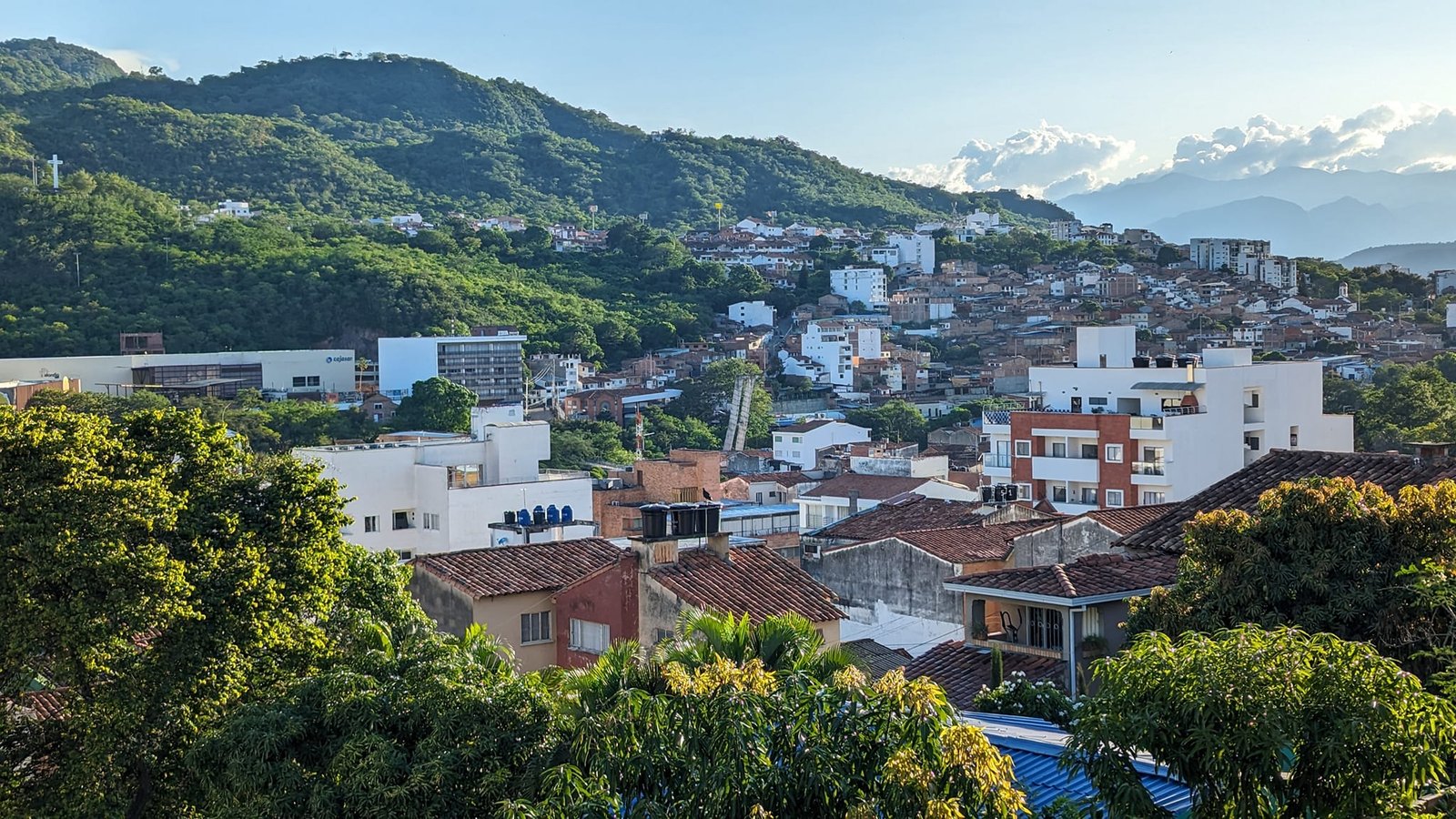
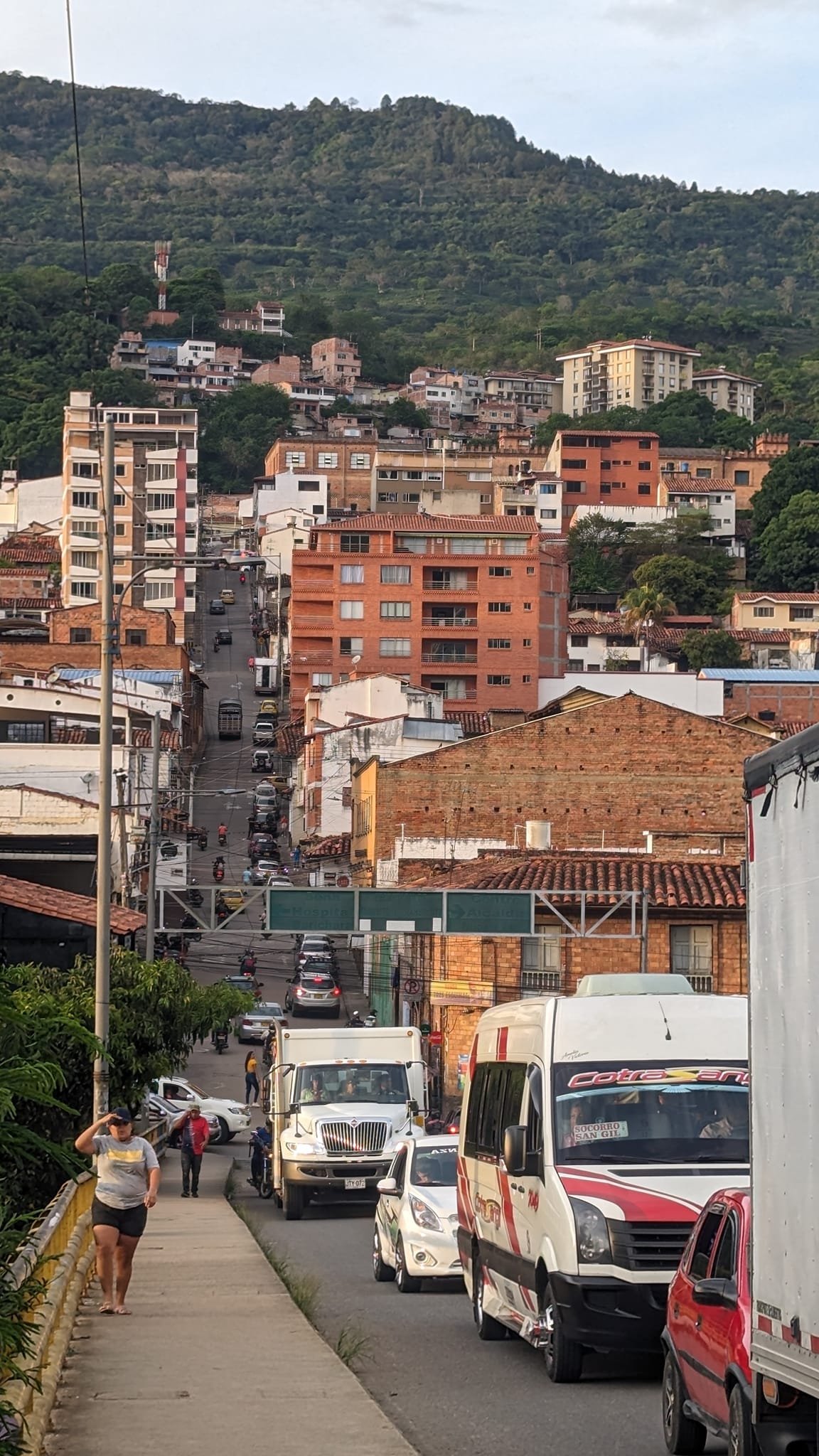
San Gil lies on the Fonce river, and its houses climb the green hills all around. People come here above all for the adrenaline. There are loads of offers – tours are organised both by agencies and by hostels, so it is worth comparing a few before you choose. We asked about canyoning, among other things, but in the end we went for paragliding, rafting and the zip line.
In the evenings we strolled around the centre. On the main square stands the stone Santa Cruz Cathedral – beautifully lit at night, and inside with a gilded high altar.
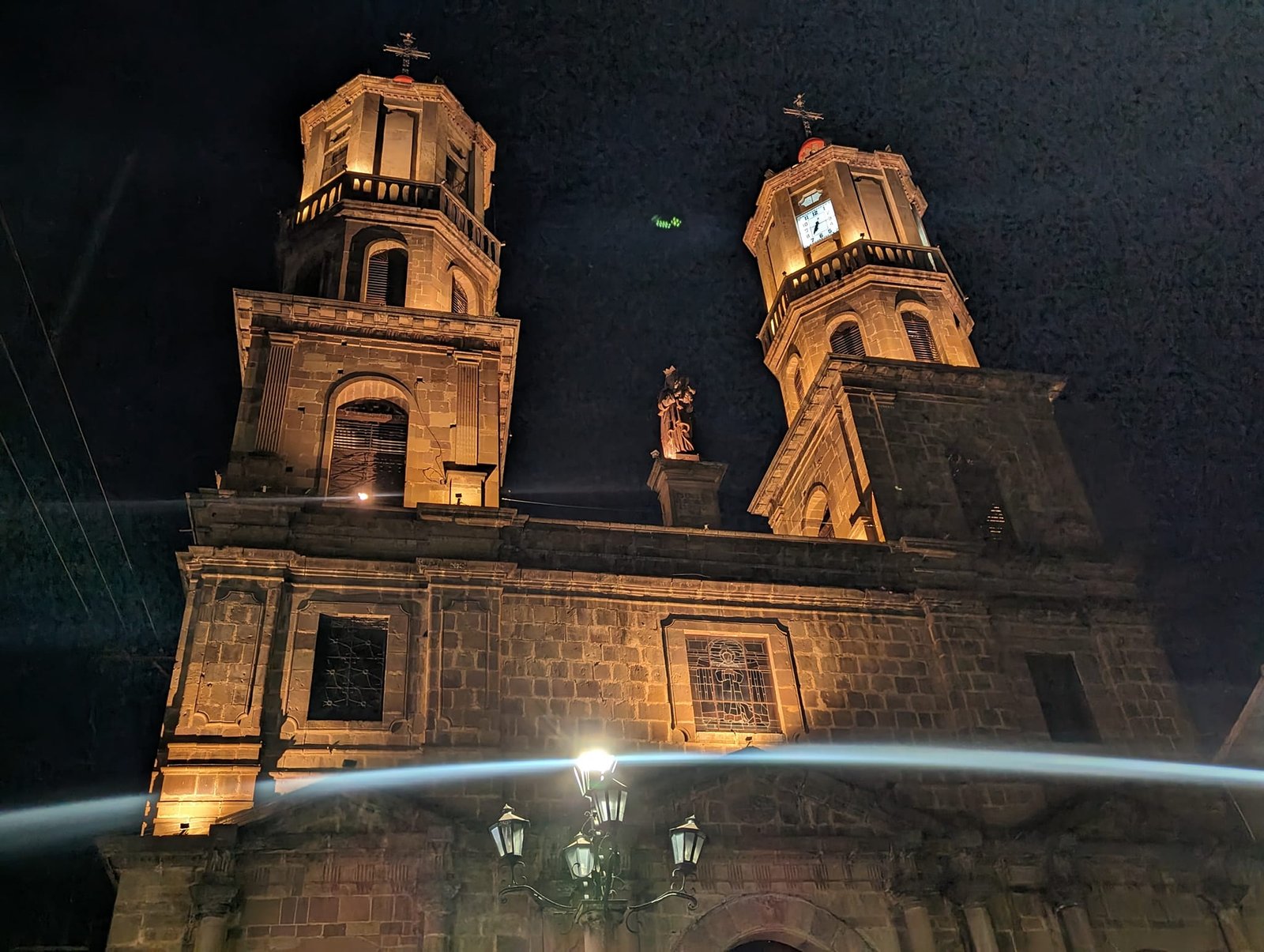
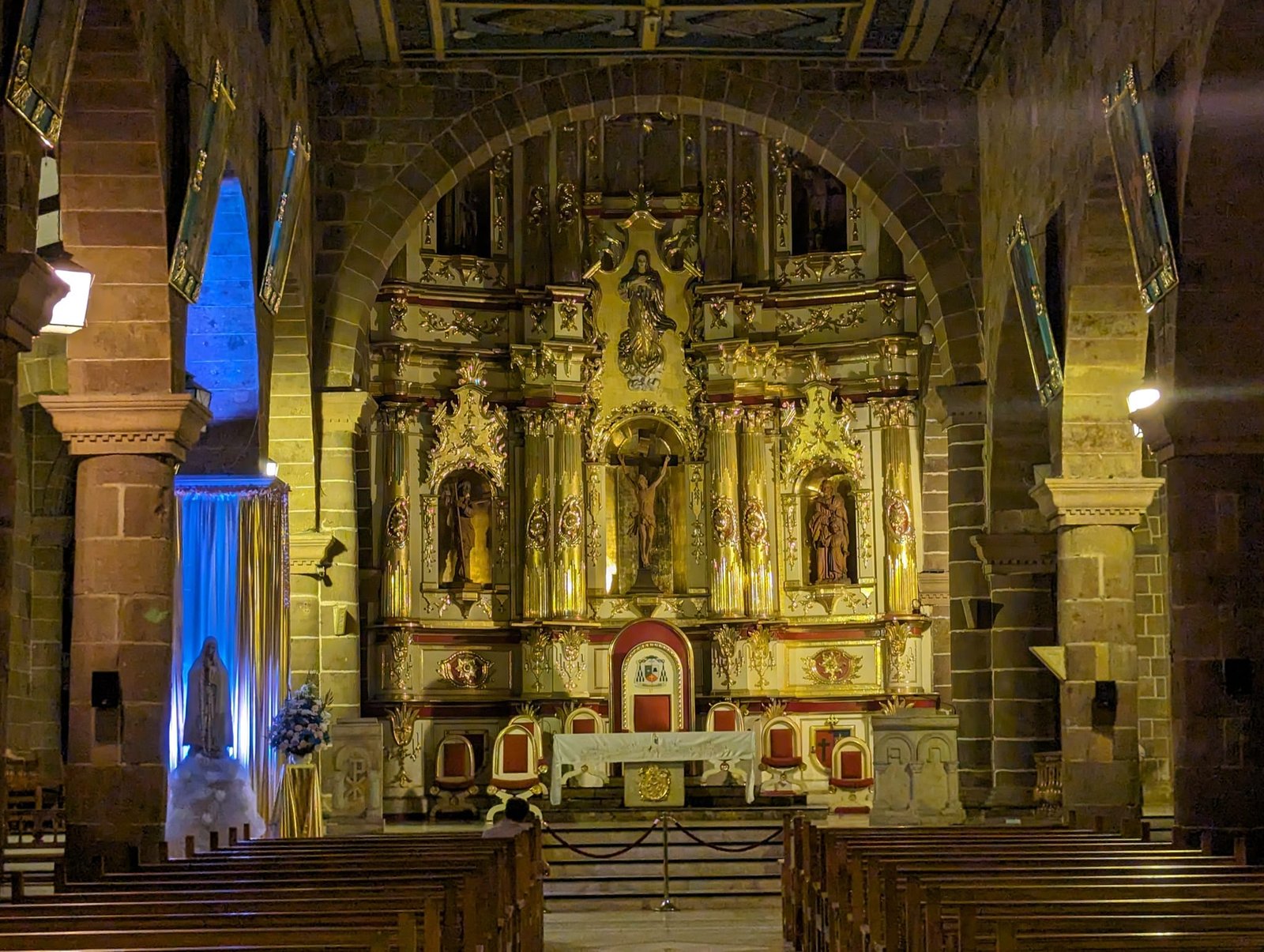
San Gil was founded in 1689 as the “Villa de Santa Cruz y San Gil de la Nueva Baeza” – the “San Gil” part was added to win the favour of Gil de Cabrera y Dávalos, president of the Real Audiencia in Bogotá. The full name can still be seen on a monument bearing the town’s coat of arms. The cathedral dates from 1791 (it was remodelled in 1965), and in 2004 the department authorities declared San Gil the tourism capital of Santander. Plenty of colonial houses with wooden balconies have survived in the centre.


Paragliding over the Chicamocha Canyon
First up was a paragliding flight over the Chicamocha Canyon – the first of our lives. The agencies offered us similar prices and even half an hour in the air, with the whole trip including transport taking a few hours. In the end we chose the offer from our hostel, because we got a discount: 190,000 COP (about €45) per person, including transport. It took about an hour to drive to the take-off site.
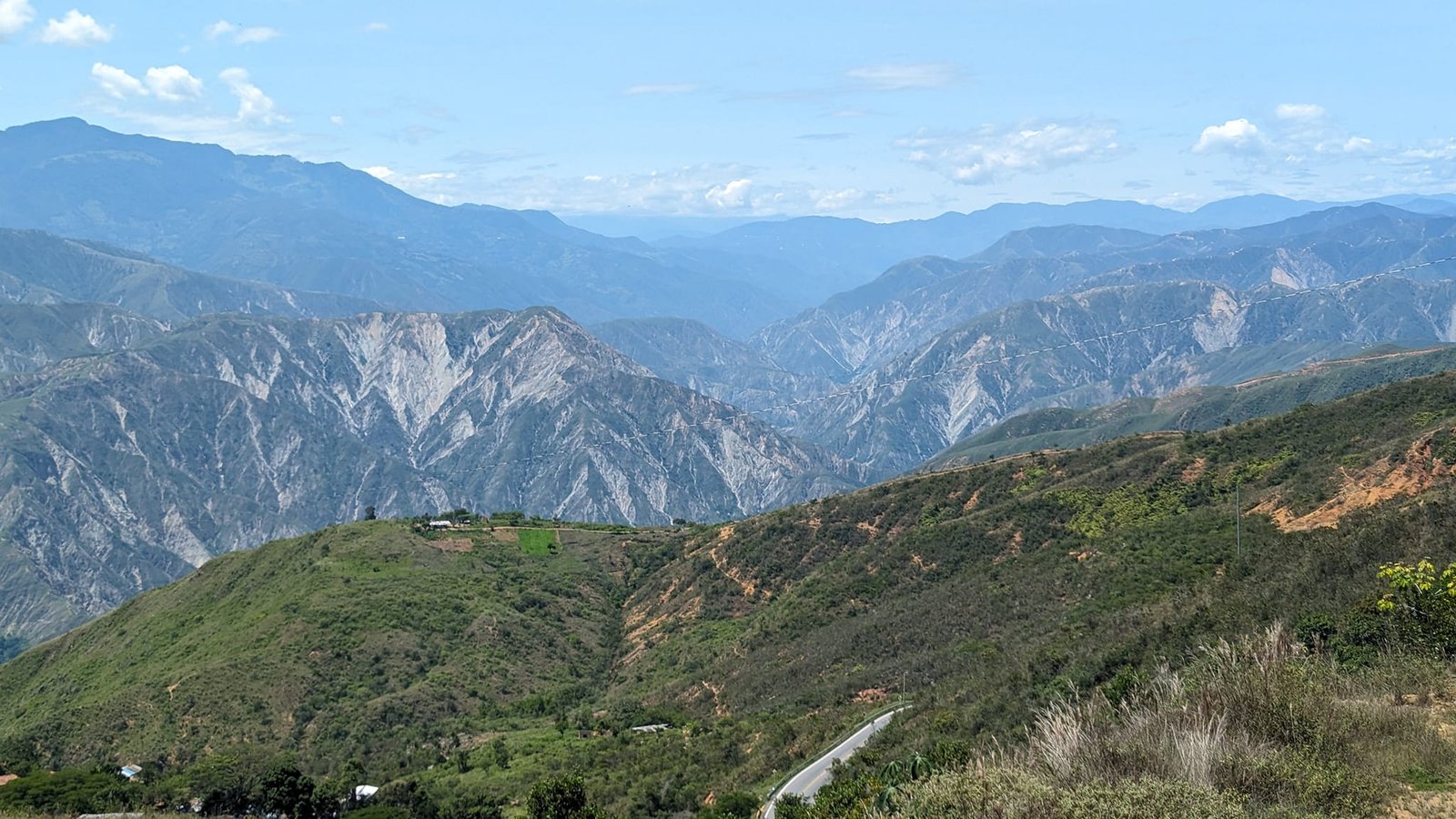
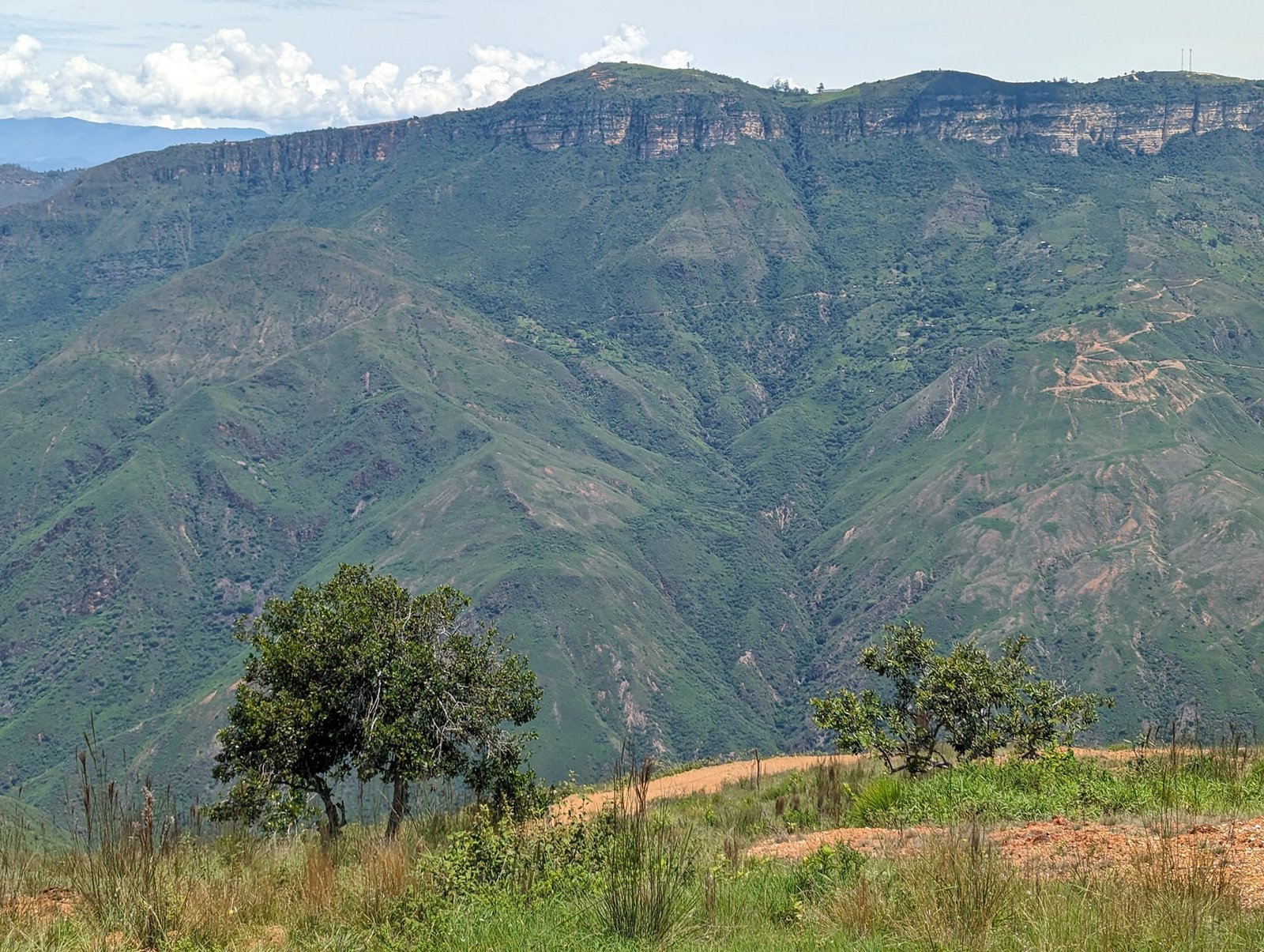
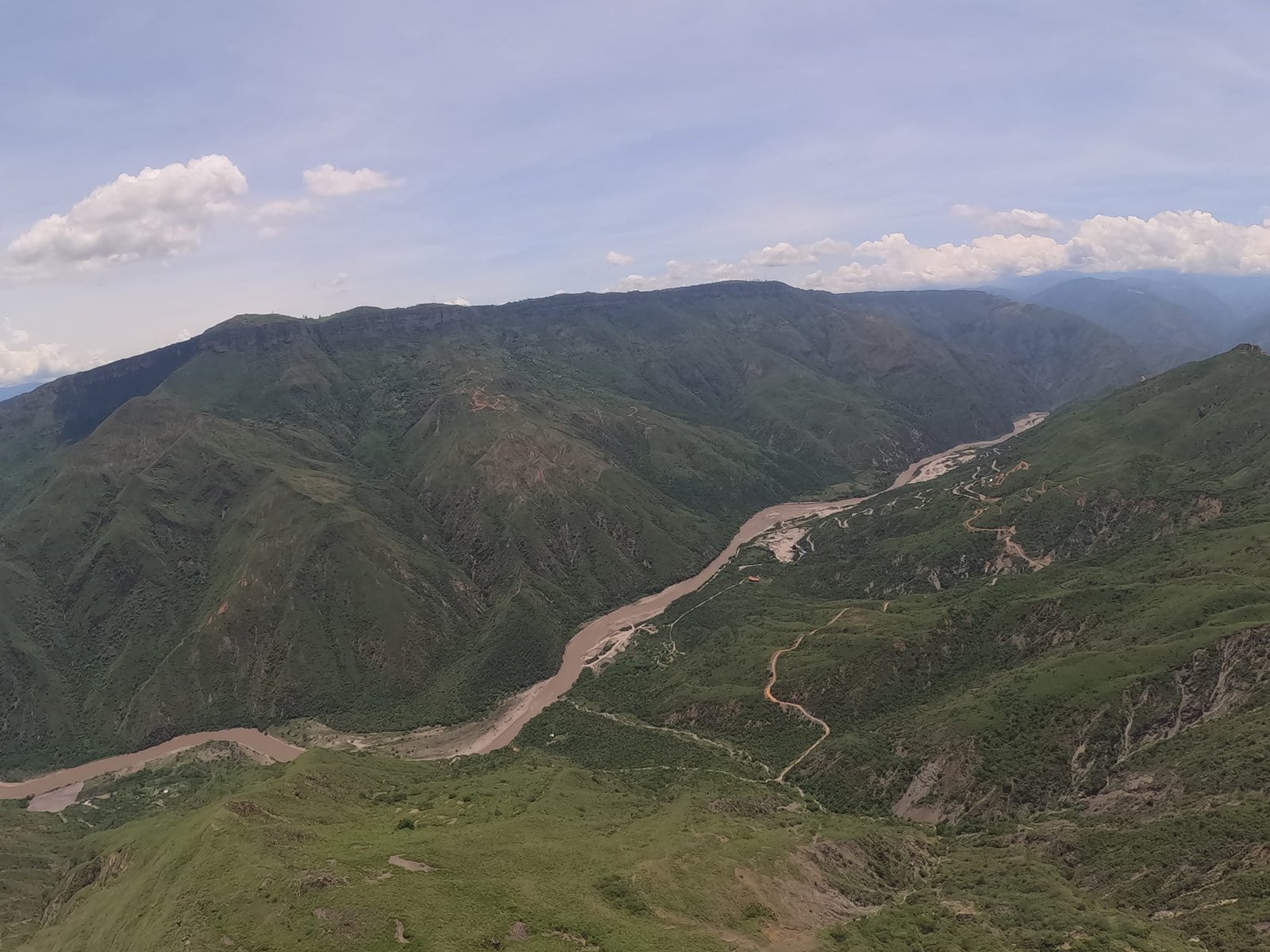
The canyon was carved by the Chicamocha River. It stretches for about 227 km, mostly through the Santander department, and is up to about 2000 m deep – it is considered one of the largest and deepest canyons in the world. In 2009 it was among the 77 places shortlisted in the vote for the New Seven Wonders of Nature.
The take-off site is a patch of slope covered with tarpaulins, with a view of the jagged walls of the canyon. We had one instructor, so we flew one after the other – first Patrycja, then me. At take-off all you have to do is get a good run-up, and from the moment you leave the ground the instructor steers everything.
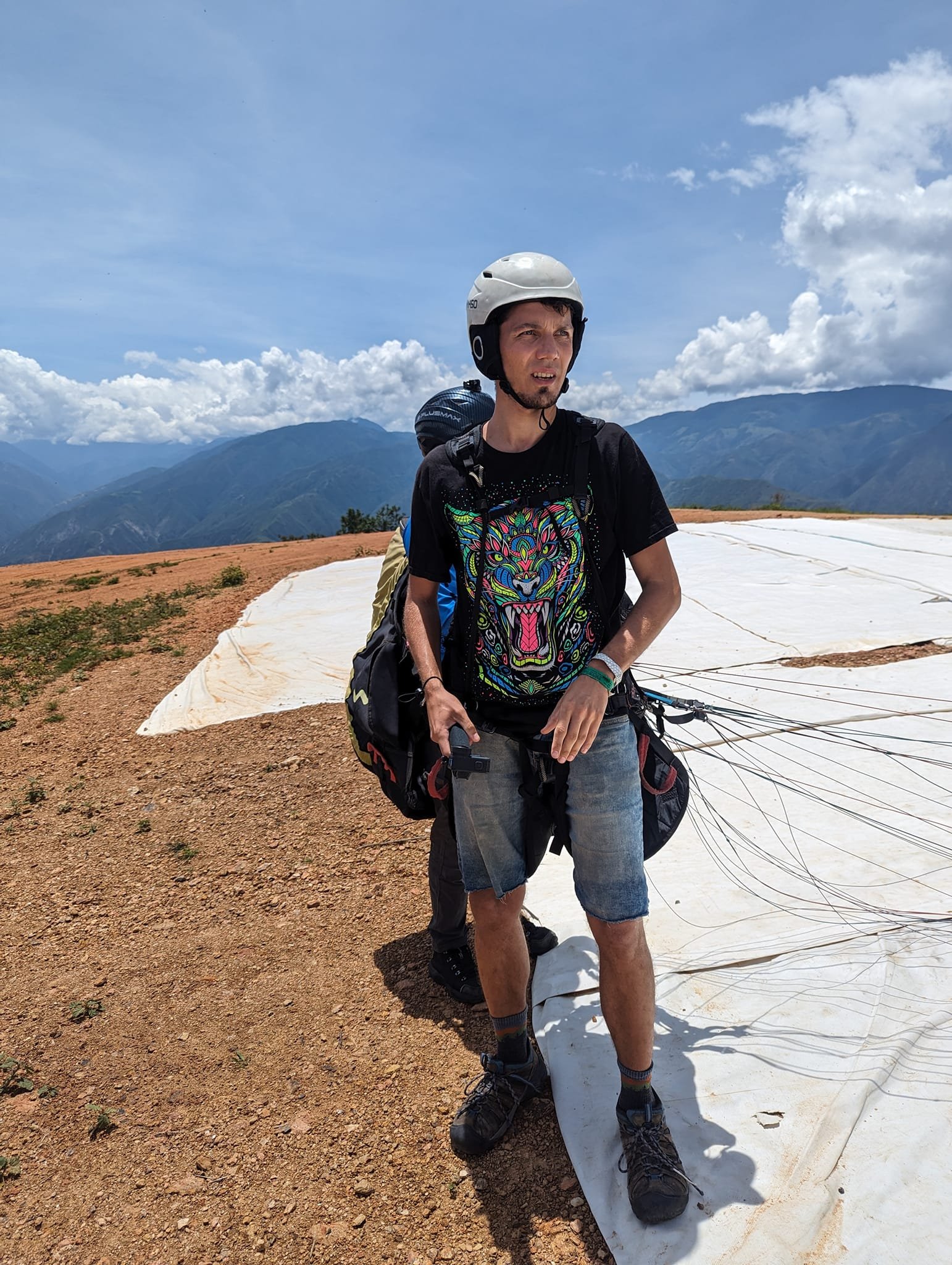
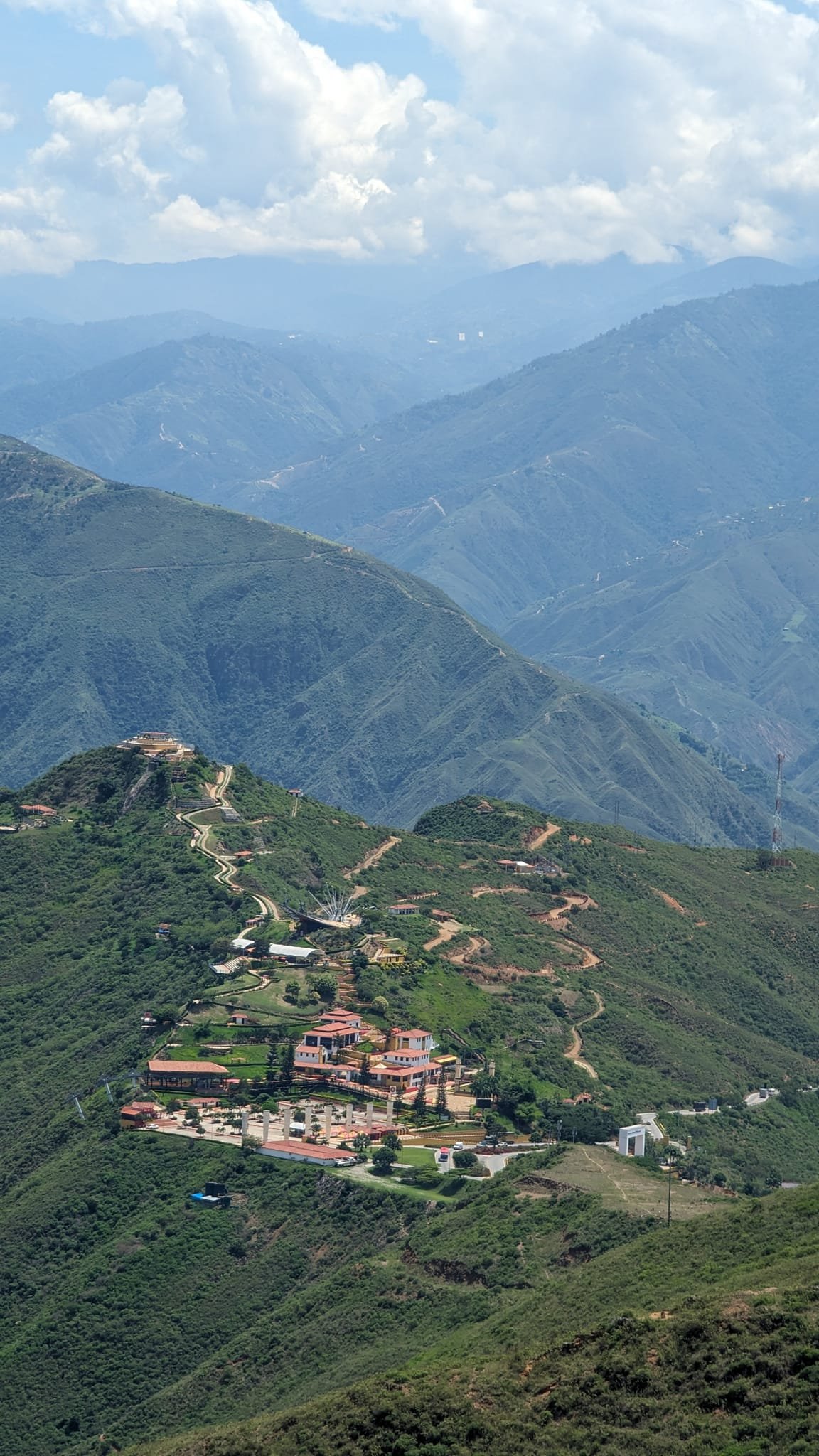
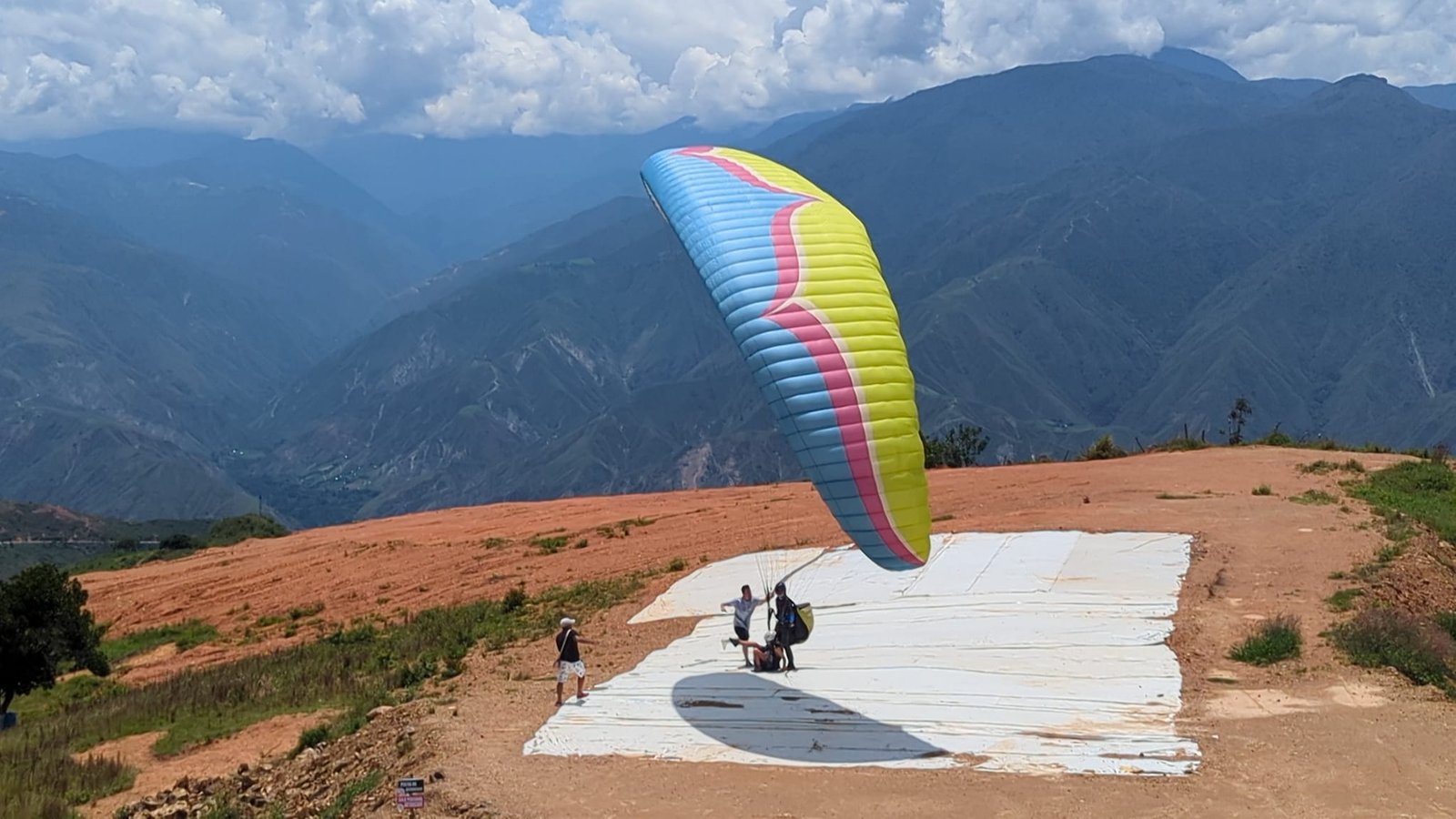
The flight was very calm. The wind was light, with practically no stronger gusts, so we could concentrate on the views: green ridges, winding paths on the slopes and the river flowing along the bottom of the canyon. The flight itself lasted a dozen or so minutes. The only downside? Most of the time we were going round in circles.
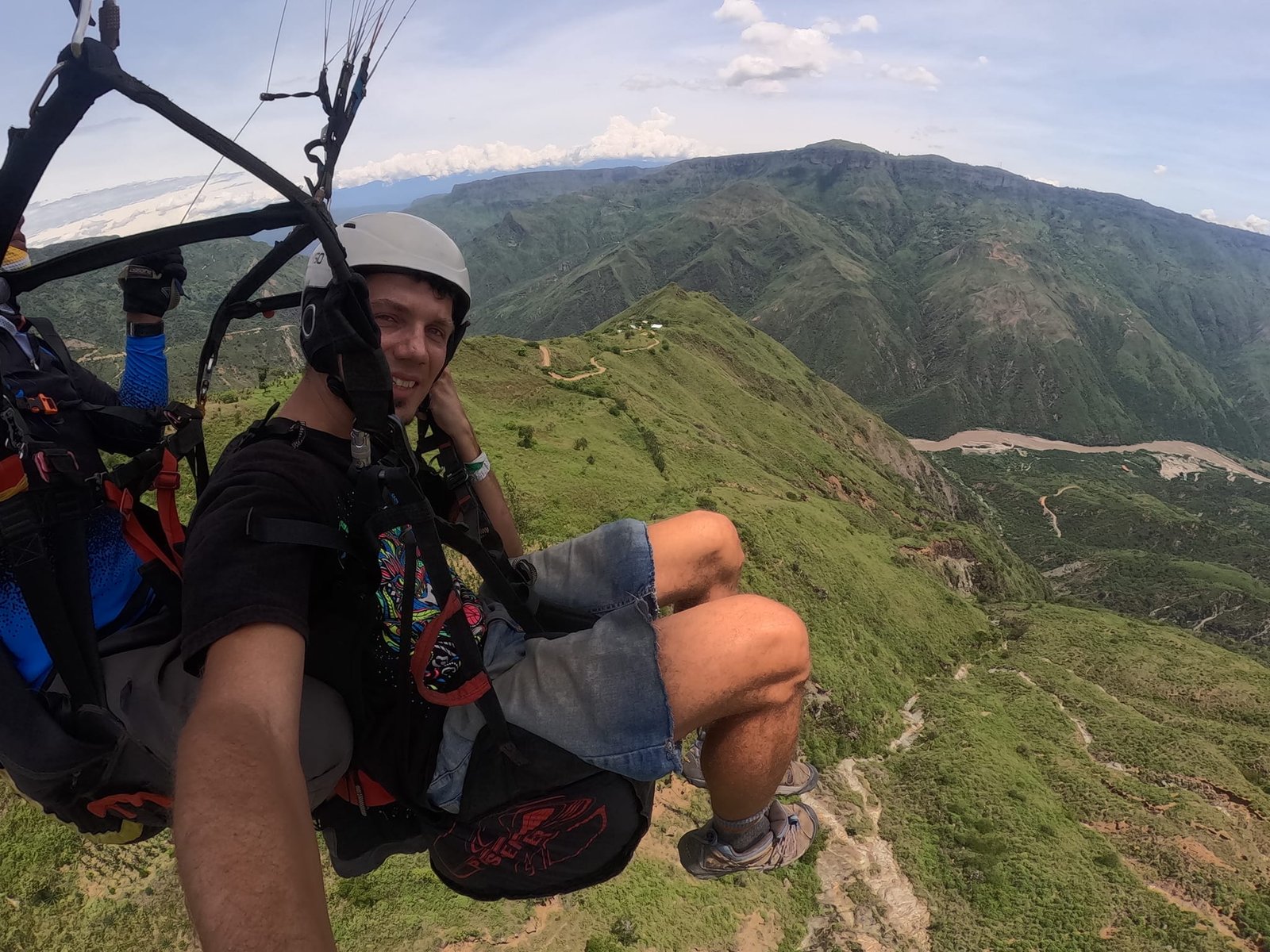
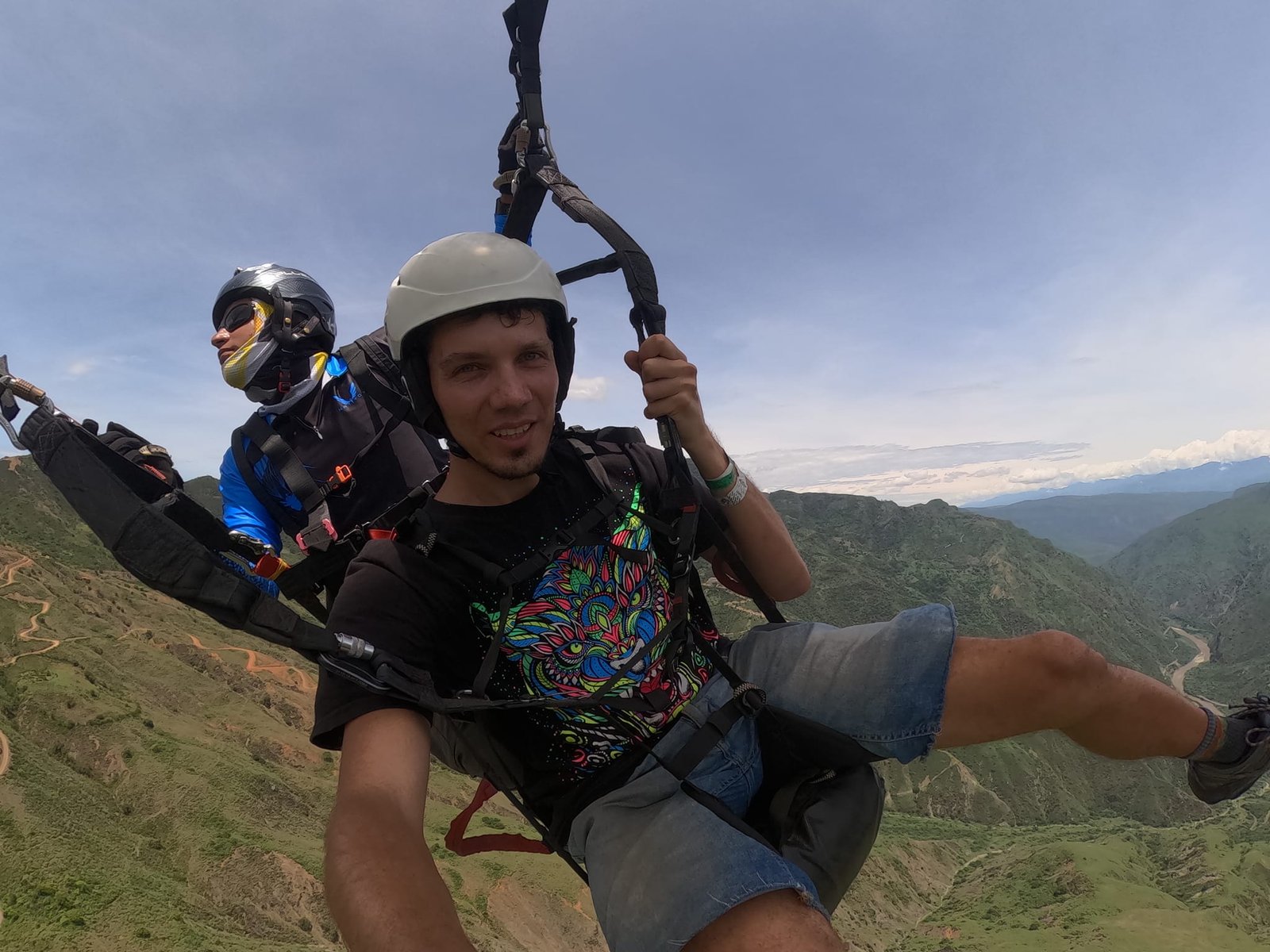
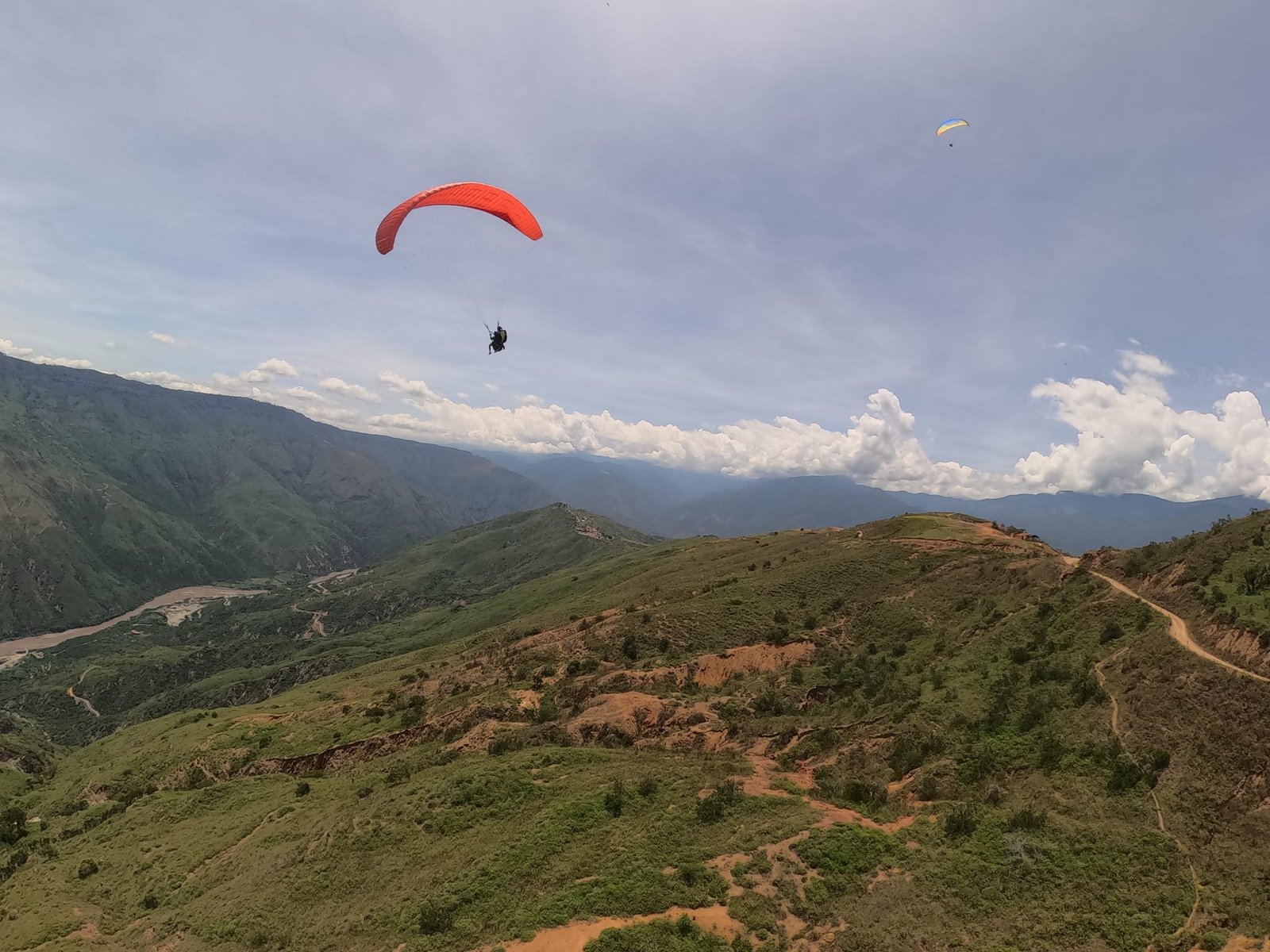
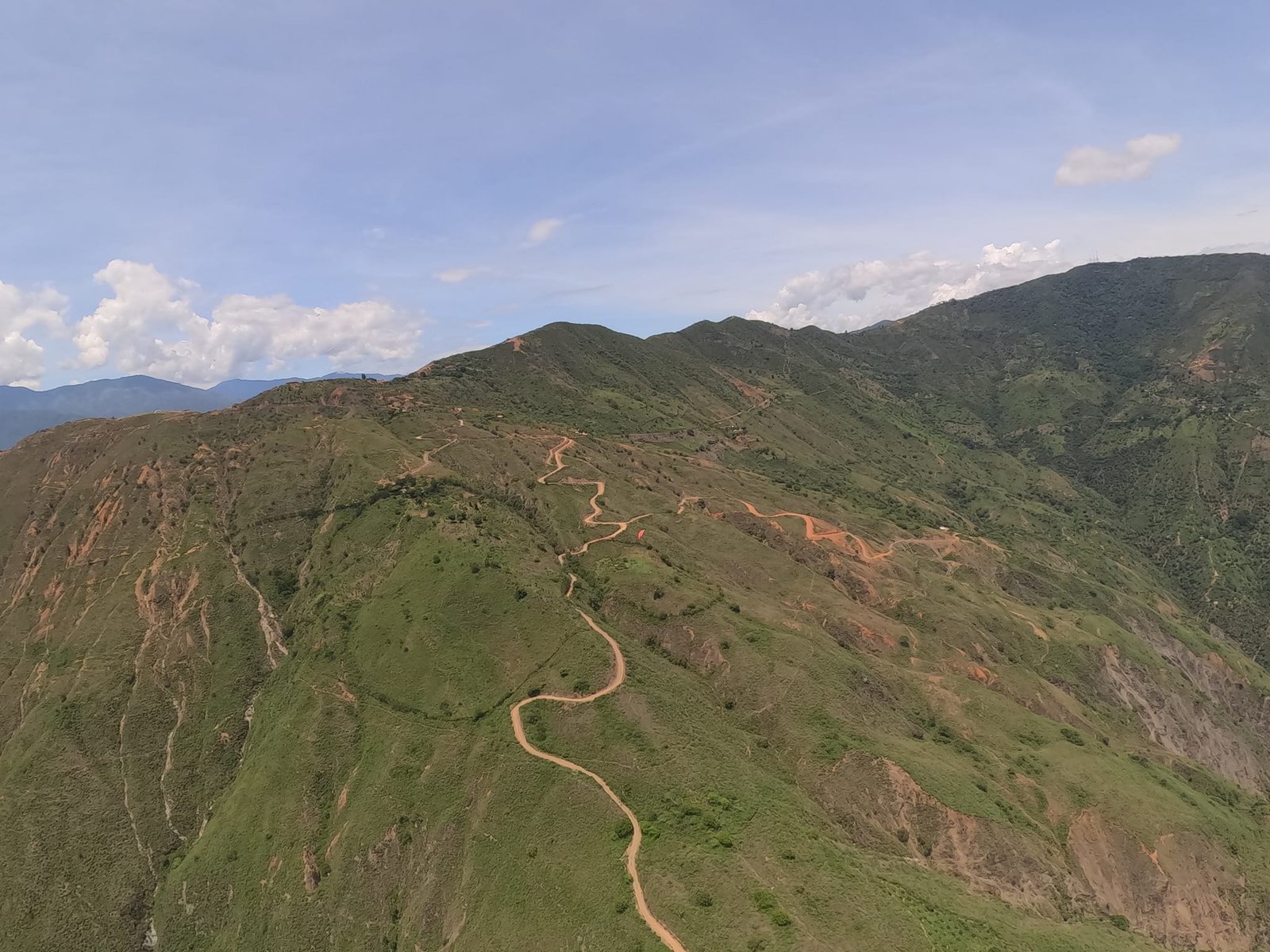
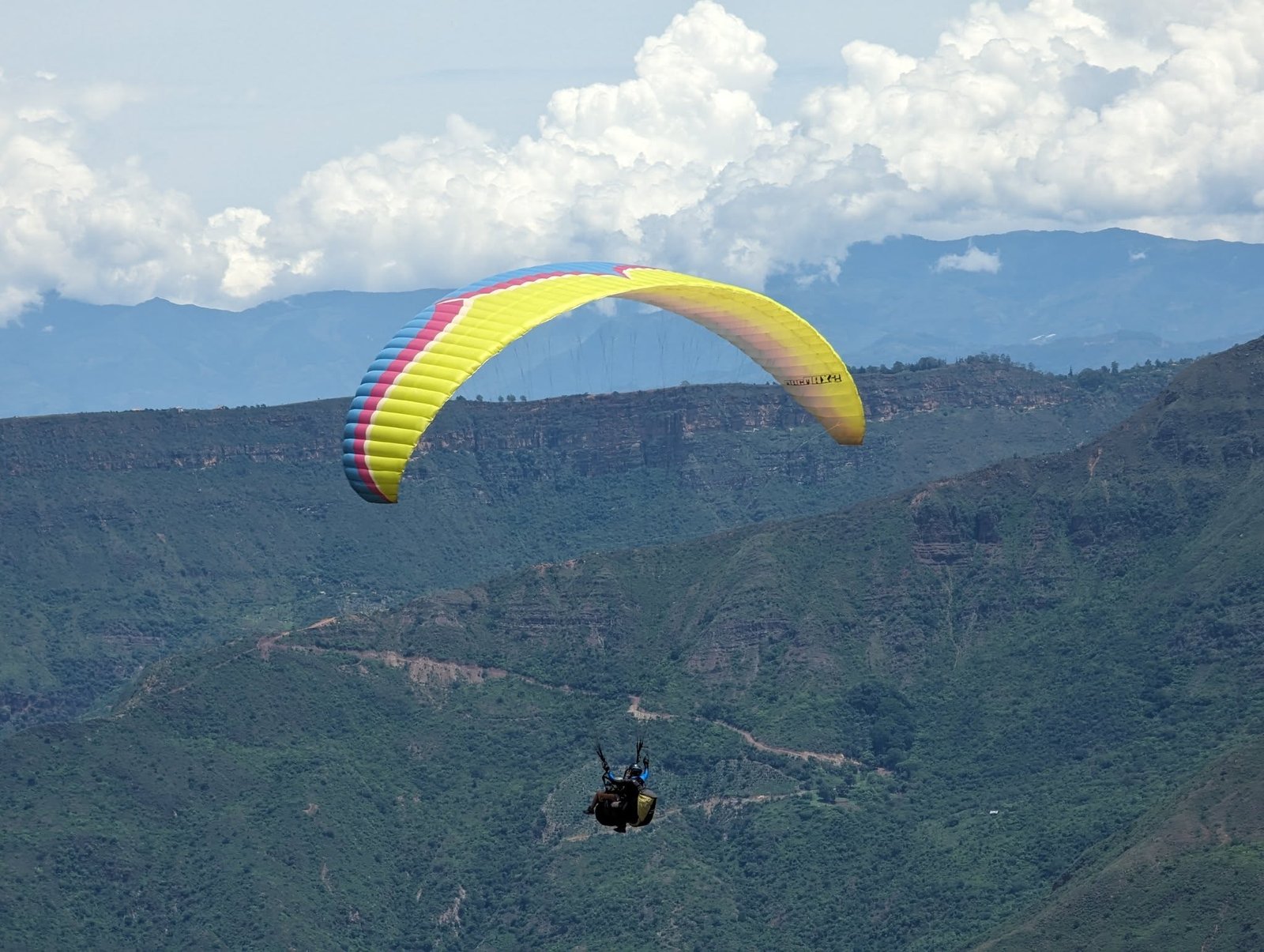
At the same time several other paragliders were circling over the canyon, so there was plenty to watch from the ground too.
Rafting on the Río Fonce
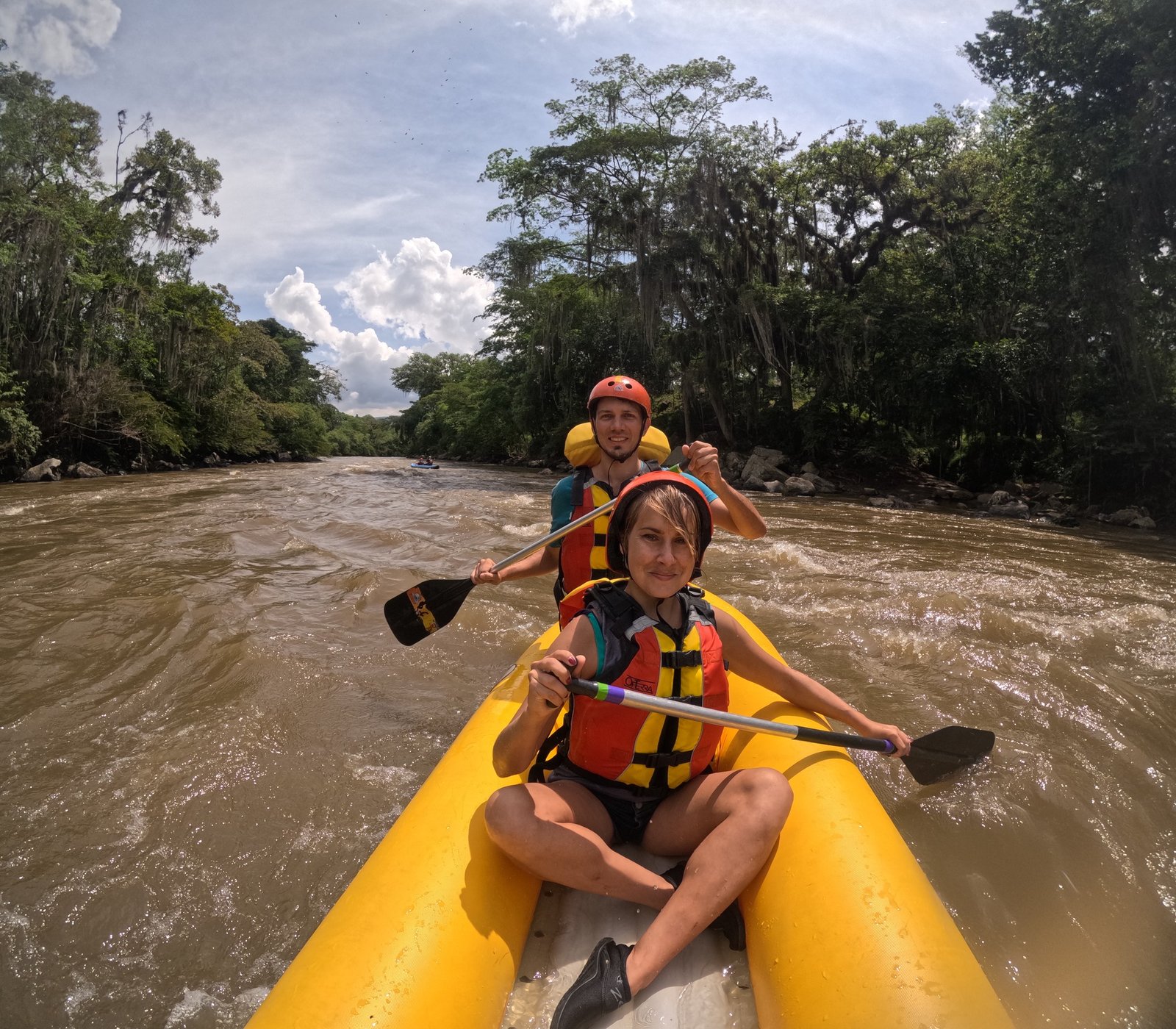
The next day it was rafting’s turn. We were aiming for the Suárez river (class 4–5), but although we tried to book a trip twice, it was cancelled on those days because the water level was too high. That is how we ended up on the Río Fonce – a class 3 river, at almost a quarter of the price: 45,000 COP (about €11).
Honestly? There was still plenty of excitement, and we regularly hit high waves. The trip lasted more than an hour. We paddled in a three-person inflatable kayak with an instructor at the back – on the Suárez it would have been a bigger raft.
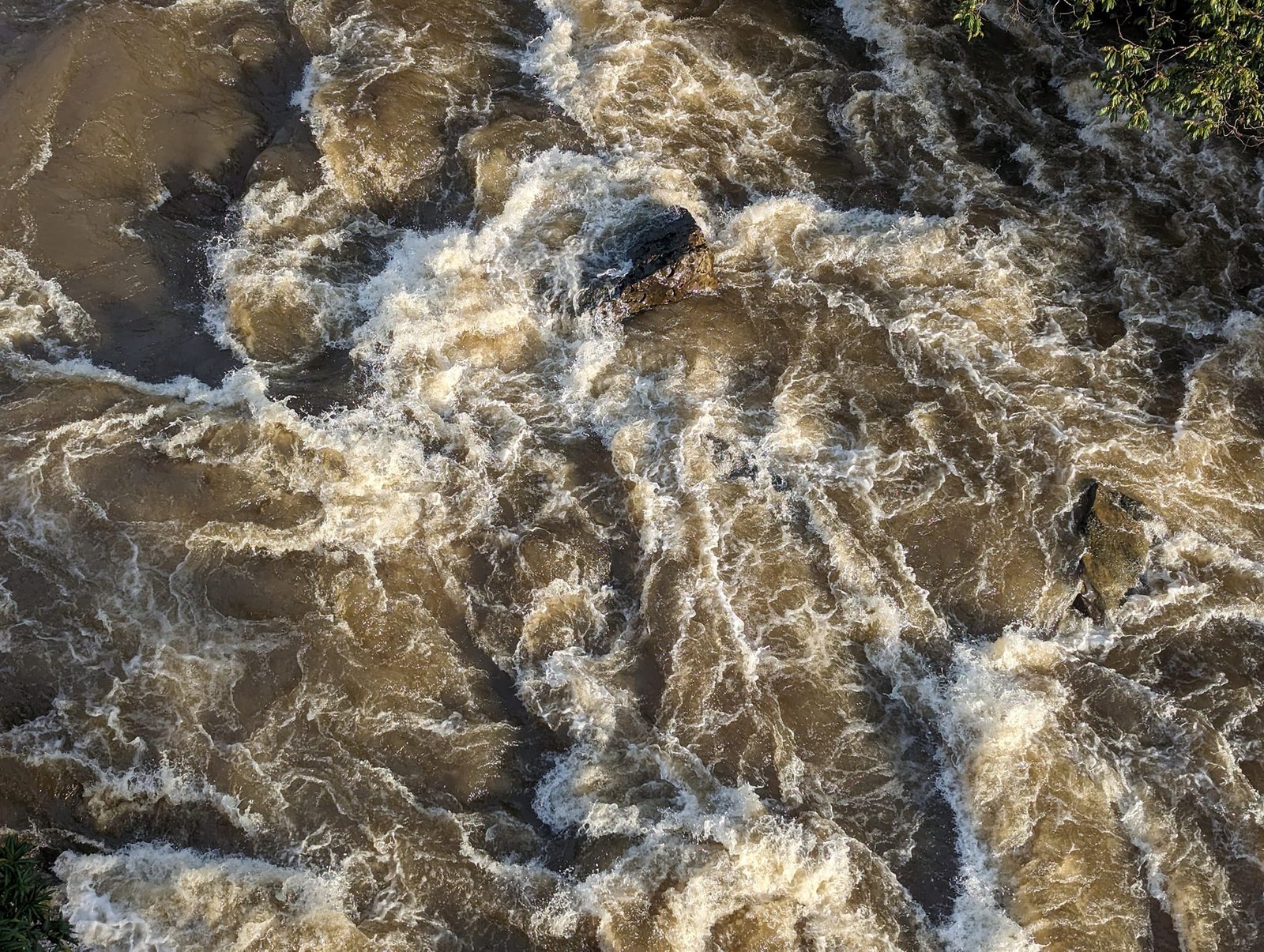
In the evening, from a bridge in San Gil, we watched the swollen Fonce churning between the rocks.
The longest zip line in South America
The third attraction was a zip line said to be the longest in South America: it is 1100 metres long and 170 metres high. The whole adventure took about 20 minutes – putting on the gear, the ride one way, the walk up to a higher platform and the ride back. It cost 40,000 COP (about €9).
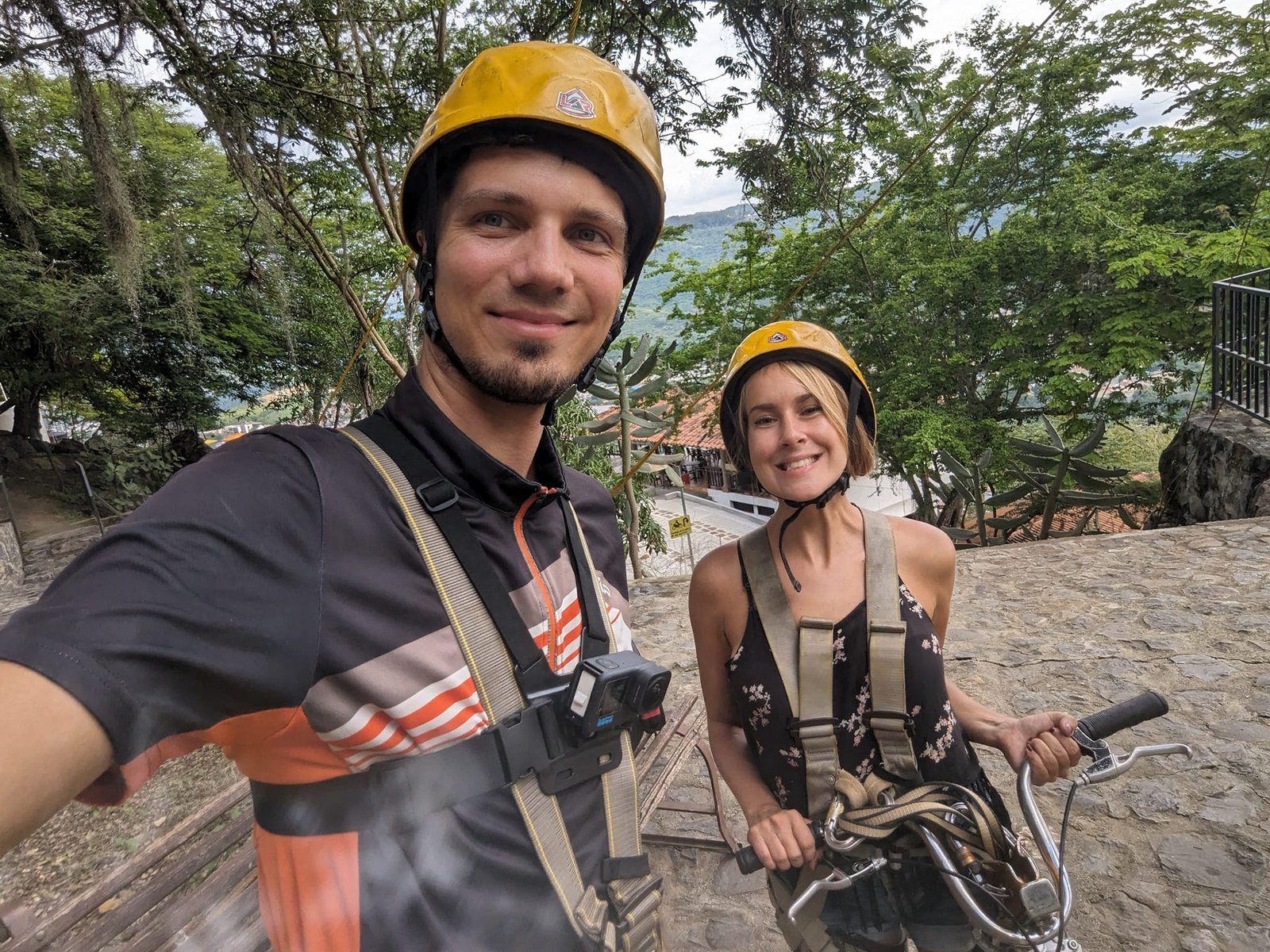
From a distance it looks scarier than it turned out to be in reality. Patrycja, being lighter, went down more slowly than me.
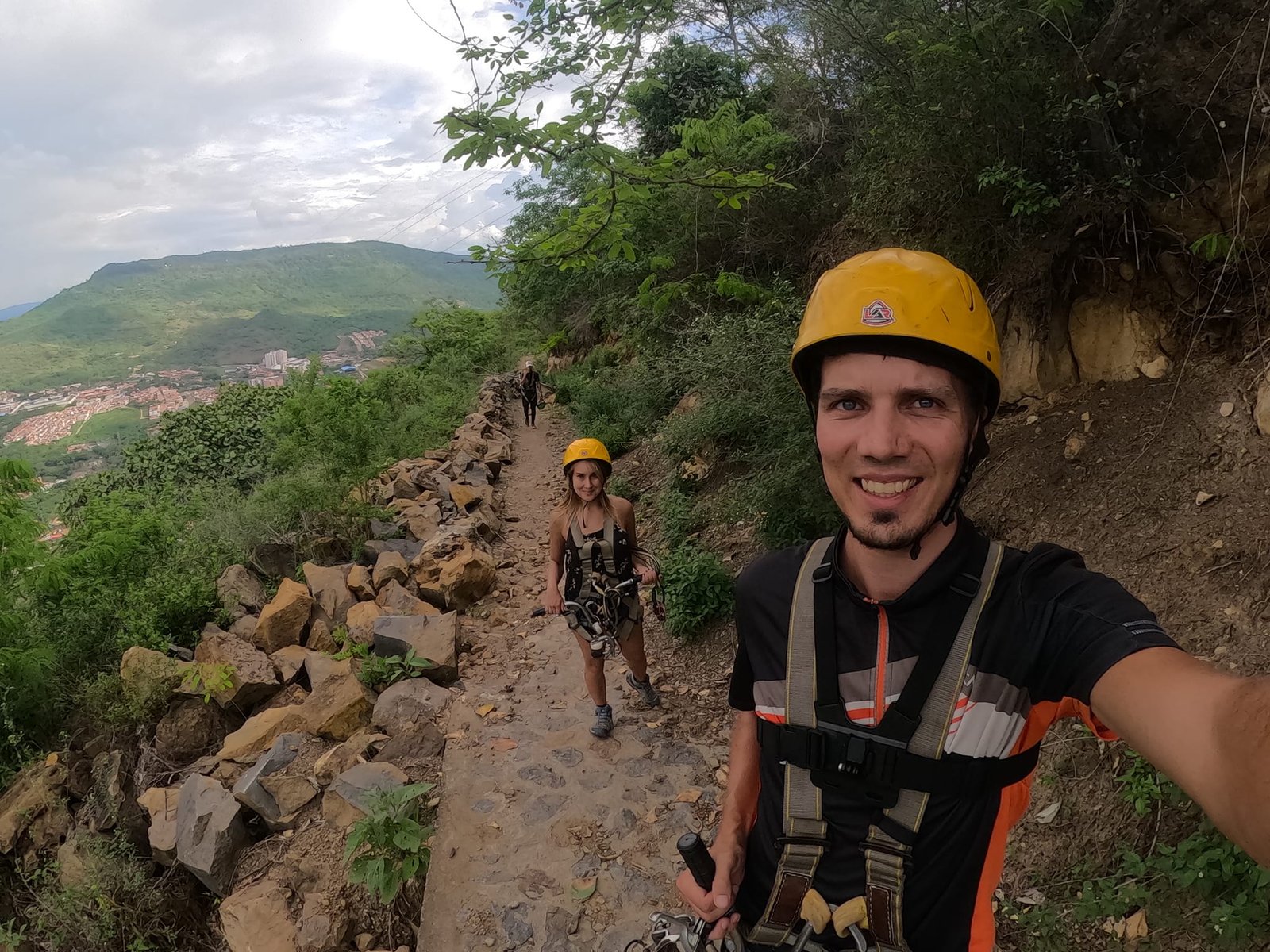
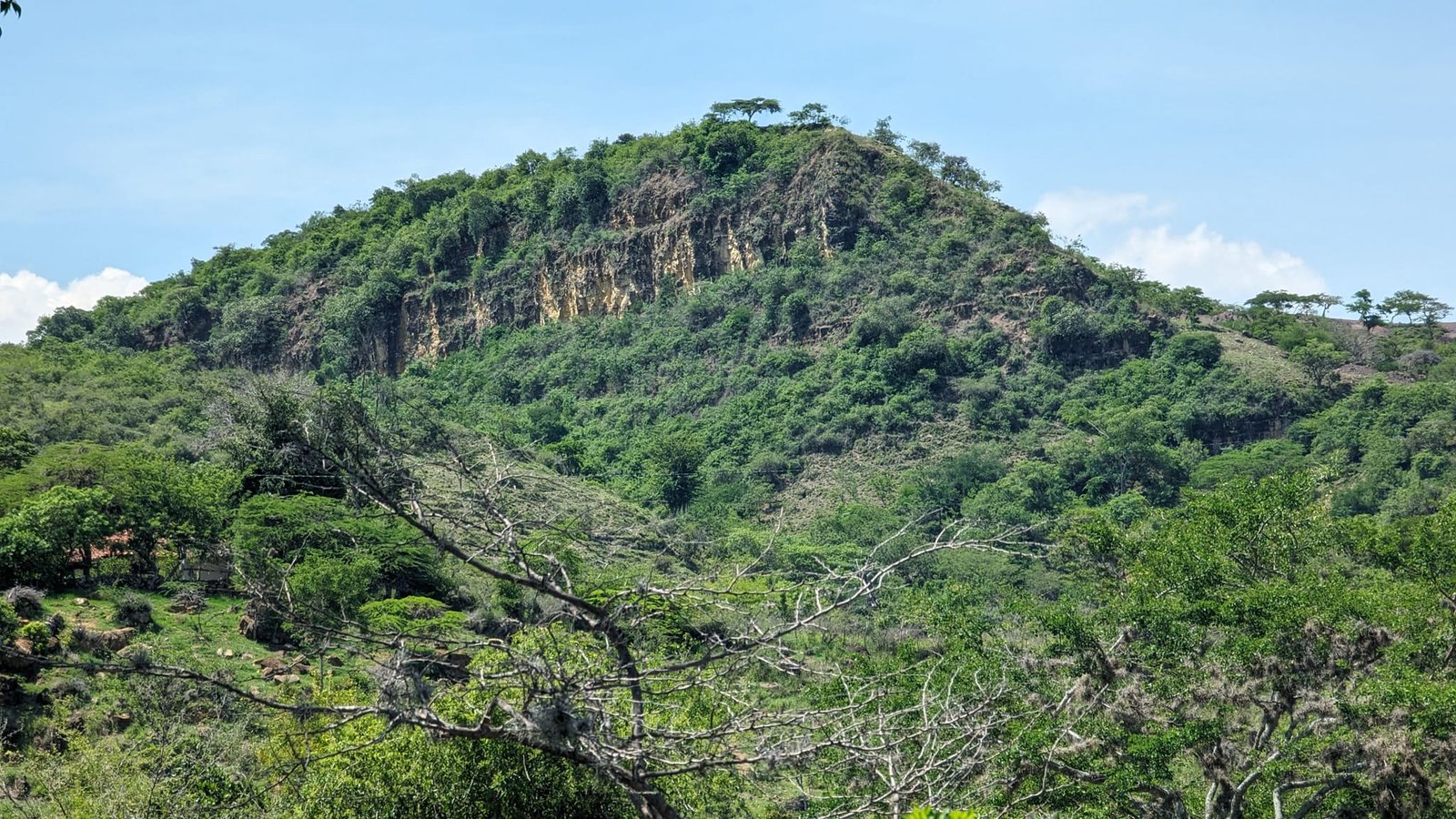
The zip line is in the Peñón Guane park on a hill just outside San Gil. Its steel cables cross a wooded gorge, and from the platforms you can see the whole town in the Fonce valley.


Barichara – the prettiest town in Colombia?
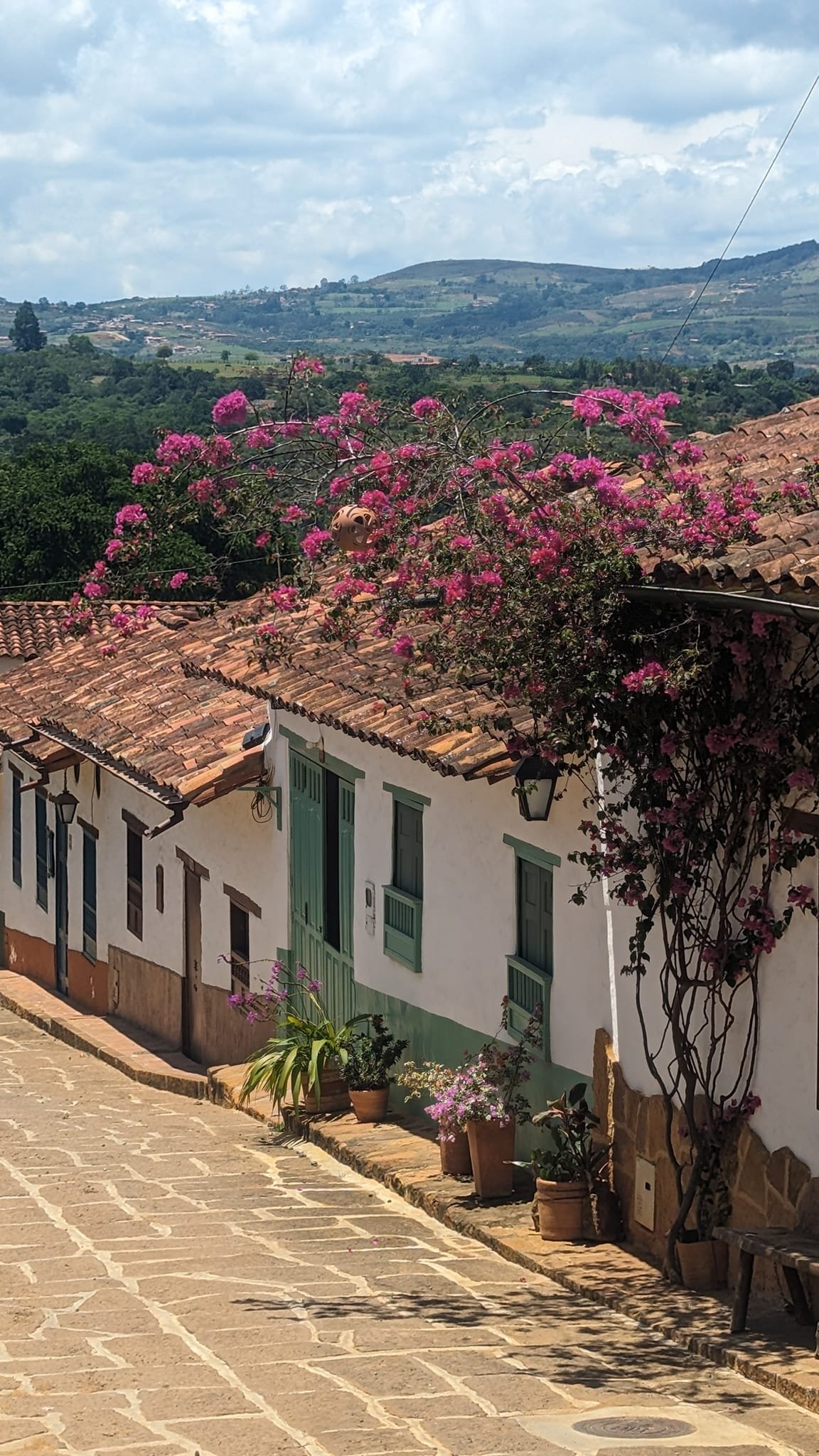
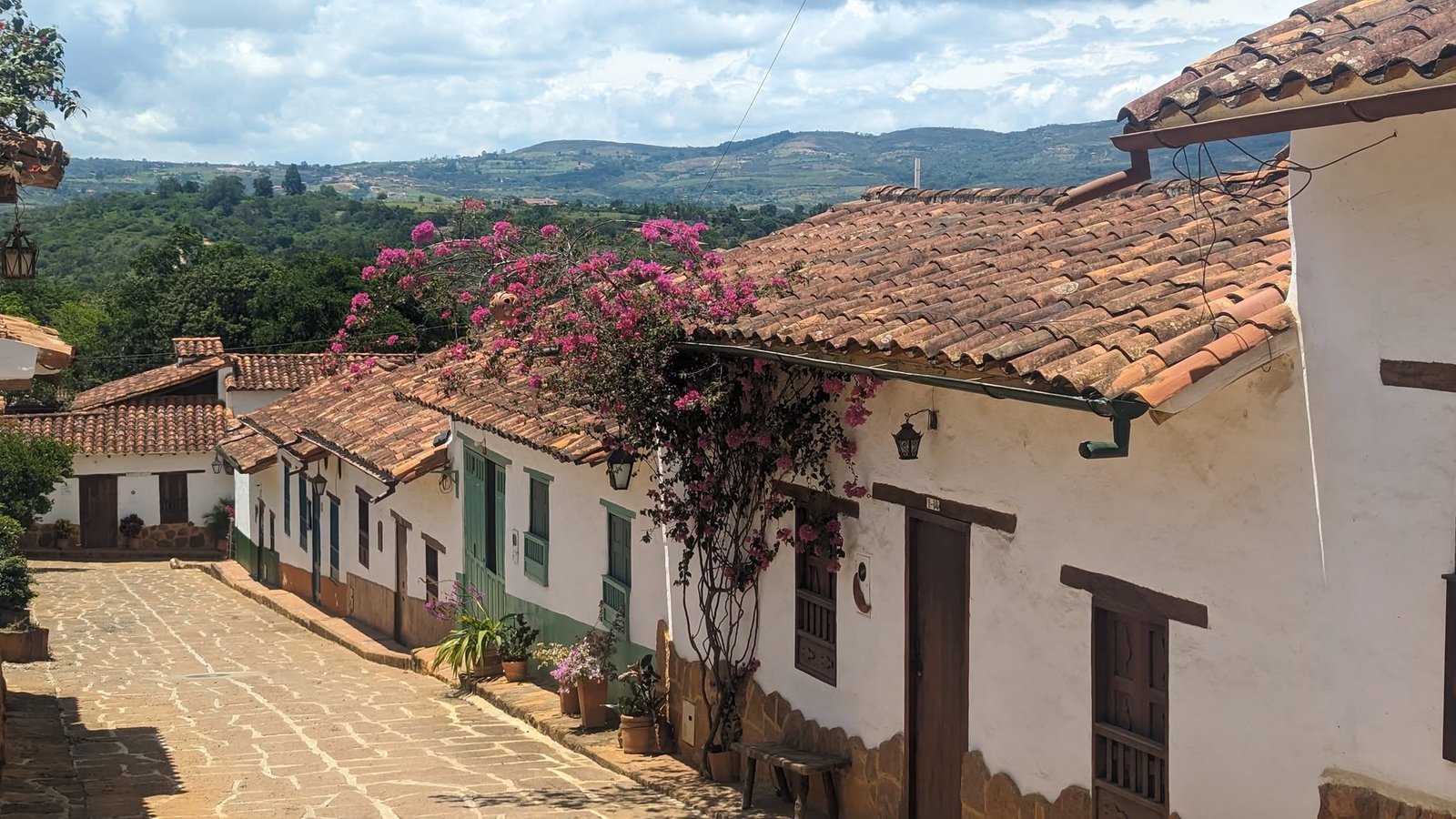
Barichara is considered by many to be the prettiest town in Colombia. We came here from San Gil twice – for a walk and before setting off on the trail to Guane. There is not much to do here, but you do not need to: it is enough to wander along the stone streets between whitewashed houses with red-tiled roofs and bougainvillea in bloom.
Colourful chivas wait on the square – buses that take tourists around the area, including to Guane. After our walk we sat down in a café on one of the side streets.
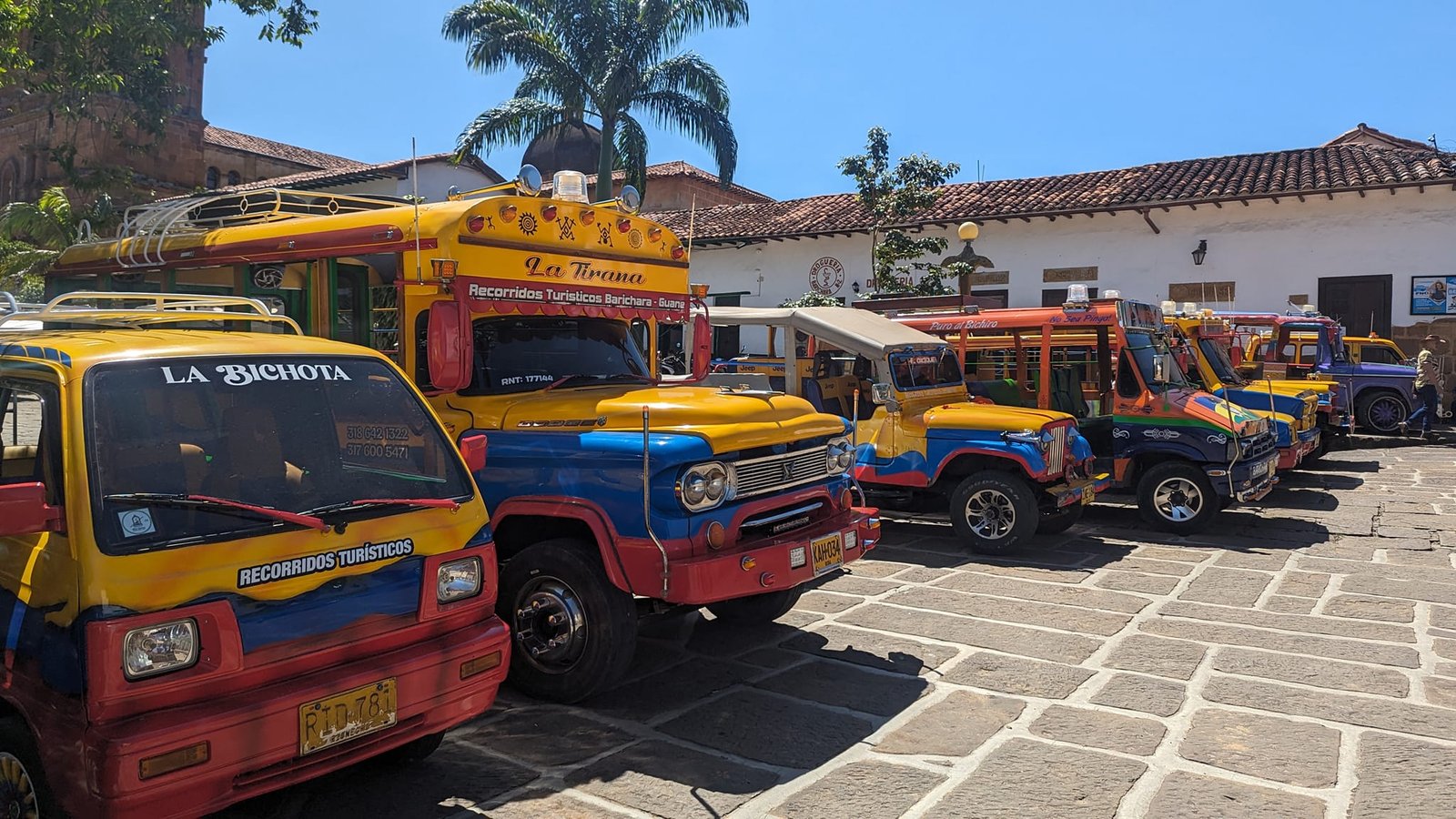
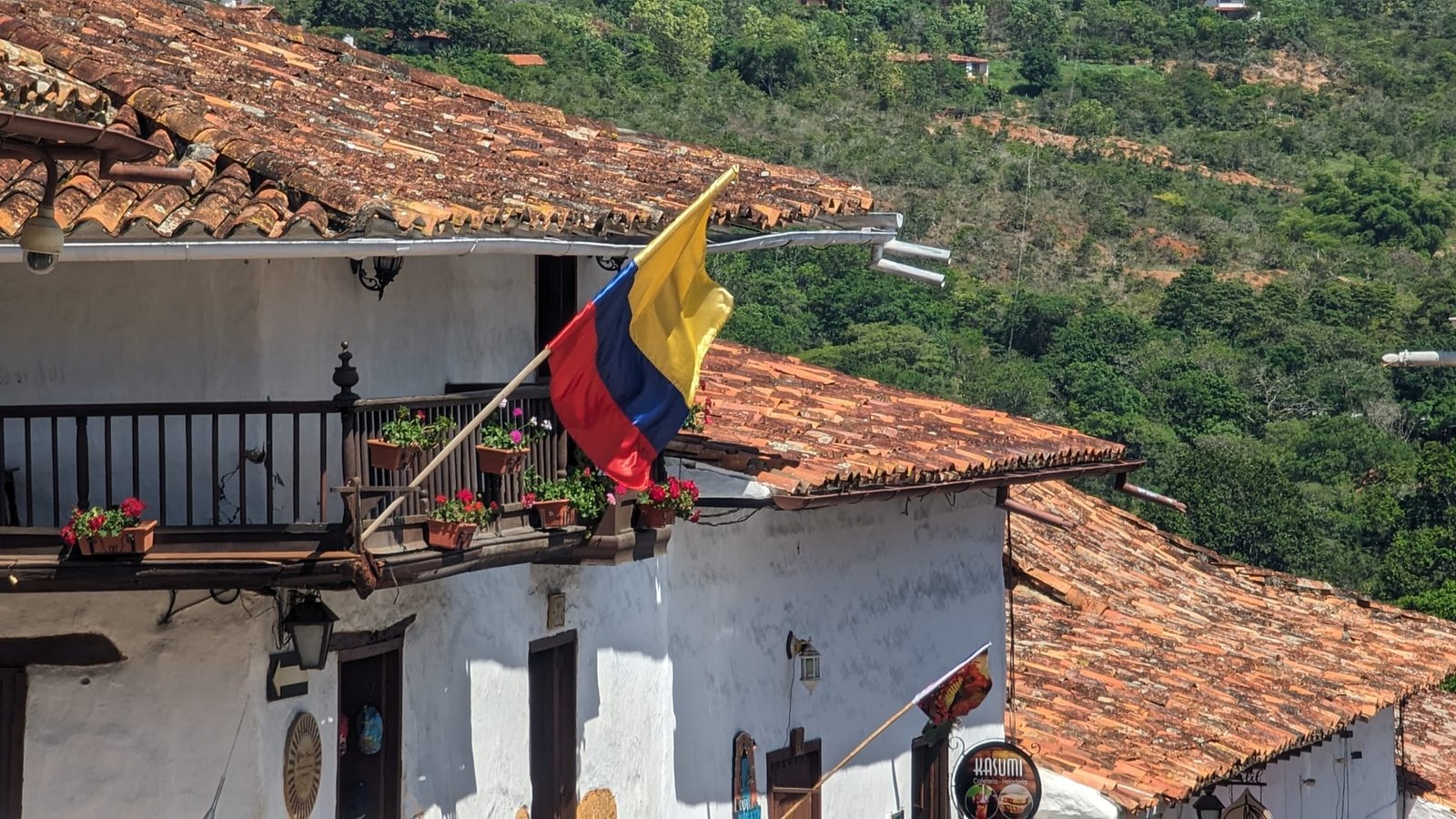
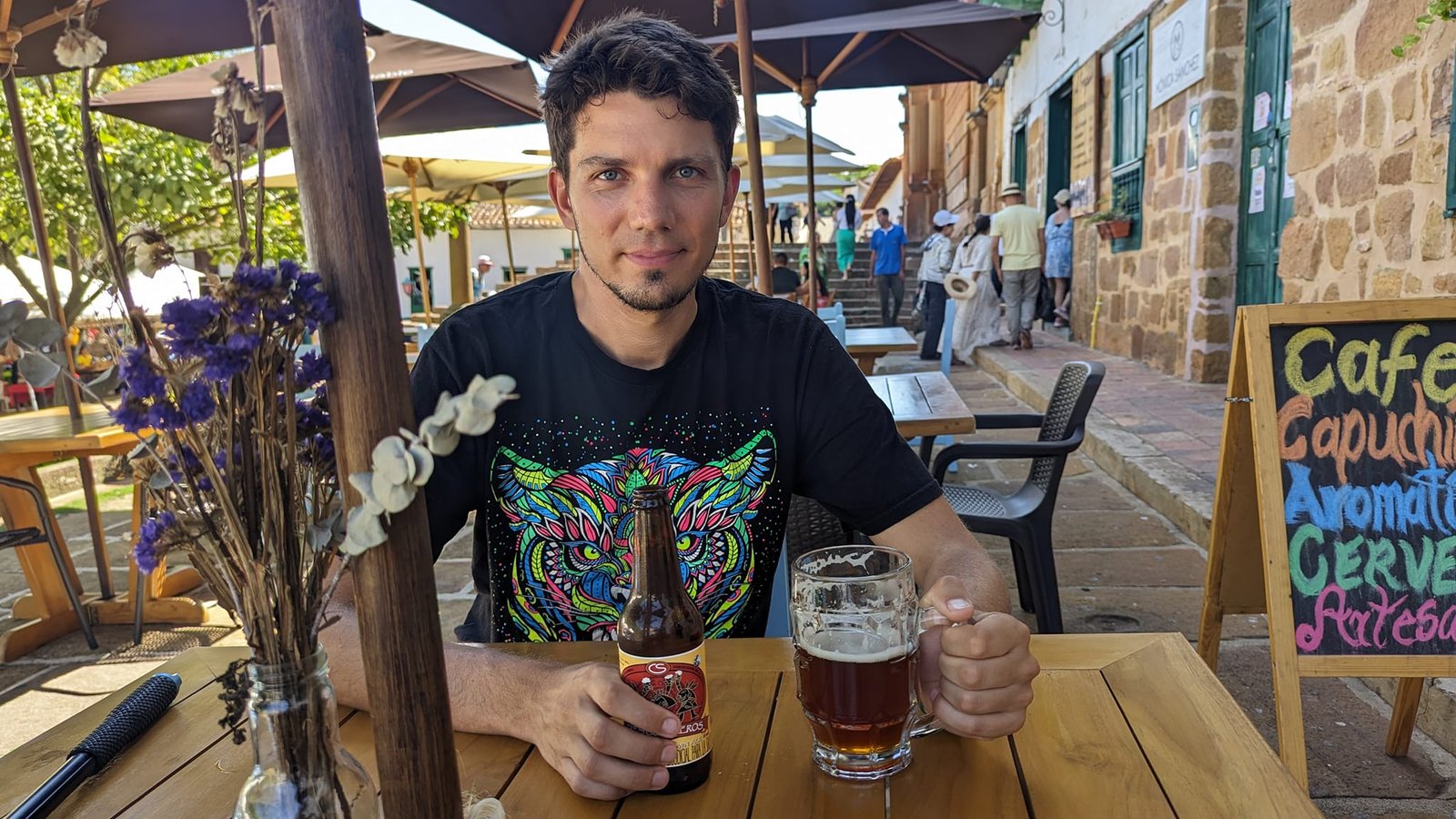
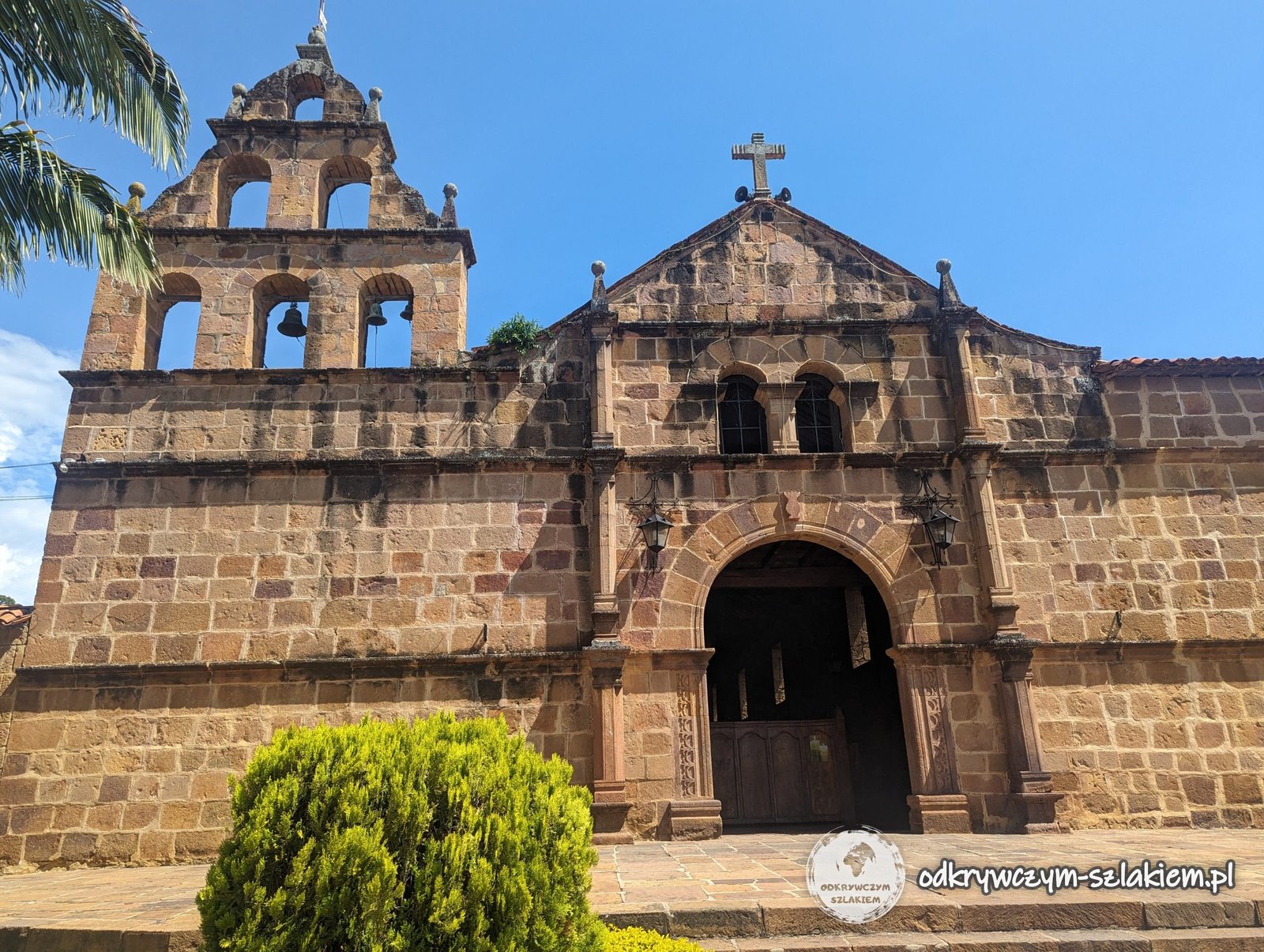
A stone cathedral towers over the roofs of the town, and steep streets slope down towards the green valley.
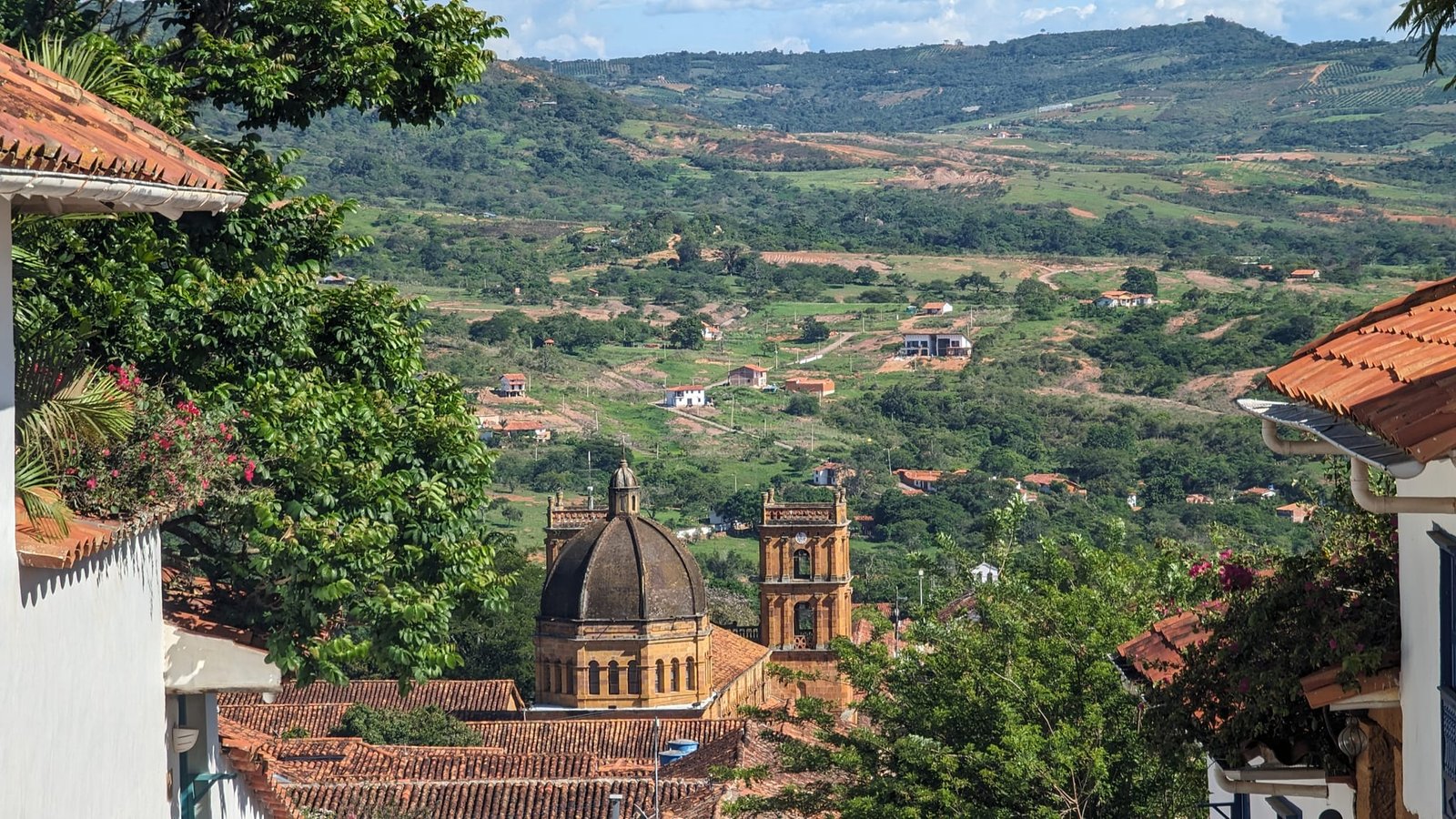
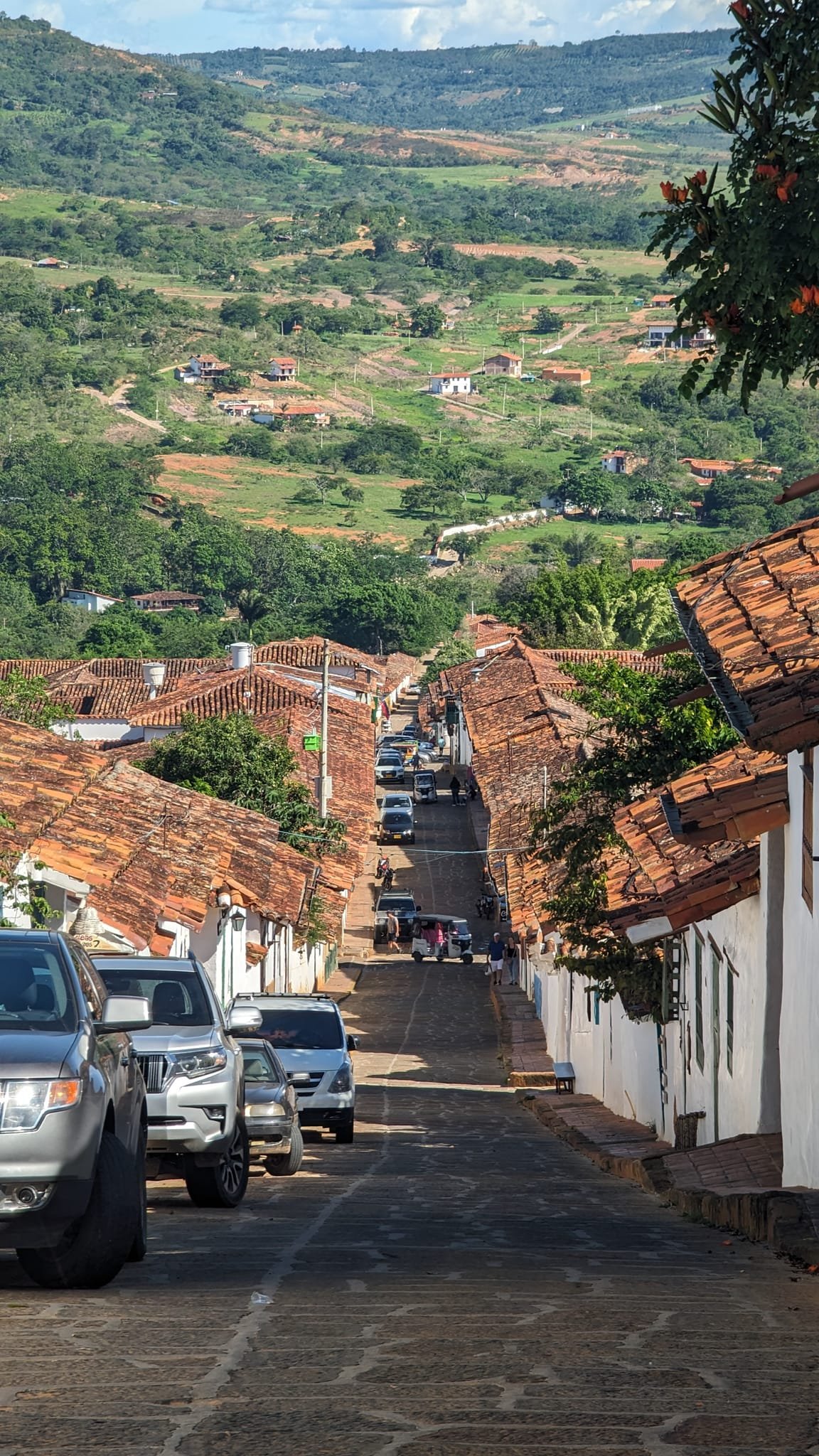
Barichara was founded in 1705, and in the language of the Guane people its name means “place of rest”. Its streets, houses and churches are built of local yellow stone, and since the late 1970s the whole historic centre has been a national monument. Its grandest building is the Cathedral of the Immaculate Conception (Inmaculada Concepción) on the main square – the interior is held up by 10 monolithic columns, each 5 m tall.


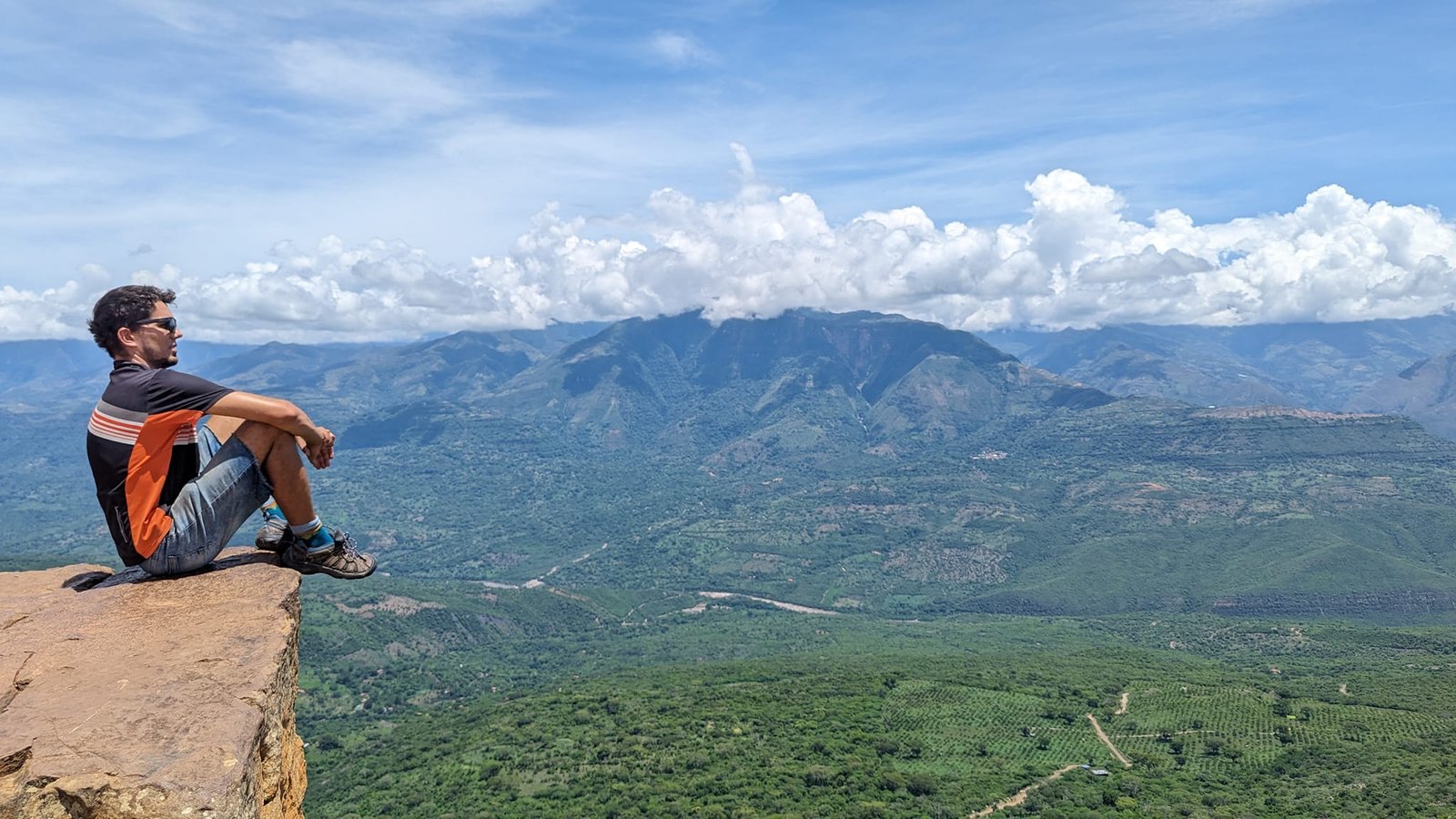
It is also worth going to the viewpoint overlooking the mountains and the valley of the Suárez river – the same one we did not manage to raft.
On the trail from Barichara to Guane
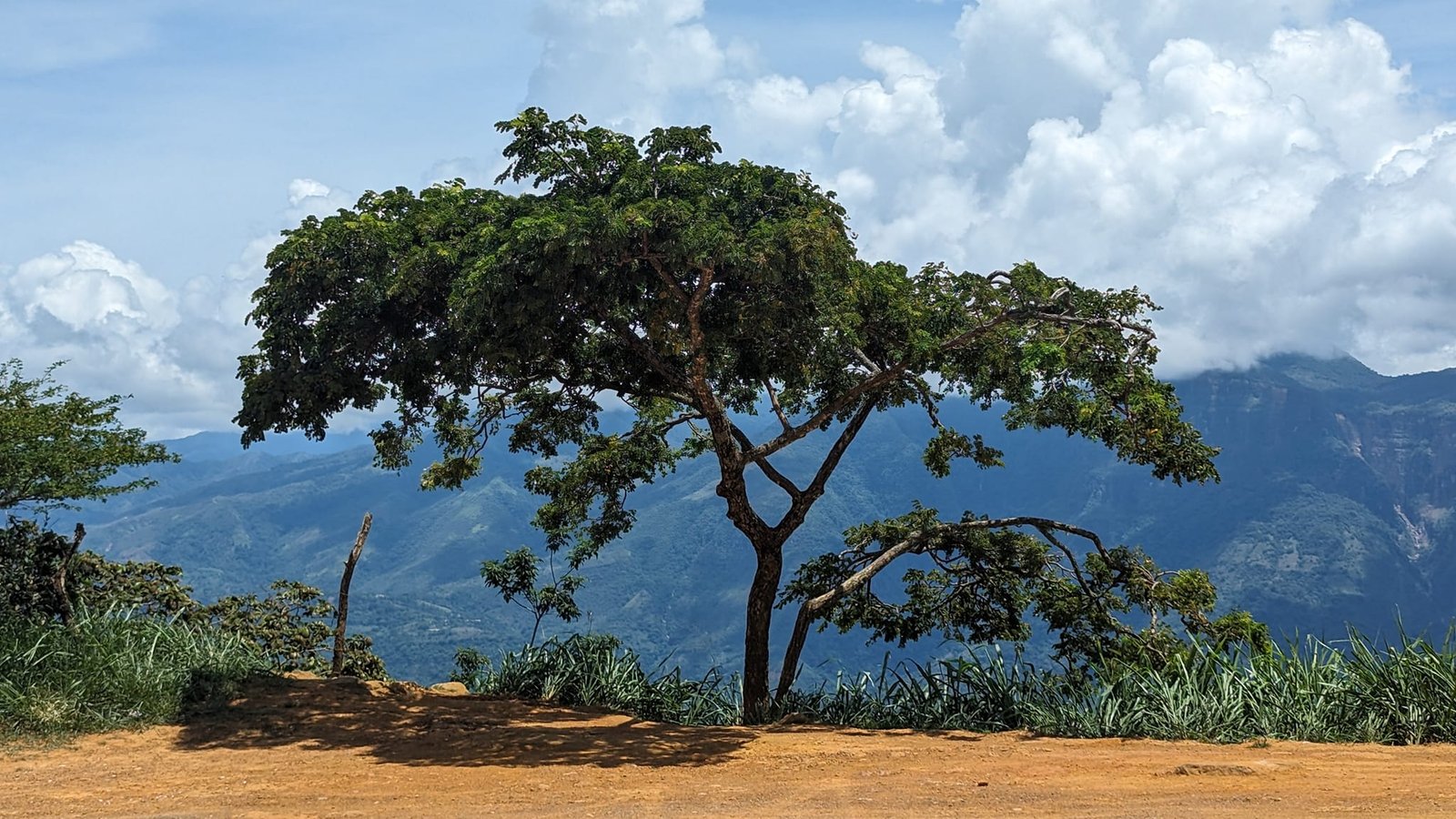
From Barichara we also walked the 6-kilometre trail to Guane. It was easy but pretty: the stone path, called the Camino Real, runs along the slope among trees with red flowers, with views of the wide valley and the mountains.
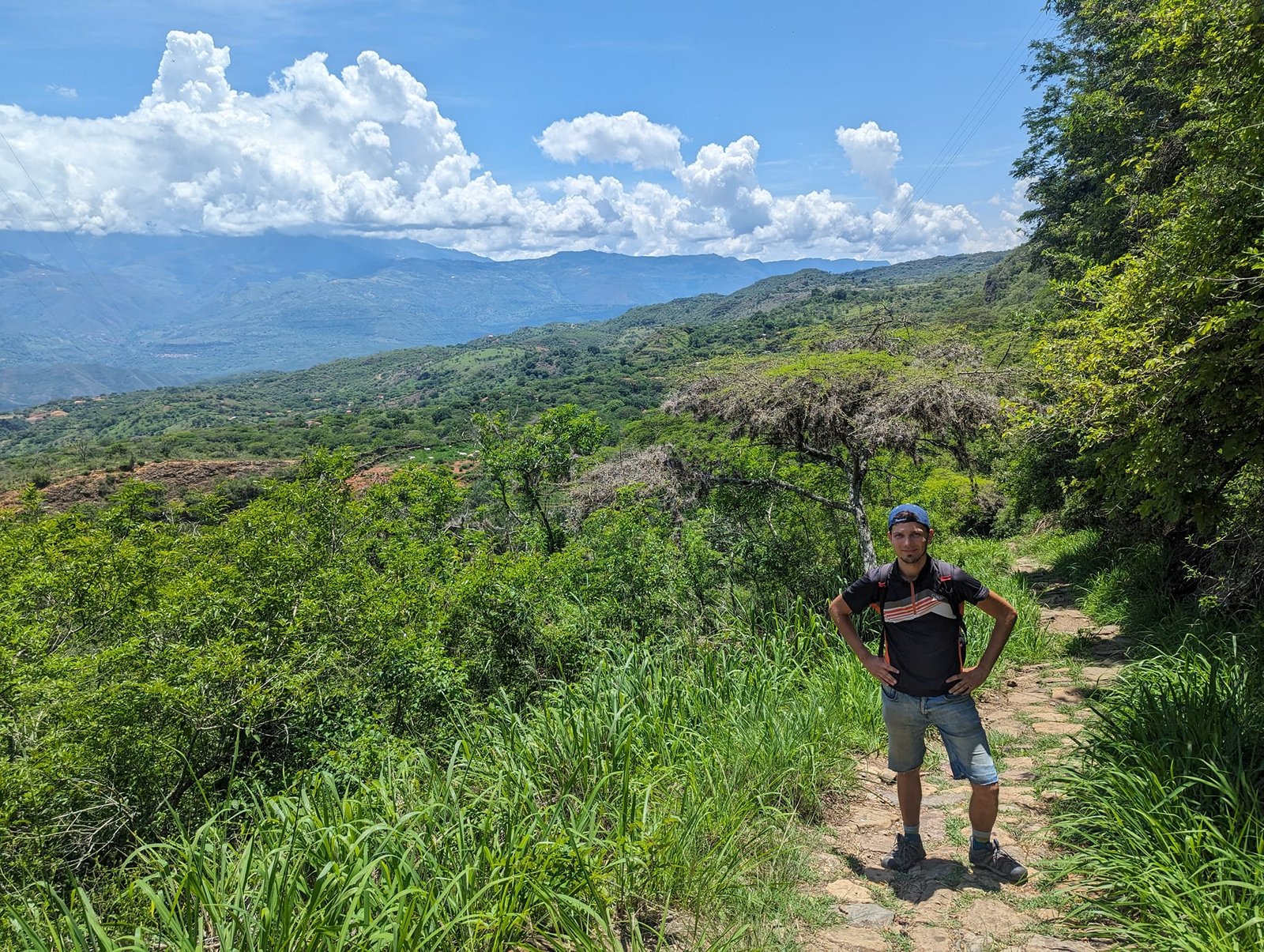
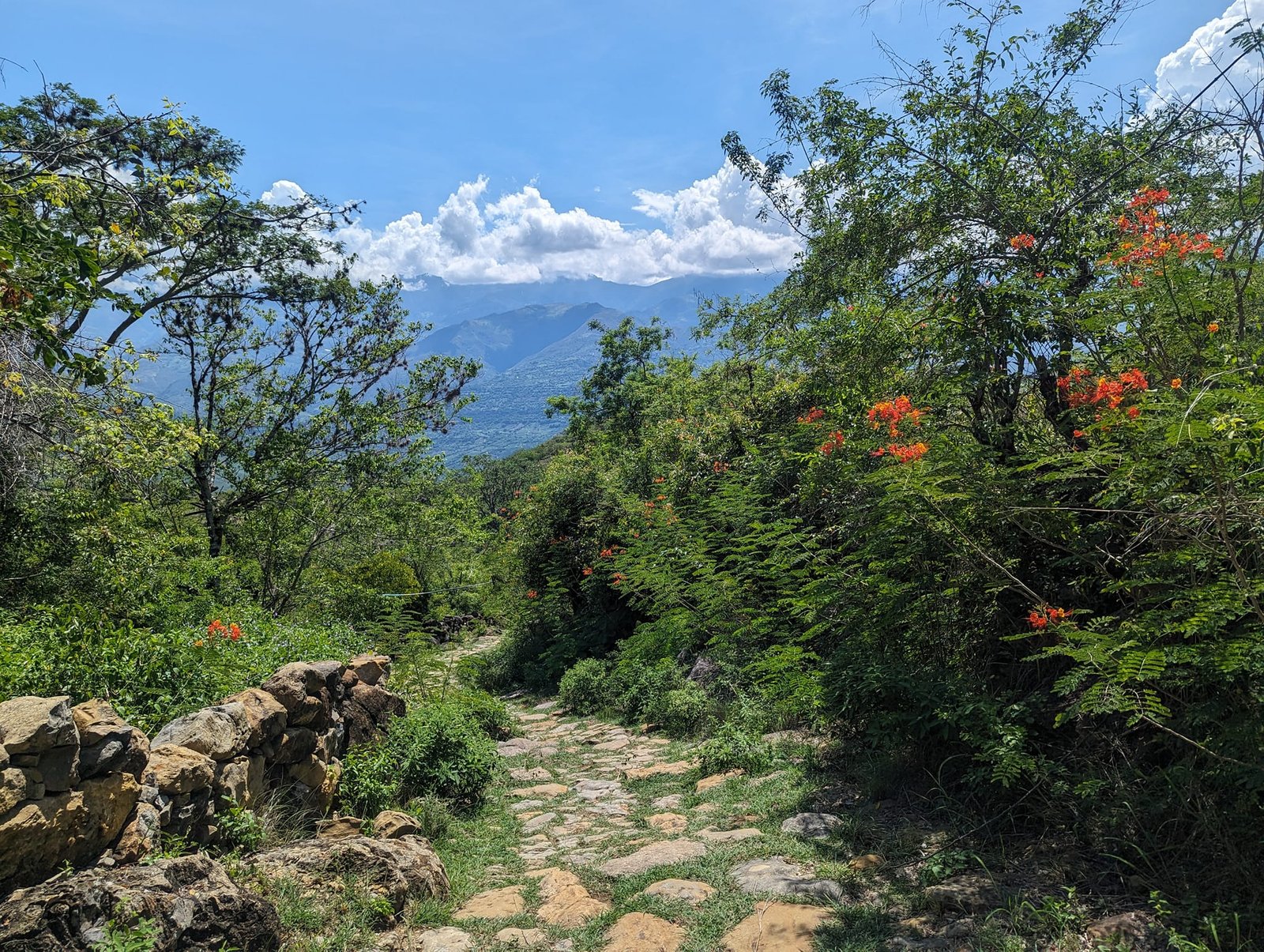
According to the board at the start of the trail, the Camino Real is 6.2 km long and takes about 1 h 40 min. It runs mostly downhill – from about 1330 to about 1020 m above sea level. The stone road is part of the Caminos Ancestrales de Santander, a network of old indigenous and colonial paths, and in 1998 it was declared an asset of national cultural interest. Along the way you pass columnar cacti and stretches between stone walls.


The trail ends in Guane – a tiny village with cobbled lanes and whitewashed houses.
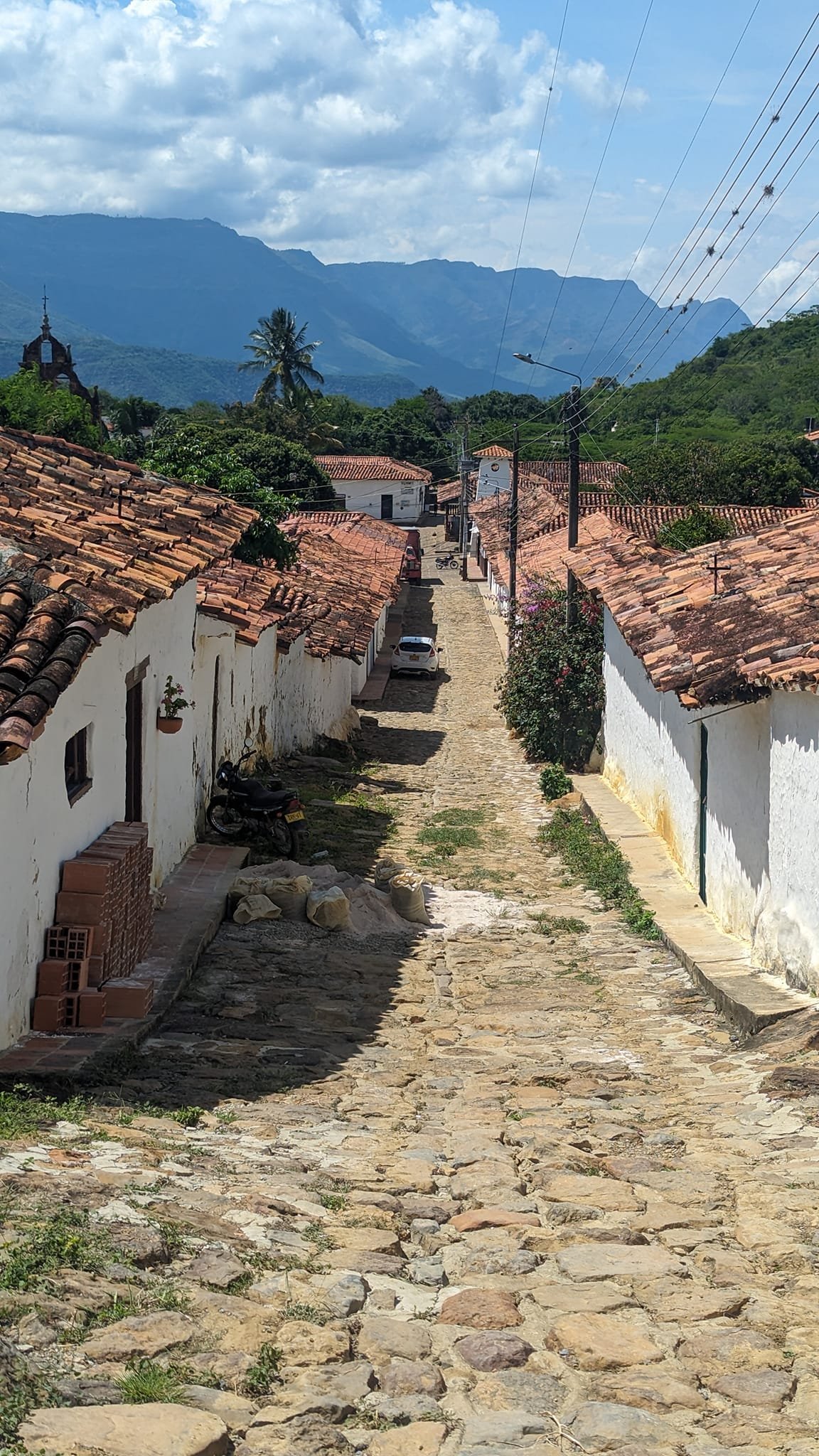
Guane lies about 9 km by road from Barichara and was a separate municipality until 1888. The parish was founded here in 1622, and the present church, with its painting of Saint Lucy, was built in 1786. Guane also has a Palaeontological and Archaeological Museum with more than 10,000 fossils, mostly marine, and pottery of the Guane people.

Practical information
- Paragliding over the Chicamocha Canyon – flights are sold by agencies and hostels in San Gil; prices are similar, but it is worth comparing a few offers (in May 2024 a flight including transport cost about 190,000 COP). The drive to the take-off site takes about 1 hour, and the flight itself usually a dozen or so minutes – offers sometimes mention half an hour, so ask how long the flight really lasts.
- Rafting on the Río Fonce (class 3) – more than an hour on the water, in a three-person inflatable kayak with an instructor; much cheaper than the Suárez (about 45,000 COP in May 2024).
- Rafting on the Suárez river (class 4–5) – almost four times more expensive, in a bigger raft. When the water level is too high, trips are cancelled, so it is good to keep the Río Fonce as a backup.
- Zip line – in the Peñón Guane park on a hill just outside San Gil; 1100 m long and 170 m high, about 20 minutes including putting on the gear and coming back (about 40,000 COP in May 2024). Lighter people go down more slowly.
- Barichara and Guane – the Camino Real trail is 6.2 km long, easy and mostly downhill; it takes about 1 h 40 min. Take enough water.
- Buses – the most convenient way to get around Colombia is by bus. The network of connections is well organised and the buses are decent. During the day they are often late, and night buses can arrive much too early. The journeys are safe, and you do not have to worry about your luggage either.
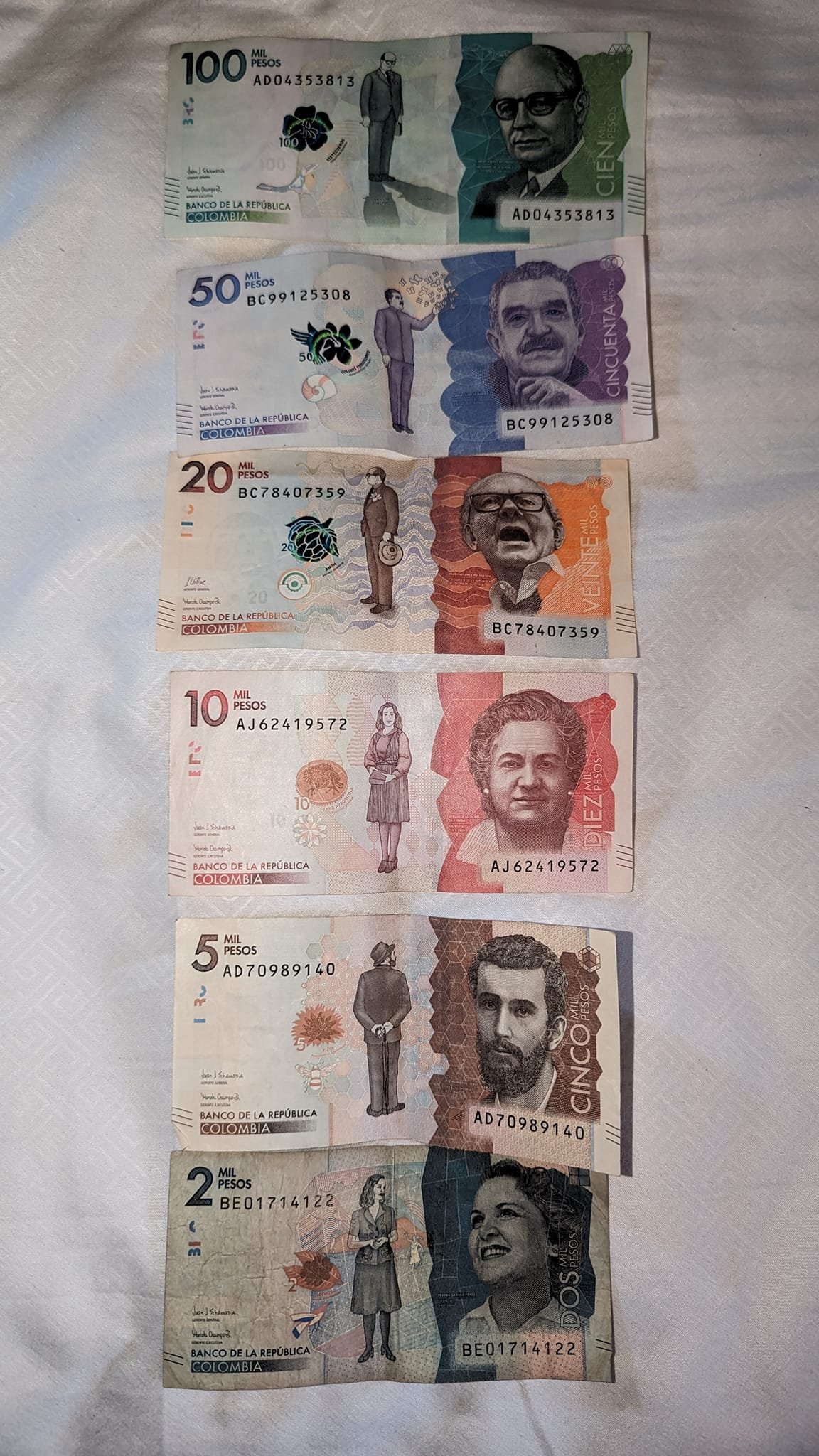
- Prices – I give them in Colombian pesos; in May 2024, 1000 COP was worth about €0.23. I write more about money in Colombia in the post about Cartagena.
Summary
San Gil is a great place for a bit of adrenaline without spending a fortune – paragliding, rafting and the zip line cost us under €70 per person in total. A different adventure sport every day, and each time something we had never done before. Peaceful Barichara and the walk to Guane were the perfect counterbalance. Then we moved on towards Bogotá.
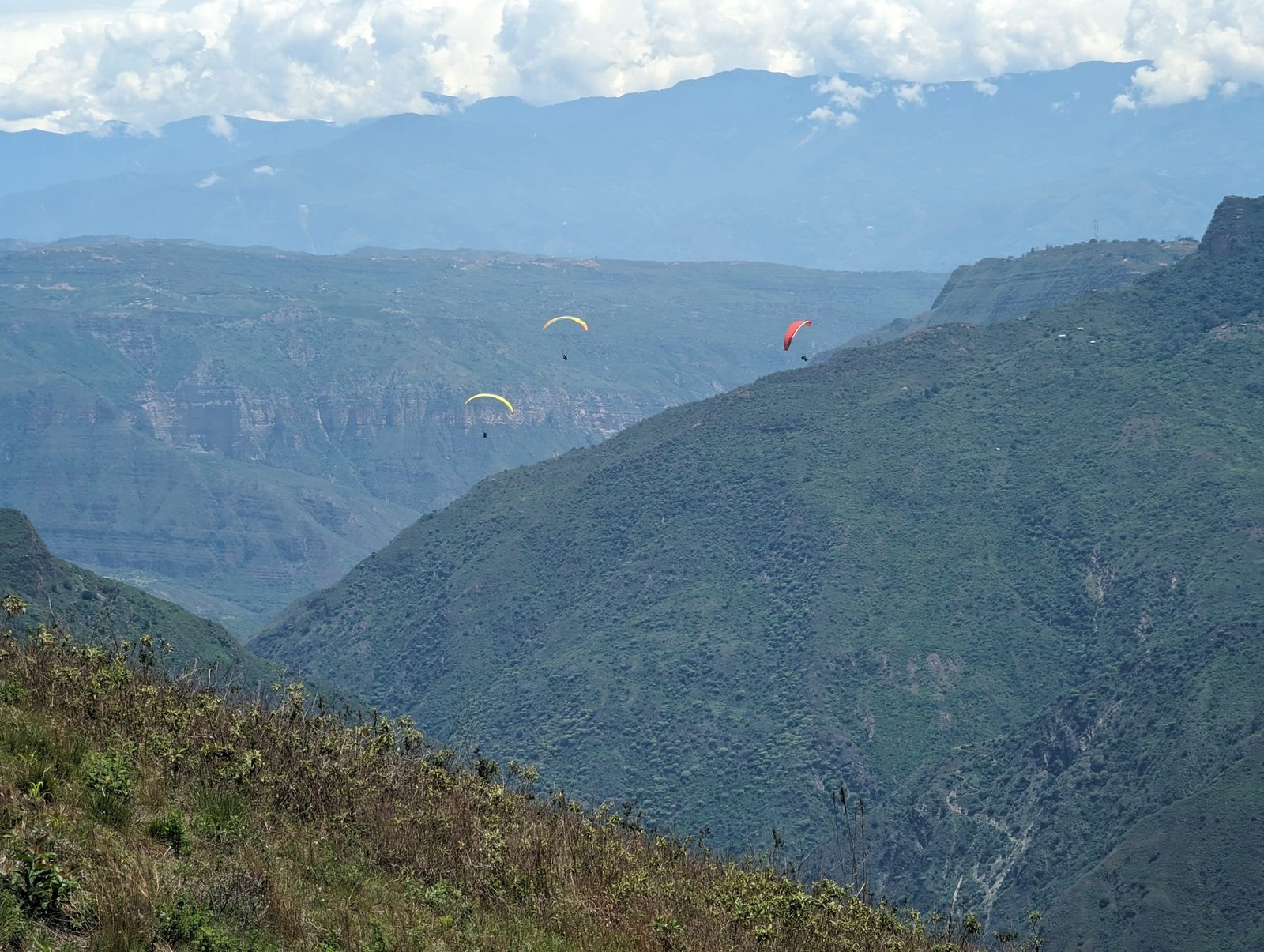
Photo gallery