In the 19th century Łódź grew into the largest centre of the textile industry in the Kingdom of Poland. From that time it has kept red-brick factories, the palaces of the industrialists and the tenement houses along Piotrkowska Street. Between 2024 and 2026 I came here several times – among other things for football matches and a festival of light. I describe Piotrkowska Street with the sculptures of the Gallery of Great Łódź Citizens and the Walk of Fame, Freedom Square, Manufaktura with the Poznański Palace, Scheibler’s Chapel in the Old Cemetery, the murals, the Survivors’ Park, Light.Move.Festival and the city’s stadiums, and at the end – practical information and a weekend plan.
Table of contents
- Piotrkowska Street – the promenade, the Gallery of Great Łódź Citizens and the Walk of Fame
- Freedom Square and the Arlekin Theatre
- Manufaktura, the Poznański Palace and Scheibler’s Chapel
- Murals and Włókiennicza Street
- The Survivors’ Park – remembering the Łódź ghetto
- Light.Move.Festival – the festival of light
- Football in Łódź – the ŁKS and Widzew stadiums
- Around Łódź – kayaking on the Grabia River
- Practical information and a weekend plan
Piotrkowska Street – the promenade, the Gallery of Great Łódź Citizens and the Walk of Fame
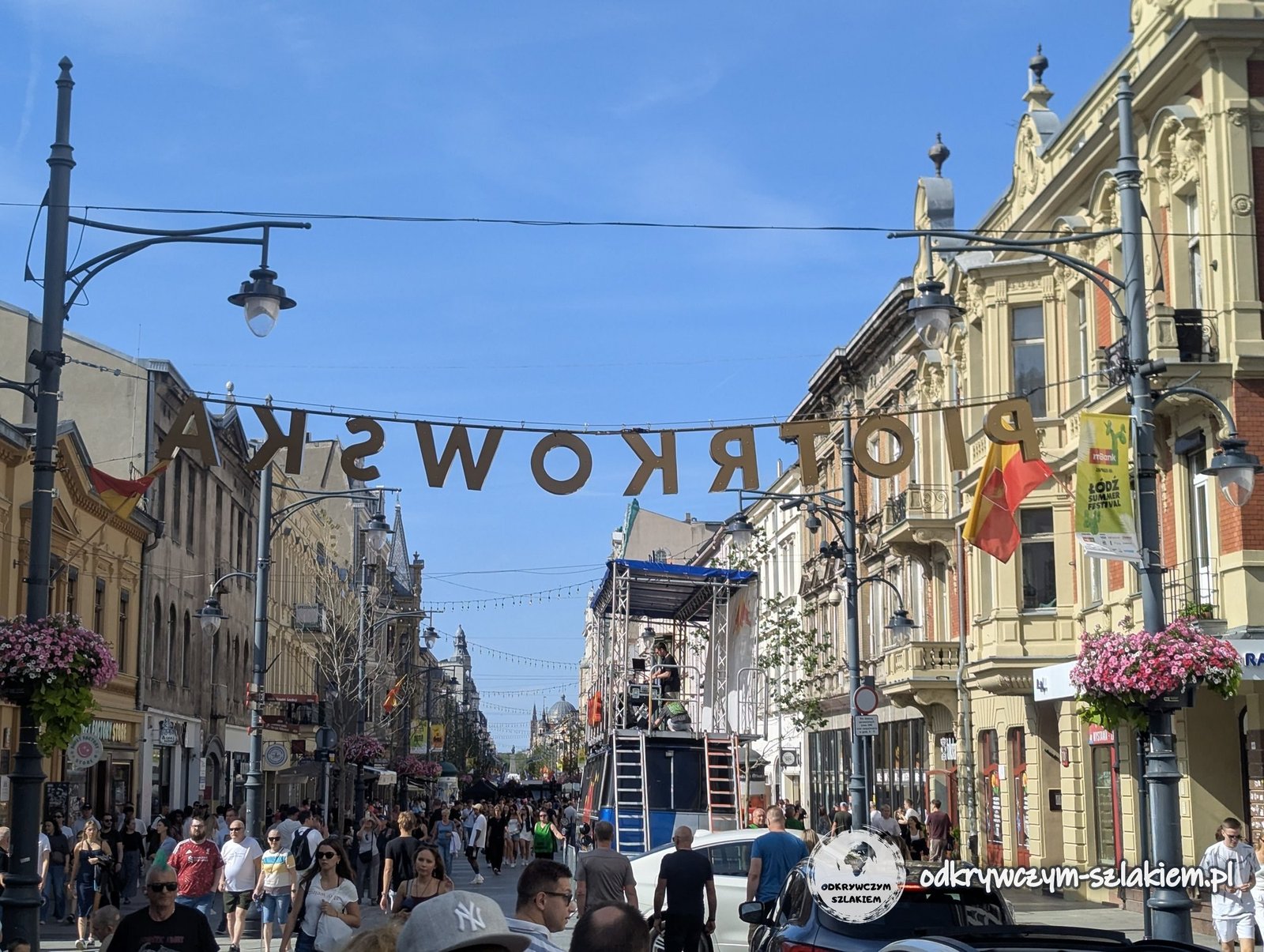
Piotrkowska is the main street of Łódź – it runs for about 4.2 km from Freedom Square to Independence Square. Its northern section was turned into a pedestrian promenade in 1992–1997, and in 2015 the street was declared a Monument of History. It is lined with eclectic and Art Nouveau tenement houses and former industrialists’ palaces. I took this photo on the northern part of the promenade.

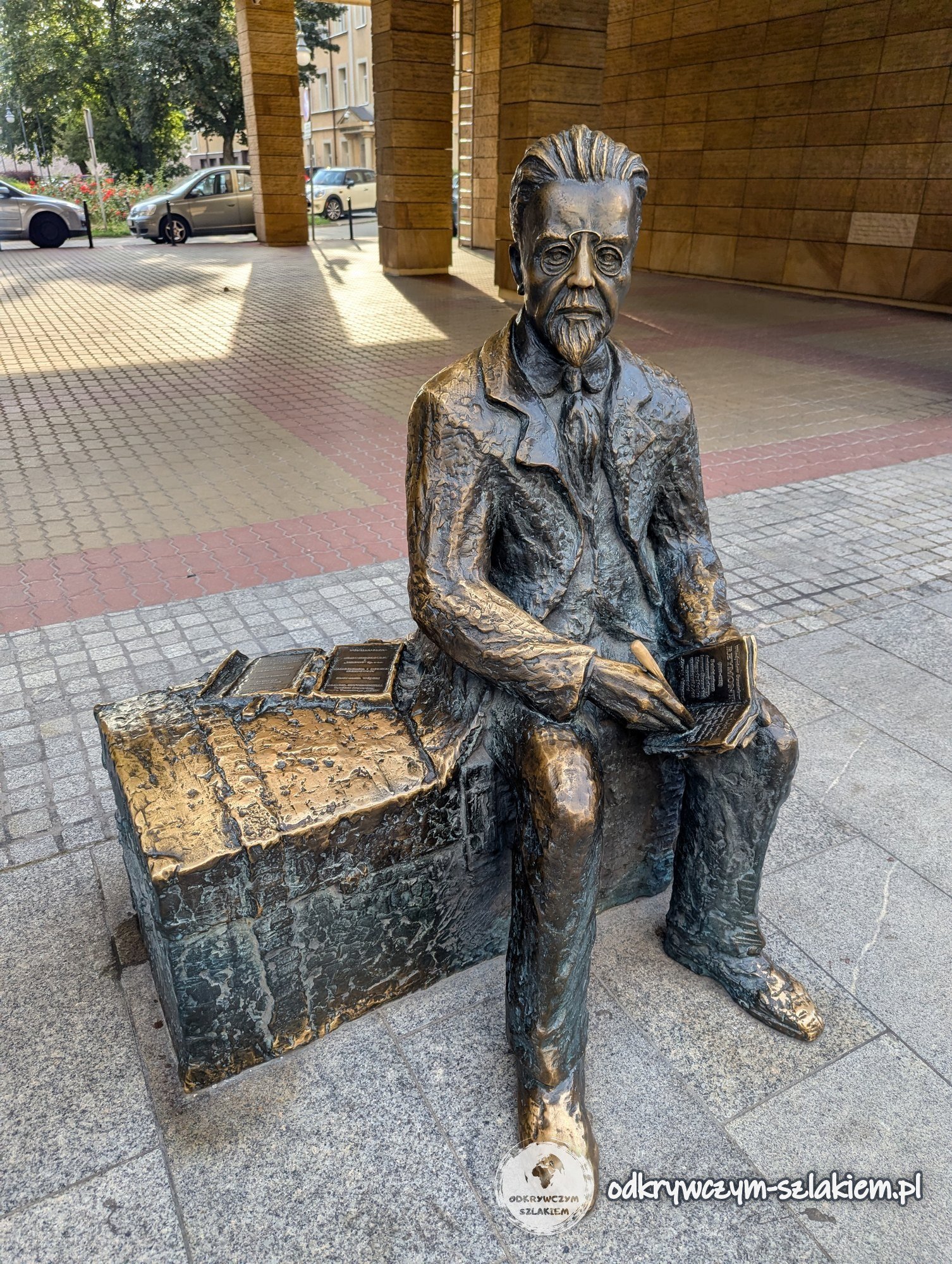
Since 1999 bronze sculptures of the Gallery of Great Łódź Citizens have been placed on the pavements of Piotrkowska. The first was Tuwim’s Bench, followed by Rubinstein’s Piano (2000) – the pianist Arthur Rubinstein was born in Łódź – and Reymont’s Trunk (2001). Władysław Reymont described 19th-century Łódź in his novel “The Promised Land”.

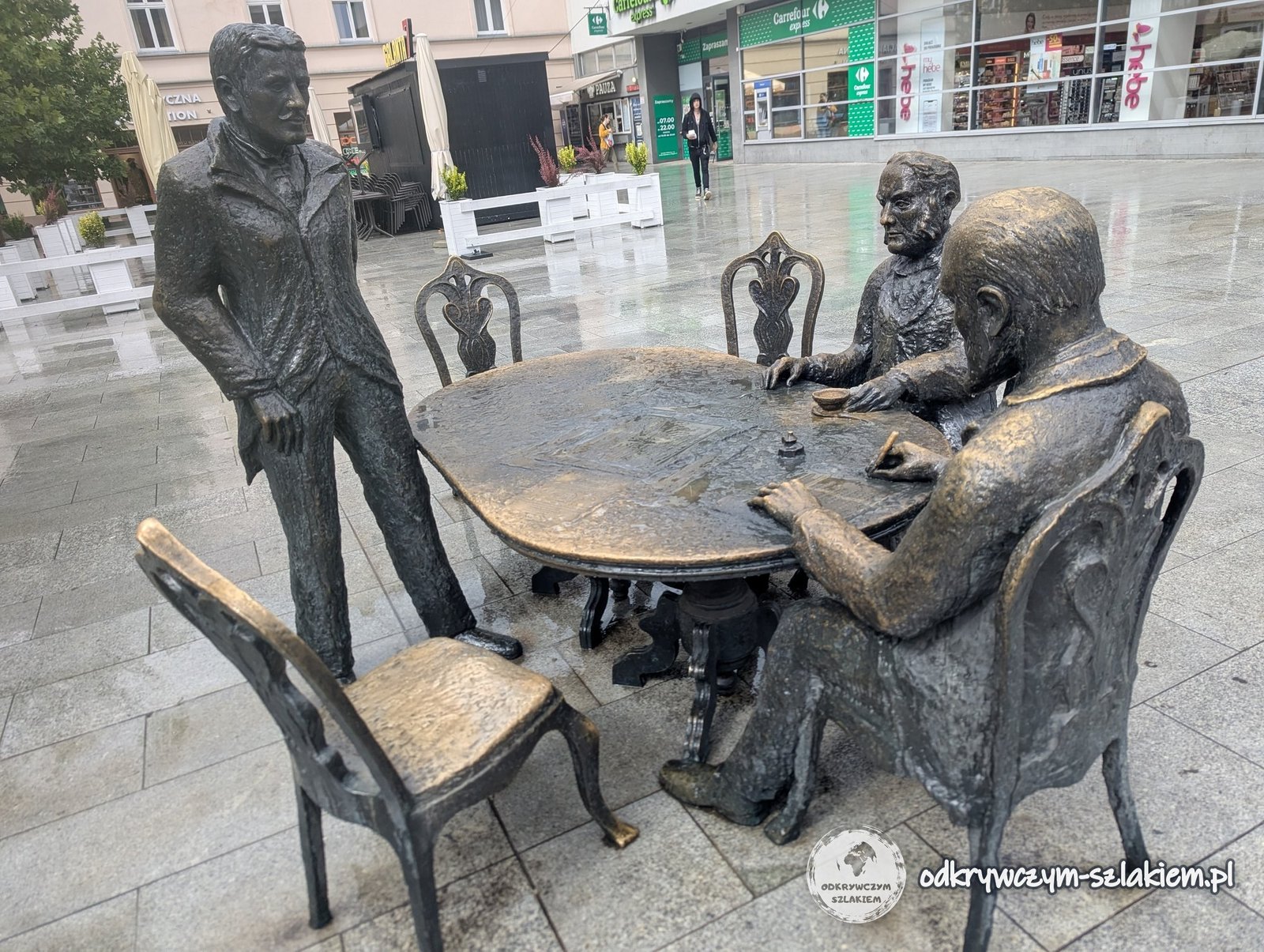
In 2002 they were joined by the monument to the Founders of Industrial Łódź – the industrialists Izrael Poznański, Karl Scheibler and Henryk Grohman meet at a round table. One chair is empty, so you can sit down with them.
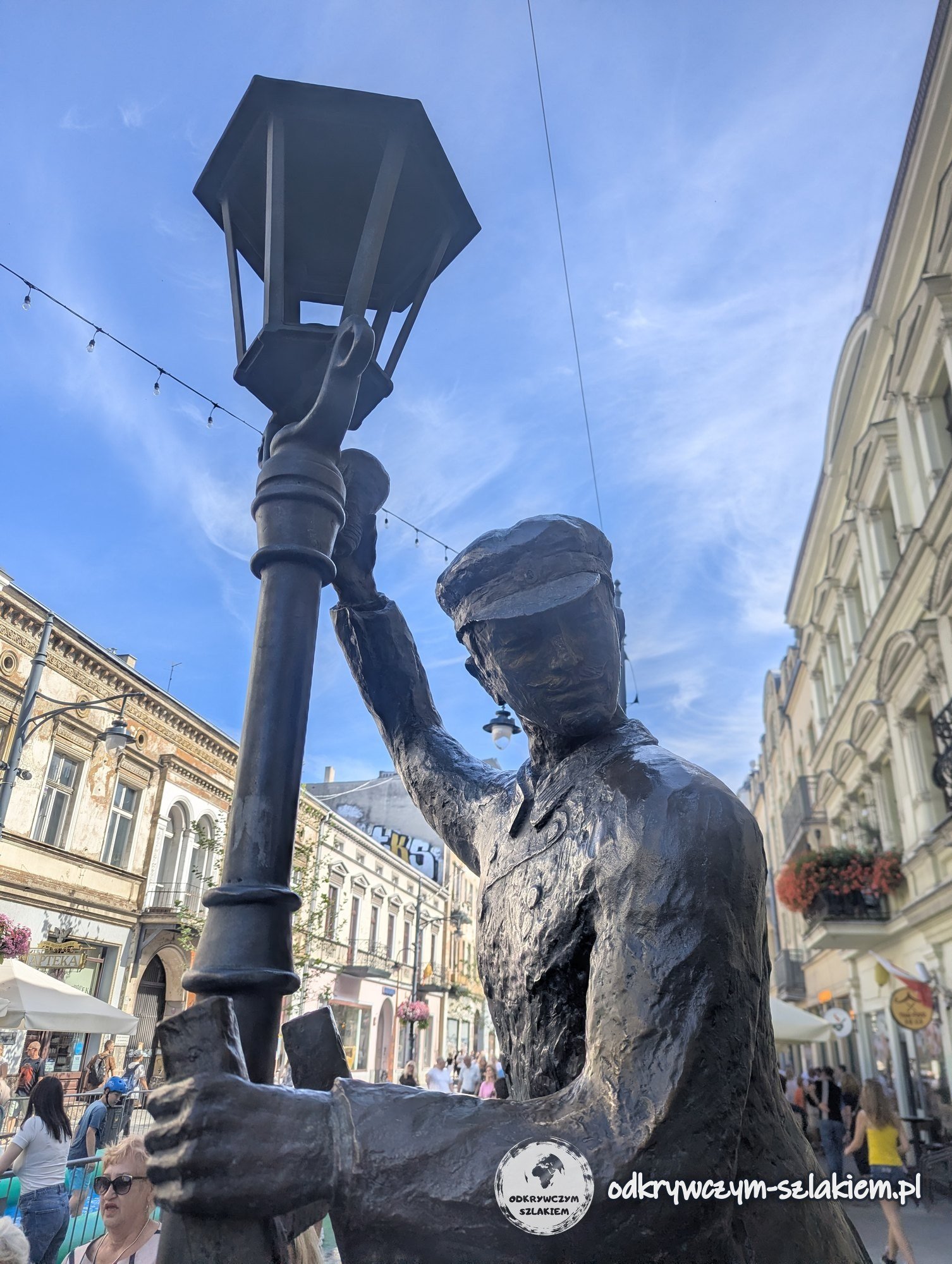
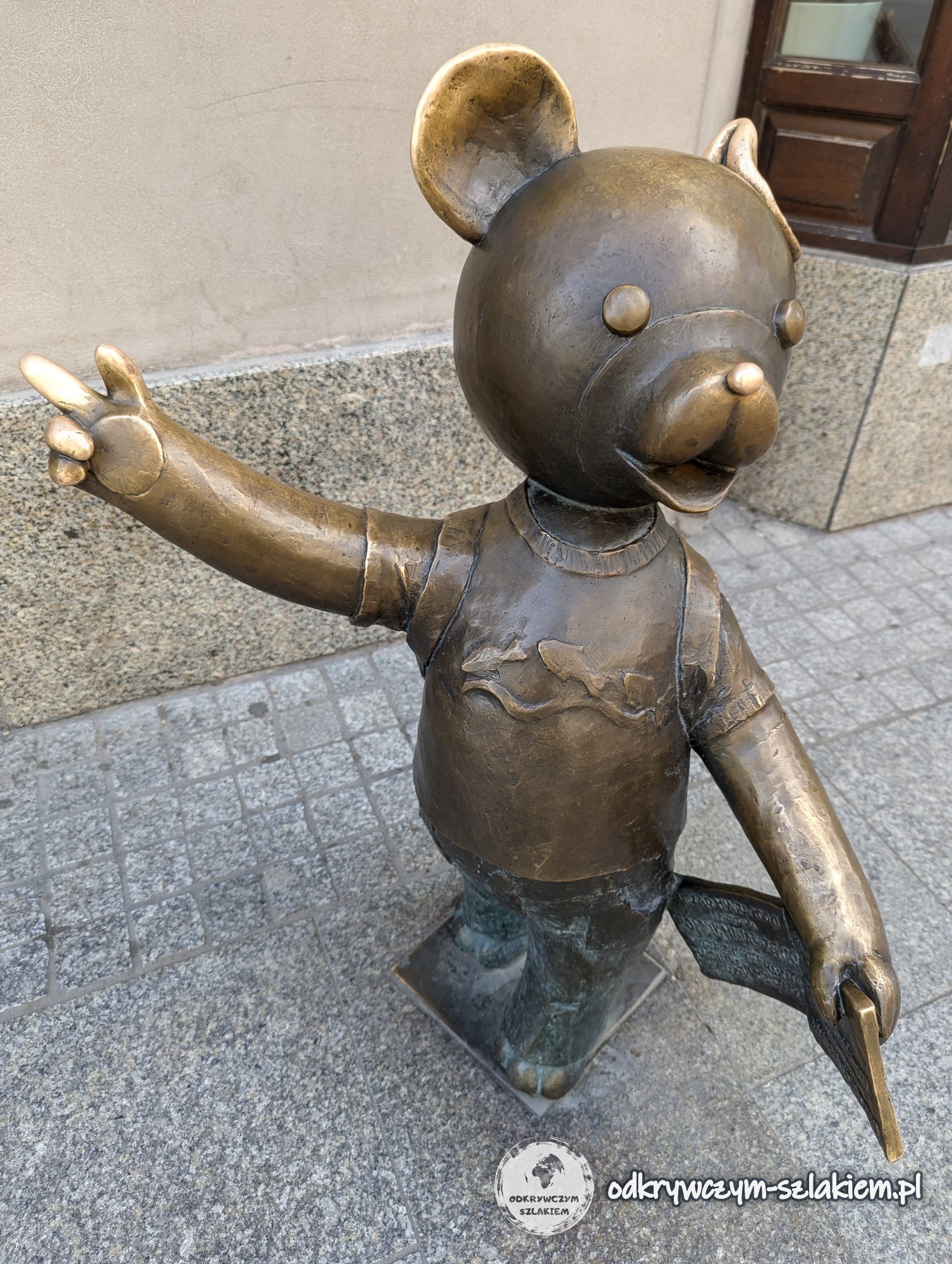
In 2007 the Lamplighter Monument appeared – he is lighting a street lamp. At Piotrkowska 87 there is also Miś Uszatek (Floppy-Eared Teddy) – the hero of bedtime cartoons from the Łódź film studio Se-ma-for.
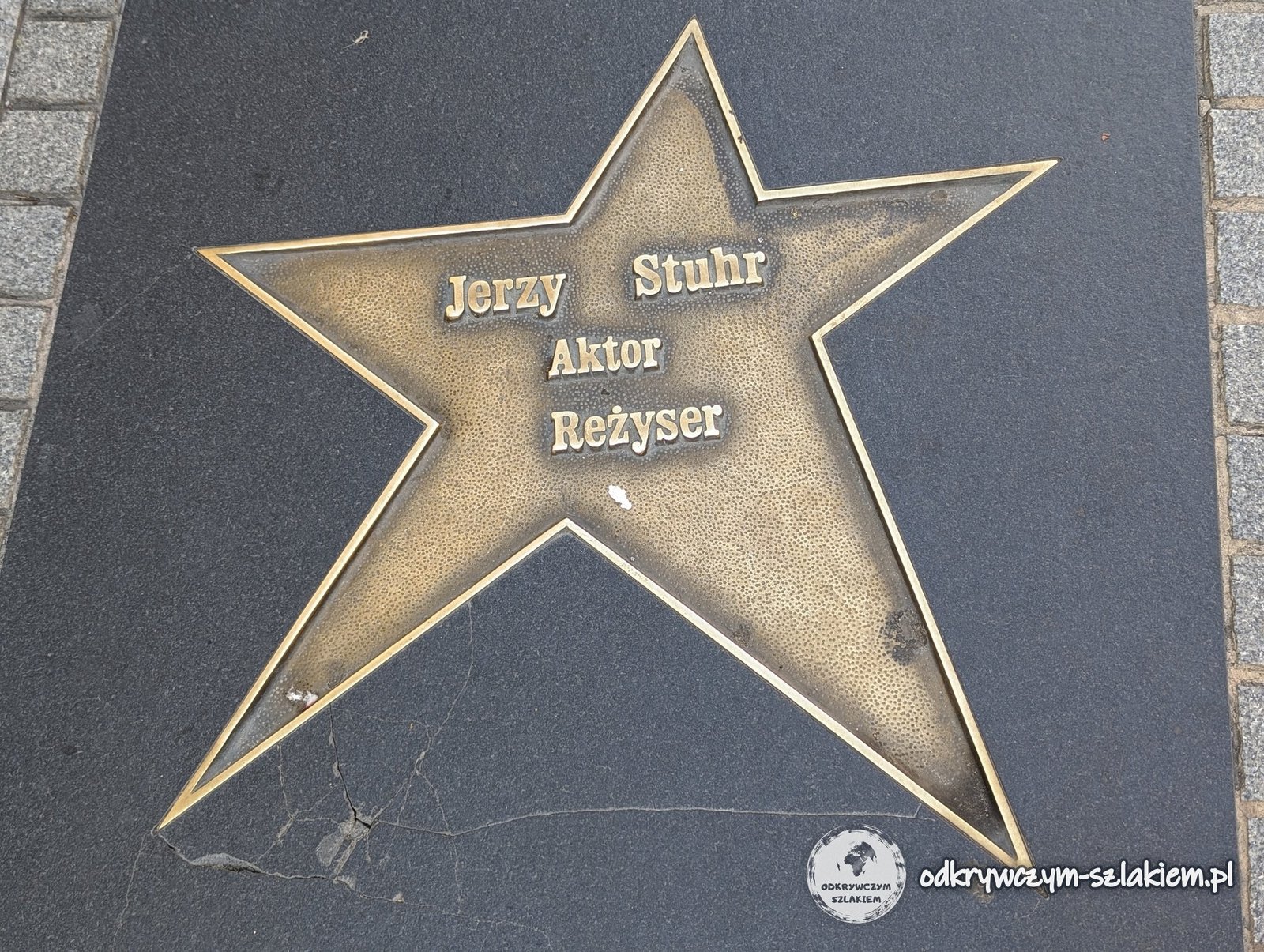
Łódź is also a city of film – the famous Film School is here. On the stretch of Piotrkowska between 6 Sierpnia Street and the Rubinstein Passage lies the Walk of Fame, modelled on the one in Hollywood. The stars in the pavement bear the names of people of Polish cinema, among them Andrzej Wajda and Jerzy Stuhr.
Freedom Square and the Arlekin Theatre
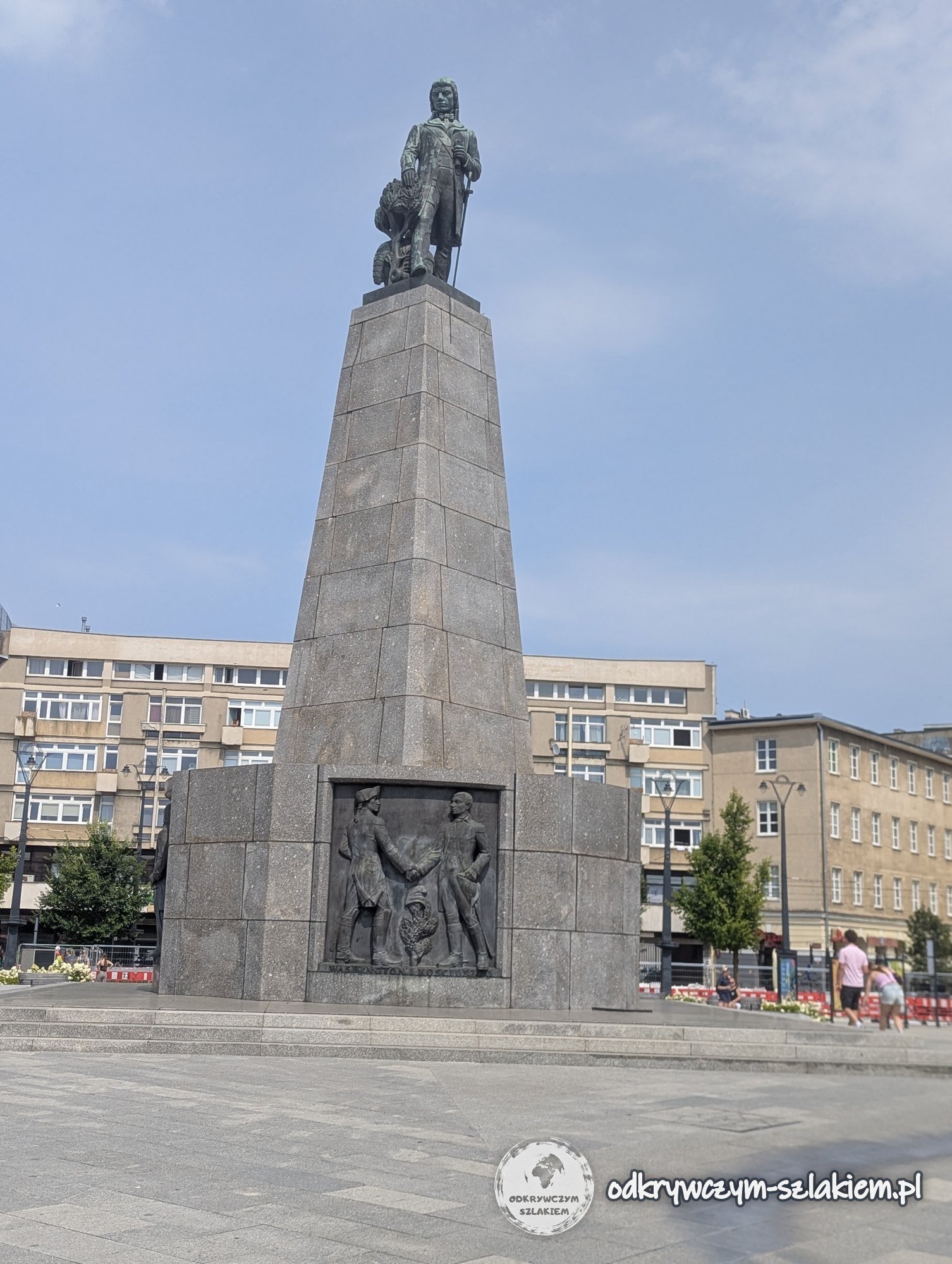
Piotrkowska begins at the octagonal Freedom Square (plac Wolności). In its centre stands the Tadeusz Kościuszko Monument, unveiled in 1930. The Germans destroyed it during the occupation, and the present monument is a reconstruction from 1960.
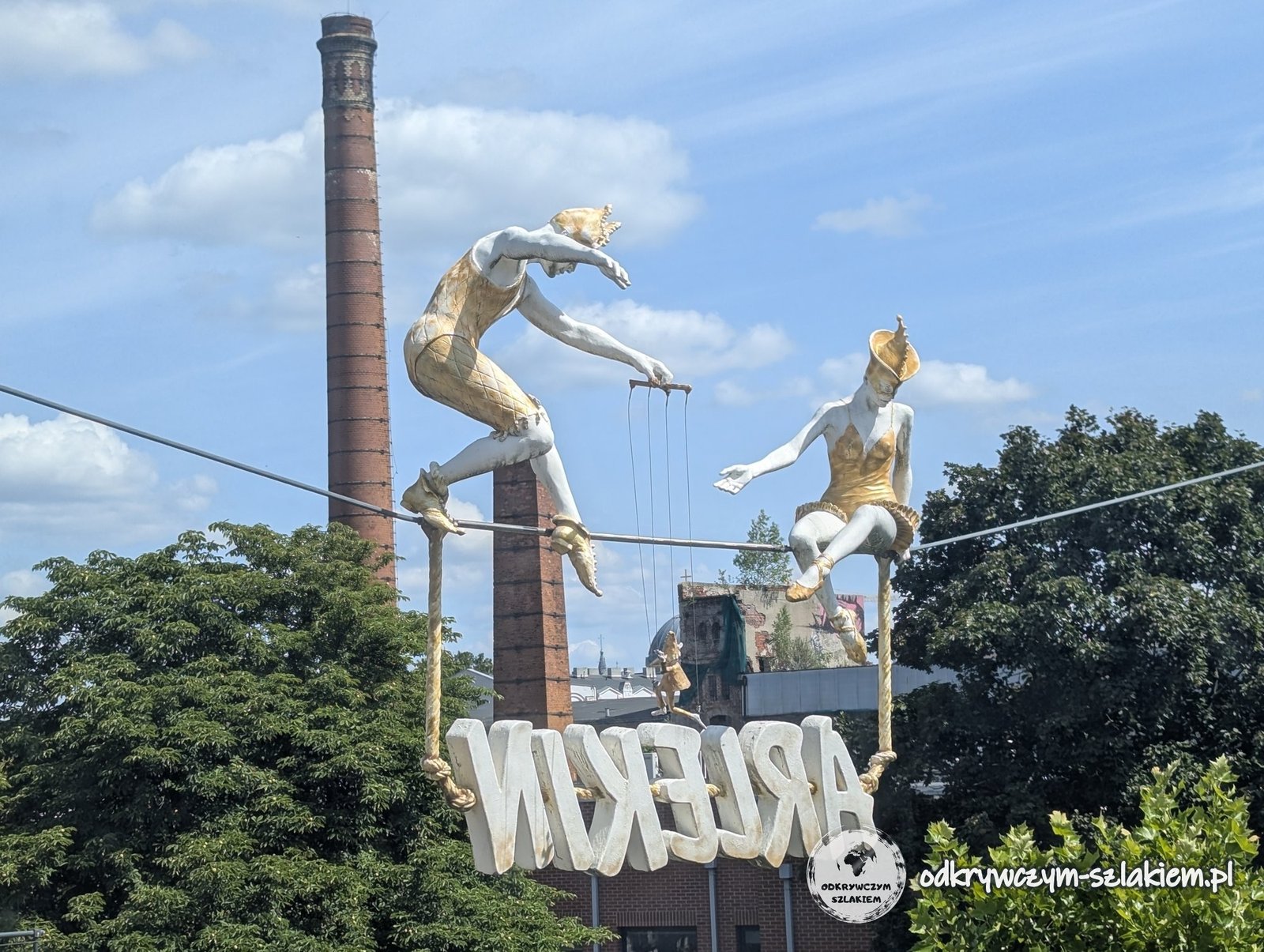
A few minutes’ walk from the square, at Wólczańska 5, is the Arlekin Puppet Theatre, founded in 1948 by Henryk Ryl. Next to the theatre, against the backdrop of a factory chimney, two golden acrobat figures balance on a rope, with the sign ARLEKIN hanging below them.
Manufaktura, the Poznański Palace and Scheibler’s Chapel
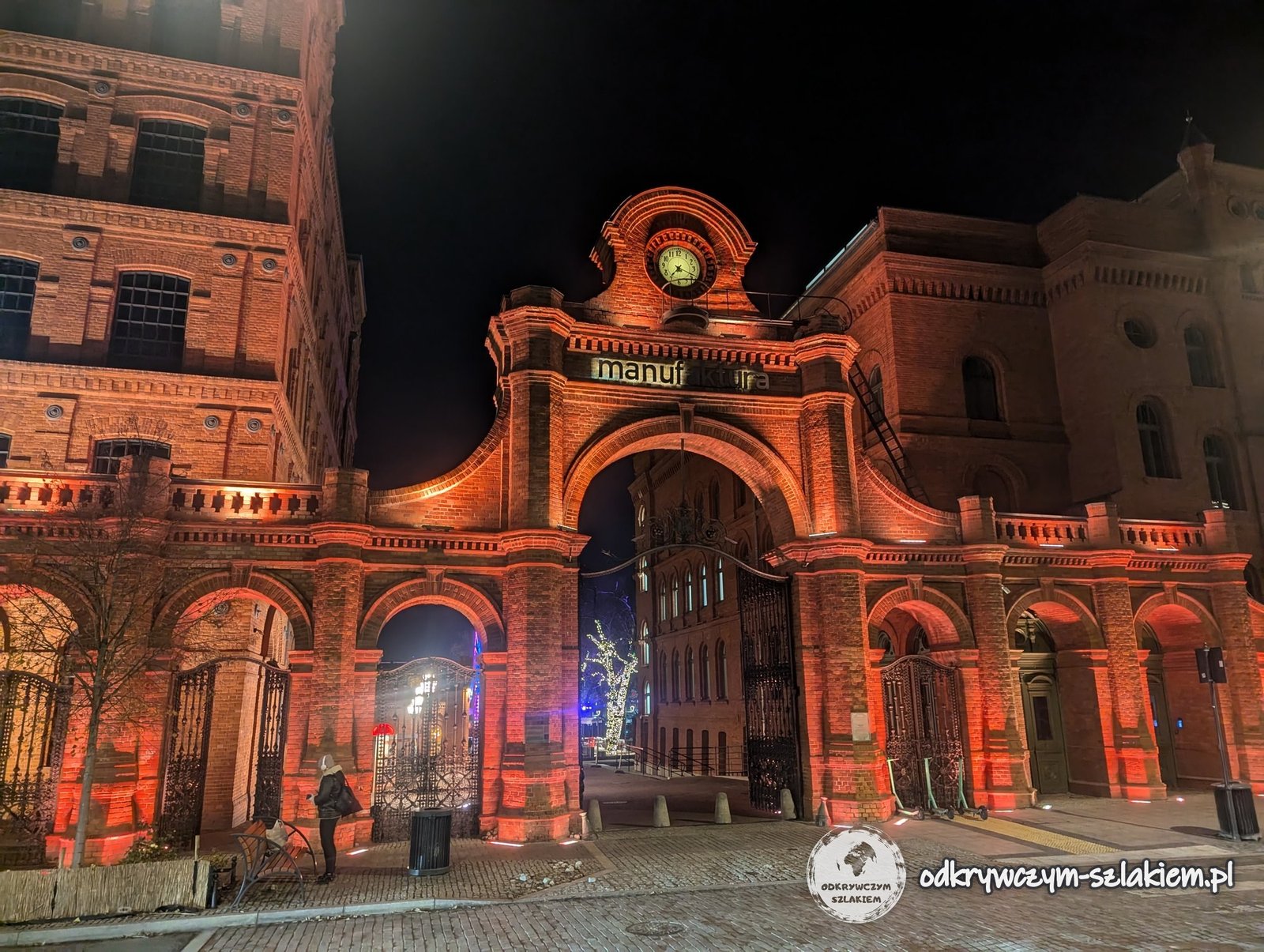
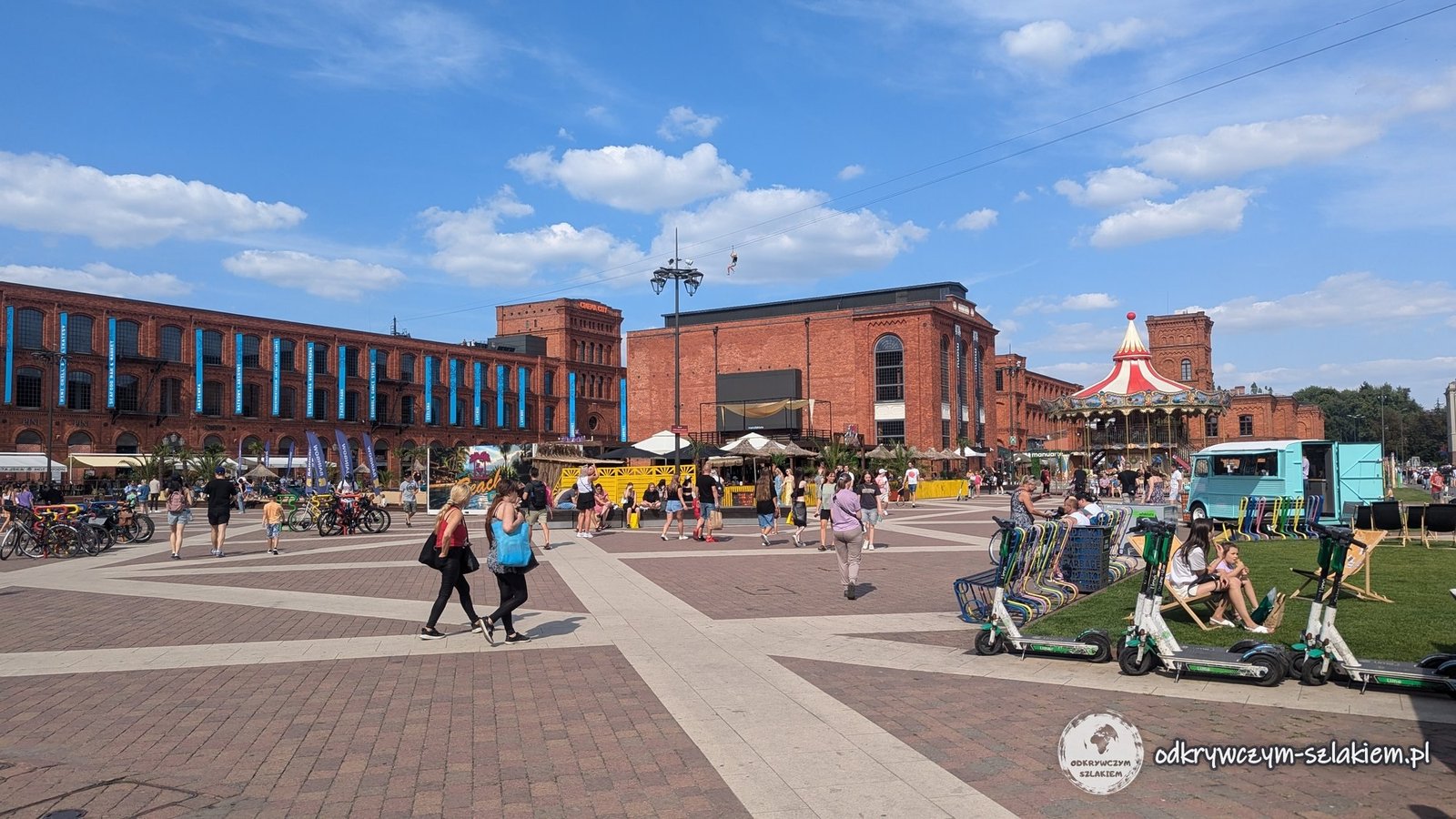
West of Freedom Square lies Manufaktura. The industrialist Izrael Poznański bought the land in 1871, and by the end of the 19th century his textile works covered almost 30 ha. On 17 May 2006 a shopping and entertainment centre opened in the restored red-brick buildings. From Ogrodowa Street you enter through the reconstructed main gate from 1878–1880 – in the evening, when I photographed it, it was lit up in red.
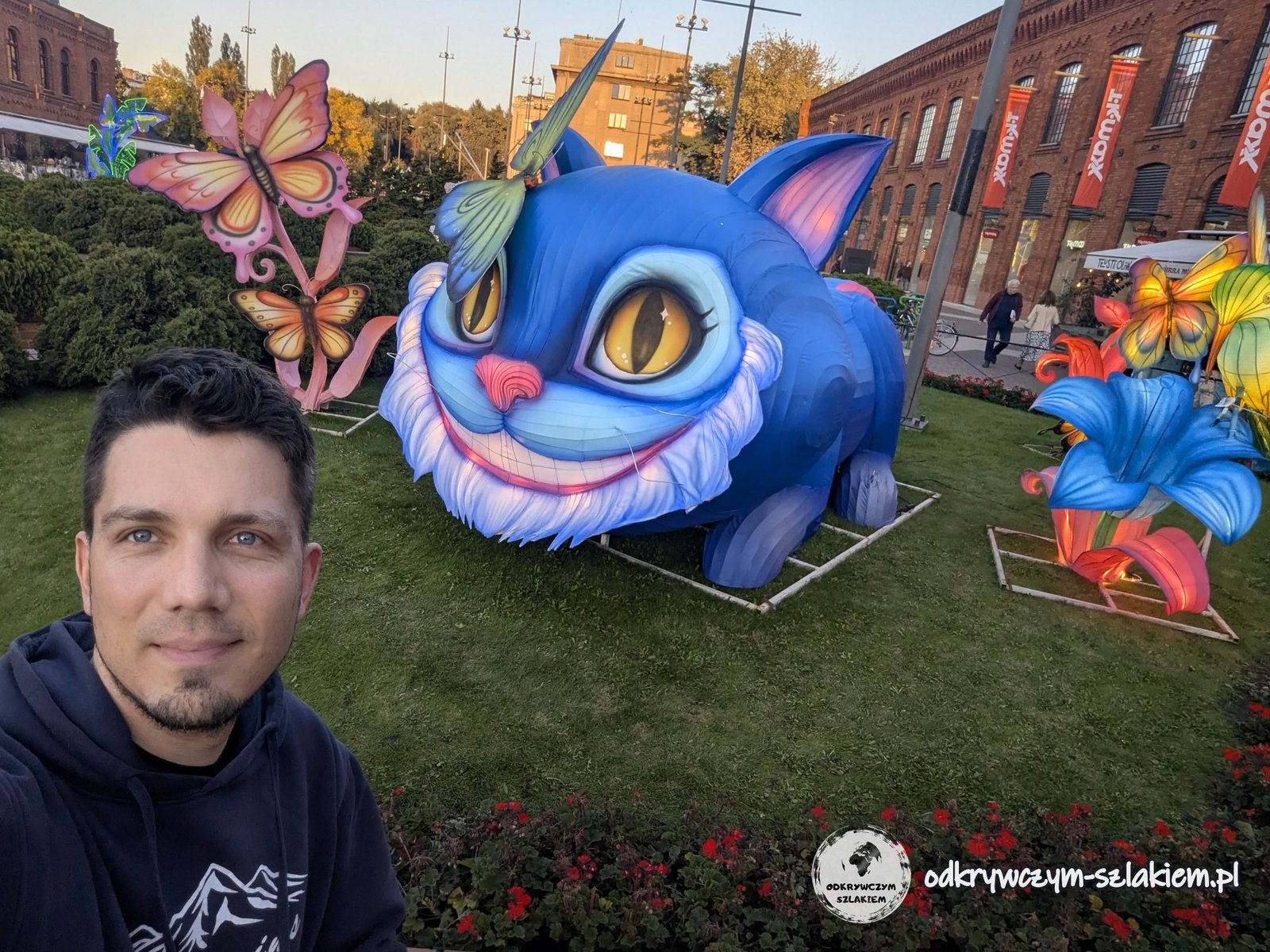
The centre of the complex is a market square of 3.5 ha – it hosts concerts, a beach in summer and an ice rink in winter. The former spinning mill houses a hotel, and the complex also has the Factory Museum. At the end of September 2026 colourful installations stood on the lawns, among them a huge blue Cheshire Cat.
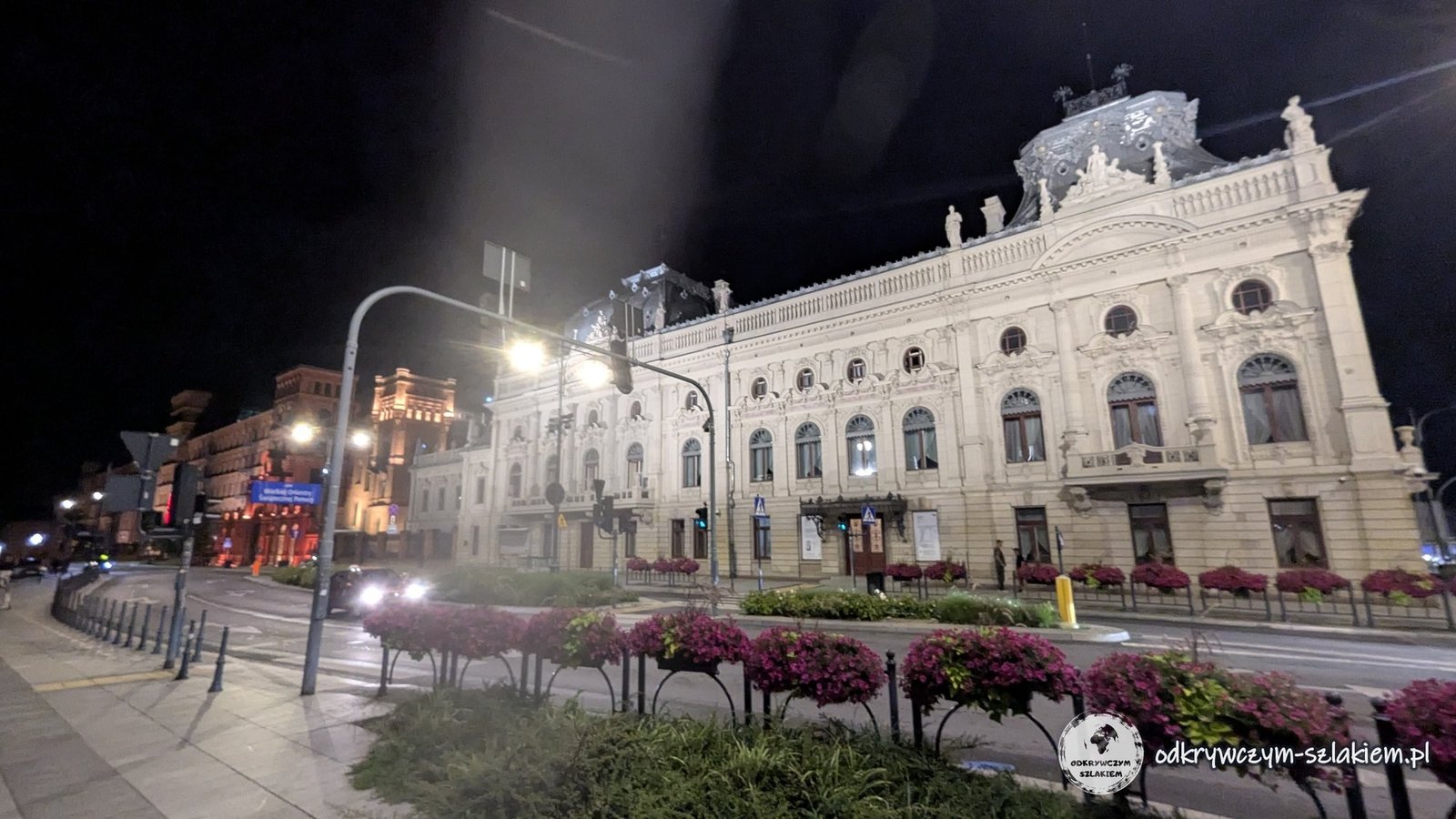
Right next to it, on Ogrodowa Street, stands the eclectic Izrael Poznański Palace – the industrialist’s former residence, which now houses the Museum of the City of Łódź. In the evening the palace façade is illuminated.
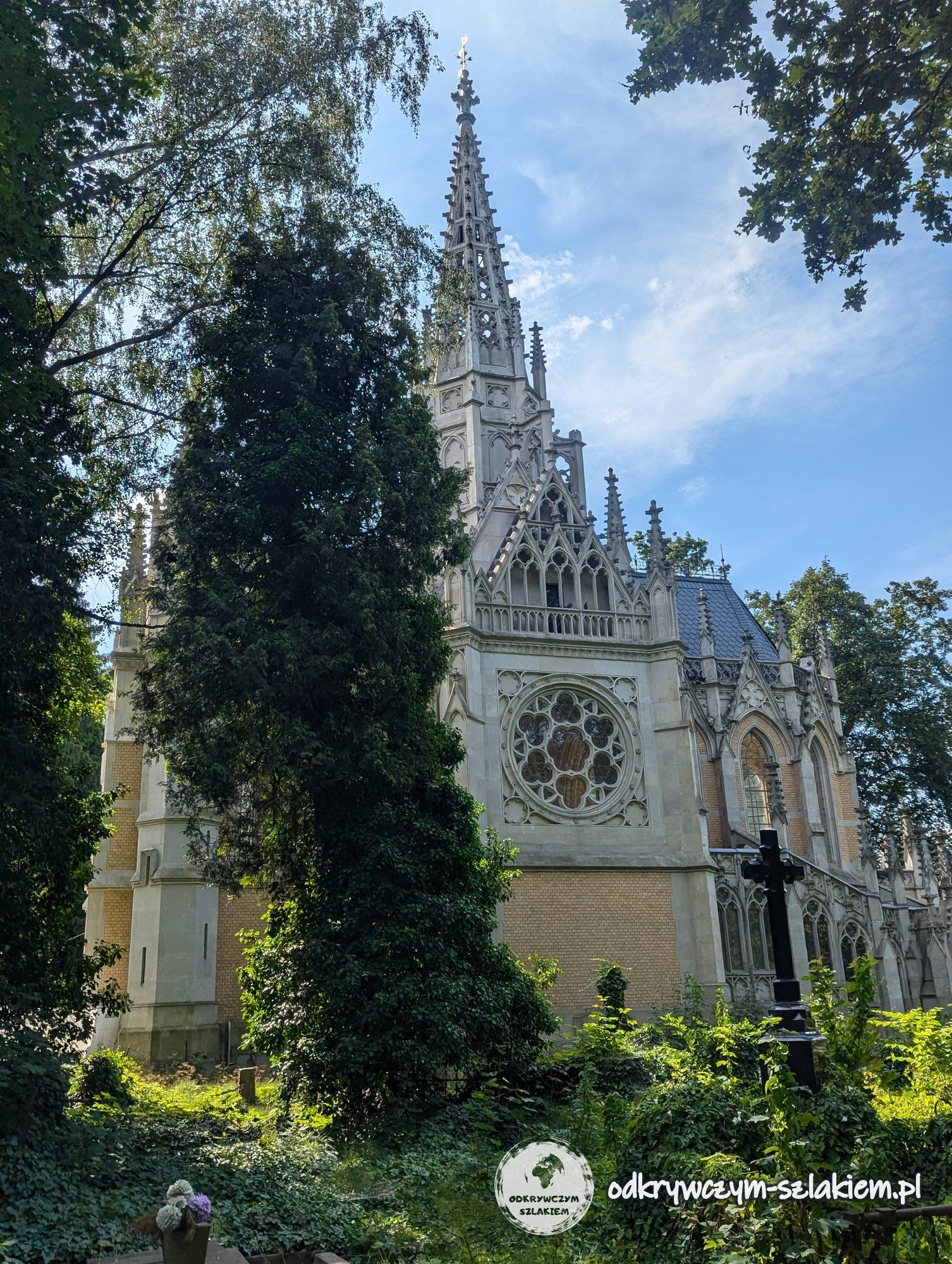
A little further, at Ogrodowa 43, lies the Old Cemetery. In its Lutheran part stands the Neo-Gothic Chapel of Karl Scheibler, built in 1885–1888 to a design by Edward Lilpop and Józef Pius Dziekoński. Scheibler was the largest industrialist in the Kingdom of Poland. After 1945 the chapel was vandalised – its restoration is still under way, funded partly by collections on All Saints’ Day.
Murals and Włókiennicza Street
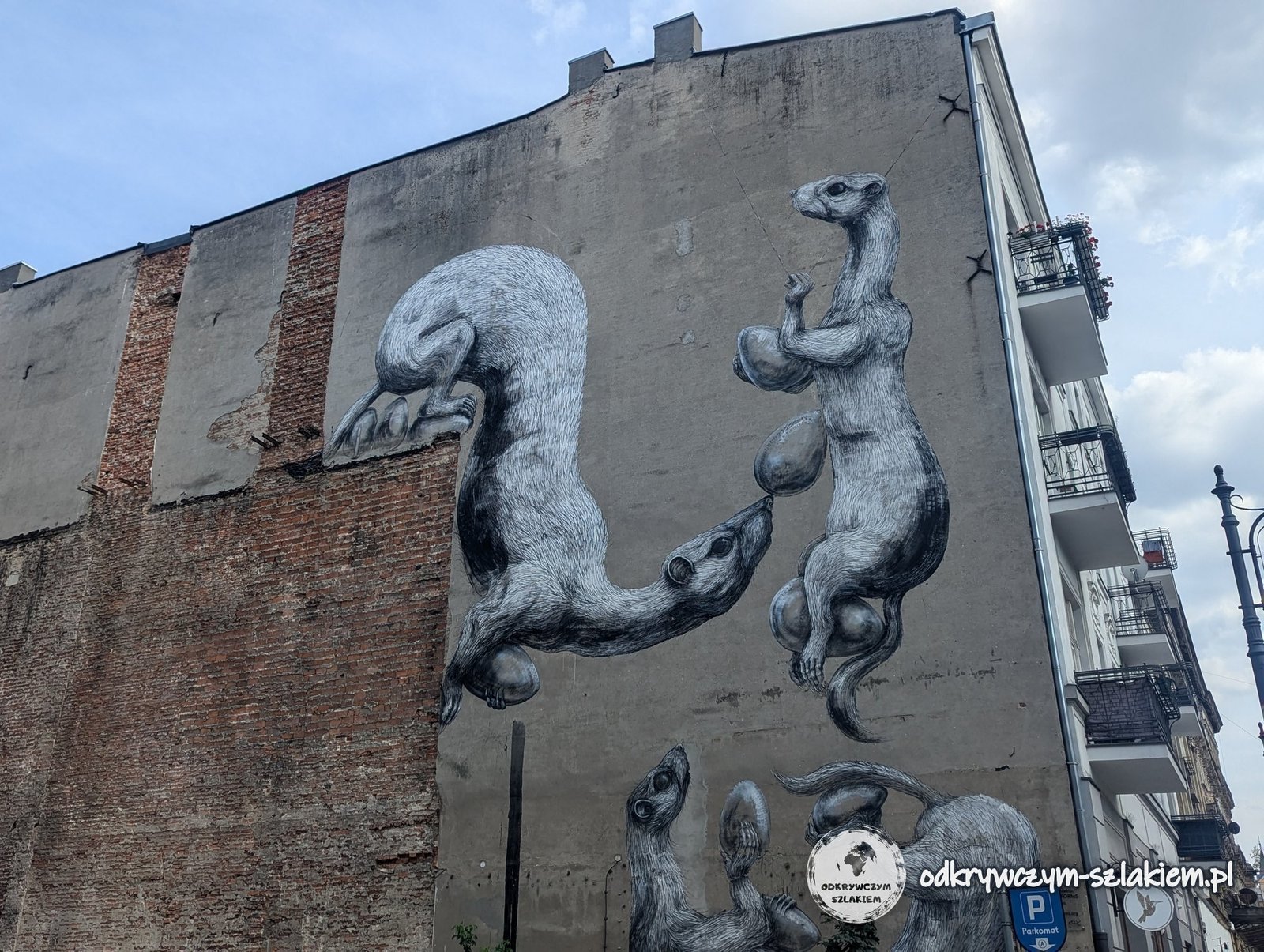
Łódź is known for its large-format murals on the walls of tenement houses. A few hundred metres from Freedom Square, black-and-white animals have been painted on the gable wall of one of the buildings.
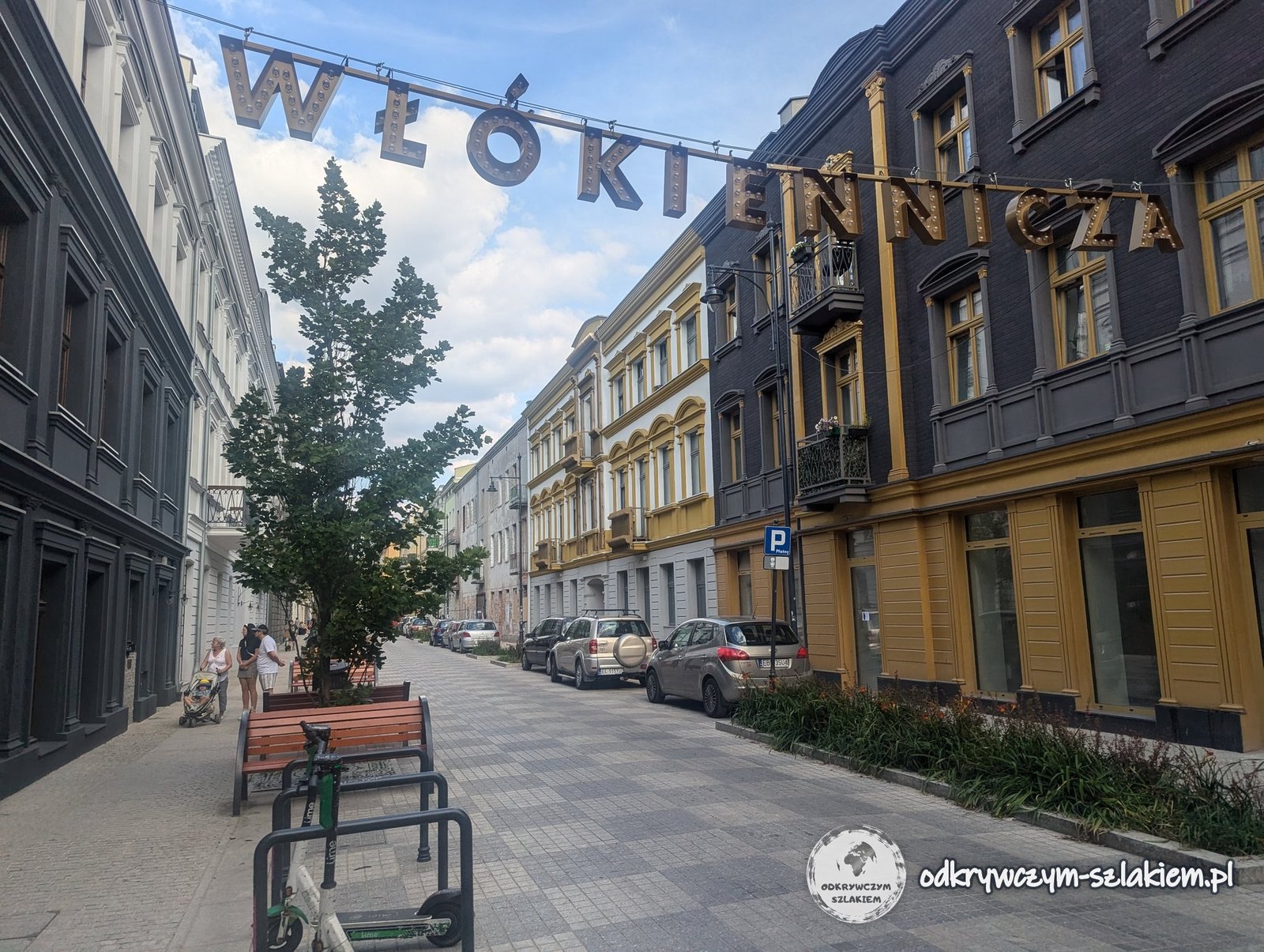
Nearby runs Włókiennicza Street. After its renovation it has new paving, benches and greenery, and a sign with its name hangs above the street.
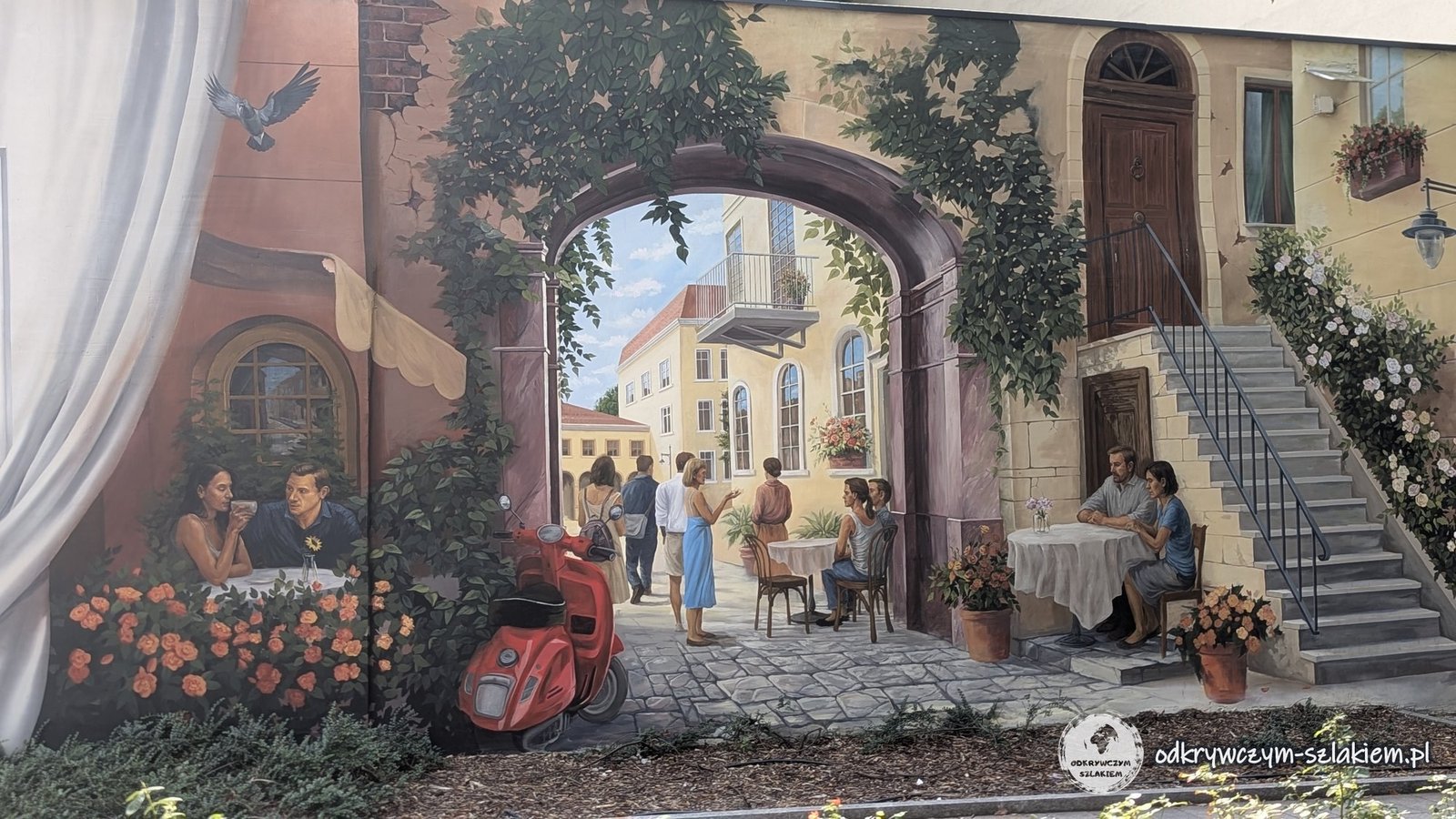
Murals can also be found on smaller walls and in gateways. I saw, among others, a painting that pretends to be a passage through a gate onto a sunny lane, and a tenement gateway covered in crocheted squares.

The Survivors’ Park – remembering the Łódź ghetto
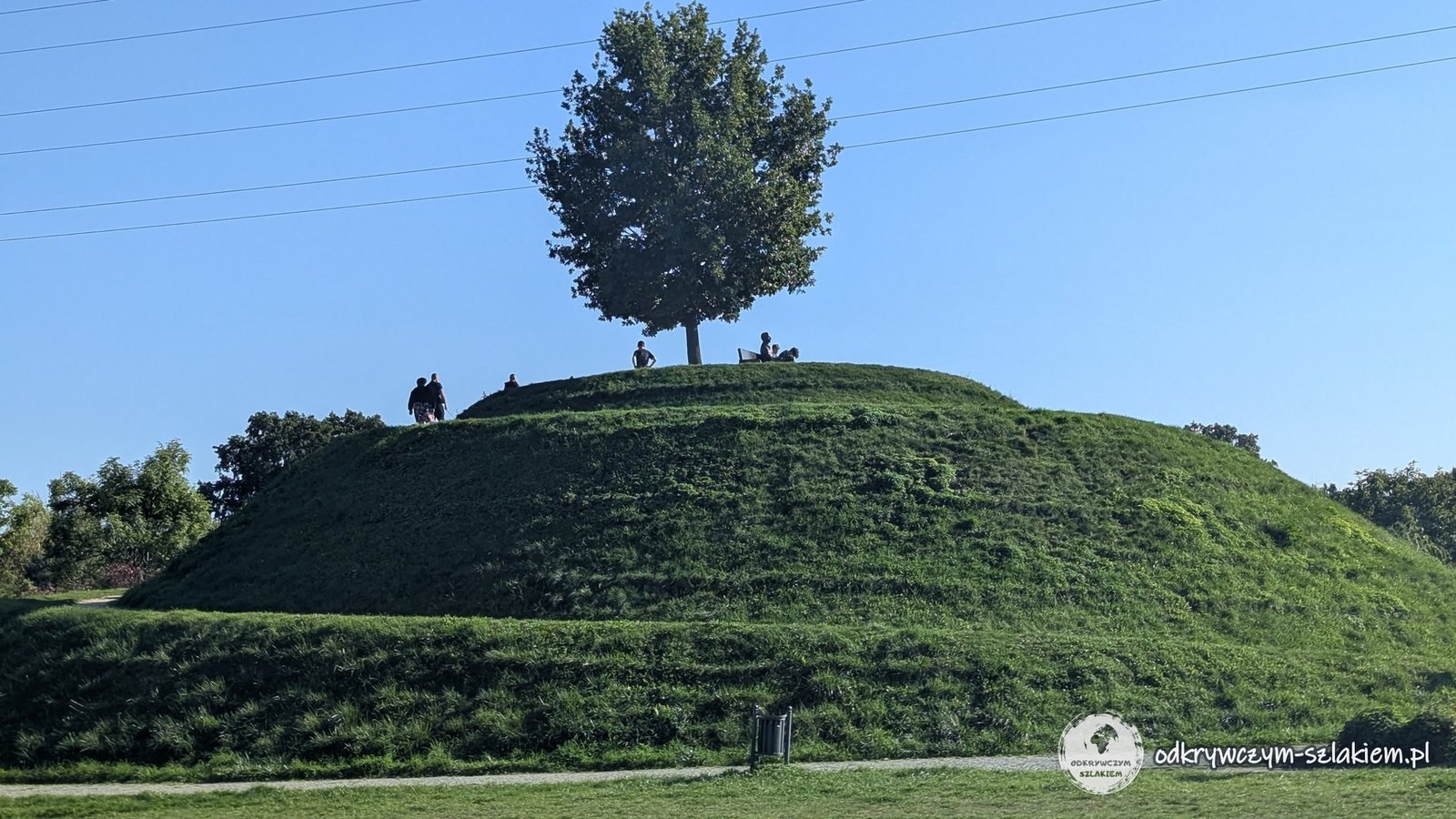
During the Second World War the Germans set up the Litzmannstadt Ghetto (1940–1944) in the Bałuty district. To commemorate its prisoners, the Survivors’ Park (Park Ocalałych) was laid out in the north of the city and opened on 30 August 2004 – the 60th anniversary of the liquidation of the ghetto. Its trees were planted by 418 Holocaust survivors – every tree has a number, and plaques with their names line the alley. At the end of the park stands the 10-metre Mound of Remembrance with Jan Karski’s bench on top.
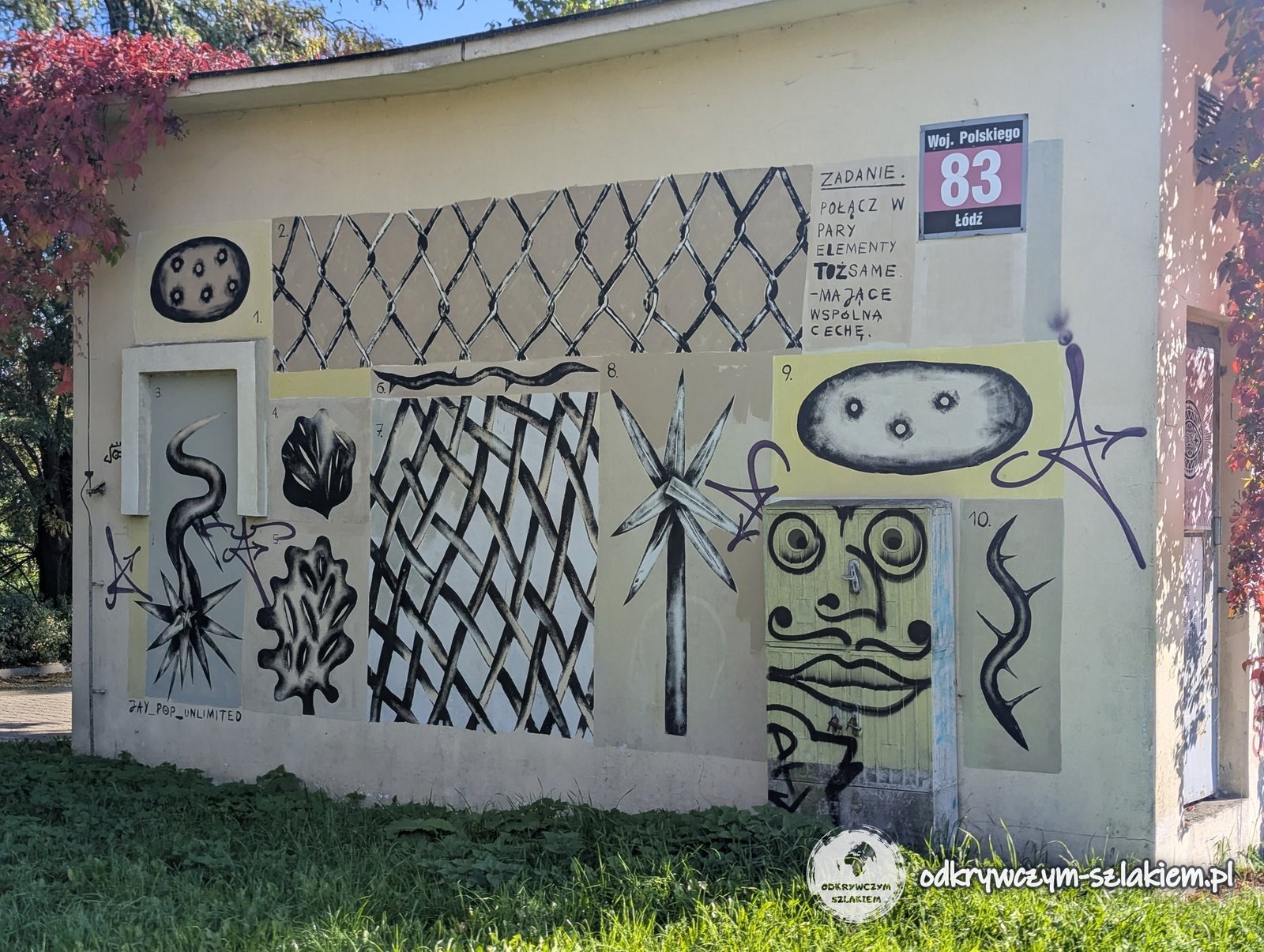
In the park, at Wojska Polskiego 83, is the Marek Edelman Dialogue Centre, which holds exhibitions, meetings and educational activities. In September 2026 one of the exhibitions was about Alina Margolis-Edelman (1922–2008) – a paediatrician and the wife of Marek Edelman. On the wall of the small building next door there is a puzzle mural: numbered black drawings and the instruction „Połącz w pary elementy tożsame” (“Match the identical elements in pairs”).
Light.Move.Festival – the festival of light
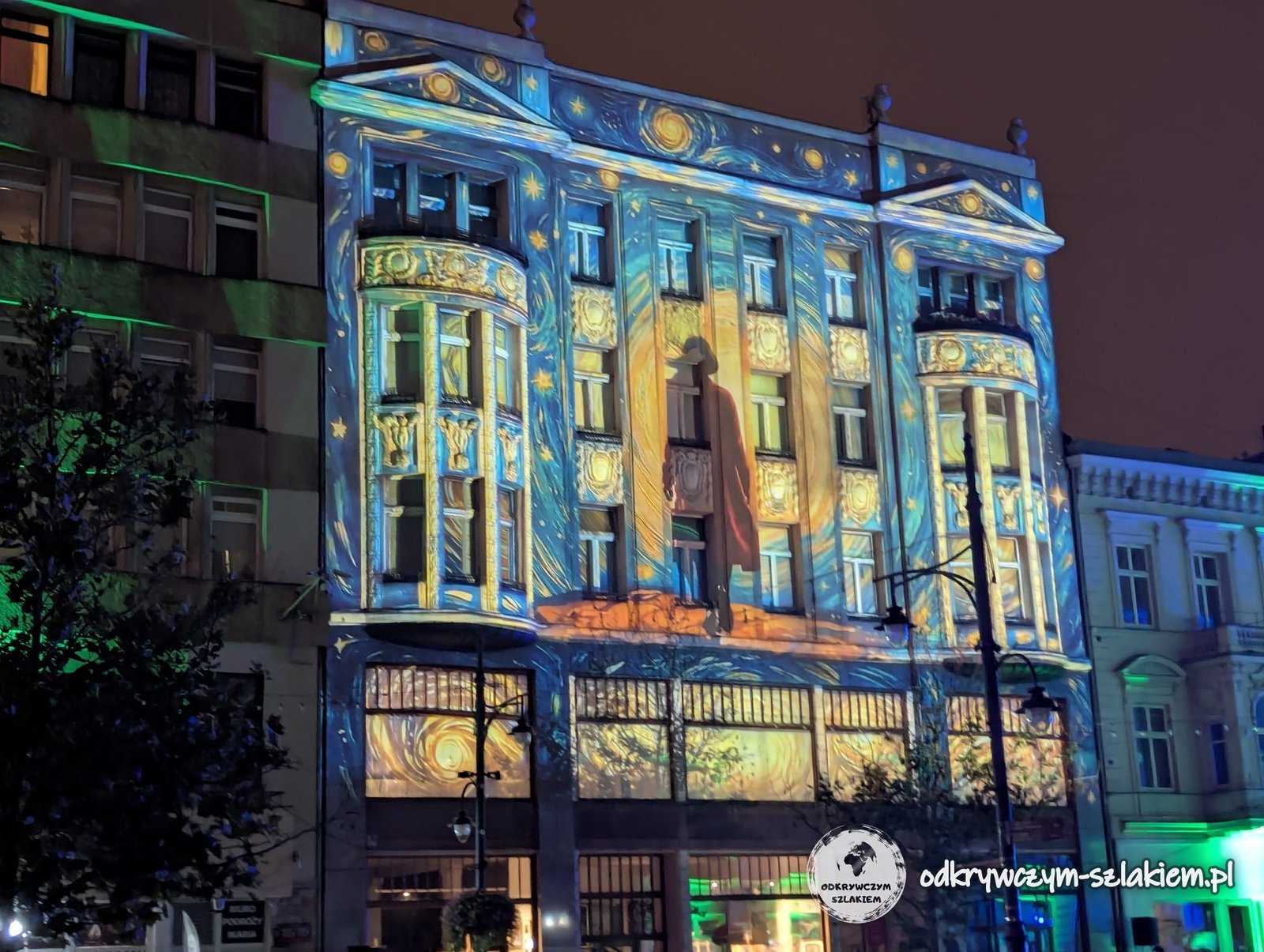
At the end of September the centre of Łódź hosts Light.Move.Festival – a festival of light organised by the Lux Pro Monumentis Foundation. I went to the 16th edition, which ran from 25 to 27 September 2026. Huge mappings were projected onto the façades of the tenements on Piotrkowska – colourful animations matched to the architecture of the buildings.
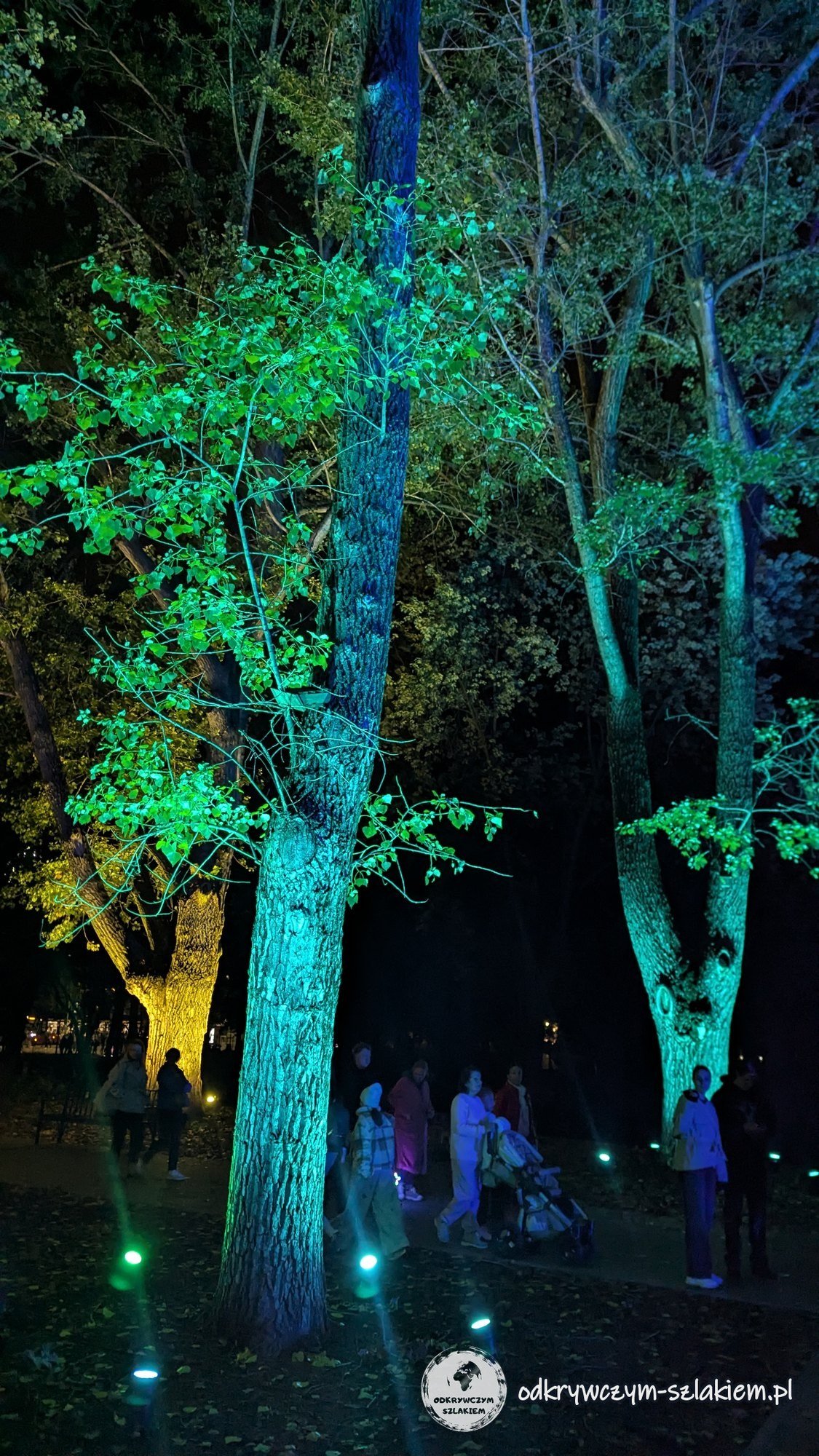
On Freedom Square the projection surrounded the whole square, and in the parks the trees were lit up and light installations were set up.

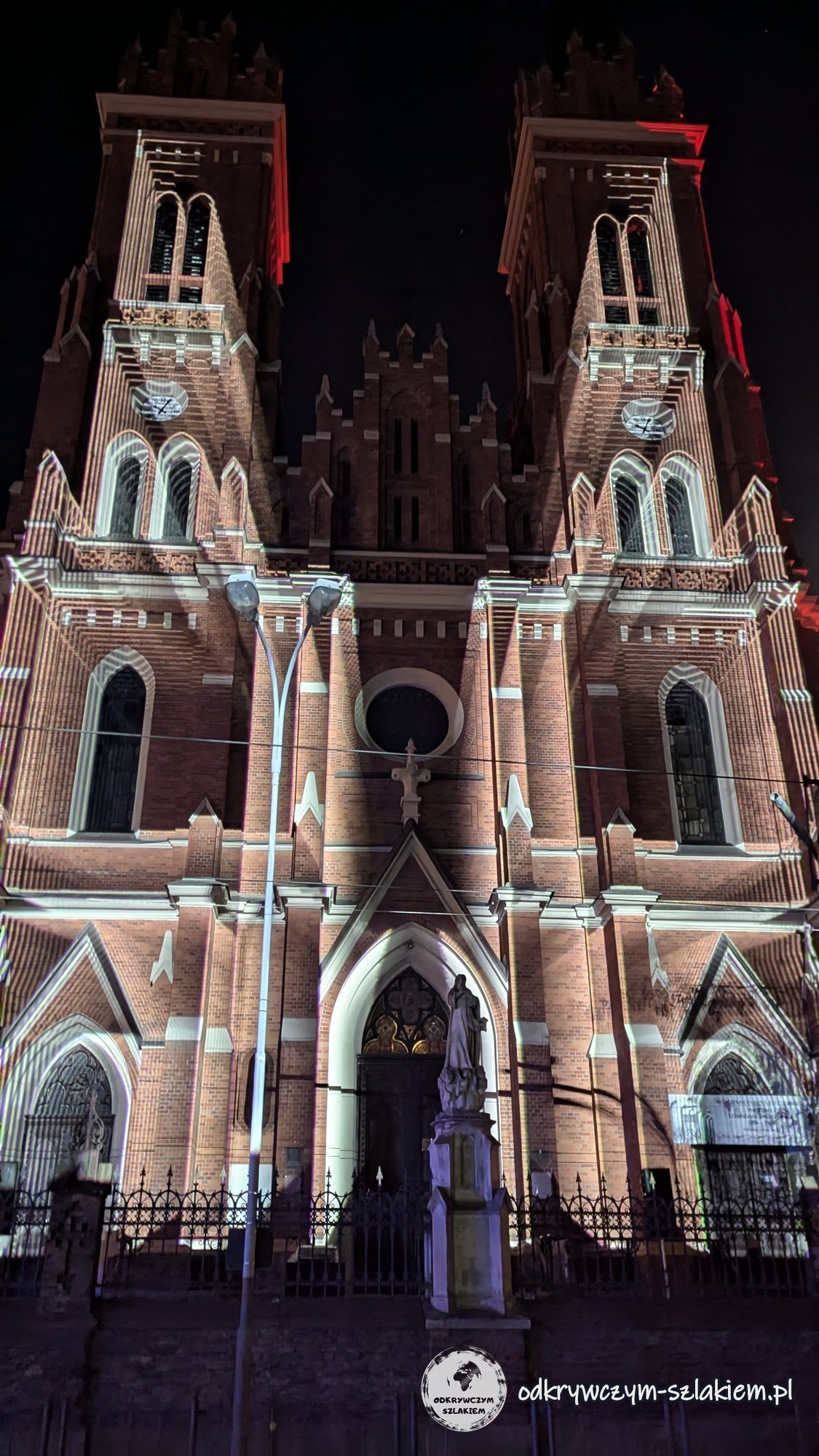
A mapping was also shown on the Neo-Gothic church on Kościelny Square.
In Manufaktura there were light installations, among them pink neon flamingos.

Football in Łódź – the ŁKS and Widzew stadiums
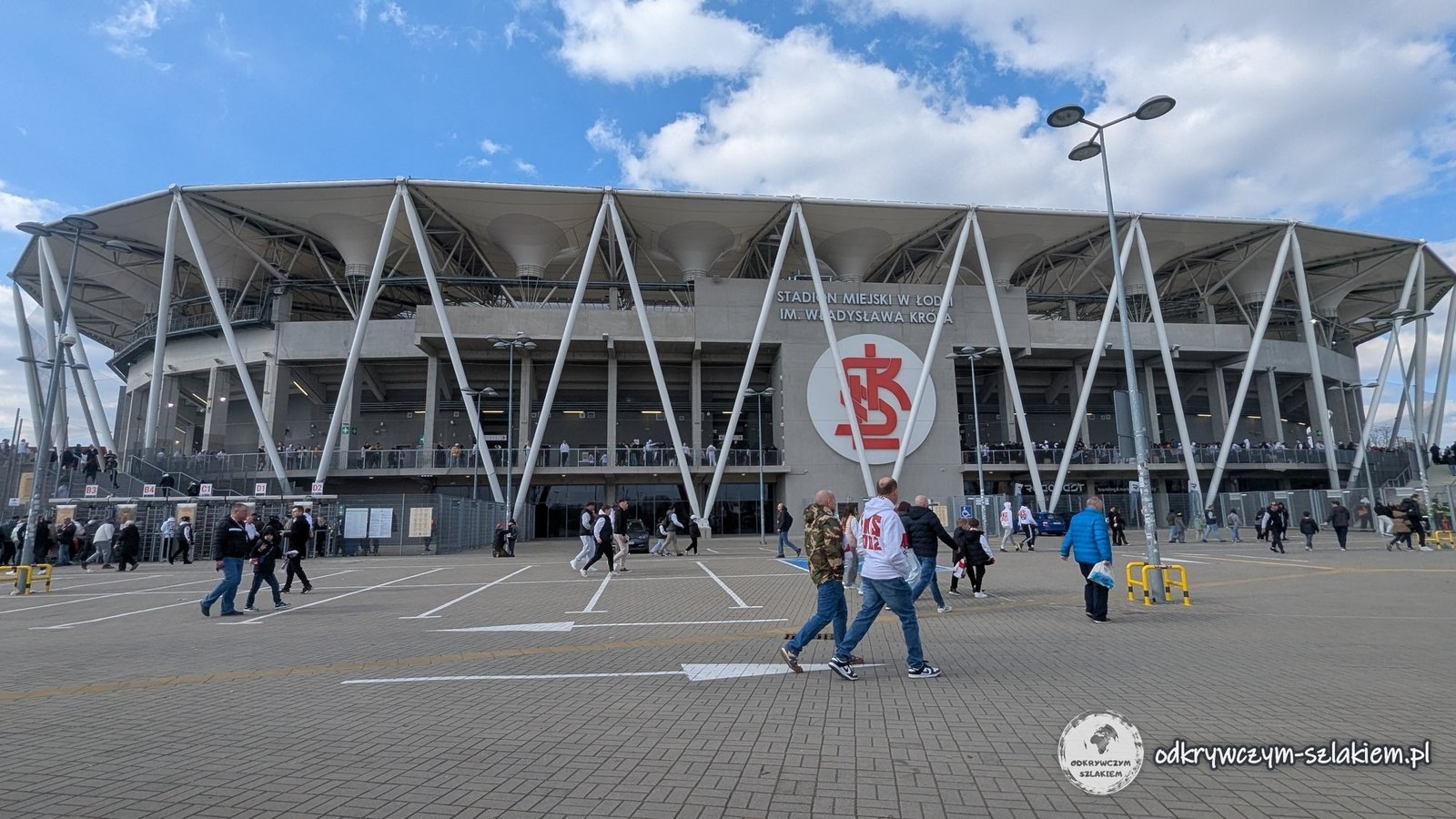
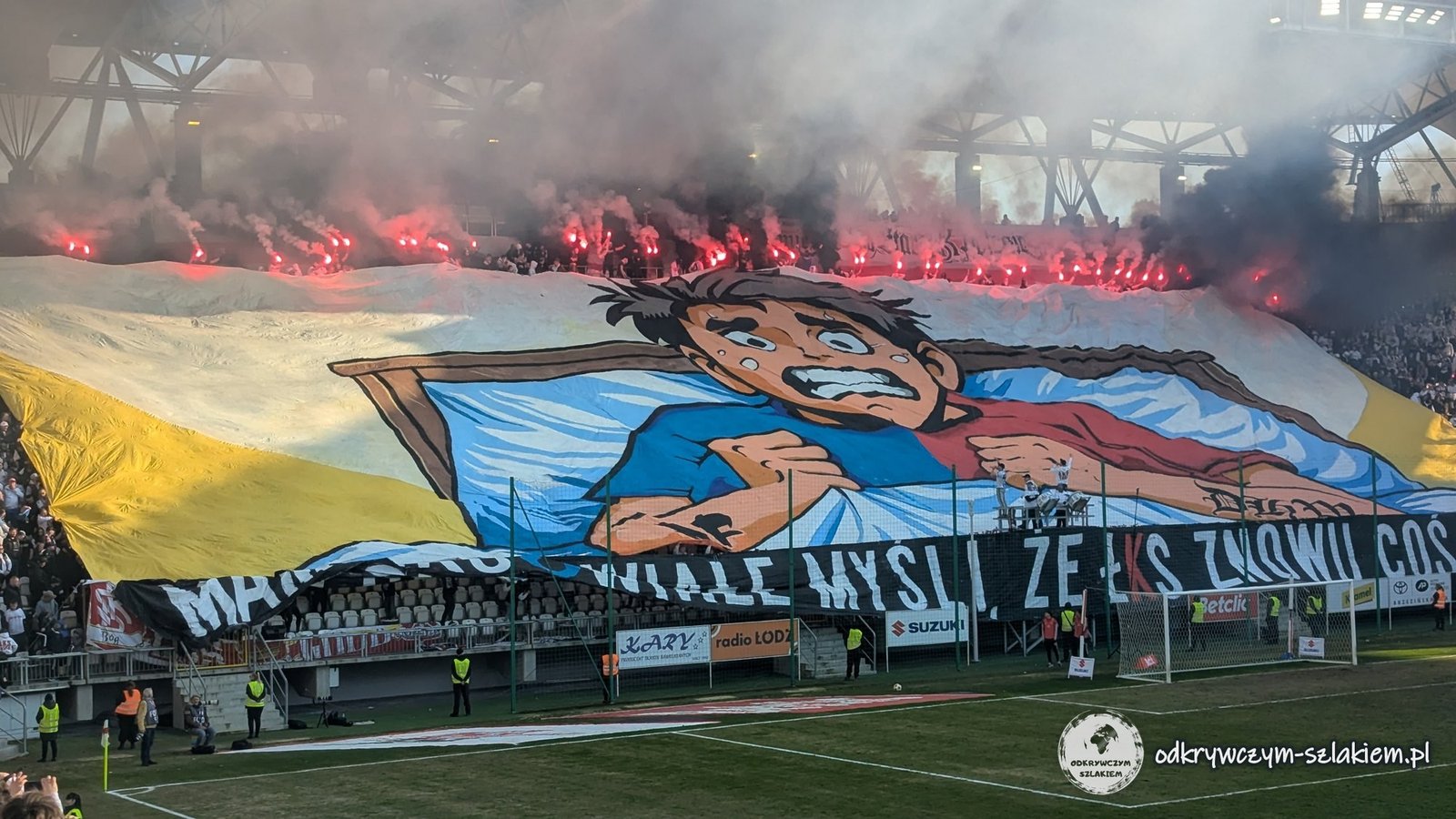
Łódź has two big football clubs – ŁKS and Widzew – and two modern stadiums. The Władysław Król Municipal Stadium, home of ŁKS, stands by the Na Zdrowiu park, next to the Atlas Arena. On 21 March 2026 I was here for the second-tier match ŁKS – Ruch Chorzów, which ended in a 2–2 draw. In the stands the fans prepared a big display with a giant banner and flares.
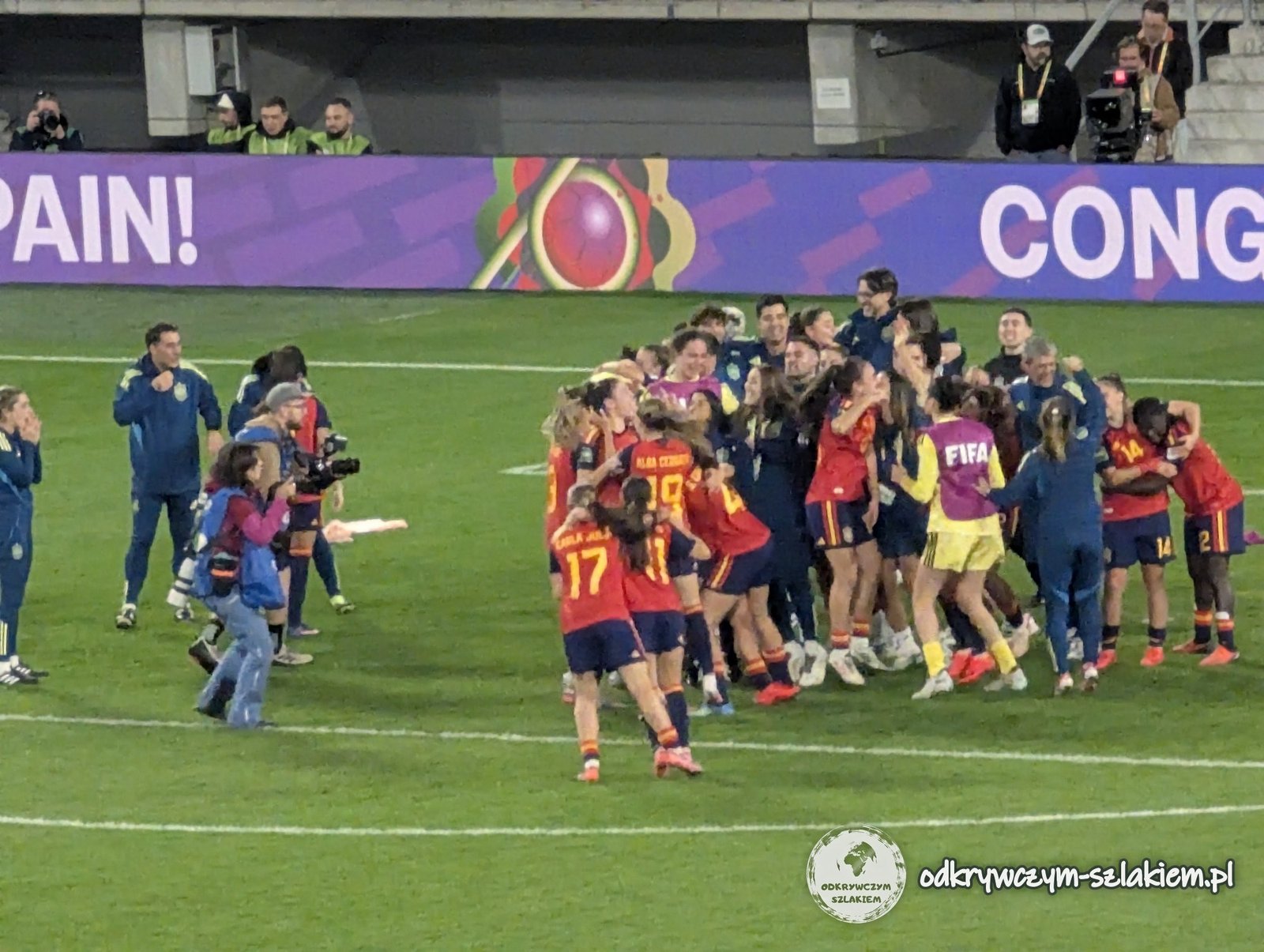
Half a year later the same stadium hosted the final of the FIFA U-20 Women’s World Cup, held in Poland from 5 to 27 September 2026. On 26 September I watched the third-place match – Colombia drew 1–1 with Italy after extra time and won 4–3 on penalties. The next day came the final: Spain drew 0–0 with North Korea after extra time and also won 4–3 on penalties. The big screen showed a record attendance – 8,047 spectators.
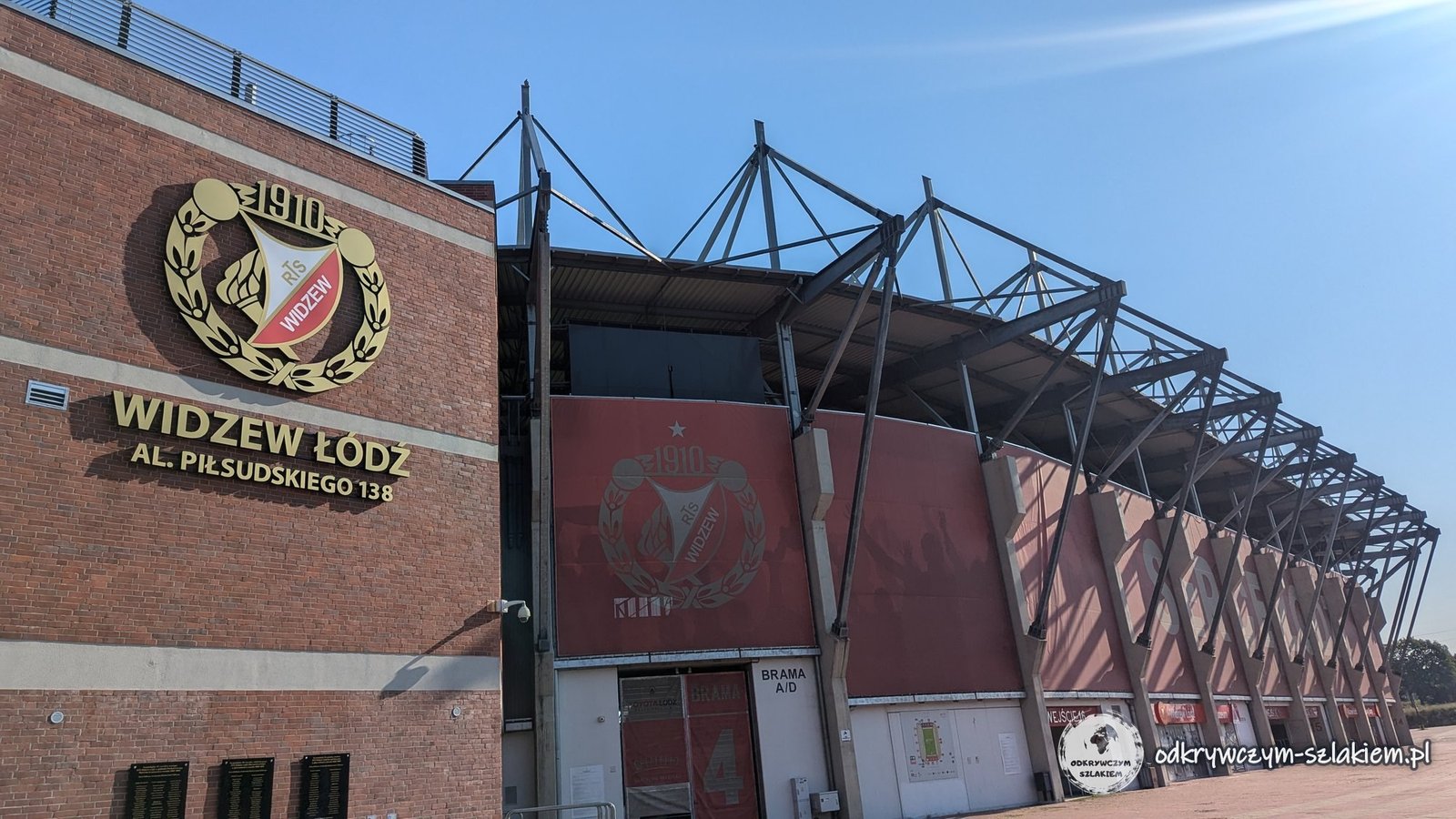
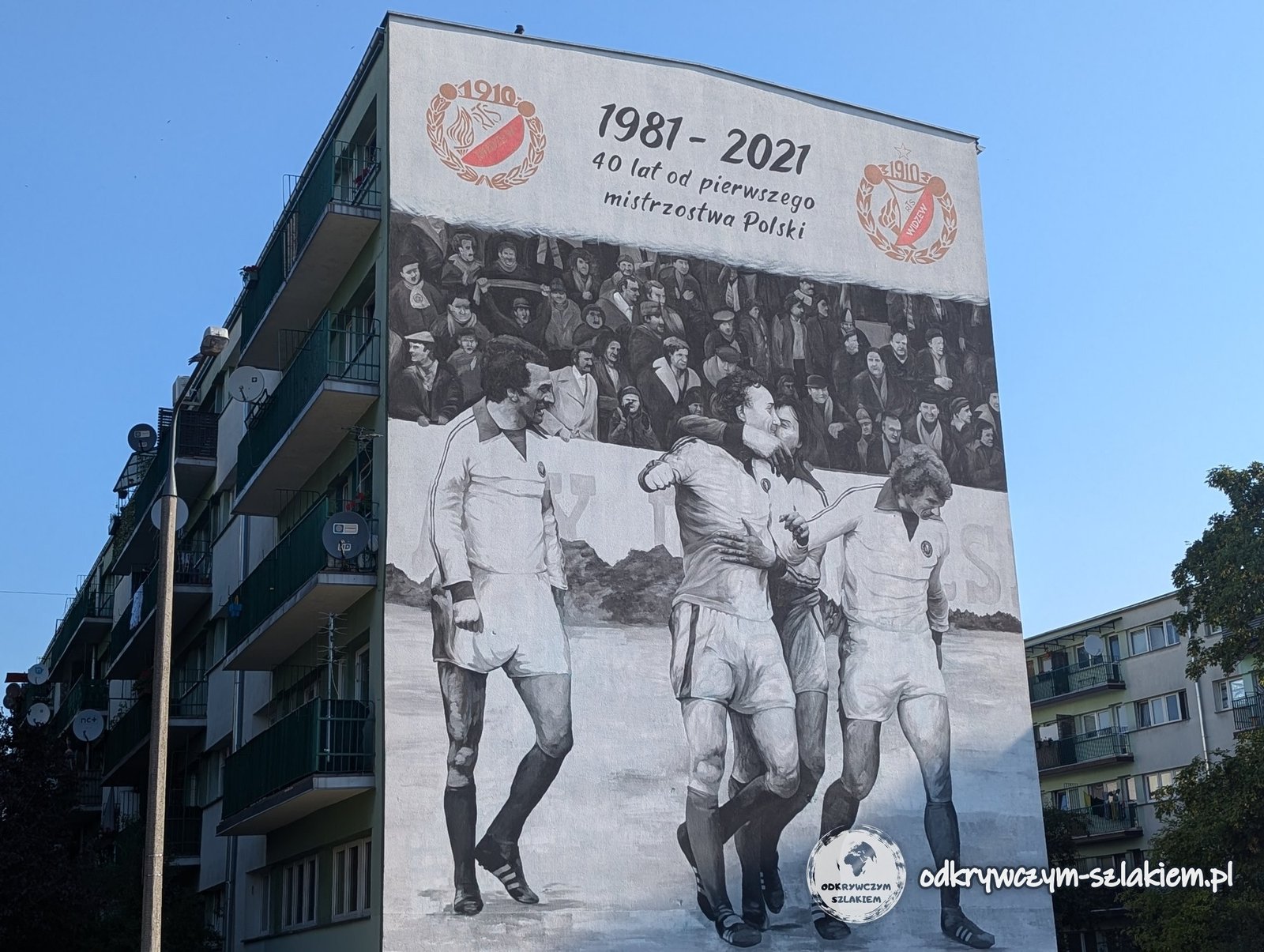
The Widzew stadium stands at al. Piłsudskiego 138, in the east of the city. On a nearby block of flats there is a mural marking the 40th anniversary of Widzew’s first Polish championship in 1981.
Around Łódź – kayaking on the Grabia River
It is worth leaving the city for a day. I went kayaking on the Grabia – a right tributary of the Widawka, considered one of the cleanest rivers in the region. The trip followed the lower stretch of the river, west of Łask, about 50 km from the centre of Łódź.
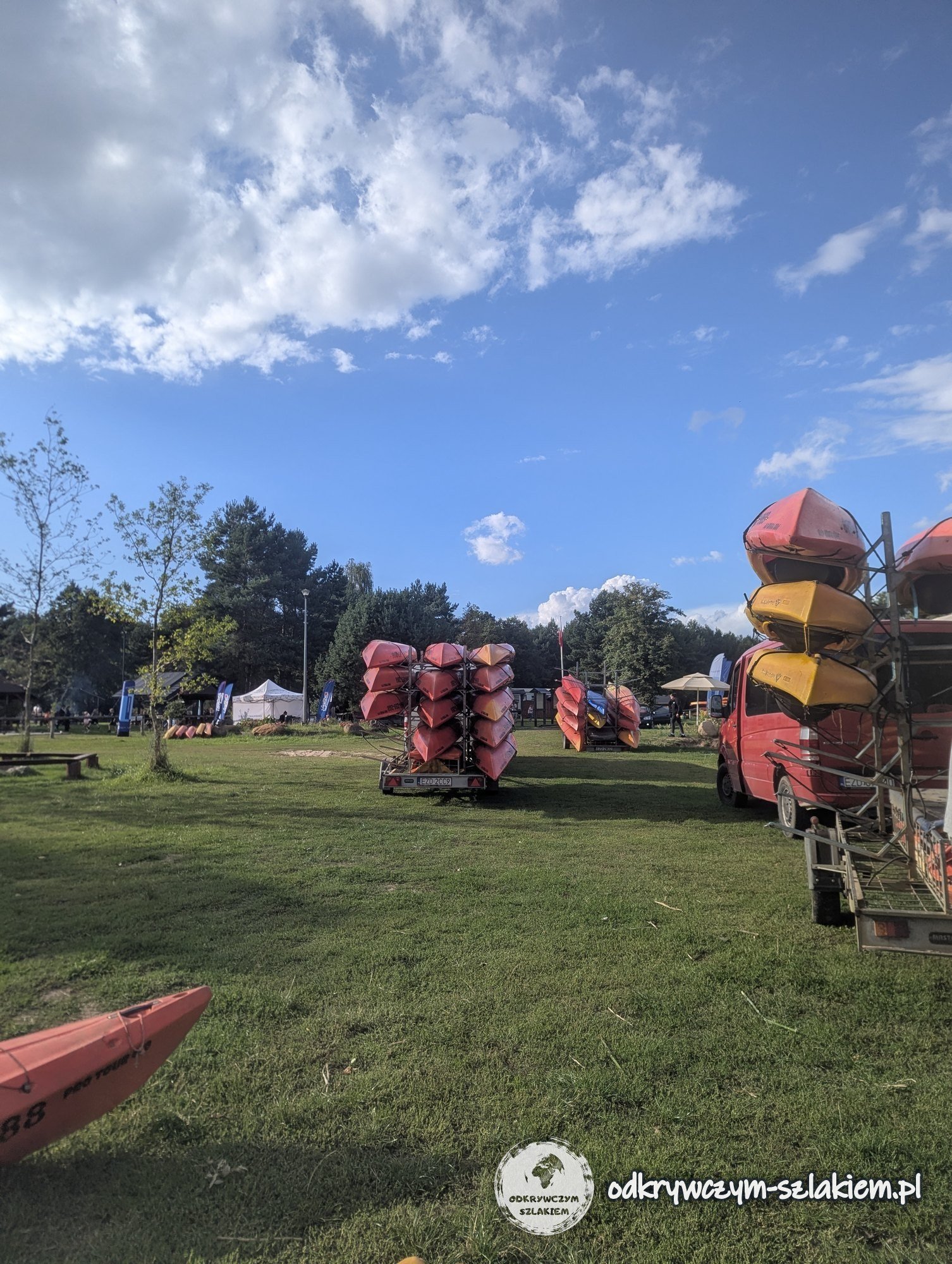
It was a free trip run by the Łódź Voivodeship with EU funds. Registration opened at a set time and the places were gone within seconds. We started at the “Ujście” kayak base, a bus took us upriver to the village of Grabia, and from there we paddled back to Ujście. I was in a double kayak: 18 km in about 5 hours, with 2 portages and plenty of manoeuvring around obstacles. The package included a quick-dry towel, a dry bag, snacks, drinks and lunch afterwards.
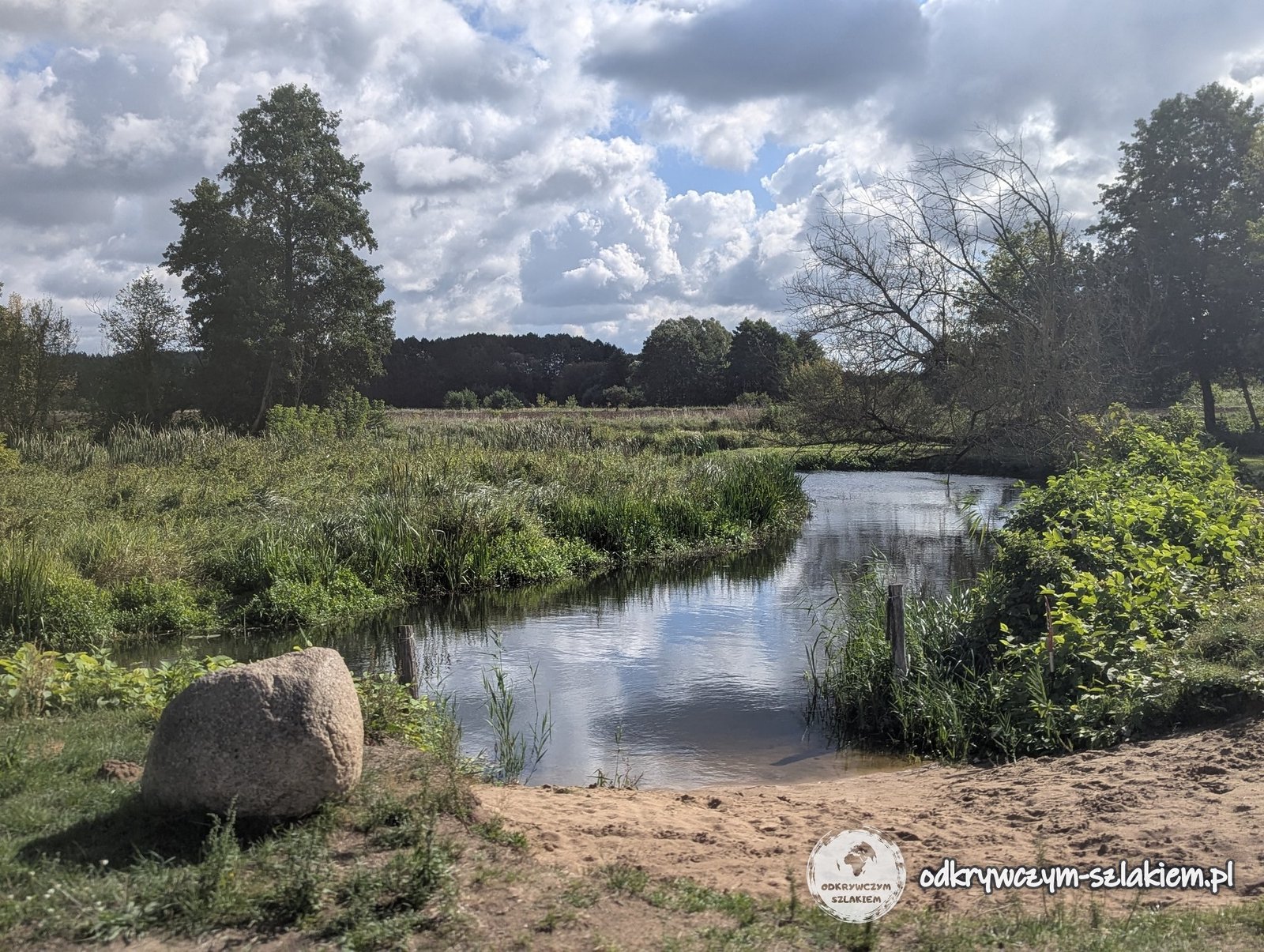
On this stretch the Grabia meanders a lot: meadow bends with sandy beaches alternate with sections through forest and reeds. The current is mostly gentle, but there are fallen trees and shallows on the river.
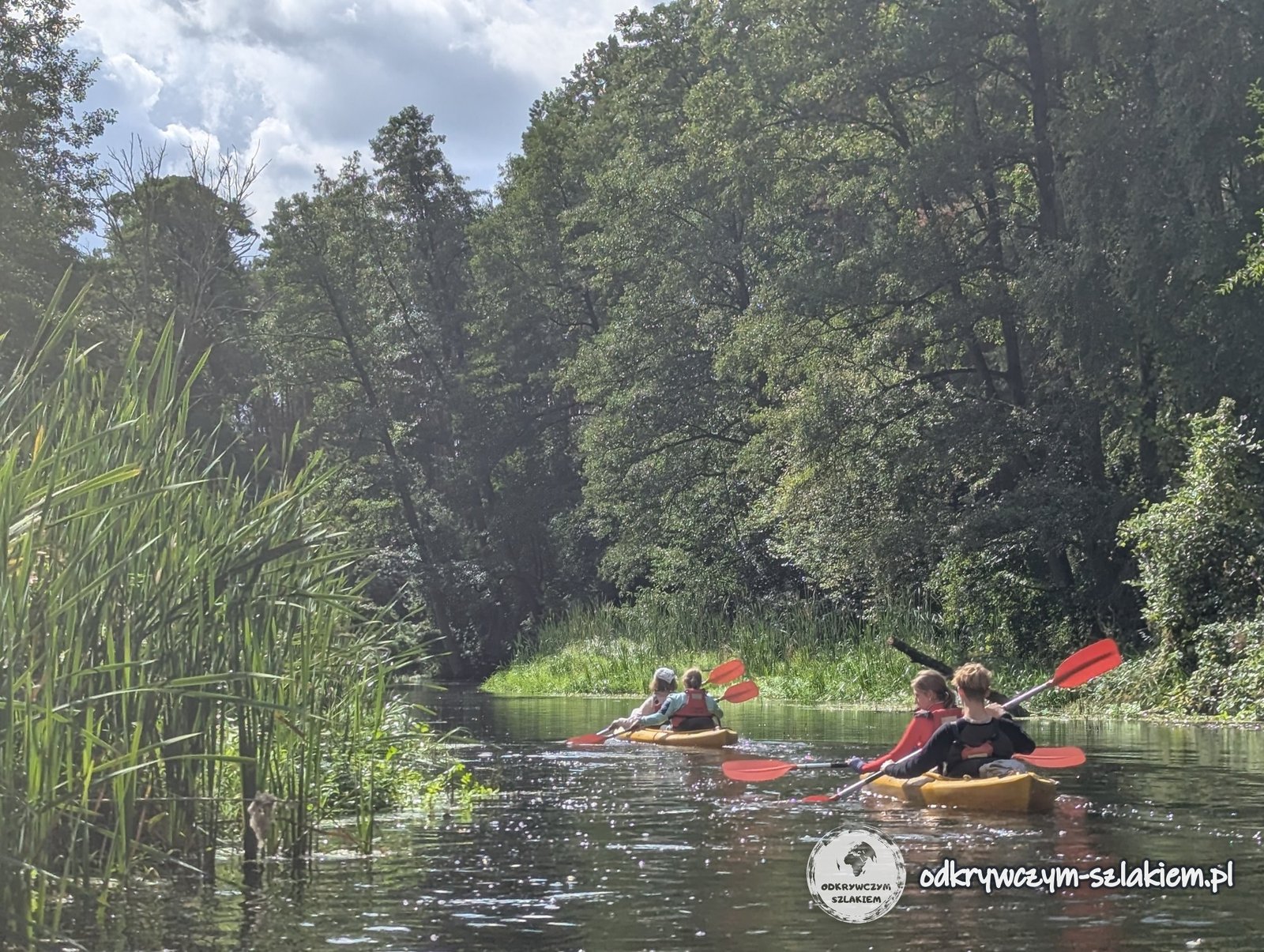
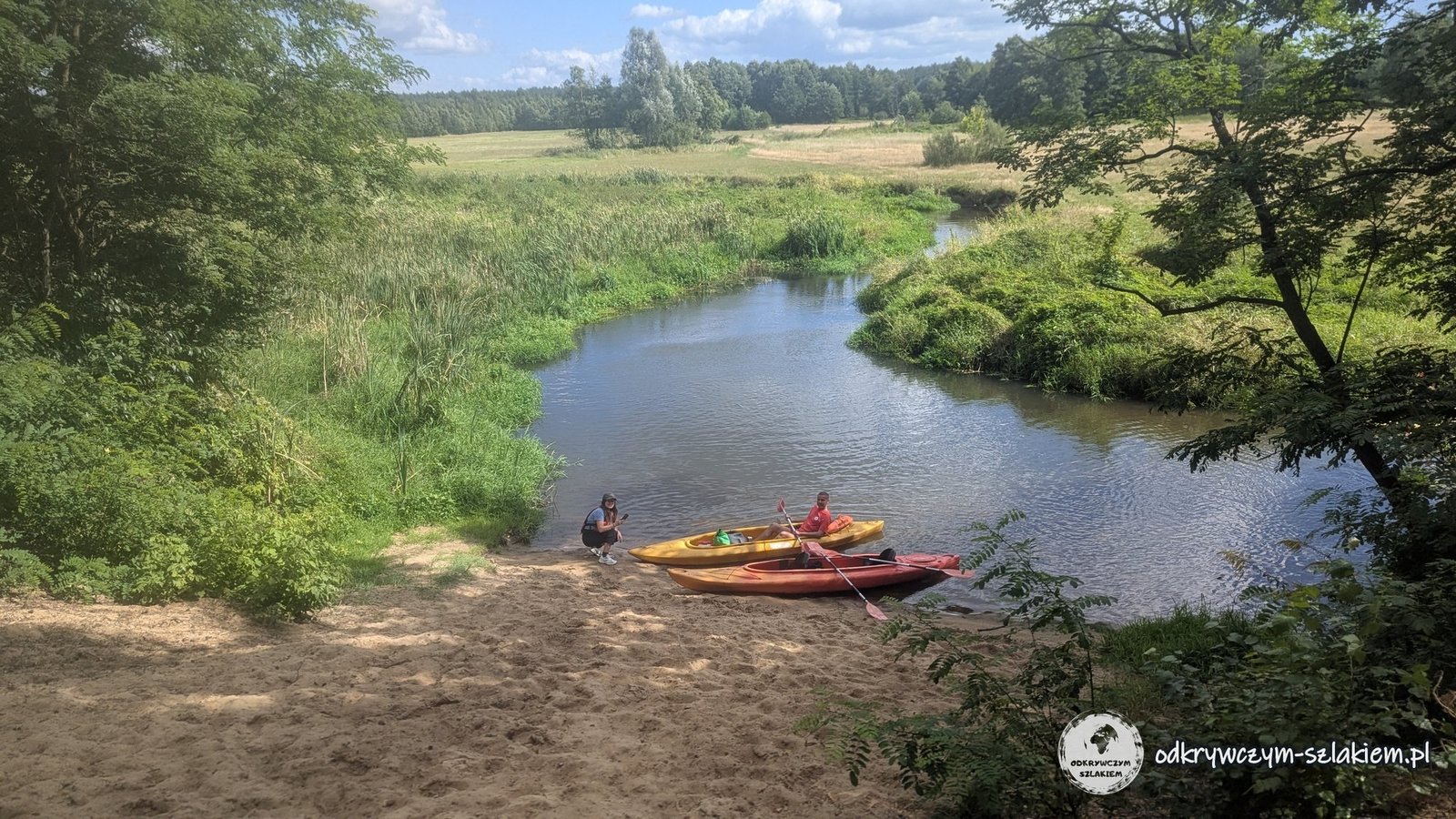
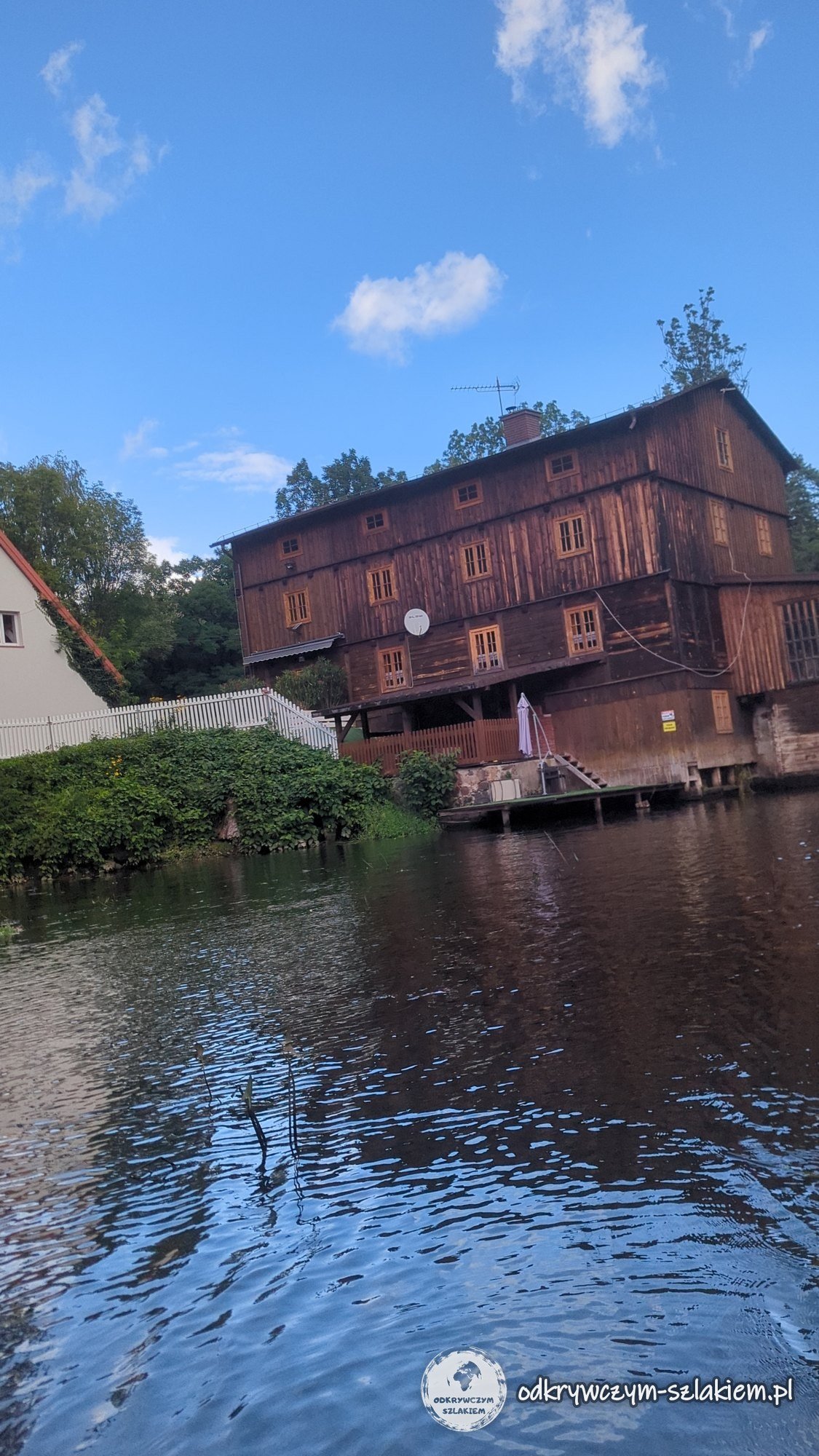
Along the way I passed an old wooden mill, sandy banks with pine trees and birch groves. On the whole Grabia there are several weirs and steps where kayaks have to be carried around.
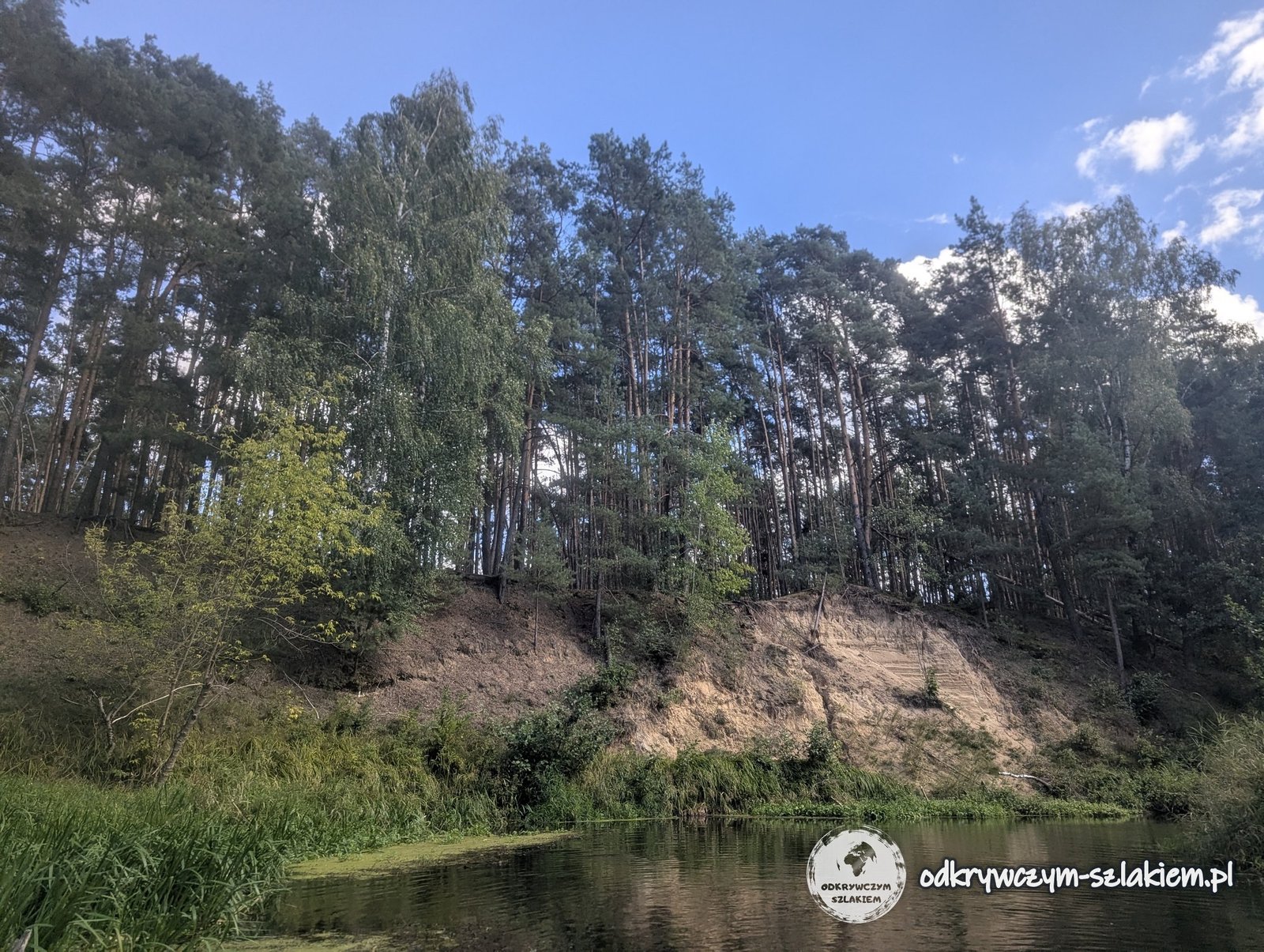
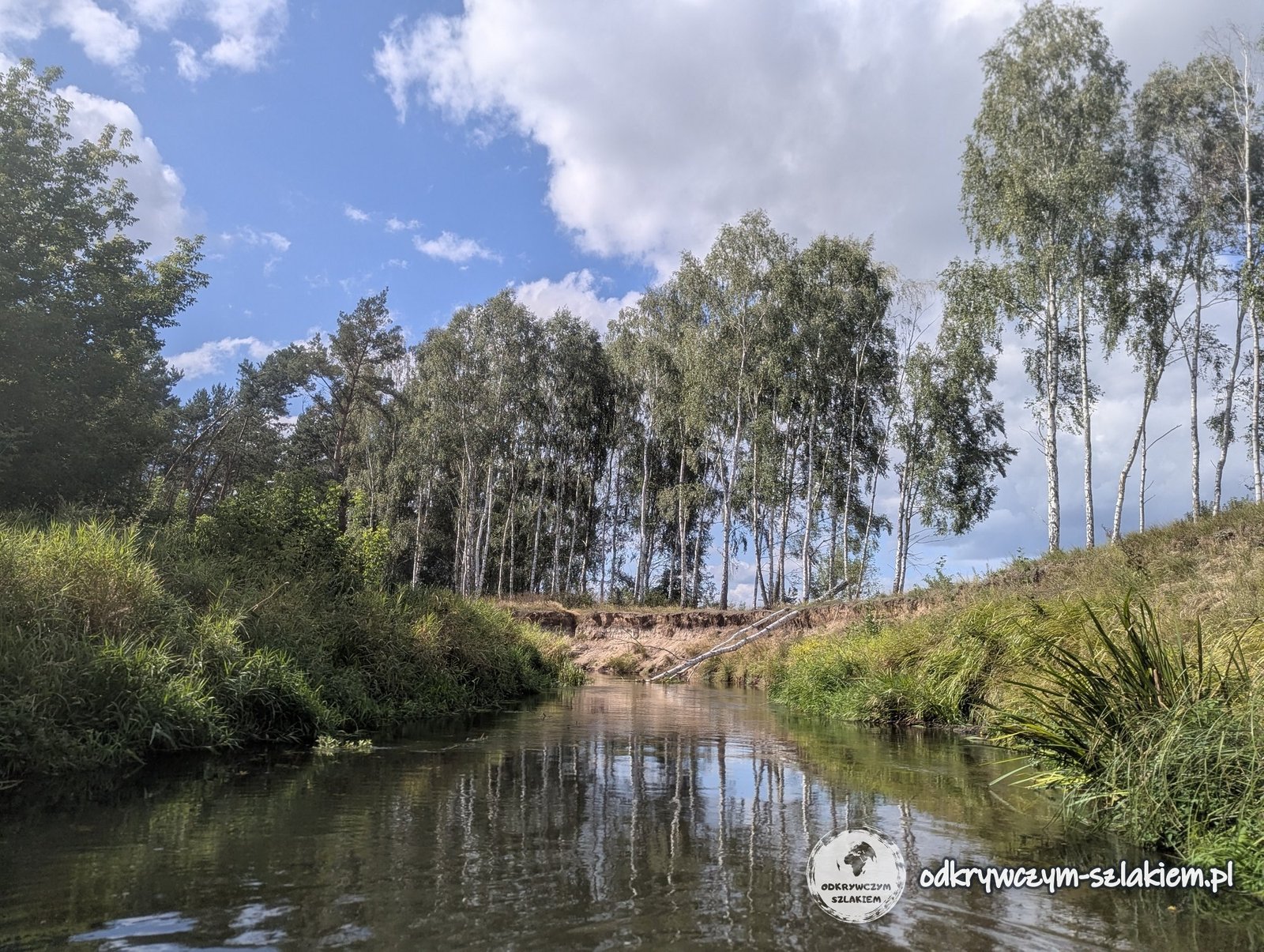
The trip took me a few hours, with breaks on the beaches. At the finish, at the rental base, a hot meal was waiting and the kayaks went back onto the trailers.
Practical information and a weekend plan
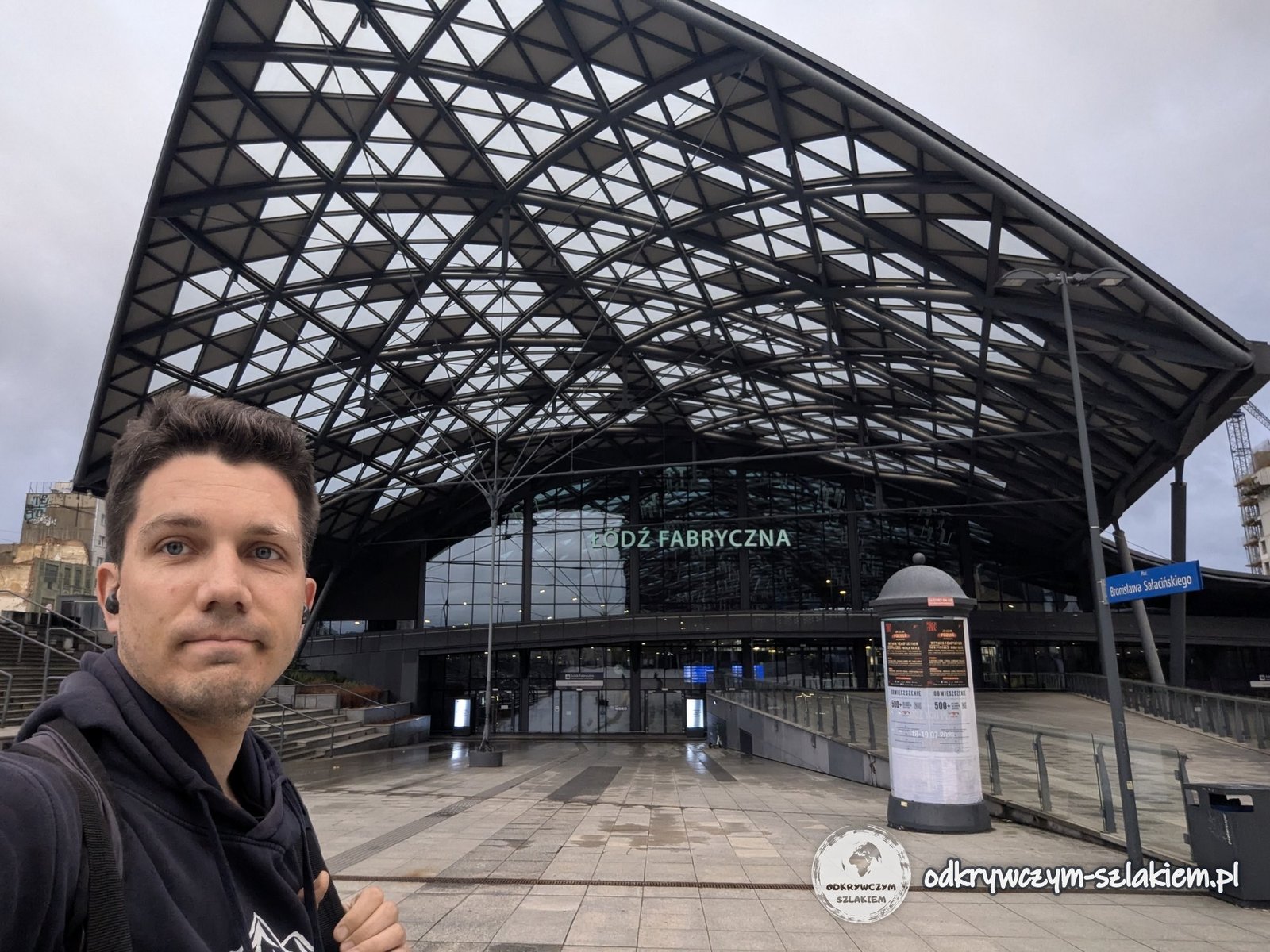
- Getting there: the main stations are Łódź Fabryczna – an underground station opened in December 2016, a few hundred metres from Piotrkowska – and Łódź Kaliska.
- On foot: Freedom Square, the northern part of Piotrkowska, the Arlekin Theatre, Manufaktura and the Poznański Palace are close to each other – you can cover them in one day. For the Survivors’ Park and the stadiums it is better to take a tram.
- Light.Move.Festival: it takes place every year at the end of September (in 2025 on 26–28 September, in 2026 on 25–27 September). The programme and the map of installations are published on the festival website.
- Museums: check the opening hours and ticket prices of the Museum of the City of Łódź in the Poznański Palace and of the Factory Museum in Manufaktura on their websites before you go.
- Weekend plan: on Saturday Piotrkowska from Freedom Square southwards, with the sculptures of the Gallery of Great Łódź Citizens and the Walk of Fame, murals along the way, and Manufaktura in the evening. On Sunday the Poznański Palace, the Old Cemetery with Scheibler’s Chapel and the Survivors’ Park – and if ŁKS or Widzew are playing, a match.
- More of Poland: Warsaw in a weekend, Poznań in a weekend, Toruń and Wrocław.
- Kayaking on the Grabia: kayak rentals around Łask take you to the start and pick you up at the finish. The stretch from Grabia to Ujście is about 18 km and 5 hours of paddling with 2 portages – expect fallen trees on the river. The Łódź Voivodeship runs free kayak trips from time to time; places go within seconds, so be at your computer at the set time.