6:40








 6:40
Zinacantán and San Juan Chamula are towns in the state of Chiapas inhabited by the indigenous Tsotsil people (Maya). Their combined population is over 500,000. Tourists come here mainly to see their beliefs, traditions and customs, above all the pre-Columbian rituals that have been preserved and absorbed into Catholicism. It is a blend – or rather a creation – unique of its kind, found only in this area.
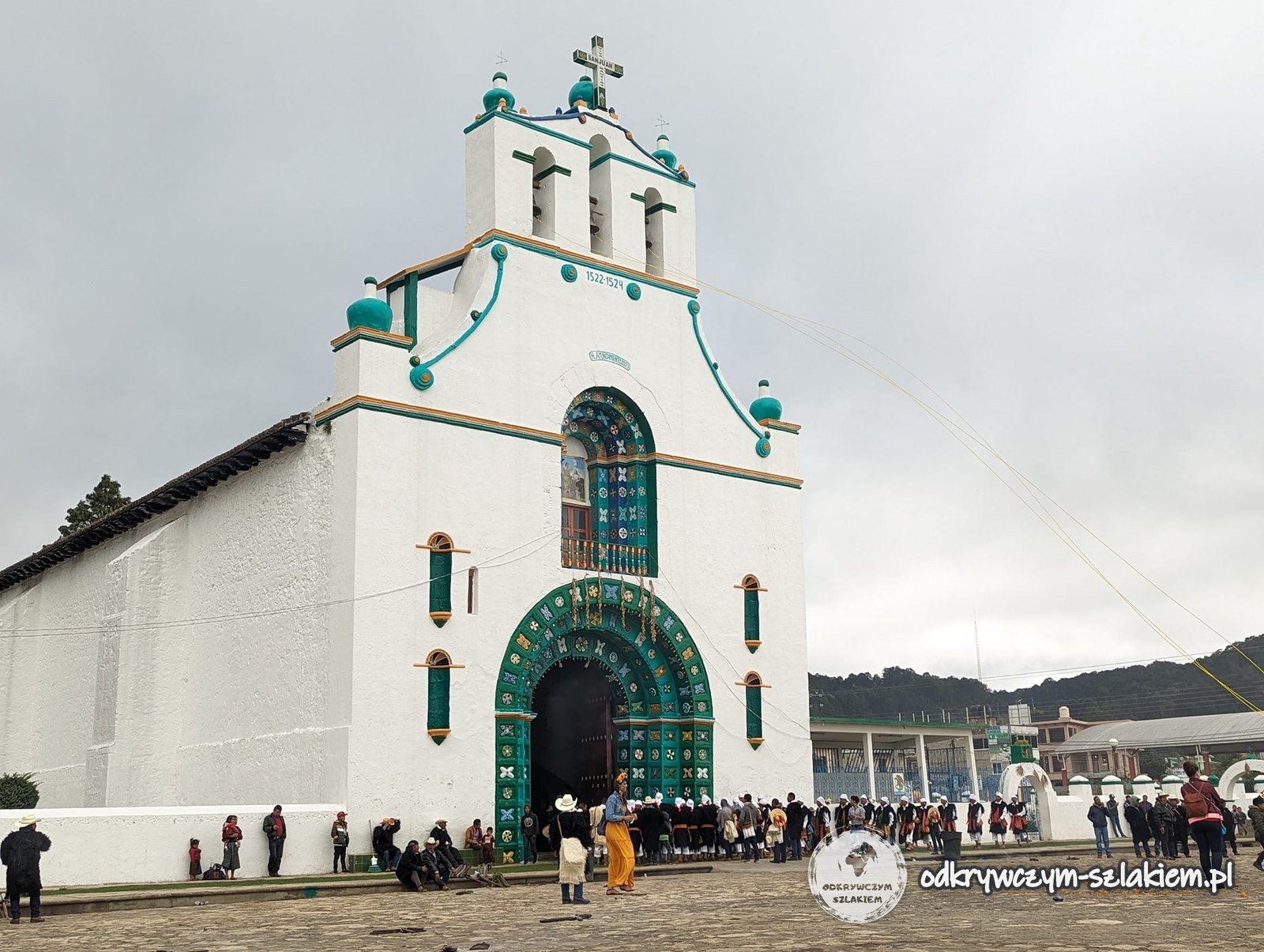
In San Juan Chamula the main tourist attraction is the church. No masses are held in this building – only ceremonies and cleansings.
For example, raw eggs can show the sick part of a person’s body, and the inside of the body can be cleansed with them – although a plant can serve just as well. A cleansing is sometimes accompanied by a shaman (who drives away evil spirits). Chickens are offered as sacrifices by wringing their necks. The holy drink here is Coca-Cola, which also cleanses (through burping).
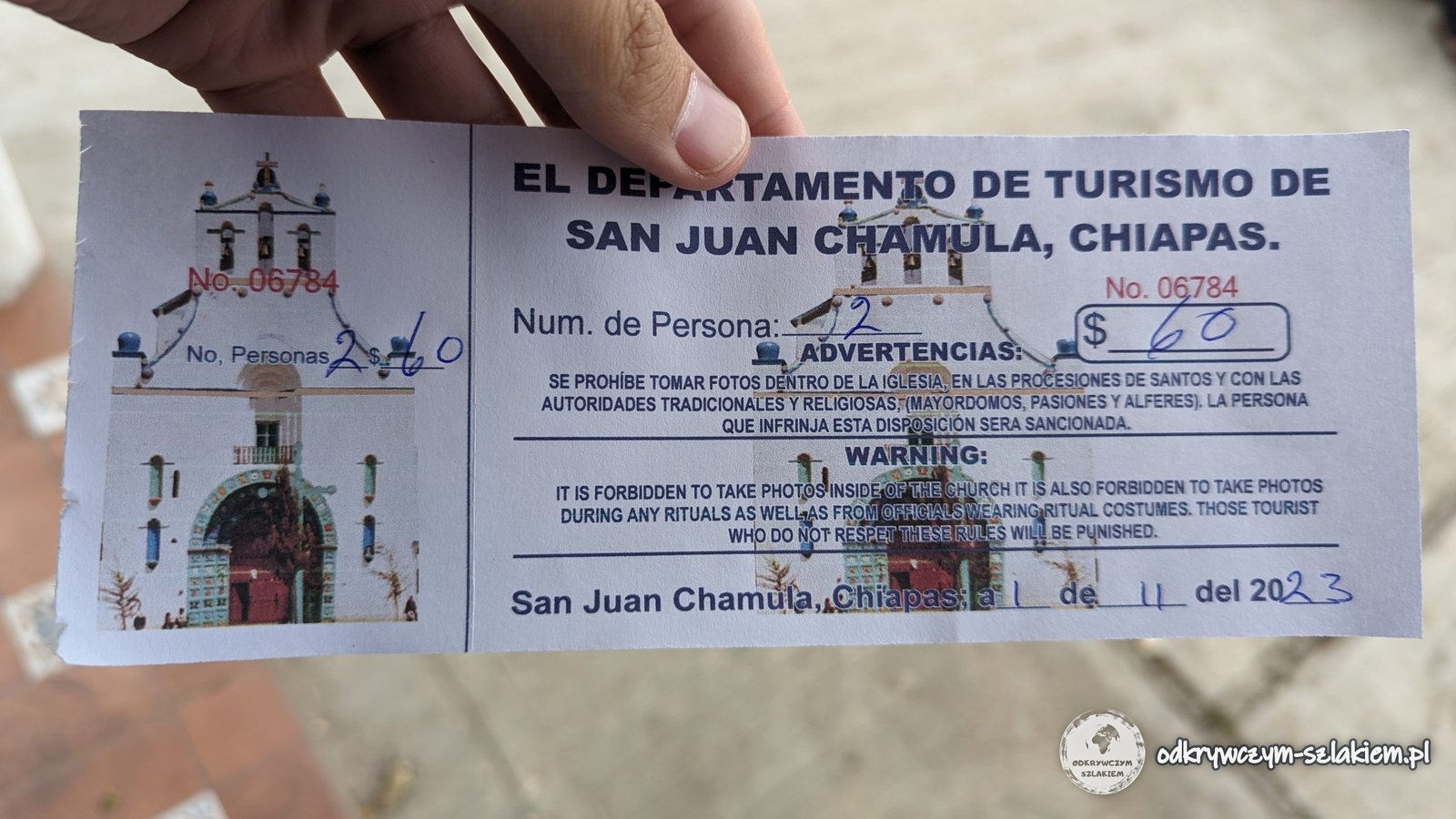
Chamula has a unique autonomous status in Mexico – outside police and the army are not allowed into the town, and order is kept by its own police force. In 2020 the whole municipality had almost 102,000 inhabitants, and the town of San Juan Chamula itself about 4,700. Its own rules apply to tourists too – photographing the inside of the church can get you a fine and thrown out of town.
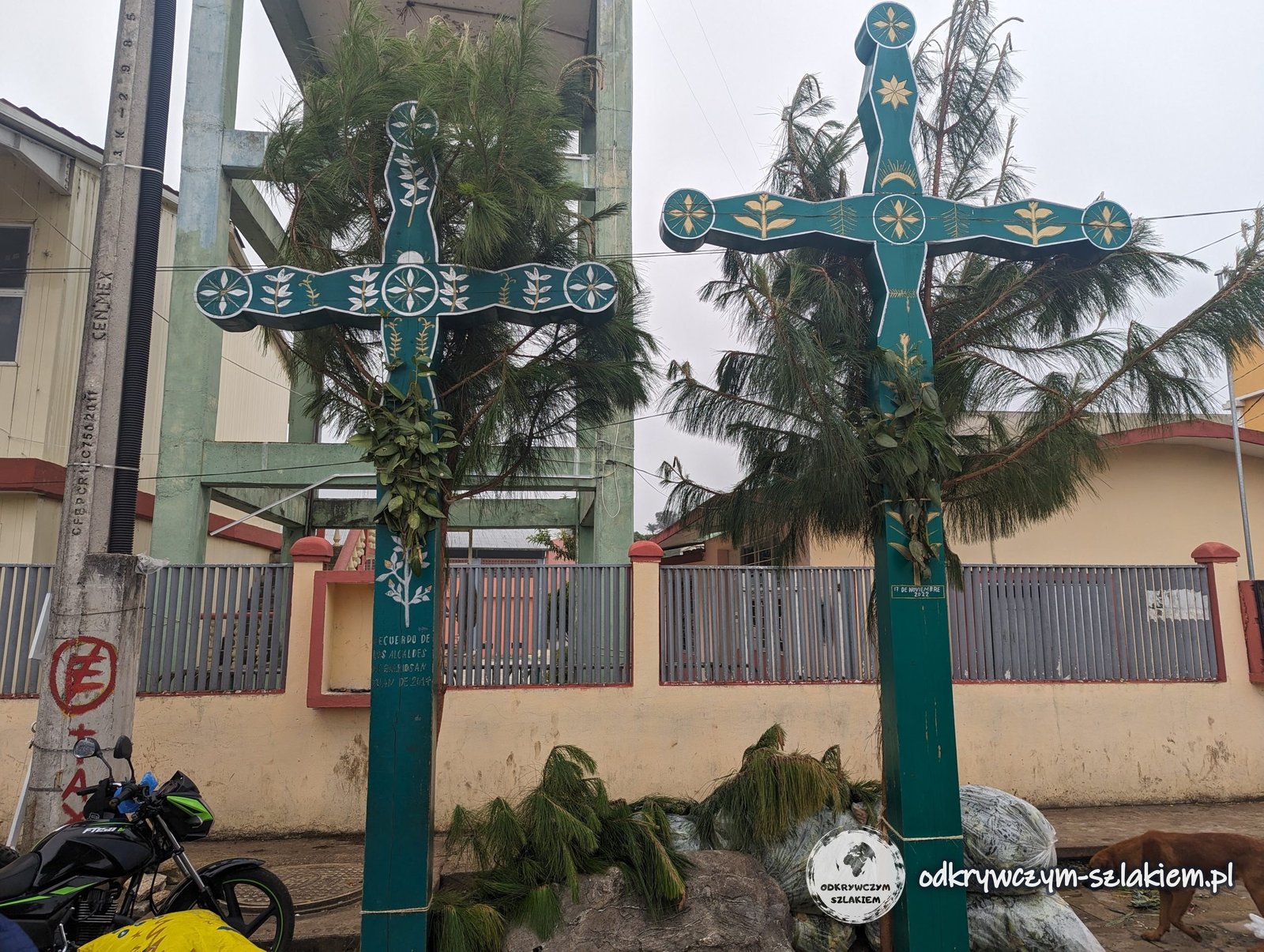
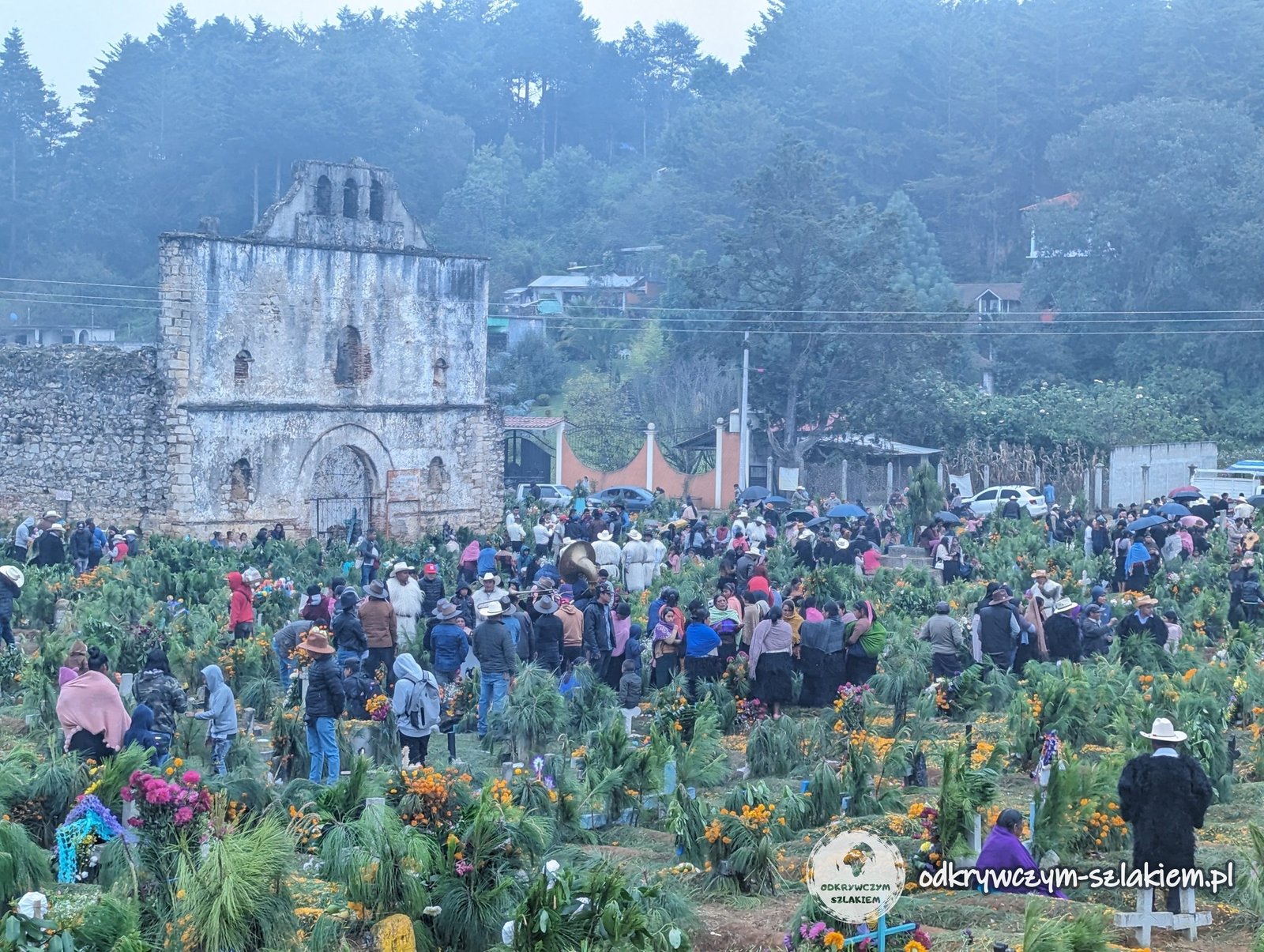
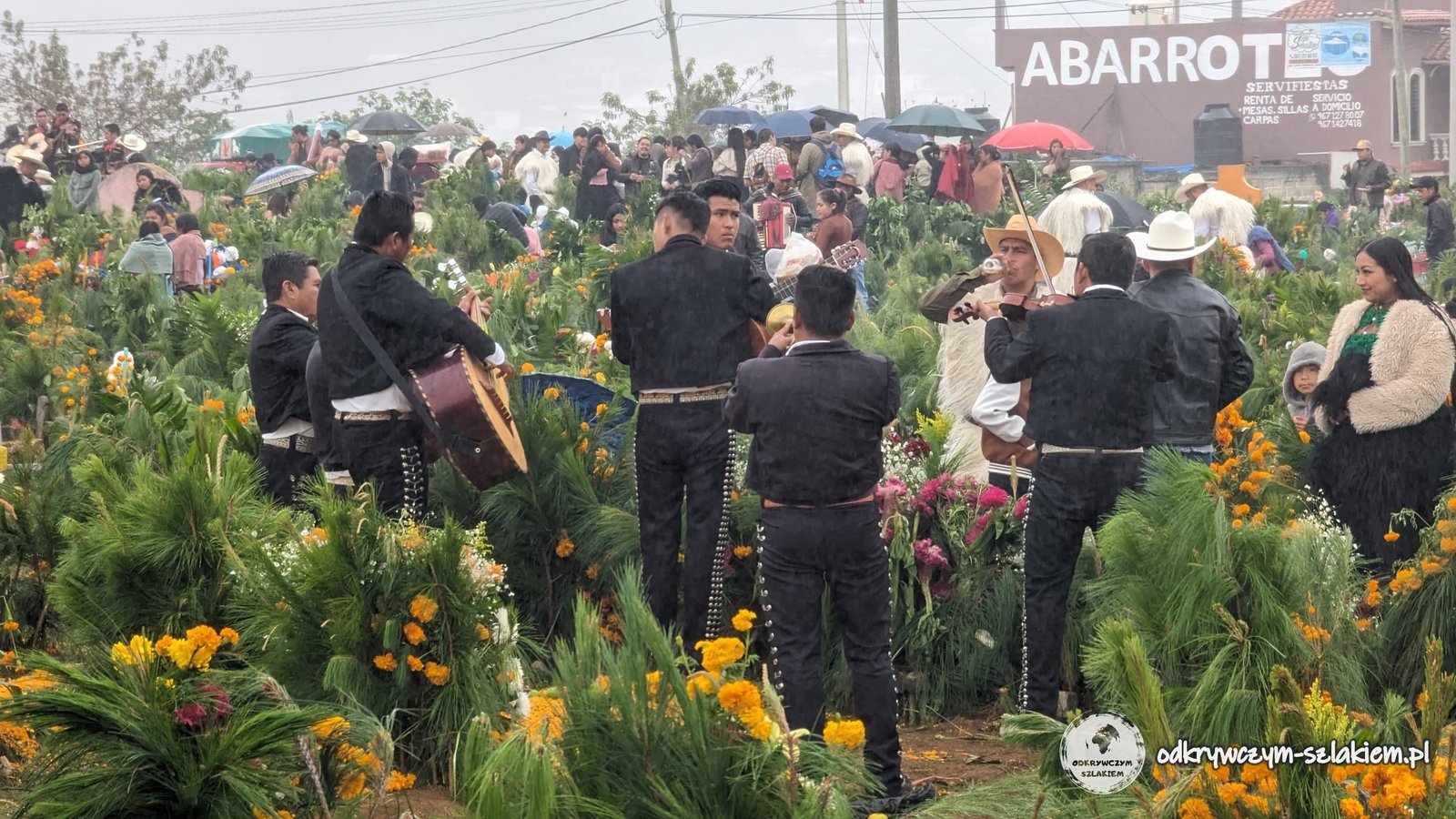
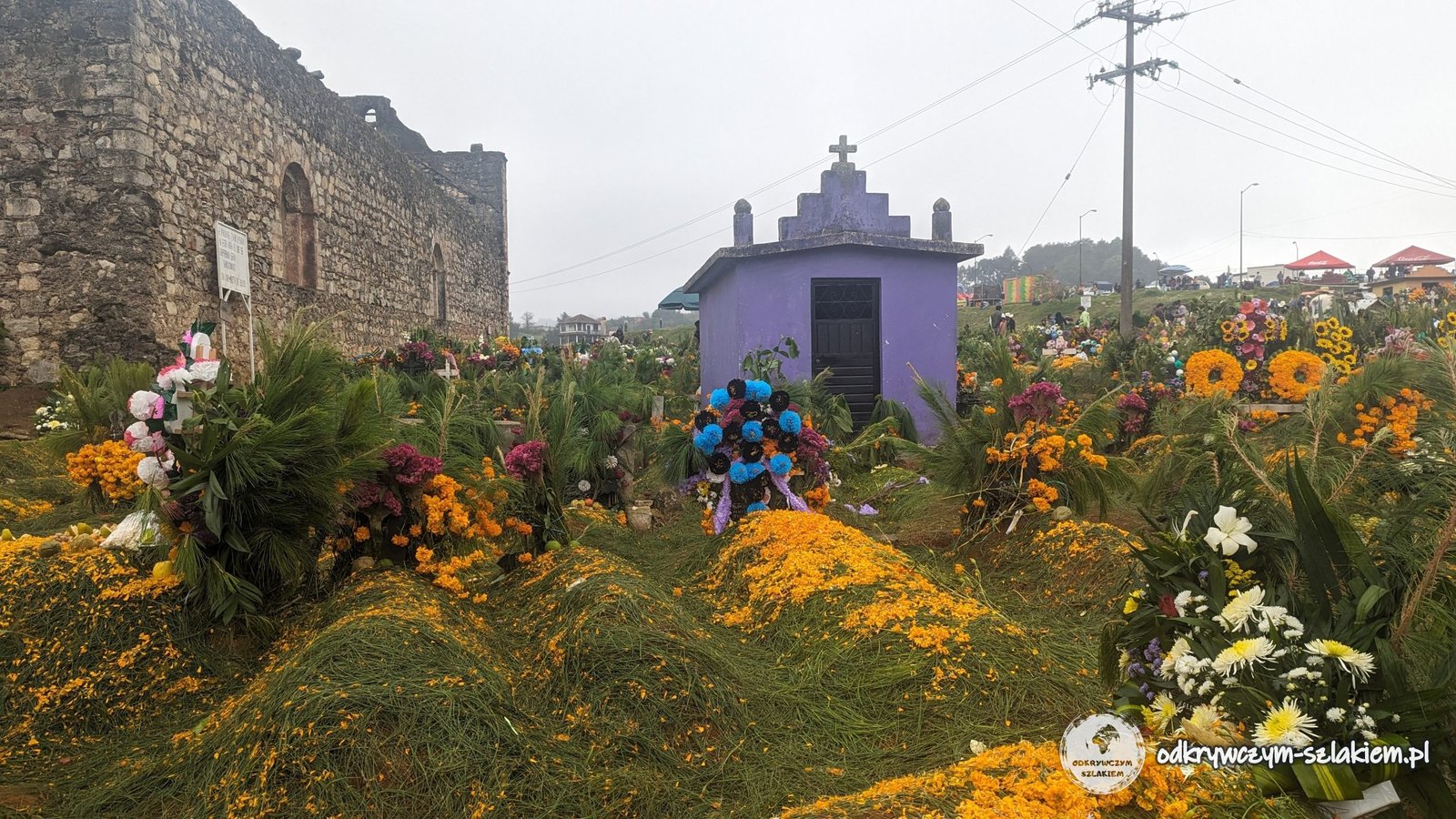
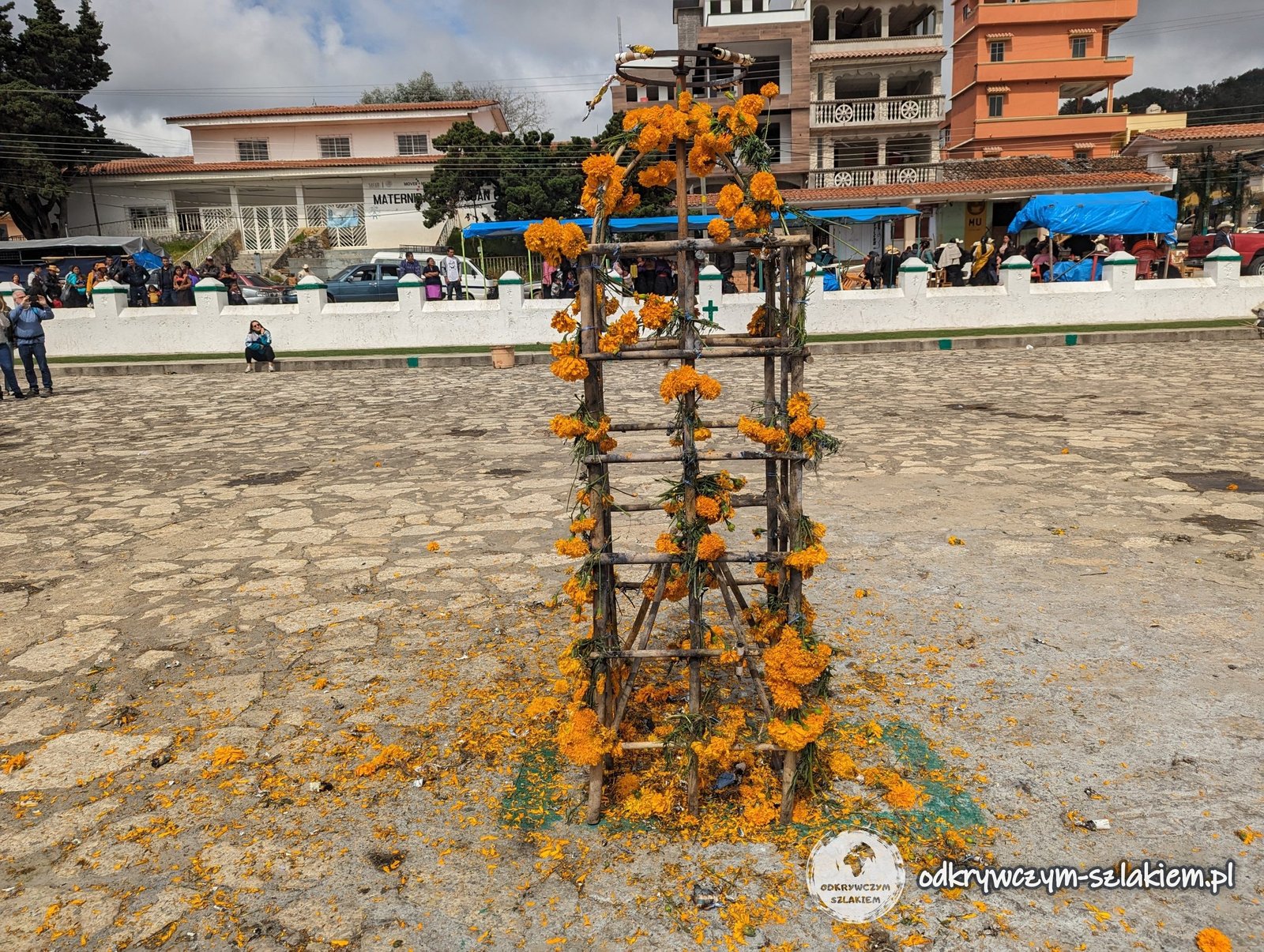
On the Day of the Dead the cemetery in Chamula fills with people. The graves are mounds of earth covered with pine branches and orange marigolds (cempasúchil), renewed every year. Families spend the whole day by them, and brass bands play between the graves. At the edge of the cemetery stand the ruins of the 17th-century church of San Sebastián.
The church in Chamula is a clear example of a blend of indigenous and Christian beliefs. Inside, instead of God, the figures of the saints take centre stage. It seems the faithful pray to them as well as to their own deceased loved ones. They come to the church and sit on the floor.
There are no pews in the church – the floor is covered with a carpet of green pine needles, on which the faithful light candles and pray. Rituals use pox (pronounced “posh”) – a strong spirit made from maize and sugar cane, whose name is translated as “medicine”.
We had the chance to be inside the church on the Day of the Dead (Día de Muertos). The women with children mostly sat on the floor (you had to watch where you stepped), while the men stood and passed each other little glasses of alcohol. The suffocating smell of incense hung everywhere. The church was small and it was packed inside (partly because of the tourists – you could barely get through). Taking photos was strictly forbidden. Tourists had to pay 30 MXN (about €1.60) for an entry ticket. Outside there was a procession of marchers, many of them carrying instruments (it felt as if everyone was playing whatever they liked), and a brass band (which was well coordinated). The procession circled the square where the church stands several times. It was accompanied by ringing bells and the bang of fireworks (the tourists covered their ears, the locals stood unmoved). It is a place unique in the whole country.
Chamula’s biggest festival is the carnival – K’in Tajimoltik (the Festival of Games), celebrated over the five days before Ash Wednesday and linked to the five “lost” days of the Maya calendar. On the Tuesday a straw path is set alight in the square in front of the church, and the paxones – the hosts of the festival – and the dancers called max (“monkeys”) run across it; this symbolises purification. Bulls are also driven around the square – in 2018 there were 30 of them.
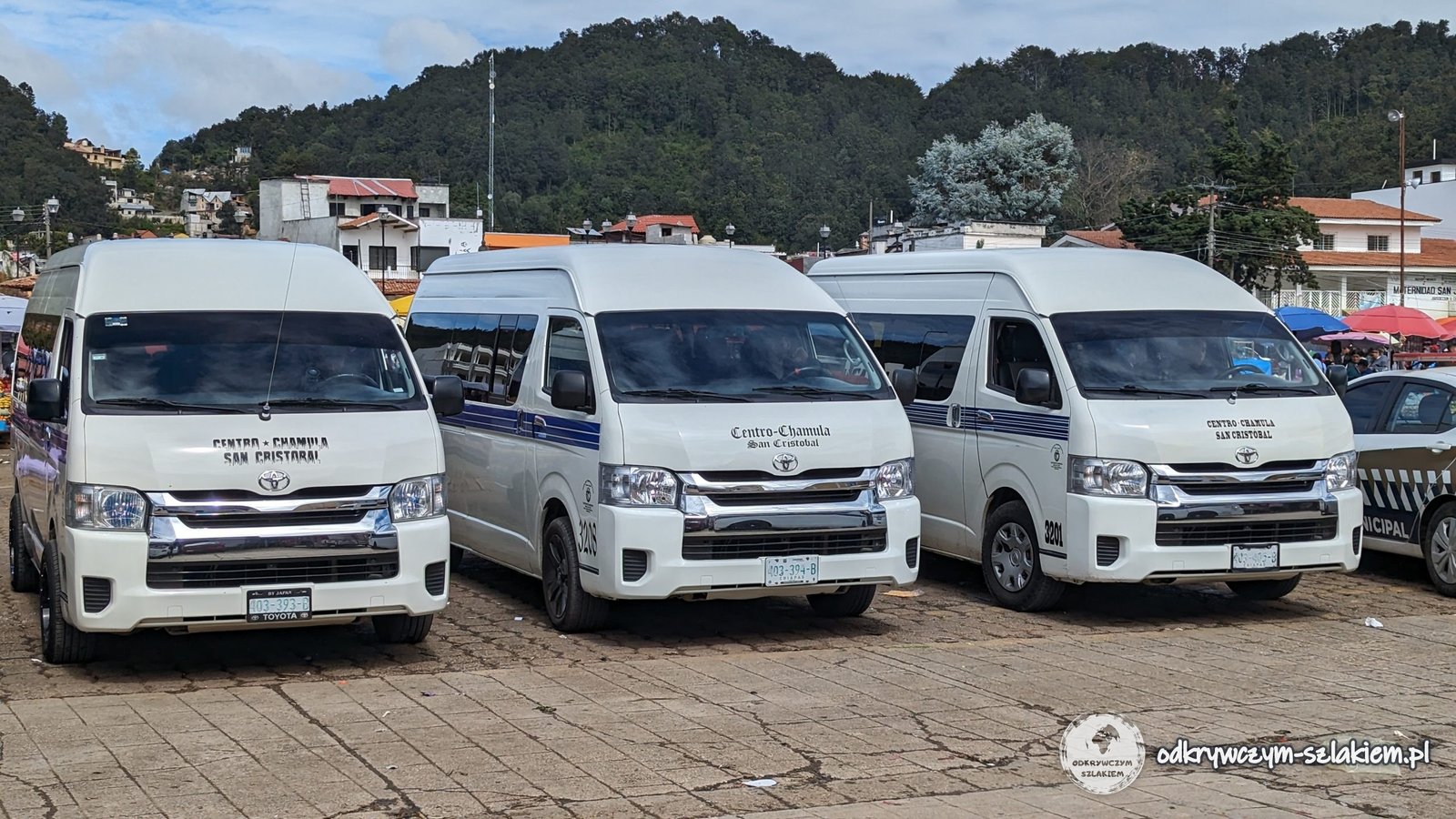
👉 From: C. Honduras 10, Barrio de Mexicanos (San Cristóbal), shown on Google Maps as “Colectivo San Juan Chamula”
🚍 Cost: one way 20 MXN (about €1.20)
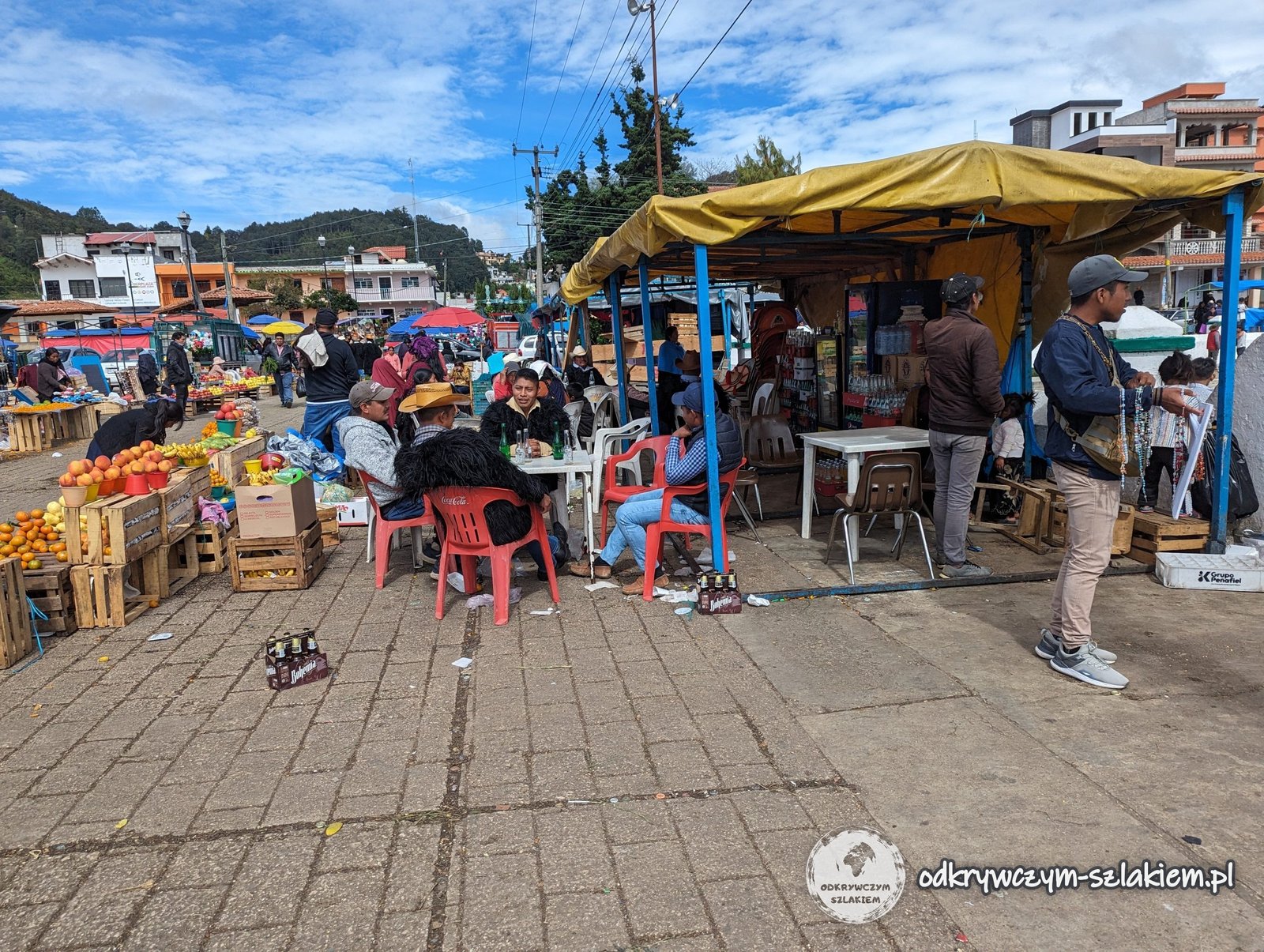
Chamula lies about 10 km from San Cristóbal, at an altitude of about 2,200 m, so mornings and evenings can be chilly. The simplest way to get from Chamula to Zinacantán (about 7 km) is by taxi – in 2024 a one-way ride cost tourists about 100 MXN.
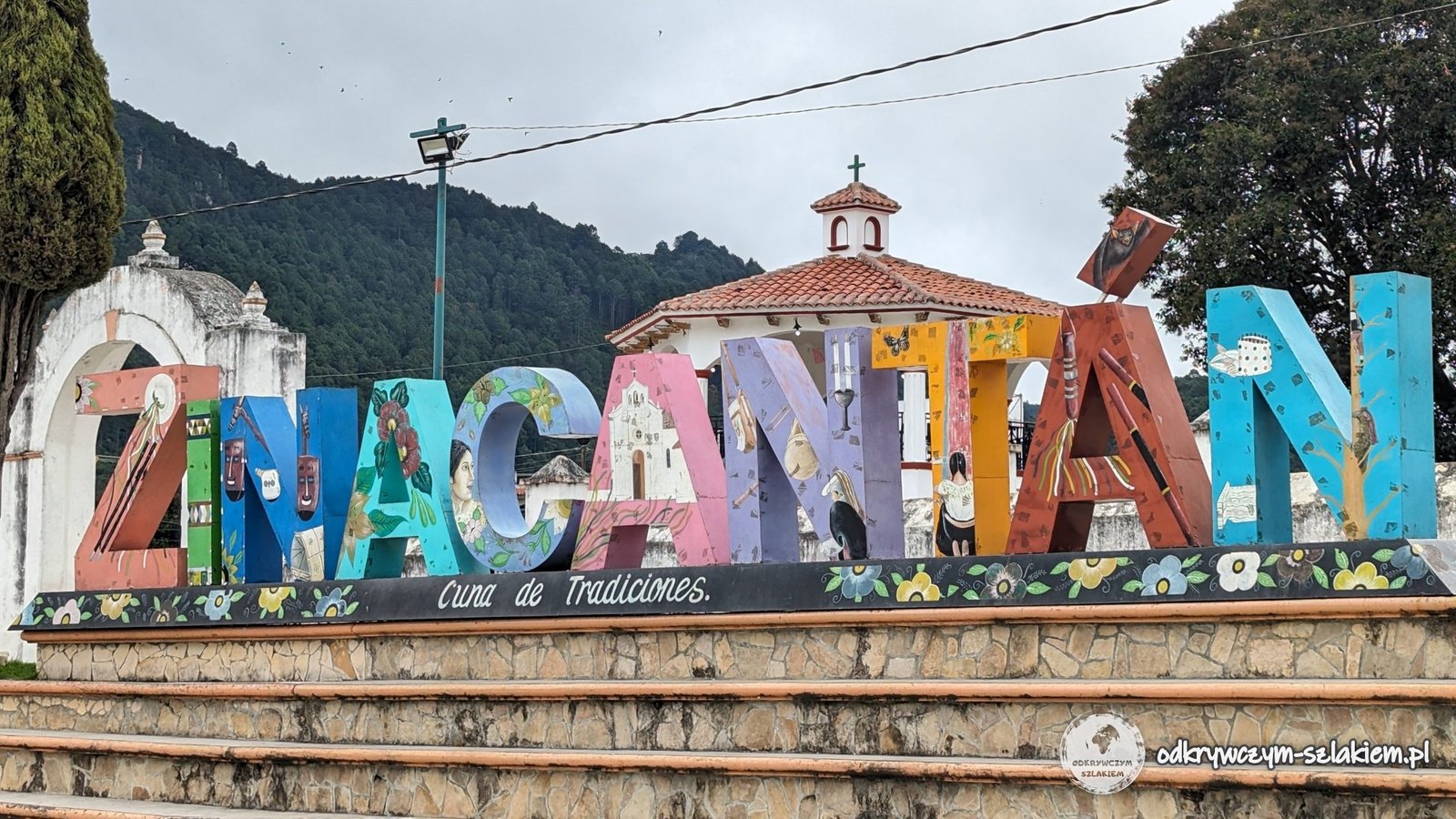
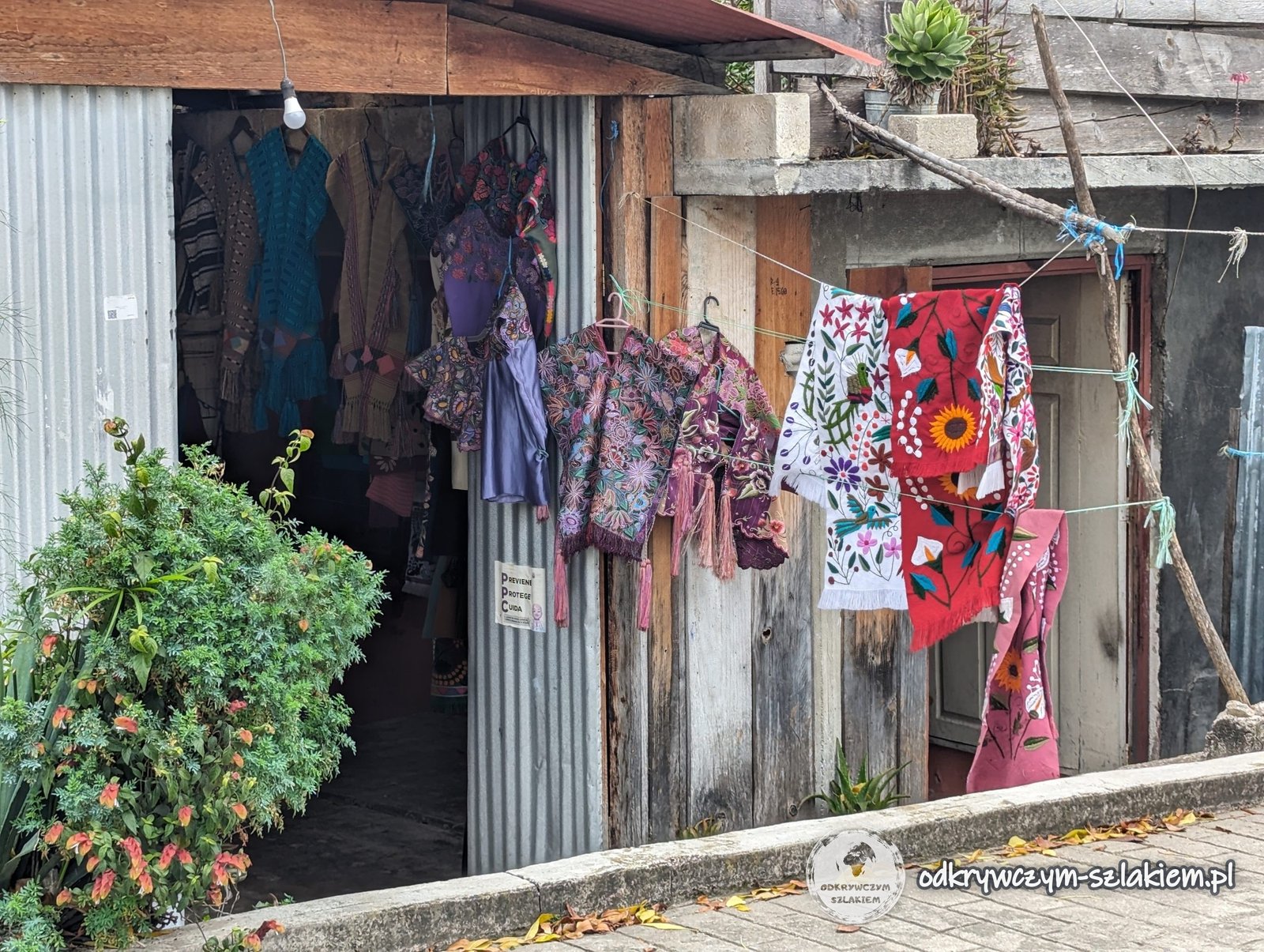
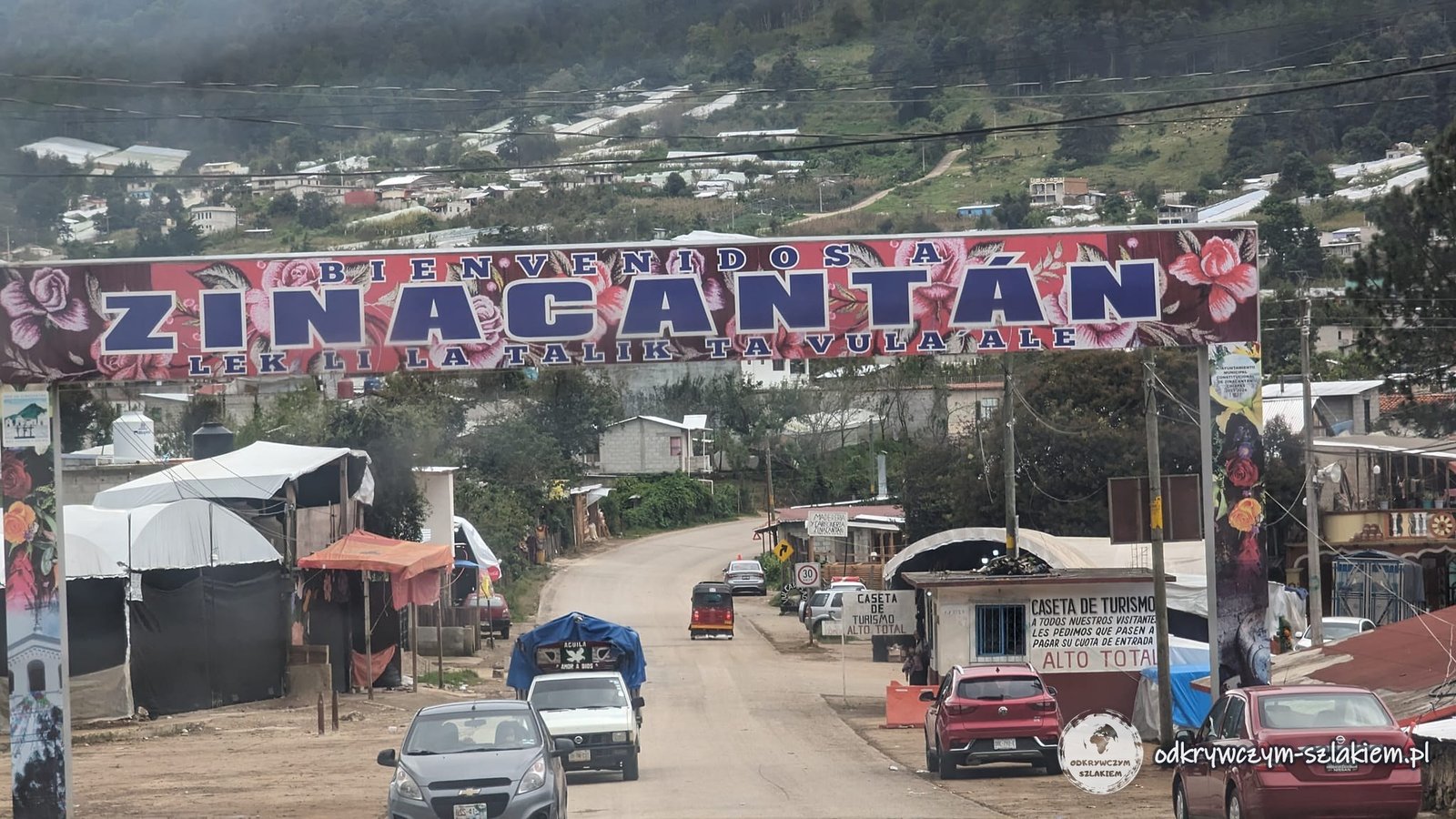
We also visited the nearby town of Zinacantán, inhabited by the same ethnic group. The residents’ clothing is different, though (the women wear embroidered skirts and shawls over their shoulders). The church has a confessional and seats – it is much more Christian here. Zinacantán is known for weaving and hand embroidery.
The town’s patron saint is St Lawrence (San Lorenzo) – his feast is celebrated on 8–10 August, and the other important feast, of St Sebastian, falls on 18–22 January. Religious life is run by a system of offices (cargos): every year 12 martomoetik, 12 alperesetik and 6 moletik are chosen, and to become a molet one must first hold both lower offices. In 2020 the municipality of Zinacantán had about 45,000 inhabitants.
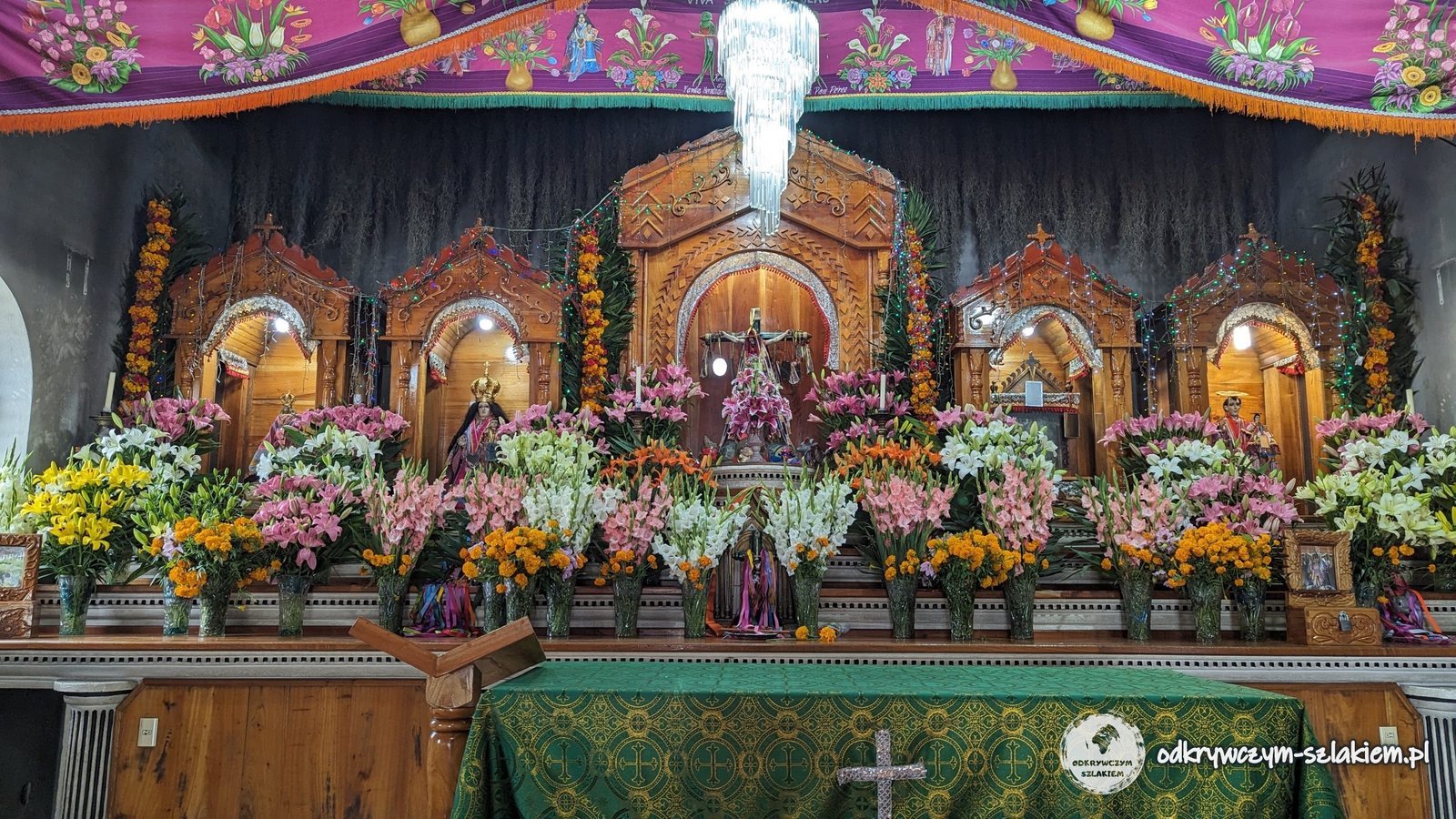
Zinacantán is a flower-growing centre – greenhouses cover the surrounding slopes, and the flowers go to markets all over Mexico, as far as the capital. You can see it in the churches, where the altars are smothered in flowers, and in the clothing: the embroidery on the women’s shawls and skirts is mostly colourful flowers.
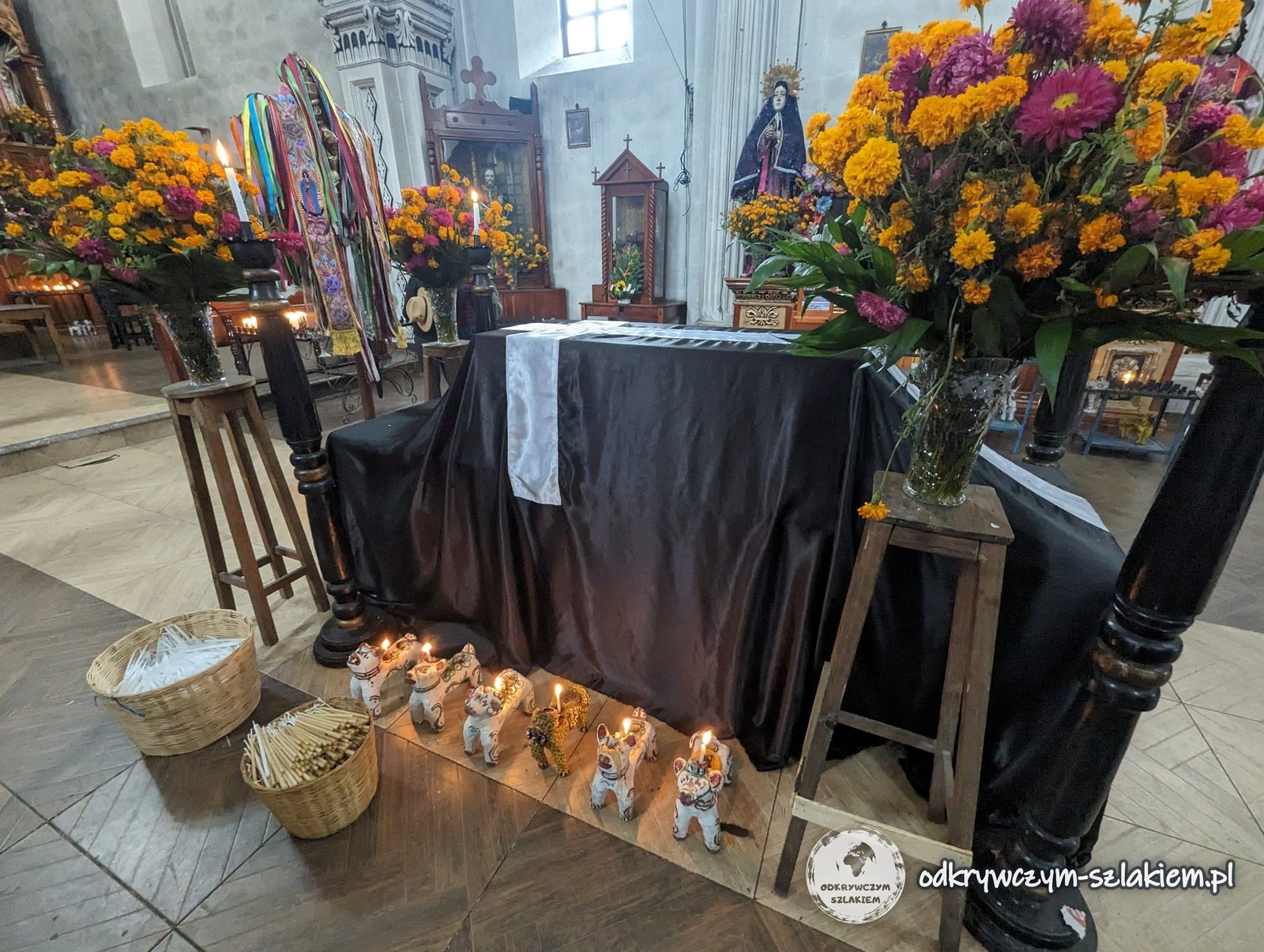
For the Day of the Dead the church had an altar with marigolds and candles, and along the streets little shops sell embroidered clothes.
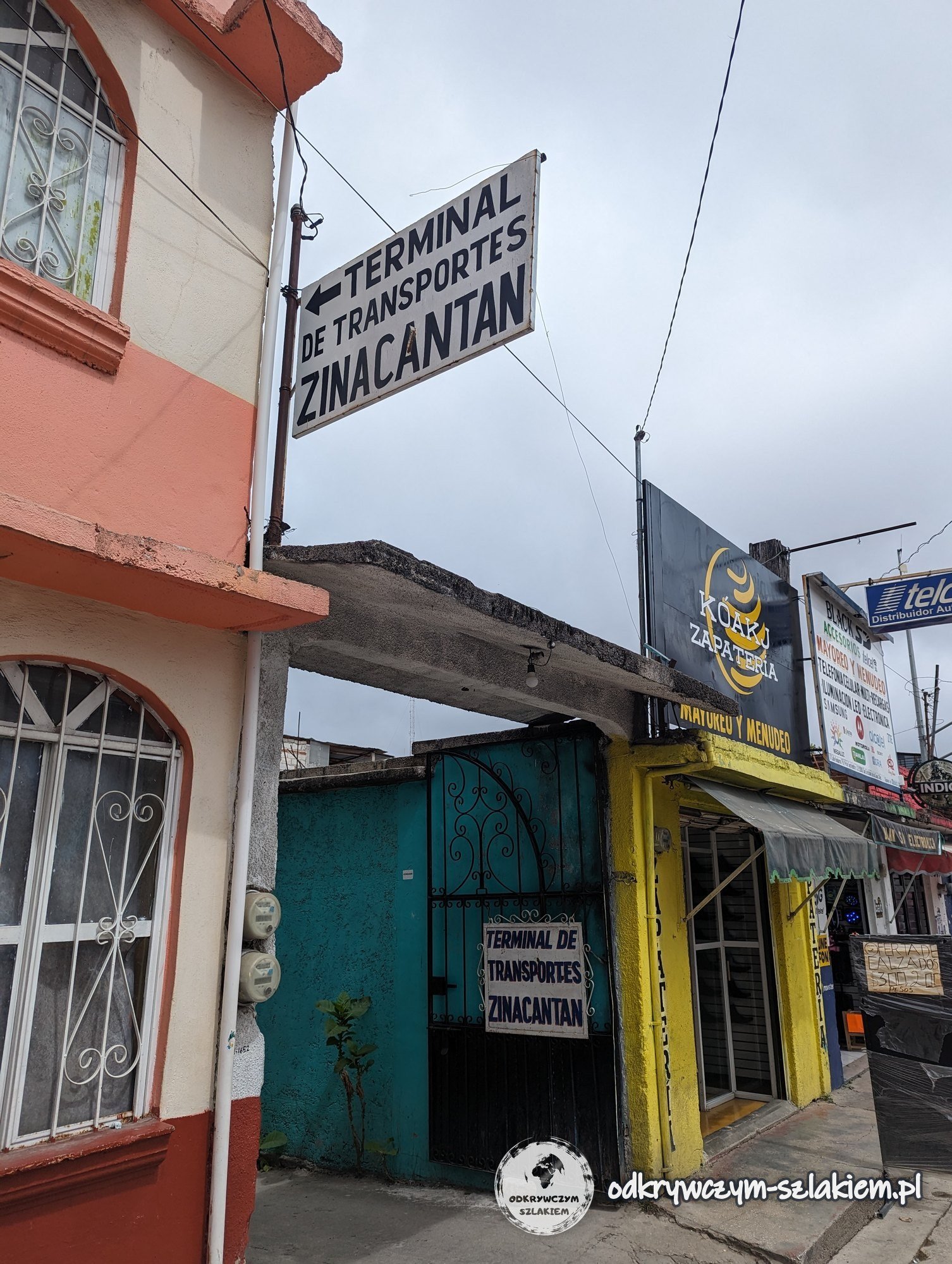
👉 From: C. Honduras 8A, 14 de Septiembre, shown on Google Maps as “Transportes Zinacantán”
📢 Additional information: this is not a regular colectivo (minibus) but a taxi colectivo (shared taxi)
🚖 Cost: one way (with a full car) 27 MXN (about €1.40)
Stay with me on the road – follow me wherever you like best.
Clicking loads the profiles from Facebook, Instagram and YouTube (they may set cookies).