Table of contents
A short introduction
In Tangier you can see Moroccan culture combined with influences from the colonial era and modern influences from Western Europe. Because of its geographical location, the city was of great strategic importance, which made it a bone of contention between nations. At the turn of the 20th century Tangier was torn between France and Spain. During this period a liberal policy was pursued there, and in the 1920s Tangier was able to develop as an international port. In 1923 it was declared a free city and port. What’s more, it attracted many artists – and with them, unfortunately, drug dealers and prostitutes.
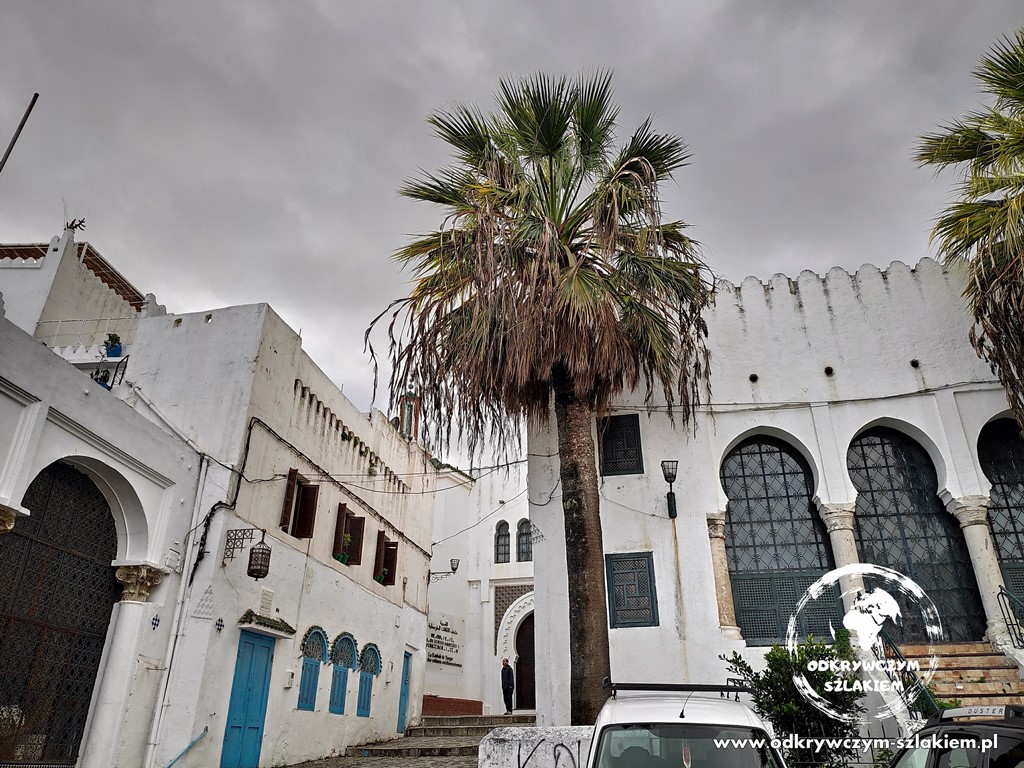
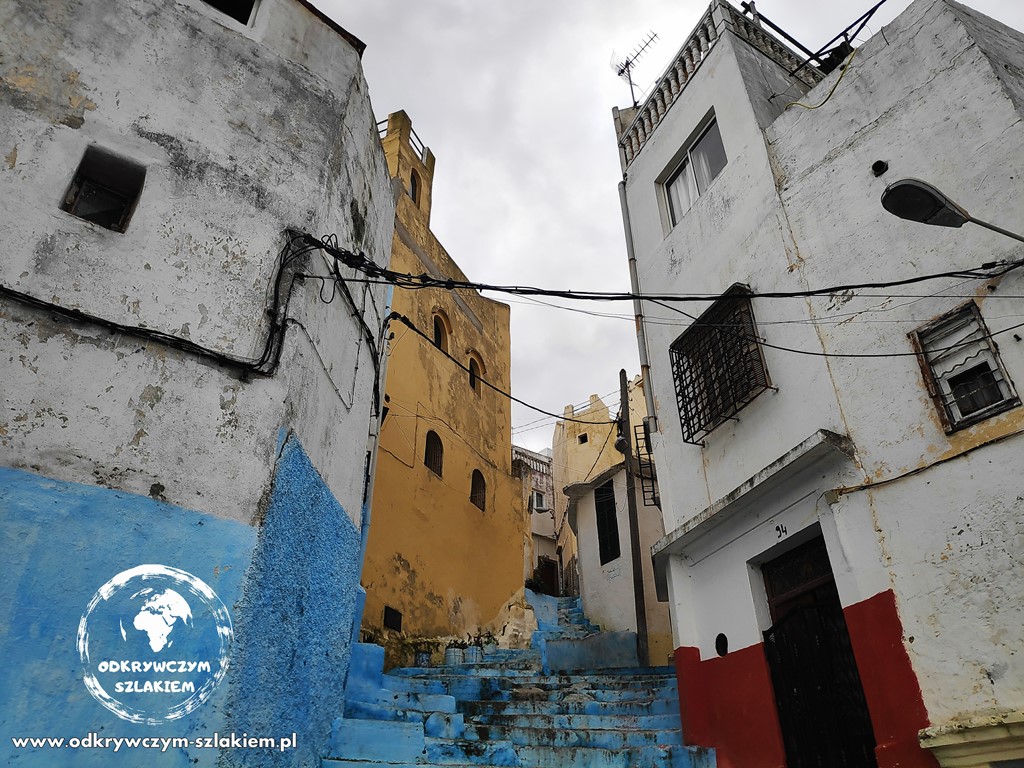
It is a place of striking contrasts – in the old part you can see the traditional way of life, while the new part is more developed and modernised. So on the one hand there is the market, the citadel (kasbah), the medina and the mosques, and on the other shopping centres and modern cafés. Still, you can’t help noticing features typical of Africa, such as poverty, large families and men dominating city life. In Morocco, apart from Arabic, French is still used – so you can read street names, for example, in an alphabet you know (Morocco was a French colony until 1956).
Map
What's worth seeing:
Medina
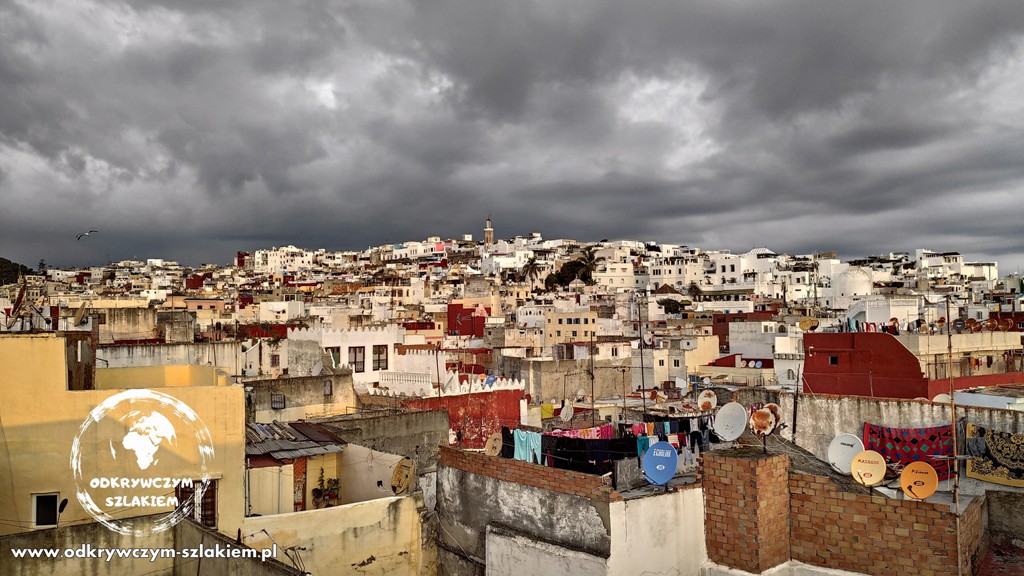
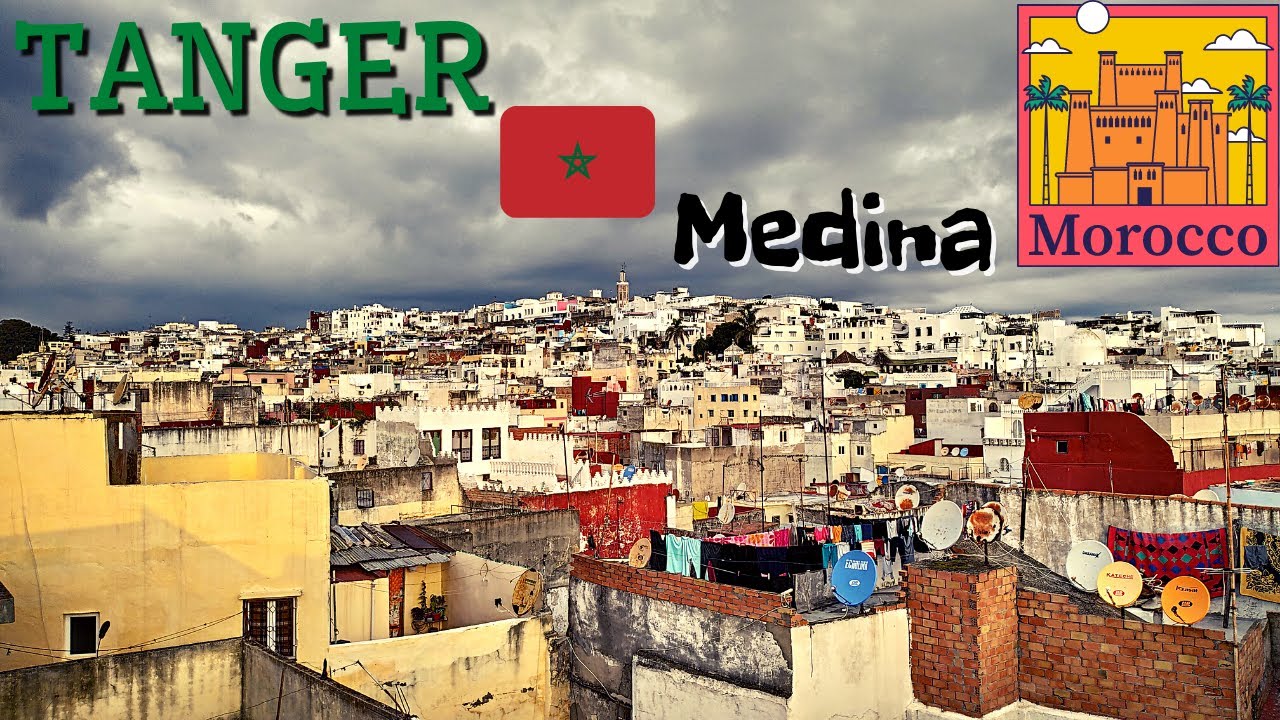
The oldest part of the city, divided into two zones: commercial and residential. It has many small, narrow alleys where a tourist can feel as if they were in a maze. You can see it as soon as you leave the port.
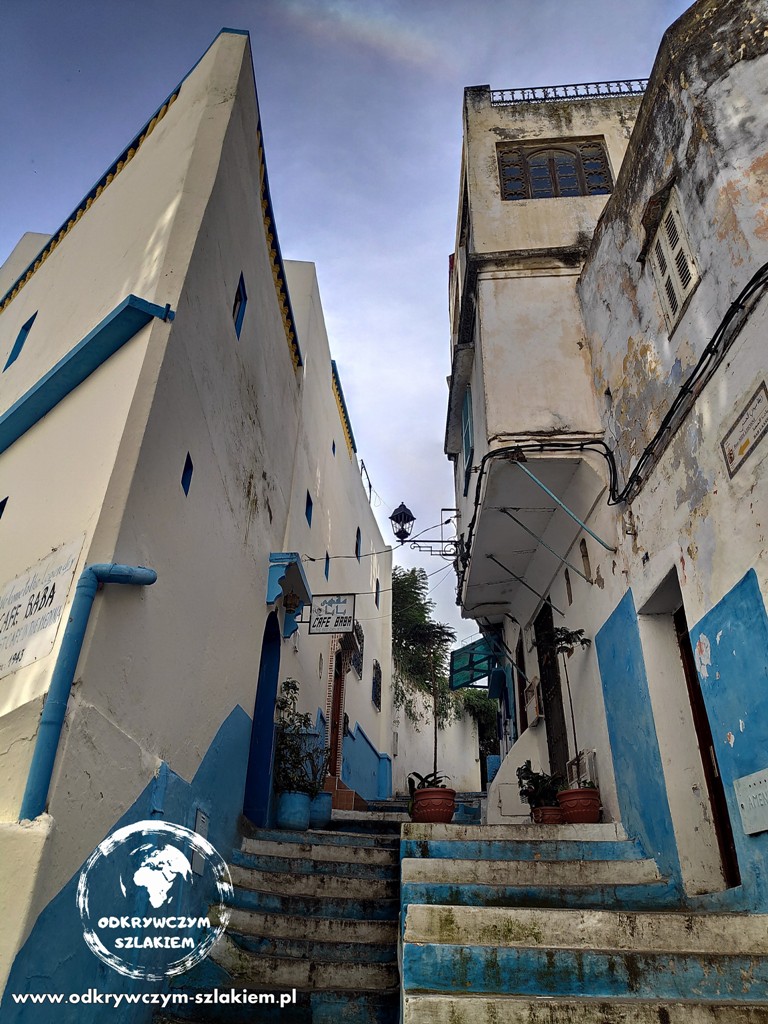
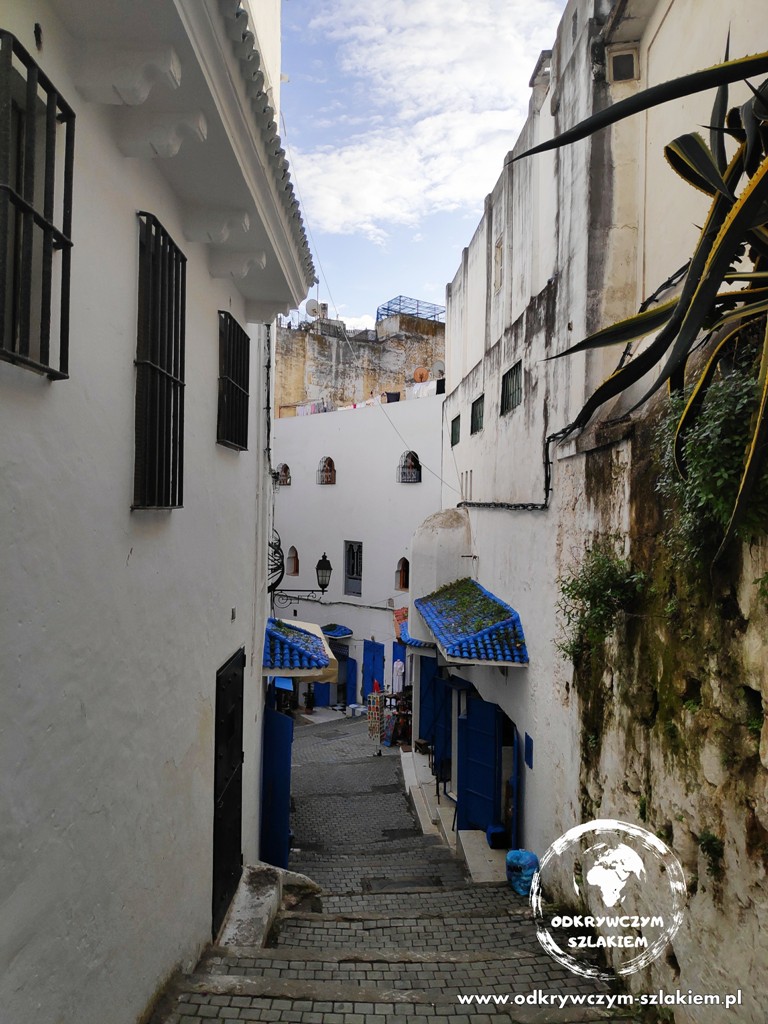
The buildings are quite run-down, but they have their own distinctive atmosphere. As befits Arab port cities, white dominates. However, it was the blue accents that earned it the nickname “Moroccan Medina”.

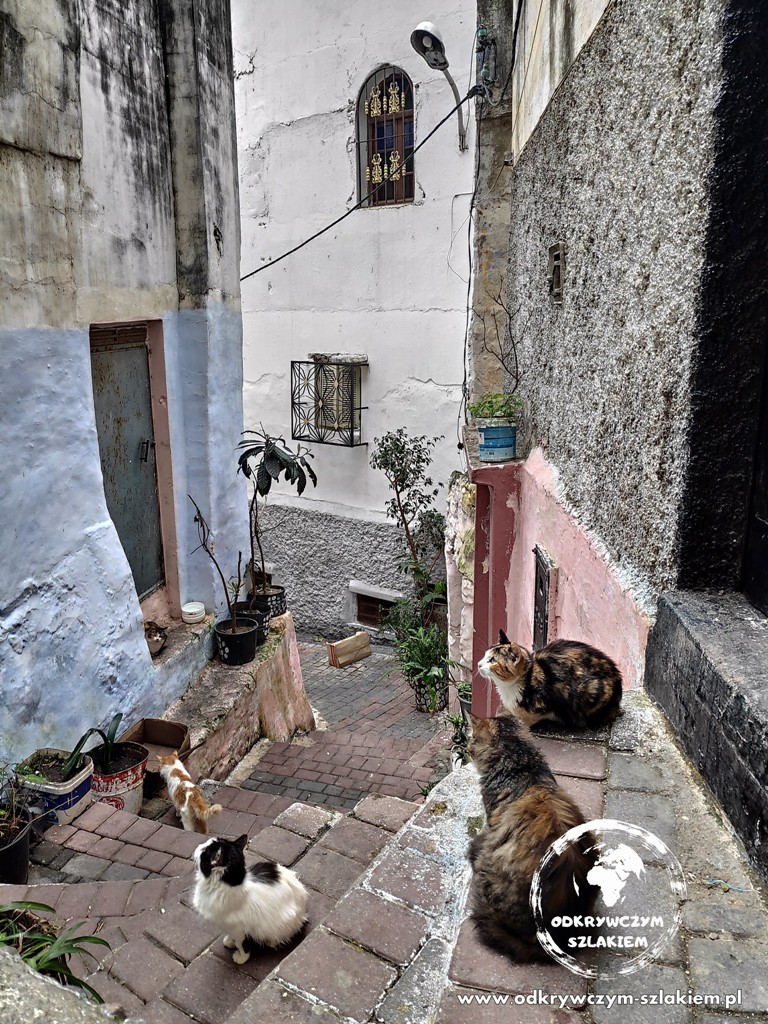
Strolling around the Medina, you can admire Arab architecture. The walk is tiring, though – at every step touts/hustlers offer their help, usually young men. One boy followed us for quite a long time and wouldn’t take no for an answer. You get the impression that only women are supposed to take care of the children and the housework, while the men wander aimlessly around the streets, hunting for tourists, or sit around in male company. We felt really uneasy. The claustrophobic alleys and the men staring at us only made us feel more insecure. It certainly didn’t help that, out of season, we were among the few tourists there. It’s worth pointing out, though, that medinas are “just like that”. These historic centres are home mainly to poorer people, and a lot of “dodgy types” hang around there.
Kasbah
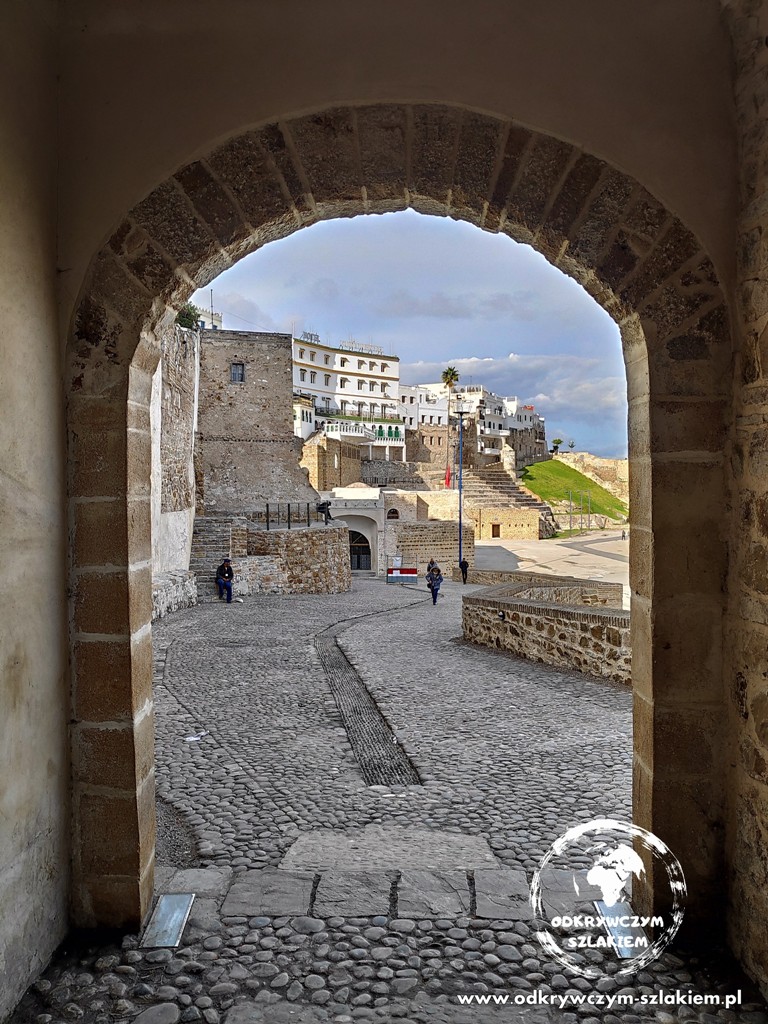
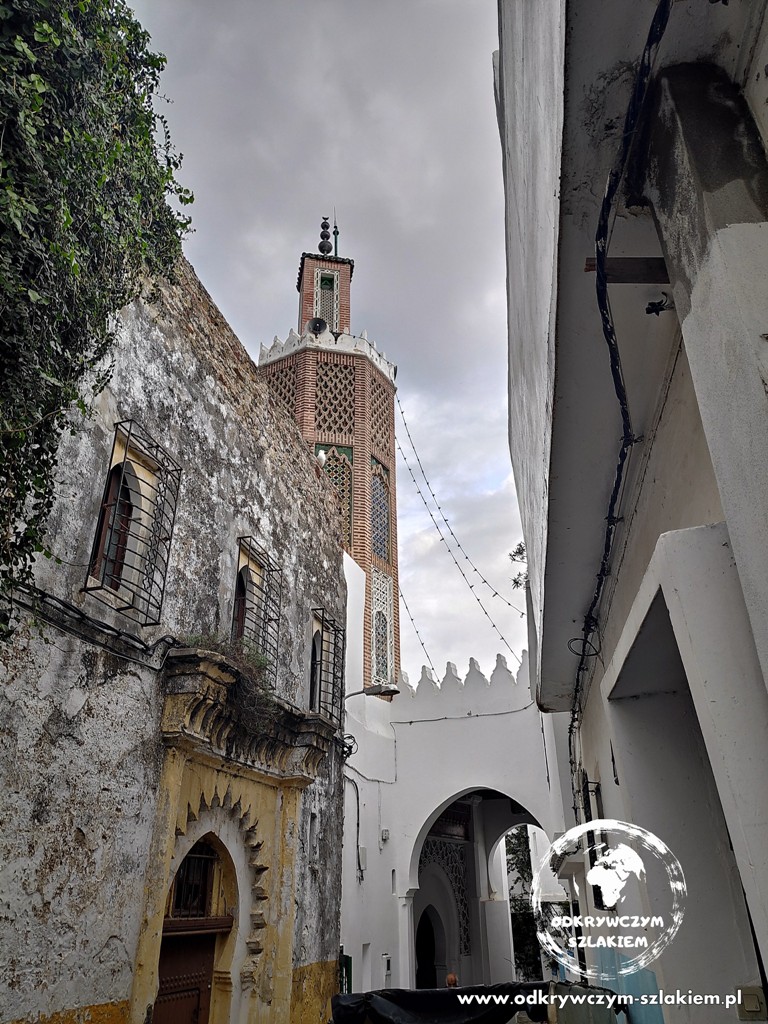
It is a historic citadel surrounded by walls, now part of the Medina district. It once had a defensive function – in Roman times there was a fortress here. After it was rebuilt in the 1920s, part of it no longer served military purposes, and today it is a dense network of alleys.
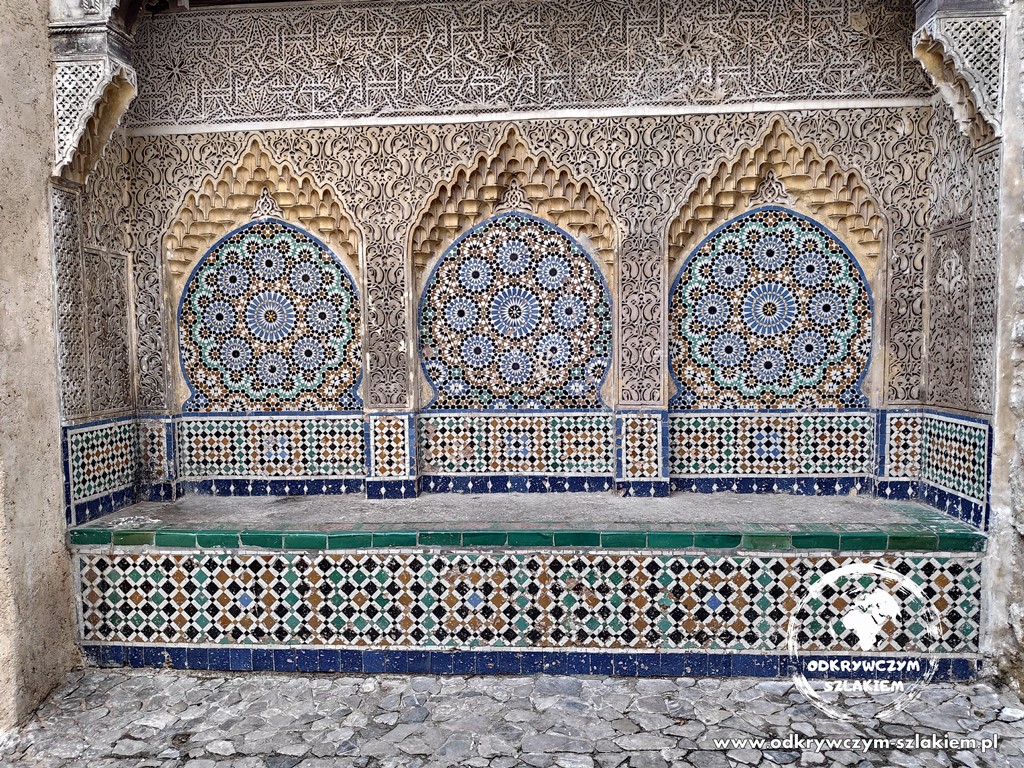

We would single out two main places in the Kasbah. One of them is the square – Place de la Kasbah, which used to be the venue for important ceremonies attended by the sultan. Nearby stand a mosque (Mosquée de la Kasbah), a museum (Musée de la Kasbah), the Bab Al Bahr gate and the Bab el-Assa gate. The most important building is the sultan’s palace, Dar el Makhzen.
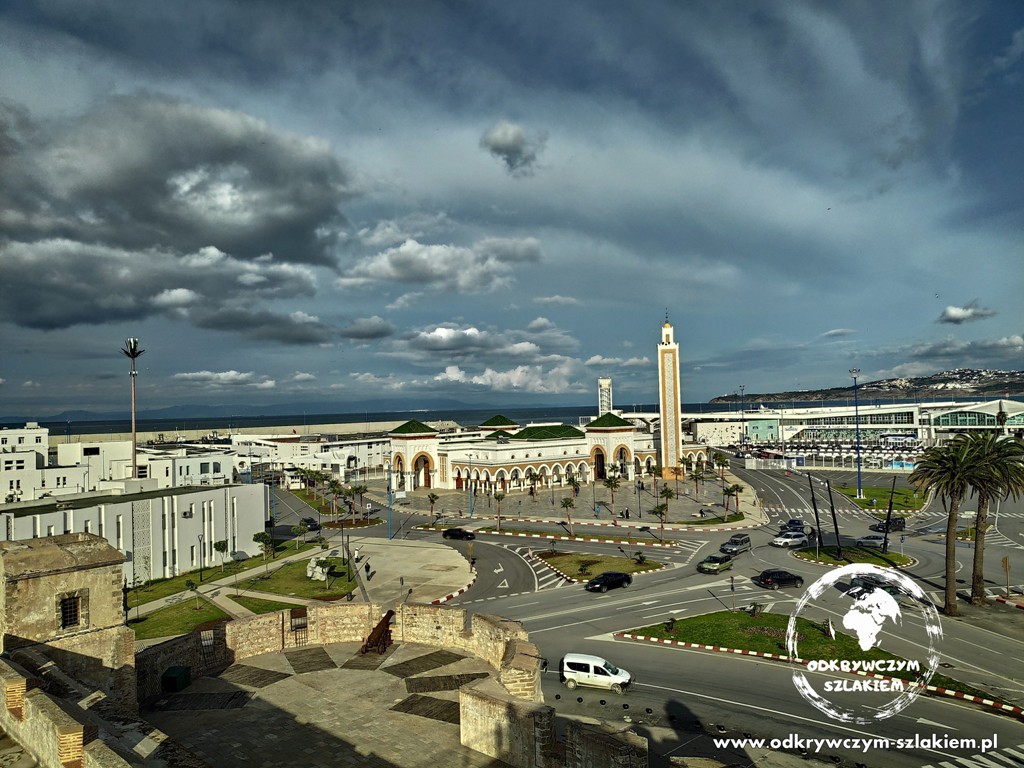
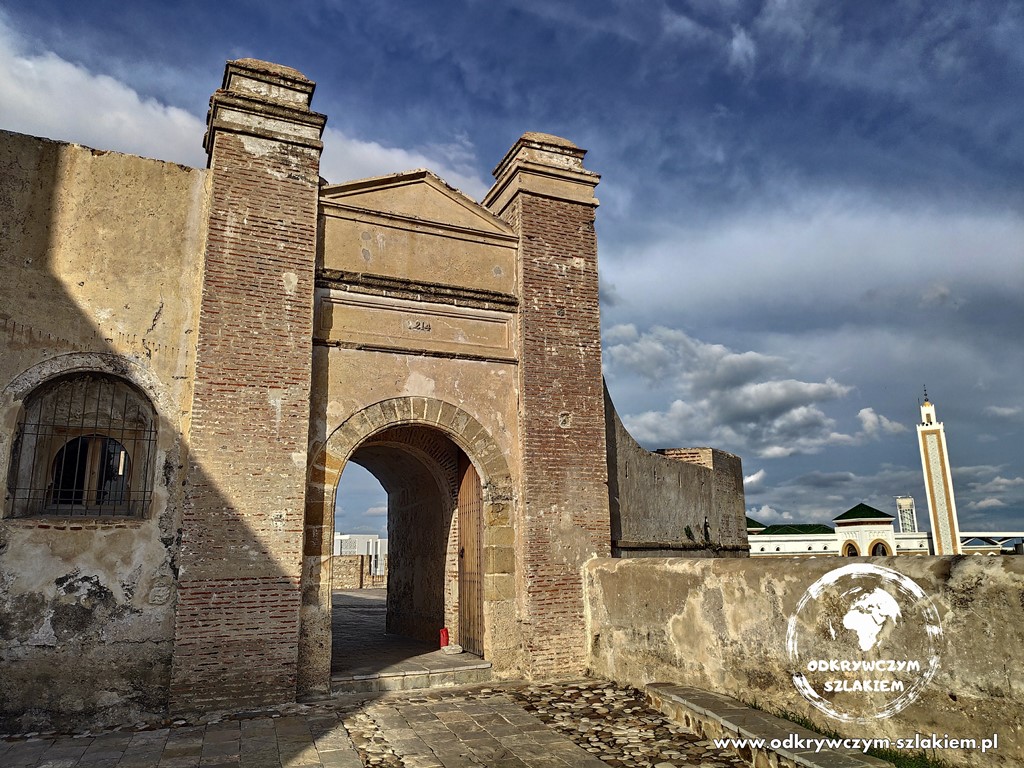
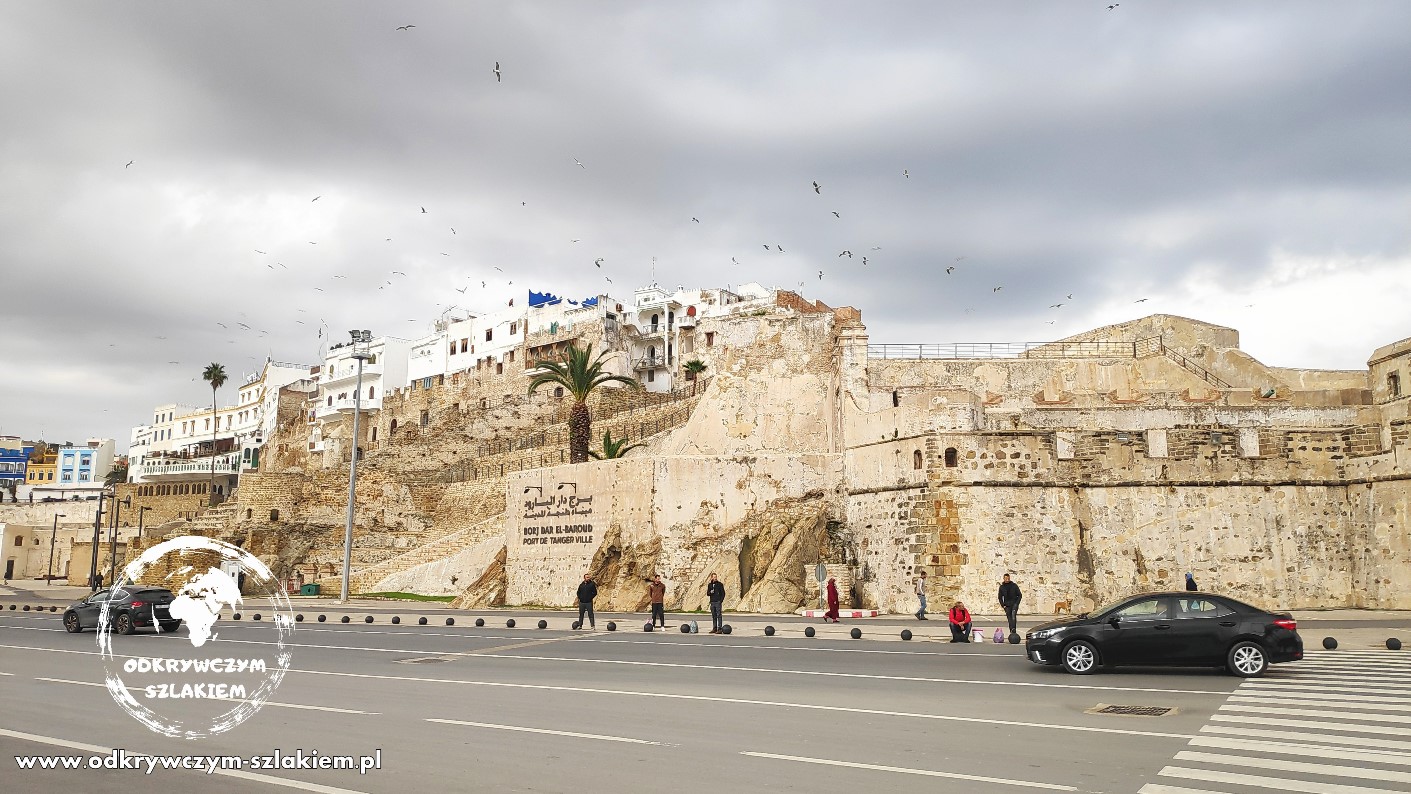
The second place is Borj Dar Baroud – a fortification with cannons and turrets from the old citadel (in the north-eastern part of the Kasbah). From there you can see the port and the Masjid Al-Minaa mosque. Nearby is the Muraille de Tanger, the Tangier wall.
Grand Socco/Petit Socco – the market
The word Socco, i.e. souk, means market. This market area is extremely noisy and crowded. Grand Socco (the big market) is considered the heart of Tangier, where the new Tangier meets the old.
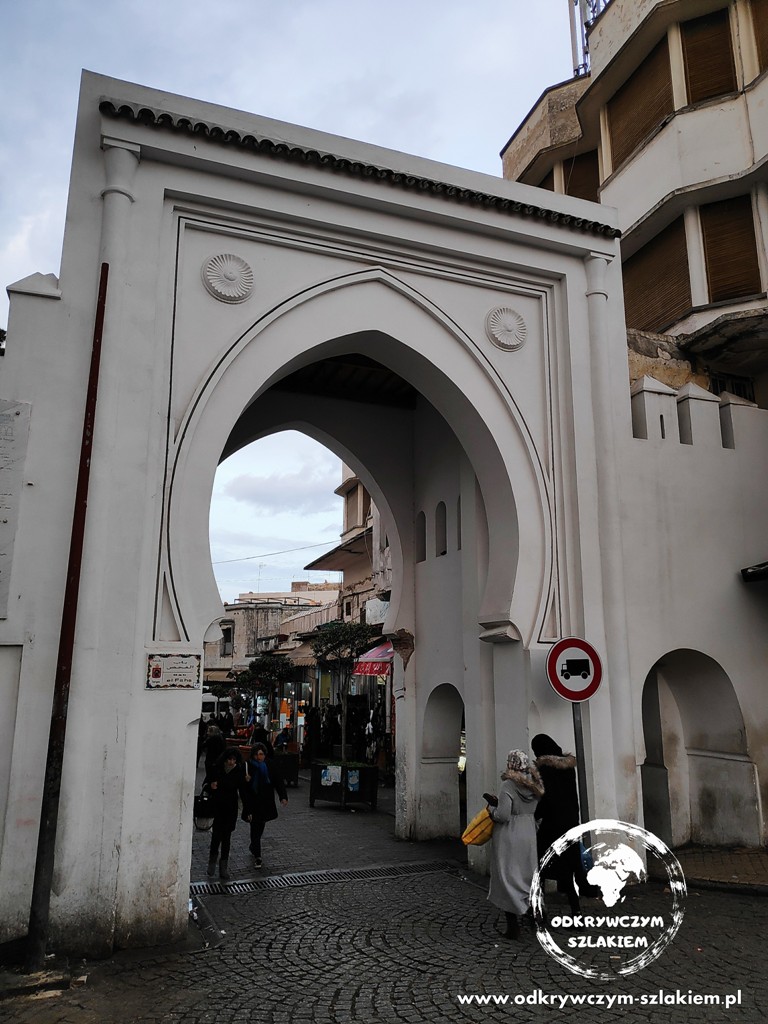

Here you can find almost anything – household goods, jewellery, textiles, clothes, leather shoes decorated with gold or silver embroidery, belts, bags, wallets, woollen blankets and handmade rugs. As is customary at Arab markets, you have to haggle hard. For example, we bought a handbag for 40% of the starting price, but fridge magnets, for instance, had a fixed price.
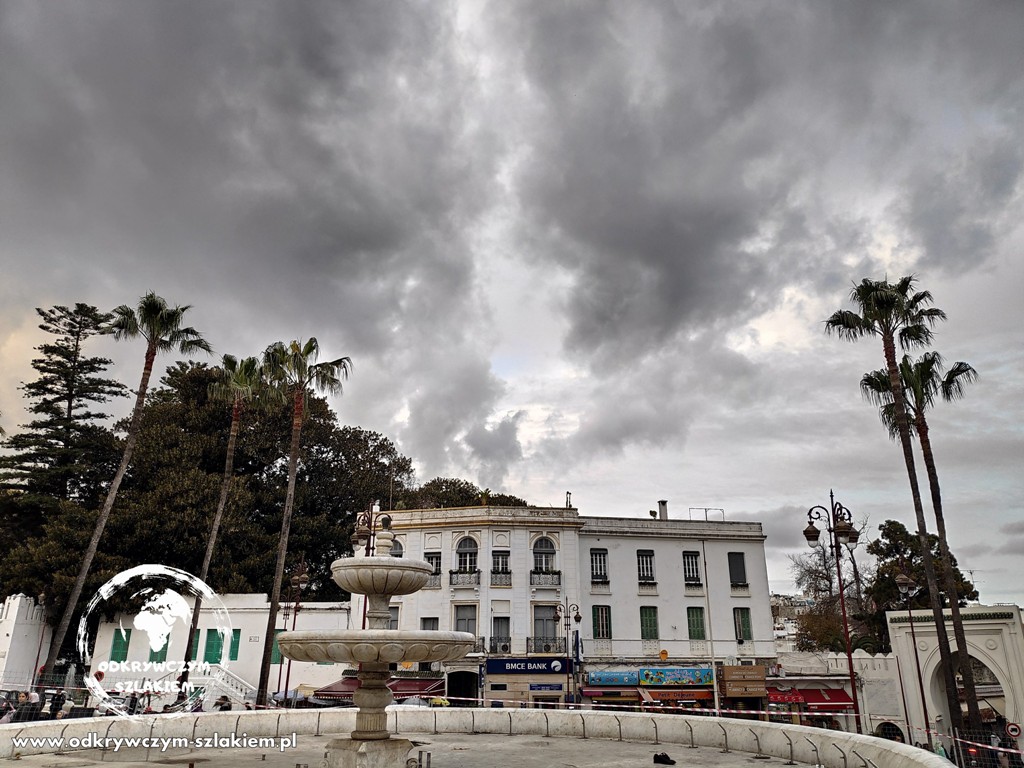
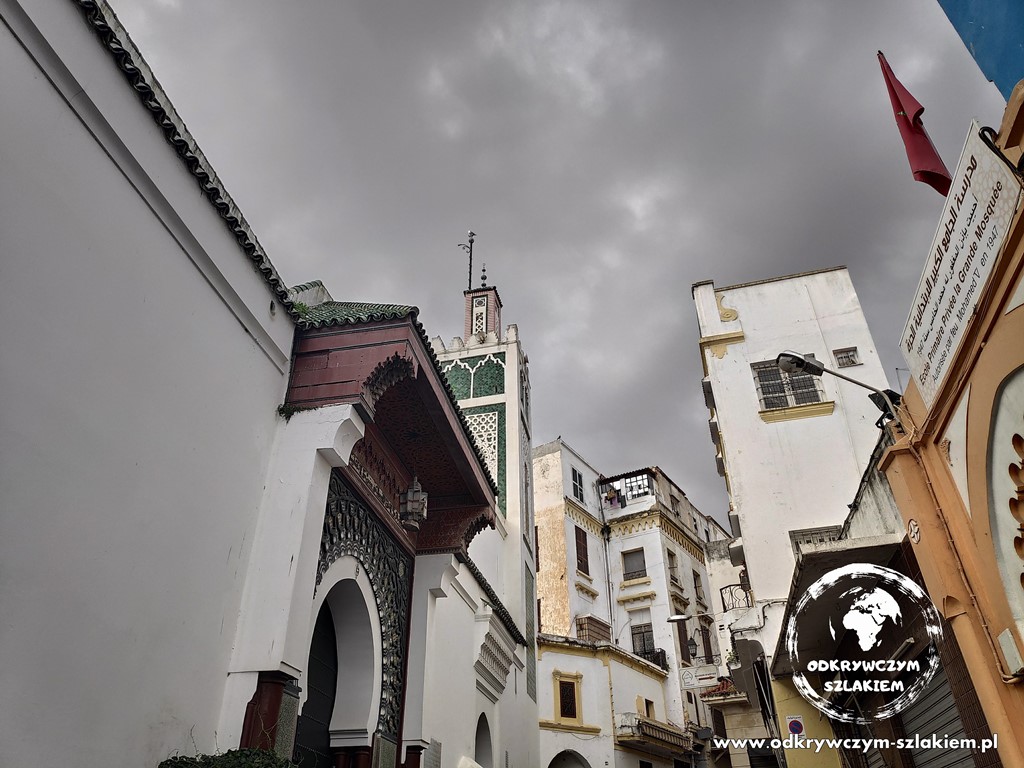
Petit Socco (also known as “Souk Dakhli”) is a square and the shopping streets around it in the Medina. Even though the place is on Google Maps, it’s hard to pin down any distinctive point. As we understand it, it is a bazaar stretching from around Grand Socco towards the Great Mosque (Grande Mosquée). Unlike in other districts of Tangier, you can also see women here, usually with their husbands and a bunch of children.
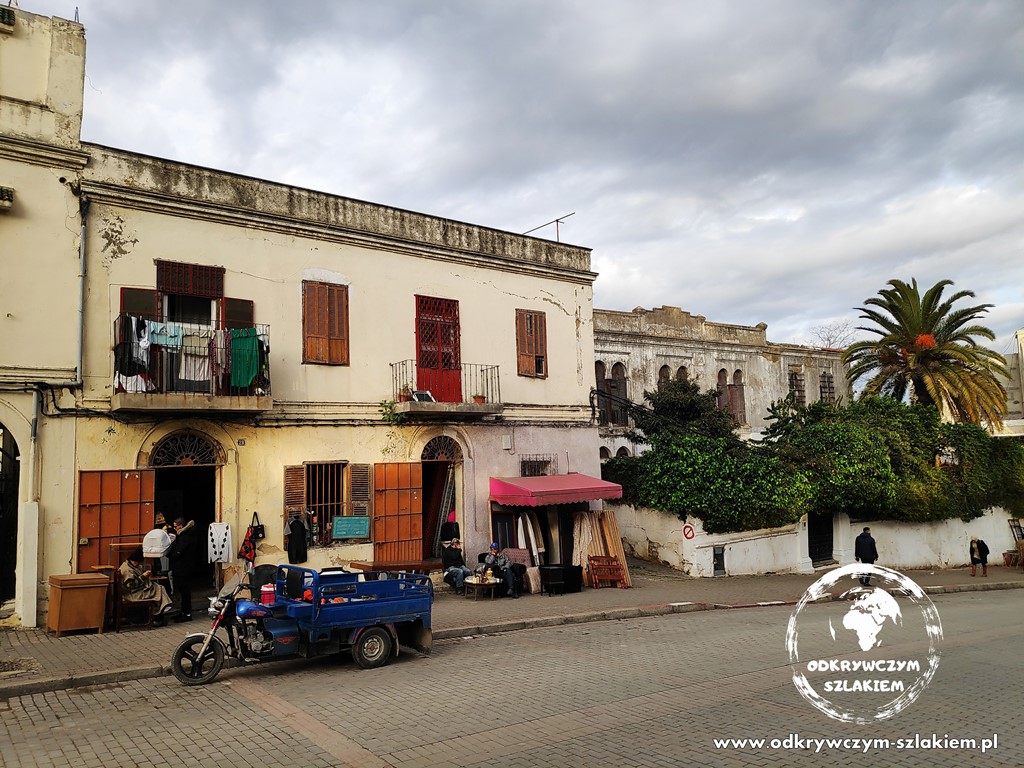

In the immediate vicinity of Grand Socco there is the Moorish-style Anglican St Andrew’s Church and the Masjid Sidi Bouabid mosque. You can also come across an old cemetery (in the grove between Av. Sidi Bou Arraqia and Rue Sidi Bouabid).
Other attractions:
Café Hafa and Café de Paris
The most famous historic café is Café Hafa. It was founded in 1921 and many artists used to visit it. Another well-known café is Café de Paris, opened a year earlier, where artists also met – and spies during the Second World War.
Cap Spartel Lighthouse and the Caves of Hercules
With only one day, we didn’t have time to see everything – let alone go to the cape a dozen or so kilometres from Tangier – Cap Spartel, with its distinctive lighthouse and the Caves of Hercules.


Phoenician tombs (Tombeaux Phéniciens)
On Google Maps, under “Necrópolis romana” (Roman necropolis), you will find an old, abandoned building. Heading there, we hoped to reach the “Tombeaux Phéniciens” (Phoenician tombs), but without internet access we couldn’t find them. It turned out that the place we were looking for was only half a kilometre further on. Worth knowing. The attraction is marked on the map at the beginning of the article.
Practical information:
Transport (ferry)
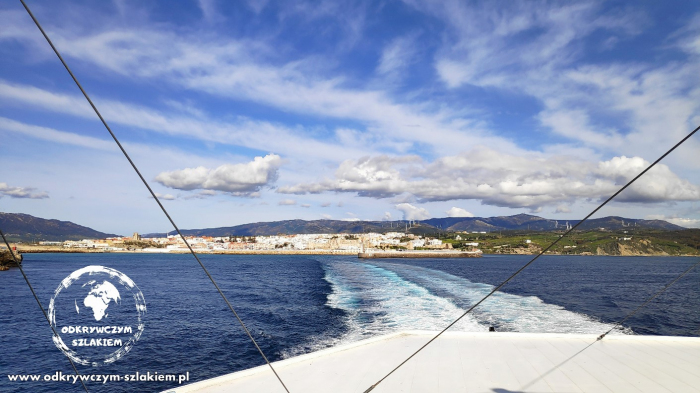
You can get to Tangier by ferry from, among other places, Tarifa (Spain). The crossing takes only 40 minutes. It costs about €80 return. You can buy a ticket from one of the two ferry companies near the port (as of January 2020). The price difference was only €5, so we took the next ferry with FRS (click here to see the next available dates and prices).
Accommodation
When choosing accommodation in winter, it’s worth checking whether there is heating and hot water (although this information is hard to find). We got a bit cold in our hostel (January 2020) – instead of a duvet there was only a blanket. Out of season, booking the Medina hostel at the last minute, one night for two cost us €20 including breakfast. Basic standard, but it was only for one night. The most important thing for us was the location – most of the attractions were very close. An extra plus of this hostel is the rooftop terrace with a nice view over the city (meals are served there too).
Moroccan tea, breakfast at the hostel
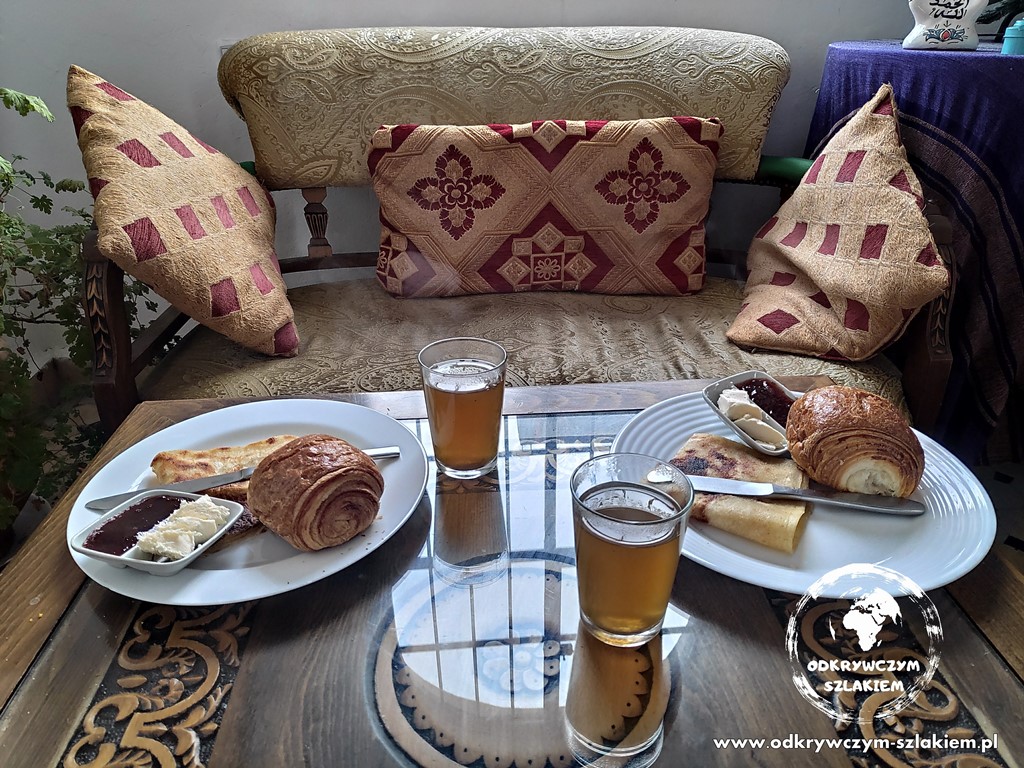
The famous Moroccan tea is black tea served with various herbs, most often with mint. Watch out for the tons of sugar Moroccans put in their tea! We couldn’t manage to drink the one served at the hostel. Most hostels offer breakfast, and even our very modest meal was delicious – a Moroccan pancake, butter, jam and a fresh croissant.
Safety
- Watch out for local touts who supposedly want to show you around for free. They can follow a tourist for a long time, hoping that they will eventually give in, let themselves be shown around and then hand over a few coins. They are extremely pushy and probably only nice until they want money.
- Watch out for pickpockets.
- Be careful with contact with the opposite sex – in the local culture, looking someone in the eye can signal a wish for closer contact.
- It’s definitely better not to walk around the Medina after dark. That’s where we were staying, and for that reason at the end of the day we decided to hole up in our safe hostel. It’s better to book a hostel in another, safer district.
Getting around the city
How you get around will of course depend on where you stay and what you plan to see. We got around only on foot, because all the attractions we visited were more or less “in one place”. With one more day, we would probably have taken a taxi to Cap Spartel . We planned the route using the Wi-Fi at the hostel and then simply never closed the map. Right after leaving the port there were stalls where you could buy a SIM card with internet, but for one day it wasn’t worth it.
Currency exchange
Ten Moroccan dirhams are roughly one euro. Shops in Tangier used the same rate. We didn’t want to change money for just one day, as we spent very little there, so we bought our souvenirs with euros.