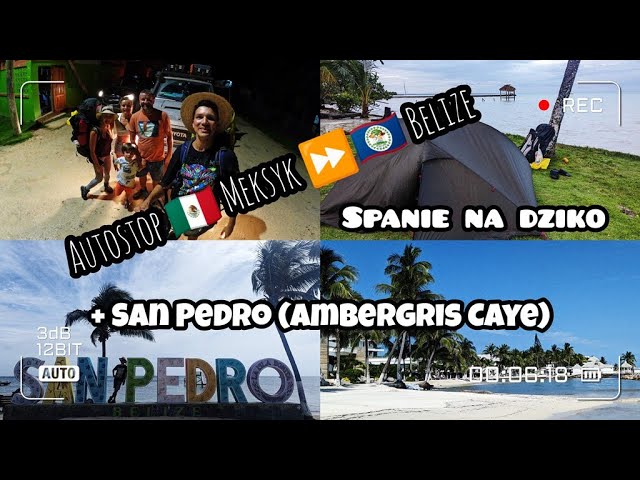
There are several ways to get from Mexico to Belize, but none of them is completely straightforward. In this post I describe what crossing the Belizean border looked like, how much it cost us and how we hitchhiked to the village of Sarteneja, where we spent our first night in a tent.
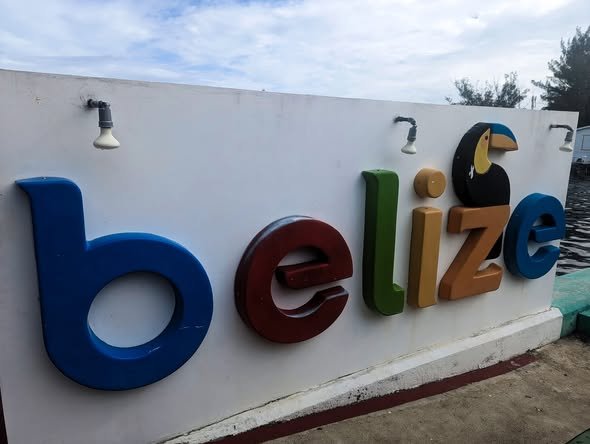
Crossing the border Mexico – Belize
We entered Belize on 14 December 2023. Crossing the Belizean border is a small business for taxi drivers. You can’t walk across the border directly from Santa Elena on the Mexican side – you either have to walk a long way round or take a taxi. For 150 MXN (about €8) we were first taken to the Mexican border office, where the driver waited for us until we got our exit stamp, and then drove us to the Belizean office.
At the Mexican office you have to pay a tourist tax. If you have already paid it, you need proof – it is often included in the price of your flight, but it has to be itemised on the invoice. If it isn’t, you pay on the spot, and many people have to pay the fee a second time, with no possibility of appeal. At the moment it is 687 MXN (about €37) per person – more than the internet said, so we only just had enough. Payment in cash only.
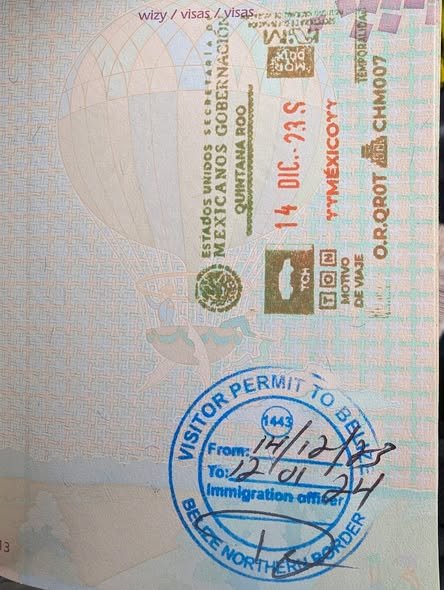
The passport photo shows both stamps: the Mexican exit stamp from 14 December 2023 and the Belizean Visitor Permit. Citizens of Poland and other EU countries need no visa – at the border you get permission to stay for up to 30 days (in our case until 12 January 2024). The stay can be extended at immigration offices by another 30 days; according to the official immigration website this costs BZD 200 (as of 2026).
Good to know
- The official language of Belize is English.
- The currency is easy to convert: 1 Belize dollar (BZD) = 0.5 US dollar (USD).
- On entry, at the border office, you have to declare where you will be staying.
- Wild camping is legal in Belize, as long as you don’t pitch your tent on private land.
- Prices and amounts are as of December 2023 (the time of our visit).
- When leaving Belize by land you pay a total of BZD 40 (about USD 20): the departure fee, the border development fee and the conservation fee (PACT) – as of 2026.
- Between the Mexican and Belizean border posts lies the Corozal Free Zone, where Mexicans come for cheaper fuel and shopping.
- The immigration and customs form can be filled in online for free before you arrive – the e-form is linked on travelbelize.org.
Hitchhiking to Sarteneja
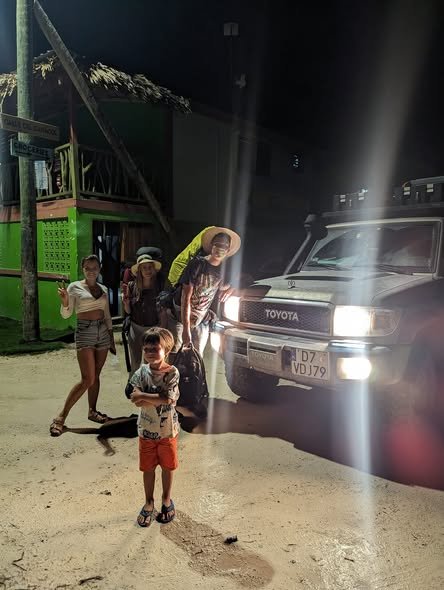
The plan was to hitchhike from the border south – to Orange Walk, on the way to Belize City, where we wanted to catch a ferry to the islands. At the border we were picked up by Aurélien, Ewa and Gabriel (@landcruising_family), who have been travelling in their car all the way from Canada and – just like us – had entered Belize the day before. After more than two months we hadn’t seen a car with Polish number plates, so it was a really nice touch, as was the whole ride filled with conversations in Polish and English.

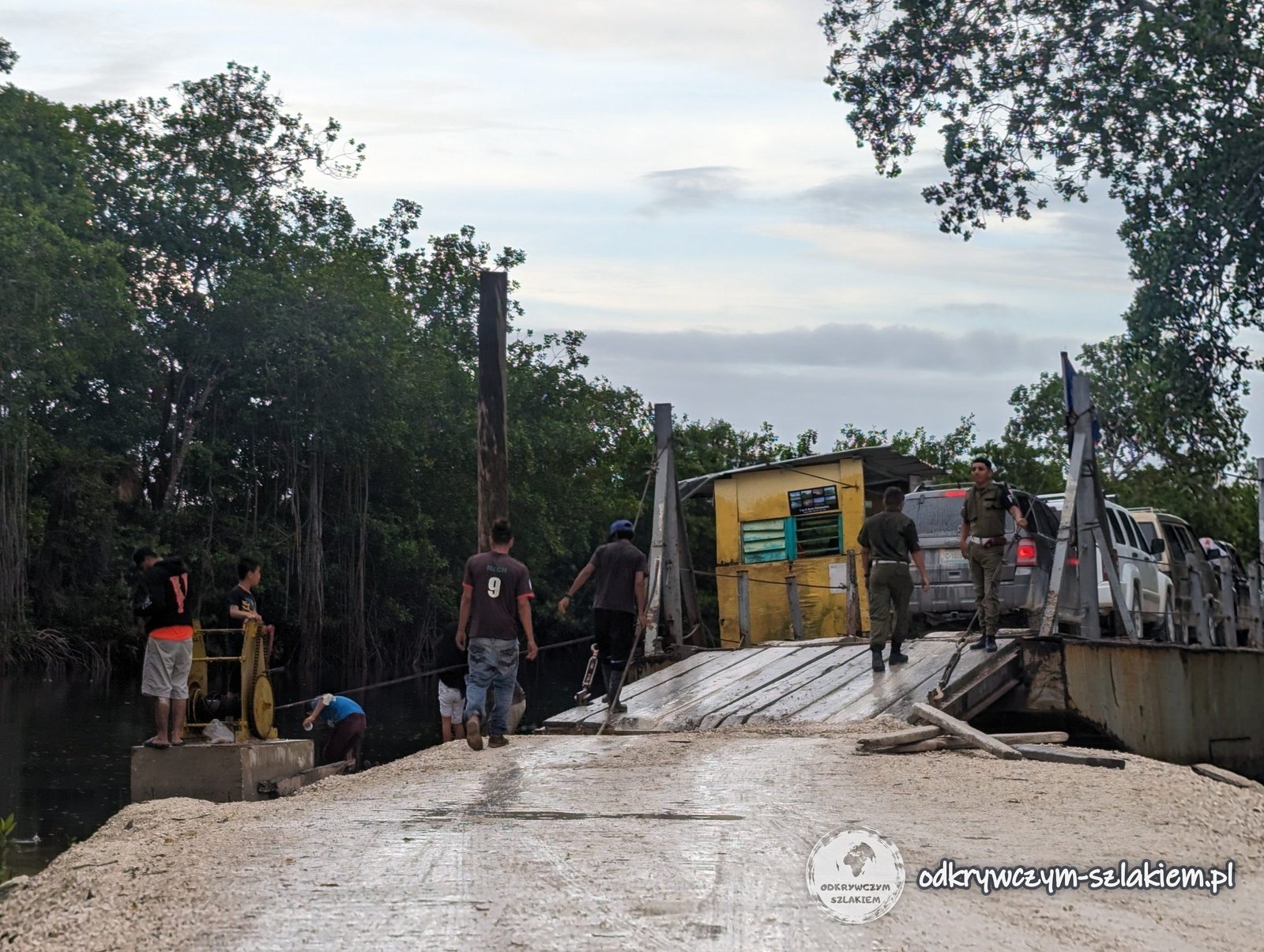
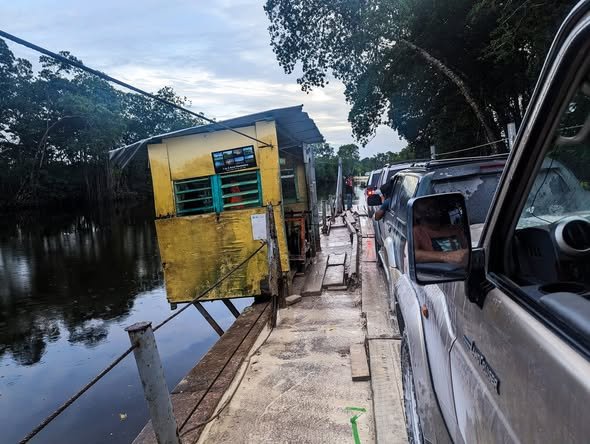
On the way we crossed a river on an interesting car ferry. There are two such ferries on the road from Corozal to Sarteneja – across the New River and across the Laguna Seca lagoon. They are platforms moved along a steel cable, which the operator turns with a hand crank, and the crossing is free. There was a queue of cars before the ferry, so we waited a while. Together we reached Sarteneja – not at all in our direction, but it turned out you can get to the islands from here too. Only a short stretch of the road was paved; the rest was full of potholes, unlit and – especially after rain – very muddy.
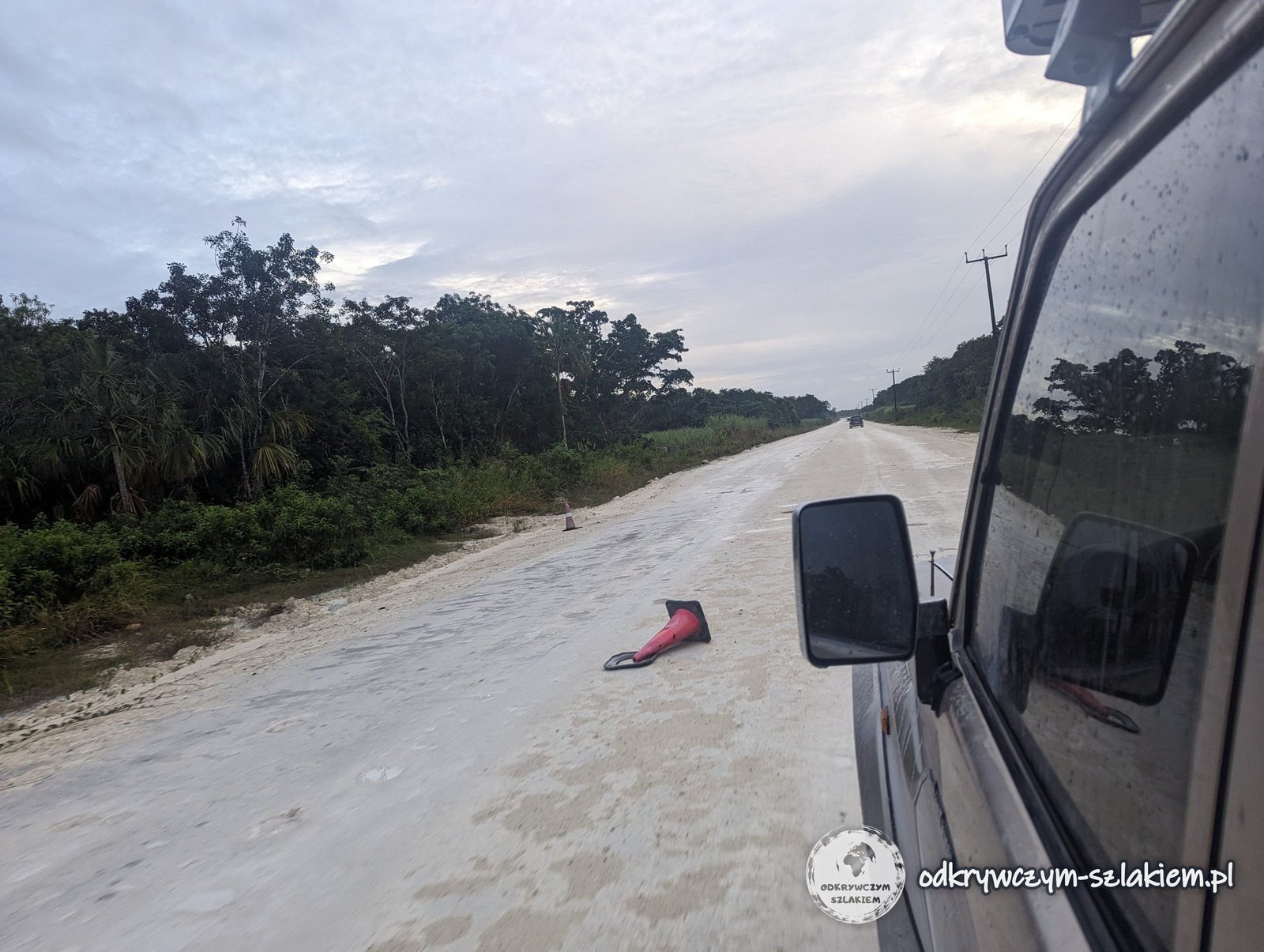
The road crosses the Sarteneja peninsula, covered with forest and cut by lagoons. Right next to the village lies the private Shipstern reserve (Shipstern Conservation & Management Area) – several thousand hectares of forest, wetlands and mangroves, home to almost 300 bird species.
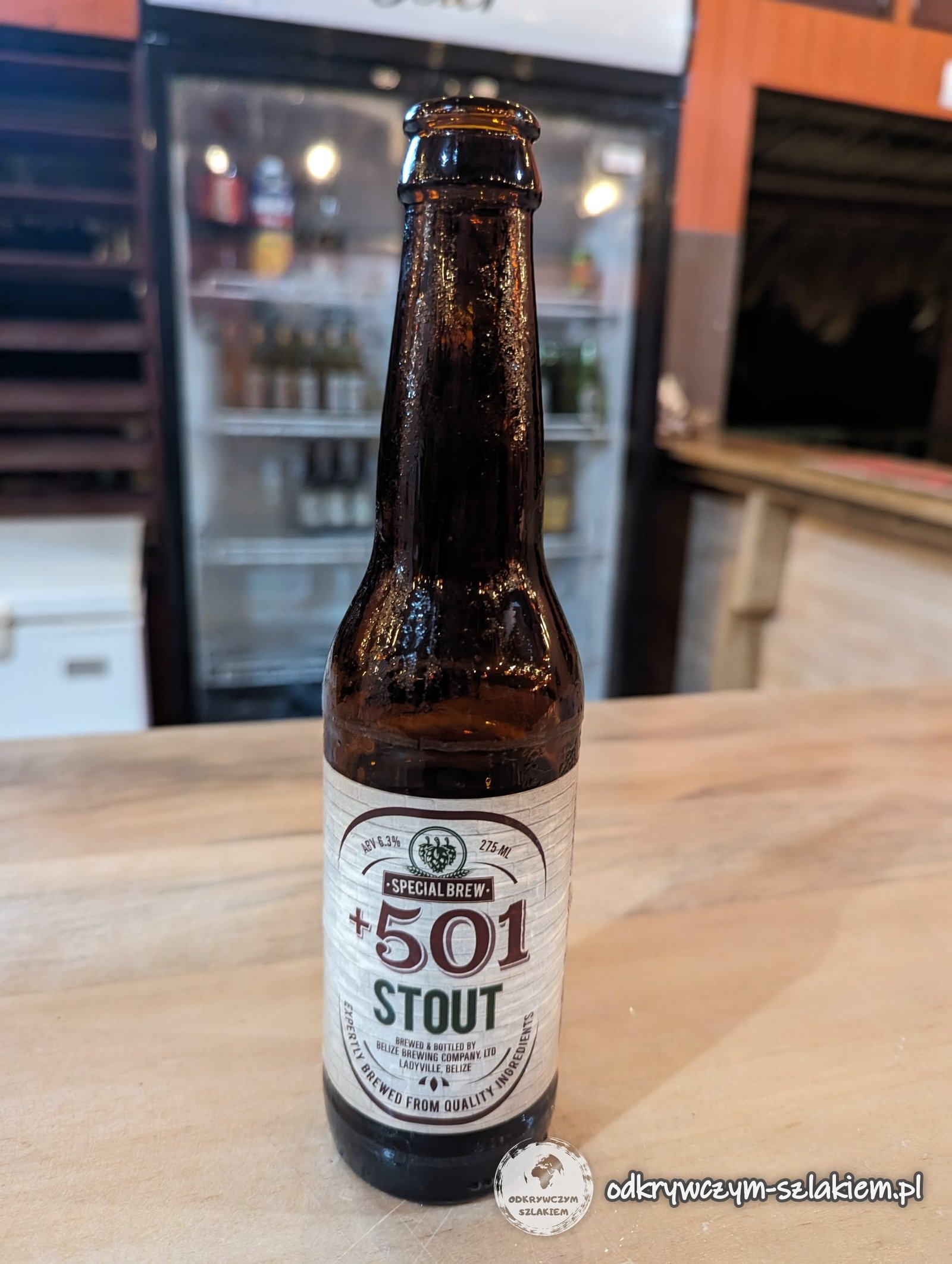
We spent the first night in a tent. We hadn’t bought a SIM card, but we had Wi-Fi from a nearby bar (Loco-Nuts Social House), which played music until late – luckily we managed to fall asleep. We drank our first Belizean beer for 5 BZD (about €2) for 275 ml.


We only saw the village properly in the morning, in daylight. Sarteneja lies at the northern tip of the peninsula, on Chetumal Bay, and is the largest fishing village in Belize. It was founded in the mid-19th century by refugees from Yucatán fleeing the Caste War, and Spanish is still the main language here. Locals fish mainly for lobster, conch and fish, and local shipwrights still build wooden boats – most of Belize’s traditional fishing fleet was built right here.
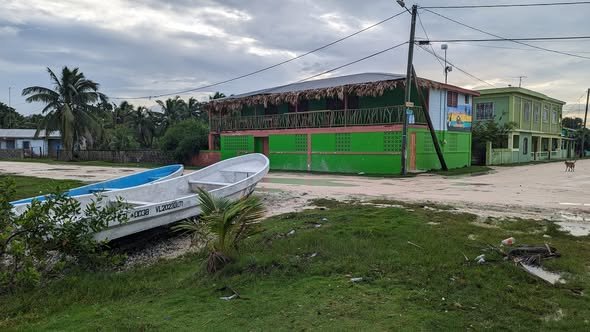
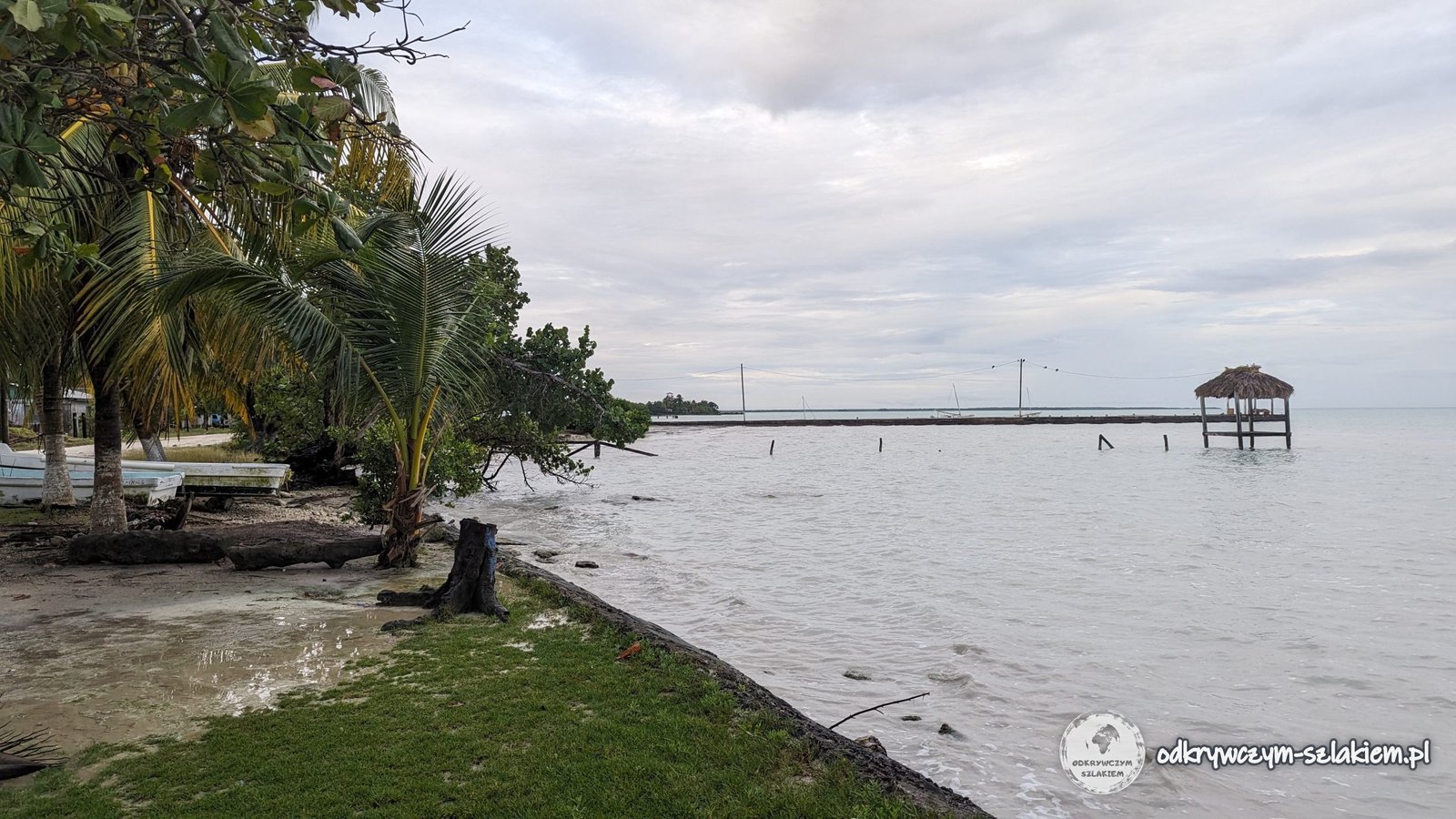
The village’s name comes from the Maya Tza-ten-a-ha – “water between the rocks”. In 1955 Sarteneja was flooded by the storm surge of Hurricane Janet, but the village was rebuilt. Every year on Easter Sunday a regatta is held here (Sarteneja Easter Regatta), in which traditional wooden sailboats race – at Easter most of the fishing fleet is in port.
Water taxis running between Corozal and San Pedro on Ambergris Caye also stop in Sarteneja – usually only on request, so it is worth arranging the departure time the day before. In the morning we got on one of these boats (run by Thunderbolt) and crossed the shallow bay towards the islands. Brown pelicans were flying over the water.

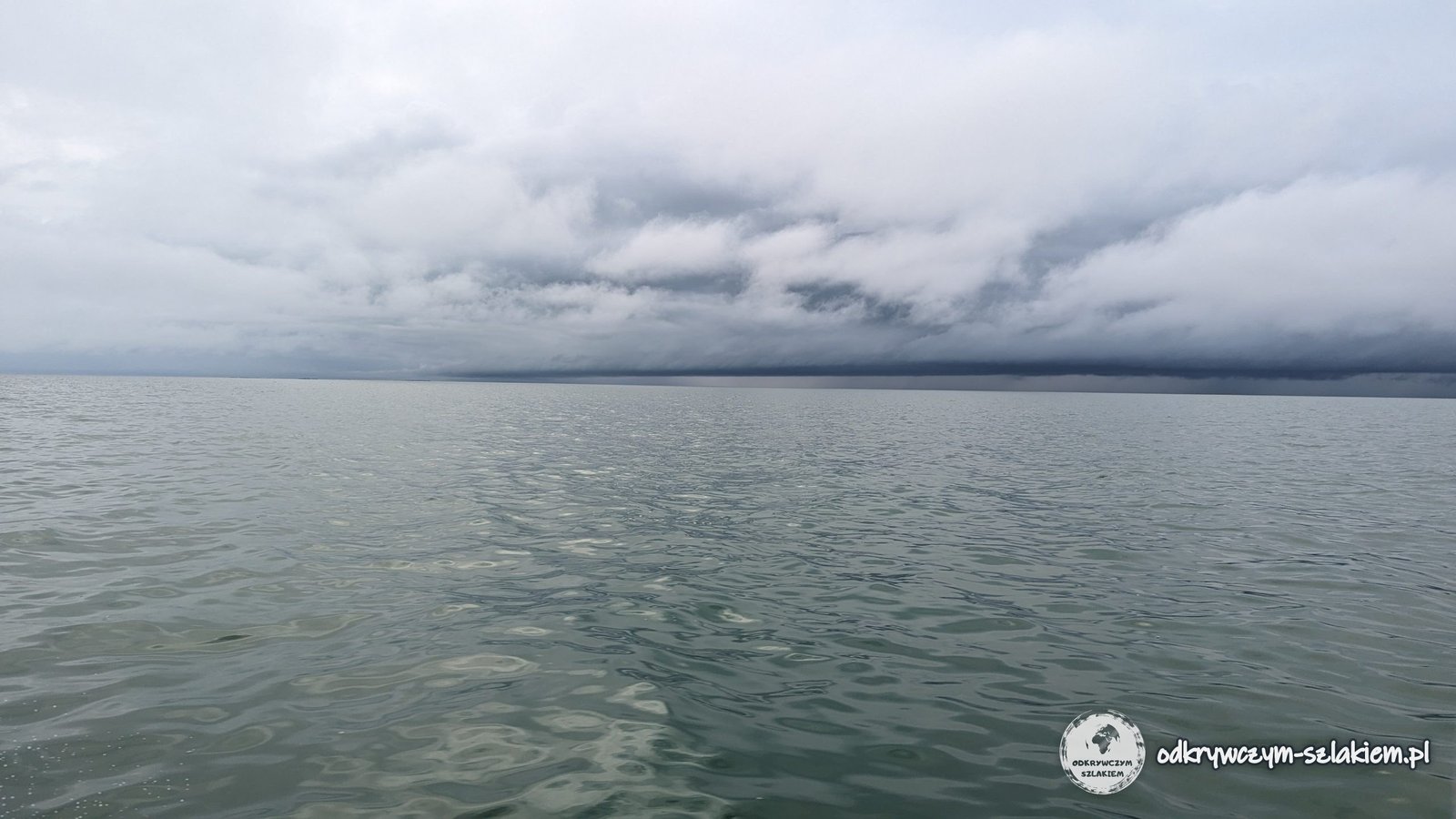
The islands we were heading for lie along the Belize Barrier Reef – about 300 km of reef along the country’s entire coast. It is the largest barrier reef in the Northern Hemisphere and has been a UNESCO World Heritage Site since 1996. The whole reef system includes about 450 islets (cayes) – sandy and mangrove ones.
So on 15 December we made it to the island of Ambergris Caye (San Pedro), and from there we went on to Caye Caulker – more about that in the next post.