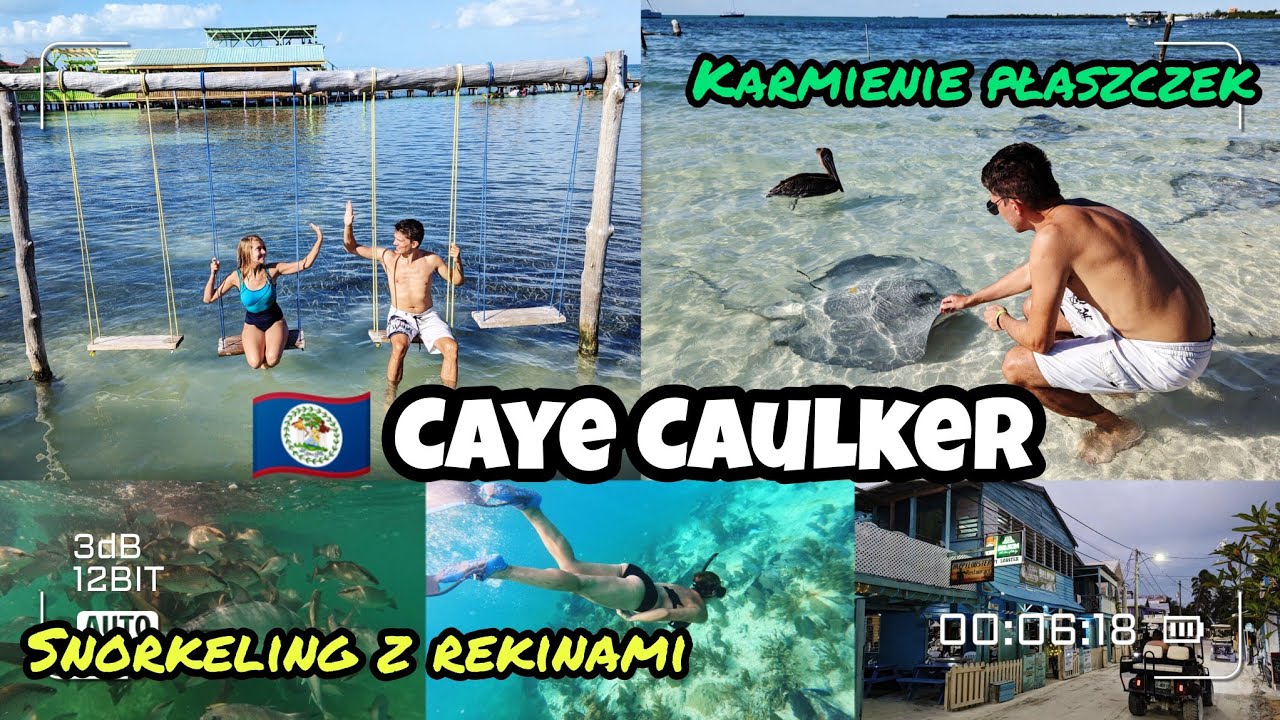
Belize is a tiny country, but it has as many as 450 small islands. After crossing the border from Mexico and spending our first night in Sarteneja, that’s exactly where we headed – from 15 December 2023, first to Ambergris Caye and then to Caye Caulker, where a coral reef, snorkelling with sharks and feeding stingrays right by the shore were waiting for us.
Ambergris Caye – Madonna’s “La Isla Bonita”
“La Isla Bonita”, or Ambergris Caye, is the very island Madonna sang about. On it we visited San Pedro – the only town on the island, with a few beaches. This is where snorkelling and diving trips set off from, because the second-largest coral reef in the world runs right past here. For us, San Pedro was a stopover between Sarteneja and the second Belizean island – Caye Caulker.
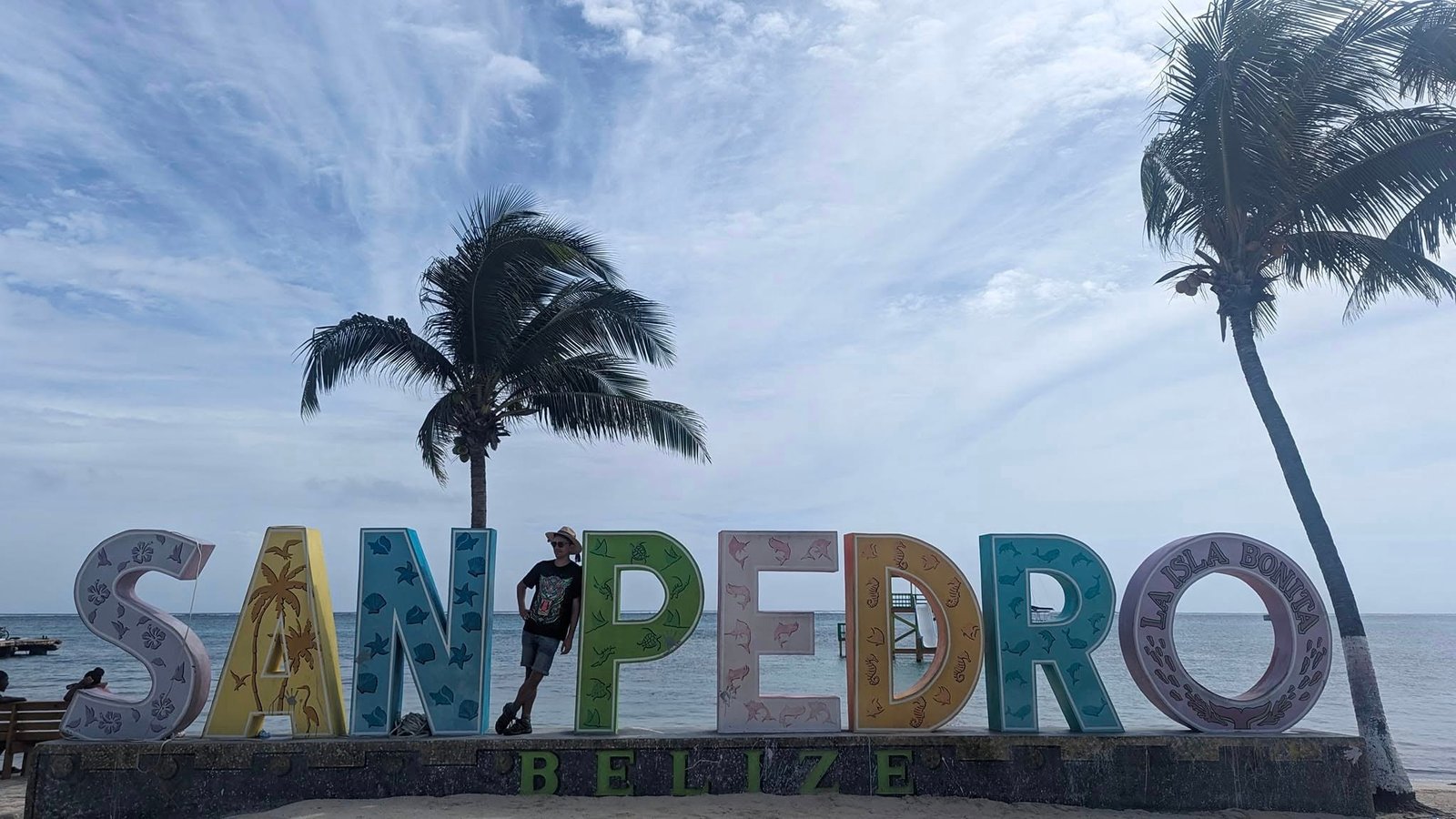
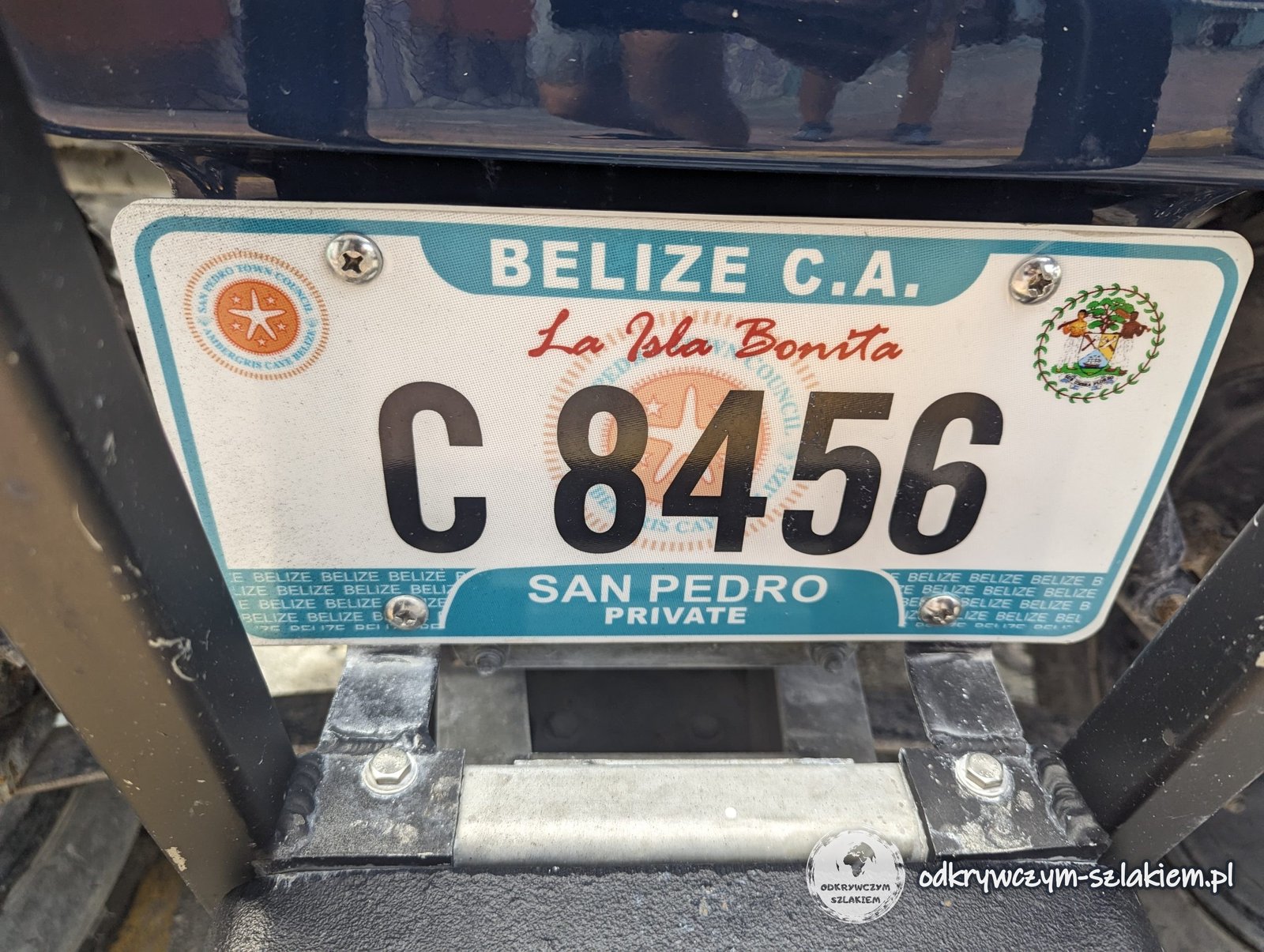
The nickname comes from Madonna’s 1987 song, which opens with the words “Last night I dreamt of San Pedro”. The island happily adopted it, and today you see it on signs and even on number plates. Ambergris Caye is Belize’s largest island, about 40 km long, and its northern tip is separated from Mexico only by the narrow Bacalar Chico channel – probably dug by the Maya for sea trade.

It was in San Pedro that we had the only less pleasant moment of our whole stay in Belize – a march with all our luggage, in full sun, to a hotel a long way from the centre. Apart from that, the island left us with nothing but good memories.


The first families settled in San Pedro for good in 1848–1849, during the so-called Caste War of Yucatán – they were soon joined by people from Bacalar, just across the border in Mexico. For more than a century it was a quiet fishing village, and it was only granted town status in 1984. Today about 20,000 people live here, and tourism – especially diving – is one of the main industries.
People get around San Pedro mainly by golf cart, and the carts even have their own number plates. Colourful murals cover the walls in the centre.

A curiosity for anyone paying cash: Belize dollar banknotes still show Queen Elizabeth II. Belize is a Commonwealth realm, with the British monarch as head of state. Between the piers and hotels there are also stretches of beach with palm trees and shallow, warm water.


Since 1976 the Belize dollar has had a fixed rate: 2 BZD = 1 USD, and US dollars are widely accepted – so it is worth asking which currency a price is in. The notes with the Queen are slowly disappearing: since 4 August 2025 new ones have been in circulation, showing Belize’s national heroes George Price and Philip Goldson. The old notes remain valid, but the central bank is gradually withdrawing them.
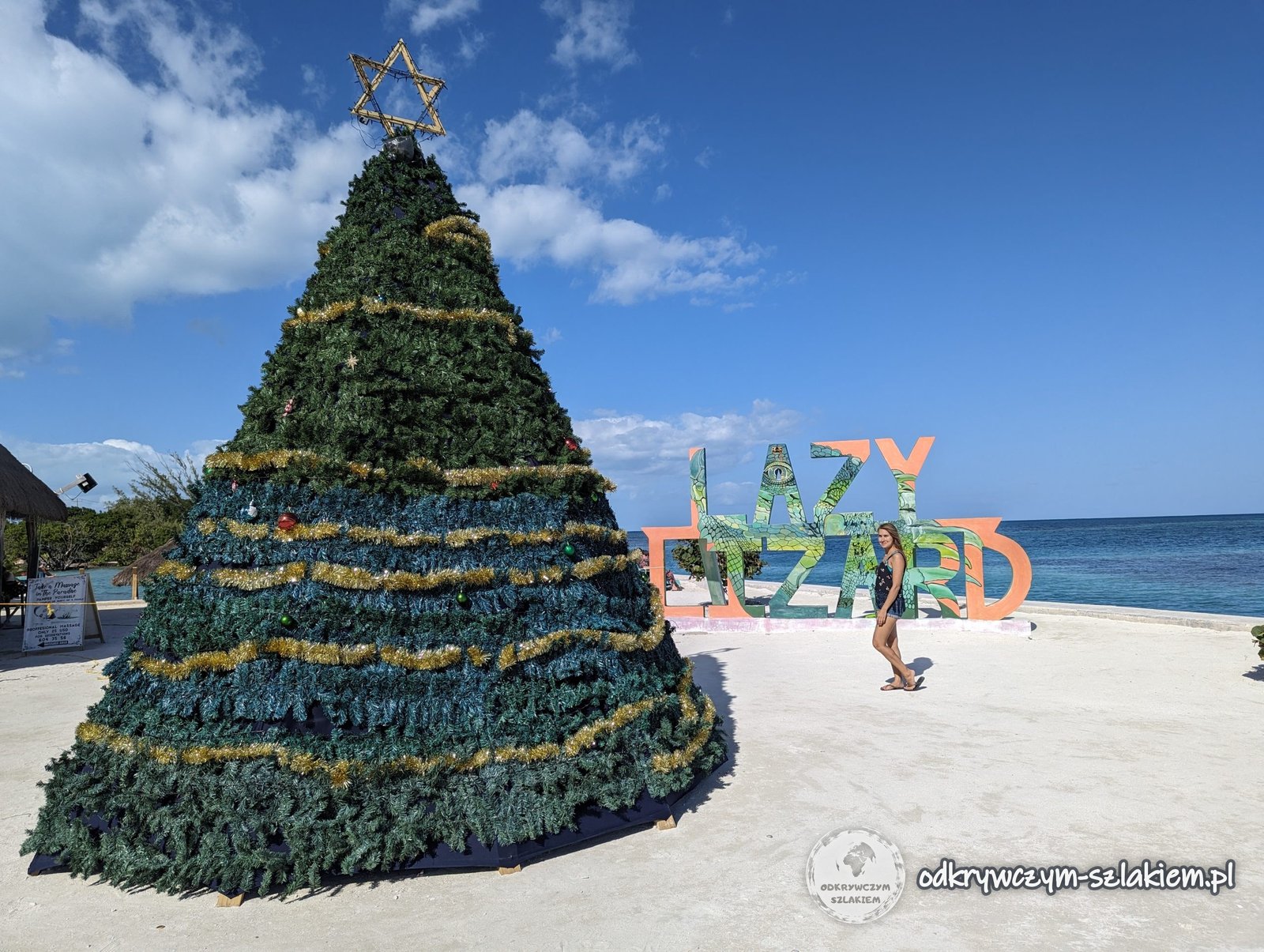
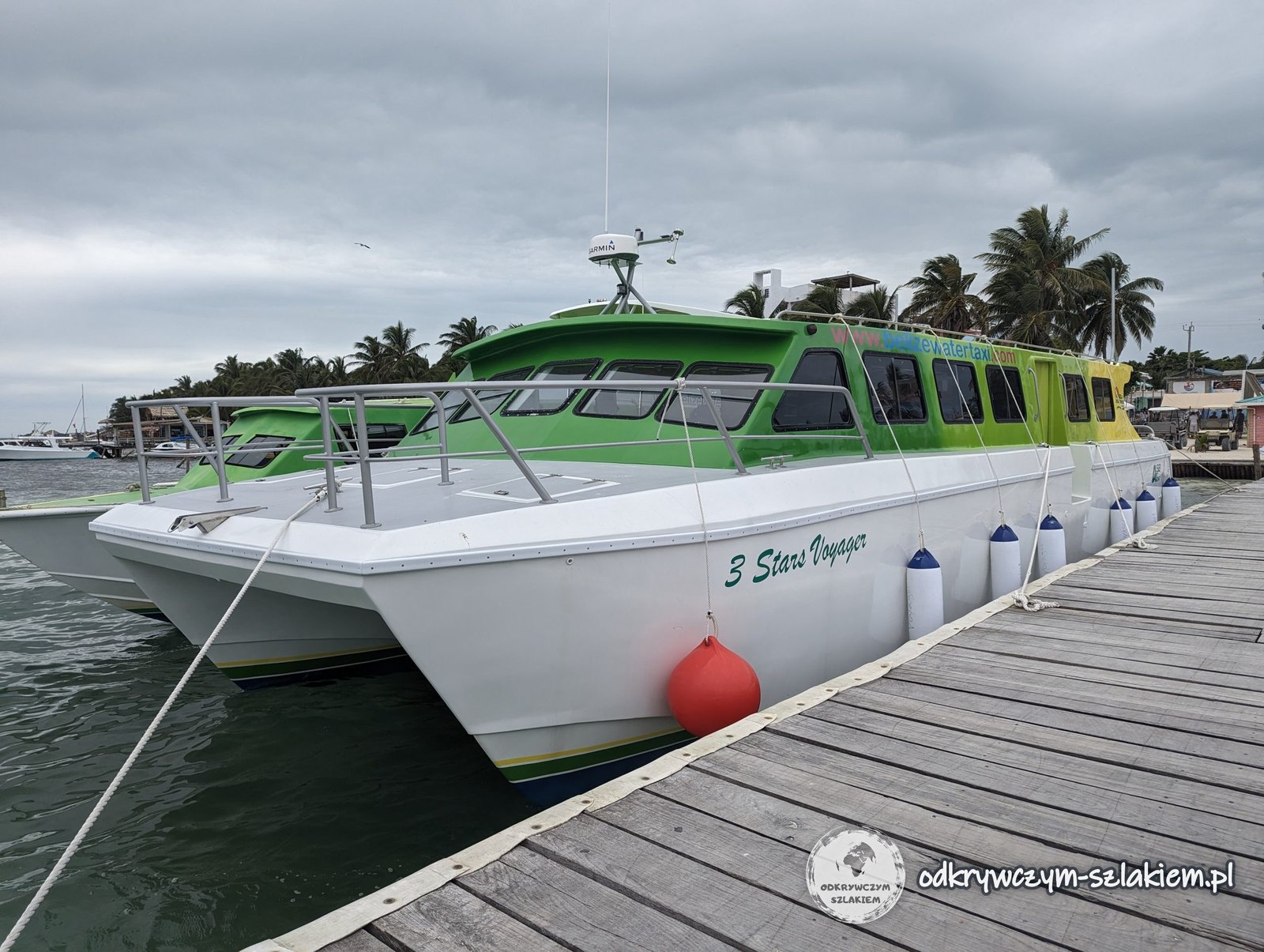
On the afternoon of 16 December we took a water taxi to Caye Caulker. The crossing took about 40 minutes, and the beach was already decorated for Christmas – inflatable Santas and snowmen under the palm trees.
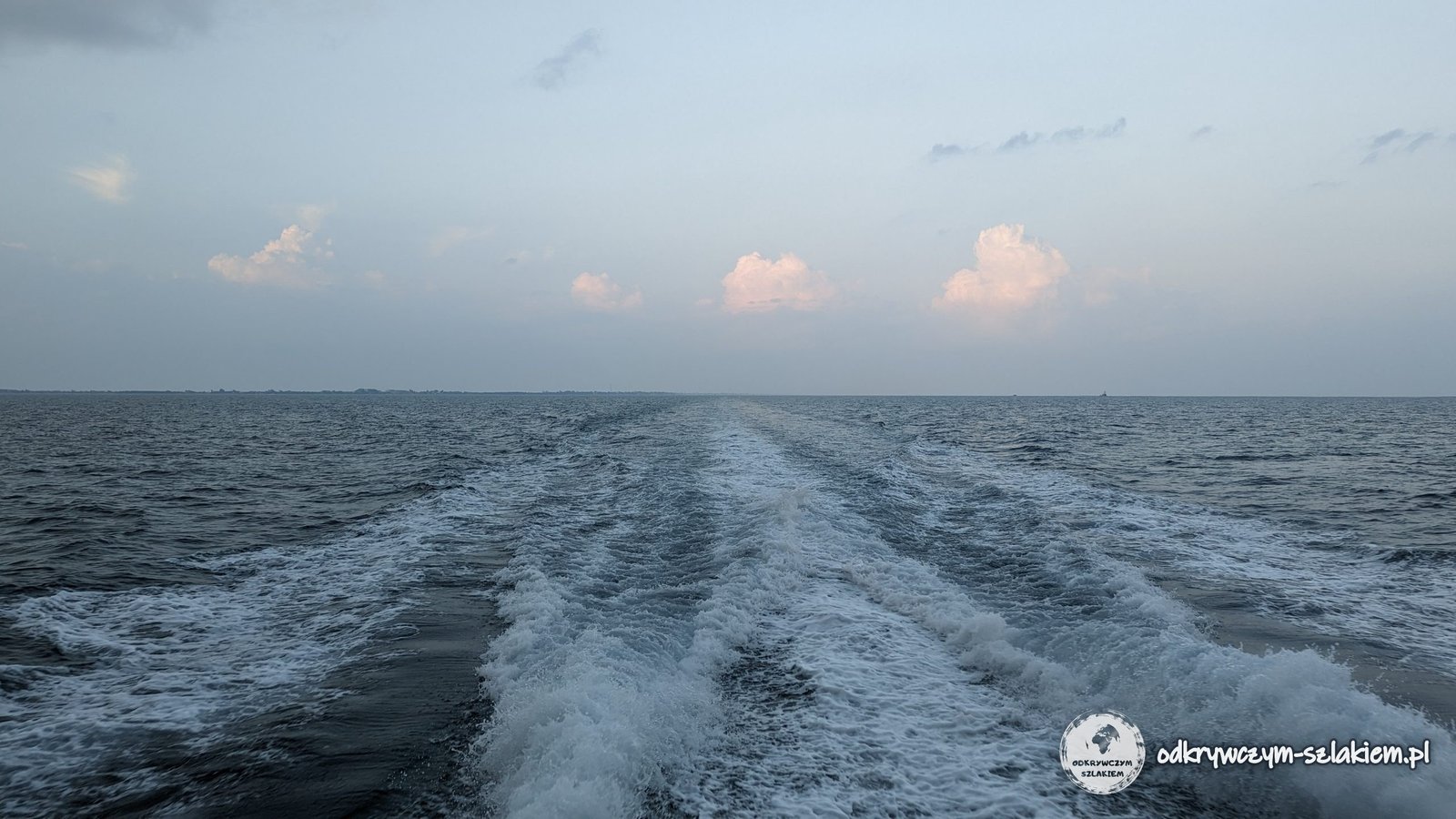

Fast boats run by several companies connect Belize City, Caye Caulker and San Pedro. Fares are approved by the Belize Port Authority, and tourists pay more than locals: according to the 2023 fare list, a tourist paid 45–59 BZD one way from Belize City to Caye Caulker, depending on the company. In April 2026 the operators raised prices by another few Belize dollars.
Snorkelling on the coral reef
We went snorkelling from Caye Caulker. It was our second trip like this – the same coral reef also stretches along the coast of Mexico, where we had snorkelled earlier off the island of Cozumel. Comparing the two, the Belizean one was definitely more amazing, although more expensive (90 USD). We saw more, and the company ran the trip much more professionally.
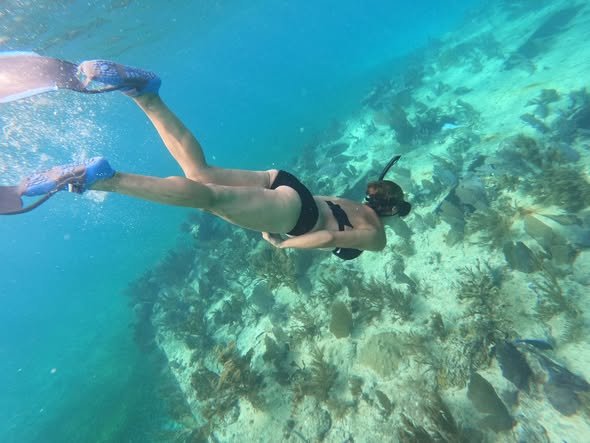

Here the reef is within sight, and sometimes literally within arm’s reach – no diving needed. Loads of fish species, and among them nurse sharks. Yes, they were lured with food, but seeing so many of them up close was something else – it was the part of the trip we had been looking forward to most. We also fed tarpons, which jumped for the sardines we held out, and we saw a shipwreck.
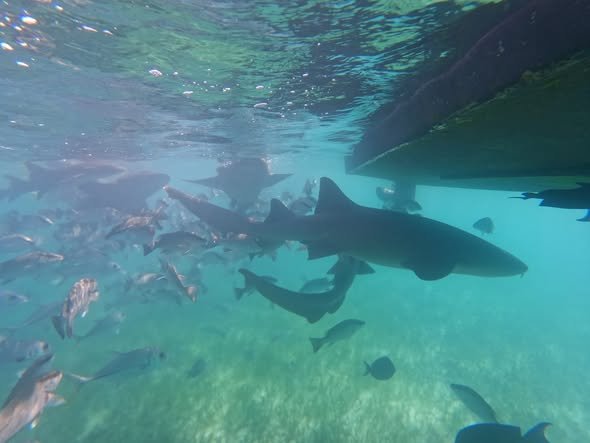

The Belize Barrier Reef stretches for about 300 km and has been a UNESCO World Heritage Site since 1996. It is part of the Mesoamerican Reef, which runs some 1000 km from Yucatán to Honduras. Nurse sharks are harmless to people – during the day they usually rest on the bottom, and they hunt at night. The wreck we swam over lies in shallow water and can be seen from the surface.


From 2009 to 2018 the Belize Barrier Reef Reserve System was on the List of World Heritage in Danger – because of mangrove clearing, excessive coastal development and plans to drill for oil under the seabed. It was taken off the list after Belize introduced a moratorium on oil exploration across its entire maritime zone at the end of 2017 and tightened its mangrove protection rules.
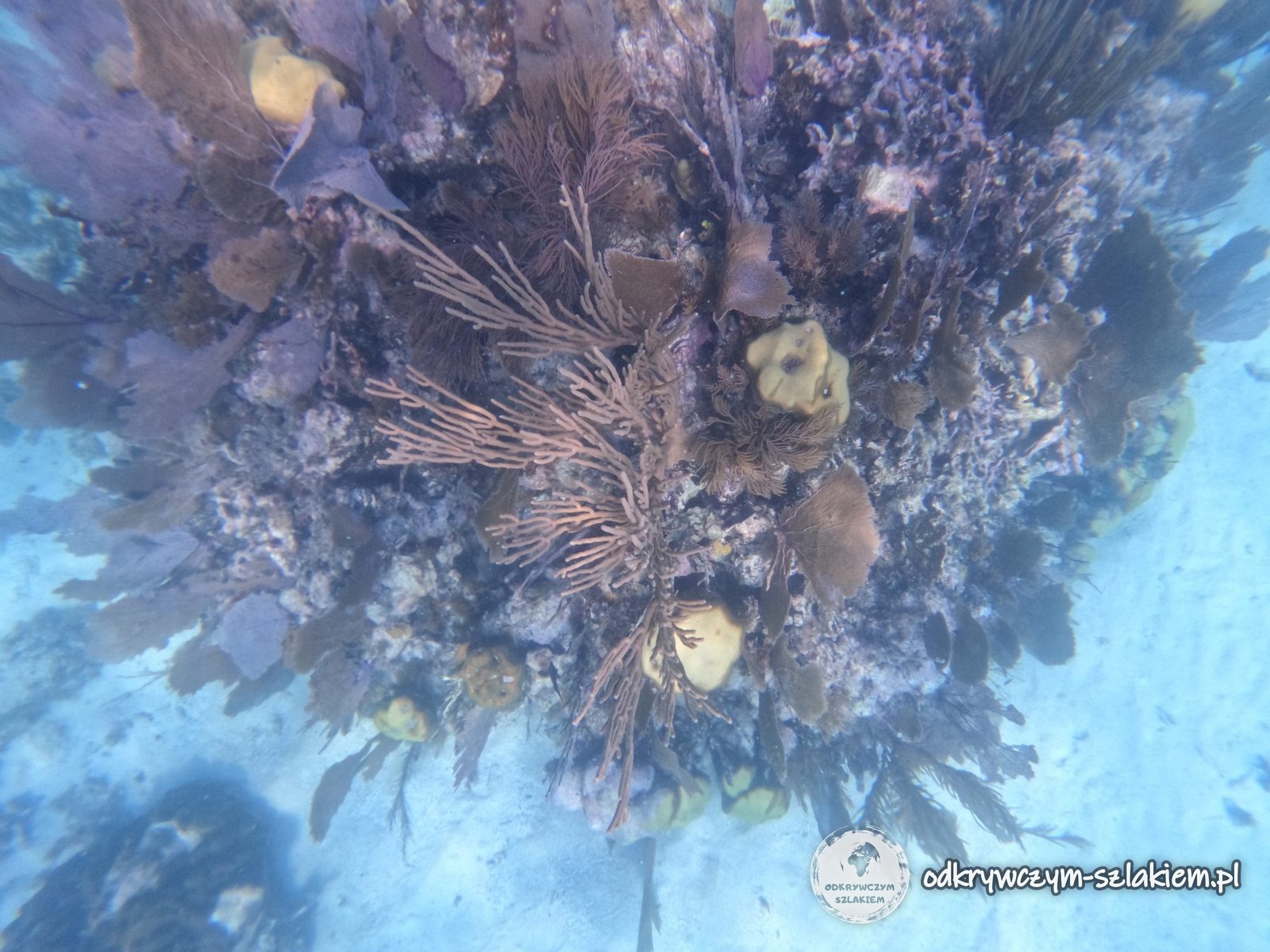
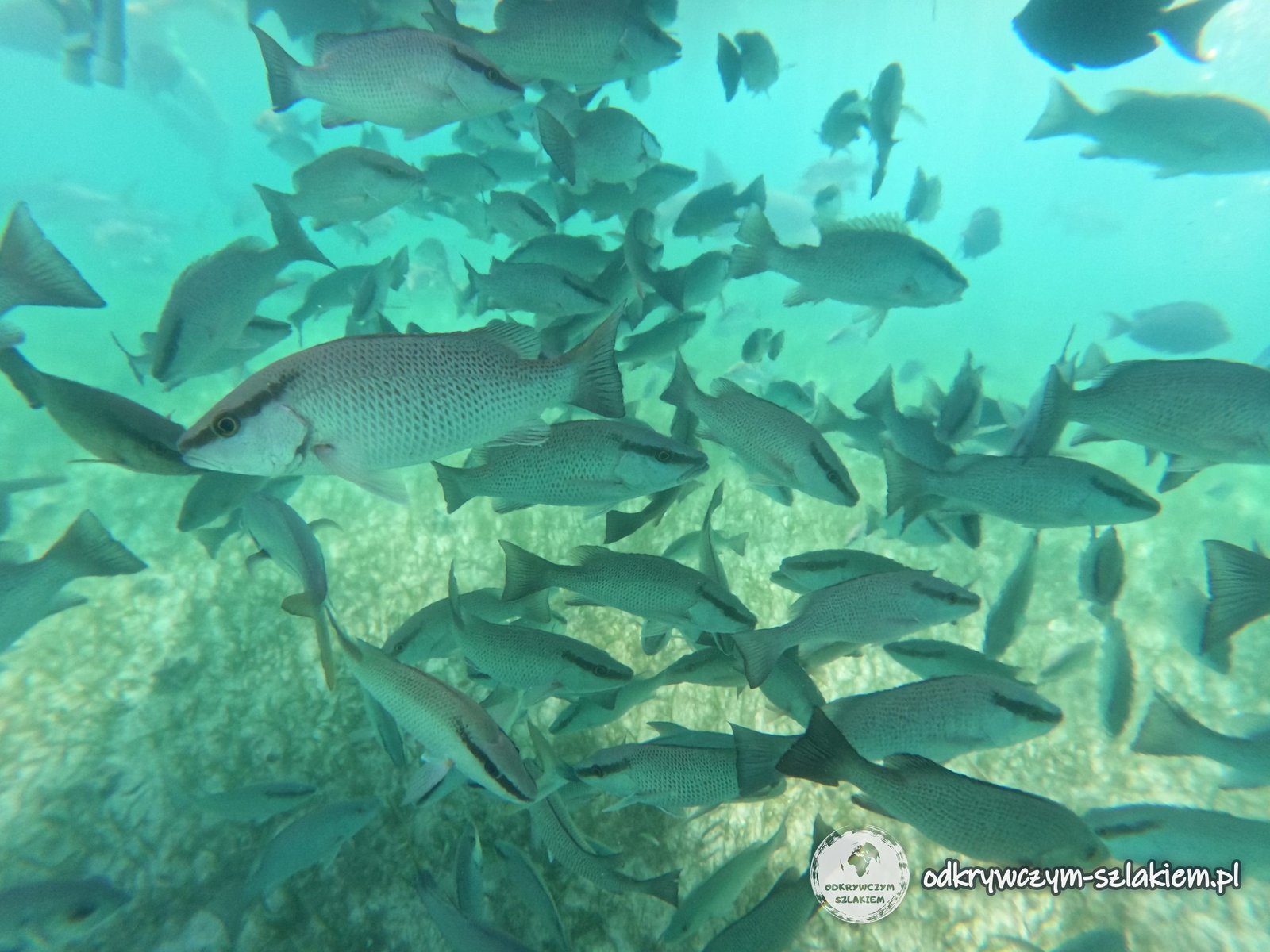
Trips from Caye Caulker and San Pedro often head to the Hol Chan Marine Reserve (Maya for “little channel”), established in 1987 off the southern tip of Ambergris Caye. In 1999 Shark Ray Alley was added to it – a shallow spot where fishermen used to clean their nets before heading back to port. The scraps attracted nurse sharks and rays, and guides later began feeding them for tourists. Since August 2024 the reserve fee has been 15 USD per person – it is usually included in the tour price, but it is worth asking.
Caye Caulker – “go slow”
The motto of Ambergris Caye is “be kind”, and that of Caye Caulker “go slow”. It turned out to be treacherous: once we arrived we couldn’t tear ourselves away and stayed a bit longer, so afterwards we had to hurry to see the rest of the places we had planned before Christmas. Because of that, we skipped some of Belize’s attractions.

Full-day trips also leave from both islands to the Great Blue Hole – the famous underwater sinkhole on Lighthouse Reef atoll, about 70 km off the mainland. It is about 300 m across and 124 m deep, and the boat ride takes 2–3 hours.
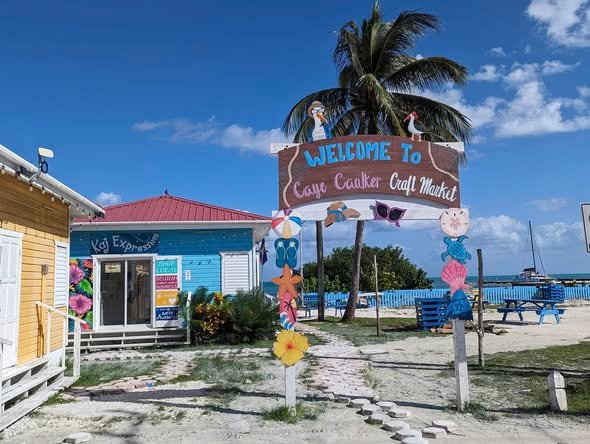
Caye Caulker is about 8 km long and only a few hundred metres wide at its narrowest. There are no cars and no asphalt – the streets are sand. The wooden houses are painted in bright colours, and the big sign with the island’s name is decorated with painted sea creatures.


The island is small, but it has an amazing atmosphere and is a paradise for lovers of the underwater world. Every day at a set time you can go to the stingray feeding – the rays swim right up to the shore. There are lots of pelicans and other birds, and the locals are friendly and helpful. We spent four days here, sleeping in our tent on the grounds of a hostel – the cheapest option on the island (20 BZD / about €9 for a tent for two), when others started at 30 USD per person.
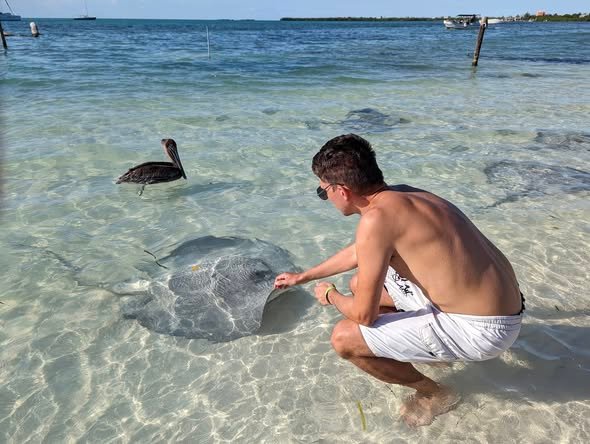

A sign by a waterfront bar says the stingrays come around from 4 pm, and pelicans sit on the piers and posts.


Piers with palapas line the shore, and swings and thatched tables stand right in the shallow water.
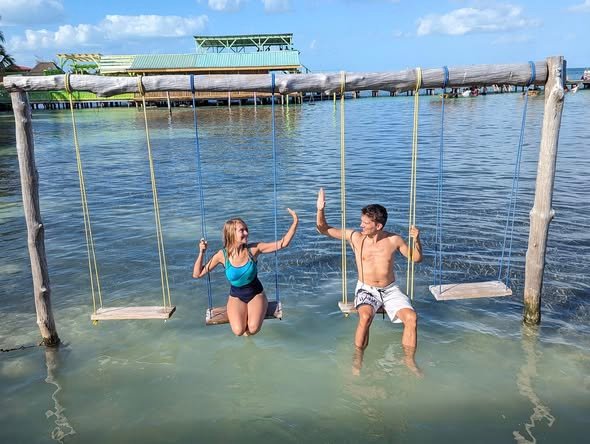

The island is cut by a channel called The Split, which locals say formed after Hurricane Hattie in 1961. Bars and swimming spots line it, and people get around on foot and by golf cart.
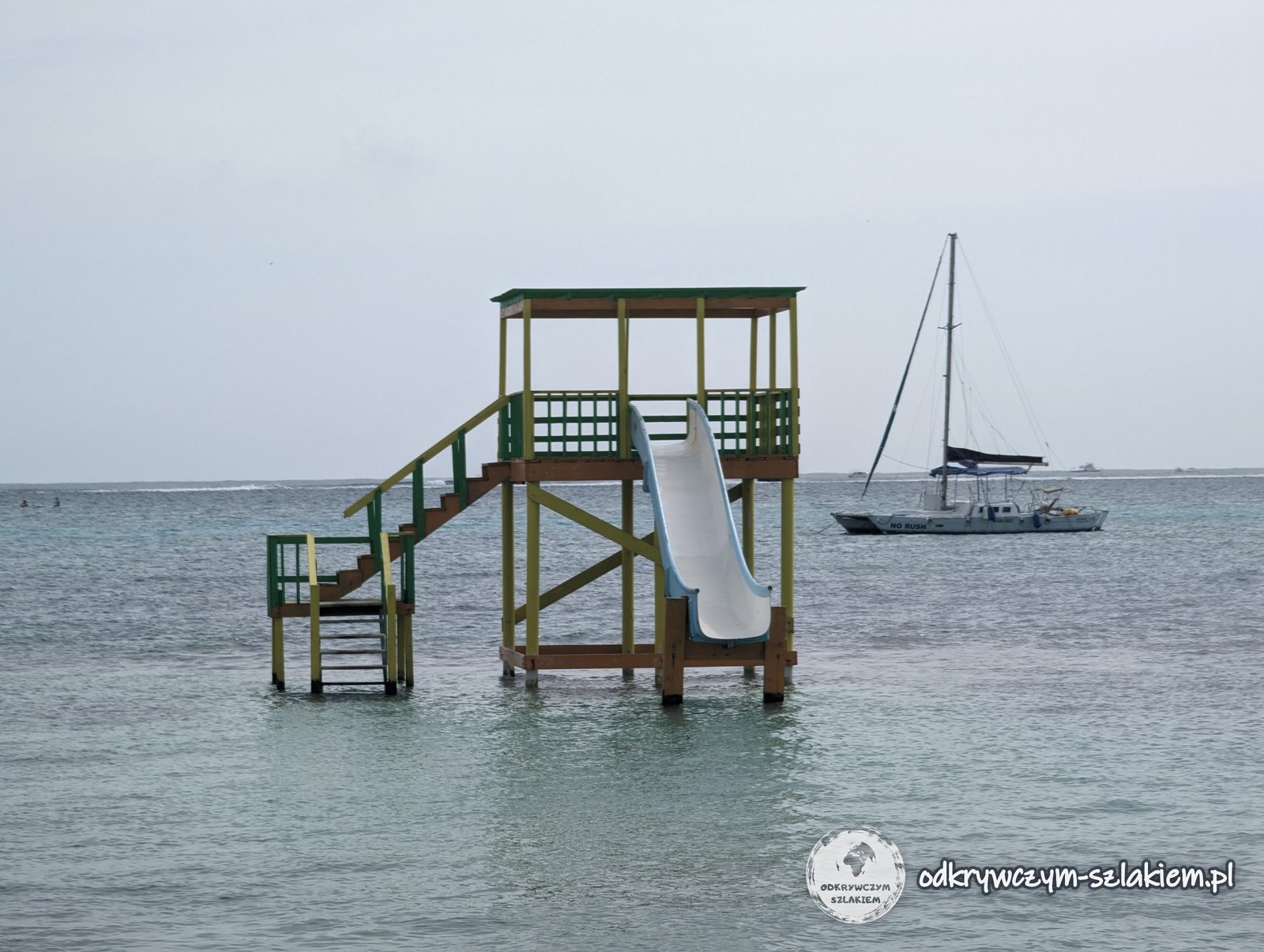
By the channel there is a wooden tower for jumping into the water, and next to it the Lazy Lizard bar.
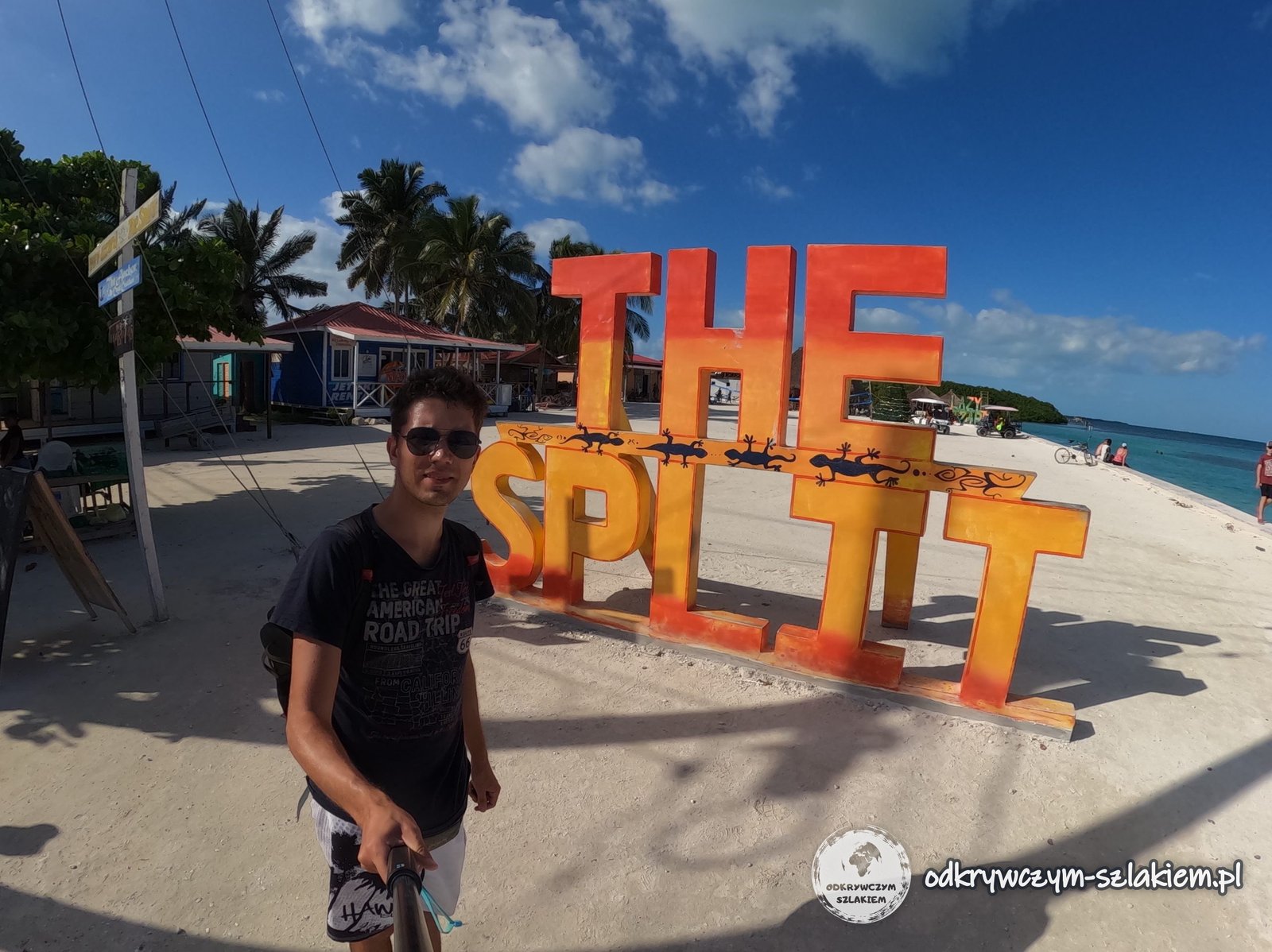
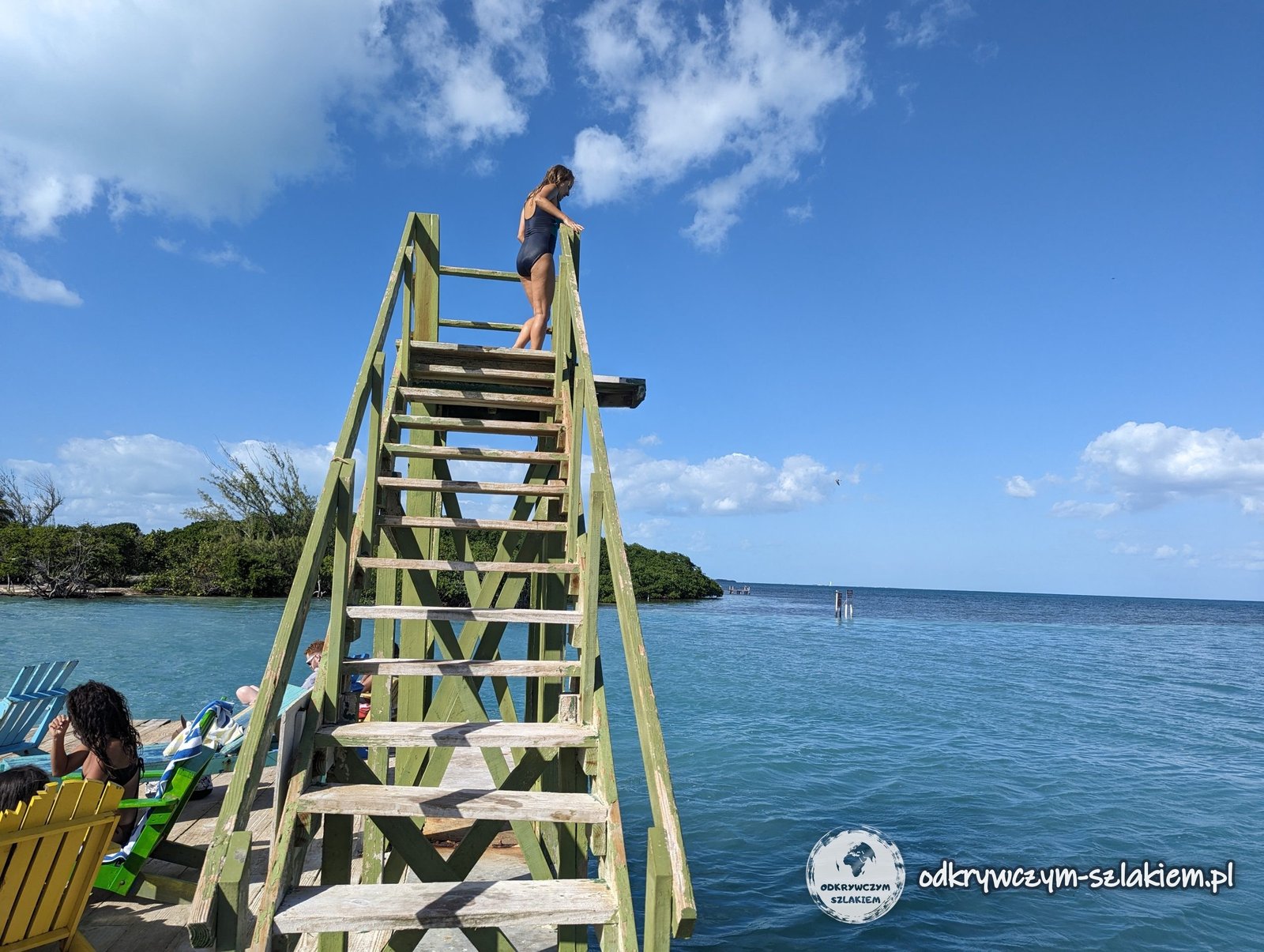
The hurricane itself apparently left only a shallow passage a few inches deep. According to the village council chairman of the time, the islanders deepened it by hand to give boats a shortcut, and the currents have kept widening the channel year after year ever since.

From the island’s small post office we sent a postcard to Poland. Near the beach there is also a small cemetery with graves in the shade of palm trees.


On 20 December we took a water taxi to Belize City and from there a shuttle bus across the whole country to Flores in Guatemala. On the way we passed old American school buses, which serve as intercity buses in Belize.

The best time to visit Belize is the dry season – roughly from December to April. From June to November there is more rain and it is hurricane season.
Belize in a nutshell
- Our stay in Belize lasted from 14 to 20 December 2023 (we were on the islands from 15 December).
- Weather on the islands over Christmas: max. about 26°C and quite a lot of wind.
- When leaving the country we paid a departure fee – 40 BZD / about €18. Then we headed on to Flores in Guatemala.
- The official language is English.
- The country has only about 450,000 inhabitants, and its area is just under 23,000 km².
- Prices and amounts are as of December 2023 (the time of our visit).