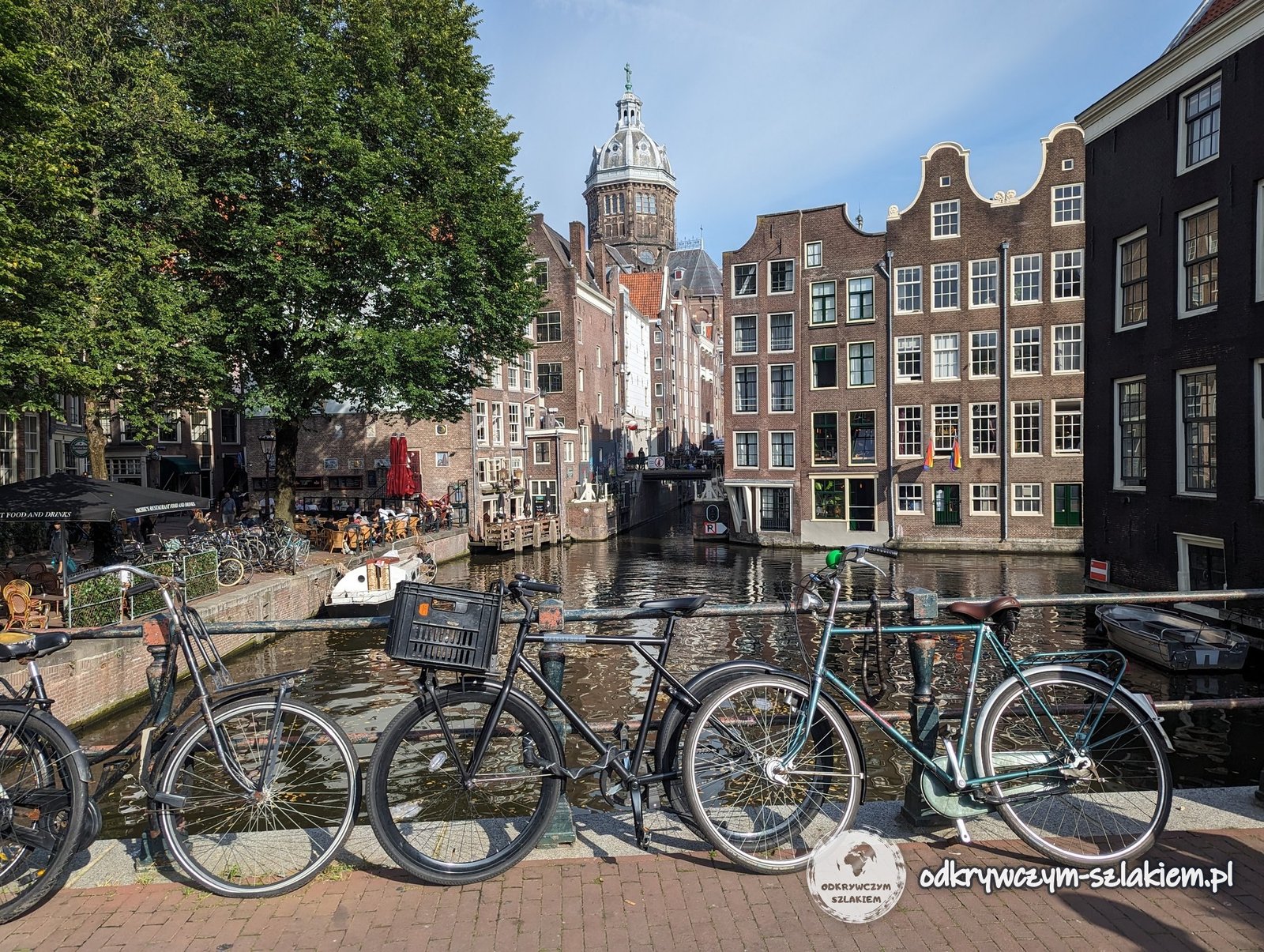
Amsterdam was the first stop of my trip across Latin America. We had a direct flight from Amsterdam to Mexico City, and we got to Amsterdam itself by minibus. The flight left in the evening, so on 10 October 2023 we had one day for a walk around the centre: from Centraal station and the IJ waterfront, through Dam Square and the canals, the Jordaan and Zeedijk, all the way to Schiphol airport. I describe the route step by step, and at the end I have put together practical tips for anyone who also has just a few hours in Amsterdam.
Table of contents
- Arrival and luggage storage
- Centraal station and the IJ waterfront
- Damrak, Dam Square and the Royal Palace
- Canals, bridges and bikes
- The Jordaan
- Zeedijk, He Hua Temple and St Nicholas Basilica
- Schiphol airport and the flight to Mexico
- Practical information and a one-day plan
Arrival and luggage storage
We travelled to Amsterdam by minibus from Szczecin via Berlin airport. It came out cheaper than connecting flights, and the flight from Amsterdam to Mexico City was direct. We arrived early in the morning with big backpacks packed for several months on the road.
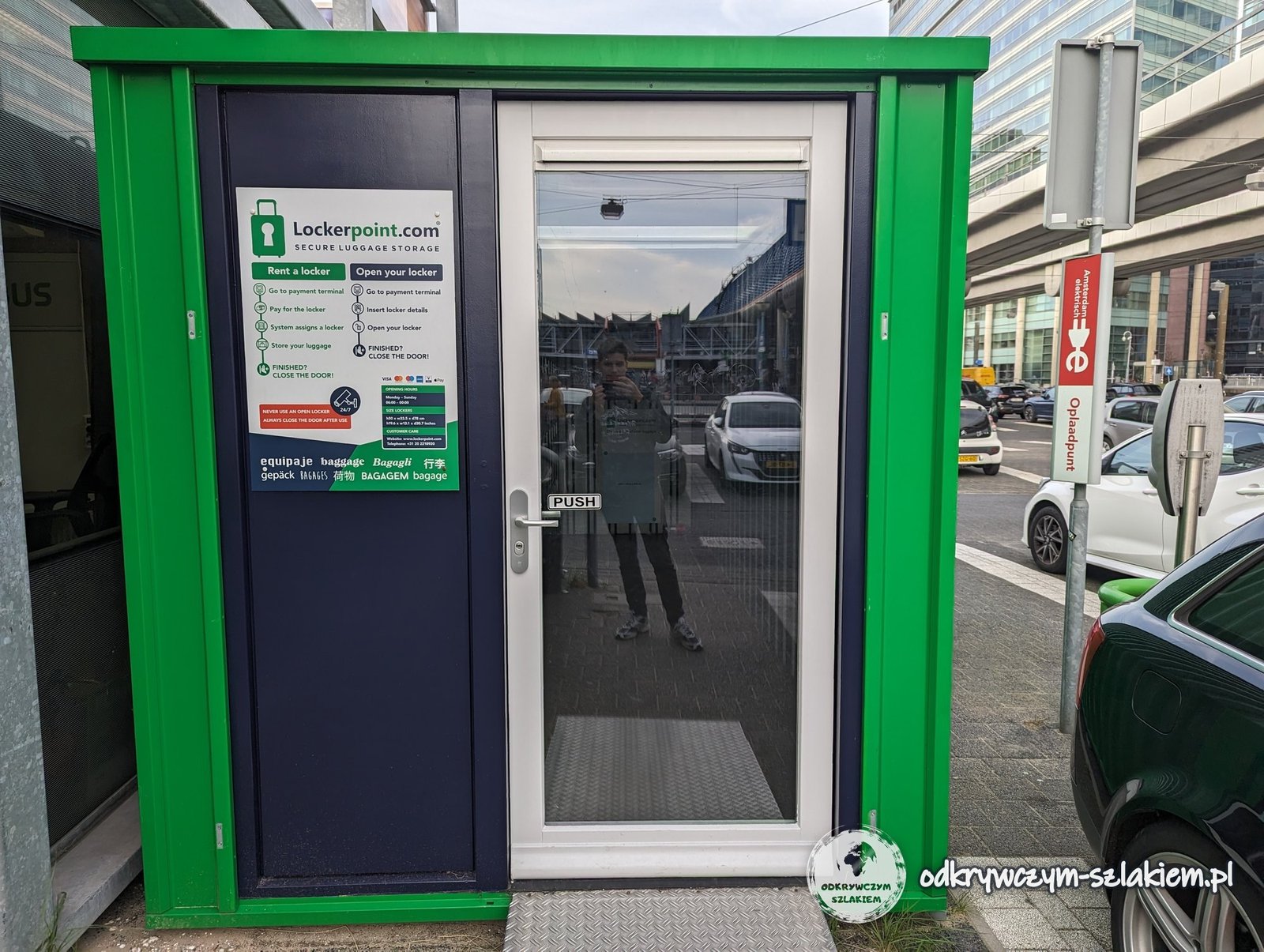
You can’t sightsee comfortably with luggage like that, so we left the backpacks in a self-service Lockerpoint storage. The lockers open with a code, and there is a measuring board at the entrance to check whether your bag will fit. In the afternoon we collected the backpacks and went to the airport.
Centraal station and the IJ waterfront
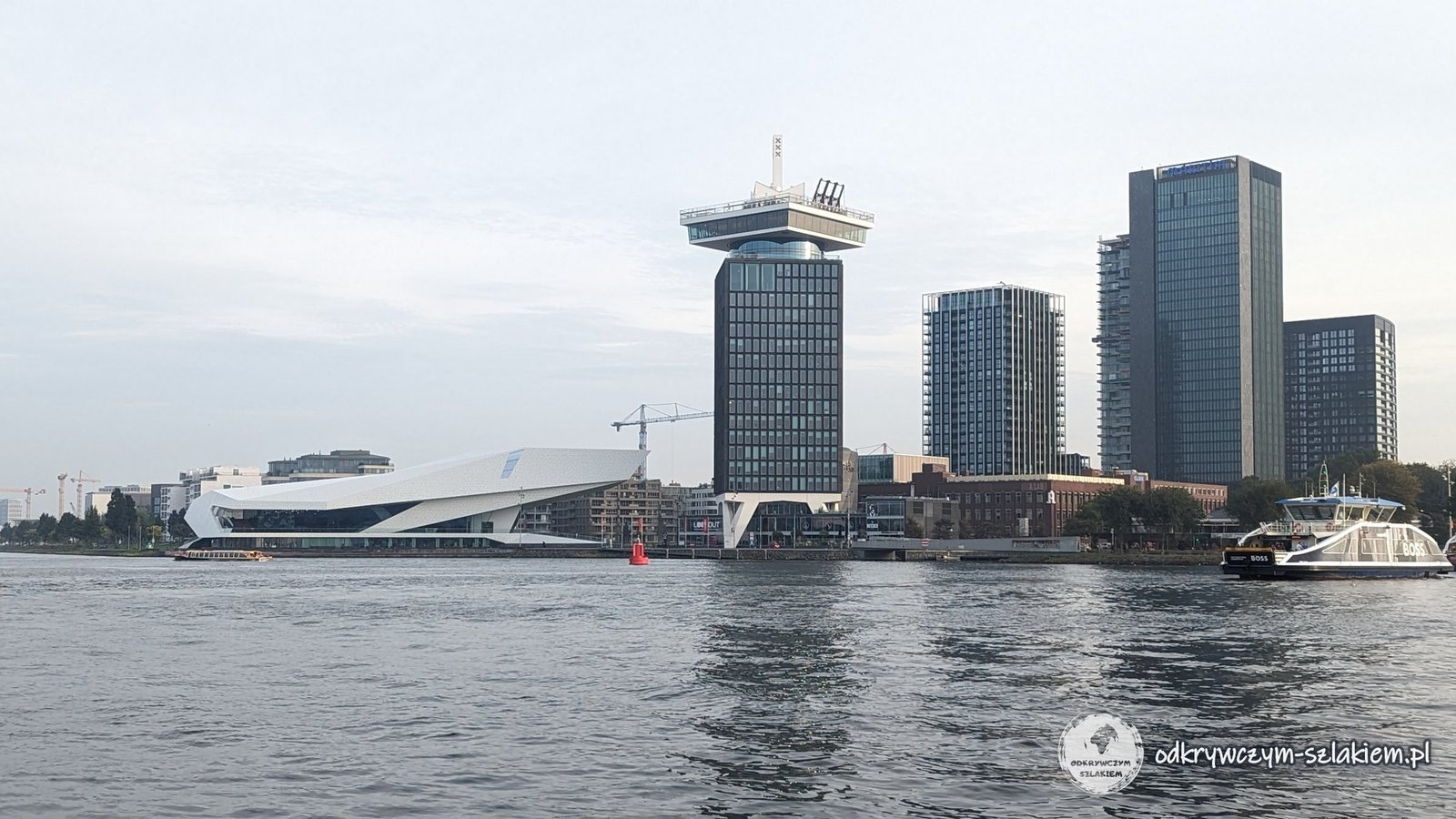
We started the walk in the morning on the waterfront behind the station, by the wide IJ. On the other side stand two landmark buildings of the Noord district: the white, angular EYE Filmmuseum (opened in 2012) and the A’DAM Toren – a former Shell office tower with a rooftop viewing deck. Free ferries cross to the other bank from here.
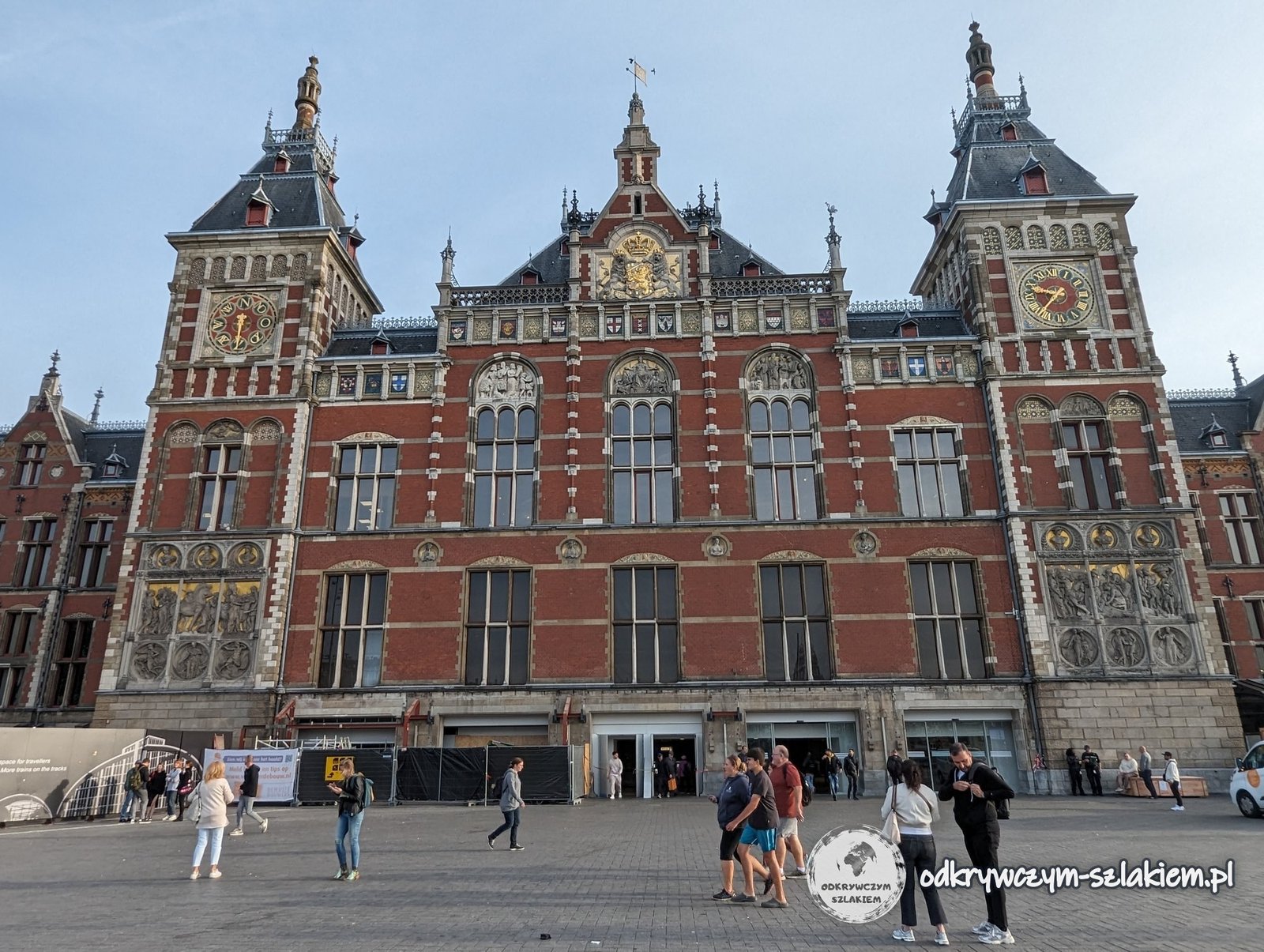
Amsterdam Centraal opened in 1889. The brick station with two towers was designed by Pierre Cuypers, who also designed the Rijksmuseum. The building stands on artificial islands in the IJ, resting on thousands of wooden piles.
Damrak begins in front of the station, and across the water you can see the dome and towers of St Nicholas Basilica. Most canal cruise boats also leave from here.
Damrak, Dam Square and the Royal Palace
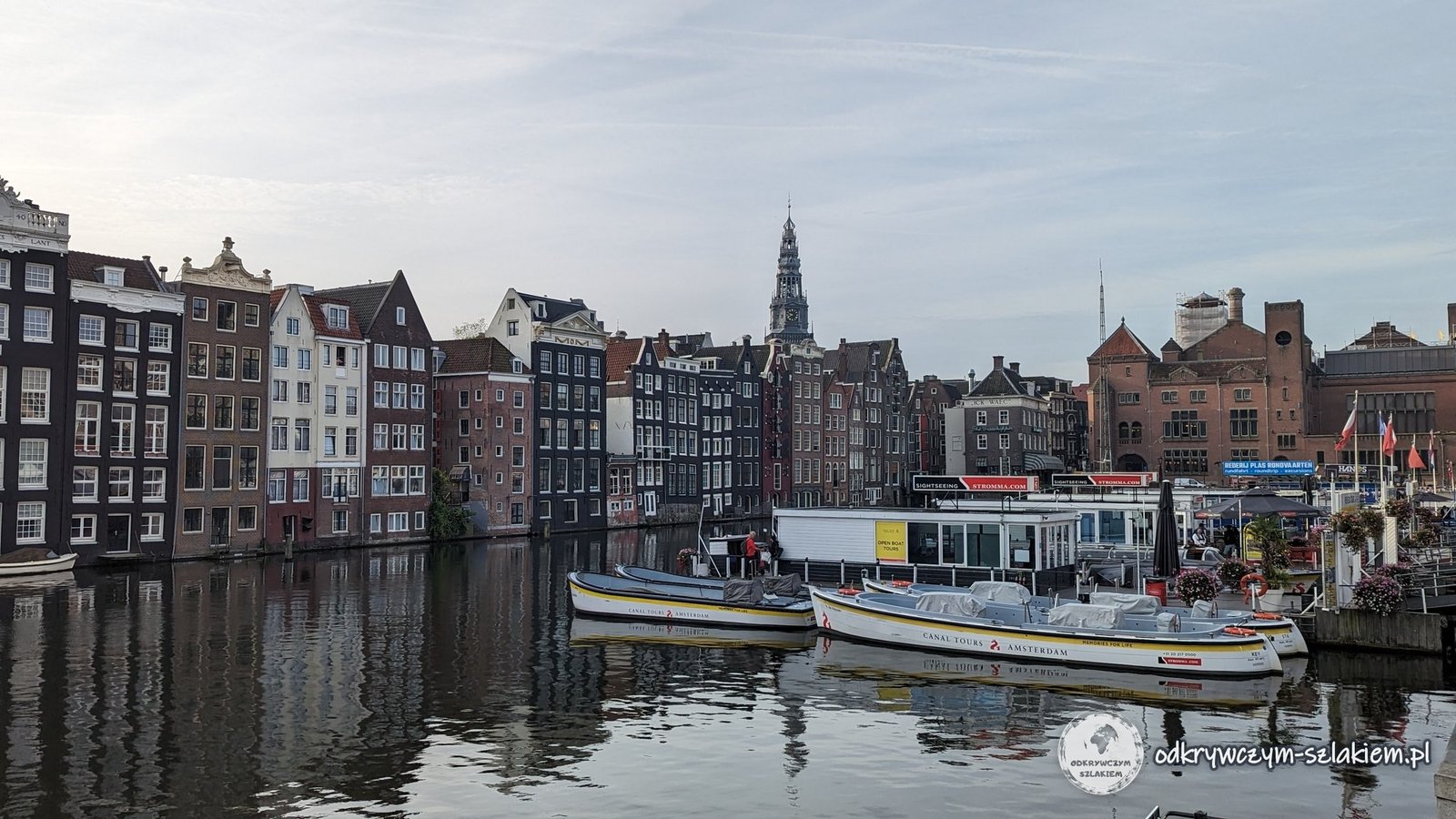
Damrak is the main street leading from the station to Dam Square. Along the harbour basin on its east side stand narrow, slightly leaning 17th- and 18th-century houses – one of the most photographed views in Amsterdam.
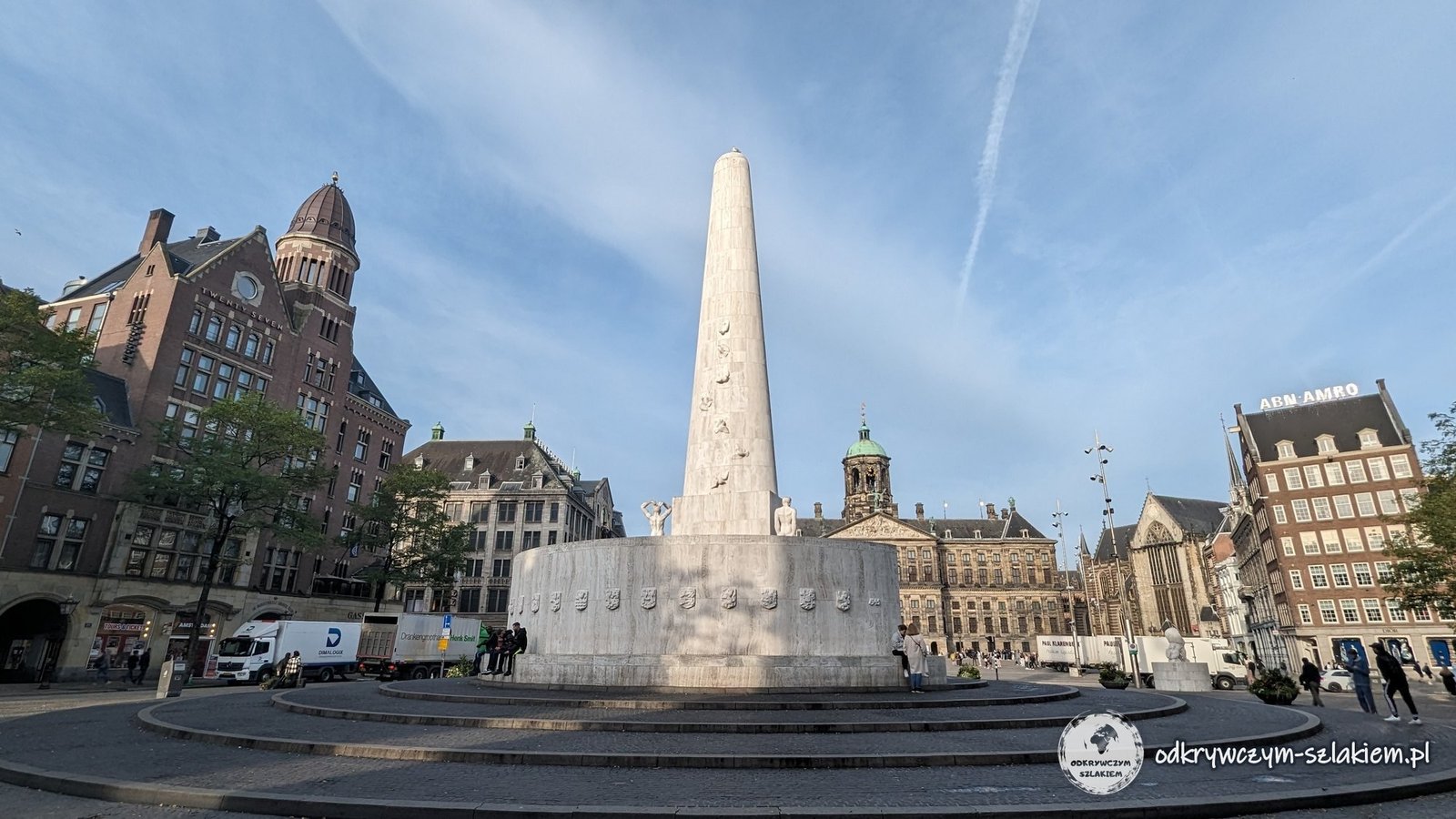
Dam Square is the historic heart of the city – in the 13th century a dam was built here on the Amstel river, which gave Amsterdam its name. The square is home to the National Monument – a 22-metre white obelisk unveiled in 1956 in memory of the victims of the Second World War. Every year on 4 May the main Remembrance Day ceremony takes place here.
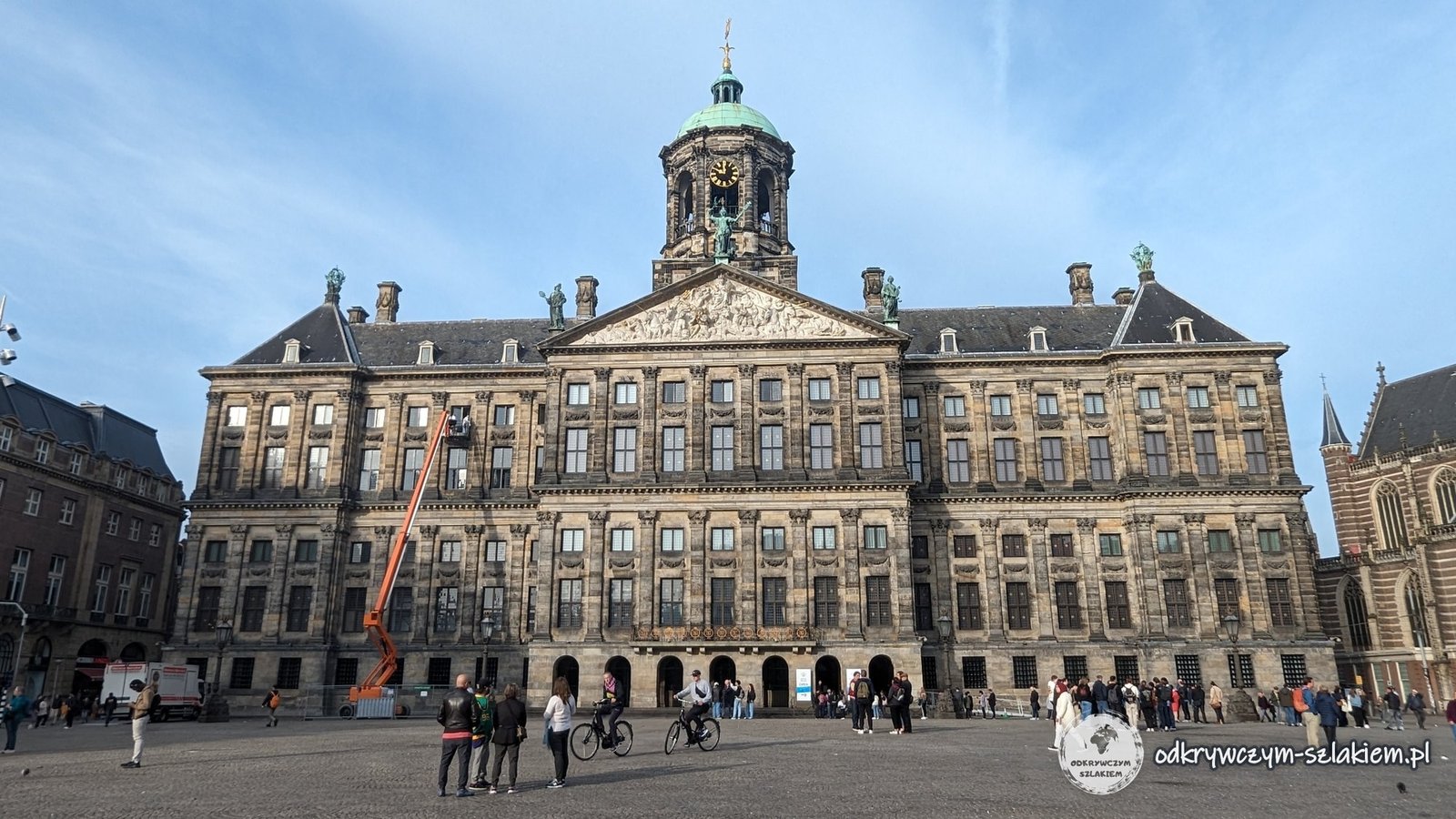
Opposite stands the Royal Palace (Koninklijk Paleis). It was built in 1648–1665 as the city hall, designed by Jacob van Campen. It has been a royal palace since 1808, when Louis Bonaparte moved in. Next to the palace is the New Church (Nieuwe Kerk), where Dutch monarchs are inaugurated.
The narrow lanes around the square lead to the canals. In the first photo below – one of the small canals in the centre, in the second – the tower of the New Church seen from a lane behind the palace.

Canals, bridges and bikes
The semicircular canal ring (Grachtengordel) was dug in the 17th century. Its three main canals are the Herengracht, Keizersgracht and Prinsengracht, and in 2010 the whole ring was added to the UNESCO list. Amsterdam has more than 100 km of canals and about 1,500 bridges.

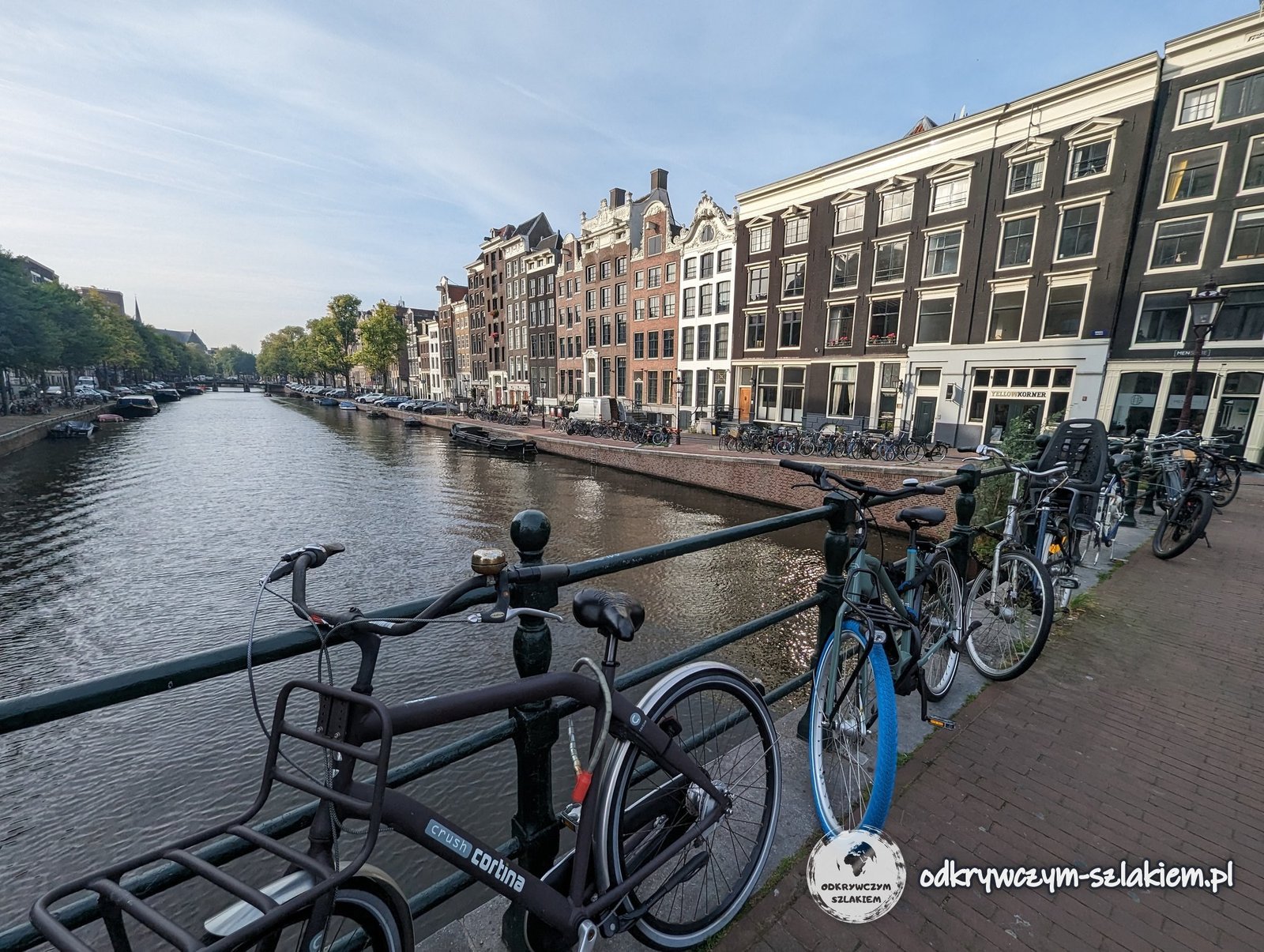
Bikes are everywhere – locked to the railings of every bridge and parked in long rows along the water. The city has more bikes than inhabitants, and the cycle paths have their own traffic lights. When crossing a street, watch out for cyclists more than for cars.
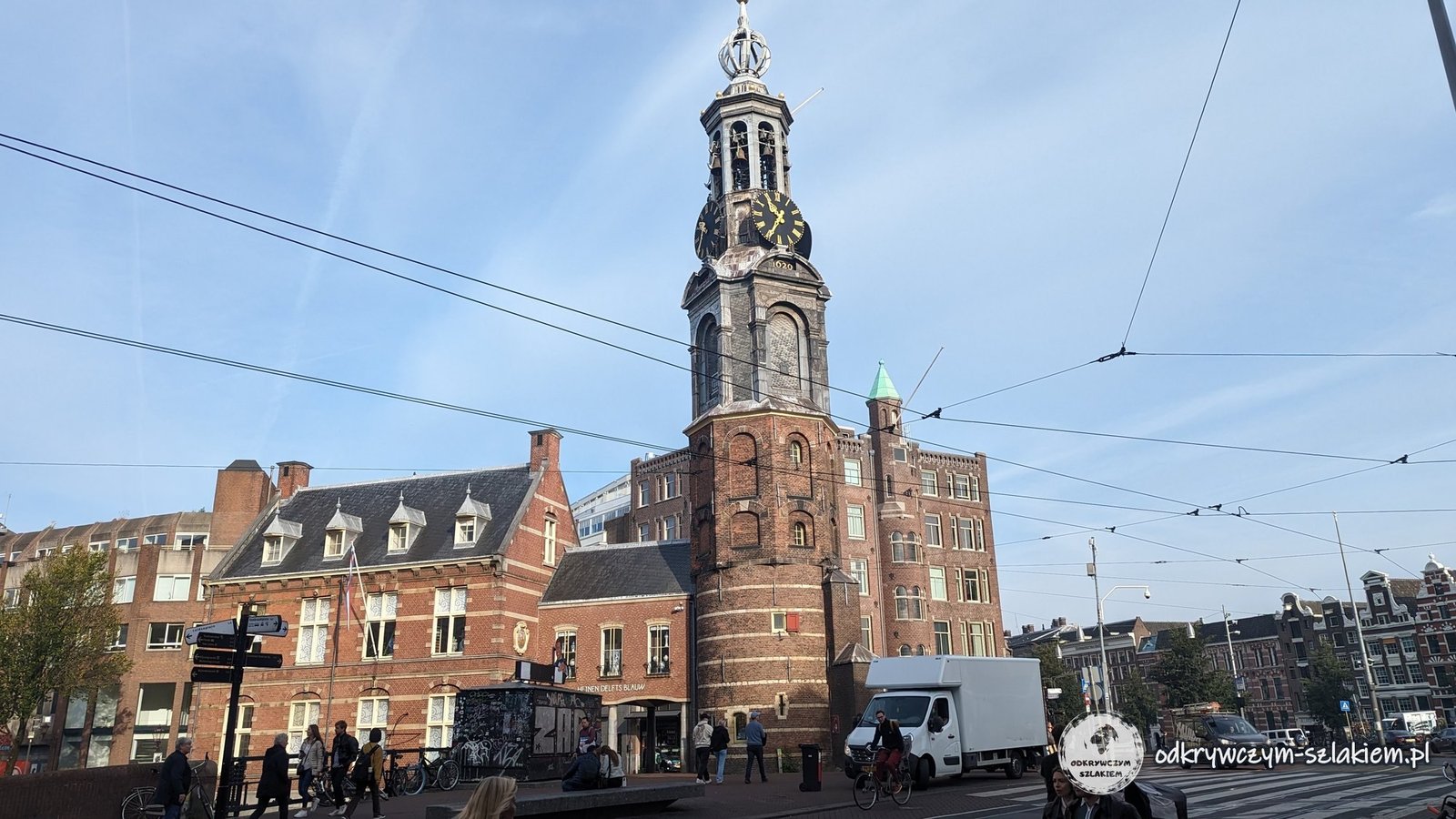
Above Muntplein rises the Munttoren – a tower with the remains of a medieval city gate. The upper part with the clock and carillon was added in 1620 to a design by Hendrick de Keyser. Its name (“Mint Tower”) dates from the 17th century, when coins were briefly struck here.
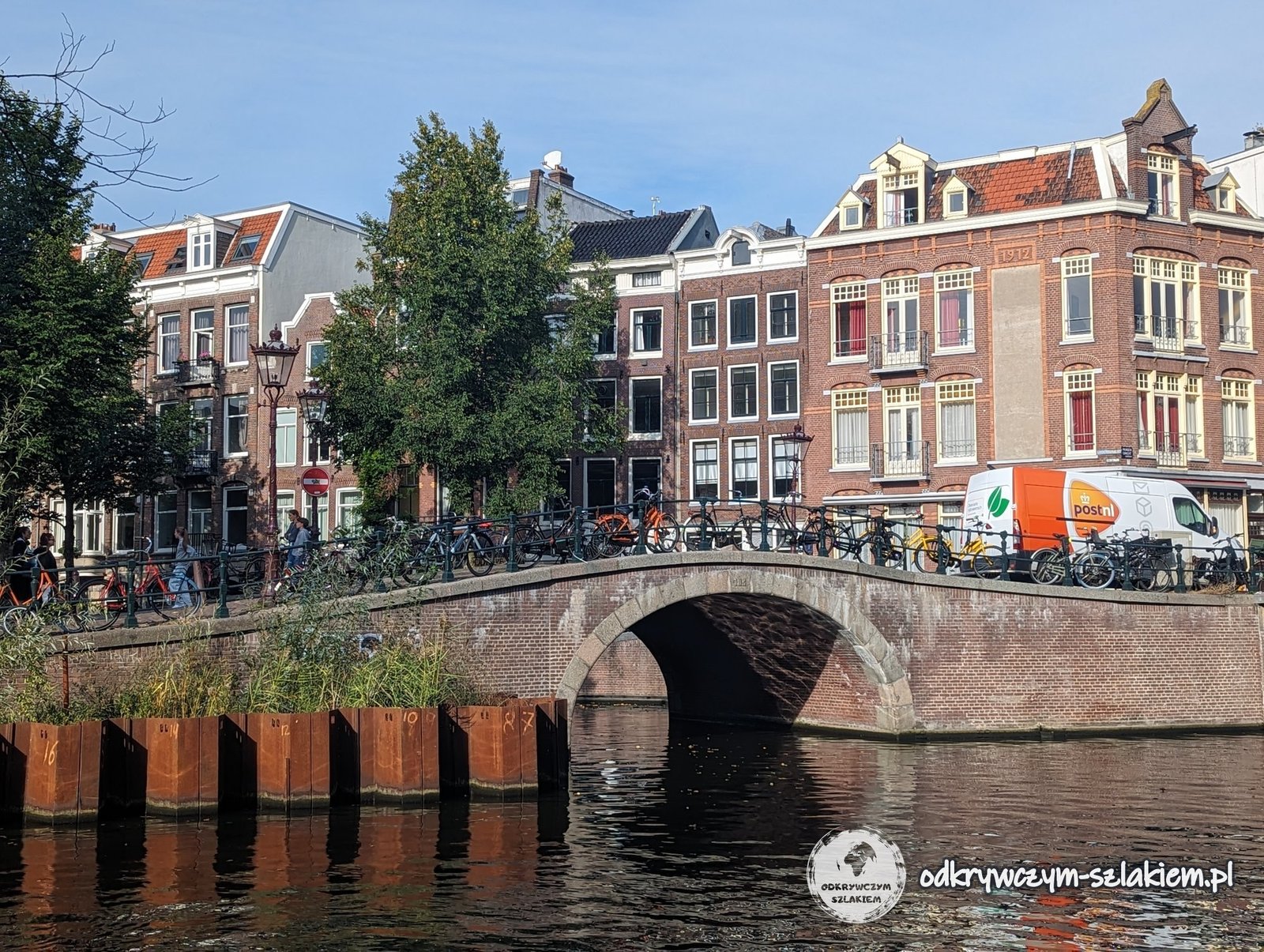
From there we walked along the canals towards the Jordaan. Arched brick bridges, gabled houses and boats moored along the quays look similar at every turn, yet each canal has a slightly different feel.
The Jordaan
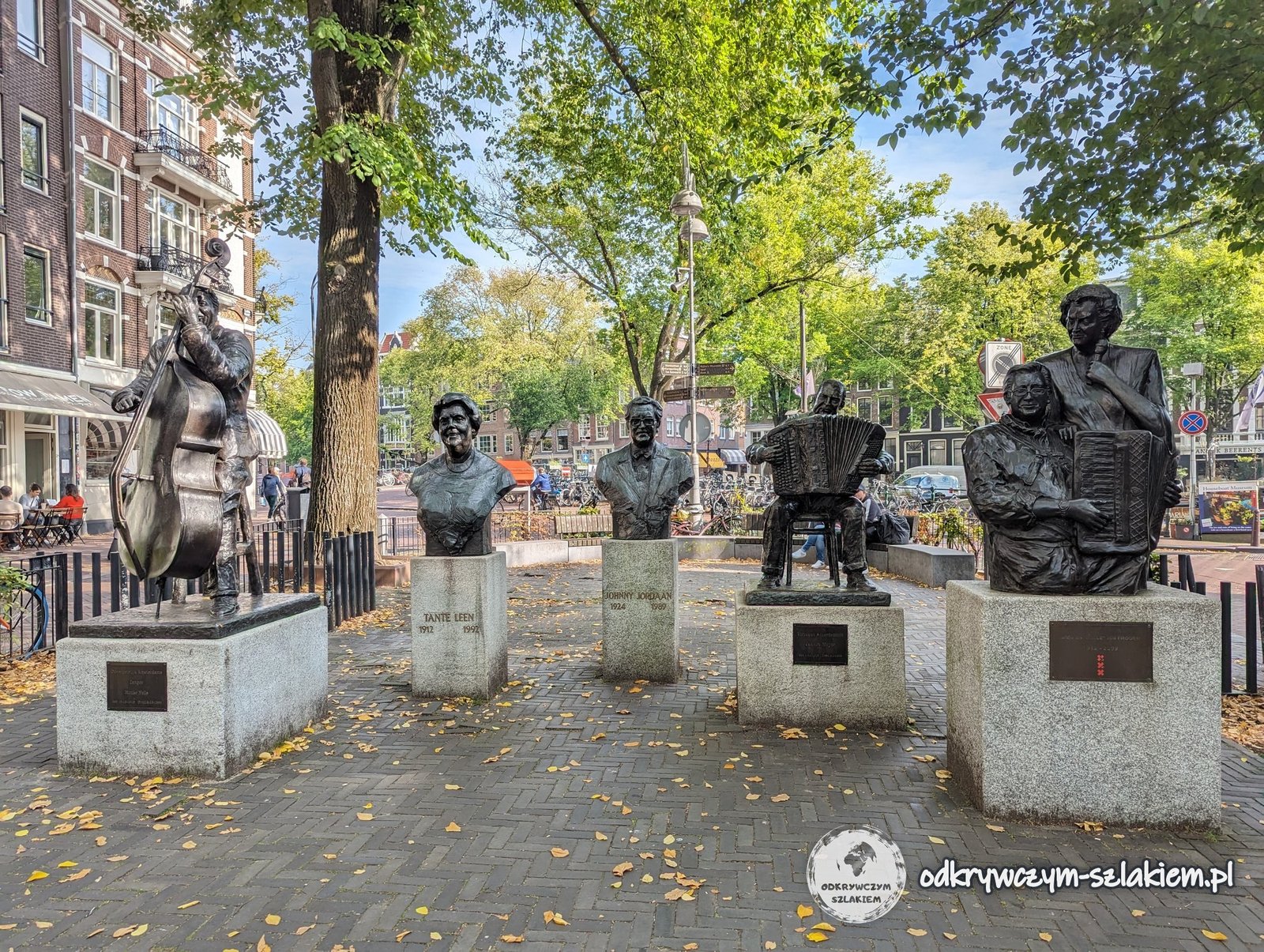
The Jordaan is a former working-class district west of the canal ring and today one of the trendiest parts of the city. On the little square Johnny Jordaanplein by the Prinsengracht stand bronze statues of the Jordaan’s folk singers – including Johnny Jordaan and Tante Leen.
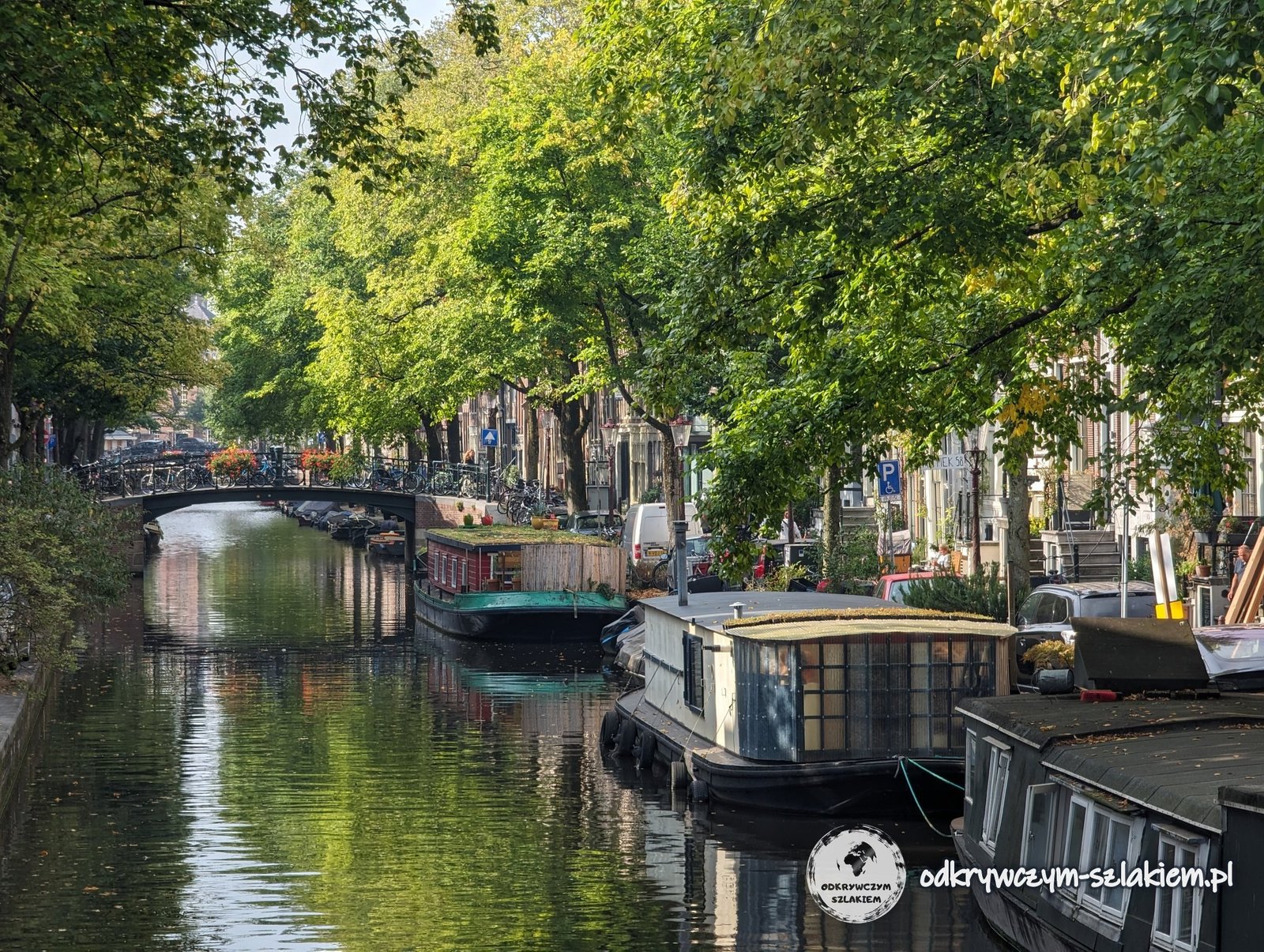
The smaller canals in the Jordaan are quieter than those in the centre. Houseboats are moored along the quays – Amsterdam has about 2,500 of them.
Zeedijk, He Hua Temple and St Nicholas Basilica
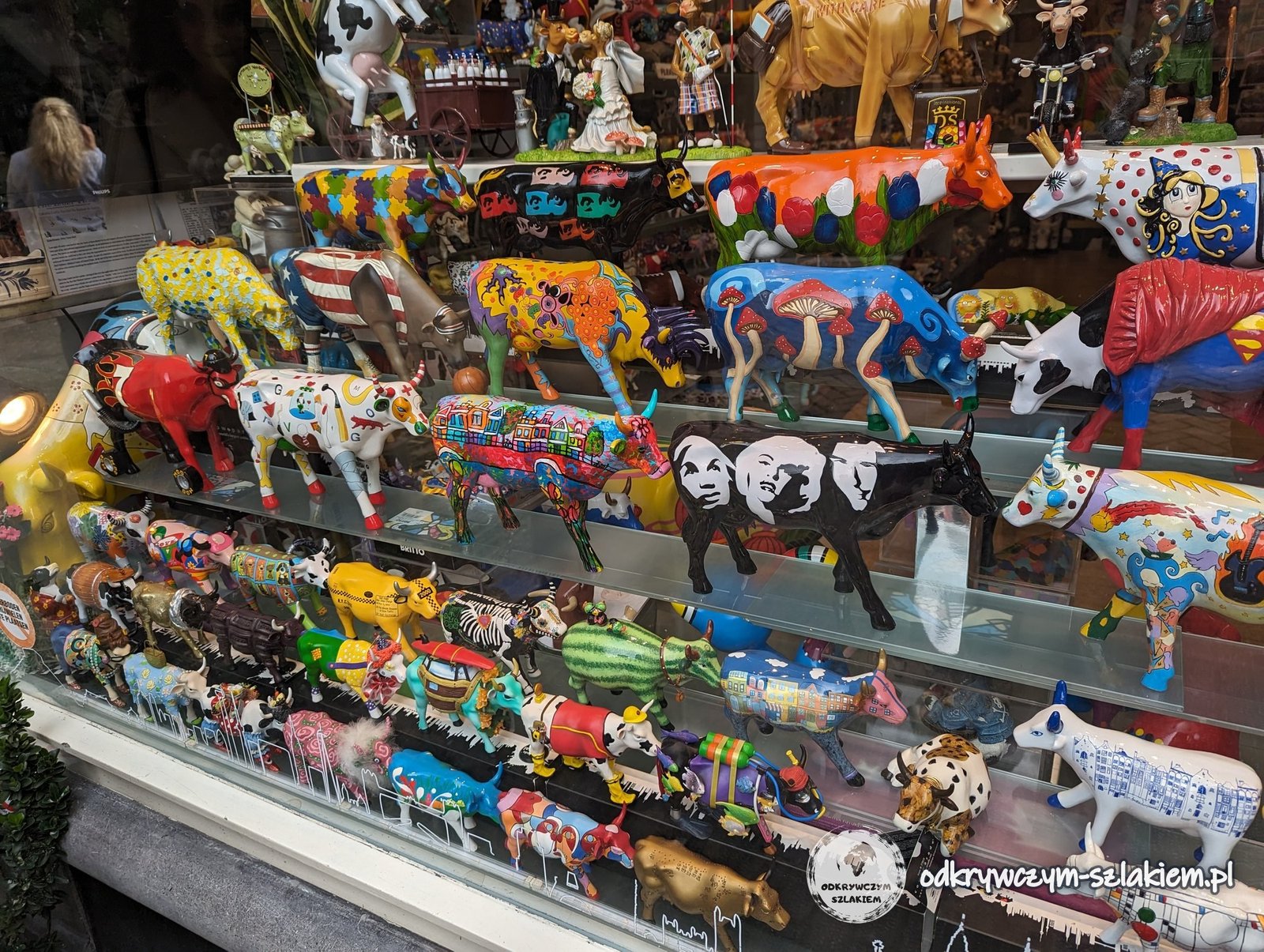
Heading back towards the station, we walked through a centre full of souvenir shops. In the windows – hundreds of rubber ducks in costumes and colourful cow figurines.

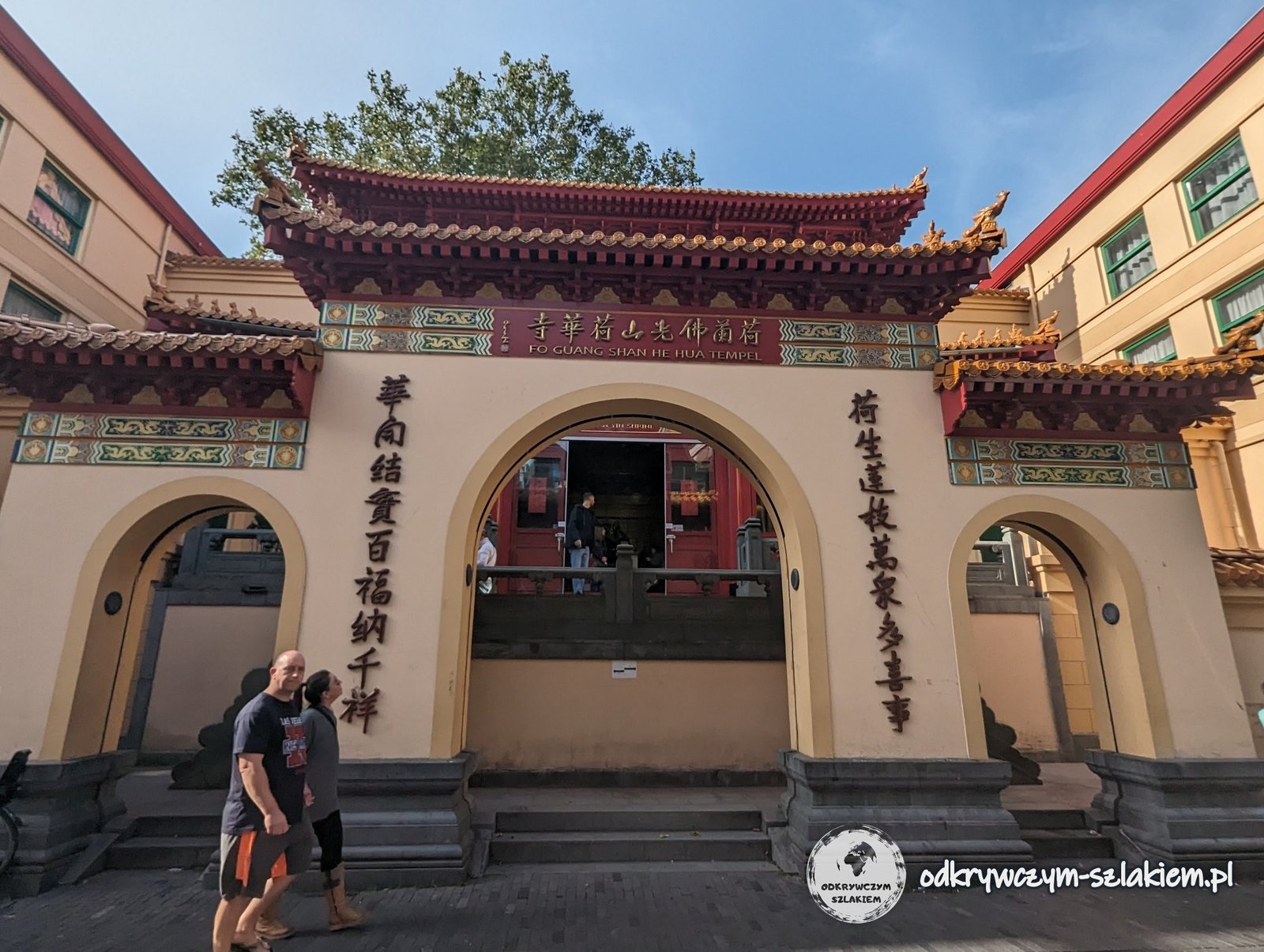
Zeedijk is one of the oldest streets in Amsterdam and the heart of the local Chinatown. It is home to the Buddhist He Hua Temple (Fo Guang Shan), opened in 2000 by Queen Beatrix – the largest Buddhist temple in Europe built in the traditional Chinese palace style.
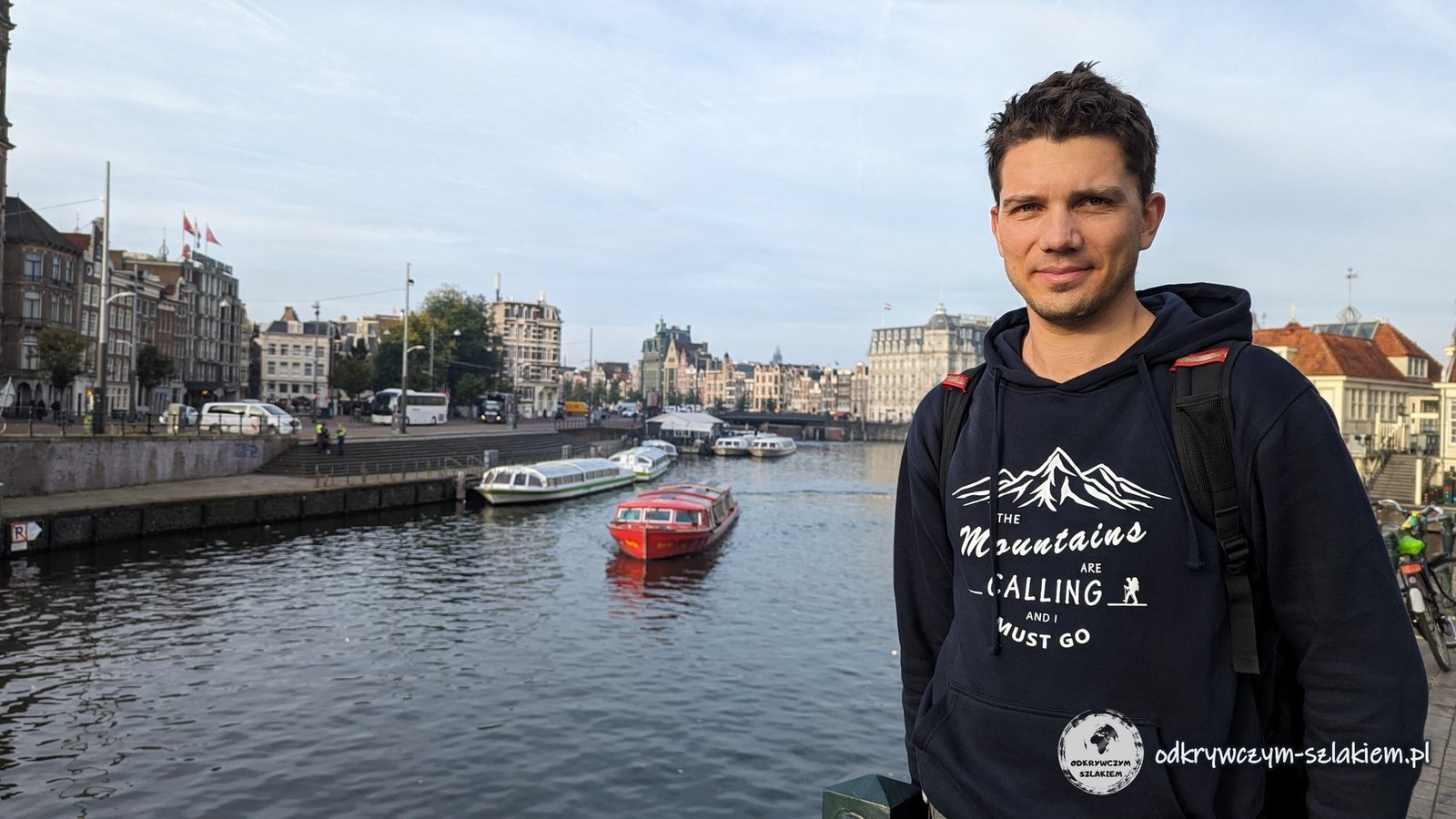
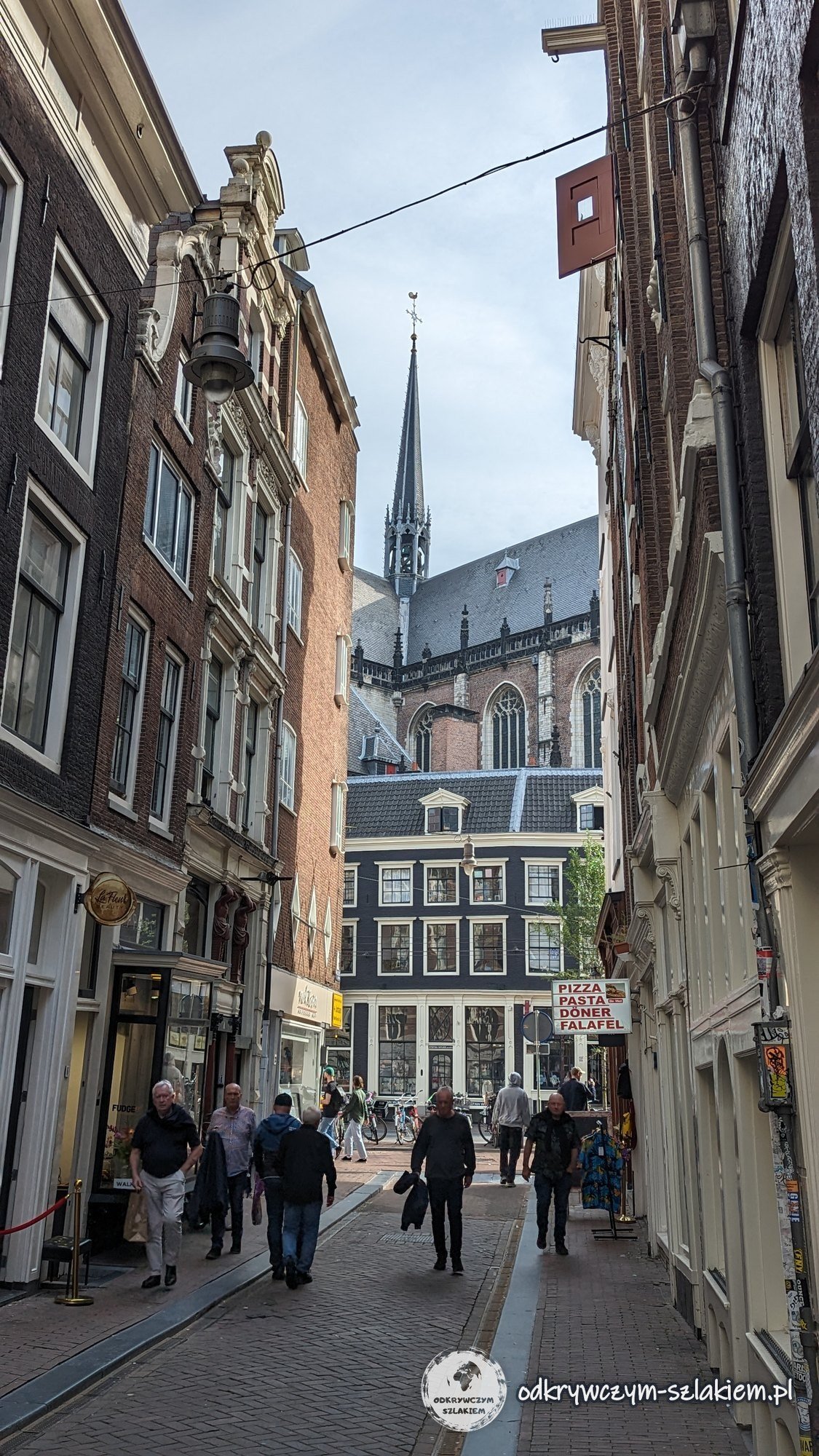
At the end of Zeedijk, by the Oudezijds Voorburgwal canal, there is a spot with a view of the basilica’s dome and colourful bikes on the bridge. I took the first photo in this post from the same place.

St Nicholas Basilica (Sint-Nicolaasbasiliek) opposite the station is the main Catholic church of the old town, consecrated in 1887. The interior with its columns, paintings and stained glass in the choir is dark and calm – completely different from the crowded streets around it.

In the afternoon the sky clouded over. To finish the walk we took one more look at the basilica from the water and went to collect our backpacks.

Schiphol airport and the flight to Mexico
The train from Centraal to Schiphol airport takes about 15 minutes. The station is right under the Schiphol Plaza arrivals and departures hall, so you walk from the platform straight to check-in.
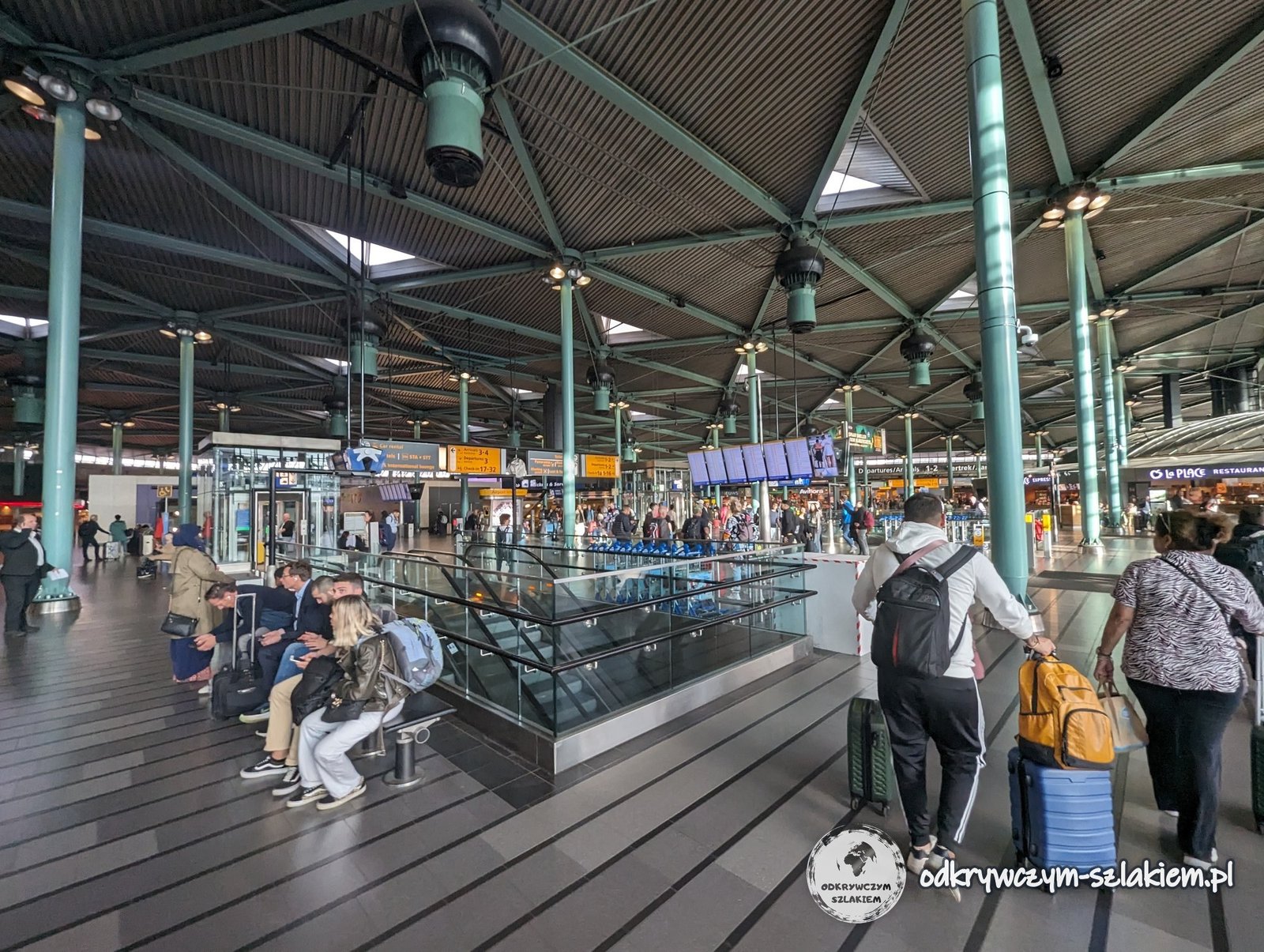
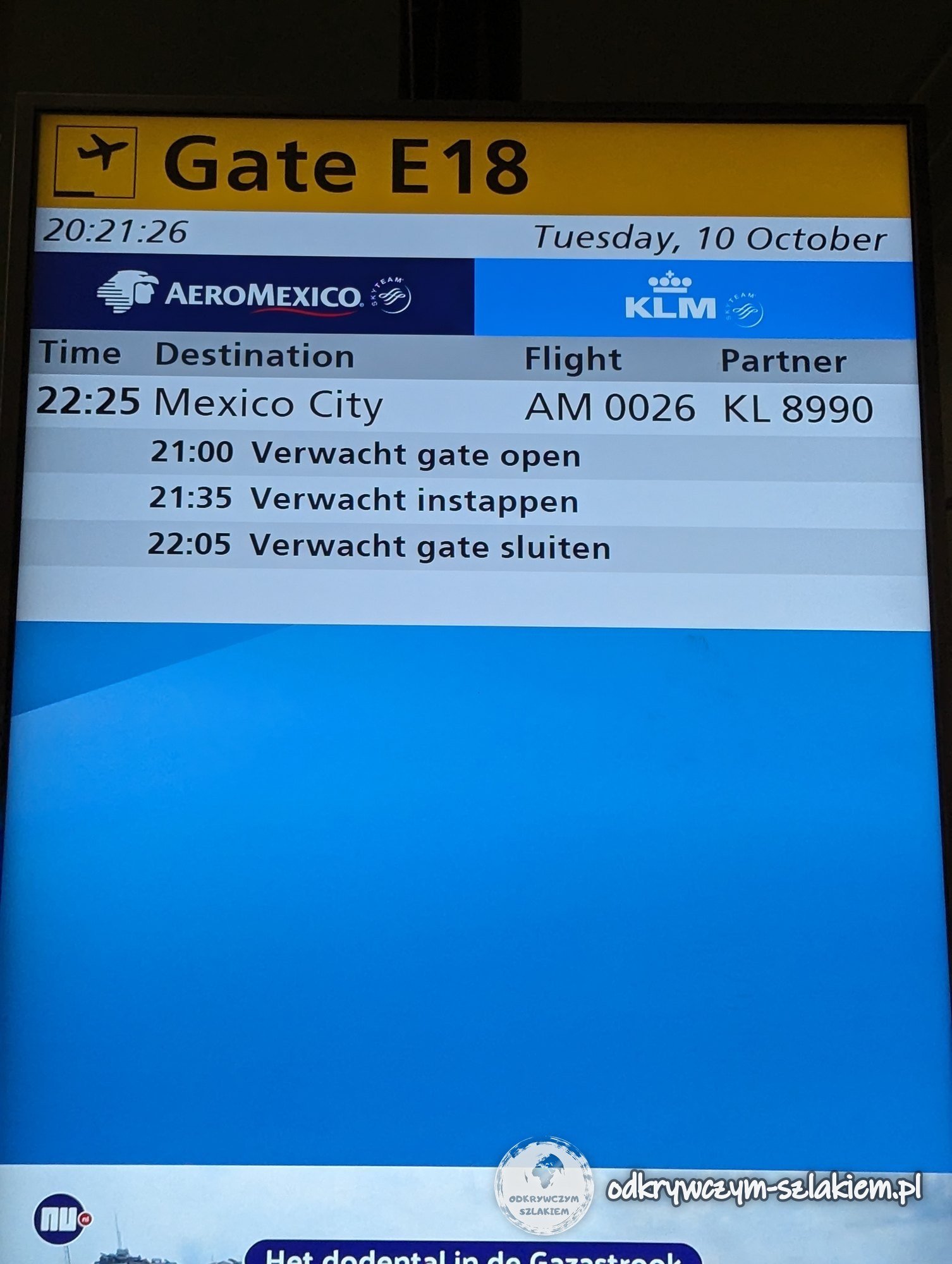
We flew with Aeroméxico (flight AM 26, codeshare with KLM), departing at 22:25. The day before, we had been told about a delay of more than an hour and a half.
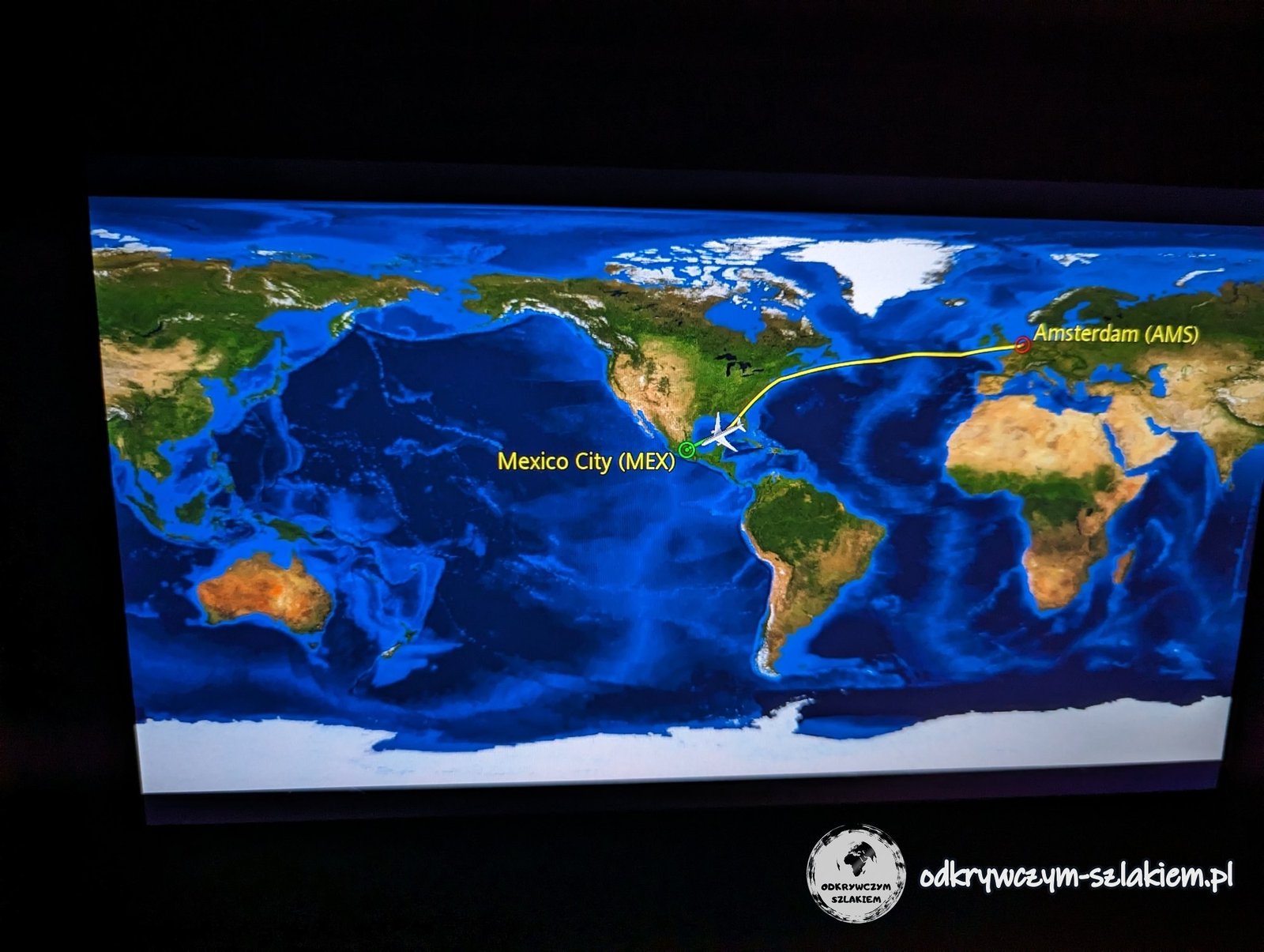
The flight on a Boeing 787-9 Dreamliner took about 11 hours. We landed in Mexico City in the middle of the night, local time, and so began a nine-month journey – I describe its route and costs in the summary of the trip across Latin America, and the first country in the summary of 65 days in Mexico.
Practical information and a one-day plan
- Getting there from Poland: besides flights, coaches and minibuses run to Amsterdam, including overnight ones. If you are flying on from Schiphol, this can be cheaper than connecting flights.
- Luggage: it is worth leaving big backpacks and suitcases in storage – there are lockers at Centraal station and private storage points in the centre. Check the locker size before you go.
- Schiphol: the train from Centraal takes about 15 minutes. For an intercontinental flight, be at the airport about 3 hours before departure.
- Getting around: the whole centre can be explored on foot – from the station to the Munttoren is about 1.5 km. Ferries across the IJ to the Noord district are free.
- Bikes: don’t walk on the red cycle paths and look both ways at every crossing.
- One-day plan: IJ waterfront and Centraal station → Damrak and Dam Square with the Royal Palace → Munttoren → canal ring (Herengracht, Keizersgracht, Prinsengracht) → the Jordaan → Zeedijk and He Hua Temple → St Nicholas Basilica → train to Schiphol.