From 2019 to 2023 I lived in Berlin, and during that time I visited many places that recall the history of the 20th century: Nazi terror, the Holocaust, the Second World War and the division of the city by the Wall. I have described most of them in more detail in other posts; here I have put these memorial sites in Berlin together into one route. For each place there is a short description, the date of my visit and a link to the longer text. The order of the sections is a suggested route: first the places in the centre that you can cover on foot, then the ones you need to reach by S-Bahn or U-Bahn. Admission to all of them is free.
Table of contents
- The Topography of Terror and the ruins of Anhalter Bahnhof
- The site of Hitler’s former bunker
- Memorial to the Murdered Jews of Europe
- By the Reichstag – the Sinti and Roma memorial and the Solidarność plaque
- Soviet War Memorials – Tiergarten and Treptower Park
- Neue Wache – Germany’s Central Memorial
- Bebelplatz – site of the 1933 book burning
- Friedrichstraße station – the Kindertransport memorial
- The Berlin Wall Memorial on Bernauer Straße
- Wittenbergplatz – the “Orte des Schreckens” sign
- Breitscheidplatz – the Memorial Church and the memorial to the attack victims
- House of the Wannsee Conference
- Practical information
The Topography of Terror and the ruins of Anhalter Bahnhof
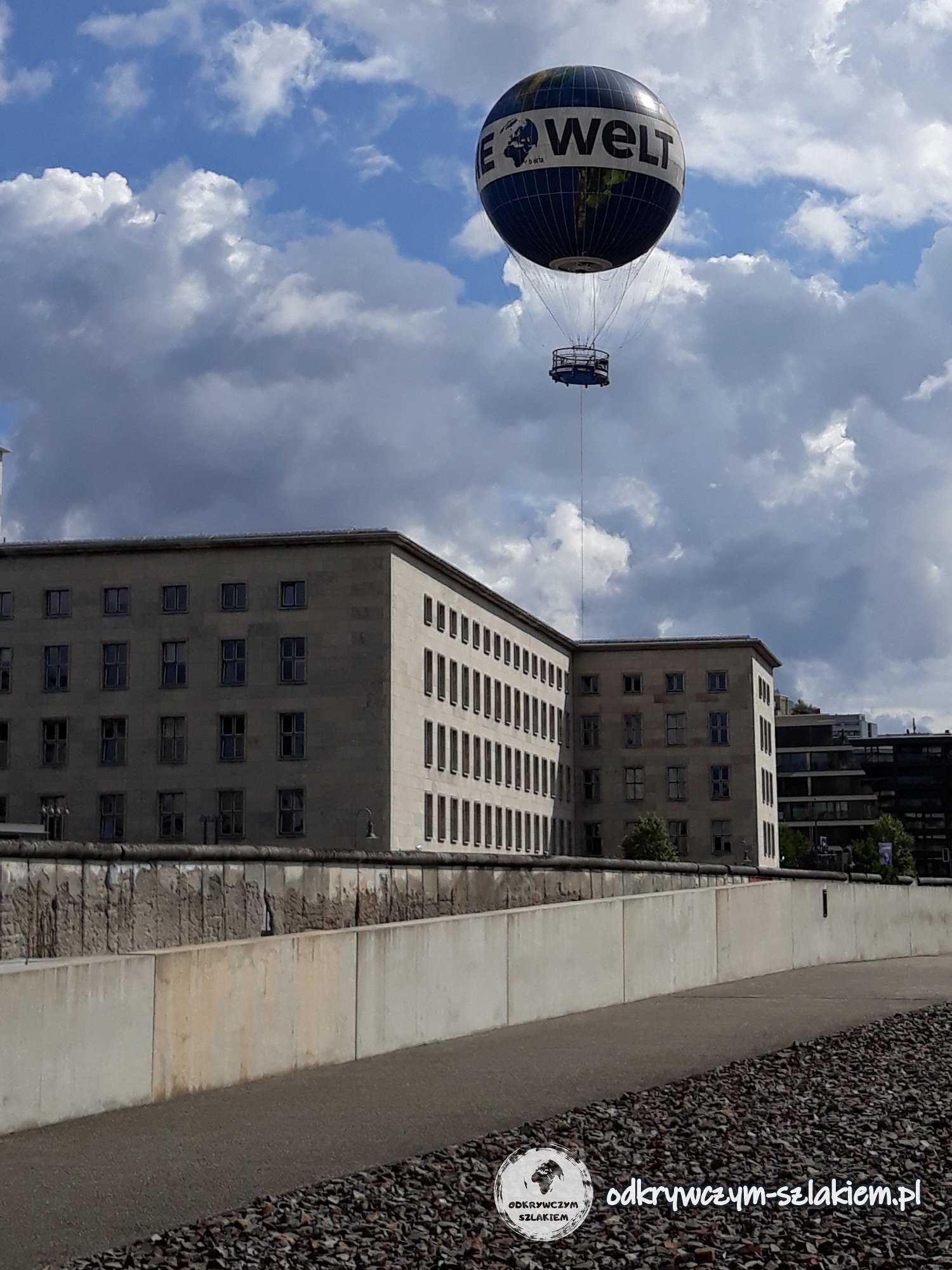
The best place to start the route is the Topography of Terror (Topographie des Terrors) on Niederkirchnerstraße. From 1933 to 1945 this was the site of the headquarters of the Gestapo, the SS leadership and the Reich Security Main Office. Today there is a free documentation centre with an exhibition about Nazi terror. A stretch of the Berlin Wall has survived along the street, and behind it stands the building of the former Reich Aviation Ministry. I was here on 16 July 2020 with my parents.
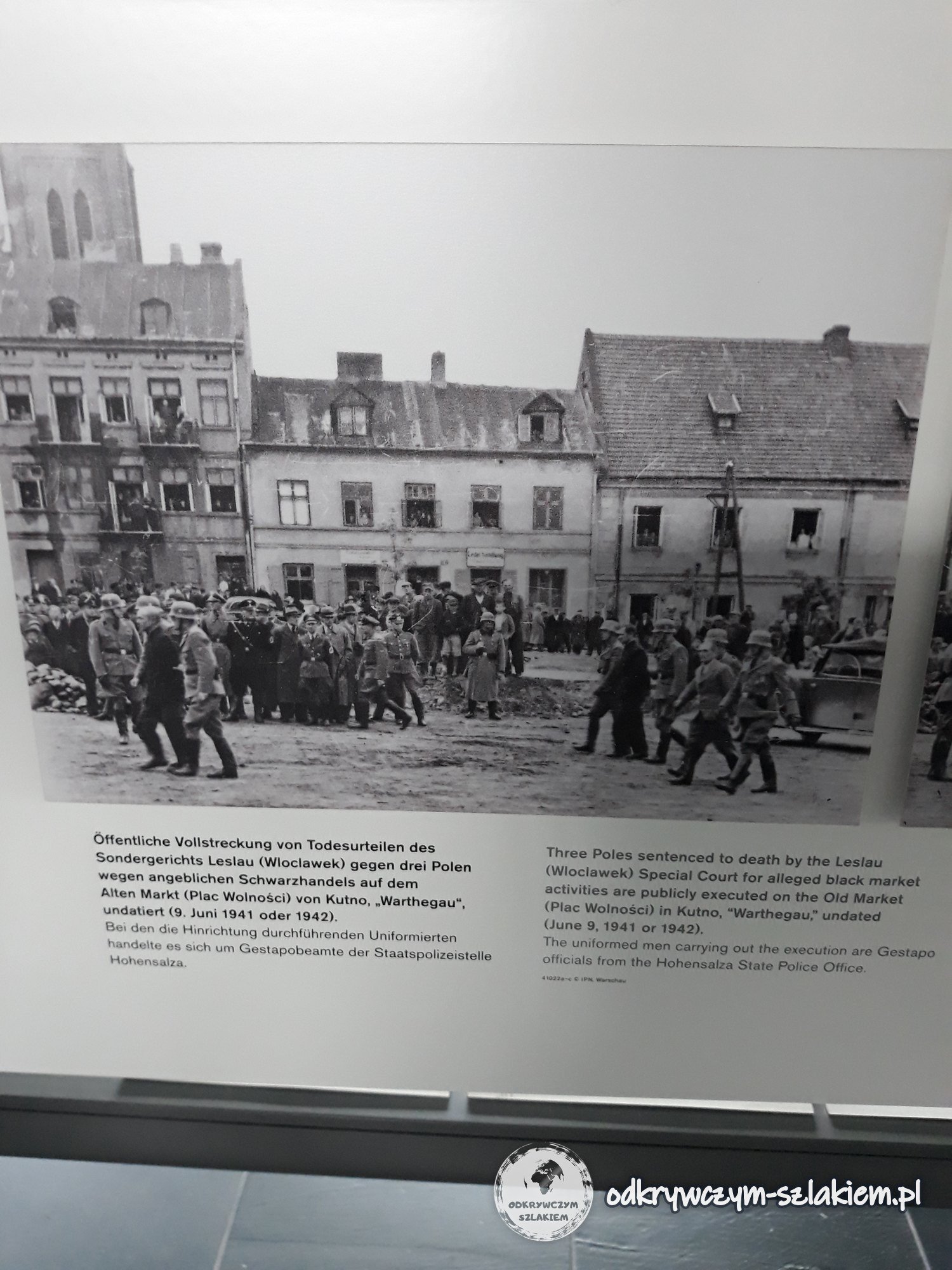
The exhibition has many traces of occupied Poland, including a photo of the public execution of three Poles on the Old Market Square in Kutno in June 1941 or 1942. According to the caption, a special court in Włocławek had sentenced them for alleged black-market trading. I showed a German–Polish notice from the same exhibition in the post Berlin: what to see.
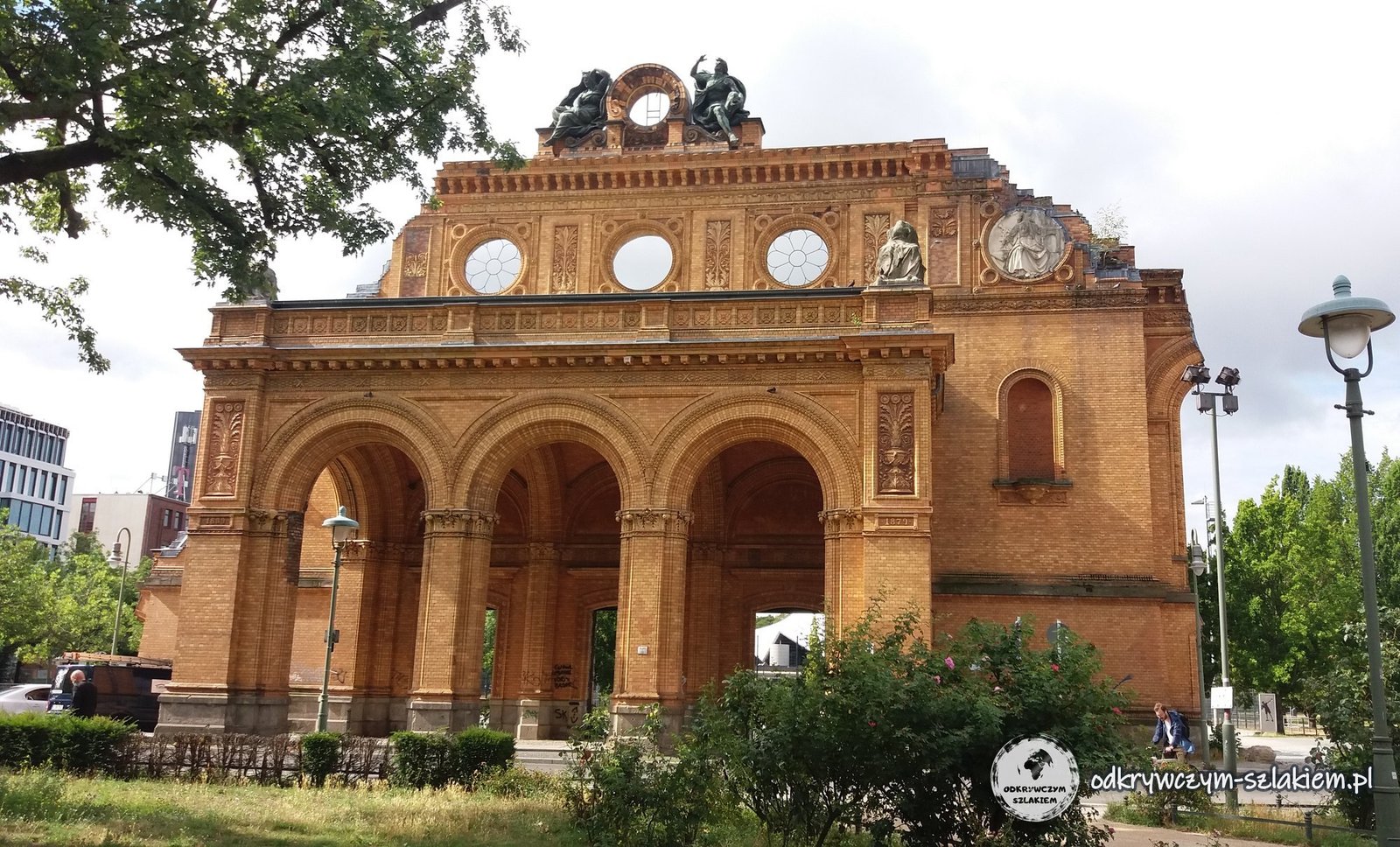
A few hundred metres further on, by the Anhalter Bahnhof S-Bahn station, stand the ruins of the portico of the former railway station. From 1942 to 1945, transports of Berlin Jews, mostly elderly people, left from here for the ghetto in Theresienstadt (Terezín). The station was destroyed by bombing and demolished after the war – only a fragment of the façade remains. I took the photo on the morning of the same day.
The site of Hitler’s former bunker
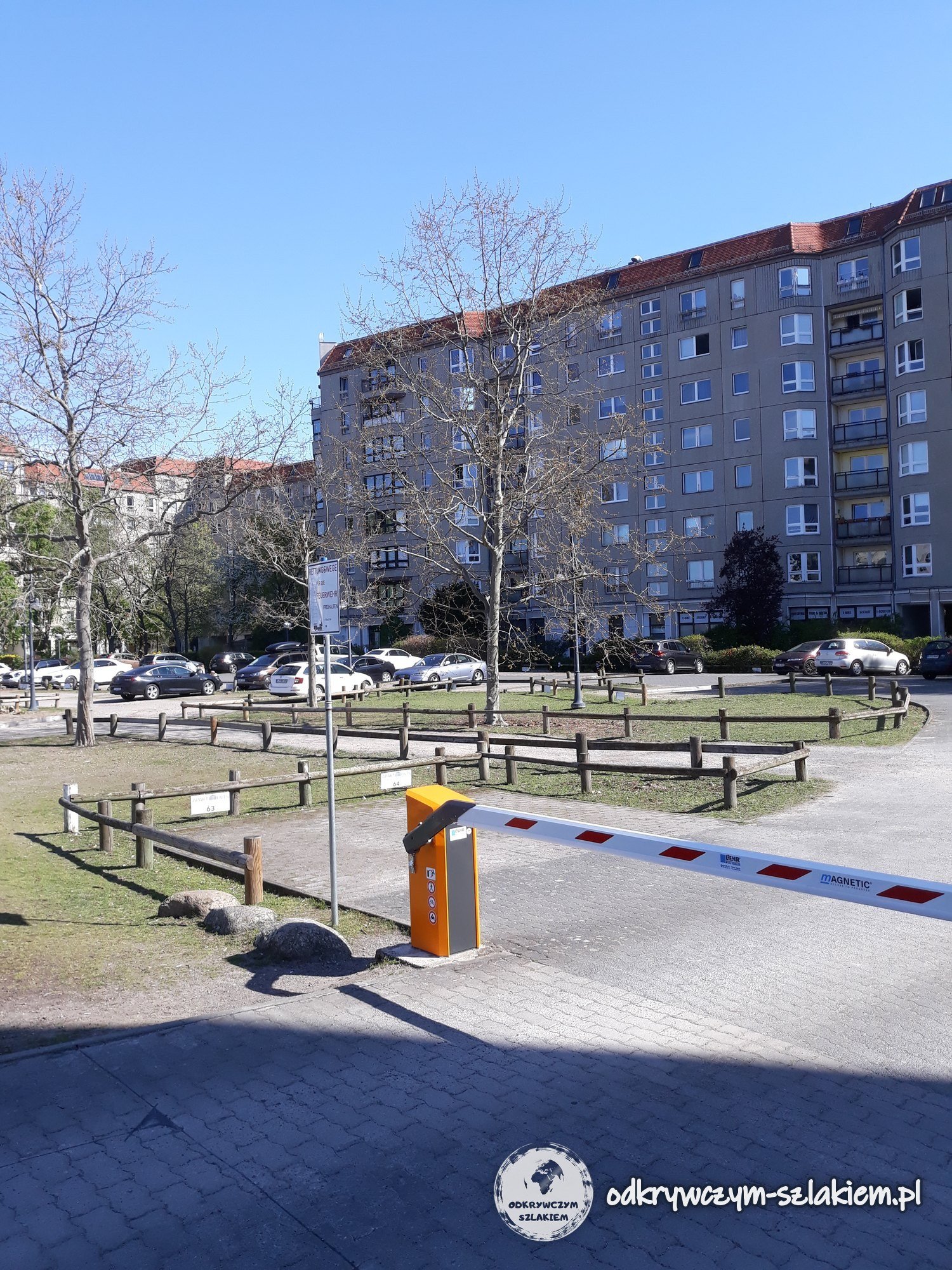
From the Topography of Terror you walk north along Wilhelmstraße, where the ministries and the Reich Chancellery once stood. On In den Ministergärten, between blocks of flats from the GDR era, there is an ordinary car park. Beneath this area was the Führerbunker, where Hitler committed suicide on 30 April 1945. The only reminder is an information board with a plan of the bunkers. I was here in April and in August 2022, and I showed the board in the post Berlin: what to see.
Memorial to the Murdered Jews of Europe
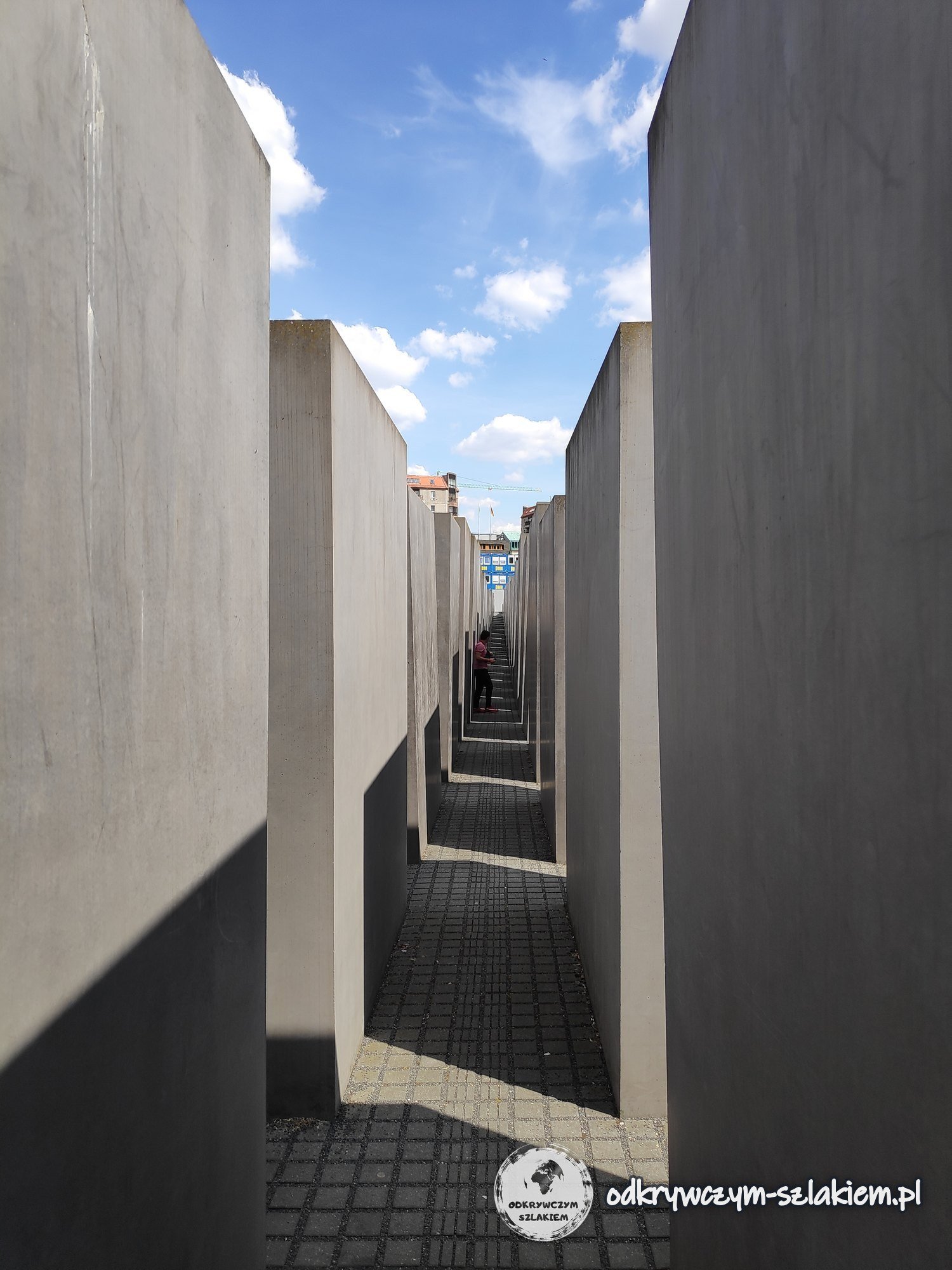
A few minutes further on, between Potsdamer Platz and the Brandenburg Gate, lies the Memorial to the Murdered Jews of Europe. It consists of 2,711 concrete blocks of different heights on undulating ground, with narrow paths running between them. The memorial was designed by Peter Eisenman and opened in 2005; beneath the field of blocks there is an information centre with an exhibition. I have been here many times, including in July 2019 and in August 2022. I write more about the area around the Gate in the post Berlin: what to see.
By the Reichstag – the Sinti and Roma memorial and the Solidarność plaque
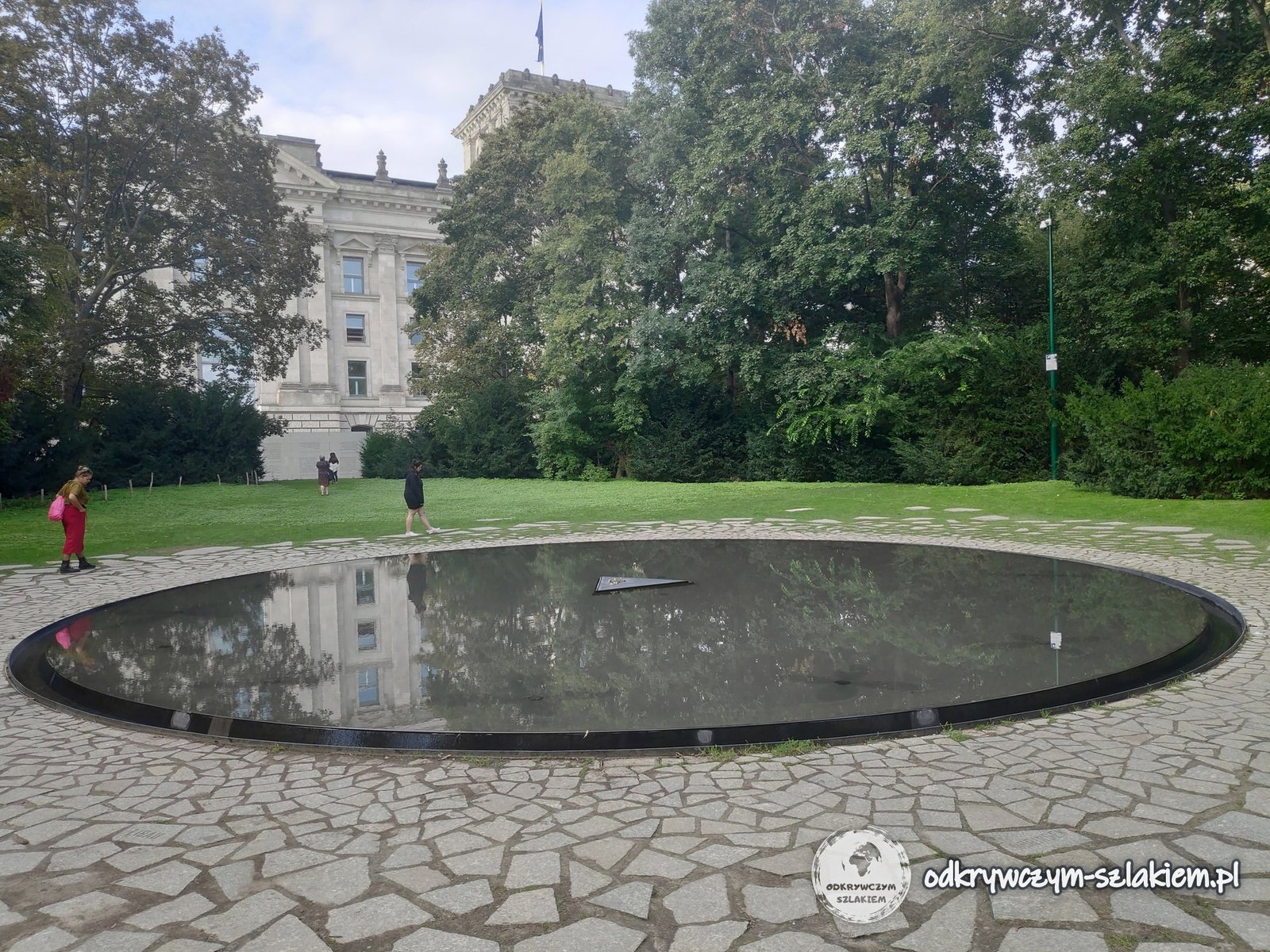
On the other side of the Brandenburg Gate, in the Tiergarten right next to the Reichstag, is the Memorial to the Sinti and Roma of Europe murdered under National Socialism. It was designed by Dani Karavan and unveiled in 2012. It is a round pool of dark water, and a fresh flower is placed every day on the triangular stone in the middle. I took the photo on 30 August 2022.
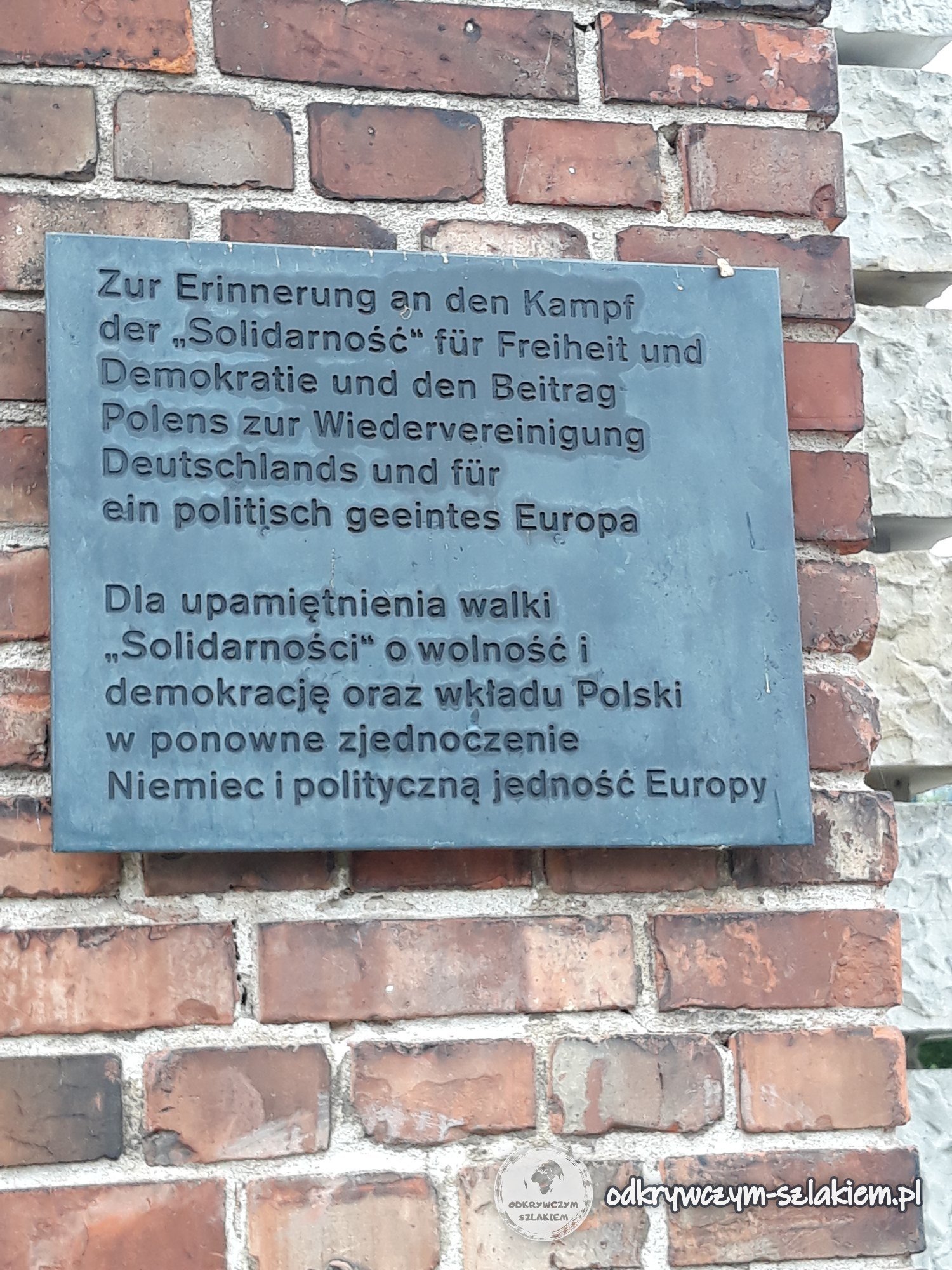
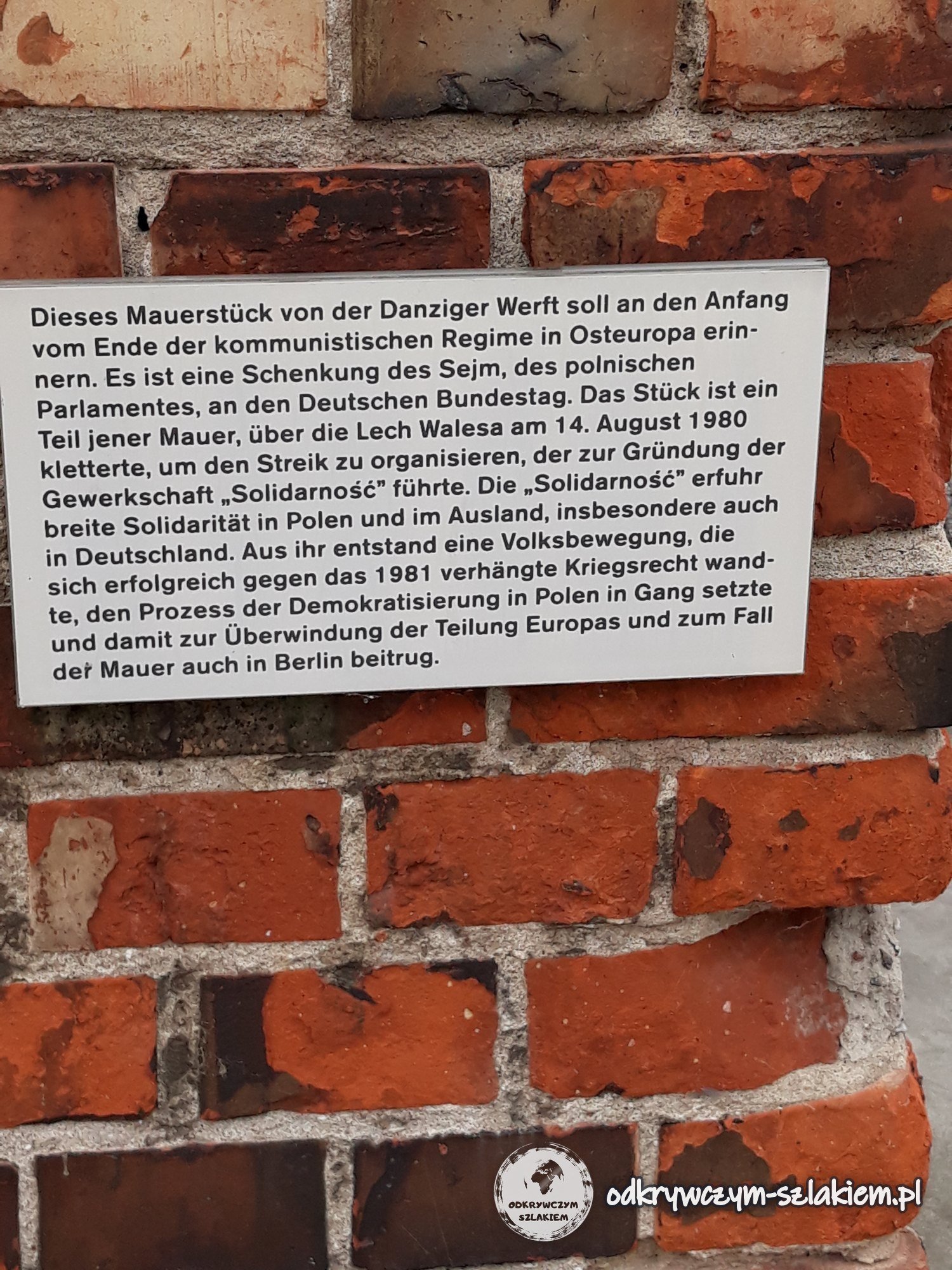
A little further on, on Ebertstraße, stands a section of brick wall from the Gdańsk Shipyard. According to the sign next to it, it was a gift from the Polish Sejm to the Bundestag and is part of the wall that Lech Wałęsa climbed on 14 August 1980 to organise the strike – the strike that led to the founding of Solidarność. A bilingual plaque commemorates Solidarność’s struggle for freedom and democracy and Poland’s contribution to German reunification. I was here on 15 July 2020.
Soviet War Memorials – Tiergarten and Treptower Park
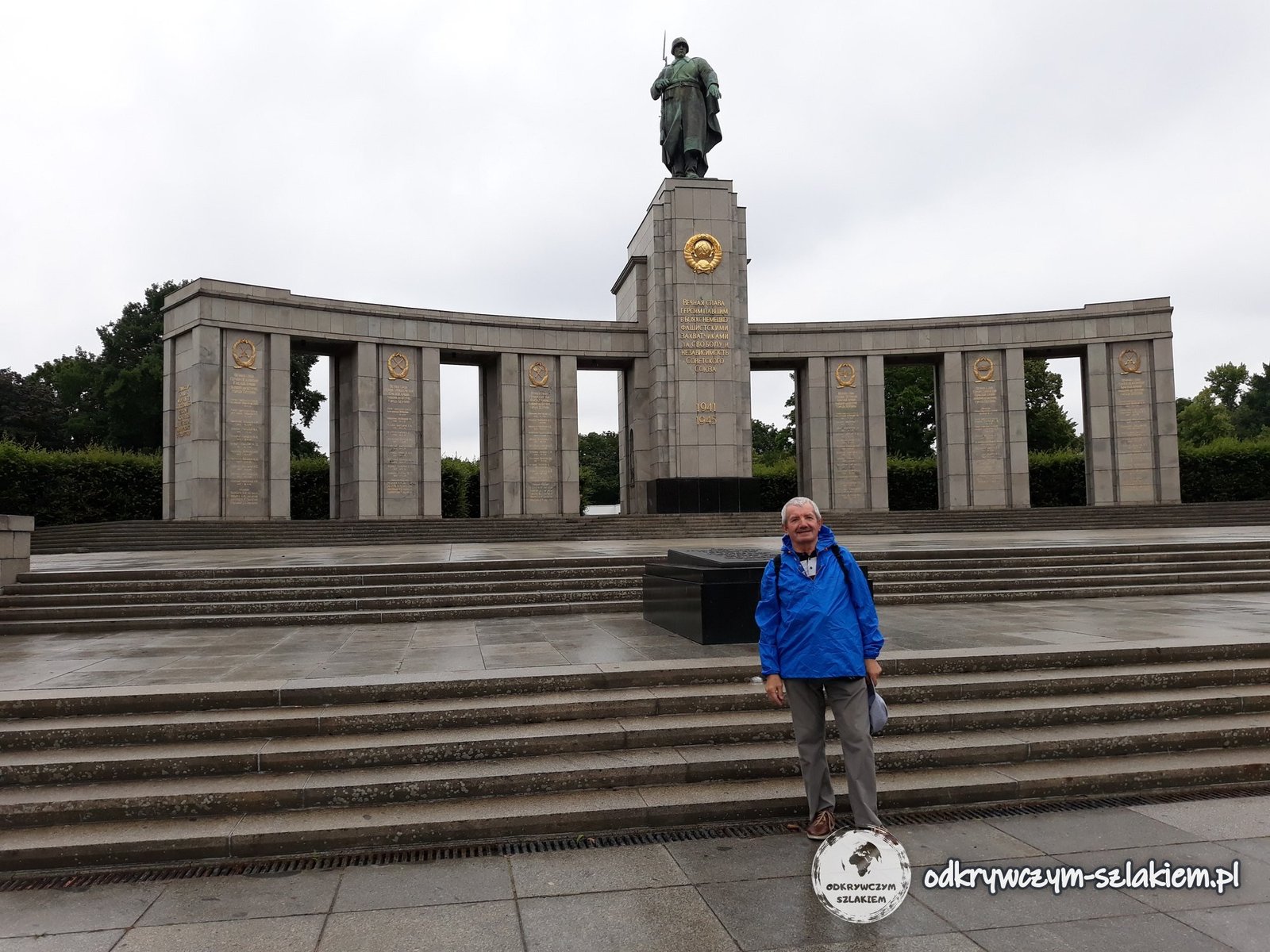
From the Reichstag it is not far to the Straße des 17. Juni, where the Soviet War Memorial in the Tiergarten stands – a colonnade with the figure of a soldier, unveiled in November 1945. According to the board next to it, more than 2,000 soldiers of the Red Army who fell in the Battle of Berlin are buried here. I was here on 15 July 2020. I write more about this memorial in the post Berlin: traces of the GDR.
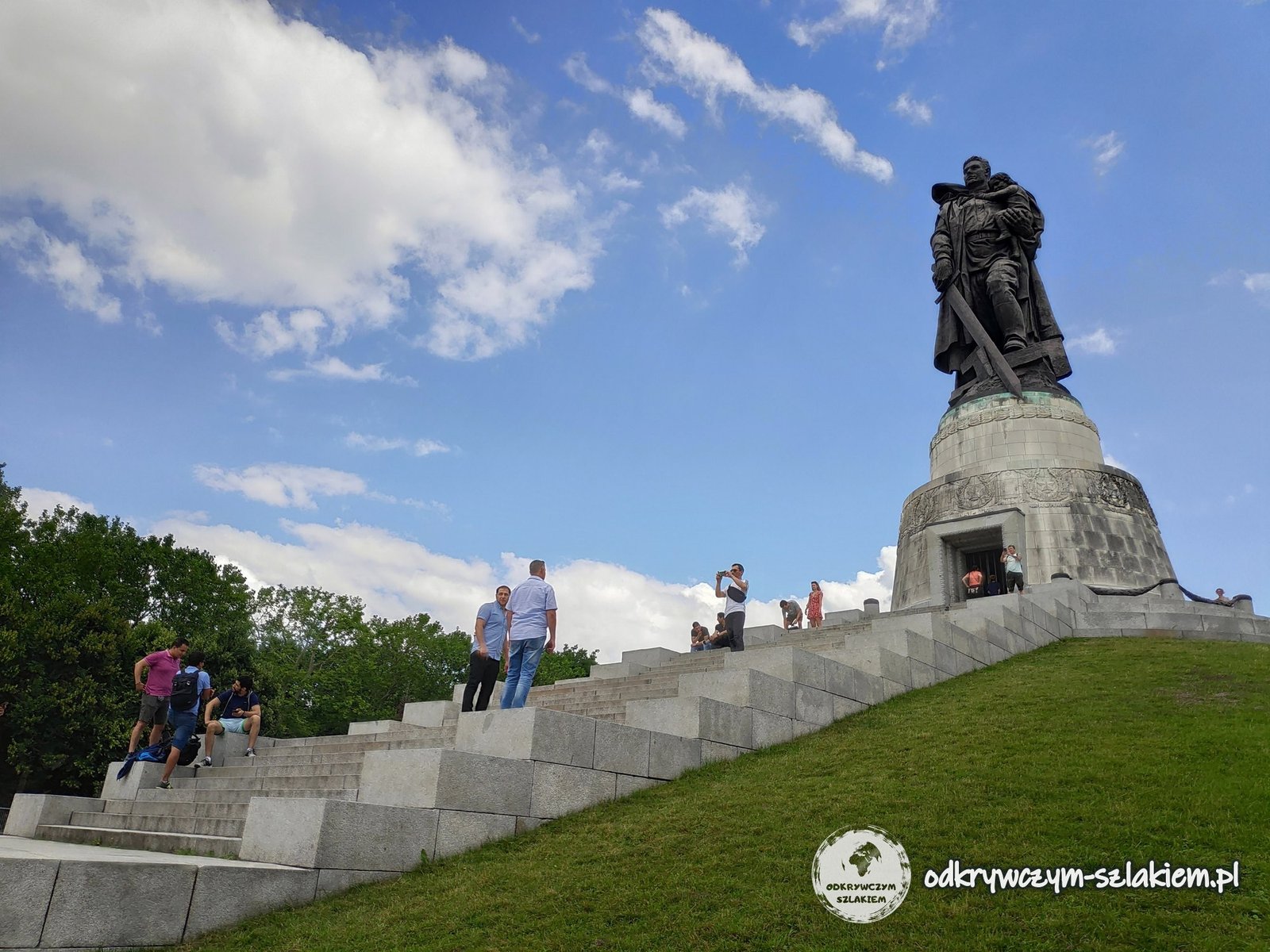
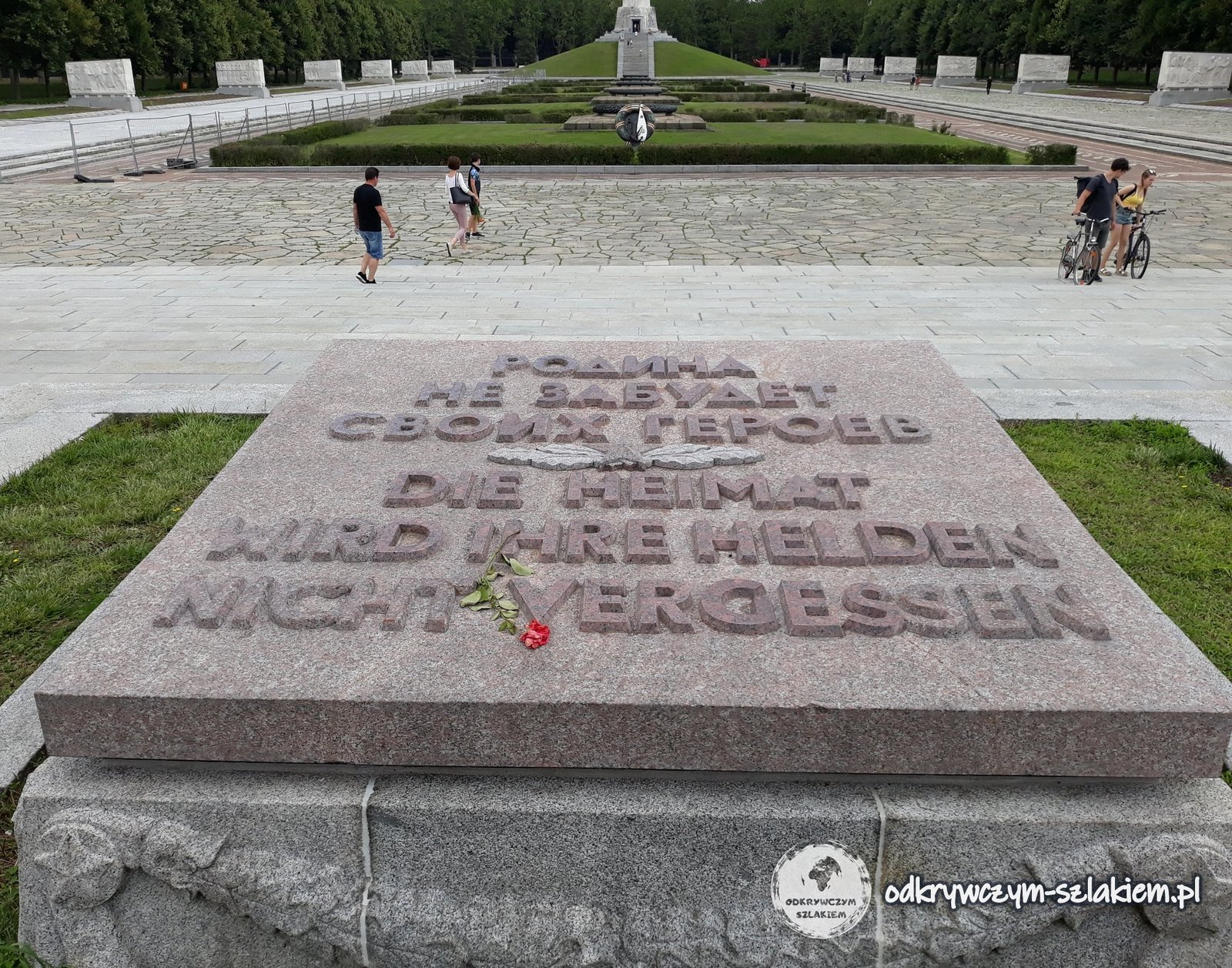
The largest Soviet memorial in Berlin is in Treptower Park, in the eastern part of the city, so it is best reached by S-Bahn. The wide avenue lined with graves ends at a mound with the figure of a soldier holding a child, and a granite slab bears the inscription “The Motherland will not forget its heroes” in Russian and German. I was there on 18 July 2020. I described this memorial and the third one, in Schönholzer Heide, in the same post – Berlin: traces of the GDR.
Neue Wache – Germany’s Central Memorial
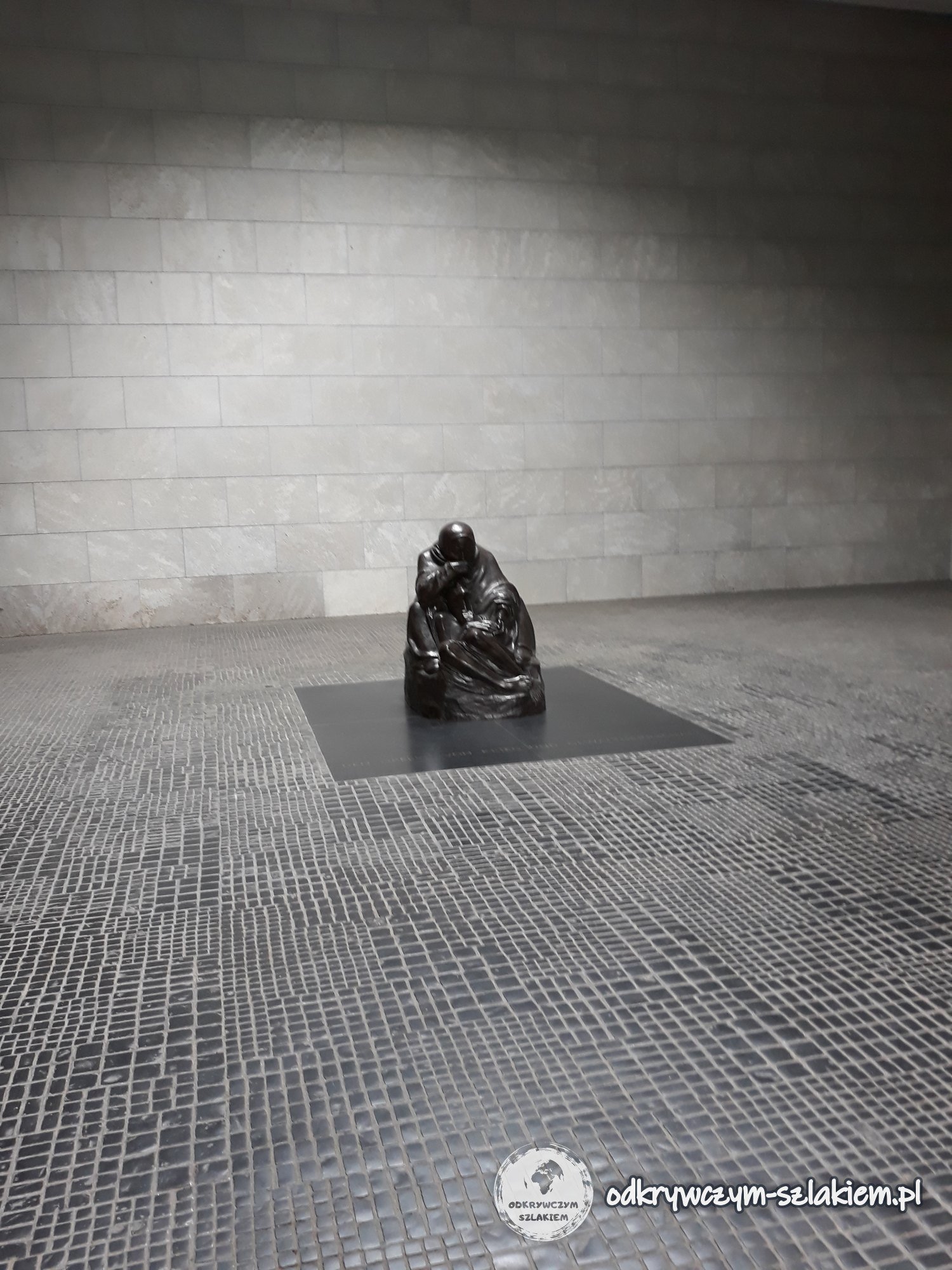
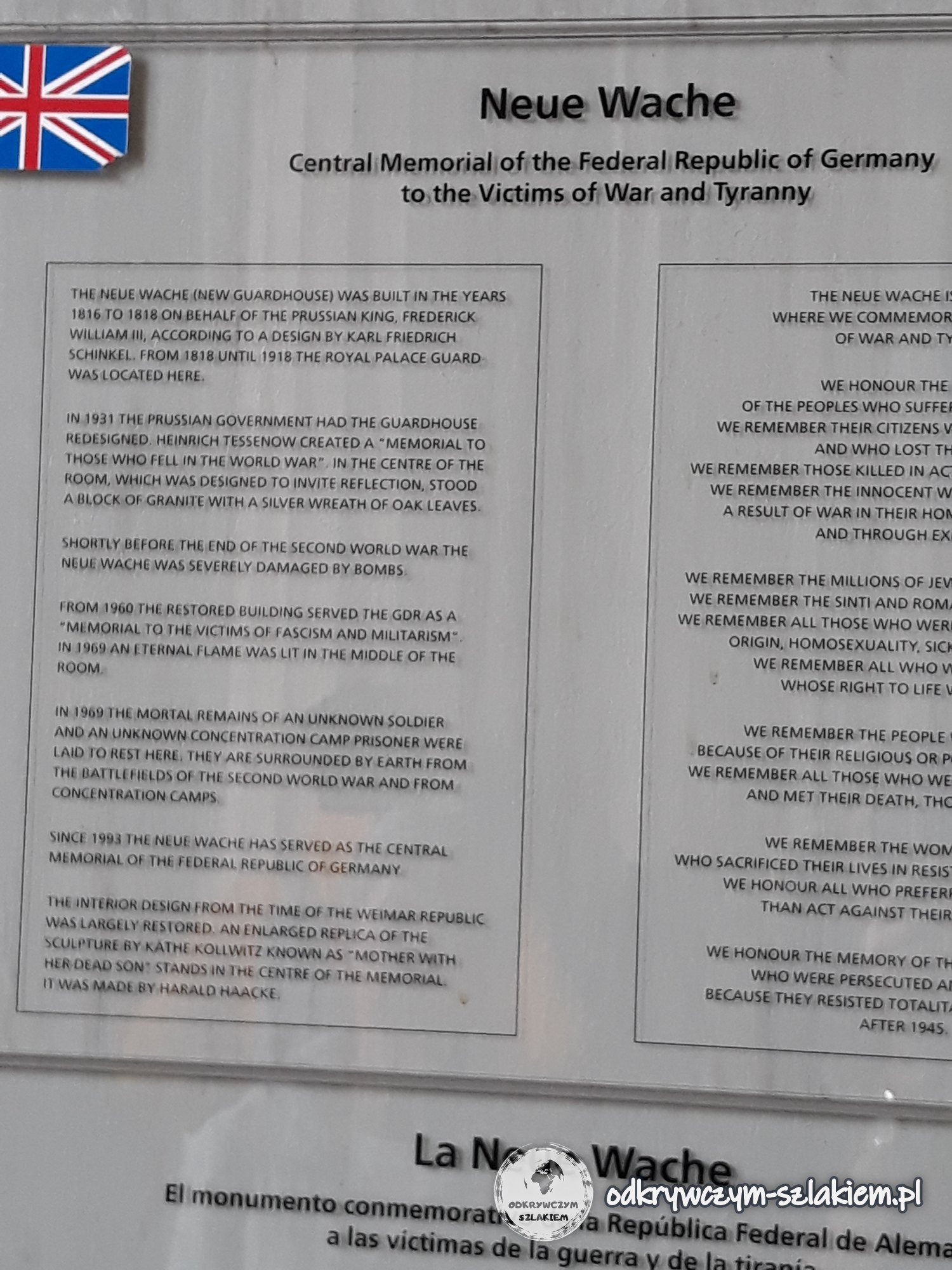
Heading back through the Brandenburg Gate, you walk along Unter den Linden to the Neue Wache – a former guardhouse built in 1816–1818 to a design by Karl Friedrich Schinkel. According to the board by the entrance, in GDR times it was the “Memorial to the Victims of Fascism and Militarism”, and in 1969 the remains of an unknown soldier and an unknown concentration camp prisoner were laid to rest here. Since 1993 it has been the Central Memorial of the Federal Republic of Germany to the Victims of War and Tyranny. In the middle of the empty hall stands Käthe Kollwitz’s sculpture “Mother with her Dead Son”. I was here with my dad on 29 August 2022; a close-up of the sculpture is in the post Berlin: what to see.
Bebelplatz – site of the 1933 book burning
A few steps from the Neue Wache, on the other side of Unter den Linden, lies Bebelplatz – a square between the State Opera, St. Hedwig’s Cathedral and the Old Library, opposite the main building of Humboldt University. In 1933 it was called Opernplatz. On the evening of 10 May 1933, Nazi students burned about 20,000 books here – among them works by Heinrich Heine, Karl Marx, Albert Einstein and Erich Maria Remarque – and Joseph Goebbels gave a speech. On the same day, books were also burned in many other German university towns.
In the middle of the square, under a glass pane set into the cobblestones, is the memorial “Bibliothek” (Library) by the Israeli artist Micha Ullman, unveiled in 1995. Through the glass you can see an underground room with empty white shelves that would hold about 20,000 books – roughly as many as were burned here. After dark, the room is lit. I took the photo on the evening of 25 December 2024, when a Christmas market was on the square: the pane was cordoned off with a rope on posts, and next to it stood a board describing the memorial. I showed the market itself in the post Berlin: what to see.
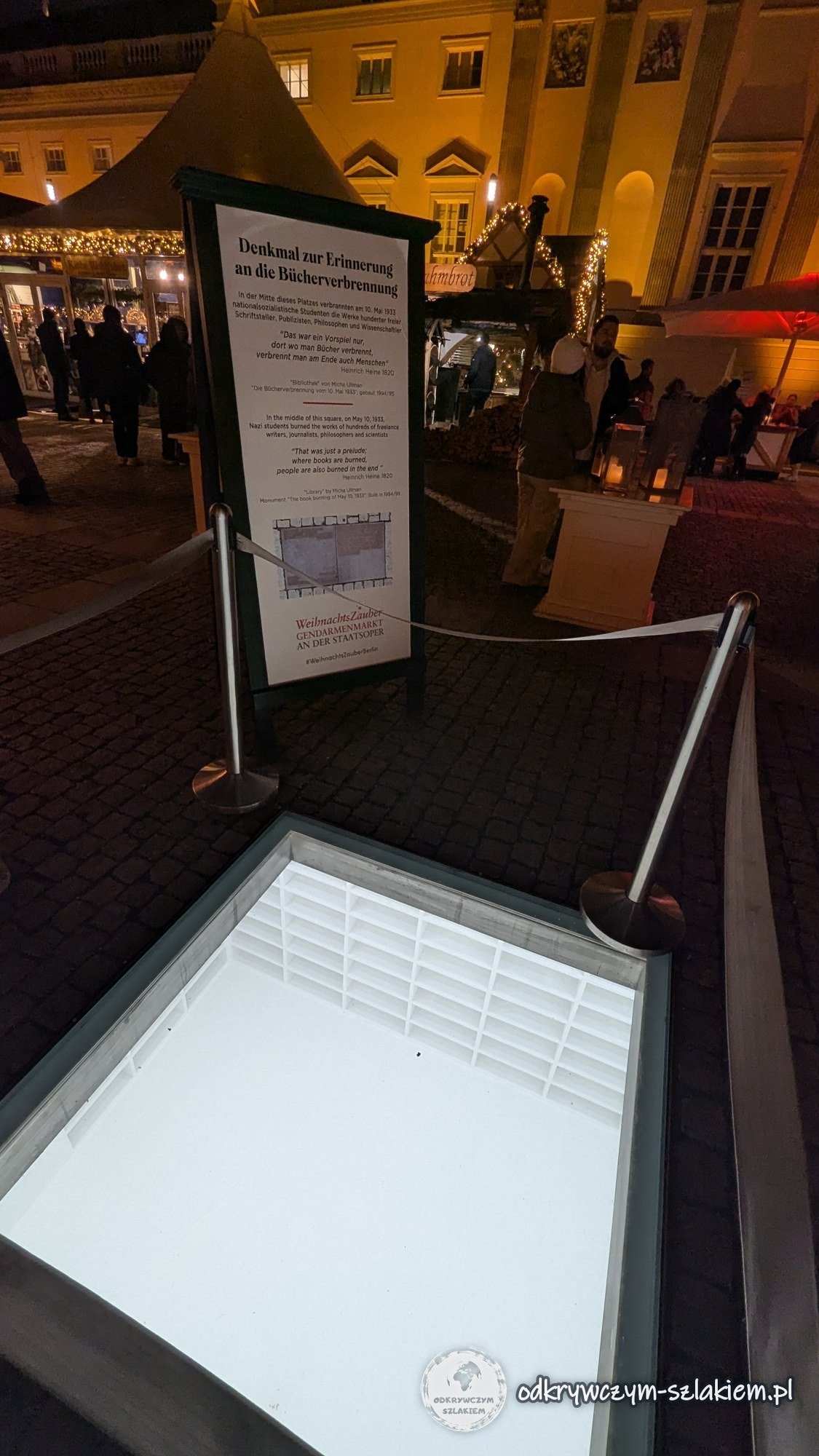
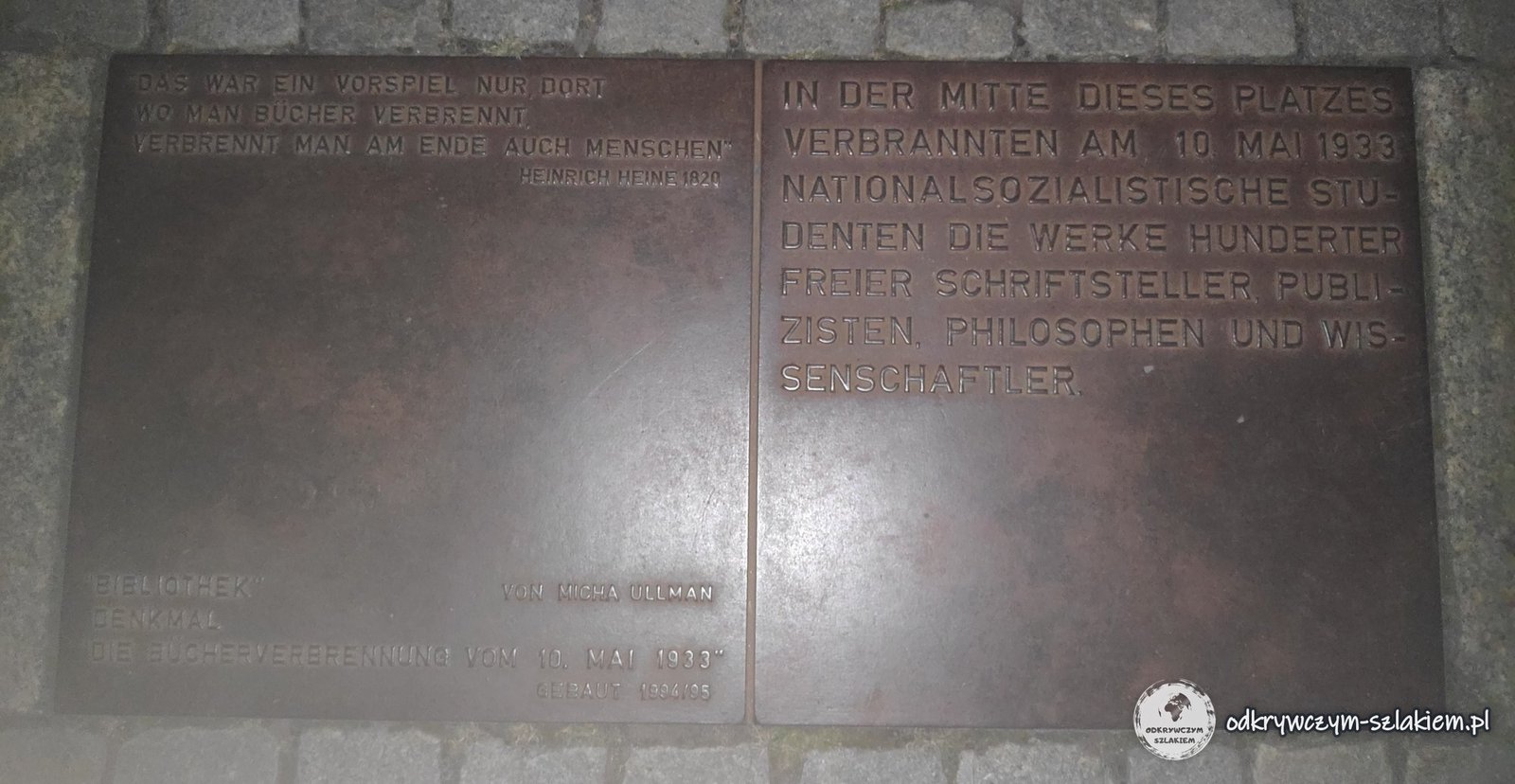
Next to the pane, two bronze plaques are set into the pavement. One says that in the middle of this square, on 10 May 1933, Nazi students burned the works of hundreds of free writers, journalists, philosophers and scientists. The other bears a line by Heinrich Heine from his tragedy “Almansor” (1820): “Das war ein Vorspiel nur, dort wo man Bücher verbrennt, verbrennt man am Ende auch Menschen” (“That was only a prelude; where they burn books, they will in the end burn people too”). I photographed the plaques on 6 September 2021, during the Festival of Lights – the projections on the buildings around the square are in the post Festival of Lights in Berlin.
Friedrichstraße station – the Kindertransport memorial
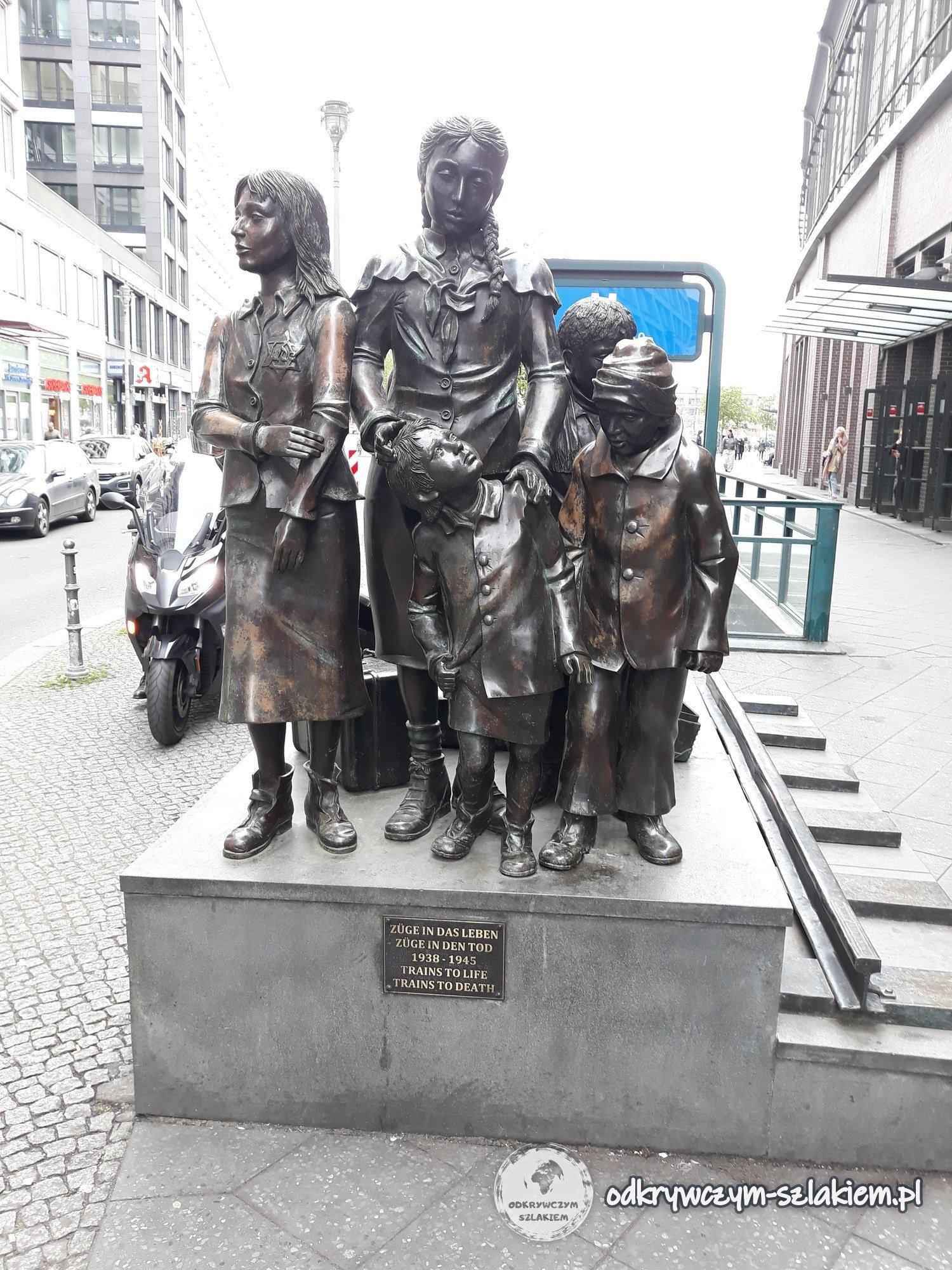
From Unter den Linden it is a few minutes to Friedrichstraße station. On the Georgenstraße side stands Frank Meisler’s memorial “Züge in das Leben – Züge in den Tod” (“Trains to Life – Trains to Death”). It commemorates Jewish children: some of them left from here for Great Britain in 1938–1939 on the Kindertransport and survived the war, while others were deported to the death camps. Frank Meisler was born in Gdańsk and left on one of these transports himself – a similar memorial by him stands at Gdańsk Główny station. I saw it with my dad on 21 April 2022. The Tränenpalast is right next to it, described in the post Berlin: museums.
The Berlin Wall Memorial on Bernauer Straße
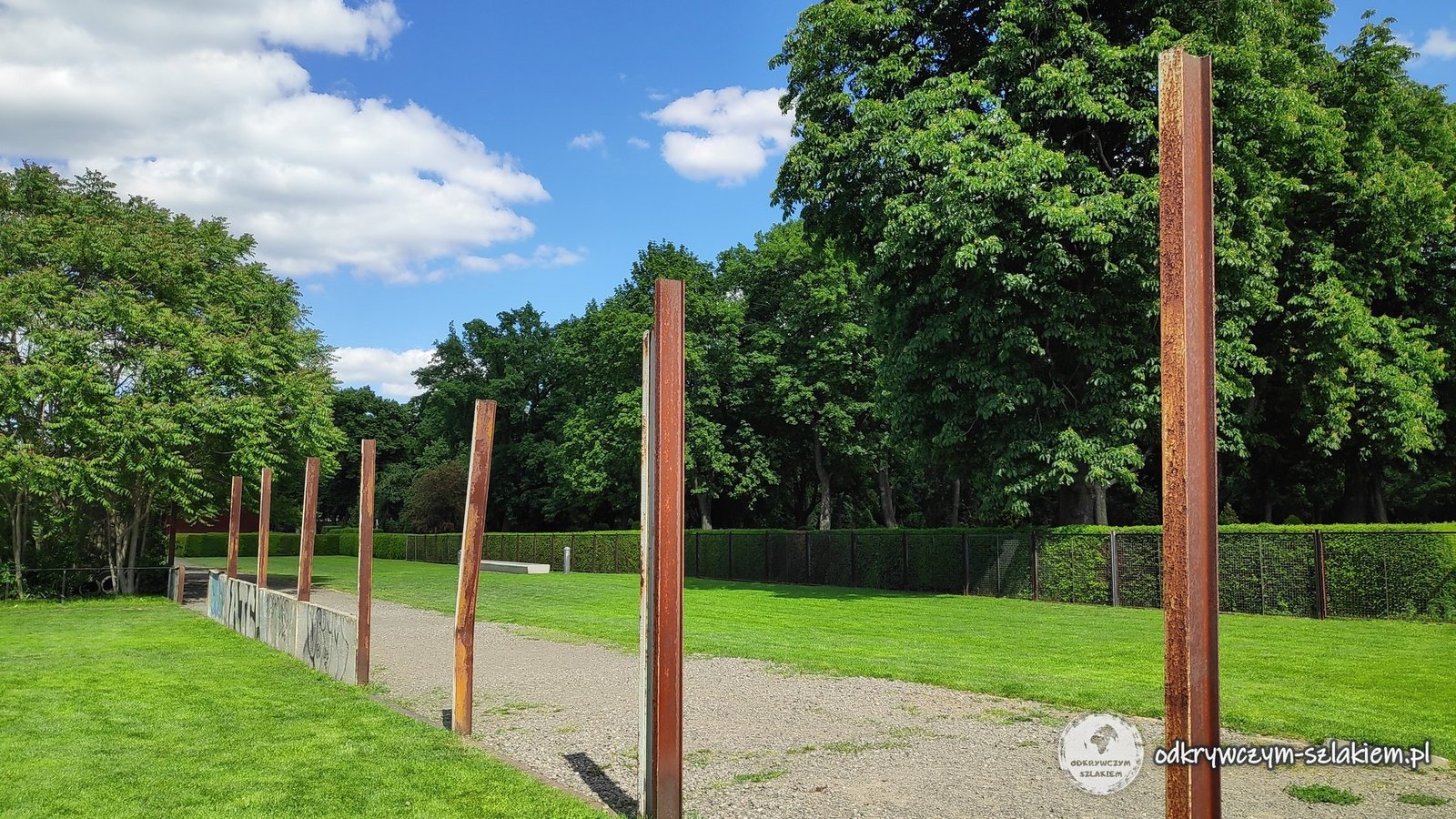
From Friedrichstraße station the S-Bahn takes a few minutes to Nordbahnhof, where the Berlin Wall Memorial (Gedenkstätte Berliner Mauer) begins. On Bernauer Straße the border ran right along the houses. Today the strip of the former border area holds original sections of the Wall, a preserved death strip with a watchtower and rusty rods that mark the course of the Wall. I was here in May 2019, in July 2020 and in December 2024.
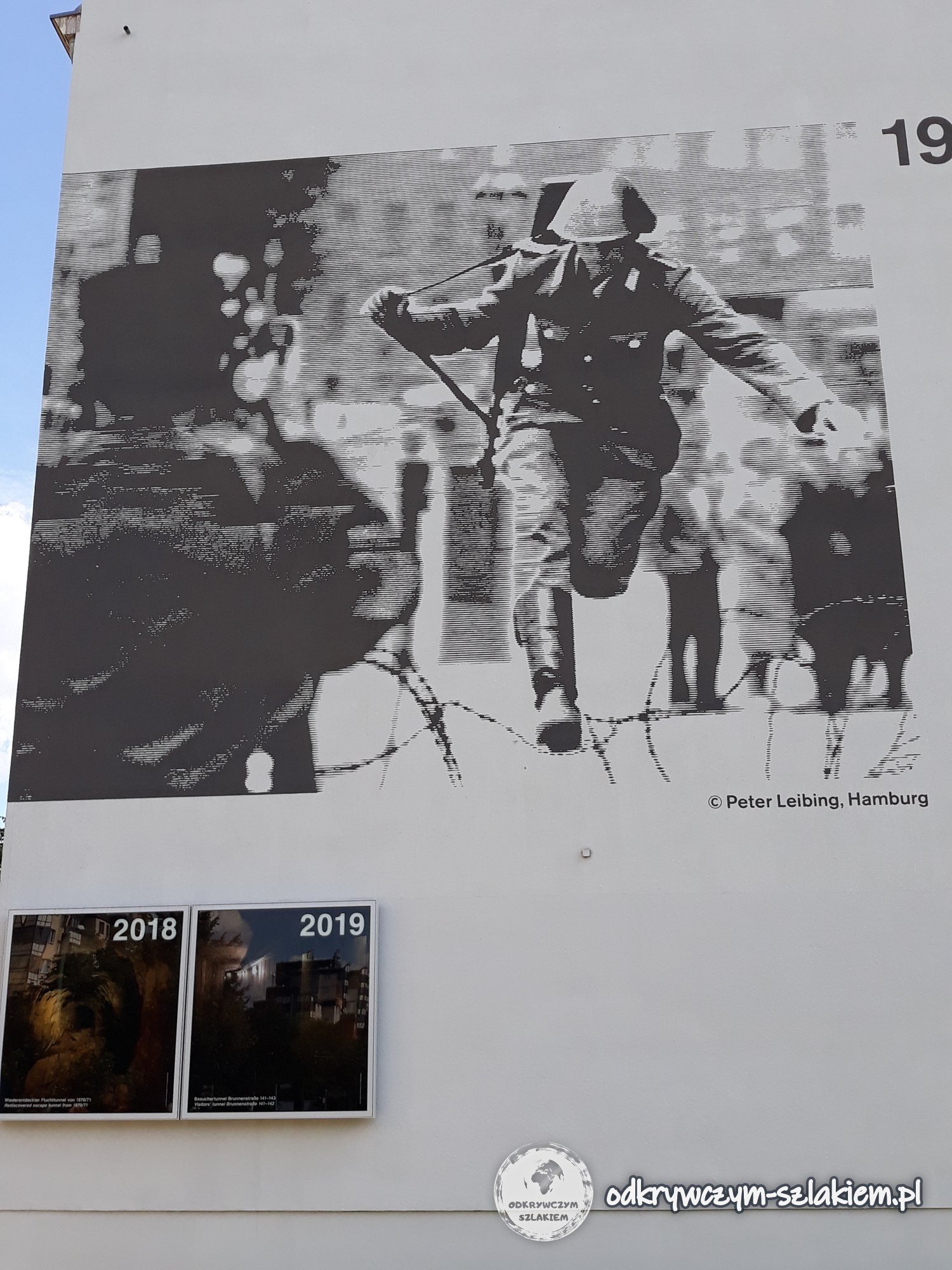
On the wall of one of the buildings on Bernauer Straße hangs an enlargement of Peter Leibing’s famous photo: East German soldier Conrad Schumann jumping over the barbed wire to the West on 15 August 1961, two days after construction of the Wall began. I write more about this place in the post Berlin: following the Berlin Wall.
Wittenbergplatz – the “Orte des Schreckens” sign
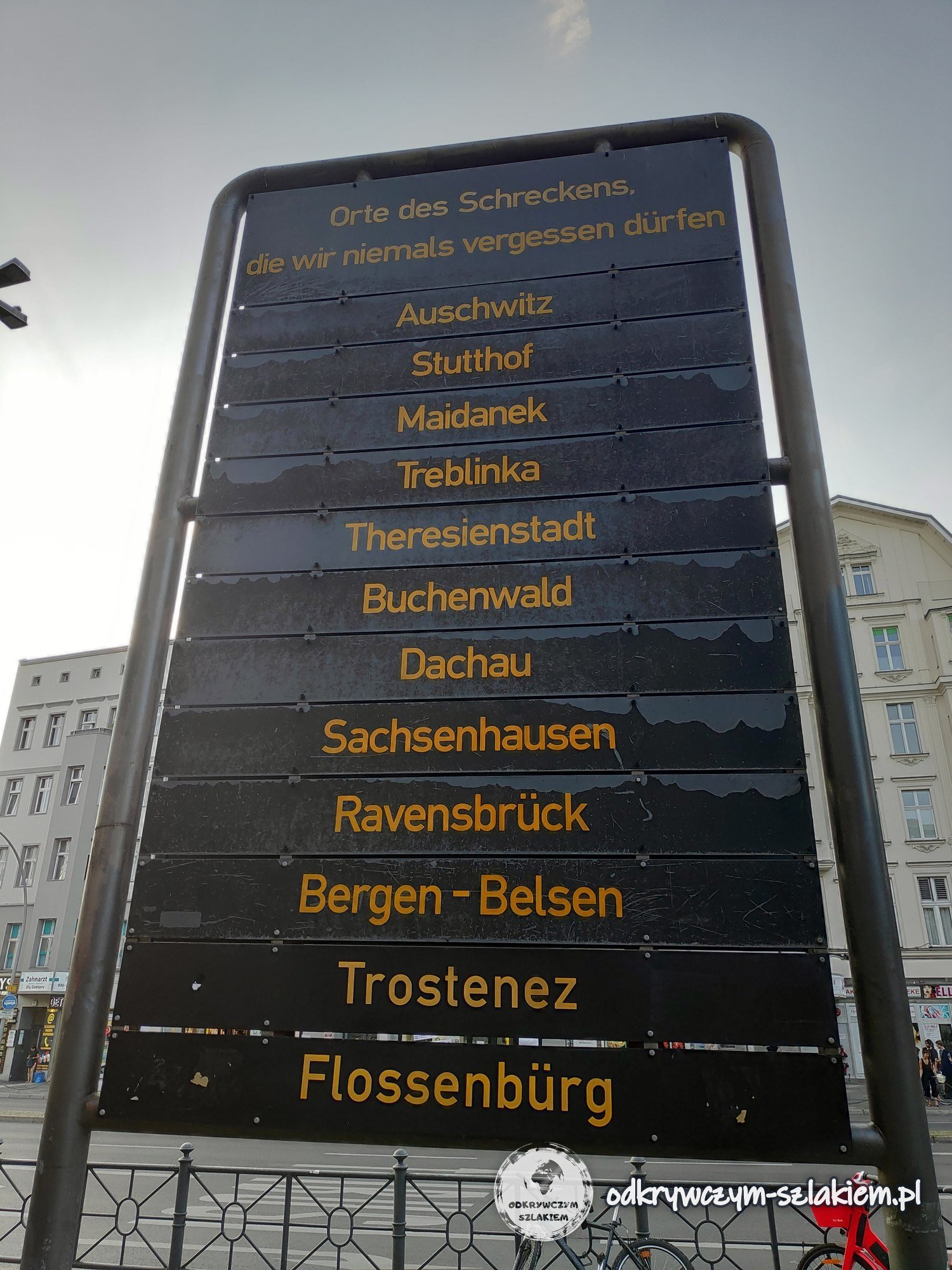
In the western part of the city, by Wittenbergplatz U-Bahn station, stands a tall sign headed “Orte des Schreckens, die wir niemals vergessen dürfen” (“Places of horror that we must never forget”). Below it are the names of concentration camps and extermination sites: Auschwitz, Stutthof, Majdanek, Treblinka, Theresienstadt, Buchenwald, Dachau, Sachsenhausen, Ravensbrück, Bergen-Belsen, Trostenez and Flossenbürg. The first four were on the territory of present-day Poland. I took the photo on 24 August 2019. I described the Sachsenhausen Memorial near Berlin in the post Day trips from Berlin.
More photos from this area – Wittenbergplatz, Tauentzienstraße and Ku’damm – are in my post about former West Berlin.
Breitscheidplatz – the Memorial Church and the memorial to the attack victims
From Wittenbergplatz it is a few minutes’ walk along Tauentzienstraße to the Kaiser Wilhelm Memorial Church on Breitscheidplatz. Its tower was destroyed by bombing during the Second World War and left as a ruin, as a reminder of the war. I was here in the evening of 21 September 2019.

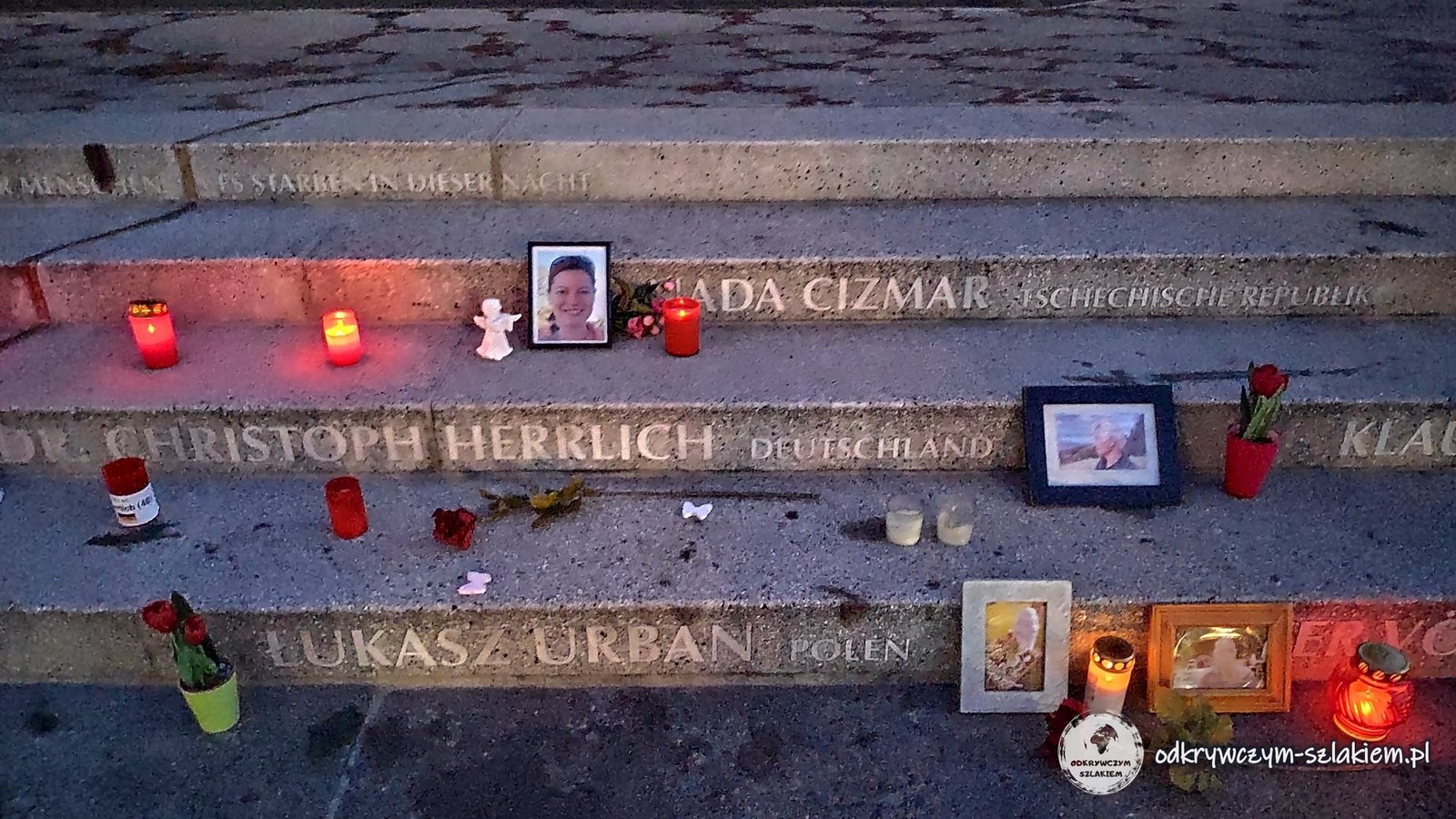
On the steps in front of the church there is a memorial to the victims of the attack of 19 December 2016, when a terrorist drove a lorry into the Christmas market. The names of the victims and the countries they came from are written on the steps – among them Łukasz Urban from Poland, the driver of the hijacked lorry. That evening there were candles and photos by the names. I write more in the posts Berlin: what to see and Berlin: Christmas markets.
More about the Memorial Church and Breitscheidplatz in my post about former West Berlin.
House of the Wannsee Conference
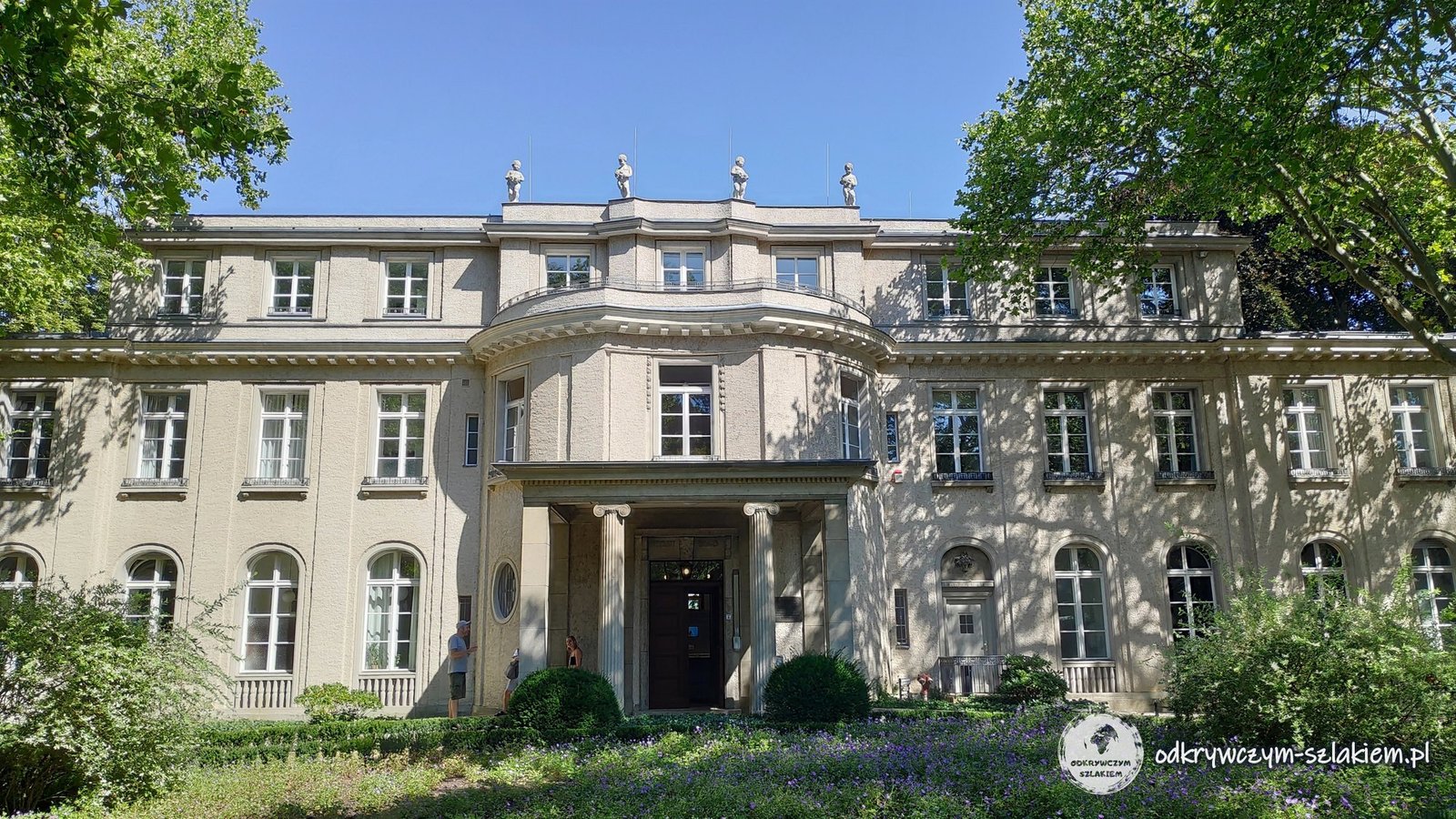
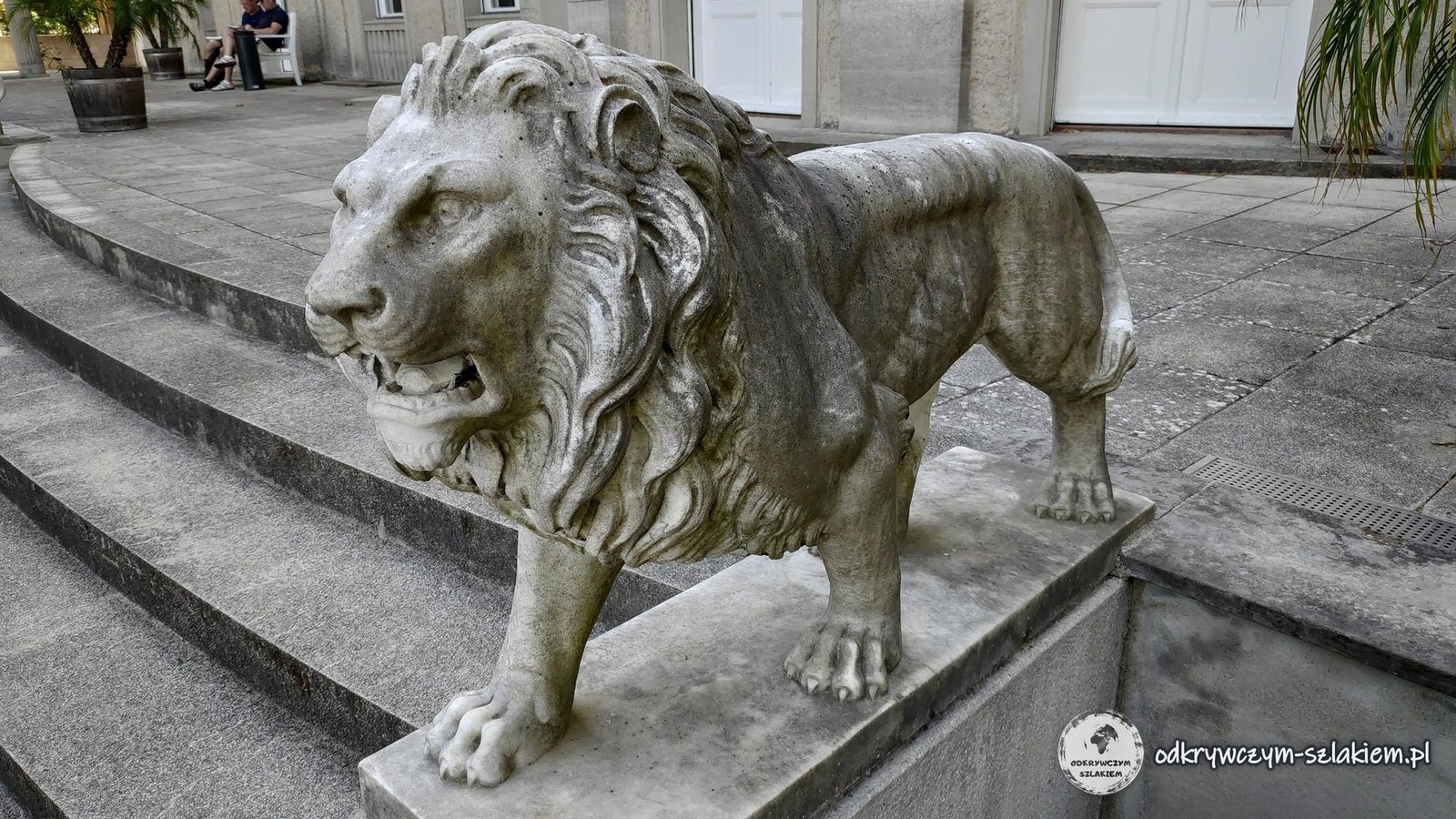
The last place is on the south-western edge of Berlin, on the Großer Wannsee lake. In this villa, on 20 January 1942, senior officials of the Third Reich and SS officers agreed on the organisation of the murder of the European Jews. Since 1992 it has housed the memorial and educational site Haus der Wannsee-Konferenz, with a free exhibition. On the garden side, by the steps up to the terrace, stands a stone lion. I was here on 16 August 2020; I showed the plaque on the villa wall and the Polish thread of the exhibition in the post Potsdam and Wannsee.
Practical information
- Walking route: the Topography of Terror, the bunker site, the Memorial to the Murdered Jews, the area around the Reichstag, the Tiergarten memorial, the Neue Wache, Bebelplatz and Friedrichstraße station are close together – a walk of a few kilometres. The route starts near the Anhalter Bahnhof and Potsdamer Platz S-Bahn stations.
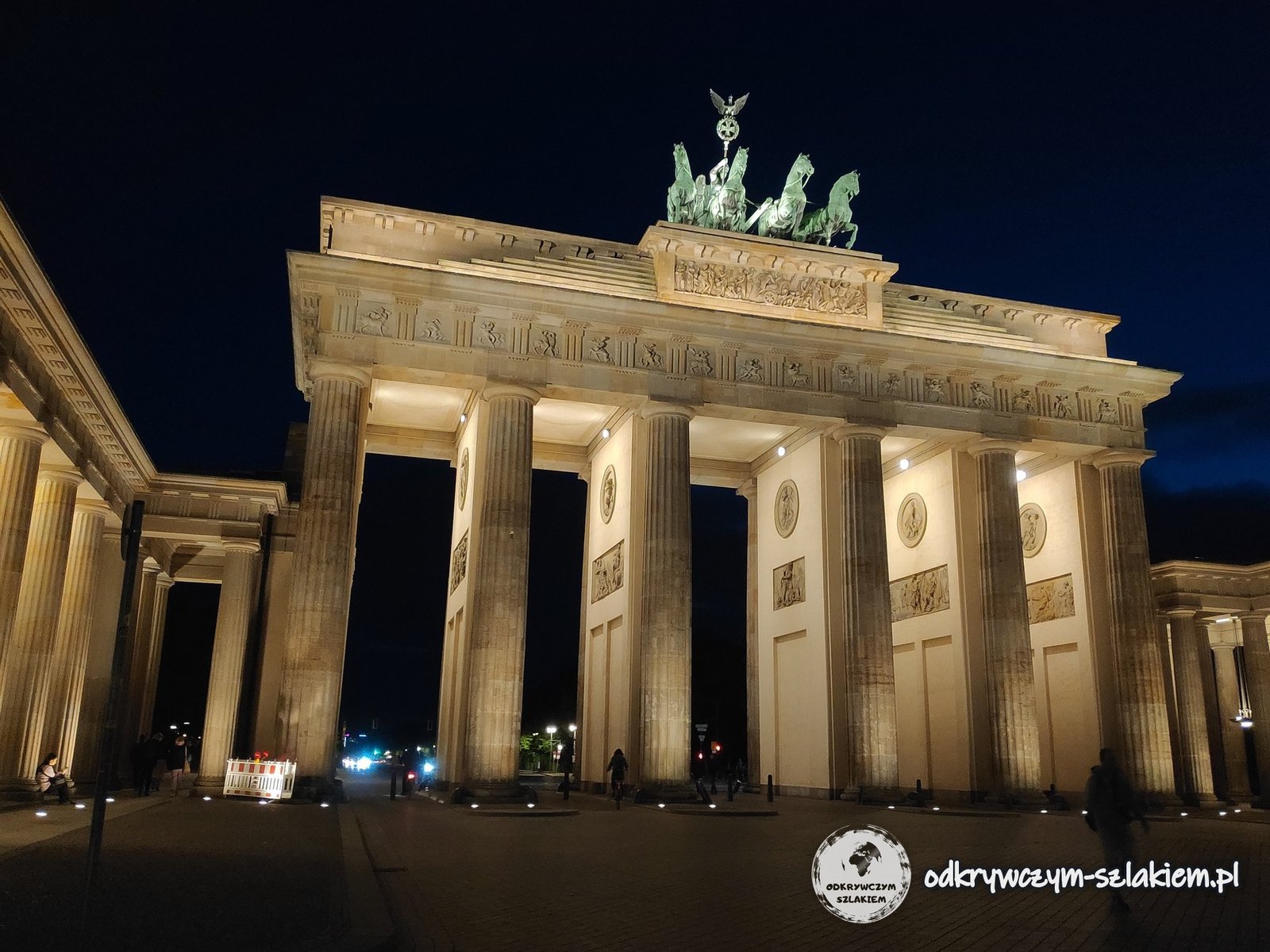
- Landmark: the Brandenburg Gate – from there it is a few minutes’ walk to the Memorial to the Murdered Jews, the Reichstag and the Tiergarten memorial.
- Getting to the other places: from Friedrichstraße the S-Bahn runs to Nordbahnhof by Bernauer Straße. You can reach Treptower Park by S-Bahn (Treptower Park station) and Wittenbergplatz by U-Bahn; Breitscheidplatz is a few minutes’ walk further on, by Zoologischer Garten station. To get to the House of the Wannsee Conference, take the S-Bahn to Wannsee station and then bus 114.
- Free of charge: all the places described are free, including the exhibitions at the Topography of Terror and the House of the Wannsee Conference.
- How much time: the centre together with Bernauer Straße takes one day. Treptower Park, the western part of the city and Wannsee are better left for a second day.
- Behaviour: these are places of remembrance – climbing onto or jumping between the blocks of the Memorial to the Murdered Jews is not allowed.
- More Berlin: I described the main sights in the post Berlin: what to see, and the Wall and the border crossings in the post Berlin: following the Berlin Wall.