Reinickendorf is a district in the north-west of Berlin. It includes, among others, Tegel with its former airport, Wittenau with the district town hall and the village of Lübars, and a large part of it is covered by forests and lakes – the Tegeler Forst and the Tegeler See. I lived in Reinickendorf, on Eichborndamm. In this post I have gathered places in the north of Berlin that I photographed between 2019 and 2023: from the village church in Alt-Wittenau, through the gate of the Borsig works and the harbour in Tegel, to Tegel Airport and the district’s highest hill in the Tegeler Forst.
Table of contents
- Alt-Wittenau – a village in the middle of the city
- Reinickendorf Town Hall and the flowerbed of Pomeranian town names
- Steinbergpark – a cascade over boulders
- Tegel – the Borsig gate and the Borsigturm
- Tegeler Hafen and Tegeler See
- Tegel Airport and the Flughafensee
- Ehrenpfortenberg – the district’s highest point in the Tegeler Forst
- Lübars and Volkspark Rehberge
- Practical information
Alt-Wittenau – a village in the middle of the city
Alt-Wittenau is the old centre of a village that was called Dalldorf until 1905. In the 1870s a municipal asylum for the mentally ill was opened here and the village name became associated with it, so the residents asked for it to be changed. The new name honours Peter Witte, the long-serving head of the local administrative district. The village green with its old trees has survived, and in the middle of it stands the village church.
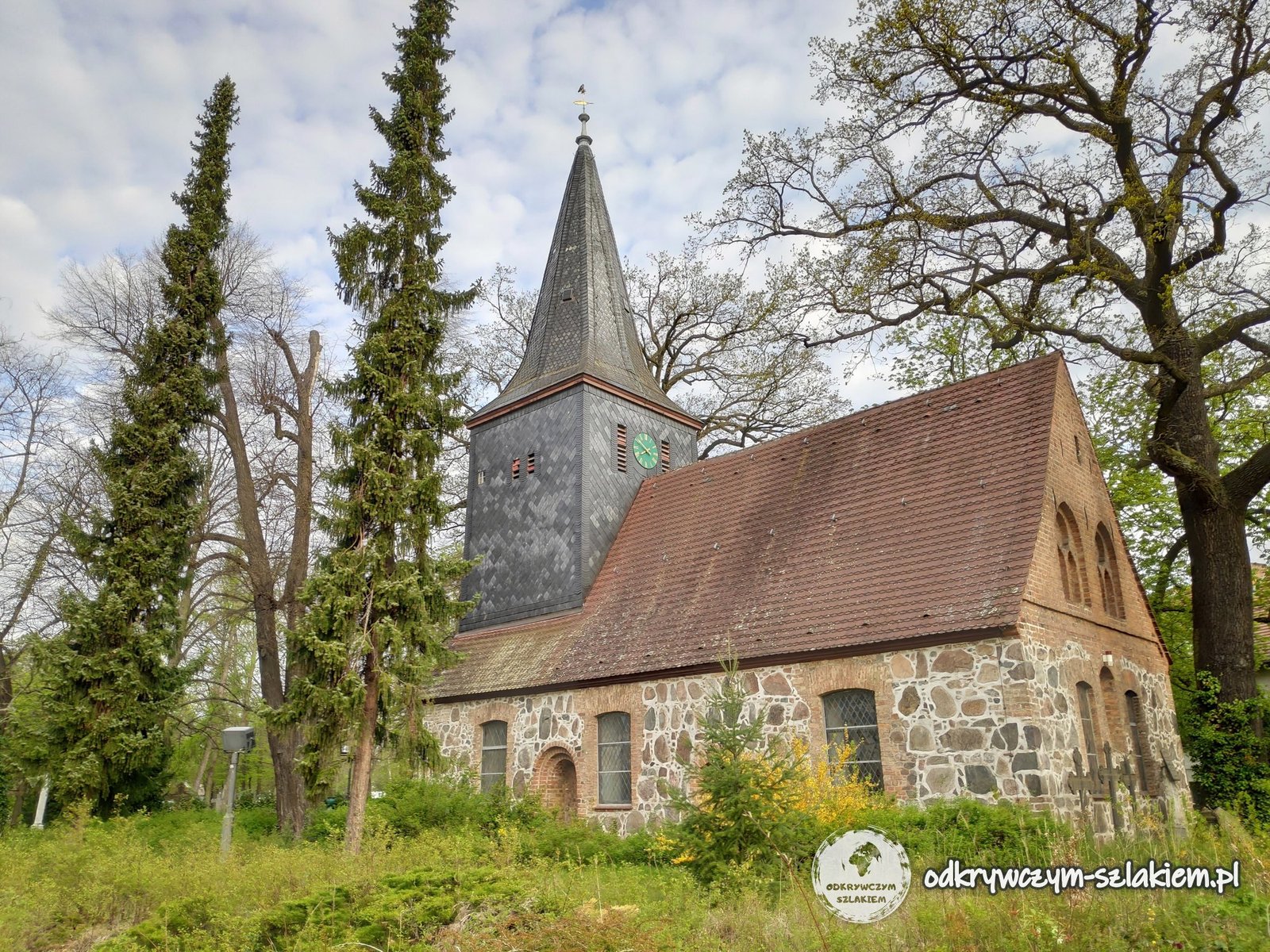
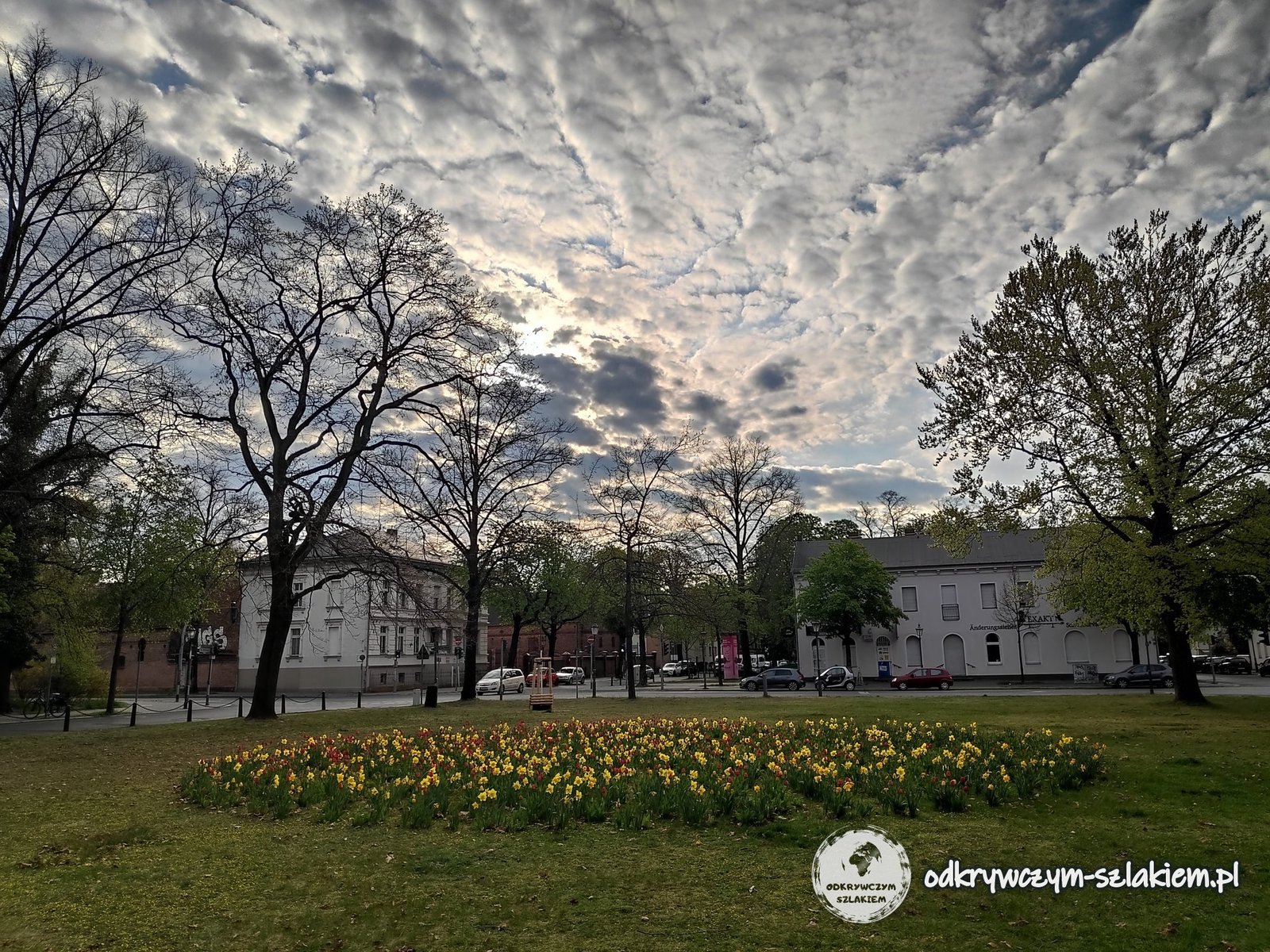
The church was built at the end of the 15th century – tree-ring dating points to 1482–1489. The walls are made of fieldstones of different sizes, while the corners, window frames and gable are brick. The wooden tower has no foundations of its own and sits in the roof; it has been covered with slate since 1894. I was here in February and April 2022. In spring, clumps of daffodils were in bloom on the lawns of the village green.
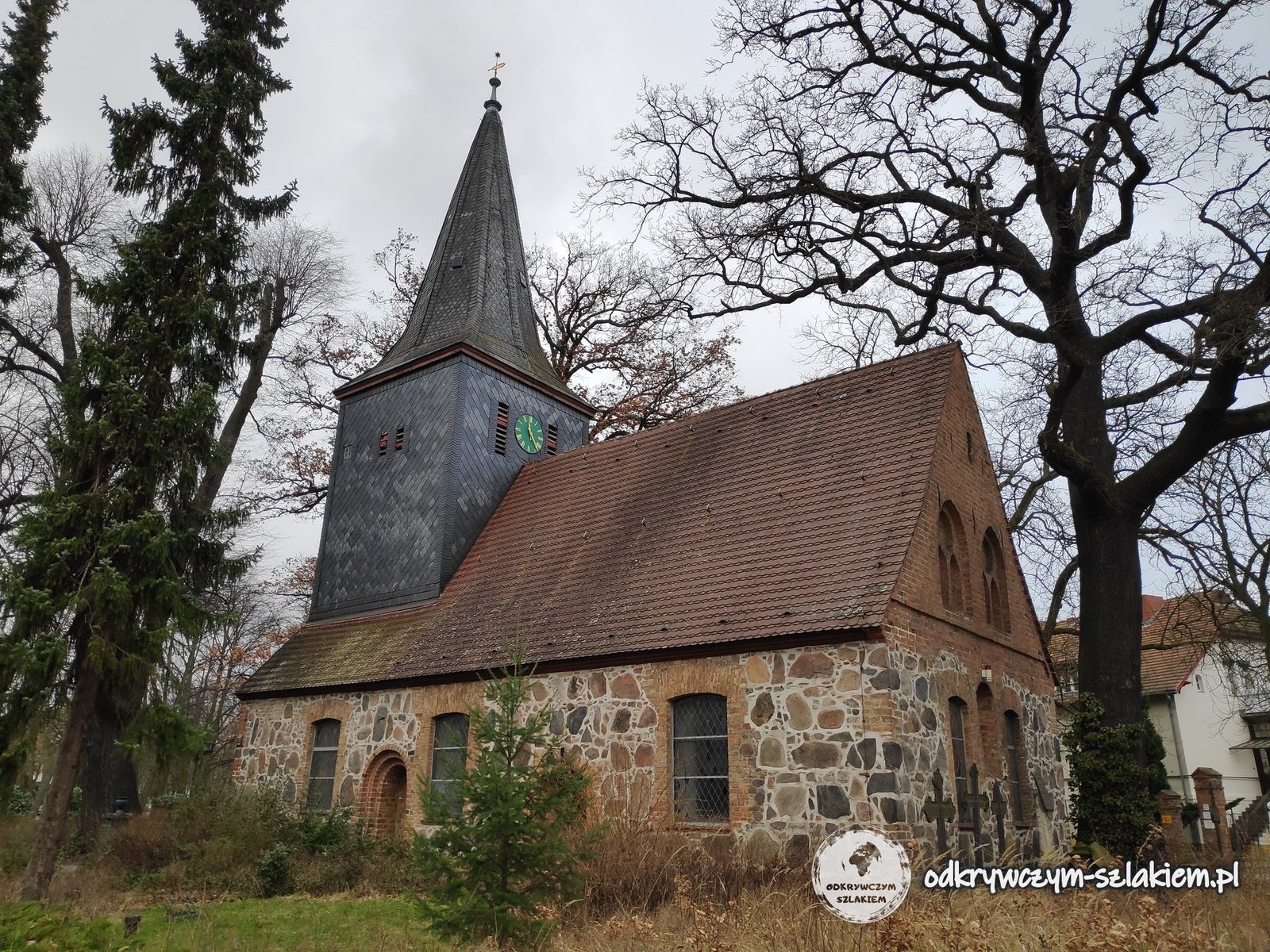
There is a small churchyard around the church. In it stands the green cast-iron grave monument of pastor Gottlieb Michael Fetschow. According to the inscription, he was the pastor of Dalldorf, Tegel and Lübars, was born in 1713 and took office in 1739.


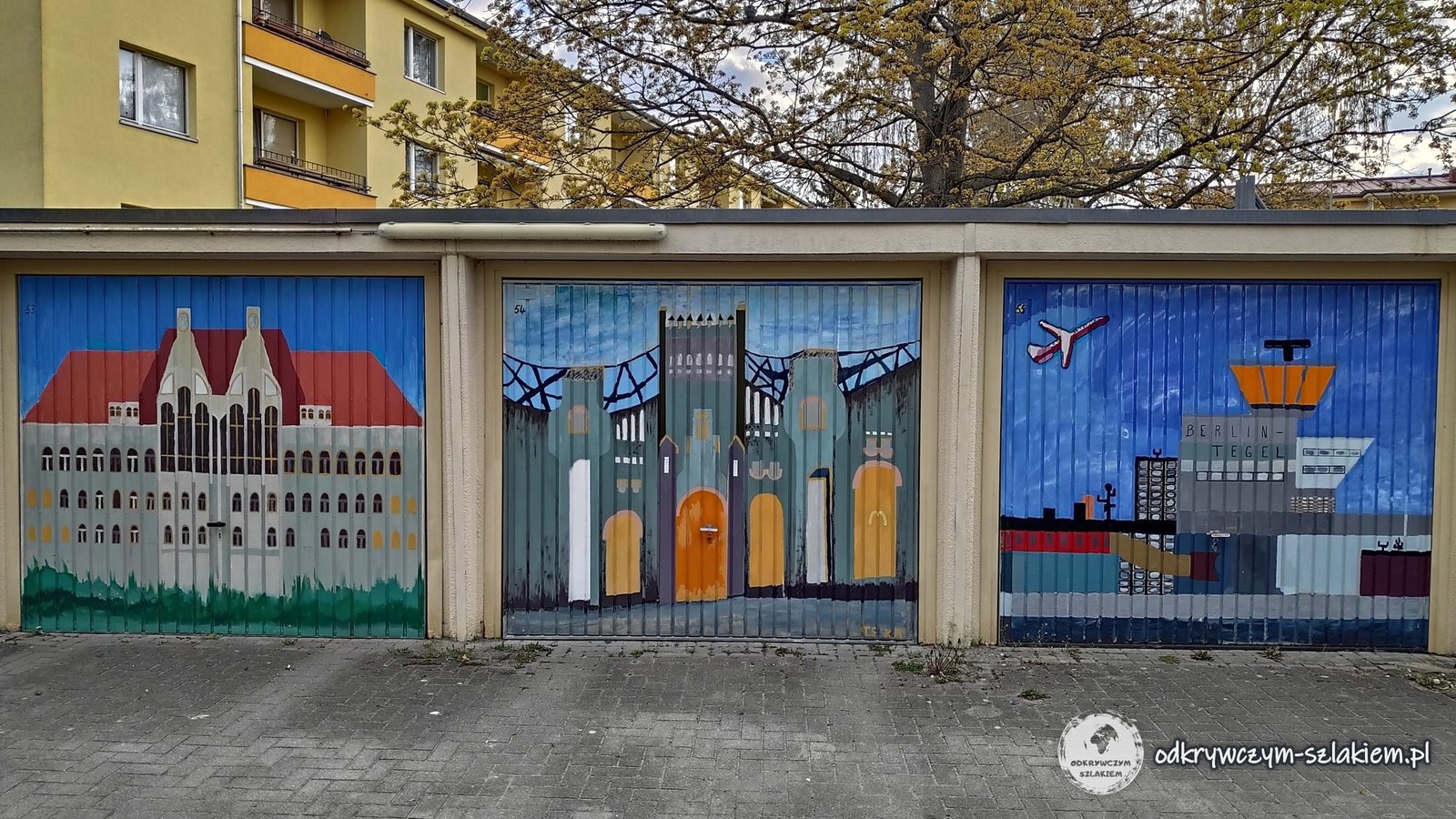
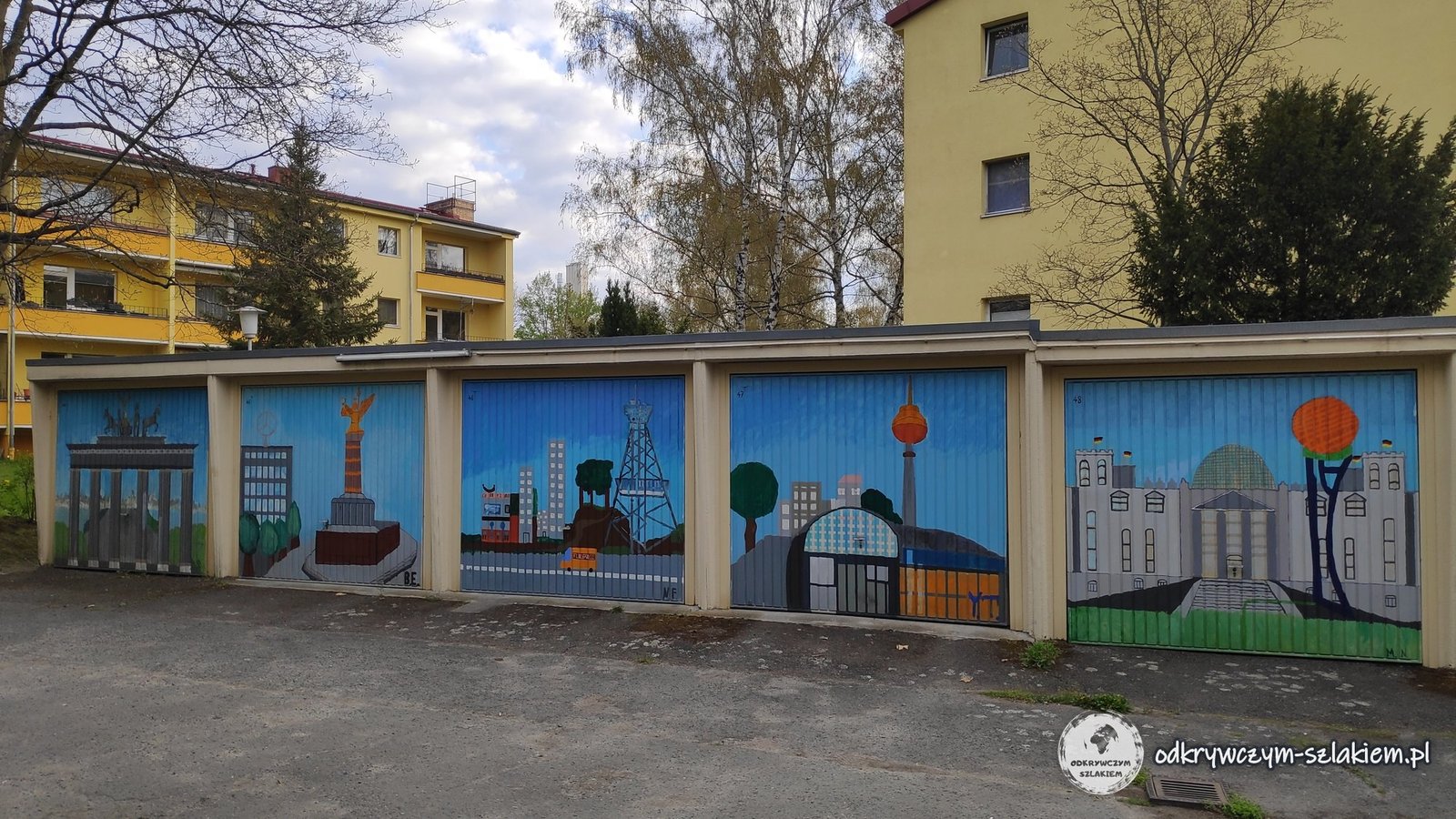
A few hundred metres from the church, next to a housing estate, someone has painted Berlin landmarks on the garage doors, including Reinickendorf Town Hall, Tegel Airport, the Brandenburg Gate, the Victory Column, the Radio Tower, the TV Tower and the Reichstag.
Reinickendorf Town Hall and the flowerbed of Pomeranian town names
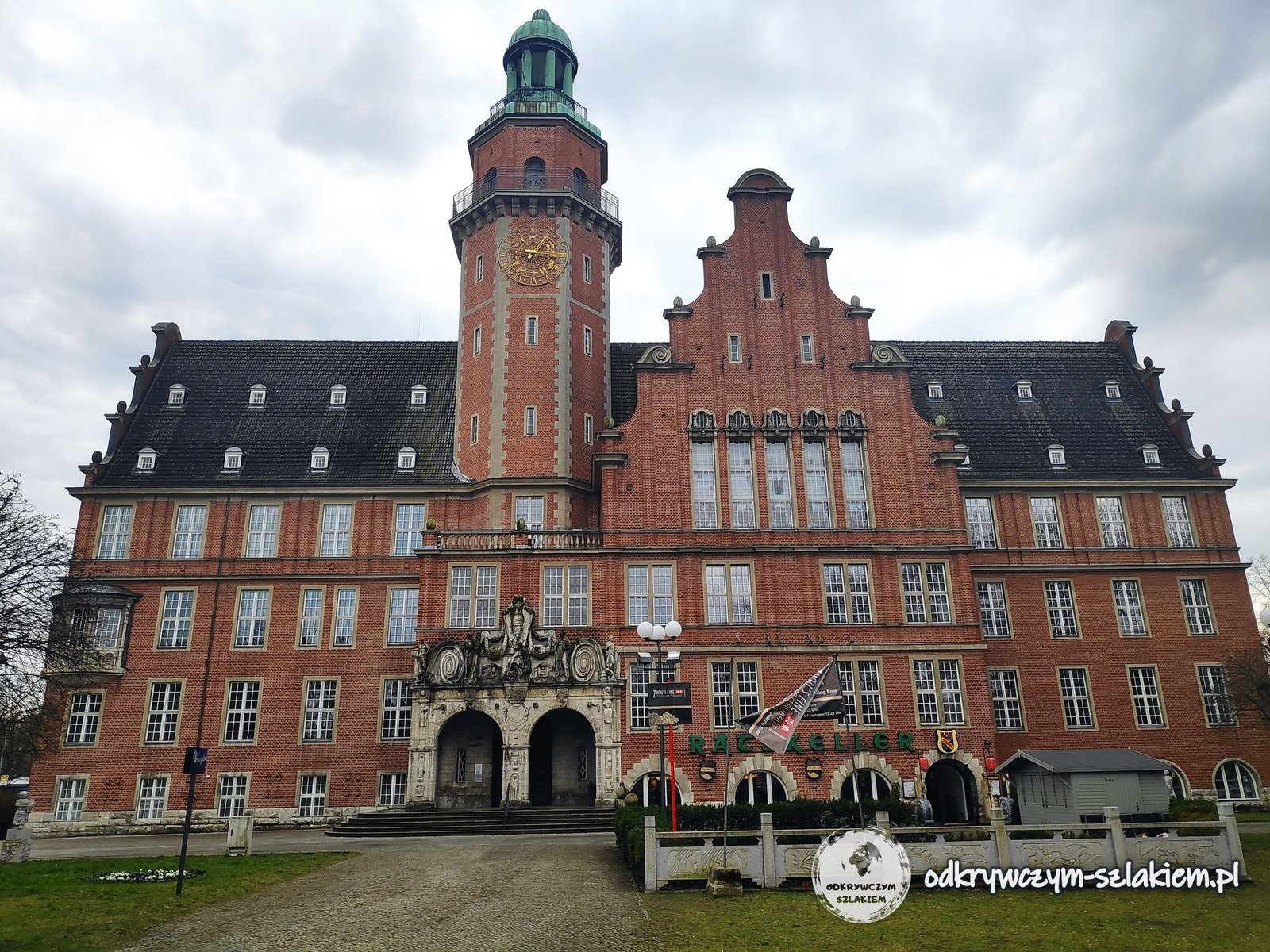
Not far from the village green, on Eichborndamm, stands Reinickendorf Town Hall. It was built in 1911, in just twelve months, still for the municipality of Wittenau. It has brick walls, a tall clock tower and gables in a neo-Baroque style modelled on Dutch architecture. Today it houses the district office, and next to it is the U8 station Rathaus Reinickendorf.
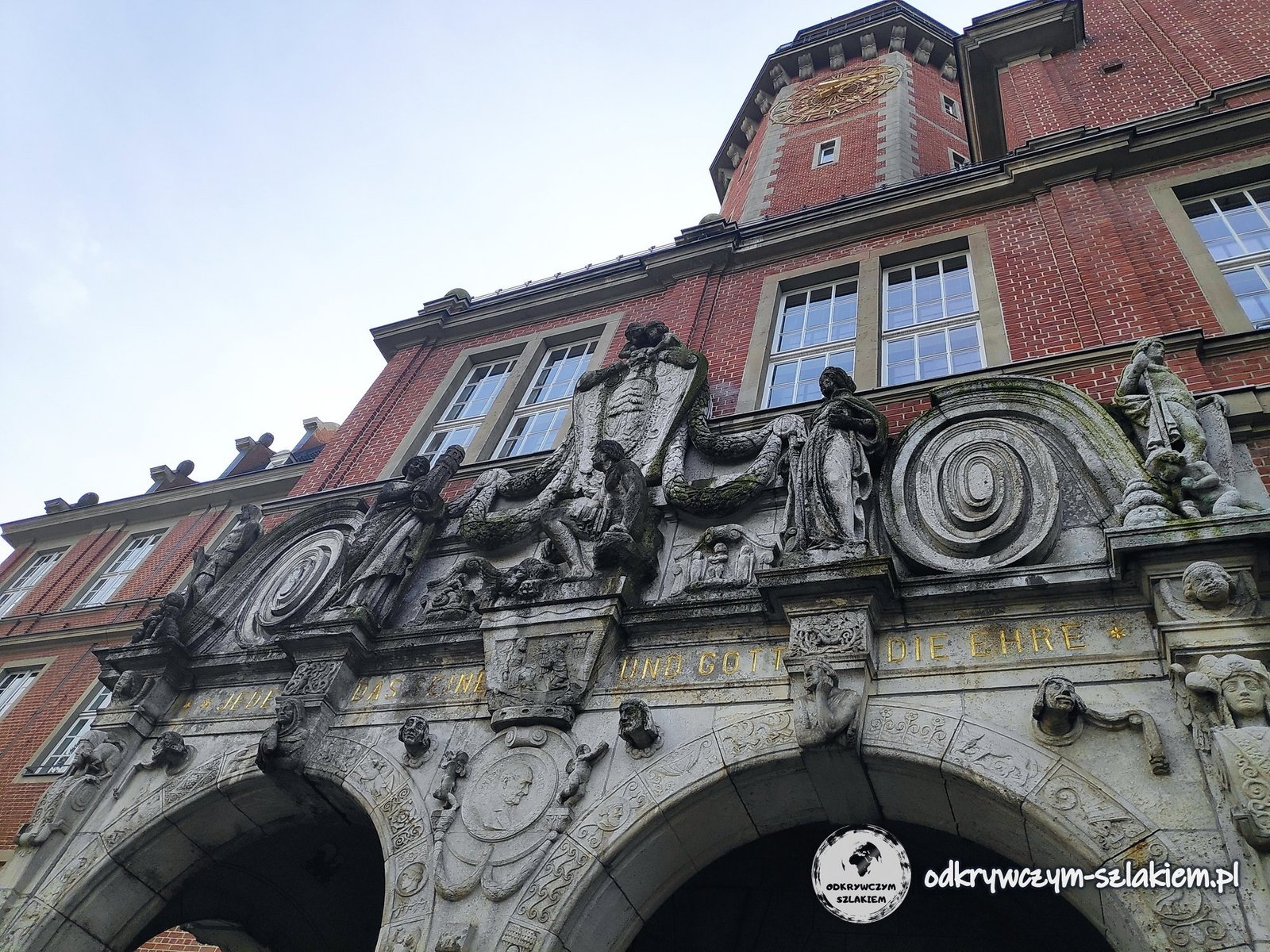
The richest part is the entrance: the two arched doorways are framed by a stone portal with sculptures and ornaments. There is also a Ratskeller restaurant in the building. I photographed the town hall in February 2022 and in March 2023.
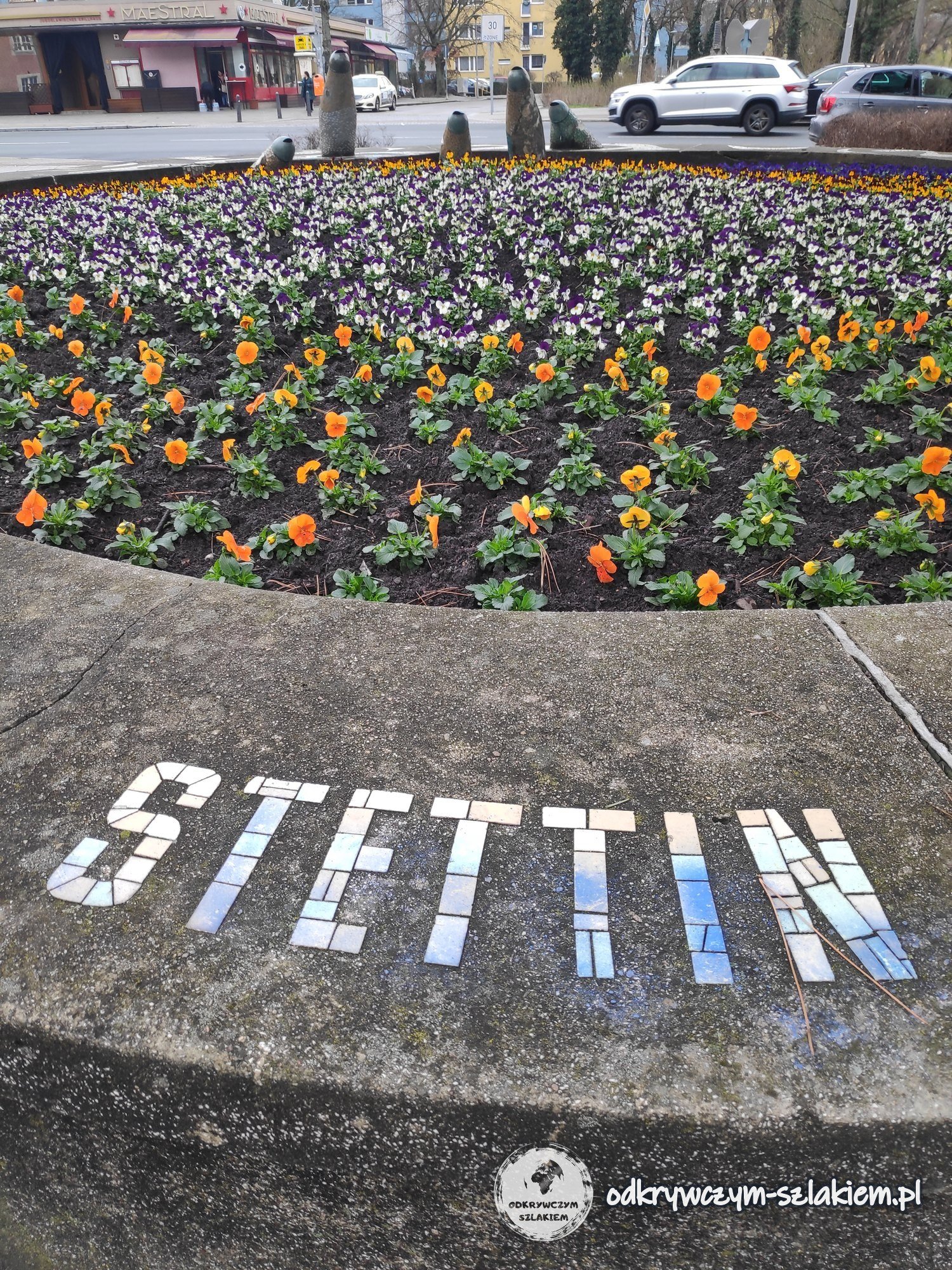
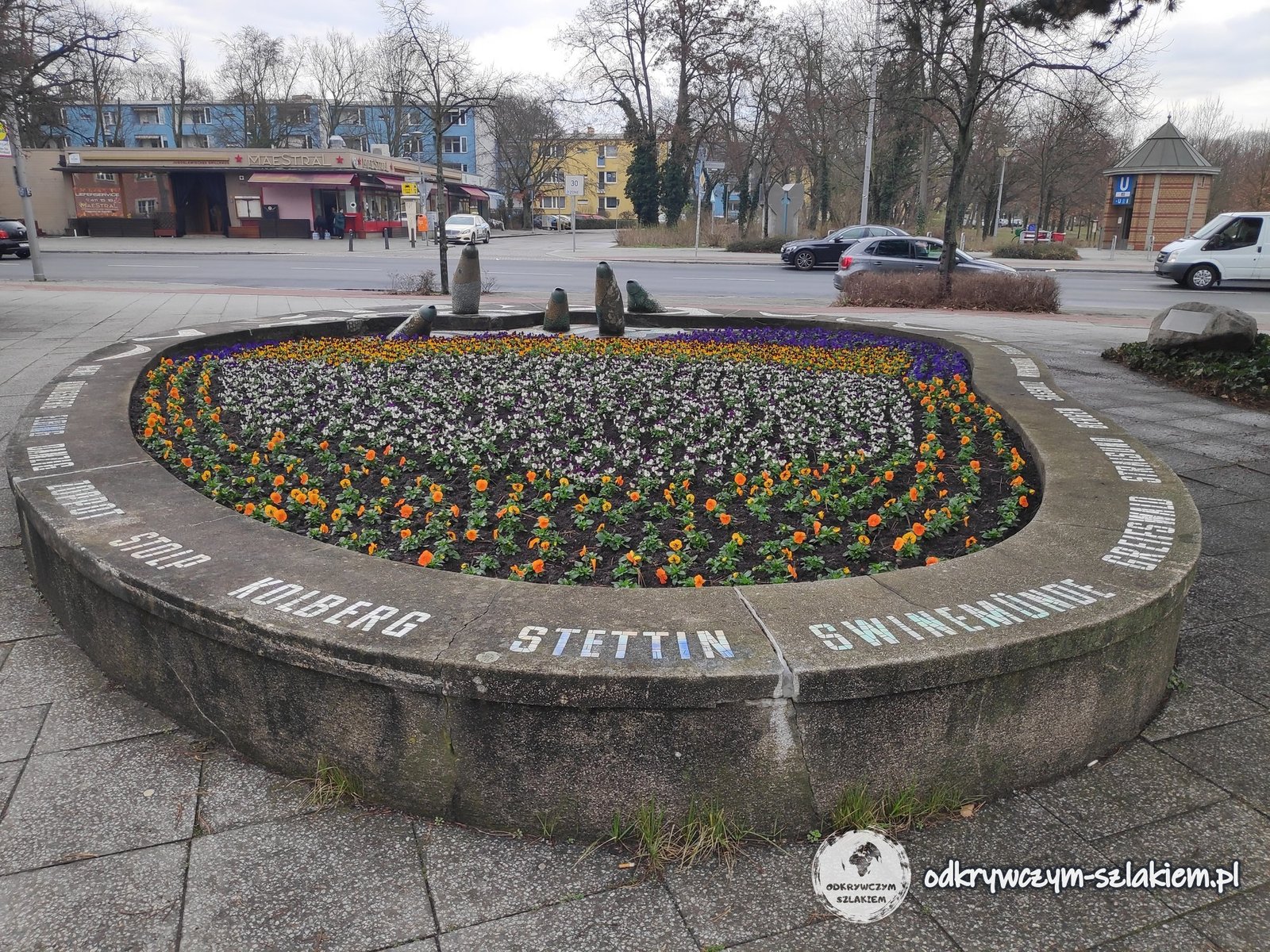
Right next to the town hall there is a flowerbed – in March 2023 it was full of pansies. On its low concrete wall, the names of Pomeranian towns are laid out in tiles, among them STETTIN (Szczecin), KOLBERG (Kołobrzeg), STOLP (Słupsk) and SWINEMÜNDE (Świnoujście), as well as GREIFSWALD and STRALSUND.
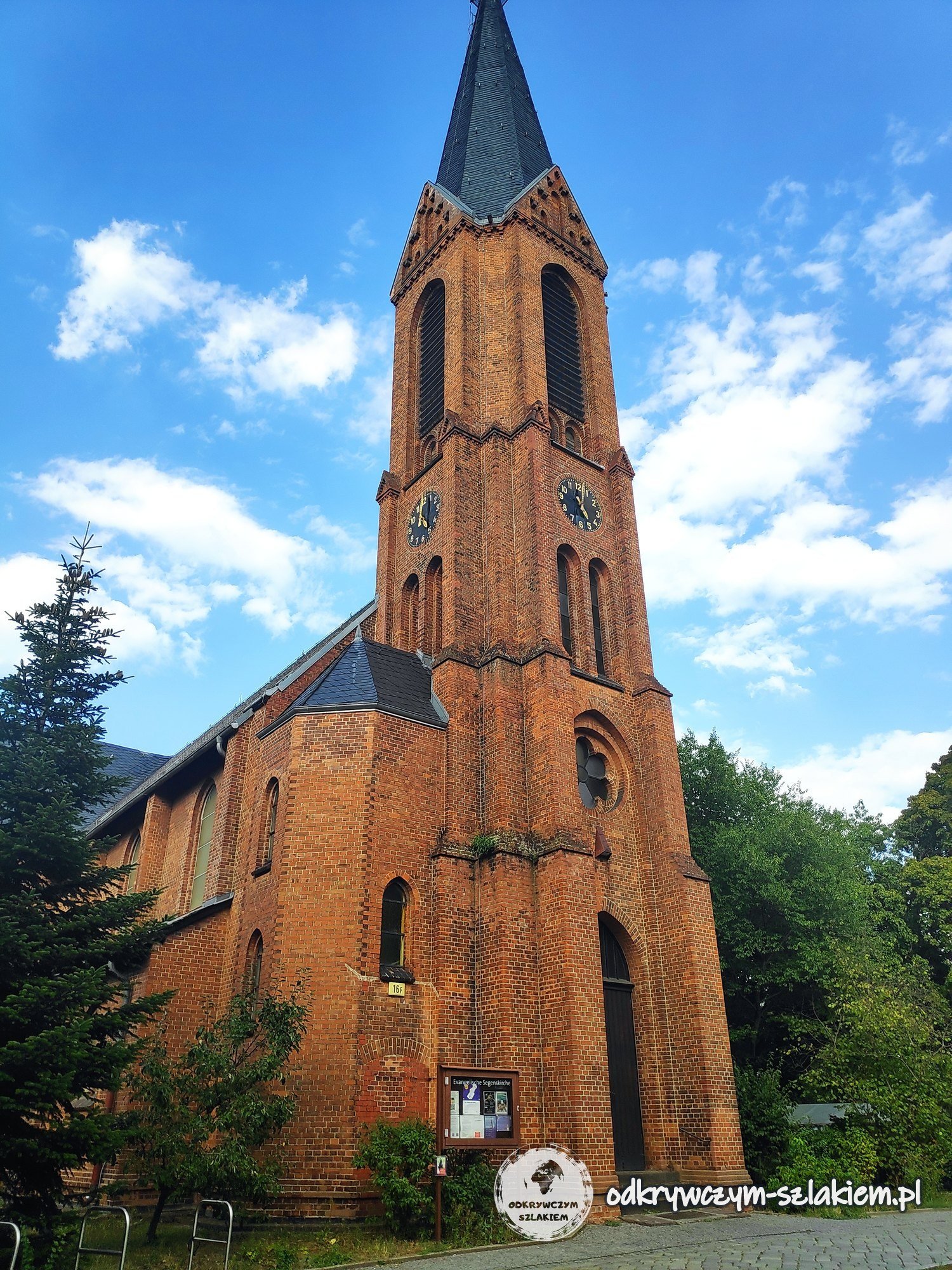
Further south, on Auguste-Viktoria-Allee, stands the brick Segenskirche with its tall tower. It was built in 1891–1892 in the neo-Gothic style, burned down in 1944 and was consecrated again in 1957 after being rebuilt. I took the photo in August 2022.
Steinbergpark – a cascade over boulders
Steinbergpark lies where Wittenau, Waidmannslust and Tegel meet, just over a kilometre west of the church in Alt-Wittenau. The park was laid out from 1924 onwards in an area of forest. It covers about 35 hectares, and in the middle lies the Steinbergsee lake. The name comes from the Steinberg hill on the lake’s northern shore.
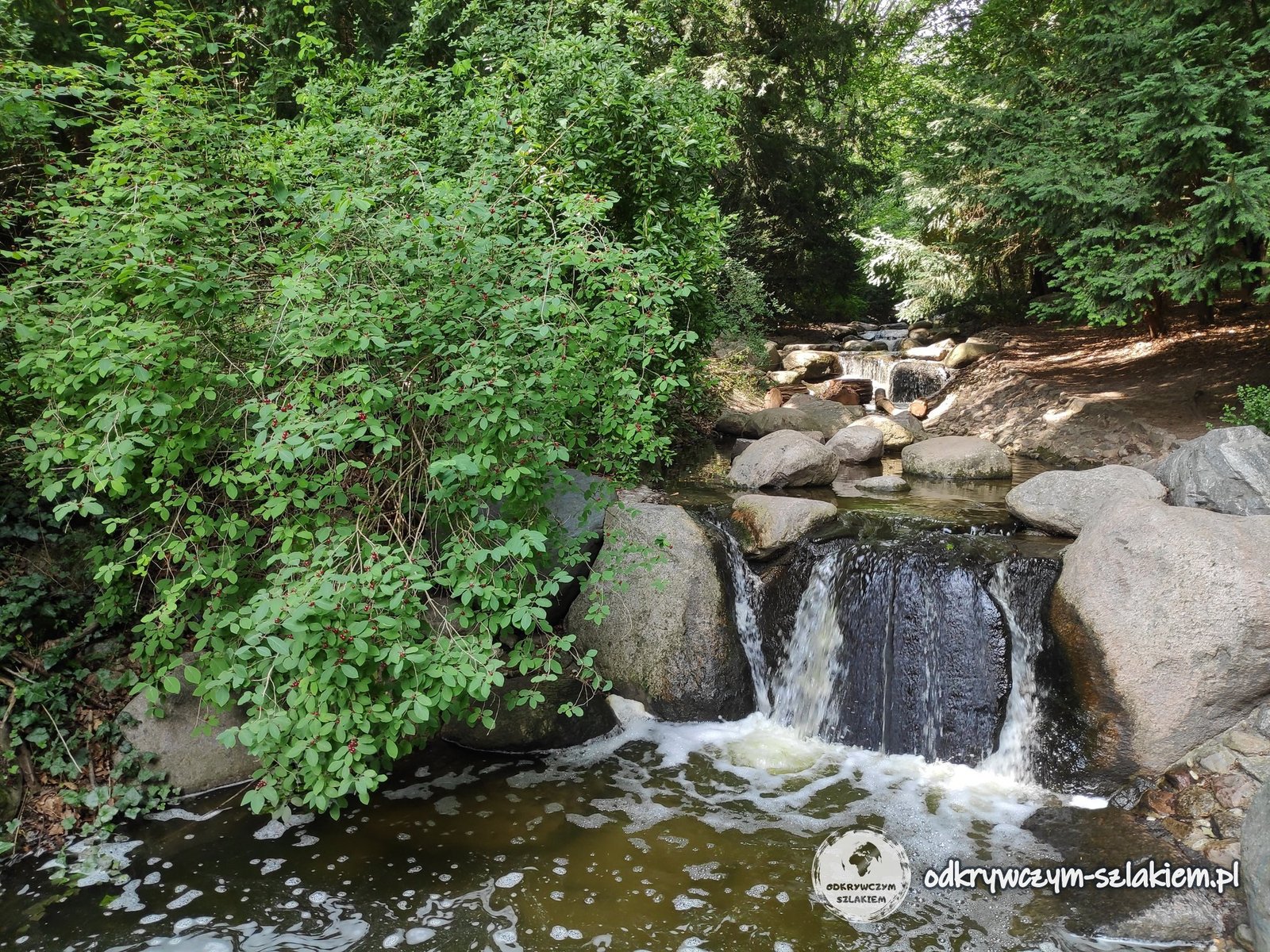
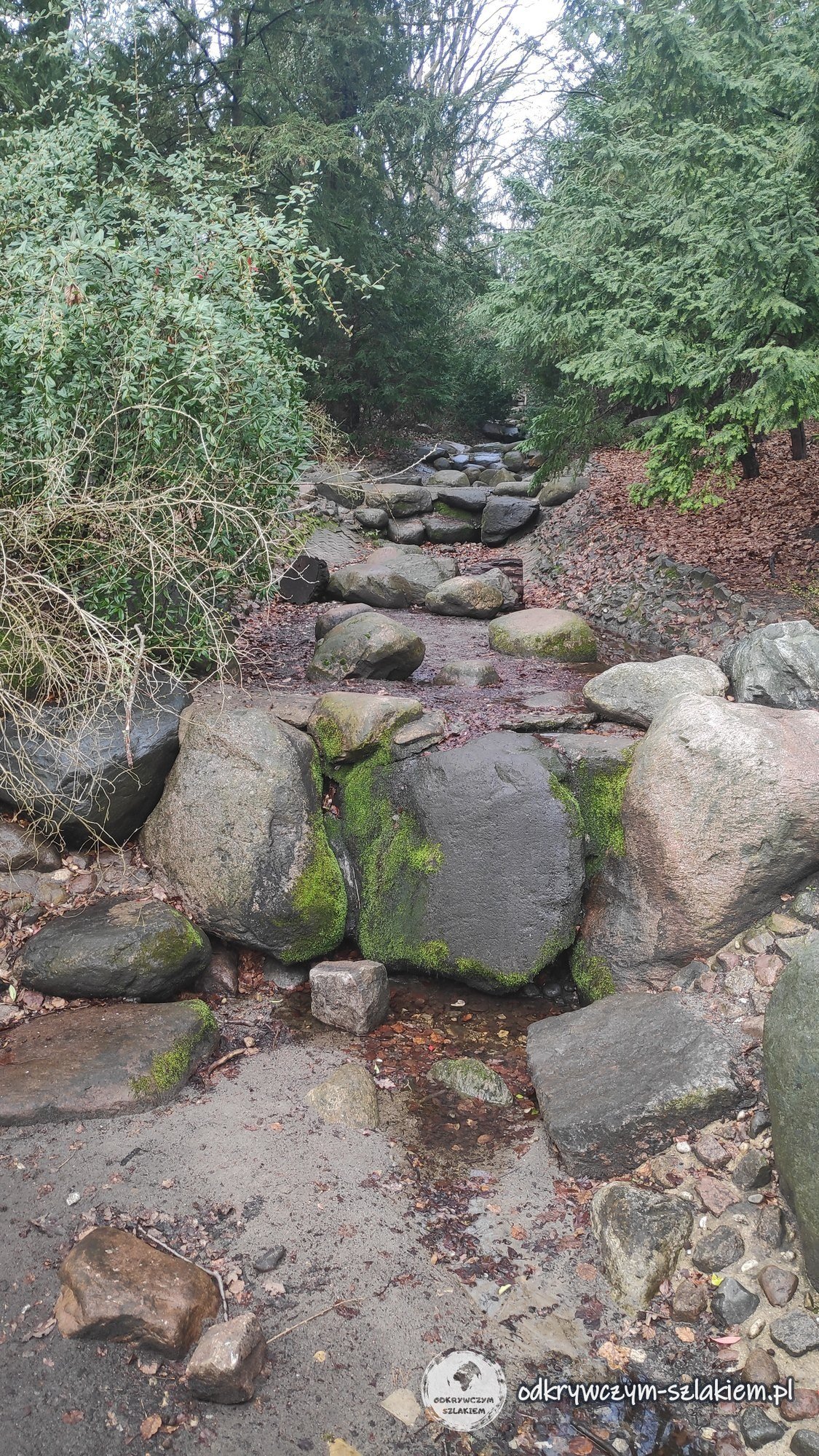
The main attraction is the artificial cascade from the late 1920s. The water runs over more than 200 glacial boulders and down nine steps, fed by pumps that draw water from the lake. In July 2021 it was in full flow.
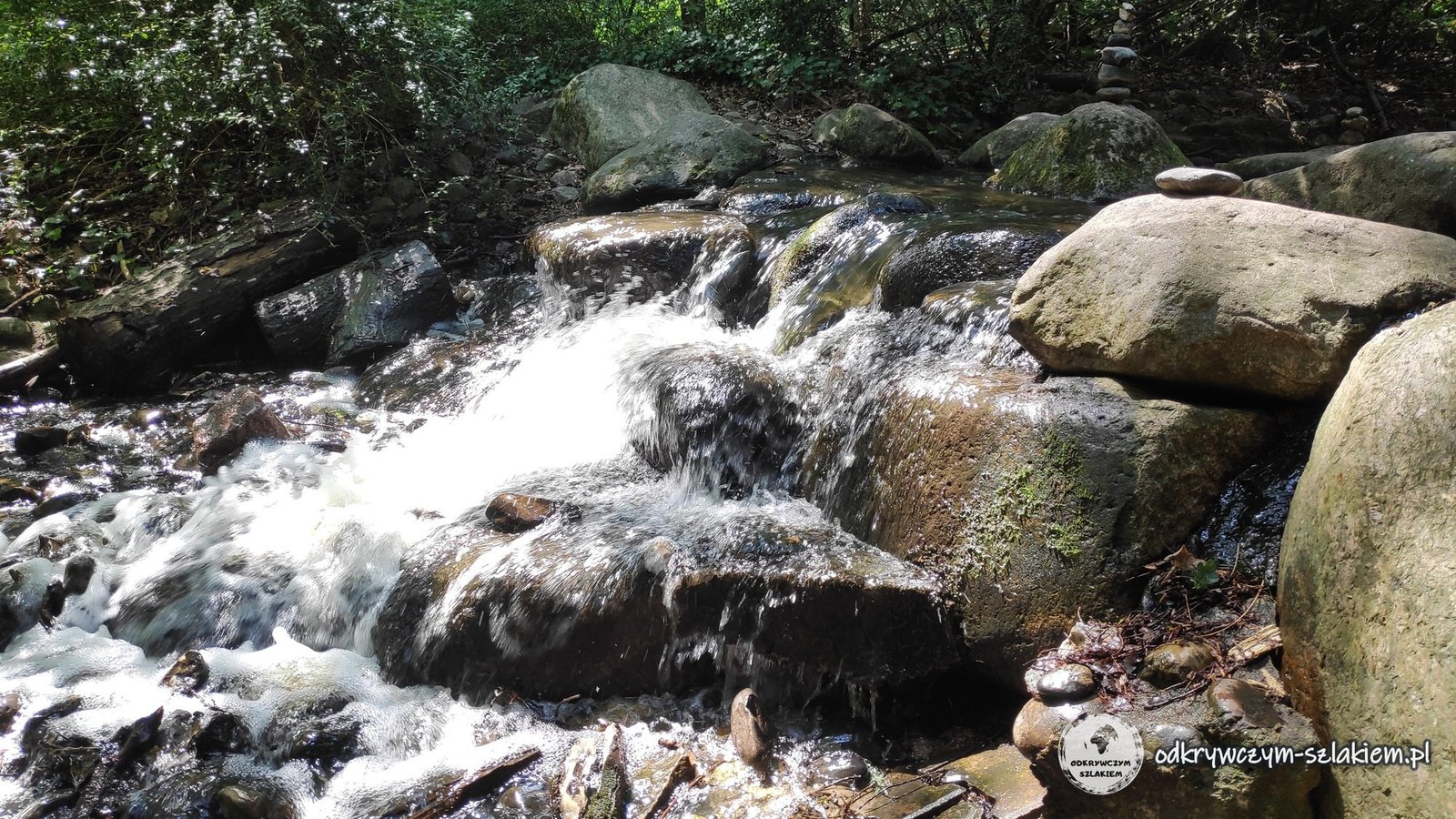
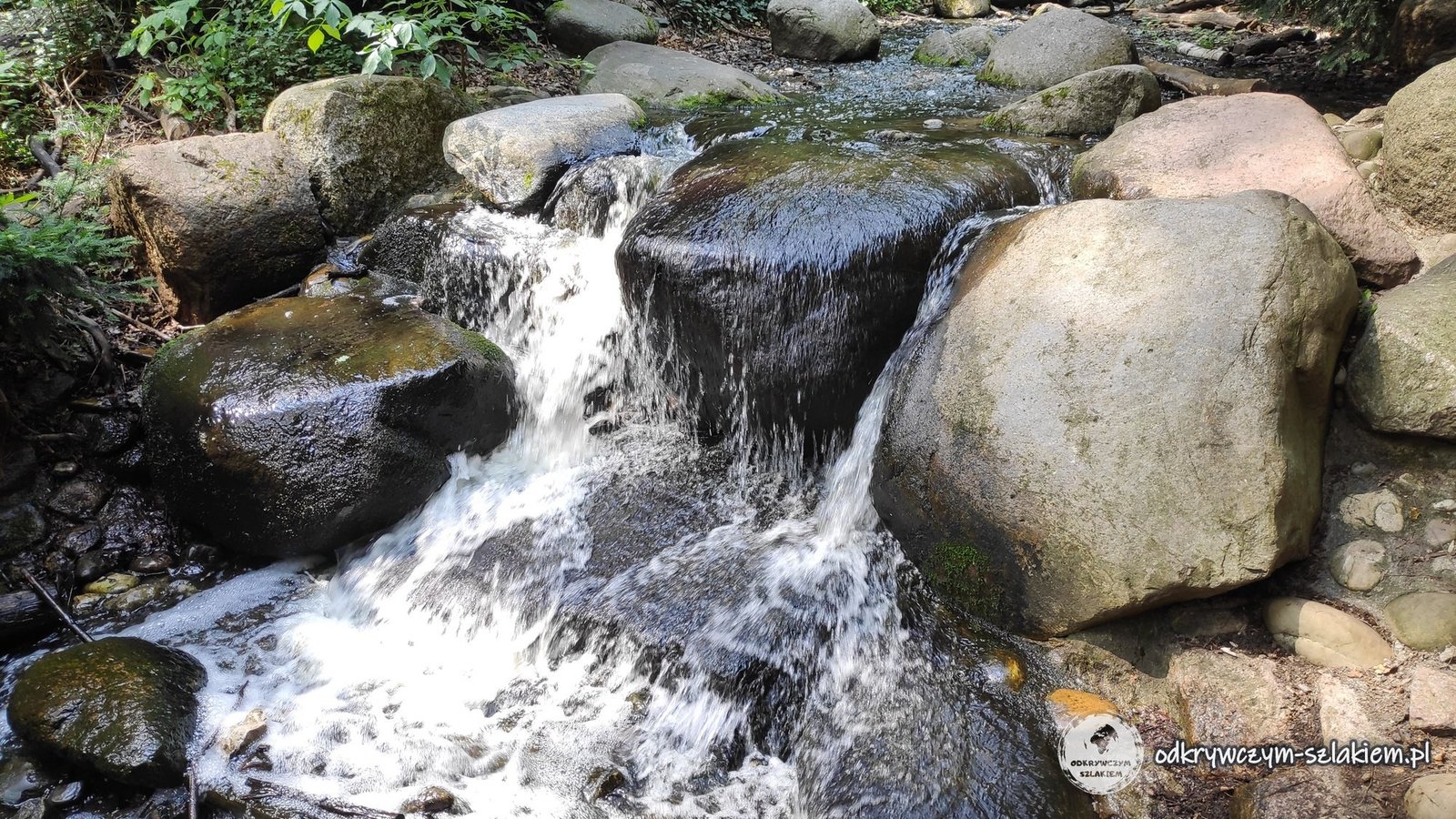
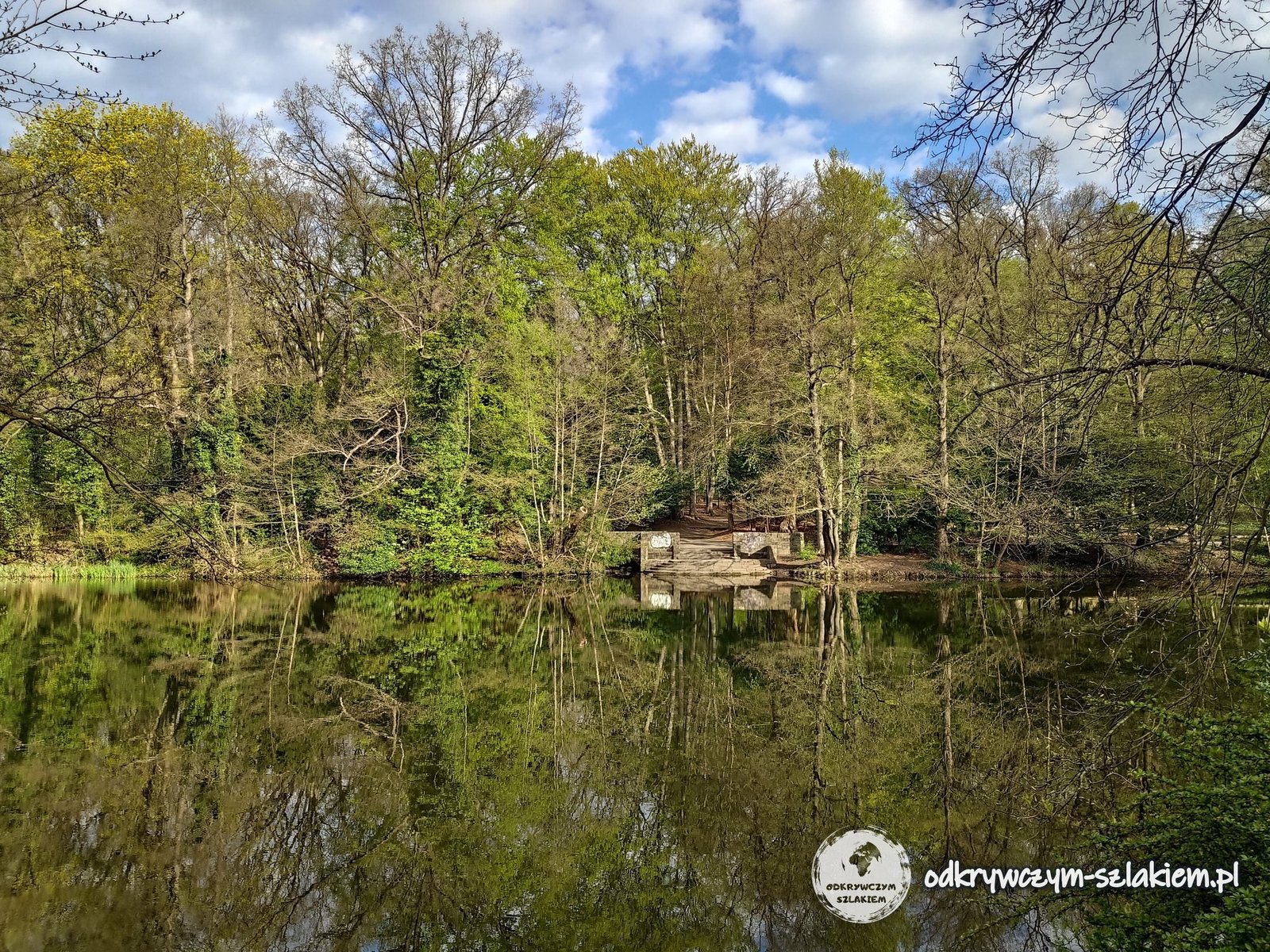
In April 2022 I came here in the morning – the trees were reflected in the still water of the Steinbergsee.
The pumps only run in the warmer part of the year. In March 2023 the cascade was dry and all you could see were the mossy boulders.
Tegel – the Borsig gate and the Borsigturm
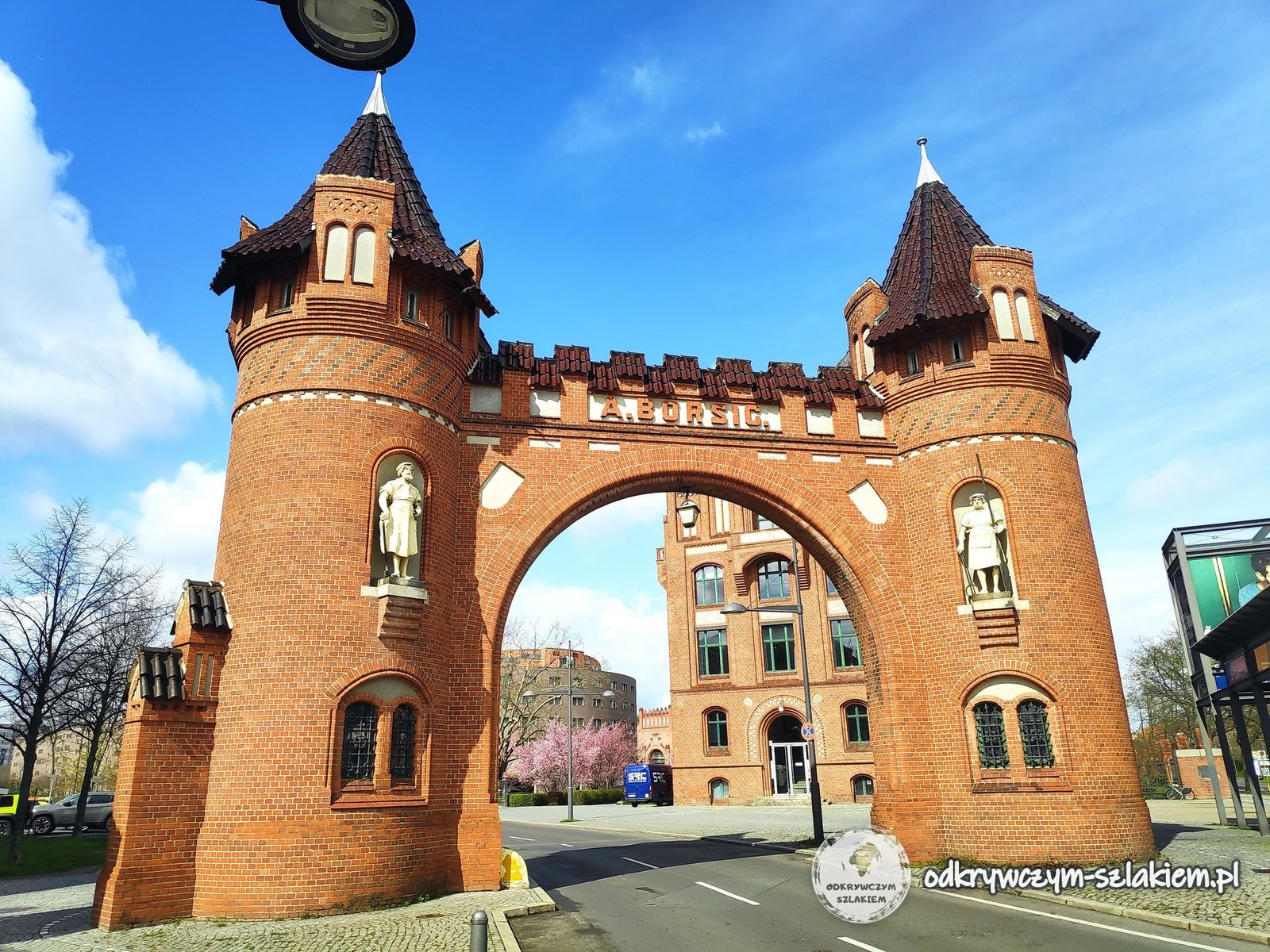
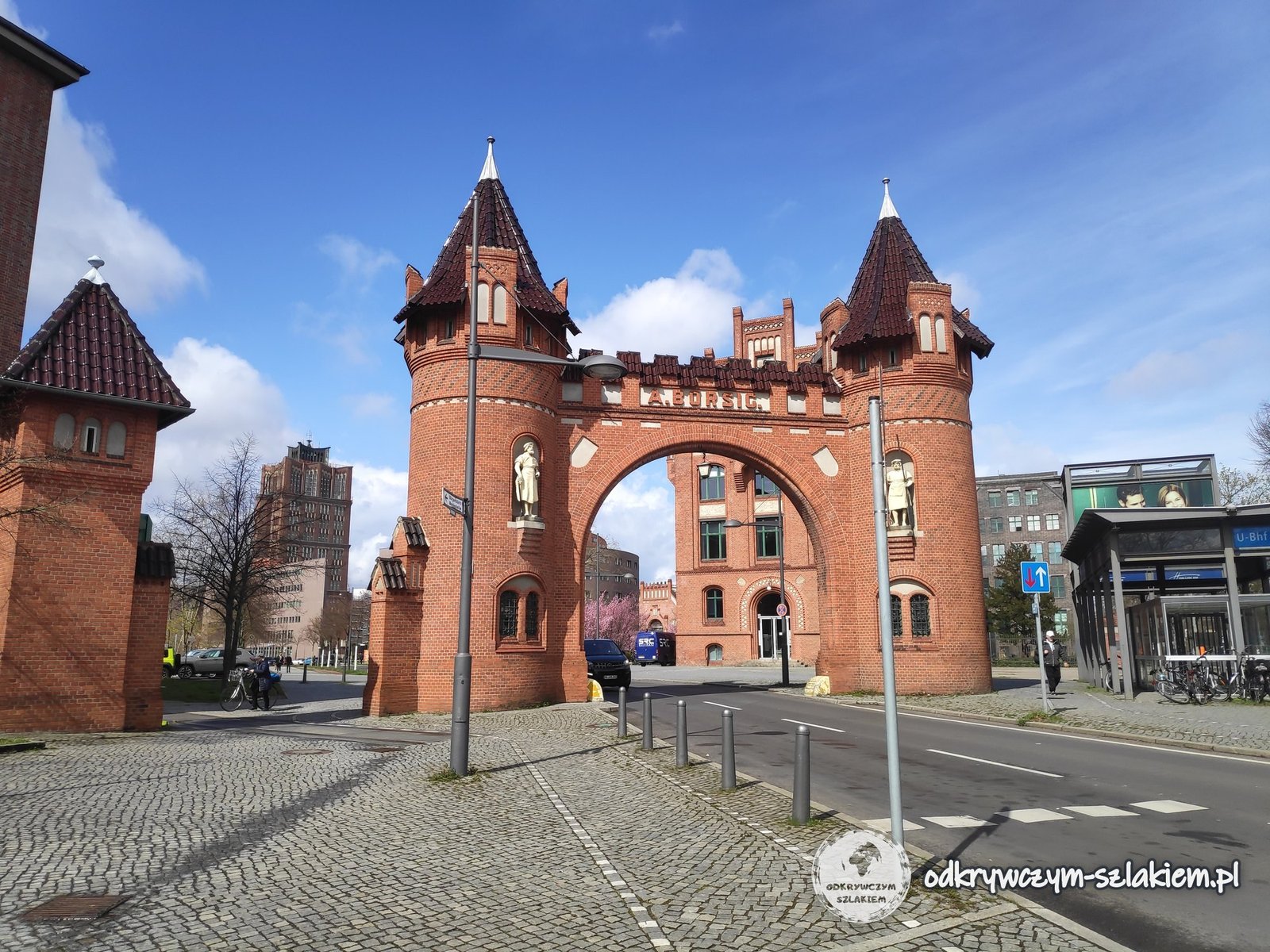
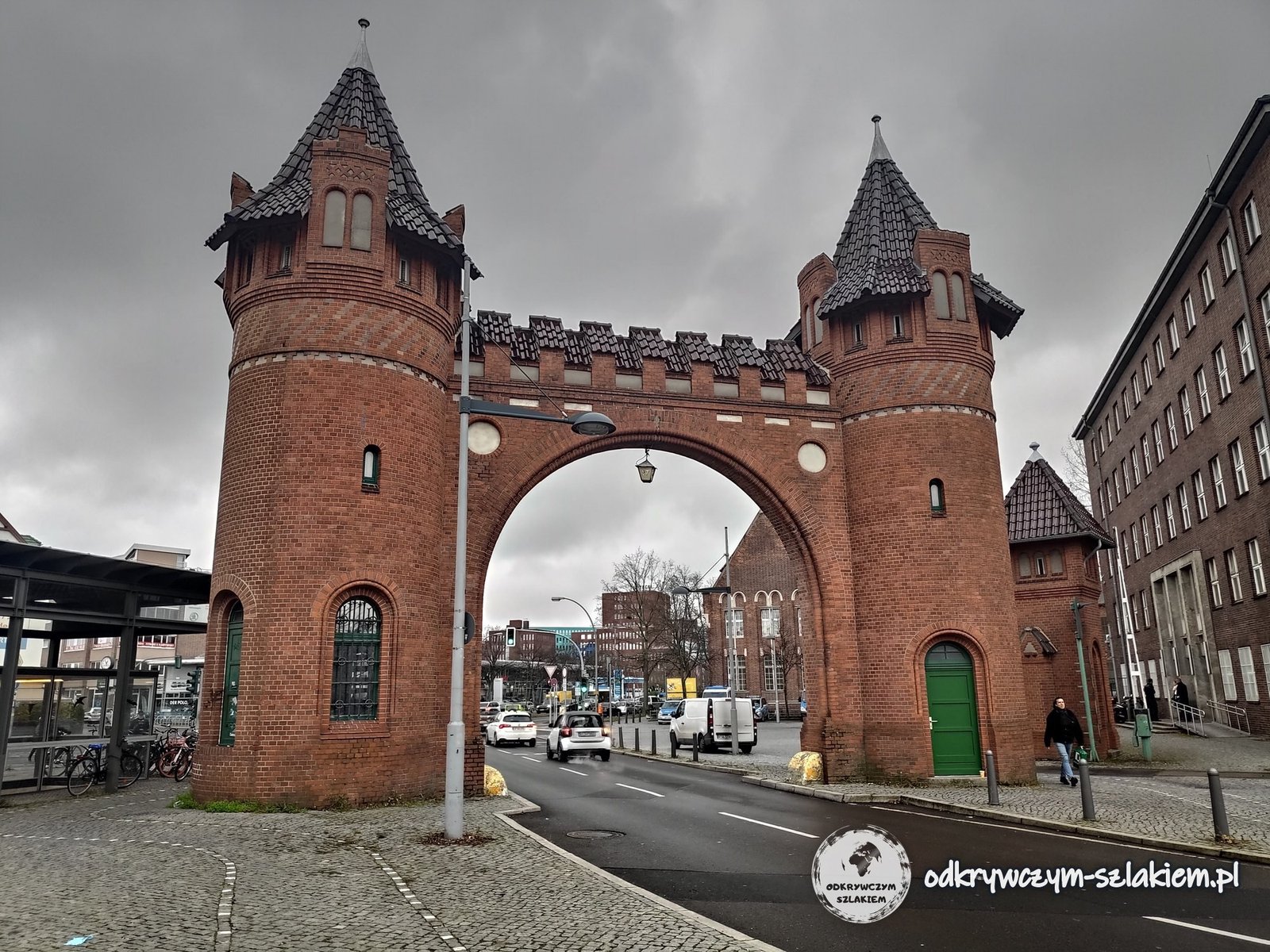
Tegel still has the buildings of the former Borsig works – a company founded in the 19th century by August Borsig and best known for building locomotives. The factory moved to Tegel in 1898, and that is when the entrance gate, the Borsigtor, was built. It has two round towers, battlements above the arch and the inscription “A. BORSIG.” – it looks like a medieval town gate. Figures of a smith and an iron founder stand in niches in the towers. I was here on a sunny day in April 2023.
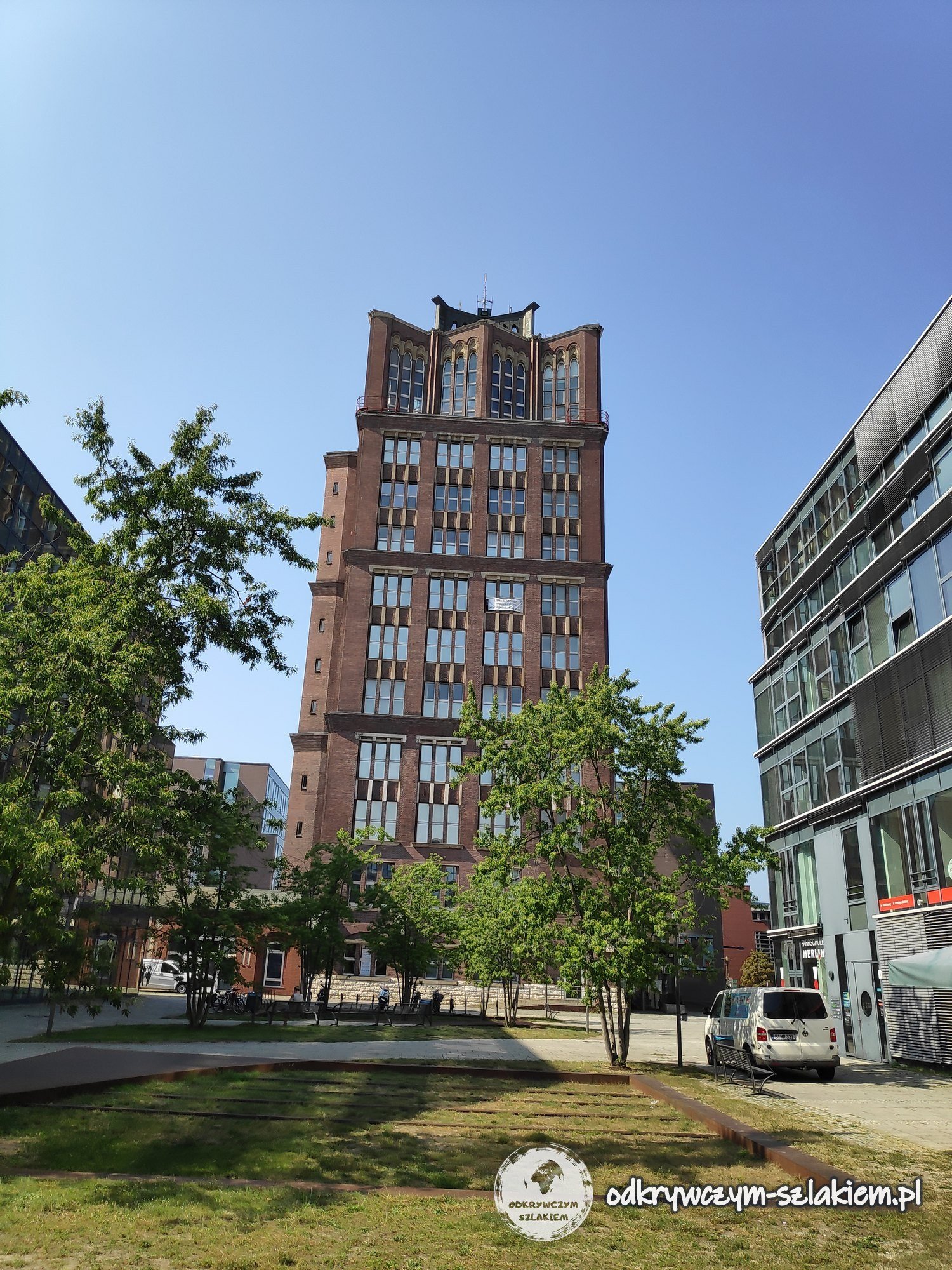
Two hundred metres further on stands the Borsigturm – a 65-metre brick office tower from 1922–1924, designed by Eugen Schmohl. It is considered Berlin’s first high-rise, depending on the definition. The top floors once held a water tank for the works. I photographed it in August 2019 and in November 2021.
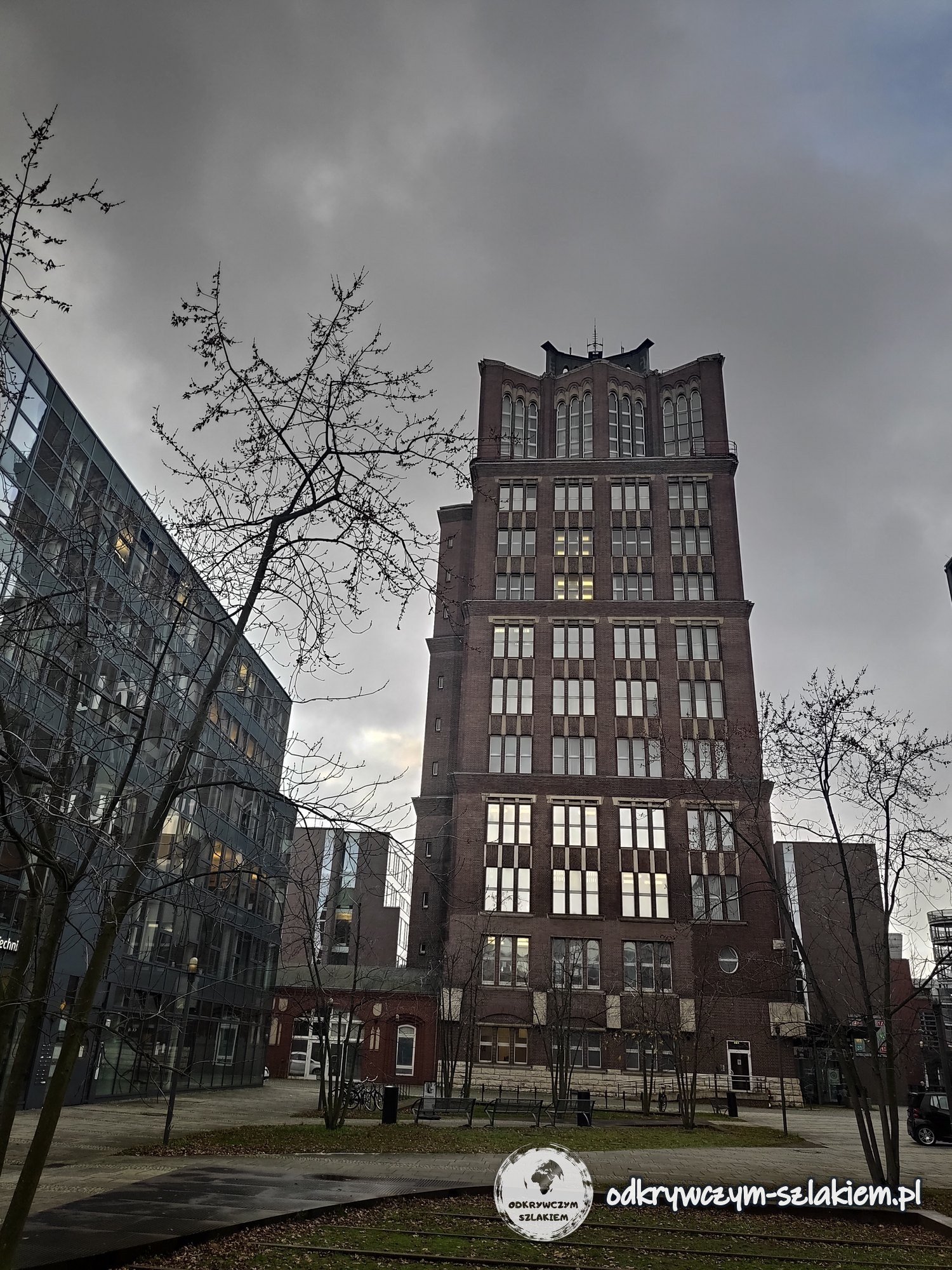
The former factory halls now house the Hallen am Borsigturm shopping centre, and right by the gate is the entrance to the U6 station Borsigwerke. During the Festival of Lights 2020, images were projected onto the tower and the halls – I described it in my post about the Festival of Lights.
Tegeler Hafen and Tegeler See
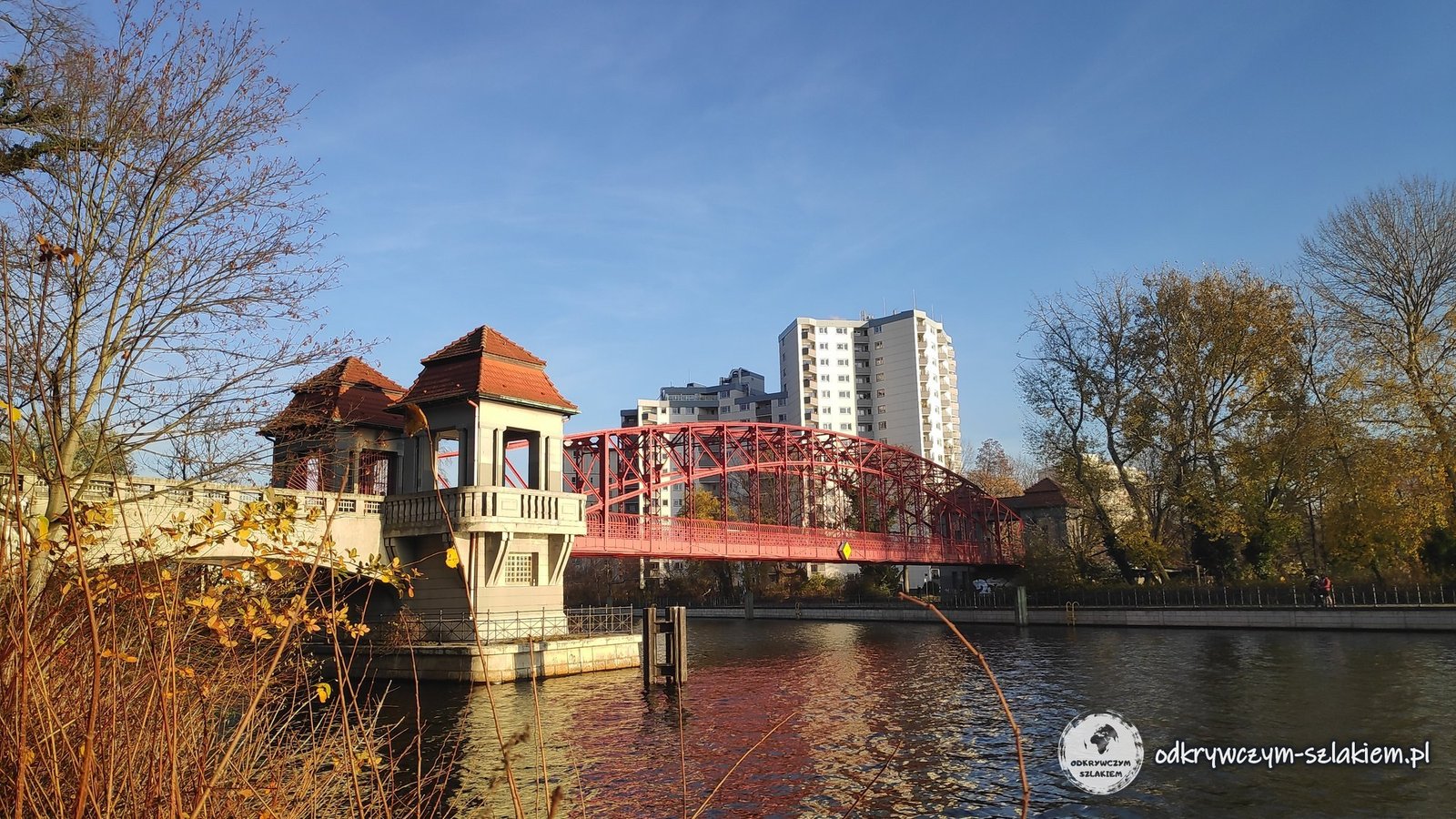
The old village of Tegel lies on the Tegeler See, at Alt-Tegel, the last station of the U6. A red steel footbridge from 1908–1909 spans the entrance to the Tegeler Hafen harbour. Locals call it the Sechserbrücke – until 1922 you had to pay five pfennigs to cross, a coin colloquially known as a “Sechser”. At the northern end of the bridge there are pavilions with little towers. I was here in November 2020, in the autumn sunshine.
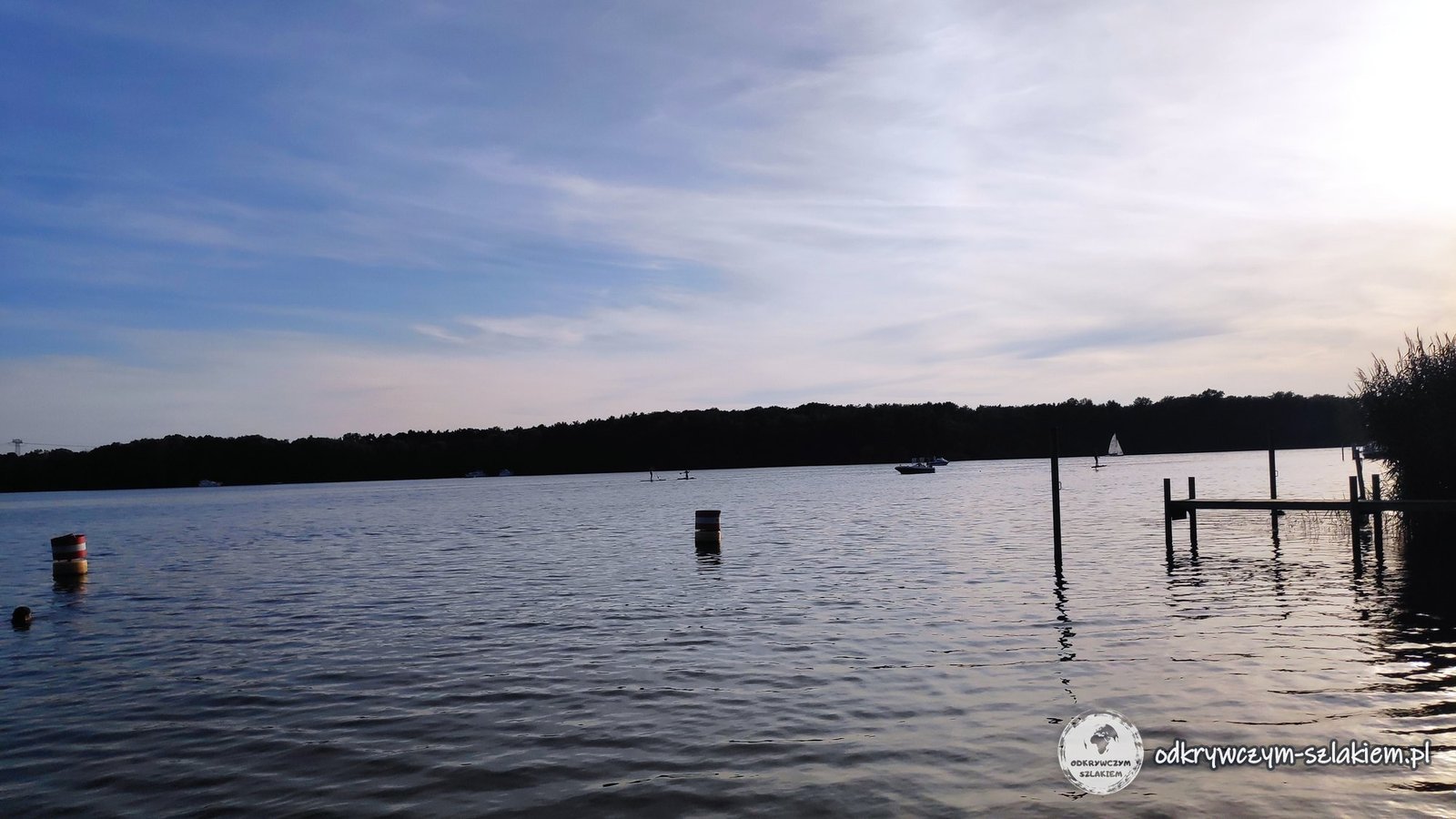
The Tegeler See is Berlin’s second largest lake. The Greenwichpromenade runs along the shore in Alt-Tegel. In July 2022 I was at a jetty on the western shore of the lake at sunset. I described the forest by the lake and Berlin’s tallest tree in my post Green Berlin.
Tegel Airport and the Flughafensee
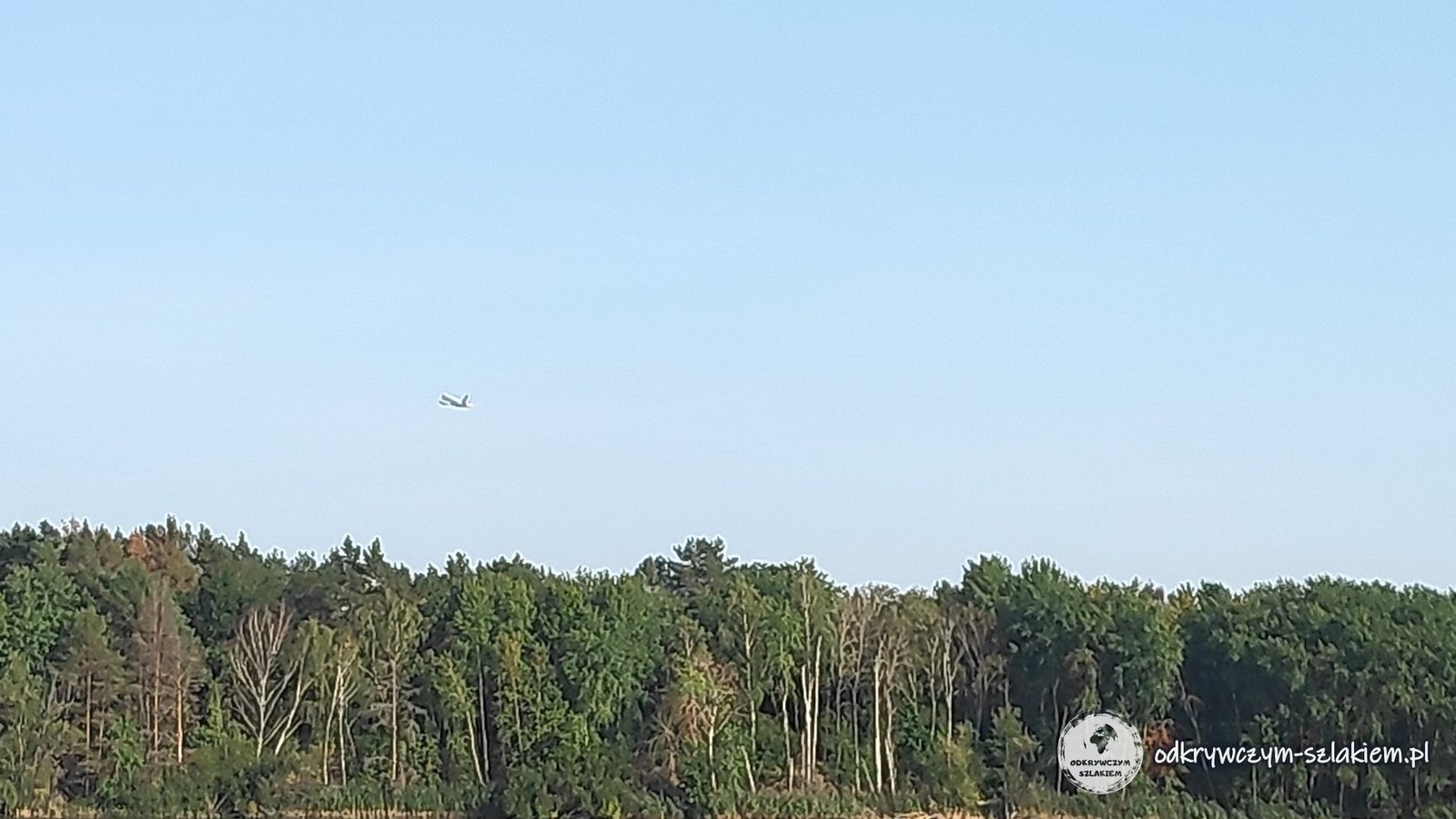
South of Alt-Tegel, for many years, was West Berlin’s main airport – Tegel “Otto Lilienthal”, with its hexagonal terminal opened in 1974. The last scheduled flight, an Air France plane to Paris, left on 8 November 2020, after the new BER airport opened. In September 2020, less than two months before the closure, planes were still flying over the forest by the Flughafensee lake.
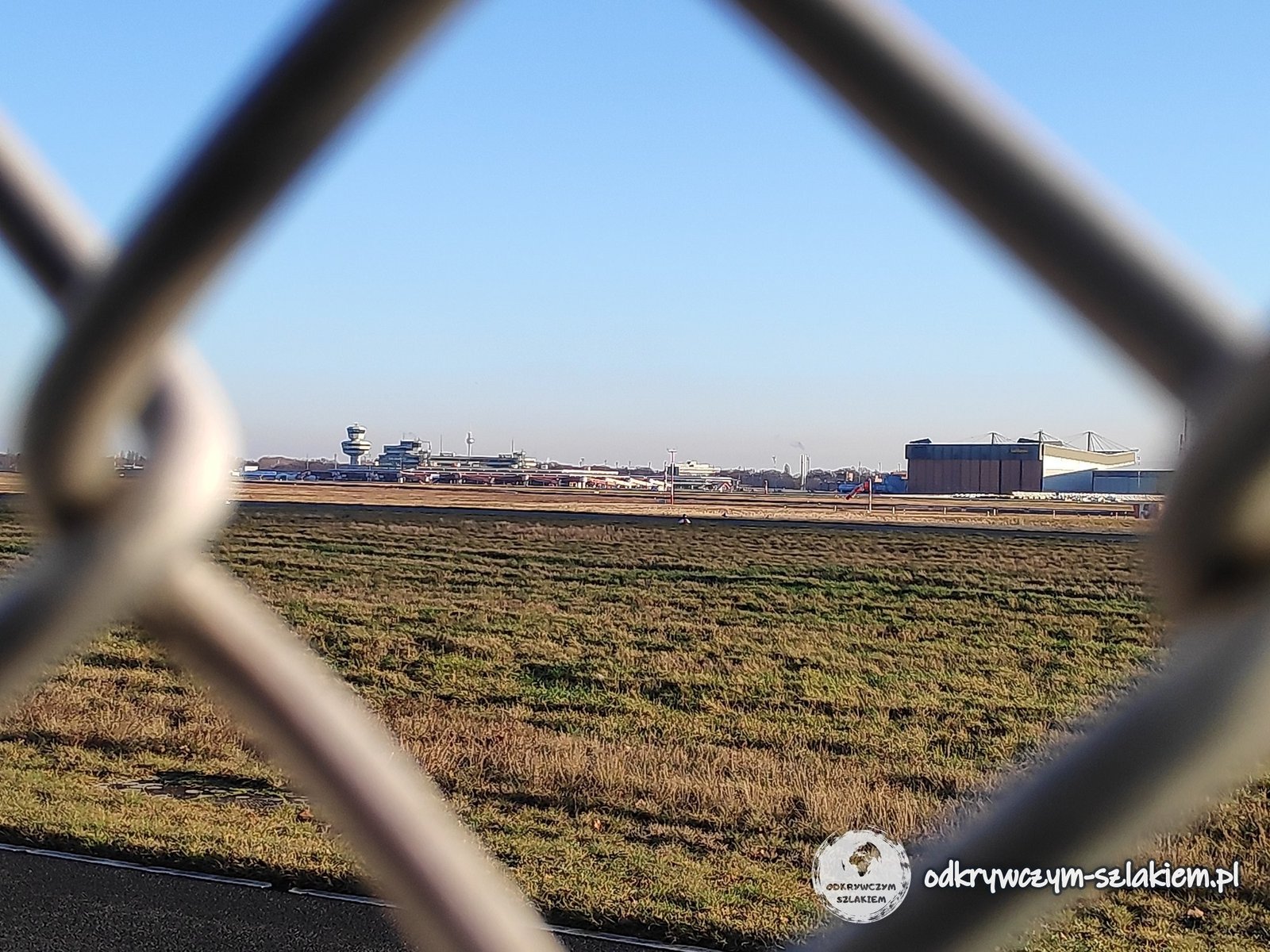
At the end of December 2020 the apron was already empty – through the wire fence you could see the terminal and the control tower. The airport was formally closed in May 2021. The Urban Tech Republic technology park and the Schumacher Quartier housing district are to be built on the site.
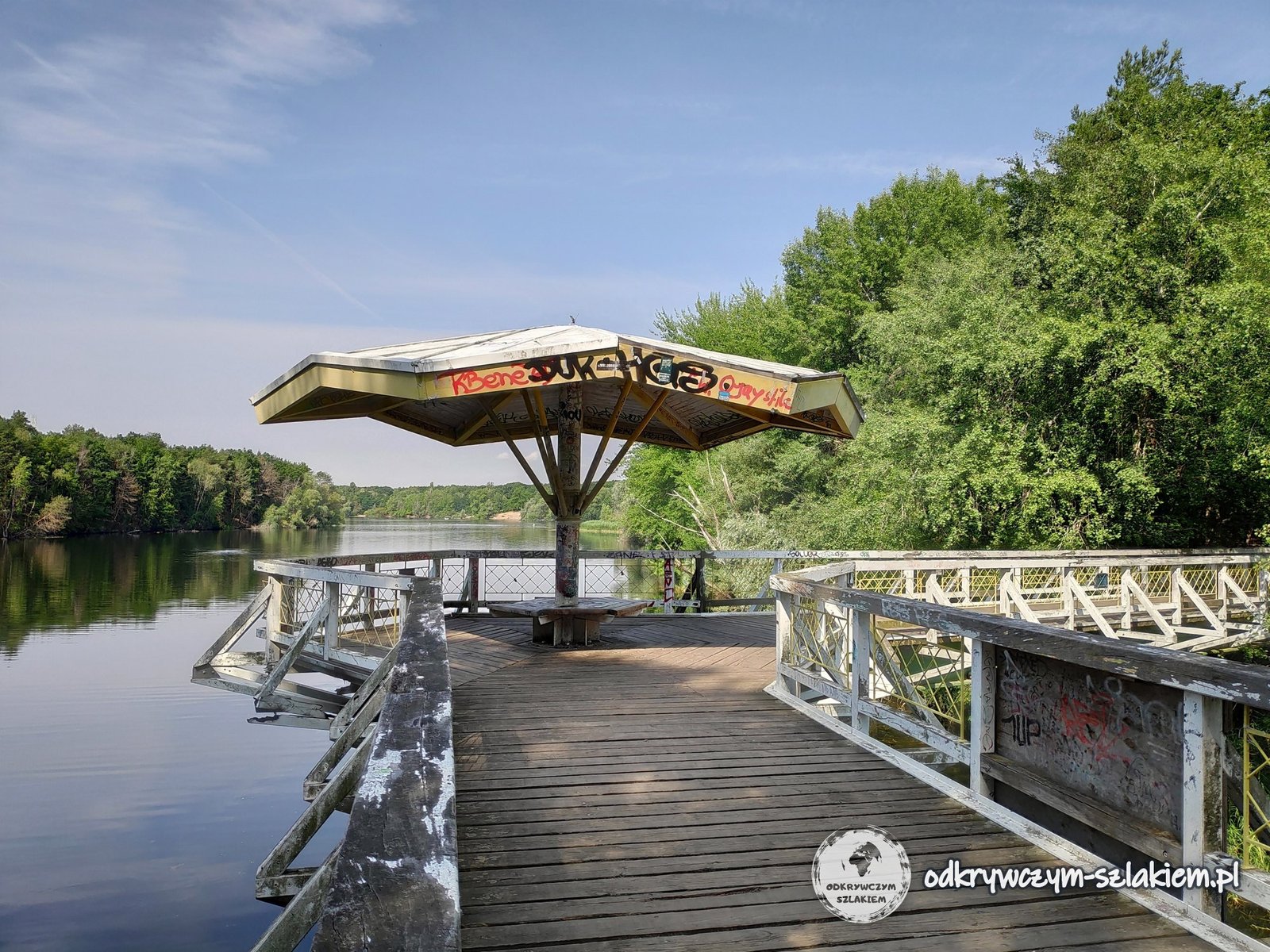
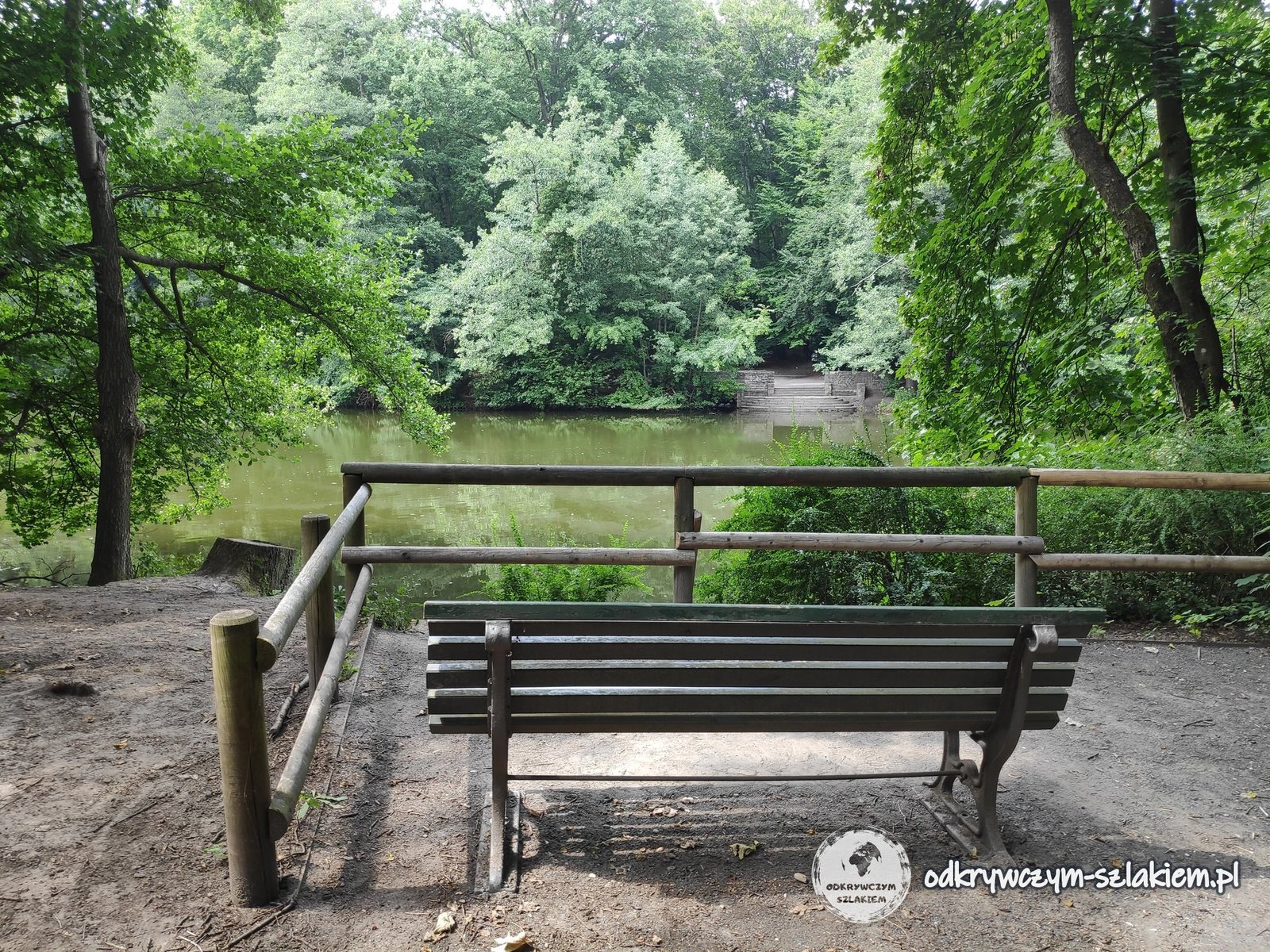
The Flughafensee is an artificial lake in a former gravel pit – gravel was extracted here from 1953 to 1978. It is up to 34 metres deep, making it the deepest lake in Berlin. A wooden viewing jetty with a roof reaches out over the water – I was on it in July 2020.
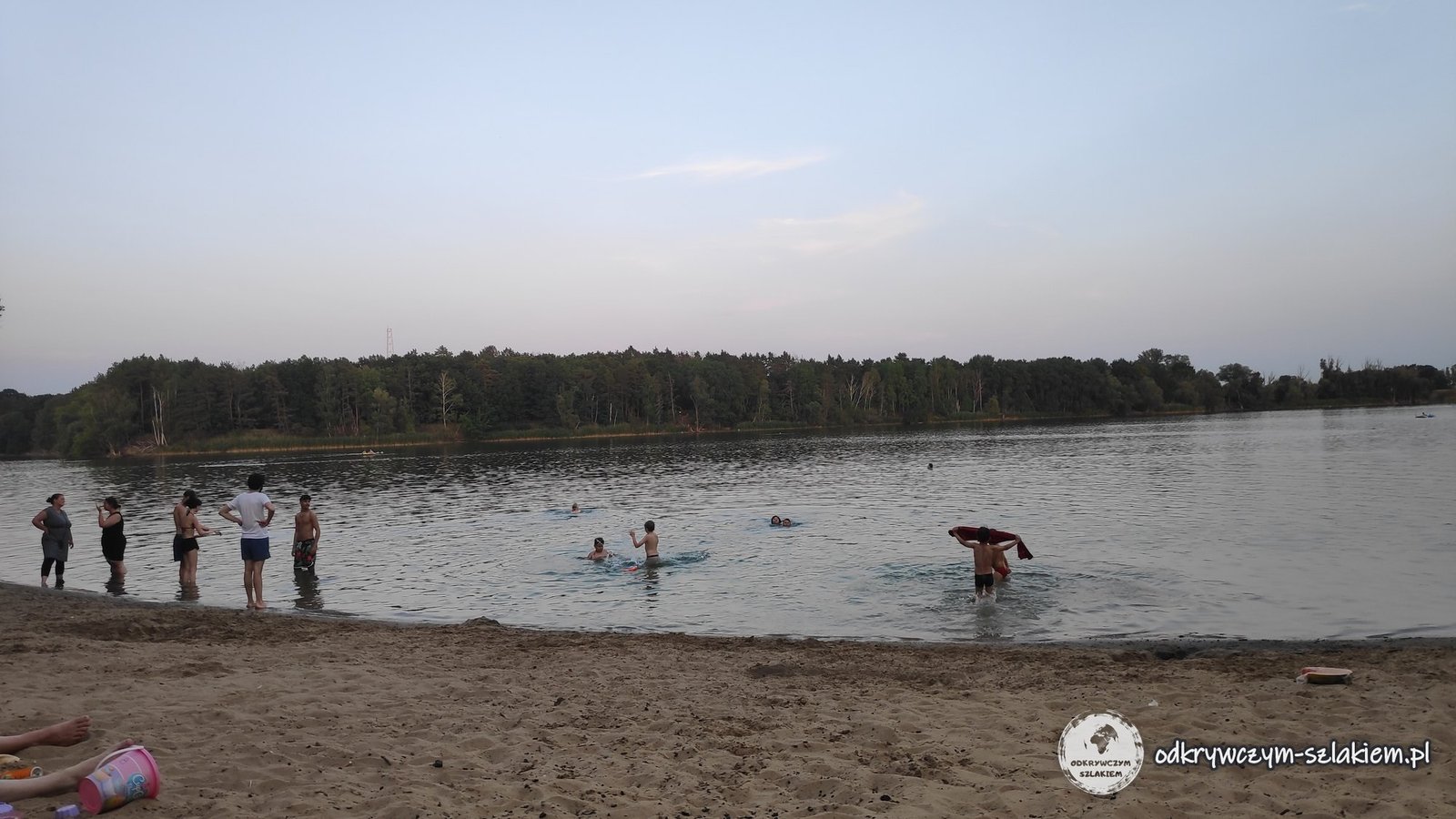
Swimming is only allowed at the sandy beach on the northern shore. On a July evening in 2022 a few people were still in the water. I write about a walk along the airport fence in January 2021 in my post Green Berlin.
Ehrenpfortenberg – the district’s highest point in the Tegeler Forst
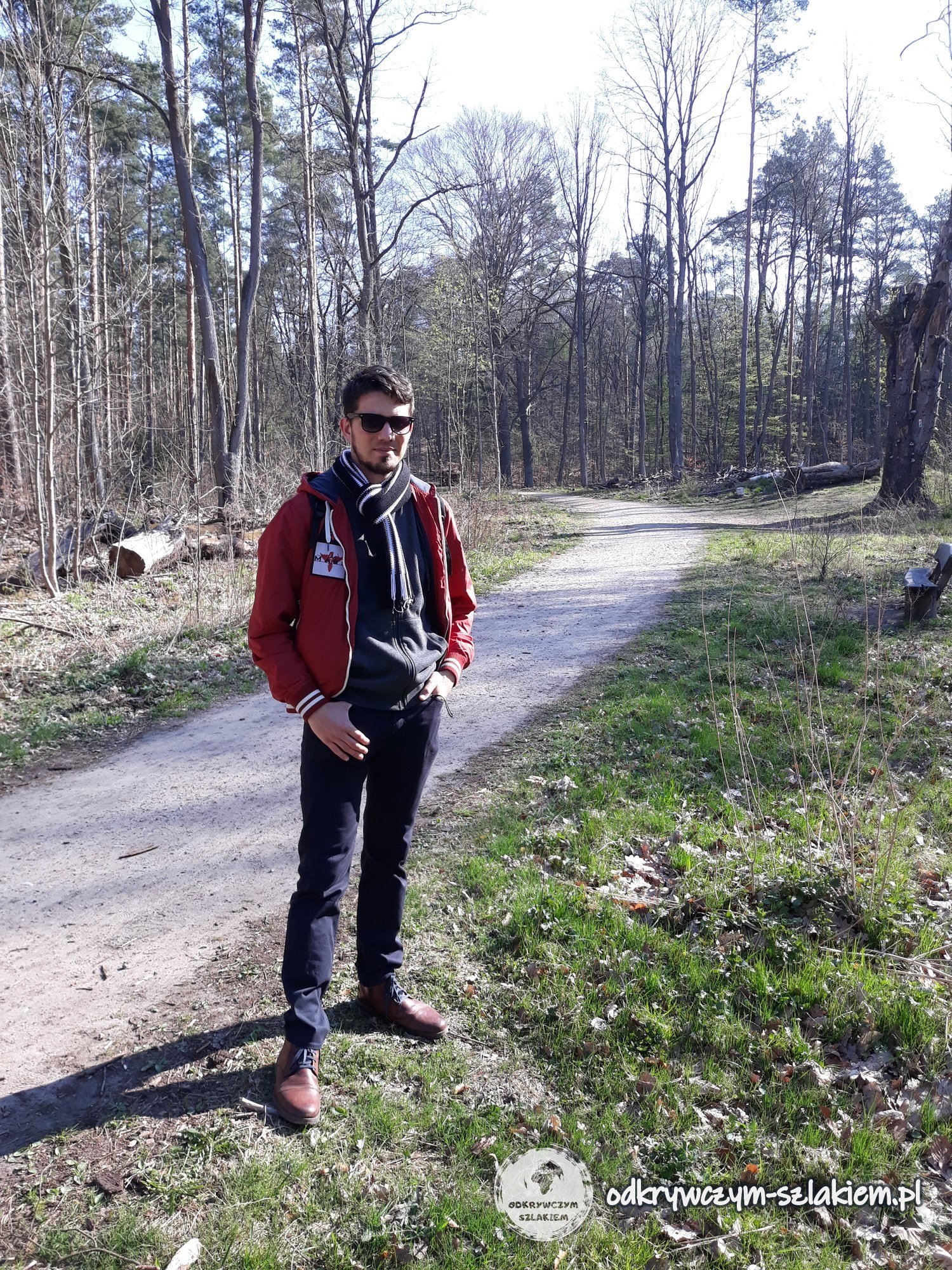
In the Tegeler Forst, in the part called Hermsdorfer Wald, rises the Ehrenpfortenberg. According to the Berlin foresters’ information board, it is 69 m above sea level and the highest natural elevation in the Reinickendorf district. On the top stands a wooden cross, put up only in the 1990s.
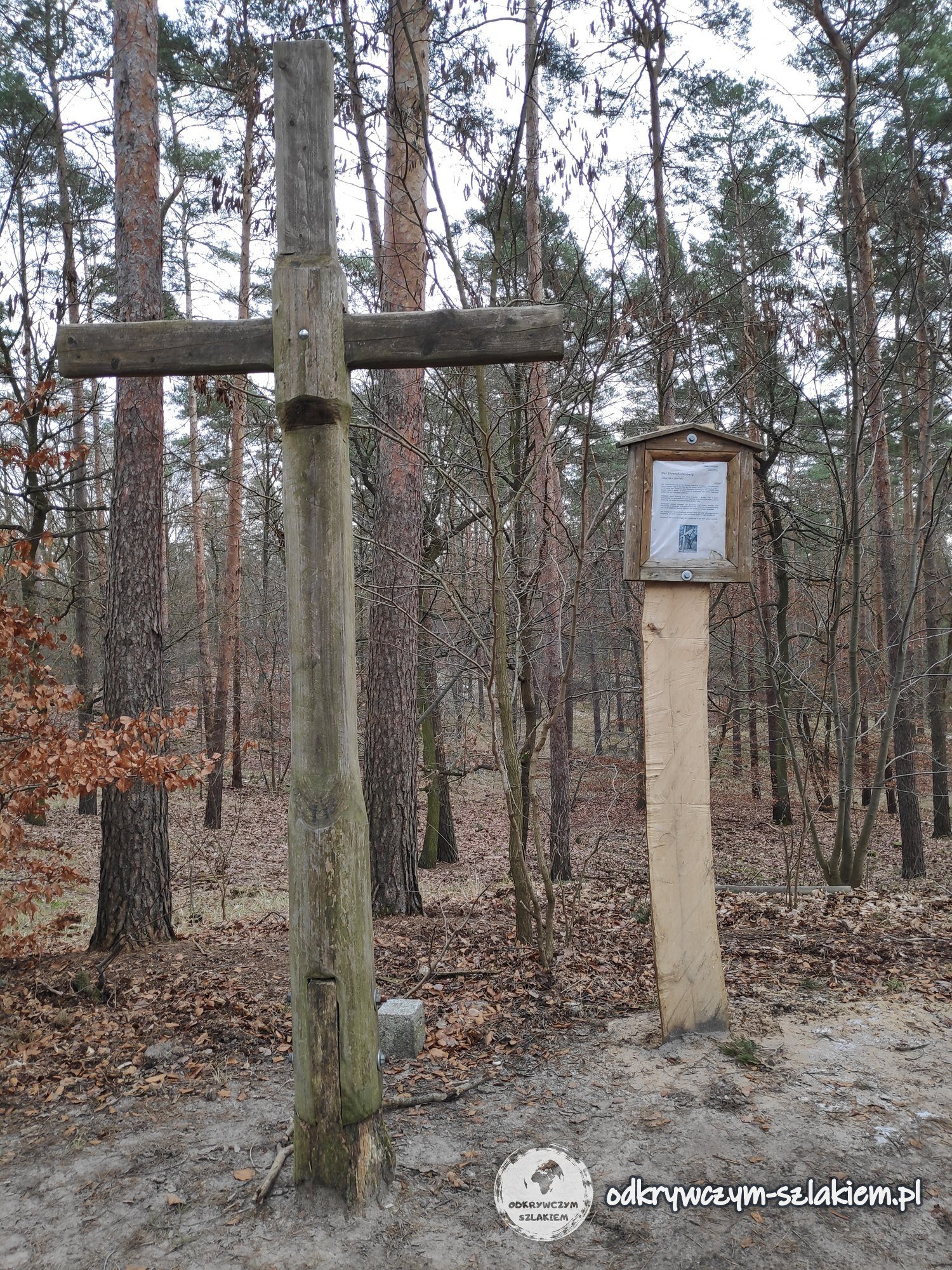
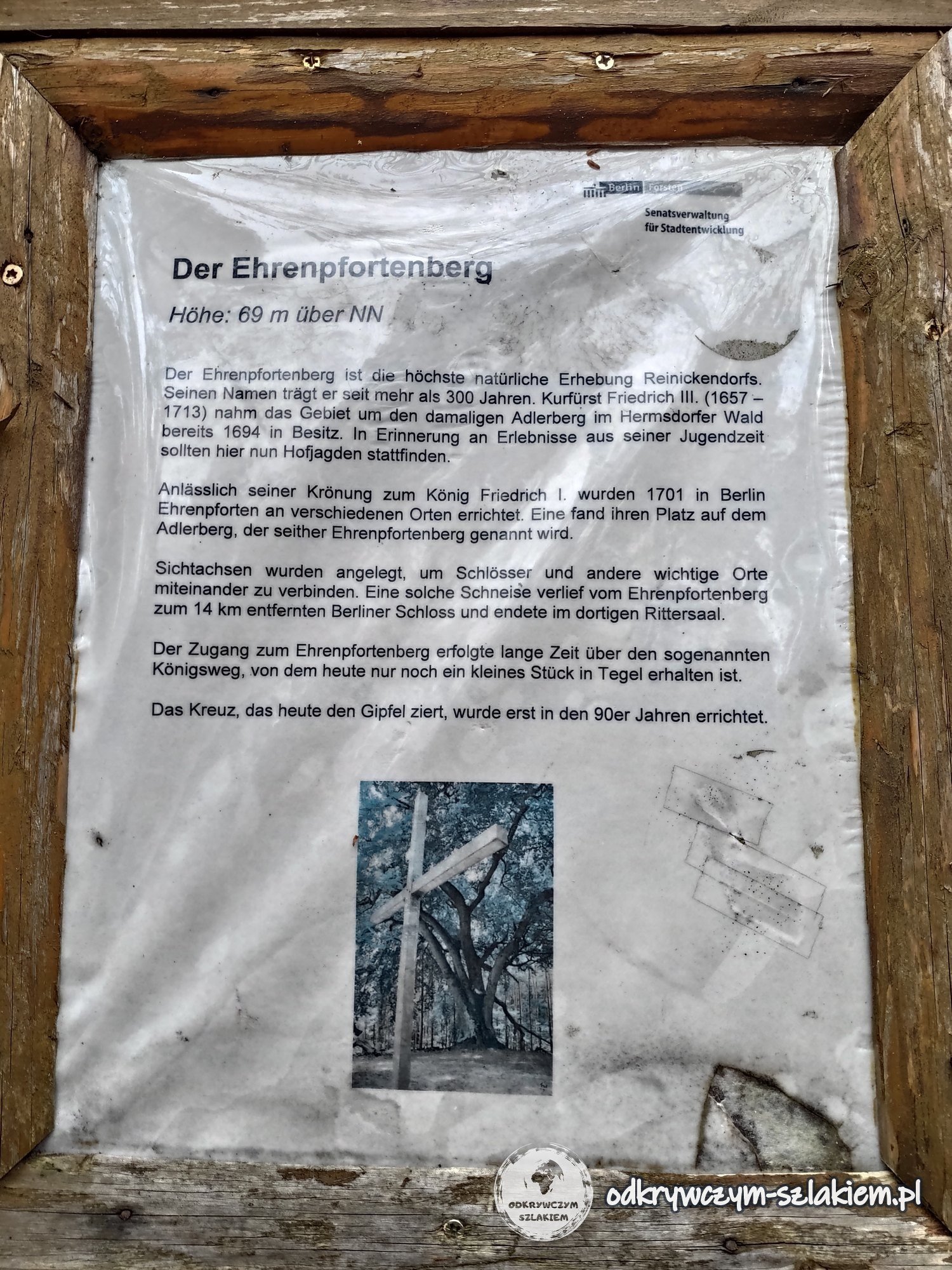
The board also explains the name. The hill used to be called Adlerberg. Elector Frederick III took over this land in 1694 – court hunts were to be held here. When he was crowned king as Frederick I in 1701, triumphal gates (Ehrenpforten) were erected in Berlin – one of them stood right here. A sightline cut through the forest also ran from the hill to the Berlin Palace, 14 km away.
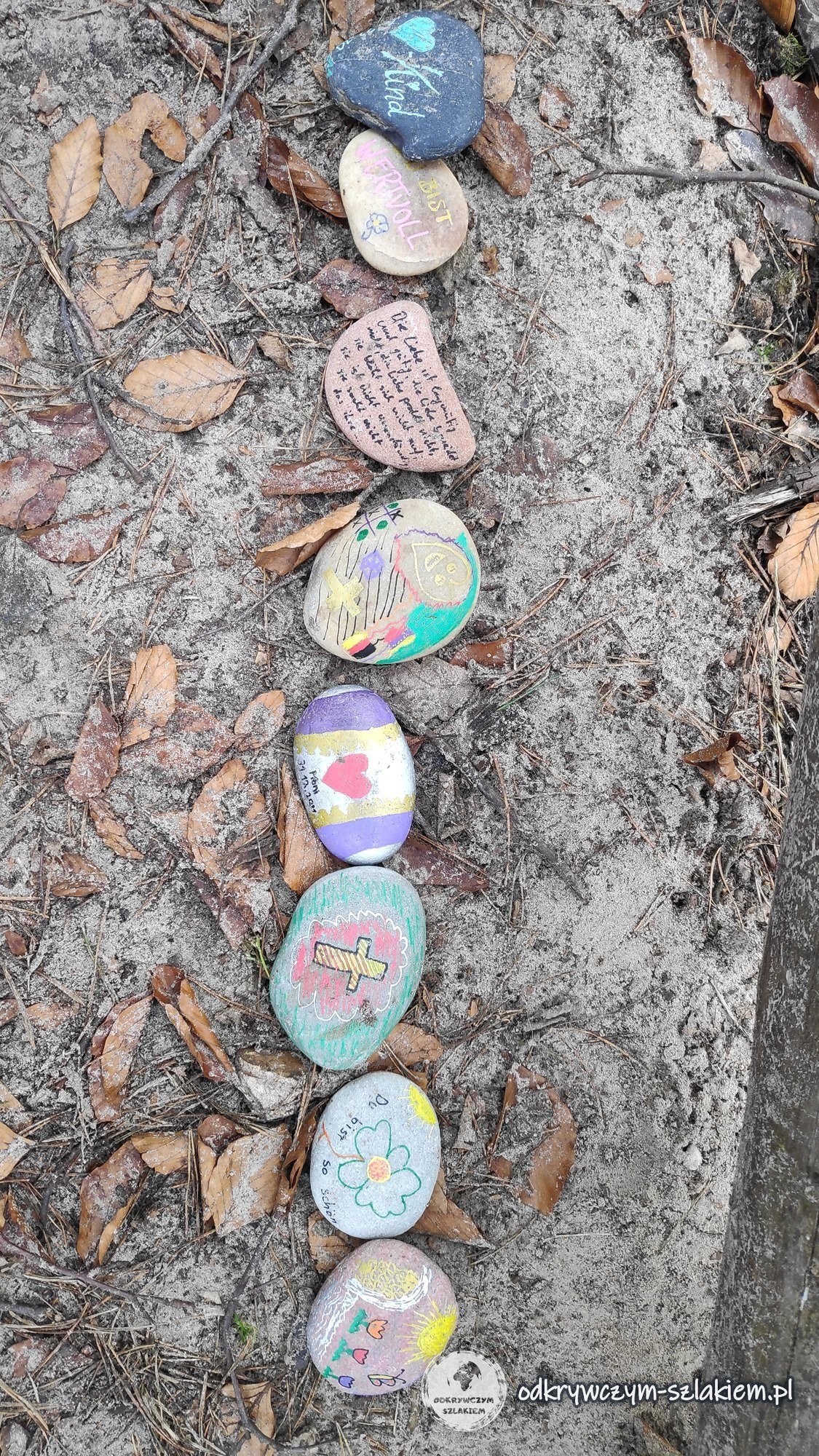
I was here in February 2021, in January 2022 and in April 2022. People lay painted stones with drawings and messages by the cross.
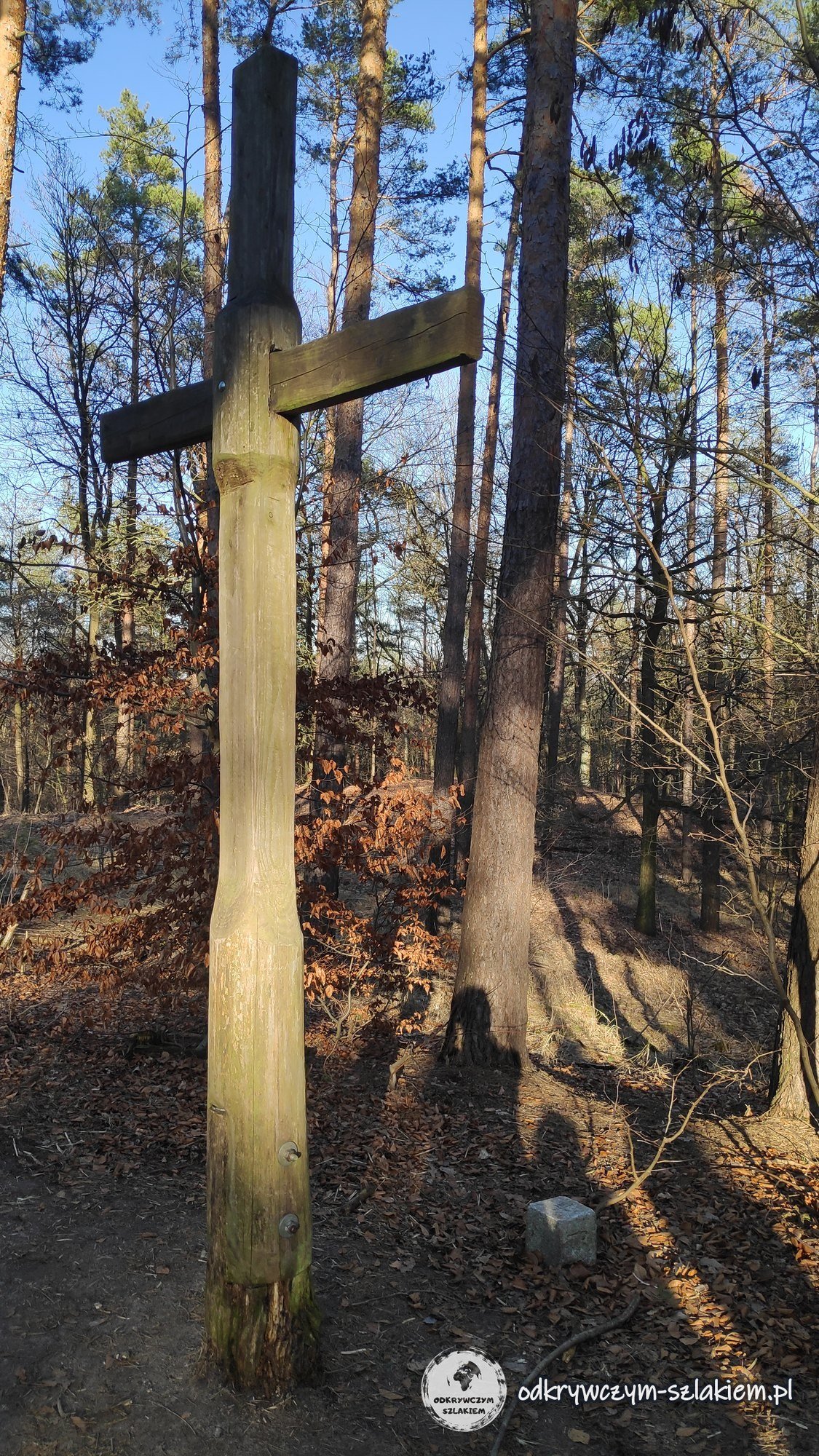
In April 2022 I came here with my dad, who was visiting me in Berlin.
Lübars and Volkspark Rehberge
Lübars is an old village at the very northern edge of Berlin, surrounded by fields and meadows. In July 2022 I walked along the field tracks here. I described the valley of the Tegeler Fließ stream in my post Green Berlin, and the traces of the former border in Lübars in my post about the Berlin Wall.
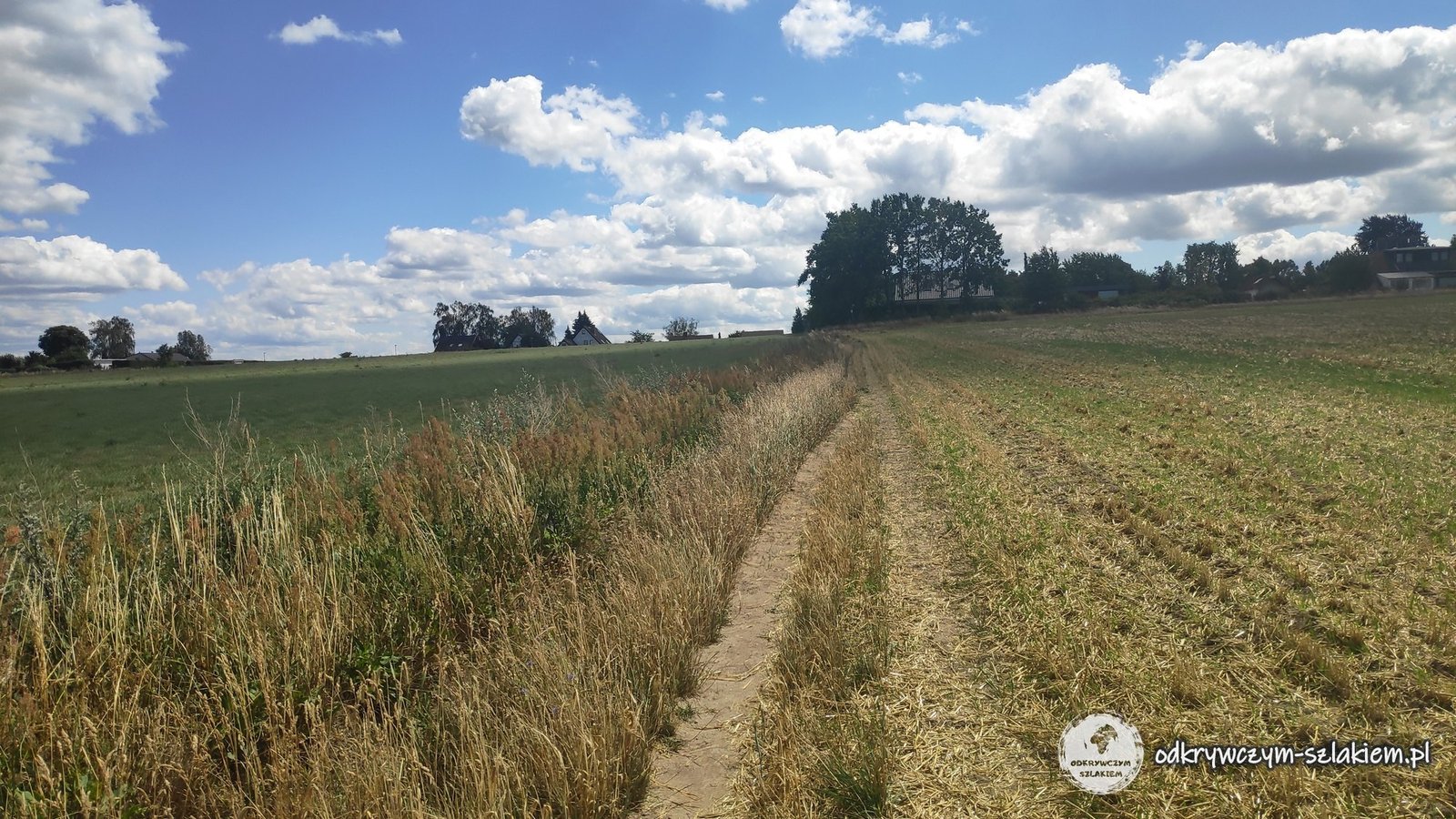
From a hillock at the edge of the village you can see tall tower blocks in the distance.
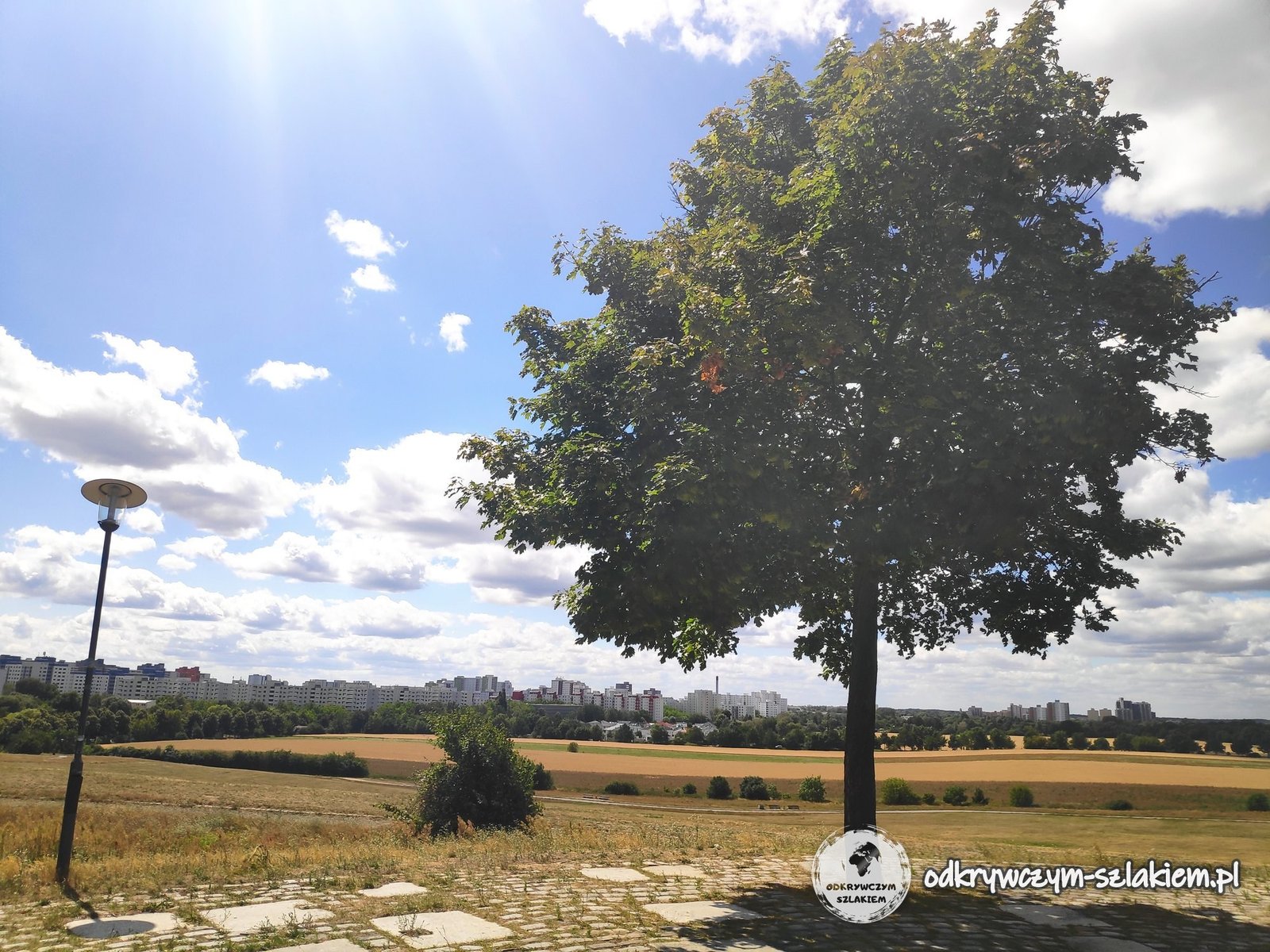
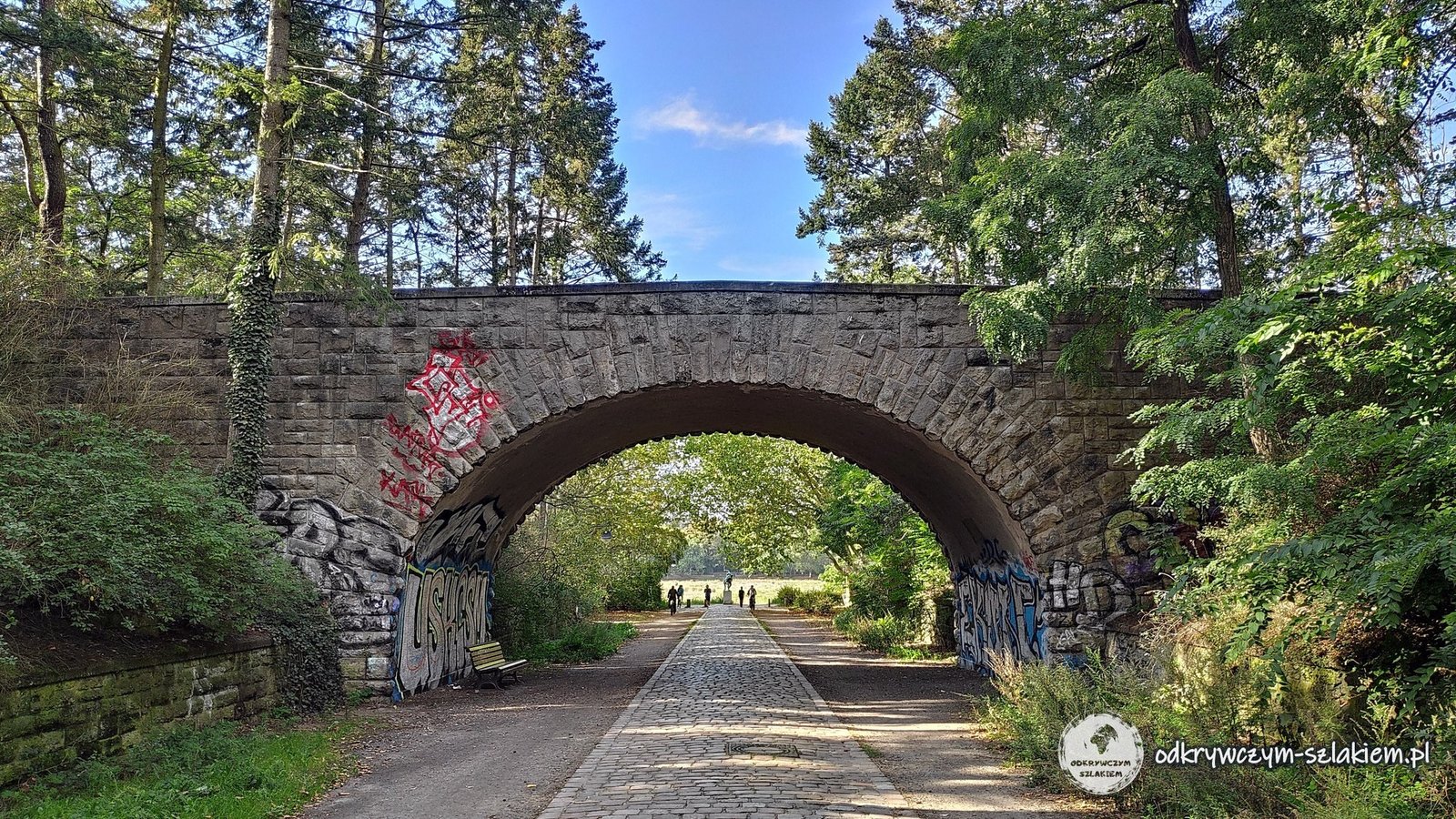
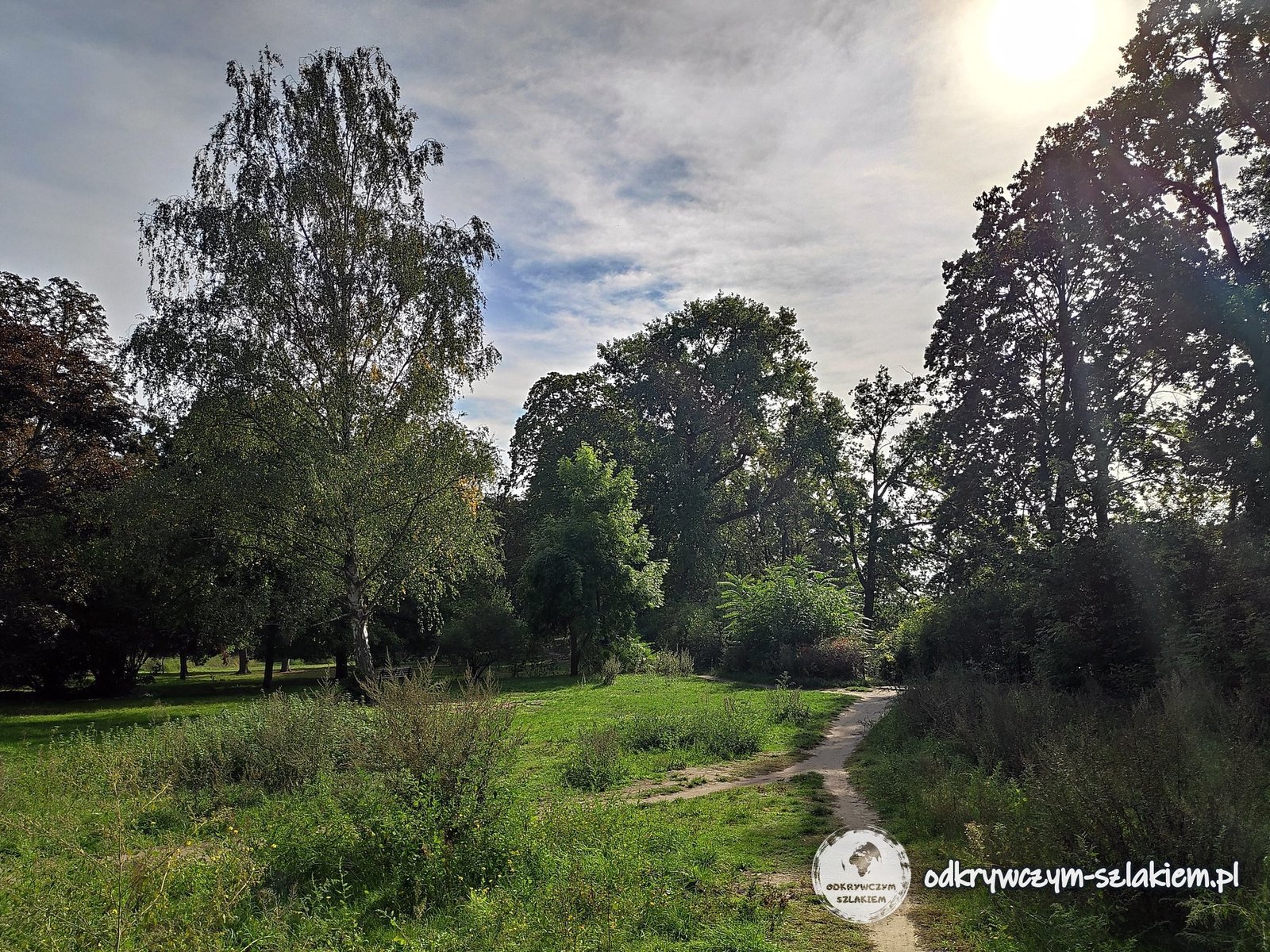
Closer to the centre, already in the Wedding district, lies Volkspark Rehberge. The park was laid out in 1922–1929. It covers about 78 hectares, and together with the neighbouring Goethepark about 115. It has woods, meadows and small lakes, and a stone-clad arched bridge crosses one of its avenues. I was here in October 2020.
Practical information
- U-Bahn: the U6 line runs via Rehberge (Rehberge station) to Tegel – the Borsigtor and Borsigturm are by Borsigwerke station, and the harbour and the Tegeler See by the terminus Alt-Tegel. The U8 ends in Wittenau; the town hall and the Alt-Wittenau village green are by Rathaus Reinickendorf station.
- S-Bahn: the S25 goes to Tegel, and the S1 runs through Wittenau and Waidmannslust. All the places in this post are in fare zone AB.
- On foot: from Alt-Wittenau to Steinbergpark it is just over a kilometre, about a 20–30-minute walk. The Ehrenpfortenberg lies deep in the forest, away from the roads – a map on your phone helps, as there are a great many paths.
- Free: the parks, forests and lakes; sights such as the Borsigtor, the town hall or the church in Alt-Wittenau can be seen from outside without a ticket.
- When: the cascade in Steinbergpark only runs in the warmer months. At the Flughafensee, swimming is only allowed at the beach on the northern shore.
- More Berlin: I described the parks and forests in my post Green Berlin, and the main sights in the centre in Berlin: what to see.
Photo gallery