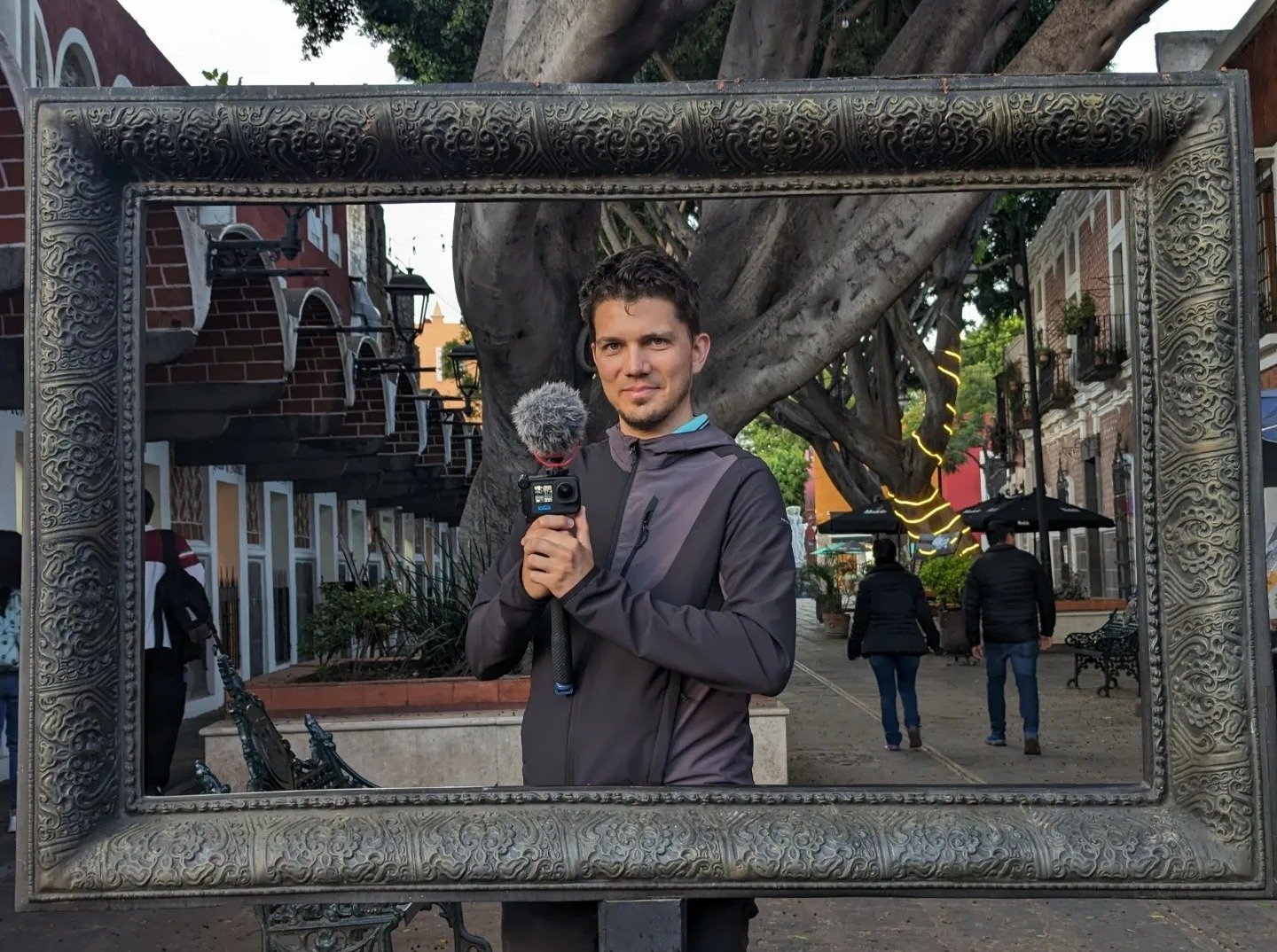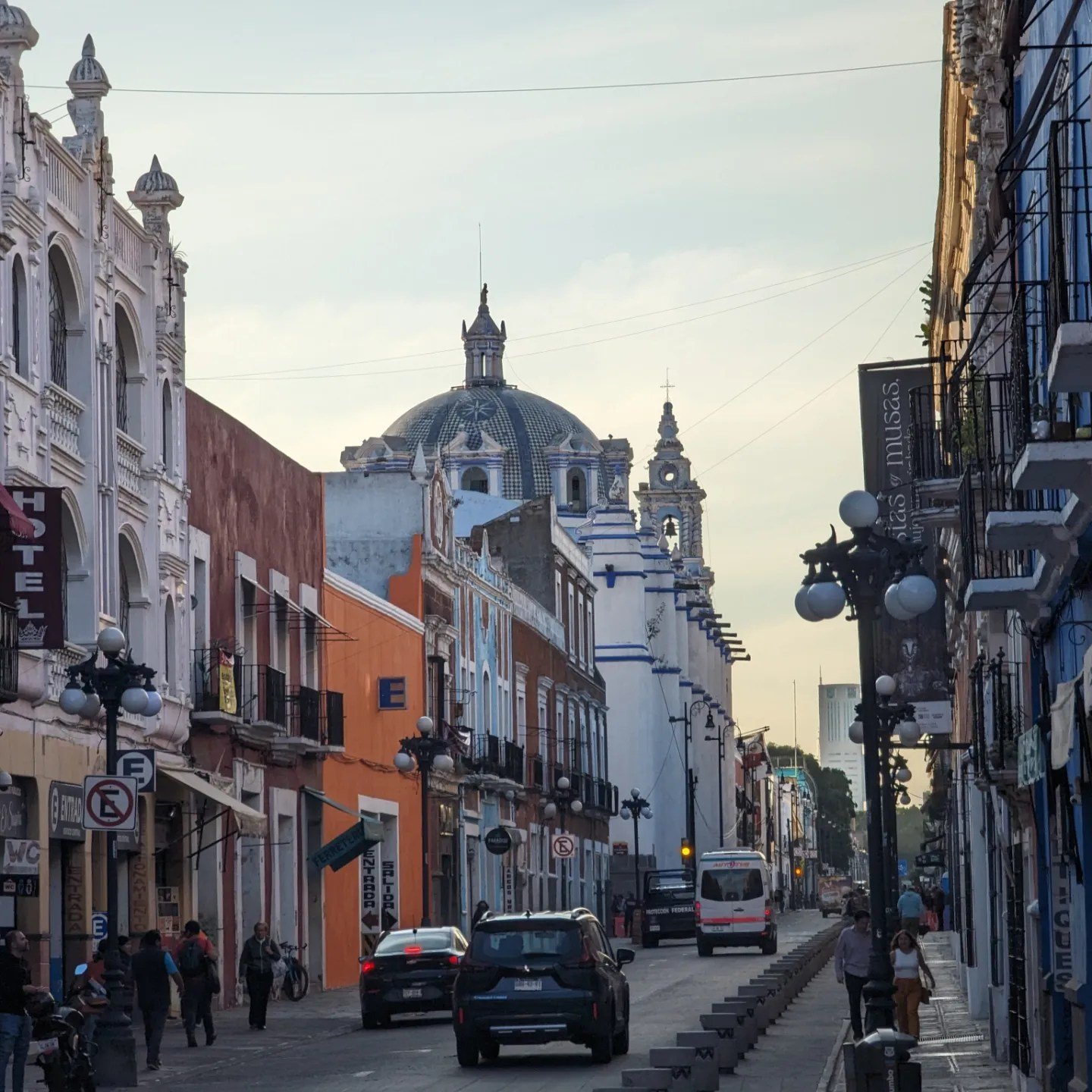
Puebla was the second city on our route through Mexico – after six days in Mexico City, on the way to Oaxaca. We explored it on 17 October 2023, for a few hours. The city seems small, yet it has about one and a half million inhabitants – more than Warsaw. It lies quite high, at almost 2200 m above sea level, not much lower than the capital. We focused on the historic centre and that was a good choice: it is incredibly atmospheric.
 2:07
Table of contents
- The historic centre – colourful houses and the cathedral
- Capilla del Rosario
- Before Día de Muertos – decorations and the El Parián market
- Mole poblano and street food
- Practical information
The historic centre – colourful houses and the cathedral
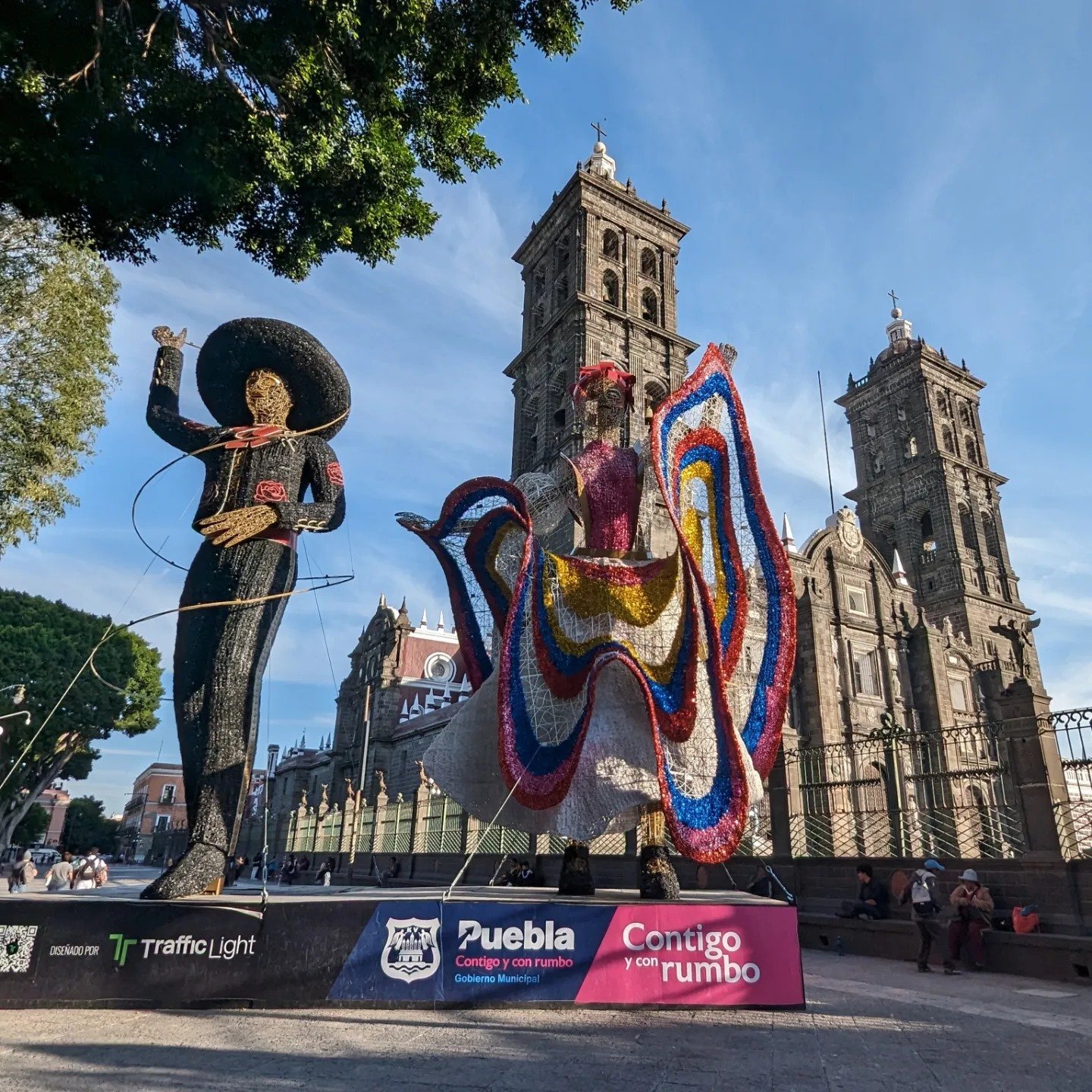
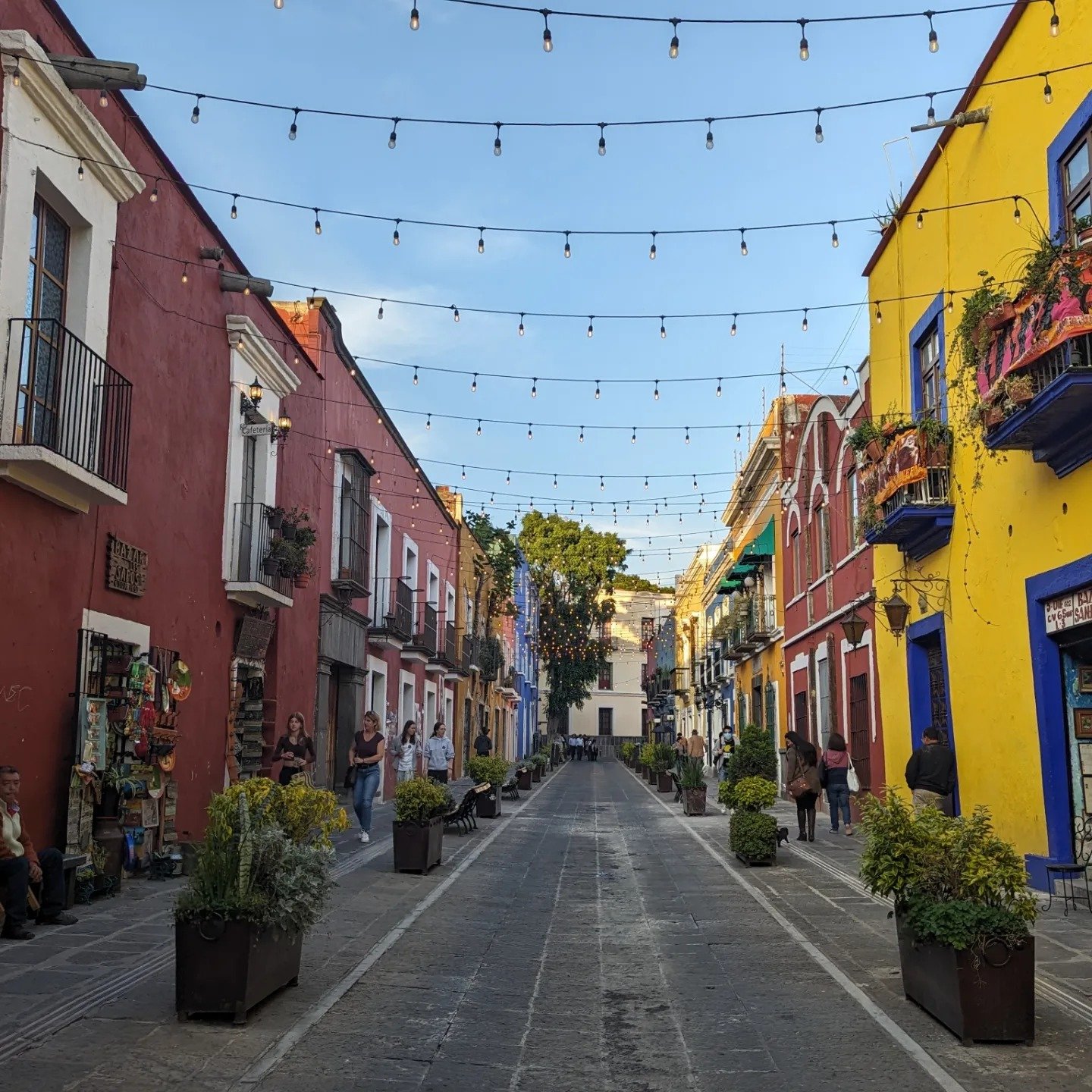
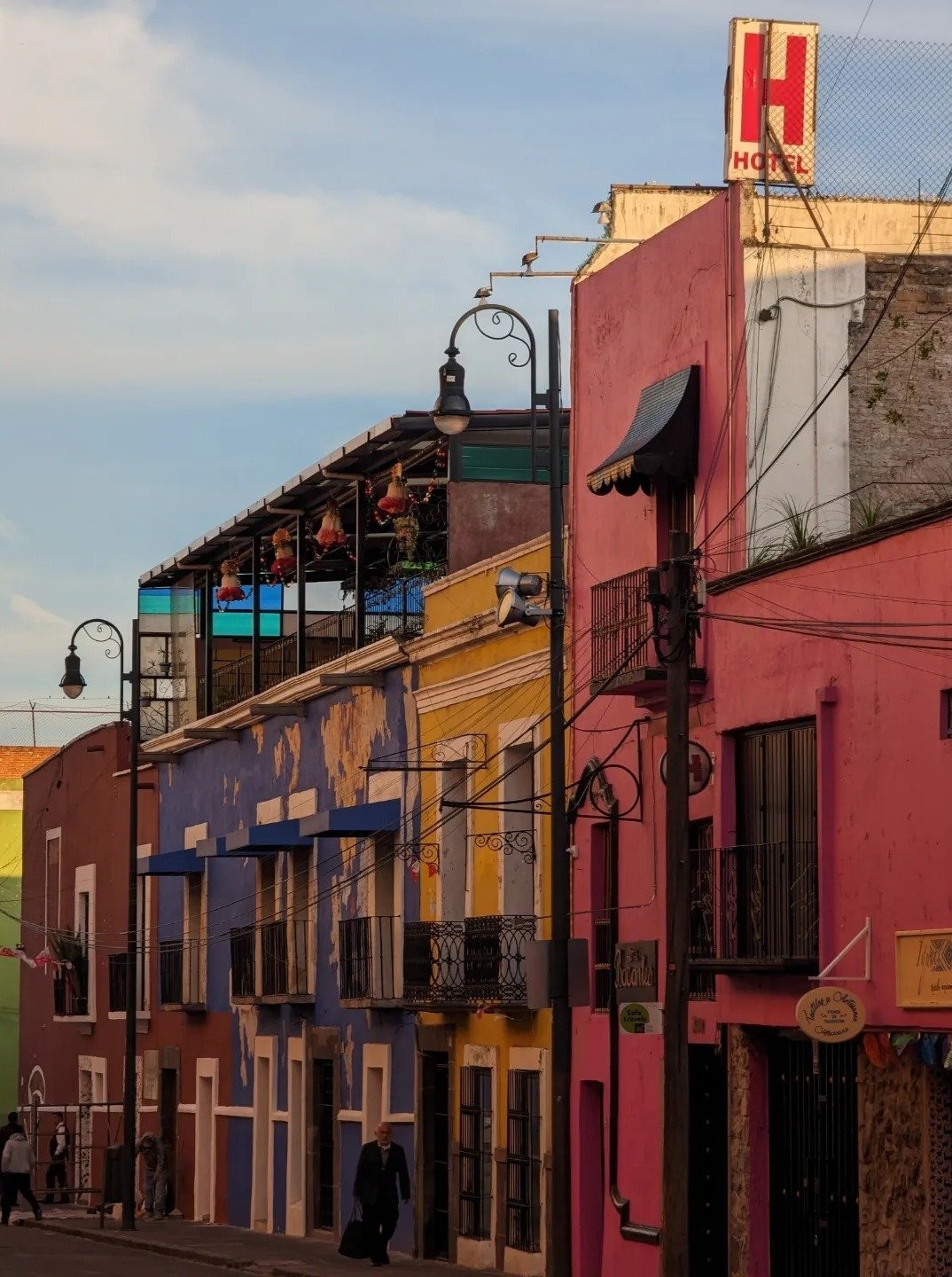
The historic centre of Puebla is a UNESCO World Heritage Site – of the cities we visited in Mexico (apart from the capital), it struck us as the most atmospheric. Its heart is the square with the cathedral and its two tall towers. When we were there, huge figures of a charro horseman and a dancer in a traditional, wide dress stood in front of the cathedral. Streets with colourful houses lead off the square – red, yellow and blue, with wrought-iron balconies, strings of lights and church domes in the background. The nicest way to walk around them is without a plan.
Capilla del Rosario
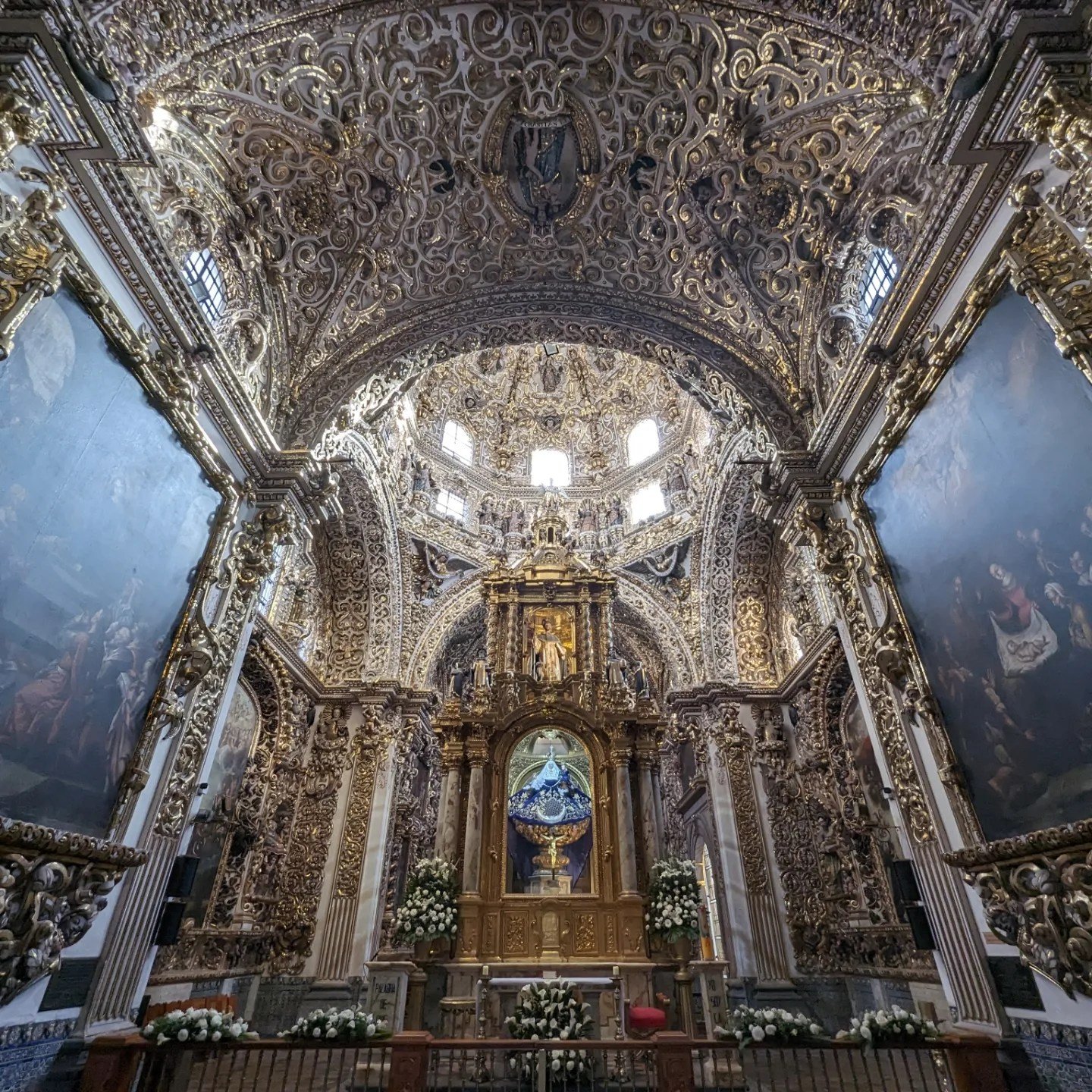
In the centre you will find one of the greatest achievements of religious art in Mexico – the Capilla del Rosario (Rosary Chapel) in the church of Santo Domingo. It is a Baroque chapel from the end of the 17th century, in which almost every part of the walls and vault is covered with gilded ornaments and sculptures. Even a short visit is hugely impressive.
Before Día de Muertos – decorations and the El Parián market
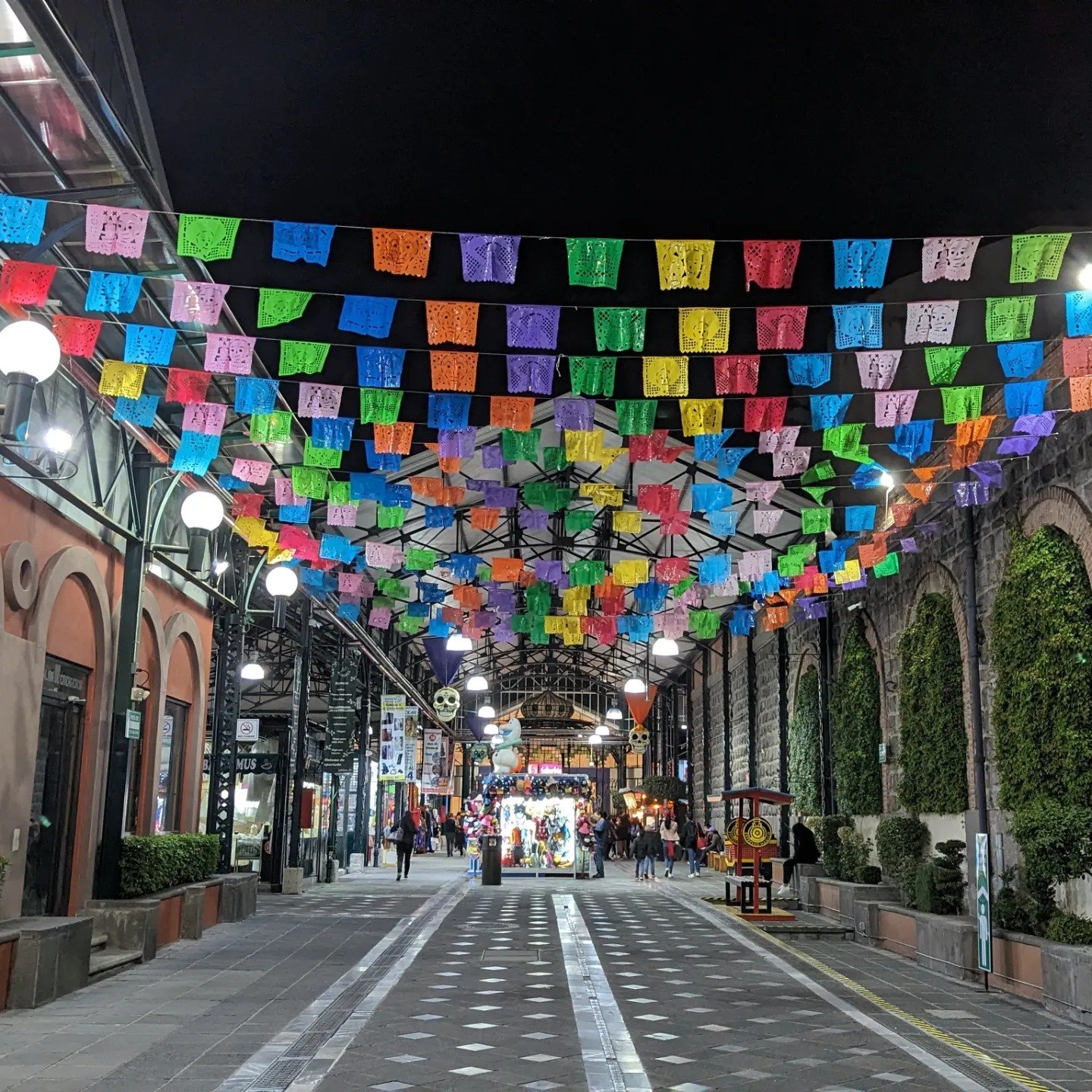
It was mid-October and the city was already getting ready for Día de Muertos (the Day of the Dead). Colourful tissue-paper cut-outs – papel picado – hung over the pedestrian streets, and many shops displayed costumes and decorations for the holiday. We spent the Day of the Dead itself two weeks later in San Cristóbal de las Casas.
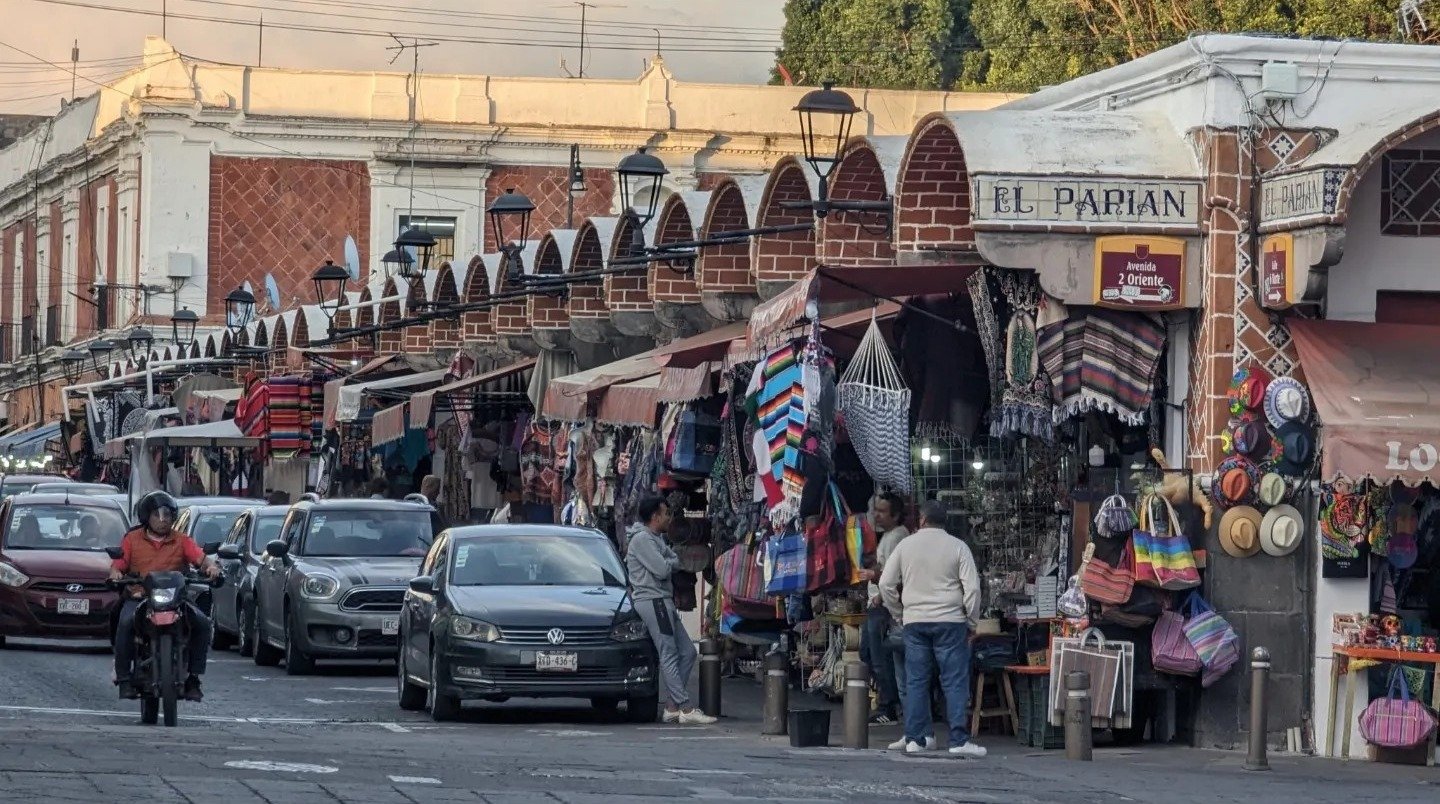
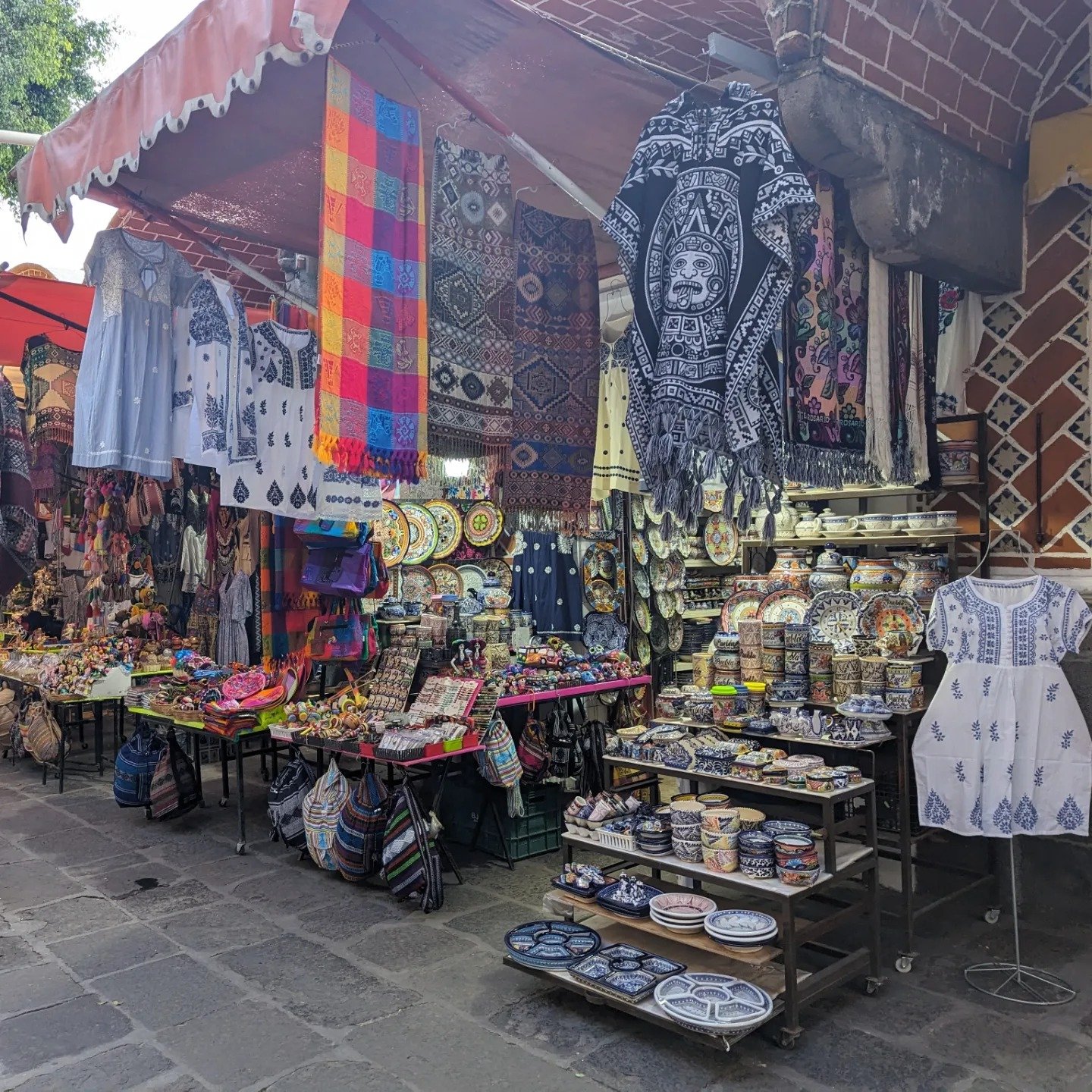
In the centre there is also a handicraft market – El Parián, with a row of stalls under the arcades. You can buy embroidered clothes, souvenirs and pottery here.
Mole poblano and street food
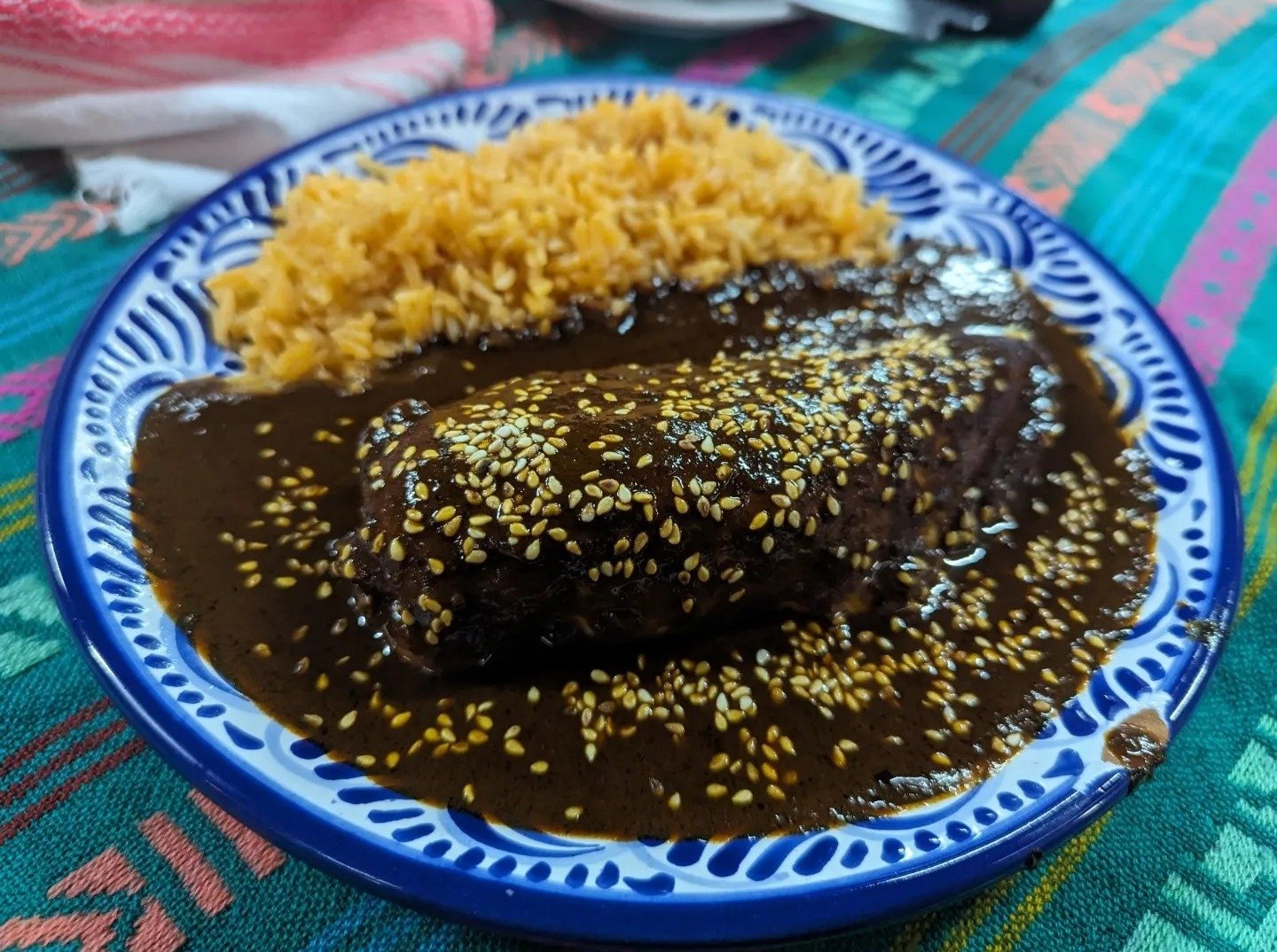
Puebla is famous for its traditional cuisine, and its best-known dish is mole poblano – meat (usually chicken) in a thick, dark sauce made with chocolate, chilli and spices, sprinkled with sesame seeds. Of course we had to try it – meat with chocolate sounds strange, but it tastes fine. In fact, we found the food of Puebla and Oaxaca the best in Mexico. Unfortunately, it was here that the food poisoning began which we then took with us to Oaxaca. Apart from the restaurants, the centre has loads of street food.
Practical information
- Getting there – about 3 hours by bus from Mexico City.
- How much time? A few hours are enough for the historic centre – we stopped here for one day on the way from Mexico City to Oaxaca.
- Safety – we felt safe in the historic centre, and in the evening it is buzzing with life. This applies only to the centre, though: on the way from and to the bus station we passed shabby, run-down streets.
- Altitude – the city lies at almost 2200 m above sea level, similar to Mexico City.
- More about our whole route through Mexico in the post Mexico in 65 days – a trip summary.