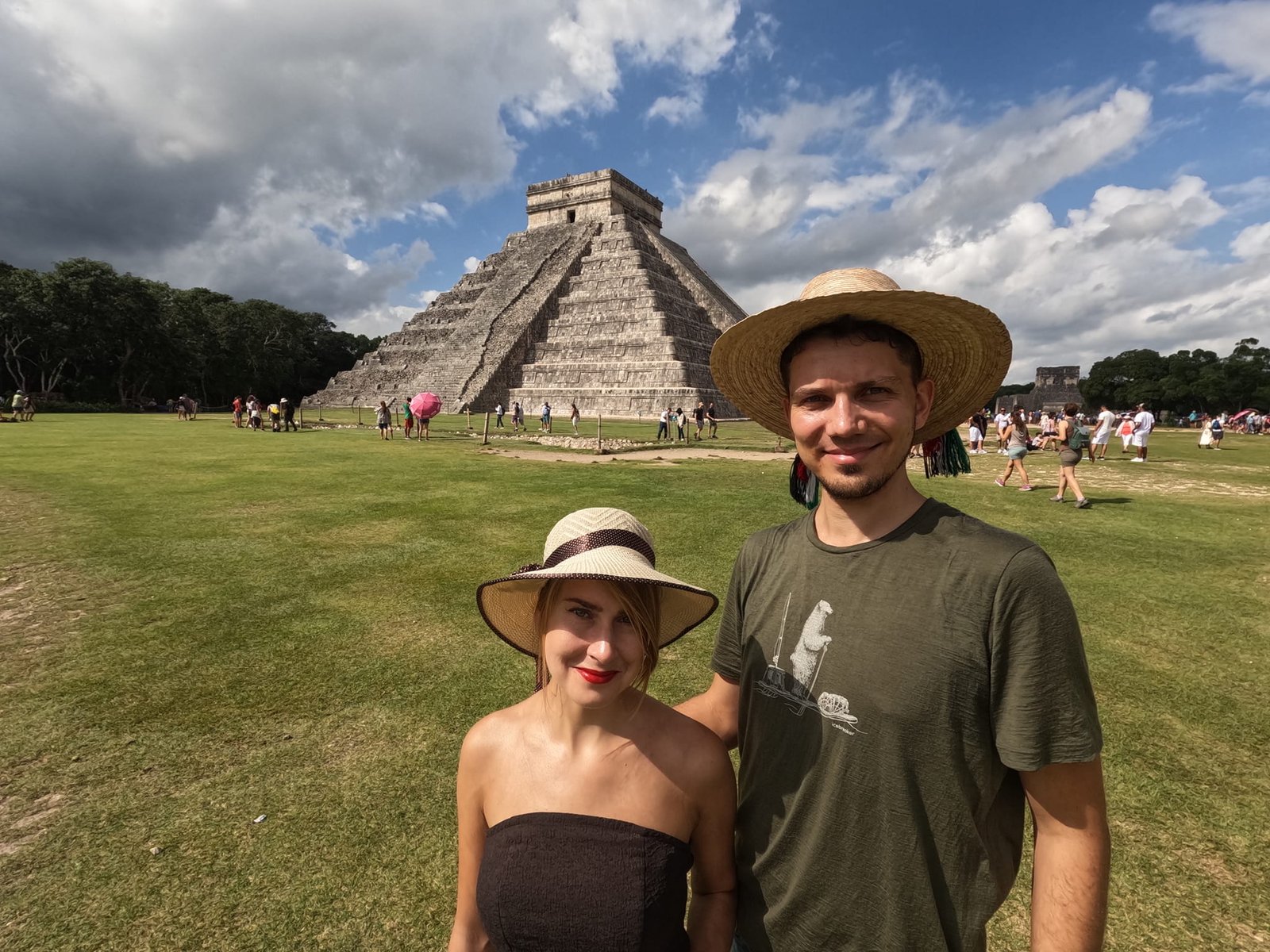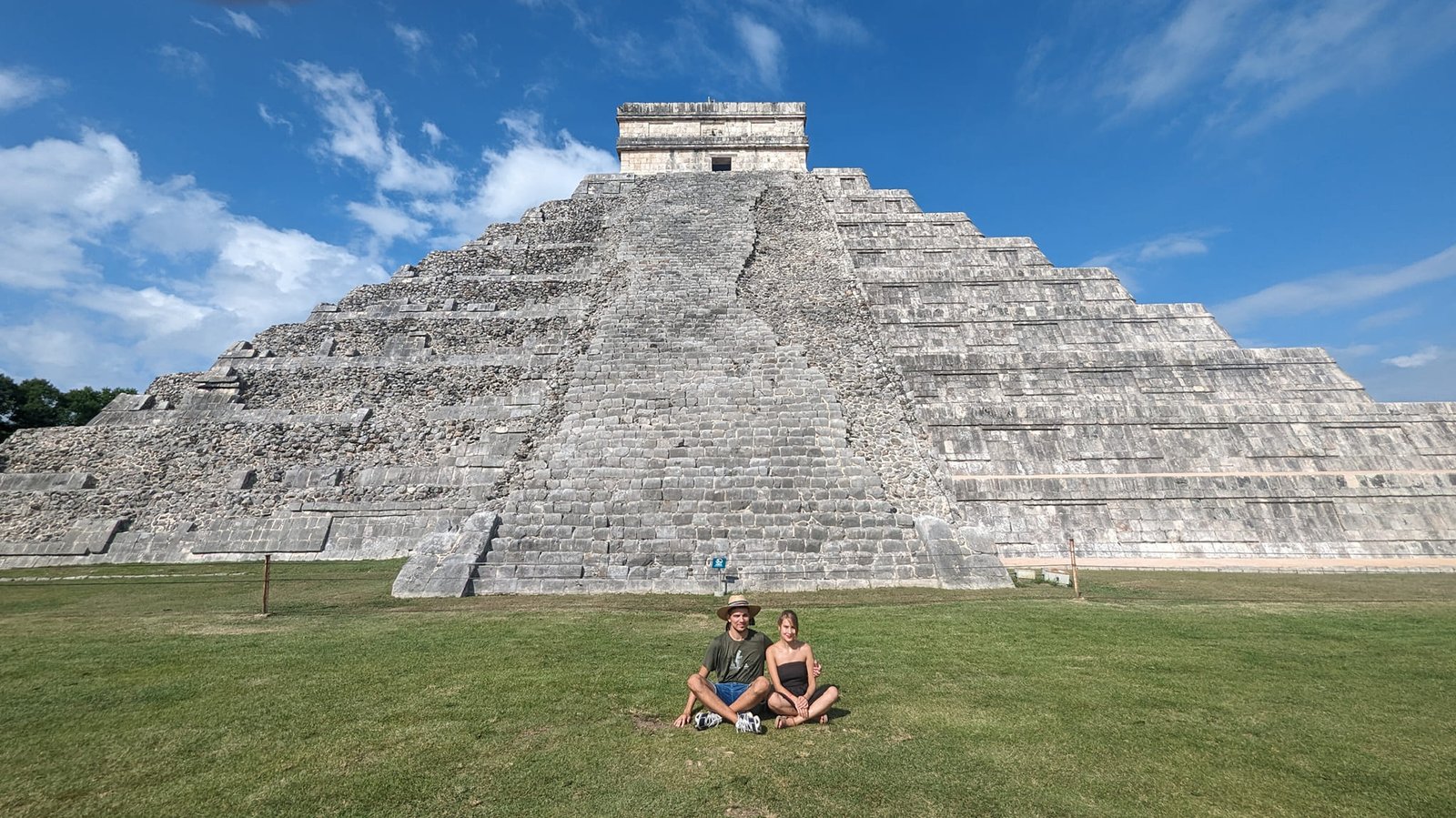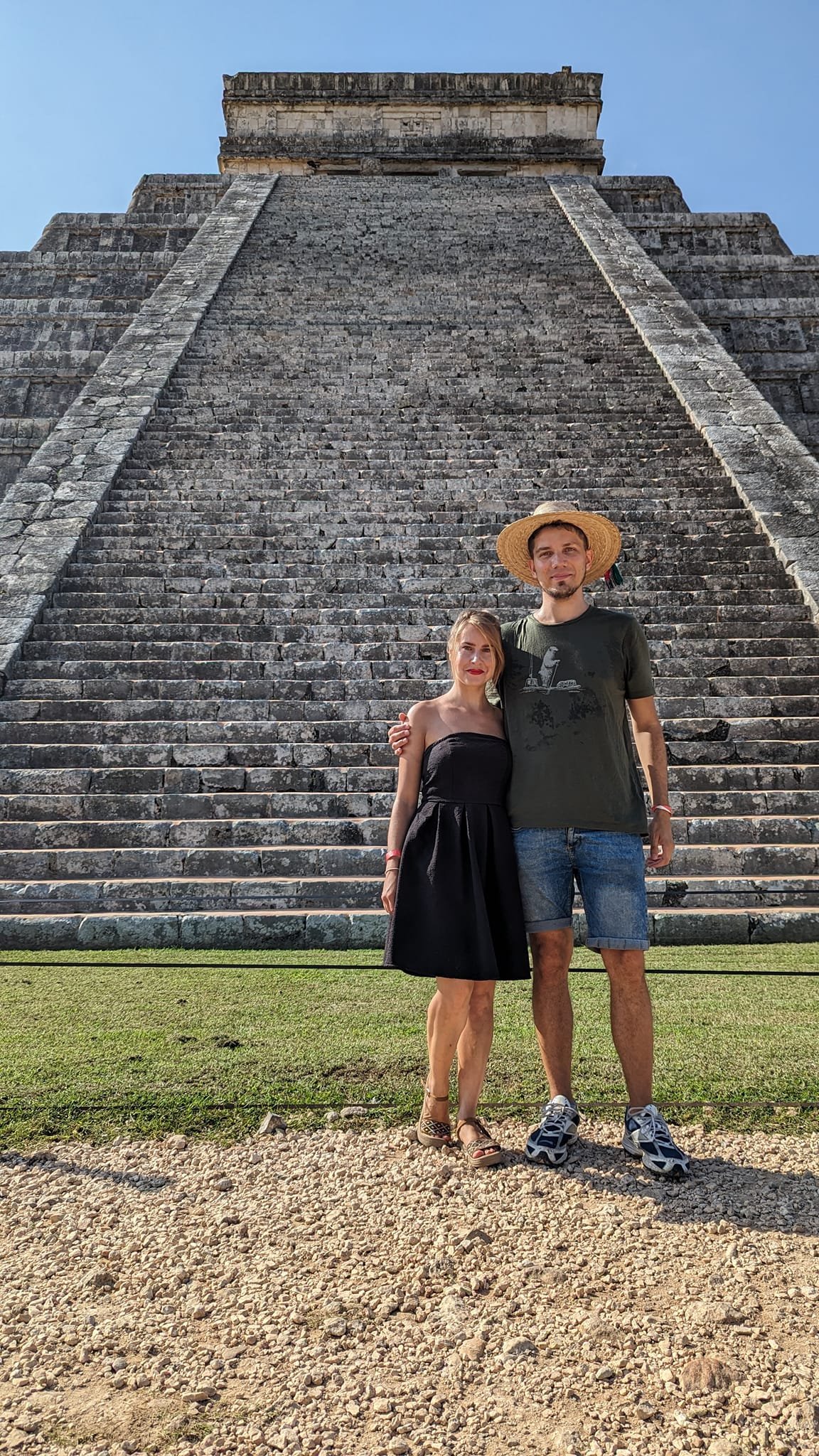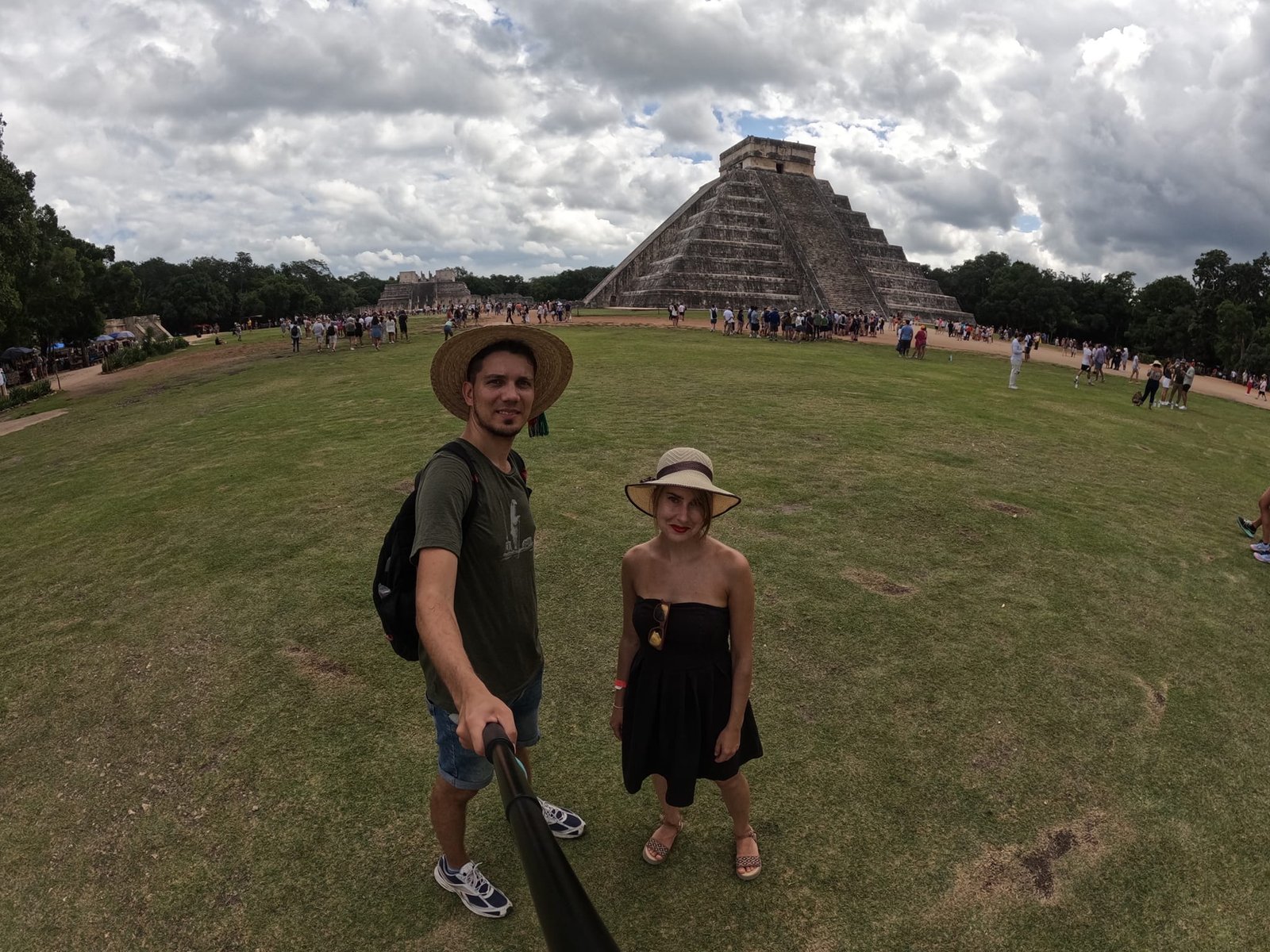
On 21 November 2023 we visited one of the New Seven Wonders of the World – Chichén Itzá on the Yucatán Peninsula. It’s an ancient city founded by the Maya between the 4th and 6th centuries and Mexico’s biggest attraction. We can recommend every one of the ruins we saw on this trip (Teotihuacán, Monte Albán, Palenque, Tulum, Cobá) – but we can’t imagine visiting Mexico without Chichén Itzá. We came from Valladolid, our base for visiting the cenotes.
 8:17
Table of contents
- The Pyramid of Kukulcán
- The Temple of the Warriors and the Group of a Thousand Columns
- The Great Ball Court
- El Caracol observatory
- Other buildings and the cenotes
- Practical information – tickets, getting there, timing
The Pyramid of Kukulcán
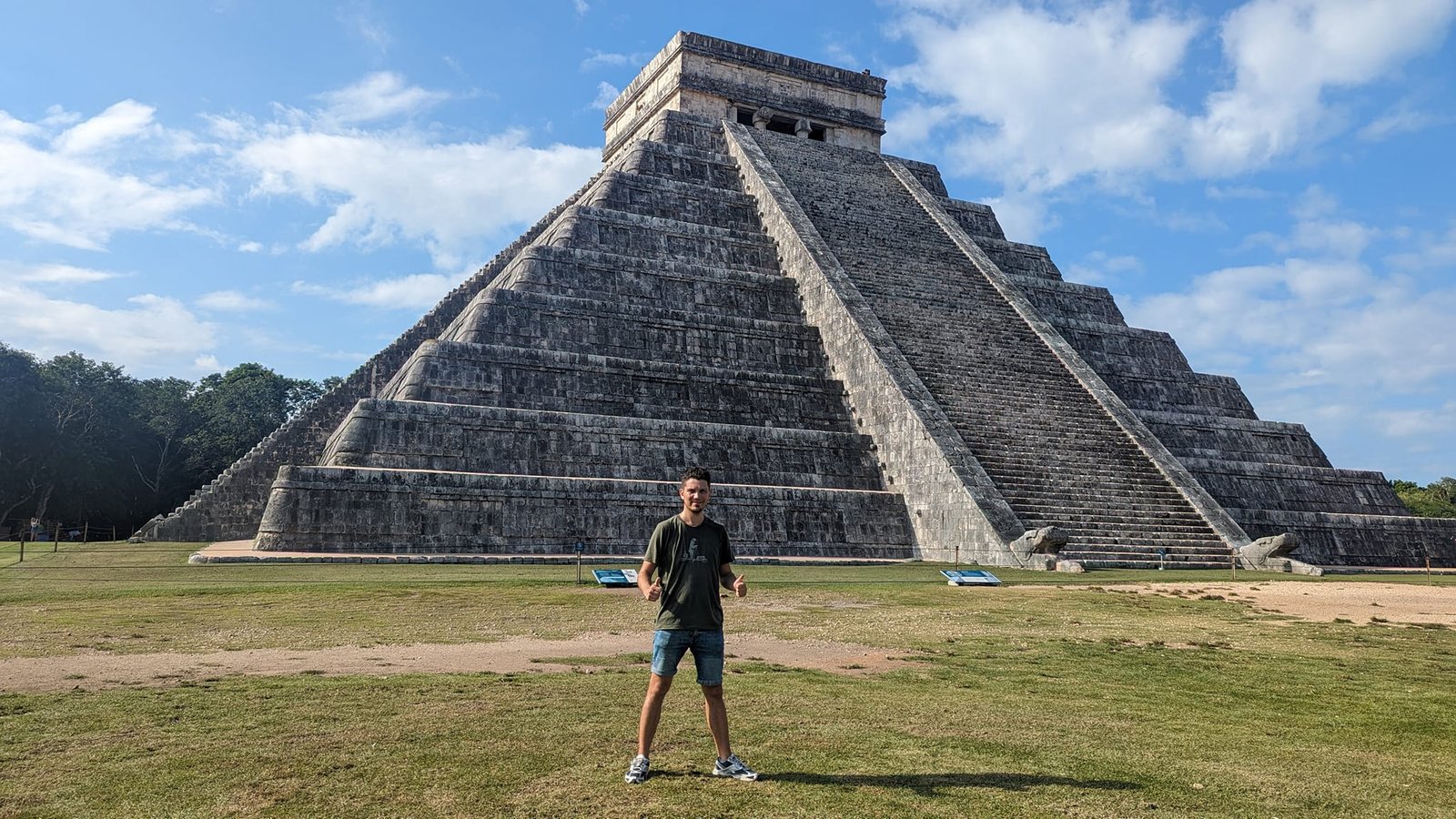
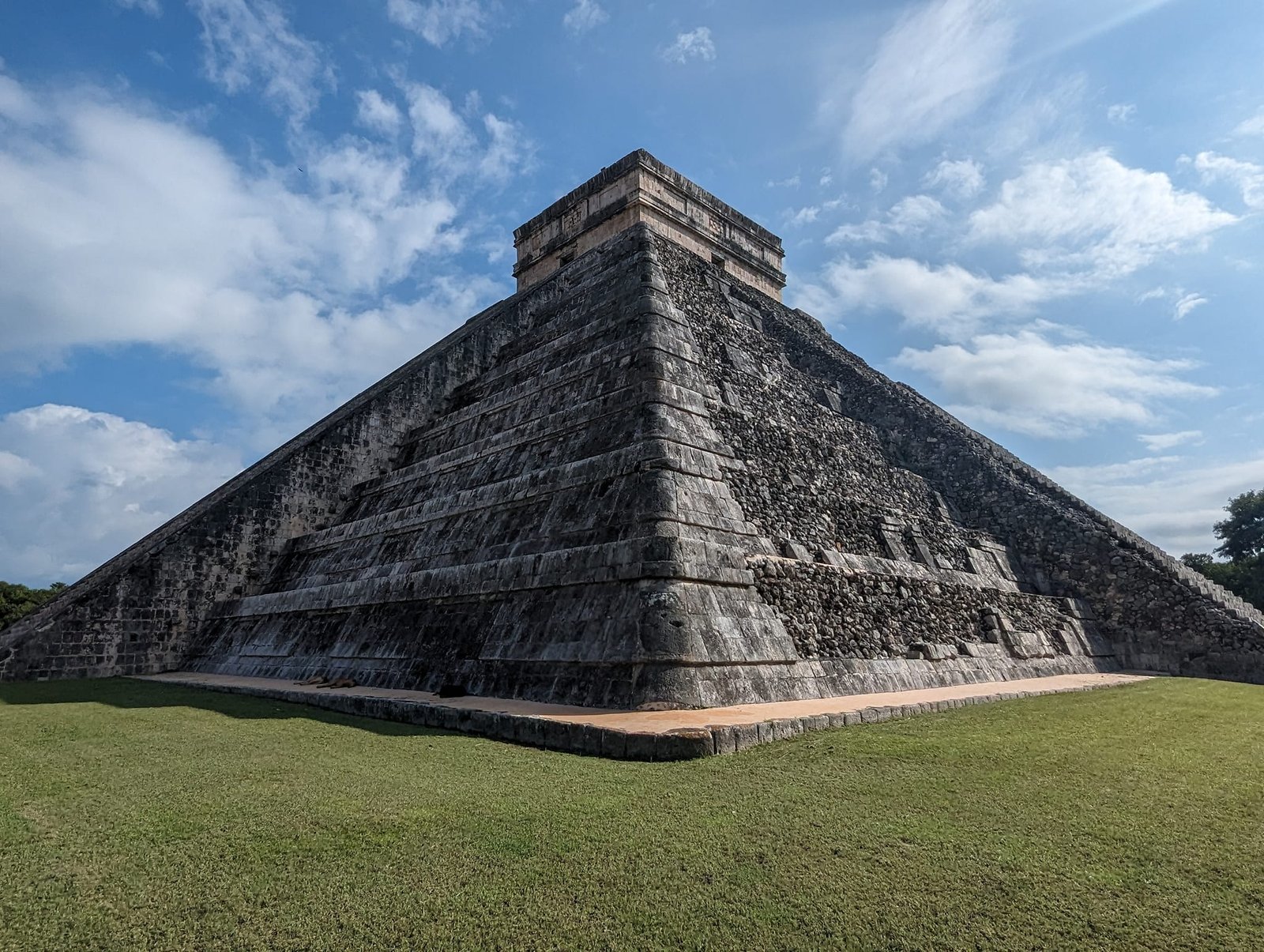
The most impressive structure is without doubt the Pyramid of Kukulcán (El Castillo), dedicated to a god depicted as a feathered serpent. It has amazing acoustics: if you clap your hands hard in front of the stairs, the echo is said to sound like the call of the quetzal – the sacred bird of the Maya.
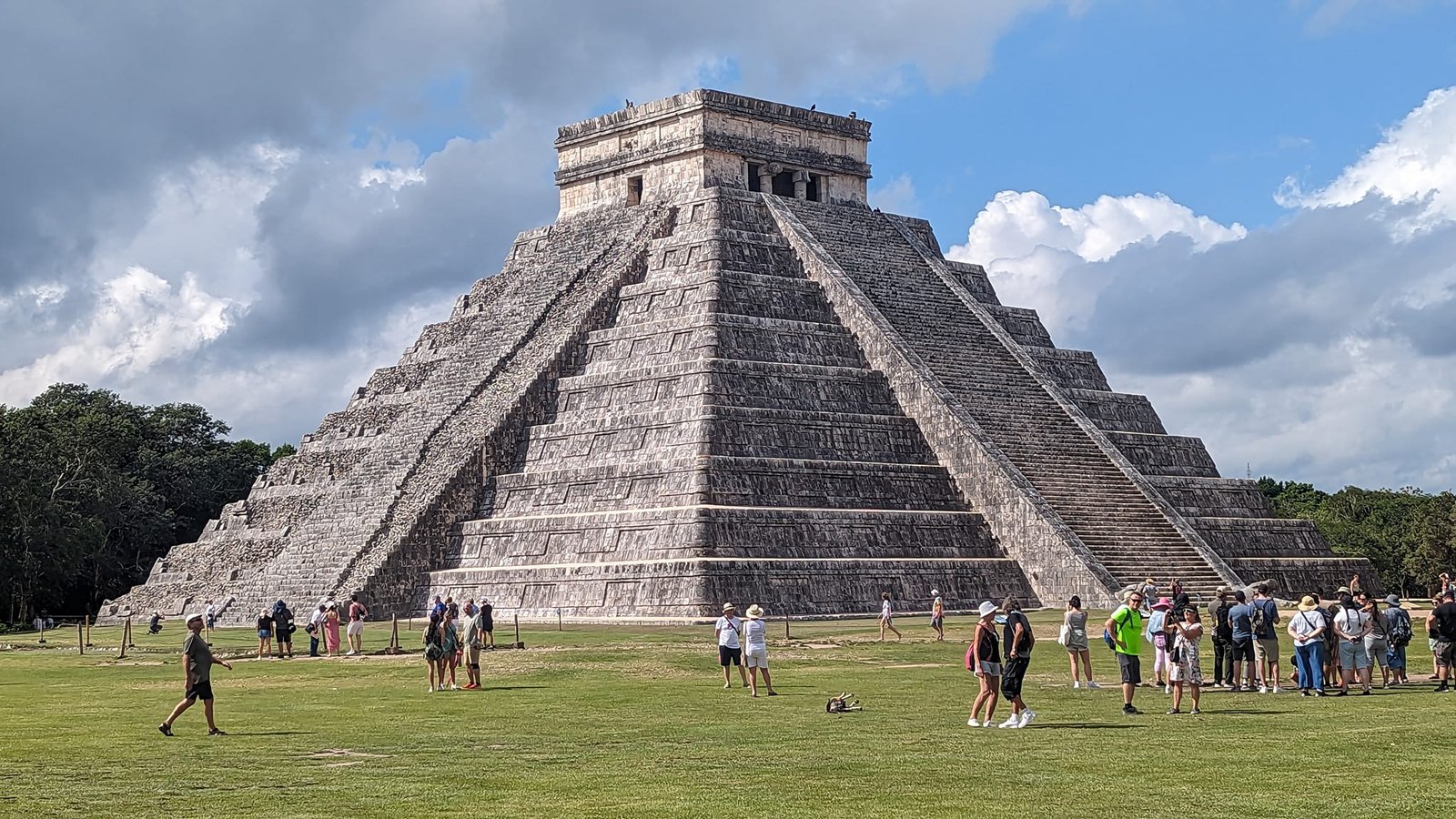
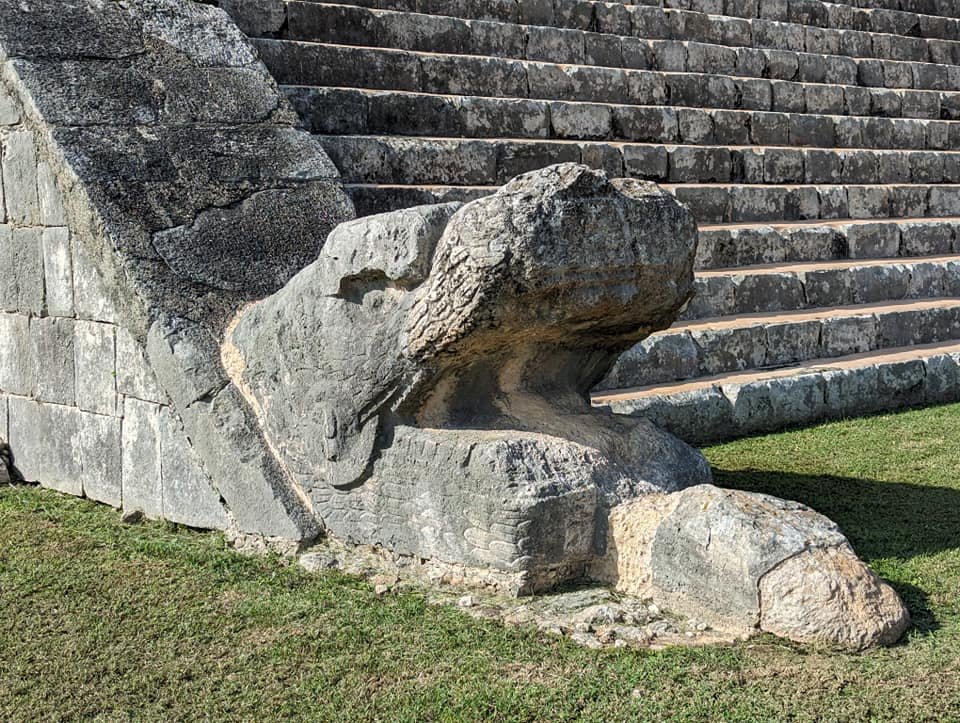
The pyramid was built so that at sunrise on the spring equinox the shadow on its stairs forms a snake crawling from top to bottom – and on the autumn equinox in the opposite direction. Stone serpent heads lie at the foot of the stairs.
The Temple of the Warriors and the Group of a Thousand Columns
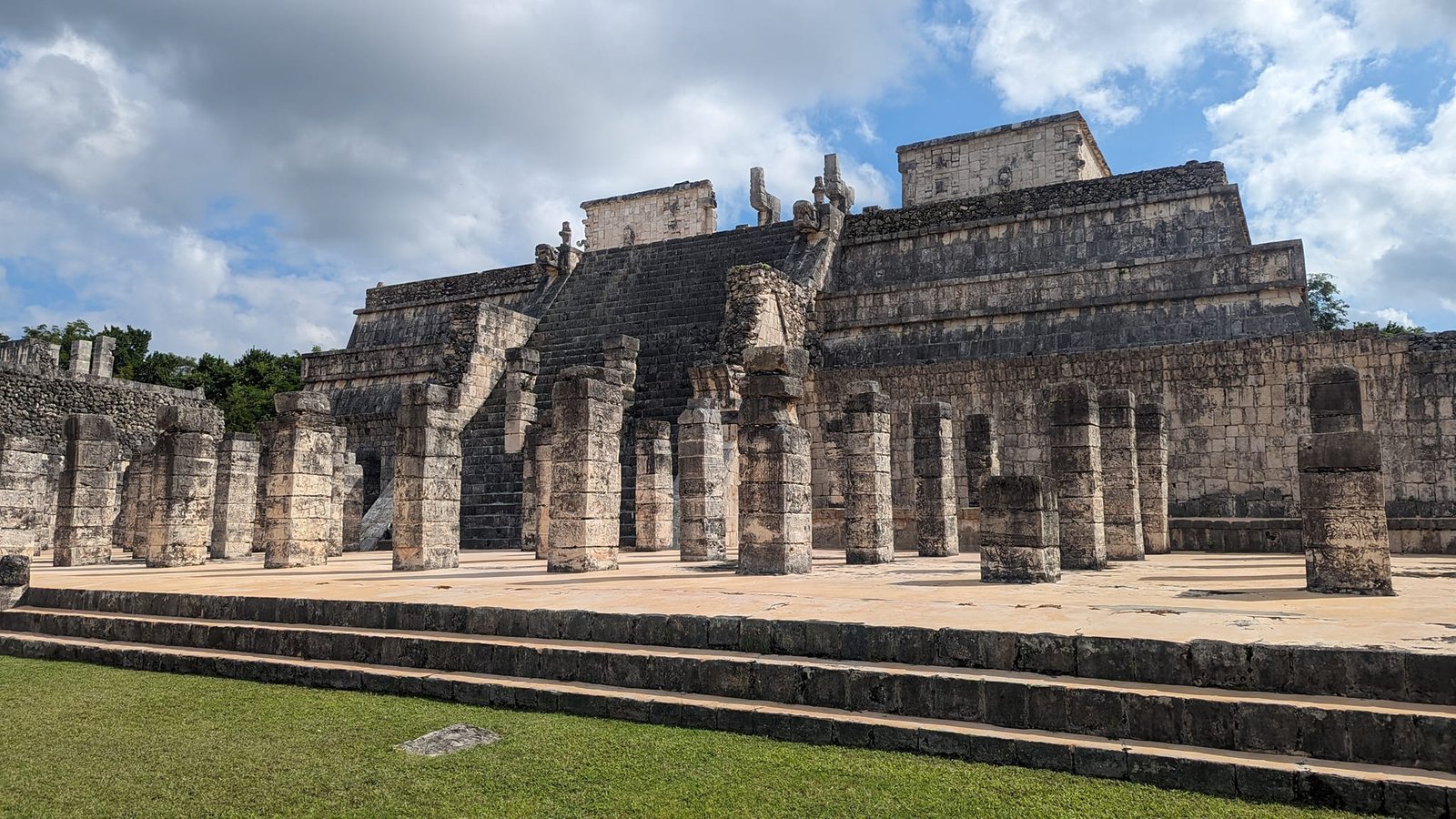
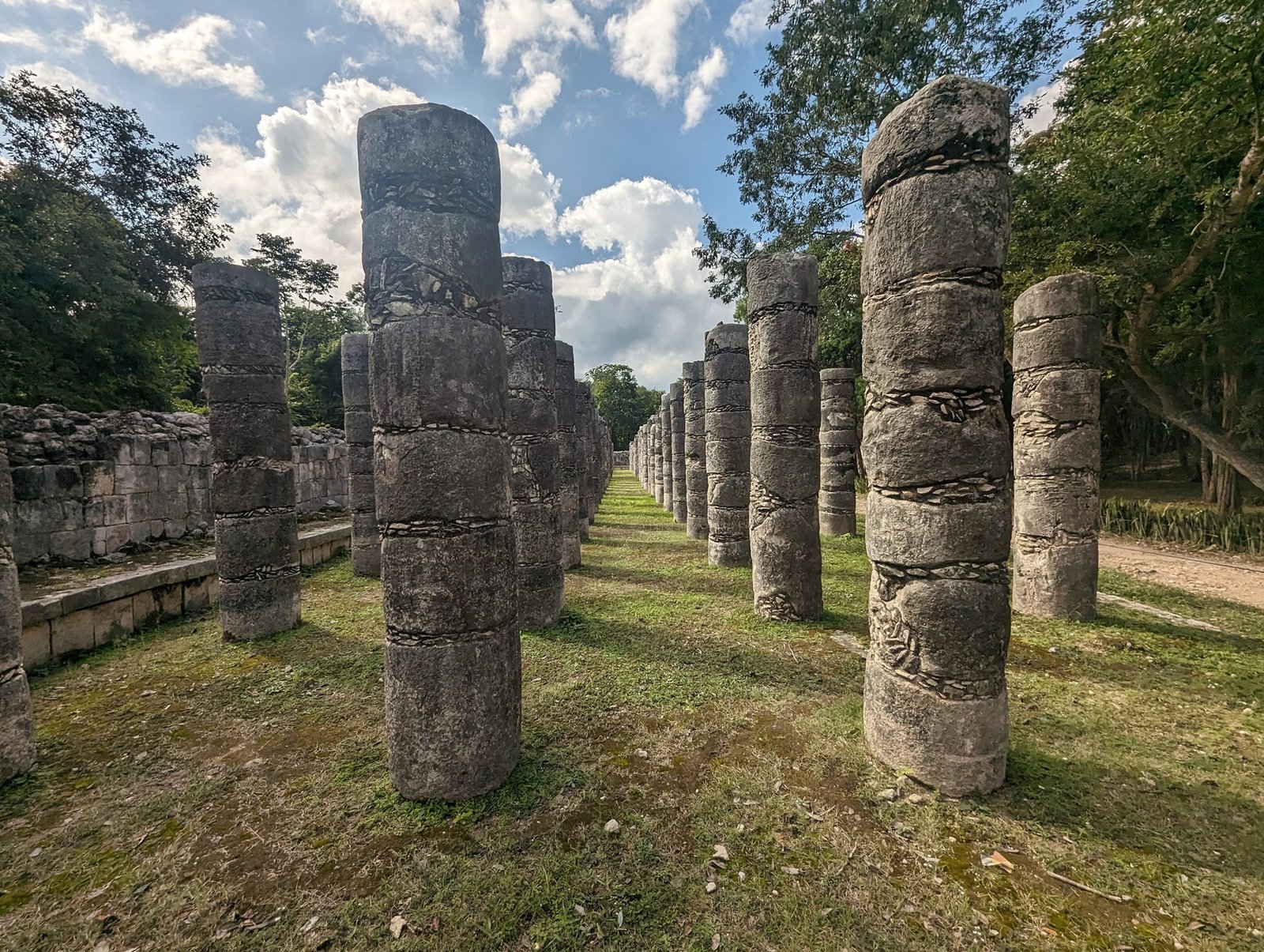
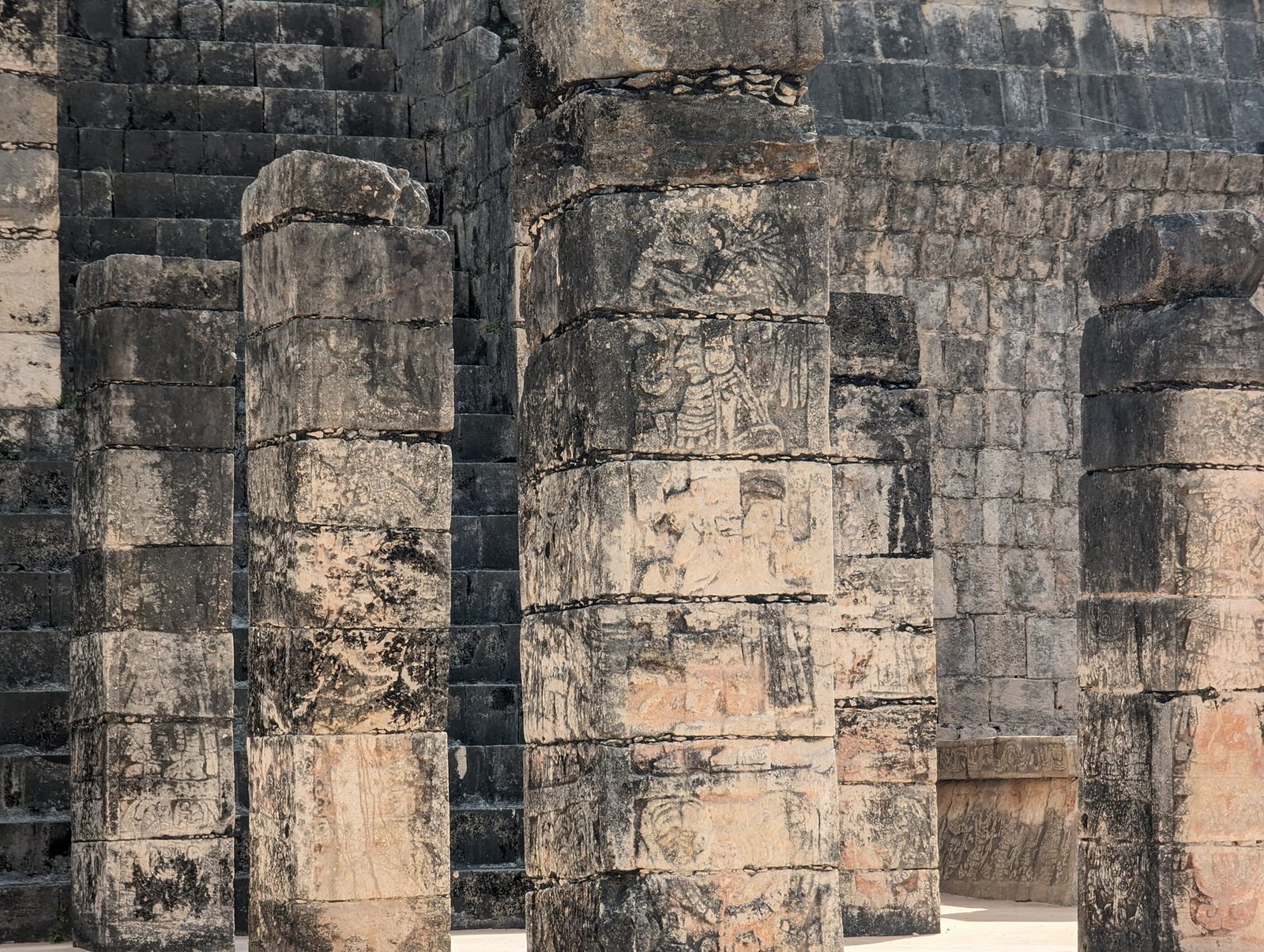
The complex is very large. Not far from the pyramid stands the Temple of the Warriors – a stepped building surrounded by rows of stone columns known as the Group of a Thousand Columns. Some of them are covered in carvings.
The Great Ball Court
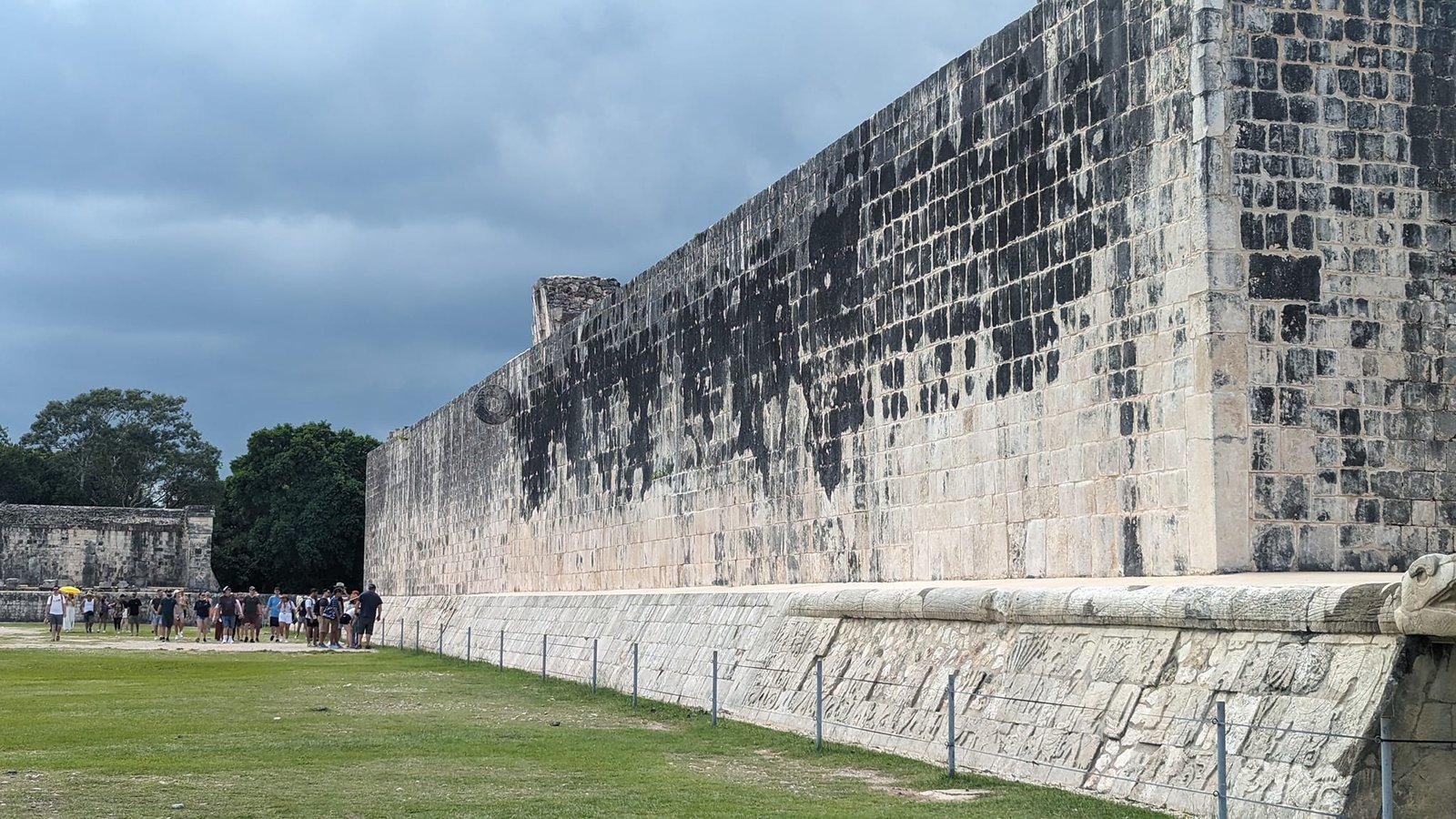
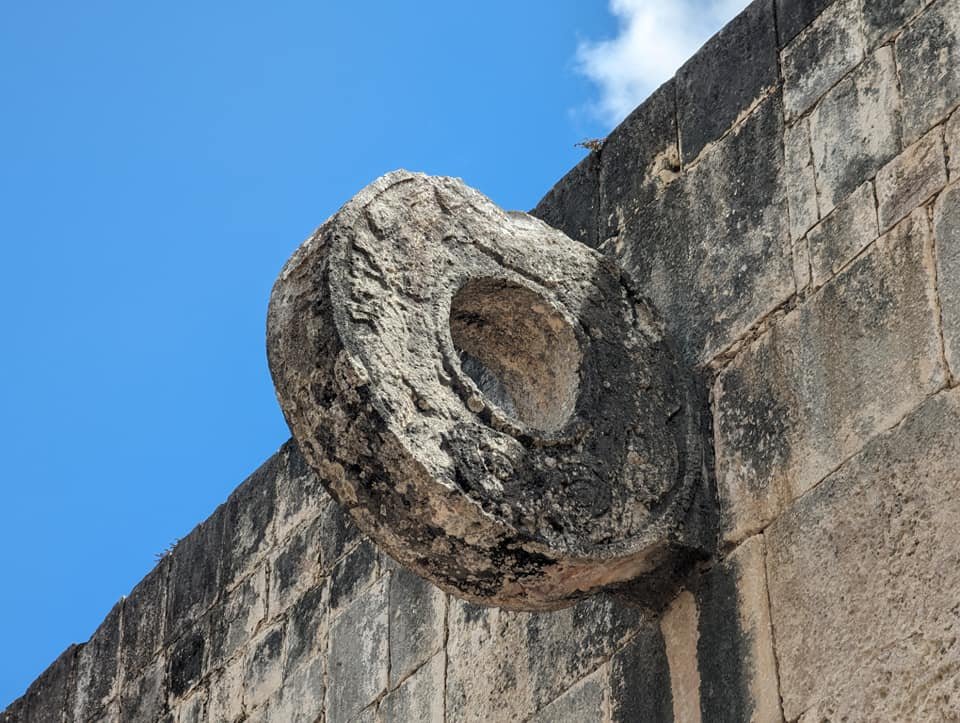
This is where the Maya played their ritual ball game (ullamaliztli). The tall stone walls of the court have survived, and on them – stone rings through which the players had to get the ball. They struck it with their hips or thighs, and the rings hang several metres above the ground – sometimes the players’ lives were at stake.
El Caracol observatory
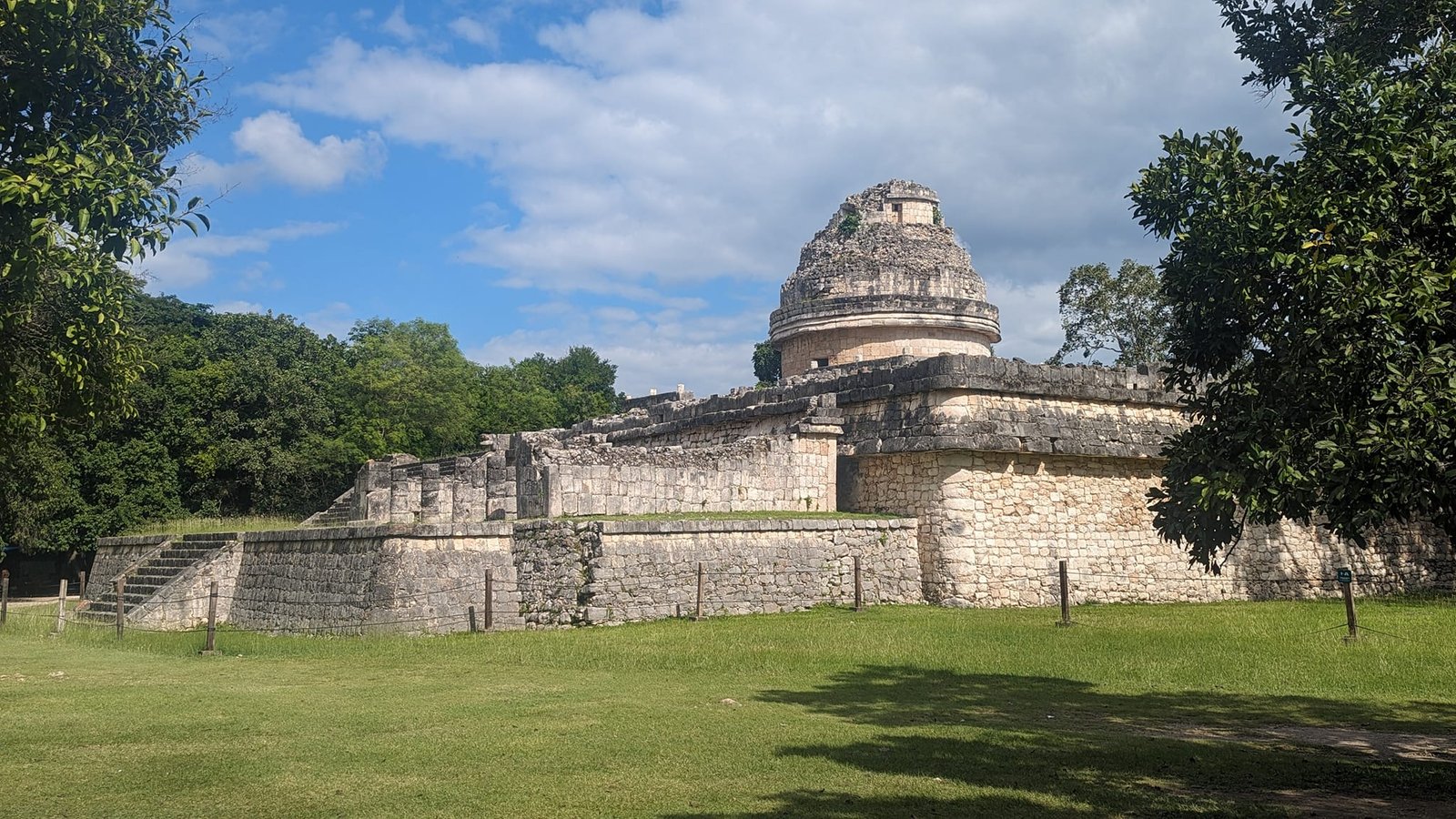
Another standout is El Caracol – a building with a round tower, believed to be a Maya astronomical observatory.
Other buildings and the cenotes
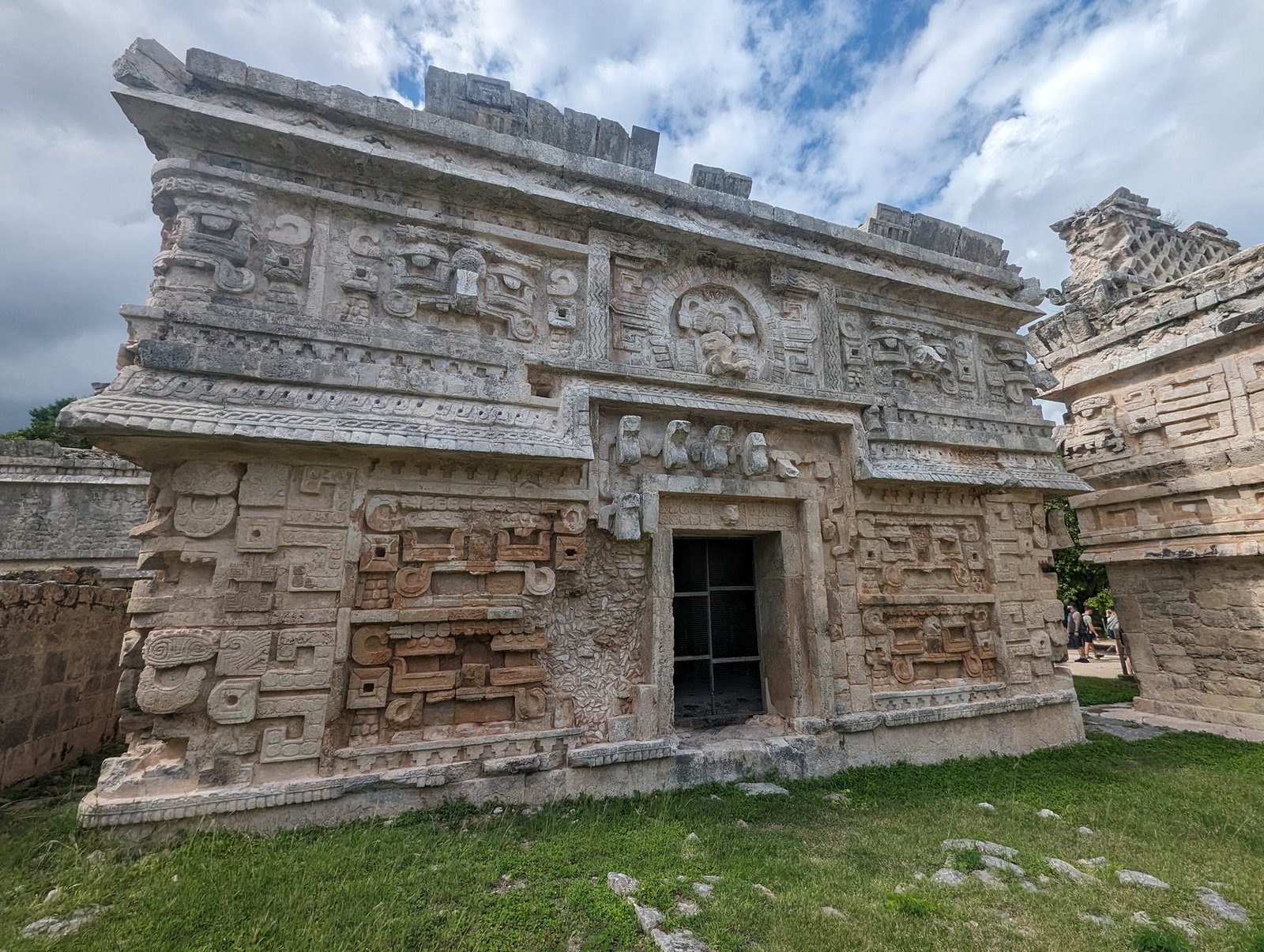
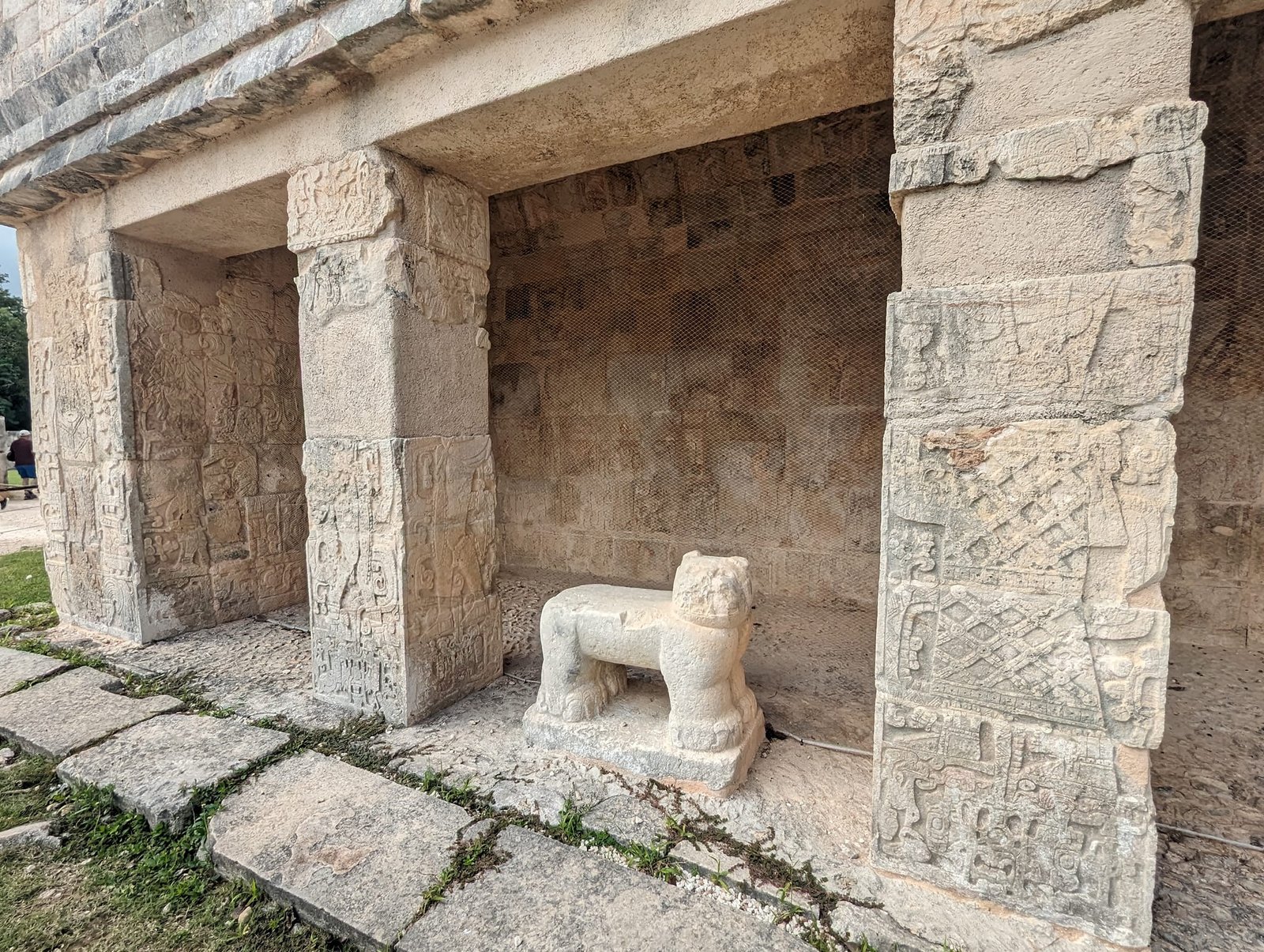
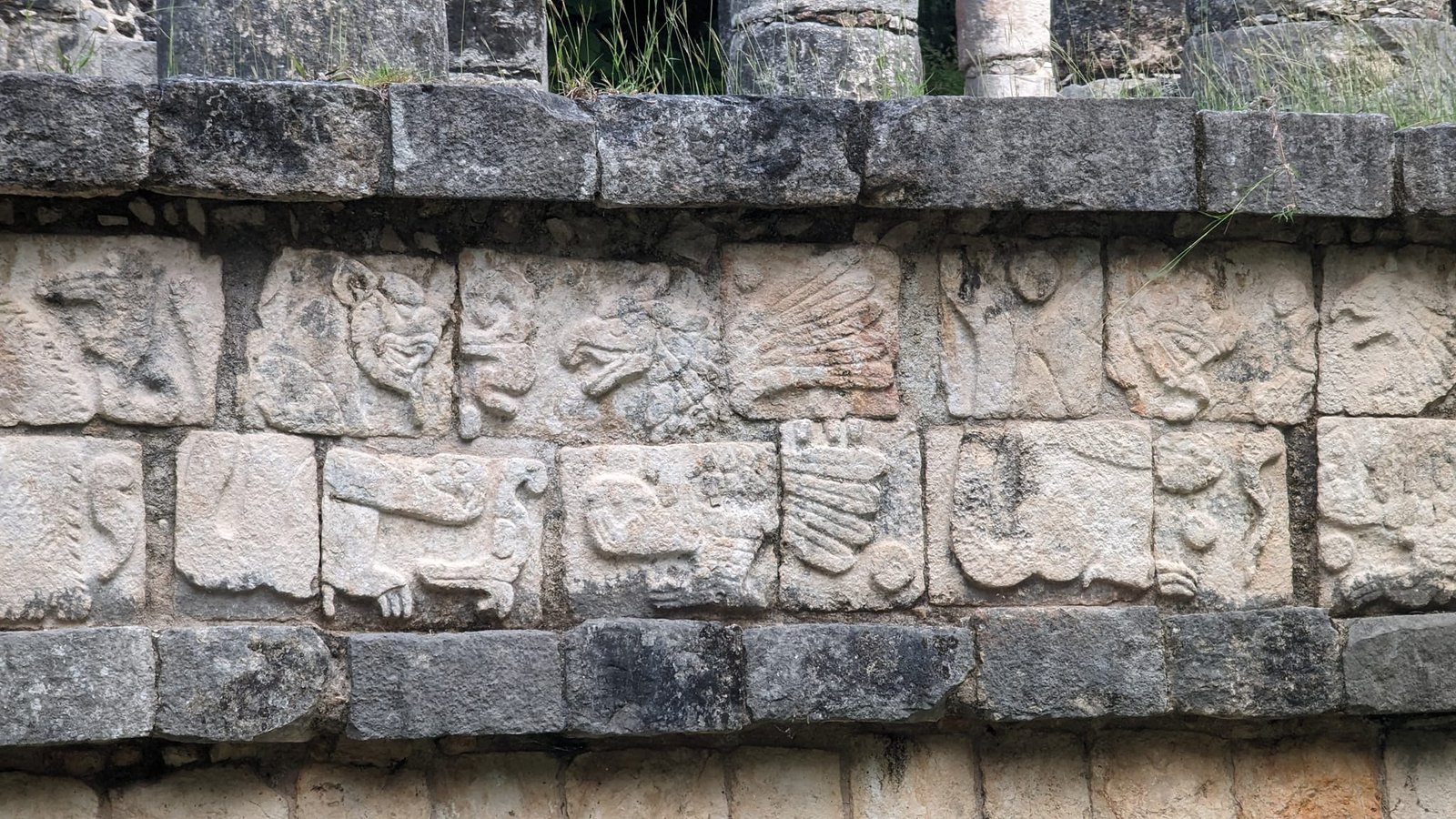
There are many other remains at Chichén Itzá: the High Priest’s Grave, a richly decorated building known as the Church (La Iglesia), temples on high platforms, jaguar sculptures and reliefs.
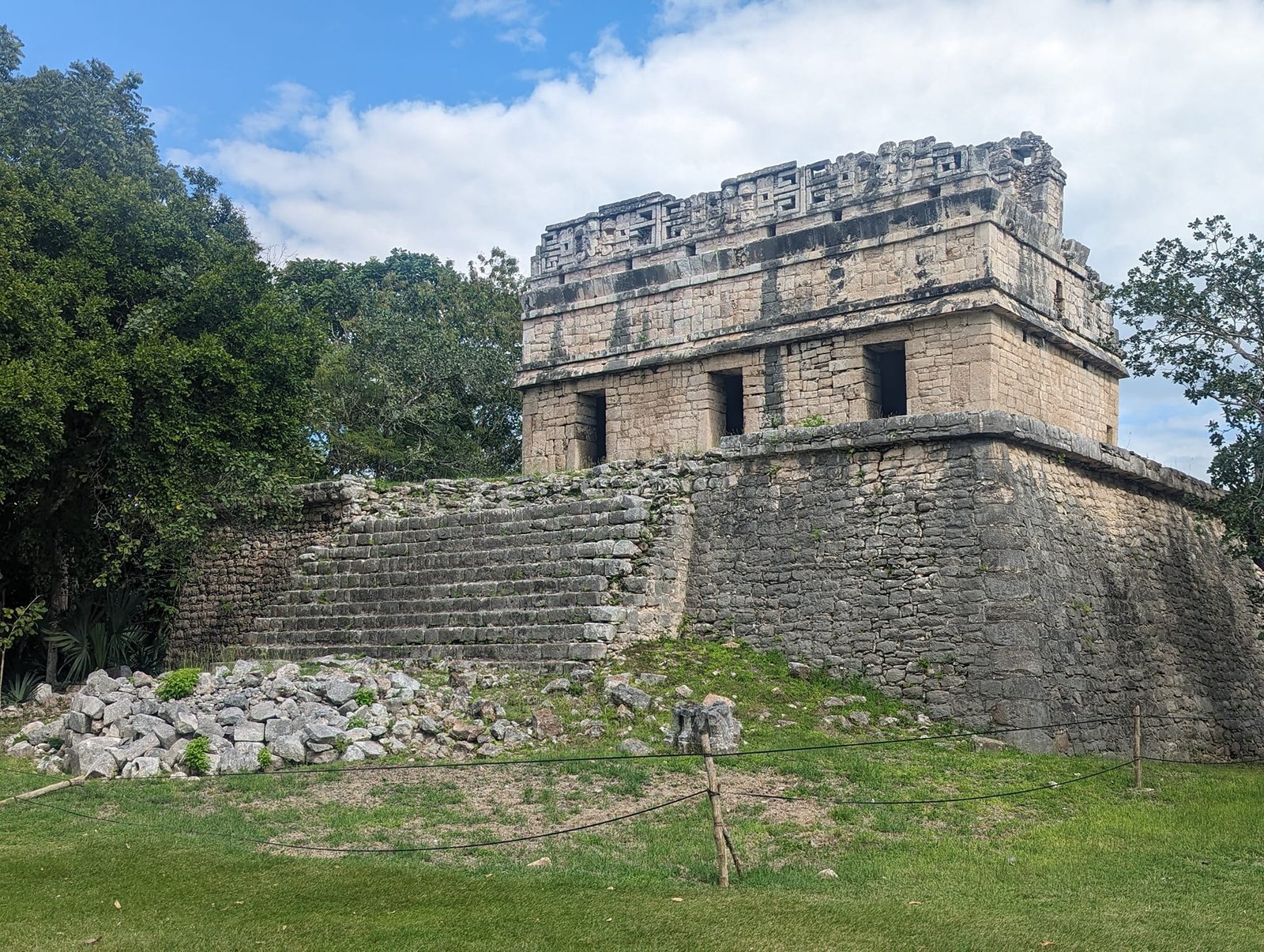
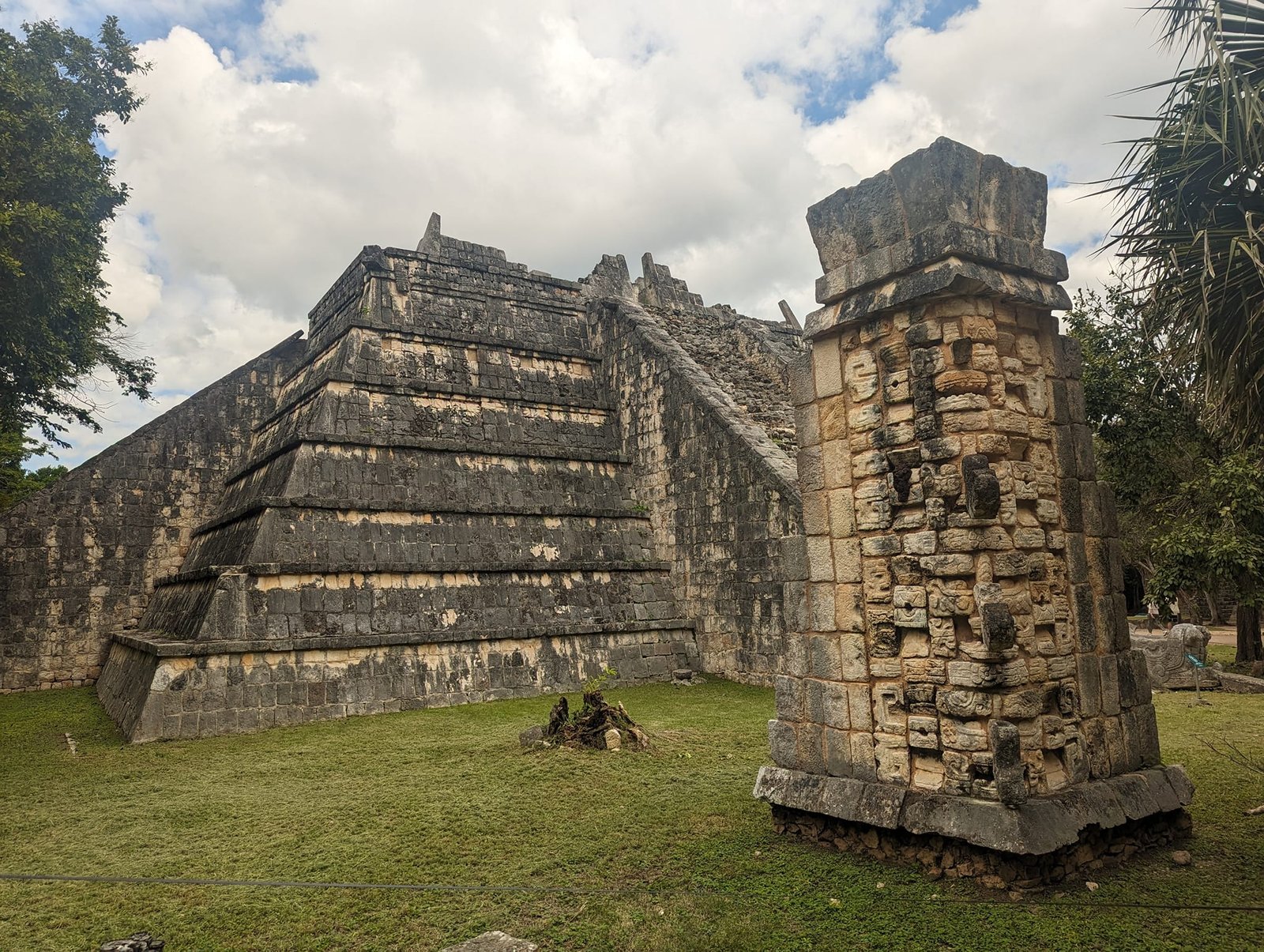
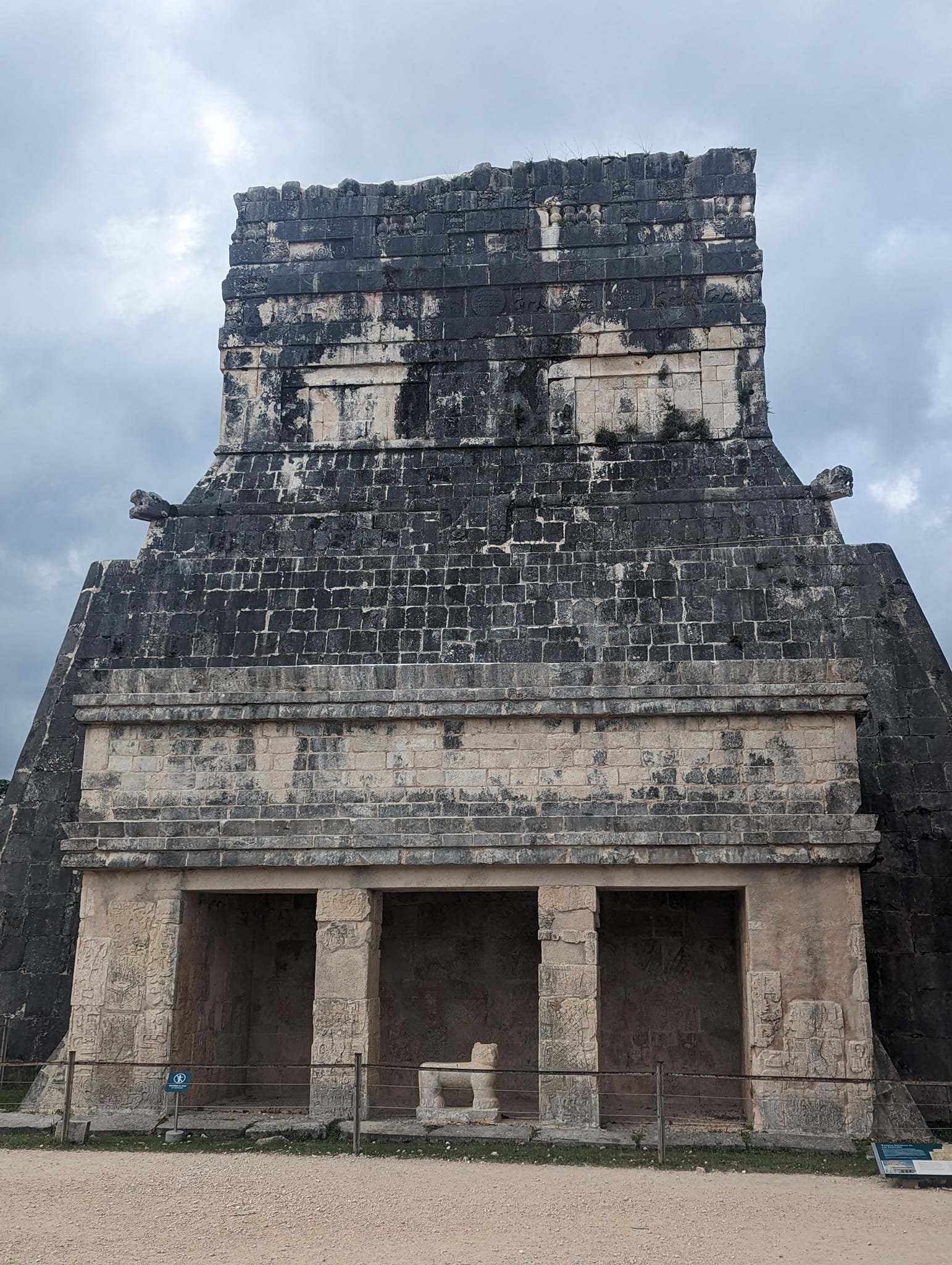
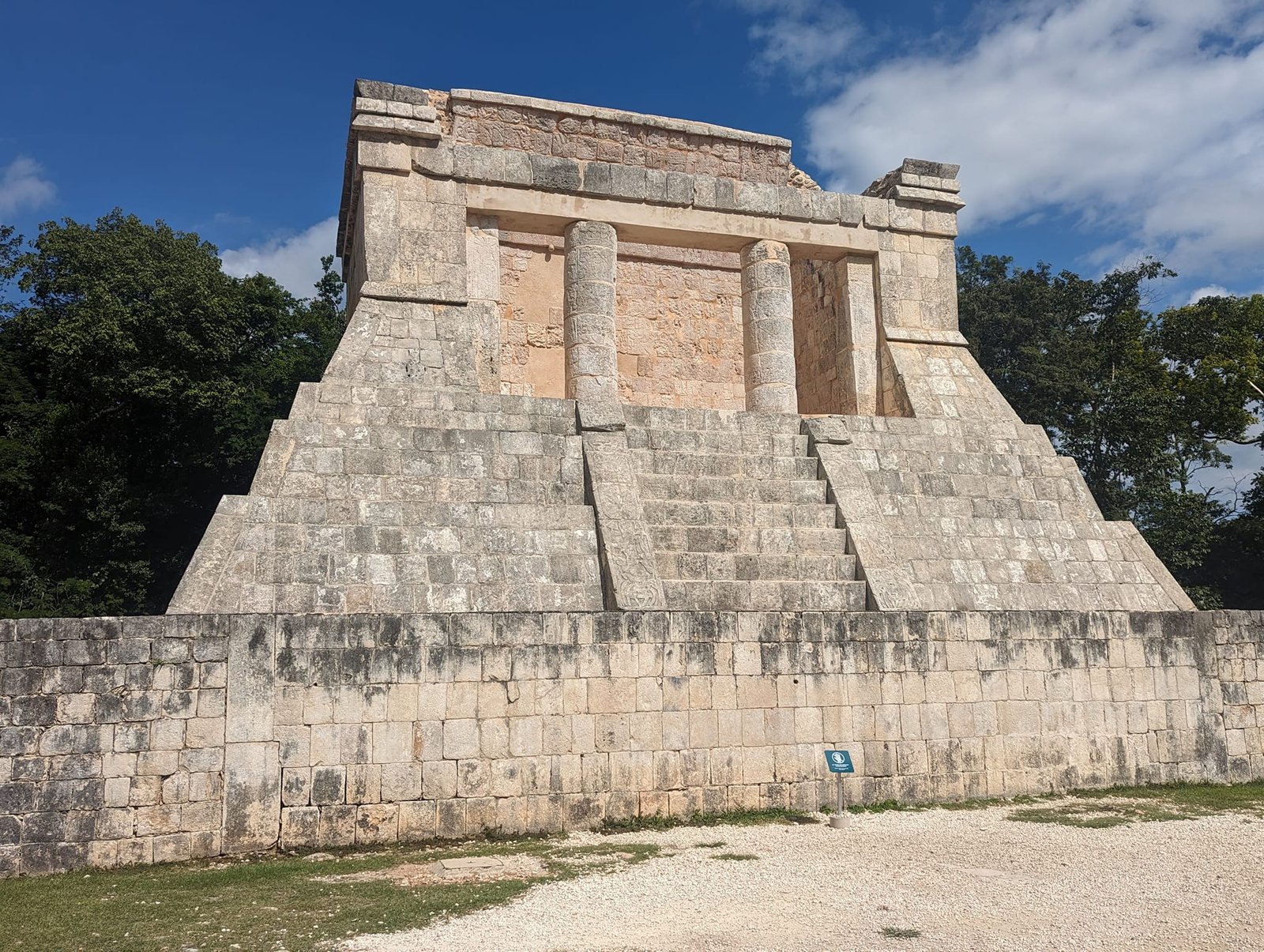
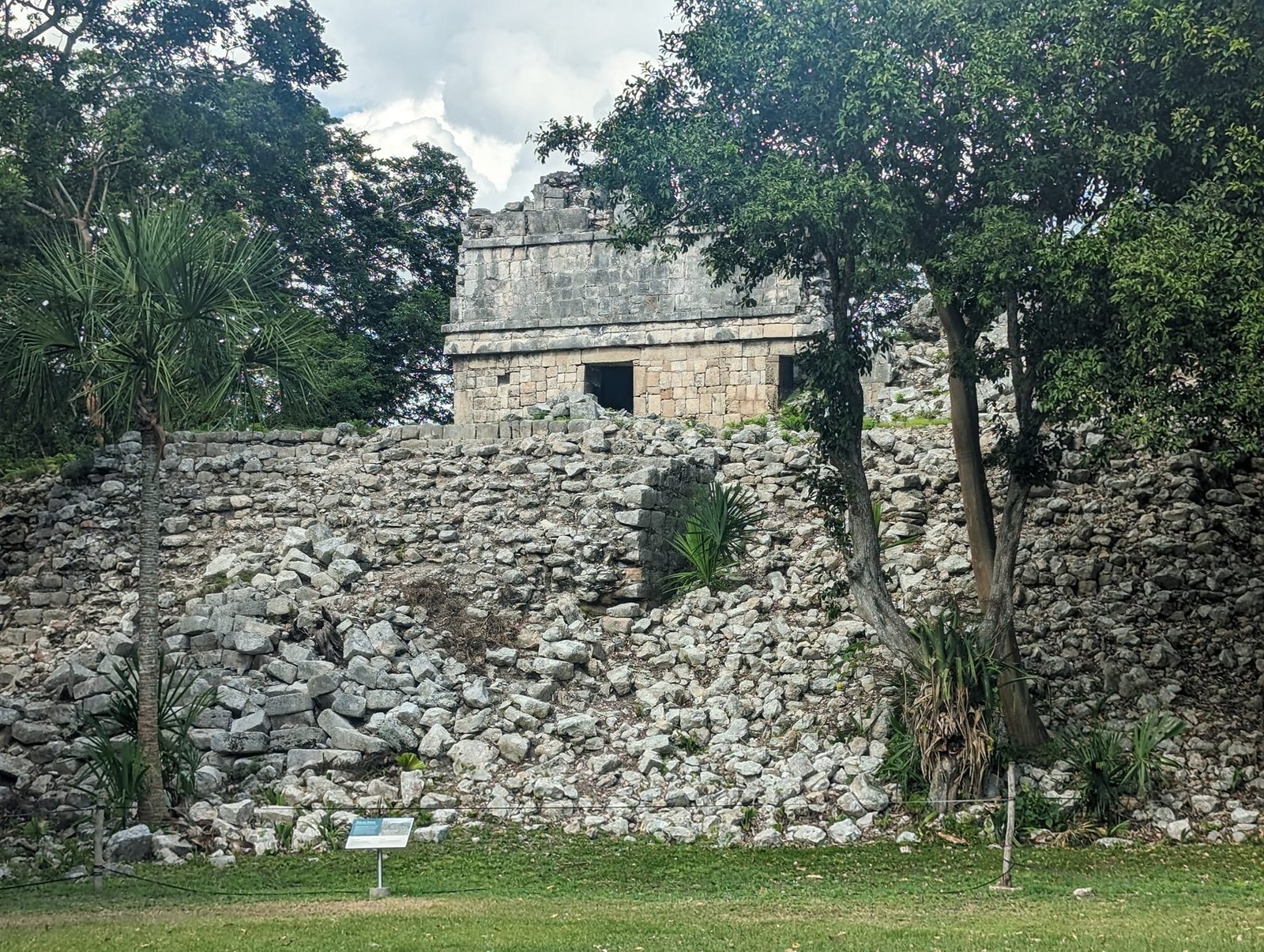
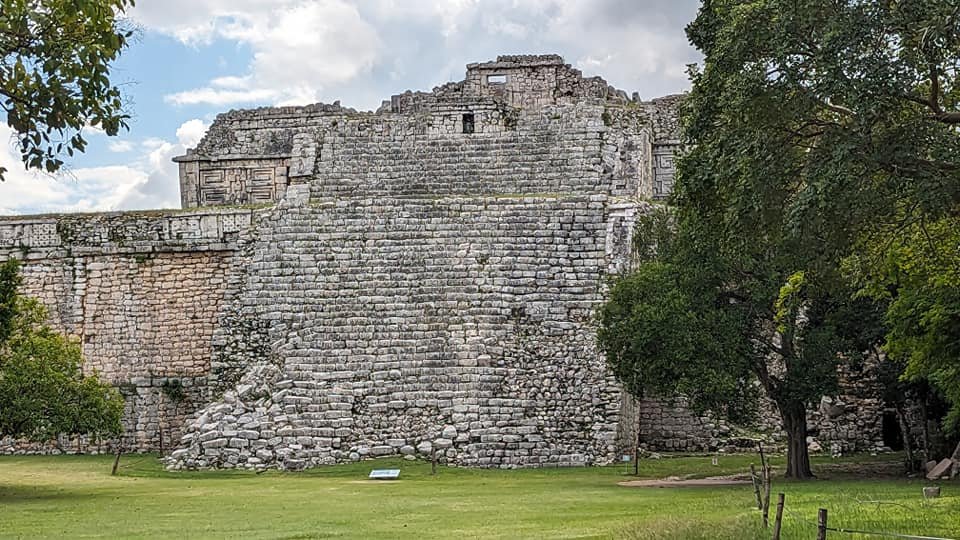
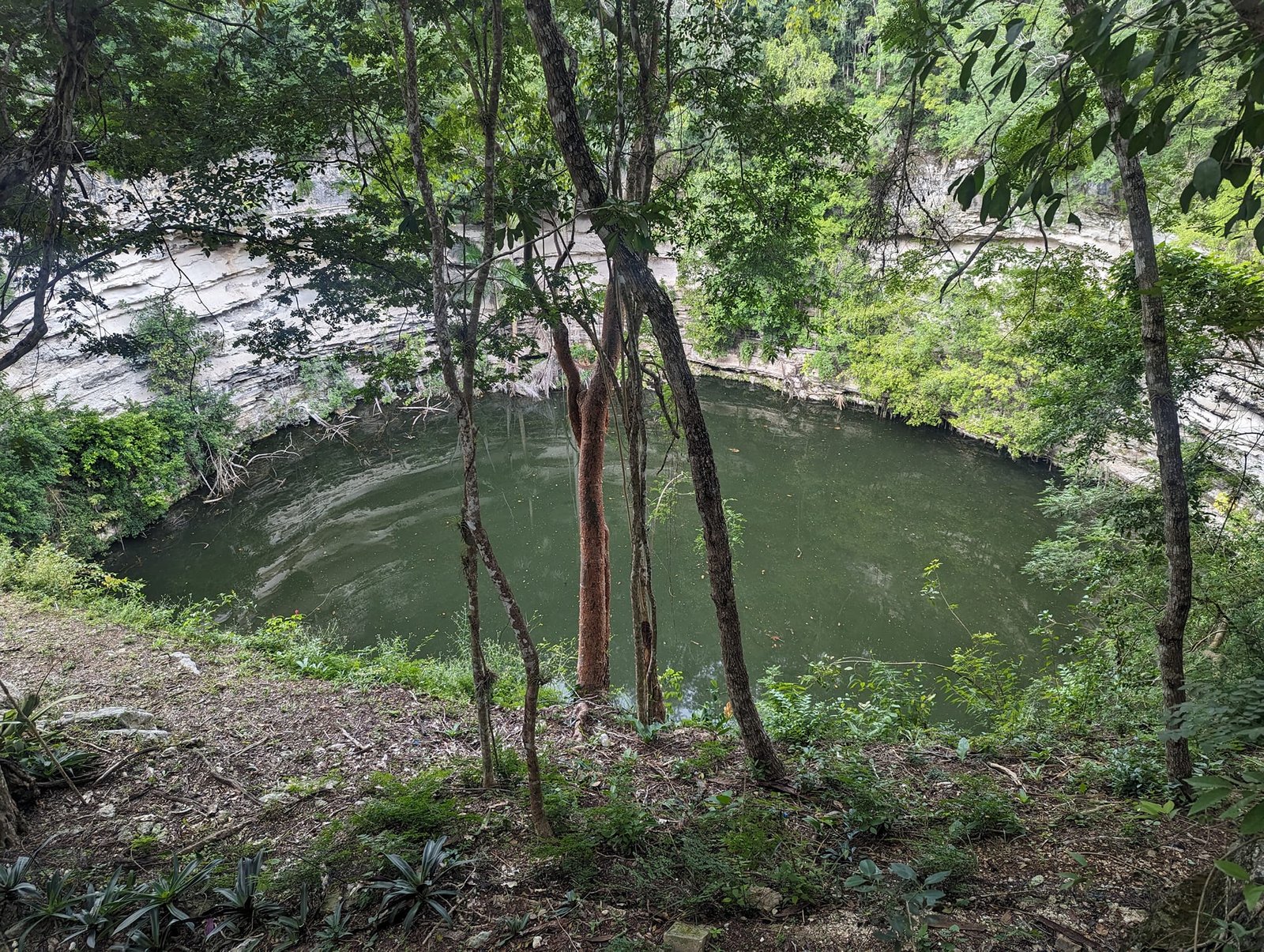
The site also has two cenotes – natural sinkholes that were a source of water for the Maya and a place of sacrifice.
Practical information – tickets, getting there, timing
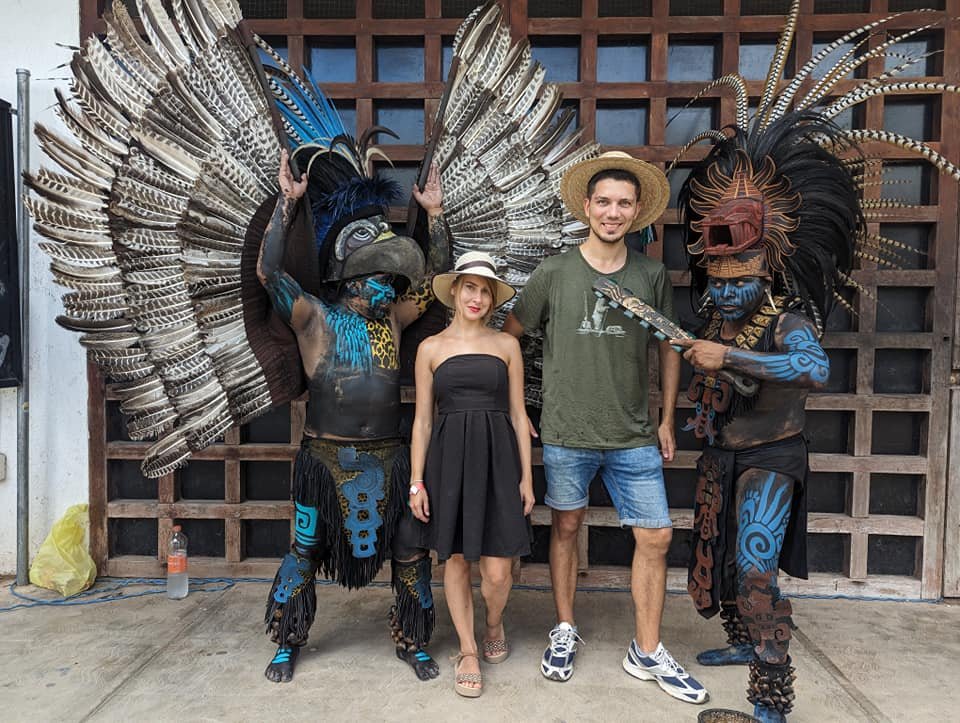
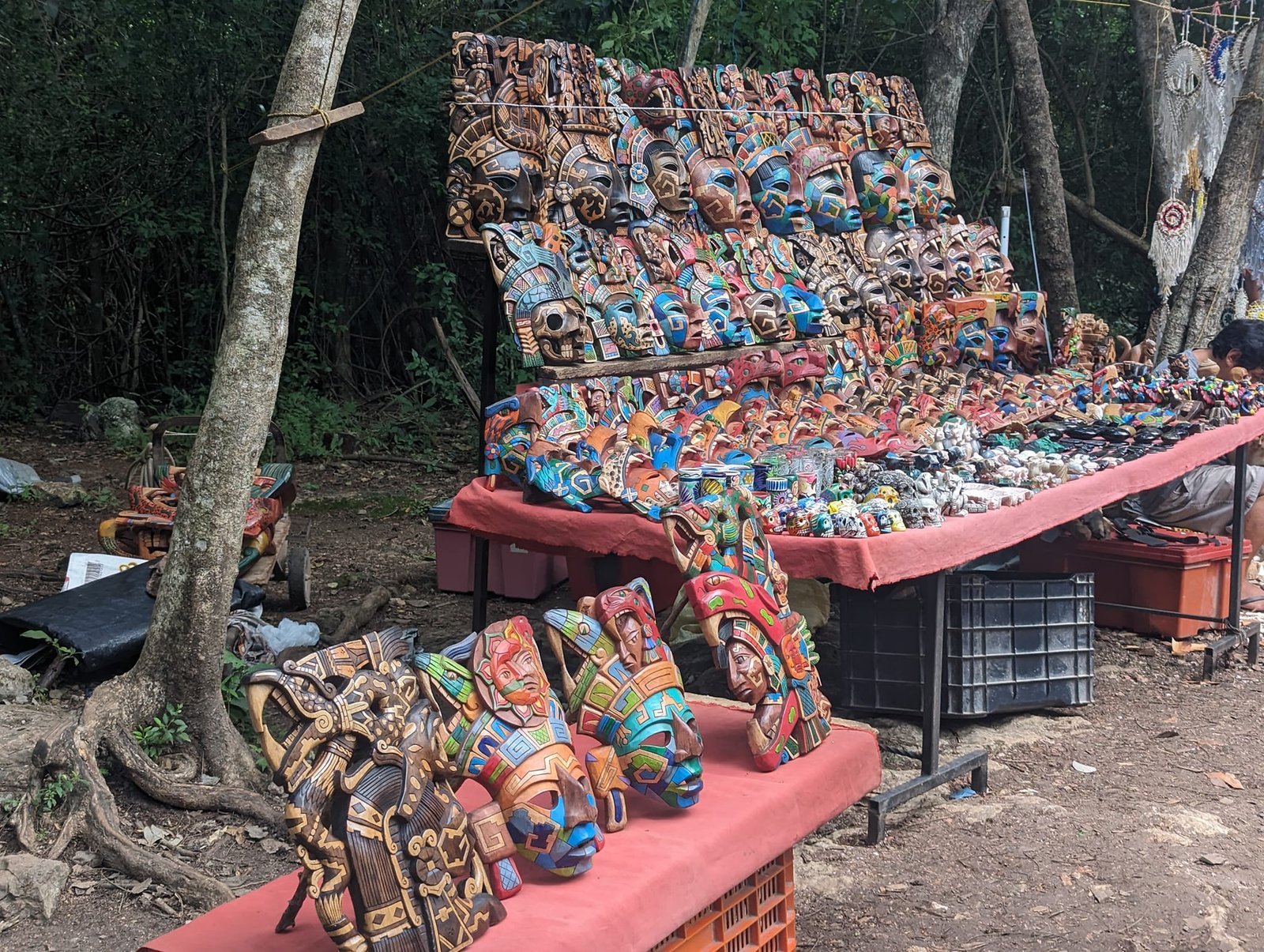
It’s Mexico’s biggest attraction, so it’s worth arriving early. We got there right after opening, shortly after 8 a.m. – there were already some people, but we could still take photos without crowds. At that time of day the temperature is also more pleasant (25–26°C); later we had 31 degrees, with a “feels like” of 36. On the way back it started to rain, so our timing was perfect. Along the paths there are stalls with colourful masks and souvenirs. I don’t agree with the opinions that Chichén Itzá loses its charm because of the crowds – the only downside is precisely the densely packed stalls.
- Entrance ticket – 614 MXN (about €33, November 2023). Yucatán is noticeably more expensive than the rest of the country – the ticket to Teotihuacán was roughly six times cheaper.
- Filming with a camera – an extra fee of 50 MXN (about €3); many archaeological sites in Mexico charge similar fees. A small external microphone was considered professional equipment here, which you’re not allowed to bring in.
- Getting there – a colectivo from Valladolid for 80 MXN (about €4.50) return. You can also take an ADO bus, but it runs less often and costs more.
- Time needed – about 3–4 hours.
- When – right after opening: fewer people and lower temperatures. Bring a hat and water.
If you like ancient cities, also take a look at the post about Teotihuacán near Mexico City.
Photo gallery