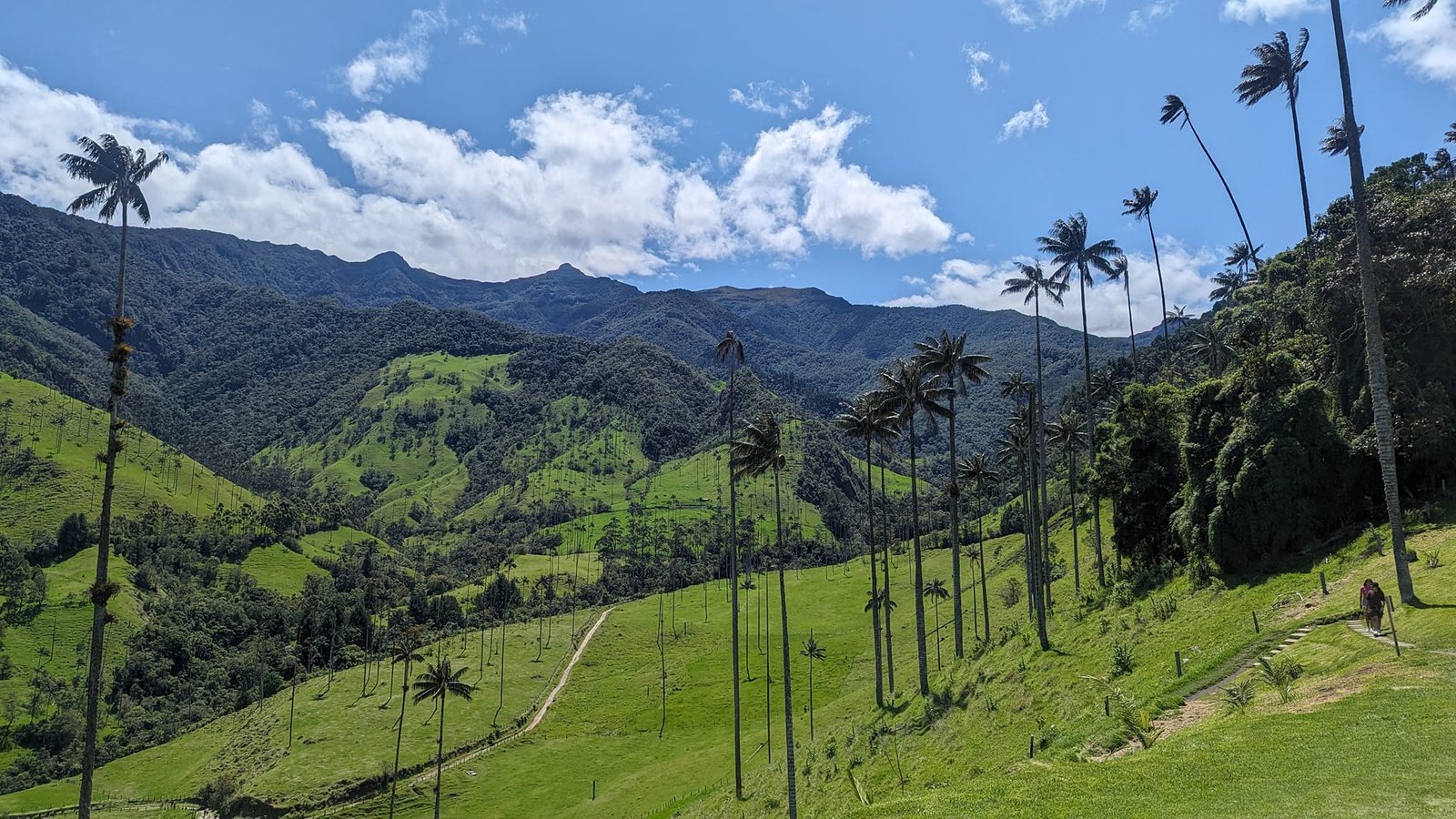
After one day in Bogotá we travelled another 300 km, this time west, to the small town of Salento. This is where the jeeps leave for the Valle de Cocora – one of Colombia’s most popular attractions, a valley where the tallest palm trees in the world grow. We walked a 12-kilometre loop there with about 600 m of elevation gain: first among wax palms on green slopes, then through the forest along a river. According to Patrycja it was the most beautiful trail we walked on the whole trip.
Our route:
- 18 May – departure from Bogotá in the evening,
- 19 May – arrival in Salento in the morning, by jeep to the Valle de Cocora and the loop through the valley,
- 20 May – departure from Salento towards Medellín.
Table of contents
- Salento – a colourful town at the gateway to the valley
- By jeep to the Valle de Cocora
- Wax palms – the tallest palm trees in the world
- The loop through the valley – 12 km and 600 m up
- Photo spots and Mirador Mano de Acaime
- Practical information
- Summary
Salento – a colourful town at the gateway to the valley
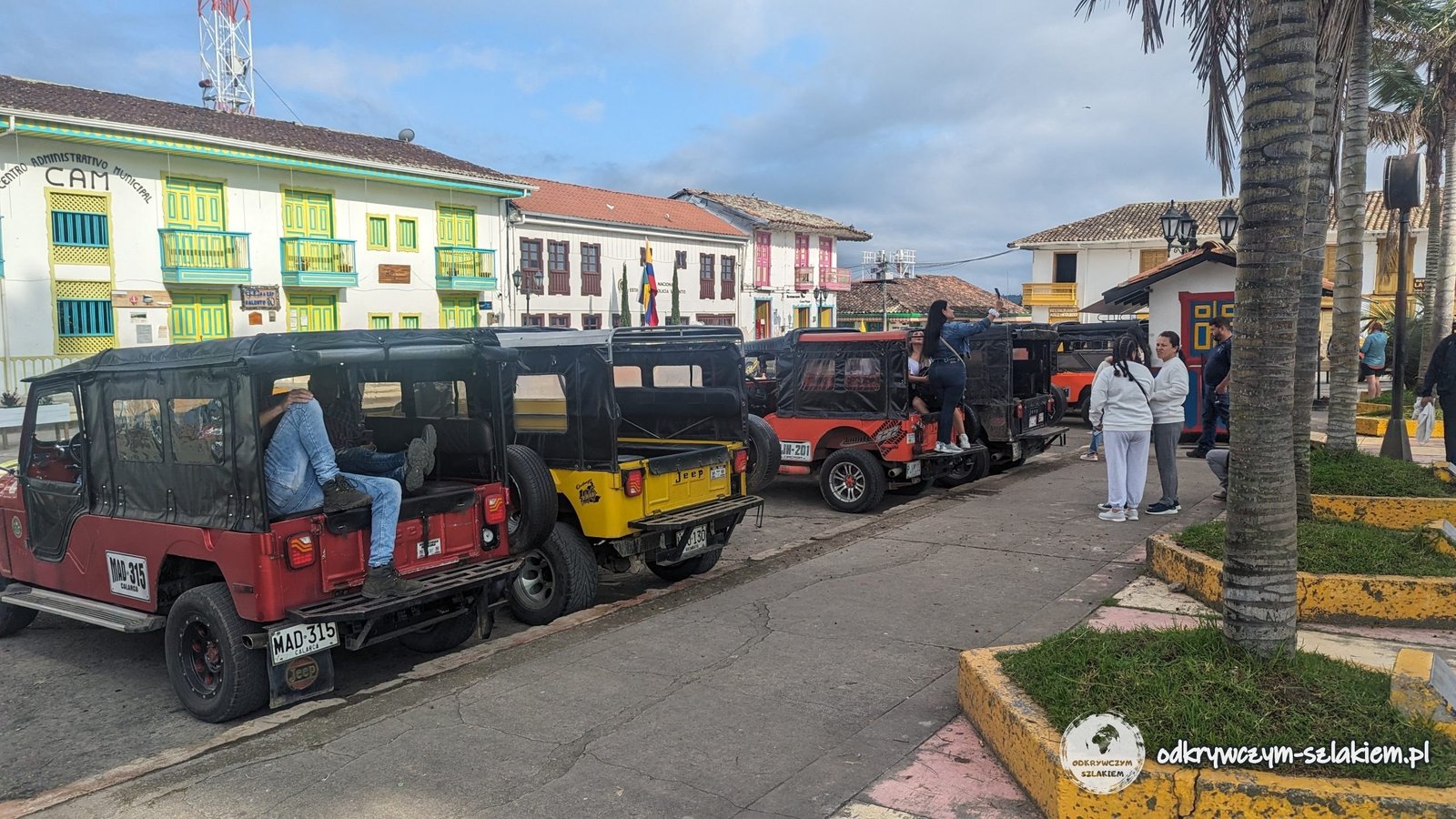
We reached Salento early in the morning on 19 May. We could only leave our things at the hostel from 9 o’clock, so first we took a walk around the town. It is a small, picturesque place and at the same time a great base for the sights around it. The white houses here have colourful wooden balconies, doors and shutters – almost every one in a different colour combination.
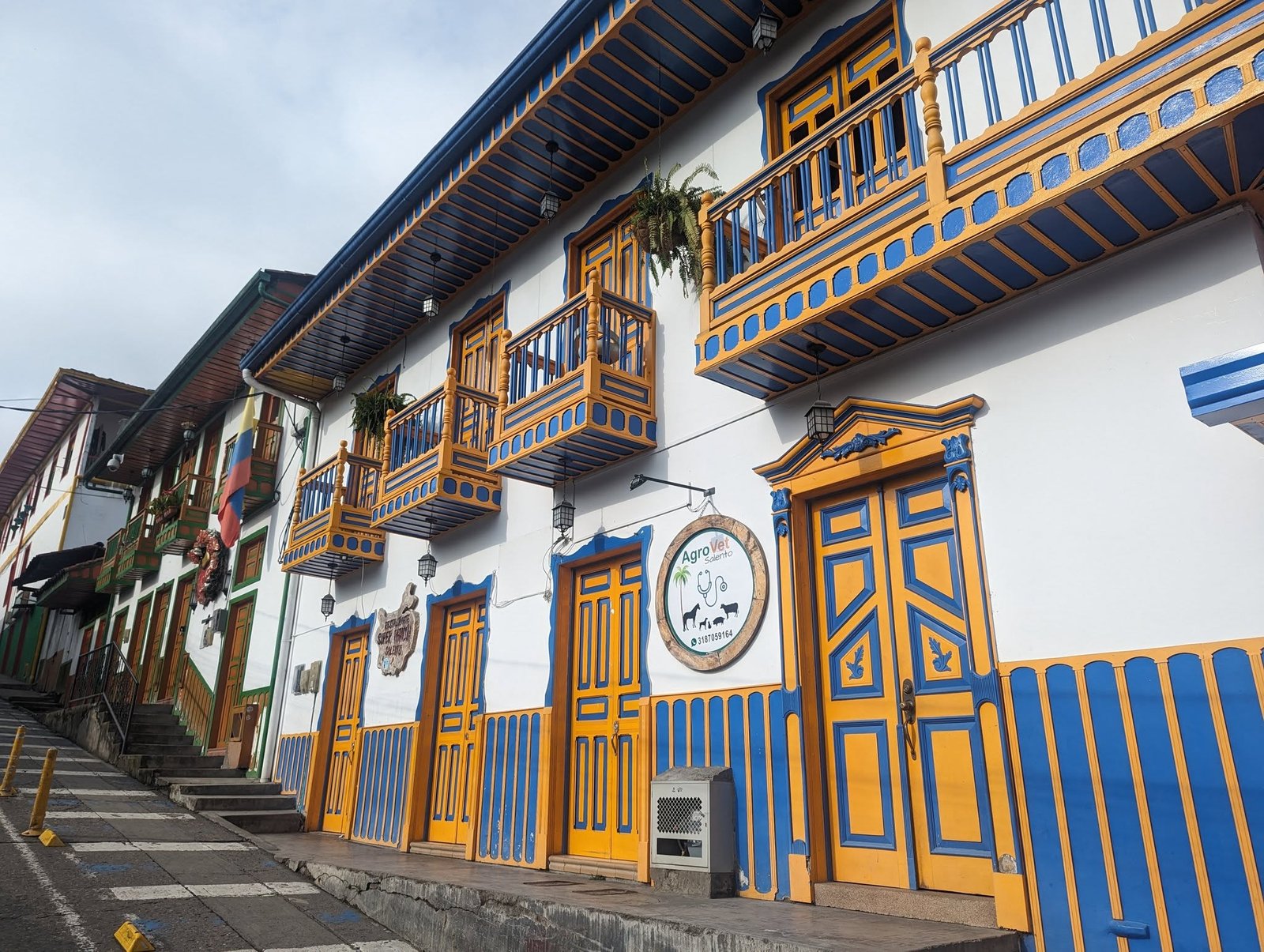
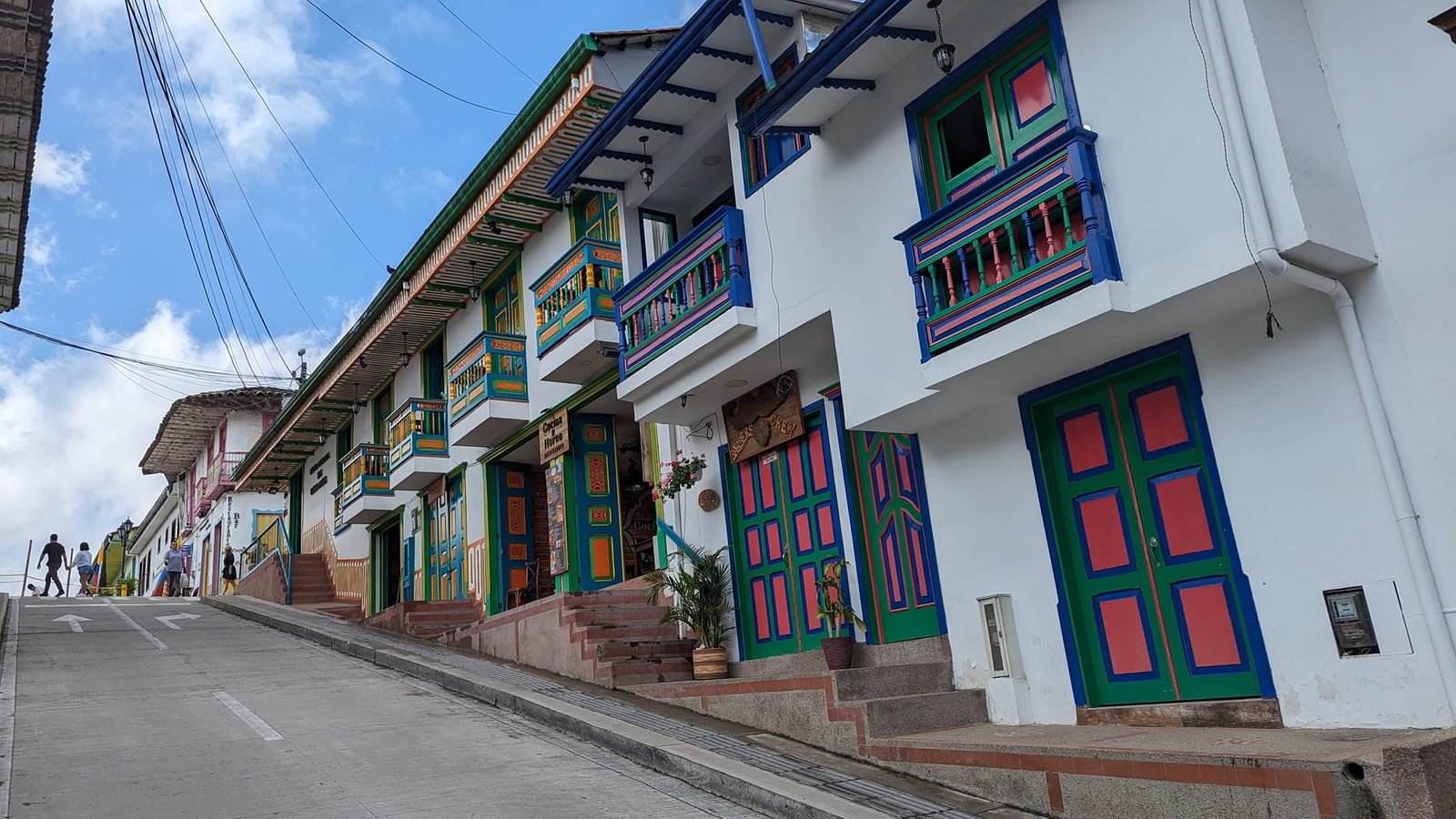
Salento was founded on 5 January 1842 – it was the first municipality created in what is now the department of Quindío, and it is known as the “father of Quindío”. It lies at about 1,895 m above sea level. Many houses have kept the traditional bahareque construction – walls of woven bamboo plastered with clay. The main street, Calle Real (Carrera 6), lined with craft shops, leads from the square to 250 steps with the fourteen Stations of the Cross, which climb up to the Alto de la Cruz viewpoint.
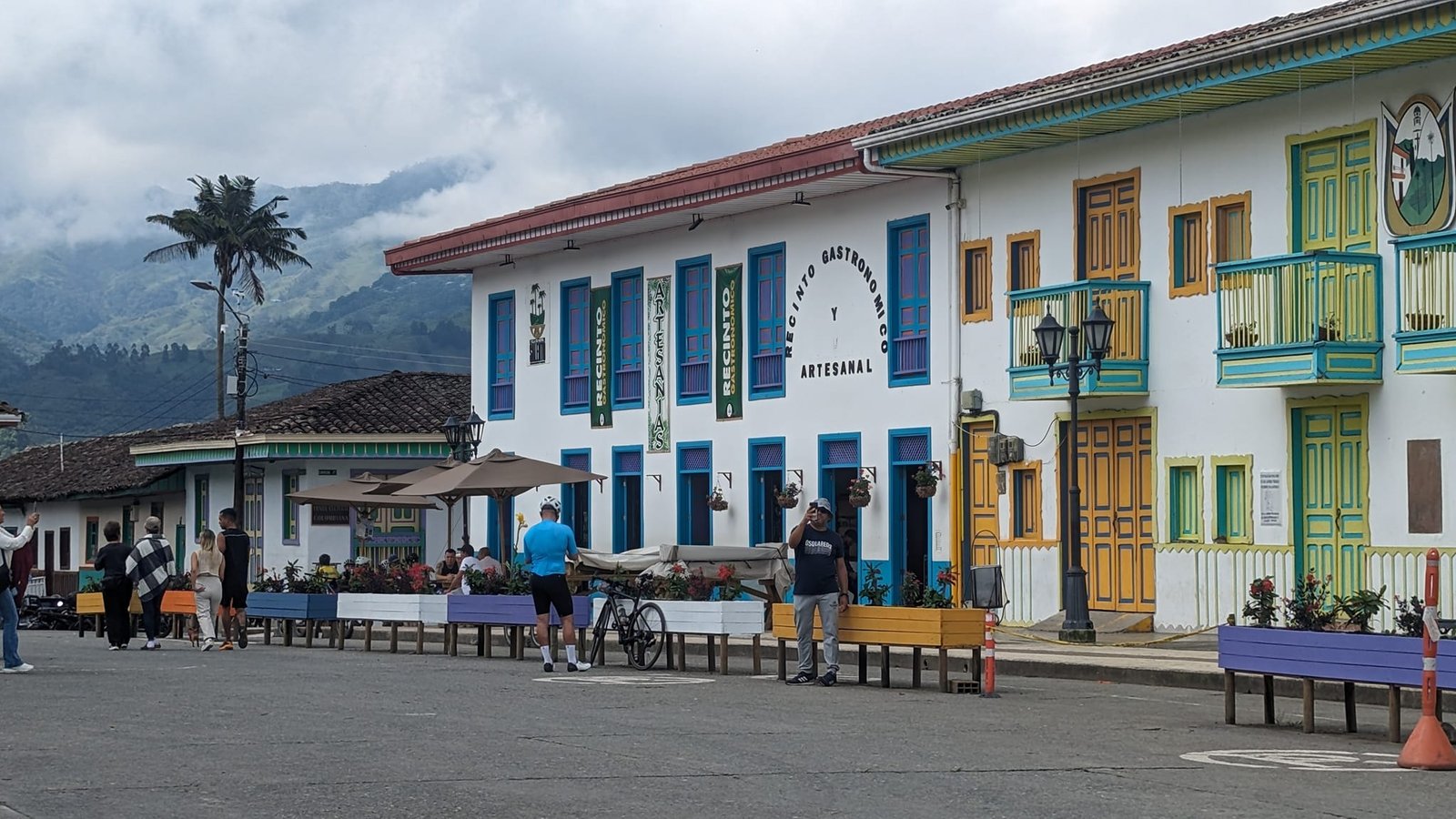
Forested mountains rise above the roofs, and a tall palm tree grows in the main square – a foretaste of what we would see a few hours later. We spent one night in Salento.
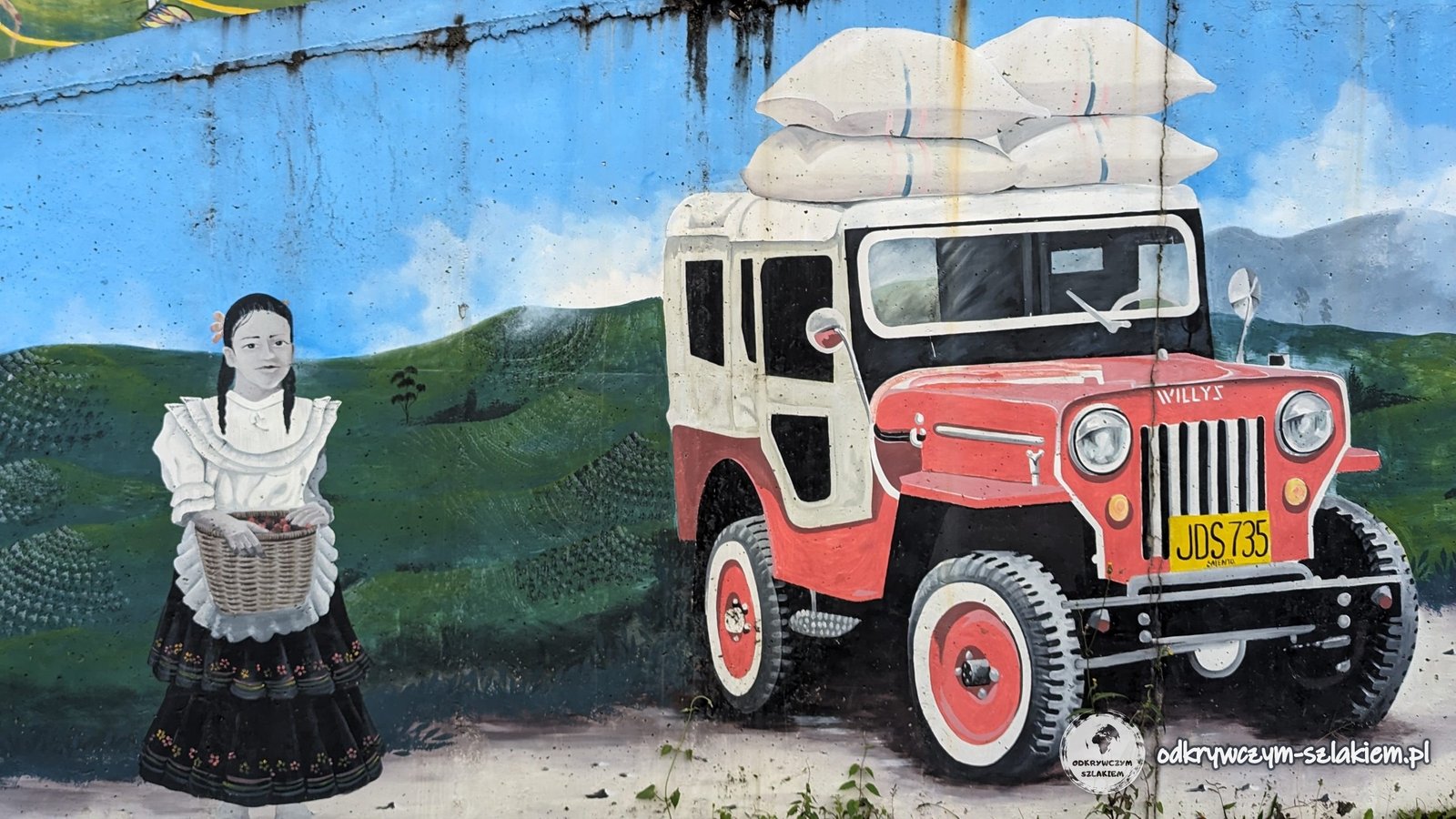
Colourful Willys jeeps – called yipao in Colombia – wait on the square in Salento. They arrived in the mid-20th century and still carry people and coffee sacks along steep mountain roads; the region even holds parades of them. Salento lies in the Quindío department, in the heart of Colombia’s coffee region – its cultural landscape has been a UNESCO World Heritage Site since 2011.

By jeep to the Valle de Cocora
You get to the valley from Salento in off-road vehicles. They are scheduled to leave every hour, and the return trip cost us 10,000 COP (about €2.30).
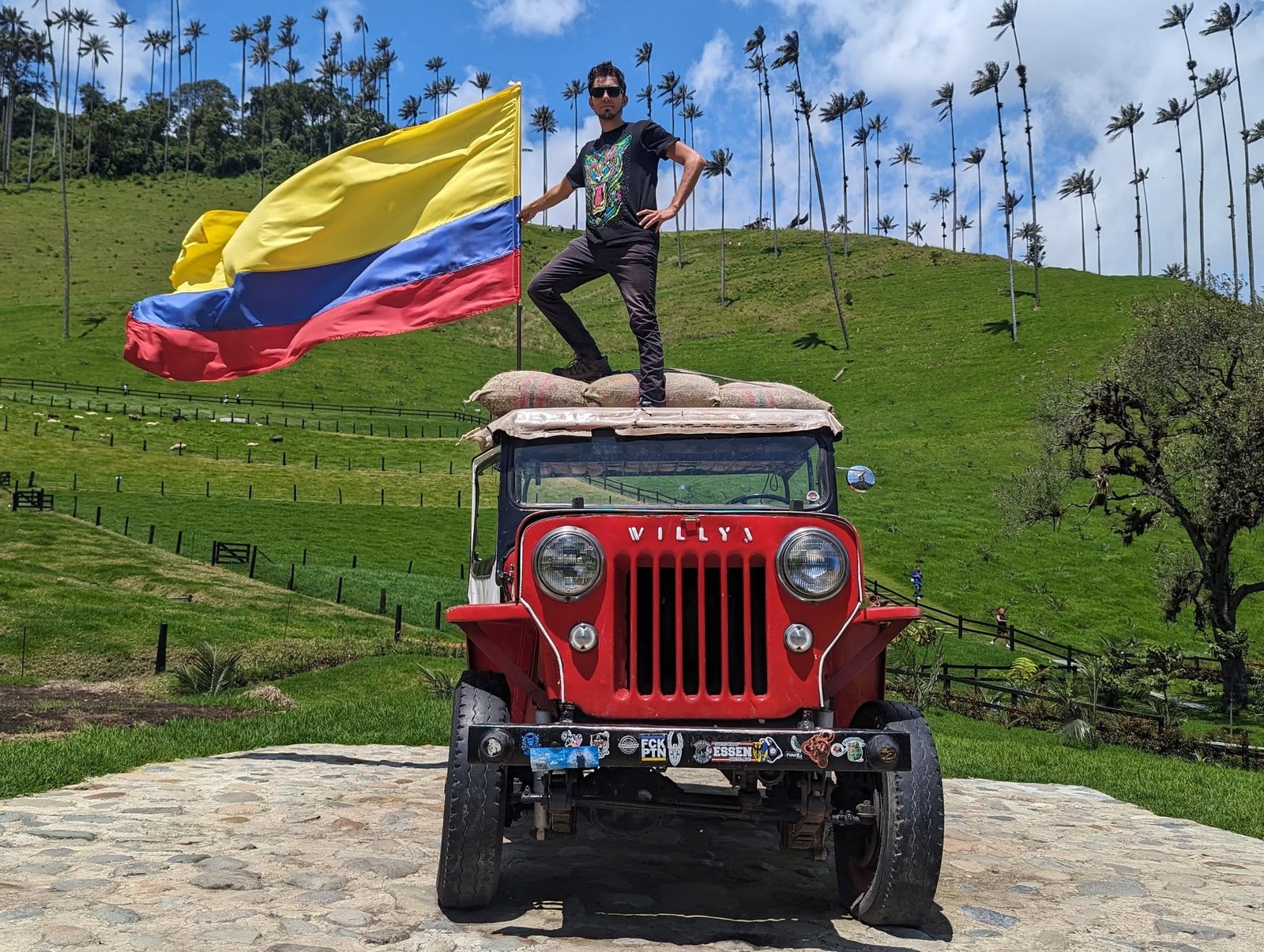
In the valley itself, one of these jeeps – a red Willys with a Colombian flag – stands as a photo attraction, and you can climb onto its roof. I could not resist.
Wax palms – the tallest palm trees in the world
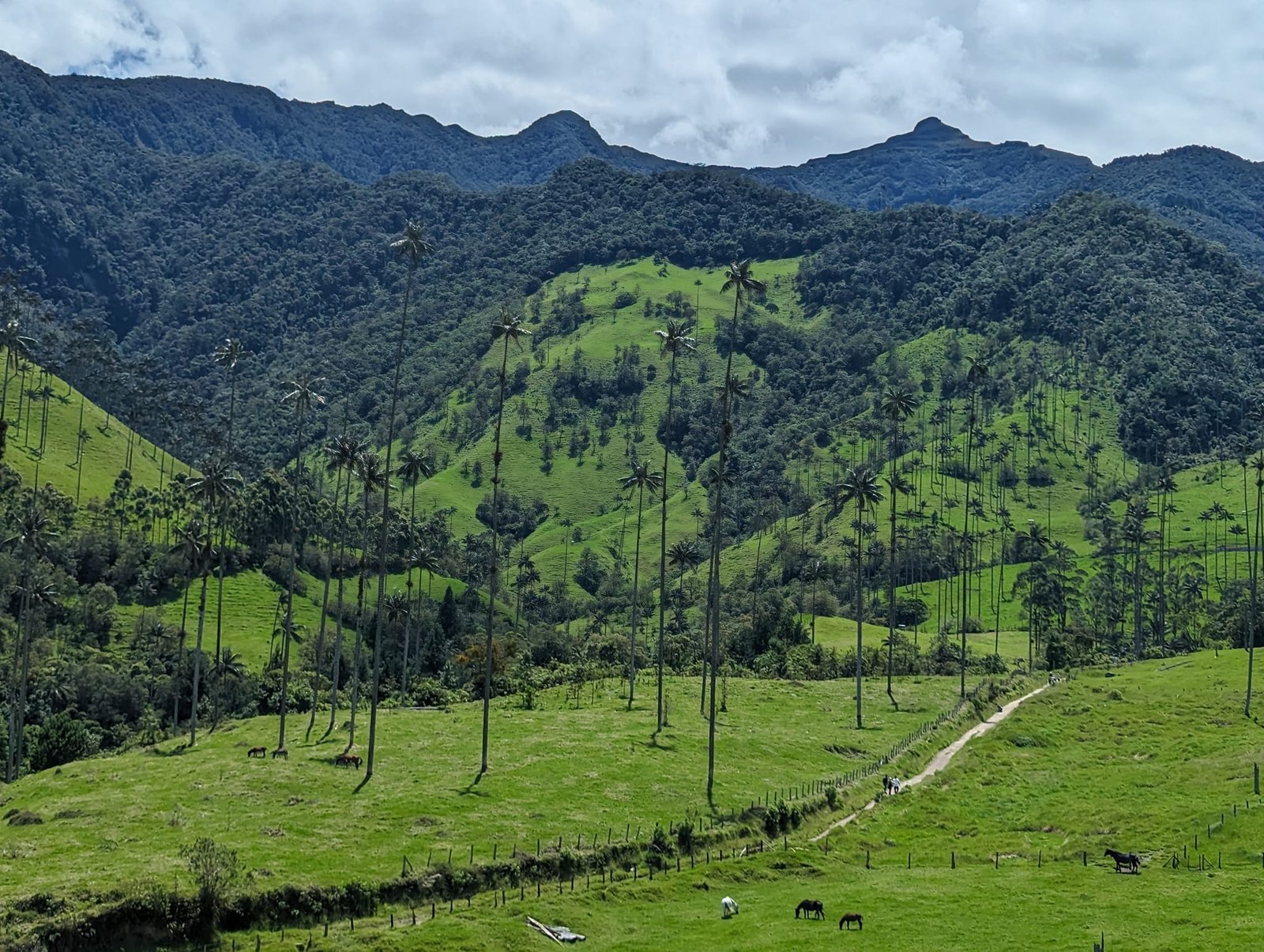
The Valle de Cocora is part of Los Nevados National Park and is famous above all for its wax palms – the tallest palm trees in the world. They grow up to 60 m tall, and their slender trunks with a tuft of leaves at the very top stick out high above the green meadows. It is a threatened species found only in Colombia and Peru.
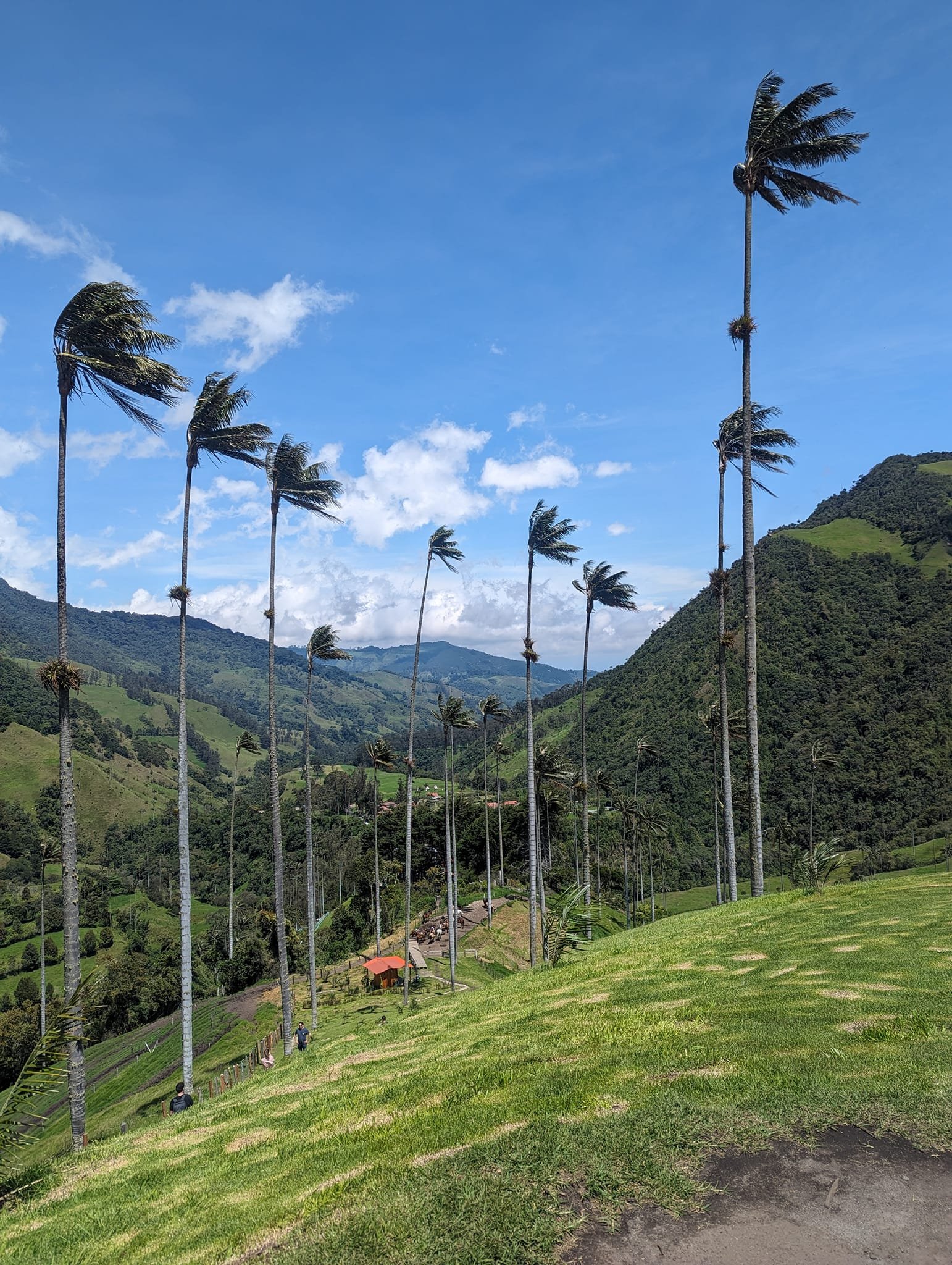
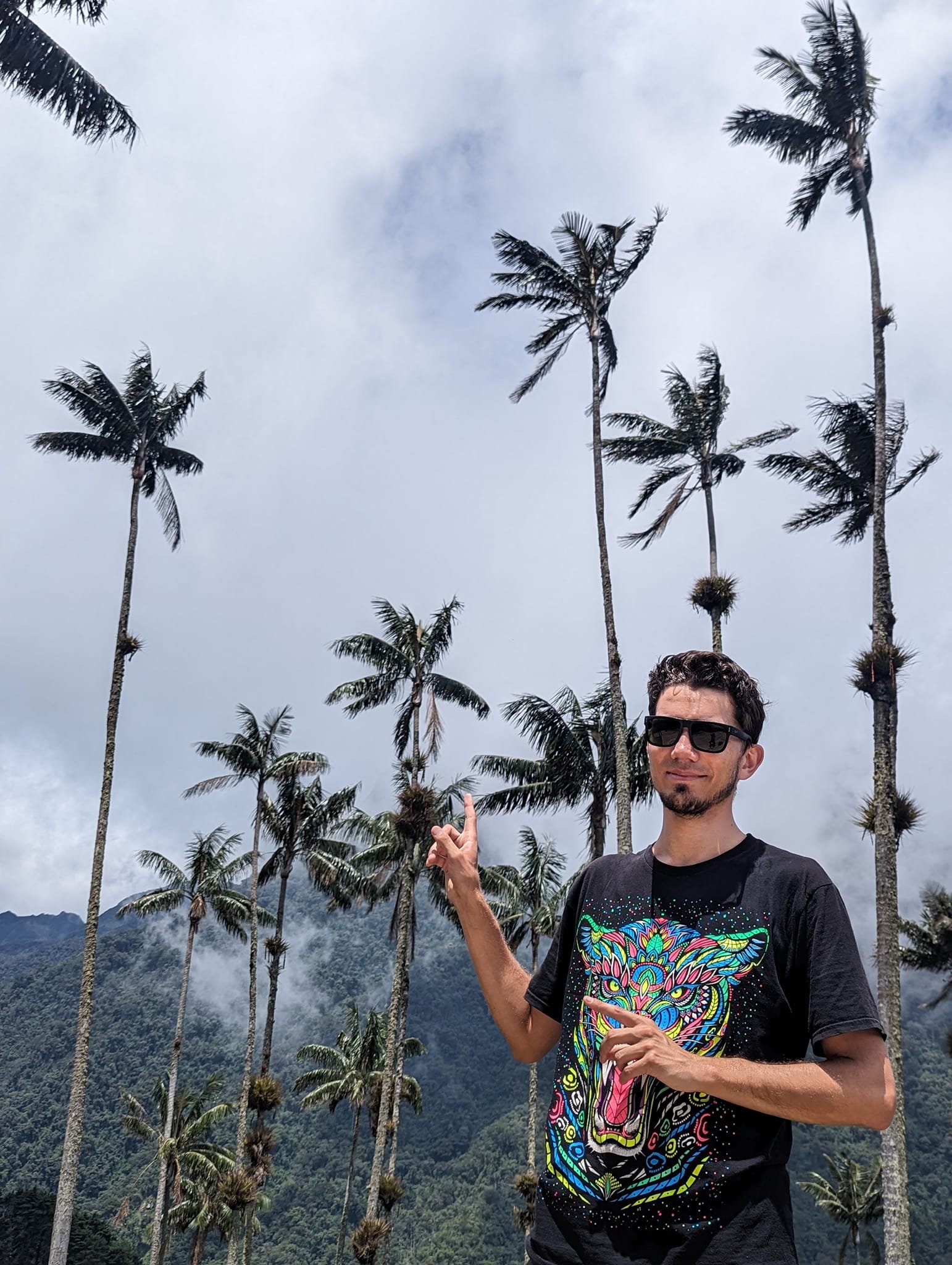
In the sunshine all the green of the valley glows beautifully, and every few minutes you feel like stopping to take another photo. Several people asked us whether we had watched the Disney animated film “Encanto”, which is set in Colombia, before coming here. We had watched it back in Cartagena – it is not bad, but it did not blow me away.
The wax palm grows very slowly – it only starts bearing fruit after about 80 years, and it can live for around 200 years. It owes its name to the layer of wax on its trunk, which was used to make candles in the 19th century. For a long time it was also threatened by a Palm Sunday tradition: leaves were cut from young palms for the processions, and the palms then died – the custom was only curbed by a campaign backed by the Catholic Church. The palms are home to the yellow-eared parrot, which nests in hollows in their trunks and feeds on their fruit. It was thought to be extinct until 81 birds were found in 1999; today its numbers are growing.
The loop through the valley – 12 km and 600 m up
We decided to walk the 12-kilometre loop with about 600 m of elevation gain. We started the trail before noon, in full sunshine. At first we walked among countless palms growing one next to another on the green slopes.
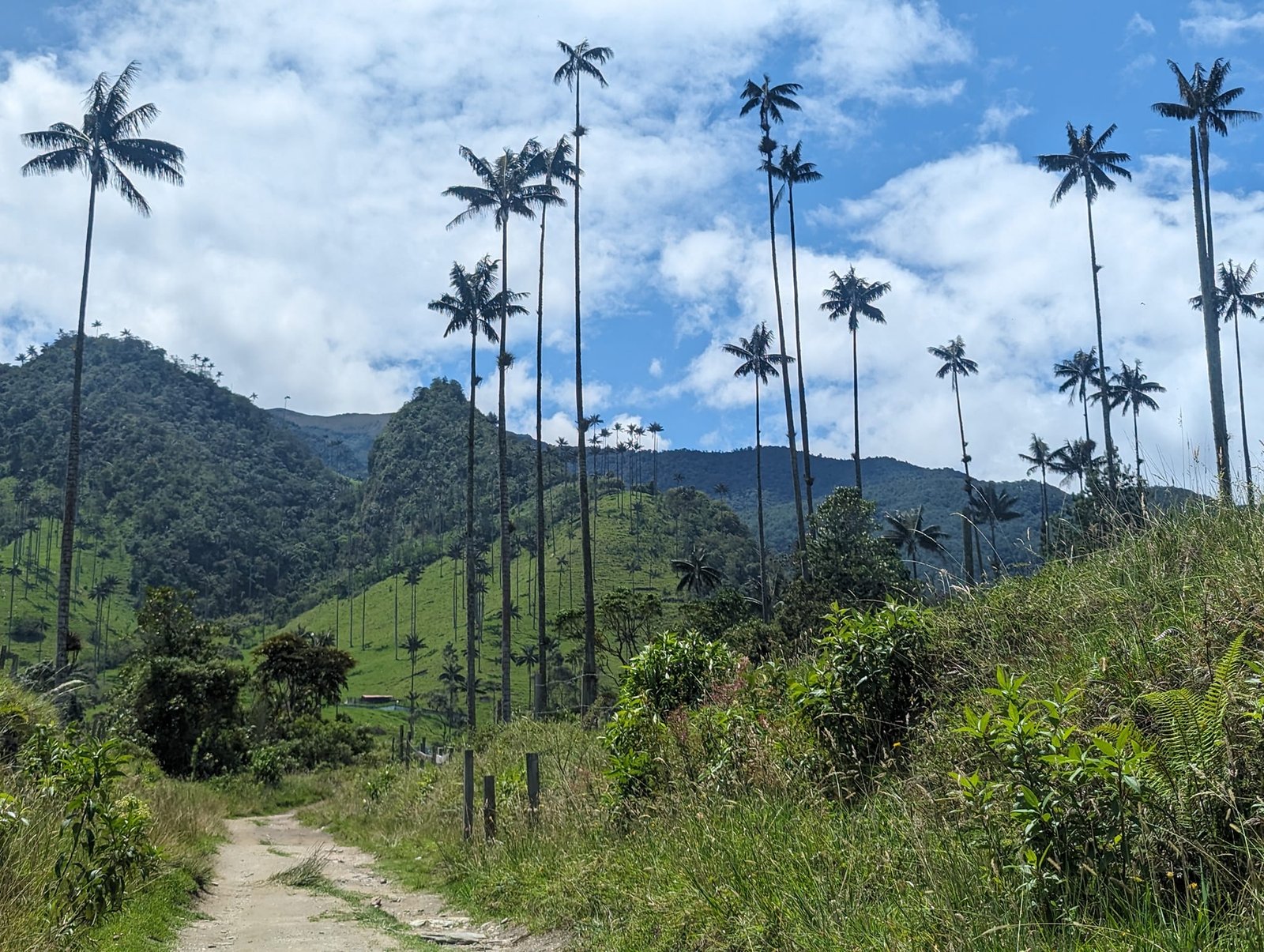
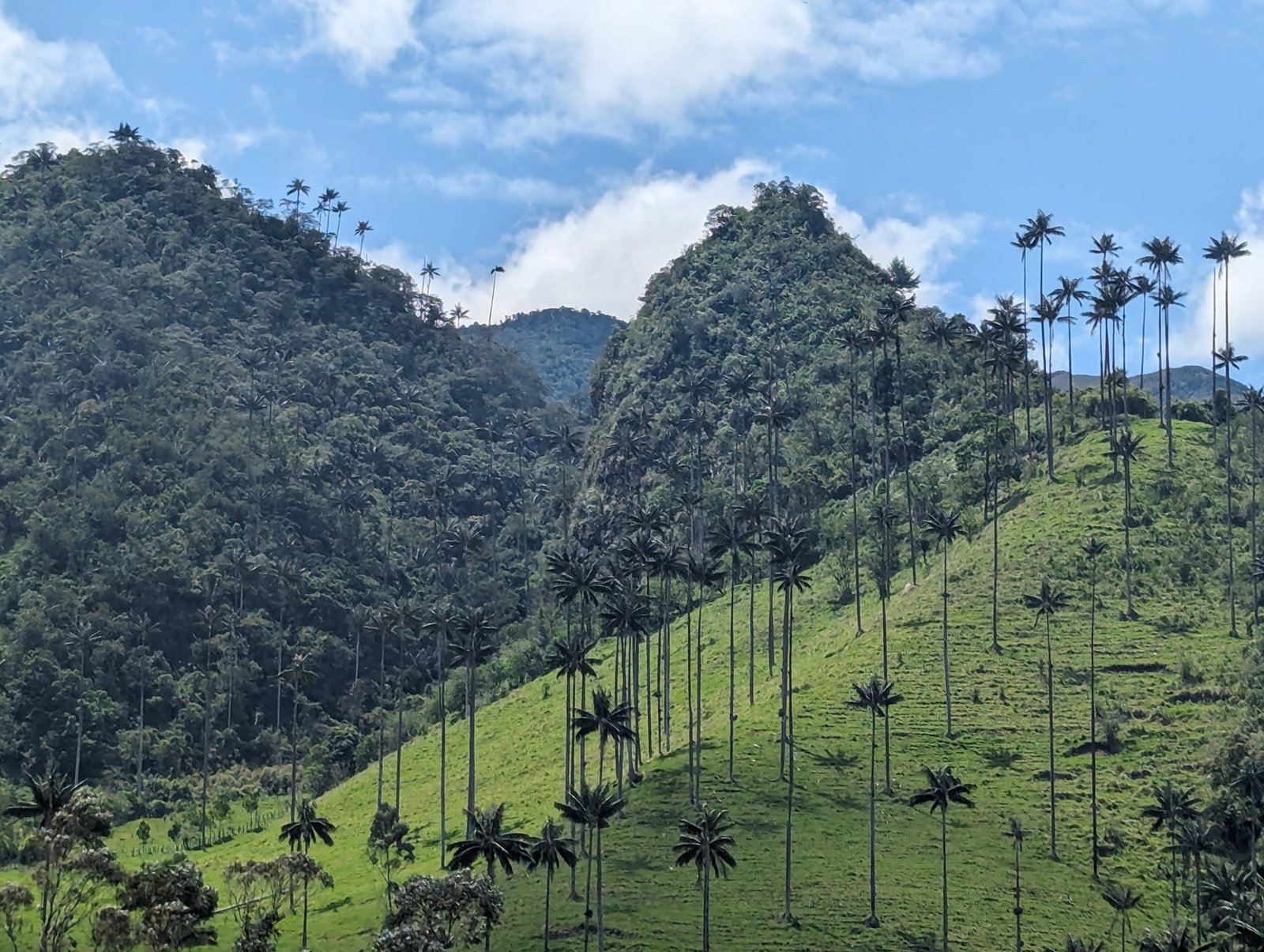
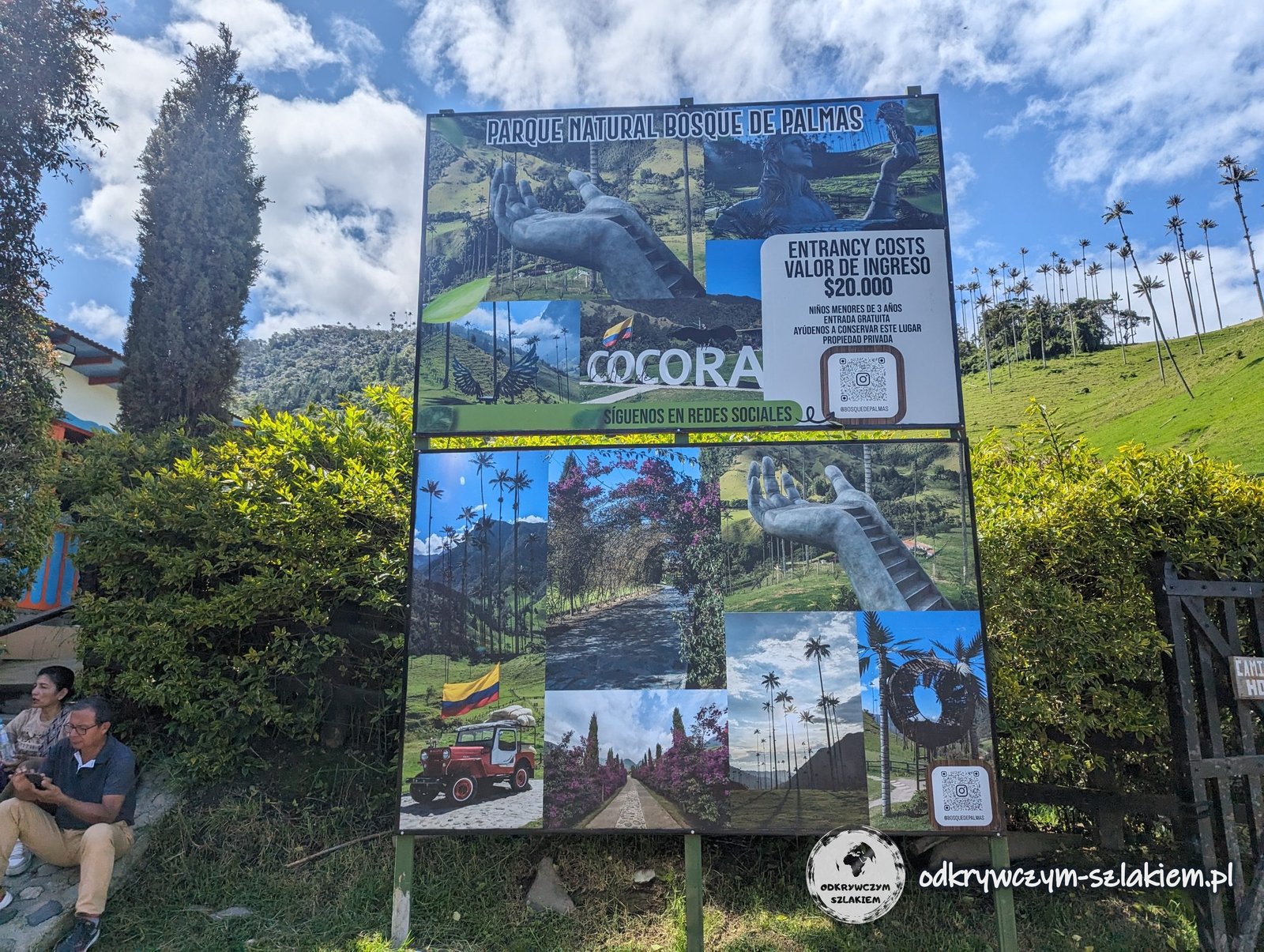
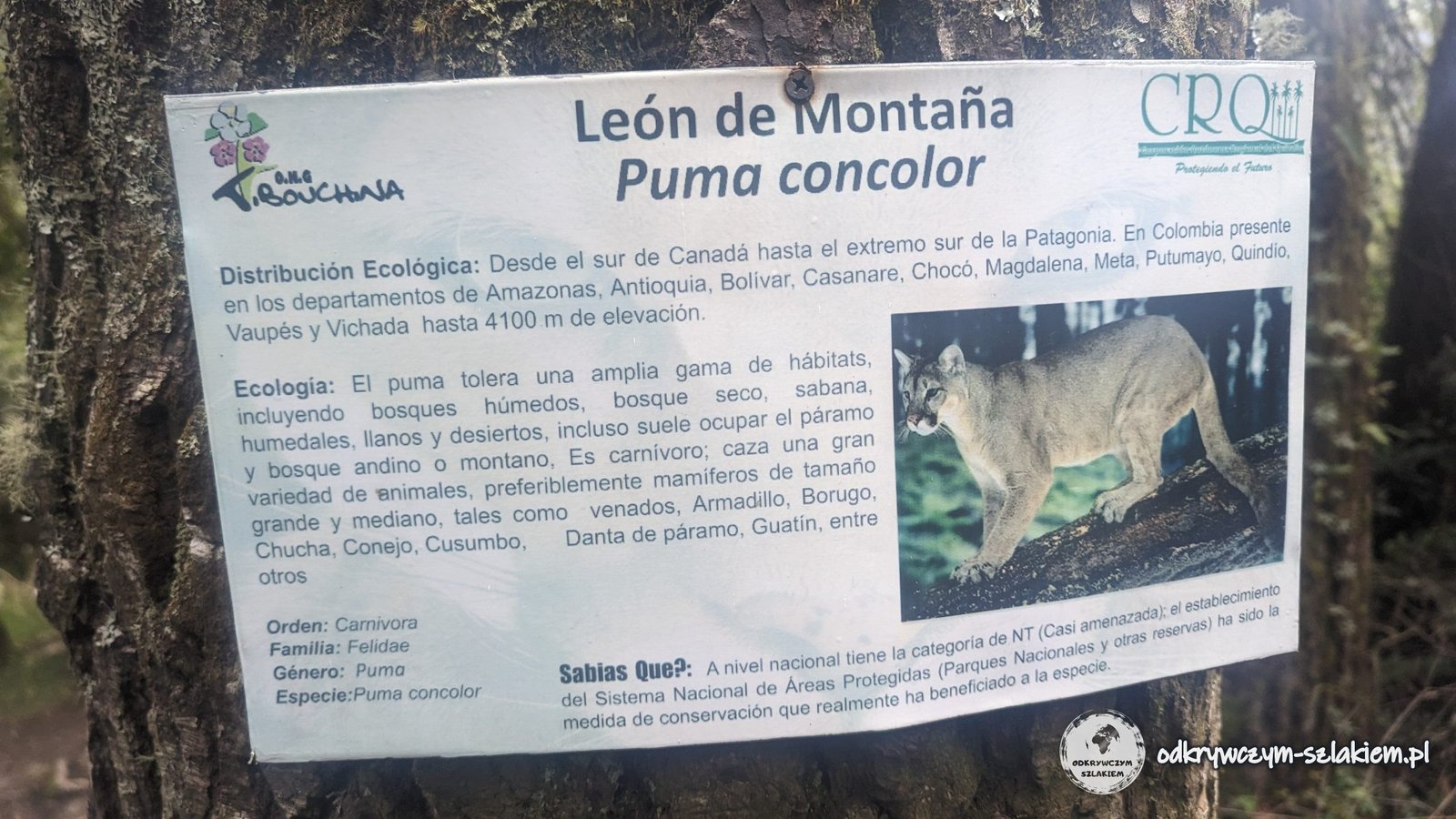
At the start of the trail there is a sign with a map of the valley and the entrance fee. The wax palm (Ceroxylon quindiuense) has been Colombia’s national tree since 1985. Horses and cows graze in the meadows between the palms, and signs along the trail describe the local wildlife – including pumas, which live in the forests of the Quindío department.
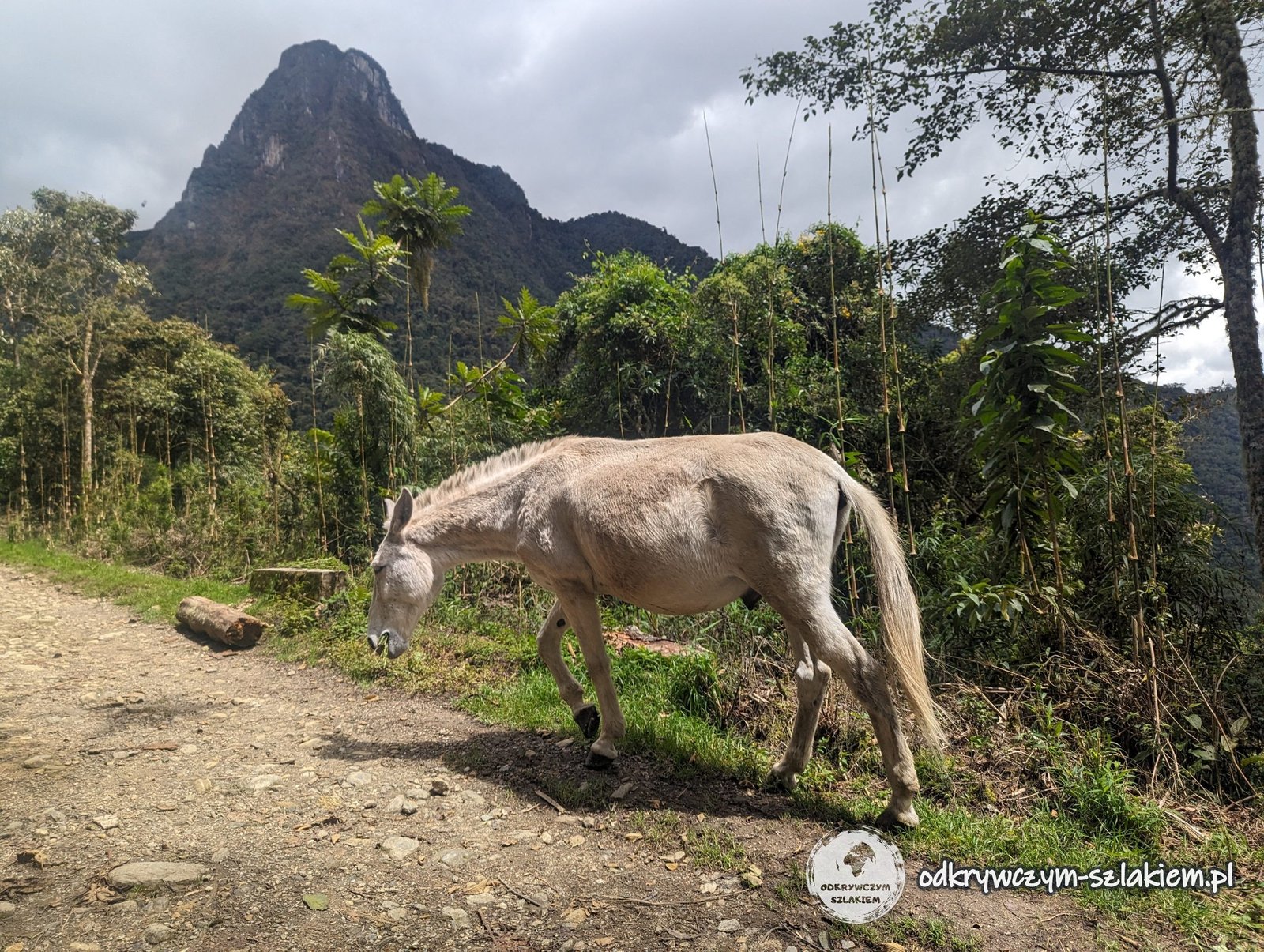
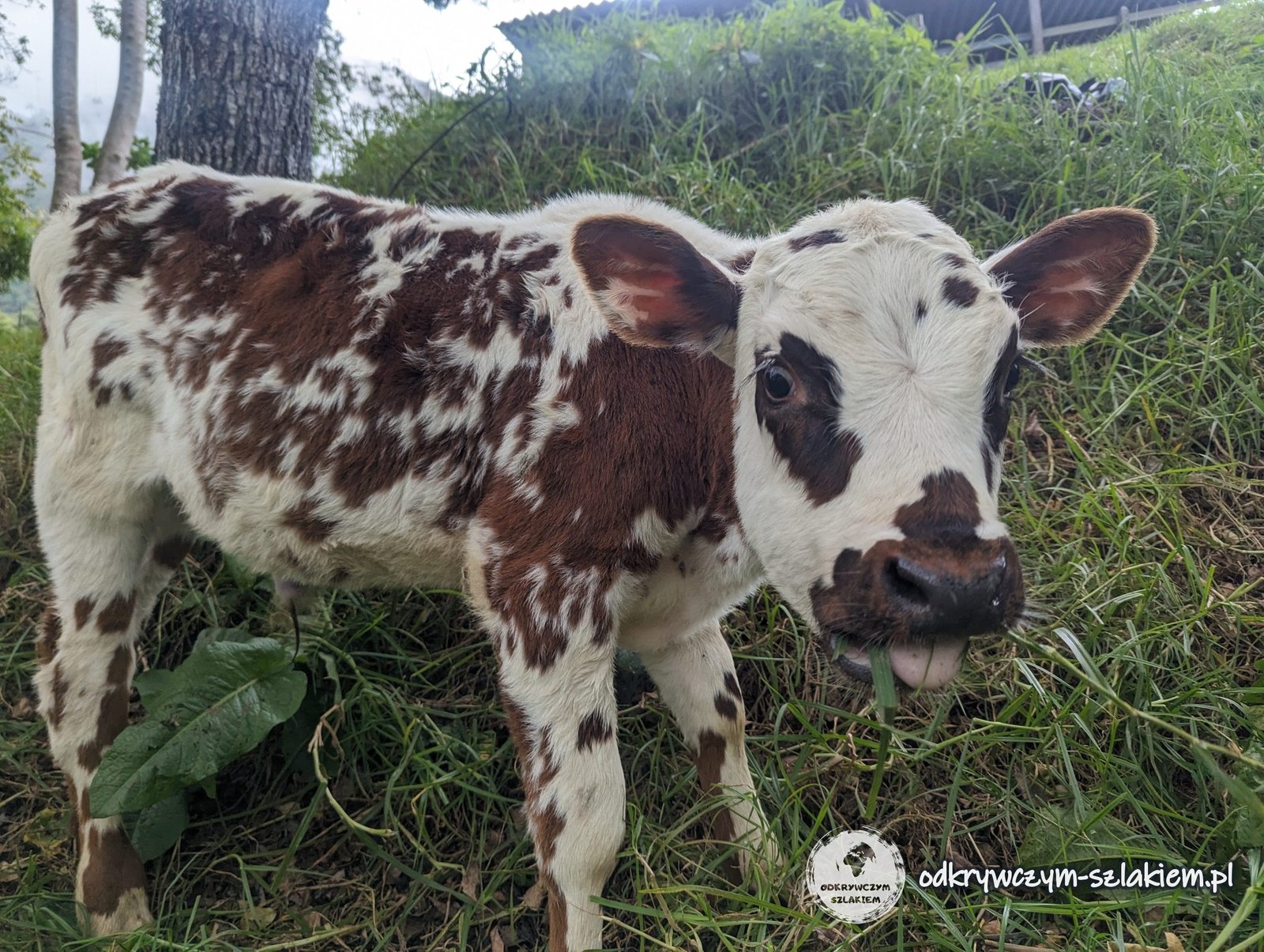
Grazing comes at a price, though. The forest that once surrounded the palms was cleared for pasture, and cattle eat the palm seeds – so no young trees grow up in the meadows to replace the old ones. According to scientists monitoring the valley, the number of palms fell by 78% between 1989 and 2018, leaving about 2,000. A 2013 study by Colombian botanists showed that if nothing changes, most of the palms tourists come here to see will die of old age by around 2060, without leaving any successors.
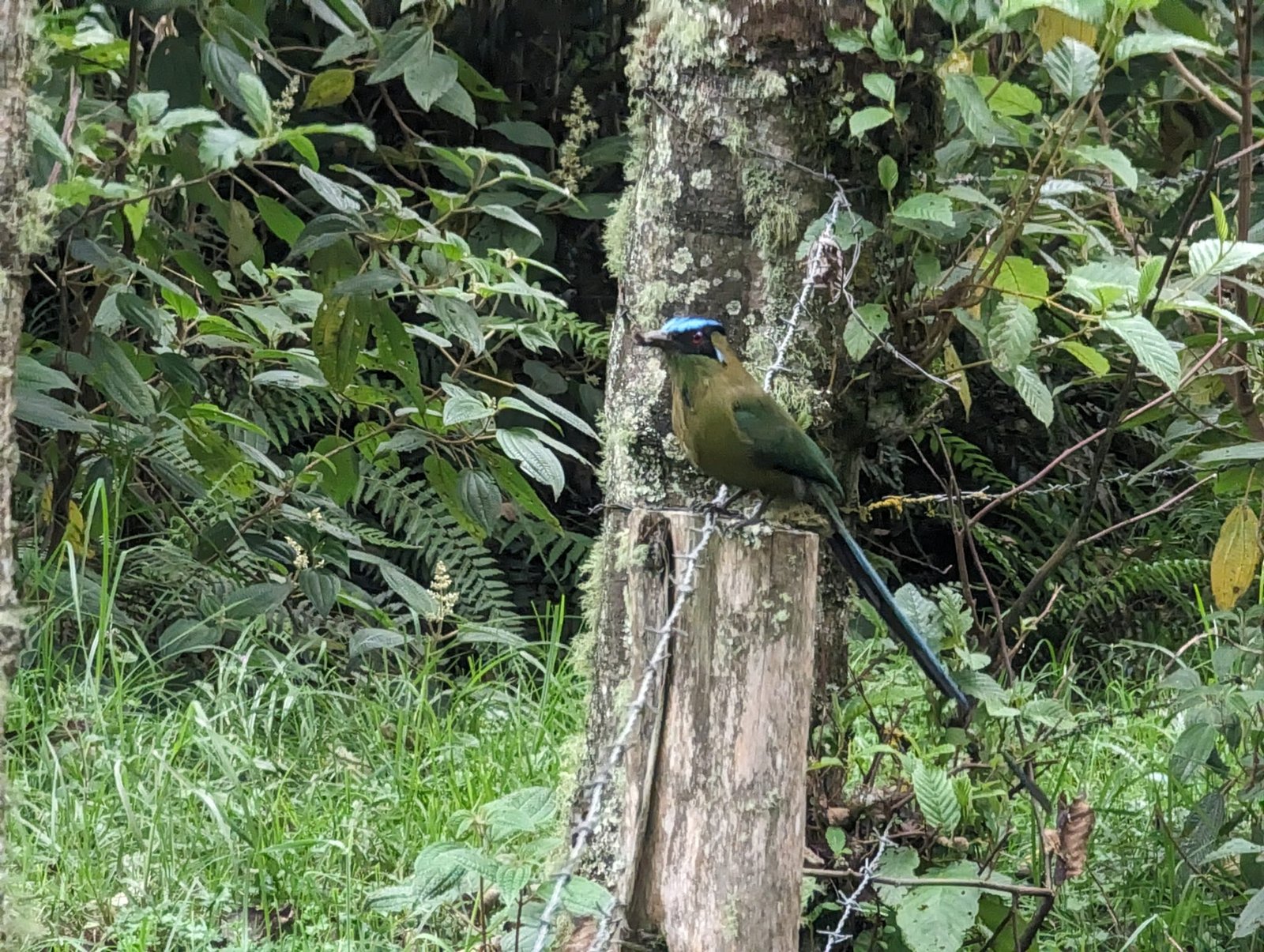
Then the trail entered the forest and followed a river, and the vegetation became typically mountainous. In the forest we spotted a motmot – a bird with a distinctive long tail.
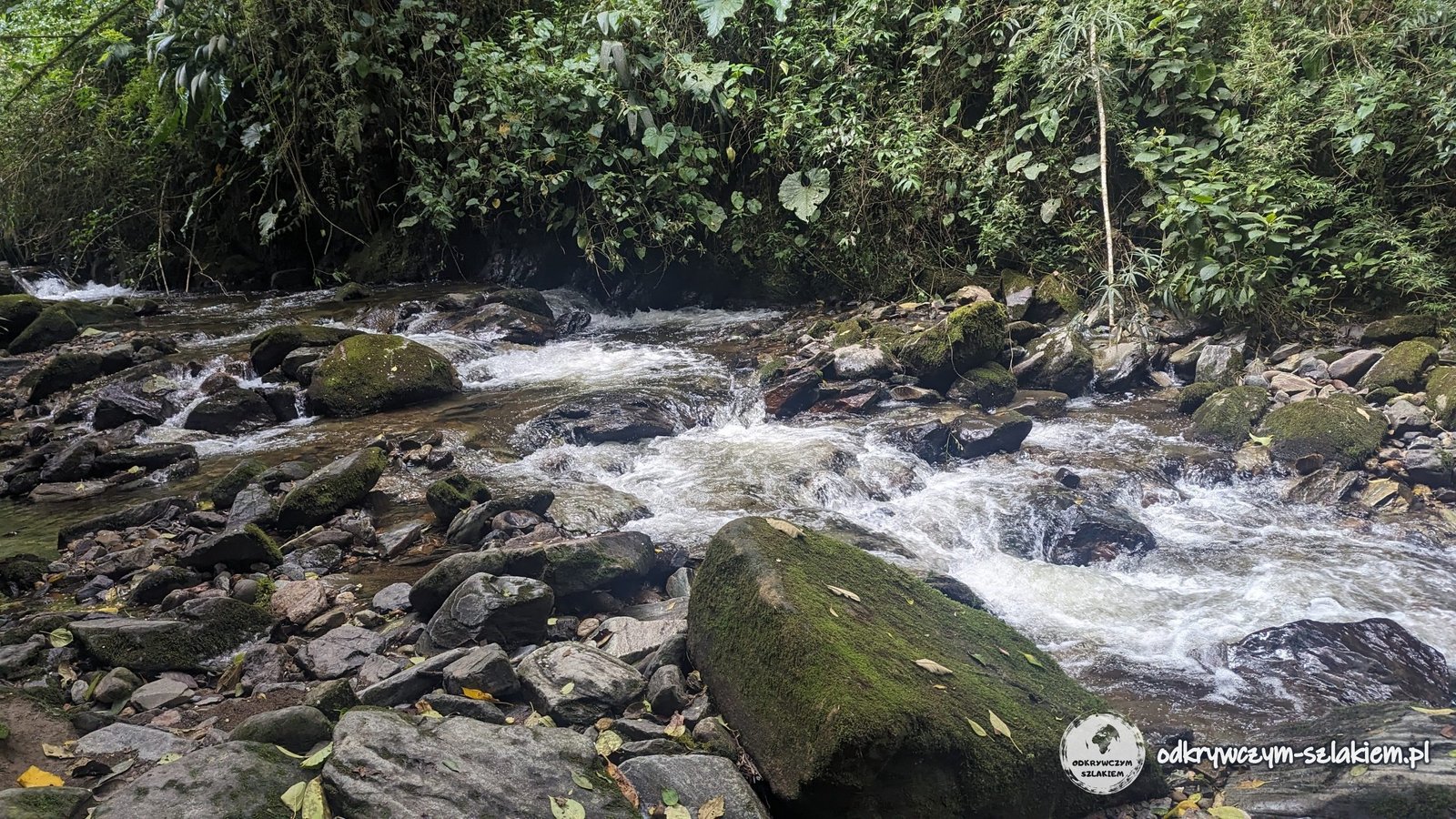
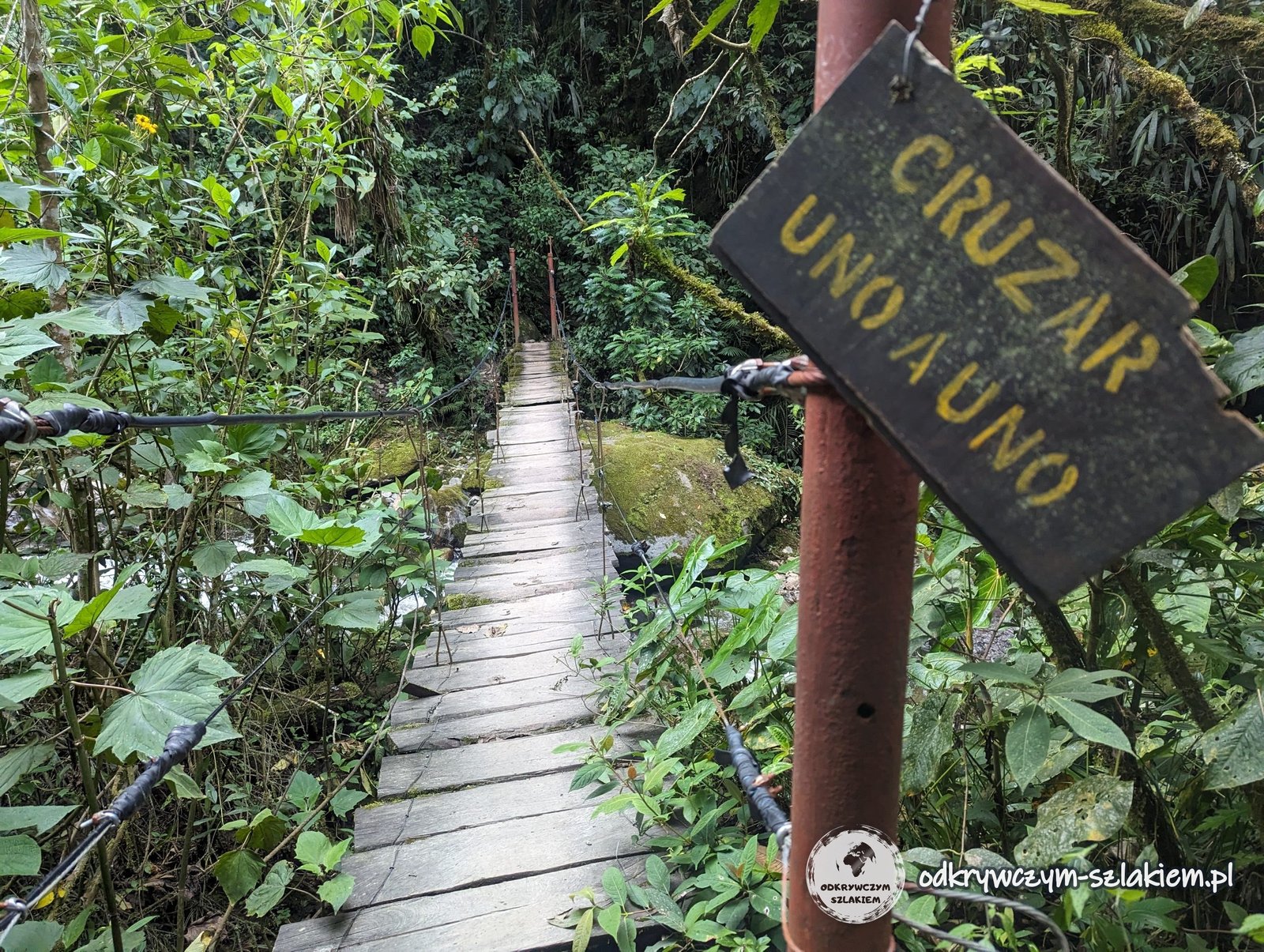
The forest part of the loop follows the Quindío river. You cross it several times on narrow hanging footbridges – signs remind you to cross them one at a time (“cruzar uno a uno”).
Meanwhile the weather changed: in the afternoon the sun hid behind the clouds, and the valley showed us a completely different landscape – the palms on the slopes began to disappear into the mist.
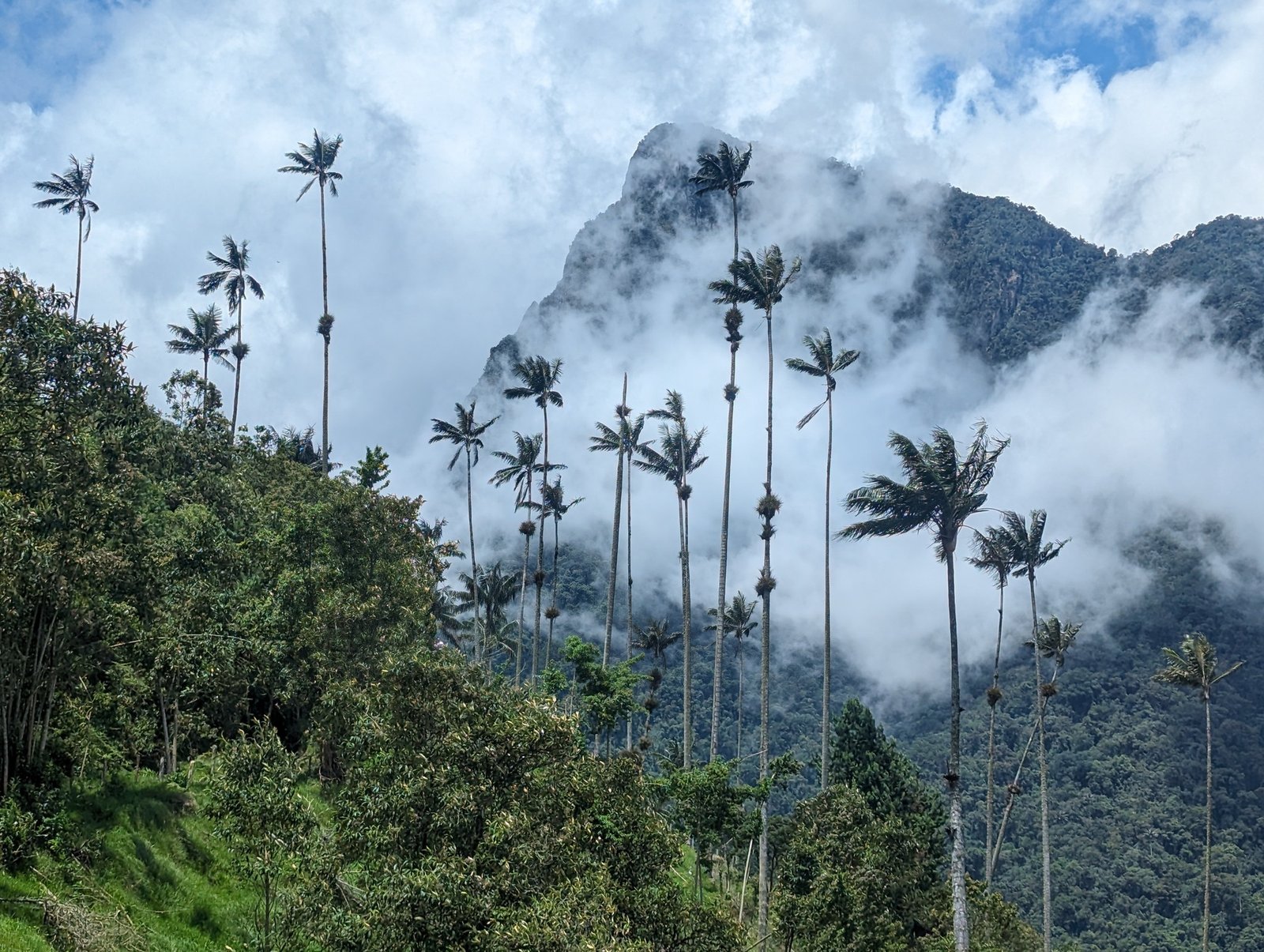
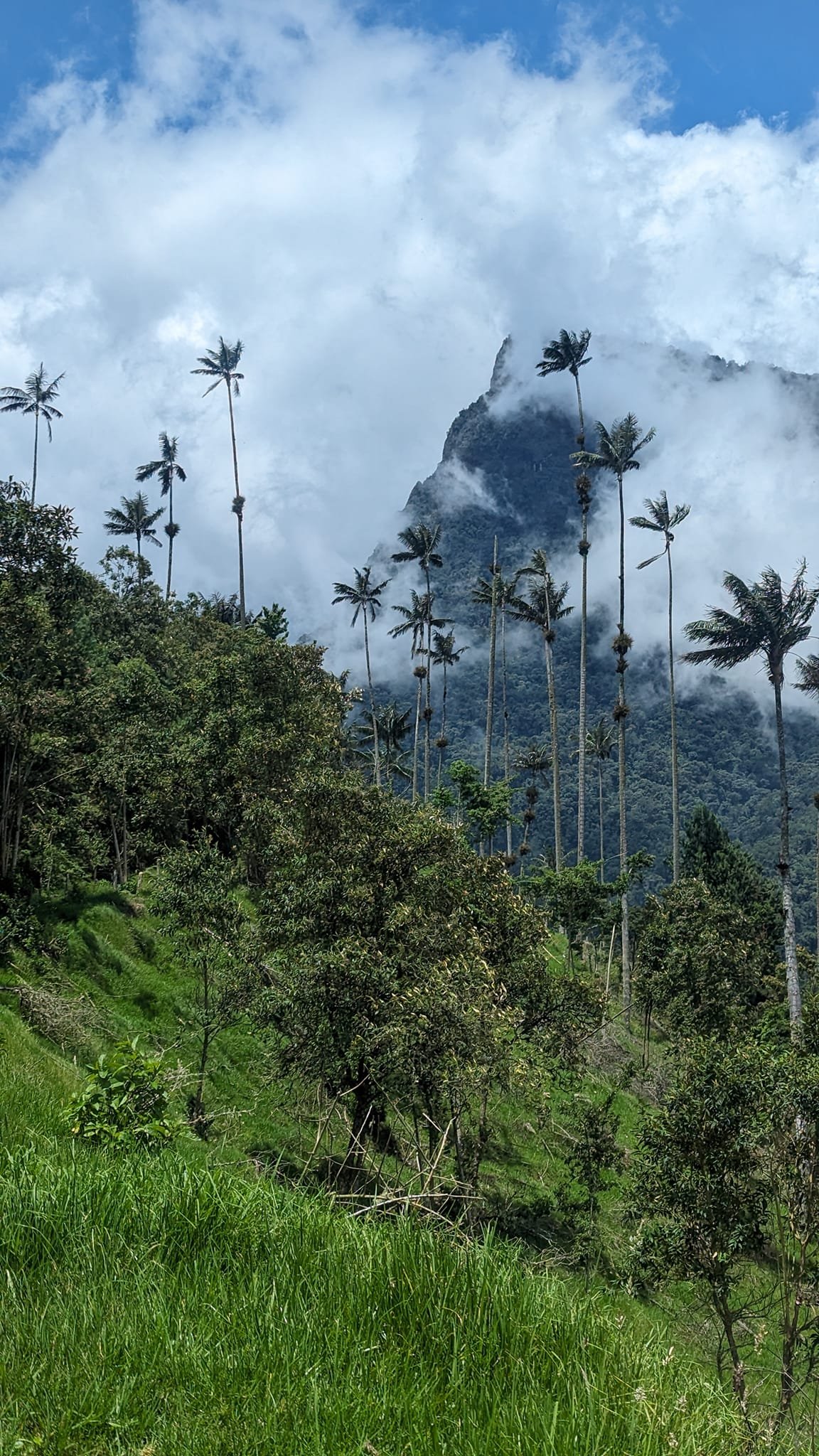
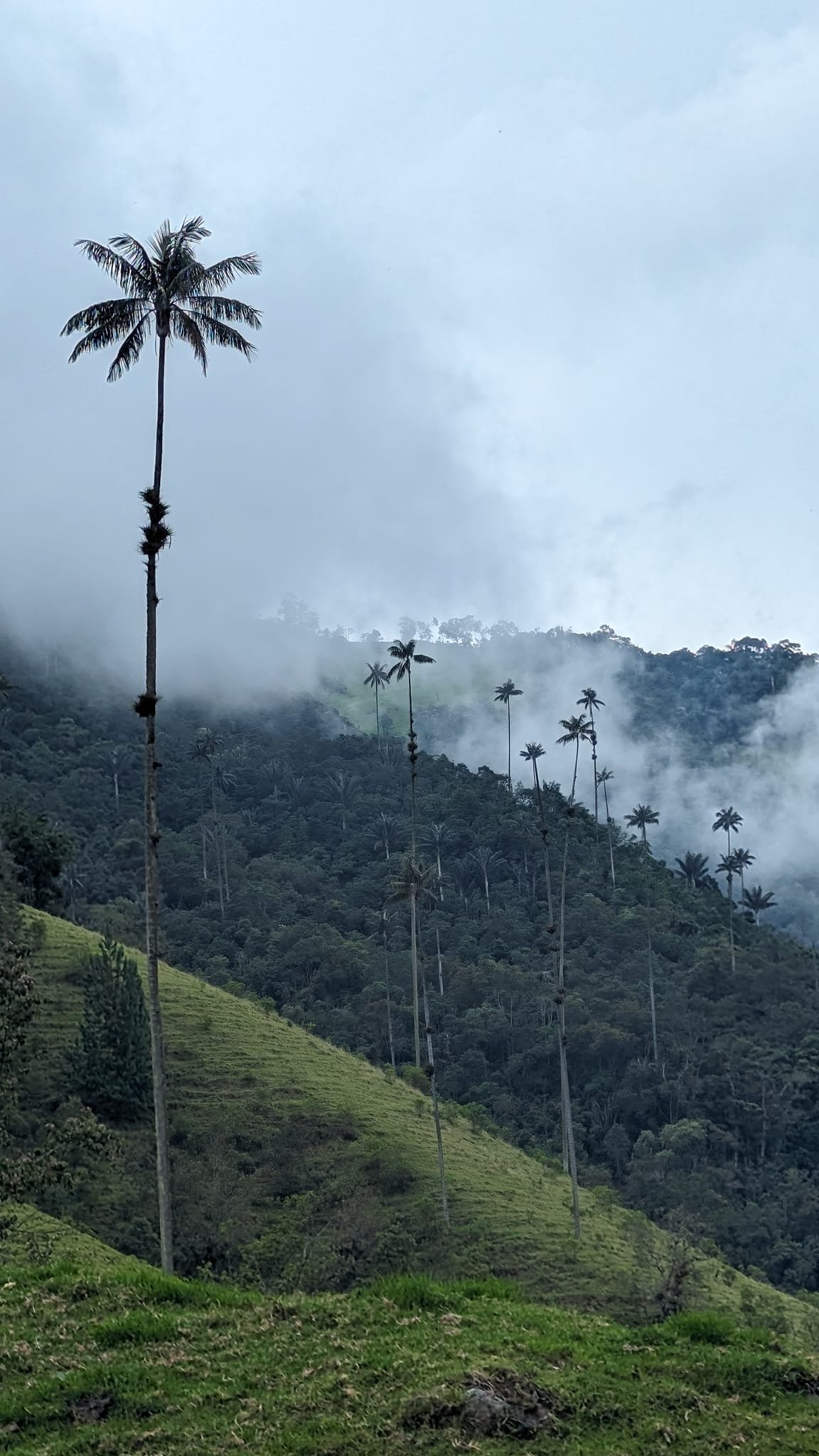
Entry to the trail cost us 20,000 COP at the main entrance and 6000 COP at the exit on the other side, about €6 altogether.
Photo spots and Mirador Mano de Acaime
You can see how popular the valley is when you are there – there are several nice spots set up specially for photos. At the start of the route there is a big Valle de Cocora sign, and a little further on a huge sculpture of a woman’s head and a hand with a parrot.
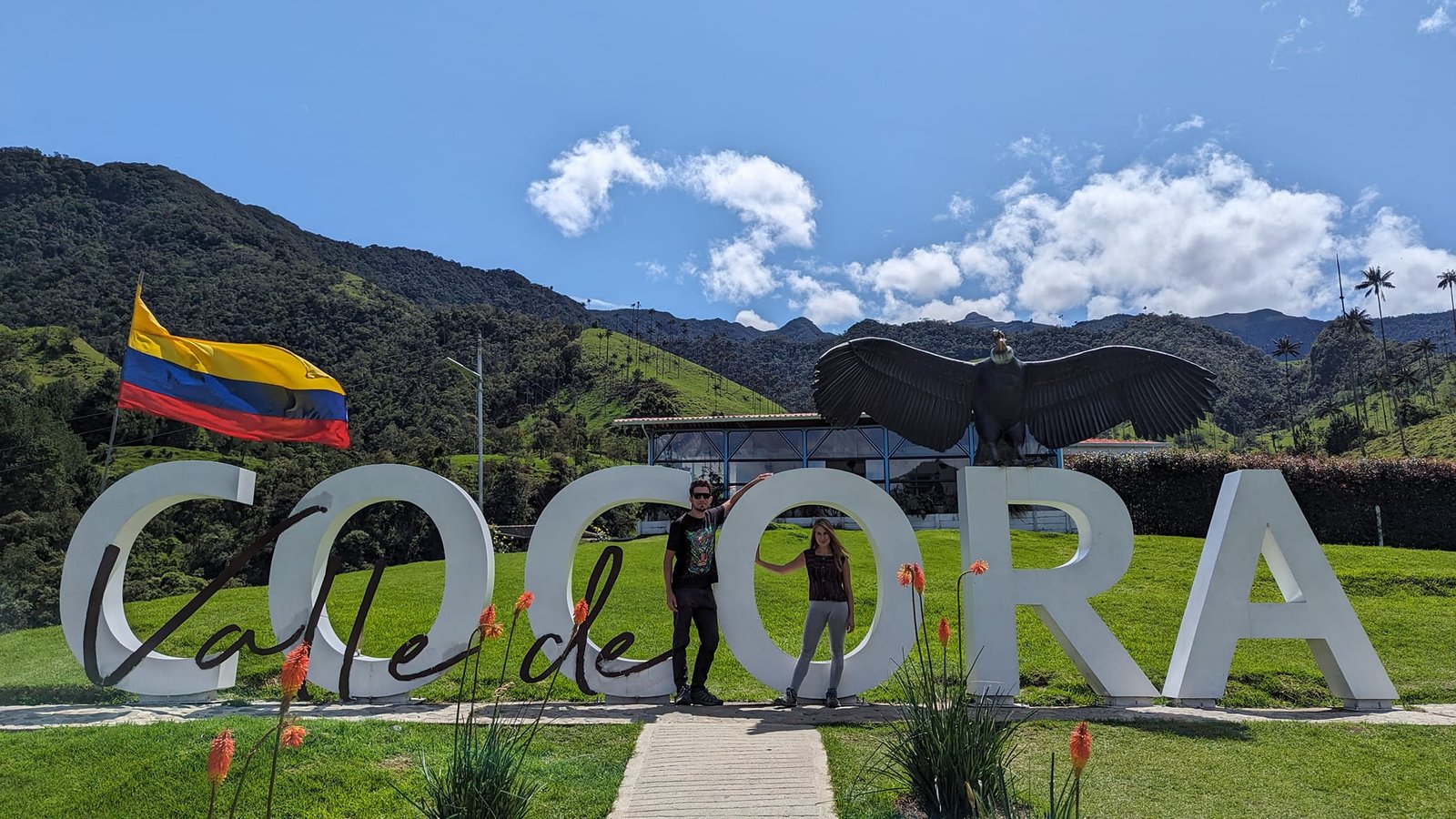
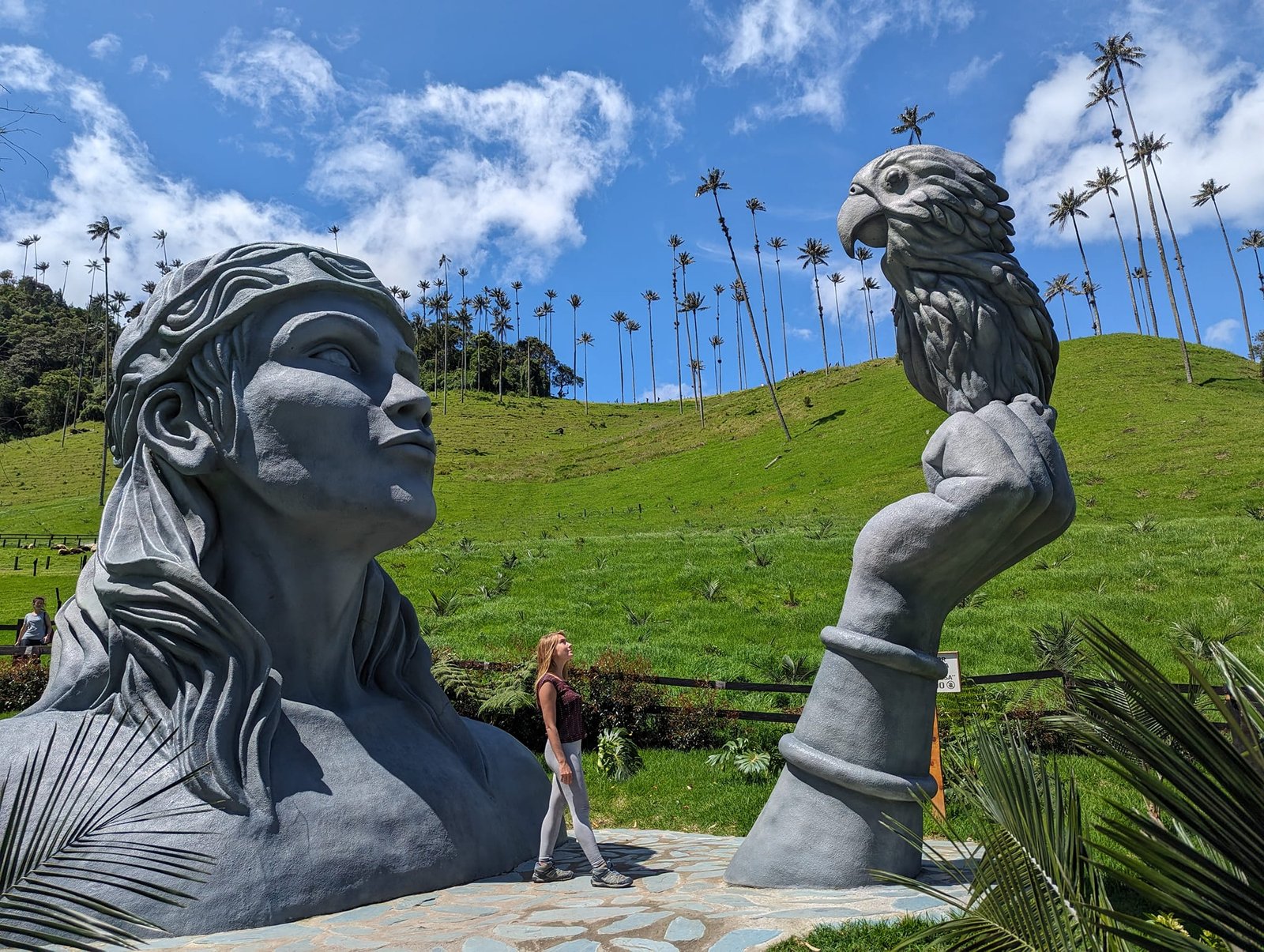
If you want more, along the way there is a whole huge area designed specially for photos – Mirador Mano de Acaime – for an extra 15,000 COP (about €3.50).
The Mirador Mano de Acaime is not the same as the Acaime reserve in the forest section of the loop, which you reach by a side path (about 40–45 minutes each way). It is known for the hummingbirds that flock to its sugar-water feeders; entry is paid separately and usually includes a hot drink – for example hot chocolate, served the Colombian way with a piece of cheese that you drop into the cup. Both names go back to a legend: Acaime was a chief of the Quimbaya people, and his daughter Cocora gave her name to the valley – it is said to mean “star of water”.
Practical information
- Getting to Salento – it is about 300 km west of Bogotá. We left in the evening and were in Salento early in the morning.
- Staying in Salento – at our hostel luggage could only be left from 9 a.m., so if you arrive at dawn, ask about luggage storage in advance.
- Getting to the Valle de Cocora – by off-road vehicles from Salento, scheduled every hour, 10,000 COP (about €2.30) return (May 2024).
- Entrance – 20,000 COP at the main entrance and 6000 COP at the exit on the other side of the loop, about €6 in total (May 2024).
- Mirador Mano de Acaime – an area set up for photos, an extra 15,000 COP (about €3.50).
- The loop – about 12 km and about 600 m of elevation gain; first meadows with palms, then forest along a river. It took us a few hours.
- Weather – it can change within a few hours: in the morning we had full sunshine, in the afternoon clouds and mist. The palms look best in the sun, so it is better to set off early.
- Prices – I give them in Colombian pesos with the exchange rate from May 2024 (1000 COP was then about €0.23). More about money in Colombia in the post about Cartagena.
Summary
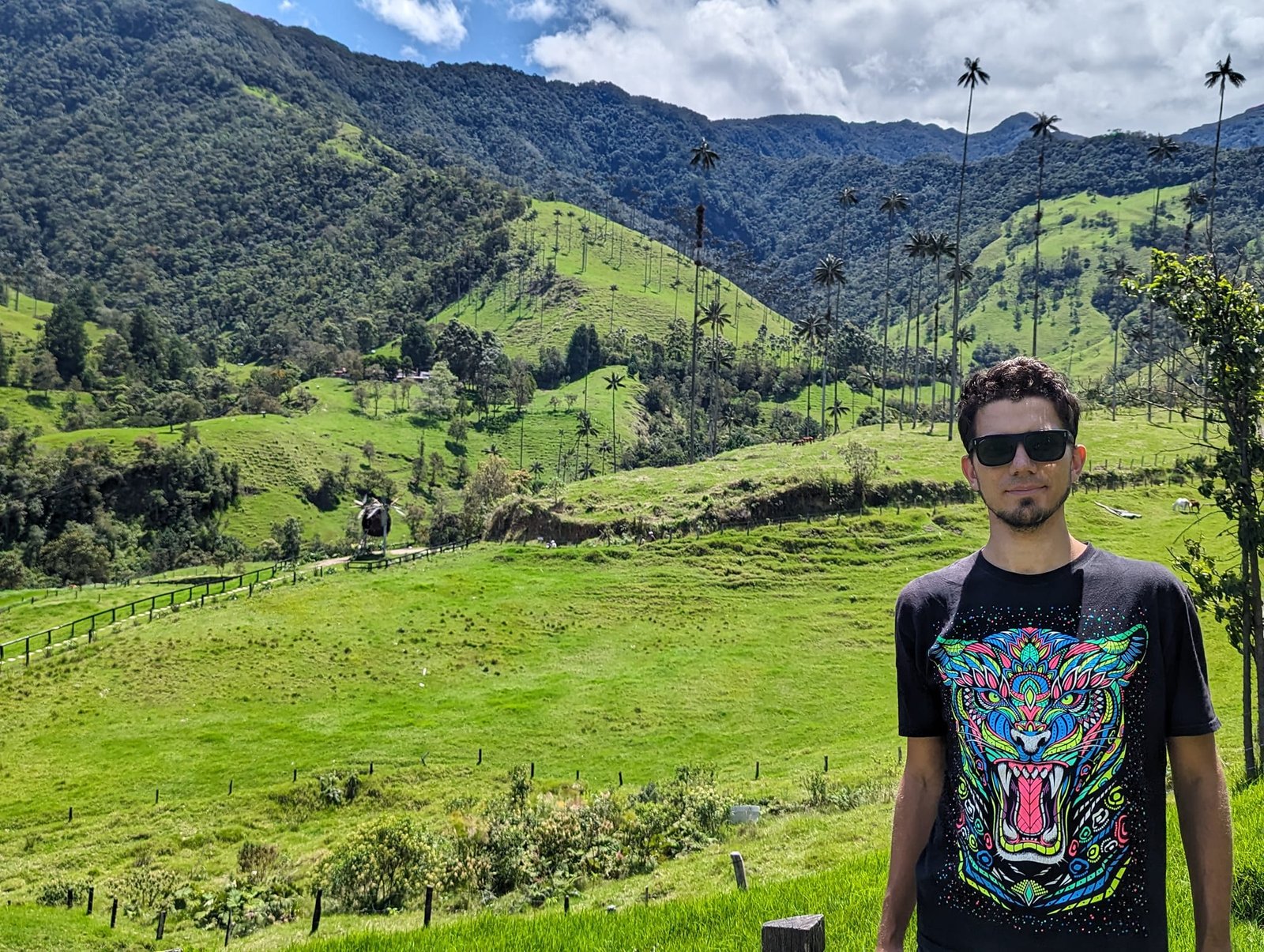
Of all of Colombia, what we remember best are its beautifully green national parks, and the Cocora Valley is the best example. Only in Tayrona National Park did nature make a similar impression on us, and Patrycja considered this loop the most beautiful trail of the whole trip. Getting there from Salento is easy, the tickets are cheap, and one day is enough for the whole loop. On 20 May we moved on to Medellín.
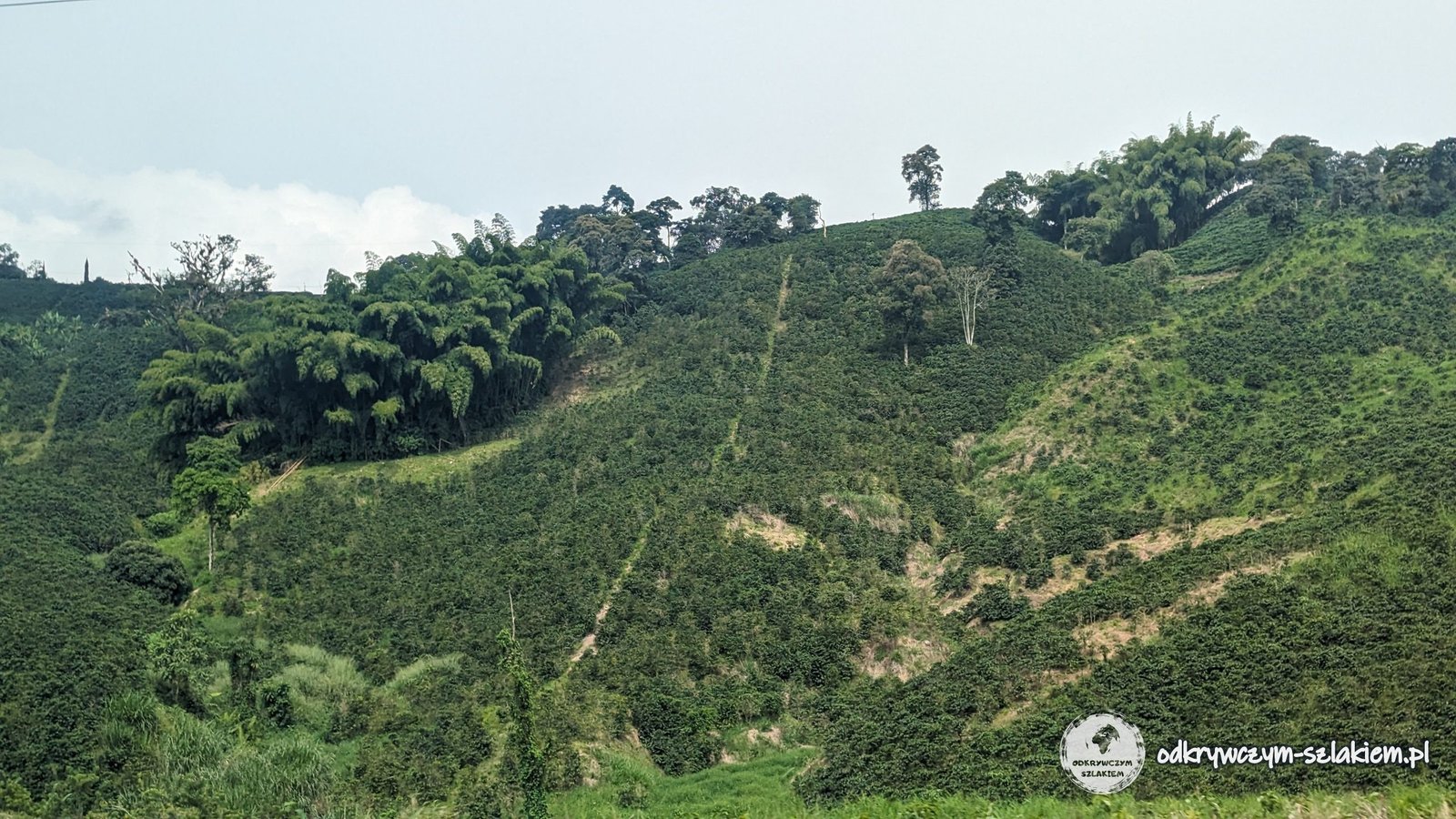
We left Salento by bus towards Medellín. Murals of jeeps loaded with coffee decorate the walls in town, and for a long stretch the window showed coffee plantations on steep hillsides.