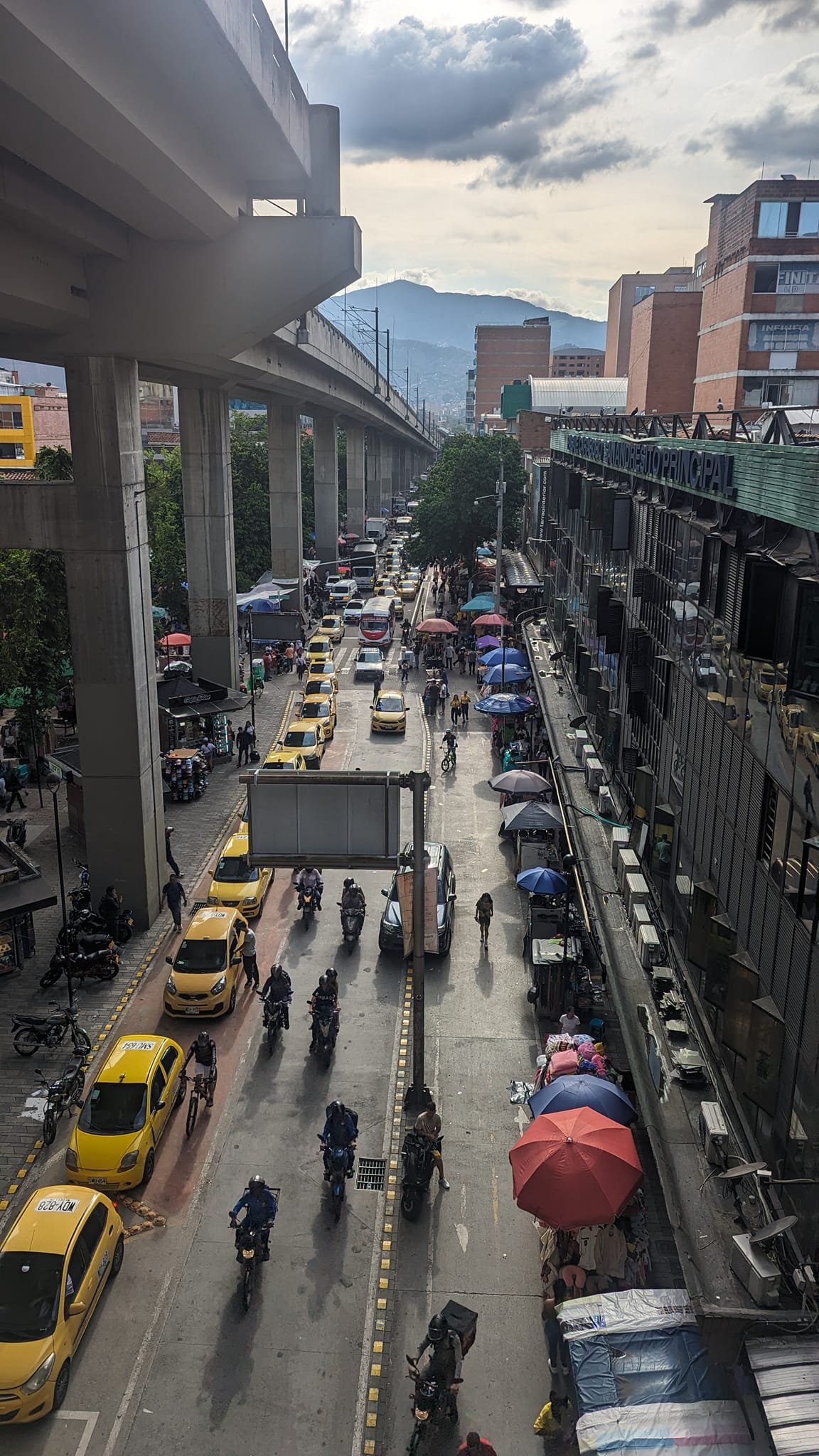
After Bogotá and the wax palms of the Valle de Cocora, on 21 May 2024 we were already exploring Medellín – Colombia’s second-largest city. This was where the last, very fast stage of our journey through the country began. In four days we saw the Comuna 13 district, which has gone from one of the most dangerous places in the city to its showcase, climbed about 700 steps up the rock of El Peñón de Guatapé, travelled on night buses through Cali all the way to the border town of Ipiales, and just before entering Ecuador we still managed to see the Las Lajas sanctuary, built over a canyon.
Our route:
- 21 May – Medellín: Comuna 13, the Metrocable and the city centre,
- 22 May – the rock of El Peñón de Guatapé, in the evening a night bus to Cali,
- 23 May – Cali, in the evening another night bus to Ipiales,
- 24 May – the Las Lajas sanctuary and the border crossing into Ecuador.
Table of contents
- Medellín – a city on the hills
- Comuna 13 – the district’s difficult history
- Murals, graffiti and hip-hop
- The escalators and the Metrocable
- Is Medellín safe?
- El Peñón de Guatapé – about 700 steps to the top of the rock
- Cali – less than a day in the salsa capital
- The Las Lajas sanctuary
- Ipiales and the border with Ecuador
- Practical information
- Summary
Medellín – a city on the hills
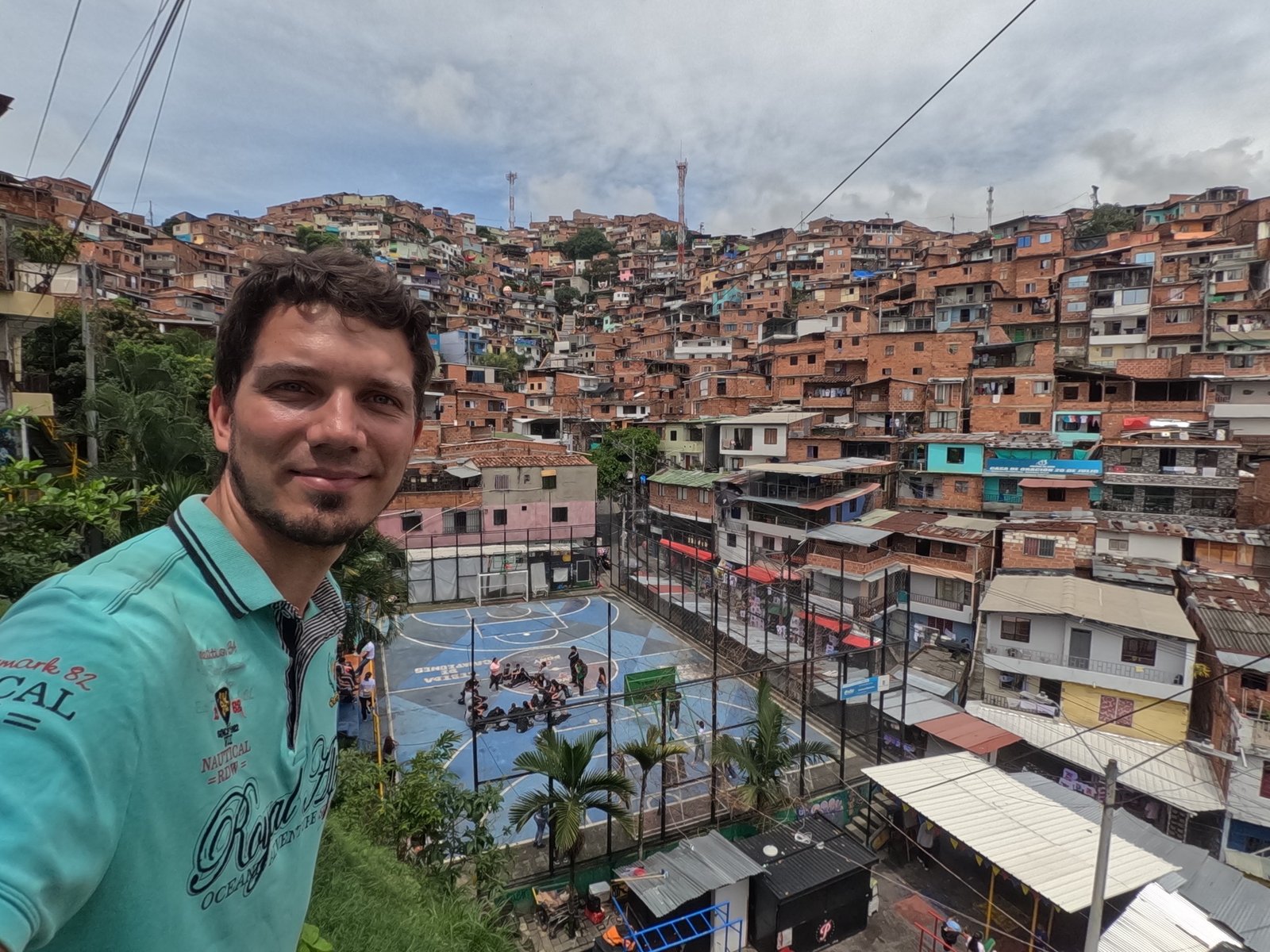
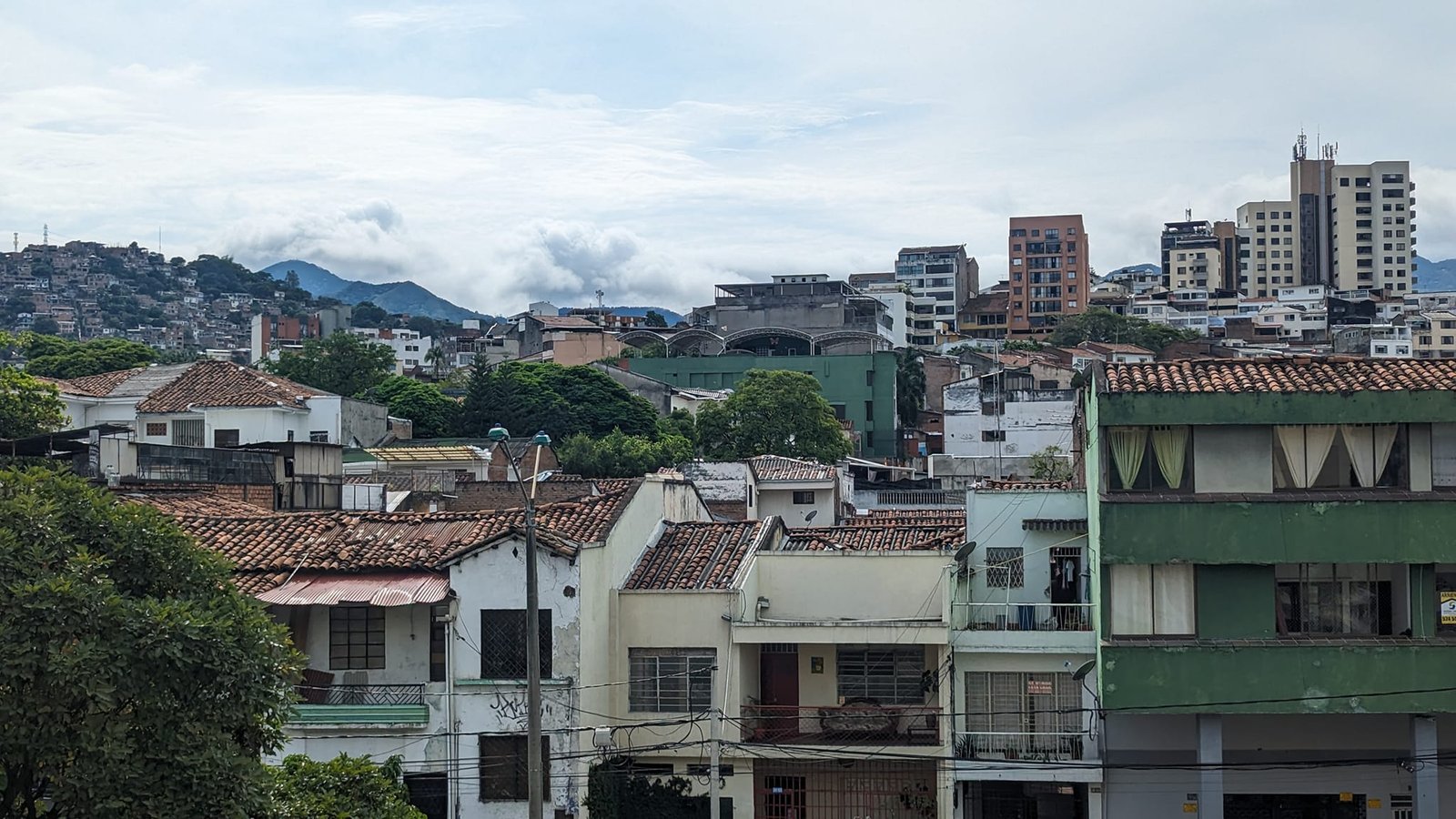
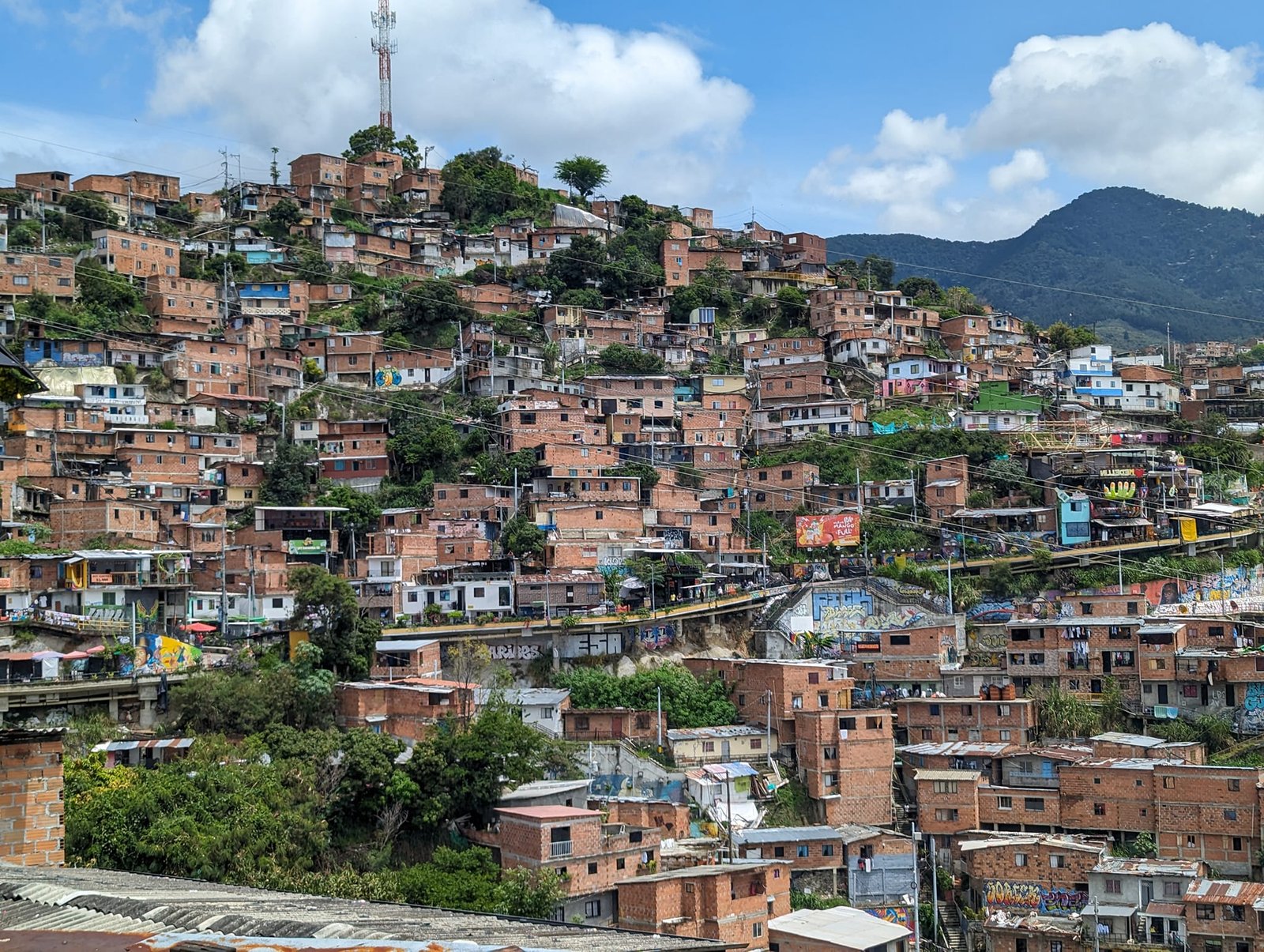
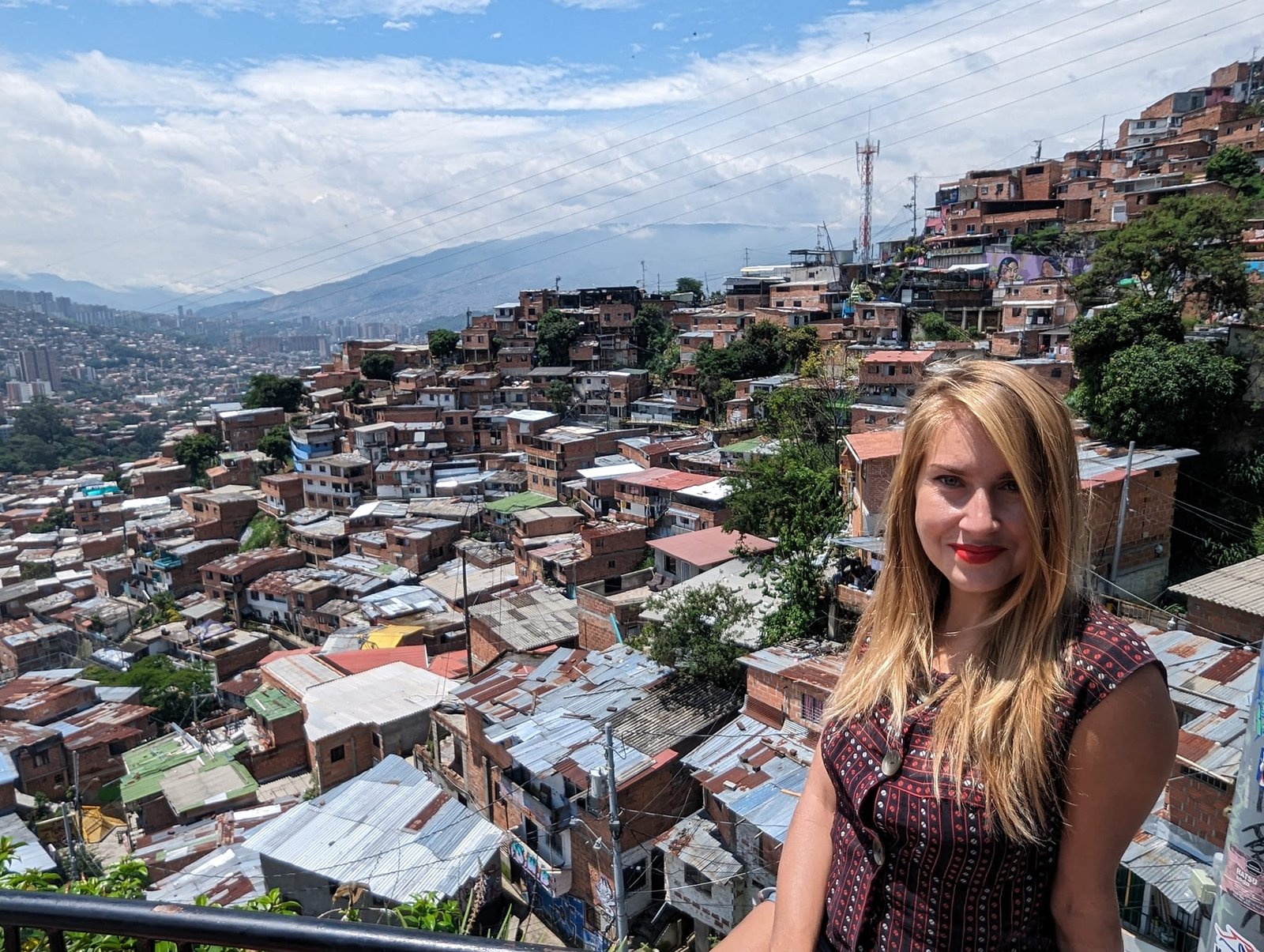
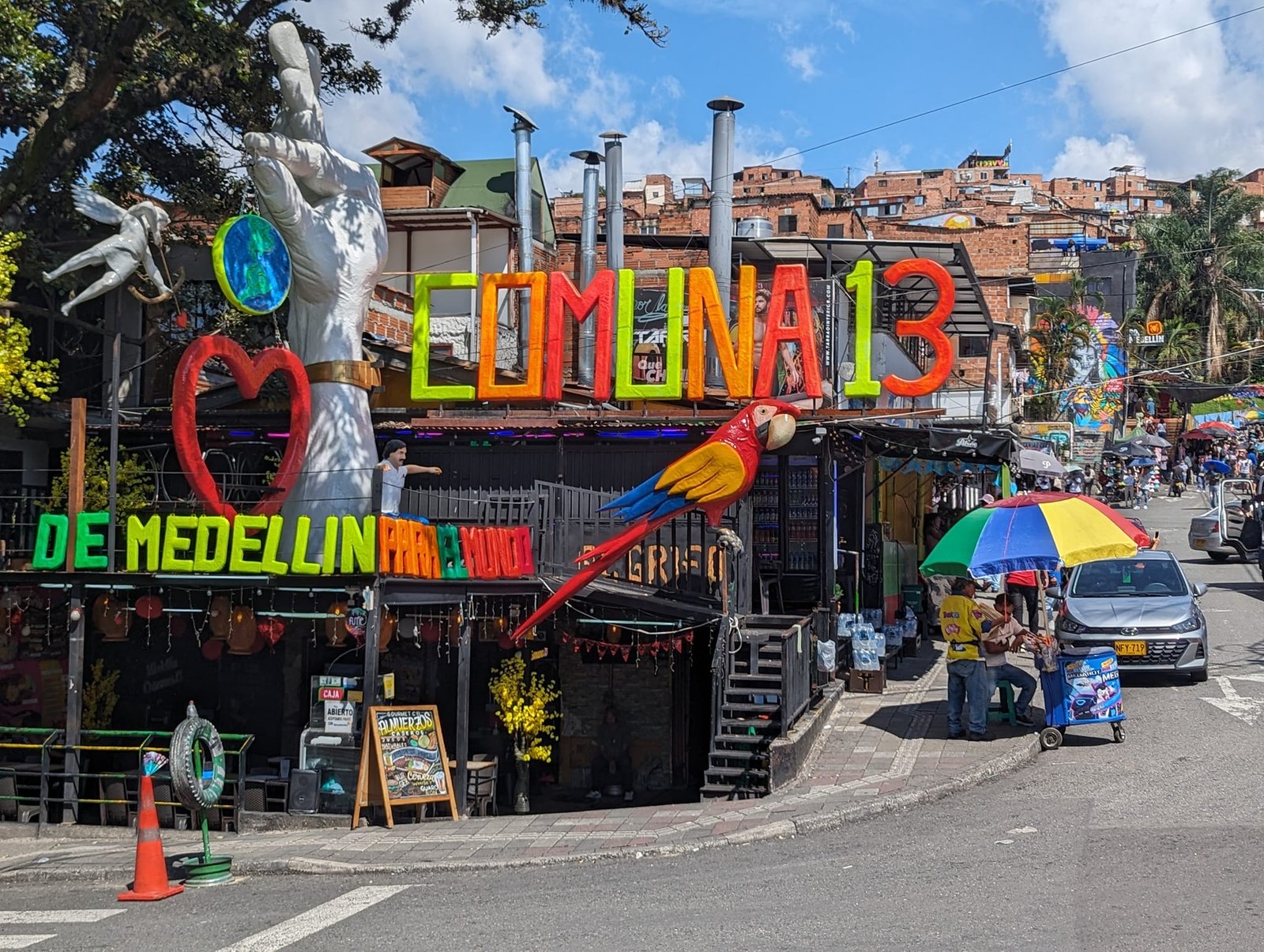
Medellín lies in a valley, and its buildings climb high up the surrounding hills, so from many places you get wonderful views over the city. One of the best viewpoints is the Comuna 13 district – also Medellín’s best-known tourist attraction.
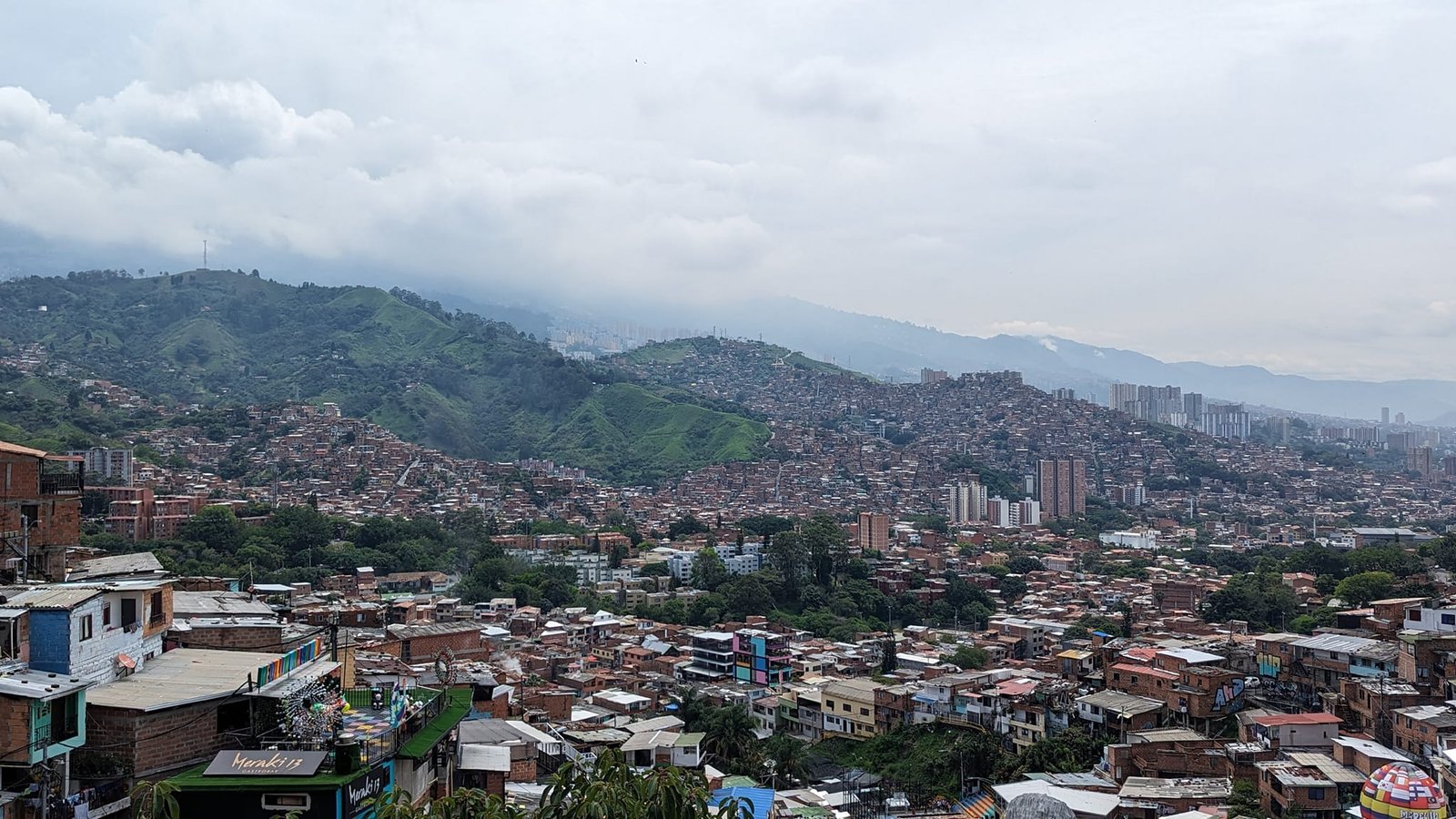
Just a few decades ago this city was one of the most dangerous in the world. Today crowds of tourists visit it, and many of them end up in Comuna 13 – the district whose history best shows how much the city has changed.
Comuna 13 – the district’s difficult history
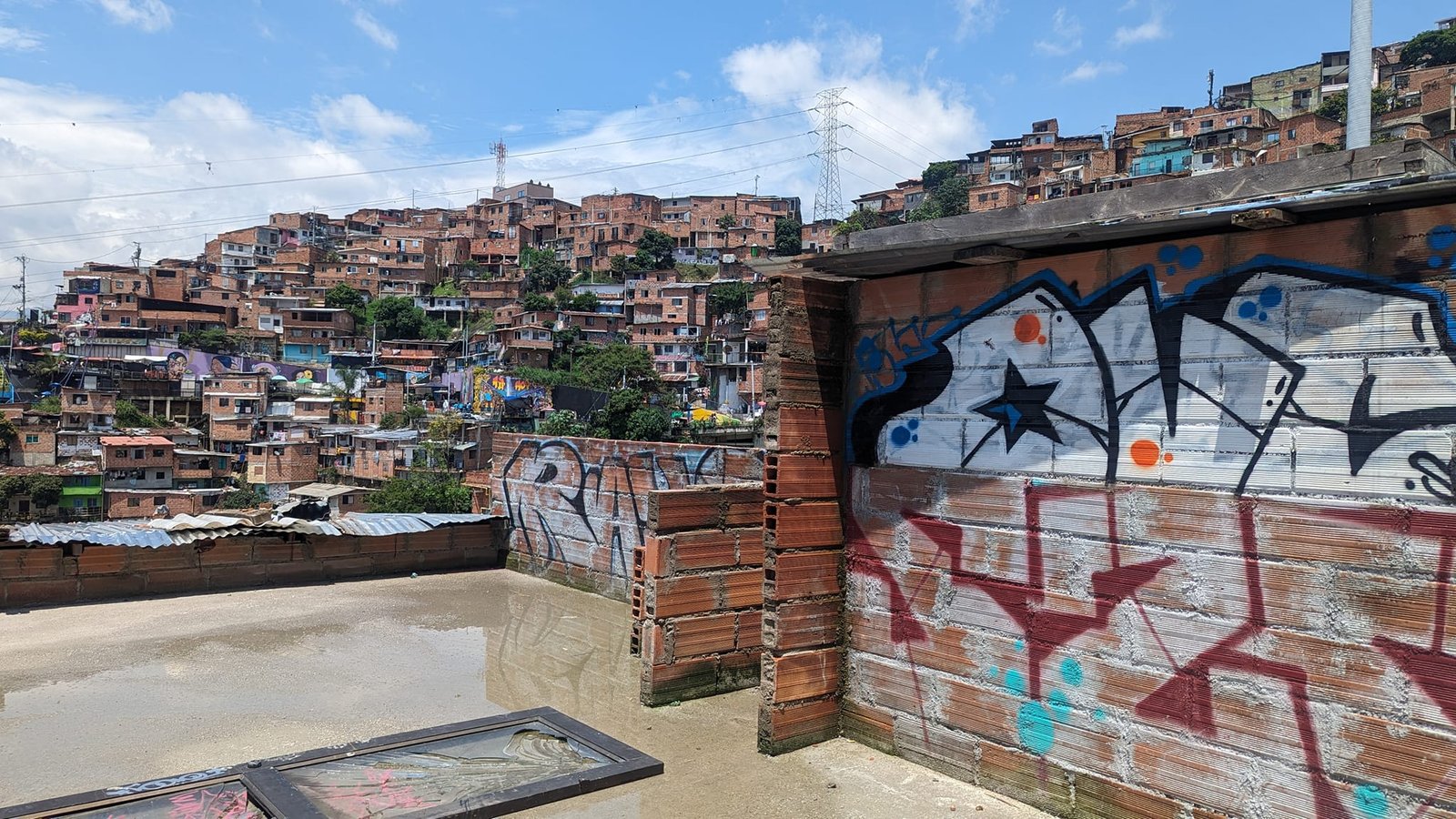
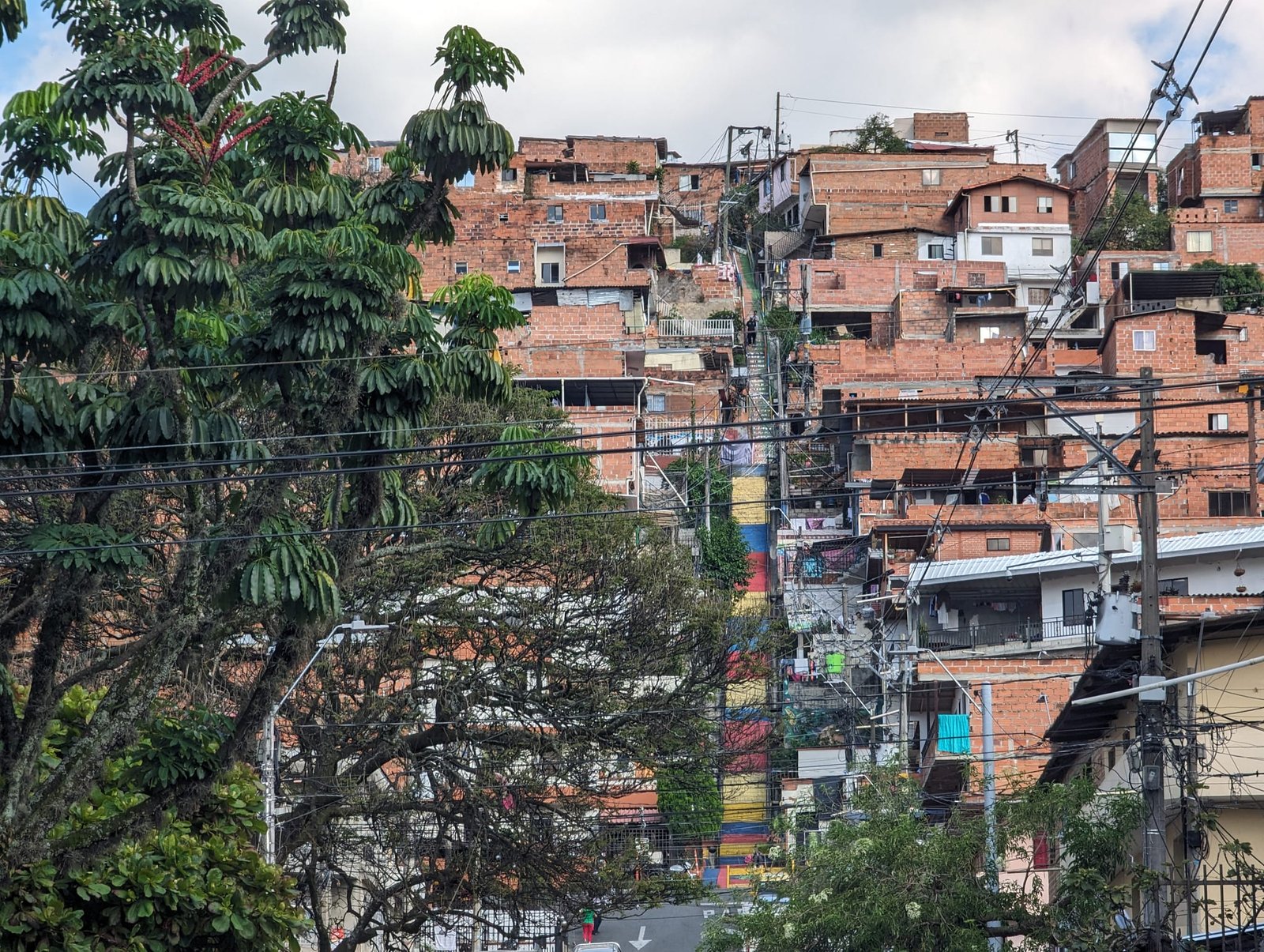
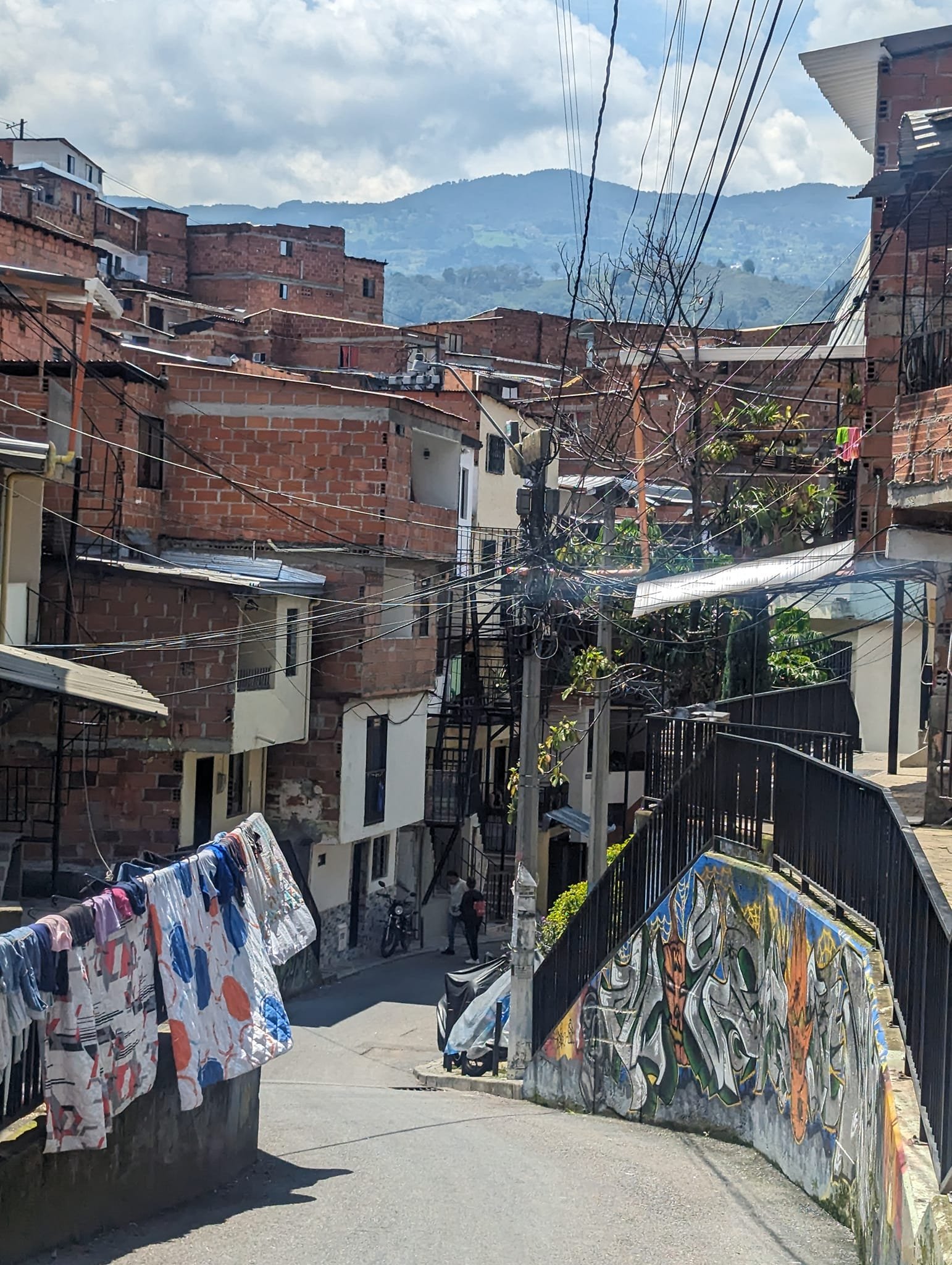
Comuna 13 is an overcrowded part of the city that was underdeveloped for years. Thousands of brick and concrete houses stand side by side on a steep slope, with narrow alleys and stairways winding between them. Conditions like these encouraged crime. On top of that, the district lies next to a main road out of the city, which made it easier to move weapons, drugs and money. Over time it became an important spot not only for gangs, but also for paramilitary units and guerrilla groups.
In the 1980s and 1990s the area was controlled by groups loyal to Pablo Escobar – the most famous drug lord, who lived in Medellín. After his death in 1993 the violence did not end at all: the cartels grew stronger, and rival groups fought to take control of the whole district.
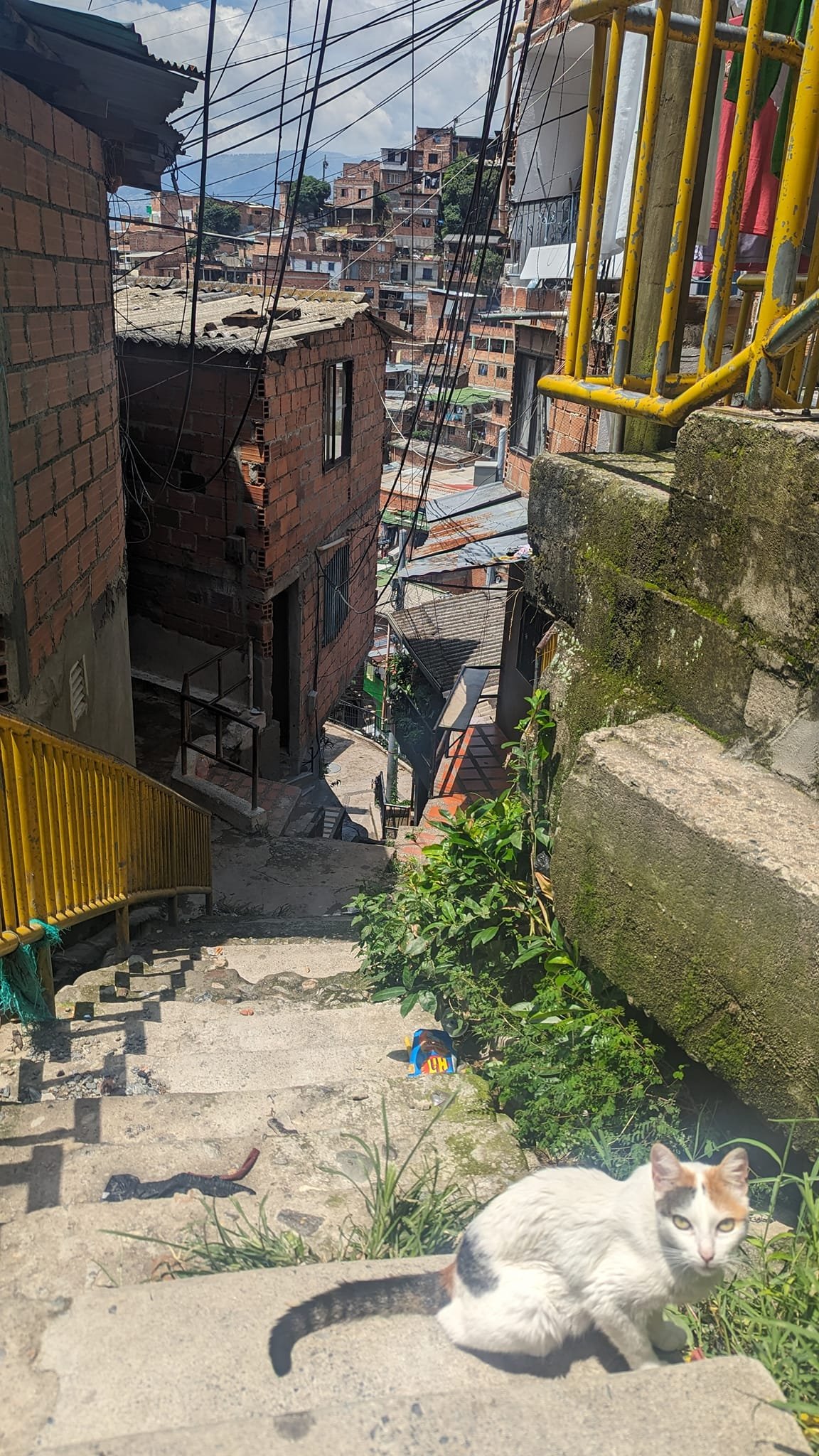
The moment that went down in the city’s history for good was the military Operation Orión in 2002. Wanting to break up the armed groups operating here, the state sent the army into the district. There was fighting, and the situation was so tense that the wounded could not even get to hospital. To this day different sources give different numbers of victims, and many people were declared missing. The fighting only stopped when the residents united and took to the streets in protest with white handkerchiefs in their hands.
Murals, graffiti and hip-hop
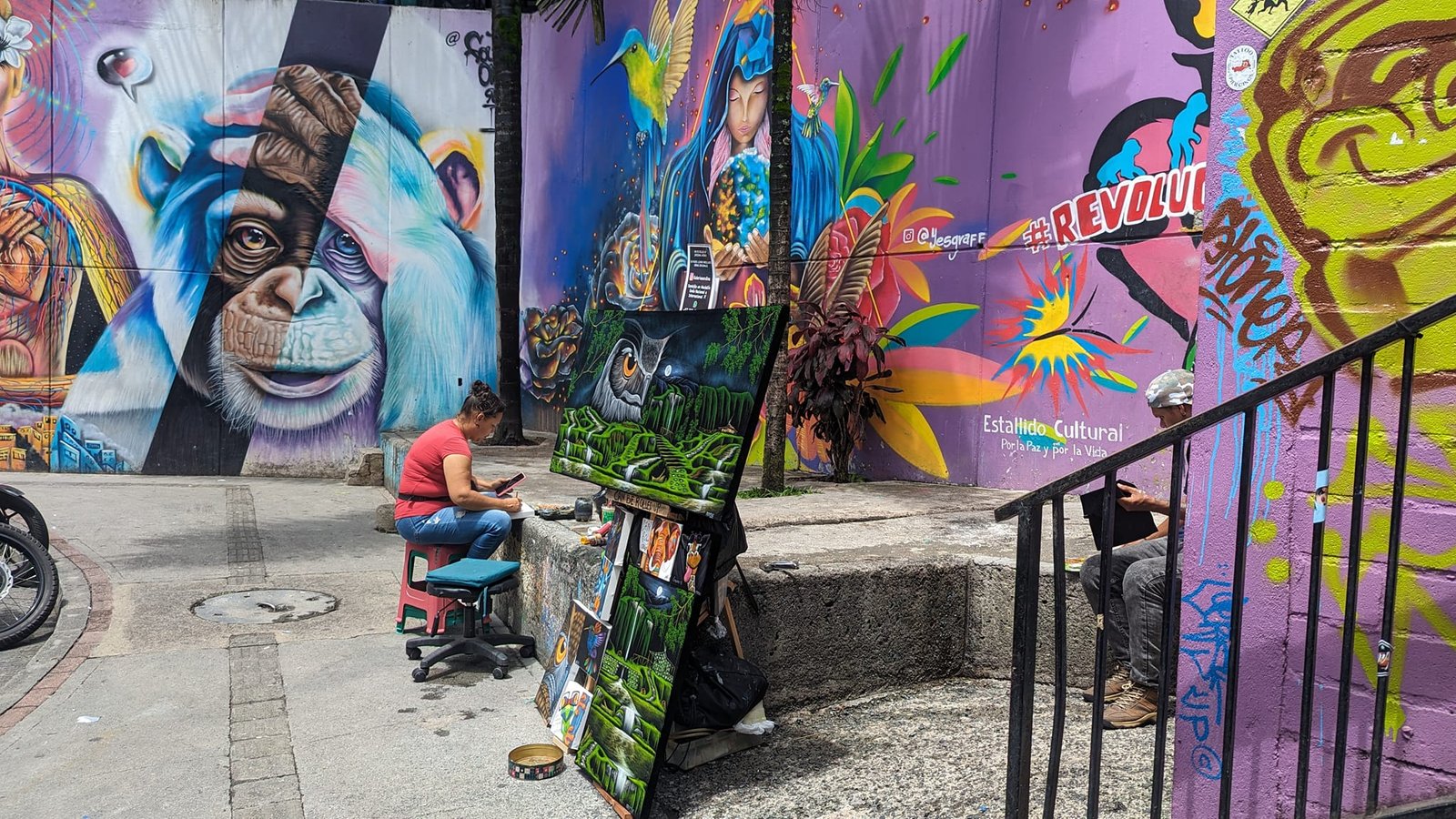
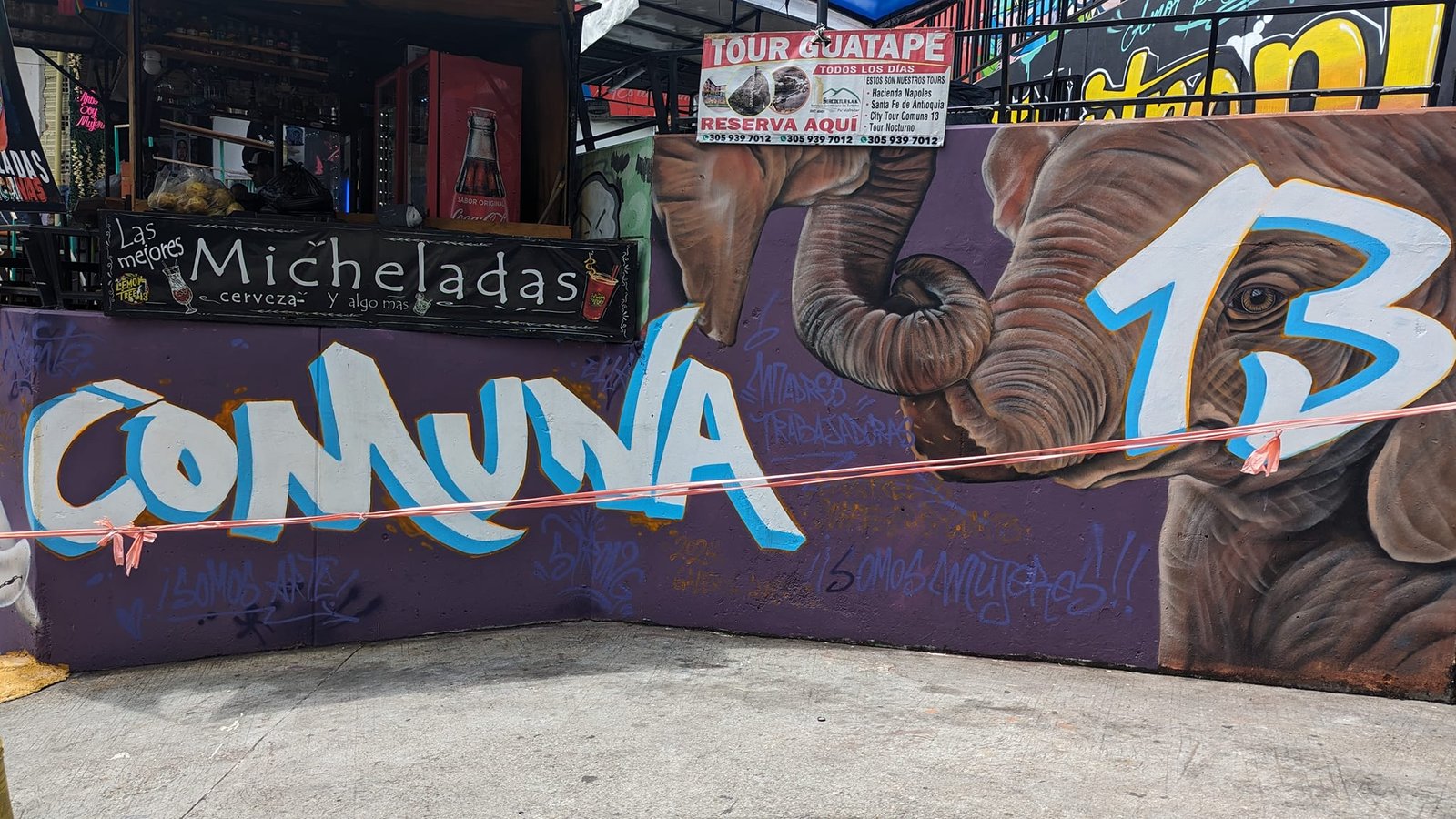
Today this whole story is told through art. You could say that, in a way, art saved the district – it became a way of expressing anger, and the walls served as a canvas on which the history of the place was written. Colourful lettering, sculptures and murals are everywhere.
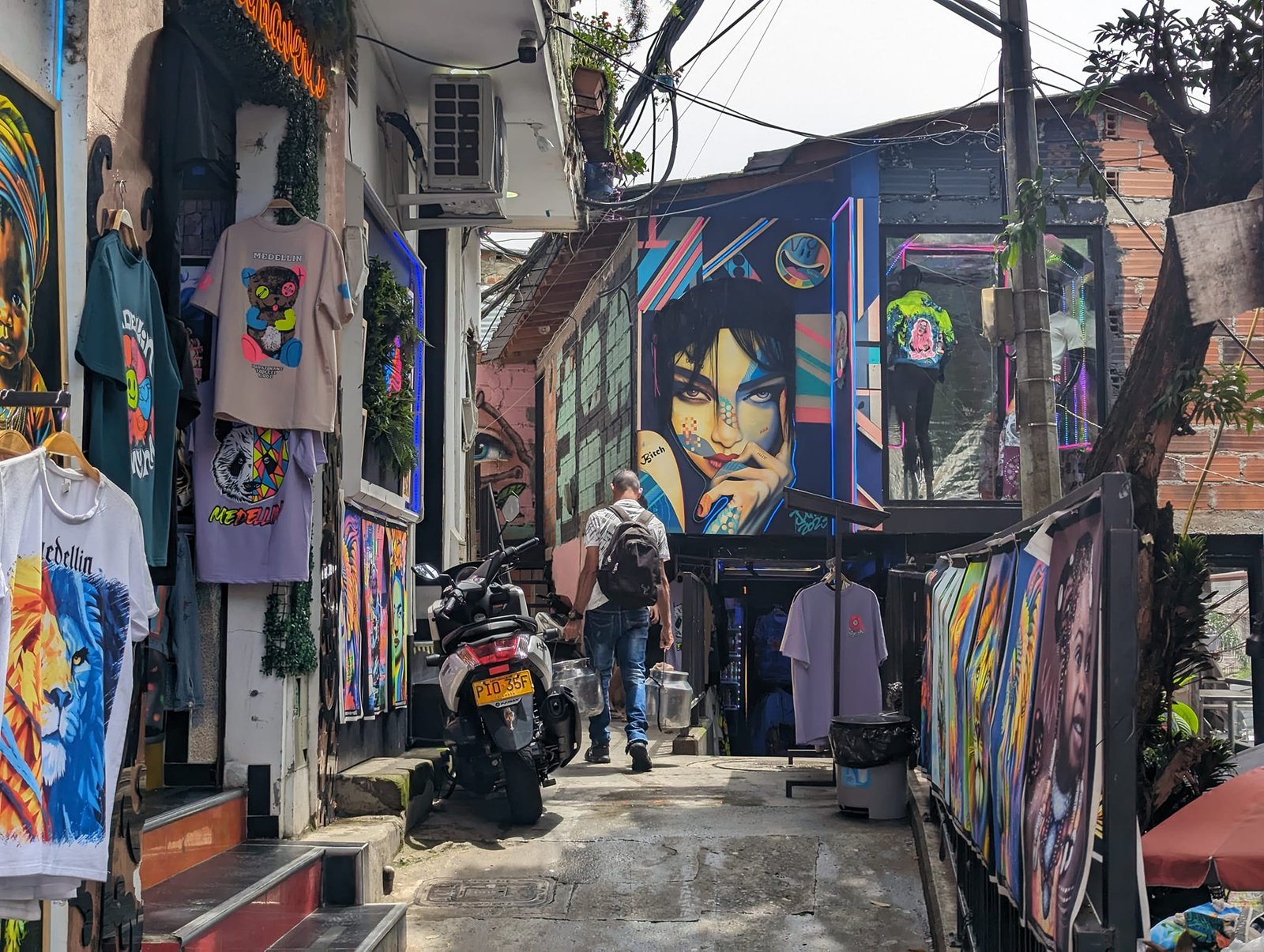
Murals cover almost every free wall here. They feature, among other things, slogans about peace, life and love, and next to them painters put their pictures up for sale.
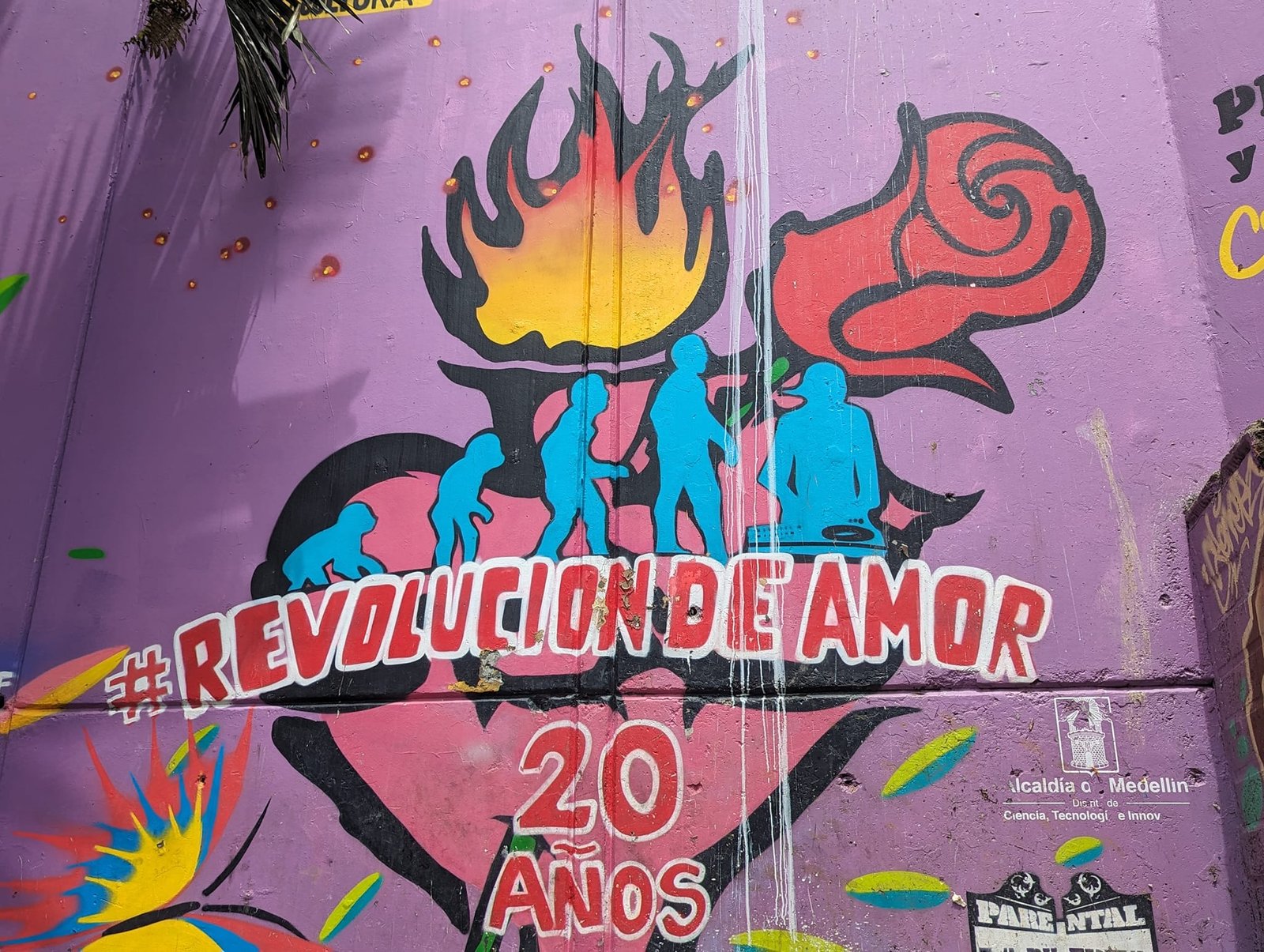
Hip-hop has its place here too – in front of a mural dedicated to this music we came across a breakdance dancer.
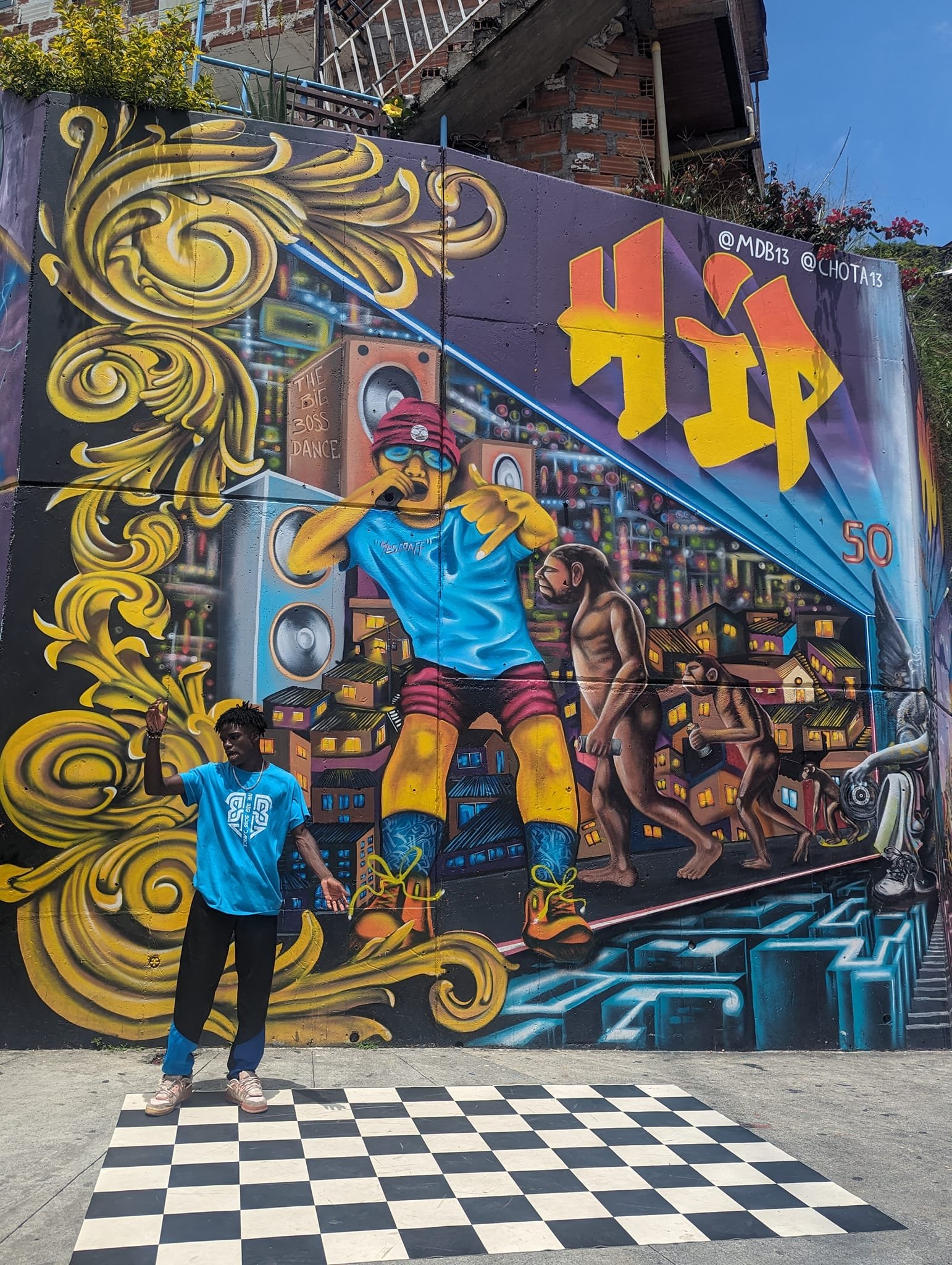
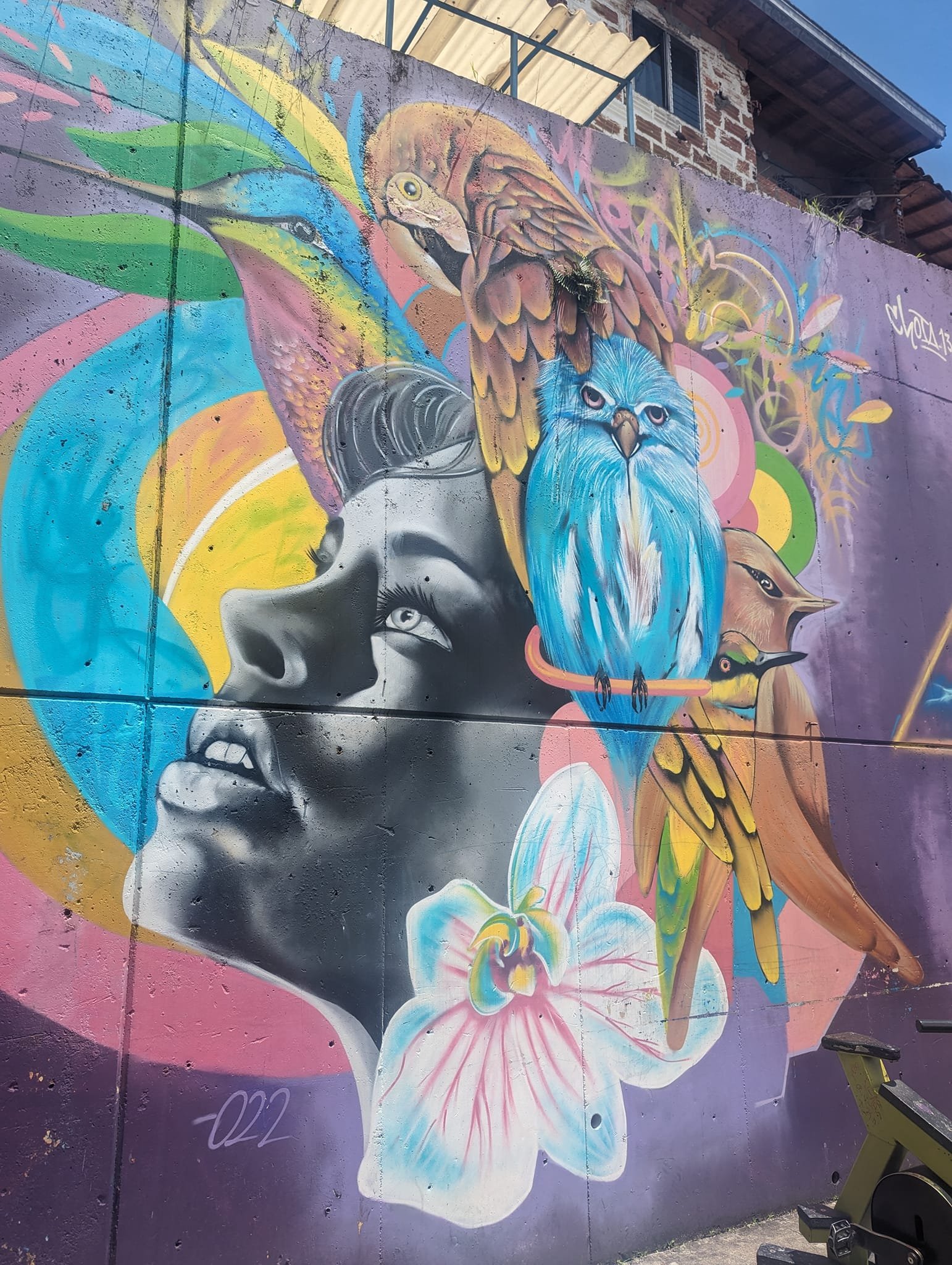
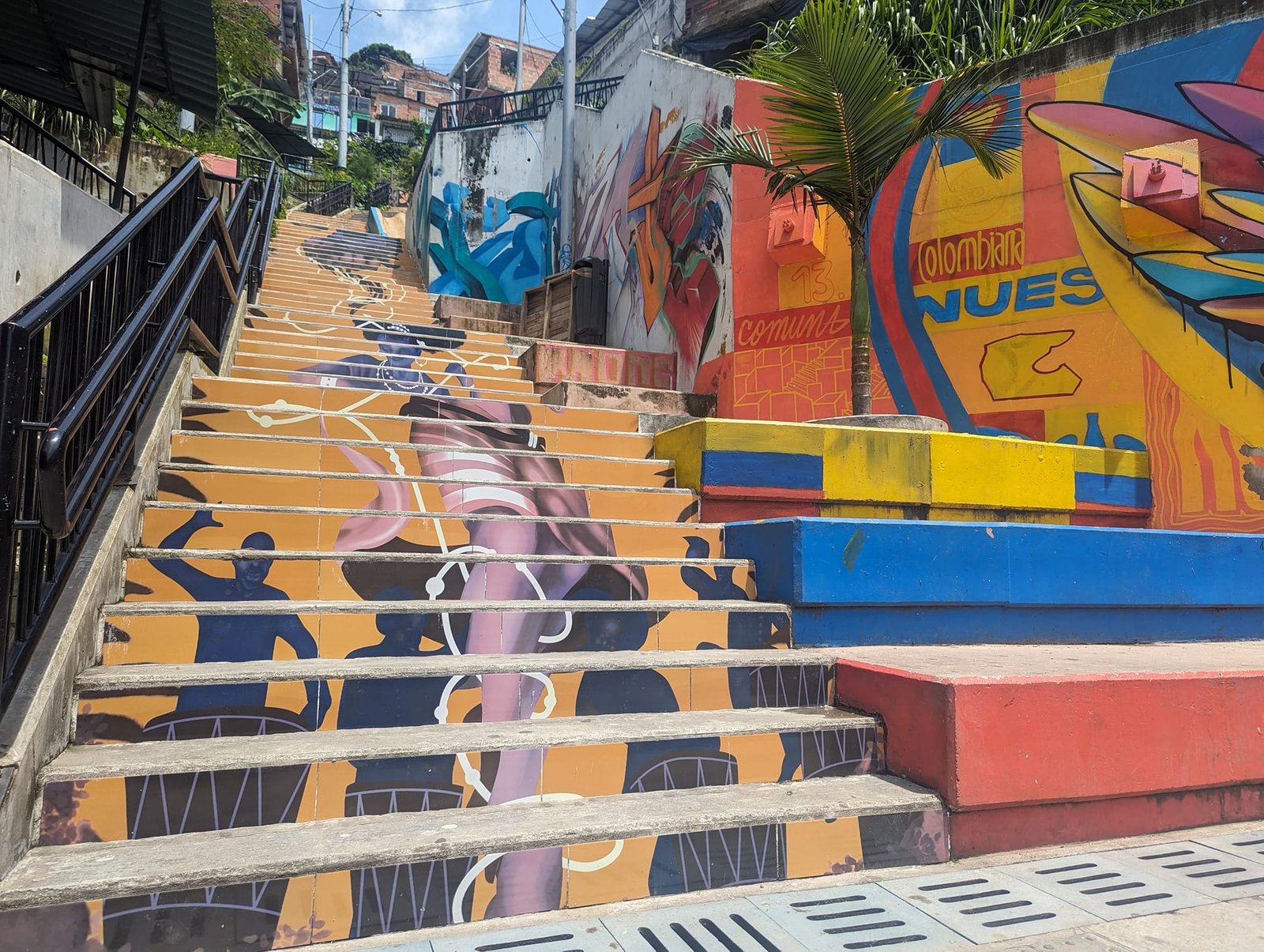
Thanks to the improved safety, tourism has developed here. There are lots of guided tours, and along the route there are stalls with souvenirs, T-shirts and paintings. Some murals have become favourite photo backdrops – Patrycja could not resist a photo with wings either.
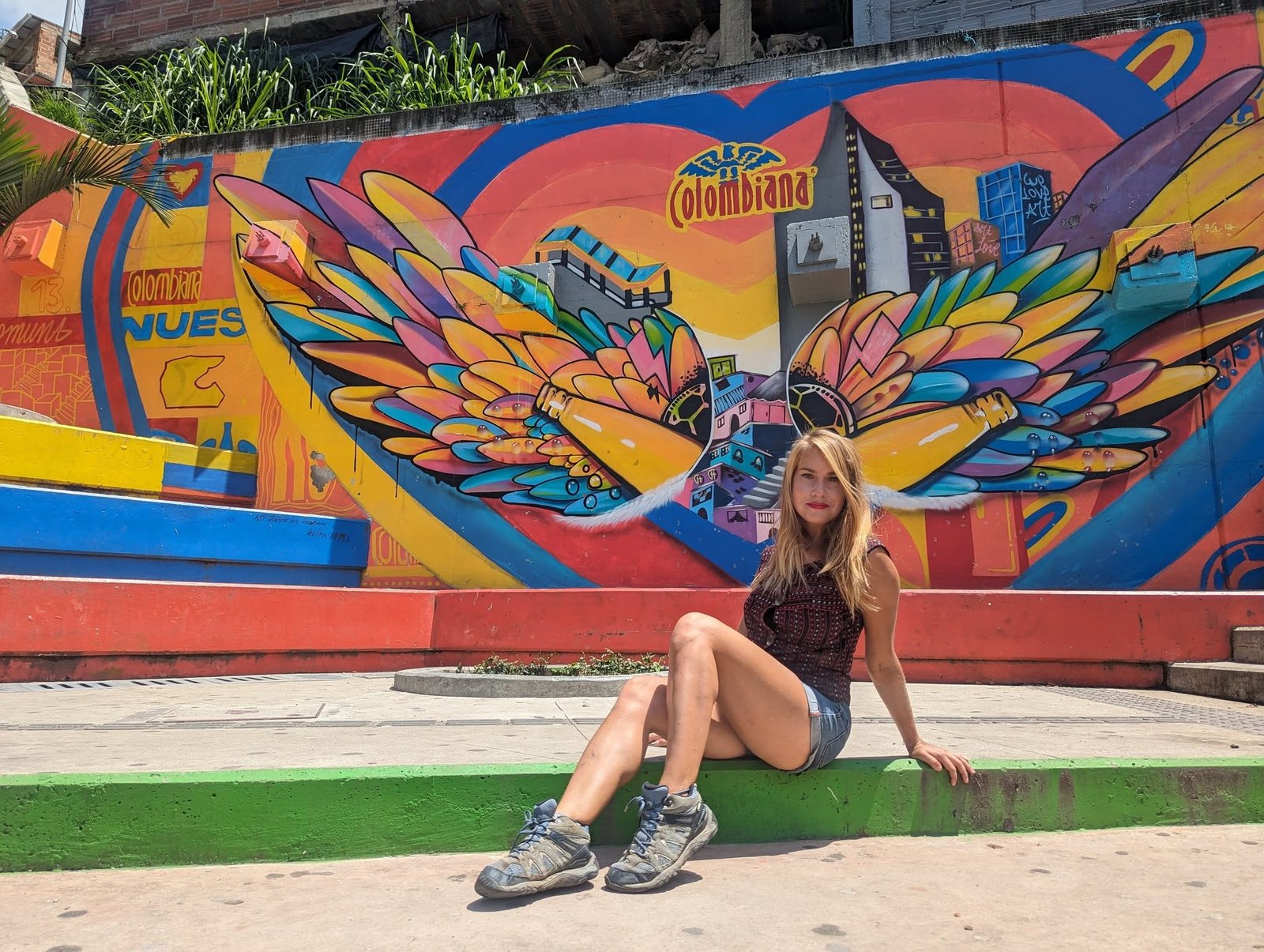
For its residents, Comuna 13 today has huge symbolic meaning – it is associated with innovation and development, and above all with transformation and rebirth. Walking its streets, it is hard to imagine what was happening here so recently. Among the residents, however, this history is still very much alive.
The escalators and the Metrocable
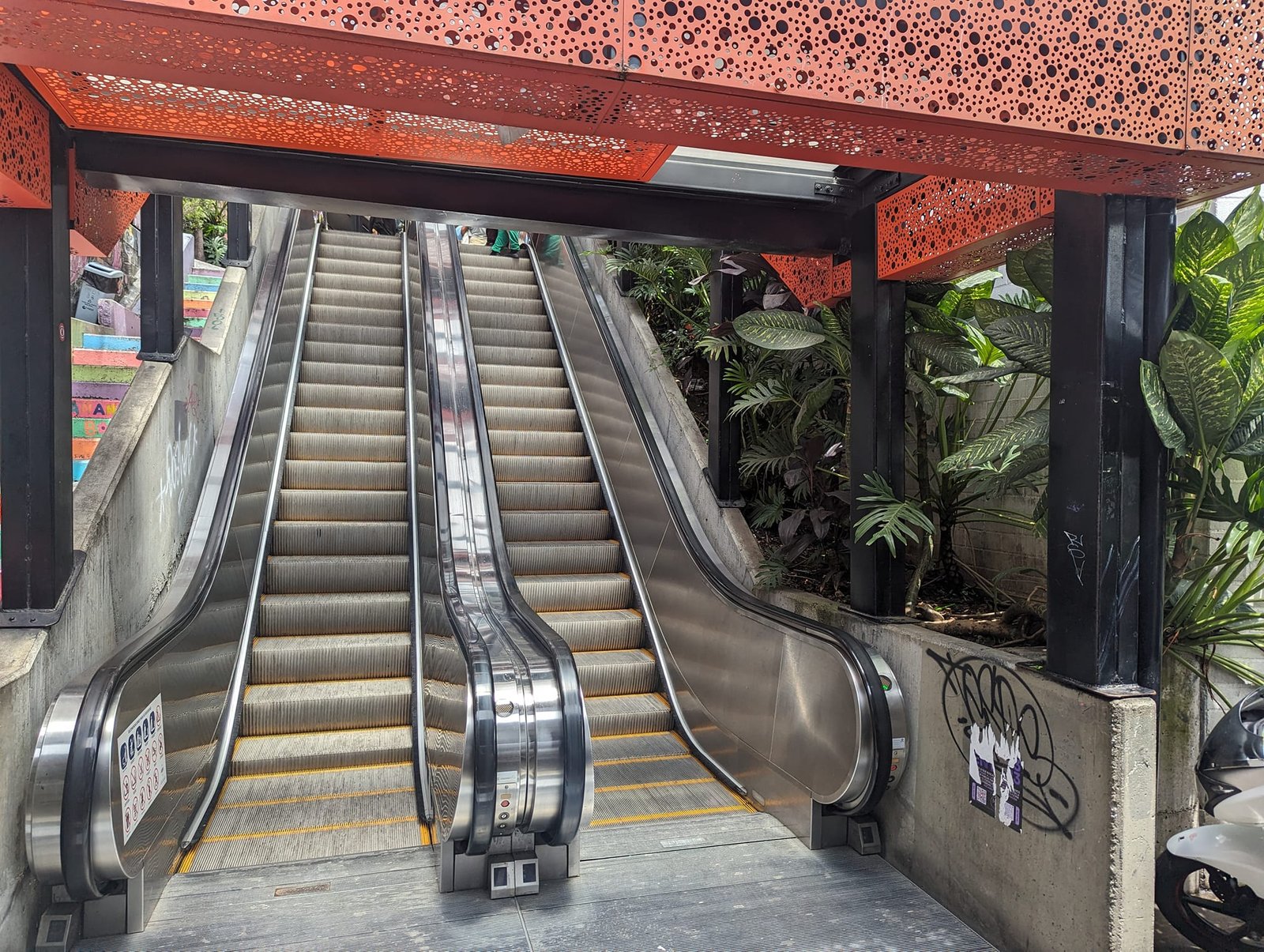
Over the years the city authorities launched many projects that clearly improved the quality of life in this part of Medellín. The best known are the escalators running up the hillside. They are 384 metres long and divided into six sections, so residents from different levels of the slope can easily reach other parts of the district. The way uphill, which used to mean 35 minutes of exhausting climbing, now takes about six minutes. The escalators were completed in 2011. Residents of other parts of Medellín, however, criticised spending several million dollars on an investment that only a small part of the city uses.
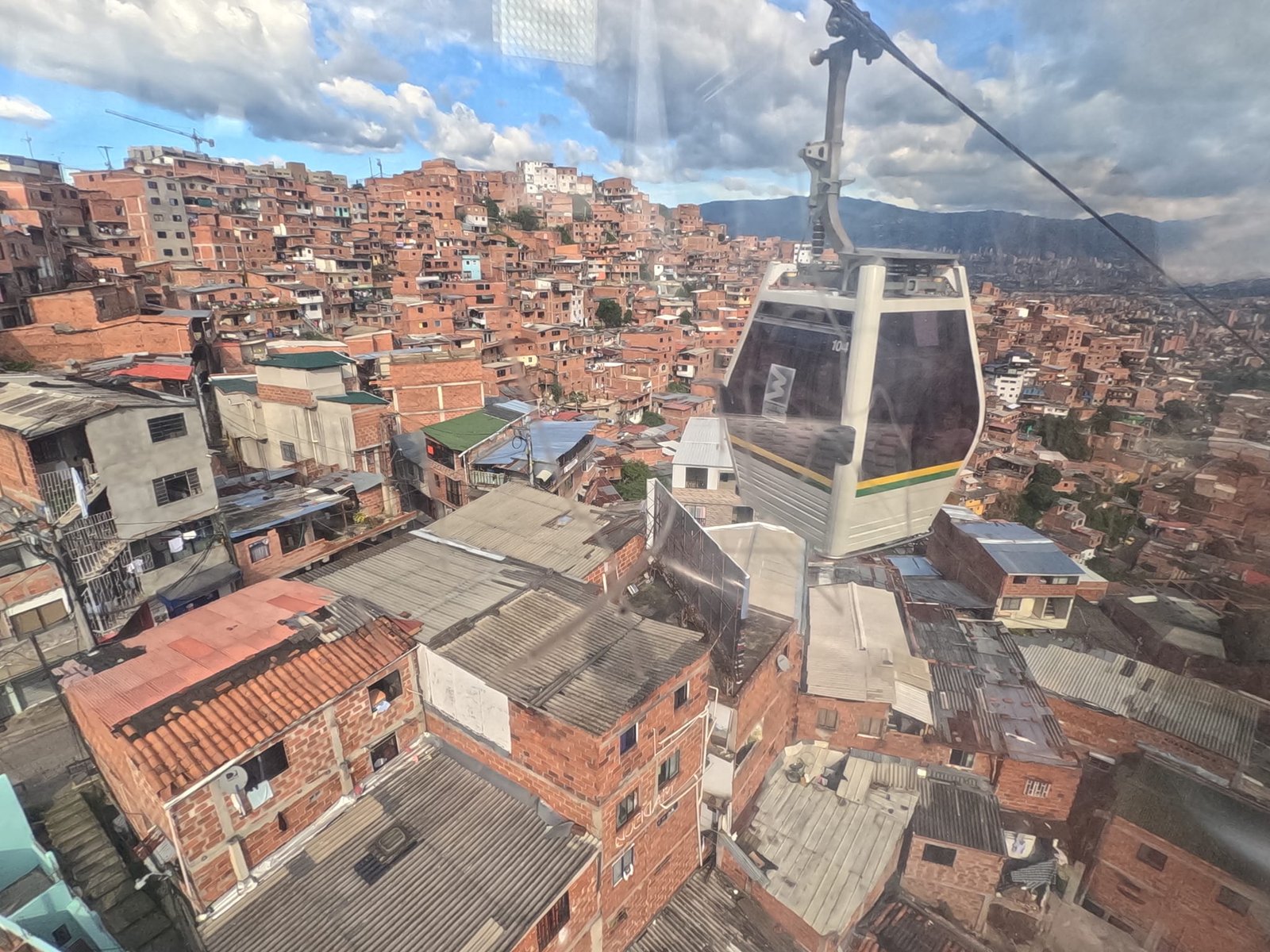
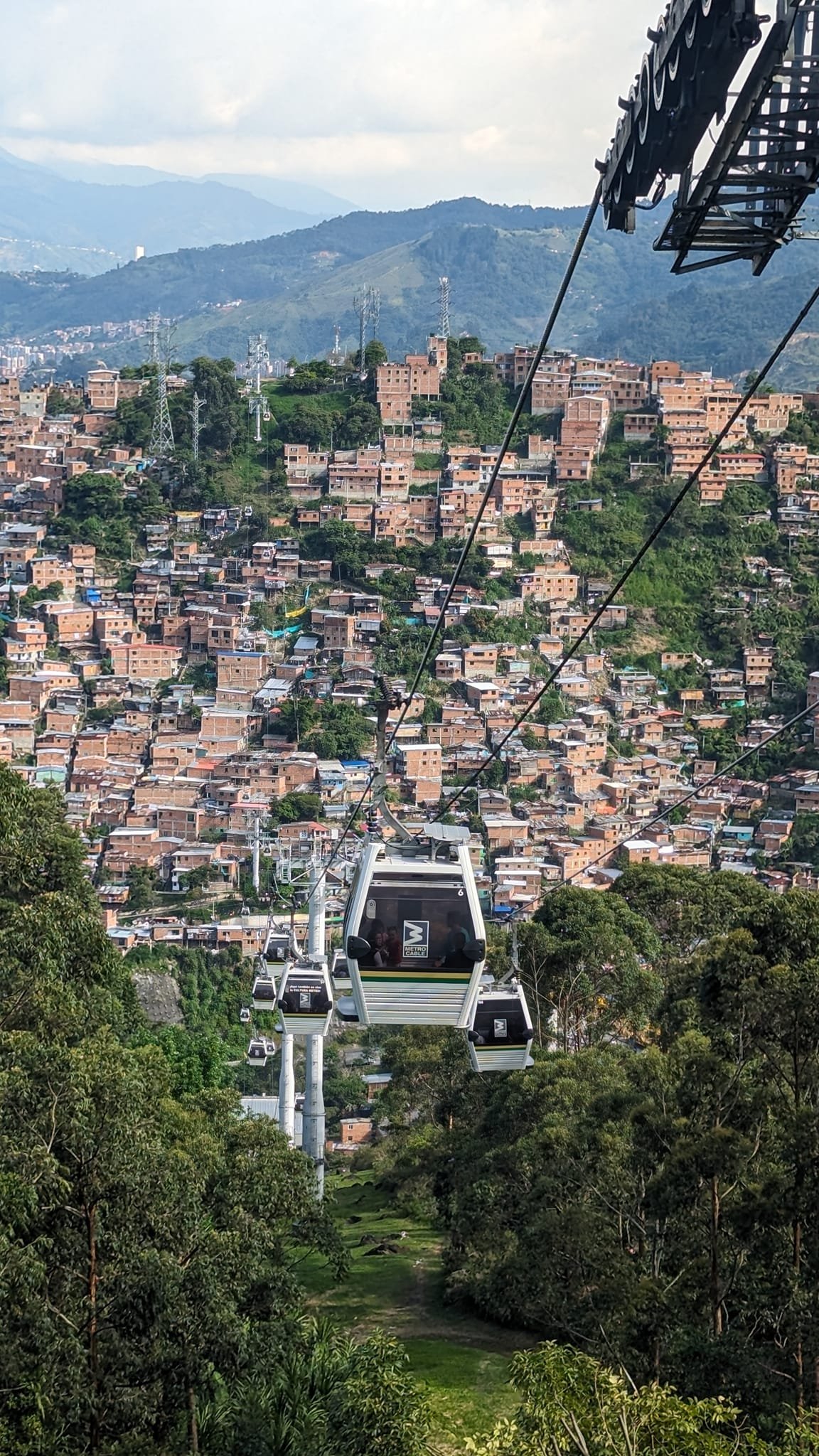
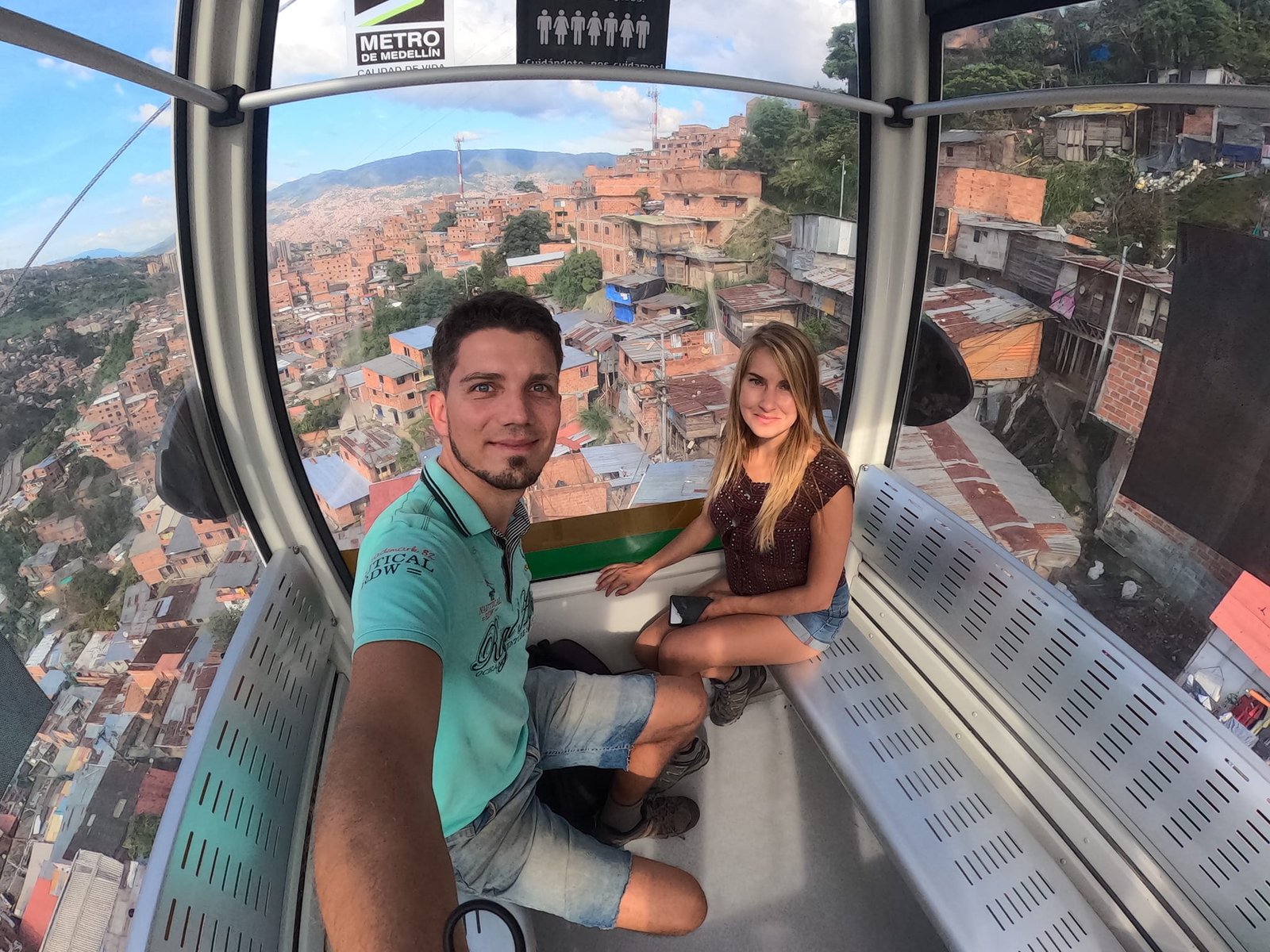
The second such project is the Metrocable – a cable car that extends the metro lines. It connected the hillside districts with the rest of the city and improved their residents’ relations with the local authorities. For residents it is ordinary public transport, for tourists an attraction with beautiful views. We took a ride too – the cabins glide low over the roofs of the brick houses.
Is Medellín safe?
All these changes have made Comuna 13 much safer. Even so, it is better not to venture into narrow alleys away from the main tourist spots – the district is really big and petty theft can happen.
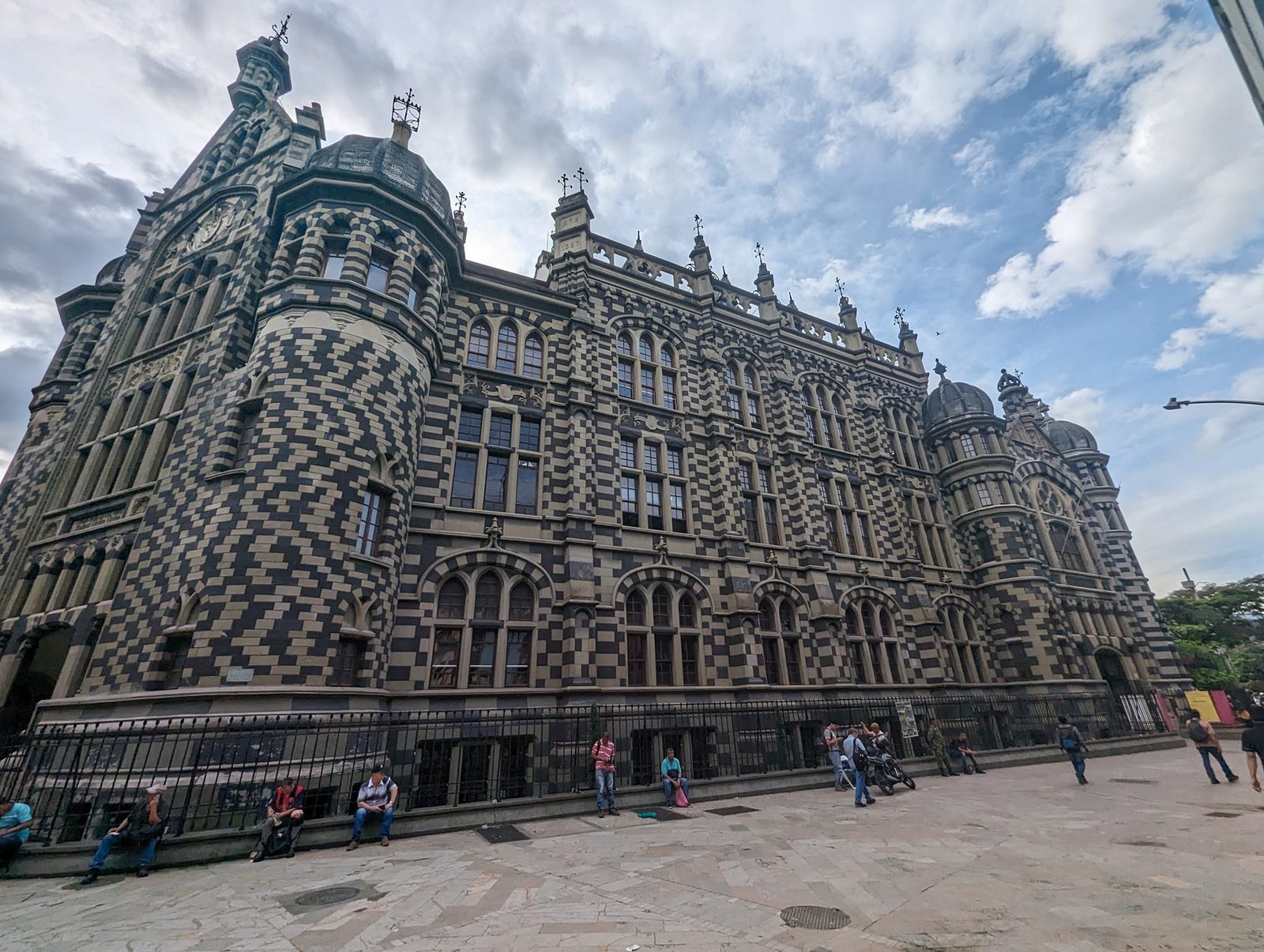
We felt least comfortable in the centre, around Plaza Botero with the distinctive Palace of Culture in a black-and-white chequerboard pattern. It is very crowded there, and homeless people and drug addicts come over from a nearby shelter. In big cities there is simply more theft, especially in crowds.
Nothing bad happened to us. Before booking accommodation, though, it is worth checking which districts are safe and which are better avoided – I describe the general rules we followed throughout Colombia in the post about Cartagena.
El Peñón de Guatapé – about 700 steps to the top of the rock
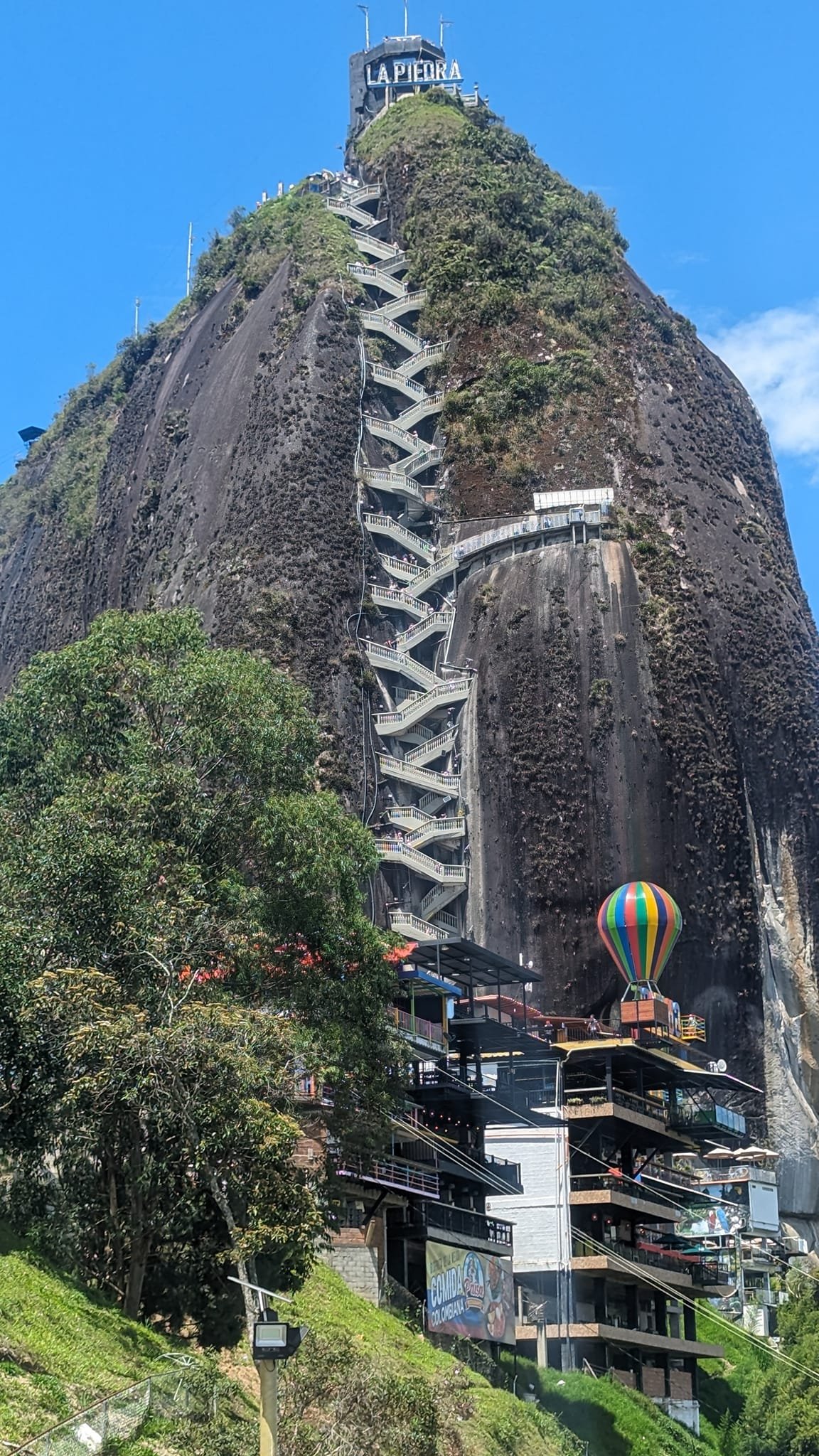
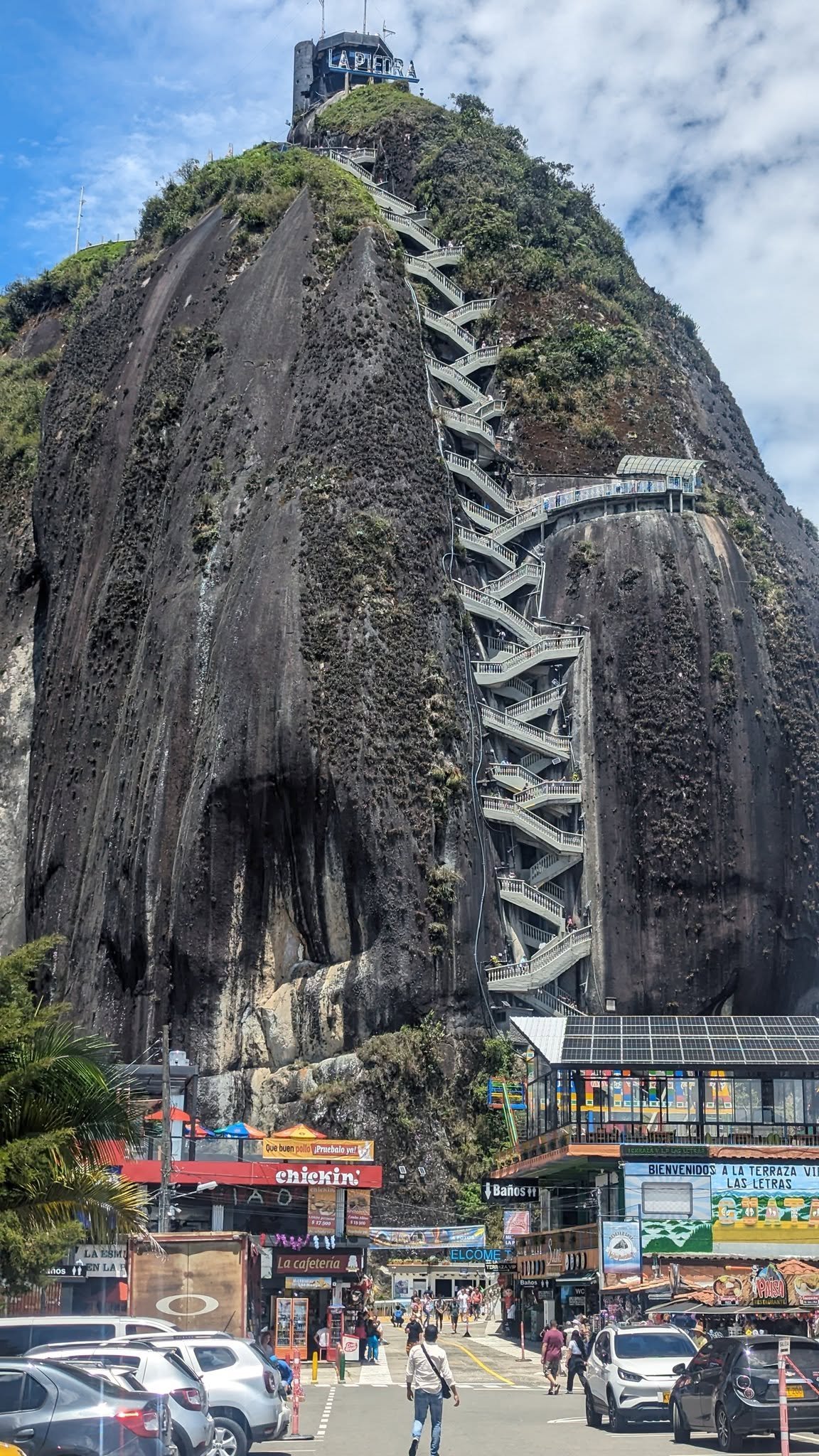
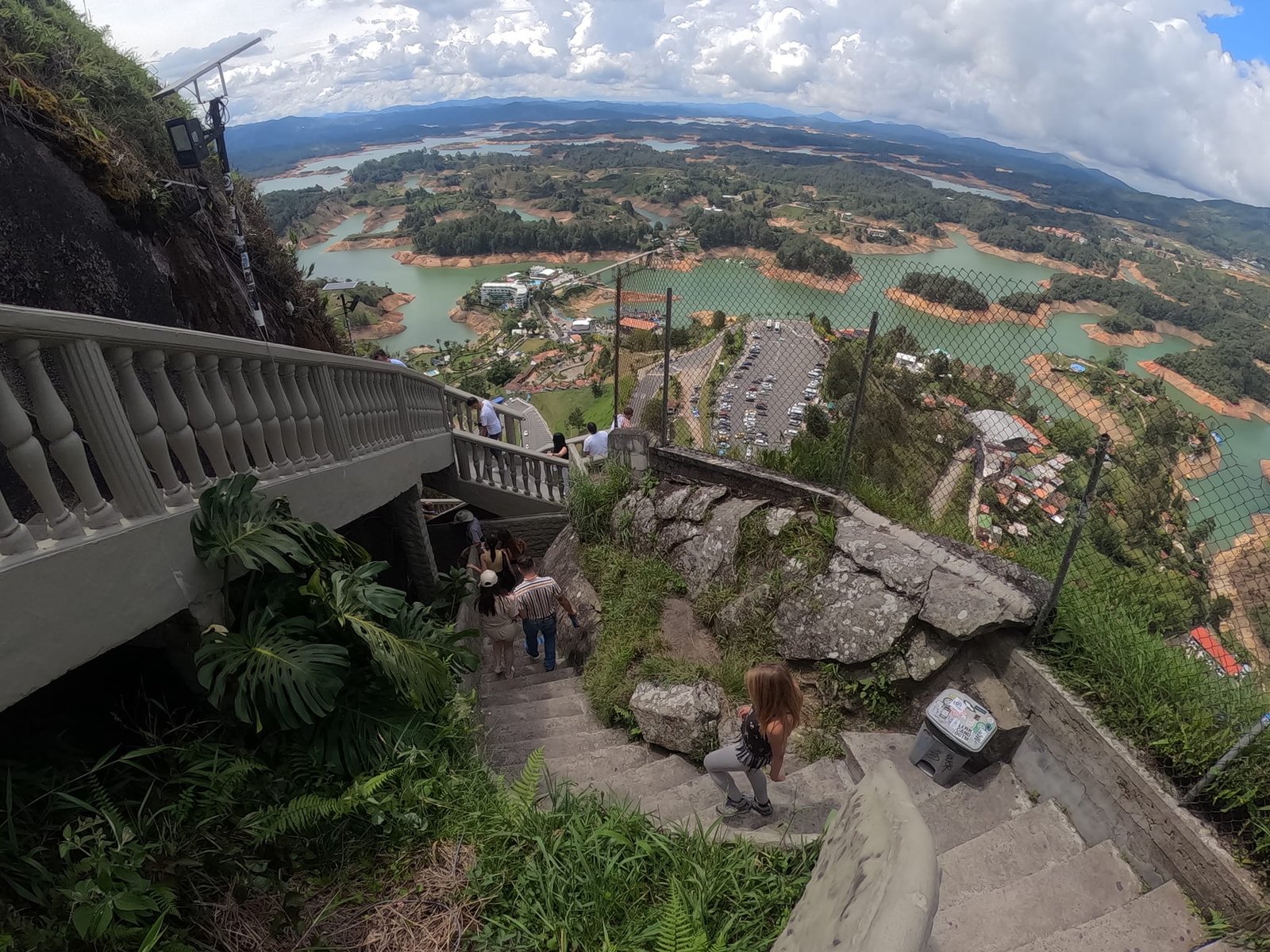
The next day, 22 May, we headed out of town. About two hours by bus from Medellín rises El Peñón de Guatapé – a lone rock about 200 metres high, 110 m wide and 285 m long. A staircase zigzags up a crack in the rock to the top – that is about 700 steps. Entry cost 25,000 COP (about €6).
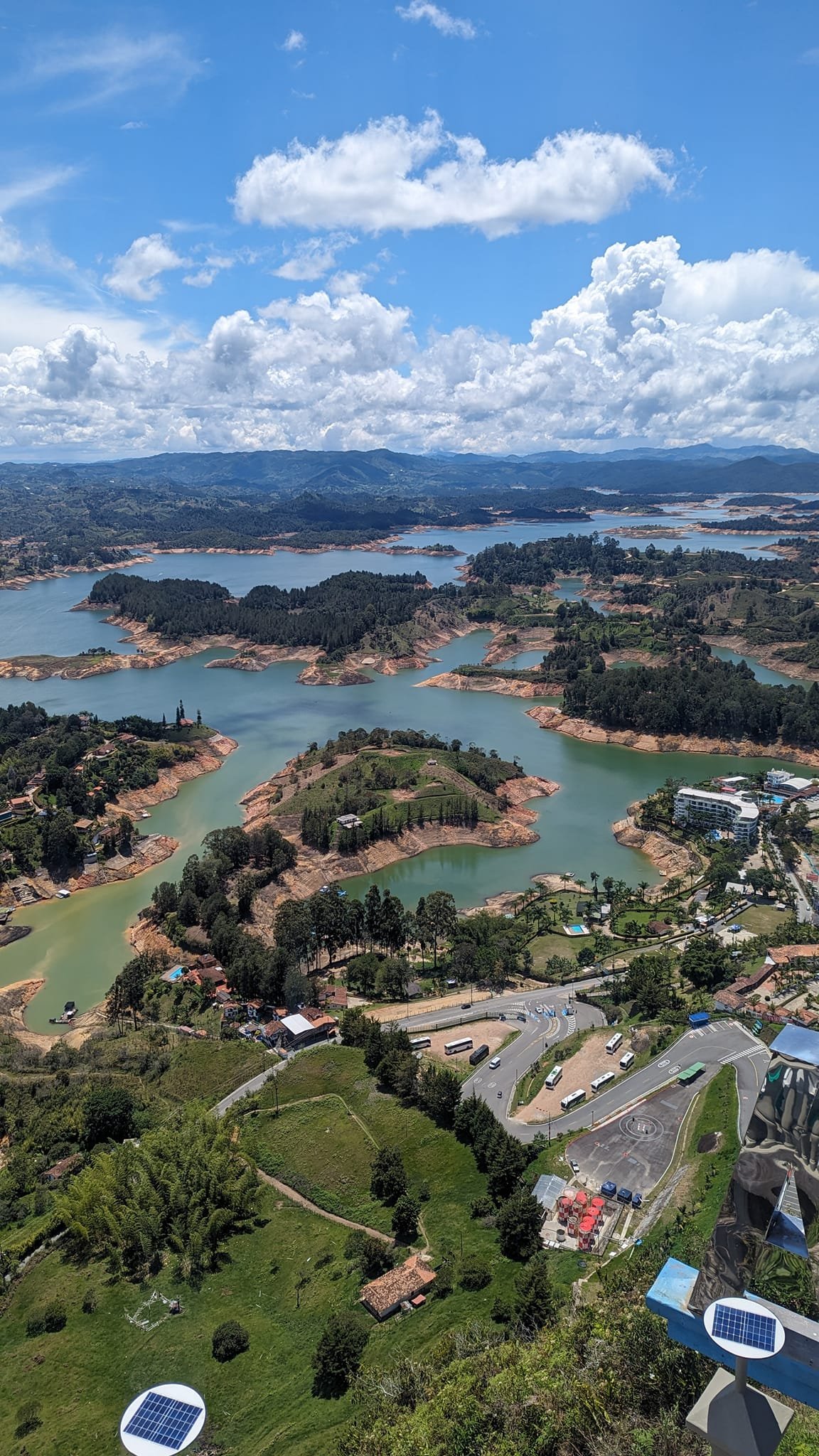
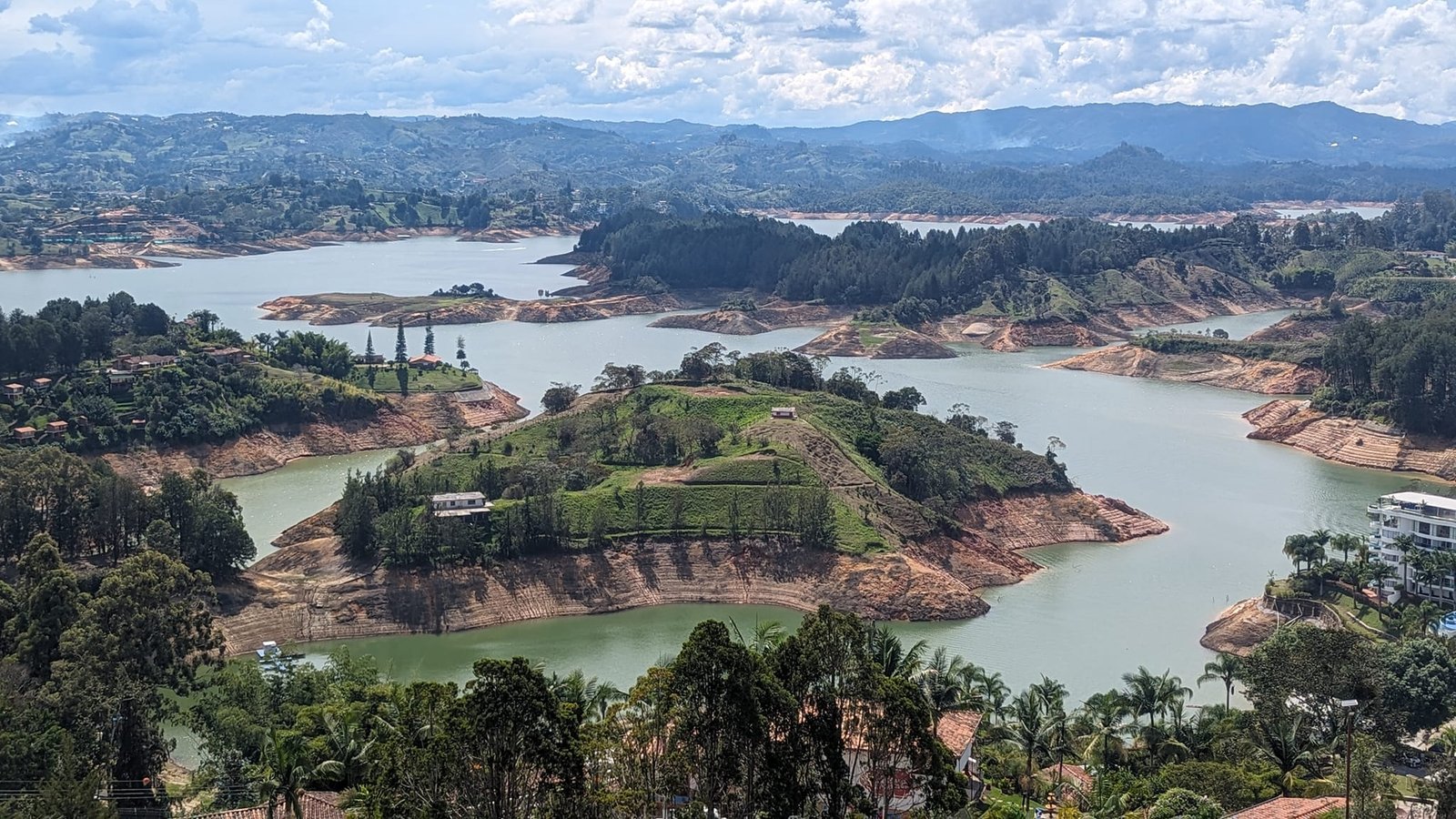
At the top there is a viewing tower with a beautiful view of the surrounding mountains and the waters of the Peñol-Guatapé reservoir with dozens of green islands and peninsulas.
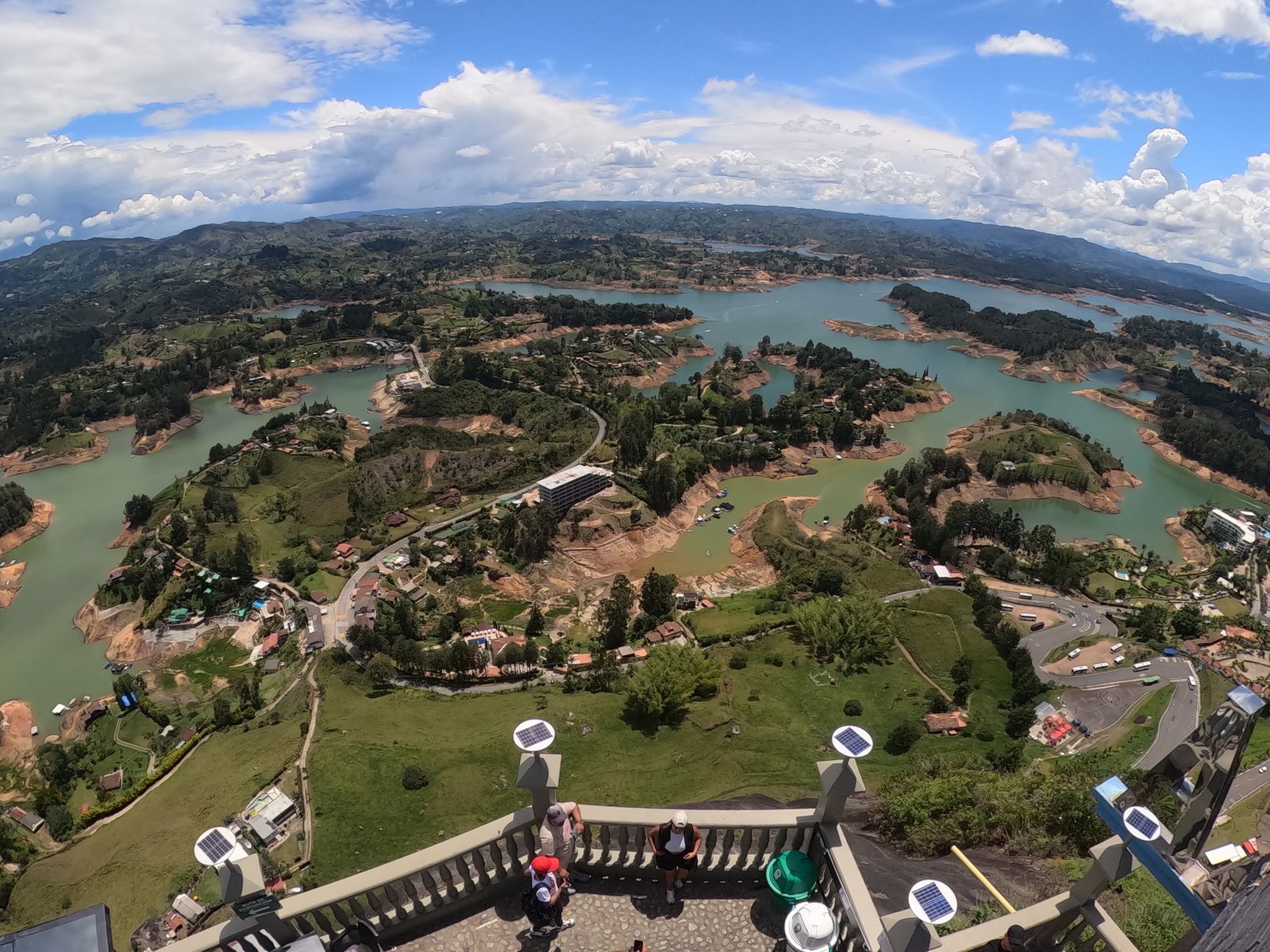
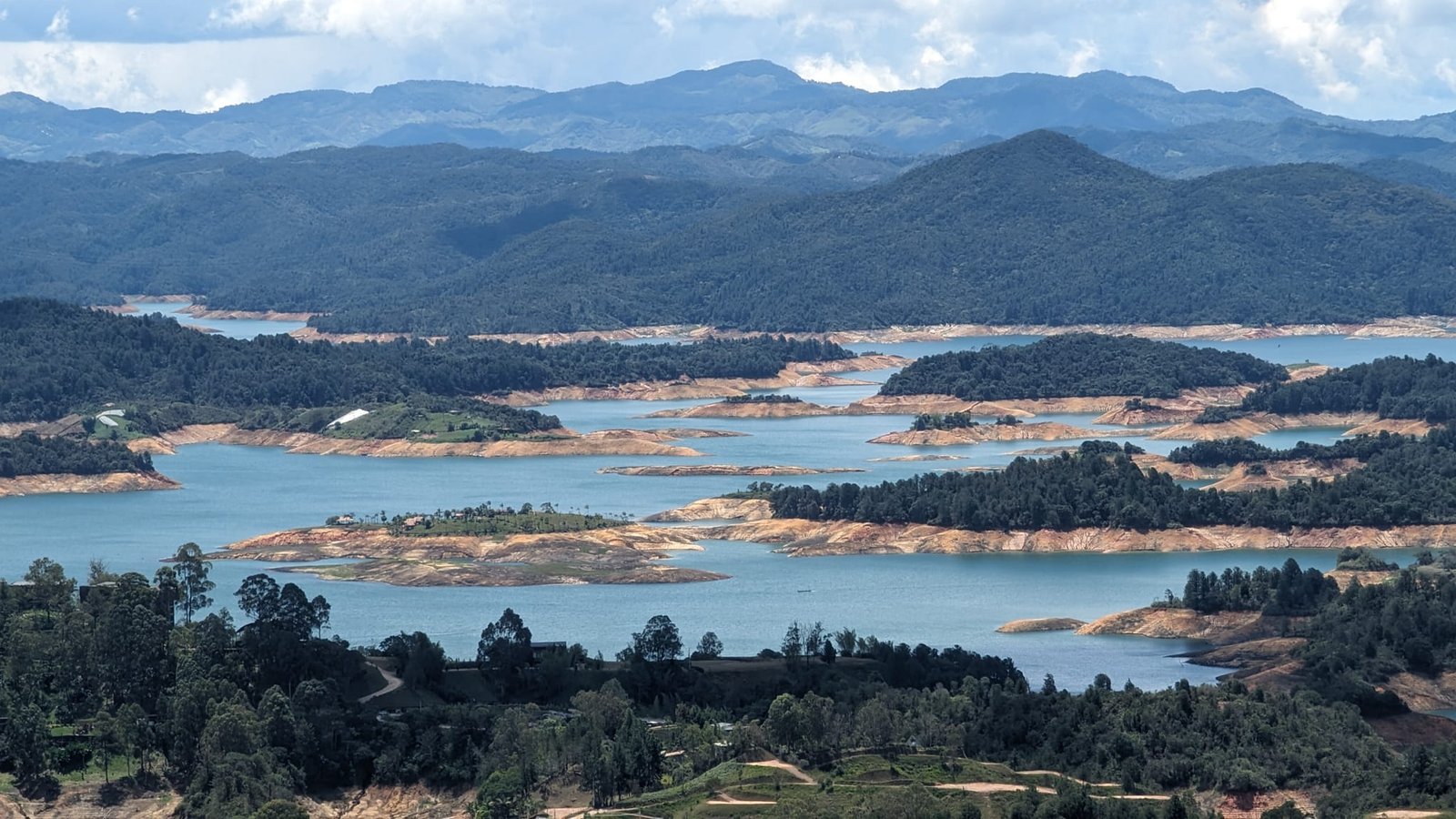
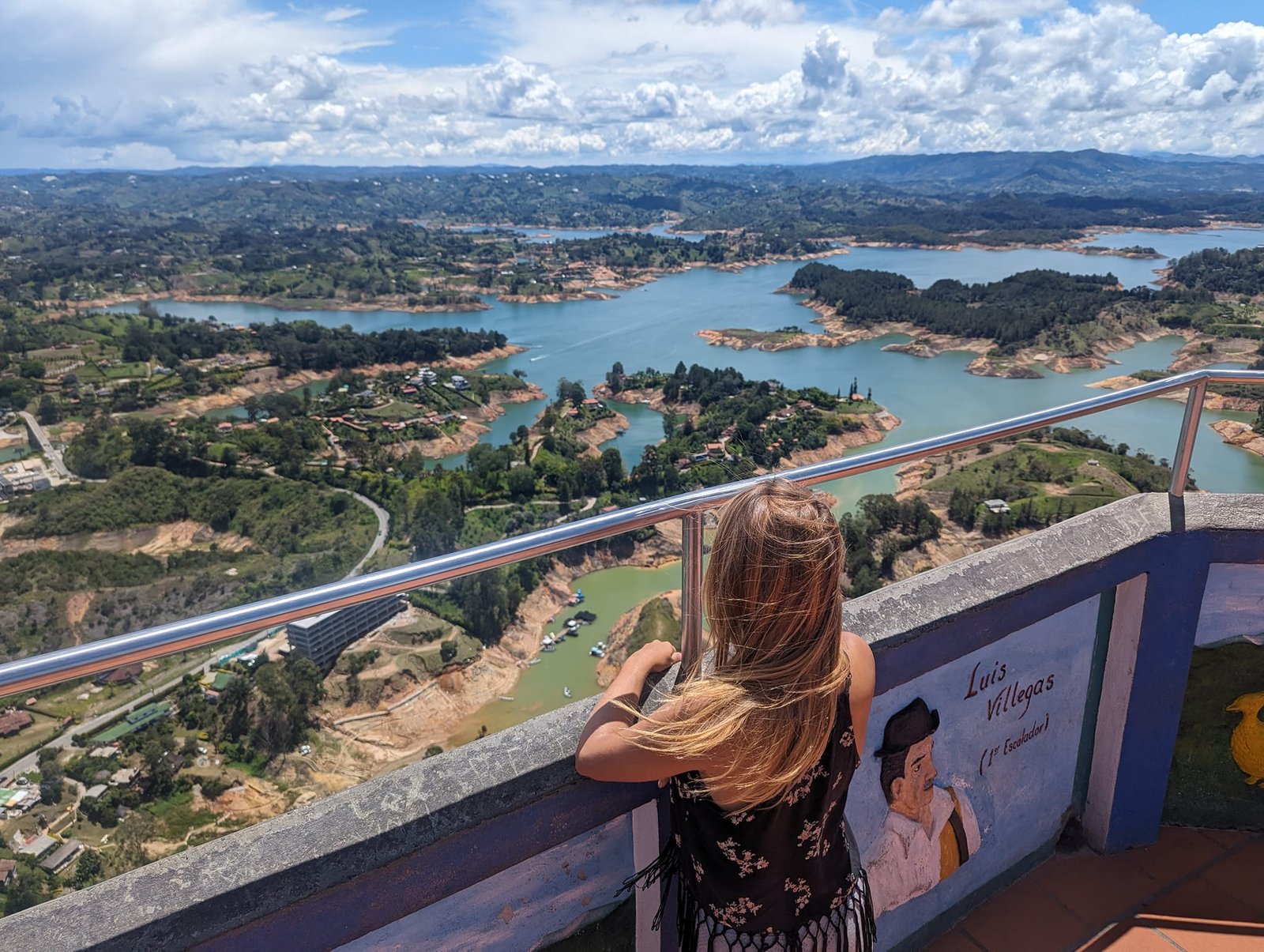
You go down on equally steep stairs, and at the foot of the rock there is a car park, restaurants and stalls. That same evening we set off further south.
Cali – less than a day in the salsa capital
On the way to the border we stopped in Cali – a city known as the salsa capital of the world. We got there on a night bus, 400 km south of Medellín. We had less than a day, because another night bus was waiting for us in the evening. We were hosted by Yoiner and Gabriela – a couple we had met in Tayrona National Park in the north of the country.
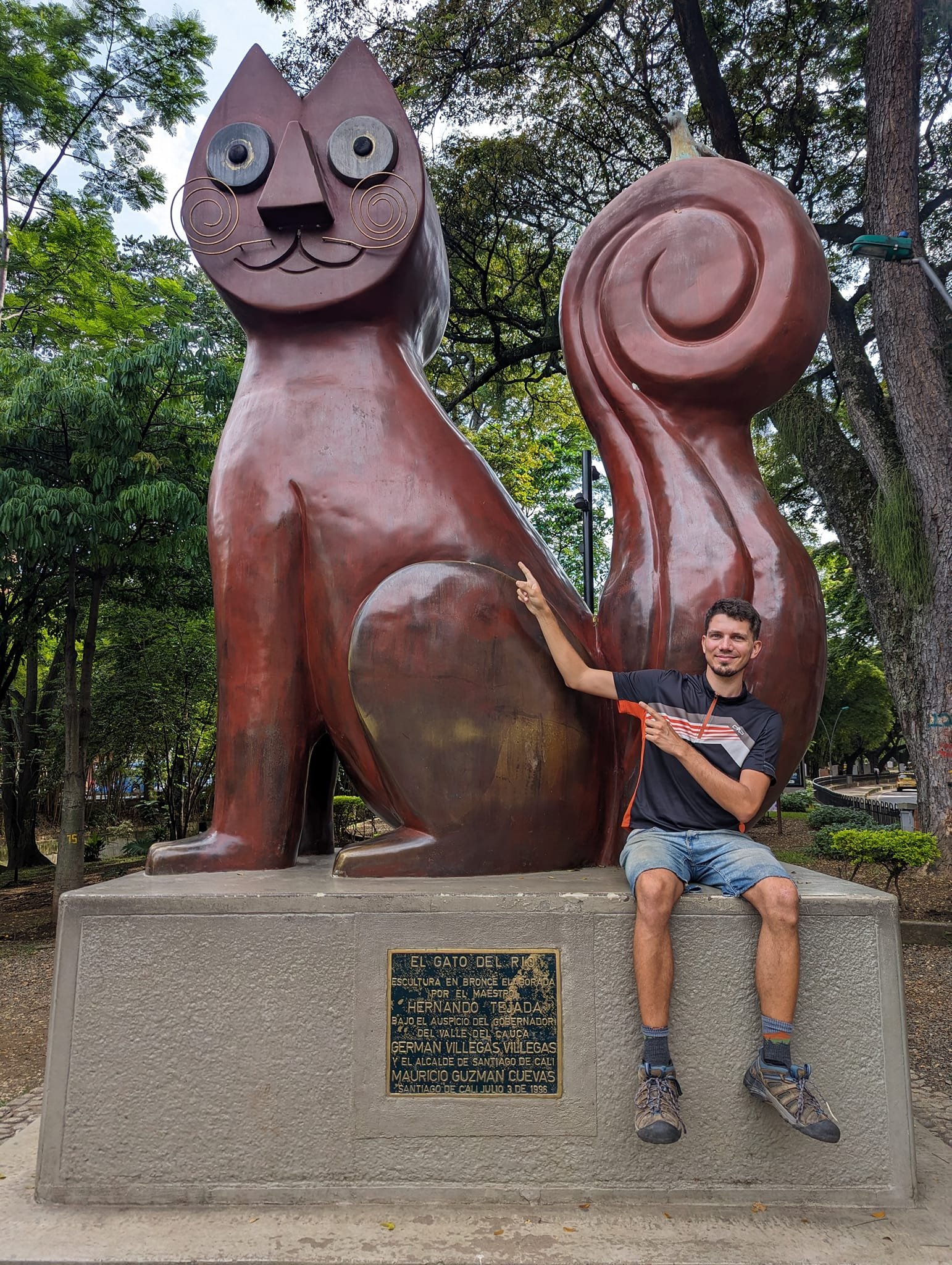
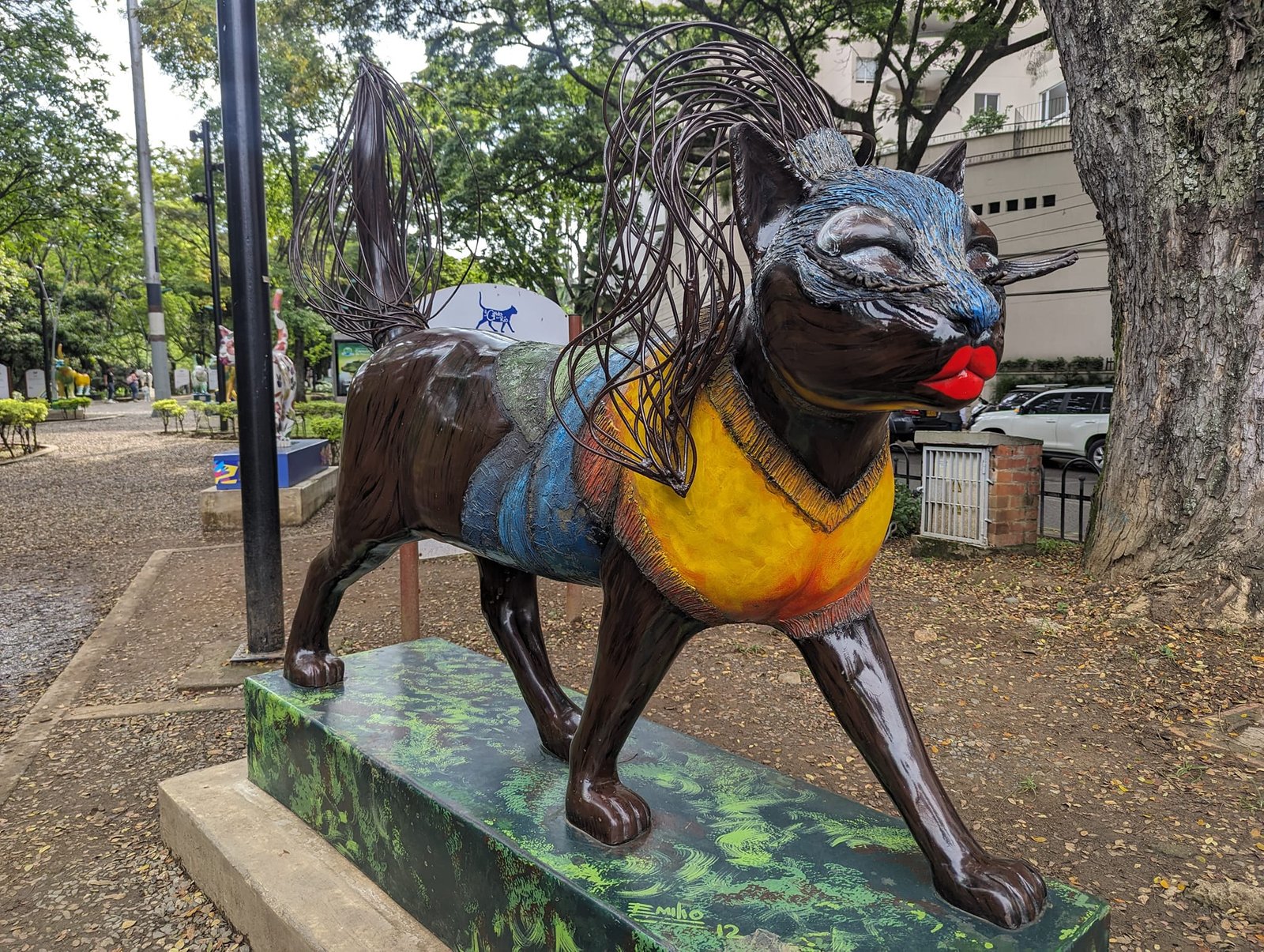
The most interesting place for us was the El Gato del Río park, full of colourful cat sculptures.
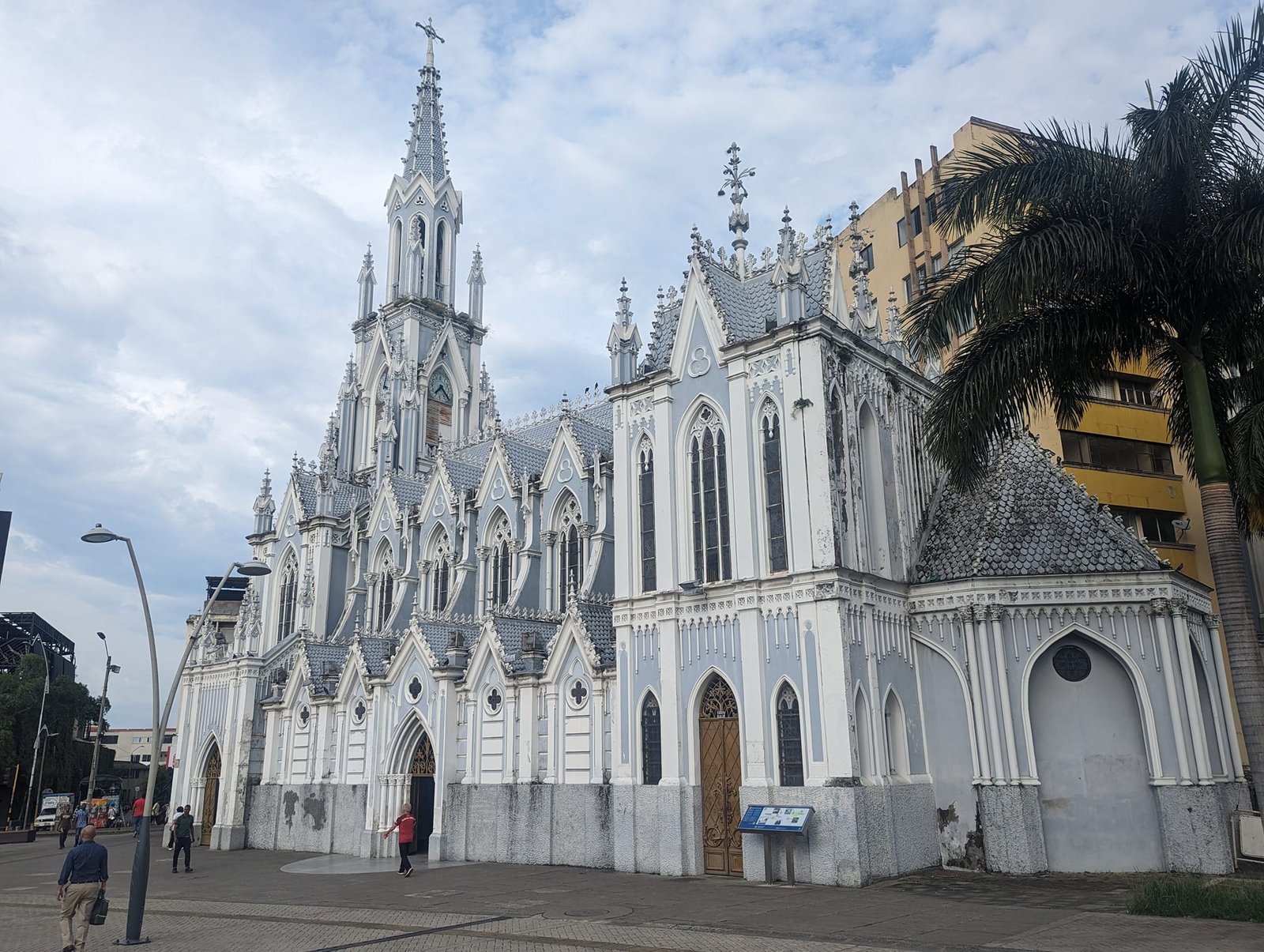
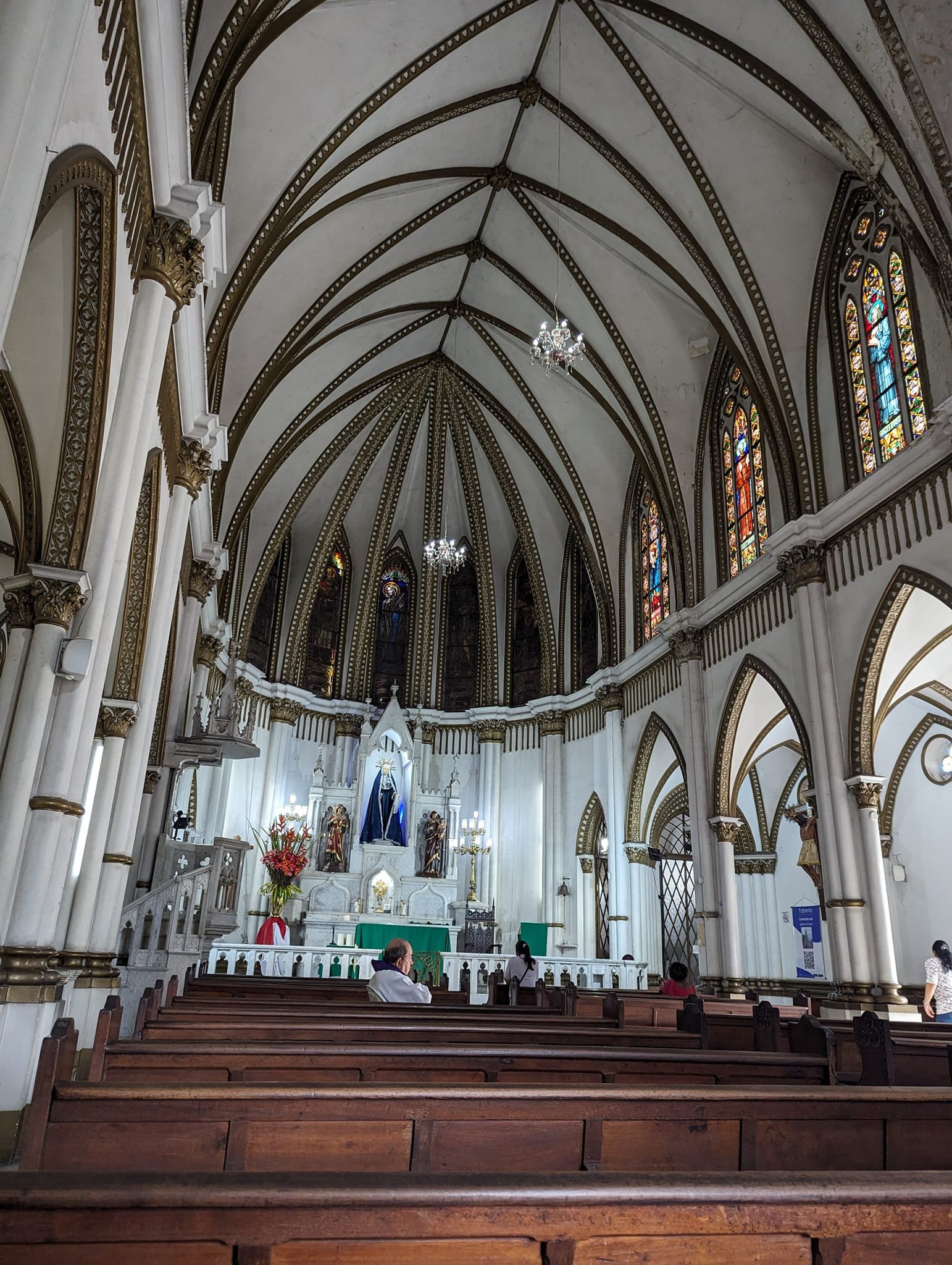
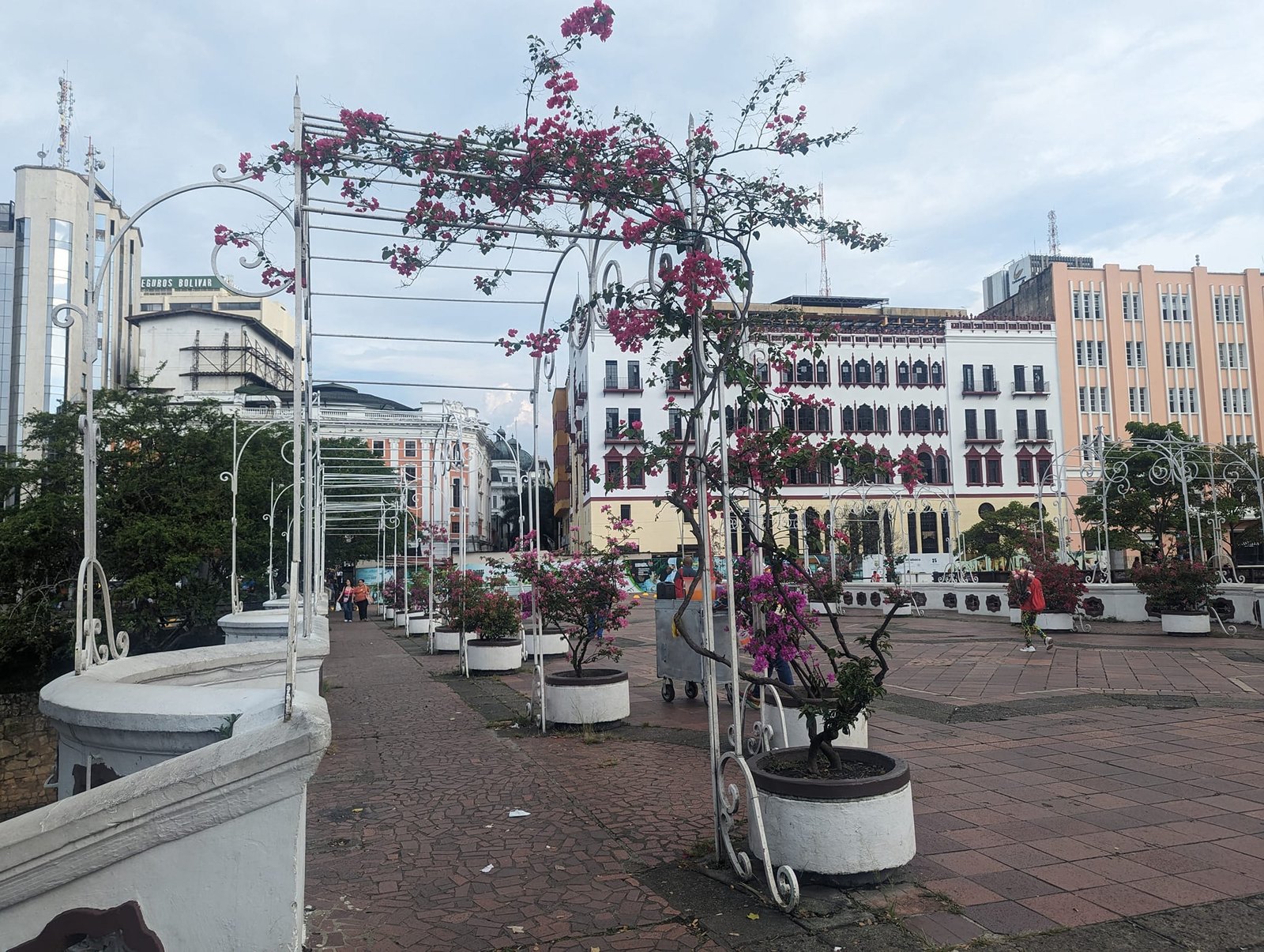
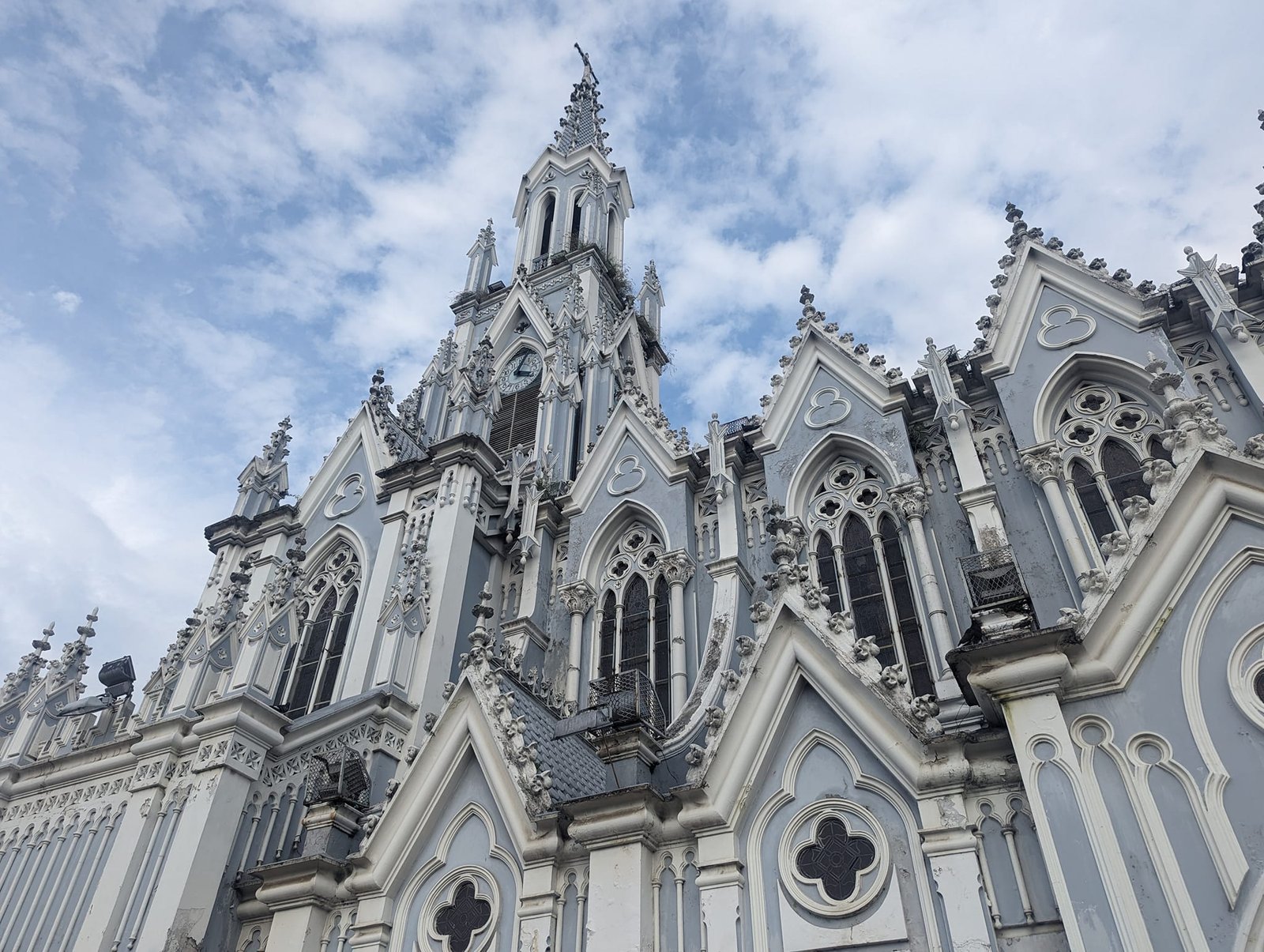
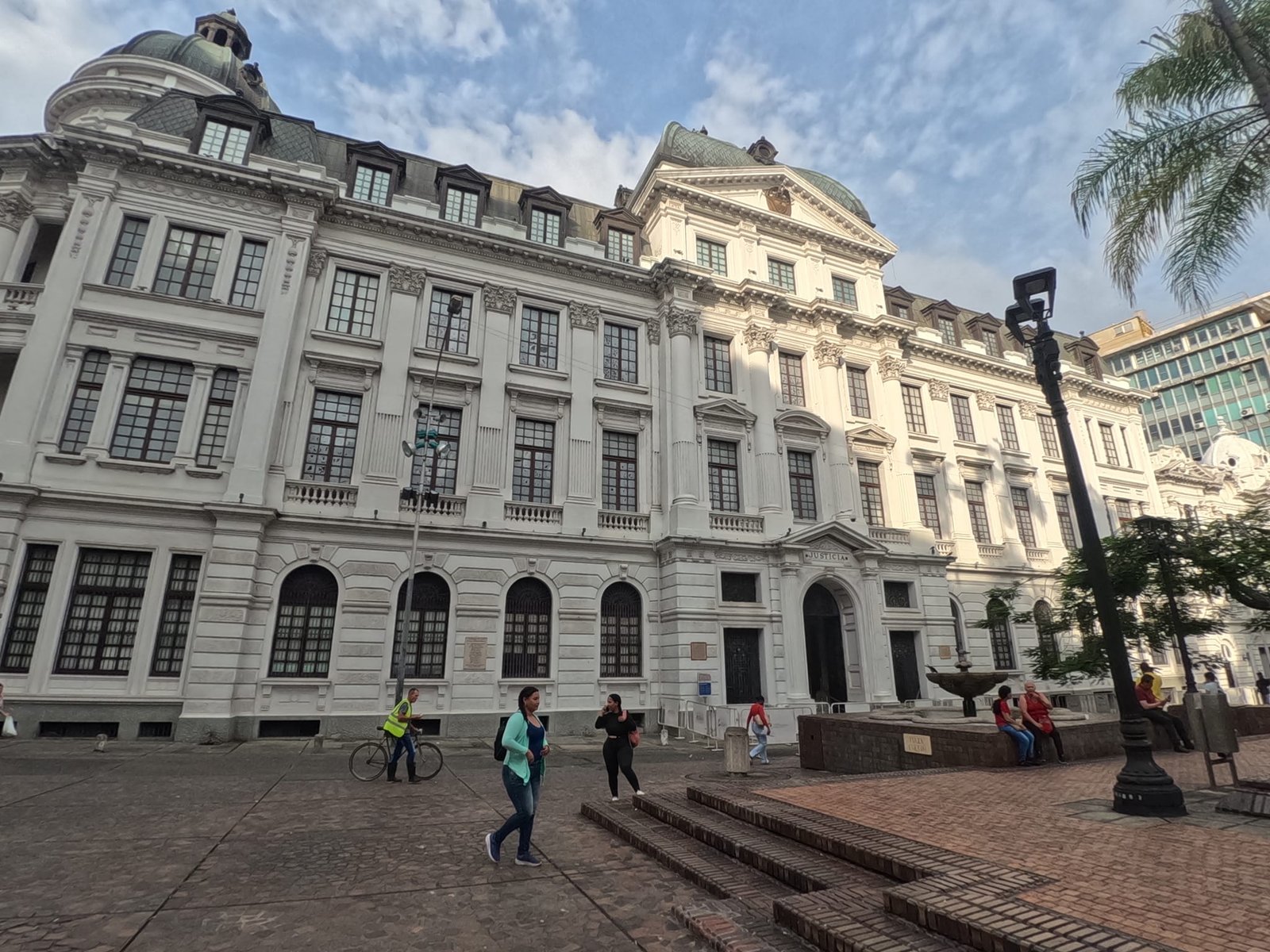
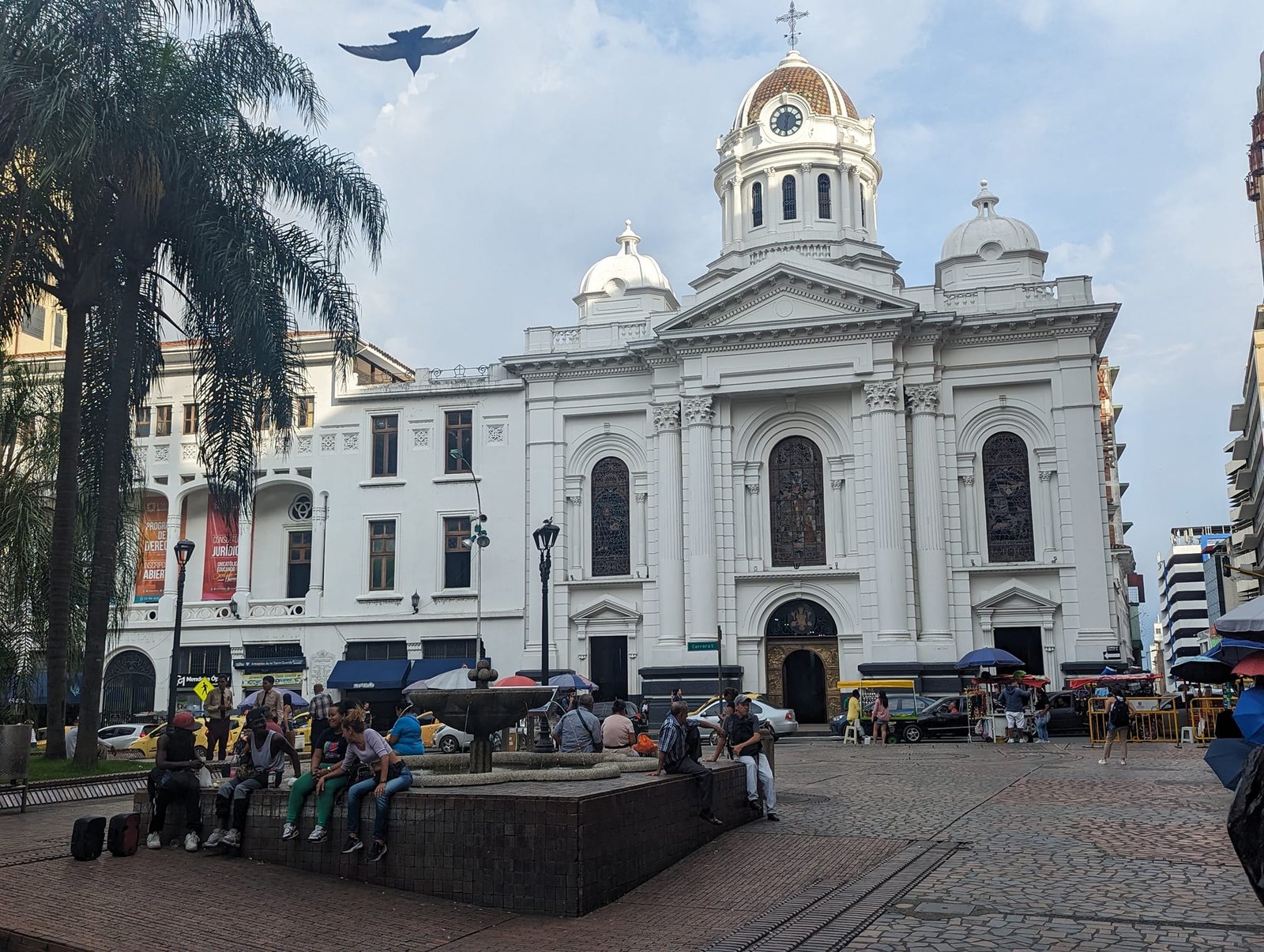
Walking around the centre, we also came across the neo-Gothic La Ermita church, the white National Palace with the word “Justicia” above the entrance, and the cathedral on a square with a fountain.
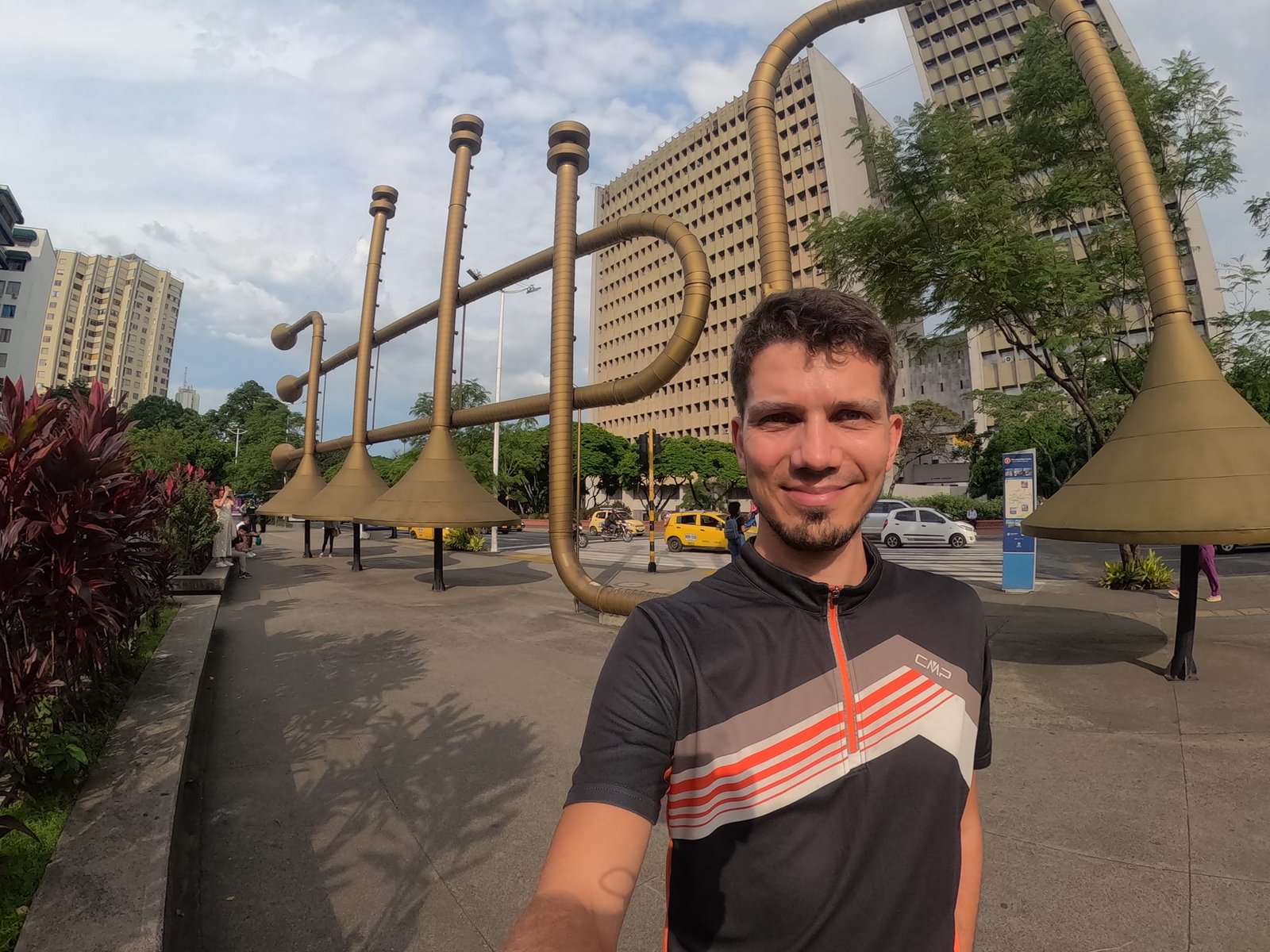
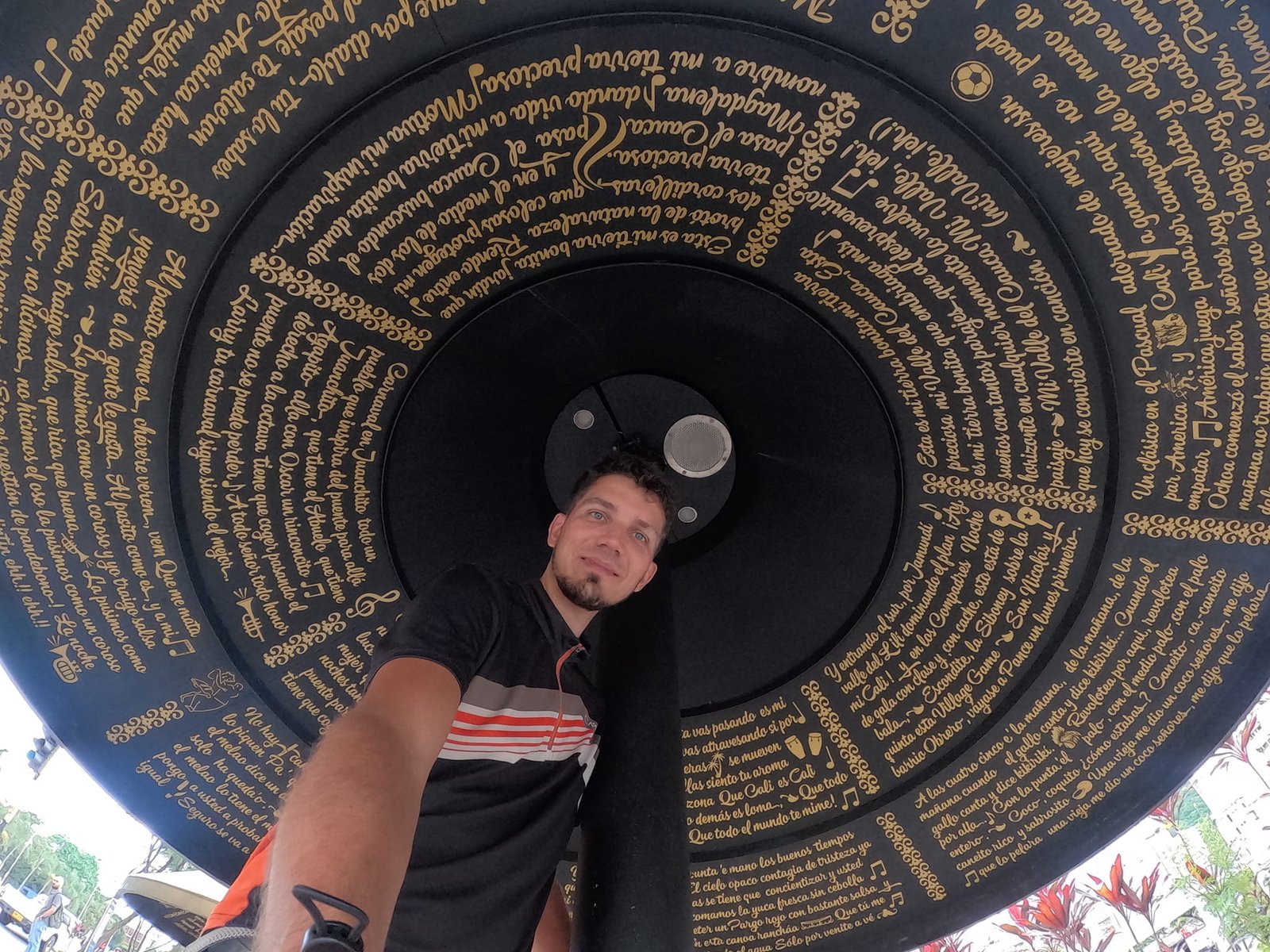
Music is present even in the cityscape: there is a sculpture made of giant trumpets, and under a black umbrella-shaped monument the lyrics of songs about Cali and the Cauca Valley are written, including “Que Cali es Cali, lo demás es loma”.
The Las Lajas sanctuary
Our last stop in Colombia was Ipiales, 500 km south of Cali – mainly a border town from which we were to continue to Ecuador. Nearby, however, in Las Lajas, stands the beautiful Sanctuary of Our Lady of the Rosary (Santuario de Nuestra Señora del Rosario de Las Lajas). So after arriving on the night bus we left our luggage at the left-luggage office at the bus station and went straight there. Luckily shared transport runs to Las Lajas all the time, so we did not have to wait at all.
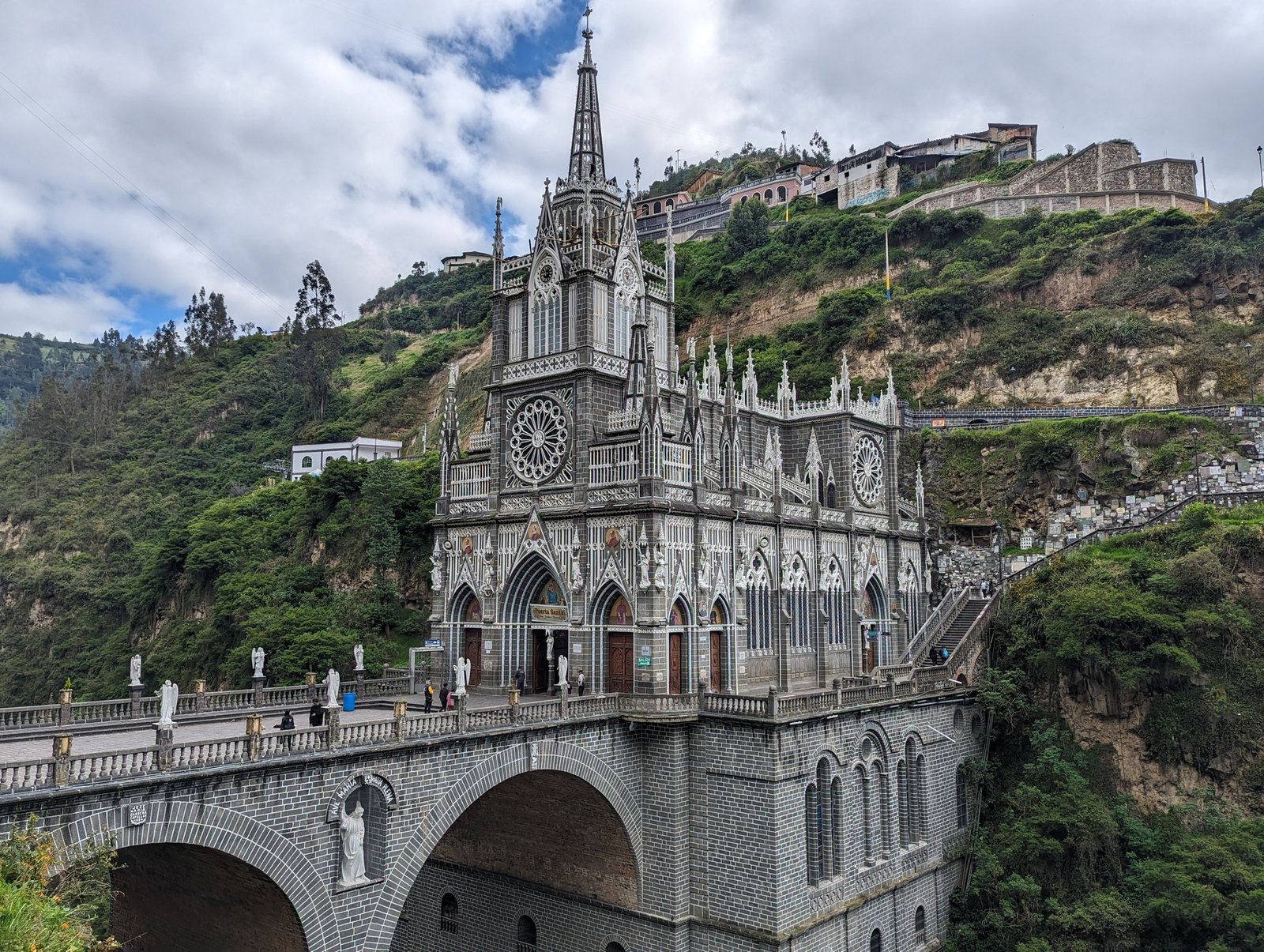
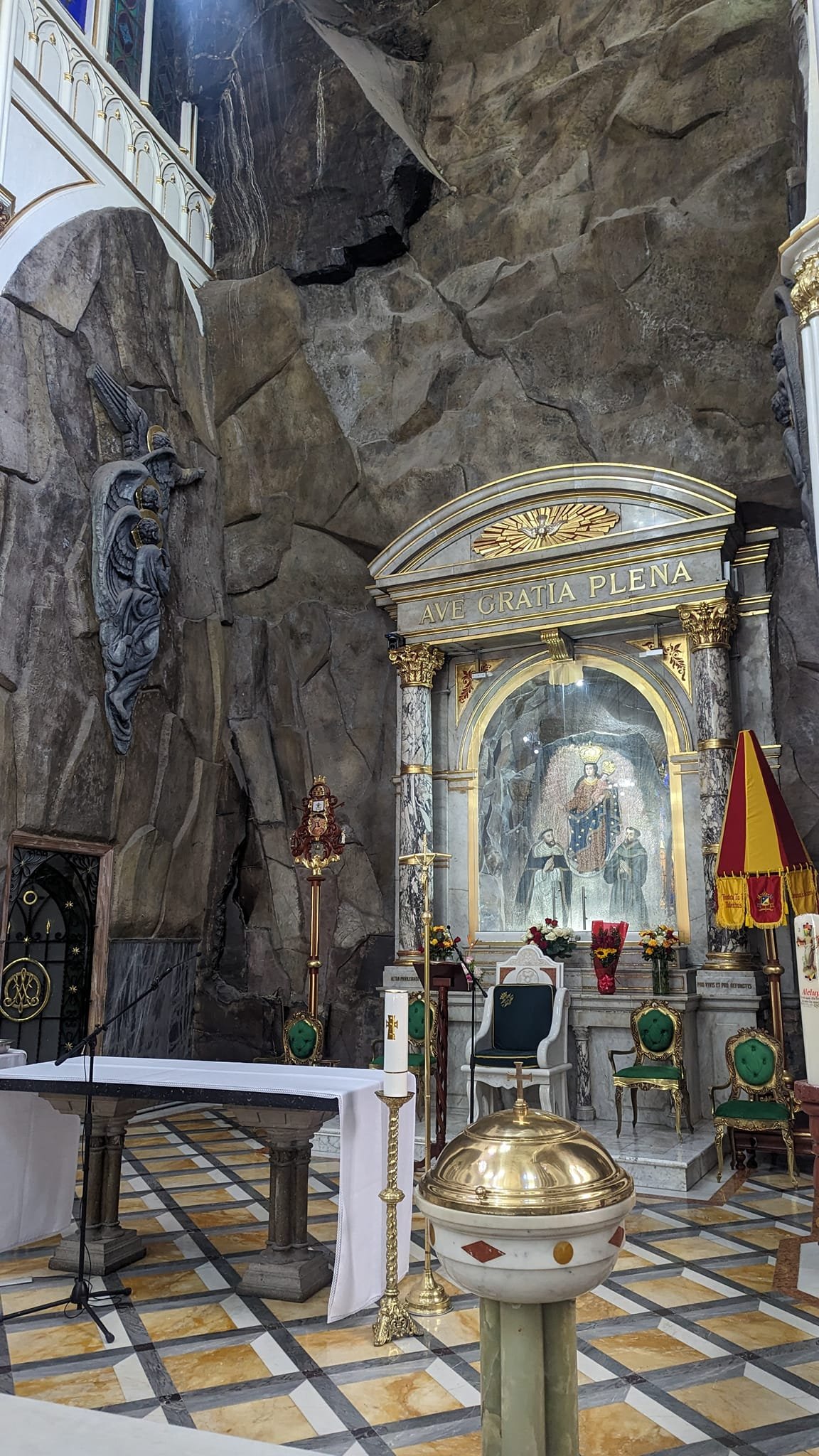
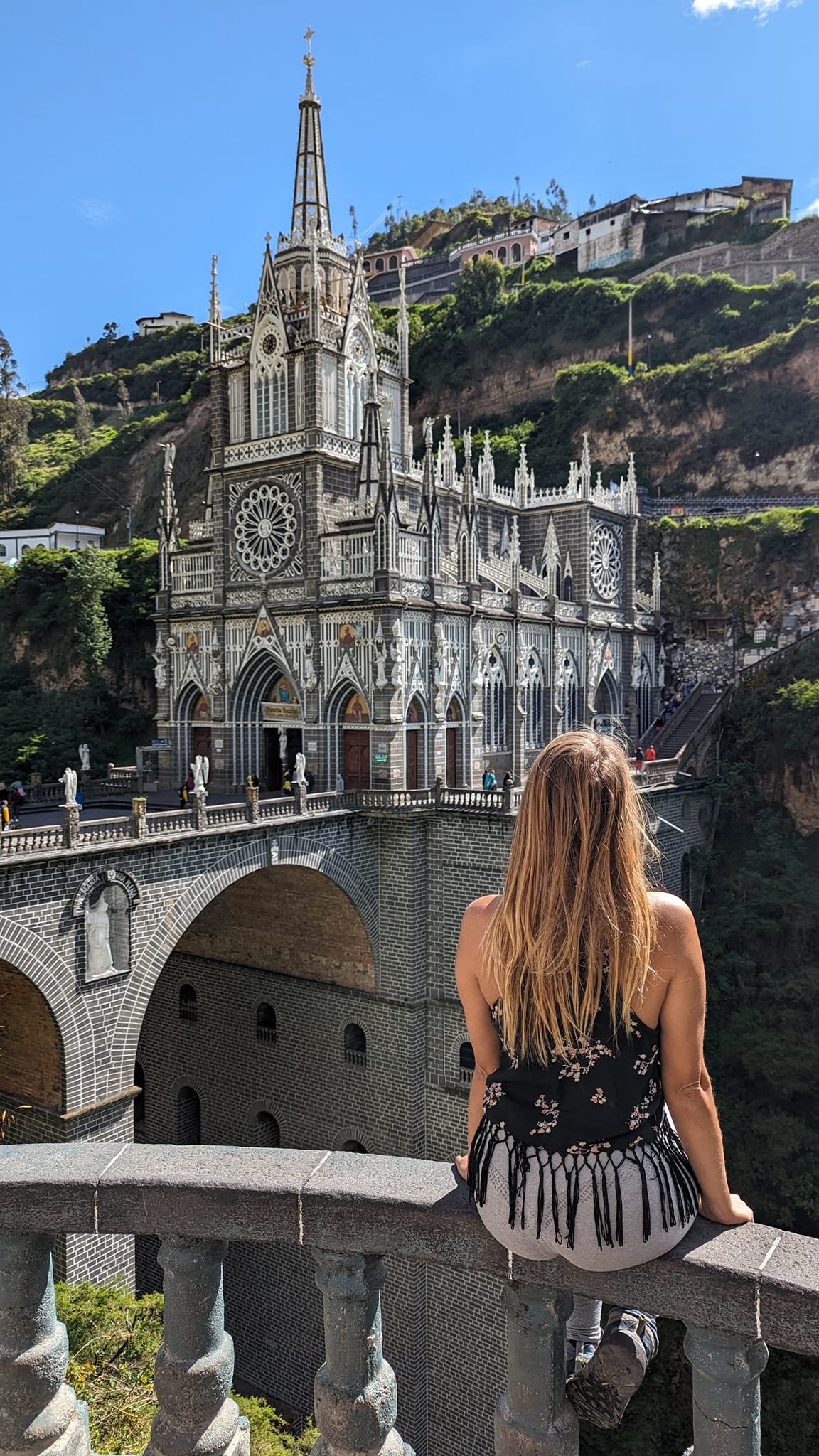
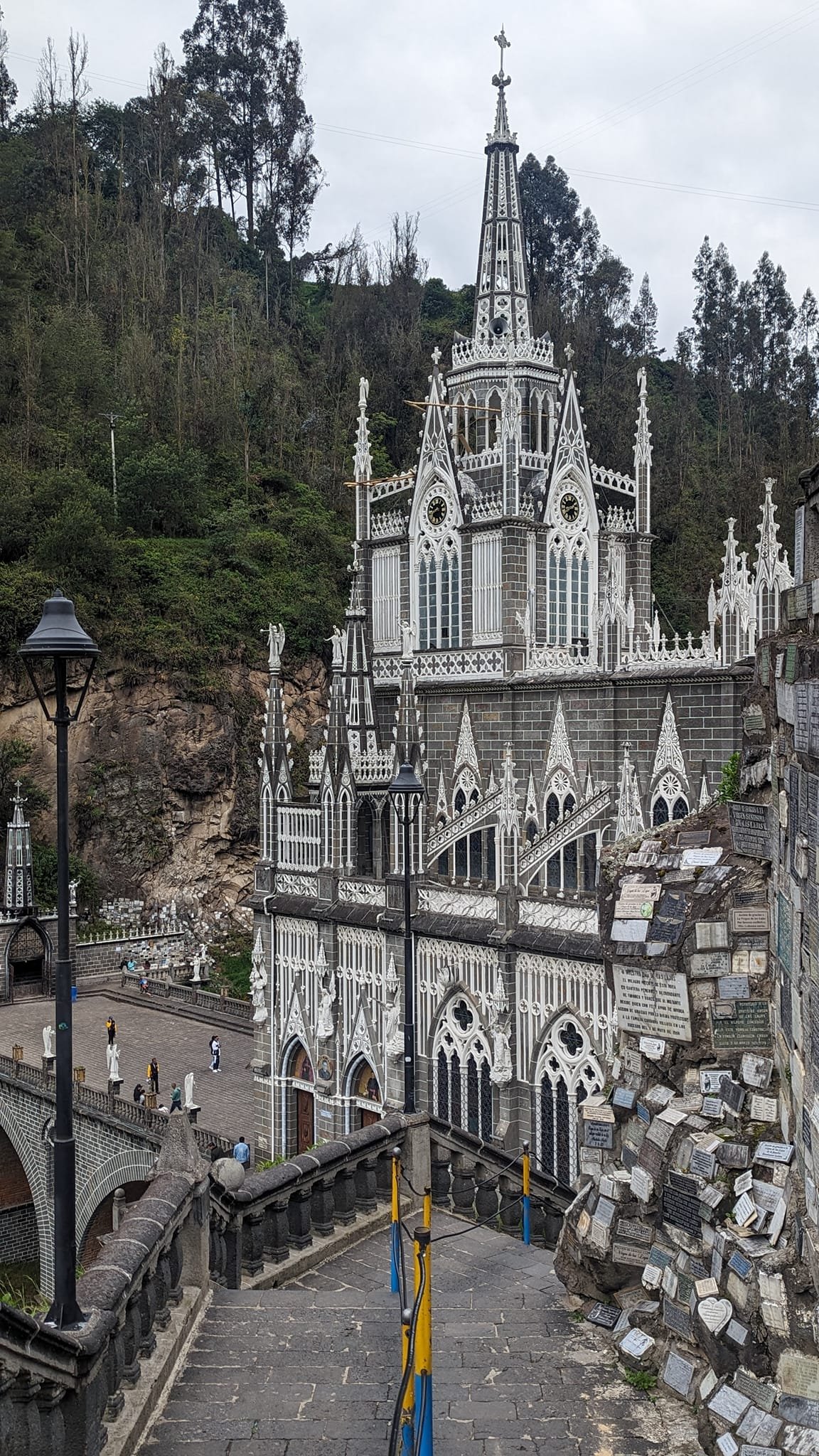
The neo-Gothic church stands on a bridge spanning the canyon of the Guáitara River and adjoins the rock face – a very distinctive place. You can see this well from below, from under the arch of the bridge.
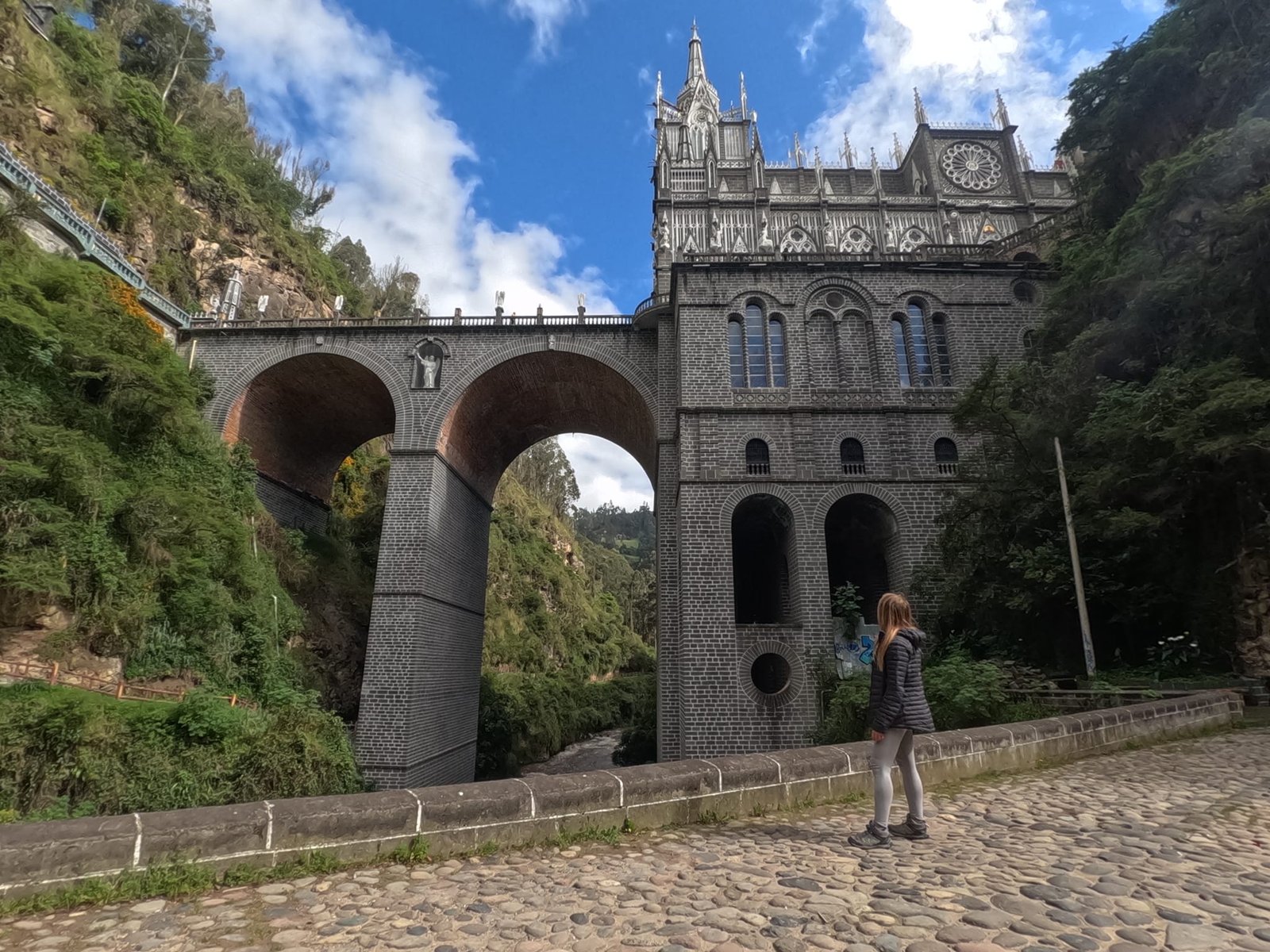
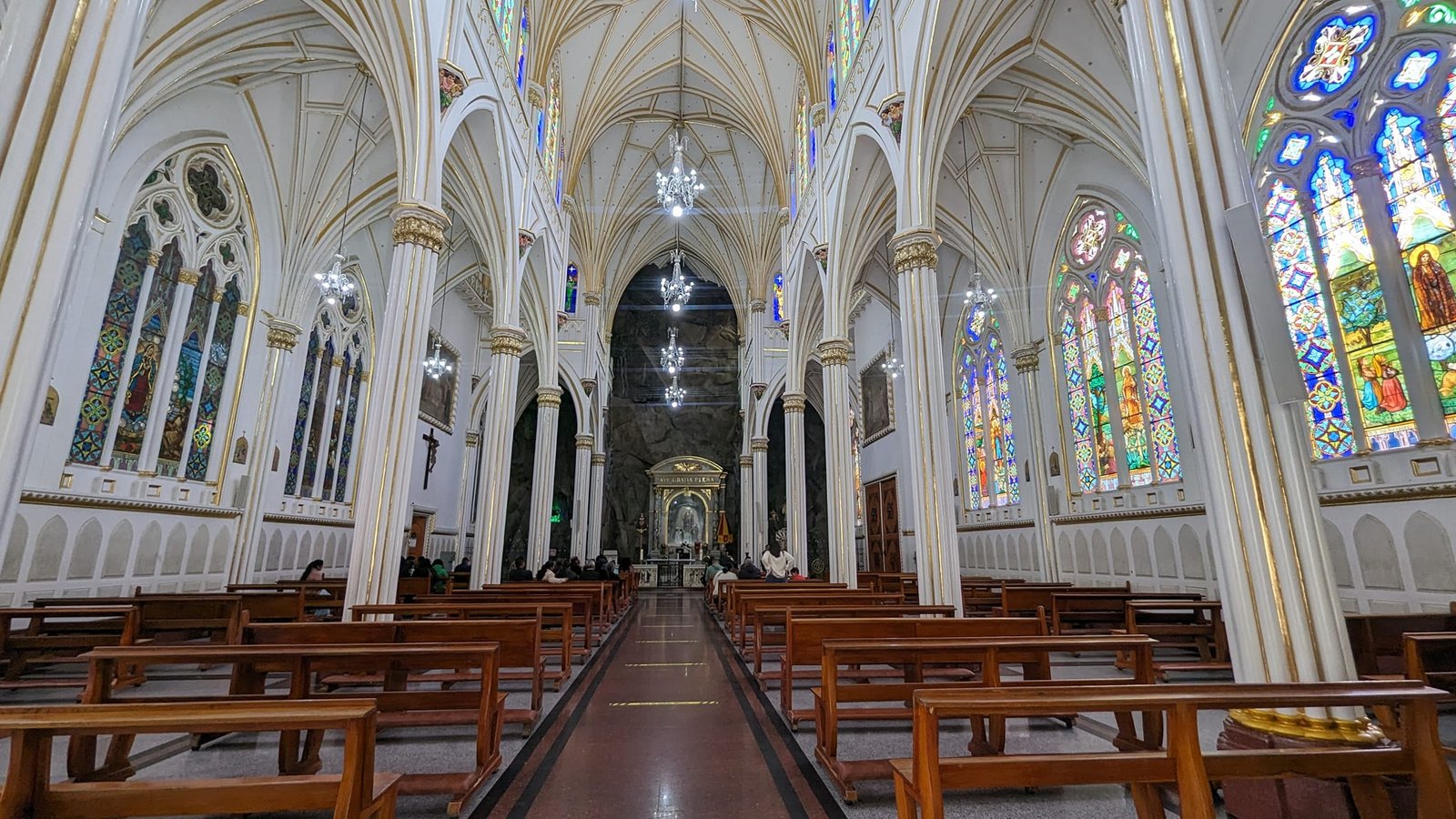
The rocks along the stairs leading to the sanctuary are covered with hundreds of votive plaques. The interior is bright, white and gold, and behind the high altar you can see the bare rock.
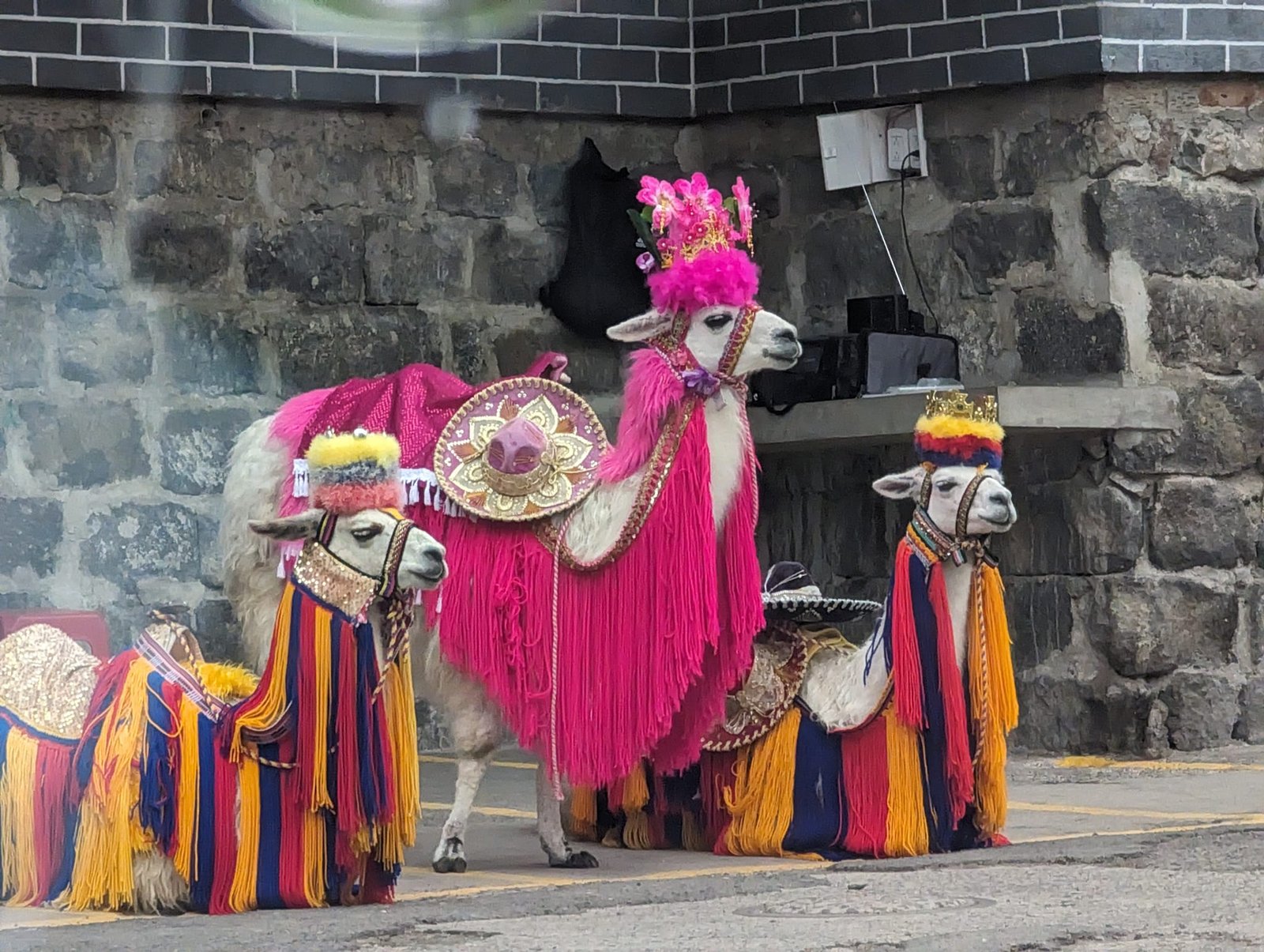
In front of the sanctuary there were colourfully decorated llamas waiting – an attraction for anyone keen on a souvenir photo.
Ipiales and the border with Ecuador
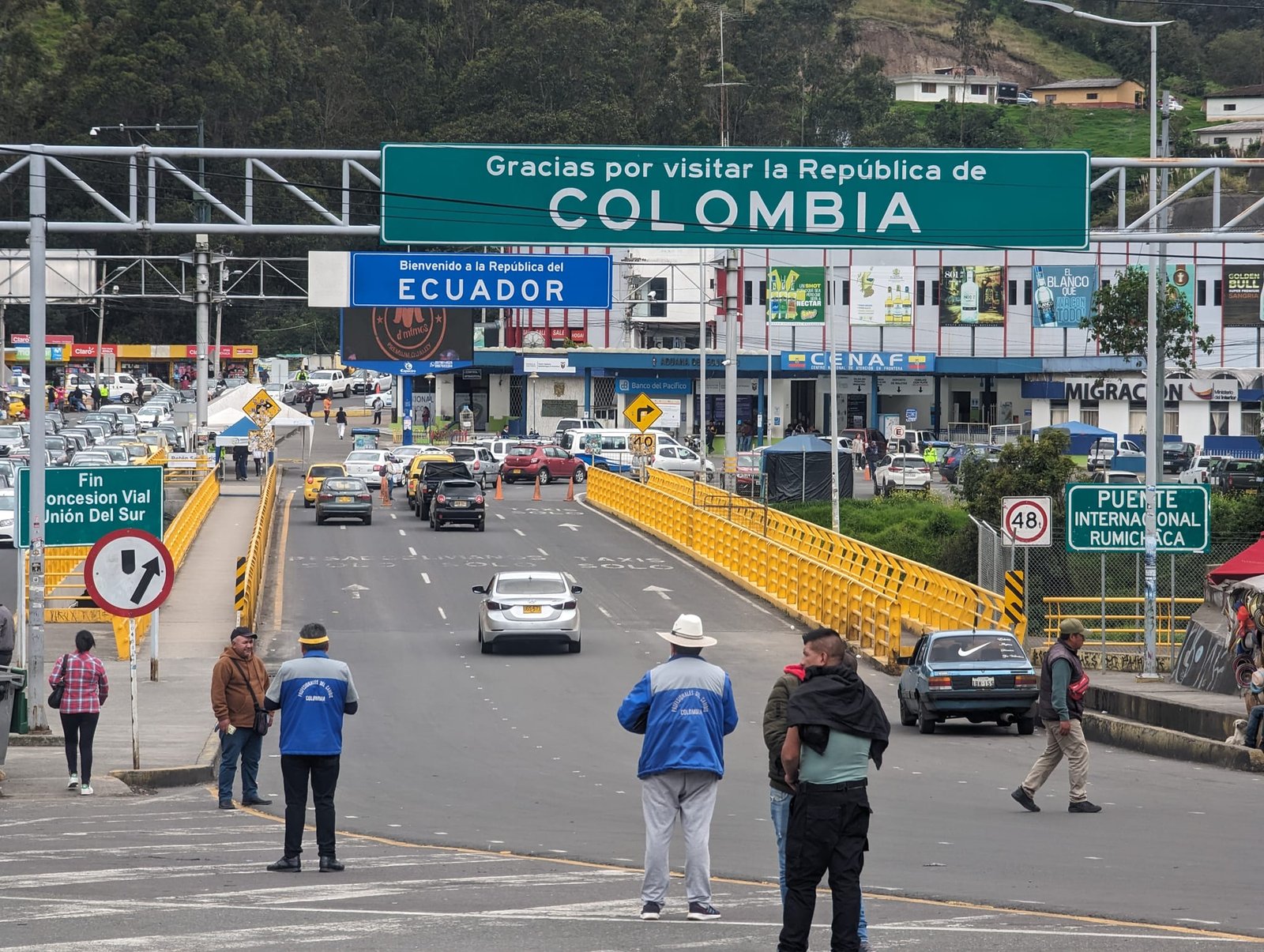
From Las Lajas we went back to Ipiales for our luggage, and that same day, 24 May, we crossed the border into Ecuador at the Rumichaca crossing. From then on we were discovering a new country.
It is worth knowing that in 2024 foreigners crossing Ecuador’s land border had to have a certificate of no criminal record. It is best to get one before you leave home and to check the current rules.
Practical information
- Comuna 13 – you can explore it on your own or with a guide; there are lots of tours. Stick to the main tourist streets – petty theft happens deeper in the district.
- Escalators – 384 m in six sections; they make it easier to reach the highest parts of Comuna 13.
- Metrocable – the cable cars are part of Medellín’s public transport and an extension of the metro lines, and a great viewpoint at the same time.
- Medellín city centre – the area around Plaza Botero is crowded, and homeless people and drug addicts also come there; we felt uneasy.
- El Peñón de Guatapé – about 2 hours by bus from Medellín, about 700 steps to the top, entry 25,000 COP (about €6, May 2024). Local agencies in Medellín also offer tours to Guatapé.
- Night buses – Medellín → Cali is about 400 km, Cali → Ipiales about 500 km. Colombia’s bus network pleasantly surprised us: the buses were decent, not rickety. During the day they were usually late, and at night they arrived much too early. Travelling on them is safe, and you do not need to worry about your luggage either.
- Ipiales and Las Lajas – you can leave your luggage at the left-luggage office at the bus station in Ipiales; shared transport runs to Las Lajas all the time.
- Border with Ecuador – the Rumichaca crossing near Ipiales. In 2024 foreigners crossing the land border had to have a certificate of no criminal record.
Summary
Our last days in Colombia were very intense – four days of sightseeing and two nights on buses. Comuna 13 showed us how much a place can change that not so long ago was one of the most dangerous in the city. Both the rock of El Peñón de Guatapé and the Las Lajas sanctuary, on the other hand, are places that pop up on the internet every now and then, although few people know where they actually are. Sometimes you stumble upon them by chance while planning a trip. Nothing bad happened to us in Colombia, and we recommend it with a clear conscience, as long as you travel sensibly.
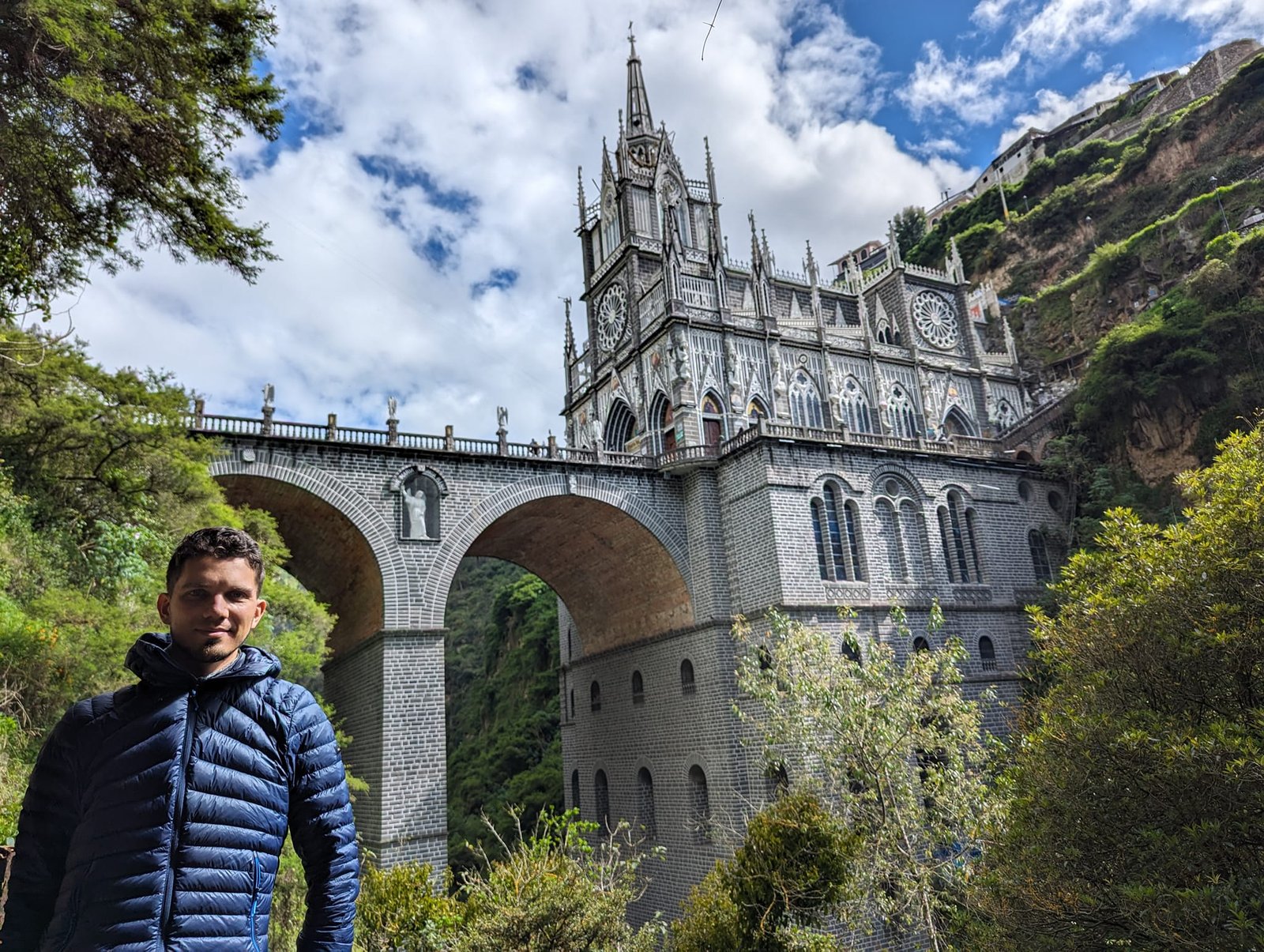
Photo gallery