In July 2017 the four of us – Michał, Wiktor, Patrycja (who joined us in Lviv) and I – set off for almost two weeks in Ukraine. We called the trip “Kierunek Ukraina” (Destination Ukraine): it turned into a series of YouTube videos and, in 2018, a talk at a travel festival that Patrycja and I prepared together. Detailed accounts of each stage are in separate posts – here I have put everything in a nutshell: the route day by day, the costs, how hitchhiking worked out, practical tips and the lessons we took away from the trip.
 0:47
Table of contents
- The plan and goals of the trip
- The route day by day
- The border and first impressions
- Lviv and a parachute jump
- Hitchhiking in Ukraine
- The Gorgany – where civilisation ends
- Kyiv – one evening on the Maidan
- Costs (2017 prices)
- Practical tips
- What this trip taught us
- Videos from the trip
The plan and goals of the trip
I had never been to the East before and expected a slightly different world. Our plans changed so many times that in the end we adopted a rule: why plan everything? At first, for example, we wanted to explore the Ukrainian part of the Bieszczady Mountains, but in the end the Ukrainian mountains we went to were the Gorgany. What we did have was a list of goals: the Polish Bieszczady, the Ukrainian mountains, a parachute jump, hitchhiking, exploring Lviv and Kyiv, getting to know life in Ukraine and checking how much truth there is in the stereotypes about how Ukrainians feel about Poles. Chernobyl was on the list too, but we dropped it – you can only enter the zone with a guide, on an organised tour (back then about 200 dollars), and that fitted neither our budget nor our route. We achieved all the other goals, although we saw Kyiv only partly – we had just one evening for it.
For the whole two weeks each of us had only a small backpack – we flew home from Kyiv.

The route day by day
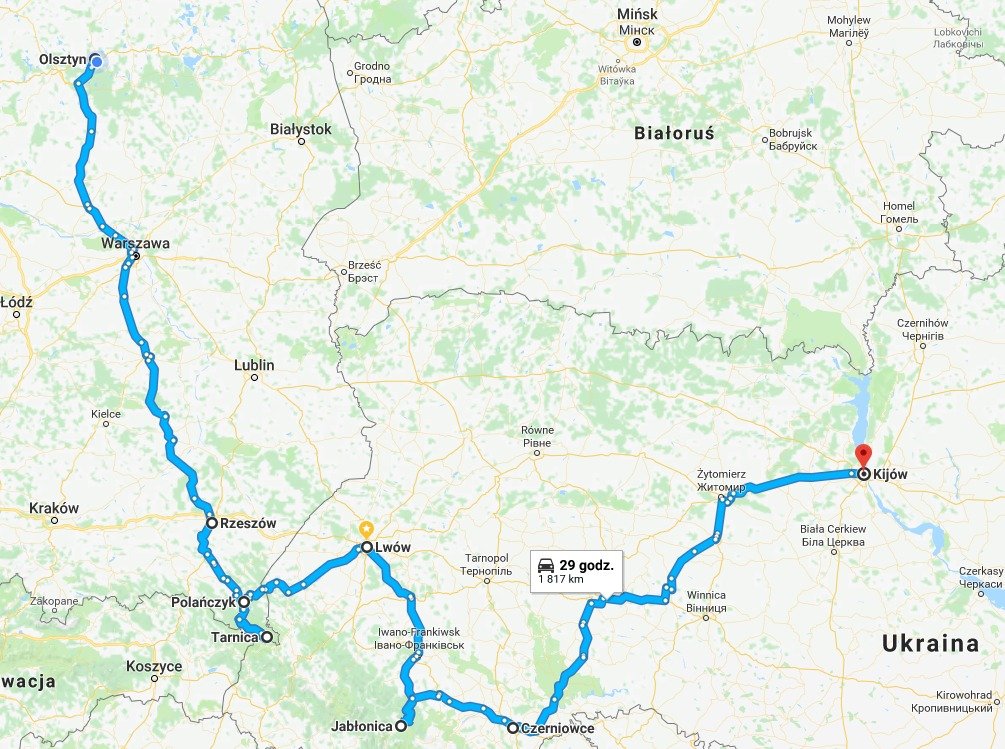
- 1–3 July – Poland: by train from Olsztyn to Rzeszów, where Michał – my friend from Olsztyn who was studying there – put us up, and in the evening we explored the town; then by bus to Polańczyk on Lake Solina and the Bieszczady – Połonina Caryńska with Kruhly Wierch (1297 m) and Tarnica (1346 m). More: Bieszczady – Połonina Caryńska and Tarnica.
- 4 July – the border: the crossing at Krościenko, then hitchhiking via Sambir to Lviv.
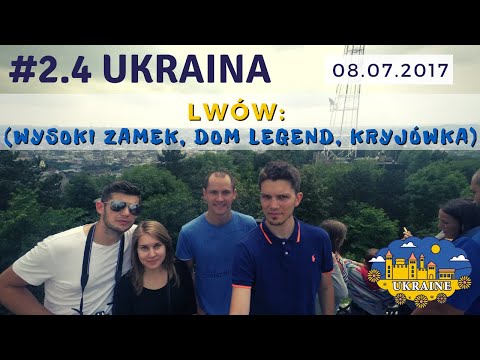
- 5–8 July – Lviv: the centre and the opera house, the Cemetery of the Lwów Eaglets, the open-air museum in Shevchenkivskyi Hai, the High Castle, the House of Legends and a few interesting bars and cafés. More: Hitchhiking + sightseeing in Lviv.
- 7 July – a parachute jump at the airfield in Tsuniv near Lviv. More: A parachute jump near Lviv.
- 9 July – Burshtyn: it was supposed to be just a stop by the lake on the way to the mountains, but it ended with a rock evening with Ukrainians we had just met (the square even heard “Teksański” by the Polish band Hey) and a night at one of their homes.
- 10–11 July – the Gorgany: hitchhiking via Ivano-Frankivsk and Yaremche to Yablunytsia, and a climb up Khomiak (1542 m).
- 12 July – Kyiv: by marshrutka minibuses to Chernivtsi, by BlaBlaCar to Kyiv and an evening on the Maidan. More about the Gorgany and Kyiv: The Gorgany + an evening in Kyiv.
- 13 July: a flight from Kyiv to Warsaw – at the airport we lost track of Wiktor, who had not managed to swap his SIM card back to his Polish one.
Overland we covered roughly 1800 km – from Olsztyn all the way to Kyiv (according to Google Maps that is about 29 hours of driving alone). Just two days before leaving I had come back from a bike trip to the Pyramid in Rapa, so July got off to a very busy start.
We spent our last day in Poland on Tarnica – from the highest peak of the Polish Bieszczady you can already see the mountains on the Ukrainian side, where we were heading the next day.

The border and first impressions
We got a lift to the border crossing at Krościenko, and from there on we were going to hitchhike. The border guards warned us that we had practically no chance of getting a lift at that spot and that it was not the safest idea – they advised us to watch our money and not to show off expensive gear. A dozen or so minutes later, though, a van stopped with two Ukrainians who were bringing a fridge and a microwave from Poland and sorting out a tax refund at the border. Despite the poor exchange rate of the hryvnia, it still pays off for them to buy such things in Poland – most electronics in Ukraine are imported from Poland anyway, and this way they avoid customs duty. Watch out around the crossing itself: a huge amount of Sosnowsky’s hogweed grows there, and you must not touch it.

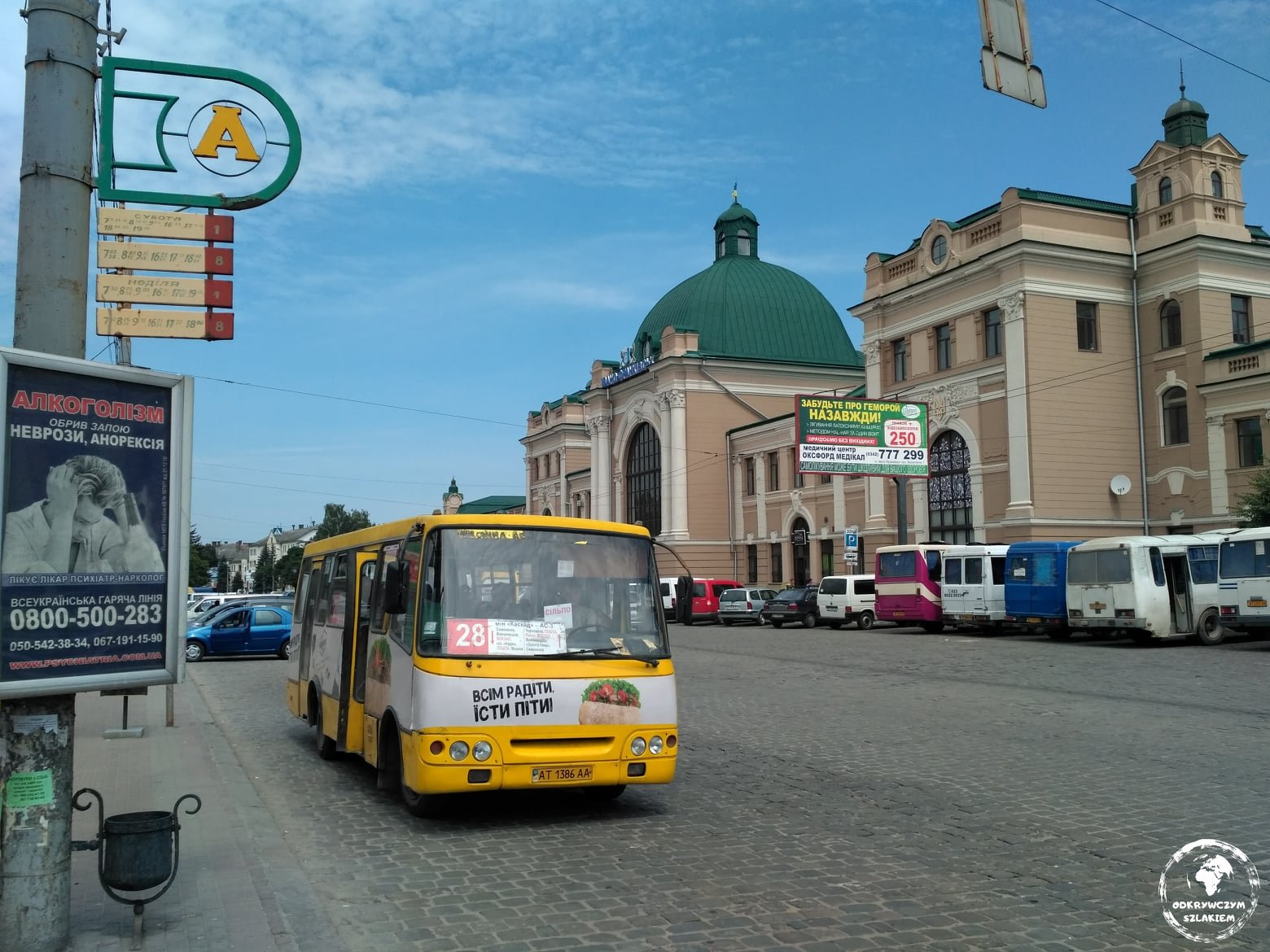
Our first impressions on the Ukrainian side were terrible roads, beautiful landscapes and Orthodox churches, as well as Polish inscriptions that can still be spotted on old buildings.
In the west of the country you see monuments and flags referring to the UPA (the Ukrainian Insurgent Army) at every turn, which at first gave us mixed feelings. Conversations with Ukrainians showed, however, that they do not link this with hostility towards Poles – if anything, they see us as “older brothers”, and more than once we heard that it would be great if Ukraine were like Poland. Most often we met with huge curiosity and warmth; especially in the countryside we had the impression that we were a bigger attraction for the locals than they were for us.
Lviv and a parachute jump
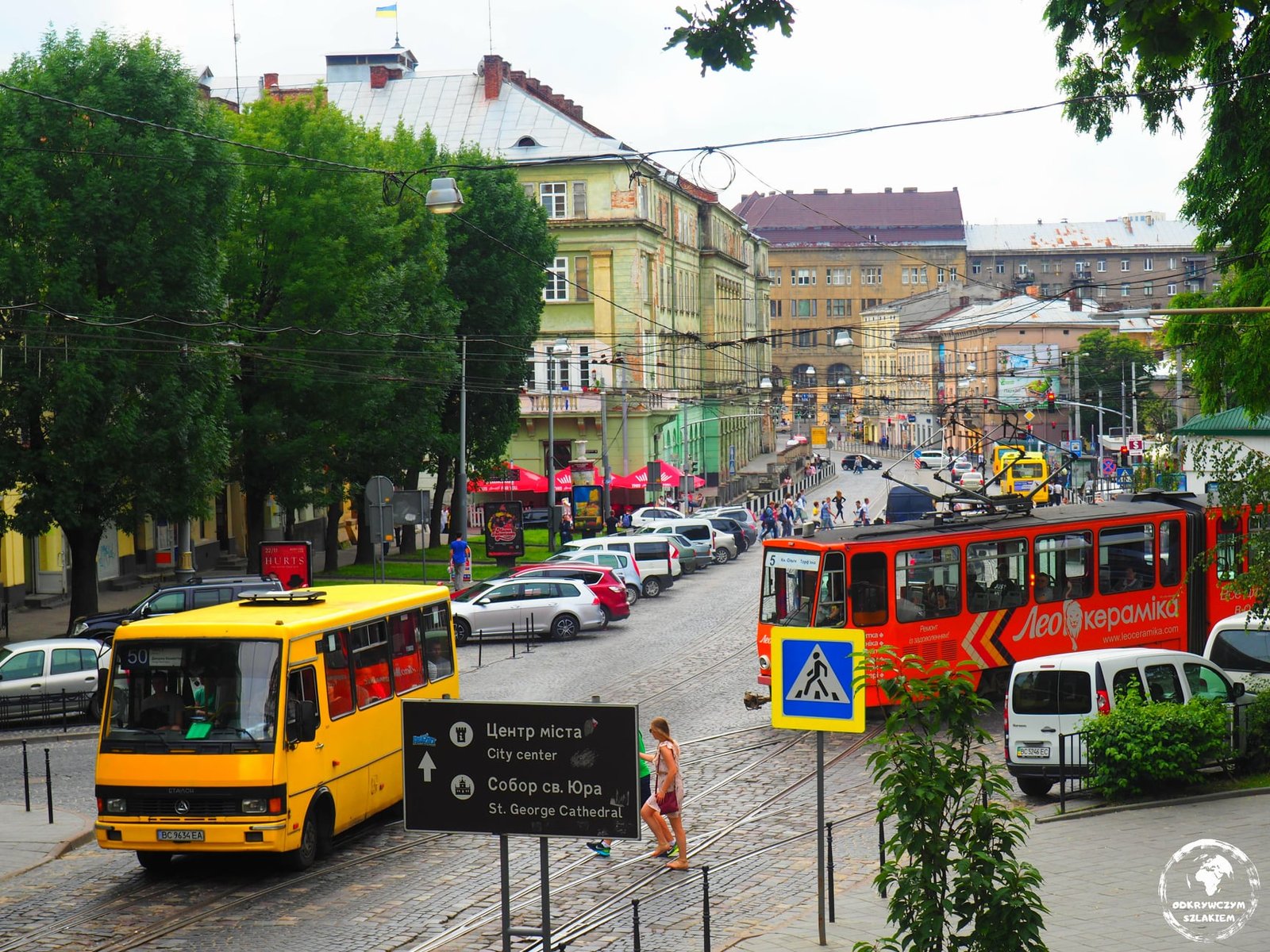
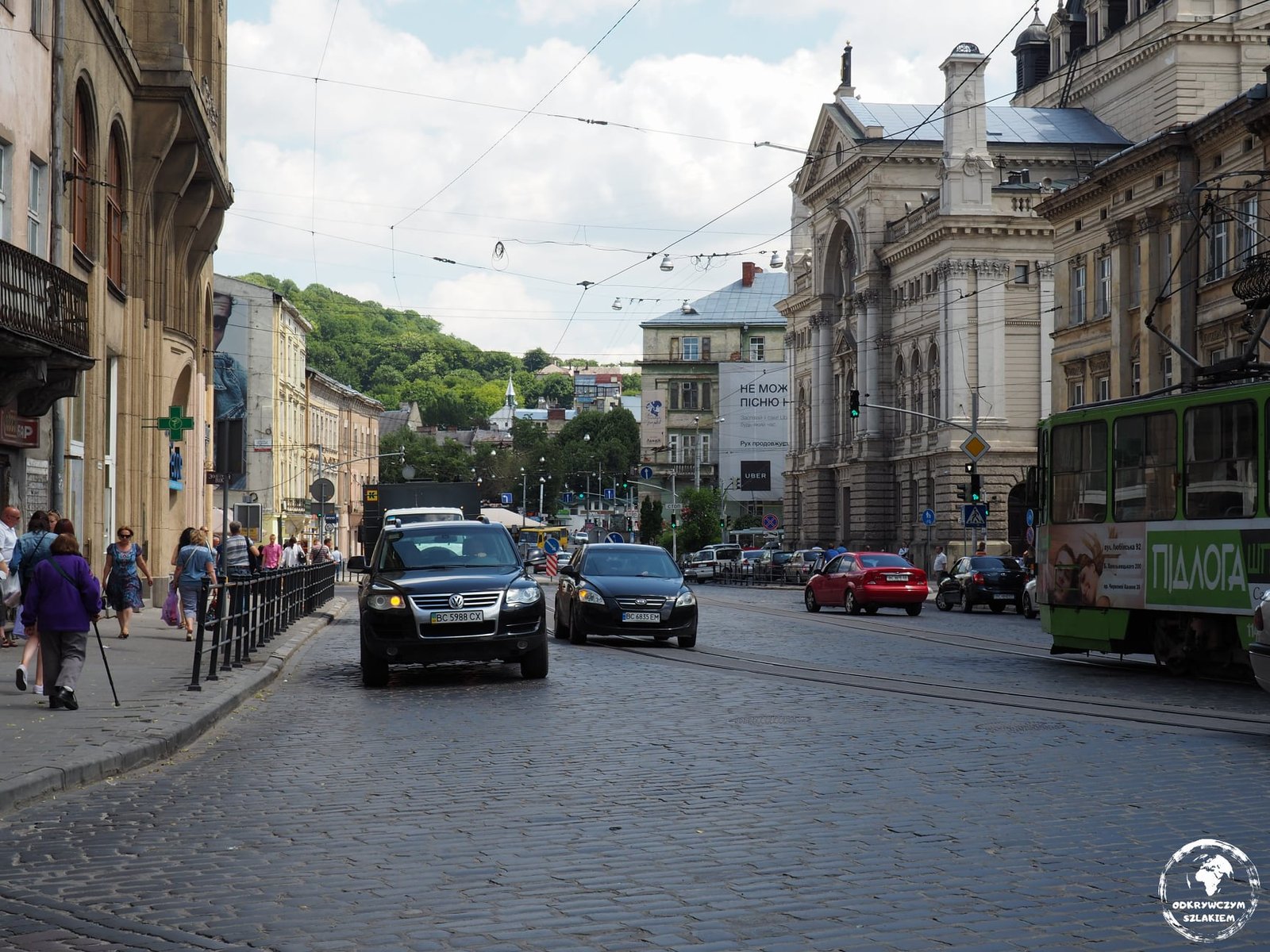
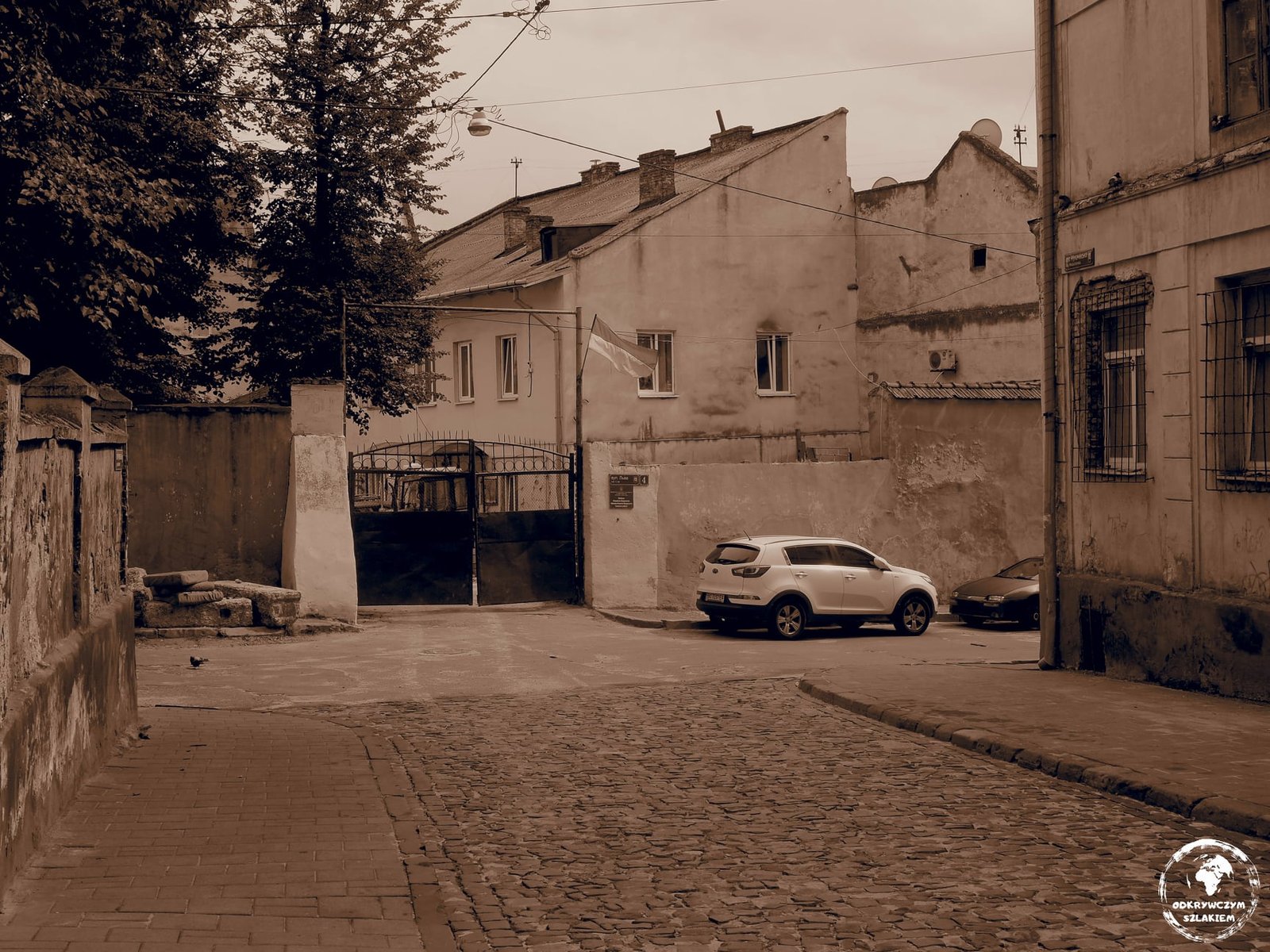
Lviv is stunning, with a huge old town and beautiful tenement houses, although many of them look as if nobody looks after them. On the streets the law of the stronger seems to rule, and buses can be packed to bursting – so much so that the money for a ticket is passed from hand to hand all the way to the driver. And it never went missing.
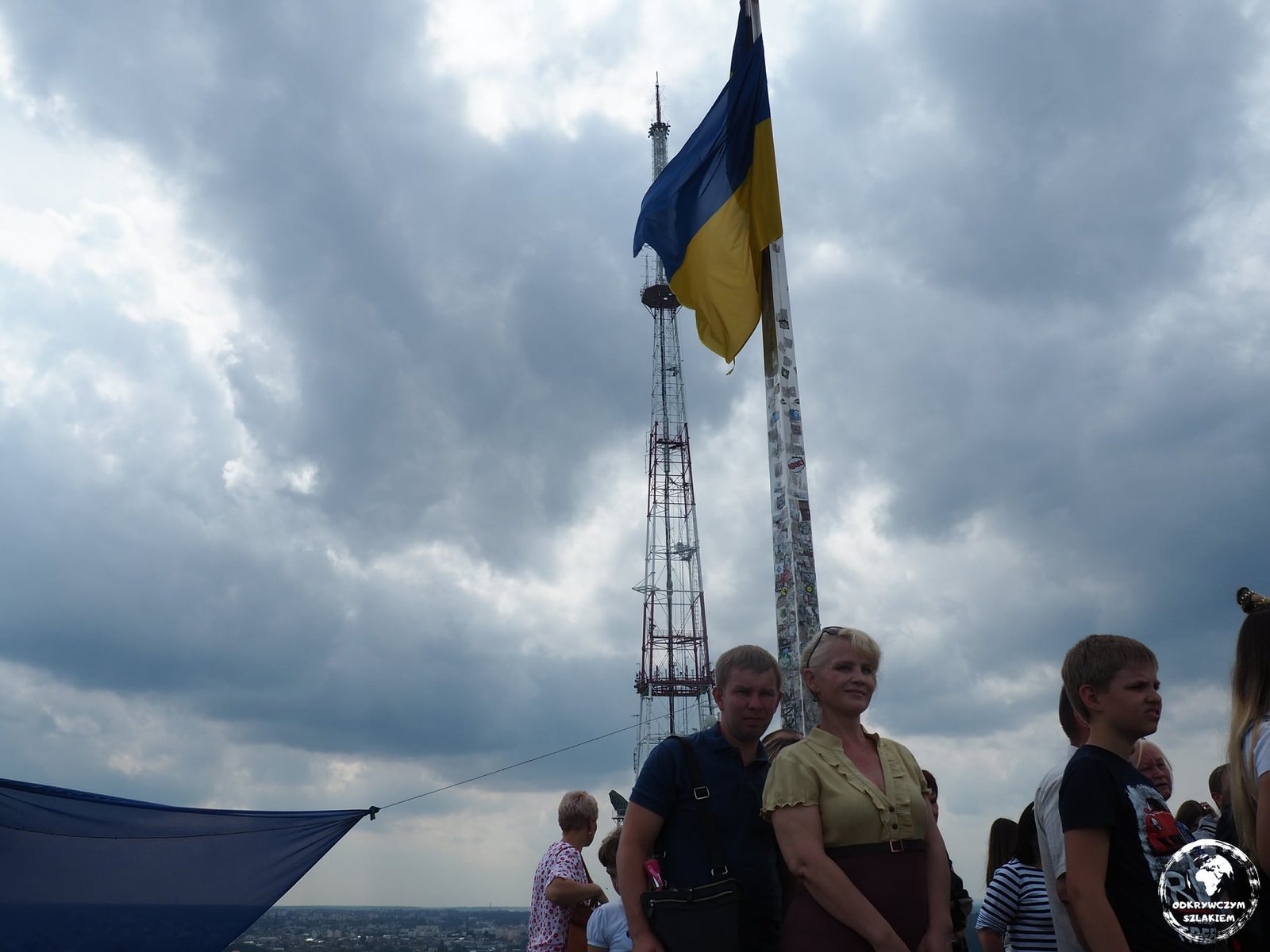
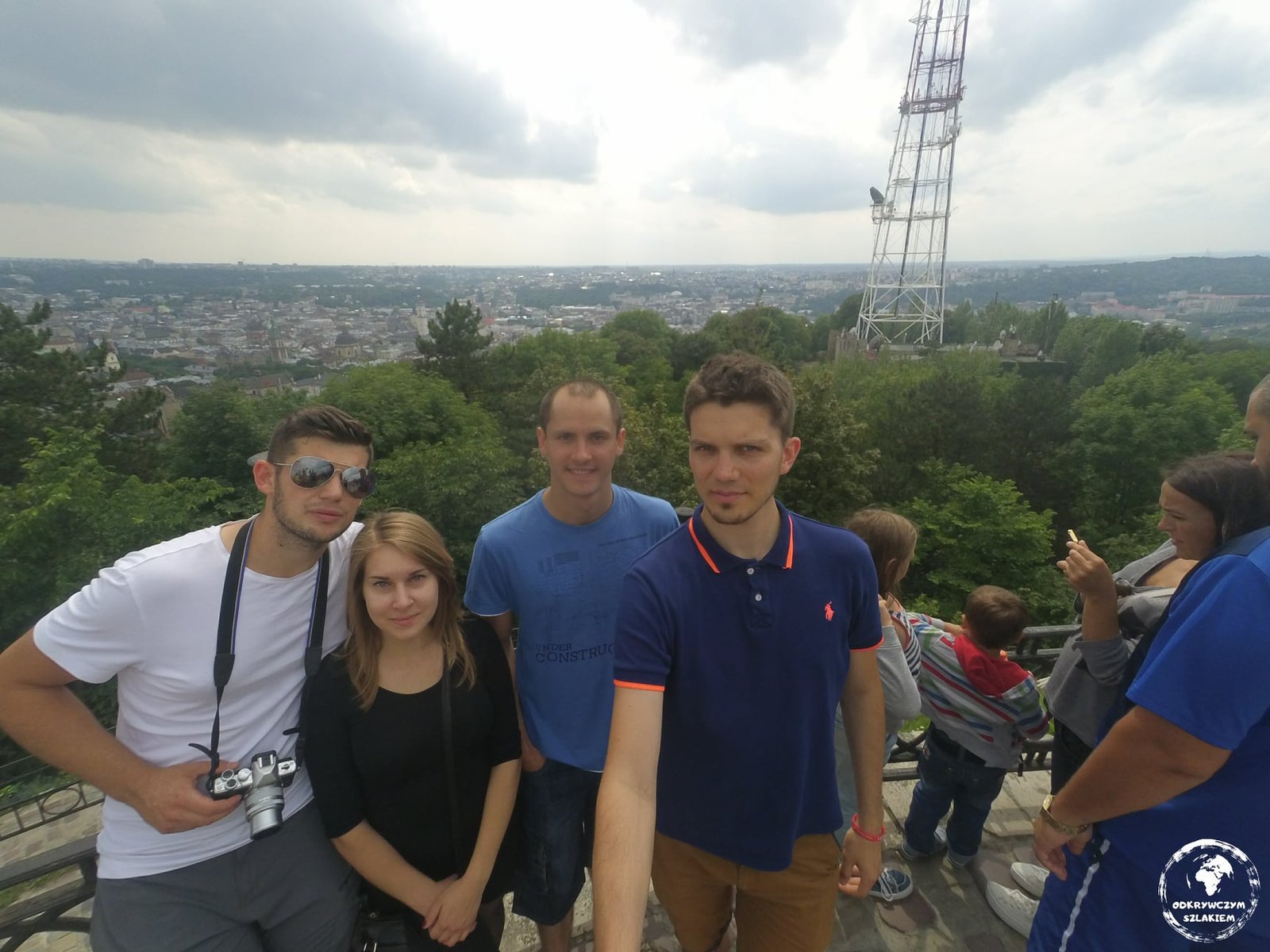
The best view of the city is from the High Castle – a hill where a royal castle stood for several centuries and where today rises the Union of Lublin Mound (413 m above sea level), heaped up in the 19th century.
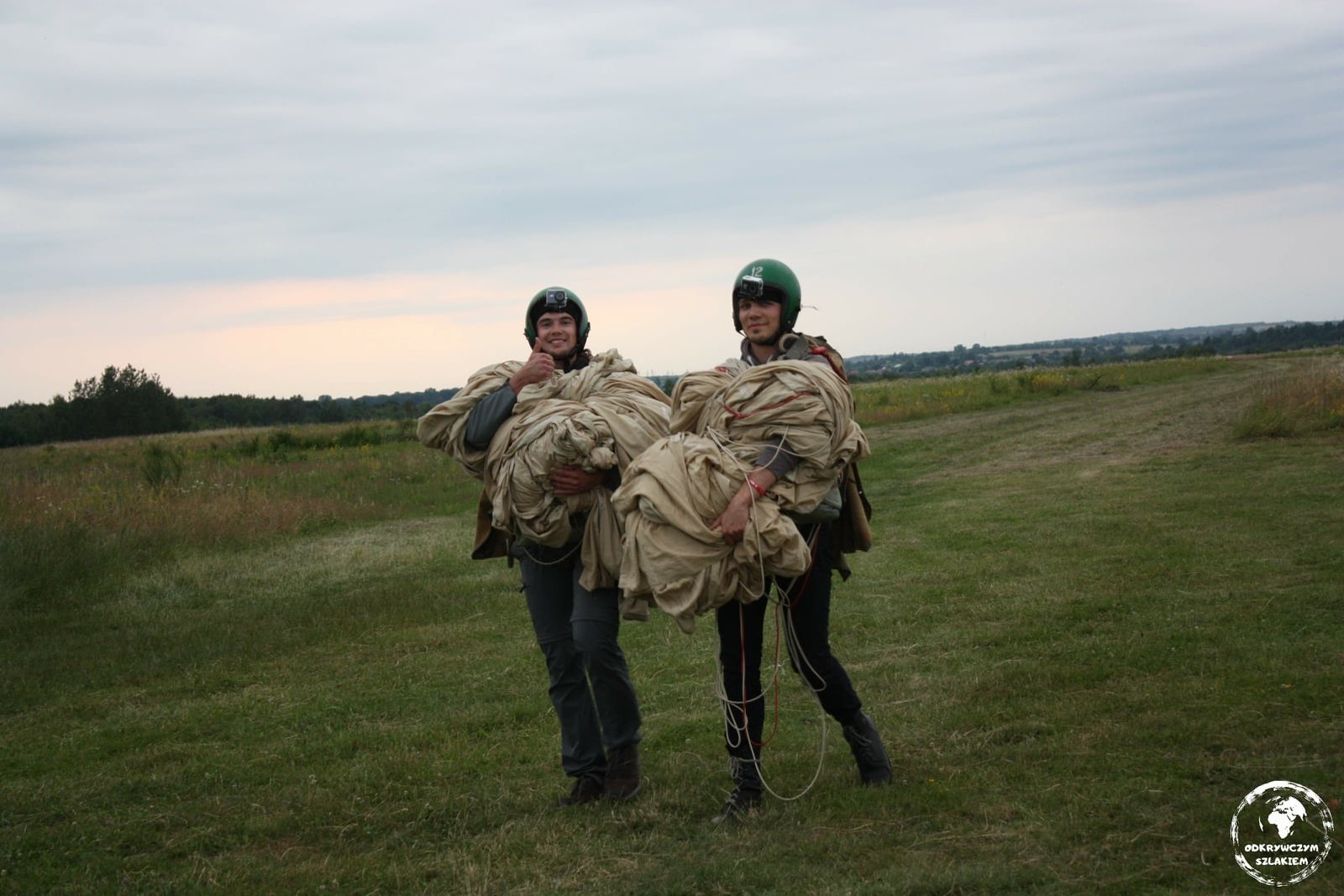
For me the highlight of the whole trip was the parachute jump. In Poland a tandem jump with an instructor cost about €185 at the time, while near Lviv the whole day – with transport, training and a certificate – cost us about €30. We jumped on our own, from about 800 m, using the military system: the parachute opens automatically after 2–3 seconds. The training was in Ukrainian, but Ukrainian is similar enough to Polish that we understood the most important things, and we practised the landing until we got it right anyway.
Hitchhiking in Ukraine
Hitchhiking was one of the goals of the trip and it worked better than we expected – even though most Ukrainians are not familiar with the idea. People regularly came up to us to show us the way to the nearest bus stop or station, and marshrutka drivers looked at us as if we were some kind of phenomenon. A few times someone offered us a paid ride, and when we said no, they looked at us as if we were weirdos and drove on. On the other hand, many drivers – probably out of curiosity – took all four of us at once; I don’t think anyone in Poland would so readily pick up four people with backpacks. Sometimes, though, we had to split into two groups.
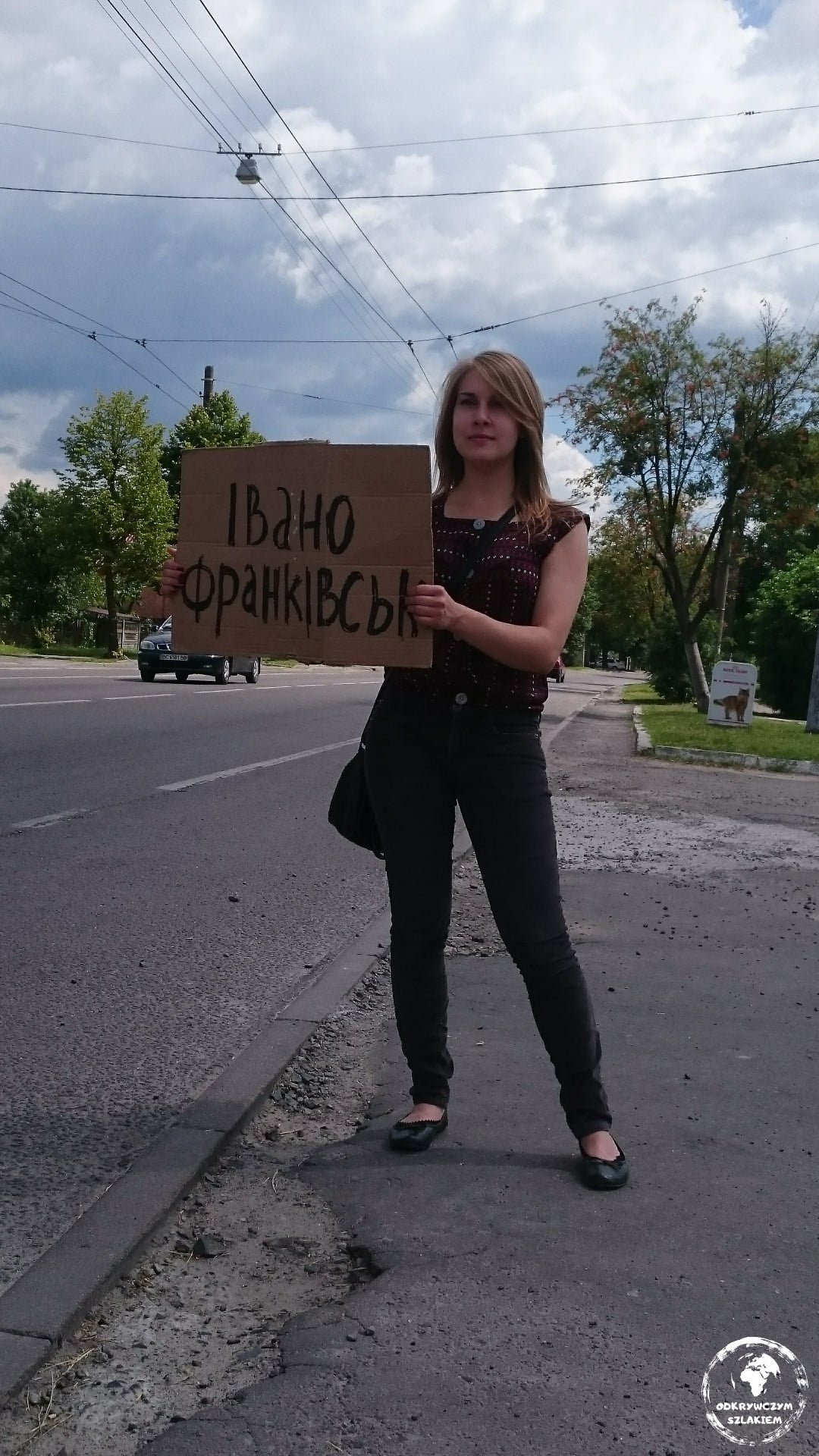
From Sambir to Lviv we waited about half an hour, and the driver took us right to the door of our apartment. From Burshtyn to Ivano-Frankivsk all four of us went in one car, then by bus to the road out of town and again by thumb towards Yaremche. There the first car that stopped had only two free seats – Patrycja and Wiktor took it, while Michał and I, after a long wait, got on a marshrutka. When nobody stopped for a long time, a marshrutka was the best option – cheap transport that is everywhere, though not the most comfortable.
The Gorgany – where civilisation ends
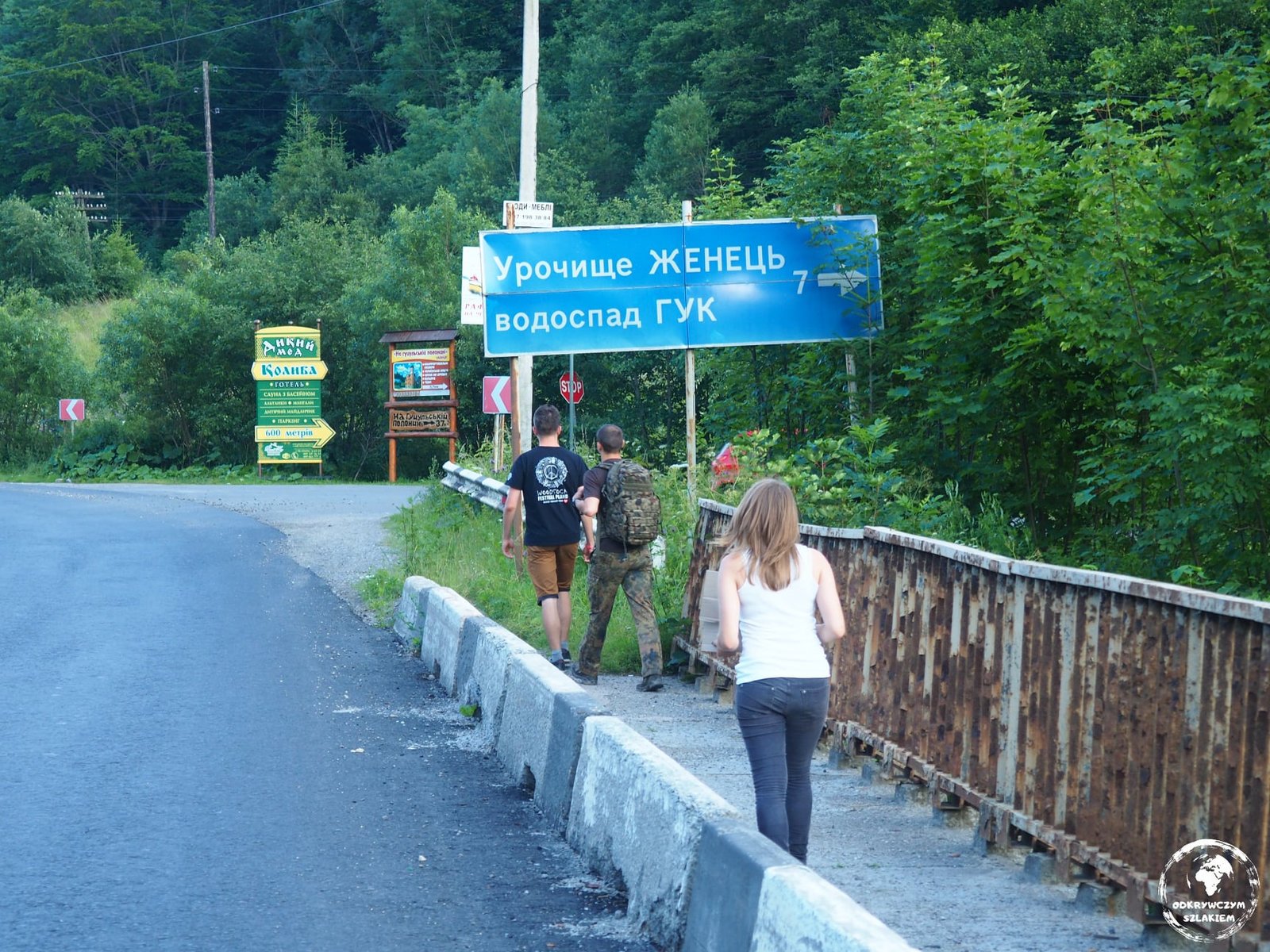
Yablunytsia is one of the last villages in the Gorgany with electricity and running water – beyond it, civilisation ends. A night’s stay cost about €3.50, and in the bar next door the landlady cooked with home-grown produce and brewed tea from herbs she had gathered herself. In the area we came across pre-war border posts – a reminder of the times when the Polish border ran here.
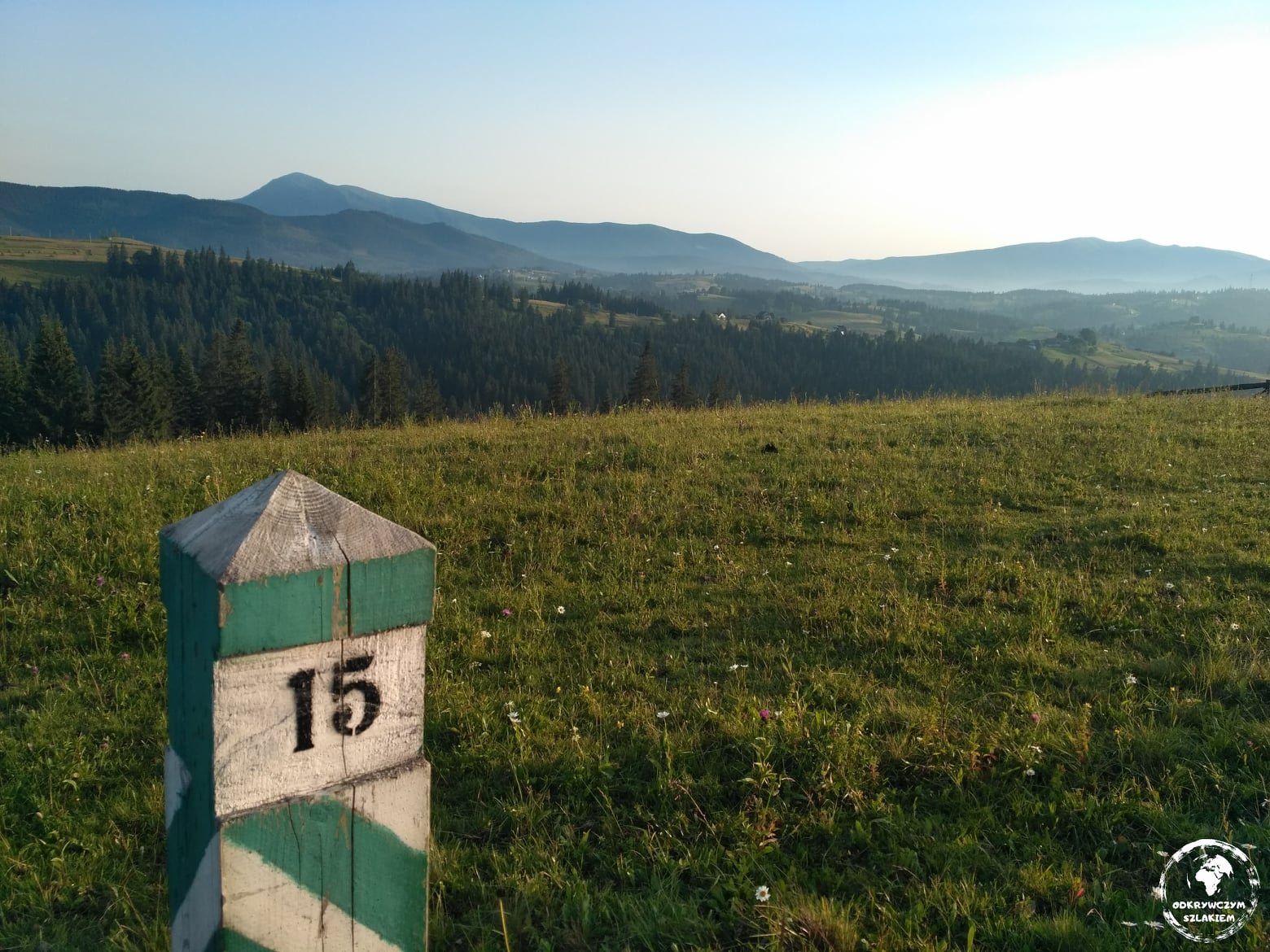
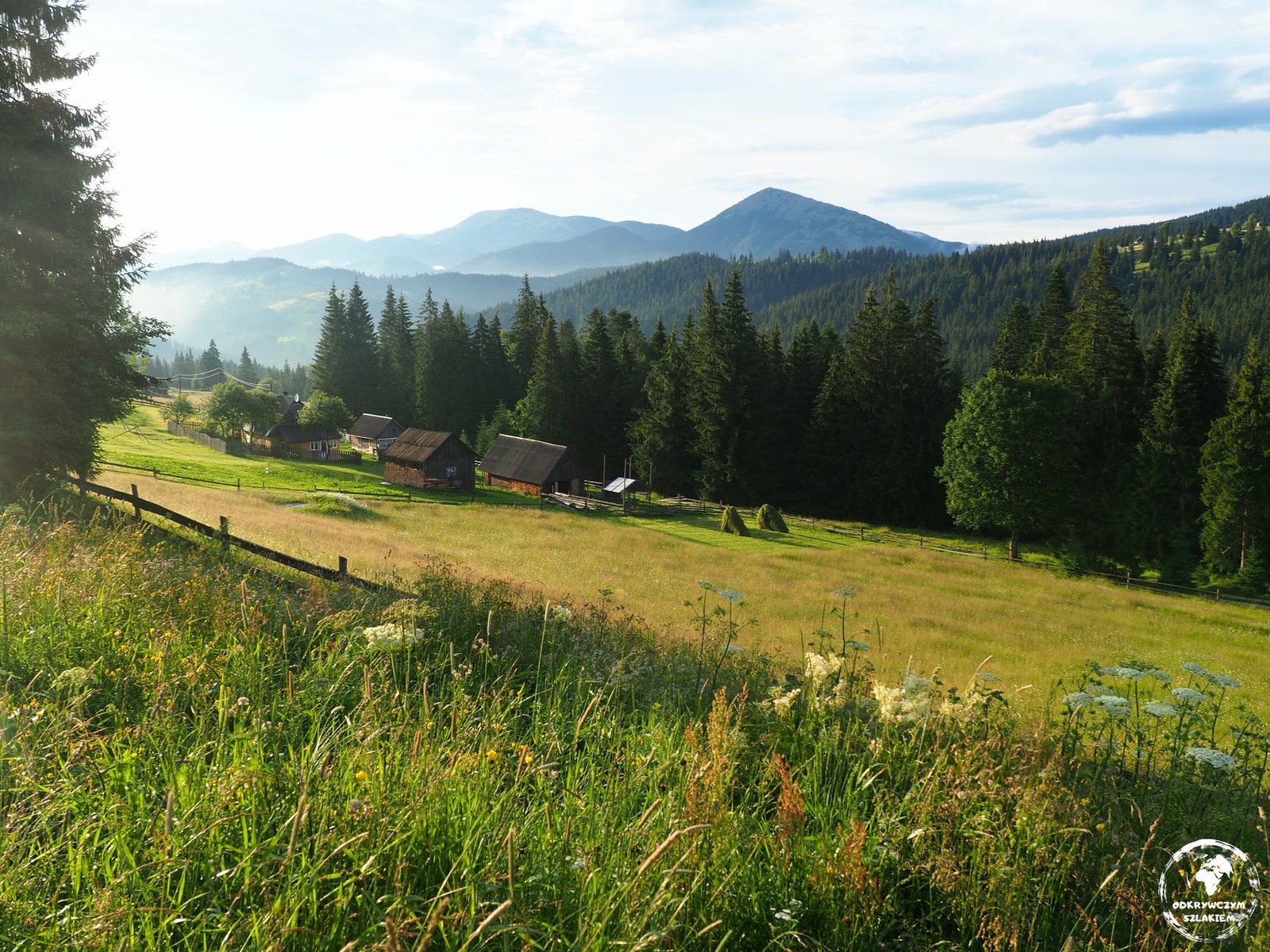
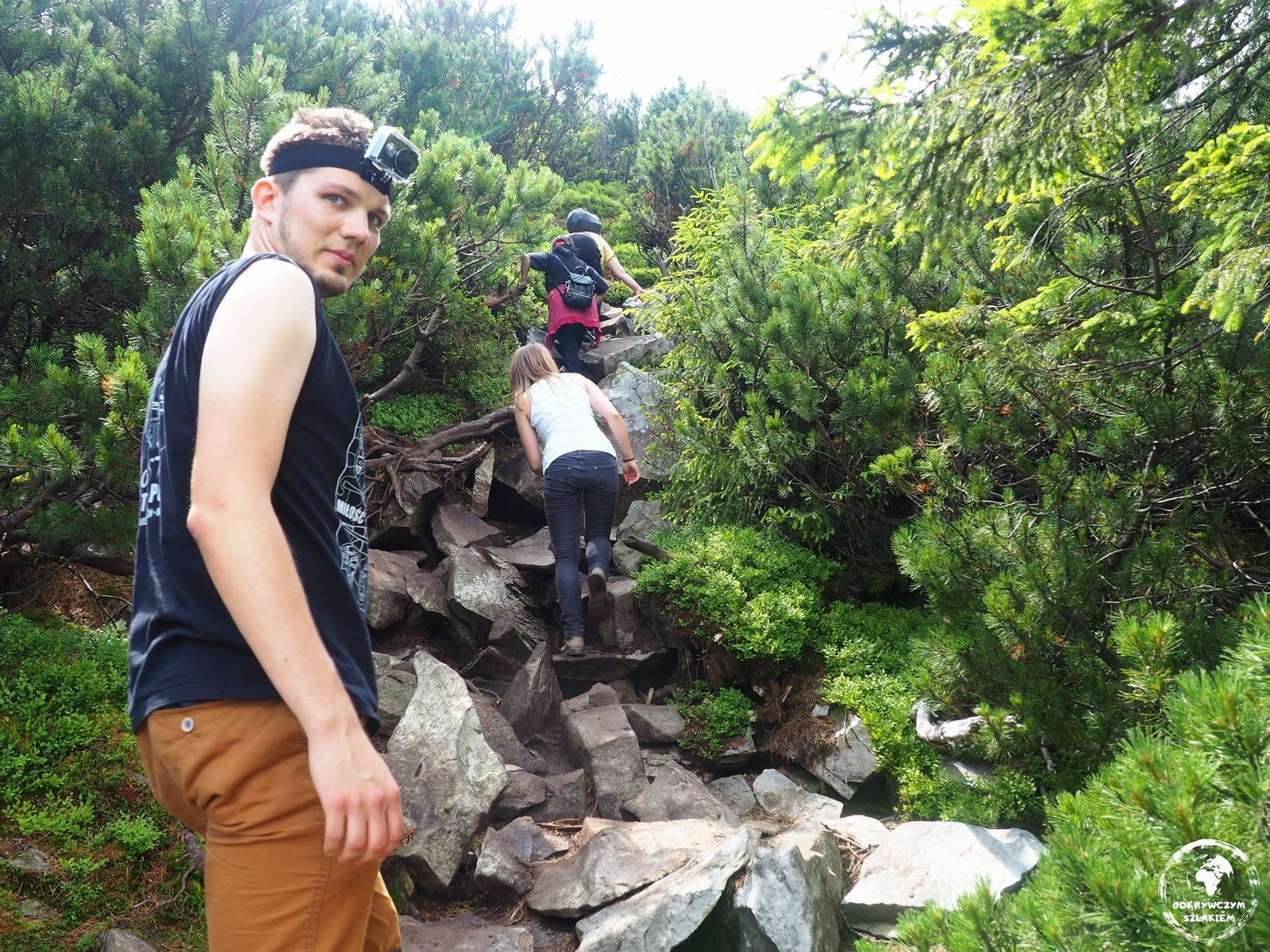
Freshly marked trails led up Khomiak (1542 m) – through forests, rock fields and long tunnels in the dwarf mountain pine. Trail entry cost students less than €0.50. Bear in mind that there were no medical services of any kind in the area, and a map could be bought in Yaremche at best – not on the spot.
Kyiv – one evening on the Maidan
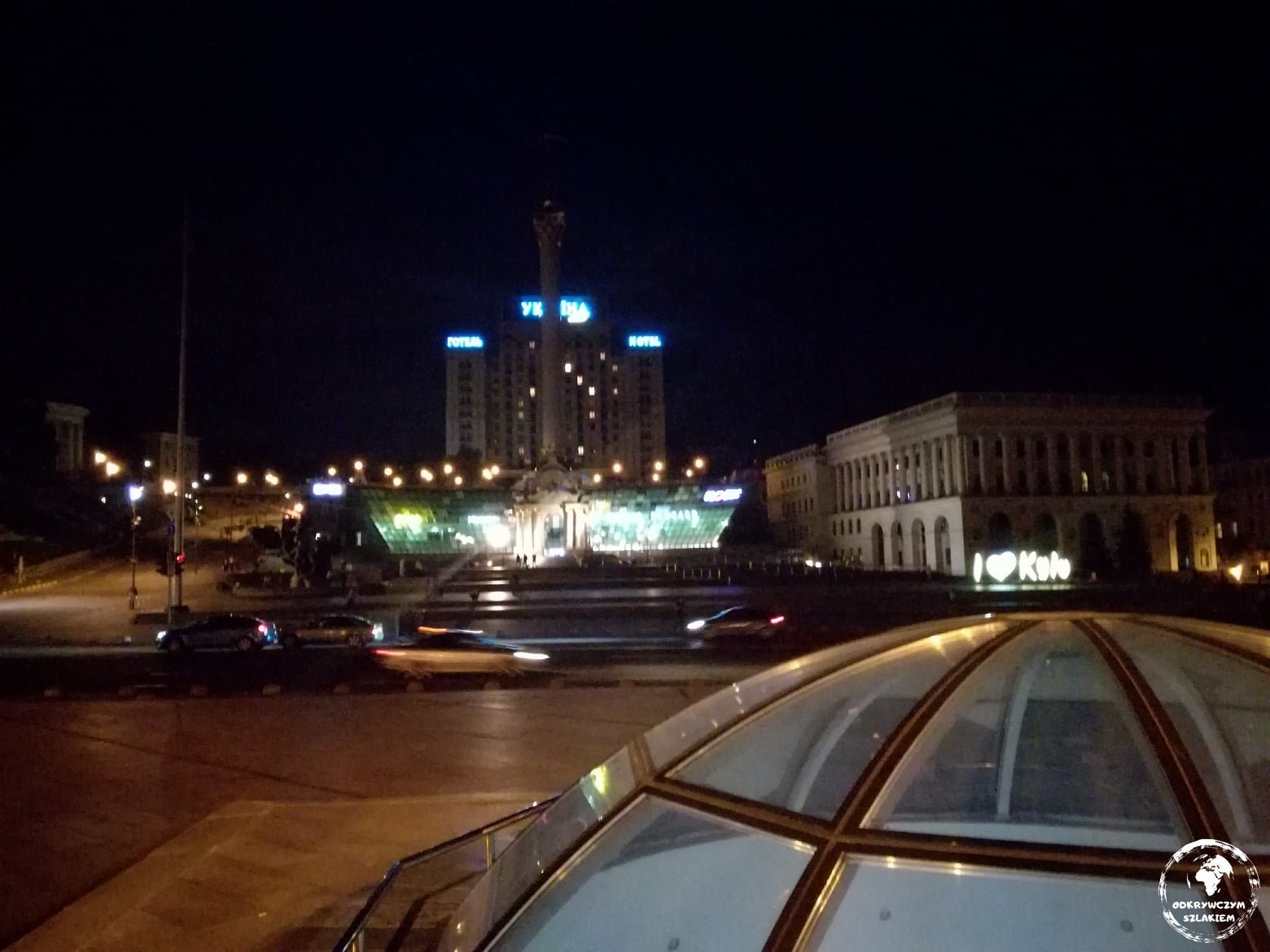
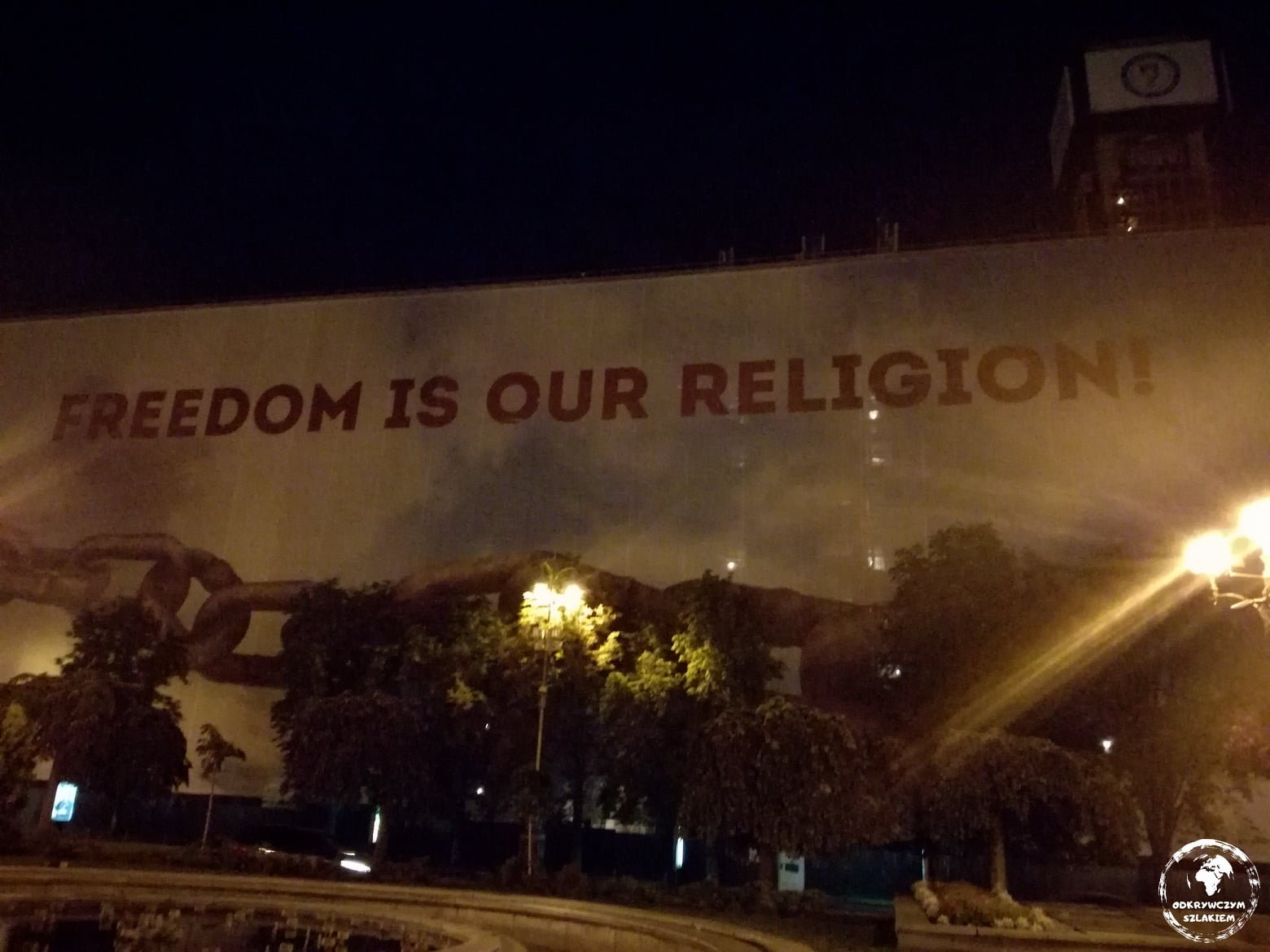
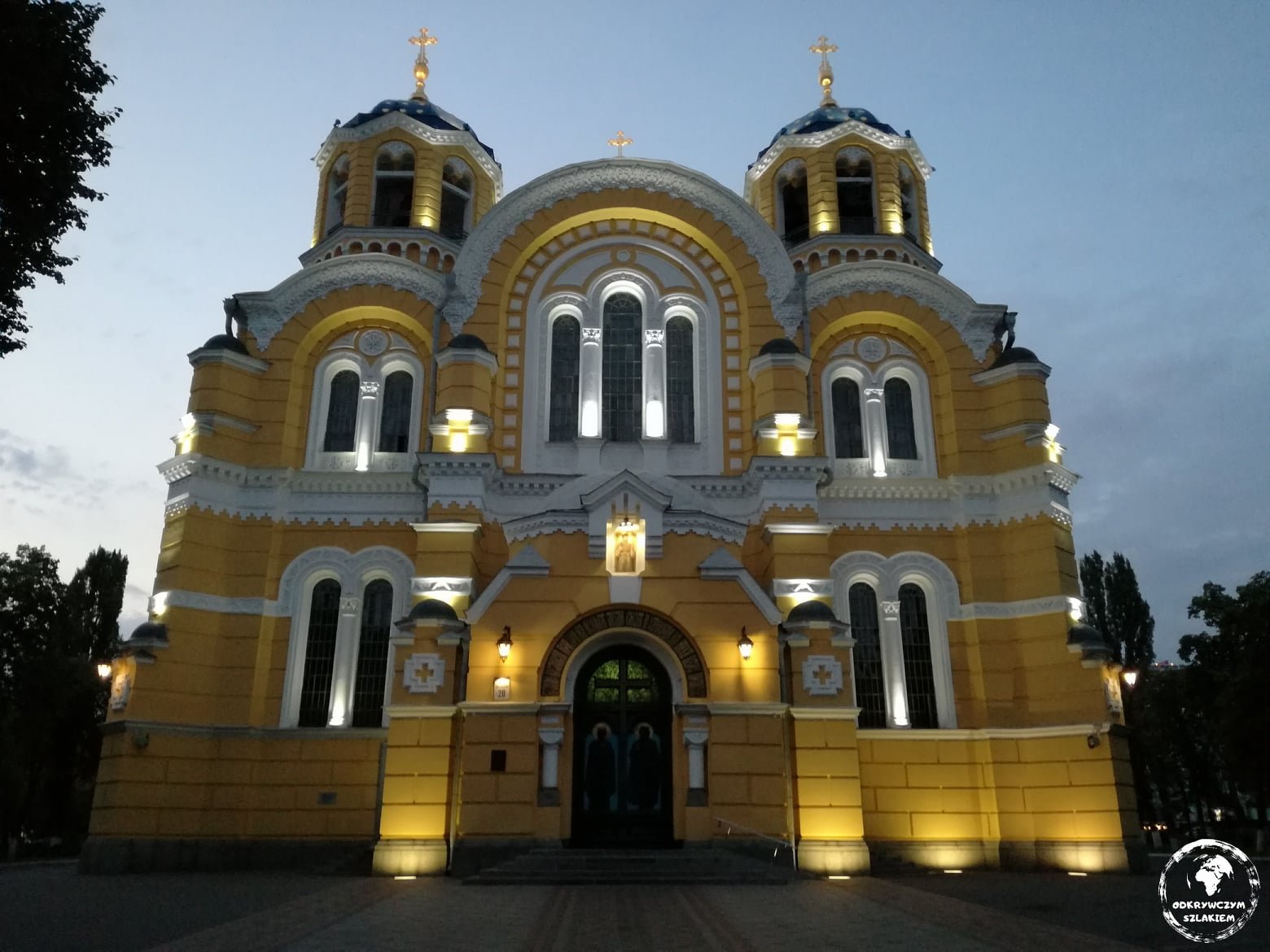
From Yablunytsia we took marshrutkas to Chernivtsi (about 160 km in 4 hours), and from there a BlaBlaCar to Kyiv – another 700 km or so. We arrived in the evening, so we mainly managed to see Independence Square (the Maidan), where bullet marks and photos of those killed during the protests in the winter of 2014 could still be seen, and then sat for a while on an island in the Dnieper. That is too little for a separate post.
Costs (2017 prices)
For us – at the hryvnia exchange rate of the time – Ukraine was very cheap. A few sample prices converted into euros:
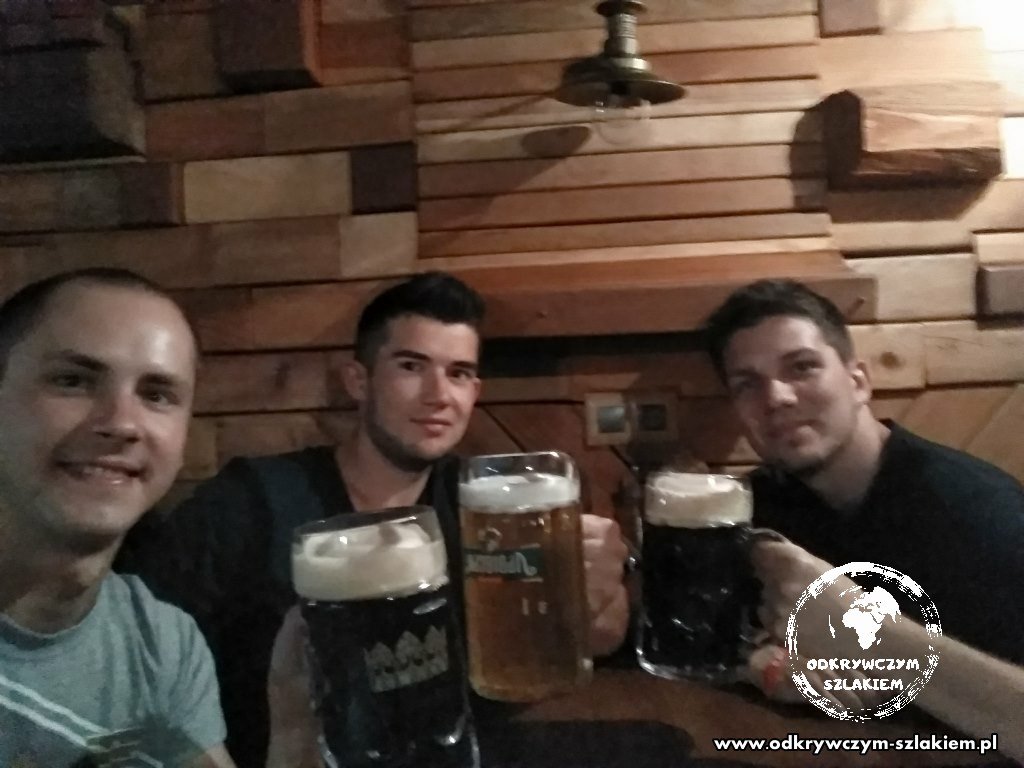
- Food in Lviv: a pizza – a few euros, a litre of beer – about €1.20; in our favourite bar a few euros got you a pizza, a beer and a big piece of cake.
- An evening in Burshtyn: pizza and drinks in more than satisfying quantities – about €5 per person.
- Uber in Lviv: about €1.20 for a ride of over 2 km for four people; taxis were also very cheap.
- Parachute jump: about €30 including transport to the airfield and the certificate.
- Accommodation in Yablunytsia: about €3.50 a night; in Lviv we rented an inexpensive apartment.
- Trail entry in the Gorgany: less than €0.50 (student ticket).
Practical tips
- The border: be prepared for a long wait at the crossing – Patrycja, who joined us two days later, stood at the border for five hours.
- Money and safety: we did not show off expensive things, but we never once witnessed a dangerous situation – not even in the area a driver had warned us about.
- Transport: in cities Uber and taxis are the cheapest and most convenient; between cities – hitchhiking, marshrutkas and BlaBlaCar. A sign with the name of the town written in Cyrillic comes in handy – we used them.
- Language: Ukrainian is similar enough to Polish that you can understand quite a lot; English can be harder – even the training at the airfield, despite an English-language website, was only in Ukrainian.
- Luggage: if you fly back, a small backpack is enough – ours lasted us the whole two weeks.
- Mountains: it is worth carrying a map, and for the Gorgany take a rain jacket – I learned that by getting soaked on the very first evening in Yablunytsia.


What this trip taught us
- Hitchhiking works – over longer distances too, and even in a country where hardly anyone knows the idea.
- A fear of heights can be overcome – for me the parachute jump was a battle with myself that I won.
- Stereotypes are worth checking on the spot – Ukrainians’ attitude towards Poles turned out to be completely different from what we had feared, and along the way we learned about many local customs.
- Adventure is close by – you don’t have to travel far from Poland to experience something interesting.
- A spontaneous change of plans can turn out well – as it did with the unplanned day and evening in Burshtyn.


This journey is special to us for one more reason – it was after it that Patrycja and I became a couple. Five years later the places we had travelled through appeared in the news about the war, and we remember the people we met along the way – the drivers who gave us lifts and our new friends from Burshtyn – with great fondness.
Videos from the trip
We filmed the whole trip with Xiaomi Yi Action sports cameras – the result was six episodes of “Kierunek Ukraina” and a trailer in the style of the TV series “Friends” (it is at the top of this post). Here are all the episodes:
 8:57
 5:58
 8:51
 4:01
 4:23
 8:18