In June 2007 I went on a coach trip along the Papal Trail in the Suwałki region (Suwalszczyzna) in north-eastern Poland. In one day we saw Augustów and its Augustów Canal museum, sailed through the Przewięź lock to the shrine in Studzieniczna, looked into the basilica in Sejny and finally visited the former Camaldolese monastery in Wigry. All these places are linked to John Paul II, who rested in the Suwałki region on 8–10 June 1999, after the first part of his pilgrimage to Poland. The Papal Trail “Mysteries of Light” runs from Ełk to Wigry, and its information board with a map is shown in the post about my bike trip through the Suwałki region and Podlasie. Below I describe the stops in order, and at the end – cruise and ticket prices.
Table of contents
- Augustów – the port and the Augustów Canal museum
- A cruise on the Augustów Canal through the Przewięź lock
- Studzieniczna – a shrine on an island
- Sejny – a basilica on the way
- Wigry – the Camaldolese monastery by the lake
- Practical information
Augustów – the port and the Augustów Canal museum
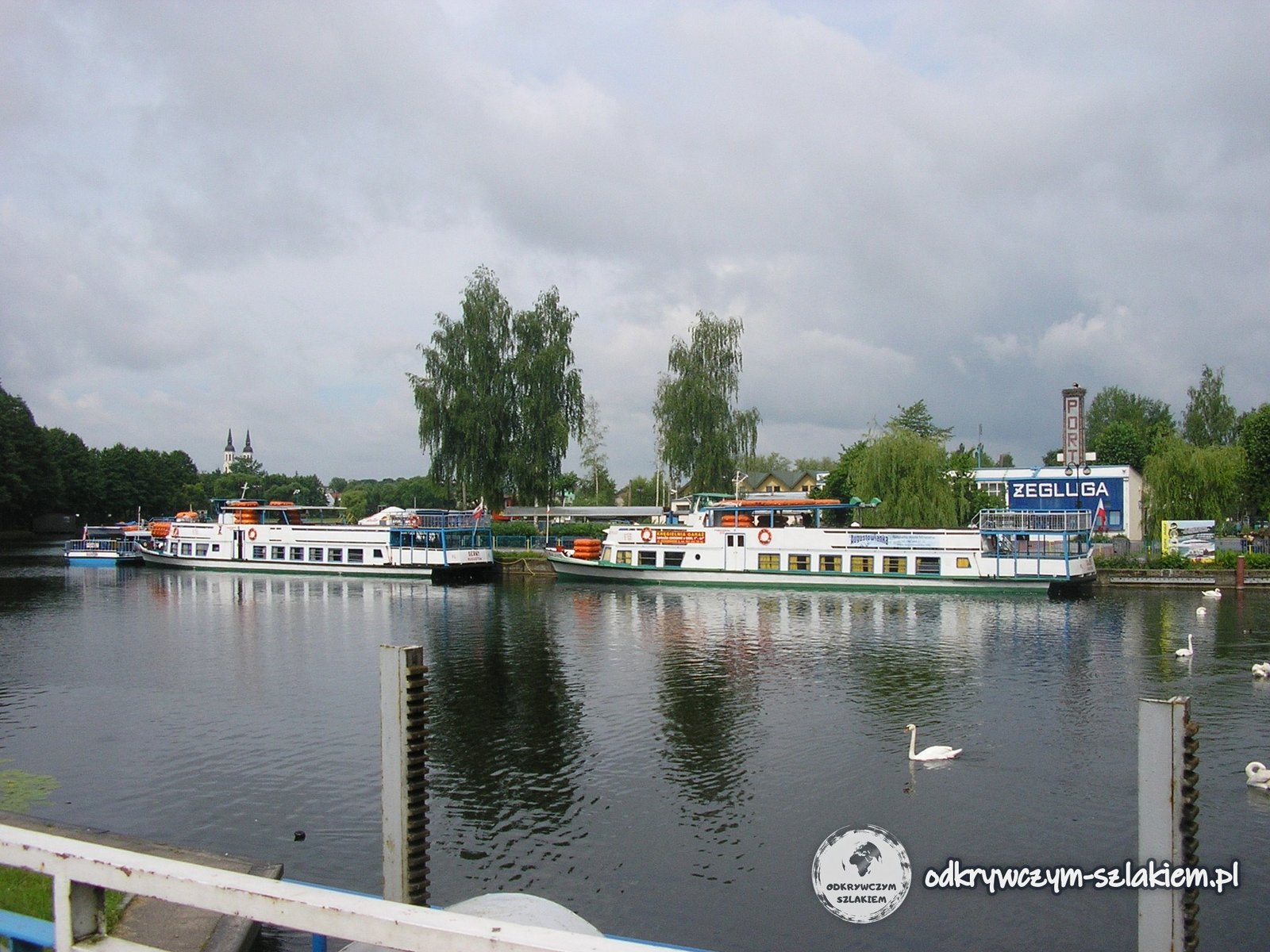
The boats of Żegluga Augustowska leave from a port on the Netta river, on 29 Listopada Street. Above the trees you can see the two towers of the Basilica of the Sacred Heart of Jesus, a neo-Romanesque church built in 1906–1911. One of the company’s boats, the “Serwy”, carried the Pope on 9 June 1999. His cruise started at the landing stage of the Officers’ Yacht Club “Pacyfik” and ended in Gorczyca. In 2005 the Papal Trail received a certificate from the Polish Tourism Organisation as the best tourism product of the year.
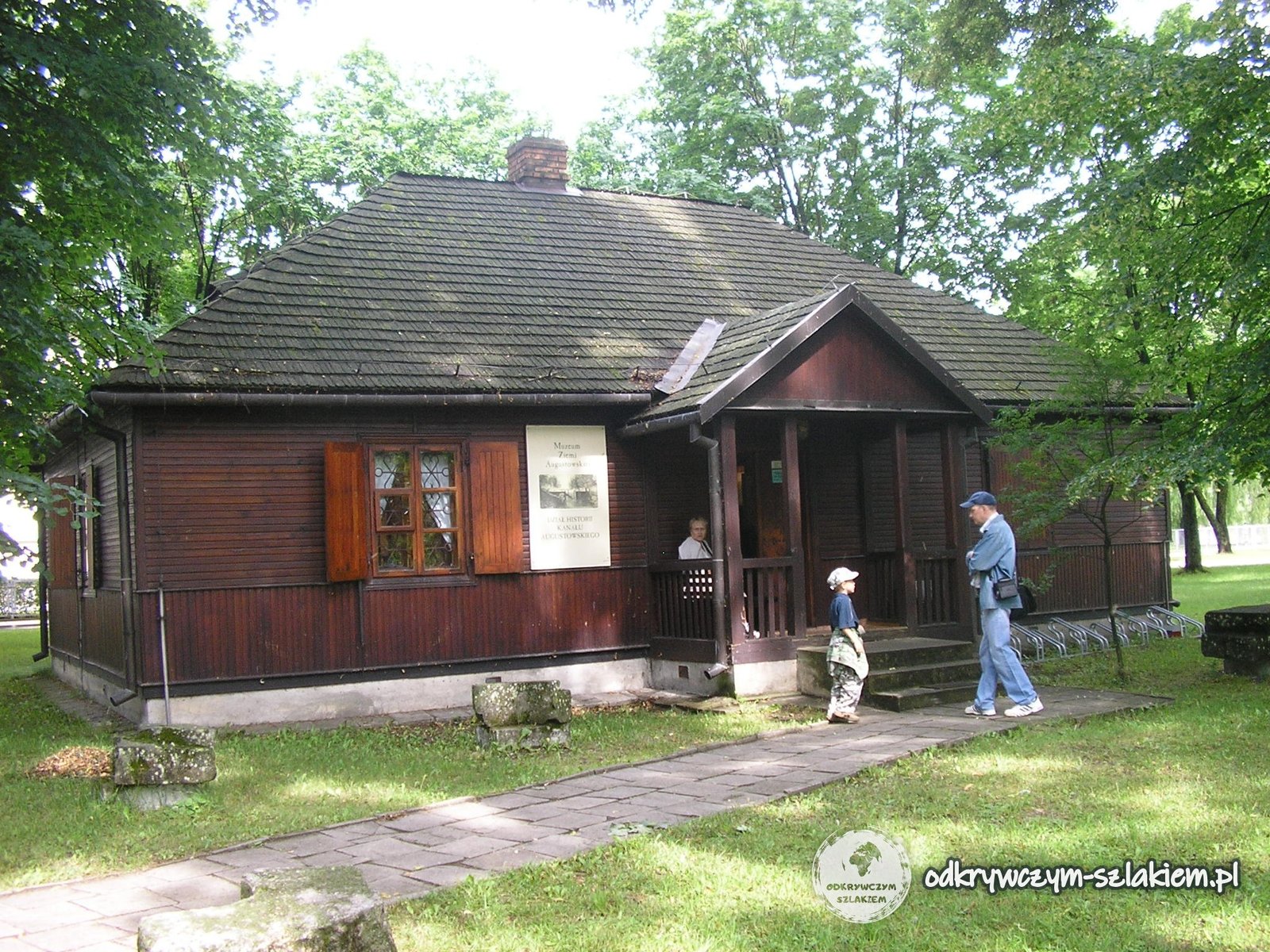
Before the cruise we visited the Augustów Canal History Museum, a branch of the Augustów Land Museum. It is housed in the wooden, single-storey Prądzyński House, the former seat of the port authority. The building kept its original form until the 1960s, and in the 1970s it was reconstructed from the surviving remains. The museum has been here since 1981. The name is only a convention – General Prądzyński’s own house stood on Krakowska Street and burned down in 1831.
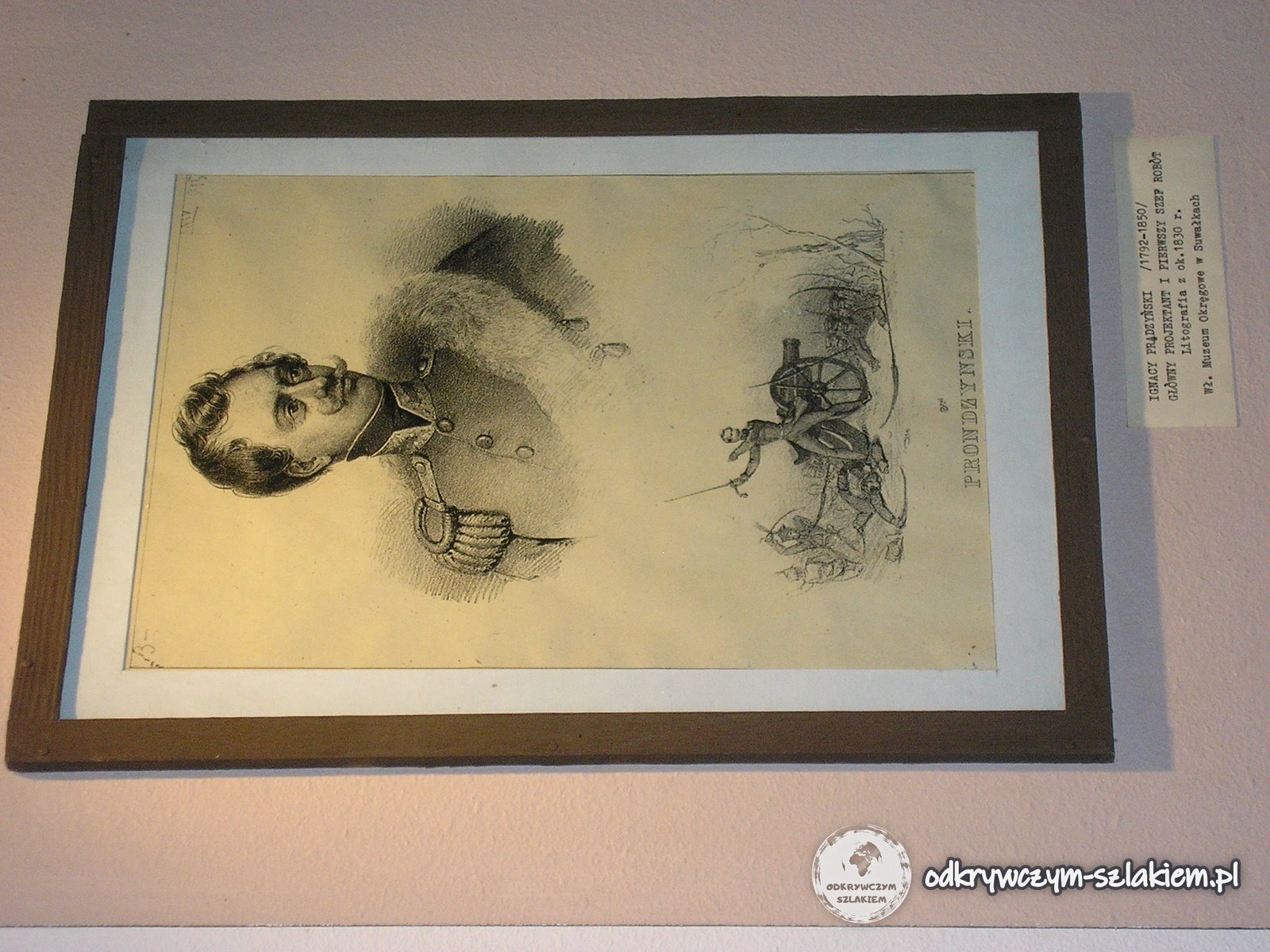
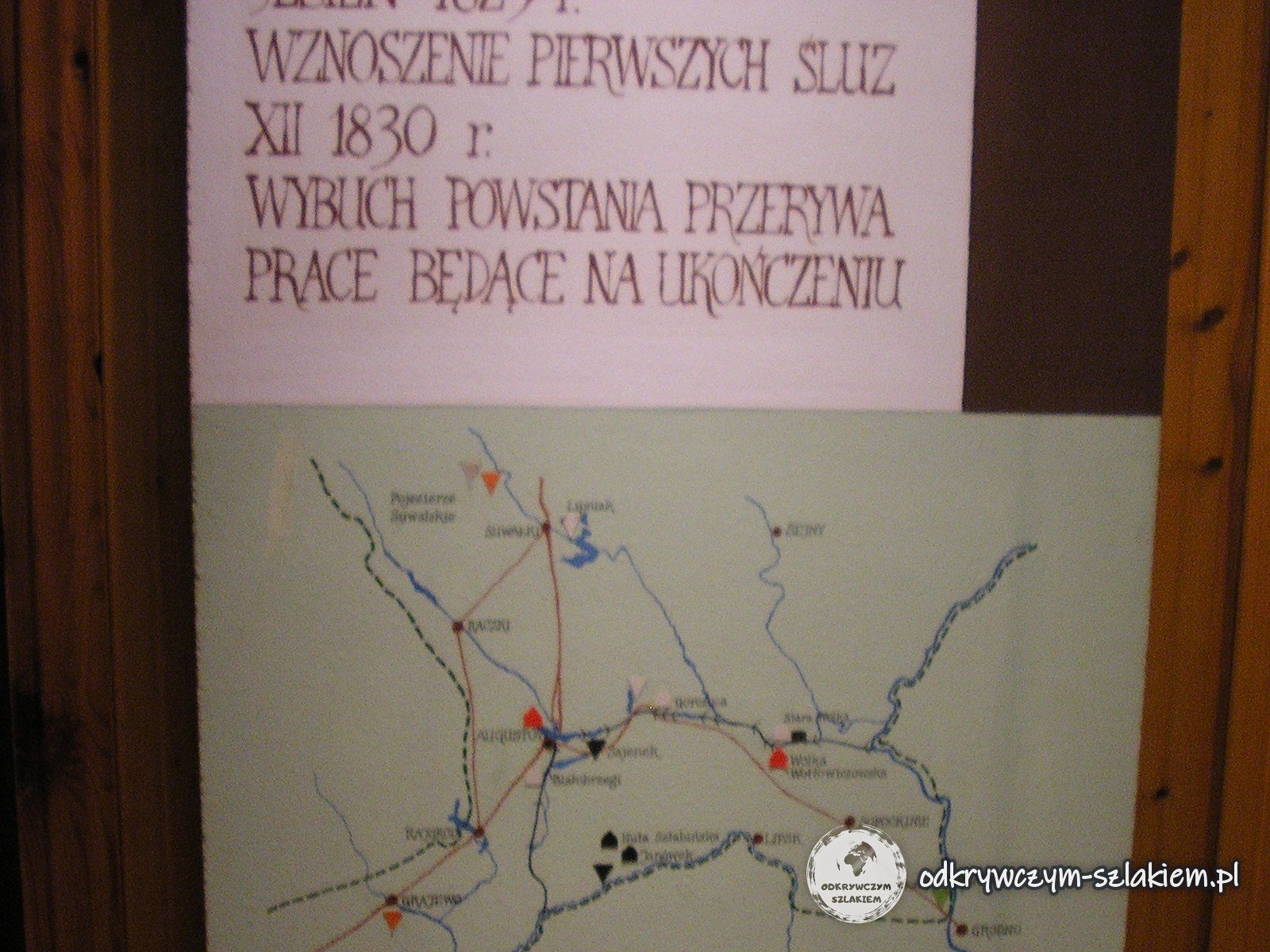
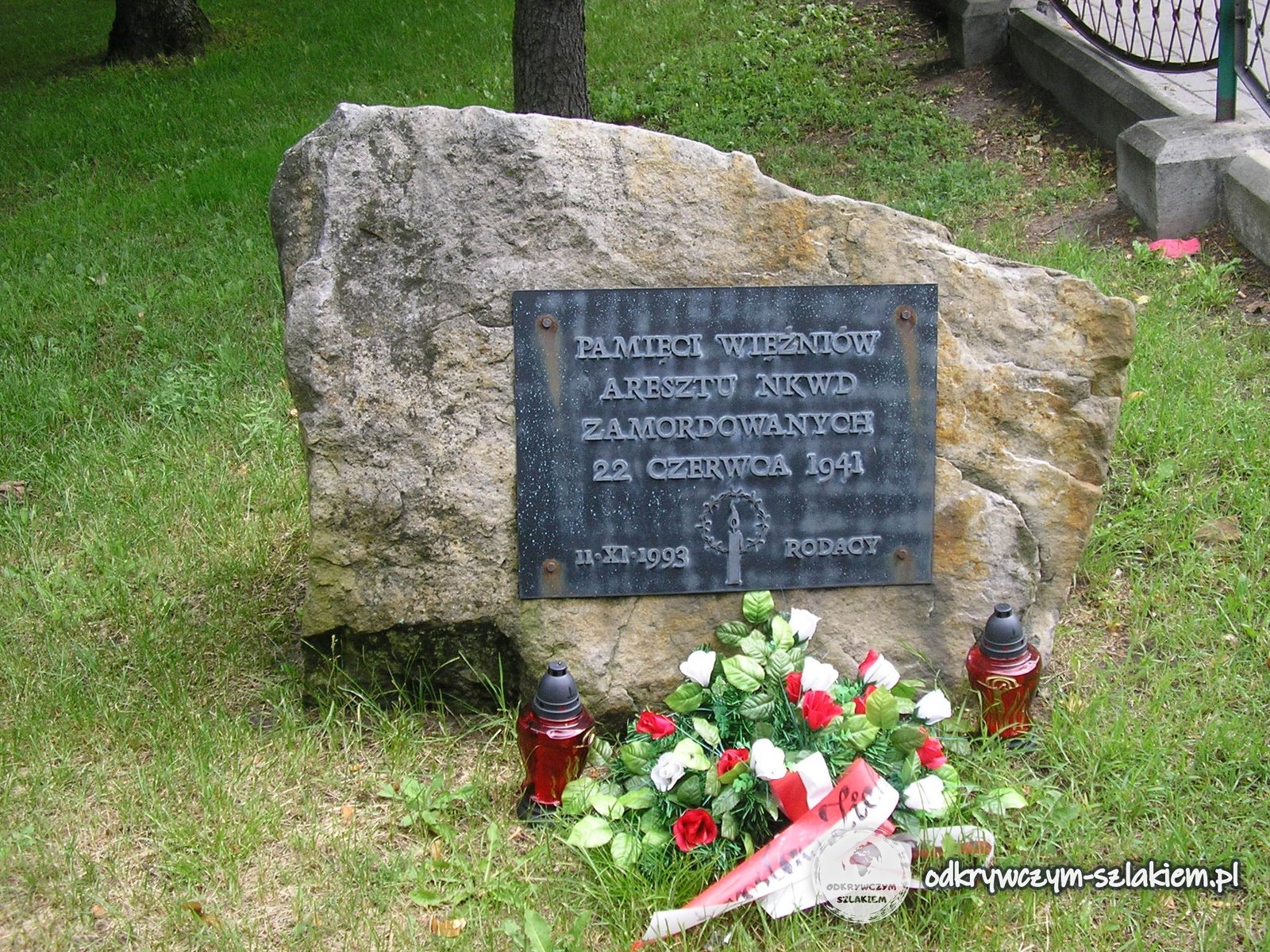
The exhibition covers the building and operation of the canal, and a large part of it is devoted to Ignacy Prądzyński (1792–1850). The label next to his lithograph portrait from around 1830 calls him the chief designer and the first head of the works. One of the boards reads: “building the first locks” and “December 1830: the outbreak of the uprising interrupts works that were nearly finished”. By the museum gate there is a boulder with a plaque “In memory of the prisoners of the NKVD jail murdered on 22 June 1941” – the day Germany attacked the USSR.
A cruise on the Augustów Canal through the Przewięź lock
The Augustów Canal was built in 1824–1839 to bypass the Prussian customs duties on grain shipped down the Vistula to Gdańsk. It linked the Vistula basin – via the Biebrza and the Narew – with the Neman. Prądzyński drew up the design. After his arrest in 1826 other engineers ran the works, and in 1833–1839 the canal was completed by Teodor Urbański. It is about 101 km long and has 18 locks: 14 in Poland, 3 in Belarus and one, Kurzyniec, right on the border. Between the Biebrza and Augustów the locks lift boats by 15 m, and between Augustów and the Neman they handle a 41 m difference in level. On 25 April 2007, less than two months before our cruise, the canal was declared a Monument of History (Poland’s top heritage status).
The “Papal Trail” cruise runs from the port along the Netta to Lake Necko, then along the Klonownica – which the operator calls the shortest navigable river in Poland – to Lake Białe, and on through the Przewięź lock to Lake Studzieniczne. Before the lock the boat passes under a bridge and enters a narrow channel.
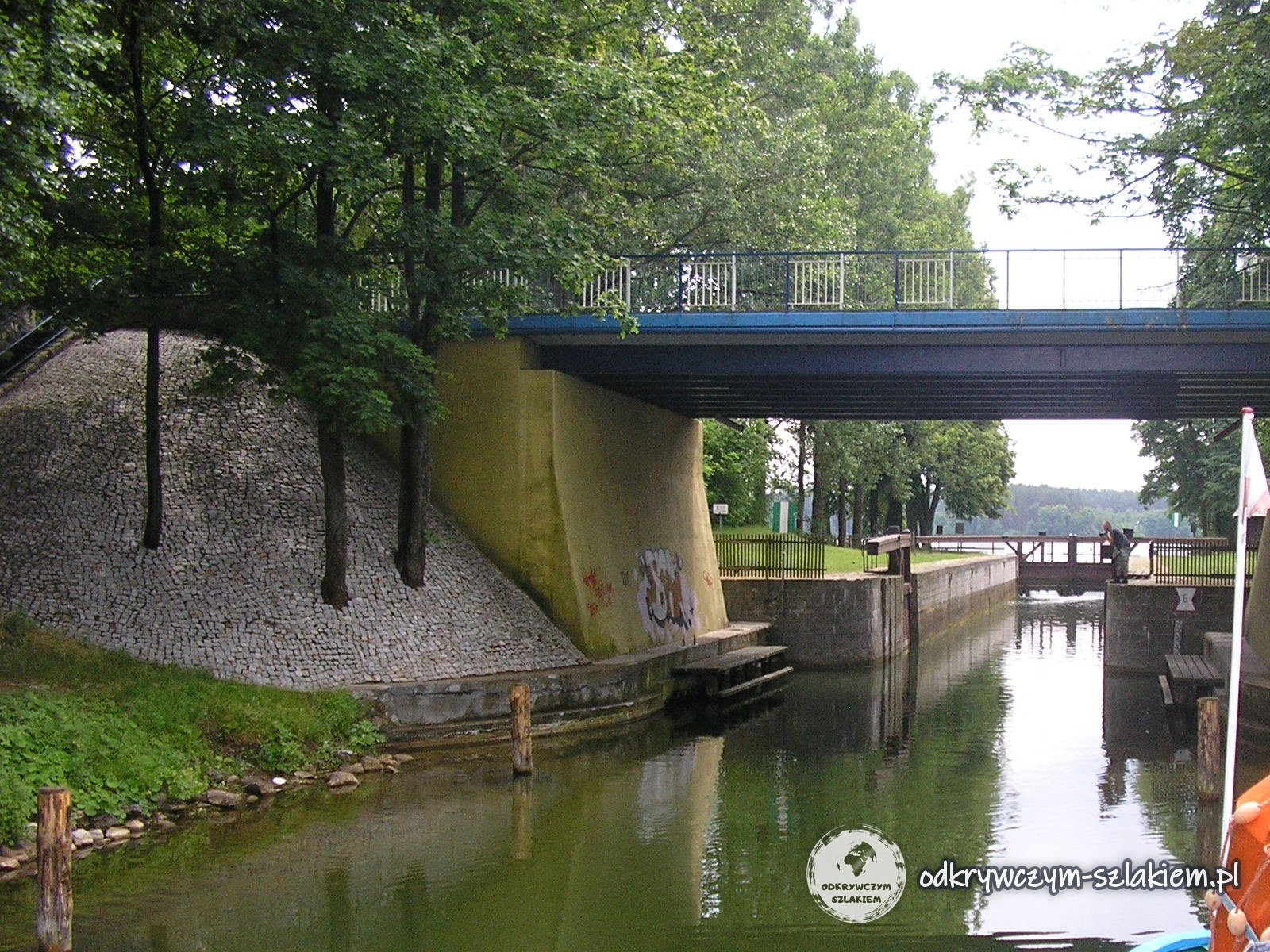
The Przewięź lock is the sixth lock counting from the Biebrza. Its chamber is 46.17 m long and 5.96 m wide, and the difference in level is 1.41 m. According to Wody Polskie (the Polish water authority) it is the busiest lock on the canal: more than 5,500 vessels pass through it in one season – boats, catamarans and kayaks.
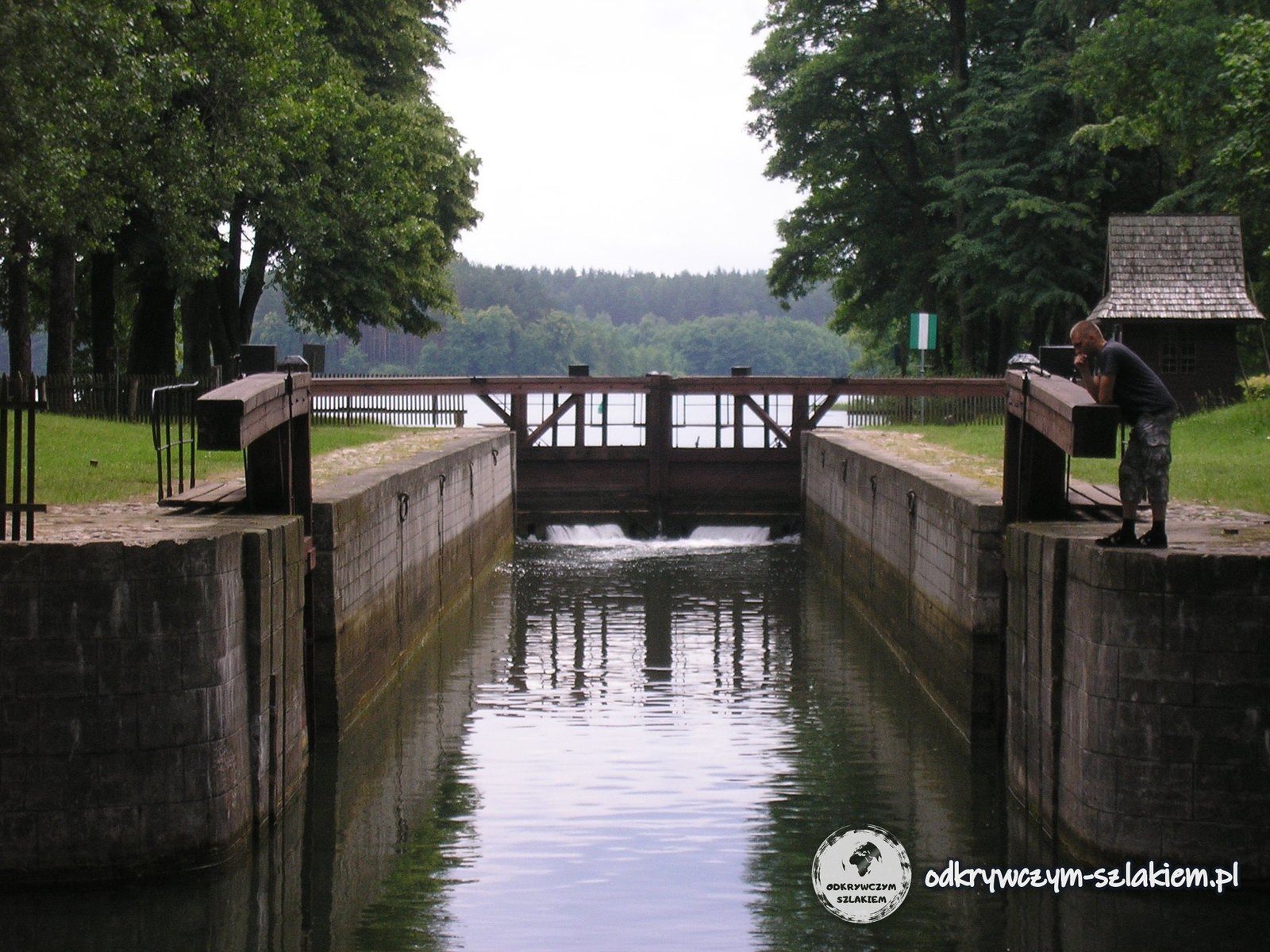
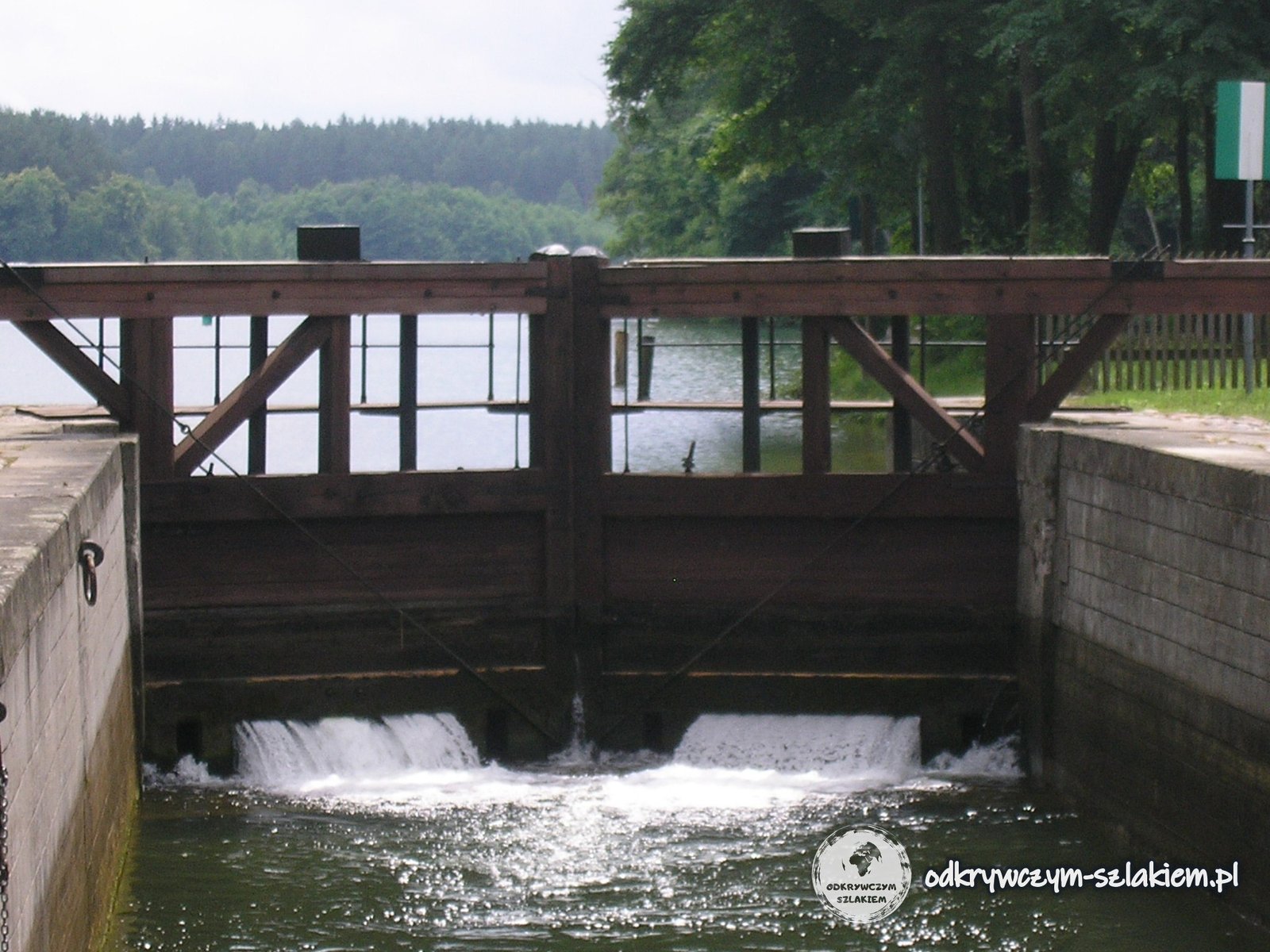
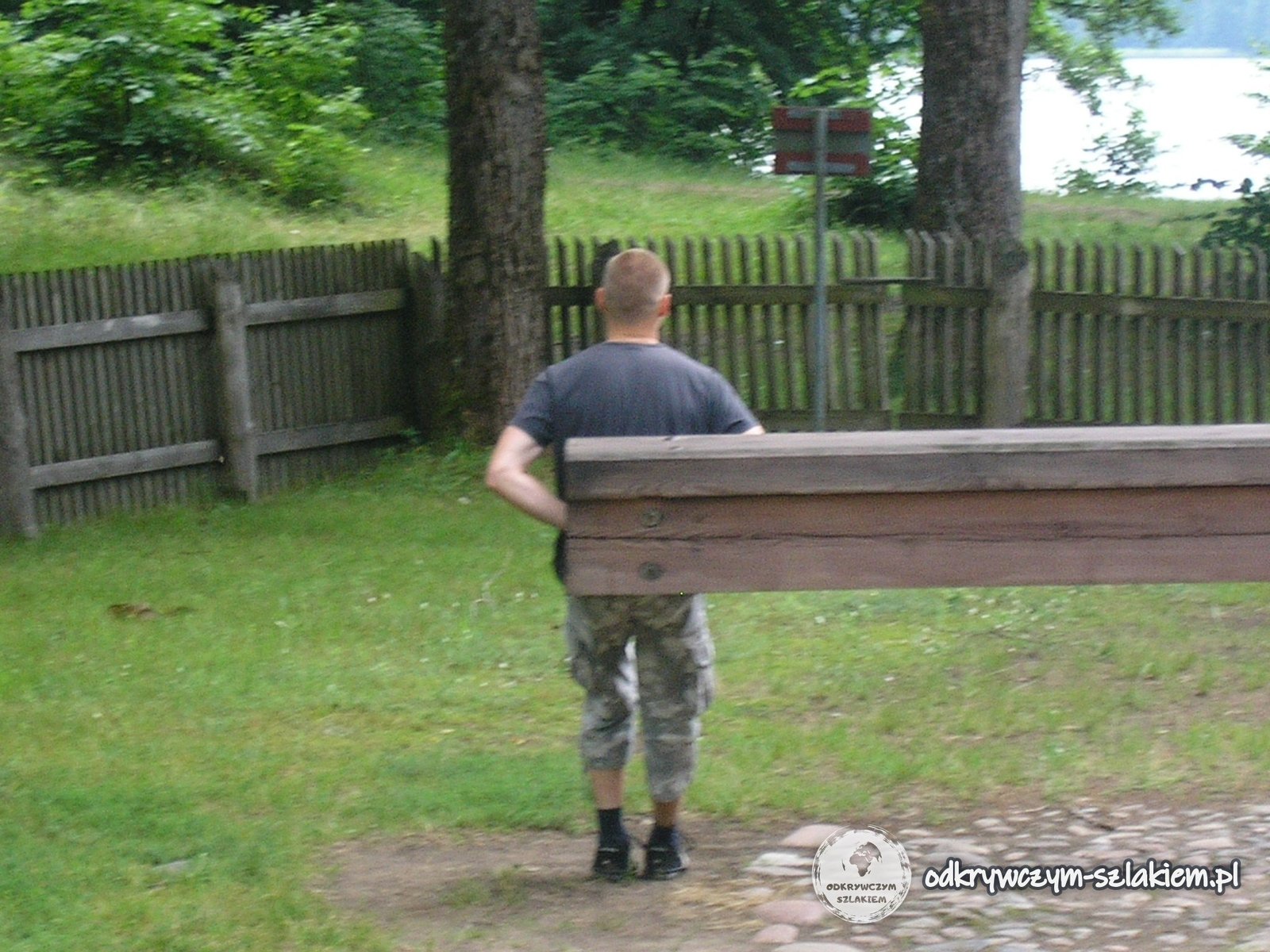
In the chamber the boat waits until the water level evens out. The lock keeper opened the sluices with a crank, and the heavy wooden gates by pushing a long beam above the edge of the chamber. Beyond the lock Lake Studzieniczne opens up.
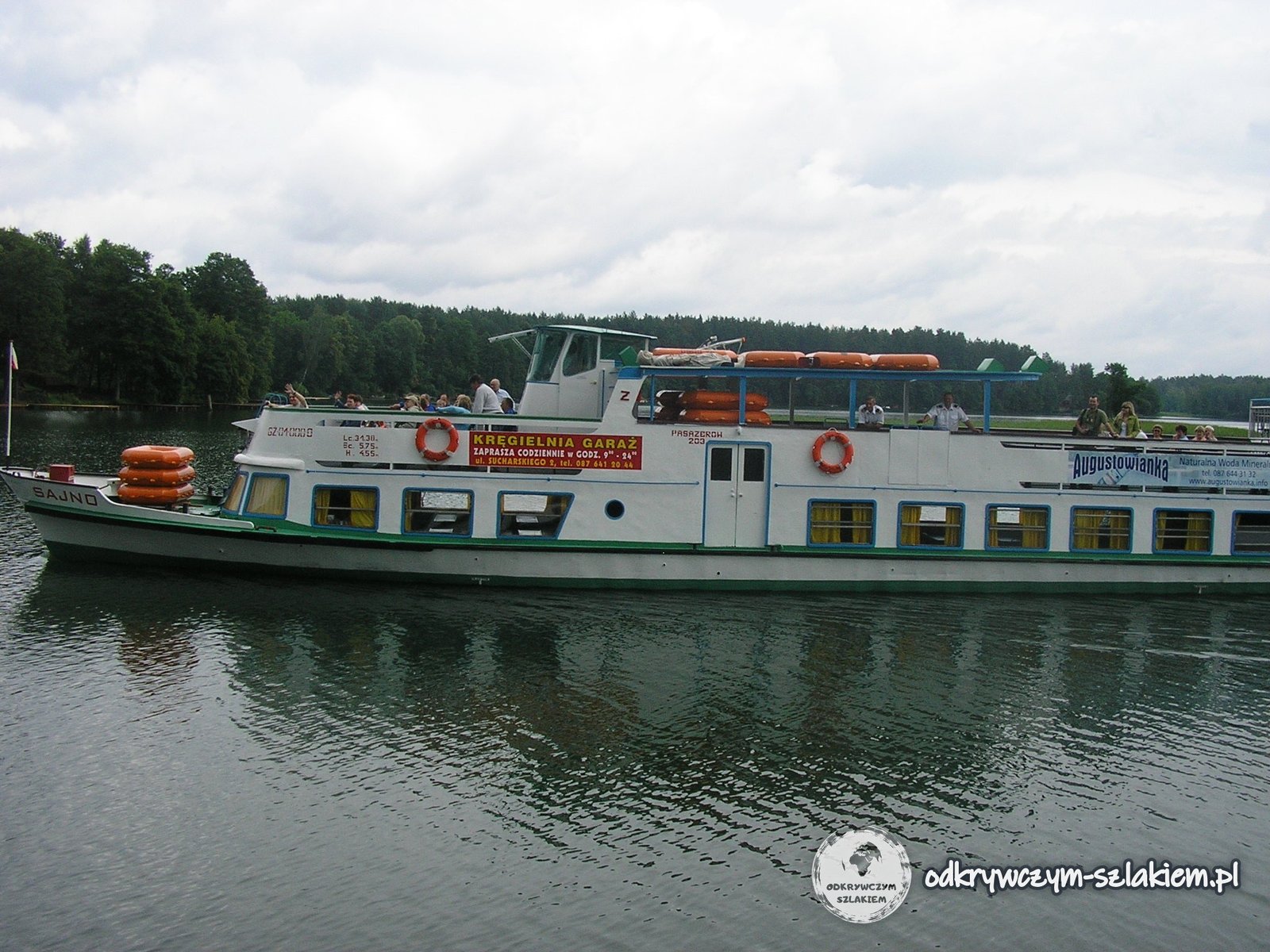
On the lakes we passed other boats of the company, including the “Sajno” – according to the sign on its side it carries 200 passengers. Żegluga Augustowska as a whole carries almost 100,000 passengers a year.
Studzieniczna – a shrine on an island
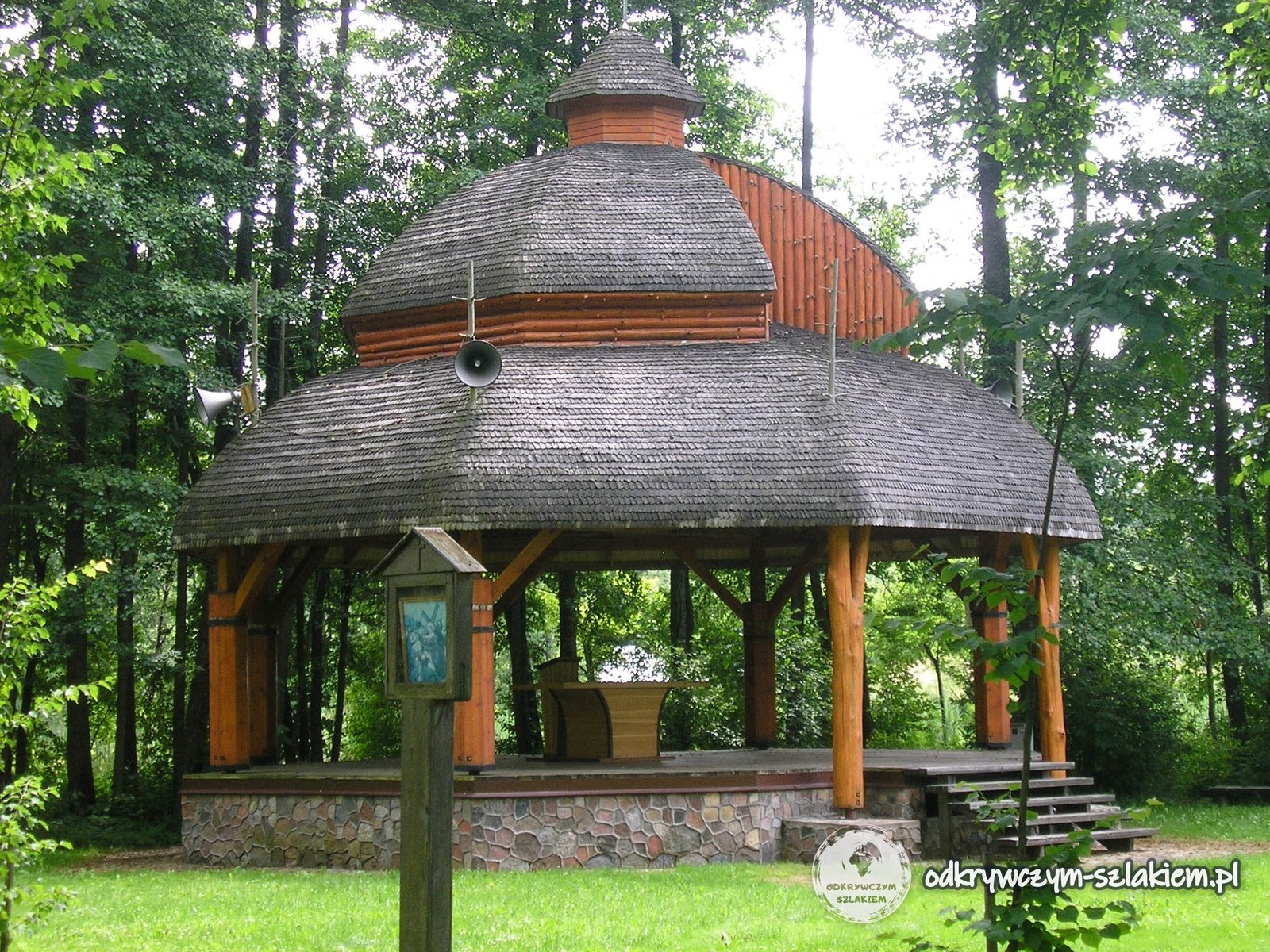
Studzieniczna lies about 7 km from the centre of Augustów, on national road 16, and has been part of the town since 1973. The boat moors at a landing stage by the shrine of Our Lady of Studzieniczna. Here, on 9 June 1999, John Paul II went ashore to pray in the chapel on the island.
The shrine goes back to the 18th century. In 1770 a former officer, Wincenty Murawski, built a small chapel here from donations. He also dug a well whose water was believed to cure eye diseases – the lake and the village take their name from this little well (Polish “studzienka”). The present brick chapel has stood on oak piles since 1872. It is attributed to the engineer Ludwik Jeziorkowski, who worked on the Augustów Canal. The island is joined to the shore by a causeway with the Stations of the Cross.
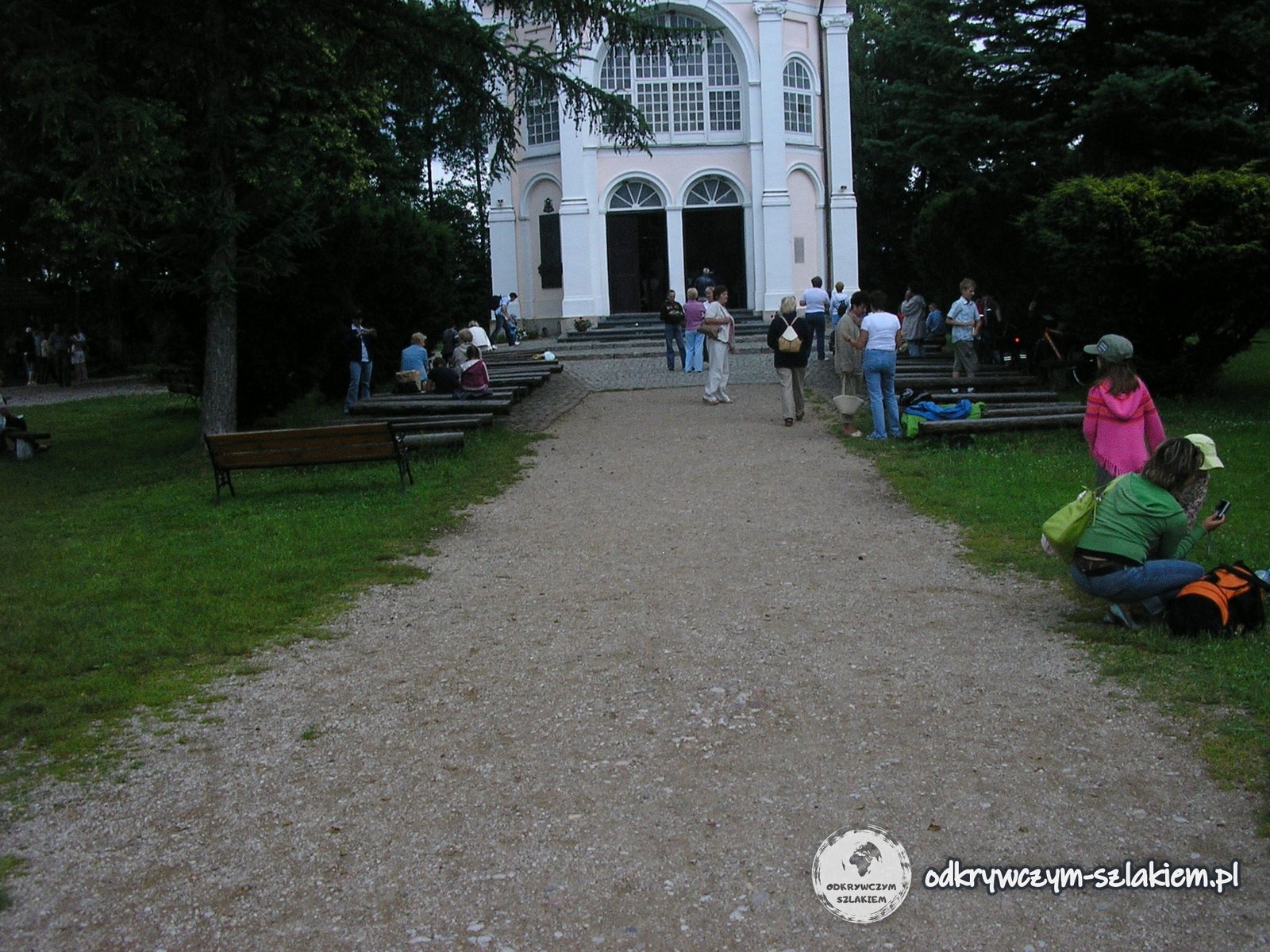
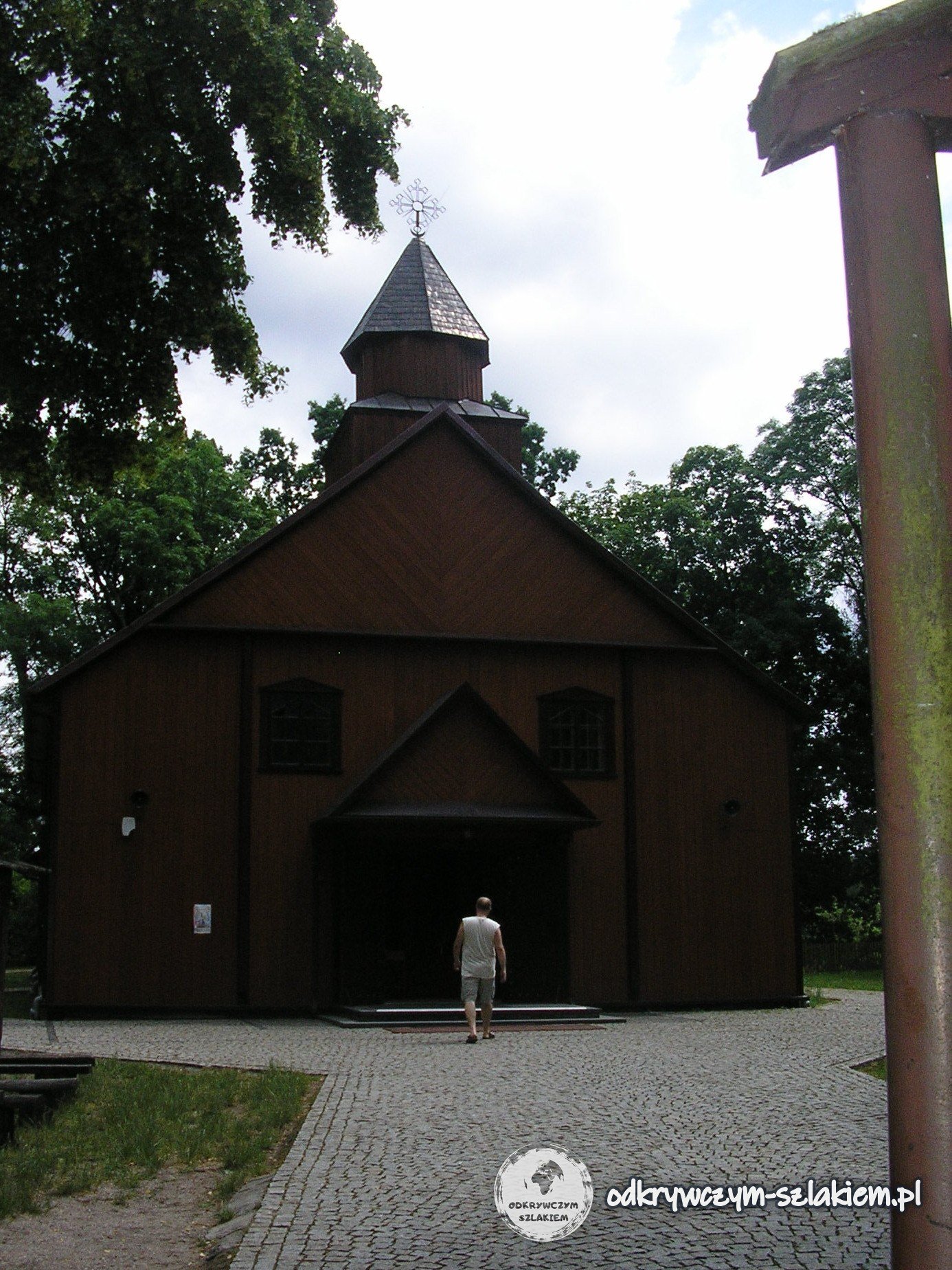
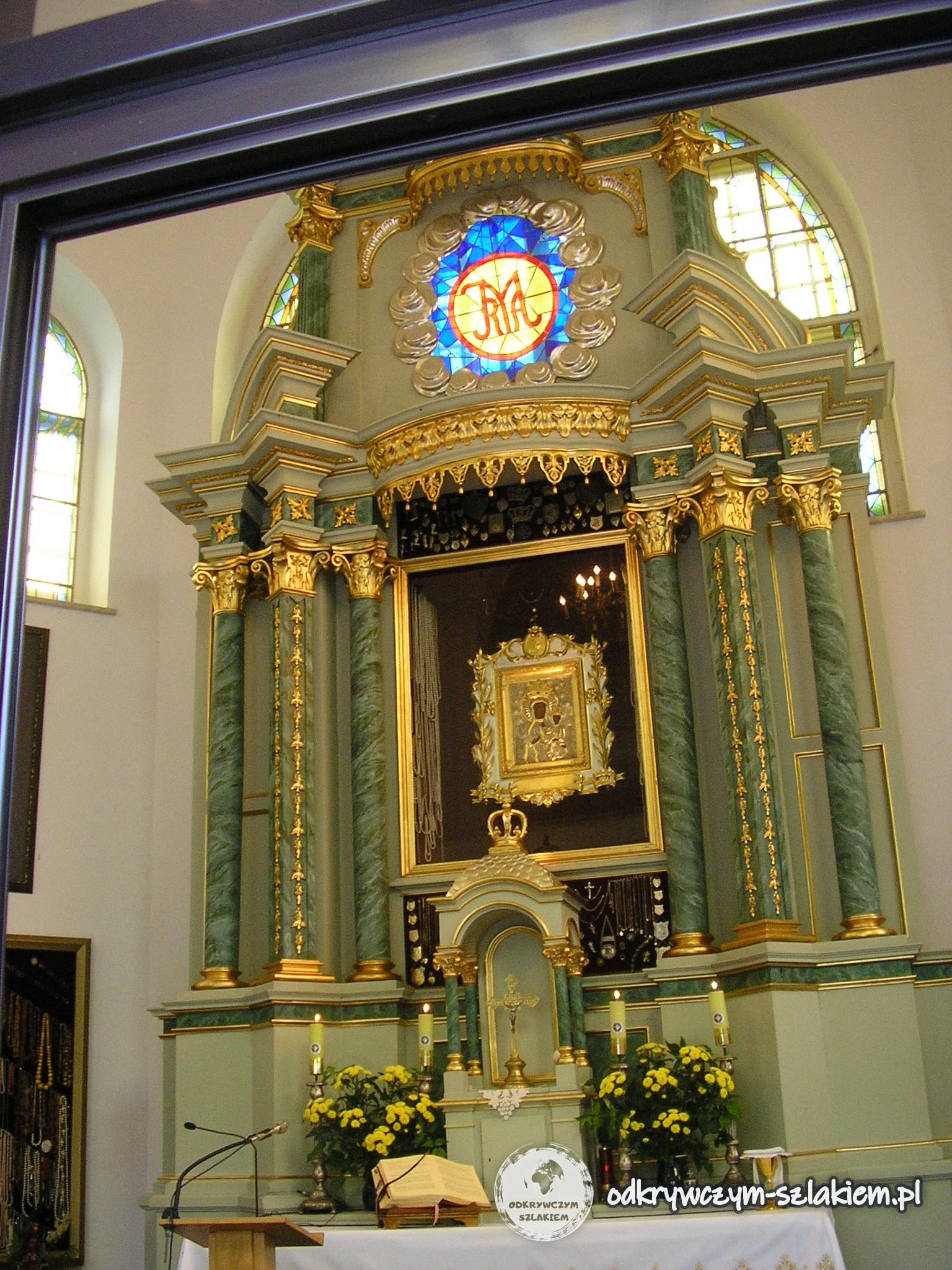
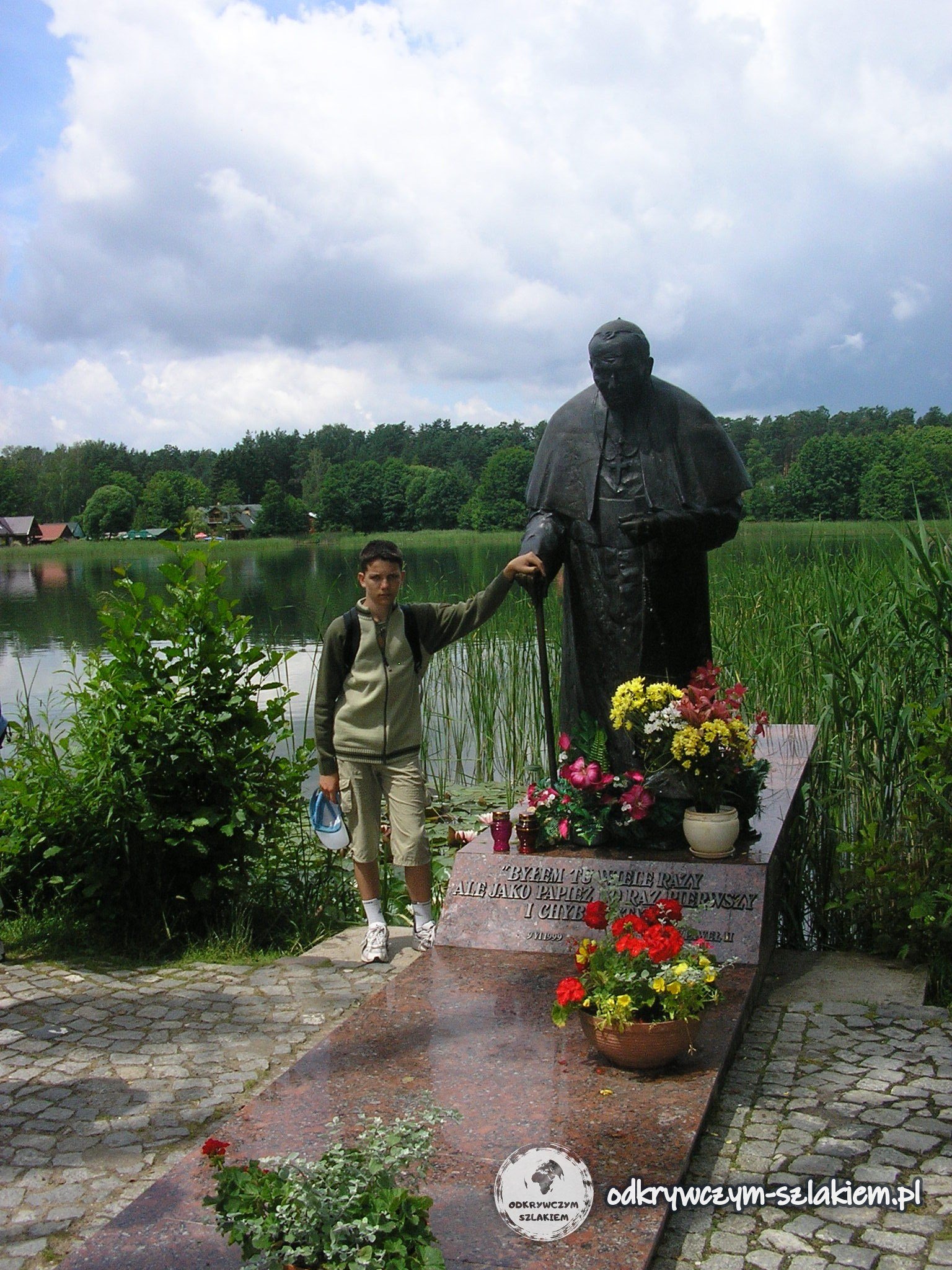
The chapel holds the image of Our Lady of Studzieniczna – an 18th-century copy of the Black Madonna of Jasna Góra. On the lake shore, where the Pope stepped off the boat, his monument by Czesław Dźwigaj was put up in 2000. The slab bears the words he said then: “I have been here many times, but as Pope for the first and probably the last time”. On the mainland there is also a 19th-century wooden church of Our Lady of the Scapular.
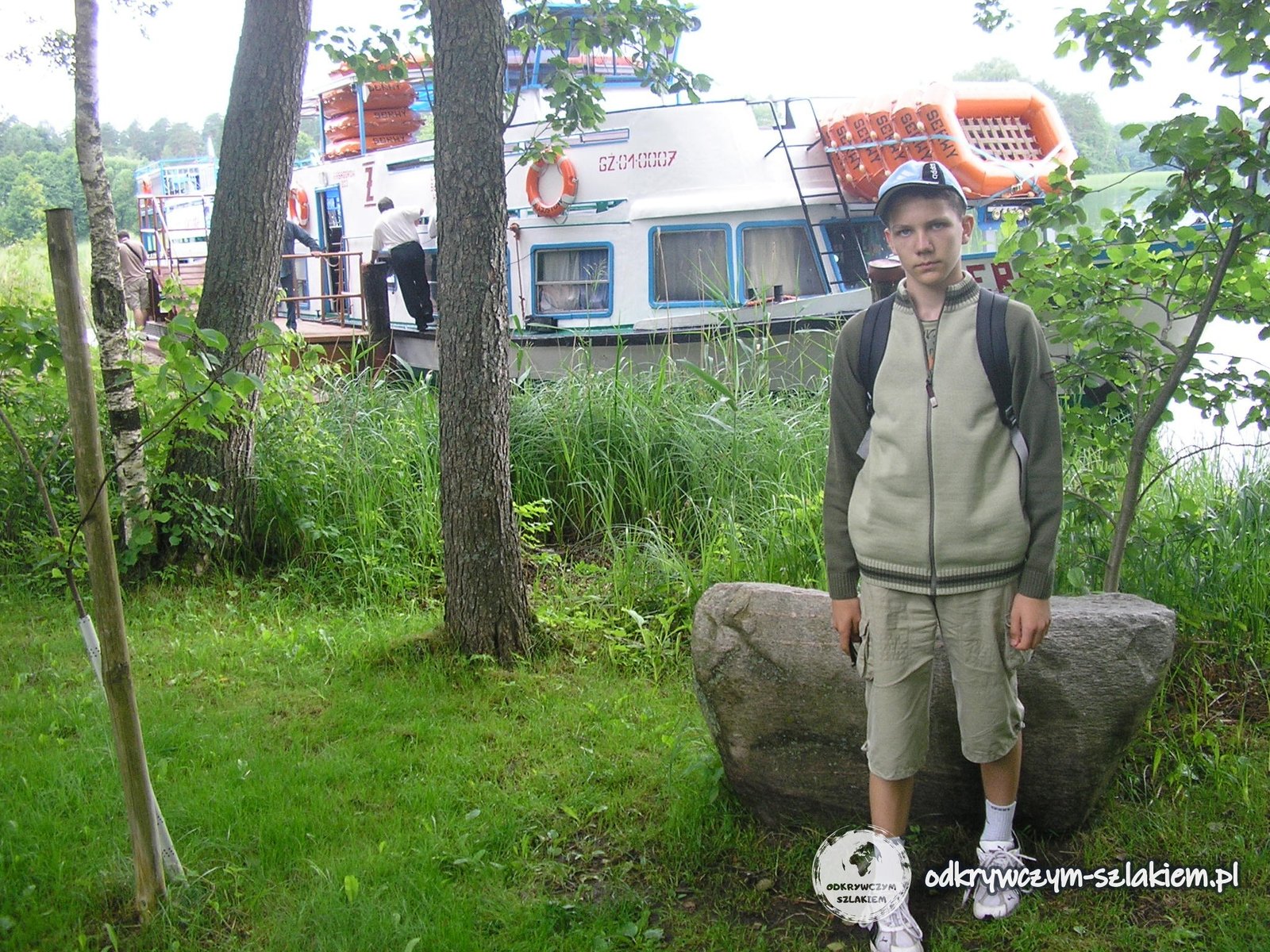
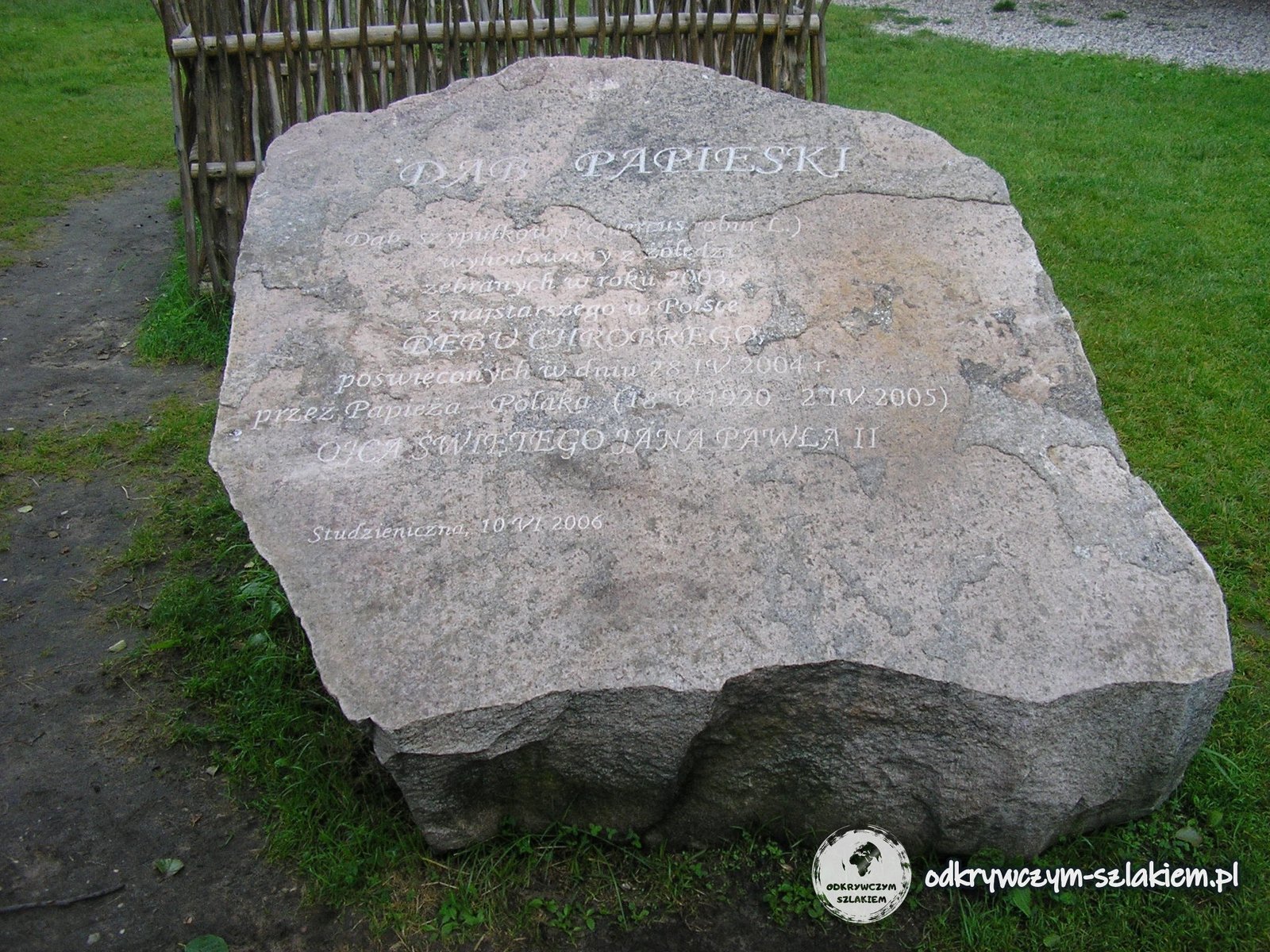
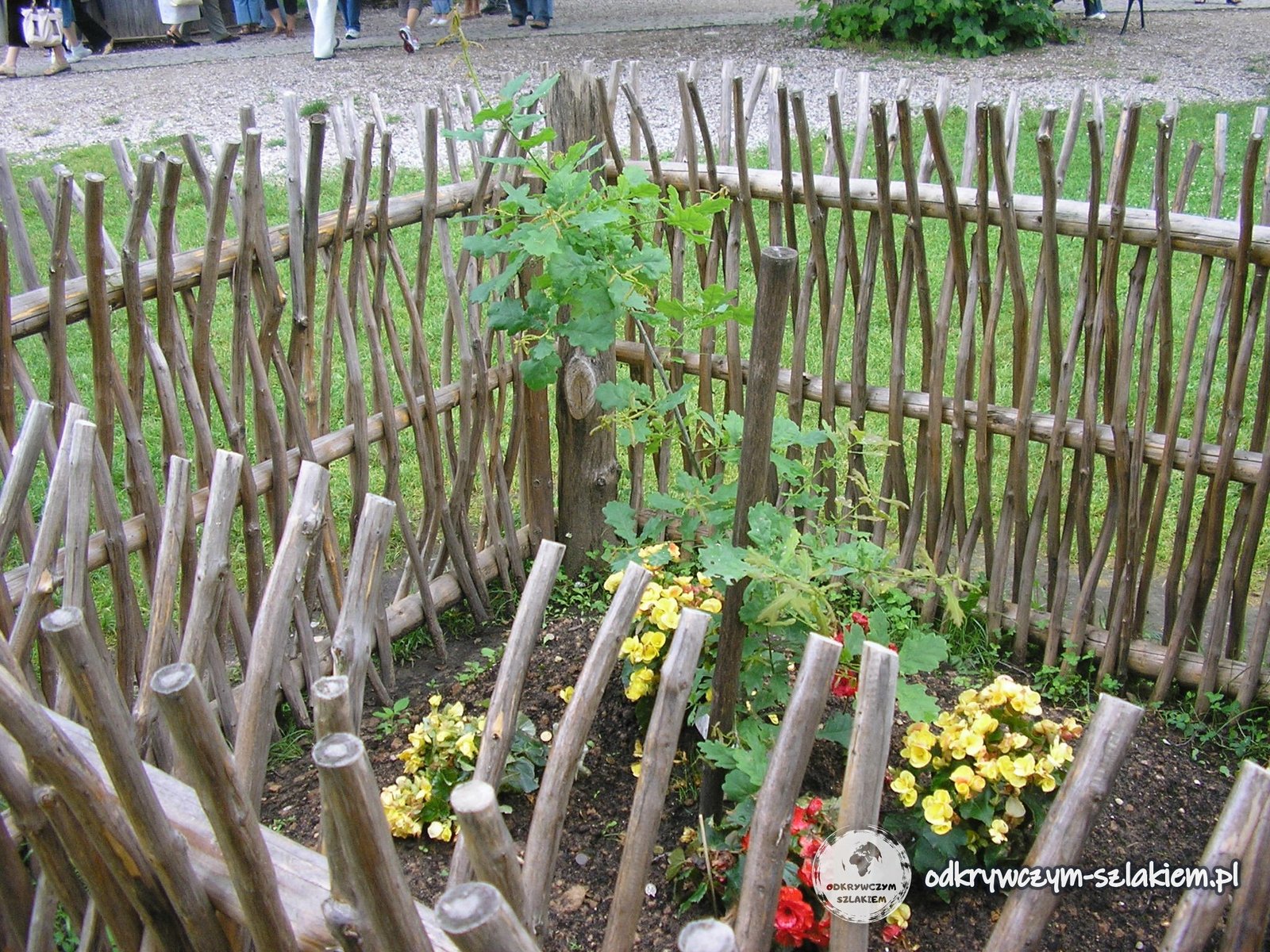
By the path grows the Papal Oak. According to the inscription on the boulder it is a pedunculate oak grown from acorns collected in 2003 from the Chrobry Oak, “the oldest in Poland”. John Paul II blessed the acorns on 28 April 2004, and the boulder is dated 10 June 2006. In June 2007 the oak was still a small sapling behind a wooden fence.
Sejny – a basilica on the way
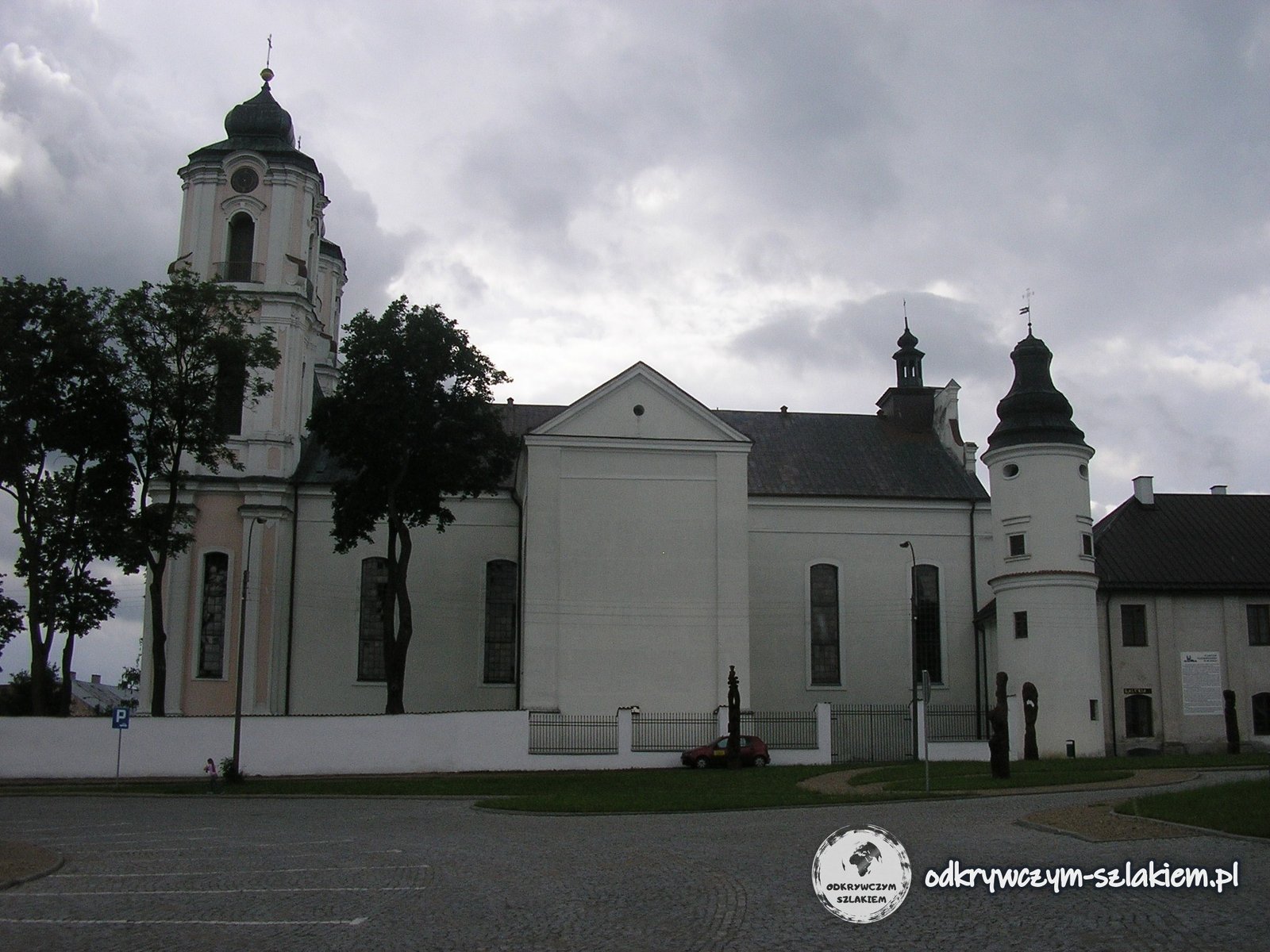
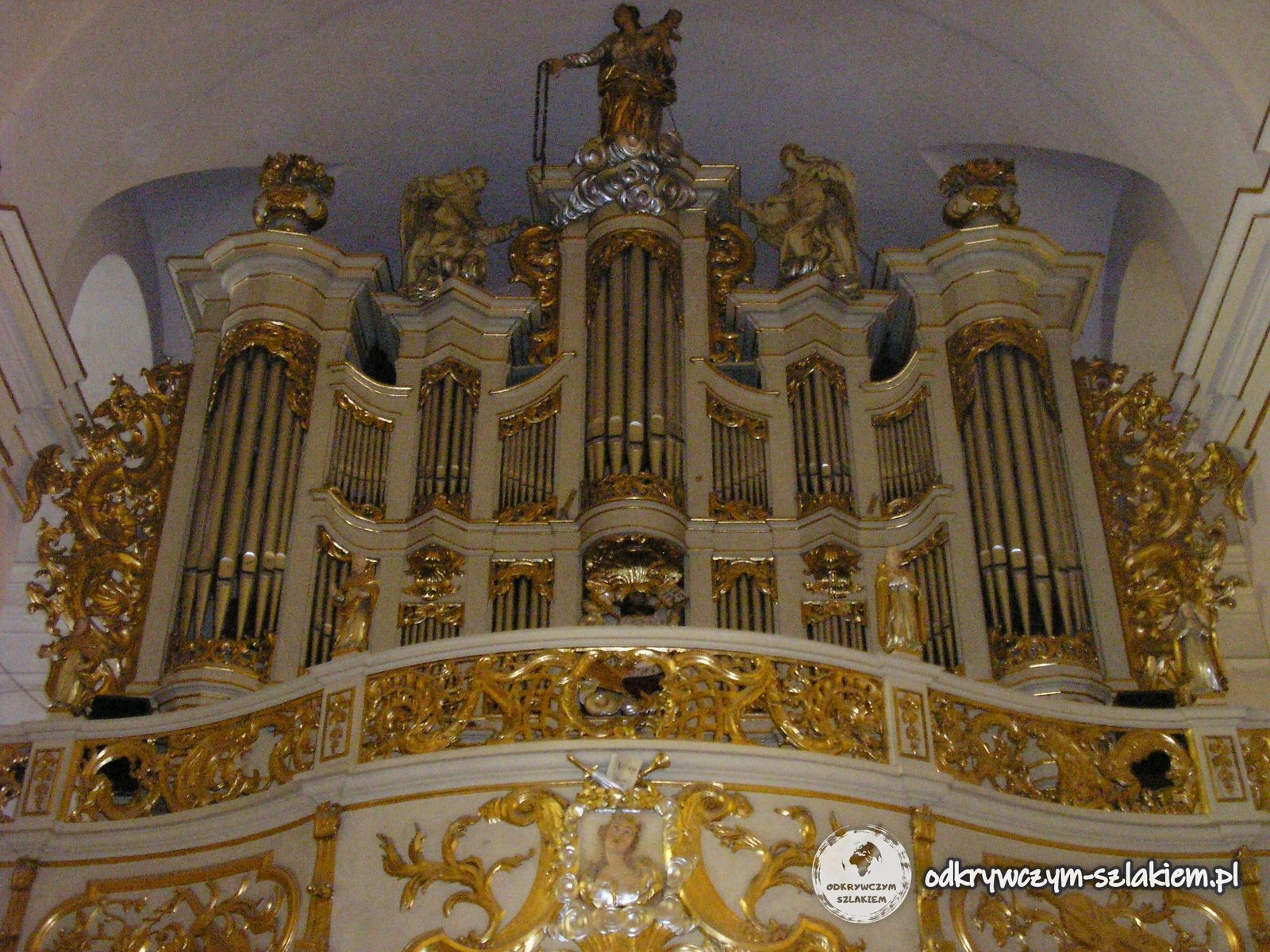
Next we went by coach to Sejny, near the border with Lithuania. Above the town rises the Basilica of the Visitation of the Blessed Virgin Mary with a Dominican monastery. According to the board at the entrance it is Vilnius Baroque with Rococo details. The church was built in 1610–1619 and consecrated in 1632, and after 1760 it was enlarged and reoriented. In 1818–1925 it was the cathedral of the Diocese of Sejny, which replaced the Diocese of Wigry. Inside there is, among other things, a shrine figure of the Virgin and Child from the turn of the 14th and 15th centuries, and a gilded organ. More about Sejny, including the White Synagogue and the Marycha river, is in a separate post about the bike trip from Giżycko to Białystok.
Wigry – the Camaldolese monastery by the lake
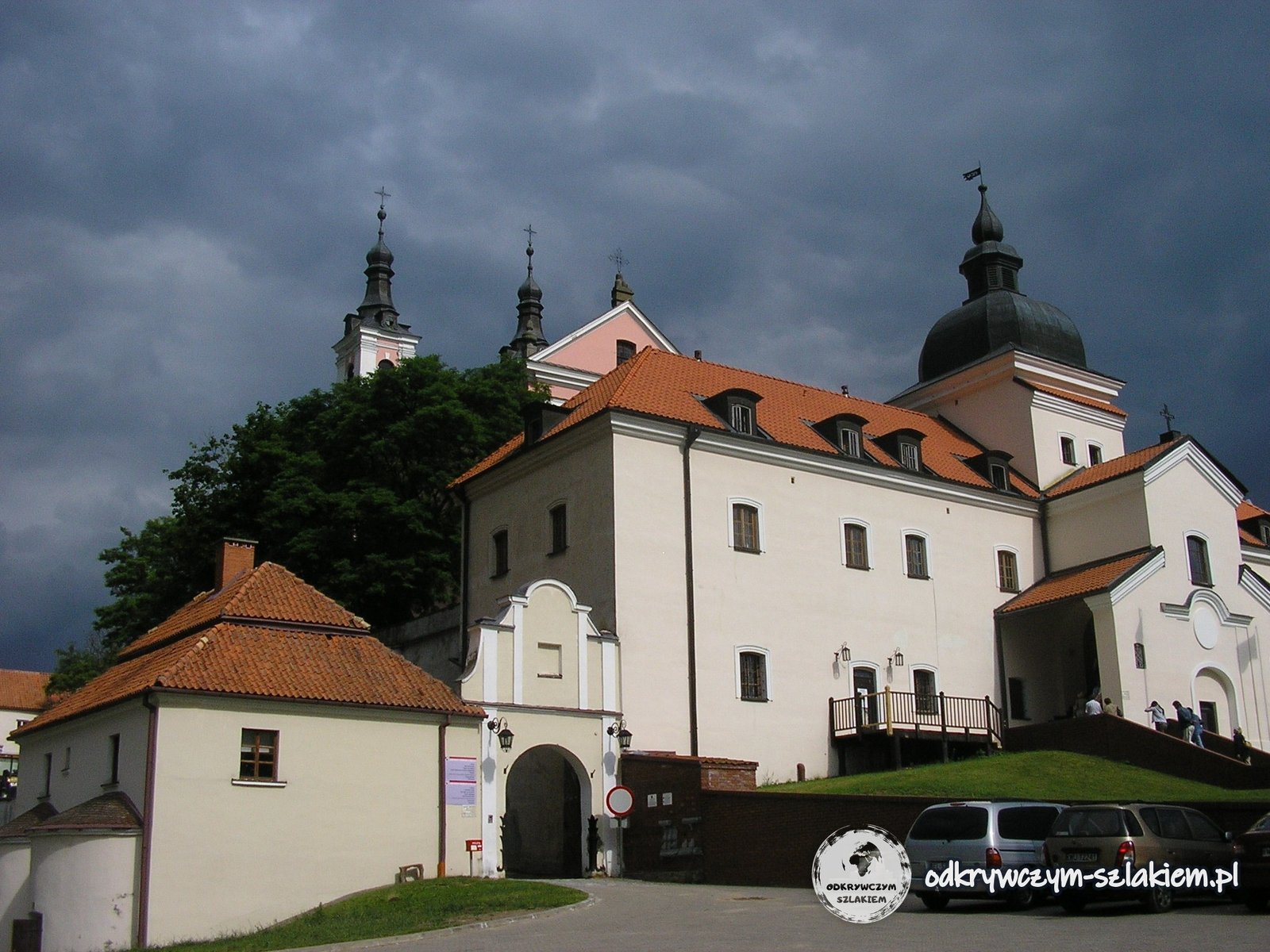
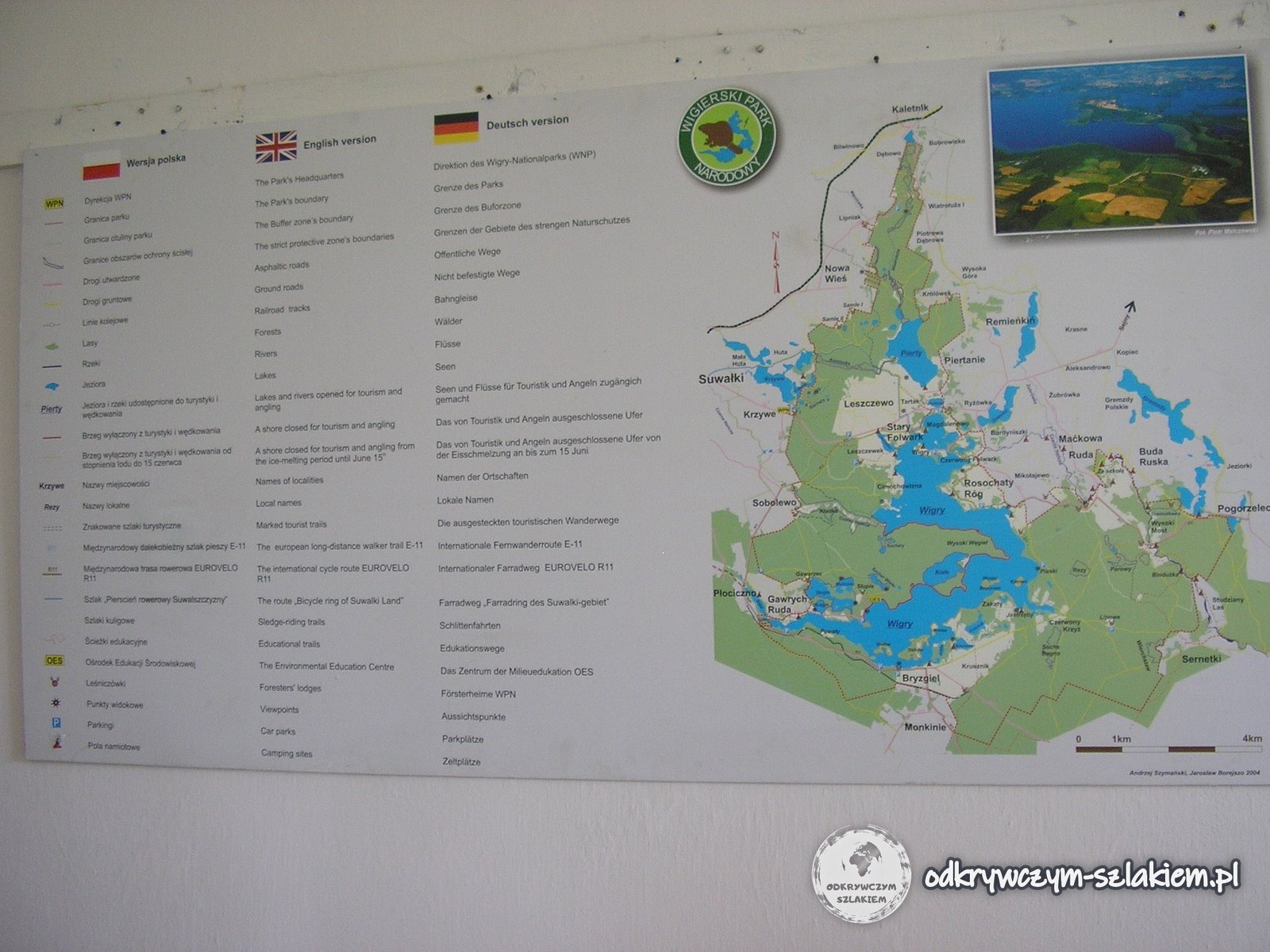
The last stop was the former Camaldolese monastery in Wigry, on a peninsula in Lake Wigry, the largest lake in Wigry National Park. The Camaldolese monks were settled here by King John II Casimir – a privilege of 6 January 1667 calls the monastery “Eremus Insulae Vigrensis”, the hermitage on the Wigry island. The monks founded villages and farms and built roads, and in 1715 they founded the town of Suwałki. They lived in separate little houses, hermitages – the monastery complex has 17 of them.
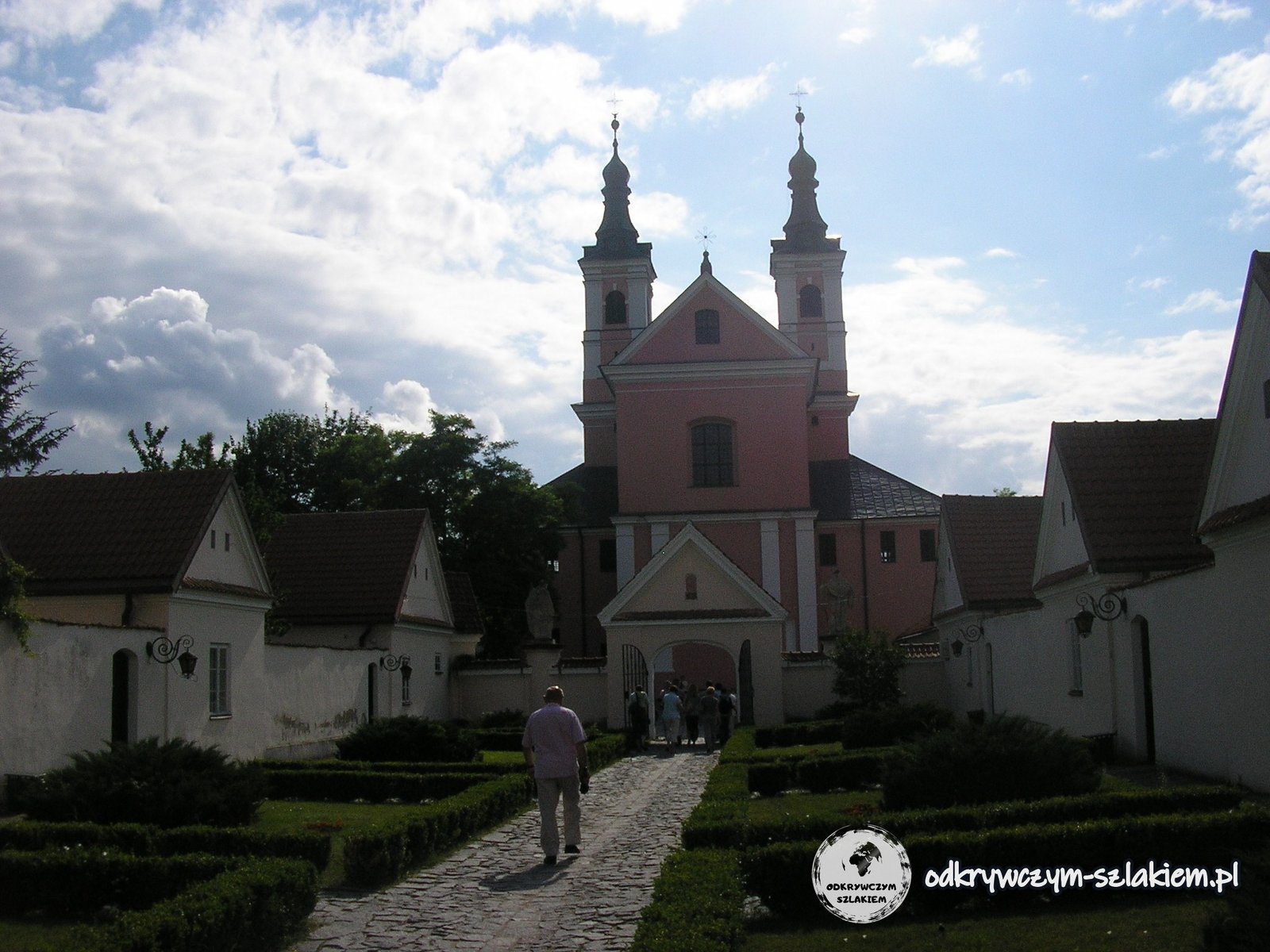
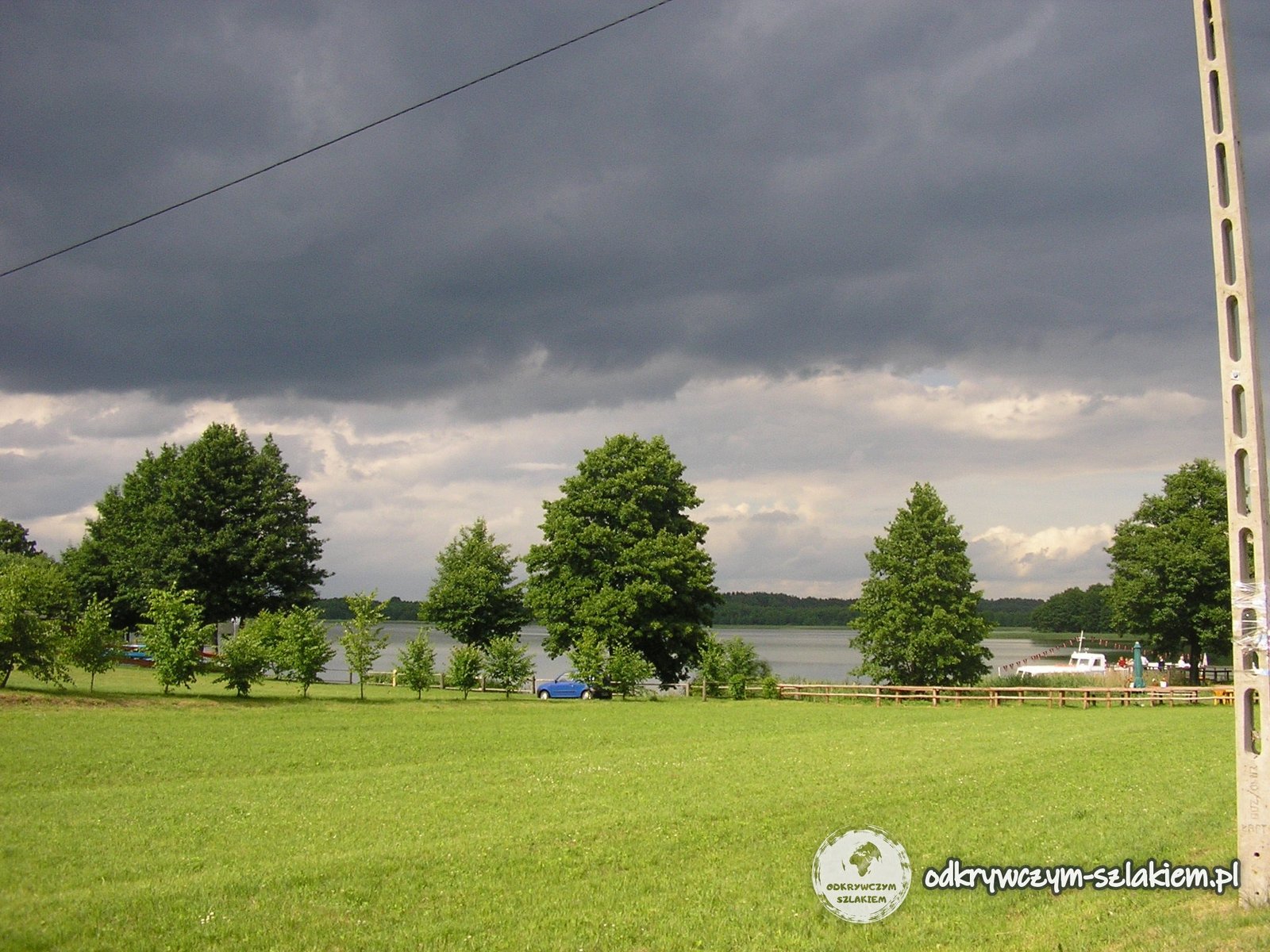
After the Third Partition of Poland, in 1796, the Prussian authorities confiscated the Camaldolese estates, and in 1800 the monks were removed from Wigry. From 1799 to 1818 this was the seat of the Diocese of Wigry, and its first bishop was Michał Franciszek Karpowicz. In 1915 artillery fire badly damaged the church, the Porter’s House and the refectory. The complex was rebuilt in the 1920s and again in the 1970s, after the Ministry of Culture and Art leased it from the Church for 50 years in 1973. From 1975 to 2010 it housed a retreat for artists and writers. As we arrived, a storm was gathering over the lake.
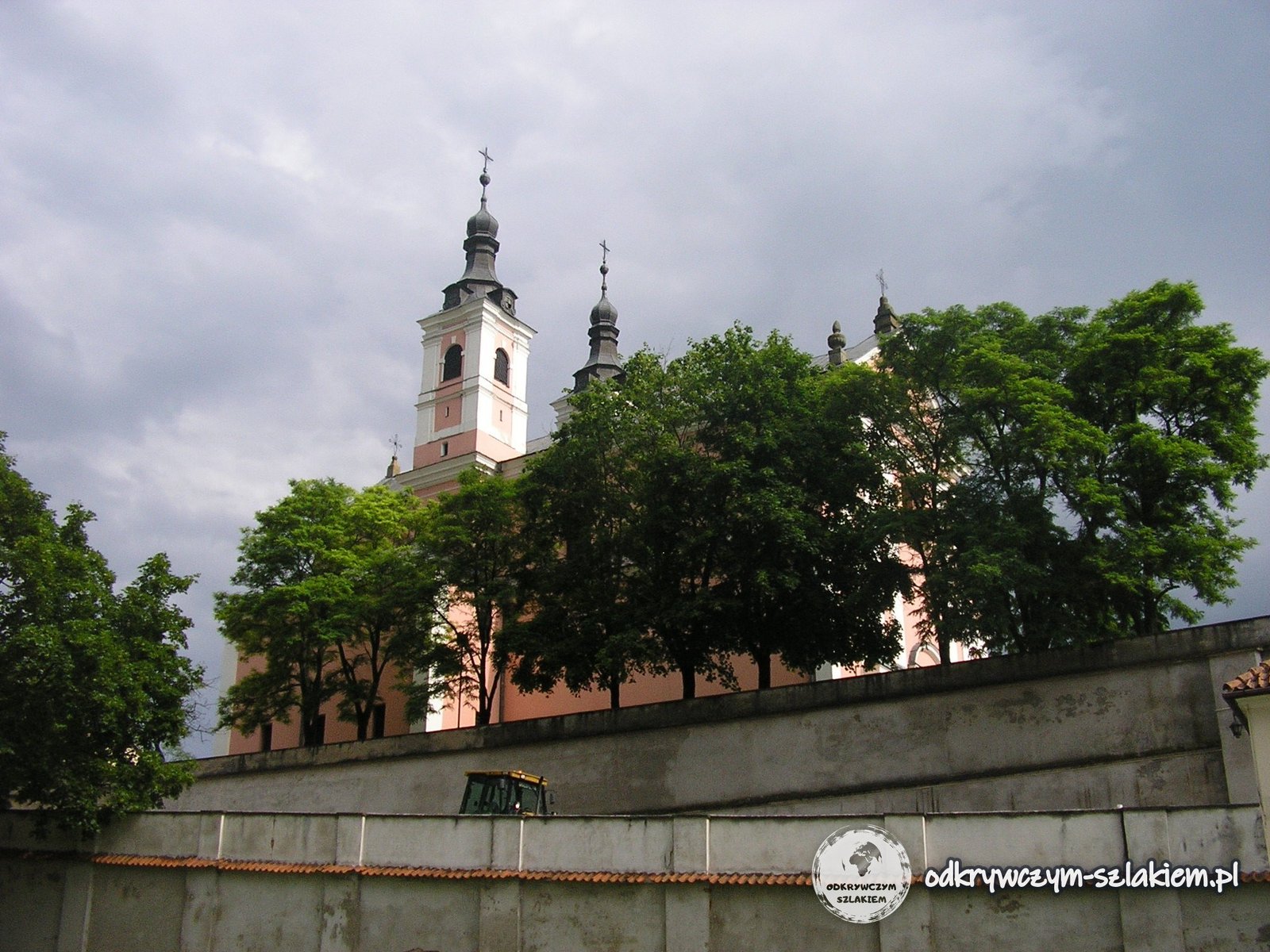
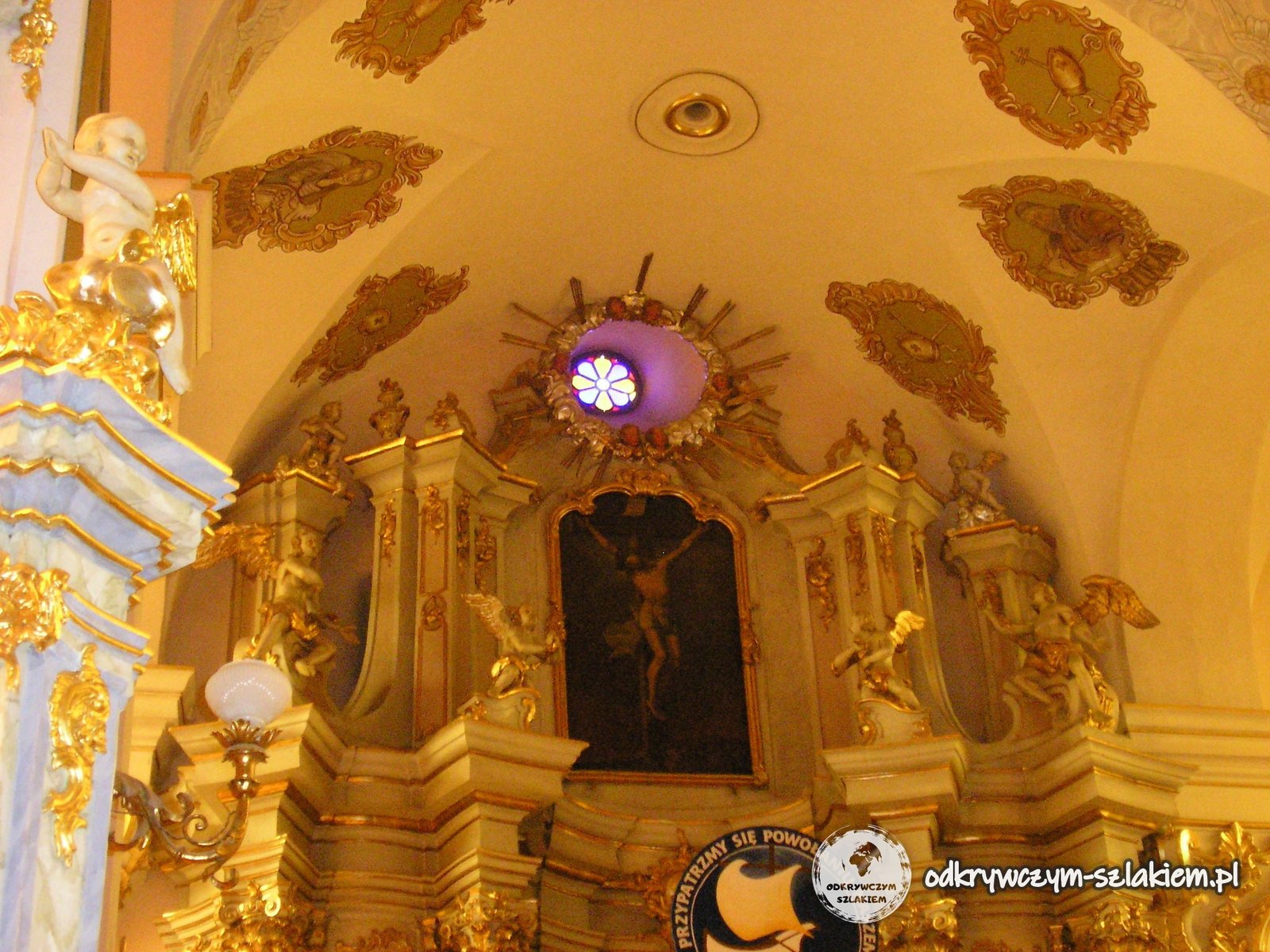
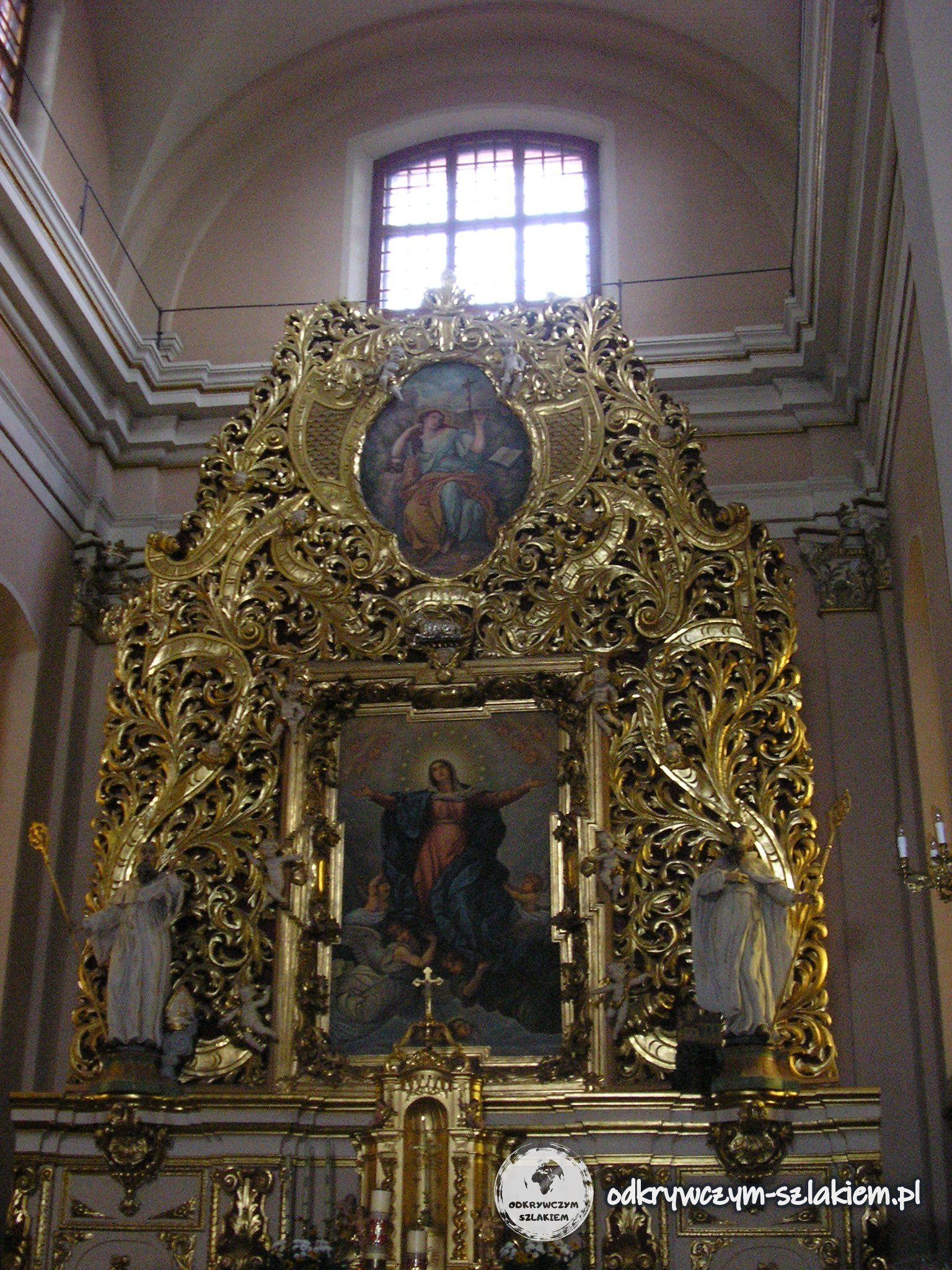
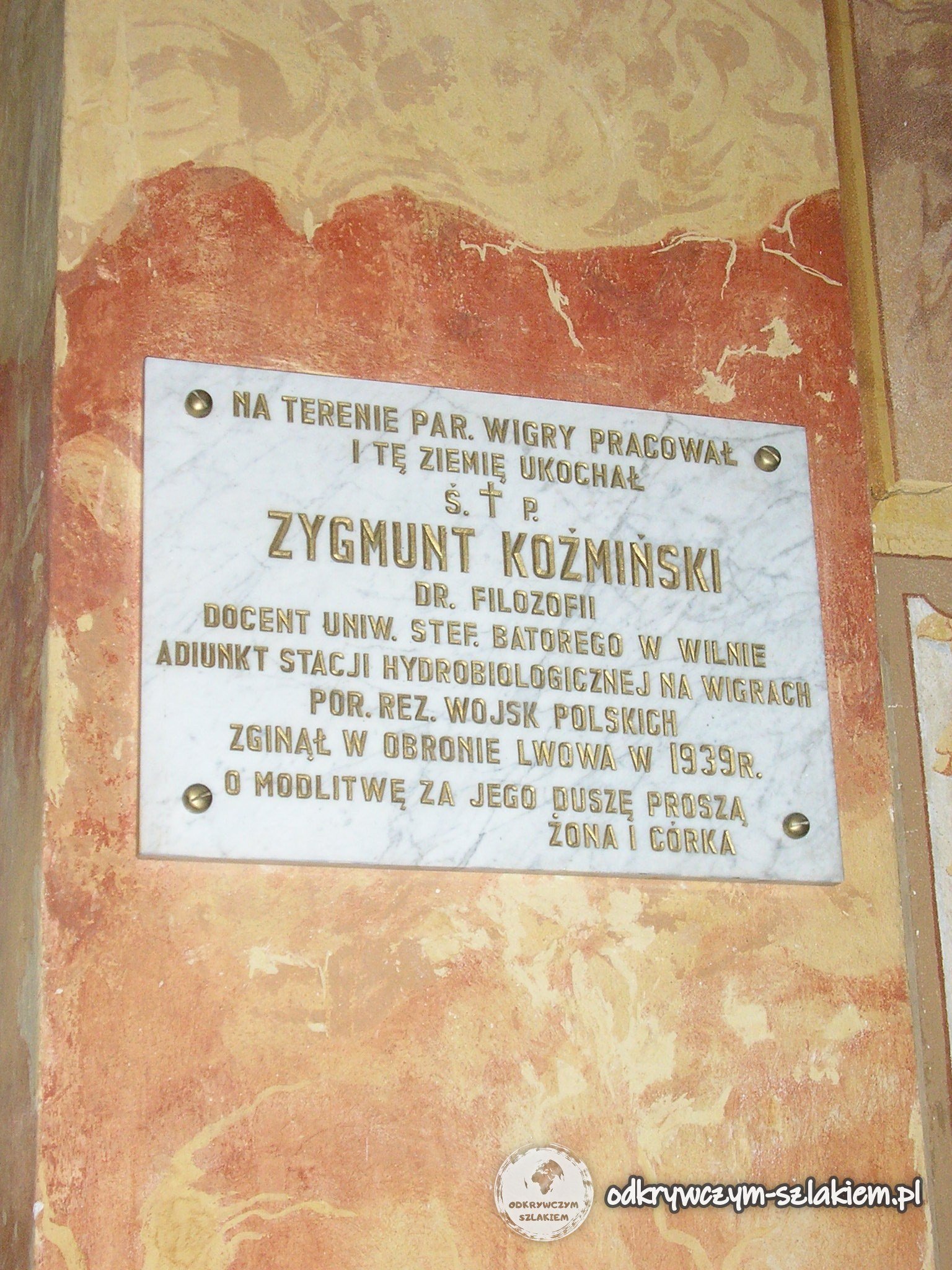
The late Baroque Church of the Immaculate Conception of the Blessed Virgin Mary has gilded altars. On the wall hangs a plaque to Zygmunt Koźmiński – a doctor of philosophy, an associate professor at Stefan Batory University in Vilnius and an assistant at the Wigry Hydrobiological Station, who was killed defending Lviv in 1939.
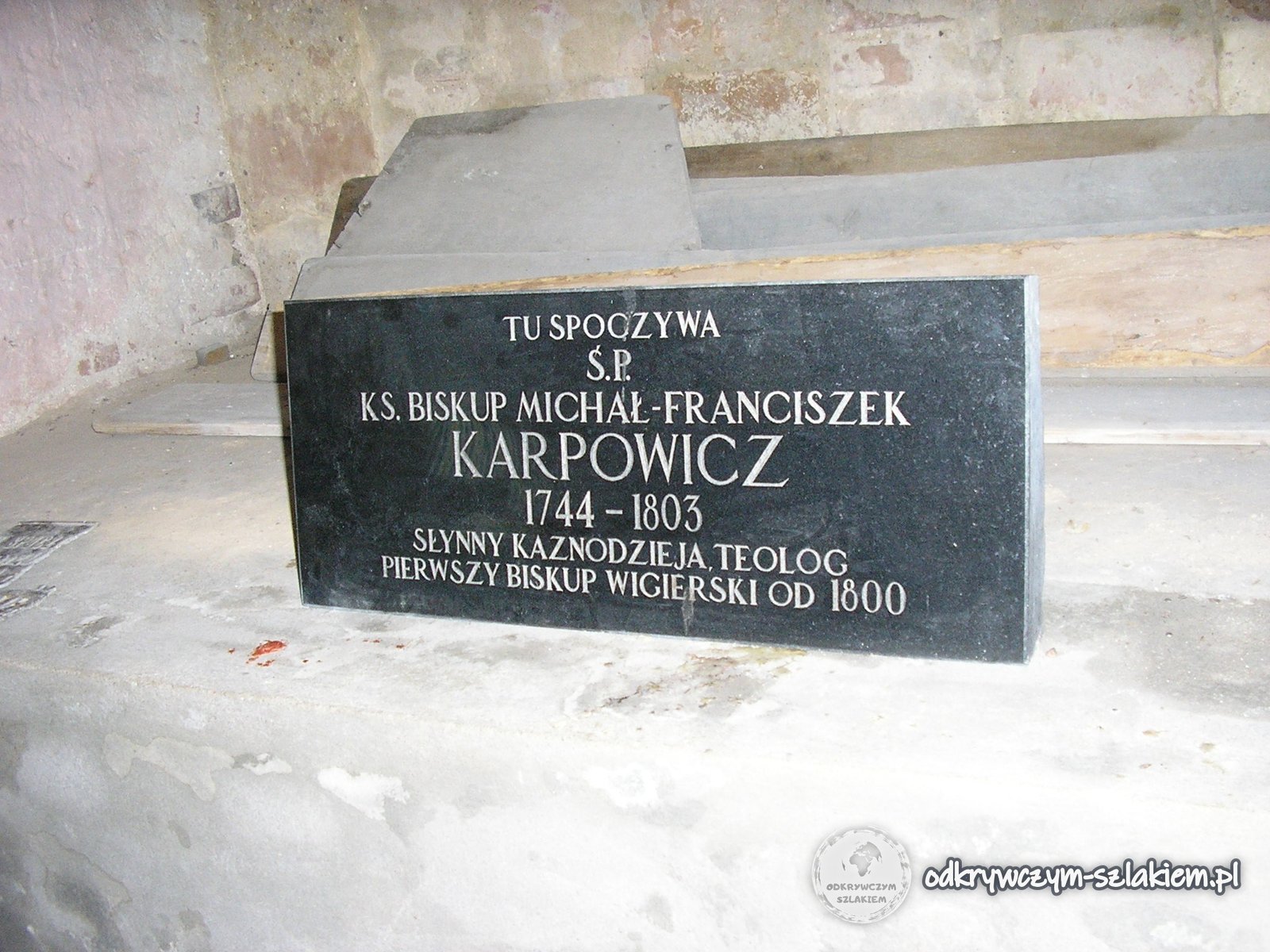
Beneath the church are the crypts. More than 40 walled-up niches hold the remains of the hermits, and a dance of death is painted on the wall. Here too is the tomb of Bishop Karpowicz (1744–1803). The plaque calls him a famous preacher and theologian.
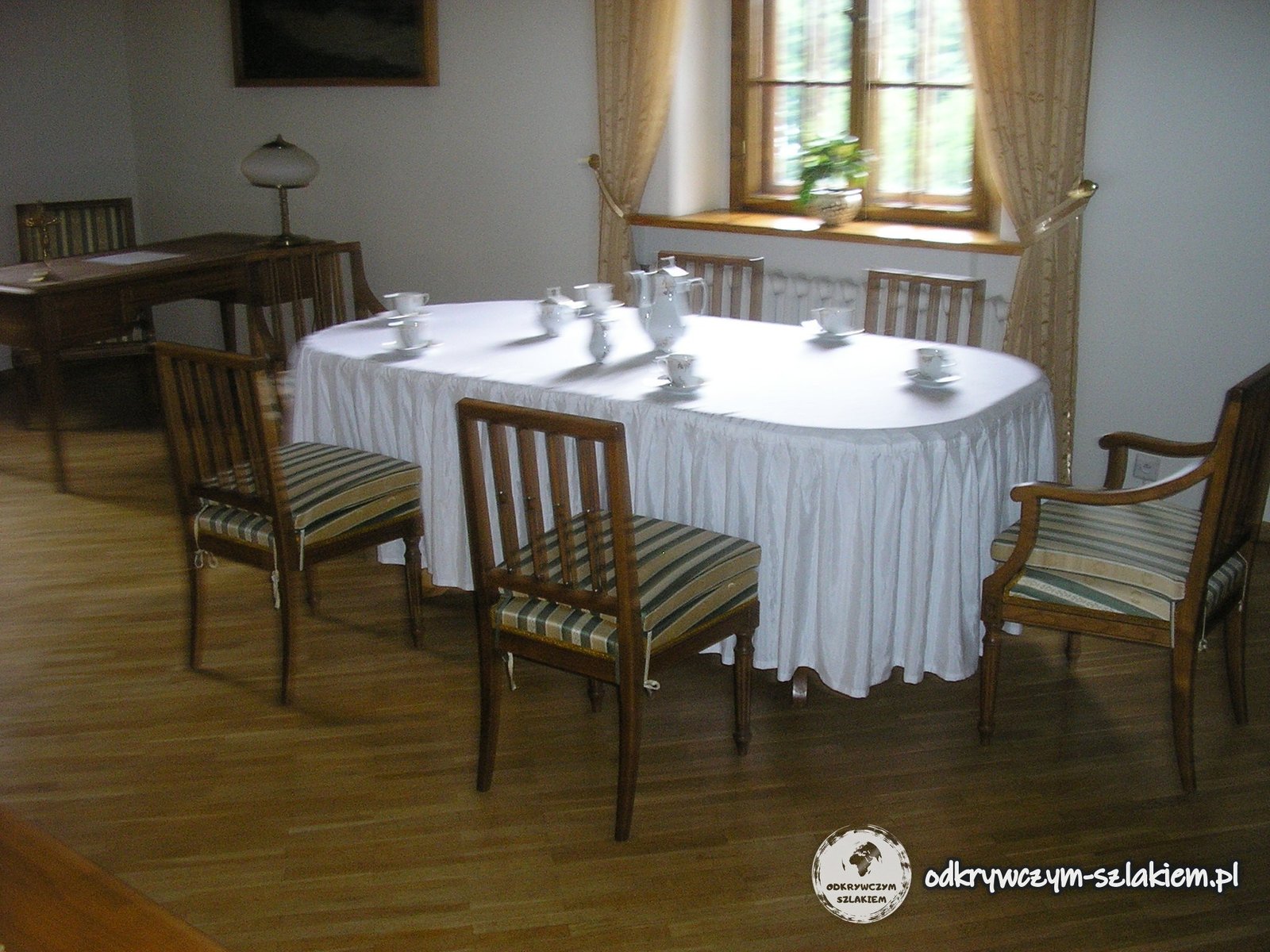
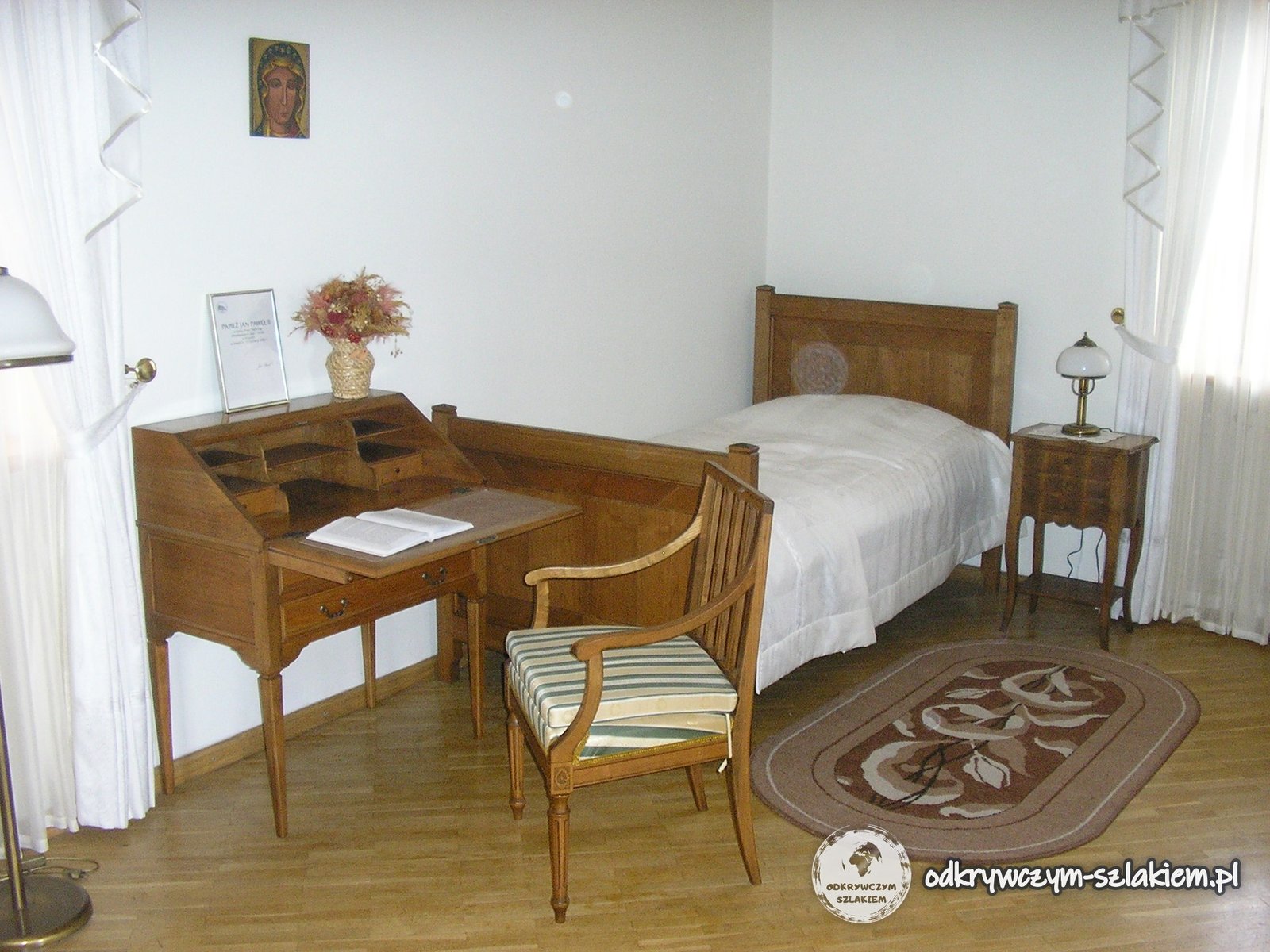
John Paul II stayed in the monastery on 8–10 June 1999, and on 8 June he sailed on Lake Wigry aboard the boat “Tryton”. His papal apartments – the dining room, the bedroom with a desk and the chapel – are open to visitors.
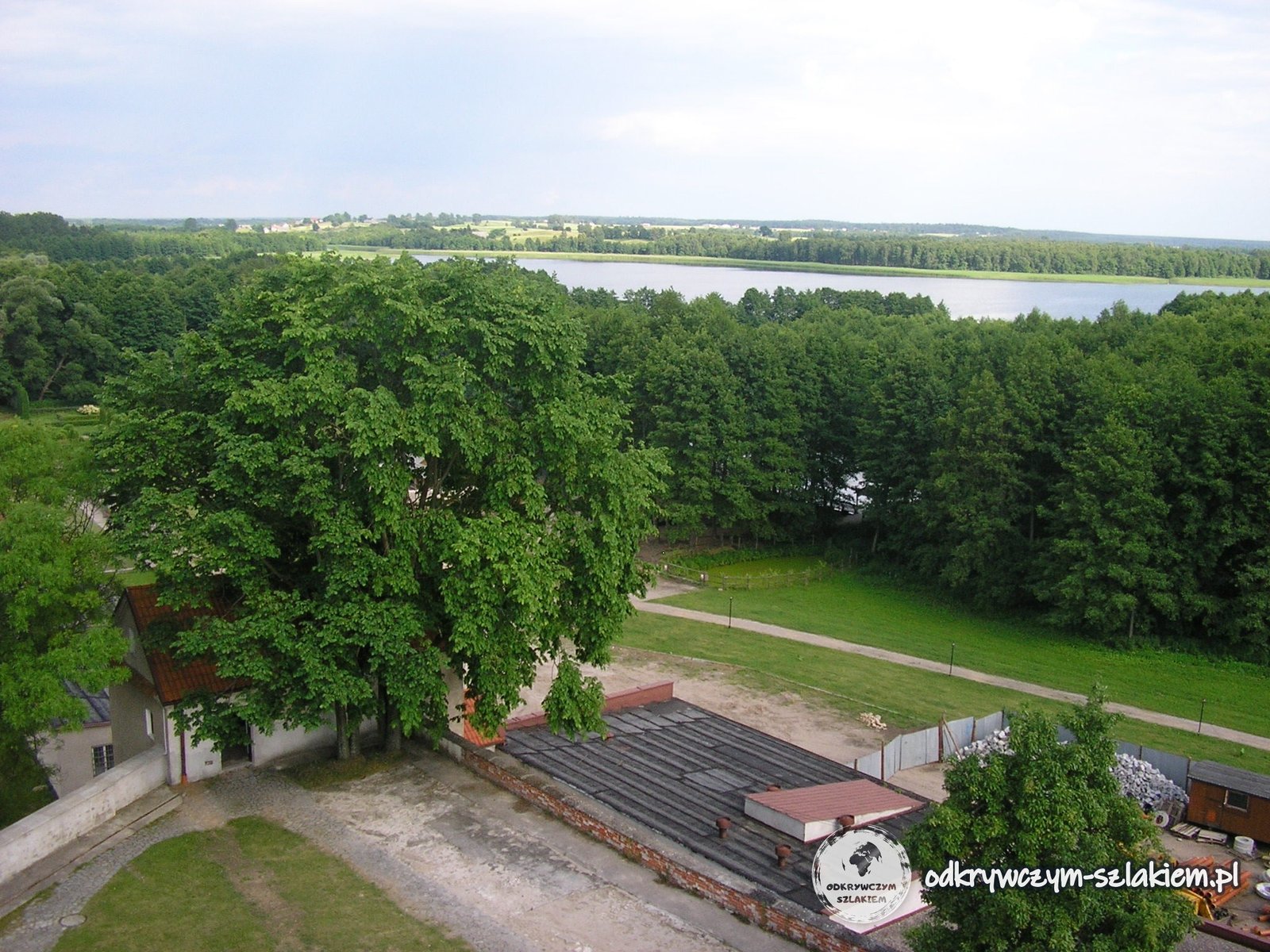
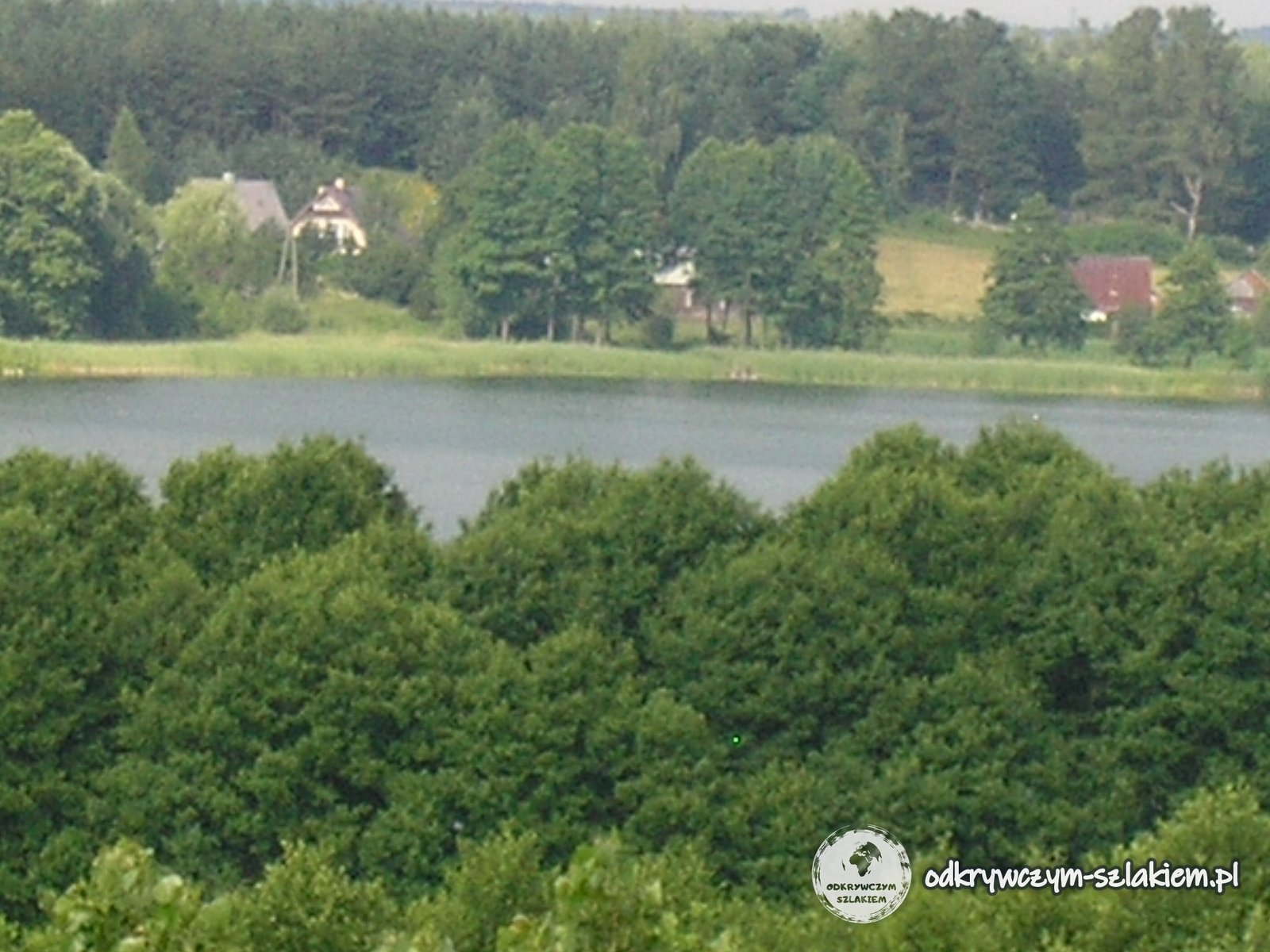
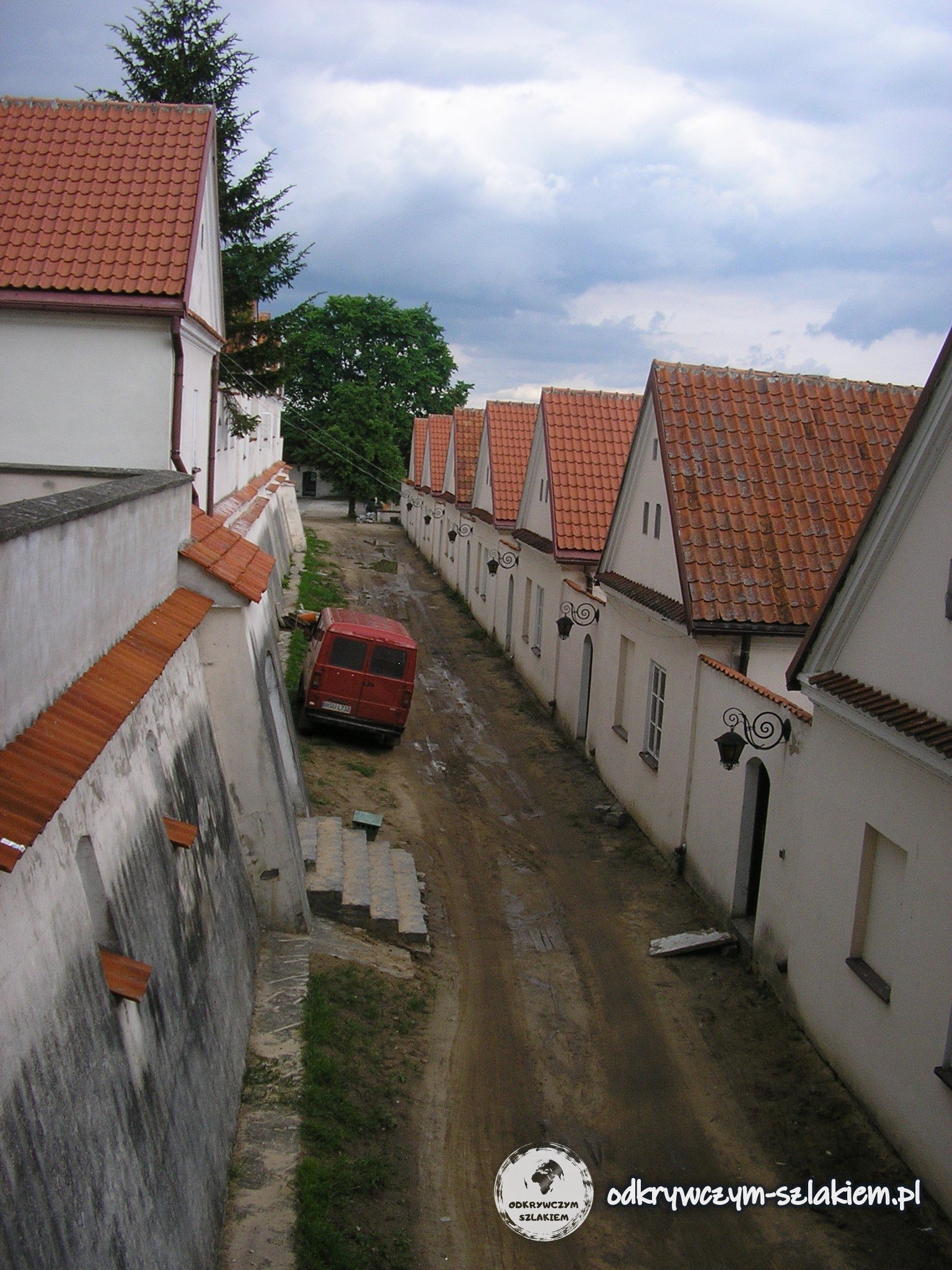
Finally we climbed the tower. From the top you can see Lake Wigry with buildings on the far shore, and below – a row of hermitages behind the wall.
Practical information
- Cruise to Studzieniczna: Żegluga Augustowska, port at 29 Listopada 7 in Augustów. Route: the Netta – Lake Necko – the Klonownica – Lake Białe – the Przewięź lock – Lake Studzieniczne and back. One way takes about 1 hour 20 minutes. In summer the afternoon cruise at 16:00 includes a stop of about 20 minutes in Studzieniczna.
- Cruise prices (November 2026): 90 zł (about €21) per person, children aged 7–12 – 60 zł (about €14), children up to 6 – 15 zł (about €3.50). A dog or a bike costs an extra 25 zł (about €6). Tickets can be bought online, and the boats sail from spring to autumn – current dates are in the operator’s cruise calendar.
- Studzieniczna without the cruise: the shrine is about 7 km from the centre of Augustów on road 16, so you can get there by car or bike and return the same way.
- Augustów Canal History Museum: Prądzyński House, 29 Listopada 5a. The town is building a new canal museum next to the town hall – according to plans from 2024, construction could last until 2027 – so check where the exhibition is before you go.
- Wigry monastery (prices valid from 1 May 2025, as of November 2026): the full tour – hermitages with exhibitions, the clock tower, the papal apartments, a Camaldolese cell and the crypts – costs 20 zł (about €5), reduced 12 zł (about €3), and in groups of more than 10 people 15 zł (about €3.50) per person. A walk around the courtyards only costs 5 zł (about €1), and children under 6 go free. A guide costs 180 zł (about €42; book 2–3 days ahead).
- Opening hours: May to October 10:00–18:00, November to April 8:00–16:00. Address: Wigry 11, Suwałki municipality. The monastery also offers accommodation and a restaurant.
- How much time: the cruise to Studzieniczna and back, including the stop, takes about 3 hours. Augustów, Studzieniczna, Sejny and Wigry can be seen in one day, but only with your own transport or on a coach tour.
- More: by bike through the Suwałki region and Podlasie – from Giżycko to Białystok.
Photo gallery